Recognition Display BPDU Filter Safety Audit for School Switch Ports
A recognition display BPDU filter safety check audits the managed-switch ports in your school’s network to identify any port where spanning-tree bpdufilter enable has been applied incorrectly—creating a condition where a switching loop can form, grow undetected, and eventually take a lobby kiosk or hall-of-fame touchscreen offline with a broadcast storm. BPDU filter stops a switch port from sending or receiving Bridge Protocol Data Units (BPDUs), which are the control frames that Spanning Tree Protocol (STP) and Rapid Spanning Tree Protocol (RSTP) use to detect and block loops. When BPDU filter is applied to an edge port that genuinely connects only to a recognition display, it is benign. When it is applied to an uplink port, a trunk port, or any port that could connect to another switch, it blinds the spanning tree process to that port entirely—and a loop that forms through that port will not be blocked.
Read More
Recognition Display RSTP Convergence Test for Fast Link Recovery
A school recognition display RSTP convergence test verifies that Rapid Spanning Tree Protocol (IEEE 802.1w) reconfigures your managed-switch topology quickly enough after an uplink failure that a lobby kiosk or hall-of-fame touchscreen reconnects to the network within seconds rather than sitting offline for half a minute or more. RSTP convergence is the process by which switches in a network with redundant paths detect a failed link, elect a new active path, and transition the relevant ports from Discarding through Learning to Forwarding—restoring normal traffic flow. When RSTP is correctly configured, convergence completes in one to six seconds. When it is misconfigured or a switch is running classic STP (802.1D) rather than RSTP, the same failover can take thirty to fifty seconds—long enough for an uplink failure during an awards ceremony or induction night to produce a visible content outage on the recognition display.
Read More
Recognition Display TCP Window Scaling Test for Large Athletic Media
A recognition display TCP window scaling test is a structured network procedure that confirms your school’s firewall, router, and WAN path allow TCP receive windows large enough to sustain athletic video throughput—so championship highlight reels, induction ceremony clips, and large athletic media assets stream without stalling on lobby kiosks, hall-of-fame touchscreens, and hallway recognition panels. TCP window scaling, defined in RFC 1323, extends the maximum TCP receive window beyond the 65,535-byte limit imposed by the original TCP specification. Without it, a TCP connection’s throughput is capped by the bandwidth-delay product of the network path: on a school WAN link with 40 ms round-trip time to a CDN edge node, an unscaled 65,535-byte window limits throughput to roughly 13 Mbps—often insufficient for multiple concurrent 1080p athletic video streams. When window scaling is blocked or stripped by a middlebox, athletic video content fails to buffer ahead of playback, producing the stalling and incomplete-load symptoms that disrupt recognition events.
Read More
TCP MSS Clamping Test for Recognition Display Athletic Video
A recognition display TCP MSS baseline test is a structured network procedure that verifies your school’s firewall or router is clamping the TCP Maximum Segment Size (MSS) correctly, so athletic video streams play without buffering or black screens on lobby kiosks, hall-of-fame touchscreens, and hallway recognition panels. TCP MSS clamping sets an upper limit on the size of data segments exchanged during a TCP connection, preventing packets from exceeding the available path MTU when traffic crosses WAN links, PPPoE circuits, VPN tunnels, or ISP hand-off points that reduce the effective frame size below the Ethernet default of 1500 bytes. When MSS is not clamped correctly, TCP segments arrive at the display sized larger than the path allows, triggering IP fragmentation or silent packet loss that manifests as video buffering, incomplete content loads, and recognition profiles that fail to update before an event begins.
Read More
Digital Hall of Fame ARIA-Pressed Audit for Toggle Controls
A digital hall of fame ARIA-pressed audit is a structured accessibility review that confirms every stateful toggle control on a recognition display—favorites buttons, comparison selectors, audio toggles, filter chips, and view-switchers—correctly exposes its current pressed or unpressed state through the aria-pressed attribute so screen readers can announce it without requiring the label text to change. When aria-pressed is missing or set to a static value, a screen reader user who activates a “Save to Favorites” button hears only “Save to Favorites, button” on both activation and deactivation—there is no audible feedback that the control changed state. Adding or correcting aria-pressed to toggle between "true" and "false" dynamically solves this without touching the visible label, which is the correct pattern under WCAG 4.1.2 (Name, Role, Value).
Read More
Recognition Display RADIUS Change-of-Authorization Test for School Networks
A school recognition display RADIUS change-of-authorization test is a structured network procedure that confirms a touchscreen hall of fame, digital trophy case, or lobby recognition kiosk will accept live RADIUS policy updates—such as a VLAN reassignment or session-timeout change—without requiring a manual reconnect or display reboot. RADIUS Change of Authorization (CoA), defined in RFC 5176, allows a RADIUS server to push new authorization attributes to a device’s active authenticated session while that session is already running. For a recognition display, this means an IT administrator can update the display’s network policy in real time from the RADIUS management console without unplugging the device or interrupting a ceremony in progress. Testing that path in advance is how IT teams confirm it will work when they actually need it.
Read More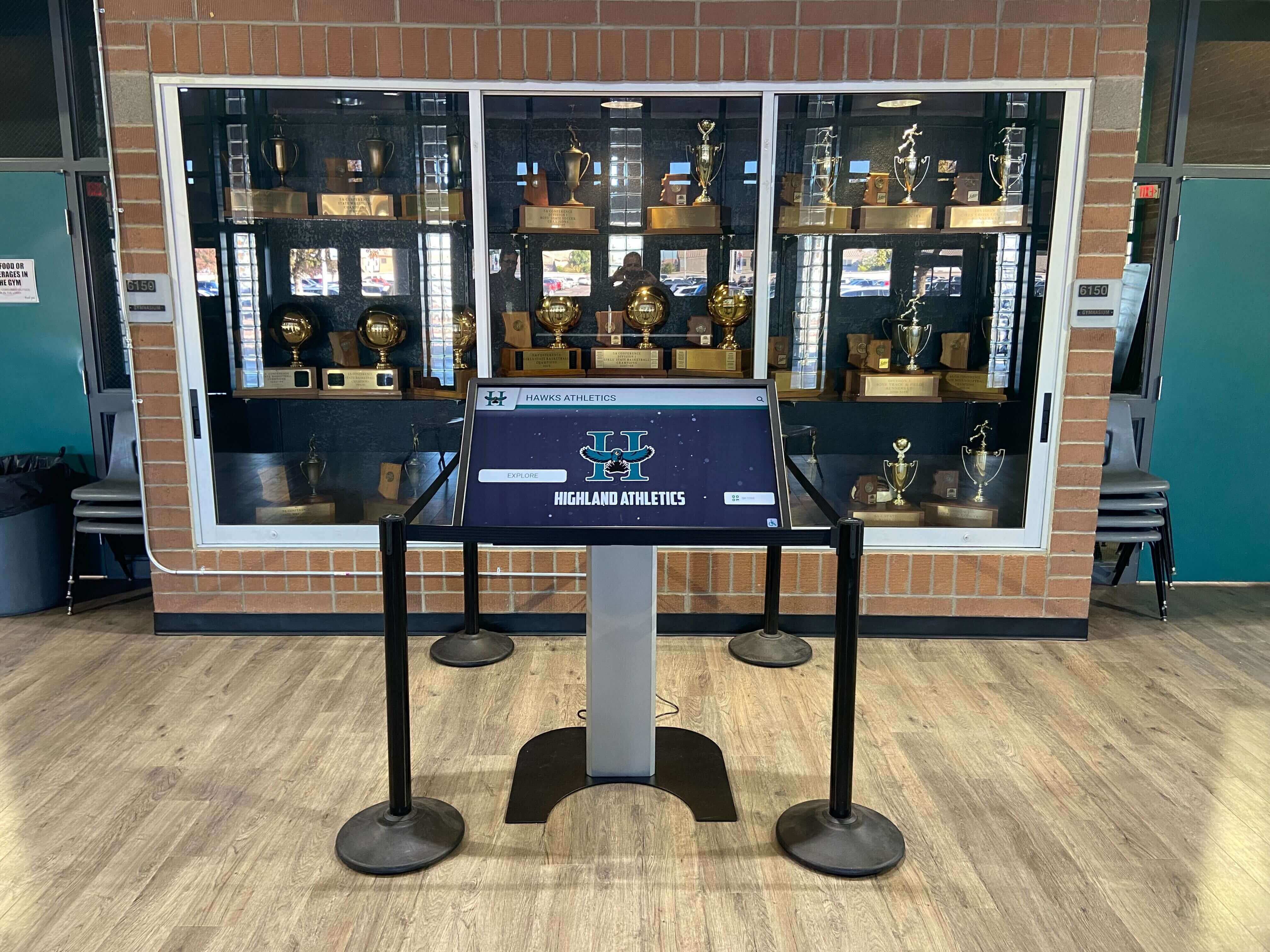
Recognition Display DHCP Starvation Protection Test for School Networks
A school recognition display DHCP starvation protection test verifies that your managed-switch configuration prevents an exhausted IP address pool from taking a lobby kiosk or hall-of-fame touchscreen offline. DHCP starvation occurs when a device—whether a misconfigured endpoint, a rogue laptop, or a deliberate attacker—rapidly claims large numbers of addresses from a DHCP scope, leaving no leases available for legitimate devices. When a recognition display’s lease expires and no new address is available, the kiosk drops off the network, stops pulling content updates, and goes dark at exactly the moment—a championship ceremony, an induction night, an alumni weekend—when it is most visible.
Read MoreRecognition Display Port Mirroring Test: Capture School Kiosk Traffic Safely
A school recognition display port mirroring test is a non-intrusive network diagnostic technique that allows school IT teams to capture and analyze every packet flowing to and from a lobby kiosk or hall-of-fame touchscreen without modifying the device itself, disrupting live visitors, or changing any production network paths. When a recognition display behaves unexpectedly—failing to refresh athlete profiles, losing its cloud connection before a championship event, or generating bandwidth alerts—a port mirror gives IT staff a ground-truth view of what the kiosk is actually transmitting and receiving. Guessing at firewall rules and cloud platform settings is unnecessary once you can see the raw traffic.
Read MoreRecognition Display RS-232 Control Test: Commands, Feedback, and Recovery
A recognition display RS-232 control test is the structured process of sending serial commands to a school recognition display, confirming that each command produces the correct response, and verifying that the display recovers predictably when communication fails or commands are malformed. RS-232 serial control is the most widely supported method for remotely managing commercial displays—powering them on and off on a schedule, switching inputs between recognition content and live announcements, adjusting brightness for morning versus afternoon lobby conditions, and confirming operational status without physically touching the screen. For AV integrators, facilities teams, and IT staff commissioning a school hall of fame installation or athletic recognition display, completing a documented RS-232 control test before turnover is what distinguishes a system that will run reliably for years from one that surfaces mysterious failures six months after the installer has left the building.
Read MoreRecognition Display Screen-Tearing Test for Sports Video and Animations
Screen tearing on a recognition display appears as a jagged horizontal split that slices across the panel mid-frame—most visible during fast-motion athlete highlight reels, sliding record-board animations, and championship-montage videos. When tearing shows up on your school’s hall-of-fame screen or lobby recognition wall during an assembly or awards night, it immediately undercuts the professional impression those installations are built to create.
Read MoreTouchscreen Recognition Display Backup Testing Checklist: Prove Recovery Before an Event
A touchscreen recognition display is only as valuable as its ability to perform on the moments that matter most—the Friday night home game, the annual athletic induction ceremony, the 20-year class reunion. When the display goes dark or loses content right before the gymnasium fills with proud families, there is no time to troubleshoot from scratch. A structured touchscreen recognition display backup testing checklist completed days before the event turns a stressful unknown into a verified guarantee.
Read MoreTurnkey Digital Hall of Fame Pricing for Schools: Complete Setup and Training Guide
Schools seeking digital hall of fame displays face a common challenge: understanding what’s actually included when vendors quote prices. One provider lists hardware at $12,000 but doesn’t mention installation costs. Another quotes $8,500 for equipment while charging separately for content setup, training, mounting, and network configuration. A third promises comprehensive solutions but leaves you wondering what happens when you need to add new inductees or update existing profiles.
Read More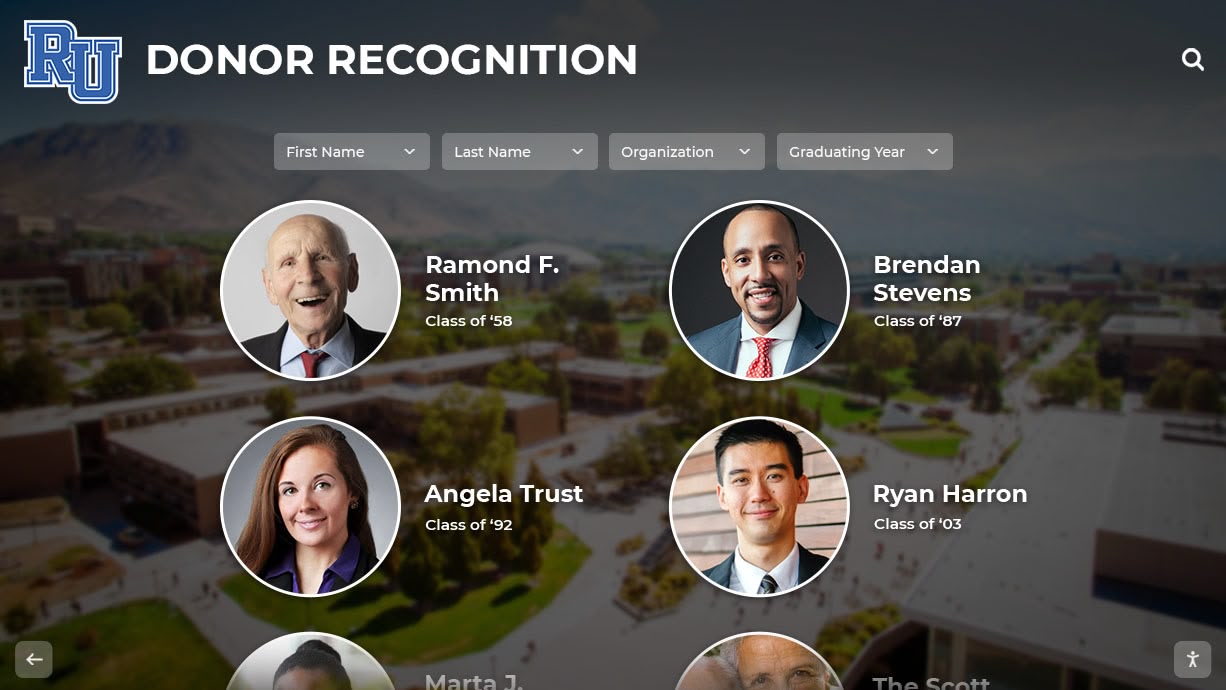
Are There Digital Hall of Fame Displays That Also Work as a Donor Wall? Understanding Dual-Purpose Recognition Systems
Many schools, universities, athletic programs, and nonprofit organizations face a common challenge: limited wall space for recognition, tight budgets, and the need to celebrate multiple audiences—athletes, donors, sponsors, and community supporters—without cluttering hallways with separate installations. The question frequently arises whether a single digital display can serve multiple recognition purposes simultaneously, and the answer is a resounding yes.
Read More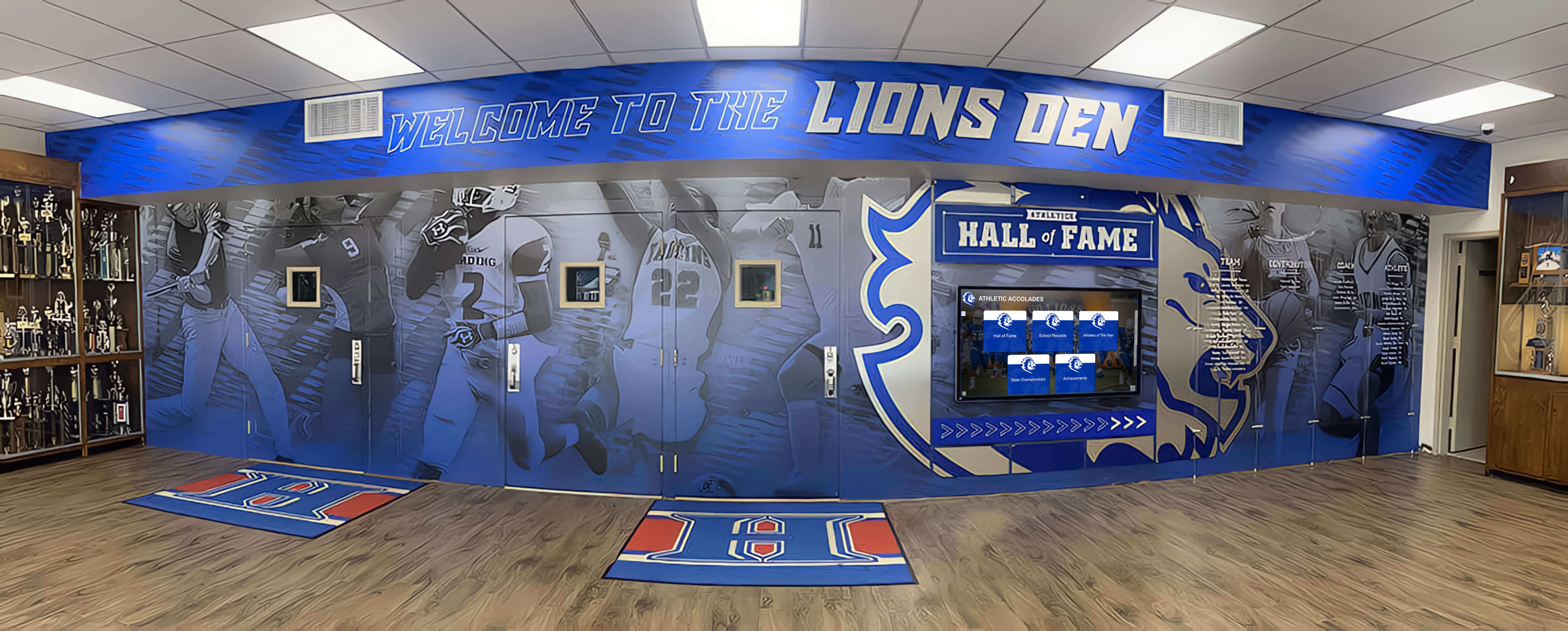
What's the Difference Between a Digital Hall of Fame Display and a Traditional Trophy Case for a School Hallway?
School hallways across the country face a common challenge: how to meaningfully celebrate student achievement when trophy cases overflow, wall space disappears, and administrators struggle to keep recognition displays current. Every year brings new championship teams, academic scholars, and distinguished alumni deserving acknowledgment, yet physical space remains fixed while achievements continue accumulating.
Read More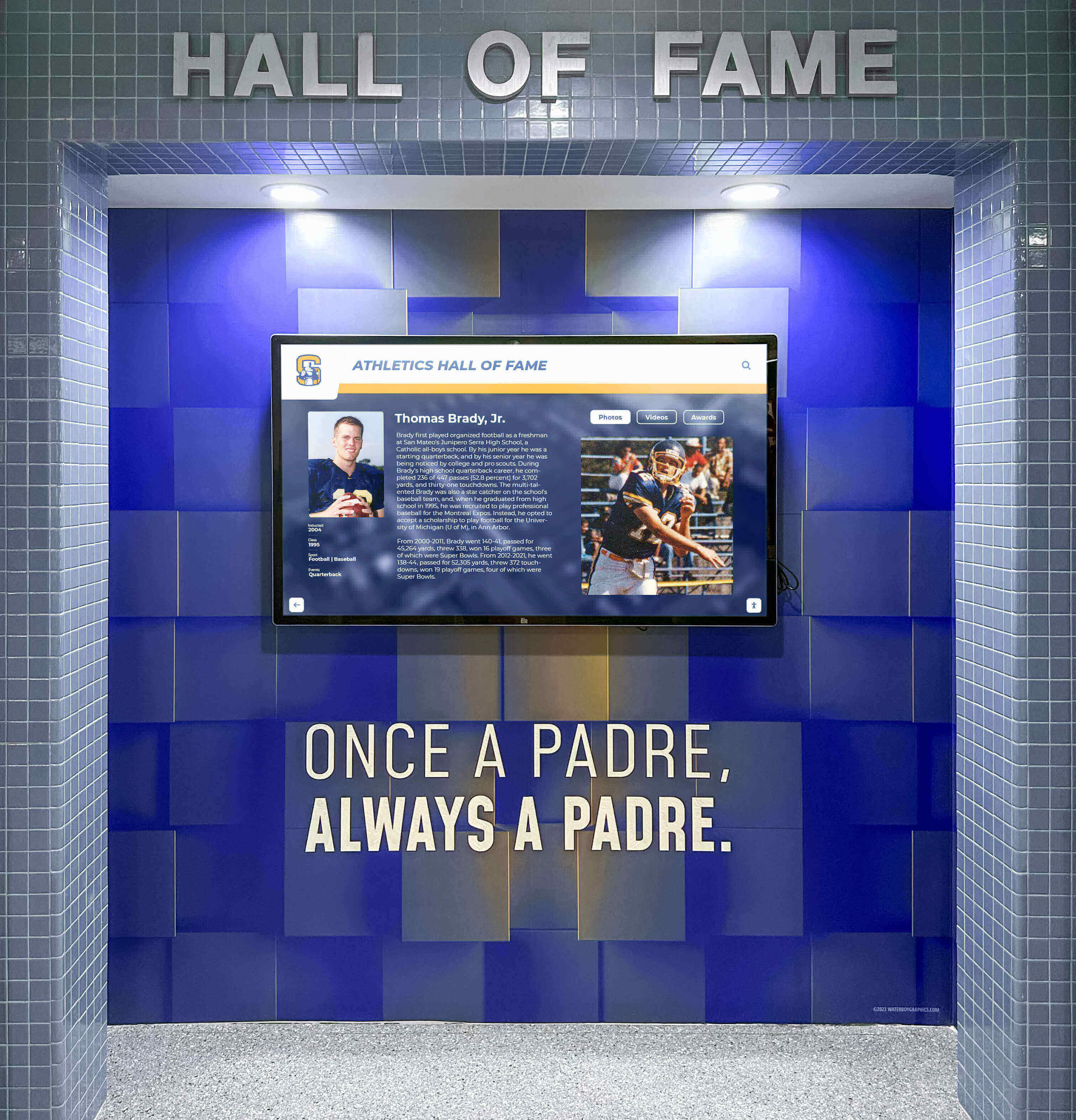
Awards Touchscreen for Wrestling Programs: Complete Guide to Digital Recognition for Hall of Fame Honorees, All-State Athletes, and Championship Achievements
Awards touchscreen displays have become essential tools for wrestling programs seeking comprehensive, engaging ways to celebrate athletic excellence. From Wrestling Hall of Fame honorees and All-State wrestlers to All-Americans, weekly recognition, scheduling, and program announcements, modern interactive touchscreen systems enable schools to showcase every dimension of wrestling achievement through dynamic digital platforms that traditional plaques and trophy cases simply cannot match.
Read MoreWhat is a Digital Hall of Fame? Complete Guide to Interactive Recognition Systems in 2025
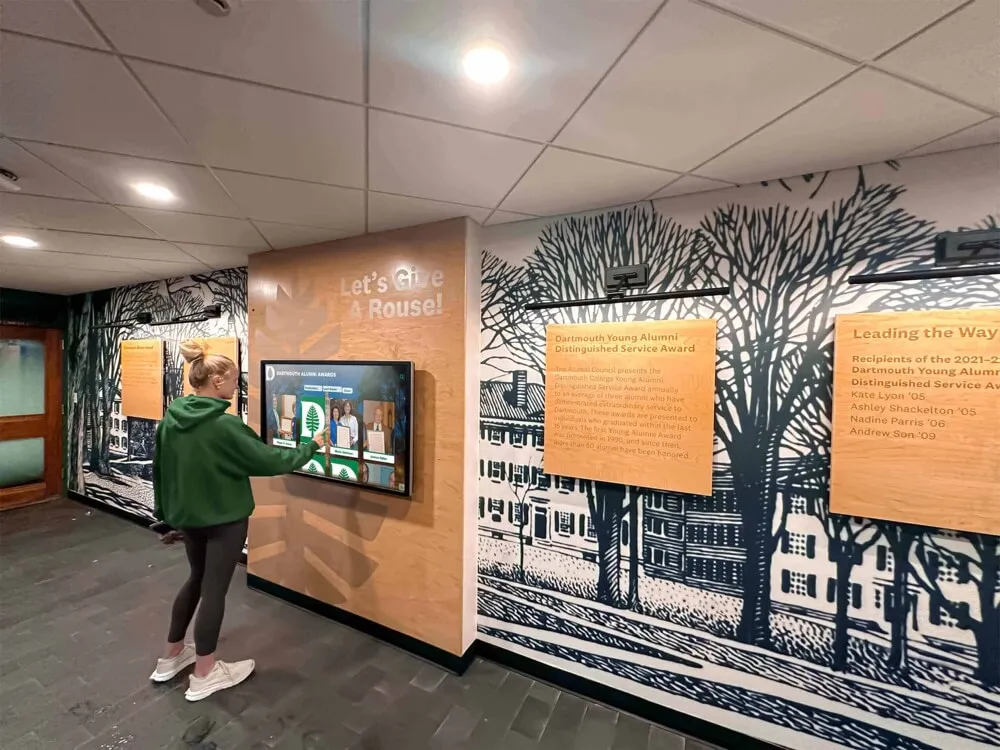
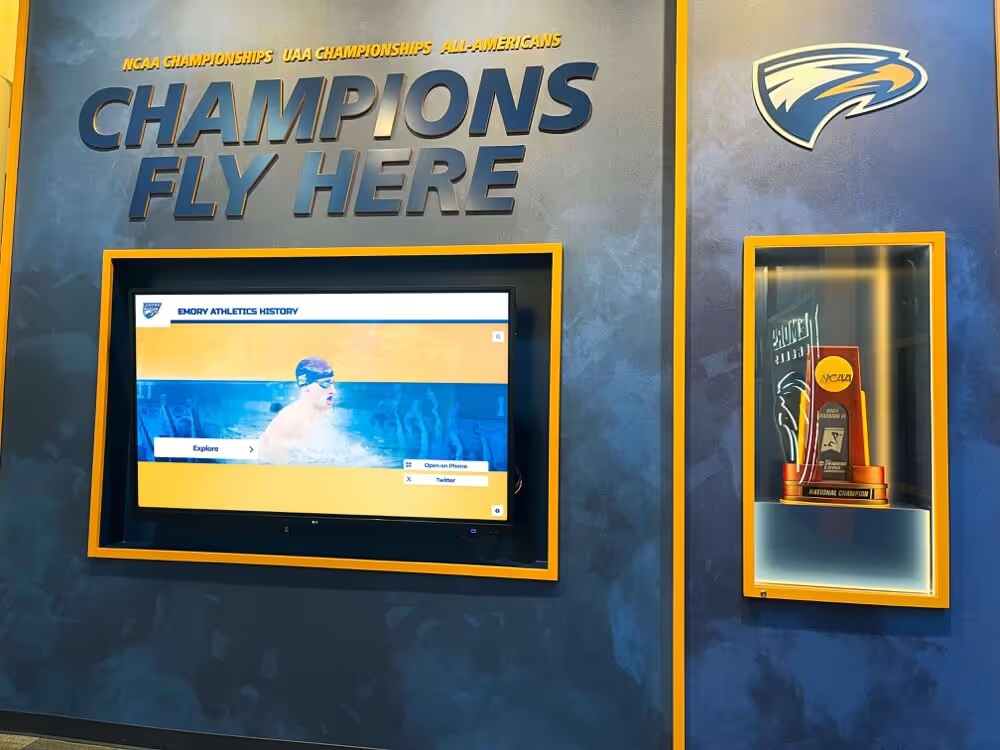
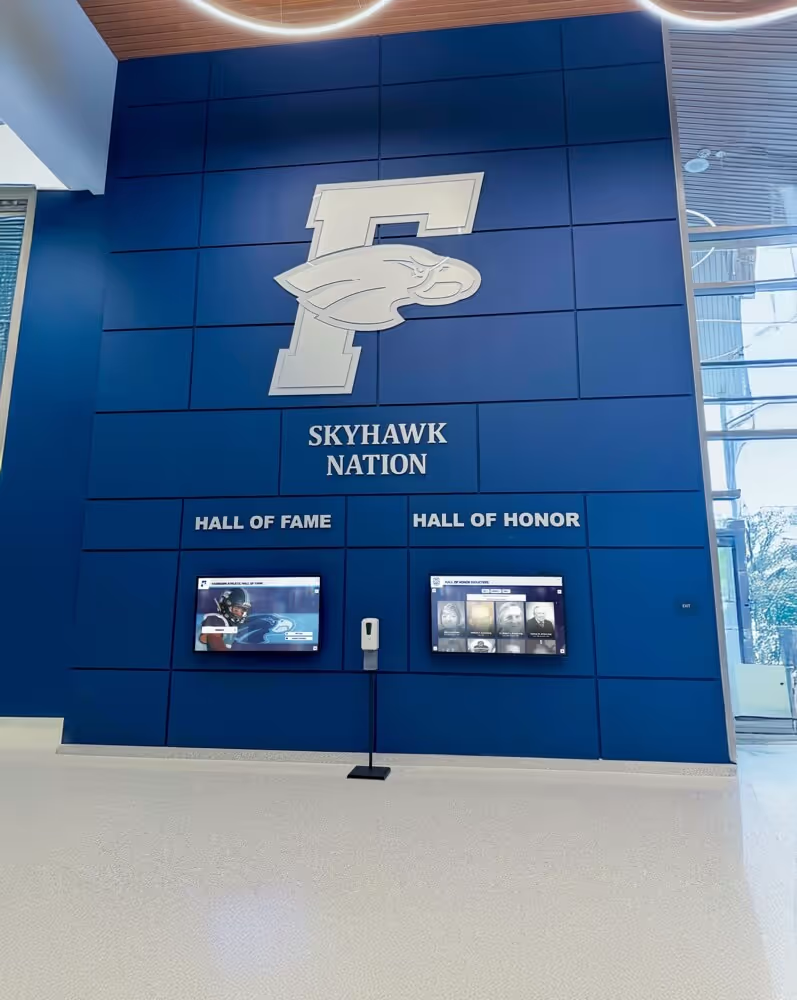
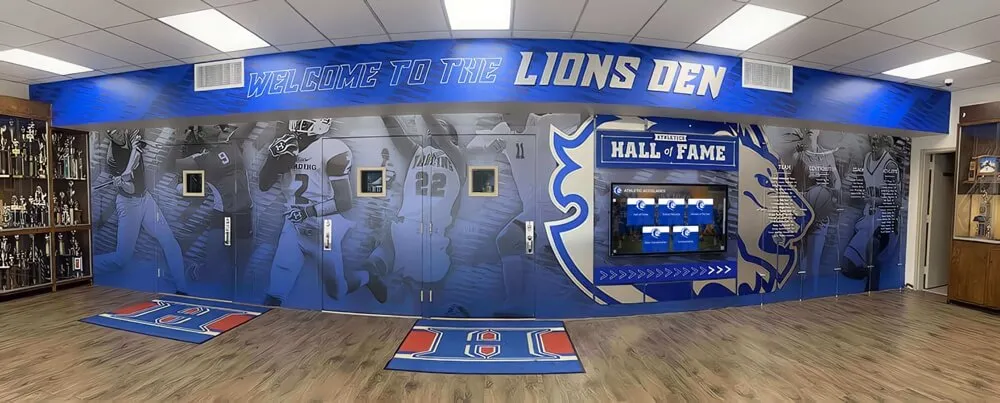
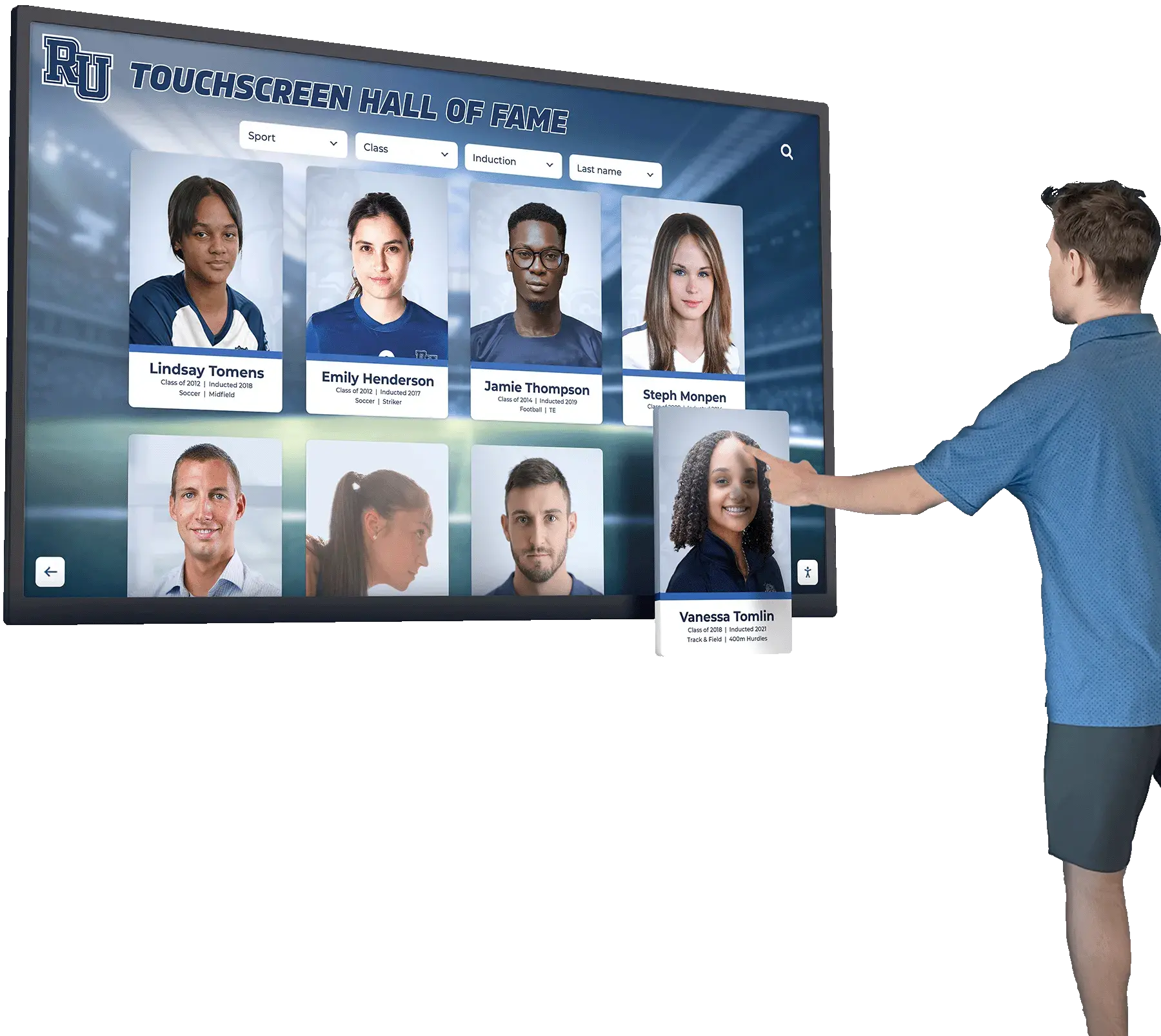
A digital hall of fame is an interactive touchscreen recognition system that showcases honorees, achievements, and institutional history through multimedia displays accessible via physical touchscreens and web platforms. Unlike traditional trophy cases and plaques limited by physical space, digital halls of fame provide unlimited recognition capacity while enabling engaging storytelling through photos, videos, statistics, and interactive exploration that static displays simply cannot match.
Read More
Touchscreen Digital Hall of Fame Wall & Interactive Awards: Complete Guide to Recognition Excellence in 2026
Touchscreen digital hall of fame walls and interactive awards displays represent the modern standard for institutional recognition—transforming how schools, universities, athletic programs, and organizations celebrate achievement through engaging multimedia experiences that solve the persistent space constraints, update challenges, and engagement limitations inherent in traditional trophy cases and wall plaques. These sophisticated systems combine large-format interactive touchscreens with cloud-based content management platforms, enabling institutions to honor unlimited achievements across all categories while creating memorable experiences that connect current community members with institutional legacy far more effectively than static displays ever could.
Read MoreDigital Hall of Fame: The Ultimate Buying Guide for High Schools in 2025
Purchasing a digital hall of fame represents one of the most significant recognition investments a high school can make—transforming how your institution celebrates achievement, preserves legacy, and engages students, alumni, and communities for decades to come. Yet navigating vendor options, technology choices, pricing models, and implementation considerations can feel overwhelming when you’re responsible for making decisions that will impact your school’s recognition program for years ahead.
Read MoreDigital Hall of Fame: The Complete Guide to Interactive Recognition Systems in 2025
Digital halls of fame are transforming how schools, universities, athletic programs, and organizations celebrate achievement and preserve institutional legacy. These interactive touchscreen systems replace overcrowded trophy cases and limited wall space with dynamic, engaging recognition platforms that showcase unlimited honorees across all eras while creating memorable experiences impossible with traditional static displays.
Read More
Digital Hall of Fames in NBA Arenas: Complete Guide to Interactive Recognition Technology in 2025
Digital hall of fames are transforming how NBA arenas celebrate basketball excellence and franchise heritage. At each NBA arena across the league, dedicated spaces showcase the NBA team that competes there through interactive touchscreen displays, multimedia recognition systems, and engaging fan experiences that bring legendary players and historic moments to life far beyond what traditional static plaques can offer.
Read MoreURI Rhode Island Rams Athletic Recognition: Complete Guide to Digital Touchscreen Displays for University Athletics in 2025
University athletic programs across the NCAA are transforming how they honor student-athletes, celebrate championships, and preserve program history through modern interactive touchscreen displays. At the University of Rhode Island, where the Rams compete in NCAA Division I athletics and recently announced their largest Athletics Hall of Fame class in 21 years—eight inductees for the Spring of 2025—the need for comprehensive, engaging athletic recognition has never been more important.
Read More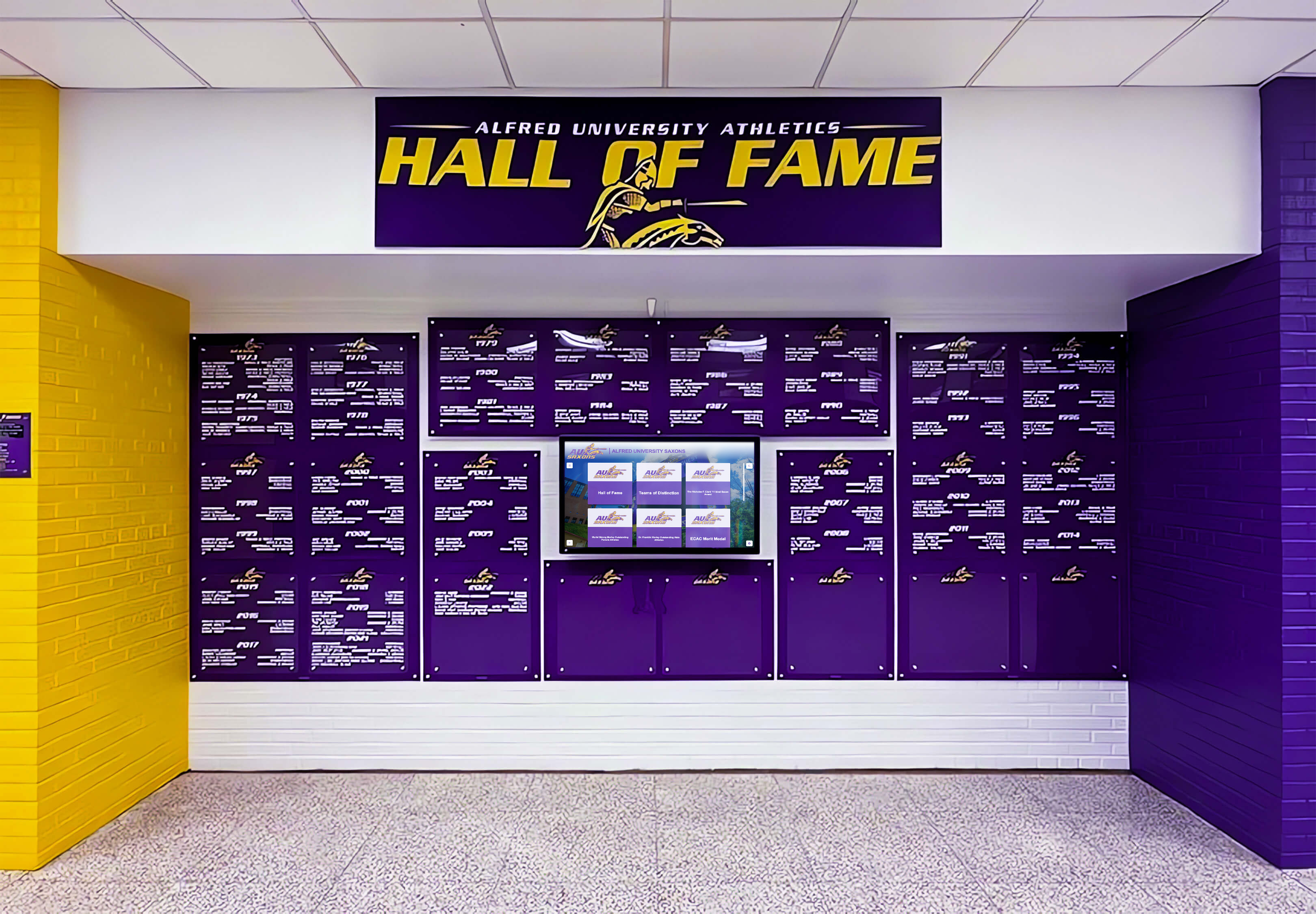
Division I Athletics Digital Recognition System: Complete Guide to Modern College Sports Recognition in 2025
Division I athletics programs face unique recognition challenges that distinguish them from smaller college athletic departments and high school sports programs. With elite athletes who go on to professional careers, championship teams competing at the highest collegiate level, extensive alumni networks spanning decades, and proud traditions demanding preservation, Division I institutions require recognition systems capable of honoring excellence at scale while engaging diverse audiences from prospective recruits to championship alumni and passionate fan communities.
Read More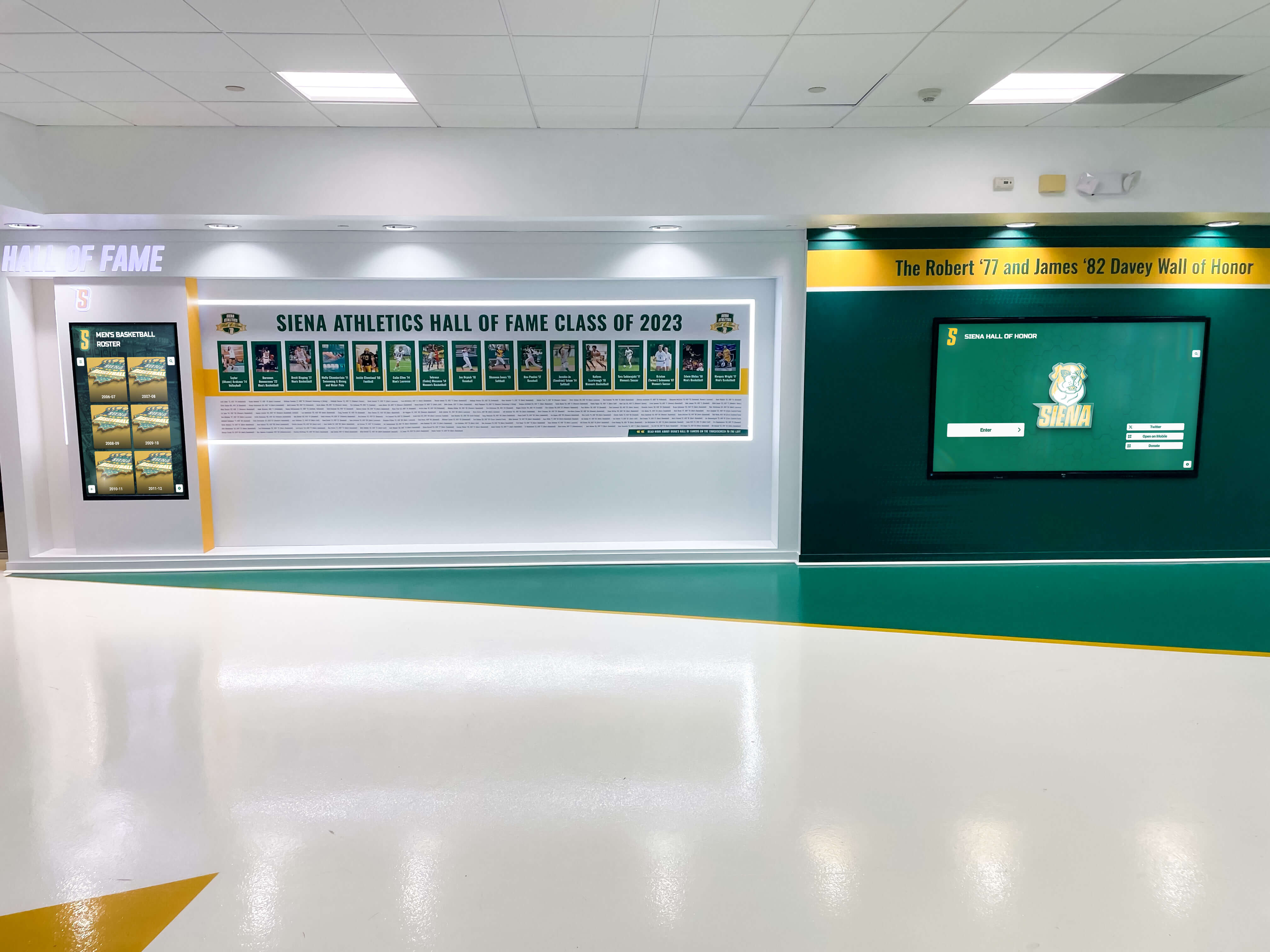
Why Many Schools Regret Rushing Into Digital Hall of Fame Software: What to Know Before You Buy in 2025
Making the wrong technology investment can haunt schools for years—draining budgets, frustrating staff, disappointing stakeholders, and ultimately delivering nothing close to the transformative recognition experience administrators envisioned when they signed the purchase order. Yet every year, hundreds of schools rush into digital hall of fame software decisions without adequate research, clear requirements, or realistic implementation plans, only to discover months later that they’ve invested thousands or tens of thousands of dollars in systems that don’t meet their needs.
Read More
Olympic Athlete Digital Hall of Fame: Complete Guide to Recognizing Elite Athletic Excellence in 2025
Olympic athlete digital hall of fame displays represent the pinnacle of sports recognition technology, enabling schools, colleges, universities, and athletic organizations to celebrate the extraordinary achievements of athletes who have competed on the world’s greatest sporting stage. From high schools that produced Olympic medalists to universities with rich Olympic traditions, these digital recognition systems transform how institutions honor elite athletic excellence while creating engaging experiences that inspire current and future athletes.
Read More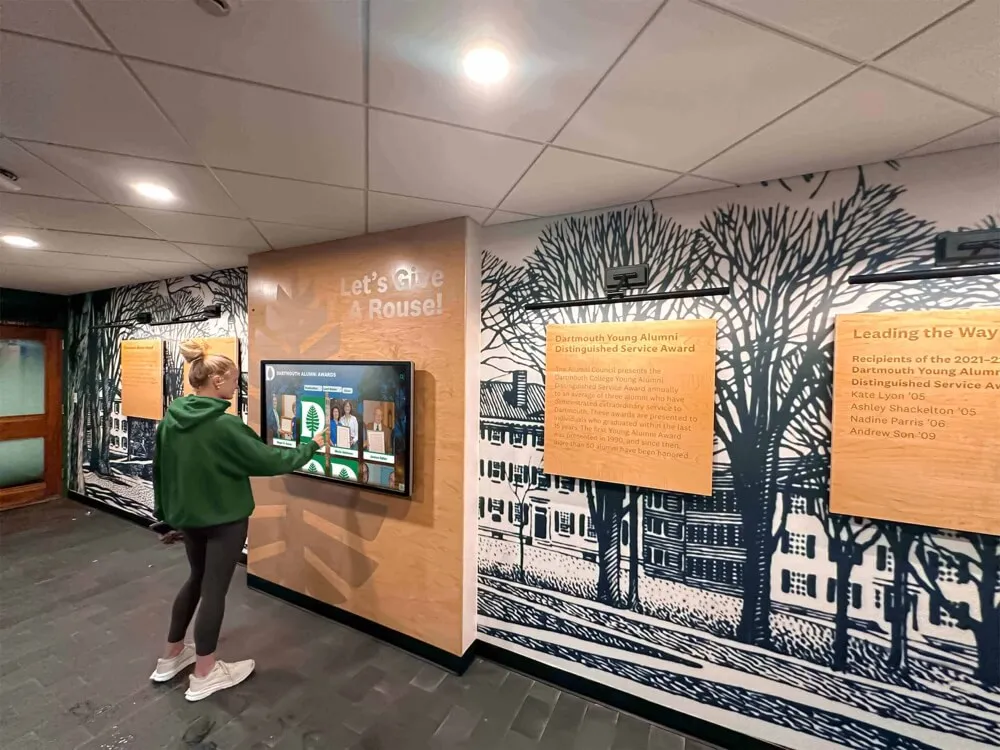
Celebrating URI's Distinguished Alumni: A Complete Guide to Interactive Touchscreen Recognition at the University of Rhode Island
The University of Rhode Island has produced an extraordinary legacy of accomplished graduates who have shaped fields ranging from oceanography to professional basketball, from journalism to business leadership, and from military service to entertainment. These distinguished alumni—including CNN correspondent John King, NBA champion Lamar Odom, Titanic discoverer Robert Ballard, and hundreds of other remarkable individuals—deserve recognition that honors their achievements while inspiring current students to pursue their own paths to excellence.
Read MoreDigital Hall of Fame Touchscreen: Complete Guide to Interactive Recognition Displays in 2025
Digital hall of fame touchscreens represent the convergence of recognition excellence and cutting-edge interactive technology, enabling schools, universities, athletic programs, and community organizations to honor achievements in ways that engage audiences far beyond what traditional static displays can accomplish. These sophisticated systems transform recognition from passive wall plaques into dynamic, explorable experiences where students, alumni, and visitors actively discover inspiring stories of excellence through intuitive touchscreen interfaces.
Read More