Accessibility
- Home /
- Categories /
- Accessibility

Digital Hall of Fame ARIA-Pressed Audit for Toggle Controls
A digital hall of fame ARIA-pressed audit is a structured accessibility review that confirms every stateful toggle control on a recognition display—favorites buttons, comparison selectors, audio toggles, filter chips, and view-switchers—correctly exposes its current pressed or unpressed state through the aria-pressed attribute so screen readers can announce it without requiring the label text to change. When aria-pressed is missing or set to a static value, a screen reader user who activates a “Save to Favorites” button hears only “Save to Favorites, button” on both activation and deactivation—there is no audible feedback that the control changed state. Adding or correcting aria-pressed to toggle between "true" and "false" dynamically solves this without touching the visible label, which is the correct pattern under WCAG 4.1.2 (Name, Role, Value).
Read More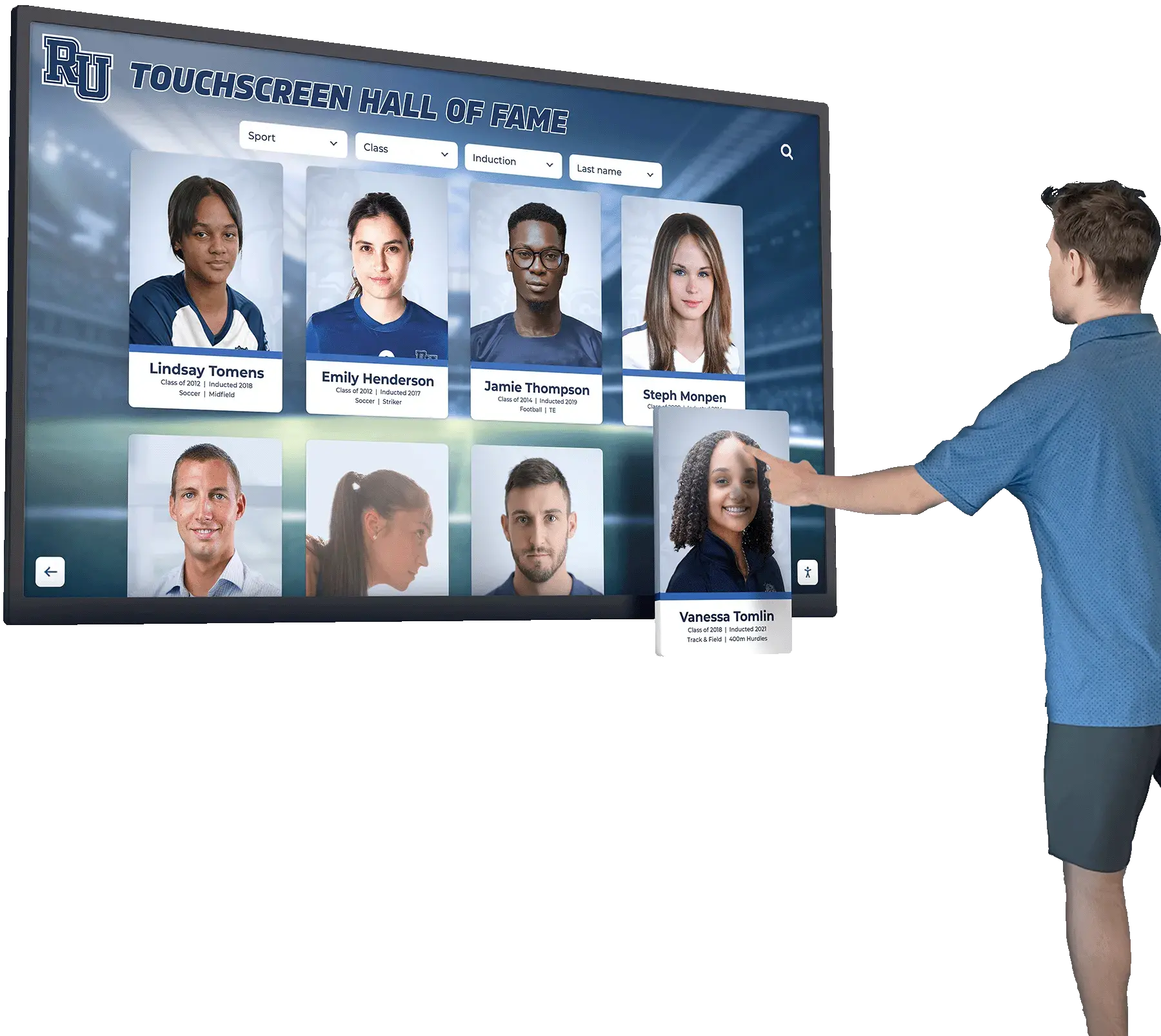
Digital Hall of Fame Audio Description Guide: Making Inductee Videos and Images Accessible to Everyone
Audio description transforms visual hall of fame stories into experiences anyone can access. When a school’s digital hall of fame showcases inductee tribute videos, archival photographs from championship seasons, and imagery of jerseys being retired, visitors who are blind or have low vision depend on audio description to understand what appears on screen. Without it, the most meaningful moments in a school’s recognition program—a coach’s tearful acceptance, a team photo from a state title run, a close-up of the hardware that defined a career—remain invisible to a portion of the audience that deserves to share in the celebration.
Read More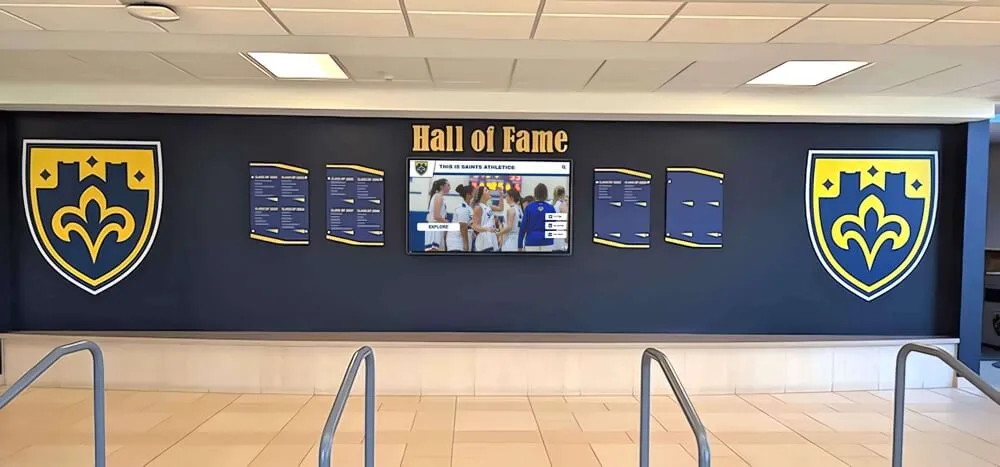
Hall of Fame Closed Captioning Guidelines for Inductee Videos
Hall of fame closed captioning guidelines give school administrators and recognition staff a repeatable standard for making inductee interview clips, ceremony highlights, and tribute videos usable across every viewing context—lobby touchscreen kiosks, noisy cafeteria screens, classroom presentations, and public websites. The short answer: captions on all public-facing hall of fame videos are both an accessibility requirement and a practical necessity, because many of those videos play in high-traffic hallways where audio is inaudible without speakers or headphones.
Read MoreWCAG-Compliant Digital Recognition Displays: Accessibility Standards for Schools in 2026
WCAG-compliant recognition displays ensure that every member of your school community—regardless of visual, auditory, motor, or cognitive abilities—can fully access and engage with the achievements, honors, and stories that define your institution’s excellence. As schools increasingly adopt digital displays to celebrate students, alumni, and donors, accessibility compliance has shifted from optional consideration to legal requirement and moral imperative.
Read More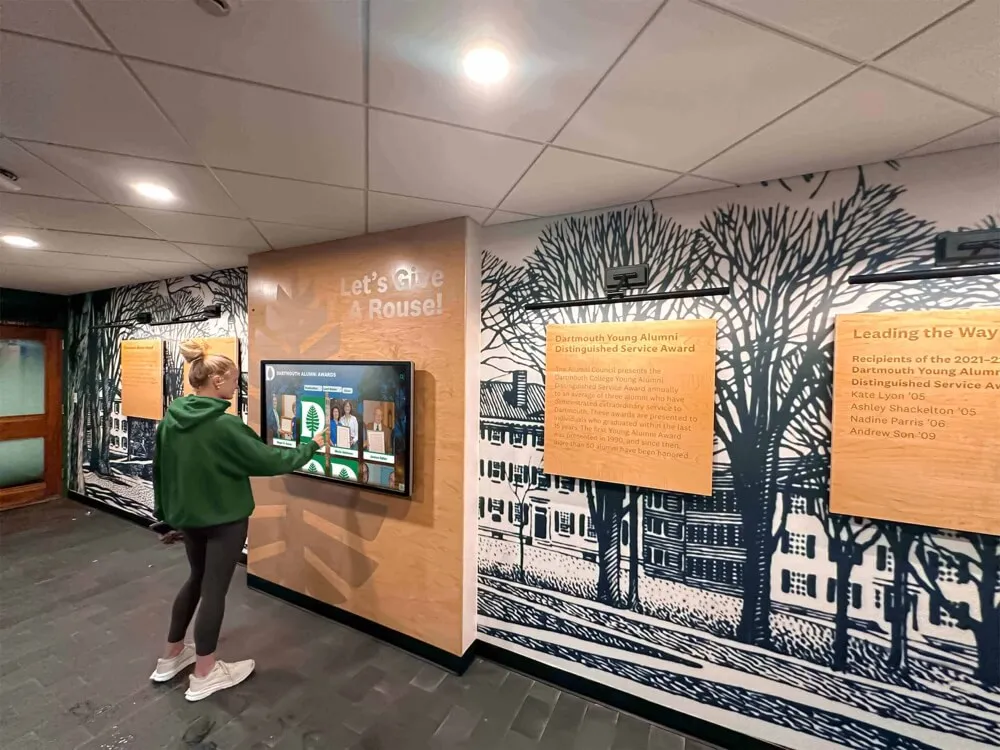
Rocket Touchscreen WCAG 2.2 AA Accessible: Why Web Accessibility Standards Matter for Interactive Displays
When schools, universities, and organizations invest in interactive touchscreen displays for recognition and engagement, ensuring accessibility for all community members isn’t just a legal requirement—it’s a fundamental commitment to inclusive excellence. WCAG 2.2 AA compliance represents the global standard for digital accessibility, defining specific criteria that make interactive content perceivable, operable, understandable, and robust for people with diverse abilities including vision, hearing, motor, and cognitive differences.
Read More
WCAG 2.2 AA Compliance: Complete Accessibility Guide for Digital Recognition Displays in 2026
Schools, universities, athletic programs, and organizations implementing digital recognition displays face a fundamental responsibility: ensuring these systems remain accessible to every community member regardless of vision, hearing, mobility, or cognitive abilities. WCAG 2.2 AA compliance provides the internationally recognized standard for digital accessibility, establishing specific technical requirements that make touchscreen displays, web-based recognition platforms, and interactive content usable by people with diverse abilities and assistive technology needs.
Read More