



Small to medium public high schools face a unique challenge: how to celebrate every student achievement meaningfully when budgets are tight, space is limited, and administrative time is stretched thin. Traditional trophy cases fill up quickly, wall plaques become expensive, and maintaining multiple recognition systems across athletics, academics, arts, and activities becomes overwhelming for staff already managing countless responsibilities.
Digital recognition displays offer small and medium-sized high schools a practical solution that addresses these constraints while actually expanding recognition capabilities beyond what traditional methods could ever accomplish. These interactive systems consolidate all forms of recognition into flexible digital platforms that grow with your school, require minimal maintenance, and ensure no achievement goes uncelebrated regardless of budget limitations.
This guide examines why digital recognition displays work particularly well for schools with 200-1,200 students, exploring budget considerations, space efficiency, administrative simplicity, and how these systems help smaller schools create the same professional recognition culture as their larger counterparts without the infrastructure and staffing those institutions enjoy.
Small and medium public high schools operate in a distinct reality from larger institutions. With fewer resources, smaller facilities, and staff members wearing multiple hats, these schools need recognition solutions that deliver maximum impact while requiring minimal ongoing investment of time and money.

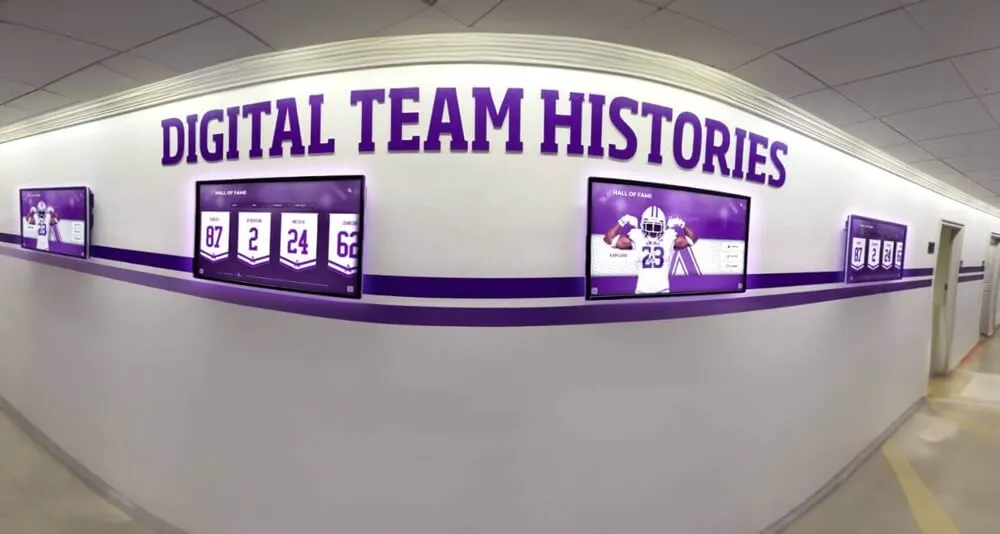
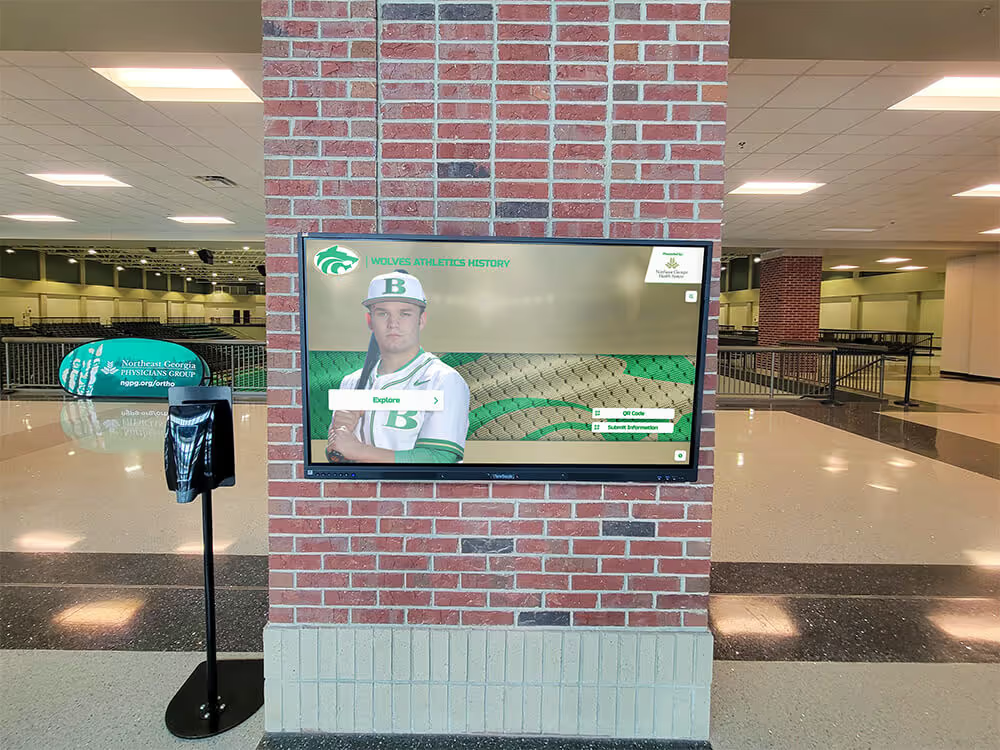
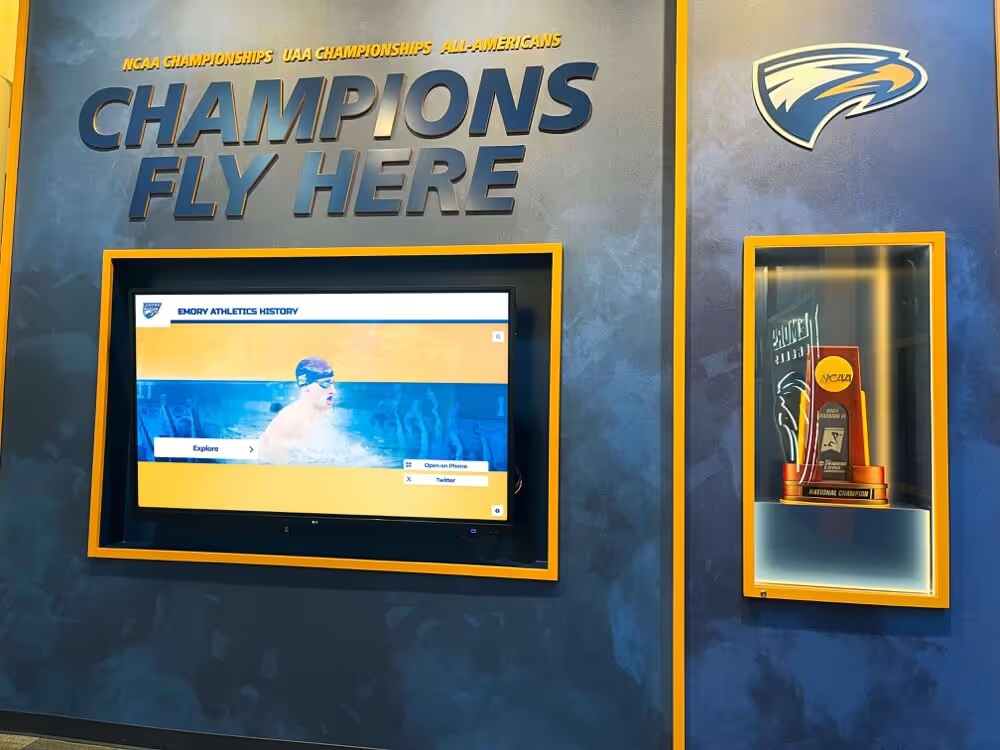
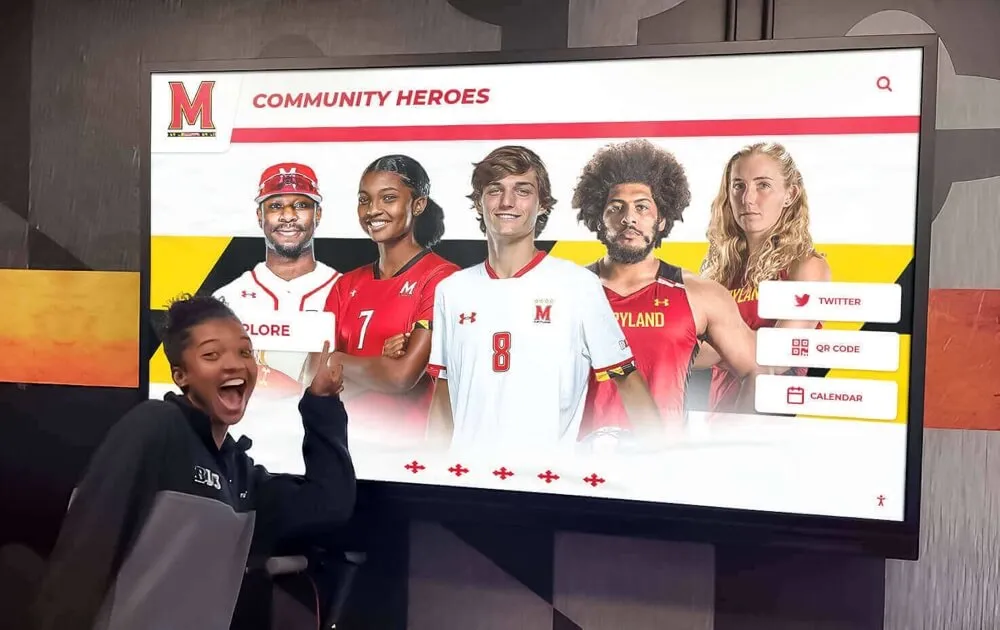
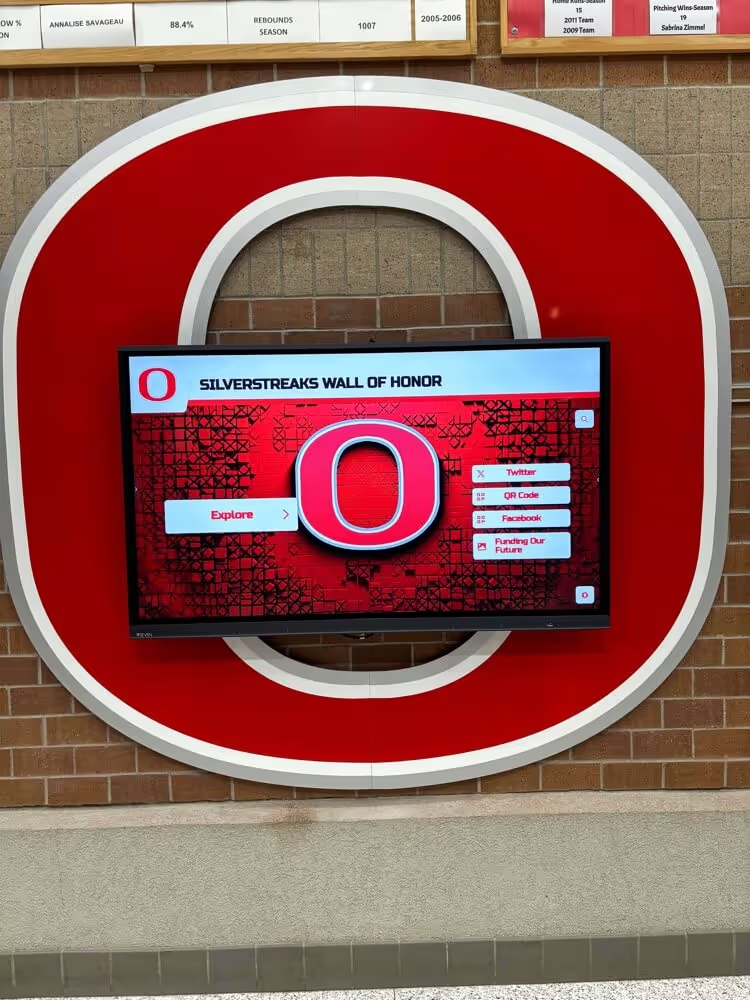
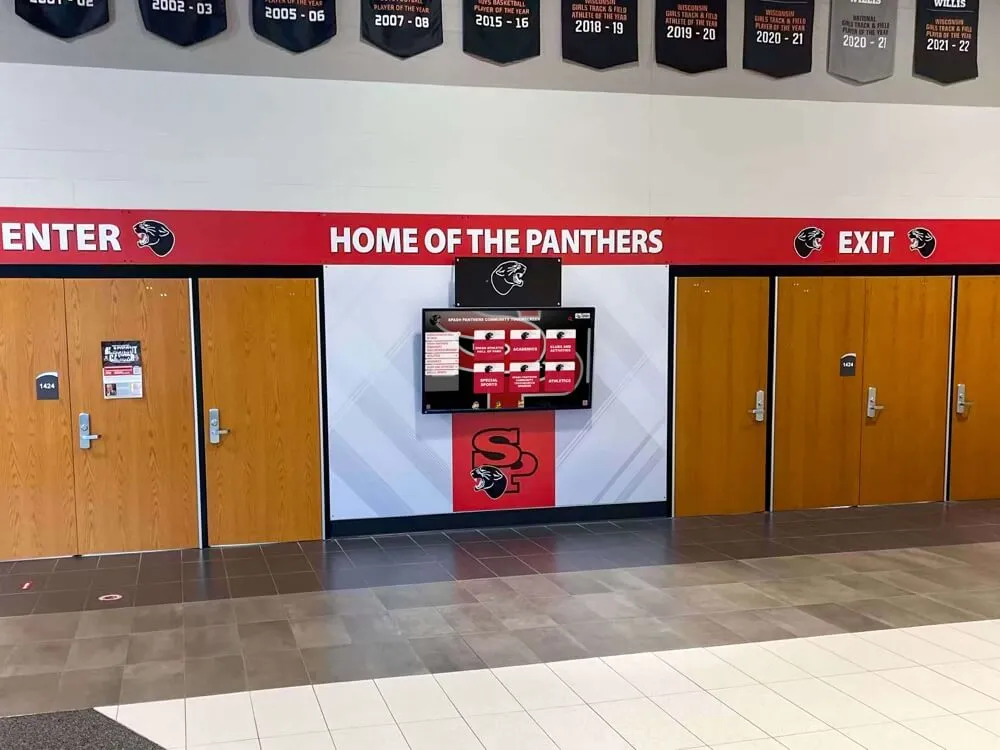
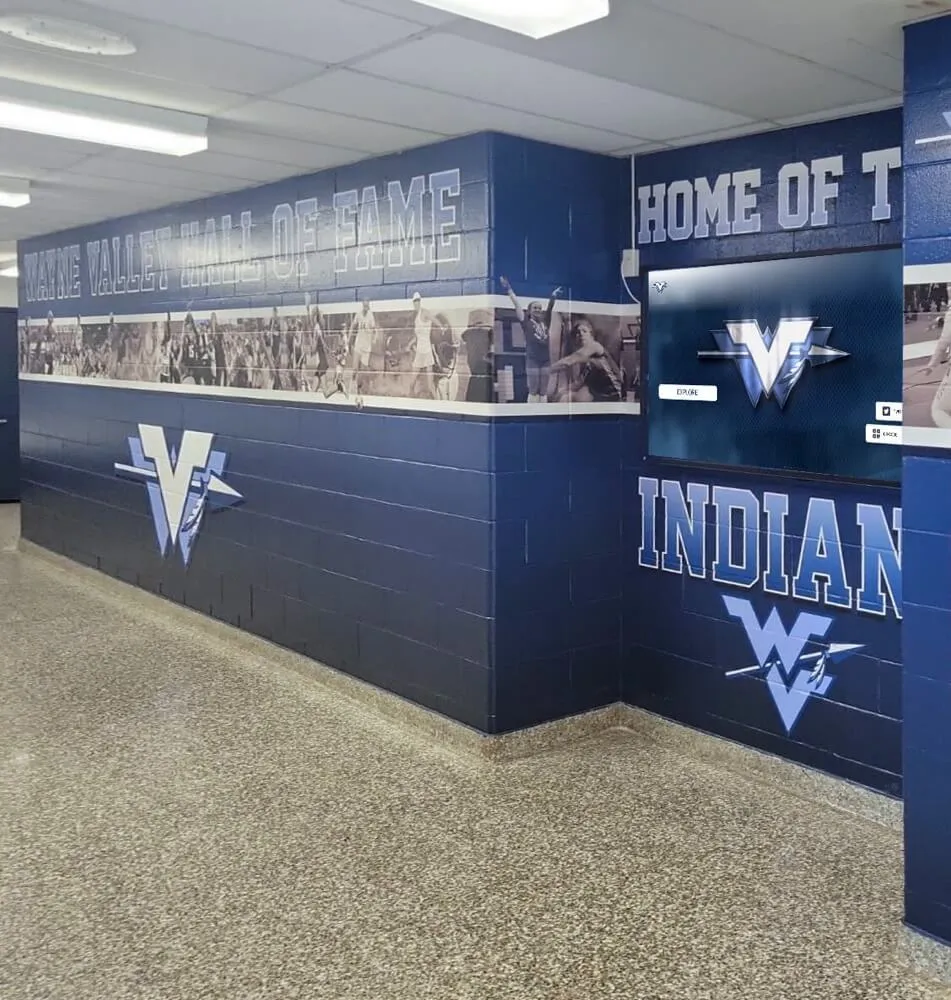
Digital displays create engaging recognition experiences that students actually stop to explore
The Budget Reality for Small to Medium High Schools
Schools serving 200-1,200 students typically operate with significantly different financial constraints than larger institutions, making every investment decision critical and requiring solutions that demonstrate clear value relative to cost.
Understanding Small School Budget Constraints
Budget limitations shape every aspect of school operations and recognition programs in smaller institutions.
Typical Budget Characteristics
Small to medium public high schools commonly face:
- Limited discretionary funds with most budget allocated to essential operations
- Competing priorities for available resources across academic, athletic, and facility needs
- Grant dependency for many special projects and technology purchases
- Community fundraising through boosters and parent organizations supplementing budgets
- Multi-year planning required for larger investments exceeding annual allocations
- Justification requirements demonstrating value and benefit for every expenditure
These realities mean recognition investments must deliver lasting value, serve multiple purposes, and remain financially accessible without requiring major capital campaigns or grant writing efforts beyond typical school capacity.
According to the National Center for Education Statistics, small public high schools (under 500 students) spend an average of $12,500 per student annually, with only a small percentage available for recognition and engagement initiatives beyond core educational programs.
How Digital Displays Address Budget Concerns
Modern digital recognition systems provide cost structures that align better with small school budgets than traditional approaches.
Initial Investment Considerations
Digital recognition displays require upfront investment but offer advantages over time:
- Single comprehensive system replacing multiple separate recognition methods
- Subscription pricing spreading costs across years rather than large one-time expenses
- Scalability allowing schools to start small and expand as budgets allow
- Grant eligibility with technology and student engagement funding sources
- Long equipment lifespan with commercial displays lasting 7-10 years of continuous use
- Predictable costs through clear pricing without hidden fees or surprise expenses
Solutions like Rocket Alumni Solutions offer unlimited screens without hidden costs, allowing schools to recognize achievements across multiple locations without per-display charges that quickly become prohibitive.
Long-Term Cost Comparison
Digital systems often prove more economical than traditional methods:
- No manufacturing costs for physical plaques, trophies, or engraving
- Unlimited recognition capacity without purchasing additional display space
- Remote content updates eliminating physical labor for recognition changes
- Consolidated systems reducing total cost of ownership across programs
- Reusable platform serving athletics, academics, arts, and activities simultaneously
- Energy efficiency with modern displays consuming minimal power
Schools report that after the initial investment period, digital recognition displays actually reduce annual recognition costs while simultaneously expanding the number of students celebrated and the depth of recognition provided.

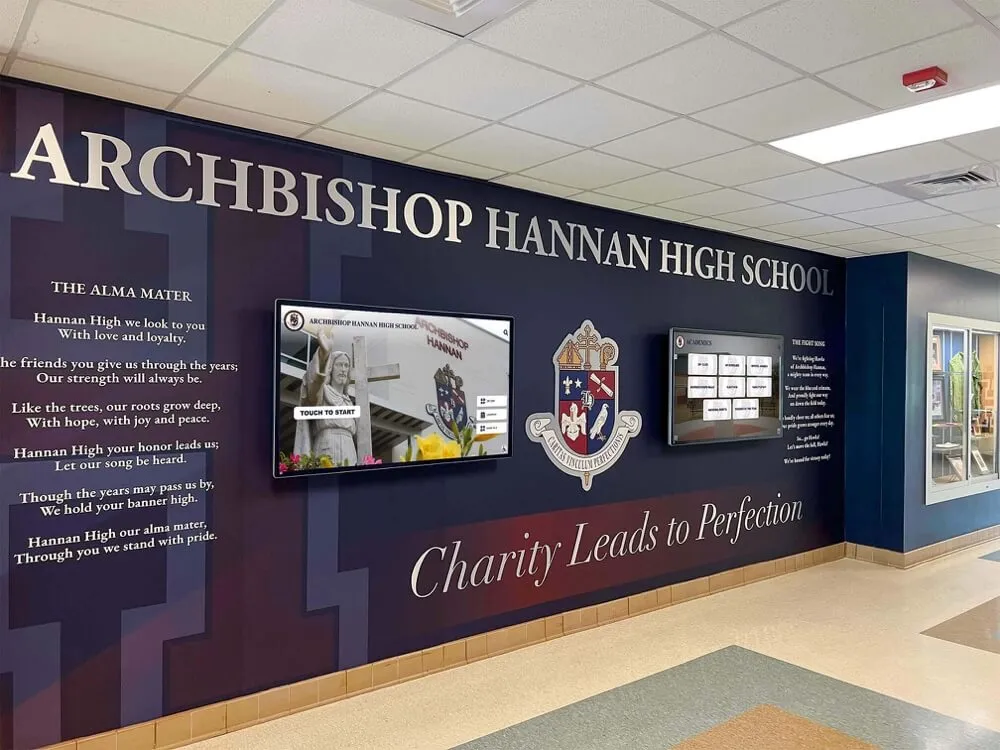
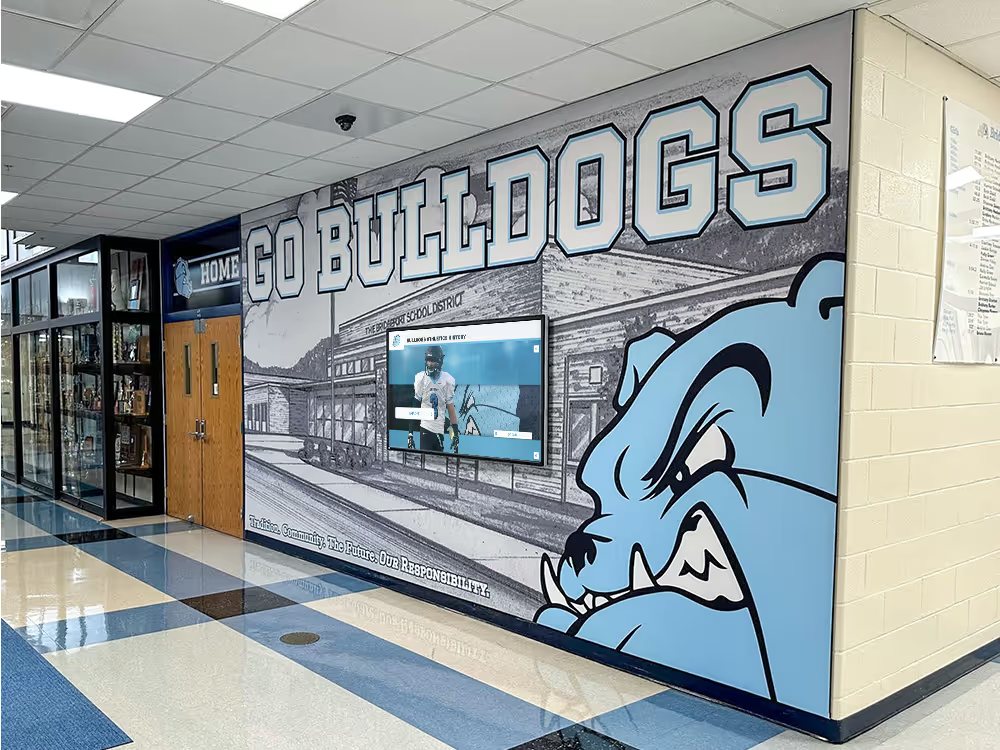
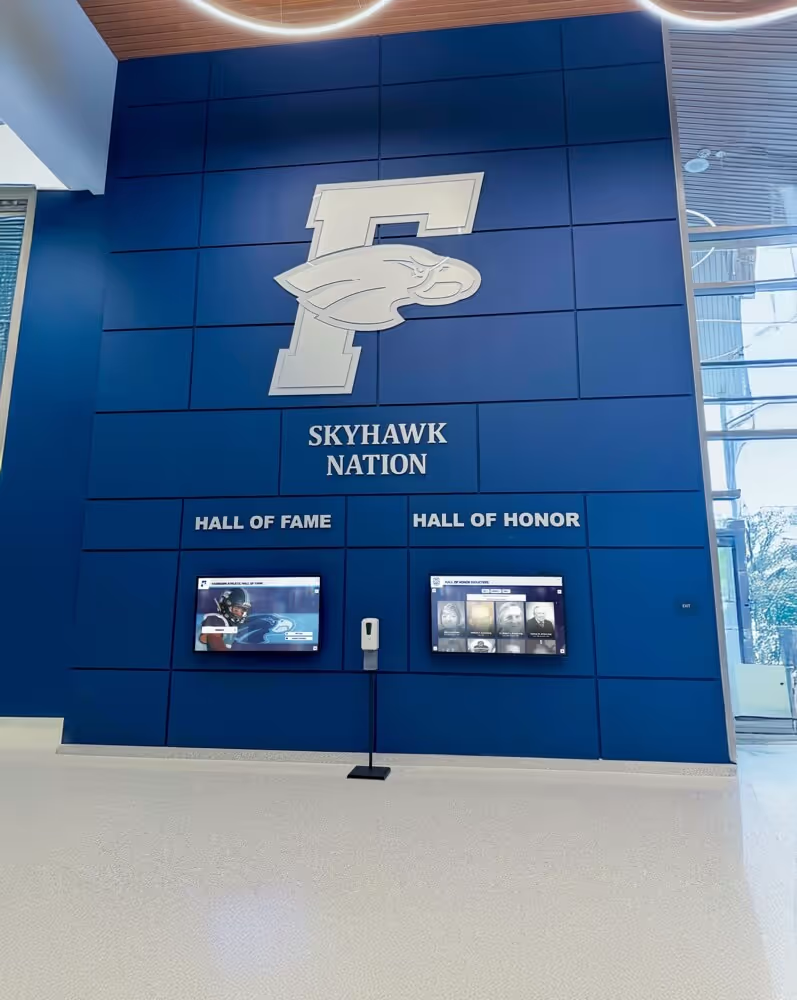
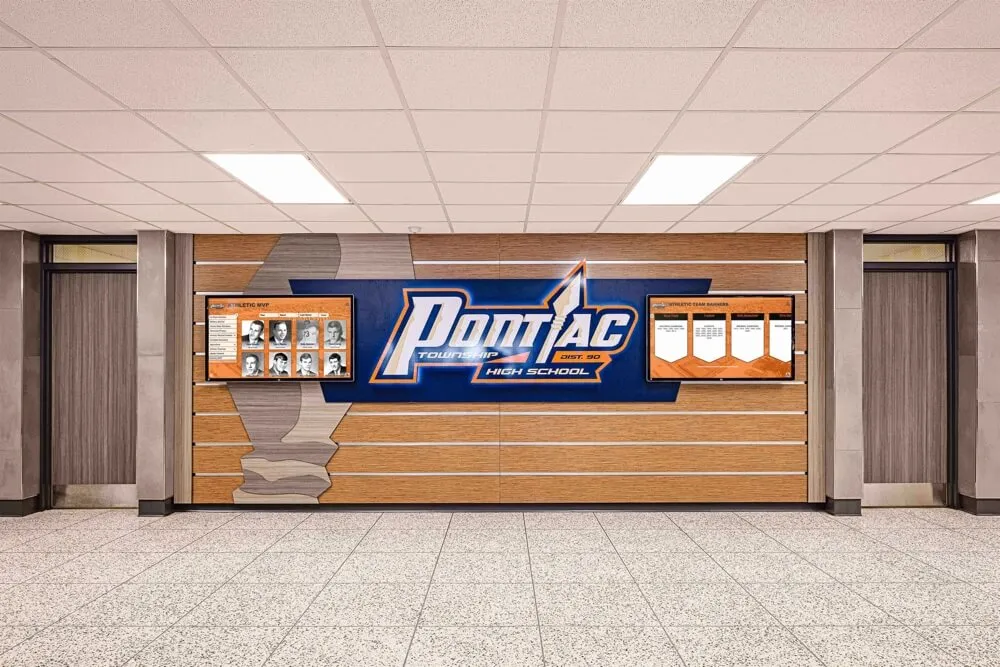
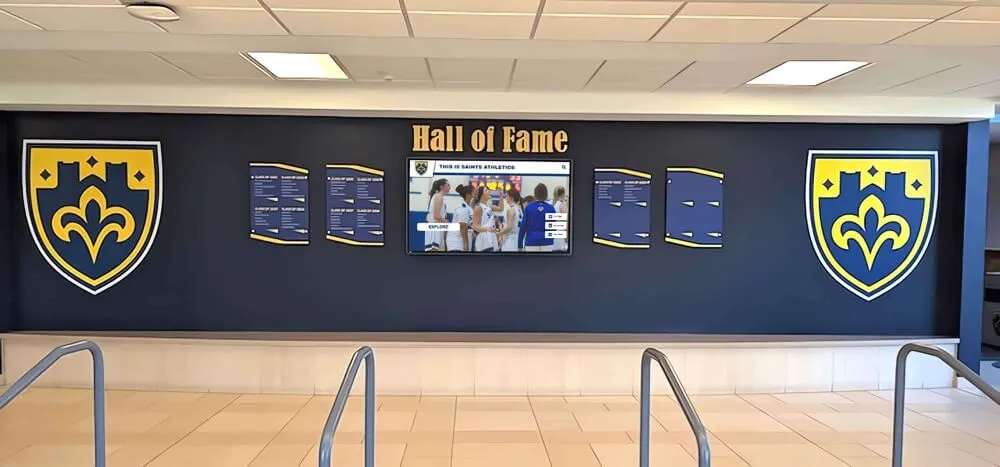
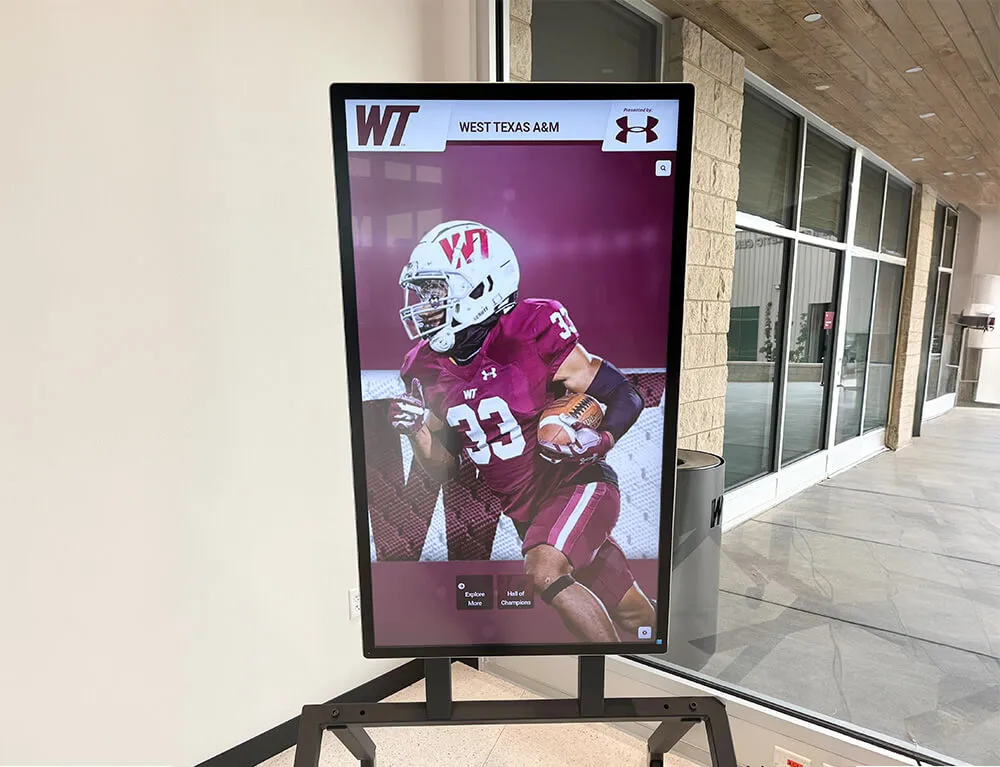
Digital displays integrate smoothly into existing school spaces without expensive renovations
Space Efficiency Benefits for Smaller Facilities
Physical space represents a precious commodity in small to medium high schools where every square foot serves multiple purposes and adding dedicated recognition areas often proves impossible.
Space Constraints in Small School Buildings
Smaller schools face facility limitations that directly impact recognition capabilities.
Common Space Challenges
Small to medium high schools typically experience:
- Limited lobby space with entrances serving multiple functions simultaneously
- Smaller hallways providing less wall space for traditional displays
- Multipurpose facilities where rooms serve different programs throughout the day
- Trophy case capacity quickly exceeded by even modest recognition programs
- Display competition with numerous programs competing for finite wall space
- Maintenance access requiring regular physical visits to update traditional displays
These constraints force difficult decisions about which achievements receive recognition and which programs must accept limited visibility due to simple lack of space rather than actual priority.
How Digital Displays Maximize Space Utilization
Interactive digital recognition systems deliver exponentially more recognition capacity within the same physical footprint as traditional displays.
Space Efficiency Advantages
Digital solutions provide:
- Single display replacing dozens of plaques with unlimited digital recognition profiles
- Vertical space optimization utilizing wall areas for comprehensive multi-program recognition
- No physical storage of plaques, trophies, or recognition materials
- Shared spaces with single displays serving athletics, academics, and activities
- Flexible positioning in lobbies, hallways, athletic facilities, or libraries
- Clean aesthetics without cluttered walls or overflowing trophy cases
A single 55-inch touchscreen display occupies approximately 4 square feet of wall space but can celebrate thousands of student achievements across unlimited categories—the equivalent space efficiency of hundreds of traditional plaques or dozens of trophy cases.
Schools implementing digital displays for student recognition commonly report being able to recognize 3-5 times more achievements in the same physical space previously dedicated to recognition.

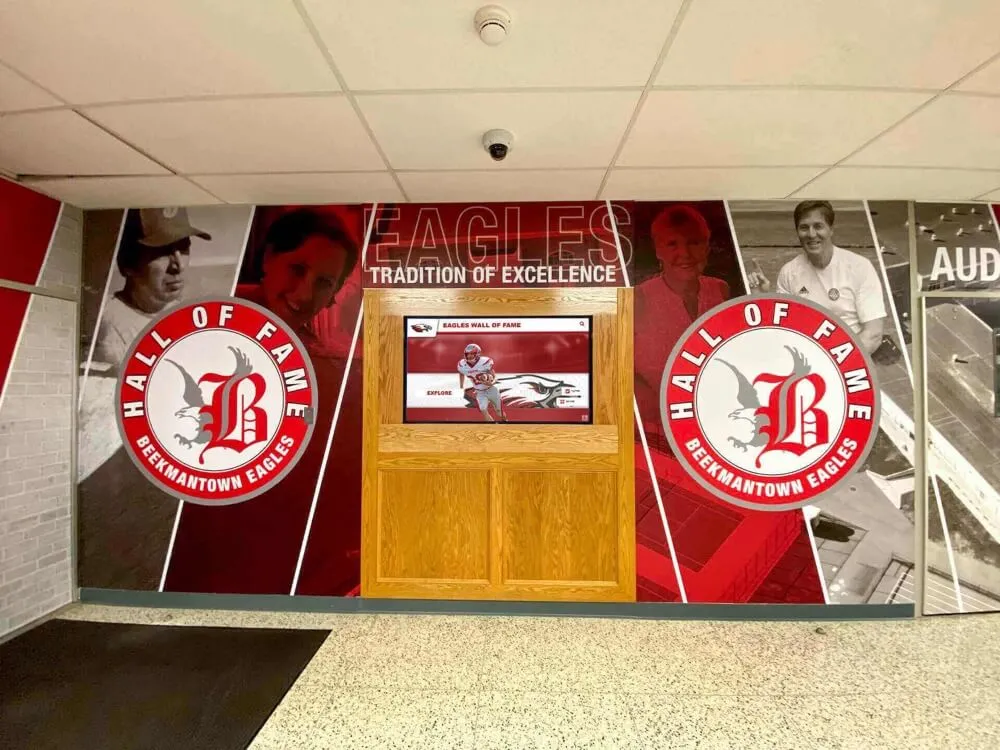
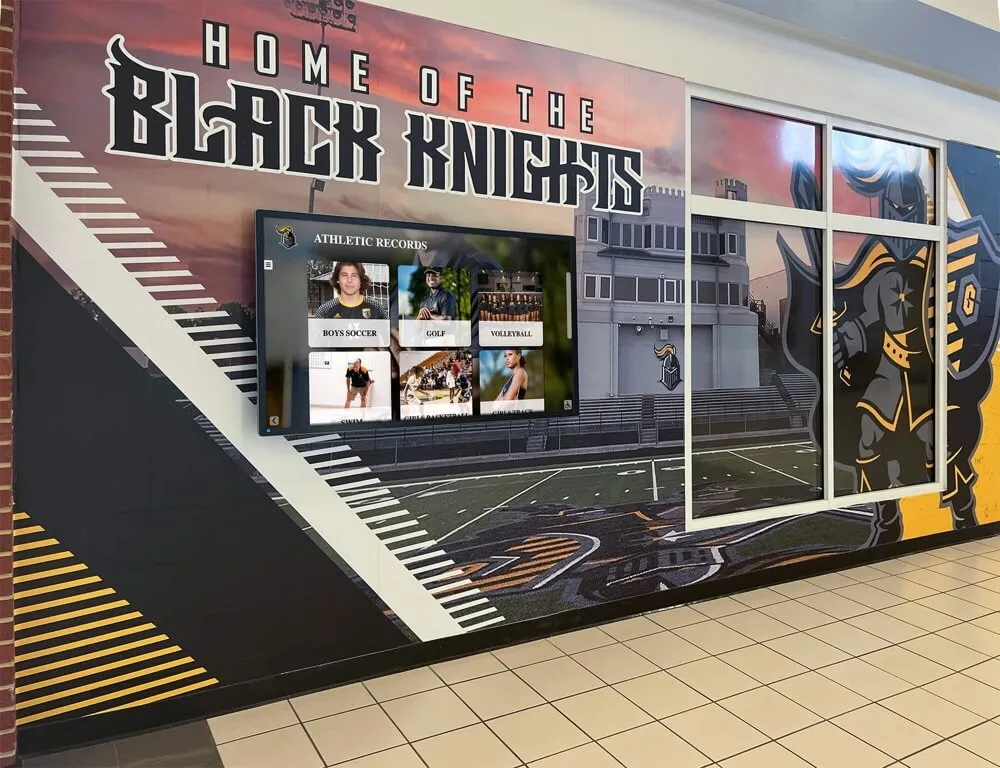
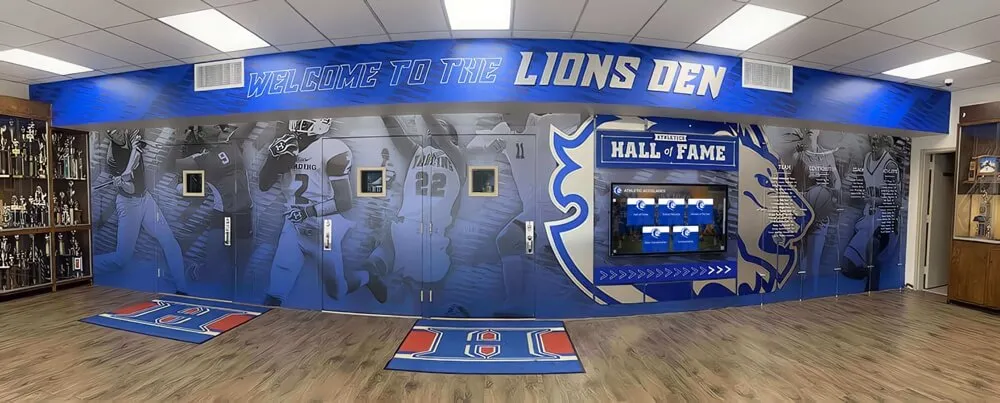
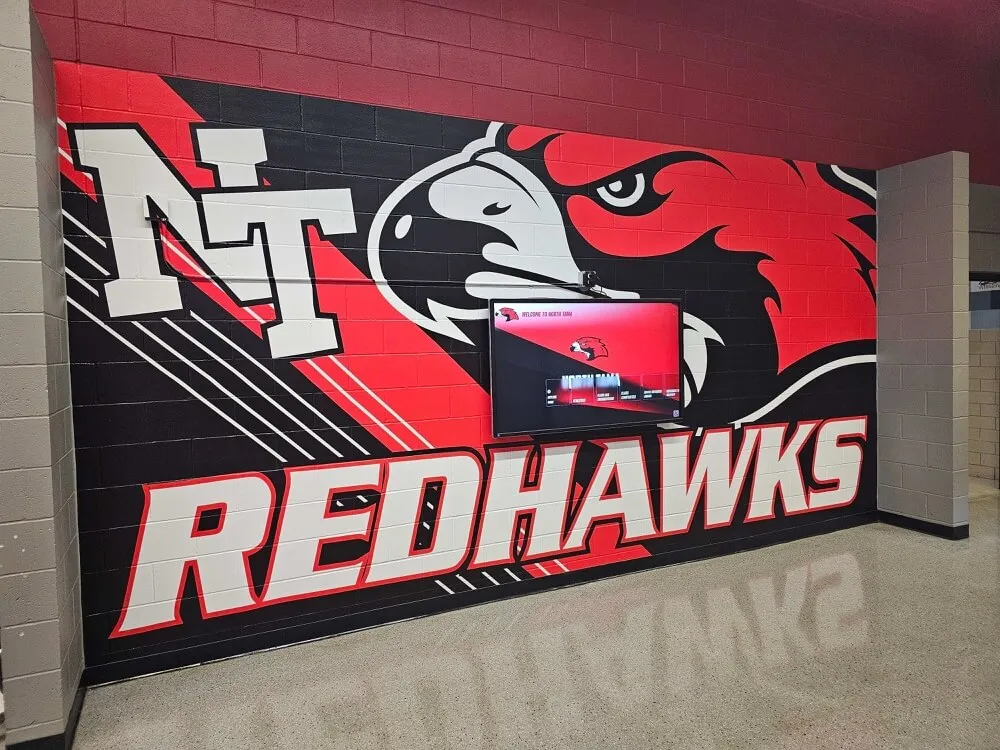
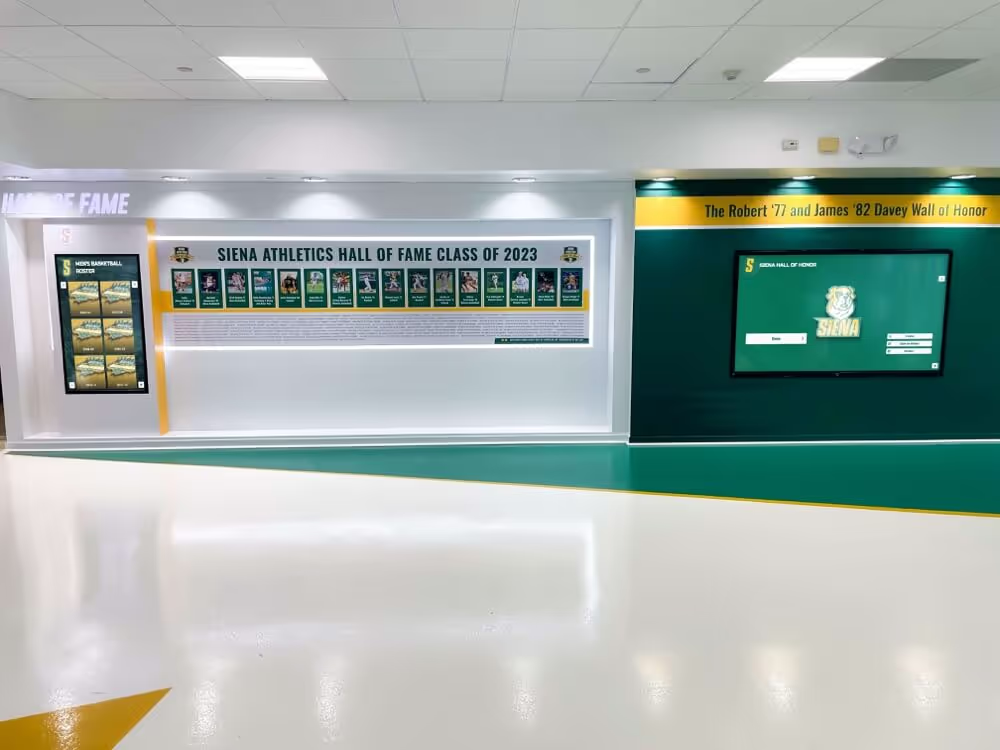
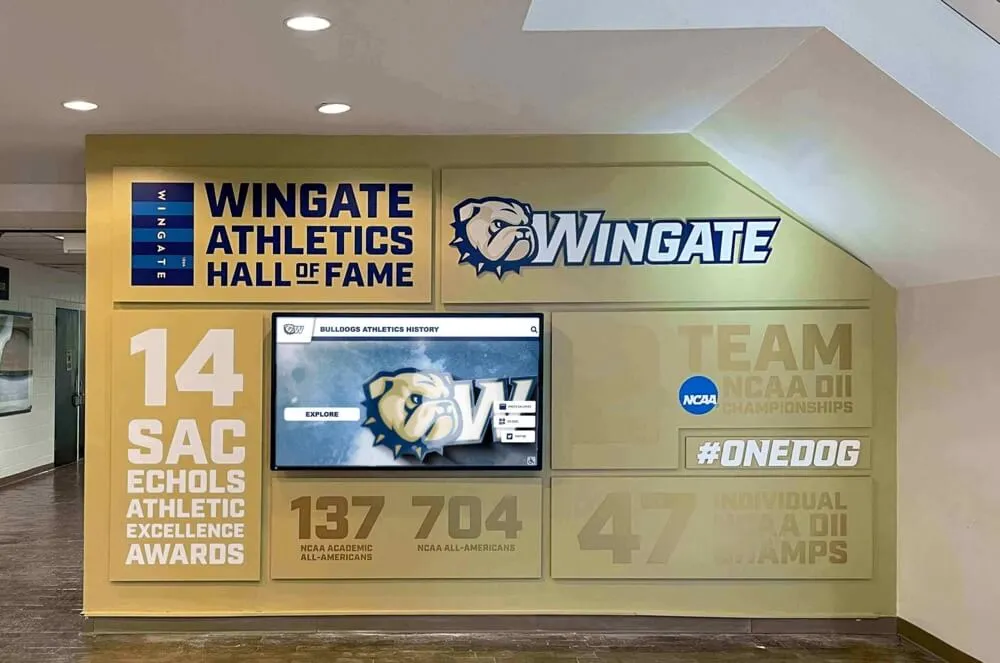
Modern recognition systems complement school branding while maximizing limited space
Administrative Simplicity for Multi-Tasking Staff
Small school staff members typically manage far more responsibilities than their counterparts at larger institutions, making administrative simplicity essential for any recognition system’s sustained success.
The Reality of Small School Staffing
Administrative capacity represents a significant constraint affecting recognition program maintenance.
Staffing Characteristics
Small to medium high schools commonly feature:
- Athletic directors teaching classes in addition to coordinating sports programs
- Principals handling multiple roles from discipline to facilities to recognition
- Limited administrative staff with secretaries managing diverse responsibilities
- Teacher-coaches balancing instruction with coaching multiple sports
- Volunteer dependence on parents and boosters for many support functions
- No dedicated technology staff for managing display systems and content updates
These realities mean recognition systems must be genuinely simple to manage rather than requiring technical expertise, extensive training, or significant ongoing time investment that competes with core educational responsibilities.
How Digital Systems Reduce Administrative Burden
Modern recognition platforms designed for educational environments prioritize simplicity and efficiency.
User-Friendly Management Features
Professional systems provide:
- Intuitive web-based interfaces requiring no specialized software or technical knowledge
- Template-driven content with clear fields and guided workflows
- Drag-and-drop media upload directly from computers or mobile devices
- Collaborative permissions allowing multiple staff members to contribute content
- Scheduled publishing coordinating recognition announcements with school events
- Remote updates from any internet-connected device without physical display access
Administrators report spending 10-15 minutes updating digital recognition displays compared to hours required for traditional plaque ordering, engraving coordination, and physical installation of conventional recognition materials.
Reduced Ongoing Maintenance
Digital platforms eliminate numerous traditional tasks:
- No physical display cleaning or polishing
- No engraving coordination with outside vendors
- No installation labor for new plaques or nameplates
- No storage management for outdated recognition materials
- No display space reorganization as recognition accumulates
- No physical access required for every content update
Solutions like Rocket Alumni Solutions provide comprehensive support including training, technical assistance, and content guidance ensuring even the busiest administrators can confidently manage recognition displays without overwhelming existing responsibilities.
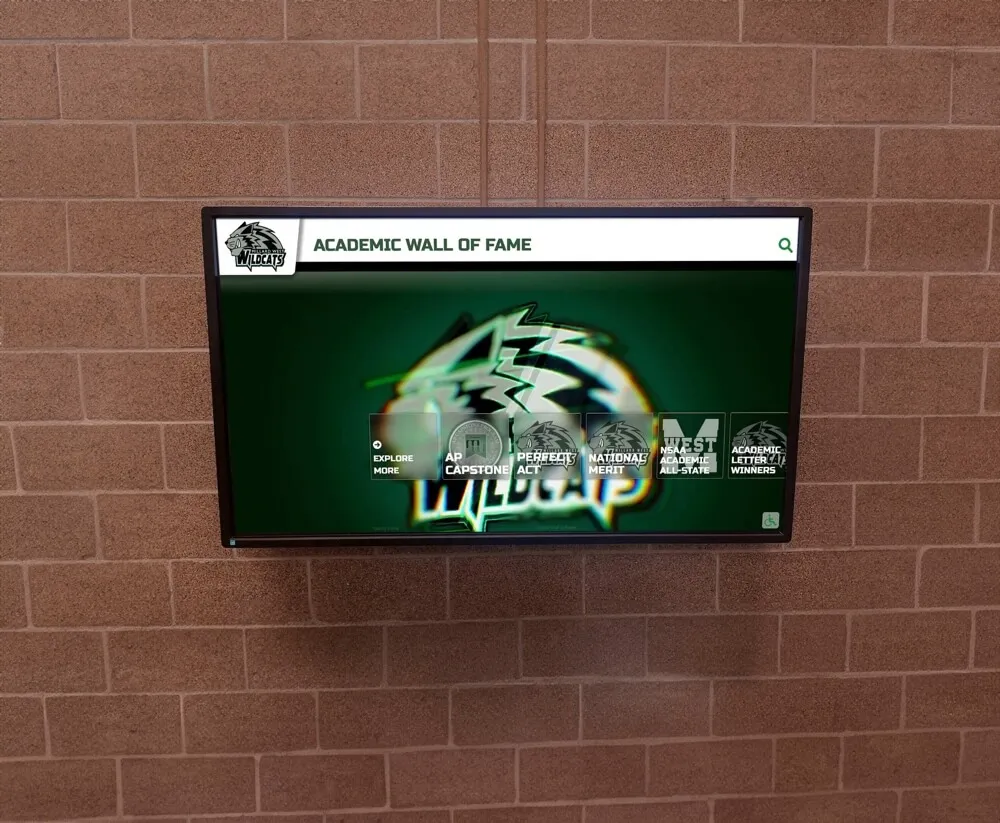
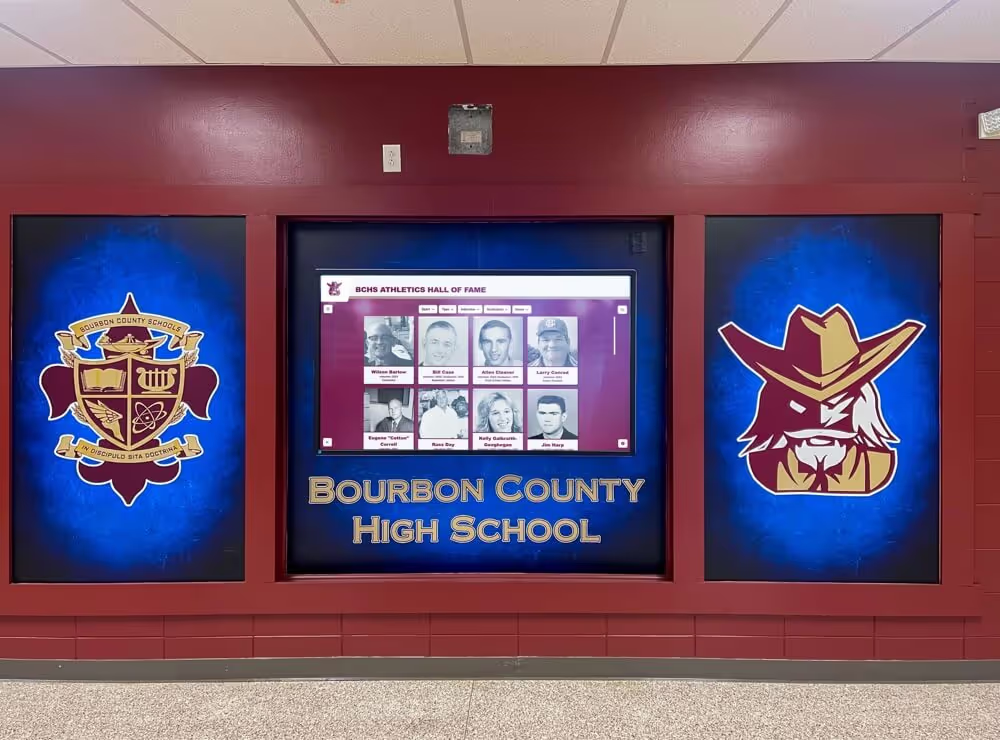
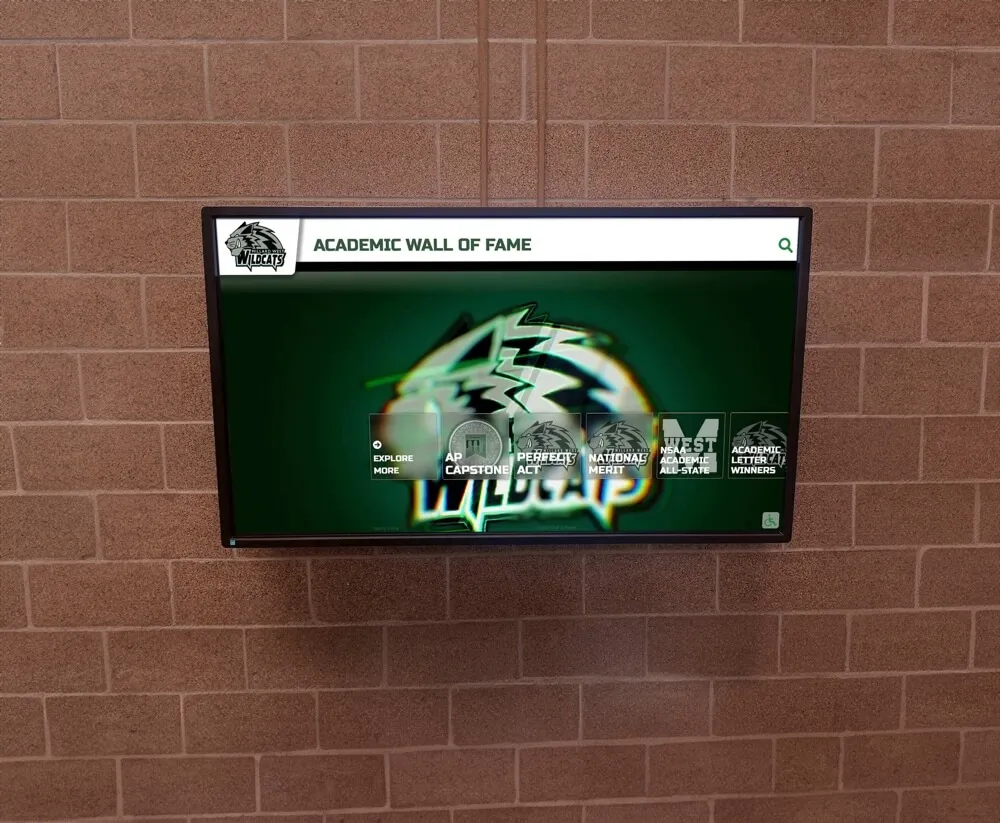
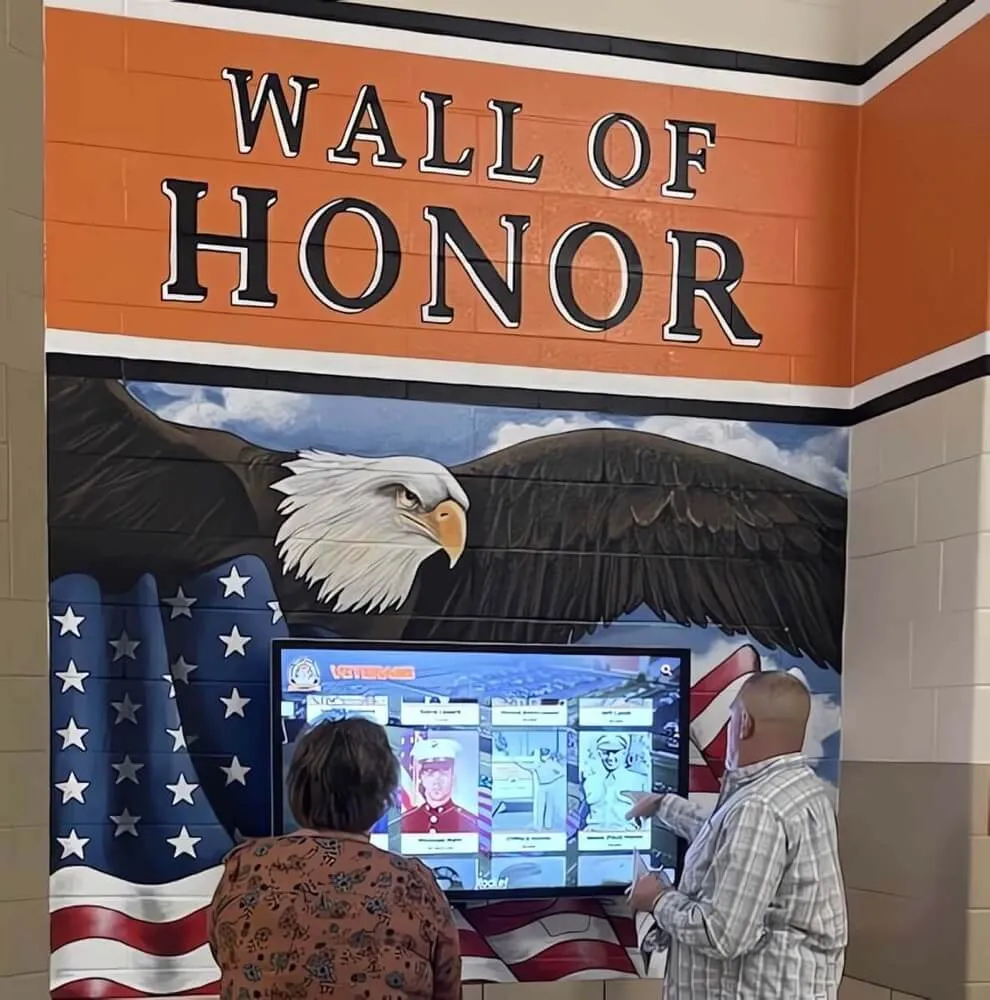
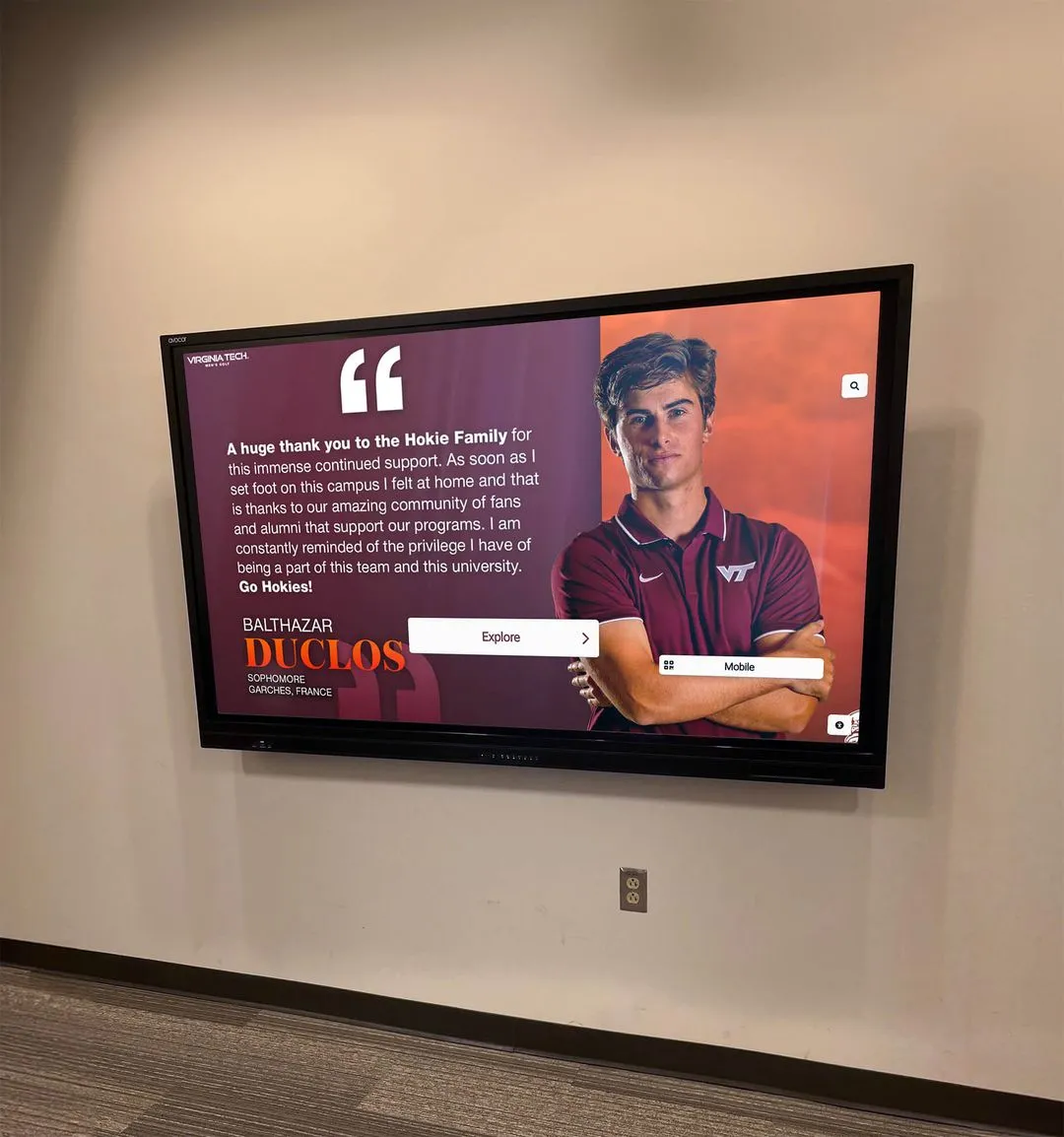
Academic recognition receives equal prominence alongside athletic achievements
Comprehensive Recognition Across All Programs
Small schools benefit when recognition systems celebrate achievements across all activities rather than prioritizing some programs while others receive minimal visibility.
The Challenge of Equitable Recognition
Limited resources often force smaller schools to prioritize certain programs over others for recognition investment.
Common Recognition Imbalances
Traditional approaches typically result in:
- Athletic emphasis with trophy cases dominated by sports achievements
- Varsity focus while JV and freshman accomplishments receive little recognition
- Popular sport preference with football and basketball overshadowing other activities
- Academic underrepresentation due to limited space and budget for academic recognition
- Arts and activities neglect as band, theater, and clubs compete for remaining space
- Individual achievement gaps with team success more visible than personal accomplishments
These imbalances create perceptions that schools value certain activities more than others, which may discourage student participation in less-visible programs despite genuine school commitment to comprehensive education.
How Digital Platforms Enable Equitable Recognition
Unlimited digital capacity removes artificial constraints forcing schools to choose which achievements to celebrate.
Comprehensive Recognition Capabilities
Digital systems accommodate:
- Athletics across all sports from varsity to freshman levels
- Academic achievements including honor roll, AP scholars, and individual subject excellence
- Arts recognition celebrating theater, band, choir, visual arts, and creative accomplishments
- Activity achievements honoring clubs, student government, and community service
- Individual milestones alongside team success across all programs
- Historical preservation ensuring past achievements remain visible alongside current recognition
This comprehensive approach better reflects the actual breadth of student achievement in small schools where individual students often participate in multiple programs and deserve recognition for diverse accomplishments.
Schools implementing student recognition award displays report increased student engagement as more participants see their achievements celebrated publicly.
Academic Recognition Examples
Digital platforms easily accommodate:
- Honor roll recognition by semester
- National Honor Society inductees
- Academic letter winners
- AP Scholar designations
- Perfect attendance achievements
- Scholarship recipients
- Valedictorian and salutatorian history
- Subject-specific awards and competitions
These academic achievements receive equal visual prominence as athletic recognition, reinforcing that schools value excellence across all domains.
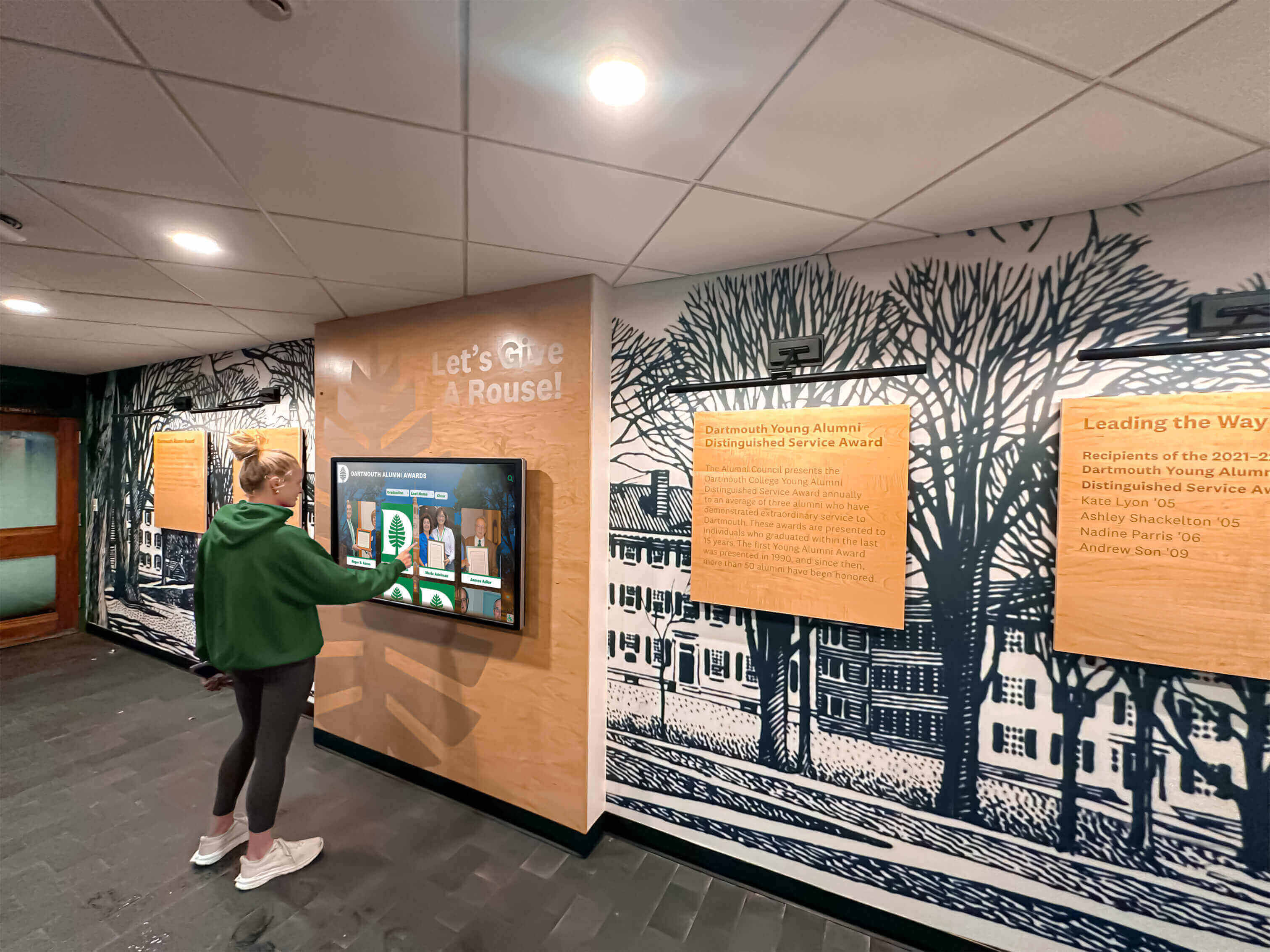
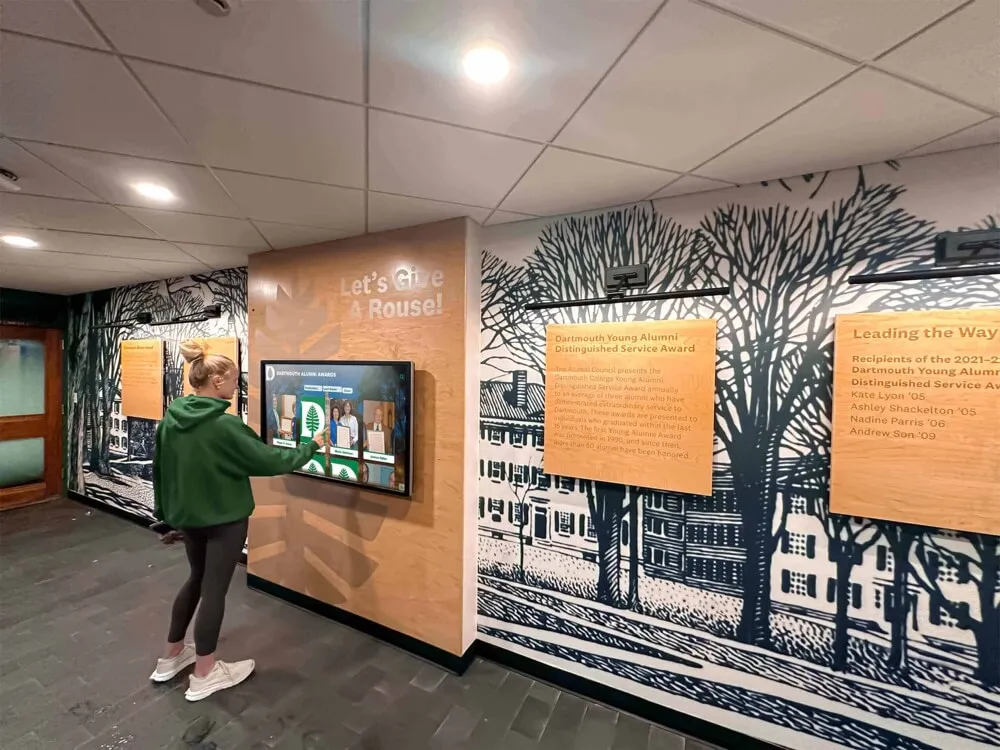
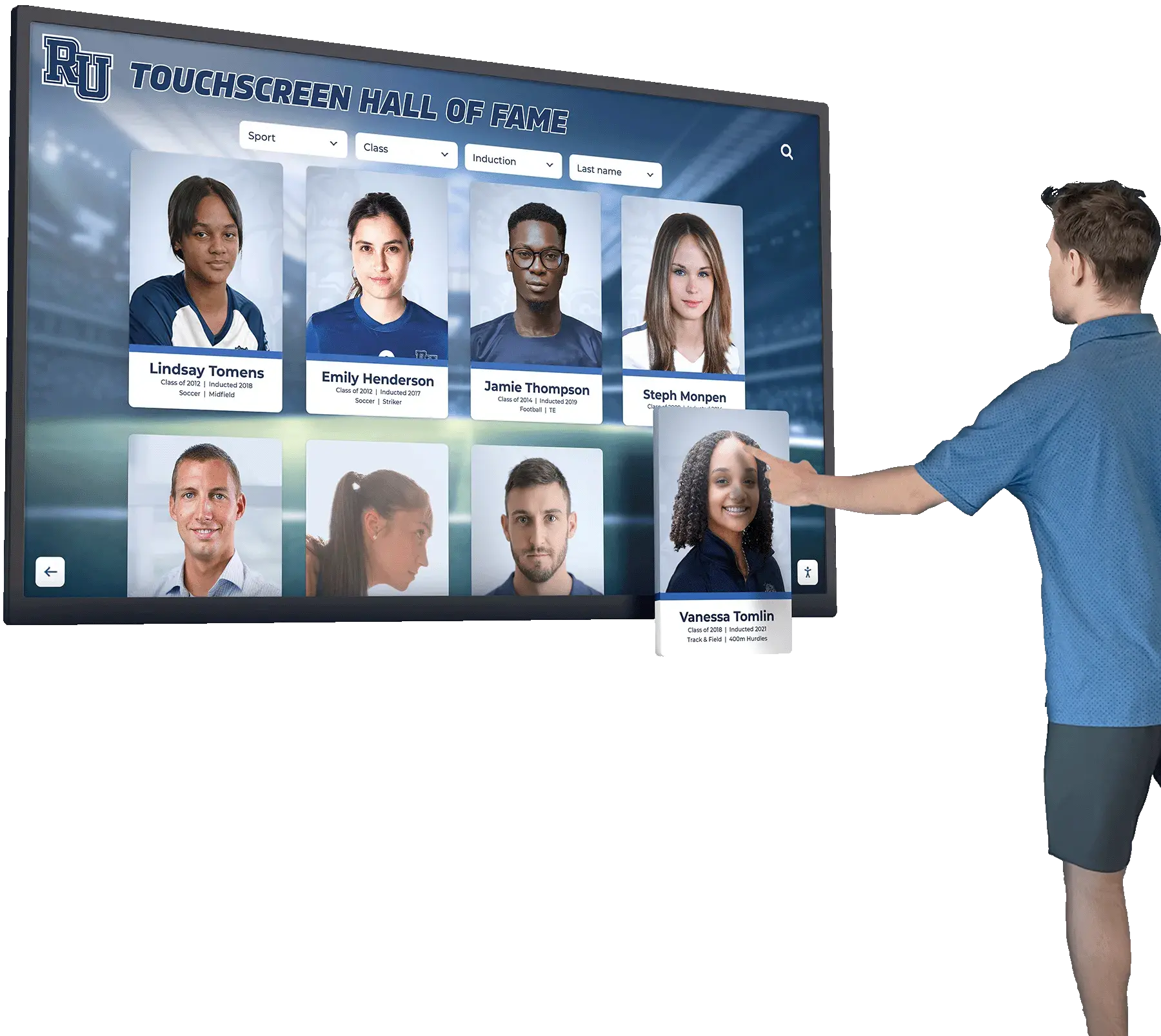
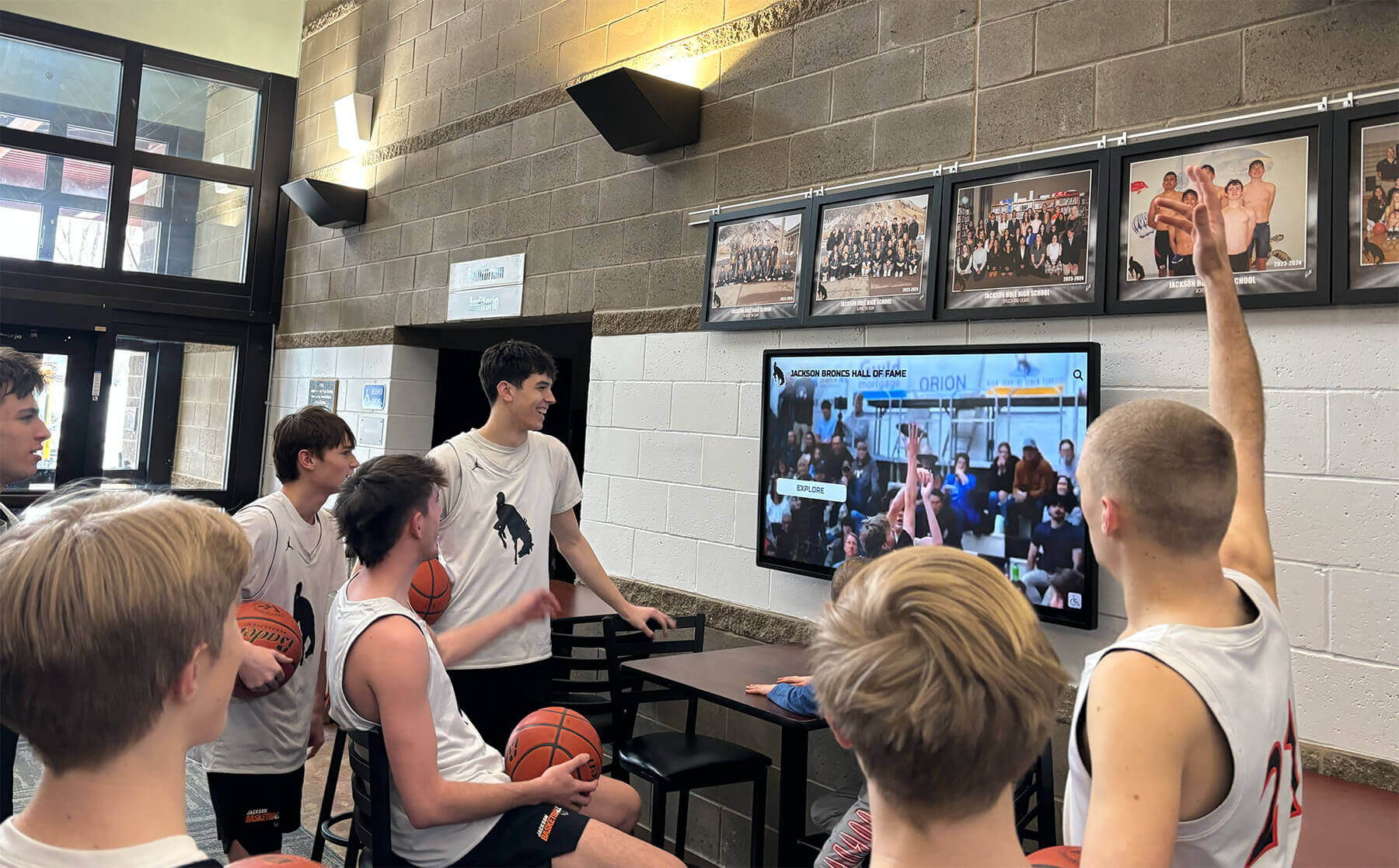
Interactive displays allow students to discover achievements across all programs
Building School Pride and Community Connection
Small to medium high schools thrive when students, alumni, and community members feel connected to the institution and proud of its achievements and traditions.
The Importance of School Culture
School culture significantly impacts student engagement, academic performance, and community support.
Cultural Impact Factors
Strong school pride contributes to:
- Student engagement with higher participation in activities and programs
- Academic performance as students identify with institutional excellence
- Alumni connection maintaining relationships long after graduation
- Community support through attendance, volunteering, and financial contributions
- Staff satisfaction working in environments celebrating achievement
- Recruitment appeal attracting families choosing between school options
Schools with visible, active recognition programs demonstrate their values tangibly, showing students that achievement matters and that individual contributions receive acknowledgment beyond brief announcements or newsletter mentions.
How Digital Recognition Strengthens School Culture
Interactive recognition platforms create ongoing engagement rather than static displays that fade into background noise.
Engagement Features
Modern systems provide:
- Searchable databases allowing students to find specific individuals and achievements
- Historical timelines showing program evolution and tradition over decades
- Multimedia storytelling with photos, videos, and detailed accomplishments
- Social sharing enabling honorees to celebrate recognition digitally
- Alumni connection maintaining engagement beyond graduation
- Family involvement as parents explore their children’s achievements
- Visitor impression demonstrating school excellence to prospective families
The interactive nature transforms recognition from passive viewing into active exploration, with students spending 2-3 minutes engaging with content compared to seconds glancing at traditional plaques.
Schools report that digital recognition displays become conversation starters during tours, registration events, and family visits, reinforcing school culture through regular engagement rather than one-time installation followed by gradual invisibility.
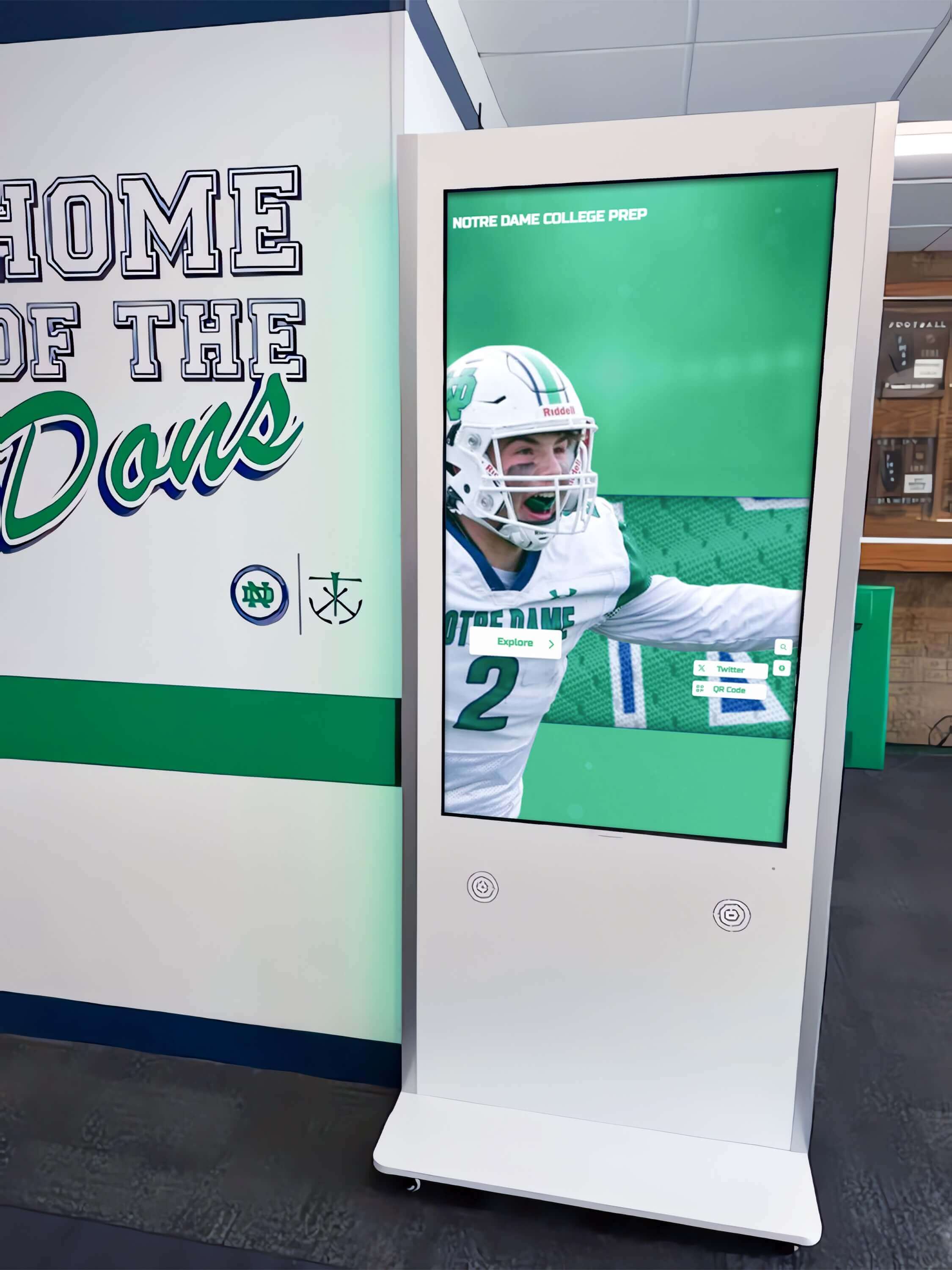
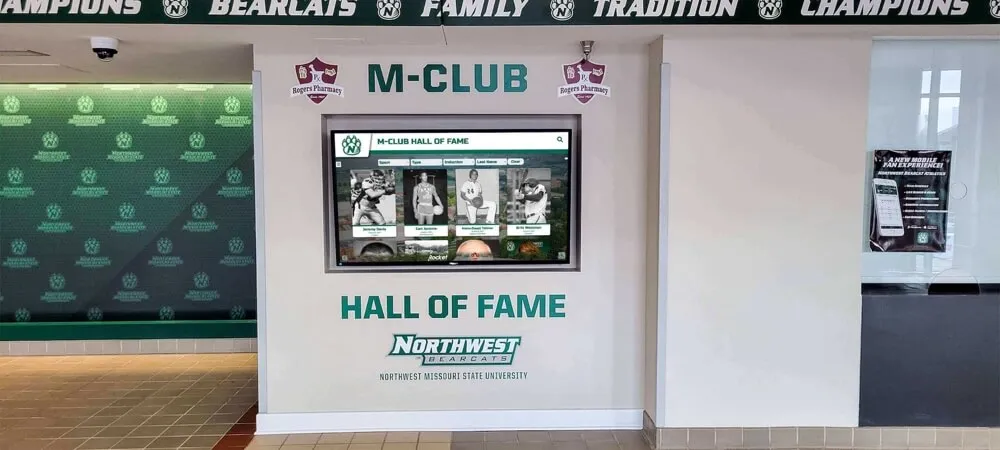
Professional recognition systems create lasting impressions during school visits and events
Scalability and Future Growth
Small schools benefit from recognition solutions that accommodate growth without requiring complete system replacement as programs expand and achievements accumulate.
Planning for Recognition Growth
Schools must consider how recognition needs will evolve over time.
Growth Considerations
Recognition requirements change through:
- Annual achievement accumulation adding dozens of new honorees yearly
- Program expansion as schools add activities and competitive opportunities
- Historical preservation maintaining visibility for past achievements
- Success cycles with particularly strong years generating more recognition needs
- Facility changes requiring recognition system flexibility for renovations or relocations
- Technology evolution as display capabilities and expectations advance
Traditional recognition systems hit capacity limits quickly, forcing difficult decisions about removing historical recognition to accommodate current achievements or abandoning recognition for some programs as space fills.
How Digital Systems Accommodate Growth
Cloud-based recognition platforms scale naturally without capacity constraints or system replacement.
Scalability Features
Modern platforms provide:
- Unlimited content capacity accommodating thousands of profiles without performance impact
- Easy category expansion adding new recognition types as programs develop
- Historical preservation maintaining all past recognition indefinitely
- Additional display deployment adding screens in new locations as budgets allow
- Content repurposing displaying same recognition across multiple physical locations
- Platform evolution with regular feature enhancements included in subscriptions
Schools implementing digital recognition in year one can confidently add five new honorees or five hundred without any system modification, additional fees beyond regular subscriptions, or capacity concerns limiting recognition.
This scalability proves particularly valuable for smaller schools that may grow over time or experience fluctuating achievement levels as strong classes progress through programs without recognition systems constraining celebration of exceptional years.
Integration with School Technology Ecosystems
Small schools benefit when recognition systems integrate smoothly with existing technology rather than adding complex standalone systems requiring separate management.
Technology Integration Opportunities
Modern school technology environments enable powerful connections between recognition systems and other platforms.
Common Integration Points
Digital recognition platforms can connect with:
- Student information systems automating honor roll and academic achievement recognition
- Athletic management software coordinating statistics and season highlight integration
- School websites extending recognition visibility beyond physical displays
- Social media platforms amplifying celebration across digital channels
- Mobile applications providing recognition access on personal devices
- Email systems notifying families when students receive recognition
These integrations reduce administrative burden while ensuring recognition stays current without requiring manual data entry duplicating information already maintained in other school systems.
Simplified Implementation Approaches
Professional recognition platforms designed for schools prioritize straightforward implementation.
Implementation Support
Comprehensive services include:
- Planning consultation clarifying objectives and technical requirements
- Content development assistance gathering historical achievement information
- Installation coordination managing hardware setup and configuration
- Staff training ensuring confident content management
- Ongoing technical support addressing questions and issues
- Regular platform updates with new features and improvements
Schools appreciate working with vendors understanding educational environments rather than generic technology companies treating recognition displays as simple digital signage projects without recognition-specific expertise.
Learn about trophy display alternatives that complement digital systems while maintaining traditional elements important to school communities.

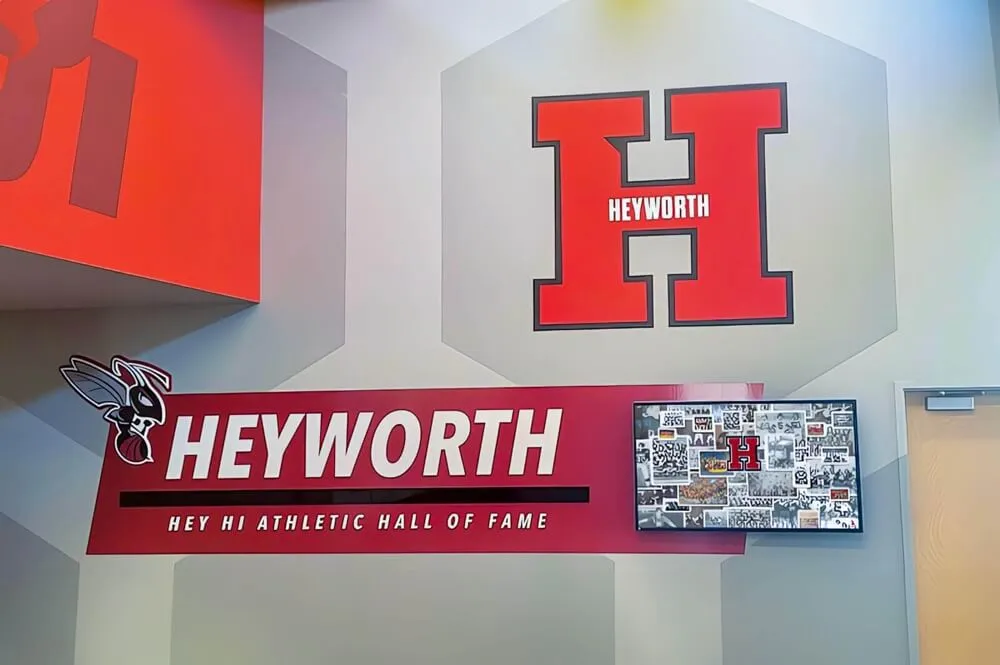
Recognition systems integrate smoothly with school branding and existing aesthetics
Making Recognition Accessible to Every Student
Small schools often pride themselves on knowing every student personally and celebrating individual achievements that might go unnoticed in larger institutions.
The Personal Touch in Small Schools
Smaller enrollment creates opportunities for meaningful individual recognition.
Small School Advantages
These institutions naturally feature:
- Personal relationships with staff knowing students across multiple contexts
- Individual visibility where achievements don’t get lost in large populations
- Multi-program participation as students engage in athletics, arts, and activities
- Community familiarity with families knowing students beyond their own children
- Flexible recognition adapting to individual circumstances and contributions
- Meaningful acknowledgment that students perceive as genuine rather than formulaic
Digital recognition systems amplify these advantages rather than introducing impersonal technology that conflicts with small school culture.
Personalizing Digital Recognition
Modern platforms enable the individual storytelling that makes recognition meaningful.
Personalization Capabilities
Recognition systems support:
- Individual profile pages with photos, biographical information, and detailed achievements
- Multimedia storytelling combining statistics, narratives, and visual content
- Multiple achievement categories celebrating students across their diverse involvements
- Historical context connecting current students with program traditions and alumni
- Search functionality allowing families to find their specific students quickly
- Social sharing enabling students to celebrate recognition with personal networks
- Accessibility features ensuring all students can explore content regardless of ability
These personalization capabilities ensure digital recognition maintains the individual focus that defines small school culture while expanding the number of students who receive meaningful acknowledgment for their contributions.
Schools implementing school event recognition ideas find digital platforms provide flexible tools for celebrating achievements in the moment during ceremonies while building lasting recognition that remains accessible beyond single events.
Practical Implementation Considerations for Small Schools
Understanding practical requirements helps small schools evaluate whether digital recognition systems align with their specific contexts and constraints.
Technical Requirements and Support
Schools need clear understanding of what implementation requires.
Basic Requirements
Digital recognition implementations need:
- Reliable internet connectivity for cloud-based content management
- Electrical outlets near display mounting locations
- Wall mounting capability or floor stands for display positioning
- Initial content including historical achievement information and media
- Designated staff with content management responsibility
- Budget allocation for subscriptions and hardware costs
Most small schools already meet these requirements without additional infrastructure investment beyond the recognition system itself.
Working with Community Stakeholders
Successful implementations involve key community groups in planning and launch.
Stakeholder Engagement
Important groups include:
- Athletic boosters who may contribute funding or historical information
- Parent organizations who may support recognition investments
- Alumni associations providing historical context and possible financial support
- School boards approving budget allocations and policy considerations
- Student groups offering input on recognition preferences and priorities
- Community partners who may sponsor displays or contribute resources
Early stakeholder involvement builds support while ensuring recognition systems serve the needs and preferences of the entire school community rather than reflecting administrative perspectives alone.
Small schools implementing high school sports recognition find that booster organizations often become enthusiastic supporters when they understand how digital displays expand recognition capacity while reducing ongoing administrative burden.
Comparing Traditional and Digital Recognition Approaches
Understanding the differences helps schools make informed decisions about recognition investments.
Traditional Recognition Methods
Conventional approaches include familiar elements.
Traditional Characteristics
Standard methods feature:
- Physical plaques mounted on walls or in trophy cases
- Engraved nameplates on permanent recognition displays
- Trophy cases displaying awards and memorabilia
- Banner displays hanging in gymnasiums and common areas
- Yearbook features providing annual recognition documentation
- Award ceremonies celebrating achievements at specific events
These traditional methods work well for many purposes and often continue alongside digital systems rather than being completely replaced.
Digital Recognition Advantages
Modern platforms address limitations inherent in conventional approaches.
Key Differentiators
Digital systems provide:
- Unlimited capacity without physical space constraints
- Immediate updates without waiting for manufacturing and installation
- Multimedia integration combining photos, videos, and detailed information
- Interactive exploration enabling user-driven content discovery
- Search functionality allowing instant location of specific individuals
- Historical preservation maintaining access to decades of recognition
- Content flexibility updating information as circumstances change
- Multiple locations displaying same content across different spaces simultaneously
Schools implementing traditional vs digital trophy displays often find hybrid approaches work best, maintaining beloved traditional elements while adding digital capabilities that expand recognition beyond what conventional methods alone can accomplish.
Getting Started with Digital Recognition
Schools ready to explore digital recognition can take straightforward steps toward implementation.
Initial Planning Steps
Successful implementations begin with clear planning.
Planning Process
Schools should:
- Assess current recognition identifying what works well and what frustrations exist
- Define objectives clarifying what successful recognition should accomplish
- Involve stakeholders gathering input from key community groups
- Explore options researching platforms designed for educational recognition
- Establish budget identifying available resources and funding sources
- Plan content considering what historical and current achievements to include
- Select location identifying optimal placement for maximum engagement
This planning foundation ensures implementation addresses genuine needs rather than simply adding technology without clear purpose or community support.
Evaluating Recognition Platform Providers
Not all digital recognition systems serve small school needs equally well.
Evaluation Criteria
Schools should assess:
- Educational specialization - Does the provider understand school recognition specifically?
- Pricing transparency - Are all costs clear without hidden fees?
- Content capacity - Can the platform accommodate unlimited growth?
- Management simplicity - Will busy staff find the system genuinely easy to use?
- Support quality - Does the vendor provide responsive assistance?
- Implementation services - What help is available during setup?
- Customer references - Can you speak with similar schools about their experiences?
Purpose-built recognition platforms like Rocket Alumni Solutions focus specifically on educational and athletic recognition rather than generic digital signage applications, ensuring features and support align with how schools actually use recognition systems.
Ready to explore how digital recognition displays can help your school celebrate every achievement while working within real-world budget and space constraints? Book a demo to see purpose-built recognition platforms designed specifically for schools like yours, or learn more about comprehensive school recognition strategies that create welcoming environments celebrating student achievement throughout your building.