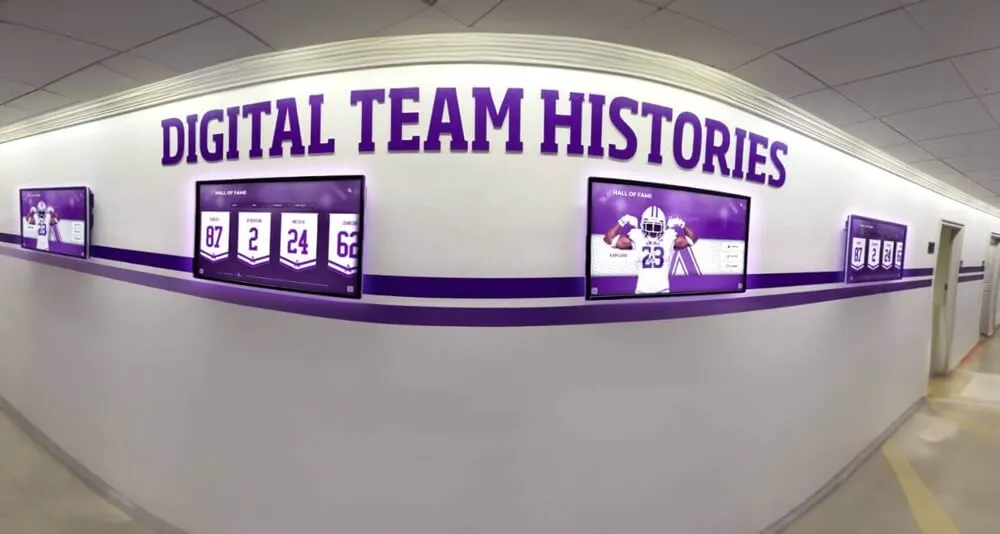
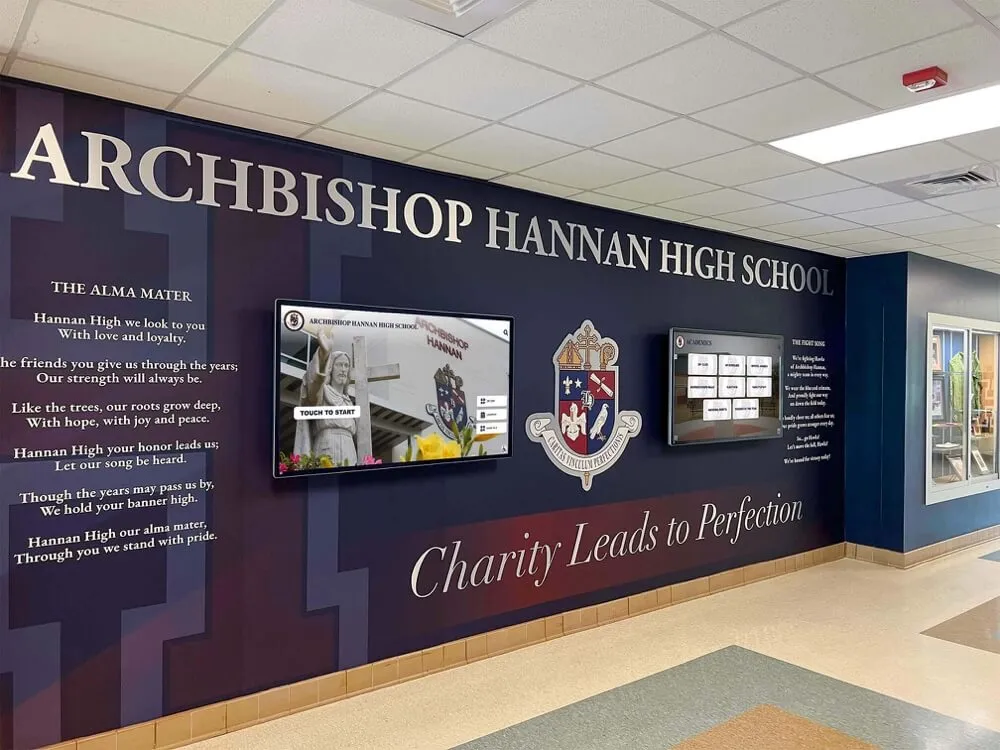
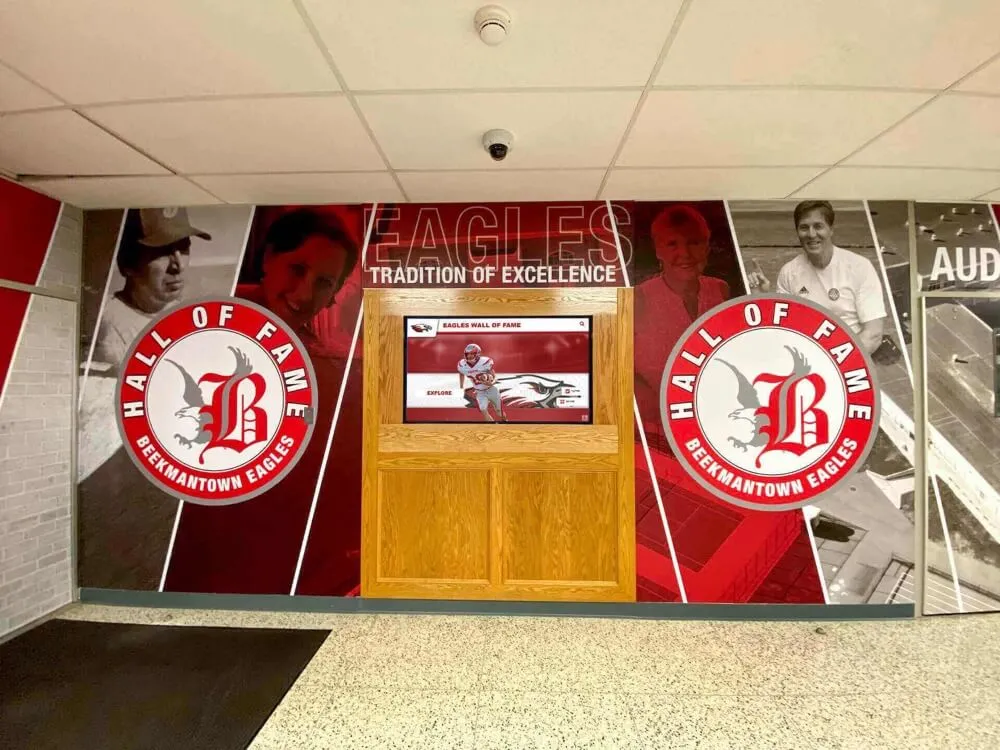
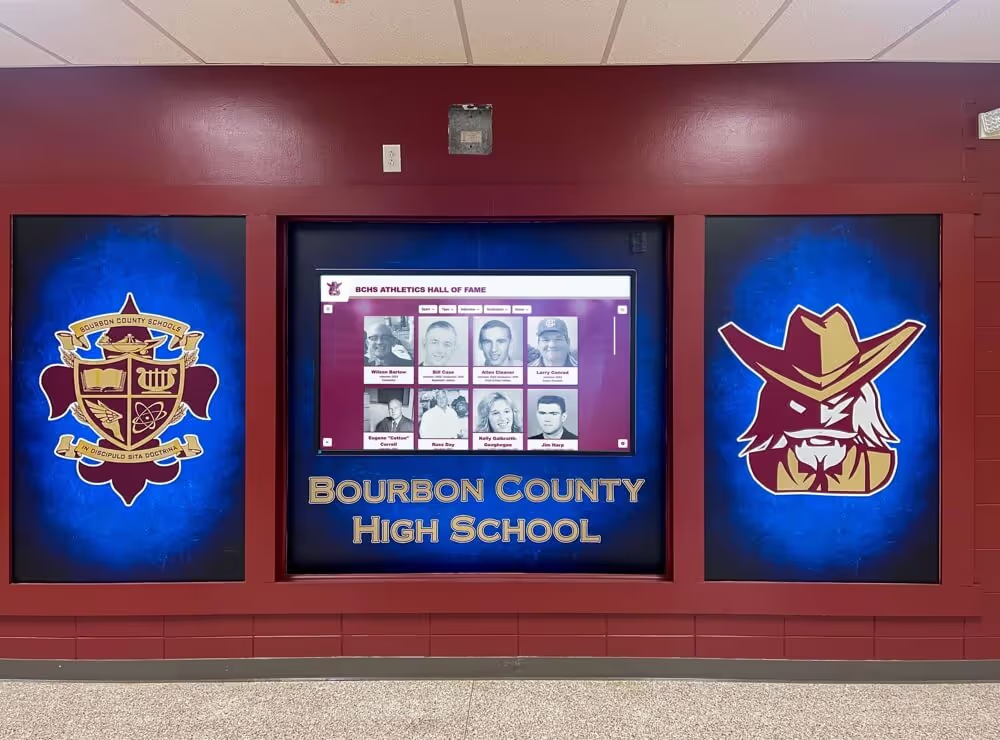
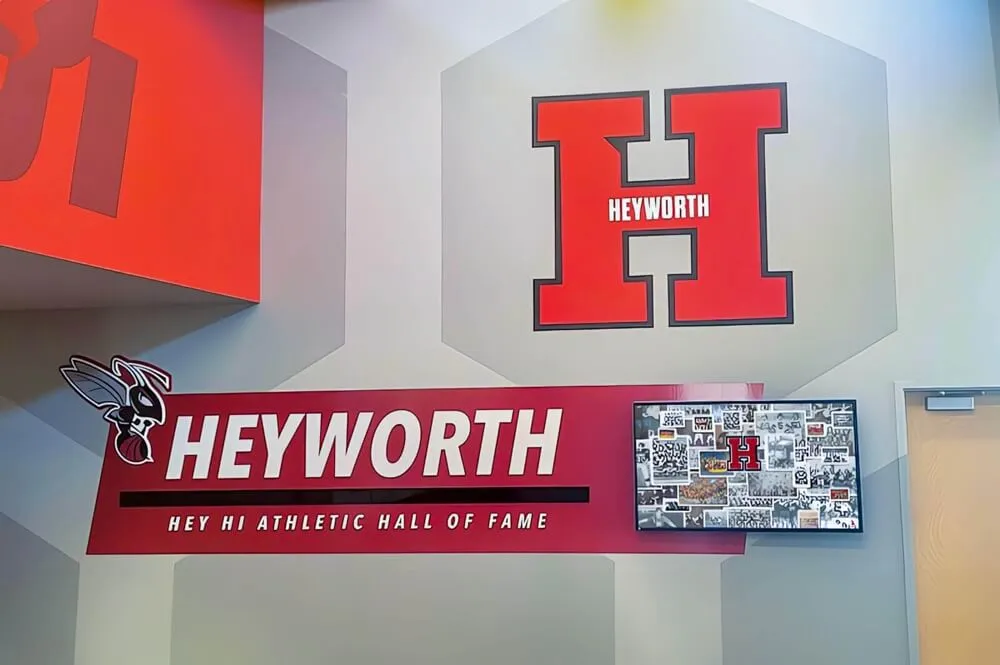
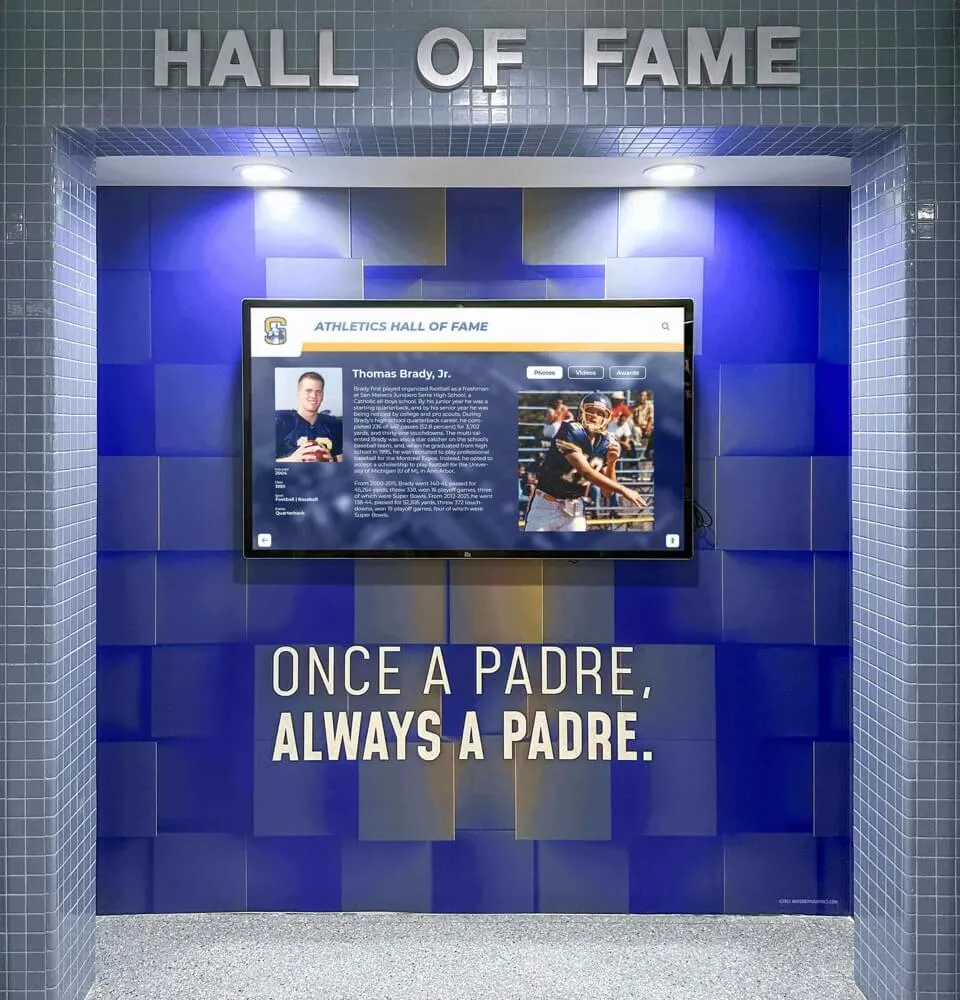
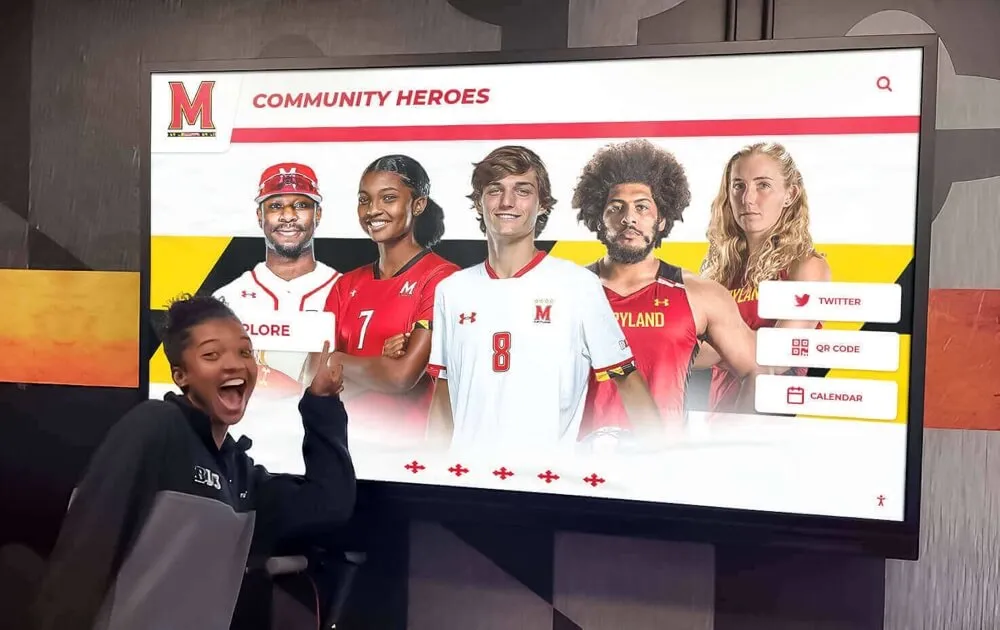
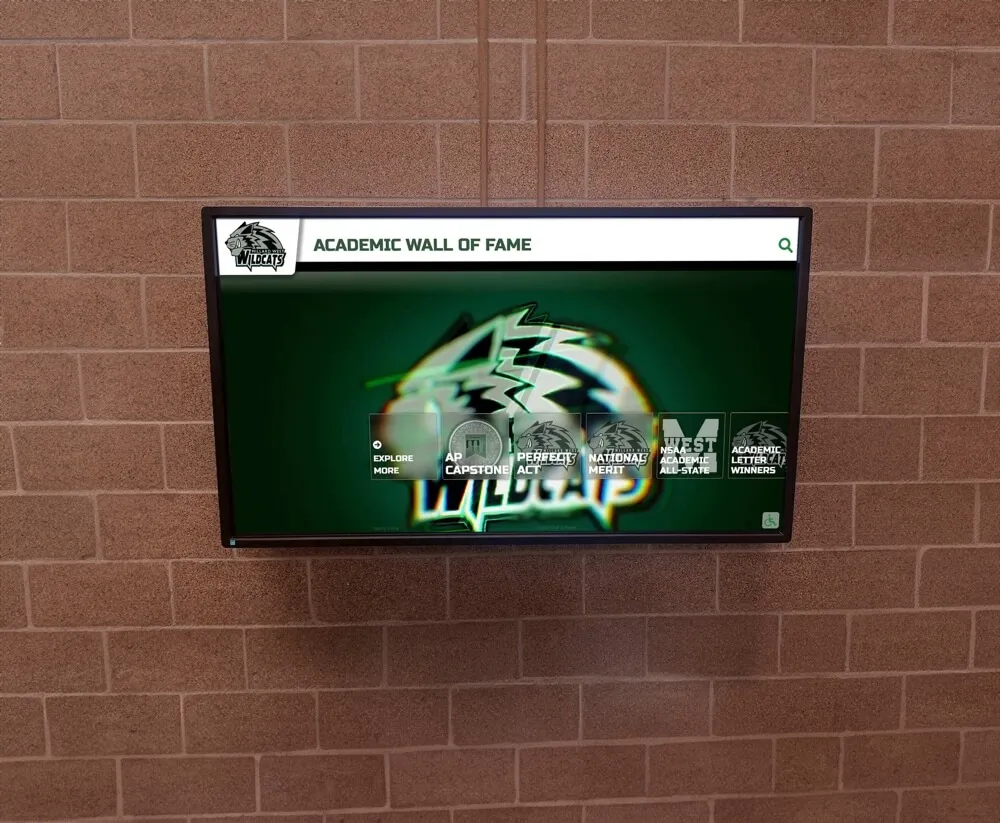
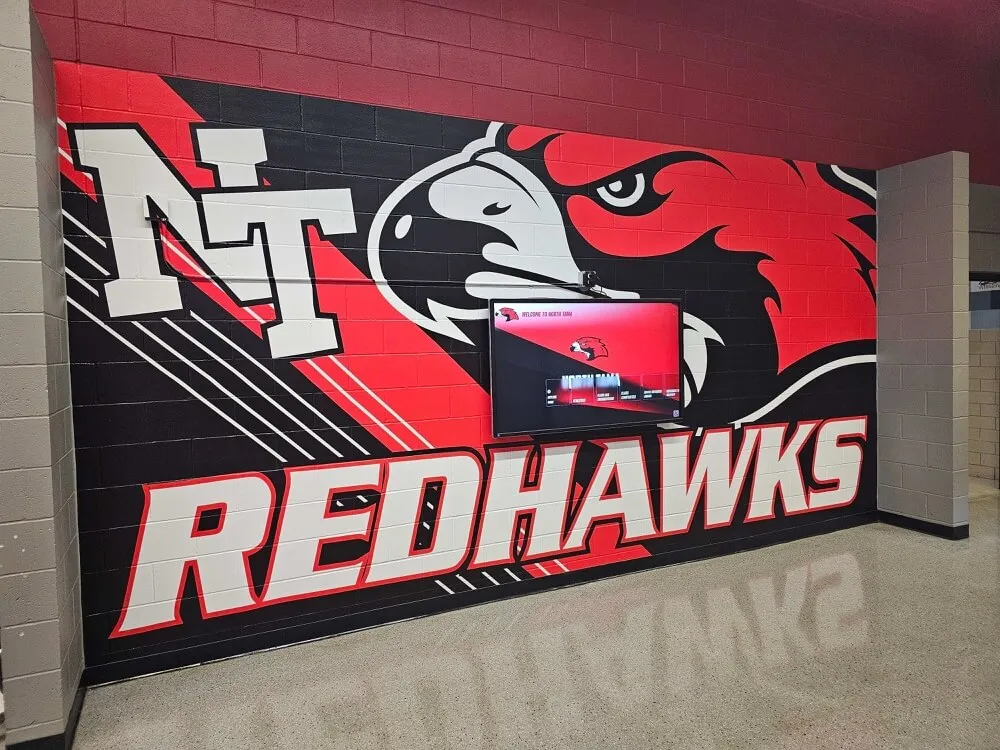
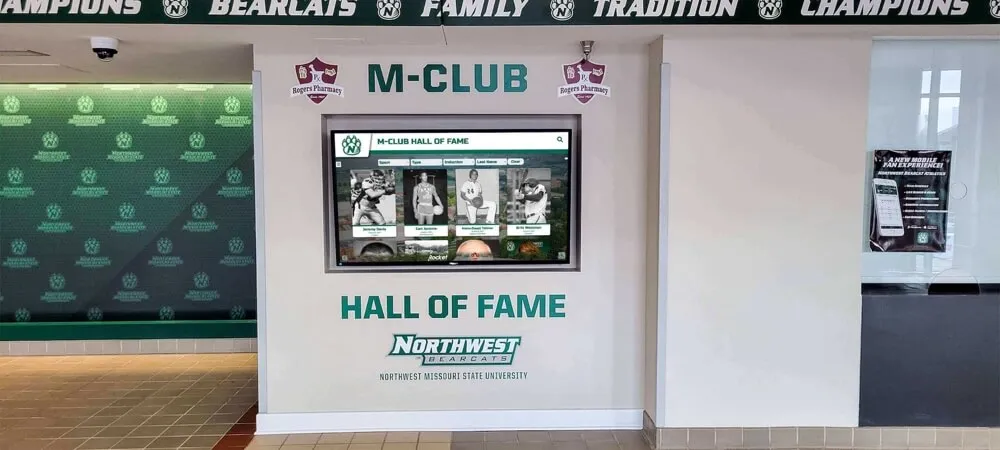
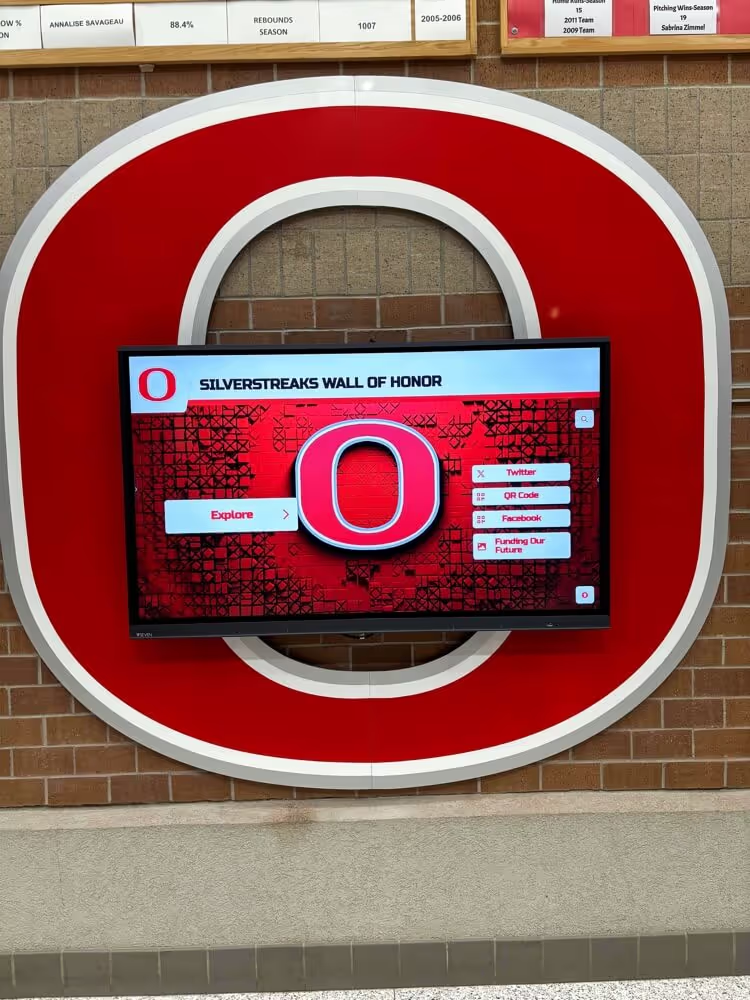
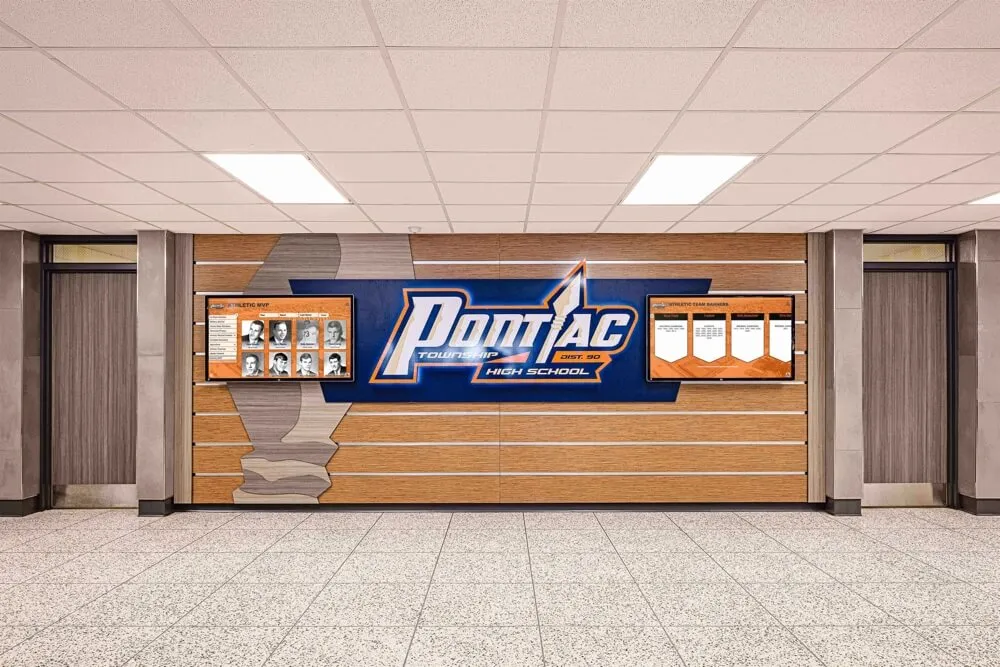
A digital hall of fame is an interactive touchscreen recognition system that showcases honorees, achievements, and institutional history through multimedia displays accessible via physical touchscreens and web platforms. Unlike traditional trophy cases and plaques limited by physical space, digital halls of fame provide unlimited recognition capacity while enabling engaging storytelling through photos, videos, statistics, and interactive exploration that static displays simply cannot match.
Schools, universities, athletic programs, and organizations across every sector face persistent recognition challenges: overcrowded trophy cases bursting with decades of awards, wall space completely filled with plaques leaving no room for new honorees, faded championship banners with illegible details, and countless deserving achievements never recognized due to physical limitations. These constraints force heartbreaking decisions about which accomplishments deserve visibility while others remain hidden in storage or completely undocumented.
Digital halls of fame solve these fundamental problems through cloud-based platforms that honor unlimited individuals across all achievement categories and eras. This comprehensive video-focused guide explores exactly what digital halls of fame are, how they work, what makes them different from traditional recognition, key features and capabilities, implementation considerations, and why hundreds of institutions have adopted interactive touchscreen solutions like Rocket Alumni Solutions as central components of their recognition strategies.
Modern digital hall of fame technology represents far more than simply digitizing existing plaques—it fundamentally reimagines what recognition can accomplish through video demonstrations, interactive exploration, and compelling visual storytelling that strengthens institutional culture while inspiring excellence across entire communities.

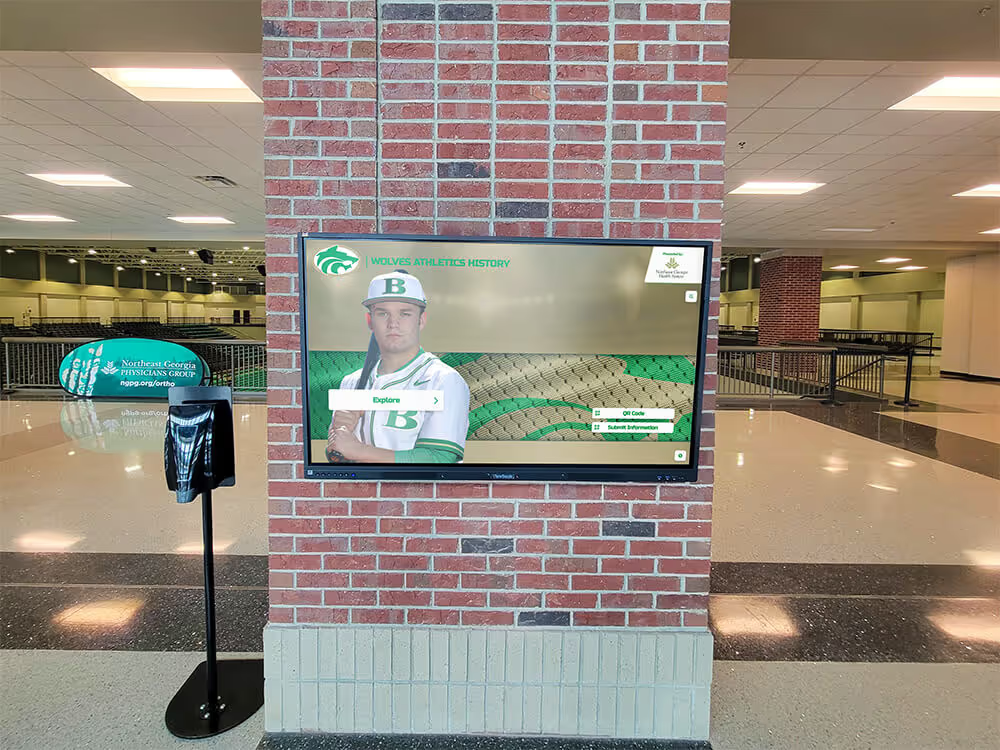
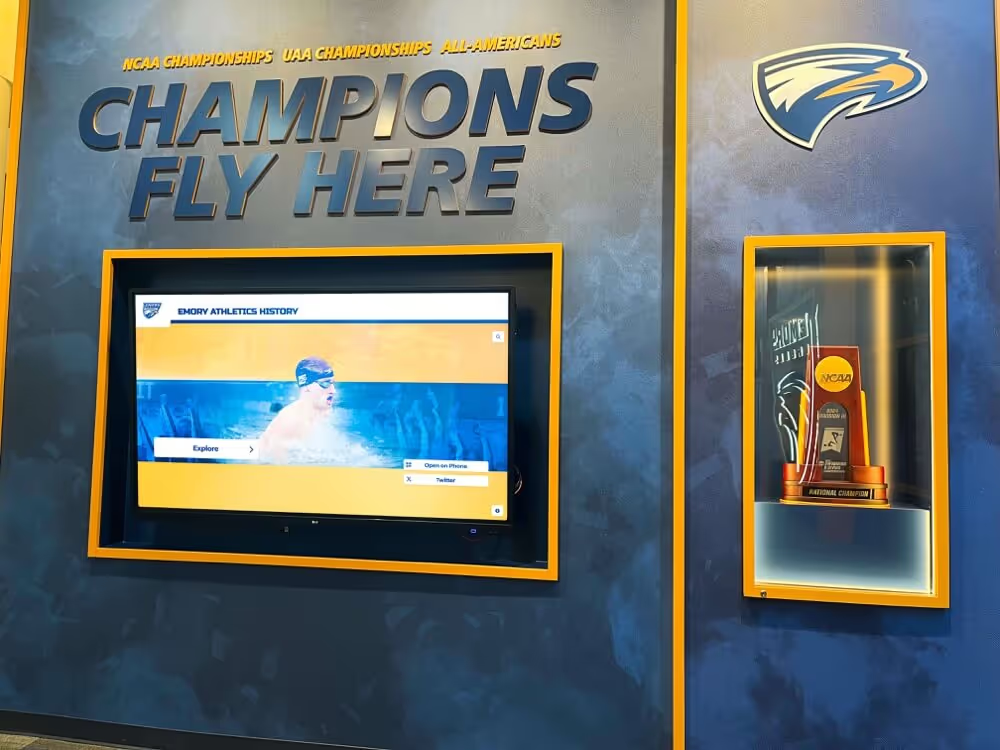
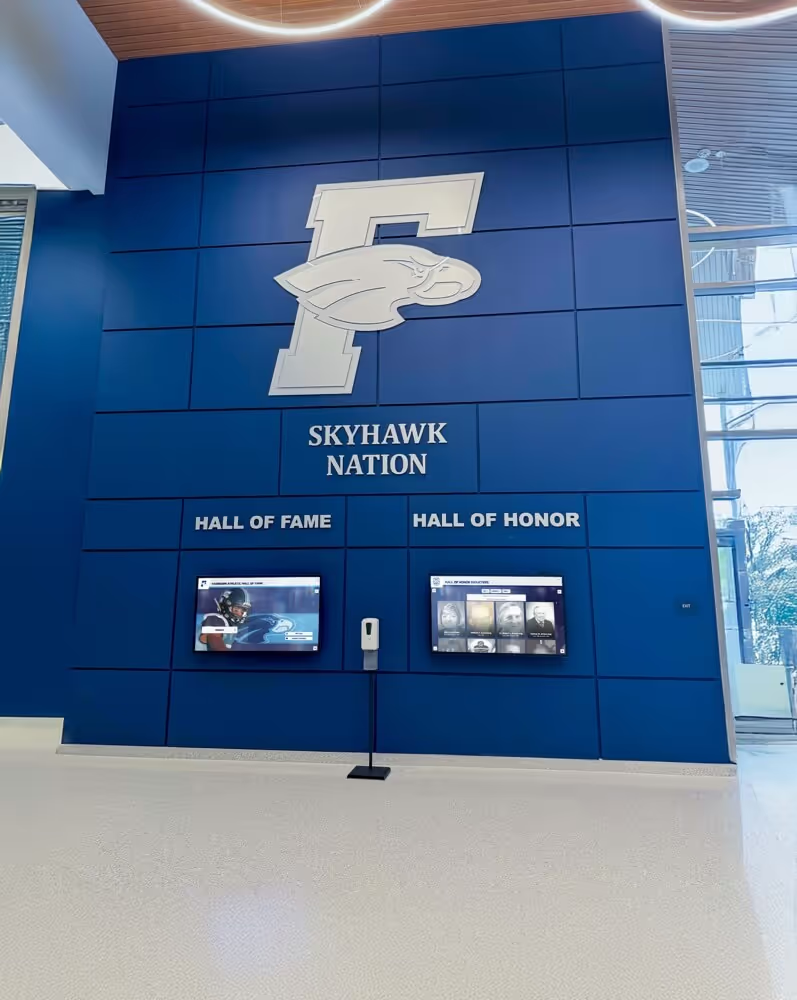
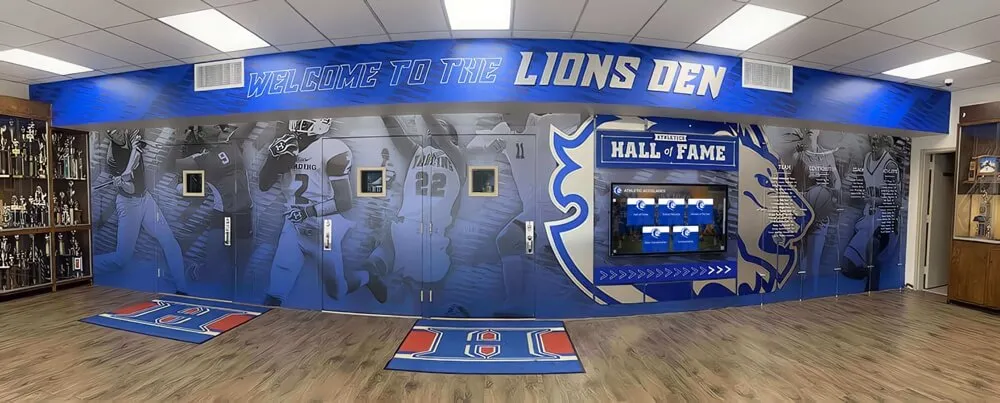
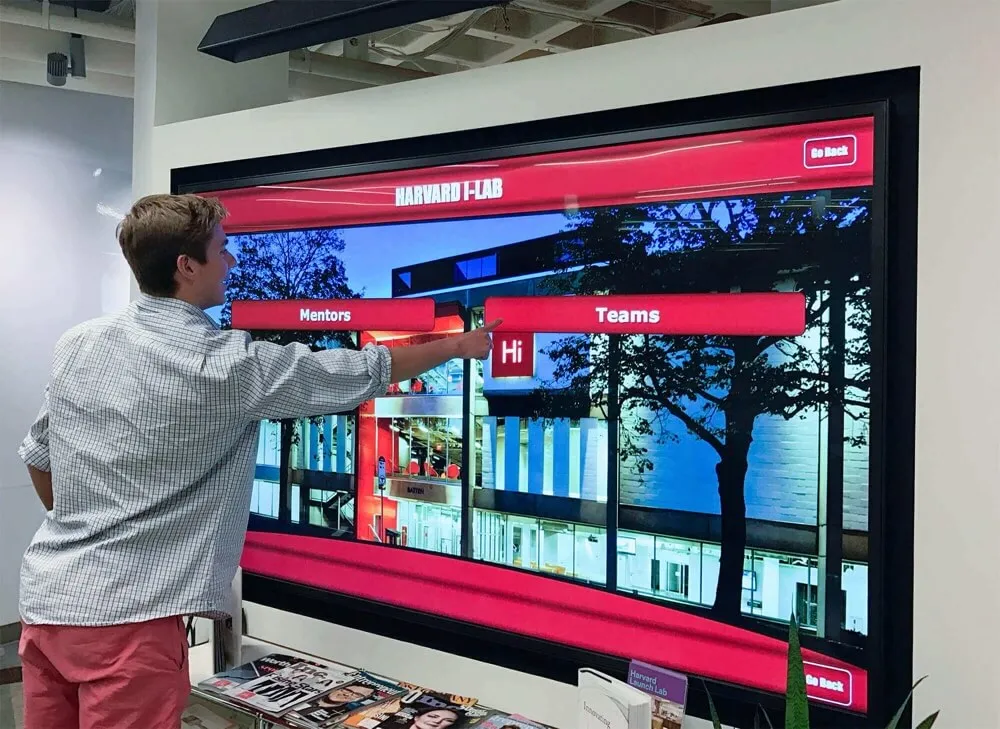
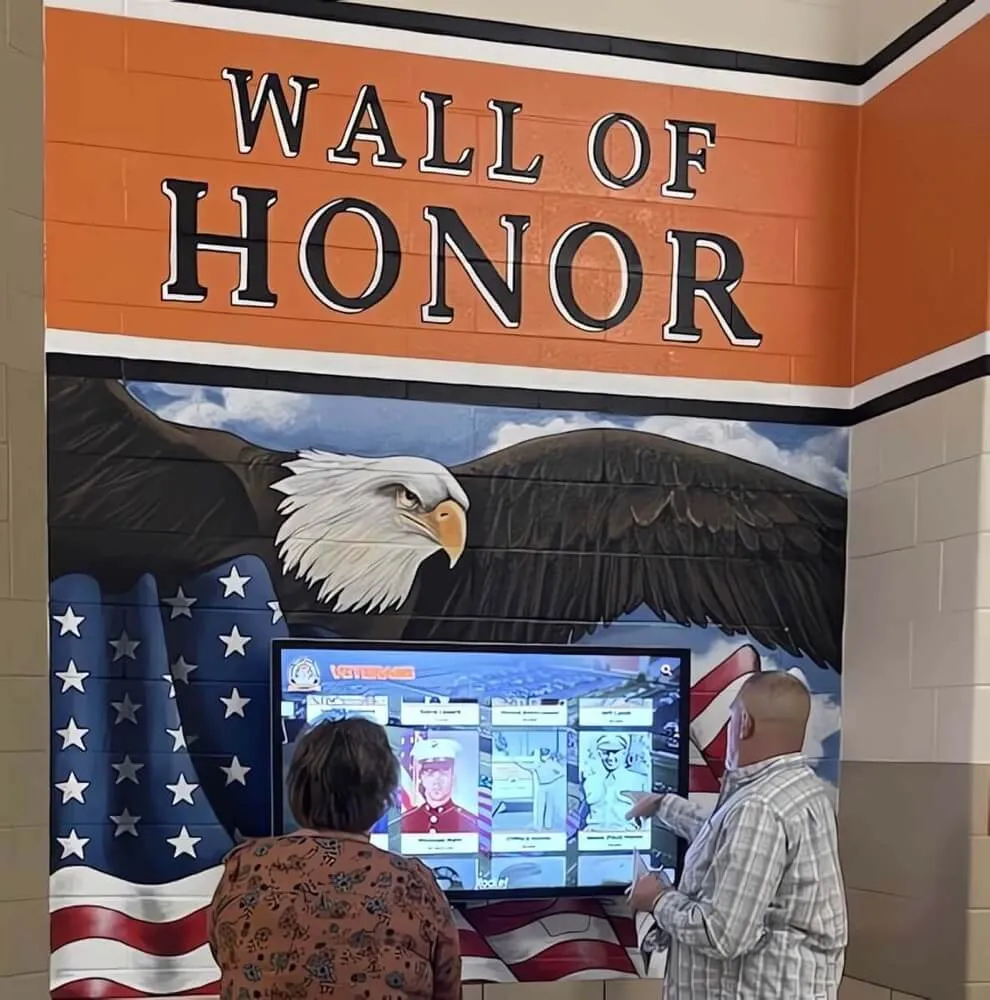
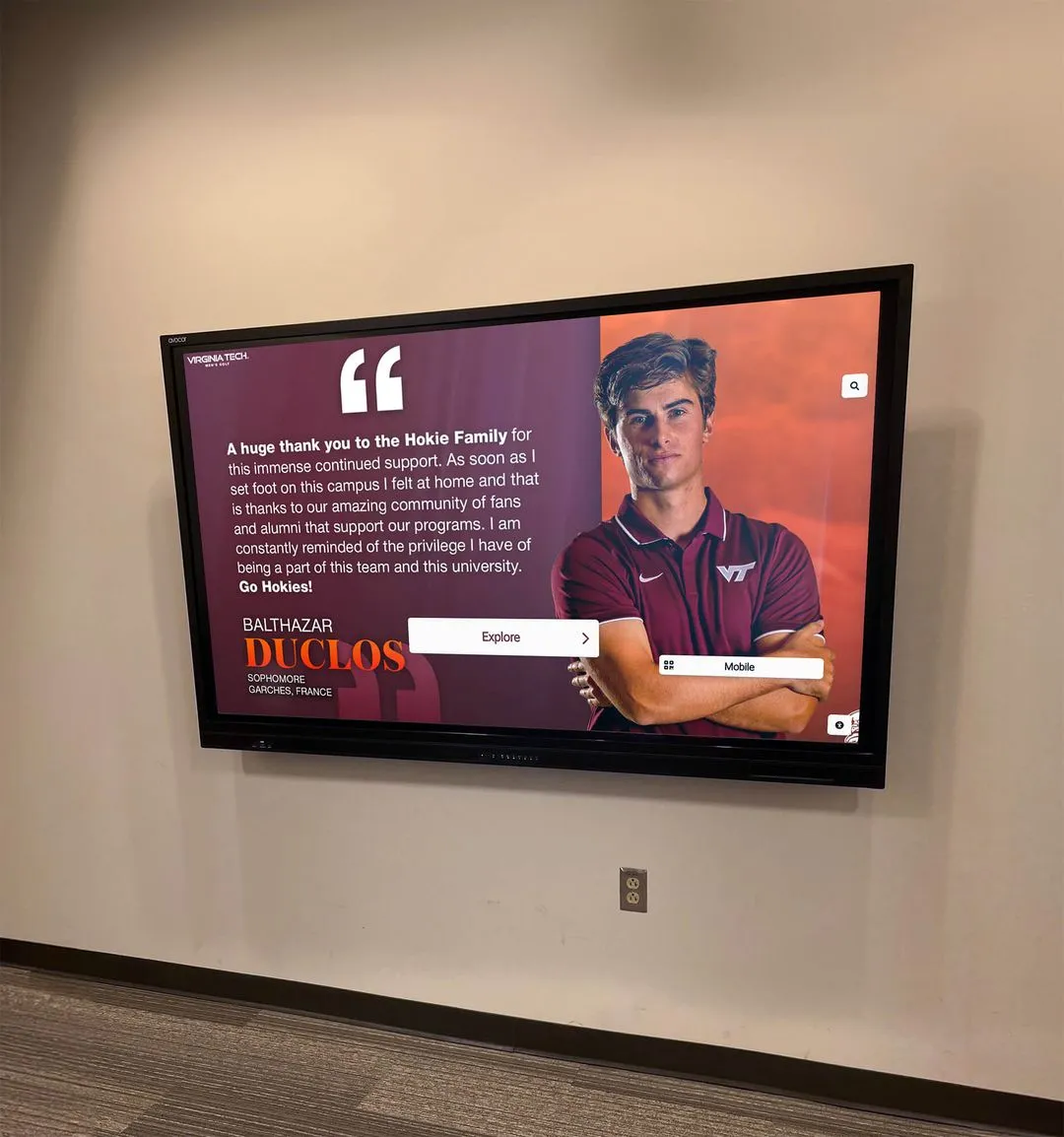
Modern digital hall of fame systems create engaging recognition destinations where community members explore honoree stories through intuitive touchscreen interfaces
Understanding Digital Halls of Fame: Core Definition and Components
Before exploring specific applications and implementation strategies, understanding exactly what constitutes a digital hall of fame provides essential foundation for evaluating whether this technology aligns with your institutional recognition goals.
What Exactly Is a Digital Hall of Fame?
A digital hall of fame is a comprehensive recognition platform combining commercial-grade interactive touchscreen displays with specialized software that showcases unlimited honorees through multimedia profiles featuring high-resolution photography, video testimonials, detailed achievements, statistical records, biographical information, and historical documentation—all accessible through intuitive touch-enabled interfaces optimized for public exploration.
Essential System Components
Complete digital hall of fame solutions integrate multiple technical elements working together seamlessly:
Commercial-grade touchscreen displays engineered for continuous operation in high-traffic public environments, cloud-based content management systems enabling remote updates from any internet-connected device, specialized recognition software organizing content with sophisticated search and filtering capabilities, high-resolution multimedia support accommodating photos and HD video content, responsive touch interfaces providing intuitive navigation anyone can use immediately, robust database functionality managing thousands of individual profiles efficiently, privacy controls allowing appropriate information management, web-accessible platforms extending recognition beyond physical display locations, comprehensive analytics revealing engagement patterns and popular content, and integration capabilities connecting with existing institutional databases when desired.
Solutions like Rocket Alumni Solutions provide purpose-built platforms specifically designed for educational institutions, athletic programs, and organizations committed to recognition excellence—making professional digital hall of fame implementation accessible without requiring extensive technical expertise or custom development.
How Digital Halls of Fame Differ from Traditional Recognition
Understanding fundamental distinctions between digital systems and conventional approaches clarifies the transformative advantages driving widespread adoption:
Traditional Physical Recognition Limitations
Conventional halls of fame typically feature engraved plaques, trophy cases, and wall-mounted displays honoring limited numbers of individuals constrained by available physical space. These installations communicate permanence and formality valued by many honorees while creating visible recognition within institutional facilities.
However, physical recognition faces severe inherent constraints: strict space limitations creating hard capacity ceilings eventually requiring difficult removal decisions, inability to update information without expensive fabrication and reinstallation, static text-only presentations providing minimal context about achievements, material deterioration requiring ongoing maintenance, high per-honoree costs ranging from $200-500+ for quality plaques, and rigid hierarchies where limited space forces exclusionary selection rather than inclusive celebration.
Digital Hall of Fame Advantages
Interactive touchscreen systems fundamentally solve traditional limitations while adding powerful capabilities impossible with static displays:
Unlimited recognition capacity accommodating thousands of honorees without space constraints, instant content updates adding new inductees immediately without manufacturing delays, rich multimedia storytelling connecting achievements to compelling narratives through photos and videos, searchable databases enabling visitors to find specific individuals easily, flexible organization accommodating multiple achievement categories simultaneously, dramatic cost efficiency reducing per-profile expenses to pennies rather than hundreds of dollars, continuous evolution improving recognition quality over time, and multi-channel accessibility extending visibility through web platforms reaching worldwide audiences.
According to institutional technology research, interactive touchscreen displays increase visitor engagement by approximately 70% compared to traditional static recognition while creating significantly stronger emotional connections between current community members and institutional legacy through immersive visual storytelling.
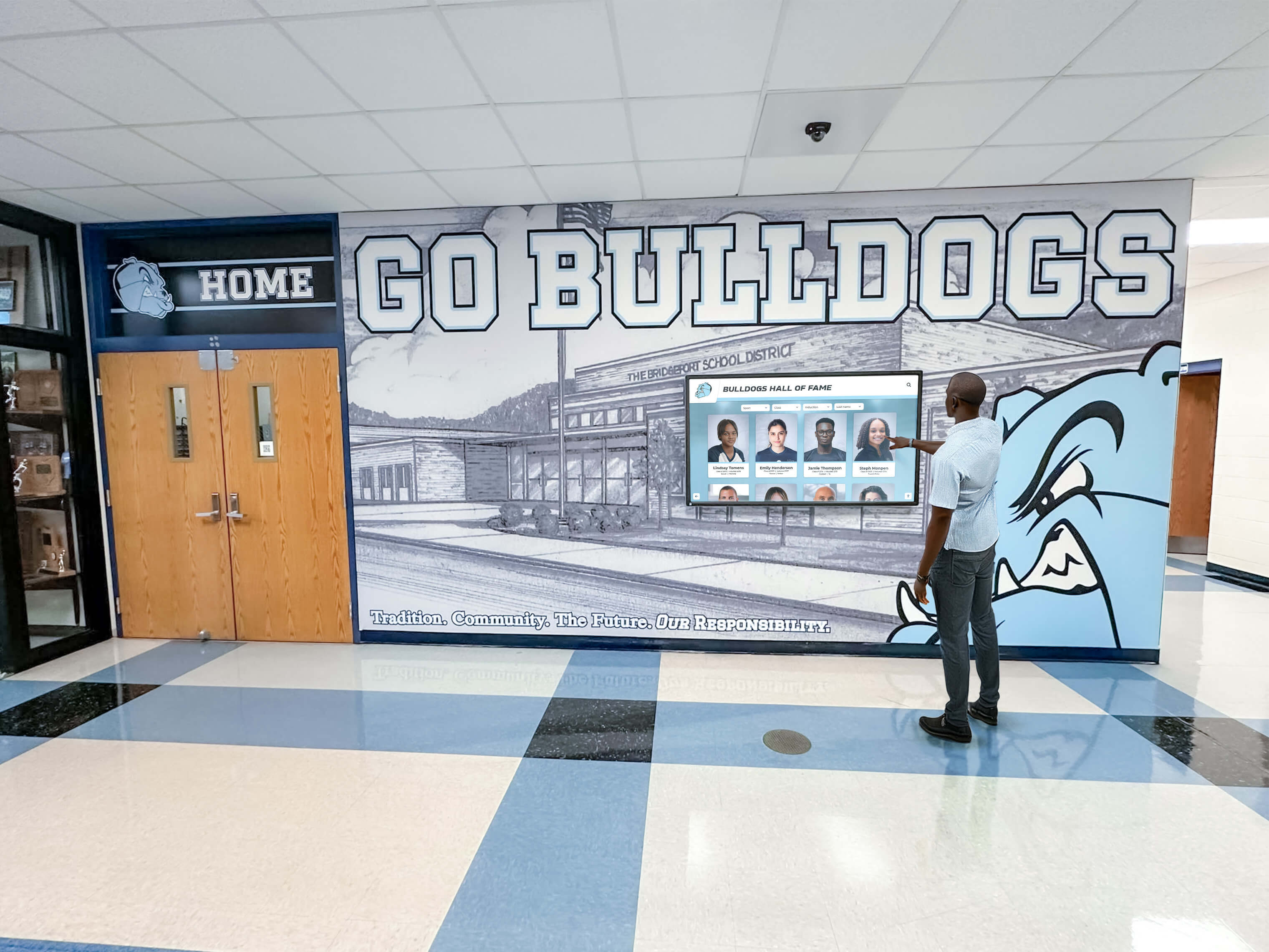
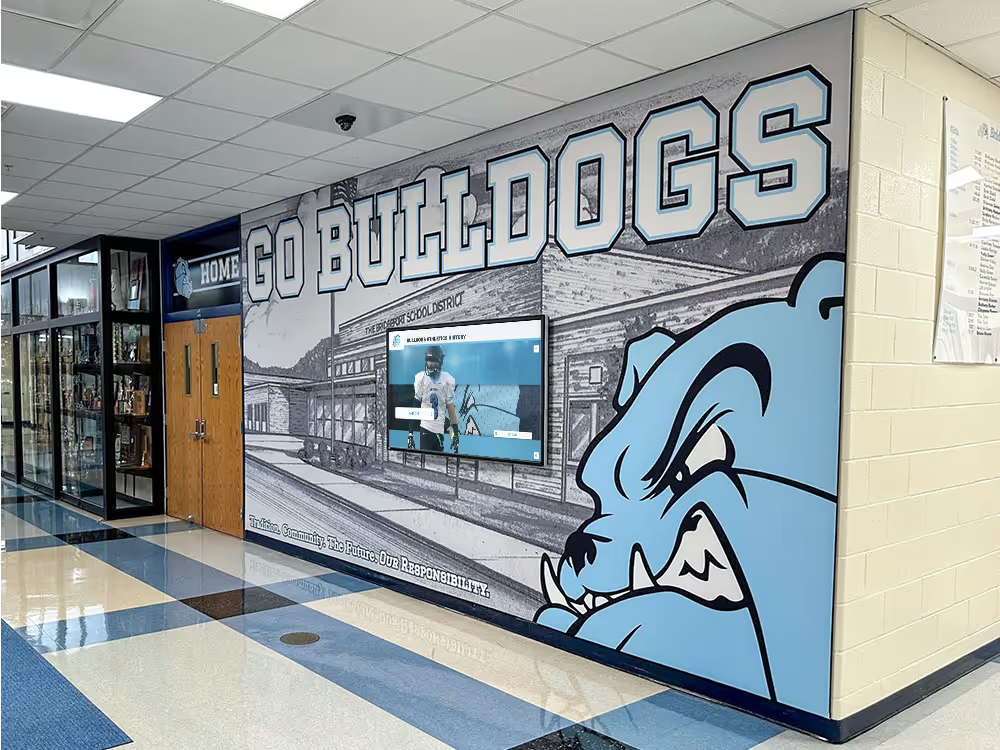
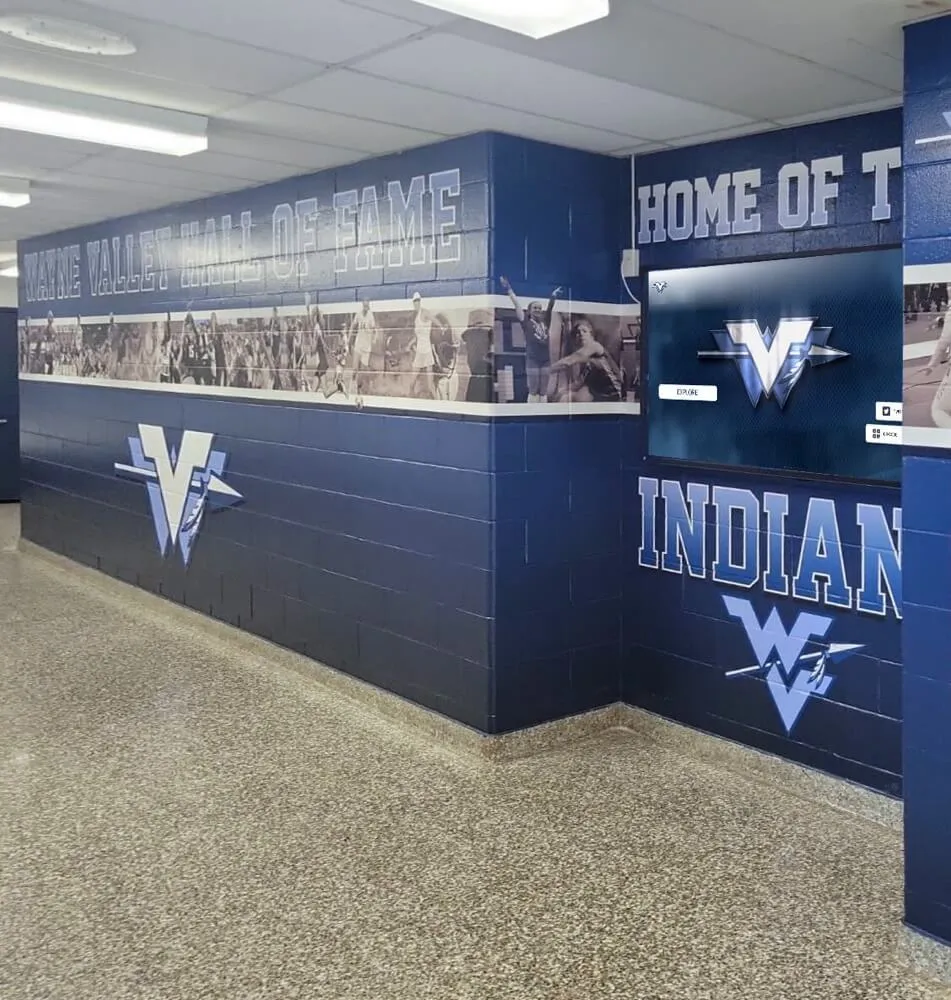
Strategic hallway placement ensures recognition reaches all community members while touchscreen interfaces encourage active exploration of honoree achievements
The Recognition Problem Digital Halls of Fame Solve
Understanding specific challenges these systems address provides clarity about strategic value beyond surface-level technology appeal:
Physical Space Constraints and Recognition Capacity Crisis
The most immediate limitation traditional halls of fame create involves finite physical space forcing impossible decisions:
The Recognition Capacity Problem
Educational institutions commonly face situations where decades of achievement have filled every available wall surface and trophy case with recognition. When new accomplishments occur or selection committees identify additional deserving honorees, administrators confront heartbreaking dilemmas: Which existing recognition should be removed to accommodate new inductees? Should only the most elite achievements receive permanent honor? How can institutions celebrate deserving candidates when limited space accommodates just a fraction of worthy individuals?
Schools implementing digital recognition report displaying 5-10 times more achievements than previous physical displays allowed—transforming recognition philosophy from exclusive “space forces difficult choices” models to inclusive “celebrate everyone deserving” approaches that strengthen rather than divide communities.
Digital Solution to Capacity Constraints
Digital hall of fame systems eliminate capacity problems entirely through unlimited cloud storage. Single 55-inch touchscreen installations easily accommodate comprehensive recognition for hundreds or thousands of honorees across multiple categories, time periods, and achievement types without ever facing space limitations requiring exclusion decisions.
This unlimited capacity enables inclusive recognition philosophies where every deserving individual receives appropriate acknowledgment regardless of achievement category, creating organizational cultures celebrating broad excellence rather than focusing exclusively on premier accomplishments while countless other contributions go unrecognized.
Learn about capacity advantages in digital hall of fame buying guides addressing comprehensive recognition strategies.
Storytelling and Context Limitations
Beyond capacity constraints, traditional recognition approaches suffer from fundamental storytelling limitations undermining effectiveness:
The Information Depth Problem
Physical plaques typically contain minimal information—perhaps a name, year, and brief achievement description. Trophy cases display awards with limited context about significance or the dedication required. Static displays provide no mechanism for presenting rich stories, defining moments, and personal journeys that make recognition truly meaningful and inspirational.
This information poverty transforms what should be inspiring celebration into sterile artifact display. Visitors see names and dates without understanding challenges overcome or significance of achievements being honored. Current students cannot connect with historical honorees when they lack context about who these individuals were and what their success required.
Digital Storytelling Capabilities
Interactive digital halls of fame enable comprehensive multimedia storytelling completely impossible with static installations:
Professional video testimonials from honorees explaining their journeys and reflections, high-resolution photo galleries showing individuals throughout their careers and achievements, detailed biographical information providing context about lives and contributions, complete statistical documentation across all relevant categories, video highlights preserving championship moments and memorable performances, audio recordings of historic broadcasts and interviews, interactive timelines visualizing career progression and historical context, and connections to other honorees revealing relationships and shared experiences.
Research consistently demonstrates that rich multimedia content incorporating narrative context generates 300-400% longer visitor engagement compared to simple text-based name lists while creating significantly stronger emotional connections to institutional legacy.
Explore storytelling approaches in digital recognition for athletic programs demonstrating comprehensive content strategies.
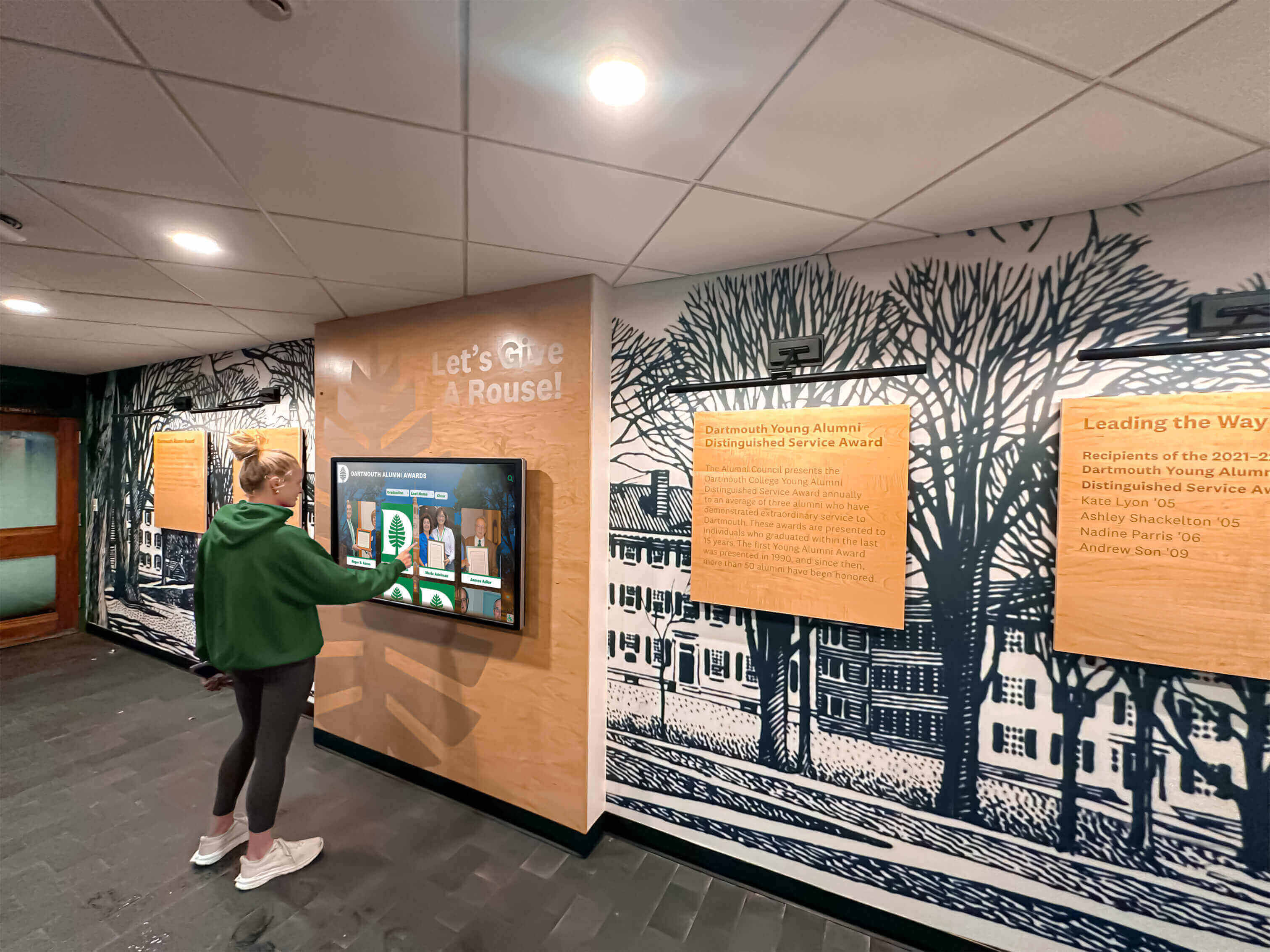
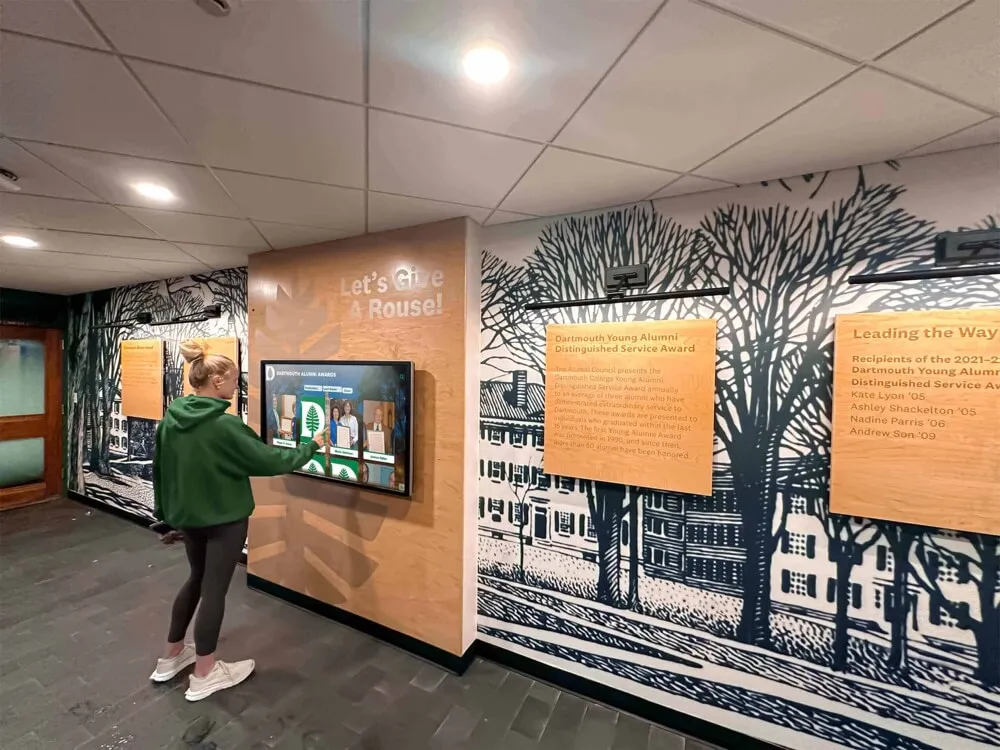
Interactive touchscreens create natural exploration experiences where students actively discover institutional history and peer achievements through multimedia content
Update and Maintenance Burden
Traditional recognition requires physical modification for every update, creating administrative burden that causes programs to become outdated:
Physical Update Requirements
Every new honoree requires manufacturing custom plaques costing $200-500 each, physically accessing display locations, rearranging existing recognition to accommodate additions, and often making difficult decisions about what historical recognition must be removed to create space. These recurring demands create ongoing administrative burden while forcing increasingly difficult curation choices as institutions accumulate more deserving honorees over time.
The Abandonment Pattern
Many institutions launch recognition programs enthusiastically only to see them become static and outdated as administrative burden proves unsustainable. Staff turnover means institutional knowledge about recognition management gets lost. Physical access requirements create barriers that delay or prevent updates. Years pass without new additions, signaling to communities that recognition programs have been effectively abandoned despite ongoing achievement worthy of celebration.
Digital Update Advantages
Cloud-based digital halls of fame eliminate maintenance burdens through instant updates from any internet-connected device requiring no physical access, specialized technical skills, or manufacturing delays:
Adding new honorees immediately upon selection without any production or installation delays, enhancing existing profiles with additional photos, videos, or information as content becomes available, correcting information errors instantly without replacement costs, reorganizing recognition categories based on evolving needs and priorities, continuously improving recognition quality through progressive enhancement, and scheduling automatic content rotations ensuring featured honorees remain fresh for repeat visitors.
This update flexibility makes digital halls of fame sustainable for organizations with limited administrative resources while ensuring acknowledgment remains current, accurate, and compelling perpetually.
Core Features That Define Quality Digital Halls of Fame
Understanding essential capabilities distinguishing exceptional solutions from basic alternatives guides selection decisions:
Unlimited Profile Capacity with Rich Multimedia
Comprehensive recognition requires accommodating diverse information presentation formats:
Complete Profile Components
Quality digital hall of fame systems enable detailed honoree profiles including professional photography showing individuals throughout their journeys, biographical information providing context about lives and backgrounds, comprehensive achievement documentation with complete statistics and records, video testimonials and interviews capturing authentic voices and reflections, historical context connecting individual accomplishments to broader institutional moments, career trajectory information tracking evolution from early involvement through achievement, relationships to other honorees revealing connections and shared experiences, and family or legacy information for multi-generational contributors.
Content Flexibility Across Achievement Categories
Effective platforms accommodate varying profile detail levels appropriate for different recognition types: basic acknowledgment for all deserving individuals ensuring inclusive recognition, enhanced profiles with professional media for significant contributors, comprehensive multimedia presentations for premier honorees warranting special attention, and dedicated campaign-specific content connecting particular achievements to transformational institutional moments.
This flexibility enables organizations to recognize all deserving individuals appropriately while differentiating acknowledgment commensurate with contribution significance—all while maintaining consistent professional quality standards.
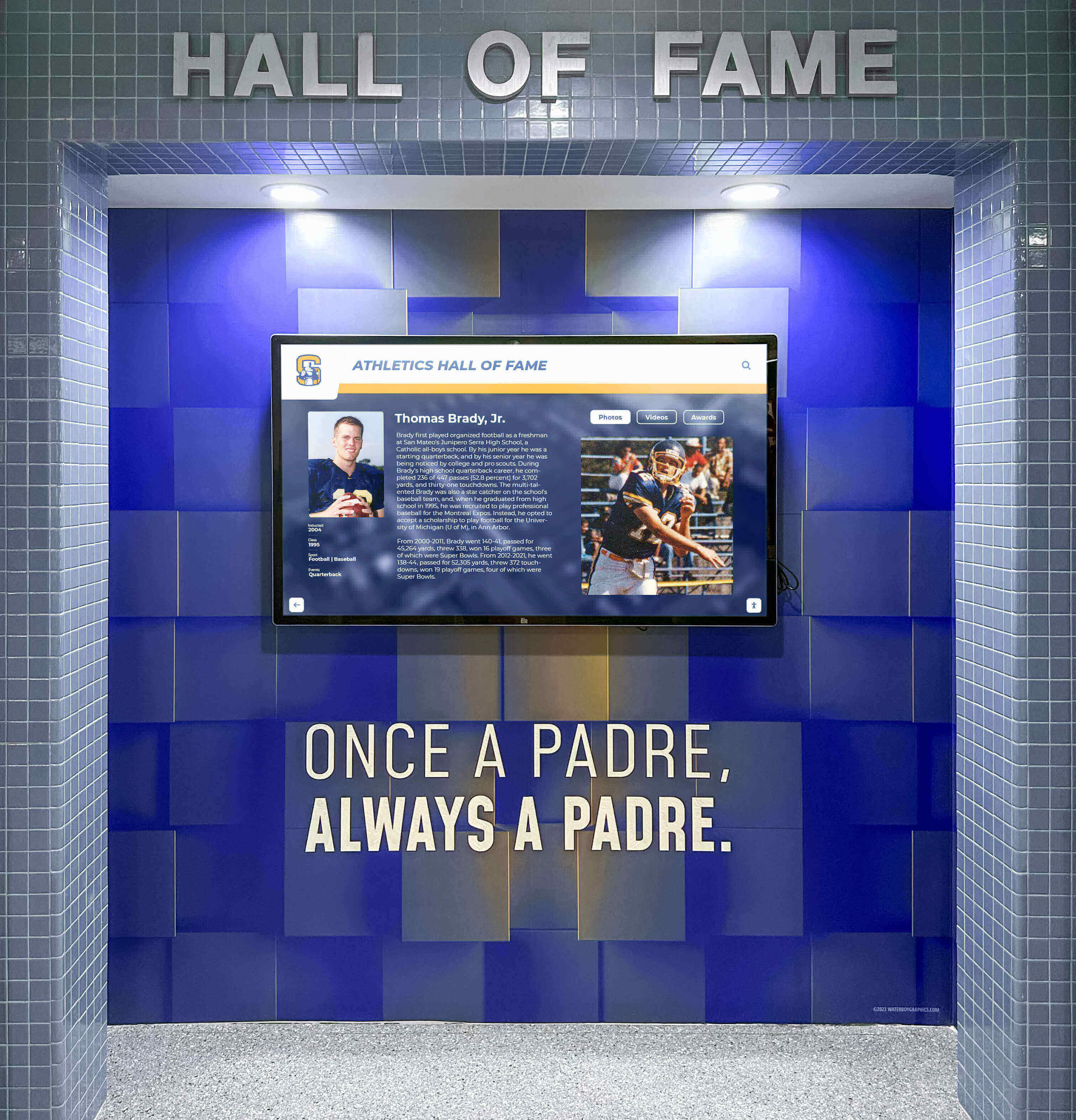
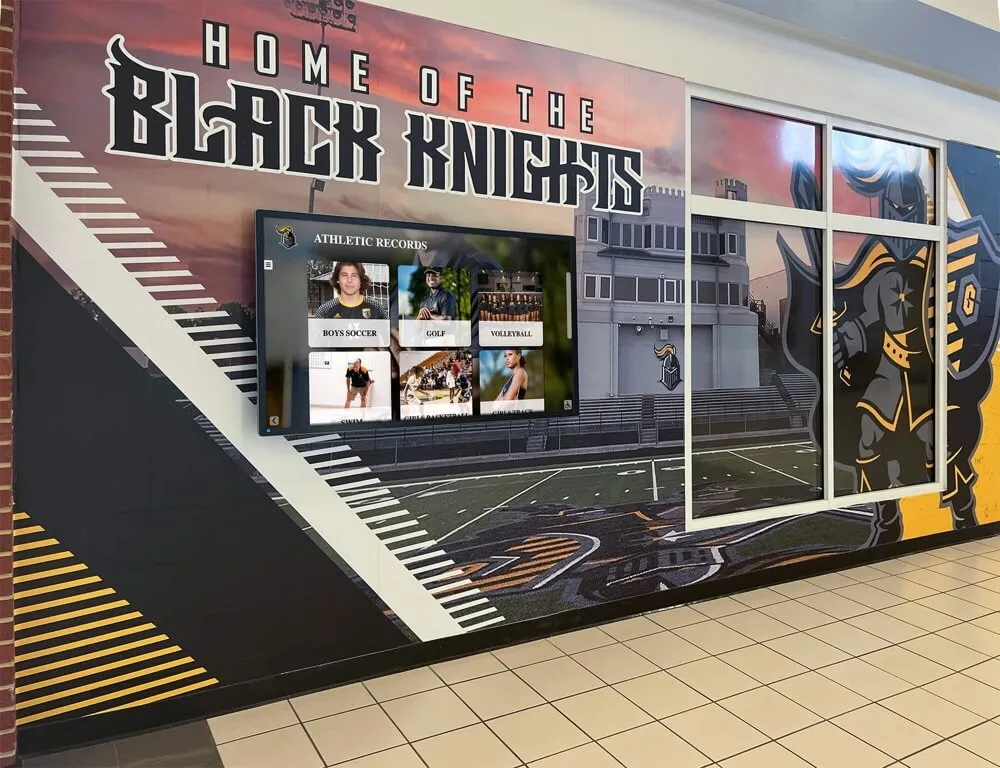
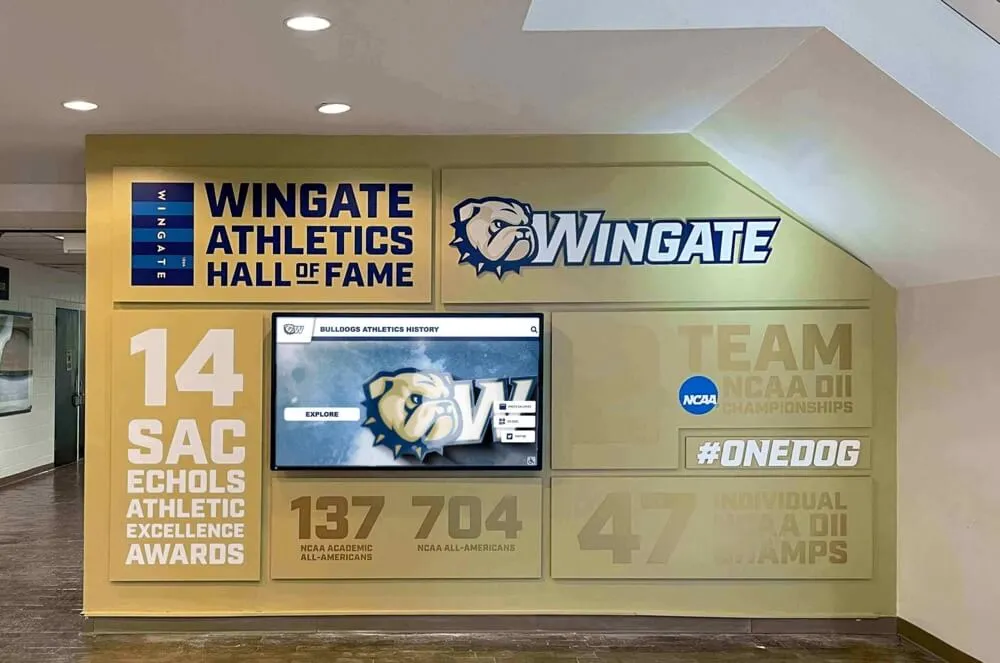
Wall-mounted installations integrate seamlessly with existing facilities while providing unlimited recognition capacity through interactive digital platforms
Intuitive Navigation and Content Discovery
Enabling visitors to find relevant information quickly while supporting serendipitous discovery requires sophisticated interface design:
Essential Navigation Features
Effective digital halls of fame provide multiple discovery pathways: featured rotation automatically highlighting diverse honorees on home screens, alphabetical search allowing quick location by name, category filtering enabling exploration by sport, academic discipline, or achievement type, chronological browsing organized by induction year or achievement era, statistical leaderboards showcasing records and milestones, geographic filtering for institutions with widespread constituencies, and curated collections combining related honorees into compelling themed presentations.
User Experience Design
Interface quality significantly impacts engagement and accessibility. Leading platforms emphasize large touch-friendly navigation suitable for users of all ages and technical comfort levels, clear visual hierarchy guiding natural exploration patterns, immediate response to all touch interactions providing satisfying feedback, intuitive gestures including swiping and pinching that feel natural, seamless transitions maintaining context during navigation, consistent design enabling easy return to search without confusion, and accessibility features supporting visitors with disabilities through appropriate contrast, text sizing, and screen reader compatibility.
Poor interface design undermines even excellent content quality—organizations should prioritize user experience as highly as content when evaluating digital hall of fame solutions.
Cloud-Based Remote Content Management
Modern platforms eliminate traditional update challenges through sophisticated yet accessible management systems:
Management System Capabilities
Professional recognition systems provide browser-based interfaces requiring no technical expertise or special software, remote access enabling updates from anywhere with internet connectivity, bulk import tools accepting CSV files and data from other systems, media library management organizing thousands of photos and videos efficiently, scheduling capabilities automating content rotation and seasonal displays, multi-user access with role-based permissions for different staff members, version control tracking all changes with rollback capabilities, and real-time preview showing exactly how content appears before publishing.
Administrative Efficiency
Institutions implementing cloud-based digital halls of fame report 75-90% reductions in time spent maintaining recognition compared to traditional physical approaches requiring ordering plaques, coordinating installation, and physically accessing locations for every modification. Digital updates completed in minutes from any location eliminate time-consuming tasks, freeing staff to focus on more valuable activities while ensuring recognition stays consistently current.
Learn about management approaches in touchscreen software guides addressing cloud platform capabilities.
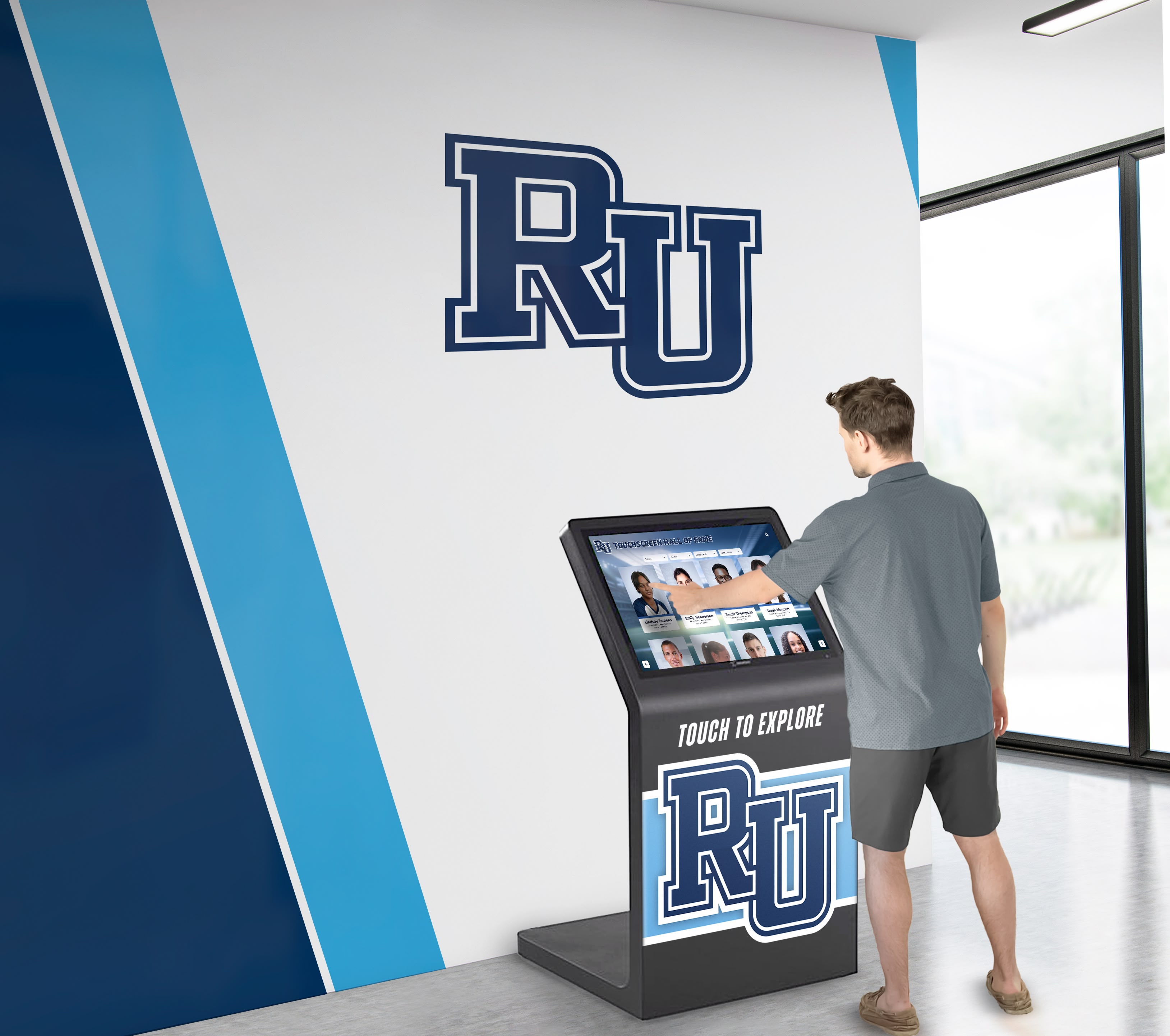
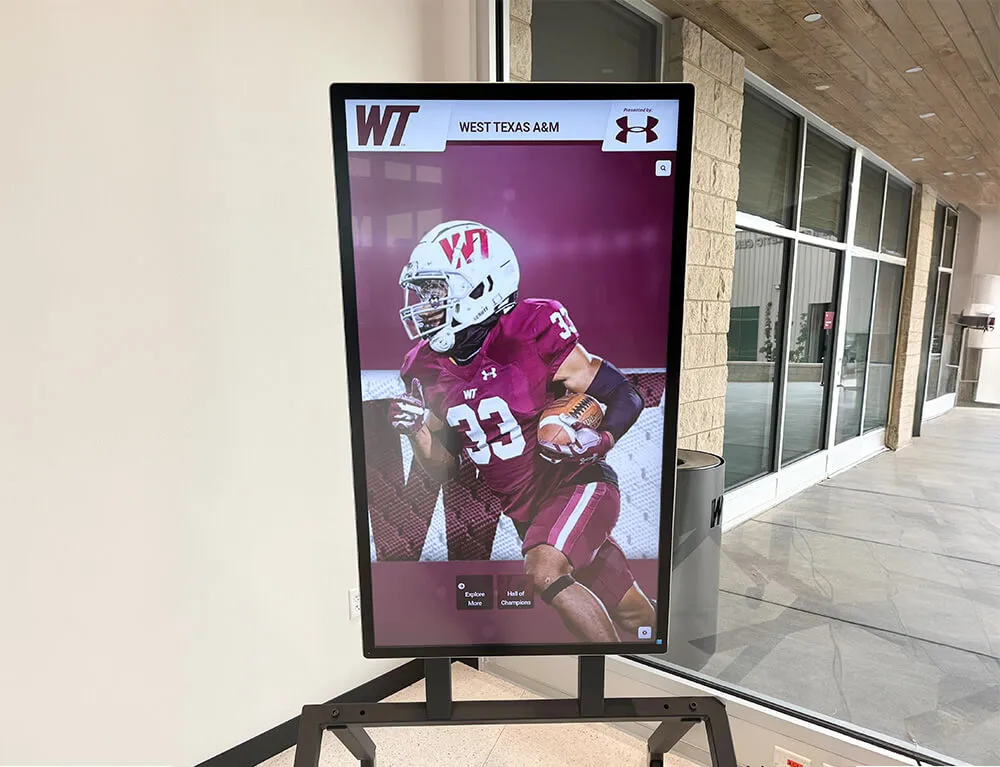
Freestanding kiosks create dedicated recognition destinations in high-traffic lobbies ensuring maximum visibility and community engagement
Web and Mobile Accessibility
Recognition should extend far beyond those physically on campus:
Multi-Platform Access
Quality digital hall of fame systems provide shareable web links extending recognition reach worldwide, mobile-responsive design ensuring perfect display on all device sizes, social sharing integration enabling organic promotion across platforms, QR code generation connecting physical displays to web-based content, email notification systems announcing new honorees to community members, embeddable widgets placing recognition on existing websites, and offline caching ensuring physical displays function during network interruptions.
This extended accessibility amplifies recognition value by reaching alumni worldwide, engaging distant family members, connecting prospective students to institutional culture before visiting campus, and enabling honorees to share their recognition proudly with personal networks through social media.
Analytics and Engagement Tracking
Modern platforms reveal usage patterns impossible with traditional displays: touchscreen interaction frequency showing daily usage, average session duration revealing engagement depth, most-viewed content identifying visitor interests, search query analysis showing discovery patterns, peak usage times informing content scheduling, geographic access distribution revealing remote engagement, and navigation path analysis understanding how users explore recognition.
These insights demonstrate whether digital halls of fame generate intended engagement or require strategy adjustments improving effectiveness while providing concrete evidence of recognition program value to institutional leadership.
Key Applications and Use Cases
While digital halls of fame serve multiple purposes, certain applications deliver particularly high value:
Athletic Achievement Recognition
Athletic excellence represents one of the most visible aspects of institutional culture, making it natural focus for digital hall of fame implementation:
Comprehensive Athletic Celebration
Digital touchscreens enable systematic recognition across all dimensions: individual athlete profiles with complete career statistics and achievements, team championship documentation with rosters and tournament progression, coaching excellence celebrating leadership contributions across eras, all-conference and all-state honors systematically documented, school records tracked across all sports with historical context, championship season preservation with photos and videos, multi-sport integration providing equal visibility regardless of program prominence, and rivalry game documentation capturing defining competitive moments.
This comprehensive approach demonstrates that institutions value diverse athletic excellence, encouraging broader participation while honoring every sport’s unique contributions to institutional identity.
Discover specialized approaches in basketball hall of fame recognition with detailed implementation frameworks.
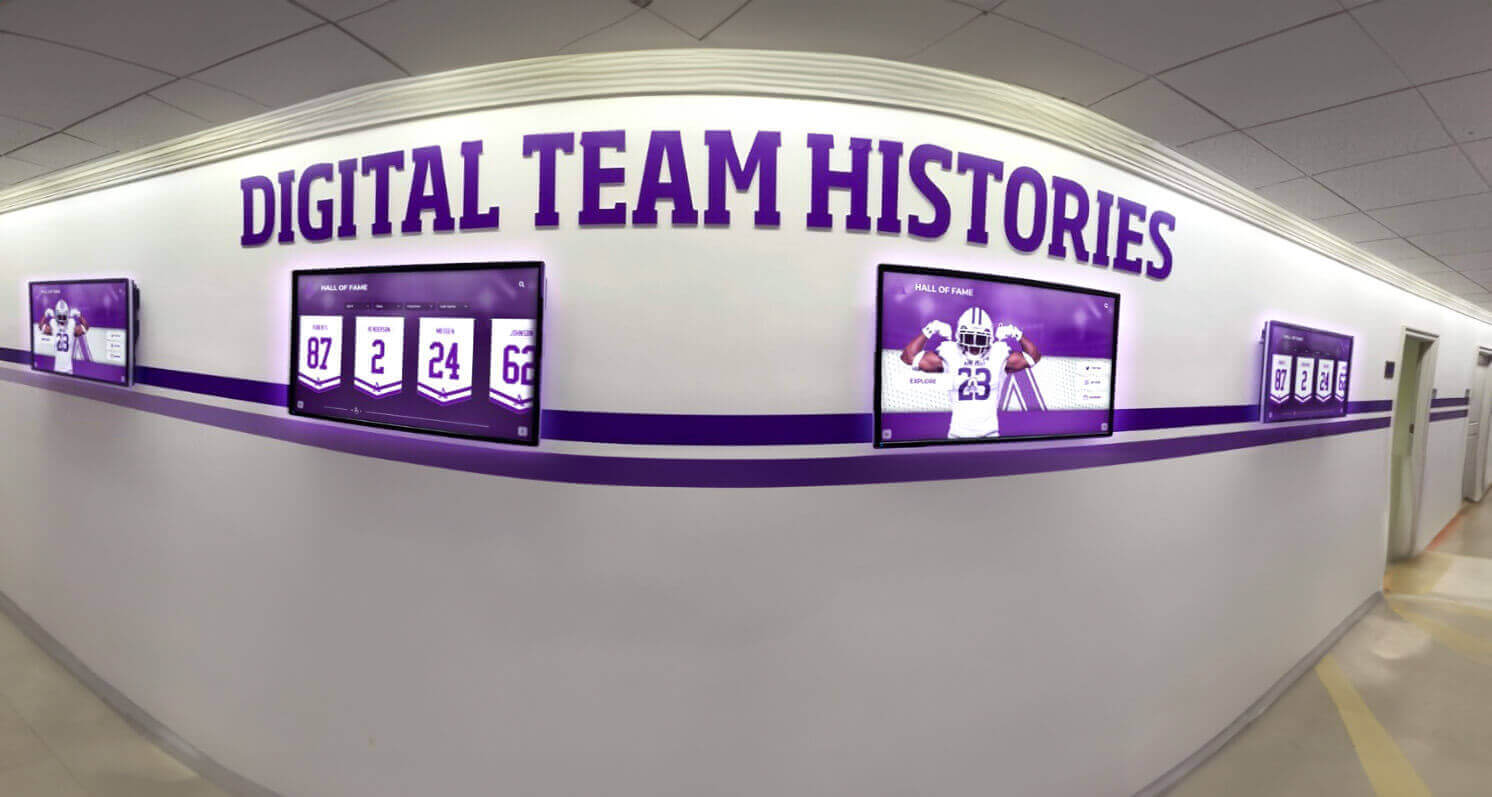
Multiple coordinated displays provide unlimited recognition space throughout facilities without overwhelming physical environments
Academic Excellence and Scholarship
While athletic success often dominates recognition, comprehensive digital systems celebrate academic achievement with equal prominence:
Academic Recognition Categories
Valedictorians and salutatorians across all graduating classes, National Honor Society inductees with service documentation, academic scholarship recipients and college acceptance achievements, subject-specific excellence and departmental awards, research accomplishments and competition success, AP Scholar recognition and perfect ACT scores, STEM achievement and certification programs, arts recognition including musical and theatrical excellence, and leadership roles with community service contributions.
Beyond traditional metrics, digital platforms enable recognition of achievements often overlooked: academic growth demonstrating dedication, creative accomplishments across all mediums, mentorship and peer support contributions, specialized certifications and skill development, and perfect attendance demonstrating commitment.
This comprehensive approach demonstrates that institutions value diverse forms of excellence, encouraging broader engagement while honoring many talents contributing to vibrant communities.
Explore academic approaches in academic recognition programs ensuring equitable celebration.
Alumni Connection and Institutional History
Digital halls of fame create powerful connection opportunities strengthening institutional relationships:
Alumni Recognition Features
Comprehensive alumni celebration includes career pathways and professional accomplishments, advanced degrees and continuing education, community service and leadership contributions, industry recognition and professional honors, family connections and generational legacies, mentorship and institutional support activities, and “where are they now” updates maintaining current connections.
Historical Documentation
Digital platforms preserve institutional memory: decade-by-decade exploration of institutional evolution, facilities development documenting campus growth, leadership history recognizing administrators and key figures, tradition documentation explaining customs and culture, historic photo and yearbook archives digitally accessible, and milestone celebrations commemorating anniversaries.
Organizations implementing digital alumni recognition report significant increases in engagement, event attendance, and advancement outcomes—demonstrating tangible value these systems deliver beyond recognition itself.
Learn about historical preservation in school history display guides with archival strategies.
Planning Digital Hall of Fame Implementation
Successfully implementing digital touchscreen technology requires systematic planning addressing interconnected considerations:
Defining Objectives and Success Criteria
Clear objectives guide design decisions when tradeoffs become necessary:
Recognition Goals
Consider what you hope to accomplish: Which populations currently lack adequate recognition? What achievement categories deserve greater visibility? How might enhanced recognition support recruiting or development goals? What stories need preservation before institutional memory fades? How can recognition strengthen specific cultural priorities?
Engagement Objectives
Define how recognition should impact community connection: Which audiences show lowest engagement needing intervention? What role might recognition play in alumni connection? How should recognition support student recruitment and retention? What engagement metrics will demonstrate success?
Measurable Success Indicators
Establish concrete metrics enabling assessment: display interaction frequency and session duration targets, web platform traffic goals, social sharing objectives, user satisfaction benchmarks, maintenance time reduction expectations, and community awareness improvements.
These defined objectives enable focused implementations delivering maximum value for specific institutional priorities rather than generic approaches meeting no particular needs well.
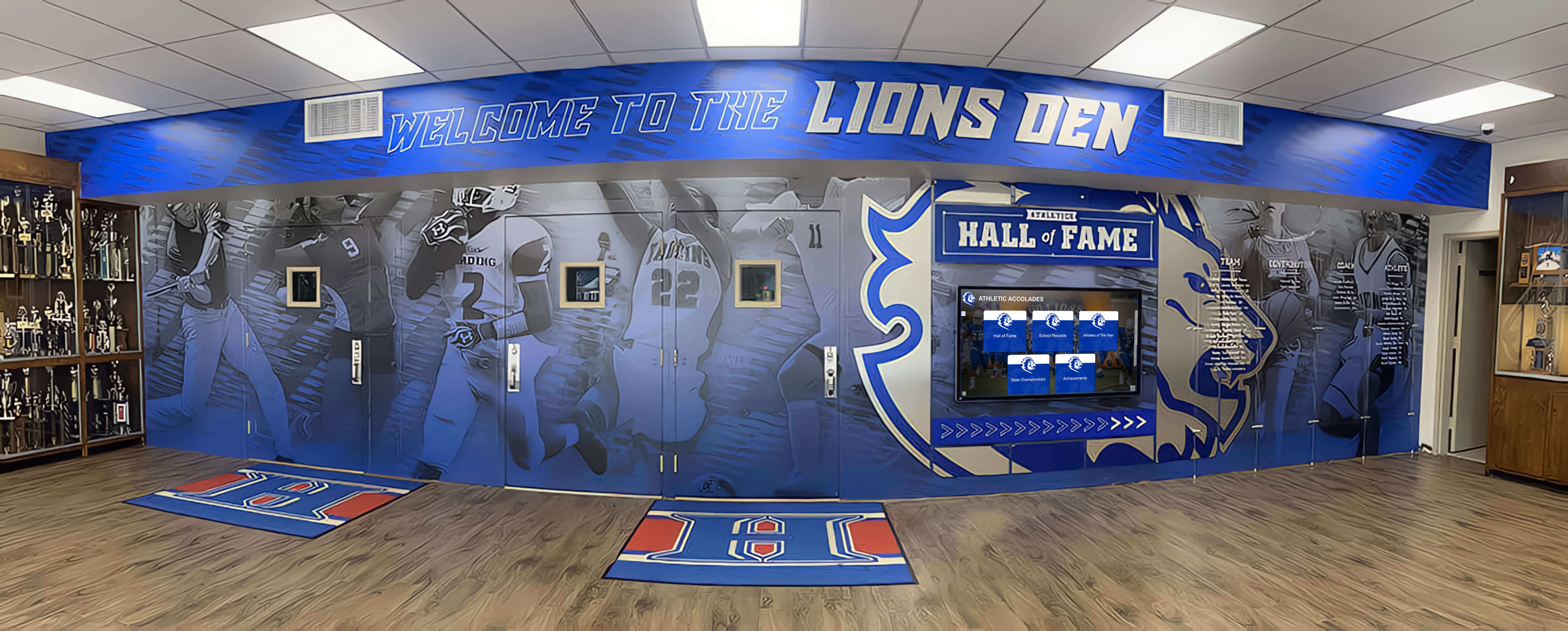
Integrated recognition environments combine traditional trophy displays with digital interactive systems creating comprehensive celebration spaces
Technology Platform Selection
Choosing appropriate platforms significantly impacts user experience and long-term satisfaction:
Evaluating Recognition-Specific Solutions
Purpose-built platforms like Rocket Alumni Solutions offer significant advantages over generic digital signage adapted for recognition purposes: intuitive content management requiring no technical expertise, unlimited content storage supporting extensive archives, recognition-specific templates reducing implementation complexity, flexible layouts matching different display sizes, robust search and filtering enabling discovery in large databases, mobile-responsive web access extending recognition beyond displays, privacy controls appropriate for student information, analytics revealing engagement patterns, integration capabilities with information systems, and reliable vendor support understanding unique institutional needs.
Avoiding Common Platform Mistakes
Institutions sometimes select inappropriate platforms creating frustration: generic digital signage systems lacking interactivity and deep content organization, custom development projects requiring ongoing technical resources, consumer-grade technology inappropriate for institutional longevity needs, platforms locked to specific hardware preventing future flexibility, and solutions requiring frequent manual content recreation rather than perpetual archives.
These mistakes undermine recognition value while creating ongoing administrative challenges eventually leading to system abandonment. Choosing recognition-specific platforms from established vendors prevents these problems.
Hardware Considerations and Installation
Display hardware significantly impacts user experience and maintenance requirements:
Critical Hardware Specifications
Display size options typically range from 43-55 inches for smaller spaces to 65-75 inches for large lobbies, capacitive or infrared multi-touch technology providing responsive interaction, 350-500 nits brightness for typical indoor environments, minimum 1080p resolution with 4K preferred for larger displays, commercial-grade ratings for 16-24 hour daily operation, tempered glass and vandal-resistant construction for public environments, built-in Wi-Fi or ethernet supporting cloud content delivery, and minimum 3-year warranty coverage appropriate for institutional installations.
Professional Installation Requirements
Proper installation ensures optimal performance: secure mounting meeting safety standards, appropriate viewing heights for accessibility, ADA-compliant design meeting universal requirements, anti-glare positioning minimizing reflections, professional cable management maintaining appearance, electrical work meeting code requirements, network configuration ensuring connectivity, and anti-theft hardware appropriate for security needs.
Schools should budget $3,000-8,000 per display unit for commercial-grade hardware and $800-2,500 for professional installation depending on size and facility conditions.
Strategic Location Selection
Display placement dramatically affects recognition visibility and engagement:
Optimal Placement Locations
Main building entrance lobbies ensuring all visitors encounter displays daily, athletic facility entrances creating immediate recognition atmosphere, cafeteria and commons areas with extended dwell time, library or media center spaces encouraging exploration, performance venue lobbies celebrating arts achievements, administrative corridors where community visitors gather, and multiple distributed locations reaching diverse audiences throughout facilities.
Creating Recognition Destinations
Most effective implementations transform areas into recognition destinations: comfortable seating encouraging extended exploration, coordinated graphics reinforcing institutional identity, integration with traditional trophy cases creating comprehensive displays, appropriate lighting highlighting recognition areas, school colors and branding creating cohesive aesthetics, and clear wayfinding directing visitors to recognition spaces.
These integrated approaches signal institutional commitment to recognition, encouraging engagement while creating visually impressive spaces strengthening community pride.
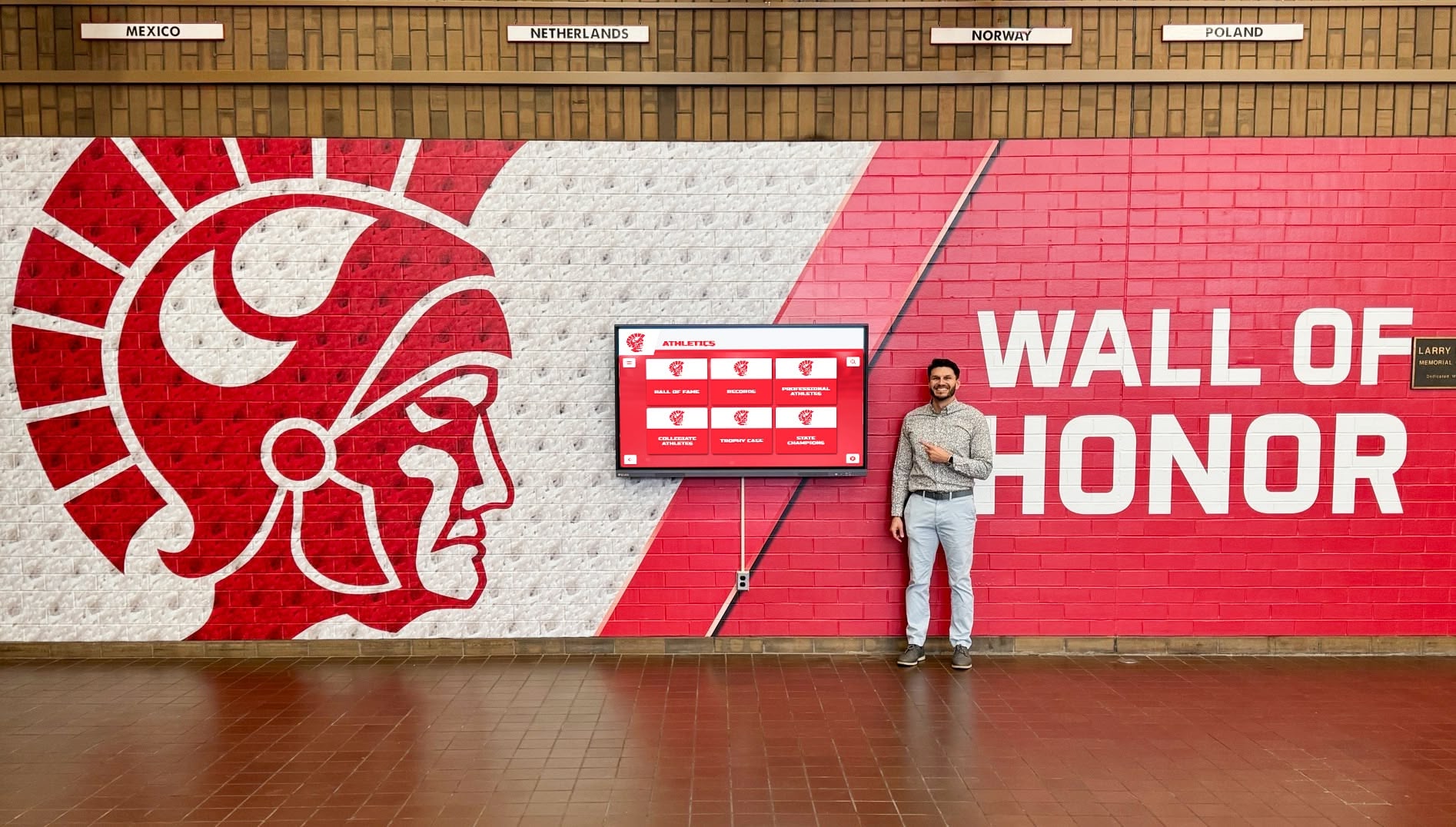
Wall-mounted interactive displays integrate seamlessly into existing facilities while providing unprecedented recognition flexibility and capacity
Creating Compelling Digital Hall of Fame Content
Technology provides infrastructure, but engaging content determines whether systems achieve intended objectives:
Content Development Workflow
Systematic processes ensure consistent quality and comprehensive coverage:
Initial Content Development
Launching with substantial historical content creates immediate impact: historical research gathering information about past honorees from archives and yearbooks, photo collection sourcing images from multiple institutional sources, video compilation locating game footage and recorded events, data organization standardizing information structure, content authoring writing compelling profiles, media preparation optimizing photos and videos, content upload populating platform systematically, and quality review verifying accuracy before launch.
Institutions should allocate 80-150 hours for comprehensive initial content development depending on history scope and available source materials—foundational investment ensuring recognition quality from launch.
Ongoing Content Management
Systematic approaches keep recognition current: immediate workflow adding new honorees within days of achievements, quarterly content reviews verifying recent additions and correcting errors, annual archive expansion systematically adding historical content, featured content rotation regularly updating highlighted profiles, user feedback integration incorporating corrections, and analytics-informed optimization reviewing usage patterns.
Cloud-based platforms enable these updates from any internet-connected device, dramatically reducing administrative burden compared to physical displays.
Content Quality Standards
Professional presentation honors achievements appropriately:
Photography Standards
High resolution minimum 1920x1080 for featured images, proper lighting and composition, consistent visual style across profiles, professional editing when appropriate, permission documentation for all images, and format optimization for display performance.
Written Content Standards
Factual accuracy verified through reliable sources, engaging storytelling beyond statistics, appropriate length typically 150-300 words for profiles, consistent tone and style, proper grammar and spelling, inclusive language reflecting values, and complete achievement detail citation.
Video Standards
HD quality 1080p minimum with 4K preferred, professional editing with titles and context, appropriate length typically 30-90 seconds for highlights, closed captioning for accessibility, rights clearance for music and footage, and format optimization for streaming performance.
These quality standards ensure recognition honors achievements professionally while maintaining presentation reflecting institutional pride.
Learn content strategies in digital storytelling guides with detailed approaches.
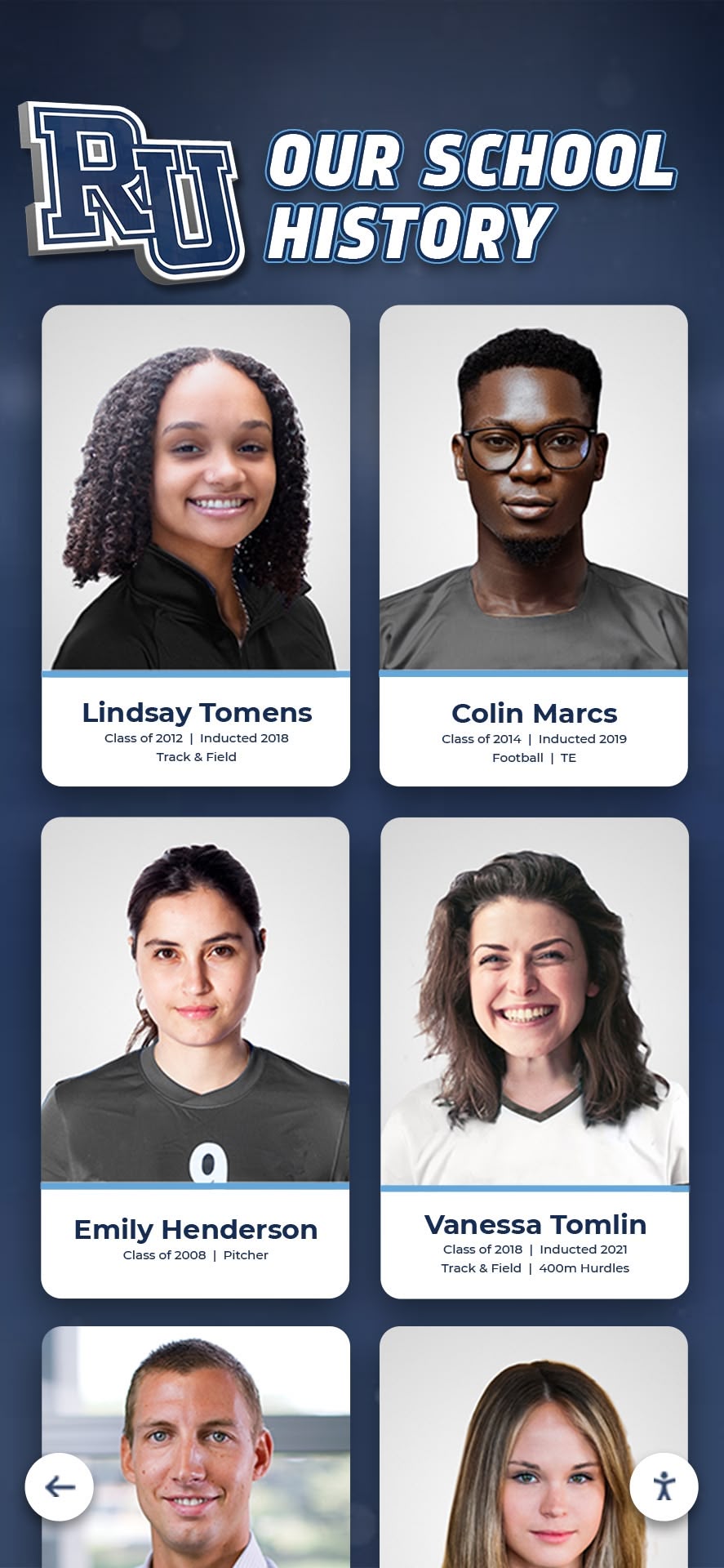
Systematic content development preserves complete institutional legacy across all eras and achievement categories
Measuring Digital Hall of Fame Success
Assessment demonstrates recognition value while identifying improvement opportunities:
Quantitative Engagement Metrics
Modern platforms provide concrete usage data impossible with traditional displays:
Display Interaction Analytics
Touchscreen interaction frequency showing daily usage patterns, average session duration revealing engagement depth, most-viewed content identifying visitor interests, search query analysis showing discovery methods, peak usage times informing content scheduling, navigation path analysis revealing exploration patterns, and filter usage demonstrating discovery preferences.
Web Platform Analytics
Unique visitor counts showing online recognition reach, geographic distribution revealing how far recognition extends, device types indicating mobile versus desktop access, social sharing frequency demonstrating organic promotion, referral sources showing discovery paths, return visitor rates indicating sustained engagement, and email campaign effectiveness when announcements drive traffic.
These metrics reveal whether digital halls of fame generate intended engagement or require strategy adjustments improving effectiveness.
Qualitative Impact Assessment
Regular feedback provides insights beyond quantitative metrics:
Stakeholder Feedback Collection
Student surveys assessing recognition awareness and engagement, alumni feedback on connection improvements, family responses to enhanced visibility, visitor reactions during tours and events, staff observations about interaction patterns, and community perception surveys measuring pride and connection.
Observable Cultural Indicators
Long-term changes provide evidence of recognition cultural impact: increased community awareness of achievements, enhanced institutional pride and positive identity, strengthened alumni connections to current programs, improved external perception during recruitment, greater organizational commitment to recognition, elevated expectations for achievement visibility, and more inclusive recognition culture celebrating diverse excellence.
Regular assessment enables continuous refinement ensuring digital halls of fame achieve intended goals while identifying enhancement opportunities.
Best Practices for Long-Term Success
Sustaining digital hall of fame value requires ongoing commitment beyond initial implementation:
Establishing Sustainable Management
Clear responsibilities ensure recognition continues reliably:
Administrative Structure
Primary coordinator overseeing recognition program, backup administrators preventing single point of failure, department-specific content managers for specialized categories, student assistants supporting content development, technical support contacts for troubleshooting, and vendor relationship management for platform issues.
Update Procedures
Systematic workflows maintain current recognition: immediate achievement addition processes, quarterly content review schedules, annual archive expansion plans, featured content rotation calendars, error correction protocols, and analytics review cycles.
Budget Planning
Sustainable funding ensures long-term viability: annual platform subscription allocation, content development budget for ongoing additions, hardware maintenance and eventual replacement reserves, professional development for staff managing recognition, and enhancement budget for feature additions.
These structural elements prevent recognition system abandonment due to unclear responsibilities or inadequate resource allocation.
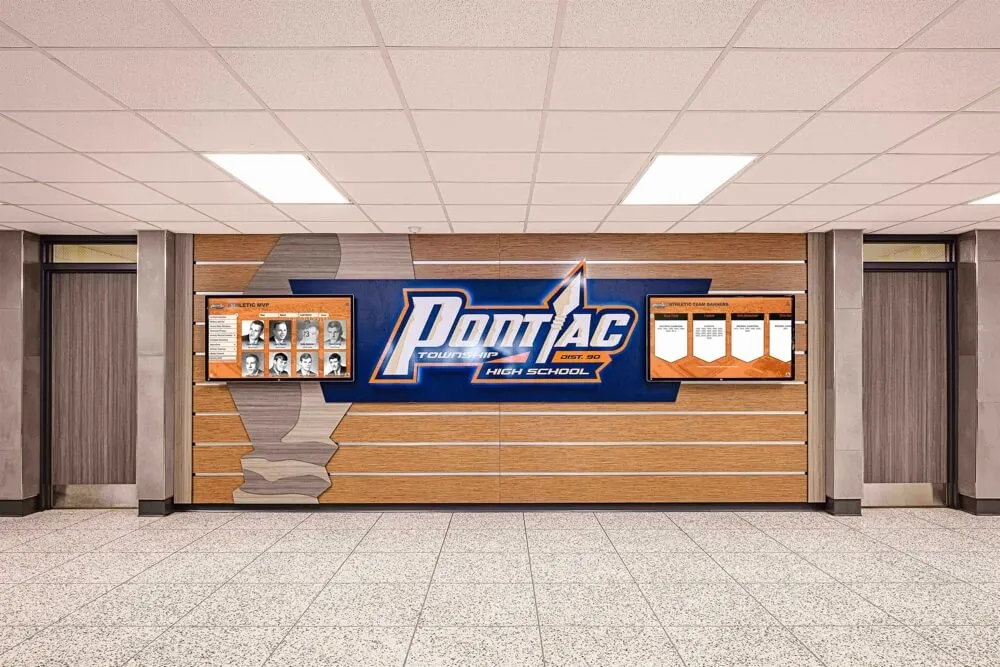
Comprehensive recognition systems celebrate achievements across all programs demonstrating institutional commitment to equitable visibility
Privacy and Compliance Considerations
Student and constituent privacy requires thoughtful policies:
Privacy Compliance
Educational institutions must respect regulations: obtain appropriate consent for public recognition displays, provide opt-out mechanisms for individuals preferring privacy, limit displayed information to directory-appropriate data, secure systems preventing unauthorized access, regular policy review ensuring continued compliance, and documentation of consent and permissions.
Sensitive Information Protection
Avoid displaying information that could be harmful: contact information or addresses, information revealing protected characteristics, details about family circumstances, anything individuals might find personally sensitive, and content creating safety concerns.
Consult with legal counsel ensuring recognition complies with relevant privacy laws, regulations, and institutional policies.
Keeping Content Fresh and Engaging
Preventing stagnation requires active content management:
Regular Content Updates
Add new honorees immediately upon achievement, rotate featured profiles monthly or quarterly, expand historical archives systematically, enhance existing profiles with newly discovered information, refresh photos and videos as better materials become available, and update navigation based on usage patterns.
Seasonal Content Themes
Championship anniversary celebrations highlighting historic teams, reunion support featuring specific graduation classes, milestone recognition for anniversary events, current season connections linking past and present, and national recognition days aligned with broader celebrations.
Community Engagement Features
Alumni update submissions sharing post-graduation success, memory collection campaigns gathering community stories, photo contribution opportunities expanding historical archives, social media integration connecting current and historical content, and interactive challenges encouraging exploration and discovery.
Active content management keeps recognition relevant and engaging rather than static repositories visited once and forgotten.
Future Trends in Digital Hall of Fame Technology
Understanding emerging developments helps organizations plan investments remaining relevant long-term:
Advanced Interactive Capabilities
Next-generation systems incorporate enhanced features:
Emerging Technology Integration
Artificial intelligence personalizing content based on user preferences, augmented reality experiences overlaying digital content on physical environments, voice interaction enabling hands-free navigation, advanced analytics revealing detailed engagement patterns, enhanced social media integration for amplified sharing, mobile app synchronization enabling continued exploration, and virtual reality experiences recreating historic moments immersively.
These innovations continue expanding what’s possible with recognition technology while widening advantages interactive platforms provide over static traditional displays.
Enhanced Accessibility and Inclusion
Modern recognition platforms increasingly emphasize accessibility:
Universal Design Principles
Multiple language support reaching diverse communities, screen reader compatibility supporting visually impaired users, adjustable font sizes and high-contrast modes, closed captioning for all video content, alternative text for images supporting assistive technologies, keyboard navigation alternatives to touch interaction, and height-adjustable mounting accommodating wheelchair users.
These inclusive approaches ensure recognition serves entire communities rather than privileging certain populations over others.
Integration with Broader Systems
Digital platforms increasingly connect with comprehensive institutional ecosystems:
Connected Recognition Platforms
Student information system integration enabling automatic achievement recognition, donor management system connections facilitating giving acknowledgment, social media platforms amplifying recognition reach, mobile applications extending recognition accessibility, virtual event platforms incorporating recognition into programming, and analytics dashboards providing comprehensive engagement insights.
Solutions like Rocket Alumni Solutions provide comprehensive platforms supporting integrated approaches—enabling organizations to address hall of fame recognition while building broader capabilities supporting multiple institutional objectives simultaneously.
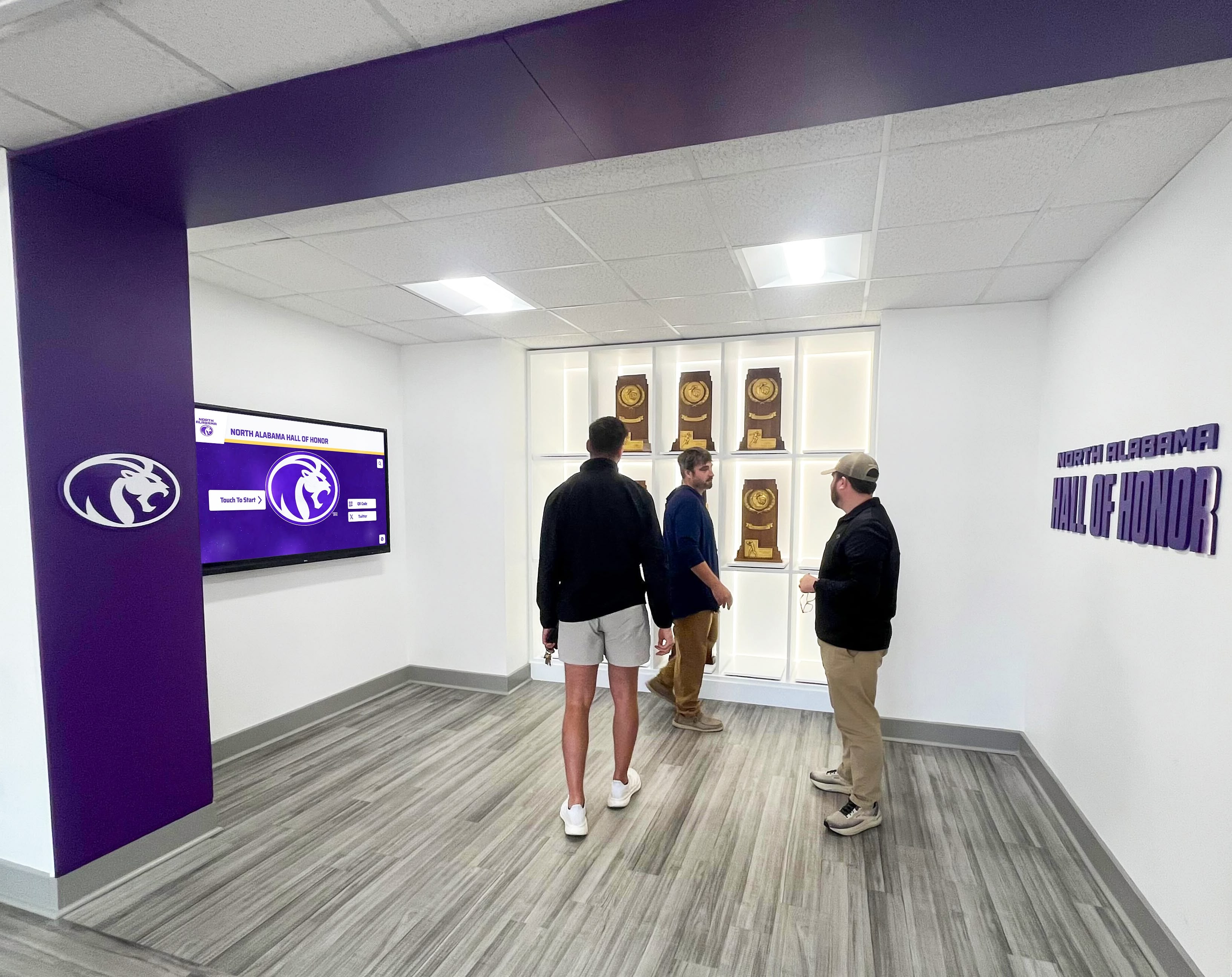
Successful implementations create natural gathering spaces where community members connect around shared institutional pride and tradition
Conclusion: Transforming Recognition Through Digital Hall of Fame Innovation
Digital halls of fame represent fundamental evolution in how institutions recognize achievement, preserve legacy, and engage communities. These interactive platforms solve persistent limitations constraining traditional recognition—limited space, static presentation, restricted accessibility, and high maintenance burden—while creating new opportunities for storytelling, engagement, and connection impossible with physical plaques and trophy cases alone.
When institutions implement digital recognition systems thoughtfully—with clear objectives, appropriate technology, quality content, and sustained management—they create powerful platforms celebrating every deserving honoree across all programs and eras while building institutional culture that inspires excellence and strengthens community pride for generations.
A digital hall of fame is far more than a touchscreen display—it’s a comprehensive recognition philosophy valuing inclusive celebration, compelling storytelling, accessible engagement, and perpetual evolution that honors the past while inspiring future achievement. Modern solutions like Rocket Alumni Solutions make this transformative approach accessible to institutions of all sizes without requiring extensive technical expertise or prohibitive budgets.
Transform Your Recognition Program with Digital Hall of Fame Technology
Discover how modern digital hall of fame solutions can help your institution celebrate unlimited achievements through interactive displays that engage entire communities and preserve institutional legacy permanently while supporting recruiting, fundraising, and cultural development objectives.
Book a DemoThe strategies, considerations, and best practices explored in this comprehensive guide provide frameworks for implementing digital halls of fame delivering lasting value for your institution and community. From unlimited recognition capacity and engaging multimedia storytelling to remote cloud management and extended web accessibility, these platforms transform simple achievement listing into dynamic celebration woven throughout institutional culture.
Schools, universities, athletic programs, and organizations implementing digital halls of fame consistently report powerful outcomes: increased community engagement with recognition, stronger alumni connections to current programs, enhanced institutional pride and positive culture, dramatic administrative efficiency improvements, and comprehensive preservation of legacy that might otherwise be lost.
Start where current situations demand—whether replacing overcrowded trophy cases, extending recognition reach to distant alumni, or creating more engaging recognition experiences—then systematically expand to build comprehensive systems your community deserves. Every honoree who dedicated time, effort, and talent to institutional success deserves recognition honoring that contribution appropriately while inspiring future generations to pursue their own excellence.
Ready to begin your digital hall of fame journey? Explore how interactive touchscreen platforms transform recognition at digital trophy walls and learn about comprehensive implementation in hall of fame online guides addressing planning and execution strategies.