



Being named an All-American athlete represents one of the highest honors in competitive sports—a recognition that sets athletes apart as among the very best in their sport across the entire nation. Whether in high school, college, or youth competition, the All-American designation signifies exceptional skill, dedication, and achievement that places an athlete in elite company.
For schools, clubs, and athletic programs, understanding what this honor means—and how to appropriately celebrate athletes who earn it—creates opportunities to build culture, inspire younger competitors, and preserve institutional athletic legacy. Yet many organizations struggle to provide recognition proportional to this remarkable achievement, often limiting celebration to brief announcements or static plaques that fail to capture the complete story behind these accomplishments.
This comprehensive guide explores what it means to be an All-American athlete, the various ways this honor is awarded across different sports and levels, and how modern recognition approaches help institutions celebrate these achievements with the visibility and permanence they deserve.
All-American recognition exists across virtually every competitive sport and multiple competition levels, but the specific criteria, selection processes, and prestige associated with the honor vary significantly depending on the sport, the organization awarding the recognition, and the competition level. Understanding these distinctions helps athletes, families, and programs appreciate the significance of different All-American designations.

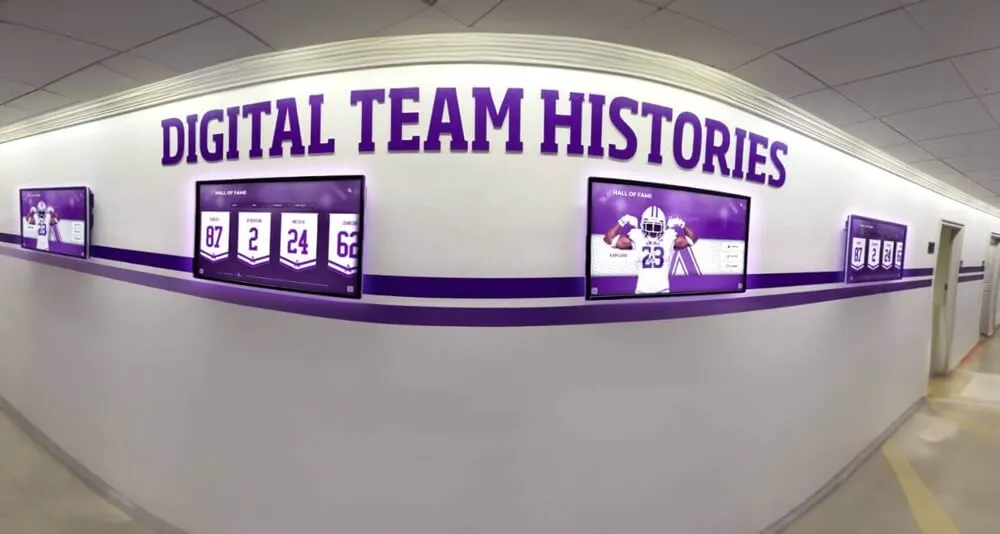
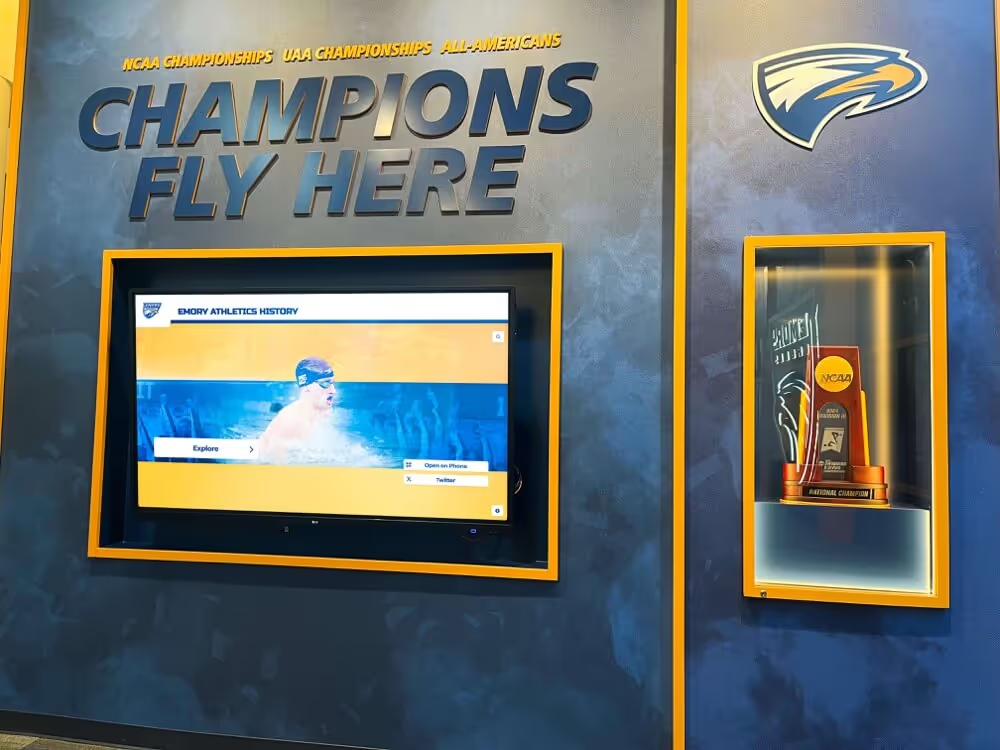
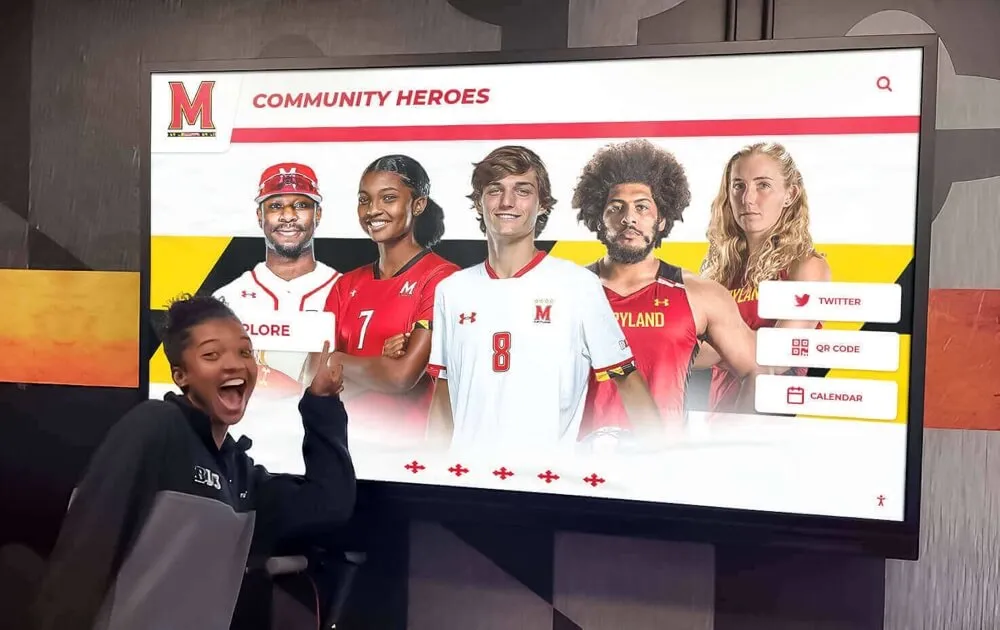
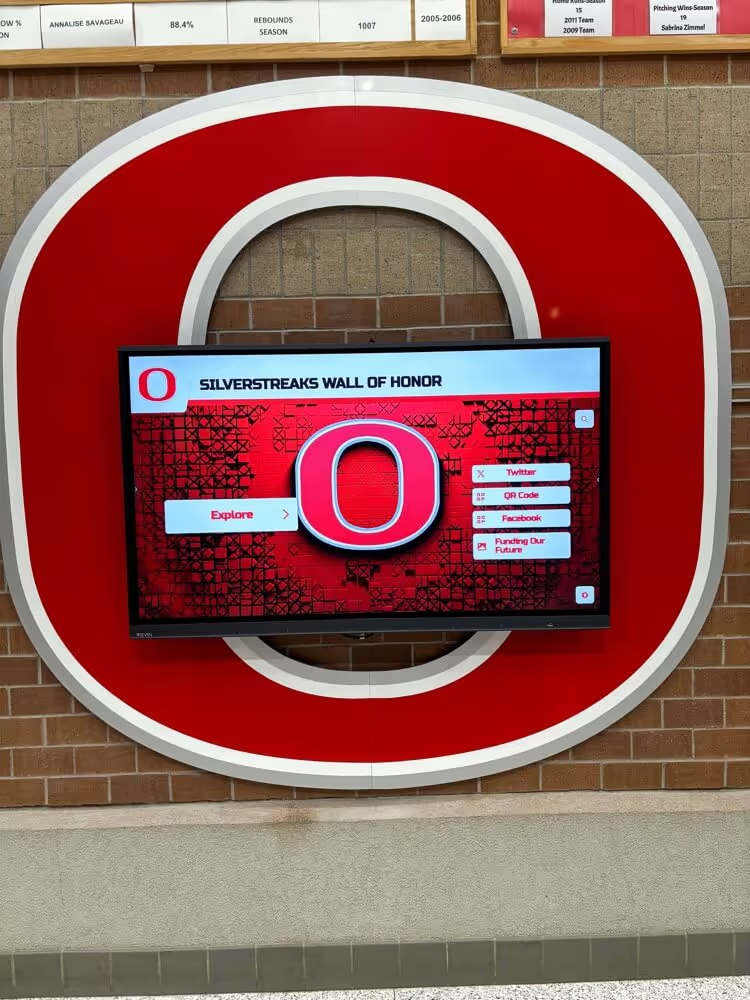
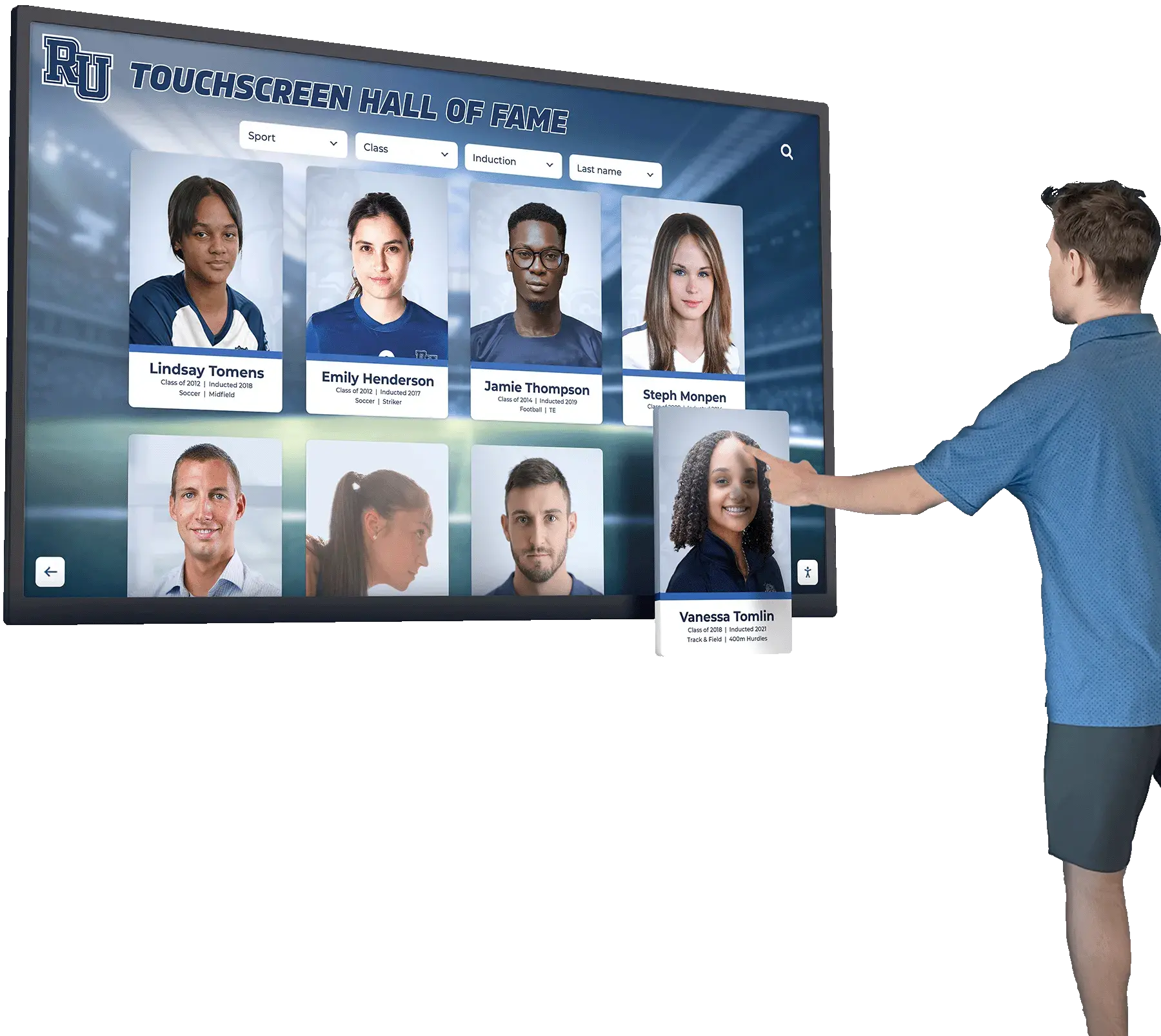
Modern digital displays provide comprehensive recognition for All-American athletes across all sports and eras
What Does All-American Mean in Sports?
At its core, the All-American designation identifies athletes who have demonstrated exceptional performance placing them among the best competitors in their sport across the entire United States during a specific season or time period.
The Fundamental Definition
An All-American athlete is someone who has been selected for an “All-American team”—an honorary roster composed of the most outstanding performers in a particular sport during a given year. Unlike actual teams that compete together, All-American teams are recognition constructs celebrating individual excellence rather than forming competitive units.
Key Characteristics of All-American Recognition:
- National scope: Selection considers athletes from across the entire country, not just regional or state competition
- Elite selectivity: Only a small percentage of competitors earn All-American status in any given year
- Performance-based: Selection typically relies on measurable achievement, statistics, and competitive results
- Annual designation: Most All-American honors are awarded for single-season performance
- Multi-tier structure: Many sports have first team, second team, and honorable mention distinctions
The prestige and competitive significance of All-American honors vary substantially by sport, organization, and competition level—a distinction we’ll explore in depth throughout this guide.
Historical Origins of All-American Recognition
The All-American concept originated in college football in the late 19th century when sportswriter Walter Camp began selecting teams of the best college football players each season. Camp’s annual All-American football teams, first published in 1889, established the tradition of recognizing exceptional collegiate athletes on a national stage.
This concept gradually expanded to other sports and competition levels:
- Early 1900s: Basketball, baseball, and track and field adopted All-American recognition
- Mid-1900s: Olympic sports and women’s athletics established All-American programs
- Late 1900s: High school and youth sports created All-American recognition systems
- 2000s-present: Virtually every competitive sport now features some form of All-American recognition
Today, All-American designations exist in dozens of sports across high school, college, club, and youth competition levels, though the selection criteria and prestige vary significantly.
Learn about comprehensive athletic recognition in academic All-Americans award displays that honor student-athletes excelling both athletically and academically.
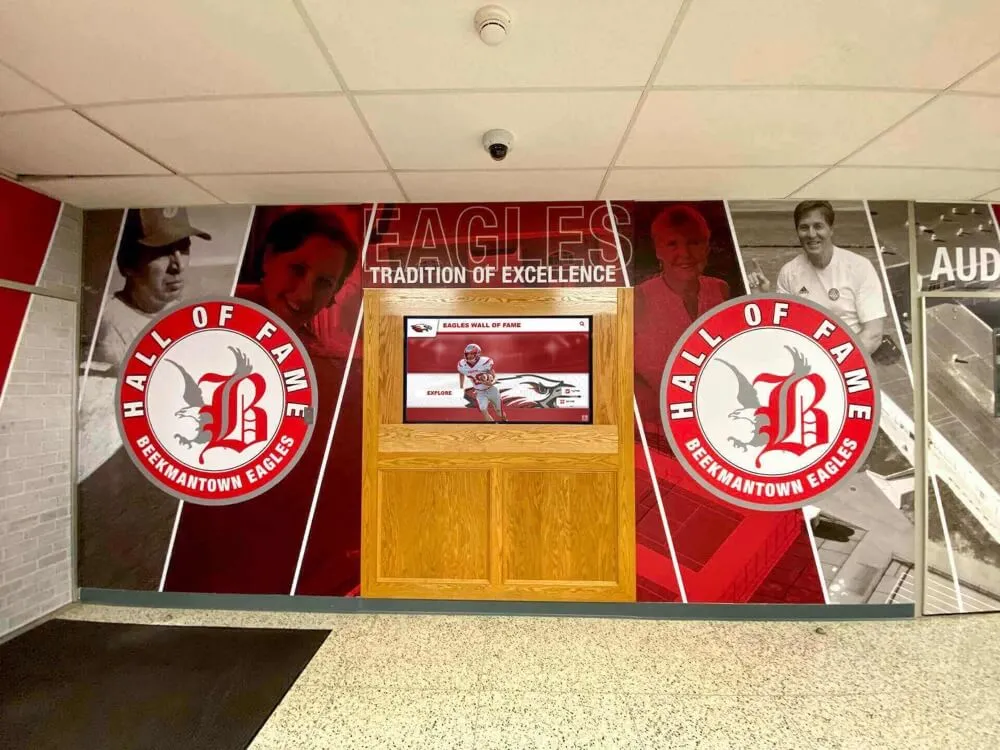
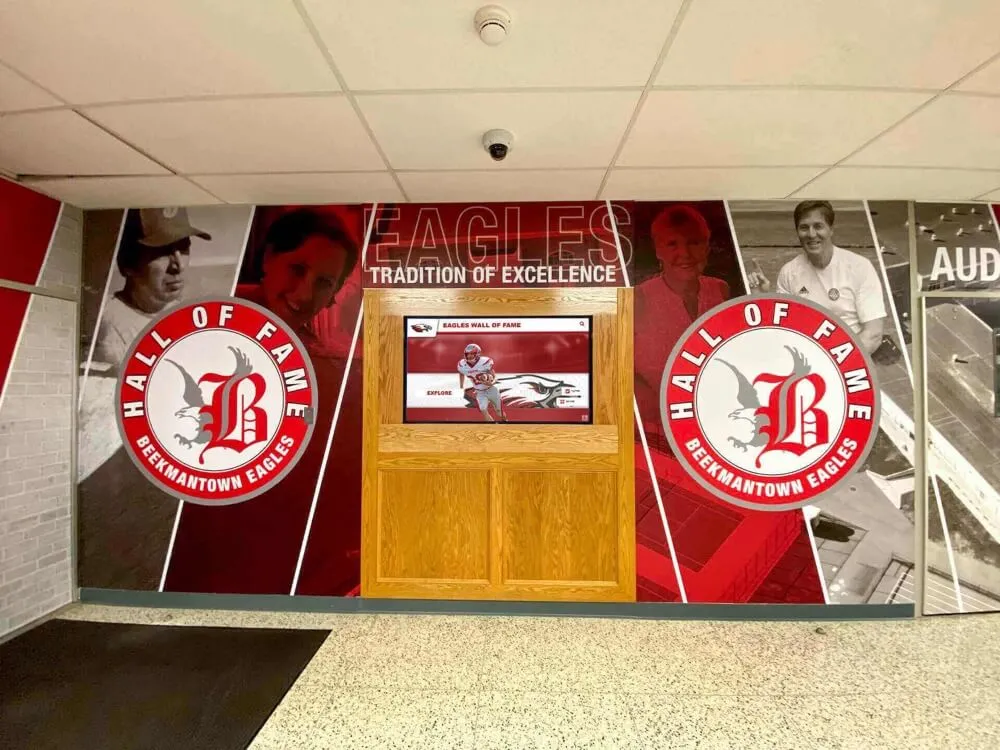
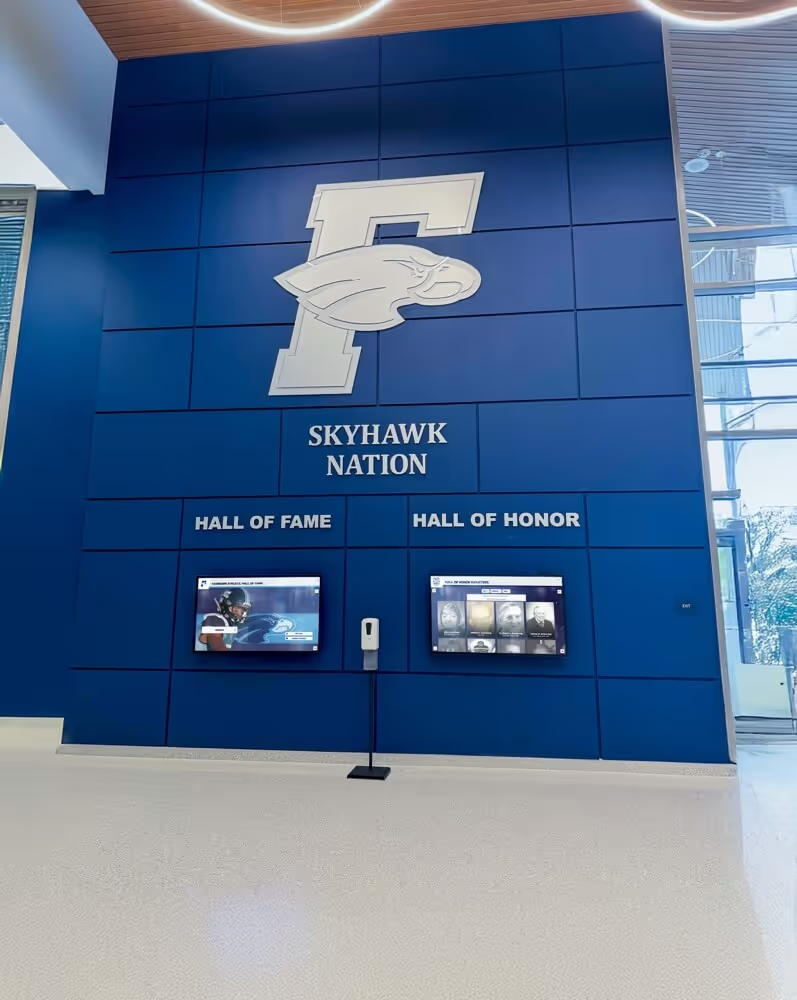
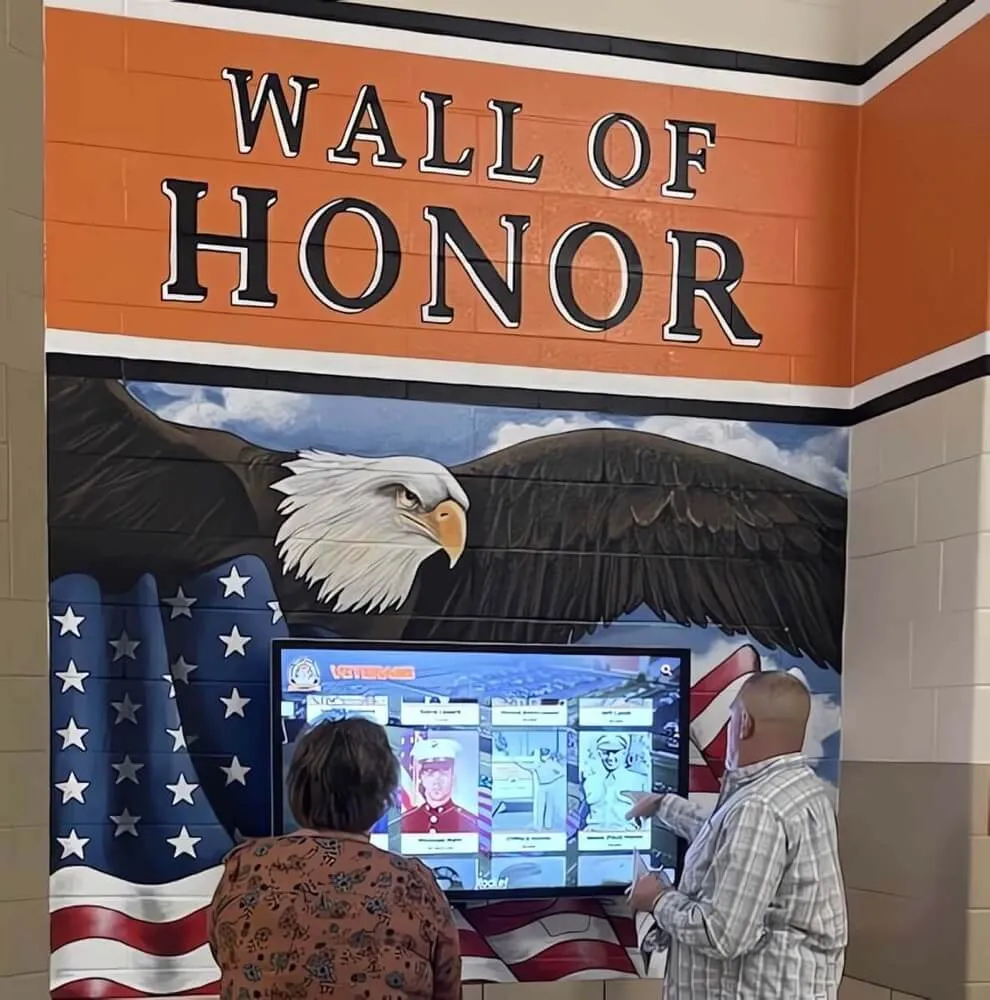
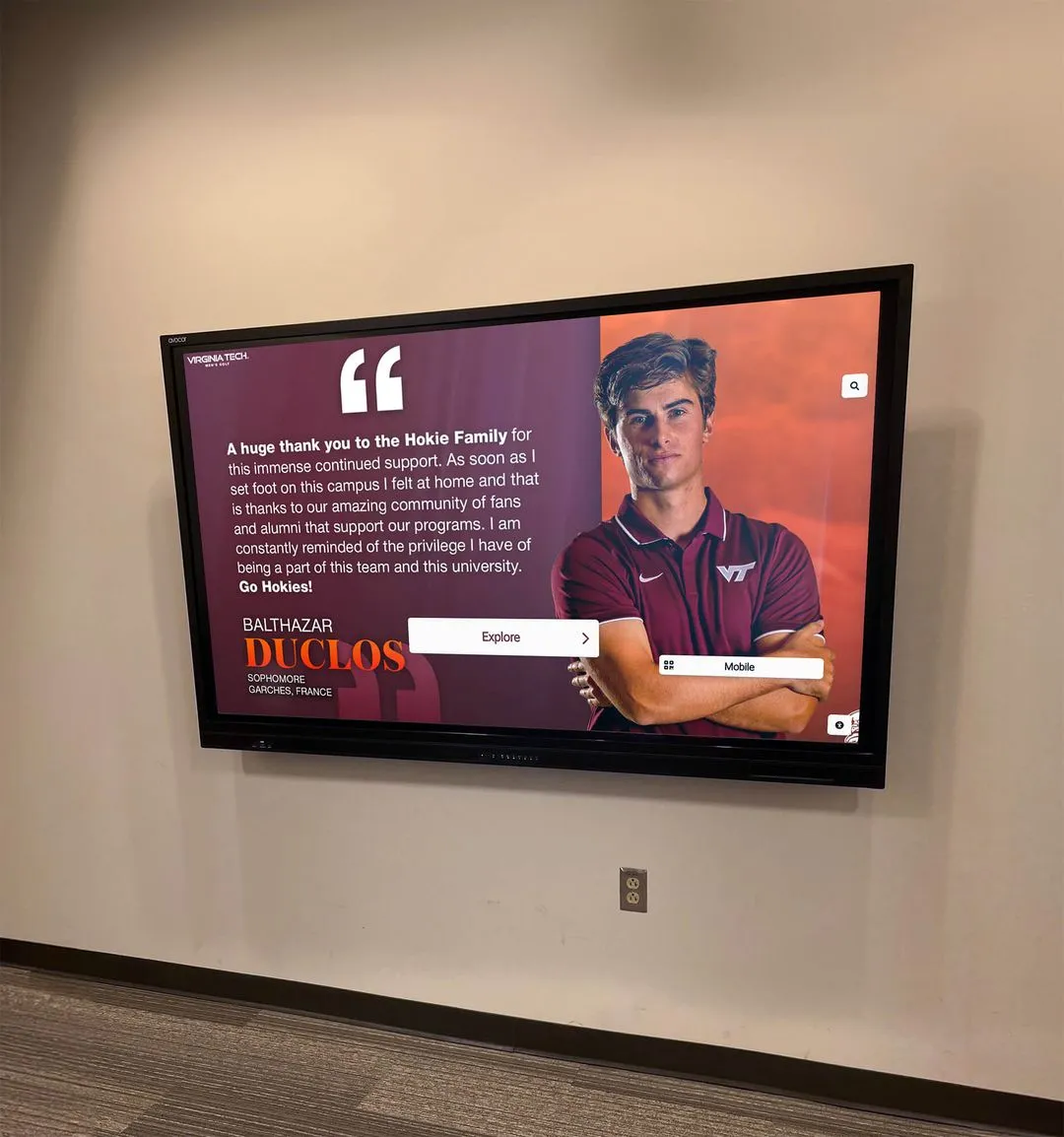
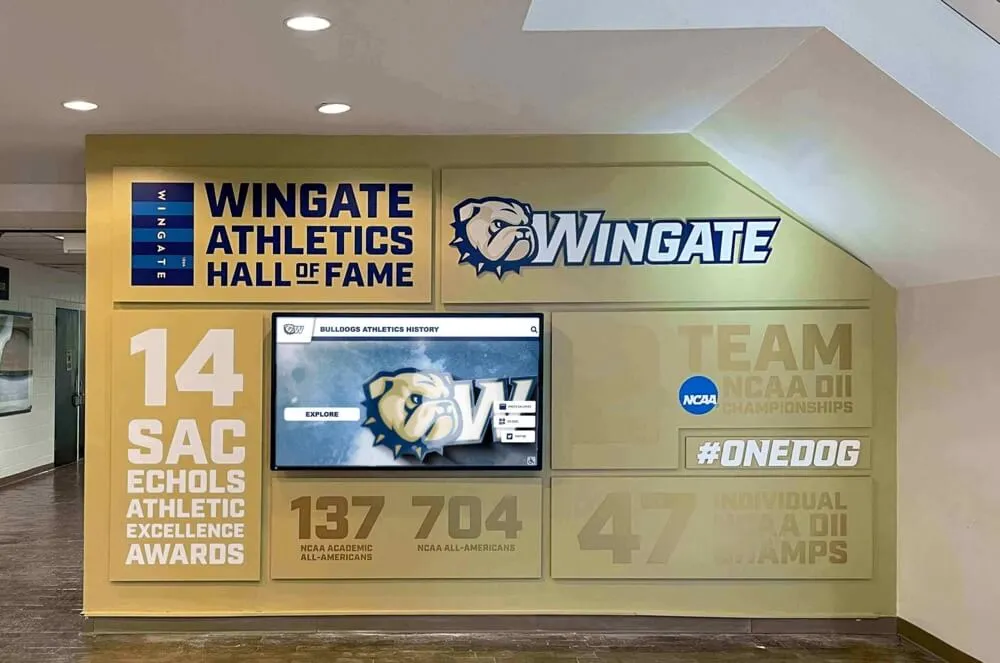
Athletic recognition walls showcase All-American achievements alongside other program honors and milestones
All-American Recognition at the College Level
College All-American recognition carries the most prestige and standardization, with well-established selection processes overseen by national organizations specific to each sport.
NCAA All-American Selection Process
The National Collegiate Athletic Association (NCAA) and sport-specific governing bodies manage All-American selection for college athletics across three NCAA divisions.
Division I All-Americans Division I All-American selection represents the pinnacle of collegiate athletic recognition, identifying the absolute best performers competing at the highest college level. Selection criteria vary by sport:
Team Sports (Football, Basketball, Volleyball, Soccer)
- Selected by recognized media organizations, coaches associations, or sport-specific governing bodies
- Typically include first team, second team, and third team designations
- Consider statistics, team success, position-specific performance, and expert evaluations
- Multiple organizations may select All-American teams, with consensus recognition considered most prestigious
Individual Sports (Track and Field, Swimming, Wrestling, Gymnastics)
- Automatic All-American designation for finishing in the top 8 (sometimes top 16) at NCAA Championships
- Performance-based qualification eliminates subjective selection committees
- Clear, measurable standards athletes can target
- Multiple All-American honors possible for athletes competing in multiple events
Division II and Division III All-Americans NCAA Division II and III feature parallel All-American recognition systems appropriate to their competition levels. While carrying less national media attention than Division I honors, Division II and III All-American status represents exceptional achievement within these competitive divisions that include thousands of talented student-athletes.
Discover how college athletics recognition programs celebrate athletes advancing to compete at the collegiate level.
NAIA and Junior College All-Americans
Beyond NCAA competition, the National Association of Intercollegiate Athletics (NAIA) and junior college systems (NJCAA) maintain their own All-American recognition programs.
NAIA All-Americans The NAIA, representing smaller colleges and universities, selects All-American athletes using similar criteria to NCAA programs but within NAIA competition contexts. NAIA All-American status recognizes elite performance among the approximately 60,000 student-athletes competing at NAIA institutions.
NJCAA All-Americans The National Junior College Athletic Association recognizes All-Americans across three competitive divisions. For many athletes, junior college All-American honors provide stepping stones to four-year college opportunities while representing significant achievement in their own right.
Academic All-Americans: The Dual Achievement Honor
Beyond athletic performance, Academic All-American recognition celebrates student-athletes who excel both in competition and in the classroom—representing perhaps the most comprehensive achievement in collegiate athletics.
CoSIDA Academic All-Americans The College Sports Communicators (formerly CoSIDA) manages the most prestigious Academic All-American program, recognizing athletes who maintain exceptional GPAs while competing at high levels. Criteria typically include:
- Minimum GPA requirements (usually 3.3 or higher on 4.0 scale)
- Significant athletic participation and achievement
- At least sophomore academic standing
- Nomination by institutional sports information directors
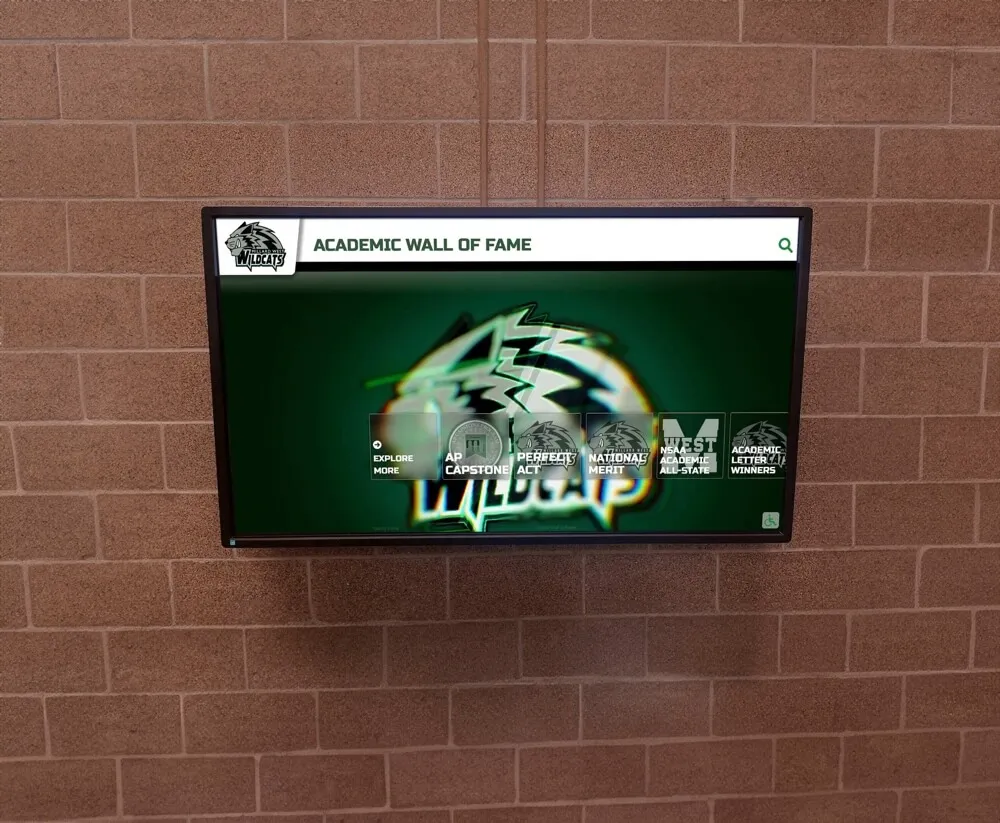
Academic All-American recognition honors the complete student-athlete excelling in classroom and competition
Academic All-American designation carries particular significance because it recognizes the challenging balance of athletic and academic excellence—qualities that predict success beyond athletics in professional careers and life pursuits.
Explore comprehensive student-athlete recognition in academic recognition programs guides with frameworks for celebrating diverse achievements.
High School All-American Recognition
High school All-American recognition involves more complexity and variation than college honors, with multiple organizations selecting teams across different sports without the centralized oversight characteristic of college athletics.
How High School Athletes Earn All-American Status
High school All-American selection processes vary significantly by sport and selecting organization, but generally follow these pathways:
National Tournament Performance Some sports award All-American recognition based on performance at national championship tournaments:
- Wrestling: Finishing in top 8 at national tournaments (various organizations host competing events)
- Track and Field: Meeting qualifying standards at national championship meets
- Swimming: Achieving championship meet performance standards
- Cross Country: Top finishes at national championship races
Selection Committee Evaluation Other sports use committees that evaluate athletes across the season:
- Football: Various media outlets and recruiting services select All-American teams
- Basketball: Multiple organizations including McDonald’s, Jordan Brand, and media outlets select teams
- Volleyball: Club and high school organizations maintain separate selection processes
- Baseball/Softball: Various organizations select based on season performance and showcase events
Recruiting Service Rankings In high-profile sports like football and basketball, recruiting services that evaluate and rank prospects often publish All-American teams. While these selections serve recruiting purposes, they’ve become widely recognized benchmarks of exceptional talent.

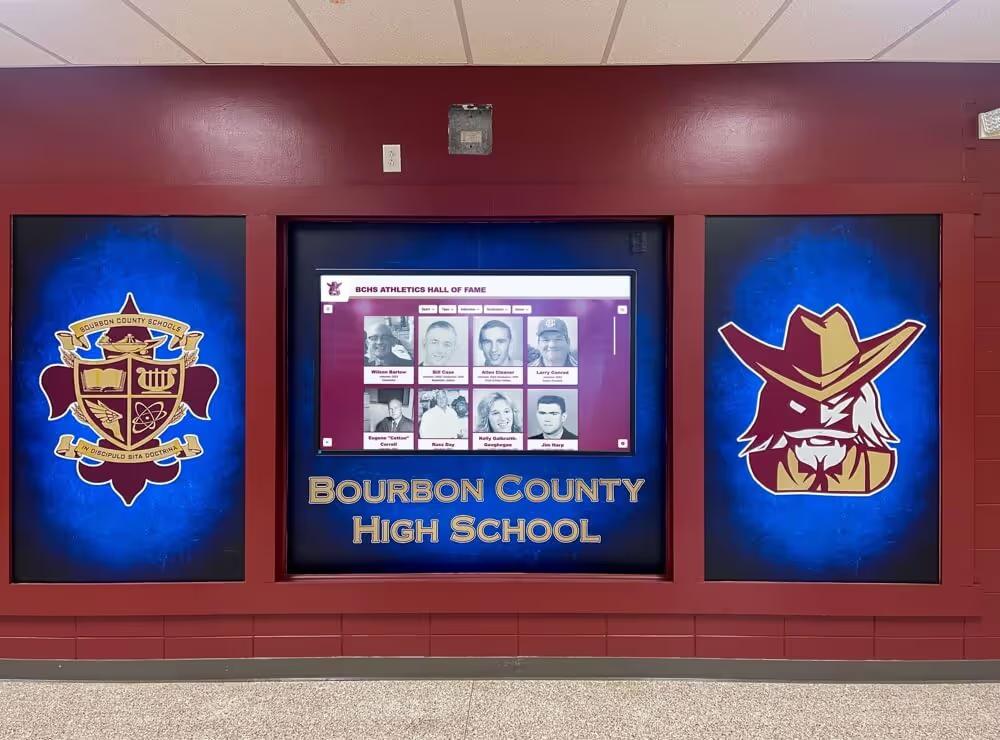
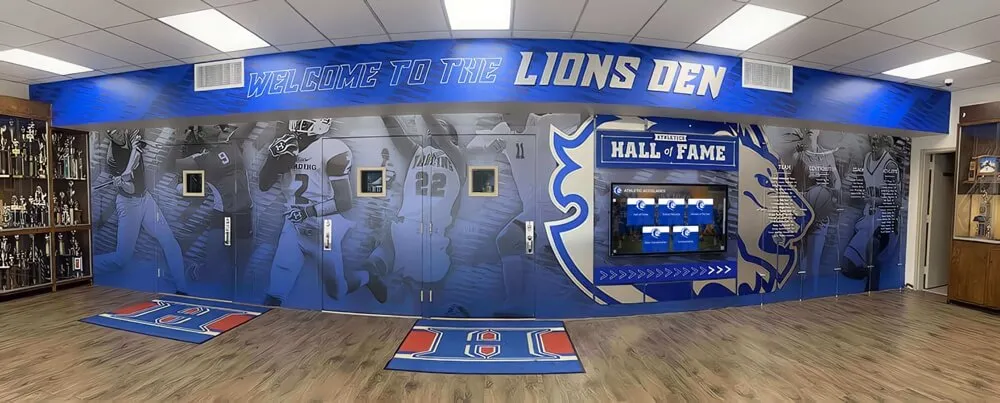
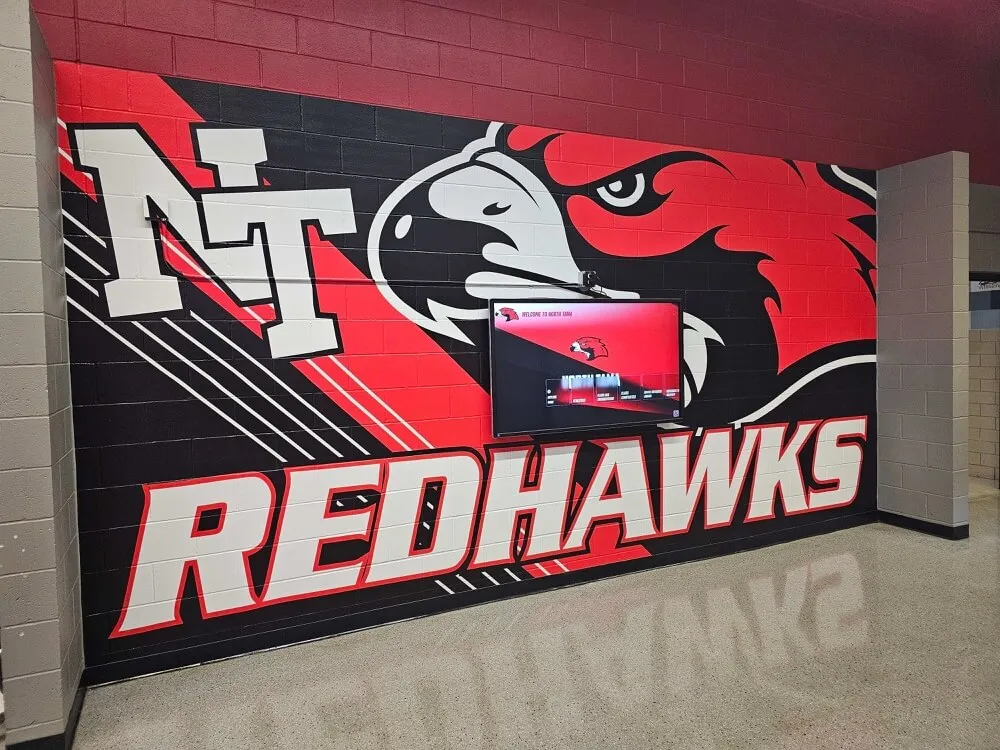
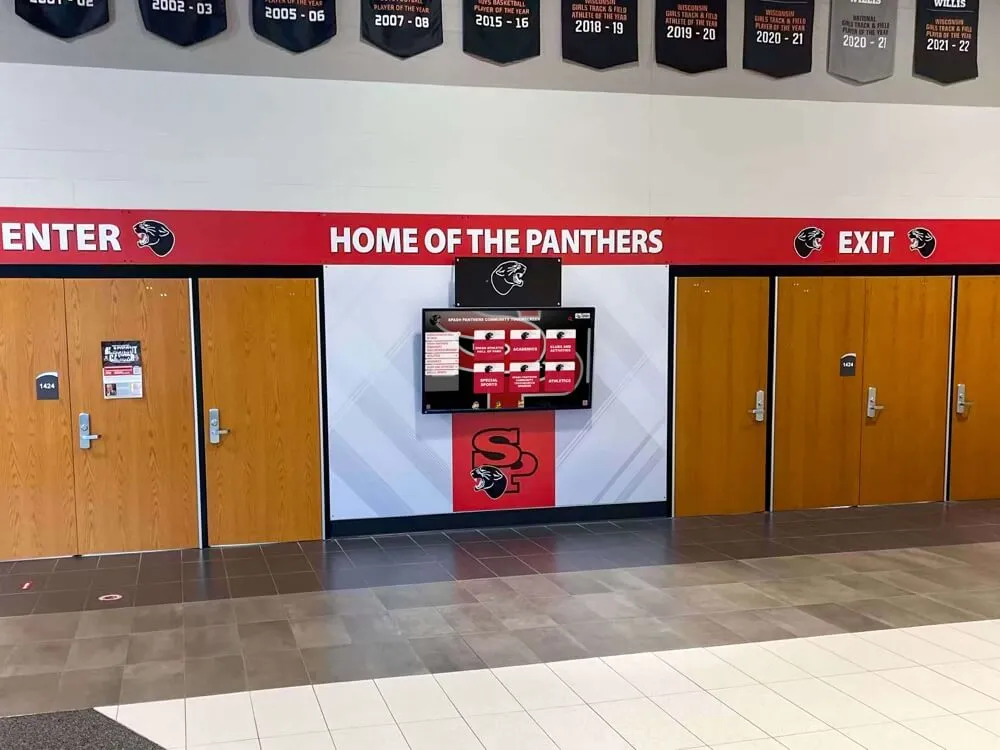
Prominent athletic displays celebrate All-American achievements alongside team and individual records
Understanding High School All-American Prestige Variations
The proliferation of organizations awarding high school All-American honors has created situations where the designation varies significantly in selectivity and prestige.
Most Prestigious High School All-American Designations Certain honors carry particular significance:
- McDonald’s All-American Game (basketball): Invitation to this showcase represents elite national recognition
- Under Armour All-America Game (football): Similar prestige in football recruiting and recognition
- Gatorade Player of the Year: State and national awards recognizing the single best player in each sport
- MaxPreps All-American: Widely respected recognition across multiple sports
- Sport-specific national championships: Top-8 finishes at legitimate national tournaments
Less Selective All-American Programs Some organizations have lower selection standards or broader inclusion, creating All-American designations that, while meaningful to recipients, don’t represent the same elite national recognition. Families and schools should research the specific organization and selection criteria to understand the achievement level any particular All-American honor represents.
Explore strategies for celebrating athletic milestones in 1,000 points scorer recognition with comprehensive display approaches.
AAU and Club Sports All-Americans
Amateur Athletic Union (AAU) and sport-specific club organizations maintain their own All-American programs separate from high school recognition.
AAU All-Americans AAU All-American recognition spans multiple sports and age divisions, typically awarded to top performers at AAU national championship events. The AAU, one of the largest youth sports organizations, has awarded All-American honors for over a century, though the proliferation of alternative youth sports organizations has somewhat diluted the exclusivity of AAU-specific recognition.
Sport-Specific Club All-Americans Individual sports organizations maintain All-American programs:
- USA Volleyball: All-American recognition for junior club players
- Perfect Game/Team USA (baseball): Showcases and events leading to All-American selection
- US Youth Soccer: Olympic Development Program selections and national championship recognition
- USA Swimming: Junior National qualifying times serving as de facto All-American standards
These club-level recognitions often coexist with high school honors, with top athletes earning All-American status in both contexts.

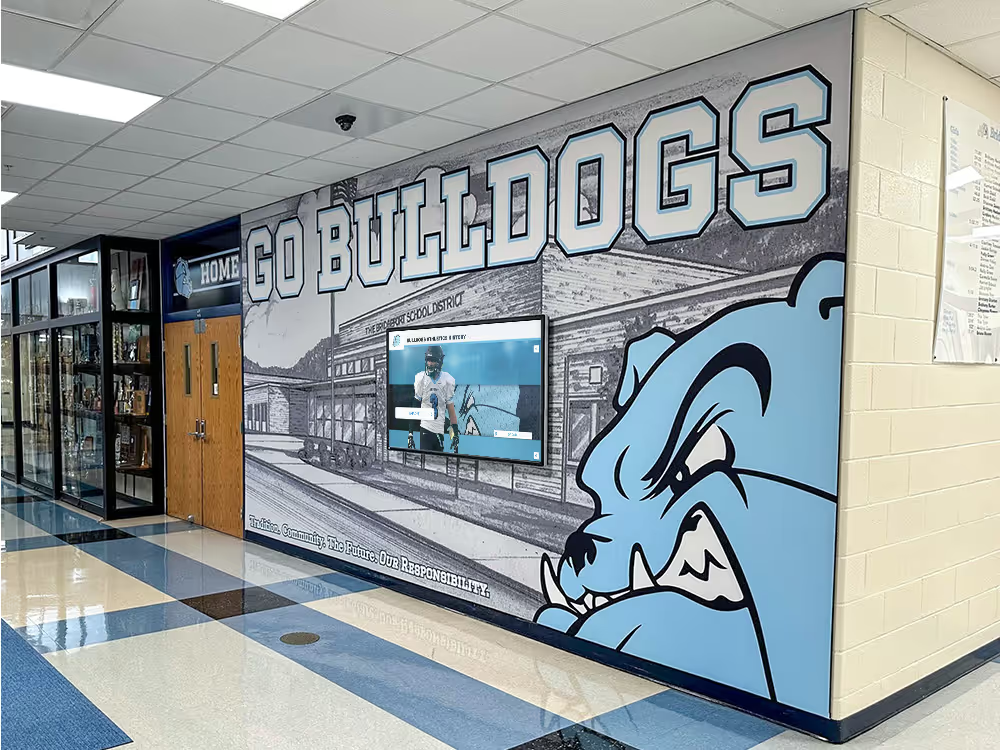
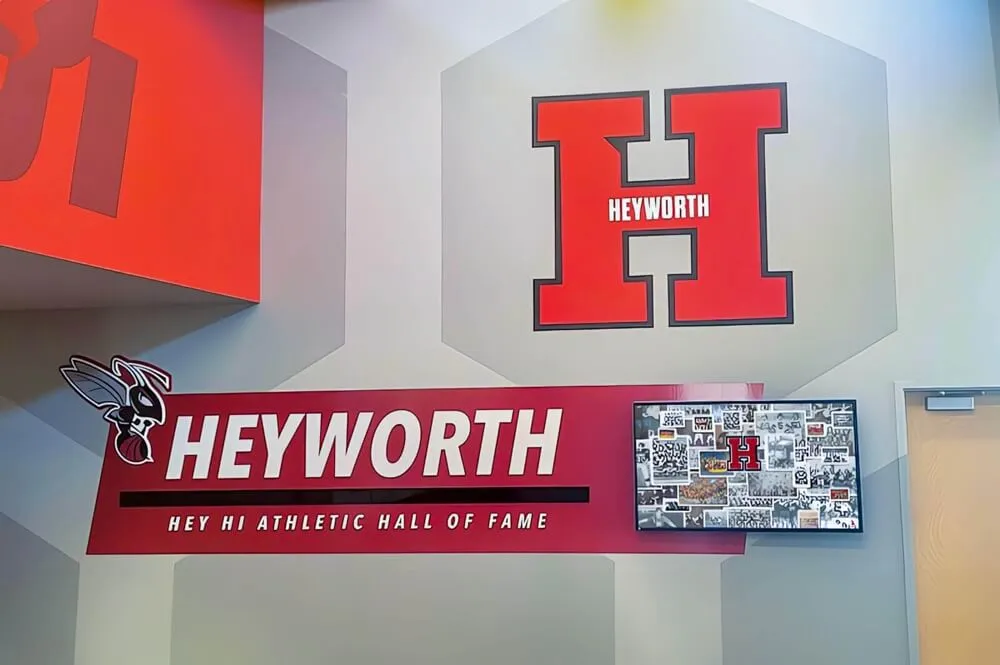
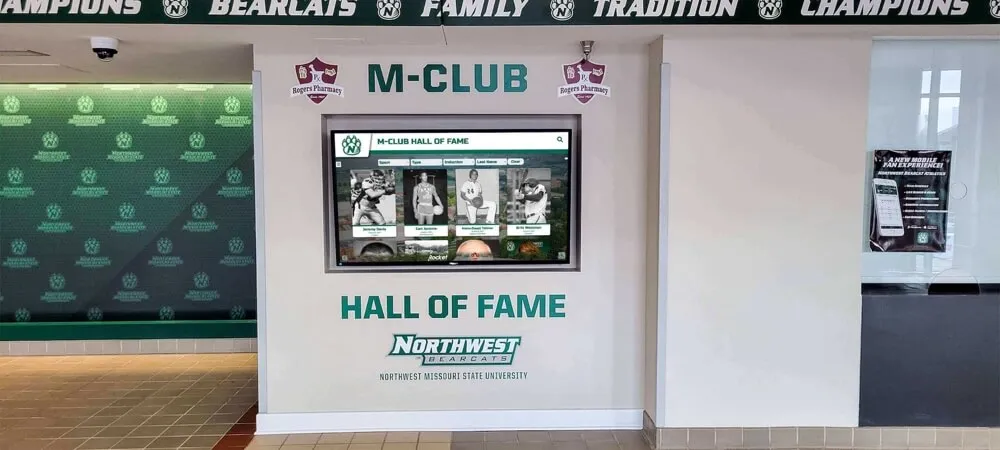
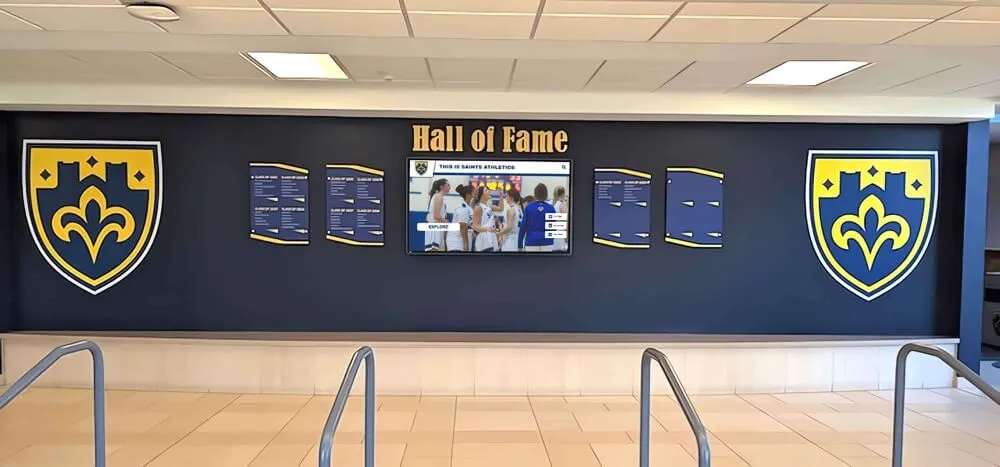
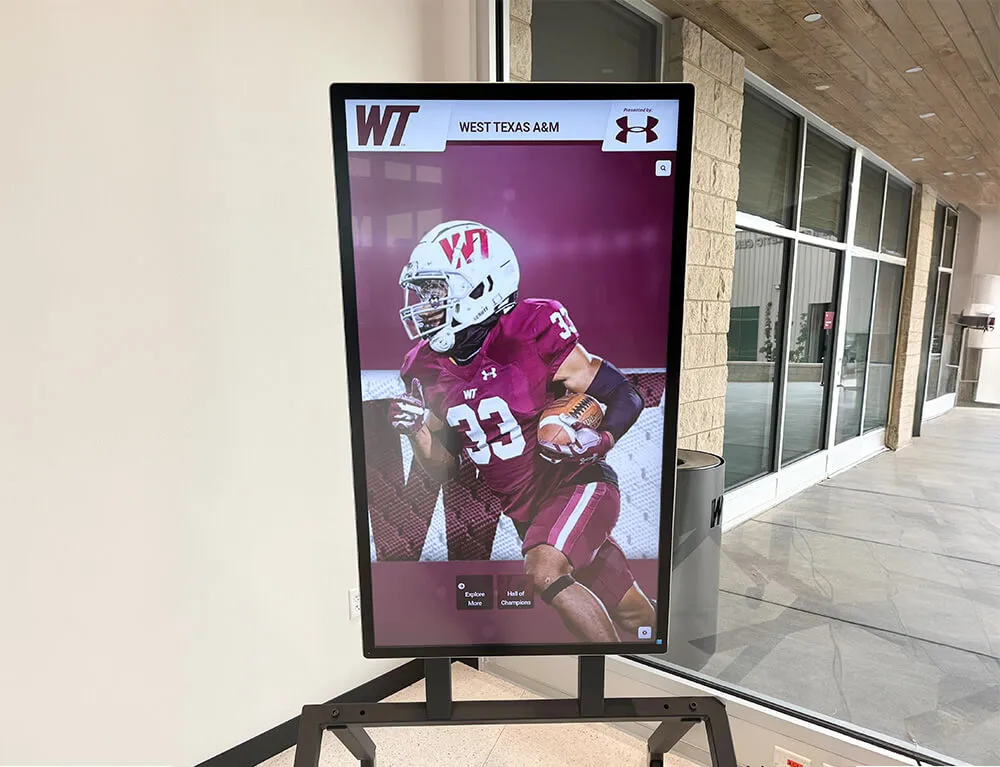
Interactive displays enable exploration of detailed All-American athlete profiles and career achievements
Sport-by-Sport All-American Criteria
Selection criteria and processes vary significantly across different sports, reflecting the unique characteristics and competitive structures of each athletic discipline.
Football All-Americans
Football All-American recognition exists at multiple levels with varying selection processes.
College Football All-Americans Multiple recognized selectors publish annual college football All-American teams:
- Associated Press: Media member voting
- Walter Camp Football Foundation: Coaches and media selection
- American Football Coaches Association: Peer selection by coaches
- The Sporting News: Historical media selection
- Consensus All-American: Athletes appearing on multiple selection lists
Position-specific recognition acknowledges that different roles face different statistical opportunities and evaluation criteria.
High School Football All-Americans Various organizations select high school football All-Americans:
- Under Armour All-America Game: Invitation-only showcase for elite prospects
- Army All-American Bowl: Similar elite-level showcase and recognition
- MaxPreps All-American: Broad high school recognition across classifications
- State-specific media outlets: Regional recognition programs
Basketball All-Americans
Basketball features some of the most publicized All-American recognition in sports.
College Basketball All-Americans Major basketball All-American selections include:
- Associated Press: Separate men’s and women’s teams
- USBWA (U.S. Basketball Writers Association): Oscar Robertson Trophy voting
- NABC (National Association of Basketball Coaches): Peer-selected recognition
- Wooden Award All-Americans: Connected to player of the year voting
High School Basketball All-Americans Elite high school recognition includes:
- McDonald’s All-American Game: 24 boys and 24 girls selected annually
- Jordan Brand Classic: Invitation showcase for top prospects
- USA Basketball: Junior national team selections
- State and regional media selections: Local recognition programs
Learn about basketball recognition in basketball hall of fame displays celebrating program excellence.
Track and Field / Cross Country All-Americans
Individual sports like track and field typically use performance-based All-American criteria rather than subjective selection.
Automatic All-American Standards NCAA track and field/cross country All-American recognition follows clear criteria:
- NCAA Championships: Top-8 finishers earn first-team All-American status
- Additional places: Places 9-16 may earn second-team or honorable mention recognition
- Relay teams: Each member of top-8 relay teams earns All-American status
- Indoor and outdoor seasons: Athletes can earn multiple All-American honors annually
High School Track and Field High school track All-American recognition varies by organization:
- National championship meets: Top-8 finishes at recognized national championships
- National ranking lists: Performance-based inclusion in annual national rankings
- Invitational meet recognition: Elite-level invitational meet honors
This performance-based approach provides objective standards athletes can pursue through measurable improvement.
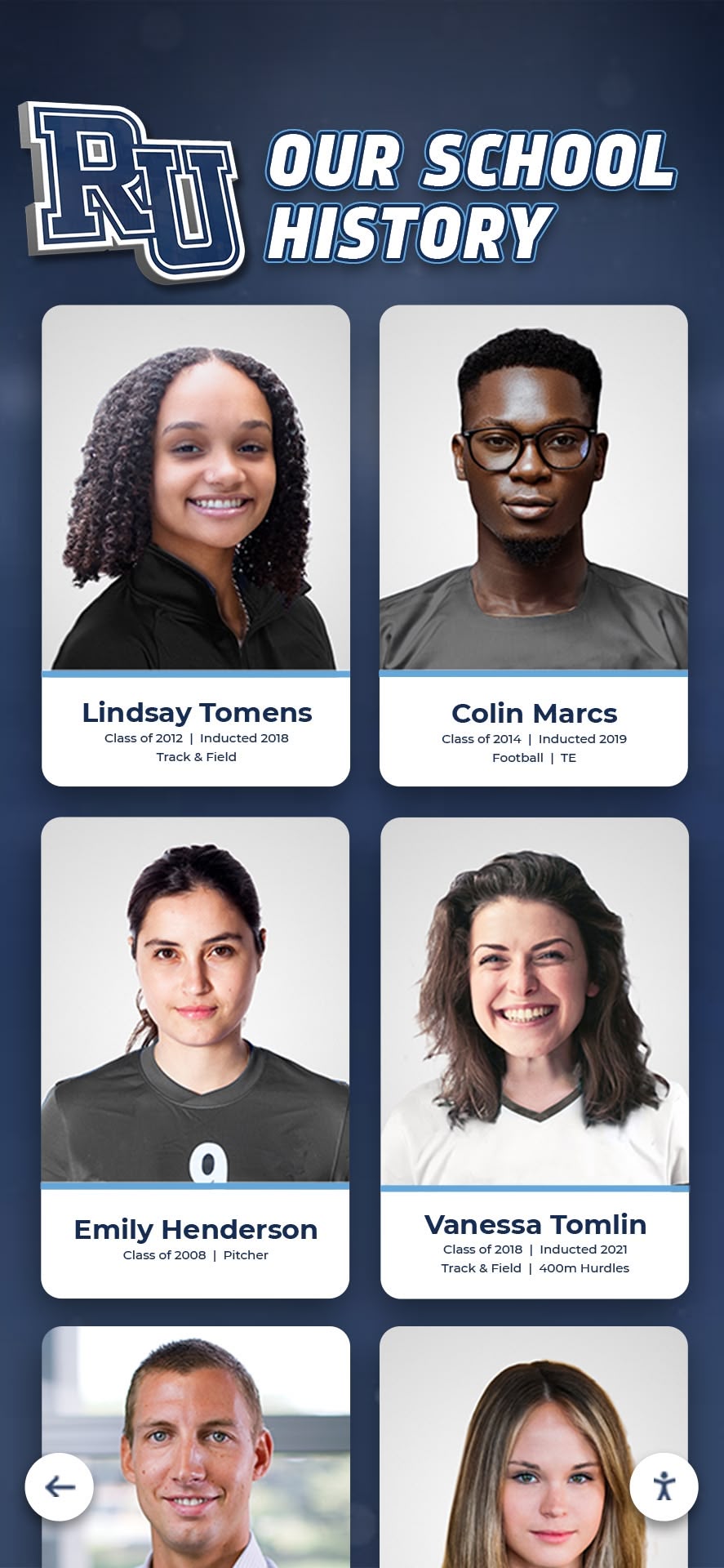
Organized athlete profiles preserve All-American achievements alongside complete career documentation
Swimming and Diving All-Americans
Swimming All-American recognition combines championship performance with time standards.
College Swimming All-Americans NCAA swimming and diving All-American criteria include:
- Championship meet performance: Top-8 finishers at NCAA Championships
- Relay participation: Members of top-8 relays earn All-American status
- Multiple event opportunities: Swimmers competing in multiple events can earn several All-American honors
- Diving: Top-8 finishers on each diving board
High School Swimming High school swimming All-American recognition typically requires:
- National time standards: Achieving times meeting published All-American standards
- Championship meet performance: Top finishes at recognized national championships
- Club and high school dual recognition: Athletes may earn honors in both contexts
Wrestling All-Americans
Wrestling uses tournament-based All-American recognition with clear competitive standards.
College Wrestling All-Americans NCAA wrestling All-American criteria:
- NCAA Championship placement: Top-8 finishers in each weight class
- Win requirement: Typically must win at least one match at championship tournament
- Multiple opportunities: Wrestlers competing all four years can earn up to four All-American honors
High School Wrestling Multiple organizations host national tournaments awarding All-American status:
- Various national tournaments: Multiple organizations claim “national championship” status
- Weight class specific: Recognition earned in specific weight categories
- Competitive variability: Tournament strength and selection affect prestige
Discover wrestling recognition approaches in wrestling awards displays celebrating individual and team excellence.
Other Sports All-American Programs
Virtually every competitive sport features some form of All-American recognition:
Soccer: College selections by coaches associations and media; club All-Americans through national tournaments and showcases
Volleyball: Indoor and beach volleyball with separate recognition; college selection by AVCA (American Volleyball Coaches Association)
Baseball/Softball: Multiple organizations select college All-Americans; high school recognition through summer showcase events and season performance
Golf: Selection based on tournament performance and national rankings; collegiate honors from coaches associations
Tennis: ITF (International Tennis Federation) and national rankings inform recognition; collegiate selection by coaches associations
Lacrosse: Growing recognition programs at college and high school levels; selection by coaches associations and media outlets
Each sport’s All-American criteria reflect the unique competitive structures and performance measurement approaches characteristic of that discipline.
How Difficult Is It to Become an All-American?
Understanding the selectivity of All-American recognition helps appreciate the exceptional nature of this achievement.
Statistical Rarity of All-American Status
The percentage of athletes earning All-American recognition varies by sport and level but remains consistently exclusive.
College Athletics All-American Percentages Consider the mathematics of college All-American selection:
- Football: Approximately 250-300 college football players earn recognized All-American status annually across all positions and divisions, from a pool of roughly 73,000 college football players nationwide—less than 0.5%
- Basketball: With first, second, and third teams in men’s and women’s basketball, approximately 30 players per gender earn major All-American recognition annually from roughly 20,000 college basketball players per gender—about 0.15%
- Track and Field: With more events and opportunities, track produces more All-Americans, but even here, earning top-8 NCAA Championship finishes requires elite national-level performance
High School All-American Rarity High school statistics are harder to calculate given the proliferation of selecting organizations, but consider:
- Football: The most selective high school football All-American teams (Under Armour, Army) select approximately 200 players annually from roughly 1 million high school football players—0.02%
- Basketball: McDonald’s All-American selection (48 total) from approximately 540,000 high school basketball players—less than 0.01%
Even less selective high school All-American programs typically recognize far less than 1% of participants in any sport, maintaining meaningful exclusivity.

Dedicated recognition kiosks provide comprehensive All-American athlete documentation accessible to entire communities
What It Takes to Earn All-American Recognition
Beyond statistical rarity, All-American achievement requires specific attributes and circumstances.
Essential Performance Requirements
- Elite skill level: Fundamental athletic ability placing athlete in top percentages nationally
- Consistent excellence: Sustained high-level performance across entire season, not just isolated moments
- Competition exposure: Opportunity to compete against high-level opposition where performance can be evaluated
- Injury avoidance: Health maintenance allowing full season participation
- Statistical production: Quantifiable achievements meeting sport-specific benchmarks
Supporting Factors
- Quality coaching and training: Development infrastructure supporting elite-level performance
- Team success: Individual recognition often correlates with team achievement providing visibility
- Competitive schedule: Strength of opposition affecting performance context and evaluation
- Timing and opportunity: Appropriate age and development stage for competition level
Psychological and Character Elements
- Mental toughness: Performing under pressure in crucial competitions
- Work ethic: Dedication to training and improvement beyond natural talent
- Competitive drive: Motivation to pursue excellence rather than accepting adequacy
- Leadership: Many All-Americans demonstrate leadership qualities alongside individual skill
The combination of exceptional talent, optimal development circumstances, consistent performance, and often some favorable timing makes All-American achievement rare and worthy of lasting recognition.
The Long-Term Value of All-American Recognition
Beyond the immediate honor, All-American recognition creates benefits extending throughout athletes’ lives and institutional legacies.
College Recruiting and Athletic Opportunities
All-American status significantly impacts recruiting and competitive opportunities.
High School to College Recruiting High school All-Americans receive substantial recruiting advantages:
- Increased visibility: All-American recognition draws college coaches’ attention
- Scholarship opportunities: Elite status often correlates with athletic scholarship offers
- Recruitment validation: Objective achievement confirmation supporting recruiting evaluations
- Program fit leverage: Options to select programs matching competitive and academic preferences
Transfer and Professional Opportunities College All-Americans gain advantages for:
- Professional opportunities: All-American credentials strengthen professional sports prospects
- International competition: Enhanced opportunities for international play
- Graduate transfer recruiting: All-American status creates recruiting value for graduate transfers
- Career transition: Athletic achievement documentation supporting post-athletic career paths
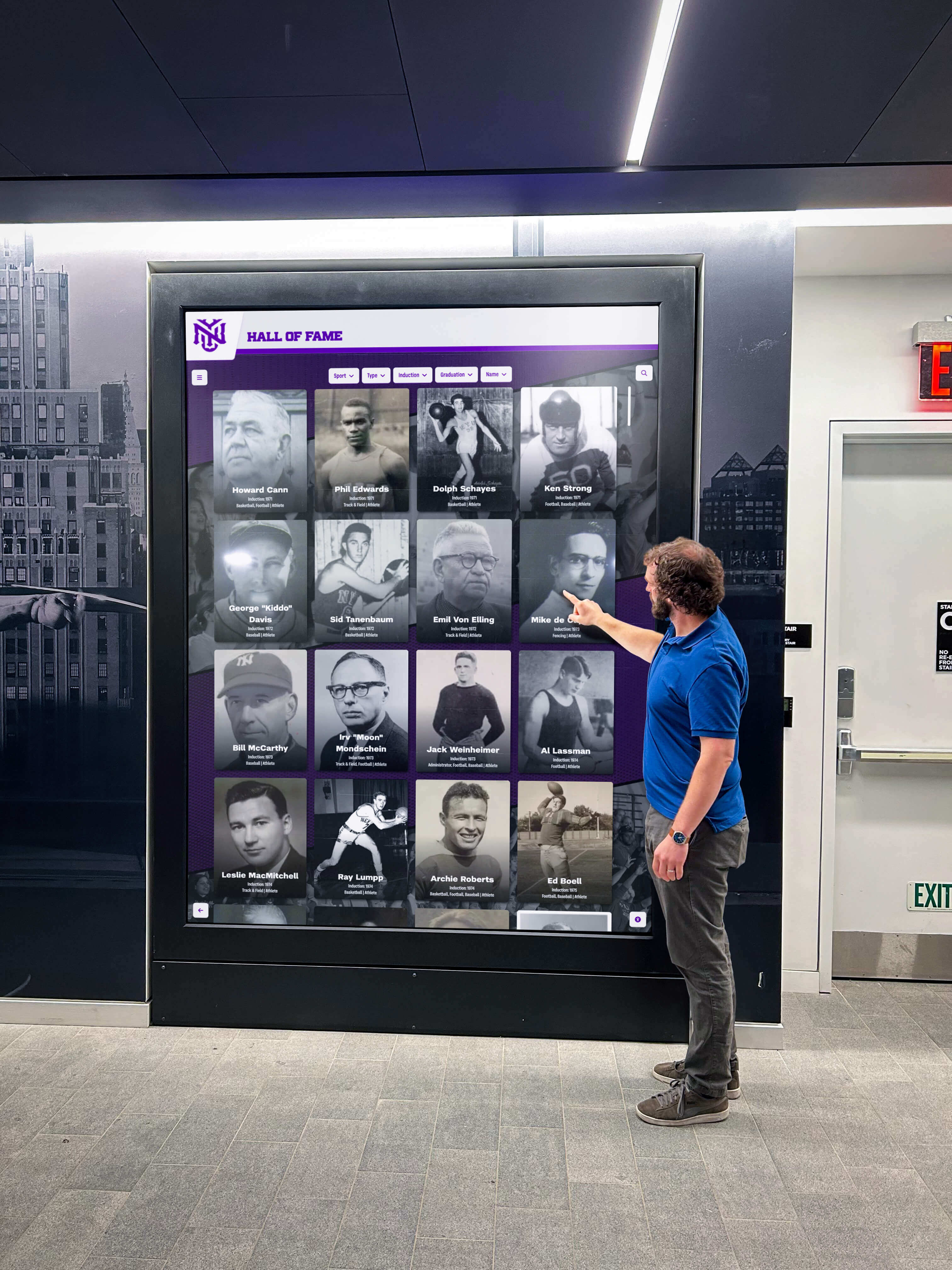
Accessible recognition displays enable community members, recruits, and visitors to explore All-American achievements
Academic and Career Benefits
All-American recognition provides value beyond athletics.
Academic Recognition Particularly Academic All-Americans gain:
- Graduate school applications: Demonstrated ability to balance competing demands
- Scholarship opportunities: Some graduate programs value athletic achievement
- Leadership credential: Athletic success demonstrating qualities transferring to other contexts
- Network connections: Alumni networks valuing athletic achievement
Professional Career Advantages All-American credentials benefit professional pursuits:
- Resume distinction: Recognized achievement differentiating job candidates
- Work ethic demonstration: Athletic success implying discipline and determination
- Goal achievement evidence: Documented pursuit and attainment of ambitious objectives
- Network benefits: Athletic recognition creating networking opportunities
Learn about preserving athletic achievements in sports achievement highlights with comprehensive documentation approaches.
Lifelong Personal Significance
The psychological and emotional value of All-American recognition endures indefinitely.
Personal Identity and Accomplishment All-American athletes carry this achievement throughout their lives as:
- Peak performance validation: Confirmation of reaching elite competitive levels
- Lifetime credential: Recognition that never expires or diminishes
- Conversation touchstone: Shared experience connecting with other competitive individuals
- Family legacy: Achievement honored by children and grandchildren across generations
Community Connection All-American recognition creates lasting institutional bonds:
- Alumni engagement: Honored athletes often maintain strong institutional connections
- Mentorship opportunities: Serving as examples and mentors for current athletes
- Philanthropic support: Recognition generating gratitude expressed through institutional support
- Program advocacy: All-Americans become ambassadors promoting programs that developed them
Celebrate Your All-American Athletes with Lasting Recognition
Discover how modern digital recognition solutions help schools and athletic programs honor All-American achievements with the visibility, engagement, and permanence these exceptional accomplishments deserve.
Explore Recognition SolutionsHow Schools and Programs Celebrate All-American Athletes
Appropriate recognition of All-American achievements requires systematic approaches honoring these exceptional accomplishments prominently and permanently.
Traditional Recognition Approaches
Schools have historically recognized All-American athletes through various methods.
Physical Displays Traditional recognition includes:
- Gymnasium banners: Names and sports of All-American athletes displayed prominently
- Trophy case plaques: Individual plaques documenting All-American honors
- Record boards: Lists of All-Americans organized by sport and year
- Photo displays: All-American athletes featured in athletic facility displays
Ceremonial Recognition Many programs celebrate All-Americans through:
- Award ceremonies: Formal presentations at athletic banquets or assemblies
- Game-day recognition: Public acknowledgment during athletic competitions
- Press releases: Formal announcements celebrating All-American selections
- Social media posts: Digital celebration shared across institutional channels
Limitations of Traditional Approaches Physical recognition faces constraints including:
- Space limitations: Finite wall or display space eventually requiring difficult removal decisions
- Minimal information: Basic name and achievement only, without context or complete story
- Update difficulties: Physical displays requiring manual updates and maintenance
- Accessibility constraints: Recognition limited to specific physical locations
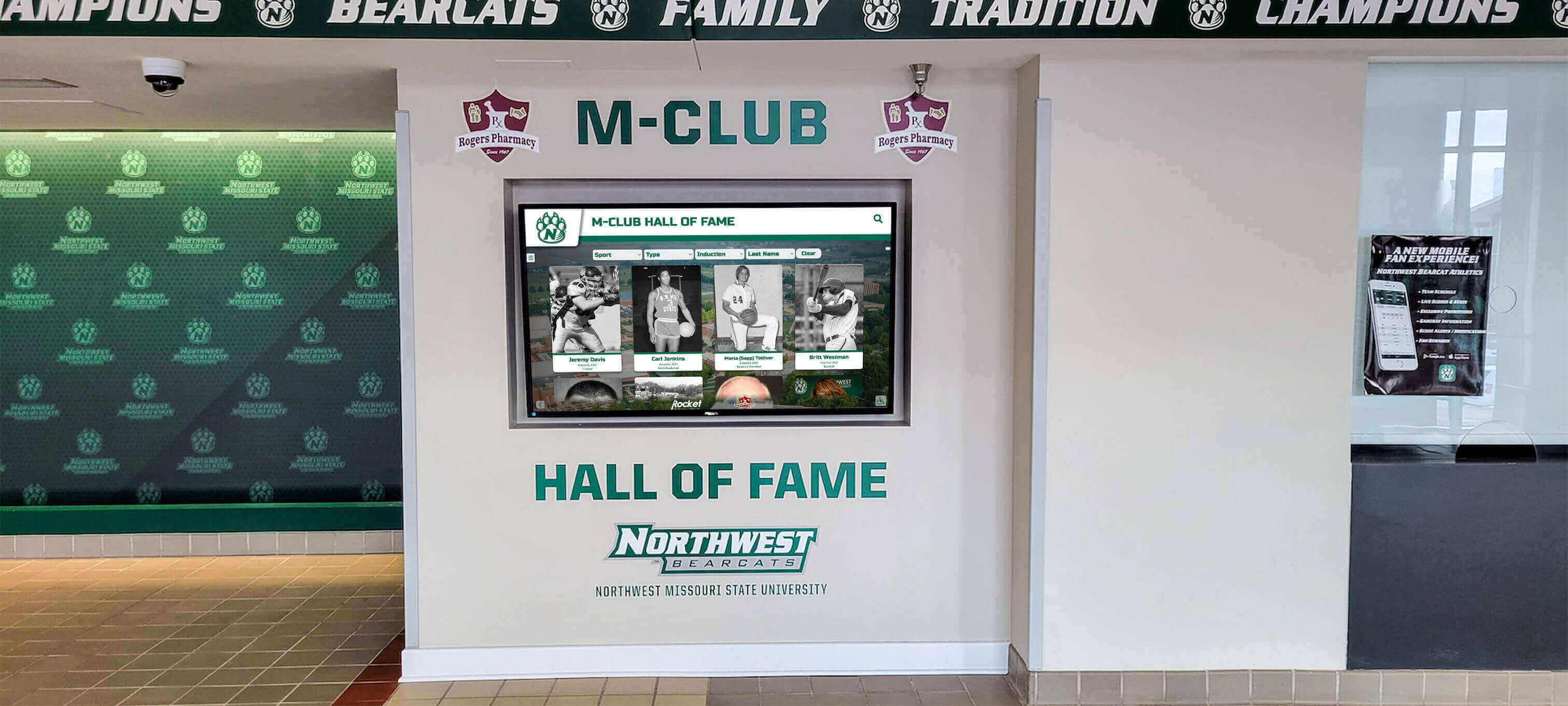
Digital recognition systems eliminate space constraints while providing rich multimedia content about All-American achievements
Modern Digital Recognition Solutions
Digital recognition platforms like Rocket Alumni Solutions transform how schools celebrate All-American athletes by eliminating traditional constraints while creating unprecedented engagement opportunities.
Unlimited Recognition Capacity Digital displays hosted on cloud-based platforms solve the fundamental space problem:
- Complete historical documentation: Every All-American throughout program history receives equal recognition
- No removal required: New All-Americans added without displacing earlier honorees
- Multi-sport integration: All sports’ All-Americans celebrated in single comprehensive system
- Team and individual balance: Recognition accommodating both individual All-Americans and championship teams
Rich Multimedia Content Digital platforms enable comprehensive All-American profiles including:
- Complete statistical documentation: Career statistics, records, and performance metrics
- Photo galleries: Action shots, ceremony photos, and career progression documentation
- Video highlights: Championship performances and memorable competitive moments
- Written narratives: Complete stories about athletic journeys and achievements
- Post-athletic updates: College, professional, or career accomplishments beyond initial recognition
Interactive Engagement Touchscreen and web-based interfaces create exploration impossible with static displays:
- Search functionality: Find specific All-Americans instantly by name, sport, or year
- Filter and sort options: Explore All-Americans by decade, sport, or achievement type
- Comparative features: View career statistics and achievements across different eras
- Related content connections: Link All-Americans to championship teams and historical context
Discover comprehensive digital recognition in high school wall of fame blueprints with implementation strategies.
Real-Time Content Management Cloud-based administration dramatically reduces maintenance burden:
- Immediate updates: Add new All-Americans within minutes of selection announcement
- Remote management: Update content from any internet-connected device
- Error correction: Fix mistakes instantly when discovered
- Enhanced content: Add new photos, statistics, or updates as they become available
Extended Accessibility Digital recognition reaches beyond physical campus:
- Web-based access: Alumni and community members view recognition from anywhere
- Mobile responsiveness: Accessible on phones, tablets, and computers
- Social sharing: Enable organic promotion through shared All-American profiles
- Archive access: Complete historical records available to researchers and journalists
These digital capabilities transform All-American recognition from limited physical displays into comprehensive, engaging tributes honoring every achievement while inspiring current athletes pursuing similar excellence.
Strategic Display Placement
Effective recognition requires strategic location selection maximizing visibility and engagement.
High-Priority Locations
- Athletic facility entrances: Ensure all event attendees encounter All-American recognition
- Training facilities: Daily visibility inspiring current athletes during practice
- Main school entrances: Broader community exposure beyond athletic department
- Cafeterias and commons: Extended dwell time enabling deeper exploration
- Recruiting visit routes: Demonstrate program tradition and development success to prospects
Creating Recognition Destinations Transform areas into comprehensive athletic recognition spaces:
- Coordinated murals and branding: Visual environments celebrating athletic identity
- Comfortable seating: Encourage extended engagement with recognition content
- Trophy and banner integration: Combine All-American recognition with championships
- Appropriate lighting: Highlight recognition areas attracting attention
Explore placement strategies in athletic facility recognition displays with spatial planning approaches.
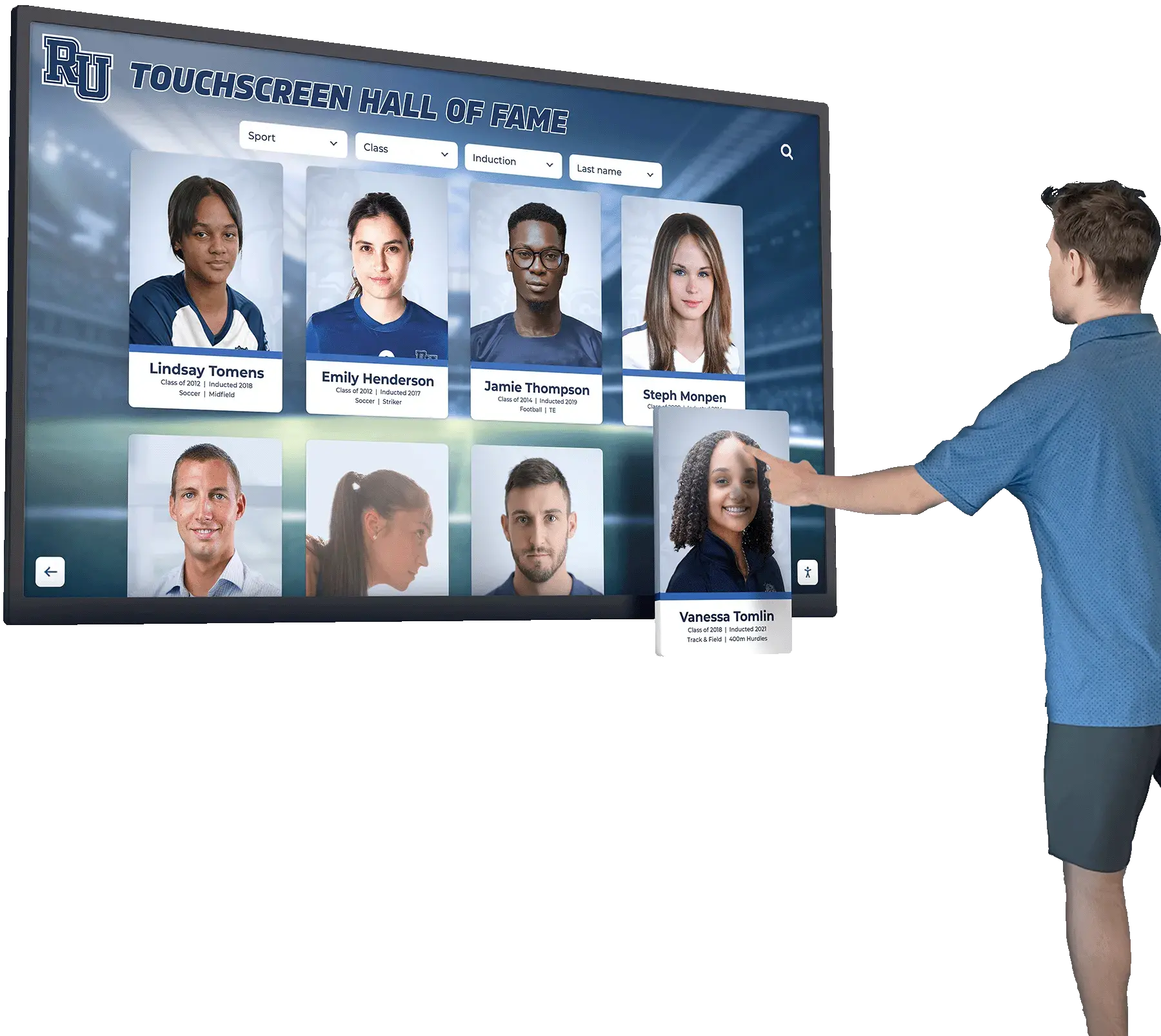
Intuitive interfaces enable visitors to explore complete All-American athlete stories at their own pace
The Impact of All-American Recognition on Current Athletes
Visible celebration of All-American achievements creates measurable benefits throughout athletic programs.
Motivation and Goal-Setting
Prominent All-American recognition provides concrete performance targets for aspiring athletes.
Creating Clear Aspirational Pathways When younger athletes see All-Americans celebrated prominently:
- Abstract excellence becomes concrete: Specific achievements to pursue rather than vague aspirations
- Institutional possibility demonstration: Evidence that exceptional achievement happens in your program
- Progressive milestone visibility: Understanding the development pathway from current level to elite status
- Peer comparison context: Seeing similar athletes who achieved success
Systematic Pursuit Frameworks All-American recognition helps programs:
- Establish training benchmarks: Development targets aligned with All-American-caliber performance
- Track progress systematically: Measurable improvement toward All-American standards
- Celebrate interim milestones: Recognition of progress toward ultimate goals
- Build resilient motivation: Long-term commitment sustained by visible endpoints
Building Championship Culture
Systematic All-American recognition contributes to program culture emphasizing excellence.
Visible Excellence Standards All-American displays communicate:
- Performance expectations: What exceptional achievement looks like in your program
- Tradition and legacy: Connection to generations of elite performers
- Pride and identity: Belonging to programs producing All-American athletes
- Accountability: Living up to standards established by predecessors
Recruiting Advantages All-American recognition strengthens recruiting:
- Development track record: Evidence that program produces elite-level athletes
- Competitive culture: Demonstrates environment where athletes push each other to excellence
- Visibility and exposure: Programs recognized for All-American production attract stronger recruits
- Future opportunity: Prospective athletes visualize themselves as future All-Americans
Learn about creating excellence culture in senior night celebration ideas honoring senior athletes.
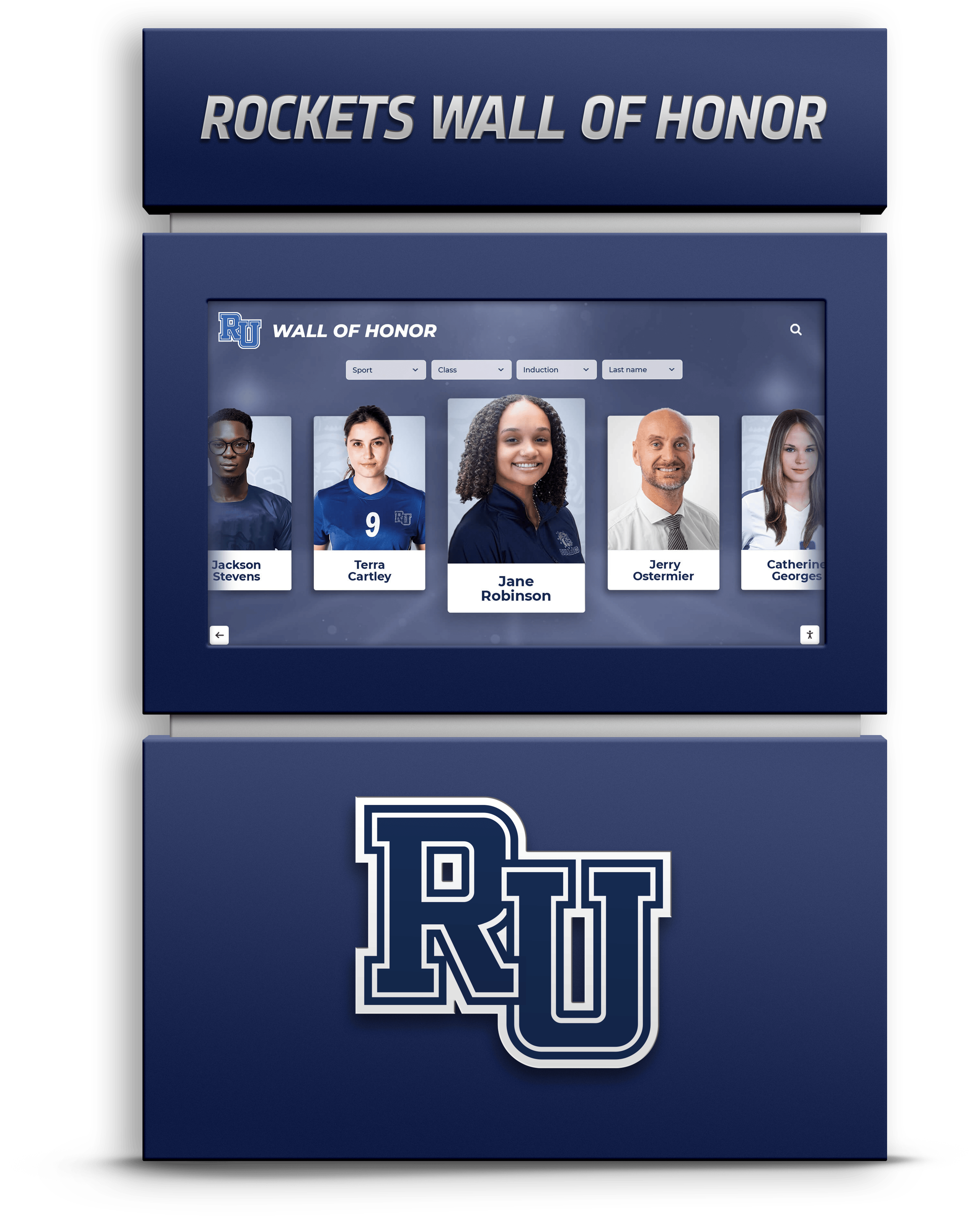
Integrated recognition systems celebrate All-American athletes alongside comprehensive program achievement history
Alumni Engagement and Mentorship
All-American recognition creates natural touchpoints for ongoing alumni involvement.
Maintaining Connections Honored All-Americans often:
- Attend recognition events: Return for ceremonies and program celebrations
- Mentor current athletes: Share experience and advice with younger competitors
- Support program fundraising: Recognition gratitude expressed through financial support
- Promote program success: Serve as ambassadors in communities and professional networks
Intergenerational Connections Recognition systems enable:
- Historical context: Current athletes learning from All-Americans across decades
- Shared identity: All-Americans from different eras connected through common achievement
- Living tradition: Athletic excellence as continuing institutional characteristic
- Knowledge transfer: Successful athletes sharing strategies and approaches
Conclusion: Honoring All-American Excellence Appropriately
All-American recognition represents one of athletics’ highest honors—acknowledgment that an athlete has achieved performance levels placing them among the absolute best in their sport across the entire nation. Whether earned through championship tournament success, selection committee recognition, or performance-based qualification, this designation identifies exceptional achievement worthy of prominent, permanent celebration.
For schools and athletic programs, appropriately honoring All-American athletes requires approaches proportional to the significance of these accomplishments. Traditional physical displays, while meaningful, face inherent constraints that limit recognition capacity and engagement potential. Modern digital recognition solutions like those provided by Rocket Alumni Solutions eliminate these barriers, enabling comprehensive celebration of every All-American throughout program history with rich multimedia content, interactive engagement, and accessibility extending far beyond physical campus boundaries.
When athletic programs systematically celebrate All-American achievements—from current athletes just earning recognition to alumni who achieved this honor decades ago—they create environments where exceptional performance is visible, valued, and central to institutional culture. This recognition inspires younger athletes pursuing similar excellence while preserving institutional legacy connecting past achievement to present aspirations and future possibilities.
Your All-American athletes have demonstrated years of dedication, exceptional skill, and consistent performance distinguishing them as among the nation’s best in their sports. These remarkable individuals deserve recognition honoring their accomplishments with visibility and permanence matching the significance of what they achieved—celebration that inspires current athletes, engages broader communities, and preserves athletic excellence for generations to come.
Ready to transform how your program celebrates All-American athletes? Explore how Rocket Alumni Solutions provides comprehensive interactive recognition systems combining professional hardware, intuitive content management, unlimited recognition capacity, and ongoing support ensuring your athletic program celebrates every All-American achievement while building lasting tradition connecting past excellence to future success.
Discover additional athletic recognition approaches in end of year sports awards celebrating diverse athletic accomplishments, or explore athletic banquet planning for comprehensive recognition event strategies.