



A drill team is a performance group found in thousands of high schools across the United States, blending precision, discipline, and teamwork into one of the most visually compelling extracurricular programs a school can offer. The term covers two distinct traditions that share a name but differ dramatically in style: military-style drill teams (typically affiliated with JROTC, ROTC, or CAP units) and dance-style drill teams (also called pom squads, precision dance teams, or flag corps). Both programs develop exceptional student leaders, rack up competitive titles, and generate decades of institutional pride—the kind of legacy that deserves permanent recognition.
Whether a program commands a gymnasium floor with synchronized rifle maneuvers or dazzles a football halftime crowd with precision kick lines, drill teams require extraordinary commitment. Participants train year-round, represent their schools at regional and national competitions, and often advance into military service, collegiate dance, or leadership careers. Yet despite this outsized impact, drill team achievements frequently receive less systematic recognition than varsity sports—a gap that schools are increasingly addressing through digital hall of fame displays and comprehensive recognition walls.
This guide explains exactly what a drill team is, traces the tradition to its roots, explores how high school programs are structured, and walks through practical strategies for recognizing drill team captains, award winners, and alumni in halls of fame and lobby displays.
Drill teams sit at the intersection of performance, athletics, and service—making them uniquely positioned in any school’s recognition ecosystem. Understanding their history and structure is the first step toward giving these programs the lasting visibility they deserve.

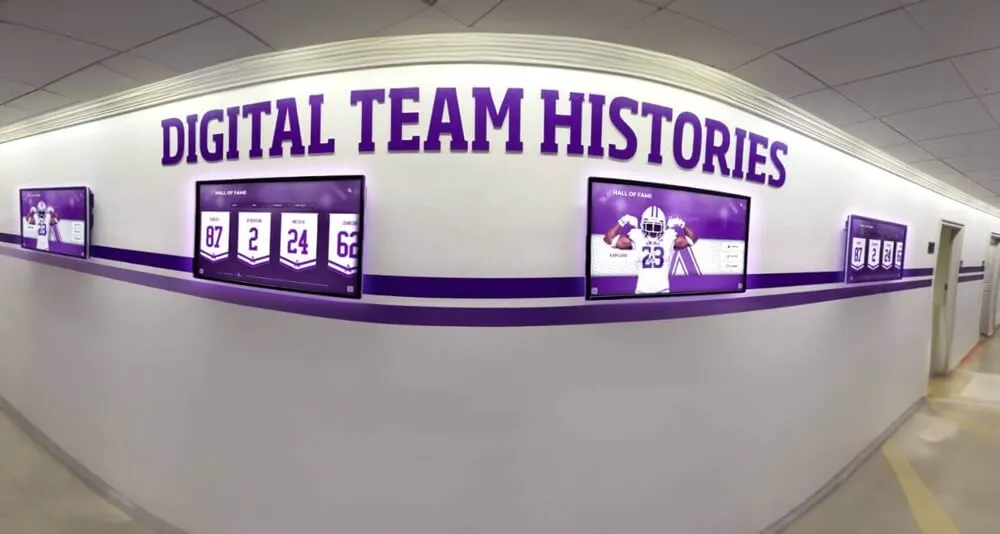
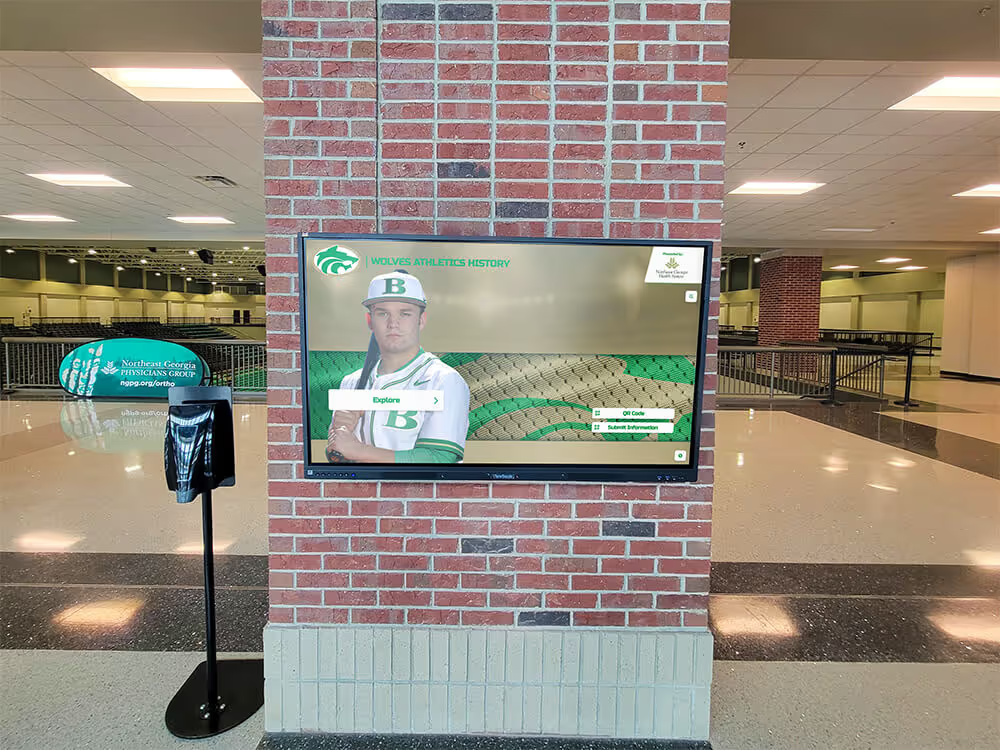
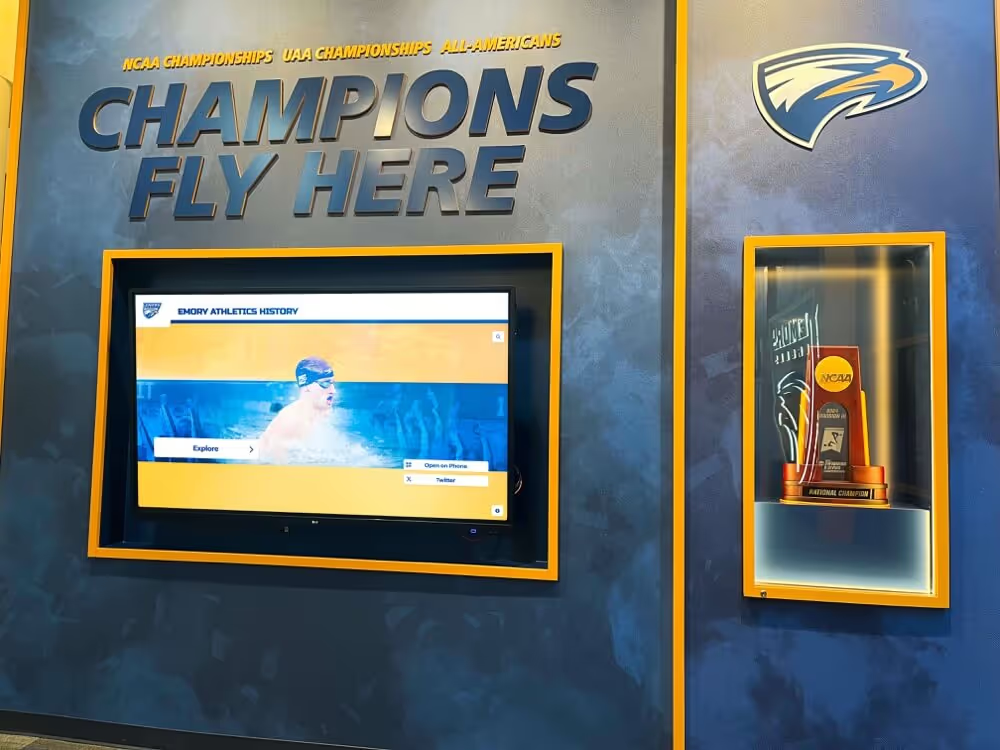
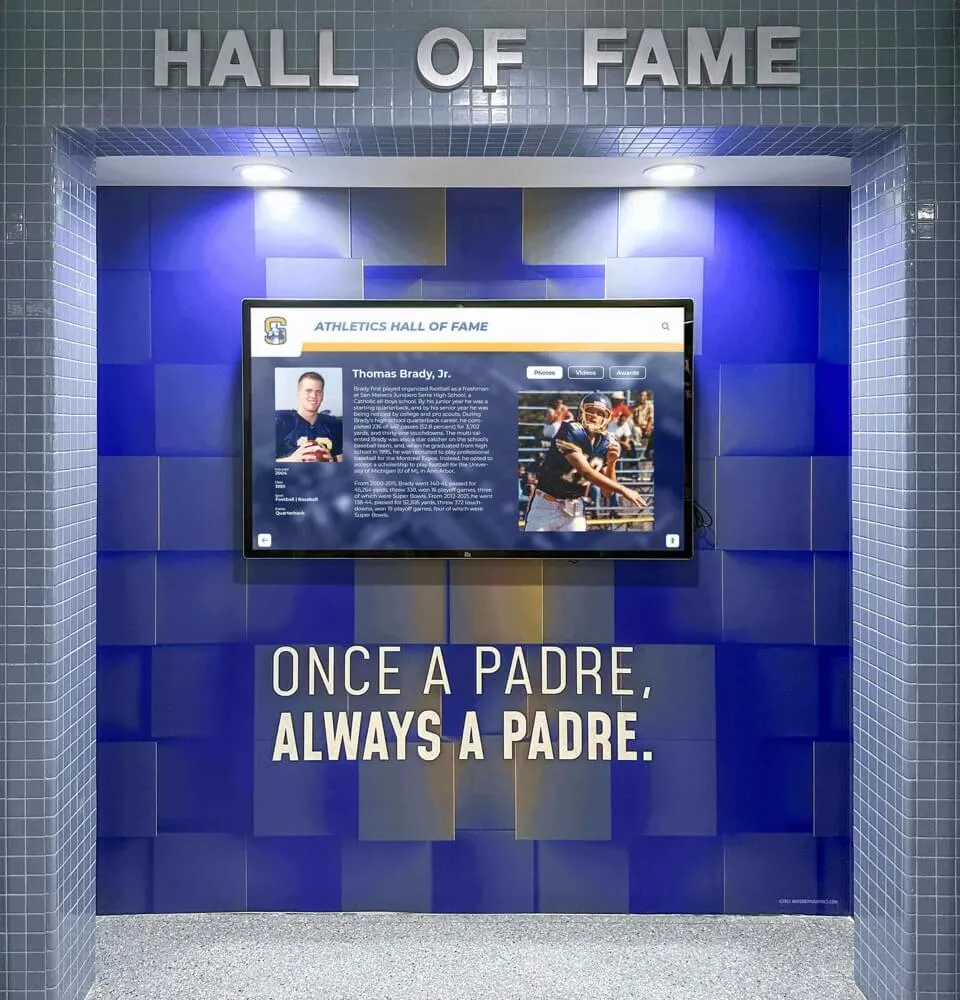
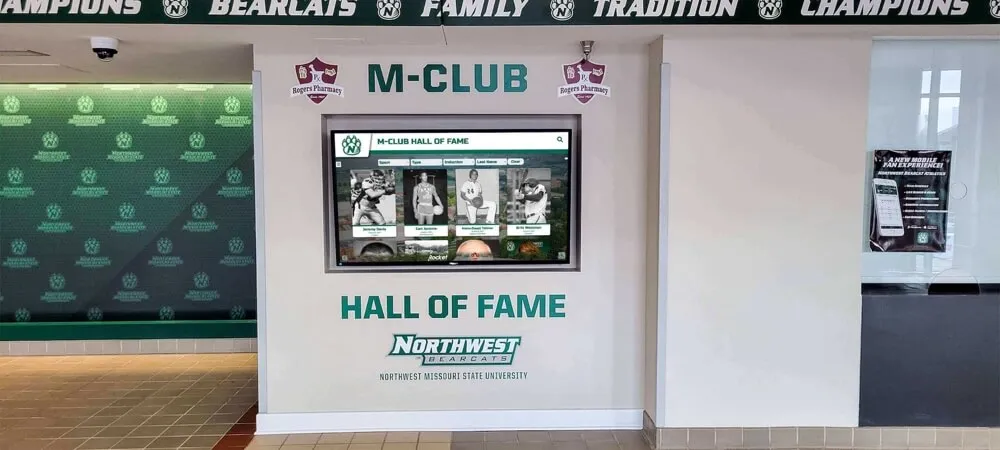
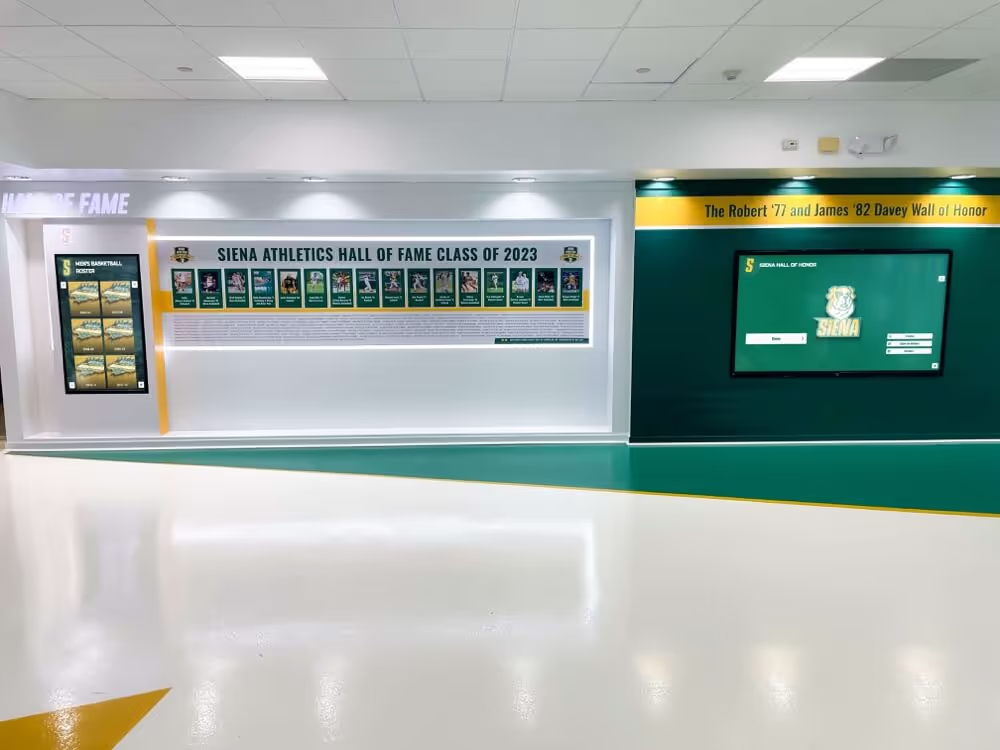
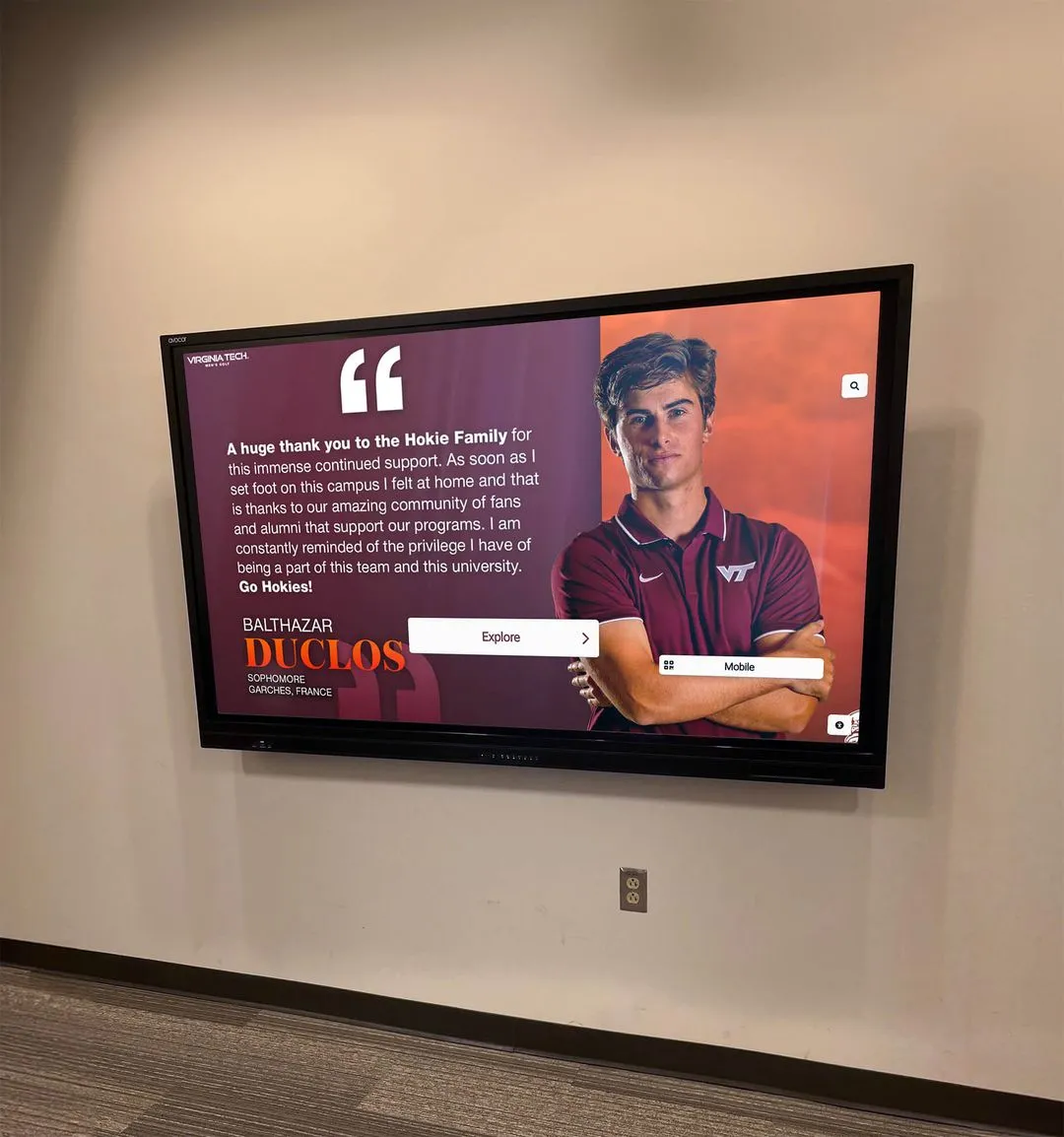
Schools that invest in interactive hallway kiosks can spotlight every extracurricular program — including drill team — with the same depth and detail traditionally reserved for varsity sports
What Is a Drill Team? Defining Both Traditions
The word “drill” in this context traces to military close-order drill — the practice of marching in precise formation with coordinated commands. Over more than a century, two distinct high school traditions grew from that root.
Military-Style Drill Teams
Military drill teams operate within JROTC (Junior Reserve Officers’ Training Corps), ROTC, or Civil Air Patrol (CAP) programs. Cadets perform armed and unarmed drill routines — synchronized movements executed with rifles, sabers, or flags — in both inspection-style and exhibition events. Competition categories typically include:
- Armed Exhibition Drill: routines featuring choreographed rifle or saber movements
- Unarmed Exhibition Drill: precision marching without equipment, emphasizing alignment and timing
- Regulation Drill: judged against military standards for commands, spacing, and execution
- Color Guard: ceremonial presentation of national and unit flags at school and community events
Military drill teams emphasize discipline, bearing, and service. Many participants enlist in the armed forces, earn ROTC scholarships, or pursue law enforcement and emergency services careers — outcomes that reflect directly on the program’s value to the school community.
Dance-Style Drill Teams
Dance-style drill teams — variously called drill squad, pom squad, precision dance team, or simply “drill team” in regions where the dance tradition dominates — perform choreographed routines at athletic events and competitions. Common performance formats include:
- Pom routines: high-energy dance incorporating matching pom-poms
- Kick lines: synchronized high kicks in the Rockettes tradition
- Hip-hop and jazz dance: contemporary choreography performed in competitions
- Novelty routines: themed performances blending costuming, props, and showmanship
In states like Texas, California, and Oklahoma, dance-style drill teams carry enormous cultural weight. Schools dedicate significant budgets, booster organizations, and media coverage to programs that routinely advance to state championships. The Texas Association of Dance/Drill Team Directors (TADI) oversees some of the largest and most competitive high school programs in the nation, and comparable state associations govern programs across the country.
Why the Same Name?
Both traditions share the “drill team” label because both emphasize synchronized group movement executed with precision. The overlap in terminology can cause confusion, but in practice the context — military unit versus athletic department — makes the distinction clear. Some schools run both programs simultaneously, with JROTC handling military drill and the dance department managing the pom squad.
The History of High School Drill Teams
Military Drill: From West Point to High School Hallways
Close-order drill has been a cornerstone of military training since ancient armies began using it to maneuver infantry formations. American military academies formalized drill instruction in the 19th century, and when the National Defense Act of 1916 established the JROTC program, military drill followed naturally into high school curricula. JROTC programs operating today represent one of the oldest continuous extracurricular traditions in American public education.
Exhibition drill competitions — where teams demonstrate creative, choreographed routines beyond regulation standards — gained widespread popularity through the latter half of the 20th century. National competition events now draw hundreds of JROTC units from across all service branches, and top programs earn recognition comparable to state championship sports teams.
Dance Drill: From Kicklines to National Competitions
The dance-style drill team tradition grew independently, rooted in the precision kickline performances popularized in the early 20th century. High school programs blossomed through the 1950s and 1960s as schools sought structured performance organizations that could anchor halftime entertainment at football games. Texas became particularly influential — the state’s deep football culture created intense demand for halftime spectacle, and drill teams responded with increasingly elaborate productions.
By the 1980s and 1990s, national drill team competitions had emerged alongside state championships, and the activity had grown into a recognized athletic and performing arts discipline with its own coaching certifications, judging standards, and training camps. Today’s elite programs maintain year-round training schedules, travel to regional and national competitions, and feature alumni networks spanning multiple generations.
How High School Drill Teams Are Structured
Team Hierarchy and Leadership
Drill teams at the high school level typically operate with a defined leadership hierarchy that develops organizational and mentorship skills alongside performance ability:
Officers and Captains
- Captain or Team Captain: senior leader responsible for overall team culture, performance quality, and communication with coaches
- Co-Captain or Lieutenant: shares leadership duties; often assumes captaincy the following year
- Section Leaders or Squad Leaders: responsible for specific groups of performers (kick line, rifle section, color guard, etc.)
- Historian: documents the team’s season through photography, video, and records
For military drill teams, these roles align with cadet rank structure — a platoon commander may hold the equivalent of captain, with squad leaders and team members below.
Coaching and Instruction Most programs employ or contract with dedicated coaches, directors, or instructors with expertise in military drill or dance. These adults are supported by student leadership and, at many schools, by an active parent booster organization that handles fundraising, travel logistics, and uniform management.
Tryouts, Selection, and Membership
Membership on competitive drill teams is earned through auditions or tryout processes that evaluate:
- Physical fitness and conditioning (especially for military drill)
- Rhythmic ability and movement quality (for dance drill)
- Performance under pressure
- Work ethic demonstrated during evaluation
- Prior training or experience
Many programs also maintain JV or “line” tiers that provide developmental pathways for younger students who show promise, creating a pipeline from freshman try-outs to varsity captaincy over four years.
Competition and Performance Calendar
A typical high school drill team year includes:
- Pre-season training: summer camps, technique clinics, and choreography development
- Fall performances: halftime shows at football games (primarily dance-style drill teams)
- Winter and spring competitions: regional, district, and state competitions
- National events: for top programs, national championships (JROTC, DIII, UDA, etc.)
- Community appearances: parades, ceremonies, school events, and community service
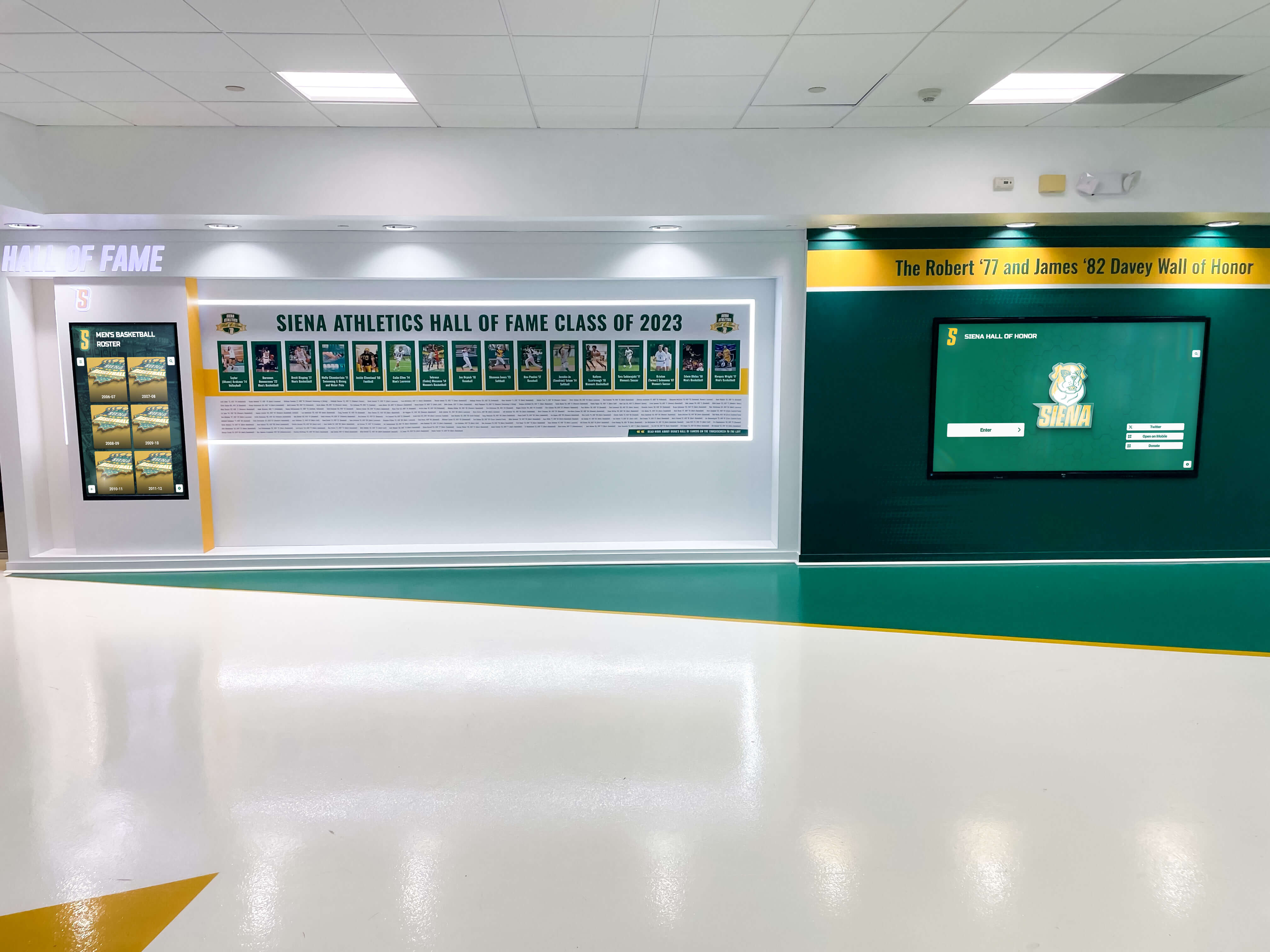
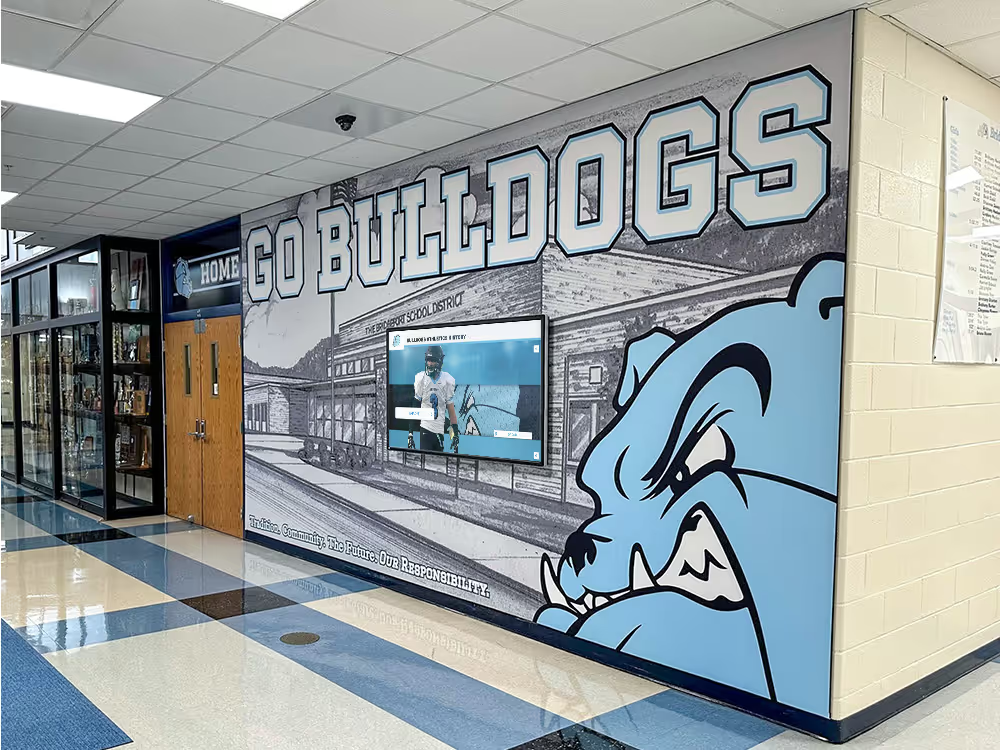
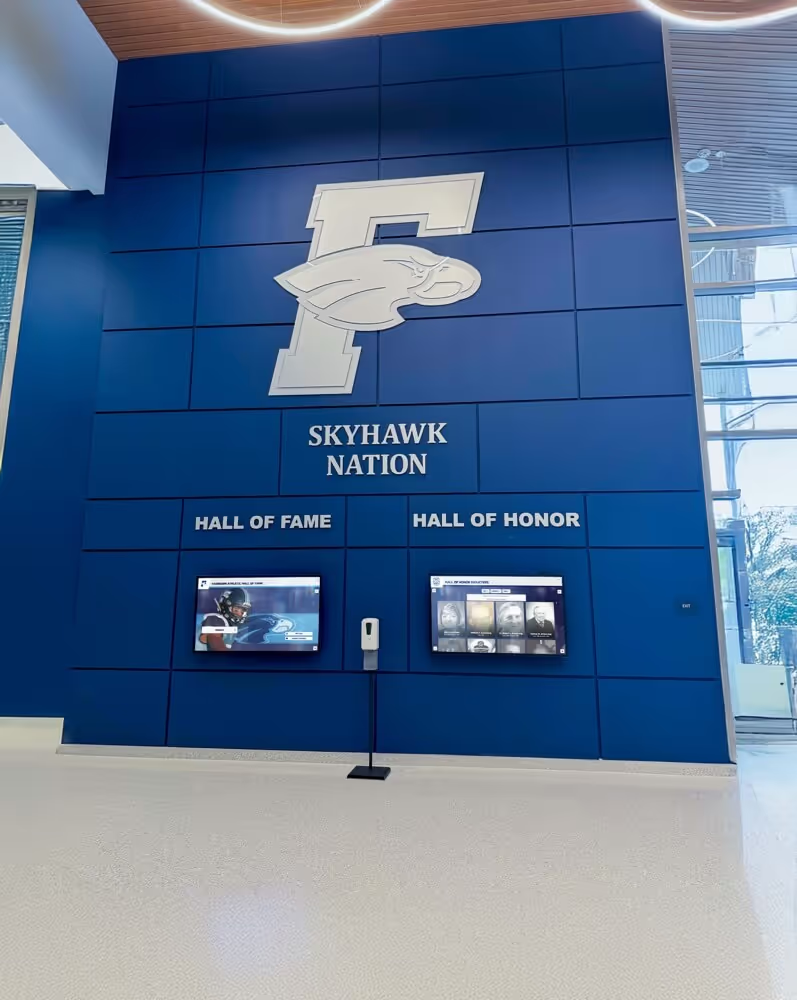
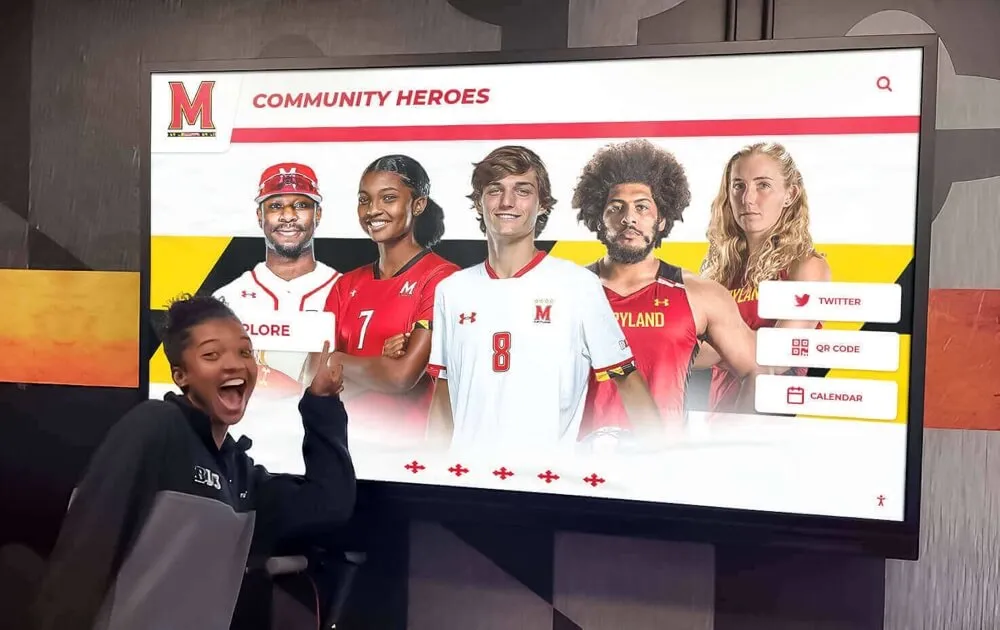
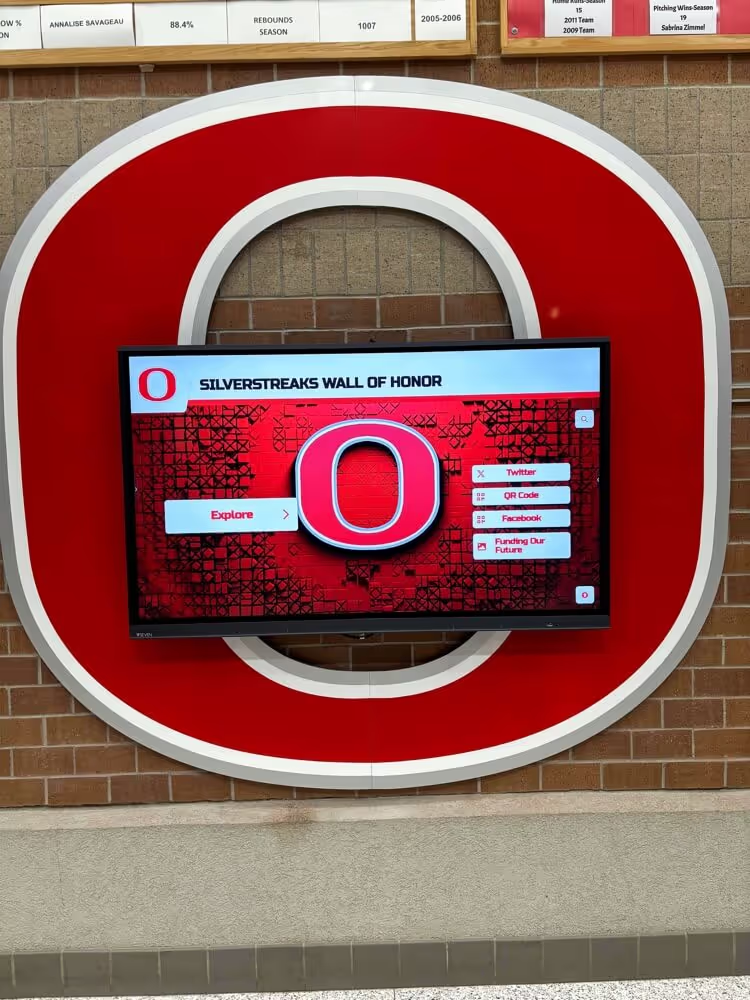
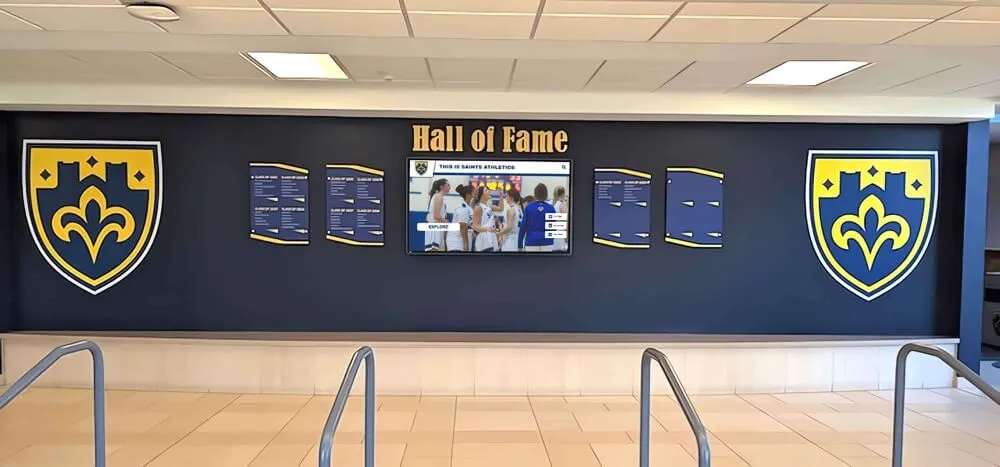
Recognition walls that document decades of program history give drill team alumni the same permanent visibility traditionally reserved for varsity athletes
Skills and Values Drill Team Develops
One reason administrators and parents support drill team programs so strongly is the breadth of transferable skills participants develop. Unlike single-discipline sports, drill team demands physical excellence, artistic expression, leadership, and accountability simultaneously.
Physical and Technical Development
- Precision and coordination: executing complex synchronized movements requires neurological control that transfers to athletics, music, and surgery-level fine motor tasks
- Cardiovascular fitness: competition routines demand sustained exertion comparable to distance running or competitive dance
- Spatial awareness: maintaining exact positioning within a formation or on a performance surface trains the kind of spatial reasoning that benefits STEM fields and architecture
- Stage presence: performing before large crowds builds the comfort with public visibility that serves presenters, teachers, and executives
Leadership and Character
- Accountability: team synchronization fails when any member breaks discipline — drill team teaches personal responsibility at a cellular level
- Mentorship: captains and section leaders mentor younger members, often developing supervision skills years before their peers do in other contexts
- Resilience: long rehearsal seasons with frequent corrections build the capacity to accept feedback and keep improving without ego fragility
- Service: military drill team members routinely provide color guard services at community memorials, veteran events, and civic ceremonies — meaningful contributions that extend beyond school walls
Schools that recognize these outcomes in their hall of fame and recognition displays communicate clearly to current students, alumni donors, and prospective families that achievement extends well beyond the scoreboard. Explore how comprehensive school awards nights can honor drill team accomplishments alongside athletic and academic awards.
Recognizing Drill Team Achievements: What Schools Track
Systematic recognition requires knowing what to document. For drill team programs, recognition-worthy milestones fall into several categories:
Competitive Achievements
- State championship titles (military or dance division)
- National competition placements and invitational wins
- District and regional championships year by year
- Perfect scores or “sweepstakes” ratings at judged competitions
- Records within the school’s own program (longest winning streak, most national appearances, etc.)
Individual Honors
- Captain and co-captain designations by season
- All-star or “best performer” awards at competitions
- Scholarships connected to drill team achievement
- Military commissions or advanced placement earned through JROTC drill performance
- Academic honors tied to program participation
Alumni Milestones
- College drill team or color guard membership
- Military service and career advancement for JROTC alumni
- Professional dance or performing arts careers
- Coaching and teaching careers where alumni lead the next generation
Capturing this data in a searchable, updatable recognition system ensures it isn’t lost when coaches retire, yearbooks go out of print, or physical trophy cases overflow. Learn more about archiving school history in this complete guide to school historical timelines.
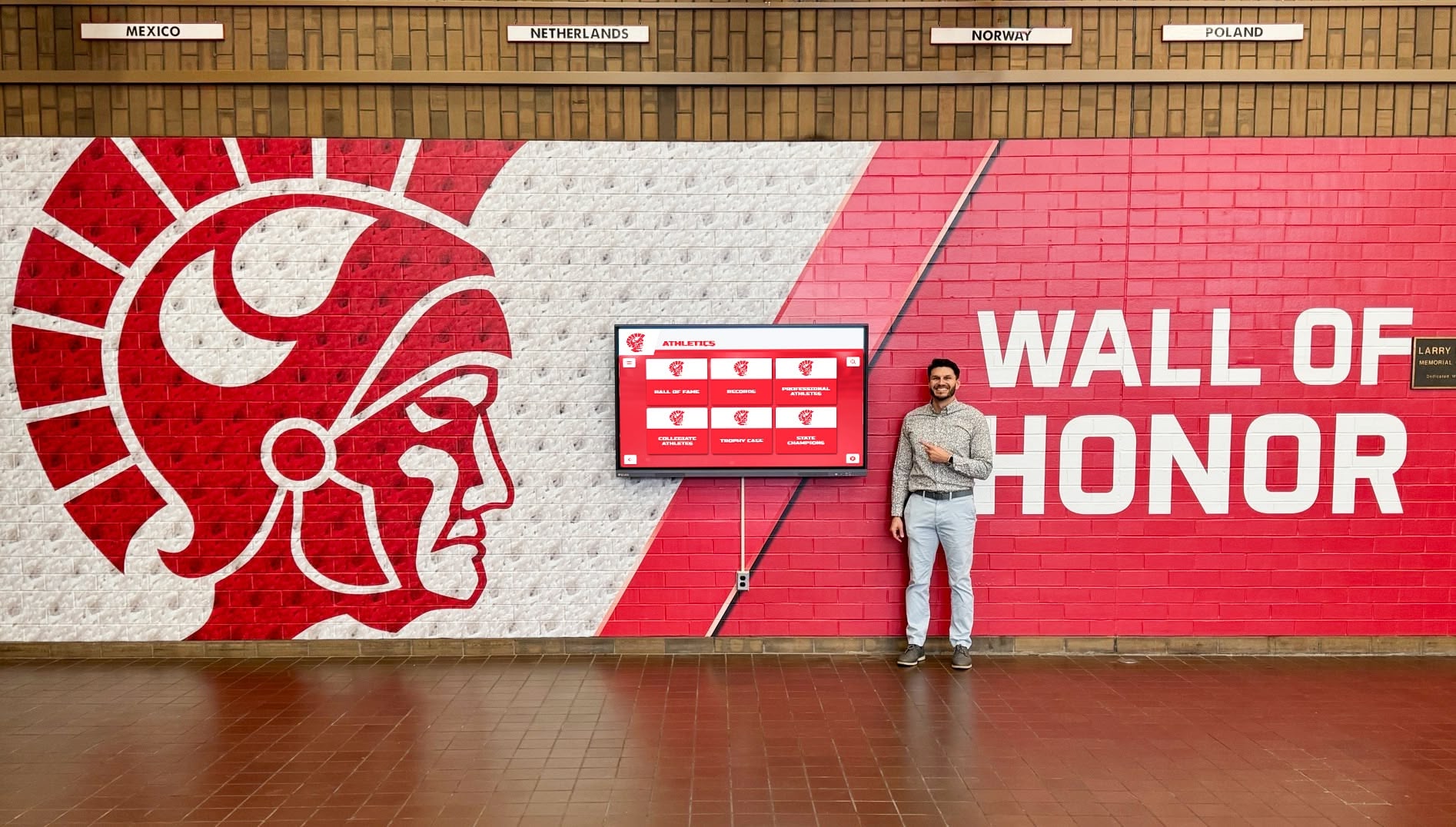
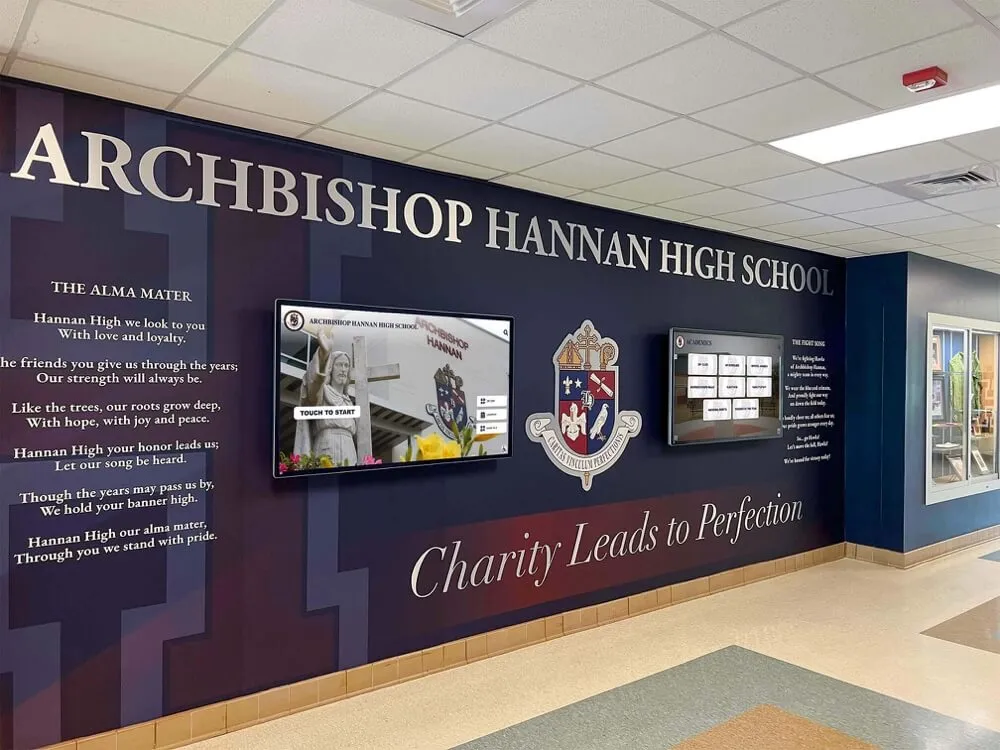
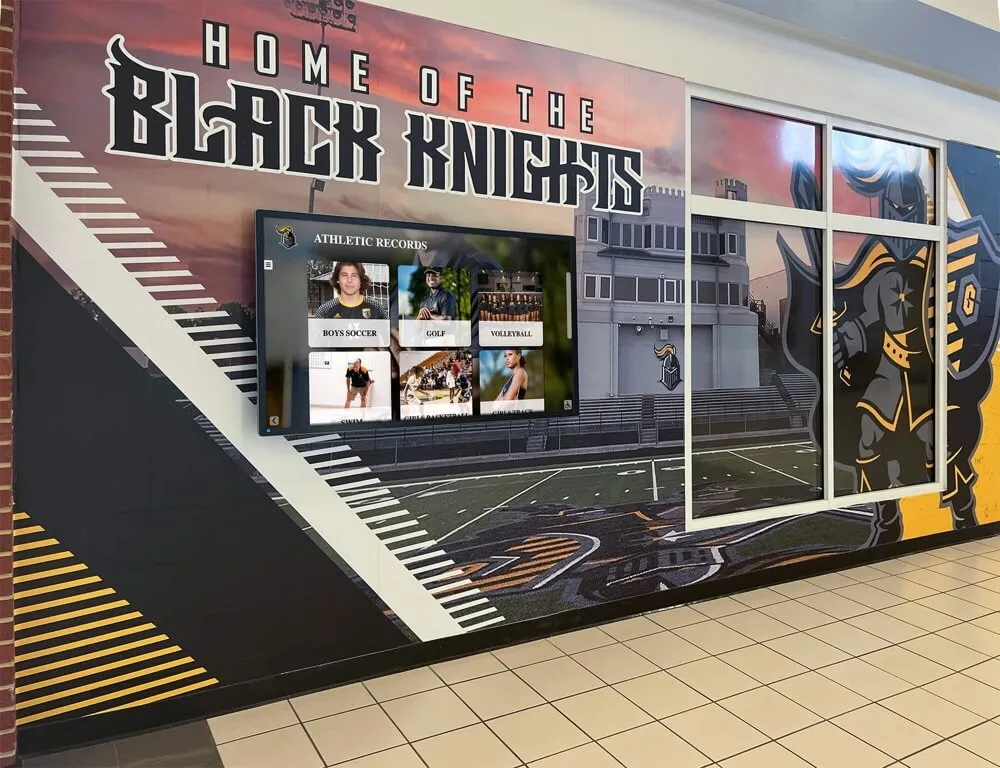
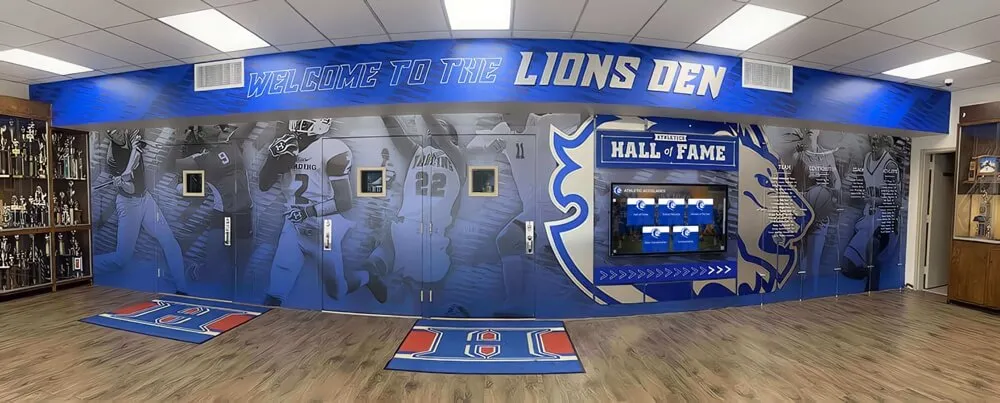
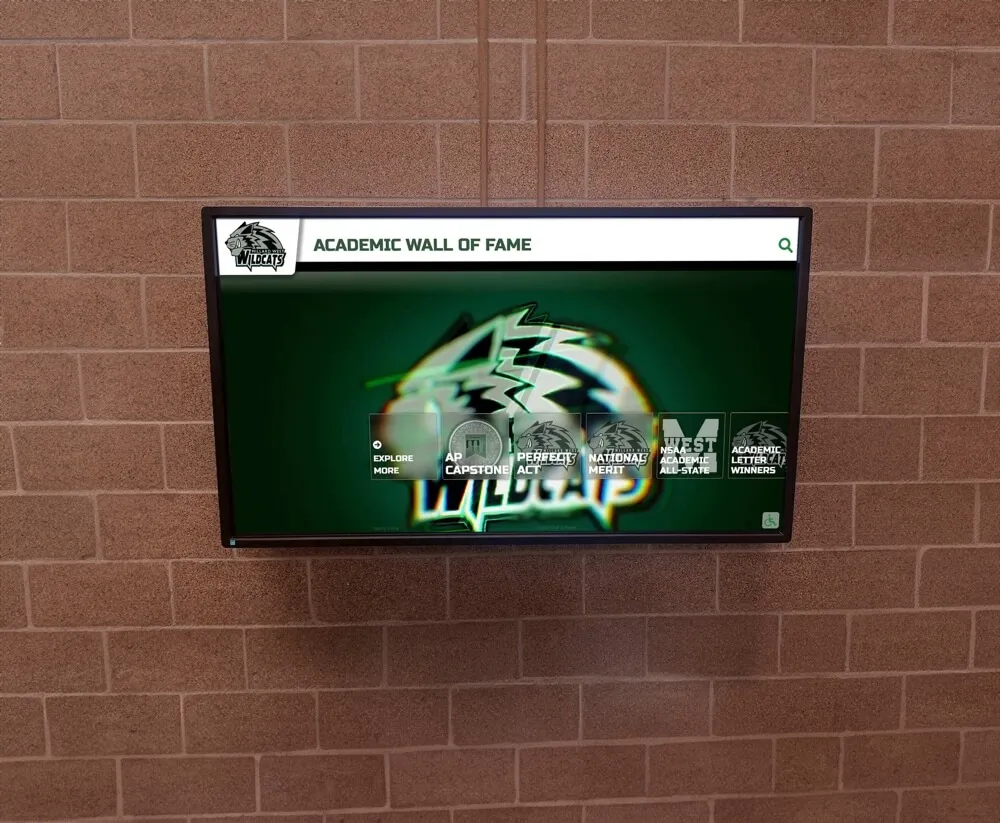
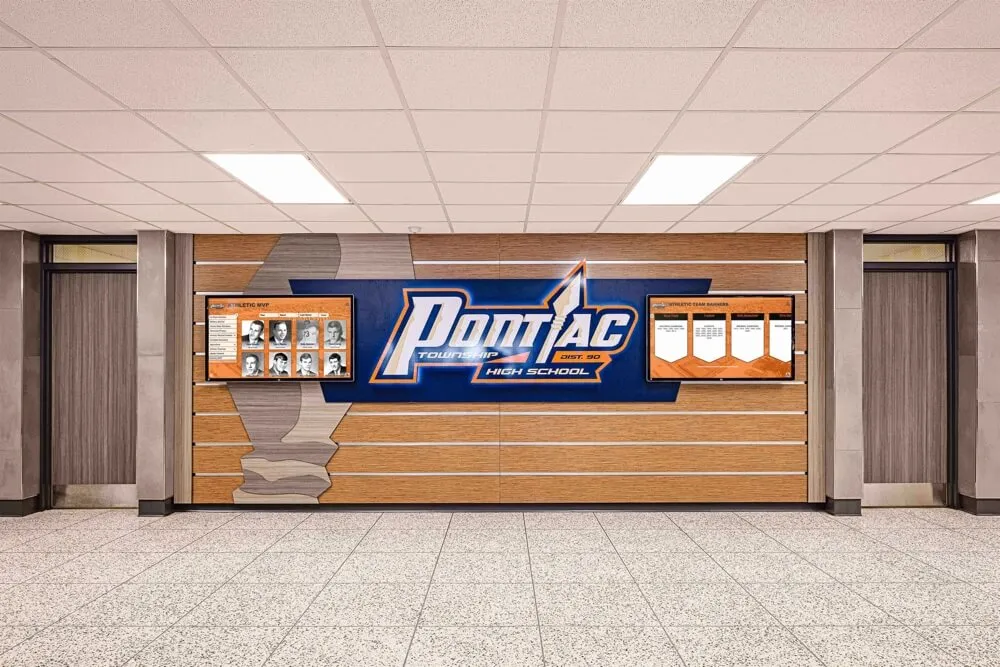
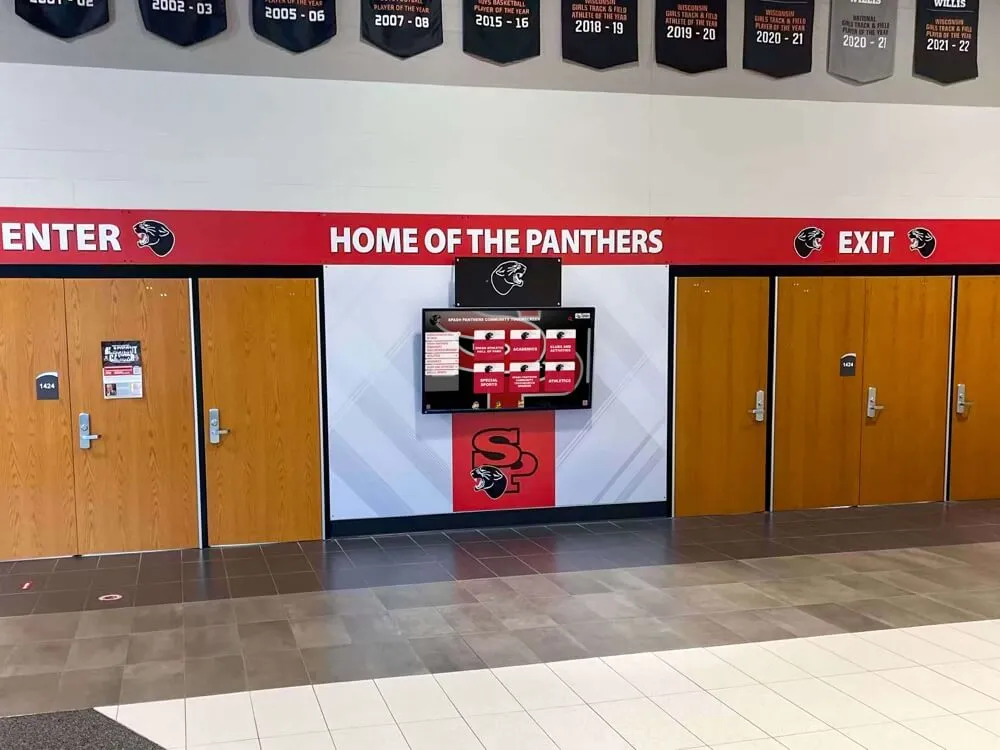
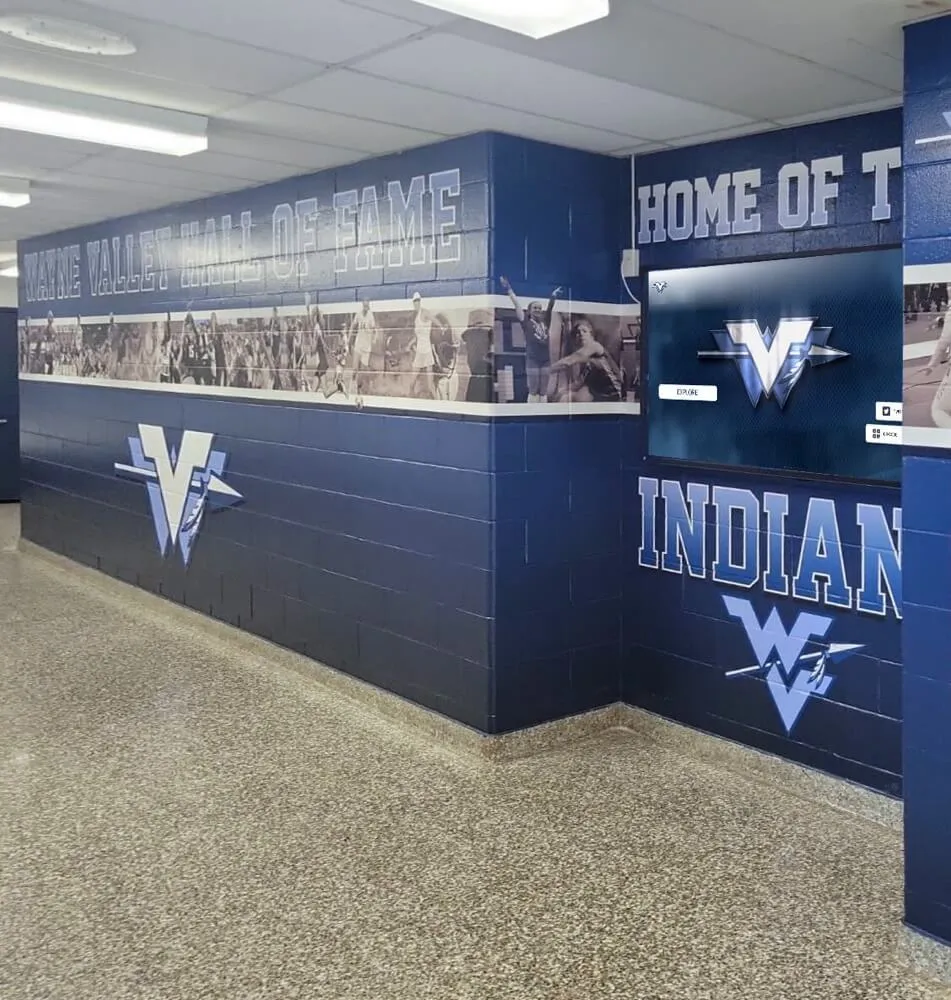
Wall of honor installations in school hallways give all programs — including drill team — visible, permanent recognition in the spaces students and families pass every day
Building a Drill Team Hall of Fame: A Practical Guide
Who Belongs in a Drill Team Hall of Fame?
Schools that have operated drill teams for decades often find themselves with rich historical records but no organized way to celebrate them. A dedicated drill team hall of fame — whether as a standalone installation or a section within a broader athletic and activities hall of fame — typically honors:
Inductee Categories
- Former captains: especially those who led teams to championships or program milestones
- Distinguished performers: individuals who earned exceptional individual recognition at state or national competitions
- Long-serving coaches and directors: mentors who shaped the program across many seasons
- Alumni making exceptional contributions: military officers, professional performers, coaches who trace their development to the program
- Championship teams: entire cohorts from title-winning seasons, recognized as a group
Induction Criteria Considerations
- Minimum years since graduation (typically 3–5 years) ensures recency bias doesn’t dominate inductions
- Balanced representation across eras — older alumni shouldn’t be systematically excluded because records are harder to find
- Both military and dance drill teams should be represented in schools with both programs
- Coaches and instructors warrant dedicated recognition separate from student performers
For a deeper framework on induction criteria, the principles in guides like the athletic wall of honor recognition guide translate directly to drill team programs.
Physical vs. Digital Recognition: What Works Best for Drill Teams
Traditional trophy cases and plaque walls served earlier generations of drill team programs reasonably well — but they create real constraints that digital recognition systems solve decisively.
Limitations of Traditional Physical Displays
- Fixed physical space means inductees eventually crowd out older honorees
- Photos degrade and become unreadable over decades
- Updates require fabrication lead times and physical installation costs
- Content is static — there’s no way to tell the full story of a captain’s season or a team’s competitive journey
- Alumni can’t access the recognition remotely or share it with family members in other states
Advantages of Digital Recognition Walls
- Unlimited capacity: every captain, every championship team, every notable alumni can receive a full profile without displacement
- Rich multimedia: video highlights of competition routines, audio, photos across multiple seasons, and historical documentation
- Remote accessibility: alumni can view their recognition and share it from anywhere with an internet connection
- Simple updates: new inductees and updated information can be added without printing, fabrication, or installation
- Interactive exploration: visitors can filter by year, role, or achievement type — finding connections across generations
Solutions like Rocket Alumni Solutions provide touchscreen display platforms specifically designed for school recognition walls. A single installation in a school lobby can house the complete history of every extracurricular program — including both military and dance drill teams — accessible to students, families, and visiting alumni on demand.
Explore the range of options in the best digital wall of fame complete guide for a thorough overview of formats, features, and implementation approaches.
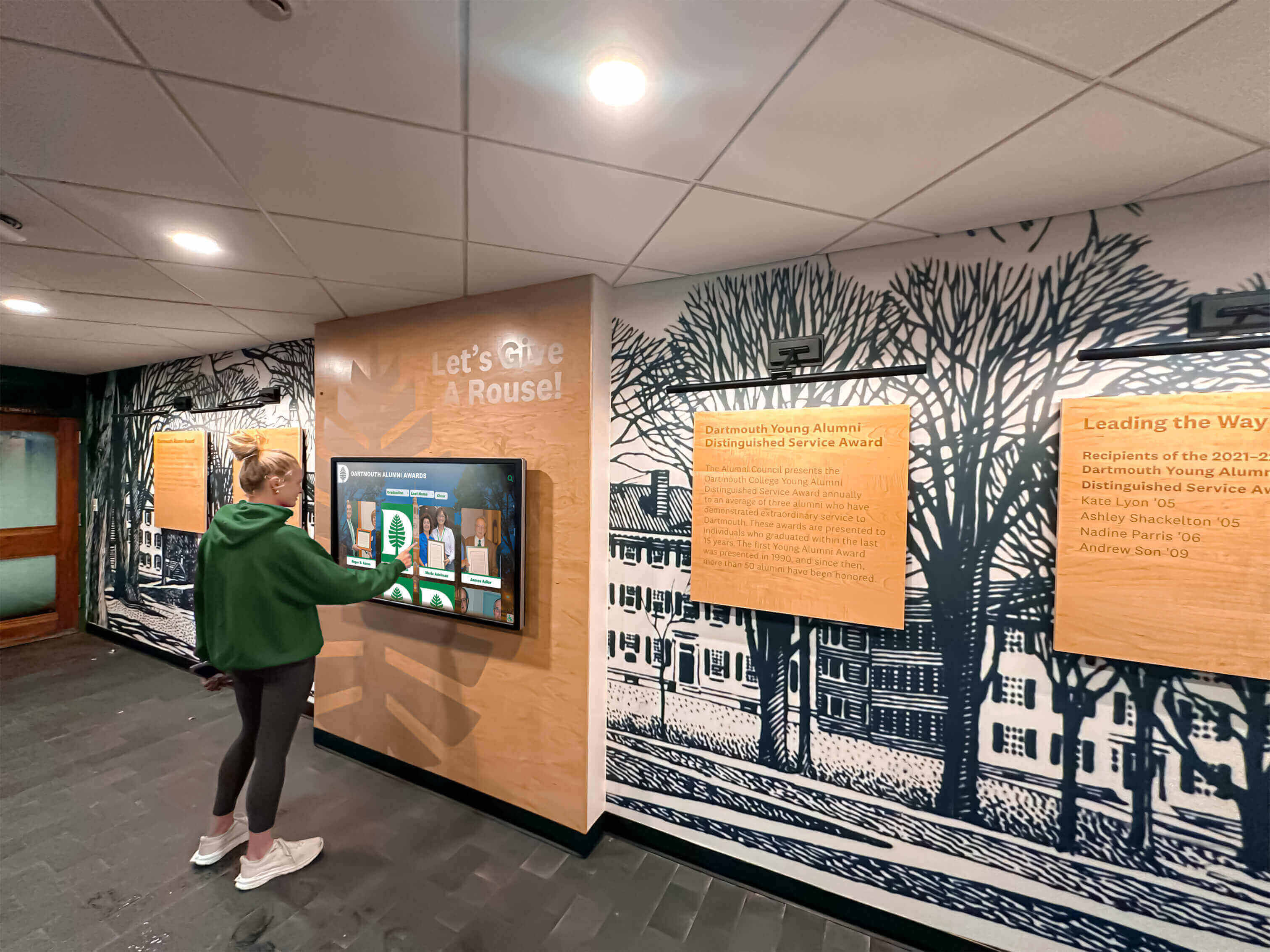
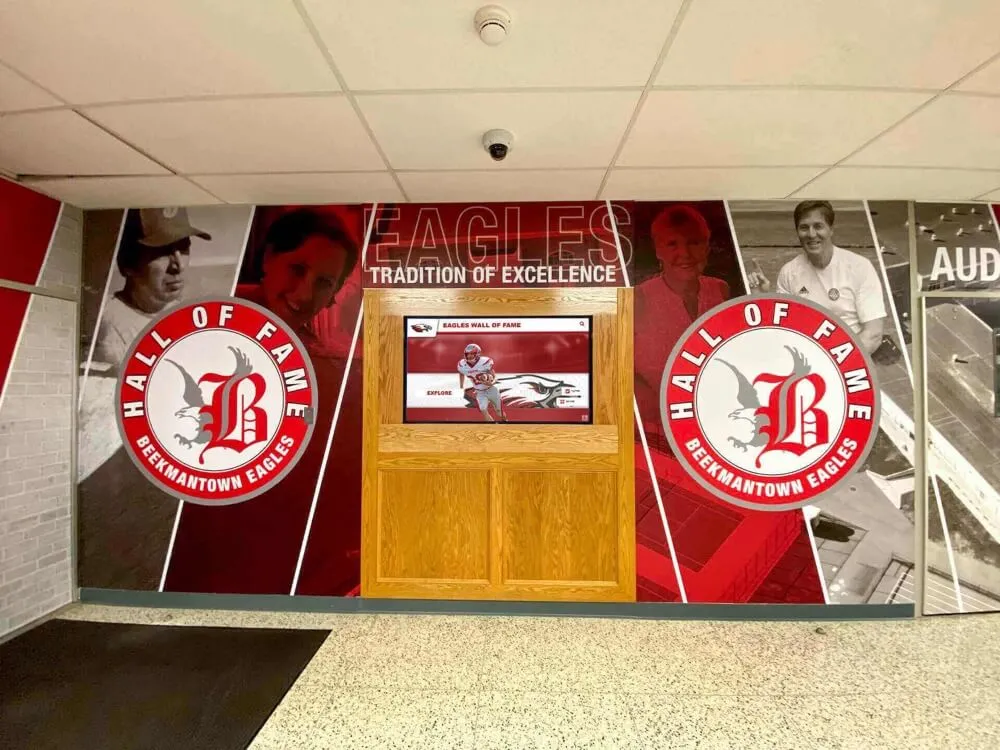
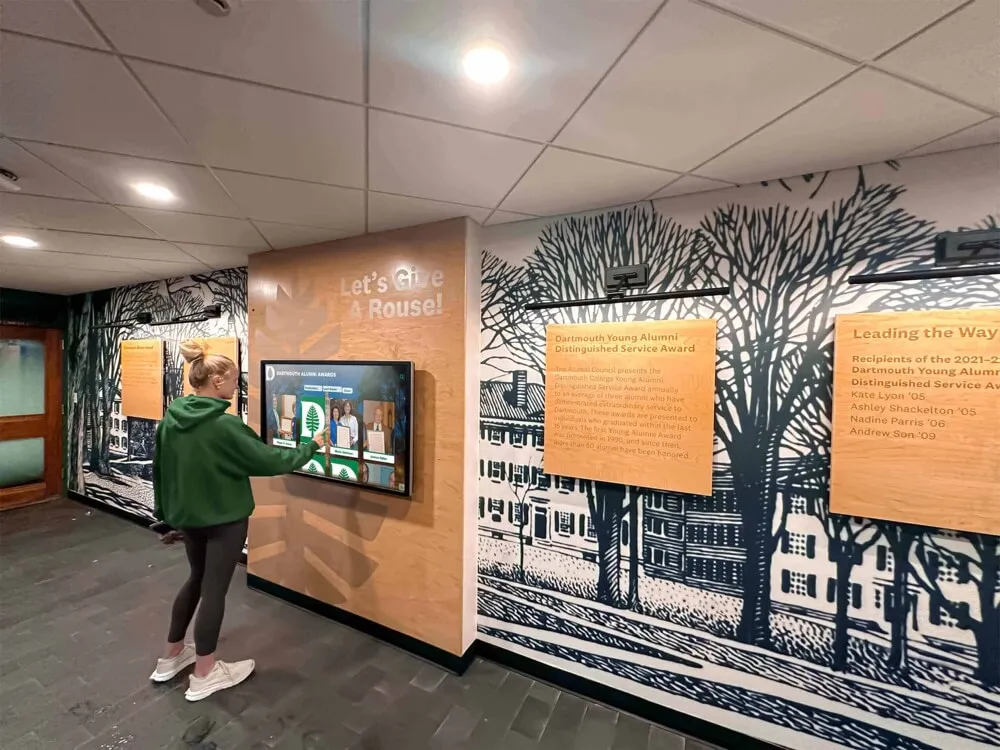
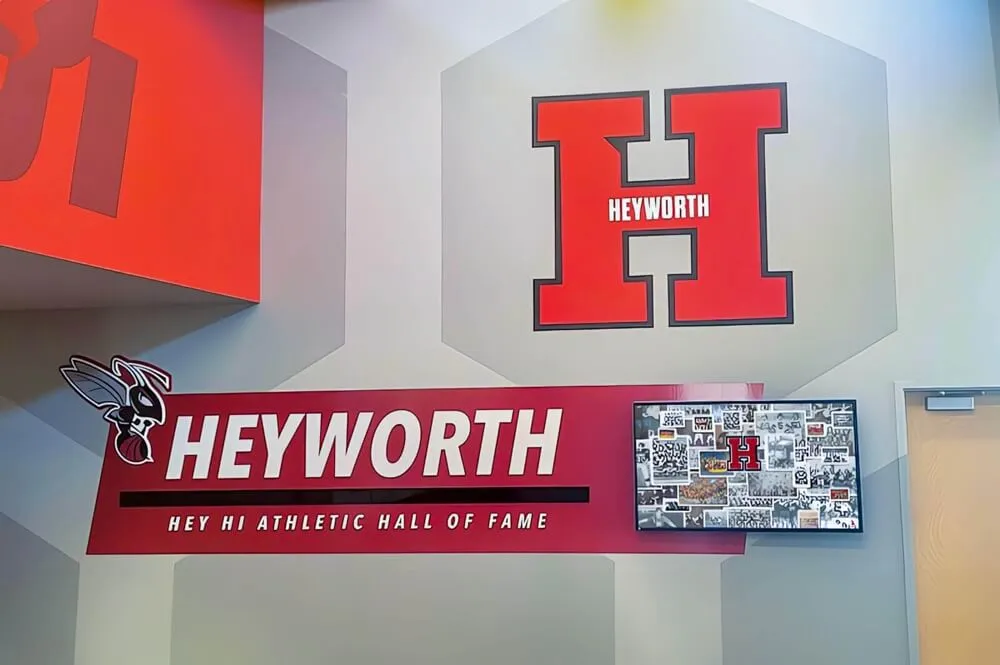
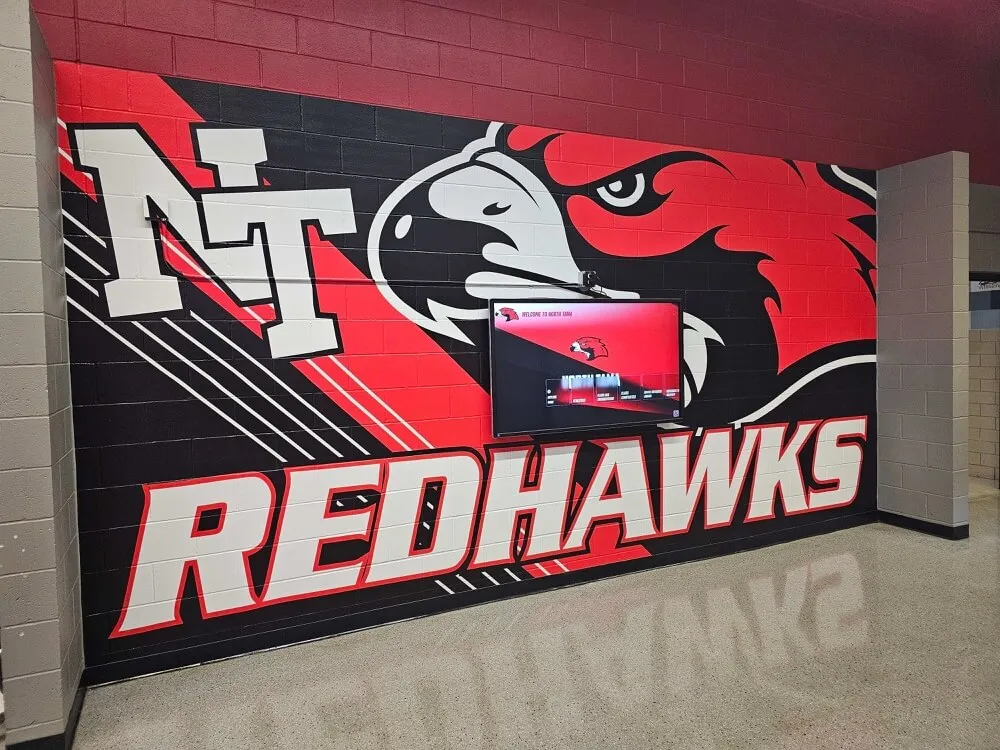
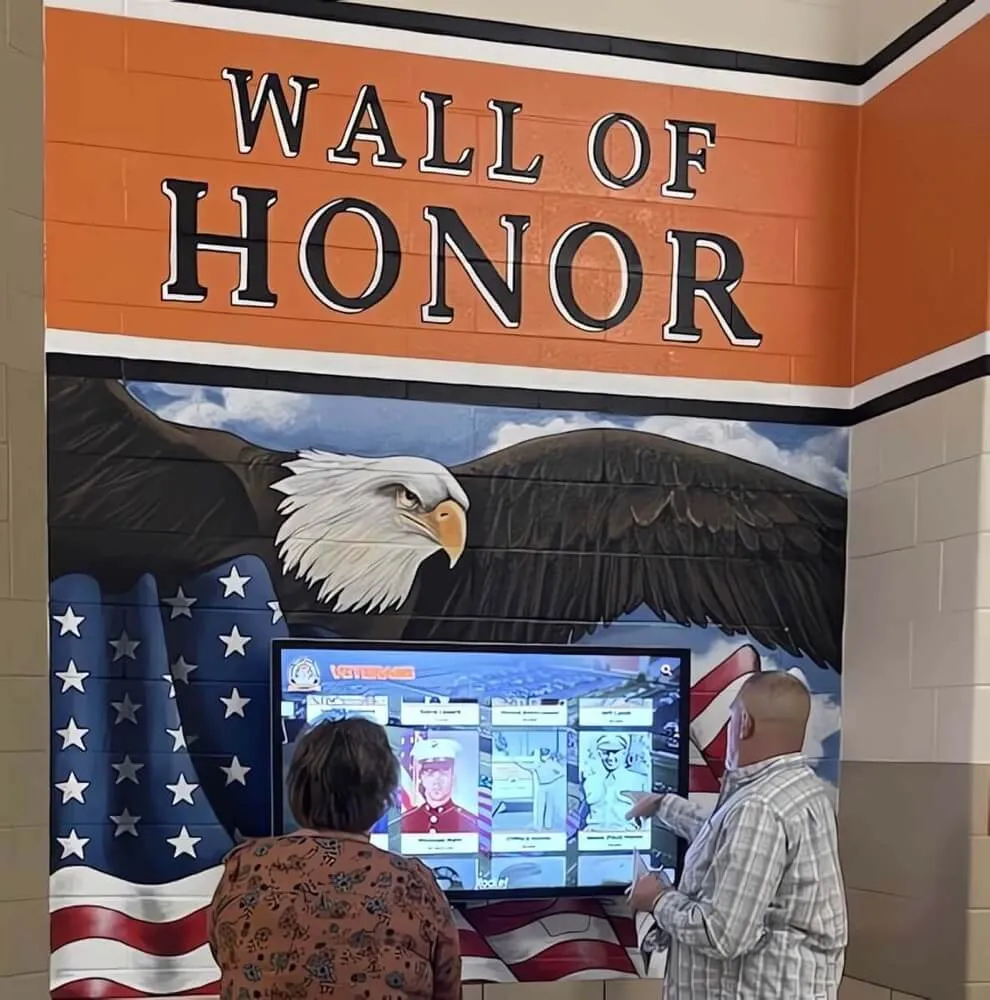
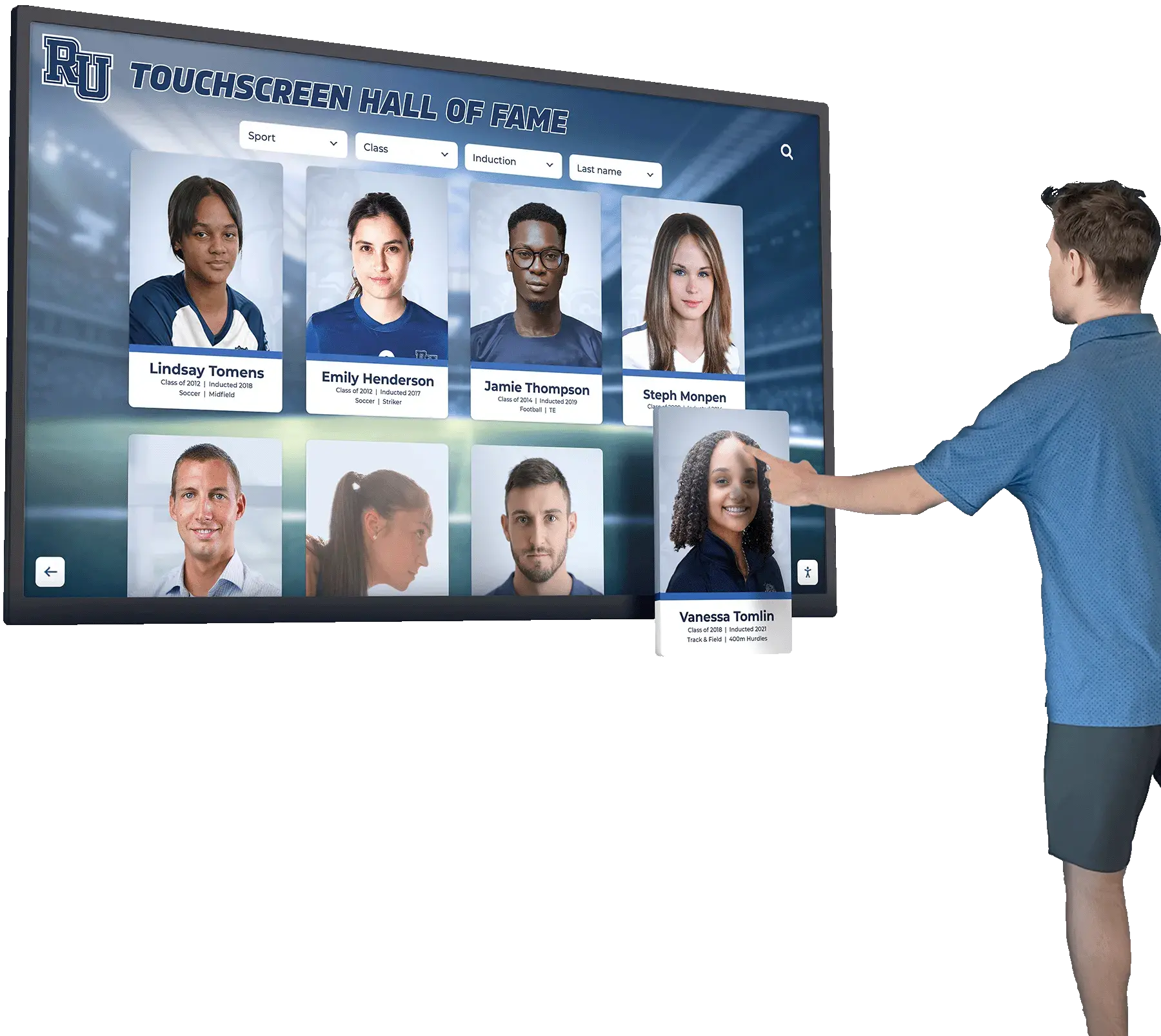
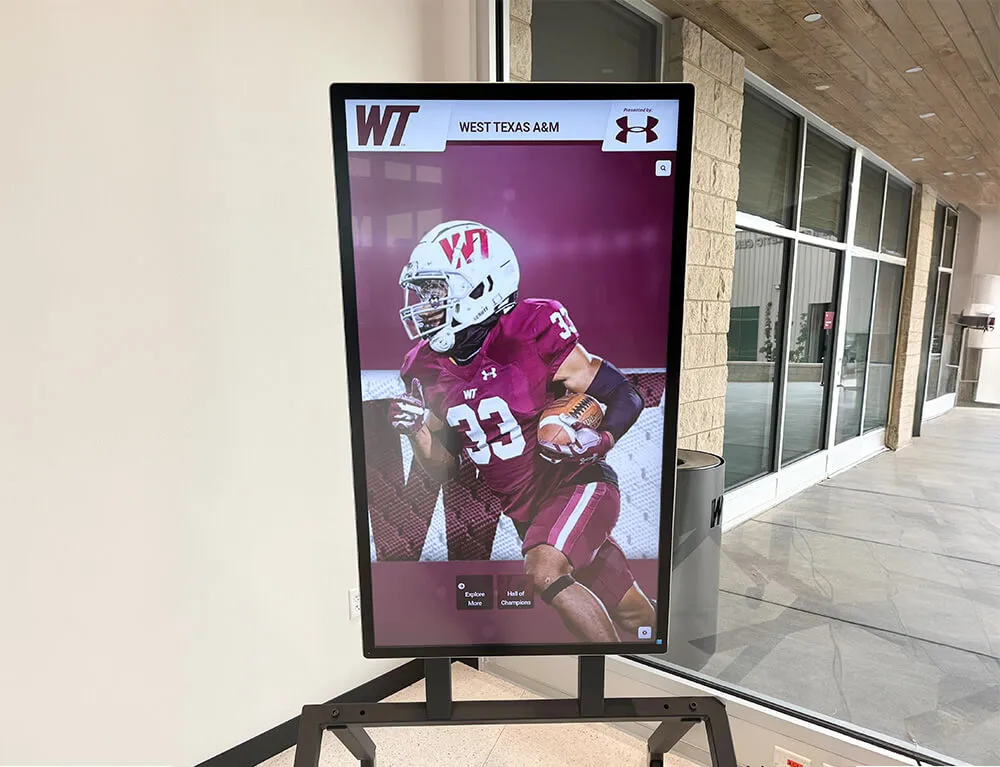
Interactive touchscreen systems allow students to explore drill team history — discovering alumni who preceded them and connecting to the program's multi-decade legacy
Displaying Drill Team Recognition in School Lobbies
Lobby placement matters enormously for visibility and cultural impact. Drill team recognition displays placed in high-traffic areas communicate immediately that these programs are valued alongside athletics, academics, and other prominent extracurricular activities.
Effective Placement Strategies
- Entrance lobbies: capture all visitors including prospective families, alumni returning for games, and community members attending events
- Athletic corridor intersections: position drill team recognition near but distinct from varsity sport displays, reinforcing the program’s athletic identity
- Dedicated performing arts wing: schools with strong arts programs may create unified recognition spaces celebrating music, theater, and drill team together
- Near the gymnasium or auditorium: where drill team performances occur, recognition placed in proximity creates contextual meaning
Content to Feature in Lobby Displays
- Season-by-season championship records: a simple visual timeline of titles demonstrates program excellence at a glance
- Captain roster by year: the discipline of being selected captain is itself an honor worth displaying permanently
- Team photos from milestone seasons: competition photos, championship portraits, and candid practice images tell the full story
- Alumni spotlights: where are they now features show current students the career trajectories the program enables
For a practical look at designing engaging alumni gathering spaces that incorporate diverse program histories, see this alumni gathering area design guide.
Drill Team and the Broader School Recognition Ecosystem
Drill team recognition doesn’t exist in isolation — it’s most effective when integrated with how the school recognizes all forms of student achievement. This matters for three practical reasons:
Recruiting and Retention When prospective students see drill team recognized with the same visibility as football or basketball, they understand the program is worth the investment of four years of serious training. Recognition drives enrollment, which sustains program excellence.
Alumni Engagement Alumni who see their contributions documented — online or in a lobby display — are more likely to engage with the school as donors, mentors, and advocates. For JROTC alumni particularly, who often maintain strong unit loyalty, visible recognition translates directly into financial support and mentorship participation. Learn about all-state athlete recognition approaches that can be adapted for high-achieving drill team performers.
Institutional Pride A school that documents its drill team history across decades communicates something important about its values: that excellence in performance, discipline, and service is worth remembering. This cultural message reinforces exactly the qualities drill team develops in participants.
Consider pairing drill team recognition with spirit week and school event recognition to create a comprehensive picture of school culture across all programs.
Archiving Historical Drill Team Content
One of the most valuable — and underappreciated — aspects of drill team recognition is preserving historical content before it disappears entirely. Older trophy cases may hold championship plaques but nothing more. Yearbook photography captures team portraits but rarely competition moments. Parent volunteers shot VHS footage in the 1980s and 1990s that may now sit in deteriorating tapes in someone’s garage.
Systematic digitization of this content — scanning photos, converting analog video, collecting alumni testimonials — creates the raw material for genuinely compelling recognition displays. The historical photos archive guide for schools provides a roadmap for this process.
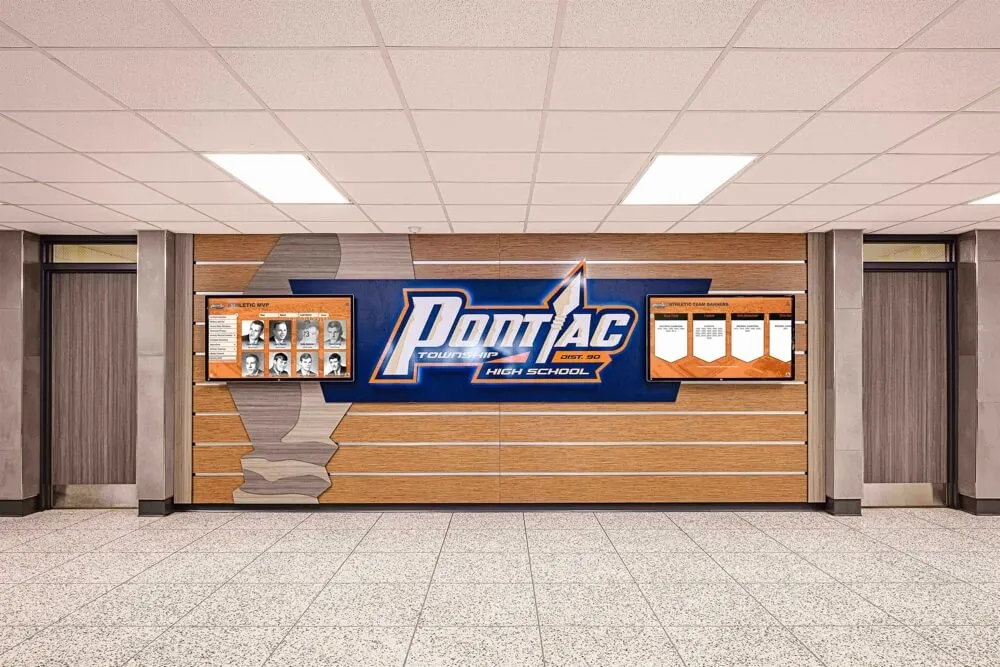
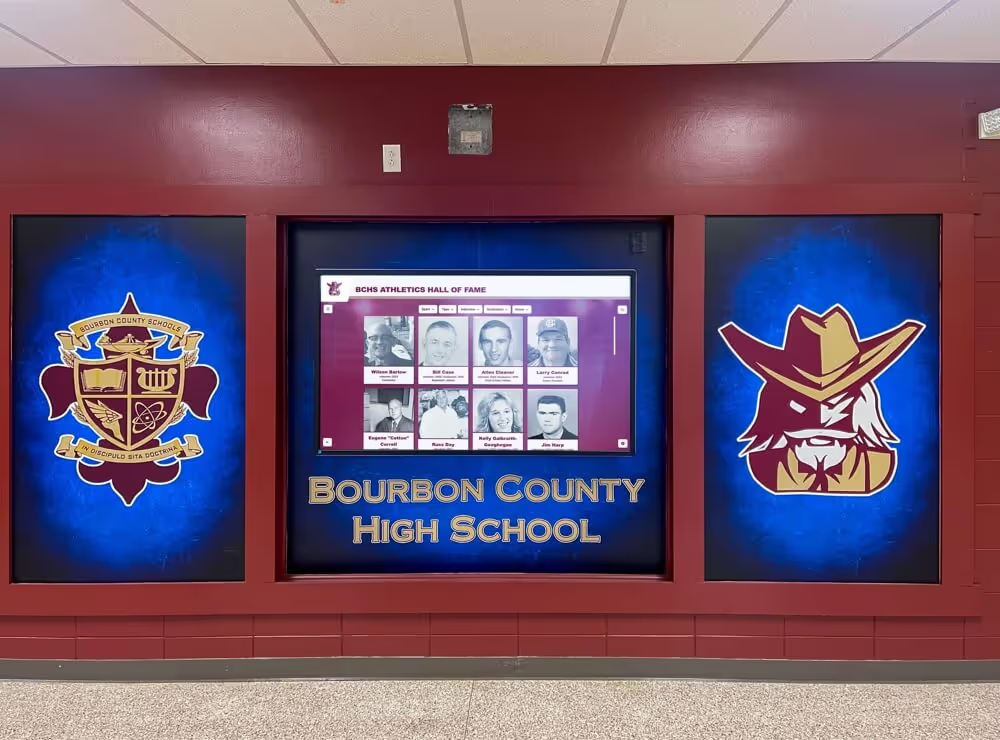
Comprehensive hallway recognition systems document decades of program history — providing context and continuity that trophy cases alone cannot match
Notable High School Drill Team Traditions to Know
Understanding the landscape of high school drill team programs helps schools benchmark their own recognition practices and identify the kinds of achievements worth celebrating.
Dance-Style Drill Team Powerhouses Texas hosts some of the nation’s most prominent high school drill team programs. Schools like Duncanville High School, McKinney High School, and Allen High School have cultivated programs with state-championship pedigrees, large budgets, and alumni networks spanning multiple generations. State competitions organized through TADI and UIL draw enormous audiences and media attention.
In California, programs affiliated with CADA (California Association of Directors of Activities) compete in both winter and spring guard circuits, with some schools earning national recognition through WGI (Winter Guard International) competitions.
Military Drill Team Excellence JROTC drill competitions operate across all four service branches — Army, Navy, Marine Corps, and Air Force. Annual national championships attract top programs from across the country. Schools with long-standing JROTC programs often have decades of drill team history that predates many of their varsity sports programs, yet this history is rarely displayed with commensurate visibility.
What Top Programs Share Regardless of style or geography, the highest-achieving high school drill team programs share common traits: consistent coaching over multiple seasons, strong booster support, systematic recruiting and development pipelines, and — increasingly — comprehensive recognition programs that celebrate alumni and fuel current student motivation.
Discover how schools celebrate team accomplishments across diverse programs in this guide to team celebration ideas for big wins.
Year-End Recognition for Drill Team: Banquets, Awards, and Senior Night
Like athletic programs, drill teams typically close each season with formal recognition events. These moments deserve the same planning attention given to sports banquets.
Drill Team Banquet Planning
A well-executed end-of-year banquet honors the season’s achievements while creating lasting memories for seniors. Key elements include:
- Season highlight video: competition footage, performance clips, candid moments
- Individual awards: most improved, outstanding performer, leadership award, spirit award
- Senior recognition: personalized tributes for graduating members, especially outgoing captains
- Alumni guests: returning former captains add generational depth and motivate current members
- Championship or award display: physical or digital showcasing of trophies and recognition earned during the season
Schools looking for broader end-of-year recognition inspiration can explore high school end-of-year awards guides that cover how to structure meaningful ceremonies for any program.
Senior Night for Drill Teams
Drill team senior nights — typically held at a home football game or final home competition of the season — honor graduating members with the same visibility that athletes receive. Elements include:
- Senior walk: graduating members escorted by family across the performance surface or track
- Public address recognition: each senior’s contributions read aloud before the crowd
- Commemorative gifts: custom apparel, framed photos, or engraved items
- Photo opportunities: professional or organized photography capturing the moment
For apparel and design ideas appropriate to drill team senior nights and banquets, cheer and drill team apparel guides offer practical inspiration.
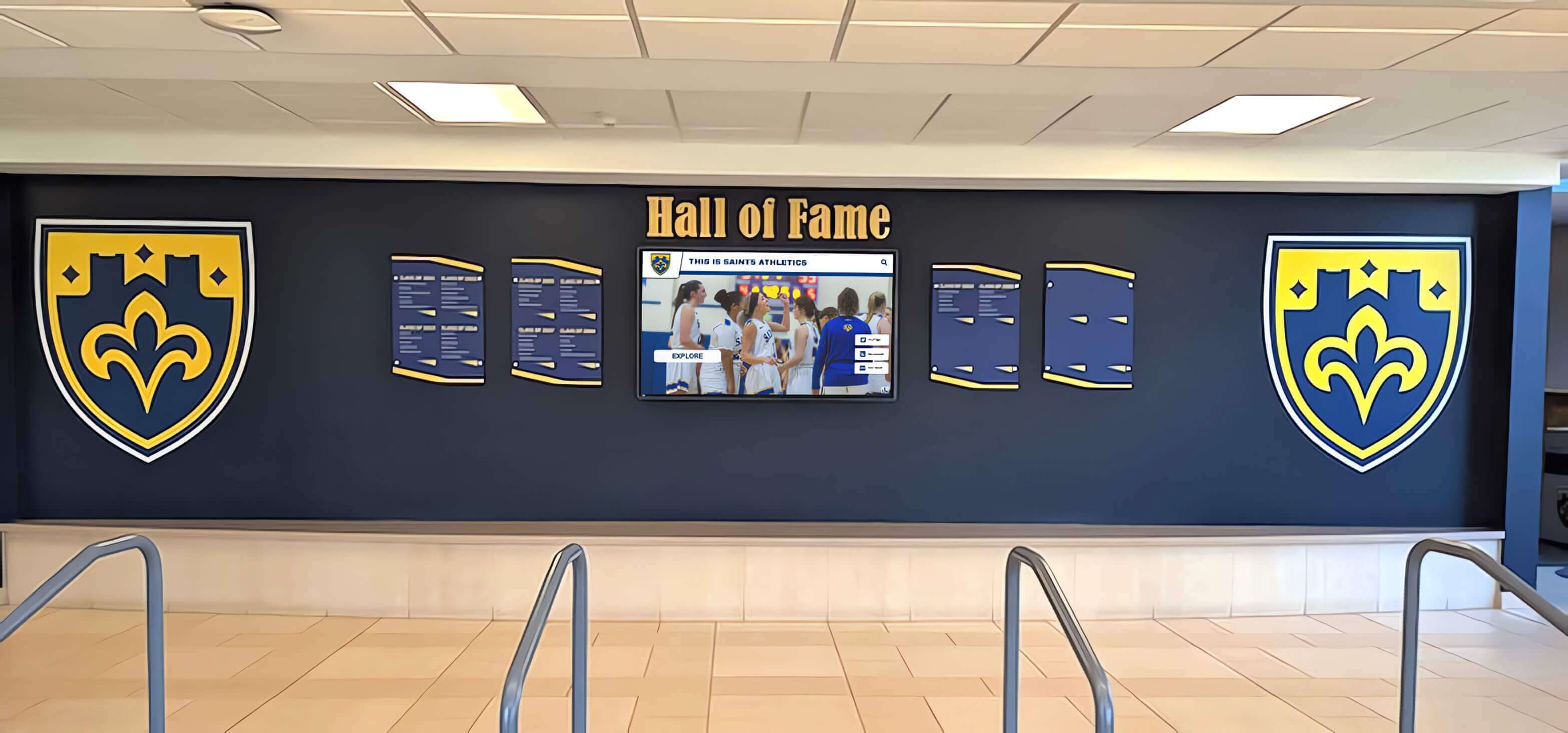
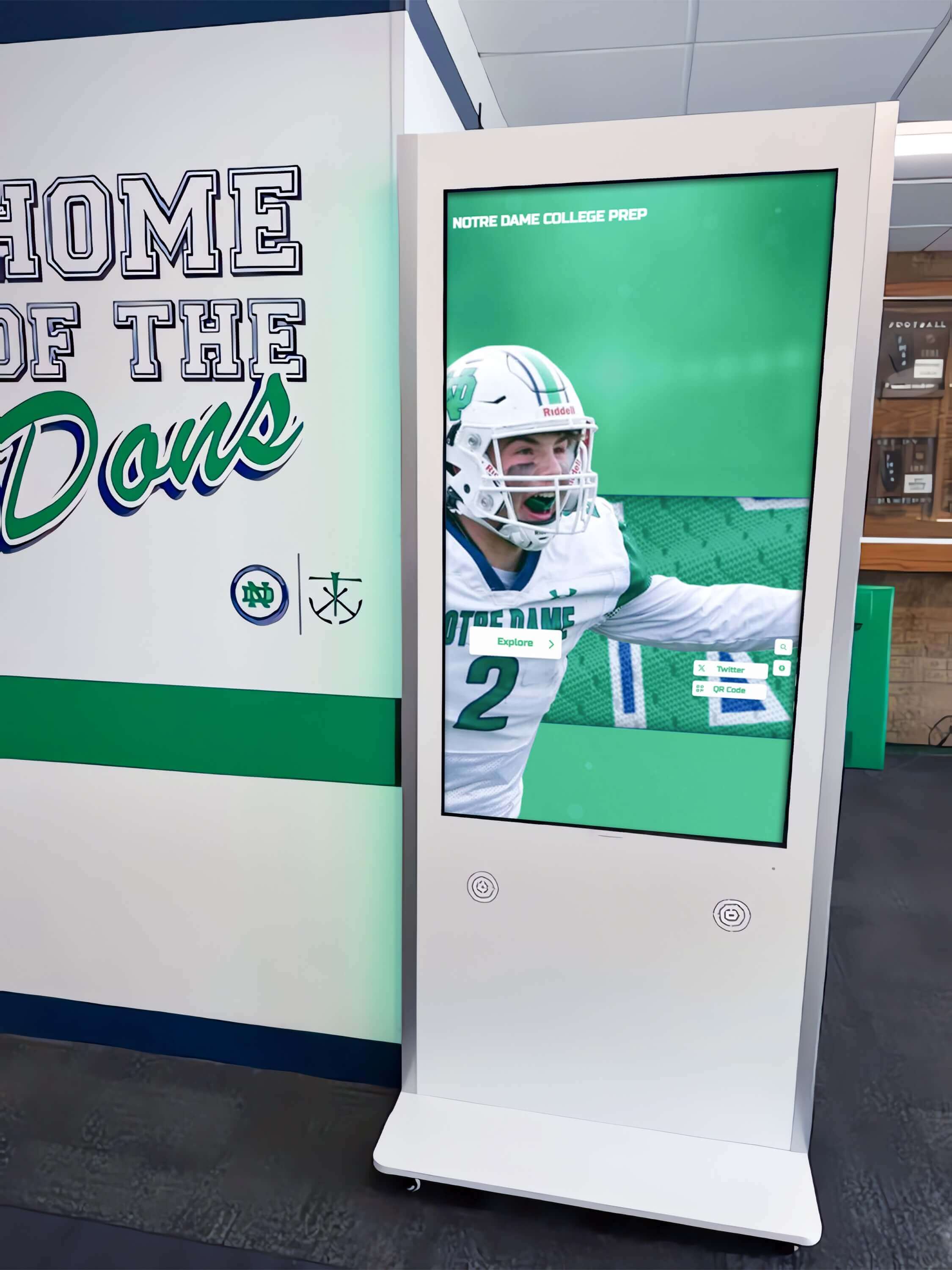
Combining traditional physical recognition elements with digital displays creates comprehensive recognition environments that honor all programs — including drill team — with appropriate depth
Frequently Asked Questions About Drill Teams
What is the difference between a drill team and a dance team?
The terms are often used interchangeably, but “drill team” typically implies precision synchronized movement — either military-style or choreographed dance performed in tight formation. “Dance team” can refer to a broader range of performance styles including jazz, hip-hop, and contemporary dance that may not emphasize group synchronization as heavily. In practice, the distinction varies by region: in Texas and other Southern states, “drill team” almost always means precision dance; in military contexts, it always means close-order drill.
Is drill team considered a sport in high school?
Classification varies by state and school district. Some states classify competitive dance/drill as a sport under their athletic associations, making participants eligible for varsity letters and athletic department recognition. Others classify it as a performing art or extracurricular activity. JROTC drill teams are typically considered part of the JROTC program rather than the athletic department, though many schools award recognition comparable to athletic letters.
What do drill team captains do?
Drill team captains serve as the primary student leaders of the program. Responsibilities typically include setting the tone for practice culture, communicating between the coaching staff and team members, leading warm-ups and portions of rehearsal, representing the team in school governance, mentoring younger members, and modeling the discipline and work ethic the program demands. Captaincy is among the most rigorous student leadership positions in any high school program.
How do schools recognize drill team alumni?
Recognition methods range from traditional trophy case displays and yearbook documentation to modern digital hall of fame systems. Leading schools use interactive touchscreen displays in lobbies and hallways that allow visitors to explore complete program histories, including photo galleries, competition records, captain rosters, and alumni spotlights. Digital systems have significant advantages over physical displays — unlimited capacity, multimedia capability, remote accessibility, and simple ongoing updates.
Can drill team be included in a school’s hall of fame?
Absolutely. Many schools that operate comprehensive halls of fame — covering athletics, academics, and activities — include dedicated sections for drill team programs. Schools without existing drill team recognition infrastructure can add it as a discrete element within a broader digital recognition wall, ensuring drill team alumni receive permanent visibility without requiring a separate physical installation.
What awards are given in drill team competitions?
Competition awards vary by sanctioning body, but common categories include: overall champion, division champion, caption awards (best movement, best general effect, best music, best equipment), and individual performance recognitions. For JROTC competitions, awards also include regulation drill ratings, inspection scores, and color guard distinctions. Top programs typically display championship trophies and plaques from decades of competition — content ideal for hall of fame installations.
Conclusion: Giving Drill Team the Recognition It Deserves
Drill teams — whether executing precision military formations or electrifying a stadium with synchronized dance — represent some of the most rigorous, disciplined, and tradition-rich programs in American high school life. The captains who led these teams, the coaches who built them over decades, and the alumni who went on to military service, professional performance, and leadership careers all deserve recognition that matches the commitment they gave.
Schools that invest in comprehensive recognition systems for their drill team programs don’t just honor the past — they build the cultural infrastructure that recruits the next generation of performers, engages alumni as donors and mentors, and communicates institutional values to every student and family who walks through the front doors.
Put Your Drill Team in the Spotlight — Permanently
Rocket Alumni Solutions builds interactive touchscreen recognition walls that celebrate every program your school takes pride in — including military and dance drill teams. Unlimited profiles, multimedia content, and remote updates mean your drill team legacy grows with every graduating class.
Explore Recognition SolutionsThe best high school drill team programs are defined not only by their trophies and titles but by the continuity of tradition that connects one generation of performers to the next. A digital recognition wall that preserves captain rosters, championship records, competition photos, and alumni stories creates exactly that continuity — ensuring that decades from now, a student trying out for the program can look up the captain from 2010, the state championship team from 1998, and the JROTC cadet who became an officer, and understand that what they’re joining is something worth the effort.
For schools ready to build or upgrade their drill team recognition program, Rocket Alumni Solutions provides the platform, the expertise, and the flexibility to honor every member of every program — from the drill team captain who graduated last spring to the founding members who built the tradition decades ago.