



Walk into most schools and the walls tell a story—but far too often, it’s a story of beige paint, institutional sterility, and missed opportunities. Hallways, gymnasiums, cafeterias, and common areas represent hundreds or thousands of square feet of blank canvas that students encounter daily, yet these spaces frequently remain generic and uninspiring. Meanwhile, successful schools recognize that every surface offers potential to reinforce identity, celebrate achievement, inspire excellence, and create memorable environments that students genuinely want to be part of.
Wall wraps—large-format custom vinyl graphics applied directly to wall surfaces—have transformed how schools approach interior design and branding. These high-impact visual installations range from subtle decorative elements to floor-to-ceiling immersive environments, offering flexibility, durability, and visual impact impossible through traditional paint or mounted displays alone. Schools implementing wall wraps report immediate transformations in how students, staff, and visitors perceive and interact with spaces that previously went unnoticed.
This comprehensive guide explores everything schools need to know about wall wraps—from initial design concepts through installation and long-term maintenance. Whether considering your first wall wrap installation or expanding an existing program, this guide provides practical frameworks for creating transformative visual environments that serve educational, cultural, and branding objectives.
The evolution from traditional school decoration approaches to modern wall wrap solutions represents a fundamental shift in how educational institutions approach facility design. Where previous generations accepted institutional environments as inevitable, today’s schools increasingly recognize that physical environments directly influence student engagement, school culture, and community perceptions. Wall wraps provide accessible tools for schools of all sizes to create professional, inspiring environments reflecting their unique identity and values.

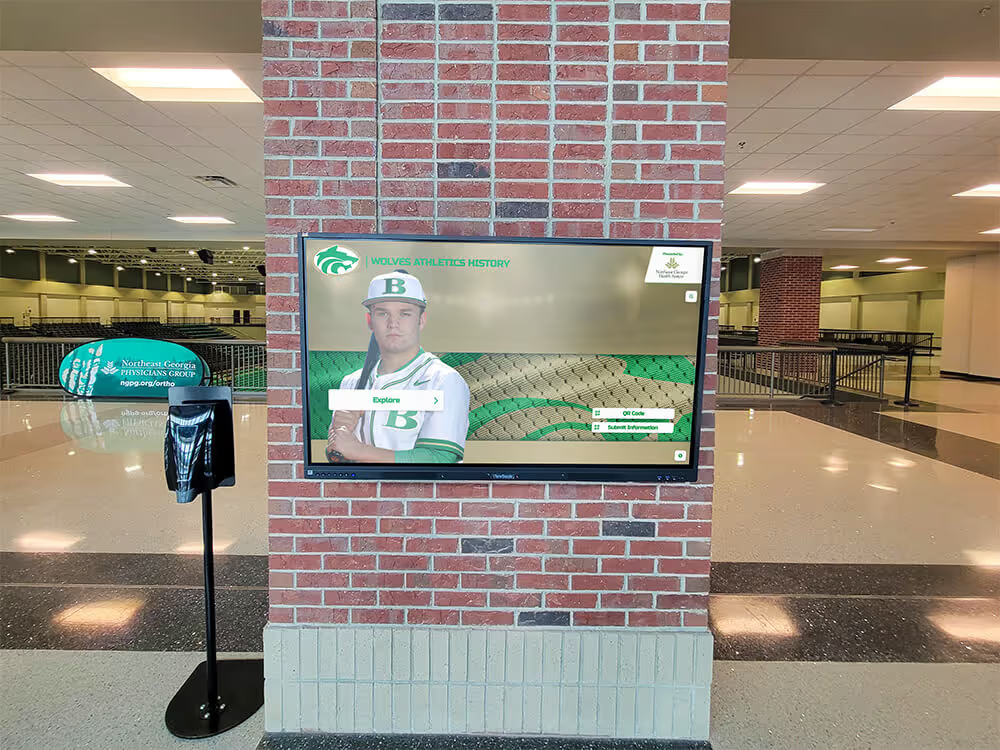
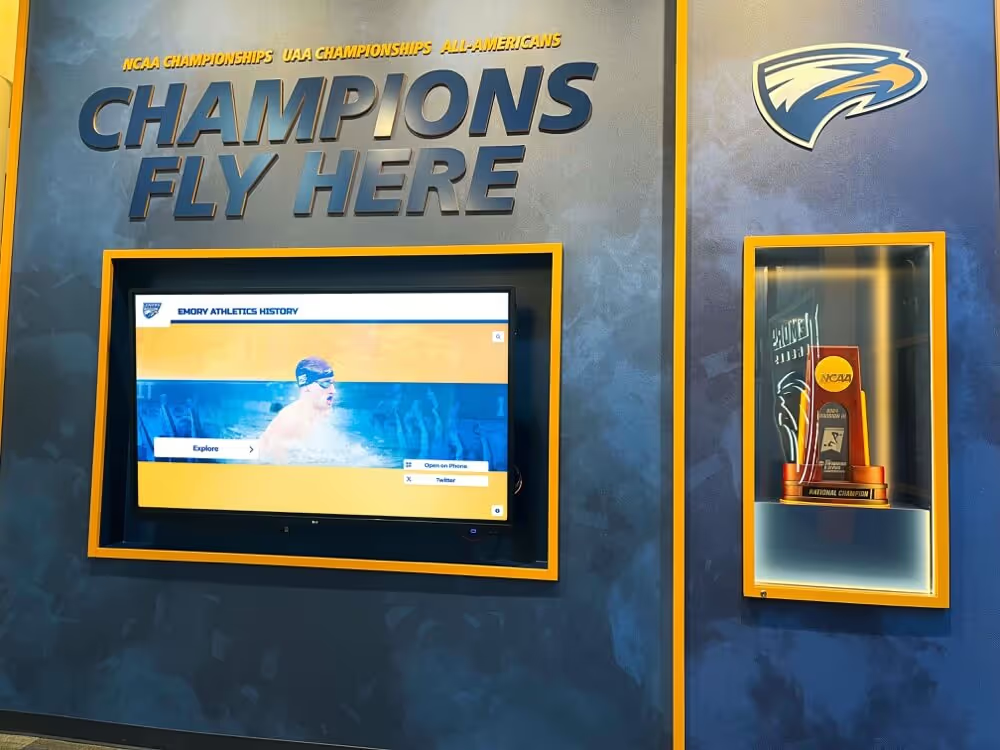
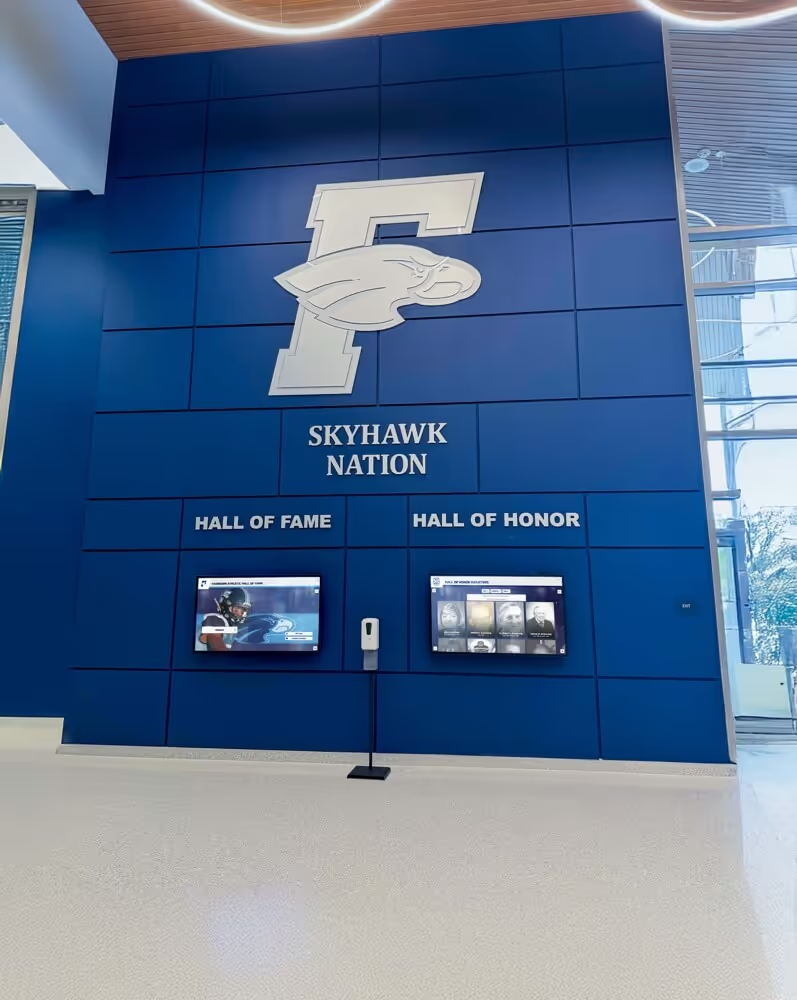
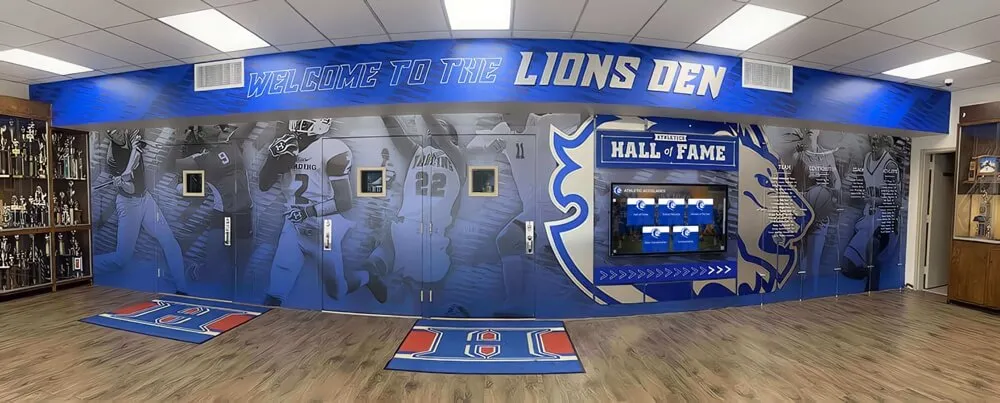
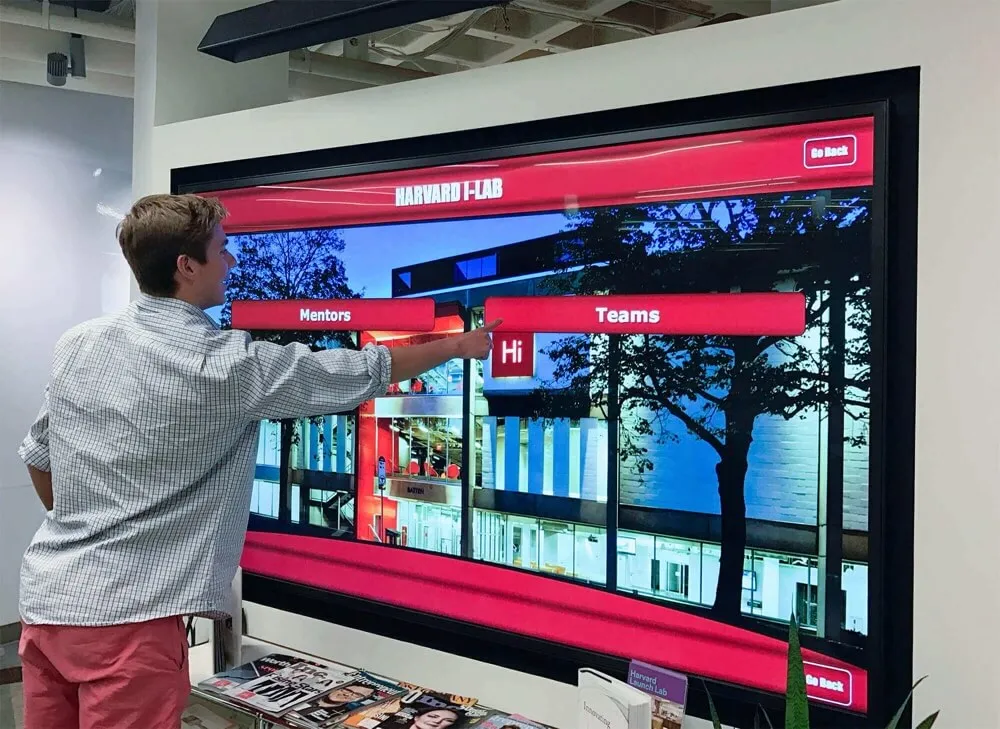
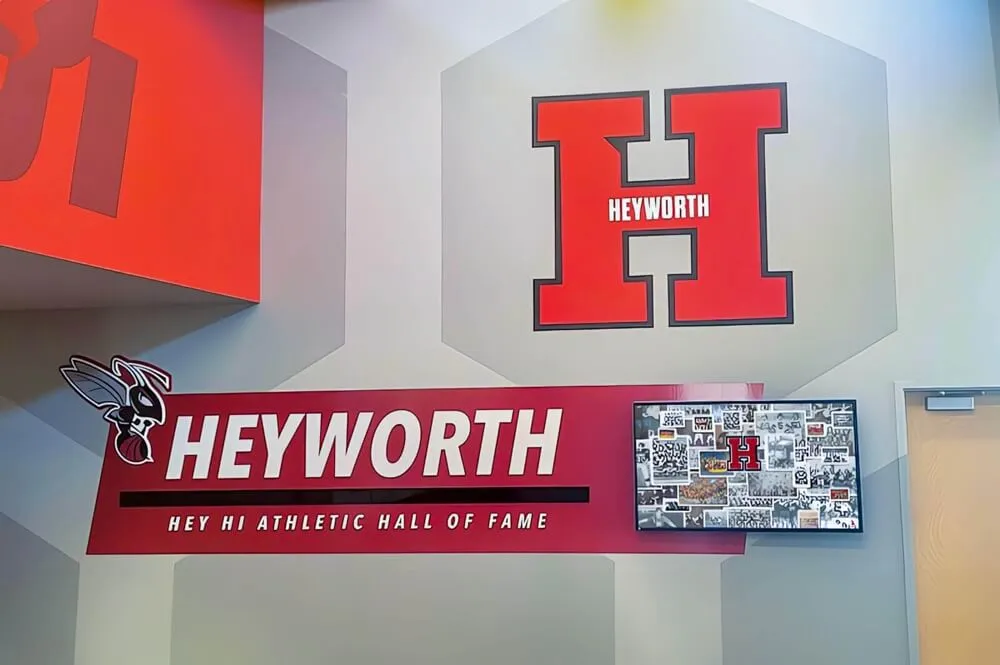
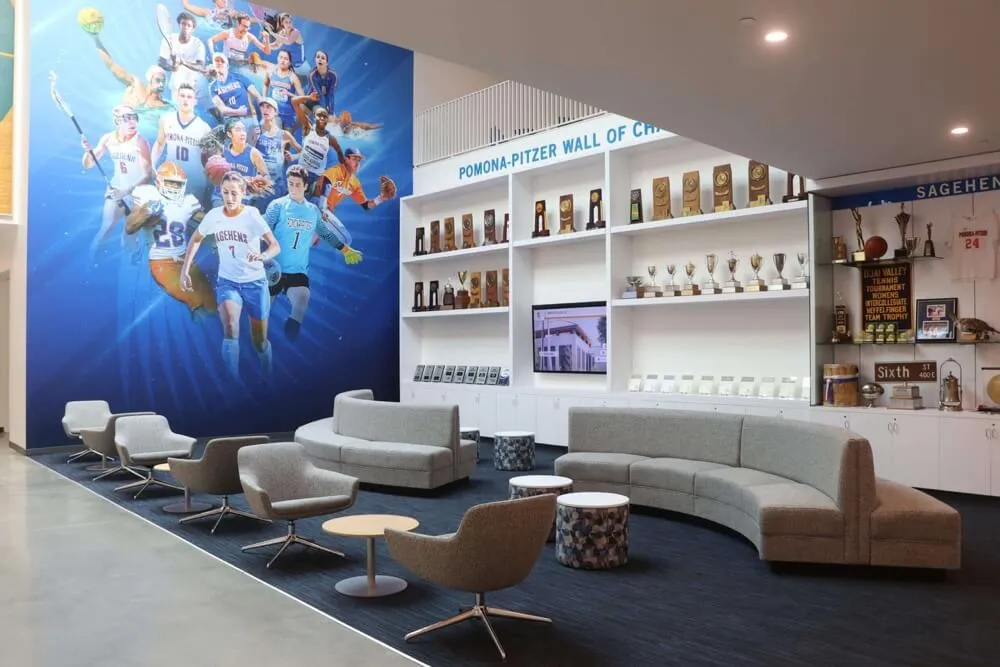
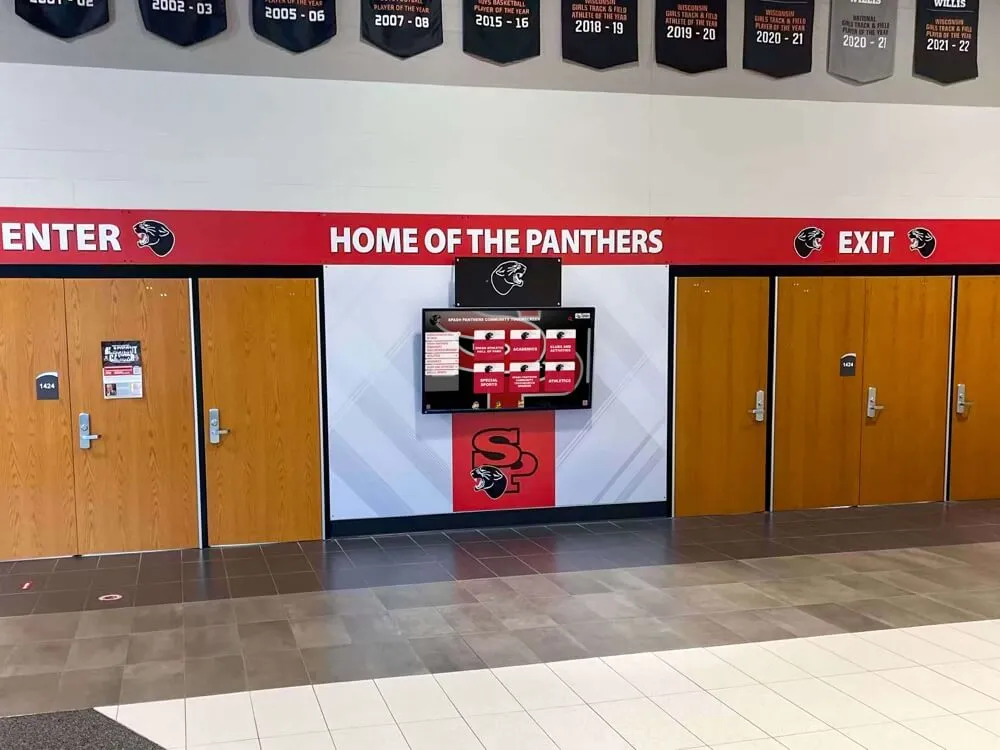
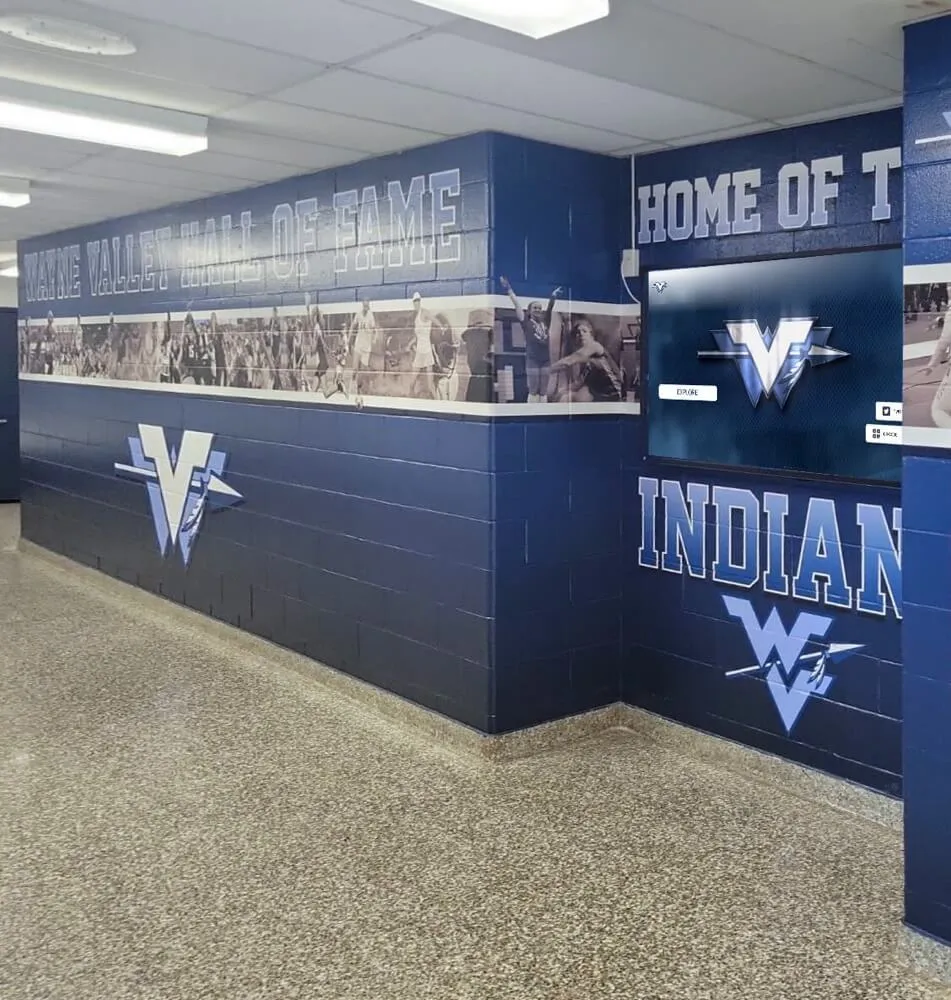
Professional wall wraps transform ordinary lobbies into impressive environments that welcome students, staff, and visitors while reinforcing institutional identity
Understanding Wall Wraps: Materials, Types, and Applications
Before exploring specific design approaches, schools should understand the fundamental characteristics, material options, and application types available in modern wall wrap solutions.
What Are Wall Wraps and How Do They Work?
Core Wall Wrap Components
Wall wraps consist of printed vinyl material applied directly to prepared wall surfaces:
The primary component involves large-format printed graphics on specialized vinyl substrate designed for vertical application. These graphics undergo digital printing processes producing photographic-quality images, vibrant colors, and precise details at any scale. Backing adhesives enable installation on various wall surfaces including painted drywall, concrete block, brick, wood paneling, and other common school construction materials. Protective laminates shield printed surfaces from scratches, UV fading, cleaning chemicals, and general wear ensuring long-term durability.
This multi-layer construction creates durable installations lasting 5-10 years or more when properly installed and maintained—significantly longer than paint while offering vastly more design flexibility than traditional wall decoration approaches.
Installation Process Overview
Professional wall wrap installation follows systematic processes ensuring quality results:
Preparation begins with surface evaluation and cleaning removing dust, oils, and contaminants that might compromise adhesion. Walls receive repairs addressing cracks, holes, or significant texture issues that could telegraph through vinyl or prevent proper adhesion. Graphics arrive pre-printed in manageable panels or sections based on wall dimensions and design composition. Installers position panels following precise measurements and alignment marks, then apply vinyl while simultaneously removing air bubbles and ensuring complete adhesion. Seams receive special attention ensuring invisible or minimally visible transitions between panels. Final inspection verifies proper adhesion, appearance, and durability.
This professional installation typically requires 1-3 days depending on project size and complexity, with spaces immediately ready for use upon completion.
Material Options and Selection Criteria
Vinyl Types and Characteristics
Several vinyl formulations serve different wall wrap applications:
Calendered vinyl represents standard-grade material suitable for most indoor school applications. This economical option provides 3-5 year lifespan in typical indoor environments, adequate color reproduction for most designs, and compatibility with most wall surfaces. Schools use calendered vinyl for temporary displays, budget-conscious installations, or areas expecting eventual redesign.
Cast vinyl offers superior durability and conformability for demanding applications. This premium material provides 7-10+ year lifespan, exceptional color accuracy and vibrancy, better conformability to textured surfaces, and improved resistance to tearing and edge lifting. Schools choose cast vinyl for permanent installations, high-traffic areas, or showcase locations where maximum quality justifies higher costs.
Fabric-backed vinyl combines vinyl face material with textile backing creating unique characteristics. This specialty option offers improved sound dampening compared to standard vinyl, softer appearance and texture, excellent conformability to irregular surfaces, and easier removal and reinstallation. Schools implement fabric-backed vinyl in performance spaces, libraries, or wherever acoustical considerations matter alongside visual impact.
Adhesive and Removability Considerations
Adhesive selection significantly impacts installation and removal characteristics:
Permanent adhesive creates strongest bonds suitable for long-term installations. This option provides maximum durability and edge resistance, lowest long-term maintenance requirements, and best performance in demanding conditions including high-traffic areas and temperature fluctuations. However, removal requires more effort and may damage underlying wall surfaces.
Removable adhesive enables cleaner removal and potential reinstallation. This formulation allows relatively easy removal without surface damage, potential for graphics reuse in different locations, and flexibility for seasonal or temporary installations. Trade-offs include slightly lower edge resistance, potential for lifting in very high-traffic areas, and typically shorter maximum lifespan compared to permanent adhesives.
Most school installations use permanent adhesive for primary branding and heritage displays while reserving removable adhesive for seasonal content, temporary recognition, or spaces expecting periodic redesign.
Common Wall Wrap Applications in Schools
Hallway and Corridor Transformations
School hallways represent prime wall wrap opportunities:
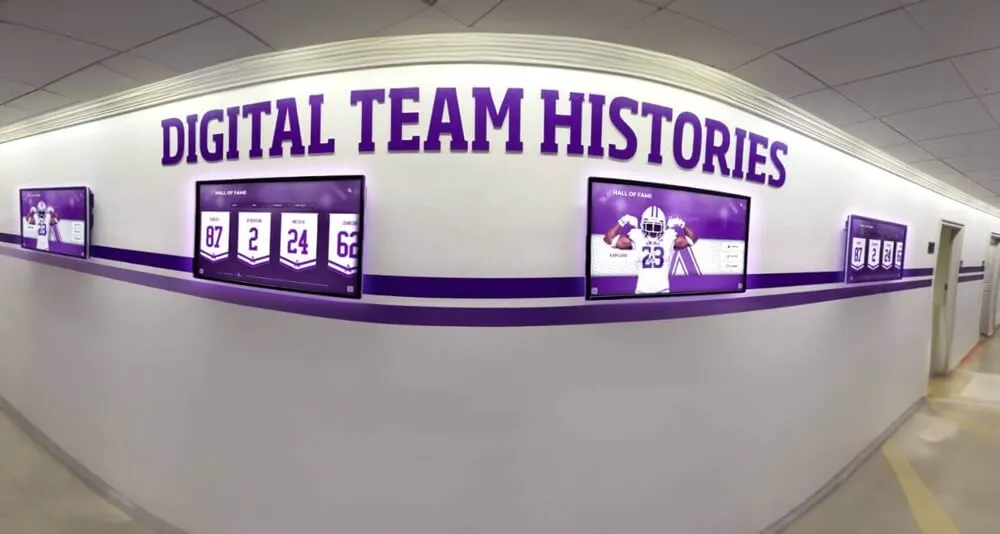
Main corridors connecting major school areas offer maximum visibility and impact. Schools implement full hallway treatments creating immersive branded environments, partial accent walls providing visual interest without overwhelming spaces, or strategic focal points at intersections, entrances, or destinations. Common hallway themes include school history timelines documenting institutional heritage, achievement galleries celebrating student and program accomplishments, motivational messaging reinforcing values and expectations, wayfinding graphics helping navigate complex facilities, and subject-specific content supporting curriculum.
These hallway installations transform transitional spaces into engaging environments students actually notice and remember rather than generic corridors they hurry through without awareness.
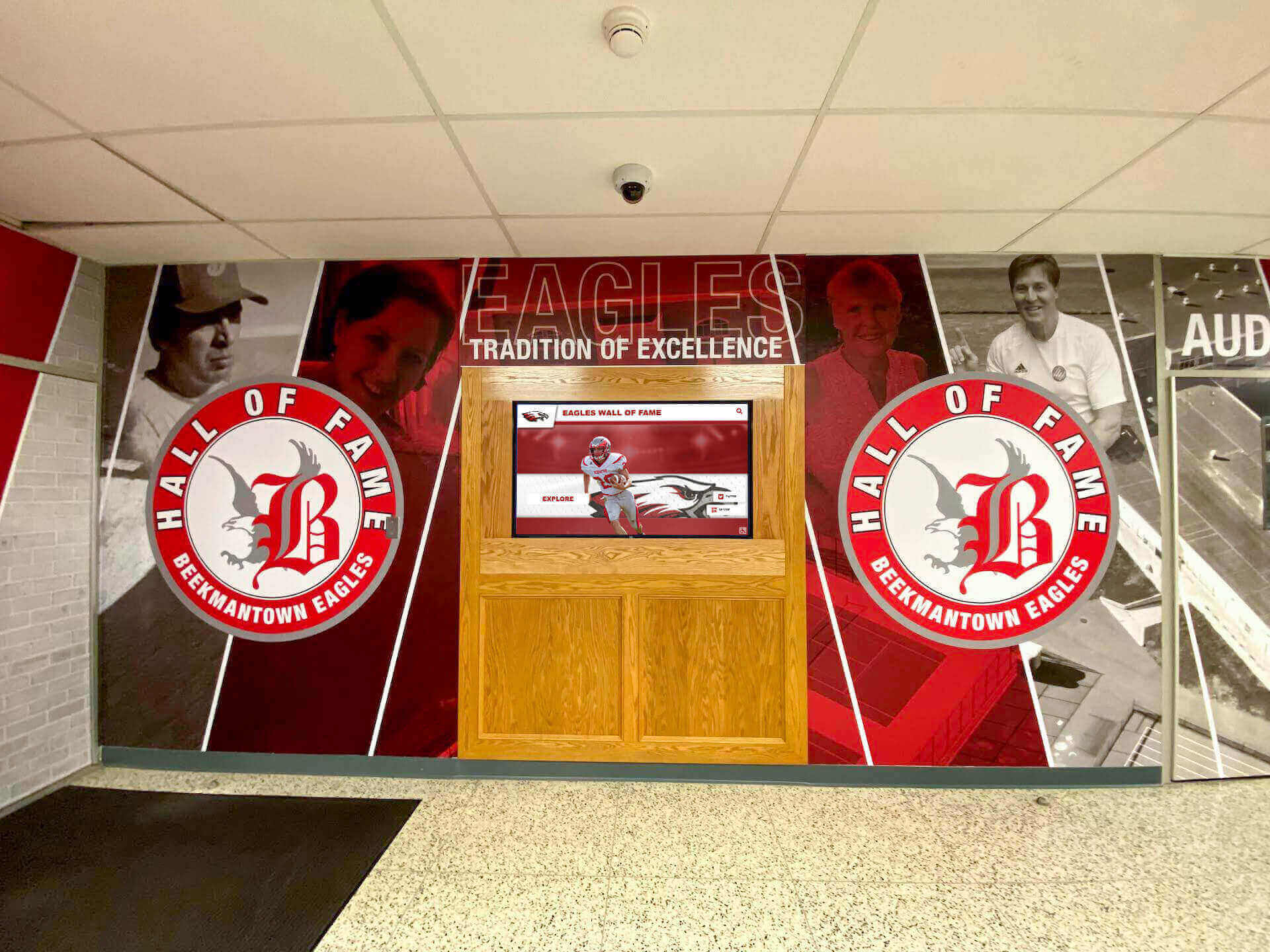
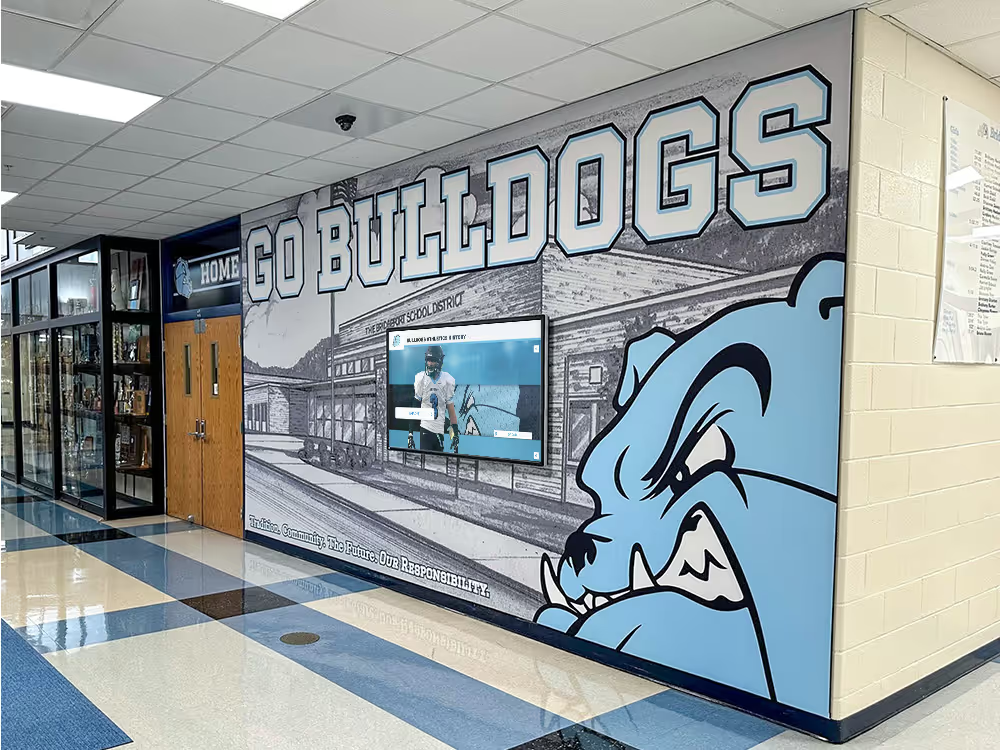
Full-wall murals create dramatic visual impact in main entrances and hallways establishing strong first impressions for students, families, and visitors
Athletic Facilities and School Spirit
Gymnasiums, locker rooms, and athletic areas benefit tremendously from wall wraps:
Gymnasium walls accommodate massive graphics creating impressive environments for games, events, and community gatherings. Installation locations include end walls behind basketball hoops featuring oversized mascots or school names, sideline walls displaying team mottos, records, or achievement timelines, entrance corridors building anticipation and home-field advantage, and concourse areas celebrating championship history and notable athletes. Locker room installations create motivational environments athletes experience daily, reinforcing excellence standards and team identity. Weight room and training facility wraps maintain visual consistency while celebrating strength, determination, and athletic development.
These athletic installations build school spirit while creating impressive environments enhancing game-day atmosphere and community pride. Explore additional athletic recognition approaches in digital athletic hall of fame guides covering traditional and modern display solutions.
Main Entrances and Administrative Areas
First impressions matter—main entrances offer critical branding opportunities:
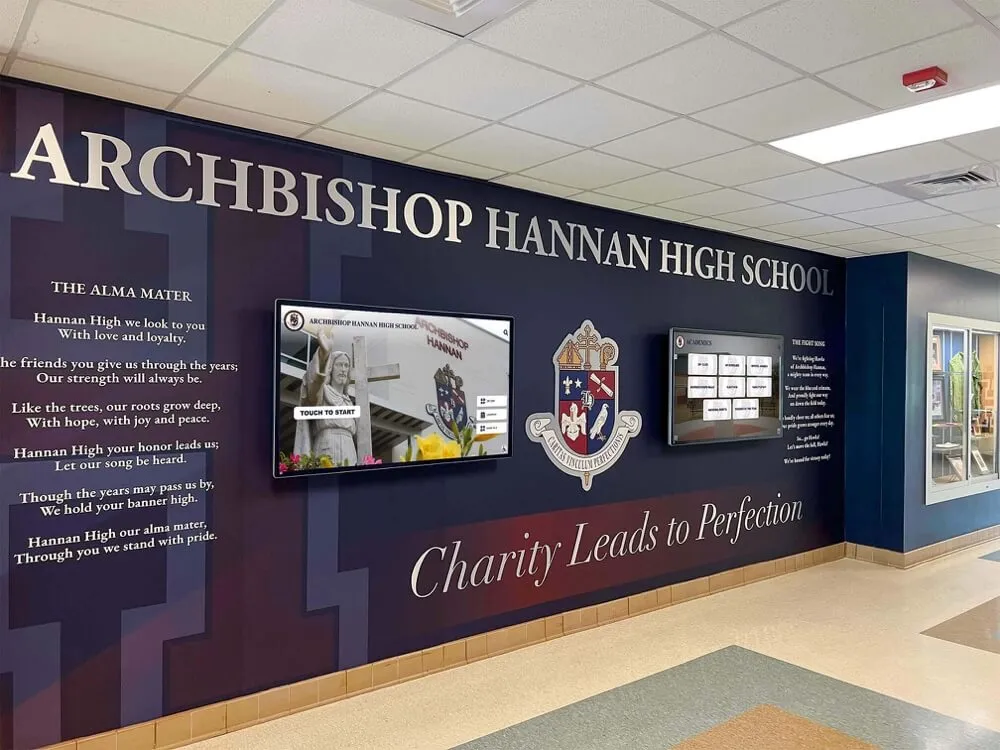
Primary entrance areas including front lobbies, reception zones, and administrative corridors create immediate impressions for visitors, prospective families, and daily arrivals. Wall wrap applications include dramatic branded installations communicating institutional identity, welcome messaging in multiple languages reflecting community diversity, achievement showcases highlighting institutional excellence, historical elements connecting to heritage and tradition, and wayfinding graphics helping visitors navigate unfamiliar facilities.
These entrance installations ensure every person entering facilities immediately understands institutional character, values, and quality rather than encountering generic institutional environments suggesting schools lack investment or pride in facilities.
Cafeterias and Common Gathering Spaces
Social gathering areas benefit from engaging visual environments:
Cafeterias serve as daily gathering spaces where students spend considerable time beyond eating—conversations, studying, socializing, and community building happen in these multipurpose environments. Wall wraps transform cafeterias through nutritional messaging promoting healthy choices, community-building graphics celebrating diversity and inclusion, inspirational content encouraging positive interactions, branded environments reinforcing identity, and visual interest reducing institutional feel of large open spaces.
Common areas, student lounges, and collaboration spaces similarly benefit from wall wraps creating defined zones, establishing purposes, and making generic spaces feel intentionally designed rather than leftover areas with no clear identity or purpose.
Library and Learning Commons Enhancements
Modern learning spaces extend beyond traditional libraries:
Contemporary learning commons combine traditional library functions with flexible collaboration space, technology hubs, maker spaces, and informal study areas. Wall wraps support these multifunctional environments through literary and educational content reinforcing learning, branded zones defining different functional areas, inspirational messaging encouraging intellectual curiosity, visual interest making spaces feel welcoming rather than institutional, and sound dampening when fabric-backed materials combine acoustic and aesthetic functions.
These installations help libraries and learning commons compete with other school spaces for student attention, creating destinations students choose rather than avoid.

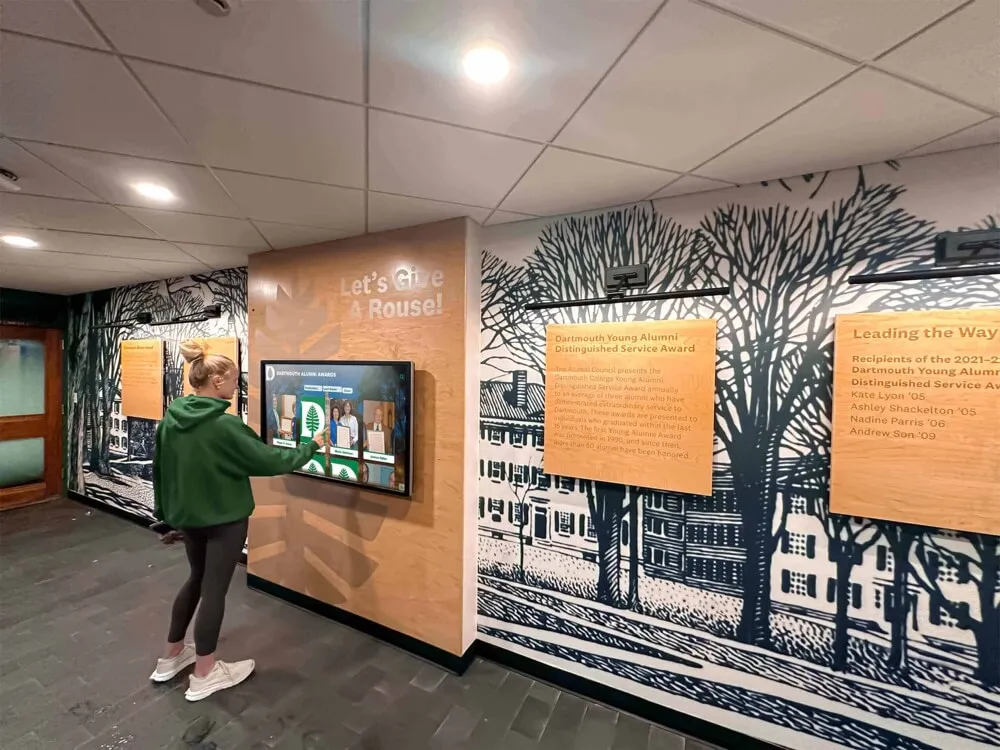
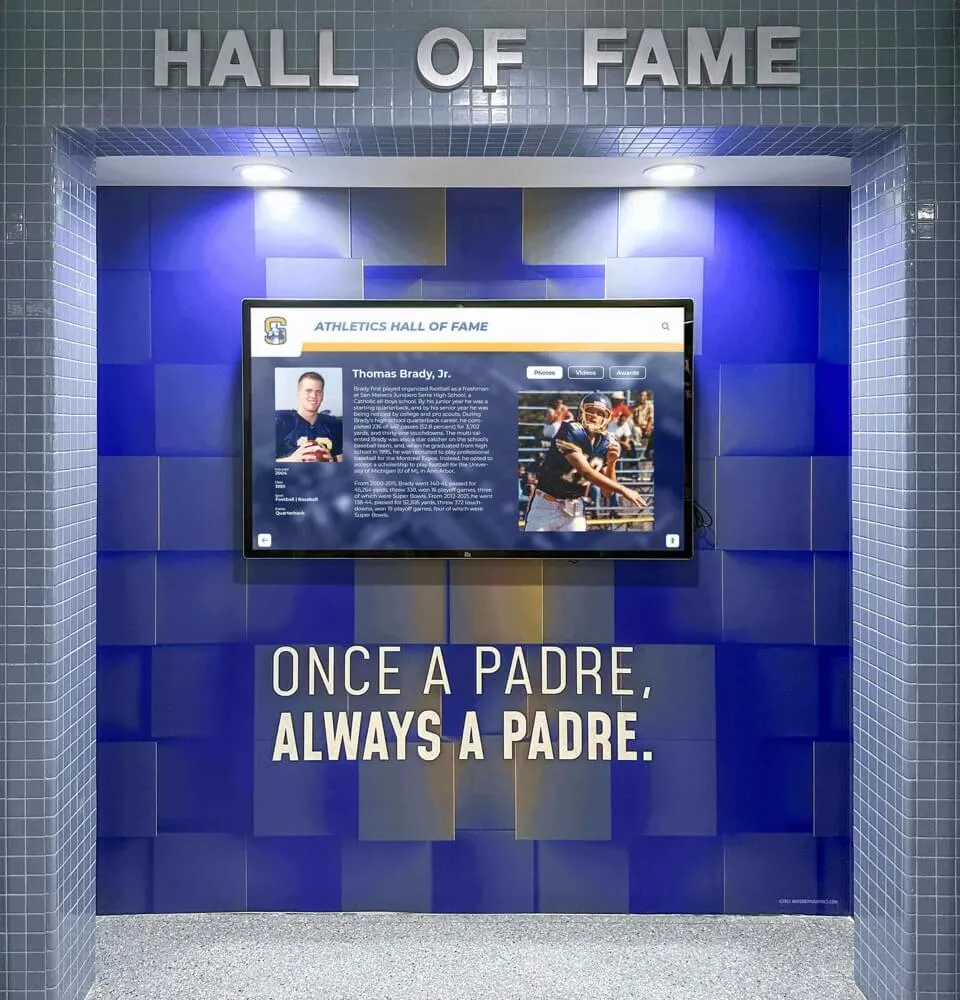
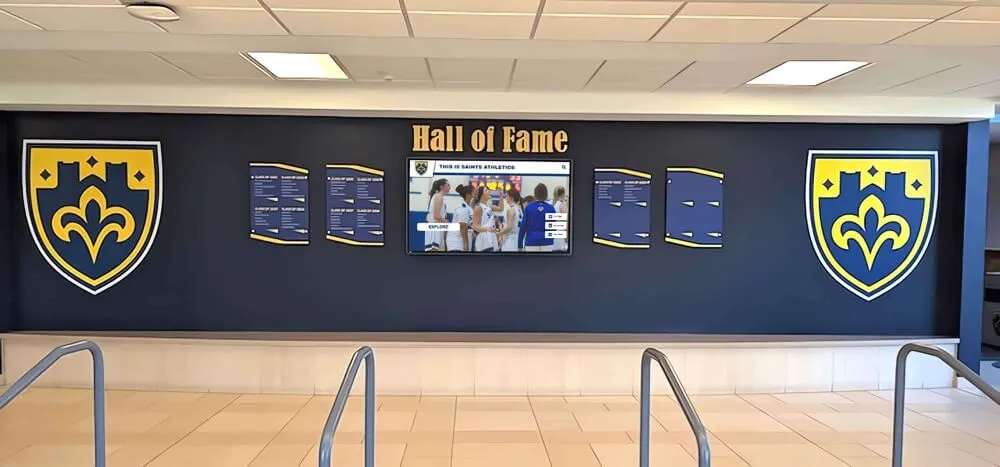
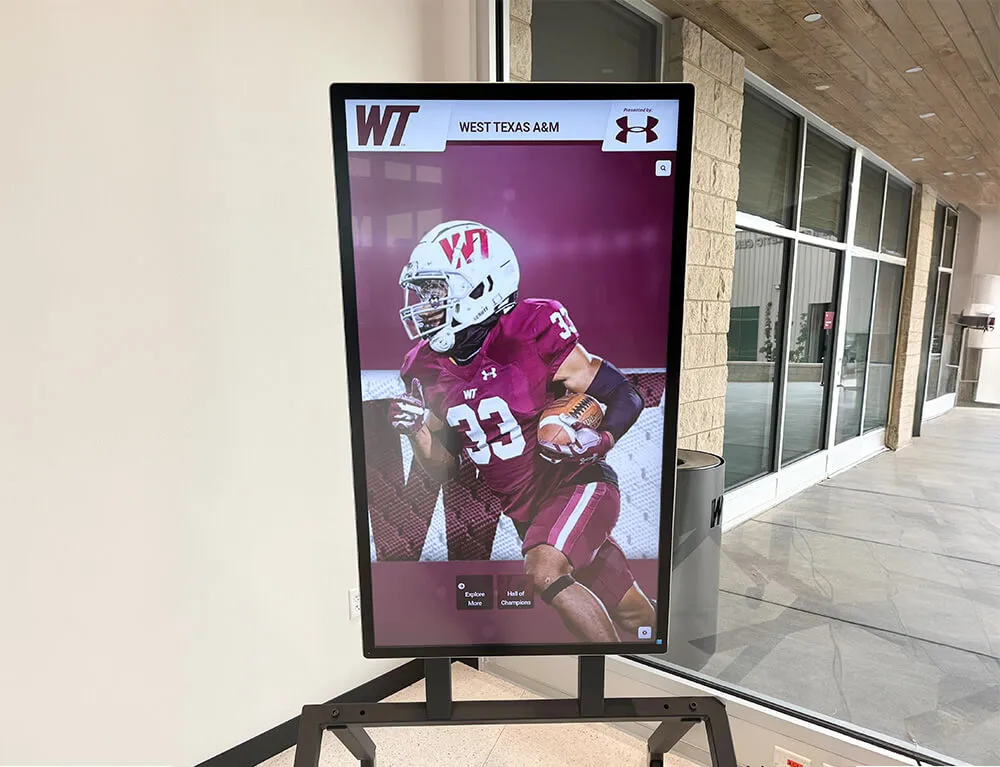
Strategic wall wraps integrate seamlessly with digital displays creating comprehensive recognition environments
Design Principles for Effective School Wall Wraps
Moving from understanding what wall wraps are to creating effective installations requires attention to design principles that distinguish impactful graphics from disappointing results.
Balancing Aesthetics with Institutional Identity
Developing Cohesive Visual Identity
Effective wall wraps strengthen rather than confuse institutional identity:
Begin with clear understanding of existing branding including official colors, typography, logos, and visual standards. Successful installations reinforce these established elements rather than introducing conflicting or competing visual directions. Design systems establish consistent approaches to layout, color palette application, typography hierarchy, imagery styles, and graphic treatments ensuring installations throughout facilities feel cohesive rather than random collection of unrelated graphics.
Schools lacking strong established identity may use wall wrap projects as opportunities to define visual directions—but this requires intentional brand development work before design execution rather than improvising during installation projects.
Avoiding Common Design Mistakes
Several pitfalls undermine wall wrap effectiveness:
Design Mistakes to Avoid
- Overcrowding compositions with excessive text, images, or elements creating visual chaos
- Using low-resolution images appearing pixelated or blurry when printed at large scale
- Selecting color combinations with insufficient contrast reducing readability
- Ignoring viewing distances and angles resulting in graphics invisible or illegible from typical positions
- Creating designs without considering architectural features like doors, outlets, or fixtures
- Implementing trendy design elements quickly appearing dated
- Neglecting accessibility considerations including color blindness, vision impairments, or multilingual needs
Professional designers help schools avoid these mistakes while maximizing visual impact within budget and technical constraints.
Scale, Proportion, and Visual Impact
Understanding Scale in Large-Format Graphics
Scale dramatically changes how design elements appear:
Images and text appearing balanced on computer screens often look dramatically different at wall scale. Typography that seems perfectly readable in mockups may be too small or excessively large when viewed from actual distances in installed environments. Color combinations appearing vibrant on screens may overwhelm when covering entire walls. Detailed graphics that look intricate in digital files may become muddy or lose definition at distance.
Professional wall wrap design requires experience understanding how elements translate from digital design to large-scale installation, considering typical viewing distances, angles, lighting conditions, and architectural context—all factors impossible to fully evaluate from computer screen mockups alone.
Creating Visual Hierarchy
Well-designed wall wraps guide viewer attention intentionally:
Visual Hierarchy Principles
- Establish clear focal points drawing initial attention to primary messages or images
- Use size, color, contrast, and position to create importance hierarchy
- Allow adequate white space preventing overwhelming busy appearance
- Consider eye-level placement for critical content ensuring visibility
- Use architectural features to frame or contain design elements
- Create clear reading order for text-heavy installations
- Balance negative and positive space maintaining visual breathing room
These hierarchy principles ensure viewers immediately grasp primary messages rather than confronting confusing compositions with unclear priorities or organization.
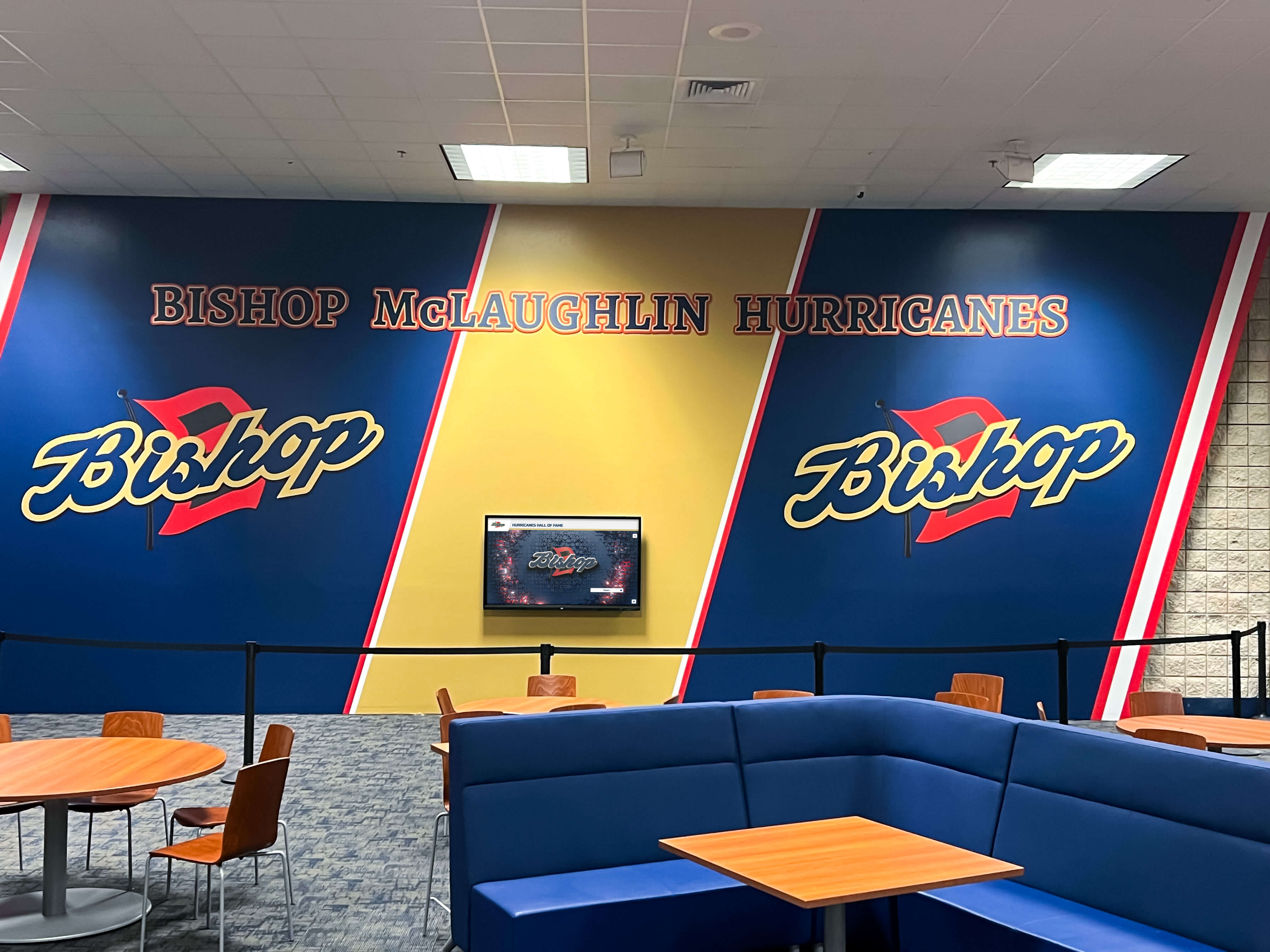
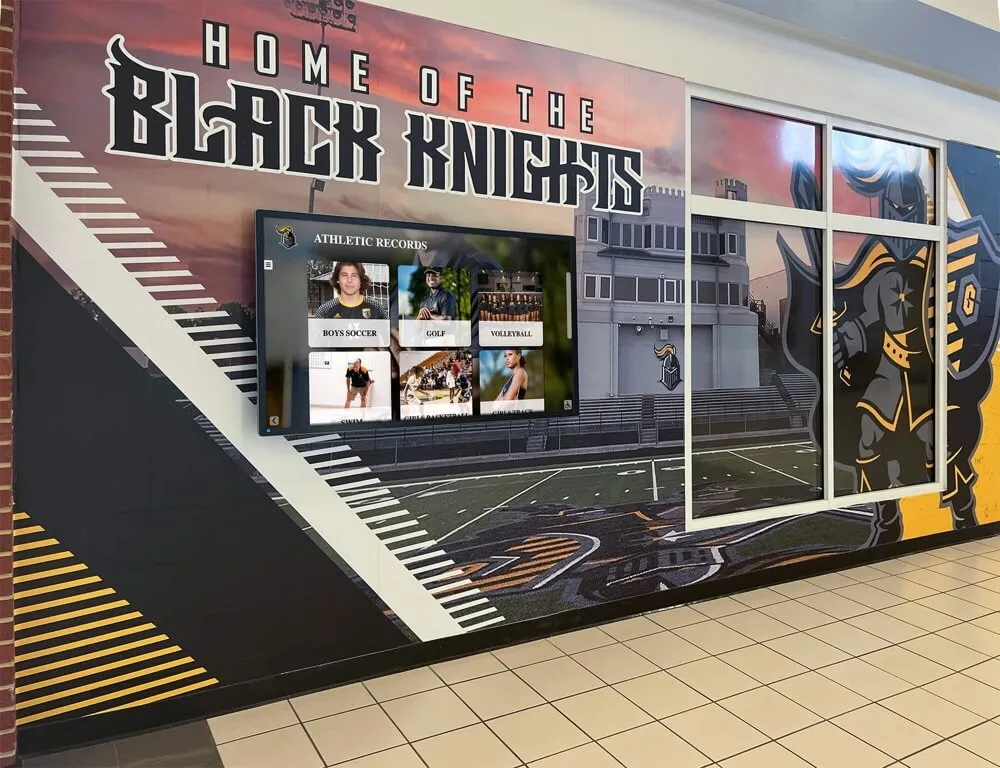
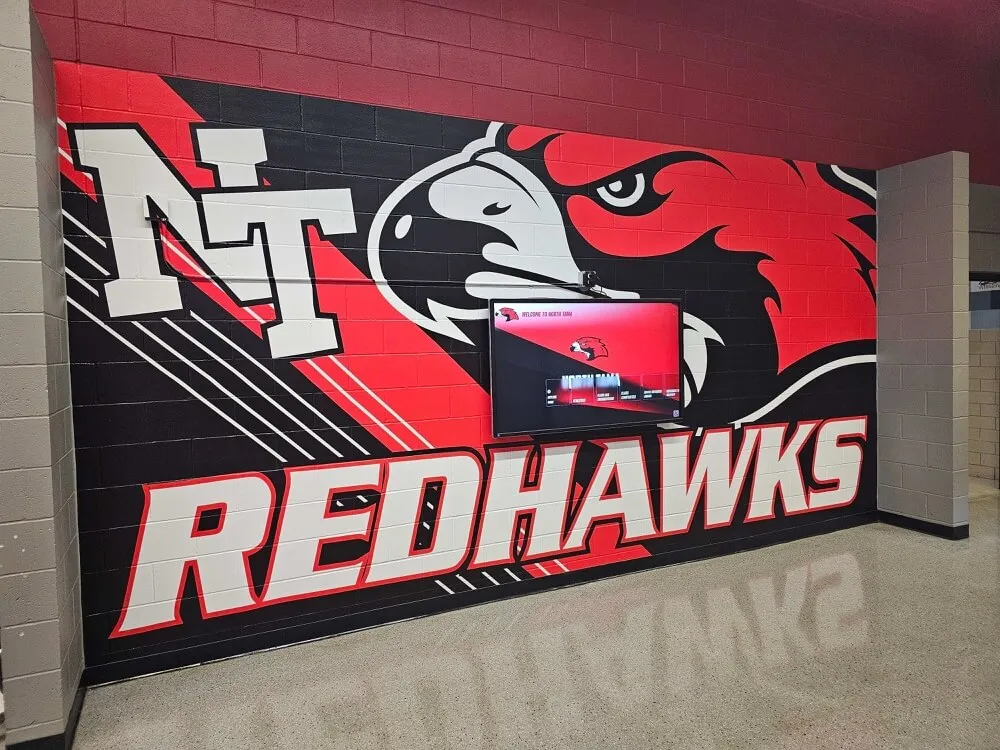
Large-format mascot graphics create dramatic focal points establishing strong identity in athletic and social gathering spaces
Incorporating School Colors, Logos, and Mascots
Effective Logo and Mascot Integration
School symbols deserve prominent placement but require thoughtful integration:
Oversized mascots and logos create powerful visual impact—but effectiveness depends on appropriate sizing, positioning, and context. Successful approaches include creating focal point installations featuring single dominant mascot at impressive scale, developing pattern systems repeating logos or mascots at smaller scale throughout designs, combining mascots with complementary elements like achievement content or motivational messaging, and using mascots to anchor compositions providing familiar recognizable elements balancing more abstract or varied content.
Less successful approaches plaster logos everywhere without design consideration, use poor-quality or inconsistent logo versions, size mascots inappropriately for space creating cartoonish or underwhelming results, or ignore mascot positioning relative to architectural features resulting in awkward cropping or placement.
Schools should provide designers with high-resolution vector logo files ensuring clean reproduction at any scale—low-resolution images from websites or documents create quality problems in large-format printing.
Color Psychology and Application
School colors carry emotional associations worth leveraging:
Beyond simply using official colors, consider psychological impacts and strategic application. Bold saturated colors create energy and excitement appropriate for athletic facilities, spirit corridors, or performance spaces. Lighter tints of school colors provide visual connection to identity while creating calmer environments for learning spaces, libraries, or administrative areas. Neutral backgrounds with color accents prevent overwhelming environments while maintaining clear identity connections. And complementary accent colors expand palettes beyond official colors while maintaining cohesive appearance.
Color also affects spatial perception—darker colors make spaces feel smaller and more intimate while lighter colors open spaces appearing larger and more expansive. Consider these effects when selecting color approaches for different environments.
Accessibility and Inclusive Design Considerations
Ensuring Universal Access
Wall wraps should engage all community members regardless of abilities:
Accessibility Considerations
- Ensure sufficient color contrast between text and backgrounds meeting WCAG standards
- Avoid color as only means of conveying information accommodating color blindness
- Size text appropriately for viewing distances ensuring readability
- Use clear sans-serif fonts rather than decorative typefaces challenging to read
- Position critical content at heights accessible to wheelchair users and various statures
- Consider reflective glare from lighting potentially obscuring content
- Provide alternative formats or descriptions for complex visual information
These considerations ensure wall wraps serve entire school communities rather than excluding populations with visual impairments, mobility limitations, or other accessibility needs.
Celebrating Diversity Through Design
Wall wraps offer opportunities celebrating community diversity:
Thoughtful installations include imagery reflecting diverse student populations in race, ethnicity, gender, ability, and background. Multilingual content acknowledges and honors language diversity in school communities. Cultural elements recognize traditions and heritage of various groups. And inclusive messaging explicitly welcomes all community members regardless of identity or background.
Schools report that students pay more attention to and feel more connected with installations where they see themselves represented, making inclusive design both ethical imperative and practical strategy for maximizing engagement and impact.
Planning and Budgeting Your Wall Wrap Project
Understanding design principles provides foundation, but successful projects require practical planning addressing logistics, timelines, and financial considerations.
Conducting Needs Assessment and Goal Setting
Identifying Priority Spaces
Most schools cannot wrap all walls simultaneously—prioritization focuses limited resources:
Begin by auditing all potential installation locations considering traffic patterns, visibility, current conditions, and strategic importance. High-traffic areas including main entrances, primary hallways, cafeterias, and gymnasiums typically warrant priority given maximum exposure ensuring investments reach largest audiences. Problematic spaces with damaged walls, poor conditions, or negative perceptions offer opportunities where visual transformation creates disproportionate positive impact. And strategic locations supporting specific initiatives like new athletic recognition programs or school rebranding efforts merit prioritization regardless of traffic levels.
This assessment creates priority ranking guiding phased implementation when budget constraints prevent comprehensive facility-wide installation.
Defining Success Criteria
Clear objectives enable evaluation of whether installations achieve goals:
Common Wall Wrap Objectives
- Strengthen school identity and branding recognition
- Build school pride and community connections
- Enhance facility appearance and perceptions
- Recognize student and program achievements
- Support wayfinding and navigation
- Create environments supporting learning and positive behavior
- Generate excitement around school initiatives or campaigns
- Impress prospective families during admissions tours
Defining which objectives matter most helps guide design decisions and provides frameworks for post-installation assessment determining whether projects succeeded.
Explore comprehensive recognition planning in school culture building strategies covering visual environment design alongside other cultural development approaches.
Understanding Cost Factors and Budget Development
Wall Wrap Pricing Components
Several factors influence total project costs:
Primary Cost Factors
- Design and artwork development: $500-$5,000+ depending on complexity and whether using professional designers
- Printing and materials: $8-$25 per square foot depending on vinyl quality, printing complexity, and volume
- Installation labor: $3-$8 per square foot based on surface complexity, accessibility, and regional labor rates
- Surface preparation: $2-$5 per square foot for repairs, cleaning, or preparation beyond basic wiping
- Project management: 10-15% for coordination, supervision, and quality control
- Shipping and handling: Variable based on quantity and location
A typical 10-foot by 20-foot hallway installation (200 square feet) might range from $2,500-$6,000 total depending on design complexity, material selection, and installation factors—or $12-$30 per square foot all-inclusive.
Budget Range Examples
To provide planning guidance, consider these typical project budgets:
Small accent project (50-100 square feet): $1,000-$2,500 covering entrance feature wall, small branded installation, or recognition display.
Medium hallway project (200-400 square feet): $3,000-$10,000 covering main corridor installation, partial gym wall, or multipurpose space transformation.
Large comprehensive project (1,000+ square feet): $15,000-$50,000+ covering full gym treatment, multiple hallway corridors, or facility-wide coordinated installation program.
These ranges help schools develop realistic budgets and scope projects appropriately for available resources.

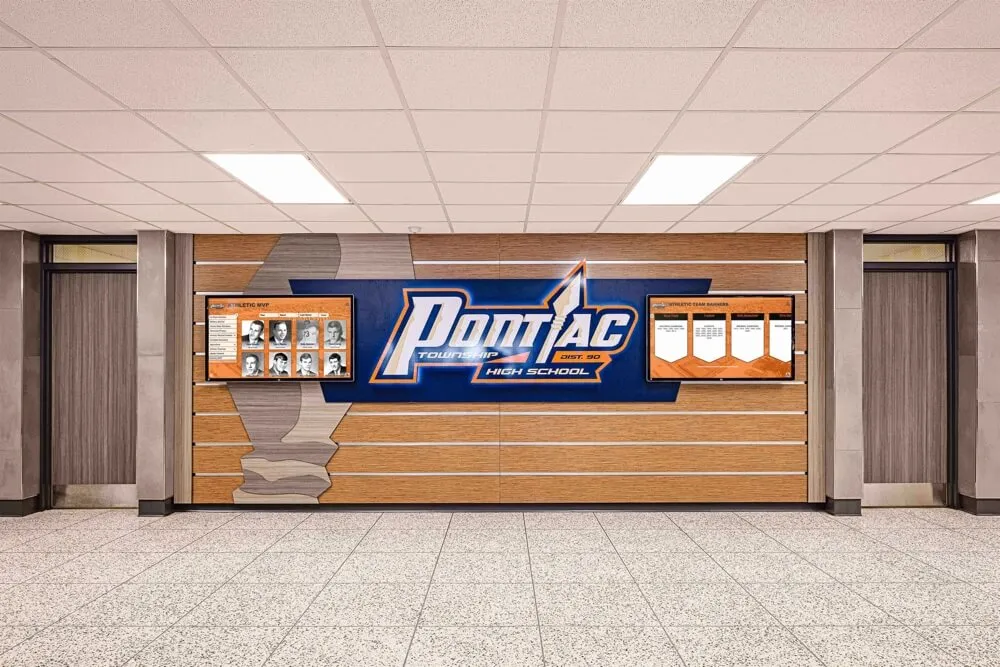
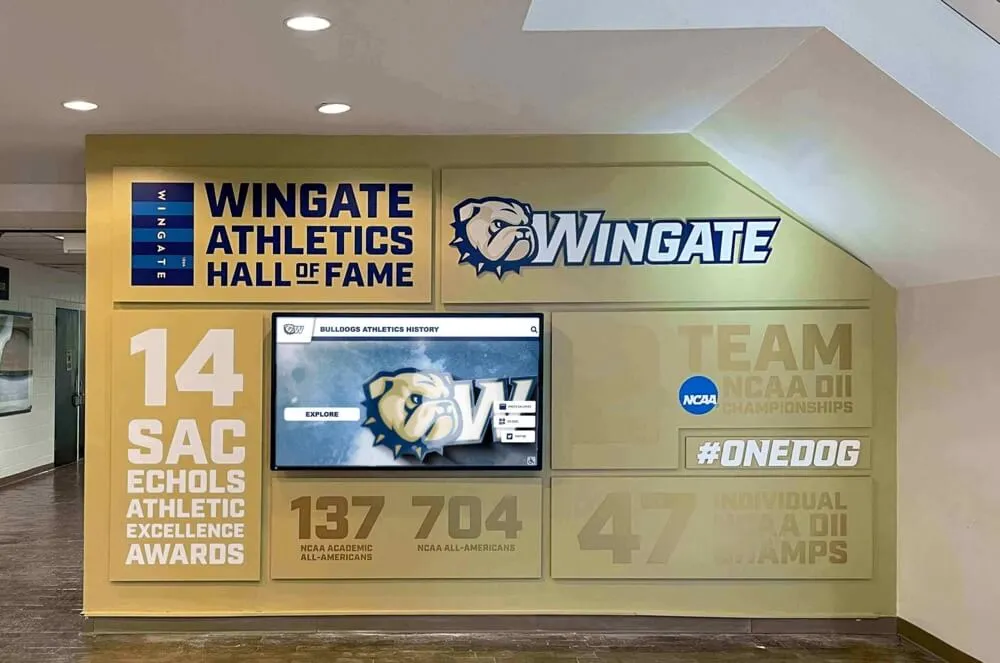
Comprehensive hallway installations combining large-format graphics with integrated technology create sophisticated recognition environments
Financing Options and Funding Sources
Traditional Budget Allocation
Some schools fund wall wraps through regular operational or capital budgets:
Facility improvement budgets often include allowances for upgrades, renovations, and aesthetic enhancements potentially covering wall wrap projects. Capital campaigns for major renovations may incorporate wall wraps as components of comprehensive facility modernization initiatives. And annual operating budgets might allocate funds for incremental improvements enabling smaller projects or phased implementation over multiple years.
Schools with predictable funding streams may plan multi-year wall wrap programs systematically improving facilities over time rather than pursuing single large projects.
Alternative Funding Approaches
Creative funding strategies make projects possible without direct budget allocation:
Sponsorship and donor programs enable businesses or individuals to sponsor specific installations receiving recognition for contributions. Common approaches include named recognition for major donors, corporate logo placement in appropriate contexts, memorial installations honoring deceased community members, or class gift programs where graduating classes fund wall wraps as legacy contributions.
Booster club and parent organization fundraising dedicates proceeds specifically to wall wrap projects. Athletic boosters might fund gymnasium installations while band boosters sponsor performing arts area wraps. Broader parent organizations can coordinate fundraising campaigns specifically for facility aesthetic improvements.
Grant programs from educational foundations, corporate giving programs, or community organizations sometimes fund facility enhancement projects improving school environments. Applications emphasizing educational benefits, equity considerations, or community impact strengthen competitive proposals.
These alternative approaches make projects possible for schools unable to fund installations through traditional budgets. Learn about fundraising strategies in booster club fundraising ideas applicable to wall wrap projects.
Vendor Selection and Procurement Process
Evaluating Wall Wrap Providers
Not all providers offer equivalent quality, service, or value:
Vendor Evaluation Criteria
- Portfolio demonstrating relevant school experience and quality standards
- References from previous school clients available for contact
- In-house design capabilities versus requiring schools provide camera-ready artwork
- Installation expertise and crews versus subcontracting to third parties
- Material quality and warranty terms protecting investments
- Project management approach and communication practices
- Pricing transparency and willingness to provide detailed estimates
- Timeline commitments and track record meeting deadlines
Request proposals from multiple vendors enabling comparison of approaches, quality, and pricing. Cheapest option rarely provides best value—evaluate total package considering quality, service, and long-term durability.
Understanding Contracts and Warranties
Protect your investment through clear contractual terms:
Quality providers offer warranties covering material defects, installation quality, and premature failure typically ranging from 1-5 years depending on materials and conditions. Contracts should clearly specify design approval processes, installation timelines, surface preparation responsibilities, payment terms and schedules, warranty coverage and exclusions, and procedures for addressing problems or defects.
Review contracts carefully before signing and seek clarification on ambiguous terms—unclear agreements create frustration and disputes when expectations don’t align with deliverables.
Installation Process and Timeline Considerations
Understanding what installation involves helps schools plan appropriately and avoid surprises disrupting operations.
Pre-Installation Preparation
Surface Evaluation and Preparation Requirements
Proper surface preparation determines installation success:
Walls must be clean, dry, smooth, and structurally sound for proper adhesion. Common preparation activities include washing walls removing dust, oils, grease, or other contaminants; repairing cracks, holes, or damaged areas that could telegraph through vinyl; sanding rough textures creating smoother surfaces; priming porous surfaces improving adhesion; and removing existing wallpaper, loose paint, or other materials compromising adhesion.
Schools should understand whether vendors include preparation in proposals or quote installation costs separately from preparation work—this distinction significantly affects total project costs and timeline.
Timing and Scheduling Considerations
Strategic timing minimizes disruption while optimizing conditions:
Optimal Installation Windows
- Summer breaks: Provide extended uninterrupted work periods without student disruption
- Winter breaks: Offer shorter but viable installation windows for smaller projects
- Weekends: Enable small projects in occupied buildings with minimal disruption
- After-hours installation: Allows work in occupied facilities without daytime interruption
- Phased implementation: Permits section-by-section installation during school year
Installation during occupied periods requires careful coordination with janitorial schedules, event calendars, and building access. Climate-controlled environments help ensure proper adhesion—extreme temperatures or humidity can compromise installation quality.
Installation Process Overview
Typical Installation Workflow
Professional installation follows systematic processes:
Installers begin with final measurement verification ensuring printed graphics match actual wall dimensions—small discrepancies matter at large scale. Surface preparation immediately precedes installation ensuring contaminant-free adhesion surfaces. Panel layout and dry-fitting verify positioning, alignment, and seam placement before permanent application. Application proceeds panel by panel using specialized tools eliminating air bubbles while ensuring complete adhesion. Seam integration receives special attention creating invisible or minimal transitions. Edge sealing and trimming provides clean finished appearance around architectural features. Final inspection identifies any issues requiring correction. And post-installation cleanup leaves spaces ready for immediate use.
This process typically requires 1-3 days for mid-sized projects depending on square footage, complexity, and site-specific challenges.
Managing Installation Around Facility Operations
Coordination prevents disruption and safety concerns:
Effective project management includes clear communication with custodial staff, advance notice to building occupants, temporary barriers or signage protecting work areas, odor management if adhesives emit noticeable smells, trash and debris removal maintaining cleanliness, and flexible scheduling accommodating unexpected facility needs or emergency situations.
Schools should designate single point-of-contact coordinating between vendors and facility operations preventing miscommunication or conflicting directions.
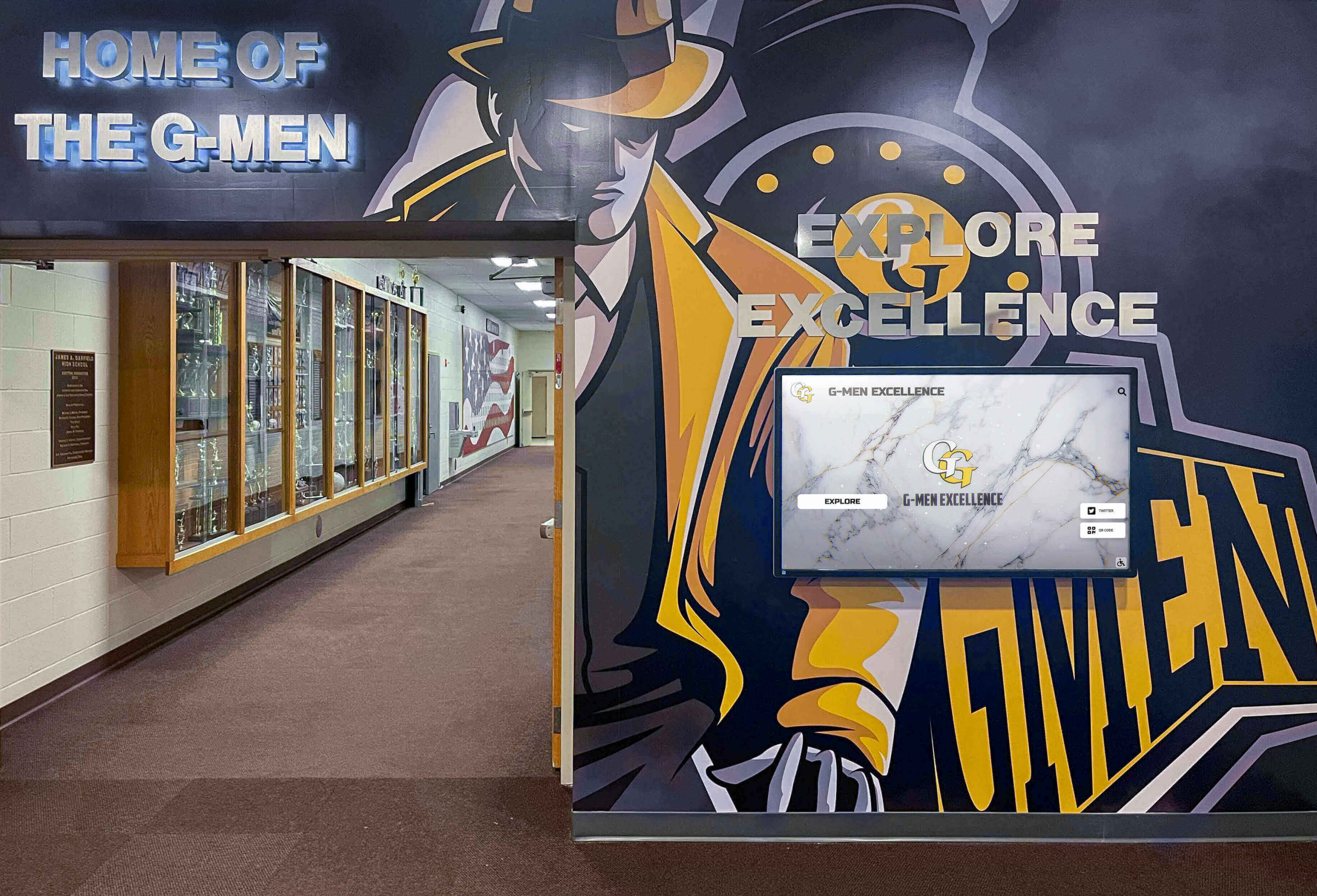
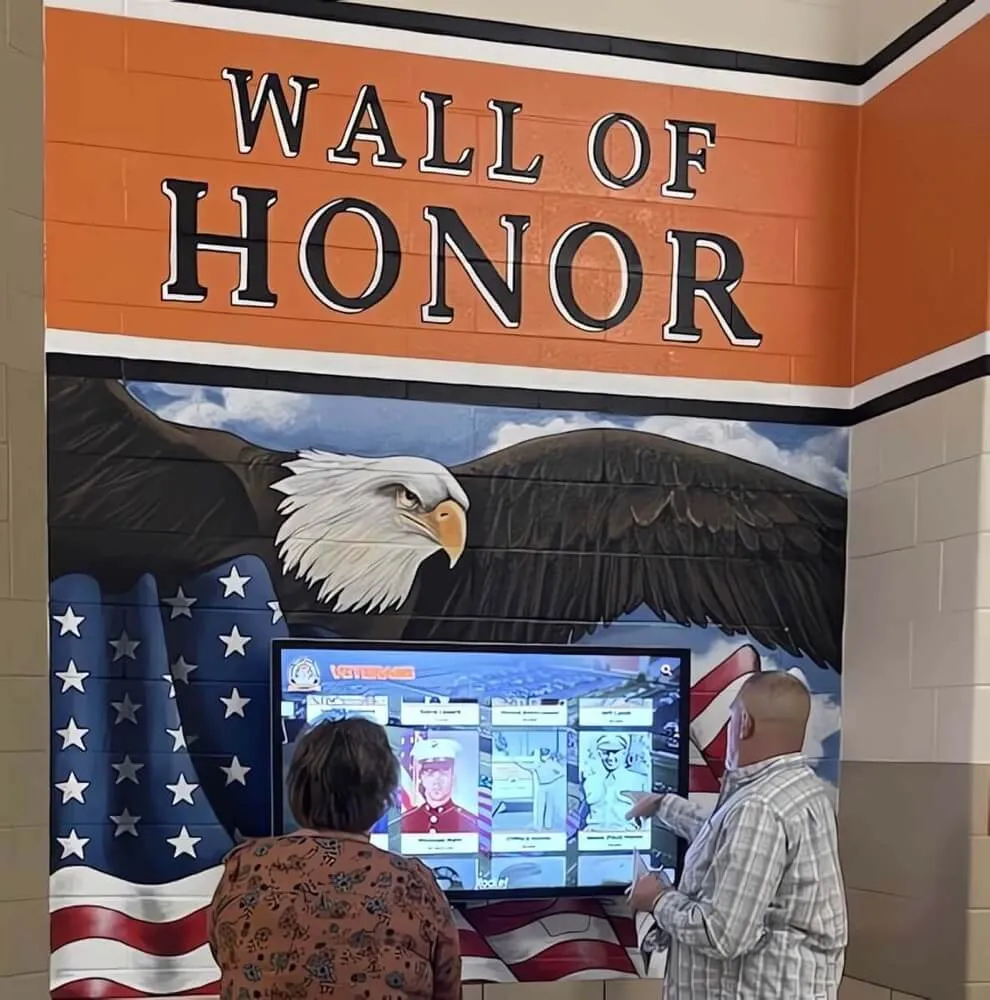
Coordinated installations integrating wall wraps with display technology and traditional trophy cases create comprehensive recognition environments
Quality Control and Acceptance
Installation Inspection Criteria
Verify quality before accepting completed work:
Quality Inspection Points
- Graphics appear properly aligned without skewing or distortion
- Colors match approved proofs and expectations
- Seams are invisible or minimally visible without gaps or overlaps
- Edges adhere completely without lifting or peeling
- No air bubbles, wrinkles, or surface imperfections
- Proper trimming around outlets, switches, and architectural features
- Complete coverage with no gaps or exposed wall areas
- Overall appearance matches design intent and approved mockups
Document any concerns immediately with photographs and written descriptions enabling prompt correction while crews remain on-site. Quality providers stand behind work and address legitimate issues professionally.
Documentation and Maintenance Instructions
Obtain important information for long-term success:
Request warranty documentation including coverage terms and claims procedures, maintenance guidance specifying appropriate cleaning methods and frequency, material specifications identifying vinyl type and manufacturer, installation date records enabling warranty tracking, and installer contact information for future questions or concerns.
This documentation proves valuable if issues arise and provides guidance for proper maintenance extending installation lifespan.
Maintenance, Care, and Longevity
Wall wraps require minimal maintenance compared to many alternatives—but proper care maximizes lifespan and appearance.
Cleaning and Routine Maintenance
Appropriate Cleaning Methods
Proper cleaning maintains appearance without damaging graphics:
Recommended Cleaning Practices
- Use soft cloths or sponges avoiding abrasive scrubbers damaging surfaces
- Apply mild soap and water solutions rather than harsh chemicals potentially degrading vinyl
- Test cleaning products in inconspicuous areas before full application
- Wipe gently without excessive scrubbing pressure
- Address spills and marks promptly preventing permanent staining
- Avoid pressure washers or steam cleaners which may lift edges or damage lamination
- Clean from top to bottom preventing dirty water from running over cleaned areas
Regular light cleaning maintains appearance better than infrequent intensive cleaning addressing accumulated grime—incorporate wall wrap maintenance into routine custodial schedules rather than treating as special projects.
Addressing Common Issues
Minor problems sometimes arise during wall wrap lifespan:
Edge lifting in high-traffic areas occasionally occurs—professional installers can re-adhere lifted edges before problems worsen. Small tears or punctures from impacts may require patch repairs using matching material. Fading from UV exposure affects graphics in areas with direct sunlight—UV-protective laminates minimize this issue. Discoloration from cleaning chemicals suggests inappropriate products—switch to recommended cleaners. And adhesive residue around edges indicates cleaning products degrading adhesive—cease using problematic cleaners.
Address issues promptly preventing minor problems from escalating into larger failures requiring complete panel replacement.
Expected Lifespan and Replacement Planning
Durability Factors
Several variables influence how long wall wraps remain attractive:
Lifespan Influencing Factors
- Material quality with premium cast vinyl lasting longer than economy calendered materials
- Installation quality with proper technique preventing premature failures
- Environmental conditions including humidity, temperature fluctuations, and UV exposure
- Traffic levels and physical contact with high-touch areas degrading faster
- Cleaning methods with appropriate care extending lifespan
- Maintenance frequency with regular attention preventing cumulative damage
Typical indoor school wall wraps last 5-10 years depending on these factors. High-traffic corridors may require replacement sooner than low-traffic administrative areas. Athletic facilities with moisture and physical contact face more demanding conditions than climate-controlled academic wings.
Planning for Eventual Replacement
Even quality installations eventually require replacement or updating:
Factor replacement costs into long-term facility planning rather than treating as unexpected emergency expenses. Consider phased replacement programs systematically refreshing installations as they age rather than waiting for comprehensive facility-wide failure. Use replacement opportunities to update designs reflecting evolved identity, new achievements, or changed institutional priorities. And maintain relationships with original vendors simplifying replacement coordination and potentially qualifying for returning customer considerations.
Some schools implement “permanent framework” strategies where structural design elements remain while featured content rotates—this approach extends framework lifespan while enabling regular content refreshing maintaining relevance and excitement.
Removal and Wall Restoration
When Removal Becomes Necessary
Several situations require removing existing wall wraps:
Redesign initiatives updating facility aesthetics or institutional identity necessitate removal of outdated installations. Facility renovations including painting, repairs, or construction require temporary or permanent removal. Tenant changes in leased facilities require restoration to original conditions. And end-of-lifespan degradation makes replacement preferable to continued maintenance.
Plan removal carefully minimizing wall damage and restoration costs.
Removal Process and Expectations
Professional removal minimizes wall damage:
Proper removal techniques involve heating vinyl softening adhesive for easier separation, slow careful peeling minimizing tearing or adhesive residue, adhesive removal products addressing remaining residue, wall washing eliminating all contaminants, surface inspection identifying damage requiring repair, and restoration work including patching, sanding, priming, and repainting returning walls to pre-installation condition.
Permanent adhesives typically leave more residue and create higher wall damage risk than removable adhesives—consider this when initially selecting materials if eventual removal seems likely. Removal and restoration costs typically range from $2-$5 per square foot depending on adhesive type, age, and wall condition.
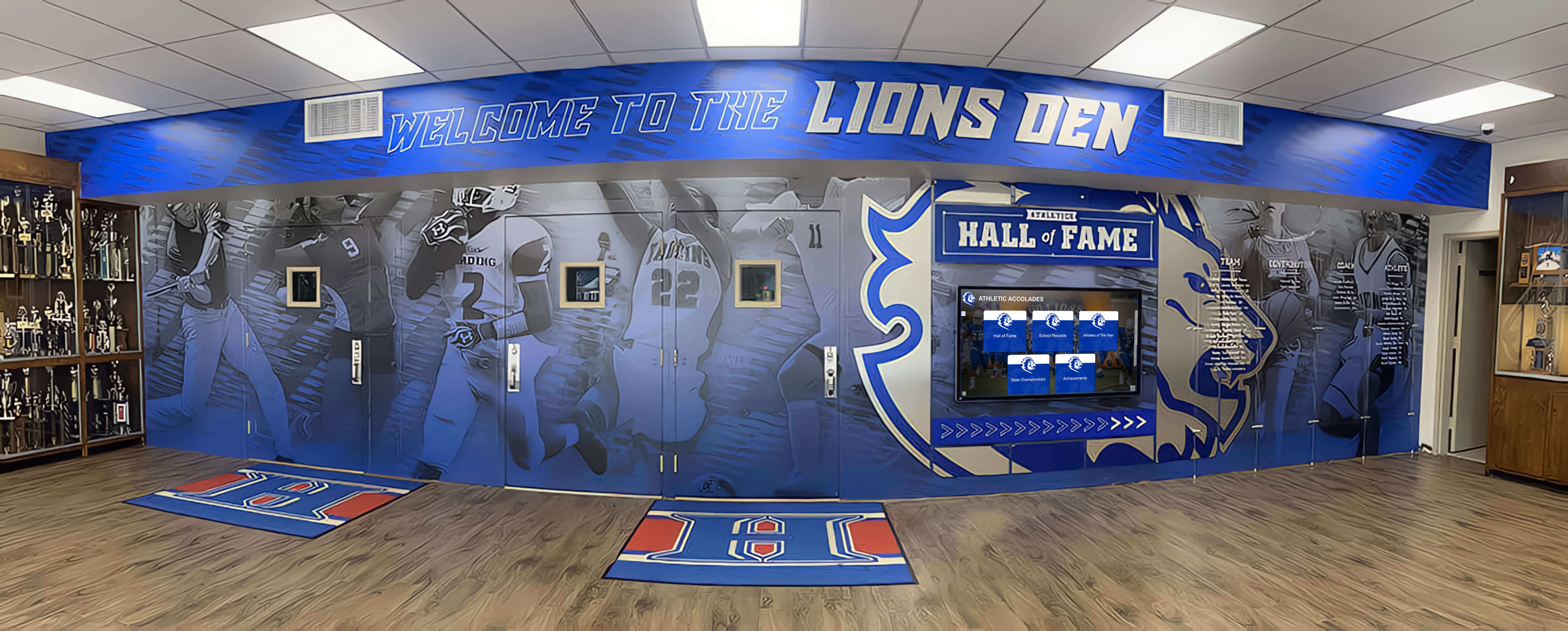
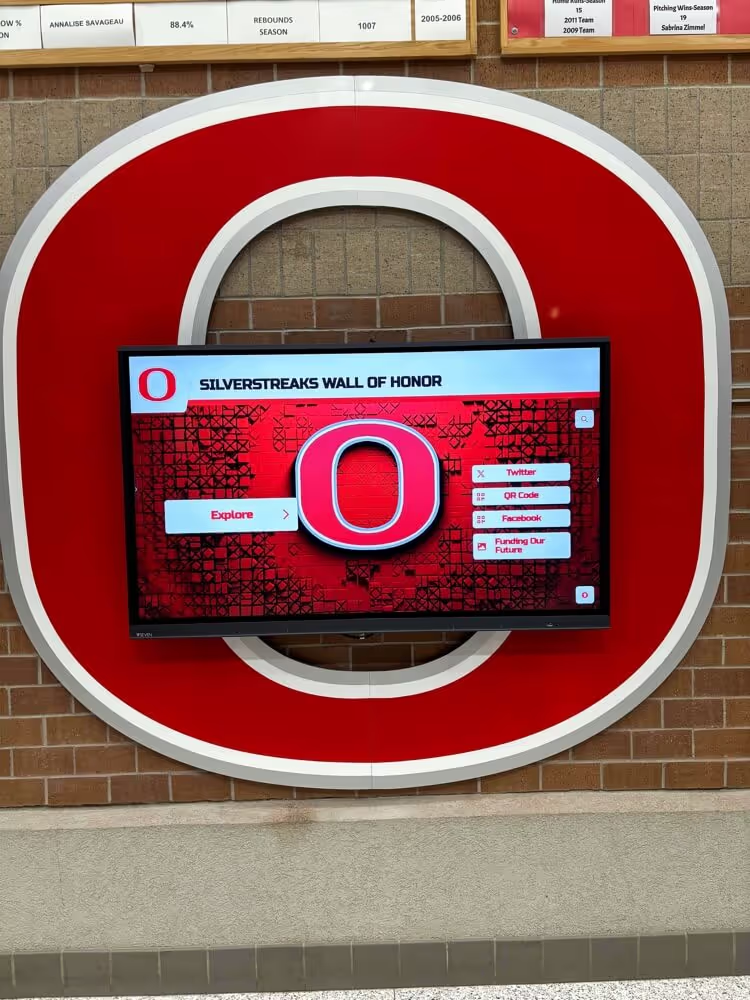
Thoughtful integration of wall wraps with traditional recognition elements creates layered environments celebrating achievement across multiple formats
Integrating Wall Wraps with Digital Recognition Technology
Modern schools increasingly combine traditional wall wraps with digital display technology creating dynamic recognition environments impossible through either approach alone.
Complementary Approaches to School Recognition
Combining Static and Dynamic Content
Wall wraps and digital displays serve different but complementary functions:
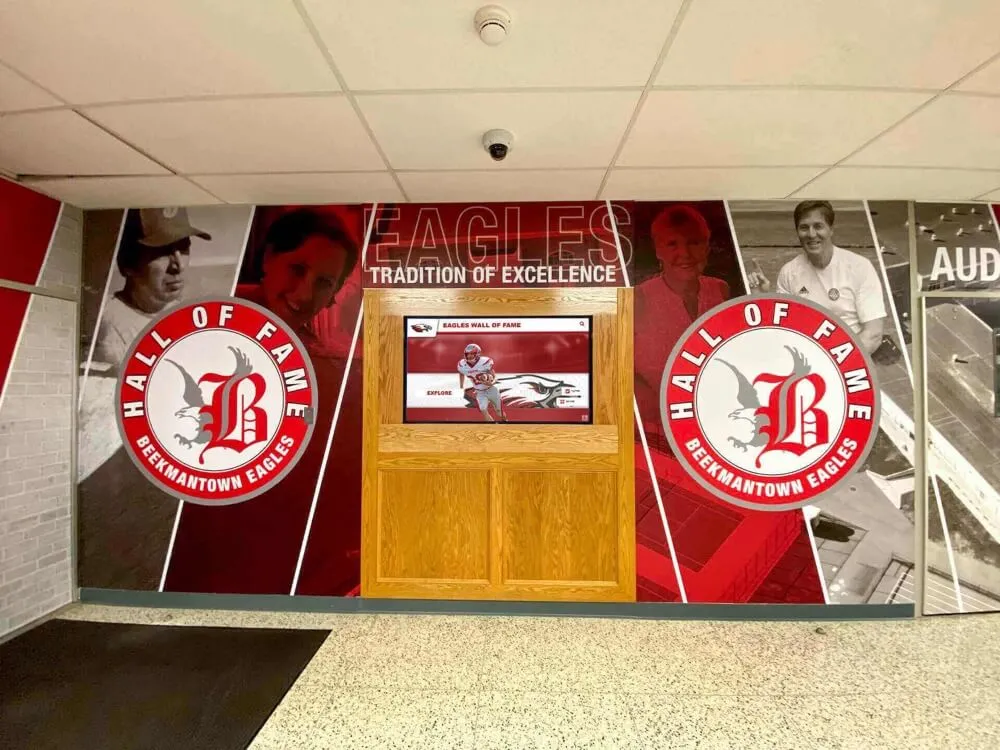
Wall wraps provide permanent branded environments establishing strong identity and visual interest throughout facilities. These static installations create consistent institutional presence while showcasing heritage, traditions, and enduring values. Digital displays enable dynamic content including current achievements, real-time updates, interactive exploration, multimedia storytelling, and regularly refreshed information maintaining perpetual relevance.
Strategic integration positions wall wraps as framework establishing identity and context while digital displays deliver timely content within these branded environments—each approach strengthening the other rather than competing for attention or resources.
Design Integration Strategies
Effective integration requires intentional design coordination:
Integration Approaches
- Design wall wraps with digital screen locations planned from inception rather than adding screens as afterthoughts
- Create visual continuity between static graphics and digital content through consistent color palettes, typography, and design language
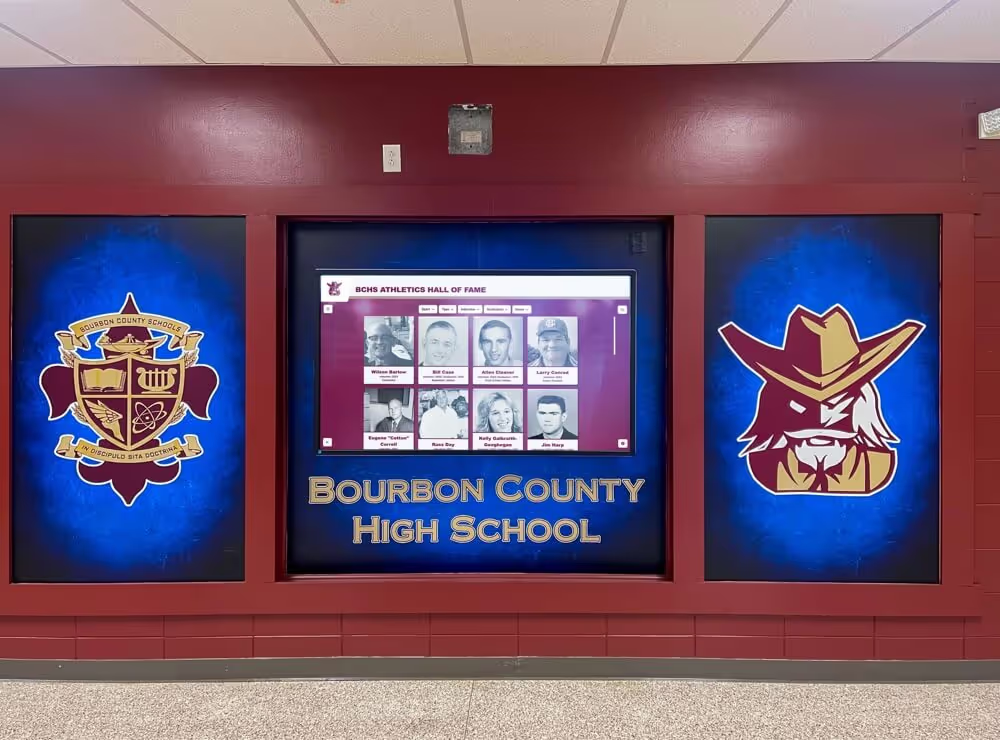
- Use wall wraps to frame or accent digital displays calling attention to screens within larger compositions
- Coordinate content themes ensuring digital and static elements reinforce rather than contradict each other
- Establish clear visual hierarchy preventing either element from overwhelming the other
- Consider viewing angles and distances for both elements optimizing visibility and impact
Schools implementing integrated approaches report higher engagement and impact than either wall wraps or digital displays implemented independently—comprehensive environments create greater impression than isolated elements.
Rocket Alumni Solutions: Comprehensive Recognition Platforms
Digital Display Technology for Schools
While wall wraps establish visual foundations, digital recognition platforms extend capabilities:
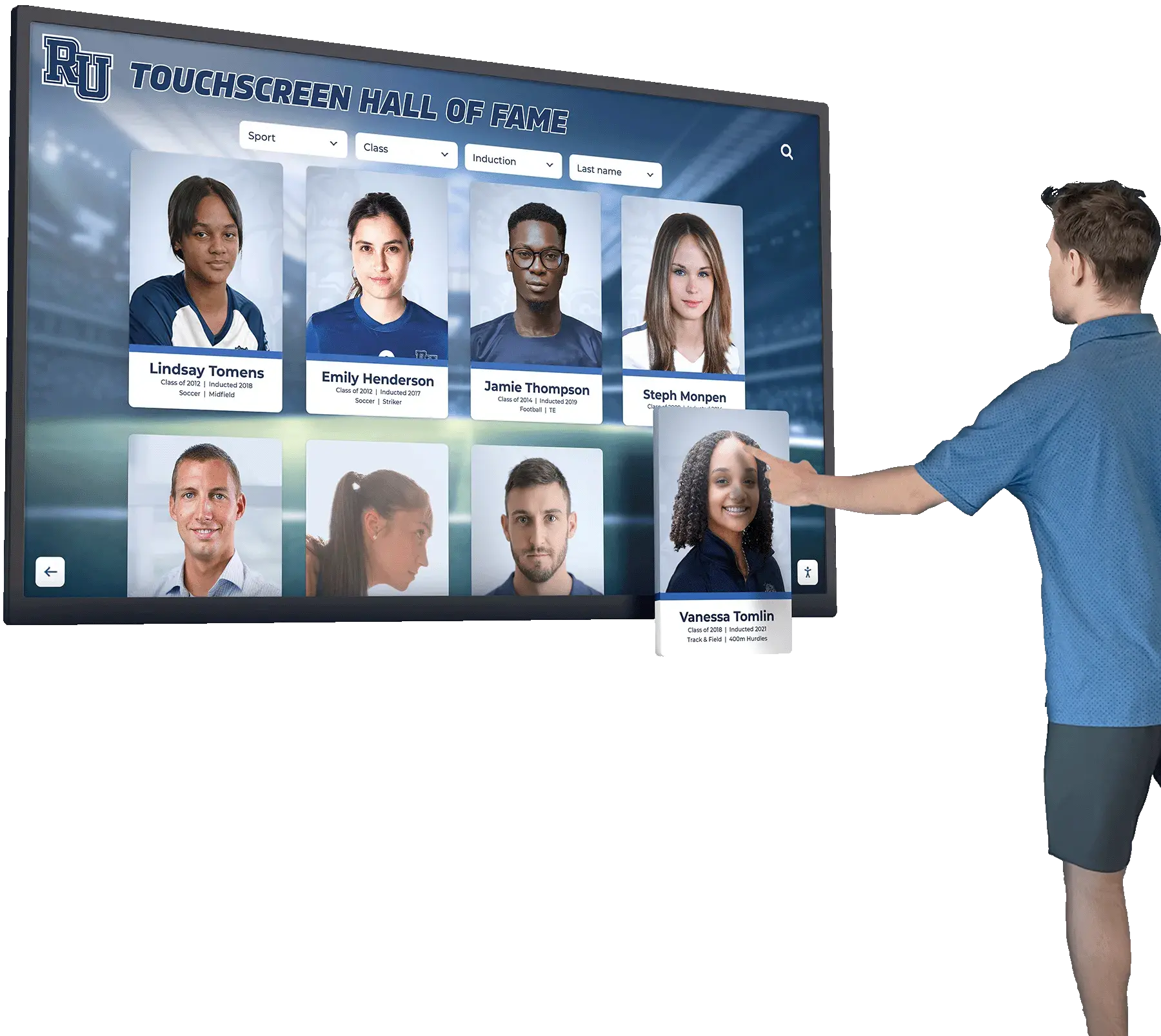
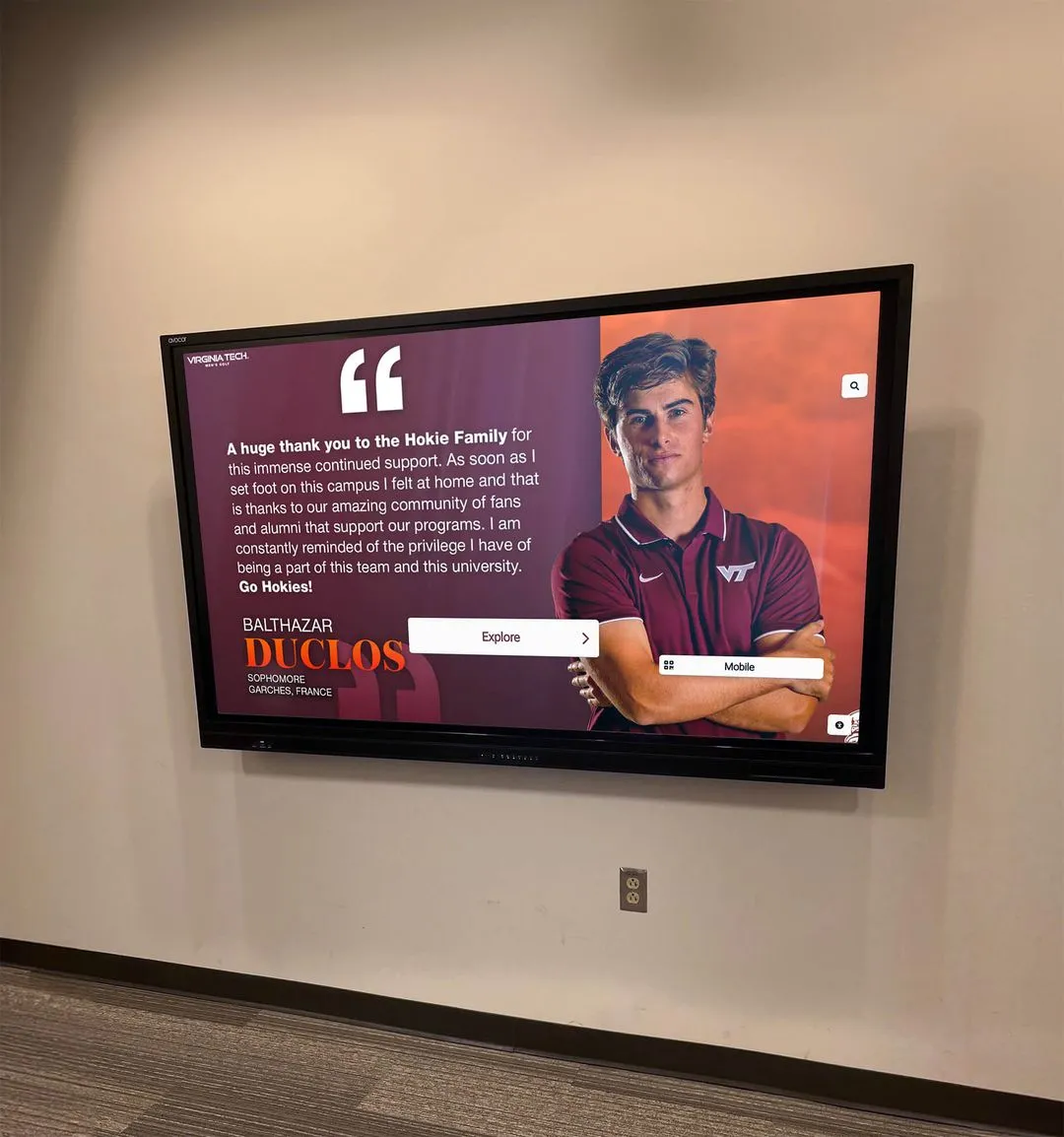
Solutions like Rocket Alumni Solutions provide specialized touchscreen systems designed specifically for educational recognition contexts. These platforms offer unlimited recognition capacity showcasing hundreds or thousands of individuals without physical space constraints, rich multimedia content including photographs, videos, statistics, and detailed profiles, interactive exploration enabling students to search, filter, and discover content matching interests, real-time updates allowing immediate recognition of current achievements, and historical archives preserving institutional heritage spanning decades or centuries.
Digital platforms complement wall wrap installations by delivering content that must remain current, interactive, or too extensive for static display formats—while wall wraps provide branded frameworks making these digital installations feel integrated with overall facility design rather than isolated technology additions.
Planning Integrated Recognition Environments
Comprehensive recognition programs coordinate multiple elements:
Begin with overall recognition strategy identifying what achievements merit recognition across which formats. Allocate permanent prominent wall wrap space to enduring elements including school identity, heritage, core values, and landmark achievements. Reserve digital display capacity for current recognition, extensive content, interactive exploration, and regularly updated information. Integrate traditional elements like trophy cases, plaques, or banners where these formats serve specific purposes. And establish content management processes ensuring coordinated updates across all formats maintaining consistent messaging and comprehensive coverage.
This integrated approach creates recognition ecosystems where each format contributes distinct value within cohesive overall environments—rather than disconnected independent elements competing for attention. Explore comprehensive digital recognition in interactive display solutions guides covering touchscreen technology implementation.
Case Study Applications: Wall Wraps Across School Types
Understanding how different institutions apply wall wraps provides practical examples informing your own planning.
Elementary School Applications
Age-Appropriate Design Considerations
Elementary installations require different approaches than secondary schools:
Younger students respond well to vibrant colors, playful graphics, and engaging characters. Educational content including alphabet displays, number systems, world maps, and learning concepts reinforces curriculum. Lower positioning accommodates shorter sight lines and physical statures. Durable materials withstand higher contact levels as young students interact more physically with environments. And inclusive imagery reflecting diverse student populations helps all children see themselves represented in school spaces.
Elementary wall wraps often emphasize learning, exploration, and welcoming environments over competitive achievement or athletic identity—though recognizing effort and growth remains important for fostering positive school culture from earliest grades.
Middle School Implementations
Addressing Transitional Student Needs
Middle school students face unique developmental challenges:
This age group particularly benefits from identity and belonging reinforcement as students navigate social and emotional transitions. Wall wraps celebrating diverse achievement types help students with varied strengths find recognition pathways. Motivational messaging around growth mindset, character development, and perseverance addresses challenges this age group faces. And contemporary design aesthetics help facilities feel modern and relevant rather than childish or dated—middle school students acutely notice whether environments respect their emerging maturity.
Middle school installations balance elementary’s welcoming playfulness with secondary school’s achievement focus, creating environments acknowledging students’ transitional developmental stage.
High School and Secondary Applications
Sophisticated Design and Achievement Focus
High school students respond to more sophisticated visual approaches:
Secondary installations often emphasize athletic achievement, academic excellence, college preparation, and career readiness reflecting developmental priorities of older students. More refined design aesthetics using photography, elegant typography, and sophisticated color palettes create environments students perceive as respecting their maturity. Heritage and tradition elements connecting students to institutional history foster belonging and pride. And future-oriented messaging about college, careers, and life preparation acknowledges students’ emerging adult identities and aspirations.
High school wall wraps typically present more information density and complexity than elementary installations—older students engage with richer content and appreciate detail younger students might find overwhelming.
Higher Education and Specialized Institutions
University and College Applications
Post-secondary institutions use wall wraps differently than K-12 schools:
University installations emphasize academic prestige, research accomplishments, notable alumni, and institutional heritage. Athletic facilities showcase high-level competitive success and professional athlete development. Donor recognition acknowledges major philanthropic contributions supporting institutional missions. And department-specific installations in academic buildings celebrate discipline-specific achievements, faculty research, and student work.
Specialized institutions including private schools, charter schools, vocational programs, and alternative education settings adapt wall wrap approaches to unique missions, populations, and facility characteristics—successful installations always reflect specific institutional identity rather than generic school environments.
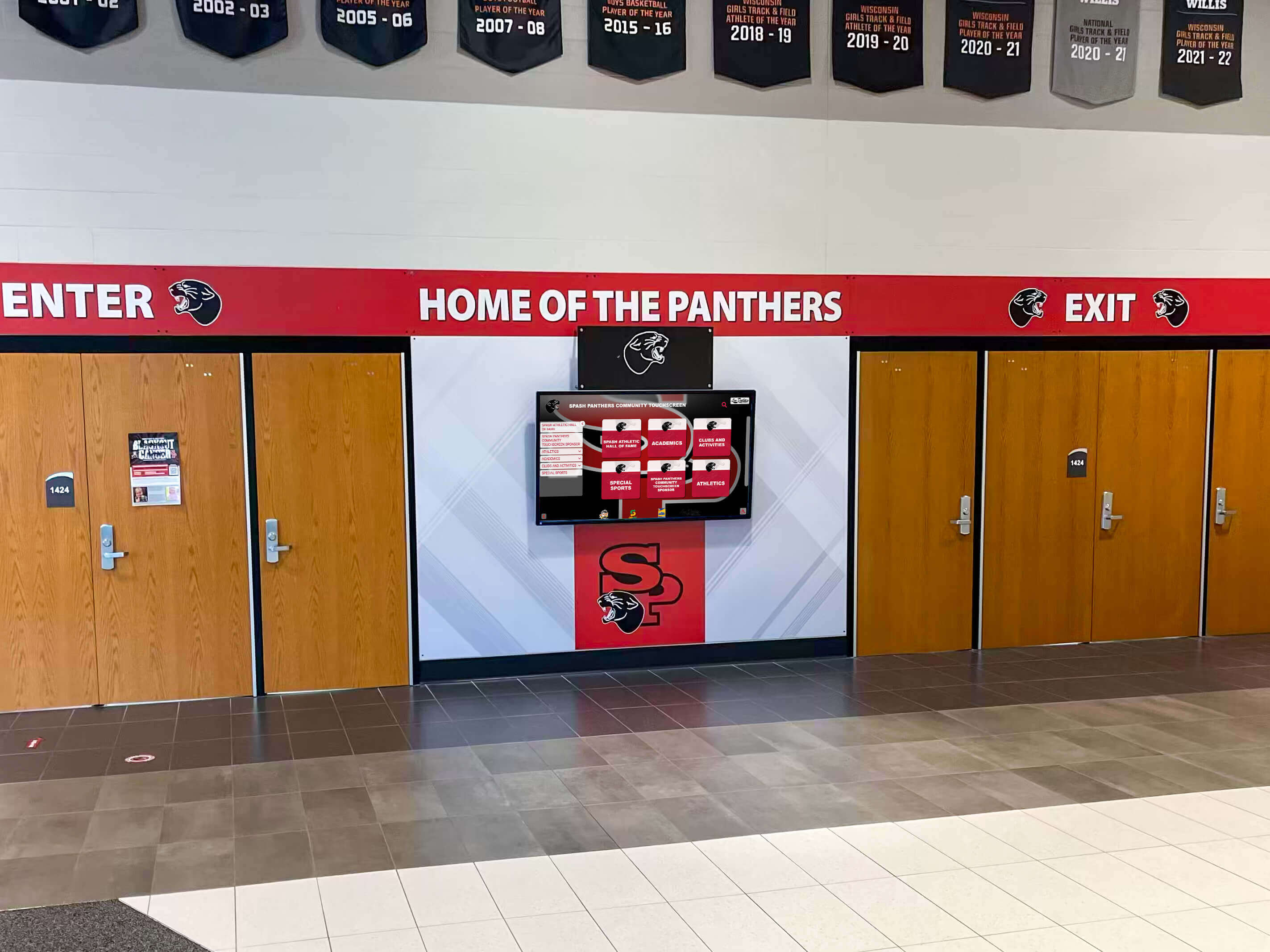
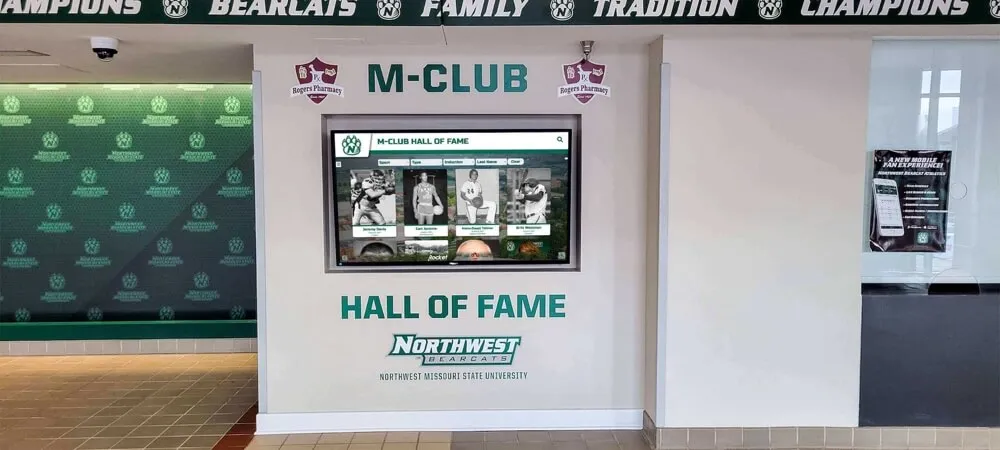
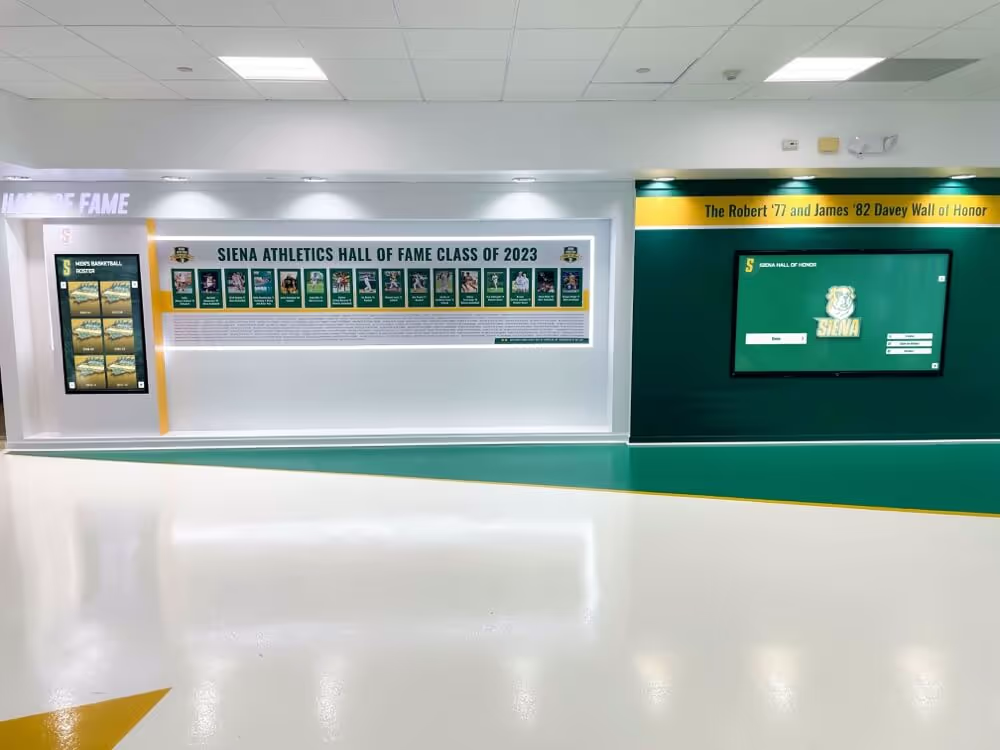
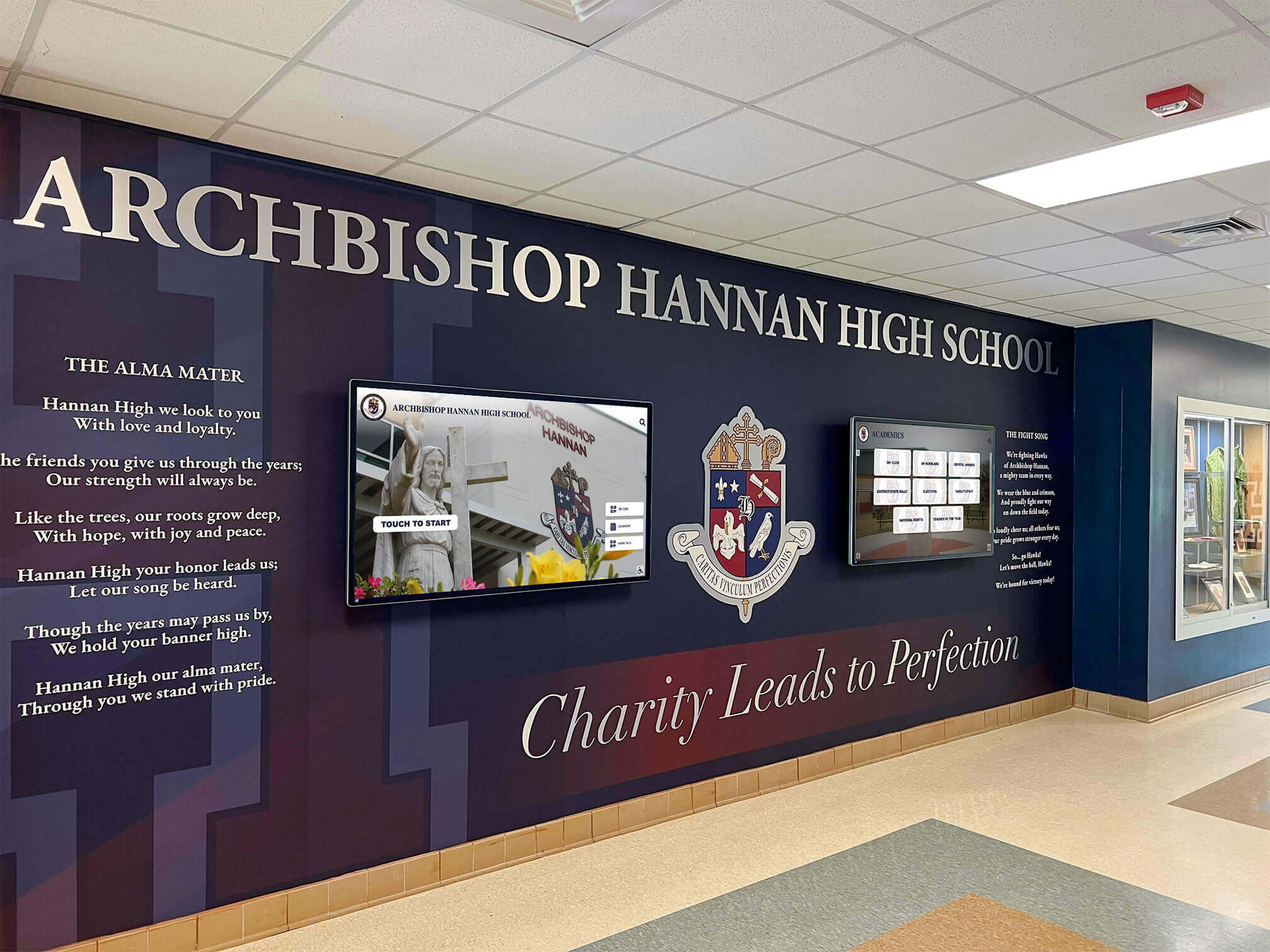
Strategic entrance installations combining branded wall wraps with digital displays create impressive first impressions welcoming students, staff, and visitors
Measuring Success and Return on Investment
Schools investing in wall wraps should assess whether installations deliver intended value and impact.
Qualitative Impact Assessment
Observational Evaluation
Simple observation reveals whether wall wraps achieve objectives:
Observable Indicators
- Students stopping to view or photograph wall wraps during passing periods
- Prospective families commenting positively during admissions tours
- Social media posts featuring installations as backgrounds or subjects
- Community members expressing pride in facility improvements
- Visitors commenting on improved facility appearance
- Students able to articulate school values or identity reinforced through environmental design
- Reduction in vandalism or damage in areas with engaging wall wraps
These behavioral and attitudinal indicators reveal actual impact more reliably than assumptions about theoretical benefits.
Stakeholder Feedback Collection
Direct feedback provides valuable assessment information:
Conduct surveys asking students, staff, families, and visitors about facility perceptions before and after installations. Host focus groups exploring reactions, preferences, and suggestions for future projects. Incorporate questions about physical environments into annual climate surveys tracking perceptions over time. And create feedback mechanisms enabling ongoing input about what works and what could improve.
This stakeholder input helps schools understand whether installations achieve goals while identifying opportunities for continuous improvement.
Quantitative Metrics and Analytics
Measurable Outcomes
Some wall wrap benefits lend themselves to quantitative assessment:
Quantifiable Metrics
- Admissions tour feedback scores before and after facility improvements
- Social media engagement metrics for posts featuring installations
- Event attendance at facilities with enhanced environments
- Facility rental inquiries and revenue from improved venues
- Maintenance costs comparing wall wraps versus paint replacement cycles
- Student survey data on school pride, belonging, and facility perceptions
- Alumni engagement metrics if heritage installations inspire reconnection
While not all benefits reduce to numbers, quantitative data complements qualitative feedback providing comprehensive impact assessment.
Long-Term Value Calculation
Calculate return on investment over installation lifespan:
Compare total project costs against alternative approaches including ongoing paint maintenance, traditional signage, or continuing with existing conditions. Factor in extended lifespan with quality wall wraps lasting 5-10 years versus paint requiring refreshing every 2-3 years. Account for broader benefits including enhanced school culture, improved recruitment, and community pride—while difficult to quantify financially, these represent real value justifying investments even when narrow cost-benefit calculations appear marginal.
Most schools report that wall wrap investments deliver returns far exceeding costs when considering comprehensive benefits rather than only direct financial savings.
Continuous Improvement and Iteration
Learning from Initial Projects
Early installations provide lessons informing future work:
Assess what designs, locations, and approaches generated most positive response and engagement. Identify any implementation challenges suggesting process improvements for subsequent projects. Gather stakeholder suggestions about additional locations, themes, or content for future installations. And evaluate vendor performance determining whether to continue relationships or explore alternatives.
This reflective practice enables schools to continuously improve wall wrap programs rather than repeating initial approaches regardless of effectiveness.
Phased Expansion Strategies
Many schools implement wall wraps incrementally:
Begin with high-impact demonstration projects proving value and building support. Use successful initial installations to justify expanded investment in additional locations. Develop long-term facility plans systematically improving all major spaces over multi-year periods. And maintain flexibility adapting plans based on results, feedback, and evolving priorities.
Phased approaches make comprehensive facility transformations achievable even with limited initial budgets while enabling learning and refinement between phases.
Conclusion: Transforming School Environments Through Strategic Wall Wraps
School facilities powerfully influence how students, staff, and communities perceive and connect with educational institutions. Walls covering thousands of square feet in hallways, gymnasiums, cafeterias, and common areas offer remarkable opportunities either squandered through institutional indifference or leveraged through intentional design creating memorable inspiring environments. Wall wraps provide accessible, durable, high-impact solutions enabling schools of all sizes to transform generic spaces into branded destinations reflecting unique identity, celebrating achievement, and creating pride.
The difference between successful and disappointing wall wrap projects lies in strategic planning, thoughtful design, quality execution, and ongoing maintenance. Schools approaching projects systematically—clearly defining objectives, engaging stakeholders, selecting appropriate materials and vendors, coordinating installation carefully, and maintaining installations properly—consistently achieve results justifying investments while avoiding common pitfalls undermining less thoughtful implementations.
Transform Your School with Wall Wraps
Ready to explore how wall wraps can enhance your school environment? Discover how integrated solutions combining custom graphics with digital recognition technology create comprehensive branded environments celebrating achievement while building lasting school pride.
Explore Recognition SolutionsModern wall wrap technology makes professional results achievable at scales ranging from small accent installations to comprehensive facility-wide programs. Advances in printing technology deliver photographic quality at any size while vinyl materials provide durability withstanding school environments for 5-10 years or more. Competitive markets mean quality vendors offer various price points accommodating different budgets. And growing recognition of physical environment impacts on student experience means school communities increasingly support facility improvement investments previously considered discretionary luxuries.
The comprehensive strategies explored in this guide provide frameworks for schools at any stage—from initial exploration through planning, design, installation, and long-term maintenance. Whether implementing first wall wrap project or expanding existing programs, these principles help maximize impact while avoiding common mistakes undermining effectiveness or value.
Your students deserve inspiring environments reflecting the excellence, tradition, and community your school represents. Generic institutional corridors communicate that facilities don’t matter—that students should simply endure sterile spaces rather than experiencing thoughtfully designed environments recognizing their worth. Wall wraps offer practical tools for conveying different messages: that your school takes pride in facilities, values student experience, celebrates achievements, and invests in creating memorable environments worthy of the learning and growth happening within walls every day.
Start planning your wall wrap transformation today. Whether beginning with single high-impact demonstration project or developing comprehensive facility-wide vision, the strategic approaches outlined here enable schools to create inspiring branded environments building pride, celebrating achievement, and making lasting positive impressions on everyone who enters facilities. The walls speak—ensure they communicate messages worthy of your educational mission and community.
Ready to transform bare walls into inspiring environments? Explore how modern wall wrap solutions combined with digital recognition technology create comprehensive branded spaces celebrating achievement while building authentic school pride that lasts generations.