The Virtual Trophy Room: Bringing Your School's Trophy Case Online for Alumni and Visitors
- Home /
- Blog Posts /
- The Virtual Trophy Room: Bringing Your School's Trophy Case Online for Alumni and Visitors
The Easiest Touchscreen Solution




Live Example: Rocket Alumni Solutions Touchscreen Display
Interact with a live example (16:9 scaled 1920x1080 display). All content is automatically responsive to all screen sizes and orientations.
School trophy rooms tell powerful stories. Behind the glass doors of every trophy case sits decades of athletic excellence—state championship banners earned through grueling playoff runs, individual awards recognizing exceptional talent, team photos capturing once-in-a-generation squads, and commemorative plaques honoring coaches who shaped hundreds of young lives. These physical spaces serve as institutional memory banks, preserving accomplishments that define school identity and inspire current students to chase their own moments of glory.
Yet traditional trophy rooms face inherent limitations that diminish their impact. Alumni living states away cannot revisit their championship memories during a spontaneous moment of nostalgia. Prospective families touring schools on weekends encounter locked trophy cases with reflective glass obscuring details. Current students pass by displays daily without pausing to read the names or understand the context behind decades-old achievements. Trophies accumulate faster than available shelf space, forcing difficult decisions about which accomplishments deserve continued visibility.
The virtual trophy room solves these challenges by transforming physical displays into accessible digital experiences that anyone can explore from anywhere, at any time. By bringing trophy cases online through interactive platforms, searchable databases, and immersive video tours, schools extend the reach and impact of their athletic achievements while preserving institutional legacy in formats that won’t tarnish, fade, or run out of space.
Modern schools recognize that athletic recognition programs should serve multiple audiences simultaneously—current students seeking inspiration, alumni reconnecting with personal memories, prospective families evaluating school culture, and visitors exploring institutional history. Virtual trophy rooms deliver this multi-audience accessibility in ways that physical displays simply cannot match.

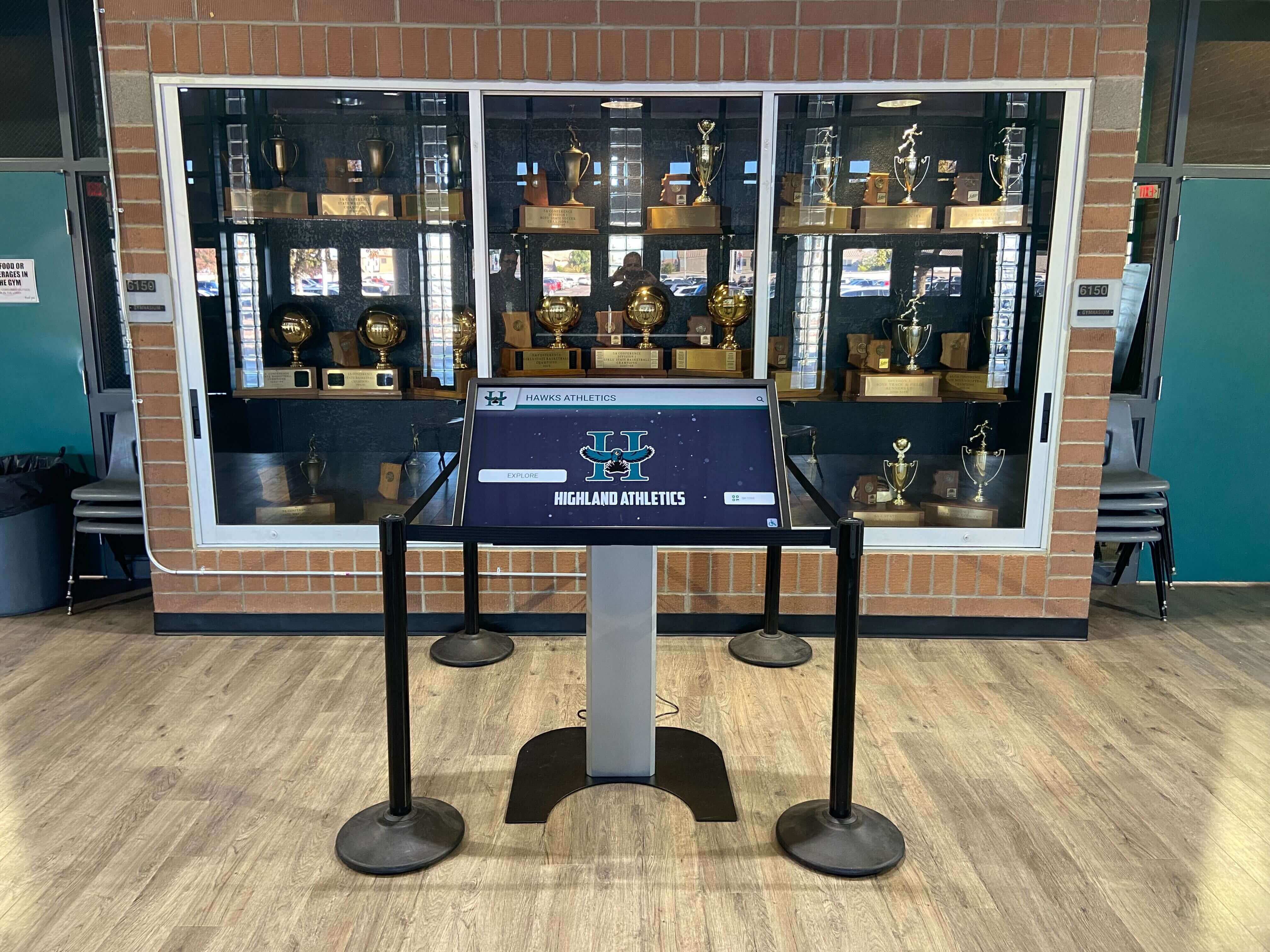
Digital displays integrate seamlessly with traditional trophy cases, creating hybrid recognition systems that serve both in-person and virtual audiences
Why Schools Are Moving Trophy Rooms Online
The shift from exclusively physical trophy rooms to virtual and hybrid approaches stems from practical challenges and strategic opportunities that forward-thinking athletic directors and administrators increasingly recognize.
Accessibility Limitations of Physical Trophy Rooms
Traditional trophy rooms, while visually impressive, create access barriers that limit their effectiveness as recognition and engagement tools.
Geographic Constraints
Physical trophy cases serve only those who can visit campus:
- Alumni relocated for careers, military service, or family have no access to championship memories
- Parents of graduated athletes cannot easily share accomplishments with extended family
- Prospective families touring schools outside regular hours encounter locked facilities
- Community members interested in school history face limited visiting opportunities
- Media researching athletic program achievements need appointments and access permissions
- Historical researchers documenting regional sports history require special accommodations
Schools with geographically dispersed alumni populations particularly benefit from virtual access—a championship swimmer now living across the country can instantly show their children the state championship plaque from 1998, sharing personal stories that strengthen family connections to school history.
Time and Schedule Restrictions
Physical access depends on building hours and staffing availability:
- Evening and weekend access requires special arrangements or remains unavailable
- Summer months when buildings close limit trophy room accessibility
- Holiday breaks prevent access during times when alumni most frequently visit hometowns
- Building security protocols restrict casual drop-in access to athletic facilities
- Renovation projects and facility maintenance temporarily close trophy room access
- Special events occupying facilities prevent normal visiting hours
These restrictions mean that championship achievements celebrating decades of excellence sit invisible to most potential audiences most of the time—a significant waste of institutional investment and athlete recognition.
Physical Space Limitations
Successful athletic programs inevitably outgrow available trophy case space:
- Decades of championship banners exceed wall mounting capacity
- Individual award accumulation fills existing shelving faster than anticipated
- Team photos and commemorative plaques compete for limited square footage
- Historic artifacts requiring preservation compete with recent achievements
- Multiple sports programs vie for proportional representation in finite displays
- Facility renovations and building updates eliminate previously available wall space
This space crunch forces painful decisions about which accomplishments remain visible versus which get relegated to storage boxes—effectively deleting athlete recognition despite their equivalent achievement levels compared to those remaining on display.
Discover how schools address recognition challenges through digital hall of fame solutions that complement traditional trophy cases.
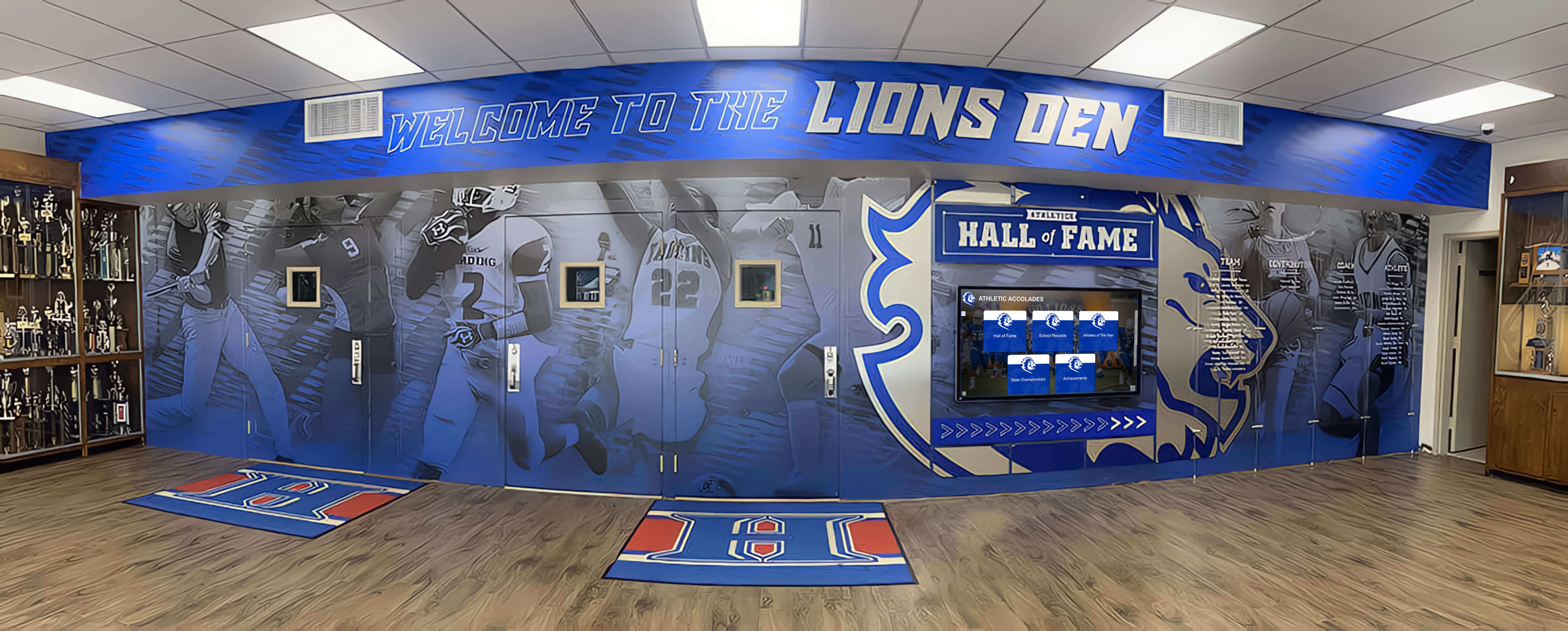
Hybrid recognition systems combine traditional trophy cases with digital displays, maximizing the impact of limited physical space while creating virtual accessibility
Strategic Advantages of Virtual Trophy Rooms
Beyond solving physical limitations, virtual trophy rooms create new strategic opportunities that enhance alumni engagement, recruiting efforts, and institutional storytelling.
Enhanced Alumni Engagement
Virtual trophy rooms transform one-time graduation memories into ongoing connection touchpoints:
- Alumni can revisit championship moments during life transitions, career milestones, or simple nostalgia
- Parents share their athletic achievements with children and grandchildren through accessible digital records
- Reunion planning committees use virtual displays to reminisce and build event programming
- Class anniversary organizers identify specific athletic memories for celebration
- Former teammates reconnect through shared digital archives preserving their competitive experiences
- Coaches retired for years can review the careers they shaped through searchable athlete databases
This ongoing engagement strengthens the emotional connections that drive giving, volunteerism, and institutional advocacy—creating value that extends far beyond the original recognition purpose.
Recruiting and Admissions Support
Prospective student-athletes and their families evaluate schools partially through athletic program strength indicators:
- Championship history demonstrates competitive excellence and winning culture
- Individual award recognition shows development pathways for talented athletes
- Conference titles and playoff appearances indicate sustained program quality
- Coaching longevity reflected in recognition timelines suggests stability and expertise
- Facility investment visible through modern recognition systems signals athletic prioritization
- Historic athlete profiles provide relatable success examples for prospects
Virtual trophy rooms enable 24/7 access for prospects researching schools—a student-athlete in California can explore championship history at a Midwest school at 10 PM on a Tuesday without waiting for admissions office hours or scheduling campus tours.
Schools are increasingly recognizing that digital displays enhance athletic spaces in ways that attract both current students and prospective families.
Institutional Storytelling and Brand Building
Athletic achievements represent powerful institutional narratives that virtual trophy rooms amplify:
- Media outlets covering current championships reference historical context from accessible archives
- Social media content celebrating program anniversaries draws directly from digital trophy databases
- Development campaigns highlighting athletic excellence use virtual displays as supporting evidence
- Community presentations about school history incorporate championship achievements through digital access
- Website content marketing schools to prospective families features athletic accomplishment highlights
- Corporate partnerships and sponsorship pitches demonstrate program quality through achievement documentation
These storytelling applications create institutional value extending well beyond athletic department boundaries, supporting admissions, fundraising, community relations, and marketing objectives.
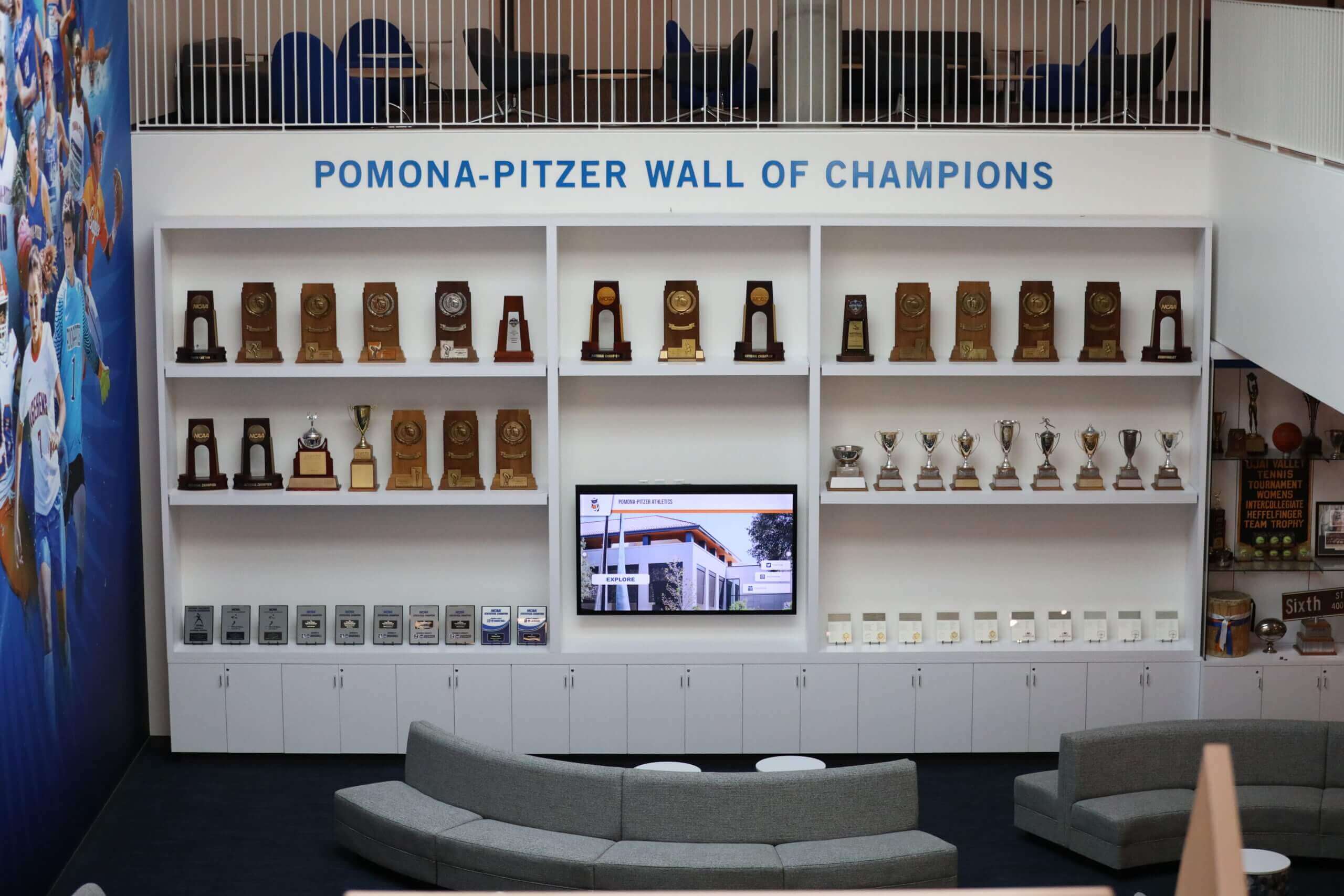
Trophy room displays in high-traffic gathering spaces create daily inspiration for current students while preserving institutional memory that virtual platforms extend to remote audiences
Essential Components of Effective Virtual Trophy Rooms
Successful virtual trophy rooms combine specific technological components and content strategies that maximize accessibility, engagement, and institutional value.
Comprehensive Digital Trophy Database
The foundation of any virtual trophy room is a searchable database containing complete achievement records across athletic program history.
Content Categories to Include
Comprehensive virtual trophy rooms document achievements across multiple recognition levels:
Championship Team Accomplishments
- State, regional, and national championship titles with years and competition details
- Conference and league championships including regular season and tournament titles
- Playoff appearances and tournament participation records
- Undefeated seasons and exceptional win-loss records
- Head-to-head rivalry game victories and trophy competitions
- Multi-year winning streaks and sustained excellence periods
Individual Athlete Recognition
- All-state, all-conference, and all-American team selections
- Player of the year honors at conference, state, regional, and national levels
- Academic all-state and scholar-athlete recognition
- Statistical achievement milestones (1000-point scorers, rushing yard records, etc.)
- Individual event state championships in track, swimming, wrestling, golf
- National ranking achievements in individual sports
Team and Program Records
- Single-game scoring records and defensive performance marks
- Season statistical records across offensive and defensive categories
- Career achievement records for individual athletes across program history
- Facility records for home venues (pool records, track records, etc.)
- Team GPA recognition and academic excellence awards
- Sportsmanship and character recognition awards
Coaching and Staff Recognition
- Coach of the year honors at various competitive levels
- Coaching milestone achievements (win totals, longevity, championships)
- Hall of fame inductions for coaches and contributors
- Retired coach tributes and career retrospectives
- Assistant coach and support staff recognition
- Official, trainer, and athletic department staff honors
Many schools find that athletic recognition programs benefit from systematic documentation capturing achievements that might otherwise be forgotten over time.
Search and Filter Functionality
Effective virtual trophy rooms enable multiple search approaches serving different user intentions:
- Sport-specific filtering: Isolate achievements by basketball, football, track, swimming, etc.
- Year and decade searching: Find accomplishments from specific graduating classes or historical periods
- Athlete name searches: Locate individual alumni achievement records across sports and years
- Achievement type filtering: Display only state championships, or conference titles, or individual awards
- Coach-based searching: View all achievements during specific coaching tenures
- Keyword text searching: Free-text searches finding specific schools, opponents, or achievement details
This search flexibility ensures that diverse audiences—from alumni seeking personal memories to researchers documenting program history—can efficiently find relevant information regardless of their starting knowledge.
Interactive Video Tours and Virtual Experiences
Static databases provide information but lack the emotional connection and immersive quality that video tours deliver, creating experiences that approximate physical trophy room visits.
360-Degree Trophy Case Tours
Modern 360-degree photography technology enables virtual visitors to explore trophy rooms as if physically present:
- Pan and zoom controls letting users examine trophies, plaques, and banners in detail
- Hotspot annotations providing context, stories, and achievement details for specific items
- Guided tour mode walking visitors through chronological program history
- Self-directed exploration enabling personal interest-driven browsing
- Mobile-friendly interfaces supporting exploration from any device
- Shareable links allowing alumni to direct friends and family to specific displays
Schools with particularly impressive physical trophy rooms gain maximum value from virtual tours—allowing their facility investments to reach audiences far beyond campus while providing access unaffected by building hours or geographic location.
Coach and Athlete Video Narratives
Championship trophies become infinitely more meaningful when accompanied by the human stories behind their achievement:
- Coach interviews reflecting on championship seasons and pivotal moments
- Athlete testimonials sharing personal memories from state championship runs
- Team reunion videos showing athletes decades later reconnecting with former teammates
- Parent and family perspectives on how championships impacted student development
- Historical context videos explaining significance of specific achievements within program evolution
- Behind-the-scenes footage from championship games, celebrations, and aftermath
These narrative elements transform trophy rooms from static displays of hardware into dynamic storytelling platforms that create emotional connections driving alumni engagement and student inspiration.
Some schools leverage digital recognition systems that integrate video content directly with achievement databases, creating seamless multimedia experiences.
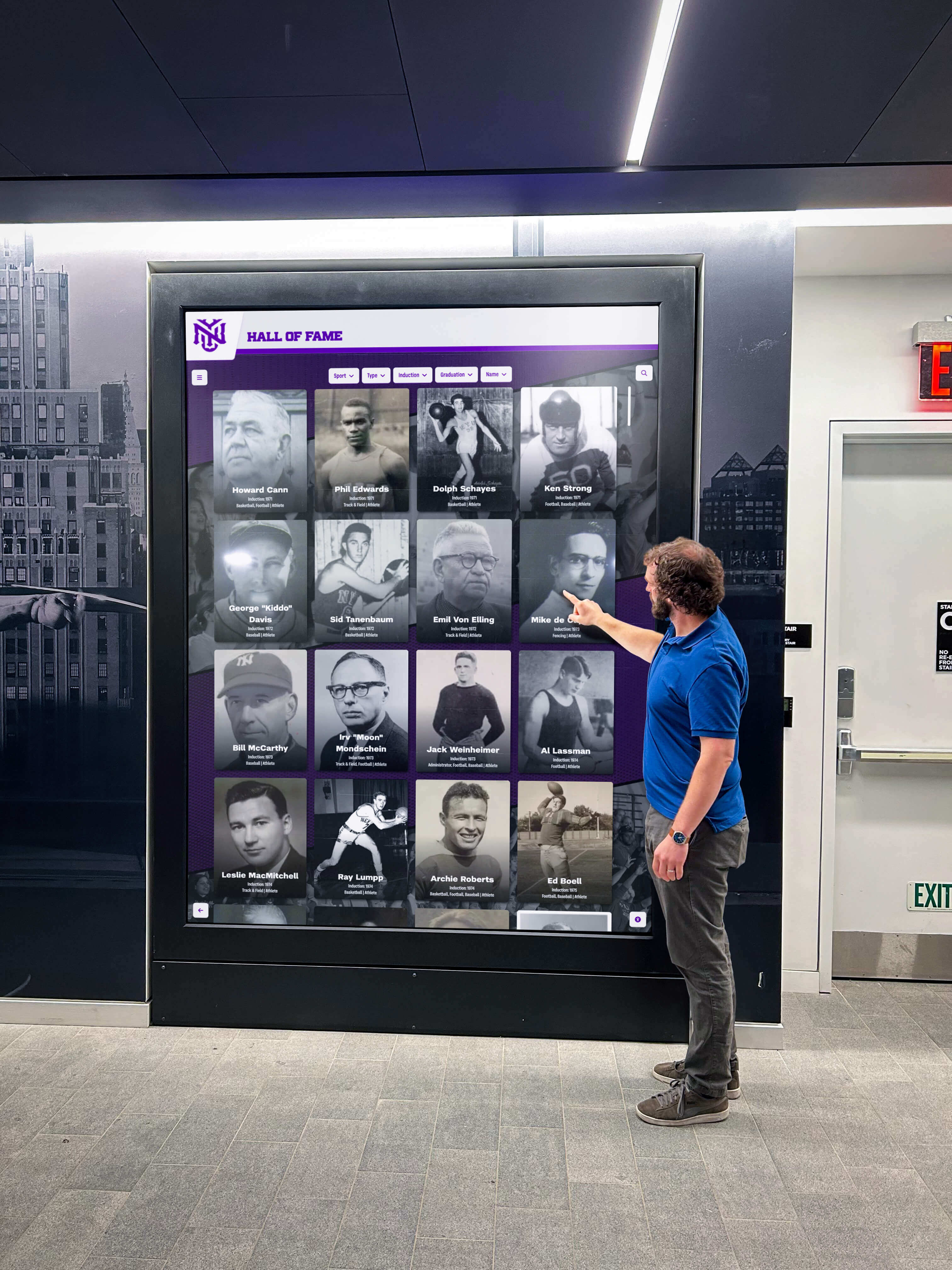
Interactive displays create engagement opportunities that static trophy cases cannot match, encouraging exploration and discovery while capturing visitor attention
Physical-Digital Integration Through Touchscreen Displays
The most effective trophy room strategies don’t choose between physical and virtual approaches—instead, they integrate both through touchscreen displays that serve in-person visitors while feeding digital platforms accessible remotely.
On-Campus Interactive Trophy Displays
Touchscreen kiosks installed in athletic facilities, main lobbies, and other high-traffic locations:
- Provide immediate access to complete achievement databases exceeding physical display capacity
- Enable name searches allowing visitors to quickly locate specific athletes or teams
- Offer timeline navigation showing program evolution across decades
- Display photo galleries supplementing physical trophy collections with digital images
- Stream highlight videos from championship games and historic moments
- Collect visitor engagement data showing which achievements generate greatest interest
These installations transform casual hallway traffic into active engagement opportunities—a prospective family waiting for a tour guide might explore championship history, or current athletes might discover that their coach was a state champion at the same school decades earlier.
QR Code Integration with Physical Trophies
Strategic QR code placement throughout physical trophy cases bridges physical and digital experiences:
- Trophy-specific codes linking to detailed achievement information, rosters, and game summaries
- Season-focused codes accessing photo galleries and newspaper clippings from championship years
- Athlete profile codes connecting physical name plaques to comprehensive career statistics
- Coach tribute codes accessing video interviews and career retrospective content
- Facility record codes showing historical progression and current record holders
- General trophy room codes directing visitors to complete virtual access from personal devices
This hybrid approach maximizes value from existing physical investments while extending their impact through supplemental digital content that physical displays cannot accommodate.
Schools implementing interactive touchscreen solutions report significant increases in visitor engagement compared to traditional static display approaches.

Touch-enabled interfaces invite active exploration rather than passive viewing, fundamentally changing how visitors interact with athletic achievement recognition
Implementation Strategies for Virtual Trophy Rooms
Moving from concept to reality requires systematic approaches addressing content creation, technology selection, and ongoing maintenance that ensures long-term success.
Content Collection and Historical Research
The most time-intensive aspect of virtual trophy room creation involves gathering comprehensive achievement information across program history, particularly for schools with decades of athletic tradition.
Source Materials for Historical Research
Thorough content collection requires mining multiple information sources:
Official Athletic Records
- Athletic director files containing championship certificates and award documentation
- Record books maintained by coaches and athletic staff across decades
- Media guide archives documenting teams, rosters, and achievements by season
- Athletic department board meeting minutes recording major accomplishments
- Archived programs from banquets, senior nights, and recognition ceremonies
- Statistical records maintained for individual sports and athlete performances
School Archives and Institutional Records
- Yearbook collections documenting teams, athletes, and seasons
- Newspaper clipping files maintained by school libraries or athletic departments
- School board minutes and administrative records noting championships and facility improvements
- Photograph collections from various administrative and historical sources
- Reunion materials created by alumni classes reflecting on athletic memories
- Historical society collections for schools with long competitive traditions
Alumni and Community Knowledge
- Coach interviews documenting personal recollections of championship seasons
- Retired athletic director consultations accessing institutional memory
- Alumni surveys requesting achievement information and personal athletic memories
- Booster club records maintained by long-term supporters
- Local newspaper archives containing game coverage and season summaries
- Community historian consultations for schools with deep local roots
This research process frequently uncovers forgotten achievements that physical space limitations had eliminated from visible recognition—state championships from the 1950s, individual athlete accomplishments lacking permanent commemoration, or coaching milestones never properly documented.
Addressing Information Gaps and Uncertainties
Historical research inevitably encounters incomplete records, conflicting information, or missing details requiring thoughtful approaches:
- Clearly distinguish confirmed information from probable but unverified details
- Document information sources and confidence levels for historical accuracy
- Create processes for alumni and community members to submit corrections and additions
- Acknowledge information gaps rather than inventing details to create false completeness
- Prioritize accuracy over comprehensiveness when sources conflict
- Establish research protocols for ongoing investigation of unclear historical questions
Many schools discover that historical preservation efforts benefit their entire institution beyond athletic recognition alone.
Technology Platform Selection
Schools face numerous technology options for hosting virtual trophy rooms, each with different trade-offs regarding cost, capabilities, technical requirements, and long-term sustainability.
Standalone Trophy Room Websites
Dedicated websites exclusively focused on athletic achievement create immersive experiences:
Advantages
- Complete design control enabling brand-aligned presentation
- Unlimited content capacity unconstrained by platform limitations
- Custom functionality tailored to specific institutional needs
- SEO benefits for championship-related searches directing prospects to school
- Direct ownership and control without platform dependency
- Integration flexibility with other institutional systems
Disadvantages
- Higher initial development costs compared to platform solutions
- Ongoing technical maintenance requiring internal staff or vendor relationships
- Security and hosting responsibilities falling to institutional IT resources
- Content management requiring technical skills or training
- Mobile optimization requiring additional development investment
- Long-term sustainability depending on continued institutional support
Integrated Hall of Fame Platforms
Specialized recognition platforms designed specifically for athletic and alumni recognition:
Advantages
- Turnkey solutions with proven functionality and design templates
- Lower initial costs compared to custom development
- Professional design quality without internal creative resources
- Mobile optimization and responsive design included by default
- Vendor-provided hosting, security, and technical maintenance
- Regular platform updates and feature additions without institutional investment
Disadvantages
- Design customization limitations within platform constraints
- Ongoing subscription costs creating multi-year financial commitments
- Platform dependency creating migration challenges if changing vendors
- Feature development controlled by vendor rather than institutional priorities
- Shared hosting environments potentially affecting performance
- Contract terms and pricing subject to vendor policy changes
Schools must evaluate options against institutional technical capacity, budget parameters, content volume, and long-term strategic priorities.
Social Media and Existing Website Integration
Some schools leverage existing digital properties rather than creating dedicated platforms:
- Athletic department website sections hosting trophy room content
- Social media channels highlighting weekly historical achievements
- School district website integration within broader institutional digital presence
- Alumni association platforms incorporating athletic achievement content
- Existing recognition systems expanded to include trophy room functions
- Document management systems hosting searchable achievement files
This approach minimizes new technology adoption while providing basic virtual access, though typically with reduced functionality compared to purpose-built solutions.
Ongoing Content Updates and Maintenance
Virtual trophy rooms require sustained attention rather than one-time creation efforts—current seasons generate new achievements needing prompt addition while historical research continues filling information gaps.
End-of-Season Update Protocols
Systematic processes ensure that current achievements receive timely virtual recognition:
- Designated staff responsibility for collecting championship, award, and recognition information
- Standard timelines for content addition following season conclusions
- Photo and video collection procedures capturing current season achievements
- Athlete and coach interview protocols gathering narrative content while memories remain fresh
- Proof-reading and quality control processes preventing errors in permanent records
- Communication protocols notifying recognized athletes, parents, and alumni about additions
Schools treating virtual updates with the same priority as physical trophy case maintenance ensure that current athletes receive recognition equivalent to historical honorees.
Historical Content Expansion
Most virtual trophy rooms launch with incomplete historical coverage that improves through ongoing research:
- Dedicated annual budget for historical photograph scanning and digitization
- Alumni reunion integration soliciting historical information and personal memories
- Volunteer researcher programs engaging history enthusiasts in achievement documentation
- Periodic campaigns requesting community assistance with specific historical questions
- Partnerships with local libraries, historical societies, and media outlets accessing archival materials
- Grant applications supporting oral history projects capturing coach and athlete interviews
This incremental approach prevents perfect from becoming the enemy of good—schools can launch virtual trophy rooms with current content while systematically expanding historical depth over time.
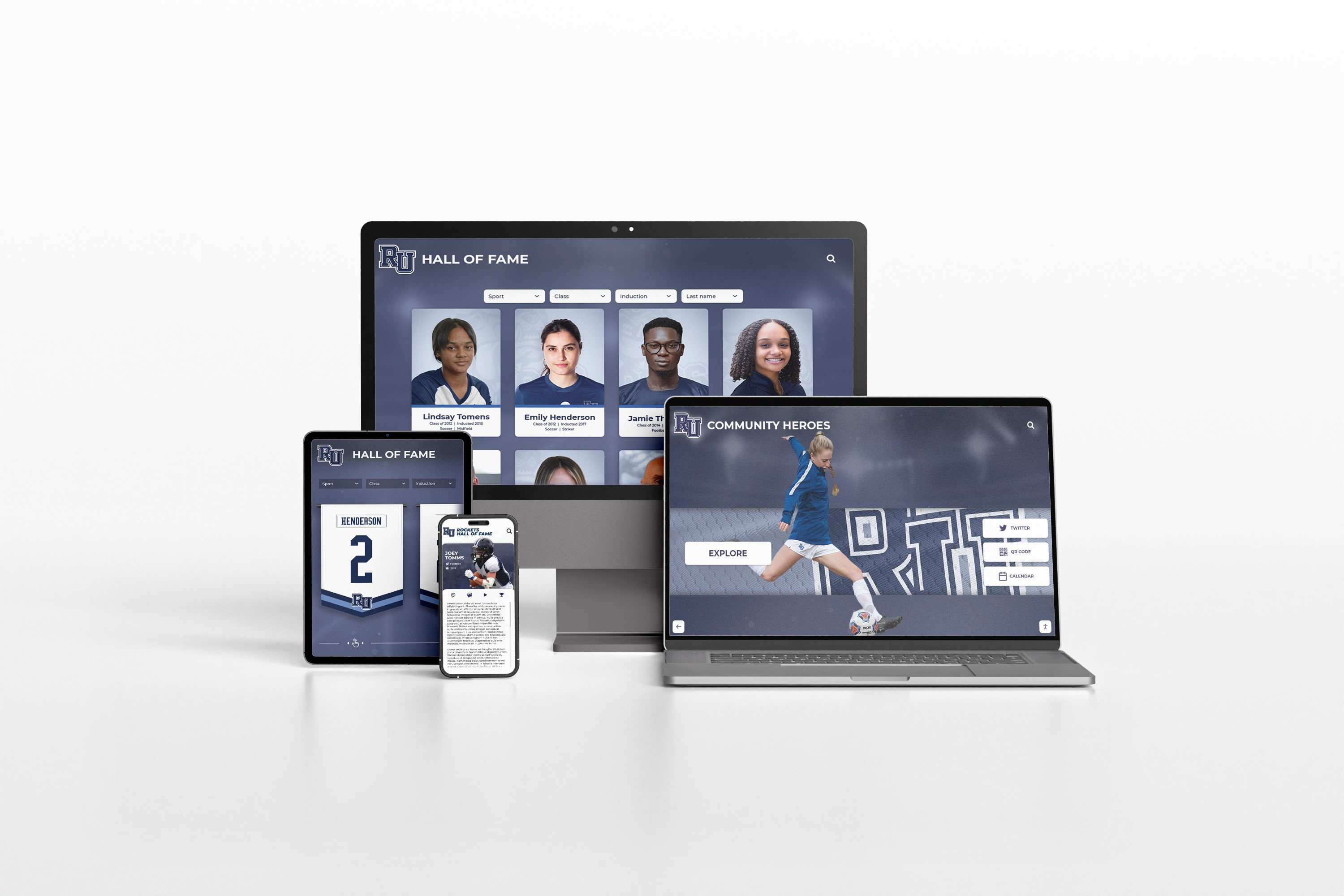
Multi-device accessibility ensures that virtual trophy rooms serve audiences regardless of how they prefer to access content—from desktop computers to smartphones
Best Practices for Virtual Trophy Room Success
Schools implementing virtual trophy rooms benefit from approaches that maximize engagement, maintain quality, and create sustainable long-term value.
Prioritize Mobile Accessibility
The majority of virtual trophy room visitors access content from smartphones rather than desktop computers, making mobile optimization essential rather than optional.
Mobile-First Design Considerations
Virtual trophy rooms must function excellently on small screens:
- Touch-friendly navigation with appropriately sized buttons and links
- Responsive image scaling maintaining visual quality across screen sizes
- Simplified search interfaces accommodating limited screen real estate
- Fast loading times appropriate for cellular data connections
- Vertical scrolling designs matching natural mobile browsing patterns
- Minimal text entry requirements given mobile keyboard challenges
Alumni browsing trophy rooms during moments of nostalgia typically use their phones—a former basketball player might look up their championship season while having dinner with former teammates, or a parent might show their children athletic achievements during a conversation about family history. If these mobile experiences frustrate users through poor design, engagement opportunities disappear.
Balance Comprehensiveness with Accessibility
The most useful virtual trophy rooms contain extensive information without overwhelming users or creating navigation complexity.
Progressive Disclosure of Information
Effective interfaces present high-level information immediately while providing pathways to detailed content for interested users:
- Summary views showing championship years and basic achievement information
- Expandable sections revealing rosters, statistics, and game details when selected
- Linked athlete profiles accessible from team pages for deeper individual information
- Photo galleries available through gallery links rather than auto-loading on primary pages
- Video content playing on-demand rather than auto-playing and slowing page loads
- Filter and search tools available but not required for basic browsing
This layered approach serves casual browsers seeking quick information while supporting deep research from users wanting comprehensive details.
Create Shareable Content and Viral Moments
Virtual trophy rooms generate maximum engagement when content formats encourage sharing through social media and digital communication.
Social Sharing Optimization
Design content with sharing in mind:
- Individual achievement pages with unique URLs enabling direct linking
- Pre-formatted social media posts simplifying alumni sharing of personal accomplishments
- Downloadable graphics featuring championships and individual achievements
- Embeddable content allowing alumni to incorporate achievements in personal websites
- Email sharing functions letting users send specific content to friends and family
- Social media posting schedules highlighting historical achievements on their anniversaries
An alumni basketball player might share their 1,000-point scoring achievement on LinkedIn when discussing personal accomplishments, or tag former teammates in a Facebook post celebrating a championship anniversary—these organic sharing moments extend trophy room reach far beyond direct institutional promotion.
Successful schools recognize that digital recognition creates engagement opportunities that traditional trophy cases cannot replicate.
Integrate with Fundraising and Development
Virtual trophy rooms create natural connection points with advancement efforts when designed with fundraising integration in mind.
Development-Friendly Features
Athletic achievements and fundraising naturally align:
- Team and season sponsorship opportunities attached to historical achievement pages
- Tribute giving options allowing supporters to honor specific athletes, coaches, or championships
- Championship anniversary campaigns leveraging milestone recognition moments
- Named gift opportunities for virtual trophy room enhancement or specific sports coverage
- Corporate sponsorship integration for comprehensive platform support
- Donor recognition integration connecting athletic support with visible appreciation
An alumnus viewing their championship team might encounter an opportunity to sponsor that season’s page, funding current athletic programs while permanently associating their name with a personally meaningful achievement—creating both engagement and revenue.
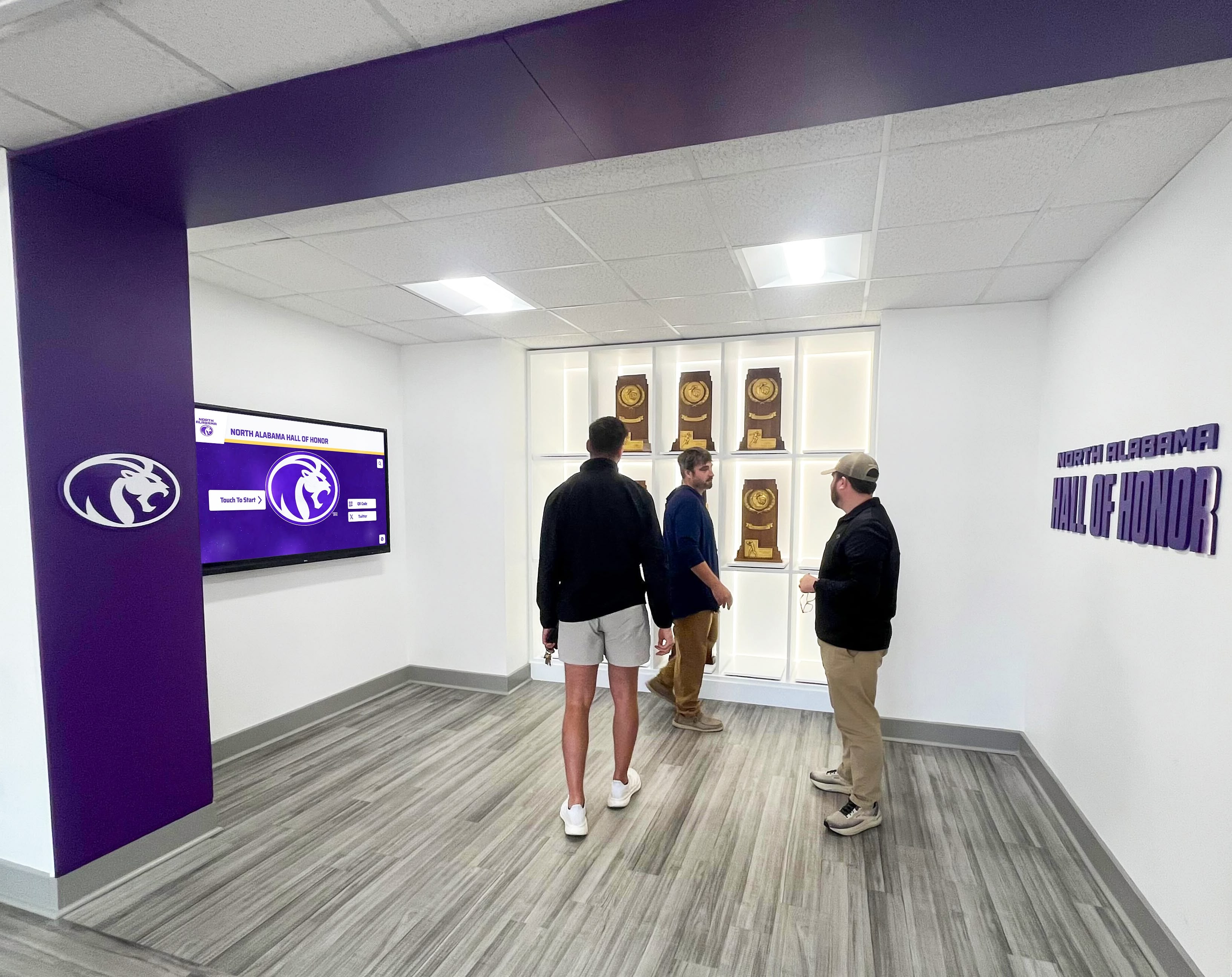
Physical trophy rooms remain valuable for creating in-person experiences that complement virtual access, serving visitors who appreciate seeing actual championship hardware
Measuring Virtual Trophy Room Impact
Effective assessment demonstrates virtual trophy room value while identifying improvement opportunities that maximize institutional investment.
Engagement Metrics and Analytics
Comprehensive analytics reveal how audiences interact with virtual trophy rooms:
Quantitative Usage Metrics
- Total visitor counts and unique user tracking
- Page views across different sports, seasons, and achievement types
- Search query analysis showing what users seek most frequently
- Time-on-page metrics indicating content that captures sustained attention
- Return visitor rates showing whether initial visits create ongoing engagement
- Geographic distribution revealing where audiences access content
- Device and browser analytics informing mobile optimization priorities
- Traffic sources identifying how users discover virtual trophy rooms
Qualitative Engagement Indicators
- Social media sharing frequency across platforms
- Email forwarding of achievement pages to friends and family
- Alumni survey responses about virtual trophy room awareness and usage
- Prospective family feedback during admissions processes
- Media references to championship history drawn from virtual access
- Alumni event attendance changes following virtual trophy room launches
- Development campaign participation correlating with virtual engagement
These combined metrics help schools understand whether virtual trophy rooms achieve intended objectives while revealing unexpected usage patterns informing future enhancements.
Alumni Engagement Correlation
The ultimate virtual trophy room success measure connects digital engagement with meaningful institutional relationships:
- Giving participation rates among users actively engaging with virtual content
- Volunteer recruitment success among alumni browsing championship history
- Reunion attendance changes following virtual content launches
- Mentorship program participation correlating with virtual engagement
- Social media advocacy frequency among active virtual trophy room users
- Career services participation showing professional network development
- Alumni survey satisfaction scores related to recognition and connection
Schools discovering that virtual trophy room engagement predicts broader alumni involvement can prioritize platform enhancement and promotional investment accordingly.
The Future of Trophy Room Recognition
Technology evolution and changing audience expectations continue reshaping how schools approach athletic achievement recognition.
Emerging Technologies and Innovations
Several technological developments will likely influence virtual trophy rooms in coming years:
Augmented Reality Integration
- Smartphone apps overlaying achievement information onto physical trophy cases
- AR experiences placing virtual trophies in users’ physical environments
- Interactive 3D trophy models viewable from all angles through AR interfaces
- Gamified AR scavenger hunts encouraging campus exploration and trophy discovery
Artificial Intelligence and Automation
- Automated content generation from game statistics and season records
- AI-powered search assistance understanding natural language queries
- Automated highlight video creation from historical game footage
- Chatbot interfaces answering historical questions about programs and athletes
Enhanced Video and Multimedia
- Virtual reality trophy room experiences providing immersive digital visits
- Interactive 360-degree video tours narrated by coaches and alumni
- Documentary-style video series exploring championship season stories
- Podcast integration featuring coach and athlete interviews about achievements
Advanced Personalization
- Customized content recommendations based on graduation year and sports interests
- Personalized achievement timelines showing content relevant to individual alumni
- Social connection features linking former teammates and competitors
- Notification systems alerting alumni to content additions related to their seasons
The most successful schools will adopt technologies that genuinely enhance user experience rather than pursuing innovation for its own sake.
Getting Started with Your Virtual Trophy Room
Schools ready to bring trophy cases online can begin with systematic approaches that deliver value quickly while building toward comprehensive long-term solutions.
Start with Current Season Content
Rather than waiting until comprehensive historical research completes, launch virtual trophy rooms with current season achievements:
- Document current year championships, awards, and recognition as seasons conclude
- Photograph current trophy additions before they enter physical cases
- Interview current coaches about season achievements while memories remain fresh
- Collect athlete testimonials from seniors completing high school careers
- Capture current season statistics and records setting baseline documentation
- Establish content creation workflows through current experience before tackling historical complexity
This approach provides immediate value for current athletes while developing sustainable processes that inform historical content creation.
Identify Quick-Win Historical Content
Some historical content offers high value with relatively low collection effort:
- State championship seasons with existing documentation in media guides and yearbooks
- Recent decades where coaches and athletes remain easily contactable
- Sports with strong booster clubs maintaining historical records and photographs
- Achievement categories already documented through existing hall of fame programs
- Rivalry game histories with strong community memory and interest
- Coaching milestone achievements with existing institutional recognition
Starting with accessible historical content creates momentum while demonstrating value justifying investment in deeper historical research.
Build Sustainable Maintenance Systems
Long-term success requires processes that survive staff transitions and institutional priority changes:
- Designated budget line items preventing funding uncertainty
- Written procedures documenting content collection and update workflows
- Staff position descriptions including virtual trophy room responsibilities
- Annual calendar scheduling regular content updates and quality reviews
- Technology documentation enabling knowledge transfer during transitions
- Stakeholder engagement maintaining administrator, coach, and alumni support
Virtual trophy rooms should become permanent institutional infrastructure rather than special projects dependent on individual champions who might leave or shift focus.
Schools implementing comprehensive recognition systems often utilize professional digital display solutions that integrate physical and virtual recognition in sustainable, scalable platforms.
Conclusion: Preserving Legacy While Creating Access
The virtual trophy room represents far more than digitizing physical displays—it fundamentally rethinks how schools preserve athletic achievement, engage alumni, and inspire current students through accessible recognition that transcends geographic and temporal limitations.
Traditional trophy rooms will always hold irreplaceable value. The tangible presence of championship hardware, the institutional gravitas of permanent physical recognition, and the serendipitous discovery that occurs when students pass trophy cases during daily campus navigation create experiences that digital platforms cannot fully replicate.
Yet physical trophy rooms serve only those who can visit, contain only what limited space permits, and provide only the information that fits on plaques and labels. Virtual trophy rooms eliminate these constraints while complementing rather than replacing physical displays—creating hybrid recognition systems that maximize the value of institutional investment while serving diverse audience needs.
Schools bringing trophy rooms online discover benefits extending far beyond athletic recognition. Alumni reconnect with institutional memories strengthening lifelong relationships. Prospective families evaluate program quality through accessible championship evidence. Current athletes explore program history finding inspiration in those who came before. Development teams leverage achievement recognition to inspire athletic giving. Media outlets access championship context enriching current coverage. Historical preservation efforts ensure that accomplishments aren’t lost to institutional memory gaps.
The question facing schools isn’t whether virtual trophy rooms deliver value—it’s whether institutions can afford to maintain trophy cases that remain invisible to most potential audiences most of the time. As technology makes virtual access increasingly expected rather than innovative, schools that embrace digital trophy rooms position themselves to maximize recognition impact while preserving athletic legacies for generations who will expect seamless access to institutional history regardless of where they live or when they seek connection.
The trophies in your physical cases tell powerful stories. Virtual platforms ensure those stories reach everyone they should inspire.
Live Example: Rocket Alumni Solutions Touchscreen Display
Interact with a live example (16:9 scaled 1920x1080 display). All content is automatically responsive to all screen sizes and orientations.