



University athletic programs across the NCAA are transforming how they honor student-athletes, celebrate championships, and preserve program history through modern interactive touchscreen displays. At the University of Rhode Island, where the Rams compete in NCAA Division I athletics and recently announced their largest Athletics Hall of Fame class in 21 years—eight inductees for the Spring of 2025—the need for comprehensive, engaging athletic recognition has never been more important.
Traditional trophy cases and static wall plaques have served athletic departments for decades, but they face significant limitations: physical space constraints that force difficult decisions about which achievements receive visibility, minimal storytelling capacity that reduces remarkable athletic careers to basic statistics, and passive displays that fail to engage today’s digitally-native student-athletes and fans. As programs like URI’s Rhode Island Rams continue building rich athletic traditions, these conventional recognition approaches struggle to celebrate the breadth and depth of athletic excellence appropriately.
This comprehensive guide explores how university athletic programs can implement interactive touchscreen recognition displays that solve traditional limitations while creating engaging experiences celebrating every deserving athlete, championship team, and memorable moment in program history—transforming athletic facilities into inspiring spaces that honor excellence while strengthening team culture and institutional pride.
Modern digital recognition represents far more than upgraded technology—it fundamentally transforms how athletic departments honor achievement, engage current student-athletes, connect with alumni, and preserve program legacy. Universities implementing comprehensive touchscreen systems report dramatic improvements in athlete recognition capacity, fan engagement duration, recruiting facility impressions, and alumni connections to programs that shaped their college experiences.

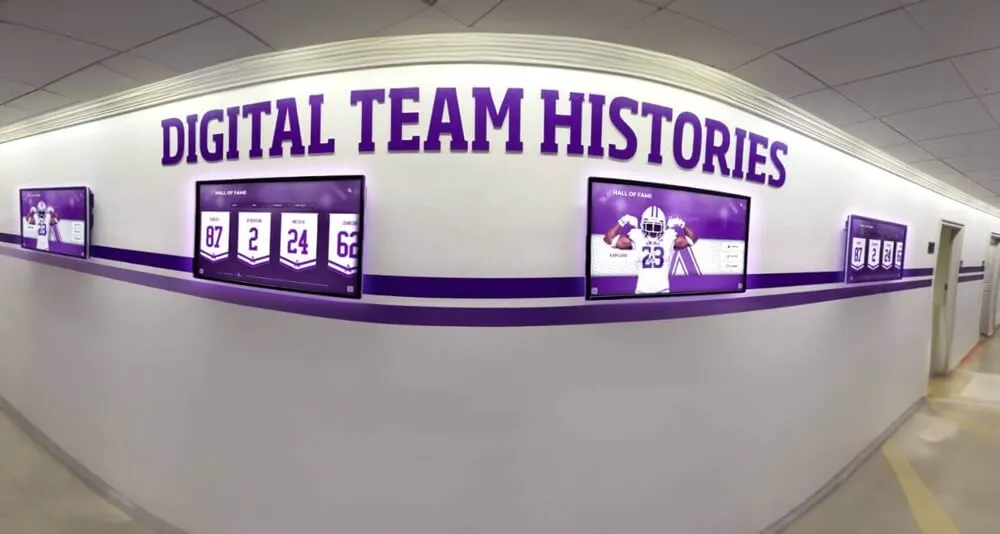
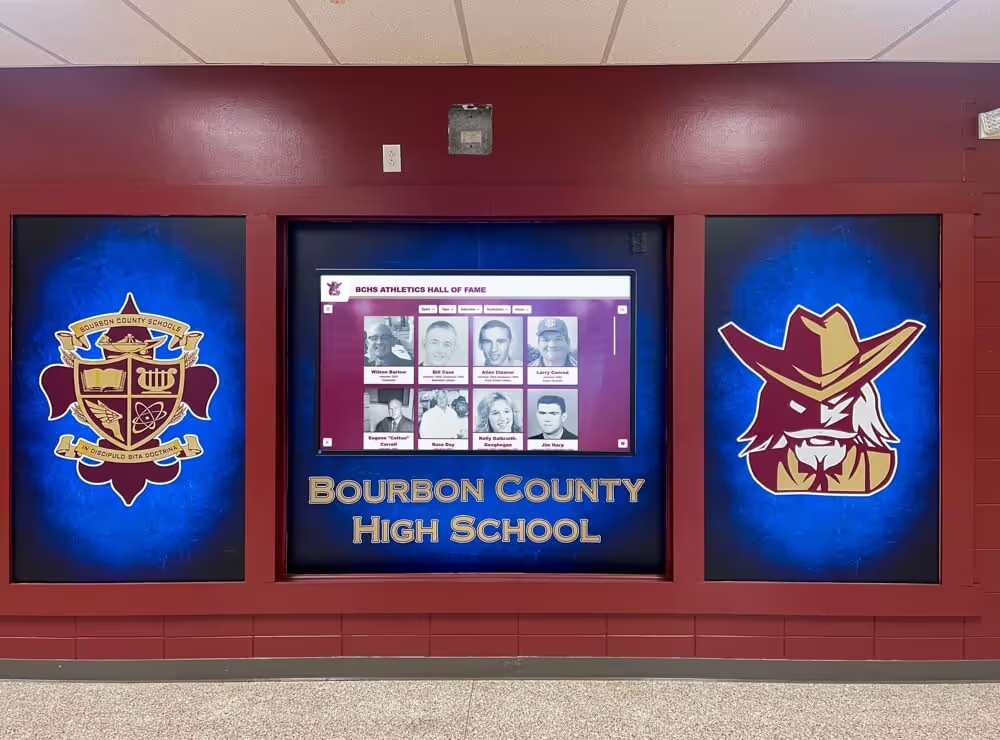
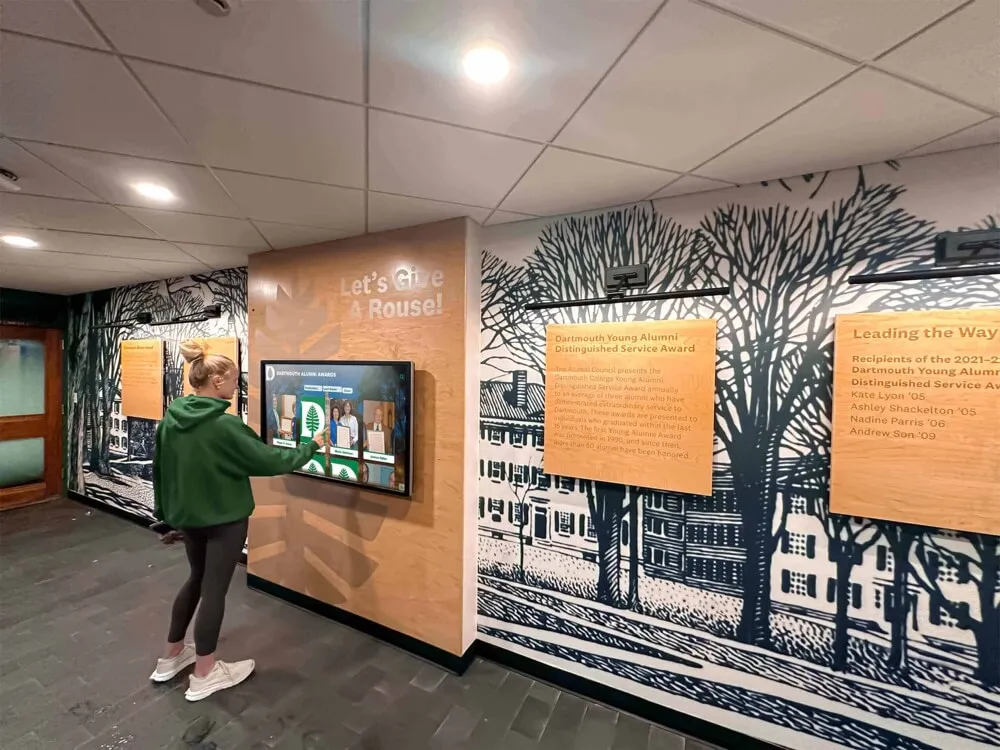
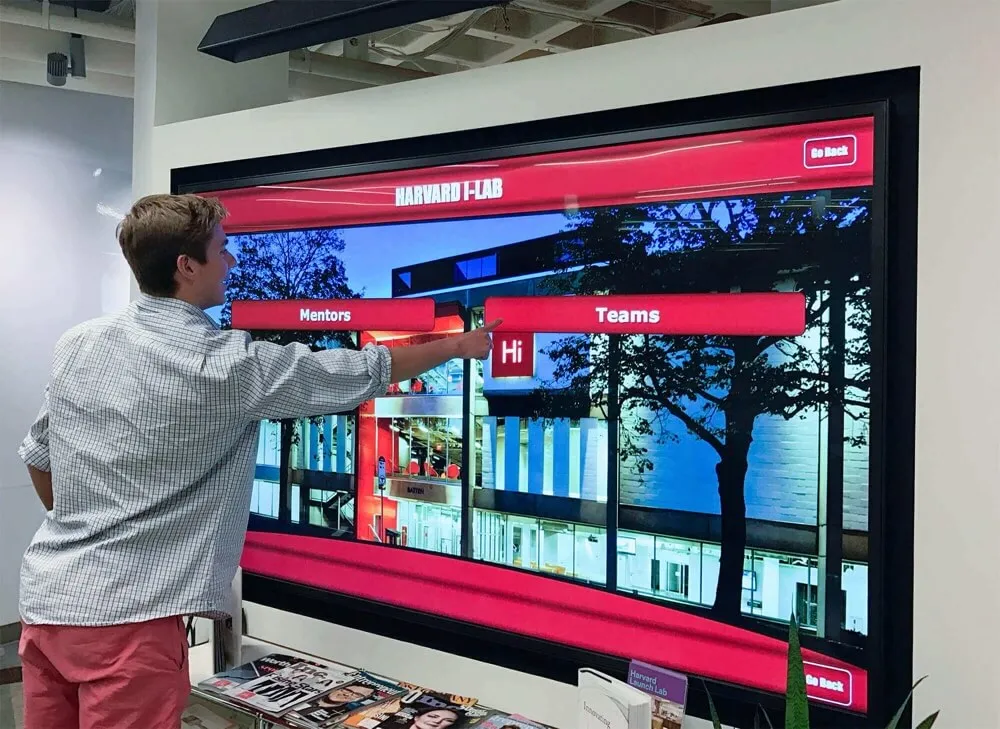
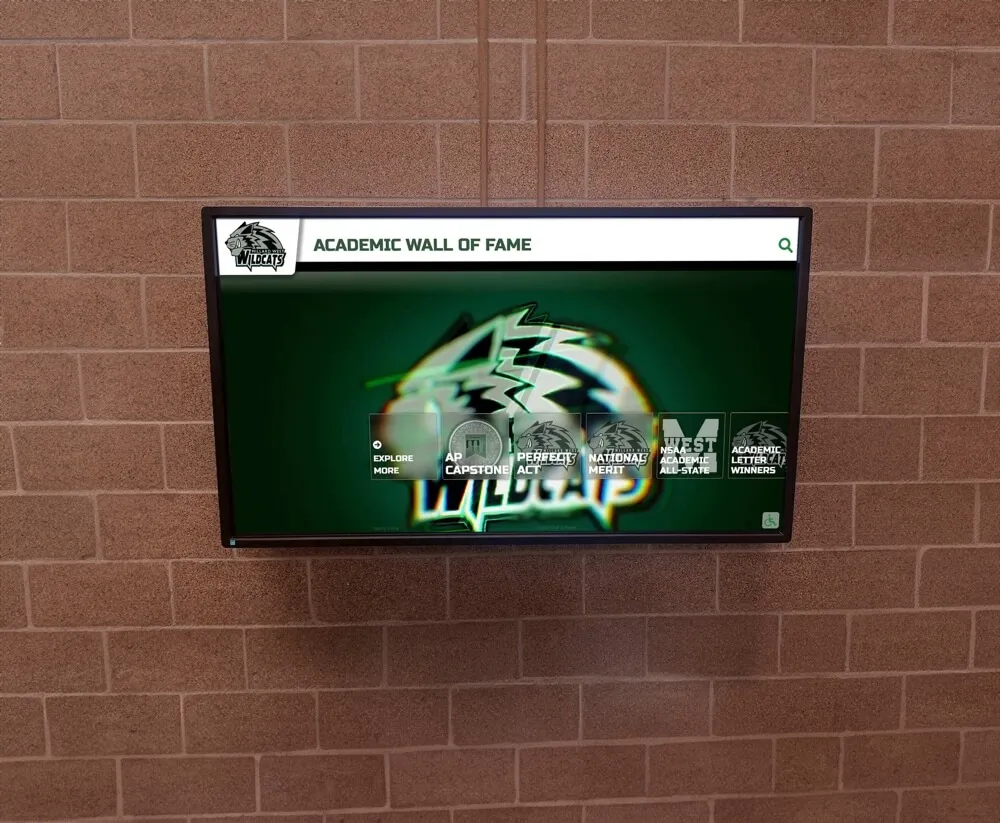
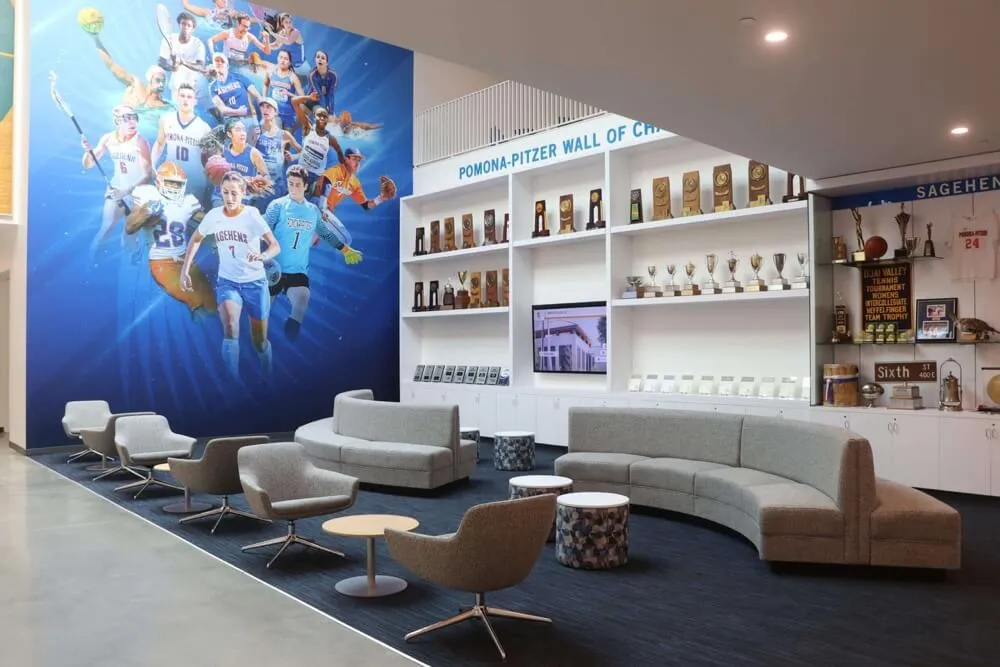
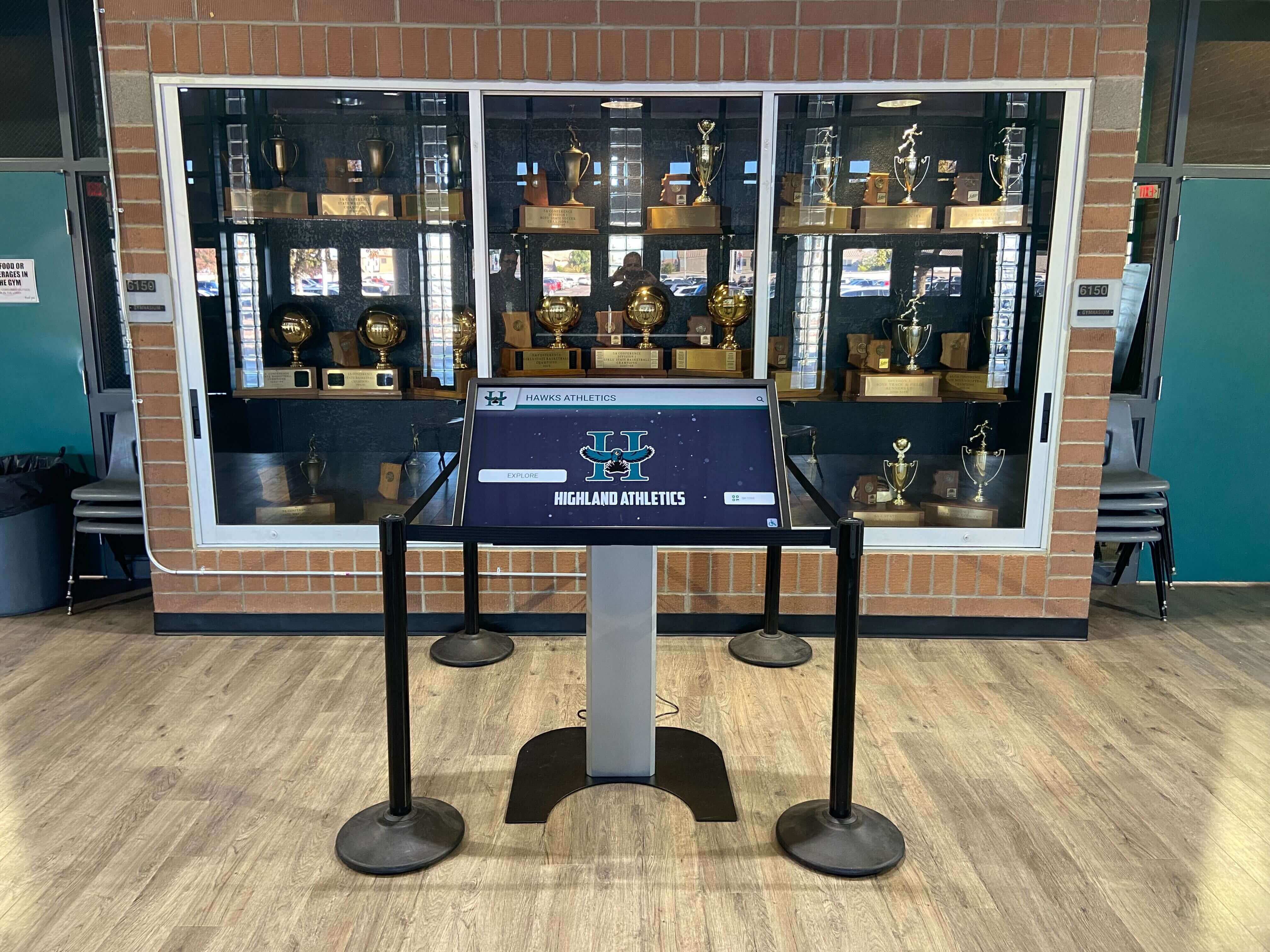
Modern touchscreen displays complement traditional trophy cases while providing unlimited capacity for comprehensive athlete recognition
Understanding URI Athletics and NCAA Recognition Challenges
Before exploring digital solutions, understanding the specific recognition challenges facing university athletic programs provides essential context for designing systems that effectively serve institutional needs.
The URI Rhode Island Rams Athletic Tradition
The University of Rhode Island fields competitive NCAA Division I athletic programs across multiple sports, creating a rich tradition deserving comprehensive recognition. With the recent announcement of eight new Athletics Hall of Fame inductees for the Spring of 2025—the largest class in 21 years—URI demonstrates ongoing commitment to honoring athletic excellence while facing the practical challenges of celebrating this growing legacy.
According to the University of Rhode Island Athletics Department, the 2025 Hall of Fame induction ceremony will take place Saturday, March 8, 2025, during the men’s basketball regular-season finale against Fordham. This ceremony represents just one moment in an ongoing recognition story that includes decades of accomplished athletes, championship teams, record-setting performances, and program-building contributions deserving sustained celebration throughout athletic facilities.
Notable recent inductees include New Orleans Saints interim head coach Darren Rizzi, selected for the University of Rhode Island Athletics Hall of Fame Class of 2025, demonstrating the caliber of athletes who have competed for the Rams and subsequently achieved professional success. These distinguished alumni create inspiring examples for current student-athletes while building institutional pride throughout the URI community.
Learn about comprehensive approaches to Division I athletics digital recognition systems addressing similar challenges facing NCAA programs.
The Physical Space Limitation Problem
University athletic programs accumulate recognition needs that quickly exceed available physical display space:
Achievement Volume at NCAA Programs
- Decades of letter winners across multiple sports and eras
- Conference championships and tournament appearances
- Individual All-Conference and All-American honors
- School records across every sport and statistical category
- Academic All-American recognition for student-athlete excellence
- Professional athletes who continued careers after graduation
- Coaching milestones and program-building achievements
- Championship team rosters requiring complete documentation
A single Division I program might have thousands of deserving athletes, teams, and achievements worthy of recognition—impossible to honor comprehensively through traditional trophy cases accommodating only a fraction of this volume.
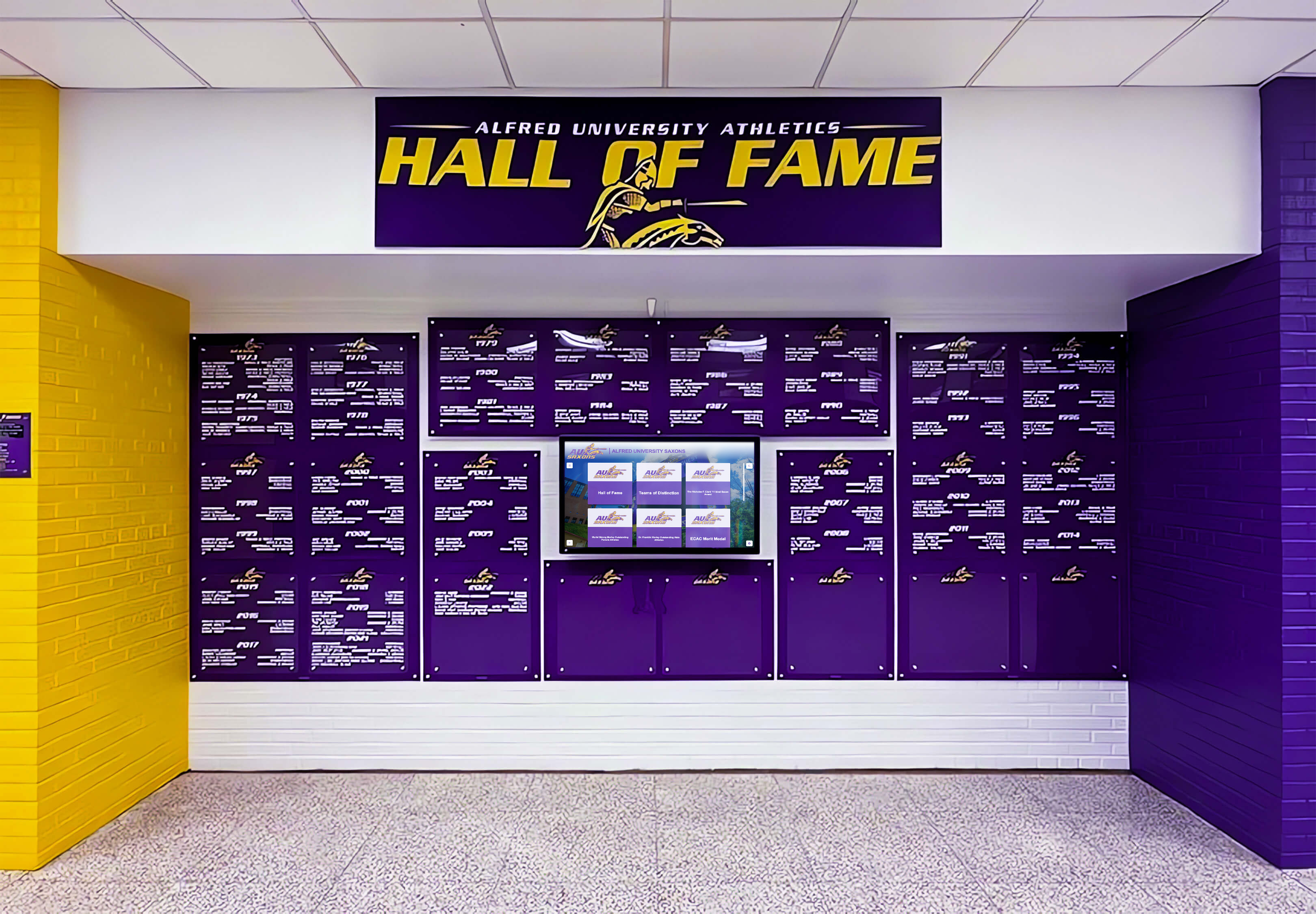
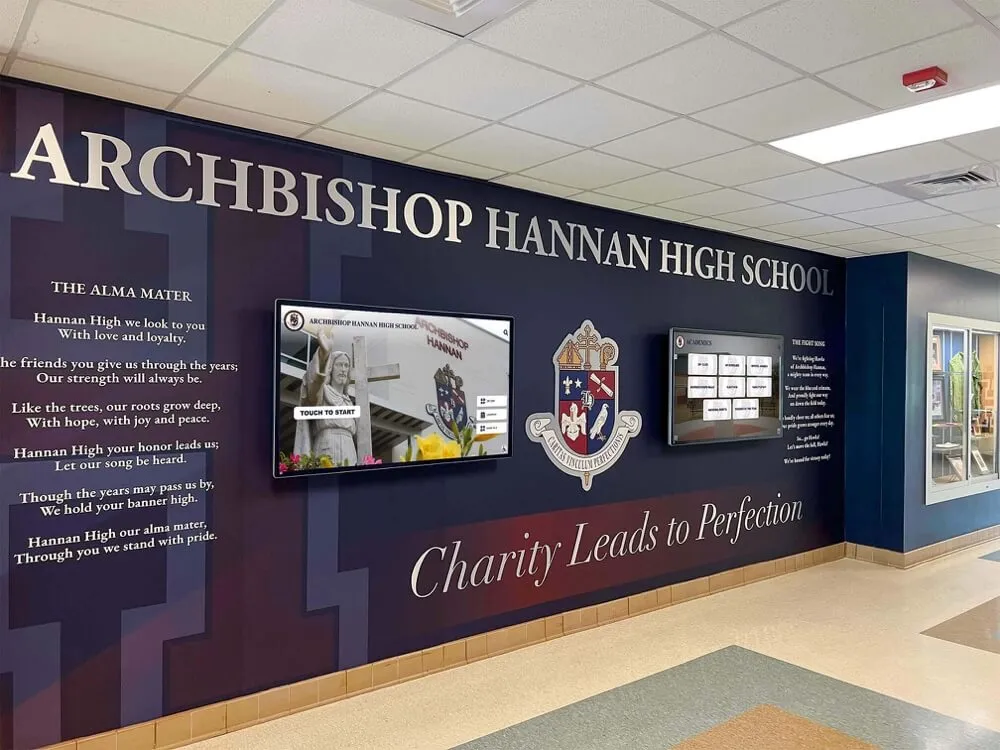
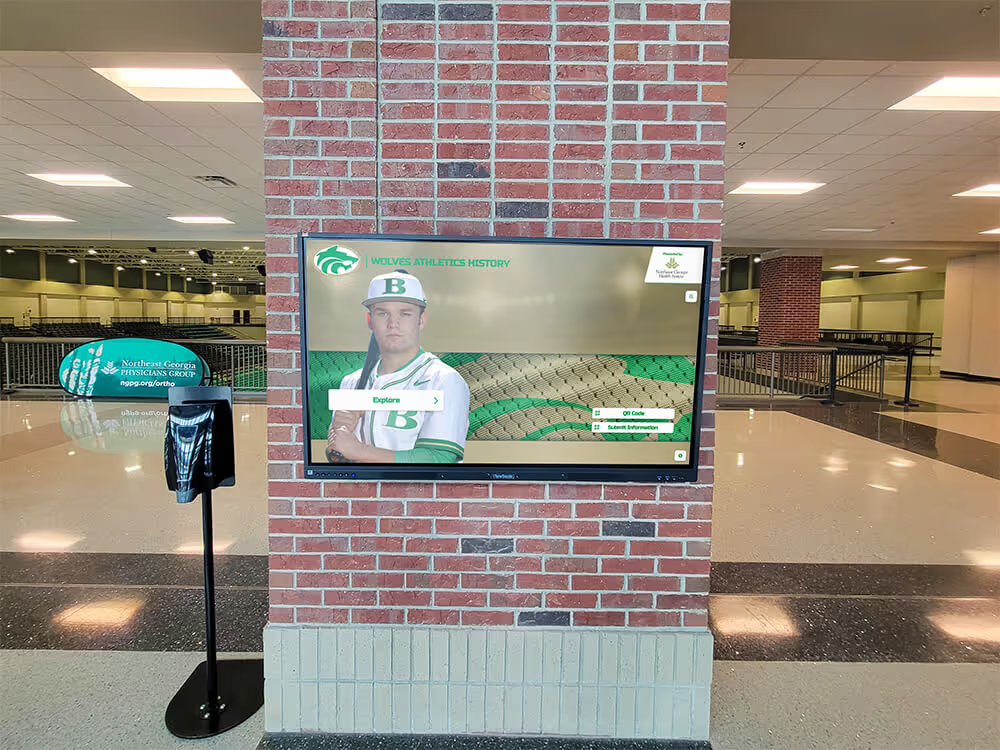
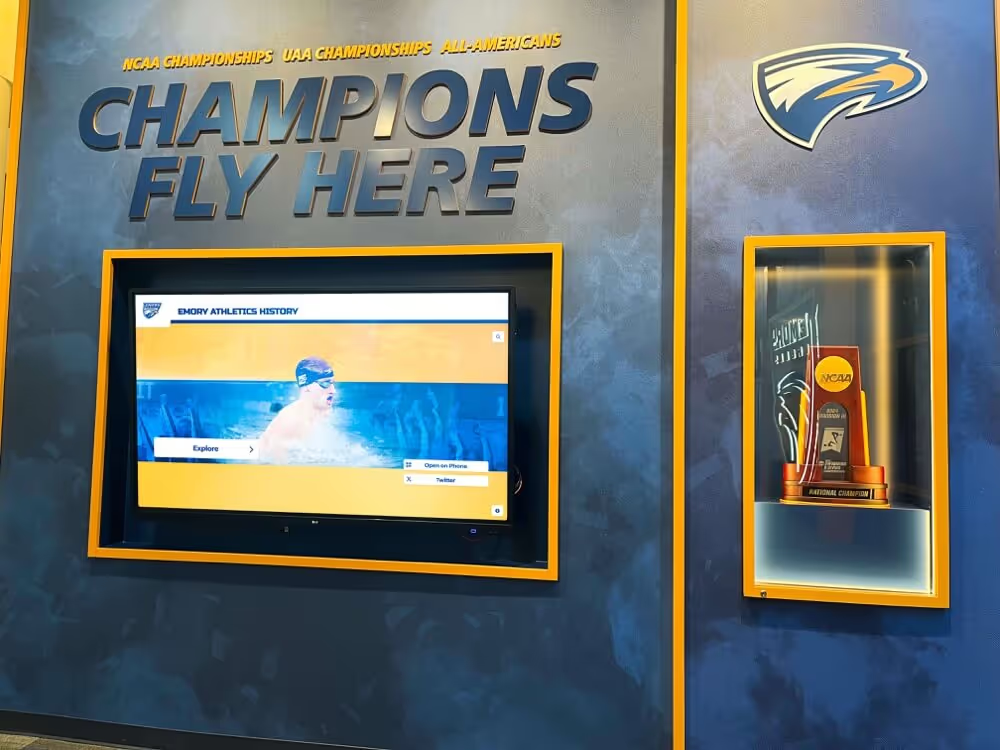
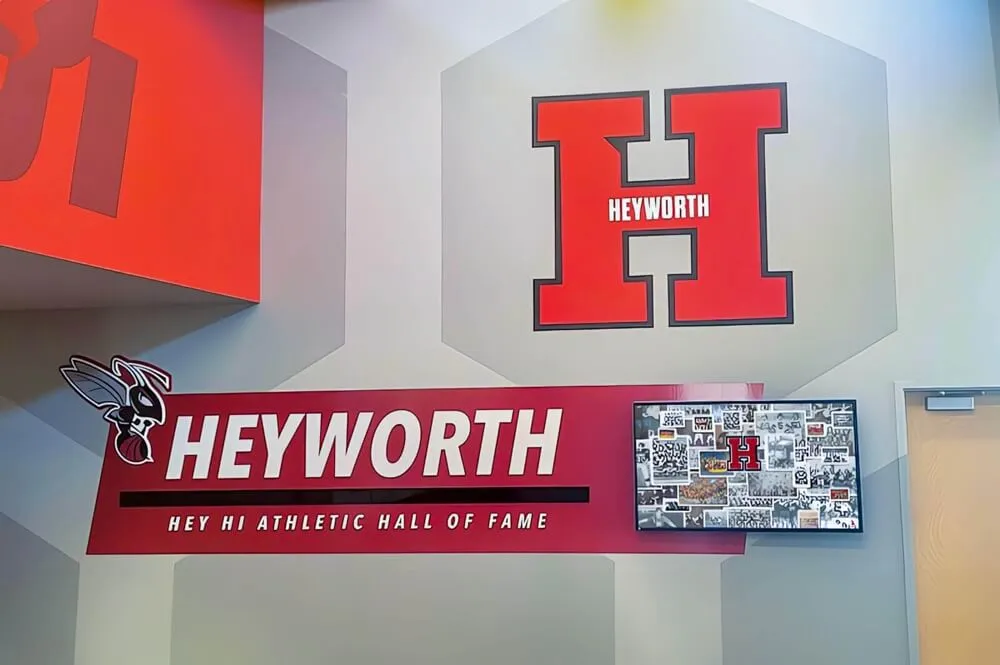
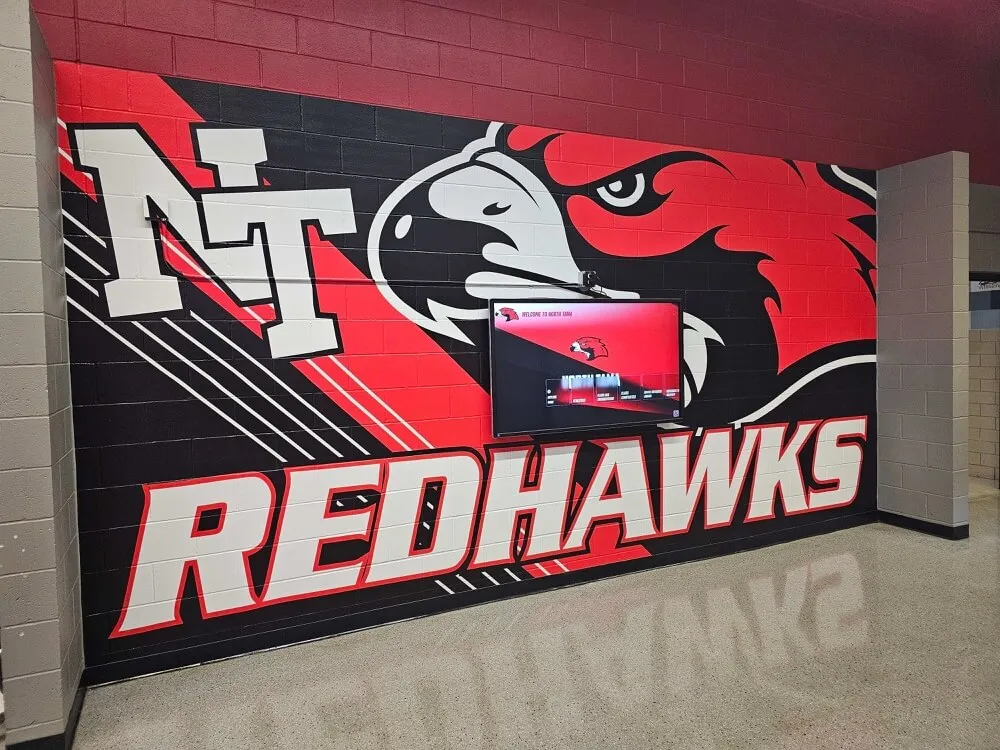
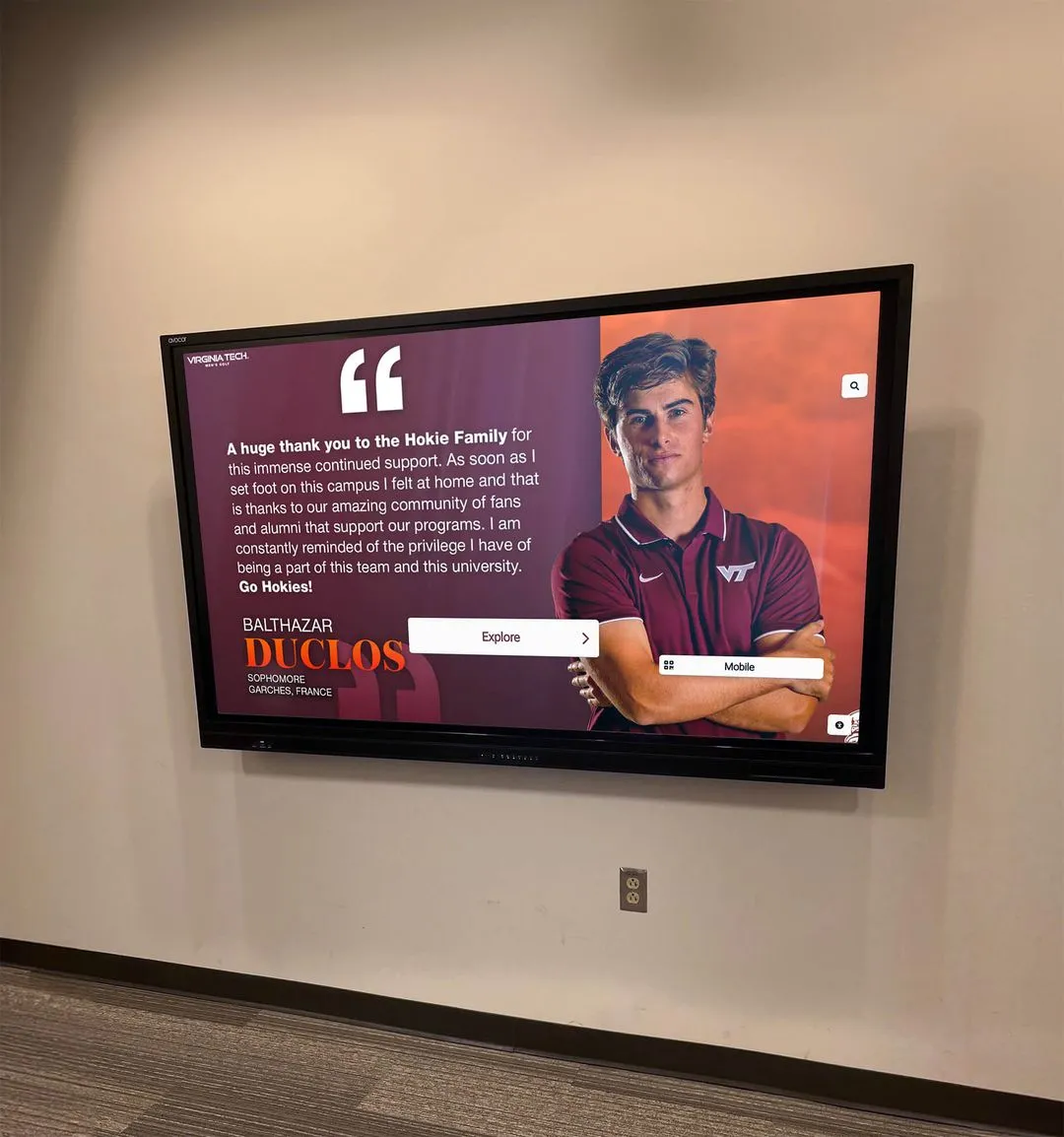
Universities integrate digital displays within athletic facilities creating comprehensive recognition environments
The Curation Dilemma
Limited physical space forces athletic departments into impossible choices: Which championship teams receive prominent display versus storage? Which record holders earn lasting visibility versus being forgotten? Which eras of program history get celebrated versus overlooked? These decisions often default to recent achievements while historical excellence fades from institutional memory—undermining programs’ efforts to honor complete athletic legacies appropriately.
Storytelling Depth Limitations
Traditional plaques and trophy cases excel at displaying physical awards but struggle with comprehensive storytelling that brings athletic achievements to life:
Information Constraints
A typical recognition plaque provides basic information—athlete name, sport, years competed, perhaps one or two major accomplishments—but cannot capture complete career narratives, defining moments that shaped programs, relationships with teammates and coaches, or contexts that make achievements meaningful. This information poverty reduces potentially inspiring athletic journeys to sterile data points that fail to engage viewers or convey the dedication, sacrifice, and excellence these achievements represent.
Multimedia Limitations
Static displays cannot incorporate video highlights of championship moments, audio of memorable game calls, photo galleries documenting athletic careers, or interactive timelines showing statistical progression throughout seasons. Without these multimedia elements, recognition fails to leverage storytelling tools that resonate with modern audiences accustomed to rich, engaging digital content.
Explore comprehensive digital storytelling for athletic programs that addresses these storytelling limitations effectively.
Recruiting and Cultural Impact Challenges
Athletic recognition serves critical functions beyond honoring past achievements—it shapes recruiting outcomes and strengthens team culture in ways that directly impact program success:
Recruiting Facility Impressions
Elite high school athletes touring university athletic facilities assess every aspect of program investment and culture, including recognition systems communicating institutional values. Overcrowded trophy cases signal space constraints and outdated approaches. Empty display areas suggest programs don’t value athlete recognition. Meanwhile, impressive modern recognition systems demonstrate professional-quality commitment to celebrating excellence—creating recruiting advantages during competitive evaluation processes.
Programs implementing prominent digital recognition consistently report that recruits and families mention facility recognition specifically during decision-making, indicating significant influence on enrollment outcomes.
Team Culture and Identity
Recognition displays shape current student-athlete perceptions about program traditions, performance standards, and institutional commitment to honoring achievement. Athletes training in facilities showcasing comprehensive program history develop deeper connections to traditions they’re continuing. Understanding legendary predecessors’ accomplishments provides context for current expectations while creating aspirational standards motivating excellence.
Without visible, engaging recognition, current athletes lack this cultural context and inspirational connection to program legacy—potentially diminishing the motivation and pride that distinguished athletic traditions can provide.
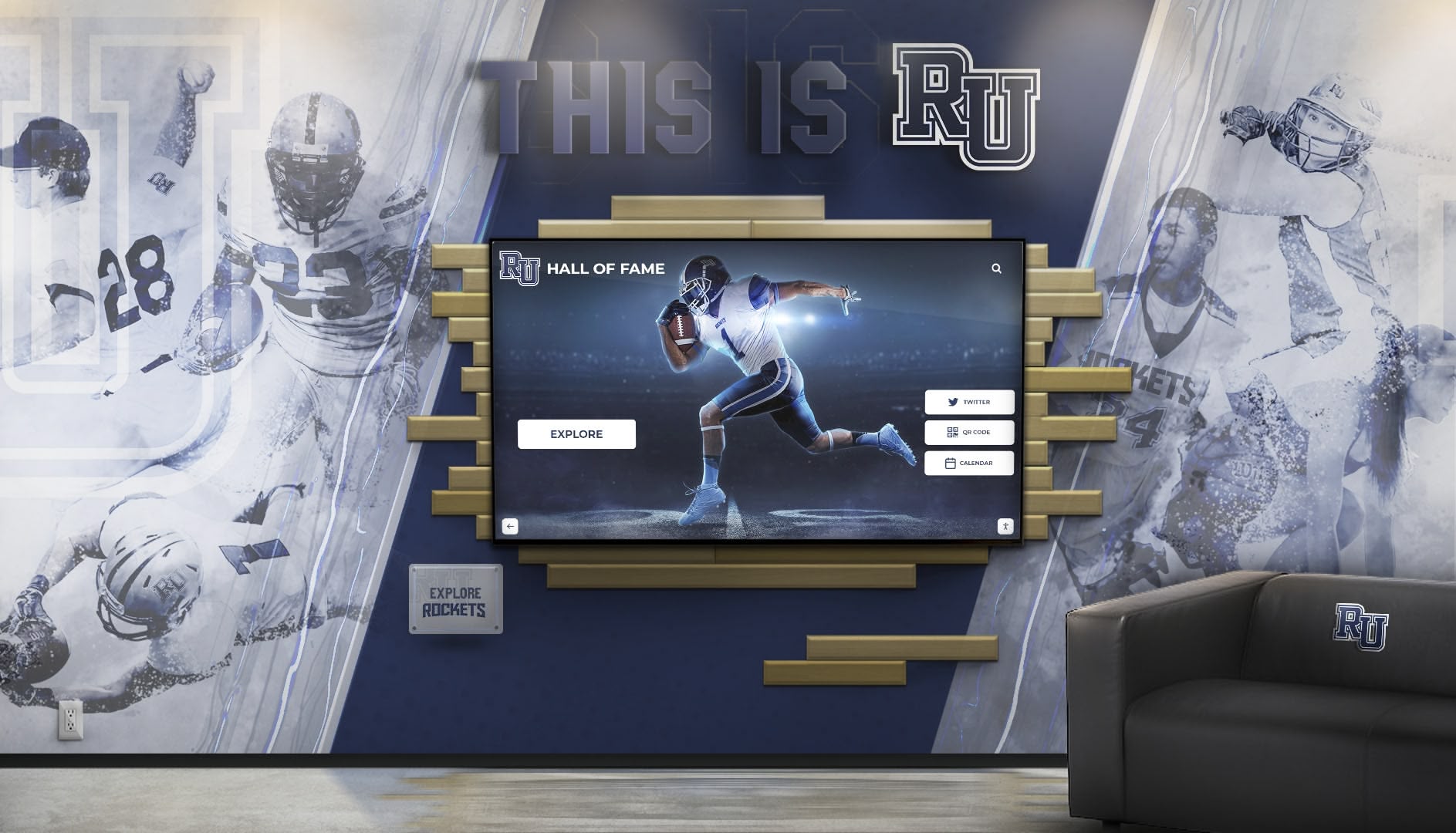
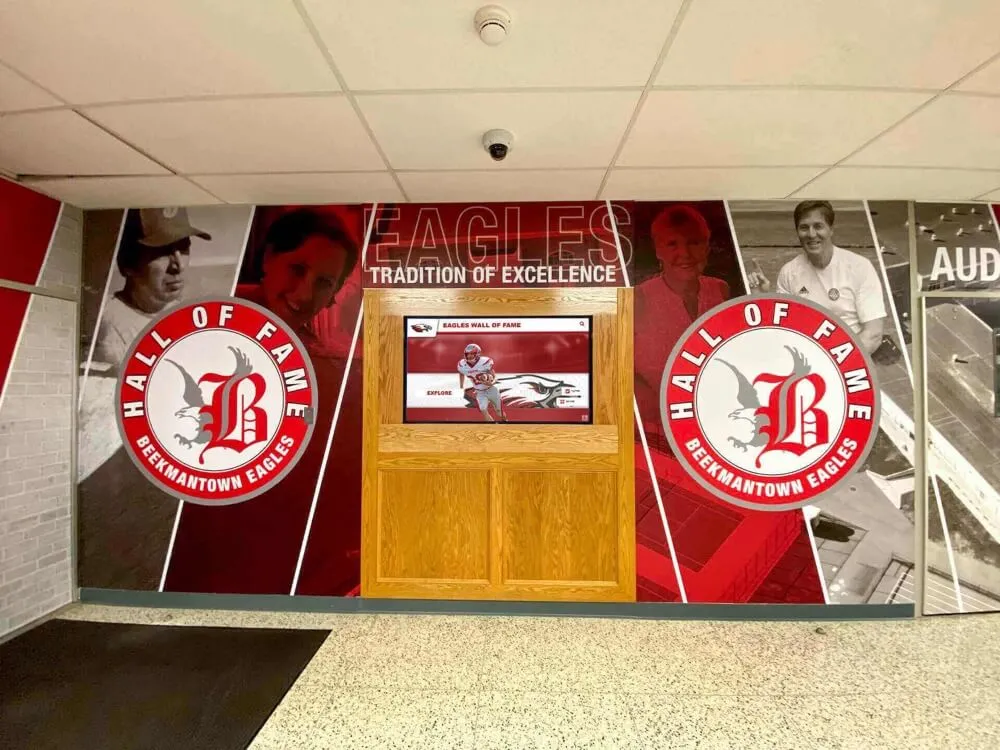
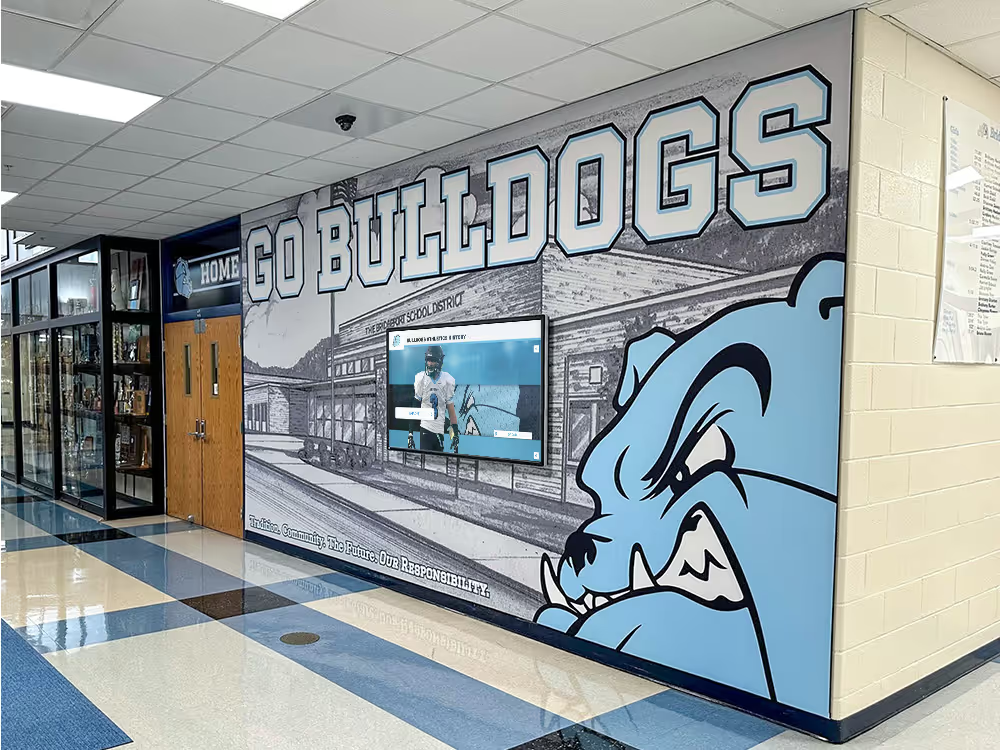
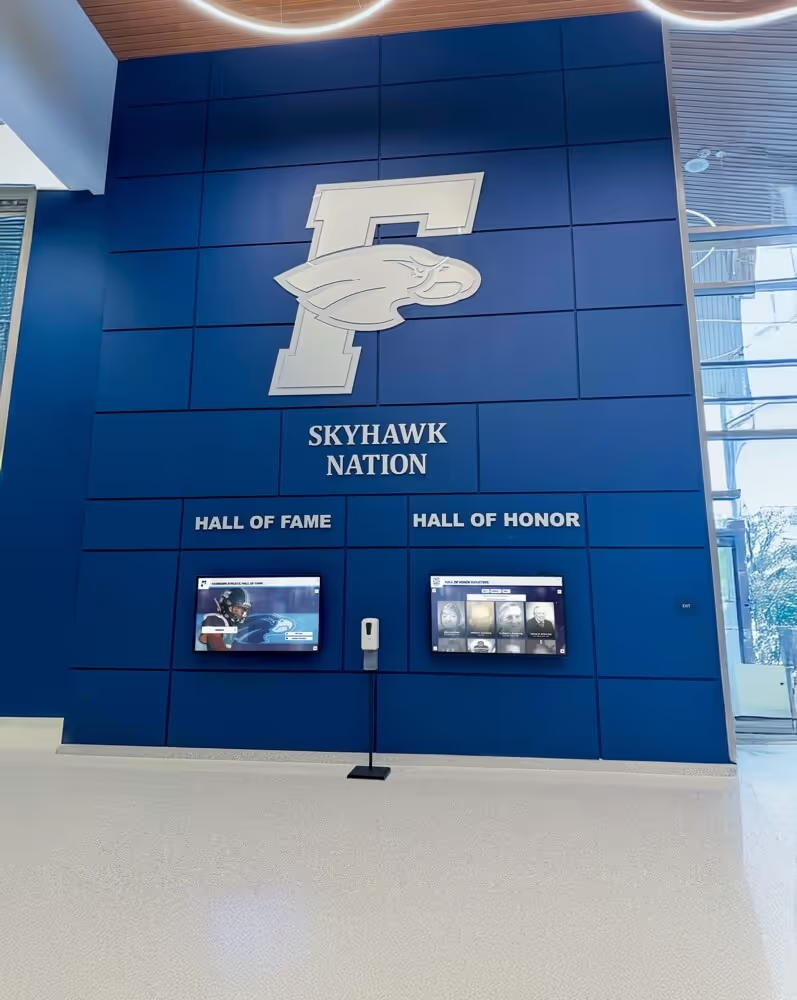
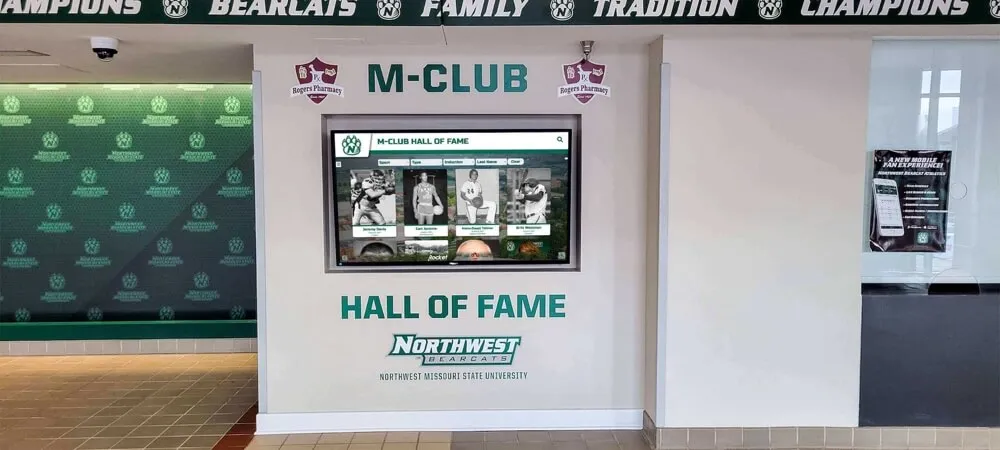
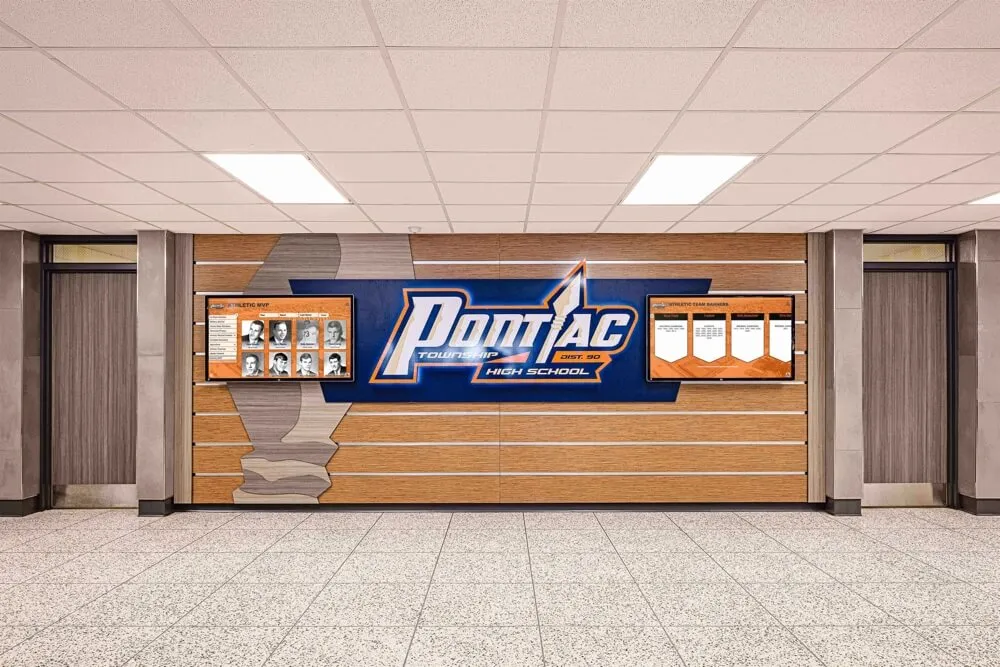
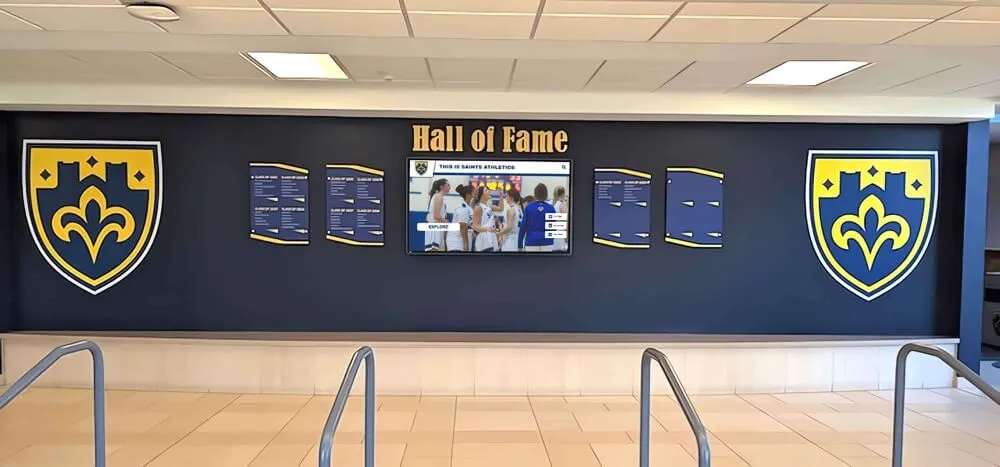
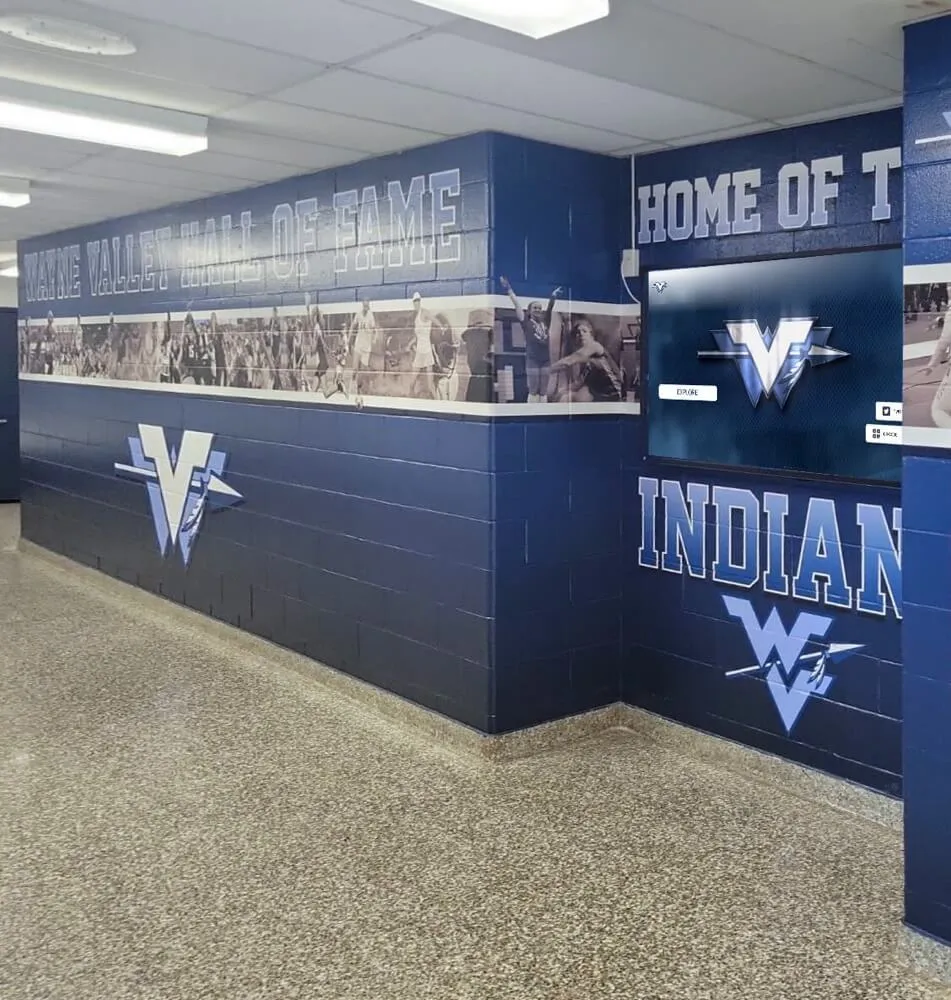
Integrated recognition spaces combine digital displays with traditional design elements creating inspiring athletic environments
How Interactive Touchscreen Displays Transform Athletic Recognition
Modern digital recognition technology solves fundamental limitations of traditional approaches while creating engagement opportunities impossible with static physical displays alone.
Unlimited Recognition Capacity
The most transformative benefit touchscreen displays provide is elimination of space constraints that force programs into difficult recognition trade-offs:
Comprehensive Athlete Celebration
Digital platforms enable athletic departments to showcase unlimited athlete profiles, championship teams, and record achievements with comprehensive information that would require massive physical facilities to approach. A single 55-inch touchscreen can present detailed recognition for thousands of athletes across all sports and eras—each receiving equal digital “space” and professional presentation quality regardless of when they competed or their sport’s revenue profile.
This unlimited capacity fundamentally changes recognition philosophy from exclusive selection (choosing which few achievements fit limited physical space) to inclusive celebration (honoring every deserving athlete, team, and accomplishment comprehensively).
According to research on digital athletic recognition, universities implementing comprehensive touchscreen systems report honoring 5-10 times more athletes than previous physical displays allowed, demonstrating the dramatic capacity difference these technologies provide.
Multi-Sport Equity
Digital recognition ensures all sports receive appropriate celebration rather than trophy case displays inevitably prioritizing revenue sports due to space limitations:
- Olympic sports athletes receive equal profile quality as football and basketball players
- Women’s programs achieve recognition parity with men’s programs
- Individual sport accomplishments gain visibility alongside team championships
- Every era and decade receives appropriate historical representation
- Lesser-known achievements become discoverable rather than invisible
This comprehensive equity strengthens athletic department culture while ensuring all student-athletes feel appropriately valued for their contributions to university athletic excellence.
Rich Multimedia Storytelling Capabilities
Beyond solving capacity constraints, interactive displays enable recognition experiences qualitatively superior to what traditional plaques deliver:
Comprehensive Content Integration
Modern recognition systems incorporate multiple content types creating engaging athlete profiles:
- High-resolution action photography from competitions and championships
- Video highlight reels capturing defining moments and career accomplishments
- Complete career statistics documenting performance across all seasons
- Biographical narratives explaining athlete journeys and program contributions
- Interactive timelines visualizing progression from freshman through senior years
- Championship game summaries with play-by-play details and outcomes
- Teammate connections showing roster relationships and shared achievements
- Post-graduation career information for professional athletes and distinguished alumni
These multimedia capabilities transform simple name listings into comprehensive celebrations that engage visitors far longer than glancing at traditional plaques—creating recognition experiences that appropriately honor athletic excellence through storytelling matching modern audience expectations.
Learn about effective touchscreen software solutions enabling these multimedia recognition capabilities.
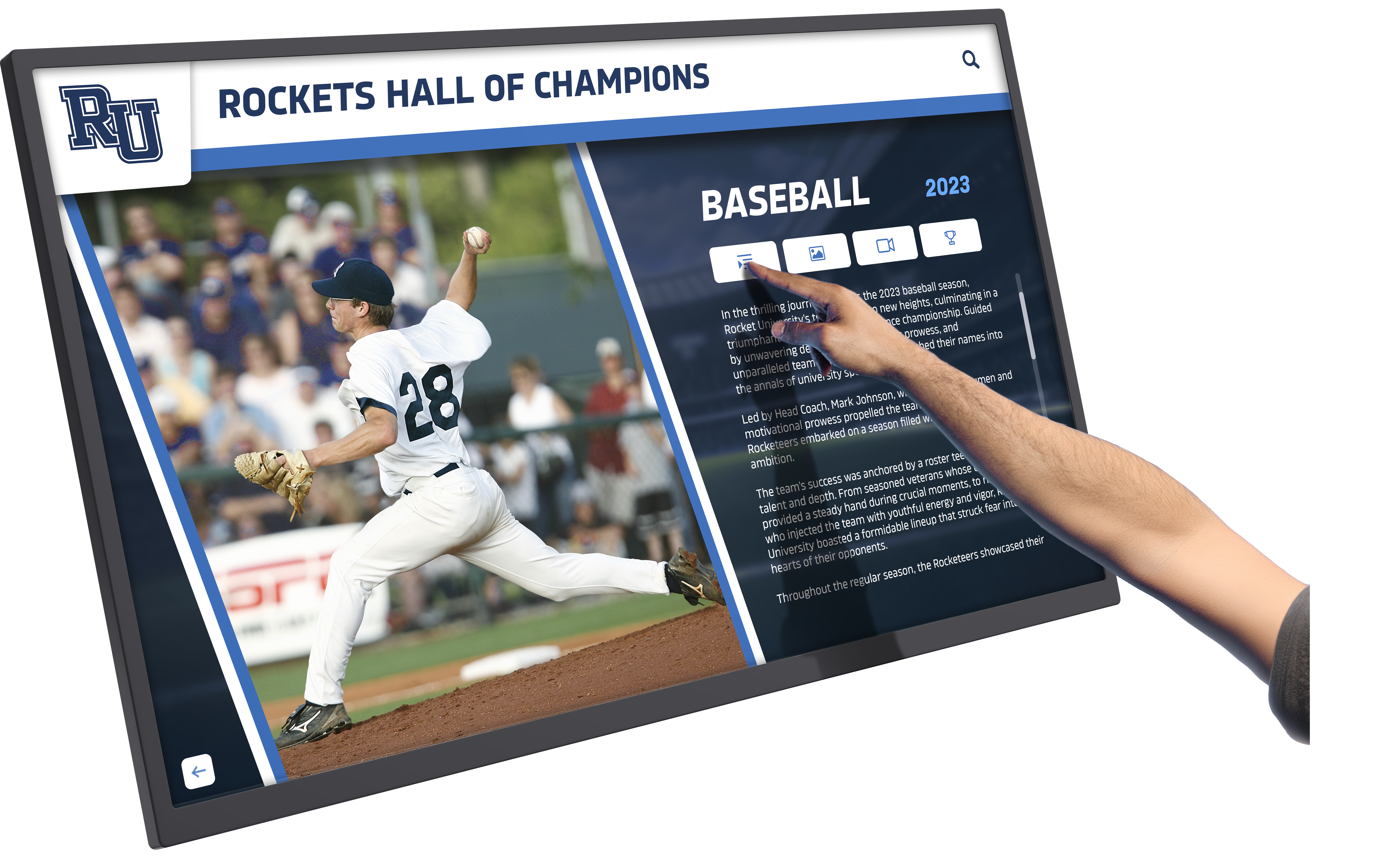
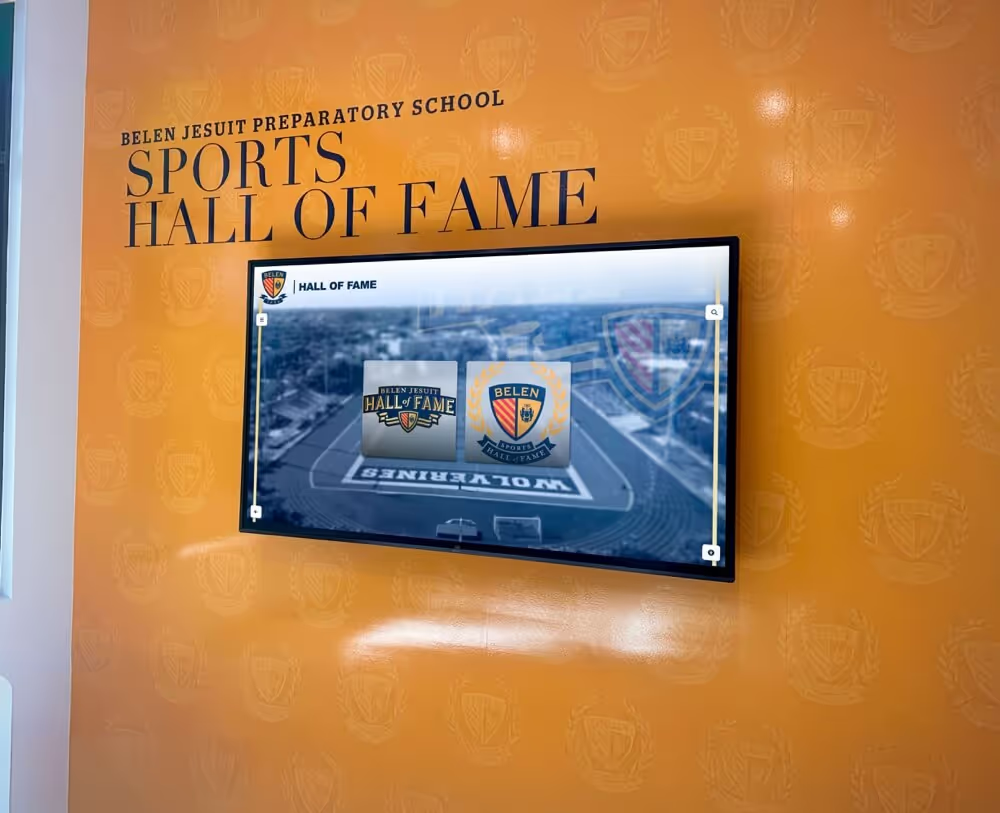
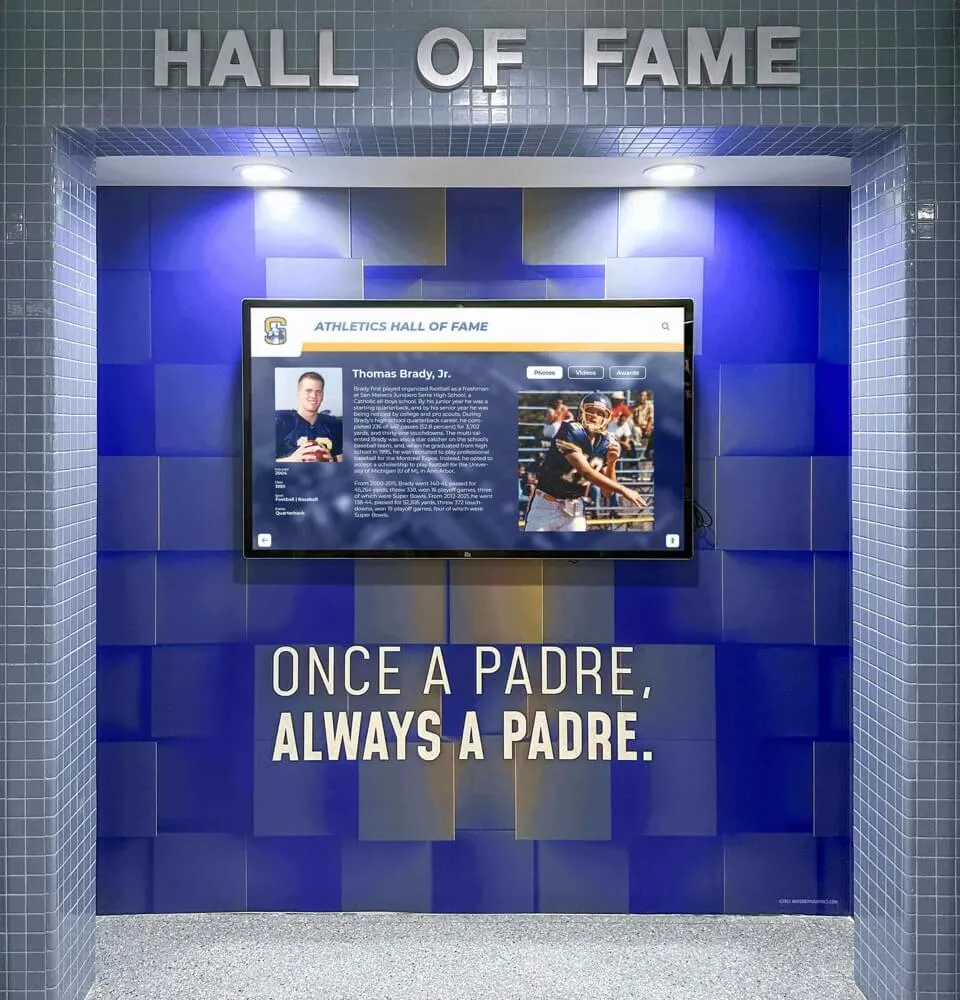
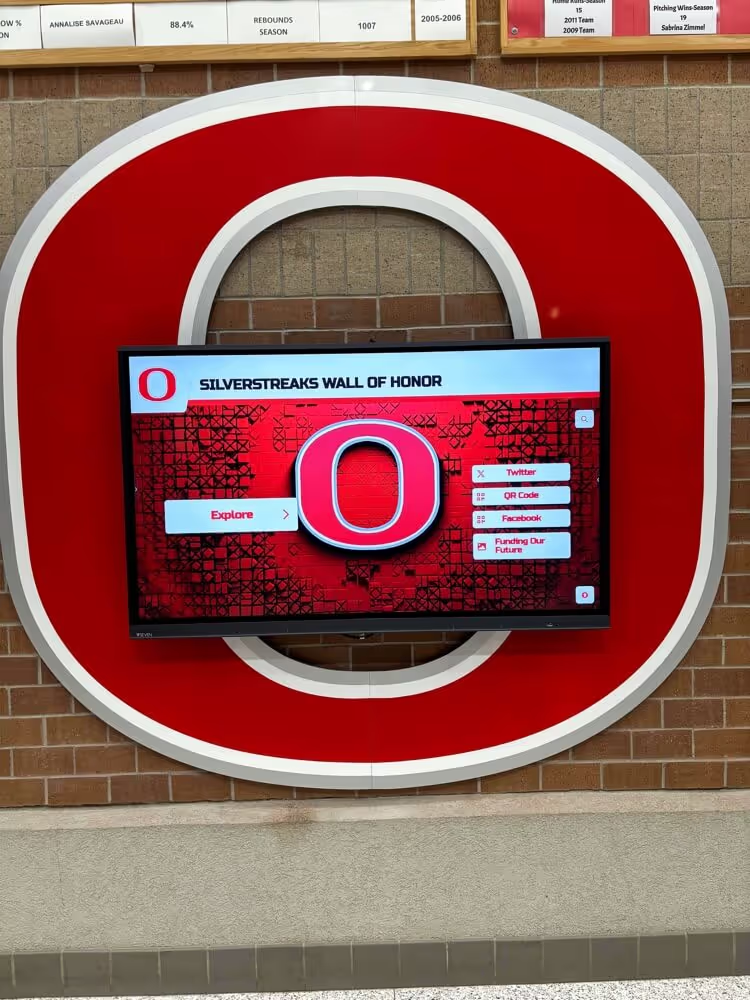
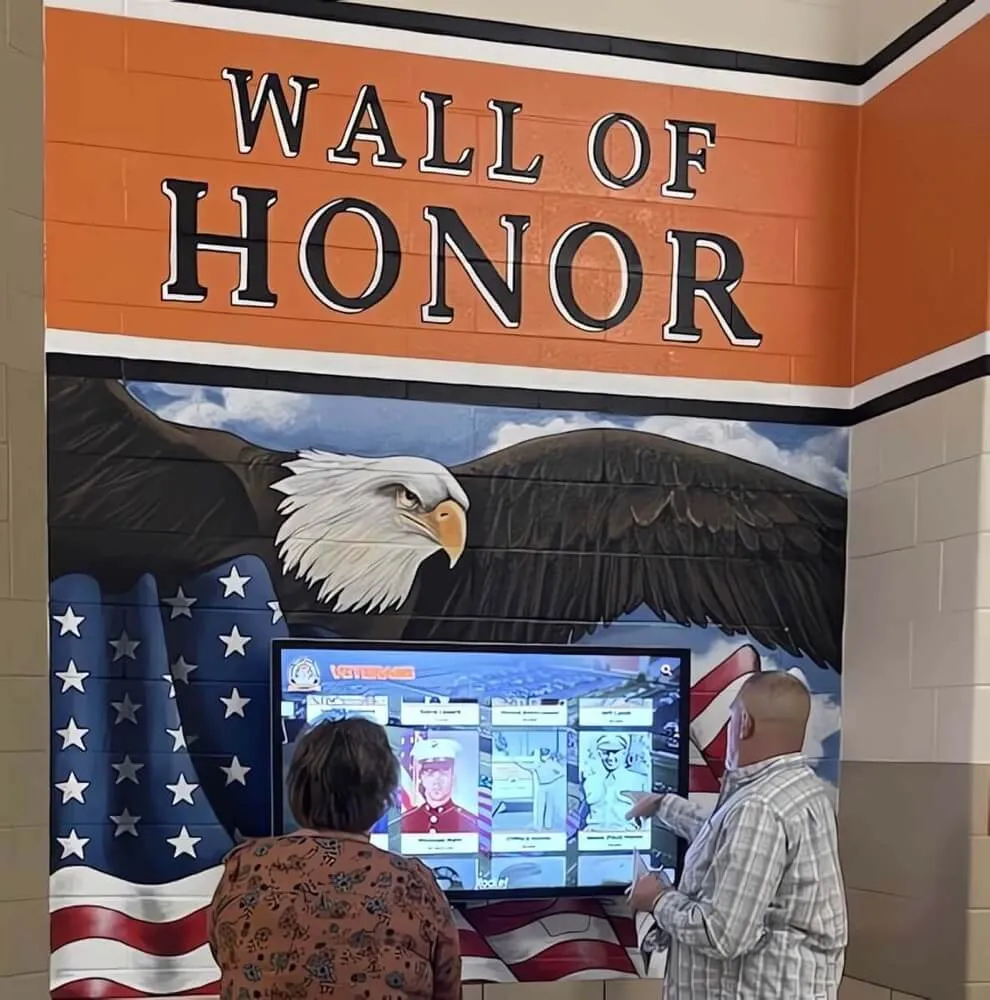
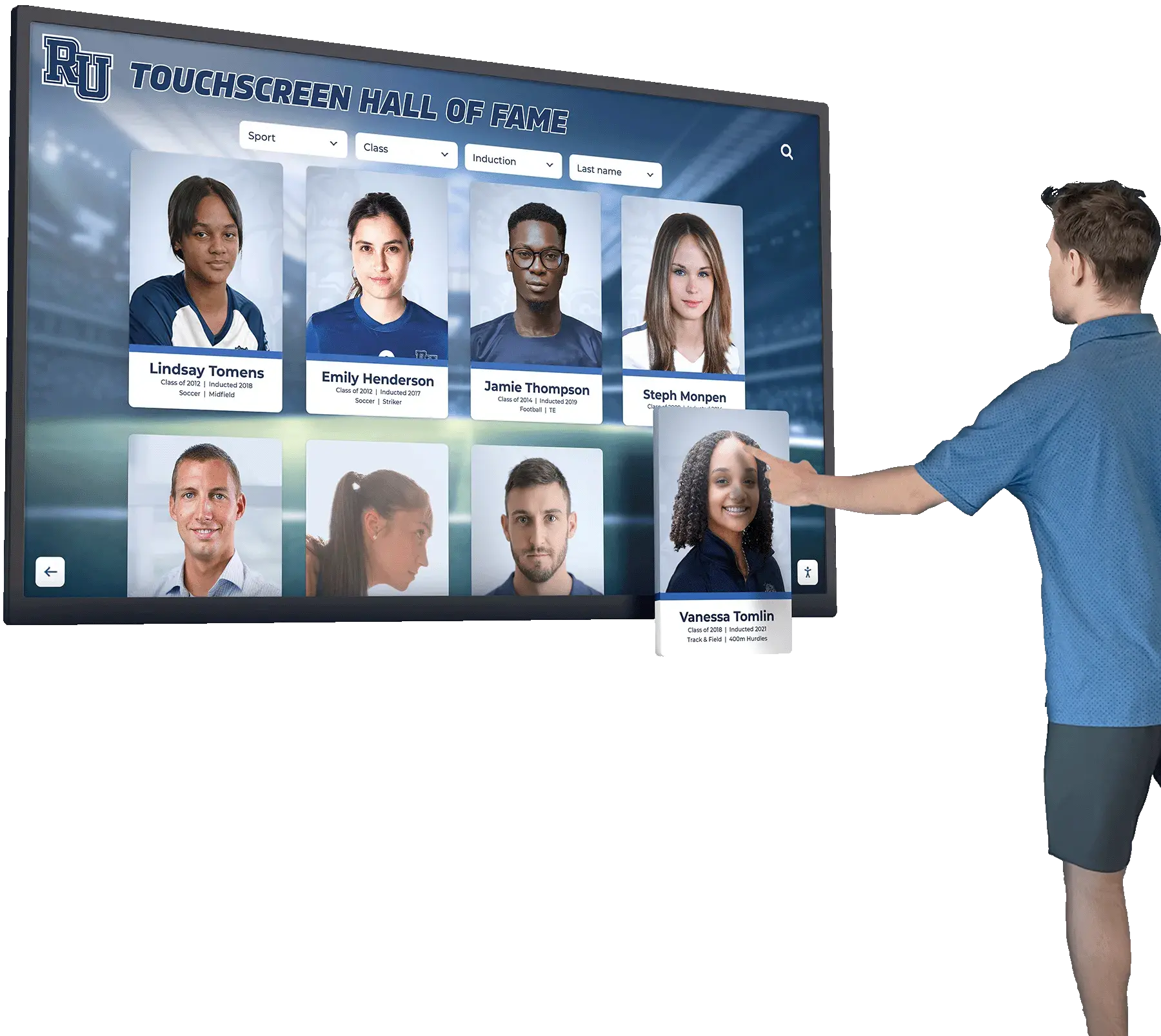
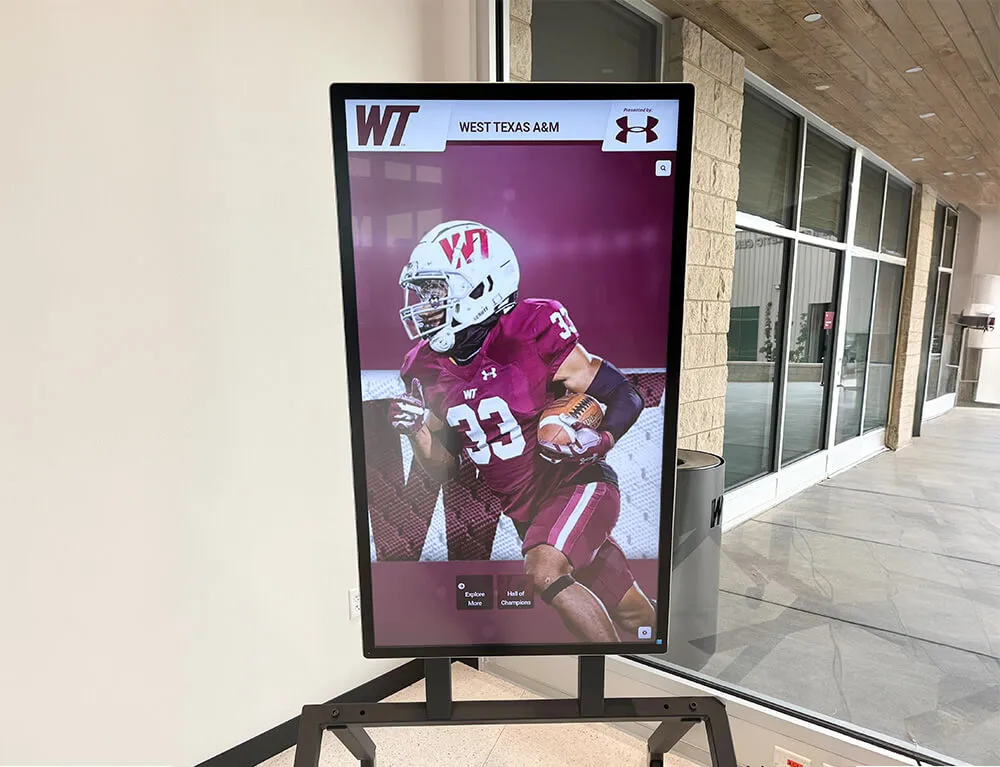
Intuitive touchscreen interfaces enable visitors to explore detailed athlete profiles with photos, videos, and complete career information
Dynamic Content Updates
Cloud-based management systems enable perpetual recognition currency through instant updates:
- Add newly inducted hall of fame members immediately following ceremonies
- Update athlete profiles as they achieve post-graduation accomplishments
- Enhance existing content with additional media as it becomes available
- Feature different athletes or championships seasonally keeping content fresh
- Correct information or improve profiles without physical display modification
- Incorporate new content formats as technology capabilities advance
This dynamic evolution ensures recognition quality improves continuously rather than becoming static historical museum experiencing inevitable degradation as physical displays age and information becomes increasingly outdated.
Engaging Interactive Exploration Features
Perhaps the most significant transformation touchscreens deliver involves fundamentally changing visitor engagement from passive viewing to active exploration and personalized discovery:
Search and Navigation Capabilities
Interactive interfaces enable visitors to find specific content matching their interests:
- Name search finding specific athletes instantly from databases containing thousands of individuals
- Sport filtering showing all athletes from particular programs (basketball, soccer, track, etc.)
- Year and era browsing exploring program history chronologically across decades
- Achievement type filtering (All-Americans, conference champions, record holders, etc.)
- Statistical leaderboards showing top performers across various categories
- Championship year browsing reviewing title teams and tournament runs
- Random exploration enabling serendipitous discovery of unexpected connections
This personalized navigation means every visitor discovers content relevant to their specific interests—dramatically increasing engagement duration and recognition impact compared to predetermined sequences that traditional displays impose on all viewers identically.
Research on interactive museum displays demonstrates that visitors spend 3-5 times longer engaging with touchscreen systems compared to static exhibits, with similar findings applicable to athletic recognition contexts where active exploration creates sustained attention impossible with traditional approaches.
Social Integration and Extended Reach
Modern recognition systems extend impact far beyond physical facility visitors:
- Social media sharing enabling athletes to celebrate their recognition across platforms
- Web-accessible versions allowing alumni anywhere worldwide to explore recognition
- Mobile optimization ensuring smartphone and tablet compatibility for all content
- QR code integration connecting physical plaques to comprehensive digital profiles
- Email sharing allowing parents and families to promote athlete recognition
- Search engine visibility connecting external audiences to program achievements
This extended reach means recognition influences recruiting prospects who haven’t yet visited campus, engages distant alumni maintaining connections to programs, and amplifies positive program messaging organically through social networks—multiplying recognition value far beyond on-campus display impact alone.
Discover comprehensive approaches to showcasing student athlete achievements through integrated digital and social strategies.
Implementing Touchscreen Recognition at University Athletic Programs
Successfully implementing comprehensive digital recognition requires systematic planning addressing technology selection, content development, and sustainable management specific to university athletic contexts.
Technology Platform Selection for NCAA Programs
Universities evaluating digital recognition solutions face numerous options with dramatically different capabilities appropriate for comprehensive athletic applications:
Essential Platform Capabilities
Purpose-built athletic recognition platforms provide critical advantages:
- Cloud-based content management enabling remote updates without physical display access
- Unlimited content storage supporting extensive athlete, team, and media libraries
- Athletic-specific templates and taxonomies organizing content by sport, position, and achievement type
- Intuitive interfaces requiring minimal technical expertise for ongoing management by athletic staff
- Robust search and filtering enabling content discovery in large athlete databases
- Mobile-responsive web design ensuring access across all devices globally
- Statistical presentation features designed specifically for athletic performance documentation
- Integration capabilities with athletic department information systems when desired
- Analytics revealing engagement patterns and popular content informing strategy optimization
- Comprehensive support including training, technical assistance, and platform enhancements
Generic digital signage systems lack many capabilities essential for athletic recognition—requiring extensive custom development, creating administrative complexity, and typically abandoning recognition management over time as staff lack appropriate tools for sustainable updates.
Rocket Alumni Solutions for Athletic Recognition
Solutions designed specifically for institutional athletic recognition deliver advantages critical for university programs:
- Proven implementation experience across hundreds of successful university athletic installations
- Pre-built athletic templates accelerating launches while ensuring professional quality
- Sport-specific features including statistical leaderboards, position categorization, and team roster presentation
- Championship bracket visualization for tournament documentation
- Unlimited athlete capacity supporting comprehensive recognition without per-profile costs
- White-glove implementation services ensuring successful launches and avoiding common pitfalls
- Ongoing training and technical support preventing program abandonment
- Regular platform enhancements driven by athletic customer feedback
- Favorable educational pricing reflecting university budget realities
These specialized capabilities justify investment in dedicated recognition platforms over attempting to adapt generic technologies for complex athletic recognition requiring sustained long-term management across staff transitions.
Learn about choosing interactive kiosk software for athletic recognition applications.
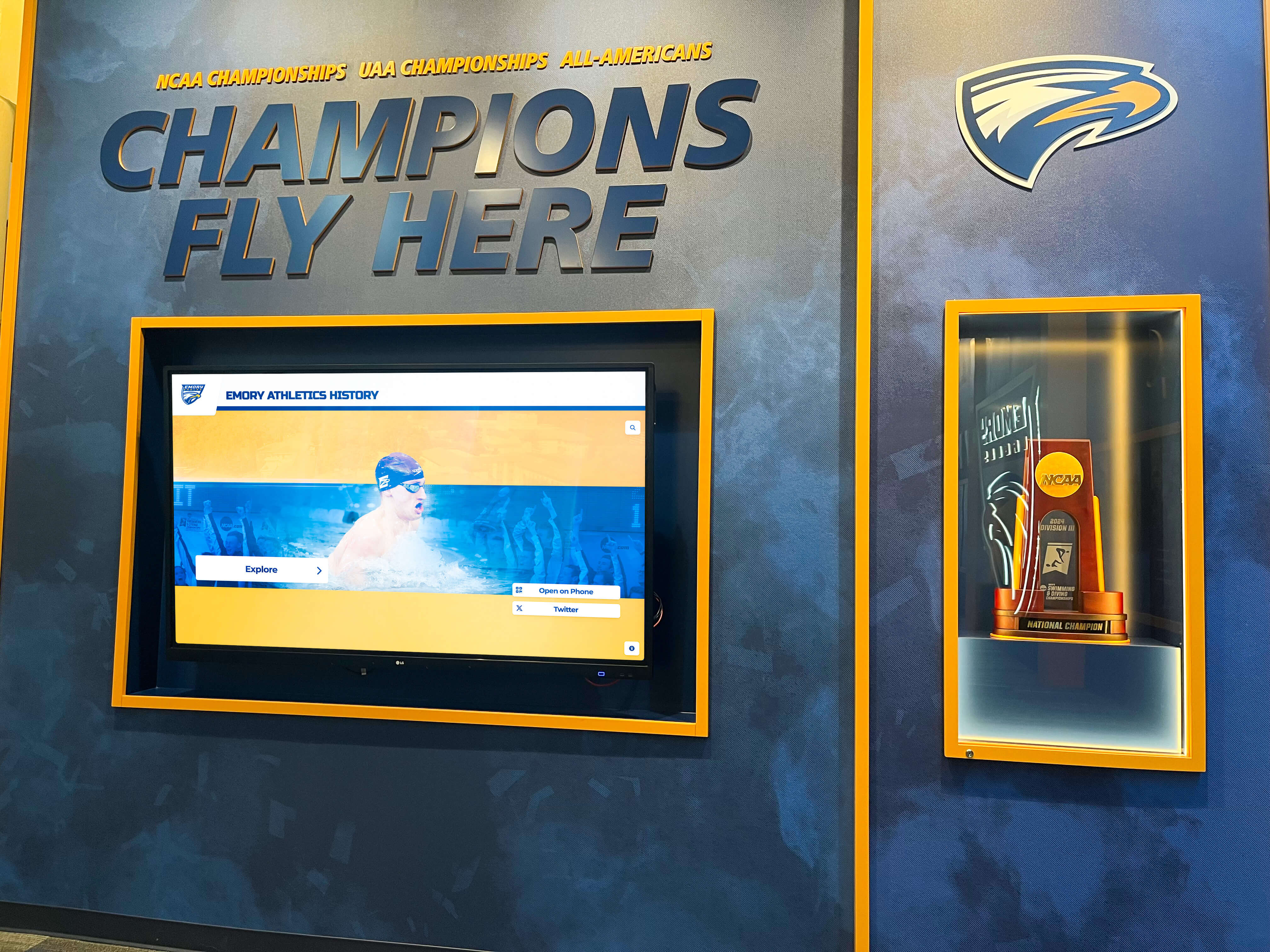
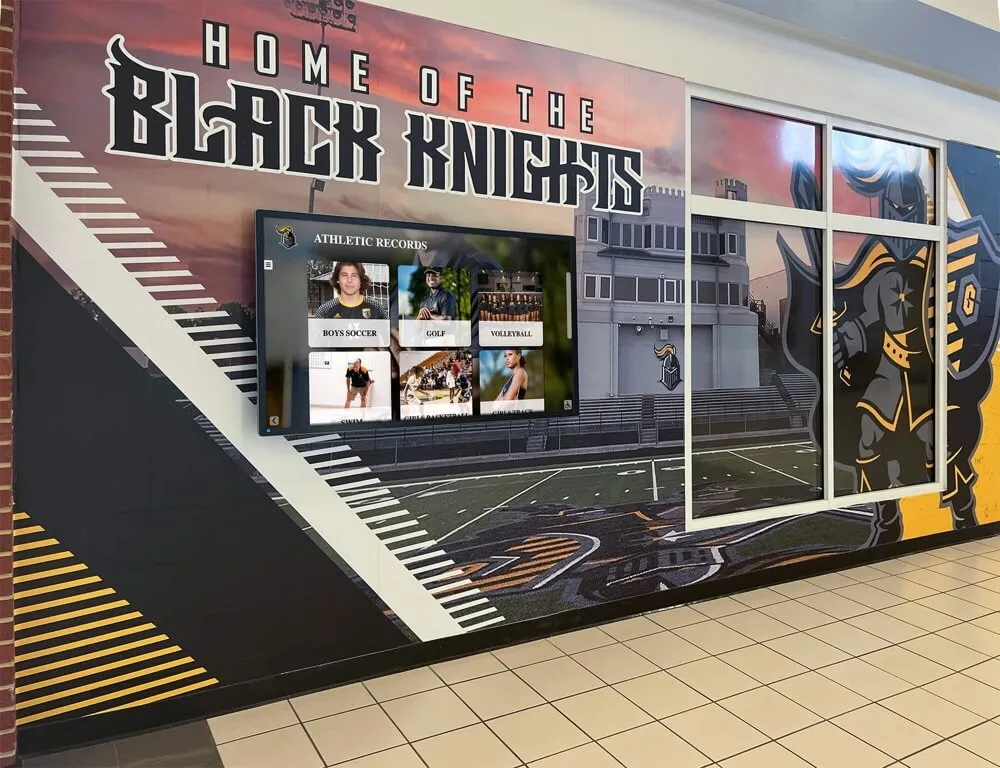
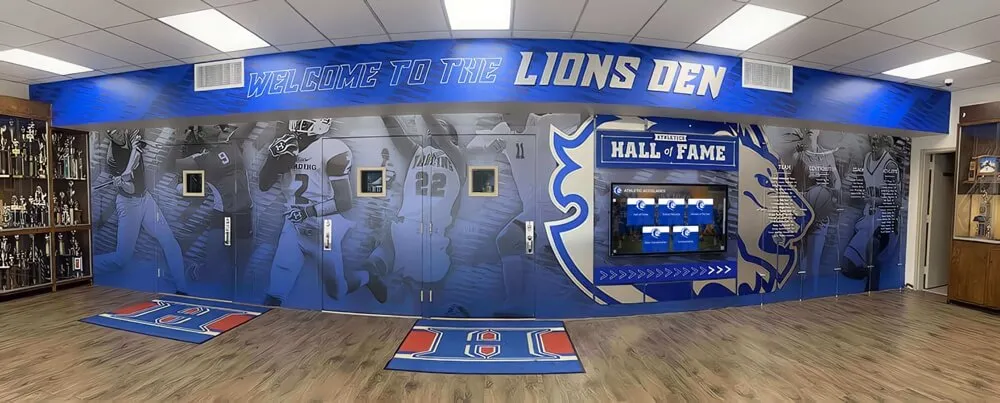
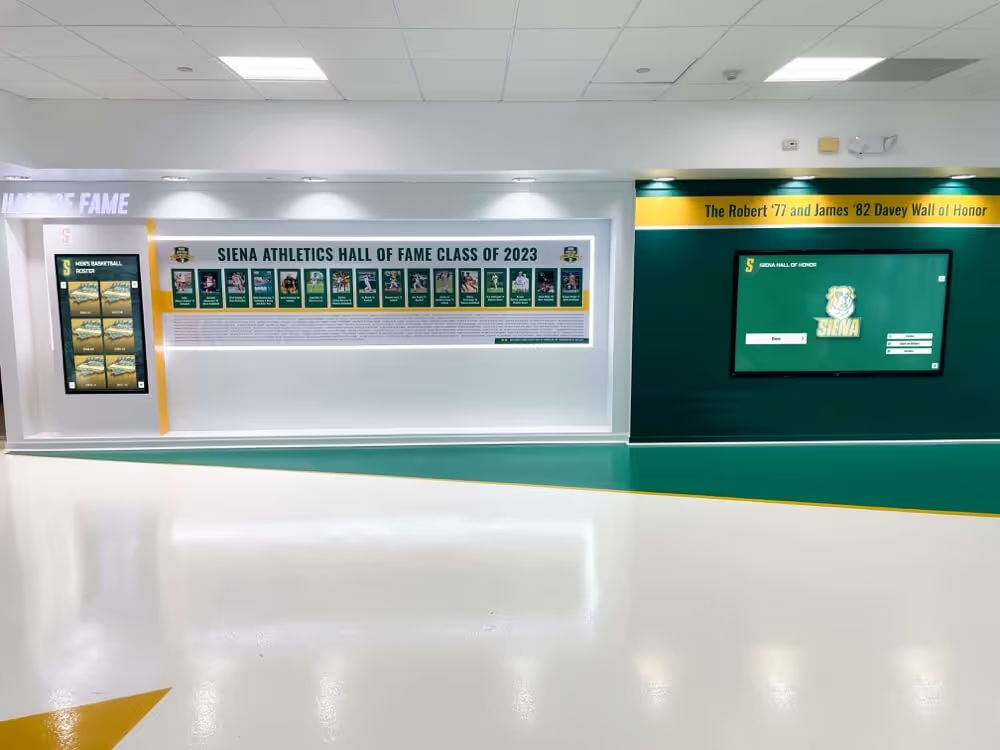
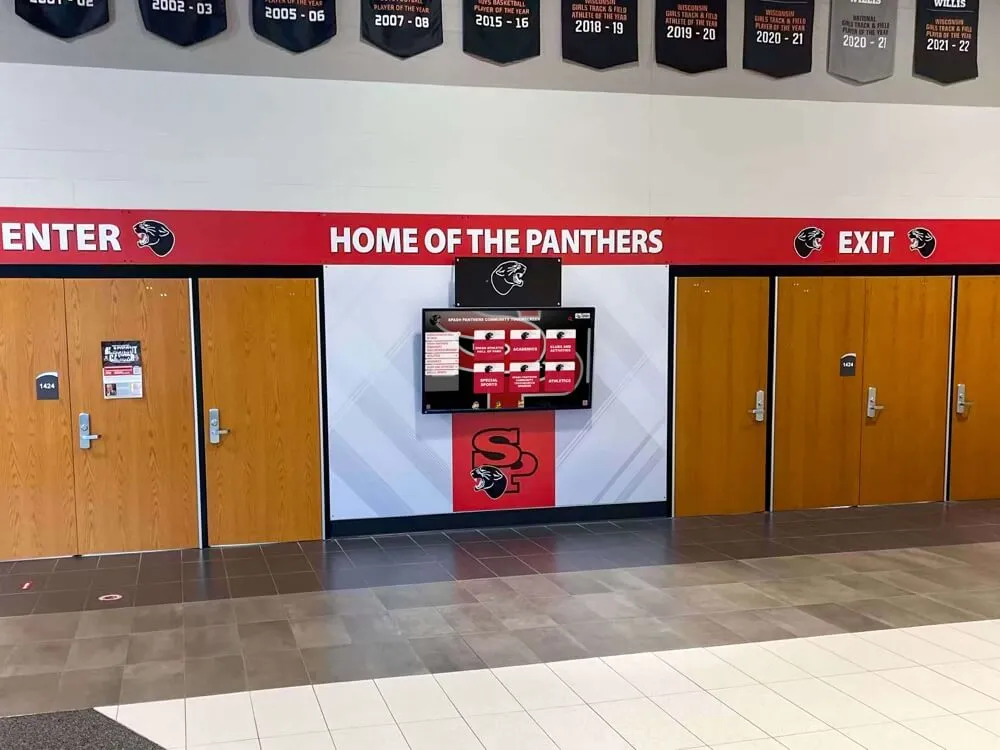
Professional installations integrate touchscreens with traditional championship displays creating comprehensive recognition environments
Strategic Display Placement in Athletic Facilities
Location decisions significantly impact recognition visibility, engagement, and cultural influence throughout athletic departments:
High-Impact Primary Locations
Optimal touchscreen placement for maximum athletic community engagement:
- Main athletic facility entrance lobbies ensuring every visitor encounters recognition immediately
- Weight room and training facility areas where current athletes engage daily with program history
- Locker room corridors creating pre-competition inspiration and cultural reinforcement
- Academic support center spaces emphasizing student-athlete success beyond competition
- Team meeting rooms providing recognition context during coaching presentations
- Premium seating areas creating engagement for donors and VIP supporters
- Media room lobbies where journalists and broadcasters discover program history
- Multiple distributed locations reaching diverse stakeholders throughout large athletic complexes
Universities report highest engagement when recognition appears in spaces where athletes and stakeholders naturally gather rather than low-traffic areas people rush past without opportunity for meaningful exploration.
Recruiting Tour Integration
Strategic placement ensures prospective student-athletes encounter impressive recognition during campus visits:
- Visible from facility entrance creating immediate first impressions
- Positioned along standard recruiting tour routes ensuring consistent exposure
- Accessible for independent prospect exploration during unstructured visit time
- Located near areas showcasing other facility features and program investments
- Integrated with coaching staff presentation spaces for structured recognition discussions
Athletic departments implementing prominent recognition consistently report recruiting advantages, with prospects and families specifically mentioning display quality during decision-making processes—justifying recognition investment through measurable enrollment outcomes.
Content Development for Comprehensive Athletic Recognition
Recognition quality depends entirely on content depth, accuracy, and storytelling effectiveness—making systematic content development critical for successful implementation:
Historical Research and Data Collection
Comprehensive athletic recognition requires gathering achievement information across entire program histories:
Essential Information Sources
- Athletic department historical records and media guides documenting program history
- Conference and NCAA records providing verified achievement and statistical information
- University yearbooks and archives containing team photos and historical documentation
- Local newspaper coverage and historical reporting about significant games and seasons
- Media relations archives including press releases, game notes, and statistical summaries
- Coaching staff institutional knowledge about program traditions and memorable athletes
- Alumni interviews gathering personal stories and career memories
- Statistical databases and record books documenting performance across eras
Universities should allocate appropriate time for comprehensive historical research—typically 150-300 hours for Division I programs with extensive histories—ensuring recognition accuracy and completeness from launch rather than spending years gradually enriching initially sparse content.
Athlete Profile Development Standards
Comprehensive individual athlete recognition should include:
Core Profile Components
- Full name with preferred name display and proper pronunciation guidance
- Sport, position/event specialization, and jersey number when applicable
- Years of competition and class graduation year with degree information
- Hometown and high school background providing context
- Complete career statistics across all seasons and post-season competition
- Conference and national honors received (All-Conference, All-American, etc.)
- Championship participation and contributions to title teams
- School records held or significant statistical rankings within program history
- Academic honors including Academic All-Conference and Academic All-American recognition
- Memorable games and defining moments in athletic careers
- Coaching staff testimonials about athlete contributions and character
- Post-graduation career summary including professional athletics or distinguished careers
Multimedia Content Standards
- High-resolution action photography (minimum 1920x1080) from competitions
- Portrait photos for profile displays showing athletes in team uniforms
- Video highlights (1080p HD minimum) capturing signature plays and championship moments
- Historical footage properly formatted and enhanced for modern display quality
- Audio clips from memorable game broadcasts when available
- Proper rights clearance for all photos, videos, and broadcast content
Maintaining consistent quality standards across all athlete profiles ensures professional presentation befitting achievement significance while creating cohesive user experiences that engage visitors effectively.
Explore systematic approaches to developing athletic recognition content including research and production strategies.
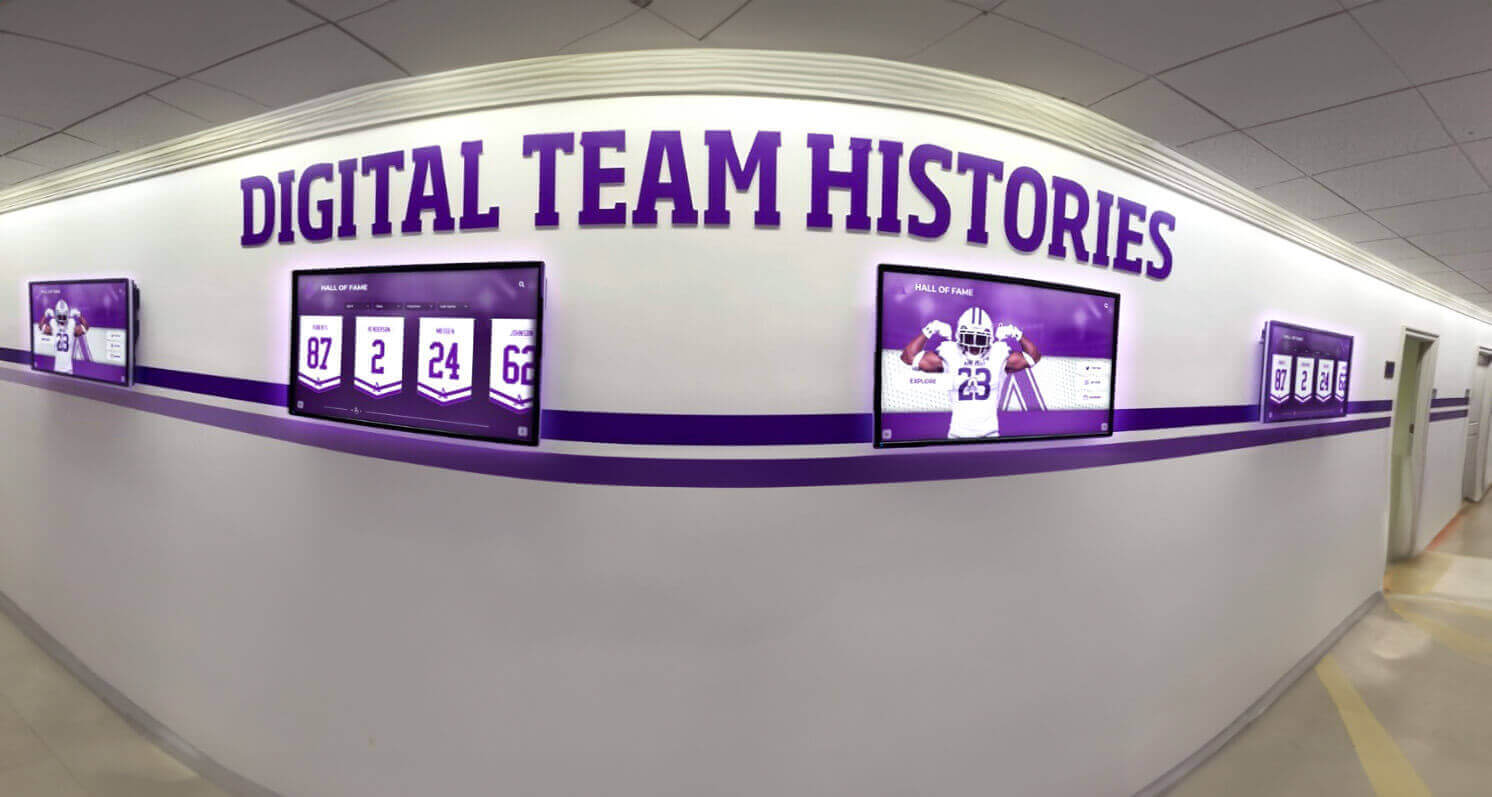
Distributed display installations throughout athletic facilities ensure comprehensive recognition reaches all stakeholder audiences
Championship and Team Recognition Strategies
Beyond individual athletes, comprehensive recognition celebrates team achievements and championship moments defining program excellence:
Championship Team Documentation
Complete celebration of conference and national championship teams includes:
- Full roster with links to individual athlete profiles for complete team documentation
- Season records and statistical leaders across all performance categories
- Tournament progression and playoff results with game-by-game summaries
- Championship game highlights and defining moments captured through video
- Coaching staff recognition acknowledging leadership contributions
- Team photos including championship celebration imagery
- Historical context about championship significance within program history
- Media coverage and contemporary reactions to championship achievements
Statistical Leaderboards and Record Books
Digital platforms enable comprehensive statistical documentation:
Sport-Specific Statistical Leaders
- Career leaders across relevant statistical categories for each sport
- Single-season records highlighting exceptional individual performances
- Single-game records documenting historic achievements
- Active player comparisons showing current athletes pursuing program records
- Historical context explaining record significance and competitive difficulty
Team Records and Milestones
- Most wins in single seasons across different sports
- Longest winning streaks in program history
- Conference championship totals and tournament appearance frequency
- Head-to-head records against rivalry opponents
- Facility records for home venue performances
These statistical presentations create natural discovery mechanisms enabling users to explore program history through achievement lenses relevant to their interests—finding their favorite sport’s greatest performers or comparing current athletes to historical standards that define program excellence.
Maximizing URI and NCAA Athletic Recognition Impact
Beyond implementation, strategic approaches maximize recognition systems’ value across institutional objectives from recruiting to alumni engagement and cultural development.
Recruiting Integration Strategies
University recognition systems significantly influence recruiting outcomes when strategically leveraged throughout prospect engagement processes:
Campus Visit Incorporation
Interactive displays enable prospective athletes to independently explore program history during facility tours, discovering athletes from their positions or hometowns, reviewing championship traditions and competitive standards, and understanding program culture without requiring staff-guided presentations for every recognition component.
Recruiting coordinators can leverage displays during formal presentations—highlighting specific athletes relevant to prospects’ backgrounds, demonstrating championship pedigree and player development track records, showcasing recent achievements maintaining program momentum, and emphasizing long-term recognition ensuring athletes’ legacies receive lasting celebration beyond competitive careers.
Virtual Recruiting Applications
Beyond physical visits, digital recognition extends recruiting value through virtual access:
- Web-based recognition accessible to prospects unable to visit campus in person
- Social media content featuring recognition displays promoting program culture
- Email marketing highlighting recent hall of fame inductions or record achievements
- Video tour integration showcasing recognition as facility highlights
- Direct links in recruiting communications to relevant athlete profiles
This virtual accessibility ensures recognition influences recruiting even for prospects who never physically tour campuses or for whom visits occur before recognition emerges as a significant decision factor.
Learn about maximizing athletic recruiting with digital recognition displays through comprehensive strategies.
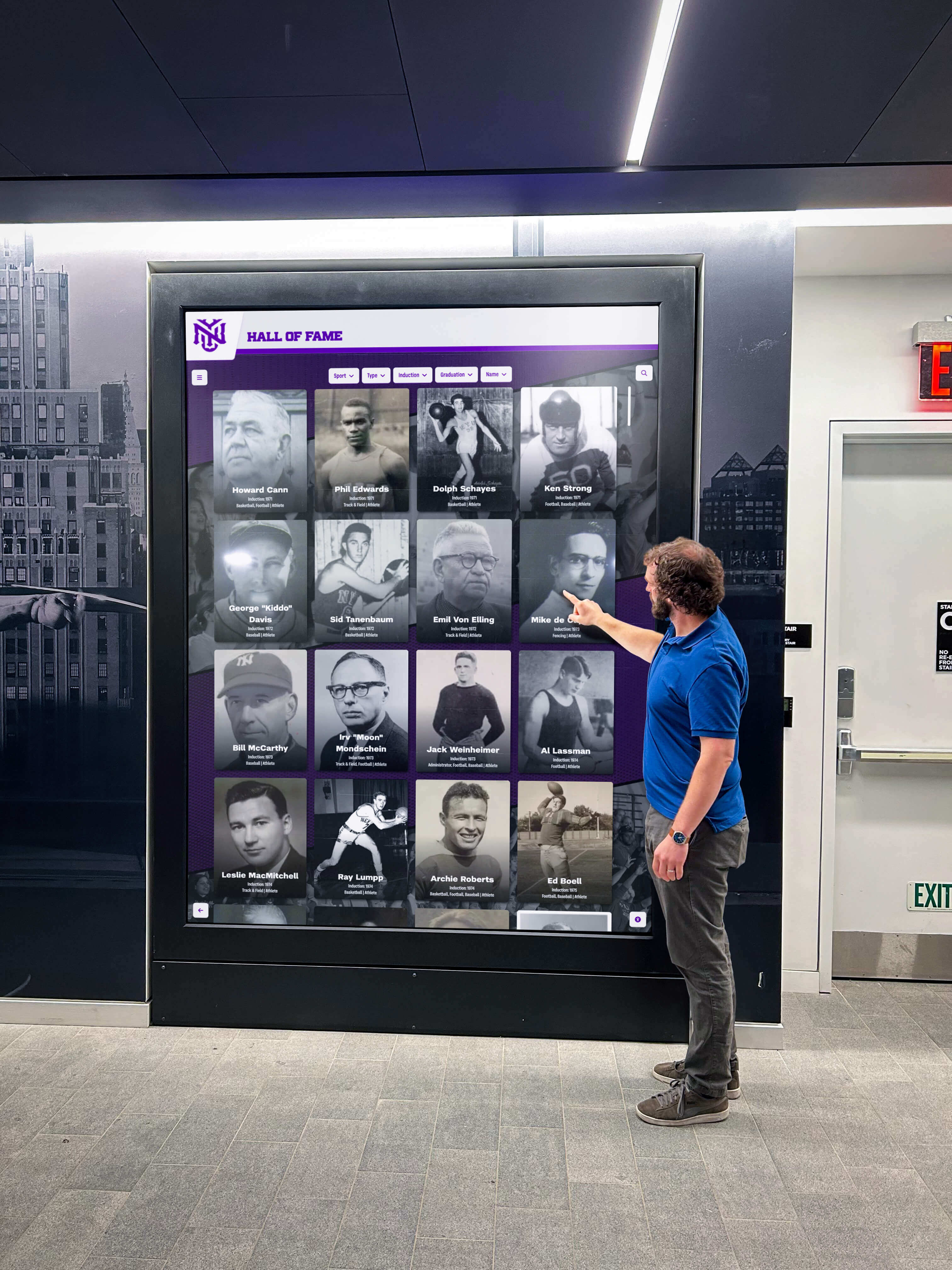
User-friendly interfaces enable prospective recruits to independently explore program history during campus facility tours
Alumni Engagement and Connection
NCAA programs with engaged alumni networks benefit from enhanced giving, recruiting support, mentorship programs, and general program advocacy—outcomes digital recognition significantly strengthens:
Reconnection Facilitation
Recognition systems enable alumni to find and reconnect with former teammates decades after graduation:
- Team roster pages listing complete championship squad members with contact information when shared
- Graduation class filters showing all athletes from specific years
- Sport-specific browsing connecting individuals with shared competitive experiences
- Social sharing enabling alumni to reach out to teammates discovered through recognition
Athletic departments report that alumni frequently use recognition systems specifically for teammate discovery, spending extended time exploring historical content and reaching out to reconnect with individuals not contacted in years.
Personal Legacy Access
Athletes appreciate convenient access to their own achievements and competitive statistics:
- Sharing recognition profiles with family members and colleagues celebrating athletic careers
- Referencing career statistics and accomplishments for professional networking
- Showing children and grandchildren university athletic achievements
- Maintaining connection to athletic identities that shaped college experiences
This personal value creates appreciation for recognition programs while strengthening alumni emotional bonds to athletic departments—supporting engagement objectives that benefit programs through ongoing involvement and support.
Multi-Generational Family Recognition
Families with multiple generations competing at universities particularly value recognition connecting parents, children, and grandchildren who all wore team uniforms—strengthening emotional bonds to programs through these generational connections that create distinctive family legacies within athletic traditions.
Discover comprehensive alumni engagement strategies leveraging recognition for relationship development.
Team Culture and Current Athlete Inspiration
Recognition displays serve critical functions strengthening current team culture and motivating athletic excellence:
Daily Inspiration and Standard Setting
Athletes training in facilities showcasing comprehensive program history develop deeper understanding of:
- Performance standards that define program excellence across eras
- Championship traditions they’re continuing through current competition
- Legendary athletes who previously wore their jersey numbers
- Records representing achievement benchmarks defining exceptional careers
- Coaching philosophies and program values demonstrated consistently across decades
This historical context creates pride in program affiliation while establishing aspirational standards motivating athletes to achieve excellence worthy of future recognition alongside legendary predecessors they discover through daily facility engagement.
Academic Excellence Emphasis
Comprehensive recognition highlighting Academic All-Conference and Academic All-American honors reinforces that athletic departments value complete student-athlete development:
- Celebrating academic achievement alongside athletic accomplishments
- Demonstrating that elite athletes achieve classroom success simultaneously
- Providing role models for current athletes balancing sports and academics
- Creating pride in program academic performance and institutional reputation
This balanced recognition approach strengthens academic culture within athletic programs while supporting broader university educational missions and NCAA academic progress requirements.
Explore strategies for academic recognition programs within athletic contexts.
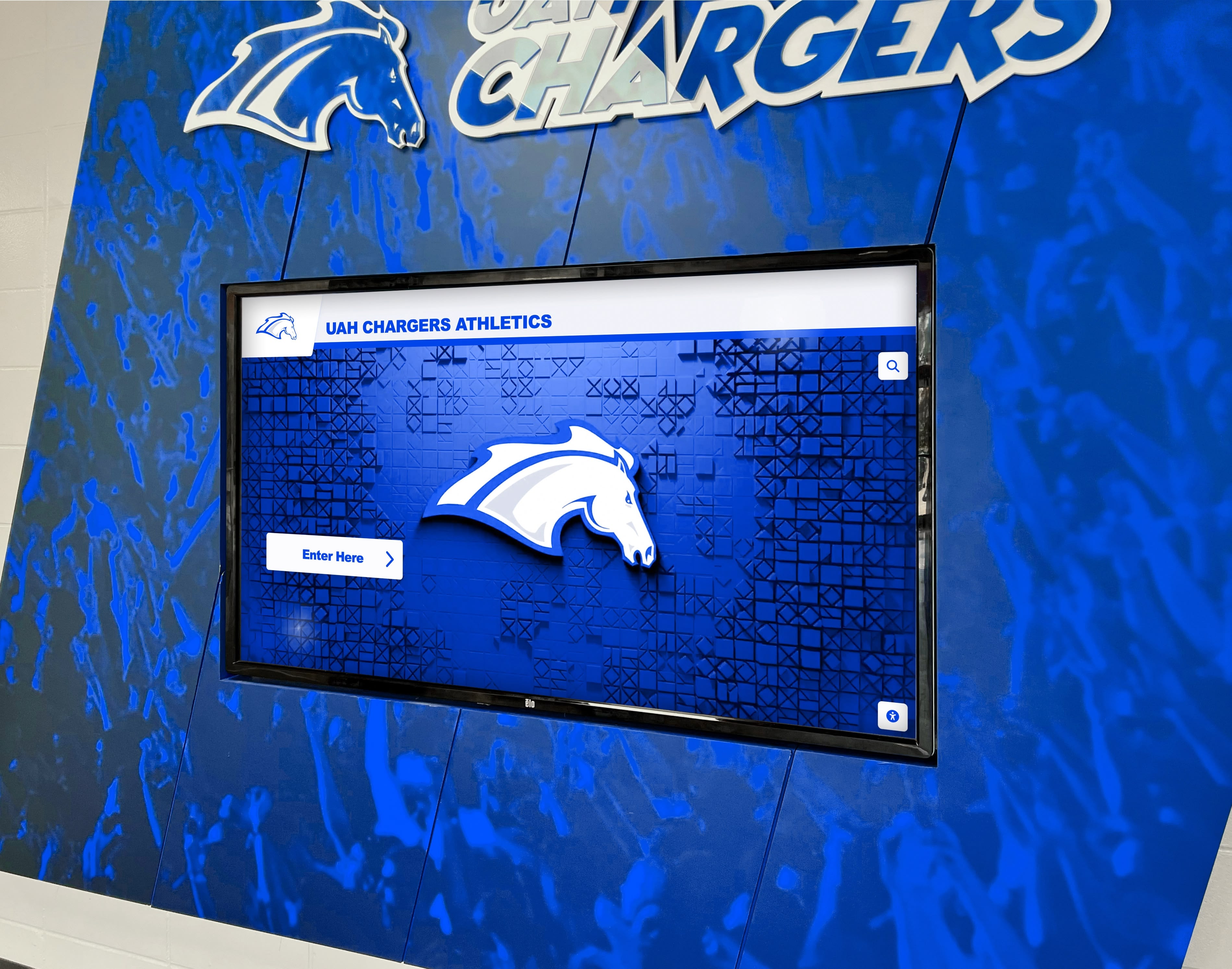
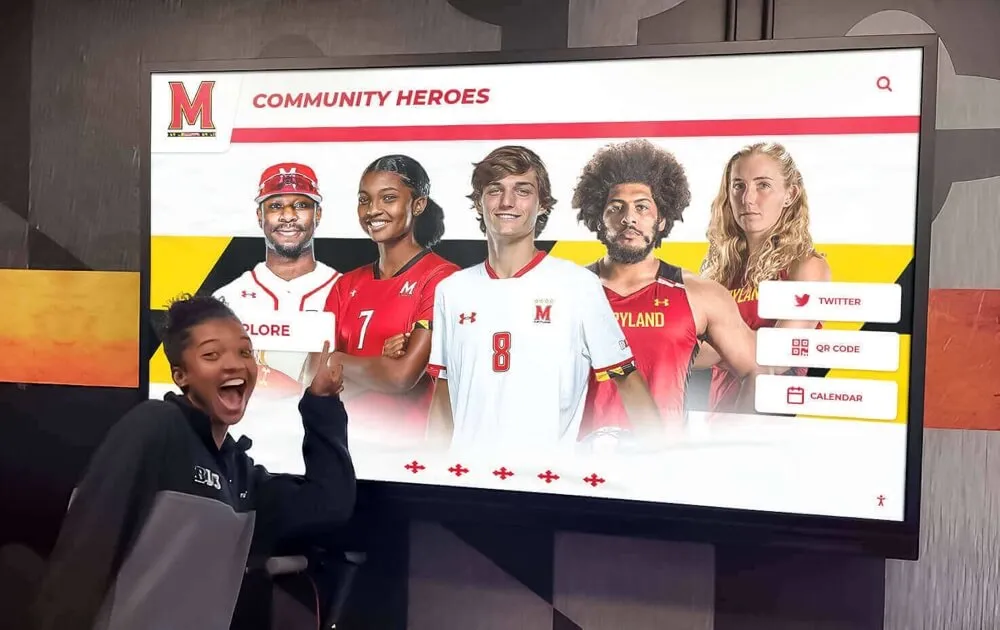
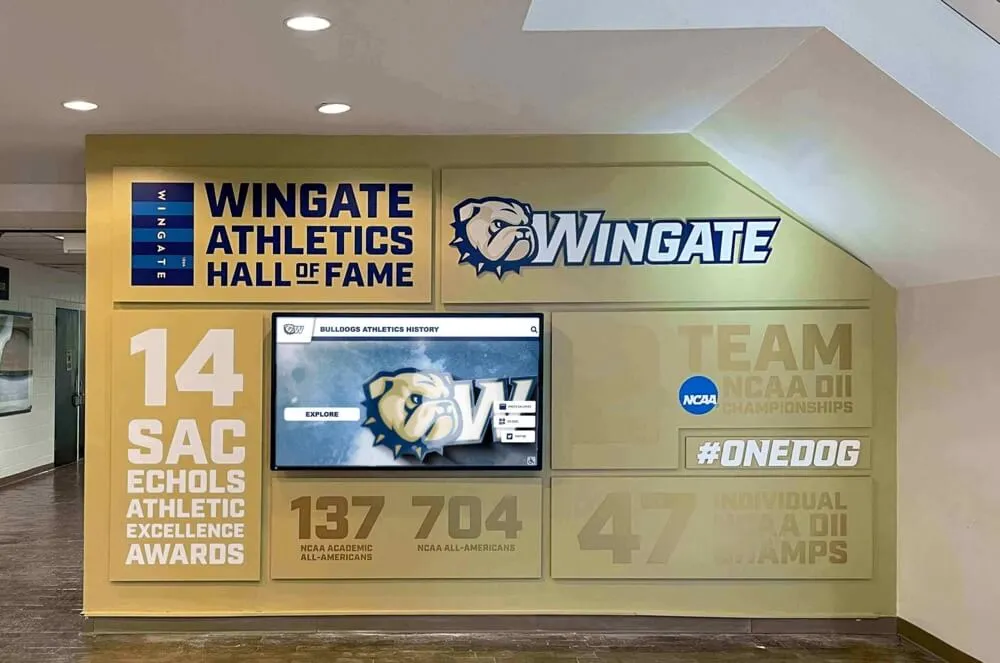
Professional installations integrate university branding while providing unlimited capacity celebrating all sports and eras equitably
Budget Planning and Funding for Athletic Recognition Systems
University athletic recognition represents significant investment requiring careful financial planning and creative funding approaches appropriate for higher education contexts.
Investment Components and Typical Costs
Initial Implementation Investment
Comprehensive athletic recognition system costs include:
- Commercial-grade touchscreen hardware and mounting: $5,000-$12,000 per display
- Professional installation and electrical/networking: $1,000-$3,000 per display
- Recognition platform software setup and customization: $3,000-$8,000
- Historical content development and athlete research: $8,000-$20,000 for Division I programs
- Photography and video production for media content: $5,000-$15,000
- Design and athletic branding integration: $3,000-$8,000
- Training and launch support: $2,000-$5,000
Typical comprehensive Division I athletic implementation (3-5 displays): $55,000-$135,000
Ongoing Annual Operating Costs
Sustainable programs require annual budgets supporting:
- Platform subscription and cloud hosting: $3,000-$6,000 per year
- Content management staff time allocation: 80-150 hours annually
- Technical support and hardware maintenance: $1,500-$3,000 per year
- Content updates and annual enhancements: $2,000-$5,000 per year
- Photography and video production for new content: $1,500-$4,000 per year
Typical annual operating costs: $8,000-$18,000 per year
These investments deliver value across multiple athletic department objectives simultaneously—recruiting advantage, alumni engagement, donor cultivation, team culture development, and historical preservation—making per-objective costs reasonable when benefits are comprehensively assessed.
Funding Strategies for University Athletic Programs
Universities successfully fund athletic recognition through diverse approaches:
Booster and Support Organization Funding
Athletic booster clubs and support organizations frequently fund recognition initiatives as investments in program culture and competitive advantage:
- Comprehensive presentations demonstrating recognition impact on recruiting and alumni engagement
- Named recognition opportunities at various giving levels ($25,000-$100,000+ for displays or comprehensive systems)
- Integration with broader facility improvement campaigns and fundraising initiatives
- Appeal to boosters’ desire for tangible, visible investments in program excellence
The visible, permanent nature of recognition displays makes them attractive to major donors seeking lasting impact from contributions that will influence programs for decades.
Athletic Department Capital Budgets
Forward-thinking departments allocate recognition within regular capital equipment budgets, recognizing that systems serve multiple objectives justifying investment through comprehensive value delivery:
- Recruiting advantage creating measurable enrollment outcomes
- Alumni relations supporting ongoing engagement and giving
- Team culture development influencing performance and retention
- Historical preservation fulfilling institutional stewardship responsibilities
Multi-Phase Implementation Approaches
Programs unable to fund comprehensive recognition immediately can implement systems in phases:
- Beginning with priority sports or specific facilities then expanding annually
- Starting with core touchscreen infrastructure then enhancing content richness over time
- Implementing physical displays first then adding web-based access subsequently
- Funding initial system through department budgets with enhancements through future fundraising
Modern cloud-based platforms enable seamless expansion without replacing initial installations—allowing programs to start appropriately for current resources while planning systematic enhancement aligned with budget availability and fundraising success.
Learn about comprehensive donor recognition strategies applicable to athletic facility fundraising contexts.
Future Trends in University Athletic Recognition Technology
Understanding emerging developments helps athletic programs plan recognition investments remaining valuable long-term while positioning departments as recognition leaders:
Advanced Interactive Capabilities
Next-generation recognition platforms incorporate enhanced features:
Artificial Intelligence Applications
- Personalized content recommendations based on visitor interests and viewing patterns
- Automated highlight reel creation from game footage using AI video analysis
- Natural language search understanding conversational queries about athletes and achievements
- Predictive analytics identifying which current athletes might break program records
- Intelligent content gap identification prompting administrators to enhance incomplete profiles
Enhanced Multimedia Integration
- Virtual reality recreations of championship moments enabling immersive experiences
- 360-degree facility tours integrating recognition with venue exploration
- Augmented reality overlays bringing historic photos to life through mobile devices
- High-frame-rate video enabling superior slow-motion replay of athletic performances
- Live streaming integration connecting recognition to current competitions
These advancing capabilities will make recognition increasingly engaging while reducing administrative burden through intelligent automation—justifying continued investment in platforms receiving regular enhancements versus static solutions becoming increasingly outdated.
Social and Community Features
Future platforms emphasize community engagement beyond passive content consumption:
Interactive Recognition Features
- Alumni storytelling contribution enabling crowd-sourced memories and anecdotes
- Athlete commenting and interaction on recognition content creating ongoing engagement
- Virtual reunion facilitation through platform-based events and communication
- Fan voting for favorite moments or greatest athletes in program history
- Real-time content updates during active competitions with immediate statistical integration
- Live Q&A sessions with legendary athletes through integrated video platforms
These participatory features transform recognition from static archives into living community resources continuously enriched through collective engagement—strengthening connections between current teams, alumni, and broader athletic communities.

Comprehensive recognition systems integrate digital displays with architectural design creating immersive athletic environments
Integration with Broader Athletic Technology
Recognition systems increasingly connect with other athletic department technologies:
- Athletic information system integration for automatic statistical updates
- Video management platform connections for seamless highlight incorporation
- Social media management tools for coordinated content distribution
- Ticketing and game day systems creating recognition-driven promotions
- Donor management platforms connecting athletic and philanthropic recognition
This integration creates comprehensive technology ecosystems supporting multiple athletic department functions while reducing administrative duplication and improving data accuracy across systems.
Conclusion: Transforming University Athletic Recognition at URI and Beyond
The University of Rhode Island’s announcement of eight new Athletics Hall of Fame inductees for Spring 2025—the largest class in 21 years—demonstrates ongoing commitment to honoring athletic excellence while highlighting the growing recognition needs facing NCAA programs nationwide. As programs like the Rhode Island Rams continue building rich athletic traditions, conventional trophy cases and static wall plaques increasingly fail to provide the comprehensive, engaging celebration these achievements deserve.
Interactive touchscreen recognition technology solves fundamental limitations of traditional approaches while creating engagement opportunities impossible with physical displays alone. Unlimited digital capacity enables programs to honor every deserving athlete across all sports and eras without space constraints forcing difficult curation decisions. Rich multimedia storytelling transforms basic name listings into comprehensive narratives capturing athletic journeys, defining moments, and program contributions that inspire current student-athletes while engaging alumni and fans. Intuitive interactive interfaces enable personalized exploration where visitors discover content matching their specific interests rather than passive predetermined sequences that traditional displays impose identically on all viewers.
Transform Your University Athletic Recognition Program
Discover how purpose-built recognition platforms can help your NCAA program comprehensively celebrate athletic excellence, strengthen recruiting advantage, and engage alumni communities through professional digital systems designed specifically for university athletics.
Explore Athletic Recognition SolutionsThe implementation strategies explored throughout this guide provide comprehensive frameworks for university athletic programs implementing recognition systems that honor athletic excellence appropriately while serving strategic objectives from recruiting advantage to alumni engagement and team culture development. From cloud-based platforms eliminating physical space constraints to systematic content development approaches preserving complete program histories, these strategies overcome traditional limitations while creating recognition experiences worthy of NCAA athletic programs.
From comprehensive historical documentation preserving decades of championship tradition to cutting-edge interactive displays impressing elite recruits and engaging passionate alumni networks, university programs nationwide are discovering that strategic digital recognition investments deliver measurable returns across multiple athletic department priorities simultaneously. Solutions like Rocket Alumni Solutions provide platforms specifically designed for university athletic contexts—offering proven implementation approaches, purpose-built features addressing NCAA program needs, and comprehensive support ensuring successful launches and sustained long-term success.
Start wherever current priorities and resources permit—whether implementing comprehensive multi-display systems throughout athletic complexes or beginning with priority sports and facilities while planning future expansion—then systematically enhance recognition based on engagement analytics and stakeholder feedback. Every athlete whose achievements receive appropriate celebration develops stronger institutional connections. Every recruit who experiences impressive recognition quality gains positive program impressions. Every alumnus who rediscovers teammates and competitive memories renews emotional bonds supporting lifelong engagement.
Your university athletic program’s championship tradition deserves recognition systems that honor excellence appropriately through comprehensive, engaging, professional platforms reflecting the quality of achievements being celebrated and the elite status of NCAA programs competing at college athletics’ highest levels. With thoughtful planning, appropriate technology investment, and systematic implementation, athletic departments can create digital recognition systems becoming treasured institutional resources that inspire current competitors while preserving legacies for future generations.
Ready to begin transforming your athletic recognition program? Explore how Rocket Alumni Solutions can help you implement comprehensive university athletic recognition systems that celebrate championship excellence, strengthen competitive advantage, and engage your diverse stakeholder communities through proven platforms designed specifically for NCAA athletic programs.