



Every championship banner, record-breaking performance, and legendary athlete contributes to the rich tapestry of athletic history. Schools and sports organizations that effectively celebrate “this day in sports history” create powerful connections between past achievements and current programs, inspiring today’s athletes while honoring yesterday’s champions. Yet many institutions struggle to showcase these historical moments in ways that engage modern audiences beyond static plaques and forgotten trophy cases.
The most effective historical sports displays combine compelling storytelling with accessible technology, transforming archive materials into interactive experiences that bring decades of athletic achievement to life. Organizations implementing thoughtful “this day in sports history” programs create engagement opportunities that strengthen program culture, connect alumni with current teams, enhance facility environments, and preserve institutional legacy for future generations.
This guide explores practical strategies for creating engaging sports history displays—from content curation and storytelling frameworks through display technology selection, interactive features, and sustainable maintenance practices that keep athletic heritage relevant and accessible.
Athletic history shapes program identity. The championship teams, individual achievements, legendary coaches, and defining moments documented through decades establish traditions that differentiate programs and inspire continued excellence. Effective historical displays make this legacy accessible and engaging.

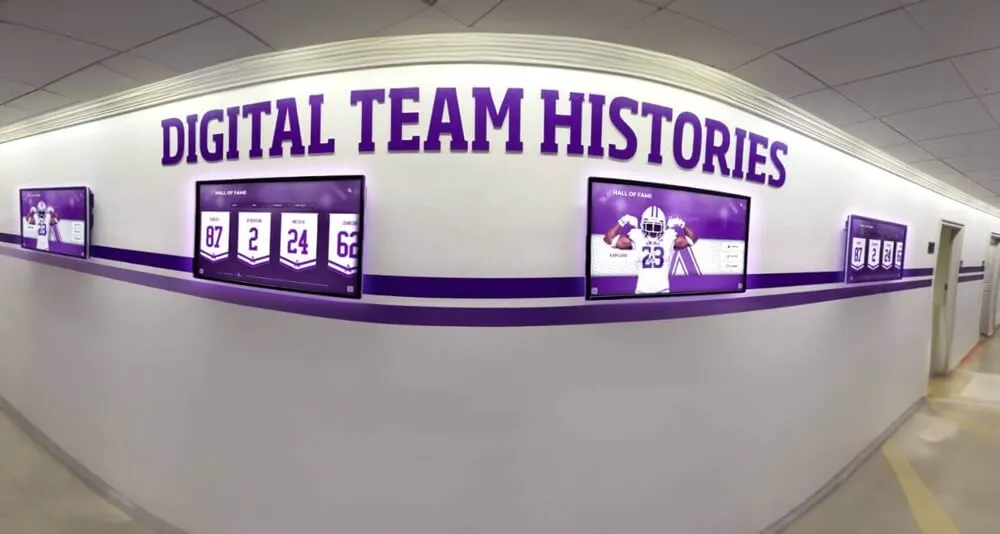
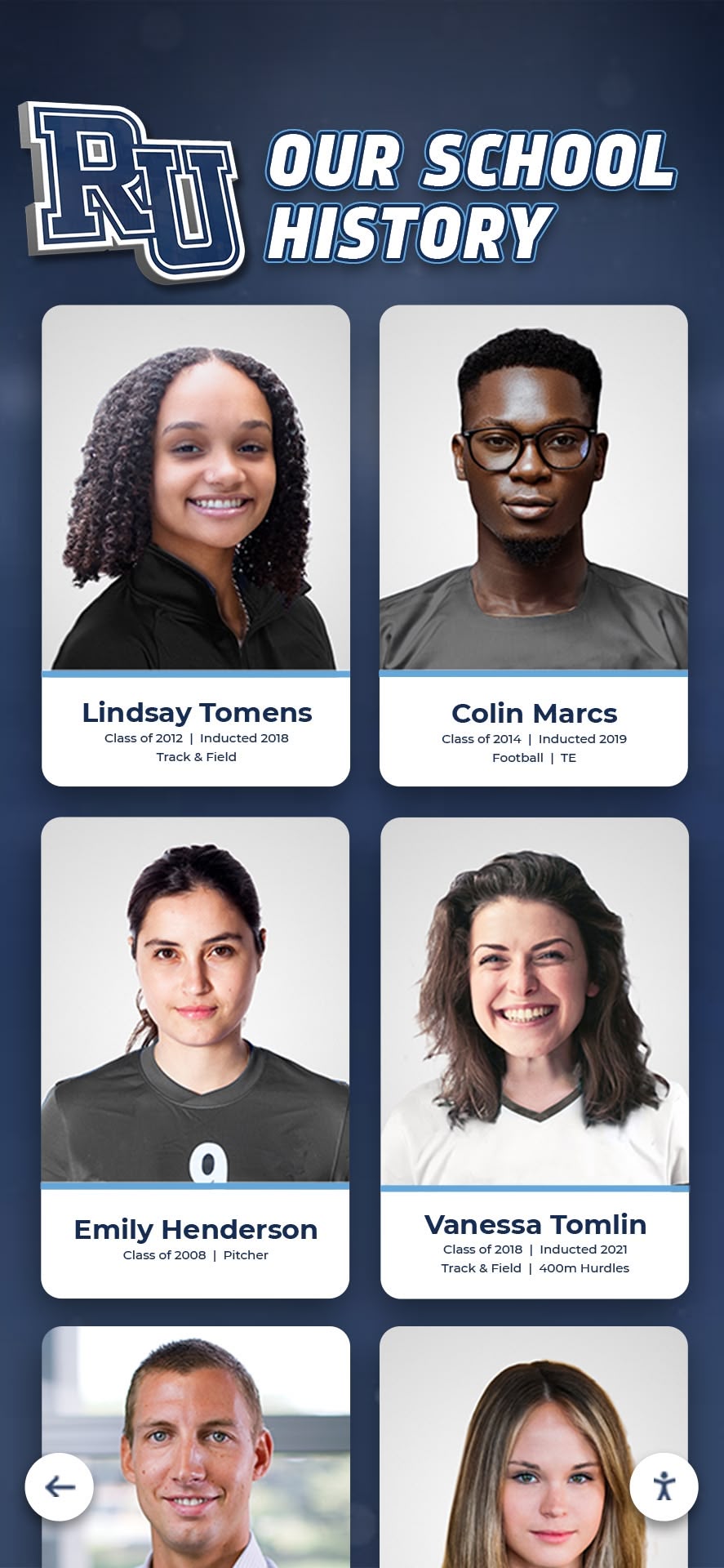
Preserved historical materials provide the foundation for engaging this day in sports history displays that connect past achievements with current programs
Understanding This Day in Sports History Displays
“This day in sports history” represents more than simple date-based trivia—it creates systematic approaches to highlighting significant achievements, anniversaries, and milestones that shaped athletic programs. Effective implementations transform historical content into engaging daily touchpoints.
The Power of Historical Recognition
Schools and organizations benefit from celebrating sports history through multiple interconnected outcomes.
Cultural Connection and Tradition Building
Historical displays establish tangible connections between current athletes and program legacy. When student-athletes see their predecessors’ achievements celebrated systematically, they understand themselves as participants in continuing traditions rather than isolated individuals. This cultural continuity strengthens program identity, creates shared vocabulary around historical moments, reinforces institutional values demonstrated through past achievements, and establishes performance standards based on program excellence.
Research on athletic program culture demonstrates that teams with strong historical awareness show higher retention rates, improved performance consistency, and stronger alumni engagement compared to programs that neglect historical recognition.
Inspiration Through Specific Examples
Generic motivational messages pale compared to specific historical examples from within program walls. Athletes respond powerfully to seeing how predecessors overcame challenges, achieved breakthrough performances, and contributed to team success. Detailed historical displays provide role models demonstrating possibility, document progression from newcomer to champion, illustrate how ordinary students achieved extraordinary results, and showcase diverse achievement types beyond championship victories.
These concrete examples inspire more effectively than abstract encouragement because they demonstrate achievable pathways within familiar contexts.
Alumni Engagement and Community Building
Historical recognition strengthens bonds between alumni and current programs. Former athletes who see their achievements preserved and celebrated maintain stronger connections with institutions, increasing participation in reunions, fundraising support, mentorship opportunities, and attendance at current competitions.
According to alumni engagement research, recognition programs that actively celebrate individual and team achievements generate 40-60% higher alumni participation rates compared to institutions that neglect historical acknowledgment.
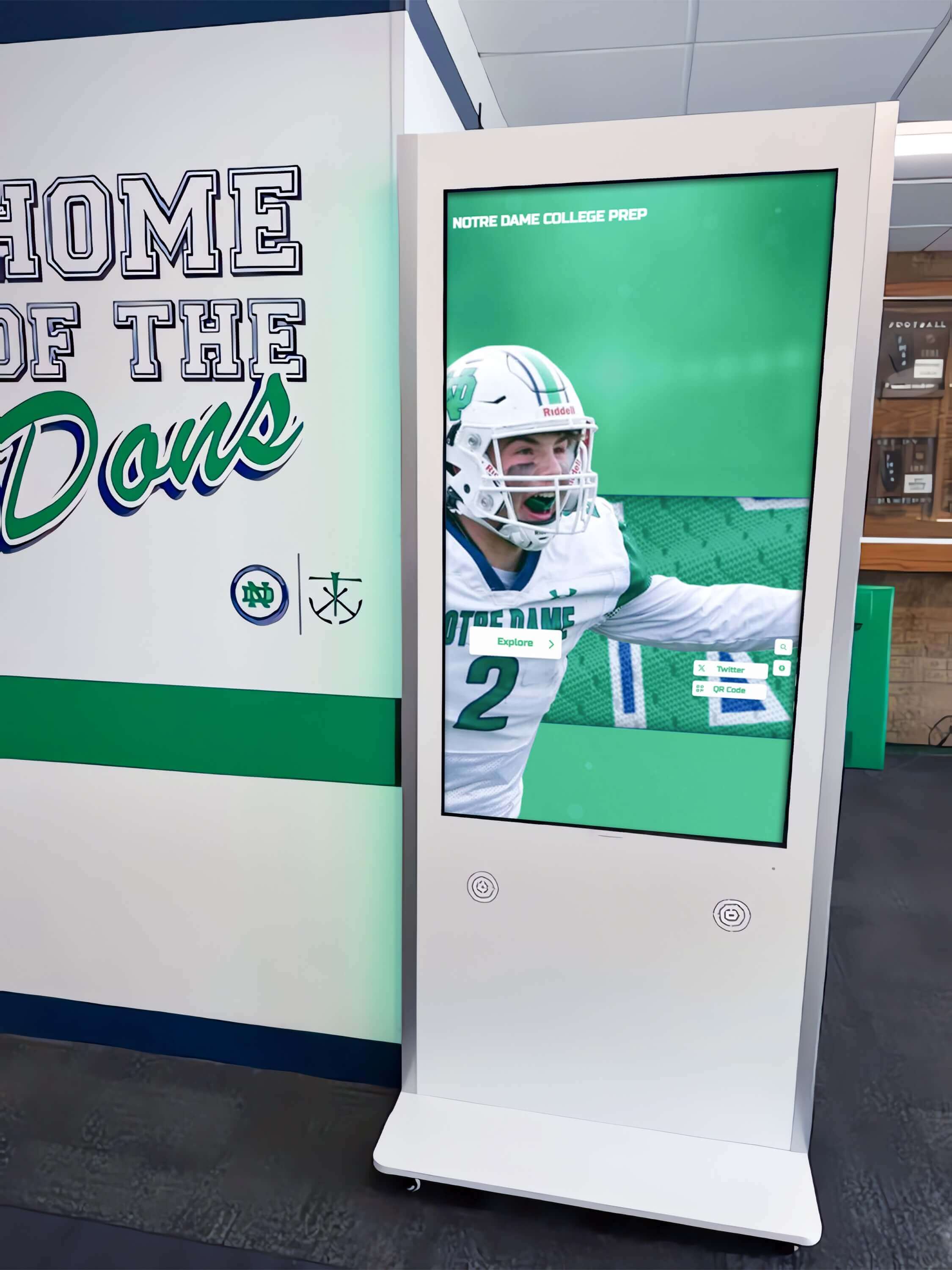
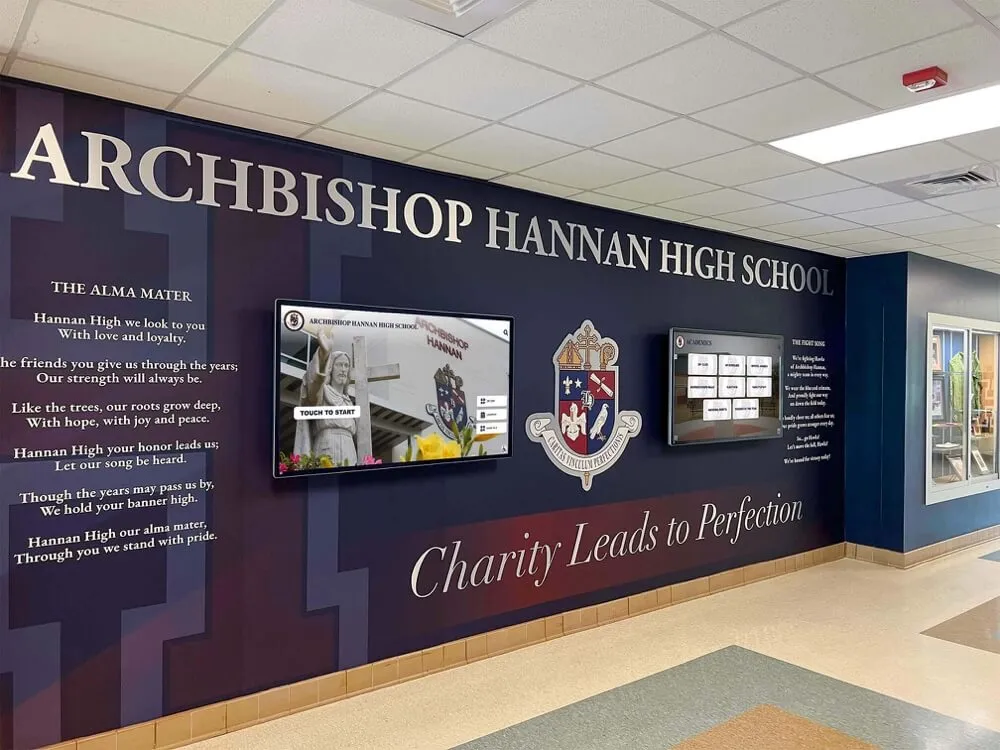
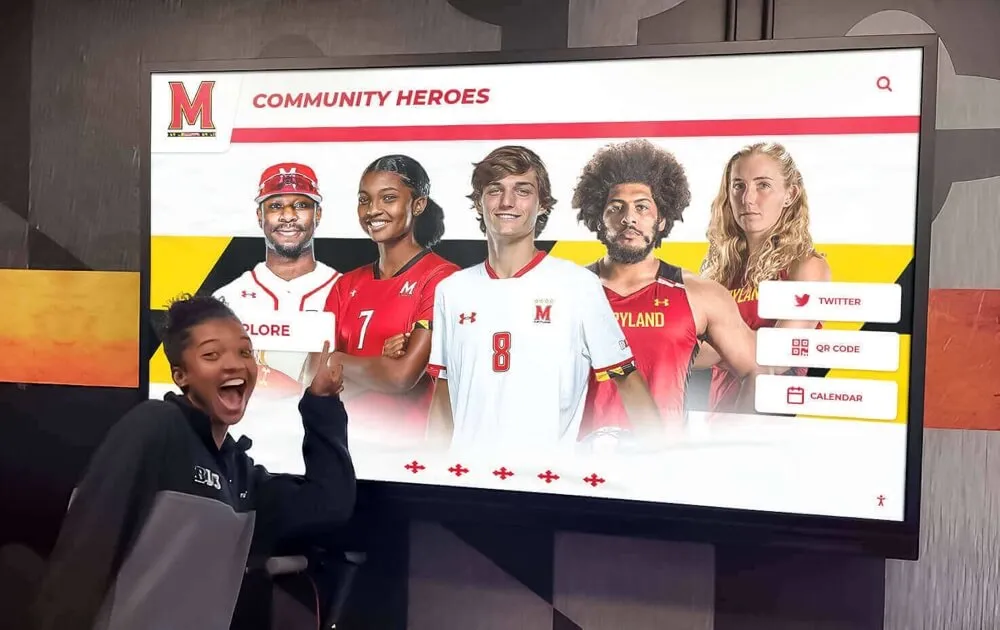
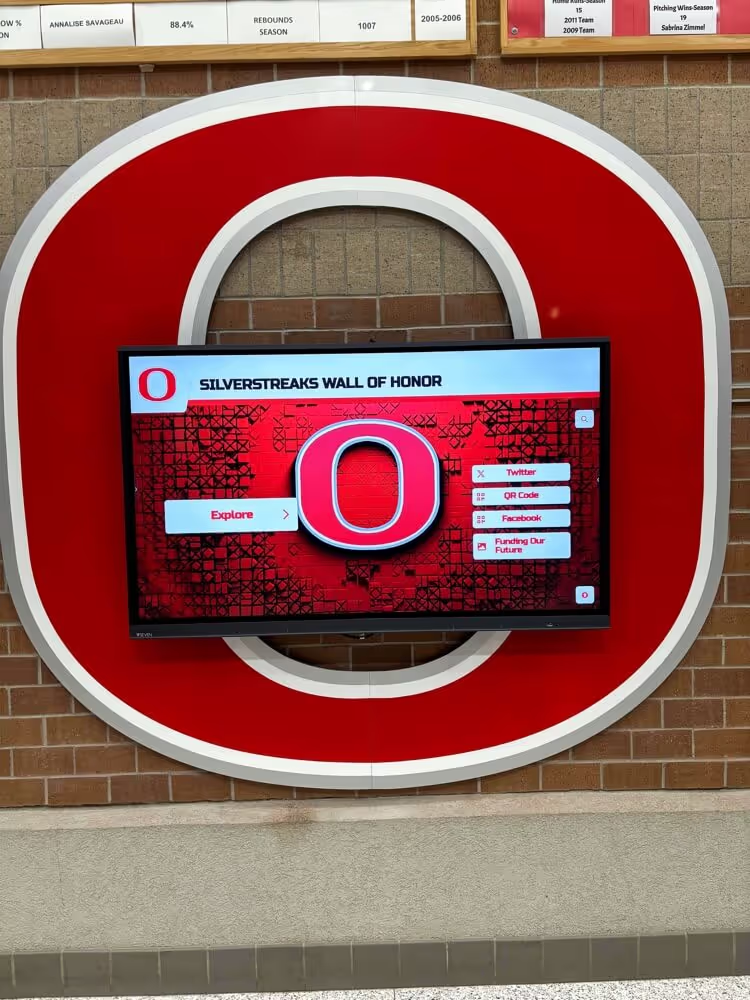
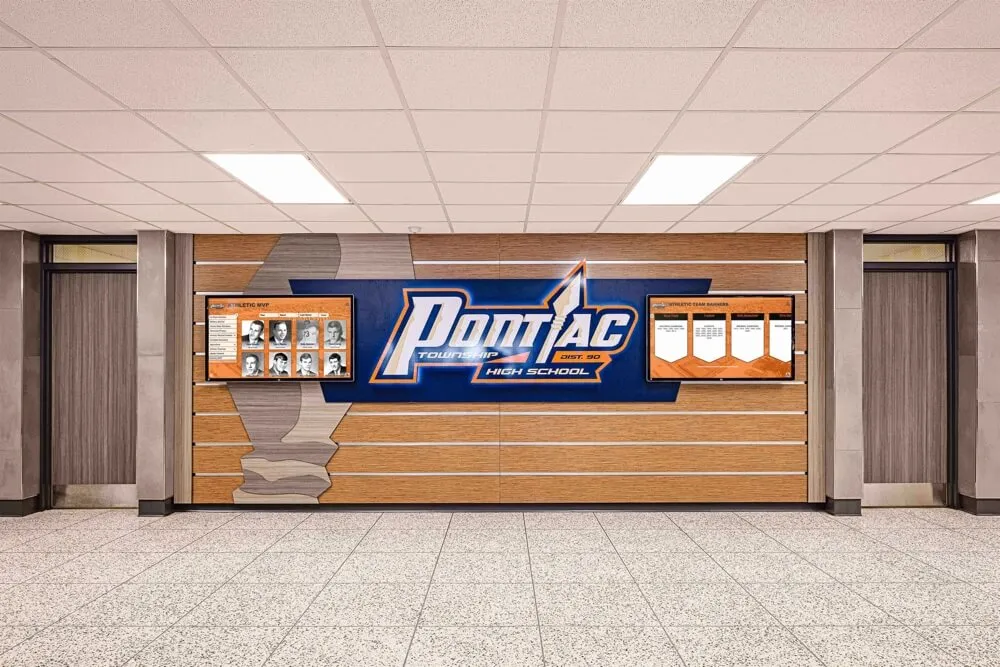
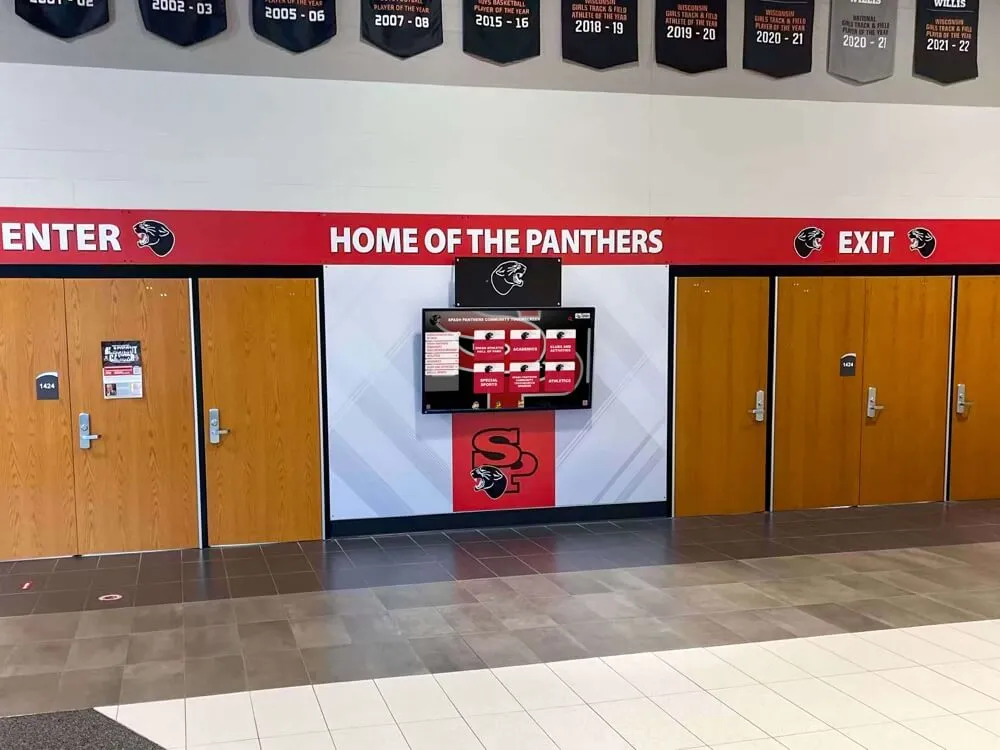
Strategically placed interactive displays enable daily engagement with program history as athletes, students, and visitors naturally pass through facilities
Content Categories That Drive Engagement
Effective sports history programs balance multiple content types creating comprehensive program narratives.
Championship Achievements and Milestone Victories
State championships, conference titles, tournament victories, playoff appearances, and undefeated seasons represent program-defining moments deserving systematic celebration. These achievements demonstrate peak performance while creating shared reference points across generations.
Organizations should document the complete story including season context, key players and coaches, decisive games or performances, obstacles overcome, and long-term program impact rather than simply listing victory dates.
Individual Record Holders and Award Winners
Program records establish performance benchmarks while celebrating individual excellence. Comprehensive historical tracking includes career record holders, single-season records, single-game performances, national award recipients, all-state and all-conference selections, and college commitment achievements.
Effective displays contextualize records with era-appropriate perspective, updating regularly as current athletes chase historical marks—creating natural engagement as programs track whether records will fall.
Legendary Coaches and Program Builders
Coaches shape program culture and establish traditions lasting beyond their tenures. Historical recognition should honor head coaches and coordinators who built program foundations, achieved milestone victories, mentored athletes beyond athletics, and established cultural elements defining current program identity.
Explore athletic hall of fame planning approaches that comprehensively recognize coaching contributions alongside athlete achievements.
Defining Program Moments
Beyond championships and records, certain moments define program identity including breakthrough first victories, rivalry game highlights, upset victories over higher-ranked opponents, dramatic comeback performances, and facility dedication milestones. These stories provide compelling content for “this day in sports history” features because they combine human drama with athletic achievement.
Notable Alumni Professional Careers
Athletes who advance to professional, Olympic, or other elite competition demonstrate program quality while inspiring current participants. Historical displays tracking post-high school or post-college achievements create aspirational pathways and strengthen program reputation.
Recognition should celebrate professional draft selections, Olympic appearances and medals, professional achievement milestones, coaching and administration careers, and community leadership roles—demonstrating how athletic experience prepares individuals for diverse success.
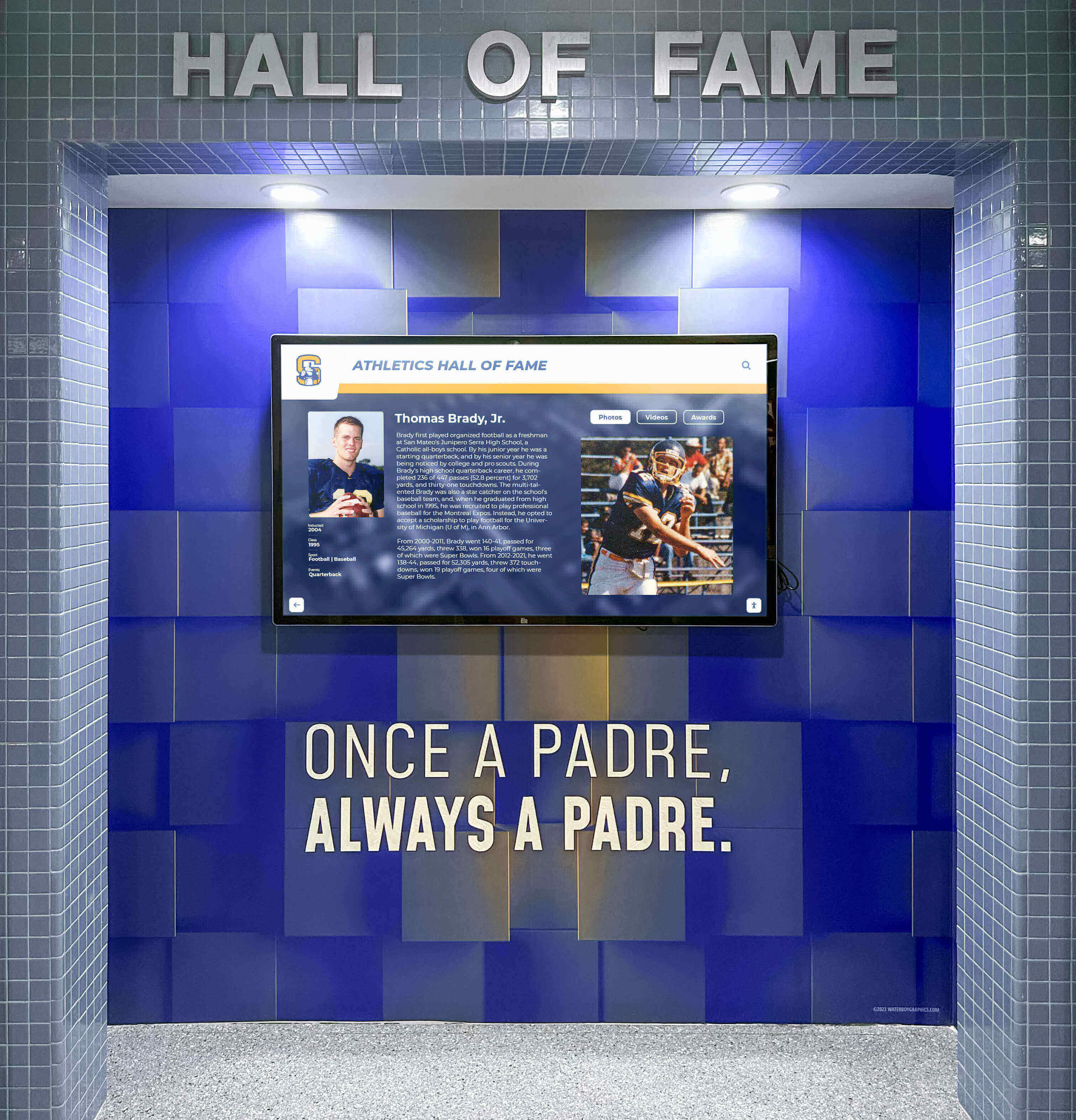
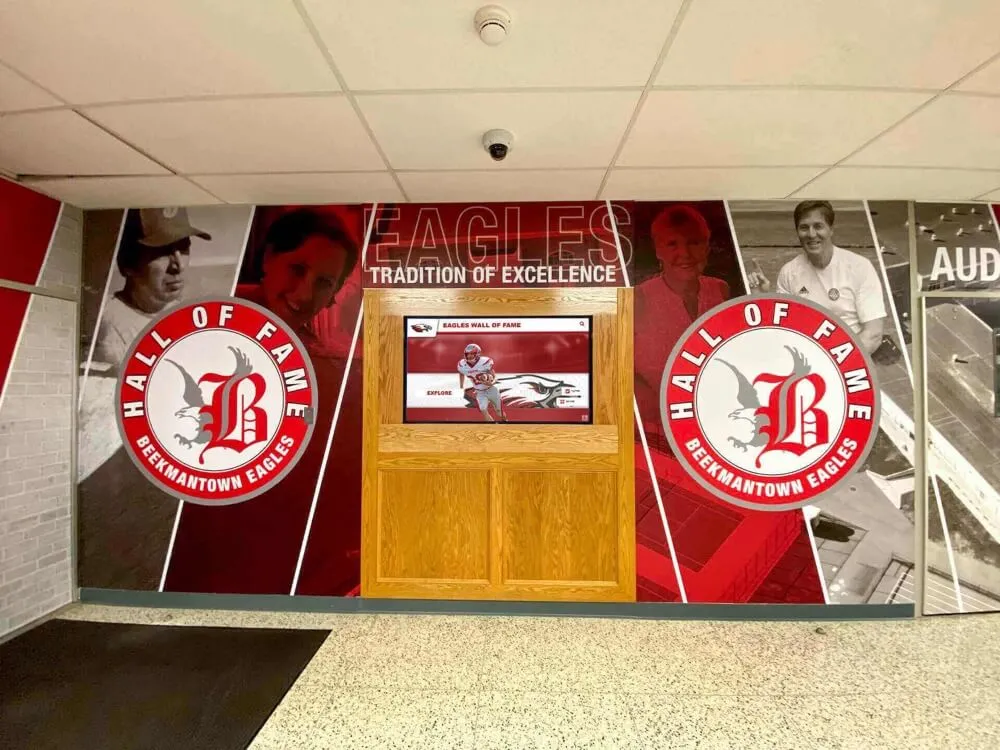
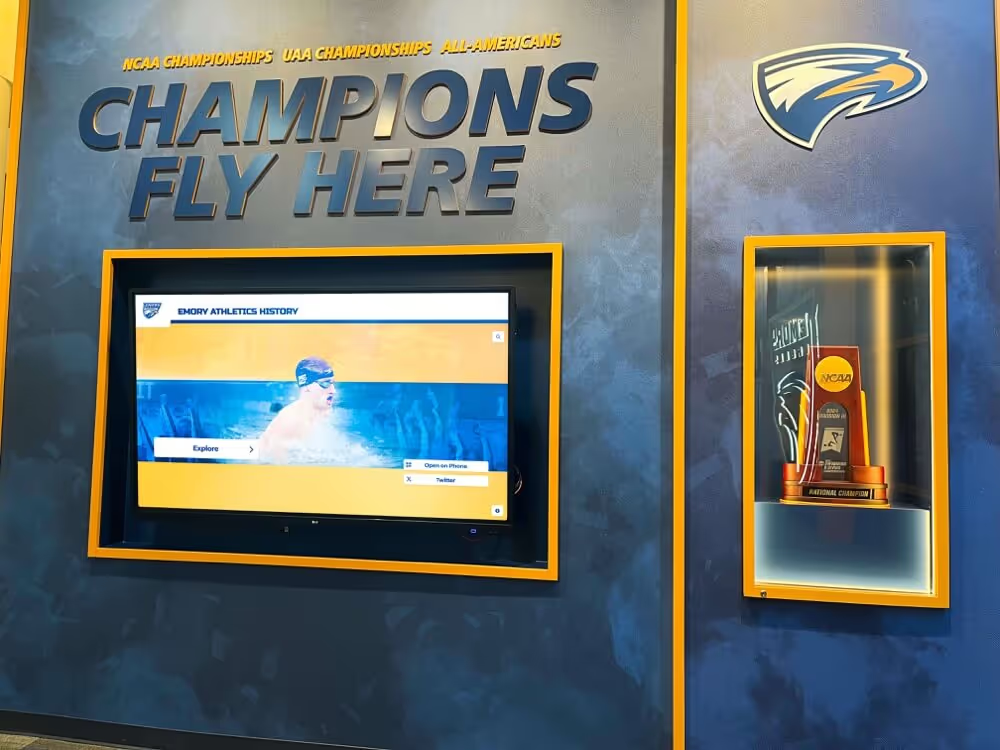
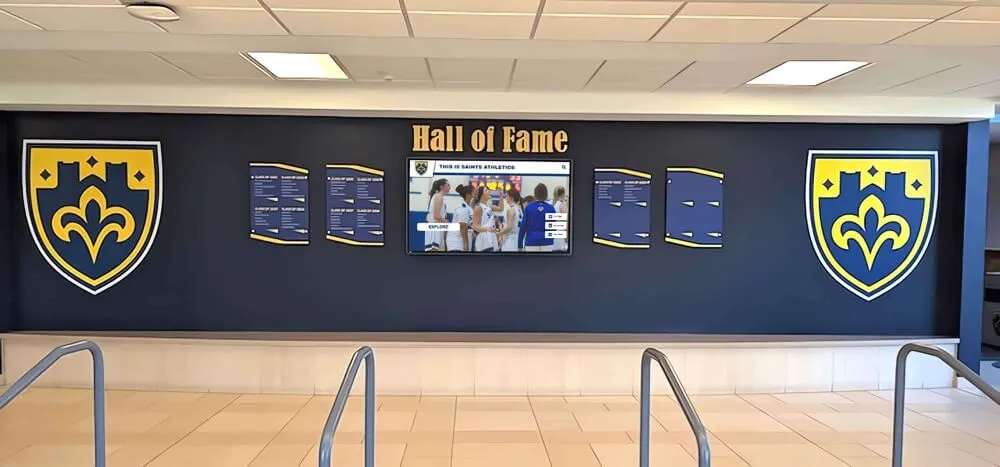
Modern digital displays enable comprehensive historical recognition impossible within physical trophy case limitations
Building Effective Sports History Content
Quality historical displays require systematic content development transforming archive materials into engaging narratives.
Content Research and Collection
Identifying Historical Materials
Begin by surveying existing resources regardless of current organization or accessibility. Most athletic programs possess scattered historical materials including yearbooks and media guides, newspaper clippings and scrapbooks, photographs from games and events, statistical records and scorebooks, program artifacts like uniforms and equipment, and oral histories from coaches and alumni.
Document what exists before making display decisions—content availability significantly influences what historical programs can accomplish initially while revealing gaps to address through future collection efforts.
Filling Information Gaps
Historical records often contain frustrating gaps requiring detective work. Strategies for reconstructing incomplete histories include alumni interviews capturing first-hand memories, newspaper archive searches through local libraries, conference and state association records, opposing school archives documenting shared games, and community historical societies maintaining local sports documentation.
Organizations should prioritize gap-filling for milestone years, championship seasons, and exceptional individual performers where missing information creates incomplete narratives undermining historical accuracy.
Storytelling Frameworks That Engage
Moving Beyond Statistics
Numbers document achievements but stories create engagement. Transform statistical records into compelling content by providing game context for record-breaking performances, describing challenges overcome during achievement, connecting individual accomplishments to team success, documenting athlete progression from newcomer to record-holder, and including quotes from participants when available.
For example, rather than simply stating “Sarah Martinez scored 42 points on January 15, 2018,” effective displays might explain: “Facing the league’s top-ranked defense and playing with a separated shoulder, senior captain Sarah Martinez scored a school-record 42 points including the game-winning three-pointer with 2.4 seconds remaining, securing the Wildcats’ first conference championship in 12 years.”
Era Context and Historical Perspective
Historical content resonates more powerfully when displays provide appropriate context helping modern audiences appreciate achievements within period circumstances including facility and equipment limitations, rule differences affecting play, competitive landscape context, and societal factors influencing participation opportunities.
This context prevents unfair comparisons across eras while helping audiences appreciate all achievements appropriately.

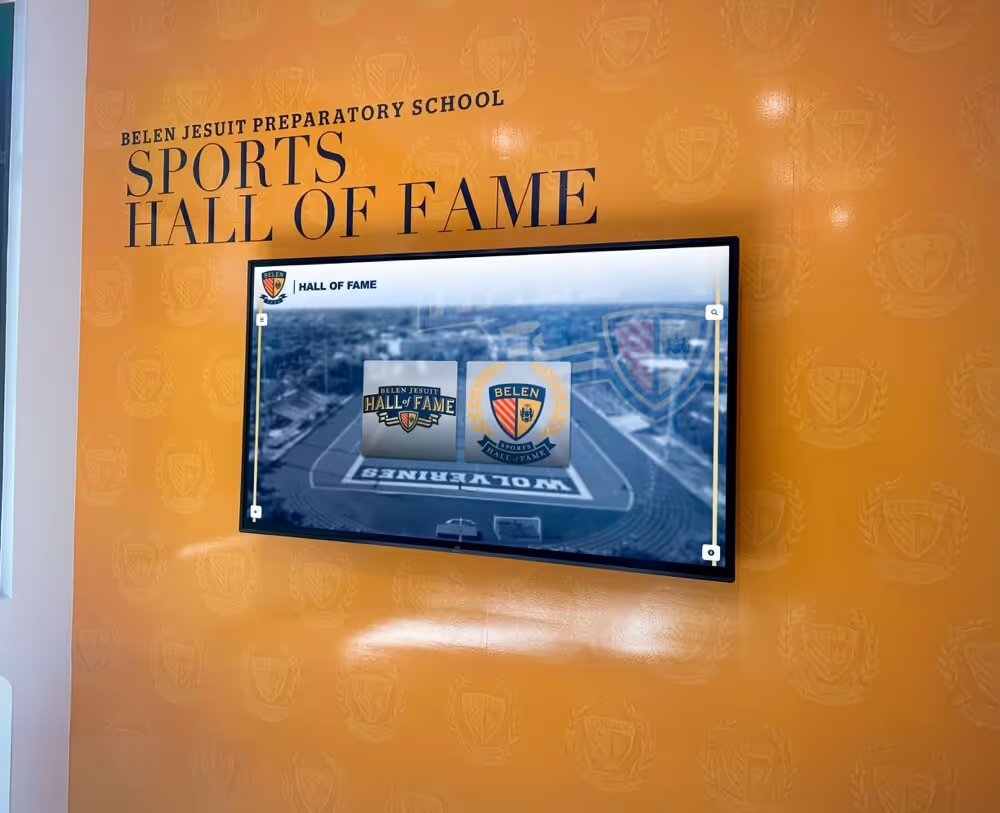
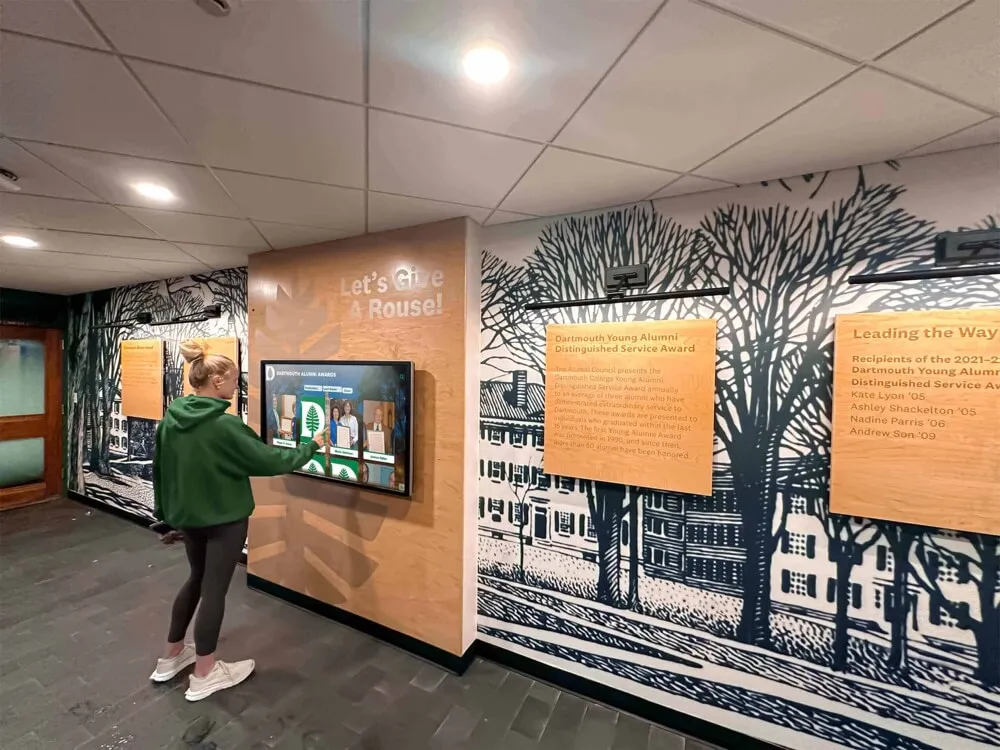
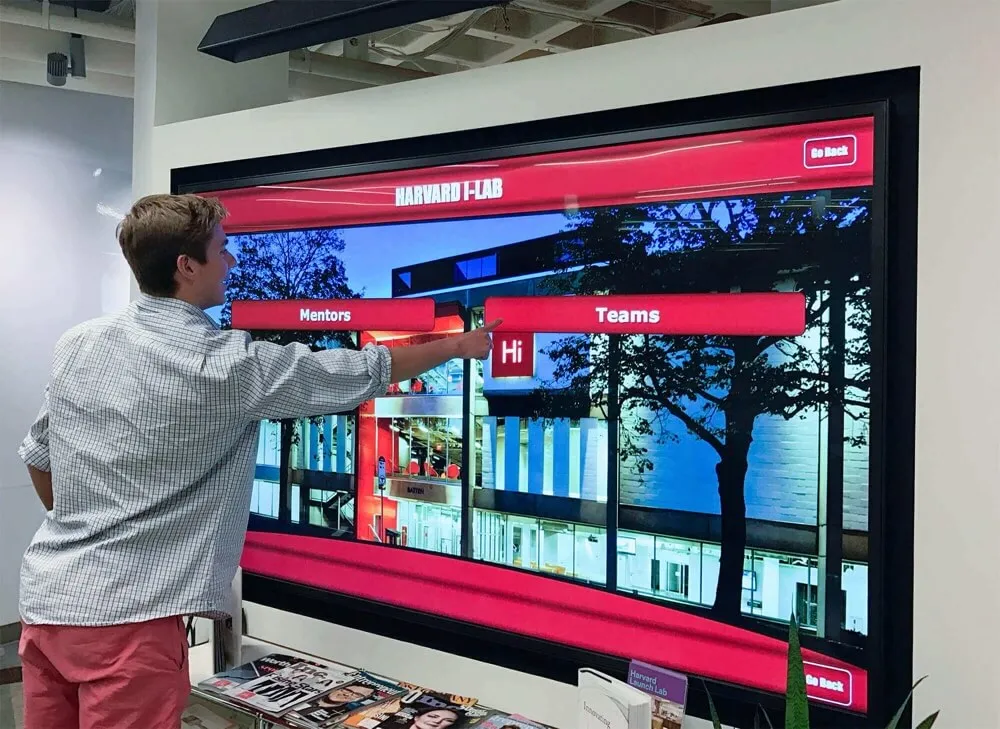
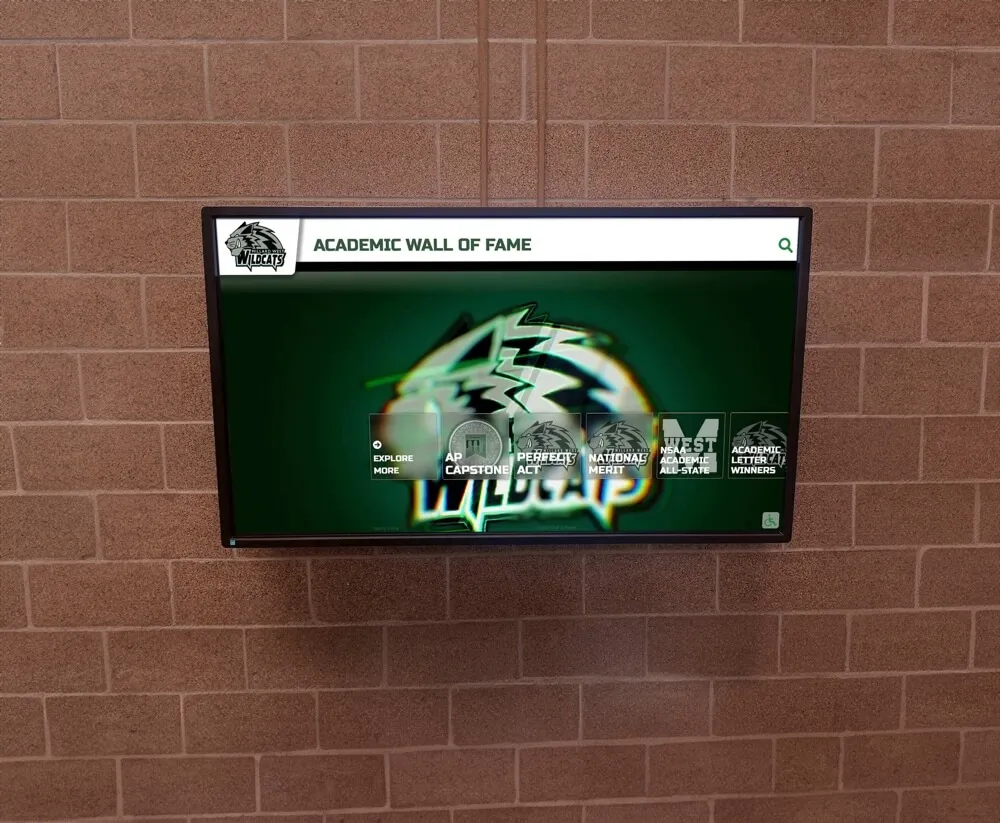
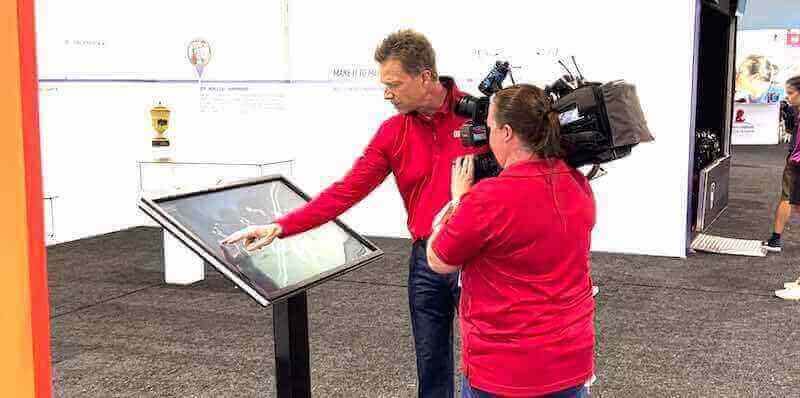
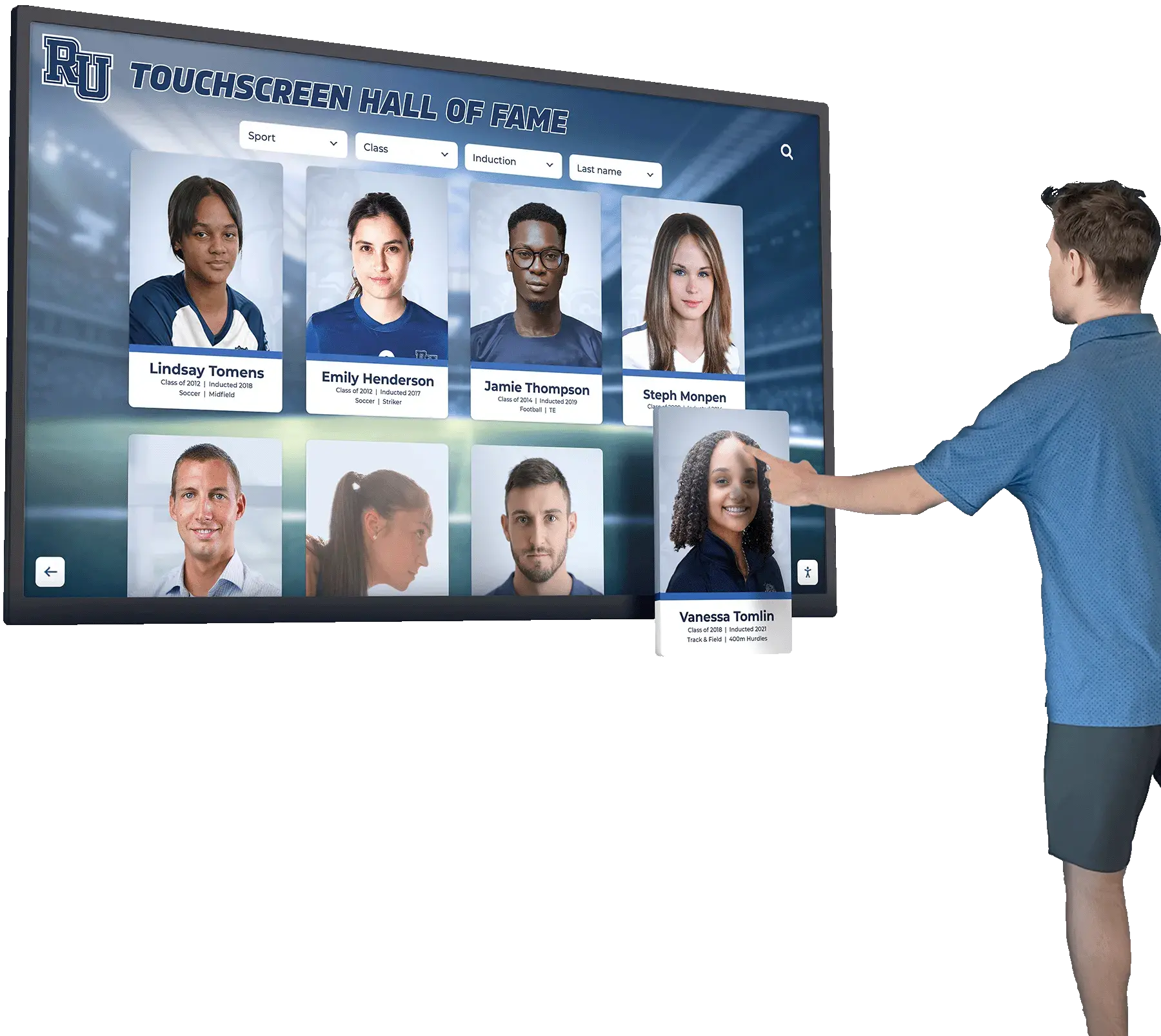
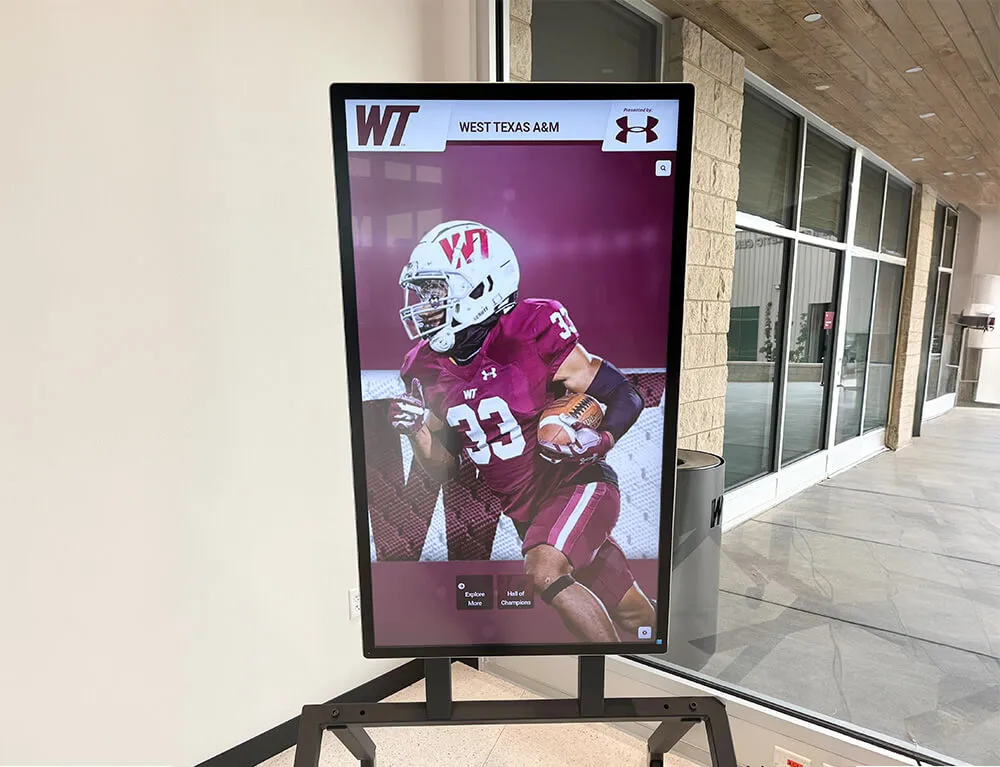
Touchscreen interaction transforms passive historical viewing into active exploration enabling users to discover specific athletes, teams, and moments relevant to their interests
Creating Daily Engagement Through This Day Features
Automated Calendar-Based Content
The most sustainable “this day in sports history” programs use calendar-triggered content highlighting relevant historical moments automatically based on current date. This approach creates daily variety without requiring constant manual updates.
Effective implementations identify historical events for every date including game victories and championships, individual record-breaking performances, athlete birthdays, coaching milestones, and facility dedications—building comprehensive databases ensuring interesting content availability for most dates throughout the year.
Layered Content Depth
Design content systems supporting multiple engagement levels. Brief highlights attract casual attention during hallway passing, while deeper exploration rewards intentional investigation. Structure content in three tiers: headline summaries communicating essential information in 10-15 words, expanded descriptions providing full context in 75-150 words, and detailed profiles offering comprehensive information including statistics, photographs, quotes, and related content.
This structure accommodates diverse audience needs from quick browsing to deep research.
Learn about interactive touchscreen display capabilities that support layered content delivery matching user interest levels.
Display Technology Options
Selecting appropriate display technology significantly impacts both initial effectiveness and long-term sustainability.
Digital Interactive Touchscreens
Advantages of Interactive Digital Displays
Modern touchscreen technology offers compelling benefits for sports history programs including unlimited content capacity transcending physical space constraints, search and filtering enabling users to find specific athletes, teams, or years, dynamic content updates without physical reinstallation, multimedia integration combining photos, videos, statistics, and text, and automated “this day in history” features rotating content based on calendar.
Solutions like Rocket Alumni Solutions specialize in athletic recognition platforms designed specifically for schools and organizations, providing intuitive interfaces for both content management and public interaction. These systems enable athletic departments to maintain comprehensive historical archives while creating engaging daily experiences for athletes, students, and visitors.
Content Management Considerations
Digital systems require ongoing content maintenance but modern platforms dramatically simplify updates. Look for solutions offering web-based content management accessible from any computer, template-driven designs ensuring visual consistency, bulk upload capabilities for historical materials, scheduled publishing for anniversary features, and user-friendly interfaces requiring minimal technical expertise.
These capabilities enable athletic directors and staff to maintain displays without IT department dependence or specialized technical knowledge.

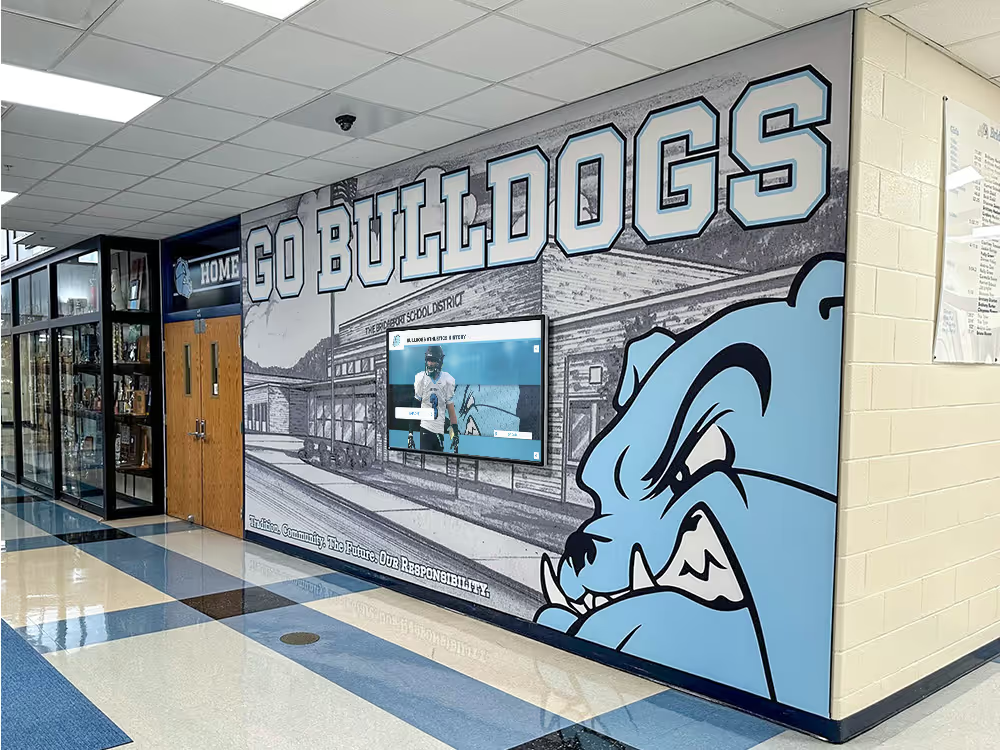
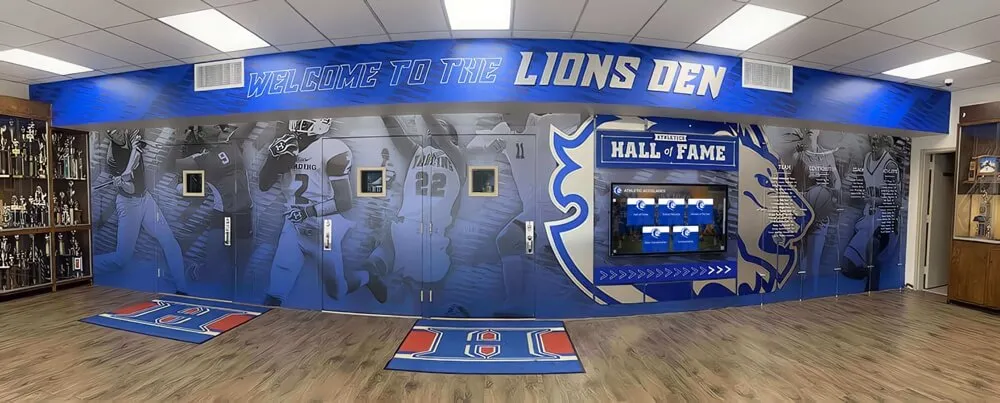
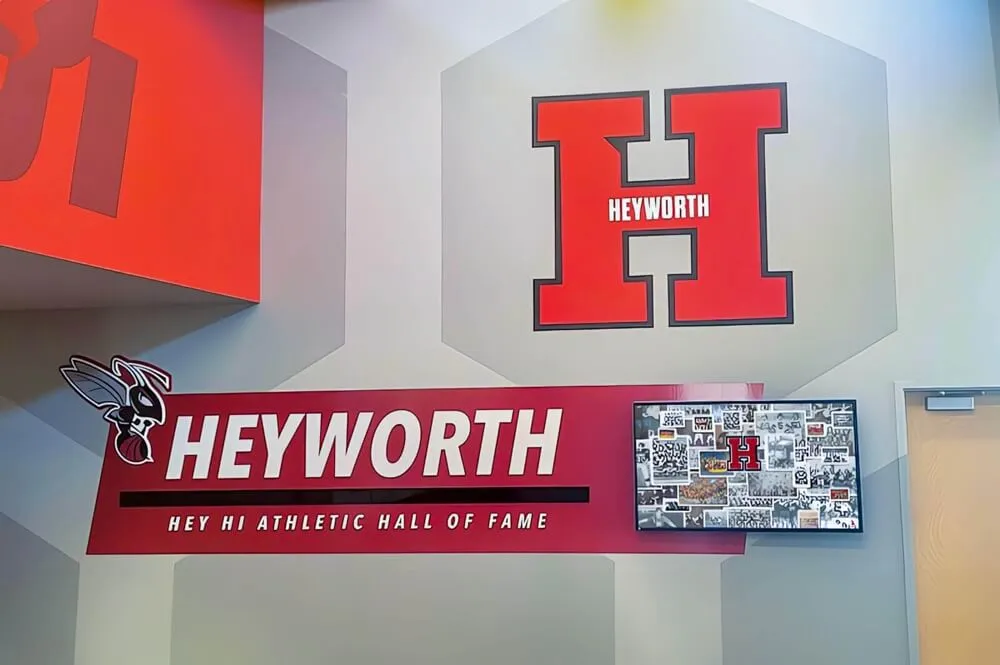
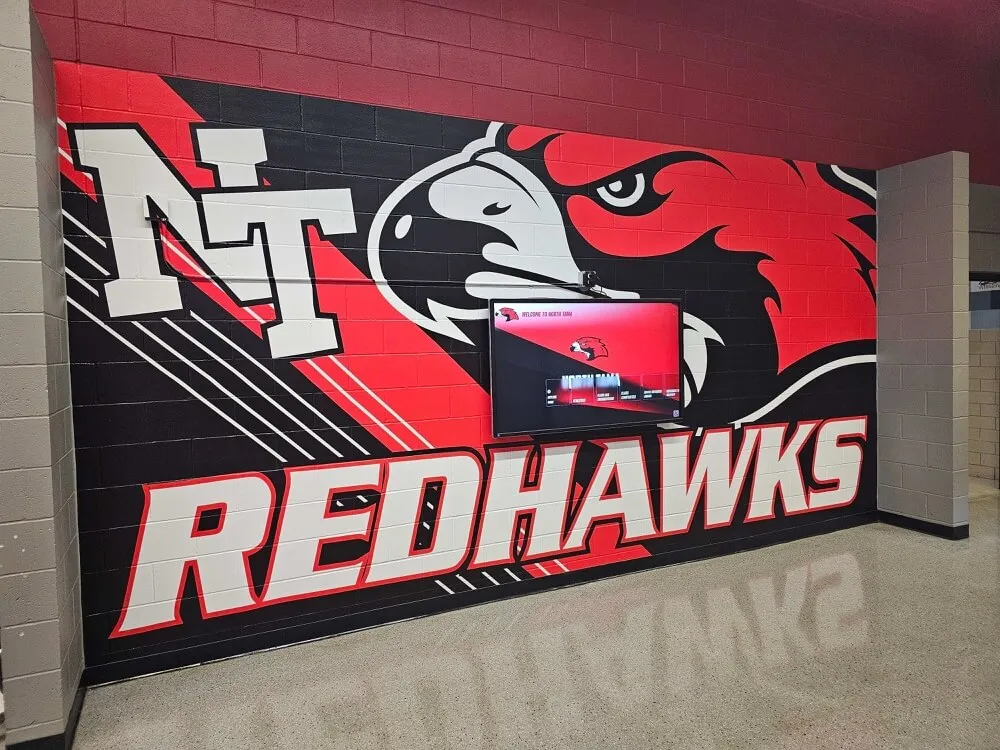
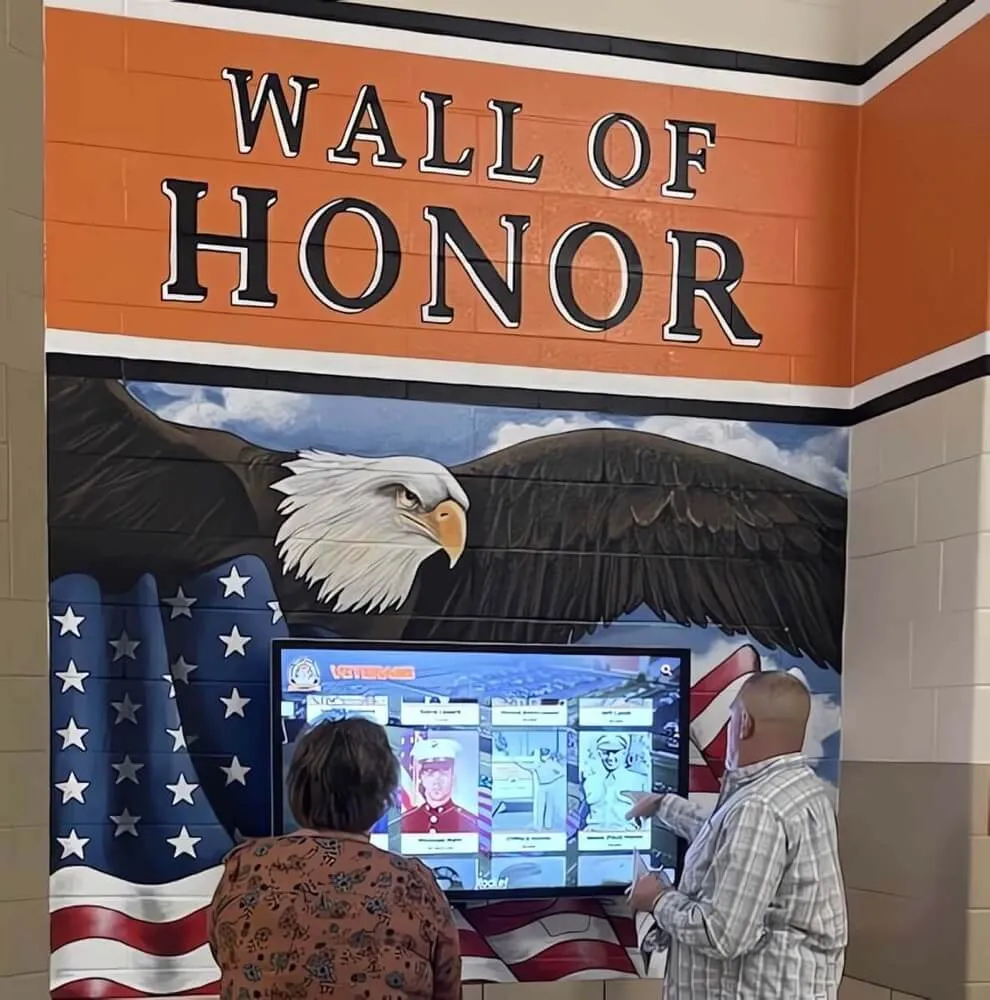
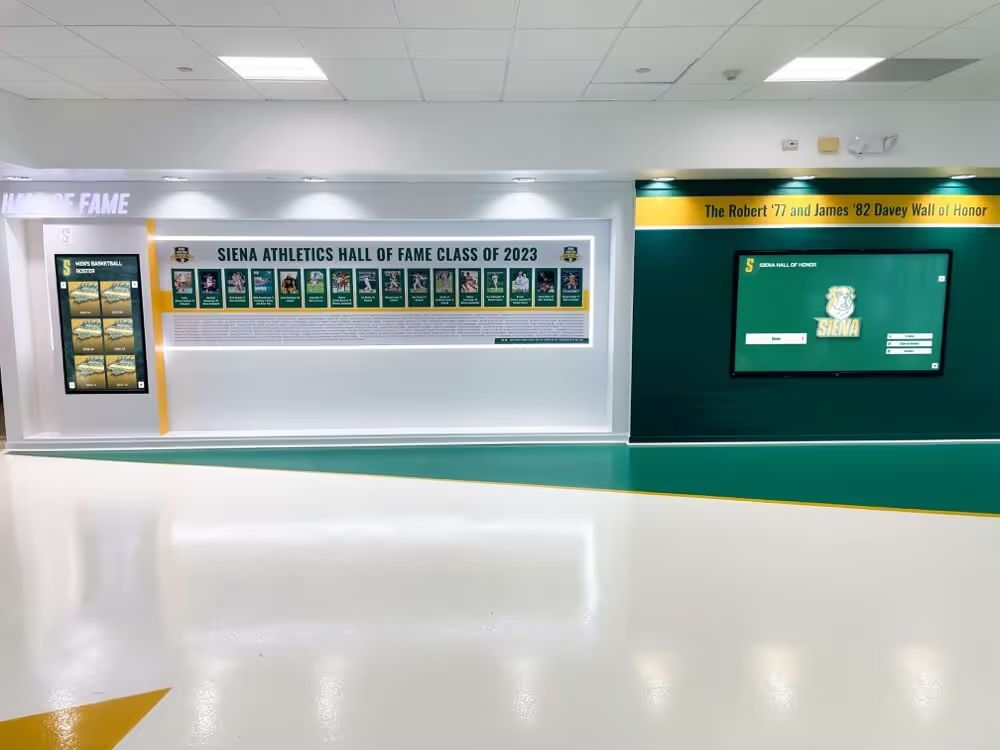
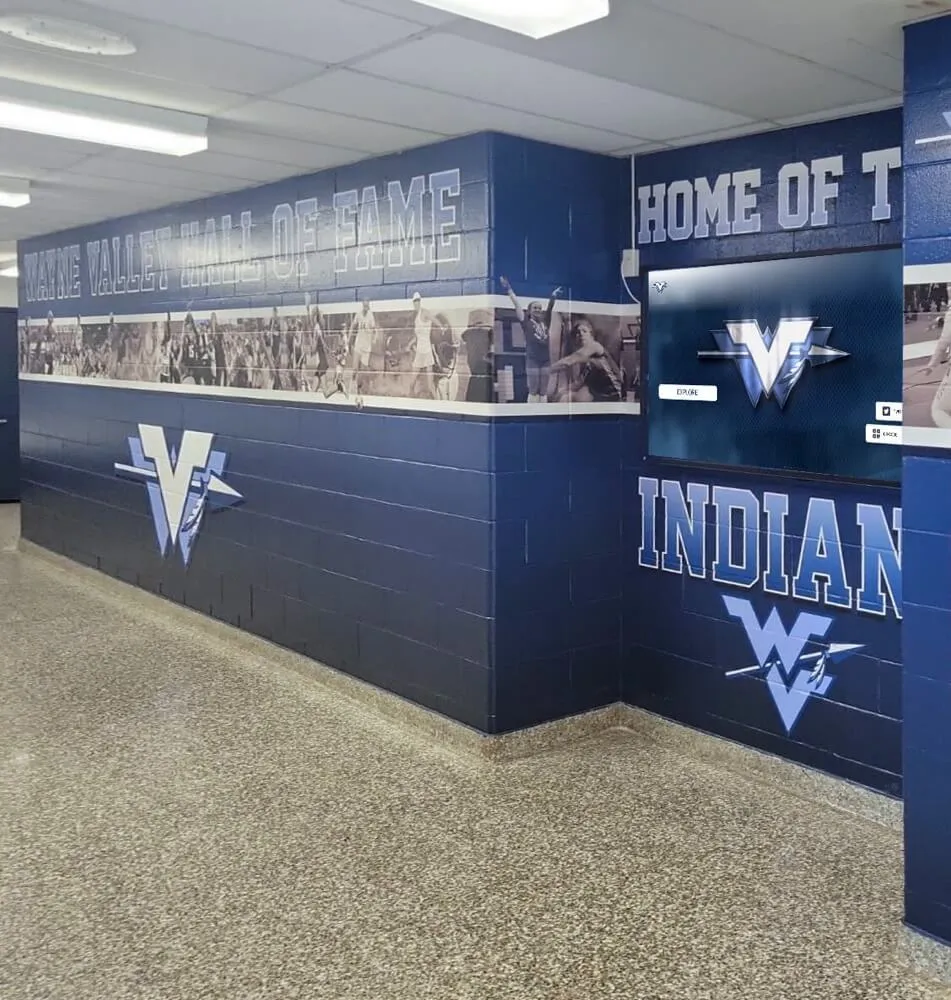
Integrated environments combining physical murals with digital displays create immersive historical experiences celebrating program identity
Strategic Display Placement
High-Traffic Location Selection
Display effectiveness depends significantly on strategic positioning in locations where target audiences naturally gather. Prime locations include main lobby entrance areas, locker room hallways, athletic training facility waiting areas, weight room and conditioning spaces, and concourse areas at competition venues.
Placement should consider natural traffic flow, appropriate viewing distances, lighting conditions, and proximity to power and network connections required for digital displays.
Creating Dedicated Recognition Spaces
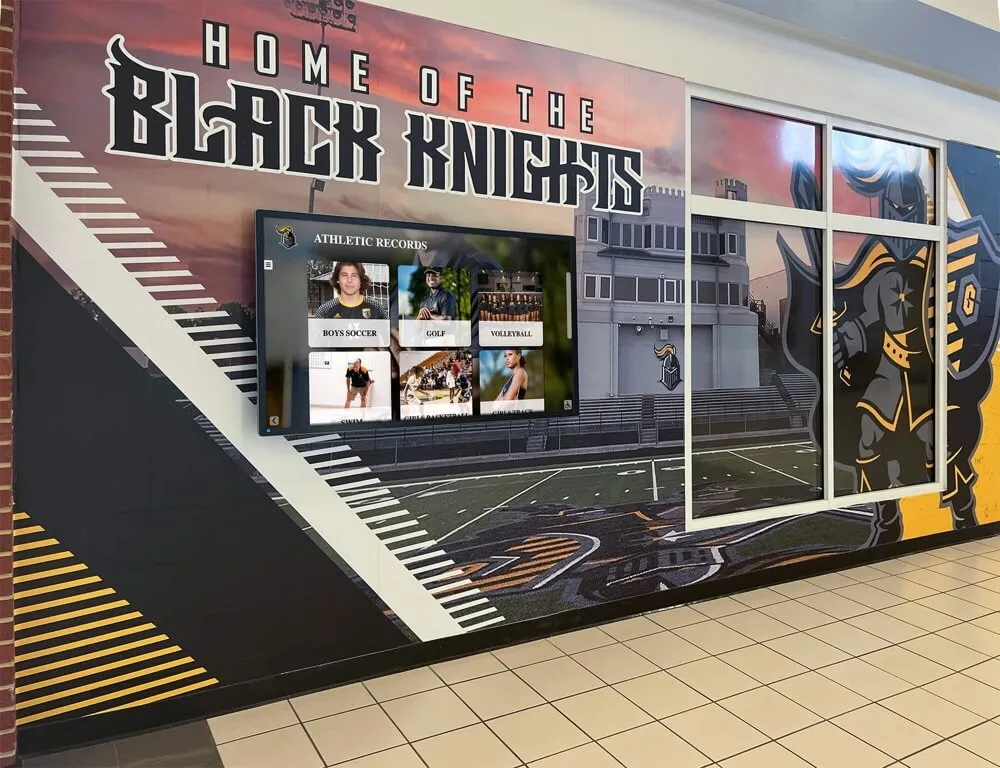
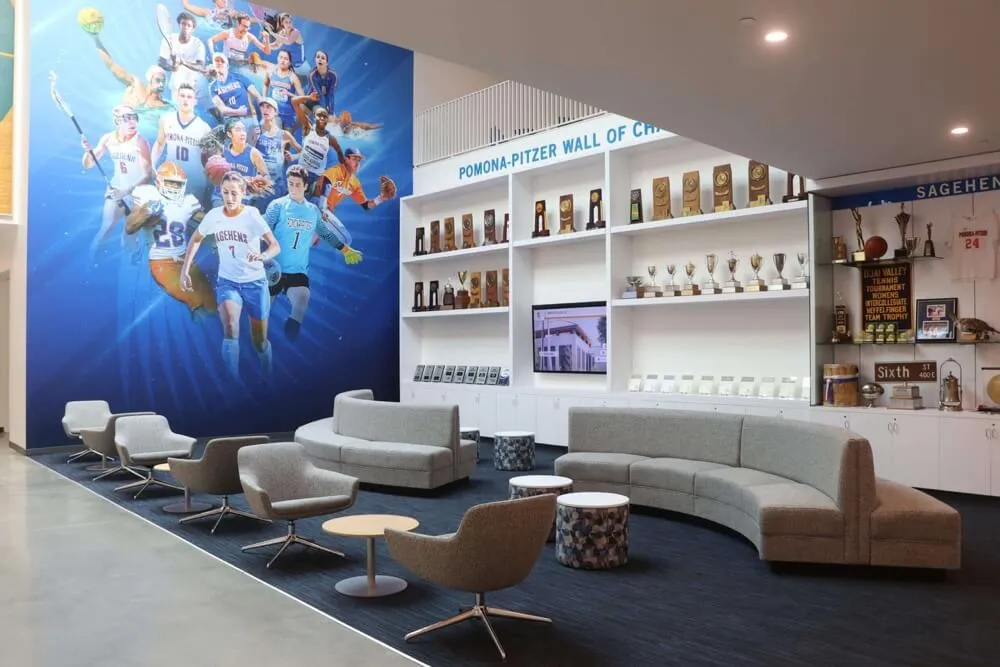
Some organizations develop comprehensive recognition environments combining multiple display technologies. These dedicated spaces might integrate large-format touchscreen displays, traditional trophy cases, wall murals celebrating program identity, historical photography galleries, and comfortable seating encouraging extended exploration.
These environments transform historical recognition from incidental viewing into intentional destinations worth visiting.
Discover trophy display case integration approaches that combine physical artifacts with digital storytelling.
Video Integration and Multimedia Content
Bringing History to Life Through Motion
Static photographs document moments, but video footage creates visceral engagement. Organizations with video archives should prioritize integration including championship game highlights, record-breaking performance footage, interview clips with legendary coaches and athletes, historical footage showing facility and program evolution, and anniversary compilation videos.
Even brief 30-60 second clips dramatically increase engagement compared to photograph-only displays.
Audio Content and Oral Histories
Recorded interviews with program legends provide irreplaceable historical perspectives. Systematic oral history collection captures first-hand memories from retiring coaches, championship team members, and program builders—preserving personal perspectives and stories that written records cannot capture.
These recordings become increasingly valuable as participants age and memories fade, making systematic collection efforts worthwhile investments in program legacy preservation.
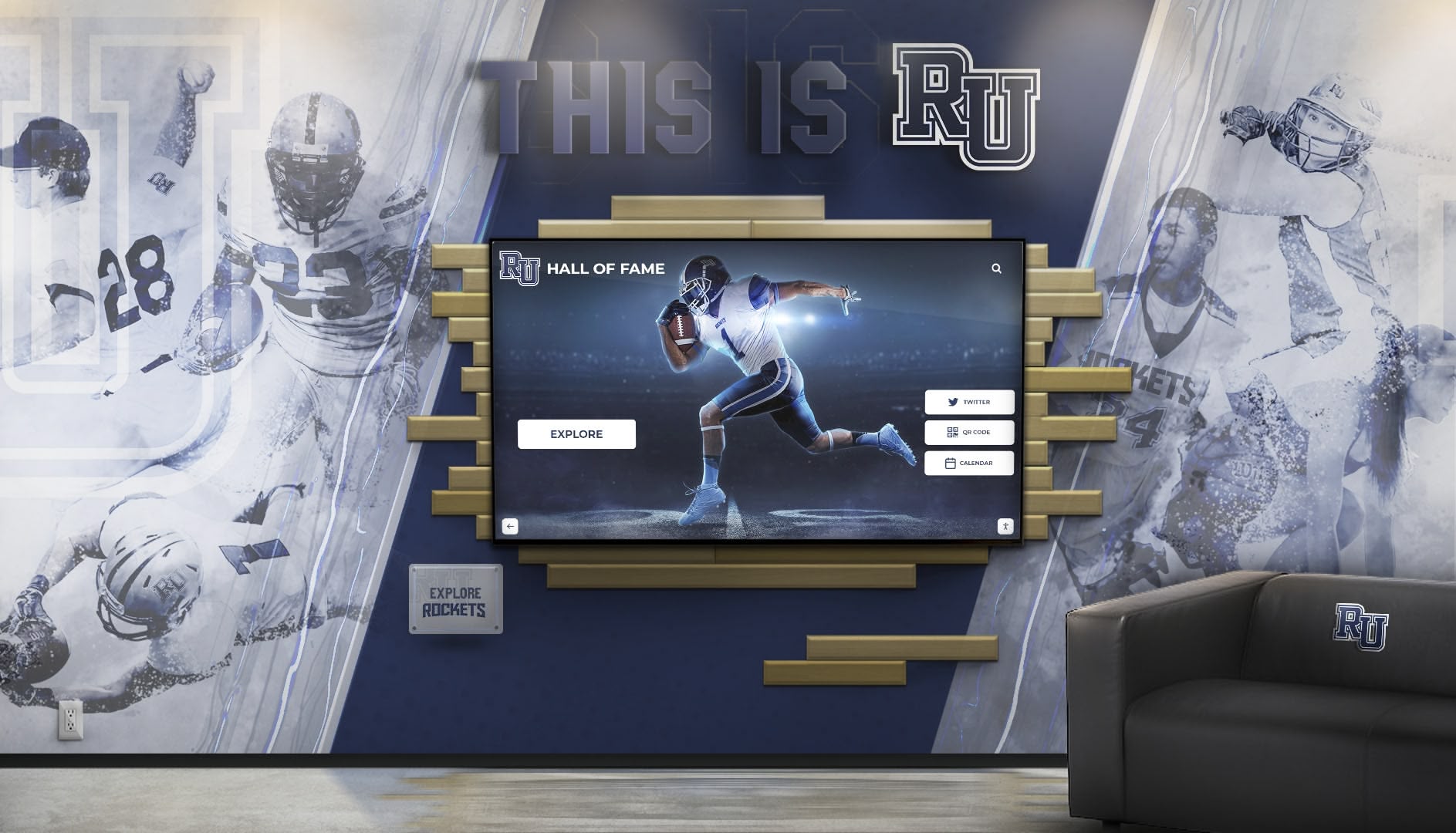
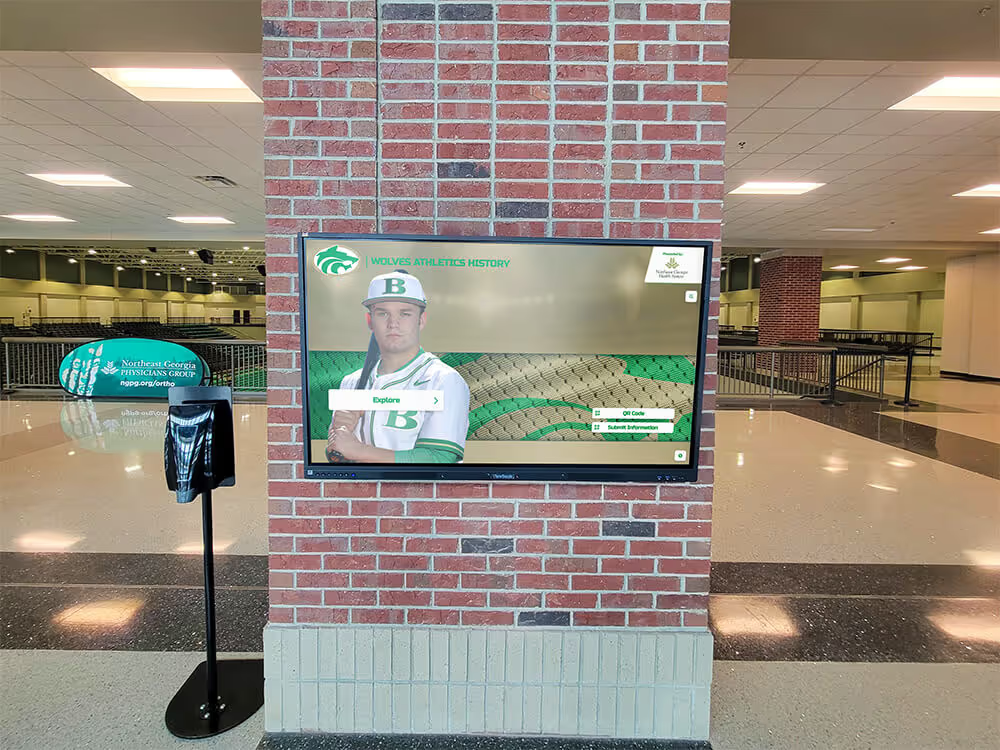
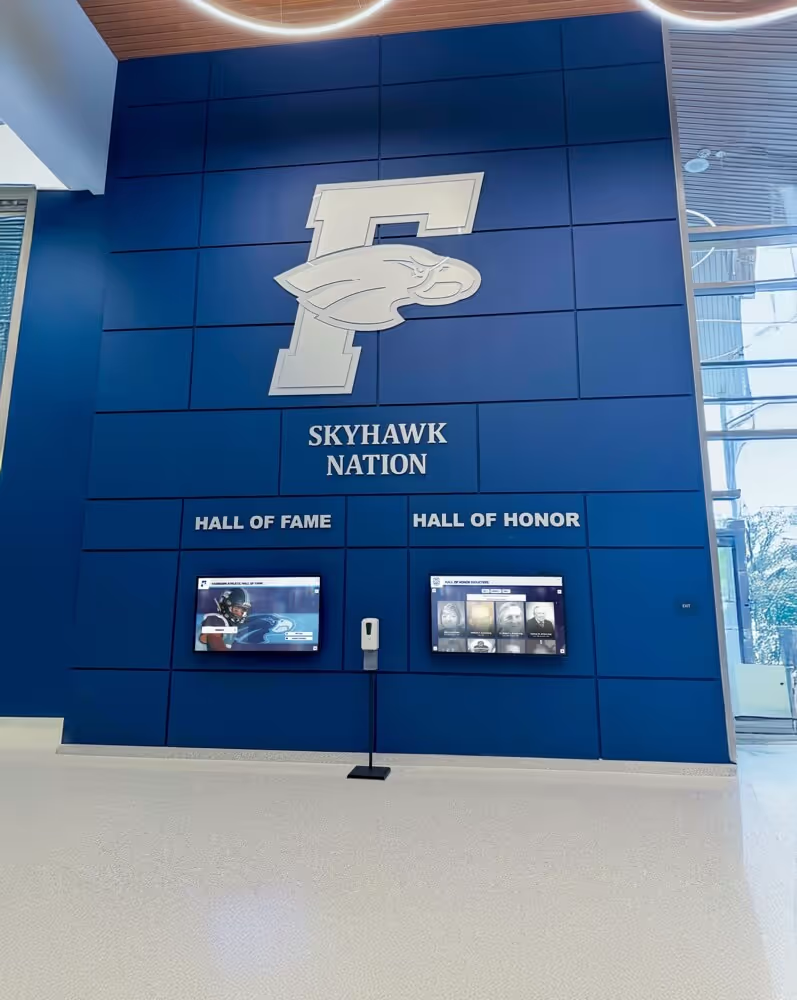
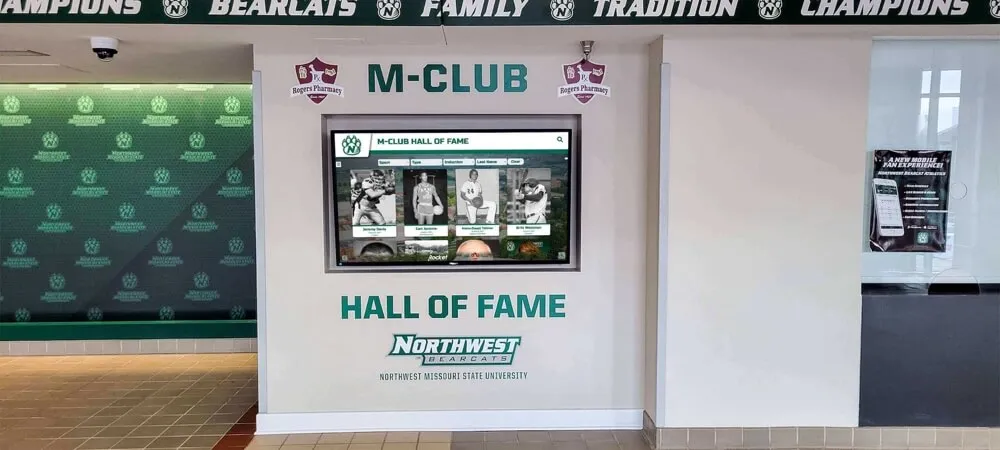
Prominent lobby placement ensures high visibility for sports history displays while creating positive first impressions for recruits, families, and visitors
Mobile and Online Extensions
Physical displays reach limited audiences while online extensions enable global access. Comprehensive programs combine on-site interactive displays with mobile-responsive websites, social media channels sharing daily history features, video platforms hosting historical footage, and digital yearbook archives accessible to alumni worldwide.
This multi-channel approach maximizes both local impact and extended community engagement.
Implementing This Day in Sports History Programs
Successful implementation requires systematic planning beyond technology selection.
Content Calendar Development
Building Comprehensive Historical Databases
Effective “this day in sports history” programs require databases organizing historical events by date. Development process includes researching significant events for all dates, prioritizing content for dates with multiple notable moments, identifying content gaps requiring additional research, creating standardized content templates, and establishing approval workflows ensuring accuracy.
Most programs need 6-12 months for comprehensive database development, though phased implementation can begin with partially complete content focusing initially on championship seasons and major milestones.
Scheduling Anniversary Recognition
Beyond daily features, systematic anniversary recognition creates natural engagement spikes. Track and promote milestone anniversaries including 25th, 50th, and 75th anniversary celebrations of championships, decade milestones since record-breaking performances, retirement anniversaries for legendary coaches, and facility dedication anniversaries.
These anniversaries provide opportunities for special events, alumni reunions, fundraising campaigns, and enhanced recognition creating meaningful connections between past and present.
Learn about homecoming parade planning that incorporates historical recognition into broader community-building traditions.
Roles and Responsibilities
Content Management Ownership
Sustainable programs require clear responsibility assignment. Typical structures include athletic directors providing oversight and strategic direction, assistant coaches or athletic coordinators managing regular content updates, student managers conducting historical research and data entry, communications staff ensuring quality writing and editing, and IT support maintaining technical infrastructure.
Written role descriptions prevent gaps while ensuring accountability for program maintenance and growth.
Student and Alumni Involvement
Engaging students and alumni in historical preservation creates benefits beyond labor savings. Student involvement includes journalism students conducting research and writing profiles, video production classes creating historical documentaries, statistics managers digitizing historical records, and athletic teams contributing to their sport-specific historical sections.
Alumni participation includes historical material donations, oral history interview participation, financial support for display technology, and expertise sharing for specialized needs like video editing or database development.
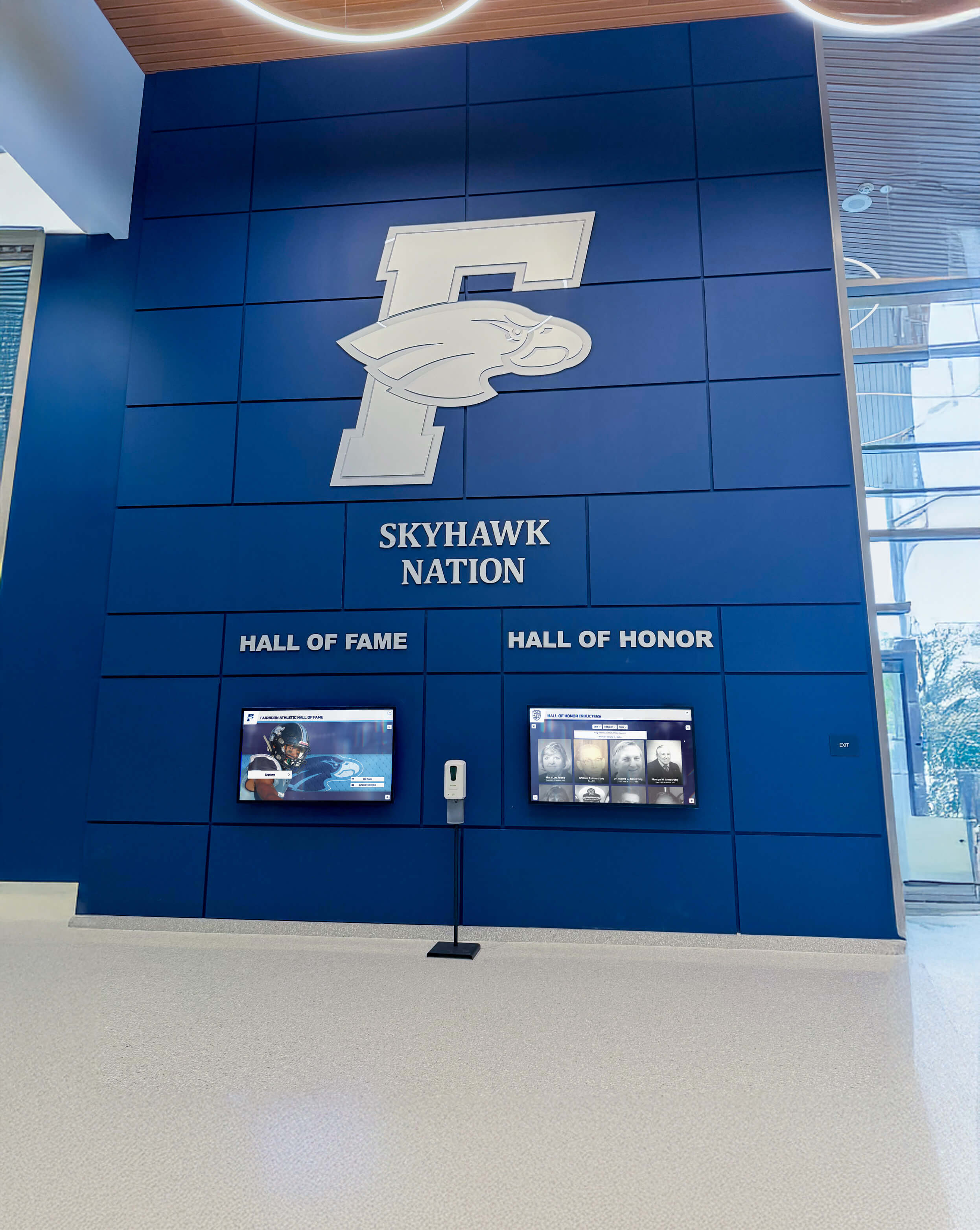
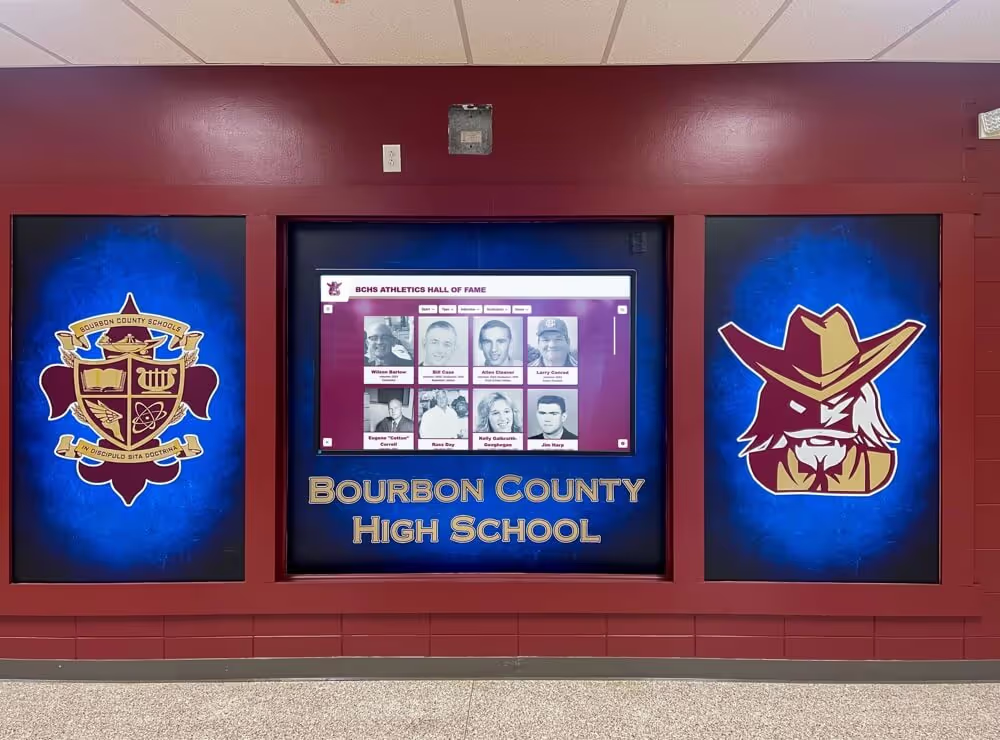
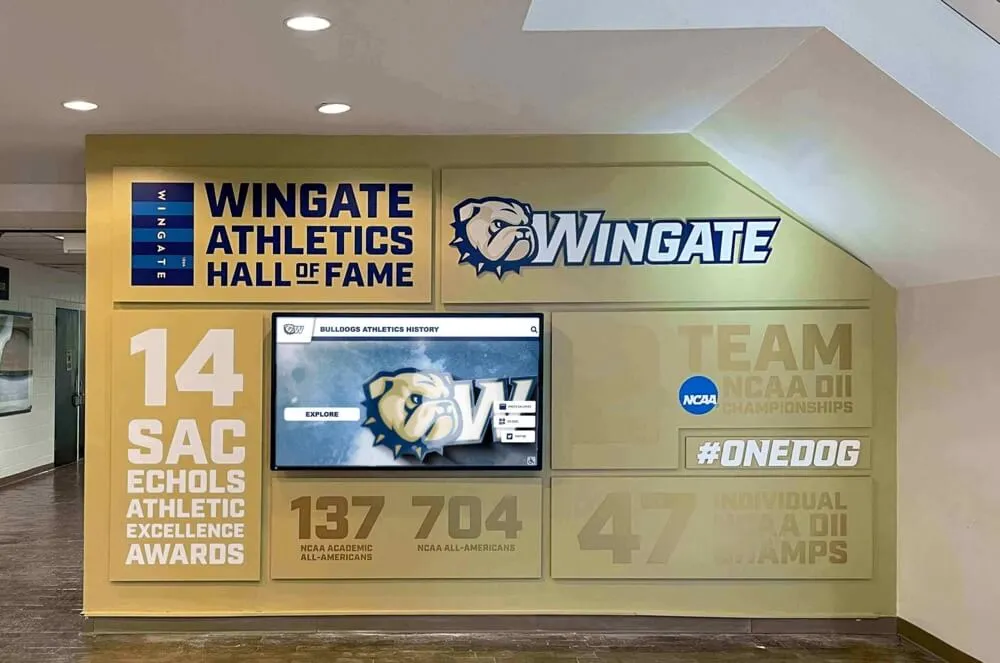
Comprehensive recognition spaces celebrate complete program histories while creating inspiring environments for current athletes and visiting recruits
Maintaining and Growing Historical Programs
Initial display installation represents the beginning rather than completion of effective sports history programs.
Regular Content Updates
Adding Current Achievements
Historical displays require regular updates incorporating recent accomplishments into program narratives. Establish systematic processes for adding new records and achievements, updating career leaderboards as athletes progress, documenting championship seasons while memories remain fresh, recognizing individual award winners promptly, and maintaining currency demonstrating active program management.
Stale displays communicating neglect undermine their value while current content demonstrates institutional commitment to recognition.
Correction and Enhancement Processes
Historical errors inevitably appear despite careful research. Establish clear procedures for reporting potential errors, verifying corrections through multiple sources, documenting changes with explanatory notes, and acknowledging contributors who identify improvements.
This process maintains accuracy while demonstrating responsiveness to community feedback.
Technology Evolution and Upgrades
Planning for Technical Lifecycle
Digital display technology evolves continuously requiring periodic refresh. Budget planning should account for software platform updates and enhancements, content management system migrations as platforms evolve, hardware replacement every 5-7 years, network infrastructure improvements, and cybersecurity requirements ensuring system protection.
Organizations should allocate 10-15% of original implementation costs annually for technology evolution and enhancement.
Explore school history timeline development that ensures long-term accessibility of historical materials.
Measuring Program Impact
Engagement Metrics
Modern digital displays provide usage analytics documenting engagement including total interaction sessions and duration, most-viewed content and athletes, search queries revealing user interests, peak usage times and locations, and year-over-year growth trends.
These metrics demonstrate value to administrators while identifying content opportunities based on user behavior patterns.
Qualitative Feedback Collection
Numbers tell part of the story while direct feedback provides crucial context. Gather qualitative input through athlete focus groups discussing historical awareness, alumni survey responses about recognition satisfaction, recruit family feedback during campus visits, coach observations about culture impacts, and community commentary through social media.
This feedback guides content development and feature enhancement ensuring programs meet constituent needs.
Connecting History to Current Programs
The most effective sports history displays create active connections between past achievements and current athletic culture.
Pre-Game and Warm-Up Integration
Historical Motivation Features
Some programs integrate historical content into pre-competition routines. Examples include displaying relevant historical achievements in locker rooms before games, featuring “on this day” highlights during warm-ups, creating video montages connecting current teams to program legacy, and establishing traditions where team captains research and share historical parallels.
These practices embed historical awareness into competitive preparation rather than treating history as separate from current performance.
Recruit Engagement During Campus Visits
Leveraging History for Recruiting Impact
Prospective athletes respond powerfully to program history demonstrations during campus visits. Effective approaches include guided tours of recognition spaces with personal stories, interactive displays enabling recruits to explore program records, video presentations connecting history to current culture, and meetings with legendary alumni when possible.
According to recruiting research, facilities and program history rank among the top five factors influencing athlete college decisions—making historical displays legitimate recruiting advantages.
Learn about college commitment day celebrations that honor current athletes while contributing to program history narratives.
Social Media and Digital Engagement
Extending Reach Through Online Channels
Physical displays reach limited audiences while social media dramatically extends historical content impact. Effective programs maintain consistent “this day in sports history” posting featuring daily historical highlights with archival photos, weekly throwback features celebrating memorable moments, monthly video documentaries on championship teams, interactive polls engaging followers with historical questions, and live reunion coverage connecting alumni with current programs.
These efforts keep program history relevant for geographically dispersed communities while maintaining engagement between athletic seasons.
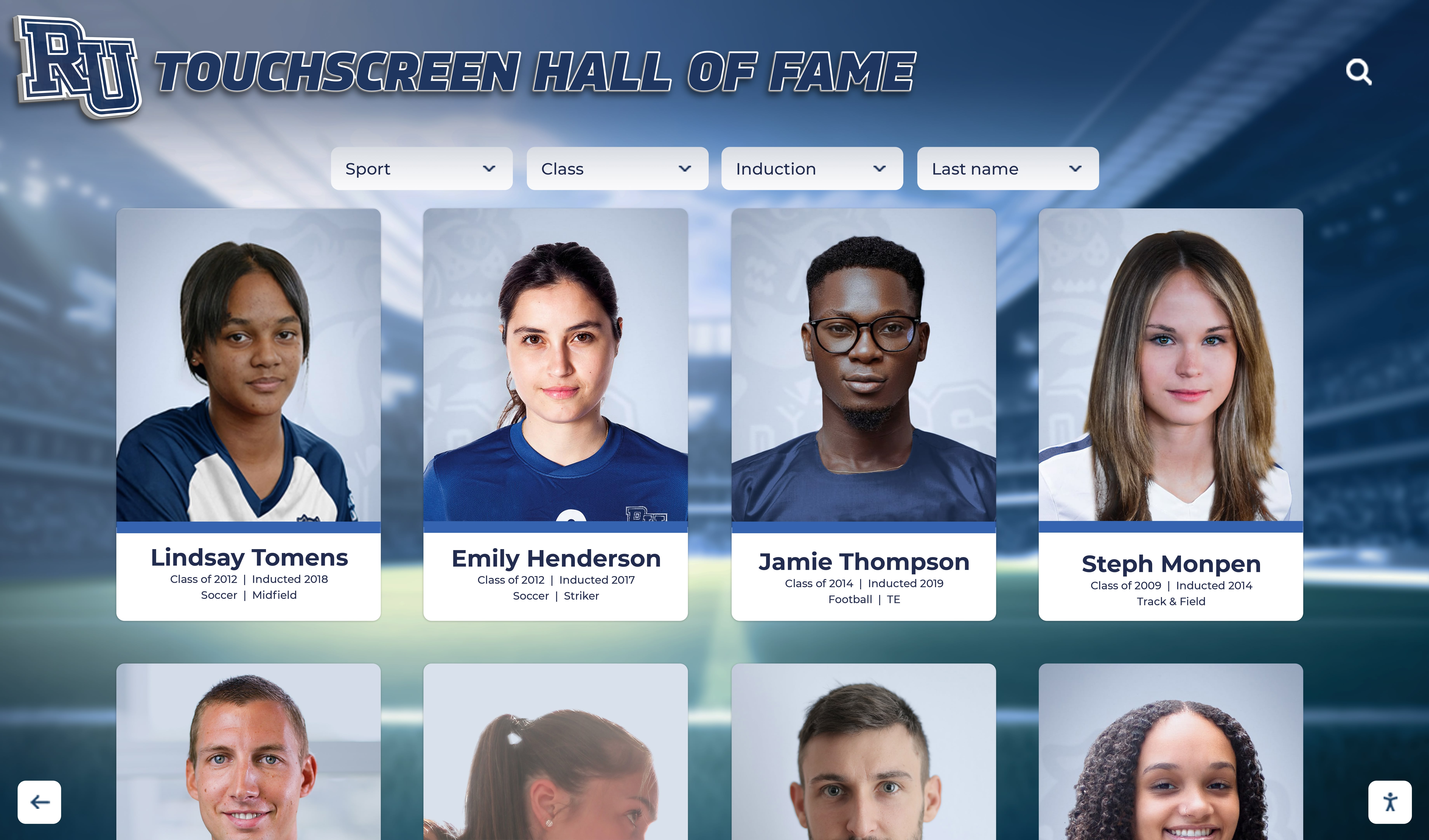
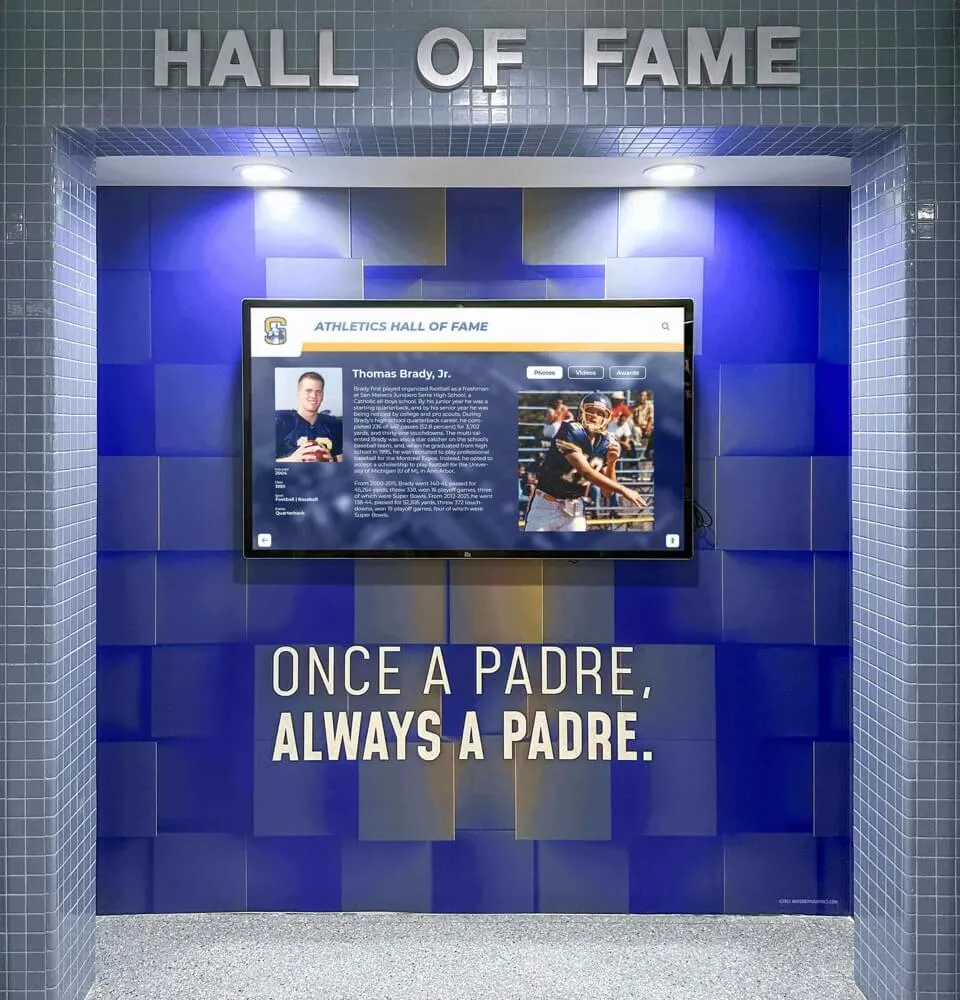
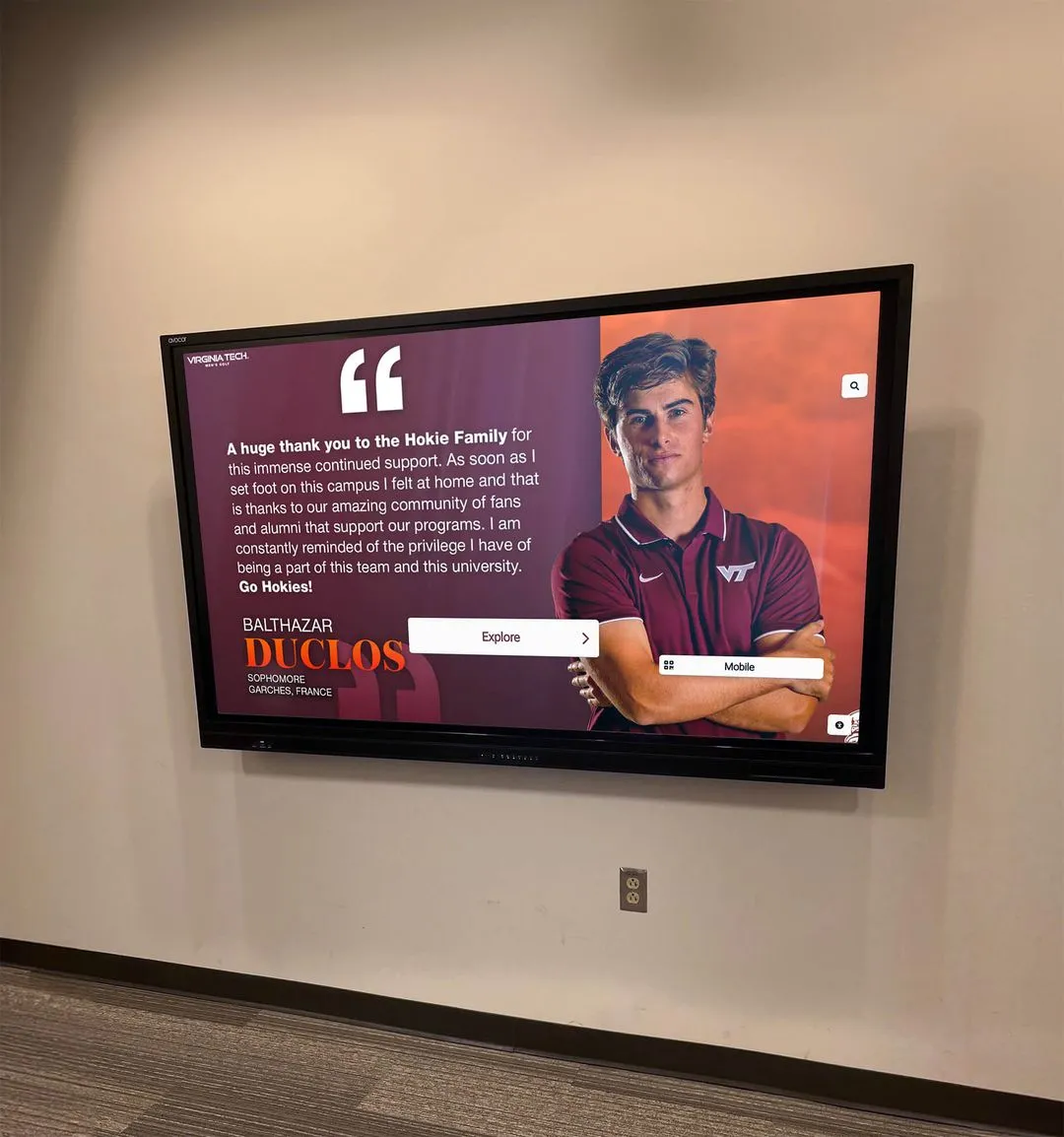
Detailed athlete profiles accessible through touchscreen interaction provide comprehensive recognition honoring individual contributions to program success
Budget Considerations and Funding
Historical display programs require initial investment plus ongoing operational funding.
Initial Implementation Costs
Technology Investment Ranges
Digital interactive touchscreen displays typically cost $8,000-$25,000 per installation depending on screen size (43"-75"), mounting hardware and installation, content management platform licensing, initial content development and loading, and network infrastructure requirements.
Organizations implementing multiple displays or comprehensive recognition spaces should budget $25,000-$100,000+ depending on scope and feature sophistication.
Physical recognition spaces combining digital displays with environmental design including wall graphics, trophy case integration, flooring and lighting, and architectural elements may range from $50,000-$250,000+ for comprehensive athletic hall of fame spaces.
Content Development Investments
Beyond technology, comprehensive content development requires resources including historical research and digitization, photograph scanning and restoration, video editing and production, content writing and editing, database development and population, and graphic design for visual consistency.
Organizations can minimize costs through phased implementation, student and volunteer labor, and starting with existing well-documented periods while gradually expanding coverage to earlier eras requiring more research.
Sustainable Funding Models
Incorporating Recognition into Capital Campaigns
Many schools fund comprehensive historical displays through capital campaigns and facility renovations. Effective approaches include dedicating portions of athletic facility campaigns to recognition spaces, creating sponsorship opportunities for specific display features, establishing endowments supporting ongoing content management, and memorial giving opportunities honoring deceased coaches and athletes.
Historical recognition often generates strong donor response because contributors value legacy preservation and meaningful acknowledgment of past contributions.
Explore student awards and recognition approaches that build annual recognition traditions strengthening program culture.
Operational Budget Integration
Ongoing operational costs include content management software subscriptions ($500-$3,000 annually), staff time for content updates and maintenance, technology refresh and replacement planning, professional photography and videography when needed, and historical material preservation and storage.
These operational requirements should integrate into regular athletic department budgets rather than relying solely on one-time fundraising efforts.
Best Practices for Long-Term Success
Organizations maintaining effective sports history programs follow proven practices ensuring sustained impact.
Documentation and Historical Standards
Establishing Style Guidelines
Comprehensive style guides ensure consistency across content creators and time periods. Guidelines should address naming conventions for athletes, coaches, and teams, date formatting and presentation standards, photograph caption requirements, statistical presentation formats, and content tone and voice expectations.
These standards prevent confusion while enabling multiple contributors to add content maintaining professional quality.
Archival Quality for Source Materials
Historical displays depend on preserved source materials. Follow archival best practices including climate-controlled storage for physical materials, high-resolution scanning for digitization (600 DPI minimum), backup systems protecting digital content, metadata documenting content context and provenance, and migration planning as technology evolves.
Quality preservation ensures source materials remain accessible for future display updates and expansions.
Accessibility and Inclusion
Universal Design Principles
Historical displays should accommodate all community members including appropriate mounting heights for wheelchair access, high-contrast designs supporting visual impairments, audio options for visual content, simple navigation patterns, and mobile-responsive online extensions.
These considerations expand audience reach while demonstrating institutional commitment to inclusion.
Diverse Achievement Recognition
Comprehensive programs recognize diverse achievement types avoiding exclusive focus on championship teams and individual records. Include recognition for sportsmanship awards, academic achievement in athletics, coach’s awards and team values, breakthrough personal achievements, and contributions beyond competitive performance.
This inclusive approach celebrates more community members while demonstrating that programs value multiple forms of excellence.
Discover interactive kiosk solutions designed for accessibility and broad audience engagement.
Community Celebration and Events
Leveraging Historical Milestones
Significant anniversaries create natural opportunities for community events including hall of fame induction ceremonies, championship team reunion weekends, facility dedication anniversaries, and historical documentary premieres.
These events strengthen community bonds while generating renewed interest in historical programs and displays.
Ongoing Historical Awareness Programs
Beyond anniversary events, maintain historical awareness through weekly historical highlights in team meetings, historical trivia during competitions, historical photo displays rotating seasonally, and historical content integration in program materials like media guides.
These touchpoints keep history relevant in daily program operations rather than treating recognition as isolated from current activities.
Conclusion: Preserving and Celebrating Athletic Legacy
“This day in sports history” displays represent investments in program culture, community engagement, legacy preservation, and inspirational storytelling that strengthen athletic departments while honoring the athletes, coaches, and moments that built program excellence. Organizations implementing thoughtful historical recognition systems—combining comprehensive content with accessible technology and systematic maintenance—create permanent resources serving diverse stakeholders across generations.
Modern sports history programs extend beyond static trophy cases to encompass interactive touchscreen displays, searchable digital archives, multimedia storytelling, social media engagement, and mobile accessibility. These approaches transform historical recognition from passive viewing into active exploration enabling personalized discovery that resonates with individual interests and connections.
Ready to Celebrate Your Athletic Legacy?
Discover how interactive digital displays can help you preserve program history while creating engaging experiences that inspire current athletes, connect alumni, and showcase championship traditions through intuitive touchscreen technology.
Explore Sports History Display SolutionsThe systematic approaches explored in this guide provide frameworks for implementing sports history programs regardless of athletic department size, budget availability, or archival completeness—from initial content collection and storytelling development through technology selection, display placement, and long-term sustainability strategies. These methodologies enable schools and organizations to celebrate athletic achievements appropriately while creating accessible platforms delivering value across recruitment, culture building, alumni engagement, and community connection objectives.
Start wherever current circumstances allow—whether highlighting championship teams from recent decades or planning comprehensive historical recognition spanning program origins to present—then systematically expand to create the recognition program your athletic legacy deserves. Every achievement documented, every athlete honored, and every moment preserved represents inspiration provided, connections strengthened, and culture reinforced.
Your program’s story deserves celebration and accessibility ensuring current and future athletes can explore and draw inspiration from this rich heritage. With thoughtful planning, appropriate technology choices, compelling storytelling, and systematic implementation, you can create sports history displays becoming treasured program resources for decades to come.
Ready to transform your athletic history into engaging interactive experiences? Book a demo to explore how Rocket Alumni Solutions can help you create comprehensive systems celebrating program legacy while inspiring current athletes through immersive touchscreen displays that bring sports history to life daily.