Every soccer coach knows that a confident, well-trained goalkeeper can transform a team’s defensive performance—turning potential goals into spectacular saves, organizing defensive lines with authority, and providing the composure that keeps teams competitive even under intense pressure. Yet goalkeeper training often receives insufficient attention in youth and high school programs, with many coaches defaulting to basic shot-stopping drills that fail to develop the complete skill set modern goalkeepers require.
Effective goalkeeper development demands specialized training addressing the unique physical, technical, and psychological demands of the position. Unlike field players, goalkeepers need explosive lateral movement, rapid decision-making under pressure, precise positioning instincts, fearless diving technique, and the mental resilience to recover immediately from mistakes while thousands of spectators watch their every move.
This comprehensive guide provides 12 progressive soccer goalie drills organized by skill level and training focus—enabling coaches to implement complete goalkeeper development programs that build technical proficiency, physical conditioning, tactical awareness, and the unshakable confidence separating good goalkeepers from game-changing difference-makers.
Goalkeeper training differs fundamentally from field player development, requiring specialized drills that address positioning, reflexes, diving technique, distribution, and the unique mental demands of being the last line of defense. These drills progress from foundational skills for beginners through advanced training for competitive high school goalkeepers preparing for college recruitment opportunities.

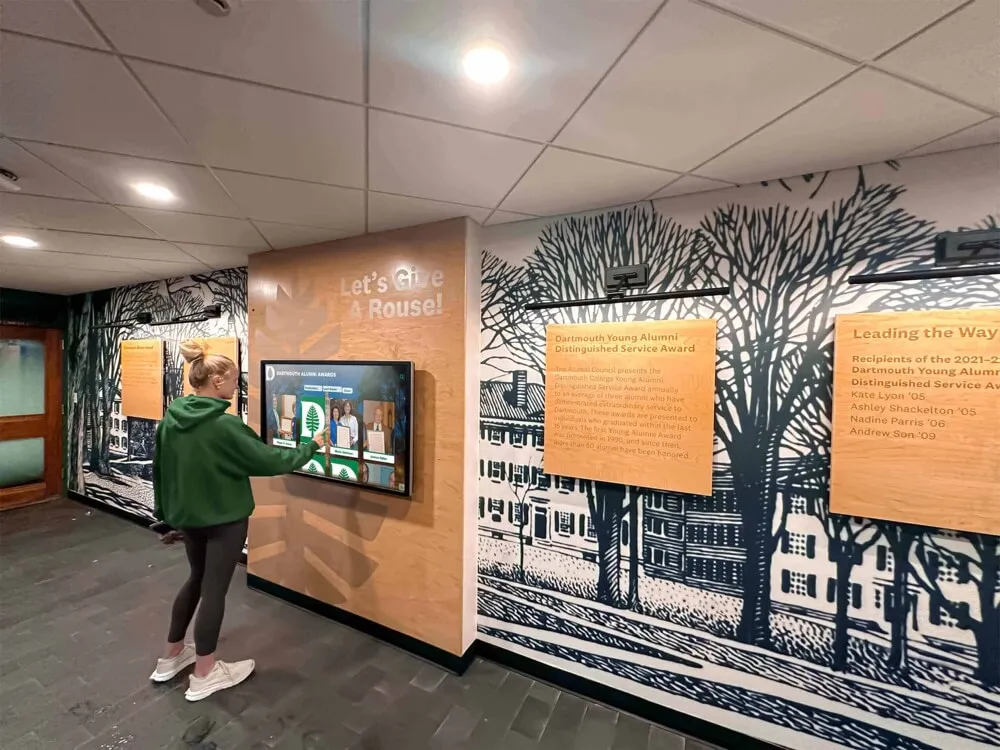
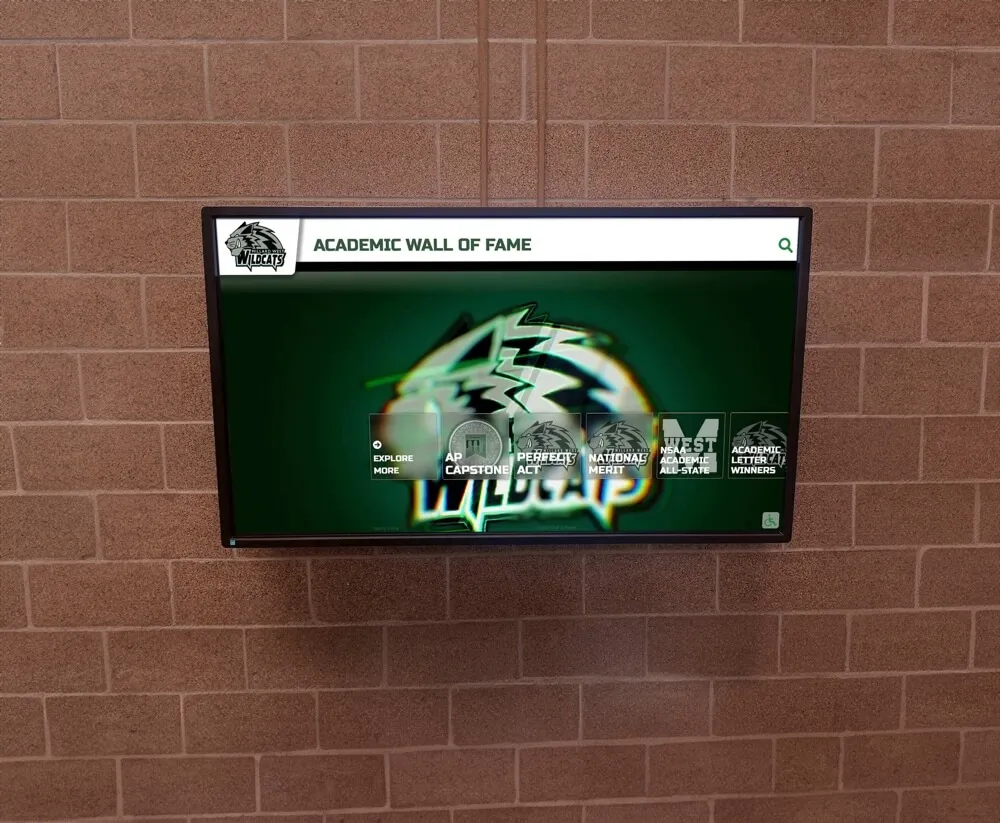
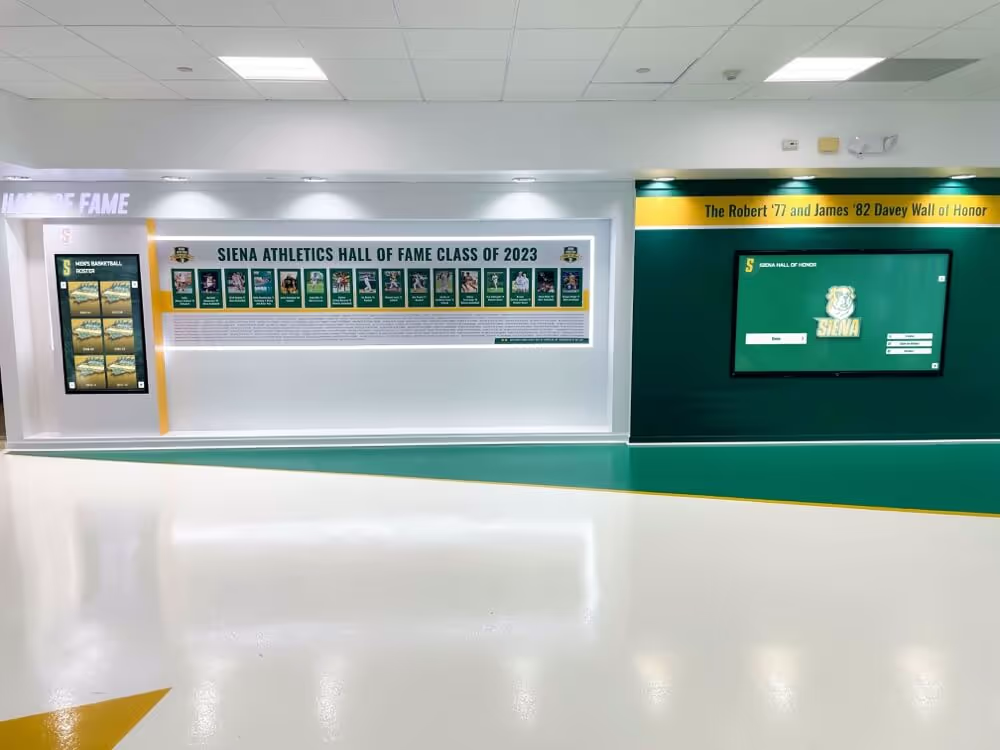
Outstanding goalkeeper performances deserve recognition alongside other athletic achievements in comprehensive sports programs
Understanding Goalkeeper Development Fundamentals
Before diving into specific drills, understanding the core competencies goalkeepers must master helps coaches design progressive training programs addressing all essential skills systematically.
Essential Goalkeeper Skill Categories
Technical Skills
Goalkeepers require specialized technical abilities distinct from field players:
- Shot-stopping: Proper hand positioning, catching technique, and deflection mechanics
- Diving: Safe landing technique, explosive lateral movement, and extension reach
- Footwork: Quick shuffle steps, proper stance, and efficient movement patterns
- Distribution: Accurate throwing, goal kicks, and quick release transitions
- Catching: Secure ball handling in various conditions and under pressure
- Positioning: Angle play, coming off the line, and optimal goal coverage
Physical Attributes
Modern goalkeeping demands specific physical conditioning:
- Explosive power for diving and vertical leaps
- Lightning-fast reflexes for close-range saves
- Flexibility for extreme extension saves
- Core strength for balance and power transfer
- Hand-eye coordination for tracking and catching
- Cardiovascular endurance for 90-minute concentration
Mental Components
The psychological demands of goalkeeping often determine success more than physical skills:
- Confidence recovery after conceding goals
- Decision-making under immediate pressure
- Communication and defensive organization leadership
- Concentration maintenance throughout matches
- Risk assessment for when to challenge or stay back
- Competitive composure during penalty kicks
Comprehensive goalkeeper training addresses all three categories progressively, building complete players rather than focusing exclusively on shot-stopping at the expense of positioning, distribution, and mental development.
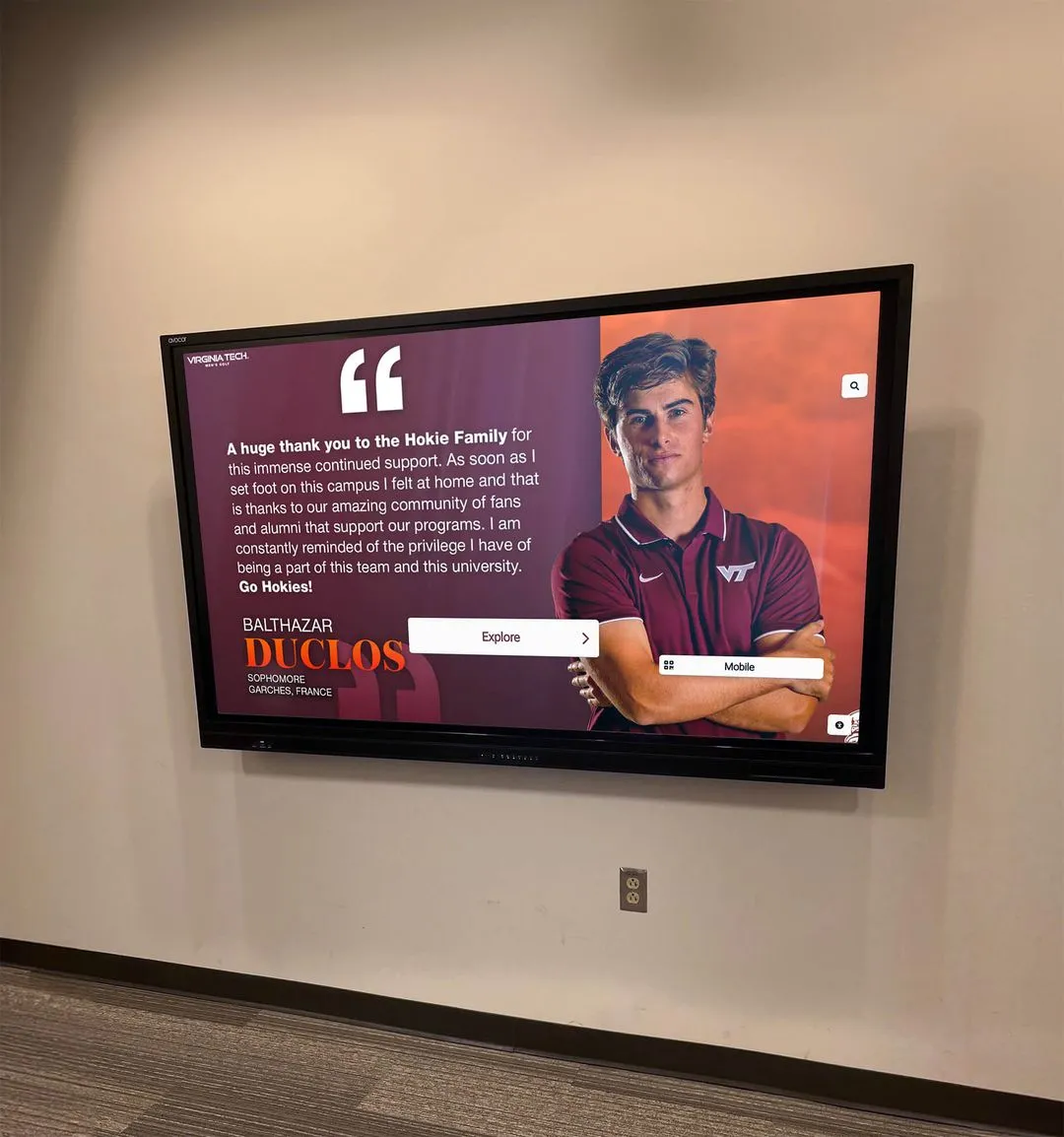
Many top goalkeeper performances receive lasting recognition through student athlete high honors programs celebrating defensive excellence alongside scoring achievements.
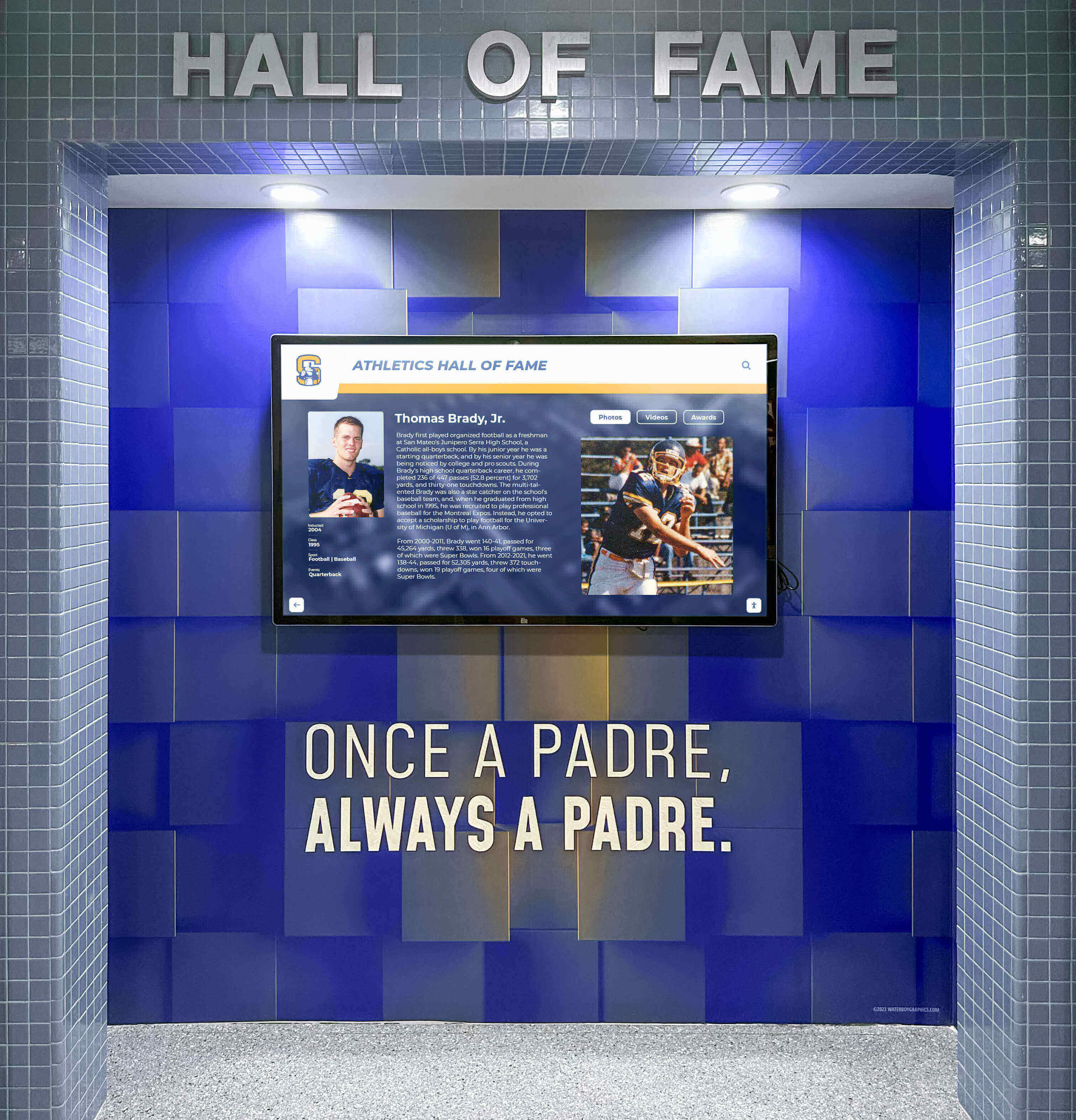
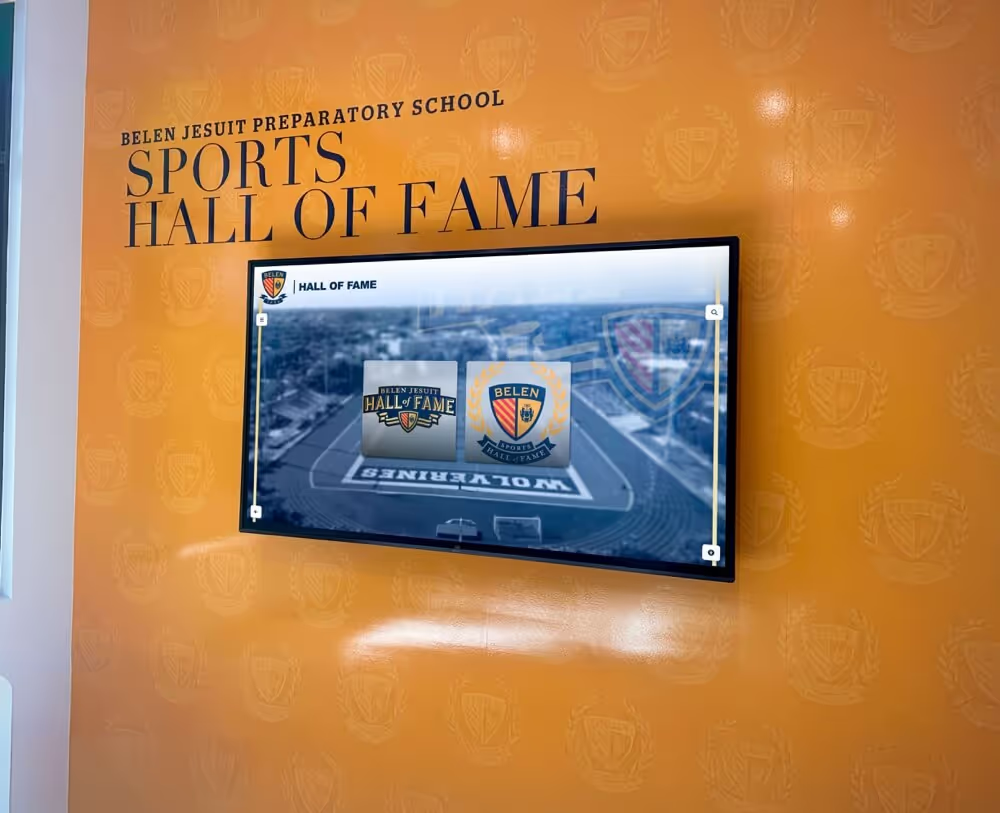
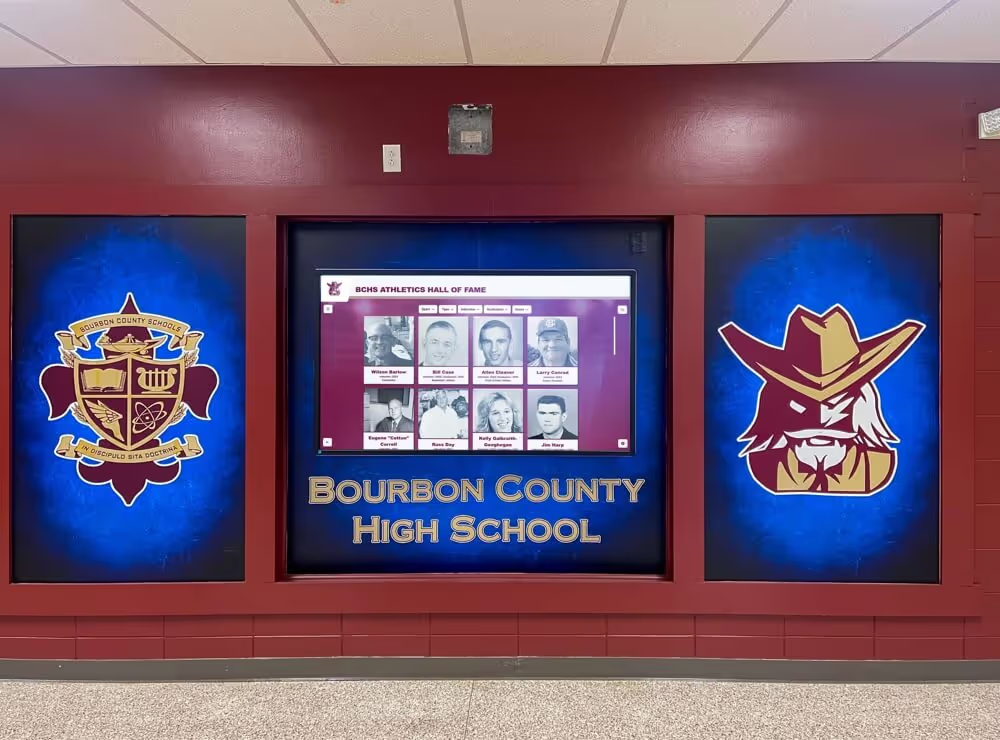
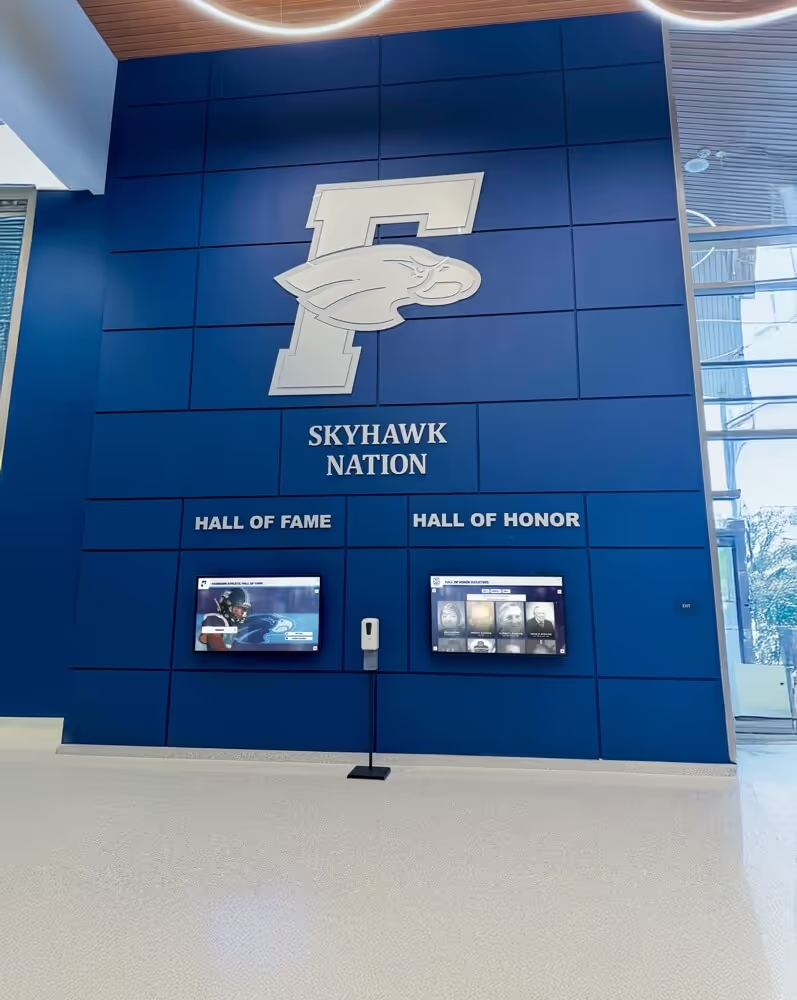
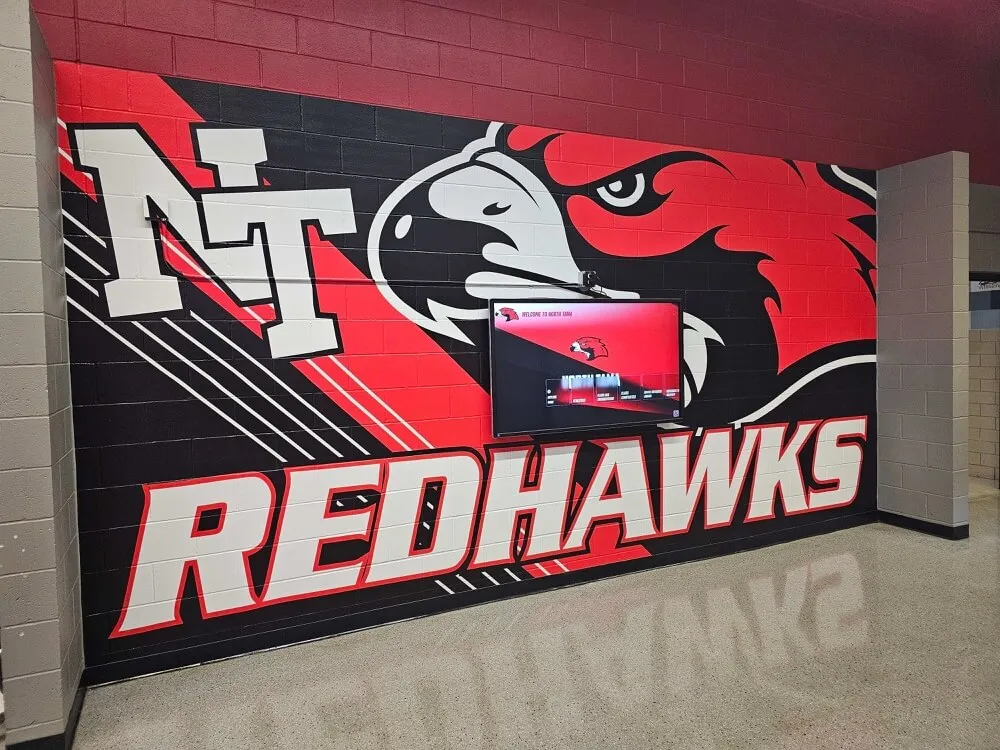
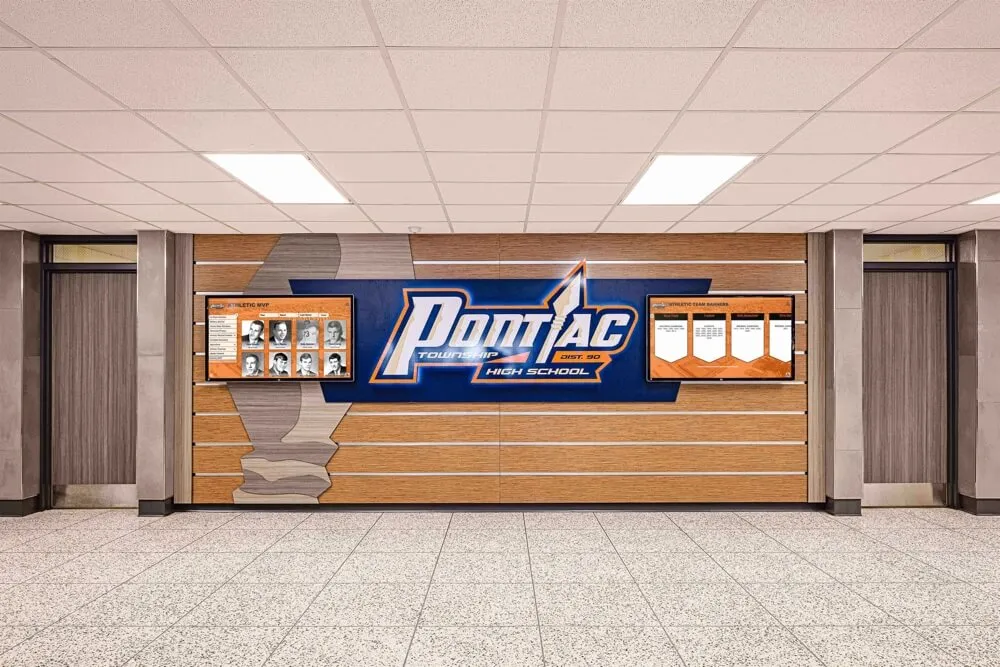
Digital recognition systems showcase goalkeeper achievements including clean sheets, save percentages, and defensive records
Beginner Goalkeeper Drills: Building Foundation Skills
These foundational drills develop proper technique for young or inexperienced goalkeepers, emphasizing safety, correct form, and confidence building through achievable progressions.
Drill 1: Basic Catching Progression
Skill Level: Beginner
Focus Area: Hand positioning and secure catching technique
Duration: 10-12 minutes
Setup and Execution
This progressive drill develops proper catching fundamentals through controlled repetition:
Phase 1: Stationary Chest-Height Catches
- Goalkeeper stands in athletic stance
- Coach tosses ball gently from 8-10 yards at chest height
- Keeper catches using proper “W” hand position (thumbs together, fingers spread)
- Emphasis on pulling ball securely into chest
- 15-20 repetitions focusing on perfect technique
Phase 2: High Ball Catches
- Increase toss height to just above head level
- Goalkeeper must time small jump for optimal catch point
- Focus on extending arms fully before securing ball
- Practice bringing ball down safely to chest
- 12-15 repetitions per goalkeeper
Phase 3: Low Ball Catches
- Reduce toss height to knee and ankle levels
- Keeper practices proper bending technique (knees bent, back straight)
- Emphasis on getting body behind ball
- Hands form scoop position below ball
- 12-15 repetitions
Coaching Points
- Watch for proper hand shape forming “W” or “scoop” depending on height
- Ensure goalkeepers catch ball at highest/earliest point possible
- Check that keepers pull ball immediately into secure chest position
- Verify eyes tracking ball all the way into hands
- Progress speed gradually as technique improves
Common Mistakes to Correct
- Catching with palms facing forward (creates rebounds)
- Failing to secure ball against chest immediately
- Taking eyes off ball before completion
- Standing too upright on low balls
- Reaching for ball too early or too late
Drill 2: Angle Footwork and Positioning
Skill Level: Beginner
Focus Area: Proper positioning and efficient footwork
Duration: 12-15 minutes
Setup and Execution
Position awareness prevents goals more effectively than spectacular saves. This drill builds instinctive positioning habits:
Equipment Needed
- 6-8 cones or markers
- Full-size goal
- At least 3 soccer balls
Drill Structure
Set up cones at various positions around the penalty area (left, center, right at multiple distances). Coach serves balls from different cone positions while goalkeeper practices proper angle positioning:
- Before each serve, keeper must position on proper angle between ball and goal center
- Coach calls out cone position, keeper moves quickly to correct position
- Initial serves allow keeper to set position before shooting
- Progress to reducing reaction time for position adjustment
- Vary shot speeds from slow rolls to moderate-pace shots
Positioning Principles
Teach goalkeepers the fundamental angle principle:
- Imagine straight line from ball through keeper to goal center
- Position on this line at appropriate distance from goal line
- Distance depends on shooter position (closer for wide angles, deeper for central)
- Always maintain sight line to ball while covering maximum goal area
Progression Elements
- Start with stationary serves allowing full positioning time
- Add movement (keeper starts on opposite post, must reposition)
- Introduce time pressure (quick succession from different angles)
- Add simple saves after positioning practice
- Combine with distribution (save, then distribute to target)
This drill builds the instinctive positioning that becomes automatic during matches, preventing goals through superior angle play rather than requiring spectacular diving saves.
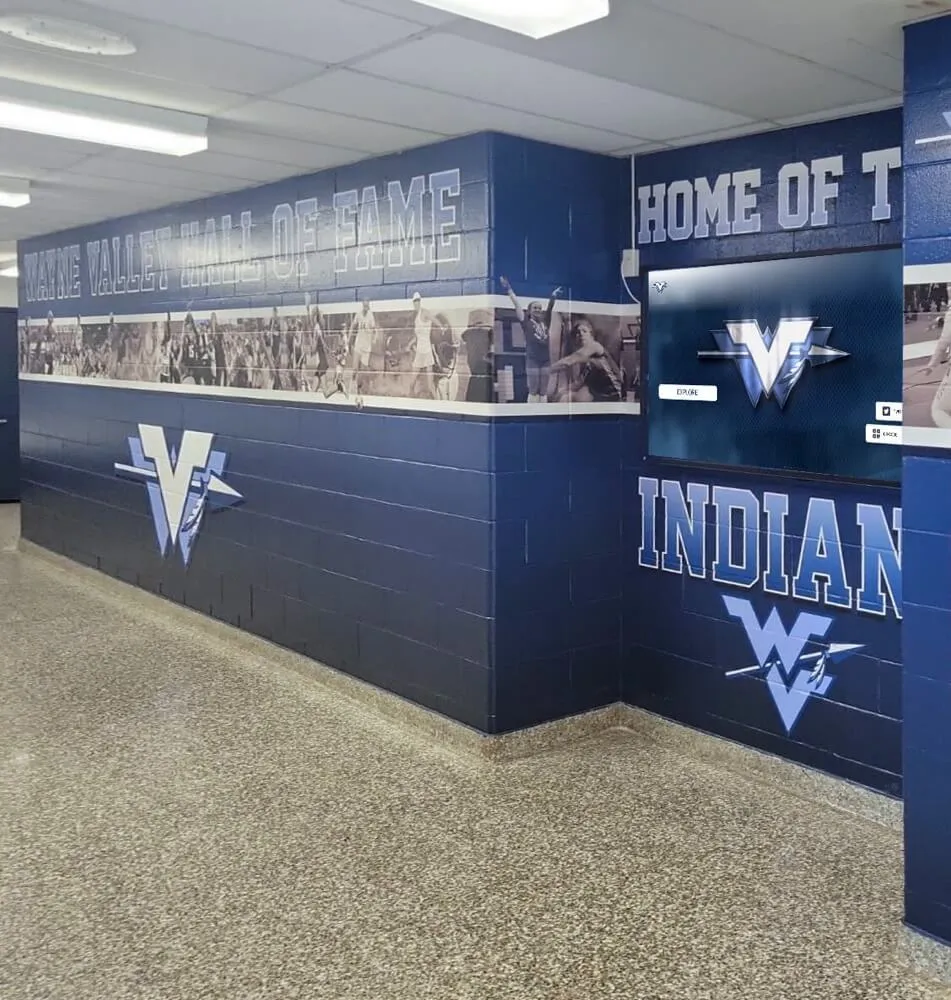
Schools recognize strong defensive performances and goalkeeper excellence through athletic recruiting boards showcasing save percentages and clean sheet records.
Drill 3: Soft Hands Reflex Training
Skill Level: Beginner
Focus Area: Hand-eye coordination and catching reflexes
Duration: 8-10 minutes
Setup and Execution
This rapid-fire catching drill develops quick hands and visual tracking:
Basic Setup
- Goalkeeper stands 5-6 yards from coach
- Coach has 3-4 balls ready for continuous feeding
- Keeper maintains ready position throughout
Execution Sequence
Coach rapidly tosses balls at various heights while goalkeeper catches and immediately returns ball:
- Alternating high/low tosses requiring constant adjustment
- Left/right variations testing lateral reactions
- Quick succession (approximately one toss every 2-3 seconds)
- 30-45 second working intervals with rest between sets
- Complete 3-4 sets per training session
Advanced Variations
- Two-Ball Drill: Coach tosses second ball immediately after first catch
- Call-Out Variation: Coach calls “left” or “right” just before toss
- Distraction Method: Add verbal or visual distractions during tosses
- Competition Format: Count successful catches, set goals for improvement
This drill develops the rapid hand-eye coordination essential for reaction saves while building goalkeeper conditioning through sustained activity intervals.

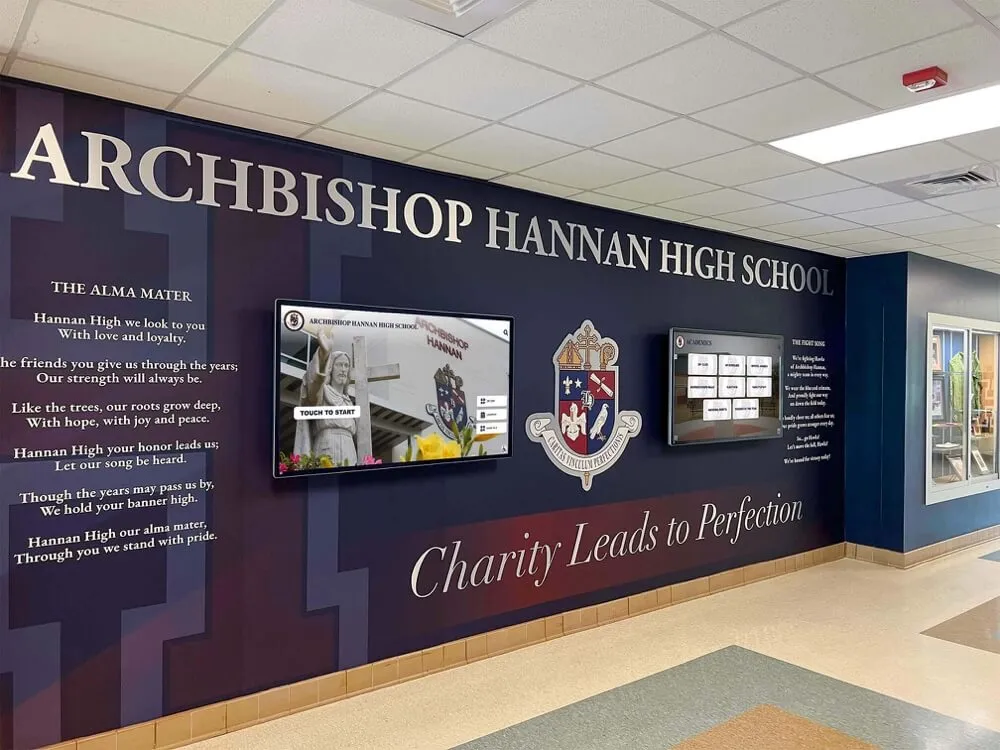
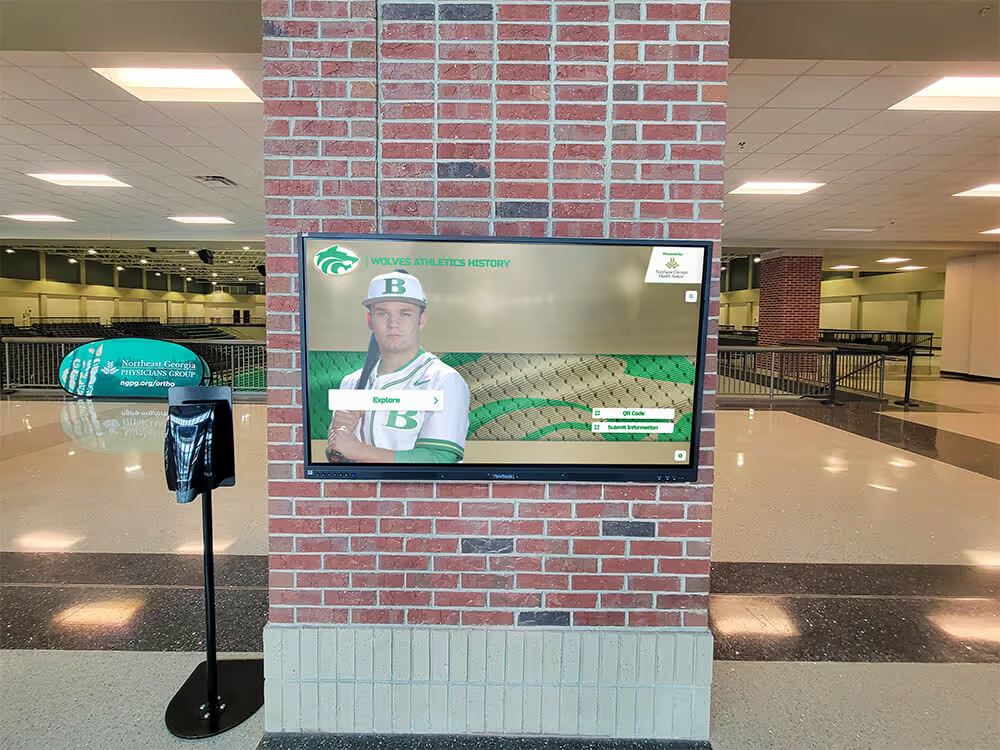
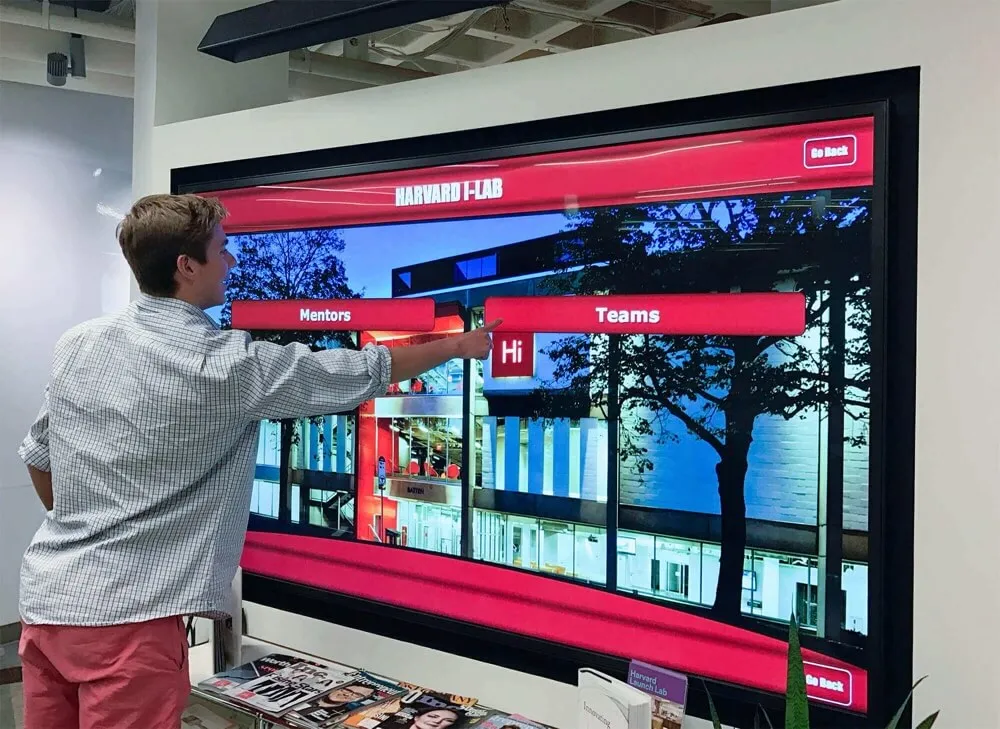
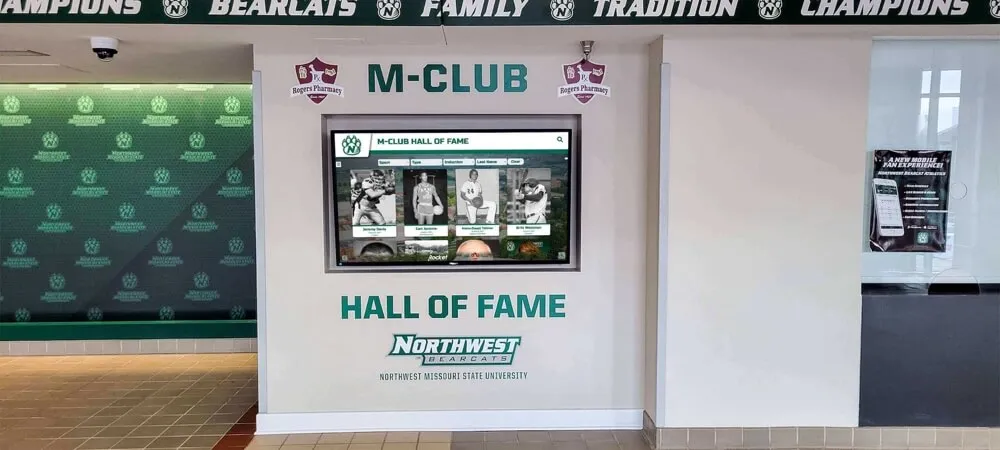
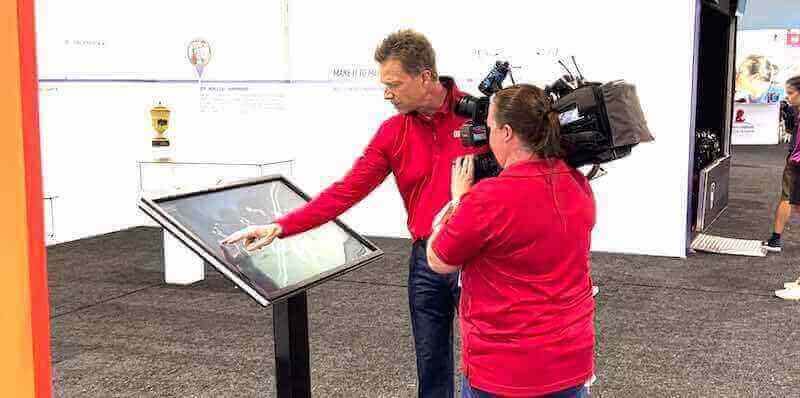
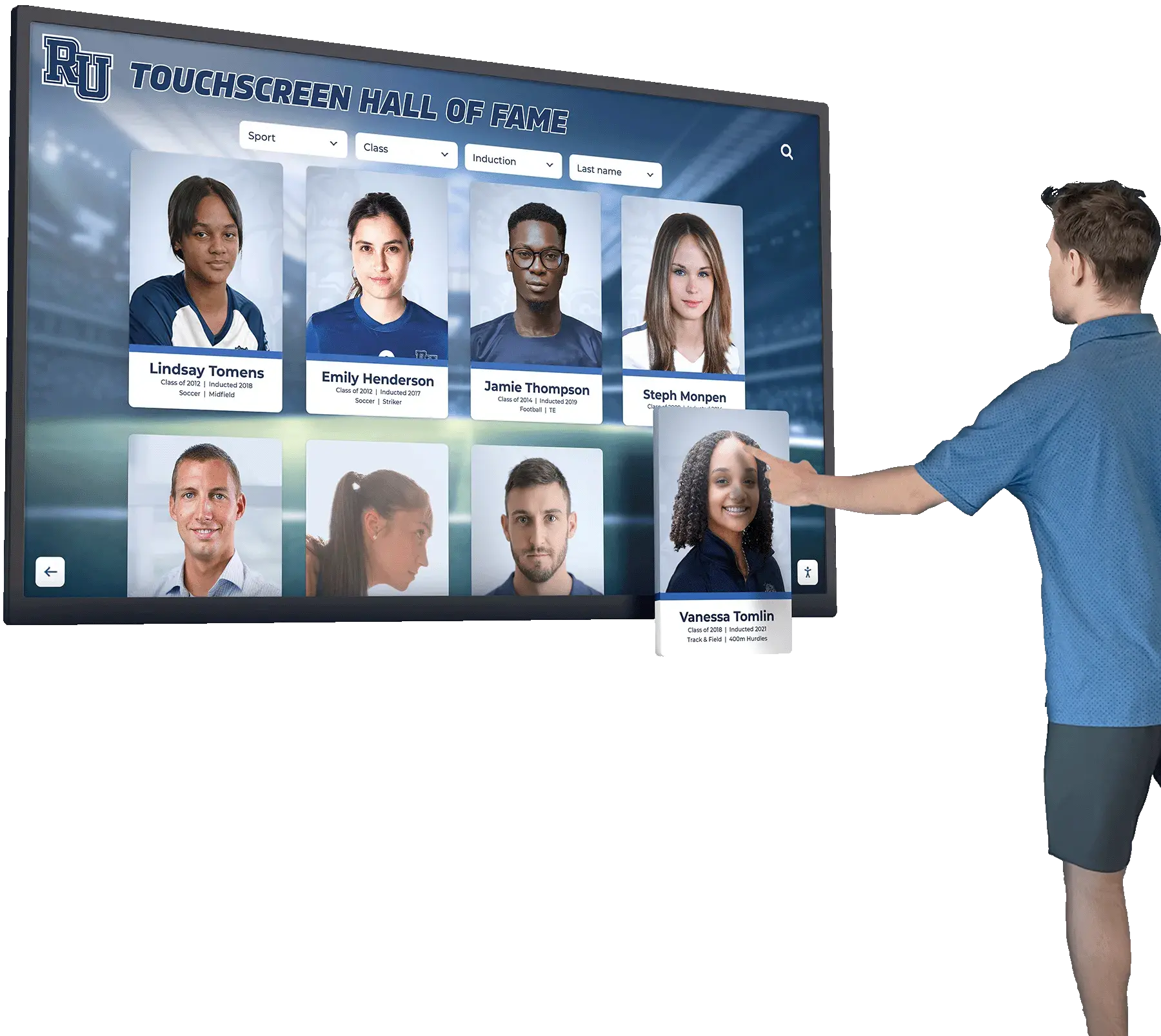
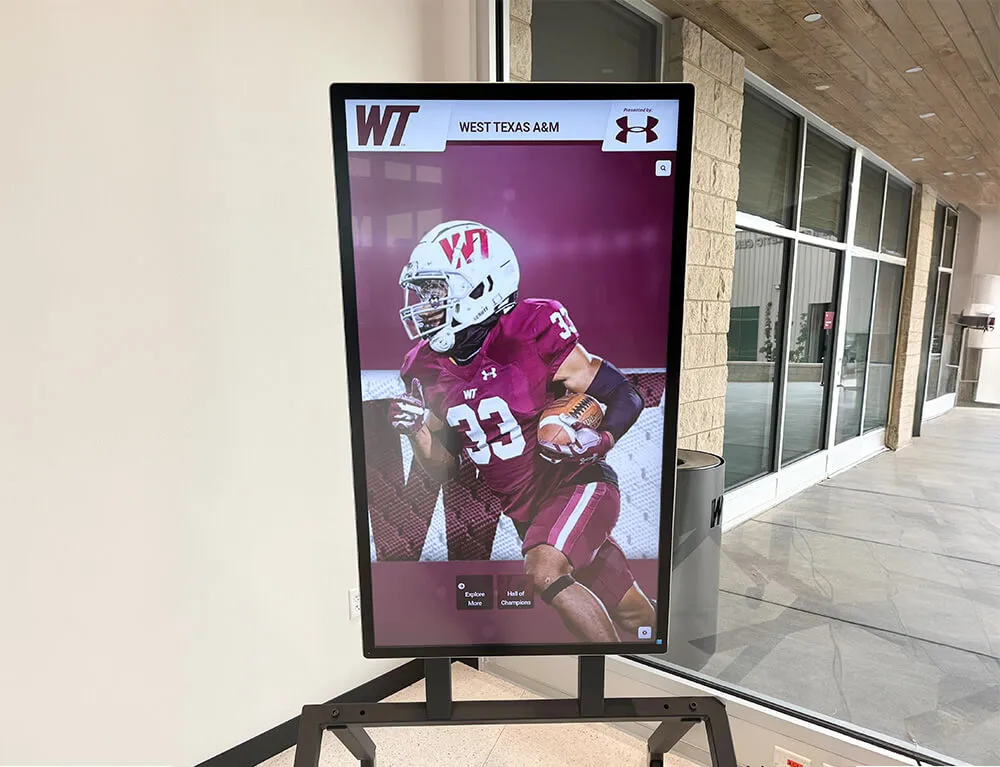
Modern interactive displays enable schools to showcase goalkeeper statistics and achievements through engaging digital interfaces
Drill 4: Safe Diving Technique Introduction
Skill Level: Beginner
Focus Area: Proper diving mechanics and safe landing
Duration: 15-20 minutes
Setup and Execution
Diving is often intimidating for young goalkeepers. This progressive approach builds confidence through safe, gradual skill development:
Safety First
Always conduct diving drills on proper surfaces:
- Grass fields (preferred for beginners)
- Gym mats or crash pads during initial learning
- Never practice diving on hard or rocky surfaces
- Ensure area is clear of obstacles or debris
Progressive Diving Sequence
Stage 1: Kneeling Side Falls
- Goalkeeper kneels on both knees
- Coach rolls ball slowly to side
- Keeper extends and falls sideways catching ball
- Focus on landing on side (hip/shoulder), not directly on shoulder point
- Ball should contact ground first, cushioning fall
- Practice 5-6 times each side
Stage 2: Crouching Dives
- Goalkeeper starts in low squat position
- Coach tosses ball slightly to side and forward
- Keeper pushes off inside leg, extends for ball
- Emphasis on proper landing sequence (ball-hip-shoulder)
- 6-8 repetitions each side
Stage 3: Standing Shuffle to Dive
- Goalkeeper stands in ready position
- Takes 1-2 quick shuffle steps to side
- Explodes into diving extension for save
- Focus on powerful push-off from inside leg
- 6-8 repetitions each side
Critical Coaching Points
- Hands reach ball first, creating cushion for landing
- Land on ball-then-hip-then-shoulder sequence (never directly on shoulder)
- Eyes stay on ball throughout entire motion
- Inside leg provides power for explosive extension
- Get up quickly after each dive (game-realistic habit)
Never Rush Progression
Diving confidence develops gradually. Spend multiple sessions on each stage before advancing. Forcing progression before readiness creates fear that undermines future development.
Intermediate Goalkeeper Drills: Developing Game-Speed Skills
These drills introduce realistic game pressure, quicker decision-making, and multiple-sequence saves developing complete game-ready goalkeepers.
Drill 5: Rapid-Fire Shot Sequence
Skill Level: Intermediate
Focus Area: Quick recovery and multiple saves
Duration: 12-15 minutes
Setup and Execution
Game situations frequently require goalkeepers to make multiple consecutive saves. This drill builds recovery speed and sustained concentration:
Drill Configuration
- Set up 3-4 shooters at various positions around penalty area
- Shooters have multiple balls ready
- Goalkeeper starts in center of goal
- Coach coordinates shooting sequence
Execution Pattern
- Shooter 1 takes moderate-pace shot
- Goalkeeper makes save and immediately resets position
- Shooter 2 (from different angle) shoots within 2-3 seconds
- Keeper makes second save, resets again
- Shooter 3 follows quickly
- Continue for 60-90 second interval
- Rest 60-90 seconds, repeat 3-4 times
Key Development Elements
This drill develops multiple critical skills simultaneously:
- Quick recovery to ready position after saves
- Rapid repositioning for different shooting angles
- Sustained concentration under continuous pressure
- Handling fatigue while maintaining technique
- Decision-making between catching, deflecting, or punching
Progression Options
- Decrease time between shots as skills improve
- Add unpredictability (shooters shoot when ready, not on command)
- Increase shot power progressively
- Extend working intervals to 90-120 seconds
- Add requirement for distribution between saves
Championship goalkeeper performances often earn recognition through all-state record boards documenting elite defensive statistics.
Drill 6: High Ball Under Pressure
Skill Level: Intermediate
Focus Area: Catching crosses and dealing with aerial challenges
Duration: 15-18 minutes
Setup and Execution
Catching crosses with opponents challenging represents one of goalkeeping’s most demanding skills. This drill builds confidence in traffic:
Initial Setup (No Pressure)
- Server positions at corner of penalty area with multiple balls
- Goalkeeper starts on goal line
- Coach serves high balls into goal area
- Keeper must judge flight, time approach, and catch at highest point
Adding Pressure (Progressive)
Phase 1: Passive Defenders
- Add 1-2 field players in goal area
- Players positioned but don’t actively challenge
- Keeper must navigate around players to reach ball
- Focus on communicating (“keeper’s ball!”)
Phase 2: Active But Fair Challenges
- Defenders may jump for ball but no contact
- Keeper must win ball while managing contact awareness
- Emphasis on strong hands, secure catching, and body protection
Phase 3: Game-Realistic Challenges
- Defenders actively compete for ball within rules
- Goalkeeper uses body positioning, timing, and strength
- Coach ensures safety (no dangerous play)
- Develops mental toughness for physical challenges
Essential Techniques
- Call loudly and early (“keeper!” or “my ball!”)
- Time approach to catch ball at highest possible point
- Use one knee up for body protection when crowded
- Secure ball immediately before landing
- Develop confidence coming through traffic
Safety Emphasis
Always prioritize safety when introducing contact:
- Use goalkeepers wearing proper gloves
- Ensure defenders understand rules (no pushing, holding, or undercutting)
- Stop drill immediately for dangerous play
- Build contact tolerance gradually over multiple sessions
Drill 7: Breakaway 1v1 Situations
Skill Level: Intermediate
Focus Area: Decision-making and breakaway positioning
Duration: 15-20 minutes
Setup and Execution
Few situations test goalkeeper decision-making more than facing an attacker in 1v1 breakaway scenarios. This drill develops timing, positioning, and commitment:
Drill Structure
- Attacker starts at midfield with ball
- Goalkeeper positions on goal line
- Coach signals start, attacker advances toward goal
- Goalkeeper must decide when/whether to challenge
Decision-Making Framework
Teach goalkeepers to evaluate three options:
Option 1: Stay Back
- When attacker has full control and space to shoot
- Keeper stays on line, makes position angles smaller
- Forces attacker to beat keeper with quality shot
Option 2: Close Down Gradually
- When attacker’s touch pushes ball slightly ahead
- Keeper advances to cut shooting angle
- Maintains ability to retreat if attacker regains control
Option 3: Full Commitment
- When attacker takes heavy touch with ball getting loose
- Keeper sprints out to win ball before attacker
- Commits fully with sliding challenge if necessary
Execution Progressions
Start with controlled scenarios clearly favoring one option, gradually introducing ambiguous situations requiring split-second decisions:
Week 1-2: Obvious scenarios (clearly heavy touches or clearly controlled approaches)
Week 3-4: Mixed situations with various ball-control levels
Week 5+: Add shooters approaching from angles (not just straight on)
This drill develops the decision-making instincts separating elite goalkeepers from average ones—knowing precisely when to hold position versus when to challenge aggressively.
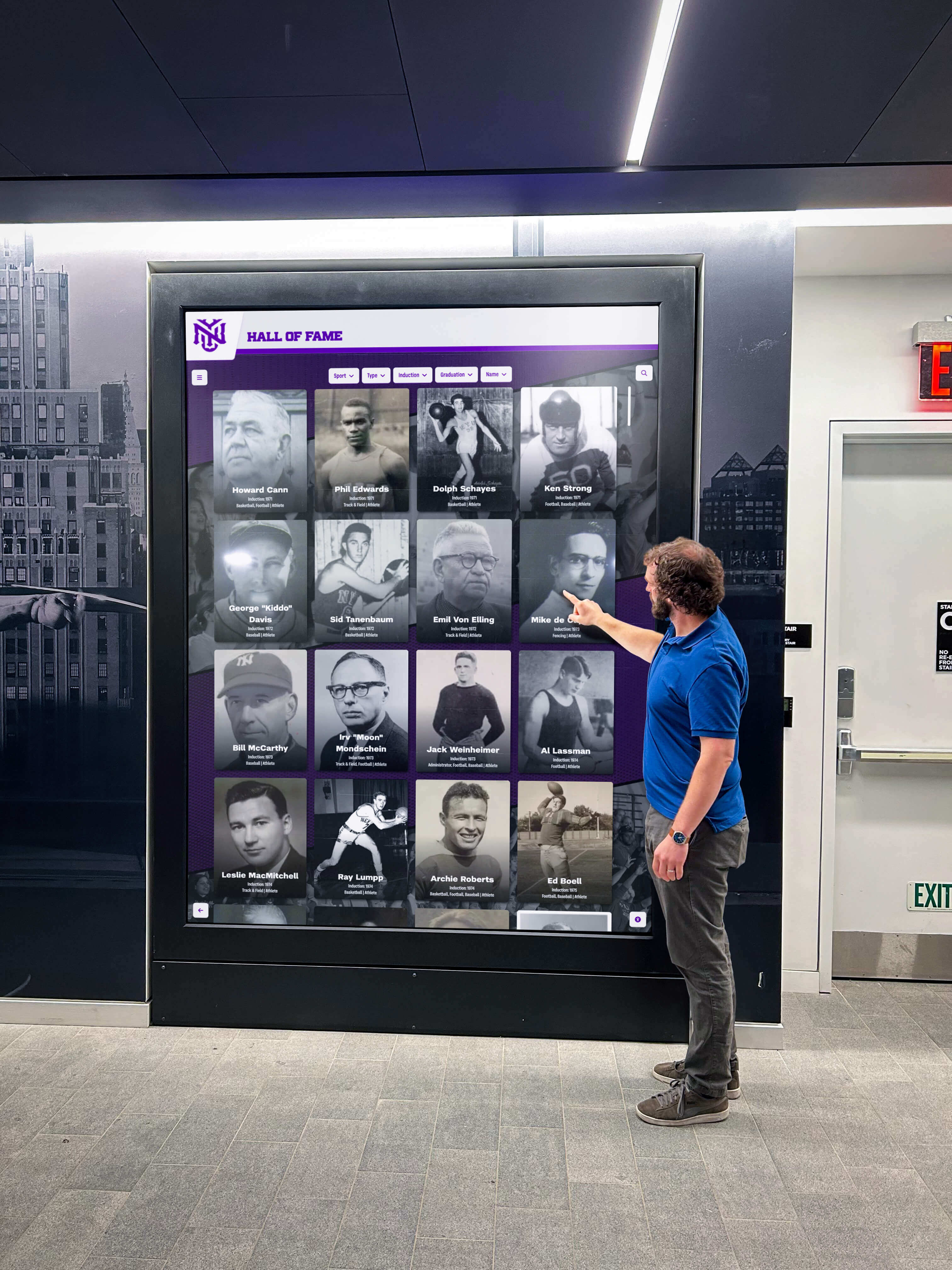
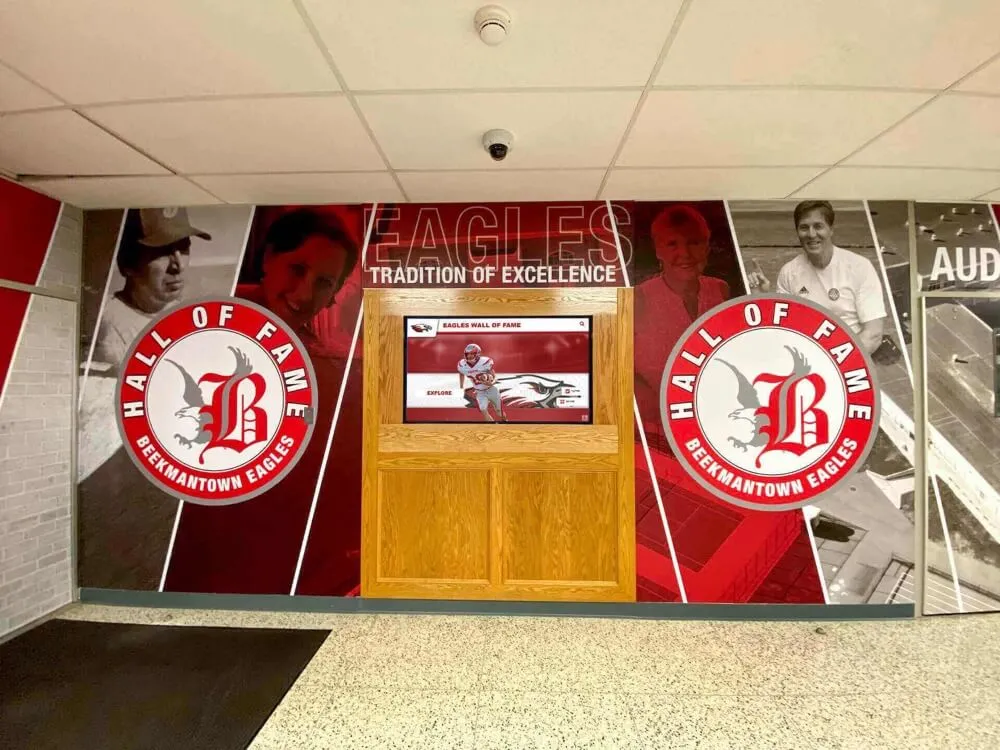
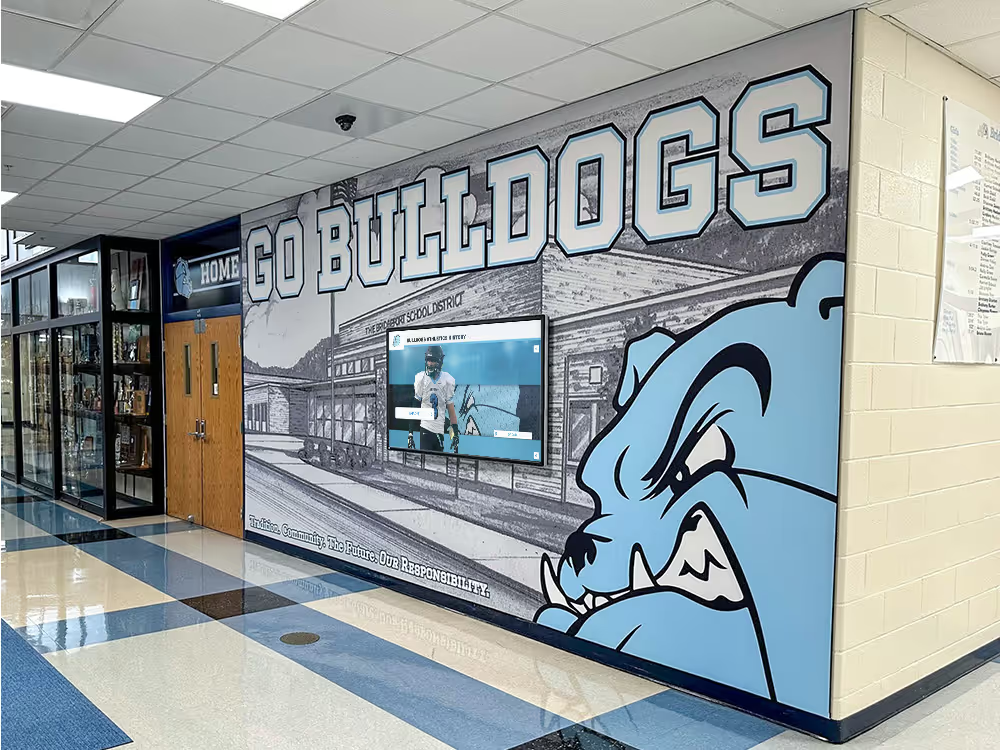
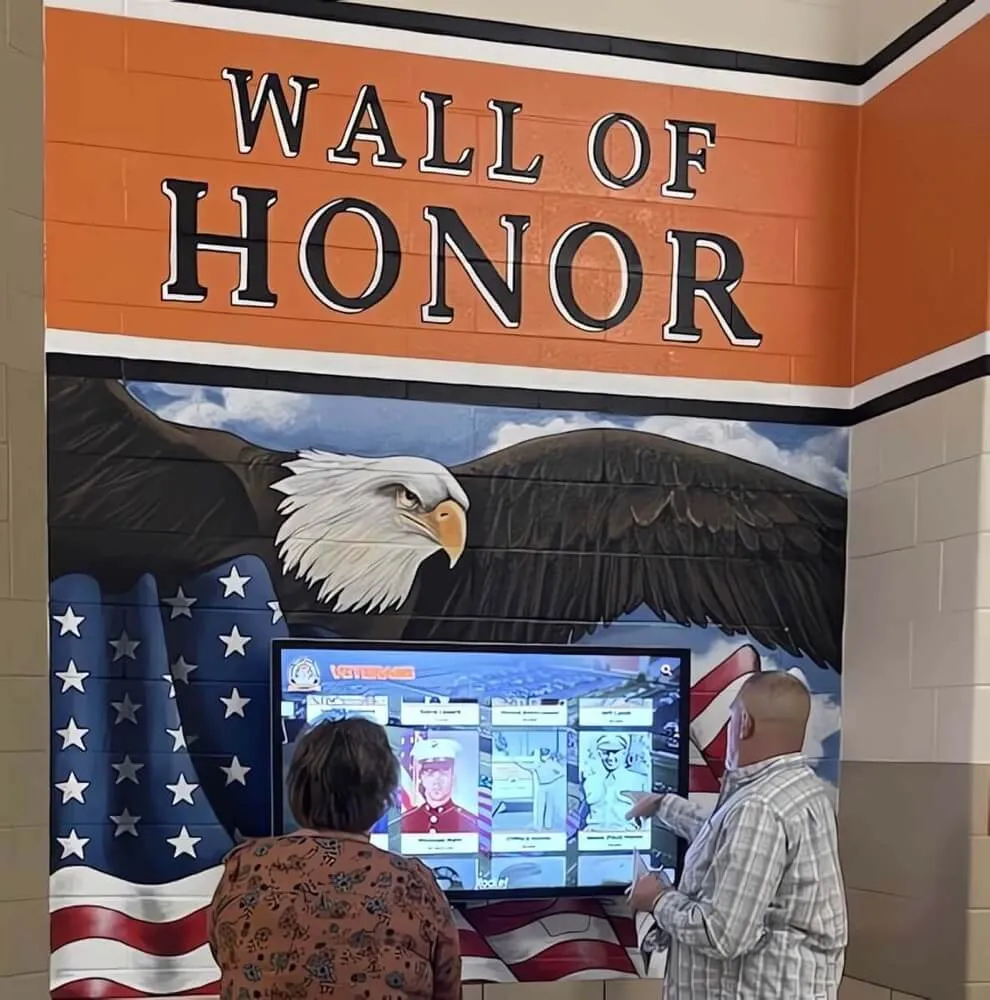
Interactive recognition displays showcase goalkeeper achievements including shutouts, saves, and championship performances
Drill 8: Distribution Accuracy Training
Skill Level: Intermediate
Focus Area: Accurate throwing and goal kicks initiating attacks
Duration: 12-15 minutes
Setup and Execution
Modern goalkeepers initiate offensive attacks through accurate distribution. This drill develops throwing accuracy and goal kick precision:
Throwing Accuracy Circuit
Set up targets at various distances and angles:
- Close target (15 yards, left side)
- Medium target (25 yards, right side)
- Long target (35 yards, center)
- Moving target (teammate making runs)
Drill Sequence
- Keeper makes save or receives ball
- Immediately locates designated target
- Delivers accurate throw to target’s feet or path
- Receives next ball, distributes to different target
- Complete 20-25 distributions per session
Goal Kick Progression
Many youth goalkeepers struggle with goal kick distance and accuracy. Develop both through progressive training:
Technique Development
- Proper approach angle and steps
- Ball placement position
- Contact point on ball and foot
- Follow-through for distance and accuracy
- Practice 15-20 kicks per session with various targets
Game-Realistic Scenarios
Add pressure elements:
- Timed distribution (must release within 6 seconds)
- Opposing forwards applying pressure
- Coach calling out which target to hit
- Switching between throws and kicks randomly
Distribution separating good teams from great ones often goes unrecognized statistically, but outstanding goalkeeper play receives acknowledgment through athletic recognition programs celebrating complete player development.
Advanced Goalkeeper Drills: Elite Performance Development
These advanced drills develop the high-level skills competitive high school goalkeepers need for college recruitment and championship-level performance.
Drill 9: Reaction Save Circuit
Skill Level: Advanced
Focus Area: Lightning reflexes and close-range saves
Duration: 10-12 minutes
Setup and Execution
Elite goalkeepers make saves others can’t through superior reaction time. This intensive drill develops split-second reflexes:
Circuit Stations
Station 1: Close-Range Volleys
- Server stands 8-10 yards away
- Tosses ball up and volleys at goal
- Goalkeeper reacts from ready position
- 8-10 saves, focusing on pure reaction speed
Station 2: Deflection Redirects
- Server shoots at goal
- Ball deflects off barrier/mannequin creating unpredictable direction changes
- Keeper must react to deflection, not original shot
- 6-8 repetitions developing rapid adjustment
Station 3: Two-Ball Chaos
- Two servers with balls
- Both shoot within 1-2 seconds of each other
- Keeper makes first save, immediately reacts to second shot
- 5-6 sequences testing recovery speed
Station 4: Behind Back Surprise
- Keeper stands facing away from goal
- Coach calls “turn”
- Keeper spins and immediately faces shot already in flight
- 6-8 reps developing instant reaction without setup time
Training Intervals
Run each station for 60-90 seconds of work with 60 seconds rest between stations. Complete 2-3 full circuit rotations per training session.
Safety Considerations
High-intensity reaction training creates fatigue that increases injury risk:
- Never run reaction drills when goalkeepers are already exhausted
- Ensure proper warm-up before intensive reaction work
- Watch for deteriorating technique indicating excessive fatigue
- Limit high-intensity reaction training to 2-3 sessions per week
Drill 10: Game Simulation Scenarios
Skill Level: Advanced
Focus Area: Complete game-realistic decision-making
Duration: 20-25 minutes
Setup and Execution
This comprehensive drill simulates actual match situations requiring complete goalkeeper skill sets:
Scenario Examples
Scenario 1: Defending Set Piece
- Set up corner kick situation with full attacking and defending teams
- Goalkeeper must organize defenders
- Make decisions on when to come for ball versus staying back
- Deal with traffic, physical challenges, and deflections
Scenario 2: Counter-Attack Transition
- Team defends, wins ball, keeper receives back pass
- Must quickly distribute to initiate counter-attack
- Choose between throwing or goal kick based on positioning
- Accuracy under time pressure as opponents close down
Scenario 3: Penalty Box Scramble
- Ball ricochets around penalty area with multiple players
- Goalkeeper makes initial save
- Must recover for second and possibly third attempts
- Manages chaos while communicating with defenders
Scenario 4: Sweeper-Keeper Situations
- Through ball played behind defensive line
- Keeper must judge whether to stay or sprint out
- Win ball outside penalty area using feet
- Immediately transition to distribution
Coaching During Scenarios
Pause scenarios to provide teaching moments:
- Highlight strong decisions (“excellent timing coming out”)
- Correct positioning errors (“notice how that angle was exposed”)
- Praise communication (“great call organizing the wall”)
- Build confidence through specific feedback
Run 4-6 scenarios per session, ensuring goalkeepers rotate if multiple keepers train together.
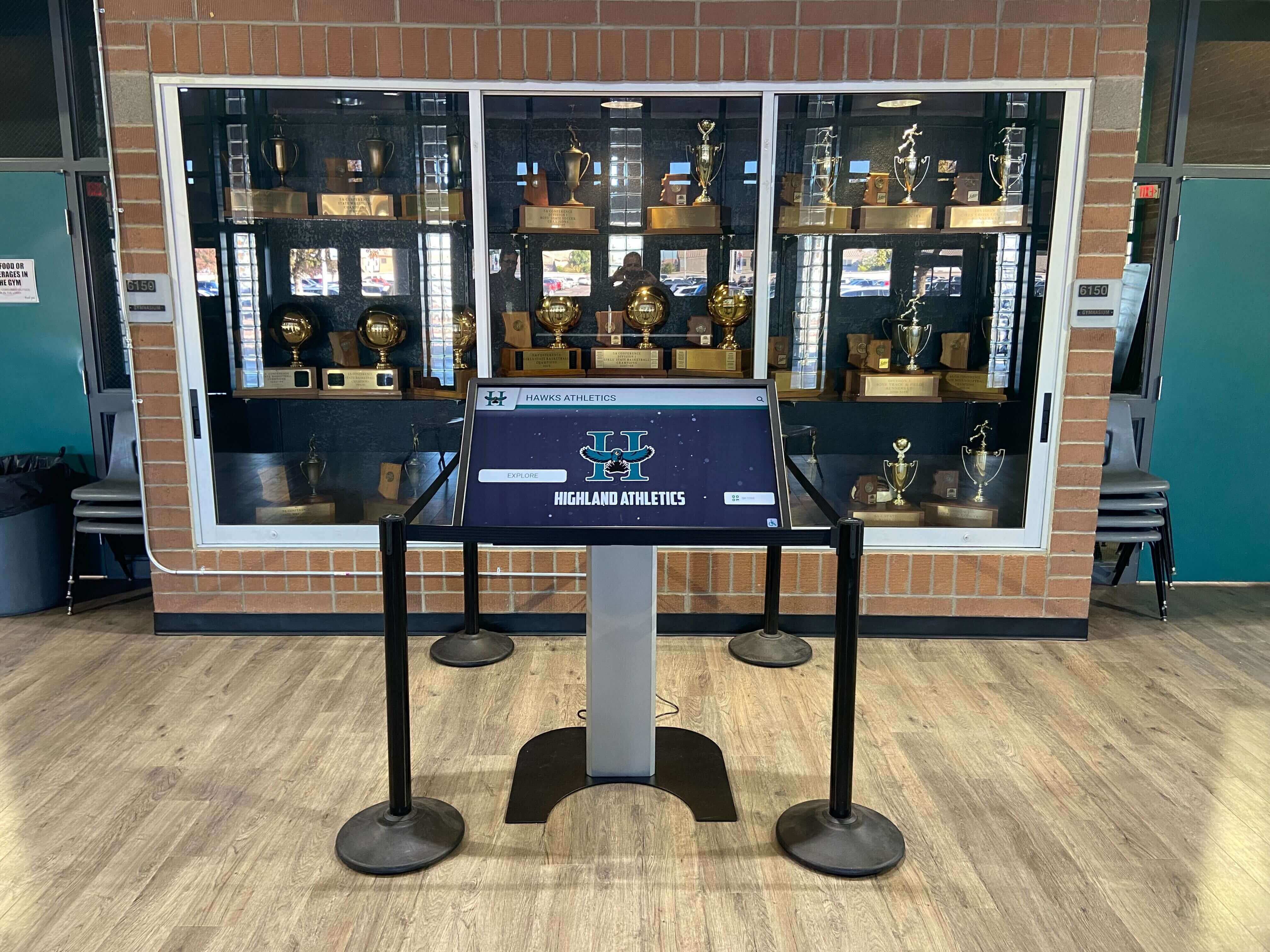
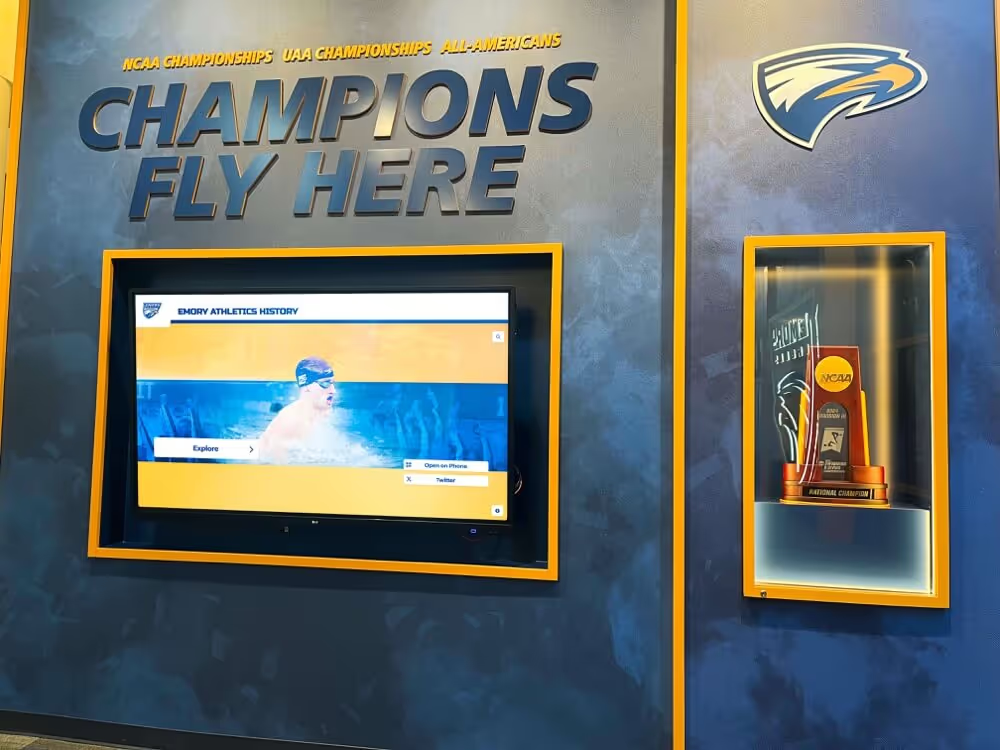
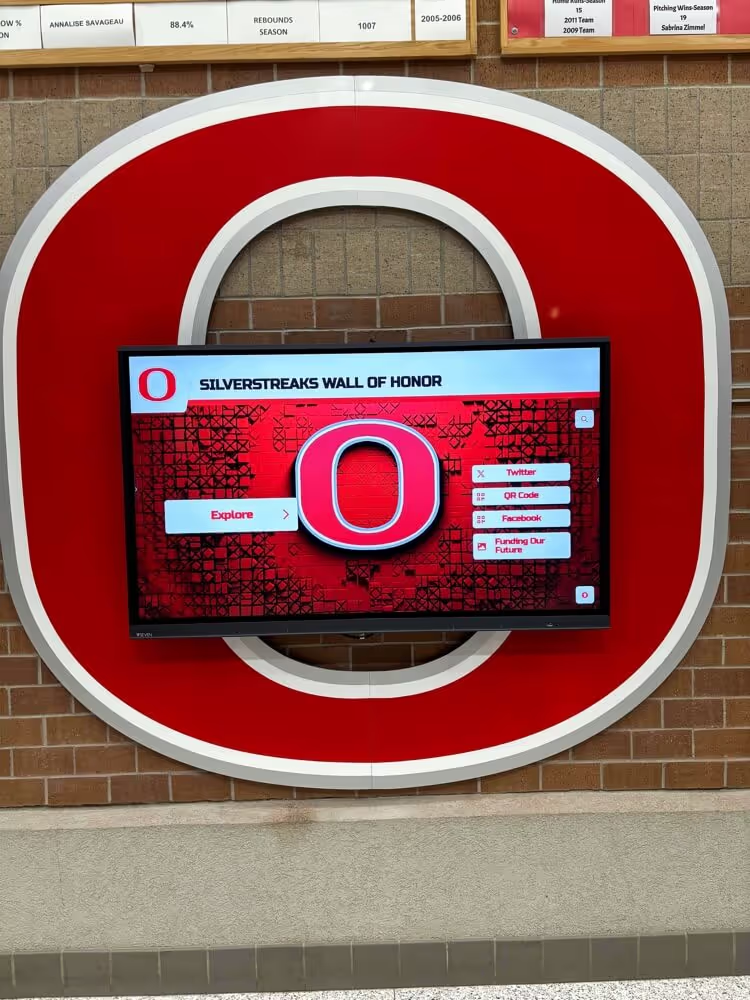
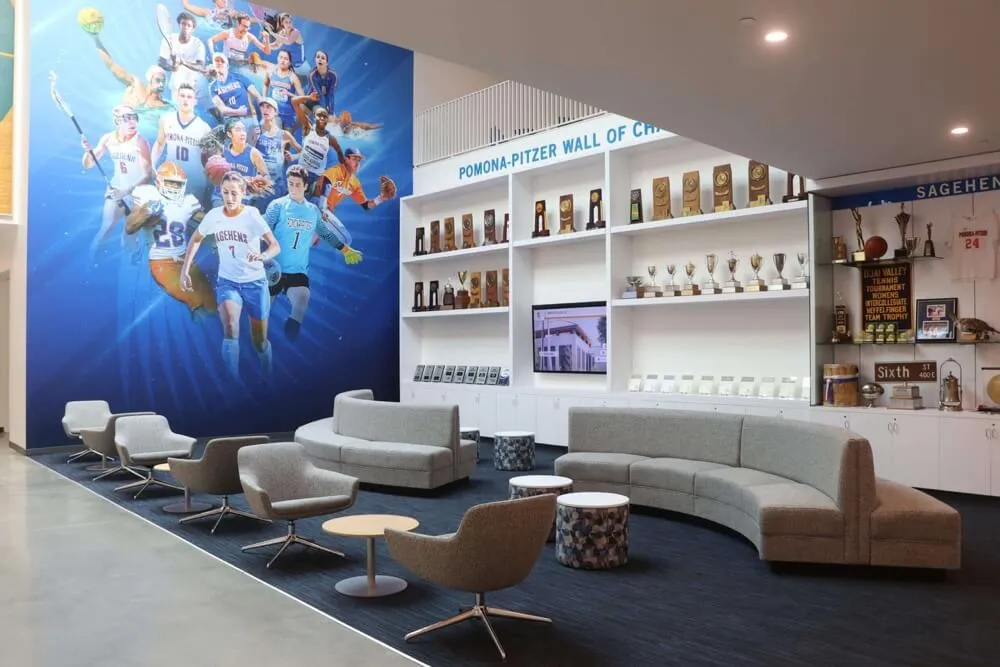
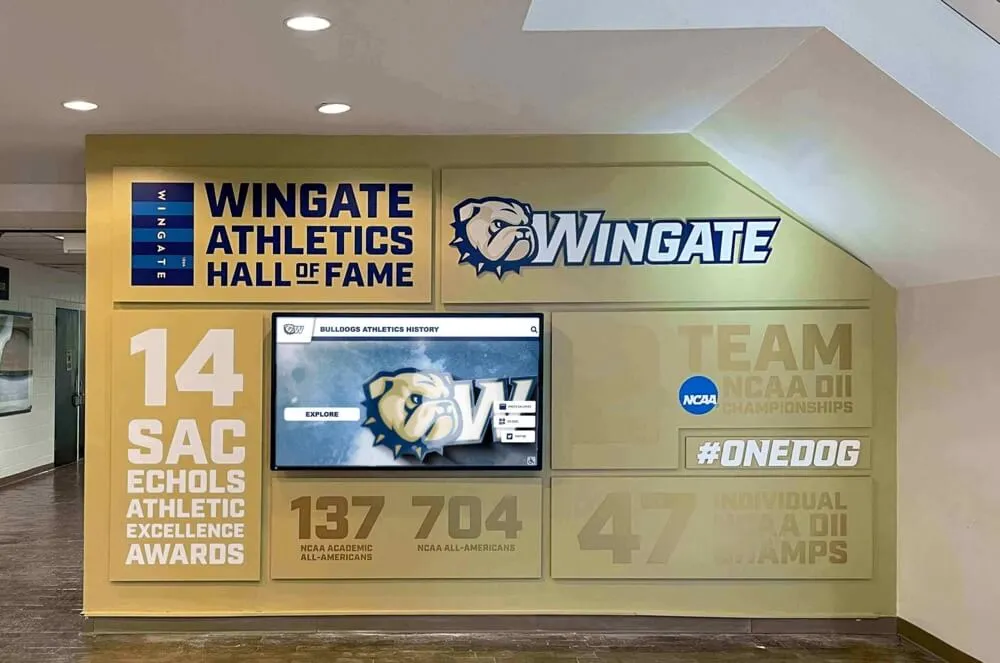
Trophy cases and recognition displays document goalkeeper achievements alongside team championships and individual honors
Drill 11: Penalty Kick Pressure Training
Skill Level: Advanced
Focus Area: Mental composure and penalty save technique
Duration: 15-20 minutes
Setup and Execution
Penalty kicks test goalkeeper psychology as much as technique. This drill develops composure under extreme pressure:
Technical Preparation
Before psychological elements, ensure proper penalty save technique:
- Start slightly forward of goal line (within rules)
- Stay on feet until shooter commits
- Read shooter’s approach, plant foot, and body position
- Explode to chosen side with full extension
- Even guessing correctly requires athletic save execution
Progressive Pressure Elements
Week 1: Pure Technique
- Focus solely on proper form and explosive diving
- No pressure elements, just repetition
- Shooters use moderate pace
- Build technical confidence
Week 2: Add Consequences
- Create competition (keeper vs. shooter scoring)
- Winner gets privilege (water break, chooses next drill)
- Builds stakes without overwhelming pressure
Week 3: Simulation Pressure
- Announce “this is to win the championship”
- Have teammates watch and react to results
- Add time pressure (must shoot within countdown)
- Simulate late-game, high-stakes scenarios
Week 4: Maximum Pressure
- Invite coaches, parents, or other teams to watch
- Create tournament format with advancement
- Use actual match balls and conditions
- Full game-realistic pressure
Mental Skills Development
Teach specific mental techniques for penalty situations:
- Pre-kick routine (deep breath, focus on technique not outcome)
- Positive self-talk (“I’ve trained for this”)
- Outcome detachment (success is guessing right and executing, not necessarily saving)
- Quick reset after goals (short memory for mistakes)
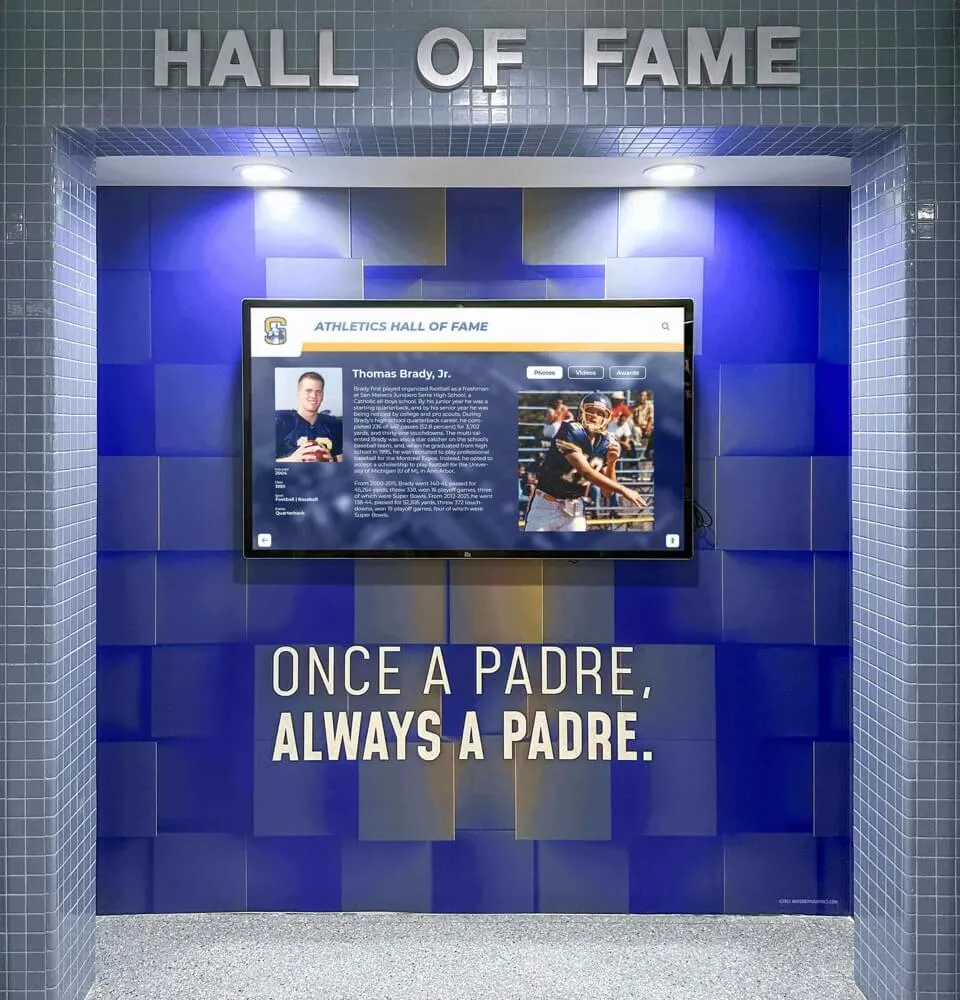
Many championship-deciding goalkeeper performances during penalties earn permanent recognition through digital hall of fame displays documenting clutch playoff moments.
Drill 12: Goalkeeper Wars Competitive Training
Skill Level: Advanced
Focus Area: Competitive intensity and complete skill application
Duration: 20-25 minutes
Setup and Execution
Competition drives improvement. This multi-goalkeeper drill creates competitive intensity developing complete skills:
Basic Game Structure
With 2-4 goalkeepers:
- Each keeper defends a small goal (regulation goal divided, or small portable goals)
- Goalkeepers rotate serving balls to each other
- After saving, keeper must distribute accurately to designated target
- Points awarded for saves, distribution accuracy, and speed
Scoring System Examples
Create point systems emphasizing all goalkeeper competencies:
- Clean save and secure possession: 2 points
- Save with rebound: 1 point
- Goal conceded: -1 point (keeps stakes real)
- Accurate distribution to target: +1 bonus point
- Distribution miss: -1 point
- Fastest recovery to ready position: +1 bonus point
Game Variations
Variation 1: Rapid Rotation
- Keepers serve to each other in quick succession
- Emphasizes recovery speed and sustained concentration
- First to 20 points wins round
Variation 2: Scenario Challenges
- Coach calls specific scenarios (“high ball, traffic!”)
- Keepers must execute called situation
- Judged on technique and result
- Best technique scores bonus points
Variation 3: Endurance Challenge
- Extended game (10-15 minutes continuous)
- Tests sustained performance under fatigue
- Winner determined by total points across full duration
Competitive Benefits
Game-based training provides multiple advantages:
- Self-driven intensity (no coach pushing required)
- Immediate feedback through scoring
- Fun element maintaining engagement
- Peer learning through observation
- Develops competitive mindset for matches
Use competitive drills 1-2 times per week, balancing with technical skill development and tactical training for comprehensive goalkeeper development.
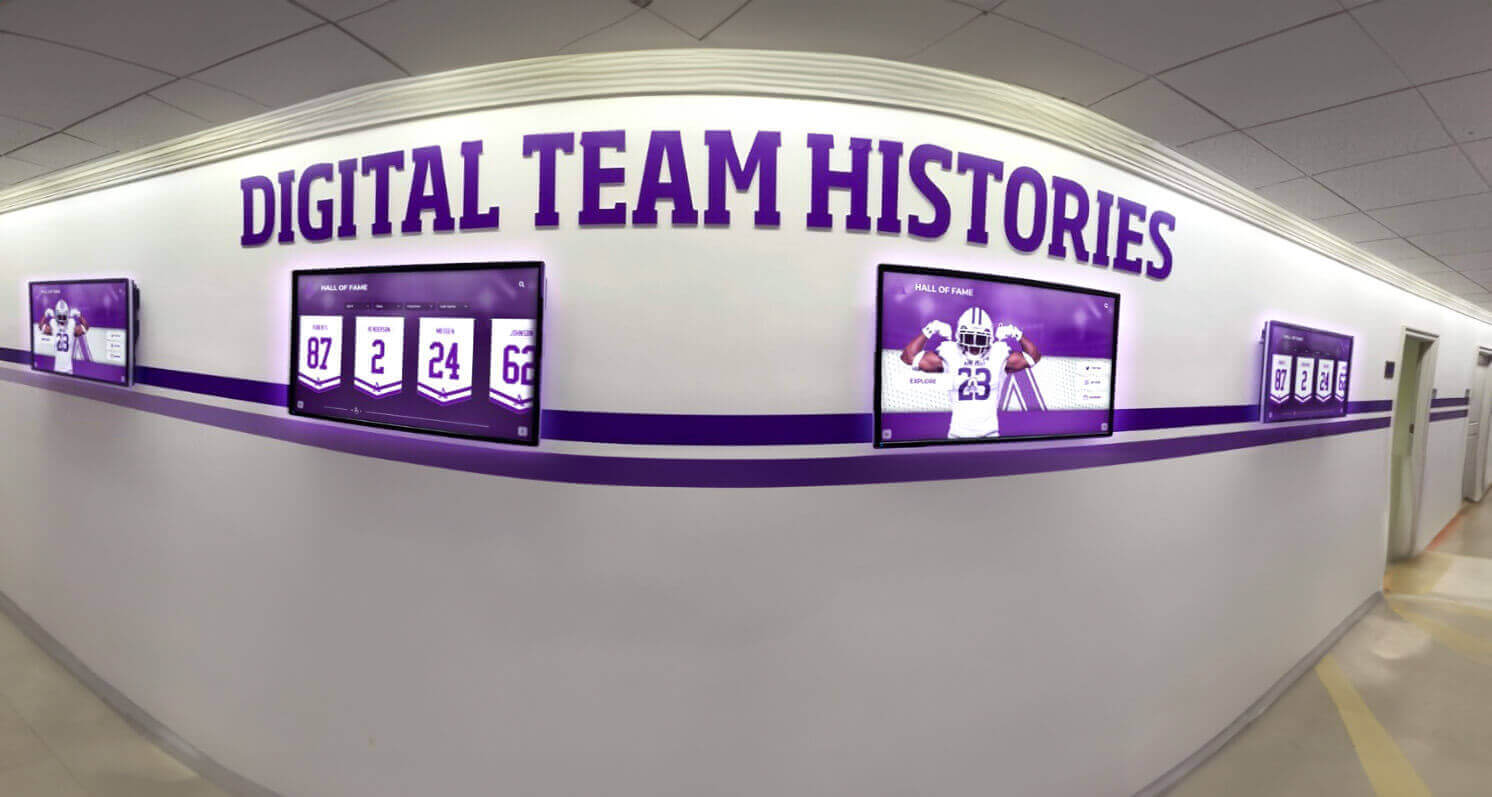
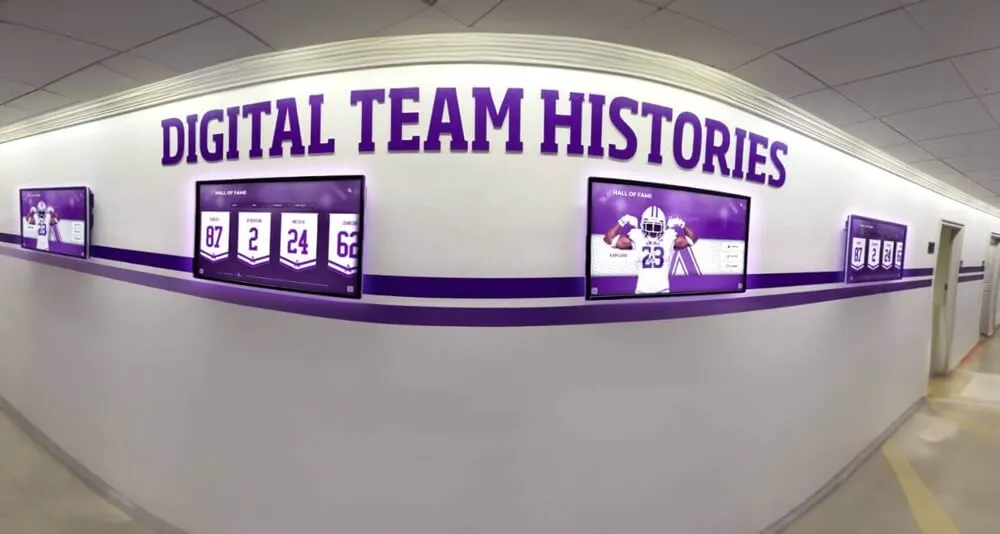
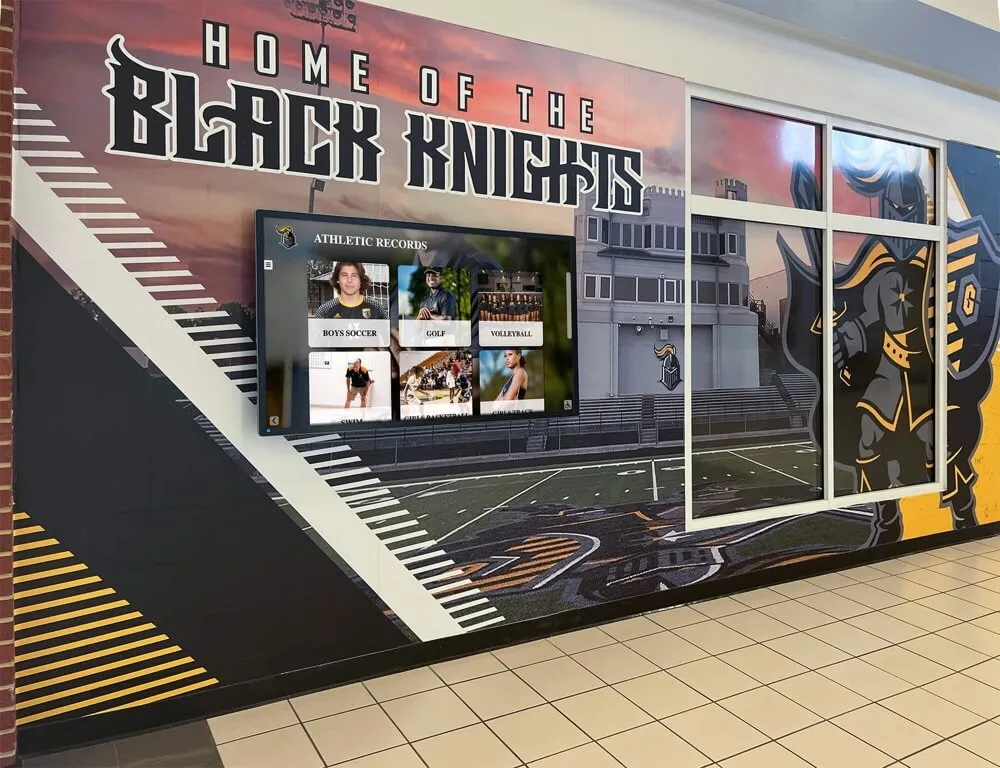
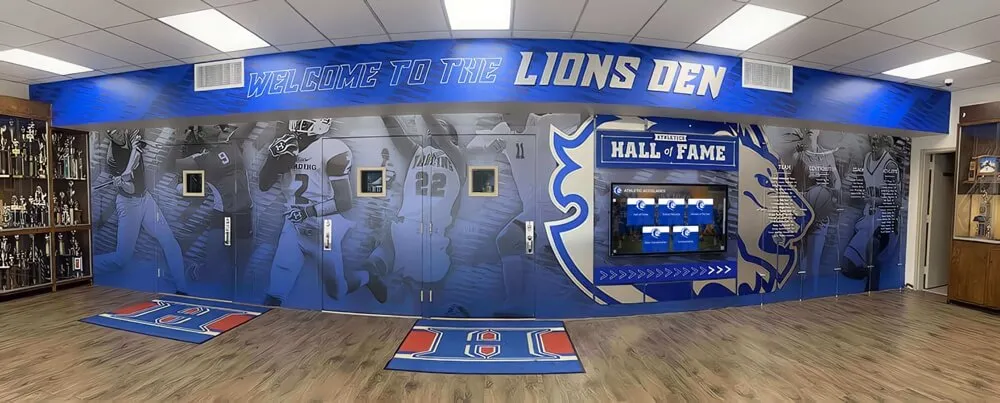
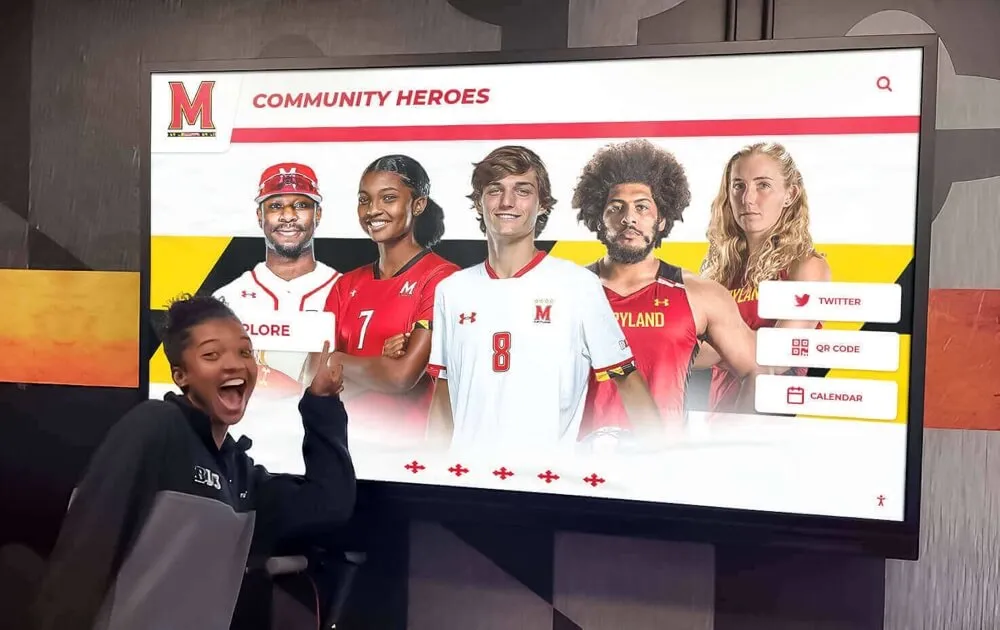
Comprehensive digital displays showcase complete team histories including goalkeeper records, defensive statistics, and championship achievements
Mental Training and Confidence Development
Technical drills develop physical skills, but goalkeeper success ultimately depends on mental strength handling unique psychological demands.
Building Goalkeeper-Specific Mental Toughness
Recovering From Goals
Every goalkeeper concedes goals—even at professional levels. The critical skill is rapid mental recovery:
Immediate Reset Routine
- Take deep breath and exhale tension
- Recall successful save from earlier in game
- Focus on next play, not past mistake
- Positive self-talk (“next one is mine”)
- Move on within 10-15 seconds maximum
Long-Term Resilience
Build mental durability through regular practices:
- Review video focusing on successful plays, not just mistakes
- Keep statistics tracking positive actions (saves, distributions, communications)
- Celebrate effort and improvement, not just results
- Develop pre-game routines creating confident mindset
- Practice visualization of successful performances
Communication and Leadership Development
Goalkeepers see the entire field and must organize defensive shape through constant communication:
Communication Training
- Practice calling out dangers loudly and clearly
- Develop concise command vocabulary teammates understand instantly
- Build habit of constant communication (even when obvious)
- Learn to balance directing versus encouraging tone
- Record practice sessions to evaluate communication frequency and clarity
Leadership Responsibilities
Help goalkeepers understand their leadership role:
- Organizing defensive positioning before set pieces
- Directing defenders during opponent attacks
- Managing teammate frustration and maintaining composure
- Setting defensive intensity standard through own commitment
- Taking responsibility for defensive performance
Outstanding goalkeeper leadership often receives recognition through most improved awards and character-based honors beyond pure statistics.
Goalkeeper Training Program Structure
Integrating these drills into comprehensive training programs requires thoughtful session planning balancing skill development, conditioning, and mental preparation.
Sample Weekly Training Schedule
High School Competitive Program (3-4 Goalkeeper-Specific Sessions Per Week)
Monday: Technical Foundation + Positioning
- 10 min: Warm-up (Drill 1: Basic Catching Progression)
- 15 min: Drill 2 (Angle Footwork and Positioning)
- 15 min: Drill 8 (Distribution Accuracy Training)
- 10 min: Cool-down and flexibility work
Wednesday: Reaction Speed + Game Situations
- 10 min: Warm-up (Drill 3: Soft Hands Reflex Training)
- 12 min: Drill 9 (Reaction Save Circuit)
- 20 min: Drill 10 (Game Simulation Scenarios)
- 8 min: Mental training discussion and cool-down
Friday: Diving + Competition
- 10 min: Warm-up and flexibility
- 15 min: Drill 4 (Safe Diving Technique) or progression
- 20 min: Drill 12 (Goalkeeper Wars Competitive Training)
- 10 min: Cool-down
Saturday (Pre-Game): Light Technical + Mental Prep
- 15 min: Light catching and positioning work
- 10 min: Penalty kick practice (if relevant to opponent)
- 10 min: Visualization and mental preparation
Progressive Skill Development Timeline
Weeks 1-4 (Foundation Building)
- Emphasis on Drills 1-4 (beginner fundamentals)
- Perfect technique before adding speed or pressure
- Build confidence through achievable progressions
- Establish training routines and mental habits
Weeks 5-8 (Intermediate Progression)
- Introduce Drills 5-8 (game-speed scenarios)
- Increase intensity and competitive elements
- Begin more complex decision-making situations
- Develop distribution as attacking weapon
Weeks 9+ (Advanced Performance)
- Integrate Drills 9-12 (elite-level training)
- Maximum intensity and game-realistic pressure
- Competition-focused preparation
- Individual weakness addressing through targeted work
Recognizing Goalkeeper Excellence
Outstanding goalkeeper development and performance deserve celebration alongside scoring achievements and field player statistics. Progressive schools implement comprehensive recognition programs honoring complete athletic excellence.
Modern Recognition Approaches
Traditional trophy cases often underrepresent defensive excellence and goalkeeper achievements. Modern recognition solutions address this gap:
Digital Recognition Systems
Interactive displays showcase complete goalkeeper statistics:
- Career save totals and save percentages
- Clean sheet records (games without goals conceded)
- Championship-game performances
- Penalty kick save records
- Distribution accuracy statistics
- Leadership and communication recognition
Schools implementing comprehensive athletic recognition often utilize digital trophy case solutions showcasing goalkeeper achievements alongside traditional scoring records.
Goalkeeper-Specific Awards
Create award categories celebrating goalkeeper excellence:
- Golden Glove (fewest goals conceded)
- Save Percentage Leader
- Most Improved Goalkeeper
- Defensive Player of the Year
- Clutch Save Award (critical championship saves)
- Leadership and Communication Award
Senior Recognition Programs
Graduating goalkeepers deserve celebration through senior night programs and permanent recognition displays documenting their contributions and development throughout their careers.
Building Complete Goalkeeper Development Programs
Effective goalkeeper training extends beyond physical drills into comprehensive development addressing technical skills, tactical understanding, physical conditioning, and mental preparation:
Complete Development Components
- Technical Training: Regular drill work (covered in this guide)
- Tactical Education: Video analysis, positioning study, set-piece organization
- Physical Conditioning: Strength, flexibility, explosive power, endurance
- Mental Preparation: Visualization, confidence building, communication development
- Competition Experience: Regular match play at appropriate competition levels
Goalkeeper Coach Importance
Dedicated goalkeeper coaches provide specialized expertise general coaches may lack:
- Position-specific technical knowledge
- Proper progression understanding preventing injury
- Mental/psychological support for unique position demands
- Individualized development plans addressing specific weaknesses
- Connection to goalkeeper community and higher-level training opportunities
Schools seriously committed to soccer excellence increasingly designate specialized goalkeeper coaches or connect young keepers with goalkeeper-specific training programs supplementing team practices.
Conclusion: Developing Confident, Complete Goalkeepers
Goalkeeper development requires patience, specialized training, and understanding that the position demands unique physical, technical, and psychological skills fundamentally different from field player development. The 12 progressive drills in this guide provide frameworks for building complete goalkeepers prepared for competitive success—from basic catching fundamentals through elite-level reaction saves and penalty kick composure.
Effective implementation emphasizes proper progression, celebrates improvement alongside results, and recognizes that goalkeeper confidence develops through consistent positive repetition rather than high-pressure testing before foundational skills are secure. Coaches who invest in specialized goalkeeper training discover that a confident, well-prepared goalkeeper transforms entire team defensive performance, providing stability enabling attacking players to take calculated risks knowing reliable last-line protection exists behind them.
Whether coaching youth recreational programs or competitive high school teams preparing goalkeepers for college recruitment opportunities, these drills provide proven training approaches developing the technical proficiency, physical conditioning, tactical awareness, and unshakable mental composure separating good goalkeepers from game-changing difference-makers who earn recognition as defensive anchors long remembered in program history.
Ready to showcase your goalkeeper achievements and build lasting recognition for defensive excellence in your athletic program? Rocket Alumni Solutions provides comprehensive digital recognition displays celebrating complete athletic achievement—from goal-scoring records to defensive statistics, goalkeeper excellence, and the complete contributions making championship teams possible.