School Highlight Reel: How to Create Compelling Athletic and Recognition Videos for Touchscreen Walls
- Home /
- Blog Posts /
- School Highlight Reel: How to Create Compelling Athletic and Recognition Videos for Touchscreen Walls
The Easiest Touchscreen Solution




Live Example: Rocket Alumni Solutions Touchscreen Display
Interact with a live example (16:9 scaled 1920x1080 display). All content is automatically responsive to all screen sizes and orientations.
Every championship season, record-breaking performance, and student achievement deserves more than a dusty trophy or forgotten plaque gathering dust in a display case. Schools across the country invest thousands of hours into athletic programs and recognition initiatives, yet most struggle to showcase these accomplishments in ways that genuinely engage students, inspire future athletes, and create lasting impressions on visitors. Static displays simply cannot capture the energy, emotion, and excitement that define transformative moments in school history.
School highlight reels displayed on interactive touchscreen walls transform how educational institutions celebrate achievement. These dynamic video compilations loop continuously in high-traffic areas, bringing athletic excellence and student recognition to life through motion, sound, and visual storytelling impossible with traditional recognition methods. When students walk through lobbies and see themselves and their peers featured in professionally produced highlight reels, engagement with school culture increases measurably.
The evolution from static trophy cases to dynamic video displays represents a fundamental shift in recognition strategy. Modern touchscreen installations don’t just show highlights—they create interactive experiences where visitors explore achievement histories, watch defining moments on demand, and connect emotionally with the stories behind every accomplishment. Schools implementing video highlight reel strategies report increased alumni engagement, stronger recruitment appeal, and more vibrant school spirit.
This comprehensive guide walks athletic directors, technology coordinators, and school administrators through the complete process of creating compelling school highlight reels optimized for touchscreen wall displays. From initial content planning through production techniques, display optimization, and ongoing content management, you’ll discover practical frameworks for building video recognition programs that transform how your school celebrates achievement.

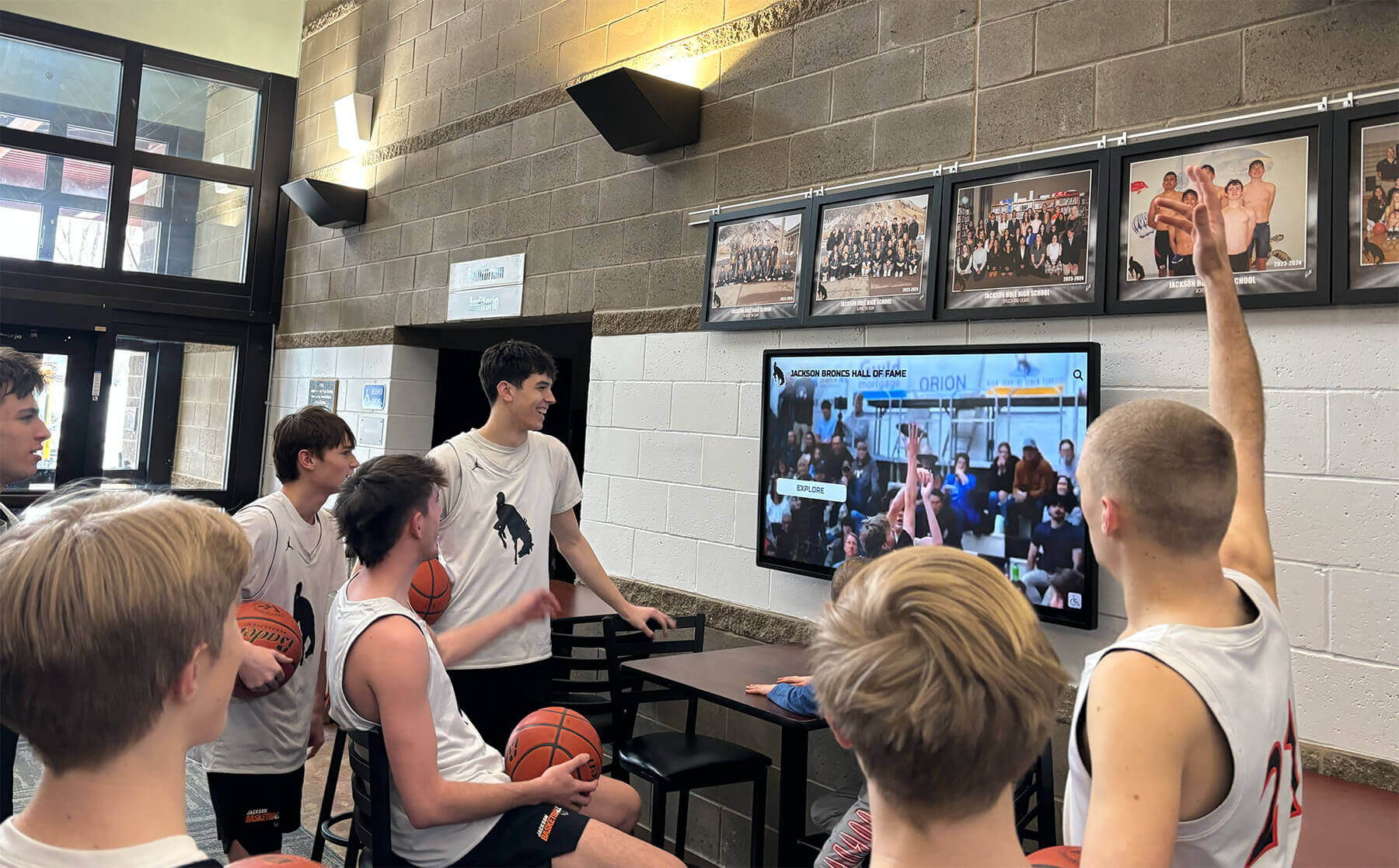
Students naturally gather around compelling highlight reels displayed on touchscreen walls, creating spontaneous moments of school pride and community connection
Understanding the Impact of Video Highlight Reels in Schools
Before diving into production techniques, schools should understand why video highlight reels create significantly more engagement than traditional static recognition displays.
The Psychology of Video Recognition
Visual Storytelling Creates Emotional Connection
Human brains process video content fundamentally differently than static images or text:
Movement captures attention involuntarily through millions of years of evolutionary programming directing focus toward motion in peripheral vision. Schools leveraging this biological reality position highlight reel displays where students pass naturally—main lobbies, cafeteria entrances, hallway intersections—ensuring content reaches audiences without requiring active seeking.
Sound adds emotional dimension impossible through visual alone. The crack of a baseball bat, crowd roar following a game-winning shot, or announcer excitement during championship moments triggers emotional responses that static images cannot replicate. Schools with audio-enabled displays report that sound draws students to screens from distances where visual alone would go unnoticed.
Narrative structure transforms isolated moments into coherent stories. Effective highlight reels don’t just show plays—they build dramatic arcs with establishing context, rising action, climactic moments, and satisfying resolutions. This storytelling approach creates memorable experiences rather than forgettable content that viewers scroll past without processing.
Social Validation and Peer Influence
Video recognition leverages powerful social dynamics within school communities:
Students featured in highlight reels experience public acknowledgment from peers, creating social validation that text-based recognition cannot match. This peer recognition often matters more than adult praise, particularly during adolescent development when social status significantly impacts self-concept.
The communal viewing experience builds shared identity and collective pride. When groups gather around touchscreen displays to watch highlights together, they participate in ritualized celebration strengthening bonds between team members, grade levels, and the broader school community.
Recurring visibility maintains achievement awareness over time. Unlike ceremonies that happen once or trophies viewed occasionally, highlight reels loop continuously, exposing entire school populations to achievement narratives repeatedly throughout academic years. This sustained visibility creates lasting cultural impact rather than momentary acknowledgment.
Why Touchscreen Walls Outperform Traditional Video Displays
Interactivity Transforms Passive Viewing into Active Engagement
Touchscreen functionality adds critical dimensions beyond standard video displays:
User control over content creates investment in viewing experiences. Rather than passively watching whatever content currently loops, visitors can navigate to specific sports, seasons, or athletes. This agency increases engagement duration and satisfaction compared to forced linear viewing.
Explore depth beyond surface content. Effective touchscreen implementations layer information—visitors watch highlight clips, then tap to access full game footage, player statistics, season summaries, or historical context. This depth transforms casual viewers into engaged explorers discovering connections and stories beyond initial highlights.
Self-directed exploration enables personalized experiences. Athletes can find their own moments, parents can locate their children’s achievements, alumni can revisit their eras, and recruits can preview program excellence—all from the same installation serving different audiences simultaneously.
Many schools enhance traditional recognition displays with interactive elements. Learn more about integrating digital technology into trophy cases to maximize both physical and digital recognition.
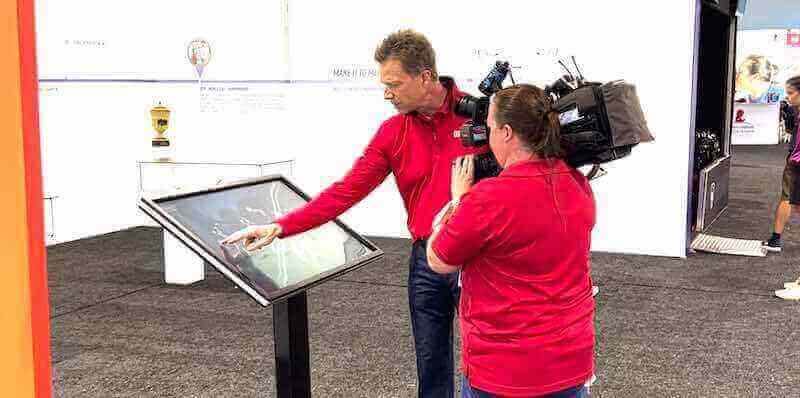
Professional video production techniques ensure highlight reels meet quality standards worthy of permanent institutional displays
Business Case: Measurable Benefits of Video Highlight Reel Programs
Recruitment and Marketing Impact
Athletic programs investing in professional highlight reel displays document concrete recruitment advantages:
Prospective student-athletes touring facilities form immediate impressions based on how schools showcase athletic excellence. Schools with impressive video displays in lobbies and athletic facilities create premium perceptions that influence college-bound athletes choosing between multiple program offers.
Digital highlight reels provide ready-made recruiting content. Coaches can capture display content for social media, recruiting emails, and program websites, multiplying return on investment beyond physical installation. This repurposing creates consistent visual branding across recruitment channels.
Parent impressions during recruiting visits influence student decisions significantly. Professional video displays signal institutional investment in athletics and student recognition, reassuring families that athletes will receive appropriate celebration and that the program maintains professional standards throughout.
Alumni Engagement and Fundraising
Recognition displays create unexpected development opportunities:
Alumni visiting campuses and seeing their achievements featured in modern displays experience emotional connections triggering engagement and giving. Many schools report that highlight reel displays featuring historical content create spontaneous conversations between alumni and development officers, leading to unplanned donations.
Video content enables virtual engagement for distance alumni. Schools can stream lobby display content online, creating digital touchpoints keeping graduates connected to programs years after graduation. This sustained connection builds long-term donor relationships.
Recognition displays demonstrate appreciation for past contributions while creating frameworks for future involvement. When alumni see their legacies honored appropriately, they gain confidence that their current giving will receive similar respect and recognition.
Comprehensive donor recognition strategies explore how digital displays inspire continued philanthropic engagement beyond athletics.
Content Planning: Building Effective Highlight Reel Strategies
Successful video recognition programs begin with strategic content planning ensuring highlight reels serve institutional objectives while engaging target audiences.
Identifying Content Sources and Footage Types
Game Footage and Competition Highlights
Athletic video content typically comes from several sources with different characteristics:
School-recorded game footage provides the foundation for most athletic highlight reels. Many programs now record all varsity competitions using stationary cameras, creating archives available for highlight production. Quality varies from basic single-camera setups to multi-camera productions with professional switching, but even basic footage yields usable highlight content when edited thoughtfully.
Parent and fan footage supplements official recordings. While quality and angles vary, crowd-filmed content sometimes captures moments or perspectives missed by official recordings. Schools should establish clear policies for collecting and using community-contributed footage, including necessary permissions and quality standards.
Professional broadcast footage requires licensing considerations. Games broadcast on local television or streaming platforms typically involve rights restrictions preventing unauthorized use. Schools should clarify usage rights before incorporating broadcast footage into permanent displays to avoid legal complications.
Beyond Competition: Expanded Recognition Content
Compelling highlight reels extend beyond game action:
Practice footage showing dedication, skill development, and team culture provides context for competition success. Behind-the-scenes content humanizes athletes and helps audiences appreciate the work underlying visible achievements.
Interview segments add personal dimension through athlete and coach reflections. Brief soundbites about season highlights, team chemistry, or individual growth create emotional connections that action footage alone cannot establish.
Recognition ceremony footage captures achievement moments beyond competition. Award presentations, signing day celebrations, and senior night tributes provide rich content showcasing institutional values and celebration culture.
Community engagement content demonstrates program impact beyond wins and losses. Footage of team service projects, youth clinic leadership, or school event participation shows athlete leadership and program citizenship.
Many schools expand recognition programs beyond athletics. Explore comprehensive approaches in guides to academic recognition programs incorporating similar video strategies for scholars.
Structuring Highlight Reels for Loop Playback
Duration and Segment Organization
Touchscreen displays looping continuously require different structures than single-view highlights:
Total highlight reel duration should balance comprehensive coverage with viewability. Most schools find 8-15 minutes optimal—long enough to showcase substantial content without exceeding typical lobby dwell time. Longer reels risk viewers leaving before seeing desired content; shorter reels may feel incomplete or limit coverage.
Segment organization within reels should follow logical progression rather than random sequencing. Effective organizational approaches include chronological season progression, sport-by-sport sections, achievement-type grouping, or thematic organization around institutional values.
Transition design between segments maintains visual coherence while signaling content shifts. Clean transitions with school branding, brief title cards, or musical breaks help viewers understand reel structure and locate content of personal interest.
Opening and closing sequences should be particularly strong since loop playback means any point could serve as viewer entry or exit. Compelling opening hooks capture attention of approaching viewers, while satisfying conclusions provide natural stopping points for departing audiences.
Balancing Coverage Across Programs
Equitable representation across sports and achievement types prevents cultural problems:
Equal sport representation ensures all programs receive appropriate visibility. While some sports generate more exciting footage than others, schools should commit to balanced coverage preventing perception that certain programs receive preferential treatment.
Playing time and star status shouldn’t determine highlight inclusion. Effective reels celebrate contributions across roster depth—defensive specialists, role players, and team leaders deserve recognition alongside statistical standouts and championship scorers.
Gender equity in coverage requires conscious attention. Many schools unconsciously feature more male athletic content than female athletic content despite similar achievement levels. Regular audits ensure balanced representation across all programs.
Seasonal sports receive equal showcase regardless of when competitions occur. Fall sports shouldn’t dominate reels simply because highlight creation happens during winter months. Intentional planning ensures spring and summer programs gain equivalent visibility.
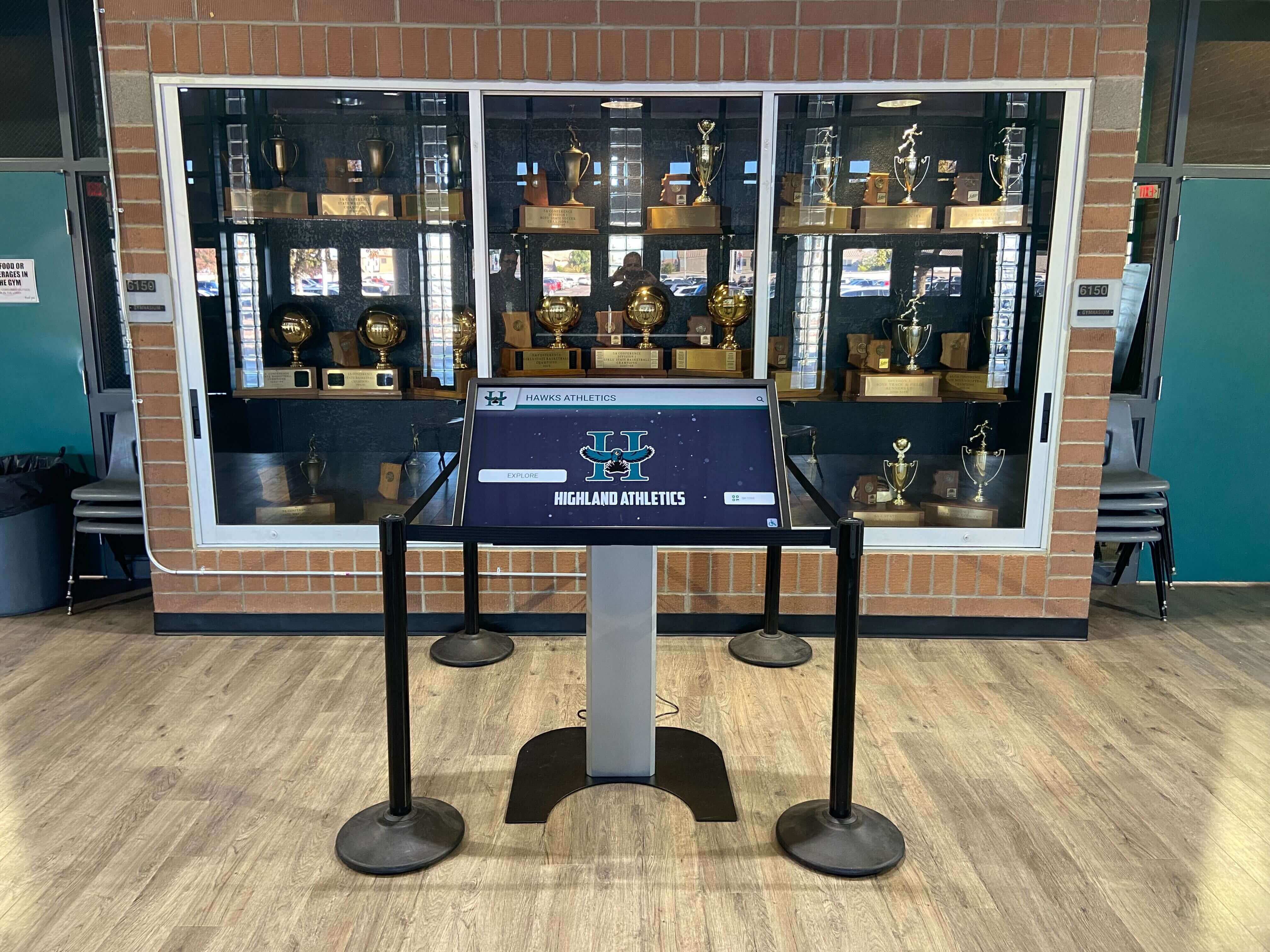
Modern touchscreen installations integrate seamlessly with traditional trophy displays, combining tangible and digital recognition
Rights, Permissions, and Legal Considerations
Student Privacy and Image Rights
Schools must navigate complex privacy considerations when creating public video displays:
Student image release forms should be collected systematically at enrollment or athletic participation registration. These permissions should specifically address digital display usage, social media sharing, and archival purposes beyond immediate use.
FERPA compliance requires careful attention to student information inclusion. While names and images generally fall outside FERPA restrictions for athletic purposes, schools should maintain consistent policies and verify that display content aligns with institutional privacy practices.
Individual opt-out preferences must be respected even when general permissions exist. Some families request that children not appear in public displays for safety, privacy, or personal reasons. Content management systems should flag these preferences preventing accidental inclusion.
Graduated athlete permissions may require updating for historical content. Students who granted permissions while enrolled might prefer content removal after graduation. Establishing clear retention policies and opt-out procedures prevents future complications.
Music Licensing and Copyright Compliance
Audio elements in highlight reels create significant copyright exposure:
Commercial music requires licensing for public display use. Schools cannot simply use popular songs in highlight reels without obtaining appropriate licenses. Copyright violations create institutional legal risk and model inappropriate behavior for students.
Royalty-free music libraries provide affordable, legal soundtrack options. Numerous services offer high-quality production music specifically for institutional and educational use, providing professional audio without copyright complications.
Original compositions created by students or staff offer unique alternatives. Many schools collaborate with music programs to create custom highlight reel soundtracks, providing recognition for student composers while ensuring full copyright control.
Silent highlight reels eliminate music licensing issues entirely. While audio enhances emotional impact, compelling video editing with natural game sounds and occasional narration can create effective content without musical backing.
Production Techniques: Creating Professional-Quality Highlight Reels
Schools don’t need Hollywood budgets to produce compelling highlight reels, but understanding basic production principles ensures content meets quality standards worthy of permanent display.
Essential Equipment and Software
Camera and Recording Equipment
Professional results don’t require professional-grade equipment:
Modern smartphones provide surprisingly capable video recording for many highlight reel applications. Recent iPhone and Android flagship models record 4K resolution with excellent image stabilization, sufficient for most school highlight purposes when used thoughtfully.
Dedicated video cameras offer advantages for serious production. Cameras with optical zoom, manual focus control, and external microphone inputs provide greater flexibility and quality than smartphone alternatives, particularly for distance shooting of field sports or poor lighting situations.
Stabilization equipment dramatically improves production value. Even simple tripods eliminate distracting camera shake that marks amateur footage. Gimbals and motorized stabilizers enable smooth motion during filming, creating cinematic results from consumer equipment.
Audio recording deserves separate attention from video capture. External microphones—lavalier mics for interviews, shotgun mics for directional recording, or wireless systems for mobile subjects—dramatically improve sound quality over built-in camera microphones.
Editing Software Options
Multiple software tiers serve different production needs and budgets:
Professional editing platforms like Adobe Premiere Pro or Final Cut Pro provide complete feature sets for advanced production. These tools justify their costs for schools creating substantial video content beyond highlight reels or programs with existing media production curriculum.
Consumer-grade editing software including iMovie, DaVinci Resolve (free version), or Filmora offers accessible entry points requiring less technical expertise while providing sufficient capability for compelling highlight reels.
Many schools leverage student talent through media production classes or video clubs. Involving students in highlight reel creation builds vocational skills while reducing administrative burden. Student creators often approach projects with creativity and energy that compensate for technical experience gaps.
Cloud-based editing platforms enable collaborative workflows. Tools like WeVideo or Adobe Premiere Rush allow multiple contributors to access footage and contribute to projects from different locations, facilitating teamwork between coaches, technology staff, and student producers.
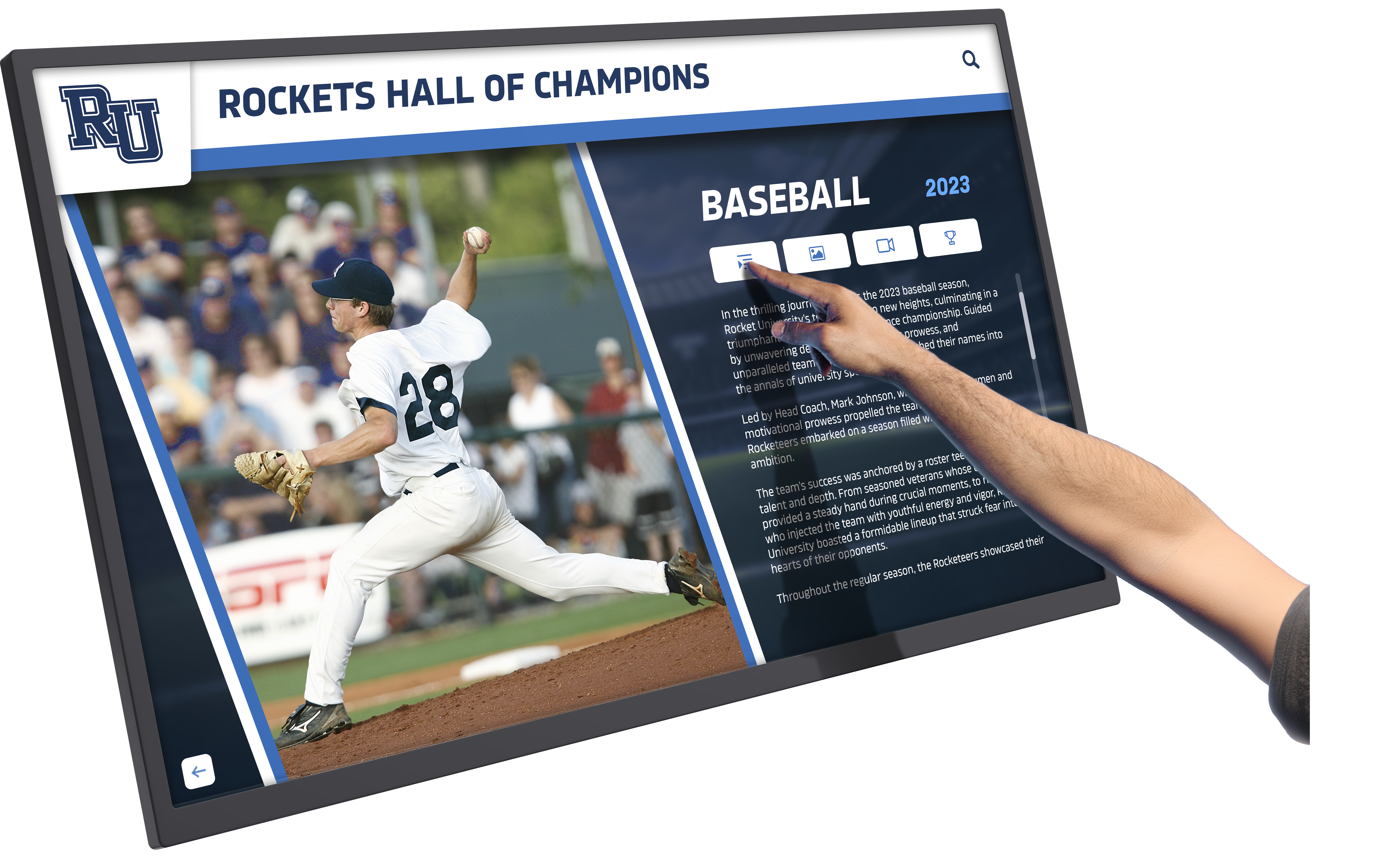
Interactive touchscreen displays enable visitors to explore athlete profiles, statistics, and highlight reels through intuitive touch navigation
Filming Best Practices for Athletic Highlights
Camera Positioning and Framing
Strategic filming approaches maximize highlight potential:
Elevated positions provide superior field visibility compared to ground-level filming. Bleacher heights or press box vantage points enable broader field views capturing play development and spatial relationships that ground-level footage misses.
Following action requires anticipating play development rather than reacting to completed events. Experienced videographers learn sport rhythms enabling proactive camera positioning that keeps relevant action framed rather than constantly chasing play after it has moved.
Varied shot types create visual interest within highlight reels. Wide establishing shots show context and spatial relationships, medium shots focus on specific athletes or play development, and tight shots capture facial expressions and emotional reactions. Mixing shot types within reels prevents monotonous viewing.
Static camera positions often outperform amateur attempts at movement. While professional camera operators create beautiful panning and tracking shots, amateur camera movement typically introduces distracting shake and poorly timed motion. Schools without experienced operators should favor locked tripod shots prioritizing stability over movement.
Lighting Considerations
Video quality depends heavily on lighting conditions:
Natural lighting varies dramatically throughout games. Outdoor competitions transition through golden hour beauty to challenging twilight conditions. Videographers should adjust camera settings responding to changing light rather than maintaining fixed configurations producing progressively darker footage.
Indoor facility lighting creates different challenges. Many gymnasiums feature inconsistent lighting with harsh shadows or inadequate illumination for quality video. Schools planning regular video recording should audit facility lighting and consider upgrades supporting both athletic performance and video production.
Camera setting adjustments compensate for challenging lighting. Understanding exposure, ISO, and frame rate settings enables videographers to maximize video quality across varying conditions. Most cameras feature automatic modes providing decent results, but manual control yields superior outcomes with modest technical knowledge.
Editing Principles for Engaging Highlights
Pacing and Rhythm
Editing tempo dramatically affects viewer engagement:
Quick cuts maintain energy and attention. Highlight reels shouldn’t linger on individual plays beyond what’s necessary to understand action. Most exciting plays communicate effectively in 3-7 seconds of edited footage including brief setup, action, and immediate reaction.
Rhythm variation prevents monotony. Sequences of rapid-fire highlights should occasionally pause for longer segments allowing emotional beats to land—a championship celebration, coach interview, or significant achievement moment gains impact through slightly extended duration.
Musical timing enhances editing flow. When highlight reels include music, timing cuts to musical beats creates subliminal cohesion. Impactful plays landing on drum hits or phrase changes feel more satisfying than randomly timed edits.
Build energy progressively toward climactic moments. Effective reels don’t frontload all exciting content—they establish rhythm then escalate intensity, creating narrative arcs that reward sustained viewing rather than showing all highlight material immediately.
Graphics and Text Integration
Visual information enhances raw footage:
Lower-third graphics identify athletes, provide context, and display relevant statistics. Clean, on-brand graphics with athlete names, jersey numbers, and achievement details help viewers understand significance while maintaining visual professionalism.
Score displays and game information ground highlights in context. Viewers better appreciate clutch plays when graphics show game situation—remaining time, score differential, playoff stakes. Context transforms routine plays into meaningful moments.
School branding throughout reels reinforces identity. Tasteful logo integration, school color schemes in graphics, and mascot imagery maintain institutional identity without overwhelming content. Branding should enhance rather than distract from highlighted achievements.
Achievement callouts celebrate specific accomplishments. Text overlays or graphic treatments highlighting records, milestones, championships, or individual achievements ensure viewers understand significance rather than assuming they recognize importance.
Comprehensive approaches to locker room design often incorporate video displays as part of athletic facility environments inspiring daily excellence.
Optimizing Content for Touchscreen Wall Display
Creating excellent highlight reels represents only half the challenge—content must be optimized for specific display environments and viewer experiences.
Technical Specifications for Display Optimization
Resolution and Aspect Ratio Considerations
Display hardware dictates content specifications:
Modern touchscreen walls typically feature 4K resolution (3840×2160 pixels), requiring source content at matching or higher resolution for optimal display quality. Upscaling lower-resolution footage creates noticeably degraded quality on large-format displays where viewers stand relatively close.
Aspect ratio matching prevents awkward letterboxing or cropping. Most contemporary displays use 16:9 widescreen ratios, though some installations feature 9:16 vertical orientations or custom aspect ratios. Content should be produced specifically for target display dimensions rather than repurposed from mismatched formats.
Portrait versus landscape orientation fundamentally changes composition and content strategy. Vertical displays excel in narrow hallways or space-constrained installations but require content shot and edited specifically for portrait framing. Don’t simply rotate landscape content 90 degrees and expect satisfactory results.
File format and codec selection affects playback performance. Touchscreen display systems have varying codec support and processing capabilities. Common formats like H.264 MP4 provide broad compatibility, while more advanced codecs like H.265 offer better compression but require more powerful playback hardware.
Color Calibration and Brightness
Display environments influence color and brightness requirements:
Ambient lighting in installation locations affects viewing experience dramatically. Brightly lit lobbies require higher display brightness and higher content contrast than dimly lit hallways. Content should be reviewed on actual displays in installation environments rather than computer monitors alone.
Color space considerations ensure consistent appearance across production and display. Content created in Rec. 709 color space generally translates most reliably to commercial displays. More advanced color spaces like DCI-P3 offer wider gamuts but require display support and careful calibration.
Automatic brightness adjustment features compensate for varying ambient light throughout days and seasons. Many modern displays sense environmental lighting and adjust brightness accordingly. Content should be tested across brightness ranges verifying legibility and color accuracy across display capabilities.
Interactive Navigation and Menu Design
Creating Intuitive User Interfaces
Touchscreen functionality requires thoughtful interface design:
Main menu organization should follow clear logic enabling quick navigation to desired content. Common organizational schemes include sport-based browsing, chronological season selection, achievement-type filtering, or athlete-name searching. The optimal approach depends on content volume and primary use cases.
Visual hierarchy directs user attention appropriately. Primary navigation options should be visually prominent with clear touch targets, while secondary functions remain accessible without cluttering interfaces. Text sizes must be legible from typical viewing distances—often larger than digital design defaults expect.
Touch target sizes accommodate real-world human interaction. Fingers are imprecise compared to mouse cursors—touch targets should be minimum 44×44 pixels (preferably larger) with adequate spacing preventing accidental activation of adjacent elements.
Response feedback confirms interaction. Buttons should provide immediate visual feedback when touched—color changes, subtle animations, or sounds confirming that touches registered. Lack of feedback leaves users uncertain whether touches worked, leading to frustrated multiple taps.
Some schools integrate touchscreen displays into broader digital recognition strategies spanning multiple age groups and achievement types.
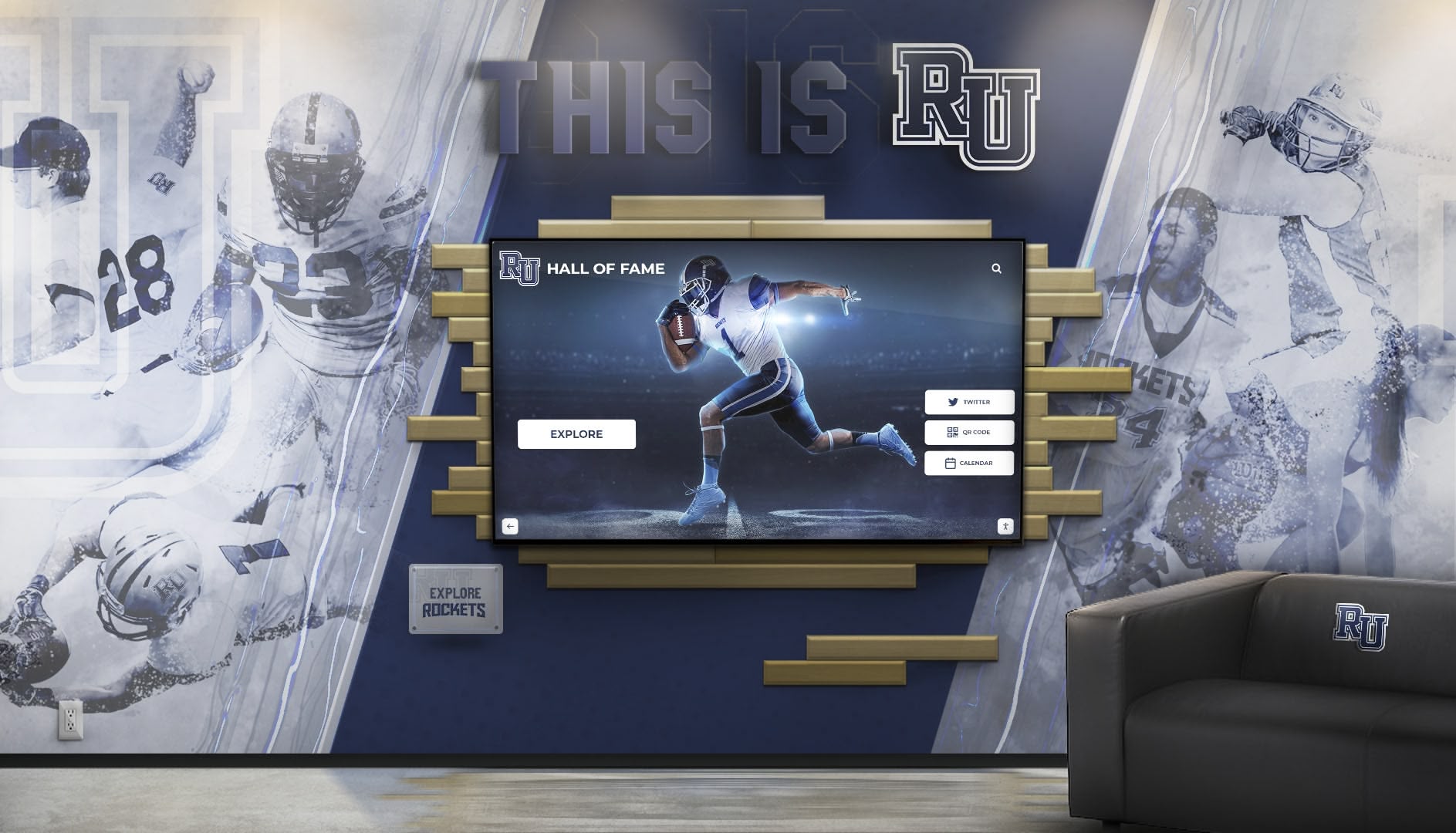
Professional installation integrates touchscreen displays with environmental graphics creating cohesive recognition experiences
Accessibility and Inclusive Design
Universal Design Principles
Inclusive displays accommodate diverse user capabilities:
Audio descriptions or captioning ensure that hearing-impaired visitors access content fully. While highlight reels naturally include visual content, important audio information—announcer commentary, coach interviews, crowd reactions—should have text equivalents for deaf or hard-of-hearing audiences.
Screen height and positioning accommodate wheelchair users and visitors of varying heights. Touchscreen installations should include lower interactive zones enabling access for seated users while maintaining usability for standing adults.
High-contrast visual design assists visitors with low vision. Adequate contrast ratios between text and backgrounds, avoidance of low-contrast color combinations, and thoughtful typography ensure maximum legibility across vision capabilities.
Alternative navigation methods supplement touch interaction. Some visitors have motor control challenges making precise touch interaction difficult. Well-designed systems might include voice control options, simplified navigation modes, or QR codes enabling smartphone-based browsing.
Content Management and Long-Term Program Sustainability
Creating initial highlight reels represents the beginning of long-term content programs requiring ongoing management and strategic evolution.
Establishing Update Cycles and Workflows
Seasonal Content Refresh Strategies
Sustainable programs establish regular update rhythms:
End-of-season updates capture fresh achievements while maintaining content currency. Most schools establish workflows where highlight reels receive updates 2-4 times annually corresponding to major sport seasons. This cadence balances currency with production workload.
Responsible party identification prevents ambiguity about update responsibility. Schools should clearly designate whether athletic directors, technology coordinators, media teachers, or external vendors own content updates. Ambiguous responsibility typically results in neglected displays.
Content archive organization enables efficient future access. Establishing systematic file naming conventions, folder structures, and metadata tagging when initially creating content dramatically simplifies future updates. Searching through disorganized archives wastes countless hours annually.
Student involvement through internships or class projects provides sustainable production capacity. Many schools partner with media production classes, creating curricular connections where students produce highlight content as educational projects while supporting institutional needs.
Historical Content Integration
Effective recognition displays balance current and historical achievements:
Heritage content provides institutional context and alumni connection. Featuring historical footage, vintage photos, or retrospective segments celebrating past achievements creates multigenerational appeal while honoring tradition.
Digitization projects convert analog historical materials into digital formats suitable for modern displays. Many schools possess valuable VHS tapes, film reels, or analog photographs documenting important institutional history. Preservation digitization makes this content accessible for contemporary recognition programs.
Anniversary moments provide natural opportunities for historical content features. Championship anniversaries, facility dedications, or institutional milestones create themes for highlight reel segments blending current and historical content.
Alumni interviews and retrospectives add personal dimension to historical content. Recording reminiscences from notable alumni about their experiences, significant moments, or program impacts creates emotional content connecting past and present.
Discover comprehensive approaches to digital boards featuring photos and videos incorporating diverse media types.
Measuring Impact and Program Success
Engagement Metrics and Analytics
Data-driven programs optimize based on measured performance:
Modern touchscreen systems can track interaction patterns revealing which content engages visitors most effectively. Metrics including total touches, session duration, navigation paths, and content views inform future production priorities.
Dwell time measurement shows how long visitors engage with displays. Comparing dwell times across different content types or interface designs reveals what holds attention versus what visitors skip quickly.
Navigation analytics reveal user behavior patterns. Heatmaps showing most-touched screen areas, common navigation paths, and abandonment points identify user experience strengths and friction points requiring design improvements.
Demographic data collection (when privacy-appropriate) enables audience understanding. Some systems can distinguish adult versus student users or track usage patterns across different times of day, informing content strategies targeting specific populations.
Qualitative Feedback Collection
Quantitative analytics should supplement qualitative stakeholder input:
Student feedback provides critical user perspective. Informal conversations, focus groups, or brief surveys capture whether highlight displays actually resonate with intended audiences or represent technology imposing adult visions on student spaces.
Alumni reactions during campus visits offer valuable external perspective. Development staff should systematically capture alumni responses to recognition displays, noting both positive reactions and improvement suggestions.
Parent impressions during recruiting visits inform whether displays achieve desired marketing impact. Admissions and athletic recruiting teams should document whether prospective families mention displays or seem influenced by recognition programs.
Peer institution benchmarking reveals competitive positioning. Visiting similar schools or attending conferences where institutions showcase recognition programs provides context for evaluating your program’s relative sophistication.
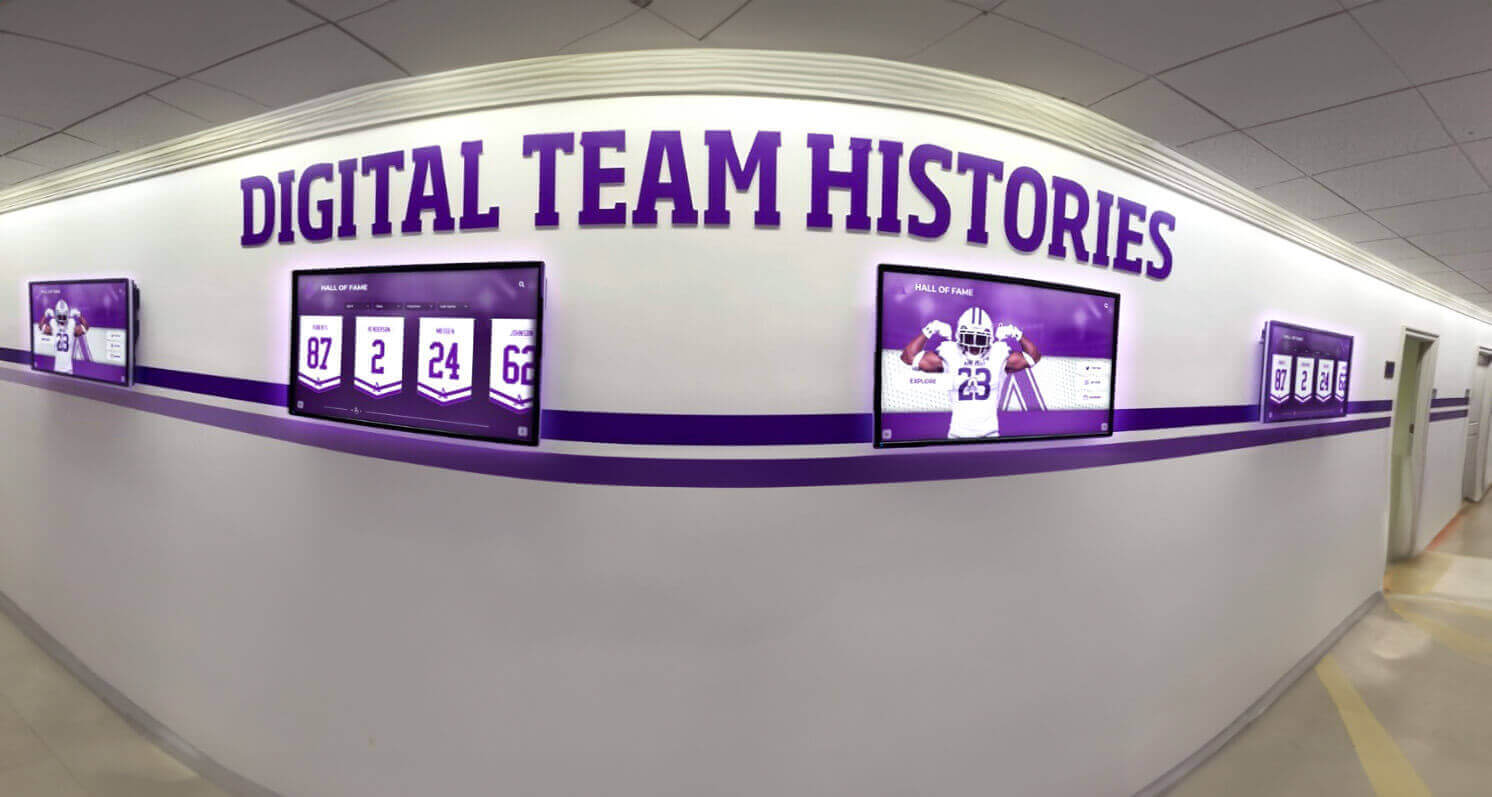
Multi-screen installations create immersive recognition environments transforming ordinary hallways into engaging athletic heritage experiences
Beyond Athletics: Expanding Video Recognition Programs
While athletic highlights provide natural starting points, comprehensive recognition programs expand beyond sports to celebrate diverse achievements.
Academic Achievement Highlights
Showcasing Scholarly Excellence
Academic accomplishments deserve comparable recognition:
Academic competition highlights mirror athletic event coverage. Quiz bowl tournaments, debate competitions, robotics contests, and science olympiads generate exciting content suitable for highlight reel treatment. Filming these events with similar production values used for athletics demonstrates institutional commitment to comprehensive excellence.
Scholarship announcement and signing day celebrations provide milestone moments worth commemorating. College commitment ceremonies for academic scholarship recipients create content parallel to athletic signing day coverage, reinforcing that academic achievement receives equivalent celebration.
Research presentation excerpts showcase student intellectual work. Brief clips from capstone presentations, science fair demonstrations, or senior thesis defenses make abstract academic work visible and accessible to broader school communities.
Academic honor roll features celebrate cumulative achievement. Scrolling displays of honor students, perfect attendance records, or GPA achievements provide recognition for consistent excellence across entire student populations.
Many schools develop comprehensive honor roll recognition systems incorporating both static and video elements.
Arts and Extracurricular Highlights
Celebrating Comprehensive Excellence
Well-rounded programs recognize achievements beyond athletics and academics:
Performing arts highlights showcase musical, theatrical, and dance excellence. Concert excerpts, play performances, or dance recital segments demonstrate artistic achievement while providing content appealing to different audience segments than athletic highlights.
Community service and leadership recognition celebrates citizenship and character. Footage from service projects, leadership conferences, or community partnership initiatives demonstrates institutional values beyond competitive achievement.
Technical and vocational program showcases highlight career preparation. Student work in automotive technology, culinary arts, construction trades, or healthcare programs deserves recognition equivalent to traditional academic subjects.
Club and organization features build inclusive culture. Chess club, robotics team, environmental club, or student government achievements expand recognition beyond high-profile programs, ensuring all students see themselves represented.
Schools developing comprehensive programs often integrate CTE program recognition within broader digital display strategies.
Budget Considerations and Funding Strategies
Schools exploring highlight reel programs need realistic budget frameworks and creative funding approaches.
Cost Components and Budget Planning
Production Equipment and Software Costs
Understanding complete cost pictures enables informed planning:
Initial equipment investment varies dramatically based on production approach. Schools leveraging existing smartphones and free editing software can launch programs with minimal investment, while institutions purchasing dedicated cameras, lighting, audio equipment, and professional software might invest $5,000-$15,000 in production infrastructure.
Display hardware represents significant expense separate from content production. Quality touchscreen displays suitable for public installation typically cost $8,000-$25,000 depending on size, resolution, and interactive capabilities. Installation, mounting, and integration add additional costs.
Ongoing software subscriptions for professional editing platforms, music licensing services, or content management systems create recurring annual expenses. Schools should budget $500-$2,000 annually for software depending on chosen tools and licensing needs.
Personnel time represents often-overlooked costs. Whether compensating staff advisors for media clubs, paying videographers for game coverage, or allocating technology coordinator time to content management, labor costs typically exceed equipment expenses over program lifespans.
Funding Sources and Revenue Strategies
Creative funding approaches make programs financially viable:
Booster club support often covers athletic recognition investments. Presenting compelling vision for how highlight reel displays enhance athletic programs, recruit athletes, and build community pride helps secure booster funding for projects they might not initially prioritize.
Alumni giving targeted toward recognition programs converts sentiment into action. Many alumni respond enthusiastically to opportunities funding recognition displays, particularly when their own achievements will be featured in historical content.
Corporate sponsorship partnerships can offset costs in exchange for modest recognition. Local businesses value association with schools and may sponsor displays in exchange for discrete sponsor acknowledgment, though schools should carefully consider policy implications.
Grant opportunities from education foundations or technology programs sometimes align with recognition display projects. While competitive, grants specifically supporting student engagement, school culture, or technology integration may fund components of comprehensive programs.
Learn how successful schools approach fundraising through guides like cheerleading fundraiser ideas that build booster support for recognition programs.
Return on Investment Considerations
Quantifying Program Value
ROI extends beyond direct revenue:
Recruitment impact represents measurable value. Schools tracking recruiting metrics before and after highlight display installations often document increased tour conversion rates, improved yield on admitted students, and enhanced competitive positioning against peer institutions.
Alumni engagement improvements support development objectives. Increased campus visit frequency, higher event attendance, or elevated giving participation among targeted alumni segments provide quantifiable metrics justifying recognition investment.
Community perception and marketing value are harder to quantify but equally real. Professional recognition displays influence how families, community members, and potential supporters perceive institutional quality and investment in students.
Student culture and engagement benefits justify programs even without revenue generation. If recognition displays measurably improve school spirit, student pride, or sense of belonging, the cultural return justifies investment regardless of financial ROI.
Common Challenges and Problem-Solving Strategies
Schools implementing highlight reel programs encounter predictable challenges with established solutions.
Technical Challenges
Hardware Reliability and Maintenance
Touchscreen installations require ongoing technical support:
Display hardware failures disrupt recognition programs and create negative impressions. Schools should establish preventive maintenance schedules, secure warranty coverage or service contracts, and maintain backup plans for hardware failures during critical periods.
Software compatibility issues emerge as operating systems and display firmware update over time. Content created for current systems may encounter playback problems after system updates. Maintaining accessible technical expertise and testing content across updates prevents disruptions.
Network connectivity problems affect cloud-connected displays. While internet connectivity enables remote content management, it creates dependency on network reliability. Systems should include offline fallback modes ensuring displays function even during network outages.
Interactive functionality problems frustrate users and undermine program value. Touch calibration drift, unresponsive zones, or software glitches require quick resolution. Schools should maintain responsive technical support preventing minor issues from degrading user experiences.
Content and Production Challenges
Maintaining Consistent Quality Standards
Quality inconsistency undermines professional appearance:
Production skill development takes time. Schools should accept that early highlight reels may not achieve professional quality, establishing improvement trajectories rather than expecting immediate excellence. Investing in training for student or staff producers yields progressive quality improvements.
Equipment limitations constrain what’s achievable. Understanding equipment capabilities and limitations helps set realistic expectations. Attempting techniques beyond equipment capabilities creates frustration, while optimizing approaches for available tools maximizes results.
Time constraints compete with quality aspirations. Schools must balance production ambitions with available time and resources. Establishing sustainable workflows producing consistent quality output outperforms sporadic ambitious projects alternating with neglected periods.
Organizational and Cultural Challenges
Building Sustainable Support Structures
Long-term success requires institutional commitment:
Leadership transitions threaten program continuity. When champions retire or move positions, recognition programs risk neglect unless institutionalized through policies, budget allocations, and designated responsibilities surviving individual tenure.
Competing priorities challenge ongoing attention. Athletic seasons, academic pressures, and facility demands constantly compete for staff time and institutional resources. Programs requiring significant ongoing effort risk abandonment when other priorities intensify.
Cross-departmental coordination between athletics, technology, facilities, and administration creates organizational complexity. Clear governance structures, communication channels, and decision-making processes prevent programs from stalling over territorial disputes or unclear authority.
Cultural resistance to change affects adoption. Some traditionalists prefer physical trophies and static displays over digital recognition. Managing change through stakeholder engagement, pilot programs demonstrating value, and respecting tradition while advancing innovation helps overcome resistance.
Many successful schools approach comprehensive recognition holistically. Explore integrated strategies in basketball senior night ideas combining multiple recognition elements.
Future Trends in School Video Recognition
Understanding emerging trends helps schools future-proof investments and anticipate evolution.
Technological Evolution
Emerging Display Technologies
Next-generation hardware will expand capabilities:
Higher resolution displays including 8K screens will enable even more detailed content and larger installation sizes without quality degradation. As costs decrease, ultra-high-resolution displays will become increasingly accessible to educational institutions.
Flexible and curved displays enable creative installation approaches impossible with flat rectangular screens. Emerging display technologies conforming to architectural features will allow more innovative integration within facility designs.
Transparent and holographic displays will create novel recognition experiences. While currently expensive, these emerging technologies will eventually enable floating three-dimensional displays and augmented reality recognition experiences.
Improved touch technology including multi-user simultaneous interaction and gesture control will enhance interactivity beyond current single-touch limitations.
Content Evolution
Artificial Intelligence and Automated Production
AI technologies will transform content creation workflows:
Automated highlight generation systems will soon analyze game footage and automatically identify and extract highlight moments based on player reactions, crowd noise, and action intensity. These systems will dramatically reduce editing time while ensuring no significant moments are missed.
Automated graphics and statistical integration will pull real-time data creating dynamic overlays without manual editing. Player statistics, game situations, and contextual information will be automatically incorporated into highlight sequences.
Voice synthesis and automated narration will enable scalable commentary production. AI-generated announcer commentary could provide professional-sounding narration for highlights without requiring human voice talent.
Personalized content delivery will enable different visitors to experience customized highlight selections based on their interests, affiliations, or viewing history.
Programmatic Expansion
Integration with Broader Digital Ecosystems
Recognition programs will increasingly connect with other institutional systems:
Mobile app integration will enable visitors to access highlights on personal devices, save favorite moments, and share content through social channels. QR codes on displays will bridge physical and digital experiences.
Social media synchronization will automatically distribute highlight content across institutional channels. Content created for displays will simultaneously feed Instagram, Twitter, Facebook, and TikTok maintaining consistent messaging across platforms.
Live streaming integration will blur lines between real-time broadcasts and curated highlight archives. Systems will automatically capture streaming content, generate highlights, and update displays with fresh content within hours of competitions.
Data analytics integration will connect recognition systems with student information systems, athletic management platforms, and institutional research databases creating comprehensive student achievement profiles.
Schools interested in comprehensive digital transformation often explore alumni recognition events incorporating digital elements throughout programming.
Getting Started: Implementation Roadmap
Schools ready to launch highlight reel programs should follow systematic implementation approaches ensuring successful deployment.
Phase 1: Planning and Assessment (Months 1-2)
Stakeholder Engagement and Needs Assessment
Successful programs begin with thorough planning:
Form cross-functional planning team including athletic directors, technology coordinators, facilities managers, marketing staff, and student representatives. Diverse perspectives ensure programs serve multiple constituencies rather than reflecting single department priorities.
Conduct facility assessment identifying optimal display locations based on traffic patterns, electrical infrastructure, structural support, lighting conditions, and aesthetic integration. Professional site surveys prevent expensive surprises during installation.
Survey stakeholder priorities and expectations through interviews, focus groups, or formal surveys gathering input from coaches, athletes, parents, alumni, and administrators. Understanding diverse perspectives shapes programs meeting broad community needs.
Develop preliminary budget and funding strategy identifying available resources, potential funding sources, and realistic scope given financial constraints. Honest budget assessment prevents overambitious plans that stall when funding proves insufficient.
Phase 2: Design and Procurement (Months 3-4)
System Specification and Vendor Selection
Translate vision into concrete specifications:
Develop detailed technical requirements for display hardware, content management systems, and integration needs. Clear specifications enable accurate vendor proposals and prevent misunderstandings about system capabilities.
Request proposals from multiple vendors comparing equipment, software, installation, training, and ongoing support offerings. Competitive bidding ensures value while revealing different approaches to achieving project objectives.
Review vendor references and visit existing installations observing systems in real-world educational environments. Seeing comparable implementations provides realistic expectation-setting and reveals vendor strengths and weaknesses.
Finalize hardware, software, and service contracts ensuring clear deliverables, timelines, support terms, and success criteria. Well-structured contracts prevent disputes while establishing accountability.
Phase 3: Content Development (Months 4-6)
Initial Content Creation and Testing
Build content library before installation:
Establish content production workflows identifying who will film events, edit footage, create graphics, manage archives, and coordinate updates. Clear workflows prevent ambiguity undermining program sustainability.
Create initial highlight reel content drawing from recent seasons and archived footage. Launching with substantial content library demonstrates program value immediately rather than promising future content.
Develop interface design and navigation structure balancing intuitive usability with comprehensive content access. Testing prototypes with representative users reveals usability issues before final implementation.
Conduct content testing on display hardware in simulated installation environments verifying technical quality, color accuracy, readability, and interactive functionality before public deployment.
Phase 4: Installation and Launch (Months 6-7)
System Deployment and Community Introduction
Execute professional installation and celebrate launch:
Coordinate installation timing minimizing disruption during academic calendars while ensuring readiness for high-visibility events. Strategic timing maximizes positive launch impressions.
Conduct thorough system testing verifying all hardware, software, content, and interactive functionality operates correctly. Identifying and resolving issues before public launch prevents embarrassing malfunctions.
Train staff and student content managers on system operation, content updates, and troubleshooting. Effective training ensures capable management beyond initial vendor support.
Celebrate public launch through ceremonies, communications, and marketing drawing attention to new capabilities and encouraging community engagement. Intentional launch activities drive initial usage establishing behavioral patterns.
Phase 5: Evaluation and Evolution (Ongoing)
Continuous Improvement and Program Development
Sustain programs through ongoing attention:
Collect usage data and stakeholder feedback systematically evaluating what works well and what needs improvement. Data-driven program management optimizes return on investment.
Establish regular update cycles ensuring content remains current and relevant. Consistent refresh schedules maintain engagement while preventing displays from becoming ignored background fixtures.
Plan incremental expansions adding capabilities, content types, or additional displays as programs mature and demonstrate value. Successful pilot programs naturally expand scope over time.
Document lessons learned and best practices creating institutional knowledge surviving individual transitions. Systematic documentation enables program continuity regardless of personnel changes.
Transform How Your School Celebrates Achievement
School highlight reels displayed on interactive touchscreen walls represent the future of institutional recognition—combining the emotional power of video storytelling with the engagement advantages of interactive technology. Whether showcasing championship seasons, honoring academic excellence, or celebrating comprehensive student achievement, professionally produced highlight reels create lasting impressions impossible through traditional static displays.
Ready to explore how touchscreen recognition walls can elevate your school’s celebration of achievement? Discover Rocket Alumni Solutions’ interactive touchscreen displays designed specifically for educational institutions. Our solutions combine stunning hardware with intuitive content management, professional installation, and ongoing support ensuring your recognition programs succeed from launch through years of operation.
Contact our team to schedule a demonstration and discover how schools nationwide are transforming ordinary lobbies and hallways into engaging recognition experiences that students, alumni, and communities truly value.
Conclusion: Building Recognition Programs That Endure
The most successful school highlight reel programs share common characteristics transcending specific technical implementations or production approaches. They maintain commitment to comprehensive recognition celebrating diverse achievement types rather than only high-profile programs. They establish sustainable workflows fitting within realistic resource constraints rather than depending on unsustainable heroic efforts. They balance respect for tradition with willingness to embrace innovation, honoring past excellence while building modern recognition frameworks. They focus relentlessly on authentic engagement rather than technology for its own sake, ensuring every implementation decision serves genuine community connection.
Schools beginning this journey should remember that perfect programs don’t appear fully formed—they evolve through iteration, learning, and continuous improvement. Your first highlight reel won’t achieve professional broadcast quality. Your initial interface design will reveal usability issues requiring refinement. Your content library will grow gradually rather than materializing complete from inception. This developmental process is normal and healthy. What matters most is beginning with clear vision, maintaining consistent effort, and committing to progressive improvement.
The investment in quality highlight reel programs pays dividends extending far beyond the immediate visual impact of displays in lobbies and hallways. These recognition systems create documented institutional memory ensuring achievements receive permanent honor rather than fading into forgotten history. They build multigenerational connections as alumni see their accomplishments featured alongside current students. They reinforce institutional values and culture, demonstrating through action which achievements the school community genuinely celebrates. Perhaps most importantly, they provide students with tangible evidence that their dedication, excellence, and contributions matter—that someone noticed, someone cared, and someone took time to ensure their stories would be told.
Every championship earned, record broken, and milestone achieved represents countless hours of dedication, sacrifice, and hard work by students, coaches, families, and communities. These moments deserve recognition worthy of the effort they required. School highlight reels displayed on interactive touchscreen walls ensure that the next generation of students, decades of future alumni, and countless visitors will witness and be inspired by the excellence that defines your institution. That enduring legacy justifies every hour of planning, every dollar invested, and every challenge overcome bringing these recognition programs to life.
Live Example: Rocket Alumni Solutions Touchscreen Display
Interact with a live example (16:9 scaled 1920x1080 display). All content is automatically responsive to all screen sizes and orientations.