



School display cases serve as powerful recognition tools that celebrate student achievements, preserve institutional history, and build lasting pride throughout your educational community. Whether showcasing athletic trophies, academic awards, artistic accomplishments, or career and technical education projects, the right display solution transforms how your school honors excellence while creating visible inspiration for current and future students.
Yet selecting the perfect school display cases involves navigating numerous decisions: traditional glass cases versus modern digital displays, wall-mounted versus freestanding configurations, budget constraints, maintenance requirements, and capacity planning for years of accumulated achievements. Making the wrong choice can result in insufficient space, excessive maintenance costs, limited visibility, or displays that fail to engage your school community effectively.
This complete buying guide walks you through everything you need to know about purchasing school display cases—from understanding different types and materials to evaluating costs, planning for capacity, comparing traditional versus digital options, and selecting solutions that will serve your institution for decades to come.
The best school display cases don’t just store trophies—they tell your school’s story, celebrate every student achievement appropriately, and create recognition experiences that strengthen community pride while inspiring excellence across all programs and activities.

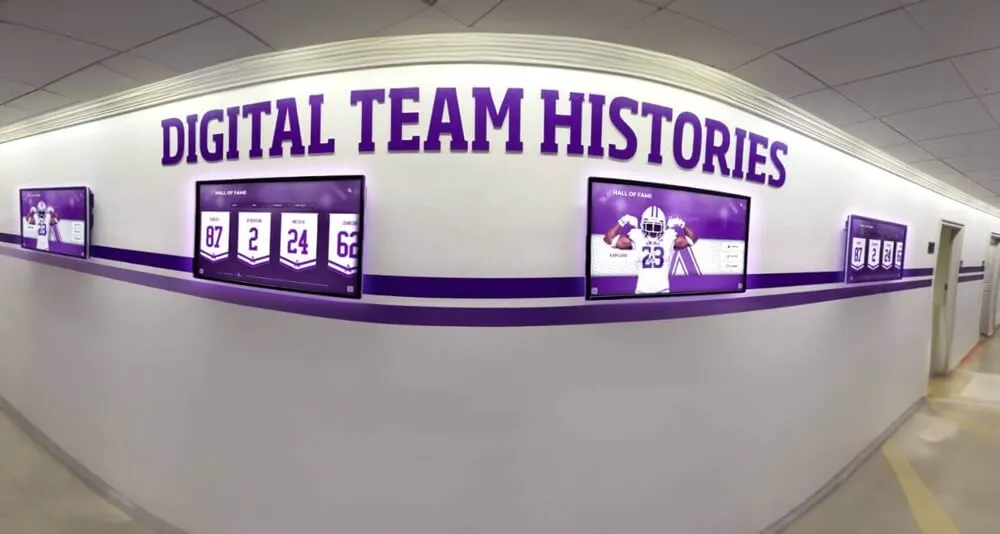
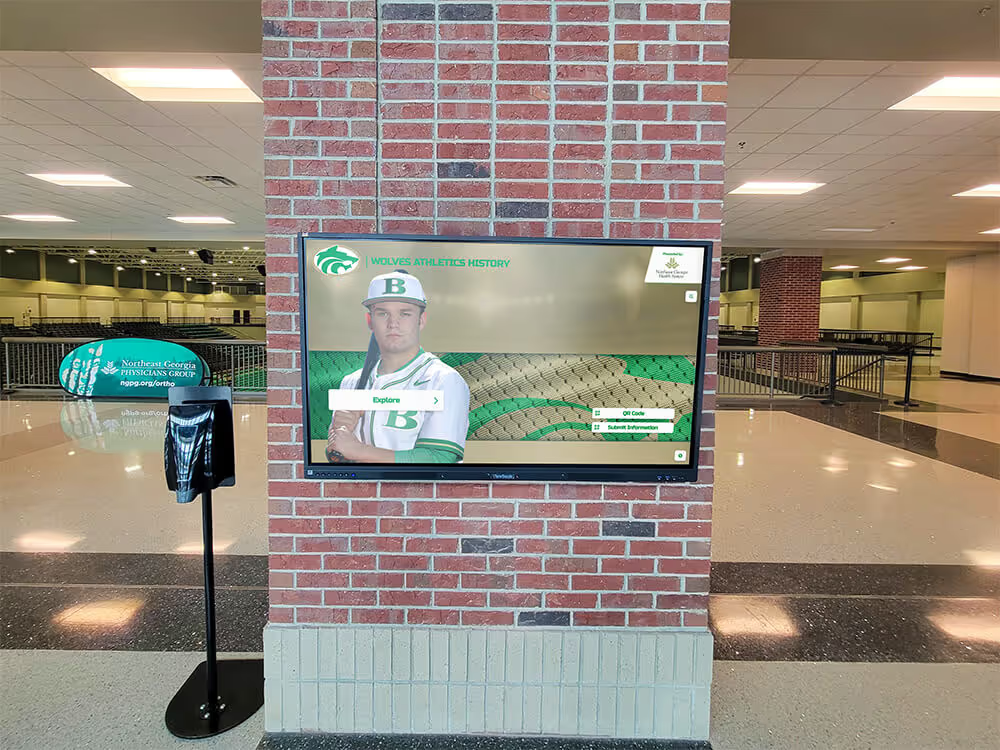
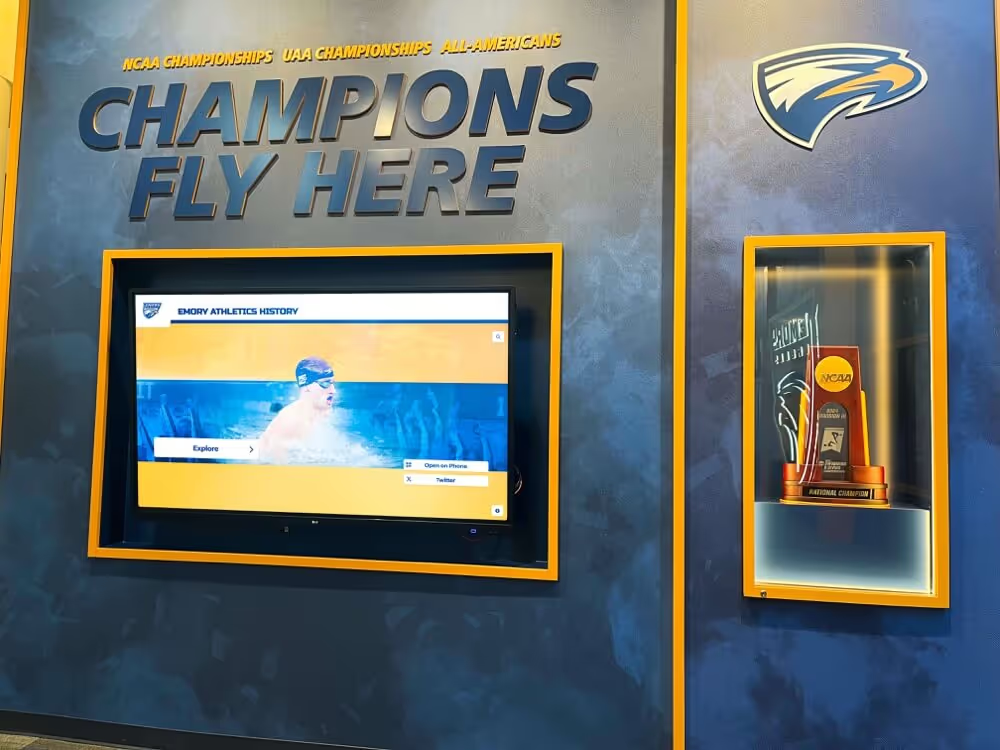
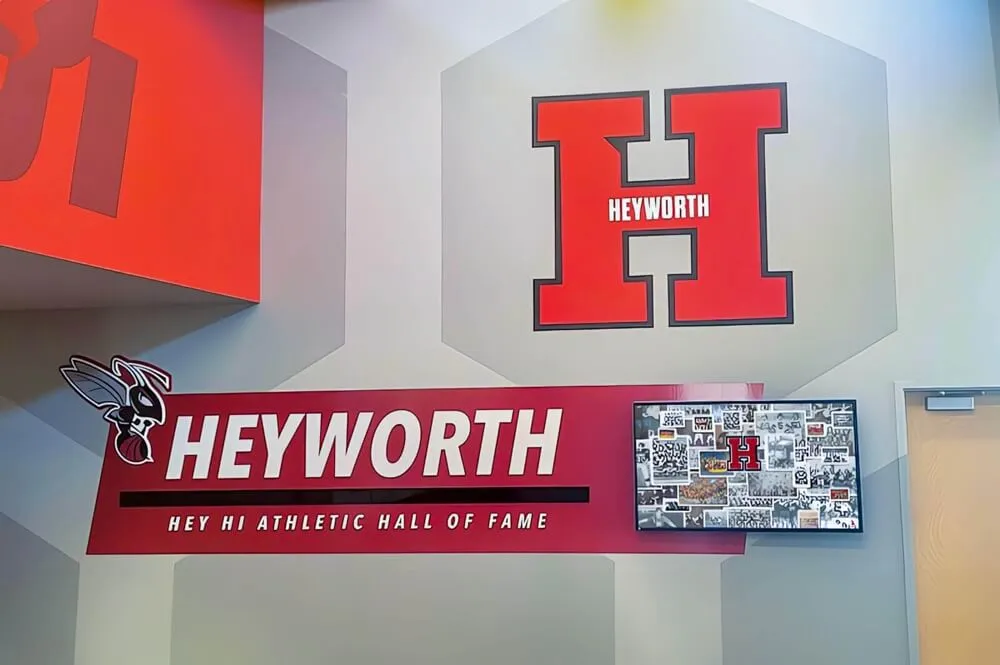
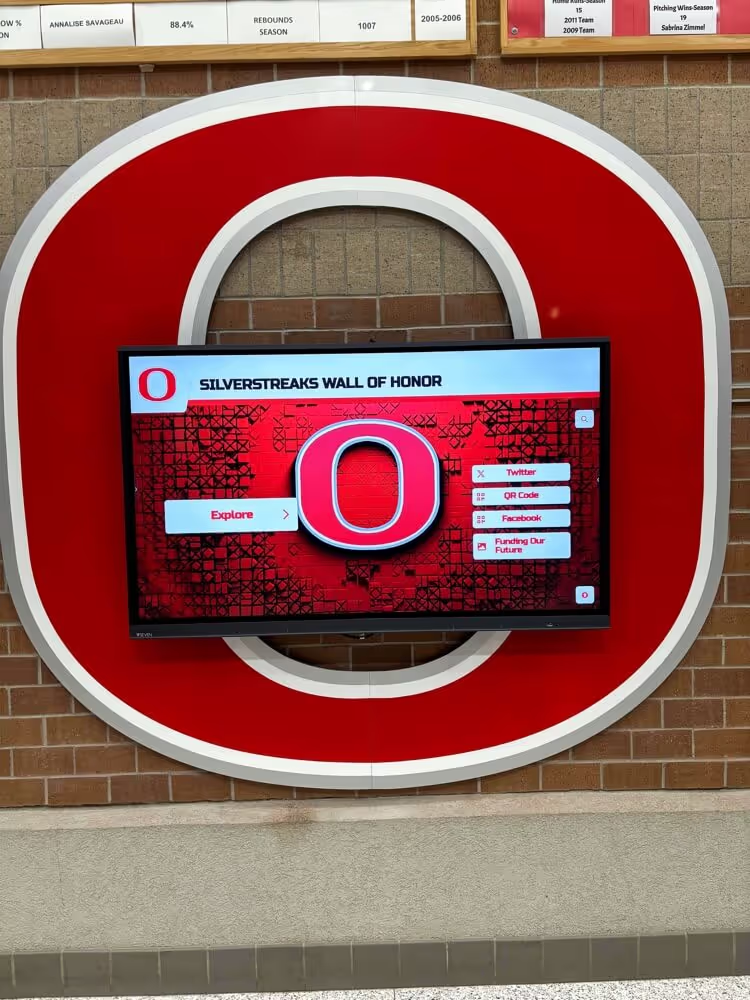
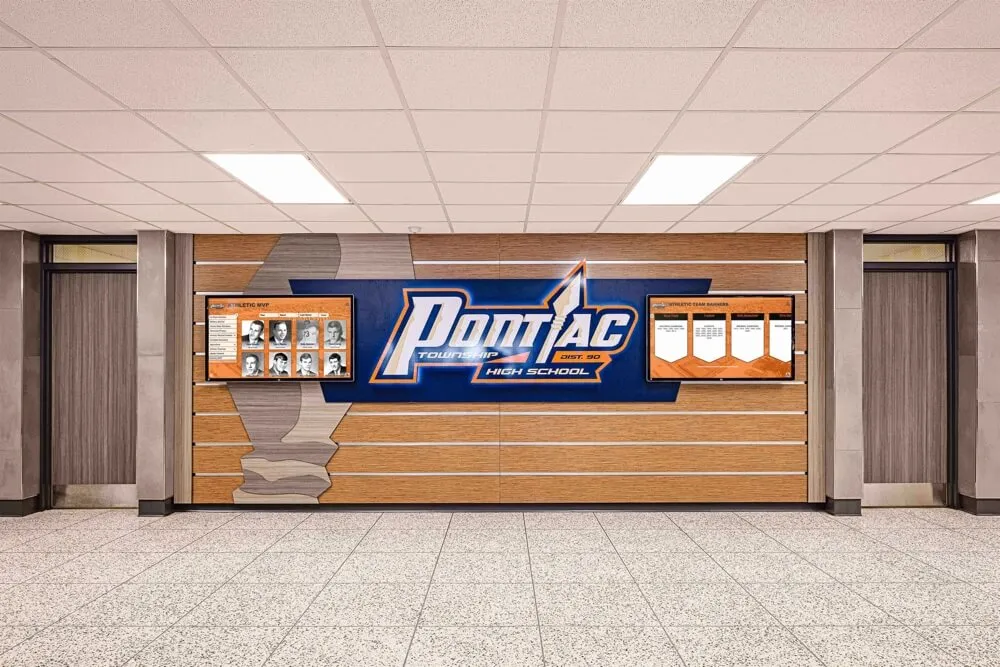
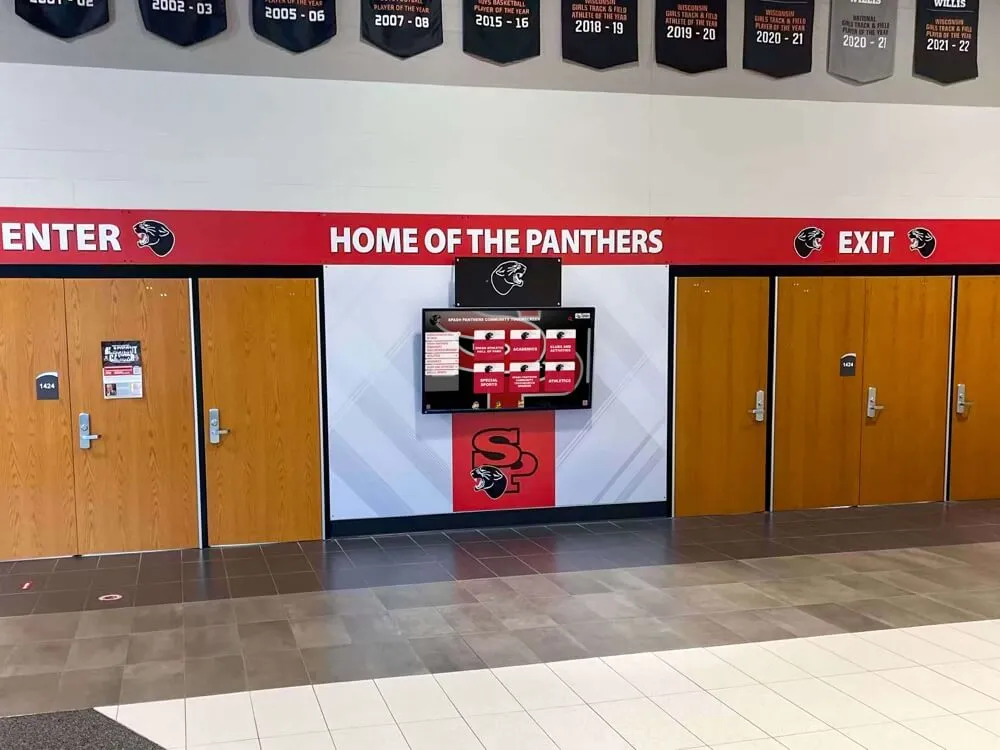
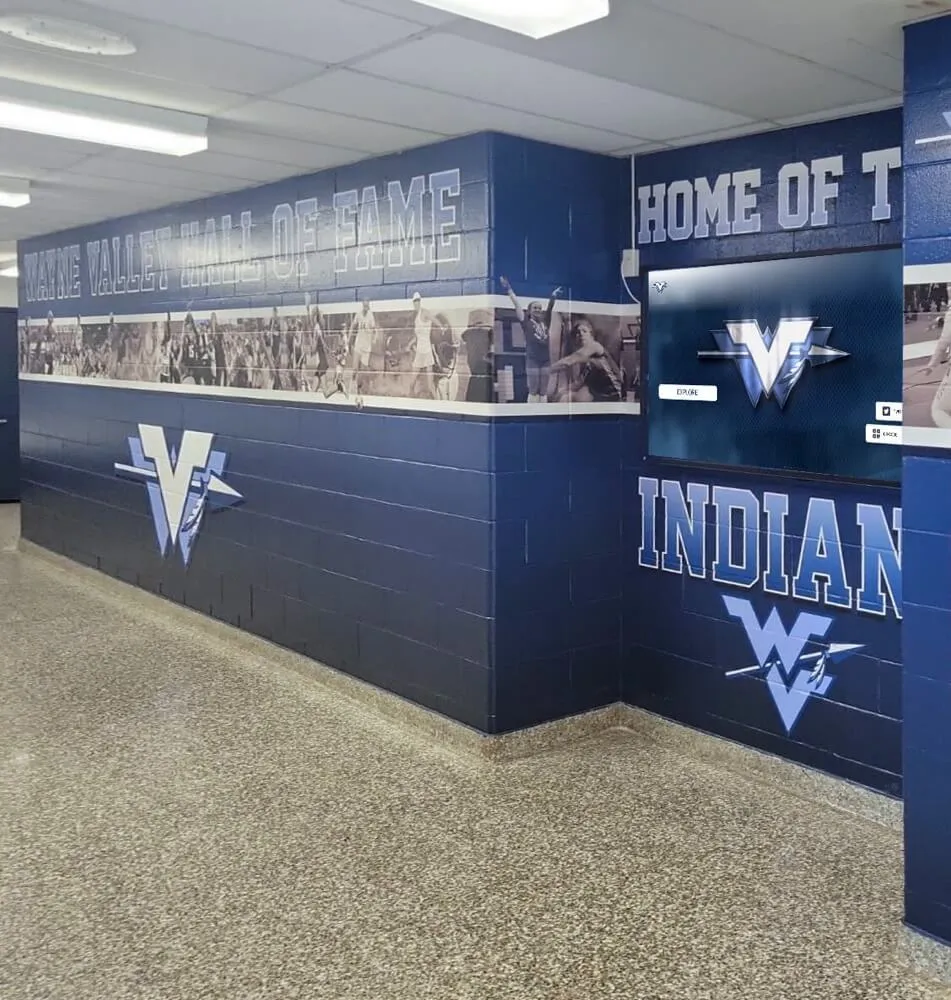
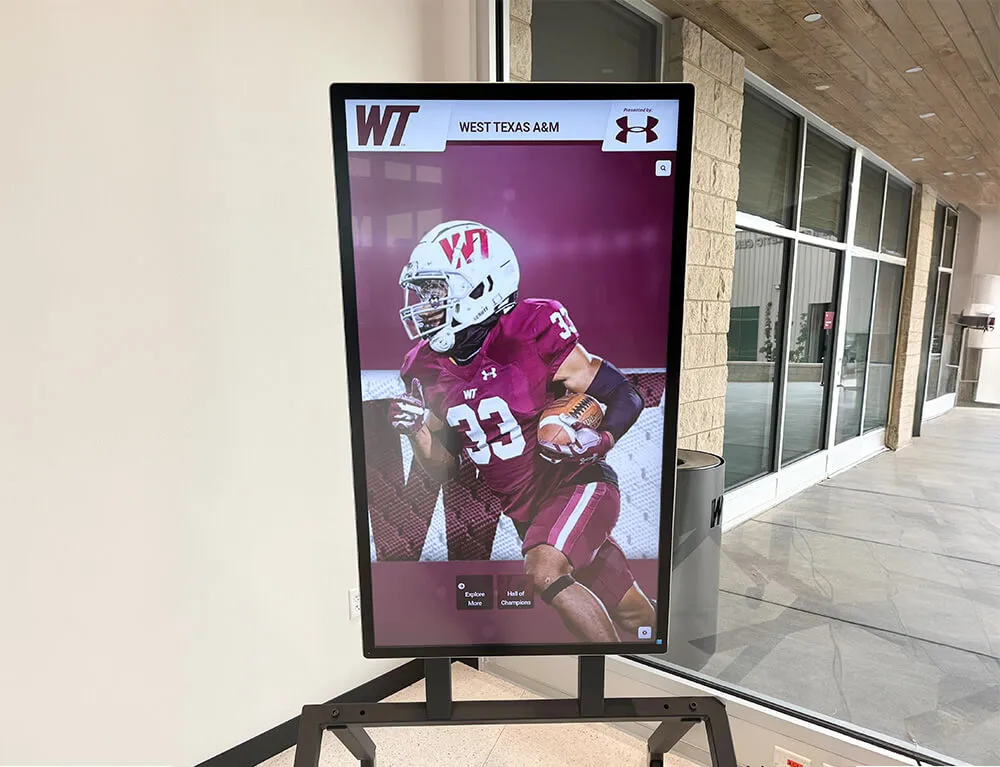
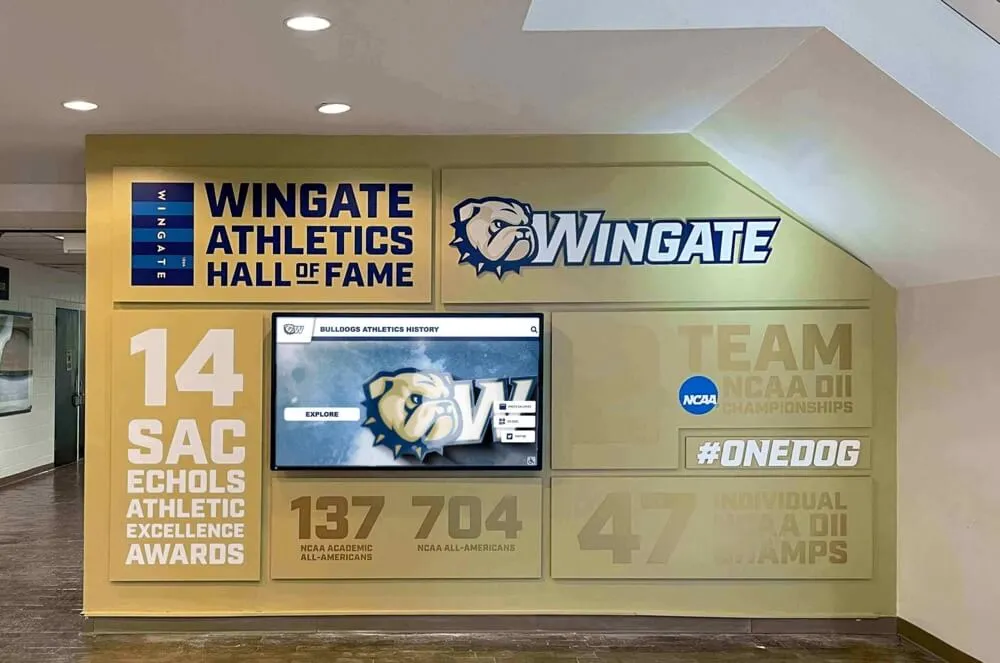
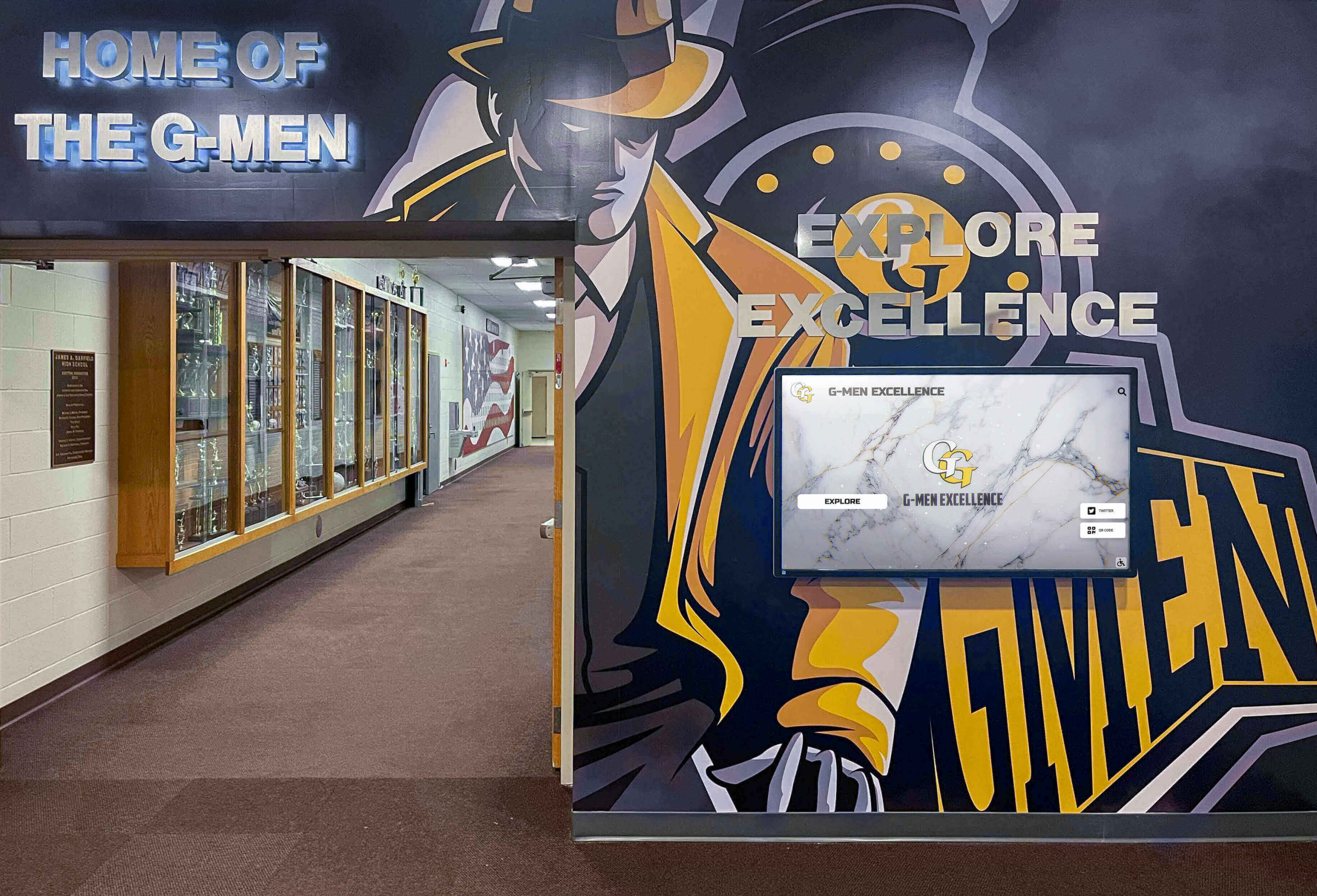
Modern school recognition environments integrate traditional display cases with digital displays and architectural elements for comprehensive student achievement celebration
Understanding Your School Display Case Needs
Before evaluating specific products or vendors, clearly defining your recognition objectives ensures you select display solutions addressing your institution’s most important needs while fitting within available budgets and facility constraints.
Identifying What You’ll Display
Different achievement categories require distinct display characteristics influencing case selection decisions.
Athletic Recognition
Sports programs generate substantial recognition items:
- Championship trophies from conference, district, regional, and state competitions
- Team photos documenting championship seasons and memorable teams
- Individual athlete awards including all-conference, all-state, and player of the year honors
- Retired jerseys celebrating exceptional athletic careers
- Record boards documenting statistical achievements and program milestones
- Sports equipment displays showcasing championship balls, sticks, or specialized gear
Athletic displays benefit from large cases accommodating three-dimensional trophies while providing flexibility for reorganizing as new championships accumulate annually.
Academic Achievement
Academic excellence programs produce diverse recognition items:
- Academic bowl trophies and competition plaques
- Science fair awards and STEM competition recognition
- Debate and speech tournament trophies
- Academic all-state certificates and honor roll displays
- National Honor Society recognition materials
- Scholarship recipient documentation
Academic displays often feature flatter items like plaques, certificates, and printed materials requiring different case depths and lighting compared to athletic trophies.
Explore comprehensive approaches to academic recognition programs that showcase diverse student achievements effectively.
Arts and Activities Recognition
Fine arts and extracurricular programs deserve equal celebration:
- Theater production playbills, photos, and competition awards
- Music ensemble performance documentation and competition trophies
- Visual arts student work displays and competition recognition
- Student government photos and achievement records
- Career and Technical Education (CTE) project displays and certification documentation
- Community service program recognition and impact documentation
Arts displays benefit from cases accommodating both flat materials and three-dimensional student work while providing protection from handling damage.
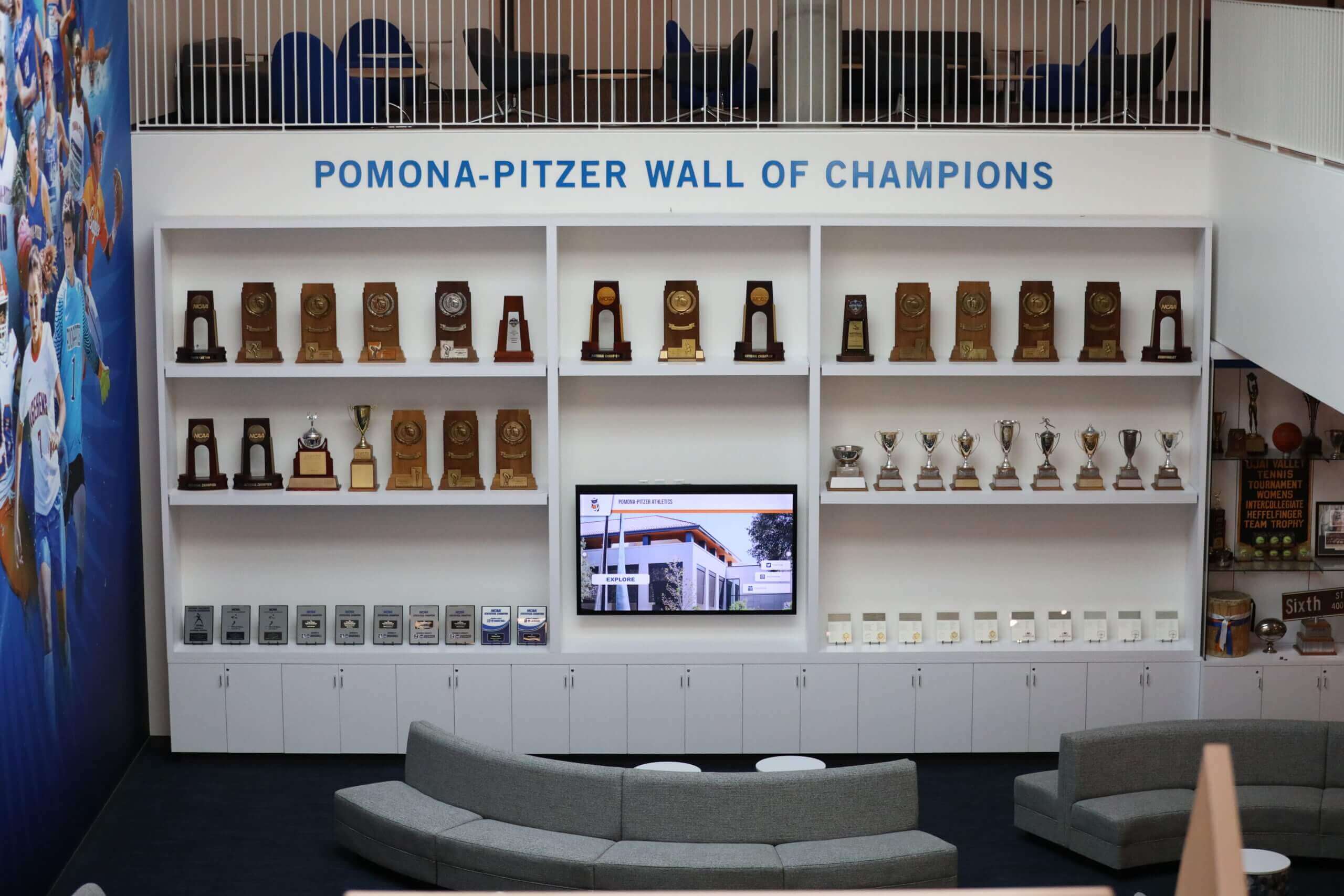
Traditional display cases excel at showcasing three-dimensional trophies and awards in prominent school locations
Capacity Planning for Long-Term Needs
The most common display case mistake schools make involves underestimating long-term capacity needs, resulting in overcrowded cases or expensive expansions within just a few years.
Calculating Annual Accumulation Rates
Realistic capacity planning starts with honest assessment of how many recognition items your programs generate annually:
- Active athletic programs: 15-40 trophies per year across all sports and competition levels
- Academic programs: 10-25 awards and certificates annually
- Arts programs: 8-20 recognition items depending on performance schedules and competitions
- Activities and clubs: 5-15 awards from various student organizations
A comprehensive school program might generate 40-100 new recognition items annually. Within five years, that’s 200-500 items requiring display space—far exceeding most traditional trophy case capacities schools initially install.
The 10-Year Display Strategy
Effective planning considers decade-long timelines:
- Calculate total items accumulated over 10 years across all programs
- Add 20-30% buffer capacity for unexpected achievements and expanded programs
- Determine whether your strategy involves rotating older items into storage or displaying everything permanently
- Consider whether digital solutions might complement physical cases by providing unlimited capacity for comprehensive documentation
Many schools discover that addressing capacity challenges proactively through hybrid physical-digital approaches delivers superior long-term value compared to purchasing additional physical cases every few years as space fills completely.
Types of School Display Cases
Understanding available display case types enables matching specific solutions to your institution’s recognition needs, facility characteristics, and budget realities.
Wall-Mounted Display Cases
Wall-mounted cases attach directly to hallway or lobby walls, creating prominent displays without consuming valuable floor space in high-traffic areas.
Advantages
- Space efficiency: No floor space required, leaving hallways fully accessible
- Security: Elevated mounting discourages tampering while maintaining visibility
- Visibility: Eye-level placement ensures maximum viewing engagement
- Architectural integration: Creates permanent recognition features within facility design
Considerations
- Requires suitable wall structure supporting case weight (critical for masonry or concrete block walls)
- Installation complexity: Professional mounting often necessary for safety and appearance
- Limited depth: Wall cases typically offer 4-8 inches of display depth
- Accessibility: Upper shelves may be difficult to access for content changes
- Permanence: Wall mounting creates semi-permanent installations requiring commitment to location
Typical Dimensions
- Width: 36-96 inches
- Height: 36-72 inches
- Depth: 4-8 inches
- Capacity: 15-40 trophies depending on size and shelf configuration
Cost Range: $800-$3,500 per case depending on size, materials, and features
Freestanding Display Cases
Freestanding cases stand independently, offering flexibility for placement throughout facilities while providing maximum display depth for large trophies and three-dimensional items.
Advantages
- Maximum capacity: Greater depth (12-24 inches) accommodates large trophies and multiple rows
- Flexibility: Repositionable as facility needs change or during renovations
- Two-sided viewing: Some models offer viewing from multiple angles
- No wall requirements: Works in any location with adequate floor space
- Easier maintenance: Better access for cleaning and content updates
Considerations
- Floor space consumption: Reduces hallway width or lobby usable space
- Tipping risks: Requires proper anchoring for safety, especially in high-traffic areas
- Higher costs: Larger cases with more materials increase investment
- Cleaning requirements: More glass surfaces requiring regular maintenance
Typical Dimensions
- Width: 36-72 inches
- Height: 72-84 inches
- Depth: 12-24 inches
- Capacity: 30-80 trophies depending on configuration
Cost Range: $1,500-$6,000 per case depending on size, materials, and features
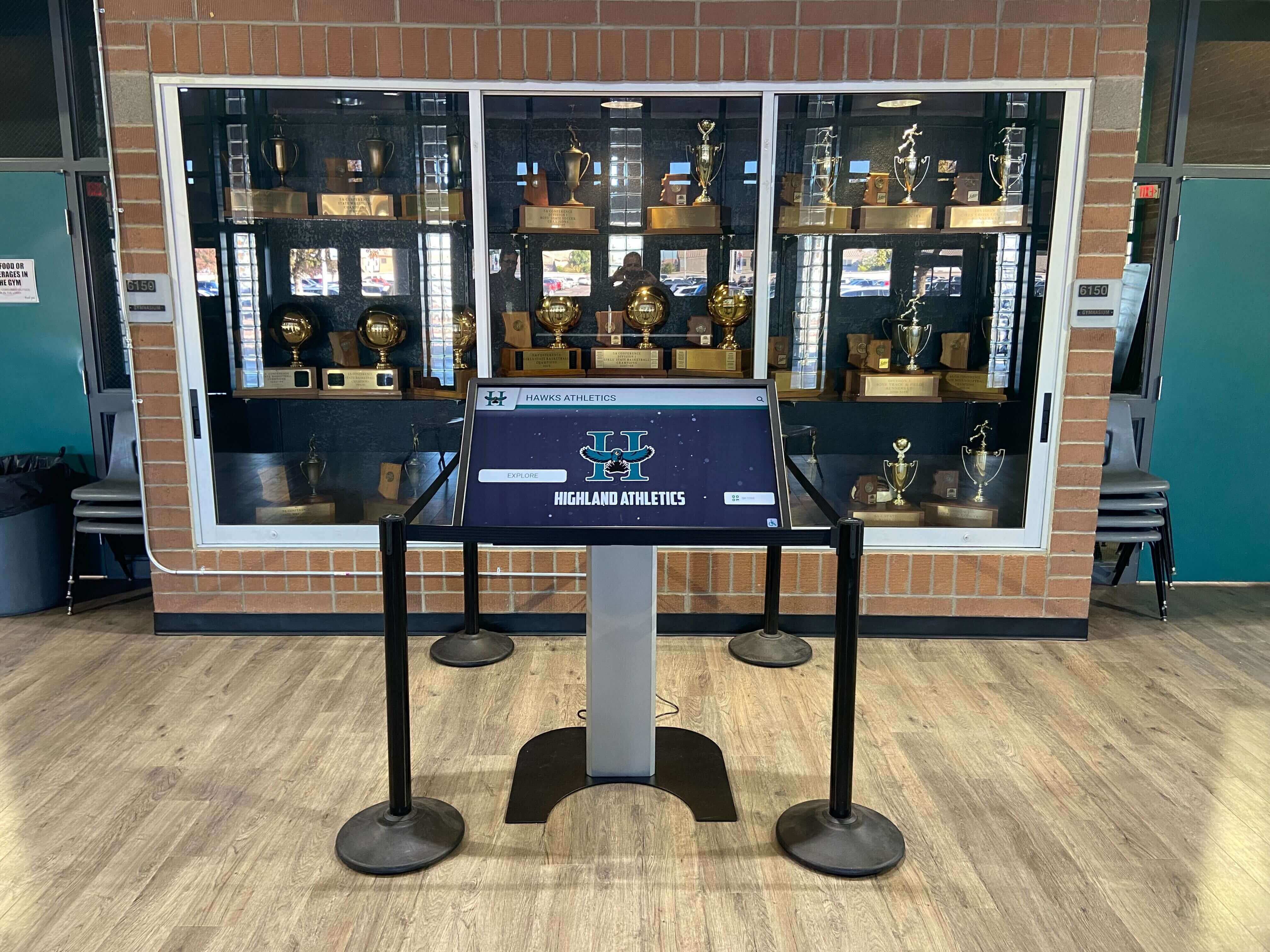
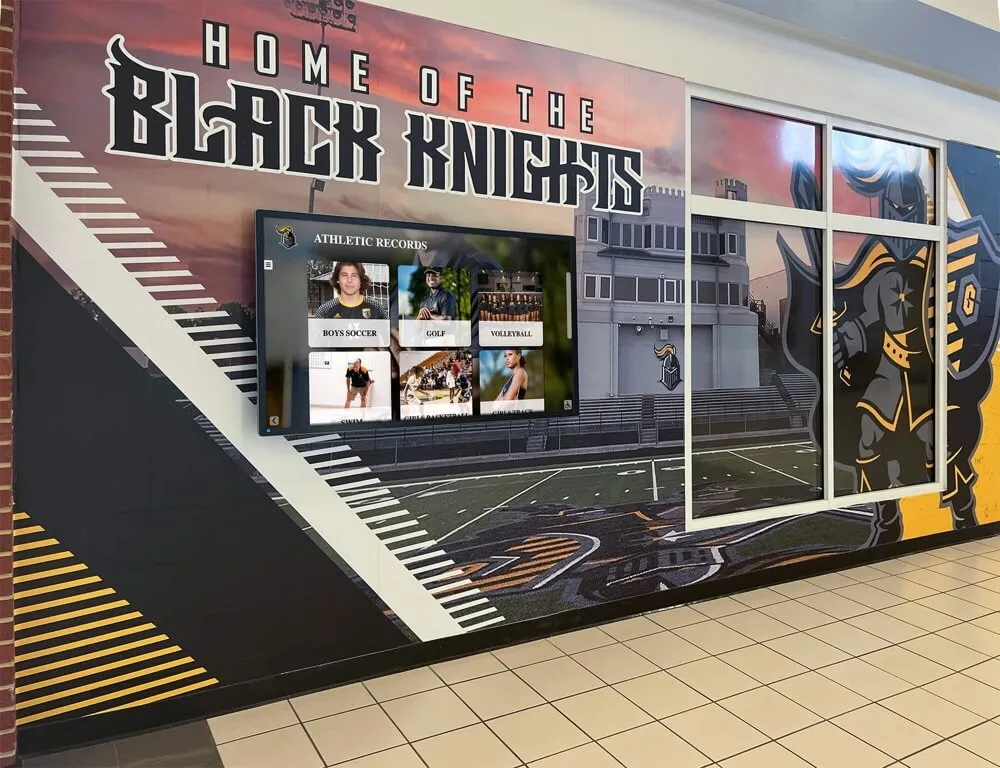
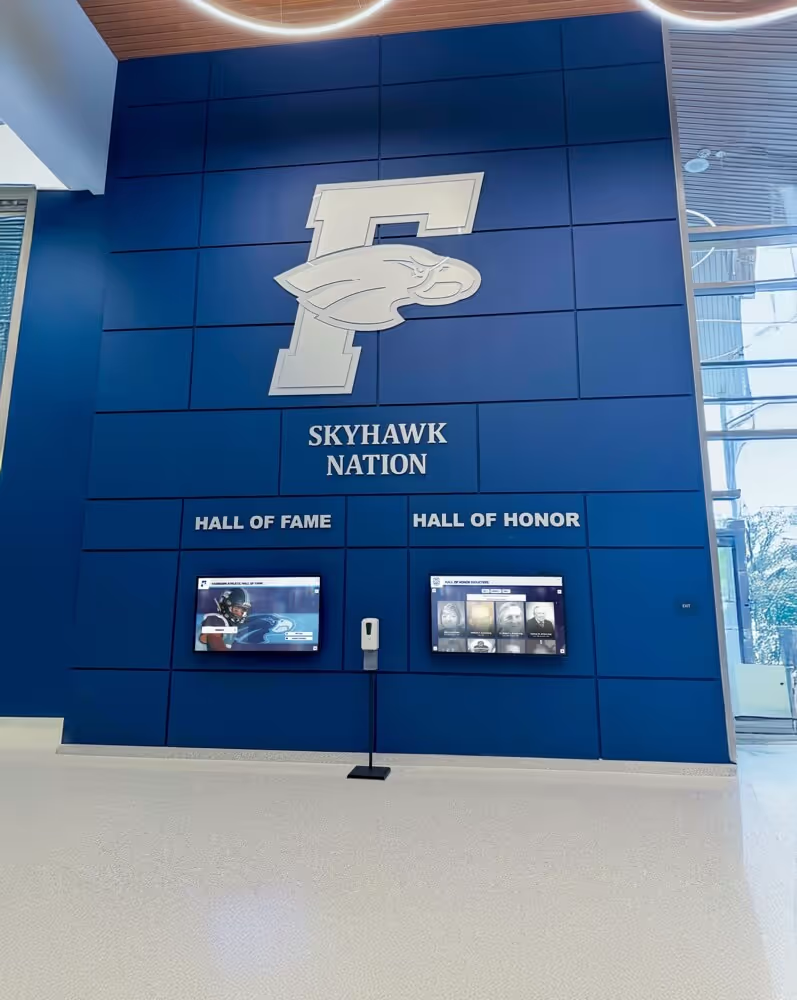
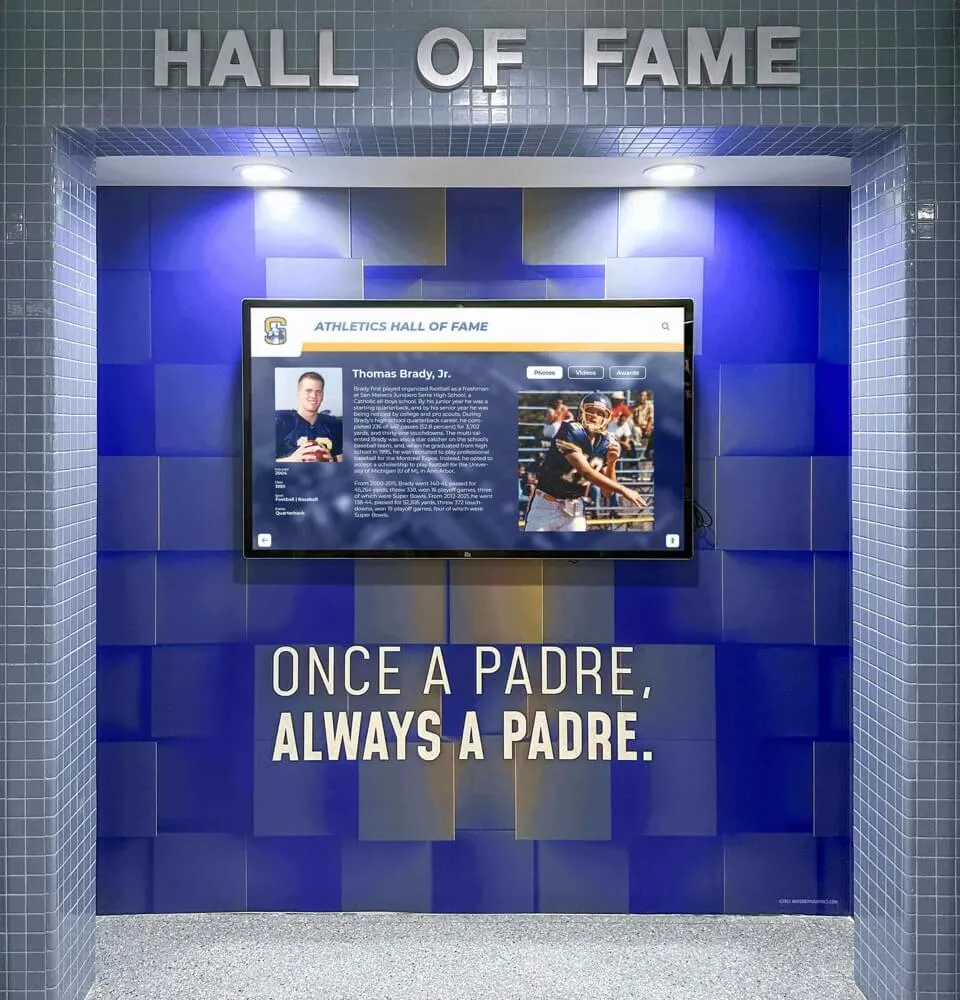
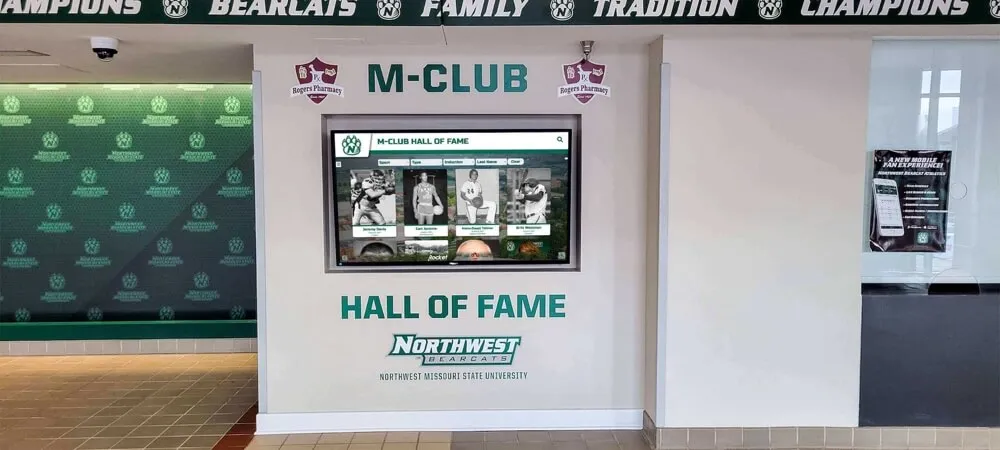
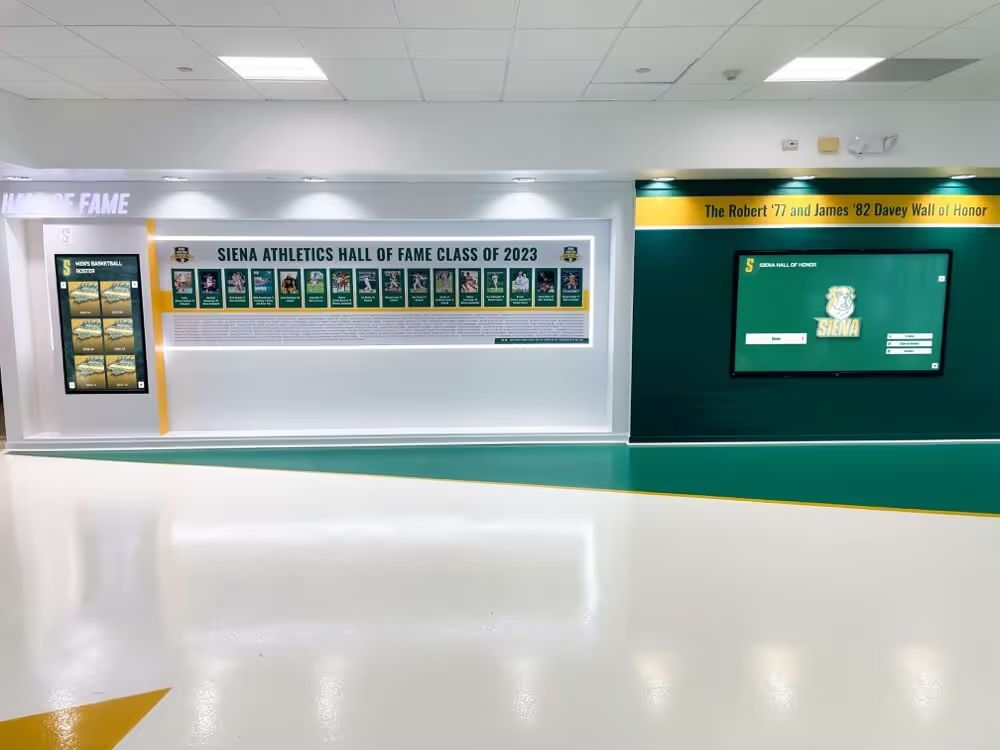
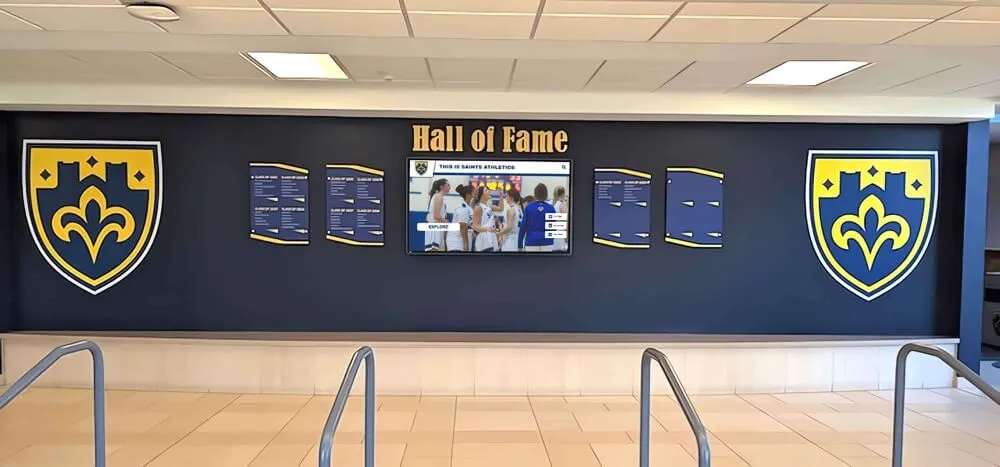
Hybrid solutions integrate traditional trophy cases with interactive digital displays, combining physical recognition with unlimited digital capacity
Tabletop and Countertop Cases
Smaller display cases designed for placement on existing furniture, counters, or built-in display ledges offer economical solutions for limited spaces or targeted recognition displays.
Advantages
- Lower cost: Smaller size reduces material and installation expenses
- Flexibility: Easily relocated as needs change
- Focused displays: Ideal for featuring specific awards or rotating recognition
- No installation: Simple placement without mounting requirements
Considerations
- Limited capacity: Typically holds 5-15 small items
- Space requirements: Consumes valuable counter or furniture surface area
- Security concerns: Easier to access or tip compared to mounted cases
- Visibility limitations: Lower placement may reduce viewing engagement
Typical Dimensions
- Width: 24-48 inches
- Height: 18-36 inches
- Depth: 12-18 inches
Cost Range: $300-$1,200 per case
Learn about creating effective outstanding student honor walls using various display case configurations.
Display Case Materials and Construction
Material selection significantly impacts appearance, durability, maintenance requirements, and total cost of ownership over decades of service.
Frame Materials
Aluminum Frames
Most common for modern school display cases:
- Advantages: Lightweight, corrosion-resistant, accepts powder coat finishes matching school colors, relatively economical
- Considerations: Can dent from impacts, may show wear in high-traffic areas
- Typical cost impact: Standard pricing baseline
- Maintenance: Minimal; occasional cleaning sufficient
Wood Frames
Traditional appearance for heritage-focused installations:
- Advantages: Classic aesthetic, can match existing architectural millwork, substantial appearance
- Considerations: Higher cost, requires periodic refinishing, heavier weight complicating installation
- Typical cost impact: 30-50% premium over aluminum
- Maintenance: Periodic refinishing every 5-10 years depending on finish and traffic
Steel Frames
Maximum security and durability:
- Advantages: Superior strength, excellent security against forced entry, very long lifespan
- Considerations: Heaviest option requiring robust mounting, highest cost, limited finish options
- Typical cost impact: 40-60% premium over aluminum
- Maintenance: Minimal if powder coated; steel may rust if finish damaged
Glazing Options
Tempered Glass
Standard for school environments balancing clarity with safety:
- Safety: Breaks into small granules rather than dangerous shards if impacted
- Clarity: Excellent visibility with minimal distortion
- Cost: Moderate; standard for most cases
- Maintenance: Regular cleaning required; shows fingerprints and smudges
- Thickness: 1/4 inch typical for most applications
Acrylic (Plexiglass)
Lightweight alternative to glass:
- Advantages: Lighter weight, won’t shatter, easier to replace if damaged
- Considerations: Scratches more easily than glass, can yellow over time with UV exposure, less premium appearance
- Cost: 20-30% less expensive than tempered glass
- Maintenance: Requires careful cleaning with appropriate products to avoid scratching
Laminated Glass
Premium option for maximum security:
- Advantages: Two glass layers with interlayer; even when broken, glass adheres to interlayer, superior security
- Considerations: Higher cost, heavier weight, thickness may affect door operation
- Cost: 50-100% premium over standard tempered glass
- Applications: High-value displays or schools with security concerns
UV-Filtering Glass
Protects displayed items from sun damage:
- Advantages: Blocks harmful UV rays preventing fading of photos, fabrics, and printed materials
- Considerations: 30-40% cost premium, slightly reduced clarity compared to standard glass
- Recommended for: Cases in areas with significant natural light exposure
Lighting Systems
Proper lighting dramatically enhances display effectiveness while drawing attention to achievements being celebrated.
LED Lighting
Modern standard for display case illumination:
- Energy efficiency: 75-80% less energy than incandescent or halogen
- Longevity: 25,000-50,000 hour lifespan reducing maintenance
- Heat generation: Minimal heat protecting displayed items
- Color options: Available in various color temperatures matching school colors or preferences
- Cost: Higher initial investment offset by energy savings and longevity
Lighting Placement Options
- Top-mounted: Most common; provides downward illumination
- Side-mounted: Reduces shadows on taller items
- Shelf lighting: Illuminates each shelf individually for maximum visibility
- Adjustable spotlights: Allows highlighting specific items within larger cases
Smart Lighting Controls
Advanced options include:
- Automatic timers reducing energy consumption during unoccupied hours
- Motion sensors activating lighting when viewers approach
- Dimming capabilities adjusting brightness based on ambient light
- Remote control enabling convenient on/off operation
Consider comprehensive school digital signage approaches that integrate lighting with recognition displays effectively.
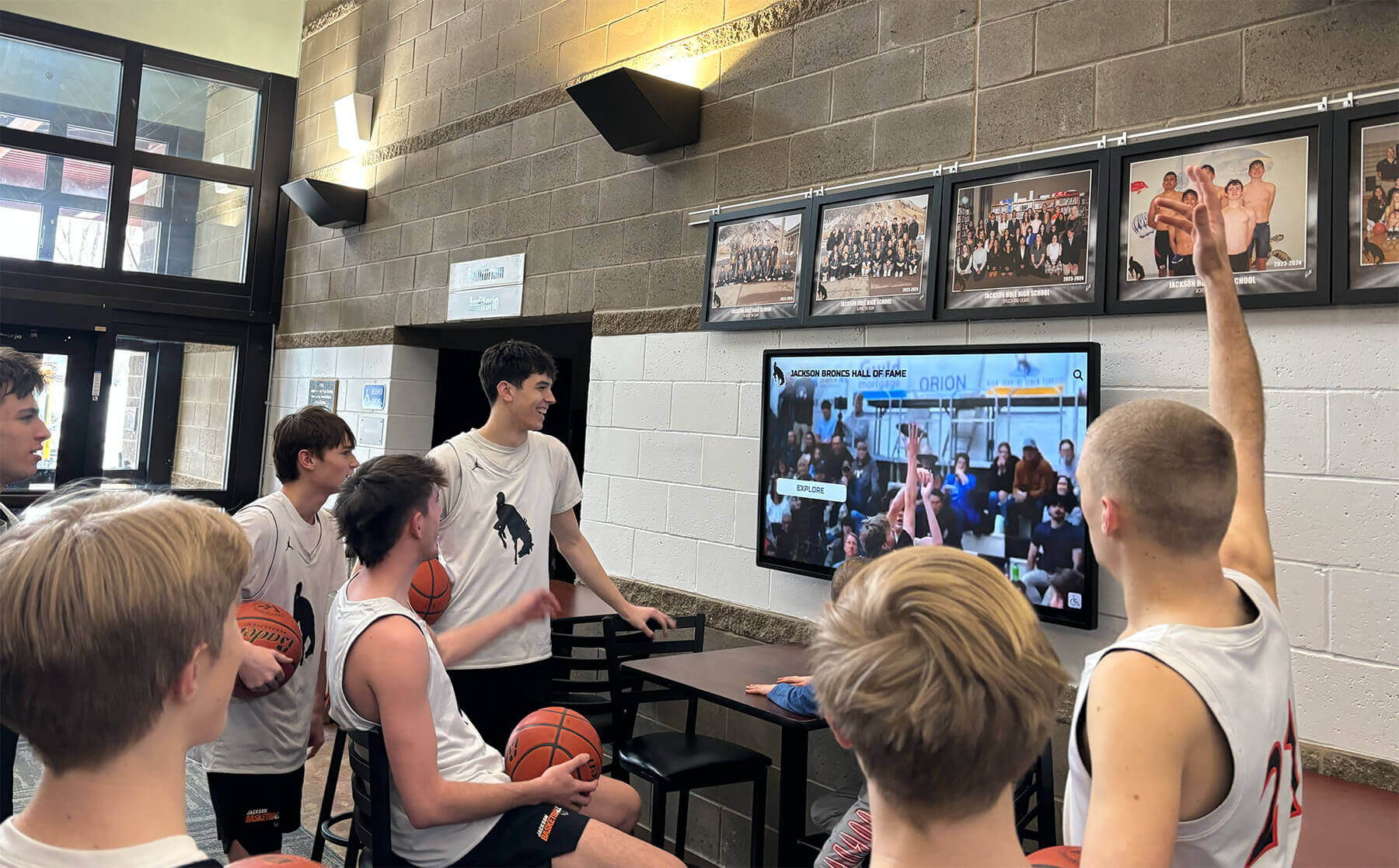
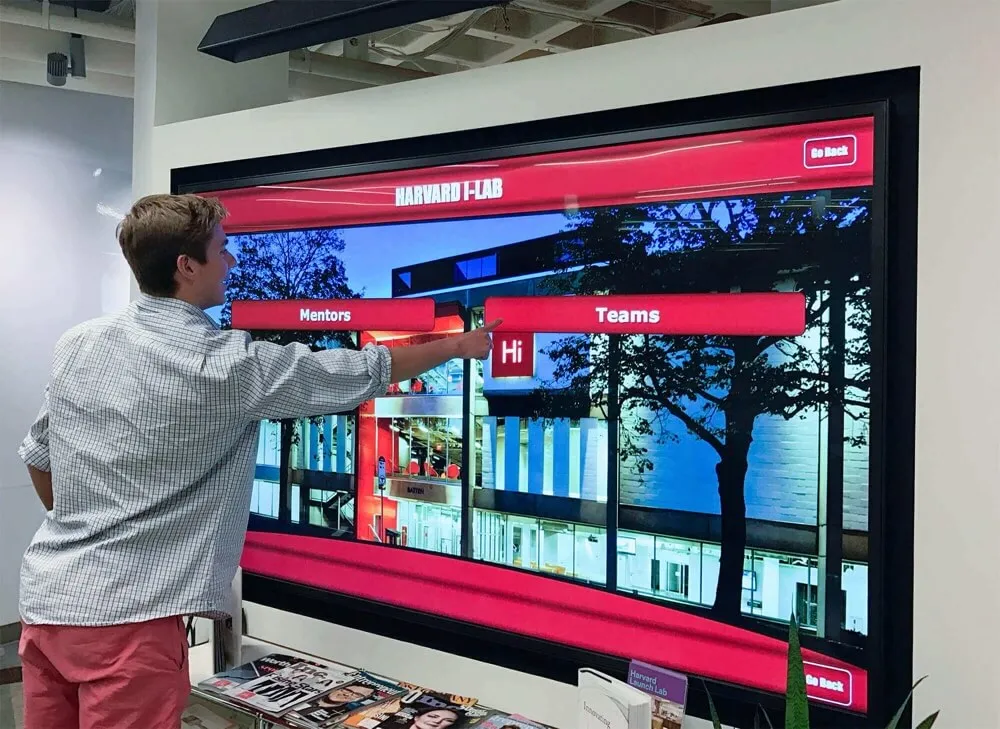
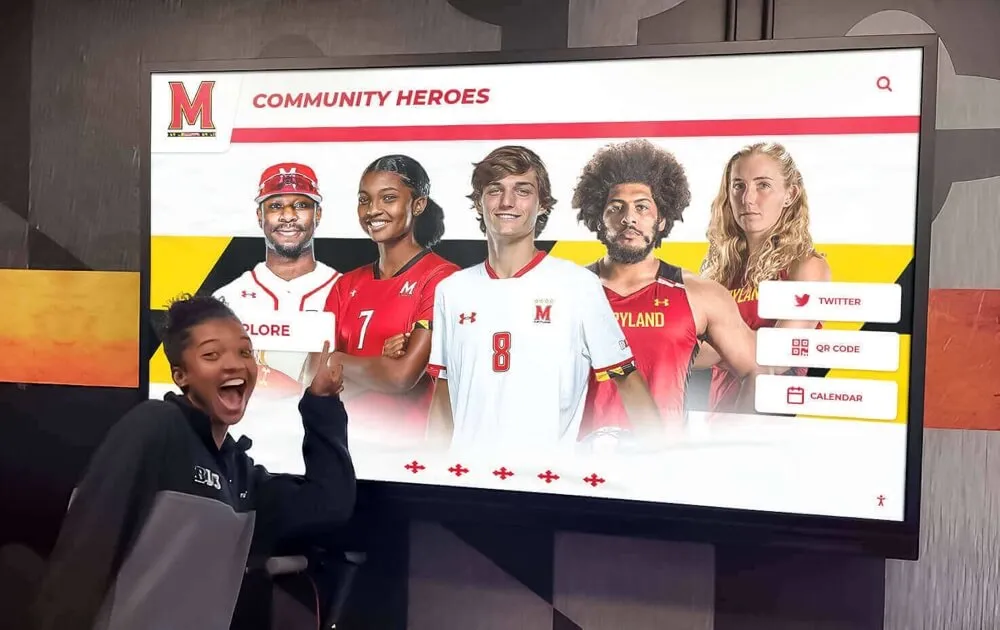
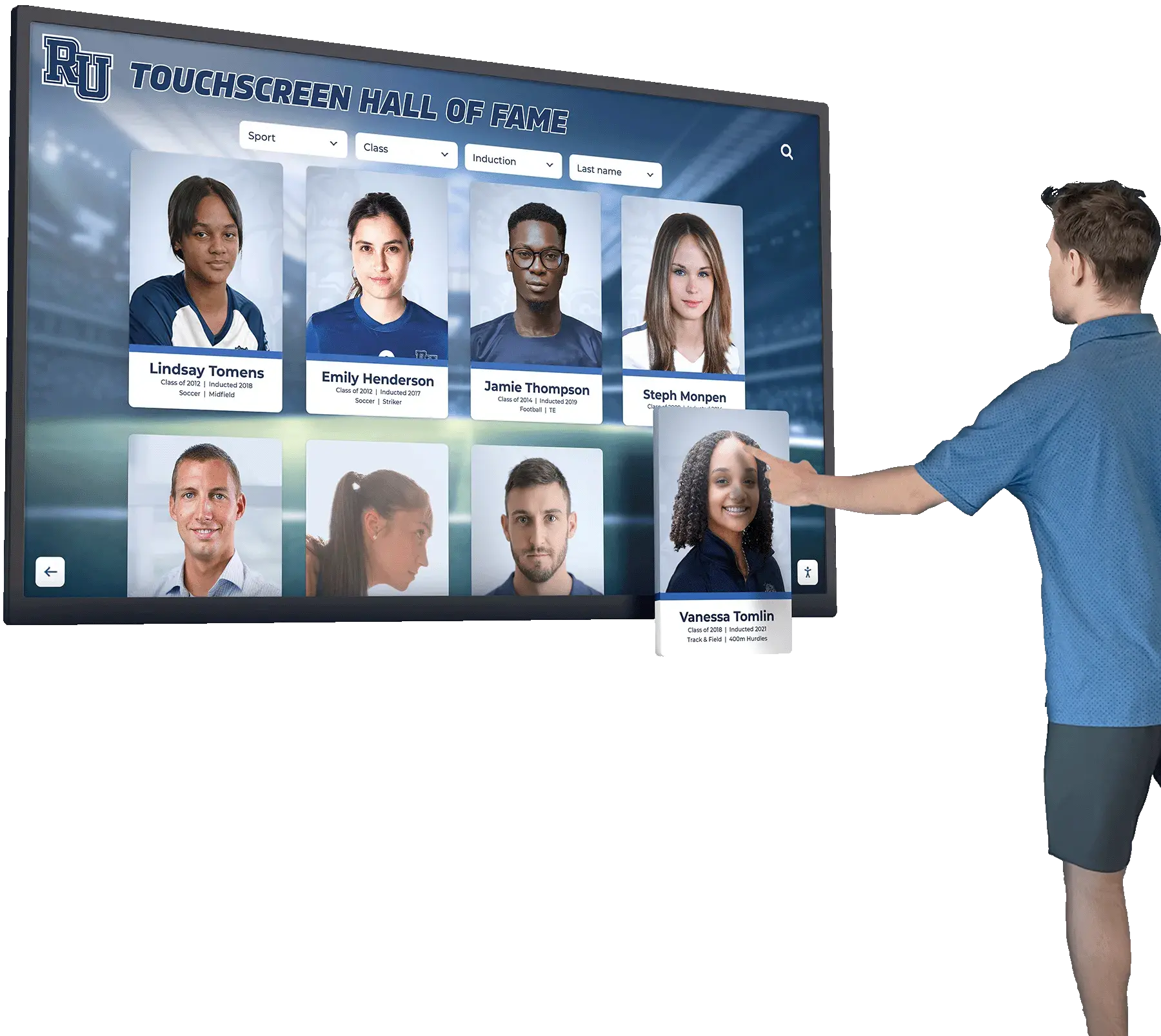
Interactive digital displays generate significantly higher engagement compared to traditional static trophy cases, with students spending 4-7 minutes exploring content
Traditional Display Cases vs Digital Recognition Displays
Perhaps the most significant decision schools face involves choosing between traditional glass trophy cases and modern digital recognition displays—or implementing hybrid approaches combining both solutions strategically.
Traditional Trophy Case Strengths
Physical display cases offer specific advantages that remain valuable:
Tangible Presence
- Three-dimensional trophies create substantial visual impact
- Physical awards carry traditional recognition value appreciated by many stakeholders
- Trophy displays create familiar recognition experiences aligned with long-standing traditions
No Technology Requirements
- No network connectivity, software, or digital content management needed
- No concerns about screen failures, software updates, or technology obsolescence
- Simple operation requiring no technical expertise
One-Time Investment
- Primary costs occur at purchase; minimal ongoing expenses beyond occasional cleaning
- No subscription fees or technology refresh cycles
- Predictable total cost of ownership
Traditional Trophy Case Limitations
Physical cases impose constraints creating long-term challenges:
Strict Capacity Limits
The most significant limitation:
- Finite physical space accommodating only limited numbers of trophies and awards
- Rapid capacity exhaustion forcing difficult decisions about which achievements remain visible
- Expensive expansion requiring purchasing additional cases as collections grow
- 60-70% of earned awards typically end up in storage rather than display due to space constraints
Minimal Information Depth
Physical trophies provide limited context:
- Simple engraved nameplates with year and achievement type
- No room for comprehensive statistics, game highlights, or achievement stories
- Static displays unable to evolve as new information becomes available
- Visitors see awards without understanding dedication, challenges overcome, or achievement significance
Management Challenges
Physical maintenance creates ongoing burdens:
- Requires physical access to cases for every content update
- Rearranging awards to accommodate new items takes significant time
- Glass cleaning necessary weekly in high-traffic areas
- Dust accumulation on trophies requires periodic deep cleaning
- Lock and key management for security
Limited Engagement
Static displays generate minimal interaction:
- Research shows visitors spend 30-60 seconds glancing at traditional trophy cases
- No search or filtering capabilities enabling discovery of specific achievements
- Impossible to share recognition digitally with remote families and alumni
- No analytics revealing which achievements generate greatest interest
Digital Recognition Display Advantages
Modern digital displays overcome traditional limitations while creating enhanced recognition experiences:
Unlimited Capacity
The most transformative benefit:
- Showcase thousands of achievements with comprehensive documentation
- Display every deserving student across all programs without space-driven exclusion
- Never face capacity constraints forcing awards into storage
- Easily accommodate program growth and expanded recognition categories
Rich Multimedia Storytelling
Digital platforms enable comprehensive achievement documentation:
- High-resolution photos showing athletes, artists, and scholars in action
- Video highlights capturing defining performance moments
- Complete statistics and achievement details providing full context
- Audio interviews with award recipients and coaches
- Searchable databases enabling instant discovery of any student or achievement
- Regular content updates keeping recognition current and relevant
Dramatically Increased Engagement
Interactive displays transform recognition experiences:
- Students spend 4-7 minutes exploring digital displays versus 30-60 seconds with traditional cases
- Touch interfaces invite active exploration rather than passive viewing
- Search capabilities enable discovering personal connections and specific achievements
- Social sharing extends recognition reach beyond physical facility visitors
- Analytics reveal which content generates greatest community interest
Remote Management
Cloud-based platforms eliminate physical access requirements:
- Add new achievements instantly from any internet-connected device
- Update content remotely without facility access
- Coordinate recognition displays across multiple buildings or campuses
- Enable multiple staff members to contribute content appropriately
- Automatic backups protecting recognition data permanently
Multi-Channel Access
Digital recognition extends beyond physical displays:
- Responsive websites accessible from smartphones, tablets, and computers
- Mobile apps enabling recognition exploration from anywhere
- Social media integration amplifying achievement celebration
- Search engine visibility making achievements discoverable globally
- 24/7 accessibility regardless of facility hours or location restrictions
Discover comprehensive digital hall of fame touchscreen solutions that overcome traditional display limitations.
Hybrid Approaches: Best of Both Worlds
Many schools implement strategic combinations preserving physical trophy traditions while adding digital capacity and engagement:
Integrated Design Strategies
- Traditional trophy cases displaying select premier championships and milestone awards
- Adjacent digital displays providing comprehensive documentation of all achievements
- QR codes on trophy cases linking to detailed digital content and histories
- Coordinated design aesthetics integrating physical and digital elements architecturally
Strategic Allocation
- Most recent/prestigious physical awards in traditional cases attracting attention
- Historical achievements and comprehensive documentation in digital systems
- Rotating physical displays featuring different sports or programs seasonally
- Digital archives preserving complete institutional recognition history permanently
This hybrid approach honors tradition through continued physical trophy display while solving capacity constraints and enabling comprehensive recognition impossible through traditional cases alone.
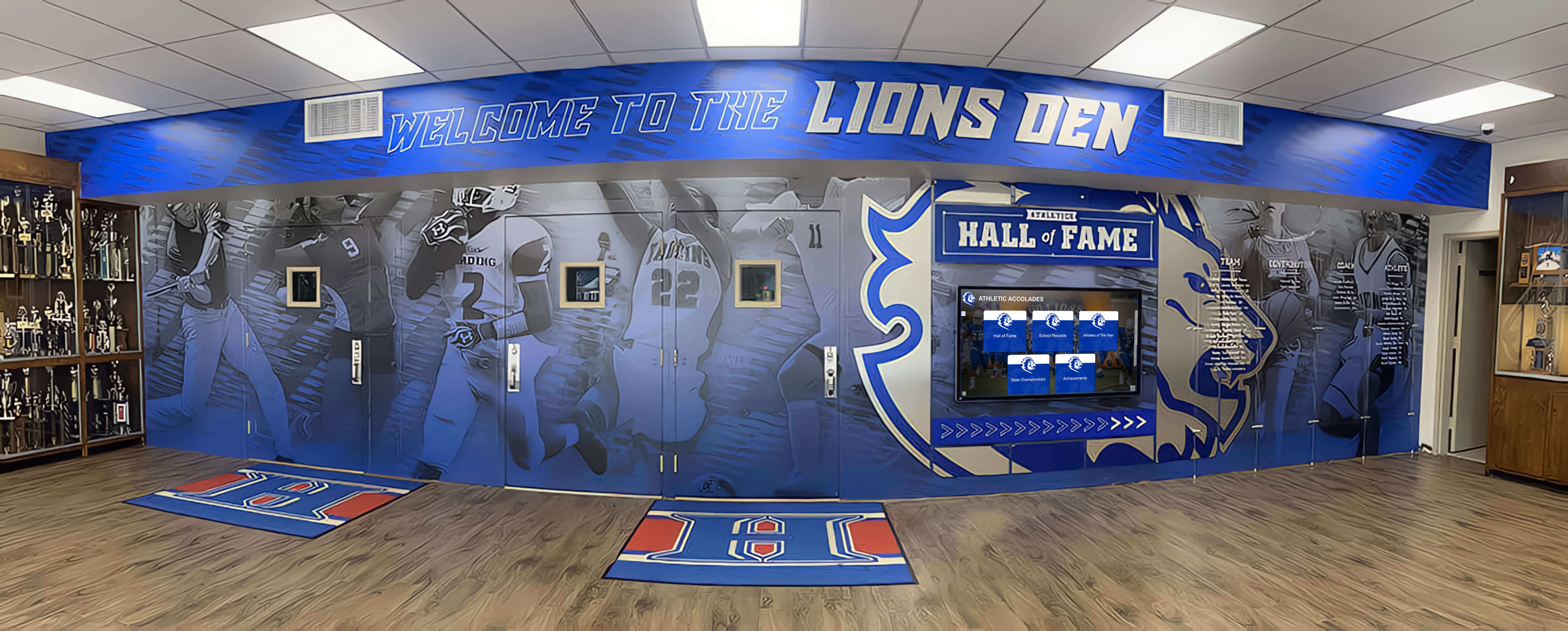
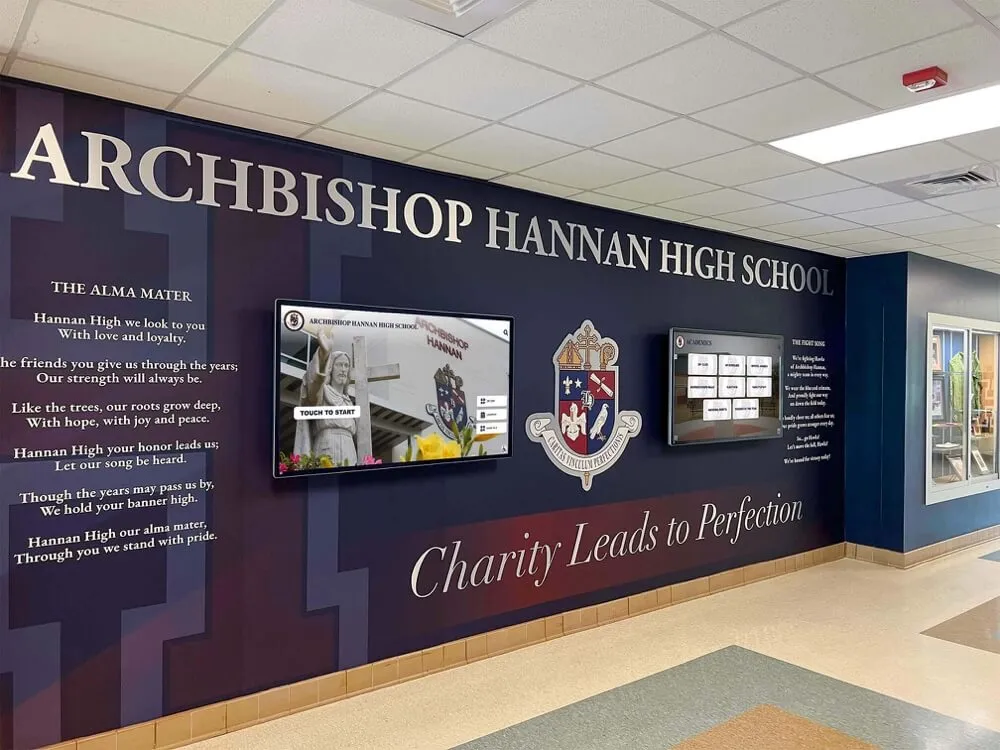
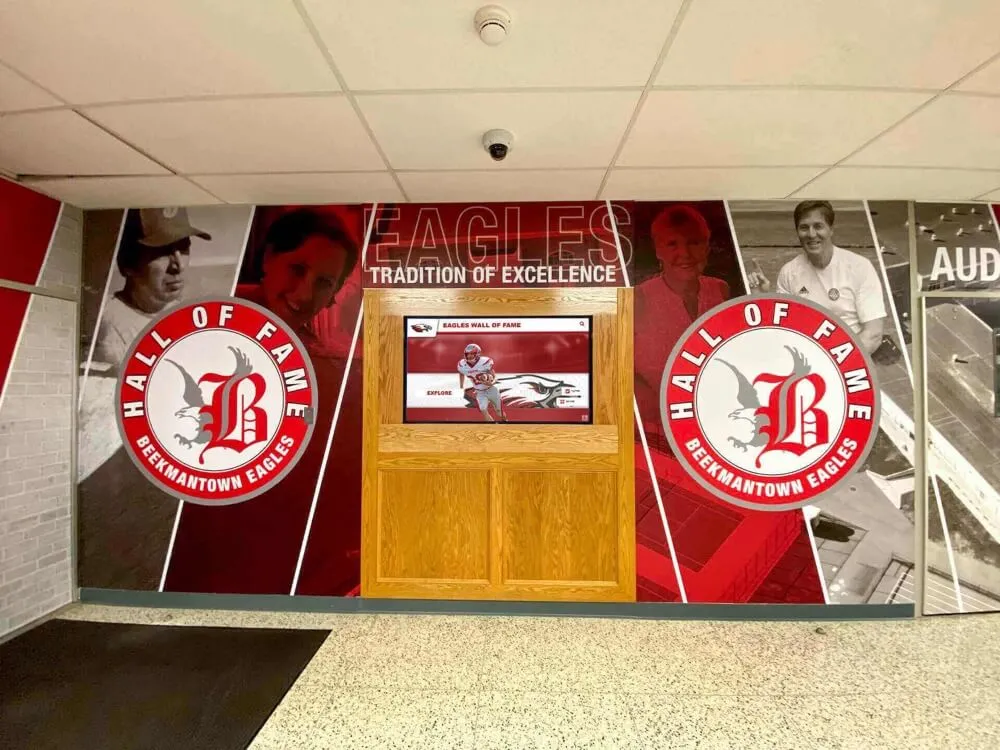
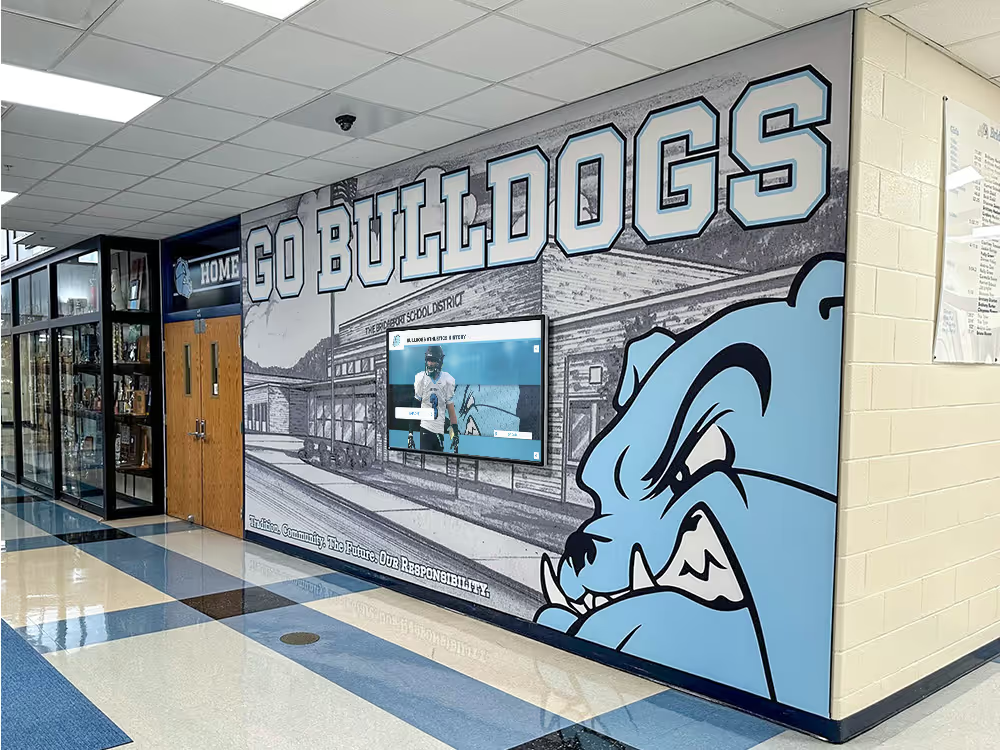
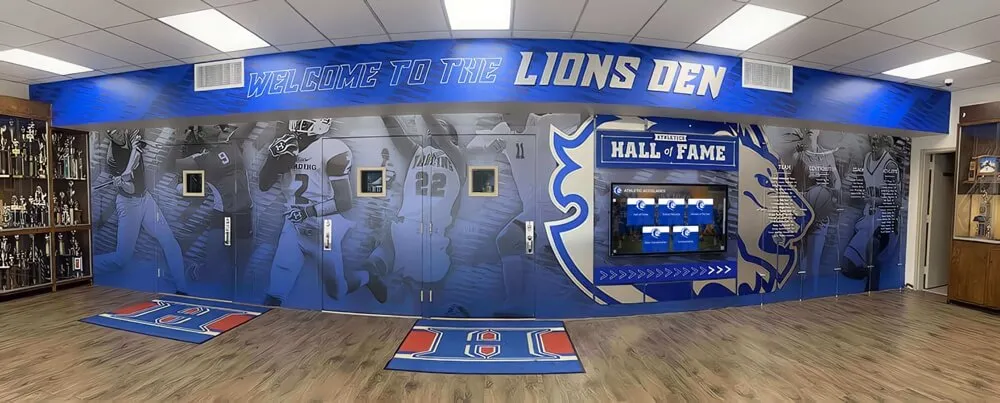
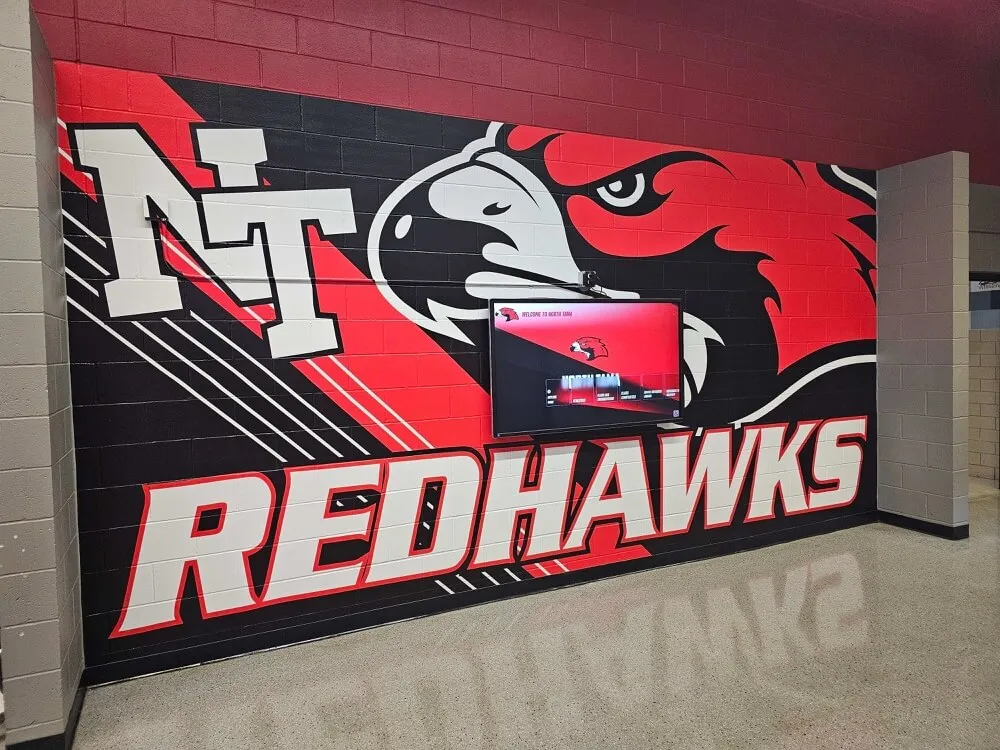
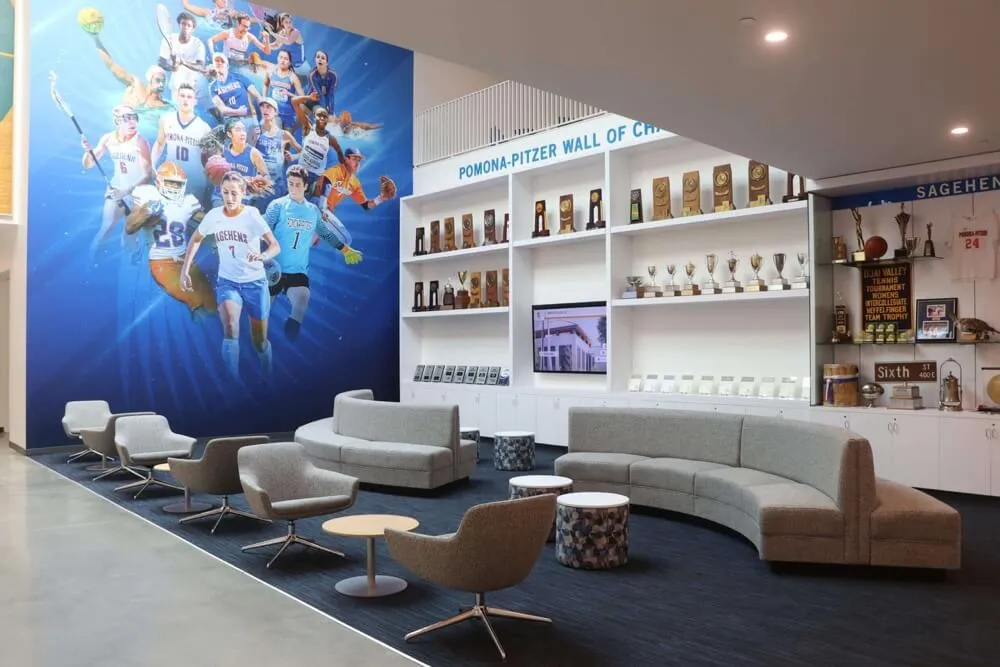
Effective recognition spaces integrate murals, traditional trophy cases, and digital displays creating comprehensive achievement celebration environments
School Display Case Costs and Budgeting
Understanding complete costs—both initial investments and ongoing expenses—enables realistic budgeting and accurate comparison between traditional and digital recognition solutions.
Traditional Display Case Investment
Purchase Costs
Physical display case pricing varies significantly based on size, materials, and features:
Wall-Mounted Cases
- Basic aluminum frame, tempered glass, no lighting: $800-$1,500
- Mid-range with LED lighting, custom colors: $1,500-$2,500
- Premium wood frame, UV glass, adjustable lighting: $2,500-$3,500
Freestanding Cases
- Basic 3-shelf aluminum case: $1,500-$2,500
- Mid-range 4-shelf with lighting: $2,500-$4,000
- Premium large-capacity with custom features: $4,000-$6,000
Installation Costs
- Professional installation: $200-$800 per case depending on mounting complexity
- Electrical work for lighting: $150-$500 per case if not near existing outlets
- Custom millwork integration: $500-$2,000 if coordinating with architectural features
Typical School Investment
Schools implementing comprehensive recognition typically purchase:
- 3-5 display cases covering athletic, academic, and activities recognition: $8,000-$20,000
- Installation and electrical: $1,500-$3,500
- Total initial investment: $9,500-$23,500
Traditional Display Case Ongoing Costs
Physical cases require continuing maintenance and eventual expansion:
Annual Operating Costs
- Cleaning supplies and services: $200-$500
- Lock repairs and key replacement: $50-$150
- Glass replacement (occasional breakage): $200-$400 every few years
- Light bulb replacement (if not LED): $100-$300
- Annual costs: $350-$850
Capacity Expansion
Most schools require additional cases within 5-10 years:
- Additional 2-3 cases as collections grow: $5,000-$12,000
- Installation: $800-$2,000
- Expansion costs: $5,800-$14,000 (occurring periodically)
10-Year Total Cost of Ownership
- Initial investment: $9,500-$23,500
- Operating costs (10 years): $3,500-$8,500
- Expansion (2 rounds): $11,600-$28,000
- Total 10-year costs: $24,600-$60,000
Digital Recognition Display Investment
Initial Implementation Costs
Hardware
- Commercial-grade touchscreen display (55-75 inch): $4,000-$8,000
- Professional mounting hardware: $300-$800
- Installation and network setup: $800-$2,000
Software and Platform
- Recognition platform setup: $2,000-$4,000
- Initial content development: $3,000-$6,000
- Custom design and branding: $1,500-$3,000
Typical Single-Display Investment: $11,600-$23,800
Annual Operating Costs
- Software platform subscription: $1,680-$3,000
- Content management (staff time): $1,000-$2,500
- Technical support: $300-$800
- Annual costs: $2,980-$6,300
10-Year Total Cost of Ownership
- Initial investment: $11,600-$23,800
- Operating costs (10 years): $29,800-$63,000
- Hardware refresh (year 7-8): $5,000-$10,000
- Total 10-year costs: $46,400-$96,800
Cost-Benefit Analysis Considerations
While digital displays show higher 10-year costs, they deliver significantly greater value:
Digital Recognition Value Multipliers
- Unlimited capacity eliminating expansion costs and space constraints
- Showcase 300-500% more students than physical cases accommodate
- 4-7x greater engagement based on measured interaction time
- Remote management eliminating physical access requirements
- Multi-channel access extending recognition to remote families and alumni
- Multimedia documentation impossible with traditional cases
- Equitable recognition across all programs without space-driven exclusion
Per-Student Recognition Costs
Traditional approach (accommodating 100-150 students over 10 years):
- Total cost: $24,600-$60,000
- Cost per student recognized: $164-$600
Digital approach (accommodating 400-750 students over 10 years):
- Total cost: $46,400-$96,800
- Cost per student recognized: $62-$242
On a per-student-recognized basis, digital solutions often deliver superior value while providing enhanced experiences impossible through traditional cases alone.
Explore effective approaches in building school pride through comprehensive recognition investments.
Display Case Placement and Design Strategies
Where you place school display cases dramatically impacts their effectiveness at generating engagement, strengthening school pride, and celebrating achievements appropriately.
High-Traffic Location Selection
Main Entrance Lobbies
Primary building entrances offer maximum visibility:
- Advantages: Every visitor and student encounters recognition daily, creates powerful first impressions
- Considerations: Adequate space needed without obstructing traffic flow, security concerns with valuable awards near entrances
- Best applications: Premier championship recognition, comprehensive digital displays, rotating featured achievements
Athletic Facility Corridors
Gymnasiums and sports facilities provide context-appropriate placement:
- Advantages: Athletes encounter recognition daily, facility tours showcase program excellence to recruits
- Considerations: May receive less exposure from non-athletes, general public access may be limited
- Best applications: Comprehensive athletic recognition including historical achievements and records
Academic Building Hallways
High-traffic academic corridors reach broad student populations:
- Advantages: All students pass regularly, integrates recognition into daily educational environment
- Considerations: Hallway width constraints, supervision during passing periods
- Best applications: Academic achievement recognition, honor roll displays, multi-program showcases
Common Areas and Cafeterias
Social gathering spaces provide extended viewing opportunities:
- Advantages: Students spend extended time in these areas enabling deeper engagement
- Considerations: Noise and activity may distract from recognition focus
- Best applications: Rotating recognition highlights, student of the month features, digital displays with dynamic content
Discover effective hallway display approaches maximizing recognition visibility and impact.
Creating Recognition Destinations
The most effective implementations transform display areas into destinations encouraging intentional visits and extended engagement rather than simply placing cases in transitional spaces where people rush past.
Integrated Design Elements
- Comfortable seating inviting extended exploration and conversation
- Coordinated murals or graphics reinforcing school identity and pride
- Strategic lighting highlighting displays while creating appropriate ambiance
- Trophy cases, digital displays, and architectural features working together cohesively
- School colors and branding creating unified aesthetic experiences
- Clear wayfinding directing visitors to recognition spaces intentionally
Multi-Purpose Recognition Spaces
Comprehensive areas serving multiple functions:
- Alumni gathering spaces featuring recognition displays
- Pre-game rally locations showcasing championship history
- Prospective family tour destinations demonstrating program excellence
- Community event spaces celebrating institutional achievements
- Staff lounge areas recognizing employee excellence alongside student achievements
These integrated approaches signal that recognition matters institutionally while creating visually impressive environments strengthening pride and encouraging continued excellence.

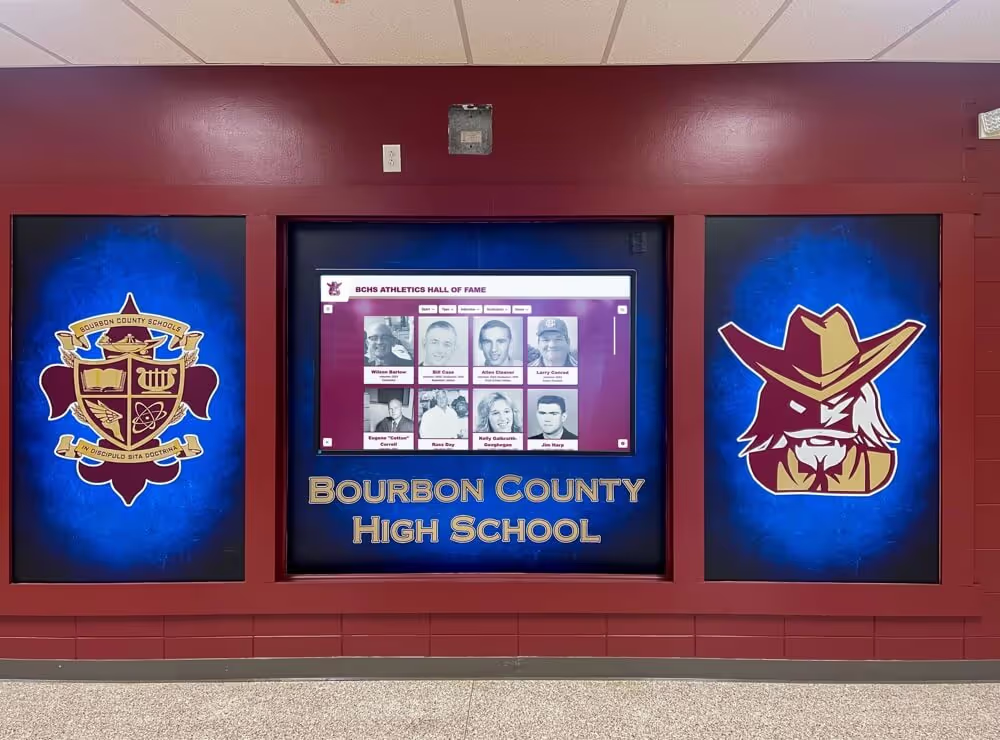
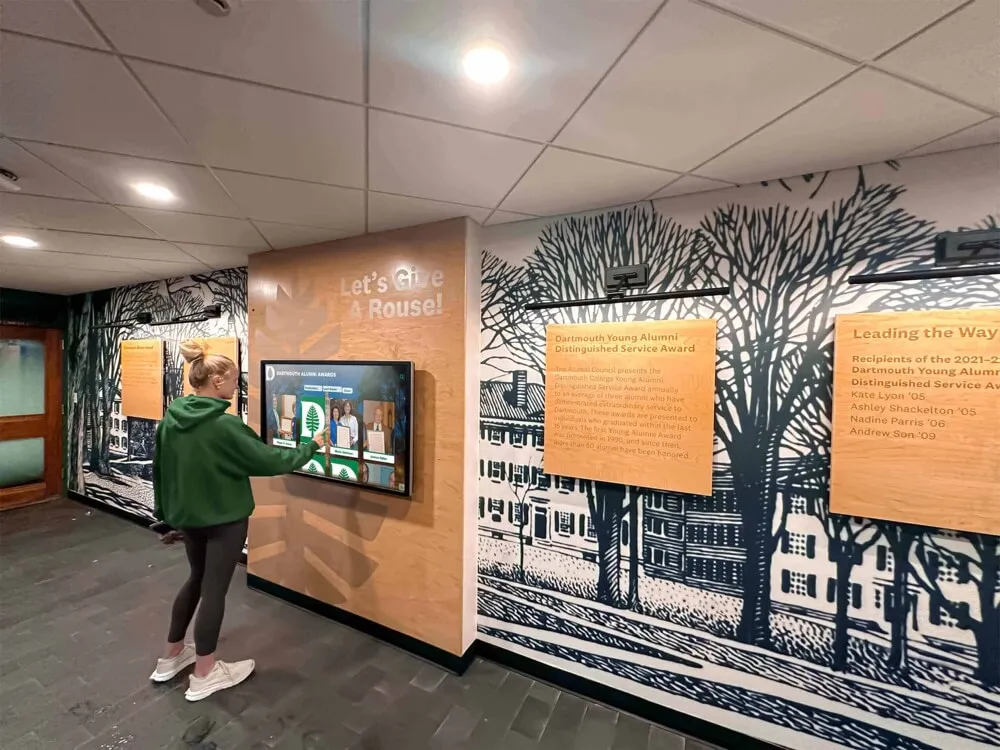
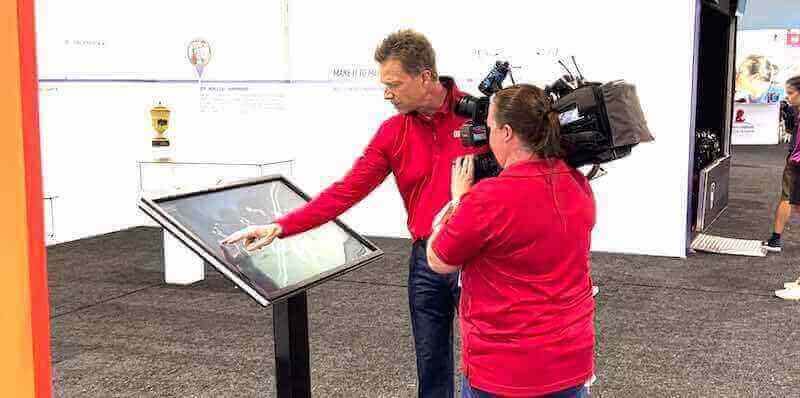
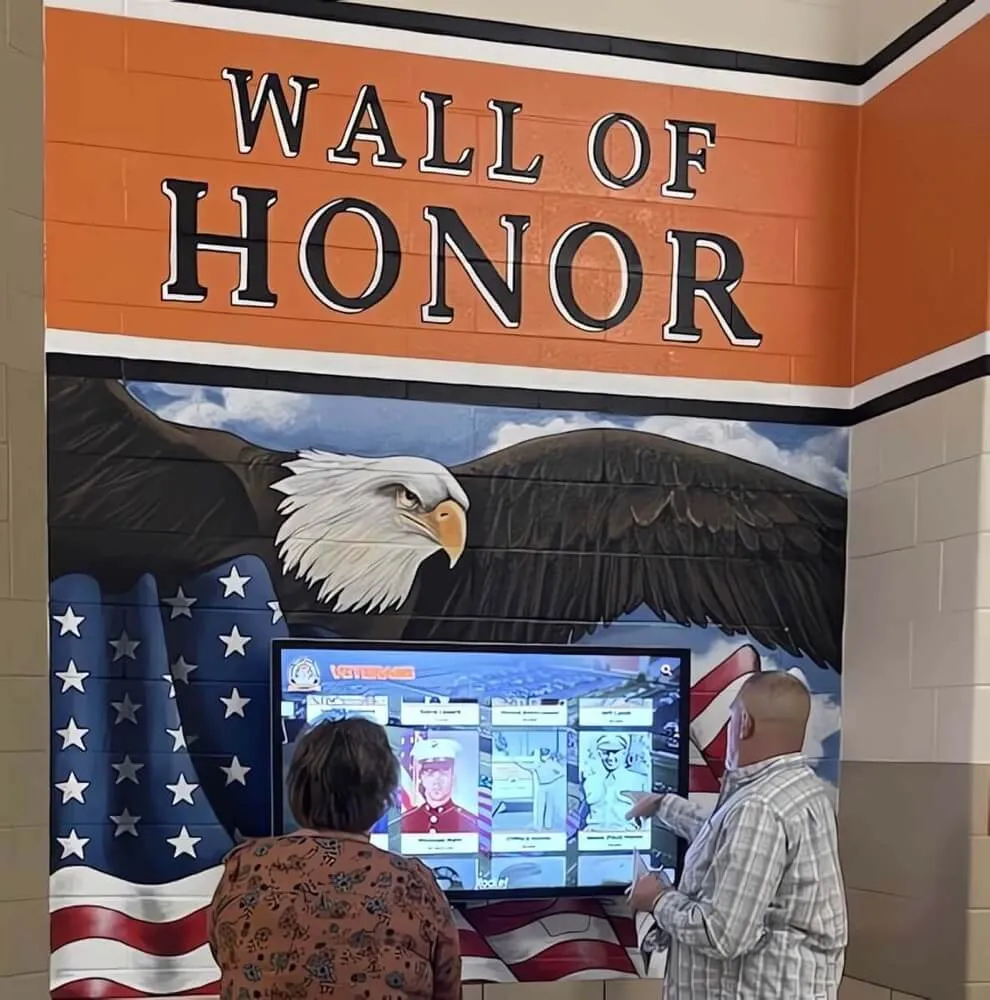
Intuitive touch interfaces invite active exploration, enabling discovering detailed achievement information impossible through traditional display cases
Key Features and Options to Consider
Beyond basic case selection, numerous features and options impact display effectiveness, maintenance requirements, and long-term satisfaction.
Security Features
Locking Mechanisms
- Standard cam locks: Basic security adequate for most environments
- High-security locks: Cylinder locks with restricted key duplication for valuable awards
- Electronic locks: Keypad or card access eliminating physical key management
- Magnetic locks: Convenient access control with audit trail capabilities
Glass Security
- Tempered glass: Breaks safely but offers minimal intrusion resistance
- Laminated glass: Remains intact even when broken; superior security
- Polycarbonate glazing: Nearly unbreakable; maximum security for high-value items
Anchoring and Stability
- Wall case mounting: Professional installation essential for safety and security
- Freestanding case anchoring: Floor or wall anchors preventing tipping (critical for student safety)
- Base weights: Additional stability for portable cases in temporary locations
Accessibility Considerations
ADA Compliance
Federal accessibility requirements impact display design:
- Viewing height: Primary viewing areas within 48-60 inches from floor
- Protruding objects: Wall-mounted cases must not protrude more than 4 inches if below 80 inches height
- Approach space: Adequate floor space enabling wheelchair users to view comfortably
- Tactile elements: Consider tactile labels or descriptions for vision-impaired visitors
Digital displays offer significant accessibility advantages:
- Adjustable text sizes accommodating vision differences
- High contrast modes improving readability
- Touch targets sized appropriately for motor skill variations
- Screen reader compatibility for comprehensive accessibility
- Multiple viewing modes accommodating diverse abilities
Learn about WCAG 2.2 AA accessibility standards important for digital recognition displays.
Environmental Considerations
Climate Control Protection
Display case placement requires environmental assessment:
- Direct sunlight exposure: UV-filtering glass essential to prevent fading
- Temperature fluctuations: Stable environments preserve awards and prevent condensation
- Humidity concerns: Dehumidification may be necessary in humid climates preventing mold
- HVAC proximity: Avoid direct air flow disturbing displayed items or causing temperature extremes
Sustainable Materials
Environmentally conscious options include:
- Recycled aluminum frames reducing environmental impact
- LED lighting minimizing energy consumption
- Low-VOC finishes improving indoor air quality
- Locally manufactured cases reducing transportation environmental costs
- Durable construction extending lifespan and reducing replacement frequency
Vendor Selection and Purchasing Process
Choosing the right display case vendor significantly impacts product quality, installation success, ongoing support, and long-term satisfaction.
Evaluating Display Case Vendors
Key Vendor Qualifications
- Education market experience: Vendors familiar with school needs, timelines, and procurement processes
- Product warranties: Comprehensive coverage protecting your investment (minimum 5-year warranties typical)
- Installation services: Professional installation offered or recommended installer network
- Customization capabilities: Ability to match school colors, incorporate logos, and adjust sizes
- References: Successful installations at comparable schools demonstrating proven performance
- Lead times: Realistic manufacturing and delivery timelines fitting project schedules
- Financial stability: Established companies likely to provide long-term support and parts availability
Digital Display Vendor Considerations
Digital recognition platforms require additional assessment:
- Purpose-built recognition software: Systems designed specifically for achievement celebration versus generic digital signage
- Content management ease: Intuitive interfaces enabling non-technical staff to update content
- Cloud-based operation: Remote content management without physical display access requirements
- Unlimited content storage: No artificial limits constraining recognition capacity
- Mobile responsiveness: Web platforms working excellently across all devices
- Customer support quality: Responsive technical assistance and training
- Privacy compliance: Appropriate handling of student information meeting FERPA requirements
- Integration capabilities: Connections to student information systems if desired
School Procurement Processes
Budget Planning and Approval
- Identify appropriate funding sources: General budget, capital improvement funds, booster clubs, memorials, or grants
- Prepare complete cost documentation: Include purchase, installation, ongoing costs, and expansion plans
- Demonstrate value: Quantify students impacted, engagement improvements, and capacity solutions
- Obtain necessary approvals: Follow district procurement policies and board approval requirements
Competitive Bidding Requirements
Many school districts require competitive bidding above certain thresholds:
- Develop detailed specifications ensuring comparable bids
- Include all requirements: Dimensions, materials, features, warranties, installation, and delivery
- Establish evaluation criteria: Balance cost with quality, features, and vendor qualifications
- Document selection rationale: Justify vendor selection based on established criteria
Timeline Planning
Typical procurement and installation timelines:
- Planning and specification development: 2-4 weeks
- Bid process and vendor selection: 4-8 weeks
- Manufacturing: 6-10 weeks for custom cases
- Delivery and installation: 1-2 weeks
- Content development (digital displays): 4-8 weeks
- Total timeline: 4-7 months from initial planning to completion
Plan major recognition projects during summer months minimizing disruption to academic operations while ensuring completion before school year begins.
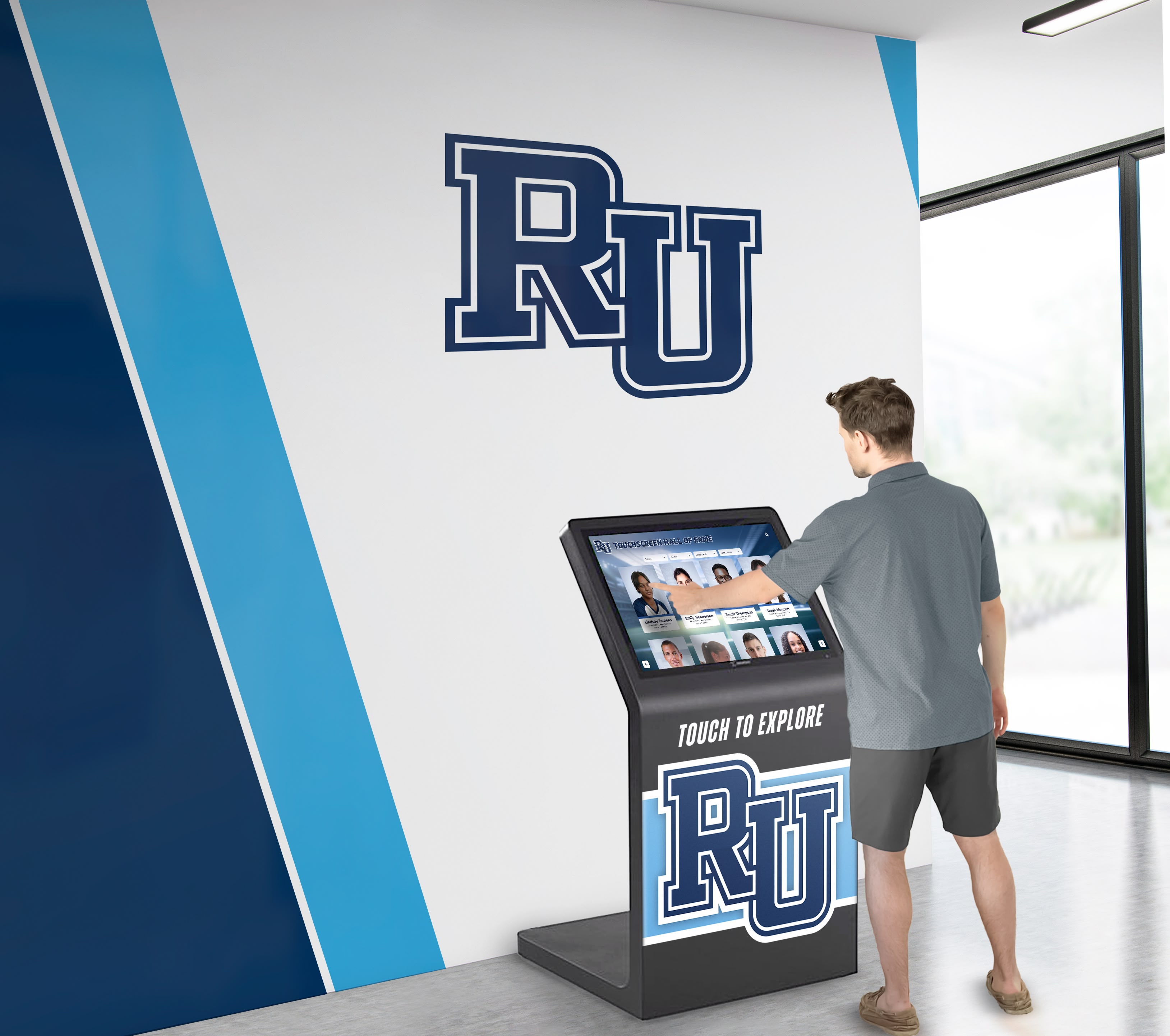
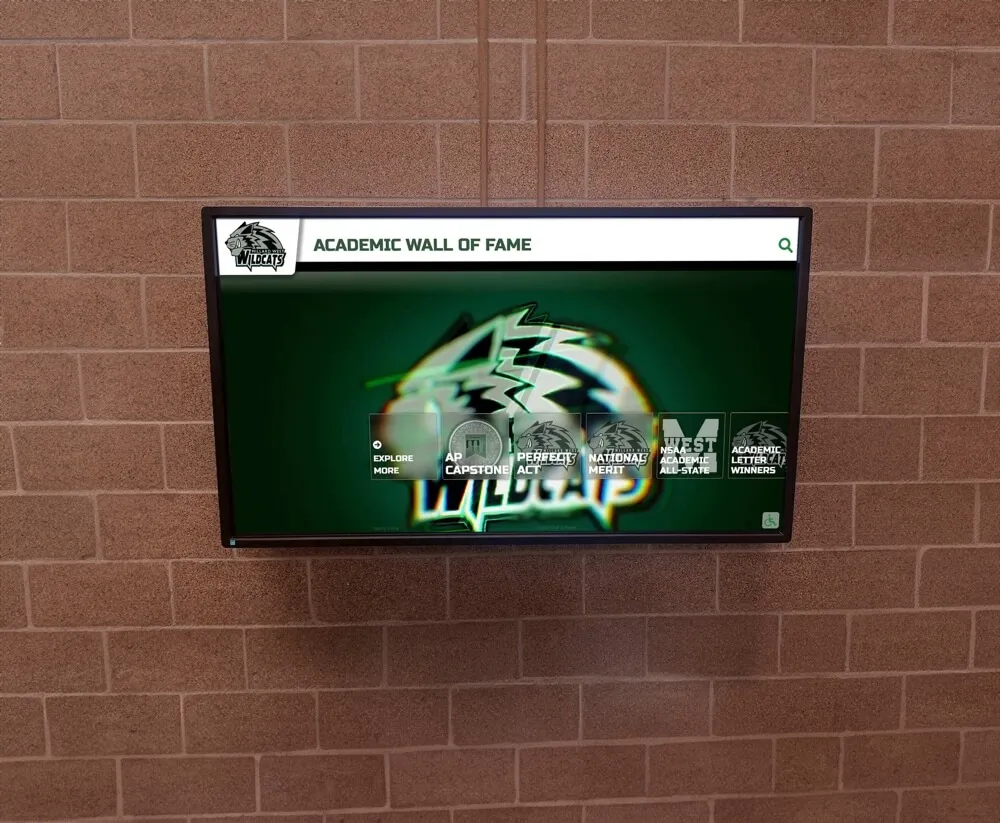
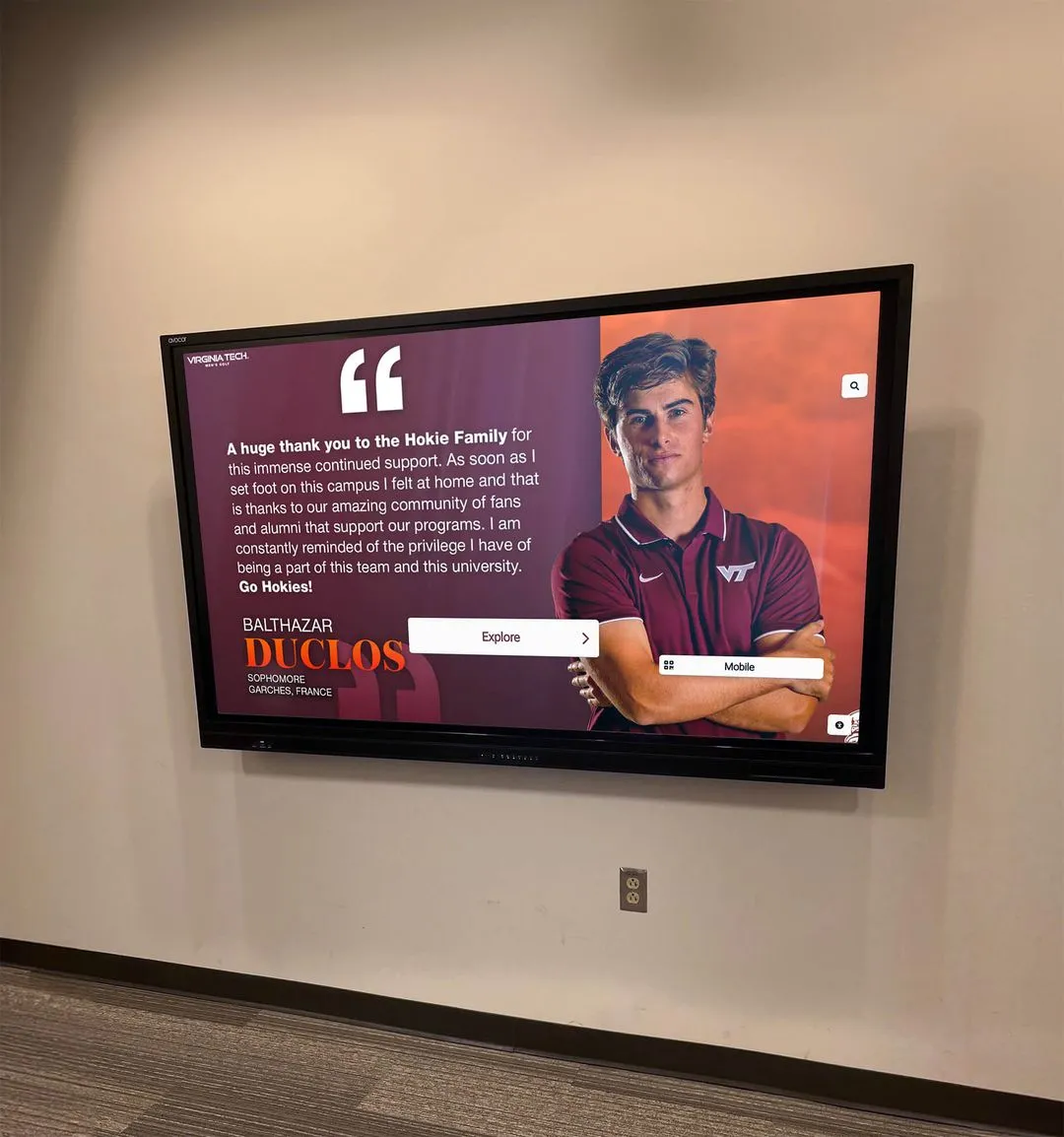
Professional-grade installations deliver reliable performance and polished appearance reflecting institutional commitment to excellence
Maintenance and Long-Term Care
Proper maintenance preserves display case appearance, functionality, and recognition effectiveness while protecting your investment for decades of service.
Traditional Display Case Maintenance
Regular Cleaning Protocols
- Glass surfaces: Weekly cleaning with appropriate glass cleaner in high-traffic areas
- Trophy cleaning: Quarterly dusting; annual detailed cleaning of all displayed items
- Frame cleaning: Monthly cleaning with appropriate materials for frame type
- Lock maintenance: Annual lubrication ensuring smooth operation
Periodic Assessments
- Quarterly: Check lighting operation, inspect locks, assess overall appearance
- Annually: Deep cleaning, evaluate capacity constraints, plan content refreshes
- Every 5 years: Assess whether refinishing, hardware updates, or expansion needed
Common Repairs
- Glass replacement: Typically $150-$400 depending on size and glass type
- Lock repairs/replacement: $75-$200
- Lighting repairs: $50-$150 for fixture issues; LED retrofits $200-$400
- Door hinge adjustment: $50-$100
Digital Display Maintenance
Software and Content Management
- Weekly content updates: Add new achievements promptly maintaining relevance
- Monthly content review: Verify accuracy, refresh featured items, update photos
- Quarterly analytics review: Assess engagement patterns informing content strategy
- Annual comprehensive audit: Review all content, update profiles, plan enhancements
Hardware Maintenance
- Daily automatic operations: Modern systems operate autonomously with minimal intervention
- Monthly: Visual inspection for screen cleanliness and physical condition
- Quarterly: Clean screen with appropriate microfiber cloth and screen-safe cleaner
- Annually: Professional technical assessment ensuring optimal performance
Technical Support
Quality vendors provide:
- Remote diagnostics identifying and resolving software issues remotely
- Hardware warranties covering screen failures (typically 3-5 years)
- Software updates maintaining security and adding features automatically
- Responsive customer support assisting with content questions
Making Your Final Decision
With understanding of available options, costs, and features, you can make informed decisions selecting school display cases perfectly matching your institution’s recognition needs and strategic objectives.
Decision Framework
Capacity Assessment
- Calculate 10-year recognition item accumulation across all programs
- Evaluate whether traditional cases provide adequate capacity or if digital solutions better address needs
- Consider whether hybrid approaches balance tradition with capacity requirements
Budget Reality
- Determine available initial investment and ongoing operational budget
- Compare total cost of ownership across traditional and digital options
- Assess cost-per-student-recognized rather than just total investment
- Identify potential funding sources beyond general operating budget
Engagement Priorities
- Define target engagement levels for students, families, and community
- Evaluate whether traditional displays generate adequate interaction or if enhanced engagement justifies digital investment
- Consider multi-channel access importance for remote families and alumni
Facility Characteristics
- Assess available wall space, hallway width, and location options
- Evaluate whether facility can accommodate traditional cases or if wall-mounted digital displays better fit constraints
- Consider architectural integration opportunities coordinating displays with facility design
Technology Comfort
- Honestly assess staff comfort managing digital content systems
- Evaluate whether intuitive digital platforms overcome technology concerns
- Consider hybrid approaches enabling gradual digital adoption
Comprehensive Recognition Strategy
The most effective school recognition programs implement strategic combinations:
Immediate Implementation
- Address most urgent capacity constraints and visibility gaps
- Install displays in highest-traffic, most impactful locations
- Select scalable solutions enabling future expansion
3-5 Year Vision
- Expand recognition coverage to additional programs and achievement categories
- Add secondary display locations reaching broader audiences
- Enhance content depth with multimedia documentation
Long-Term Goals
- Create comprehensive recognition destinations integrating multiple display types
- Achieve equitable recognition across all programs without space-driven exclusion
- Establish recognition as central institutional value visible throughout facilities
This phased approach enables starting wherever budget permits while working systematically toward comprehensive recognition celebrating every deserving student appropriately.
Explore comprehensive solutions in high school wall of fame creation applicable to display case planning.
Conclusion: Celebrating Every Achievement Appropriately
School display cases represent far more than furniture or facility equipment—they’re powerful recognition tools celebrating student dedication, preserving institutional history, inspiring continued excellence, and building lasting pride throughout your educational community. Whether implementing traditional glass trophy cases, modern digital recognition displays, or strategic hybrid approaches combining both solutions, the right display investments honor achievements appropriately while strengthening school culture for generations to come.
The best school display cases balance tradition with innovation, capacity with budget realities, aesthetics with functionality, and immediate needs with long-term vision. They transform awards that might otherwise disappear into storage closets into visible inspiration encouraging current students while honoring past achievements appropriately. They create recognition experiences engaging your community rather than simply storing trophies behind glass where few people notice or care.
Your students’ achievements deserve recognition systems matching their dedication, sacrifice, and excellence. Athletic championships earned through countless practice hours should never face space constraints forcing them into storage. Academic awards celebrating intellectual achievement deserve visibility equal to athletic recognition. Arts accomplishments and extracurricular excellence warrant celebration alongside traditional trophy case contents.
Transform Your Student Recognition Program
Discover how modern digital recognition displays eliminate capacity constraints while creating engaging experiences celebrating unlimited student achievements across all programs. Explore comprehensive solutions combining the best aspects of traditional trophy cases with innovative digital capabilities that honor every deserving student appropriately.
Explore Recognition SolutionsWhether you select traditional trophy cases for their tangible physical presence, digital recognition displays for their unlimited capacity and engagement advantages, or hybrid approaches strategically combining both solutions, invest thoughtfully in displays that will serve your institution effectively for decades while celebrating every achievement your programs earn.
Ready to create recognition displays that truly honor student excellence? Rocket Alumni Solutions provides comprehensive digital recognition platforms that eliminate frustrating space constraints while transforming student achievement celebration from limited trophy cases to unlimited digital displays showcasing every deserving student across all programs, eras, and achievement categories—creating recognition experiences your school community deserves.