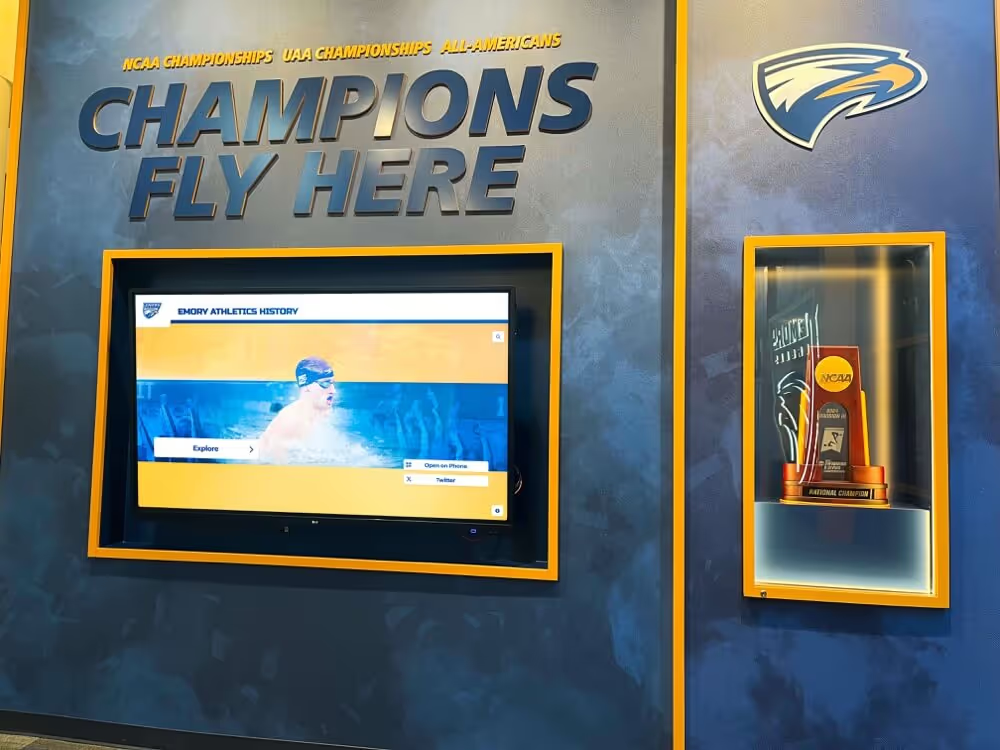
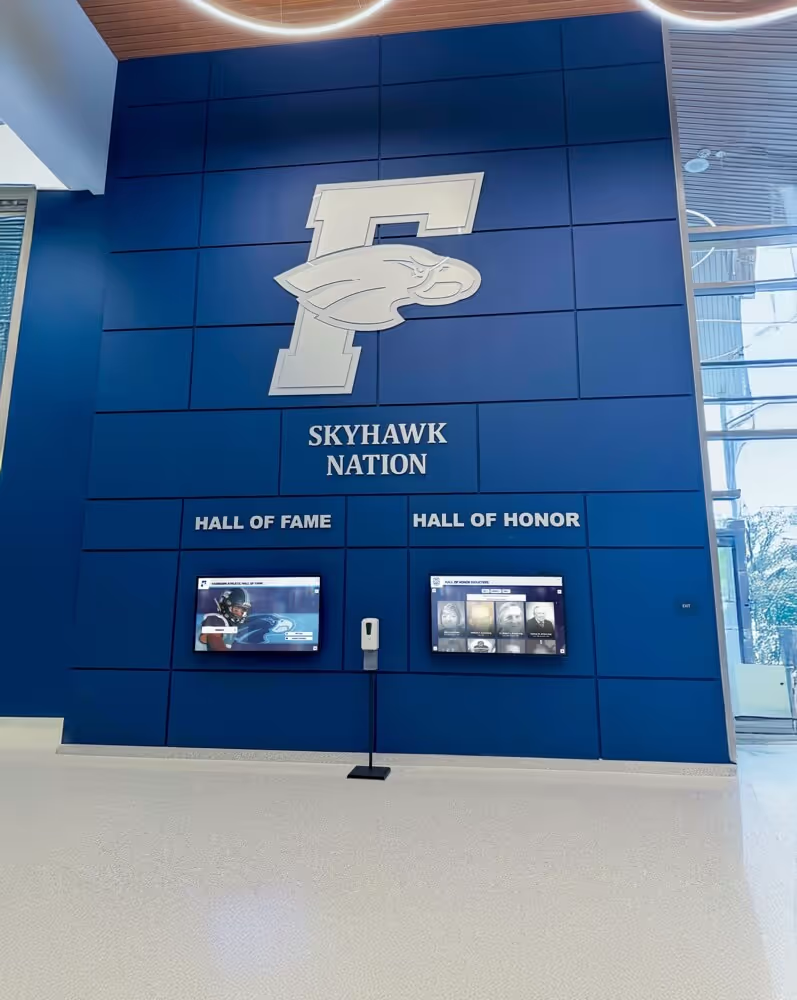
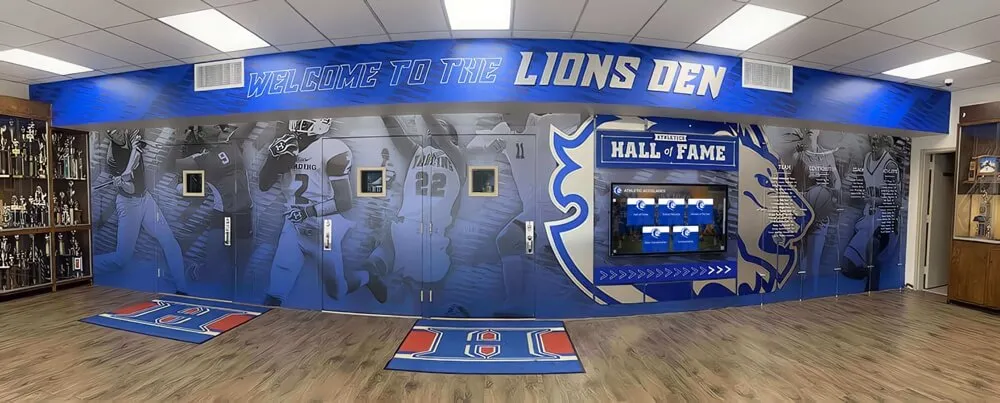
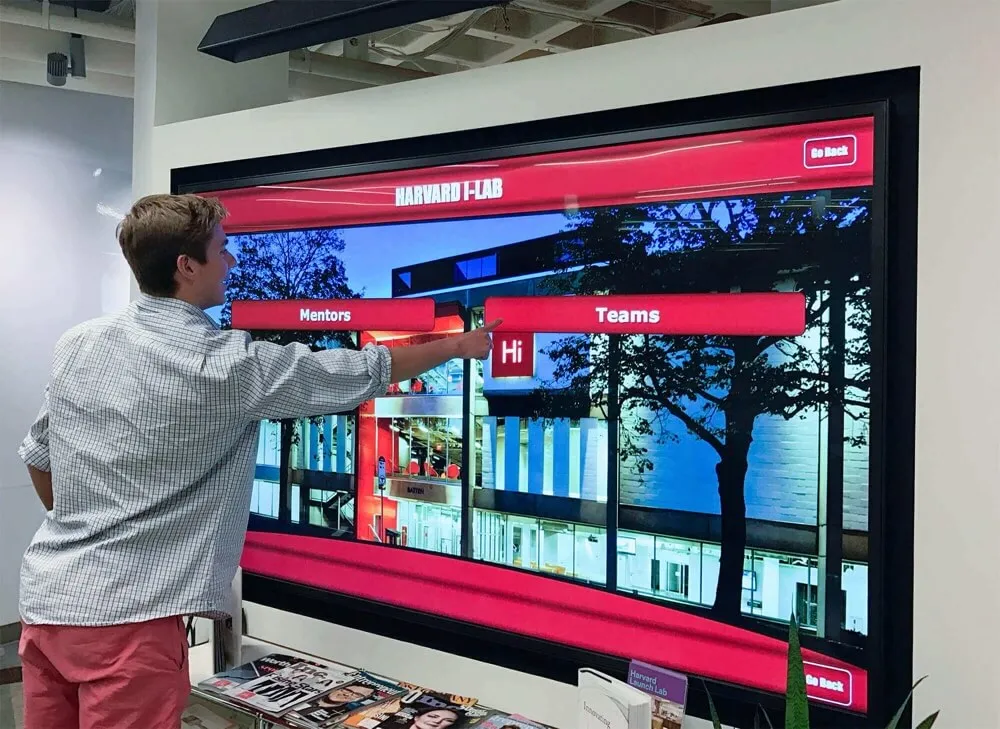
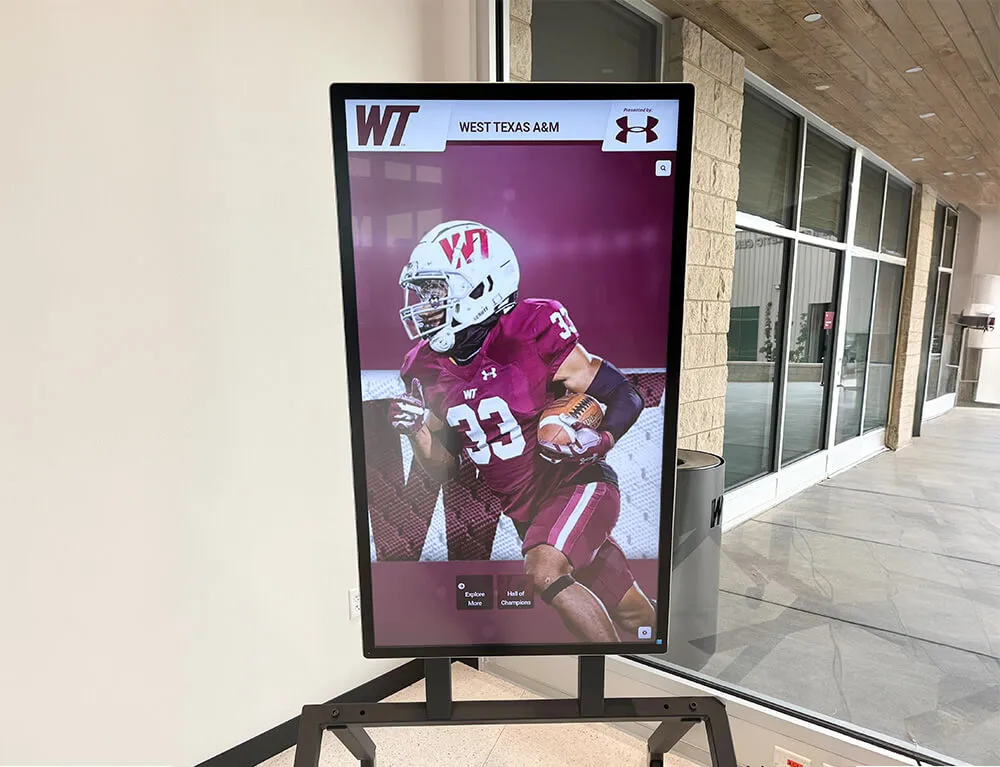
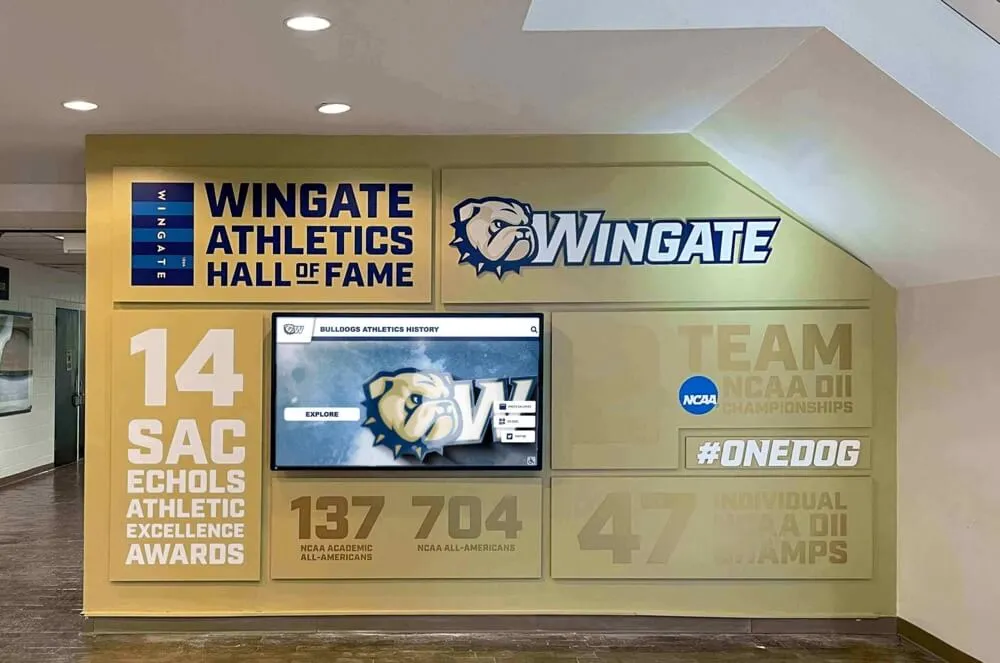
Multi-screen digital signage pricing presents a minefield for schools and institutions managing recognition displays across gymnasiums, lobbies, cafeterias, and entrance areas. The assumption that base pricing covers all displays within your facility proves incorrect with most vendors—creating budget surprises that force institutions to abandon expansion plans or accept exponentially increasing costs as they add screens celebrating more achievements.
Large districts wanting comprehensive recognition networks discover too late that competitors charge per-display licensing fees, turning modest implementations into expensive ongoing commitments. A school deploying five touchscreens for athletic recognition, academic achievement, alumni engagement, donor acknowledgment, and facility wayfinding faces annual costs multiplying by the number of screens—$1,500 becomes $7,500, then $12,000 as networks grow, consuming budgets intended for actual recognition content rather than software licensing.
With Rocket Alumni Solutions, you can deploy one subscription on as many touchscreens as you’d like—eliminating the per-screen cost trap that makes traditional digital signage financially impractical for institutions needing comprehensive recognition coverage across distributed locations.
Schools and districts implementing digital recognition displays typically envision coordinated systems celebrating achievements throughout facilities—athletic records in competition venues, academic excellence in main lobbies, alumni connections in gathering spaces, and donor recognition near renovated areas. This strategic vision collides with vendor pricing realities when institutions discover that adding a sixth display triggers subscription increases rather than simply requiring hardware investment.

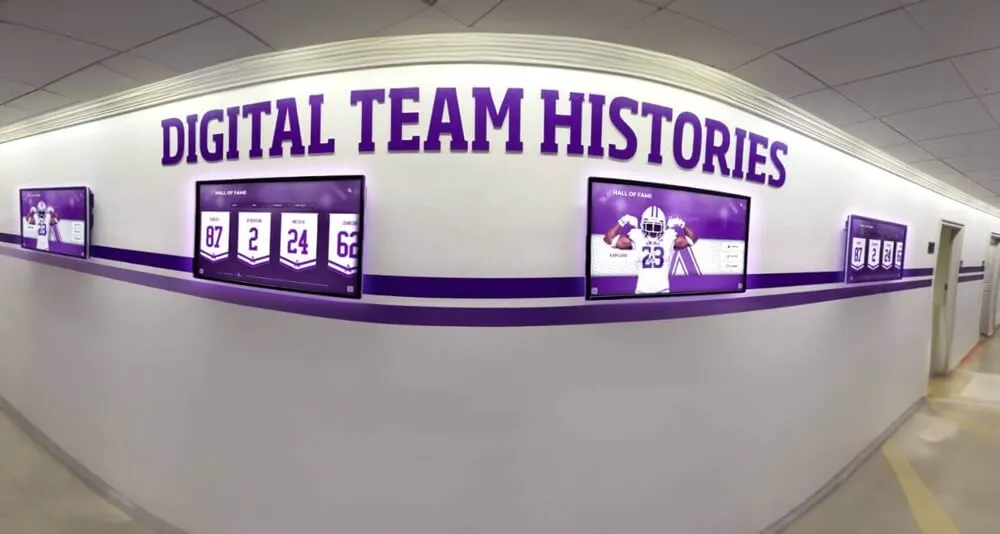
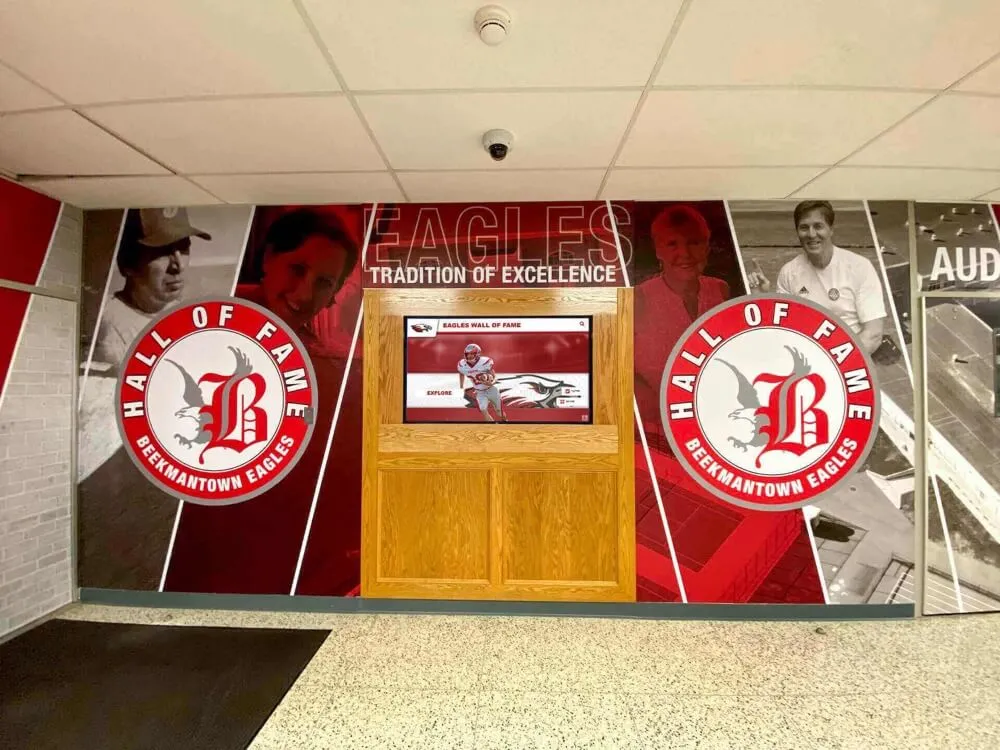
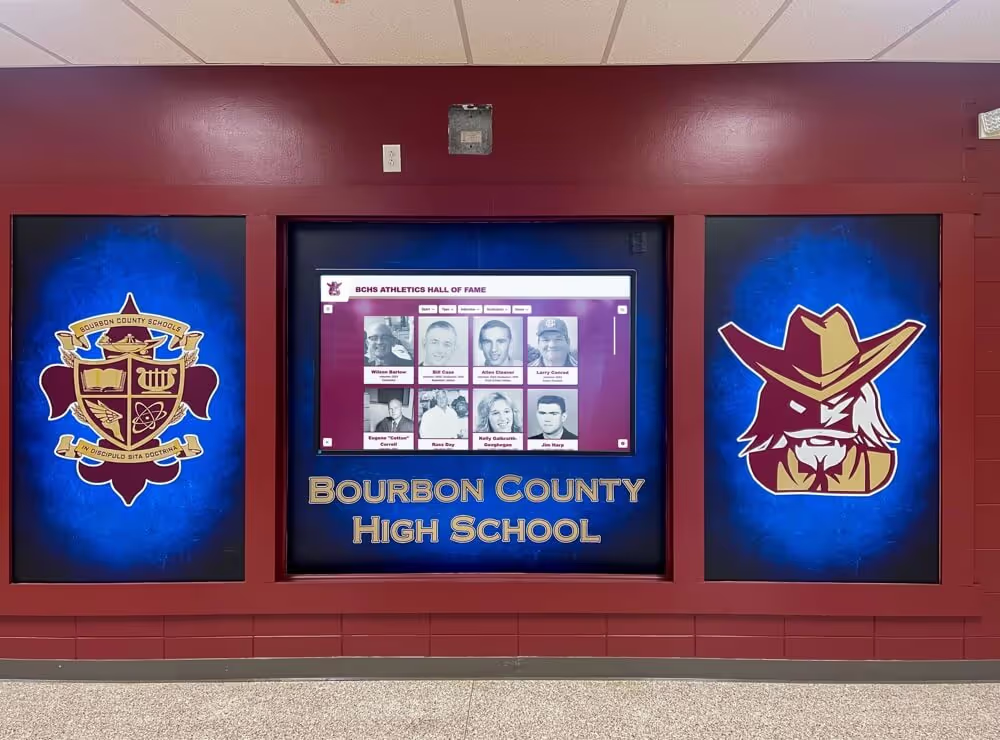
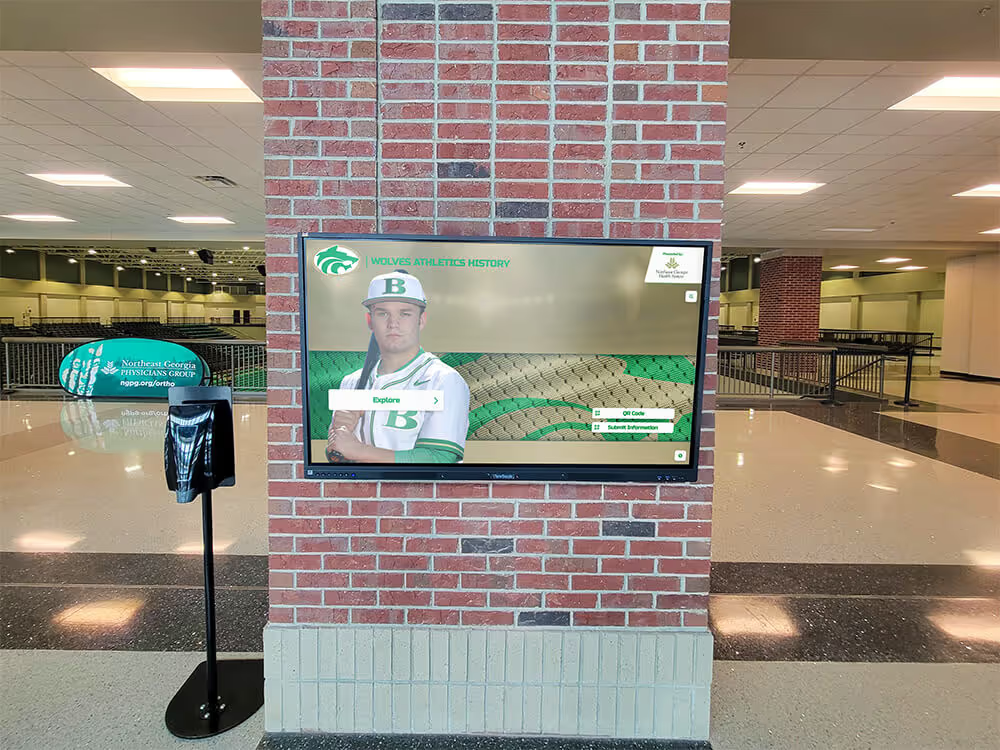
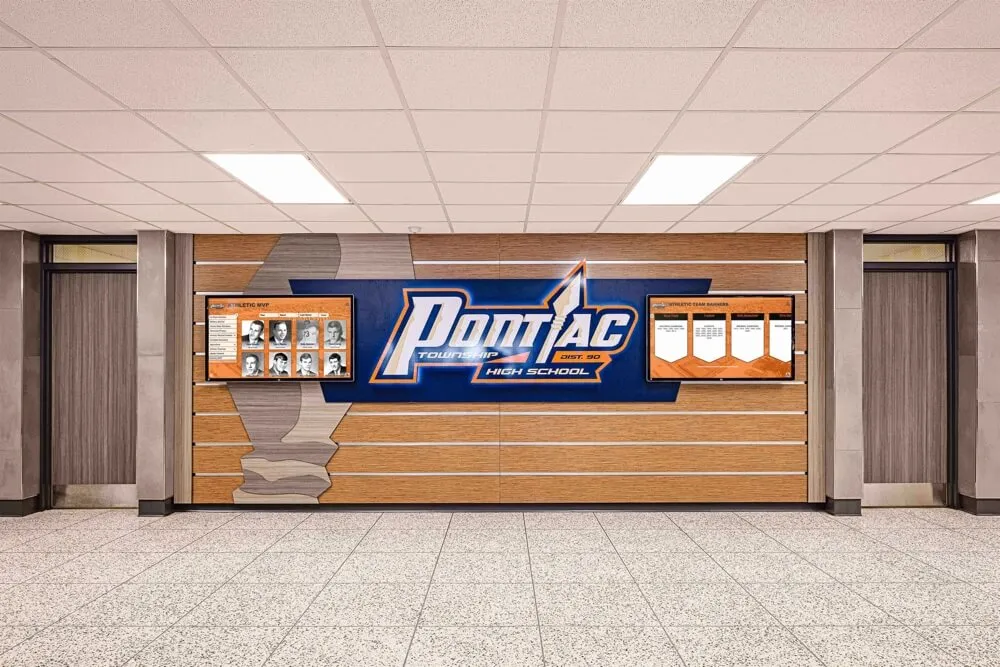
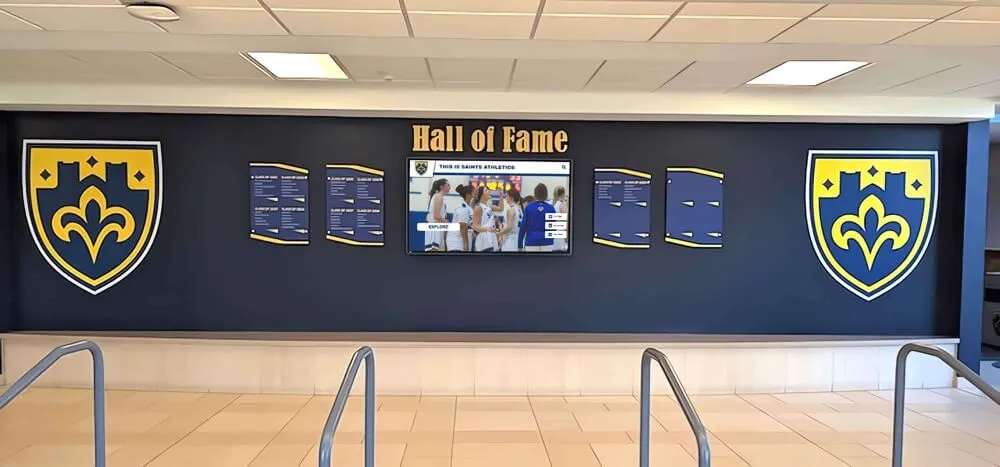
Comprehensive recognition networks require multiple displays throughout facilities—making unlimited screen licensing essential for budget sustainability
The Per-Screen Licensing Trap Affecting Schools
Traditional digital signage vendors structure pricing around per-display licensing models, charging separate subscription fees for each screen managed through their platforms. This architecture creates escalating costs that punish institutions for implementing comprehensive recognition strategies rather than isolated single-screen deployments.
How Per-Display Pricing Actually Works
Most digital signage vendors advertise affordable monthly or annual subscription rates without prominently disclosing that prices multiply by the number of screens organizations manage through their systems.
Typical Per-Display Cost Structure
Standard industry pricing follows predictable patterns:
- Entry-level platforms: $500-1,200 per display annually
- Mid-tier solutions: $1,200-2,400 per display annually
- Enterprise systems: $2,400-4,800+ per display annually
- Interactive touchscreen capabilities: Additional $300-1,200 per display annually
- Premium support tiers: Additional $200-600 per display annually
These per-display charges apply to every screen connected to vendor platforms, creating cost multiplication that makes modest three-to-five display implementations surprisingly expensive while rendering larger recognition networks financially prohibitive for typical school budgets.
Learn about common cost structures in digital signage pricing models examining industry standards.
Real-World Cost Examples
Consider a high school implementing coordinated recognition displays:
5-Display Implementation (Year 1)
- Main lobby touchscreen: $1,800/year
- Gymnasium athletic display: $1,800/year
- Cafeteria announcements screen: $1,800/year
- Alumni gathering space: $1,800/year
- Donor recognition entrance: $1,800/year
- Total Annual Cost: $9,000
Expansion to 8 Displays (Year 3)
- Original 5 displays: $9,000/year
- Additional athletic facility screen: $1,800/year
- Fine arts recognition display: $1,800/year
- Academic achievement showcase: $1,800/year
- New Annual Cost: $14,400 (60% increase)
Comprehensive 12-Display Network (Year 5)
- Previous 8 displays: $14,400/year
- Additional building wings: 4 × $1,800/year
- Total Annual Cost: $21,600 (140% increase from initial)
This cost escalation forces administrators to choose between comprehensive recognition coverage and budget sustainability—undermining the institutional pride and community engagement that motivated digital display investments initially.
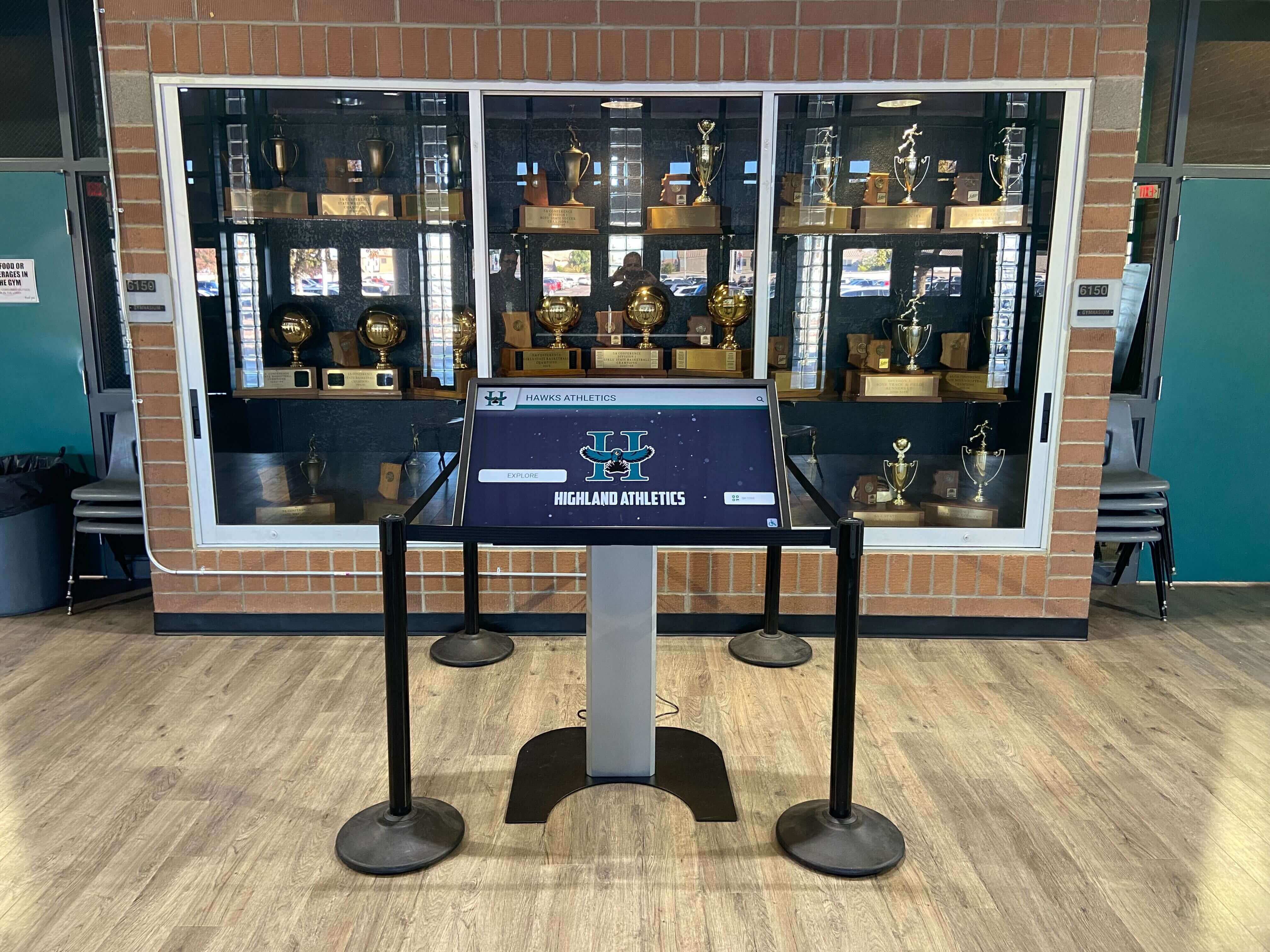
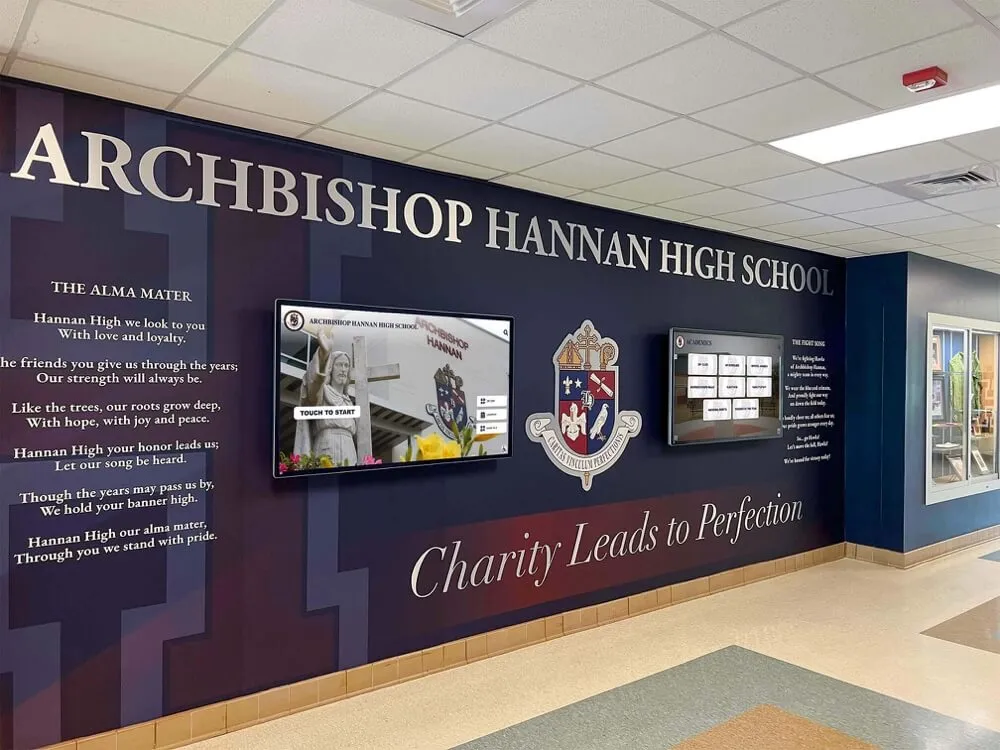
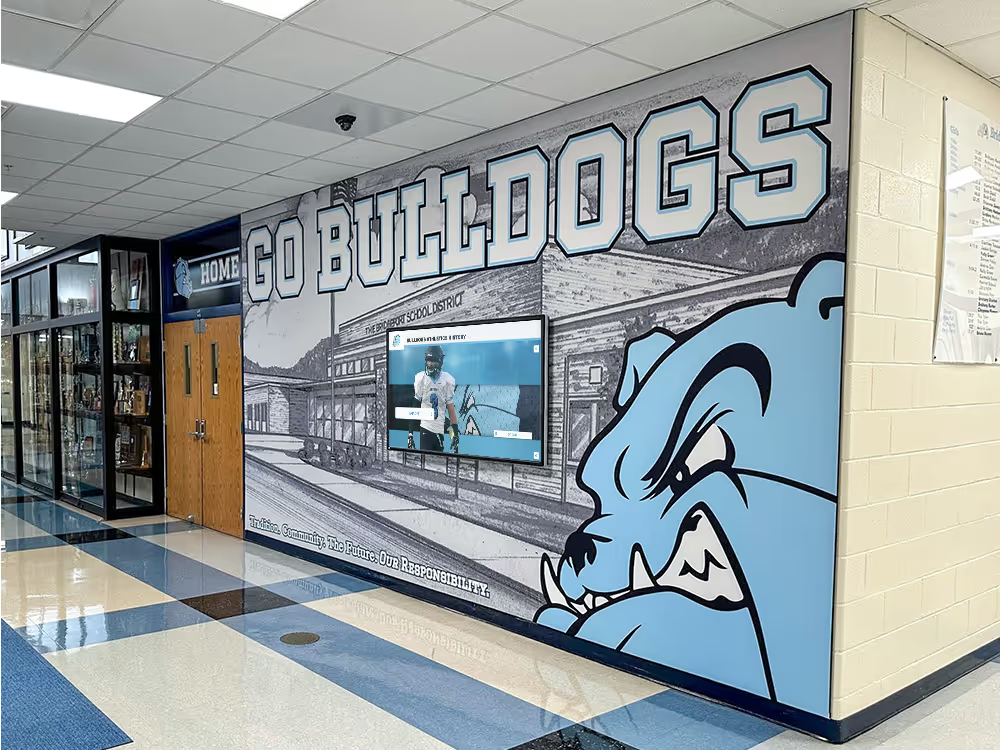
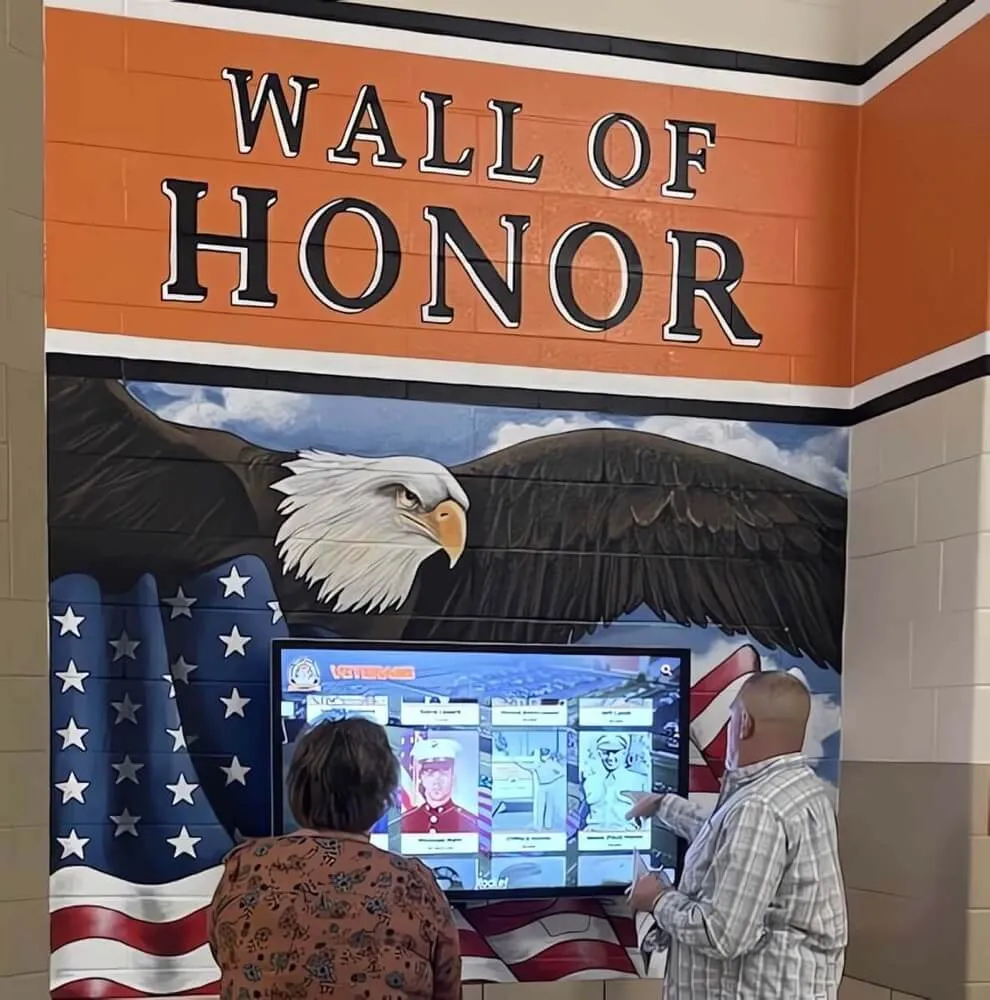
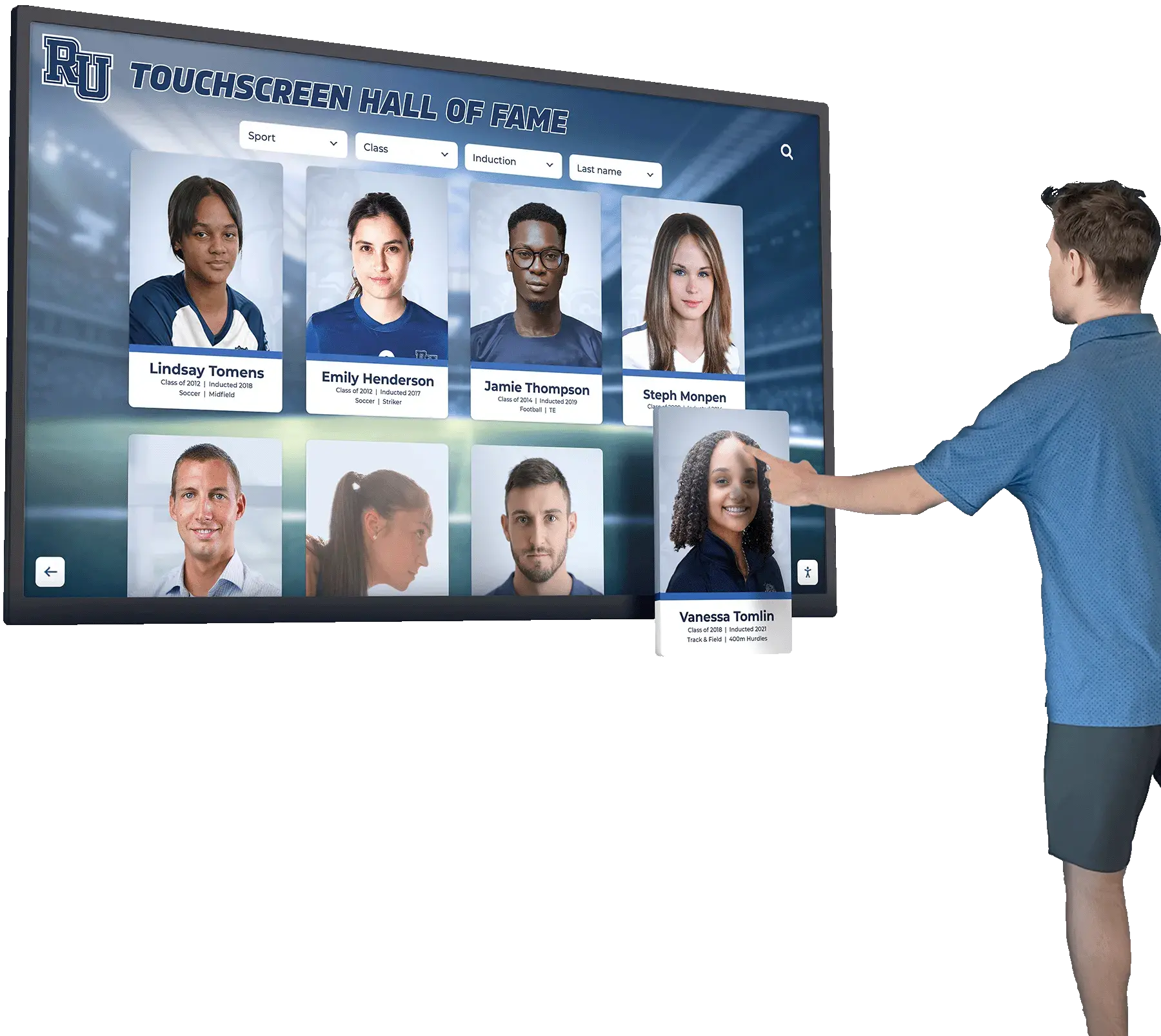
Per-screen licensing makes expanding recognition displays prohibitively expensive as institutions add coverage areas
Who This Affects Most: Large Districts and Multi-Building Campuses
Per-display licensing fees particularly impact organizations requiring distributed recognition networks celebrating achievements across multiple locations and facility types.
High-Impact Scenarios
Institutions facing severe cost multiplication:
Large School Districts
- Multiple buildings requiring coordinated recognition systems
- Central office displays showcasing district-wide achievements
- Individual school implementations needing consistent platforms
- 15-30+ displays across distributed facilities
- Annual costs reaching $27,000-54,000 with traditional per-screen models
University Campuses
- Athletic facilities with comprehensive sports recognition
- Academic buildings highlighting departmental achievements
- Alumni centers fostering graduate connections
- Donor recognition throughout renovated facilities
- Student centers celebrating involvement and leadership
- 20-50+ displays requiring unified management
- Traditional licensing costs exceeding $36,000-90,000 annually
Large High Schools
- Competition venues requiring athletic record displays
- Academic wings highlighting scholarly achievement
- Performing arts areas celebrating artistic excellence
- Main entrance showcasing institutional pride
- Alumni corridors connecting graduates with current students
- 8-15 displays throughout comprehensive facilities
- Per-screen costs totaling $14,400-27,000 each year
Multi-Campus Districts
- Elementary, middle, and high school buildings
- District administrative centers
- Early childhood facilities
- Alternative education campuses
- 25-60+ displays across distributed properties
- Annual licensing reaching $45,000-108,000 with traditional vendors
These substantial organizations naturally require extensive recognition coverage celebrating diverse achievements across varied spaces—exactly the scenarios where per-display pricing becomes financially oppressive rather than enabling comprehensive institutional pride.
Explore recognition strategies in athletic hall of fame complete guides addressing multi-location implementation approaches.
The Budget Approval Nightmare: Adding Screens Mid-Implementation
Per-display licensing creates recurring budget approval challenges that transform straightforward facility improvements into administrative obstacles requiring committee approvals and budget reallocations.
Typical Expansion Scenario
Initial implementation proceeds smoothly with budgeted five-display deployment during renovation project. Success generates stakeholder enthusiasm leading to natural expansion requests:
Year 1: Original budget approved
- 5 displays × $1,800 = $9,000 annual cost
- Hardware investment: $10,000 (one-time)
- Installation: $5,000 (one-time)
- Content development: $3,000 (one-time)
- Total Year 1: $27,000
Year 2: Athletic director requests gymnasium addition
- 6 displays × $1,800 = $10,800 annual cost
- Additional hardware: $2,000
- Installation: $1,000
- Budget increase: $4,800 (requires approval process)
Year 3: Alumni association funds donor recognition display
- 7 displays × $1,800 = $12,600 annual cost
- Donor-funded hardware: $3,500
- Donor-funded installation: $1,500
- Budget increase: $1,800 (requires approval despite donor funding hardware)
Year 4: Academic departments request achievement showcases
- 9 displays × $1,800 = $16,200 annual cost
- Department-funded hardware: $4,000
- Budget increase: $3,600 (requires approval across departments)
Each expansion triggers budget approval cycles regardless of whether external funding covers hardware costs—because software licensing fees multiply with display quantity. Administrators face recurring negotiations explaining why software costs increase despite stakeholders funding physical equipment.
This approval fatigue leads many institutions to abandon expansion plans or accept limited recognition coverage rather than navigating perpetual budget battles over software licensing—exactly opposite the comprehensive institutional pride that motivated digital recognition investments initially.
Hidden Costs Beyond Base Licensing: What Vendors Don’t Advertise
Per-display licensing represents the most obvious cost multiplication factor, but traditional digital signage vendors layer additional fees creating expense surprises for institutions expecting transparent, predictable pricing.
Setup Fees and Implementation Charges
Most vendors separate software subscriptions from implementation costs, creating initial investment surprises beyond advertised platform pricing.
Common Implementation Fees
Expect additional charges for:
- Platform setup and configuration: $500-2,500 per organization
- Content template customization: $1,000-5,000 depending on complexity
- Initial content development assistance: $2,000-10,000 for comprehensive profiles
- Training programs: $500-2,000 per training session
- Project management coordination: $2,000-8,000 for large implementations
- Technical integration: $1,500-5,000 for data source connections
These implementation charges appear reasonable when deploying single displays but represent significant budget additions for multi-screen implementations requiring comprehensive content development and stakeholder training across departments.
Custom Development and Feature Requests
Institutions discovering that advertised platforms lack required recognition-specific capabilities face additional development charges for seemingly standard functionality.
Typical Custom Development Costs
Schools encounter charges for:
- Custom search functionality: $3,000-8,000
- Specialized filtering by sport, year, category: $2,000-5,000
- Integration with student information systems: $5,000-15,000
- Custom profile layouts beyond templates: $1,500-4,000
- Advanced analytics and reporting: $2,500-7,500
- Mobile responsiveness optimization: $3,000-8,000
- Multilingual interface support: $4,000-10,000
These development charges transform affordable base subscriptions into expensive custom implementations—particularly when institutions require recognition-specific features like comprehensive athlete statistics, academic achievement tracking, or donor acknowledgment capabilities that generic digital signage platforms don’t provide out-of-box.
Purpose-built recognition systems like Rocket Alumni Solutions include specialized features addressing common institutional needs without custom development charges—search functionality, category organization, multimedia coordination, and touchscreen interactivity come standard rather than requiring expensive customization.

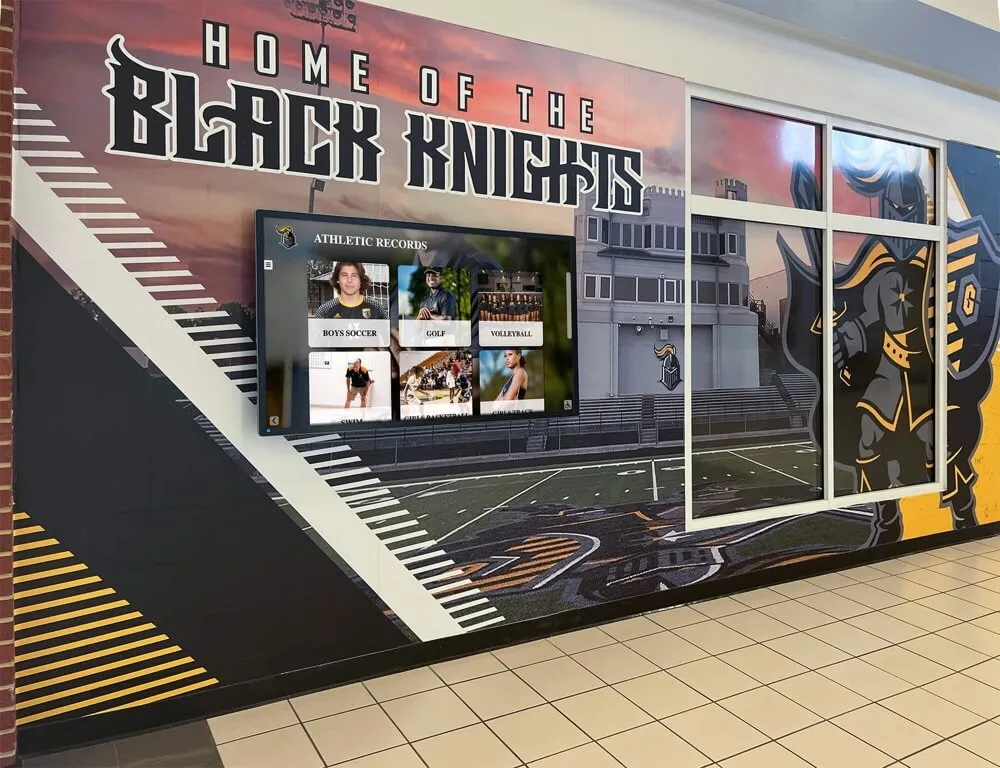
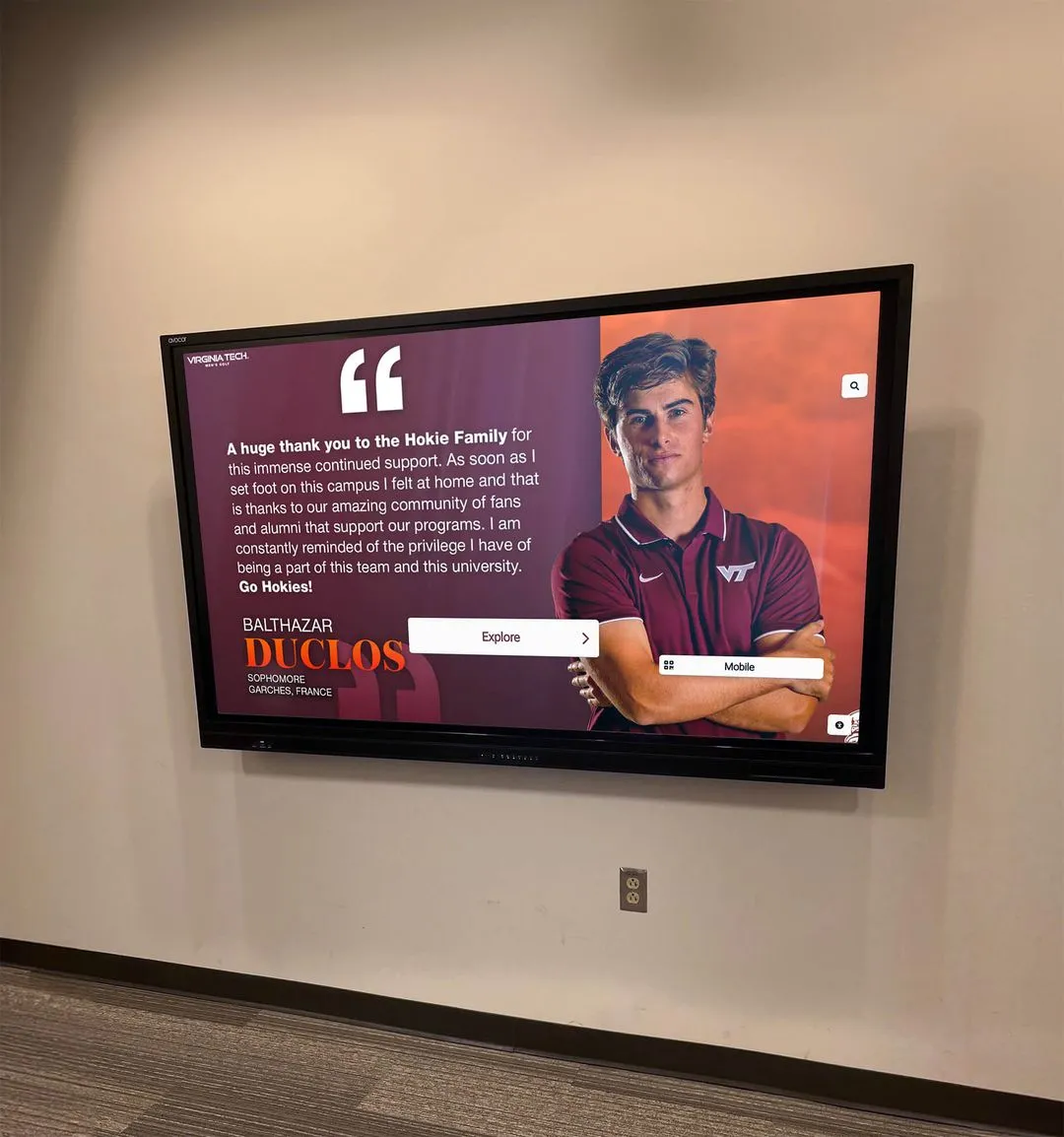
Purpose-built recognition platforms include specialized features like search and filtering without custom development charges
Annual Price Increases and Renewal Surprises
Subscription pricing advertised during sales processes often fails to mention automatic annual increases or renewal pricing different from initial contracts.
Renewal Cost Realities
Institutions encounter:
- Standard annual increases: 3-7% annually based on inflation adjustments
- Market-rate renewals: Initial promotional pricing expires after 1-3 years
- Tier migration requirements: Platform updates force higher-cost subscription levels
- Feature unbundling: Previously included capabilities become add-on charges
- Support tier requirements: Basic support becomes insufficient requiring expensive upgrades
Schools sign initial contracts at $1,800 per display annually, then face renewal notifications indicating $2,100 per display rates for year four—representing 17% increases across entire display networks without corresponding capability improvements justifying additional costs.
These renewal surprises force budget reallocations from programming and content development toward software licensing—undermining recognition program effectiveness while enriching vendor revenues through contract negotiation leverage favoring established providers over institutions facing migration costs.
Rocket Alumni Solutions: Unlimited Screens Without Cost Multiplication
Rocket Alumni Solutions eliminates per-screen licensing entirely, enabling institutions to deploy recognition displays throughout facilities without software costs multiplying by display quantity.
True Unlimited Display Model Explained
Unlike traditional vendors charging per-screen fees, Rocket Alumni Solutions licenses organizations to manage unlimited touchscreen displays under single subscriptions—making comprehensive recognition networks financially practical.
How Unlimited Licensing Works
Organizations subscribe to Rocket Alumni Solutions platforms at fixed rates covering:
- Unlimited display quantity: Deploy five touchscreens or fifty without subscription changes
- Unlimited profile capacity: Celebrate thousands of individuals without storage limits
- Unlimited user accounts: Enable distributed content management across departments
- Unlimited content updates: Modify recognition information continuously without transaction fees
- Unlimited visitor interactions: No restrictions based on engagement frequency or volume
- Standard platform features: All capabilities included regardless of display quantity
This unlimited architecture means adding your sixth display costs identical to your fifth display—requiring only hardware investment and installation expenses without triggering software licensing increases that make traditional vendors prohibitively expensive for comprehensive implementations.
Explore recognition implementation strategies in digital hall of fame complete guides addressing multi-screen deployment approaches.
Cost Comparison: 5-Year Projection
Consider a district implementing eight displays over five years:
Traditional Per-Screen Vendor
- Year 1 (5 displays): $9,000
- Year 2 (6 displays): $10,800
- Year 3 (7 displays): $12,600
- Year 4 (8 displays): $14,400
- Year 5 (8 displays): $15,120 (with 5% increase)
- 5-Year Software Total: $61,920
Rocket Alumni Solutions Unlimited
- Year 1: $4,500 (example rate)
- Year 2: $4,500
- Year 3: $4,500
- Year 4: $4,500
- Year 5: $4,725 (with 5% increase)
- 5-Year Software Total: $22,725
- Savings: $39,195 (63% reduction)
This dramatic cost difference enables institutions to invest saved budget in content quality, hardware upgrades, expanded coverage, and programming supporting recognition effectiveness rather than directing resources toward software licensing fees benefiting only vendors.
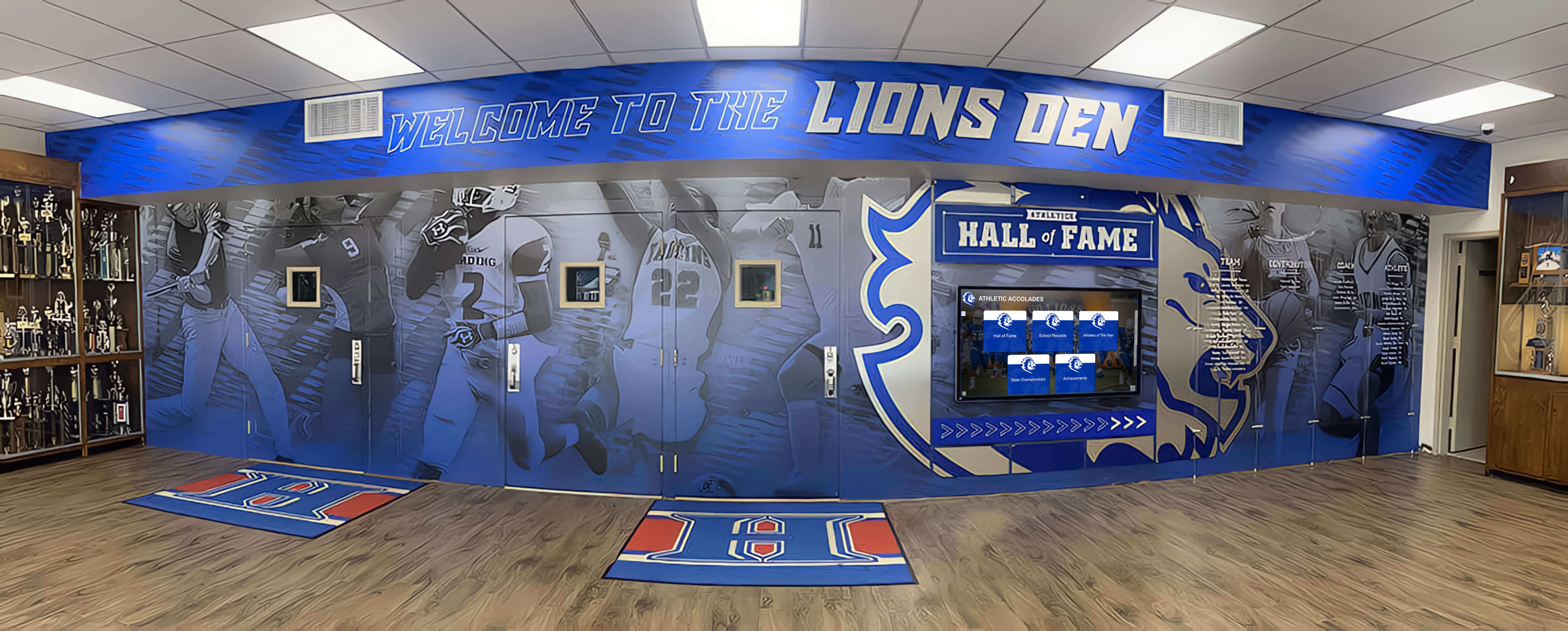
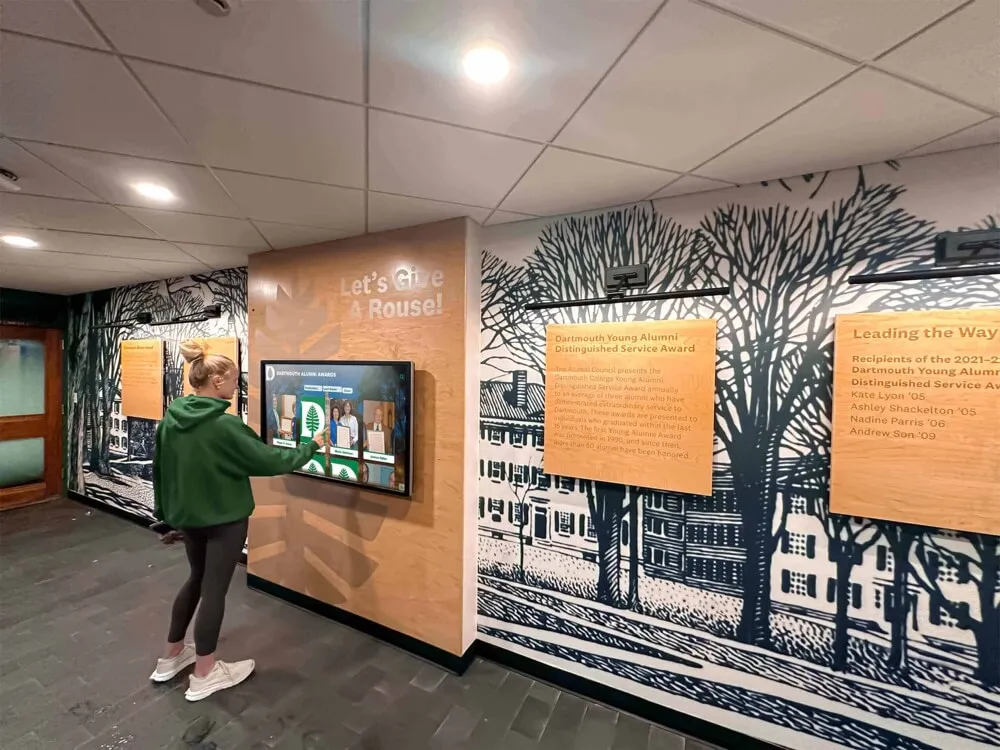
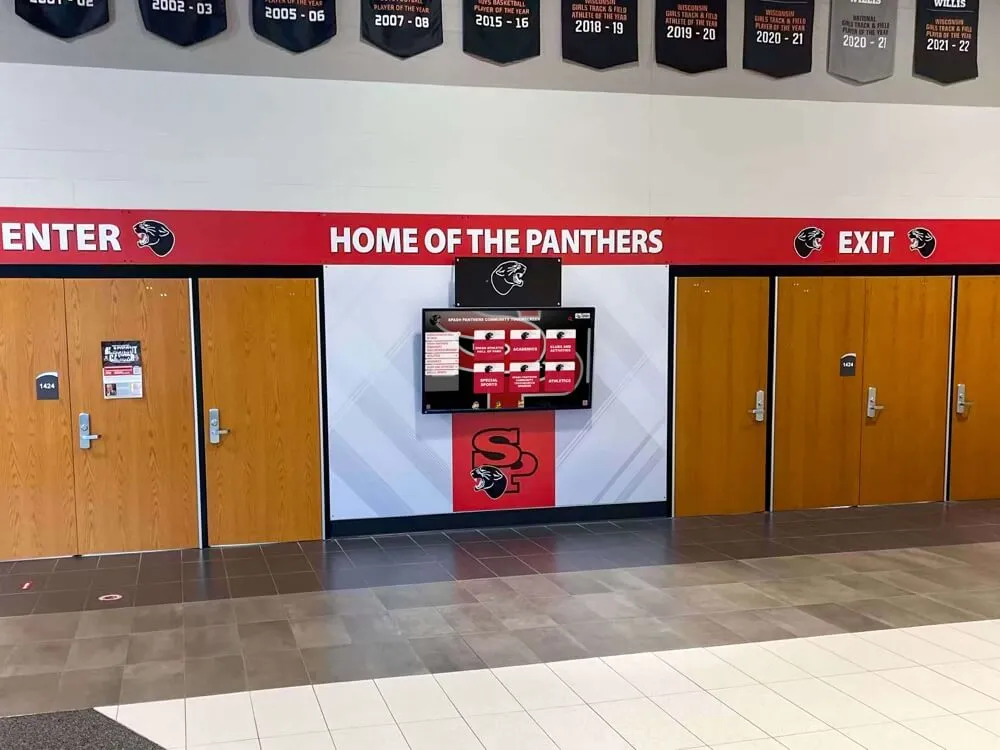
Unlimited screen licensing makes comprehensive facility coverage financially sustainable rather than prohibitively expensive
What’s Actually Included: No Feature Restrictions
Rocket Alumni Solutions doesn’t gatekeep capabilities behind higher subscription tiers or charge separately for features essential to recognition effectiveness—comprehensive functionality comes standard regardless of implementation size.
Standard Platform Capabilities
Organizations receive complete access to:
Content Management
- Intuitive web-based administration requiring no technical expertise
- Drag-and-drop media upload supporting photos, videos, and documents
- Profile templates accommodating biographical information and achievements
- Category organization separating athletics, academics, alumni, and donors
- Scheduled publishing coordinating recognition unveiling with induction events
- Revision history enabling content recovery and change tracking
- Multi-user permissions supporting distributed department-level management
Interactive Display Features
- Touch-optimized navigation designed for finger interaction
- Comprehensive search functionality enabling instant honoree discovery
- Advanced filtering by year, category, sport, achievement type
- Multimedia presentation coordinating videos, image galleries, and statistics
- Timeline visualizations showing program history chronologically
- Social sharing capabilities encouraging honoree promotion
- Session management automatically resetting after visitor inactivity
- Accessibility features ensuring universal engagement regardless of ability
Technical Infrastructure
- Cloud-based architecture eliminating on-premises server requirements
- Automatic software updates maintaining current features without manual intervention
- Remote content management from any internet-connected device
- Real-time synchronization ensuring all displays show consistent content
- Offline resilience enabling continued operation during connectivity interruptions
- Professional hosting with redundant infrastructure and disaster recovery
- Security management protecting information without internal IT expertise
Analytics and Insights
- Engagement tracking revealing which profiles generate most interest
- Search pattern analysis showing how visitors discover content
- Session duration metrics indicating engagement depth
- Peak usage time identification informing content scheduling
- Geographic access reporting for web-accessible content
- Content performance comparison identifying optimization opportunities
These comprehensive capabilities address recognition-specific requirements that general digital signage platforms don’t prioritize—enabling schools to celebrate achievements appropriately rather than adapting generic tools to specialized applications through expensive customization.
Discover recognition-specific features in interactive touchscreen software guides examining purpose-built platform capabilities.
When Hardware Is Your Only Variable Cost
With software licensing fixed regardless of display quantity, institutions implementing Rocket Alumni Solutions focus budget planning on hardware investments scaling linearly with coverage expansion.
Predictable Hardware Budget Planning
Each additional display requires:
Commercial Touchscreen Display
- Entry-level commercial screens: $1,800-3,500
- Mid-range interactive touchscreens: $3,500-6,500
- Premium large-format touchscreens: $6,500-12,000
- Selection based on size, location, and durability requirements
Media Player (if needed)
- System-on-Chip displays with integrated computing: Included in display cost
- External media players for standard displays: $200-600
- Premium computing for complex multi-zone layouts: $600-1,200
Installation and Mounting
- Standard wall mounting: $500-1,200 per display
- Custom millwork integration: $1,500-4,000 per display
- Electrical work for new locations: $300-1,500 per display
- Network infrastructure if needed: $200-800 per display
Total Per-Display Investment
- Basic implementation: $2,800-5,700 per display
- Standard installation: $5,000-9,000 per display
- Premium integration: $9,000-17,000 per display
These hardware costs represent one-time investments rather than recurring annual expenses—making expansion planning straightforward compared to software licensing that multiplies perpetually year after year.
Organizations budget hardware additions when expanding recognition coverage, but software costs remain constant enabling predictable financial planning without recurring budget approval cycles for licensing increases.
Real Scenarios: How Unlimited Screens Enable Recognition Success
The unlimited screen model transforms recognition strategies from constrained single-display implementations into comprehensive facility-wide celebrations of achievement distributed across appropriate contexts.
Scenario 1: Multi-Building District Implementation
Large districts coordinating recognition across elementary, middle, and high school campuses require distributed display networks celebrating achievements relevant to each facility while maintaining district-wide visibility.
Traditional Per-Screen Cost Barrier
District with five schools wanting three displays per campus:
- 15 total displays × $1,800 per display = $27,000 annually
- Over 5 years: $141,750 (including 5% annual increases)
- Hardware investment: $75,000 one-time
- Total 5-Year Cost: $216,750
This substantial expense forces districts to choose between comprehensive coverage or financial sustainability—typically resulting in limited implementations at select facilities rather than equitable recognition across all schools.
Unlimited Model Opportunity
Same 15-display district implementation with Rocket Alumni Solutions:
- Fixed annual subscription: $8,500 (example rate)
- Over 5 years: $44,663 (including 5% annual increases)
- Hardware investment: $75,000 one-time
- Total 5-Year Cost: $119,663
- Savings: $97,087 (45% reduction)
Saved budget enables districts to:
- Invest in higher-quality touchscreen hardware at each location
- Fund professional content development ensuring recognition quality
- Support training programs building content management capacity
- Allocate resources toward recognition programming and induction events
- Expand coverage beyond originally planned displays without budget shock
This financial flexibility enables equitable recognition distribution rather than forcing administrators to prioritize certain schools over others based purely on per-screen licensing constraints.
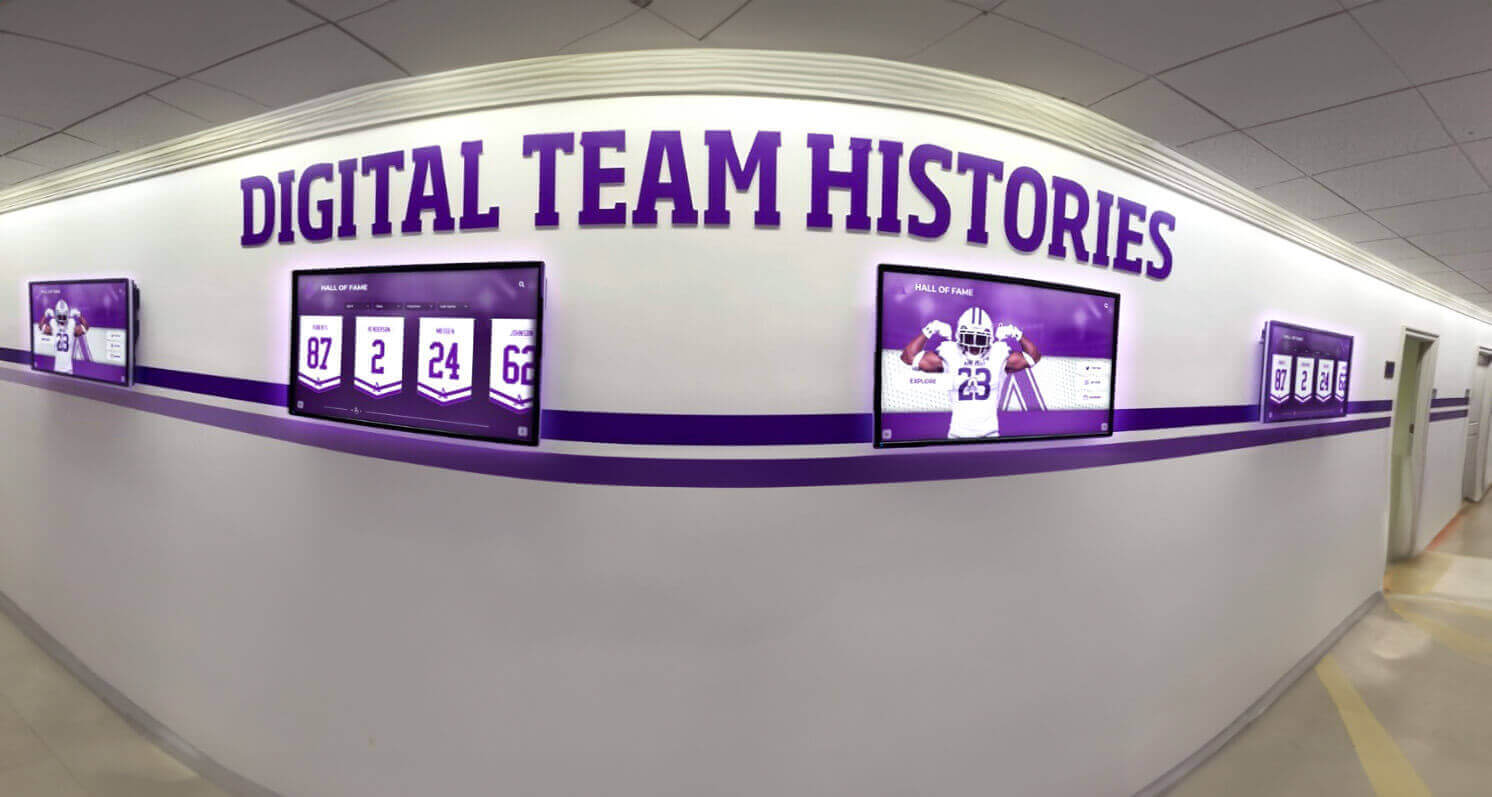
Multi-building implementations become financially sustainable with unlimited screen licensing eliminating per-display fees
Scenario 2: Athletic Department with Seven Sport-Specific Displays
Comprehensive athletic programs celebrate diverse sports requiring dedicated recognition spaces acknowledging achievements across football, basketball, baseball, softball, soccer, volleyball, and track programs.
Traditional Vendor Cost Challenge
Athletic department wanting sport-specific displays:
- 7 displays × $1,800 per display = $12,600 annually
- Over 5 years: $66,150 (including 5% annual increases)
- Hardware investment: $35,000 one-time
- Total 5-Year Cost: $101,150
This expense forces athletic departments to combine sports into generic displays rather than providing dedicated recognition appropriately celebrating each program’s unique achievements and traditions.
Unlimited Model Solution
Same athletic implementation with Rocket Alumni Solutions:
- Fixed annual subscription: $4,500 (example rate)
- Over 5 years: $23,625 (including 5% annual increases)
- Hardware investment: $35,000 one-time
- Total 5-Year Cost: $58,625
- Savings: $42,525 (42% reduction)
Unlimited licensing enables:
- Sport-specific displays celebrating unique program achievements
- Dedicated spaces honoring traditions and legacy athletes
- Appropriate recognition visibility in relevant competition venues
- Future expansion adding displays for additional sports without budget approval
- Investment in content quality rather than software licensing fees
Athletic departments achieve comprehensive recognition coverage without financial constraints undermining celebration of diverse athletic excellence.
Explore athletic recognition strategies in best ways to showcase athletic achievements examining implementation approaches.
Scenario 3: Campus-Wide Academic, Alumni, and Donor Recognition
Comprehensive institutions celebrating achievements beyond athletics require distributed recognition across academic departments, alumni gathering spaces, and donor acknowledgment areas throughout facilities.
Traditional Pricing Limitation
University wanting comprehensive recognition coverage:
- Main lobby: Academic achievement display
- Alumni center: Three alumni engagement displays
- Donor recognition: Two campaign acknowledgment displays
- Academic buildings: Five departmental achievement displays
- Student center: Student leadership display
- 12 displays × $2,400 per display = $28,800 annually
- Over 5 years: $151,200 (including 5% annual increases)
- Hardware investment: $90,000 one-time
- Total 5-Year Cost: $241,200
This substantial expense forces institutions to prioritize recognition categories rather than celebrating comprehensive achievement across all community contributions.
Unlimited Licensing Advantage
Same 12-display implementation with Rocket Alumni Solutions:
- Fixed annual subscription: $7,500 (example rate)
- Over 5 years: $39,375 (including 5% annual increases)
- Hardware investment: $90,000 one-time
- Total 5-Year Cost: $129,375
- Savings: $111,825 (46% reduction)
Comprehensive coverage becomes achievable:
- Academic achievement recognition throughout educational facilities
- Alumni engagement spaces fostering graduate connections
- Donor acknowledgment celebrating philanthropic partnership
- Department-specific recognition honoring specialized excellence
- Student leadership visibility encouraging participation
- Future expansion adding recognition categories without licensing barriers
Institutions celebrate complete community contribution rather than limiting recognition to categories fitting software licensing budgets.
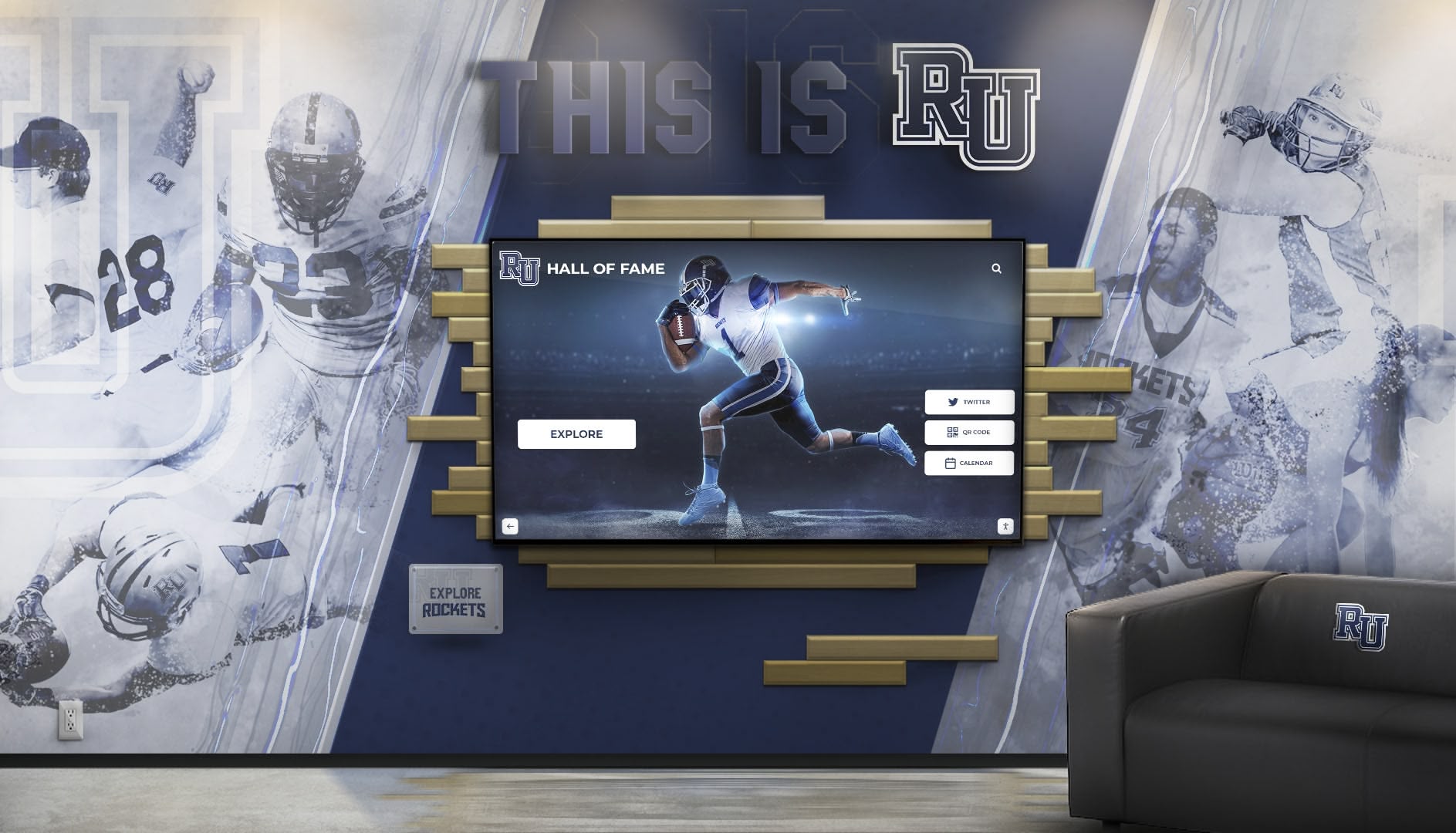
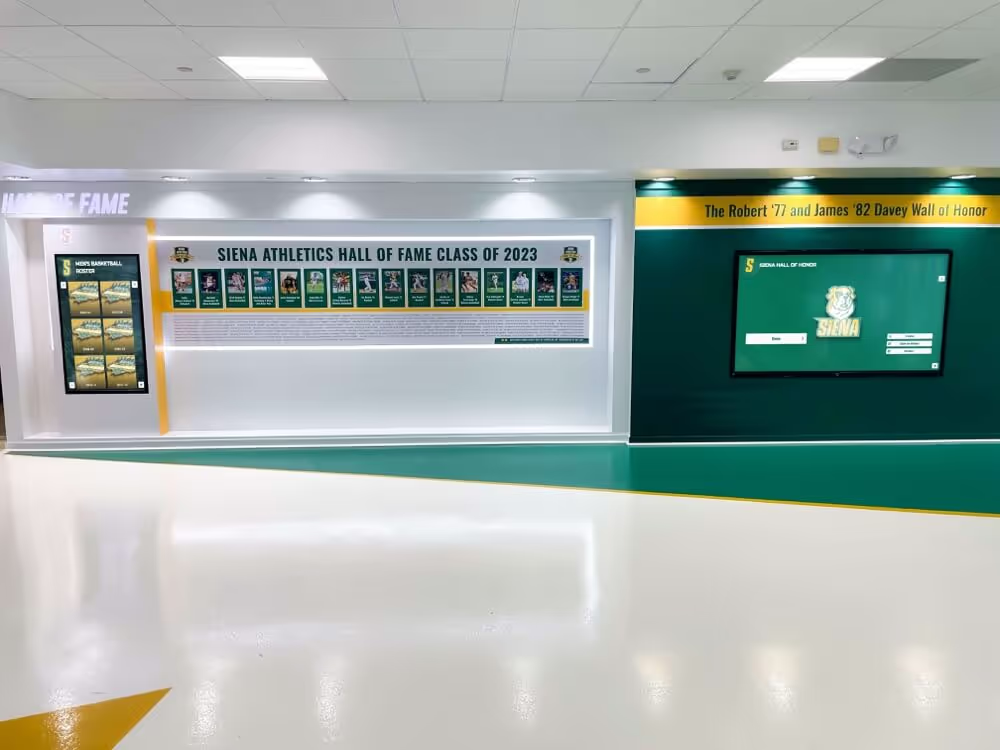
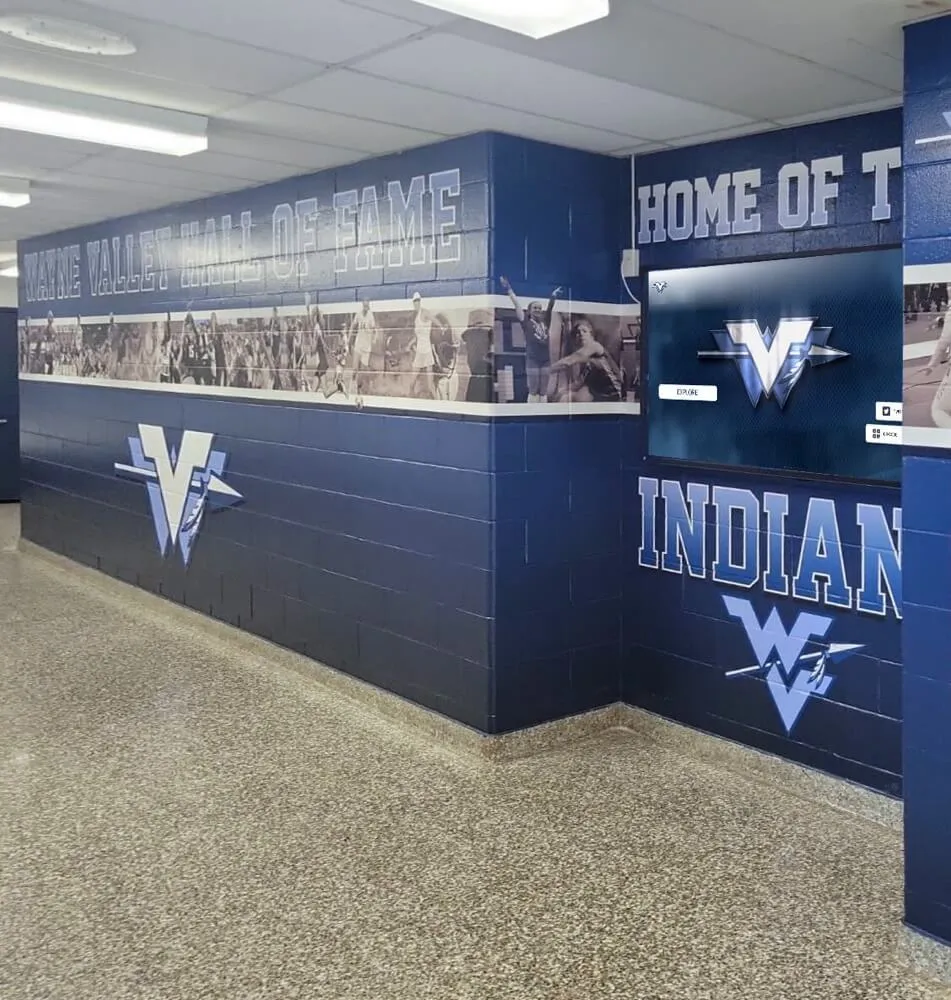
Comprehensive campus recognition requires multiple displays celebrating diverse achievements throughout facilities
Avoiding Vendor Lock-In: What Schools Should Demand
Understanding pricing model implications before committing to digital signage vendors prevents institutions from discovering cost limitations after implementations when switching becomes expensive and disruptive.
Questions to Ask During Vendor Evaluation
Institutions evaluating recognition display platforms should clarify pricing structures explicitly rather than assuming advertised rates cover comprehensive implementations.
Critical Pricing Questions
Demand clear answers about:
Base Licensing Structure
- “Do subscription fees multiply by the number of displays we manage?”
- “What exactly does your base subscription price cover?”
- “If we start with three displays and expand to eight, how does pricing change?”
- “Are there per-screen, per-user, or per-location charges?”
- “Can we add displays mid-contract without triggering price increases?”
Feature and Capability Restrictions
- “Which features require higher-tier subscriptions?”
- “Are search functionality, filtering, and analytics included at all pricing levels?”
- “Do interactive touchscreen capabilities cost extra?”
- “What content capacity limits apply to different subscription tiers?”
- “Are there transaction fees, bandwidth limits, or engagement restrictions?”
Implementation and Setup Costs
- “What one-time fees apply beyond ongoing subscriptions?”
- “How much does initial setup, configuration, and content development cost?”
- “Do training programs require separate purchases?”
- “Are there project management or professional service fees?”
- “What does technical integration with our systems cost?”
Long-Term Cost Implications
- “How much do subscription prices typically increase annually?”
- “What happens to pricing when we expand implementations?”
- “Are multi-year contracts required for advertised pricing?”
- “What are contract renewal terms after initial agreements expire?”
- “How do we add or remove displays without penalty?”
Exit Strategy Considerations
- “What happens to our content if we discontinue service?”
- “Can we export all recognition data and media assets?”
- “Are there early termination fees or contract lock-in penalties?”
- “What migration support do you provide to competitors?”
- “Do you maintain data hostage through proprietary formats?”
These explicit questions reveal whether vendors genuinely offer transparent, predictable pricing or employ complex structures hiding cost multiplication through contract technicalities.
Learn about vendor evaluation strategies in digital signage software selection guides examining assessment frameworks.
Contract Terms That Protect Institutions
Beyond pricing clarity, contract structures determine whether institutions maintain flexibility responding to changing needs or face locked commitments benefiting vendors rather than schools.
Favorable Contract Provisions
Institutions should negotiate:
Flexible Term Lengths
- Annual contracts enabling reassessment rather than 3-5 year commitments
- Month-to-month options after initial terms expire
- Early termination rights with reasonable notice periods
- Automatic renewal opt-in rather than opt-out structures
Pricing Protection Guarantees
- Maximum annual increase percentages specified explicitly
- No mid-contract price adjustments for existing displays
- Grandfathered pricing when adding displays to existing implementations
- Volume discounts reflecting display quantity expansion
Data Ownership and Portability
- Explicit institution ownership of all content and profile data
- Standard format data export capabilities without vendor assistance
- No retention of institution data after contract termination
- Full media asset download in original resolutions
Performance and Support Commitments
- Uptime guarantees with service credits for failures
- Response time commitments for support requests
- Dedicated account management for implementations exceeding thresholds
- Regular platform enhancement roadmaps and update schedules
Expansion and Modification Rights
- Display quantity increases without contract renegotiation
- User account additions without per-user charges
- Feature access consistent regardless of implementation size
- Content capacity scaling without storage upgrade fees
These protective provisions ensure institutions maintain control over recognition programs rather than surrendering flexibility to vendor preferences prioritizing recurring revenue over customer success.
Making the Business Case for Unlimited Screen Licensing
Administrators proposing recognition display investments must justify expenditures to boards, committees, and stakeholders scrutinizing institutional spending—requiring clear financial narratives demonstrating value beyond initial enthusiasm.
ROI Comparison: Limited vs. Comprehensive Coverage
Traditional per-screen pricing forces institutions to choose between constrained recognition coverage and budget sustainability, while unlimited models enable comprehensive implementations delivering superior community engagement returns.
Limited Implementation Scenario
School deploys three displays due to per-screen costs:
- Software: 3 displays × $1,800 = $5,400 annually
- Hardware: $15,000 one-time
- Five-year total: $42,000
Coverage achieved:
- Main lobby showcase
- Gymnasium athletic recognition
- Alumni gathering space
Coverage gaps:
- Academic achievement (no dedicated visibility)
- Donor recognition (no acknowledgment space)
- Fine arts accomplishment (no celebration)
- Student leadership (no showcase)
- Department-specific achievements (combined generically)
Limited coverage undermines recognition program effectiveness by forcing consolidation of diverse achievements into generic displays where specific accomplishments lack appropriate context and visibility.
Comprehensive Implementation Scenario
Same school deploys eight displays with unlimited licensing:
- Software: $4,500 annually (fixed)
- Hardware: $40,000 one-time
- Five-year total: $63,250
Complete coverage achieved:
- Main lobby institutional pride showcase
- Gymnasium athletic hall of fame
- Alumni engagement interactive displays
- Donor recognition celebrating partnership
- Fine arts gallery digital exhibitions
- Academic excellence departmental showcases
- Student leadership visibility
- Historical timeline institutional legacy
Incremental investment: $21,250 over five years
Value received for additional $21,250:
- 167% more recognition coverage (8 vs. 3 displays)
- Comprehensive community celebration rather than limited visibility
- Department-specific context honoring unique achievements appropriately
- Enhanced institutional pride across diverse stakeholder groups
- Strategic facility utilization supporting multiple organizational objectives
- Foundation for continued expansion without recurring budget approvals
The additional investment delivers dramatic value multiplication rather than linear cost increases—enabling institutions to achieve recognition program objectives that limited implementations fundamentally cannot accomplish regardless of content quality.

Comprehensive recognition coverage requires budget sustainability that unlimited screen licensing enables
Budget Presentation Strategies for Administrators
Successfully securing approval for recognition display investments requires presenting financial narratives that resonate with decision-makers prioritizing fiscal responsibility alongside community engagement.
Effective Budget Presentation Elements
Winning proposals include:
Total Cost of Ownership Transparency
- Complete five-year financial projections including all cost components
- Hardware, software, installation, training, and content development
- Operating expenses including electricity and network connectivity
- Comparison with maintaining physical trophy cases and static plaques
- Replacement reserve requirements for aging equipment
Cost Per Constituent Analysis
- Total investment divided by individuals recognized annually
- Per-honoree cost for comprehensive digital profiles vs. physical plaques
- Space efficiency comparing square footage requirements
- Update cost comparison: Digital content management vs. physical modifications
Alternative Cost Comparisons
- Traditional trophy case purchase, installation, and maintenance costs
- Physical plaque creation and mounting expenses
- Print recognition program production and distribution
- Event costs for recognition ceremonies and celebrations
- Staff time requirements for manual recognition administration
Long-Term Savings Projections
- Eliminated physical plaque purchasing over ten years
- Reduced trophy case maintenance and renovation costs
- Decreased printing and distribution expenses for recognition materials
- Staff efficiency gains from centralized digital management
- Space repurposing value from eliminating bulky physical displays
Mission Alignment Narrative
- How recognition supports institutional pride and culture
- Alumni engagement and fundraising relationship building
- Recruitment advantages from visible excellence celebration
- Community connection fostering belonging and tradition
- Student motivation through achievement visibility
Risk Mitigation Addressing
- Vendor stability and long-term platform viability
- Data ownership and portability protections
- Expansion flexibility without cost multiplication
- Technology refresh cycles and upgrade pathways
- Contract terms protecting institutional interests
These comprehensive presentations demonstrate fiscal responsibility while articulating recognition value extending beyond simple cost analysis—enabling approval through informed decision-making rather than emotional appeals alone.
Explore budget planning strategies in digital trophy case implementation guides addressing financial justification approaches.
Implementation Strategies: Maximizing Unlimited Screen Value
Securing budget approval represents only initial success—strategic implementation maximizes value from unlimited screen licensing through thoughtful planning and phased deployment.
Phased Rollout: Starting Small, Expanding Strategically
Even with unlimited screen licensing eliminating software cost barriers, institutions benefit from phased implementations enabling learning and refinement before comprehensive deployment.
Phase 1: Foundation Implementation (Year 1)
Initial deployment establishes core recognition infrastructure:
Recommended Initial Displays
- Main entrance lobby showcase: Institutional pride and comprehensive achievement
- Primary gathering space: Alumni engagement and community connection
- Highest-profile venue: Athletic, academic, or arts recognition based on institutional priority
Year 1 Objectives
- Validate technology and platform capabilities in actual environments
- Develop content creation workflows and management processes
- Train initial staff members on administration and updates
- Gather stakeholder feedback informing expansion planning
- Demonstrate recognition engagement generating expansion support
- Establish baseline metrics measuring effectiveness
Investment Focus
- Premium hardware for high-visibility locations ensuring quality impressions
- Professional content development creating foundation recognition database
- Comprehensive training building confident management capability
- Implementation support addressing technical and operational questions
This measured initial deployment builds organizational confidence and competence while creating success stories justifying continued expansion to skeptical stakeholders.
Phase 2: Strategic Expansion (Years 2-3)
Successful foundations enable strategic growth addressing high-impact opportunities:
Expansion Priorities
- Locations generating expansion requests during foundation phase
- Spaces with natural dwell time encouraging exploration
- Department-specific areas celebrating specialized achievements
- Facilities recently renovated or constructed
- Locations visible during tours, events, and community gatherings
Expansion Approach
- Add 2-4 displays annually based on budget and content capacity
- Prioritize spaces with existing recognition infrastructure (trophy cases)
- Focus on areas serving diverse stakeholder groups
- Enable department-level content management distributing administrative burden
- Maintain content quality standards while expanding coverage
Continued Learning
- Monitor engagement analytics comparing locations and content types
- Refine content strategies based on visitor interaction patterns
- Adjust management workflows supporting larger display networks
- Document lessons learned informing remaining expansion
- Build internal champion network supporting peer assistance
Strategic expansion balances growth ambition with sustainable implementation avoiding overwhelming staff with administrative burden undermining content quality.
Phase 3: Comprehensive Coverage (Years 4-5)
Mature implementations achieve comprehensive facility recognition:
Final Network Completion
- Fill remaining strategic locations completing facility coverage
- Add specialized displays addressing niche recognition needs
- Implement outdoor displays where appropriate and feasible
- Create mobile displays for events and temporary exhibitions
- Establish refreshment cycles ensuring continued engagement
Sustained Excellence
- Maintain regular content update schedules across all displays
- Continue analytics monitoring and optimization
- Refresh older hardware reaching end of operational life
- Expand content database celebrating historical achievements
- Integrate recognition with broader institutional communication strategies
This patient, strategic approach maximizes unlimited screen value through thoughtful expansion rather than overwhelming rapid deployment undermining recognition program effectiveness.
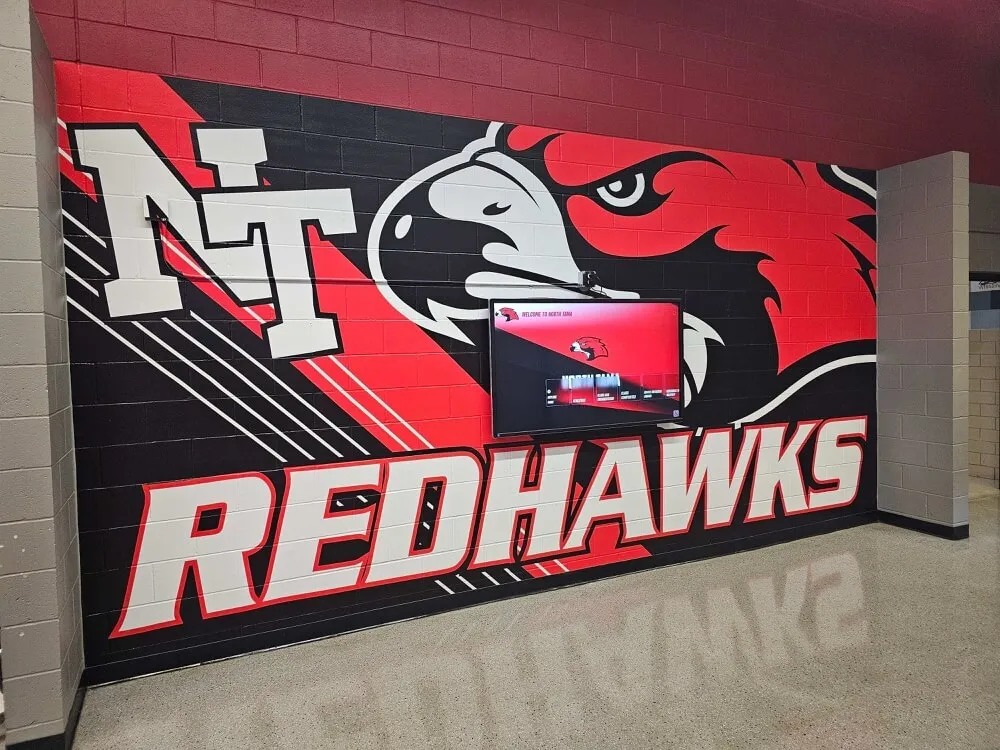
Strategic display placement in high-traffic locations maximizes recognition engagement and institutional pride impact
Content Strategy for Multi-Screen Networks
Hardware represents infrastructure, but engaging content determines whether recognition displays achieve intended objectives or become expensive decoration audiences ignore.
Coordinated Content Architecture
Multi-screen networks require systematic content organization:
Display-Specific Focus
- Main showcase displays: Comprehensive recognition spanning all categories
- Sport-specific displays: Athletic achievements within relevant competition venues
- Academic displays: Scholarly excellence in educational wings
- Arts displays: Creative achievement in performance and studio spaces
- Alumni displays: Graduate connections in gathering and event areas
- Donor displays: Philanthropic partnership near funded improvements
- Historical displays: Institutional legacy and timeline narratives
Consistent Visual Identity
- Unified design language across all displays
- Consistent navigation patterns preventing confusion
- Coordinated color schemes respecting institutional branding
- Standardized profile layouts maintaining recognition dignity
- Unified search and filtering functionality
Strategic Content Distribution
- Feature rotating highlights on main showcase displays
- Permanent profile access through all displays regardless of primary category
- Category-specific displays emphasizing relevant achievements
- Historical context connecting current recognition with tradition
- Dynamic content rotation maintaining visitor interest
Update Workflows
- Centralized content management distributing to all displays automatically
- Department-level permissions enabling specialized content contribution
- Approval processes ensuring quality and appropriateness
- Regular audit schedules maintaining accuracy and currency
- Engagement analytics informing content priorities
These coordinated strategies ensure multi-screen networks function as integrated recognition systems rather than disconnected individual displays with inconsistent content and navigation frustrating visitors.
Discover content strategies in digital recognition wall implementation guides examining comprehensive content planning.
Deploy Unlimited Recognition Displays Without Per-Screen Fees
Discover how Rocket Alumni Solutions enables comprehensive facility-wide recognition through unlimited screen licensing—eliminating the cost multiplication that makes traditional vendors prohibitively expensive for schools and institutions requiring extensive display networks.
Book a DemoCommon Misconceptions About Multi-Screen Pricing
Institutions evaluating recognition display investments often operate under assumptions about pricing structures that prove incorrect during implementation—creating budget surprises undermining program success.
“Base Pricing Covers Multiple Displays”
Many administrators assume advertised subscription rates apply to organizations rather than individual displays, discovering too late that pricing multiplies with screen quantity.
Why This Misconception Persists
Vendors contribute to confusion through:
- Marketing materials emphasizing affordable monthly rates without clarifying per-screen multiplication
- Sales presentations focusing on single-display pricing during initial conversations
- Demonstration deployments using individual screens rather than networked implementations
- Contract fine print burying per-display licensing terms within complex agreements
- Website pricing calculators defaulting to single displays rather than realistic quantities
Schools naturally assume that platforms manage multiple screens under single organizational subscriptions—similar to how institutions pay flat rates for learning management systems, student information systems, and other enterprise software regardless of user quantity or building count.
This reasonable expectation crashes against digital signage industry pricing norms charging separately for each managed display—creating severe budget surprises when institutions discover that desired eight-display implementations cost eight times advertised rates rather than single organizational subscriptions.
Protecting Against This Misconception
Institutions should:
- Explicitly ask whether pricing is per-organization or per-display
- Request written quotes for exact display quantities planned
- Clarify expansion costs before committing to initial implementations
- Compare total cost across multiple display quantities
- Demand transparency about per-screen, per-user, and per-location charges
This due diligence reveals actual pricing structures before contractual commitments rather than discovering cost multiplication after implementations when switching becomes expensive and disruptive.
“Unlimited Means Limited Features”
Skeptical administrators sometimes assume unlimited screen licensing must restrict features or capabilities to remain financially viable—expecting expensive upgrades accessing professional functionality.
Why Unlimited Can Include Complete Features
Rocket Alumni Solutions includes comprehensive capabilities with unlimited licensing because:
Different Business Model
- Recognition-focused platform rather than generic digital signage
- Purpose-built features rather than custom development for each customer
- Subscription revenue from organizational relationships rather than display quantity
- Long-term customer success prioritized over short-term revenue maximization
Economies of Scale
- Cloud infrastructure costs don’t multiply linearly with display quantity
- Content delivery network architecture serves multiple displays efficiently
- Development costs amortized across customer base rather than individual implementations
- Support requirements similar regardless of whether customers manage three or thirty displays
Strategic Competitive Advantage
- Unlimited licensing differentiates from traditional vendors
- Complete feature access drives customer satisfaction and retention
- Reduced sales complexity through transparent pricing
- Market positioning as customer-friendly alternative to exploitative models
This business model architecture enables genuinely unlimited screen licensing with comprehensive features—contrasting with traditional vendors depending on per-display revenue streams requiring capability restrictions protecting higher-tier subscription upselling.
Verification During Evaluation
Institutions should:
- Request detailed feature lists at quoted pricing levels
- Test search, filtering, analytics, and interactive capabilities during demonstrations
- Clarify whether touchscreen functionality costs extra
- Confirm content capacity limits and storage restrictions
- Verify whether multi-user administration requires additional fees
This verification confirms unlimited licensing includes professional capabilities rather than limiting features protecting vendor upselling opportunities.
Learn about recognition-specific features in digital hall of fame software guides examining platform capabilities.
“We’ll Expand Later When We Have More Budget”
Institutions often plan modest initial implementations intending future expansion once additional budget becomes available—discovering that per-screen pricing makes expansion financially impractical regardless of available funds.
The Expansion Trap
Initial modest implementation proves successful:
- Stakeholders request additional displays
- Department funding becomes available
- Facilities renovations create new opportunities
- Community enthusiasm generates expansion support
Then expansion budget realities emerge:
- Each new display requires recurring annual licensing fees
- Ongoing costs multiply rather than representing one-time investments
- Budget approvals required annually rather than single capital expenditure
- Expansion costs compete with programming and content budgets
This ongoing cost multiplication makes expansion financially unattractive regardless of available capital—because administrators recognize that accepting $10,000 hardware investment commits to $1,800 annual recurring fees indefinitely rather than representing true one-time expansion.
How Unlimited Licensing Solves This
With Rocket Alumni Solutions:
- Expansion requires only hardware investment (one-time cost)
- No recurring licensing increases regardless of display additions
- Budget approval focuses on capital expenditure rather than perpetual commitments
- Expansion decisions based on strategic value rather than software licensing affordability
This financial structure enables institutions to grow recognition coverage as opportunities emerge rather than constraining expansion through recurring cost concerns.
Technical Considerations for Multi-Screen Deployments
Beyond pricing structures, successful multi-screen recognition networks require technical infrastructure supporting reliable coordinated operation across distributed displays.
Network Infrastructure Requirements
Cloud-based recognition platforms require reliable internet connectivity enabling content synchronization and management across distributed displays.
Bandwidth Considerations
Each display requires adequate bandwidth supporting:
- Initial content delivery: 50-200 MB for typical profile databases
- Media file downloads: 2-10 MB per high-resolution image, 50-500 MB per video
- Software updates: 100-500 MB for platform enhancements
- Real-time synchronization: Minimal bandwidth for ongoing management
- Analytics reporting: Minimal bandwidth for engagement tracking
Network Architecture Recommendations
Professional implementations utilize:
- Wired Ethernet connections providing reliability and performance
- Minimum 10-25 Mbps per display for smooth video playback
- Network segmentation separating displays from critical institutional systems
- Quality of Service (QoS) configuration prioritizing display traffic
- Wireless fallback enabling operation during wired infrastructure maintenance
Schools with robust network infrastructure easily accommodate display requirements, while institutions with limited connectivity may require infrastructure upgrades ensuring professional operation quality.
Hardware Specifications and Compatibility
Rocket Alumni Solutions supports diverse hardware configurations enabling institutions to select displays based on budget, placement, and durability requirements rather than vendor lock-in constraints.
Compatible Display Types
Platform operates on:
- Commercial touchscreen displays with System-on-Chip computing
- Standard commercial displays with external media players
- Interactive flat panels designed for educational environments
- Outdoor-rated displays for weather-exposed installations
- Portable displays supporting event and temporary recognition
Recommended Specifications
Professional installations utilize:
- Minimum 43-inch diagonal for individual viewing; 55-75 inches for group viewing
- 1080p resolution minimum; 4K preferred for large displays and future-proofing
- Commercial-grade construction rated for continuous 16-24 hour operation
- 350-500 nit brightness for typical indoor environments; 1,000+ nits for bright spaces
- Capacitive or infrared touch providing responsive multi-touch interaction
- 3-5 year commercial warranties appropriate for institutional installations
Hardware selection significantly impacts user experience quality and long-term reliability—budget constraints should prioritize commercial-grade specifications rather than consumer alternatives failing prematurely under continuous operation demands.
Explore hardware considerations in touchscreen display implementation guides examining commercial specifications.
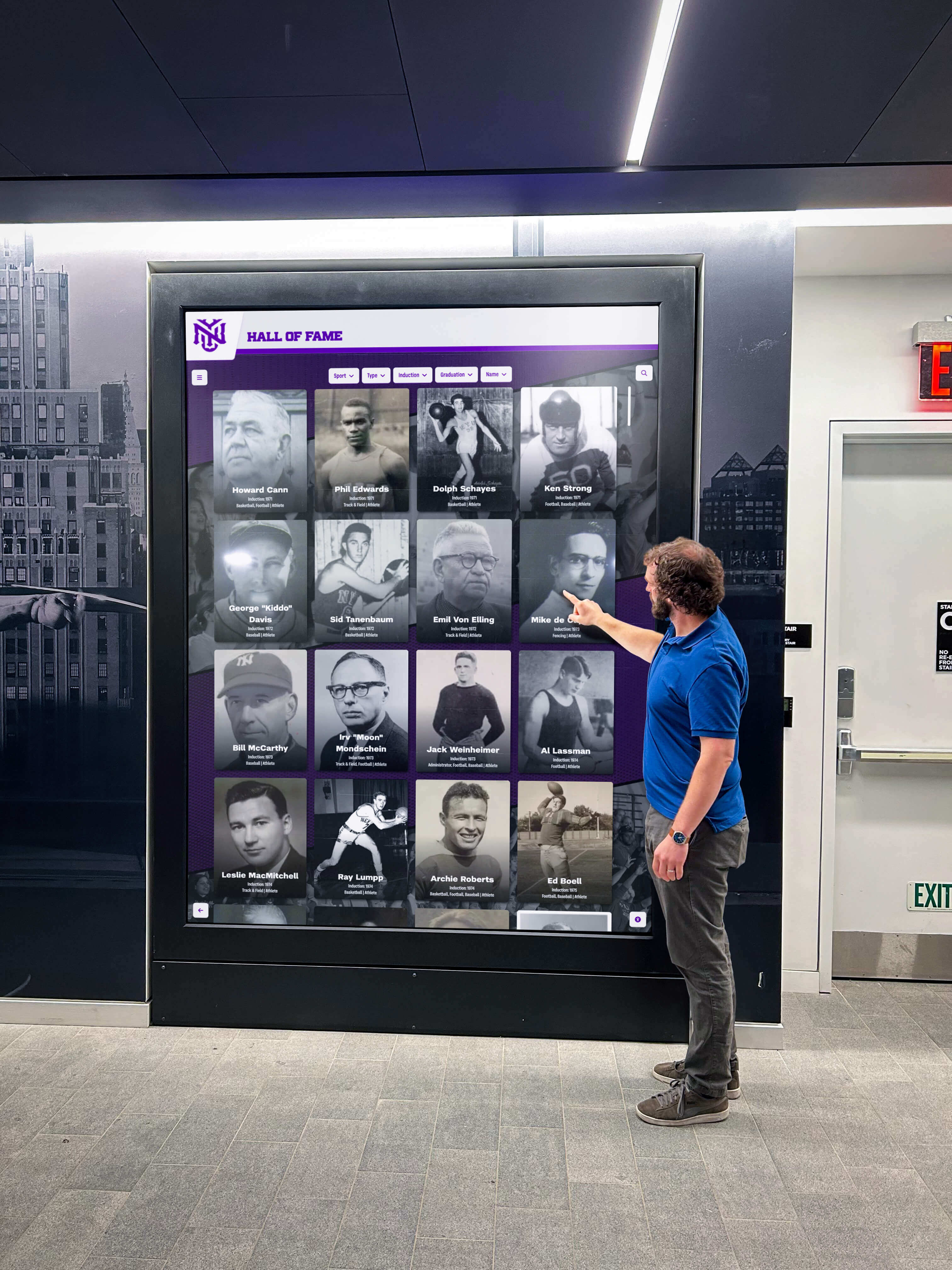
Commercial-grade touchscreen displays provide reliable operation and responsive interaction supporting professional recognition experiences
Conclusion: Why Unlimited Screen Licensing Matters for Recognition Success
Digital recognition displays transform how institutions celebrate achievement, foster community connection, and preserve institutional legacy—but only when comprehensive facility coverage remains financially sustainable rather than prohibitively expensive through per-screen licensing multiplication.
Traditional digital signage vendors structure pricing around display quantity, creating cost barriers preventing schools from implementing recognition networks celebrating achievements throughout facilities where honorees accomplished success. A single subscription serving multiple displays enables strategic recognition placement—athletic displays in competition venues, academic showcases in educational wings, alumni engagement in gathering spaces, and donor acknowledgment near funded improvements—without software licensing costs overwhelming institutional budgets intended for actual recognition content and programming.
Rocket Alumni Solutions eliminates per-screen licensing entirely, enabling institutions to deploy touchscreen recognition displays throughout facilities without subscription costs multiplying by screen quantity. This unlimited model makes comprehensive recognition coverage financially practical while enabling expansion responding to community enthusiasm rather than constraining growth through recurring budget approval battles over software licensing fees benefiting only vendors rather than celebrated achievers.
The substantial cost savings—frequently 40-60% over five-year periods compared to traditional per-screen vendors—enable institutions to redirect budget toward recognition program effectiveness: higher-quality content development, premium hardware delivering superior experiences, comprehensive historical research honoring legacy achievement, and programming supporting induction events and celebration ceremonies. Every dollar not paid to vendors for license multiplication represents investment in recognition quality and community engagement—the actual objectives motivating display implementations initially.
For districts managing recognition across multiple buildings, athletic departments celebrating diverse sports, or campuses coordinating achievement visibility throughout facilities, unlimited screen licensing represents the difference between constrained single-display compromises and comprehensive recognition networks appropriately honoring institutional excellence. Budget-conscious administrators deserve pricing transparency eliminating surprise cost multiplication while enabling strategic recognition deployment serving organizational objectives rather than vendor revenue goals.
Ready to explore how unlimited screen licensing enables comprehensive recognition coverage throughout your facility? Learn more about interactive recognition displays celebrating achievement appropriately, discover multi-screen implementation strategies distributing recognition effectively, or book a demo with Rocket Alumni Solutions discussing how unlimited licensing enables your comprehensive recognition vision without per-screen cost multiplication undermining budget sustainability.