



Intent: demonstrate | A scene-by-scene production guide to video-capturing a school retired jersey ceremony—speeches, highlight reels, athlete interviews—and archiving that footage in a permanent digital recognition display.
Hanging a retired jersey number from the gymnasium rafters is a moment most athletes describe as the proudest of their lives. For coaches, it is the culmination of years of mentorship. For families, it is a public validation of sacrifice that rarely gets acknowledged outside a small circle. For students in the stands, it is visible proof that transformative achievement happened here—at this school, in this gym, within living memory.
Yet the ceremony itself—often thirty to forty-five minutes of the most emotionally rich content a school will ever produce—vanishes within hours. A brief mention in the local paper, a few phone photos on social media, and that is it. The speech the coach spent a week writing. The athlete’s address to a packed gymnasium. The highlight reel assembled from eight years of game footage. Gone, or scattered across a dozen phone cameras in formats no one will ever organize.
This guide is organized around a single premise: a retired jersey ceremony deserves professional-grade capture and a permanent home. The sections that follow cover how to plan the ceremony video production, what to capture at each moment, how to collect athlete stories before and after the event, and how schools transform raw ceremony footage into a lasting digital recognition display accessible for decades.
The tradition of retiring jersey numbers began in professional sports but now reaches deep into high school athletics. When a program retires a number, it is making a statement that no future athlete should wear it—because it already means something permanent within institutional history. That statement deserves documentation proportionate to its weight.

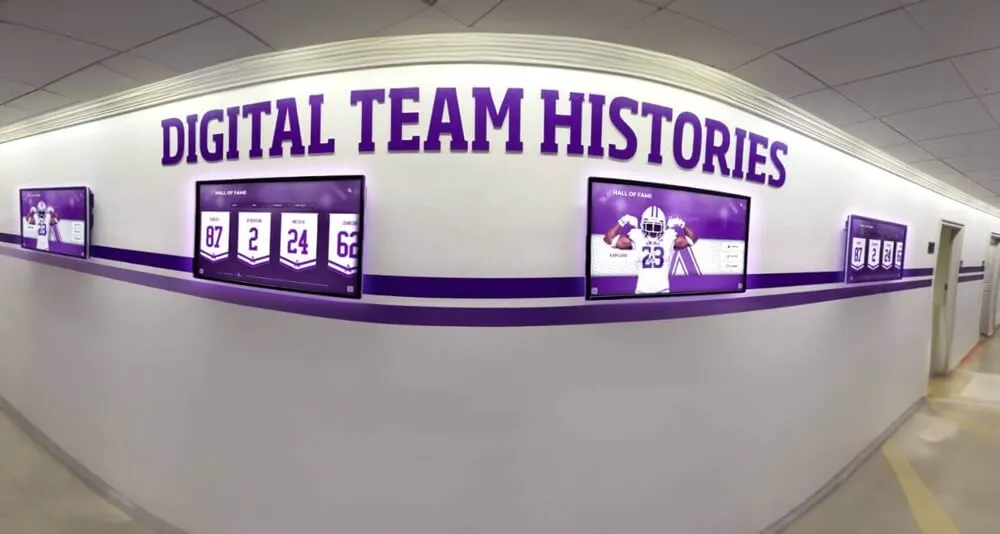
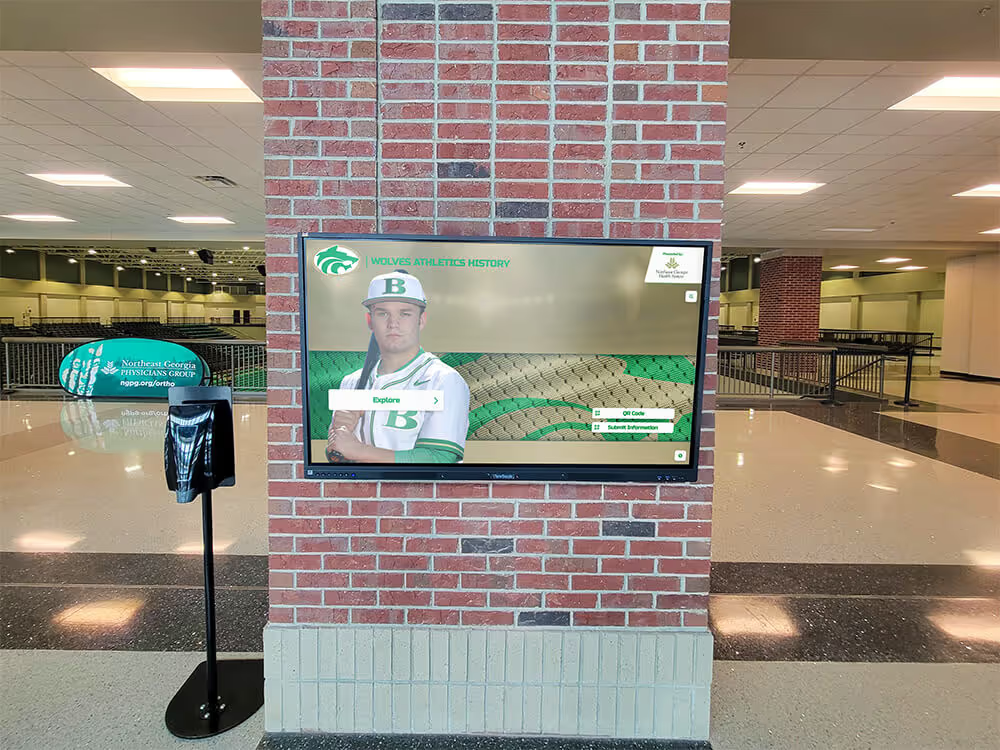
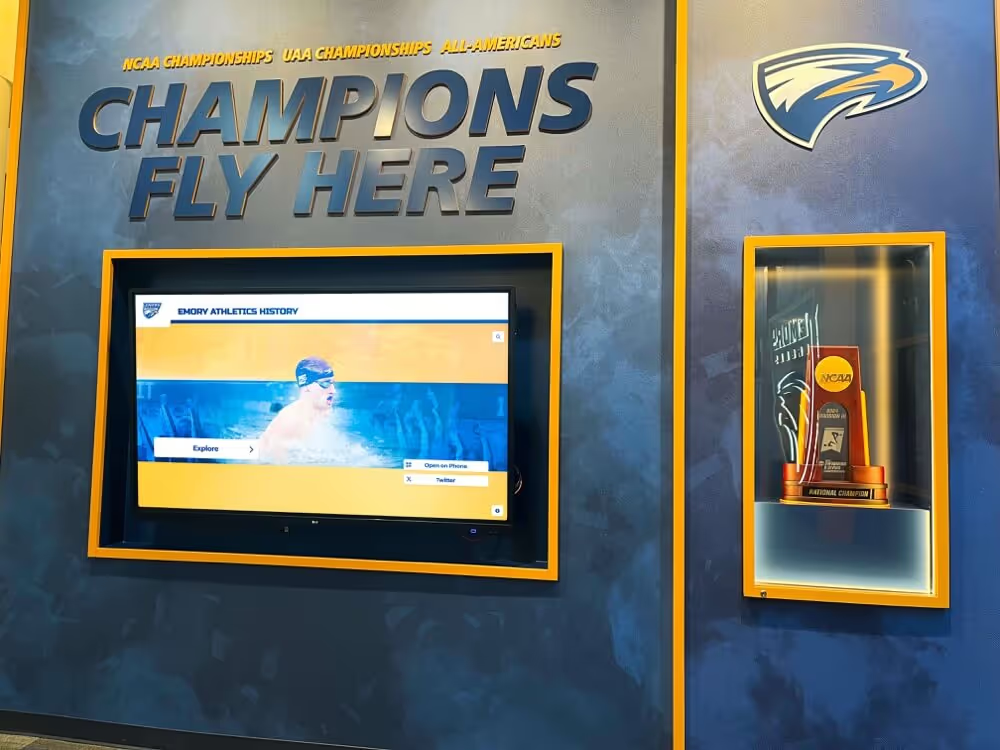
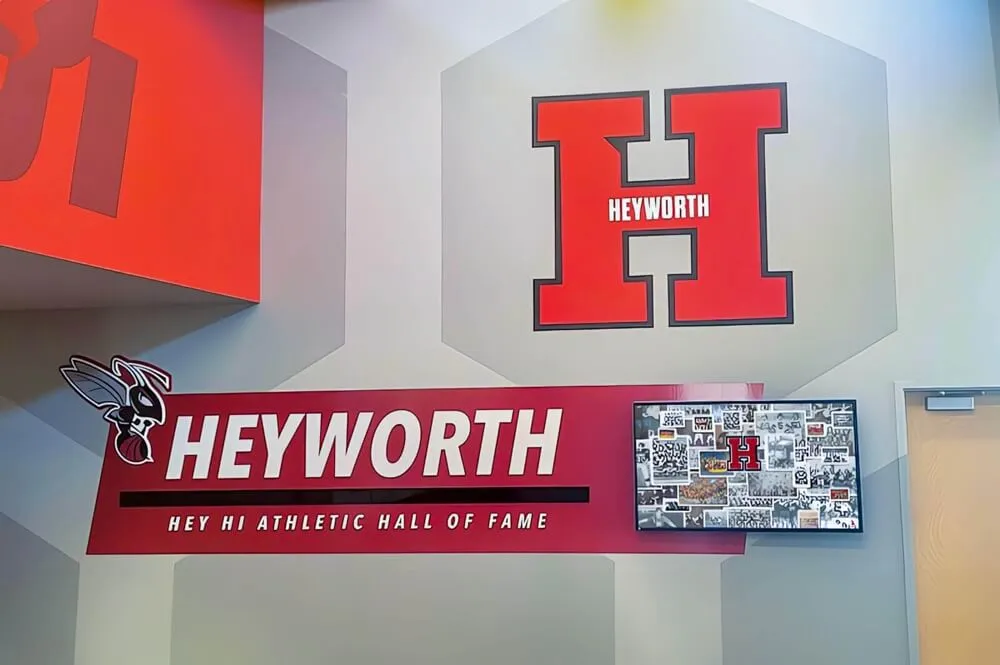
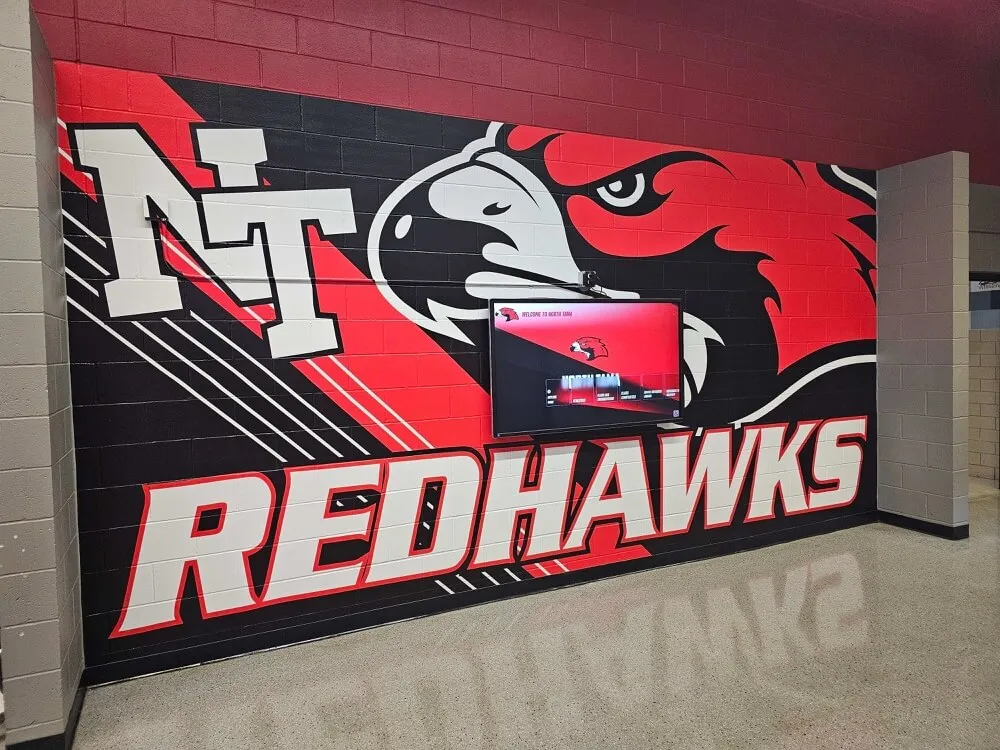
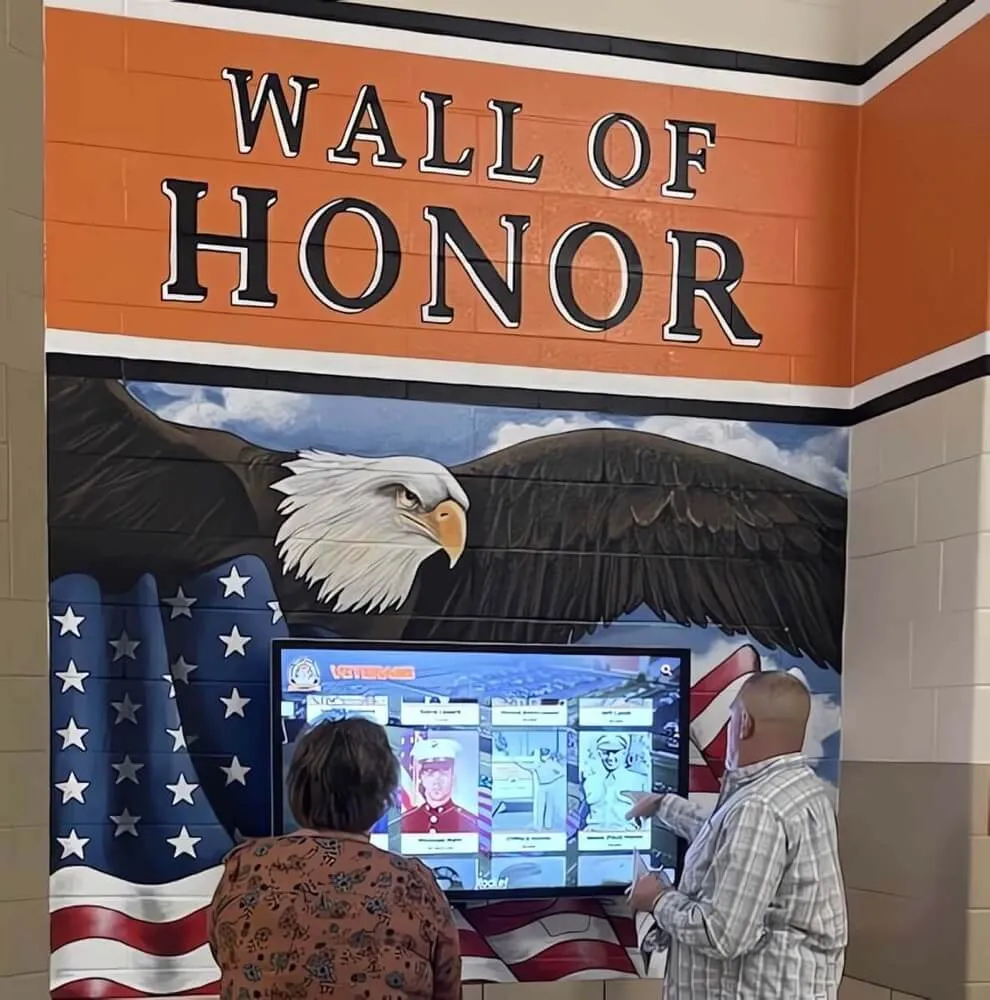
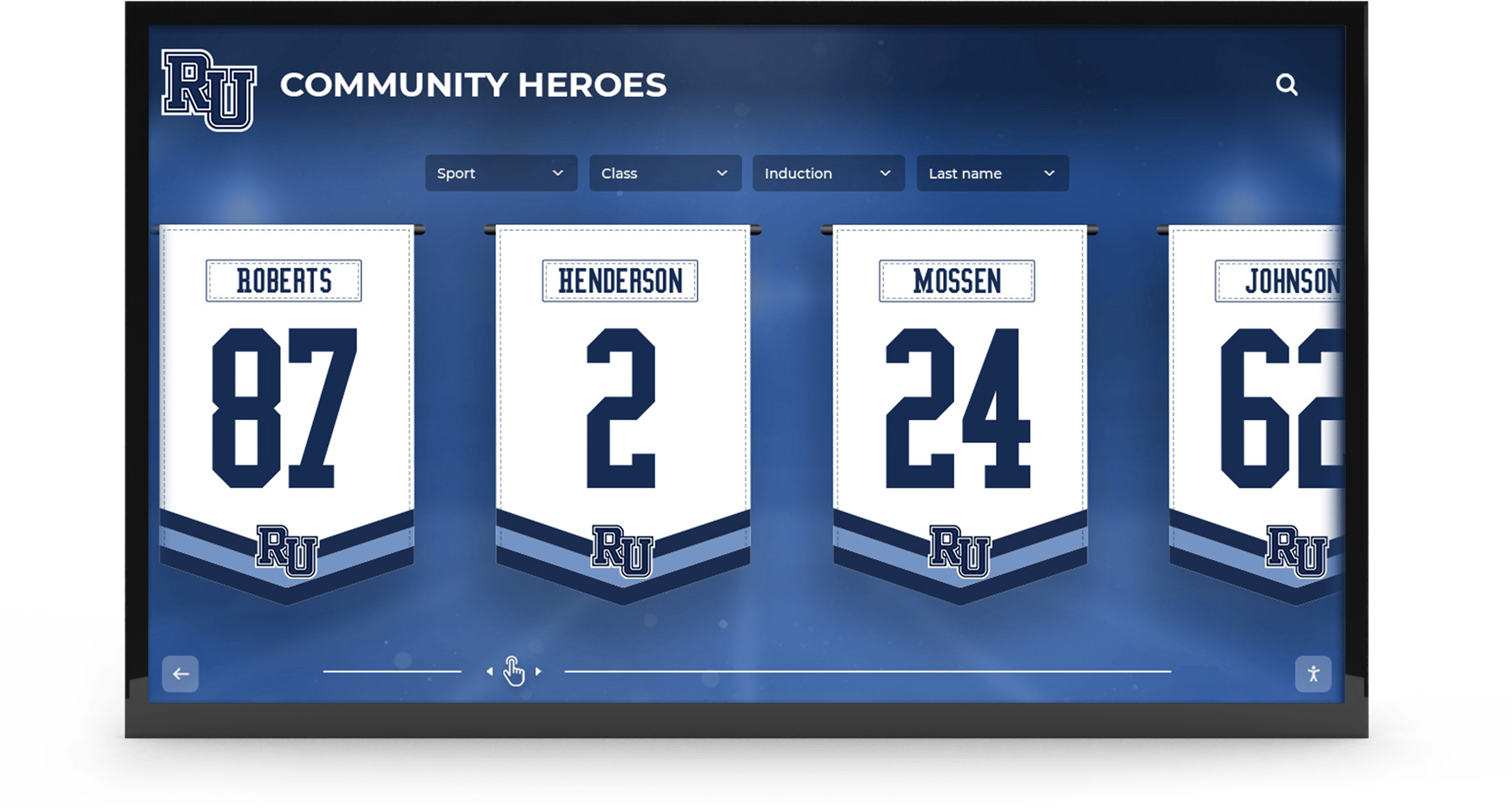
Digital recognition displays make retired jersey numbers visible year-round—not just on ceremony night
What Makes a Retired Jersey Ceremony Different
Most school recognition events—academic awards nights, letter ceremonies, senior banquets—are built around distribution. Many recipients receive recognition in quick sequence. The pacing is brisk and the individual moments are brief.
A retired jersey ceremony inverts all of this. There is one honoree. One jersey. One number that will never be worn again at this school. The entire event is a deliberate slowing-down—an extended, public meditation on what one person’s career meant to a program and a community.
That inversion changes everything about how you plan the video capture. Unlike a 90-second letter ceremony presentation, a jersey retirement includes sustained speeches from multiple presenters, an athlete address, a highlight reel, and a ceremonial unveiling that is unrepeatable. Schools that capture it well end up with usable content for years. Schools that improvise miss the moments that cannot be reconstructed.
Ceremony Video Overview
| Element | Typical Duration | Camera Position | Audio Requirement |
|---|---|---|---|
| Pre-ceremony highlight reel | 3–7 minutes | Audience-facing screen | Mixed/mastered audio |
| Opening remarks | 2–4 minutes | Front stage angle | Podium mic |
| Presenter speeches | 4–10 minutes each | Front + roving | Podium mic + ambient |
| Honoree speech | 3–7 minutes | Front + crowd reaction | Lapel or handheld mic |
| Jersey unveiling | 1–2 minutes | Wide + close-up | Ambient crowd |
| Post-ceremony interview | 10–20 minutes | Controlled background | Lapel mic |
VideoObject Metadata
| Field | Value |
|---|---|
| Title | Retired Jersey Ceremony: Capturing Speeches, Highlights, and Athlete Stories |
| Description | A complete production guide to video-capturing a high school retired jersey ceremony—from pre-ceremony highlight reel assembly through the unveiling to post-ceremony athlete interviews and permanent digital archive display |
| Duration | 8 minutes 30 seconds (ceremony guide video) |
| Thumbnail | /images/v2/community-heroes-digital-banner-display-jersey-numbers-ru.png |
| Upload Date | 2026-06-18 |
| Content Format | Embedded web player, YouTube, HubSpot video hosting |
| Accessibility | Full closed captions, audio description track required |
Scene-by-Scene Ceremony Capture Plan
Scene 1: Pre-Ceremony Lobby and Facility Setup (00:00–00:45)
Visual Elements: Wide establishing shot of gymnasium lobby or entrance hallway before doors open. Capture any display table, jersey photo printouts, recognition banners, or signage. Pull focus to existing athletic recognition walls and trophy cases already in place.
Production Intent: Establish institutional context. Viewers accessing the archive version later should understand where this ceremony took place and what the school’s athletic legacy looks like before the honoree enters the building.
Camera Notes: Static wide, no narration required. This footage becomes B-roll used under the presenter’s opening remarks in the final edit.
Scene 2: Pre-Ceremony Highlight Reel (00:45–06:00)
Visual Elements: Projected reel on gymnasium screen. Capture both the screen content and the audience reaction—faces in the crowd during key moments, especially family members and former teammates.
Production Intent: The highlight reel is the emotional foundation of the entire ceremony. It does what no speech can: it shows. The camera should split time between the screen and reaction shots from coaches, family, and current athletes in attendance.
What the reel itself should include:
- Career progression clips from earliest available footage through senior season
- Signature individual moments: record-setting plays, championship performances, clutch games
- Team context footage: sideline celebrations, huddle moments showing program relationships
- Statistics text overlays: seasonal bests, career totals, records held at the time
- Coaches and teammates from different years, spliced in chronological order
Many schools starting this process discover that older footage exists in more places than expected—parent recordings, yearbook archives, local news segments, booster club recordings. A yearbook scanning service that digitizes without damage can surface photographic records from eras before digital video was standard, providing context images that make the reel feel genuinely historical rather than limited to the most recent seasons.
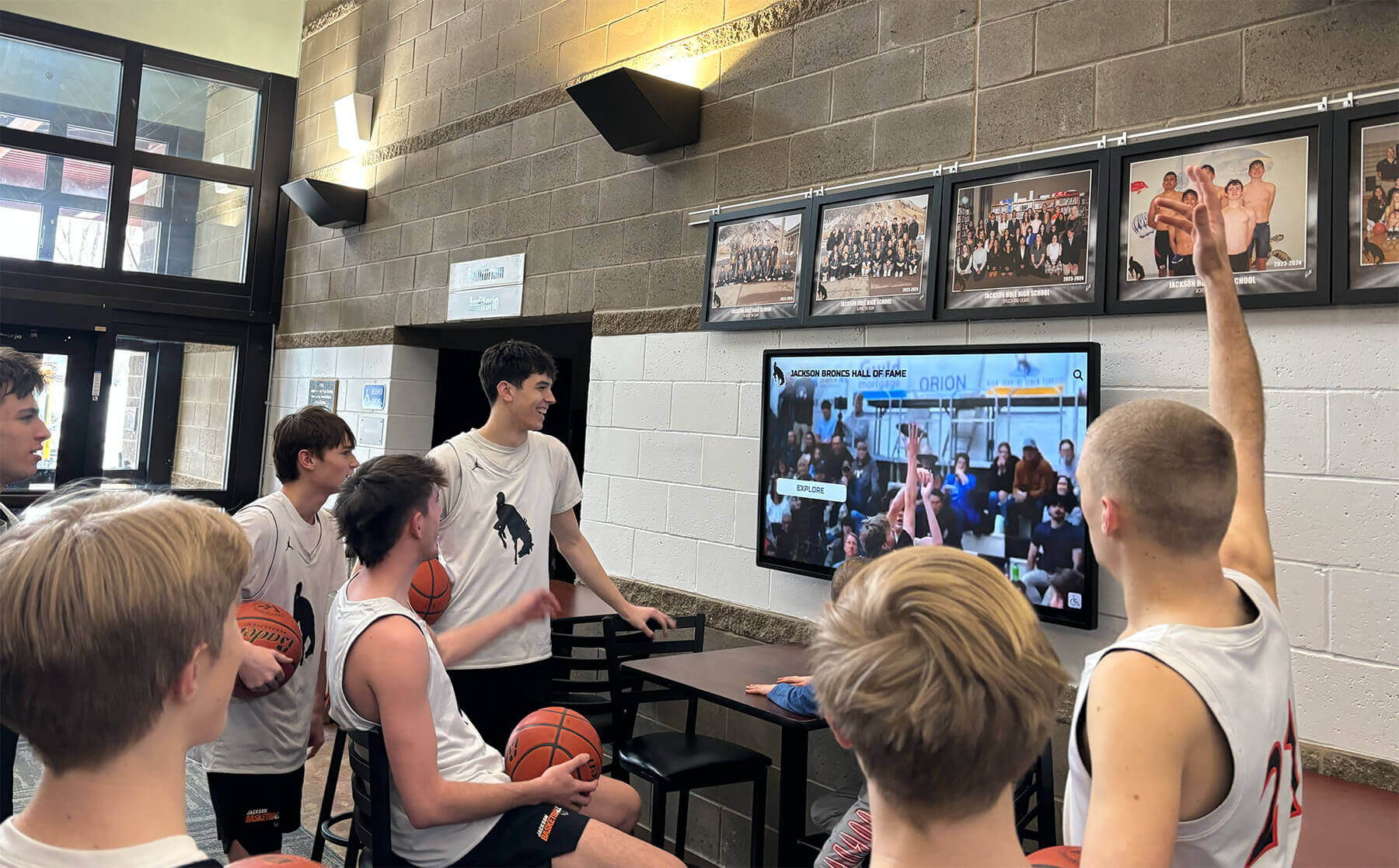
Capturing audience reactions during the highlight reel is as important as capturing the reel itself—those reaction shots carry the ceremony's emotional story
Camera Notes: Three positions produce the best results. Position 1 at the back center captures the full projected screen. Position 2 in a front corner captures crowd reactions without obstructing sightlines. Position 3 (roving) catches specific family reactions during milestone moments. If only one camera is available, stay front-center and accept that you will miss reaction footage—the screen content is non-negotiable.
Scene 3: Opening Remarks and Presenter Speeches (06:00–18:00)
Visual Elements: Podium or stage with presenter. Rotate between stage-front angle, crowd angle, and honoree reaction close-ups.
What makes presenter speeches work:
The best presenter speeches at retired jersey ceremonies do not catalog statistics. They tell the story of what the honoree changed. Coaches, former teammates, opposing coaches, athletic directors, and family members each have access to a different dimension of the athlete’s story—and strong ceremonies make space for multiple presenters who collectively cover:
- What the program looked like before the honoree arrived
- The specific moment when the presenter recognized this athlete was different
- A story that was never visible from the stands
- What the honoree meant to teammates and to program culture
- Where the athlete is now and how the institution has followed their career since graduation
Encourage presenters to write their remarks in advance and practice them. Remarks that are structured and rehearsed are significantly easier to edit for the archive than improvised ones, and the most important stories are far less likely to be dropped in the pressure of the moment.
Audio Notes: A podium microphone captures the primary speaker. Run a secondary ambient recording from the audience area to capture crowd reactions and applause. These two tracks give the editor control over the balance between speech and atmosphere in the archive version.
Scene 4: Honoree Speech (18:00–24:00)
Visual Elements: Honoree at podium or center court. Capture full body at the opening, then push in to chest-up framing for sustained remarks. Collect crowd reaction shots during applause moments.
Speech frameworks that produce strong retired jersey addresses:
The journey arc: Start with where the career began—first practice, first game, early doubts—and end at the ceremony itself. Let the narrative create its own emotional progression without forcing a conclusion.
The gratitude structure: Organize around the people who made the career possible. Family members first, then coaches, then teammates. Specific names and specific memories land far harder than general acknowledgments.
The program legacy close: End with something directed at current athletes in the gymnasium—what the honoree hopes they take from the career being recognized, what the program meant to them, and what they would tell a freshman sitting in those bleachers right now. This close transforms a personal tribute into an institutional one and is the moment most likely to be shared and remembered.
Encourage honorees to aim for five to seven minutes. The emotional register of a jersey retirement ceremony is already high by the time the athlete speaks. Concise, focused remarks land harder than extended ones.

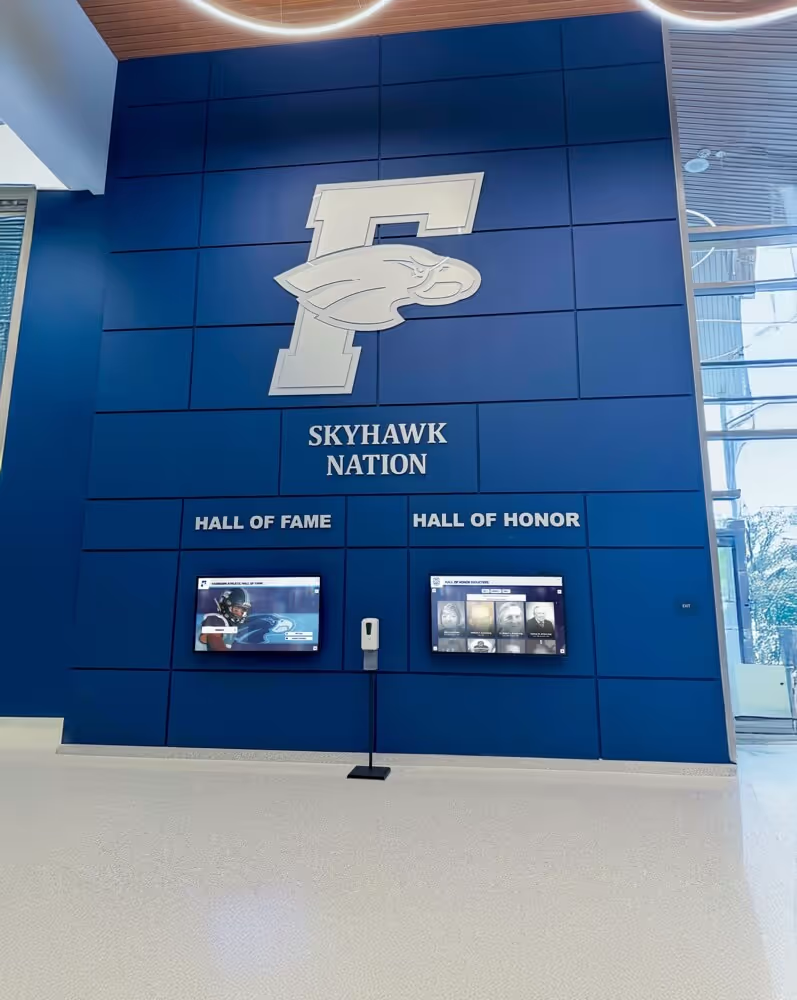
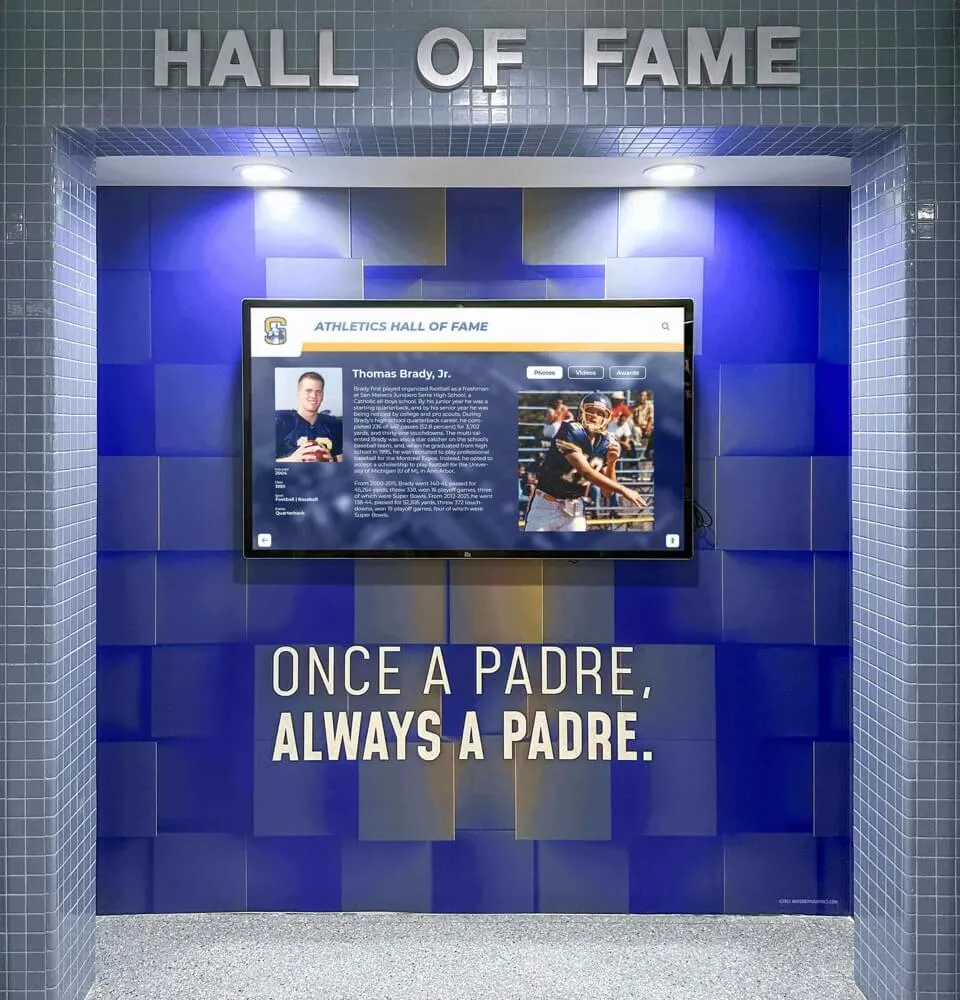
The athlete's jersey number becomes the anchor of the permanent recognition profile—the speech captured during the ceremony gives that profile biographical depth no statistics document can provide
Scene 5: Jersey Unveiling Moment (24:00–26:30)
Visual Elements: Wide shot capturing the jersey reveal—whether raised to rafters, unveiled on a display wall, or presented ceremonially at center court. Push in to close-up on the jersey itself. Capture the honoree’s face during the moment.
Production Notes: This is the single most important shot of the entire ceremony. If you have one camera, this is where it belongs. The unveiling moment is unrepeatable. Get the angle, hold the close-up on the jersey, and capture the honoree’s face if at all possible.
Audio: Crowd reaction during the unveiling is typically the most powerful ambient audio of the entire event. Do not reduce or cut the ambient channel during this moment. The sound of a gymnasium responding to a jersey going up—or a number being uncovered—is irreplaceable in the archive.
Scene 6: Post-Ceremony Athlete Interview (26:30–38:00+)
Visual Elements: Controlled background—a trophy case, school branding wall, or athletic hallway—with the honoree seated or standing. Two-camera setup if available: one static wide, one close-up.
The post-ceremony interview is where the most archivally valuable content gets recorded. The honoree is still in the emotional register of the ceremony but the formal pressure of the event is over. This combination produces unusually candid and reflective answers.
Suggested interview questions for a retired jersey ceremony:
- What went through your mind when you first found out the number was being retired?
- Walk us through a season or moment that did not go the way you hoped—and what that period taught you about yourself and the program.
- Who in this program changed how you understood what you were capable of?
- What do you want a freshman who has never heard of you to understand about what you were trying to do here?
- What does this number mean to you, beyond what it represents on a display or a banner?
These questions are designed to produce answers that work independently of the highlight reel—material that can be extracted as standalone short-form content for social media, embedded in the permanent digital profile, and replayed at future recognition events tied to the same number or program milestone.
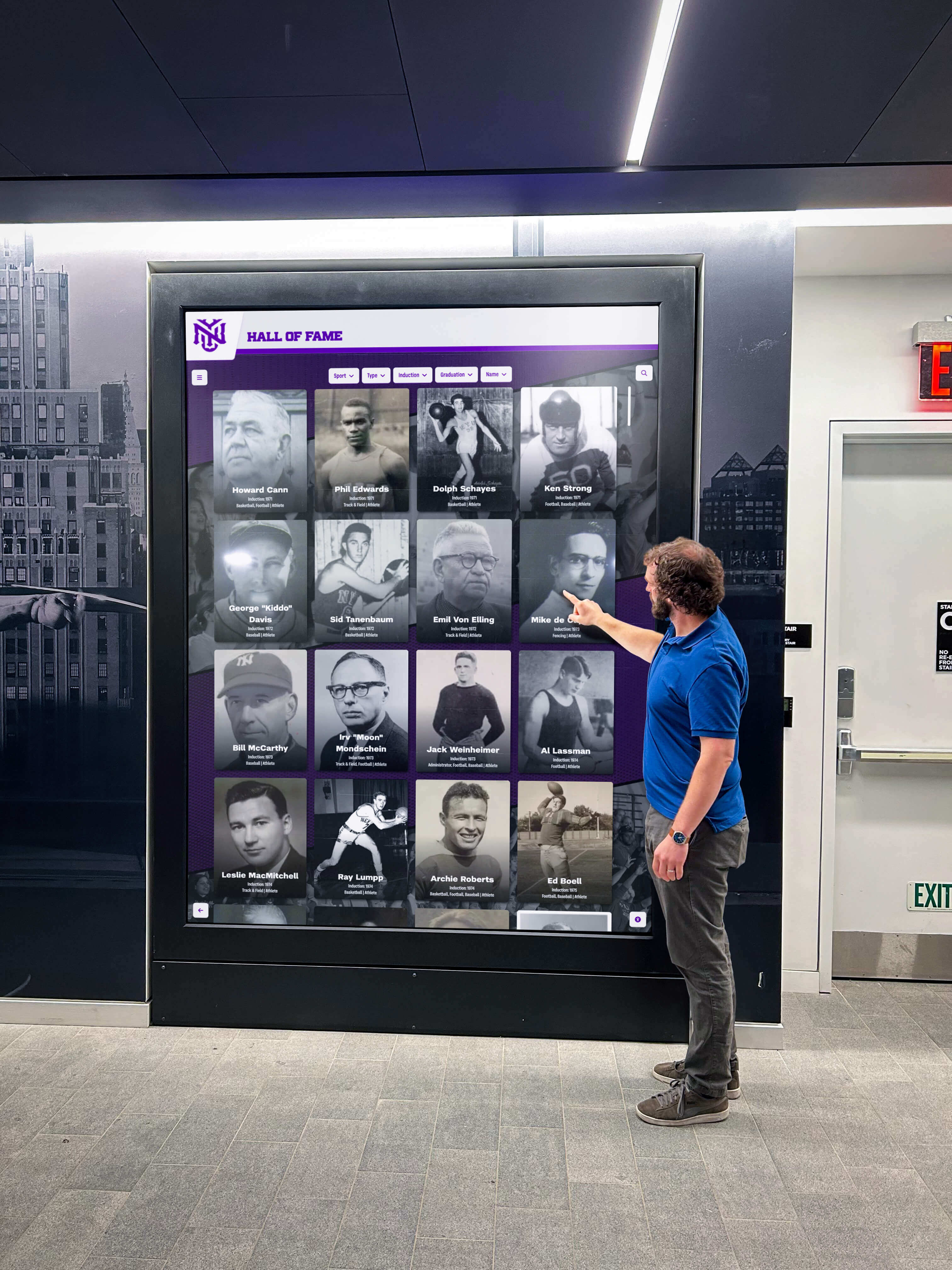
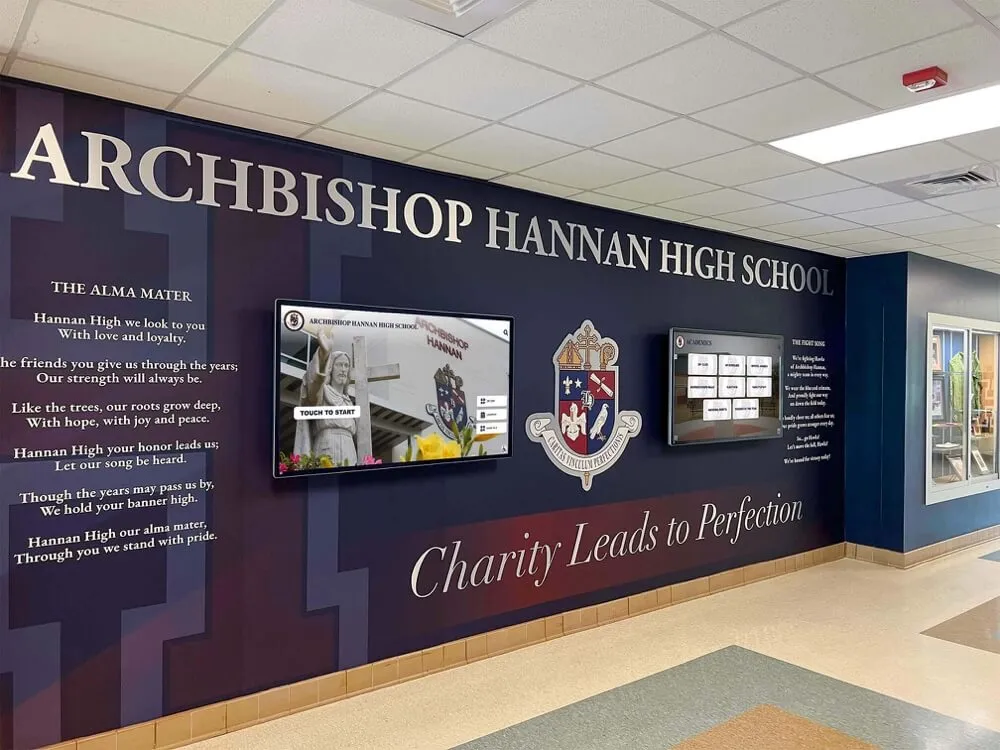
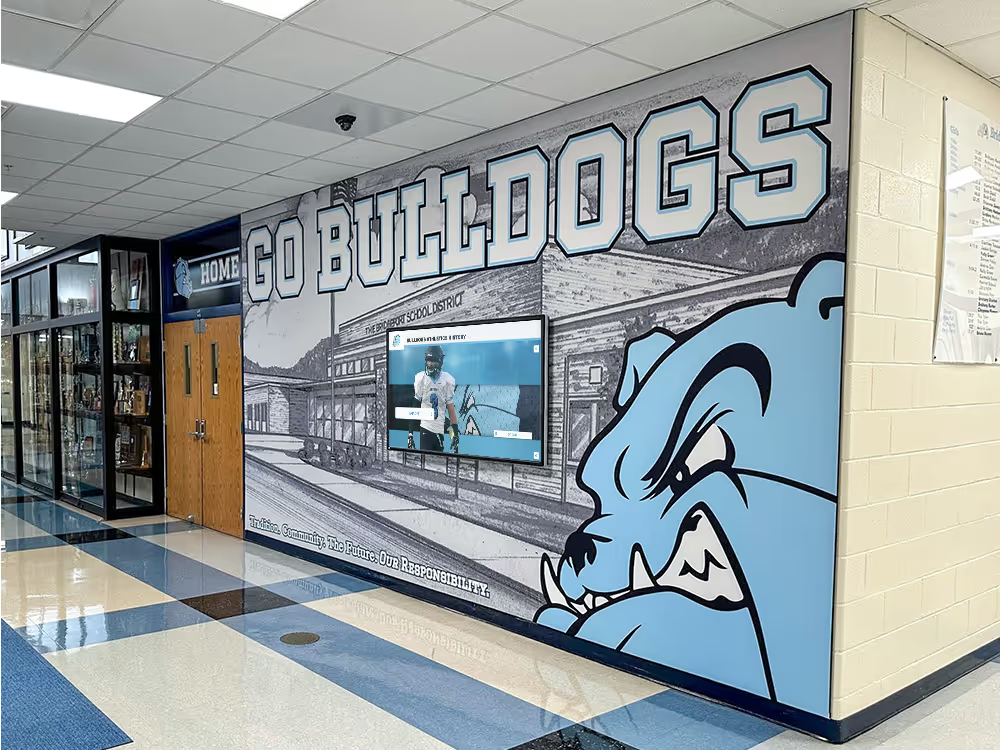
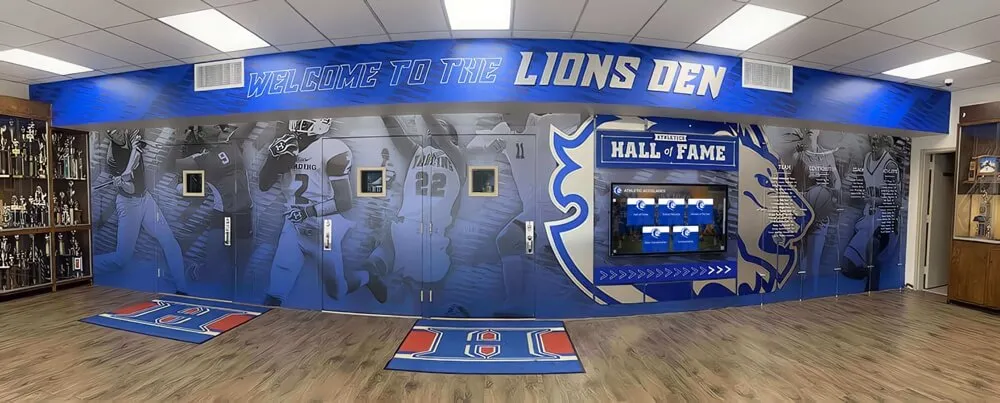
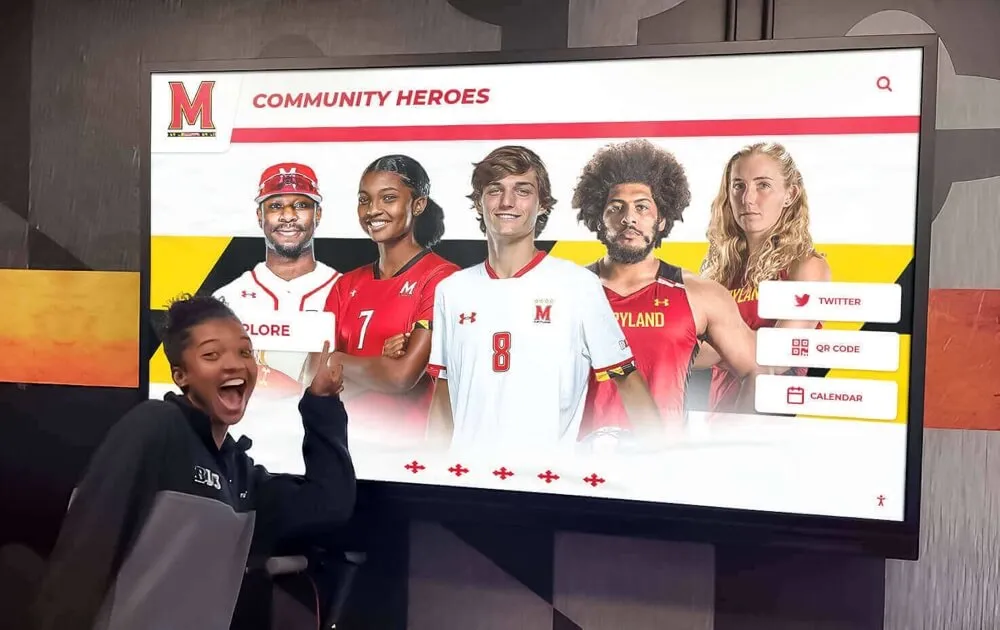
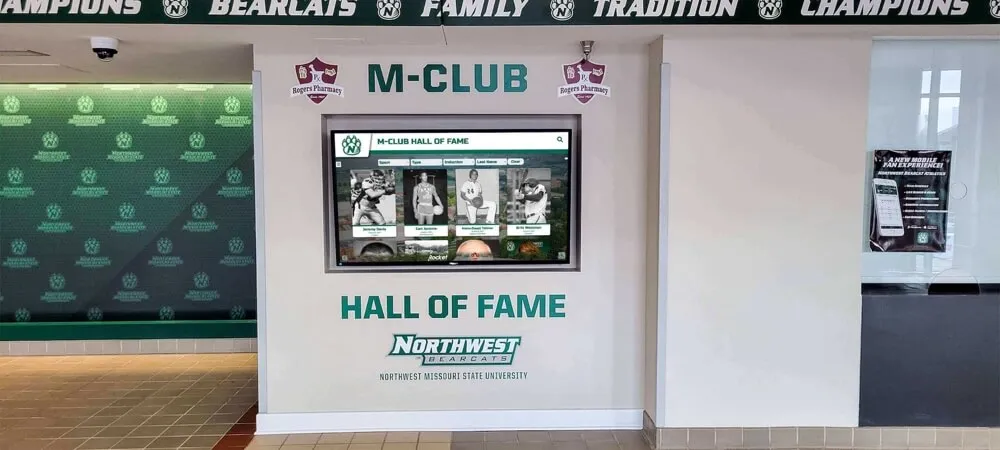
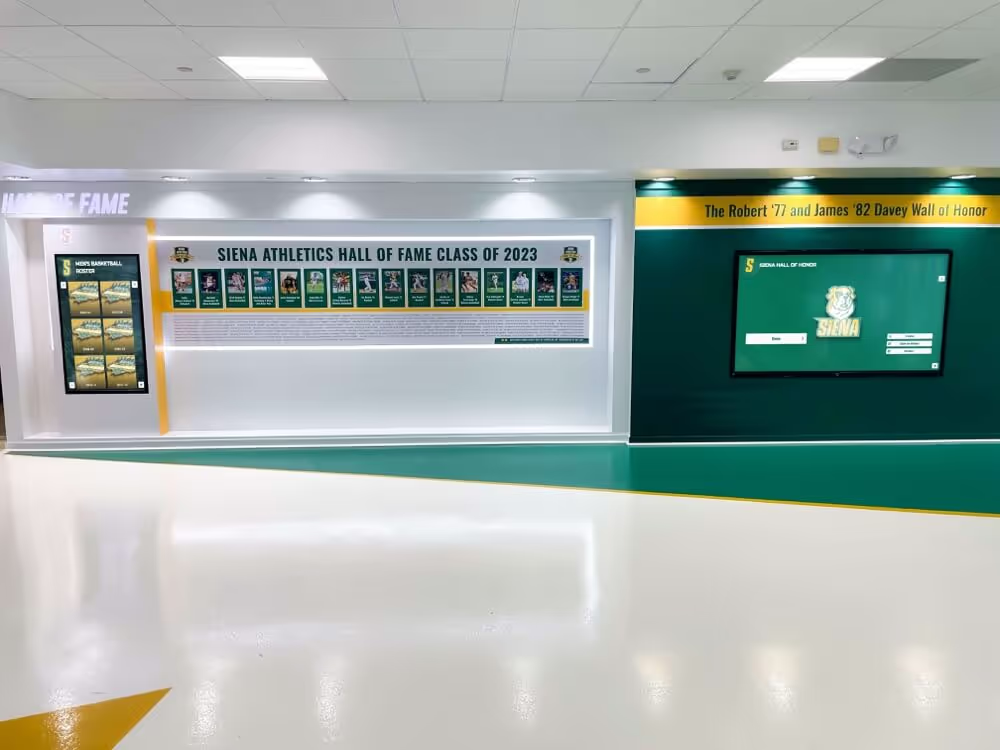
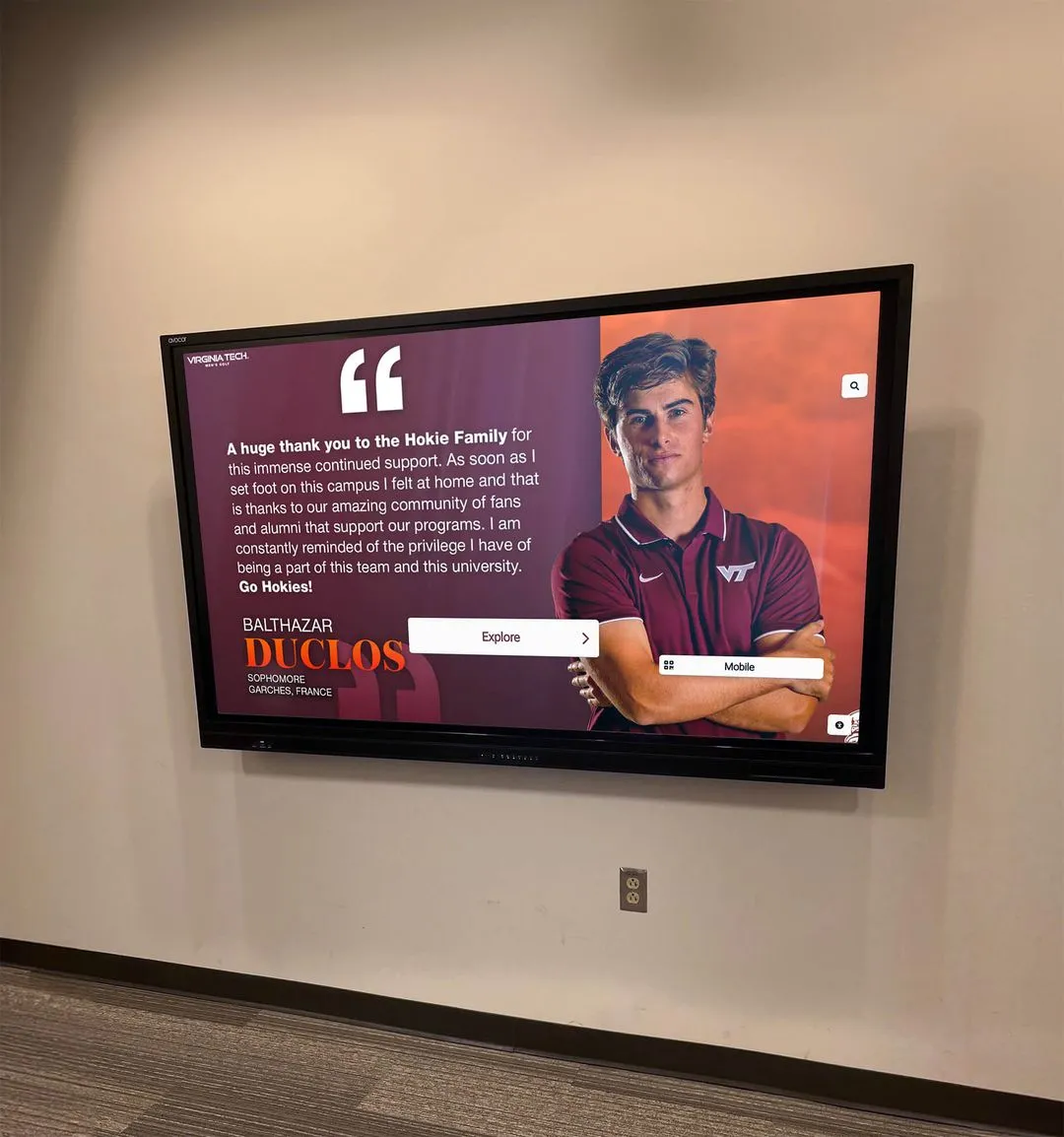
Interactive lobby displays give the post-ceremony interview a permanent home—the athlete's story remains accessible to students who were not born yet when the jersey was retired
Building the Complete Athlete Profile
The ceremony video captures the event. The athlete profile anchors it within the institution’s permanent record.
A complete retired jersey athlete profile includes four distinct layers:
Career documentation layer
- Statistical summary by season with career totals
- Team records during the honoree’s tenure: wins, championships, conference finishes
- Individual records held, when set, and current standing
- Scholar-athlete designations or academic recognition if appropriate
Narrative layer
- A 200–400 word first-person biography drawn from the post-ceremony interview
- Two or three coaching perspectives on what distinguished the athlete
- Teammate recollections from at least two different seasons
- A brief account of the athlete’s career after graduation
Media layer
- Career highlight video (three to five minutes, drawn from the ceremony reel)
- Portrait photograph from the retirement ceremony
- Action photographs from multiple seasons and years
- Scanned print materials: newspaper articles, program covers, state tournament brackets
Contextual layer
- What the program’s competitive record looked like when the athlete arrived versus when they left
- Conference or district context for the records being recognized
- How the honoree’s tenure connects to the school’s broader athletic history
Schools with established academic recognition programs often have institutional frameworks for comprehensive archiving already in place. Adapting those systems for athletic recognition profiles creates consistency across the school’s entire recognition portfolio and reduces the administrative overhead of managing multiple separate archives.

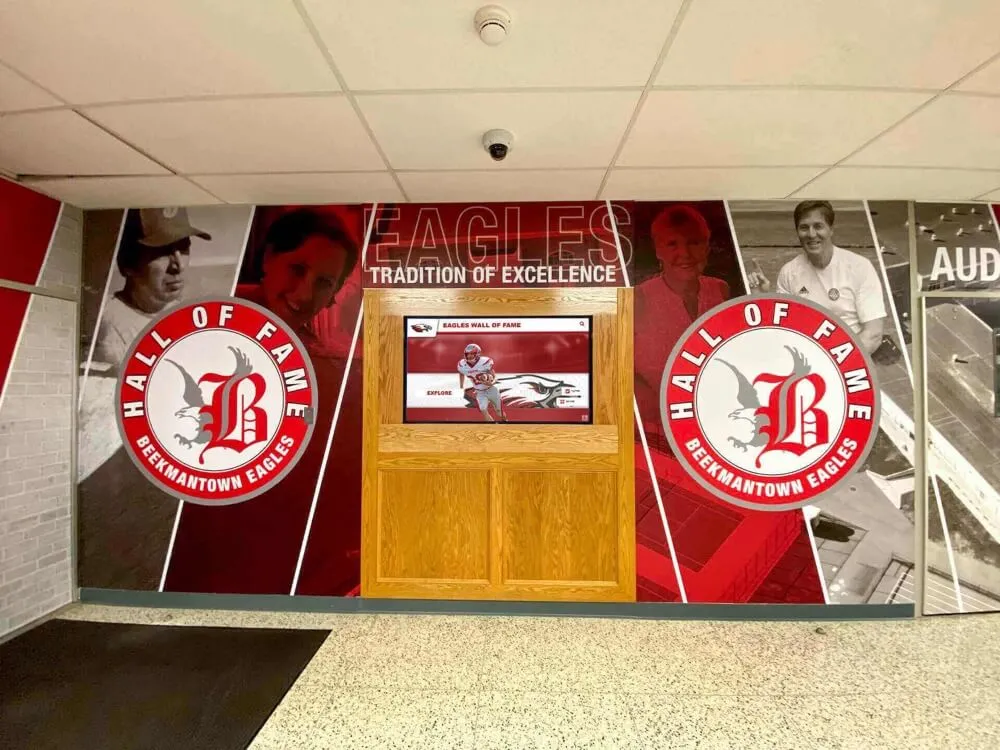
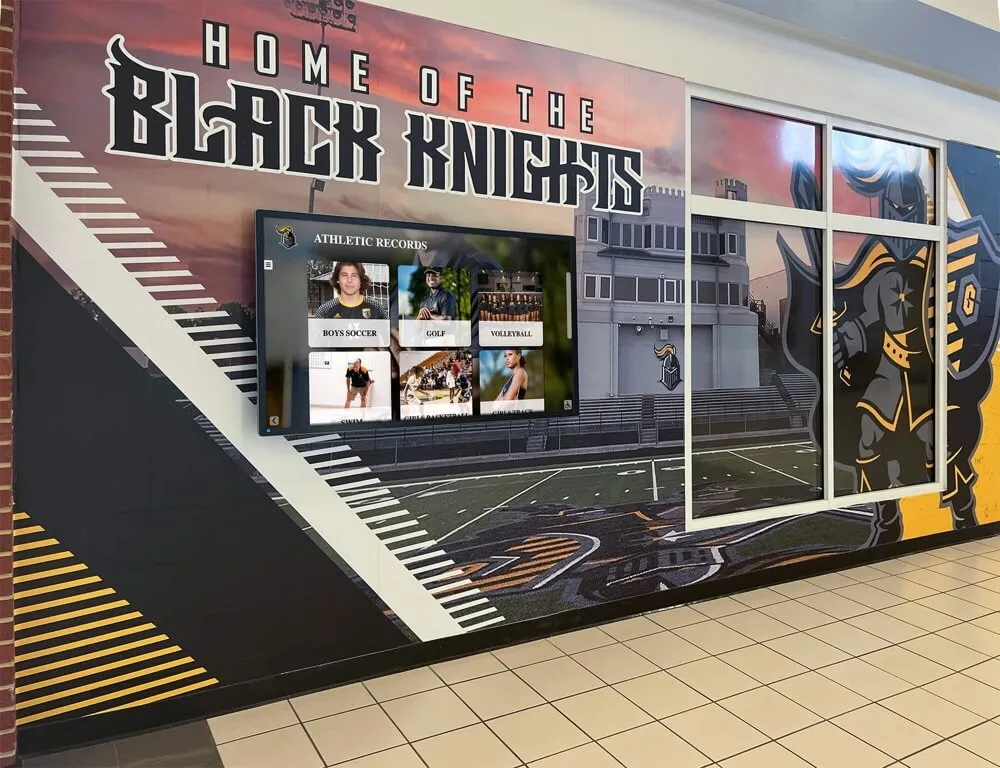
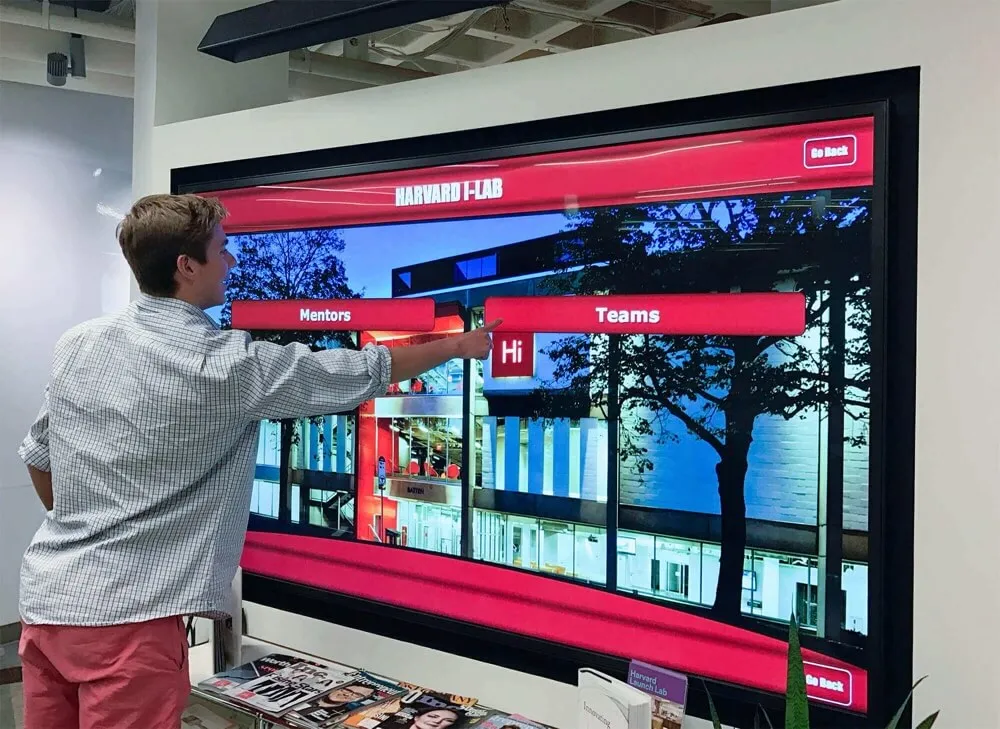
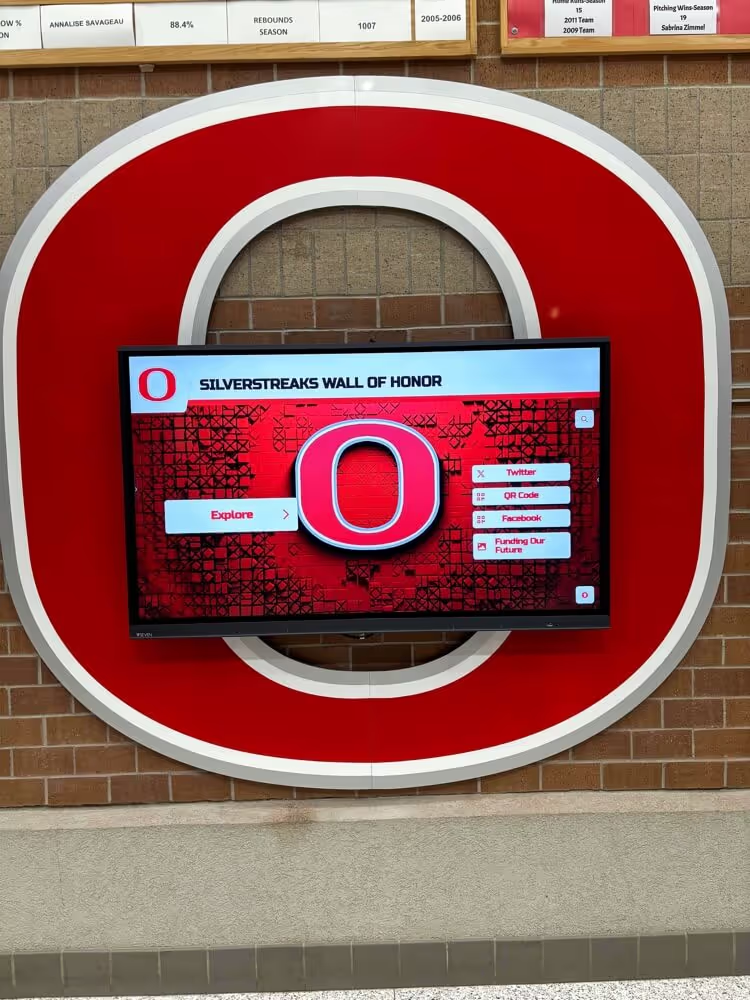
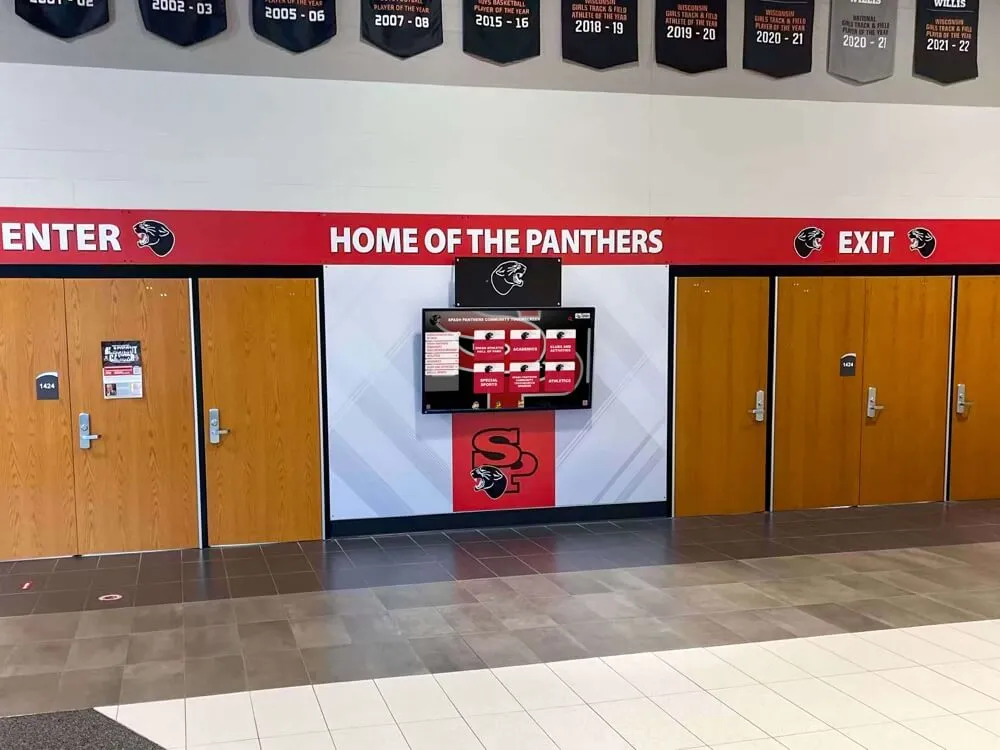
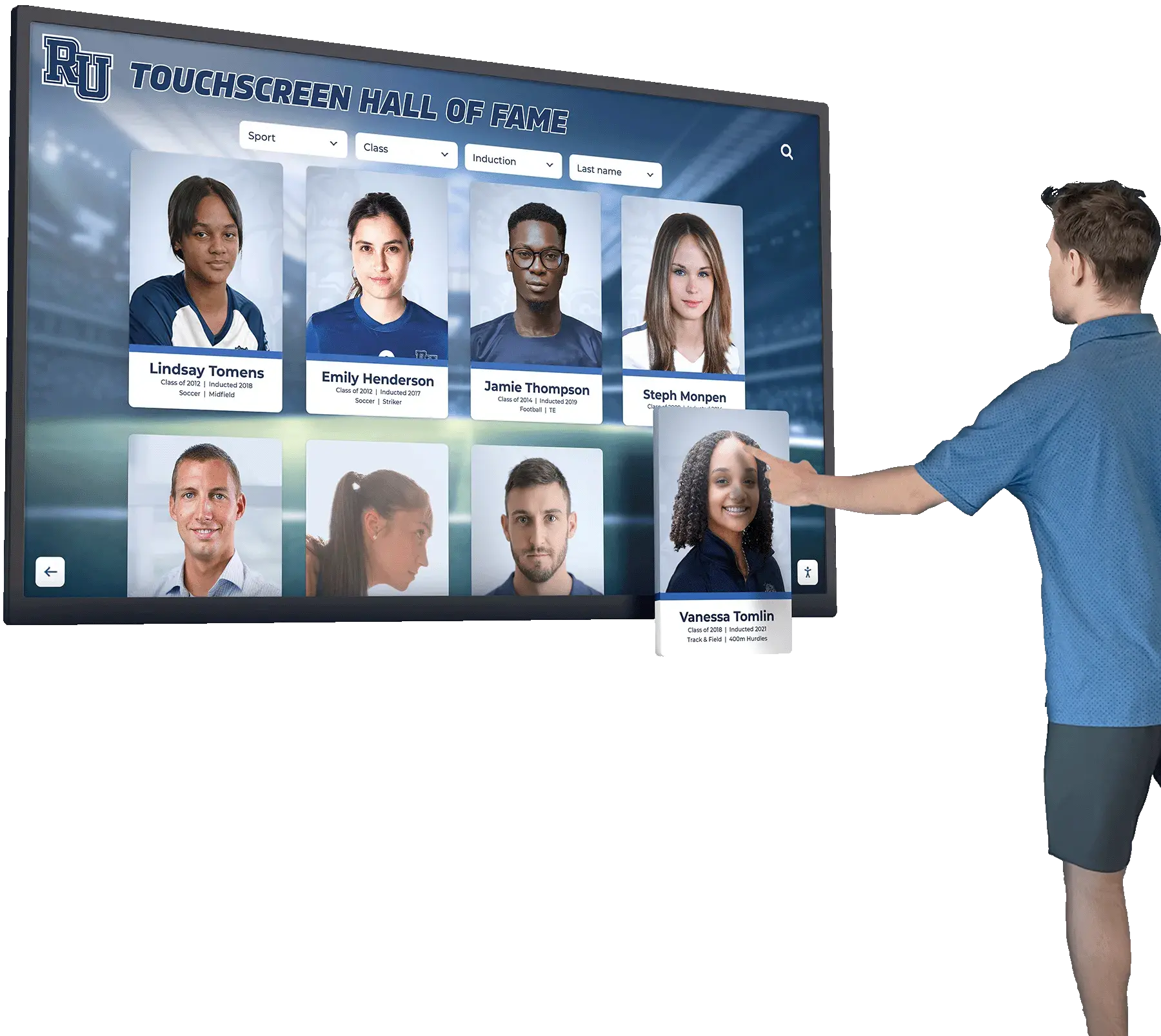
Touchscreen athlete profiles give each retired jersey honoree a rich, multimedia story rather than a single banner with a name and number
Permanent Display Options
Traditional Banner Programs
Banners hung in gymnasiums remain the most common form of retired jersey recognition. They create powerful visual impact during live events—the number visible to every athlete who competes beneath it—and establish an enduring physical presence in the athletic space.
Limitations: banners provide no biographical context, deteriorate over decades, and cannot be updated without replacement. A graduate returning thirty years later sees the number but has no way to access the story behind it.
Digital Trophy Cases and Interactive Displays
Interactive digital displays for high schools provide a natural home for retired jersey content because they hold the full documentation layer—statistics, highlight video, interview footage, newspaper archive—without the space constraints of physical installations.
A well-designed retired jersey profile on a digital display allows a visitor to:
- View career statistics and season-by-season progression
- Watch the ceremony highlight reel or a condensed version
- Read the athlete’s story in their own words
- Browse photographs across multiple periods of the career
- Understand what records the athlete holds and whether they still stand today
This multimedia profile makes the recognition accessible to students who were not born when the jersey was retired—which is precisely the point of the tradition. For programs building out winter sport recognition alongside jersey retirements, a winter sports hall of fame recognition guide covers how schools integrate individual retired jersey profiles with broader sport-specific recognition programs.
Lobby Touchscreen Walls of Fame
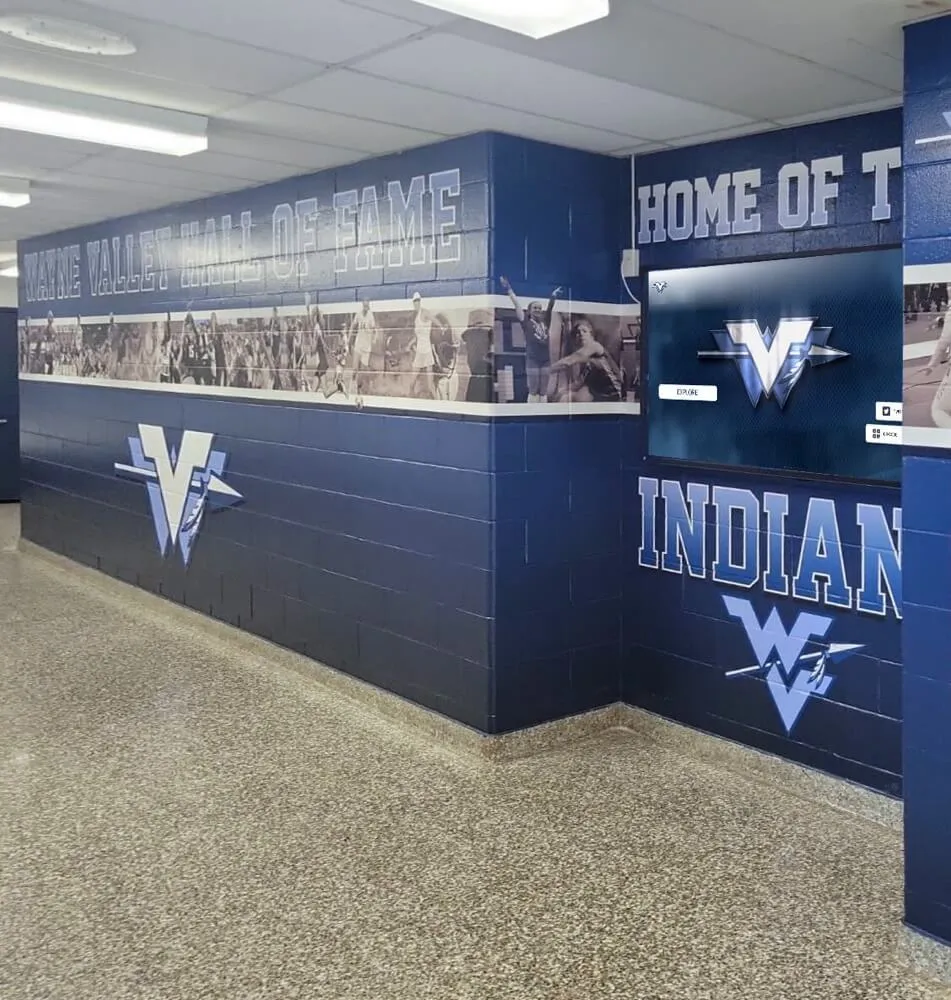
Schools with dedicated recognition hallways or lobby walls can integrate retired jersey content directly into their primary recognition infrastructure. An athlete who appears in the hall of fame with a full induction profile and in the retired jersey section with ceremony video creates a richer institutional record than either recognition type provides alone.
For programs exploring whether digital recognition infrastructure fits their scale, the touchscreen display options for smaller schools addresses implementation considerations at schools that assume this technology is only viable for large universities or athletic programs with large budgets.
Annual Recognition Event Integration
Retired jersey ceremonies work well as anchor moments within larger annual recognition events—hall of fame induction nights, athletic award banquets, or homecoming weekend celebrations. This positioning creates volunteer appreciation opportunities for schools by giving booster club members and parent volunteers a clear production role within a program they are already invested in.
For programs running winter sports recognition alongside hall of fame ceremonies, the interactive hall of fame display guide covers how to structure recognition that honors both current season achievements and historical retired jersey legacies within the same event framework.
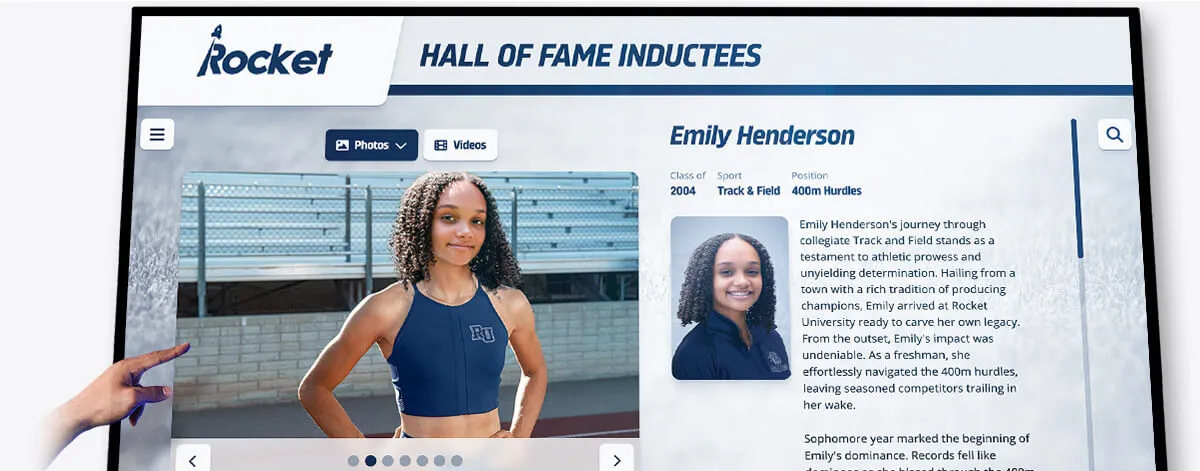
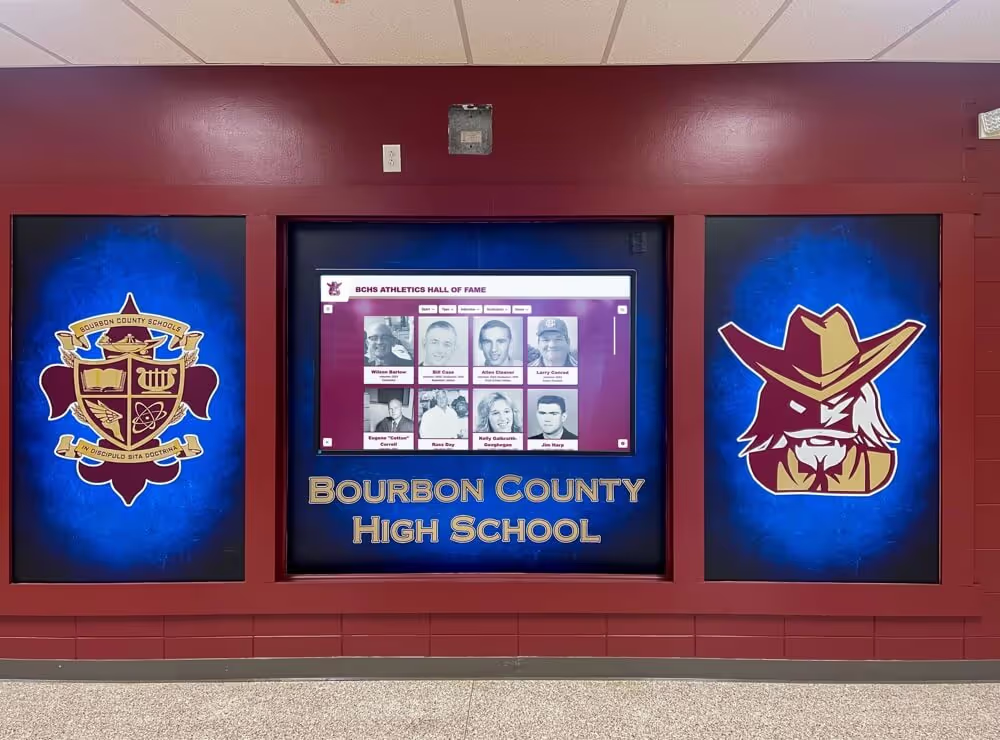
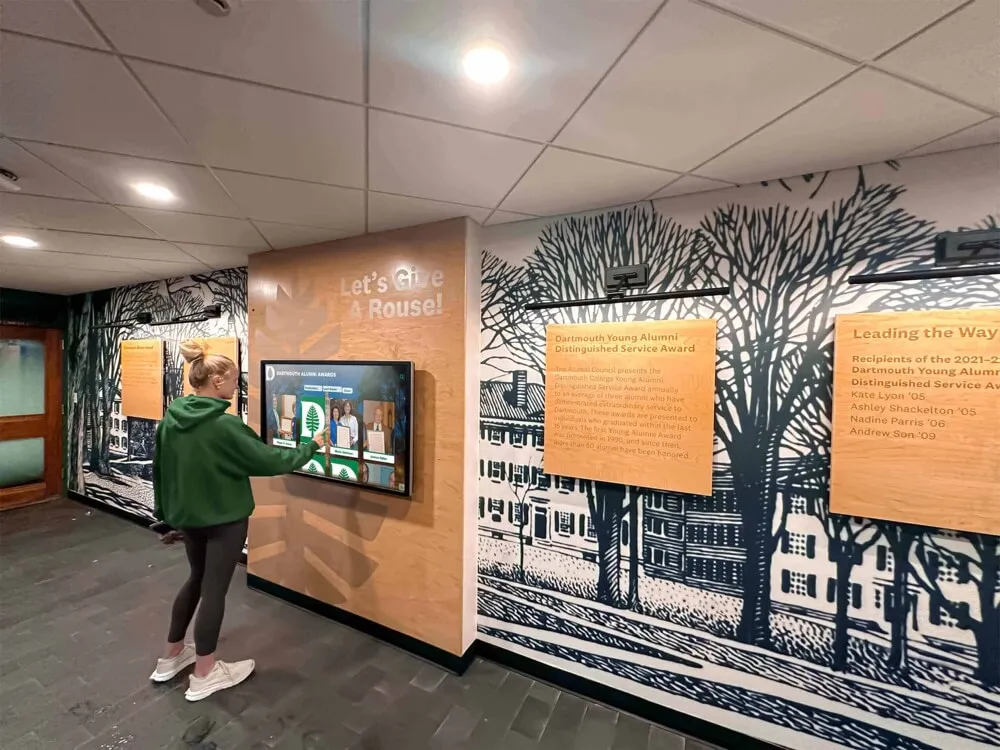
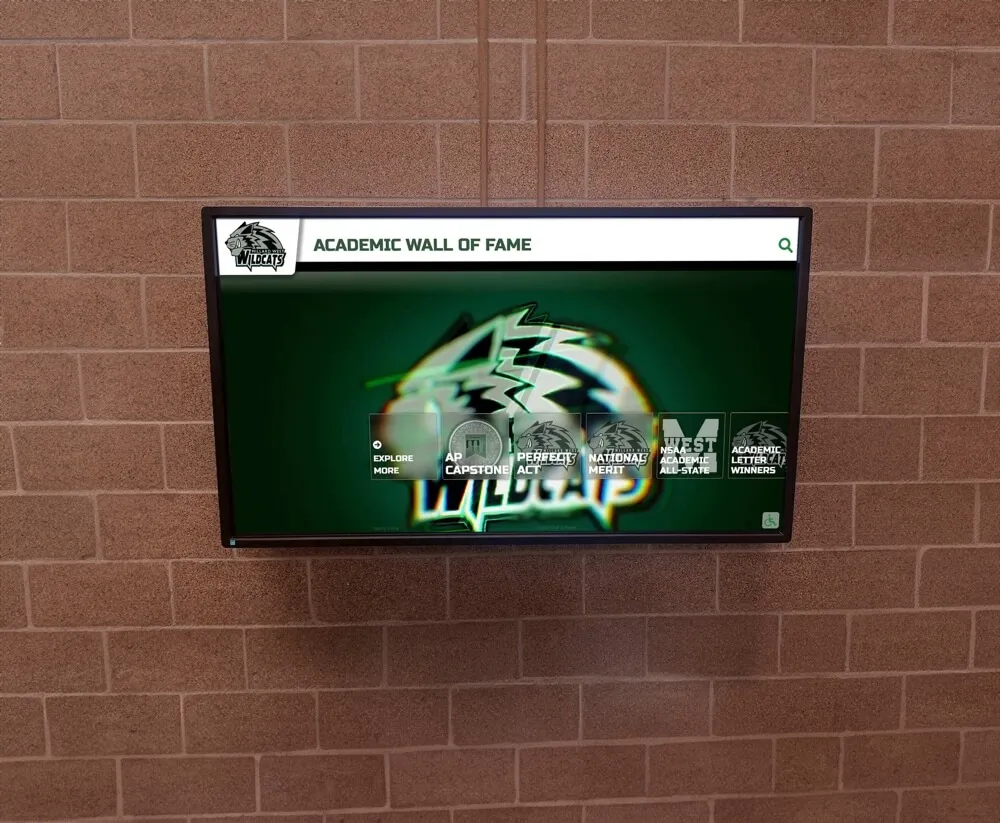
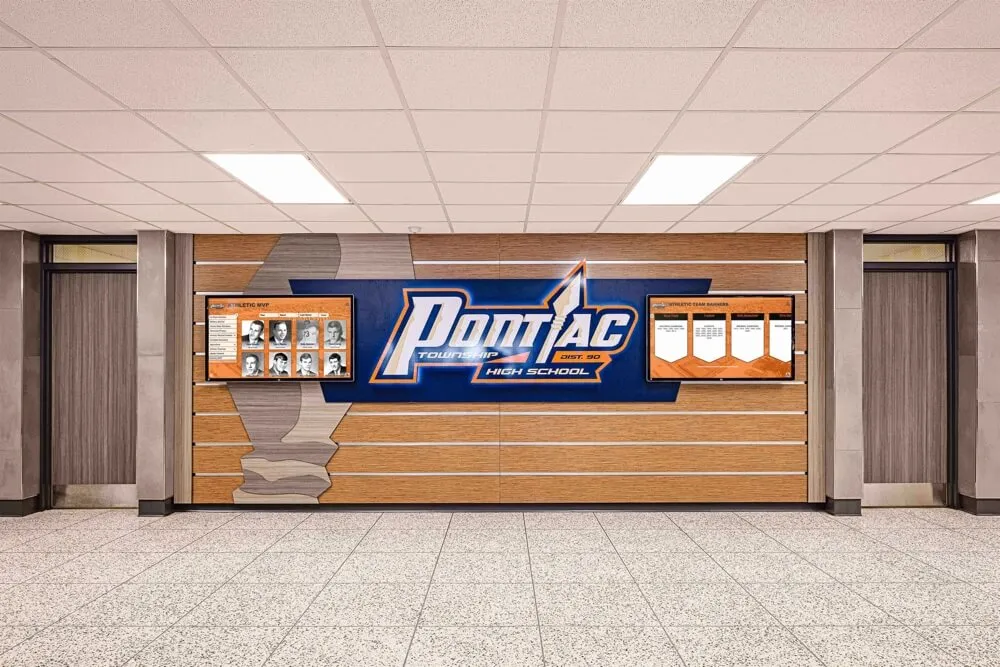
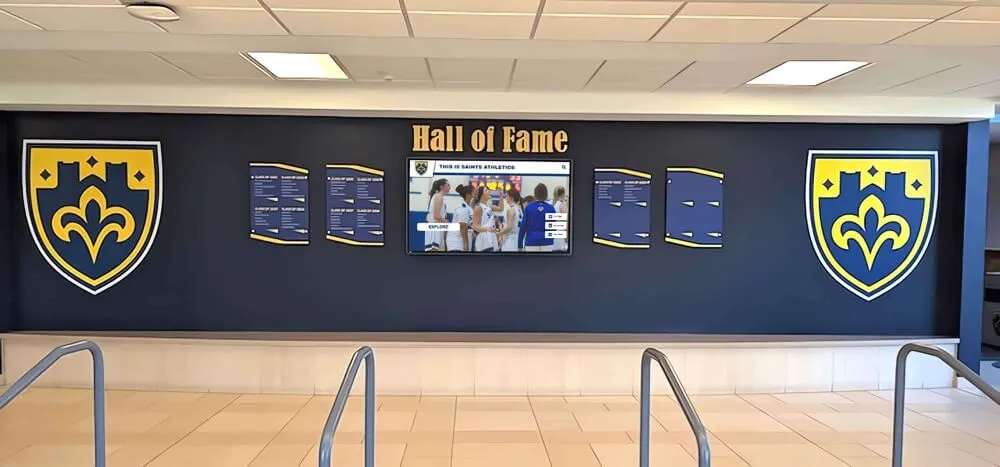
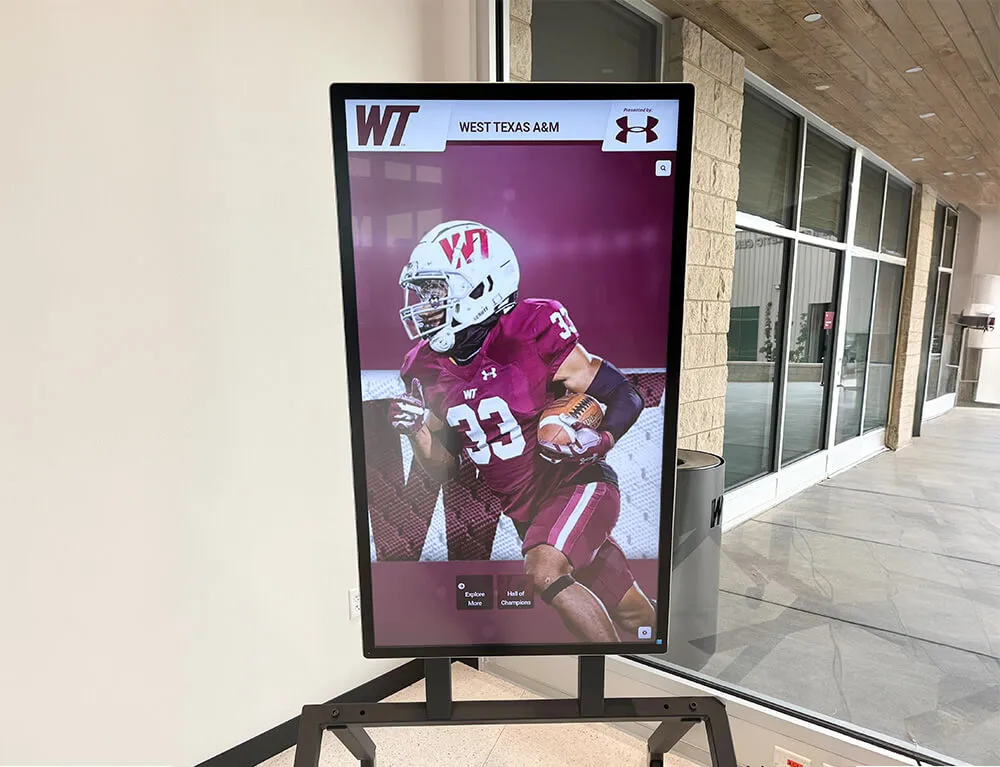
Digital displays that house both ceremony video and career statistics give retired jersey honorees a complete, lasting record—not just a banner that visitors walk past without context
Scheduling the Ceremony for Maximum Capture Quality
The most overlooked production consideration for retired jersey ceremonies is scheduling. A jersey raised in a darkened gymnasium at halftime—rafters spotlit, packed crowd, live energy in the room—looks fundamentally different from the same ceremony run on a Tuesday afternoon with overhead fluorescents and a half-empty bleacher section.
Optimal scheduling options:
- Halftime of a home game: Maximum crowd, built-in energy, existing AV infrastructure, natural anticipation arc from the game itself
- Athletic awards night: Captive audience of athletes and families, controlled environment, flexible timing that does not compete with game operations
- Homecoming weekend: Alumni presence creates additional audience depth and natural social amplification
- Standalone ceremony: Maximum production control, but requires building its own audience from scratch
Regardless of format, confirm these logistics before the date: PA system access, microphone availability, projection capability for the highlight reel, and whether the back-of-gymnasium camera position needed for clean podium coverage is free from obstruction.
Production Notes
Equipment Minimums
| Role | Minimum Setup | Preferred Setup |
|---|---|---|
| Primary video | 1 DSLR or mirrorless camera, 24–70mm lens | 2 cameras: wide angle + tight close-up |
| Audio | On-camera microphone + podium feed | Podium feed + room ambient + honoree lapel mic |
| Lighting | Existing gymnasium lighting | LED panel fill for post-ceremony interview setup |
| Storage | Two 128GB cards | Four 256GB cards with redundant backup |
ADA and Accessibility Requirements
- Closed captions required for any video embedded in a permanent digital display
- Audio description track for highlight reel sections without spoken narration
- Subtitle files in SRT or VTT format retained alongside master video files for long-term archive use
- Physical display text at minimum 24-point equivalent for any ceremony signage
Post-Production Workflow
- Log and sync all camera angles within 48 hours of ceremony
- First-pass edit: full ceremony master cut, lightly trimmed
- Short-form extract: 90-second ceremony highlight clip for social media and lobby attract loop
- Athlete profile cut: five-minute standalone honoree piece for digital display
- Archive package: master files, SRT captions, still exports, statistics document
Digital Display Delivery Checklist
Deliver the following to your recognition platform administrator within two weeks of the ceremony:
- Athlete headshot: minimum 800×800 pixels, cropped to square
- Career statistics: CSV or structured text document
- Profile video: MP4, H.264, 1920×1080
- Three to five action photographs from different seasons
- Short biography text: 200–300 words, first-person voice from the interview
Connecting the Ceremony to a Lasting Recognition System
The video you capture, the interview you conduct, and the profile you build all need a permanent home. A single ceremony produces content with a lifespan measured in decades—but only if it is housed somewhere accessible, maintained over time, and updated as the honoree’s post-school career continues to develop.
Rocket Alumni Solutions builds interactive touchscreen walls of fame, digital trophy cases, and athletic recognition displays designed to house exactly this kind of content. A retired jersey profile on a Rocket display holds the athlete’s complete career record, ceremony video, interview footage, and statistical history—accessible to students, alumni, and visitors through an intuitive touchscreen interface without requiring technical skill to operate or a dedicated administrator to keep current.
If your school is considering how to turn a ceremony into a permanent legacy, schedule a live demo to see how the recognition display works with the content a retired jersey ceremony produces.
Summary
A retired jersey ceremony is one of the most emotionally significant recognition events a school athletic program will ever hold. The speeches written for it, the highlight reel assembled from years of game footage, and the stories shared during it deserve better than a phone video on someone’s camera roll.
Schools that handle this well treat the ceremony as a production event from the planning stage forward—capturing every moment deliberately, conducting structured post-ceremony interviews that yield genuine biographical content, and housing the resulting archive in a permanent display that incoming students can access long after the honoree has graduated, started a career, and built a life. The planning is manageable. The production is accessible. The permanence is the point.