TCP Selective Acknowledgment Check for Athletic Recognition Video Displays
- Home /
- Blog Posts /
- TCP Selective Acknowledgment Check for Athletic Recognition Video Displays
The Easiest Touchscreen Solution



Live Example: Rocket Alumni Solutions Touchscreen Display
Interact with a live example (16:9 scaled 1920x1080 display). All content is automatically responsive to all screen sizes and orientations.
A school recognition display TCP selective acknowledgment check is a structured network procedure that confirms TCP SACK is negotiated end-to-end between the display and its cloud content platform—so when packet loss occurs on the school network, only the lost segments are retransmitted rather than the entire unsent queue, keeping large athlete video loads bounded, fast, and uninterrupted during hall-of-fame induction nights, championship celebrations, and routine corridor viewing. TCP selective acknowledgment, defined in RFC 2018, allows the receiving end of a TCP connection to tell the sender exactly which segments arrived and which were missing, rather than simply reporting the last contiguous byte received. Without SACK, any packet loss event triggers a go-back-N retransmission: the sender must re-send all data from the point of loss, even segments the receiver already has in its buffer. On a school network where even brief wireless interference or upstream congestion drops a single packet during an HLS video segment transfer, the difference between SACK-enabled and SACK-disabled recovery is the difference between retransmitting one lost segment and stalling the entire video buffer while all subsequent segments queue behind a full-window retransmit.
This guide walks school IT coordinators, network administrators, athletic directors, and AV staff through the complete recognition display TCP selective acknowledgment check: understanding how SACK reduces retransmission overhead for large athletic video loads, confirming SACK is enabled at the display OS level, capturing the TCP handshake to verify the SACK-permitted option survives every device in the path to the cloud platform, identifying any middlebox stripping SACK options, correcting the configuration, and documenting a verified baseline before the next recognition event.
School networks are not the clean, lossless environments that laboratory speed tests suggest. Wireless access points in adjacent corridors, shared ISP uplinks during class changes, and content-filtering proxies that briefly buffer packets all introduce conditions where the TCP sender and receiver must recover from lost segments. When recognition displays are serving championship highlight reels, induction ceremony clips, and multi-season athletic history videos, the efficiency of that recovery process determines whether the video buffers smoothly or stalls visibly in front of athletes, families, and administrators gathered for a recognition event.

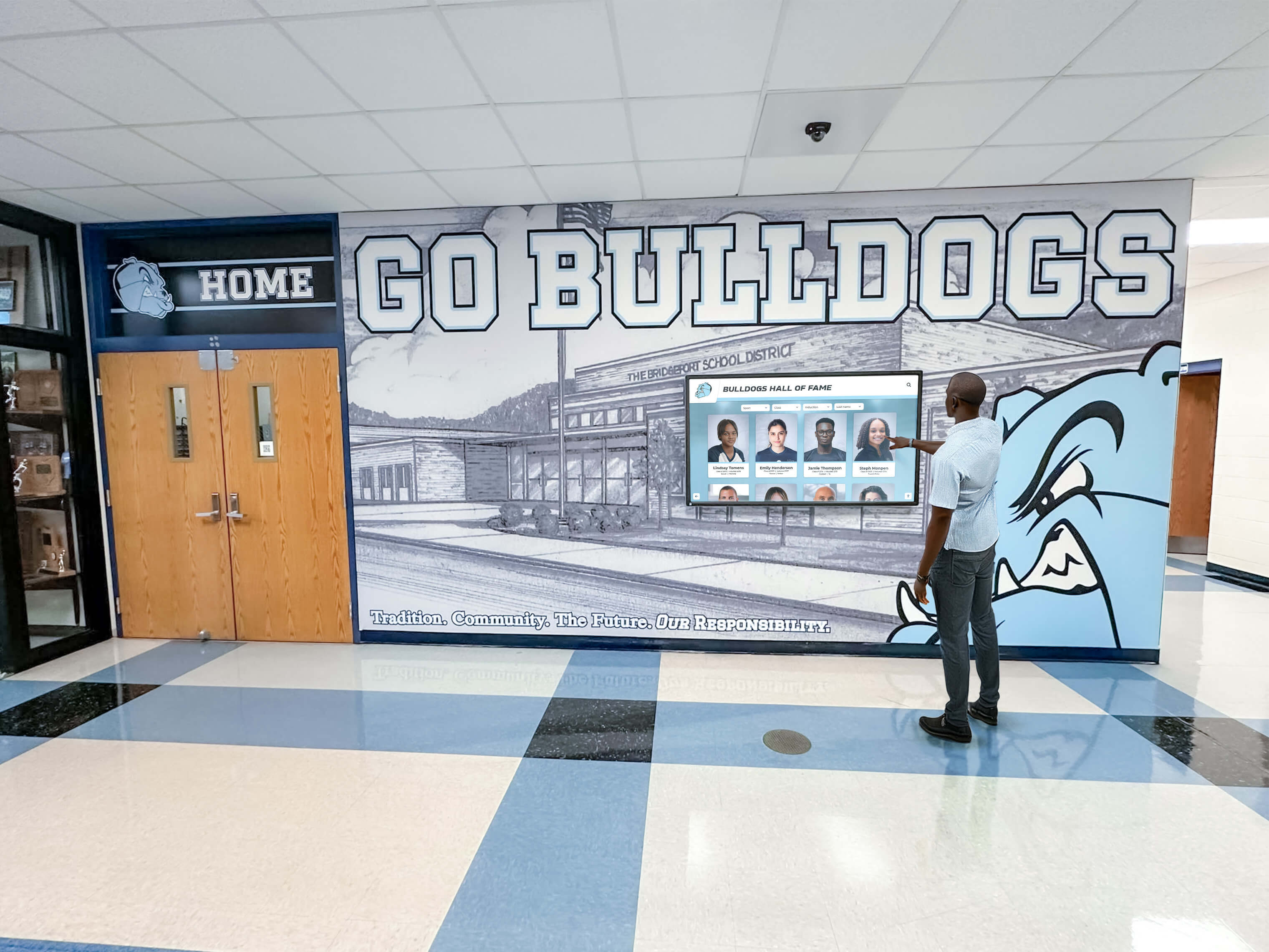
Athletic hall of fame displays serve large video content over TCP connections where packet-loss recovery speed matters—the TCP SACK check confirms that selective acknowledgment is negotiated end-to-end so that recovery from any dropped segment is bounded rather than cascading
Why TCP Selective Acknowledgment Matters for Athletic Video on Recognition Displays
Athletic video content—highlight reels, auto-ranking animations, induction ceremony footage, and championship recap segments—is delivered to recognition displays over HTTPS using HTTP Live Streaming (HLS) or MPEG-DASH. Both protocols package video as a sequence of small media segments, each typically two to ten seconds of encoded video, retrieved by the display player over individual or persistent TCP connections from a CDN edge node.
Each media segment download is a burst of TCP data: the sender transmits the segment contents in a series of TCP packets, and the receiver acknowledges receipt. On a clean path with no packet loss, this exchange completes at close to the available bandwidth. On a path where even one packet is lost, standard TCP without SACK creates a disproportionate recovery penalty.
How TCP without SACK handles a dropped packet. In standard cumulative-acknowledgment TCP, the receiver reports only the highest contiguous byte sequence it has received. If packet 7 is dropped in a sequence of packets 1 through 10, the receiver acknowledges through packet 6 and stops. The sender, noticing either a timeout or three duplicate acknowledgments of packet 6, must retransmit starting at packet 7—and in a congestion-driven recovery, may also reduce its congestion window, further throttling throughput. Packets 8, 9, and 10 already sitting in the receiver’s buffer must wait while packet 7 is re-sent and the sender works back through the sequence before proceeding.
How TCP with SACK handles the same drop. With SACK enabled, the receiver includes a SACK block in its acknowledgment packets identifying the ranges it has received: “I have acknowledged through packet 6, and I also have packets 8, 9, and 10 in buffer.” The sender retransmits only packet 7. Recovery is complete in one round-trip time rather than several, the video player’s buffer stall is measured in milliseconds rather than seconds, and the congestion window recovers more quickly because the sender knows the extent of the loss is bounded.
Recognition displays are particularly exposed to packet-loss recovery problems for three reasons.
School wireless environments introduce intermittent packet loss. Corridors with high AP density, gymnasium spaces with reflective surfaces, and lobby installations near exterior walls all create radio frequency conditions where wireless packet loss occurs even at nominally strong signal levels. A recognition display on a 5 GHz wireless connection in a busy athletics wing can experience brief loss events during passing periods—exactly when students and families are most likely to be browsing athletic highlights.
Shared school WAN uplinks produce bursty congestion. Schools with a single shared internet uplink for student, staff, and display traffic create conditions where brief upstream queue saturation drops packets across all connections. A recognition display downloading a video segment during a class period when student device traffic is heaviest can encounter these drops. Without SACK, a single dropped packet during a video segment download extends recovery by the full remaining unacknowledged window.
Content-filtering proxies and WAN optimizers may alter TCP options. Some school network appliances—transparent HTTPS proxies, content filtering middleboxes, and WAN optimization controllers—inspect or terminate TCP connections as part of their processing, then re-originate new connections toward the CDN. If the re-originated connection is initiated without the SACK-permitted option, neither endpoint in the re-originated session uses SACK, and every loss event on the CDN-to-proxy path triggers the full go-back-N retransmit overhead.
The relationship between SACK and retransmission rate is complementary rather than competitive: a display’s TCP retransmission baseline for recognizing slow media loads measures how often retransmissions occur, while the SACK check confirms that when retransmissions do occur, they are as efficient as the protocol allows.
How SACK Is Negotiated: Key Handshake Values
TCP SACK support is negotiated during the three-way handshake. The SYN packet from the display includes a SACK-permitted option (TCP option kind 4, length 2) if the OS has SACK enabled. The SYN-ACK from the server includes its own SACK-permitted option if the server supports SACK. Both endpoints must include SACK-permitted in the handshake for SACK to be active on that connection.
Once SACK is active, the receiver sends SACK blocks (TCP option kind 5) in subsequent ACK packets whenever it has received data out of order, specifying the ranges of received sequence numbers.
| Handshake Observation | Meaning | Outcome |
|---|---|---|
| SYN has SACK-permitted; SYN-ACK has SACK-permitted | Both sides support SACK; SACK is active | Selective retransmit only; loss recovery is bounded |
| SYN has SACK-permitted; SYN-ACK has no SACK-permitted | Server did not receive the display’s SACK offer, or server does not support SACK | No SACK; go-back-N recovery on this connection |
| SYN has no SACK-permitted | Display OS has SACK disabled, or a middlebox stripped the option outbound | No SACK regardless of server support |
| SYN has no SACK-permitted; SYN-ACK has SACK-permitted | Server offers SACK but display did not request it | No SACK; server’s offer is irrelevant without mutual negotiation |
Modern CDN platforms and cloud content delivery endpoints support SACK. The more common failure mode in school environments is that a firewall, transparent proxy, or WAN optimization device in the path strips the SACK-permitted option from the SYN as it traverses from the recognition display to the internet—resulting in a SACK-capable display and a SACK-capable CDN completing every session without SACK because the middlebox silently removed the negotiation.
Before You Start: Pre-Test Checklist
Complete each item before beginning the TCP selective acknowledgment check. Items marked as requiring administrative access may need a maintenance window if configuration changes will briefly interrupt other school network traffic.
Network Path and Topology
- Identify every network device between the recognition display and the WAN: firewall, content filter, WAN optimizer, transparent HTTP/HTTPS proxy, or traffic shaping appliance
- Confirm whether HTTPS inspection (SSL/TLS decryption and re-encryption) is enabled for the recognition display’s network segment—this means the proxy terminates and re-originates TCP connections
- Identify whether a WAN optimization controller is in path and whether it intercepts and re-originates TCP connections
- Confirm the recognition display’s network segment and IP address
Firewall and Proxy Access
- Confirm administrative access to the firewall or UTM appliance managing the recognition display’s internet path
- Identify any TCP normalization, TCP optimization, or traffic shaping rules active on the firewall for the recognition display’s traffic
- Identify whether the firewall applies a TCP normalization profile that strips or rewrites TCP options
Test Device and Tools
- Laptop with Wireshark or
tcpdumpinstalled, connected to the same network segment as the recognition display (wired connection preferred for reliable capture) - Access to
ss(Linux),netstat, or equivalent to inspect active TCP socket options - Access to
curlfor large-payload transfer tests during the streaming load verification step - Optional:
tc netemor a traffic impairment tool if you want to induce controlled packet loss for SACK behavior observation
Recognition Display
- Confirm the recognition display is powered on and connected to the network
- Identify the cloud platform domains that serve athletic video content to the display
- Confirm athletic video content is scheduled in the current playlist so connections to the CDN are active during the capture
Recognition Display TCP Selective Acknowledgment Check: Numbered Procedure
Run each step in sequence. Document observations at each step; together they form the evidence record that SACK is active end-to-end for the recognition display’s video delivery path.
Step 1 — Confirm SACK is enabled at the recognition display OS level
Before investigating whether middleboxes are stripping SACK, verify that the recognition display’s operating system has SACK enabled. Most modern operating systems enable SACK by default; this step confirms the baseline before network-level testing.
On Windows (PowerShell or Command Prompt, run as Administrator):
netsh int tcp show global
Locate the Selective Acknowledgements line. The value should be enabled. If it shows disabled:
netsh int tcp set global sack=enabled
Restart the recognition display player application after making this change so new connections use the updated TCP stack configuration.
On Linux:
sysctl net.ipv4.tcp_sack
A value of 1 confirms SACK is enabled. If the value is 0:
sysctl -w net.ipv4.tcp_sack=1
To persist across reboots, add net.ipv4.tcp_sack=1 to /etc/sysctl.conf.
On macOS:
sysctl net.inet.tcp.sack
macOS enables SACK by default. A value of 1 confirms it is active.
Document the OS-level SACK state. If it was disabled, enable it and note that this change was required before network-level testing can proceed. All subsequent steps assume SACK is enabled at the OS level.
Step 2 — Capture the TCP handshake to observe the SACK-permitted option in the SYN
A Wireshark capture of the three-way handshake reveals whether the recognition display is advertising SACK support in its SYN packets and whether that advertisement survives the path to the cloud platform.
On the monitoring laptop (connected to the same network segment as the recognition display, wired preferred):
- Open Wireshark and select the interface connected to the recognition display’s network segment
- Apply the capture filter:
host <recognition-display-IP> - Apply the display filter:
tcp.flags.syn == 1 - On the recognition display, trigger a content reload or navigate to a new content section to generate fresh TCP connections to the CDN
- Stop the capture after 30 seconds
In each captured SYN packet from the recognition display, expand the TCP header in Wireshark’s detail panel and locate Options. Look for:
- SACK permitted (option kind 4) — confirms the display OS is advertising SACK support
- Window scale: X — confirms window scaling is also being advertised
- Maximum Segment Size: Y — confirms MSS negotiation is active
If the SYN from the recognition display does not include a SACK-permitted option and Step 1 confirmed SACK is enabled at the OS, a middlebox between the monitoring capture point and the WAN is stripping the SACK option outbound. However, if the capture is on the display’s LAN segment (directly on the display’s switch port), the option should be present in the SYN as it leaves the display. Document the presence or absence of SACK-permitted in the captured SYN.
Step 3 — Observe the SACK-permitted option in the SYN-ACK from the cloud server
In the same Wireshark capture, locate the SYN-ACK packets from the CDN or cloud platform server responding to the recognition display’s SYN. Expand the TCP header of a SYN-ACK and check the Options section.
Two outcomes are meaningful:
SYN-ACK includes SACK-permitted. The server received the display’s SACK-permitted offer (the SYN with SACK-permitted reached the server), and the server is confirming mutual SACK support. SACK is active for this connection. Proceed to Step 5 to run the streaming load test and confirm SACK blocks appear during any loss events.
SYN-ACK does not include SACK-permitted. Either the server does not support SACK—unlikely for modern CDN platforms—or the display’s SYN was stripped of the SACK-permitted option by a middlebox before reaching the server, so the server never saw the offer and did not include SACK-permitted in its SYN-ACK. Proceed to Step 4 to isolate the middlebox.
Document the observed options in both the SYN and SYN-ACK, noting whether SACK-permitted was present in each direction. This record is the primary evidence for the SACK check.
Step 4 — Identify the middlebox stripping the SACK-permitted option
If Step 3 finds that the SYN-ACK lacks SACK-permitted while the SYN from the display included it, a middlebox between the recognition display and the CDN is removing the option. Isolate which device is responsible by capturing at successive points in the network path.
Method: compare the SYN as it leaves the display’s LAN segment to the SYN as it exits the school’s WAN interface toward the ISP.
- LAN-side capture (Step 2 already provides this): confirm the SYN from the display includes SACK-permitted as it leaves the display
- WAN-side capture: capture on the WAN interface of the firewall (via a SPAN or mirror port, or the firewall’s built-in packet capture feature) and check the SYN forwarded to the ISP
If the WAN-side SYN still includes SACK-permitted but the SYN-ACK returning to the display lacks it, the stripping is occurring at a cloud-side intermediary—this is uncommon and would require investigation with the CDN provider.
If the WAN-side SYN lacks SACK-permitted (the option was present on the LAN-side SYN but absent on the WAN-side SYN), the school’s firewall, transparent proxy, or WAN optimizer is stripping the option during transit. This is the device requiring configuration correction in Step 5.
Common reasons a middlebox strips SACK-permitted:
- A TCP normalization rule configured to sanitize or strip unknown TCP options
- An HTTPS inspection proxy that re-originates connections without including SACK-permitted in its own SYN packets
- A WAN optimization controller that intercepts TCP connections and initiates its own sessions toward the CDN without SACK negotiation
Schools that also check TCP keepalive configuration for recognition displays will recognize the same category of middlebox interference that affects keepalive timers—the same appliances that alter keepalive behavior may also strip SACK options from handshakes.
Document which device is stripping the SACK-permitted option. This is the device to configure in Step 5.

Athletic hall of fame displays in school corridors deliver large video assets over TCP connections; a SACK check confirms that loss recovery on those connections is selective and bounded, not a full-window retransmit that stalls the video buffer
Step 5 — Configure the middlebox to preserve the SACK-permitted option
Apply configuration changes at the device identified in Step 4 to preserve the SACK-permitted TCP option in SYN packets.
Cisco IOS / IOS-XE with zone-based firewall:
Check for a TCP normalization policy stripping TCP options in the zone-based policy map applied to the recognition display’s zone:
show running-config | include tcp-options
If a policy map includes an action stripping TCP options, remove it for the class covering recognition display traffic:
policy-map type inspect <policy-name>
 class <class-name>
  inspect
   no set conn advanced-options
Cisco ASA:
Check the TCP normalization (service policy) applied to the recognition display’s interface:
show running-config policy-map
Look for tcp-options sack-permitted clear or tcp-options selective-ack clear. Remove any such action from the policy map applied to the recognition display’s connection class.
pfSense / OPNsense:
Navigate to Firewall > Settings > Advanced and review the Firewall Optimization and State Modulation settings. If Modulate State is selected for the recognition display’s traffic, pfSense rewrites TCP sequence numbers and may affect TCP options on some versions. Switch to Keep State for connections from the recognition display’s IP range to preserve TCP options intact.
If a scrub rule is active under Firewall > Rules > Normalization, verify that no option stripping is configured for traffic from the recognition display VLAN.
Fortinet FortiGate:
If HTTPS inspection is active for the recognition display’s traffic (an ssl-ssh-profile applied to the firewall policy), the FortiGate is terminating and re-originating TCP connections. Verify that the FortiGate’s own TCP stack includes SACK-permitted in the connections it initiates toward the CDN by capturing on the WAN interface. If the FortiGate’s re-originated SYNs lack SACK-permitted, check whether a TCP normalization profile is applied under Policy > Profile > Protocol Options and adjust the profile to preserve standard TCP options.
For recognition display traffic where HTTPS inspection is not required for policy compliance, apply a no-inspection SSL/SSH profile to the recognition display’s policy so connections are passed through rather than terminated and re-originated.
Riverbed SteelHead / WAN Optimizer:
WAN optimizers intercept and re-originate TCP connections by design. If a SteelHead is in path, check whether the in-path rule covering the recognition display’s IP range is configured for Full Transparency mode, which preserves the original connection’s TCP options in the re-originated sessions. In the SteelHead management console, configure the in-path rule for the recognition display’s traffic:
- Optimization Policy: TCP Proxy Steered or Pass-Through depending on whether optimization is needed
- Transparency Mode: Full Transparency (client IP spoofing enabled)
Full Transparency preserves the original SYN options, including SACK-permitted, in the connections the SteelHead opens toward the server.
Step 6 — Re-capture the handshake to verify SACK-permitted is preserved
After applying the configuration changes from Step 5, repeat the Wireshark capture from Step 2. Trigger new TCP connections from the recognition display by reloading content or restarting the display player application.
Confirm in the new SYN from the recognition display:
- SACK-permitted option is present
Confirm in the SYN-ACK from the cloud server:
- SACK-permitted option is present (indicating the server received the display’s SACK offer and is confirming mutual support)
If both sides include SACK-permitted in the handshake, SACK is now active for recognition display connections. Document the confirmed SACK negotiation.
If the SYN-ACK still lacks SACK-permitted after the configuration change, either the change was not applied to the correct interface or the correct policy, or there is an additional upstream middlebox stripping the option. Re-verify the network path and repeat the WAN-side capture to check whether the SYN now exits the school network with SACK-permitted intact.
Step 7 — Observe SACK blocks under packet loss conditions (optional but recommended)
For schools able to induce controlled packet loss during a maintenance window, observing actual SACK block operation confirms that loss recovery on the recognition display path functions as expected.
On a Linux-based monitoring laptop on the same network segment as the recognition display, use tc netem to introduce a small loss rate on the monitoring laptop’s interface while downloading a large test file:
tc qdisc add dev eth0 root netem loss 1%
curl -o /dev/null -s https://<cloud-platform-domain>/large-test-asset
In a simultaneous Wireshark capture, filter for SACK blocks: tcp.options.sack. If SACK is active, ACK packets during the download will show SACK blocks identifying received-but-out-of-order ranges. The sender retransmits only the specific lost segments.
After the test, remove the artificial packet loss:
tc qdisc del dev eth0 root
If SACK blocks do not appear even under induced loss, but the handshake shows SACK-permitted negotiated, verify that the monitoring laptop’s OS has SACK enabled for its own connections and that the capture filter is correct. SACK blocks appear only when out-of-order data is actually received—if the artificial loss is inducing tail drops rather than mid-sequence drops, SACK blocks may not be visible in every test run.
Schools that review TCP zero-window events on recognition displays as part of their network verification process will find SACK block observation a complementary check: zero-window events indicate receive buffer exhaustion, while SACK block patterns indicate how the sender responds to loss—together they characterize the TCP connection’s behavior under stress.
Step 8 — Run the streaming load test with large athletic video
With SACK confirmed active in the handshake, run the recognition display’s video content under real streaming conditions to verify that athletic video plays smoothly.
On the recognition display, navigate to the content section containing the longest or highest-bitrate athletic highlight video in the current schedule. On the monitoring laptop, run a simultaneous Wireshark capture with the display filter tcp.analysis.retransmission to flag any TCP retransmissions during playback.
Observe during the video segment:
- Retransmission count: Occasional retransmissions are expected on any real network; a retransmission storm (dozens per second) suggests the packet loss rate on the path is high enough to require attention beyond SACK configuration
- SACK blocks in ACK packets: Filter
tcp.options.sackto confirm SACK blocks appear when retransmissions occur, confirming the sender is doing selective rather than full-window retransmission - Video playback quality: No buffering pauses, no stalls, no incomplete frame loads visible on the recognition display
- Connection throughput: Steady at the expected video bitrate, not spiking and stalling with each retransmission event
Document the streaming load test observation. If retransmissions are occurring frequently even with SACK active, the underlying packet loss rate on the school network requires investigation—SACK bounds the recovery cost per loss event but does not eliminate the loss events themselves. A network QoS monitoring baseline for recognition displays can surface systematic packet loss patterns that the SACK check alone does not reveal.

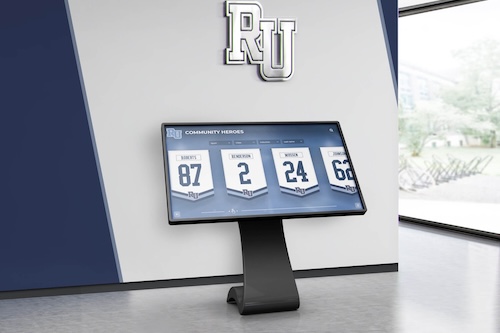
Touchscreen displays serving athletic portraits and highlight videos in stadium lobbies depend on fast packet-loss recovery—SACK ensures the TCP sender retransmits only what was lost rather than re-sending the entire unacknowledged window
Step 9 — Document the baseline and restore the test environment
Record the complete test findings in the school IT runbook or ticketing system:
- Recognition display OS SACK state (enabled/disabled; action taken if disabled)
- SACK-permitted option observed in SYN from the recognition display (present or absent before configuration changes)
- SACK-permitted option observed in SYN-ACK from the cloud server (present or absent before configuration changes)
- Device identified as stripping SACK-permitted (if applicable) and the configuration change applied
- SACK-permitted option observed in SYN and SYN-ACK after configuration changes (both should show present)
- Streaming load test observation (retransmission count during video playback, presence of SACK blocks, video quality)
- Any artificial packet-loss test results if Step 7 was performed
- Date of test and technician name
This documentation becomes the recognition display TCP selective acknowledgment baseline: the verified configuration state that future tests compare against after any network topology change, appliance replacement, or content platform migration.
SACK Check Decision Table
Use this table to determine the next action based on what you observe in the Wireshark capture.
| SYN (from display) | SYN-ACK (from server) | WAN-Side SYN | Diagnosis | Next Action |
|---|---|---|---|---|
| SACK-permitted present | SACK-permitted present | — | SACK active end-to-end | Proceed to streaming load test (Step 8) |
| SACK-permitted present | SACK-permitted absent | Confirm WAN-side SYN | Possible middlebox stripping | Capture WAN-side SYN to confirm stripping device (Step 4) |
| SACK-permitted present | SACK-permitted absent | SACK-permitted absent | School firewall/proxy stripping | Configure appliance to preserve SACK-permitted (Step 5) |
| SACK-permitted present | SACK-permitted absent | SACK-permitted present | CDN-side issue | Contact CDN or platform provider; verify server SACK support |
| SACK-permitted absent | Either | — | OS-level SACK disabled or LAN-side stripping | Enable SACK at OS level (Step 1); re-capture to confirm |
| SACK-permitted absent | SACK-permitted present | — | Server offers SACK; display does not negotiate | Enable SACK at OS level (Step 1); no middlebox action needed |
Platform Configuration Reference: Preserving SACK-Permitted Through School Firewalls
| Platform | SACK Risk Factor | Preservation Method | Key Setting |
|---|---|---|---|
| Cisco IOS / IOS-XE | TCP normalization policy may strip options | Remove tcp-options sack-permitted clear from policy map | Zone-based policy: no set conn advanced-options |
| Cisco ASA | TCP normalization service policy | Remove SACK option-stripping from MPF policy | policy-map TCP normalization rules |
| pfSense | Modulate State may affect TCP options | Switch to Keep State for display traffic | Firewall > Rules > Advanced Options |
| OPNsense | Scrub normalization rules | Verify no option stripping in normalization rules | Firewall > Rules > Normalization |
| Fortinet FortiGate | HTTPS inspection re-originates TCP sessions | Disable SSL inspection for display traffic or verify re-originated SYNs include SACK | Apply no-inspection profile or audit WAN-side capture |
| Palo Alto Networks | TCP normalization profile | Verify Zone Protection does not strip TCP options | Network > Zone Protection > Packet-Based Attack Protection |
| Riverbed SteelHead | Intercepts and re-originates by design | Enable Full Transparency mode for display IP range | In-Path Rule: Full Transparency |
| Ubiquiti UniFi / EdgeRouter | Low risk; passes TCP options by default | No specific action typically required; verify if traffic shaping is active | Confirm no per-flow option manipulation in shaping rules |
| MikroTik RouterOS | Connection tracking normalization may affect options | Verify connection mark and mangle rules do not alter TCP options | /ip firewall mangle rules |
Ongoing Monitoring and Re-Test Triggers
A recognition display TCP selective acknowledgment baseline establishes the verified SACK configuration for the school’s current network topology. Re-run the check when any of the following changes occur.
Firewall or UTM replacement. A replacement appliance may have different default TCP normalization settings than its predecessor. Run a post-replacement handshake capture (Step 2 and Step 3) before re-enabling recognition display athletic video content to confirm SACK-permitted survives the new hardware.
HTTPS inspection policy changes. Enabling HTTPS inspection on the recognition display’s network segment introduces a transparent proxy that terminates and re-originates TCP connections. Verify that the re-originated connections include SACK-permitted in the SYN packets the proxy sends toward CDN endpoints.
WAN optimization controller changes. Enabling, disabling, or reconfiguring a WAN optimizer changes how TCP connections from the recognition display are handled in transit. Repeat the handshake capture after any WAN optimizer reconfiguration to confirm SACK-permitted is present on the WAN-side SYN.
New recognition display deployments in different network segments. Additional displays installed in athletics corridors, alumni lobbies, or gymnasium entrances may traverse different firewall policies with different TCP option handling. Run a per-segment handshake capture for each new deployment zone.
Content platform CDN changes. Recognition display platforms that shift CDN providers or update edge infrastructure may route display traffic through different endpoints with different TCP stack behavior. Re-run the SYN-ACK observation (Step 3) after any platform announcement of CDN or infrastructure changes.
Schools deploying recognition displays as part of a broader athletics recognition program also benefit from confirming that TCP fast open compatibility is tested for the recognition display path—fast open and SACK are both TCP handshake options, and a middlebox configured to strip one may strip the other. Running both checks together produces a comprehensive TCP options baseline for the display’s path.
Schools that have established a video display color quality baseline have already learned that display quality depends on both the presentation layer and the delivery layer. A SACK check addresses the delivery layer: confirming that TCP’s loss recovery mechanism is working as efficiently as the protocol allows, so that display quality observed at the screen reflects the content the platform prepared—not a degraded playback experience caused by inefficient retransmission.

Hallway recognition displays integrated into athletics murals depend on reliable video delivery—SACK testing confirms that the TCP path from the cloud platform to the display handles packet loss with selective retransmission rather than go-back-N recovery
Q&A: TCP Selective Acknowledgment and Athletic Video on School Recognition Displays
What symptoms suggest a SACK problem rather than a bandwidth or MSS problem?
SACK-related video stalls have a distinctive pattern: video plays smoothly under clean network conditions and stalls intermittently during periods of elevated school network activity—when more devices are competing for the WAN uplink and packet loss probability is higher. The stalls are brief (one to three seconds) and then resume, corresponding to the retransmission cycle completing under go-back-N recovery. Bandwidth problems cause consistent slow loading; MSS problems cause consistent fragmentation or silence; SACK problems cause intermittent stalls correlated with network congestion events. Wireshark confirms the diagnosis: TCP retransmissions appear in the capture during stall events, and ACK packets lack SACK blocks even when data arrives out of order.
Does enabling SACK affect the school network for other devices?
TCP SACK is negotiated per connection. Enabling SACK on the recognition display’s OS, or configuring the school firewall to preserve the SACK-permitted option for display traffic, does not change how SACK is handled for student or staff devices unless those devices share the same firewall policy. If a TCP normalization rule stripping SACK-permitted is applied to the entire school’s internet traffic, removing it benefits all devices, not only the recognition display—most modern operating systems already expect SACK to be available and perform better when it is.
Our school uses HTTPS inspection for content filtering. How does that interact with SACK?
When HTTPS inspection is active, the firewall terminates the TLS (and TCP) connection from the recognition display and opens a new TCP connection to the CDN. SACK in the re-originated connection depends on whether the firewall’s own TCP stack includes SACK-permitted in its SYN packets toward the CDN. Most modern firewall platforms include SACK-permitted by default. Verify by capturing the SYN the firewall sends toward the CDN from the WAN side of the firewall. If that SYN includes SACK-permitted, re-originated connections will use SACK correctly. If it does not, consult the firewall vendor documentation for enabling SACK in the platform’s TCP origination stack.
Can SACK be verified without Wireshark if we do not have capture tools available?
A limited verification is possible using the ss command on a Linux-based recognition display or monitoring host. While a TCP connection to the cloud platform is active, run:
ss -tin dst <cloud-platform-IP>
Look for sack in the options field of the connection output. If SACK appears, it was negotiated for that connection. If it does not appear, SACK was not negotiated—though ss does not reveal whether the absence is due to OS configuration or a middlebox stripping the option from the handshake. Wireshark is required for definitive diagnosis and to confirm the stripping device.
How does the SACK check relate to other TCP checks for recognition displays?
The TCP selective acknowledgment check addresses the retransmission efficiency layer of the recognition display’s transport path. It complements rather than replaces other TCP checks: TCP MSS clamping testing confirms that segments are sized to cross the WAN link without fragmentation; TCP window scaling testing confirms that the receive window is large enough to sustain the required throughput; and TCP keepalive testing confirms that idle connections to the cloud platform are maintained across NAT and firewall session table timeouts. Each test addresses a different failure mode, and a display passing all four tests has a transport path verified across segment sizing, throughput, loss recovery, and connection persistence.
What if SACK is confirmed active but video still stalls intermittently?
If SACK is confirmed in the handshake and SACK blocks appear in ACK packets during retransmission events, but video still stalls, the underlying packet loss rate on the path is high enough that the cumulative retransmit overhead—even when selective—is visible. SACK bounds the cost of each loss event but does not change how frequently loss occurs. Investigate the packet loss source: check whether the recognition display is on wireless with intermittent RF interference, whether the school WAN uplink is saturated during peak use periods, or whether a specific network device in the path is dropping packets under load. Reducing packet loss at the source improves video continuity more reliably than any TCP option configuration.
Test Completion Checklist
Use this checklist to confirm the TCP selective acknowledgment check was completed correctly and findings were documented.
- Recognition display OS-level SACK confirmed enabled (or enabled and documented)
- TCP handshake captured; SACK-permitted option presence confirmed in SYN from display
- SYN-ACK observed; SACK-permitted option present or absent documented
- WAN-side SYN captured to identify stripping device (if SYN-ACK lacked SACK-permitted)
- Middlebox stripping SACK-permitted identified (if applicable) and documented
- Configuration correction applied to identified device to preserve SACK-permitted
- Handshake recaptured after configuration change; SACK-permitted confirmed present in both SYN and SYN-ACK
- Streaming load test completed with large athletic video; playback quality observed
- Retransmission count during streaming load test documented
- SACK blocks confirmed present in ACK packets during any retransmission events
- Controlled packet-loss test completed (if applicable); SACK block behavior observed
- Findings documented in IT runbook: OS SACK state, SYN/SYN-ACK observations, device modified, streaming test result, test date, technician
Building SACK Verification Into the Pre-Event Network Process
A recognition display that loads athletic profiles and responds to touch inputs normally can still serve video that stalls unexpectedly during a championship celebration or hall-of-fame induction if the TCP path to its cloud platform is running without SACK. The stalls may be invisible during low-traffic school days and appear only when parent and alumni attendance raises overall network utilization—precisely when the display is most visible and most expected to perform.
The TCP selective acknowledgment check closes that gap. It is a bounded troubleshooting workflow: a handshake capture either confirms SACK is active or points to the specific device stripping the option, and configuration changes at that device are straightforward and verifiable. The complete check from initial capture to confirmed streaming load test can be completed in a single maintenance window before a major recognition event.
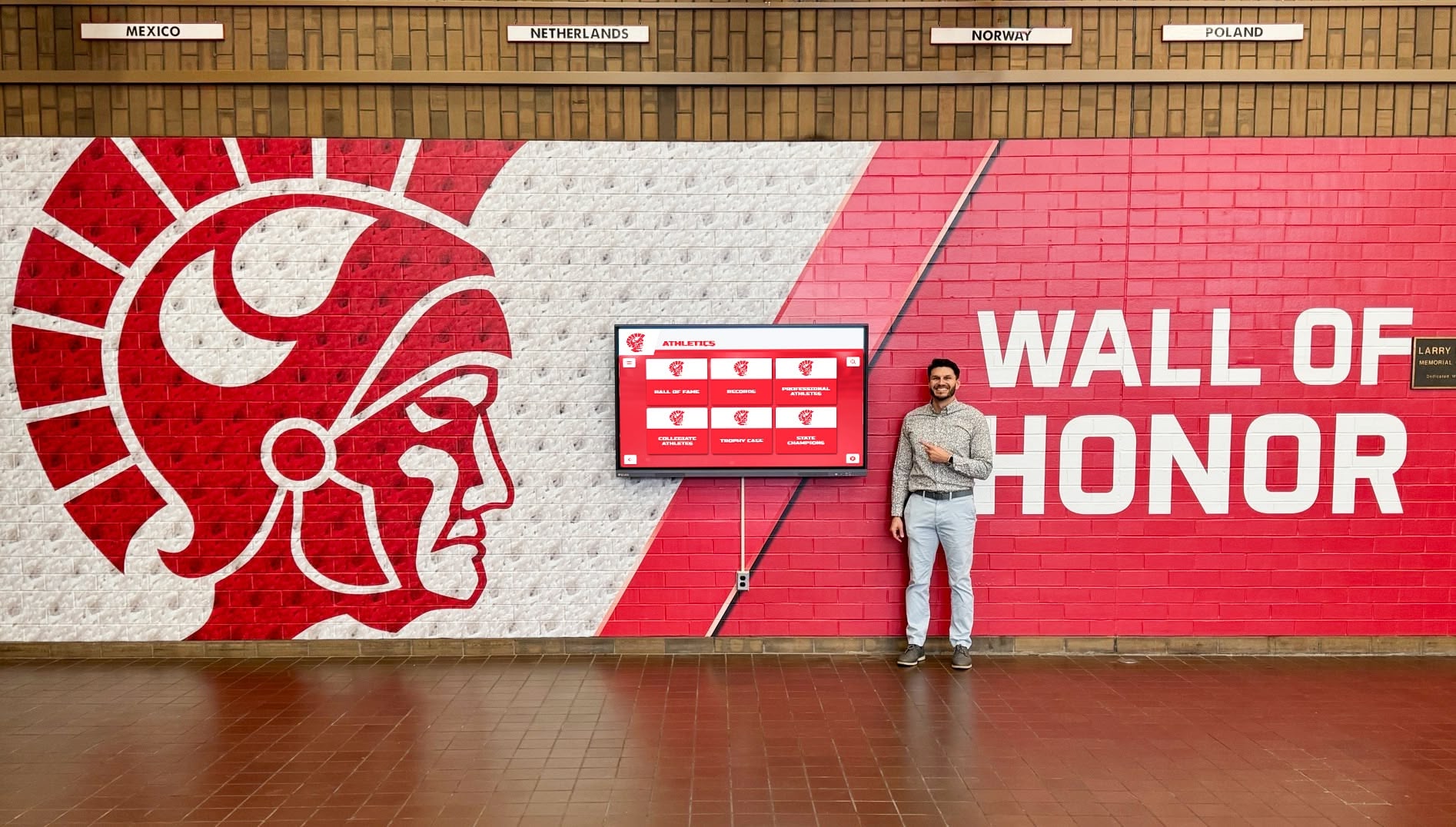
Athletic walls of honor and recognition displays serve the full depth of a school's athletic history through video and profiles—TCP SACK verification confirms the network delivery layer matches the quality of the content so visitors experience that history without avoidable playback interruptions
Schools building recognition programs that capture championships, honor inductees, and surface the athletic legacy their communities have earned need the network layer to match the quality of the content. The TCP selective acknowledgment check is one component of that network verification: alongside window scaling, MSS clamping, and keepalive configuration, it ensures the transport path delivers video at the quality the school’s investment in recognition content warrants.
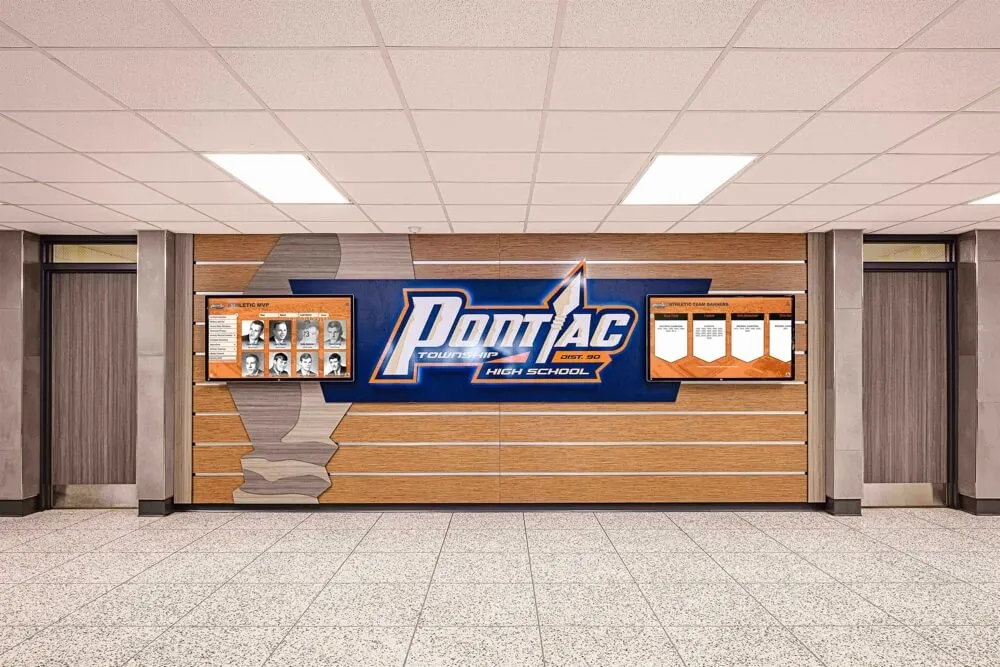
Hallway athletic honor walls with integrated recognition displays depend on efficient loss recovery to deliver video smoothly under real school network conditions—the TCP SACK check documents that SACK is active and functional across every device in the network path
See Athletic Video Streaming on a Recognition Display—Live
If your school is evaluating or deploying a touchscreen recognition display and wants to understand the complete network requirements—including TCP SACK guidance, MSS configuration, window scaling, VLAN isolation, and cloud platform traffic patterns—a live product demonstration gives your IT team and athletic director those answers in one session. Rocket Alumni Solutions documents the full network requirements for recognition display deployments and works alongside school IT teams to confirm the transport path is ready before the first championship highlight goes live on a hall-of-fame display.
Live Example: Rocket Alumni Solutions Touchscreen Display
Interact with a live example (16:9 scaled 1920x1080 display). All content is automatically responsive to all screen sizes and orientations.