



National Honor Society members represent the best of what schools cultivate—students who excel across scholarship, leadership, service, and character. These exceptional individuals dedicate countless hours to academic achievement, lead their peers through example and initiative, contribute meaningful service to their communities, and demonstrate integrity in all they do. When schools effectively highlight individual NHS students, they inspire prospective members, strengthen school culture, and provide recognition that motivates continued excellence.
Yet many schools struggle to showcase NHS students beyond generic group photos or brief mentions at induction ceremonies. Individual member stories remain untold, specific achievements go unrecognized outside advisor knowledge, and the diverse ways students embody the four NHS pillars stay invisible to the broader school community. Traditional bulletin boards lack space for detailed profiles, static plaques cannot capture ongoing accomplishments, and annual programs quickly become outdated as students graduate and new members join.
This comprehensive guide explores effective strategies for highlighting National Honor Society students through individual spotlights, member showcase programs, and recognition approaches that celebrate each student’s unique contributions while inspiring the next generation of scholars, leaders, and community servants.
When schools move beyond treating NHS as a collective credential to celebrating individual member excellence, they create recognition that resonates deeply with students, families, and communities while demonstrating institutional commitment to honoring achievement across all four pillars.

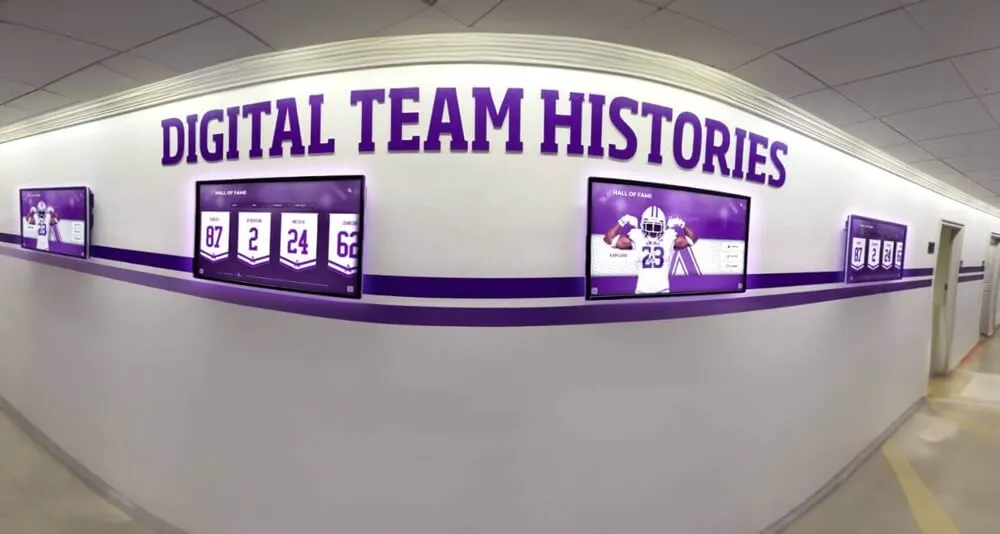
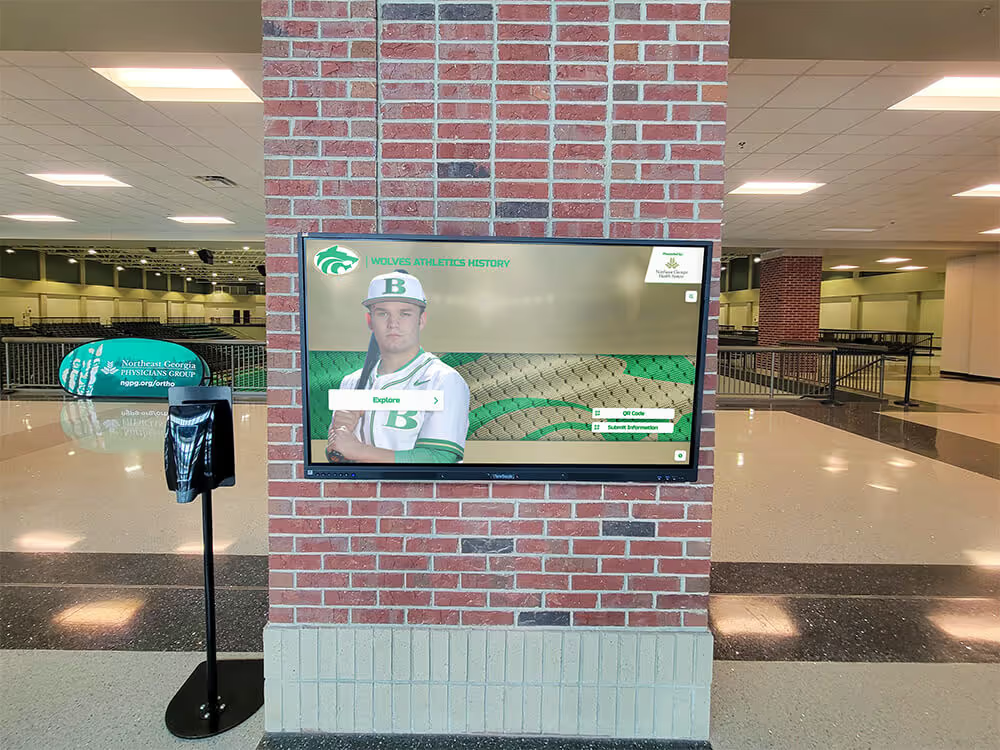
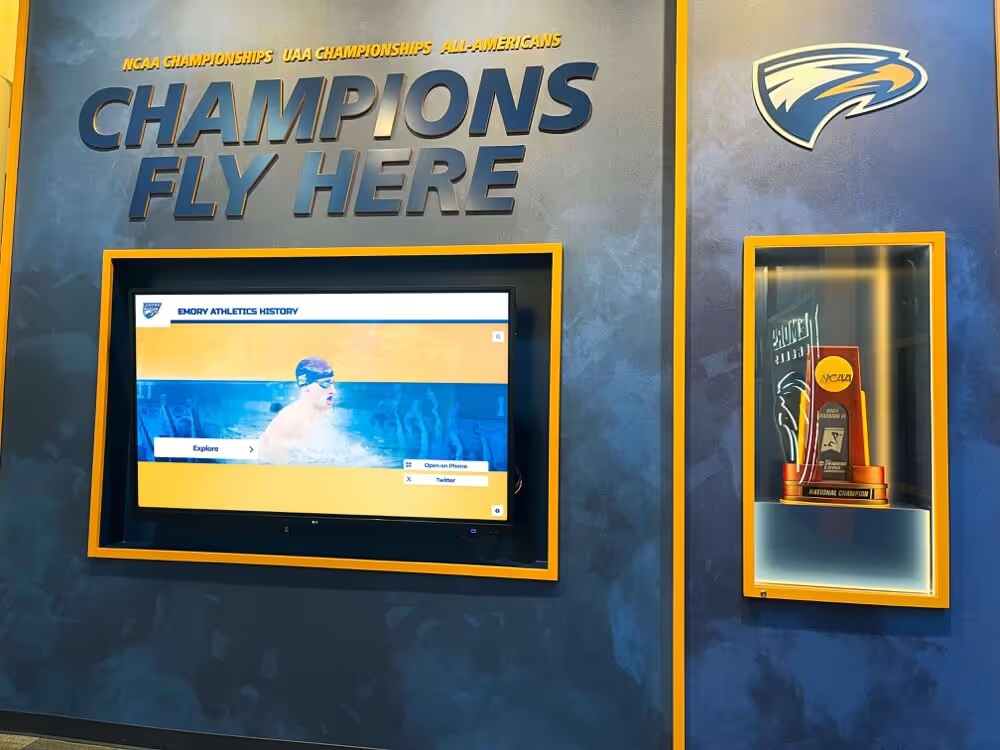
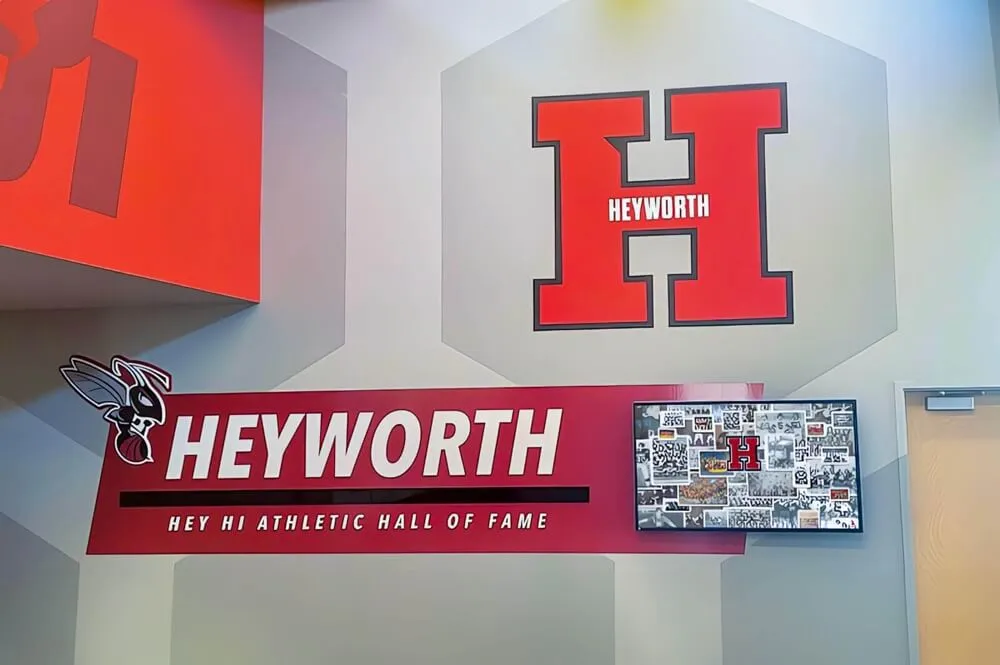
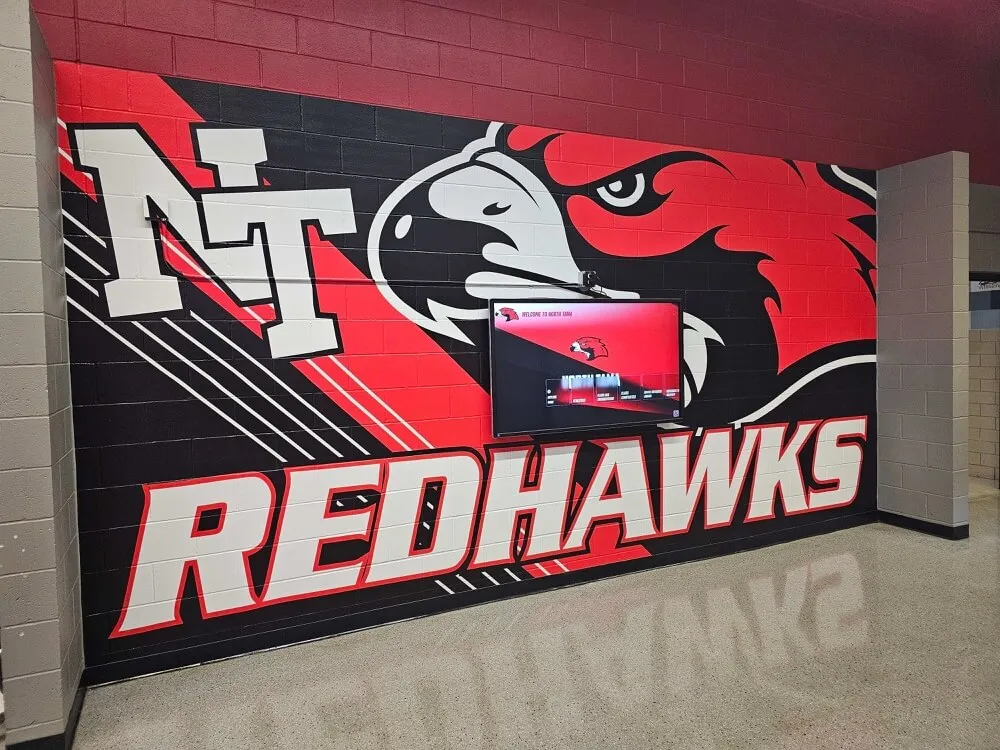
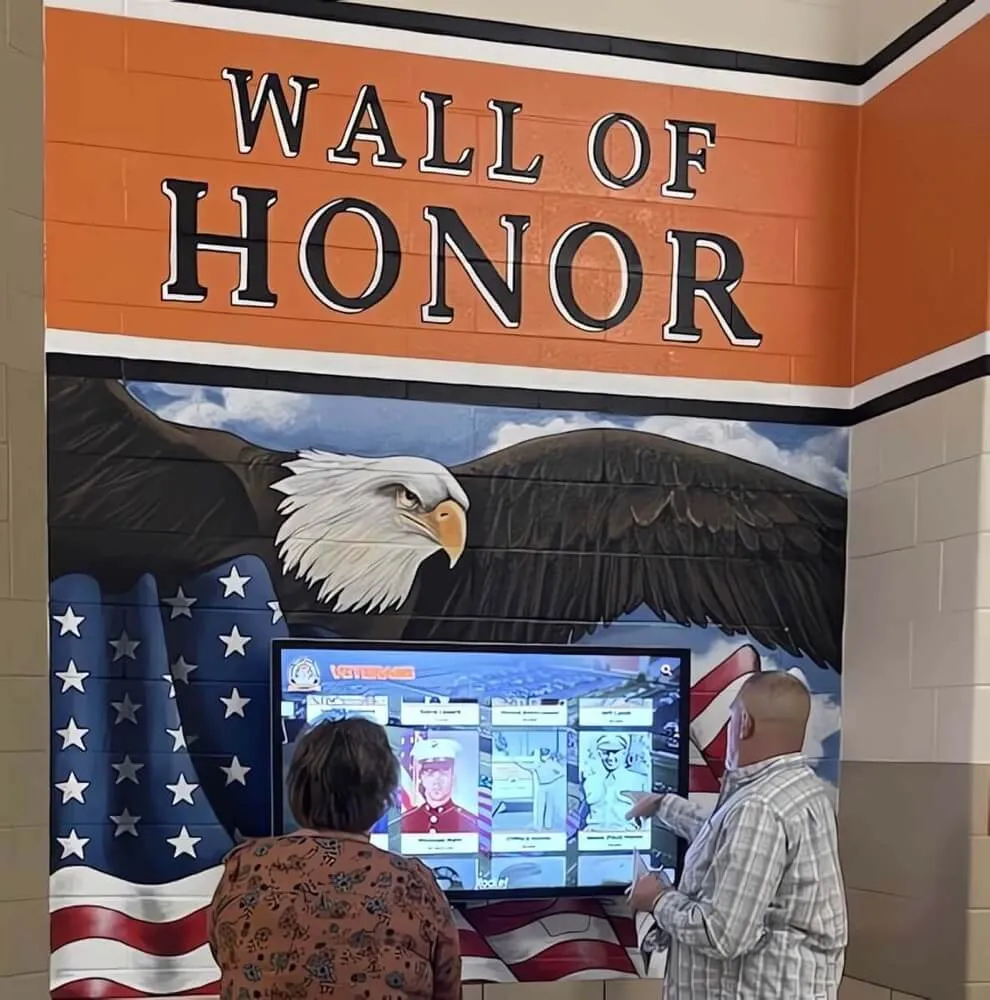
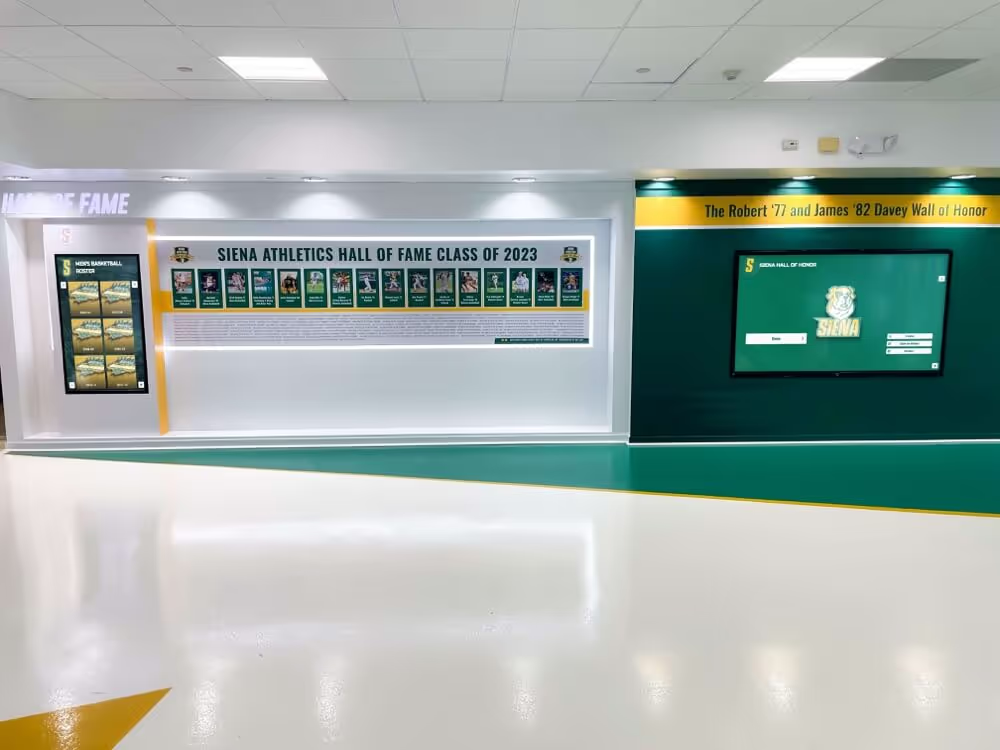
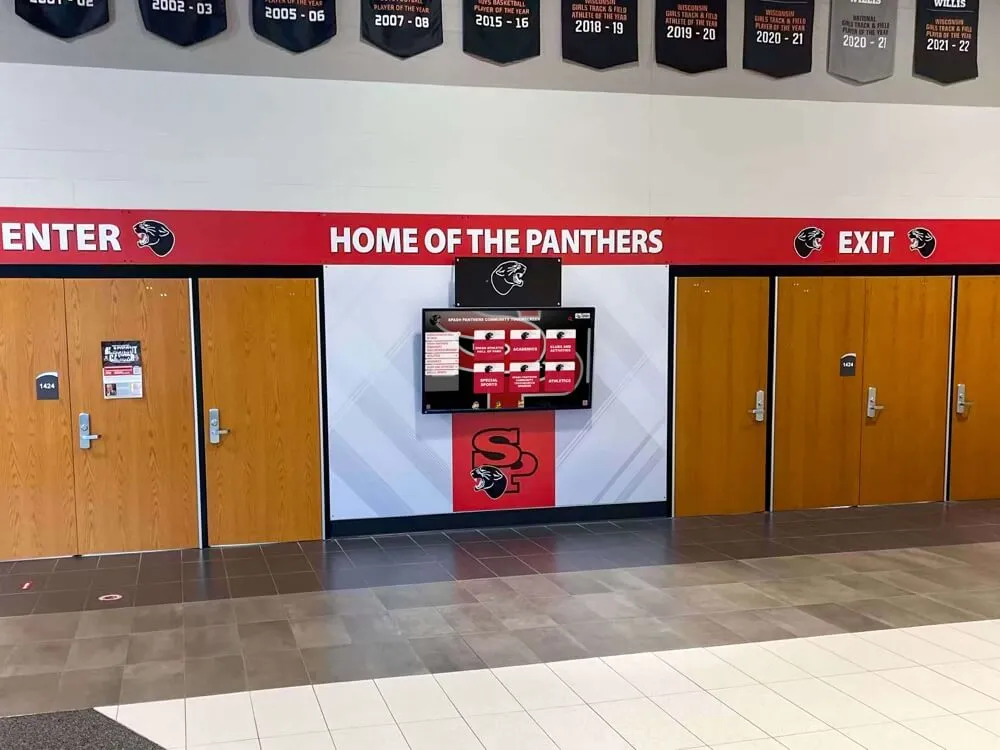
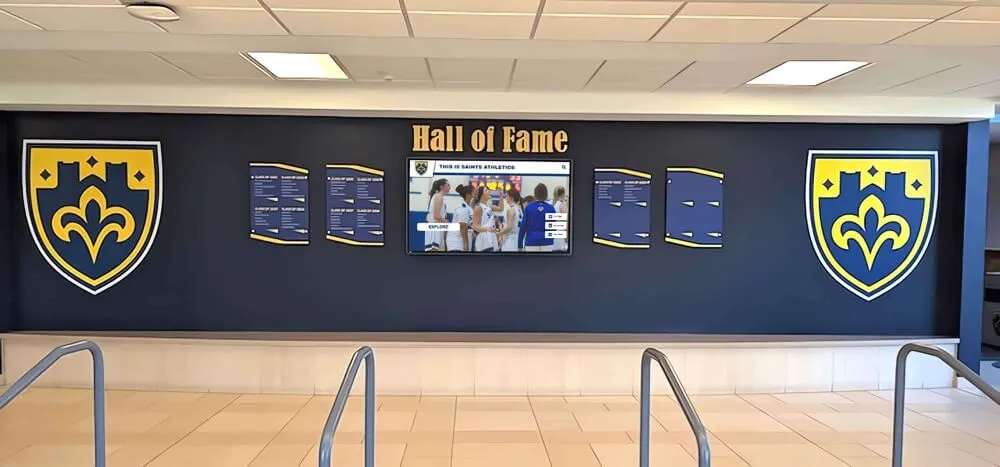
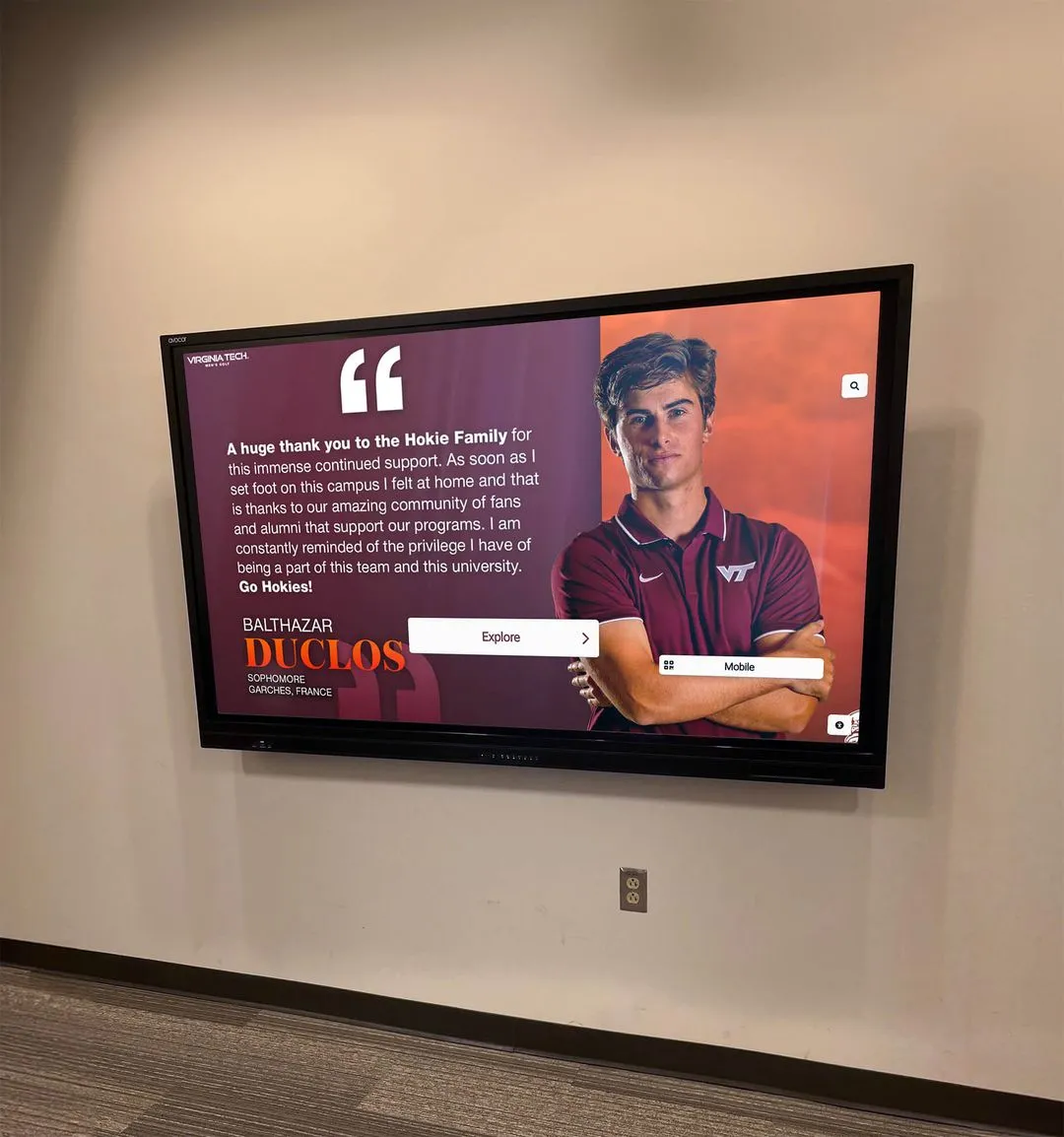
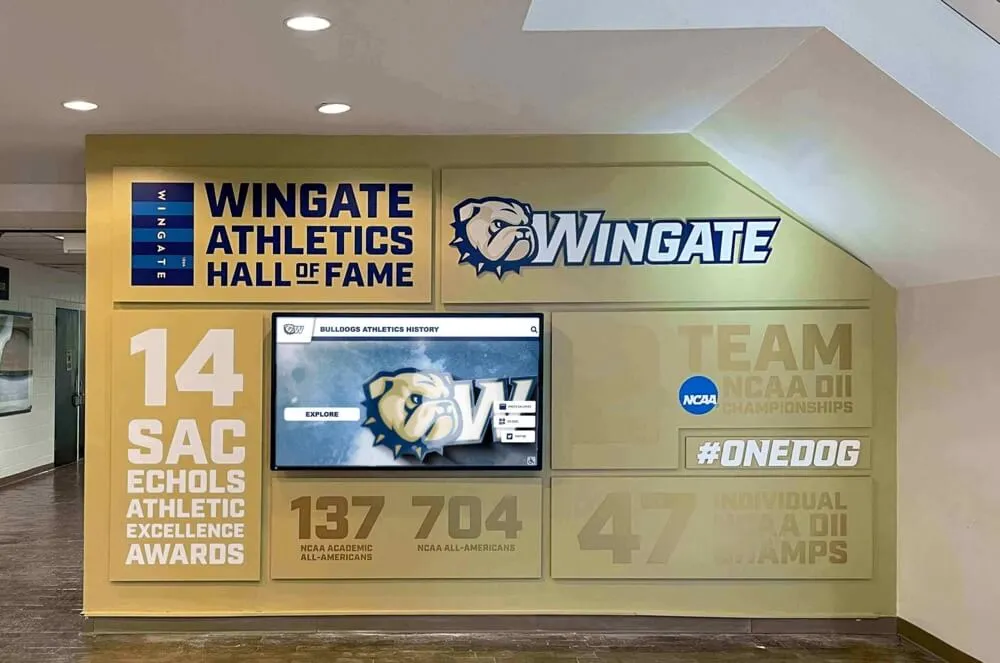
Prominent placement of NHS recognition creates visibility that inspires current members and motivates prospective students
Why Individual NHS Student Spotlights Matter
Before exploring implementation strategies, understanding why individual member recognition matters helps schools design approaches that achieve meaningful impact.
The Recognition Gap in Honor Society Programs
Most NHS chapters provide recognition at two specific moments—induction ceremonies when students join and graduation programs when seniors depart. Between these bookend events, individual member visibility often disappears despite ongoing achievements throughout membership.
Limited Ongoing Visibility
A student inducted as a sophomore may serve as chapter president, coordinate major service projects, maintain exceptional academic performance, and mentor younger members across three years of NHS participation. Yet outside advisor and fellow member circles, these contributions remain largely invisible. The broader student body, families, and community members rarely see specific documentation of individual member excellence beyond knowing certain students belong to NHS.
This visibility gap reduces NHS recognition impact. When only advisors and fellow members understand individual contributions, recognition fails to inspire prospective members who lack concrete examples of what NHS membership involves. Without visible individual stories, younger students developing toward eligibility cannot envision themselves as future NHS members or understand the diverse ways students embody the four pillars.
Missed Motivation Opportunities
Recognition drives continued excellence. Students who receive specific acknowledgment for leadership initiatives often expand their efforts. Members whose service contributions gain visibility frequently increase their community engagement. When schools highlight how individual students exemplify NHS values, they reinforce behaviors worth continuing while providing models other members can emulate.
Conversely, when recognition remains generic—“our NHS chapter does great work”—individual members miss motivation that comes from personal acknowledgment. The sophomore who coordinates a reading tutoring program deserves recognition distinguishing her initiative from routine membership. The junior who maintains perfect attendance while serving 100+ community hours merits visibility celebrating his exceptional commitment. Without individual spotlights, these distinctive contributions blend into undifferentiated chapter membership.
Cultural and Community Impact
NHS student spotlights influence school culture and community perceptions beyond individual member benefits:
Inspiring Younger Students
When eighth graders visit high school campuses and see detailed profiles highlighting specific NHS members—their achievements, leadership roles, service projects, and personal reflections—they gain concrete vision of what honor society membership means. These tangible examples inspire academic commitment more effectively than abstract descriptions of NHS criteria.
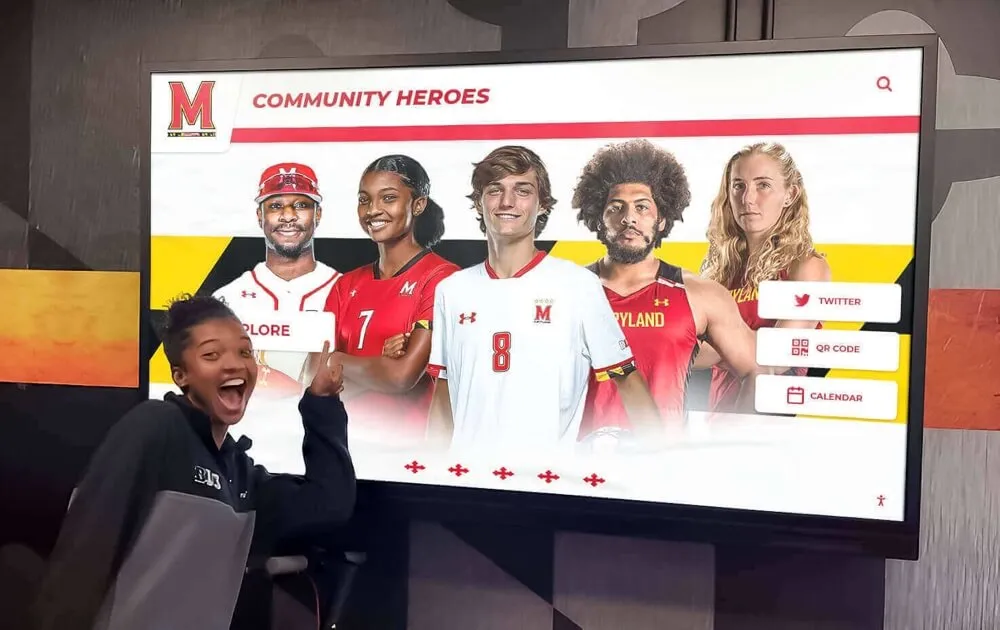
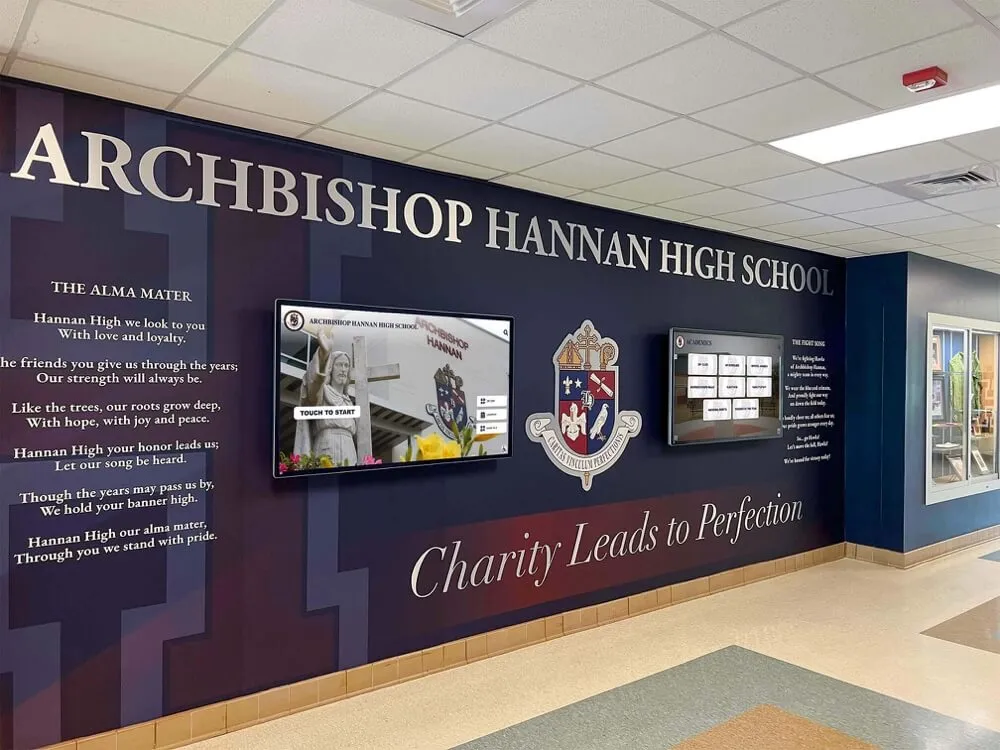
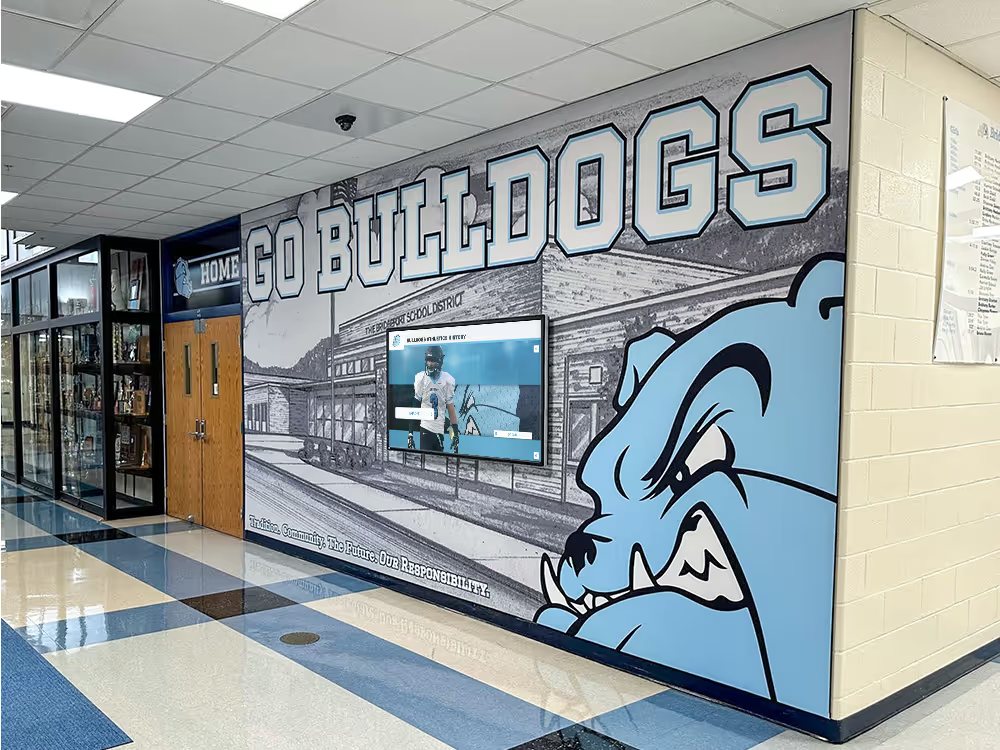
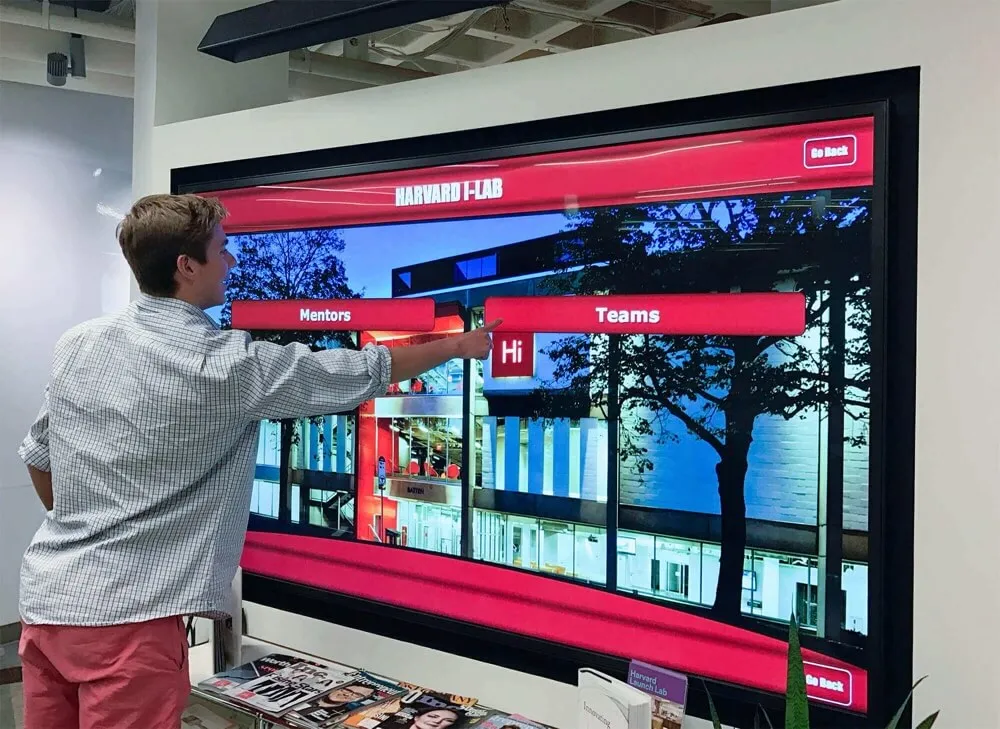
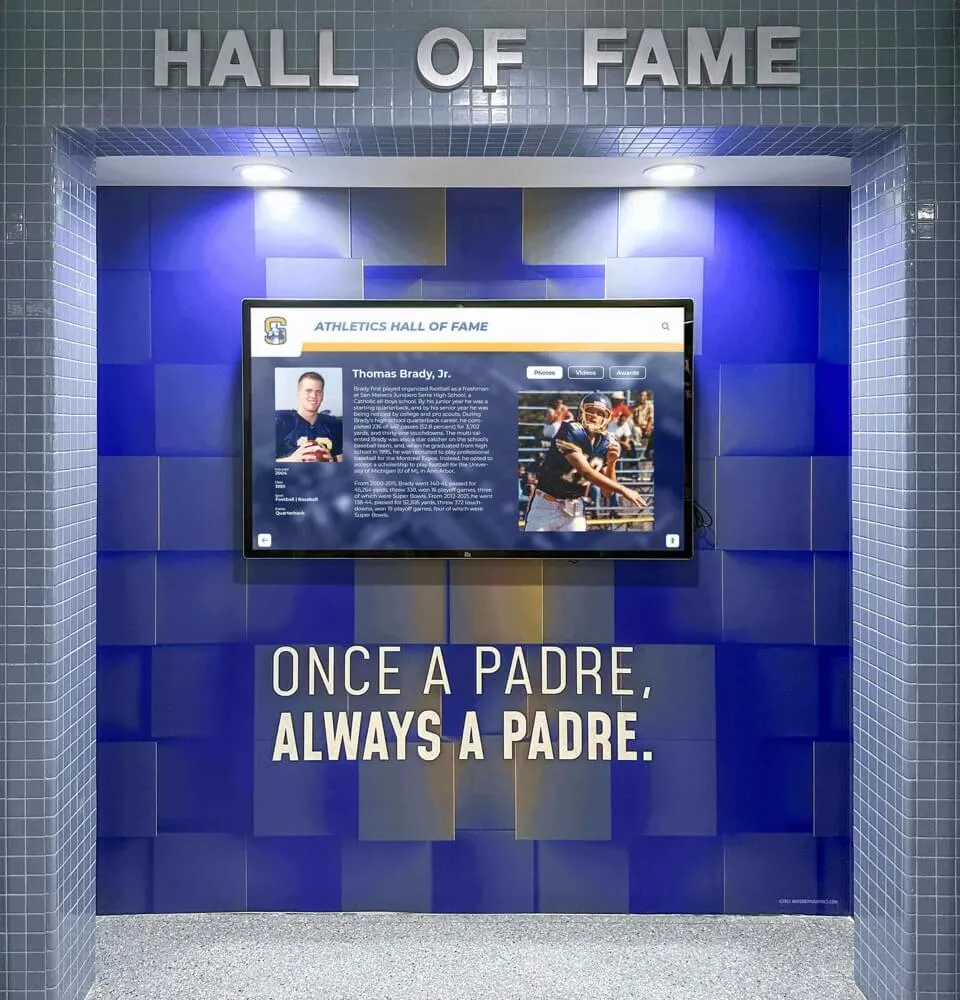
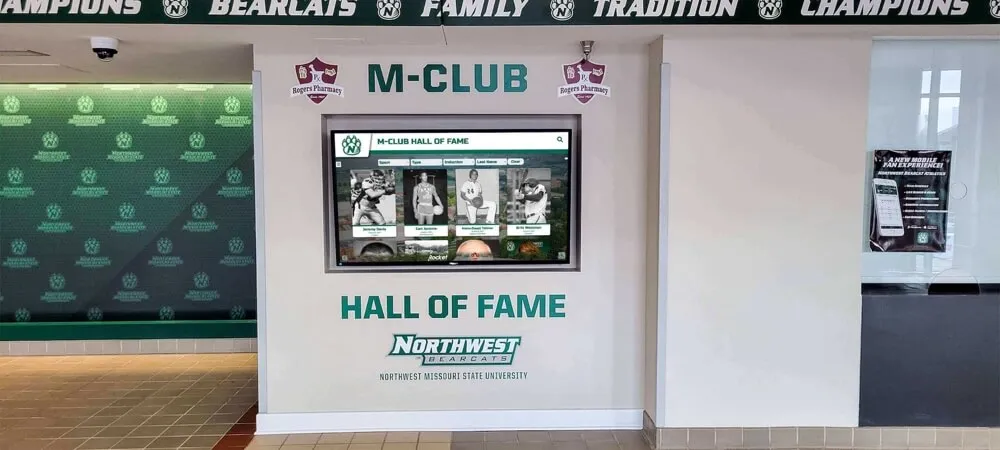
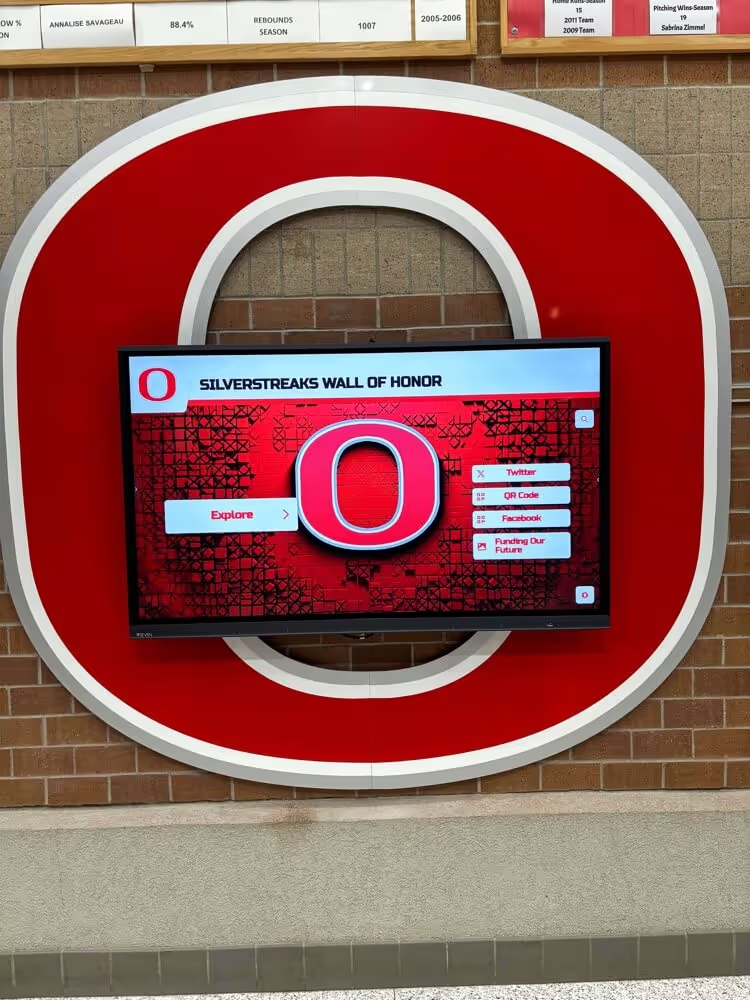
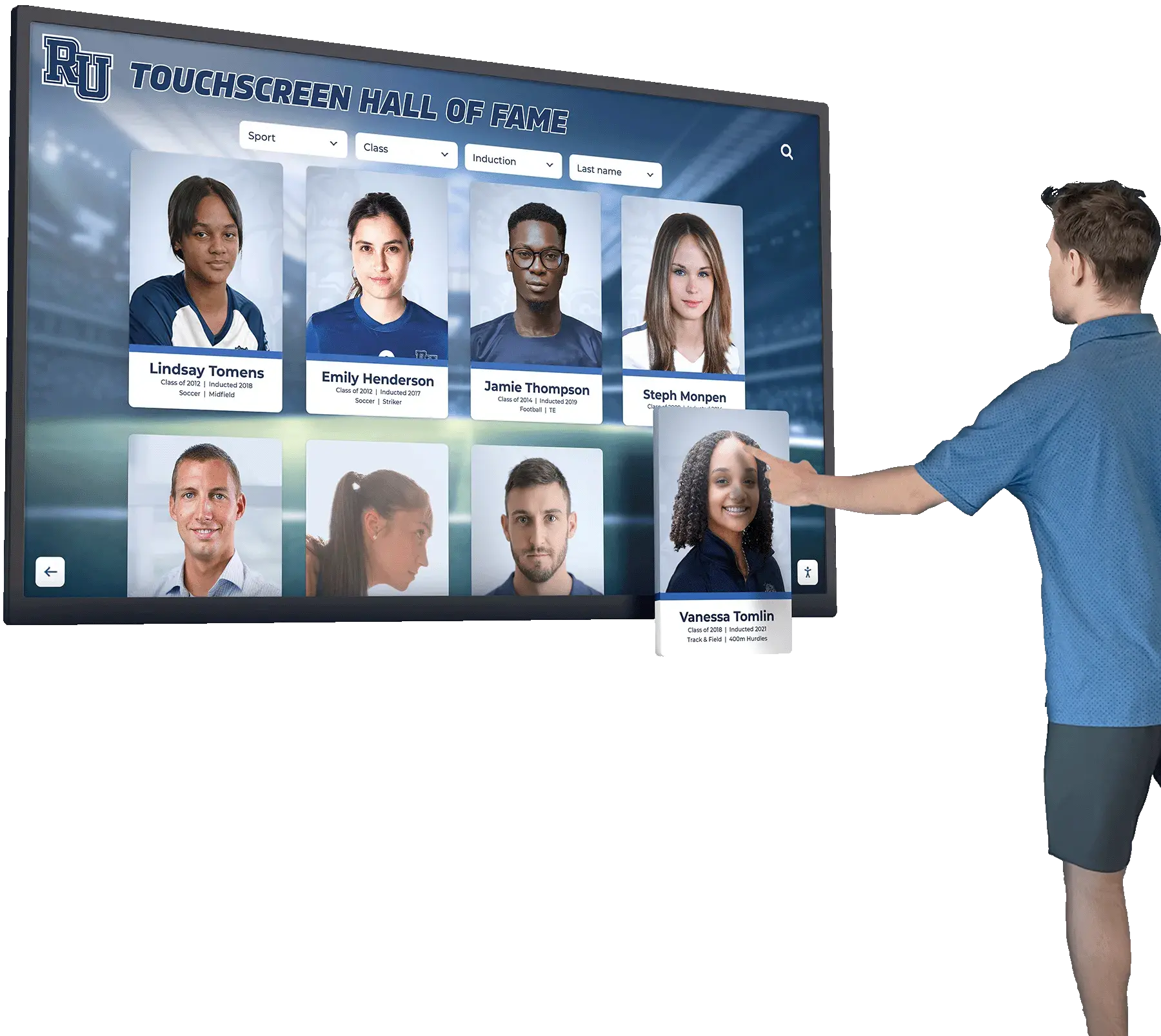
Interactive displays allow students to explore individual member stories and understand diverse pathways to NHS excellence
Demonstrating Institutional Values
Schools communicate priorities through what they choose to celebrate prominently. When NHS student spotlights receive prominent placement and thoughtful presentation, institutions signal that scholarship, leadership, service, and character matter as much as athletic achievement or other recognized accomplishments. This value demonstration influences how students, families, and communities perceive school identity and educational priorities.
Learn more about creating school culture through academic recognition programs that celebrate multiple forms of excellence.
Essential Elements of Effective NHS Student Spotlights
Comprehensive member spotlights require specific content elements that tell complete stories about individual excellence.
Biographical and Academic Foundation
Core Student Information
Effective spotlights begin with fundamental information providing context for achievements. Include student’s full name and preferred name if different, current grade level and graduation year, NHS induction date establishing membership duration, hometown or community affiliation, and intended college major or career interest when available. This foundation helps viewers understand each member’s journey and future aspirations.
Scholarship Documentation
Since academic excellence forms NHS’s foundational requirement, spotlights should document specific scholarly achievements beyond minimum GPA criteria. Highlight cumulative GPA or academic honors when appropriate, Advanced Placement courses completed and exam scores achieved, academic competition participation and awards earned, subject-specific recognition or departmental honors, standardized test achievements worth noting, dual enrollment or college courses completed during high school, research projects or academic presentations, and specialized academic certifications or credentials.
This comprehensive academic documentation celebrates the full scope of scholarly achievement rather than reducing scholarship to GPA alone. A student might excel particularly in mathematics competitions, another in research presentations, a third in language achievement—spotlighting these distinctive academic strengths honors individual excellence.
Comprehensive profiles document the full range of member achievements across all four NHS pillars
Leadership Role Documentation
Formal Leadership Positions
NHS members frequently hold leadership roles deserving specific recognition. Document chapter officer positions with descriptions of responsibilities, student government roles and initiatives led, club and organization presidencies or leadership positions, team captaincies or athletic leadership roles, peer tutoring or academic mentorship programs, and event coordination or committee leadership experiences.
Rather than simply listing titles, effective spotlights describe what students actually accomplished in leadership roles. “Chapter President” becomes more meaningful when accompanied by “coordinated five major service events engaging 80+ members” or “revised chapter bylaws improving member communication.”
Informal Leadership Contributions
Leadership extends beyond formal titles to include initiative-taking and example-setting that influences peers. Recognize students who initiated new programs or projects without official positions, mentored younger students informally through relationship-building, advocated for causes or improvements within school communities, organized grassroots efforts addressing community needs, or demonstrated consistent integrity inspiring others through daily actions.
These informal leadership contributions often represent the most authentic applications of NHS values—students seeing needs and responding rather than fulfilling prescribed officer duties.
Discover approaches for recognizing diverse leadership in student leadership recognition programs applicable to NHS contexts.
Service and Character Celebration
Quantified Service Documentation
Service represents NHS’s most visible pillar, lending itself to concrete documentation. Spotlight total volunteer hours completed during NHS membership, specific organizations or causes supported consistently, major service projects coordinated or significantly contributed to, service awards or recognitions received from external organizations, areas of service specialization or expertise developed, and measurable impact achieved through sustained service commitment.
Numbers provide powerful context—“150 volunteer hours tutoring elementary students” communicates dedication more effectively than “tutoring volunteer.” When possible, document outcomes: “raised $3,000 for local food bank” or “collected 500 books for literacy program” demonstrates tangible community impact.
Character Demonstrations
Character—perhaps the most challenging pillar to document—deserves thoughtful recognition in student spotlights. Include peer nominations describing specific instances of integrity, advisor observations highlighting consistent ethical behavior, character-based awards or recognitions received, testimonials from teachers or community partners noting trustworthiness and respect, and student reflections about how they apply character values in daily decisions.
Rather than generic character claims, specific examples make this pillar tangible: “When assigned group projects, consistently ensures all members contribute and receive credit” or “Volunteers additional hours beyond requirements to support organization needs without seeking recognition.”
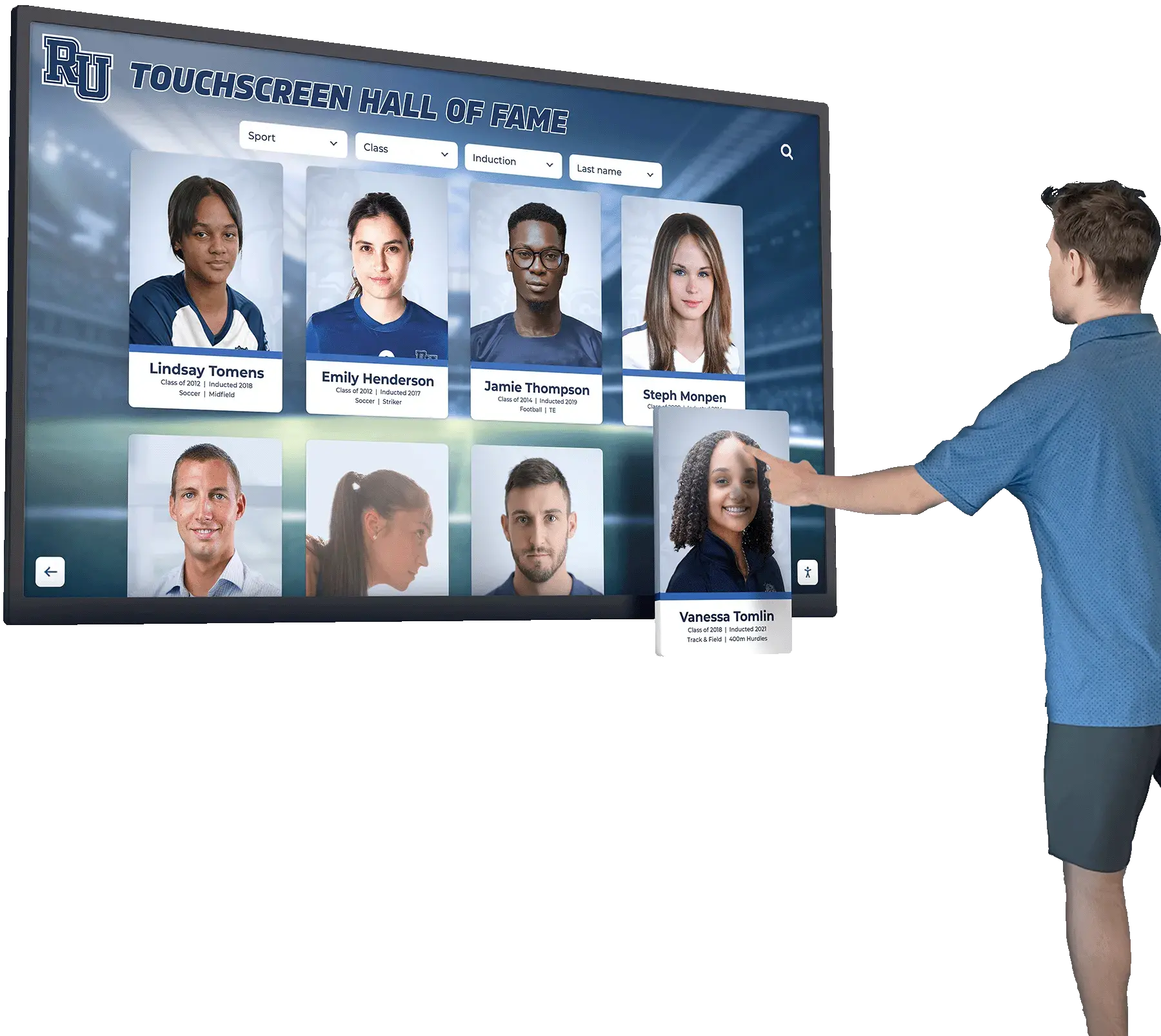
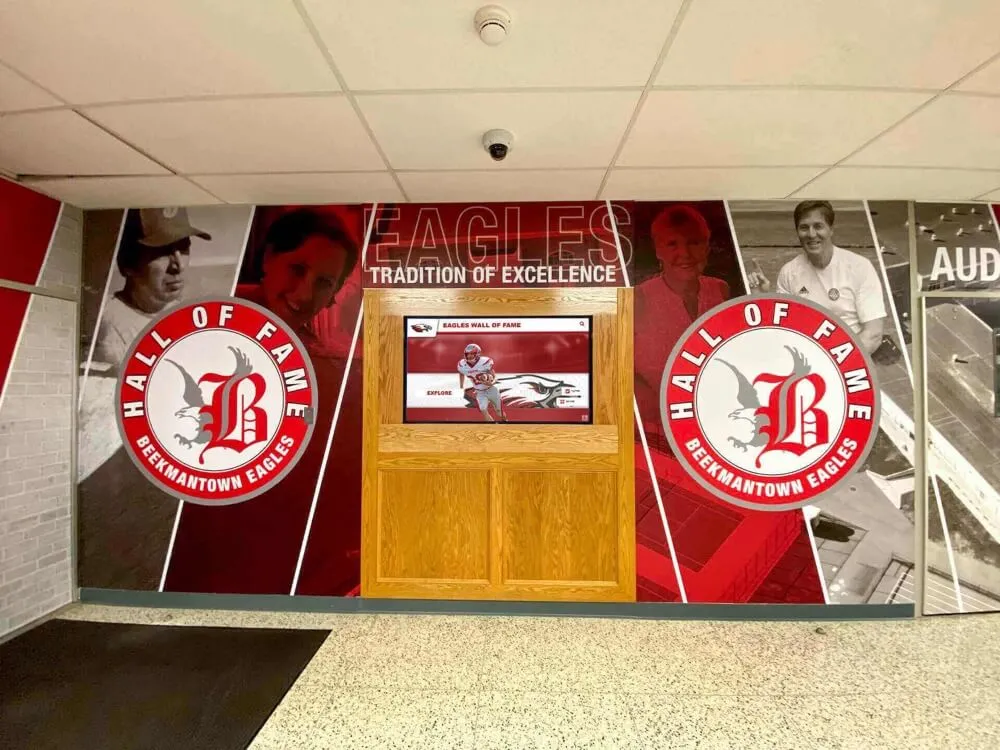
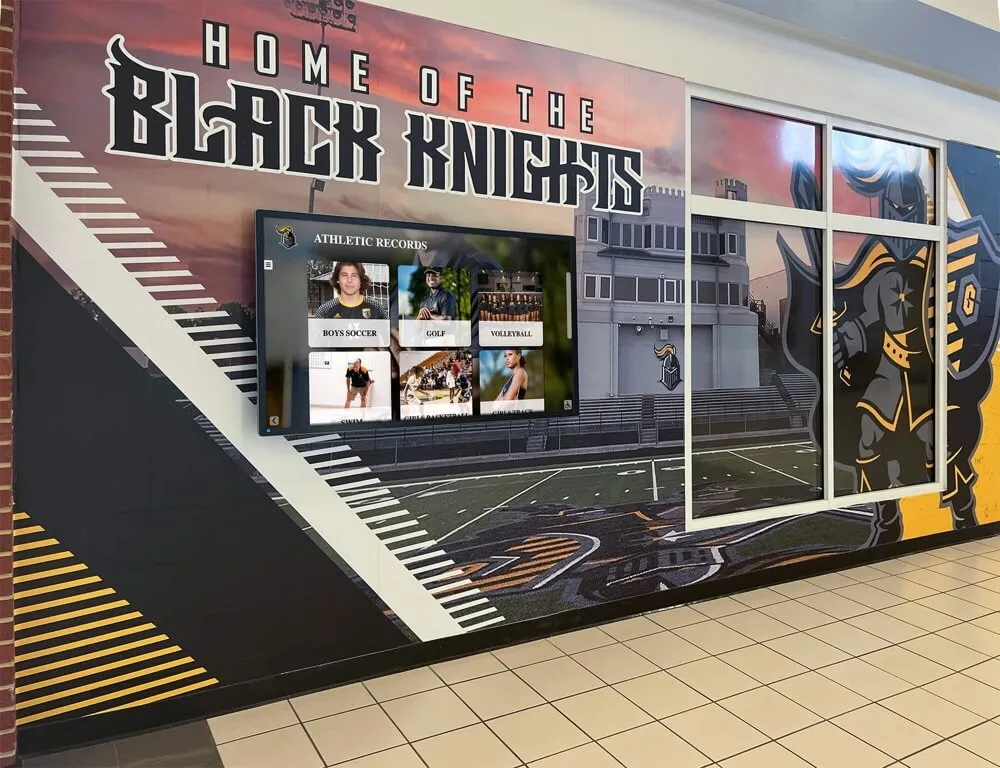
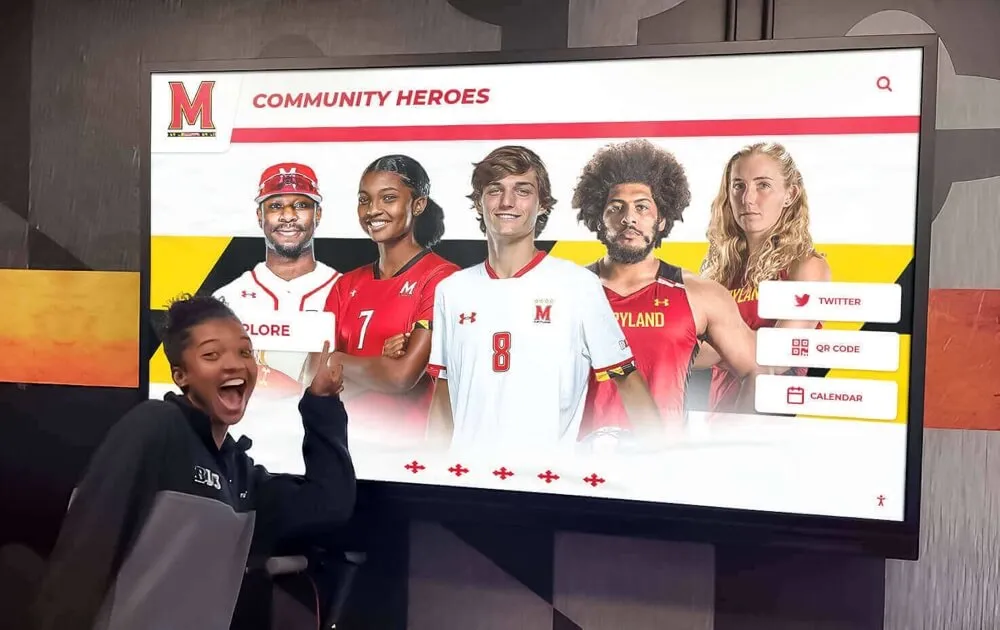
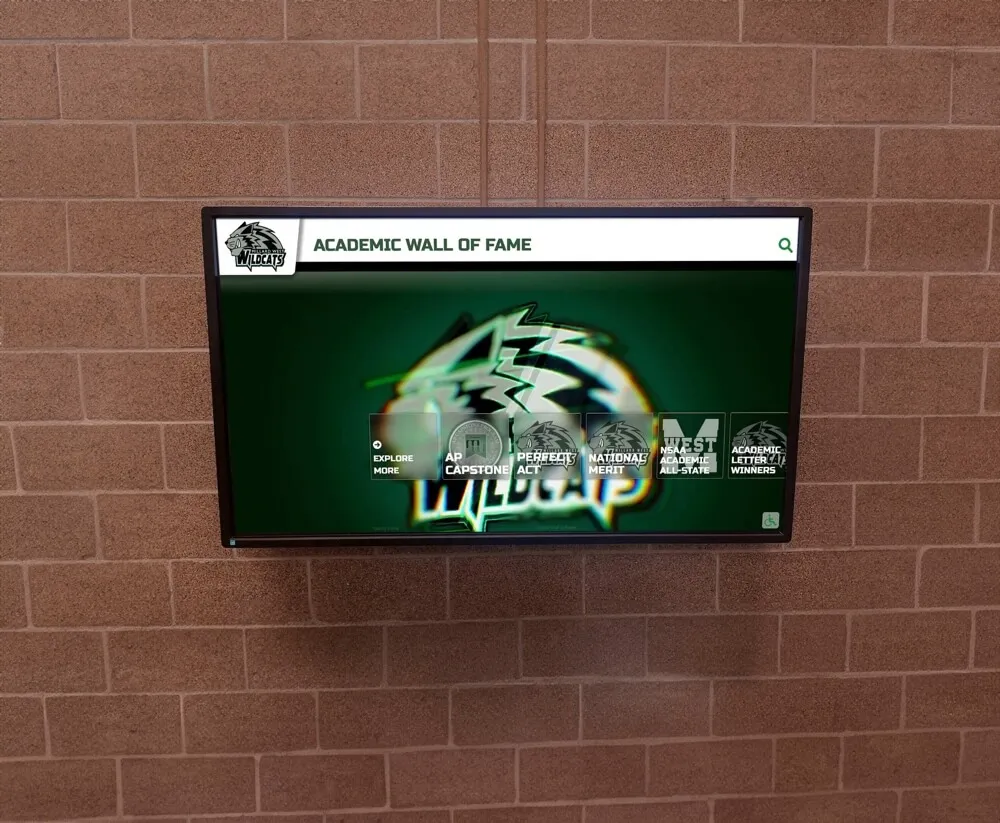
Touchscreen interfaces make discovering individual member stories simple and engaging
Personal Voice and Reflection
Student Statements
Including members’ own voices transforms spotlights from external documentation to personal stories. Invite students to share why NHS membership matters to them personally, how participation influenced their growth or perspective, which pillar resonates most strongly and why, what they’ve learned through service or leadership experiences, and how they plan to continue embodying NHS values after graduation.
These personal reflections humanize spotlights while helping viewers connect with individual member experiences beyond achievement lists.
Creating Comprehensive NHS Student Showcase Programs
Beyond individual spotlights, systematic showcase programs create ongoing recognition throughout school years.
Rotating Featured Member Programs
Monthly or Weekly Spotlights
Rather than attempting to simultaneously highlight all members, rotating spotlight programs provide sustained visibility. Feature one member per week in prominent school locations, rotate monthly spotlights through main entrance displays, create seasonal showcases highlighting members graduating that year, or establish thematic rotations focusing on different achievement areas (service month, leadership month, scholarship month).
Rotating programs ensure every member receives dedicated spotlight time while maintaining fresh content that keeps community members engaged. A weekly rotation in a chapter with 40 members provides nine weeks of sustained individual recognition—far more impactful than brief group mention.
Digital Rotation Advantages
Digital recognition platforms enable automated rotation that would be administratively burdensome with physical displays. Systems can randomly feature different members each time displays activate, rotate through comprehensive member profiles on scheduled intervals, spotlight recent inductees for their first months, and feature graduating seniors during spring semester.
Solutions like Rocket Alumni Solutions provide flexible rotation options ensuring equitable visibility across all members while reducing advisor management burden compared to manually updating physical displays.
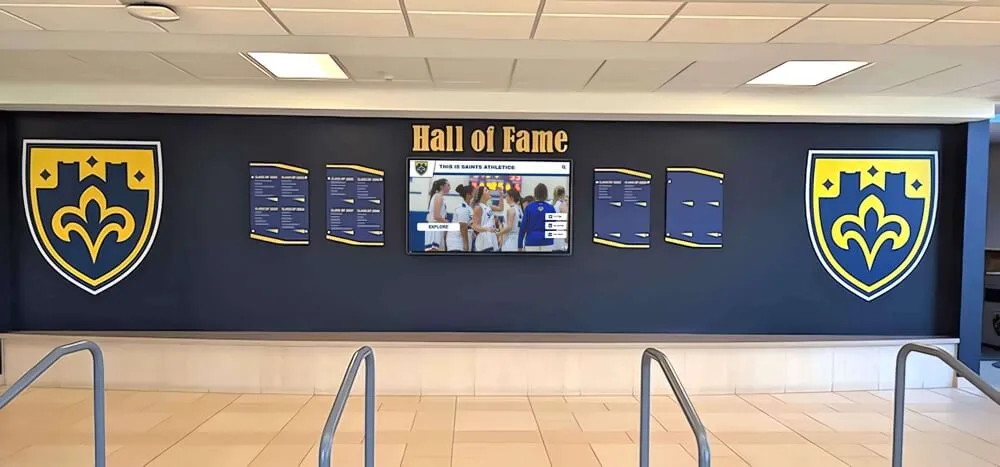
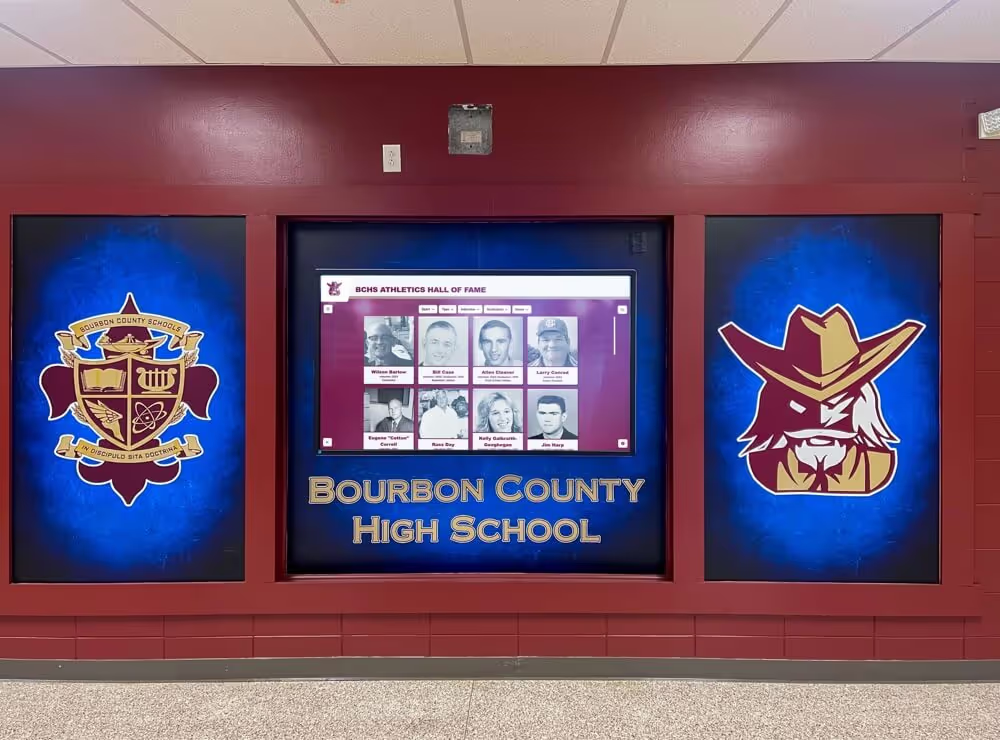
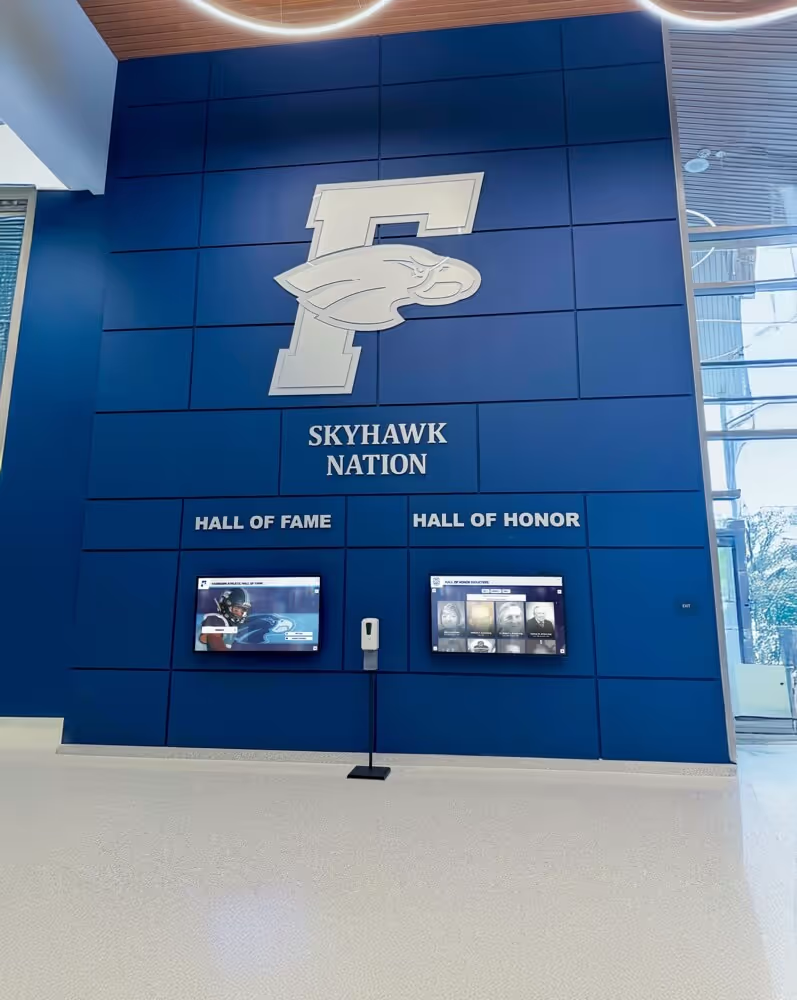
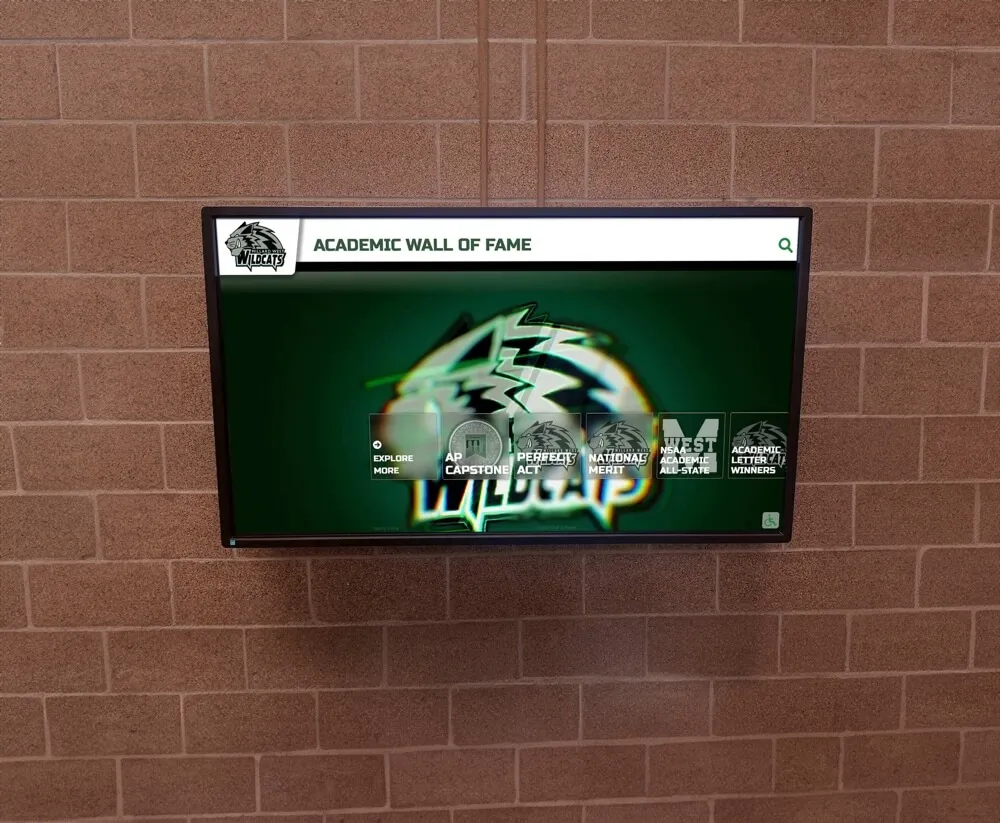
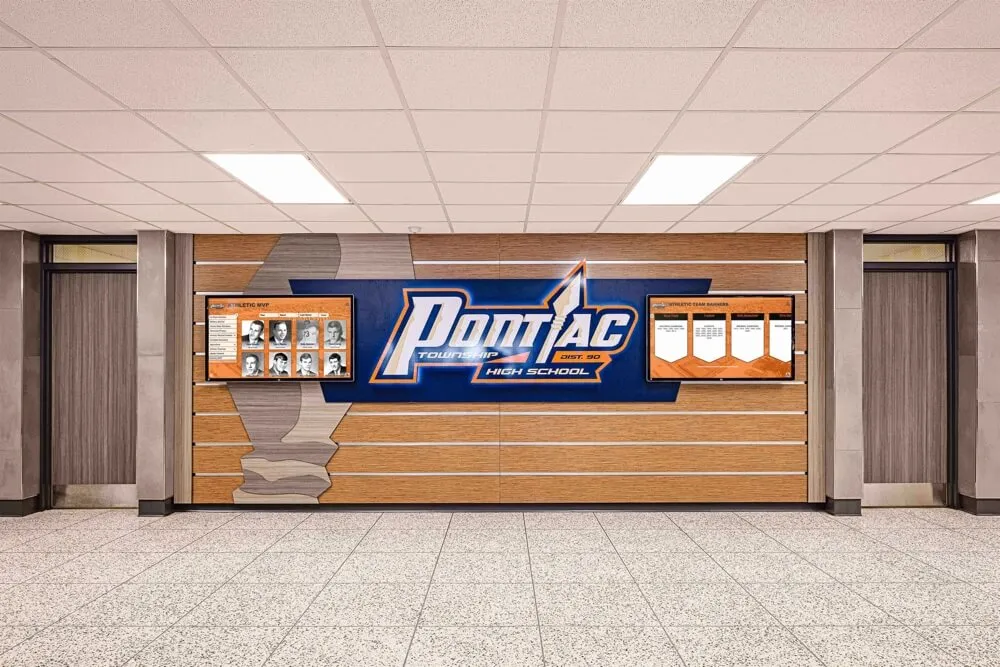
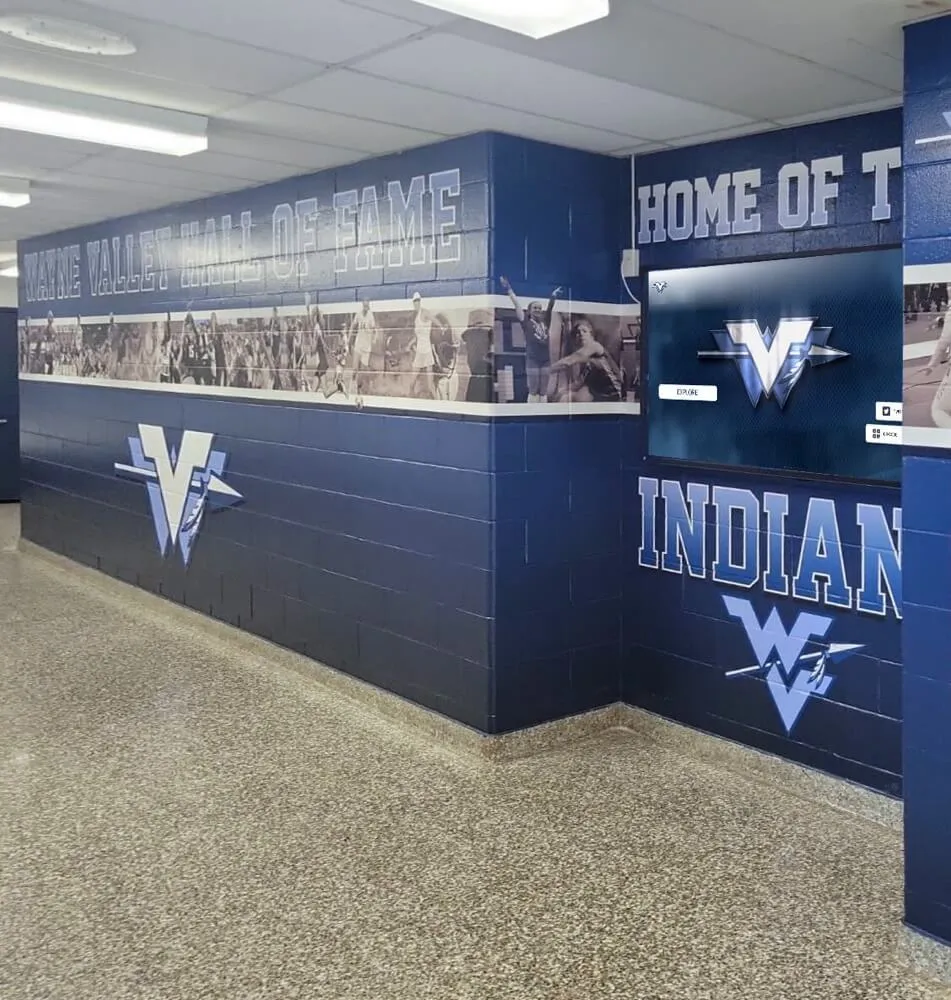
Hybrid recognition approaches integrate digital flexibility with traditional school design elements
Pillar-Based Recognition Categories
Scholarship Excellence Spotlights
Create dedicated recognition for members demonstrating exceptional academic achievement. Highlight students earning perfect or near-perfect GPAs, document AP Scholar with Distinction or National Merit designations, celebrate academic competition state or national qualifications, recognize research projects presented at academic conferences, and spotlight students earning significant academic scholarships.
These scholarship-focused spotlights inspire academic excellence while celebrating members whose NHS participation emphasizes the intellectual achievement pillar.
Leadership Achievement Highlights
Similarly, spotlight members whose NHS experience emphasizes leadership development. Feature chapter officers with descriptions of initiatives they led, recognize students holding multiple leadership positions across school activities, celebrate members initiating new programs benefiting school communities, highlight students selected for leadership conferences or programs, and document leadership awards or recognitions received.
Leadership spotlights provide models for members developing these capabilities while demonstrating the diverse forms leadership can take.
Explore leadership recognition approaches in teaching awards and recognition programs adaptable to student contexts.
Service Impact Celebrations
Service-focused spotlights celebrate community engagement depth. Feature members contributing 100+, 200+, or 300+ volunteer hours, highlight students who created lasting community programs or organizations, recognize members whose service received external awards or media coverage, spotlight students serving with particular organizations across multiple years, and document members whose service addressed specific community needs effectively.
These service spotlights inspire continued community engagement while demonstrating tangible impact NHS members create.
Character Recognition Spotlights
Though challenging to quantify, character deserves dedicated recognition. Feature members who received peer nominations for integrity or compassion, spotlight students whom teachers describe as consistently ethical and responsible, recognize members who advocate for others without seeking personal credit, highlight students who maintain values despite peer pressure, and celebrate members whose daily behavior exemplifies NHS character standards.
Character spotlights make this often-invisible pillar more tangible while encouraging reflection about how students demonstrate integrity daily.
Implementation: Digital vs. Traditional Spotlight Approaches
Schools can implement NHS student spotlights through various formats, each offering distinct advantages.
Traditional Physical Recognition Methods
Bulletin Board Spotlight Systems
Many schools begin with dedicated bulletin board space for rotating NHS member spotlights. Reserve prominent hallway locations for featured member displays, create standardized spotlight templates ensuring consistent presentation, rotate featured members on weekly or monthly schedules, include multiple photos and comprehensive achievement descriptions, and provide QR codes linking to extended digital profiles when available.
Physical spotlights work well for schools not yet ready for digital systems while providing visible recognition in high-traffic areas. The limitation remains administrative burden of regular updates and space constraints limiting spotlight detail.
Display Case Presentations
Schools with available display cases can create dedicated NHS spotlight exhibits. Combine photos with printed achievement documentation, incorporate NHS memorabilia reinforcing chapter identity, rotate featured member materials regularly, include information about chapter history and current initiatives, and ensure professional presentation befitting achievement significance.
Display cases provide protected environments for materials while creating prestigious presentation spaces. They require regular maintenance and content updates to remain current and engaging.
Digital Recognition Platform Advantages
Unlimited Spotlight Capacity
Digital platforms eliminate space constraints forcing schools to choose which members receive recognition. Every member can have comprehensive profile documentation accessible through touchscreen displays, web-based platforms provide unlimited storage for photos and information, search functionality enables finding any member instantly, and filtering options allow viewing by class year, achievement type, or graduation date.
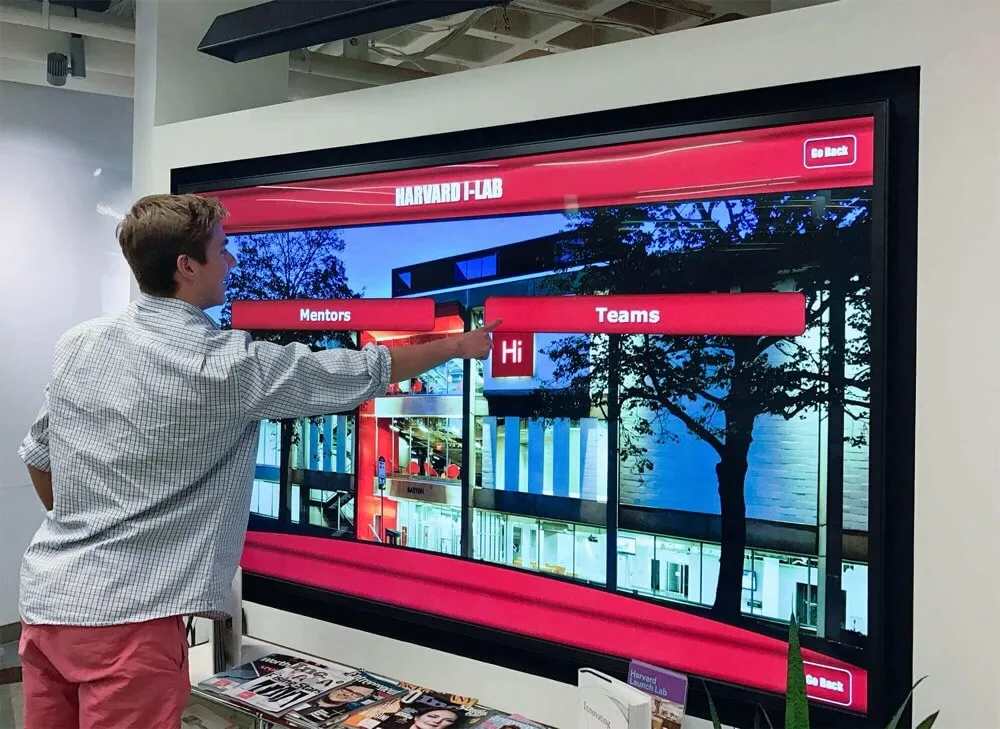
Advanced search and filtering capabilities make finding specific members or achievement types simple
This unlimited capacity ensures every NHS member receives equitable recognition rather than visibility depending on whether they’re in the current bulletin board rotation or their photo fits available display space.
Rich Multimedia Documentation
Digital systems enable recognition formats impossible with physical displays. Include multiple high-resolution photos showing members in various contexts, embed video clips of members discussing their NHS experiences, link to news articles or media coverage of member achievements, integrate social media content when appropriate, and create photo galleries documenting service projects comprehensively.
These multimedia capabilities tell richer stories about individual members than text-and-photo-only approaches allow.
Automated Content Management
Perhaps most importantly, digital platforms dramatically reduce administrative burden. Advisors can update member information remotely from any internet-connected device, schedule content publishing and spotlight rotations in advance, enable member self-service for profile updates and additions, correct errors or enhance entries without physical display access, and maintain current recognition automatically without manual intervention.
Schools implementing digital NHS recognition typically see significant reductions in time spent on recognition maintenance compared to manually updating physical bulletin boards.
Explore comprehensive platforms in digital hall of fame solutions for schools applicable to NHS contexts.
Gathering Content for NHS Student Spotlights
Creating comprehensive member spotlights requires systematic content collection from multiple sources.
Member Self-Submission Systems
Structured Information Forms
The most efficient content gathering approach involves members submitting their own information through standardized forms. Create digital forms requesting all spotlight content elements, provide clear examples showing the level of detail expected, establish submission deadlines aligned with induction dates, include optional fields for students uncomfortable sharing certain information, and ensure mobile-friendly submission processes accommodating students’ device preferences.
Self-submission puts students in control of their narratives while reducing advisor information-gathering burden. Students know their achievements better than advisors, making them ideal content sources when provided clear frameworks.
Guided Reflection Prompts
Rather than open-ended “tell us about yourself” requests, provide specific prompts generating useful spotlight content. Ask members to describe their most meaningful NHS service experience and what they learned, identify the leadership role that challenged them most and how they grew, reflect on how NHS participation influenced their goals or perspective, explain which NHS pillar resonates most personally and why, and share advice they’d give younger students aspiring to NHS membership.
These guided prompts produce richer content than generic information requests while helping students reflect meaningfully on their NHS experiences.
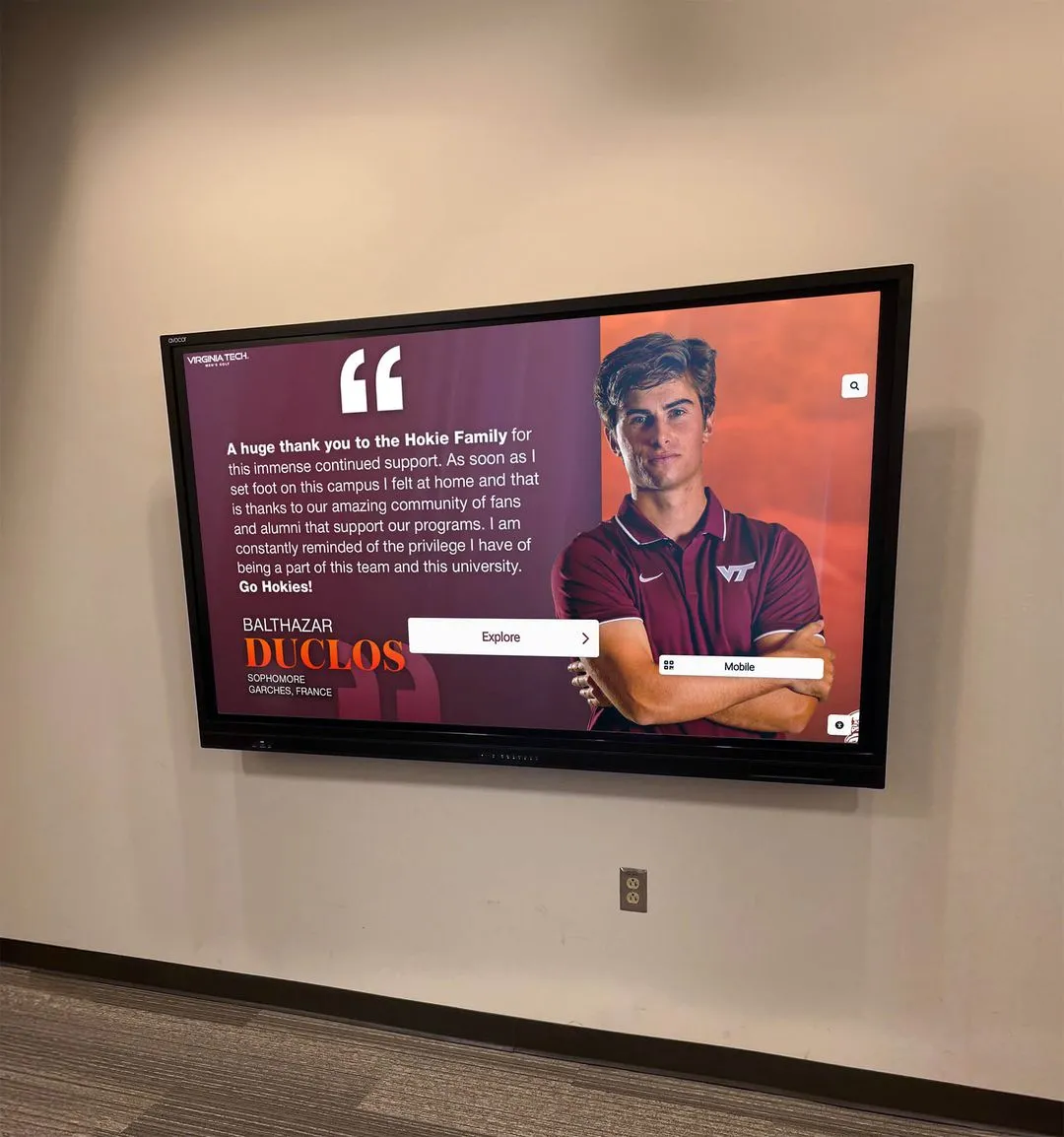
Peer recognition creates positive competition and inspiration among students
Advisor and Teacher Contributions
Faculty Perspective Additions
While member self-submissions provide foundation content, advisor and teacher observations add valuable external perspectives. Request brief statements from advisors about each member’s distinctive contributions, invite teachers to nominate students for character recognitions with specific examples, ask activity advisors to describe members’ leadership in their organizations, gather testimonials from community partners where students serve, and collect peer nominations for various recognition categories.
These external perspectives validate student-provided information while adding dimensions students might not include about themselves due to modesty.
Historical Documentation Mining
For creating spotlights of graduated members or building comprehensive chapter histories, mine existing documentation sources. Review previous induction programs and ceremony materials, examine yearbook content documenting NHS activities and members, search school newsletters and publications for NHS mentions, check local media archives for coverage of chapter events, and contact alumni for their memories and updated biographical information.
This historical mining creates rich legacy documentation connecting current members with chapter traditions.
Best Practices for NHS Student Spotlight Content
Following content best practices ensures spotlights achieve intended recognition impact while respecting member privacy and maintaining appropriate standards.
Balancing Celebration and Privacy
Obtaining Appropriate Permissions
Always secure proper permissions before publishing student information. Obtain signed photo release forms from students or guardians, request approval before sharing specific achievement details, allow students to review spotlight content before publication, provide opt-out options for students uncomfortable with public recognition, and respect family wishes regarding information sharing when conflicts arise.
These permission processes protect student privacy while ensuring recognition remains welcome rather than uncomfortable for members who may prefer less visibility.
Determining Appropriate Detail Levels
Not all achievement details merit public sharing. Share academic honors and achievement levels without specific grade information, recognize service contributions without sharing potentially sensitive recipient details, celebrate leadership impact without disclosing confidential organizational information, acknowledge character recognitions without revealing private circumstances that prompted them, and focus on positive achievements rather than struggles overcome when members prefer privacy.
These judgment calls ensure spotlights celebrate appropriately without oversharing personal information students might later regret being public.
Ensuring Equitable Recognition
Preventing Recognition Disparities
Systematic approaches prevent some members receiving better recognition than others. Establish minimum spotlight content requirements applying to all members, ensure every member receives equal feature rotation opportunities, avoid favoring certain achievement types over others, resist highlighting only the most accomplished members, and provide support helping all members articulate their contributions effectively.
These equity measures ensure NHS recognition doesn’t inadvertently create hierarchies within membership, with some students receiving comprehensive celebration while others fade into background.
Celebrating Diverse Excellence
NHS members embody the four pillars in countless ways. Spotlight students excelling primarily in service, leadership, scholarship, or character equally, recognize diverse achievement types within each pillar category, celebrate members from varied backgrounds and communities, highlight different pathways to excellence rather than single template, and ensure recognition represents chapter’s full membership diversity.
This inclusive approach demonstrates that many paths lead to NHS excellence, inspiring broader student populations than recognition featuring only certain achievement types.
Explore inclusive recognition in elementary school recognition programs adaptable to NHS contexts.
Integrating NHS Spotlights with Broader Recognition Programs
NHS student spotlights gain additional impact when coordinated with comprehensive school recognition systems.
Cross-Platform Recognition Strategies
Physical and Digital Integration
Rather than treating physical and digital recognition as competing approaches, effective programs integrate both. Use physical displays in high-traffic areas featuring current spotlights, provide QR codes on physical displays linking to comprehensive digital profiles, implement digital displays offering unlimited member access and rich multimedia content, create web-based platforms extending recognition to families and alumni worldwide, and ensure consistent branding across all recognition formats.
This combined approach maximizes visibility while accommodating different audience preferences and access points.
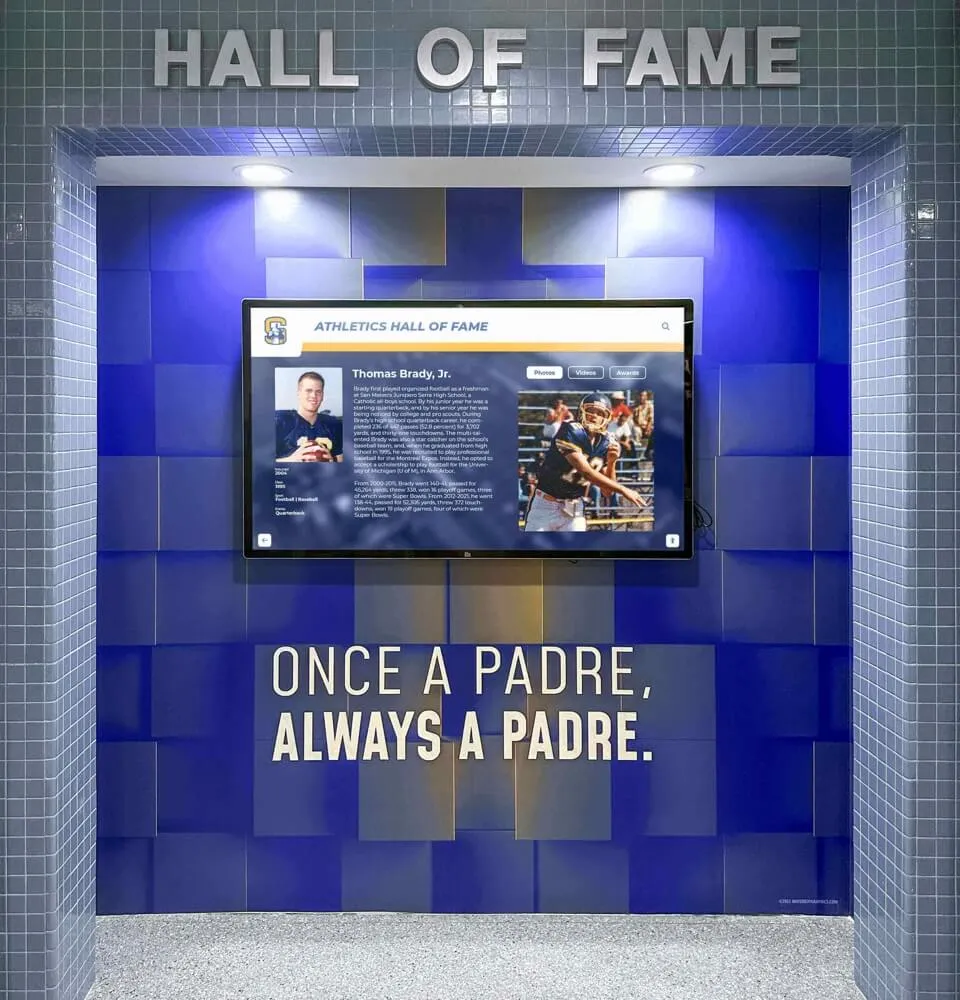
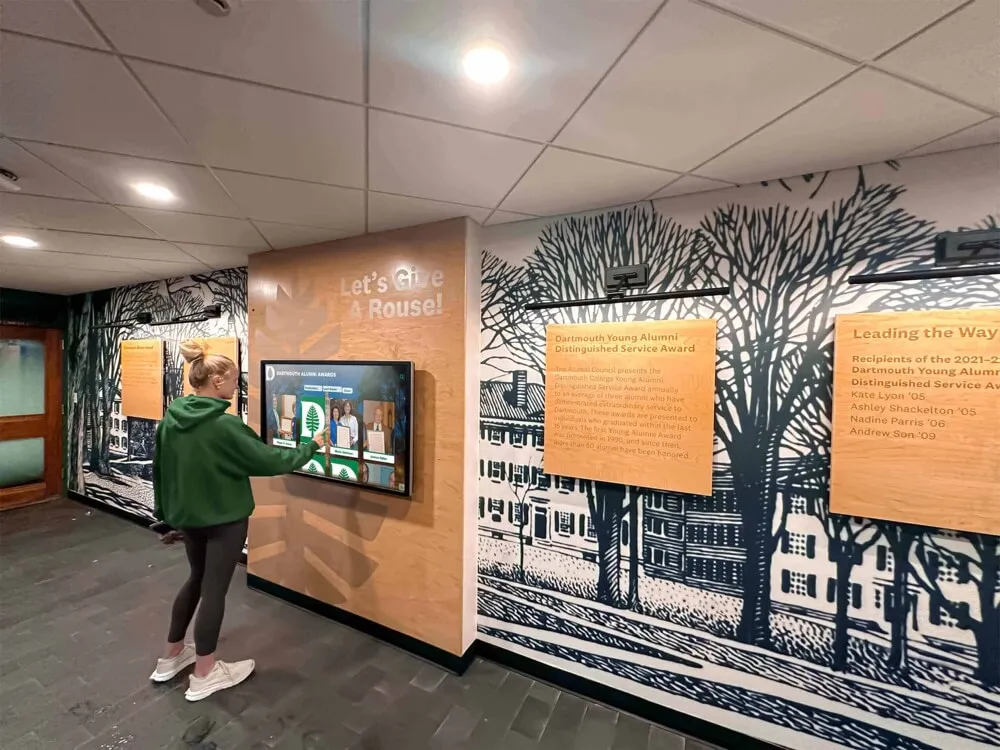
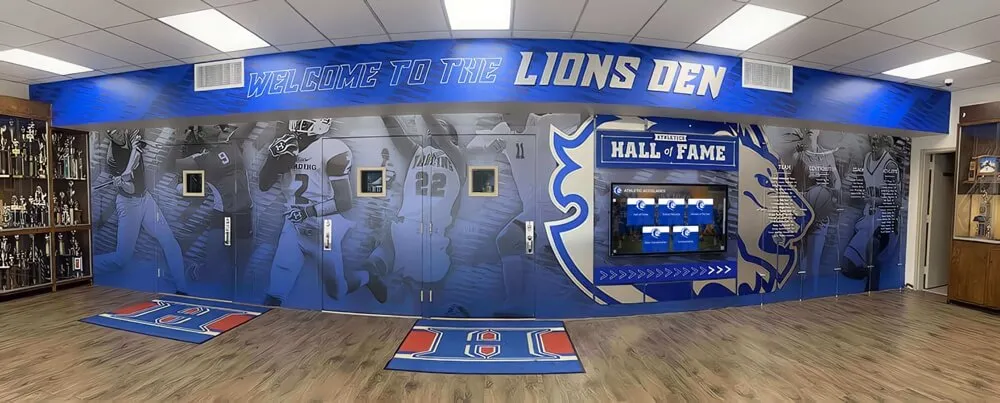
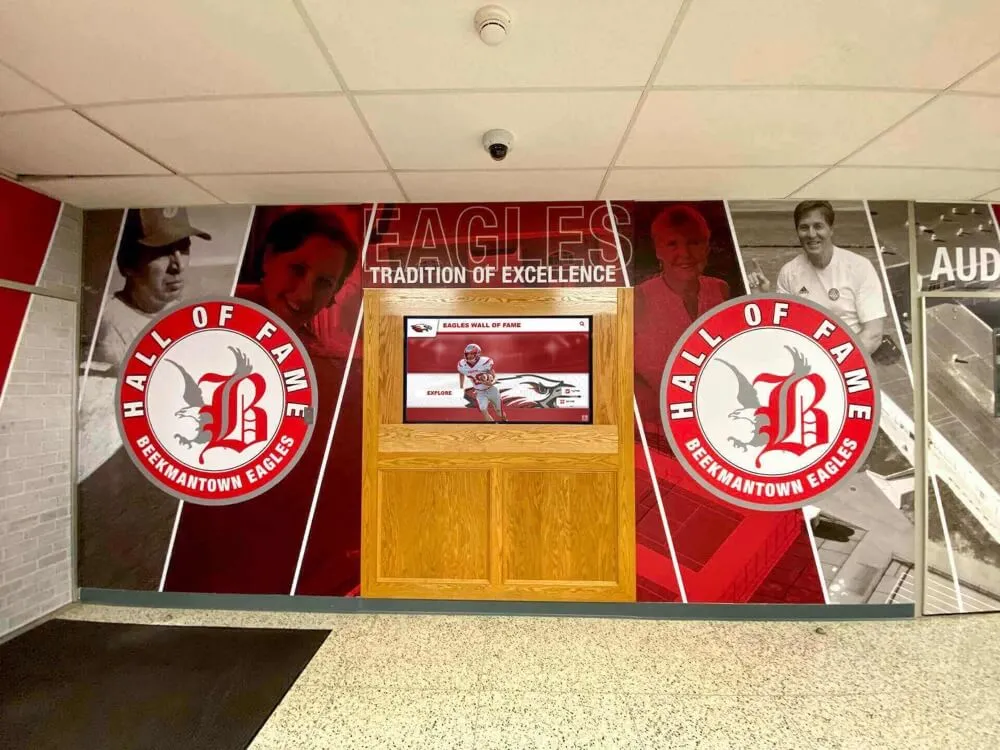
Blending physical design elements with digital capabilities creates recognition environments honoring tradition while enabling modern features
Website and Social Media Extensions
NHS spotlights deserve visibility beyond physical school locations. Feature member spotlights on school websites with dedicated NHS section pages, share spotlight highlights through school social media channels, create member profile links students can share with family and colleges, ensure mobile-responsive design for viewing on all devices, and maintain appropriate privacy settings balancing visibility with security.
These digital extensions enable families anywhere to celebrate their students’ recognition while providing shareable content members can include in college applications or scholarship materials.
Academic Recognition Ecosystem
Connecting Multiple Honor Programs
Many NHS members also participate in other honor societies and recognition programs. Create links between NHS profiles and subject-specific honor societies when appropriate, coordinate with AP Scholar recognition programs celebrating standardized test achievement, integrate with honor roll displays recognizing academic excellence, and align with departmental recognition programs highlighting subject mastery.
This ecosystem approach positions NHS as part of comprehensive academic excellence culture rather than isolated honor society, showing how various recognition programs celebrate overlapping student achievements from different perspectives.
Measuring NHS Spotlight Program Impact
Assessment demonstrates whether recognition achieves intended goals while informing continuous improvement.
Quantitative Engagement Metrics
Digital Platform Analytics
When implementing digital spotlights, platforms provide concrete usage data. Track how frequently displays are accessed and average session duration, identify which member profiles receive most views revealing engagement patterns, analyze search patterns showing how visitors navigate content, monitor peak usage times informing promotional strategies, and measure return visitor rates demonstrating sustained interest.
These metrics reveal whether spotlights generate intended community engagement or require adjustments improving visibility and use.
NHS Program Health Indicators
Spotlight programs may influence broader chapter vitality. Monitor membership application rates from eligible students, track member retention throughout high school years, measure service hour totals and project participation rates, assess chapter officer candidate quality and quantity, and evaluate alumni engagement through mentorship or chapter support.
While multiple factors affect these outcomes, positive trends following spotlight implementation suggest recognition contributes to program strength and member commitment.
Qualitative Impact Assessment
Stakeholder Feedback Collection
Regular feedback provides improvement insights. Survey current members about whether spotlights appropriately honor their achievements, interview prospective members describing how recognition influences their NHS aspirations, gather family perspectives evaluating recognition quality and accessibility, request advisor reflections on program management sustainability, and seek administrator assessment of whether visibility aligns with institutional priorities.
This qualitative feedback reveals recognition impact on culture and perceptions beyond engagement statistics alone.
Recognition Impact Stories
Collect specific narratives demonstrating program value. Document instances where prospective members cited spotlights as inspiration for academic improvement, record alumni descriptions of how NHS recognition influenced subsequent achievements, note community partner mentions of recognition when strengthening school relationships, and gather examples of families sharing recognition during college admissions processes.
These stories provide compelling evidence of recognition value supplementing quantitative metrics.
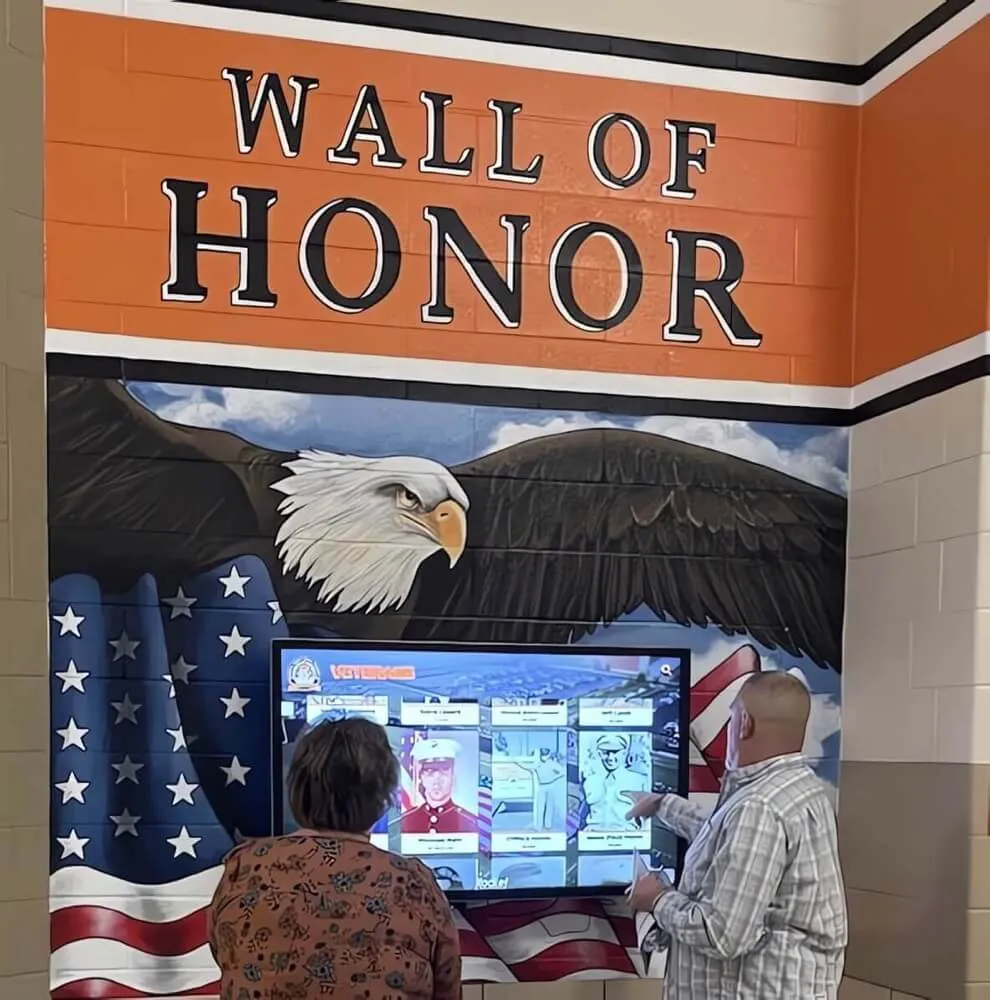
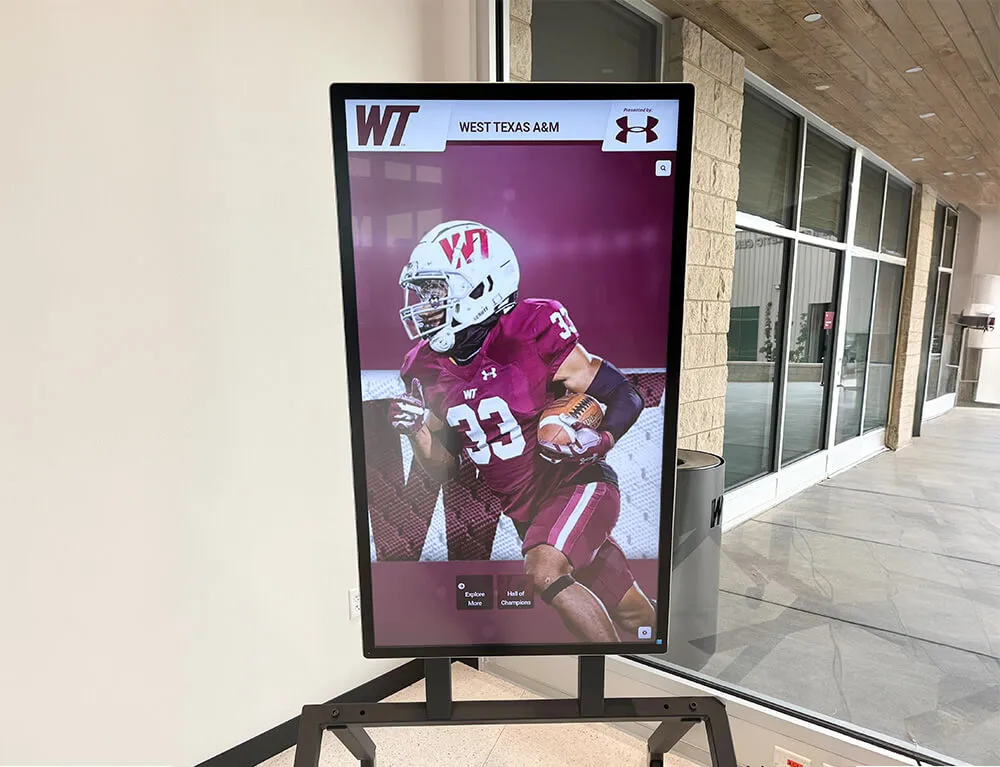
Effective recognition engages multiple audiences including students, families, alumni, and community members
Special Considerations for Different NHS Chapter Contexts
Chapter characteristics influence optimal spotlight approaches.
Large Membership Chapters
Managing Extensive Member Volumes
Chapters with 100+ members face unique spotlight challenges. Digital platforms become essential for showcasing all members equitably, powerful search and filtering capabilities enable finding specific individuals, scheduled rotation ensures fair visibility distribution across large groups, and performance tuning maintains fast loading despite extensive content.
Large chapters cannot practically spotlight all members through physical displays alone, making digital solutions particularly valuable for ensuring equitable recognition regardless of membership size.
Tiered Recognition Strategies
Some large chapters implement recognition tiers. All members receive comprehensive digital profiles accessible through search, rotating spotlights feature different members weekly in physical locations, enhanced recognition celebrates members achieving exceptional accomplishments, and officer spotlights provide additional visibility for chapter leadership.
These tiered approaches balance equitable base recognition with additional celebration for members demonstrating extraordinary commitment.
Small Membership Chapters
Maximizing Recognition Impact with Limited Members
Smaller chapters require different approaches. With fewer members, schools can provide more frequent spotlight rotations, create more detailed individual profiles since fewer exist, involve members more directly in content creation and curation, and establish more personal recognition approaches befitting smaller group dynamics.
Small chapters shouldn’t feel their recognition matters less than large programs—thoughtful spotlights celebrating each member comprehensively can create powerful impact even with modest membership numbers.
Service-Focused vs. Academic-Focused Chapters
Aligning Spotlights with Chapter Identity
Chapter characteristics should influence spotlight emphasis. Service-oriented chapters might emphasize community impact documentation in spotlights, feature extensive service project galleries and volunteer hour tracking, highlight partnerships with community organizations, and celebrate service awards and recognitions prominently.
Conversely, academically-focused chapters might spotlight research projects and academic competitions, emphasize scholarship achievements and standardized test scores, document academic conference presentations, and celebrate college acceptances and academic scholarship awards.
These identity-aligned approaches ensure recognition reinforces what makes each chapter distinctive rather than applying generic templates to all programs.
Technology Platforms for NHS Student Spotlights
Selecting appropriate technology platforms significantly impacts spotlight program sustainability and effectiveness.
Essential Platform Capabilities
Core Recognition Features
Effective NHS spotlight platforms require several essential capabilities. Unlimited member profiles without capacity constraints, straightforward content management interfaces for easy updates, adaptable display options supporting various recognition formats, search and filtering functionality for finding specific members, designs that work on phones and tablets ensuring accessibility on all devices, and connection capabilities linking with school systems and websites.
These core features ensure platforms can grow with programs while remaining manageable for advisors with varying technical expertise.
Content Flexibility
Beyond basic profiles, comprehensive platforms enable multimedia content including high-resolution photo galleries, video embedding capabilities, document attachments for certificates or awards, links to external content like news articles, social media integration when appropriate, and rich text formatting for comprehensive descriptions.
This content flexibility allows telling complete member stories rather than reducing recognition to limited text fields.
Administrative Efficiency
Platform selection should prioritize reducing advisor workload. Cloud-based management enables updates from anywhere without on-site requirements, scheduled publishing allows preparing content in advance, bulk editing tools support managing multiple profiles efficiently, member self-service options reduce advisor information-gathering burden, and automated backups protect against data loss.
These efficiency features make recognition programs sustainable rather than becoming overwhelming administrative burdens.
Explore technology options in touchscreen software solutions for academic recognition.
Sustaining NHS Spotlight Programs Long-Term
Initial enthusiasm often exceeds sustained commitment—planning for long-term sustainability ensures programs remain effective beyond launch excitement.
Establishing Sustainable Processes
Distributed Responsibility Models
Rather than placing all spotlight management on advisors, distribute responsibilities appropriately. Chapter officers can coordinate member content submissions and reviews, designated members can serve as spotlight content curators, student technology assistants can manage technical platform aspects, advisory committees can oversee recognition quality standards, and administrative support can provide backup during advisor transitions.
This distributed model prevents programs from collapsing when key individuals leave or become overwhelmed.
Integration with Chapter Operations
Sustainable programs integrate spotlights into regular chapter rhythms. Make content submission part of induction processes for new members, establish annual profile update requirements for continuing members, incorporate spotlight content into chapter officer responsibilities, align recognition updates with natural school calendar milestones, and build recognition management into chapter meeting agendas when appropriate.
This operational integration prevents spotlights from being forgotten add-ons that receive attention only when someone remembers.
Planning for Transitions
Advisor Change Continuity
NHS advisor turnover creates recognition program risk without proper planning. Maintain comprehensive documentation of spotlight processes and procedures, create training materials for incoming advisors, ensure platform access credentials transfer smoothly during transitions, establish co-advisor models providing continuity when changes occur, and involve school administration in recognition oversight ensuring programs survive individual departures.
These continuity measures protect spotlight programs from collapsing during inevitable personnel changes.
Technology Platform Sustainability
Long-term technology considerations matter beyond initial platform selection. Choose vendors demonstrating long-term stability and market presence, understand platform upgrade paths and future development roadmaps, ensure data export capabilities allowing platform migration if needed, verify ongoing technical support and maintenance commitments, and budget for sustainable funding rather than assuming one-time purchases.
These technology sustainability factors prevent situations where programs succeed initially but fail when platforms become obsolete or vendors disappear.
Conclusion: Celebrating Every NHS Member’s Story
National Honor Society membership represents extraordinary achievement deserving recognition celebrating each student’s unique excellence across scholarship, leadership, service, and character. When schools move beyond treating NHS as collective credential to implementing thoughtful individual spotlights, they create recognition resonating with students, inspiring prospective members, and demonstrating institutional commitment to honoring diverse forms of achievement.
The strategies explored in this guide provide frameworks for building NHS student spotlight programs that honor member contributions while remaining sustainable and aligned with chapter values. From rotating featured member displays highlighting different students regularly to complete digital platforms documenting full achievement stories, schools have numerous options for showcasing individual NHS excellence effectively.
Showcase Your NHS Members' Excellence
Discover how modern recognition solutions can help you celebrate every NHS student's individual achievements through engaging spotlights and comprehensive member profiles that inspire your entire school community.
Explore Recognition SolutionsStart wherever current situations demand—whether creating simple rotating bulletin board spotlights with better content, implementing systematic member information collection processes, or exploring comprehensive digital platforms fundamentally transforming recognition capabilities. Each improvement honors NHS membership more effectively while demonstrating that individual student stories matter as much as collective chapter achievements.
Your NHS members deserve recognition systems celebrating their distinctive excellence rather than treating them as undifferentiated group members. Students maintaining rigorous academic standards while leading peers, serving communities, and demonstrating exemplary character merit ongoing individual visibility throughout membership rather than recognition limited to induction ceremonies and graduation programs. With thoughtful planning and appropriate recognition solutions, you can create spotlight programs ensuring every member’s story receives telling, every achievement gains visibility, and every student feels valued for their unique contributions to chapter excellence.
Ready to transform your NHS recognition? Explore how Rocket Alumni Solutions provides comprehensive platforms enabling individual member spotlights that celebrate diverse excellence while inspiring future generations of scholars, leaders, and community servants.