



Every year, hundreds of thousands of high school students aspire to join the National Honor Society (NHS), one of the most prestigious academic recognition organizations in American education. For many students and families, NHS membership represents a crucial milestone—a credential that strengthens college applications, demonstrates sustained excellence, and opens doors to scholarship opportunities worth millions of dollars annually.
Yet confusion surrounds exactly what it takes to earn NHS induction. Students frequently assume that a high GPA alone guarantees membership, only to discover that National Honor Society requirements extend far beyond grades to encompass character, service, and leadership dimensions. Schools implement NHS chapters with varying local criteria, creating uncertainty about what specific standards students must meet.
This comprehensive guide clarifies National Honor Society requirements for 2025, explaining the national standards that govern all chapters while addressing how local chapters adapt these criteria to their specific contexts. Whether you’re a student planning your path to NHS membership or an educator managing your school’s chapter, this resource provides the clarity needed to understand and meet NHS induction standards.
Understanding NHS requirements empowers students to plan strategically throughout their high school careers while helping schools create recognition systems that celebrate these accomplished students appropriately. For the students who achieve this honor, proper recognition matters—their accomplishments deserve visibility that inspires peers and demonstrates institutional commitment to academic excellence.

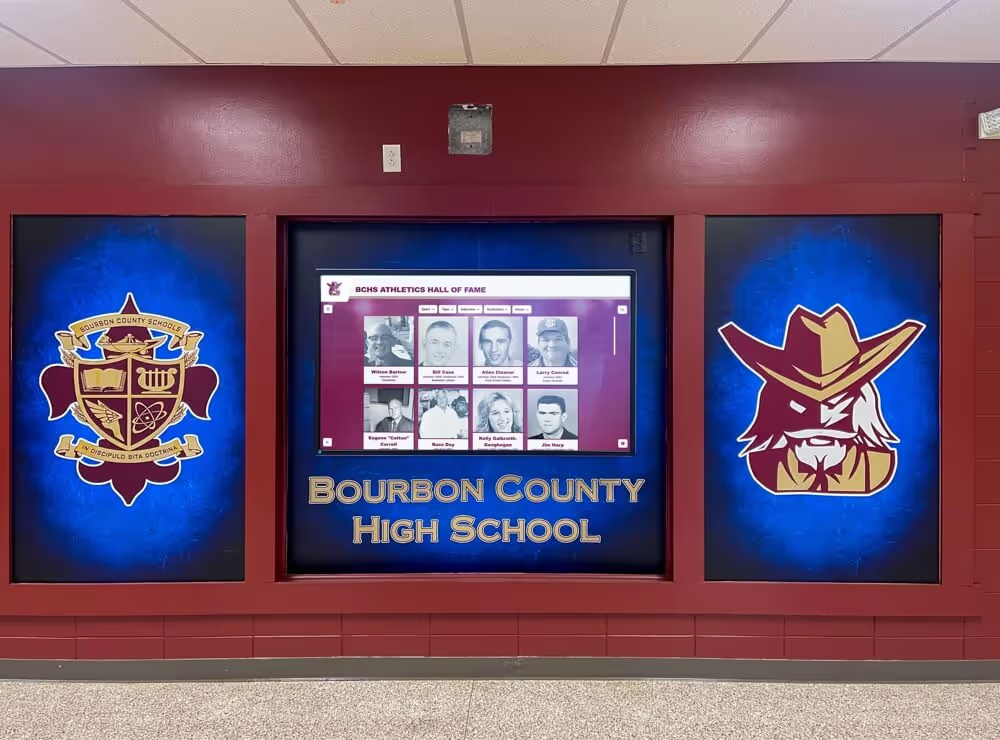
Modern recognition displays celebrate NHS members alongside other academic achievers, creating visible cultures of intellectual excellence
Understanding the National Honor Society
Before exploring specific requirements, students and families should understand what NHS represents and how it operates within American secondary education.
What is the National Honor Society?
Organization Overview
The National Honor Society, founded in 1921, stands as the nation’s premier organization recognizing outstanding high school students who demonstrate excellence in four key areas: scholarship, service, leadership, and character. According to the National Association of Secondary School Principals (NASSP), which governs NHS, more than one million students currently participate in NHS across all 50 states, the District of Columbia, Puerto Rico, and many international schools.
NHS operates through local chapters established at individual high schools. Each chapter functions under the guidance of a faculty council and chapter adviser, implementing national standards while maintaining some flexibility for local context and culture.
Why NHS Membership Matters
NHS membership provides multiple benefits extending throughout students’ educational journeys:
- College Application Enhancement: Selective colleges value NHS membership as evidence of well-rounded achievement beyond academics
- Scholarship Access: NHS members qualify for exclusive scholarship opportunities including the NHS Scholarship program distributing substantial awards annually
- Leadership Development: Chapter activities provide structured leadership experiences valued by colleges and future employers
- Service Opportunities: NHS facilitates meaningful community service projects building civic engagement
- Network Connections: Membership creates peer networks of accomplished students who support and challenge each other
- Resume Credential: NHS membership remains relevant on resumes and applications throughout college and beyond
Learn about comprehensive approaches to celebrating academic achievement in this academic recognition programs guide.
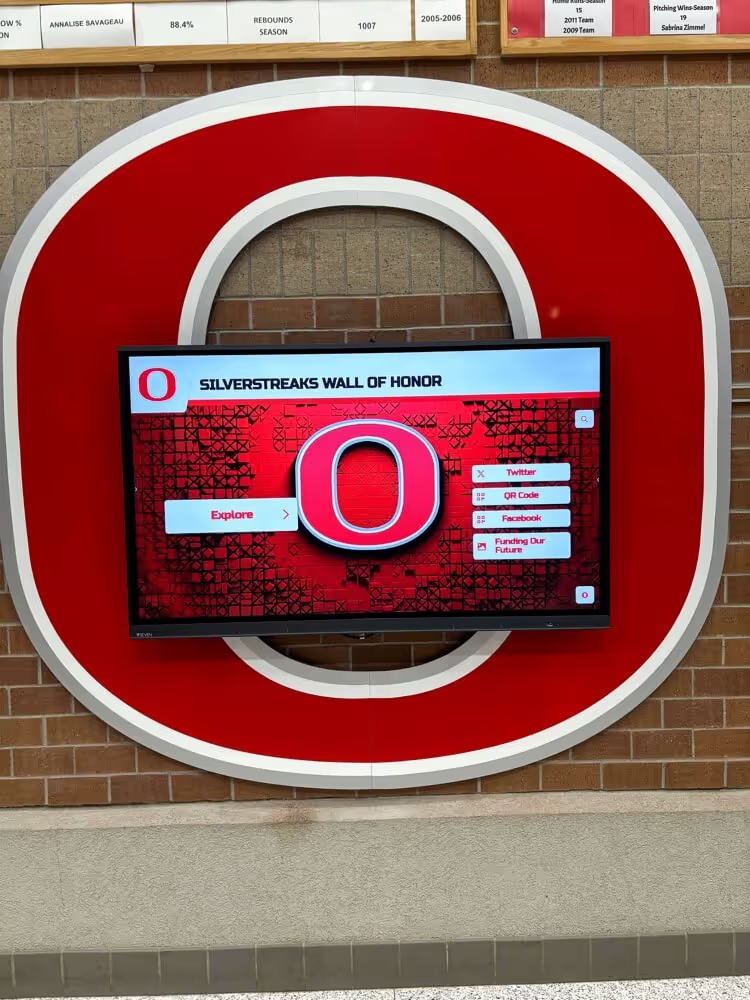
Interactive displays enable students and families to explore NHS achievements and other academic honors
How NHS Chapters Operate
Chapter Structure and Governance
Each school’s NHS chapter operates under consistent national framework:
- Faculty Council: Schools must establish a five-member faculty council responsible for selecting members and overseeing chapter operations
- Chapter Adviser: A designated faculty member serves as primary chapter administrator and student mentor
- National Constitution: All chapters must adopt the NHS National Constitution establishing minimum standards
- Chapter Bylaws: Individual chapters develop bylaws addressing local procedures while adhering to national requirements
The Two-Tiered Standard System
NHS operates with two layers of criteria:
- National Minimum Standards: Non-negotiable requirements all chapters must implement
- Local Chapter Standards: Additional criteria individual chapters may establish provided they meet or exceed national minimums
This dual structure ensures consistency in NHS prestige while allowing chapters to adapt to local contexts, school profiles, and community values.
The Four Pillars of NHS Membership
National Honor Society selection evaluates candidates across four distinct criteria. Understanding each pillar helps students prepare comprehensively for membership consideration.
1. Scholarship (Academic Achievement)
The scholarship criterion assesses students’ academic performance and intellectual engagement.
National GPA Requirements
According to NHS Constitution requirements, students must meet these academic standards:
- Minimum GPA: Students must have a cumulative GPA of 85, B, 3.0 on a 4.0 scale, or equivalent standard of excellence
- Calculation Method: Cumulative GPA includes all academic courses; some chapters may include only core academic subjects
- Equivalency Consideration: Schools using different grading scales must identify equivalent standards
- Junior and Senior Eligibility: Students typically become eligible for consideration during their junior year; some chapters also induct qualified seniors
Important Note: The GPA requirement represents the minimum threshold for consideration, not a guarantee of selection. Many chapters receive more academically qualified candidates than available induction slots, making the other three criteria crucial differentiators.
Beyond the Numbers
While GPA forms the foundation, scholarship encompasses broader academic indicators:
- Enrollment in challenging coursework (Honors, AP, IB)
- Academic growth trajectories and improvement patterns
- Intellectual curiosity demonstrated through elective choices
- Academic competition participation
- Subject-specific excellence and depth

Digital profiles showcase comprehensive academic achievements beyond GPA alone
Local Chapter Academic Standards
Individual chapters may establish higher GPA requirements (but not lower) if they choose:
- Some competitive schools set minimums of 3.5, 3.7, or even 4.0
- Magnet programs and specialized schools often implement elevated standards
- Rural schools with smaller populations may maintain the national 3.0 minimum
Students should consult their school’s specific chapter bylaws to understand local academic expectations.
2. Service (Community Engagement)
The service criterion evaluates candidates’ commitment to contributing positively to school and community through volunteer work.
What Counts as Service
NHS values meaningful service activities that benefit others:
Qualifying Service Examples
- Volunteer work with nonprofit organizations
- Community service projects addressing local needs
- Tutoring and academic assistance to peers
- Environmental conservation and cleanup projects
- Service to religious organizations and faith communities
- Assistance to elderly, disabled, or underserved populations
- Food bank, shelter, and poverty relief volunteering
- School-based service supporting educational mission
Non-Qualifying Activities NHS explicitly excludes activities that:
- Provide direct compensation to the student
- Benefit only family members
- Fulfill court-ordered community service requirements
- Represent regular employment duties
- Involve only a fundraising component without hands-on service

Recognition systems document diverse student achievements including community service and leadership
Service Hour Requirements
National NHS standards do not mandate specific minimum service hours, but most chapters establish local requirements:
Typical Chapter Requirements
- For Consideration: Many chapters require 15-30 service hours during eligibility period
- Ongoing Membership: Chapters often establish annual service requirements (10-20 hours) to maintain active membership
- Quality Over Quantity: Councils value sustained commitment to specific causes over scattered one-time activities
- Documentation Needed: Most chapters require verification of service through supervisor signatures or organizational confirmation
Students should begin documenting service activities early in high school, maintaining records with dates, hours, organizations, and supervisor contact information. This preparation proves invaluable during NHS application processes.
Discover comprehensive student recognition strategies in this end-of-year awards guide.
3. Leadership (Taking Initiative)
The leadership criterion assesses students’ ability to inspire positive action in others and take responsibility in school and community contexts.
What NHS Considers Leadership
Leadership extends far beyond holding elected office or team captain roles:
Formal Leadership Positions
- Student government elected offices
- Club president, vice president, or treasurer roles
- Team captain or co-captain positions
- Class officer positions
- Editor roles in school publications
- Section leader positions in performing arts
Informal Leadership Demonstration
- Initiating new clubs, projects, or programs
- Organizing events or campaigns
- Mentoring younger students
- Taking initiative in group projects and activities
- Serving as peer tutor or study group organizer
- Leading by example through consistent positive actions
Leadership in Non-School Contexts
- Youth group leadership in religious organizations
- Community organization youth boards
- Sports league leadership outside of school
- Scouting leadership positions (Eagle Scout, Gold Award projects)
- Workplace leadership for student employees
Quality of Leadership
Faculty councils evaluate not just positions held but leadership impact:
- How did your leadership benefit the group or organization?
- Did you demonstrate initiative or respond to opportunities?
- What challenges did you overcome?
- How did you inspire or support others?
- What growth resulted from your leadership?

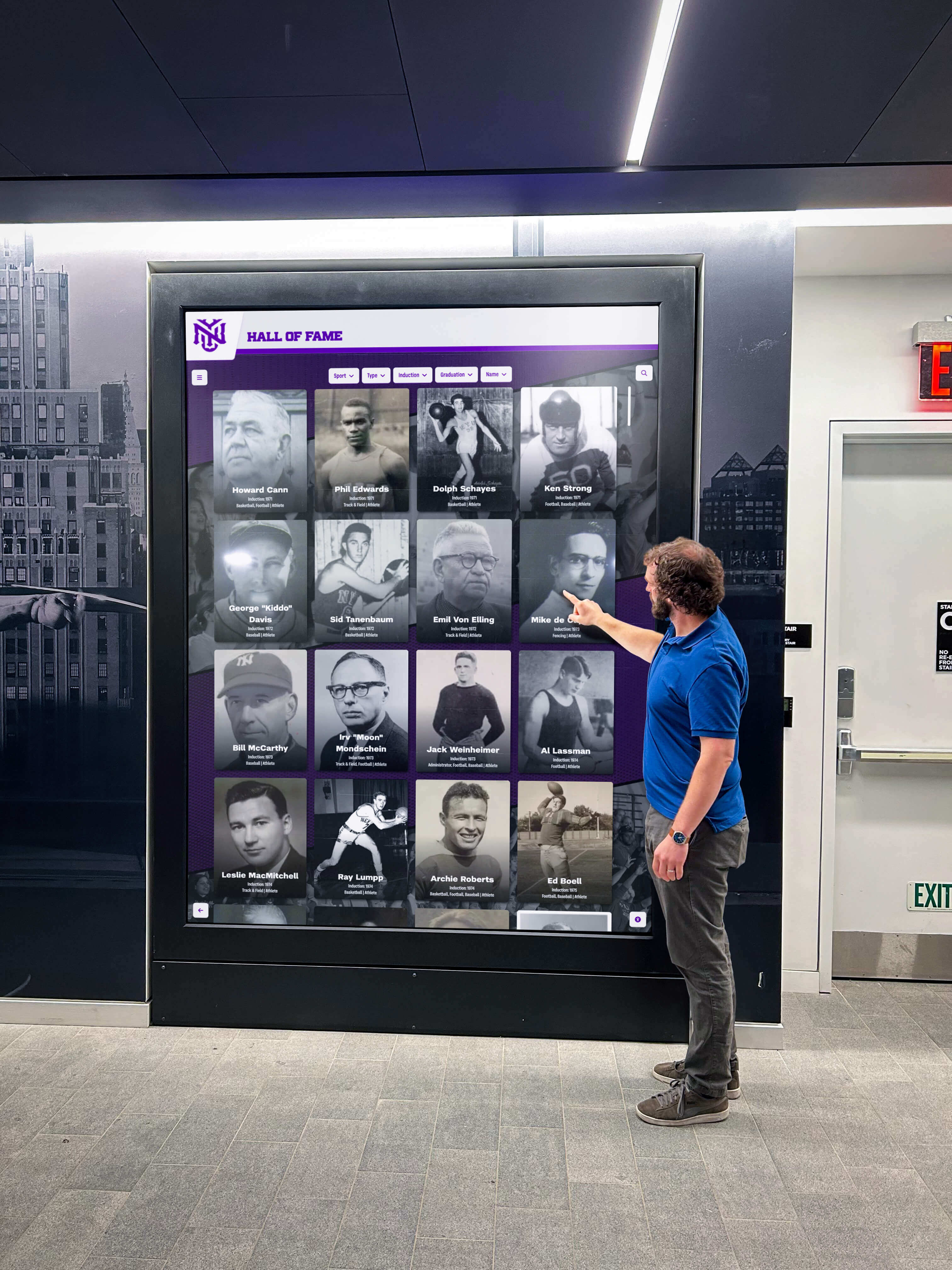
Modern touchscreen displays make exploring student leadership and achievement engaging and accessible
Leadership Documentation
Students should prepare to articulate leadership experiences clearly:
- Keep running list of leadership positions and dates
- Document specific projects, initiatives, or accomplishments
- Identify measurable outcomes when possible
- Prepare brief descriptions of responsibilities
- Request recommendation letters from advisers familiar with your leadership
Leadership quality matters more than quantity—deep engagement in one or two meaningful leadership roles typically outweighs superficial involvement in numerous activities.
4. Character (Personal Integrity)
The character criterion evaluates students’ personal qualities, ethical behavior, and positive influence on school culture.
What Character Means in NHS Context
Character assessment focuses on observable behaviors demonstrating integrity:
Positive Indicators
- Consistent respect for teachers, staff, and peers
- Honest academic practices and integrity
- Responsible behavior in school and community
- Cooperation and positive contribution to learning environment
- Compassionate treatment of others
- Respect for property and rules
- Reliability and following through on commitments
Character Red Flags Behaviors that may disqualify candidates or result in membership dismissal:
- Academic dishonesty (cheating, plagiarism)
- Disciplinary infractions or suspensions
- Disrespectful treatment of others
- Illegal activities or substance violations
- Social media posts reflecting poor judgment
- Bullying or harassment behaviors
- Consistent irresponsibility with commitments
The Character Review Process
Character evaluation typically involves:
- Faculty Input: All teachers and staff may provide feedback about candidate character
- Discipline Record Review: Faculty councils examine disciplinary history
- Peer Recommendation: Some chapters solicit peer perspectives
- Personal Statement: Candidates often submit essays addressing character development
- Council Deliberation: Faculty council discusses any character concerns before selection

Strategic placement of recognition displays in high-traffic areas ensures NHS achievements receive visibility throughout school communities
Character assessment remains the most subjective NHS criterion, yet it’s also the most important—NHS membership fundamentally represents the organization’s belief that a student embodies the values it seeks to promote.
The NHS Application and Selection Process
Understanding how schools select NHS members helps students prepare effective applications and manage expectations about outcomes.
Timeline and Eligibility
When Students Become Eligible
Most NHS chapters follow consistent eligibility timelines:
- Sophomore Year: Students complete academic work establishing GPA eligibility
- Junior Year (First Semester): Primary induction period when most new members join
- Junior/Senior Year: Some chapters hold second induction ceremony in spring
- Senior Year: Limited chapters induct seniors early in their final year
Students should check with their school’s chapter adviser about specific deadlines and induction schedules.
Transfer Students and Special Circumstances
Students face unique considerations in certain situations:
- School Transfers: Students inducted at previous schools should contact new chapter about affiliate membership
- Homeschool Students: Some community-based NHS chapters accept homeschooled students
- Online Schools: Virtual schools may offer NHS chapters with modified service/leadership criteria
- International Students: Students at international schools with NHS chapters follow same criteria
Application Components
While specific applications vary by chapter, most require similar documentation:
Standard Application Elements
- Academic Transcript: Official or unofficial transcript demonstrating GPA eligibility
- Activity List: Comprehensive documentation of service, leadership, and extracurricular involvement
- Service Log: Detailed record of community service with hours, dates, organizations, and verification
- Personal Statement: Essay addressing NHS pillars and explaining why you merit consideration
- Recommendation Letters: Some chapters require teacher or community recommendations
- Faculty Evaluation Form: Teachers and staff provide character assessments
Documentation Best Practices
Students should approach NHS applications with college application-level preparation:
- Start documenting activities, service, and leadership early in high school
- Keep digital and physical records organized by school year
- Save emails, certificates, and photos documenting involvement
- Maintain spreadsheet tracking service hours with verifiable details
- Request verification letters shortly after completing significant service
- Draft personal statement through multiple revisions with feedback
Explore how schools can celebrate these achievements through academic recognition programs.

Modern recognition kiosks celebrate NHS inductees alongside other academic honor recipients
The Faculty Council Selection Process
How Councils Evaluate Candidates
NHS selection involves systematic evaluation by the five-member faculty council:
Step 1: Academic Screening Council identifies all students meeting GPA threshold for eligibility
Step 2: Candidate Notification Eligible students receive notification and application materials
Step 3: Application Review Council members independently review submitted applications
Step 4: Faculty Input Collection All teachers and staff provide feedback about candidate character
Step 5: Council Deliberation Council meets to discuss candidates, addressing:
- Strength of service commitment and impact
- Quality and breadth of leadership experiences
- Character evidence from faculty and discipline records
- Balance of four pillars across all criteria
- Comparative evaluation when applications exceed capacity
Step 6: Selection Decision Council votes on membership offers using criteria established in chapter bylaws
Step 7: Candidate Notification Students receive acceptance or regret notifications
Selection Timeline Variations
The process typically spans 4-8 weeks from application deadline to notification. Students should avoid contacting council members during deliberation periods—decisions represent collective council judgment rather than individual teacher assessments.
What If You’re Not Selected?
Not gaining NHS membership disappoints students who worked hard preparing applications, but rejection doesn’t diminish your accomplishments or college prospects.
Understanding Selection Decisions
Several factors may result in non-selection:
- Competitive Applicant Pool: More qualified students than available slots
- Relative Strength: Other candidates demonstrated stronger overall profiles
- Specific Concerns: Character feedback or insufficient service/leadership
- Application Quality: Poorly documented or presented applications
- Timing: Junior applicants often compete with existing member records
Appeal Processes
NHS requires chapters to establish appeal procedures:
- Students may request explanation of decision factors
- Some chapters allow supplemental information submission
- Appeals typically address factual errors or procedural irregularities
- Appeals rarely result in overturned decisions but provide closure
Moving Forward
Students not selected should:
- Continue community service and leadership activities regardless
- Focus on activities genuinely meaningful to you, not just resume building
- Consider reapplication if your school permits (typically for juniors applying as seniors)
- Remember that NHS represents one credential among many colleges consider
- Channel disappointment into renewed commitment to the activities you value
College admissions officers understand that NHS chapters make selective decisions—non-membership doesn’t prevent admission to top universities. Your transcript, test scores, essays, and recommendations carry far more weight in college admissions than any single honor or activity.
NHS Membership Responsibilities and Benefits
Students inducted into NHS accept ongoing responsibilities while gaining valuable benefits and opportunities.
Active Membership Requirements
NHS membership continues beyond induction, requiring sustained engagement:
Ongoing Academic Standards
- Maintain GPA at or above chapter minimum throughout membership
- Report significant grade drops to chapter adviser
- Continue challenging yourself academically
Continued Service Obligations Most chapters require:
- Annual service hour minimums (commonly 10-20 hours)
- Participation in chapter service projects
- Documentation of service activities
- Mixture of individual and chapter group service
Meeting Attendance
- Regular attendance at chapter meetings (typically monthly)
- Participation in planning and decision-making
- Engagement in chapter governance
Character Expectations
- Maintain behavioral and ethical standards
- Represent NHS positively in school and community
- Avoid disciplinary infractions
Induction Ceremony Participation
- Attend annual induction ceremony welcoming new members
- Serve as mentor or guide for newer members

Integrated recognition systems celebrate NHS members alongside other honored students and alumni
Dismissal and Membership Probation
Chapters may place members on probation or dismiss membership for:
- Significant GPA decline below chapter minimum
- Failure to complete service requirements
- Disciplinary infractions or character violations
- Chronic meeting absences without communication
- Failure to participate in chapter activities
Students placed on probation typically receive specified time period to address deficiencies. Dismissal decisions require faculty council vote and follow due process procedures outlined in chapter bylaws.
Benefits and Opportunities
Active NHS membership provides numerous advantages:
Exclusive Scholarship Access
- NHS National Scholarship program awards hundreds of thousands annually
- State and local NHS scholarships
- College-specific scholarships for NHS members
- Community organization scholarships requiring NHS membership
Leadership Development
- Officer positions (president, vice president, secretary, treasurer)
- Committee leadership roles
- Event planning and execution experience
- Public speaking opportunities
Service Project Participation
- Organized chapter service initiatives
- Collaborative projects with community partners
- Large-scale service events
- National NHS Week of Service participation
Networking and Connection
- Peer relationships with accomplished students
- Alumni connections and mentorship
- National NHS conference opportunities
- Connection to NHS alumni network
Recognition and Celebration
- Formal induction ceremony with family attendance
- NHS graduation cord and certificate
- Inclusion in school publications and announcements
- Recognition at graduation and awards ceremonies
Learn about strategies for showcasing these achievements in student recognition programs.
How Schools Can Celebrate NHS Inductees
NHS membership represents significant student achievement deserving prominent recognition that honors inductees while inspiring underclassmen to pursue their own NHS goals.
Traditional Recognition Approaches
Induction Ceremonies Most chapters hold formal ceremonies celebrating new members:
- Evening events with family attendance
- Candle-lighting or other symbolic traditions
- Student and faculty speaker presentations
- Certificate presentation
- Reception following ceremony
School Announcement Systems
- Morning announcements recognizing inductees
- Display boards in hallways listing NHS members
- School newsletter and website features
- Local newspaper submissions
- Social media celebration posts
Modern Digital Recognition Solutions
While traditional approaches remain meaningful, schools increasingly adopt digital recognition displays that overcome space limitations and create dynamic, engaging NHS celebration.
Benefits of Digital NHS Recognition
Solutions like Rocket Alumni Solutions provide comprehensive platforms for celebrating NHS achievement:
Unlimited Recognition Capacity
- Single display showcases all NHS inductees across multiple years
- No physical space constraints limiting whose achievements appear
- Historical archives preserving complete chapter membership records
- Equal visibility for all inductees regardless of graduation year
Interactive Exploration Features
- Touchscreen interfaces enabling students to search for friends and role models
- Individual profile pages with photos, accomplishments, and narratives
- Filtering by graduation year, current status, or achievement area
- Connection to broader academic recognition displays
Simple Content Management
- Cloud-based updates requiring no technical expertise
- Remote updating from any internet-connected device
- Bulk import capabilities for historical member data
- Scheduled publishing coordinating with induction dates
- Multiple staff members with appropriate access permissions
Web Integration
- Online access extending recognition beyond campus
- Family members worldwide can view inductee achievements
- Social sharing enabling students to celebrate membership
- Mobile optimization ensuring accessibility

Schools can install multiple displays throughout campus celebrating NHS alongside athletic achievements, creating balanced recognition of diverse student excellence
Creating Comprehensive Academic Recognition Culture
NHS recognition works most effectively when integrated into broader academic celebration:
Coordinated Recognition Programs
- NHS displayed alongside National Merit Scholars, AP Scholars, and valedictorians
- Academic recognition receiving visibility comparable to athletic halls of fame
- Multiple achievement pathways celebrated systematically
- Recognition of academic improvement and growth alongside peak performance
Strategic Display Placement
- High-traffic locations ensuring maximum visibility (lobbies, cafeterias, main hallways)
- Proximity to college counseling offices connecting achievement to application success
- Integration with existing school pride and tradition displays
- Multiple displays across campus when budget permits
Communication and Promotion
- Regular social media features highlighting NHS member accomplishments
- Integration with school website and communication channels
- Family engagement through email announcements and event invitations
- Connection to alumni engagement encouraging continued school relationships
Explore comprehensive academic recognition strategies in this building school pride guide.
Common Questions About NHS Requirements
Can you join NHS with a 3.0 GPA?
Yes—a 3.0 GPA (or equivalent B average) meets the national minimum NHS requirement. However, your specific school chapter may establish higher GPA thresholds. Additionally, meeting the academic minimum simply makes you eligible for consideration; selection depends on demonstrating strength across all four pillars (scholarship, service, leadership, character). In competitive schools, the majority of applicants meet academic requirements, so the other criteria become decisive.
How many service hours do you need for NHS?
National NHS standards do not specify a minimum service hour requirement. However, most individual school chapters establish local minimums, typically ranging from 15-30 hours for initial consideration, with many requiring 10-20 hours annually to maintain membership. Students should consult their chapter’s specific bylaws for exact requirements. Councils value quality service involvement over simply accumulating hours—sustained commitment to meaningful causes typically matters more than total hours alone.
What leadership positions count for NHS?
NHS recognizes both formal and informal leadership. Formal positions include student government offices, club leadership (president, vice president, treasurer), team captain roles, and editor positions in publications. Informal leadership includes initiating new clubs or projects, organizing events, mentoring younger students, leading by positive example, and taking initiative in group settings. Leadership outside school—in religious youth groups, community organizations, scouting, or workplace contexts—also counts. What matters most is demonstrating initiative, inspiring others, and creating positive impact rather than simply holding titles.
Does NHS really matter for college admissions?
NHS membership provides meaningful but not determinative college application benefit. Selective colleges view NHS as one positive credential among many, particularly when combined with strong academics, test scores, essays, and recommendations. NHS matters most at colleges that offer NHS-specific scholarships or place emphasis on service and character. However, not having NHS membership will not prevent admission to top universities—admissions officers understand chapter selectivity and evaluate applicants holistically. NHS should be pursued because it represents meaningful achievement you value, not solely as a resume credential.
Can you get into NHS as a senior?
Some chapters do induct qualified seniors, particularly early in fall semester, though junior year represents the primary induction period. Senior induction policies vary significantly by school—some chapters explicitly exclude seniors, others maintain open eligibility for any qualified student. The challenge for seniors lies in abbreviated timeline to demonstrate sustained service and leadership before application deadlines. Students who transferred schools or became academically eligible only by senior year may have best chances for senior induction if their chapter permits.
What happens if you don’t maintain NHS requirements?
Members who fail to maintain academic, service, or behavioral standards face potential probation or dismissal. The faculty council typically places struggling members on probation with specific requirements and deadlines to remediate deficiencies (raise GPA, complete missing service hours, address behavioral concerns). Students who fail to meet probation requirements or commit serious violations may be dismissed from NHS. Dismissal requires faculty council vote following due process procedures outlined in chapter bylaws. Dismissed members lose scholarship eligibility, ceremony participation, and the ability to list NHS membership on applications and resumes.
How competitive is NHS selection?
Competitiveness varies dramatically by school. In schools where most students meet academic requirements, NHS selection becomes highly competitive with more qualified applicants than available positions. Chapters at competitive schools may induct only 10-20% of eligible candidates. In other schools with fewer academically qualified students, nearly all eligible applicants who demonstrate service, leadership, and character receive offers. Students should research their specific school’s selectivity by asking the chapter adviser about typical acceptance rates and application volumes. Regardless of competitiveness, demonstrating genuine engagement across all four pillars provides strongest application foundation.

Modern recognition systems make exploring diverse student achievements intuitive and engaging for students, families, and visitors
Preparing for NHS Success: Strategic Planning Timeline
Students can maximize NHS membership chances by strategically planning involvement throughout high school.
Freshman Year: Building Foundations
Academic Focus
- Establish strong study habits and GPA trajectory
- Challenge yourself with honors courses if available
- Build positive relationships with teachers
- Develop intellectual curiosity and engagement
Service Introduction
- Identify causes and organizations that genuinely interest you
- Begin volunteering even with limited time commitment
- Start documenting service activities with dates, hours, organization names
- Explore variety of service opportunities to discover preferences
Leadership Exploration
- Join clubs and activities aligned with your interests
- Participate actively even in non-leadership capacities
- Observe leaders you admire and learn from their approaches
- Consider founding new club if existing options don’t match interests
Character Development
- Treat all teachers, staff, and peers with consistent respect
- Demonstrate academic integrity in all coursework
- Fulfill commitments you make reliably
- Build reputation as positive community member
Sophomore Year: Deepening Involvement
Academic Consistency
- Maintain or improve GPA trajectory
- Continue challenging coursework appropriate to your abilities
- Develop expertise in subject areas you’re passionate about
- Participate in academic competitions if interested
Service Commitment
- Focus on 2-3 service organizations rather than scattering efforts
- Increase involvement depth and consistency
- Track service hours systematically with verification
- Look for opportunities to take initiative within service organizations
Leadership Development
- Seek leadership positions in activities you’ve participated in
- Volunteer for committee or project leadership roles
- Organize events or initiatives benefiting school or community
- Mentor freshmen or younger students
Character Consistency
- Maintain behavioral and ethical standards
- Avoid situations that might result in disciplinary action
- Continue building positive reputation
Junior Year: NHS Preparation and Application
Academic Excellence
- Verify your cumulative GPA meets chapter threshold
- Continue strong academic performance throughout application period
- Be aware that GPA through first semester junior year typically determines eligibility
Service Documentation
- Compile comprehensive service log with all required details
- Request verification letters from service organizations
- Calculate total hours and ensure meeting any chapter minimums
- Prepare descriptions of most meaningful service experiences
Leadership Articulation
- List all formal leadership positions with dates
- Document initiatives you’ve led or significantly contributed to
- Prepare brief descriptions of leadership responsibilities and impact
- Request recommendation letters from advisers familiar with your leadership
Application Excellence
- Obtain application materials immediately when available
- Draft personal statement through multiple revisions
- Ask teachers, counselors, or family members for editing feedback
- Submit complete application before deadline
- Prepare for potential interview if your chapter conducts them
Managing Expectations
- Understand that selection is not guaranteed regardless of qualifications
- Recognize that not gaining NHS membership doesn’t define your worth
- Plan to continue meaningful activities regardless of outcome
Senior Year: Active Membership or Alternative Focus
If Inducted as Junior
- Fulfill all ongoing membership requirements
- Consider leadership positions within NHS chapter
- Participate fully in chapter service projects
- Mentor new junior inductees
- Include NHS membership on college applications and scholarship forms
- Wear NHS cord at graduation celebration
If Not Inducted
- Continue service and leadership activities you value
- Don’t let non-selection diminish other accomplishments
- Focus energy on applications highlighting your strengths
- Remember NHS is one credential among many colleges consider
- Consider reapplication if your chapter permits senior induction
Additional Academic Honor Societies
Students interested in recognition should know that NHS represents one option among many honor societies:
Subject-Specific Honor Societies
- National English Honor Society (NEHS)
- National Science Honor Society (NSHS)
- National Art Honor Society (NAHS)
- National French, Spanish, German, Latin Honor Societies
- Mu Alpha Theta (Mathematics)
- Science National Honor Society
- Social Studies Honor Society
Specialized Academic Organizations
- National Technical Honor Society (career and technical education)
- National Junior Honor Society (middle school equivalent of NHS)
- Tri-M Music Honor Society
- International Thespian Society (theater)
Students may pursue multiple honor society memberships when qualified, as each offers unique recognition and opportunities. Some students better suited to subject-specific societies than the broad NHS requirements find particular fit in specialized organizations aligning with their talents and passions.
Explore how schools celebrate diverse academic achievements in this academic wall of excellence guide.
Resources for Students and Families
Official NHS Resources
National Association of Secondary School Principals (NASSP)
- Official NHS website: www.nhs.us
- National Constitution and bylaws
- Student membership information
- Scholarship opportunities
Your School Chapter
- Chapter adviser contact information
- School-specific bylaws and requirements
- Application timeline and materials
- Local selection criteria and processes
Service Hour Documentation Tools
Tracking Recommendations
- Digital spreadsheet (Google Sheets or Excel) with dates, organizations, hours, supervisors
- Mobile apps designed for volunteer hour tracking
- Physical logbook kept current throughout activities
- Photos documenting service participation
- Thank-you letters or certificates received from organizations
Verification Best Practices
- Request verification letters shortly after completing significant service
- Include supervisor name, title, contact information, and organizational letterhead
- Specify exact dates and hours worked
- Describe nature of service performed
- Keep digital and physical copies of all verification documents
Additional Recognition Opportunities
Beyond NHS, students should explore:
College Board Programs
- National Recognition Programs (Rural/Small Town Award, First-Generation Award)
- AP Scholar designations
- National Merit Scholarship Program
Federal and State Programs
- Presidential Scholars Program
- State scholar recognition programs
- Governor’s honors programs
Community Recognition
- Local civic organization student awards
- Community service recognition programs
- Religious organization youth achievement awards
- Employer-sponsored student recognition
Learn more about comprehensive academic recognition in this student achievement showcase guide.
Conclusion: Pursuing NHS with Purpose and Perspective
National Honor Society membership represents a meaningful achievement recognizing students who demonstrate excellence across scholarship, service, leadership, and character. Understanding specific NHS requirements—from the 3.0 GPA minimum to service expectations and character standards—enables students to plan strategically and prepare competitive applications when the time comes.
Yet perspective matters as much as preparation. NHS should be pursued because it represents accomplishments you genuinely value—academic excellence, community service commitment, leadership growth, and character development that you would pursue regardless of any recognition. The students who gain most from NHS membership are those who engage authentically with the four pillars because these qualities represent who they aspire to be, not because they’re checking boxes for college applications.
For students who achieve NHS membership, the honor deserves appropriate celebration. Schools can create recognition systems—from traditional ceremonies to modern digital recognition displays—that honor inductees while inspiring younger students to pursue their own paths to academic excellence. When schools celebrate NHS achievement prominently, they signal institutional values prioritizing intellectual growth, service commitment, and character development alongside athletic and artistic accomplishments.
Celebrate NHS Achievement at Your School
Discover how modern recognition solutions can help you honor National Honor Society inductees and other academic achievers, creating a visible culture of excellence that inspires all students.
Explore Recognition SolutionsFor students not selected for NHS membership despite strong applications, remember that this single outcome doesn’t define your academic journey or future success. Colleges understand NHS selectivity and evaluate applicants holistically across dozens of factors. Continue pursuing activities you find meaningful, maintain academic excellence, and demonstrate character in all you do—these qualities matter infinitely more than any single credential or honor.
Whether you achieve NHS membership or forge alternative paths to demonstrating your scholarship, service, leadership, and character, your high school years should focus on genuine growth and engagement rather than credential collection. The students who succeed most fully—in college, careers, and life beyond—are those who develop authentic commitments to learning, serving others, leading with integrity, and treating people with respect and compassion.
Your path to excellence may include NHS membership, or it may involve other recognitions and achievements uniquely suited to your talents and passions. What matters most is that you pursue growth, challenge yourself appropriately, contribute positively to communities you’re part of, and develop character that will serve you throughout your life. These fundamental qualities—not any organization’s membership card—determine the person you become and the success you ultimately achieve.
Ready to learn more about academic recognition strategies? Explore academic achievement recognition approaches or discover comprehensive school recognition programs that celebrate diverse student excellence.