



The Naismith Memorial Basketball Hall of Fame stands as one of the world’s premier sports museums, celebrating basketball excellence through interactive exhibits, multimedia experiences, and comprehensive recognition displays. Yet behind every exhibit, every artifact preservation effort, and every educational program stands a network of generous donors whose philanthropy makes the Hall’s mission possible—from transformative capital campaign contributions funding major renovations to annual supporters enabling ongoing operations.
For sports museums, universities, athletic programs, and institutional halls of fame, donor recognition represents far more than acknowledgment of financial contributions. Strategic recognition systems build lasting relationships with supporters, inspire continued giving by demonstrating impact, create cultivation opportunities for prospective major donors, and establish philanthropic cultures where generosity receives appropriate celebration alongside athletic achievement.
The Naismith Memorial Basketball Hall of Fame’s approach to donor recognition—particularly its interactive donor wall and strategic recognition initiatives implemented during recent renovations—provides valuable insights for any organization seeking to honor supporters effectively while advancing fundraising objectives. This comprehensive guide explores best practices in hall of fame donor recognition, from traditional walls to cutting-edge digital displays that transform static acknowledgment into engaging storytelling experiences.
Effective donor recognition extends beyond simple name listings on plaques. Modern systems integrate recognition into visitor experiences, leverage technology to tell compelling philanthropic stories, create naming opportunities that motivate major gifts, and build flexible systems accommodating growth as donor communities expand.

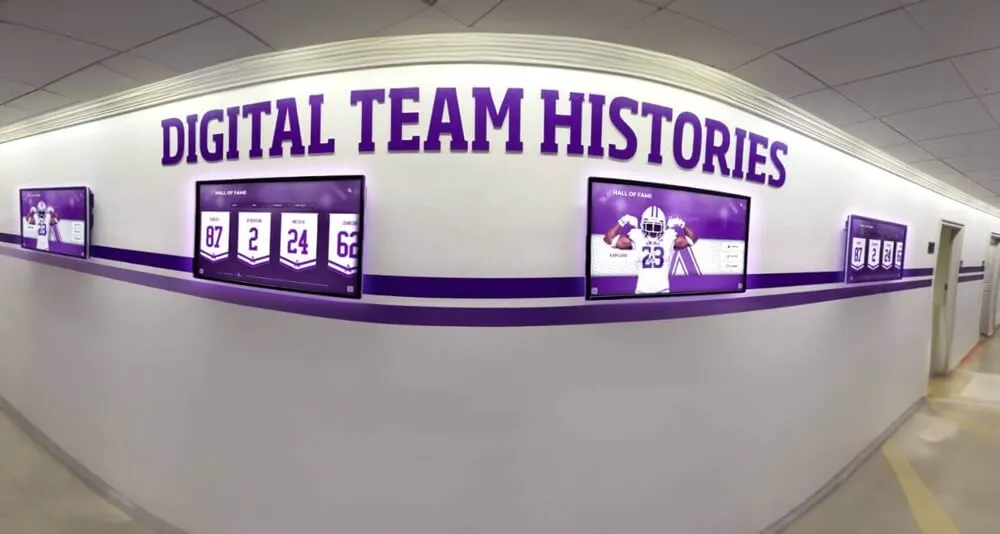
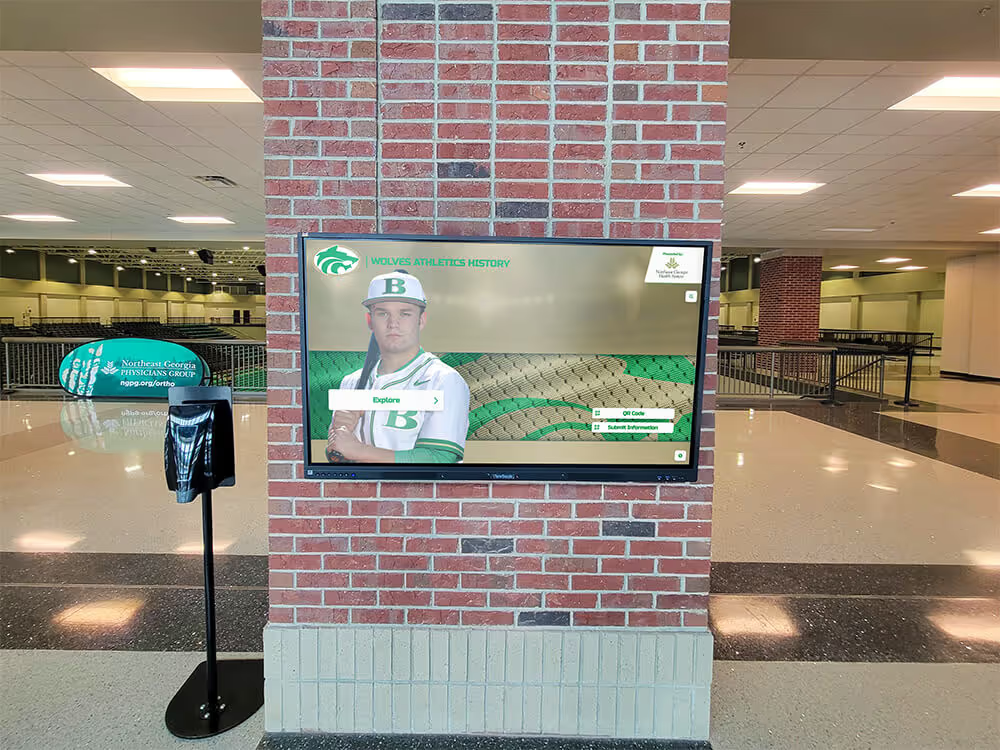
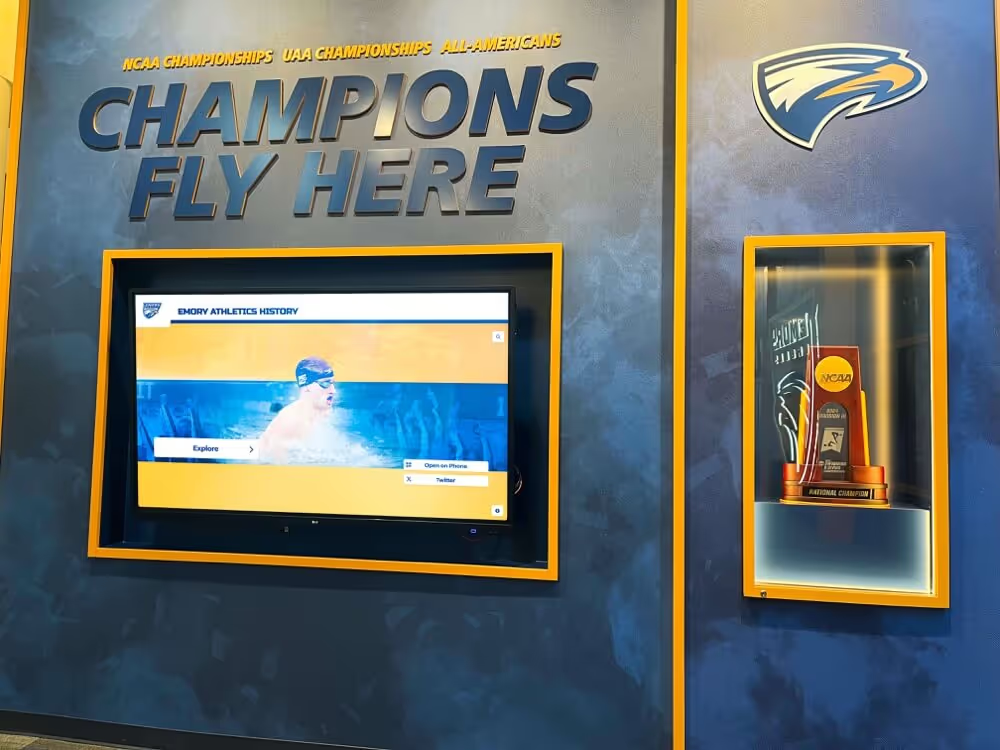
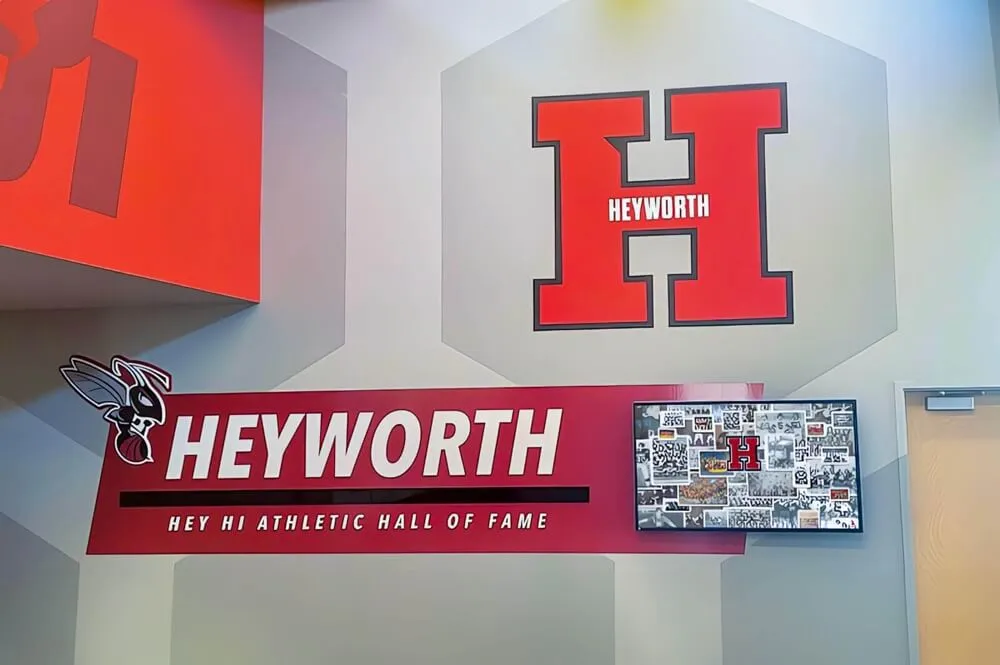
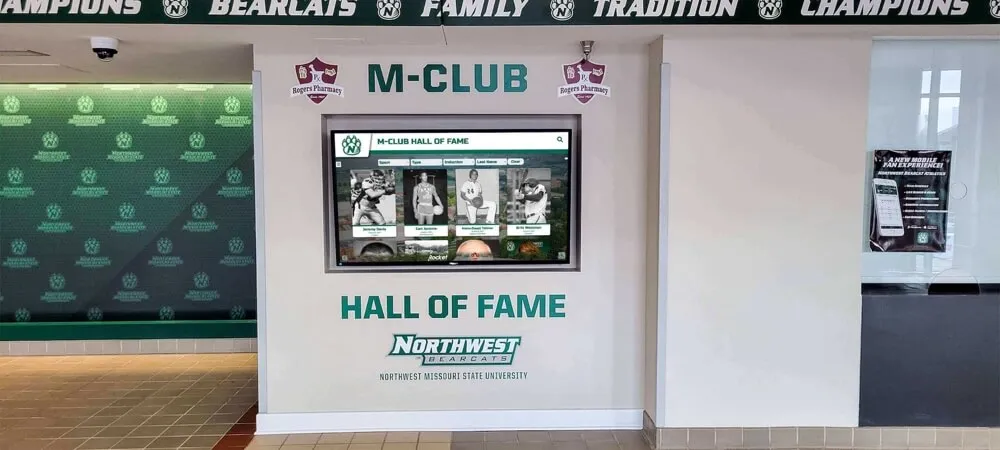
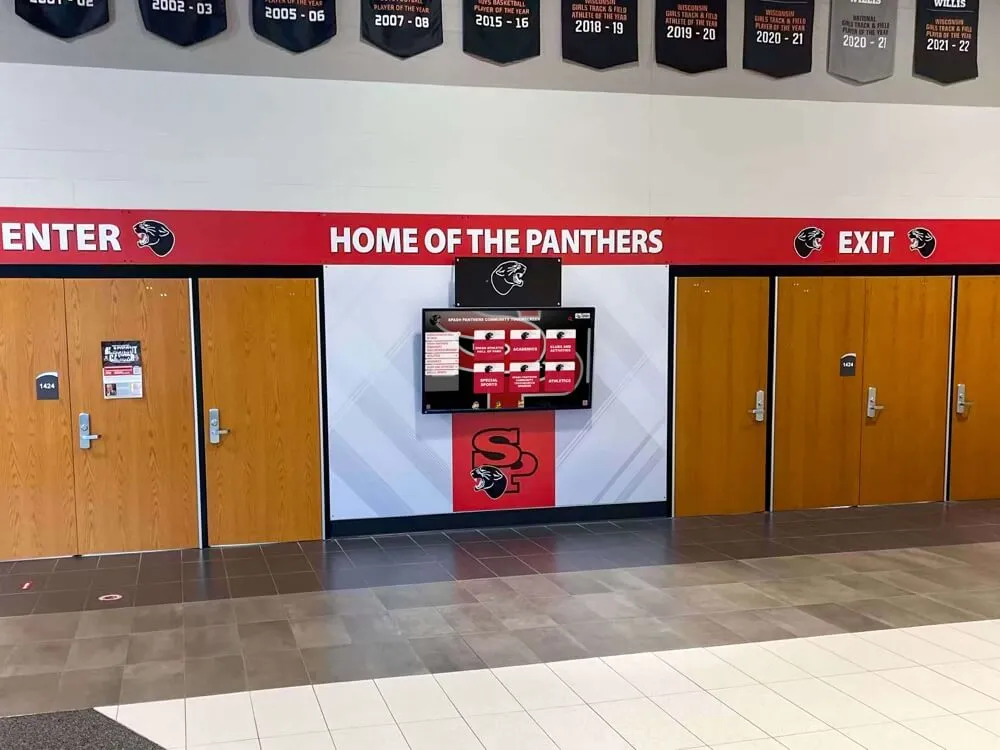
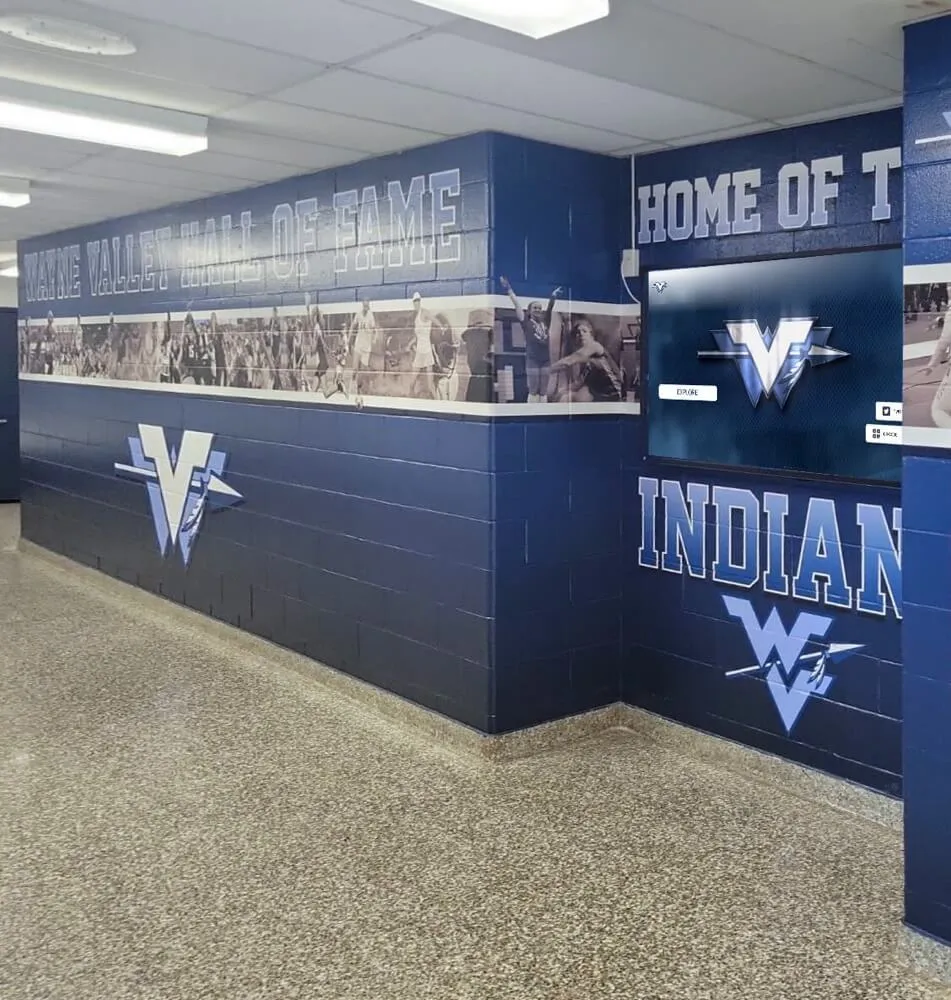
Modern donor recognition systems celebrate philanthropic excellence while creating engaging visitor experiences
The Naismith Hall of Fame Donor Recognition Approach
Understanding how one of sports’ most prestigious institutions approaches donor recognition provides valuable frameworks applicable to organizations of all sizes.
Capital Campaign Recognition and Major Renovations
The Naismith Memorial Basketball Hall of Fame underwent significant renovations beginning in 2017-2018, funded through a multi-million dollar capital campaign that received generous backing from the global basketball community. These renovations included the museum’s first major updates since opening over 15 years earlier, representing a comprehensive reimagining of the visitor experience.
Major Donors and Leadership Giving
According to publicly available information from the Hall of Fame, the capital campaign received significant support from basketball luminaries and organizations. Notable contributors who have been publicly recognized include prominent figures from the basketball world along with major institutional partners. The campaign demonstrated how sports institutions can leverage their unique networks and mission to inspire philanthropic excellence.
Interactive Donor Recognition Wall
The renovated facility includes a donor recognition wall with an interactive kiosk component, representing a modern approach to acknowledgment that goes beyond static plaques. This installation allows visitors to explore donor contributions while learning about the philanthropic support that enables the Hall of Fame’s mission to promote and preserve basketball history.
The integration of interactive technology within donor recognition reflects broader museum trends toward engagement-focused displays where visitors become active participants rather than passive observers.
Formal Donor Societies and Giving Programs
The Naismith Memorial Basketball Hall of Fame has established structured giving programs that create clear pathways for supporter engagement at multiple contribution levels.
Ambassadors of the Game Program
According to information available on the Hall of Fame’s website, the Ambassadors of the Game Program represents the institution’s premier philanthropic opportunity. Contributions through this program support diverse activities including education and outreach initiatives, development of innovative exhibits, preservation of invaluable basketball artifacts, and orchestration of events celebrating the game.
This structured program demonstrates how organizations can create signature giving opportunities that align with institutional mission while providing donors with clear understanding of gift impact.
Naismith Legacy Society
The Hall of Fame has established the Naismith Legacy Society for planned giving and major contributors. This recognition program honors gifts and highlights major supporters within the Hall of Fame facility, creating lasting acknowledgment for transformational philanthropy while encouraging similar commitments from prospective legacy donors.
Legacy societies represent powerful recognition strategies because they celebrate donors’ desire to create enduring impact beyond their lifetimes, often inspiring gift levels exceeding what donors might contribute through annual giving alone.
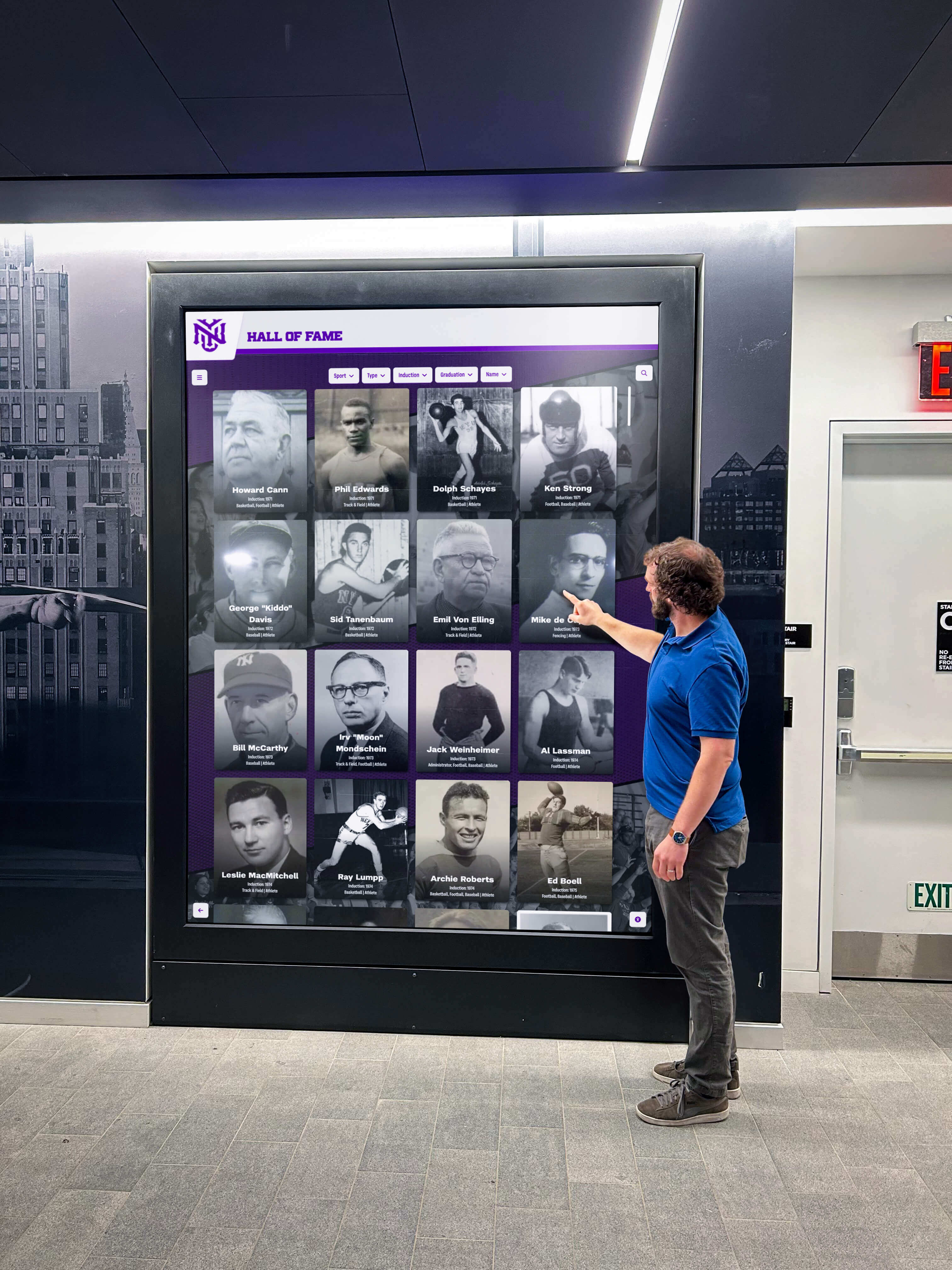
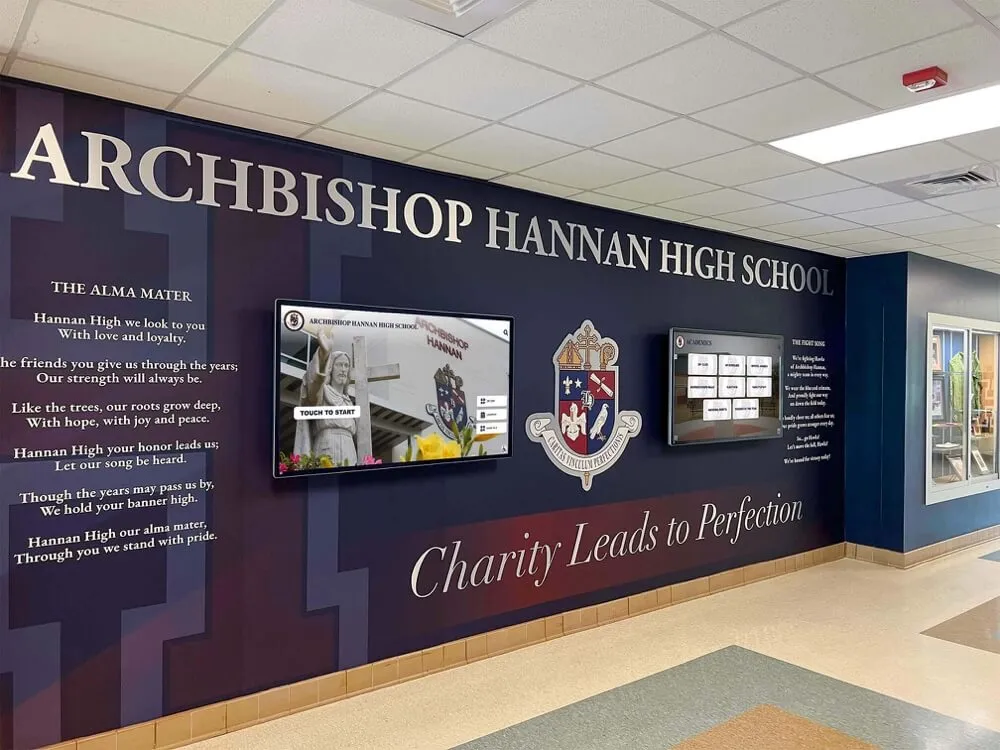
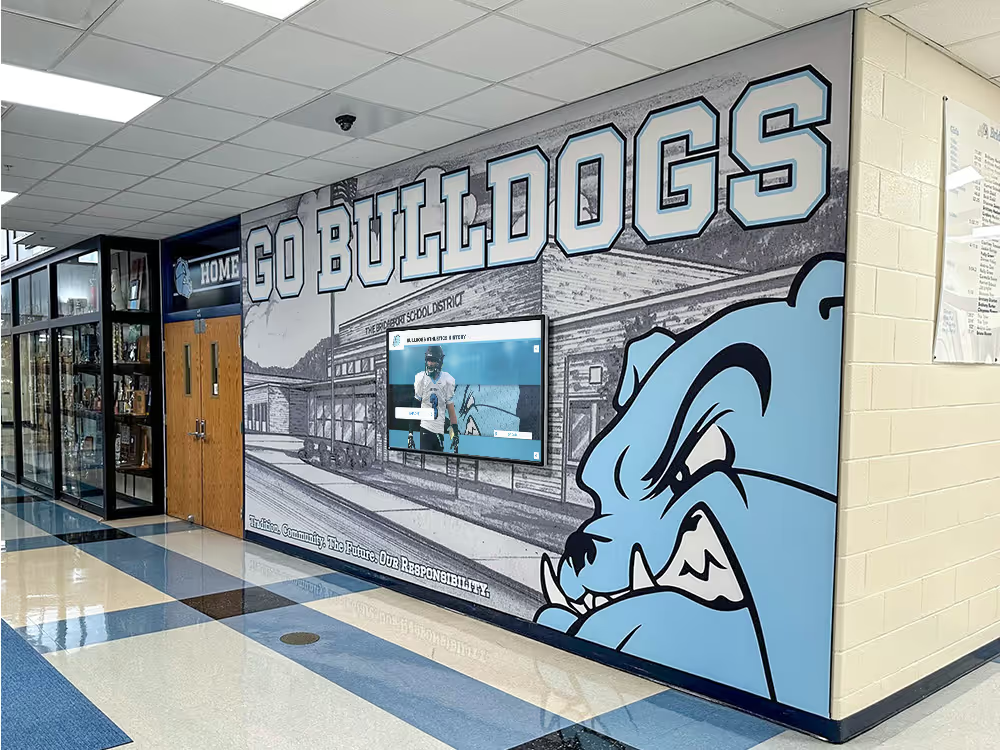
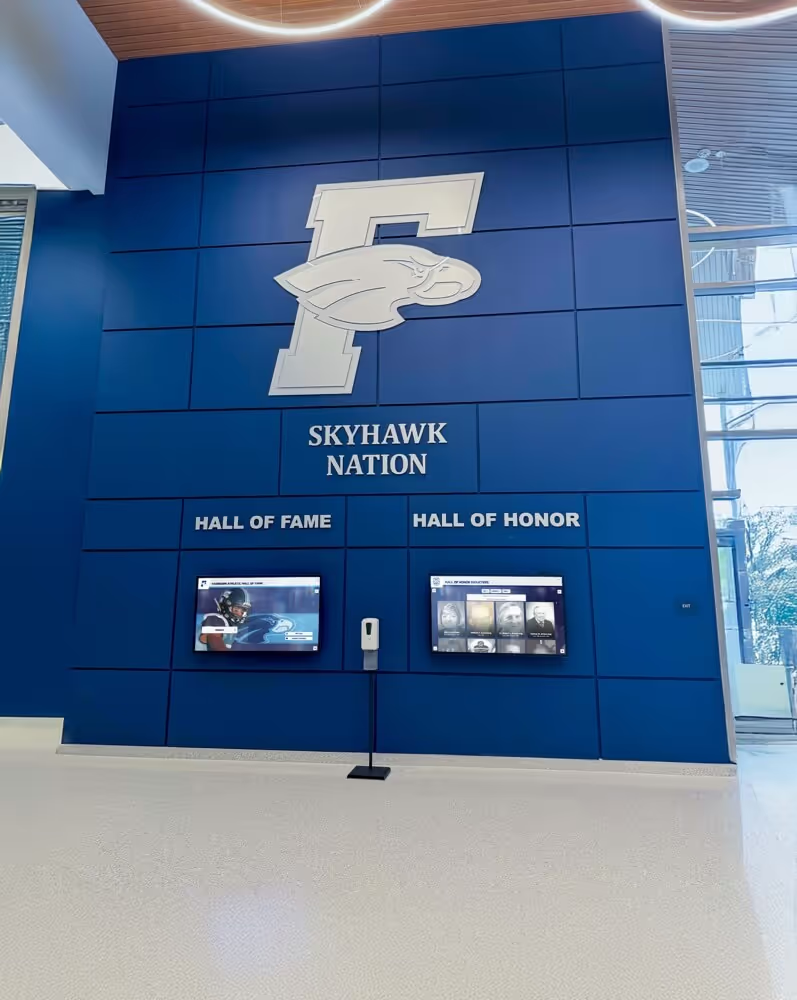
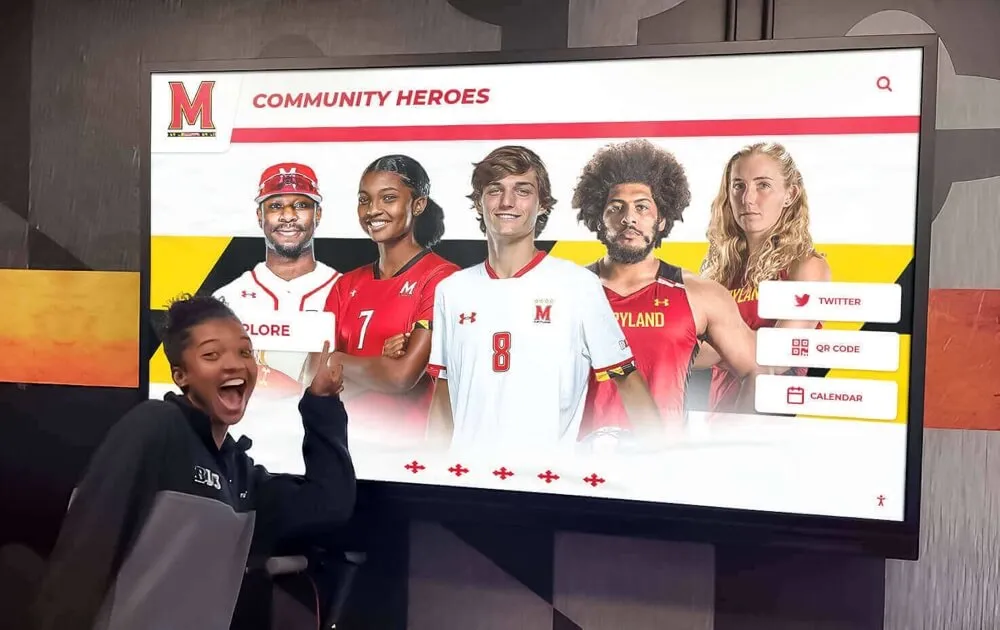
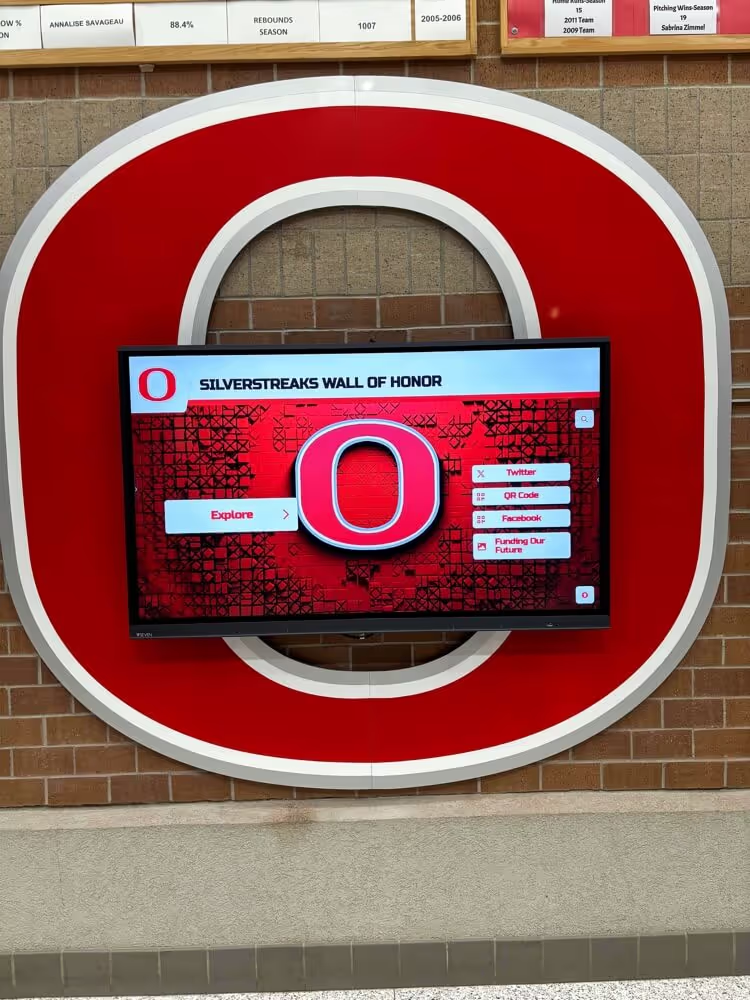
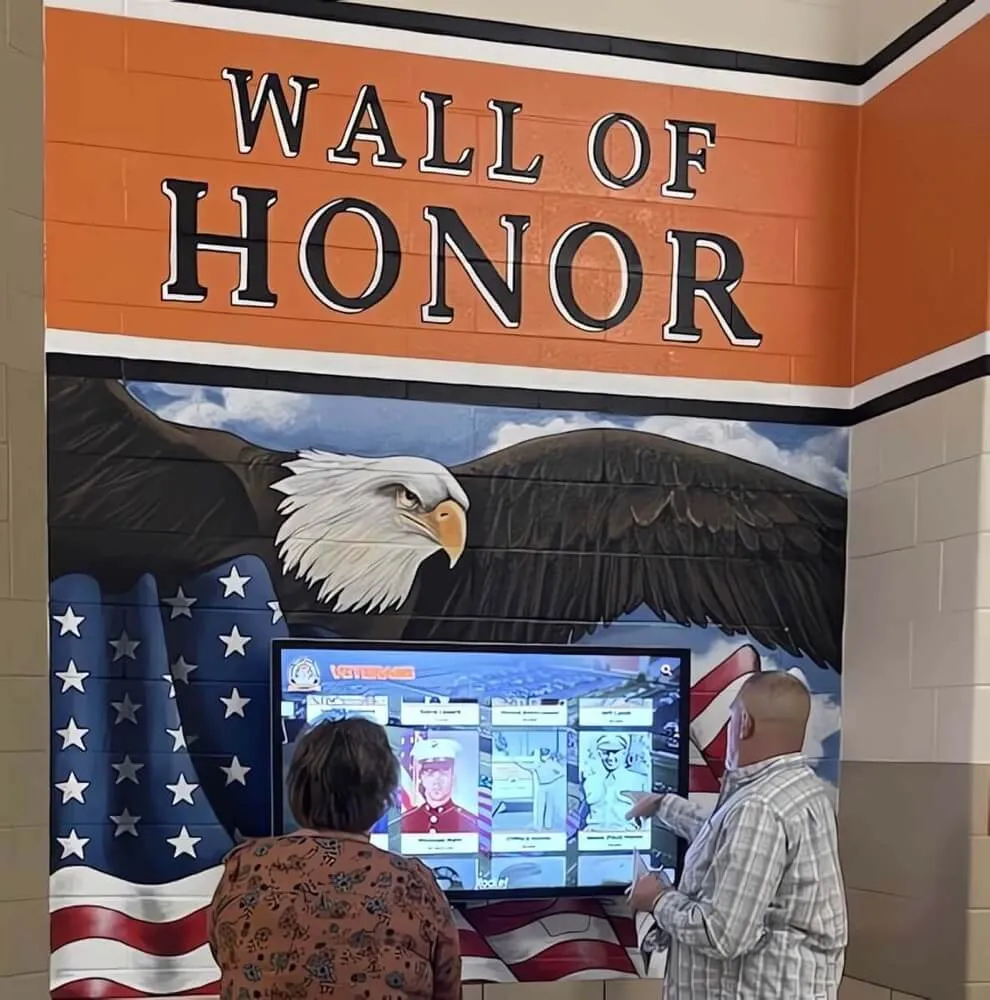
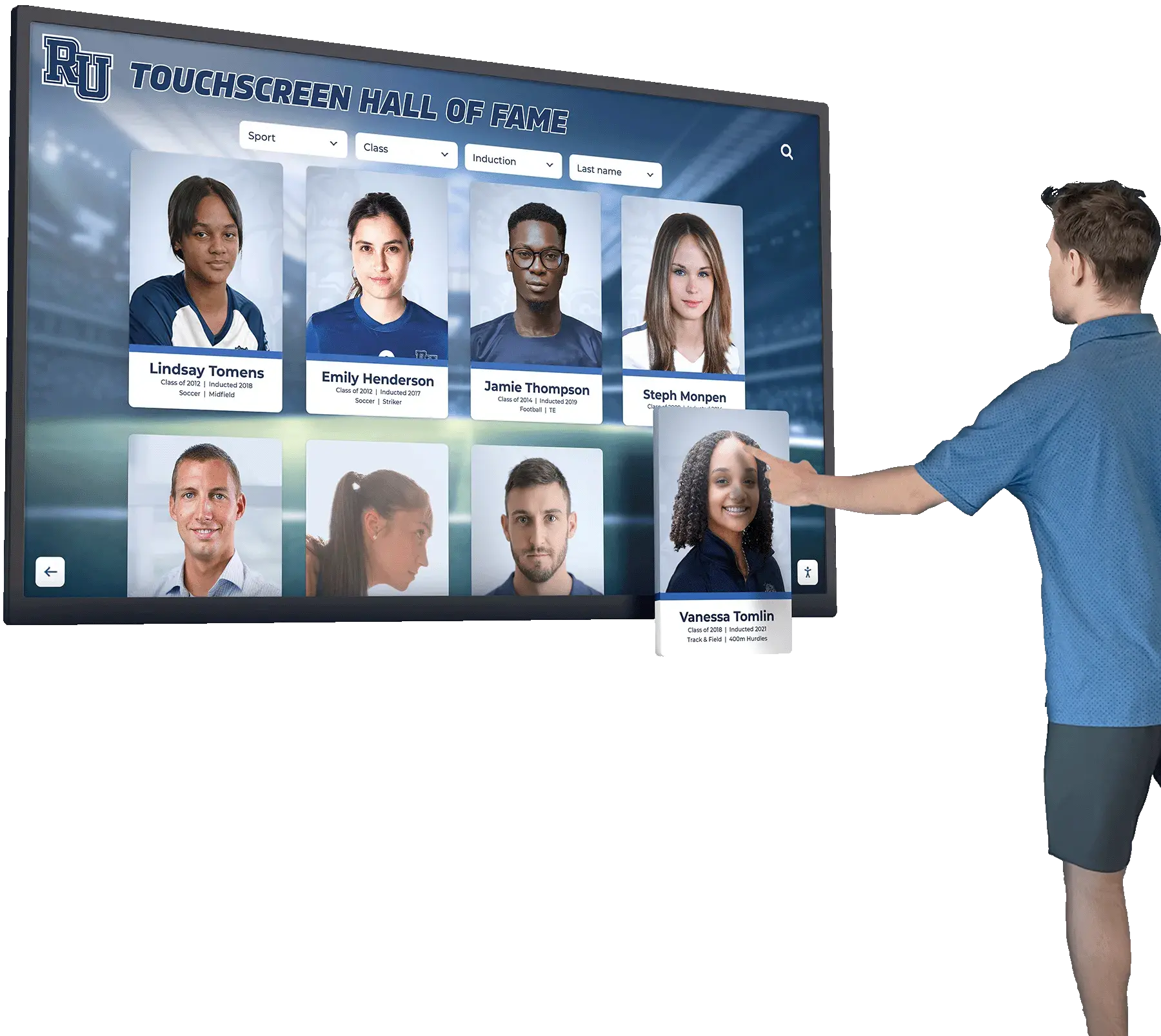
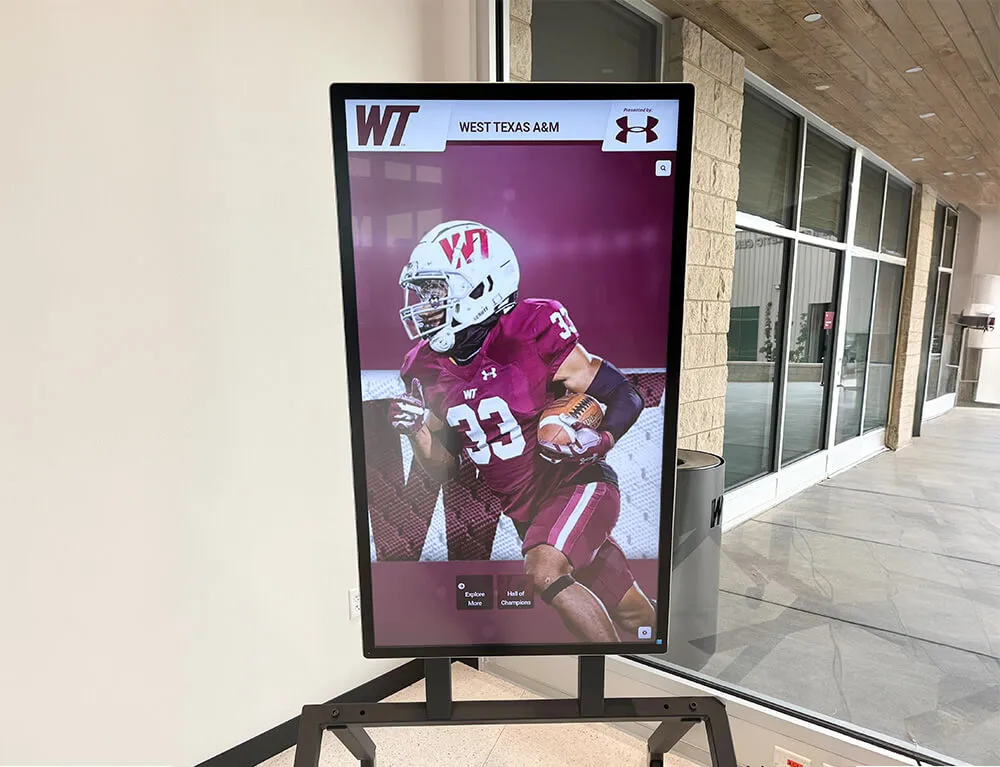
Interactive displays enable visitors to discover donor stories and understand philanthropic impact on organizational mission
Recognition for Multiple Donor Categories
Comprehensive donor recognition systems acknowledge diverse contributor types beyond individual major donors.
Organizational and Corporate Support
The Hall of Fame’s capital campaign included substantial contributions from corporate and organizational donors. According to publicly available information, recognized supporters included Mohegan Sun, the MassMutual Foundation, Balise Auto Group, the Davis Foundation, Excel Dryer, and Florence Bank, among other organizations.
Corporate recognition serves multiple functions: acknowledging business community support, creating visibility for sponsors associating with prestigious institutions, demonstrating broad stakeholder backing for capital projects, and encouraging continued corporate engagement and partnership.
Foundation and Institutional Contributions
Foundation support represented another significant campaign component, with regional and national foundations contributing to preserve basketball heritage and support educational programming. Foundation recognition requires particular attention to donor intent, gift restrictions, and appropriate acknowledgment aligned with foundation giving policies.
NBA and Basketball Community Contributions
The Hall of Fame’s unique position within basketball culture enabled engagement with NBA ownership groups and basketball community leaders. This specialized constituency demonstrates how mission-specific organizations can cultivate donor networks directly connected to institutional purpose, creating natural alignment between donors’ interests and organizational objectives.
Strategic Donor Recognition Planning for Halls of Fame
Successful donor recognition requires systematic planning addressing both immediate acknowledgment and long-term relationship building.
Recognition Level Structure and Naming Opportunities
Effective giving programs establish clear recognition levels that provide pathways for supporters at diverse capacity levels while creating aspirational goals encouraging increased giving.
Tiered Recognition Framework
Organizations typically implement multi-tiered donor recognition structures:
Common Recognition Levels for Sports Halls of Fame
- Hall of Fame Society: $250,000+ (transformational gifts, major naming opportunities)
- Championship Circle: $100,000-$249,999 (significant facility or program naming)
- All-Star Society: $50,000-$99,999 (exhibit sponsorship, prominent recognition)
- MVP Club: $25,000-$49,999 (enhanced acknowledgment, special access)
- Team Captain Circle: $10,000-$24,999 (standard donor wall recognition)
- Supporter levels: Under $10,000 (collective acknowledgment, database tracking)
These levels create multiple entry points while establishing clear progression pathways as donor relationships deepen. Organizations should calibrate specific amounts to institutional context, campaign goals, and donor capacity within their specific communities.
Creative Level Naming
Sports halls of fame enjoy natural opportunities for mission-aligned recognition level names. Basketball programs might use Championship, Final Four, Elite Eight, Sweet Sixteen designations. Other sports adapt terminology from their competitive structures—Grand Slam, Podium, Record Holder for track programs; Perfect Game, Hall of Fame, All-Star for baseball; Championship, All-Conference, Scholar Athlete for broader athletic programs.
Creative naming reinforces institutional identity while making recognition levels memorable and meaningful to donors who identify with athletic excellence.
Naming Opportunities Hierarchy
Major facilities and program elements offer naming opportunities that motivate transformational gifts:
Typical Naming Opportunity Structure
- Entire facilities or buildings: Seven-figure commitments
- Major spaces (lobbies, theaters, galleries): $250,000-$1,000,000+
- Exhibits and permanent displays: $100,000-$500,000
- Individual gallery spaces: $50,000-$250,000
- Program endowments: Varies based on annual program costs
- Equipment or technology: $10,000-$100,000
Naming opportunities create tangible, visible recognition that donors and their families can experience directly, making abstract financial contributions feel concrete and meaningful.
Learn about comprehensive donor recognition planning in this donor recognition complete guide covering strategic frameworks applicable to diverse organizations.
Gift Timing and Recognition Considerations
Capital Campaign Recognition
Capital campaigns for major projects require specific recognition approaches:
- Pledge period flexibility (typically 3-5 years)
- Recognition upon pledge commitment versus payment completion
- Provision for pledge defaults or modifications
- Campaign total announcements and milestone celebrations
- Lead gift recognition establishing giving standards
- Challenge gift structures motivating broader participation
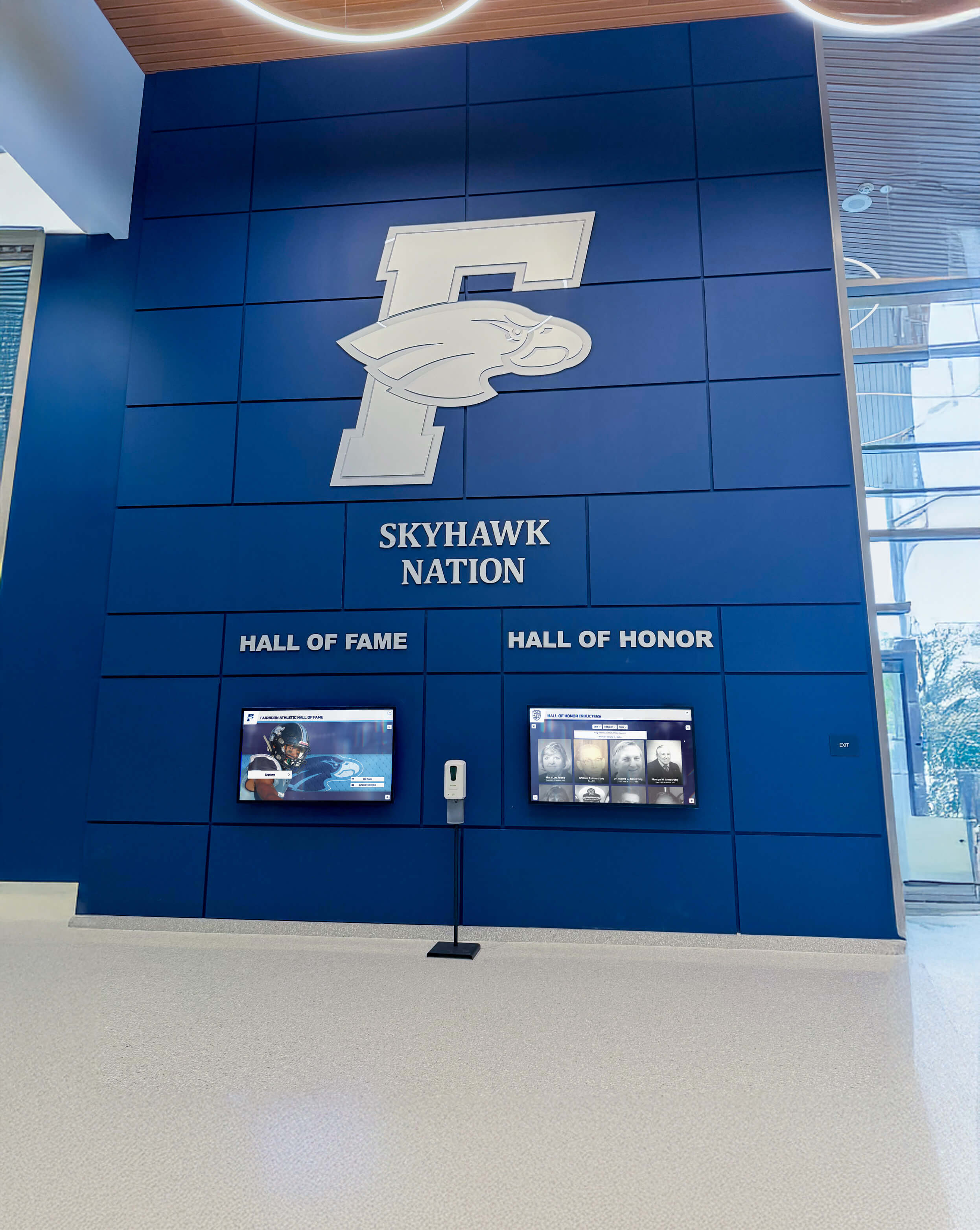
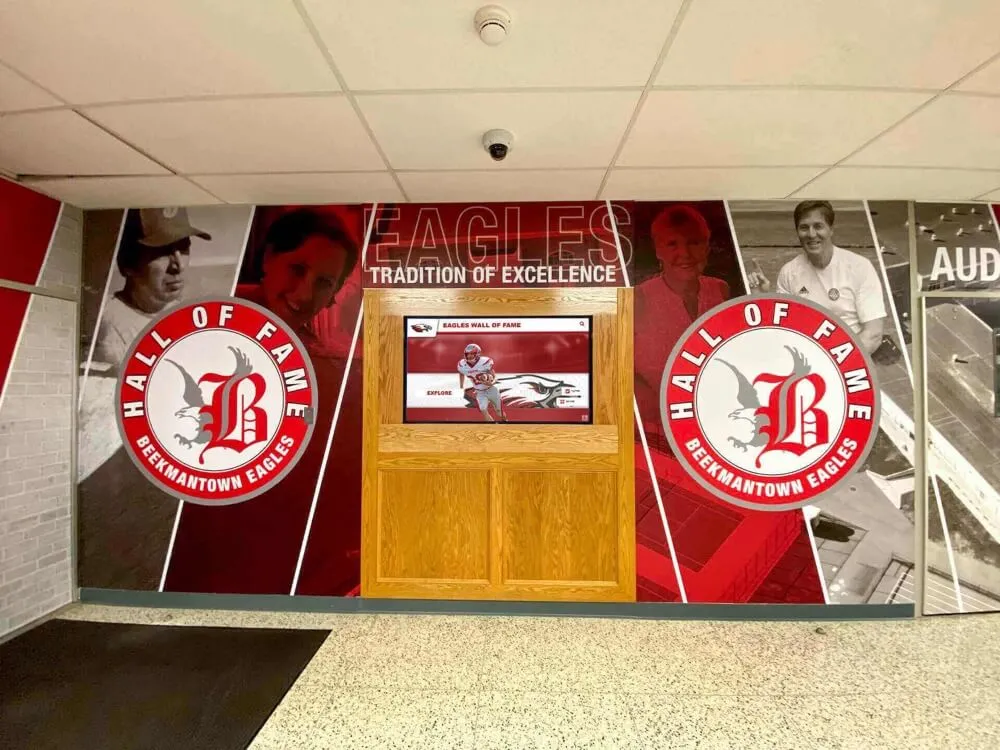
Capital campaign recognition creates focal points celebrating transformational projects and supporter commitment
Annual Giving Recognition
Ongoing operational support requires different acknowledgment:
- Current year recognition for annual contributors
- Cumulative giving totals reflecting lifetime support
- Consecutive year giving recognition for sustained donors
- Special acknowledgment for upgraded giving levels
- Monthly or quarterly donor programs with appropriate recognition
Planned Giving and Legacy Recognition
Estate gifts and planned giving commitments warrant distinctive acknowledgment:
- Legacy society membership upon commitment documentation
- Recognition during donor lifetime creating stewardship opportunities
- Flexibility for anonymous legacy donors
- Estate gift realization and memorial recognition
- Revocable versus irrevocable commitment distinctions
Organizations must establish clear policies about recognizing various gift types, ensuring appropriate acknowledgment while maintaining flexibility for donor preferences and organizational needs.
Traditional Donor Recognition Wall Design
While digital solutions increasingly supplement or replace traditional approaches, physical donor walls remain powerful recognition tools when thoughtfully designed.
Material Selection and Aesthetic Integration
Premium Materials and Craftsmanship
Physical donor walls in prestigious institutions typically use high-quality materials communicating permanence and importance:
Common Premium Materials
- Polished granite or marble for traditional, dignified aesthetics
- Bronze or brass plaques for timeless, classic recognition
- Architectural glass with etched or printed donor names
- Stainless steel for contemporary, sophisticated appearance
- Acrylic panels for modern, clean installations
- Natural wood for warm, organic environments
Material selection should align with surrounding architecture, organizational aesthetic, and budget constraints while communicating appropriate gravitas for major philanthropic recognition.
Architectural Integration
Effective donor walls integrate seamlessly into facility architecture rather than appearing as afterthoughts. Considerations include scale and proportion relative to surrounding spaces, sight lines and visitor flow patterns through facilities, lighting design highlighting recognition without overwhelming displays, and relationship to other recognition elements and institutional storytelling.
Professional design consultation ensures donor recognition enhances rather than detracts from overall facility aesthetics while creating appropriate prominence for philanthropic acknowledgment.
Capacity Planning and Flexibility
Expansion Accommodation
Traditional donor walls face inevitable space constraints as organizations build donor bases over time:
Expansion Strategies
- Initial design incorporating 30-50% additional capacity
- Modular systems allowing seamless panel additions
- Tiered layouts where higher donors receive larger, permanent placement
- Rotation systems for lower-level annual donors
- Digital supplementation for unlimited capacity
Organizations must balance aspiration—creating impressive recognition displays that communicate success—against realism about space constraints and long-term growth accommodation.
Donor Level Differentiation
Physical donor walls typically distinguish giving levels through:
Visual Hierarchy Elements
- Name size variation reflecting gift magnitude
- Prominent placement for highest-level donors
- Material differentiation (bronze for major donors, engraved for standard)
- Grouped recognition by giving society or level
- Special plaques or sections for naming opportunity donors
- Individual recognition features for transformational gifts
Visual hierarchy should feel appropriate rather than excessively hierarchical, honoring major donors without diminishing appreciation for all contributors.
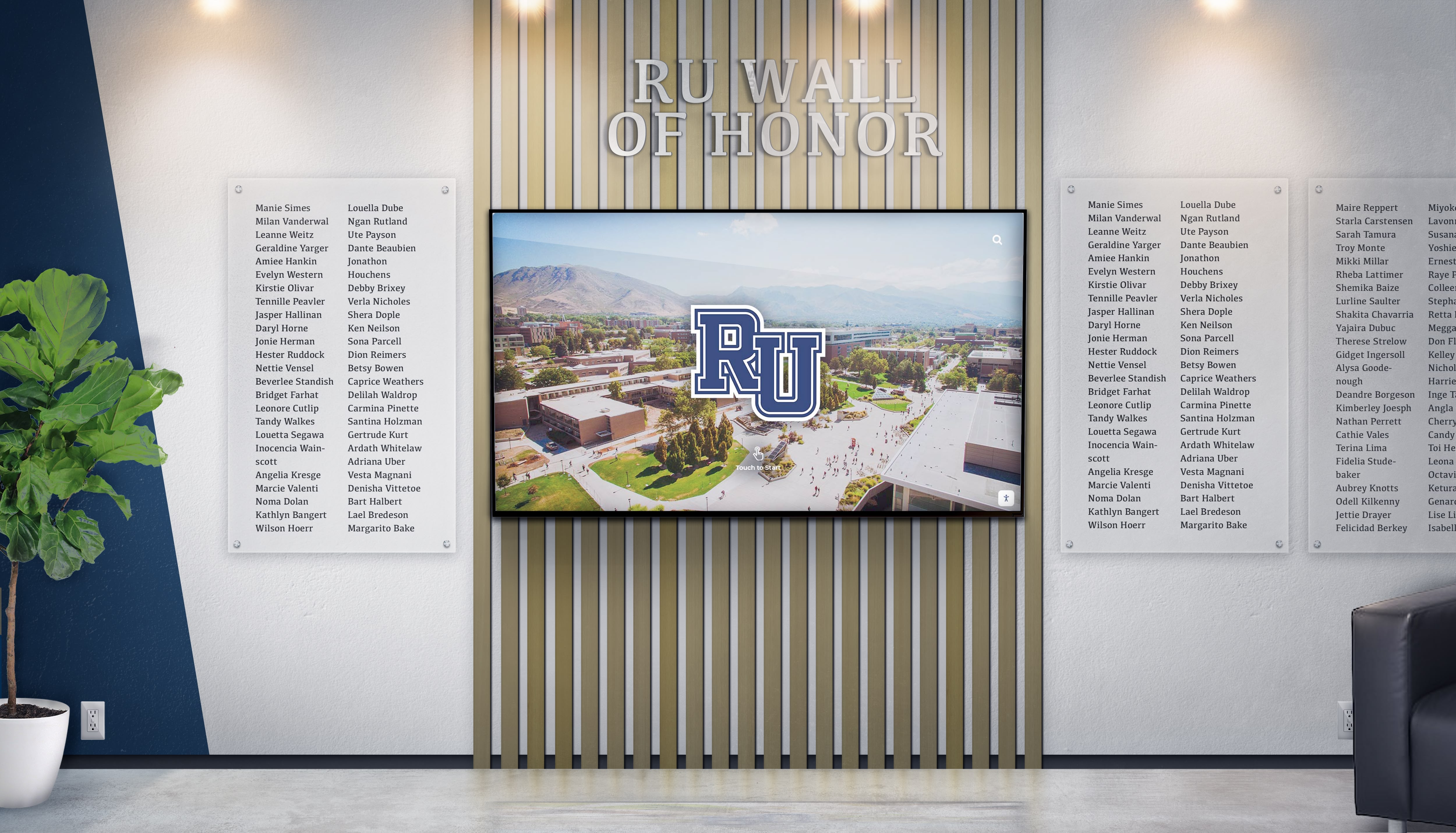
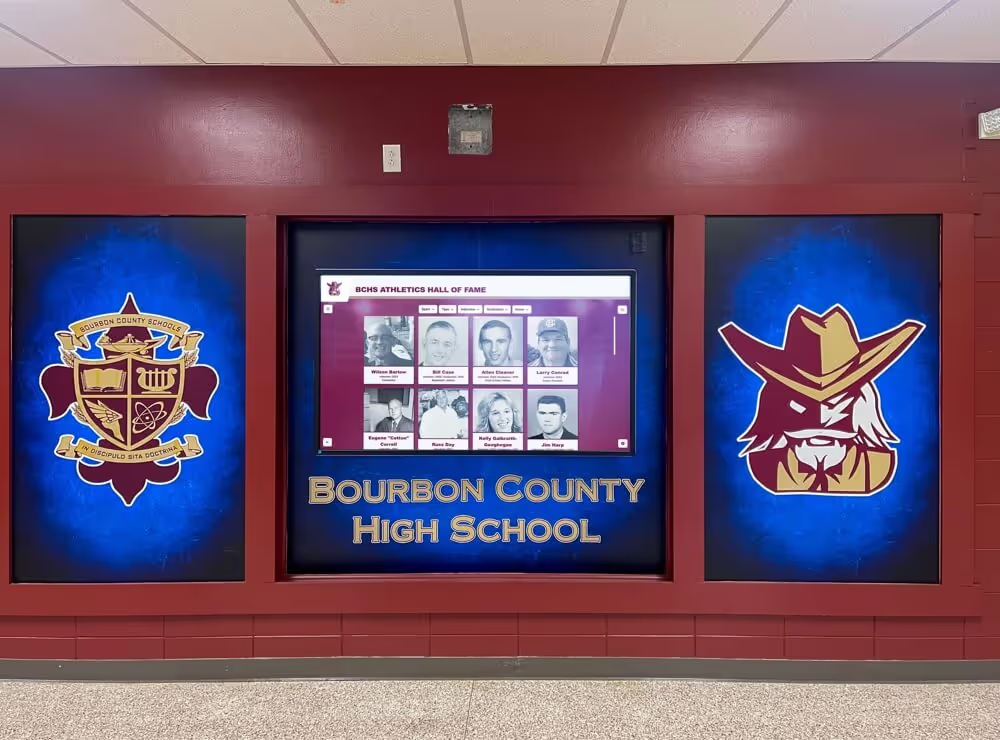
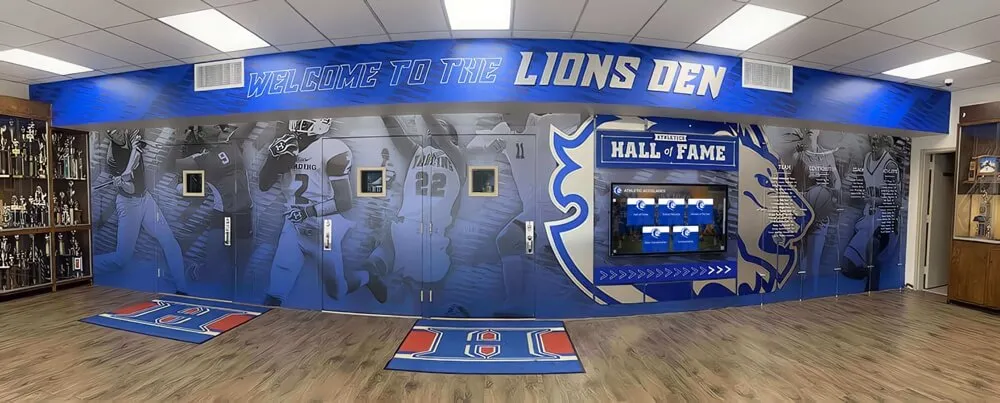
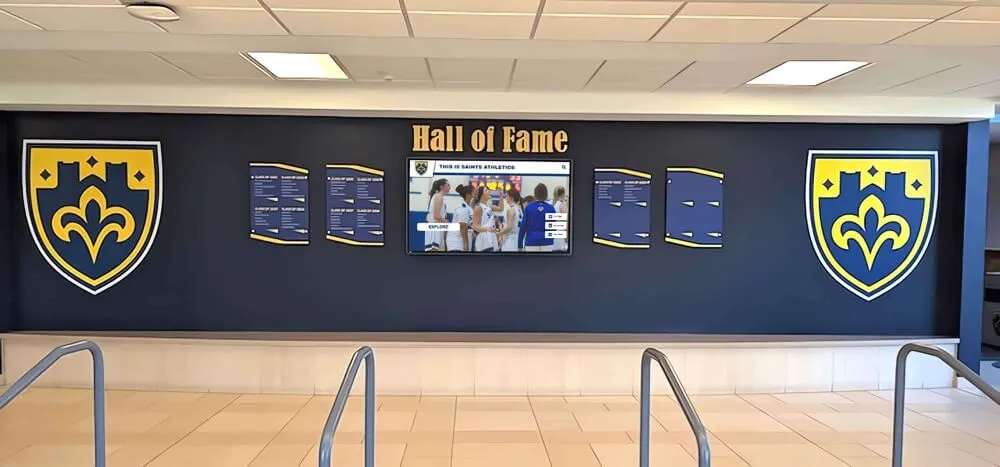
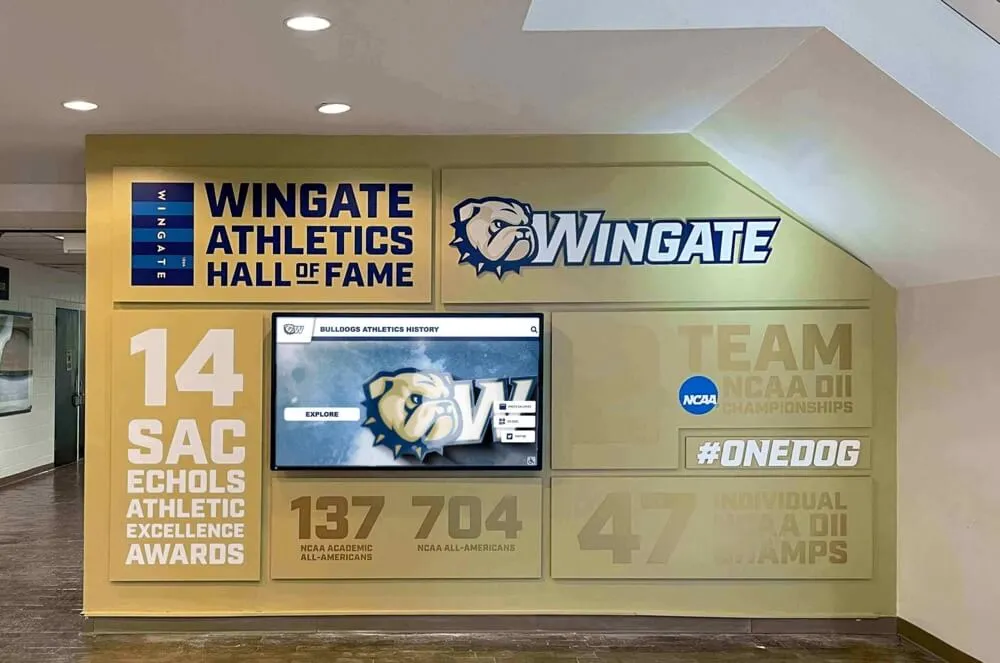
Integrated recognition combines traditional permanence with digital flexibility for comprehensive donor acknowledgment
Maintenance and Updates
Ongoing Management Requirements
Traditional donor walls require systematic maintenance:
- Regular cleaning and polishing maintaining appearance
- Damaged plaque replacement or restoration
- Periodic addition of new donor names as gifts are received
- Nameplate corrections addressing errors or donor name changes
- Recognition level updates when donors increase giving
Organizations should establish clear protocols and budget allocations for ongoing donor wall maintenance, ensuring recognition remains impressive and current rather than deteriorating into neglected, outdated displays.
Digital Donor Recognition Solutions
Modern technology enables donor recognition approaches that overcome traditional limitations while creating engaging visitor experiences.
Interactive Touchscreen Donor Displays
Solutions like Rocket Alumni Solutions transform donor recognition through interactive digital systems addressing space constraints and engagement limitations plaguing traditional walls.
Unlimited Recognition Capacity
Digital displays eliminate the fundamental space problem that creates tension in traditional recognition:
- Single display can acknowledge unlimited donors across all giving levels
- No difficult decisions about whose recognition to remove to accommodate new donors
- Complete historical donor records preserved indefinitely
- Ability to recognize all gift types—capital, annual, planned, in-kind
- Accommodation for future growth without physical space limitations
This unlimited capacity proves particularly valuable for institutions with extensive donor bases, long operational histories, or ambitious growth objectives where traditional walls quickly become inadequate.
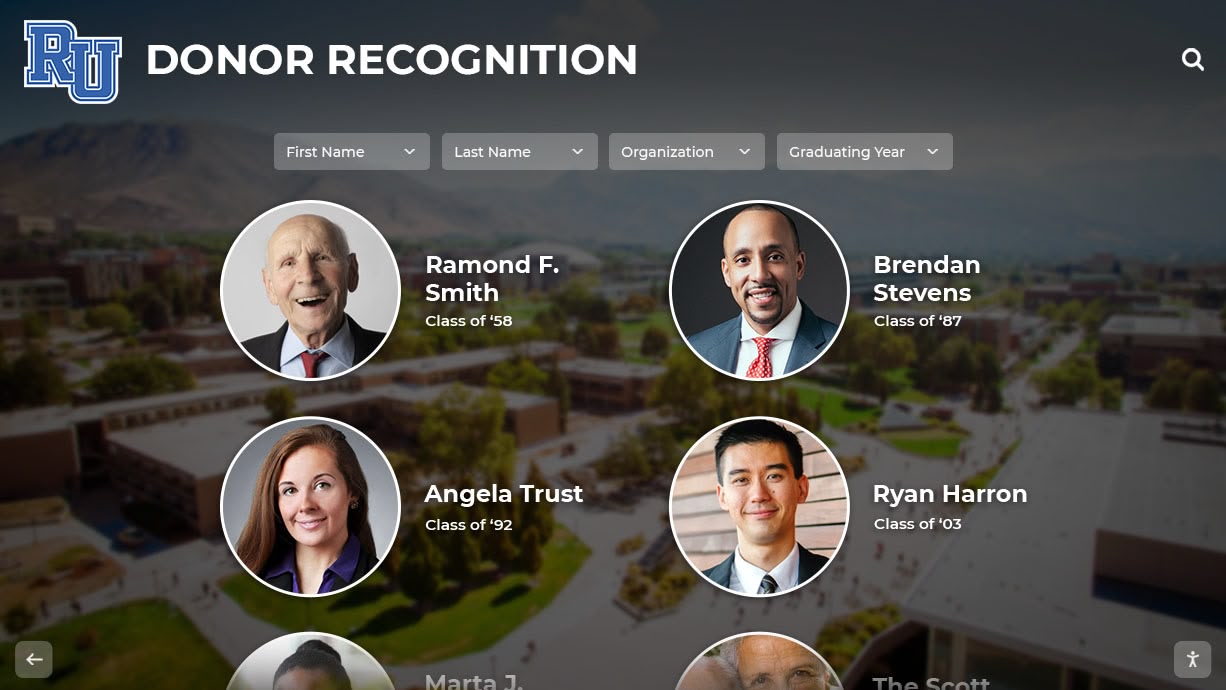
Rich Donor Profiles and Storytelling
Digital platforms enable recognition extending beyond simple name listings:
Enhanced Digital Donor Recognition Elements
- Donor photographs creating visual connection and interest
- Giving history showing cumulative support and commitment duration
- Philanthropic statements explaining why donors support the organization
- Impact narratives connecting gifts to specific outcomes or programs
- Video testimonials from major donors discussing institutional importance
- Family recognition when gifts represent multi-generational commitment
This multimedia storytelling transforms sterile name lists into compelling narratives that engage visitors emotionally while demonstrating concrete philanthropic impact.
Search and Interactive Features
Touchscreen interactivity creates engagement impossible with static walls:
- Donors and families search for themselves or relatives
- Filter displays by recognition level, gift type, or campaign
- Sort by giving amount, donor name, or contribution year
- Explore specific named spaces or programs and associated donors
- View giving trends over time visualized through charts or timelines
- Connect donor recognition to funded exhibits or programs
These interactive features transform donor recognition from passive acknowledgment into active exploration that increases visitor engagement and time spent with philanthropic content.
Research shows interactive touchscreen kiosks lead to 40% increases in viewer interaction compared to static displays, with visitors spending significantly more time exploring digital donor recognition than traditional plaques.
Explore comprehensive approaches to digital donor recognition displays demonstrating how technology enhances acknowledgment while improving donor engagement.
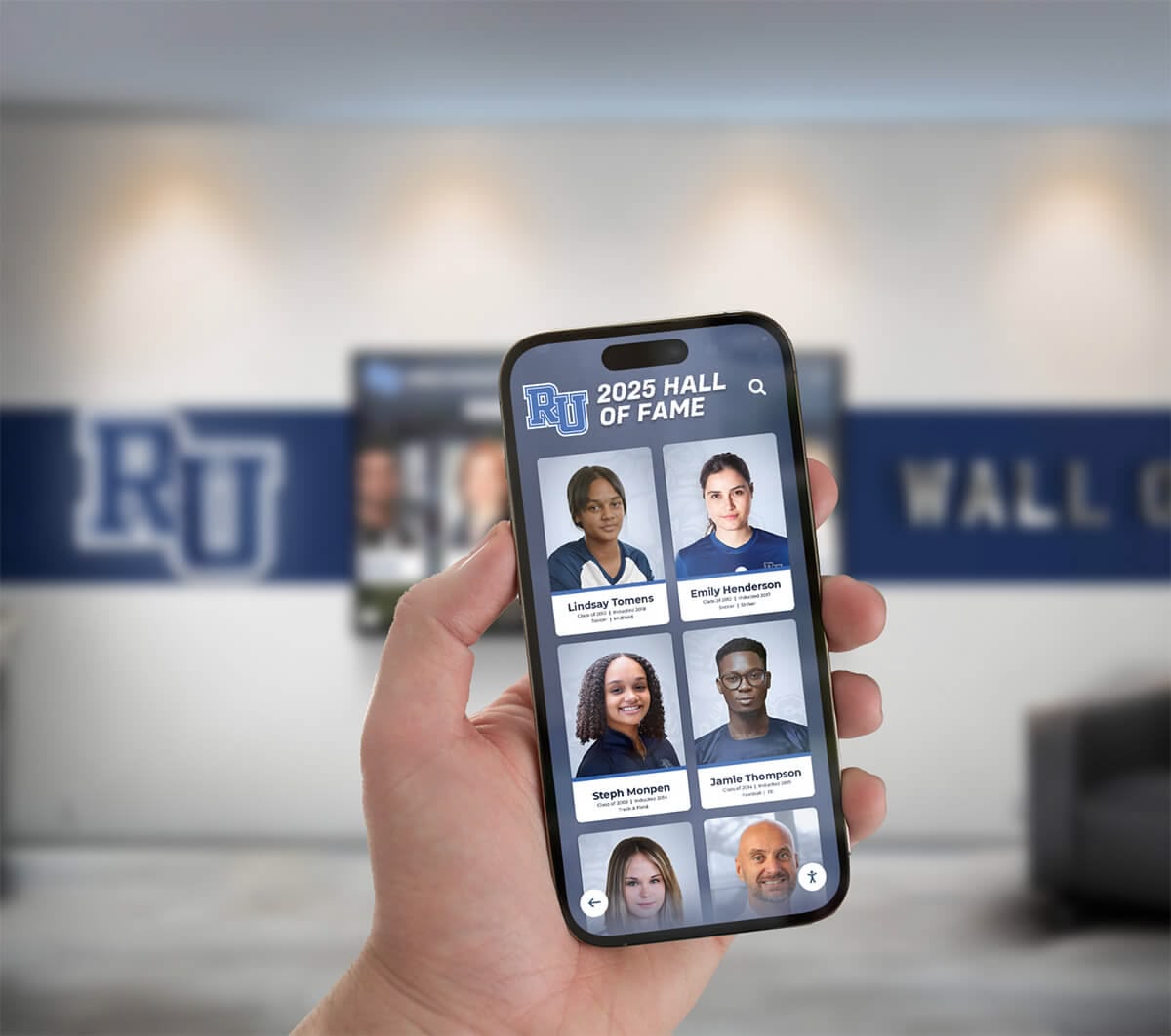
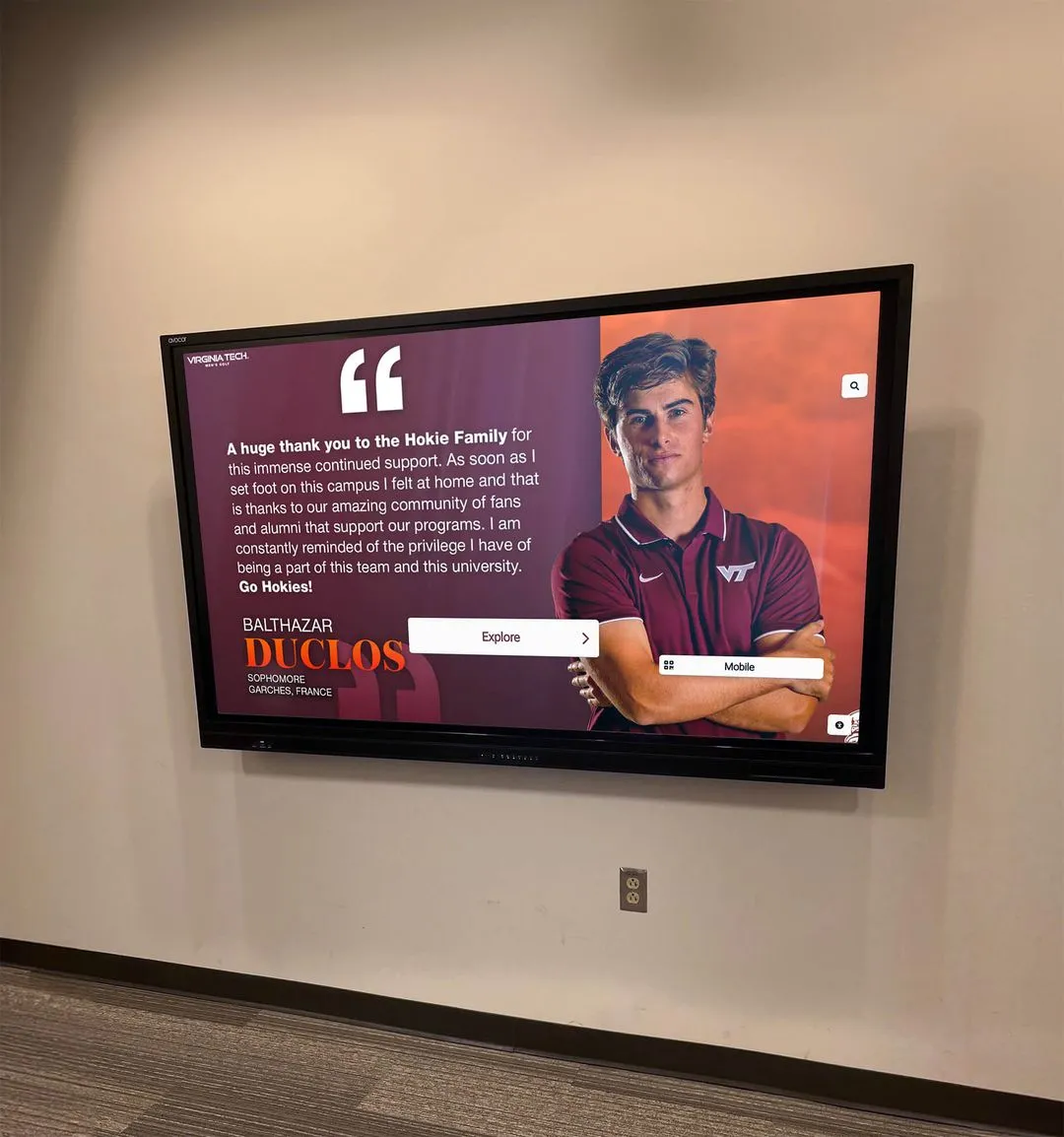
Mobile integration extends donor recognition beyond physical displays to any connected device
Cloud-Based Content Management
Modern digital donor recognition systems include intuitive management platforms eliminating traditional update challenges.
Remote Update Capabilities
Digital platforms enable efficient donor recognition management:
- Update displays from any internet-connected device without physical access
- Manage multiple recognition displays across facilities from single interface
- Immediate publishing when new donors reach recognition thresholds
- Scheduled updates automatically publishing on specific dates
- Bulk imports of donor lists from fundraising databases
Development staff report 80-90% reductions in time spent maintaining donor recognition after implementing cloud-based digital systems versus traditional plaque ordering, engraving, and installation processes.
Collaborative Access and Approval Workflows
Enterprise platforms support institutional management structures:
- Multiple development staff with appropriate access permissions
- Review and approval workflows before public recognition publishing
- Activity logs tracking all recognition changes for compliance
- Role-based permissions limiting access to authorized personnel
- Backup administrators preventing single points of failure
Integration with Fundraising Systems
Advanced digital recognition platforms integrate with institutional advancement databases:
- Automatic updates when donors reach recognition thresholds
- Data synchronization ensuring consistency between donor records and public recognition
- Gift processing workflows triggering appropriate acknowledgment
- Reporting capabilities tracking recognized versus unrecognized donors
- Privacy controls respecting donor anonymity preferences
This integration reduces manual data entry, minimizes errors, and ensures donor recognition stays current with fundraising activity.
Web-Based Donor Recognition Platforms
Modern donor recognition extends beyond physical facilities through online platforms accessible worldwide.
Online Donor Directories
Web-based recognition complements physical displays:
- Donors and families access recognition from anywhere globally
- Prospective donors see existing supporter community
- Alumni or distant stakeholders maintain connection through recognition visibility
- Search functionality enabling quick donor name location
- Mobile-responsive design for access across all devices
Social Sharing Integration
Digital recognition enables organic promotion:
- Donors share their recognition on social media platforms
- Automated notifications when donors appear in recognition systems
- QR codes linking physical displays to web platforms
- Email recognition certificates donors can distribute to family
- Embeddable recognition widgets for institutional websites
Learn about donor recognition wall digital transformation strategies that extend acknowledgment reach while maintaining appropriate prominence and gratitude.
Analytics and Engagement Tracking
Digital systems provide insights impossible with traditional recognition:
Usage Metrics
- Display interaction frequency revealing engagement patterns
- Most-searched donors indicating family and stakeholder interest
- Session duration suggesting content effectiveness
- Popular features guiding future recognition enhancements
- Geographic distribution of online recognition viewers
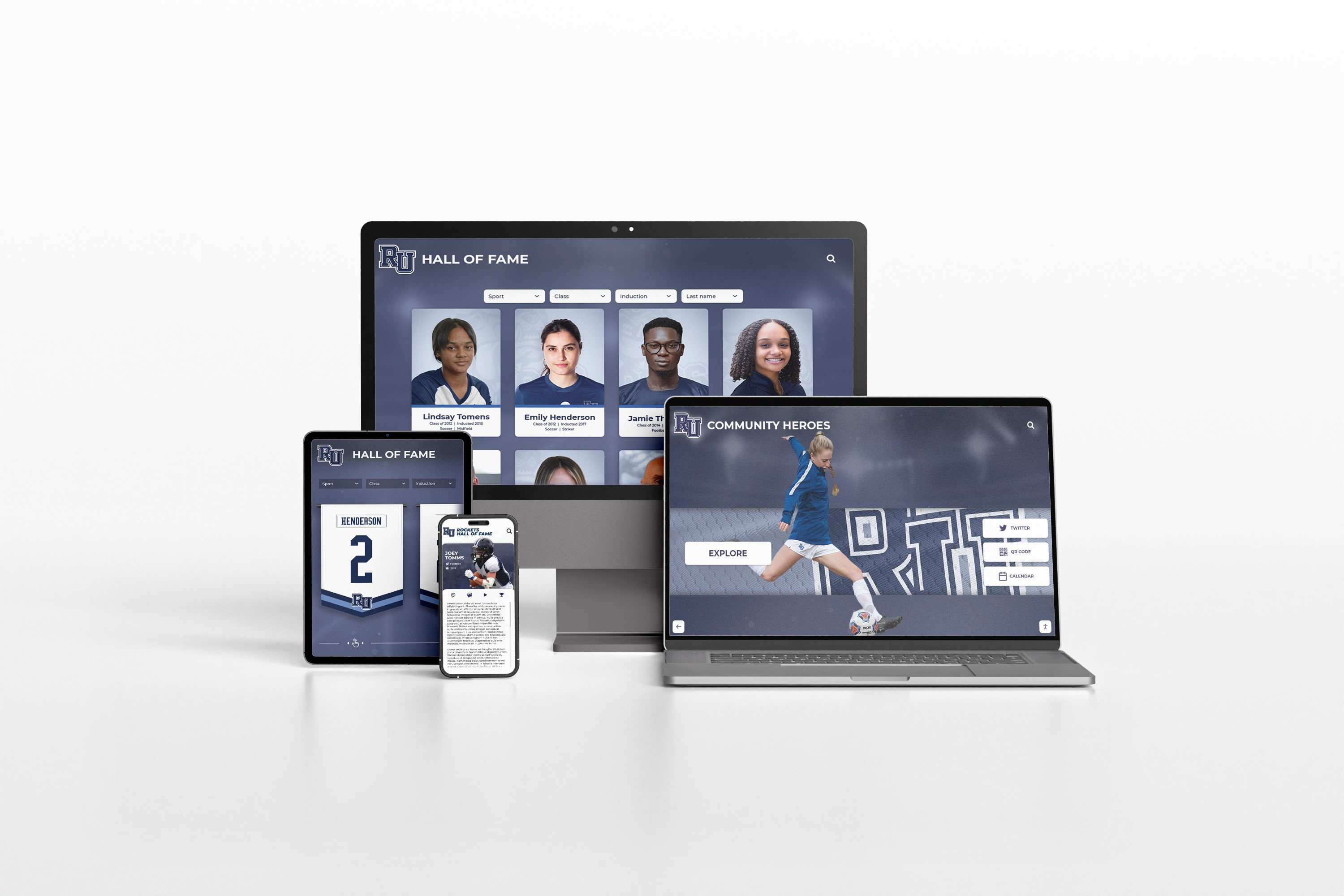
Responsive platforms ensure donor recognition functions beautifully across all devices and screen sizes
Stewardship Intelligence
Analytics inform ongoing donor relations:
- Donor viewing frequency suggesting continued engagement
- Family member searches indicating relationship strength
- Content preferences revealing what resonates with supporters
- Sharing patterns showing organic promotion and pride
- Engagement trends over time measuring recognition effectiveness
This data enables development teams to refine recognition strategies while identifying stewardship opportunities based on donor engagement patterns.
Recognition Program Implementation
Successfully launching donor recognition systems requires systematic planning addressing both technical and organizational considerations.
Planning and Stakeholder Engagement
Recognition Policy Development
Organizations should establish clear donor recognition policies addressing:
Essential Policy Components
- Minimum gift thresholds for each recognition level
- Pledge payment schedules and recognition timing
- Name listing formats and length restrictions
- Family versus individual donor attribution
- Corporate versus individual recognition approaches
- Anonymous donor accommodation procedures
- Recognition duration and permanence policies
- Name change or correction procedures
- Recognition removal policies for extraordinary circumstances
Clear policies prevent confusion and ensure consistent, equitable donor treatment while establishing expectations that guide giving decisions and recognition experiences.
Development Team Input
Recognition planning should involve:
- Development directors providing donor preference insights
- Major gift officers understanding prospect cultivation implications
- Annual giving managers addressing supporter communication
- Database administrators ensuring technical feasibility
- Planned giving officers addressing legacy society considerations
This cross-functional input ensures recognition systems serve multiple advancement objectives while accommodating diverse donor relationship contexts.
Donor Advisory Input
Leading donors can provide valuable recognition guidance:
- Current major donors sharing preference insights
- Campaign cabinet members advising on recognition approaches
- Board members ensuring alignment with institutional culture
- Legacy society members reflecting on meaningful acknowledgment
Advisory input from existing supporters increases likelihood that recognition systems resonate with intended audiences while avoiding missteps that might alienate key constituencies.
Technology Selection and Installation
Hardware Considerations
Physical displays require appropriate equipment selection:
Technical Requirements for Interactive Donor Displays
- Commercial-grade touchscreens designed for continuous operation (50,000+ hour lifespans)
- Screen sizes appropriate for viewing distances (typically 43"-65" for lobby installations)
- Anti-glare coatings for visibility in varied lighting conditions
- Vandal-resistant enclosures for publicly accessible spaces
- Accessibility compliance including appropriate mounting heights and screen reader compatibility
- Network connectivity supporting content updates and analytics
Professional installation ensures displays integrate seamlessly while meeting building codes, accessibility requirements, and institutional standards.
Software Platform Selection
Content management platforms should offer:
- Intuitive interfaces requiring minimal technical expertise
- Customization options matching institutional branding
- Robust search and filter functionality for visitor use
- Multimedia support for photos, videos, and rich content
- Secure access controls protecting donor information
- Reliable technical support and training from vendors
Organizations implementing digital donor recognition should evaluate platforms specifically designed for institutional recognition—like Rocket Alumni Solutions—rather than generic digital signage systems lacking donor-specific functionality.
Strategic Placement Decisions
Display location significantly affects recognition visibility and impact:
Optimal Donor Recognition Locations
- Main entrances where all visitors encounter recognition
- Lobbies and gathering spaces with high dwell time
- Adjacent to named spaces or funded programs creating context
- Near development offices reinforcing fundraising mission
- Event venues where donors gather for special occasions
- Multiple distributed locations ensuring broad visibility
Strategic placement ensures donor recognition achieves maximum visibility while integrating naturally into visitor experiences.
Explore effective placement strategies in this capital campaign donor recognition guide with frameworks applicable to diverse institutional contexts.
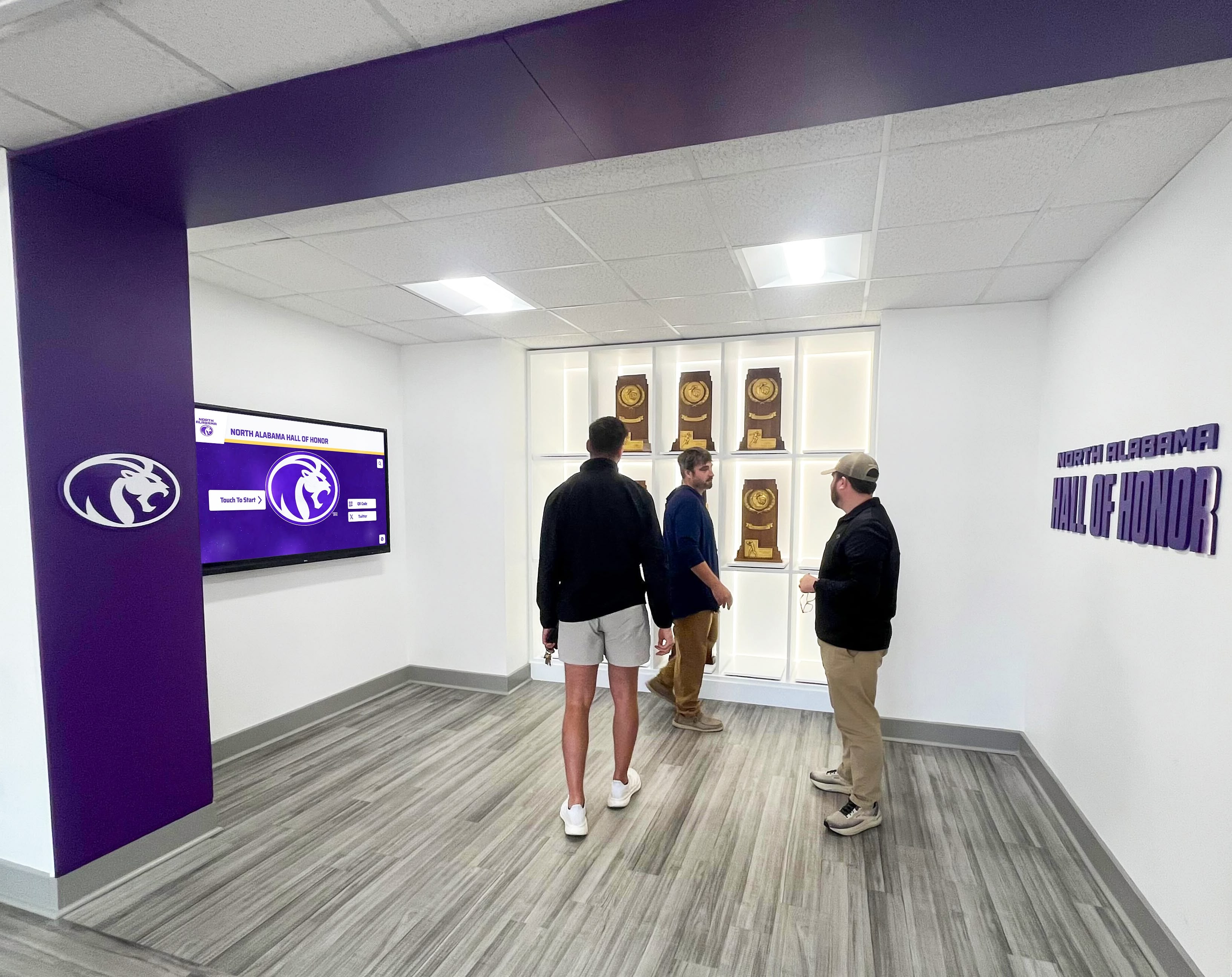
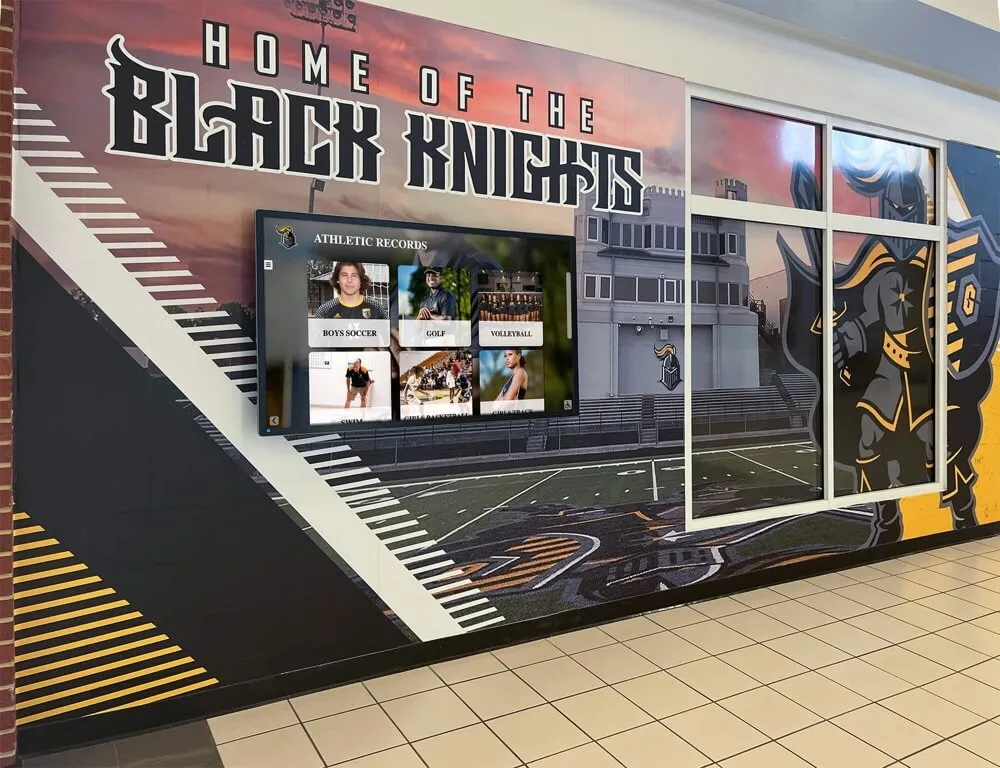
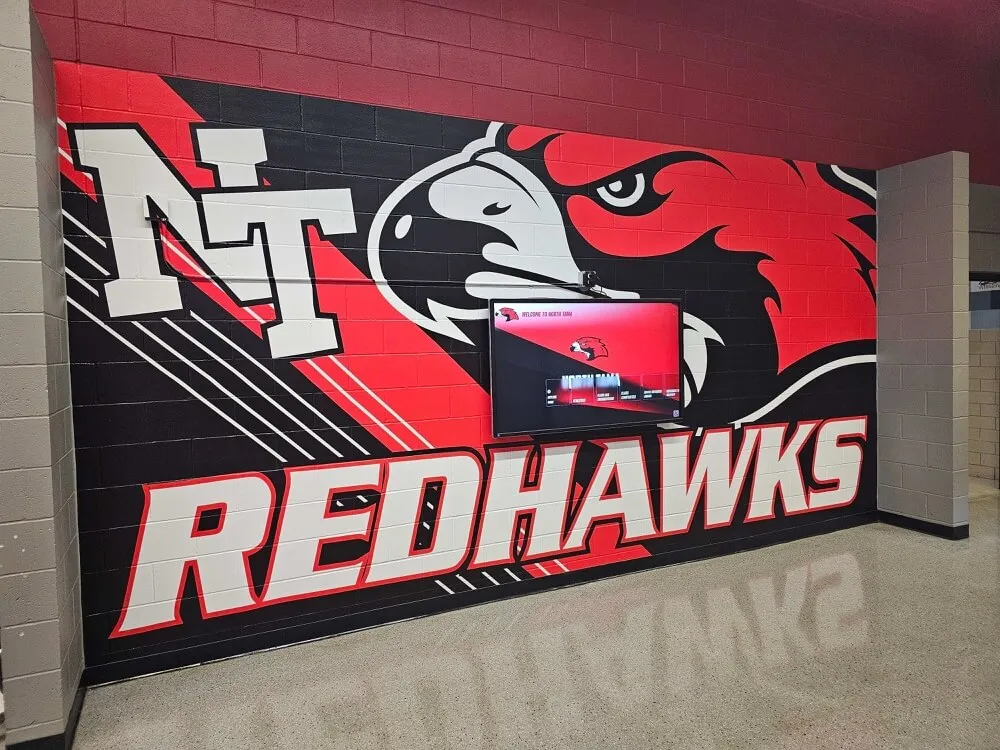
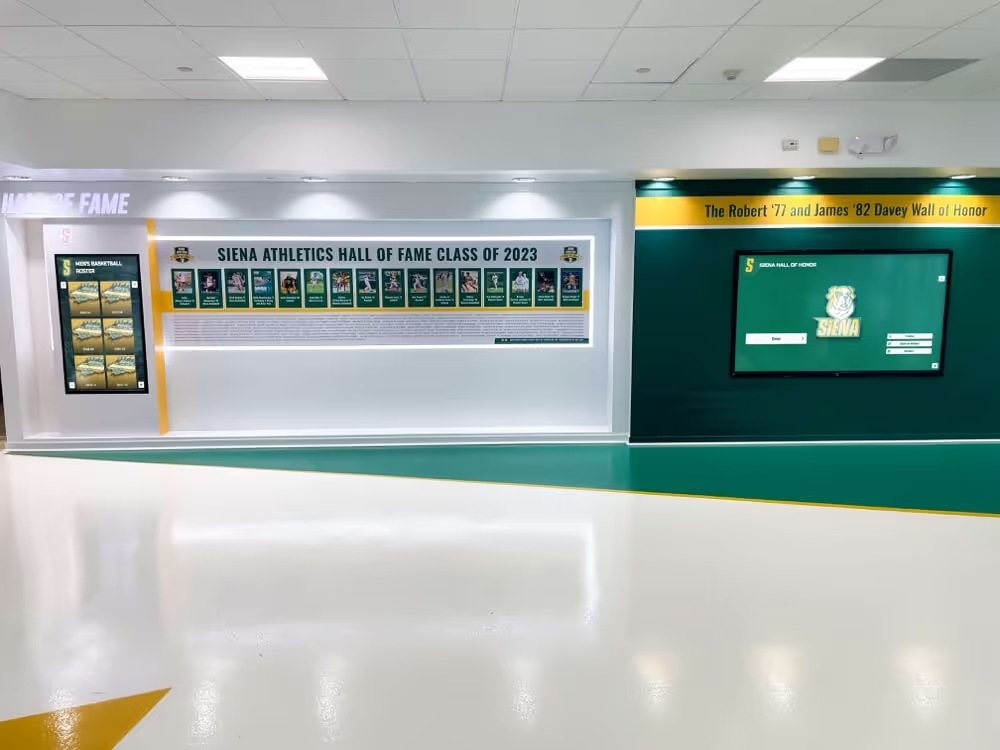
Integrated recognition spaces celebrate both athletic achievement and philanthropic support enabling excellence
Content Development and Donor Data Management
Historical Donor Research
Comprehensive recognition requires systematic historical research:
- Campaign records and gift documentation from archives
- Donor database queries identifying cumulative giving
- Named space documentation connecting gifts to facility elements
- Legacy society membership records for planned giving recognition
- Memorial gift documentation honoring deceased individuals
- Corporate and foundation grant records for organizational support
This research ensures no significant contributors are inadvertently omitted while building complete donor histories that demonstrate institutional gratitude comprehensively.
Donor Contact and Verification
Before public recognition, organizations should:
- Verify name spelling and preferred listing formats
- Confirm recognition level calculations including cumulative giving
- Obtain photos and biographical information when appropriate
- Secure permission for public acknowledgment addressing privacy preferences
- Clarify family versus individual attribution preferences
- Address any donor concerns or recognition questions
This verification prevents embarrassing errors while demonstrating attention to detail that enhances rather than diminishes donor appreciation.
Content Creation and Storytelling
Digital recognition enables rich content requiring development:
- Professional donor photography or photo collection from families
- Written donor statements explaining philanthropic motivation
- Impact narratives connecting gifts to specific outcomes
- Video testimonial production for major donors
- Historical documentation for legacy donors and multi-generational families
Investment in quality content creation transforms basic acknowledgment into compelling storytelling that honors donors appropriately while inspiring others toward similar generosity.
Launch and Ongoing Management
Unveiling Events
Formal donor recognition launches create memorable moments:
- Ribbon cutting ceremonies featuring honored donors
- Private donor previews before public unveiling
- Media coverage highlighting institutional appreciation
- Development event integration showcasing new recognition systems
- Board meeting presentations demonstrating stewardship investments
Celebratory launches transform recognition system implementation into cultivation opportunities that strengthen donor relationships while demonstrating organizational commitment to appropriate acknowledgment.
Ongoing Stewardship Integration
Donor recognition should integrate into broader stewardship:
- Event venue for donor appreciation gatherings
- Tour stops during prospect cultivation visits
- Photo opportunities for newly recognized donors
- Social media content celebrating donor community
- Annual reports featuring recognition system highlights
Strategic integration ensures recognition investments serve multiple relationship-building objectives beyond initial acknowledgment.
Maintenance and Update Protocols
Systematic management keeps recognition current:
- Quarterly update schedules adding new donors
- Annual comprehensive reviews ensuring accuracy
- Prompt error corrections addressing reported issues
- Technology updates maintaining system performance
- Content refreshes highlighting different donors or stories
Consistent maintenance demonstrates ongoing institutional commitment to donor appreciation rather than allowing recognition to become outdated or neglected.
Best Practices in Hall of Fame Donor Recognition
Drawing from successful implementations across sports museums and institutional halls of fame, several best practices emerge consistently.
Transparency and Equity
Clear Recognition Standards
Donors respond positively to transparent recognition:
- Published recognition level thresholds available to all prospects
- Consistent application of recognition policies across all donors
- Clear explanation of cumulative versus single-gift recognition
- Visible acknowledgment of diverse gift types beyond cash
- Equitable treatment regardless of donor prominence or relationships
Transparency builds trust while ensuring all supporters understand pathways to appropriate recognition for their philanthropic capacity and commitment.
Inclusive Acknowledgment
Comprehensive systems recognize diverse contributors:
- Individual donors at all capacity levels
- Corporate and business supporters
- Foundation and organizational funders
- In-kind contributors providing goods or services
- Legacy and planned giving commitments
- Volunteer leadership contributing time and expertise
Inclusive recognition demonstrates appreciation for all support forms while avoiding elitist approaches that alienate portions of donor communities.
Privacy and Sensitivity
Anonymous Donor Accommodation
Recognition systems must respect privacy preferences:
- Options for anonymous listing at any recognition level
- “Anonymous Donor” placeholders maintaining giving level visibility
- Complete omission options for donors preferring no acknowledgment
- Partial anonymity (foundation names without individual attribution)
- Temporary anonymity with future recognition provisions
Research indicates approximately 5-15% of donors prefer anonymous recognition, with higher percentages among ultra-high-net-worth individuals and some foundation donors.
Deceased Donor Recognition
Memorial and estate gifts warrant sensitive acknowledgment:
- “In Memory Of” or “In Honor Of” designations when appropriate
- Family consultation about recognition preferences and formats
- Coordination with living family members about details
- Integration with memorial or tribute giving programs
- Posthumous recognition for legacy donors who pass before recognition completion
Thoughtful memorial recognition provides families with tangible acknowledgment of loved ones’ philanthropic values while honoring donors’ commitments appropriately.
Recognition Correction and Modification
Policies should address ongoing changes:
- Name corrections for errors or donor name changes
- Recognition level updates when donors increase giving
- Removal requests in extraordinary circumstances
- Attribution modifications for family structure changes
- Organizational name changes for corporate donors
Flexible modification procedures demonstrate ongoing responsiveness to donor needs while maintaining recognition accuracy and appropriateness over time.
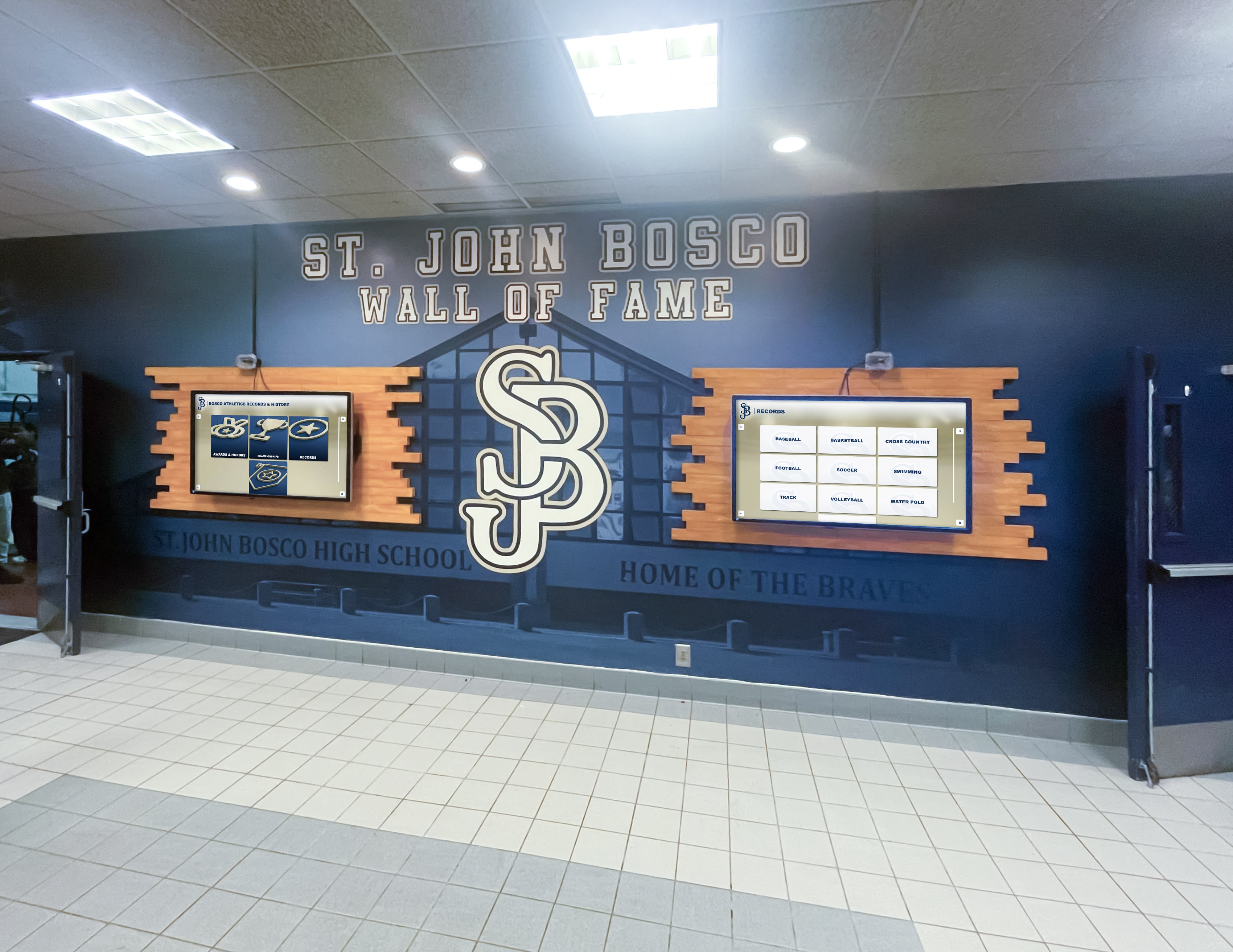
Multiple display installations ensure donor recognition reaches diverse audiences throughout facilities
Integration with Advancement Objectives
Cultivation Tool Utilization
Recognition serves strategic fundraising purposes:
- Prospect tours featuring donor recognition demonstrating philanthropic culture
- Recognition level information motivating gift upgrades
- Naming opportunity visibility inspiring major gift conversations
- Donor community demonstration building confidence in institutional support
- Legacy society visibility encouraging planned giving commitments
Development professionals should actively leverage recognition systems as cultivation tools rather than viewing them as purely stewardship functions.
Recognition as Fundraising Motivation
Public acknowledgment motivates additional giving:
- Aspiration toward higher recognition levels
- Peer influence when prospects see colleagues recognized
- Family legacy motivation across generations
- Organizational prestige association for corporate donors
- Visible impact demonstration building giving confidence
Organizations report that thoughtful recognition generates returns far exceeding initial investment through strengthened relationships, enhanced loyalty, and increased likelihood of continued and upgraded support.
Explore connections between recognition and advancement in this church interactive donor boards guide with principles applicable across institutional types.
Budget Considerations and Funding Strategies
Comprehensive donor recognition requires realistic financial planning addressing both initial investment and ongoing costs.
Investment Ranges and Cost Factors
Traditional Donor Wall Costs
Physical recognition systems vary widely in investment:
Typical Cost Ranges
- Basic plaque systems: $5,000-$15,000 for modest installations
- Premium architectural walls: $25,000-$75,000 for high-end materials and design
- Large-scale installations: $75,000-$200,000+ for major lobby features
- Ongoing maintenance: $1,000-$5,000 annually for cleaning, updates, additions
Costs vary based on materials, size, design complexity, donor volume, and installation requirements.
Digital Recognition System Investment
Interactive touchscreen donor displays typically require:
Digital System Cost Components
- Hardware: $3,000-$8,000 per display (screen, enclosure, mounting)
- Software platform: $1,500-$4,000 annually per display for cloud management
- Installation: $1,000-$3,000 for professional mounting and configuration
- Content development: Variable based on donor volume and richness
- Network infrastructure: Usually minimal for facilities with existing connectivity
Total first-year investment: $8,000-$20,000 per display Ongoing annual costs: $2,000-$5,000 for software, updates, support
While digital systems require higher initial investment than basic plaques, they eliminate recurring costs for engraving and plaque additions while providing dramatically enhanced capacity and engagement.
Return on Investment
Donor recognition investments deliver multiple returns:
Quantifiable Benefits
- Increased donor retention rates (typically 5-15% improvement)
- Higher rates of gift upgrades and recognition level progression
- Enhanced major gift conversion for prospects experiencing recognition culture
- Reduced staff time managing recognition versus traditional approaches
- Extended donor engagement through interactive features and online access
Qualitative Value
Beyond measurable metrics, recognition creates:
- Strengthened donor relationships and emotional connections
- Enhanced institutional reputation for appropriate stewardship
- Positive donor experiences increasing satisfaction and pride
- Cultivation advantages when prospects see recognition culture
- Staff morale knowing donor appreciation receives appropriate investment
Many institutions discover recognition system investments represent some of the highest-return advancement expenditures when calculating lifetime donor value impacts.
Funding Approaches
Organizations successfully fund recognition through diverse strategies:
Capital Campaign Integration
Recognition often represents campaign components:
- Donor wall or recognition system as separate line item in campaign budget
- Portion of campaign administrative costs allocated to recognition
- Specific donor funding recognition system implementation
- Recognition costs proportionate to total campaign size (typically 1-3%)
Development Budget Allocation
Annual or multi-year development budgets include:
- Recognition system implementation as capital expenditure
- Ongoing maintenance and updates as operational expenses
- Content development and technology support costs
- Enhancement budget for periodic improvements or expansions
Auxiliary Funding Sources
Creative organizations utilize:
- Board or foundation grants specifically for recognition implementation
- Corporate sponsorships associating with recognition visibility
- Naming opportunities for the recognition system itself
- Memorial or tribute gifts designated for donor recognition
- Volunteer fundraising specifically for stewardship infrastructure
The tangible, visible nature of donor recognition makes it relatively attractive to funders compared to abstract advancement infrastructure investments.
Emerging Trends in Donor Recognition
Donor recognition continues evolving with technological advancement and changing donor expectations.
Personalization and Customization
Individualized Recognition Experiences
Next-generation systems will offer unprecedented personalization:
- Donor-specific landing pages accessible via QR codes
- Custom recognition profiles highlighting individual philanthropic journeys
- Personalized impact reporting connecting gifts to specific outcomes
- Family recognition pages celebrating multi-generational giving
- Adaptive content showing relevant information based on viewer identity
Donor Preference Accommodation
Advanced systems will enable:
- Self-service donor portals for recognition information updates
- Flexible privacy controls allowing donors to adjust visibility preferences
- Custom display options for how donors prefer recognition formatting
- Multi-language support for international or diverse donor communities
- Accessibility features ensuring universal recognition access
Immersive Technologies
Augmented Reality Recognition
Mobile applications may overlay digital recognition onto physical spaces:
- Smartphone apps revealing donor stories when pointed at named spaces
- Virtual donor walls accessible anywhere throughout facilities
- Historical visualization showing campaign progress and donor additions over time
- Interactive donor timelines explored through AR experiences
- Gamified donor discovery encouraging visitor engagement
Virtual Recognition Spaces
Digital platforms create recognition beyond physical constraints:
- Virtual donor galleries accessible globally through web platforms
- 3D visualization of named spaces and donor connections
- Virtual recognition events celebrating new donors remotely
- Digital donor halls of fame with unlimited creative design possibilities
- Metaverse recognition spaces for forward-thinking institutions
Learn about future trends in digital walls of fame exploring emerging recognition technologies.

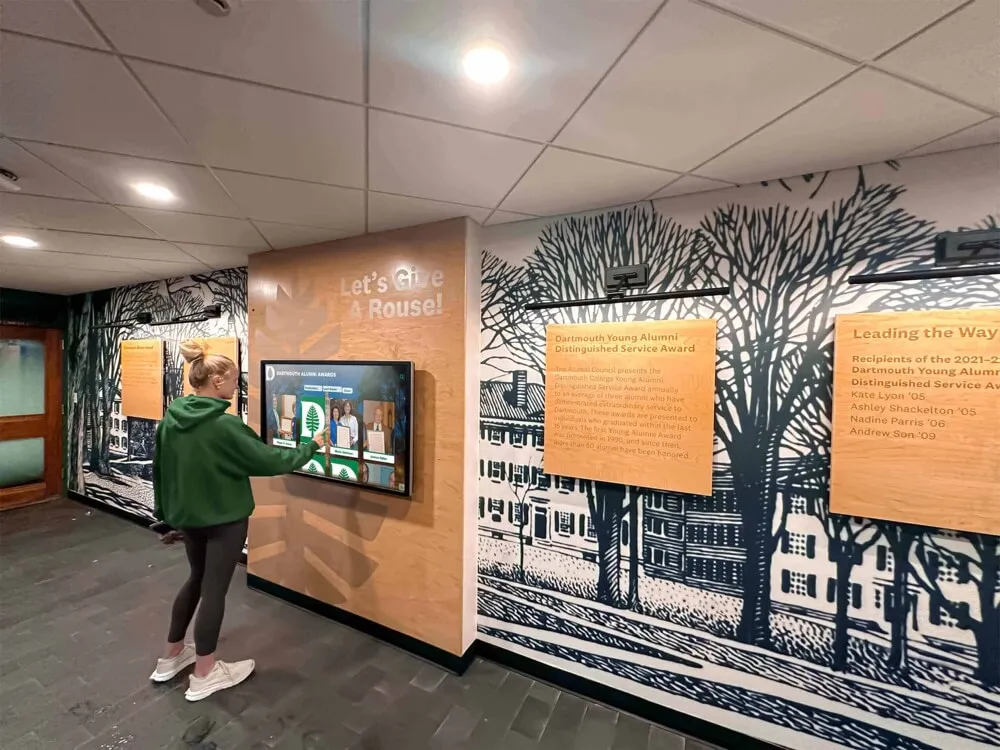
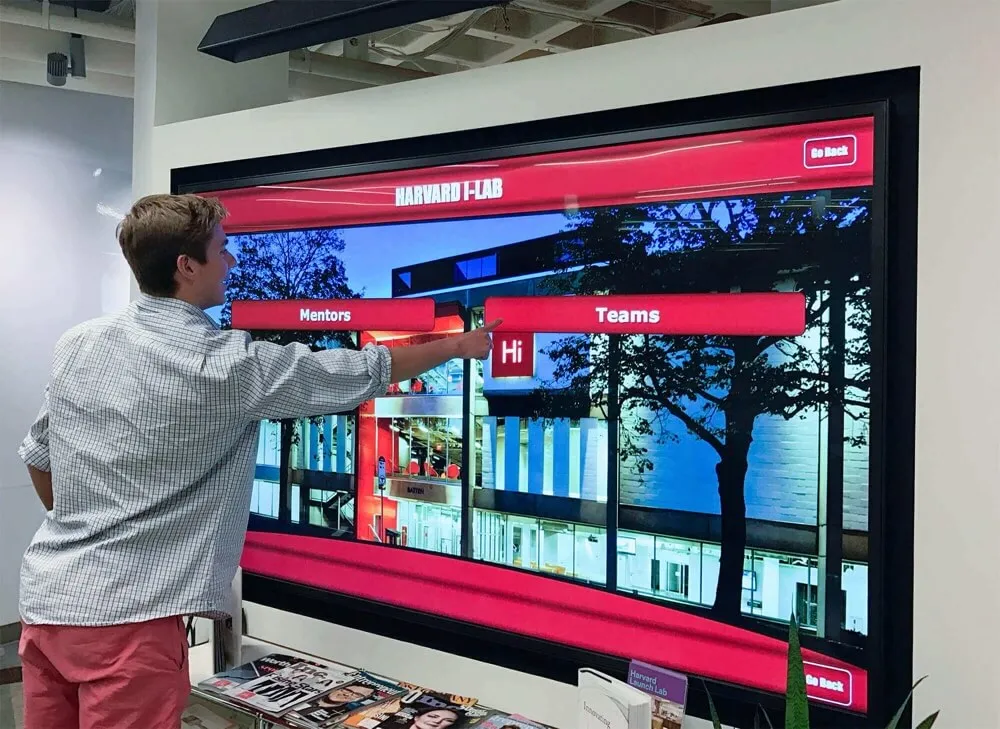
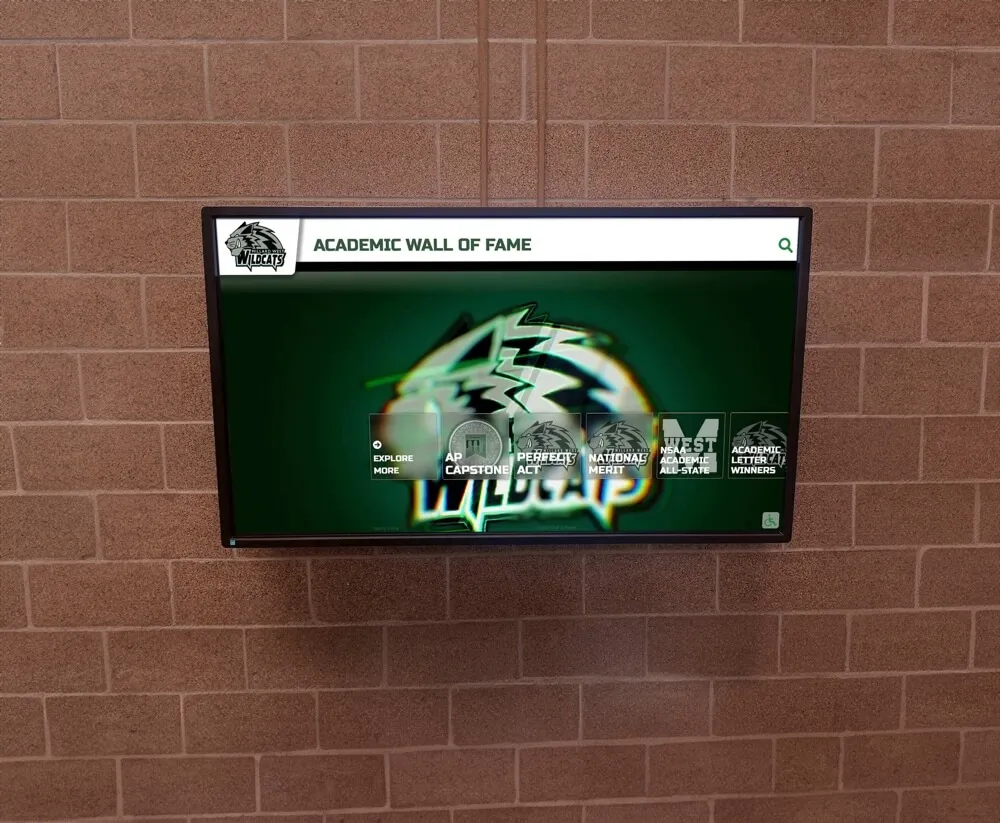
Intuitive touchscreen interfaces make exploring donor recognition engaging and accessible to all visitors
Impact Visualization
Transparent Gift Utilization
Donors increasingly expect clear connection between gifts and outcomes:
- Real-time dashboards showing funded program metrics
- Photo and video documentation of gift-funded initiatives
- Beneficiary testimonials explaining donor impact
- Financial transparency showing gift allocation and utilization
- Progress tracking for multi-year gifts or endowment building
Storytelling Enhancement
Recognition evolves from acknowledgment to narrative:
- Documentary-style donor stories explaining philanthropic motivation
- Impact narratives connecting individual gifts to organizational outcomes
- Oral history projects preserving legacy donor perspectives
- Generational stories celebrating family philanthropic traditions
- Community impact visualization showing collective donor contributions
These storytelling approaches transform donor recognition from transactional acknowledgment into meaningful celebration of shared values and transformational impact.
Conclusion: Honoring Philanthropic Excellence Through Strategic Recognition
The Naismith Memorial Basketball Hall of Fame demonstrates how prestigious sports institutions can honor philanthropic excellence through thoughtful donor recognition that extends beyond simple acknowledgment to create engaging, meaningful experiences celebrating supporters’ commitment to organizational mission. From interactive donor walls incorporating cutting-edge technology to structured giving societies creating clear pathways for engagement at all levels, strategic recognition systems build lasting relationships while inspiring continued generosity.
The principles explored throughout this guide apply across institutional contexts—sports halls of fame, university museums, athletic programs, educational institutions, and nonprofit organizations all face similar recognition challenges while pursuing advancement objectives. Whether implementing traditional donor walls with thoughtful design and expansion planning or adopting interactive digital displays that eliminate space constraints while enabling rich multimedia storytelling, organizations have more options than ever for acknowledging supporters appropriately.
Transform Your Donor Recognition
Discover how interactive digital recognition solutions can help you honor every supporter with unlimited capacity, engaging storytelling, and sophisticated displays that inspire continued philanthropic excellence.
Explore Recognition SolutionsSuccess in donor recognition requires balancing multiple considerations: honoring major donors appropriately while acknowledging all supporters inclusively, maintaining aesthetic excellence that reflects institutional quality while managing practical budget constraints, creating permanent acknowledgment that demonstrates lasting gratitude while building flexible systems accommodating inevitable growth, and celebrating past philanthropy while using recognition strategically to inspire future generosity.
Digital recognition platforms like Rocket Alumni Solutions provide purpose-built systems specifically designed for institutional donor acknowledgment, combining unlimited recognition capacity with intuitive management, multimedia storytelling capabilities, and engaging interactive experiences that honor donors while serving advancement objectives effectively. These platforms overcome traditional limitations while providing analytics and insights impossible with static recognition approaches.
Start with clear recognition policies and stakeholder engagement ensuring systems serve organizational culture and donor preferences. Invest in quality implementation—whether traditional or digital—that reflects the importance of philanthropic partnerships to institutional success. Integrate recognition into broader stewardship and cultivation strategies, leveraging acknowledgment systems as active advancement tools rather than passive displays. Then maintain systems consistently, keeping recognition current and impressive while demonstrating ongoing commitment to donor appreciation.
Your donors have invested in your mission through generous philanthropy deserving recognition that honors their commitment appropriately while inspiring others toward similar support. With thoughtful planning, appropriate technology selection, and strategic implementation, you can create donor recognition systems that truly celebrate philanthropic excellence while building the advancement relationships essential to long-term organizational sustainability and impact.
Ready to explore comprehensive donor recognition solutions? Learn more about digital donor recognition displays or discover how collegiate donor walls create lasting impact throughout your institutional community.