School consolidation represents one of the most significant transformations in American education history, fundamentally reshaping how communities deliver instruction, organize resources, and preserve institutional identity. The movement from thousands of small, independent school districts to larger consolidated systems has touched nearly every community across the United States, creating both opportunities for enhanced educational offerings and challenges for maintaining cherished local traditions.
Walk through most American communities today and you’ll encounter schools bearing hyphenated names—monuments to mergers that combined once-independent districts. Behind these unified institutions lie complex histories of rural one-room schoolhouses, tough economic decisions, passionate community debates, and careful negotiations balancing educational quality with local identity preservation.
This comprehensive examination explores the complete history of school consolidation in America—from the earliest rural mergers through the major consolidation waves of the 20th century to contemporary district unification efforts. Understanding this history provides crucial context for educators, administrators, and community members navigating similar decisions today while seeking to honor the distinct legacies each original school brought to consolidated institutions.
The story of school consolidation isn’t simply an administrative tale of efficiency and economics—it’s a deeply human narrative about communities adapting to changing circumstances while fighting to preserve traditions, rivalries, and identities that defined generations of families and shaped local culture in profound ways.

Consolidated schools often create dedicated spaces celebrating the complete history of all predecessor institutions
The Era of One-Room Schoolhouses: Education Before Consolidation
To understand school consolidation, you must first appreciate what existed before—a highly decentralized educational landscape where nearly every rural community operated its own small, independent school serving local children exclusively.
The Peak of School District Fragmentation
At the height of educational decentralization in the early 20th century, the United States maintained an extraordinary number of independent school districts, most operating single schools serving small geographic areas.
Statistical Overview of Early 20th Century Education
The scale of pre-consolidation education reveals just how dramatically American schooling has transformed:
- In 1930, the United States operated approximately 130,000 individual school districts
- The majority of these districts ran single one-room or two-room schoolhouses
- Most rural schools served fewer than 20 students across all grade levels combined
- Teachers typically instructed multiple grades simultaneously in single classrooms
- School terms often lasted only 6-7 months, accommodating agricultural labor needs
- Transportation consisted primarily of walking, with some students traveling several miles daily
This highly fragmented structure reflected the realities of rural America, where population density, transportation limitations, and local community autonomy shaped educational organization more than any centralized planning or standardization efforts.
Characteristics of Early Rural Schools
One-room schoolhouses represented far more than simple educational facilities—they served as community centers, gathering places, and symbols of local independence and self-sufficiency.
Educational Structure
Rural schools operated under unique conditions:
- Multi-grade instruction: Teachers simultaneously instructed students from first through eighth grades, requiring extraordinary versatility and classroom management
- Limited resources: Schools typically possessed minimal books, supplies, and teaching materials, with students often sharing textbooks
- Community governance: Local boards of trustees, often comprising neighboring farmers, maintained direct control over hiring, curriculum, and operations
- Irregular attendance: Agricultural demands, weather conditions, and family circumstances created highly variable attendance patterns
- Teacher qualifications: Many rural teachers possessed only eighth-grade education themselves, having completed teacher training programs as brief as several weeks
- Physical facilities: Buildings featured basic construction, minimal heating, outdoor privies, and scarce modern amenities

Preserving the history of predecessor schools remains important for consolidated districts honoring complete institutional legacy
Community Role and Identity
Rural schools served functions extending far beyond instruction:
- Social gathering spaces: Schools hosted community meetings, social events, church services, and civic gatherings
- Local employment: Teaching positions represented significant economic opportunities in small communities
- Cultural preservation: Schools reflected and reinforced local values, traditions, and community identity
- Civic autonomy: Local control over schools symbolized community independence and self-determination
- Generational continuity: Families often attended the same school across multiple generations, creating deep emotional connections
This tight integration between school and community helps explain why consolidation efforts later encountered passionate resistance despite apparent educational and economic advantages.
The First Wave: Early Consolidation Efforts (1890s-1920s)
The initial push toward school consolidation emerged gradually during the late 19th and early 20th centuries, driven by educational reformers, state governments, and changing economic circumstances.
Motivating Factors for Early Consolidation
Multiple converging forces created momentum for combining small, independent schools into larger consolidated districts.
Educational Quality Concerns
Reformers identified significant instructional limitations in one-room schoolhouses:
- Limited curriculum breadth: Small schools couldn’t offer specialized instruction in science, foreign languages, advanced mathematics, or other subjects requiring dedicated teachers
- Teacher qualification inconsistencies: Rural schools often struggled attracting and retaining qualified teachers willing to work in remote locations for minimal compensation
- Resource constraints: Individual districts lacked financial capacity to invest in libraries, laboratory equipment, athletic facilities, or other educational enhancements
- Grade-level instruction challenges: Multi-grade classrooms prevented teachers from providing age-appropriate, focused instruction matching student developmental needs
- High school access: Most rural areas completely lacked secondary education opportunities, forcing families to send children away for high school or forgo education beyond eighth grade
Economic and Efficiency Arguments
Financial considerations provided compelling consolidation rationale:
- Larger districts achieved economies of scale reducing per-pupil operational costs
- Consolidated schools eliminated duplication of administrative positions and facilities
- Combined districts could attract better teachers through higher salaries
- Shared facilities reduced overall capital investment requirements
- Centralized purchasing lowered supply and equipment costs
Transportation Technology Advances
Improved transportation capabilities made consolidation practically feasible:
- The introduction of horse-drawn school wagons beginning in the 1890s enabled student transport from wider geographic areas
- Early motorized buses in the 1910s and 1920s dramatically expanded feasible school district sizes
- Road improvements increased travel speed and reliability
- All-weather roads extended practical transportation into previously inaccessible rural areas
State Legislative Actions Encouraging Consolidation
State governments played active roles promoting and facilitating school consolidation through legislation, financial incentives, and administrative pressure.
Financial Incentive Programs
Many states adopted policies rewarding consolidation:
- Bonus payments: States offered one-time financial bonuses to districts agreeing to consolidate
- Enhanced state aid: Consolidated districts received higher per-pupil state funding than small independent schools
- Building assistance: States provided grants or low-interest loans for constructing new consolidated school buildings
- Transportation subsidies: State funding covered portions of school bus operations, making larger geographic districts financially viable
Regulatory Pressure
Legislative requirements gradually pushed smaller districts toward consolidation:
- Minimum enrollment requirements threatened closure of schools falling below specified student counts
- Teacher certification standards raised qualification requirements beyond what many small districts could afford
- Curriculum mandates required subject offerings small schools couldn’t provide
- Facility standards imposed building requirements exceeding small districts’ financial capabilities
Early Resistance and Community Concerns
Despite apparent advantages, consolidation encountered substantial opposition from rural communities fiercely protective of local schools and the autonomy they represented.
Loss of Community Control
Consolidation threatened cherished local authority:
- Larger districts meant community members held less direct influence over school operations
- Consolidated school boards represented broader geographic areas, diluting individual community representation
- Administrative centralization moved decision-making authority away from parents and neighbors
- Curriculum standardization reduced flexibility to accommodate local values and priorities
Economic Impacts on Small Communities
School closures affected communities beyond educational considerations:
- Teacher and staff positions eliminated local employment opportunities
- Closed school buildings left communities without civic gathering spaces
- Property values often declined when communities lost schools
- Young families avoided communities without schools, accelerating rural depopulation
- Local businesses suffered when students and staff no longer frequented community establishments
Cultural Identity Concerns
Many communities viewed their schools as irreplaceable cultural institutions:
- Multi-generational family connections to specific schools created powerful emotional bonds
- School closure symbolized community decline and loss of vitality
- Intense rivalries between neighboring communities complicated cooperative consolidation efforts
- Fear of losing distinct community identity within larger merged institutions
- Concerns about children losing connection to local history, traditions, and values

Successful consolidations create recognition spaces celebrating the complete history of all predecessor schools equally
The Second Wave: Mid-20th Century Consolidation Acceleration (1930s-1960s)
School consolidation dramatically accelerated during the mid-20th century, driven by demographic shifts, economic pressures, and evolving educational expectations that made small rural schools increasingly untenable.
The Great Depression and Rural School Consolidation
Economic hardship during the 1930s created circumstances forcing many communities toward consolidation despite lingering resistance.
Financial Crisis in Rural Districts
The Depression devastated funding for rural schools:
- Plummeting agricultural prices reduced property tax revenue supporting schools
- Many districts couldn’t pay teachers for months at a time
- Facility maintenance ceased as communities struggled with basic operations
- Instructional materials purchases stopped completely in numerous districts
- Some districts abandoned school operations entirely, leaving children without educational access
These financial crises made consolidation with neighboring districts the only viable option for maintaining any educational services, overcoming resistance that might have persisted under better economic conditions.
Federal and State Intervention
Government programs actively promoted consolidation:
- New Deal programs provided funding for constructing consolidated school buildings
- State departments of education intensified consolidation advocacy and facilitation
- Federal vocational education initiatives required facilities and programs beyond small schools’ capacities
- Emergency relief programs prioritized consolidated districts over independent rural schools
Post-World War II Educational Expectations
The period following World War II brought dramatically changed expectations for educational breadth and quality that small rural schools simply couldn’t meet.
Comprehensive High School Movement
The concept of comprehensive high schools offering diverse programs accelerated consolidation:
- Expectations for college preparatory curricula required specialized teachers in multiple disciplines
- Vocational and technical education programs demanded expensive equipment and facilities
- Athletic programs required sufficient student populations to field competitive teams
- Arts education assumed dedicated music, art, and drama teachers
- Guidance counseling, special education, and support services became standard expectations
Meeting these expectations required student populations and financial resources far exceeding small rural districts’ capacities, making consolidation essential for communities wanting to offer modern educational programs.
The Space Race and STEM Education
Cold War educational priorities accelerated consolidation pressures:
- National focus on science and mathematics education demanded specialized instruction
- Laboratory facilities and equipment represented significant investments
- Advanced coursework in physics, chemistry, and calculus required dedicated teachers
- Federal funding for enhanced science programs flowed primarily to larger districts
- Competition with Soviet education created pressure for educational modernization impossible in one-room schools
Legal and Regulatory Drivers of Consolidation
State governments intensified consolidation efforts through increasingly assertive policies and regulations.
Minimum District Size Requirements
Many states established enrollment thresholds:
- Districts falling below specified minimum enrollments faced forced consolidation
- Some states required minimum numbers of teachers or administrators
- Financial penalties discouraged maintaining very small districts
- State approval requirements for district operations excluded smallest schools
School Facility Standards
Building codes and safety regulations made small school operations increasingly difficult:
- Fire safety requirements demanded expensive facility upgrades
- Sanitation standards required indoor plumbing and modern facilities
- Space requirements per student exceeded capabilities of one-room buildings
- Accessibility regulations imposed modification costs small districts couldn’t afford
Accreditation and Standardization
Quality assurance systems favored larger, comprehensive schools:
- Accreditation standards assumed curriculum breadth impossible in small schools
- Standardized testing highlighted educational gaps in limited rural programs
- State curriculum frameworks required offerings beyond small schools’ capacities
- Graduation requirements exceeded what small high schools could provide
Geographic and Regional Consolidation Patterns
School consolidation didn’t occur uniformly across the United States—regional differences in population density, economic conditions, and cultural factors created distinct consolidation patterns and timelines.
Rural Midwest and Great Plains Consolidation
The agricultural heartland experienced particularly extensive consolidation due to population decline and economic pressures.
Declining Rural Population
Ongoing rural-to-urban migration accelerated consolidation necessity:
- Farm mechanization reduced agricultural labor requirements, shrinking rural populations
- Young adults left farming communities for urban employment opportunities
- Many rural areas experienced decades of steady population decline
- School enrollments dropped below sustainable levels in thousands of small districts
- Some communities essentially disappeared as residents relocated to larger towns
Agricultural Economic Challenges
Farming economic difficulties reduced support for maintaining small schools:
- Cyclical agricultural crises limited tax revenue for school operations
- Increasing farm sizes meant fewer families spread across larger geographic areas
- Property tax resistance intensified as farm profitability declined
- Many families couldn’t afford property taxes supporting local schools
- Economic pressure made consolidation’s cost savings particularly attractive
Suburban Consolidation Patterns
Growing suburban areas experienced different consolidation dynamics than declining rural regions.
Suburban Growth Pressures
Rapid suburban expansion created different consolidation motivations:
- Explosive post-World War II suburban growth overwhelmed small existing districts
- New communities needed immediate educational infrastructure
- Small historic districts couldn’t accommodate rapid enrollment increases
- Consolidation provided mechanism for creating adequate educational facilities
- Economic resources existed for building comprehensive consolidated schools
Equity and Integration Considerations
Mid-century suburban consolidation sometimes intersected with desegregation efforts:
- Court-ordered desegregation occasionally involved consolidating previously separate districts
- Some consolidations aimed to create more economically and racially diverse districts
- Regional consolidation addressed educational inequality between adjacent communities
- District boundary manipulations sometimes preserved segregation despite consolidation trends
Southern School Consolidation and Desegregation
The American South experienced unique consolidation patterns intertwined with racial desegregation.
Dual School System Collapse
The end of legally mandated segregation transformed Southern educational structures:
- Brown v. Board of Education and subsequent rulings required consolidating racially separate systems
- Resistance to integration sometimes manifested in creating consolidated districts minimizing desegregation
- Some states closed public schools entirely rather than integrate, later reopening consolidated systems
- Federal pressure and funding requirements eventually forced district consolidations incorporating previously segregated schools
- Many historically Black schools closed during consolidation, eliminating important community institutions

Athletic recognition in consolidated schools often requires preserving and celebrating championships from all predecessor institutions
Contemporary School Consolidation (1970s-Present)
While the most dramatic consolidation wave concluded by the 1970s, district mergers continue today driven by evolving educational, financial, and demographic circumstances.
Recent Consolidation Drivers
Modern consolidation efforts respond to contemporary challenges distinct from earlier eras.
State Funding Pressures
Changing education finance creates consolidation incentives:
- State budget constraints reduce funding for all districts
- Smaller districts struggle maintaining comprehensive programs with limited resources
- Administrative cost savings from consolidation become increasingly attractive
- States offer financial bonuses encouraging voluntary consolidation
- Property tax limitations reduce local revenue available to small districts
Declining Enrollment in Rural Areas
Continued rural population decline forces consolidation consideration:
- Many rural counties have lost 25-50% of population since peak consolidation era
- School enrollments fall below levels supporting comprehensive programs
- Teacher recruitment becomes nearly impossible for remote small districts
- Facility maintenance costs remain fixed even as enrollments decline
- Some districts serve too few students to justify continued independent operation
Educational Program Expectations
Modern educational standards require resources challenging small districts:
- Advanced Placement courses demand specialized teacher expertise
- Special education services require expensive programs and staff
- Technology infrastructure represents significant ongoing investment
- Career and technical education programs need equipment and facilities
- College and career counseling assumes dedicated professional staff
Contemporary Resistance to Consolidation
Despite ongoing consolidation pressures, communities continue resisting district mergers for reasons echoing historical concerns while adding new dimensions.
Community Identity Preservation
School identity remains deeply meaningful to communities:
- Athletic programs and team identities create powerful community bonds
- School colors, mascots, and traditions represent generations of local history
- Community members fear losing identity within larger consolidated districts
- Concern about becoming “second-class” citizens in merged institutions
- Desire to maintain community gathering spaces and civic centers
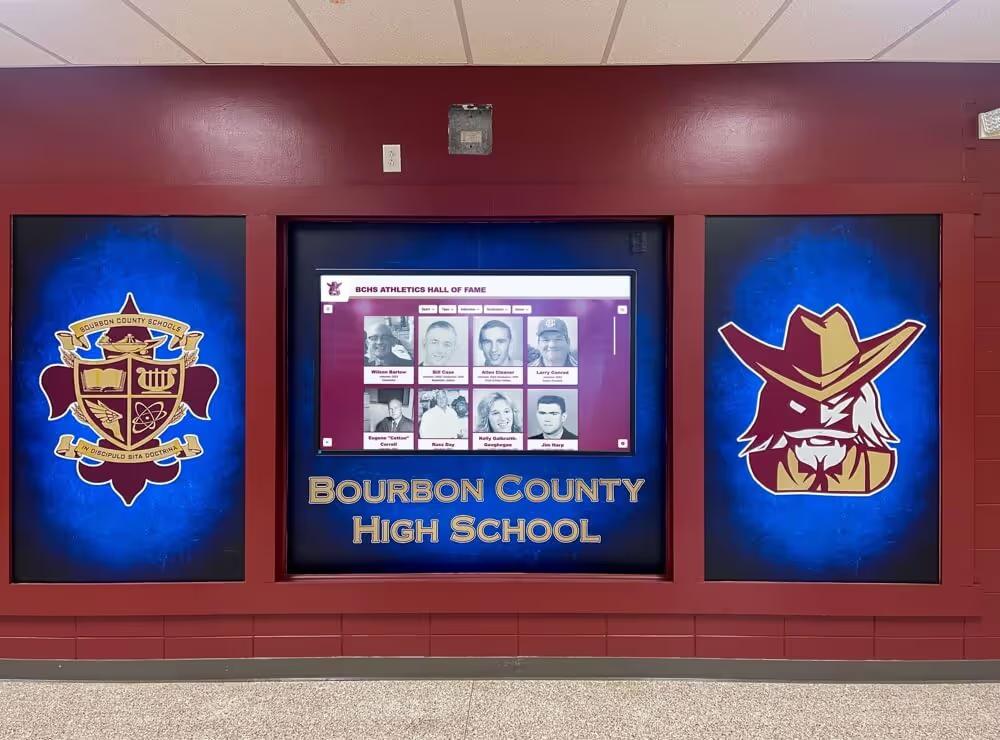
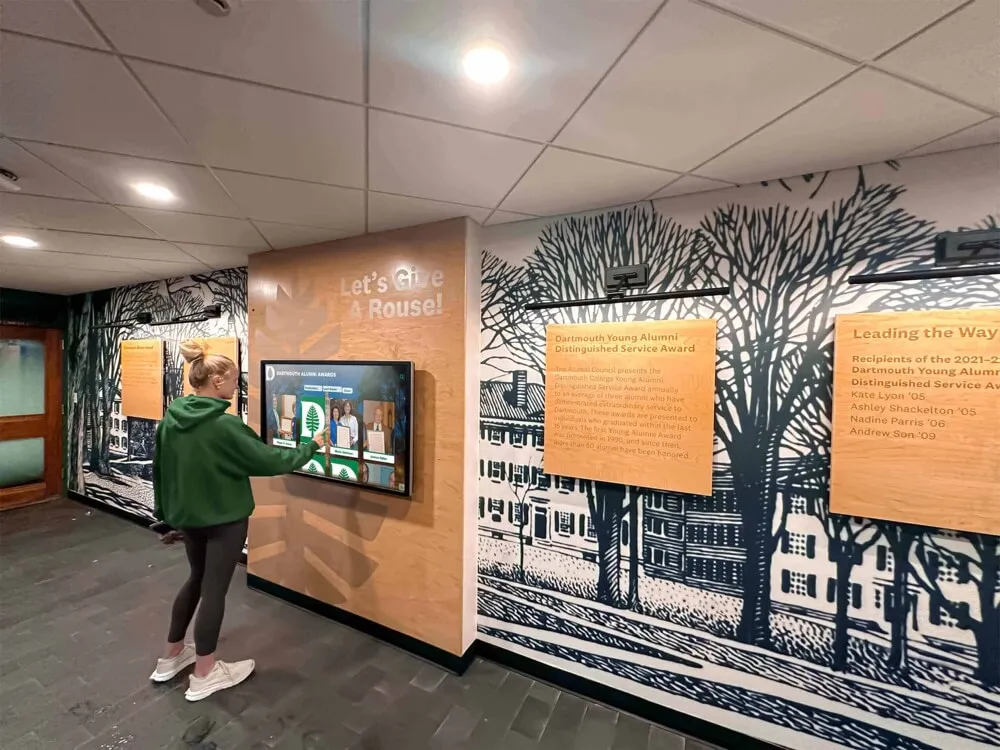
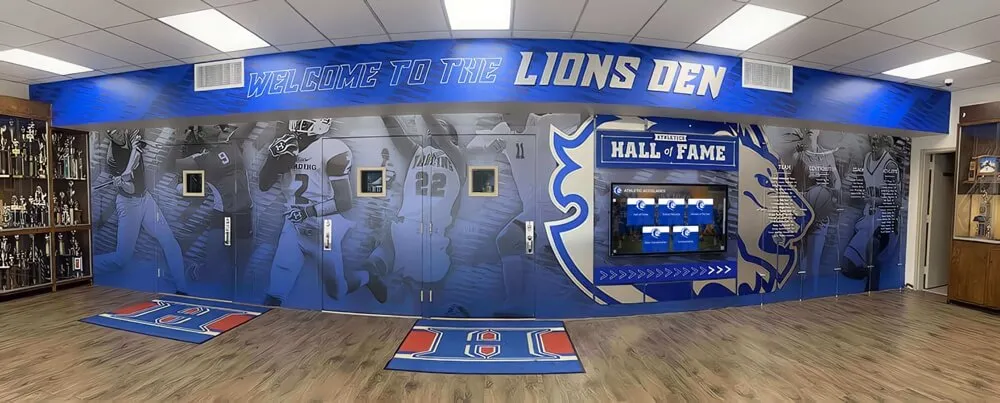
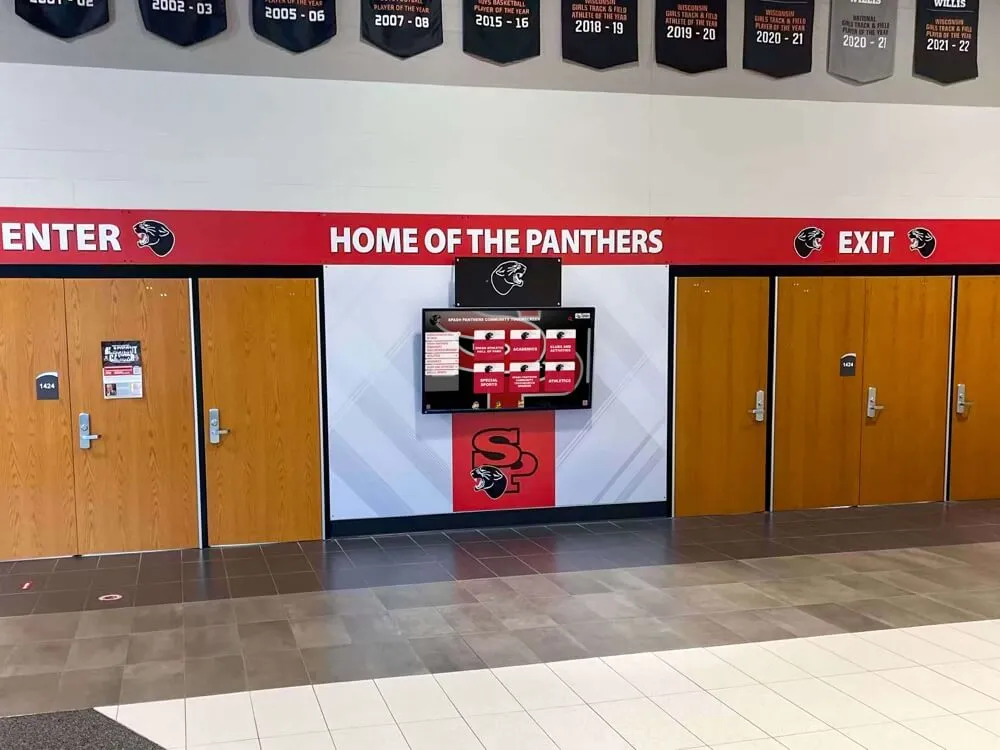
Solutions like digital recognition displays enable consolidated schools to celebrate the complete history of all predecessor institutions, preserving distinct identities within unified systems.
Educational Quality Questions
Consolidation doesn’t guarantee improved outcomes:
- Research shows mixed results on academic achievement in consolidated versus small schools
- Small schools often provide more personalized attention and student engagement
- Increased transportation time reduces instructional time and student wellbeing
- Larger consolidated schools may lack intimate community connections
- Some research suggests optimal school sizes smaller than typical consolidated institutions
Practical Consolidation Challenges
Modern consolidation faces implementation difficulties:
- Reconciling different contractual agreements, salary schedules, and benefit structures
- Integrating distinct organizational cultures and operational procedures
- Addressing facility disposition and community use of closed buildings
- Managing political dimensions of superintendent, principal, and board composition
- Negotiating sensitive issues of naming, colors, mascots, and traditions
Alternative Approaches to Consolidation
Some regions pursue collaboration and resource-sharing rather than full district merger.
Cooperative Educational Service Agencies
Regional service agencies enable shared programs without consolidation:
- Multiple districts jointly fund specialized programs serving all members
- Cooperative purchasing reduces operational costs
- Shared administrative services (special education, technology, etc.) achieve economies of scale
- Districts maintain independence while accessing resources beyond individual capacity
- Transportation and facility costs remain distributed
Shared Superintendent and Administrative Services
Some small districts share administrative positions:
- Multiple districts employ single superintendent serving all simultaneously
- Business manager positions serve several small districts
- Technology coordination and support distributed across districts
- Curriculum development and professional development coordinated regionally
- Administrative cost savings without full consolidation
Tuition and Choice Agreements
Some areas address limited local offerings through student transfer options:
- Districts without high schools contract with nearby districts for secondary education
- Families given choice of multiple district options
- Per-pupil tuition paid by sending district to receiving district
- Students access comprehensive programs while maintaining home district connection
- Allows very small districts to persist serving elementary grades only

Modern recognition systems can integrate multiple predecessor school identities into cohesive displays celebrating complete institutional history
Preserving School History During and After Consolidation
Maintaining connections to predecessor schools’ distinct histories, traditions, and achievements represents a critical challenge for consolidated districts seeking to honor complete institutional legacy.
The Importance of Historical Preservation
Consolidated schools serve communities better when they actively preserve and celebrate all predecessor institutions equally.
Cultural Continuity and Community Connection
Historical preservation strengthens community relationships with consolidated schools:
- Acknowledging distinct predecessor identities demonstrates respect for all communities
- Preserving complete history maintains alumni connections spanning all original schools
- Historical recognition helps community members embrace consolidated institutions
- Celebrating complete legacy builds pride across entire consolidated district
- Maintaining traditions provides continuity during significant change
Educational Value of Local History
School history provides valuable learning opportunities:
- Local history study connects students to their communities and heritage
- Original school buildings, yearbooks, and artifacts offer primary source materials
- Exploring consolidation history teaches about community change and adaptation
- Preserved traditions create sense of belonging and institutional pride
- Understanding predecessor schools’ distinct identities builds appreciation for diversity
Challenges in Maintaining Multiple School Legacies
Consolidated districts face practical difficulties preserving predecessor school histories comprehensively.
Physical Space Limitations
Traditional recognition approaches can’t accommodate complete histories:
- Trophy cases quickly overflow when celebrating achievements from multiple schools
- Wall space can’t display plaques and photographs from all predecessor institutions
- Athletic banners from several schools exceed typical gymnasium capacity
- Yearbook collections from multiple schools require significant storage space
- Artifact preservation demands climate-controlled archival facilities
These space constraints often result in selective preservation that inevitably slights some predecessor schools, creating ongoing community tensions and resentment.
Organizational and Administrative Challenges
Preserving multiple institutional histories requires dedicated effort:
- Gathering historical records scattered across former schools and community members
- Organizing materials from different institutions with varying documentation practices
- Dedicating staff time to historical preservation amid operational demands
- Funding digitization, preservation, and display projects
- Maintaining comprehensive archives requiring ongoing attention
Many consolidated districts initially intend to preserve complete histories but find resource constraints limit practical achievement of these aspirations.
Competing Priorities and Sensitivities
Balancing predecessor school recognition creates delicate situations:
- Ensuring equal visibility and honor for all original schools
- Addressing historical rivalries between predecessor communities
- Managing perceptions of favoritism toward certain original schools
- Reconciling different traditions, colors, and symbols into unified identity
- Honoring complete history without dwelling on loss and change
Modern Solutions for Comprehensive Recognition
Digital recognition platforms provide practical solutions for preserving and celebrating complete consolidated school histories without physical space limitations.
Unlimited Digital Capacity
Solutions like Rocket Alumni Solutions enable comprehensive historical preservation:
- Unlimited content space: Digital platforms accommodate complete histories of all predecessor schools without physical constraints
- Multimedia integration: Photos, videos, documents, and artifacts from all original schools preserved and displayed equally
- Searchable archives: Community members can explore specific predecessor school histories easily
- Chronological organization: Complete timelines showing all schools’ histories and the consolidation journey
- Equal representation: Every predecessor school receives equivalent digital presence and recognition
- Continuous expansion: Historical content can grow indefinitely as new materials are discovered and contributed
Accessibility and Engagement
Digital preservation extends historical access:
- Web-based platforms enable alumni worldwide to explore predecessor school histories
- Mobile accessibility ensures historical content reaches all community members
- Social sharing capabilities amplify historical preservation throughout communities
- Interactive features engage younger generations with predecessor school histories
- Remote access maintains connections for alumni who’ve relocated
Explore comprehensive historical preservation approaches in school historical timeline displays and displaying school history guides.
Community Involvement in Historical Collection
Digital platforms facilitate collaborative historical preservation:
- Alumni from all predecessor schools can contribute photos, stories, and artifacts
- Community memory collection campaigns gather oral histories and personal recollections
- Collaborative archiving distributes preservation work across interested volunteers
- Continuous additions keep historical content growing rather than static
- Engagement with historical preservation strengthens community connections to consolidated schools

Thoughtful recognition design ensures all predecessor schools receive equal celebration in consolidated institutions
Best Practices for Managing School Consolidation
Communities and districts currently navigating or planning consolidation can learn from historical experiences to manage transitions more successfully.
Inclusive Planning and Community Engagement
Successful consolidations involve all affected communities meaningfully in planning and decision-making processes.
Transparent Communication
Open dialogue reduces resistance and builds support:
- Share comprehensive information about consolidation rationale, benefits, and challenges
- Acknowledge legitimate community concerns and historical connections to schools
- Provide regular updates throughout planning and implementation processes
- Create multiple opportunities for community input and feedback
- Address questions and concerns directly and respectfully
Collaborative Decision-Making
Including all constituencies in key decisions builds ownership:
- Establish planning committees with representation from all affected communities
- Involve teachers, staff, students, and families in transition planning
- Create subcommittees addressing specific consolidation elements (naming, traditions, facilities, etc.)
- Ensure all predecessor communities have meaningful voice in decisions
- Document decision-making processes transparently
Equitable Treatment of All Predecessor Schools
Demonstrating respect for all original institutions is essential:
- Avoid language suggesting any predecessor school is “taking over” others
- Ensure leadership positions include representatives from all communities
- Distribute resources and attention equitably across all predecessor schools
- Celebrate each original school’s unique contributions and achievements
- Frame consolidation as creating something new together rather than one school absorbing others
Preserving and Honoring Distinct Identities
Successful consolidations find ways to maintain predecessor school identities within new unified institutions.
Recognition and Historical Preservation
Systematic preservation honors complete institutional legacy:
- Implement comprehensive historical documentation projects before consolidation
- Create permanent recognition spaces celebrating all predecessor schools equally
- Develop digital archives providing unlimited space for complete histories
- Establish annual events reconnecting alumni with predecessor school traditions
- Designate staff responsible for ongoing historical preservation
Discover preservation strategies in preserving school history and legacy examining comprehensive approaches.
Tradition Integration
Thoughtfully incorporating predecessor traditions builds continuity:
- Maintain beloved traditions from all original schools where possible
- Create new unified traditions incorporating elements from each predecessor
- Rotate featured traditions and observances honoring all original schools
- Document tradition origins and meanings preserving institutional memory
- Involve students in creating new traditions respecting historical foundations
Naming, Colors, and Symbols
Identity decisions require particular sensitivity:
- Consider new unified names rather than simply adopting one predecessor’s name
- Develop color schemes incorporating all original schools’ colors where possible
- Create new mascots representing all communities or rotate predecessor mascots
- Design logos and symbols reflecting complete institutional history
- Ensure physical facilities display all predecessor schools’ identities prominently
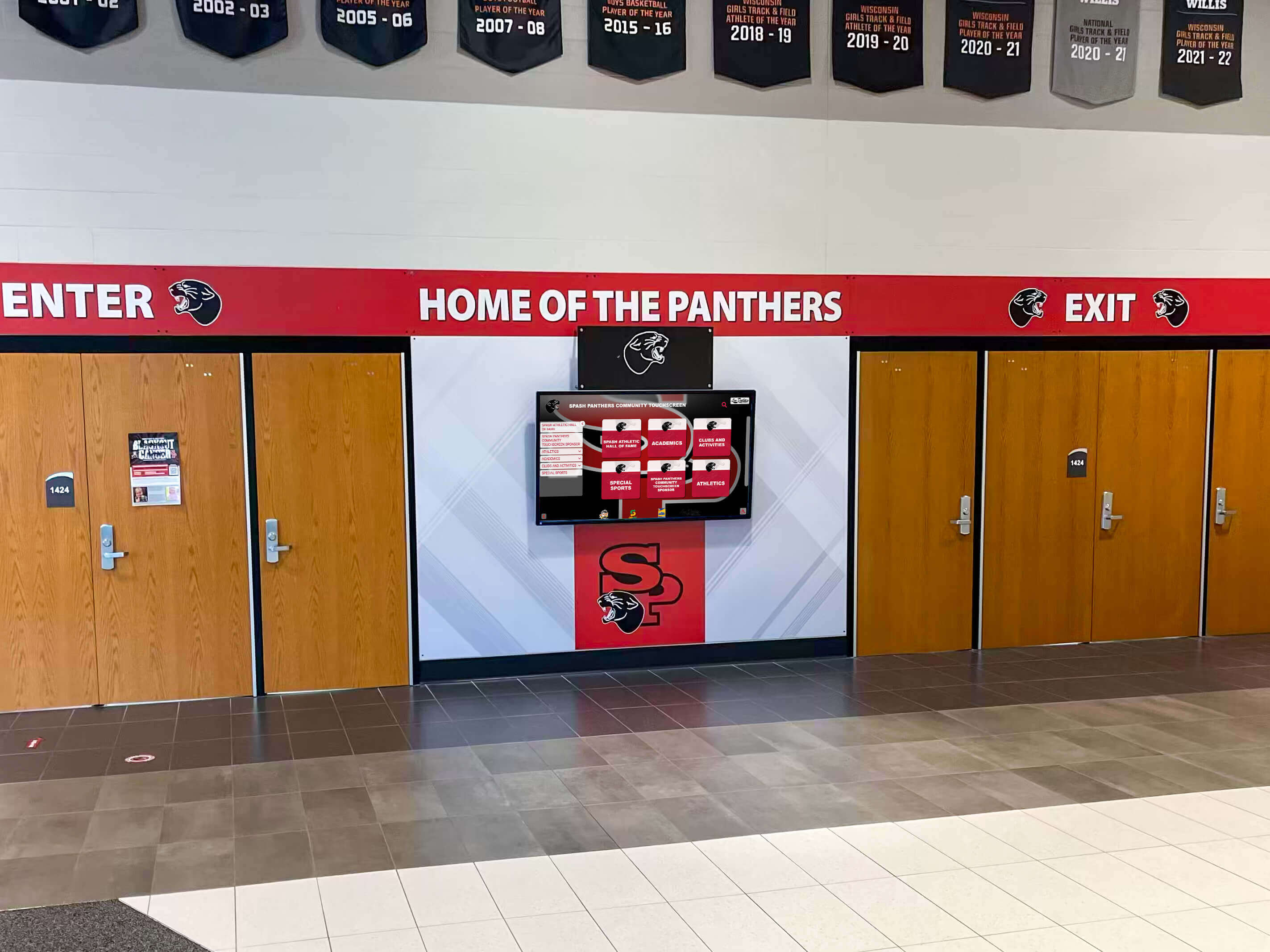
Entrance areas in consolidated schools provide ideal locations for celebrating complete institutional history welcoming all community members
Practical Implementation Considerations
Operational planning determines whether consolidation transitions proceed smoothly or create ongoing difficulties.
Facility Planning and Disposition
Thoughtful facility decisions support community acceptance:
- Determine continued use for closed school buildings benefiting communities
- Create community spaces, offices, or other public uses for former schools
- Involve communities in facility disposition decisions
- Consider preserving historic buildings through adaptive reuse
- Ensure equitable facility investment across all communities in consolidated district
Staffing and Personnel Integration
Fair personnel processes reduce staff anxiety and resistance:
- Develop transparent processes for selecting administrators and staff for consolidated district
- Ensure representation from all predecessor schools in leadership positions
- Provide career transition support for displaced staff
- Recognize seniority and experience from all original districts equitably
- Create unified compensation and benefit structures treating all staff fairly
Curricular and Program Integration
Consolidation offers opportunities for program enhancement:
- Expand course offerings utilizing combined faculty expertise and resources
- Develop new programs impossible for individual predecessor schools
- Preserve valued programs from all original schools where feasible
- Engage faculty collaboratively in curriculum development
- Communicate enhanced opportunities consolidation enables for students
The Future of School Consolidation
Understanding historical consolidation patterns and contemporary trends suggests likely future developments in American school district organization.
Ongoing Pressures Toward Further Consolidation
Multiple forces suggest continued consolidation in coming decades.
Demographic Trends
Population patterns create ongoing consolidation pressures:
- Rural areas continue experiencing population decline requiring further consolidation
- Some suburban districts face declining enrollment as family sizes shrink
- Aging populations mean fewer school-age children in many communities
- Migration patterns concentrate population in urban areas while rural regions lose residents
Financial Sustainability
Economic factors maintain consolidation momentum:
- Rising educational costs strain small districts’ financial capacity
- State funding constraints reduce resources available to all districts
- Infrastructure needs (facility maintenance, technology upgrades) overwhelm small districts
- Administrative efficiency advantages favor larger districts
- Special education and support service costs create economies of scale incentives
Educational Expectations
Evolving learning requirements favor comprehensive programs:
- College and career readiness standards assume broad program offerings
- Technology integration demands significant infrastructure investment
- Advanced coursework expectations require specialized faculty
- Comprehensive student support services (counseling, mental health, etc.) represent substantial costs
- Career and technical education programs need expensive equipment and facilities
Potential Countervailing Factors
Some circumstances might slow or reverse consolidation trends.
School Choice and Charter Options
Alternative educational models might preserve small schools:
- Charter schools enable small specialized programs serving narrow constituencies
- Online and hybrid learning reduces advantages of physical consolidation
- School choice policies allow small districts to attract students from wider areas
- Specialized programs (arts academies, STEM schools, etc.) thrive at smaller scales
Research on Optimal School Size
Educational research suggests limits to consolidation benefits:
- Studies indicate optimal school sizes smaller than many consolidated institutions
- Small schools often demonstrate advantages in student engagement and personalized attention
- Community connections and school culture strengthen in smaller settings
- Diminishing returns on consolidation appear beyond certain district sizes
- Quality teaching matters more than school size for educational outcomes
Technology Enabling Small District Viability
Modern technology might support maintaining smaller schools:
- Online courses enable small schools to offer comprehensive curricula
- Shared virtual instruction allows teacher expertise distribution across districts
- Digital resources reduce cost advantages of centralized libraries and materials
- Remote administrative services enable small districts to access specialized expertise affordably
Preserve Your Complete School History Through Modern Recognition
Whether your district is navigating consolidation or seeking to better celebrate the complete history of predecessor schools, digital recognition solutions provide unlimited capacity to honor every achievement, tradition, and legacy that shaped your community.
Explore Comprehensive Recognition SolutionsConclusion: Learning from Consolidation History
The history of school consolidation in America reveals a complex, multifaceted transformation spanning more than a century and touching virtually every community across the nation. From the peak of 130,000 independent school districts in 1930 to approximately 13,000 today, consolidation fundamentally reshaped American education while creating both opportunities and challenges that continue reverberating through communities.
Understanding this history provides essential context for educators, administrators, and community members facing contemporary consolidation decisions. The recurring patterns—economic pressures, educational quality concerns, community resistance, identity preservation challenges, and implementation difficulties—appear remarkably consistent across different eras and regions, suggesting timeless dynamics inherent to school consolidation processes.
The most successful consolidations throughout history shared common characteristics: transparent communication, inclusive decision-making, equitable treatment of all predecessor schools, systematic historical preservation, and thoughtful integration of distinct identities and traditions into unified new institutions. Districts that honored complete institutional legacy while building cohesive new identities created consolidated schools generating genuine community pride and support rather than lingering resentment.
Modern technology provides tools for addressing historical consolidation challenges more effectively than ever before. Solutions like digital recognition displays and comprehensive historical archives enable consolidated districts to preserve and celebrate unlimited content from all predecessor schools without physical space constraints that previously forced difficult prioritization decisions.
For communities currently navigating consolidation, learning from this extensive history offers valuable guidance. The consolidation journey creates inevitable challenges, but thoughtful planning, inclusive processes, and genuine commitment to honoring all predecessor schools’ distinct legacies can create unified institutions that strengthen rather than diminish community connections to public education.
The story of school consolidation isn’t finished. Demographic shifts, financial pressures, and evolving educational expectations ensure consolidation will remain relevant for American education into the foreseeable future. Each new consolidation offers opportunities to apply historical lessons, improve processes, and create institutions genuinely serving entire communities while preserving precious traditions and identities that define local culture.
Your school’s history—whether from a single institution or multiple predecessor schools joined through consolidation—deserves preservation and celebration honoring everyone who contributed to educational excellence throughout your community’s journey. With systematic planning and modern recognition technology, you can create comprehensive historical archives inspiring current students while maintaining vital connections with alumni and community members across all eras.
Ready to preserve your complete school history? Explore how digital recognition systems celebrate unlimited achievements or discover strategies for displaying school history that honors every tradition and legacy that shaped your institution.
Sources
This article draws upon historical research and educational policy analysis examining school consolidation patterns across American history. Key information comes from educational history scholarship documenting the transformation from one-room schoolhouses to consolidated districts, state education department data tracking district numbers over time, and contemporary research on rural education and school consolidation impacts.