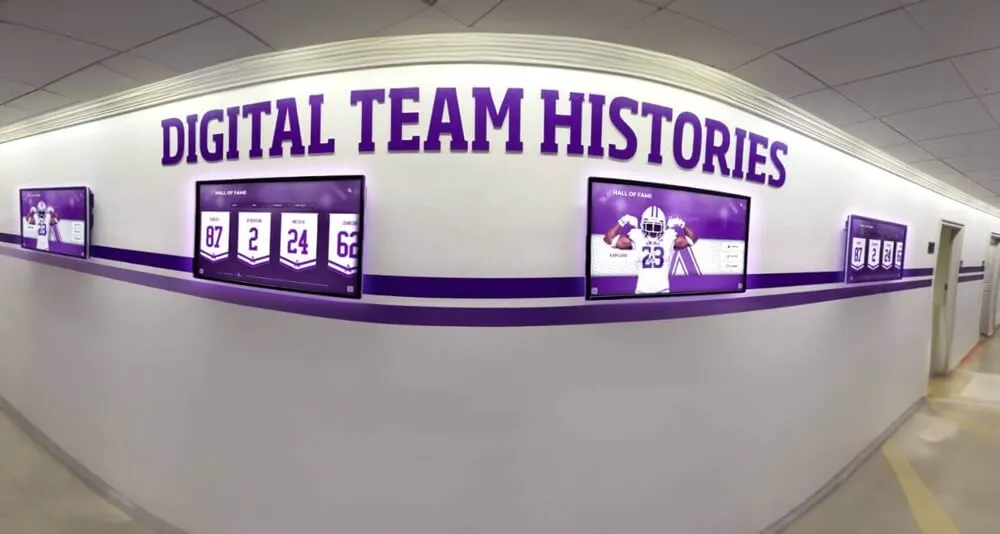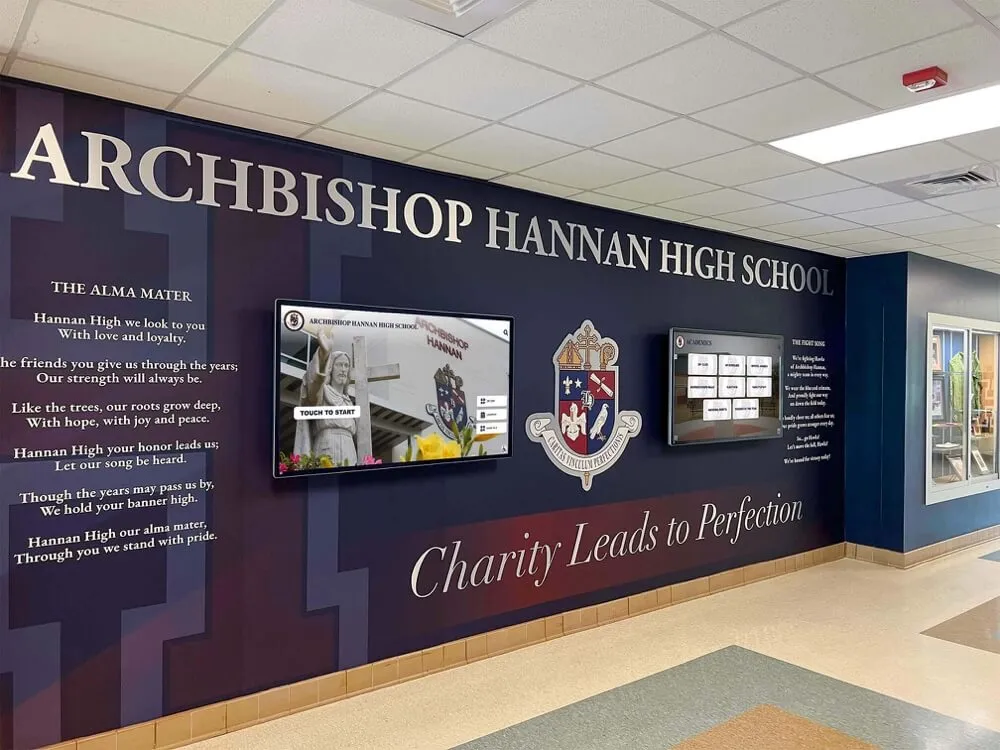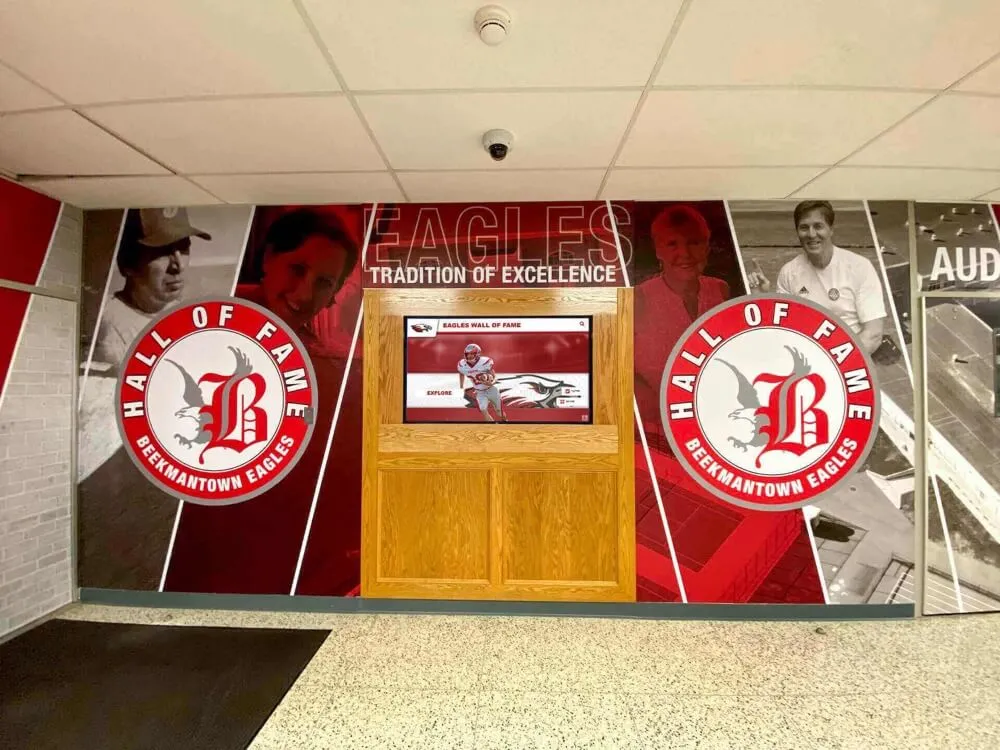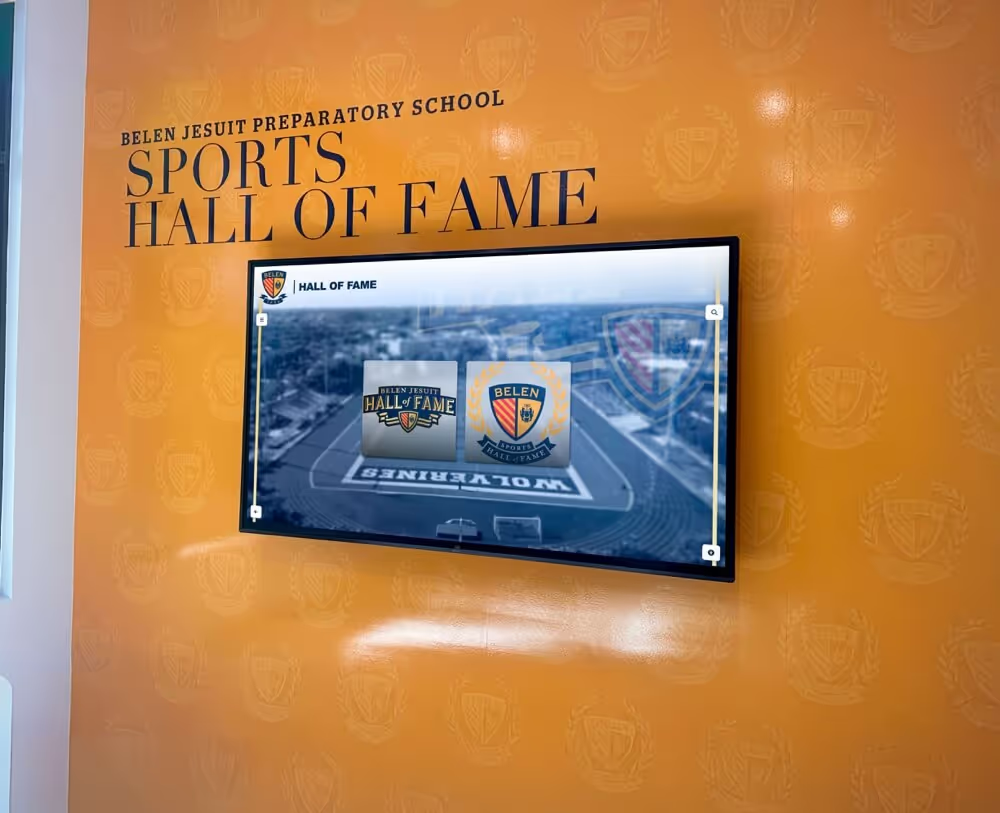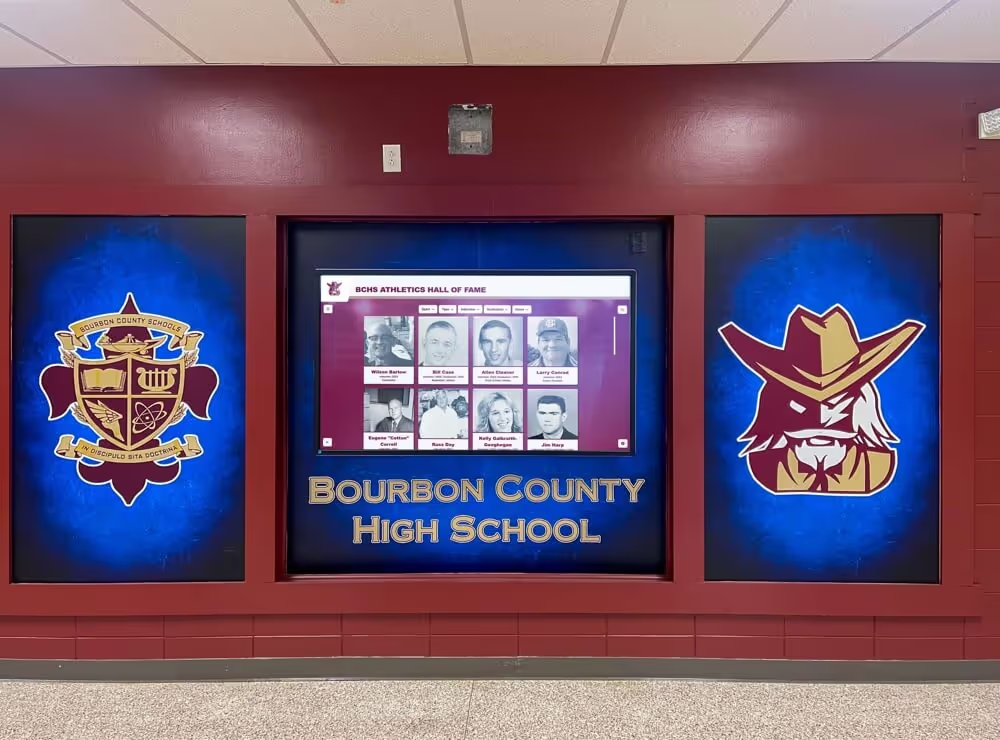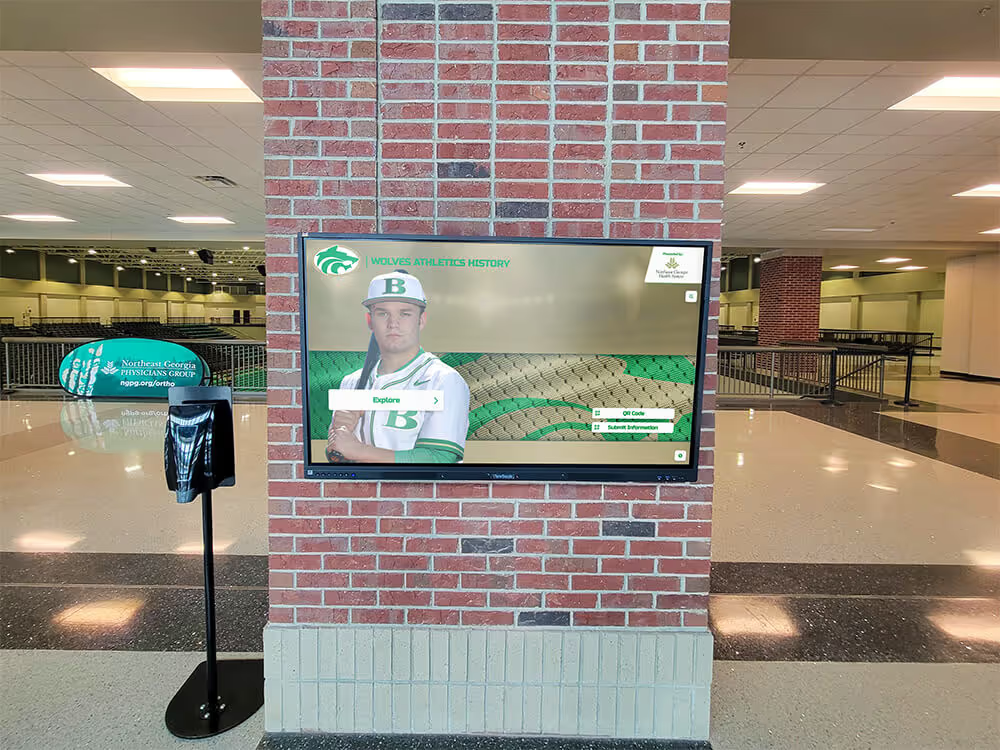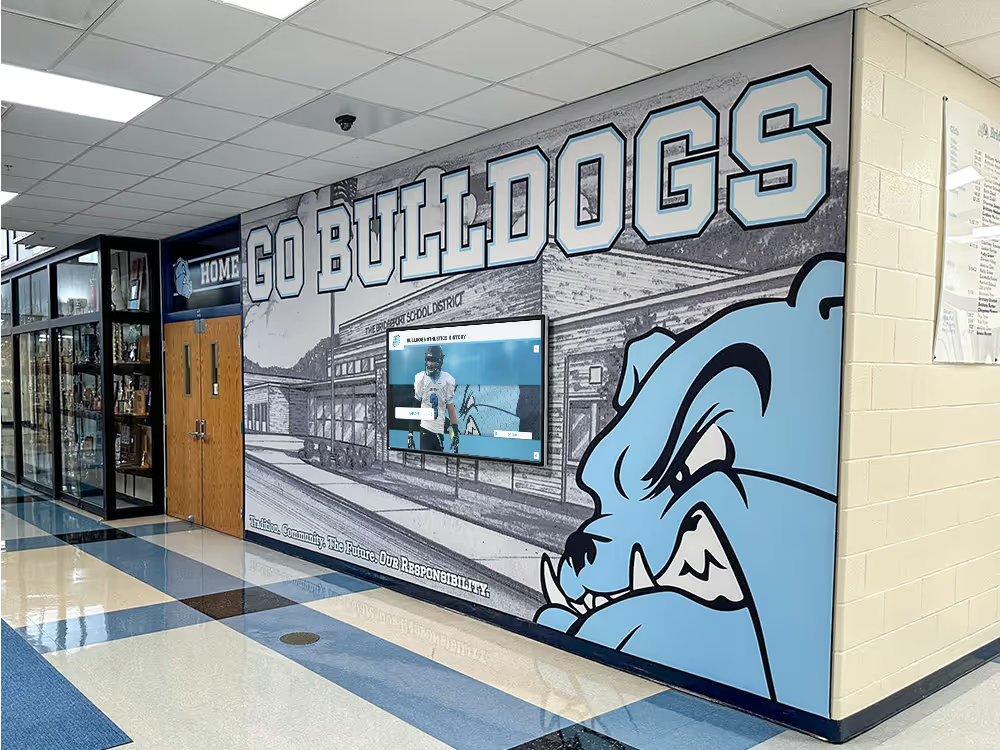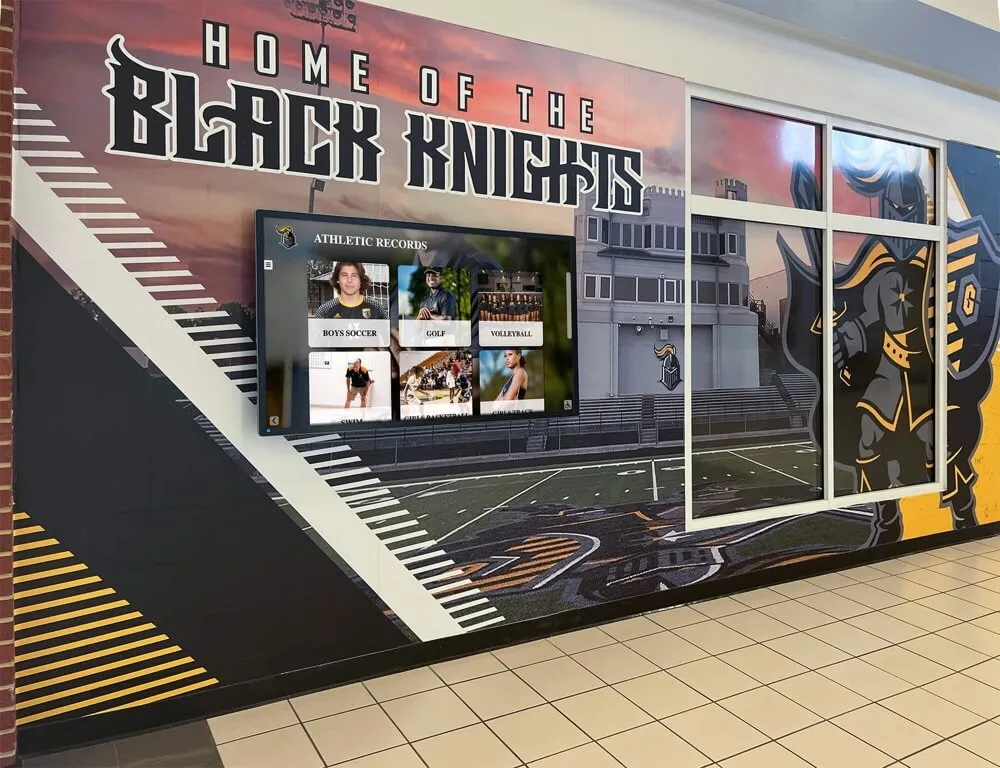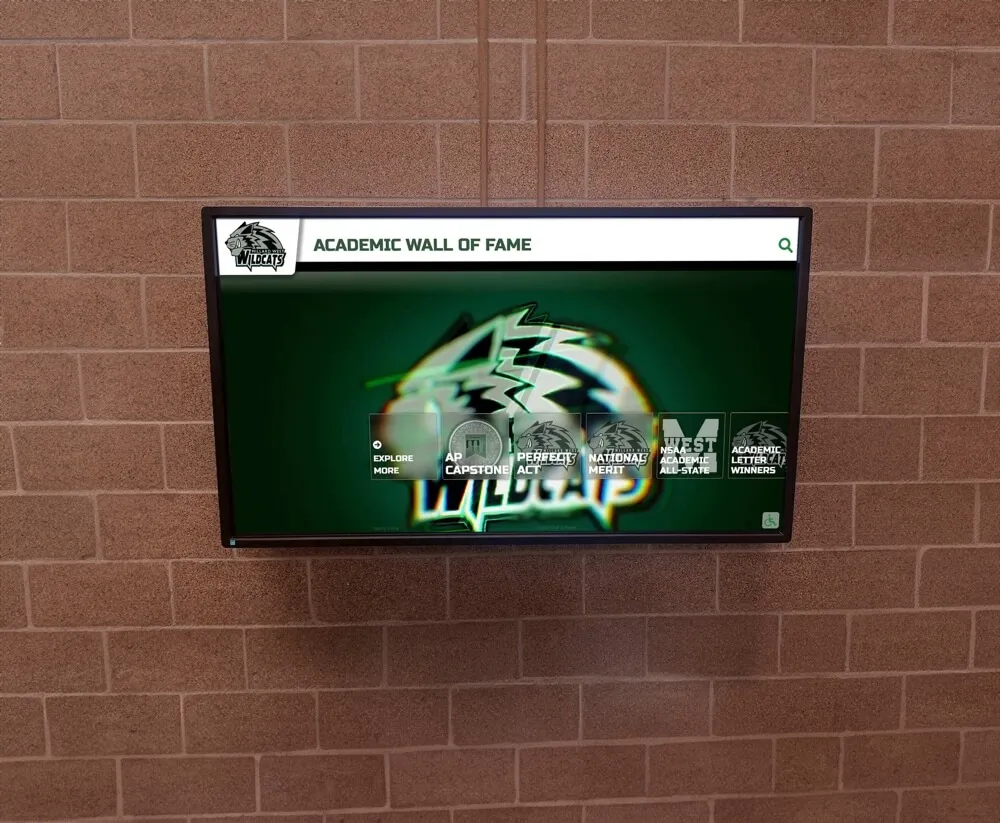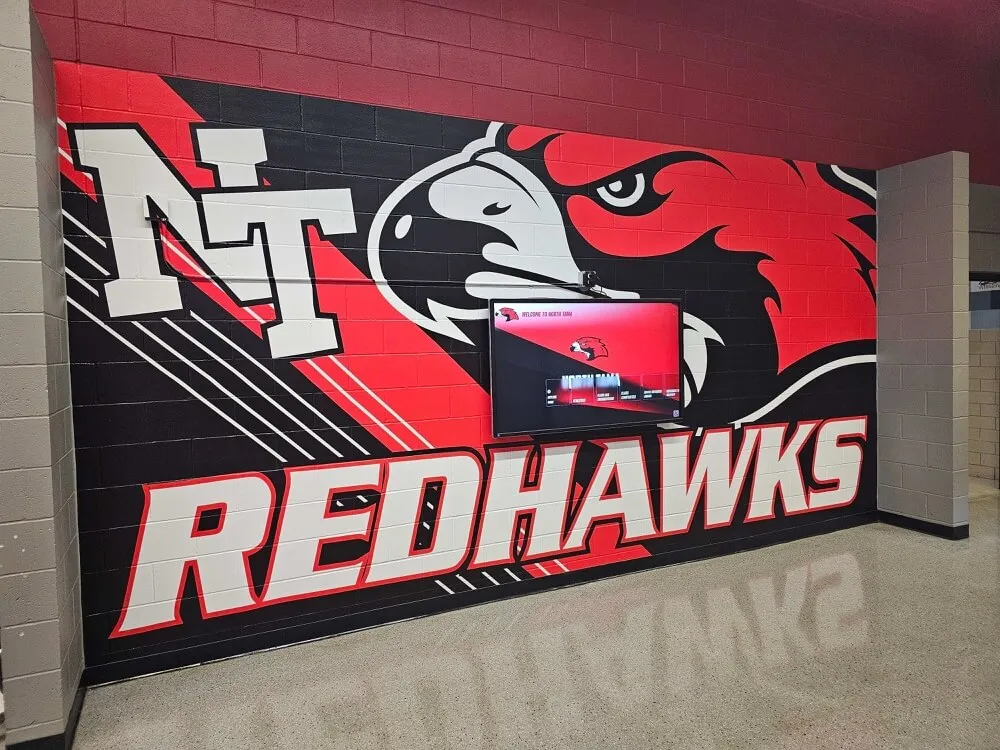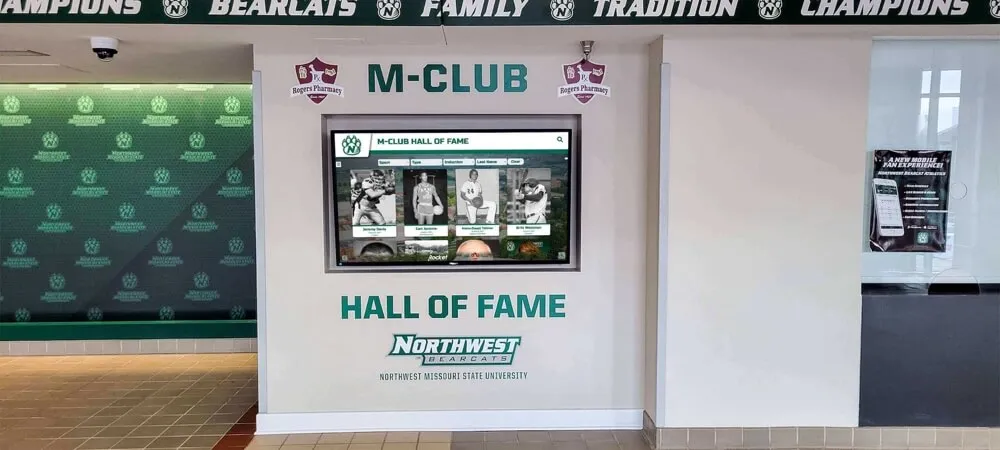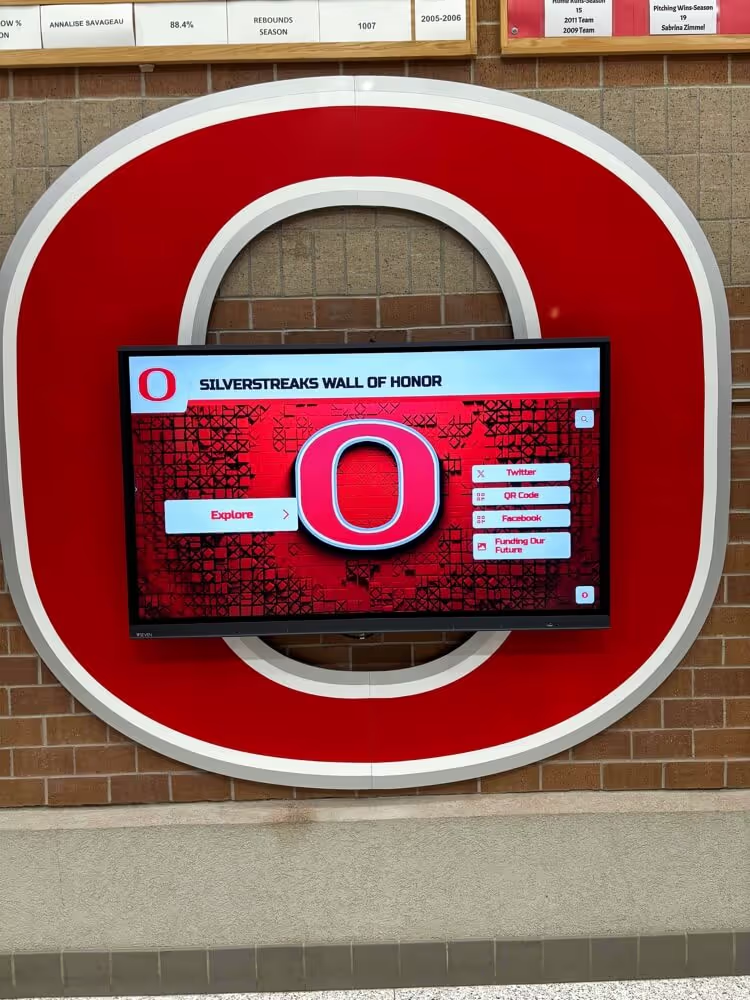




High school graduate displays represent one of the most meaningful ways schools honor the achievements, legacy, and unique journey of each graduating class. These recognition systems—whether traditional composite photographs hung in hallways or modern interactive digital displays—serve as permanent records of student accomplishment while inspiring current students and maintaining connections with alumni who’ve moved on to college, careers, and life beyond high school.
Yet traditional graduate display approaches face mounting challenges in contemporary educational environments. Physical composite photographs consume extensive wall space as decades accumulate, deteriorate over time from environmental exposure, remain inaccessible to alumni who’ve relocated, and create ongoing maintenance burdens. Schools find themselves running out of display space, making difficult decisions about which graduating classes receive prominent recognition versus which get relegated to storage or less visible locations where their legacy effectively disappears.
Modern high school graduate display solutions transform how schools preserve and celebrate graduation traditions while solving the practical limitations that plague traditional approaches. Digital recognition platforms eliminate space constraints, enable comprehensive historical preservation spanning complete institutional history, provide global accessibility for dispersed alumni networks, and create engaging interactive experiences that bring graduate recognition to life in ways static photographs never could.
This comprehensive guide explores everything schools need to know about implementing effective high school graduate displays—from understanding why graduate recognition matters and evaluating modern display technologies to creating compelling content, launching successful programs, and maintaining systems that honor every graduating class for decades to come.
Effective high school graduate displays extend far beyond simply showing faces and names. They create systematic approaches to preserving institutional memory, strengthening school culture and tradition, building meaningful alumni engagement, and demonstrating the enduring value that schools place on honoring every student who walks across the graduation stage.

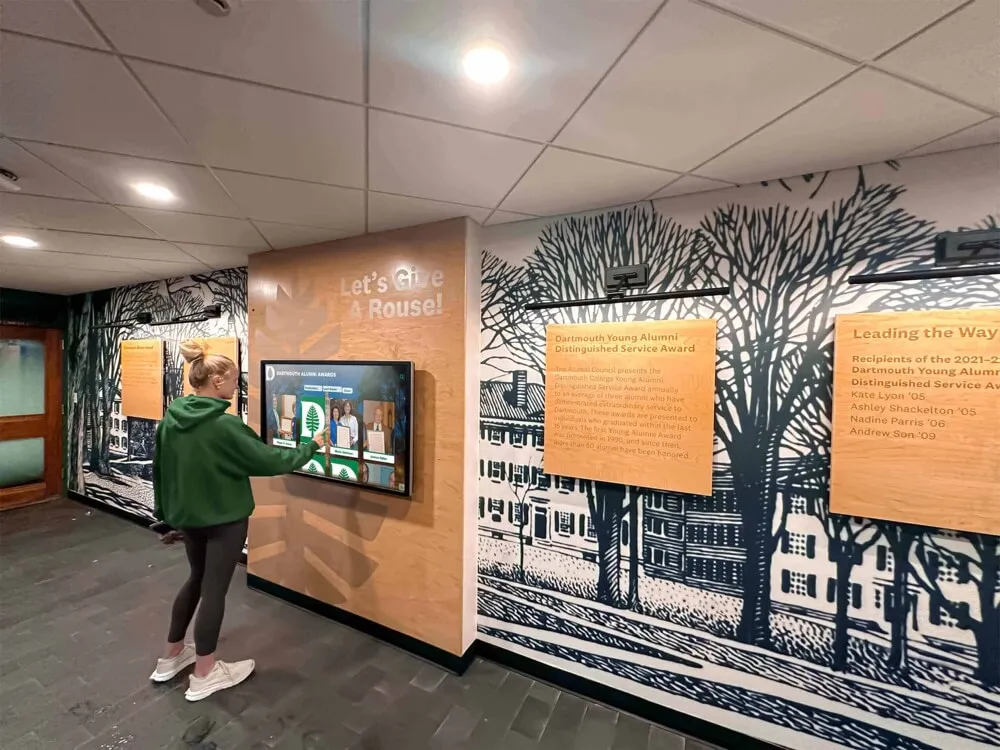
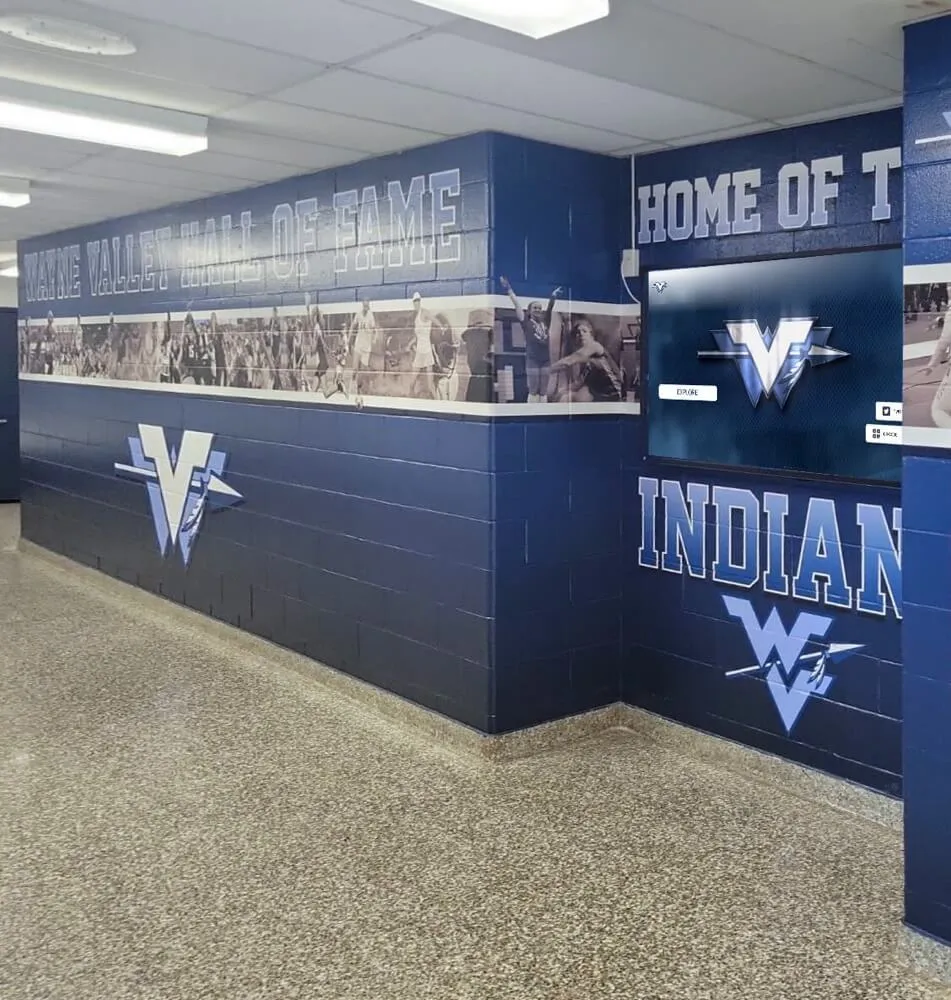
Modern graduate displays make senior recognition accessible and engaging for current students, families, and future alumni
Why High School Graduate Displays Matter
Understanding the multiple functions graduate displays serve helps schools appreciate why this tradition deserves continued investment and thoughtful implementation in modern educational environments.
Preserving Institutional History and Legacy
Graduate displays create permanent documentation of who attended your school, providing tangible connections between past and present that strengthen institutional identity.
Historical Documentation Value
Every graduating class represents a unique moment in your school’s history—students who experienced specific teachers, navigated particular cultural moments, and contributed to institutional evolution in distinctive ways. Comprehensive graduate displays document this history including complete records of every graduating class since founding, visual documentation showing how students and fashions evolved, contextual information about school during specific eras, and preservation of otherwise-forgotten institutional memory.
According to educational historians, schools with comprehensive graduate recognition maintain stronger connections to their heritage and demonstrate higher institutional pride compared to schools where historical documentation remains incomplete or inaccessible.
Graduate displays become increasingly valuable over time as they document decades and eventually centuries of institutional history that would otherwise exist only in scattered yearbooks or fading memories. Schools celebrating 50th, 75th, or 100th anniversaries find comprehensive graduate archives invaluable for anniversary celebrations and historical research.
Building School Culture and Tradition
Prominent graduate displays strengthen school culture by creating visible connections between current students and the alumni who preceded them.
Inspiring Current Students
When underclassmen see graduating seniors honored through impressive displays, powerful messages resonate including understanding that their achievements will be celebrated permanently, motivation to pursue excellence knowing recognition awaits, appreciation for school values through highlighted accomplishments, and aspiration to leave meaningful legacies worth commemorating.
Schools report that prominent senior recognition increases underclassman engagement in activities, academic pursuits, and school traditions as younger students anticipate their own eventual inclusion in graduate displays celebrating their accomplishments and contributions.
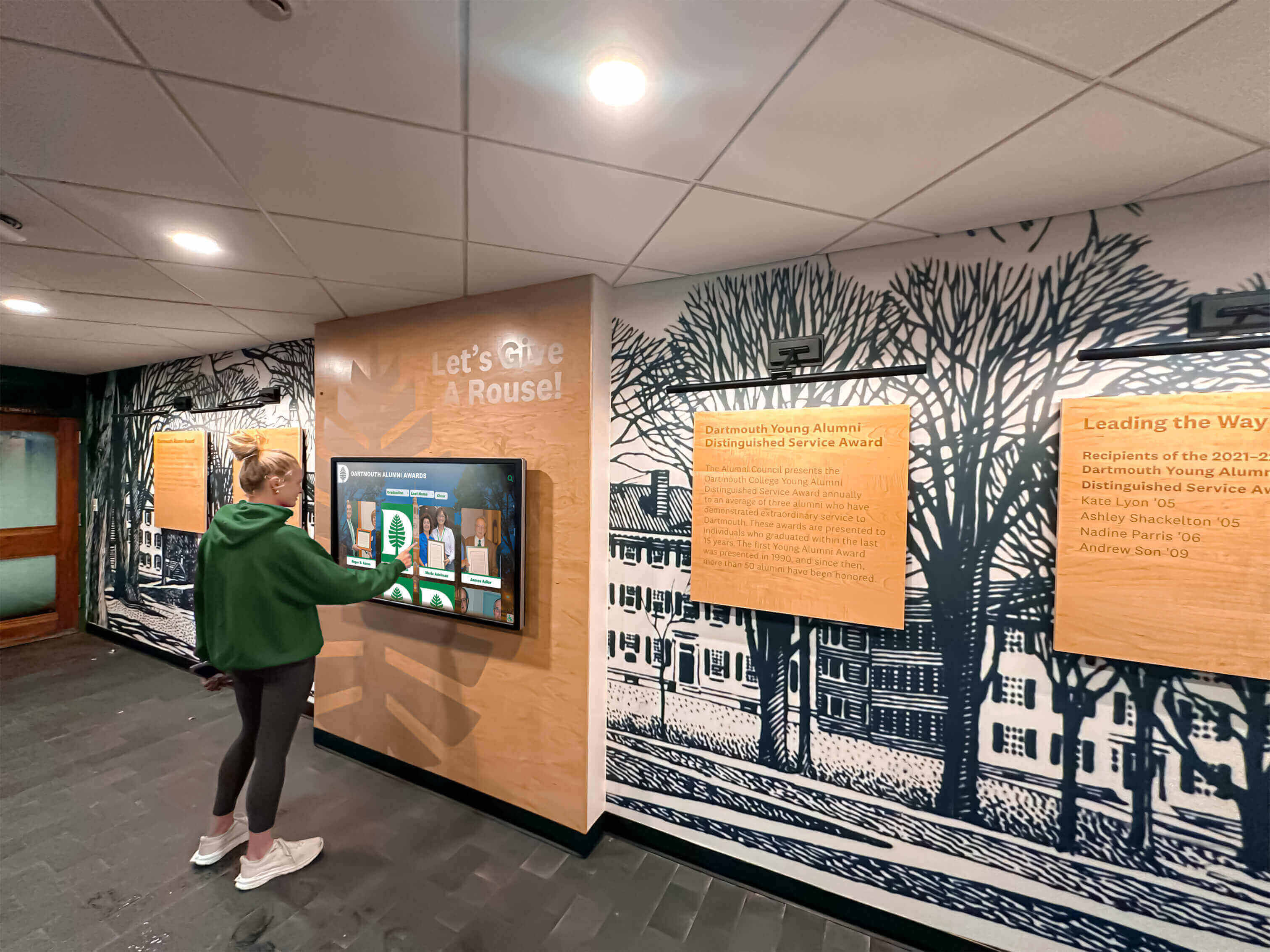
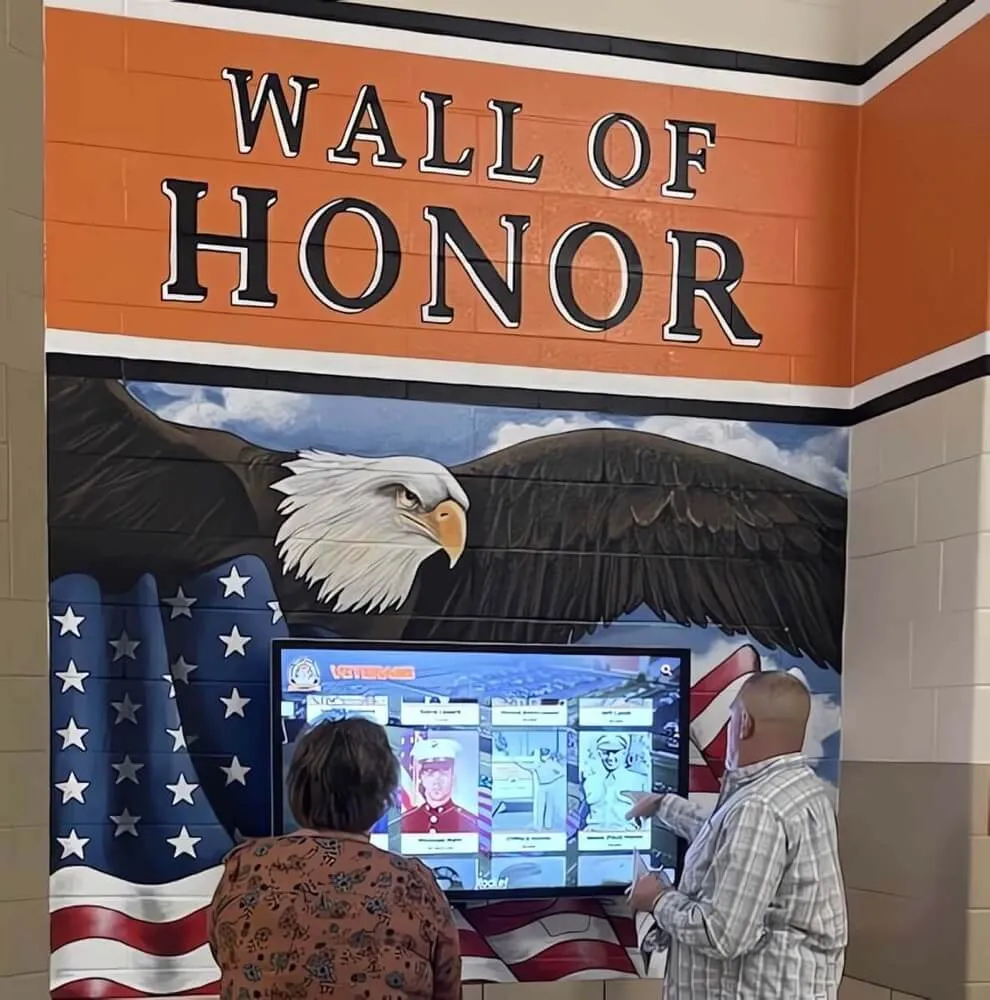
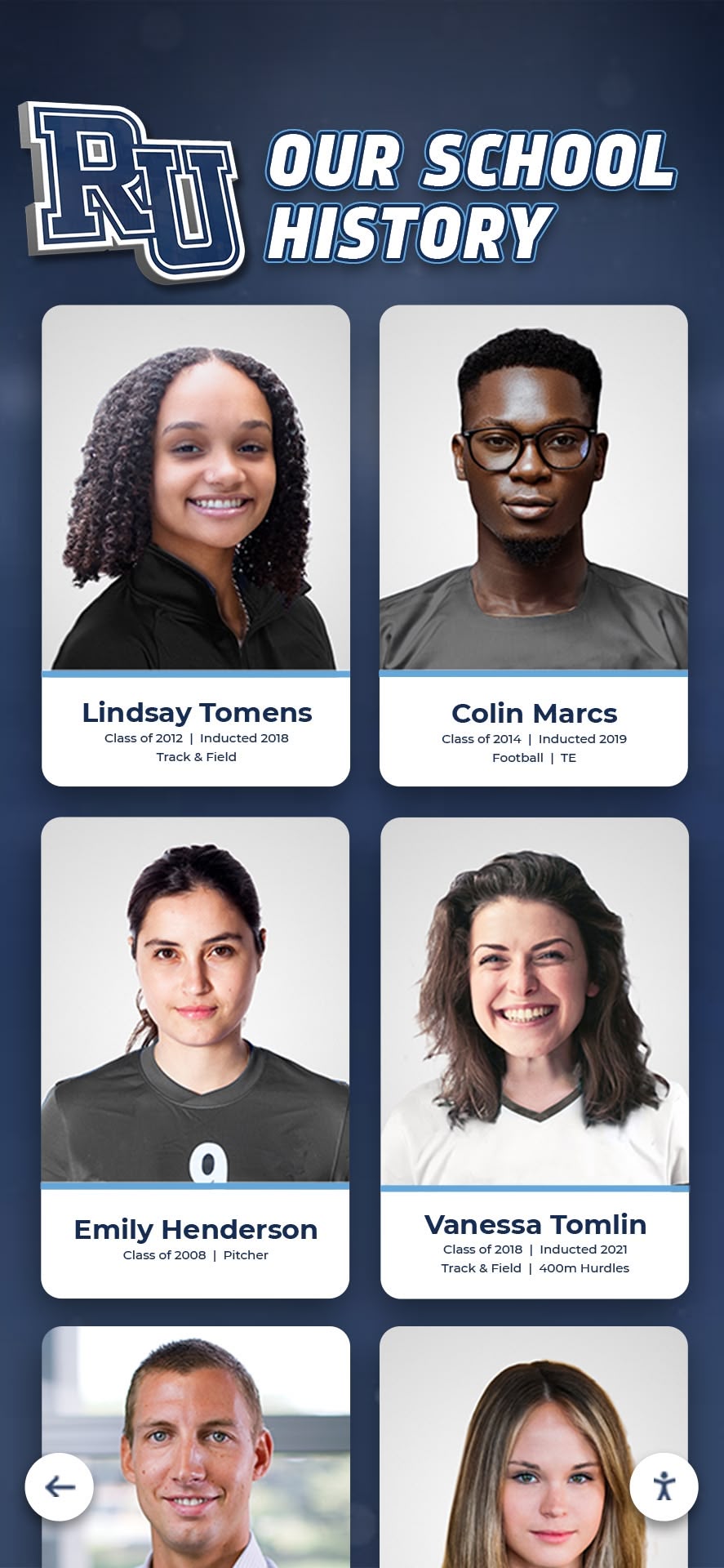
Interactive displays enable students to explore graduation history and connect with school heritage
Creating Institutional Continuity
Graduate displays demonstrate institutional stability and longevity—important factors for prospective families evaluating schools. Comprehensive displays showcasing decades of graduating classes communicate that your school has successfully educated generations of students, maintains traditions connecting past to present, values every graduate regardless of graduation year, and builds lasting communities extending beyond individual cohorts.
This institutional continuity creates trust and confidence among prospective families while strengthening current families’ sense of connection to something larger than their immediate experience.
For schools exploring comprehensive recognition approaches, class composite presentation strategies provide frameworks that complement graduate display programs effectively.
Strengthening Alumni Engagement
Graduate displays create tangible connections that keep alumni emotionally invested in their alma mater throughout their lives, driving engagement that benefits schools in multiple ways.
Lifelong Connection Points
When alumni see themselves recognized in graduate displays—whether visiting campus physically or viewing displays online—emotional connections strengthen through nostalgia and positive memories of high school experiences, pride in being permanently honored by their school, curiosity about classmates’ post-graduation paths, and motivation to maintain relationships with institution and peers.
Research consistently demonstrates that meaningful recognition during and after senior year significantly increases long-term alumni engagement, annual giving participation, mentorship program involvement, and overall institutional loyalty—benefits extending decades beyond graduation.
Reunion and Milestone Engagement
Graduate displays become focal points during reunion celebrations as alumni gather to reconnect with classmates. Effective displays facilitate reunion engagement through easily accessible composite photographs and class information, searchable databases enabling classmate rediscovery, historical context about school during specific graduation years, and photo opportunities as alumni photograph themselves with displays.
Schools hosting class reunions find that comprehensive graduate displays increase attendance and satisfaction while creating natural gathering spaces where alumni reminisce and reconnect with their educational experiences.
For comprehensive alumni engagement strategies, schools can explore alumni gathering area design approaches that integrate graduate displays with broader recognition programs.
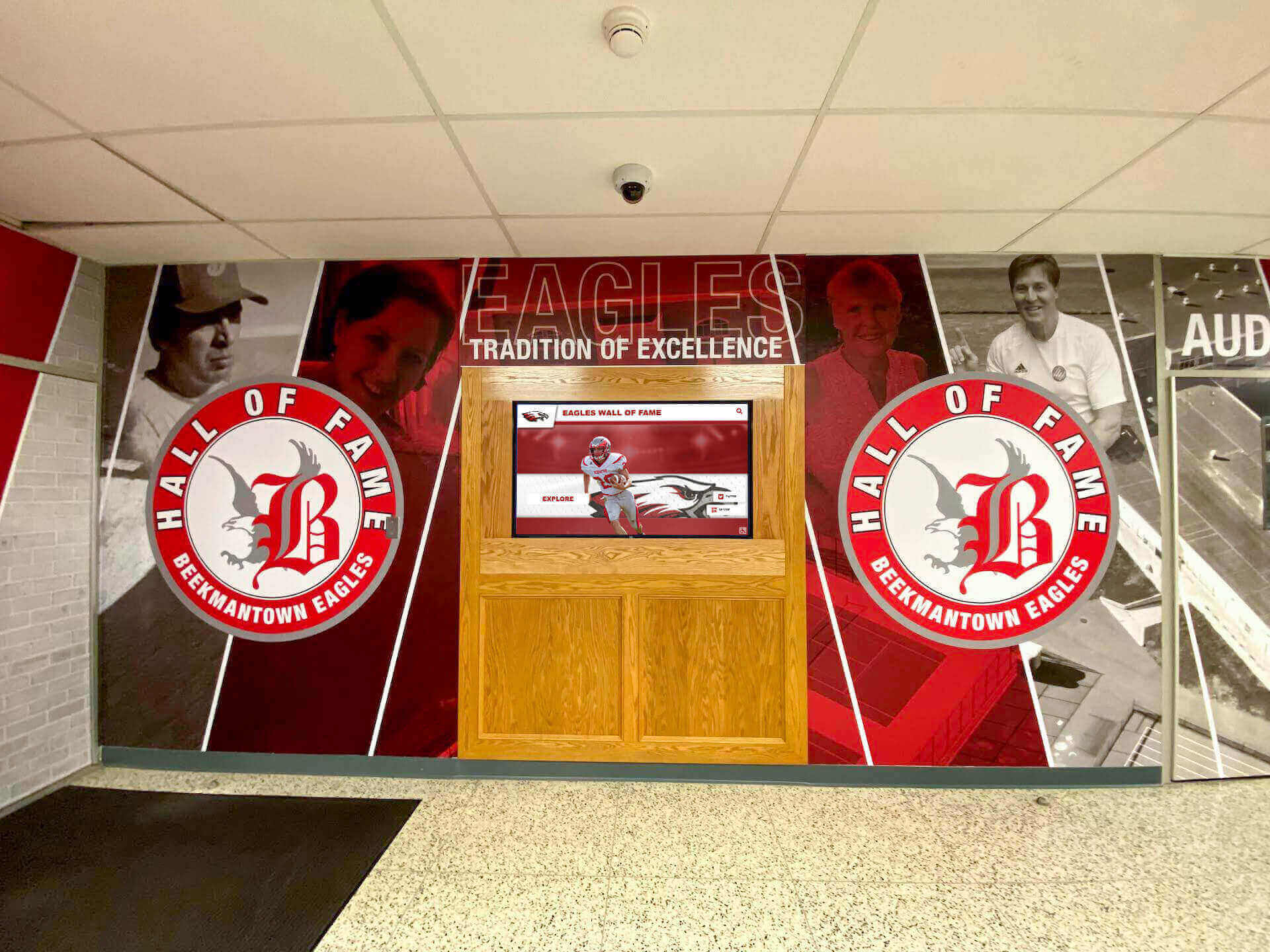
Professional graduate displays create impressive first impressions while demonstrating institutional commitment to honoring every senior
Traditional vs. Modern Graduate Display Approaches
Understanding the evolution from traditional physical displays to modern digital solutions helps schools make informed decisions about appropriate recognition systems.
Traditional Physical Composite Photographs
For over a century, schools have honored graduating classes through physical composite photographs—professionally arranged group images displaying all seniors from specific years.
Traditional Composite Elements
Standard physical composites typically include individual senior portraits arranged in organized grid patterns, class year and school identification prominently displayed, graduating class size and relevant statistics, class officers and leadership positions highlighted, and professional framing suitable for permanent hallway display.
Photography companies specializing in school portraits often create these composites as part of senior photo packages, with students photographed individually before their portraits are assembled into the complete class presentation.
Advantages of Physical Displays
Traditional composites offer certain benefits including immediate visibility requiring no technology or power, familiar format aligned with long-standing traditions, impressive visual impact when well-designed and maintained, and no ongoing software or platform dependencies.
These advantages explain why physical composites have remained standard in educational institutions for generations despite emerging alternatives.
Limitations Creating Modern Challenges
Yet physical composites face inherent constraints creating increasing problems including extensive wall space consumption as decades accumulate, environmental deterioration from sunlight, humidity, and handling, geographic inaccessibility for alumni who’ve relocated, and maintenance complexity when updating or reorganizing displays.
Schools with 50+ years of composites often find themselves with dozens or hundreds of framed displays consuming entire hallways while older composites show visible aging, fading, and damage that diminishes their recognition value and institutional appearance.
Modern Digital Graduate Display Solutions
Digital recognition technology addresses every limitation of traditional physical displays while introducing capabilities that fundamentally enhance how schools honor graduating seniors.
Unlimited Recognition Capacity
Perhaps the most transformative advantage involves eliminating space constraints that force difficult prioritization decisions. Digital platforms accommodate unlimited graduates spanning complete institutional histories without physical space limitations including every graduating class since school founding available simultaneously, no composites removed to accommodate newer additions, complete institutional history accessible rather than partially hidden, and future growth never requiring display expansion or relocation.
A single touchscreen display or web-based system can showcase graduates from every class—whether that represents 25 years or 125 years of history—ensuring every senior receives equal recognition regardless of graduation year.

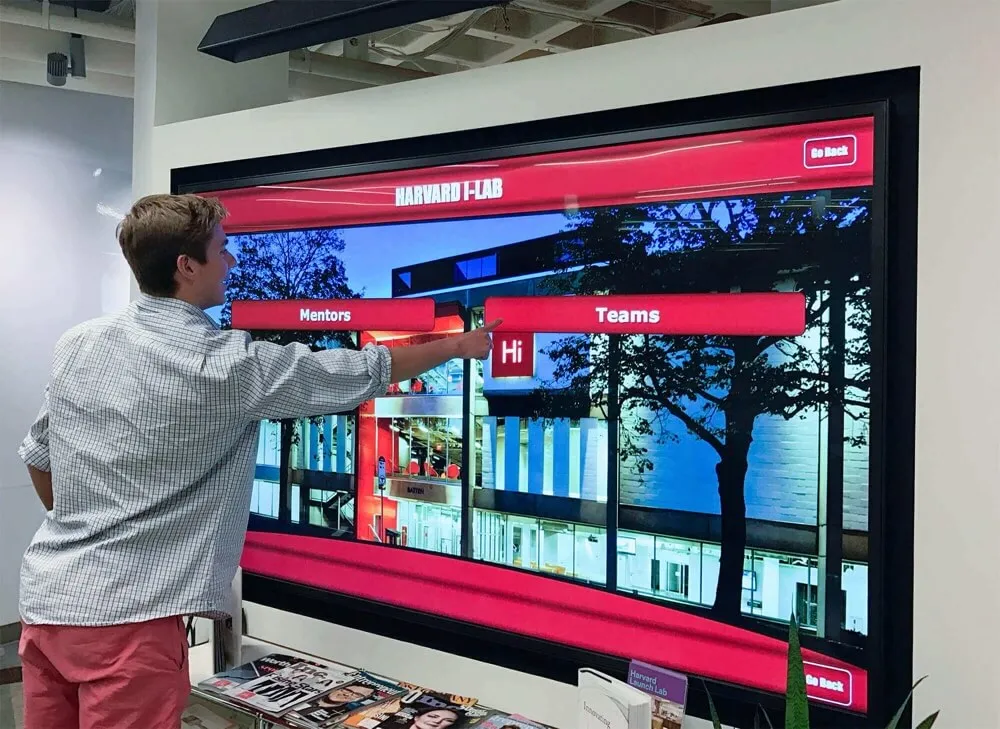
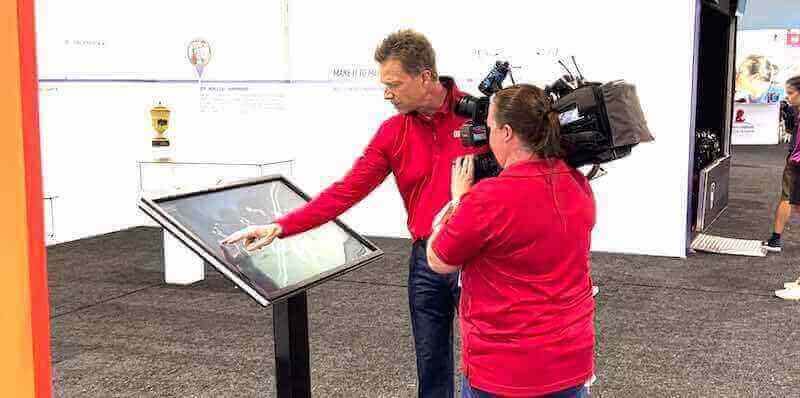
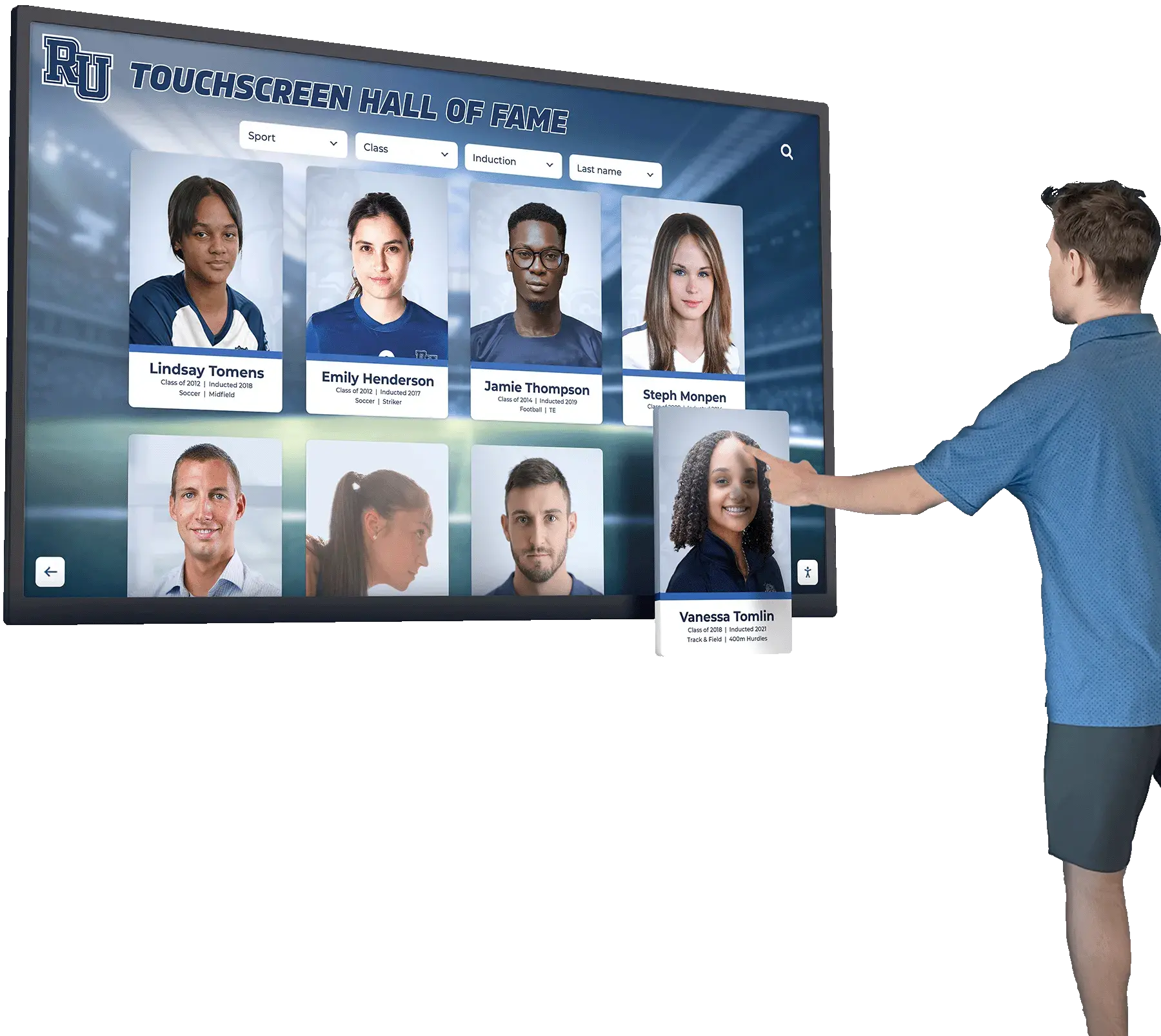
Touchscreen technology enables intuitive exploration of complete graduate archives spanning decades
Rich Multimedia Enhancement
Beyond simply displaying photographs, digital platforms enable comprehensive storytelling through multiple media types including detailed biographical information about achievements and activities, post-graduation paths showing college attendance and career success, video messages from seniors to future classes, graduation ceremony footage and celebration moments, and reunion photographs showing classmates reconnecting years later.
This expanded content transforms basic graduate composites from simple visual records into rich biographical resources documenting not just who graduated but what students accomplished during and after their educational experiences.
Interactive Exploration Features
Modern touchscreen interfaces and web platforms enable active discovery rather than passive viewing including powerful search functionality finding specific graduates instantly, filtering capabilities organizing by year, activities, or achievements, detailed profile pages telling complete graduate stories, related content connections to school events and history, and social sharing enabling alumni to celebrate with networks.
These interactive features create engagement impossible with static displays while making graduate archives genuinely useful resources rather than decorative elements that few people meaningfully explore.
For schools interested in comprehensive digital recognition, solutions like those from Rocket Alumni Solutions provide purpose-built platforms designed specifically for educational institutions rather than generic digital signage systems adapted for recognition purposes.
Global Web Access
The most significant advantage digital systems provide involves extending graduate display access far beyond school walls to reach alumni anywhere worldwide including 24/7 availability from any internet-connected device, mobile-responsive design working across smartphones and tablets, accessibility for alumni who relocated after graduation, family and community access extending beyond campus visitors, and integration with social media enabling organic sharing.
This global accessibility exponentially increases graduate recognition engagement beyond the small number of people who physically visit schools annually, enabling alumni worldwide to maintain connections to their graduating class and educational heritage.
For comprehensive approaches to digital recognition, schools can explore interactive touchscreen display strategies that maximize engagement and accessibility.
Components of Comprehensive Graduate Display Programs
Successful graduate recognition systems integrate multiple complementary elements creating rich, multifaceted celebration experiences rather than relying on single approaches.
Physical Display Installations
Even schools pursuing digital-first strategies often maintain selective physical displays in strategic campus locations creating immediate visibility for visitors and daily campus community.
Strategic Display Placement
Maximize graduate display visibility and engagement through thoughtful location selection including main building lobby or entrance areas with highest traffic, near administrative offices where parents and visitors gather, in cafeteria or common areas where students congregate daily, adjacent to auditoriums or graduation venues, and in dedicated senior hallways or alumni wings when available.
Multiple display locations extend recognition visibility throughout campus rather than limiting showcase access to single areas some community members may rarely visit or pass.
Hardware Options for Physical Displays
Schools pursuing physical installations have several technology choices:
Wall-Mounted Touchscreen Displays
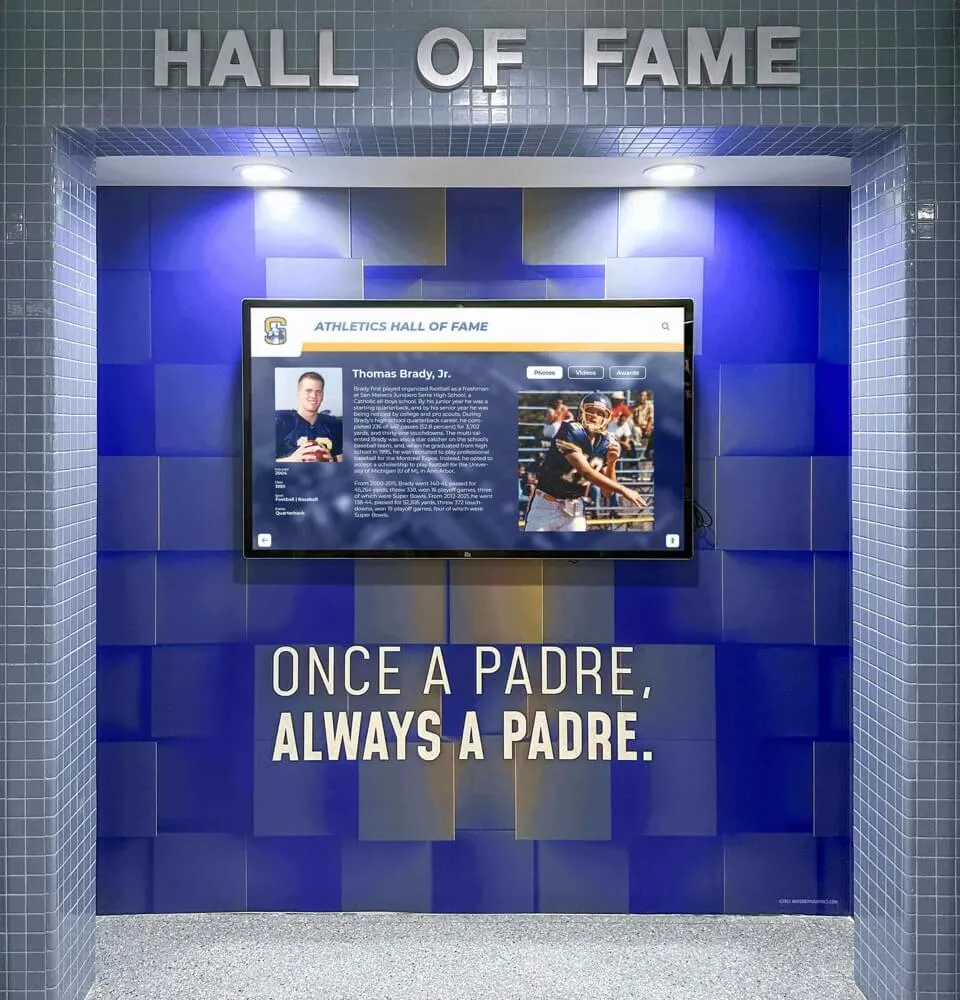
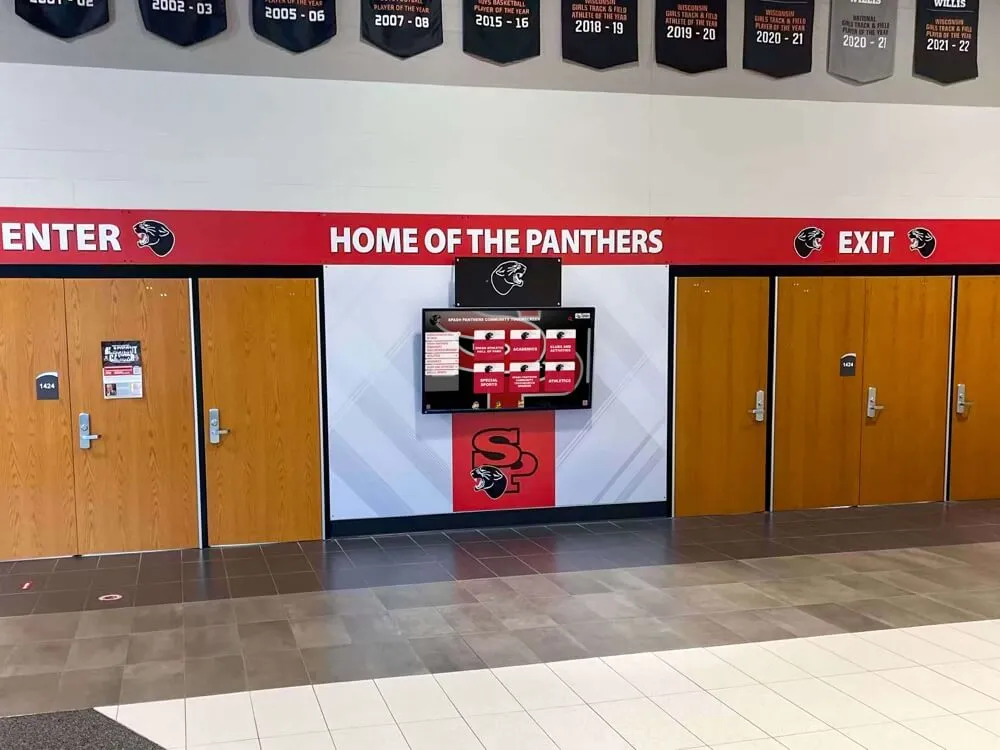
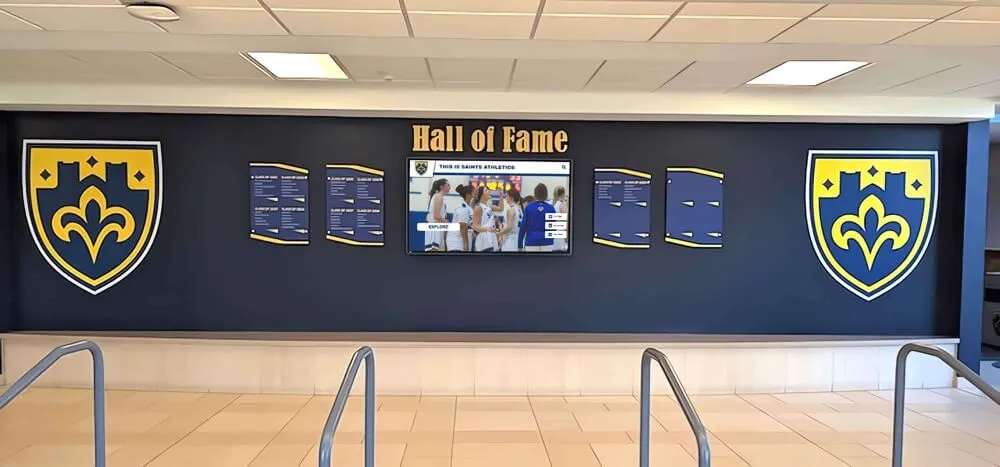
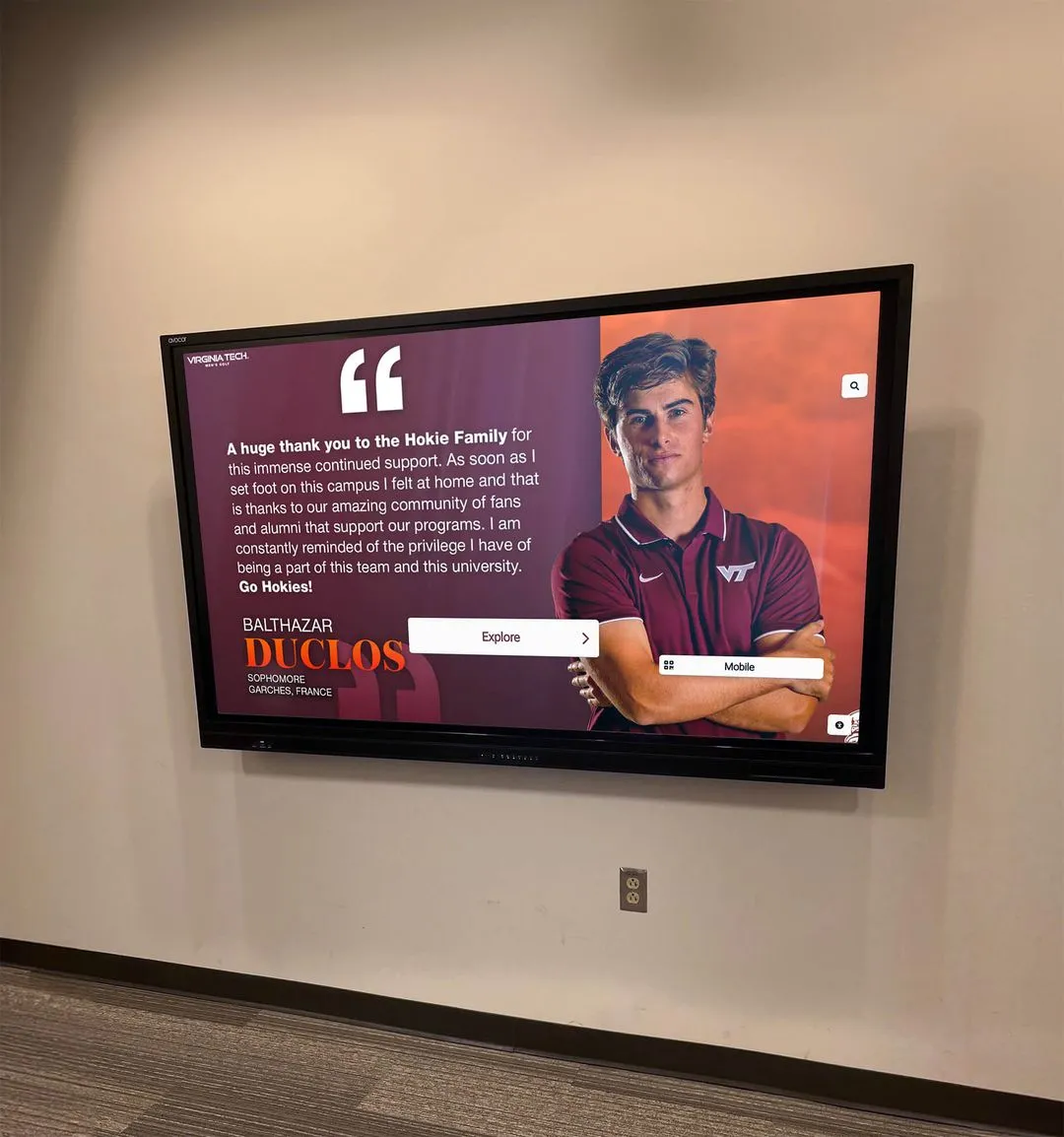
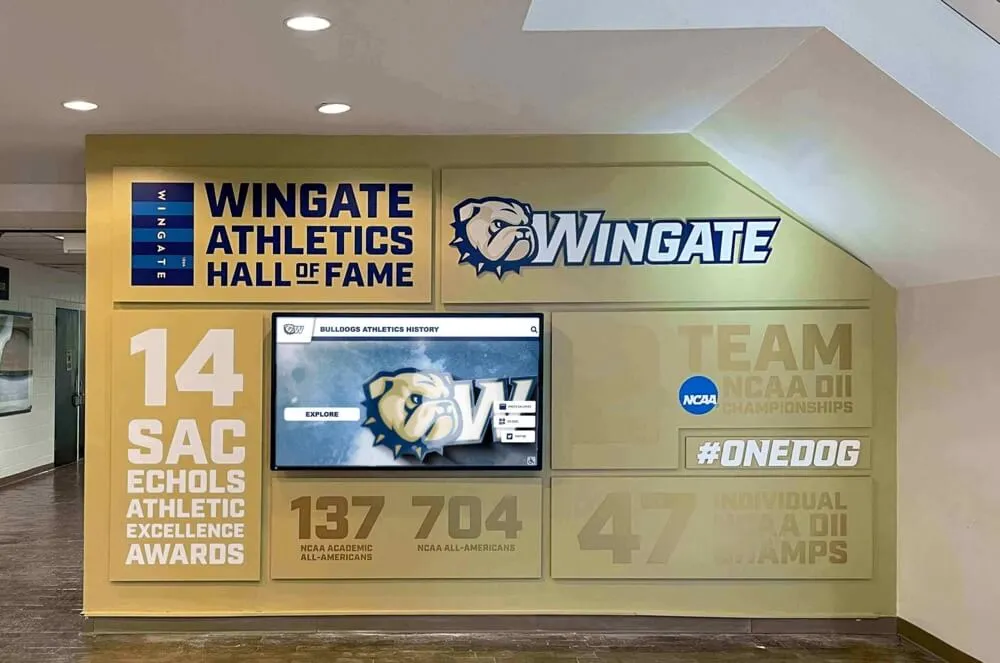
Commercial-grade touchscreens (43"-75") provide impressive, space-efficient solutions including capacitive touch technology enabling intuitive interaction, 4K resolution showing graduate portraits clearly, commercial-grade construction for continuous operation, and professional mounting integrated with hallway aesthetics.
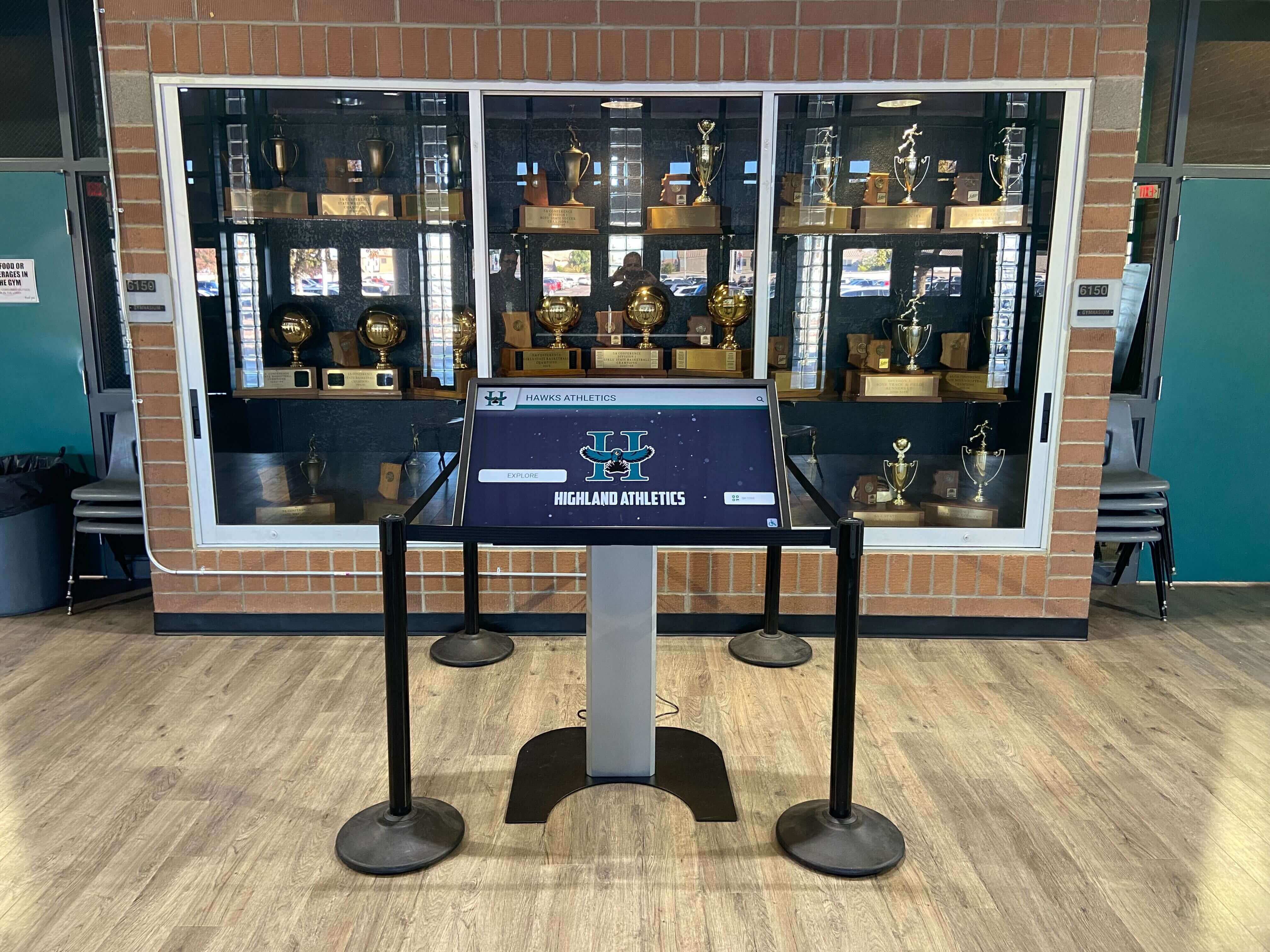
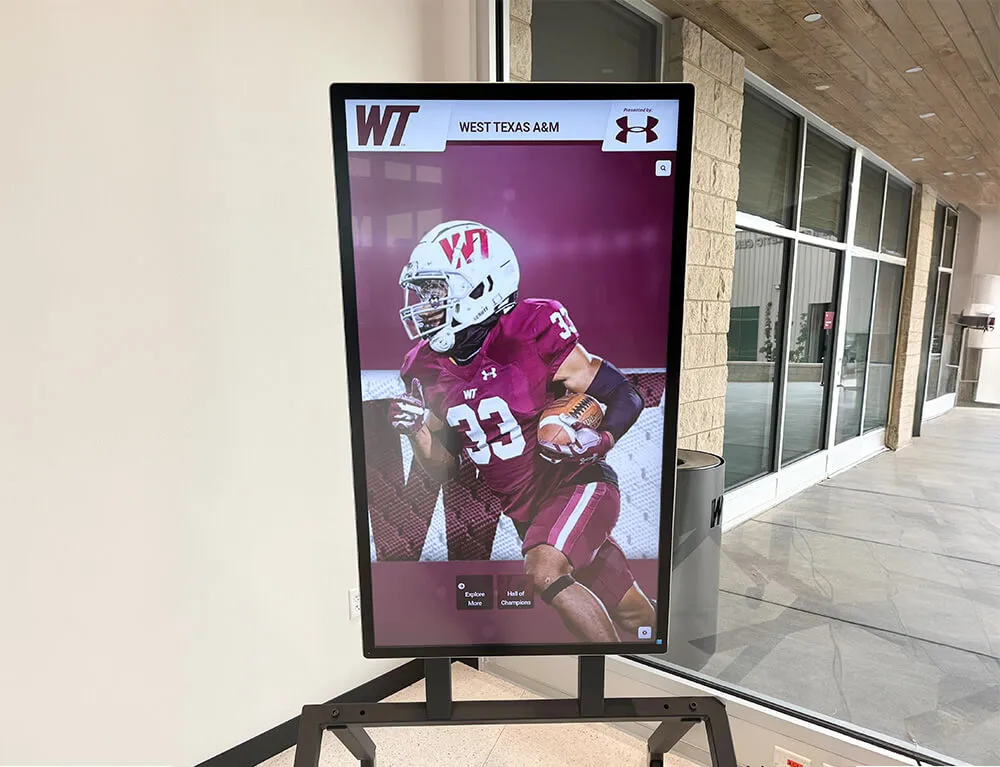
Professional kiosk systems provide flexible installation options for various school spaces
Freestanding Kiosk Systems
Floor-standing kiosk enclosures offer flexibility for spaces where wall mounting proves impractical including integrated cable management and security features, mobility enabling repositioning for special events, professional appearance enhancing school aesthetics, and accessibility compliance with proper height adjustment.
Schools often combine wall-mounted displays in permanent locations with mobile kiosks that can be positioned strategically during graduation season, reunion weekends, or other high-traffic periods.
Commercial Display Specifications
Institutional graduate displays require durability and features consumer devices cannot provide including commercial touchscreen displays designed for continuous operation, anti-glare coatings maintaining visibility in various lighting, commercial warranties (3-5 years) covering intensive public use, and proven reliability in educational environments.
While commercial displays cost more than consumer televisions, they deliver substantially longer operational lifespans and better reliability in public environments, making total cost of ownership favorable compared to consumer alternatives requiring frequent replacement.
Web-Based Graduate Platforms
Complementing physical installations, web-based graduate platforms extend recognition access globally to reach alumni regardless of geographic location.
Global Accessibility Features
Cloud-hosted graduate websites enable universal access including 24/7 availability from anywhere with internet connectivity, mobile-responsive design working across smartphones and computers, search functionality helping visitors find specific graduates instantly, filtering capabilities organizing seniors by activities or achievements, and social sharing tools enabling easy distribution through networks.
This unlimited accessibility means that grandparents living across the country can explore graduate displays as easily as students walking school hallways, while extended family members, community supporters, and future alumni can maintain connections to graduating classes regardless of geographic distance.
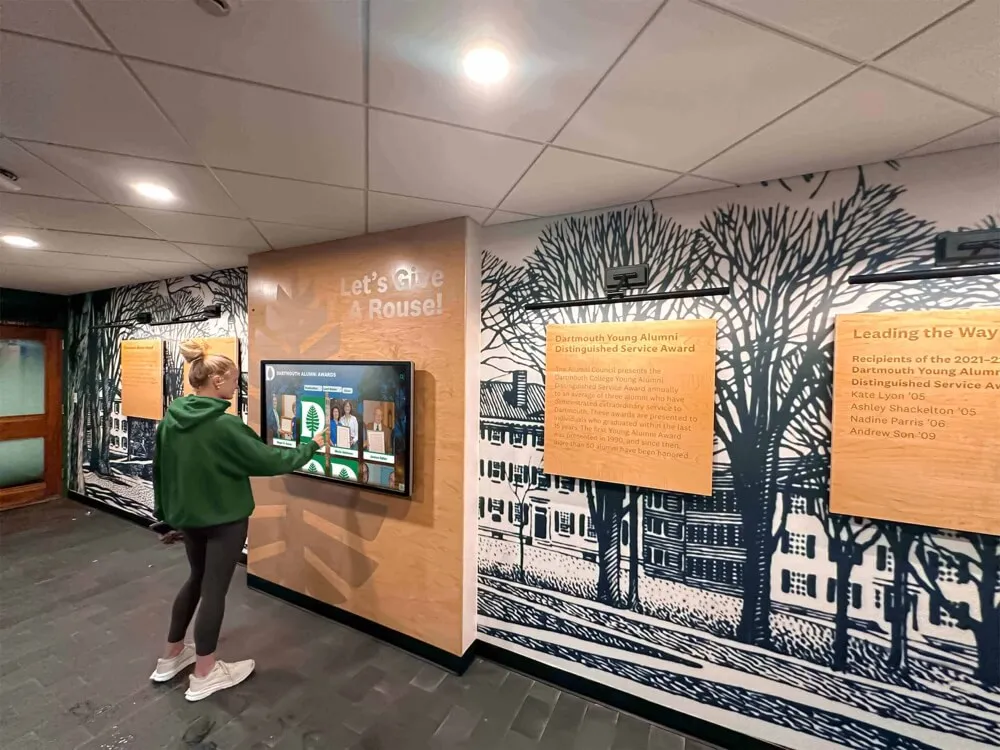
Web-based systems enable alumni worldwide to explore graduation history from anywhere
Individual Graduate Profile Pages
Comprehensive platforms create dedicated profile pages for each graduating senior including professional senior portrait or preferred photograph, graduation year and school affiliation, activities and extracurricular involvement throughout high school, leadership positions held in clubs or organizations, academic achievements and honors received, athletic accomplishments and team participation, future plans including college attendance or career goals, and post-graduation updates as alumni achieve milestones.
These detailed profiles transform basic senior composites showing faces and names into rich biographical resources documenting what each student accomplished during high school and how they built on that foundation after graduation—creating lasting value that families appreciate and alumni revisit throughout their lives.
For schools creating comprehensive student recognition approaches, academic recognition program frameworks provide strategies that complement graduate displays effectively.
Social Media Integration
Modern graduate display programs leverage social media platforms where students and families already spend time, extending recognition visibility while enabling organic engagement and sharing.
Senior Spotlight Campaigns
Throughout senior year, schools can run systematic social media campaigns highlighting individual graduating students including featured senior profiles posted weekly on school accounts, video interviews where seniors share memories or advice, achievement celebrations recognizing specific accomplishments, countdown campaigns building excitement approaching graduation, and hashtag strategies creating unified recognition threads.
These campaigns generate substantial engagement as families share posts celebrating their specific students, creating organic visibility far beyond school’s direct follower base while demonstrating institutional commitment to honoring every senior individually.
User-Generated Content Opportunities
Enable seniors and families to participate in display creation through submission portals accepting senior photographs and information, video message uploads sharing reflections or goals, achievement documentation ensuring recognition completeness, classmate nominations highlighting deserving peers, and memory sharing contributing to collective class history.
This participatory approach creates sense of ownership and investment in graduate display programs while distributing content creation workload across willing contributors rather than burdening limited school staff.
Multimedia Storytelling Elements
The most compelling graduate displays incorporate diverse content types that bring senior recognition to life more effectively than photographs and text alone.
Senior Video Messages
Video content creates emotional connections and lasting memories including senior farewell messages to underclassmen offering advice, reflections on high school experience sharing meaningful moments, future goal statements describing post-graduation aspirations, thank you messages to teachers, coaches, and mentors, and group videos from teams, clubs, or friend groups.
Schools report that video content consistently generates longest engagement times as community members discover compelling stories and personal insights that static profiles cannot capture.
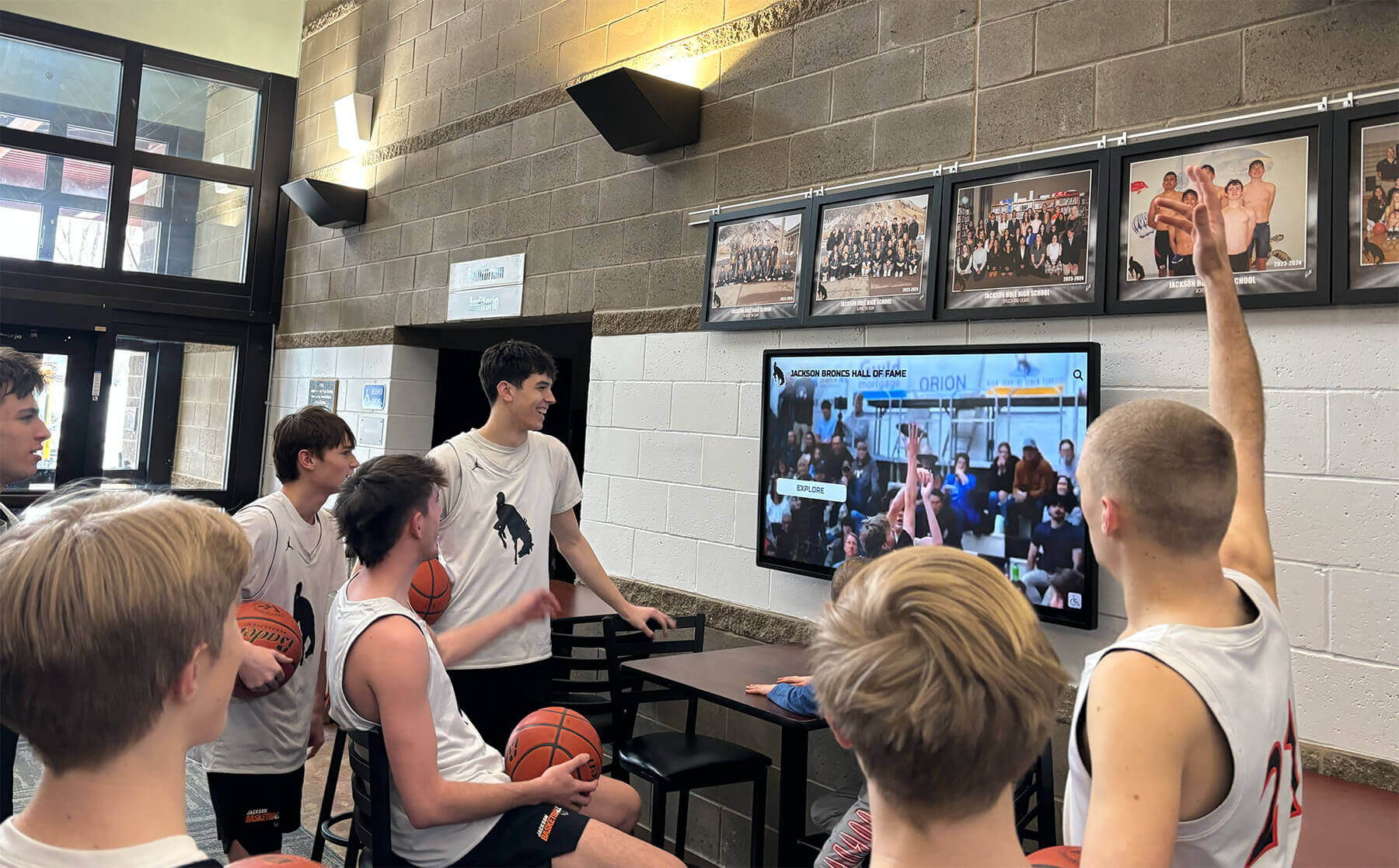
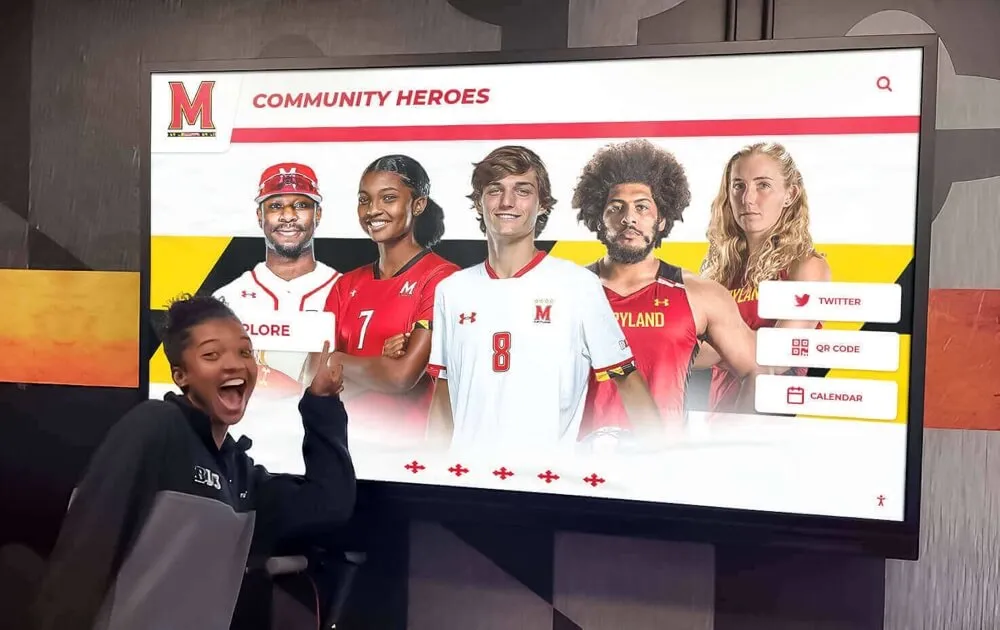
Engaging displays become gathering places where students celebrate their class achievements
Photo Galleries and Senior Year Documentation
Beyond individual senior portraits, comprehensive displays document the complete senior year experience through freshman-to-senior progression showing transformation, event galleries from homecoming, prom, and celebrations, activity documentation from sports, arts, and competitions, candid moments capturing authentic high school experience, and senior trip or special event coverage commemorating shared experiences.
These rich visual archives provide context that individual portraits alone cannot communicate, helping viewers appreciate the full scope of senior year while creating nostalgia that strengthens lasting connections to school and classmates.
For comprehensive documentation approaches, schools can explore classroom projects recognition strategies that complement graduate display programs with broader student achievement celebration.
Creating Effective Graduate Display Content
Compelling graduate displays require thoughtful content development ensuring comprehensive, high-quality senior recognition that honors every graduating student meaningfully.
Senior Information Collection Systems
Gather necessary biographical and achievement information through structured processes ensuring comprehensive participation.
Submission Forms and Guidelines
Provide clear frameworks for information gathering including standardized forms requesting key biographical details, photography specifications and format requirements, activity verification with coaches and advisors, achievement documentation from transcripts or records, and parental review opportunities ensuring accuracy.
Clear guidelines, deadlines, and templates ensure consistent submissions while reducing back-and-forth communication required to gather missing information or correct formatting issues.
Many schools integrate senior information collection into existing yearbook processes, leveraging established workflows rather than creating entirely separate systems requiring duplicate effort.
Photography Standards and Requirements
Establish consistent visual quality through specified formats including digital image resolution requirements (minimum 300 DPI), vertical orientation for portrait-style display, appropriate attire and backgrounds maintaining professional appearance, submission deadlines ensuring adequate processing time, and alternative options for students unable to afford professional photography.
Consistent photography standards create cohesive display aesthetics while preventing quality variations that might make some senior profiles appear less professional than others—important for ensuring every student receives equal visual recognition regardless of family resources.

Consistent photography and formatting standards create professional graduate displays honoring every senior equally
Writing Compelling Graduate Profiles
Develop engaging biographical narratives that celebrate individual students authentically.
Profile Content Elements
Comprehensive graduate profiles should include student name and preferred nickname if applicable, graduation year and school affiliation, four-year activity involvement and participation, leadership positions held in organizations, academic achievements and special recognitions, athletic accomplishments and team contributions, performing arts involvement and productions, future plans including college or career goals, and personal quotes or reflections when appropriate.
This comprehensive information transforms basic name-and-photo displays into rich biographical resources that families treasure and alumni revisit throughout their lives.
Writing Authentic Student Voice
Profile writing should celebrate individual students authentically rather than following formulaic templates including emphasis on student personality and unique qualities, specific achievements with context rather than bare facts, genuine future aspirations showing post-graduation plans, meaningful experiences that shaped high school years, and connections to school values and traditions.
Many schools enable seniors to write their own profiles with editorial guidance ensuring appropriate content while preserving authentic student voice—an approach that increases engagement while creating more genuine recognition than adult-written descriptions missing what students value most about their own experiences.
Including Post-Graduation Updates
The most valuable graduate displays extend beyond senior year to document alumni achievements demonstrating educational preparation quality.
Alumni Update Mechanisms
Create systems enabling ongoing profile enhancement including submission portals for alumni achievements, periodic outreach requesting updates during reunion years, social media monitoring for notable accomplishments, partnership with alumni associations tracking graduates, and automated anniversary reminders prompting updates.
These ongoing updates transform graduate displays from static senior-year snapshots into living archives documenting complete educational legacies showing how high school experiences prepared students for post-graduation success.
Celebrating Alumni Milestones
Highlight notable post-graduation achievements including college graduation and advanced degrees earned, career accomplishments and professional recognition, community service and volunteer leadership, entrepreneurial ventures and business success, and family milestones connecting generations to school.
This expanded documentation demonstrates educational program effectiveness while inspiring current students through concrete examples of success achieved by graduates who once walked the same hallways.
For schools creating comprehensive historical documentation, school history timeline approaches provide frameworks for integrating graduate displays within broader institutional memory preservation.
Implementing Successful Graduate Display Programs
Creating effective graduate recognition requires systematic planning, stakeholder engagement, and thoughtful execution ensuring programs achieve intended goals while fitting within resource constraints.
Planning and Preparation Phase
Successful implementations begin months before launch with careful preparation addressing multiple critical considerations.
Define Display Scope and Goals
Establish clear program parameters including which graduates will be included (all seniors vs. specific criteria), what information will be featured in profiles, how content will be organized and accessed, whether displays will include only current year or historical classes, and primary audiences the displays will serve.
These scope decisions guide all subsequent implementation choices while setting realistic expectations about what initial launches will accomplish versus future enhancements.
Form Implementation Team
Assemble cross-functional groups ensuring comprehensive perspectives including senior class advisors understanding student needs, technology coordinators handling platform selection, communications staff managing promotion and outreach, yearbook or journalism advisors with media expertise, and administration providing resources and direction.
Clear role assignments prevent implementation challenges while ensuring sustained commitment beyond initial launch enthusiasm.

Strategic installations integrate with existing school environments and recognition traditions
Establish Budget and Resources
Determine available funding and identify cost components including touchscreen hardware for physical installations ($8,000-$15,000 per display), software platform subscriptions for content management ($2,000-$5,000 annually), content development time for photography and writing, installation costs for mounting and connectivity, and ongoing maintenance covering annual updates.
Many schools fund graduate display programs through senior class fundraising campaigns, parent organization grants, alumni donations specifically for recognition programs, or memorial gifts honoring deceased community members.
Phased implementations beginning with web-only platforms while planning for future physical displays make programs manageable within budget constraints.
Technology Platform Selection
Choosing appropriate display technology ensures reliable performance, manageable administration, and features meeting program requirements.
Essential Platform Capabilities
Effective graduate display platforms should provide intuitive content management requiring minimal technical expertise, responsive design working across all devices, powerful search and filtering enabling graduate discovery, multimedia support for photos, videos, and audio, customization options matching school branding and colors, reliable cloud hosting ensuring availability, and analytics showing engagement patterns.
Platforms designed specifically for educational recognition like those from Rocket Alumni Solutions offer particular advantages through education-specific features, proven track records with schools, and support teams understanding educational culture and priorities.
Hardware Considerations for Physical Displays
When pursuing physical installations, evaluate commercial-grade touchscreen displays (43"-75") with appropriate size for viewing distance, capacitive touch technology enabling intuitive interaction, 4K resolution showing portraits clearly, anti-glare coatings for various lighting conditions, and commercial warranties covering public use.
Professional installation services ensure proper mounting, electrical connectivity, network configuration, and integration with school infrastructure—preventing amateur installation issues that create ongoing problems.
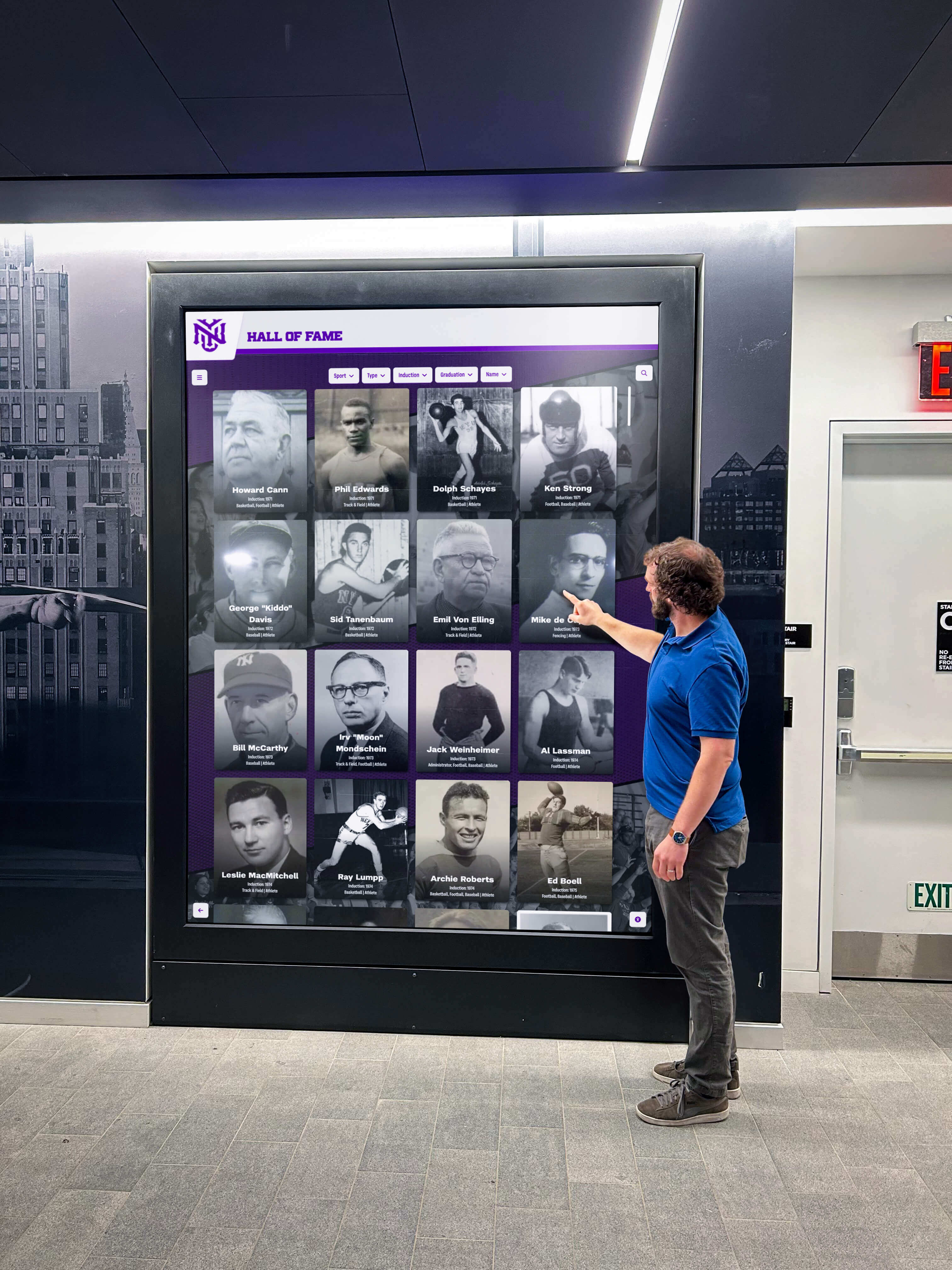
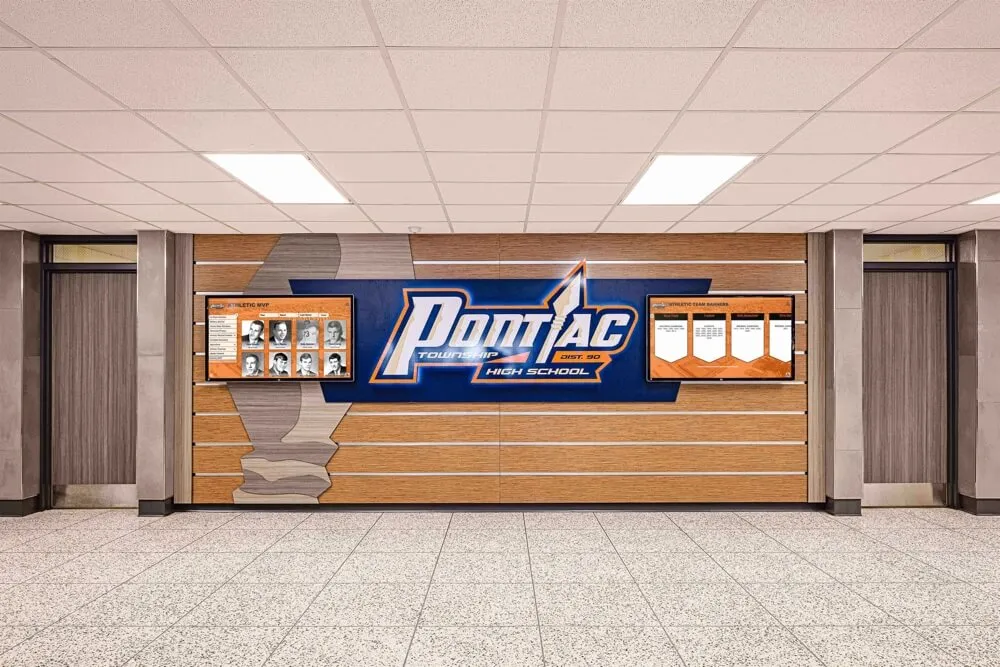
Professional installations create impressive experiences for visitors while celebrating graduating seniors
Integration with Existing Systems
Evaluate how graduate display platforms integrate with existing infrastructure including school websites and portals for unified presence, student information systems reducing duplicate entry, social media platforms enabling easy cross-posting, and yearbook production workflows leveraging existing content.
Effective integrations reduce administrative burden while creating seamless experiences where graduate content flows naturally into other school communications.
Launch and Promotion Strategy
Successful display launches require coordinated campaigns ensuring community awareness and establishing programs as valued traditions.
Phased Rollout Approach
Consider staged implementation reducing launch complexity including soft launch to senior families for feedback, school-wide announcement during major events, community promotion through local media and social channels, alumni network communication extending awareness to graduates, and prospective family integration into admissions tours.
Phased approaches allow addressing unexpected issues before full public launch while building excitement through progressive awareness expansion.
Multi-Channel Promotion Campaign
Execute comprehensive communication through email announcements to students, families, faculty, and alumni, social media campaigns across multiple platforms, school website features with prominent placement, morning announcements or video bulletin integration, printed materials including posters in high-traffic areas, and launch events with featured activities or celebrations.
Sustained promotion over several weeks creates awareness across community segments with varying information consumption preferences.
For schools creating comprehensive recognition events, exploring senior day celebration programs provides frameworks for integrating display launches with existing traditions.
Maintaining Graduate Displays Long-Term
Initial launches represent the beginning rather than conclusion of successful graduate display programs—ongoing maintenance and enhancement ensure lasting value.
Annual Update Processes
New Graduate Integration
As each new senior class graduates, seamlessly integrate them into display systems including photograph collection and processing, biographical information gathering and verification, profile creation and publication, physical display updates if hardware includes printed elements, and communication announcing new graduate additions.
These annual cycles establish displays as living traditions continuously celebrating current seniors while preserving past classes in permanent archives accessible throughout alumni lives.
Historical Expansion
Continue systematic digitization of older graduates not included in initial implementations including archival photograph research and scanning, biographical information reconstruction from records, verification of graduate names and achievements, historical context documentation, and publication to comprehensive archives.
Many schools designate historical research as ongoing projects for specific staff members, volunteer committees, or student organizations, creating sustainable processes that continue regardless of personnel changes.
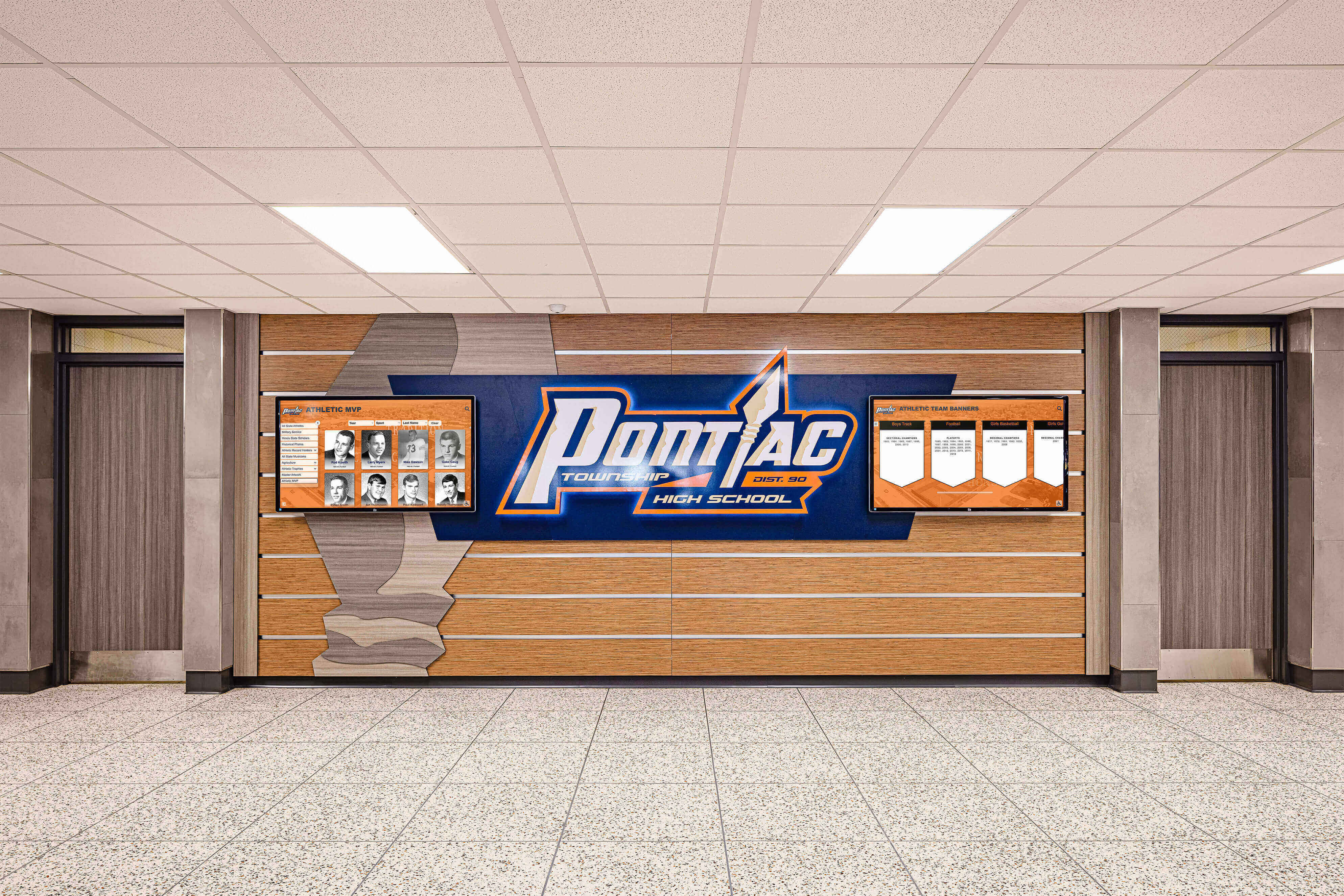
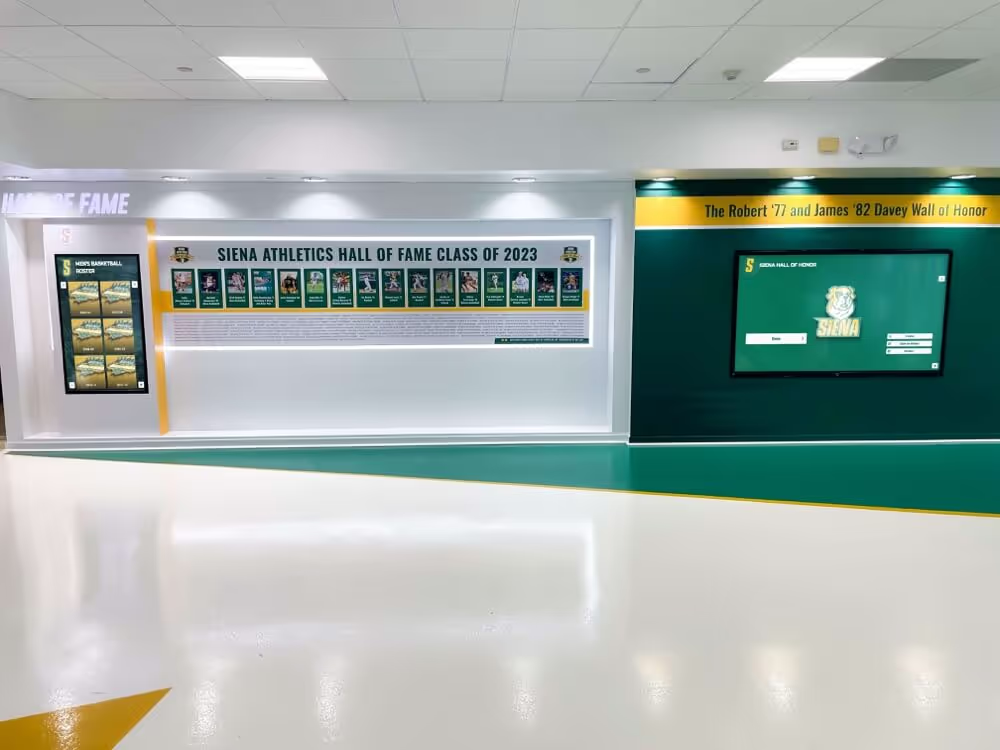
Coordinated recognition systems integrate graduate displays with other school achievements and traditions
Content Quality and Accuracy
Verification and Correction
Digital systems make fixing errors dramatically easier than with physical displays. Establish processes for correcting misspelled names discovered by alumni, adding missing individuals omitted from original displays, updating biographical information as alumni achieve milestones, and responding to community requests for changes.
This ongoing quality improvement ensures displays remain accurate and valuable resources rather than flawed historical records perpetuating errors indefinitely.
Engagement Through Alumni Updates
Encourage alumni to maintain profile currency through periodic outreach campaigns during reunion years, submission portals accepting achievement updates, social media campaigns highlighting recent alumni accomplishments, newsletter features celebrating graduate milestones, and automated anniversary reminders prompting updates.
These update mechanisms keep displays dynamic and valuable while maintaining alumni engagement through regular interaction with their profiles and recognition.
Technology Refresh Cycles
Plan systematic hardware and platform updates maintaining contemporary functionality including commercial display replacement every 5-7 years, software platform evaluations ensuring continued capabilities, feature additions responding to changing expectations, security updates protecting against emerging threats, and capacity expansion as content archives grow.
Proactive technology management prevents displays from becoming outdated systems that community members perceive as neglected—preserving the prestige and effectiveness that make recognition meaningful.
For long-term recognition strategies, schools can explore developing historical timeline approaches that preserve graduate displays within broader institutional memory frameworks.
Special Considerations for Graduate Displays
Educational institutions face unique factors requiring thoughtful consideration when implementing comprehensive graduate recognition systems.
Privacy and Consent Considerations
Some students and families may prefer privacy regarding personal information or images for various legitimate reasons including safety concerns, cultural preferences, or personal values.
Appropriate Privacy Policies
Effective systems should allow students or families to request exclusion from public displays, provide options limiting visibility of certain information, enable password-protected profiles when appropriate, and ensure appropriate permissions before publication.
Clear policies about privacy, developed collaboratively with school administration and legal counsel, prevent problems while respecting individual preferences and maintaining compliance with educational privacy regulations.
Ensuring Equitable Recognition
Graduate displays should honor every senior equally regardless of achievement levels, activity involvement, or other distinguishing factors.
Inclusive Display Design
Create displays that celebrate diverse students including standard profile formats for all graduates, equal visual prominence regardless of activities, recognition beyond traditional academic or athletic achievement, celebration of varied post-graduation paths, and culturally responsive content and imagery.
This inclusive approach ensures graduate displays honor every student who completes their education rather than only the most visible or traditionally successful seniors—important for maintaining the tradition’s core purpose of celebrating educational completion.
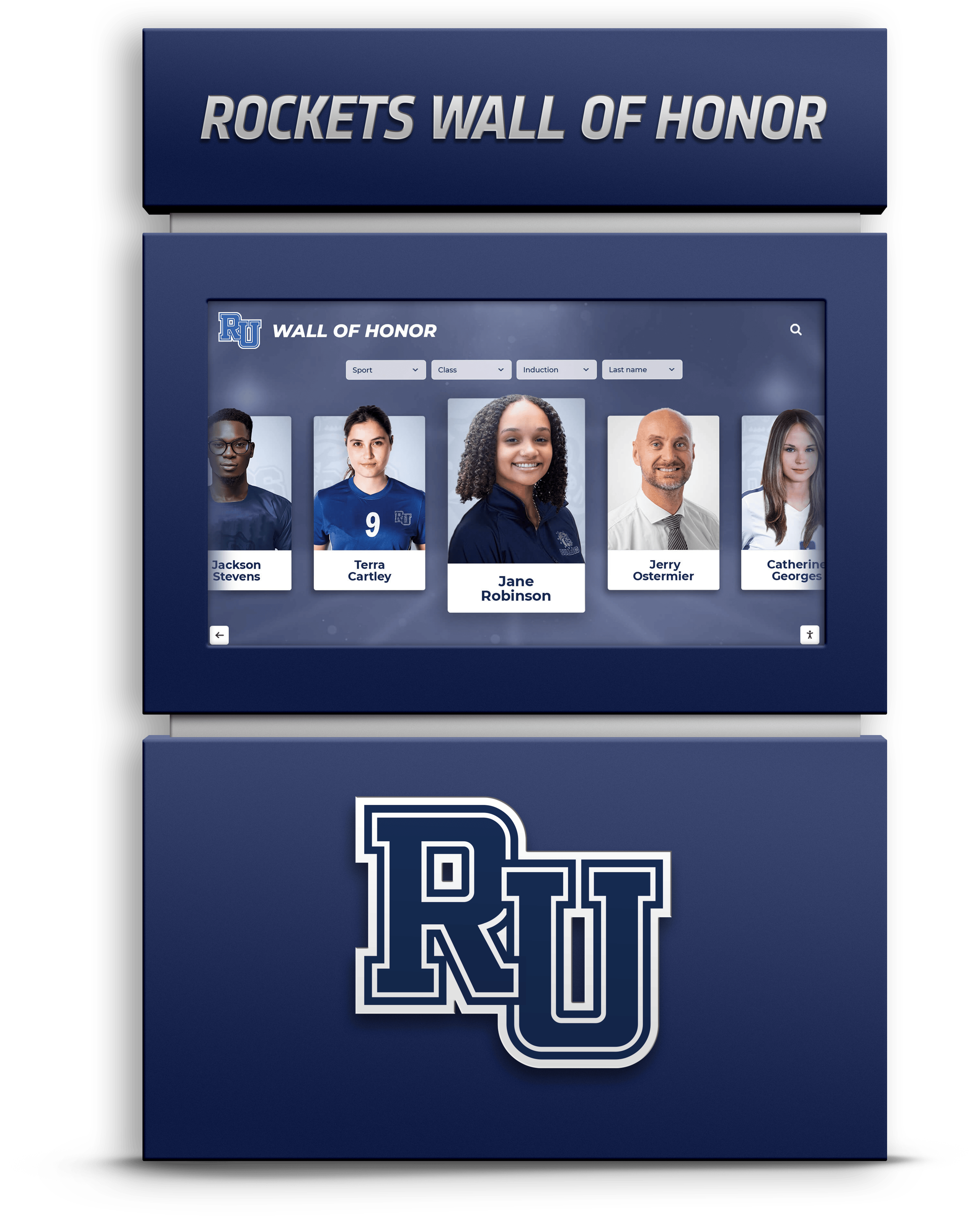
Professional displays honor every graduate equally while celebrating the unique accomplishments of each class
Photography Company Coordination
Many schools contract with professional photography companies for senior portraits and composite creation. Coordinate implementation plans with photography vendors ensuring access to high-resolution digital files, clarification of licensing and usage rights, coordination of formats supporting both traditional and digital needs, and timeline alignment between delivery and display updates.
Early coordination with photography vendors prevents implementation issues while ensuring necessary image rights and format compatibility.
For schools creating comprehensive graduate recognition within broader systems, senior recognition program approaches provide frameworks applicable to integrated display strategies.
Cost Considerations and Investment Planning
Understanding complete costs enables realistic budgeting and informed decision-making about appropriate implementation approaches for schools with varying resource levels.
Initial Investment Components
Digitization Costs (If Converting Historical Archives)
- Professional scanning services: $15-35 per composite photograph
- In-house scanning time and equipment: $500-2,000 for capable scanner
- Historical research and organization: Variable based on scope (20-100 hours of staff time)
Technology Costs for Physical Displays
- Commercial touchscreen display (55"-75"): $3,000-$12,000 per location
- Professional installation and mounting: $500-$2,000 per display
- Software platform setup and licensing: $1,500-$5,000 initial
- Annual software subscription: $500-$2,000 depending on features
Web-Only Implementation
- Software platform setup: $1,000-$3,000 initial
- Annual hosting and licensing: $300-$1,500
Total Investment Ranges
- Basic web-only implementation: $2,000-$5,000 initial + $300-$1,500 annual
- Standard single-display system: $8,000-$20,000 initial + $500-$2,000 annual
- Comprehensive multiple-display installation: $20,000-$40,000 initial + $1,000-$3,000 annual
Funding Strategies
Schools fund graduate display projects through various approaches including senior class fundraising campaigns specifically for recognition programs, capital campaign integration within larger institutional initiatives, parent organization investments in school tradition, memorial giving opportunities honoring deceased community members, and phased implementation spreading costs across budget cycles.
Many schools find that prominent alumni, particularly older graduates nostalgic about school history, willingly fund graduate display projects when presented as legacy investments benefiting future generations.
For schools creating integrated recognition systems, exploring digital trophy wall approaches provides insights into comprehensive investments that can incorporate graduate displays alongside other institutional achievements.
Creative Enhancement Ideas for Graduate Displays
Beyond basic senior profiles and photographs, innovative schools implement distinctive features making displays more engaging and memorable.
Interactive Features and Capabilities
“Where Are They Now” Alumni Updates
Create engaging content tracking post-graduation paths including college attendance and graduation documentation, career path progression and professional achievements, geographic distribution showing where alumni relocated, notable accomplishments demonstrating educational impact, and multi-generational connections linking family members.
These “where are they now” features demonstrate educational program effectiveness while creating compelling content that current students, prospective families, and alumni networks find genuinely interesting.
Class Superlatives and Recognition
Include engaging content through class voting processes including traditional superlatives like “most likely to succeed,” peer recognition for kindness and character qualities, teacher nominations for special contributions, activity-specific recognition from coaches and advisors, and humorous categories celebrating personality and humor.
These superlatives increase senior engagement with display programs while creating content that families and alumni revisit for entertainment value beyond simple biographical information.
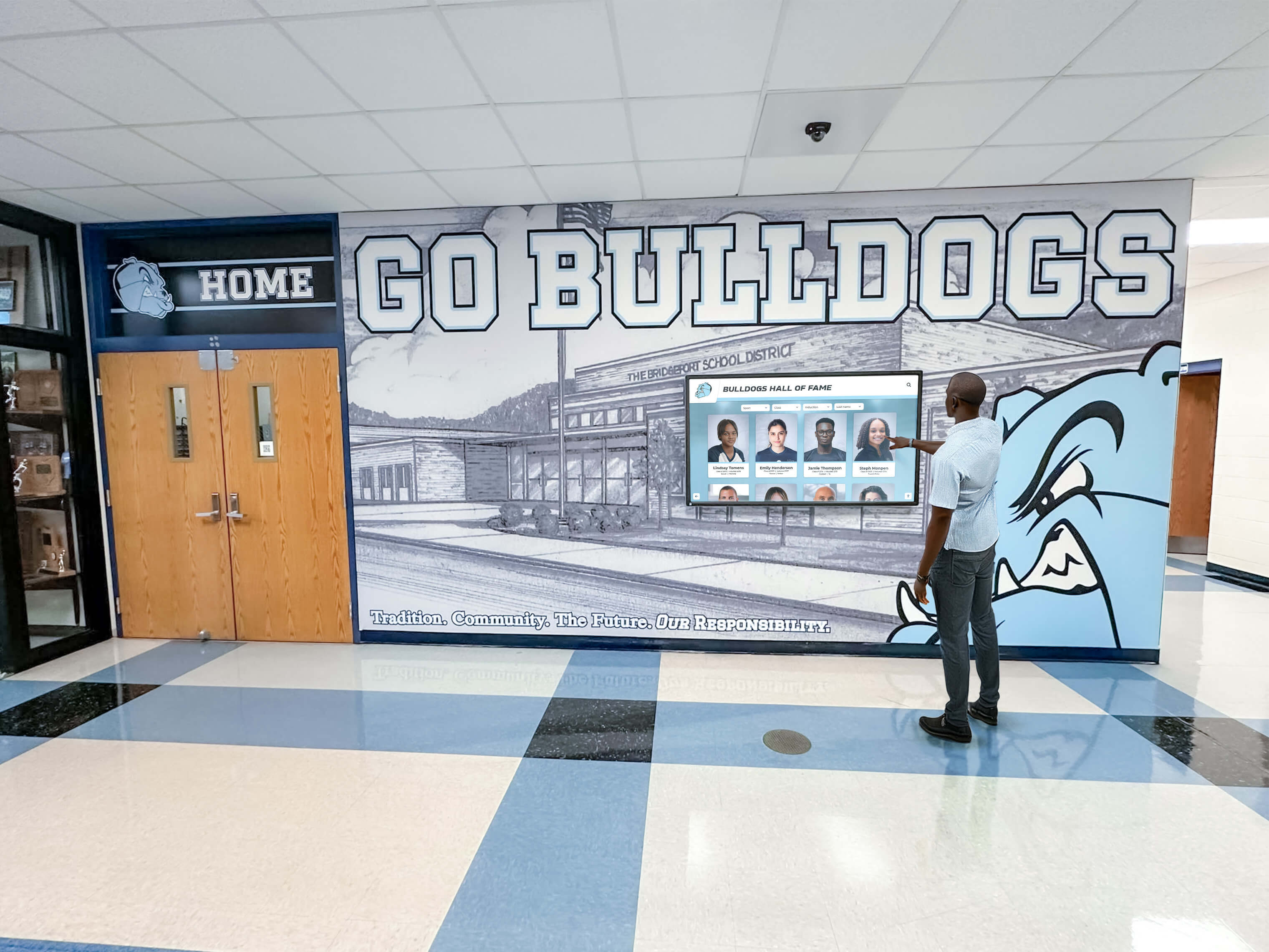
Intuitive touchscreen interfaces enable easy exploration of comprehensive graduate information and features
Connecting Displays to Alumni Engagement Programs
Mentorship Connections
Leverage graduate display platforms facilitating mentorship including career field matching connecting students with relevant alumni, geographic matching for location-specific advice, activity connections based on shared interests, and structured mentorship programs with institutional support.
These mentorship connections provide valuable guidance to current students while keeping alumni engaged through meaningful service rather than purely social connections.
For comprehensive mentorship approaches, schools can explore student mentorship alumni discovery programs that leverage graduate recognition systems effectively.
Reunion Planning Integration
Support milestone reunions through display integration including reunion planning tools for organizing committees, classmate communication channels centralizing coordination, event promotion to maximize attendance, memory sharing for reminiscing before gathering, and post-reunion photo galleries preserving celebrations.
Schools providing reunion support through graduate display platforms demonstrate sustained commitment to alumni while creating repeated engagement opportunities as classes celebrate milestone anniversaries.
Conclusion: Honoring Every Graduate Through Meaningful Recognition
High school graduate displays represent cherished traditions documenting graduation milestones and preserving institutional memory across generations. These recognition systems deserve implementation and presentation that matches their significance while making them accessible to current students, alumni networks, and future graduating classes for decades to come.
Modern graduate display solutions honor this important tradition through improved accessibility and expanded capabilities rather than replacing it. By eliminating space constraints that force difficult decisions about which graduates receive visibility, providing global access for alumni unable to visit campuses physically, enabling rich multimedia storytelling bringing graduates to life, creating interactive exploration encouraging deep engagement, and simplifying ongoing maintenance and updates—digital platforms ensure graduate displays fulfill their purpose of connecting generations while celebrating every senior who walks across your graduation stage.
Whether schools pursue comprehensive digital systems with physical touchscreen installations, web-only platforms maximizing accessibility and affordability within budget constraints, or hybrid approaches combining traditional displays with digital enhancements, the goal remains constant: preserving and celebrating graduation traditions through systematic graduate documentation that honors every senior while inspiring current students and maintaining lifelong alumni connections.
For schools interested in digital recognition displays that celebrate educational heritage while building lasting traditions, solutions like those from Rocket Alumni Solutions provide purpose-built platforms designed specifically for educational institutions. These comprehensive systems combine intuitive content management, engaging interactive experiences, and proven reliability supporting schools in honoring their most important constituencies—the students whose accomplishments justify institutional pride and whose continued engagement drives long-term success.
Ready to transform how your school preserves and celebrates graduation history? Modern graduate display technology makes comprehensive recognition achievable while maintaining the traditions that make these displays meaningful. Every graduating class deserves recognition honoring their contribution to institutional legacy, and every alumnus deserves access to the display documenting their high school journey and celebrating their place in school history.
Start planning your graduate display program today—the seniors you celebrate will become the engaged alumni who support your institution for decades to come. The investment in meaningful recognition returns exponentially through strengthened school culture, enhanced community pride, and alumni relationships that deliver lasting value far exceeding implementation costs.
For additional guidance on graduate recognition systems, explore resources on senior college decision displays and class president digital recognition that provide complementary approaches to celebrating graduating classes through comprehensive digital platforms.