



High school end-of-year awards represent the culmination of student dedication across academics, athletics, arts, leadership, and character development throughout an entire school year. These recognition programs celebrate excellence while motivating continued achievement, honoring graduates as they transition to new chapters, and demonstrating institutional commitment to acknowledging student effort across all dimensions of school life.
Yet many schools struggle with award program challenges: ceremony length balancing thoroughness with engagement, recognition equity ensuring visibility across diverse achievement types, physical display limitations forcing difficult decisions about what receives space, and administrative burden managing nominations, selections, and presentations across departments while maintaining consistent standards and meaningful celebration.
This comprehensive guide explores everything schools need to know about end-of-year awards—from planning recognition categories and ceremony structures to managing selections, implementing modern digital displays, and creating sustainable programs that honor every deserving student while strengthening school culture and inspiring future excellence.
End-of-year awards represent more than simple acknowledgment—they create visible examples of what your institution values, motivate current students toward similar achievement, preserve institutional tradition connecting past excellence to present inspiration, and demonstrate that dedication receives appropriate recognition regardless of whether achievements occur on athletic fields, in classrooms, on stages, or through character demonstrated daily in less visible but equally important ways.

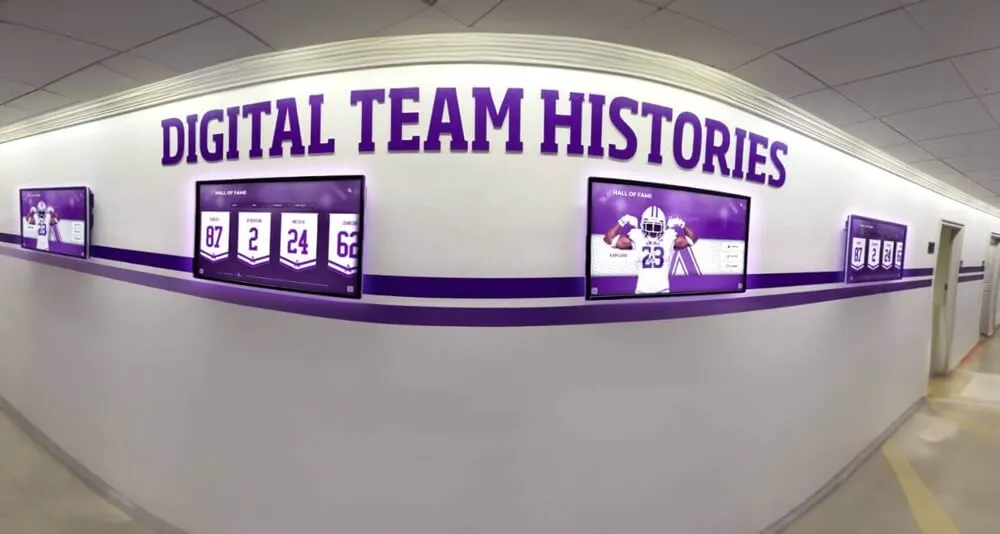
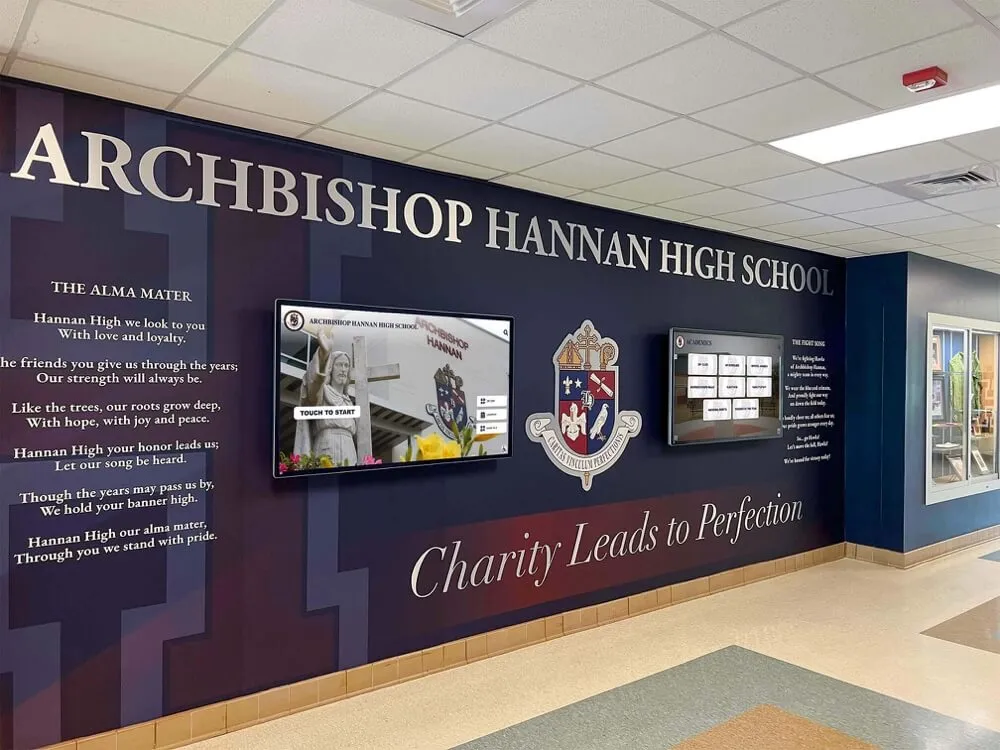
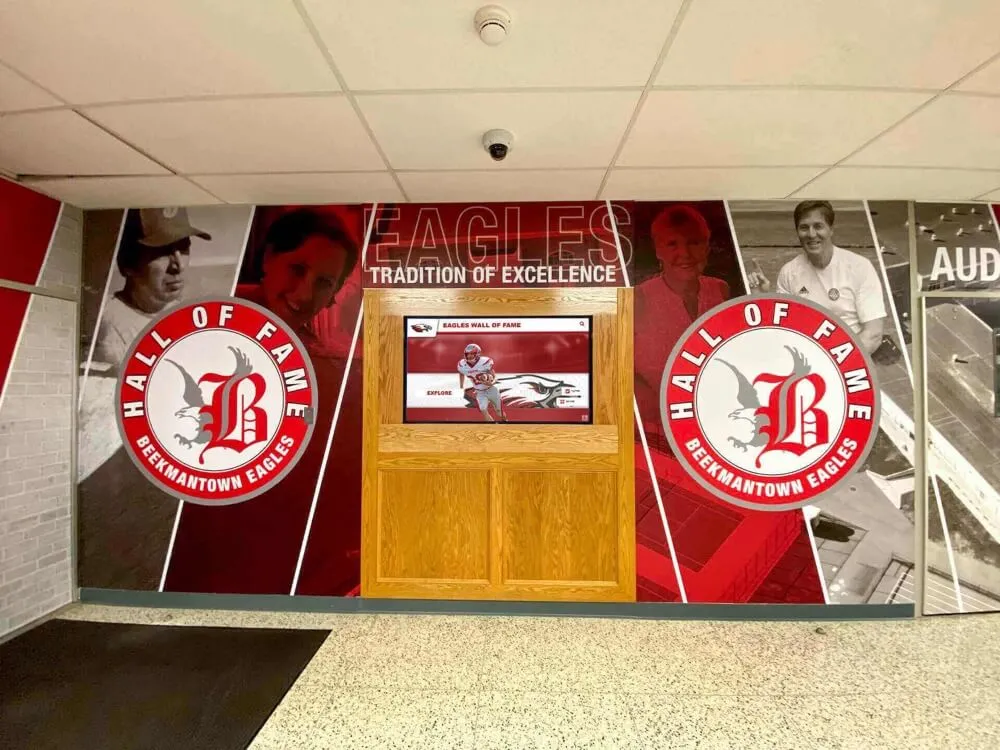
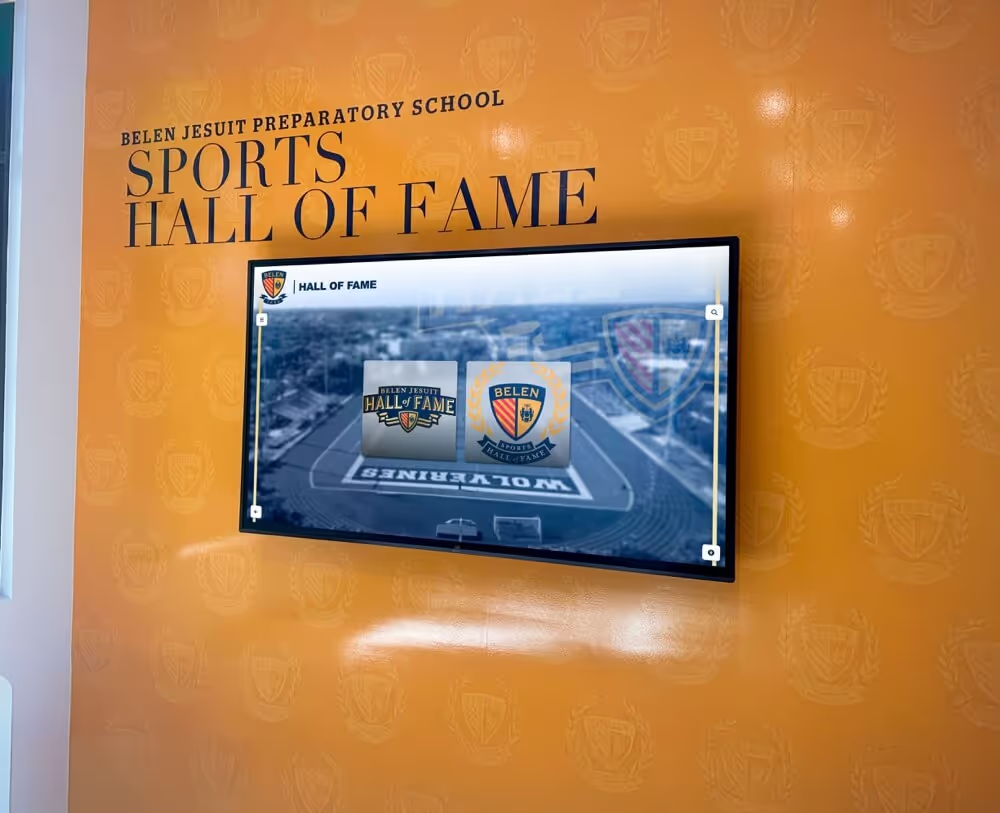
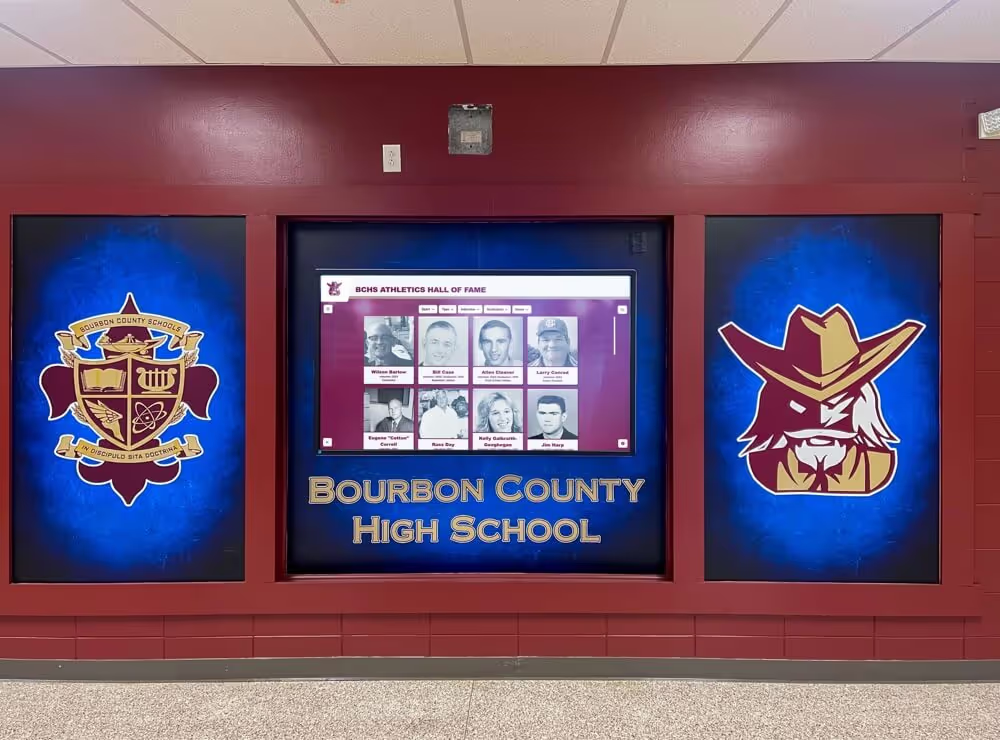
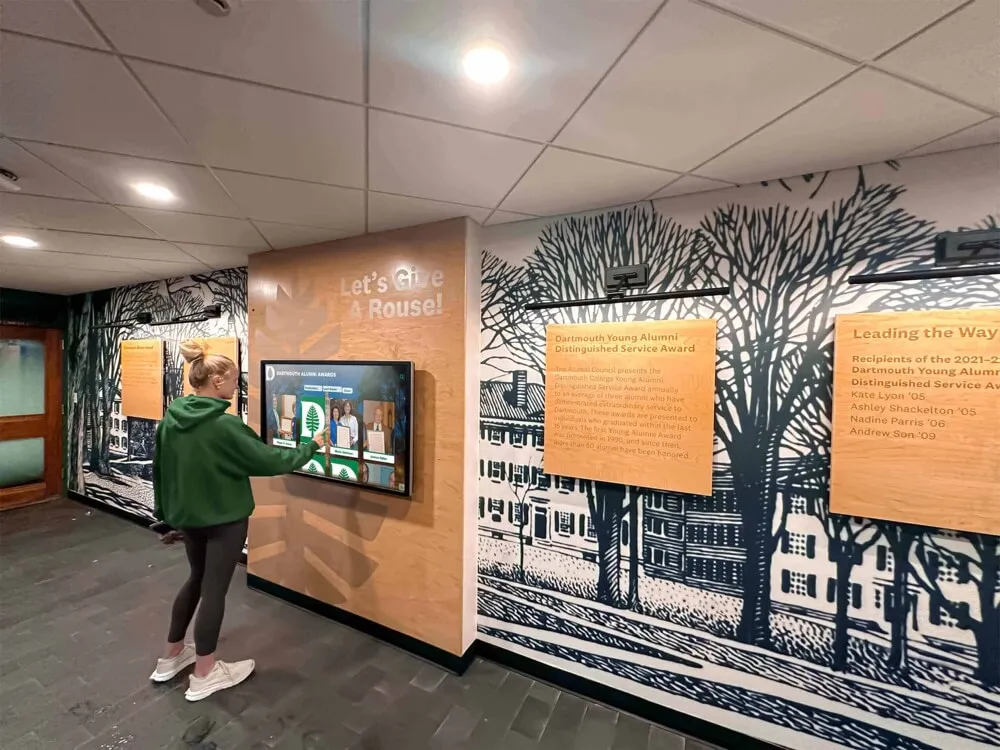
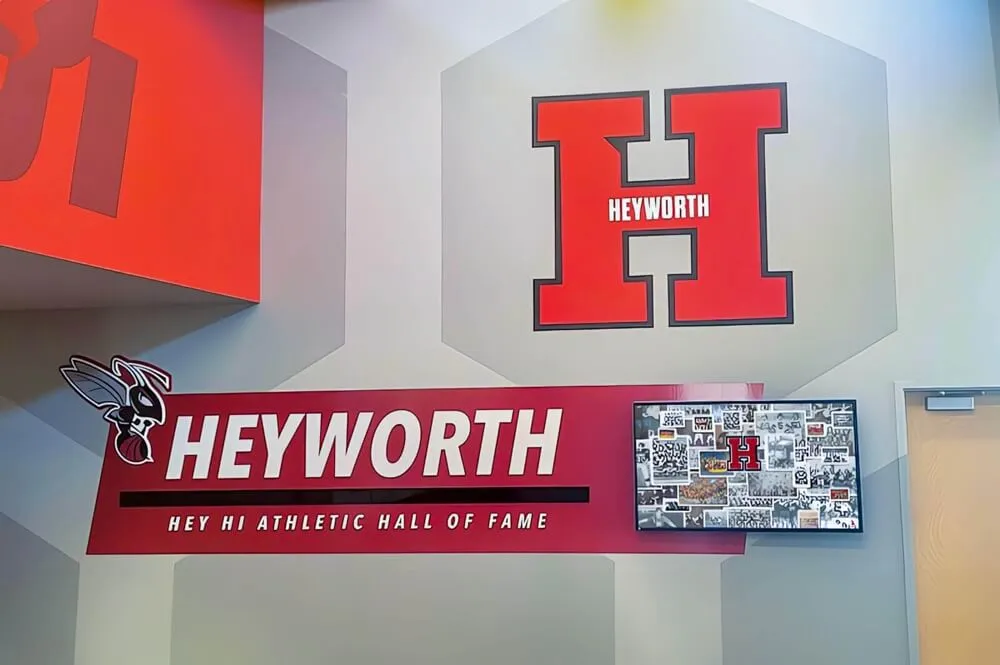
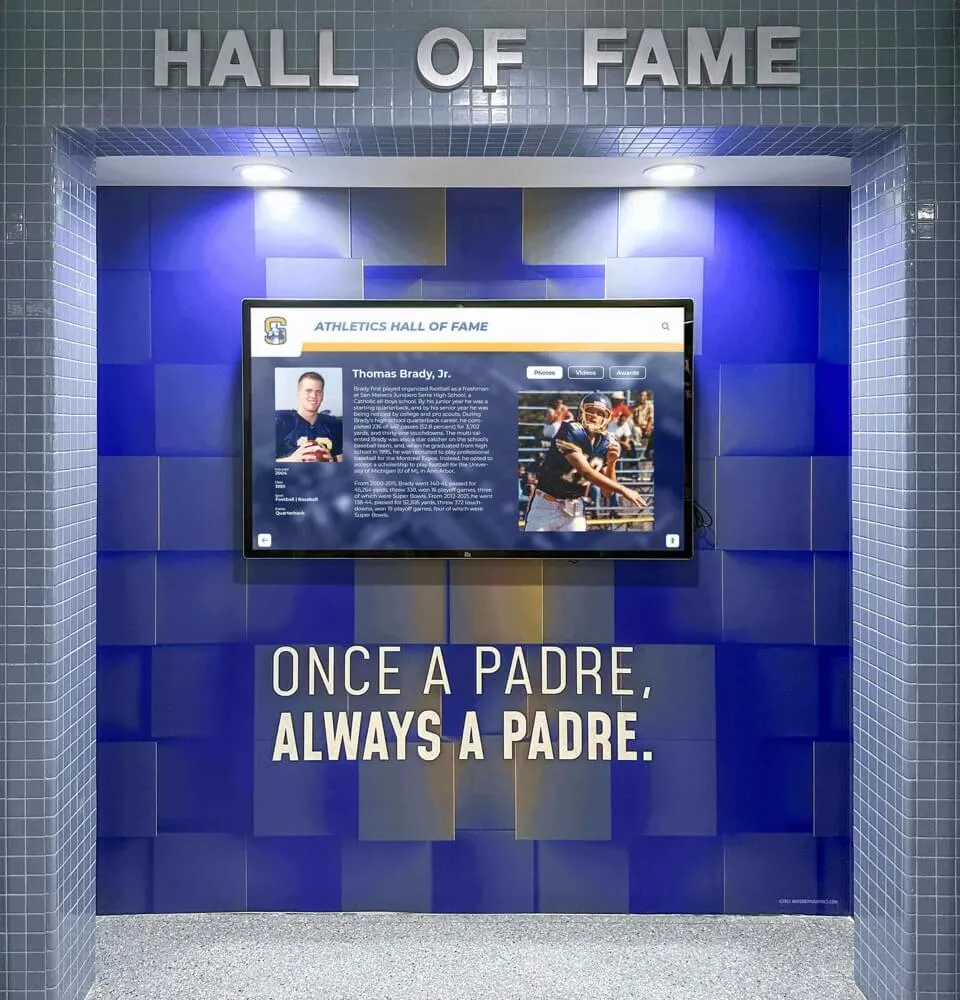
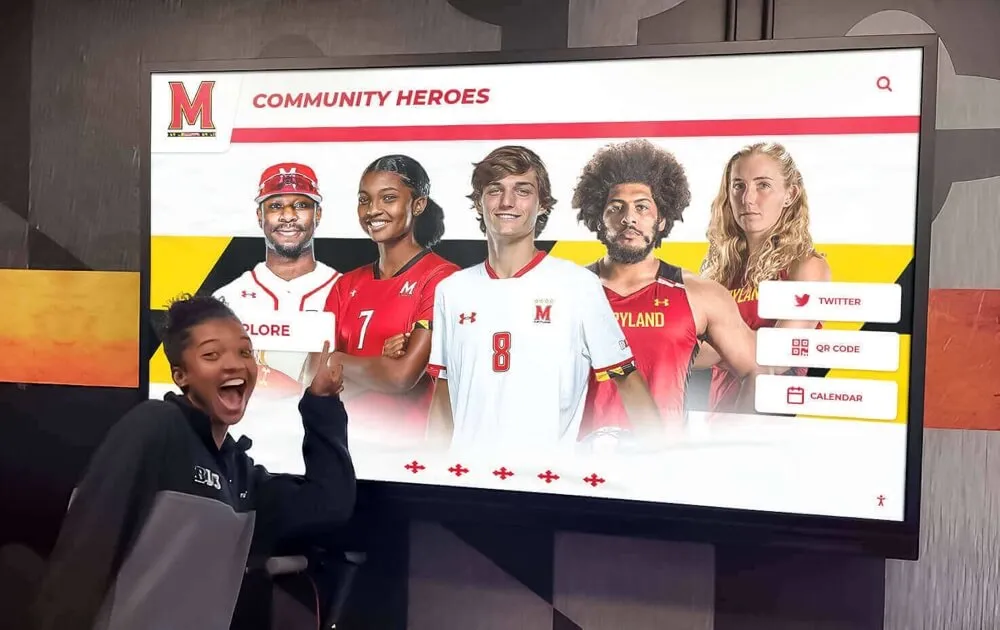
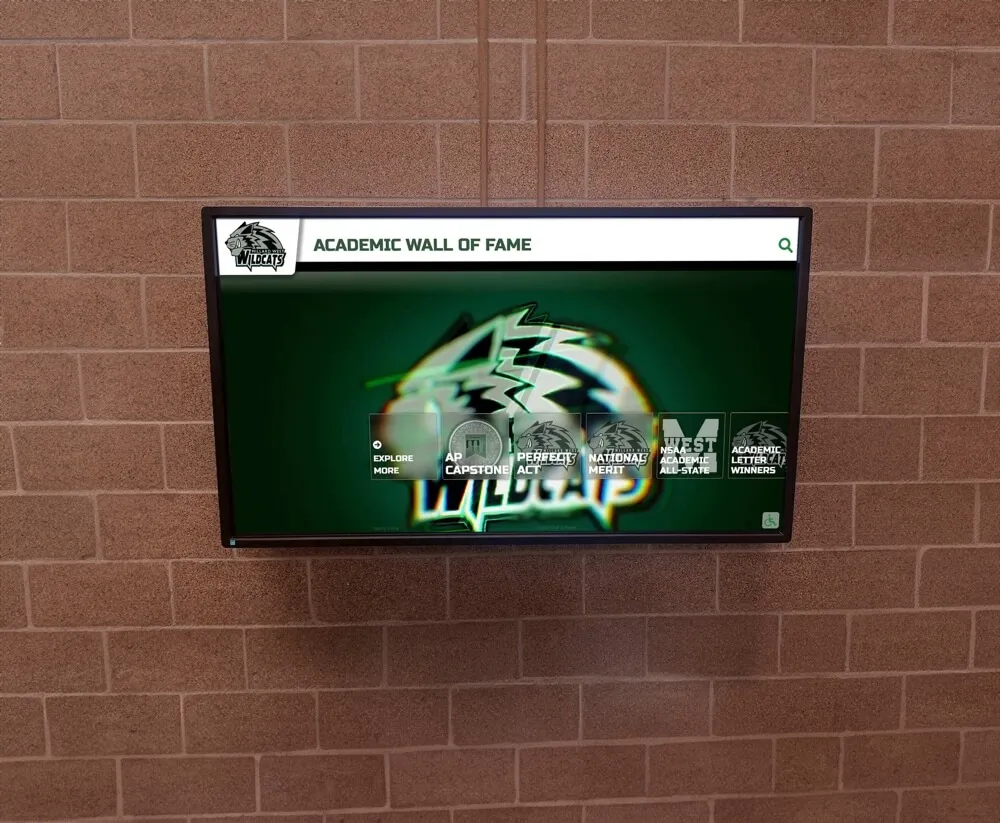
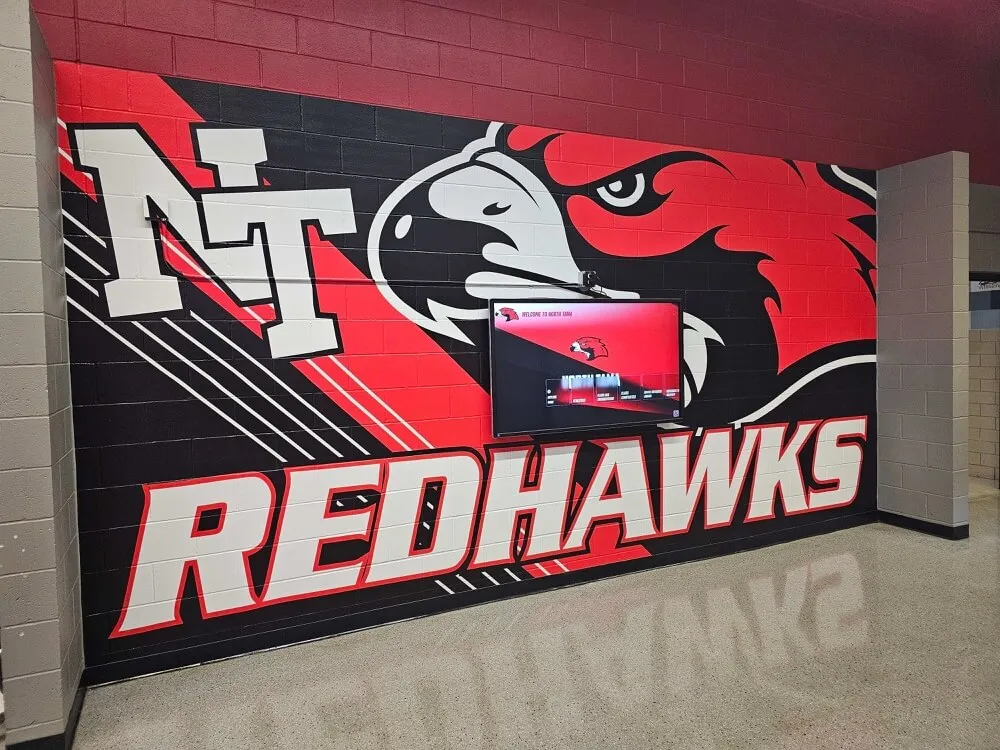
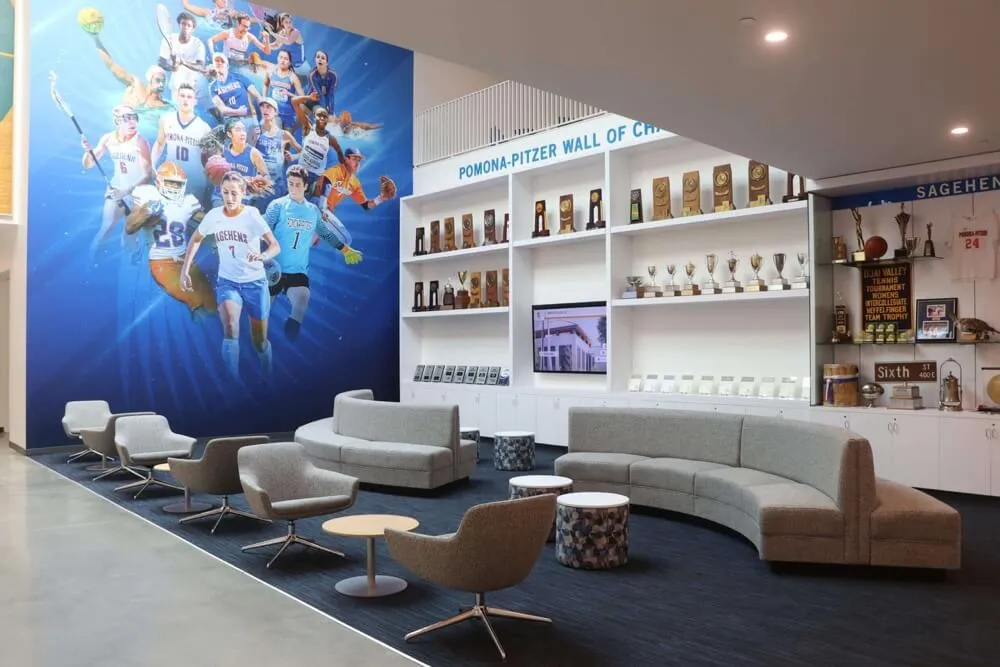
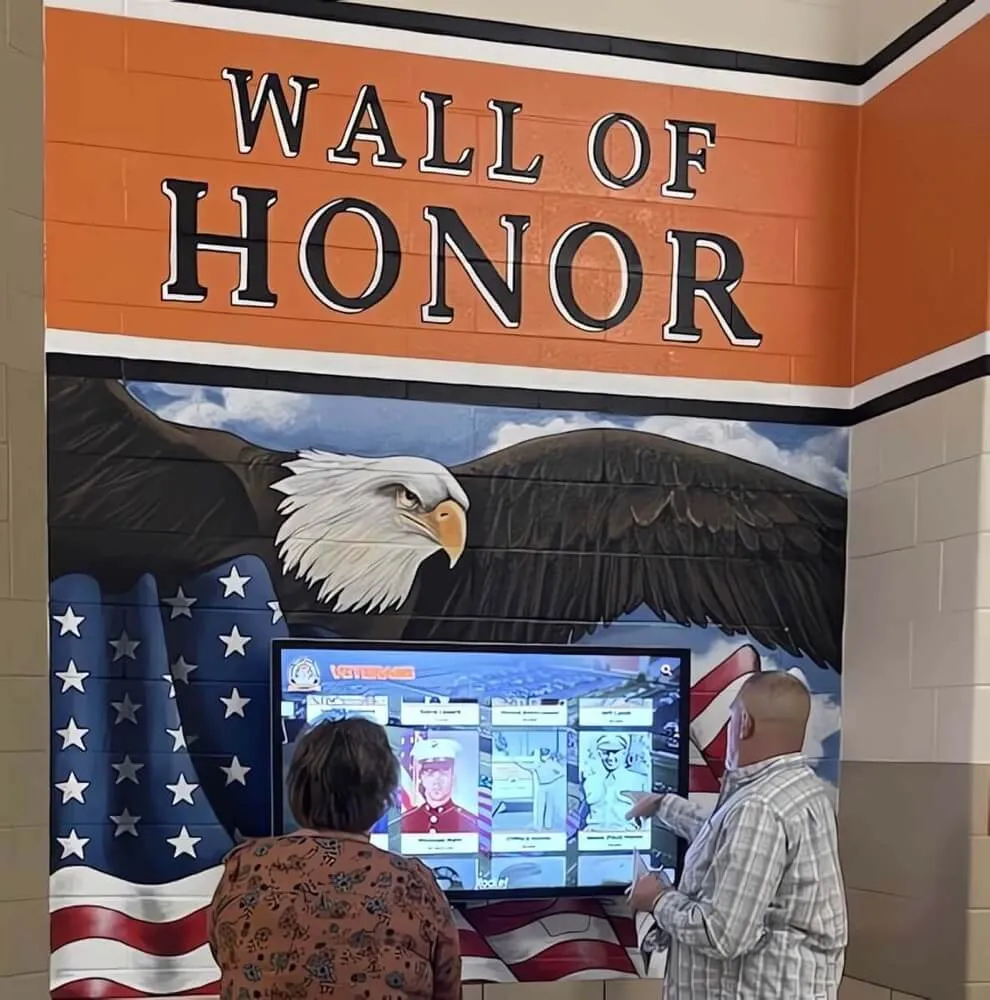
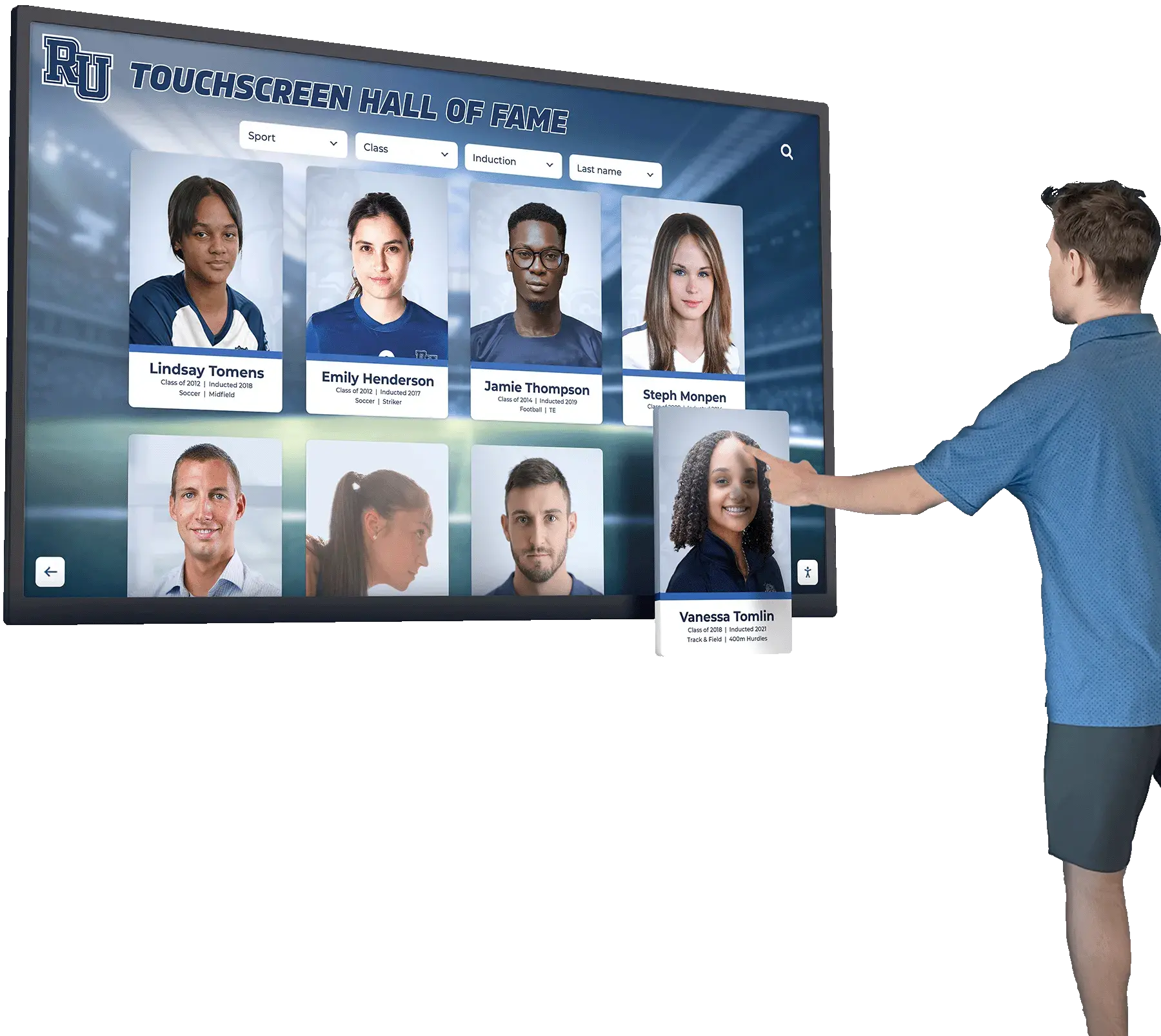
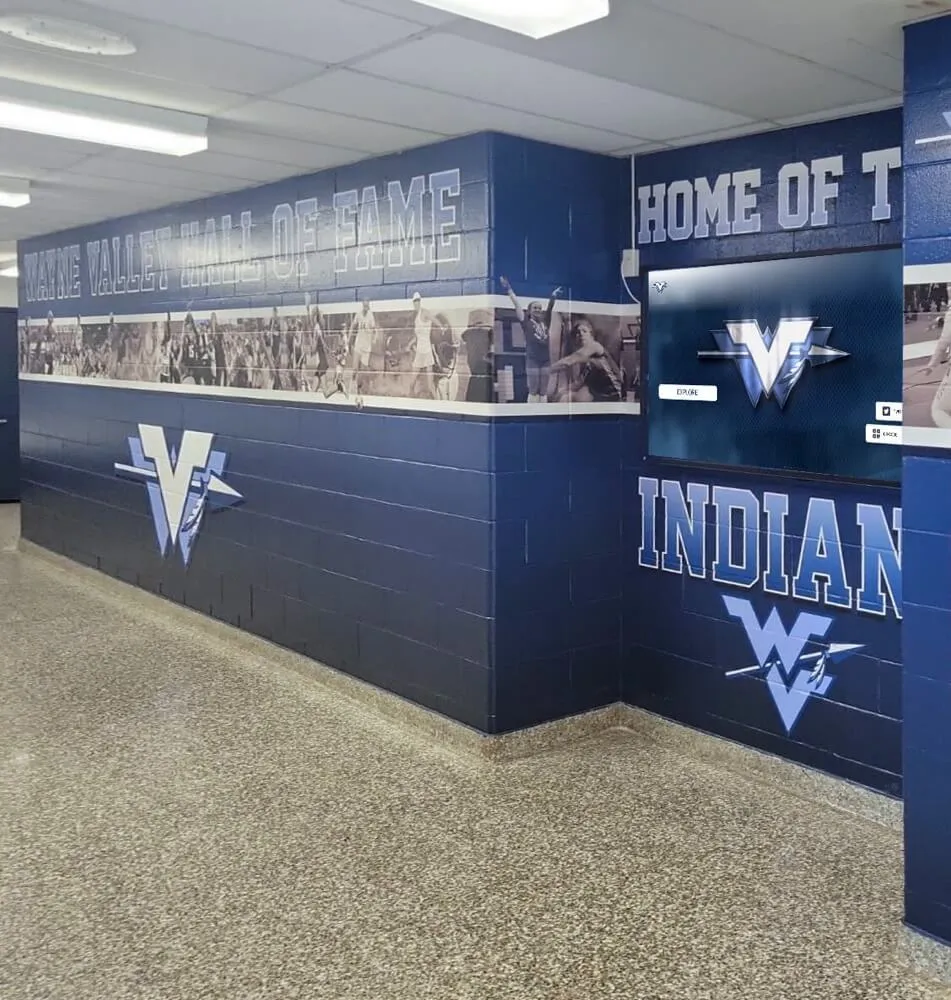
Modern interactive displays enable students to explore comprehensive award recognition beyond what traditional trophy cases can accommodate
Understanding High School End-of-Year Award Categories
Comprehensive award programs recognize excellence across multiple dimensions ensuring recognition opportunities exist for diverse student populations with different strengths, interests, and achievement patterns throughout their high school experience.
Academic Excellence Awards
Academic recognition celebrates intellectual achievement, subject mastery, and sustained scholarly dedication across departments and disciplines.
Top Academic Honors
The highest academic distinctions recognize cumulative excellence throughout high school careers:
- Valedictorian and Salutatorian: Highest and second-highest cumulative GPAs in graduating class, representing sustained academic excellence across all subjects and years
- Top Ten Percent Recognition: Acknowledging students finishing in top decile, providing broader academic achievement celebration beyond singular top positions
- Department Scholar Awards: Highest achievement within specific academic disciplines recognizing specialized excellence
- Cum Laude Distinctions: Latin honor designations (summa cum laude, magna cum laude, cum laude) based on GPA thresholds providing tiered academic recognition
Learn comprehensive academic recognition approaches in academic recognition programs guide with systematic achievement celebration strategies.
Subject-Specific Department Awards
Individual departments recognize outstanding students demonstrating exceptional mastery, effort, and contribution within particular academic disciplines:
- Mathematics Excellence: Awards for highest achievement in algebra, geometry, calculus, statistics
- Science Achievement: Recognition across biology, chemistry, physics, environmental science
- English and Language Arts: Writing excellence, literature analysis, communication skills
- Social Studies Honors: History, government, geography, economics achievement
- World Languages: Proficiency and cultural understanding across Spanish, French, German, Chinese, and other programs
- Fine Arts Excellence: Visual arts, music, theater, creative expression
Department awards often include faculty selection based not solely on grades but also intellectual curiosity, class contribution, improvement, and demonstration of genuine subject passion beyond simple test performance.
Standardized Test and National Recognition
External achievement validation provides objective third-party recognition:
- Perfect or Exceptional SAT/ACT Scores: Recognition for scores above 1500 SAT or 33+ ACT demonstrating exceptional test performance
- AP Scholar Awards: Various levels (AP Scholar, AP Scholar with Honor, AP Scholar with Distinction, National AP Scholar) based on Advanced Placement exam performance
- National Merit Recognition: National Merit Semifinalists, Finalists, and Scholars representing top PSAT/NMSQT performers
- College Board National Recognition Programs: Academic recognition for underrepresented students demonstrating strong academic performance
Explore AP achievement recognition in AP Scholar awards recognition board with comprehensive display strategies.
Honor Society Inductions
Membership in academic honor societies recognizes sustained excellence and character:
- National Honor Society: Academic achievement combined with leadership, service, and character requirements
- Subject-Specific Honor Societies: Recognition in areas like science (Science National Honor Society), mathematics (Mu Alpha Theta), languages (various language-specific societies), history (Rho Kappa)
- International Baccalaureate Recognition: IB program completion and diploma achievement
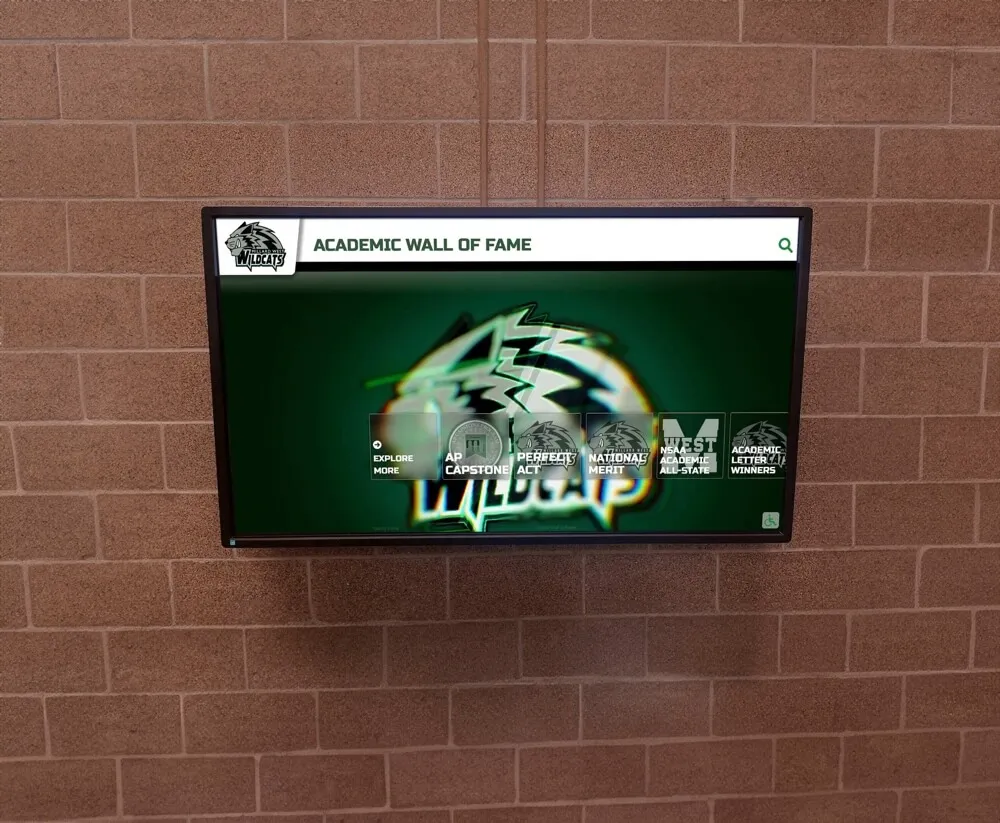
Prominent academic award displays communicate institutional commitment to celebrating scholarly achievement across all subject areas
Athletic and Competitive Recognition
Athletic awards celebrate physical excellence, team contribution, competitive success, and sportsmanship demonstrated throughout sports seasons and careers.
Team Achievement Recognition
Collective success receives prominent celebration:
- Conference Championships: Regular season or tournament conference titles
- State Championship Qualification and Victories: Recognition for advancing to state tournaments and winning state titles
- Invitational and Tournament Victories: Success at prestigious competitive events
- Record-Setting Team Performances: Teams achieving exceptional statistical milestones or winning streaks
Individual Athletic Honors
Personal athletic excellence receives appropriate acknowledgment:
- All-Conference Selections: Recognition by conference coaches as top performers at each position
- All-State Honors: State-level recognition identifying best performers statewide
- All-American Designations: National recognition for elite high school athletes
- Team Most Valuable Player Awards: Recognition by coaches as most impactful team contributors
- Career Milestone Awards: Recognition for achievement benchmarks like 1,000-point scorers in basketball, 100-goal scorers in soccer, record-breaking performances
Discover athletic milestone recognition in 1000 points scorer recognition guide with comprehensive celebration approaches.
Character in Athletics Recognition
Awards honoring athletic character and contribution beyond performance:
- Sportsmanship Awards: Recognition for exemplifying fair play, respect, and ethical competition
- Team Leadership Awards: Honoring captains and leaders who strengthen team culture
- Most Improved Athlete: Celebrating significant skill development and dedication
- Coaches’ Awards: Special recognition for athletes demonstrating exceptional work ethic, attitude, or team contribution
- Multi-Sport Athlete Recognition: Honoring students participating in multiple sports demonstrating year-round athletic commitment
Character, Leadership, and Service Awards
Recognition extending beyond measurable academic or athletic achievement to honor personal qualities strengthening school communities.
Leadership Recognition
Awards celebrating students who inspire, organize, and positively influence peers:
- Student Government Excellence: Recognition for student body officers demonstrating effective leadership
- Class Officer Recognition: Honors for class presidents, vice presidents, secretaries, treasurers
- Club and Organization Leadership: Awards for students leading academic clubs, service organizations, special interest groups
- Peer Leadership Programs: Recognition for students serving as mentors, peer tutors, orientation leaders
Service and Community Contribution
Acknowledging students dedicating time to improving communities:
- Service Hour Milestones: Recognition for completing 50, 100, 200+ community service hours
- Service Project Leadership: Awards for students organizing significant community service initiatives
- Volunteer of the Year: Overall recognition for most impactful service contributions
- Community Partnership Awards: Honoring sustained partnerships with specific community organizations
Character and Citizenship Awards
Recognition for consistently demonstrating school values:
- Citizenship Awards: Honoring students exemplifying school mission and values daily
- Integrity and Ethics Recognition: Celebrating demonstrated honesty and ethical decision-making
- Positive Influence Awards: Recognizing students who strengthen school culture through positive example
- Spirit Awards: Honoring students demonstrating exceptional school pride and enthusiasm
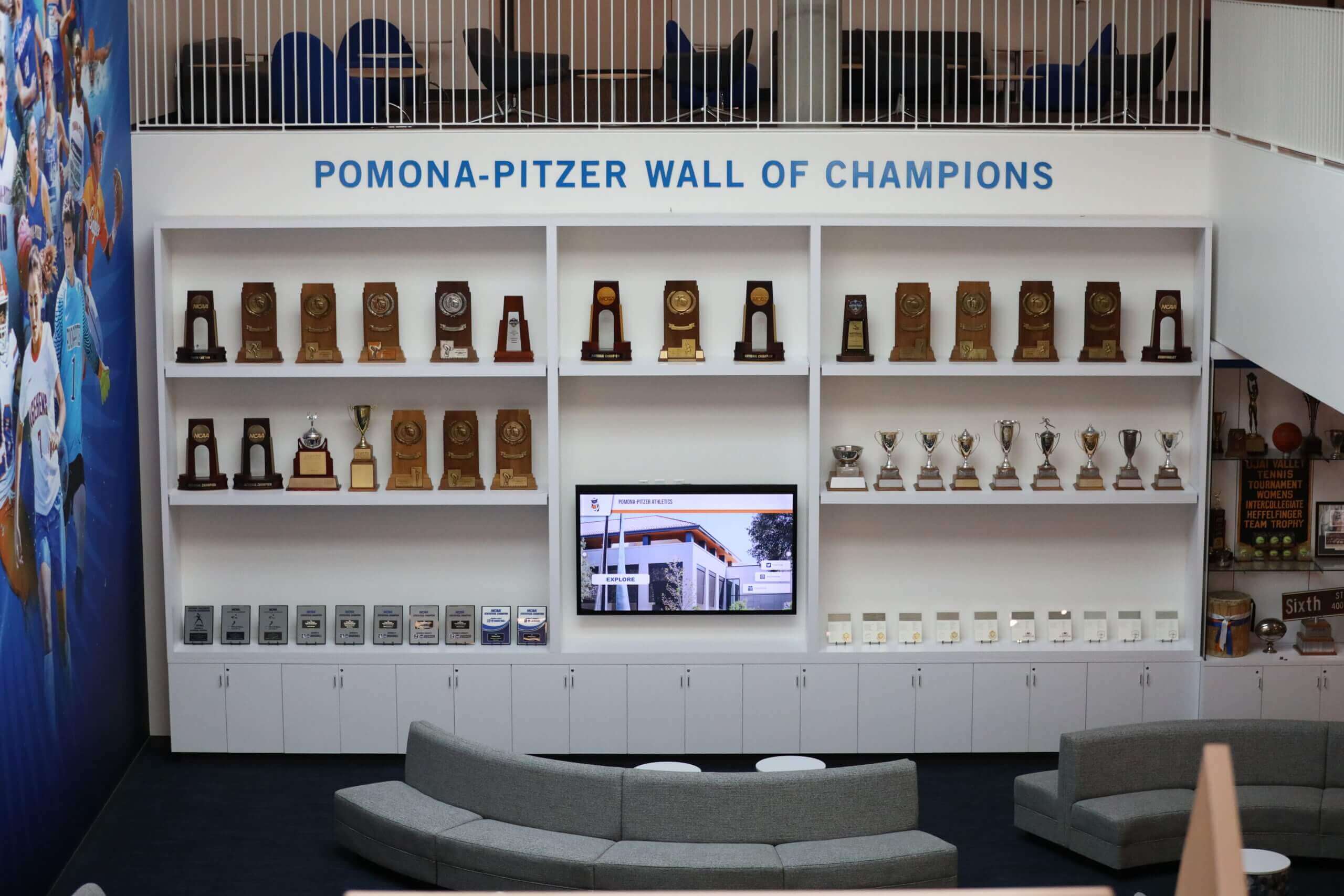
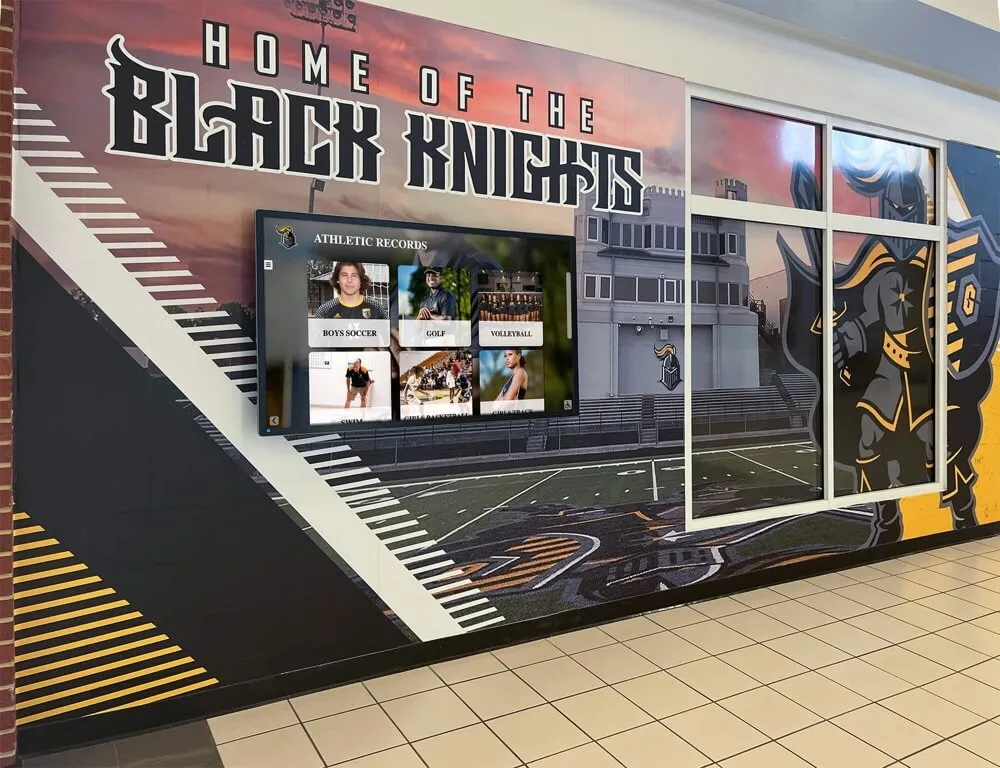
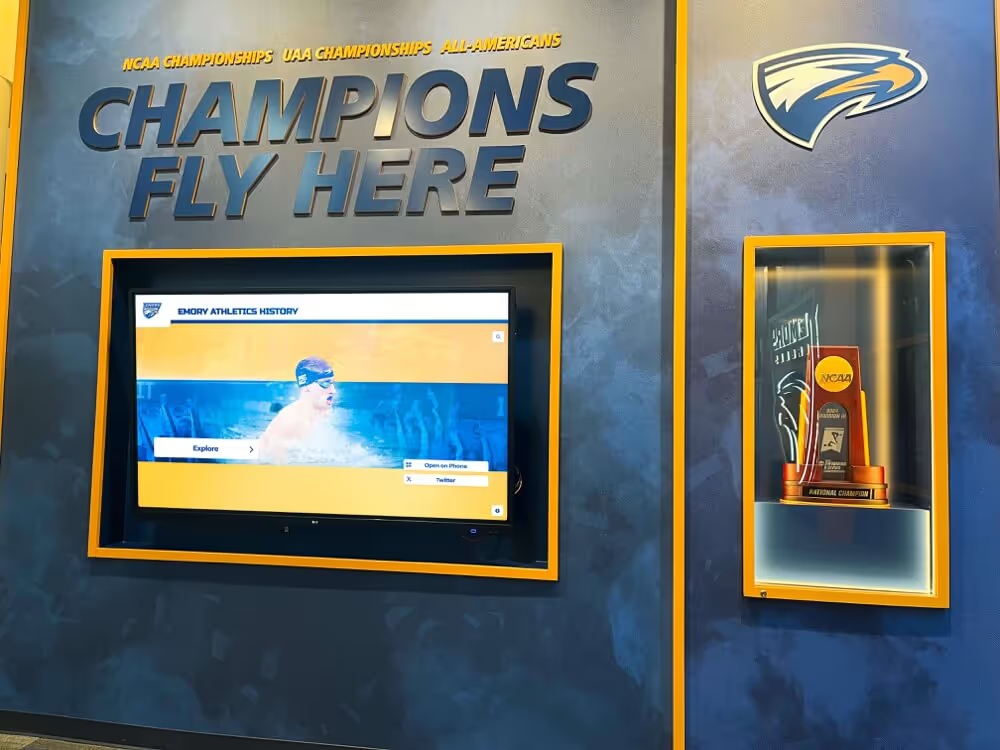
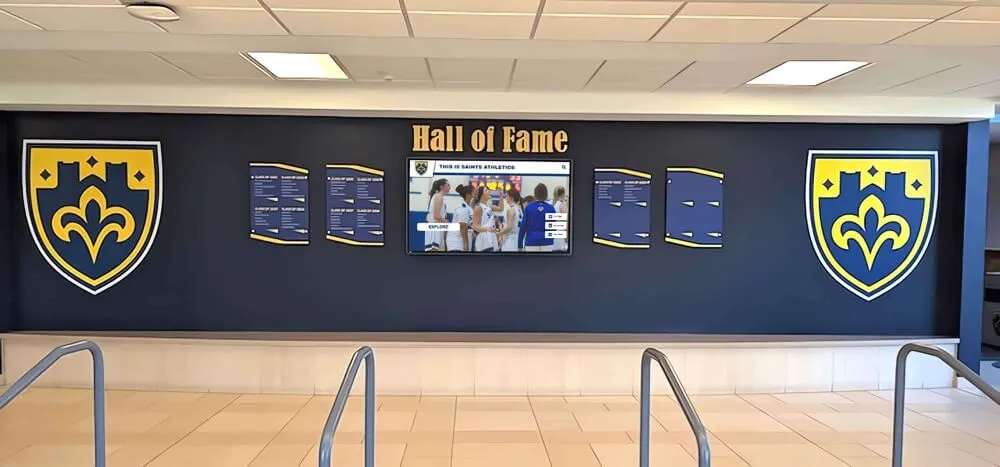
Dedicated recognition spaces create environments appropriate for award ceremony celebrations and ongoing achievement visibility
Creative and Performing Arts Recognition
Celebrating excellence in artistic expression across visual arts, music, theater, and creative pursuits.
Visual Arts Achievement
Recognition for artistic talent and creative expression:
- Portfolio Excellence Awards: Comprehensive recognition for sustained artistic development
- Juried Show Selections: Awards for artwork selected for competitive exhibitions
- Scholarship Art Awards: Recognition of college-bound artists receiving artistic scholarships
- Department Achievement Awards: Top student recognition from visual arts faculty
- Medium-Specific Recognition: Awards in painting, sculpture, photography, digital arts, ceramics
Music Excellence
Celebrating instrumental, vocal, and musical composition achievement:
- All-State Music Honors: Recognition for selection to all-state band, orchestra, or choir through competitive auditions
- Solo and Ensemble Superior Ratings: Awards for exceptional individual or small group performances
- Musical Leadership: Recognition for section leaders, drum majors, student conductors
- Music Department Scholar: Highest music student achievement awards
- Music Competition Success: Recognition for competition placements and awards
Explore music recognition in all-state musician recognition guide with comprehensive celebration strategies.
Theater and Performing Arts
Honoring dramatic performance, technical theater, and production contributions:
- Outstanding Performance Awards: Recognition for lead and supporting roles in productions
- Technical Theater Excellence: Awards for lighting, sound, set design, stage management
- Drama Competition Recognition: Success at one-act play competitions, individual acting events
- Theater Leadership: Student director, producer, or production manager recognition
- Thespian Society Honors: Recognition within International Thespian Society achievement levels
Creative Writing and Journalism
Celebrating written expression and publication achievement:
- Writing Competition Awards: Recognition for essay contests, poetry competitions, short story awards
- Publication Achievement: Awards for work published in literary magazines or journals
- Journalism Excellence: Recognition for newspaper, yearbook, broadcast journalism contributions
- Editorial Leadership: Editor-in-chief and section editor recognition
Career and Technical Education Recognition
Acknowledging achievement in vocational programs preparing students for career pathways.
Industry Certification Achievement
Recognition for completing professional certifications:
- Technical Certification Completion: Awards for achieving industry-recognized credentials in areas like automotive, construction, healthcare, information technology
- Apprenticeship Program Success: Recognition for completing registered apprenticeship programs
- Professional Skills Validation: Awards demonstrating career-ready competencies
CTE Competition Success
Celebrating competitive achievement in career-focused contests:
- SkillsUSA Recognition: State and national competition placements
- FBLA/DECA/FCCLA Awards: Business and marketing competition success
- FFA Achievement: Agricultural education competition recognition
- Technology Student Association Awards: Engineering and technology competition placements
Learn FBLA recognition approaches in FBLA awards recognition guide with display strategies.
Senior Superlatives and Class Recognition
Peer-nominated awards celebrating diverse qualities and personalities within graduating classes.
Traditional Superlatives
Time-honored peer recognition categories:
- Most School Spirit
- Best Dressed
- Class Clown
- Most Athletic
- Most Likely to Succeed
- Best Smile
- Most Talented
Modern Recognition Categories
Contemporary additions reflecting current student culture:
- Most Likely to Change the World
- Social Media Influencer
- Most Likely to Win an Oscar/Grammy/Nobel Prize
- Biggest Heart
- Future Entrepreneur
- Most Adventurous
Senior superlatives provide lighthearted recognition ensuring every senior receives acknowledgment while creating memorable class bonding experiences complementing more formal achievement awards.
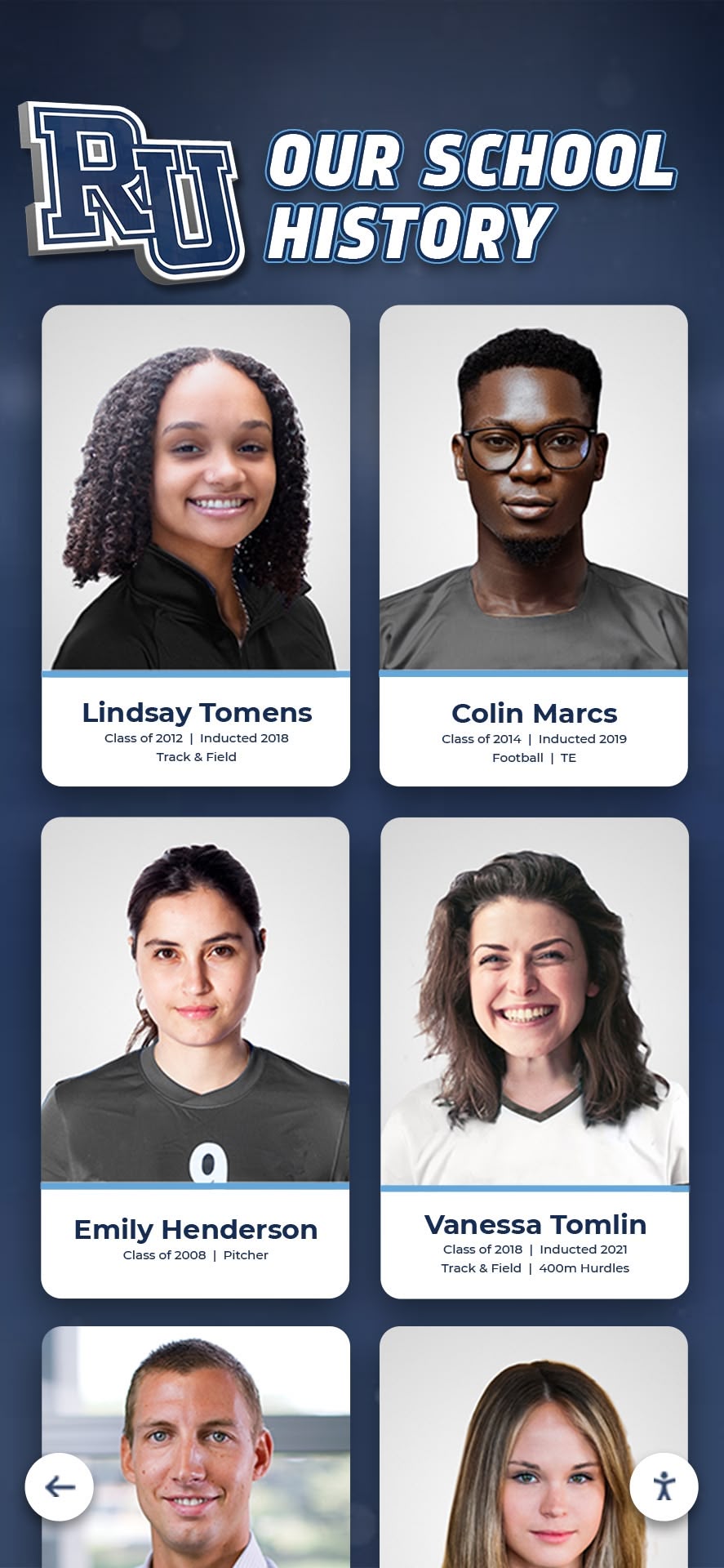
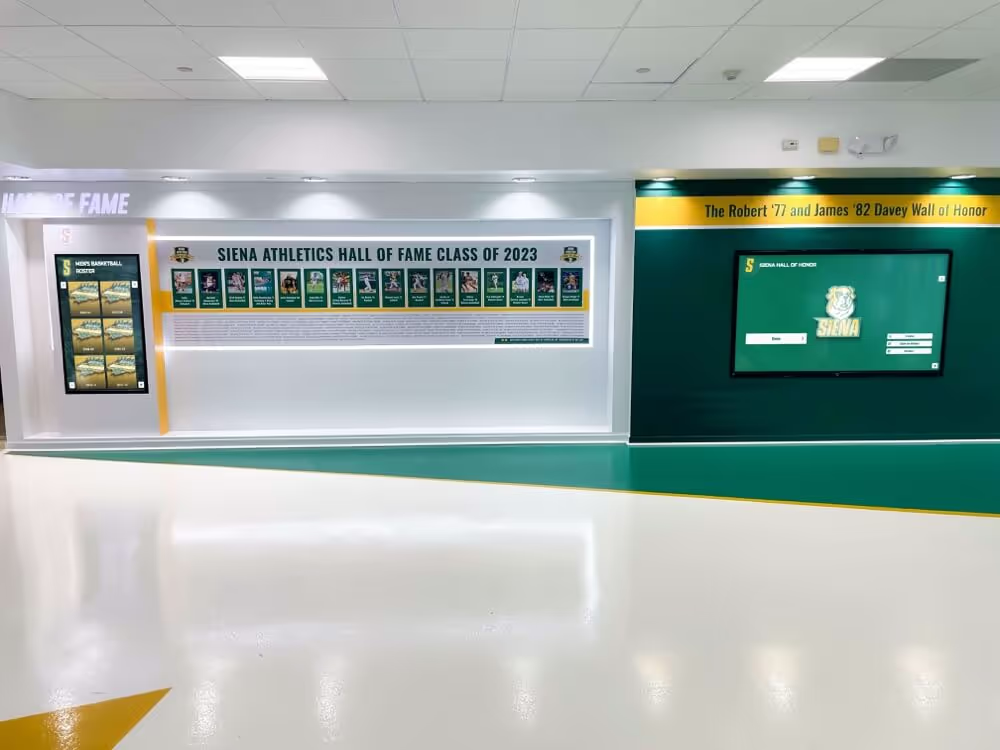
Comprehensive recognition systems celebrate achievement across all categories ensuring every deserving student receives appropriate visibility
Planning Effective Award Ceremonies
Well-structured ceremonies balance thorough recognition with maintained engagement, ensuring appropriate celebration without exhausting audiences through excessive length or monotonous presentations.
Ceremony Structure and Format
Timing Considerations
Optimal ceremony length typically ranges 60-75 minutes maximum before audience attention significantly diminishes:
- Opening remarks and context: 3-5 minutes
- Academic awards: 15-20 minutes
- Athletic recognition: 15-20 minutes
- Arts and creative achievement: 10-15 minutes
- Character, leadership, service: 10-15 minutes
- Special recognitions and closing: 5-10 minutes
Schools should carefully prioritize which awards receive formal ceremony recognition versus display-only acknowledgment or separate departmental ceremonies to maintain appropriate pacing.
Presentation Approaches
Effective award presentations include these elements:
Faculty Introduction: Teachers or coaches who worked closely with recipients provide context about achievements, explaining significance and sharing personal observations about dedication and growth demonstrated throughout the year. These introductions personalize recognition while educating audiences about what students accomplished.
Brief Achievement Descriptions: Before revealing names, presenters describe specific accomplishments building anticipation while ensuring clarity about what recognition represents. This approach prevents ceremonies from becoming simple name reading while providing context honoring achievements appropriately.
Stage Recognition: Recipients walk to stage area for personal acknowledgment, receiving physical awards (certificates, medals, plaques, books) while audiences provide applause celebrating achievements. This visible recognition creates memorable moments for students and families while demonstrating institutional respect for accomplishments.
Photography Opportunities: Designated areas with appropriate lighting and backgrounds enable family photos preserving memories while maintaining ceremony flow. Some schools incorporate brief photo pauses after each category before proceeding to next recognition area.
Award Selection Processes
Transparent, consistent selection approaches strengthen program credibility and fairness perceptions.
Academic Award Criteria
Objective academic awards rely primarily on measurable metrics:
- GPA calculations using standardized institutional formulas
- Class rank determinations based on weighted or unweighted systems
- Standardized test scores from official reports
- Honor society qualification based on published requirements
Department awards may incorporate faculty selection considering class contribution, intellectual curiosity, improvement trajectory, and demonstrated subject passion beyond simple grade performance.
Athletic Award Selection
Athletic recognition typically combines:
- Statistical performance and competitive results (objectively measured achievements)
- Coach evaluation of work ethic, team contribution, leadership
- All-conference and all-state selections (external validation)
- Career milestones and record-breaking performances (objective thresholds)
Team-specific awards (MVP, most improved, coaches’ award) rely on coaching staff professional judgment based on season-long observation.
Character and Leadership Recognition
Subjective awards benefit from structured nomination and selection:
- Faculty nominations with written justification explaining why students deserve recognition
- Selection committees reviewing nominations ensuring consistent standards
- Published criteria defining characteristics and evidence required
- Multiple staff perspectives preventing individual bias
Transparent processes with clear criteria minimize perception of favoritism while enabling thoughtful selection recognizing genuinely deserving students.
Managing Ceremony Logistics
Operational planning ensures smooth ceremonies honoring students appropriately.
Venue Selection
Ceremonies should occur in settings communicating importance:
- Main auditorium providing appropriate capacity and professional environment
- Quality sound system ensuring all attendees hear recognition clearly
- Stage areas enabling visible recognition from all seating
- Appropriate lighting for presentations and photography
- Climate control creating comfortable environment
- Accessible facilities meeting ADA requirements
Scheduling Considerations
Timing affects attendance and participation:
- Evening ceremonies enable family attendance without work conflicts
- Spring timing (late May) allows recognition before graduation ceremonies
- Avoiding conflicts with major school events, standardized testing, championship competitions
- Adequate advance notice enabling family planning (3-4 weeks minimum)
Program and Recognition Materials
Professional printed programs serve multiple purposes:
- Comprehensive award listing documenting all recipients
- Achievement descriptions providing context
- Family keepsakes preserving memories
- Reference for pronunciation of student names
- Sponsor recognition when appropriate
Some schools provide digital programs accessible via QR codes or school websites, complementing or replacing printed versions while reducing costs and environmental impact.
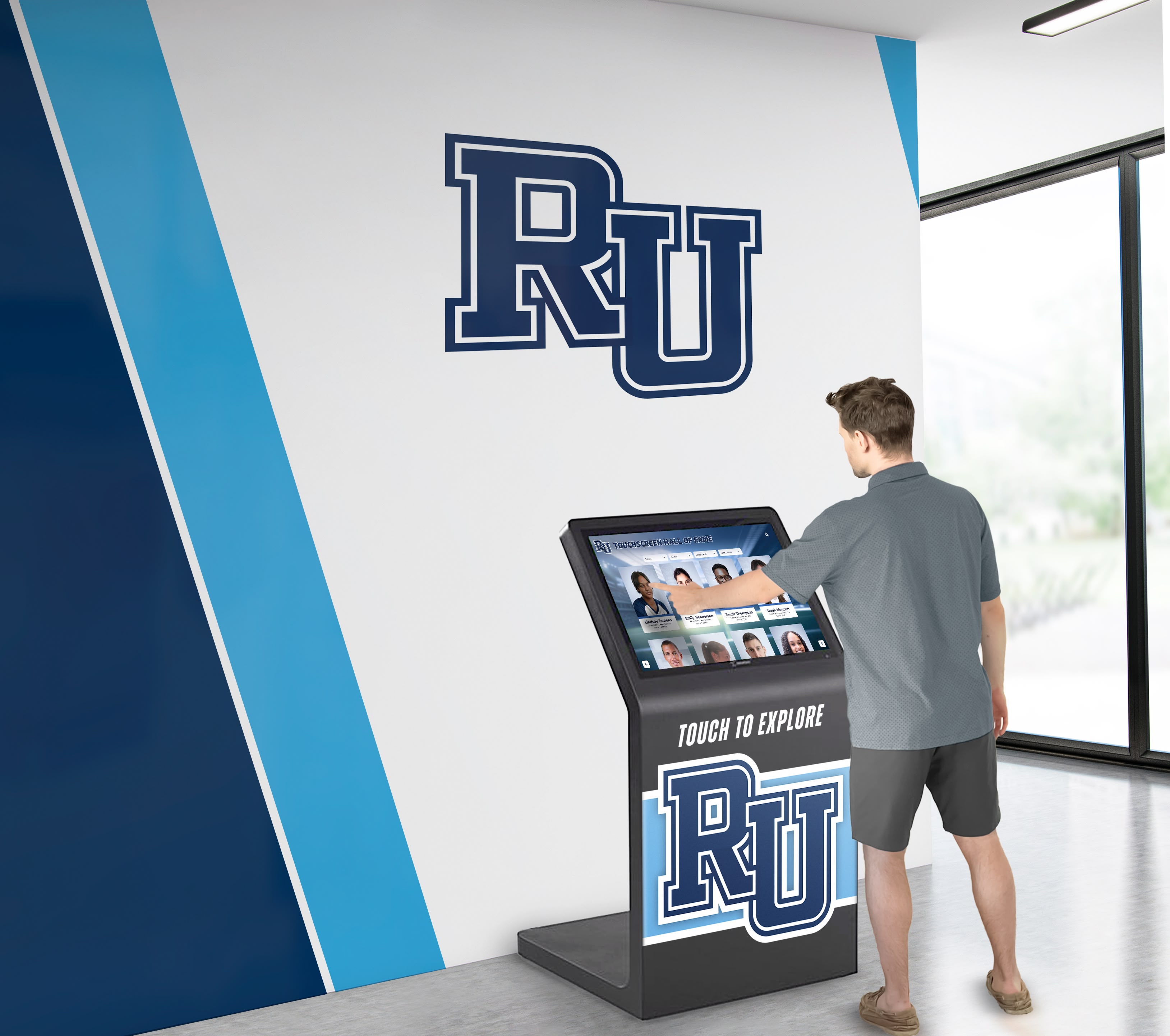
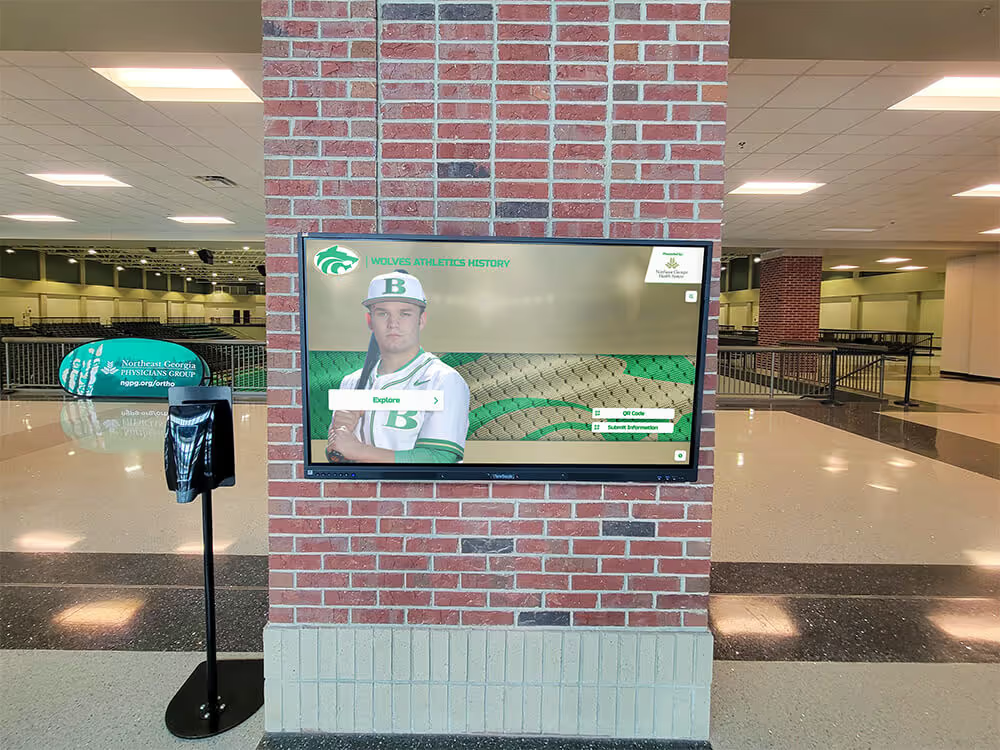
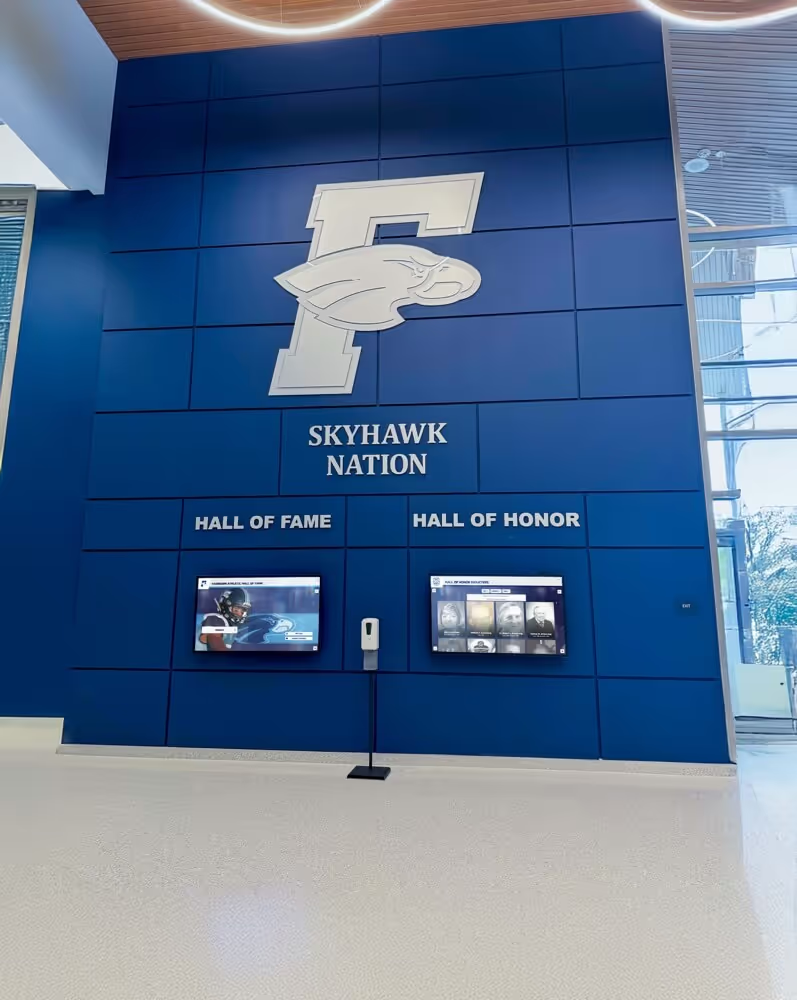
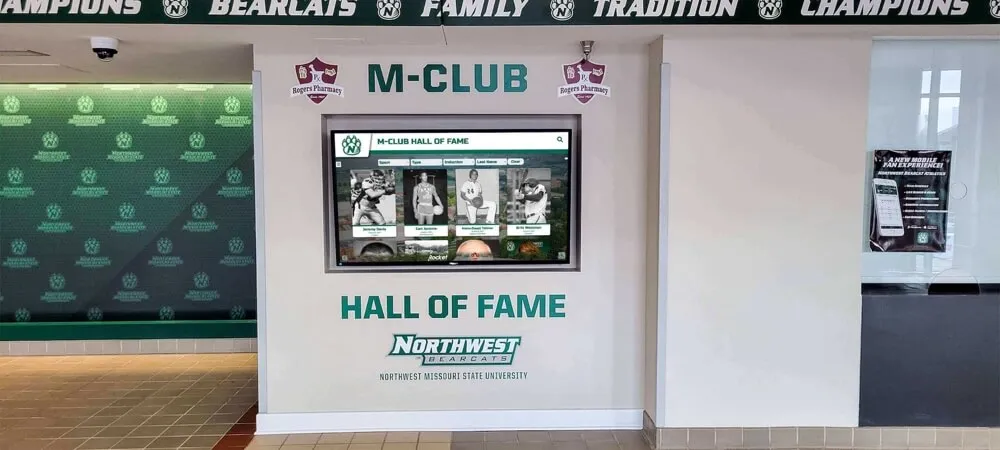
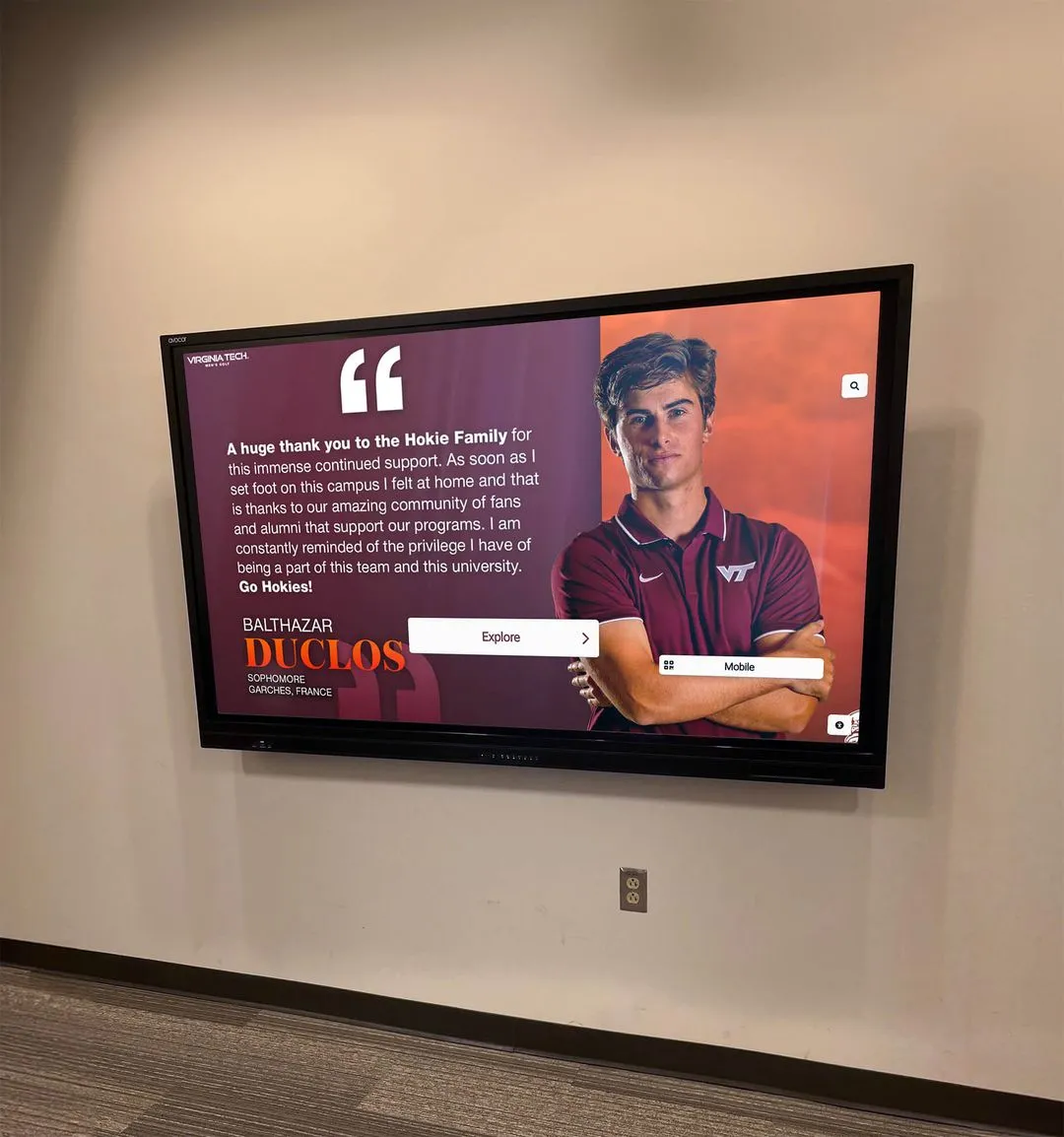
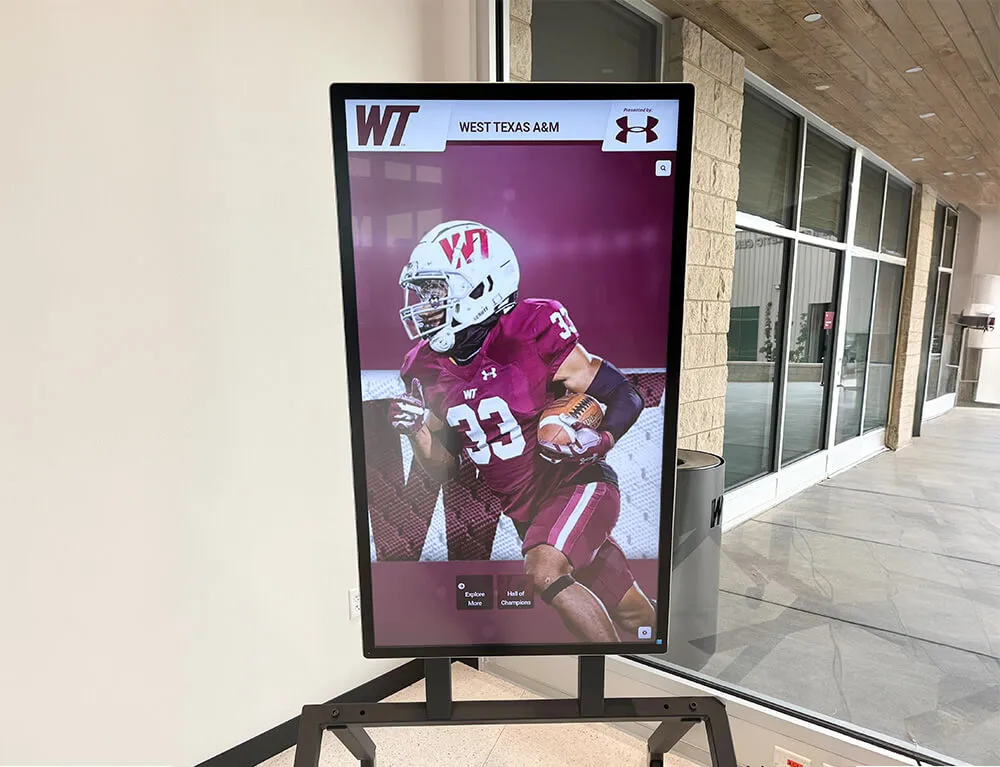
Interactive award displays extend recognition beyond ceremony time limits enabling comprehensive achievement celebration year-round
Implementing Digital Award Recognition Displays
Traditional trophy cases face fundamental capacity limitations as active programs generate dozens of awards annually while physical space remains constant. Digital recognition displays eliminate these constraints while creating engaging experiences impossible with static physical approaches.
Benefits of Digital Award Systems
Modern recognition platforms solve persistent challenges schools face with traditional display methods.
Unlimited Recognition Capacity
Physical trophy cases typically accommodate 10-15 years of awards before reaching capacity, forcing difficult decisions about which achievements deserve visibility and which must go to storage. Solutions like Rocket Alumni Solutions provide unlimited digital space enabling schools to:
- Display comprehensive achievement across all programs, years, and categories without removal decisions
- Preserve complete institutional award history rather than edited highlights
- Add new recipients immediately without waiting for physical space
- Provide equal recognition opportunity across academics, athletics, arts, and character awards
- Archive historical achievements that might otherwise be lost as older displays are removed
This unlimited capacity fundamentally changes recognition philosophy from exclusive “limited space forces choices” models to inclusive “celebrate everyone deserving” approaches that strengthen rather than divide school communities.
Rich Multimedia Storytelling
Traditional plaques communicate minimal information—typically just names, years, and basic award titles. Digital platforms enable comprehensive storytelling appropriately honoring achievements:
- Photo Galleries: Multiple images showing recipients throughout achievement journeys, not just single static headshots
- Video Highlights: Clips preserving defining moments like championship performances, outstanding presentations, leadership in action
- Complete Achievement Details: Full statistics, competition results, project descriptions, comprehensive context impossible with physical plaques
- Personal Narratives: Recipient reflections about dedication required, challenges overcome, future aspirations inspired
- Historical Context: Connections to broader institutional moments and traditions placing individual achievements within larger stories
This narrative depth creates emotional resonance impossible with simple name listings, strengthening connections between current students and institutional legacy while inspiring future achievement through concrete examples.
Immediate Updates and Maintenance Efficiency
Traditional recognition requires physical modification for every update, creating delays, costs, and administrative burden. Cloud-based digital platforms transform update processes:
- Real-Time Recognition: Awards added within hours or days of occurrence rather than weeks or months waiting for plaque production
- Remote Management: Content updates completed from any internet-connected device without requiring physical facility access
- Error Corrections: Mistakes fixed immediately when discovered rather than requiring expensive re-engraving
- Enhanced Content: Better photos, additional information, or video highlights added as materials become available
- Seasonal Featured Content: Highlighted recognition rotated without physical display changes
Schools implementing digital systems report 75-90% reductions in time spent maintaining recognition compared to traditional approaches requiring custom plaque ordering, installation coordination, and physical space management.
Extended Reach Beyond Campus
Digital recognition extends visibility far beyond those physically present at school:
- Web Access: Mobile-responsive platforms enabling families, alumni, and community members worldwide to explore award recognition
- Social Sharing: Recipients sharing achievements on personal social media with professional presentation enhancing pride
- Email Notifications: Automated announcements when students receive recognition ensuring families learn about achievements promptly
- QR Code Integration: Physical displays connecting to web-based detailed profiles extending information beyond what fits on screens
This extended accessibility amplifies recognition value by reaching distant family members, engaging alumni reconnecting with current programs, and connecting prospective students to school culture before ever visiting campus.
Selecting Digital Recognition Platforms
Purpose-built recognition systems offer significant advantages over generic digital signage adapted for award displays.
Essential Platform Capabilities
Quality digital award platforms should provide:
- Intuitive Content Management: Browser-based interfaces requiring no technical expertise or special software enabling busy administrators to manage recognition efficiently
- Recognition-Specific Templates: Pre-configured layouts for academic, athletic, arts, character awards matching different recognition categories appropriately
- Unlimited Content Storage: Cloud-based media libraries supporting thousands of photos and videos without capacity constraints
- Search and Filter Functions: Enabling visitors to find specific recipients, browse by category, or explore particular years instantly
- Mobile Web Access: Responsive design ensuring perfect display on smartphones and tablets extending recognition reach
- Analytics and Engagement Tracking: Usage data revealing how visitors interact with content informing optimization decisions
- Privacy Controls: Appropriate permissions and consent management for student information
- Reliable Vendor Support: Responsive technical assistance from teams understanding unique institutional recognition needs
Hardware Specifications
Commercial-grade touchscreen displays appropriate for institutional environments require:
- Display Size: 43-55 inches for smaller spaces; 65-75 inches for large lobbies and high-traffic areas
- Touch Technology: Capacitive or infrared multi-touch providing responsive interaction without ongoing calibration
- Commercial Rating: Displays designed for 16-24 hour daily operation unlike consumer televisions failing in institutional settings
- Resolution: Minimum 1080p (1920x1080); 4K (3840x2160) preferred for larger displays ensuring clarity
- Durability: Tempered glass and vandal-resistant construction appropriate for public school environments
- Warranty Coverage: Minimum 3-year support appropriate for institutional installations
Professional installation including secure mounting, appropriate viewing heights, ADA-compliant placement, anti-glare positioning, and network connectivity ensures optimal long-term performance.
Strategic Display Placement
Location significantly impacts award recognition visibility and engagement.
High-Impact Placement Locations
Optimal display positions include:
- Main Building Entrance: Ensuring all students, staff, families, and visitors encounter award recognition daily creating consistent cultural reinforcement
- Athletic Facility Lobbies: Celebrating competitive achievement in contexts where athletics receives natural attention
- Cafeteria and Commons Areas: Reaching students during informal time when peer influence impacts behavior and aspirations
- Performing Arts Centers: Recognizing creative achievement where arts receive primary focus
- Library or Media Centers: Encouraging extended exploration in environments supporting thoughtful engagement
- Administrative Corridors: Reaching families during parent meetings and campus visits
Multiple distributed locations reach diverse audiences while demonstrating comprehensive institutional commitment to celebrating achievement across all programs.
Creating Recognition Destinations
Most effective implementations transform areas into recognition destinations:
- Comfortable seating encouraging extended exploration beyond brief glancing
- Coordinated graphics and branding creating cohesive aesthetics
- Integration with traditional trophy cases combining physical and digital displays
- Appropriate lighting highlighting recognition areas
- Clear wayfinding directing visitors to award recognition spaces
These integrated approaches signal institutional commitment to recognition, encouraging engagement while creating visually impressive spaces strengthening community pride.
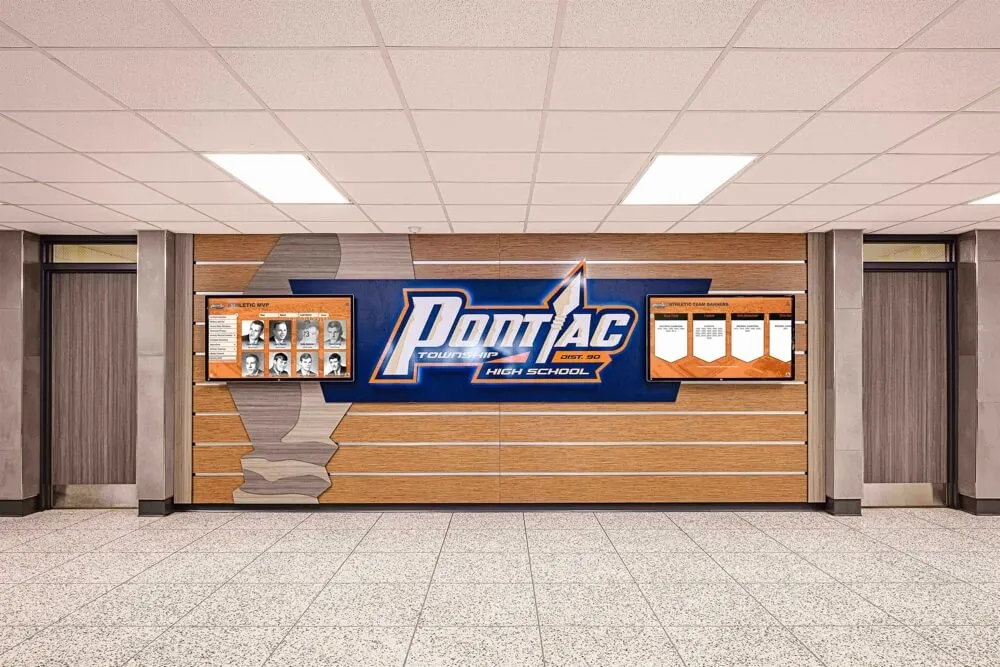
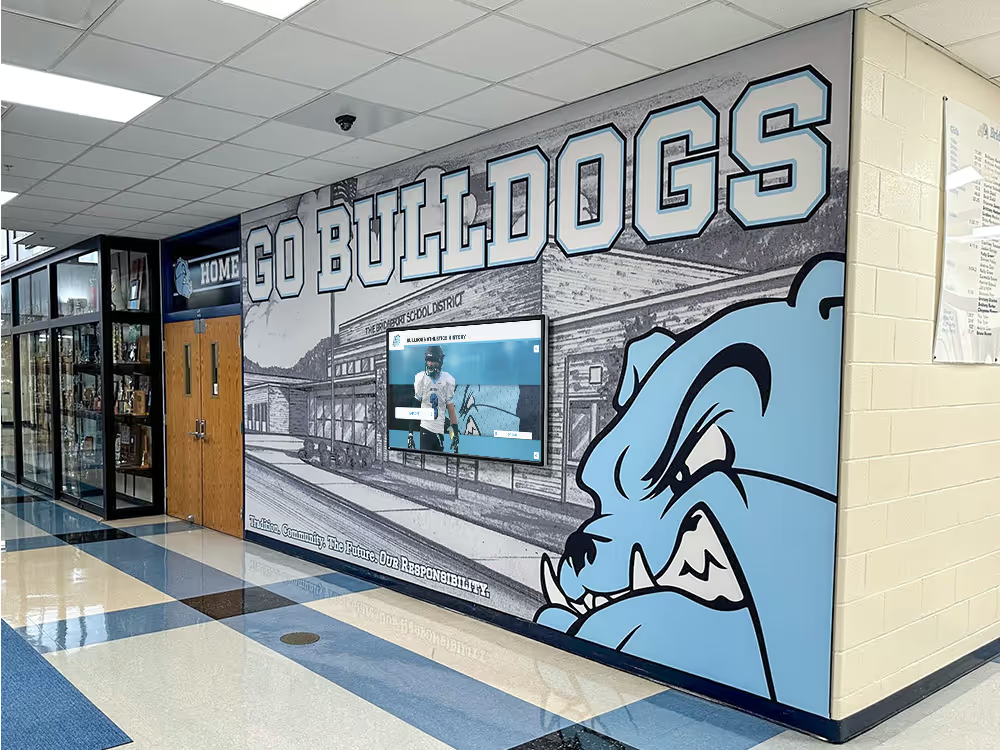
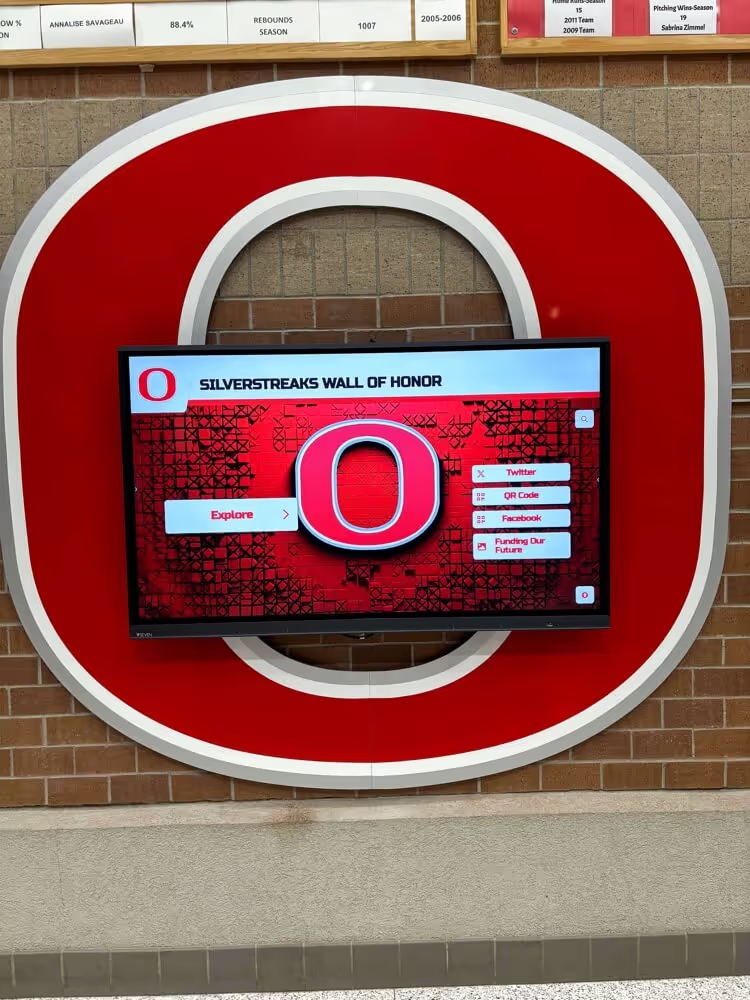
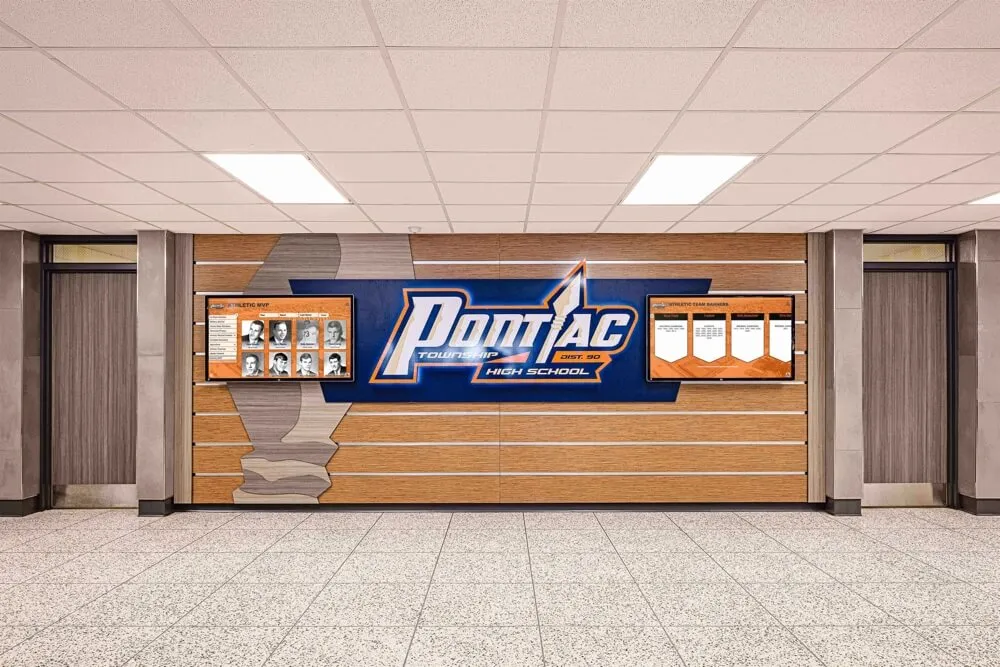
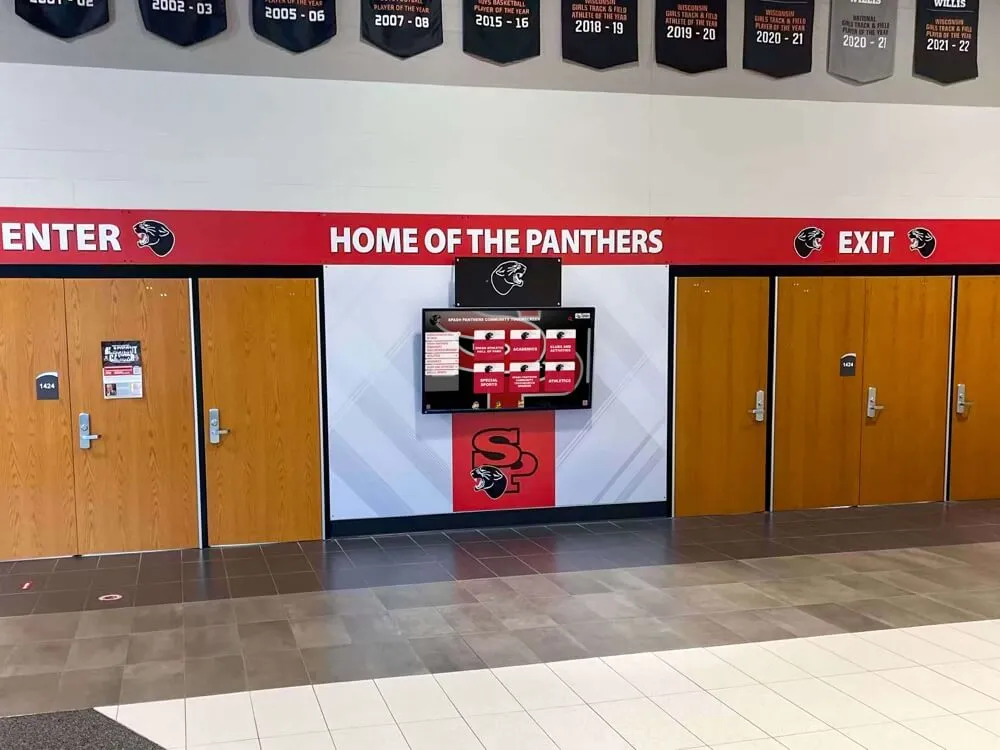
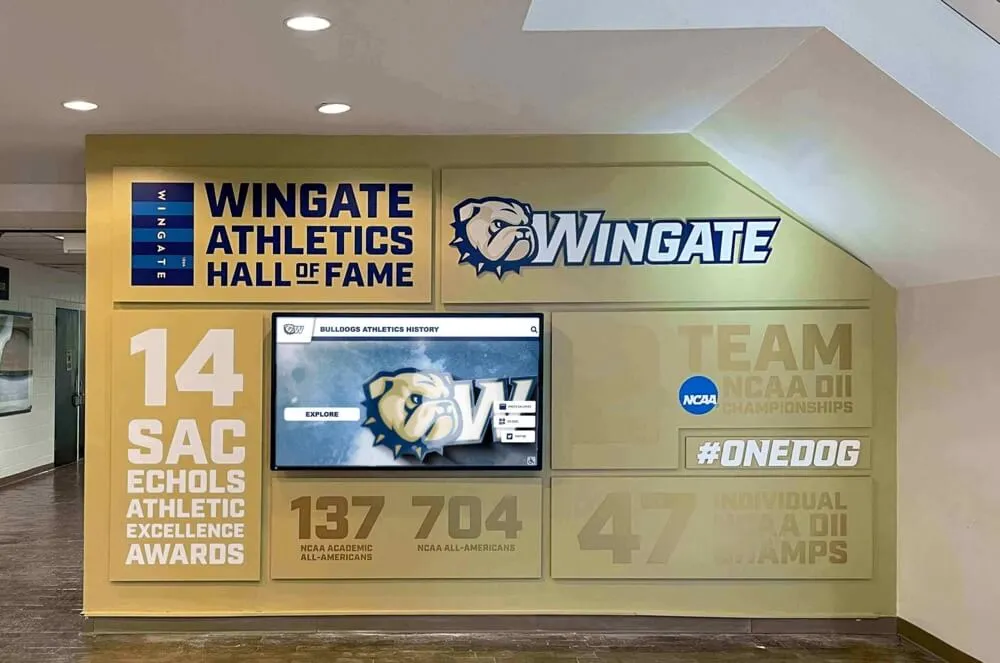
Strategic hallway placement ensures award recognition receives daily visibility reinforcing institutional values and motivating student achievement
Content Development for Award Recognition
Technology provides infrastructure, but compelling content determines whether recognition achieves intended celebration and motivational objectives.
Creating Award Recipient Profiles
Comprehensive individual profiles honor achievements appropriately while providing inspiration.
Essential Profile Elements
Complete award recognition should include:
- High-Quality Photography: Professional or high-resolution photos showing recipients appropriately
- Award Identification: Clear description of specific recognition received with year and category
- Achievement Context: Explanation of what student accomplished earning recognition including statistics, project descriptions, competitive results, or contribution details
- Personal Information: Grade level, academic focus, activities, future plans where appropriate and permitted
- Supporting Multimedia: Video clips, photo galleries, or additional materials enriching stories
- Faculty/Coach Reflections: Brief quotes from mentors providing perspective on dedication and growth
Writing Style Guidelines
Effective profile content:
- Celebrates achievements factually without exaggeration
- Provides specific details rather than generic praise
- Explains significance in accessible language for audiences unfamiliar with specific activities
- Balances individual recognition with team and institutional context
- Maintains consistent tone across all profiles
- Respects privacy while honoring achievements publicly
Organizing Award Recognition Content
Well-structured organization enables discovery across different visitor interests.
Navigation Approaches
Intuitive organization accommodates diverse exploration patterns:
- Browse by Year: Chronological exploration of awards across academic years
- Category Filtering: Separate academic, athletic, arts, character, and other award types
- Department or Sport Navigation: Specific exploration within particular programs
- Alphabetical Directory: Finding specific recipients quickly by name
- Search Functionality: Instant location of recipients matching criteria
- Featured Rotation: Regularly updated highlighted profiles ensuring all recipients receive periodic visibility
This multi-faceted organization ensures all visitors can explore recognition matching their specific interests regardless of what brings them to displays.
Maintaining Current and Historical Content
Systematic management keeps recognition relevant and comprehensive.
Immediate Award Recognition Workflow
As end-of-year awards are announced:
- Data Collection: Gather recipient information, achievement details, photos from award ceremonies
- Content Development: Create profiles with descriptions, multimedia, and context within 1-2 weeks while ceremonies remain recent
- Quality Review: Verify accuracy, check spelling, confirm appropriate permissions
- Publication: Update displays immediately making recognition visible to entire community
- Notification: Send email announcements directing recipients and families to recognition profiles
This rapid workflow ensures awards receive visibility while still timely and relevant, maximizing motivational impact and celebration value.
Historical Archive Expansion
Many schools systematically expand historical recognition:
- Digitizing past award programs and records
- Researching yearbooks and institutional archives
- Collecting photos from historical files or alumni contributions
- Creating profiles for notable past recipients
- Building comprehensive multi-decade award archives
This historical depth demonstrates sustained institutional commitment while connecting current students to traditions spanning generations.

Responsive platforms enable award recognition access across all devices extending celebration reach to families and community members worldwide
Best Practices for Sustainable Award Programs
Long-term success requires systematic management beyond initial implementation.
Establishing Clear Responsibilities
Defined roles ensure reliable program continuation:
- Award Coordinator: Overall program oversight ensuring comprehensive recognition across departments
- Department Representatives: Faculty managing nominations and selections within specific areas
- Ceremony Planning Team: Logistics coordination for formal recognition events
- Display Content Manager: Maintaining current digital recognition with timely updates
- Technical Support Contact: Troubleshooting issues with display hardware or software platforms
Written documentation of responsibilities, processes, and timeline expectations prevents confusion while enabling smooth transitions as personnel change.
Maintaining Equity and Inclusion
Thoughtful practices ensure recognition opportunities exist across diverse student populations.
Balanced Recognition Distribution
Regular assessment examining:
- Whether recognition is distributed appropriately across academic, athletic, arts, and character categories
- If awards reach students across different grade levels, programs, and demographic groups
- Whether selection processes operate consistently without bias
- If criteria enable recognition for diverse achievement types and student backgrounds
This ongoing evaluation identifies opportunities to expand recognition ensuring comprehensive celebration of diverse excellence.
Multiple Pathways to Recognition
Effective programs provide:
- Absolute achievement awards recognizing high performance
- Growth and improvement recognition celebrating significant development
- Effort and character awards honoring dedication beyond outcomes
- Specialized recognition in diverse areas reflecting varied student strengths
This multi-dimensional approach ensures recognition opportunities exist for students with different backgrounds, abilities, and circumstances rather than exclusively celebrating those with advantages enabling certain achievement types.
Annual Program Review and Enhancement
Systematic assessment enables continuous improvement:
- Stakeholder Feedback: Surveying students, families, faculty about ceremony effectiveness, recognition comprehensiveness, display engagement
- Participation Analysis: Examining nomination patterns, selection distributions, recognition equity across programs
- Ceremony Evaluation: Assessing pacing, presentation quality, audience engagement, logistical effectiveness
- Display Analytics: Reviewing digital recognition usage patterns, popular content, engagement duration
- Comparative Review: Examining other schools’ recognition practices identifying potential enhancements
Regular review ensures programs evolve meeting changing needs while maintaining core mission of celebrating student achievement comprehensively.
Budget Planning and Sustainability
Adequate resources enable program continuation:
- Ceremony Costs: Venue, programs, physical awards, photography, reception
- Digital Platform Subscriptions: Annual cloud-based recognition system fees
- Content Development: Staff time or student assistant wages for profile creation
- Hardware Maintenance: Display upkeep and eventual replacement reserves
- Enhancement Budget: Periodic program improvements and feature additions
Schools implementing digital recognition typically find total costs comparable to or lower than traditional approaches when accounting for eliminated plaque expenses, reduced administrative time, and enhanced recognition capacity enabling comprehensive celebration.
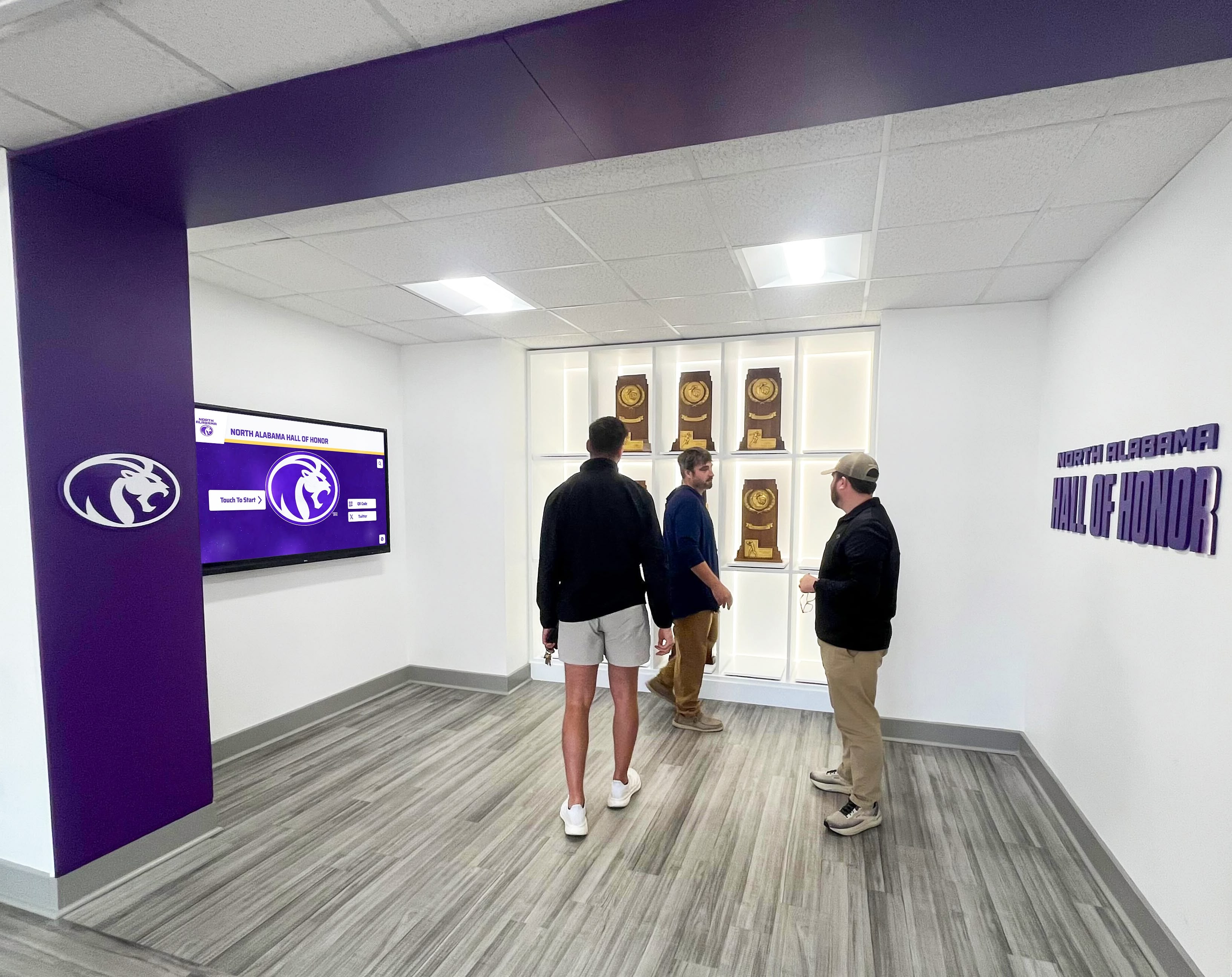
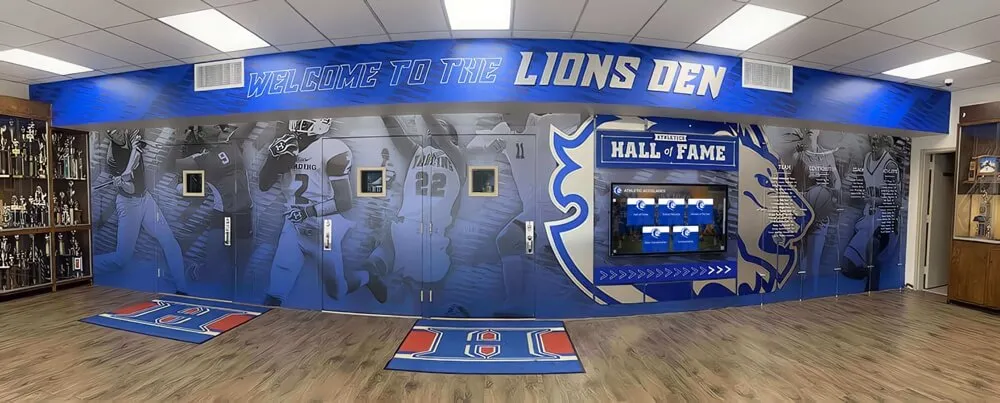
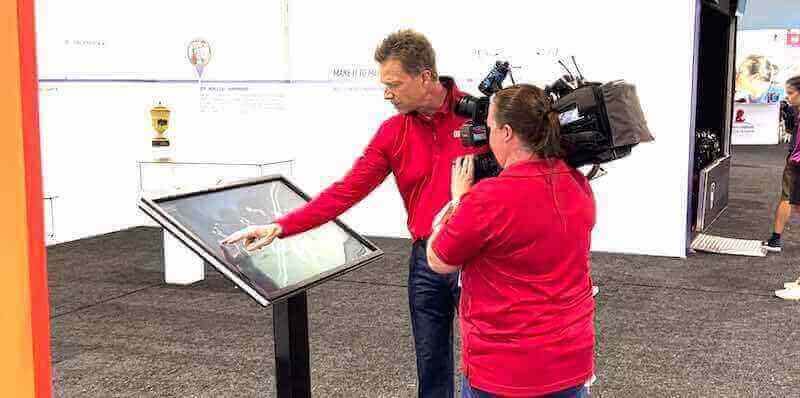
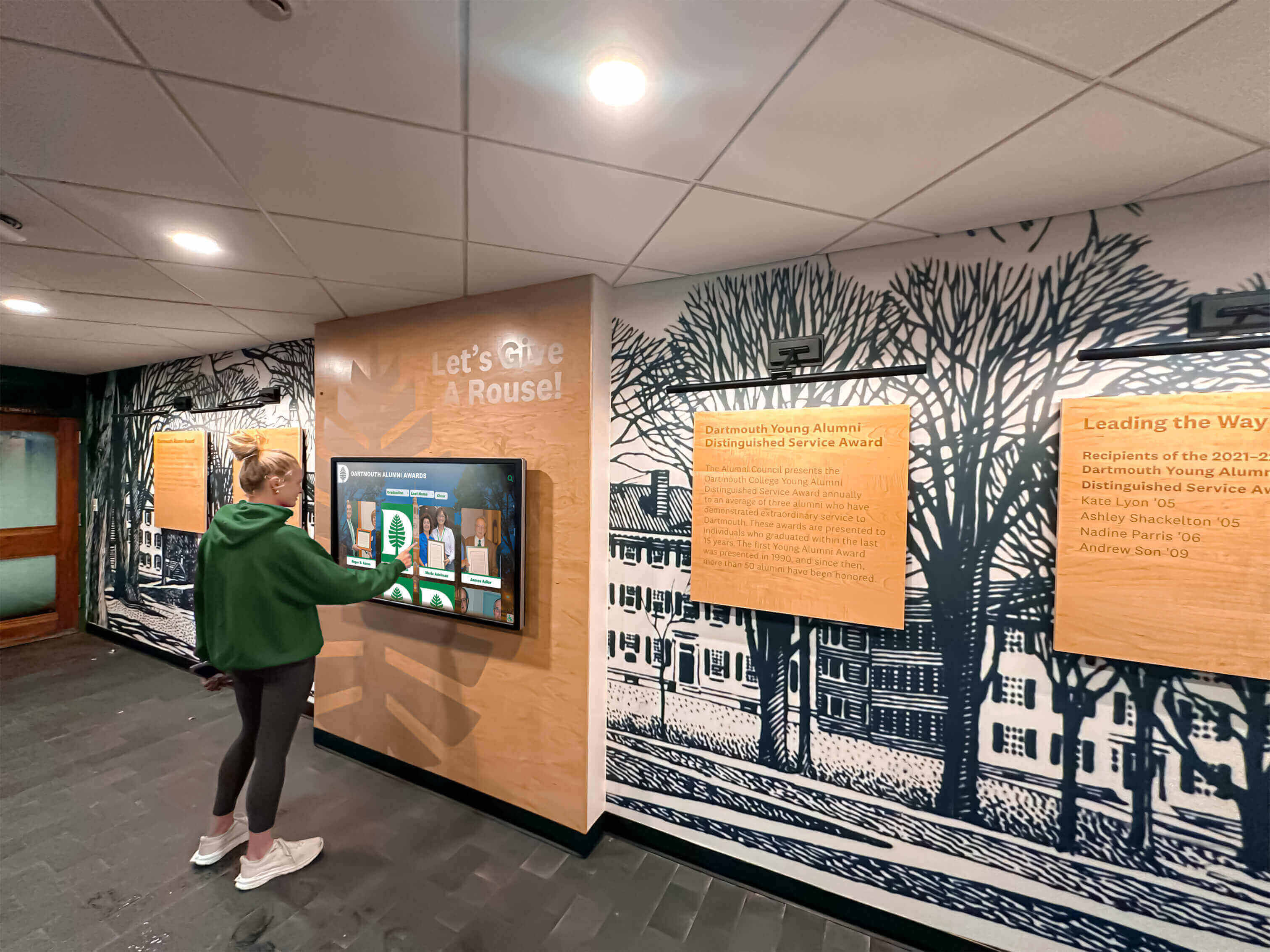
Well-designed recognition spaces create natural gathering areas where community members connect around institutional pride and shared traditions
Measuring Award Program Impact
Assessment demonstrates recognition value while identifying improvement opportunities.
Quantitative Metrics
Concrete data reveals program reach and engagement:
Ceremony Participation
- Attendance rates among award recipients and families
- Faculty and staff participation in presentations
- Community member attendance at public ceremonies
Digital Display Engagement
- Touchscreen interaction frequency showing daily usage
- Average session duration revealing engagement depth
- Most-viewed content identifying popular recognition
- Search patterns demonstrating how visitors discover awards
Web Platform Analytics
- Unique visitors exploring online recognition
- Geographic distribution showing reach beyond local community
- Social sharing frequency indicating organic promotion
- Return visitor rates demonstrating sustained interest
Qualitative Assessment
Feedback provides insights beyond numbers:
Student Perspectives
- Whether recognition is valued and motivating
- Perception of fairness and comprehensiveness
- Awareness of award opportunities and criteria
- Impact on school culture and achievement aspirations
Family Feedback
- Satisfaction with ceremony experiences
- Appreciation for recognition visibility and accessibility
- Suggestions for program improvements
- Value assigned to various recognition types
Faculty Observations
- Changes in student motivation and achievement patterns
- Effectiveness of selection and ceremony processes
- Administrative burden and sustainability
- Cultural impact on school environment
Regular assessment using both quantitative data and qualitative feedback enables continuous refinement ensuring award programs achieve intended objectives while identifying opportunities for enhancement serving students and communities better.
Conclusion: Creating Recognition Programs That Honor Every Achievement
High school end-of-year awards represent critical opportunities to celebrate diverse student excellence across academics, athletics, arts, leadership, and character while motivating continued achievement, preserving institutional traditions, and demonstrating that dedication receives appropriate recognition regardless of where achievements occur throughout school communities.
Transform Your End-of-Year Award Recognition
Discover how interactive digital displays enable comprehensive award celebration unlimited by physical space constraints while creating engaging recognition experiences inspiring students and strengthening school culture year-round.
Explore Digital Recognition SolutionsEffective award programs balance thorough recognition with maintained engagement through well-structured ceremonies, transparent selection processes ensuring fairness, and modern display approaches eliminating capacity constraints that force difficult prioritization decisions. By implementing comprehensive recognition celebrating achievement across all dimensions—from valedictorians to athletic champions to service leaders to artistic talents—schools create cultures where excellence is visible, dedication receives appropriate acknowledgment, and every deserving student finds pathways to recognition matching their unique strengths and contributions.
The strategies, structures, and digital solutions explored in this guide provide frameworks for creating award programs delivering lasting value for students and communities. From careful ceremony planning balancing thoroughness with engagement to systematic selection ensuring equity to digital recognition platforms celebrating unlimited achievements with rich multimedia storytelling, these approaches transform simple acknowledgment into meaningful celebration woven throughout school culture inspiring future excellence while honoring current achievement.
Ready to enhance your end-of-year recognition program? Explore how Rocket Alumni Solutions provides comprehensive interactive recognition systems combining professional hardware, intuitive content management, flexible award templates, and ongoing support ensuring your school celebrates every achievement while building lasting traditions connecting past excellence to future student success.
Discover additional recognition strategies in end of year banquet display guide or explore student recognition increases future success demonstrating the lasting impact of comprehensive award programs celebrating diverse student achievement throughout educational journeys.