Helmet Display Case Setup for High School Football Programs and Athletic Hall of Fame
- Home /
- Blog Posts /
- Helmet Display Case Setup for High School Football Programs and Athletic Hall of Fame
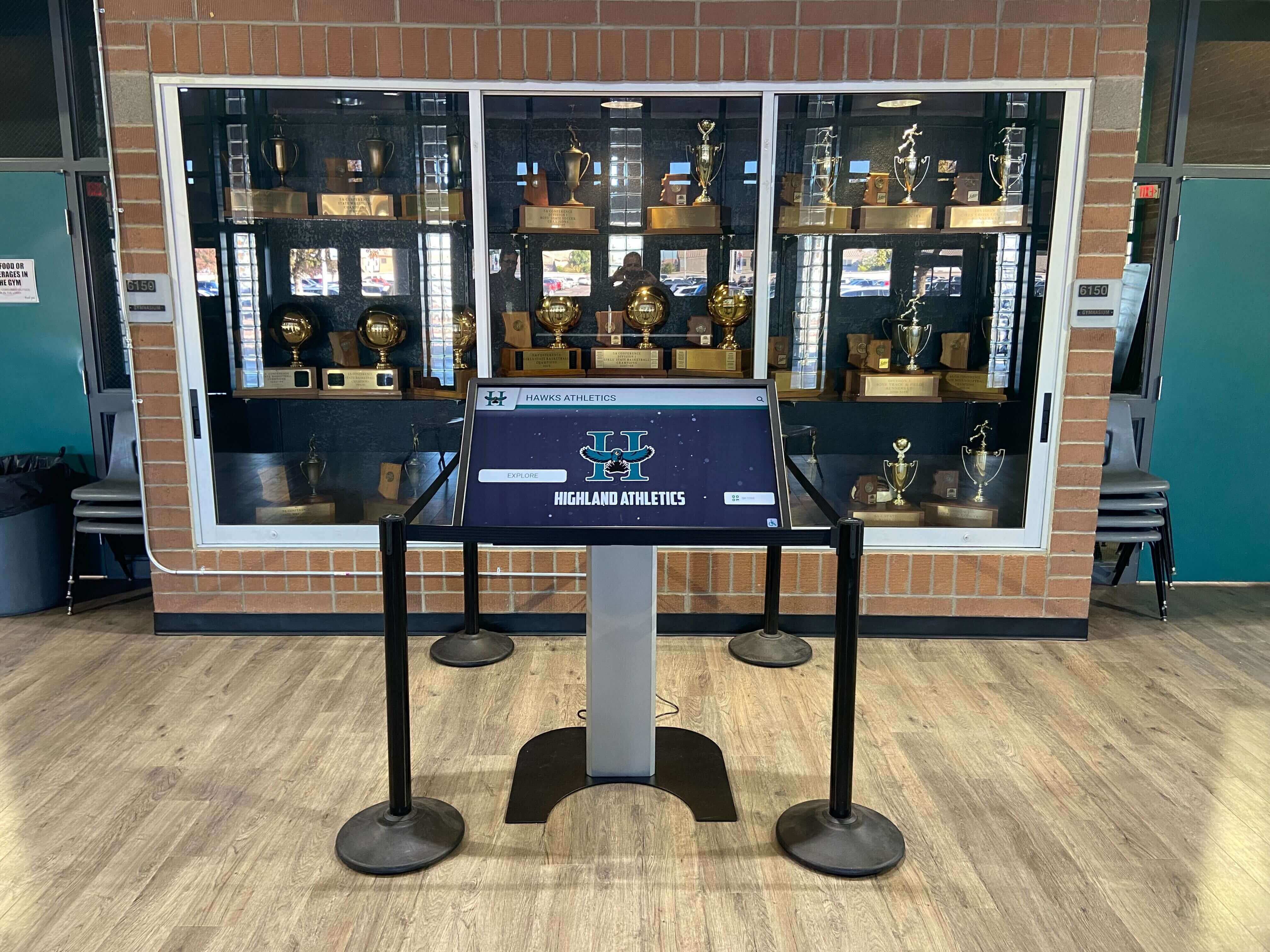
The Easiest Touchscreen Solution




Live Example: Rocket Alumni Solutions Touchscreen Display
Interact with a live example (16:9 scaled 1920x1080 display). All content is automatically responsive to all screen sizes and orientations.
Football helmets carry extraordinary significance in high school athletic programs—they represent team identity, championship seasons, legendary players, and decades of program tradition. A properly designed helmet display case transforms these iconic pieces of equipment into powerful recognition displays that inspire current athletes, honor past excellence, and create focal points for school pride throughout your facility.
Yet many athletic directors and facilities managers face common challenges: selecting display cases that protect valuable helmets while showcasing them effectively, positioning cases for maximum visibility without compromising security, organizing collections that tell coherent stories, and maintaining displays that remain impressive year after year. Additionally, space limitations often force difficult decisions about which helmets to feature and which to store away.
The most successful football programs approach helmet display case setup strategically, combining protective physical cases with complementary recognition systems that honor comprehensive athletic achievements beyond what traditional glass cases can accommodate alone.
This complete guide covers everything high school football programs and athletic departments need to know about helmet display case selection, installation, organization, and how modern schools are augmenting physical displays with digital recognition solutions that eliminate space constraints while preserving the emotional impact of helmet presentations.

Modern athletic recognition combines traditional display cases with interactive digital systems for comprehensive storytelling
Why Helmet Display Cases Matter for Football Programs
Understanding the psychological and cultural significance of helmet displays helps athletic departments design recognition systems that maximize positive impacts on program culture and community engagement.
The Unique Power of Helmet Recognition
Football helmets hold distinctive recognition value compared to other sports memorabilia:
Symbol of Program Identity
Helmets visually communicate team culture more powerfully than any other single artifact. Their display creates immediate emotional connections:
- School colors and logo designs trigger instant recognition and pride
- Helmet evolution across decades visualizes program history
- Special edition designs commemorate championship seasons or milestone games
- Uniform elements reflect coaching philosophies and program values
- Consistent visibility reinforces institutional identity throughout facilities
Research in sports psychology demonstrates that visible team symbols in athletic facilities significantly increase athlete identification with program traditions, leading to stronger commitment, improved cohesion, and enhanced performance motivation.
Tangible Connection to Excellence
Unlike photographs or plaques, helmets provide three-dimensional physical connections to legendary moments:
- Actual equipment worn during championship games
- Battle scars and wear patterns that tell competition stories
- Signature marks from legendary players or coaches
- Authentic artifacts from program-defining seasons
- Tactile reminders of sacrifice, dedication, and achievement
The physical presence of game-worn helmets creates powerful emotional responses that abstract recognition cannot replicate. Visitors to your athletic hall of fame consistently report stronger emotional engagement when viewing actual equipment rather than representations.
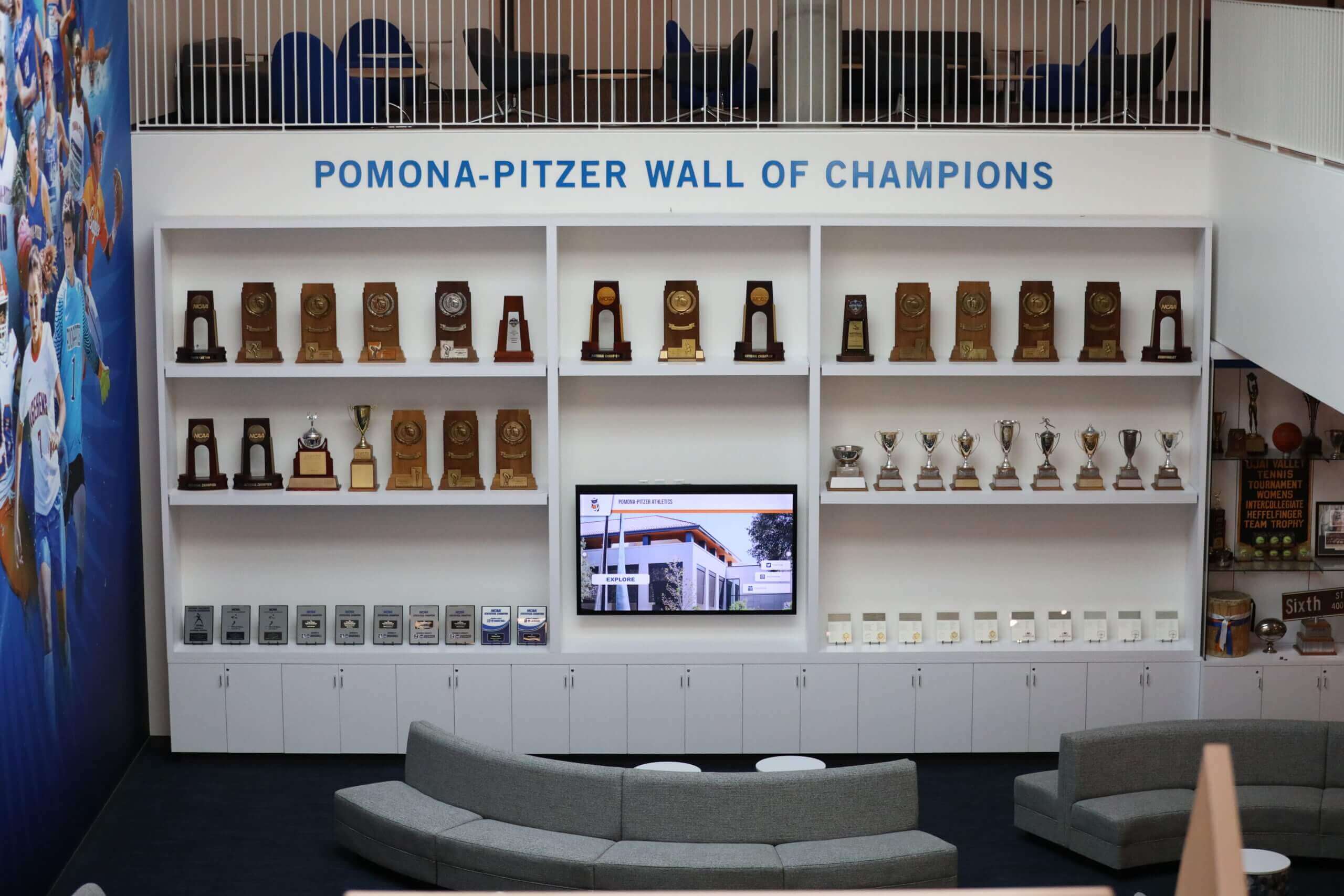
Professional recognition environments integrate multiple display types to honor athletic achievement comprehensively
Strategic Benefits of Proper Helmet Display
Well-executed helmet display cases provide numerous benefits beyond simple decoration:
Recruiting and Program Reputation
Impressive athletic displays significantly influence recruitment:
- Prospective athletes and families judge program commitment based on recognition quality
- Visible championship tradition attracts talented players seeking excellence
- Professional displays signal institutional investment in athletic programs
- Recognition quality differentiates programs in competitive recruiting landscapes
- Comprehensive displays demonstrate program history and stability
Athletic directors consistently report that facility tours showcasing impressive recognition displays positively influence athlete and family enrollment decisions, particularly when competing for top talent across school districts.
Alumni Engagement and Fundraising
Helmet displays strengthen alumni connections that drive booster support:
- Honored alumni feel valued and maintain stronger institutional bonds
- Visible recognition prompts alumni donations and volunteer involvement
- Display updates provide natural touchpoints for alumni communication
- Recognition creates conversation opportunities during alumni events
- Comprehensive displays demonstrate stewardship of program legacy
Development professionals understand that recognition programs directly correlate with giving patterns. Alumni seeing their contributions honored through permanent displays give more frequently and at higher levels throughout their lifetimes.
Current Athlete Motivation
Daily exposure to program excellence shapes athlete mindsets:
Tradition and Standards
- Visible championship helmets set performance expectations
- Historical displays contextualize current seasons within larger legacy
- Recognition demonstrates institutional commitment to excellence
- Helmet displays create pride in team affiliation
- Visible history motivates athletes toward permanent recognition
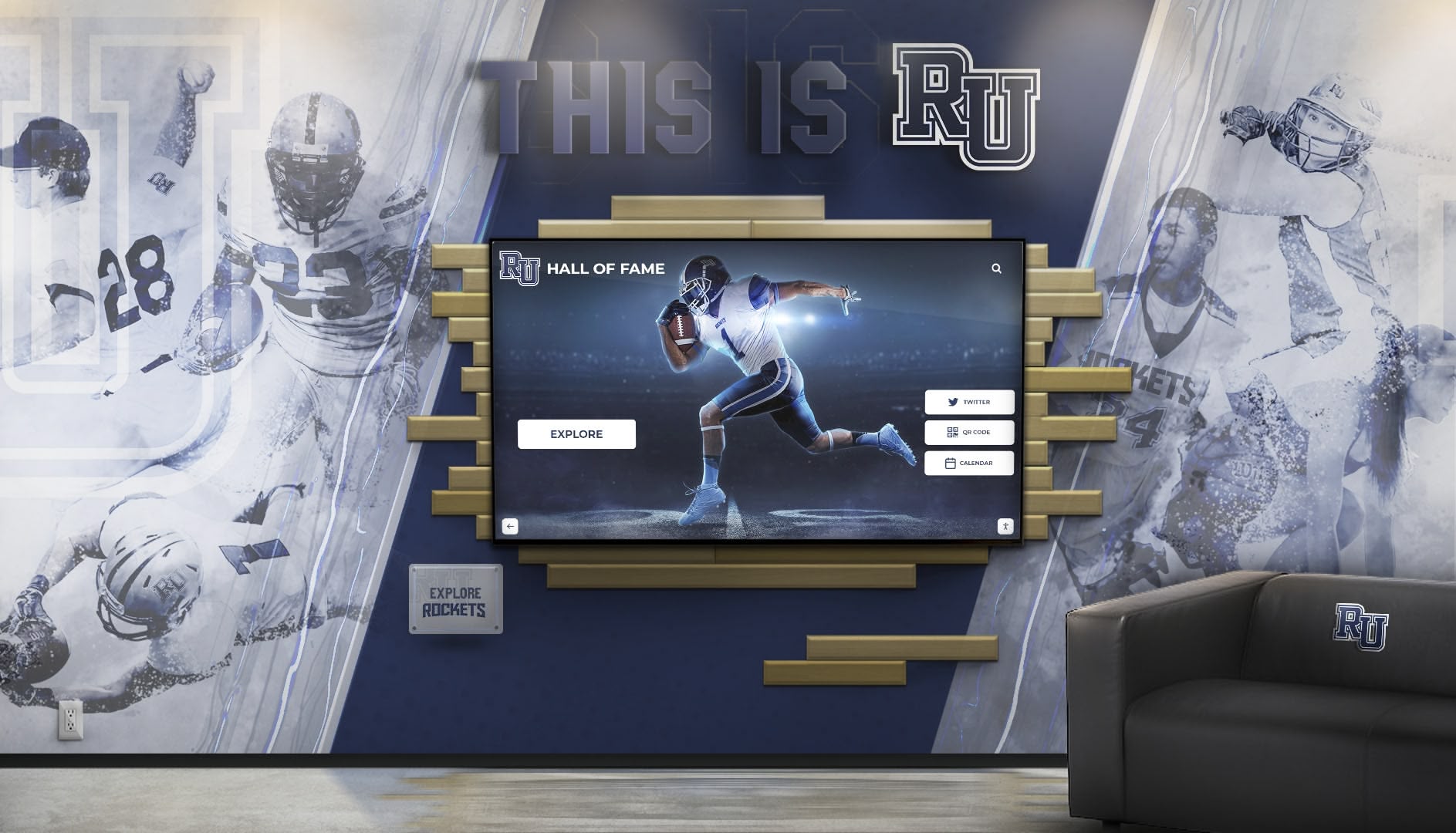
Football-focused recognition areas become gathering spaces that strengthen program culture
Teams training in environments rich with championship tradition consistently demonstrate higher achievement orientation, stronger work ethics, and better competitive performance compared to teams in recognition-poor environments, according to multiple studies in organizational psychology applied to athletics.
Helmet Display Case Selection: Key Criteria
Choosing appropriate display cases requires balancing protection, visibility, security, budget, and aesthetic considerations specific to your facility and collection.
Case Types and Configurations
Understanding available display case formats helps match solutions to specific needs:
Wall-Mounted Individual Cases
Single-helmet wall cases offer maximum flexibility:
- Individual helmet spotlights for special recognition
- Easy installation without major facility modifications
- Flexible positioning throughout athletic spaces
- Cost-effective solutions for small collections
- Clear acrylic or glass fronts with various backing options
Wall-mounted cases work particularly well for highlighting specific achievements like state championship game helmets, all-American player equipment, or milestone season commemorations. Price ranges typically run $75-$300 per unit depending on materials, UV protection, and security features.
Multi-Helmet Display Cabinets
Larger cabinets accommodate complete collections:
- Floor-standing cabinets holding 8-24 helmets
- Wall-mounted shadow boxes displaying multiple helmets
- Custom-built trophy case sections dedicated to helmet collections
- Organized presentations showing helmet evolution over decades
- Professional museum-quality cases with lighting and locks
Multi-helmet configurations create more cohesive visual presentations, particularly effective in school lobbies or dedicated hall of fame spaces. Investment typically ranges from $500-$5,000+ depending on capacity, construction quality, and custom features.
Freestanding Display Pedestals
Pedestal displays provide rotating flexibility:
- Rotating platforms showcasing helmets from all angles
- Premium presentation for championship or special helmets
- Easy repositioning for events or seasonal changes
- Integrated lighting highlighting design details
- Museum-style presentation creating focal points
Pedestal displays work exceptionally well for featured helmets you want to emphasize during facility tours, booster events, or special recognition ceremonies. Quality pedestal cases range from $200-$1,500 depending on materials and features.
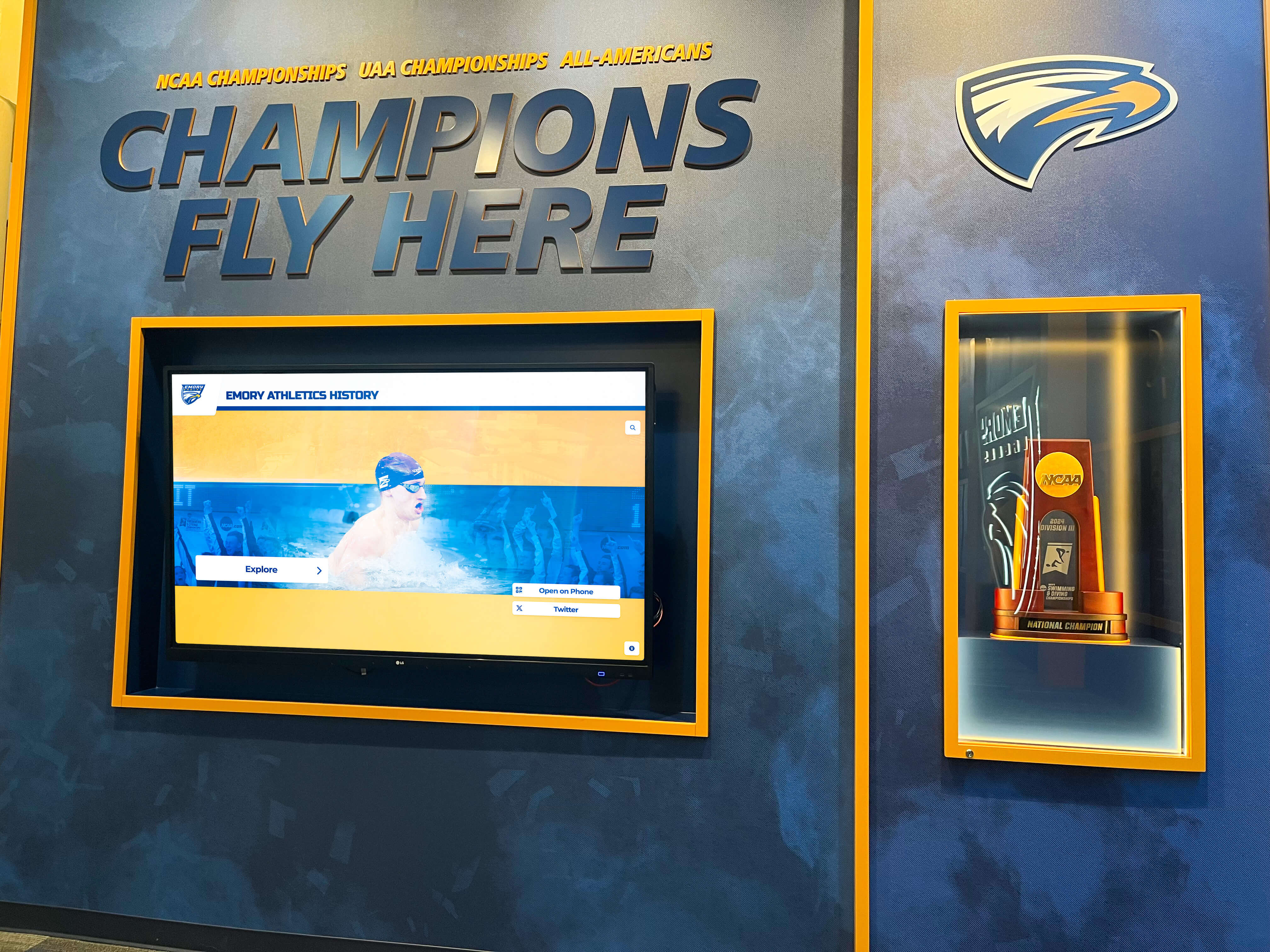
Professional championship walls integrate trophies, helmets, and other memorabilia into cohesive recognition environments
Essential Protection Features
Proper helmet preservation requires specific case features:
UV Protection
Ultraviolet light causes significant damage to helmet finishes, decals, and padding:
- UV-filtering acrylic or glass prevents fading and discoloration
- Museum-quality cases block 99% of harmful UV radiation
- Protected helmets maintain appearance for decades
- Investment in UV protection prevents costly restoration or replacement
- Particularly critical for helmets in areas with natural light exposure
Athletic directors often discover too late that unprotected helmets in sunny locations fade dramatically within just a few years. UV protection should be considered non-negotiable for any helmet you intend to display long-term.
Dust and Moisture Protection
Environmental contaminants degrade helmets over time:
- Sealed cases prevent dust accumulation requiring frequent cleaning
- Moisture protection prevents mold, mildew, and deterioration
- Gasket seals on quality cases provide superior environmental protection
- Protected helmets require minimal maintenance year over year
- Sealed displays maintain professional appearance indefinitely
The difference in maintenance burden between sealed and unsealed cases becomes dramatically apparent after just one year—unsealed helmets require regular cleaning while sealed displays maintain pristine condition.
Security Considerations
Valuable helmets, particularly those with historical significance or autographs, require security features:
- Locking mechanisms preventing unauthorized removal
- Tempered glass or polycarbonate fronts resisting breakage
- Secured mounting preventing case removal from walls
- Security hardware concealed within display design
- Insurance documentation of case security for coverage purposes
Many insurance policies require specific security measures for valuable memorabilia displays. Consult your carrier before finalizing display case selections to ensure coverage compliance.
Aesthetic and Practical Considerations
Beyond protection, cases must integrate visually with your facilities:
Visual Integration
Display cases should enhance rather than clash with surrounding spaces:
- Case finishes complementing existing facility aesthetics (wood, metal, acrylic)
- Scale appropriate to installation location without overwhelming spaces
- Color coordination with team colors or institutional branding
- Professional appearance consistent with your program’s image
- Design cohesion when using multiple cases throughout facilities
Athletic facilities showcasing consistent, professional display aesthetics create stronger impressions during facility tours, booster events, and community gatherings. Mismatched or cheap-looking cases diminish rather than enhance recognition impact.
Lighting Integration
Proper lighting transforms helmet displays from adequate to extraordinary:
- LED spotlights highlighting helmet details and design elements
- Backlit displays creating dramatic presentations
- Color-adjustable lighting matching team colors or creating ambiance
- Energy-efficient LED systems minimizing operational costs
- Lighting controls allowing adjustments for events or photography
Professionally lit displays command attention and create memorable visual impacts. The investment in quality lighting systems typically pays dividends through enhanced visitor experience and improved facility tour impressions.
Strategic Placement and Installation
Where and how you position helmet displays dramatically affects their recognition impact and traffic flow patterns within your athletic facilities.
High-Impact Location Selection
Choosing optimal display locations maximizes visibility while managing facility constraints:
Primary Facility Entry Points
Main entrance displays create immediate impressions:
- School or athletic facility lobbies showcase program excellence to all visitors
- First-impression impact influences prospective athletes and families
- High-traffic visibility ensures community members regularly see recognition
- Central locations accessible to students, staff, and visitors throughout days
- Professional presentation setting tone for entire facility quality
Athletic directors report that entrance displays generate the most recognition impact per dollar invested compared to any other location. These positions receive visibility from every person entering facilities, multiplying impact across thousands of annual interactions.
Locker Room and Training Areas
Player-facing displays within team spaces serve different purposes:
- Daily visibility reinforcing program standards and expectations
- Pre-game inspiration as athletes prepare for competition
- Tradition immersion strengthening team identity and culture
- Private team space displays can be more informal or player-focused
- Protected locations reducing vandalism or theft concerns
Many programs maintain dual display strategies: formal public-facing displays in lobbies and entrances, plus informal player-focused displays in team-only areas. This approach maximizes both community engagement and athlete motivation.
Gymnasium and Stadium Concourses
Competition venue displays capitalize on game-day traffic:
- Spectator visibility during events when emotional engagement peaks
- Community education about program history and achievements
- Visitor impressions during competitive events against other schools
- Revenue-generating naming opportunities near high-visibility displays
- Natural gathering points creating socialization spaces during events
Consider how displays integrate with game-day traffic flow. Strategic placement near concessions, restrooms, or entrance/exit paths ensures maximum visibility during peak attendance periods.
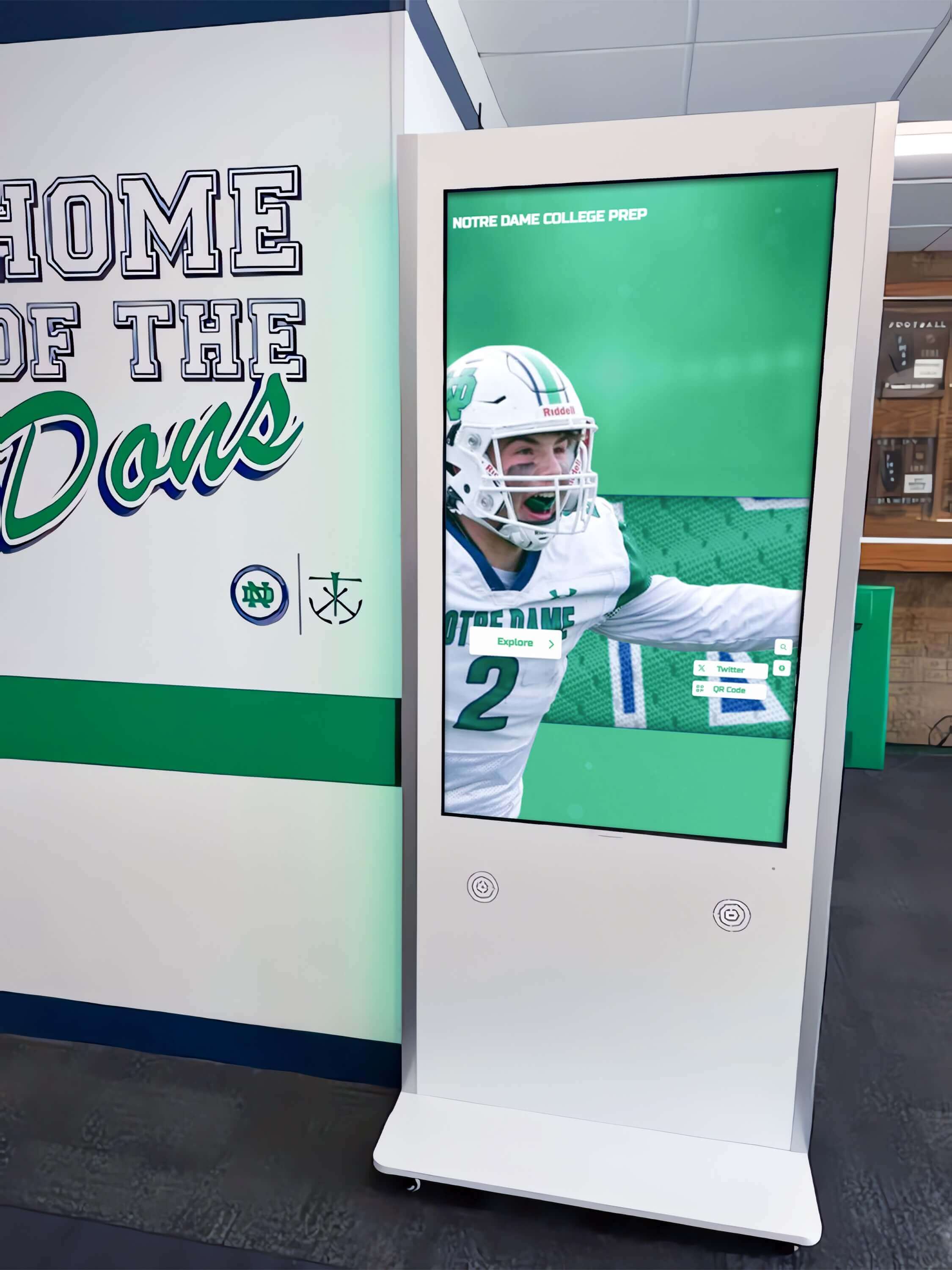
Hallway displays create prominent recognition while maintaining accessible traffic flow patterns
Installation Best Practices
Proper installation ensures security, longevity, and professional appearance:
Wall-Mounted Case Installation
Secure wall mounting requires attention to structural considerations:
- Stud mounting for all substantial cases preventing wall damage
- Weight distribution across multiple anchor points for heavy displays
- Level installation ensuring professional appearance and case function
- Height positioning optimizing visibility while preventing theft vulnerability
- Cable management for lit displays maintaining clean aesthetics
Improper mounting leads to cases pulling away from walls, creating safety hazards and damaging both cases and facilities. Professional installation, while adding cost, prevents expensive repairs and ensures lasting quality.
Freestanding Display Positioning
Floor cases require different security and stability approaches:
- Anti-tip anchoring preventing accidents in high-traffic areas
- Base weight or floor mounting ensuring stability
- Traffic flow consideration preventing congestion or collision risks
- Electrical access for lit displays without visible cord runs
- Positioning allowing all-angle viewing while protecting vulnerable case areas
Freestanding displays offer flexibility for seasonal changes or event reconfigurations. Ensure any positioning allows easy viewing without creating traffic bottlenecks during peak usage periods.
Environmental Considerations
Installation locations significantly affect preservation:
- Avoid direct sunlight even with UV-protected cases
- Climate-controlled areas preventing temperature and humidity extremes
- Distance from water sources or areas prone to leaks
- Protected positions reducing accidental contact or damage risks
- Maintenance accessibility for cleaning and collection updates
Many schools install beautiful displays only to discover that location-specific environmental factors cause ongoing problems. Visit proposed locations at different times and seasons before finalizing installation plans.
Organizing and Curating Helmet Collections
How you organize helmet displays affects their storytelling power and educational value.
Curation Strategies
Thoughtful organization transforms random collections into compelling narratives:
Chronological Evolution Displays
Timeline arrangements show program development:
- Decade-by-decade helmet evolution demonstrating design changes
- Visual history of uniform identity and branding shifts
- Program growth story from humble origins to current excellence
- Design trend illustration engaging design-interested visitors
- Context for understanding current uniforms within historical tradition
Chronological displays work particularly well in permanent installations where complete program histories receive dedicated space. They create natural conversation starters during facility tours and alumni events.
Championship Season Highlights
Achievement-focused collections emphasize excellence:
- State championship helmets from each title season
- Conference championship commemorations
- Perfect season or significant milestone recognitions
- National ranking or award season highlights
- Playoff achievement displays celebrating postseason success
Championship-focused displays create aspiration-oriented environments motivating current athletes. They clearly communicate program standards and expectations through visible evidence of past achievement.
Individual Player Recognition
Player-specific helmets honor legendary contributors:
- Hall of fame inductee game-worn helmets
- All-American and major award winner equipment
- School record holders and statistical leaders
- College recruitment success stories
- Professional career alumni (NFL, CFL, or international leagues)
Player-focused displays strengthen alumni connections while demonstrating concrete pathways from your program to higher competitive levels. These create particularly strong impacts on prospective athletes during recruitment visits.
Special Edition and Commemorative Helmets
Unique designs celebrating specific occasions:
- Homecoming or rivalry game special editions
- Memorial or tribute helmets honoring individuals
- Military appreciation or cause-awareness designs
- Alumni reunion or anniversary celebration editions
- Community partnership or sponsor recognition designs
Special edition collections demonstrate program community engagement and institutional values beyond pure athletic competition. They broaden appeal beyond hardcore sports fans to entire school communities.
Labeling and Context
Effective labeling transforms displays from decoration into education:
Essential Information Elements
Comprehensive labels provide context visitors need:
- Season or year information
- Championship details (state title, conference, etc.)
- Special significance or memorable game context
- Notable players who wore similar equipment that season
- Coaching staff or program leaders during that era
Without proper labeling, even the most impressive helmet collections confuse visitors who lack institutional knowledge. Clear context turns displays into self-guided educational experiences.
Physical Label Options
Various labeling approaches suit different aesthetics and budgets:
- Engraved metal plates offering permanence and premium appearance
- Printed cards providing flexibility for updates or corrections
- Integrated digital displays showing rotating information
- QR codes linking to extended online content and stories
- Interactive touchscreens providing deep-dive information
Many programs start with basic labeling and enhance over time as budgets allow. Even simple printed labels dramatically improve display effectiveness compared to unlabeled collections.
Space Limitations: The Display Case Challenge
Despite best intentions, most athletic programs eventually face a common frustration: insufficient space to properly recognize all deserving achievements within traditional physical display cases.
The Recognition Backlog Problem
Successful programs accumulate recognition needs faster than facility space expands:
Competing Display Priorities
Football programs must balance limited case space across multiple needs:
- Current season championship helmets requiring immediate display
- Historical helmets deserving continued visibility
- Multiple sports competing for shared trophy case space
- Academic awards and non-athletic recognition needs
- Donor recognition and community partnership displays
This creates difficult decisions about what receives visible recognition versus what gets stored away in cabinets where neither current students nor visitors ever see it. Many athletic directors describe feeling “stuck” between honoring past achievements and celebrating current success.
The Storage Graveyard
Valuable recognition items frequently end up in storage:
- Older helmets cycled out to accommodate new additions
- Championship memorabilia from “less important” seasons
- Equipment from notable players whose careers don’t quite reach hall of fame status
- Special edition helmets after their commemorative seasons end
- Valuable artifacts that simply don’t fit available display space
These stored items represent missed recognition opportunities. They could inspire current athletes, engage alumni, or educate community members—but instead sit unseen in storage rooms, equipment closets, or administrative offices.
Renovation Cost Barriers
Expanding physical display capacity involves substantial investment:
- Custom trophy case construction: $10,000-$50,000+ for quality installations
- Facilities renovation requirements for new display areas
- Ongoing space competition with functional facility needs
- Historical building limitations restricting structural modifications
- Budget constraints limiting recognition investment versus operational needs
Most schools cannot justify major facilities investment solely for expanded recognition displays, leaving programs stuck with inadequate space indefinitely.
Hybrid Recognition: Combining Physical and Digital Displays
Forward-thinking athletic programs increasingly adopt hybrid approaches combining traditional helmet display cases with complementary digital recognition systems that solve space limitations while enhancing storytelling capabilities.
Digital Recognition Advantages
Modern digital displays address physical case limitations:
Unlimited Recognition Capacity
Digital systems eliminate space constraints:
- Hundreds or thousands of athlete profiles without physical space requirements
- Complete team rosters from every season in program history
- Comprehensive statistics, awards, and achievement details
- Photo galleries showcasing multiple images per athlete or season
- Extended narratives impossible to communicate through physical displays alone
Schools implementing digital recognition commonly report honoring 10-50x more athletes than their physical displays could accommodate. This comprehensive approach eliminates difficult decisions about who receives recognition versus who gets left out. Programs can explore modern ways to highlight student accomplishments through these platforms.
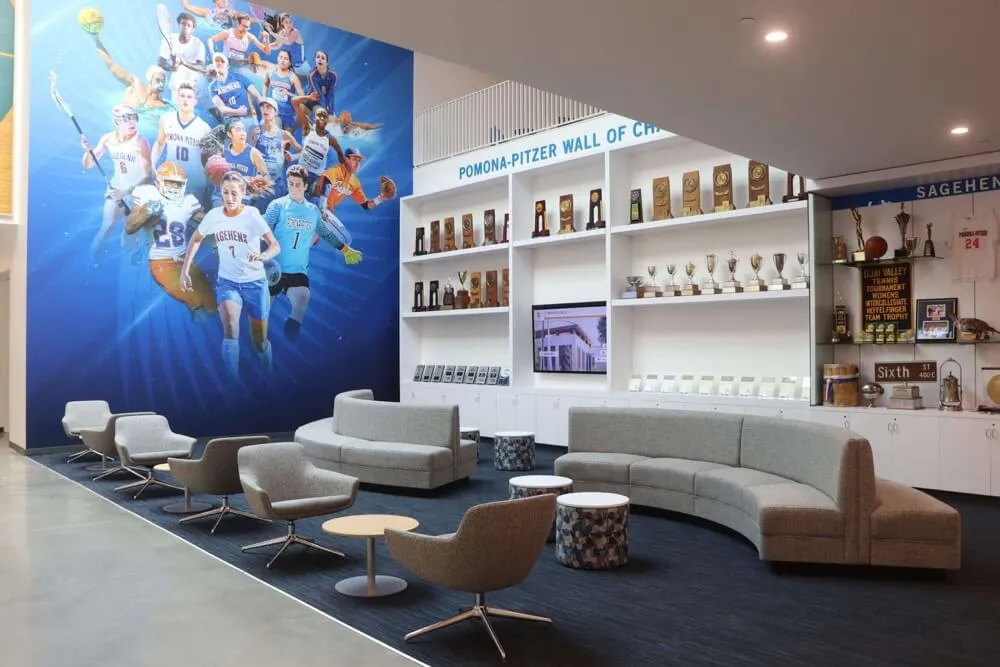
Modern athletic lounges integrate physical trophies with digital recognition creating comprehensive celebration environments
Dynamic Content and Updates
Digital systems adapt as programs evolve:
- Real-time updates as seasons progress and records fall
- Current season integration with historical context
- Easy content additions without construction or fabrication delays
- Seasonal rotations highlighting relevant achievements during specific sports seasons
- Special displays for homecoming, alumni weekends, or other events
Physical displays remain static until someone invests significant effort in updates. Digital systems allow athletic departments to keep recognition current and relevant year-round with minimal effort.
Enhanced Storytelling Capabilities
Digital platforms communicate stories impossible in physical cases:
- Video highlights from championship games or career performances
- Audio interviews with legendary coaches, players, or alumni
- Extended biographical information and career progression stories
- Statistical comparisons across eras with historical context
- Interactive exploration letting visitors discover content matching their interests
The richness possible in digital storytelling creates emotional connections physical displays alone cannot achieve. Visitors spend significantly more time exploring digital recognition compared to walking past traditional trophy cases, according to engagement studies.
Search and Discovery Features
Digital recognition becomes instantly accessible:
- Name search allowing alumni to instantly find their recognition
- Graduation year or team browsing
- Award type or achievement filtering
- Record holders and statistical leaders across categories
- Random discovery features introducing visitors to achievements they wouldn’t otherwise encounter
These discovery features transform recognition from passive displays into active exploration experiences. Alumni visiting schools can immediately locate their own profiles, creating powerful emotional moments and strengthening institutional connections.
Complementary Physical-Digital Integration
The most effective recognition programs combine traditional and modern approaches:
Physical Displays for Emotional Impact
Helmet display cases maintain important functions:
- Tangible three-dimensional presence creating visceral connections
- Authentic artifacts providing historical legitimacy
- Visual focal points drawing attention to recognition areas
- Traditional aesthetics appealing to older alumni and community members
- Premium recognition for most significant achievements
Physical helmets create immediate visual impact and authentic emotional responses digital representations cannot fully replicate. They serve as anchors drawing visitors toward recognition areas where complementary digital systems provide expanded context and comprehensive information.
Digital Systems for Comprehensive Coverage
Interactive touchscreens positioned near helmet displays extend recognition:
- Complete team rosters from championship seasons represented by displayed helmets
- Extended player biographies for athletes whose helmets appear in cases
- Additional season photos, statistics, and game details
- Recognition for deserving athletes whose helmets aren’t physically displayed
- Context and stories behind helmet designs or special editions
This complementary approach lets schools showcase their most prized helmets in premium physical cases while ensuring comprehensive recognition reaches everyone who contributed to those championship seasons. Organizations looking to expand beyond physical limitations can review digital trophy case solutions that work alongside traditional displays.
Real-World Implementation Examples
High schools across the country successfully combine helmet cases with digital recognition:
Entrance Display Integration
Many programs position helmet display cases in main entrances with adjacent interactive touchscreen displays:
- Featured championship helmets in premium wall-mounted cases
- Large touchscreen beside cases providing championship season details
- Interactive exploration of complete rosters, statistics, and photos
- QR codes near cases linking to mobile-friendly recognition content
- Unified design aesthetic creating cohesive recognition environment
This approach maximizes high-traffic entrance space by combining premium physical displays with expanded digital recognition in the same footprint traditional trophy cases alone would occupy.
Locker Room Tradition Spaces
Team areas combine inspirational helmet displays with comprehensive program history:
- Championship helmet collection in locked display cases
- Wall-mounted touchscreen showing program records, hall of fame, and traditions
- Current season updates celebrating recent achievements
- Recruit-facing presentations showcasing program excellence during visits
- Private team access creating ownership and pride in program legacy
These spaces serve dual purposes: inspiring current athletes daily while impressing recruits during official and unofficial visit tours.
Hall of Fame Anchoring
Dedicated hall of fame spaces use helmet displays as visual anchors:
- Central helmet display case as recognition area focal point
- Surrounding interactive touchscreens providing comprehensive hall of fame content
- Rotating helmet displays highlighting different eras or inductee classes
- Event spaces for hall of fame induction ceremonies and receptions
- Photography backdrops incorporating both physical and digital elements
This approach creates destination spaces within athletic facilities—areas worth visiting specifically rather than incidental displays people might notice in passing.
Maintenance and Long-Term Care
Preserving helmet displays requires ongoing attention ensuring lasting quality and professional appearance.
Cleaning and Preservation
Regular maintenance prevents deterioration:
Helmet Care
Displayed helmets need appropriate cleaning:
- Gentle dusting using microfiber cloths avoiding scratches
- Specialized cleaners safe for helmet finishes and decals
- Avoiding harsh chemicals damaging paint or causing discoloration
- Professional restoration for damaged or degrading helmets
- Annual inspection identifying needed repairs or interventions
Well-maintained helmets retain value and appearance for decades. Neglected displays quickly look unprofessional, diminishing rather than enhancing recognition impact.
Case Maintenance
Display cases themselves require care:
- Regular glass or acrylic cleaning maintaining clarity and visibility
- Hardware lubrication for cases with doors or locks
- Seal inspection ensuring environmental protection
- Lighting system maintenance replacing burned-out bulbs
- Structural checks ensuring secure mounting and stability
Establishing regular maintenance schedules—quarterly cleaning and annual comprehensive inspections—prevents small problems from becoming expensive repairs while maintaining professional appearance year-round. Schools implementing interactive hall of fame systems find that digital components require far less ongoing maintenance than physical displays.
Collection Management
Growing collections require systematic management:
Inventory and Documentation
Proper records preserve institutional knowledge:
- Detailed inventory of all helmets including provenance and significance
- Photographic documentation of condition and identifying features
- Historical research capturing stories before they’re lost
- Insurance valuations for significant or autographed items
- Digital archives ensuring information survives staff transitions
Without proper documentation, institutional knowledge disappears as staff retire or move. Schools frequently discover they possess significant historical items but lack context about their importance.
Rotation Strategies
Limited display space requires thoughtful rotation:
- Seasonal changes highlighting relevant achievements
- Anniversary rotations celebrating milestone anniversaries
- New induction accommodations in hall of fame displays
- Condition-based decisions removing deteriorating items for restoration
- Engagement analysis rotating underappreciated items with fresh displays
Systematic rotation keeps displays fresh and relevant while ensuring more artifacts receive visibility over time. Many programs struggle with rotation because they lack storage systems that preserve items properly when not displayed.
Budget Considerations and ROI
Understanding the financial dimensions of helmet display investments helps with planning and justification.
Display Case Investment Ranges
Realistic budget expectations for various solutions:
Basic Implementation
Entry-level recognition setup:
- 3-5 individual wall-mounted cases: $300-$1,500
- Basic lighting (if not integrated): $200-$500
- Professional installation: $300-$800
- Labeling and documentation: $100-$300
- Total basic setup: $900-$3,100
This provides respectable recognition for most significant achievements but won’t accommodate comprehensive collections.
Mid-Range Professional Installation
Comprehensive physical display:
- Custom multi-helmet cabinet (12-20 helmets): $2,500-$8,000
- Professional lighting system: $800-$2,000
- Installation and facilities integration: $1,000-$3,000
- Premium labeling and interpretive elements: $500-$1,500
- Total mid-range setup: $4,800-$14,500
This achieves professional results creating impressive recognition environments but still faces space limitations.
Hybrid Physical-Digital Solution
Comprehensive recognition without space limits:
- Premium helmet display case (6-10 featured helmets): $3,000-$10,000
- Interactive touchscreen display system: $8,000-$15,000
- Content development and digitization: $2,000-$5,000
- Installation and integration: $2,000-$5,000
- Total hybrid setup: $15,000-$35,000
This investment provides unlimited recognition capacity with premium physical displays for most significant items plus comprehensive digital coverage eliminating space constraints. Programs implementing these systems can manage team recognition across all sports within unified systems.
Return on Investment Considerations
Recognition investments generate tangible and intangible returns:
Recruitment Impact
Quality recognition influences enrollment decisions:
- Attract higher-quality athletes improving competitive results
- Differentiate programs in competitive recruitment landscapes
- Reduce recruitment costs through improved conversion rates
- Strengthen program reputation attracting coaching talent
- Create facility tour focal points influencing visit impressions
Athletic directors consistently report that recognition quality factors into family decisions, particularly when choosing between comparable programs. The difference between winning and losing recruitment battles for key athletes can transform program trajectories.
Alumni Engagement and Giving
Recognition drives development outcomes:
- Increased annual fund participation from recognized alumni
- Larger gift sizes from donors seeing stewardship evidence
- Bequest inclusions from alumni feeling institutional connections
- Volunteer involvement from engaged alumni community
- Booster club growth and event attendance
Development research demonstrates clear correlations between recognition quality and giving patterns. Alumni seeing themselves honored give more frequently, at higher levels, and for more years compared to alumni lacking recognition.
Community Pride and Engagement
Recognition strengthens broader institutional support:
- Enhanced reputation attracting students and families
- Community attendance at athletic events
- Local business partnerships and sponsorships
- Media coverage of program achievements
- Overall school pride affecting culture and climate
These softer benefits are harder to quantify but significantly impact institutional success across dimensions beyond athletics. Recognition quality signals institutional priorities and professionalism affecting how entire communities perceive your school.
Getting Started: Implementation Roadmap
Practical steps for athletic departments ready to implement or upgrade helmet display systems.
Assessment Phase
Begin with comprehensive needs analysis:
Inventory Current State
Document what you have and what you need:
- Complete helmet collection inventory including condition and significance
- Existing display case audit noting capacity and quality
- Facility space analysis identifying potential display locations
- Recognition gap analysis revealing what’s missing or inadequate
- Budget reality check establishing available resources
This assessment reveals specific needs and constraints guiding appropriate solutions. Many schools discover they have more valuable items than they realized, stored away because they lack proper display capacity.
Stakeholder Input
Gather perspectives from key constituencies:
- Athletic director priorities and institutional goals
- Coaching staff input on program needs and athlete motivation
- Alumni feedback about recognition gaps or disappointments
- Facilities management constraints and considerations
- Booster club interests and potential funding sources
Inclusive planning ensures buy-in while uncovering potential funding sources and avoiding easily-preventable mistakes. The best recognition systems reflect authentic community values rather than imposing external ideas.
Planning Phase
Convert assessment insights into actionable plans:
Design Development
Create specific vision for recognition system:
- Display location selections based on traffic and visibility
- Case type selections matching needs and budget
- Organization approach (chronological, achievement-focused, etc.)
- Aesthetic direction consistent with facility character
- Phasing plan if implementing incrementally over time
Detailed planning prevents costly mistakes and changes during implementation. Mock-ups or renderings help stakeholders visualize proposals improving approval processes.
Budget and Funding
Establish financial plans and resources:
- Detailed cost estimates for all system components
- Funding source identification (budget allocations, booster clubs, donations, grants)
- Naming opportunity development for donor cultivation
- Phased implementation if immediate full funding unavailable
- Maintenance budget planning for long-term care
Creative funding approaches make ambitious projects achievable. Many programs successfully fund recognition through alumni campaigns, naming opportunities, or capital campaigns. Schools expanding recognition to honor donors and boosters alongside athletes often find supporter funding more readily available.
Implementation Phase
Execute plans efficiently and effectively:
Procurement and Installation
Manage acquisition and setup:
- Vendor selection for display cases and systems
- Timeline coordination with facility schedules
- Installation management ensuring quality work
- Punch-list completion addressing any deficiencies
- Documentation for future maintenance and insurance
Professional project management prevents delays and quality issues. Rushed implementations frequently result in compromises that diminish long-term satisfaction.
Content Development
Prepare information making displays meaningful:
- Historical research capturing stories and context
- Labeling development communicating essential information
- Photographic documentation of artifacts
- Digital content creation if implementing interactive systems
- Accuracy verification ensuring factual precision
Content development often takes longer than expected. Starting early prevents displays sitting empty while research and writing catch up.
Launch and Promotion
Celebrate completion and maximize impact:
- Dedication ceremony or ribbon cutting
- Media coverage of new recognition systems
- Alumni communication showcasing improvements
- Social media promotion reaching broader audiences
- Integration into facility tours and recruitment presentations
Thoughtful launches create recognition for recognition—demonstrating athletic department professionalism while engaging communities around program pride and tradition. Many programs coordinate launches with football banquets or other celebrations maximizing attendance and impact.
Beyond Football: Comprehensive Athletic Recognition
While this guide focuses on football helmet display cases, the principles apply broadly across athletic recognition needs.
Multi-Sport Recognition Challenges
Football programs rarely operate in isolation:
Equitable Recognition Across Sports
Athletic departments must balance recognition across all programs:
- Limited trophy case space creating competition between sports
- Gender equity considerations ensuring equal recognition quality
- Non-revenue sports receiving appropriate acknowledgment
- Seasonal rotation challenges highlighting relevant achievements
- Budget constraints preventing adequate recognition for all programs
These challenges intensify in schools with successful programs across multiple sports—each deserving recognition that traditional trophy cases cannot accommodate.
Seasonal Relevance
Static displays struggle to maintain year-round relevance:
- Football displays feeling outdated during spring sports seasons
- Basketball achievements needing visibility during winter months
- Individual sport athletes deserving recognition currently buried in general displays
- Current season integration with historical recognition
- Special occasions (senior nights, hall of fame inductions, etc.) requiring temporary emphasis
Digital recognition systems easily rotate featured content maintaining seasonal relevance without physical reconfiguration. Programs can highlight fall sports during autumn, winter sports during those seasons, and spring sports when appropriate—all using the same display footprint.
Unified Recognition Platforms
Progressive athletic departments adopt comprehensive approaches:
Single-System Solutions
Unified digital platforms address multiple needs:
- All sports recognition within integrated system
- Academic awards alongside athletic achievements
- Arts, activities, and co-curricular recognition
- Donor and booster acknowledgment
- Faculty and staff recognition
This comprehensive approach eliminates siloed recognition while simplifying management through single-system administration rather than maintaining separate displays for each program or category. Schools seeking to unify recognition can explore digital recognition display platforms designed for multi-purpose use.
Complementary Physical Displays
Unified digital platforms work alongside specialized physical displays:
- Football helmet cases in appropriate locations
- Basketball jersey retirement displays
- Baseball/softball record boards
- Track and field record displays
- Swimming and diving championship recognition
Each sport maintains authentic physical presence through appropriate memorabilia while comprehensive digital systems ensure no athlete, achievement, or contribution goes unrecognized due to space constraints.
This hybrid approach combines the emotional impact of authentic artifacts with the unlimited capacity and dynamic capabilities of modern technology—creating recognition environments that honor tradition while embracing contemporary possibilities.
Conclusion: Creating Recognition That Matters
Football helmet display cases represent more than decoration—they create tangible connections to program excellence that inspire current athletes, honor past contributors, and strengthen institutional pride throughout your community. When thoughtfully selected, properly installed, and appropriately maintained, helmet displays become permanent testaments to your program’s commitment to recognizing achievement and preserving tradition.
The schools creating the most effective recognition systems approach the challenge strategically: investing in quality physical display cases for their most significant helmets and achievements while adopting complementary digital recognition platforms that eliminate space constraints, enable comprehensive coverage, and provide dynamic storytelling capabilities traditional trophy cases cannot match.
This balanced approach honors the authentic emotional power of physical artifacts while solving the practical limitations that frustrate athletic directors working within finite budgets, facility constraints, and the impossible challenge of recognizing decades of excellence within a few square feet of trophy case space.
Whether you’re installing your first helmet display case, upgrading existing recognition, or reimagining how your program honors athletic excellence, the principles outlined in this guide will help you create recognition environments that serve your program, your athletes, and your community for decades to come.
Create Recognition Without Space Limitations
Rocket Alumni Solutions specializes in integrated recognition systems that combine premium physical displays with unlimited digital recognition capacity. Our interactive touchscreen platforms complement your helmet display cases by providing comprehensive coverage of every athlete, team, and achievement in your program’s history—without requiring additional trophy case space.
From entrance installations that welcome visitors with compelling recognition to dedicated hall of fame environments that celebrate your complete institutional story, we help schools create recognition that inspires current students, honors alumni, and strengthens community pride.
Discover how schools across the country are transforming athletic recognition through hybrid physical-digital systems that preserve tradition while embracing unlimited recognition capacity.
Live Example: Rocket Alumni Solutions Touchscreen Display
Interact with a live example (16:9 scaled 1920x1080 display). All content is automatically responsive to all screen sizes and orientations.