



Every graduation ceremony hinges on a handful of moments that audiences remember long after the diplomas are distributed and the caps stop flying. The speeches sit at the center of those moments. A valedictorian’s perfectly chosen story, a faculty member’s unexpected humor, a student body president’s challenge to their class—these are the things graduates quote at reunions twenty years later. Yet schools consistently treat commencement addresses as logistical boxes to check rather than living documents worth capturing and preserving.
This guide is for the administrators, counselors, yearbook advisors, and senior class sponsors who want to do both things at once: help students and speakers deliver addresses worth hearing, and put systems in place so that those addresses actually survive beyond the ceremony night. Whether your school runs a single valedictorian speech or a multi-voice program featuring coaches, classmates, and community members, the graduation speech ideas and archiving strategies here will help you get more from every word spoken at your commencement.
Good graduation speech content and good graduation speech documentation are not separate projects. They feed each other. When speakers know their remarks will be preserved and displayed, they take the preparation more seriously. When schools invest in capturing those remarks well, they build an institutional archive that inspires future graduating classes and deepens community connection for years. This guide walks through both sides of that relationship—from finding the right theme and crafting an unforgettable opening to setting up the recording equipment and displaying the finished archive on a digital recognition wall.

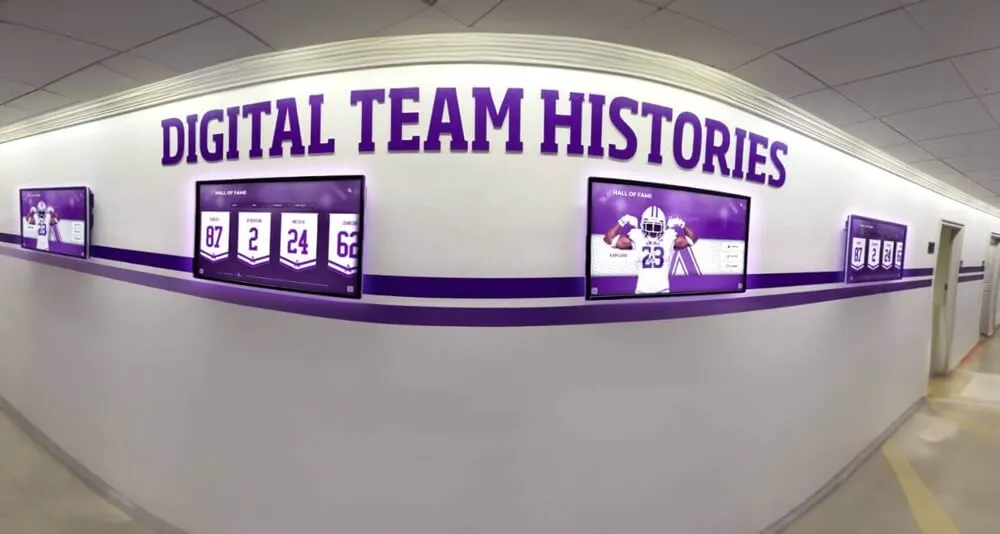
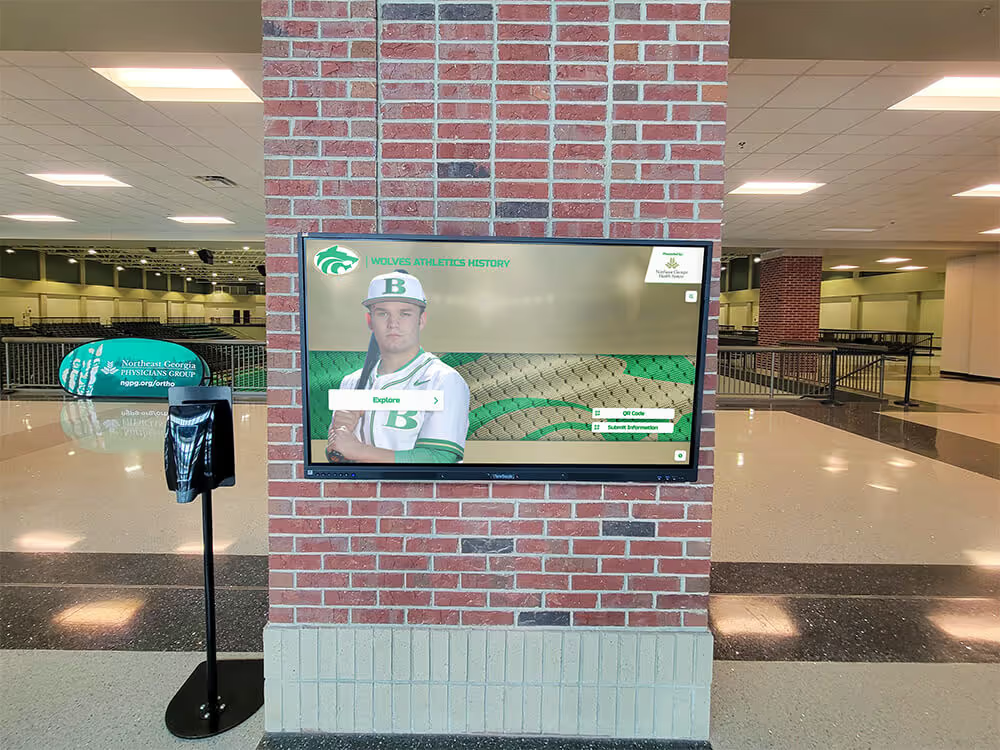
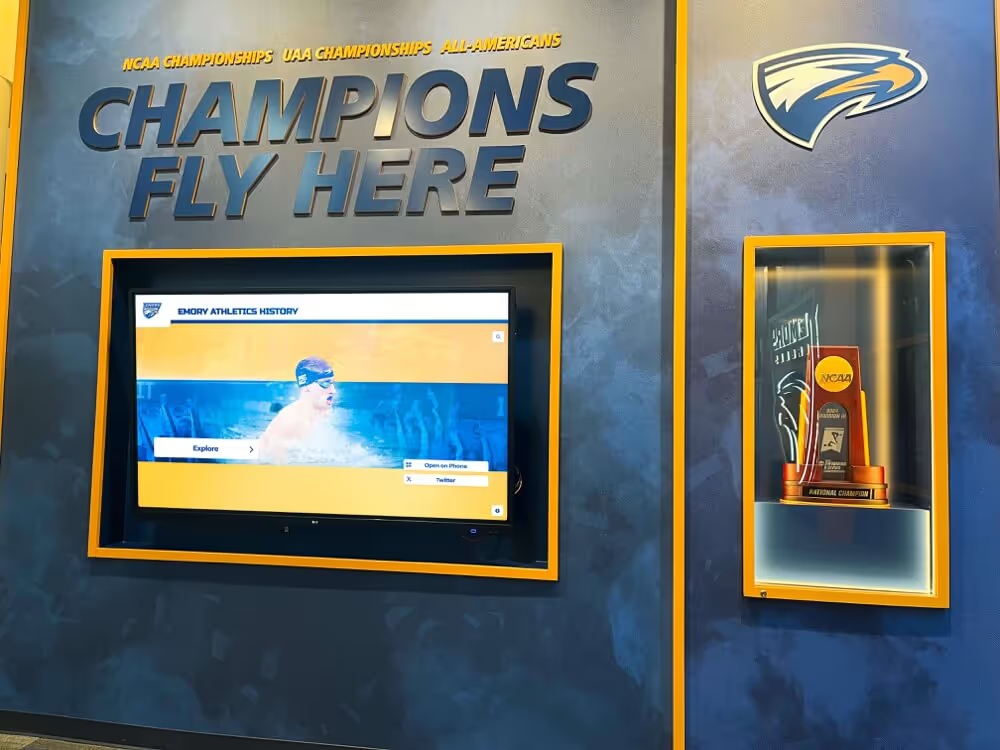
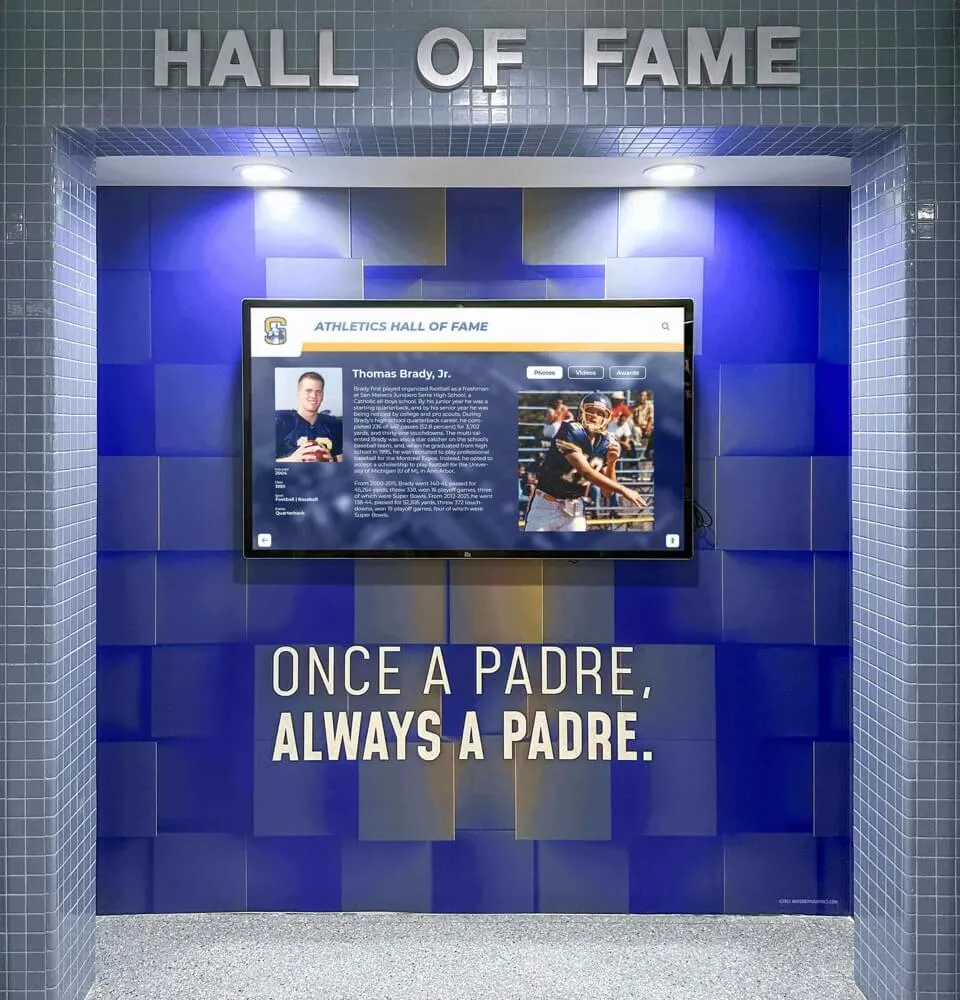
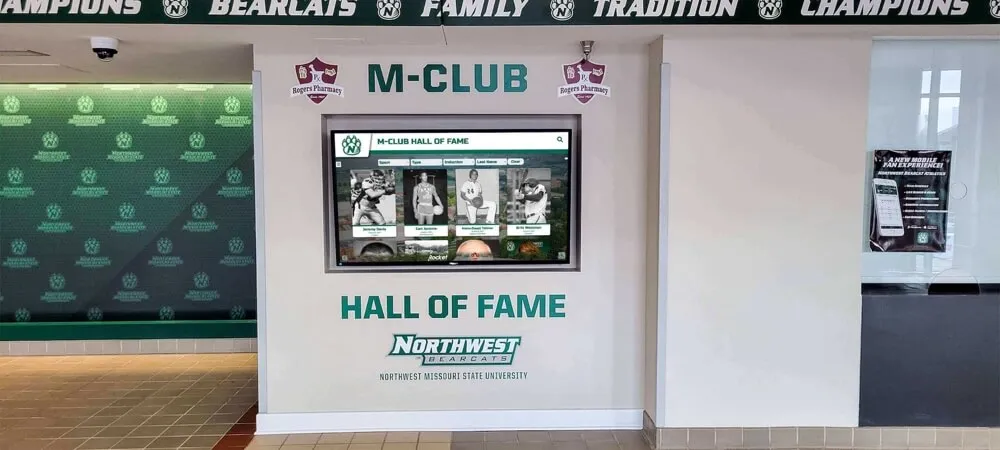
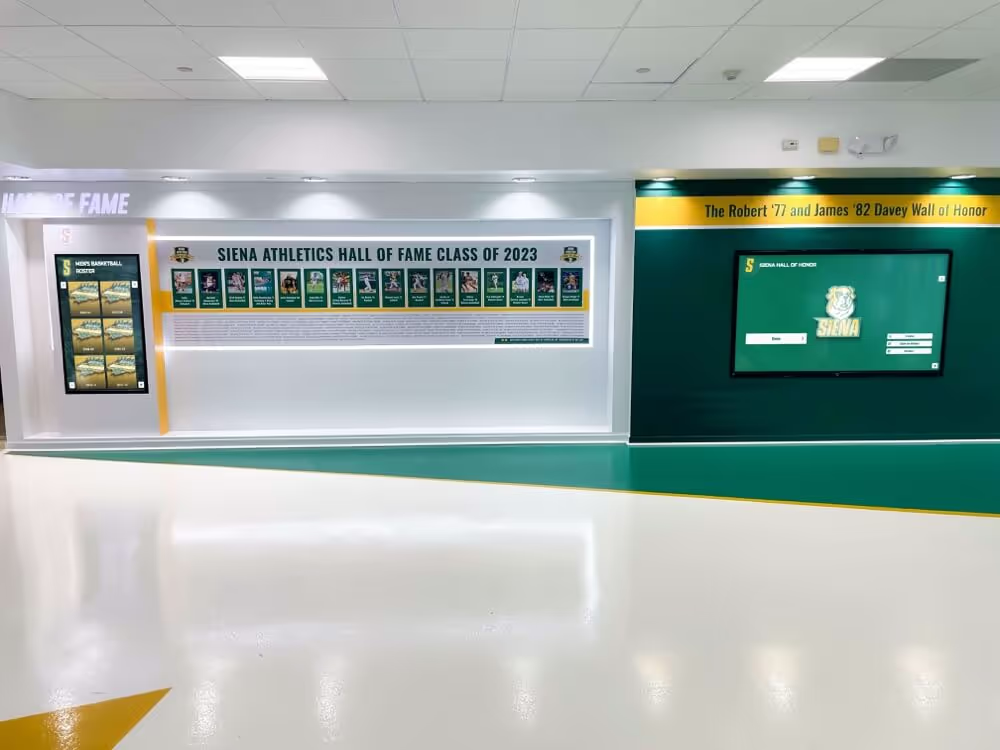
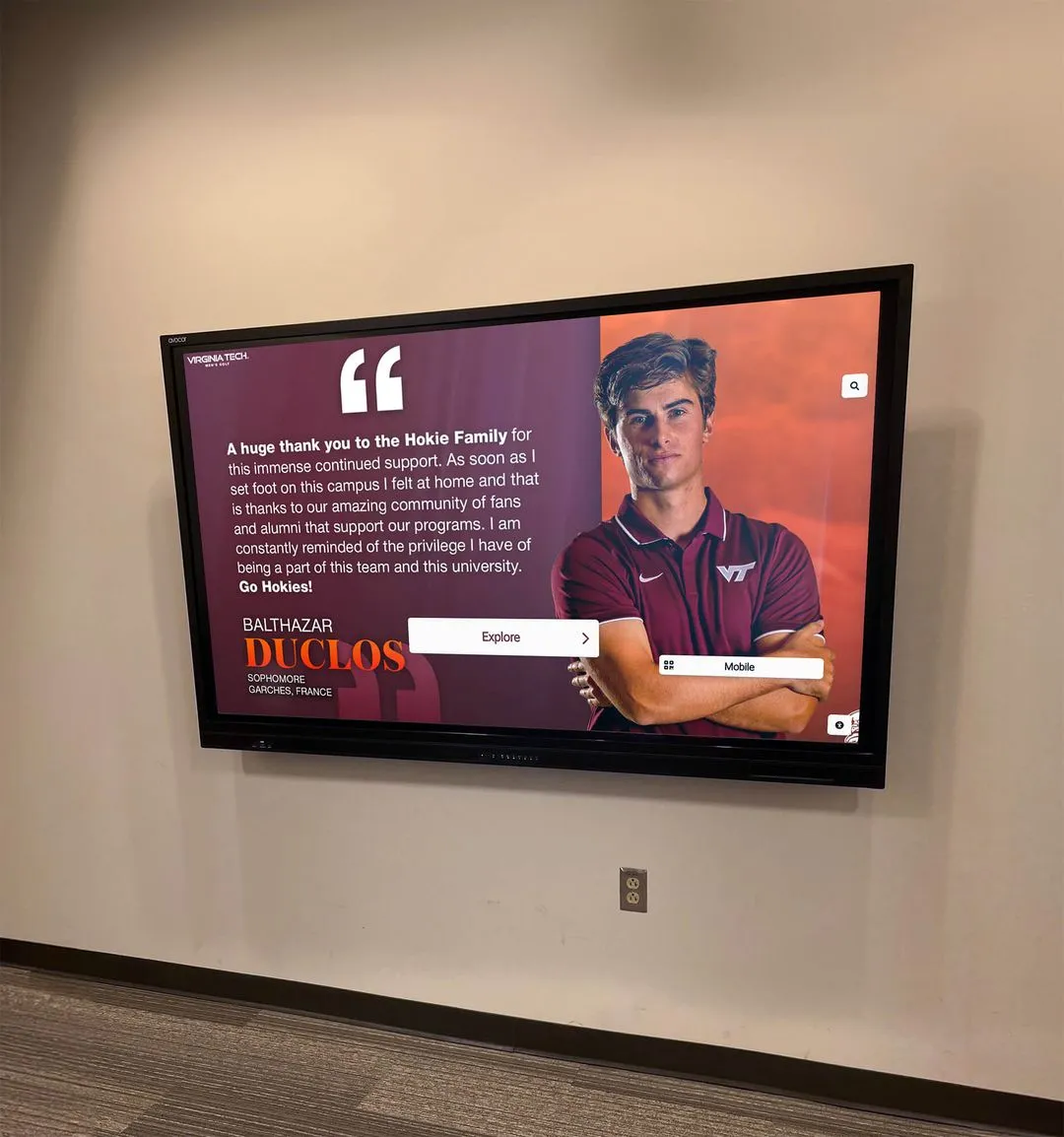
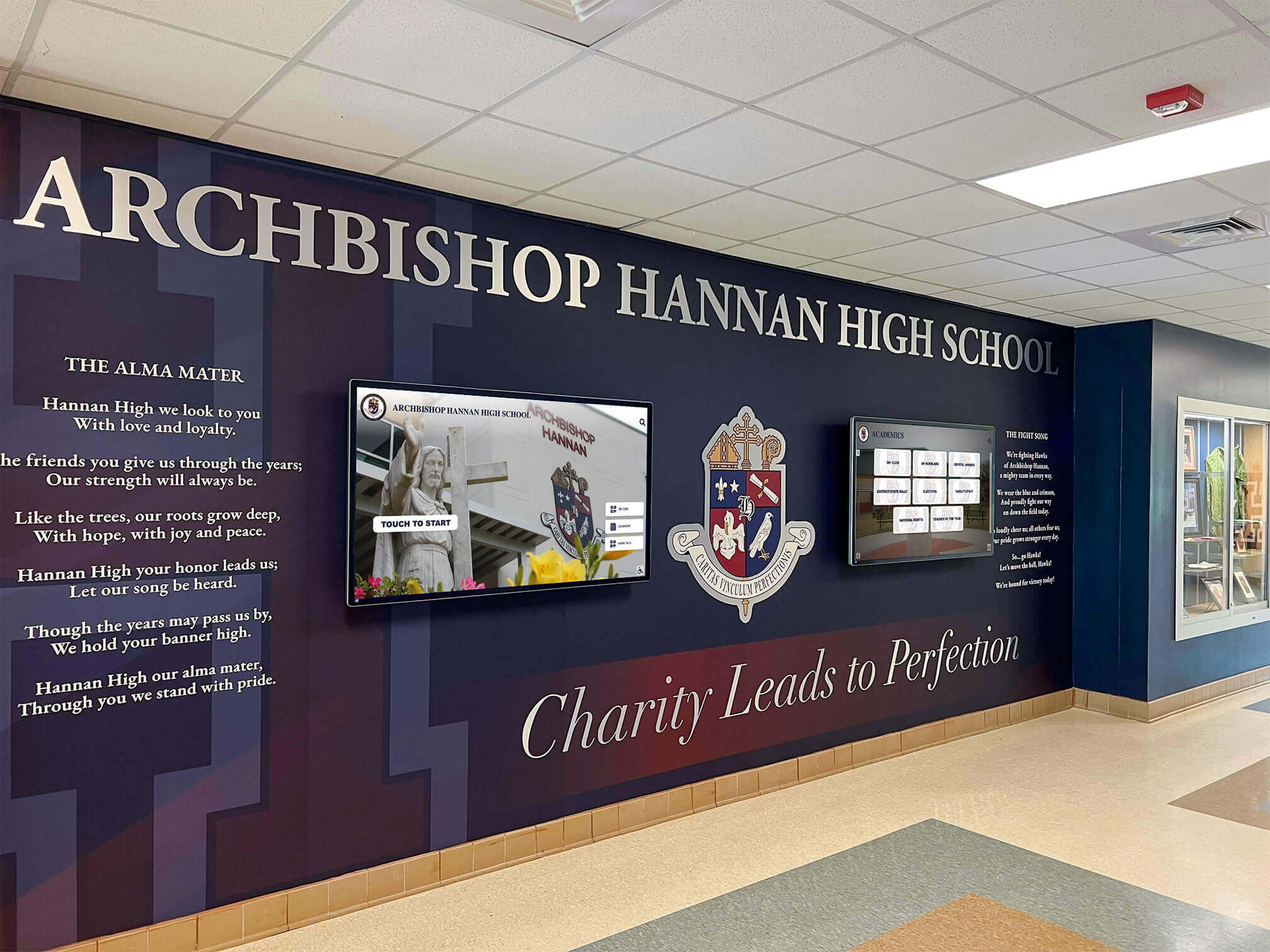
Modern school lobbies double as living archives—a natural home for preserved graduation speech content alongside athletic and academic recognition
Why Graduation Speeches Matter More Than Schools Realize
Before diving into graduation speech ideas, it helps to understand what effective commencement addresses actually accomplish beyond filling ceremony time between the processional and the diploma queue.
Speeches Create the Emotional Memory of Graduation
Research in educational psychology consistently shows that students remember commencement ceremonies through emotional peaks rather than sequential events. The processional, the tassel turn, and a well-delivered speech are the peaks that survive. Generic remarks that could apply to any class in any year produce no peak at all—they occupy time without creating memory.
A speech that references a specific shared experience (the snowstorm that canceled the winter formal, the underdog playoff run, the pandemic disruption that reshaped an entire class’s high school experience) does something fundamentally different. It tells graduates: we saw your particular journey, and we named it. That specificity is what families quote at the graduation party that evening.
Speeches Transmit Program Culture to Future Classes
When a valedictorian describes what it took to succeed in your school’s environment, or when a coach articulates the values that defined a graduating athlete’s career, that content serves as cultural transmission. Underclassmen in attendance hear a description of what this school rewards and honors. If schools archive those speeches and make them accessible, future students can encounter that culture long after the speakers have graduated.
For context on the deeper meaning these ceremonies carry, senior night programs and memorable athletic ceremony traditions offers useful perspective on why recognition ceremonies matter across every school program.
The Archive Gap Most Schools Never Address
Here is the uncomfortable reality: most schools spend significant energy selecting speakers and minimal energy preserving what those speakers say. Graduation videos often capture the ceremony from a wide angle designed for families watching from the back of an auditorium—not for creating a usable archive of speech content. The audio is frequently muddy, the framing is distant, and the file sits unwatched on a hard drive until storage needs force someone to delete it.
The graduation speech ideas in this guide are designed to be worth preserving. The archiving strategies at the end are designed to make preservation practical and purposeful.
Graduation Speech Themes That Stand the Test of Time
Theme selection is the first decision any graduation speaker faces. A theme too broad (“work hard and follow your dreams”) gives an audience nothing to hold onto. A theme too narrow risks alienating segments of the graduating class who don’t share the specific experience. The best commencement themes are simultaneously universal and specific—rooted in something true about this class while pointing toward something true about being human.
Themes Built Around Shared Obstacles
Classes that navigated unusual difficulty have built-in thematic material. A class that went through virtual school, a significant community loss, a natural disaster, or even just the ordinary difficulty of adolescence in a challenging environment can build powerful addresses around what they survived and what that survival revealed.
Why this works: Shared difficulty creates shared identity. When a speaker names the obstacle and describes what the class discovered about itself in navigating it, every person in the auditorium who lived through it feels recognized simultaneously.
How to develop it: Rather than simply naming the difficulty, speakers should push toward what the difficulty revealed. Not “we went through COVID” but “COVID took away the markers we thought defined high school success, and in their absence we discovered what actually mattered.” The theme isn’t the obstacle—it’s the discovery on the other side.
Themes Built Around Gratitude and Inheritance
These addresses focus on what the graduating class received—from teachers, families, communities, and the generations who built the institutions they’re leaving. Done well, gratitude themes avoid sycophantic platitude by being specific: naming particular teachers, particular programs, particular community investments that shaped the class.
Why this works: Gratitude themes invite the audience (especially families and faculty) into the ceremony as active participants rather than passive observers. They also position the graduating class as part of an ongoing story rather than its conclusion—which is accurate and worth saying aloud.
How to develop it: Identify two or three specific people, programs, or experiences that genuinely shaped the class. Build the address around what those investments produced. Close with a commitment to carry that forward—the “we will pay it forward” close is clichéd only when it’s vague. Make it specific.
Themes Built Around Unfinished Business
Commencements mark endings, but the most energizing graduation speech ideas reframe departure as the beginning of something incomplete. These addresses challenge graduates to continue work that matters—community projects, academic questions, social commitments, or simply the ongoing project of becoming the person they want to be.
Why this works: Unfinished business themes treat graduates as agents rather than recipients. They close with momentum rather than nostalgia.
How to develop it: Identify something genuinely incomplete—a community need, a problem the class cares about, a skill or value the school tried to cultivate that will need continued effort in the real world. Frame graduation not as achievement but as expanded capacity to do something that needs doing.
Themes Built Around Belonging
Belonging themes explore what it meant to be part of this school, this class, this place—and what graduates carry with them when they leave. These work particularly well for schools with strong community identity, distinctive traditions, or deep alumni culture.
Why this works: Belonging themes give the institutional investment in recognition programs a narrative frame. They explain why the school’s hall of fame wall, its senior recognition displays, and its archived ceremony content matter: because belonging to this place is worth documenting and honoring.
For schools that archive class quotes alongside speech content, preserving and presenting graduating class memories in structured yearbook formats offers complementary strategies for capturing the full texture of a graduating class’s voice.
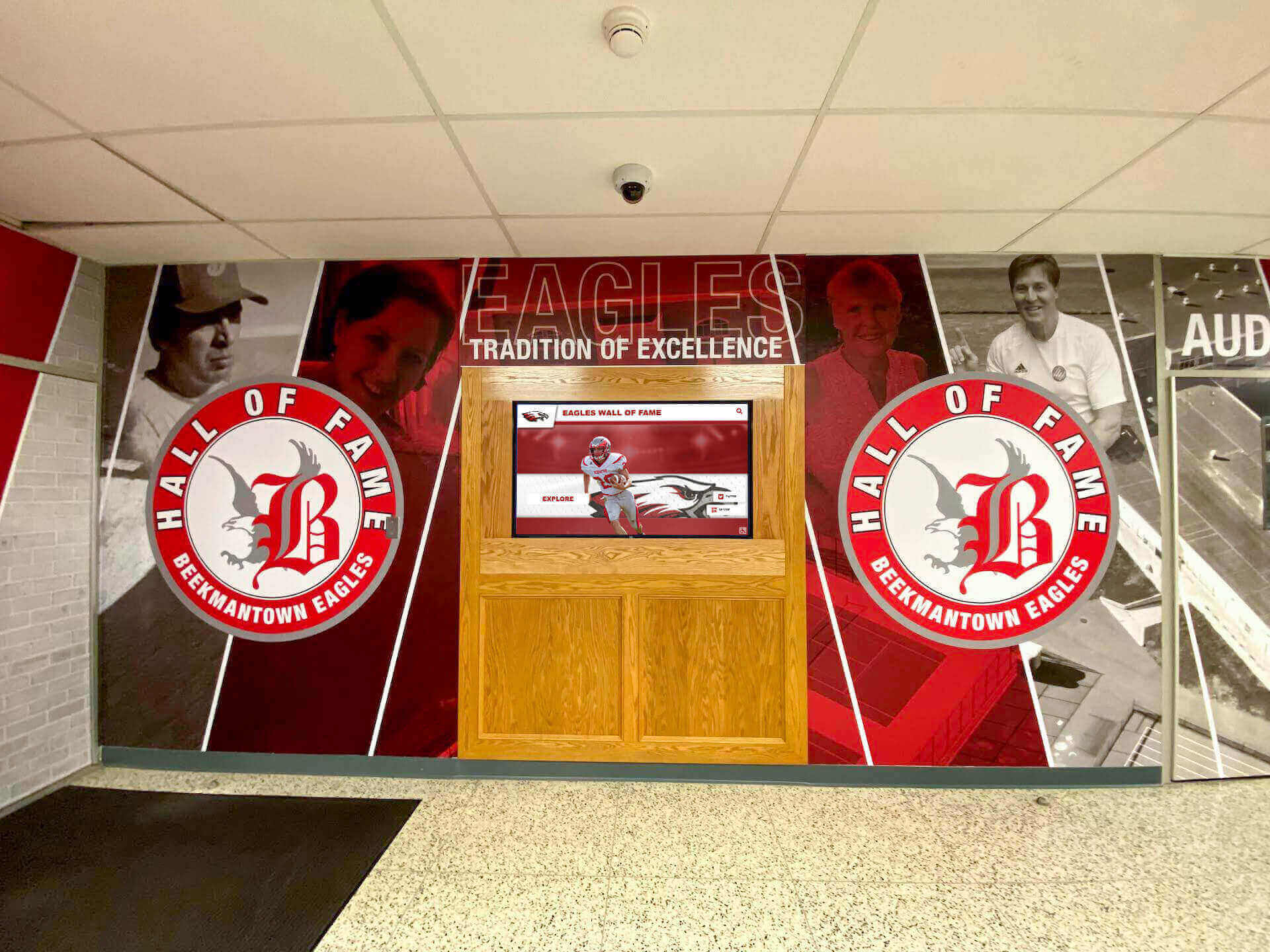
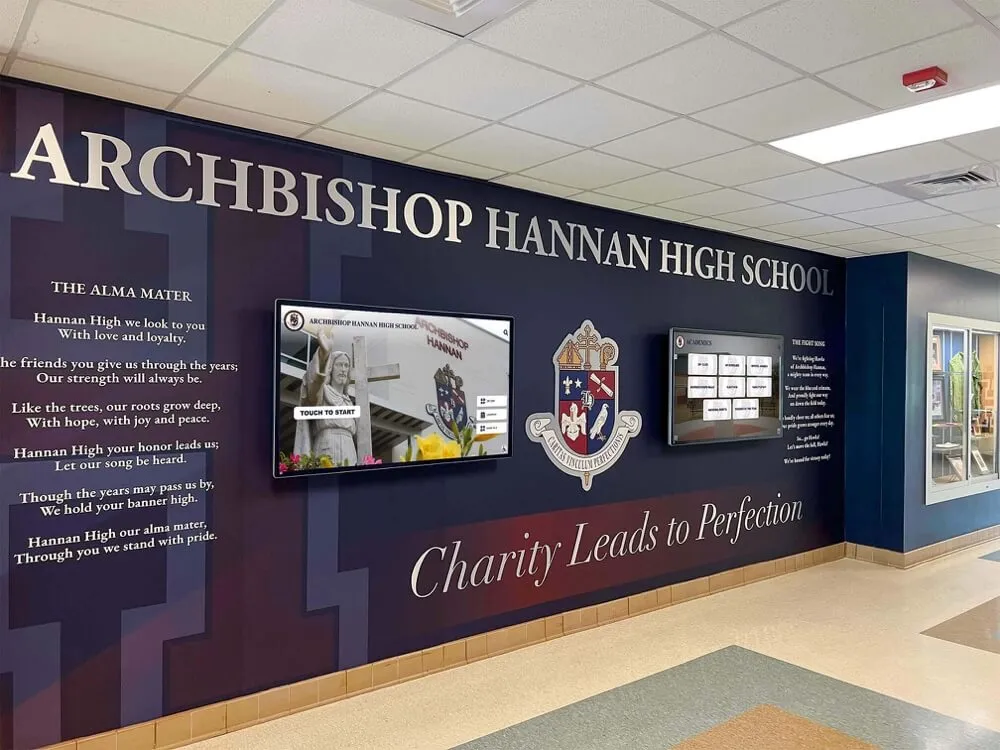
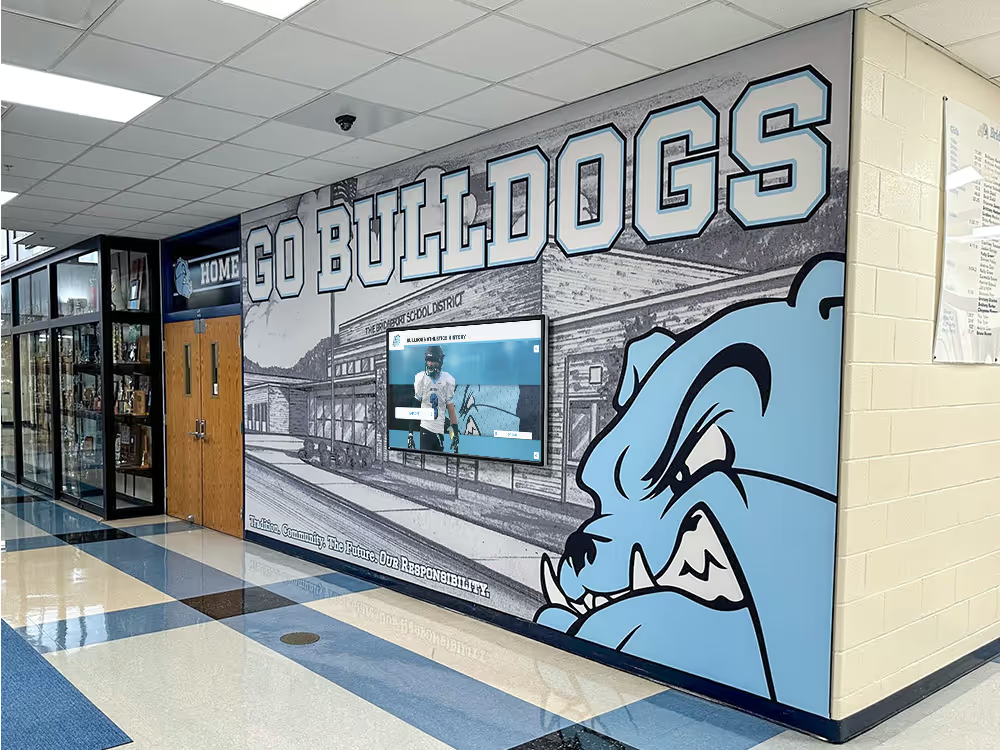
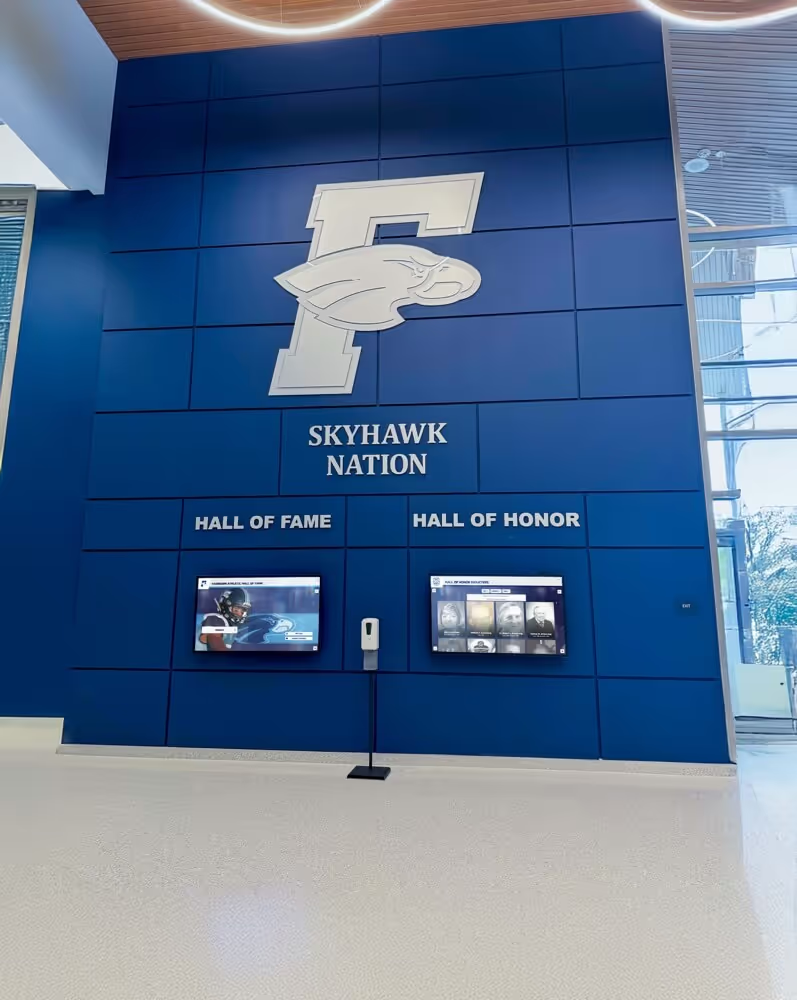
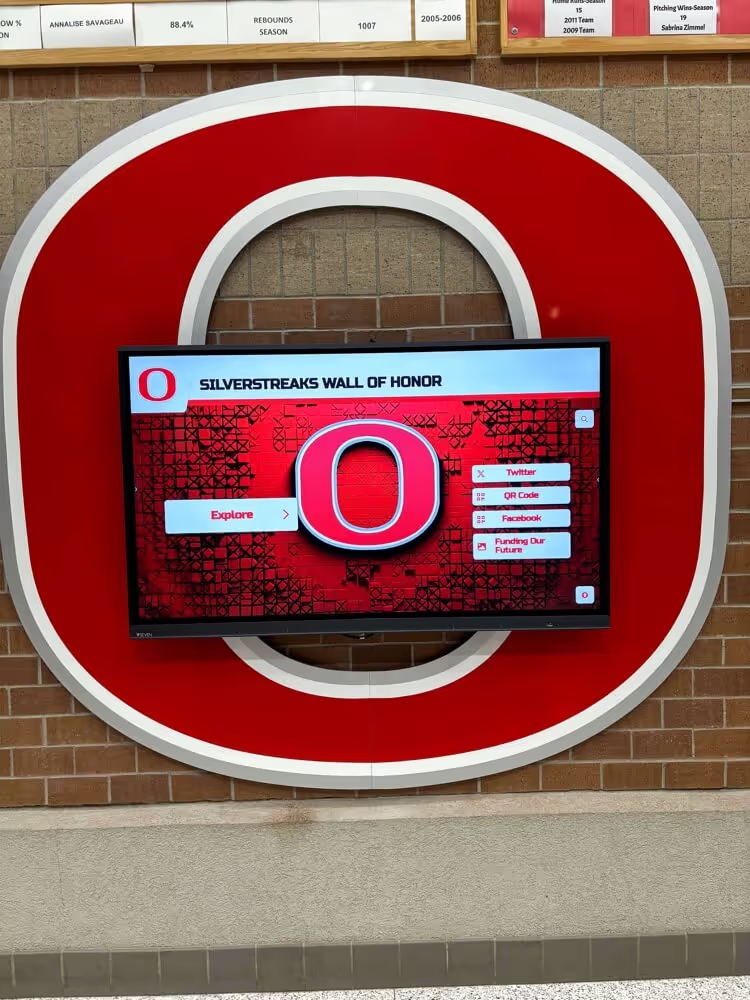
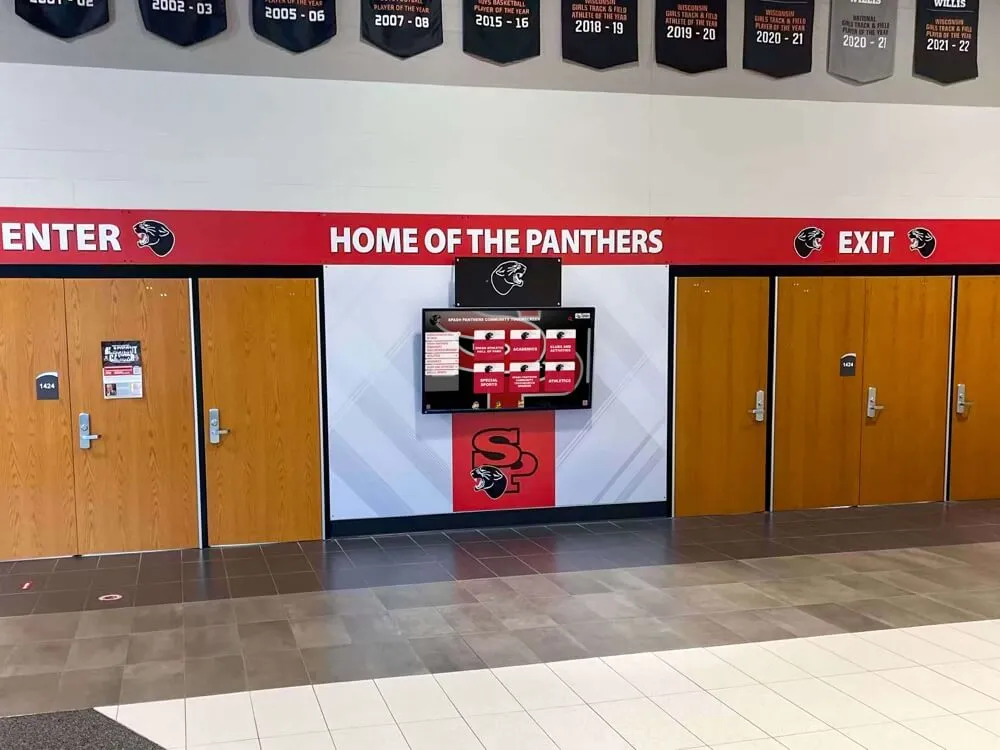
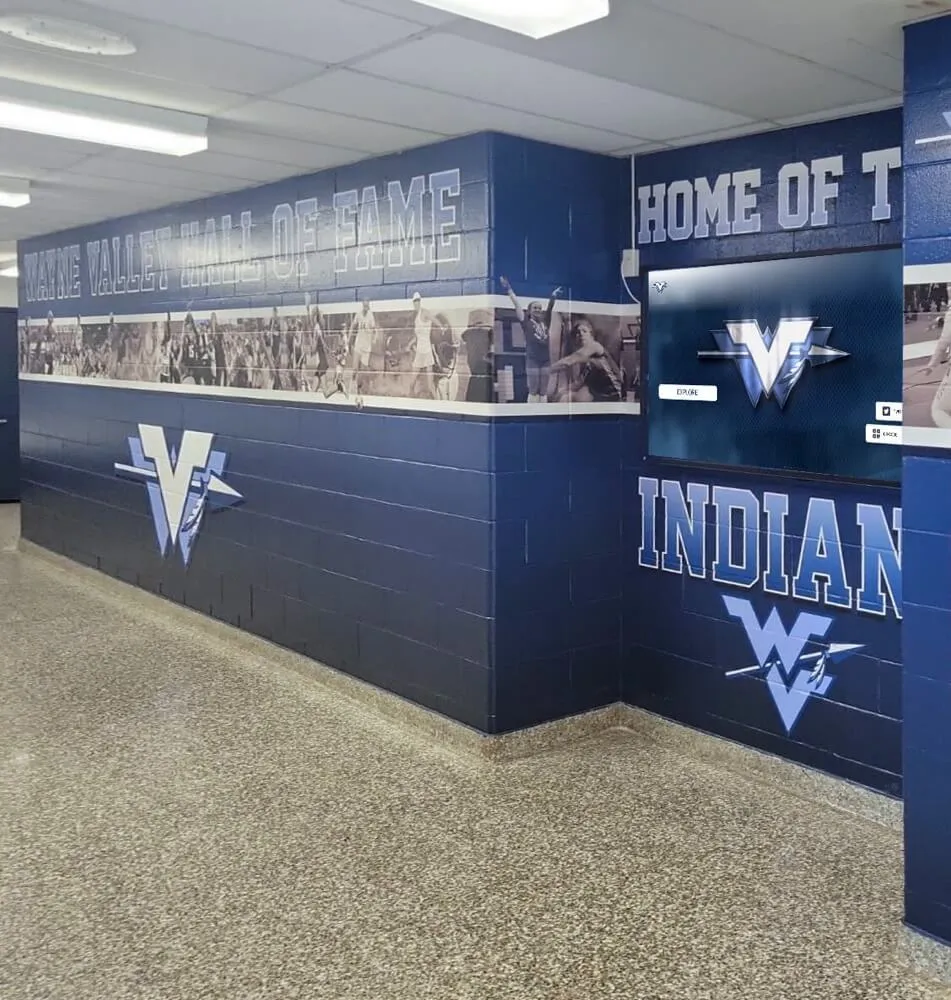
School halls of fame serve as permanent backdrops to graduation themes built around belonging and institutional identity
Opening Hooks That Capture Audiences in the First Thirty Seconds
The opening of any graduation speech is uniquely difficult. Audiences have been sitting for a while. They’re watching for their student. They’re half-expecting something forgettable. The opening hook either breaks that expectation or confirms it—and audiences decide which within the first thirty seconds.
The following graduation speech ideas for hooks are organized by approach, with notes on execution for each.
The Specific-Story Hook
Rather than opening with a general statement, the speaker begins in the middle of a specific scene—a moment from the school year, from freshman orientation, from a late-night study session, from a game-defining play. The audience is pulled into a narrative before they’ve had time to settle into passive listening.
Example structure: “It was 11:47 on a Tuesday night in March, and seven of us were still in the library when the lights clicked off automatically. [What happened next]. That moment is a strange place to start a graduation speech, but I think it explains more about this class than anything I could say directly.”
Why it works: Stories create immediate engagement because human attention is wired to track narrative. The audience wants to know what happened next. That curiosity buys the speaker the room to make a larger point.
Execution note: The story must be specific enough to be true and recognizable, but broad enough that most of the class either lived it or can imagine it. The speaker should never open with a story that only five people remember.
The Surprising Question Hook
The speaker opens by asking a question that the audience doesn’t immediately know the answer to—ideally one that reframes how they’re thinking about graduation itself.
Example structures:
- “What would you do differently if you knew exactly who was watching?”
- “How many of you remember the first thing your teacher said on your first day of freshman year?”
- “When did you first feel like you actually belonged here?”
Why it works: Questions transfer cognitive engagement to the audience. Instead of receiving content passively, listeners are briefly trying to answer. That internal activity keeps attention alive.
Execution note: The question should have a genuine answer the speaker is going to provide or explore—not a rhetorical placeholder. Audiences quickly recognize when a question is just a warm-up device rather than a real inquiry.
The Unexpected Fact or Observation Hook
The speaker opens with a counterintuitive observation about the graduating class, the institution, or graduation itself—something specific enough to be surprising.
Why it works: Surprise is one of the most reliable attention mechanisms available. An unexpected observation signals that this speech will not be the predictable content audiences brace for.
Execution note: The fact or observation must be genuinely surprising and directly connected to the theme that follows. It should not feel like a trivia fact disconnected from the rest of the address. Avoid invented statistics—stick to observations that are verifiably true or honestly framed as the speaker’s personal perspective.
The Honest Admission Hook
The speaker opens by admitting something unexpected: that they’re nervous, that they almost turned down this role, that they rewrote this speech six times, or that they have no idea what to say and want to spend the next eight minutes figuring it out together.
Why it works: Authentic vulnerability disarms audiences. It removes the speaker from the pedestal that commencement addresses traditionally occupy and creates genuine human connection immediately.
Execution note: The admission must be honest. Performed vulnerability feels worse than none at all. Audiences are sensitive to the difference.
For more structured speech guidance tailored to academic ceremony contexts, graduation ceremony traditions and commencement preparation covers delivery expectations and content strategies applicable to all student commencement speakers.
Speaker Selection Strategies for Multi-Voice Programs
Many schools limit commencement addresses to a single valedictorian speech and a principal’s remarks. That format works, but schools with more flexibility in their ceremony design have options that create richer, more representative graduation experiences.
Valedictorian and Salutatorian Addresses
The traditional model has the benefit of clear selection criteria and established audience expectations. Its weakness is that academic rank does not predict speaking ability or emotional connection, and a single student’s voice cannot represent the full range of experiences within a graduating class.
How to strengthen this model:
- Provide speaker preparation support (a teacher coach, feedback sessions, timing rehearsals)
- Encourage speakers to gather classmate stories rather than relying solely on personal experience
- Set clear time expectations (six to eight minutes typically works; anything over ten minutes loses most audiences)
- Brief speakers on the difference between addressing their class and addressing the families watching from the stands—effective commencement addresses serve both
Student-Elected Speakers
Some schools hold commencement speaker elections, separating the recognition honor (valedictorian, salutatorian) from the public speaking role. This allows the best communicator to speak rather than necessarily the highest GPA holder.
Implementation notes:
- Require speaker candidates to submit a brief speech proposal so voters understand what they’re electing
- Hold elections at least four weeks before graduation to allow adequate preparation time
- Pair the elected speaker with a preparation mentor
Multi-Student Panels or Relay Addresses
Rather than a single student address, some schools feature three to five students each speaking for two to three minutes on a shared theme from different vantage points—the athlete, the first-generation college student, the transfer student, the student who struggled and recovered. This format creates representation that a single voice cannot.
Why it works: Diverse voices within a cohesive structure signal institutional commitment to honoring the full range of student experience. Multiple shorter addresses also maintain audience energy better than a single long one.
Implementation notes: The relay format requires coordination so that speakers build on rather than repeat each other. A facilitating teacher should work with all speakers together at least once to identify overlaps and create transitions.
Faculty and Coach Guest Addresses
A beloved teacher or long-tenured coach can provide perspective that student speakers cannot: the view from the other side of the relationship, the observation of who graduates were at fourteen versus eighteen, the things that only become visible from years of watching young people grow.
What makes these effective: The best faculty speeches are specific rather than general. They name students and moments. They describe growth in concrete terms. They resist the temptation to deliver a generic wisdom-dump and instead say: here is what I actually observed about this particular group of people.
For academic recognition contexts that inform strong faculty speech content, academic recognition programs guide covers the range of student achievement that effective speakers can draw from.
Building a Complete Graduation Speech: Structure and Content
Whatever theme and speaker format a school selects, effective graduation addresses share structural characteristics that help content land with audiences.
The Five-Part Address Structure
Opening hook (30–60 seconds): Pull the audience in before they’ve settled into passive listening. Use one of the hook types above.
Establishing the theme (60–90 seconds): Name what this speech is actually about, grounded in something true about this class specifically.
Core development (3–5 minutes): Two or three stories, examples, or arguments that build the theme. Avoid listing more than three—audiences can hold three threads; they cannot hold seven.
Acknowledgment and gratitude (60–90 seconds): Thank the people whose investment made this graduation possible. Be specific. Generic thank-yous to “all the teachers and families” read as filler; specific thanks to named individuals or programs read as genuine.
Close (30–60 seconds): Return to the opening in some form—complete the story started in the hook, answer the question posed, revisit the observation made. Strong closings create a sense of satisfying structure. Avoid new material in the close.
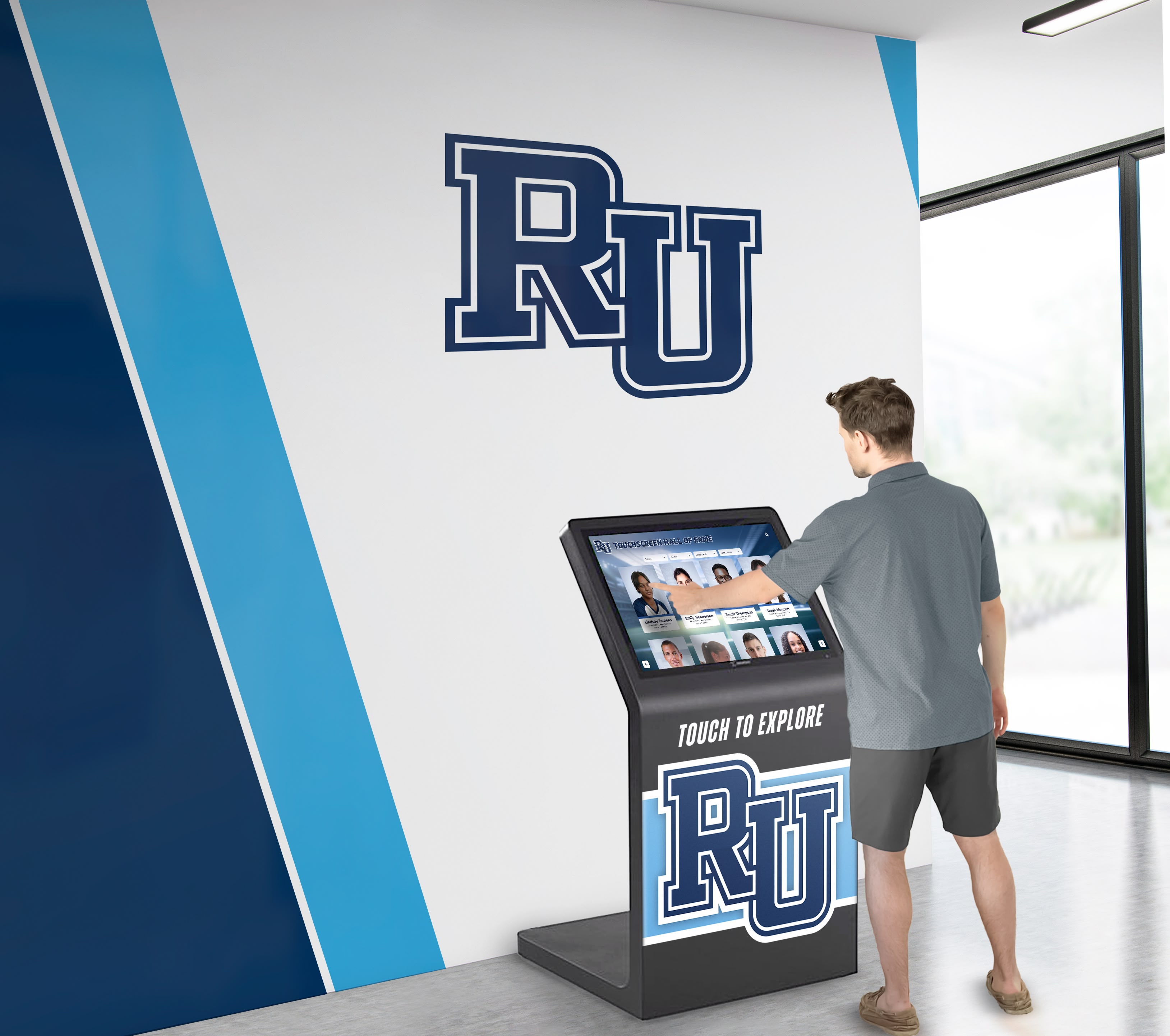
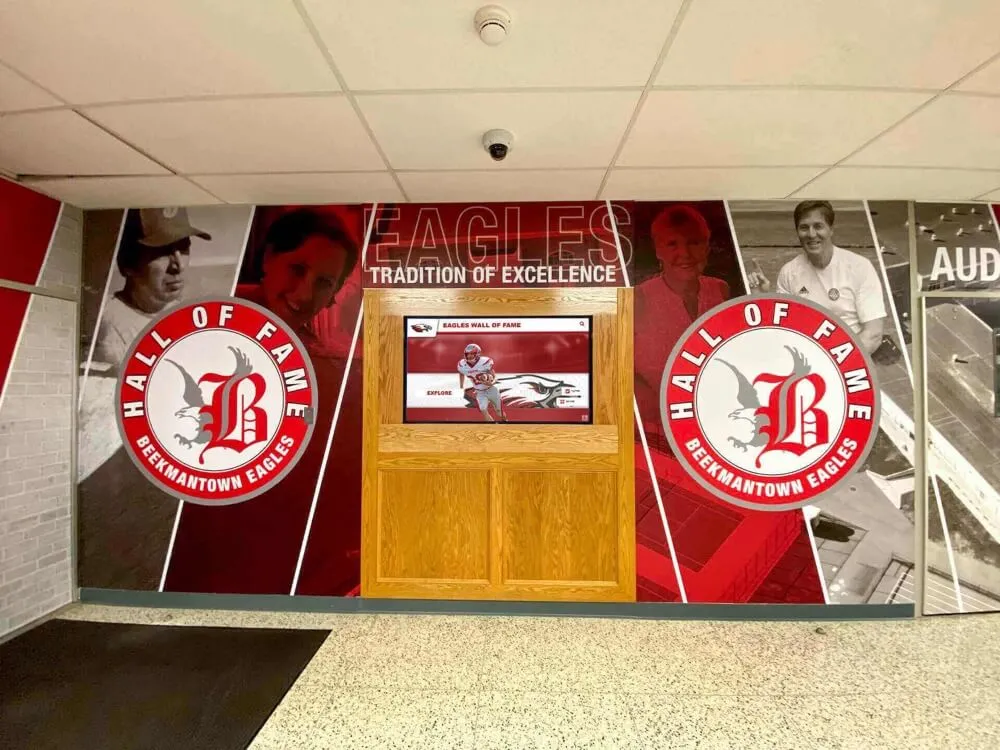
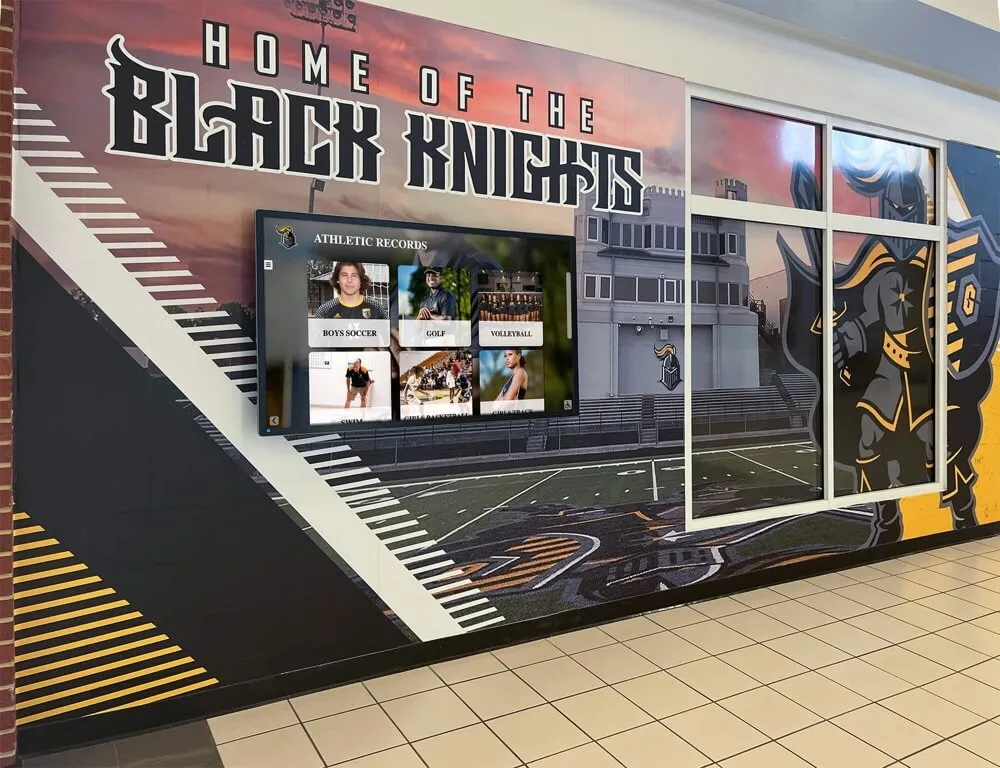
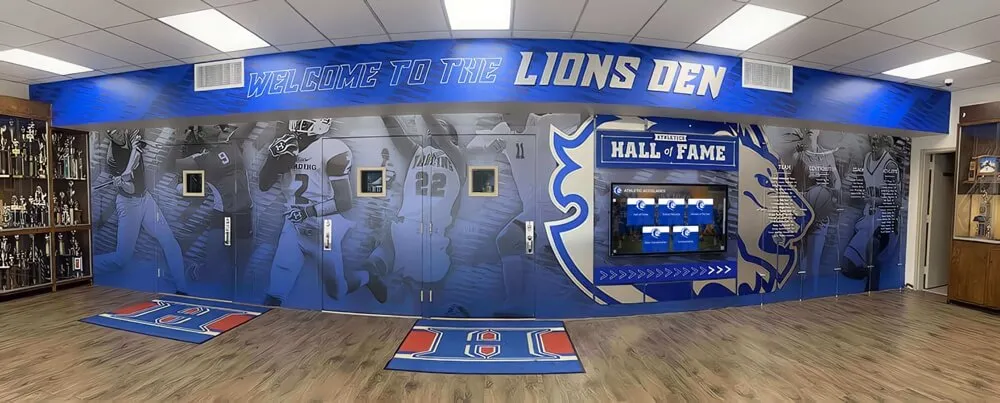
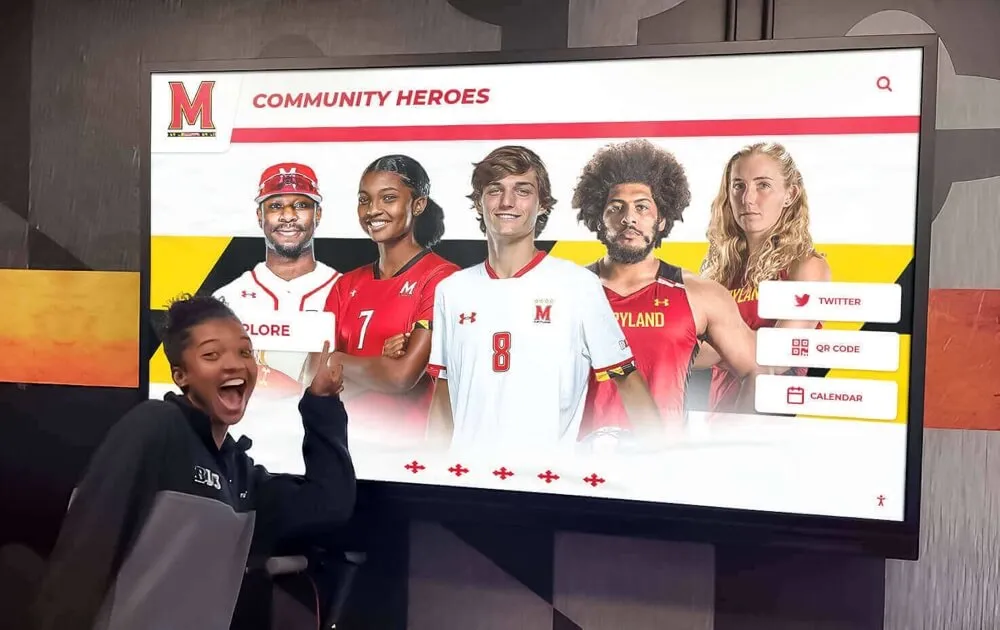
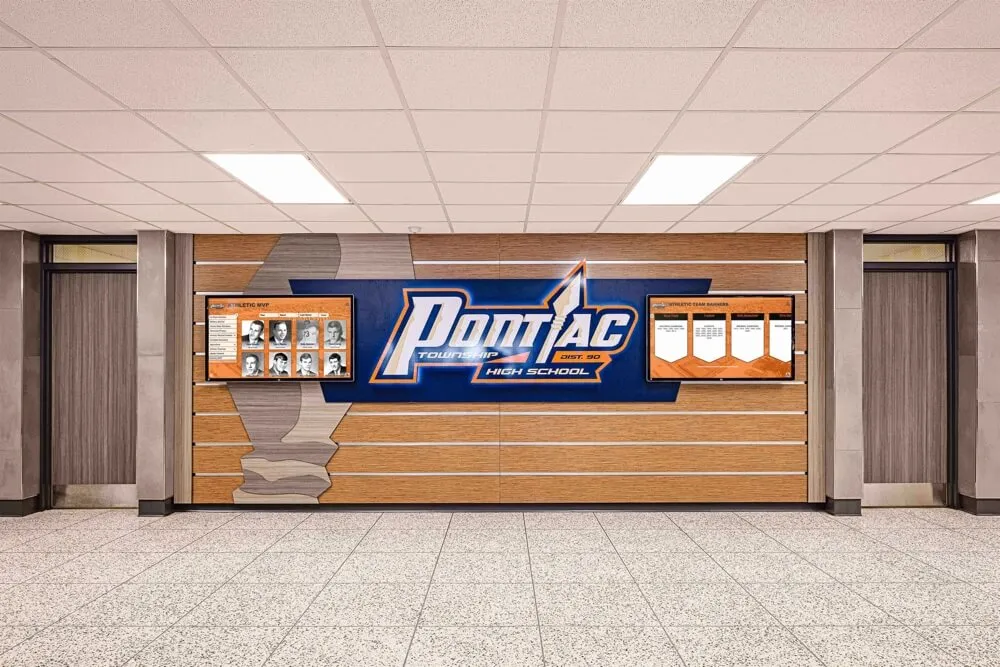
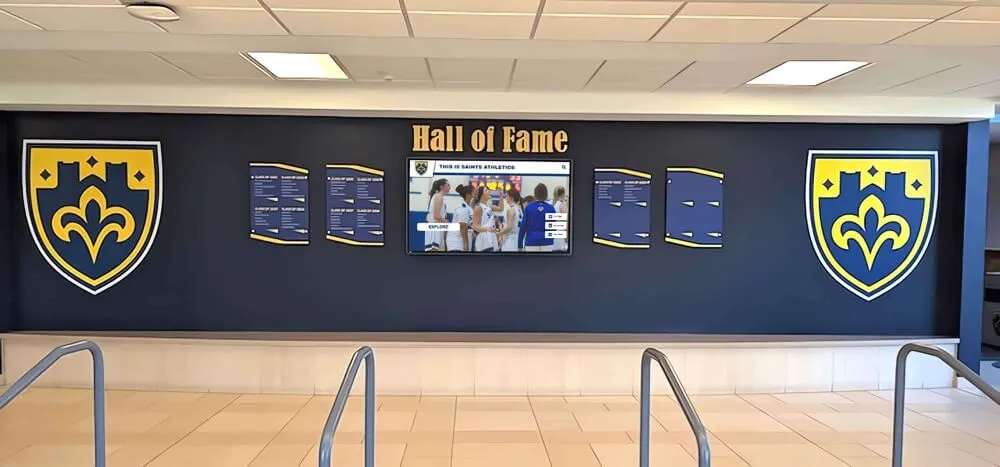
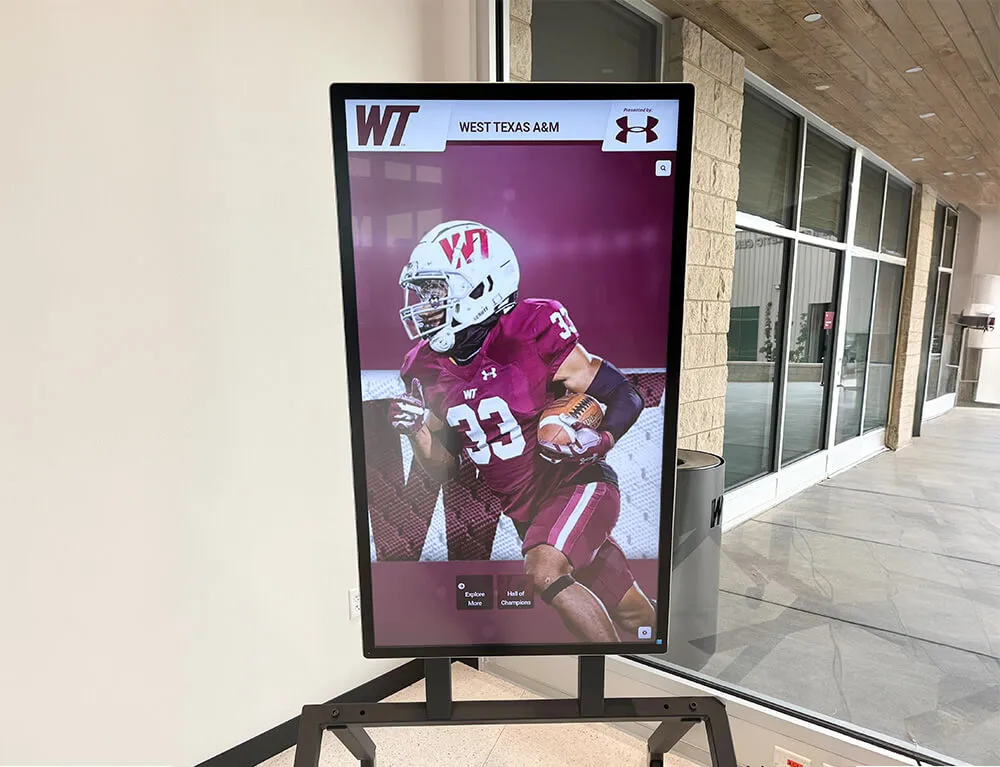
Digital kiosks in school lobbies allow graduates and families to explore archived speech content long after the ceremony ends
Common Content Mistakes and How to Avoid Them
Dictionary definitions: Opening with “Webster’s defines graduation as…” signals to audiences that the speaker either ran out of ideas or was given bad advice. Skip it.
Inside jokes: References that only a fraction of the class understands exclude everyone else. If a moment was meaningful to the whole class, it can be included. If it was meaningful to a friend group, it belongs in a toast at the after-party.
Abstract inspiration without specific grounding: “Chase your dreams” and “believe in yourself” are not themes. They are placeholders. Every abstract inspirational statement in a graduation speech should be anchored by a specific story or observation that earns it.
Criticism of the school or community: Graduation is not the venue for grievances, however legitimate. A commencement address that uses the platform to criticize administration, faculty, or institutional policies reflects poorly on the speaker and creates discomfort for everyone present.
Excessive length: Most graduation speech ideas become better when edited, not extended. Eight minutes of well-crafted content beats fifteen minutes of good content padded to feel comprehensive.
Memorable Moments Schools Should Capture During the Ceremony
Beyond the speeches themselves, graduation ceremonies generate documented moments that schools consistently fail to capture with sufficient care. These moments form the raw material for a meaningful institutional archive.
The Speech Delivery Itself
Obvious in theory, often poorly executed in practice. A usable archive of a graduation speech requires:
- Dedicated close-up camera: One camera locked on the speaker from a position that shows both face and hands. Wide-angle ceremony coverage cannot produce usable speech archive footage.
- Dedicated lapel or podium microphone: Ceremony sound systems are designed for real-time audibility, not recording quality. A dedicated audio feed captured independently of the room’s main speakers dramatically improves archive quality.
- Uninterrupted recording: Someone has to be designated to monitor the recording throughout. The moments when recording equipment fails unmonitored are rarely the forgettable moments.
Audience Reaction Shots
The impact of a graduation speech is visible on the faces of the people hearing it. Laughter, tears, sustained applause, graduating students leaning over to say something to each other—these reaction moments are part of the speech’s story and worth capturing.
A second camera operator moving through the audience can collect these reaction shots systematically. They require more editorial work to integrate into an archive, but they transform a recorded address from documentary evidence into something emotionally compelling.
The Recognition Moments During Diploma Conferral
Individual diploma presentation moments—especially for students receiving special recognition, students who overcame significant obstacles, or students the class will particularly miss—deserve dedicated capture. These are frequently the moments families most want preserved and most struggle to capture themselves given their position in the audience.
The Informal Moments Before and After
Some of the most authentic documentation of a graduation class comes from the unscripted moments: graduates greeting each other before the processional, the emotional conversations after the recessional, the informal speeches and toasts at the post-ceremony reception. These require consent considerations (especially for minors) but produce the texture that formal ceremony footage cannot.
For schools building comprehensive class archives that incorporate multiple forms of documentation, best practices for digitizing and preserving school archive materials provides guidance on capturing, storing, and organizing these materials over time.

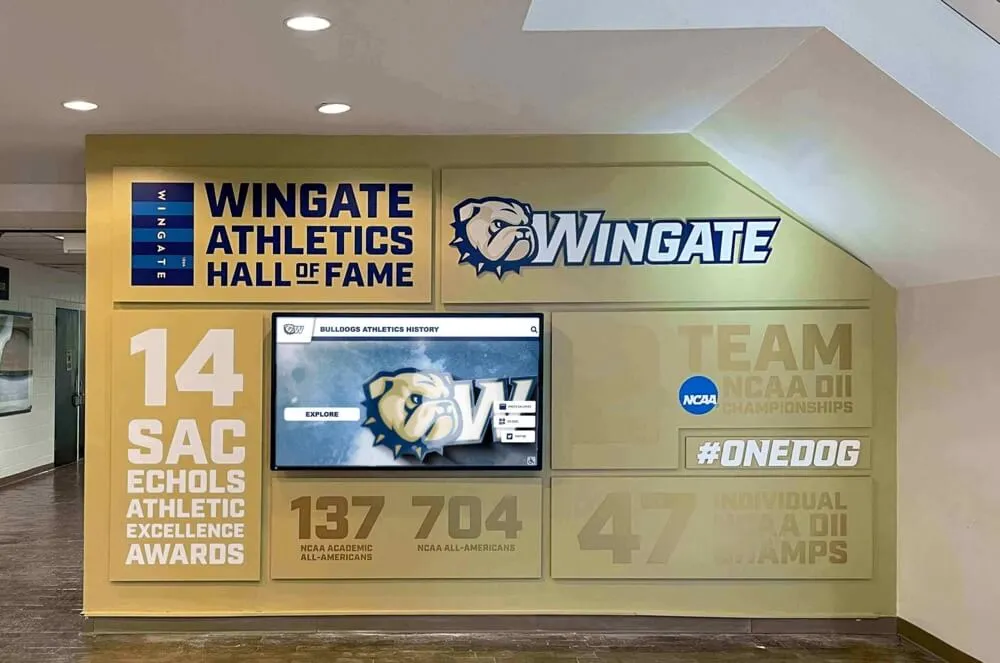
Dedicated AV coverage transforms graduation speeches from ephemeral moments into permanent archival assets for school recognition programs
Recording and Archiving Graduation Speeches: A Practical Approach
Many schools record graduation ceremonies with the family audience in mind. Archiving graduation speeches for institutional use requires a slightly different orientation—one that prioritizes long-term usability over real-time broadcast quality.
Equipment Recommendations by Budget Tier
Basic setup (under $500 total investment):
- A consumer camcorder or DSLR with video capability positioned on a tripod, locked on the podium
- A unidirectional lapel microphone (wired or wireless) feeding directly into the camera
- A 64GB or larger memory card rated for continuous video recording
- A designated monitor who checks recording status every fifteen minutes
This setup will not produce broadcast-quality footage, but it will produce usable, clearly audible archives of every speech delivered.
Intermediate setup ($500–$2,000):
- Two camera angles: one locked wide (ceremony context) and one locked close (speaker)
- Dedicated audio interface capturing a clean feed from the venue’s sound board
- External audio recorder as backup
- Post-ceremony editing to combine angles and clean audio
Advanced setup ($2,000+):
- Three or more cameras including audience coverage
- Professional audio recording with backup
- Live broadcast capability for families unable to attend
- Dedicated AV operator or hired production team
- Edited final archive delivered within one week post-ceremony
File Organization and Storage
The archive is only valuable if it remains findable. Schools should establish naming conventions for graduation archive files at the beginning of the project, not after scrambling through three years of unlabeled footage. A simple convention works: [YEAR]_[EVENT]_[SPEAKER NAME]_[TYPE] (e.g., 2026_Graduation_Martinez_Valedictorian_Address.mp4).
Store primary copies in at least two locations: a local server and a cloud backup. Designate a specific staff member as archive custodian with responsibility for maintaining organization and ensuring no footage is lost during hardware transitions.
Generating Transcripts
Video footage alone is less useful than video footage paired with a written transcript. Transcripts allow schools to:
- Search archived speech content for specific themes or phrases
- Publish speech excerpts on graduation program pages or digital recognition displays
- Make content accessible to community members who cannot view video
- Create quote cards for social media or physical display
Many schools find that requiring speakers to submit their final written remarks serves double duty: it provides a transcript automatically and encourages more prepared delivery. For speakers who deviate significantly from prepared remarks, a dedicated volunteer with good typing speed can produce a rough transcript during the ceremony.
For schools connecting speech archives to broader graduation memory-keeping, interactive school touchscreens in action for recognition and archive display shows how recognition and archive content can work together on interactive lobby displays.
Displaying Archived Speeches on Digital Recognition Walls
Capturing graduation speeches is only half the project. The other half is making them accessible and visible in ways that serve the ongoing life of the school community.
The Lobby as Living Archive
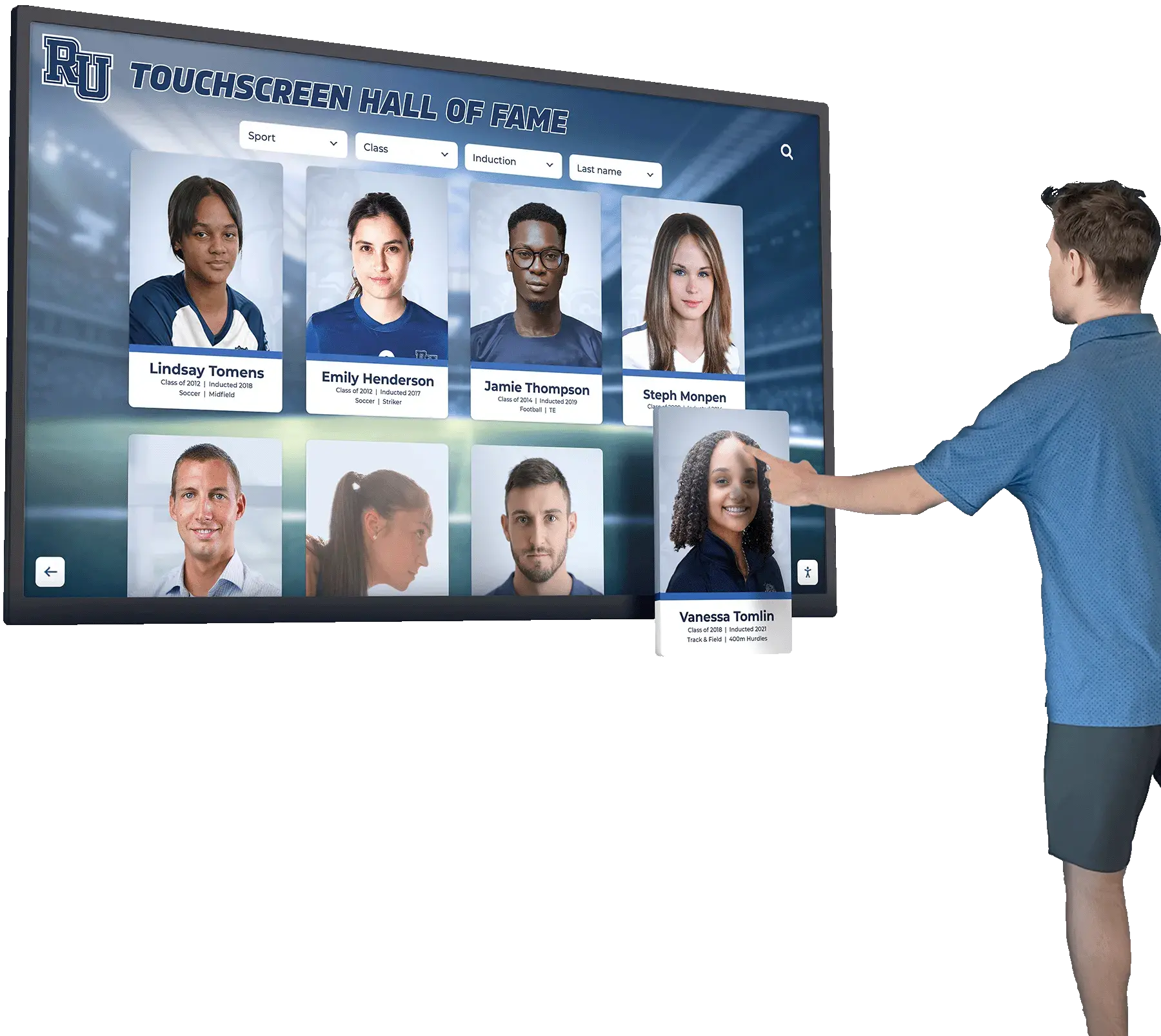
Schools with digital touchscreen recognition walls—like those provided by Rocket Alumni Solutions—have a natural venue for graduation speech content that most never use to its potential. A touchscreen wall in a school lobby can display:
- Excerpts from graduation addresses organized by graduating class year
- Video clips of memorable speech moments accessible to anyone who visits
- Full transcripts of valedictorian and salutatorian addresses
- Speaker profiles connecting graduation remarks to where those students are now
- A historical timeline of graduation speech themes and memorable lines across decades
This transforms the lobby from a display of static achievement data into a living institutional narrative. Incoming students can encounter the voices of the classes that preceded them. Alumni returning for homecoming can revisit their own graduation moments. Families on admission tours can hear what this school’s graduates actually say when given the chance to speak for themselves.
For schools exploring the full range of what interactive lobby displays can hold, school digital signage and interactive displays transforming campus communication walks through content categories that work well in school lobby contexts.
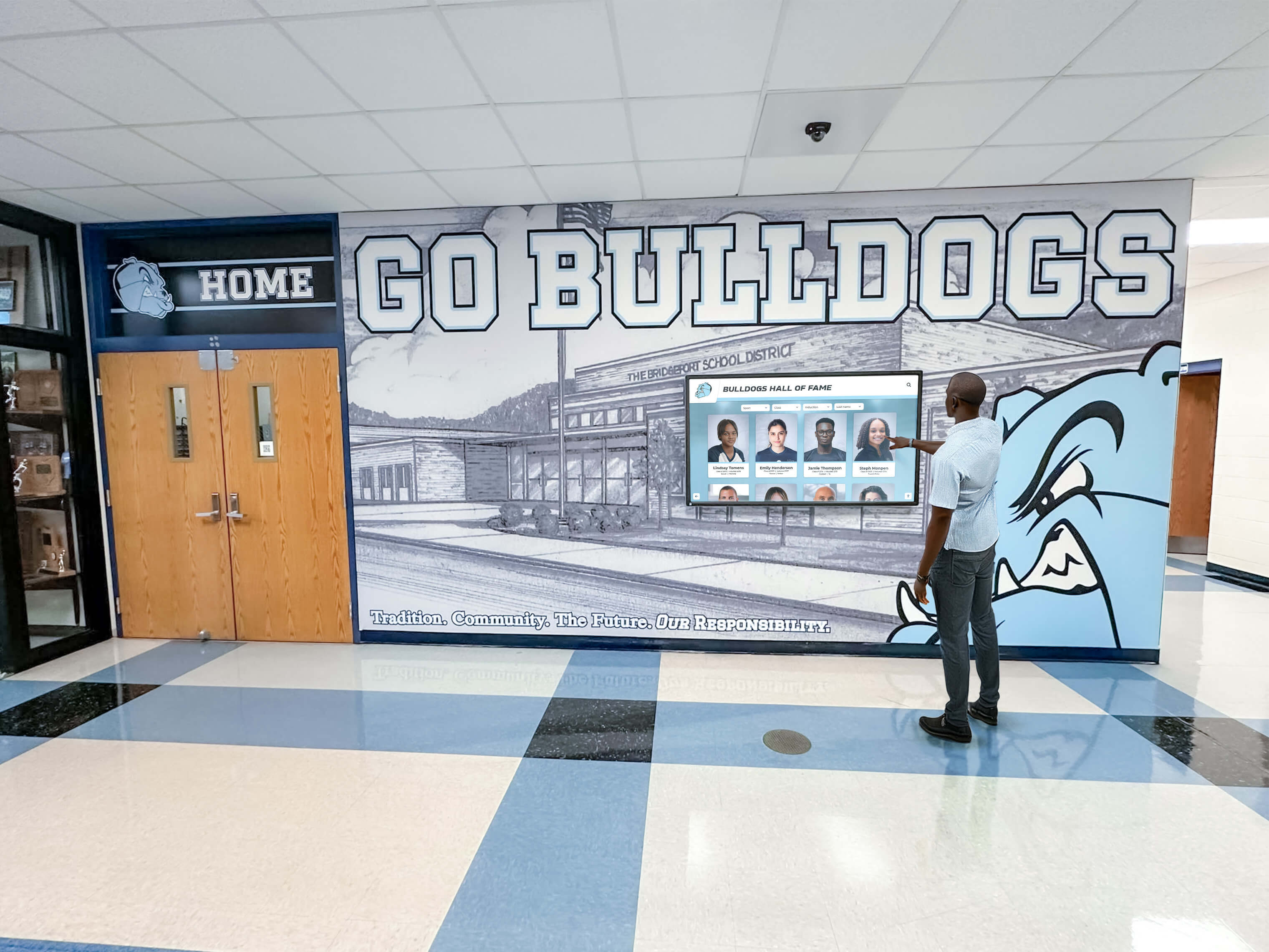
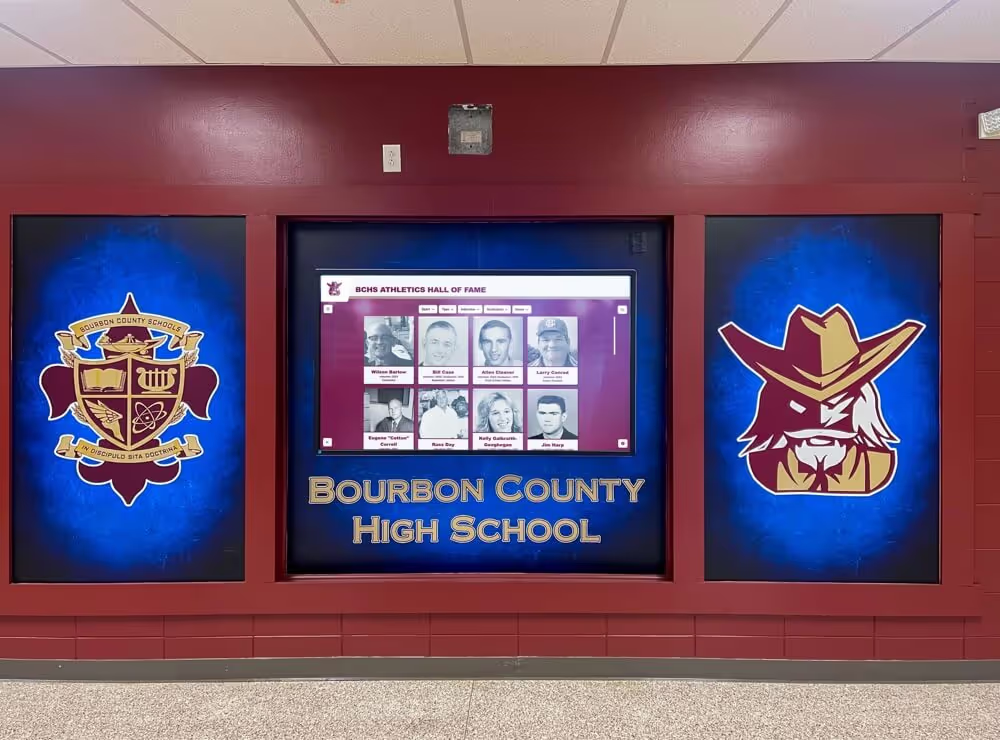
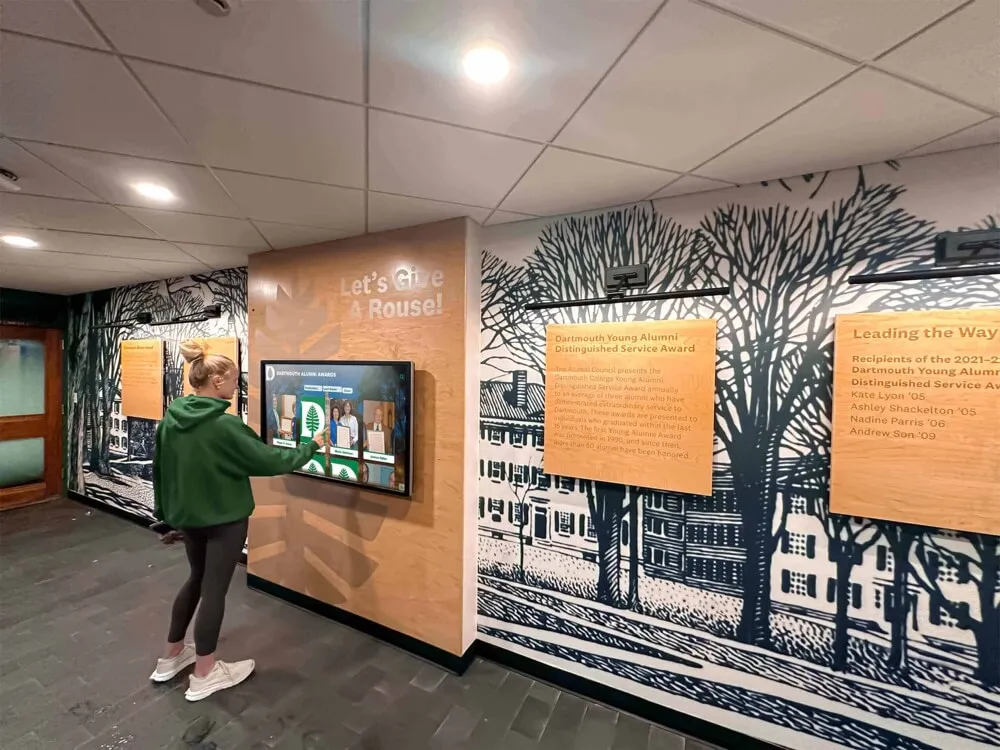
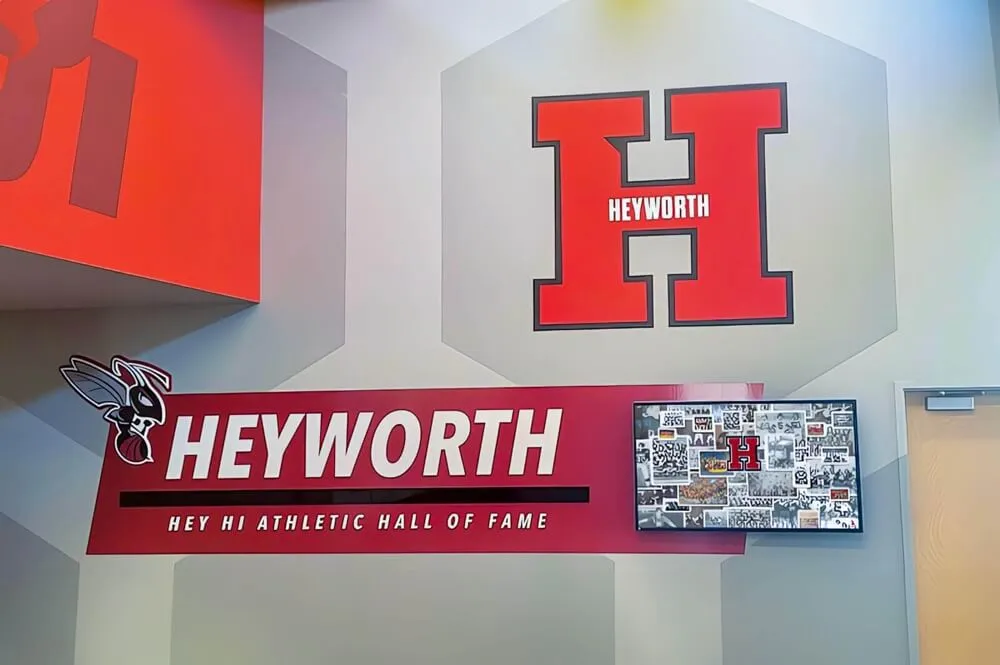
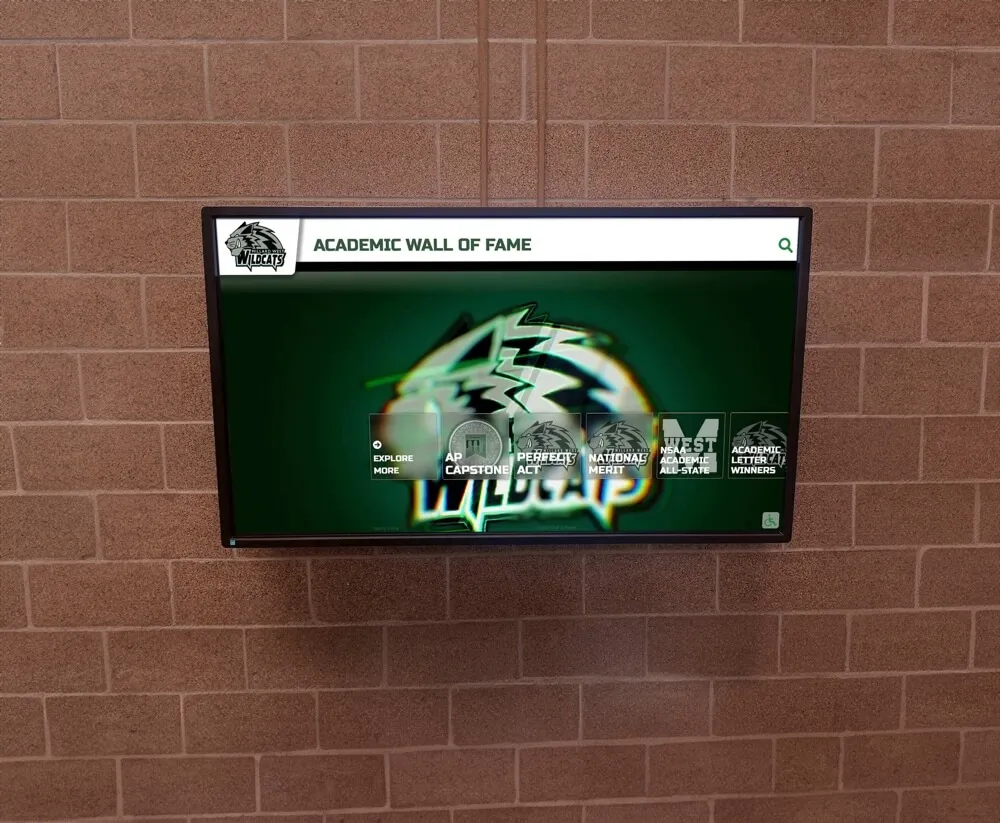
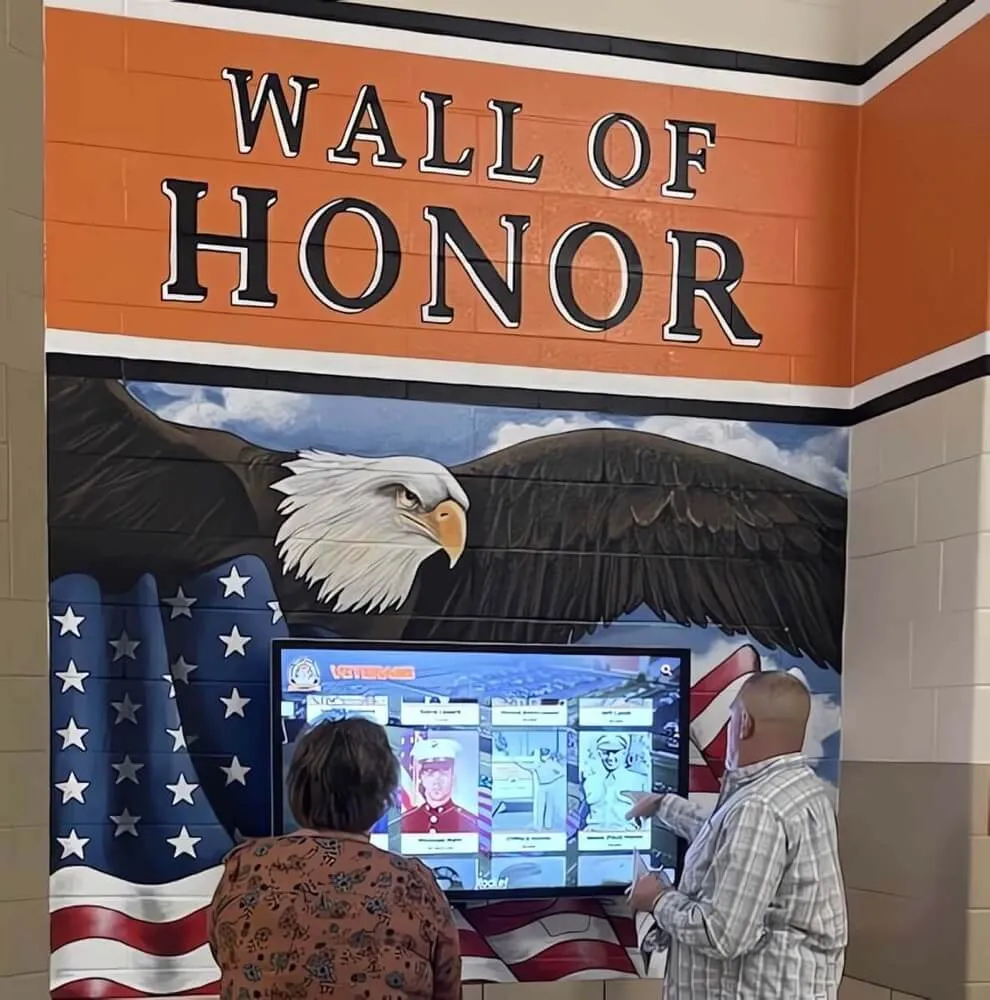
Interactive hallway displays invite community members to explore graduation archives and recognition content year-round
Connecting Speech Content to Graduate Profiles
The most powerful archive integration connects graduation speech content to individual graduate recognition profiles. When a class includes a speaker whose graduation address particularly resonated, that speech can be embedded in or linked from that student’s recognition profile—alongside their academic and athletic achievements, photos, and post-graduation updates.
This creates a searchable, navigable archive rather than a folder of video files. A family member revisiting the platform years later can find not just a photo of their graduate but the actual words that student chose when given a public platform on graduation day.
Platforms like Rocket Alumni Solutions support this kind of integrated recognition content alongside athletic records, academic honors, and community achievements—making the graduation speech archive part of a comprehensive institutional memory rather than a separate project requiring its own maintenance.
Creating Annual Graduation Speech Traditions
Schools that archive speeches consistently over multiple years gain access to a uniquely powerful resource: the ability to trace how their community’s expressed values and concerns have evolved. A decade of graduation address content reveals which themes recur, which concerns are specific to particular years, and how the school’s articulated identity has shifted.
This kind of historical depth also creates richer ceremony traditions. Incoming seniors who know that graduation speeches are preserved and displayed have a different relationship to the preparation process. They’re not just filling a ceremony slot—they’re contributing to a record.
For schools thinking about the graduation ceremony in the context of a broader academic history archiving project, how to start and build a school hall of fame archive covers strategies that support multi-decade institutional documentation.
AV Integration Best Practices for Recognition Walls
When preparing graduation speech footage for display on a digital recognition wall, a few technical considerations affect usability:
- Clip length: Two to four minute highlight clips work better for lobby display than full-length addresses. Visitors rarely watch more than five minutes at a kiosk; curated highlights maximize engagement.
- Captions: Any speech content displayed publicly should include accurate captions. This serves visitors with hearing differences and improves comprehension in lobby environments where audio may be low.
- Organized navigation: Speech archives work best when organized by year and browsable by speaker name or theme. Visitors should be able to find specific content quickly rather than scrolling through undifferentiated footage.
- Regular updates: The archive grows every year. Designate someone responsible for adding new graduation content to the display within thirty days of each ceremony.
For schools planning the full ceremony experience that generates this content, school event ideas and planning guides for memorable recognition experiences covers the operational side of running ceremonies that produce archive-worthy moments.
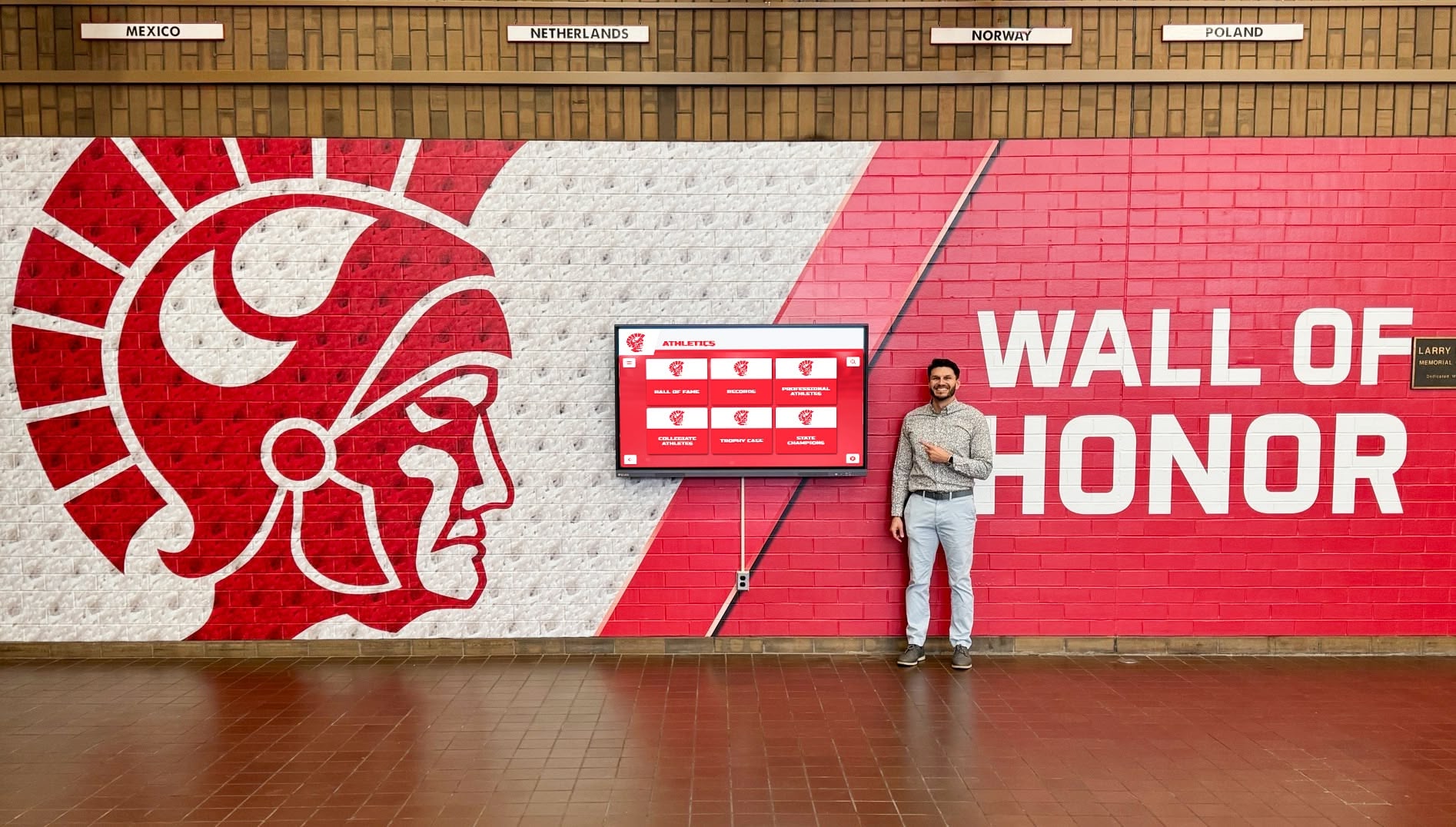
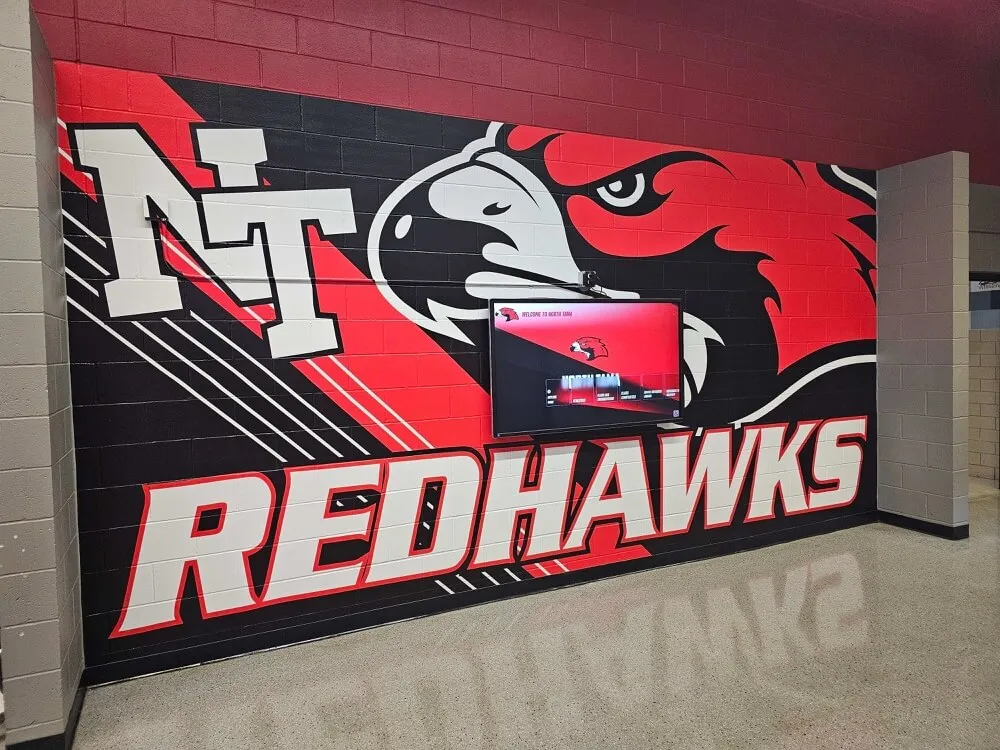
Accessible lobby displays let community members explore graduation speech archives and historical recognition content on their own schedule
Additional Graduation Recognition Elements Worth Preserving
The graduation speech is the highest-profile piece of ceremony content, but it sits alongside other recognition elements worth capturing and archiving with equal care.
Graduation Cord and Stole Presentations
Recognition cords and stoles mark academic distinction, community service, leadership honors, and cultural affiliation. Understanding academic honor societies and achievement programs represented in graduation regalia helps schools document this recognition layer accurately, connecting the visible honors worn during the ceremony to the specific achievements they represent in archive records.
Senior Slideshow Integration
Many schools pair graduation speeches with senior photo slideshows displaying between program elements. These slideshows are archive assets in their own right—but they also work as natural context for speech excerpts when displayed later on recognition walls. A quote from a valedictorian address displayed alongside senior portraits creates more emotional resonance than either element alone.
For schools developing visual graduation tribute content, a well-structured senior slideshow paired with archived speech clips offers a cohesive tribute format schools can adapt for lobby display or post-ceremony streaming.
The Faculty and Staff Farewell
Often overlooked as archive material, the brief remarks made by retiring teachers or long-serving staff members at graduation ceremonies carry enormous community significance. These individuals have frequently shaped dozens of graduating classes; their final public address deserves the same documentation care as any student speech.
Building a Year-Round Speech Preparation Program
Schools that produce consistently strong graduation addresses don’t leave preparation to the final six weeks of senior year. A more effective approach builds speech preparation into the year-round curriculum and culture.
Starting Preparation in the Fall
Senior year English classes are a natural venue for graduation speech preparation. Assigning a draft commencement address in September—with full knowledge that only some students will be selected to deliver remarks publicly—gives every senior practice in the form while giving speech-capable students months rather than weeks to develop strong addresses.
This approach also normalizes the expectation that commencement speaking is a craft requiring genuine preparation rather than a performance delivered on instinct.
Working with Student Government
Student government leaders who may serve as commencement speakers often have the most compressed preparation time: they’re managing senior activities, prom planning, and administrative responsibilities simultaneously with speech preparation. Connecting them with a faculty mentor specifically for speech development early in spring semester removes the preparation crunch.
Providing Structural Feedback
The best feedback on a graduation speech draft focuses on structure before content. Before addressing specific language choices, reviewers should assess:
- Does the speech have a clear theme, or is it a list of thoughts?
- Does the opening hook create genuine engagement?
- Are the stories specific enough to be true and recognizable?
- Does the close return to the opening in a satisfying way?
- Is the speech within the allotted time when delivered at speaking pace?
Once structure is solid, language refinement is much more productive.
Conclusion: Speeches Worth Giving Are Speeches Worth Keeping
The graduation speech ideas in this guide share a common premise: that commencement addresses are worth taking seriously as both performances and as documents. A well-crafted graduation speech, delivered to a graduating class that recognizes itself in it, is among the most resonant forms of recognition a school can offer. A poorly prepared one is ceremony filler.
The same logic applies to preservation. An archive that no one accesses serves no institutional purpose. An accessible, organized, searchable archive of graduation speech content embedded in a school’s recognition infrastructure—displayed in the lobby, connected to graduate profiles, updated annually—becomes a living expression of institutional identity and a resource that strengthens community connection for decades.
Archive Your Graduation Speeches Where They'll Actually Be Seen
Rocket Alumni Solutions helps schools build interactive recognition walls that display graduation speech content alongside athletic and academic achievements—making every class's commencement voices part of a permanent, browsable institutional archive.
Explore Digital Recognition WallsSchools that treat graduation speech preparation and graduation speech preservation as connected projects get more from both. Speakers who know their remarks will be displayed take preparation more seriously. Archives built from well-crafted speeches provide more institutional value. And graduates who return to see their words preserved—alongside the achievements, faces, and accomplishments of their classmates—feel recognized in a way that single-night ceremonies alone cannot produce.
Start with the speech. Build the archive. Display it where the community can find it. That’s a graduation program worth graduating from.
Ready to see how Rocket Alumni Solutions can help your school build a permanent, interactive graduation archive that grows with every graduating class? Explore how digital recognition walls preserve what matters most from every commencement ceremony.