



Graduation ceremonies mark pivotal transitions in students’ educational journeys—formal recognition of achievement, culmination of years of dedication, and celebration of future possibilities. Well-designed commencement programs transform routine degree conferral into powerful experiences students and families remember for decades, creating moments that authentically honor accomplishment while inspiring continued excellence beyond graduation day.
The most impactful graduation ceremonies extend far beyond simply calling names alphabetically and distributing diplomas on crowded stages. They combine thoughtful tradition with meaningful personalization, integrate technology creating modern engagement, acknowledge diverse achievement types beyond academic transcripts, and create inclusive celebrations recognizing that every graduate’s journey involved dedication worthy of genuine honor.
Research in educational psychology consistently demonstrates that meaningful graduation ceremonies significantly impact student identity formation, institutional connection, and lifelong memories of educational experience. Students report that thoughtfully planned commencements create lasting emotional resonance 78% more often than perfunctory events focused solely on efficient diploma distribution.
This comprehensive guide explores creative graduation ceremony program ideas spanning processional design, speech selection, multimedia integration, recognition approaches, and digital display solutions—providing school administrators and ceremony planners with practical strategies creating celebrations your graduates, families, and community anticipate enthusiastically.

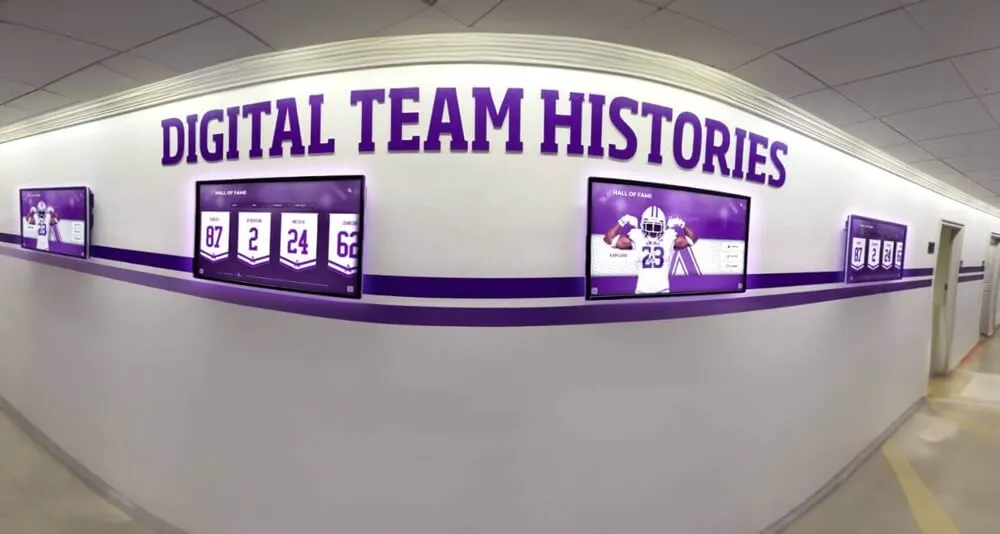
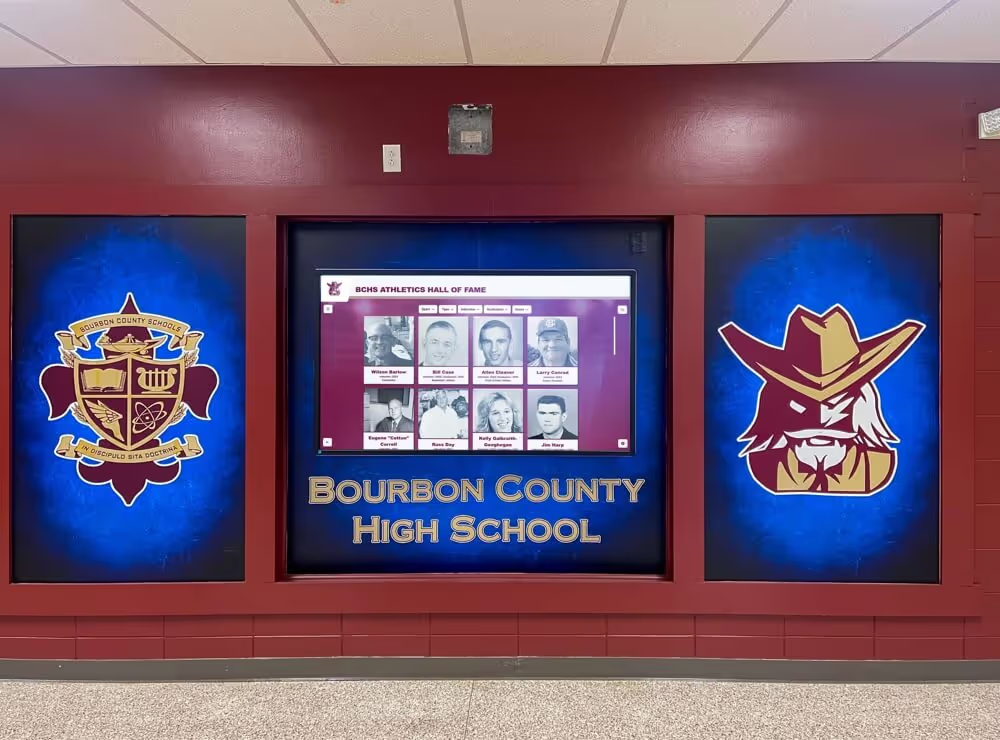
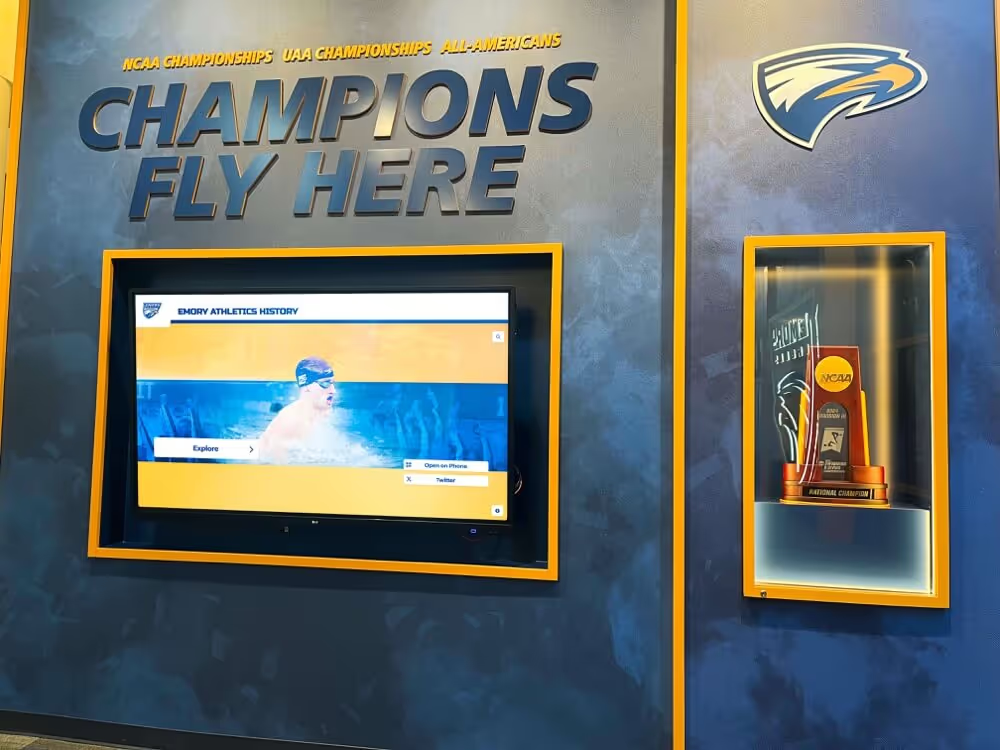
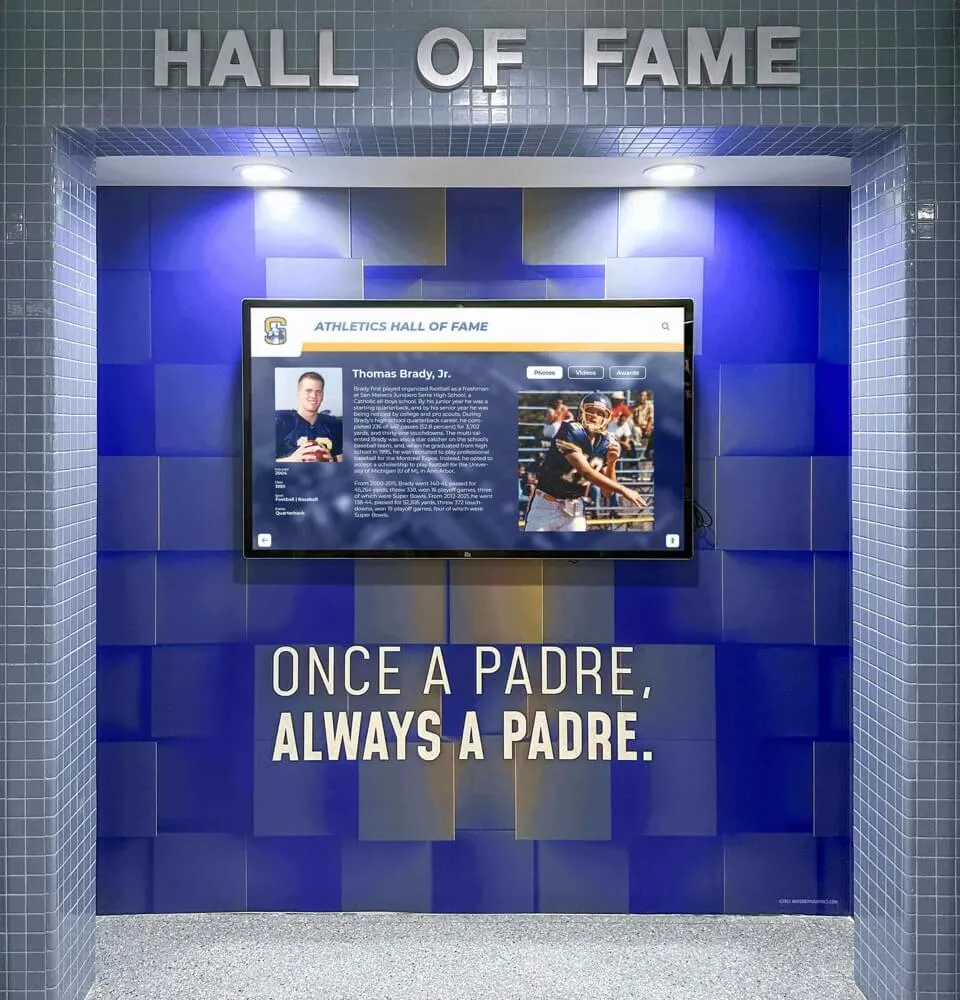
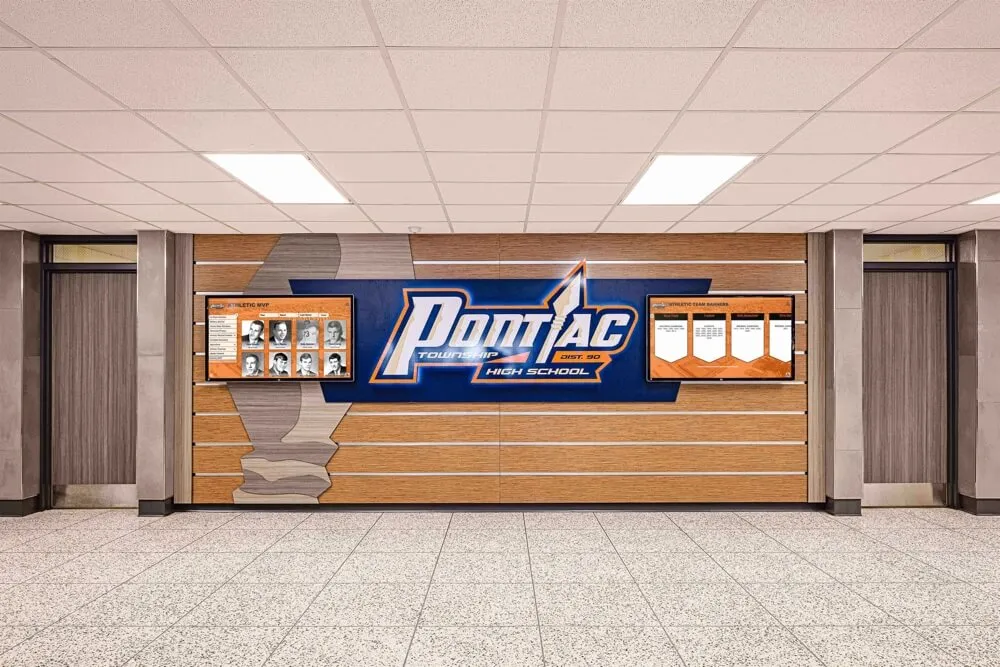
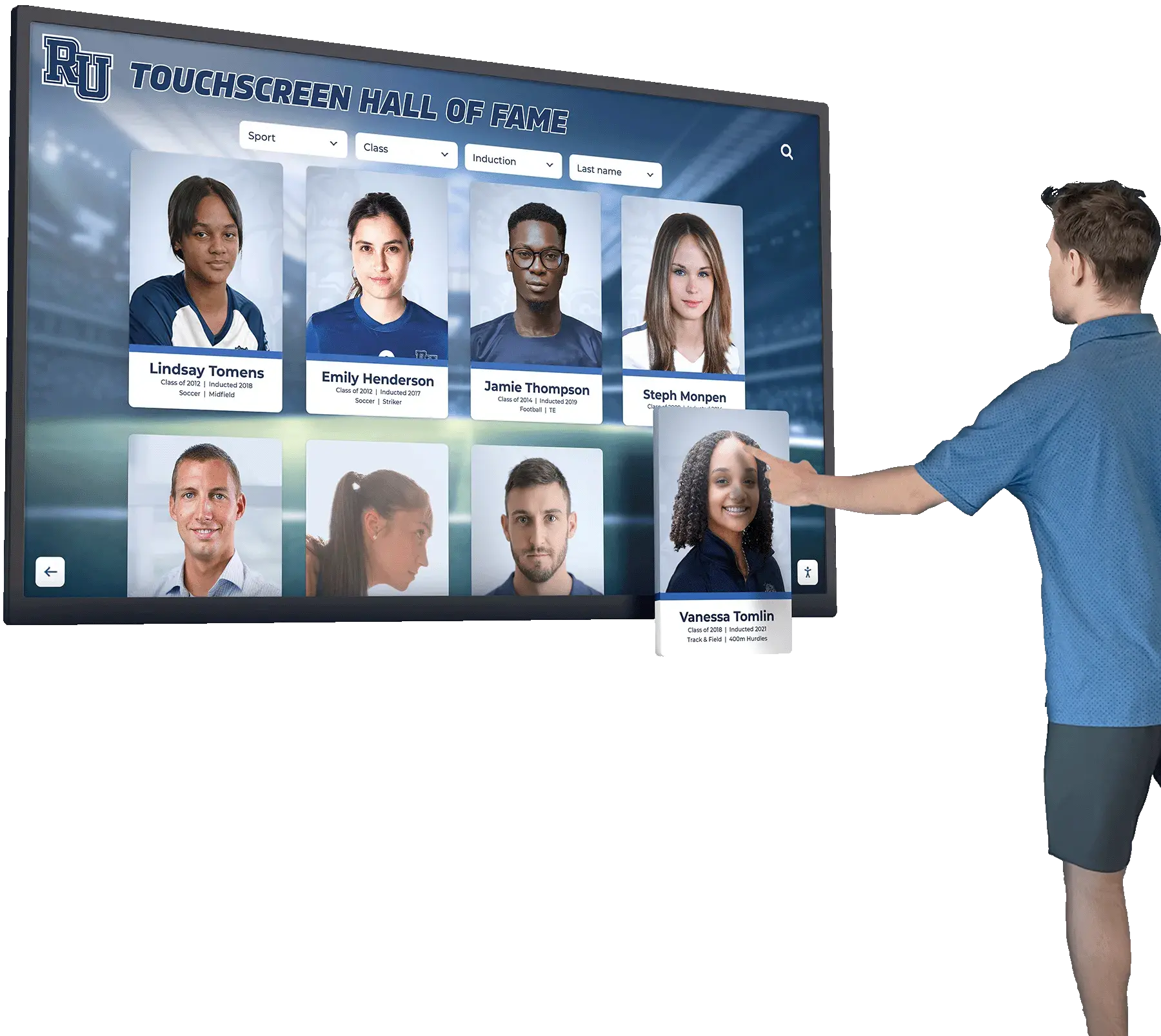
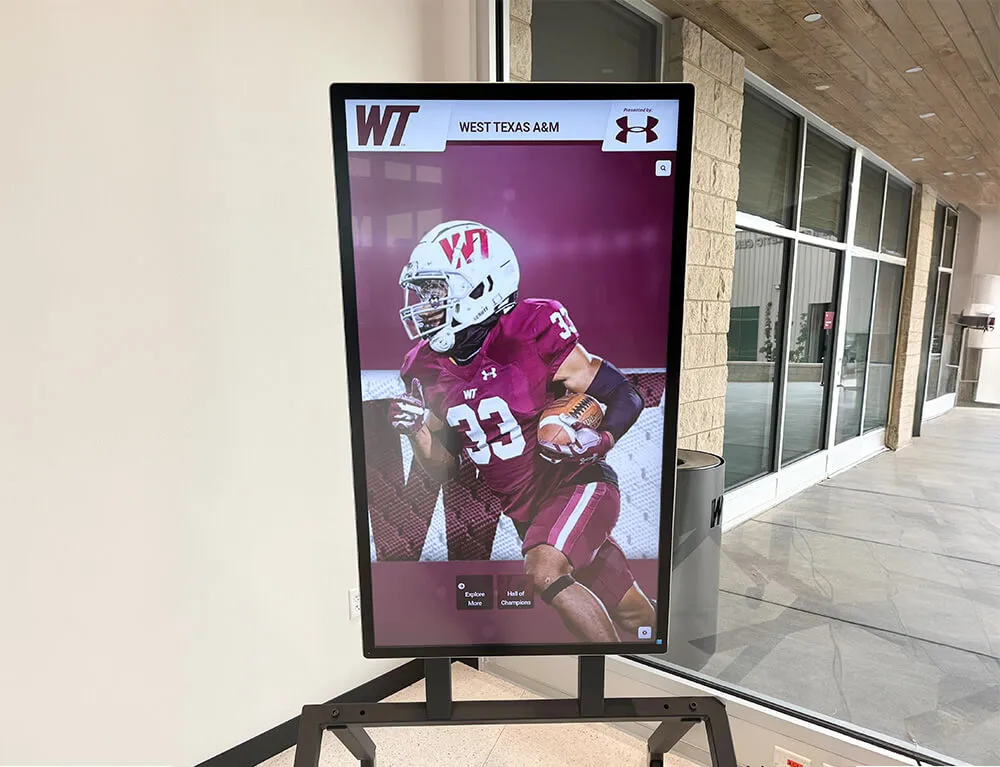
Digital recognition displays preserve graduation achievements permanently while creating interactive celebration experiences
Understanding What Makes Graduation Ceremonies Meaningful
Before exploring specific program elements, understanding the psychological and cultural factors creating impactful commencement experiences helps planners design ceremonies achieving genuine significance.
The Multiple Purposes of Graduation Ceremonies
Effective commencement programs serve several interconnected functions deserving consideration during planning.
Individual Achievement Recognition
At their core, graduations formally acknowledge educational completion:
- Academic accomplishment: Validating years of coursework, study, and intellectual development
- Milestone celebration: Marking formal completion of significant educational phase
- Credential conferral: Official recognition enabling next educational or career steps
- Personal pride: Creating moments graduates experience genuine accomplishment and validation
- Family honor: Enabling families to witness and celebrate student success publicly
This recognition demonstrates that institutions value student dedication while creating formal transitions marking educational achievement authentically.
Community and Connection Building
Beyond individual recognition, graduations strengthen institutional bonds:
- Shared experience: Creating collective memories bonding entire graduating classes
- Tradition participation: Connecting current graduates to institutional history and alumni legacy
- Family inclusion: Bringing loved ones into celebration of student journey
- Community acknowledgment: Public demonstration of educational investment and success
- Future network: Establishing graduate connections extending beyond campus
Research on educational transitions indicates that meaningful commencement ceremonies significantly strengthen lifelong institutional connection, with participants reporting 43% greater likelihood of future engagement compared to those experiencing perfunctory events.
Inspiration and Forward Focus
Well-designed ceremonies inspire excellence beyond graduation:
- Future orientation: Emphasizing possibilities and opportunities ahead
- Value reinforcement: Highlighting principles and character guiding success
- Role modeling: Providing examples of achievement and contribution worth emulating
- Aspiration cultivation: Demonstrating what dedication and persistence enable
- Legacy awareness: Positioning graduates as continuing institutional story
Schools implementing comprehensive graduation recognition combined with permanent digital displays report enhanced program promotion, increased admission interest, and stronger community pride—demonstrating tangible value these celebrations provide.
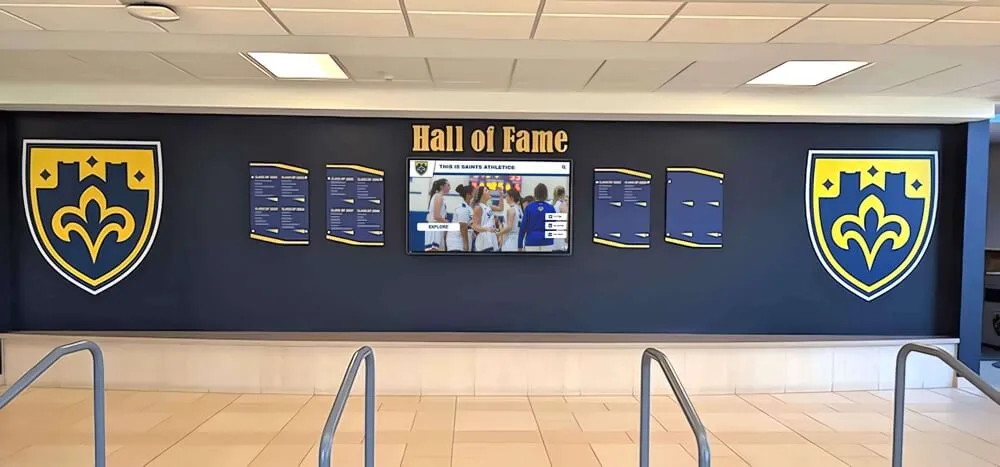
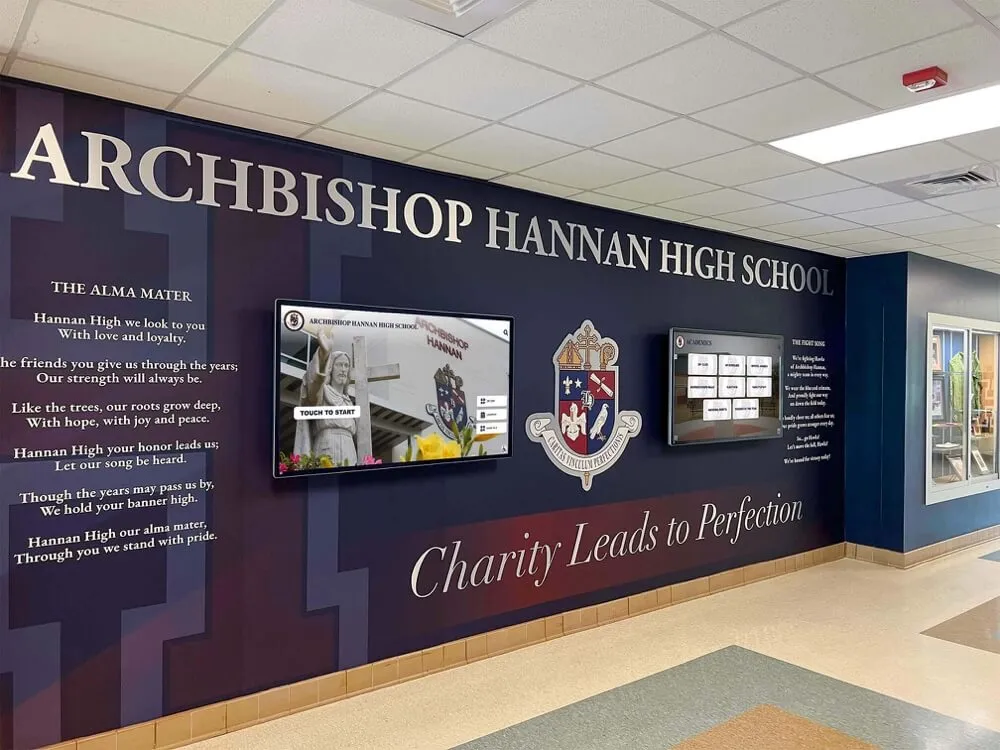
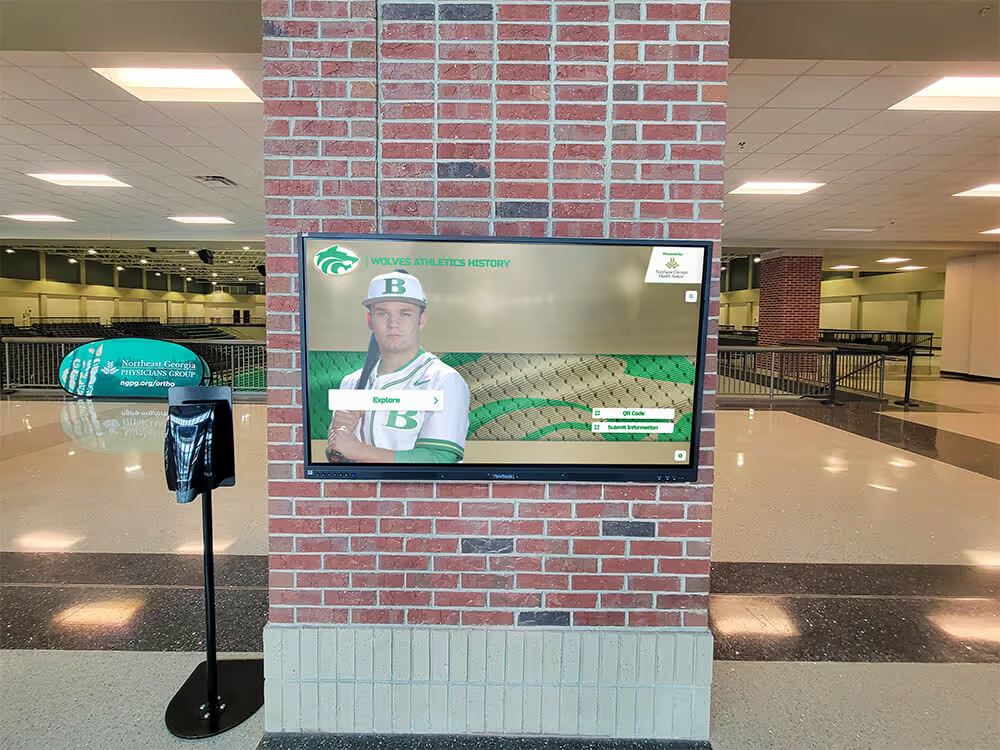
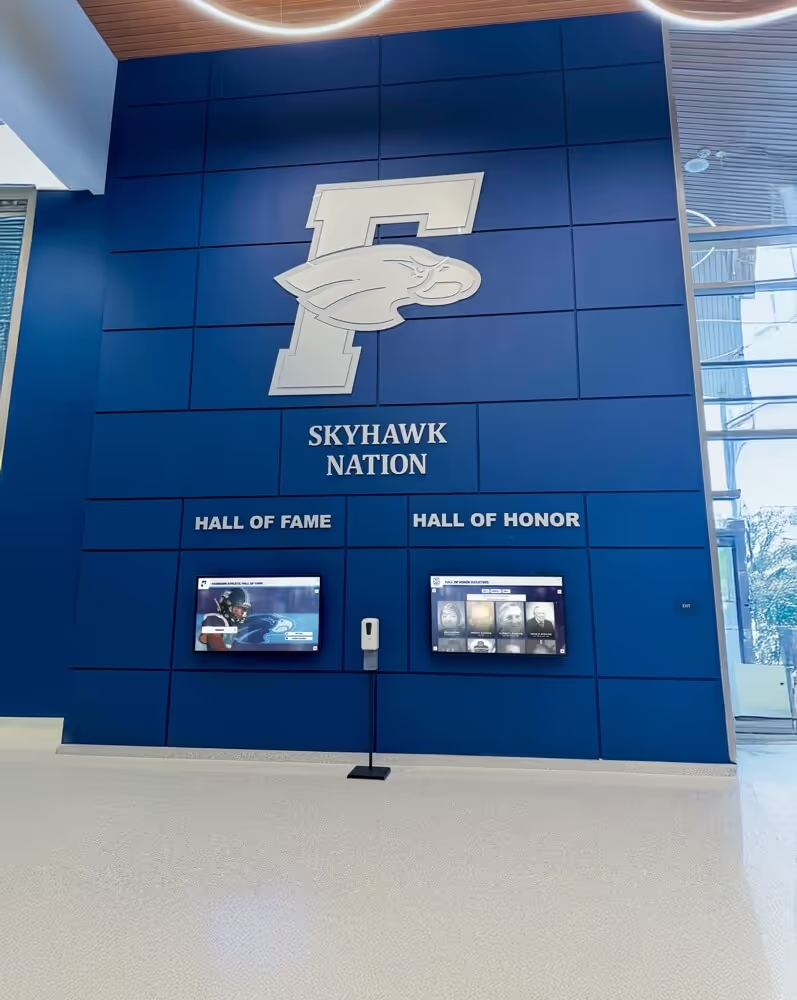
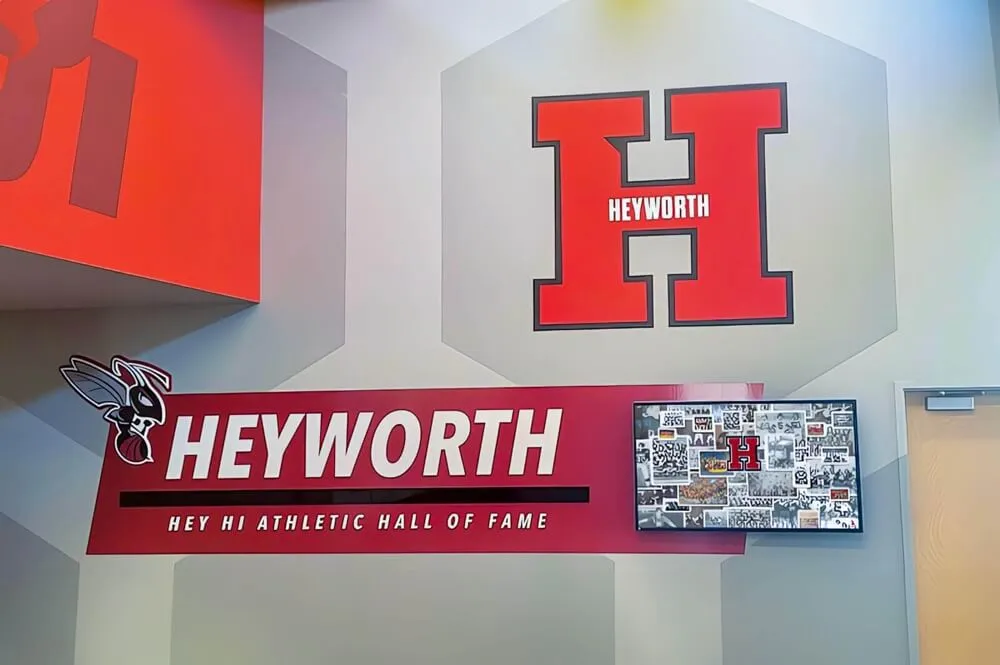
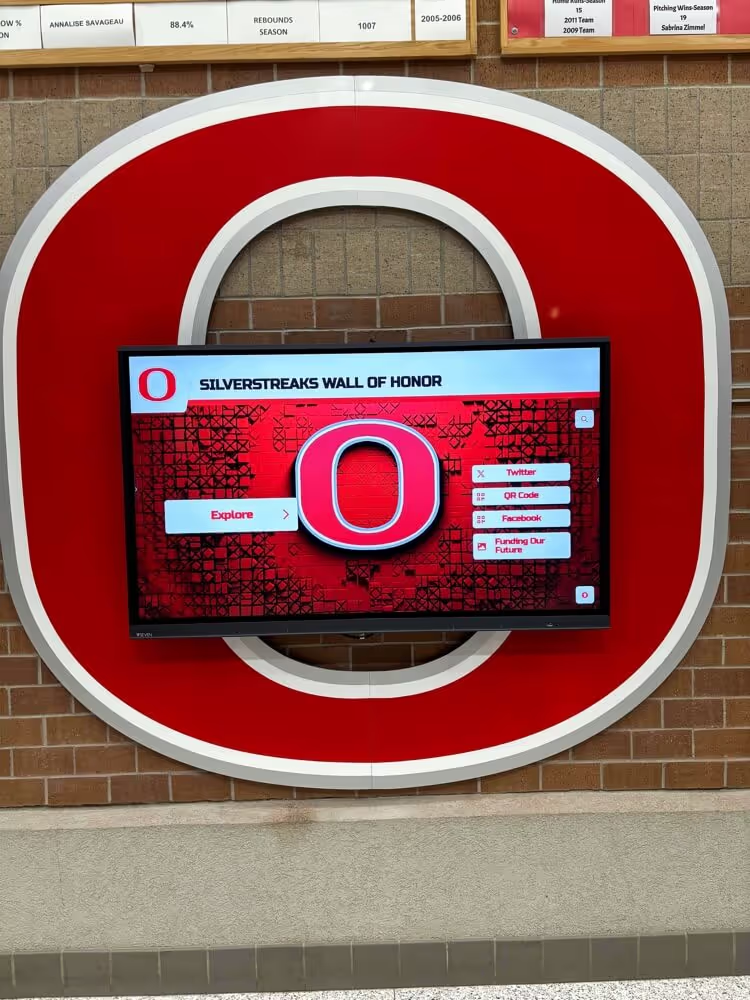
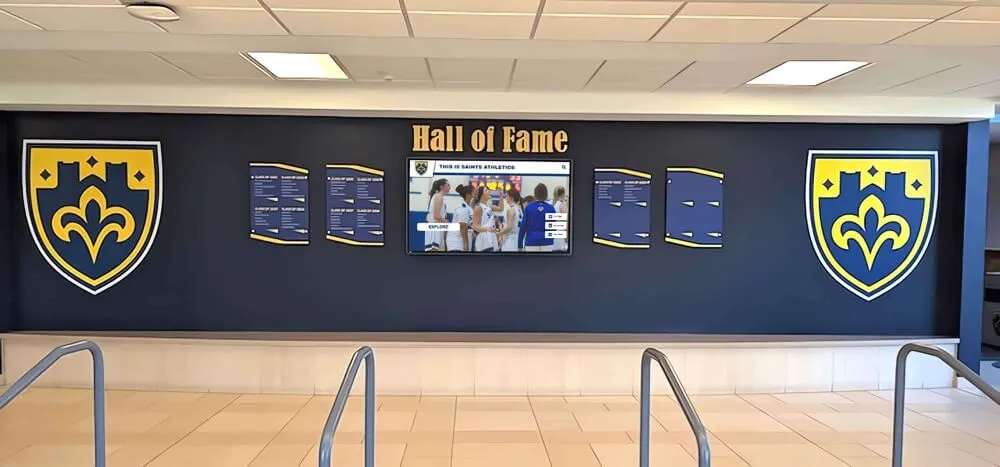
Professional recognition displays create impressive ceremony backdrops while documenting graduate achievement permanently
Common Ceremony Planning Challenges
Understanding typical obstacles helps planners avoid them while creating more effective celebrations.
The Length vs. Meaningfulness Dilemma
Balancing comprehensive recognition with audience engagement creates persistent tension:
- Calling every graduate individually requires substantial time with large classes
- Families want adequate personal recognition moments
- Lengthy programs exhaust audiences and diminish later recognition impact
- Abbreviated formats feel impersonal and perfunctory
- Traditional elements consume significant time regardless of class size
Successful planners resolve this through creative program design alternating formats, integrating multimedia reducing verbal requirements, and focusing ceremonial elements where they create greatest meaning.
Personalization at Scale
Creating individual recognition for large graduating classes challenges schools:
- Generic approaches feel obligatory rather than meaningful
- Detailed personalization for hundreds of graduates proves logistically challenging
- Volunteer coordination for research and content creation requires substantial effort
- Printed programs become unwieldy with comprehensive information
- Stage time per graduate becomes minimal with large classes
Digital recognition platforms solve many personalization-at-scale challenges by providing unlimited space for detailed graduate profiles while enabling families to explore information at their own pace rather than consuming limited ceremony time.
Tradition vs. Innovation Balance
Navigating between established expectations and modern approaches requires sensitivity:
- Alumni and community members expect certain traditional elements
- Current graduates seek contemporary, engaging experiences
- Some families prefer formal ceremonies while others value relaxed celebrations
- Integrating technology risks technical failure or appearing gimmicky
- Budget constraints limit expensive innovation
Thoughtful planners honor tradition while incorporating strategic enhancements creating fresh experiences without abandoning meaningful customs defining institutional identity.
Discover comprehensive planning approaches in school event ideas guide with strategies applicable to graduation contexts.
Designing Engaging Processional and Opening Sequences
How ceremonies begin establishes atmosphere while building anticipation for recognition to follow.
Processional Format Options
The entrance sequence creates first impressions setting entire ceremony tone.
Traditional Academic Processional
Classic approach emphasizing formality and academic tradition:
Structure
- Faculty and administration enter first, often in academic regalia
- Graduating class follows, typically alphabetically or by academic division
- Platform party and special guests enter last
- Traditional processional music (Pomp and Circumstance or alternatives)
- Measured, deliberate pacing emphasizing ceremony importance
Advantages
- Creates impressive visual spectacle
- Establishes formal, significant atmosphere
- Connects to centuries of academic tradition
- Provides clear structure and organization
- Familiar to most audiences
Best For: Traditional high schools, colleges, and universities prioritizing formal academic ceremony
Contemporary Group Processional
Modified approach balancing tradition with efficiency:
Structure
- Graduates enter by smaller groups (by major, program, or division)
- Each group announced creating recognition during entrance
- Faculty enter alongside student groups
- Contemporary music selections reflecting graduate preferences
- Slightly faster pace maintaining energy
Advantages
- Reduces overall processional length
- Creates engagement through group announcements
- Allows music variety representing different programs
- Maintains formality while feeling less rigid
- Accommodates personalization through group recognition
Best For: Mid-sized institutions seeking balance between tradition and contemporary approach
Individual Recognition Processional
Personalized entrance emphasizing each graduate:
Structure
- Graduates enter individually or in pairs
- Each name announced during entrance with brief details
- Families applaud as their graduate enters
- Photos displayed on screens showing entering graduates
- Extended processional time accommodating personalization
Advantages
- Creates immediate individual recognition
- Families identify their graduates easily
- Photography opportunities throughout entrance
- Personal moment for each graduate before diploma
- Eliminates need for extended name reading later
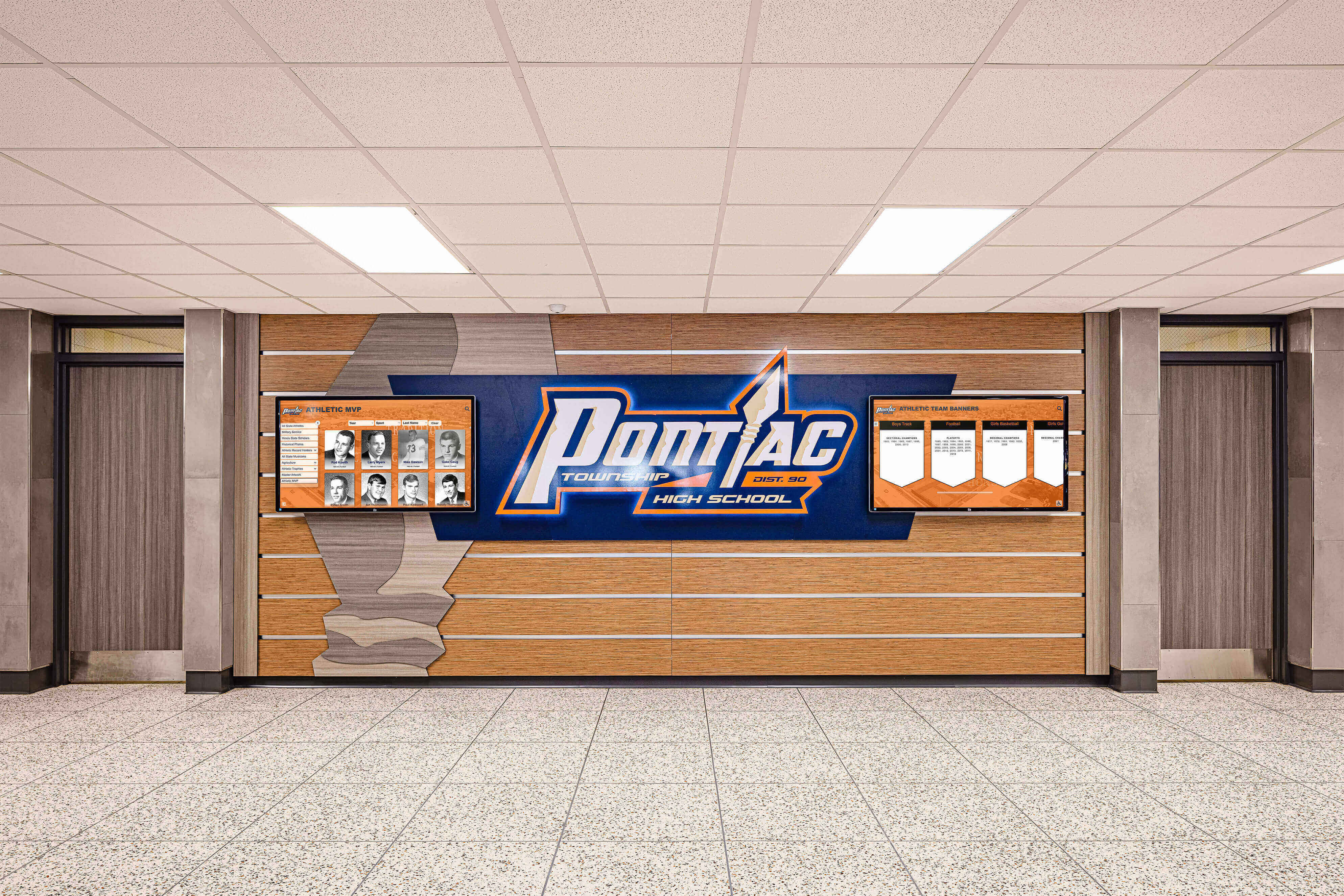
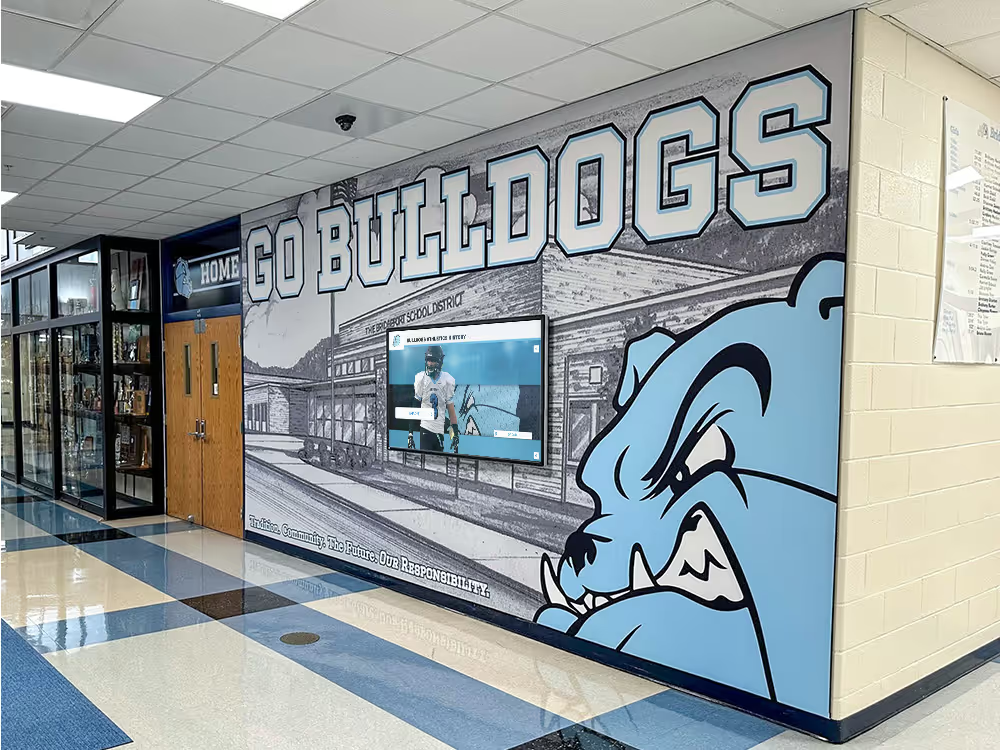
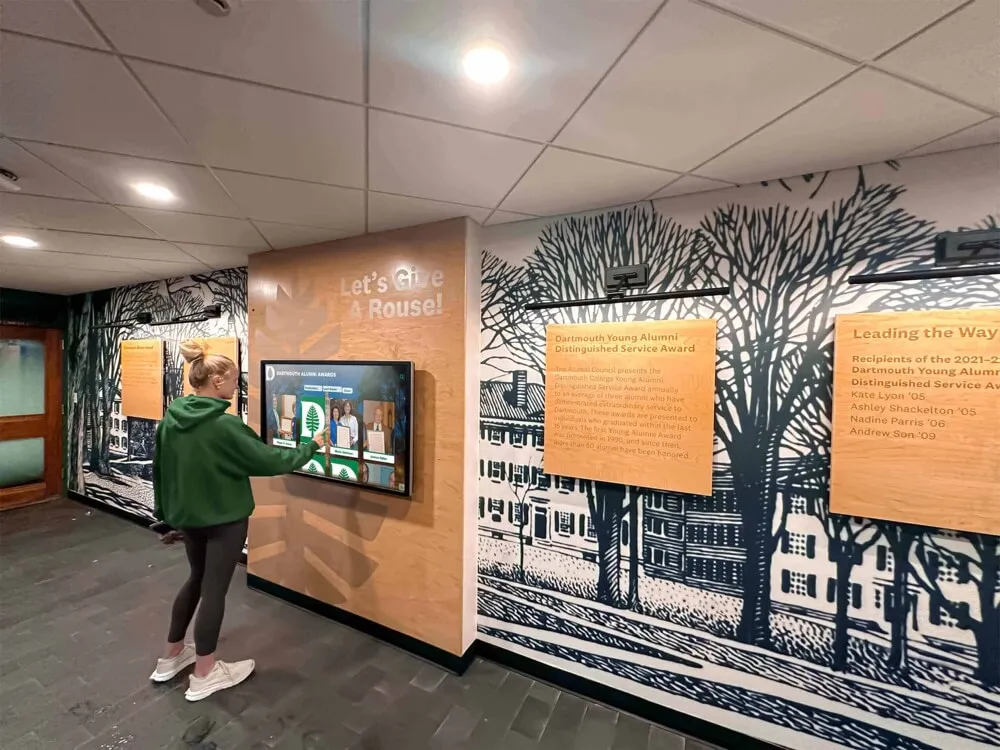
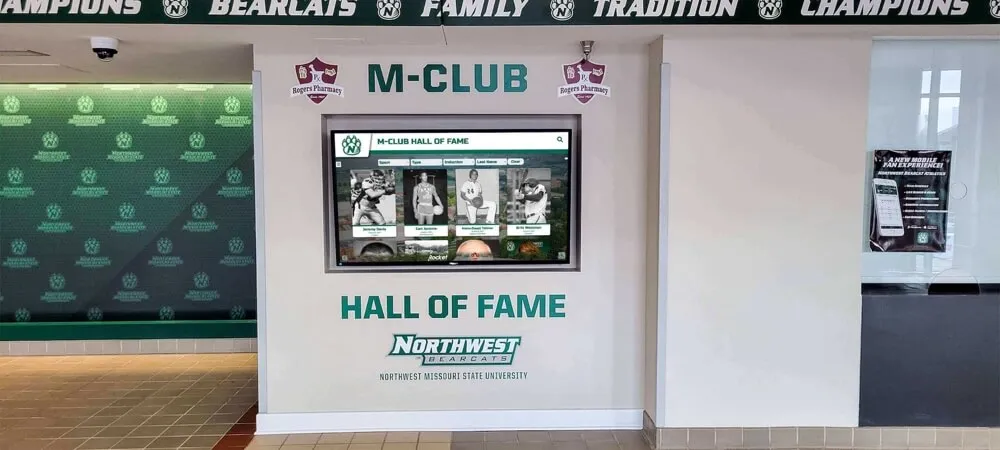
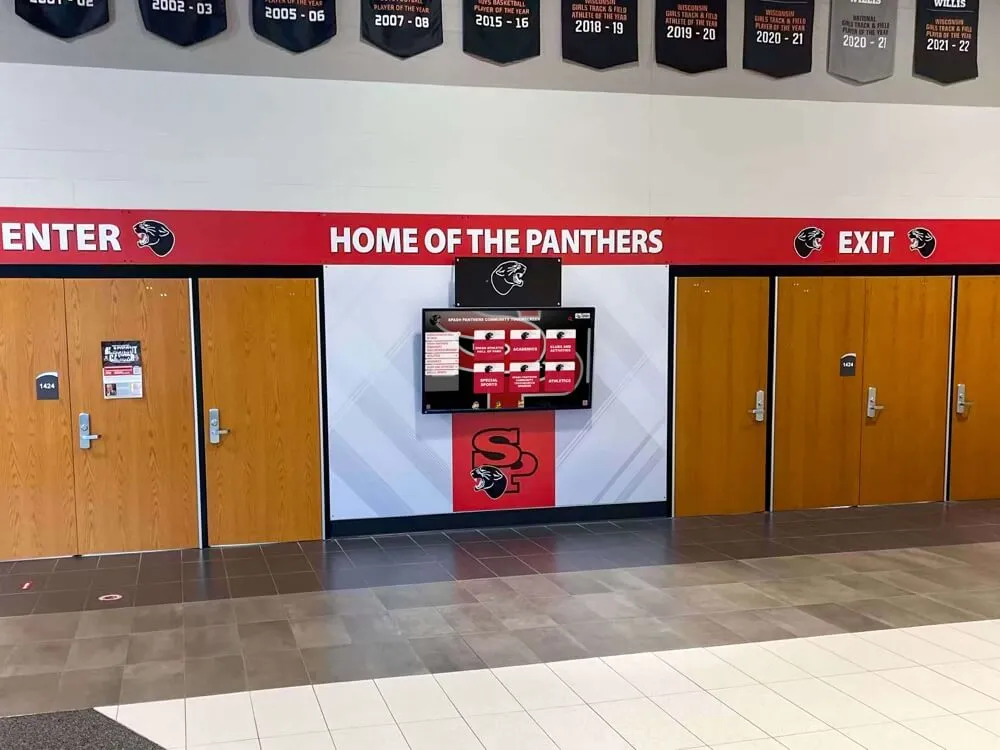
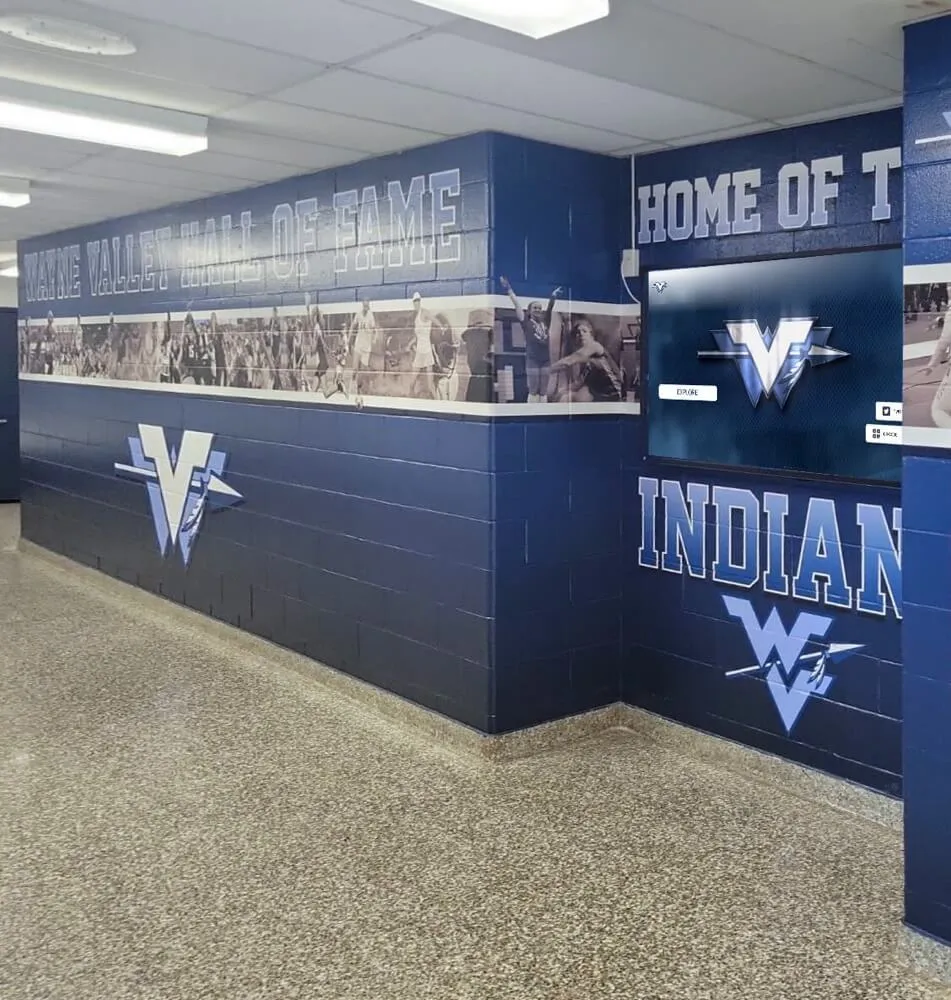
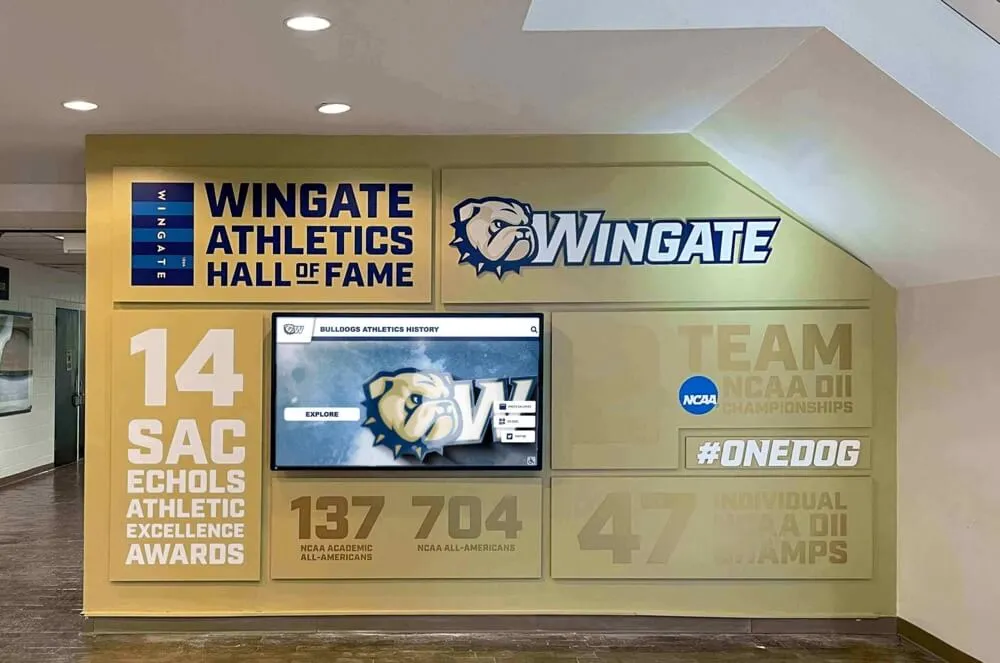
Hallway displays showcase graduates through permanent recognition systems accessible year-round
Best For: Smaller graduating classes (under 150) where extended processional remains manageable
Opening Sequence Components
Strategic opening elements establish ceremony purpose while engaging audiences immediately.
Welcome and Acknowledgments
Brief opening remarks orienting attendees:
- Welcome from principal, superintendent, or ceremonial leader
- Acknowledgment of distinguished guests and community supporters
- Recognition of family sacrifices enabling graduate success
- Brief ceremony overview and logistics (photography policies, timing)
- Land acknowledgment or cultural opening appropriate to community
- Request for audience cooperation (silencing phones, holding applause)
Keep opening remarks under 5 minutes total—audiences arrive anticipating graduate recognition rather than extended administrative remarks.
National Anthem or Musical Opening
Traditional performance establishing ceremony formality:
- Student vocalist or ensemble performing national anthem
- School anthem or alma mater establishing institutional connection
- Cultural songs reflecting graduate diversity
- Brief instrumental selection creating atmosphere
- Community choir or musical organization involvement
Musical openings create emotional resonance while showcasing student or community talent beyond academic achievement.
Invocation or Reflection
Spiritual or philosophical opening appropriate to institutional context:
- Religious invocation for faith-based schools
- Secular inspirational reading or poetry for public institutions
- Student-led reflection on graduation meaning
- Moment of silence honoring graduate journey
- Inclusive approach respecting diverse beliefs within community
Thoughtful planners ensure opening reflections remain brief, inclusive, and focused on universal themes rather than sectarian specifics potentially excluding audience members.
Learn about comprehensive ceremony approaches in prom theme ideas with creative concepts applicable to formal celebrations.
Selecting Meaningful Speeches and Presentations
The remarks delivered during graduation significantly impact ceremony meaning and memorability.
Strategic Speaker Selection
Choosing appropriate voices creates resonant messages while maintaining engagement.
Student Speakers
Graduate perspectives provide authentic, relatable content:
Valedictorian/Salutatorian Addresses
- Traditional academic honor recognizing top academic achievement
- Personal reflection on class journey and shared experiences
- Balance between celebration and forward-looking inspiration
- Humor and emotional connection with classmates
- Length: 5-8 minutes typically
Class President or Student Government
- Leadership perspective representing entire class
- Acknowledgment of diverse achievements beyond academics
- Recognition of challenges overcome collectively
- Call to continued excellence and connection
- Length: 4-6 minutes typically
Student-Selected Speaker
- Graduate chosen by classmates through voting
- Often combines popularity with speaking ability
- Personal storytelling about defining moments
- Inside references resonating specifically with class
- Length: 5-7 minutes typically
Multiple Brief Reflections
- Several graduates each sharing 2-3 minute perspectives
- Represents diversity within graduating class
- Maintains engagement through voice variety
- Reduces pressure on single student representative
- Total length: 10-15 minutes for multiple speakers

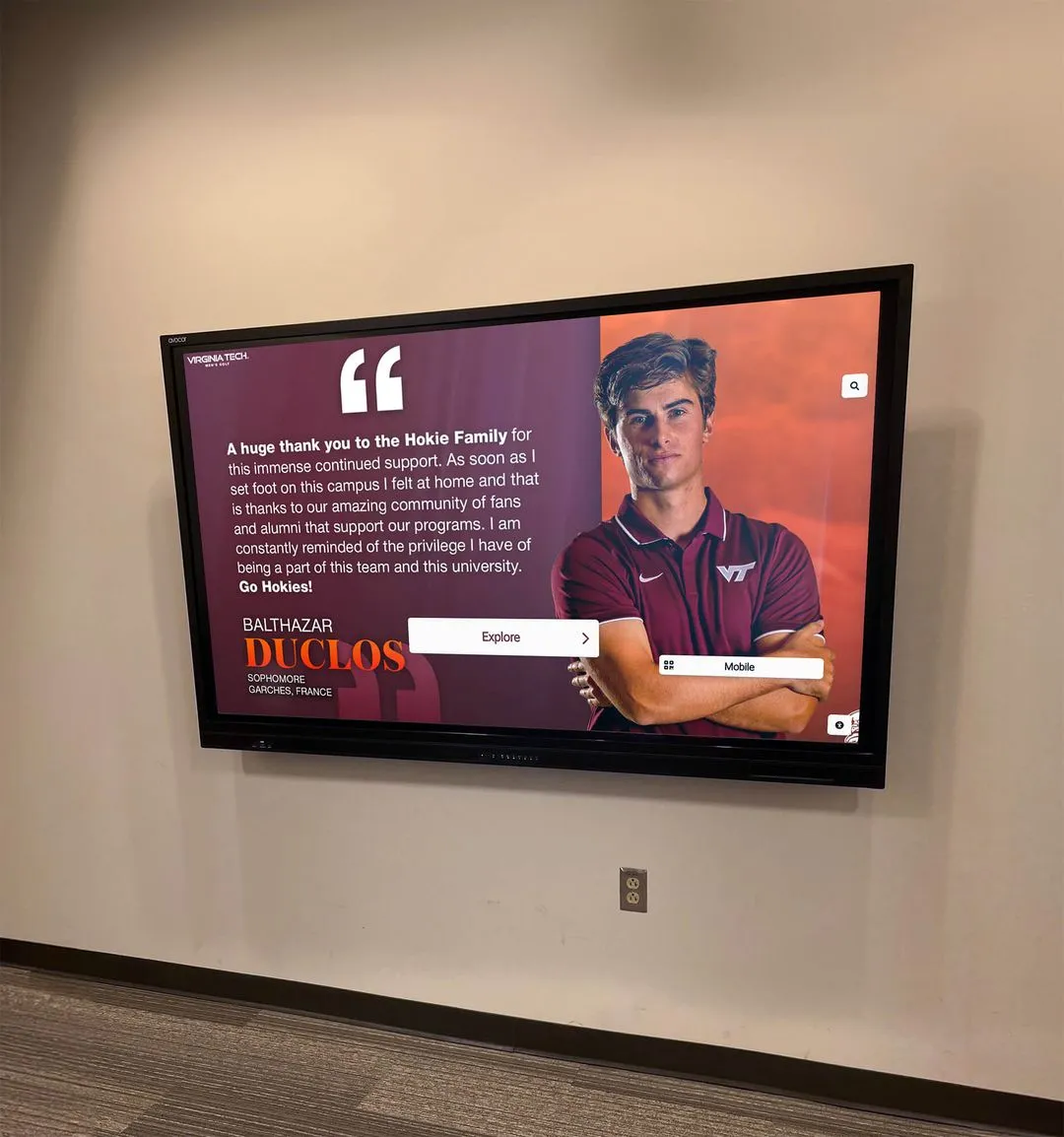
Integrated digital displays in common areas enable pre-ceremony content showcasing graduate achievements
Faculty and Administrative Speakers
Institutional voices providing perspective and wisdom:
Principal or Superintendent Address
- Brief reflection on class accomplishments and character
- Acknowledgment of challenges faced and overcome
- Vision for graduates’ future contributions
- Thanks to families, staff, and community supporters
- Length: 5-8 minutes maximum
Distinguished Faculty Member
- Teacher with exceptional connection to graduating class
- Personal anecdotes illustrating graduate growth and potential
- Academic and character observations from educational perspective
- Inspiration drawn from years of teaching experience
- Length: 4-6 minutes typically
Guest Commencement Speakers
External voices providing fresh perspective and inspiration:
Selection Criteria
- Accomplished alumni demonstrating post-graduation success
- Community leaders with institutional connections
- Professional achievers in fields relevant to graduates
- Inspirational figures with compelling personal stories
- Speakers with demonstrated speaking ability and audience connection
Effective Speaker Characteristics
- Authentic personal storytelling rather than generic advice
- Clear connection to institutional values and mission
- Balance between challenge and encouragement
- Appropriate humor maintaining ceremony dignity
- Concise messaging respecting time constraints
- Length: 10-15 minutes maximum
Discover effective recognition speeches in retirement celebration ideas with strategies applicable to graduation contexts.
Speech Content and Structure Best Practices
Regardless of speaker selection, effective graduation remarks share common characteristics.
Opening That Captures Attention
Strong speeches begin memorably:
- Personal anecdote illustrating key theme
- Surprising statistic or observation about graduating class
- Provocative question engaging audience immediately
- Humor establishing speaker relatability
- Reference to current events or shared experiences
Avoid clichéd openings about dictionary definitions or generic congratulations that audiences ignore immediately.
Core Message Development
The middle section delivers substantive content:
- Single clear theme rather than multiple disconnected ideas
- Specific examples and stories illustrating points
- Balance between celebration and challenge
- Acknowledgment of difficulty alongside achievement
- Connection to graduate experience and future possibilities
- Personal vulnerability creating authentic connection
Memorable Closing
Strong conclusions create lasting impact:
- Return to opening theme creating satisfying structure
- Call to specific action or commitment
- Inspirational vision of graduate potential
- Expression of confidence and hope
- Brevity—avoid dragging conclusions beyond natural endpoint
What to Avoid
Common speech mistakes undermining impact:
- Excessive length (anything beyond 15 minutes loses audiences)
- Generic platitudes lacking personal connection or specificity
- Inside jokes excluding families and community members
- Negativity or cynicism about institution or education
- Controversial political or social positions dividing audiences
- Reading word-for-word creating disengaged delivery
- Self-focused content rather than graduate-centered messaging
Well-selected speakers delivering thoughtful, authentic, concise remarks dramatically enhance ceremony meaning while maintaining audience engagement.
Integrating Multimedia and Technology
Modern presentations leverage digital content creating engagement traditional approaches cannot match.
Graduate Video Presentations
Video content provides emotional impact while celebrating class achievements comprehensively.
Senior Class Retrospective
Comprehensive video celebrating entire graduating class:
Effective Content Elements
- Elementary and middle school photos showing graduate evolution
- High school journey from freshman orientation through senior year
- Academic, athletic, artistic, and extracurricular achievements
- Behind-scenes school life (hallways, lunch, buses, traditions)
- Senior quotes or brief interview clips from graduates
- Faculty and staff congratulations and well-wishes
- Humorous moments and inside jokes resonating with class
- Inspirational music creating emotional resonance
- Length: 8-12 minutes maximum
Include every graduate in footage, not just prominent students—comprehensive representation demonstrates institutional commitment to honoring all achievement.
Individual Graduate Recognition Slides
Photo slideshow displaying during name reading:
- Professional senior portrait appearing as graduate approaches stage
- Name, honors, college plans, or future goals displayed
- Achievement highlights (activities, awards, distinctions)
- Ensures families easily identify and photograph their graduate
- Provides visual engagement during extended name reading
- Enables recognition details without verbal descriptions
- Creates professional documentation of all graduates
This approach solves personalization-at-scale challenges by providing detailed recognition information without consuming limited ceremony time through extended verbal descriptions.

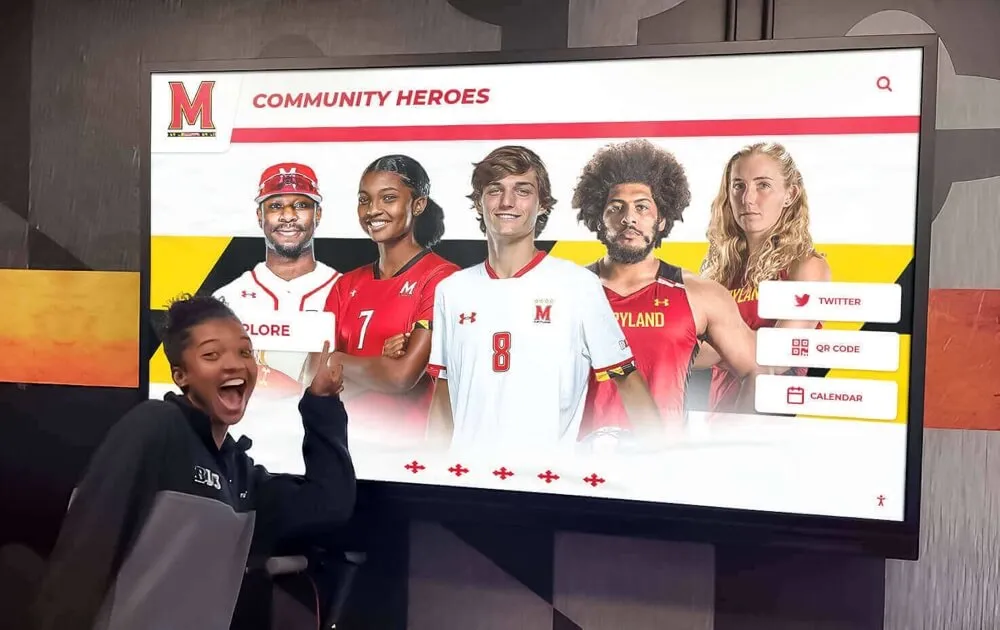
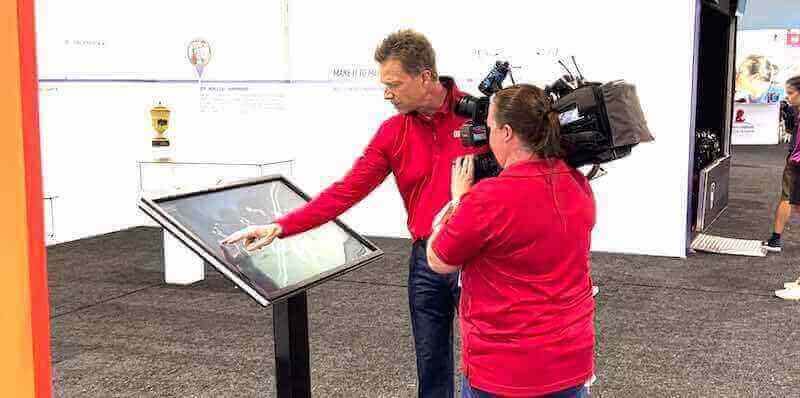
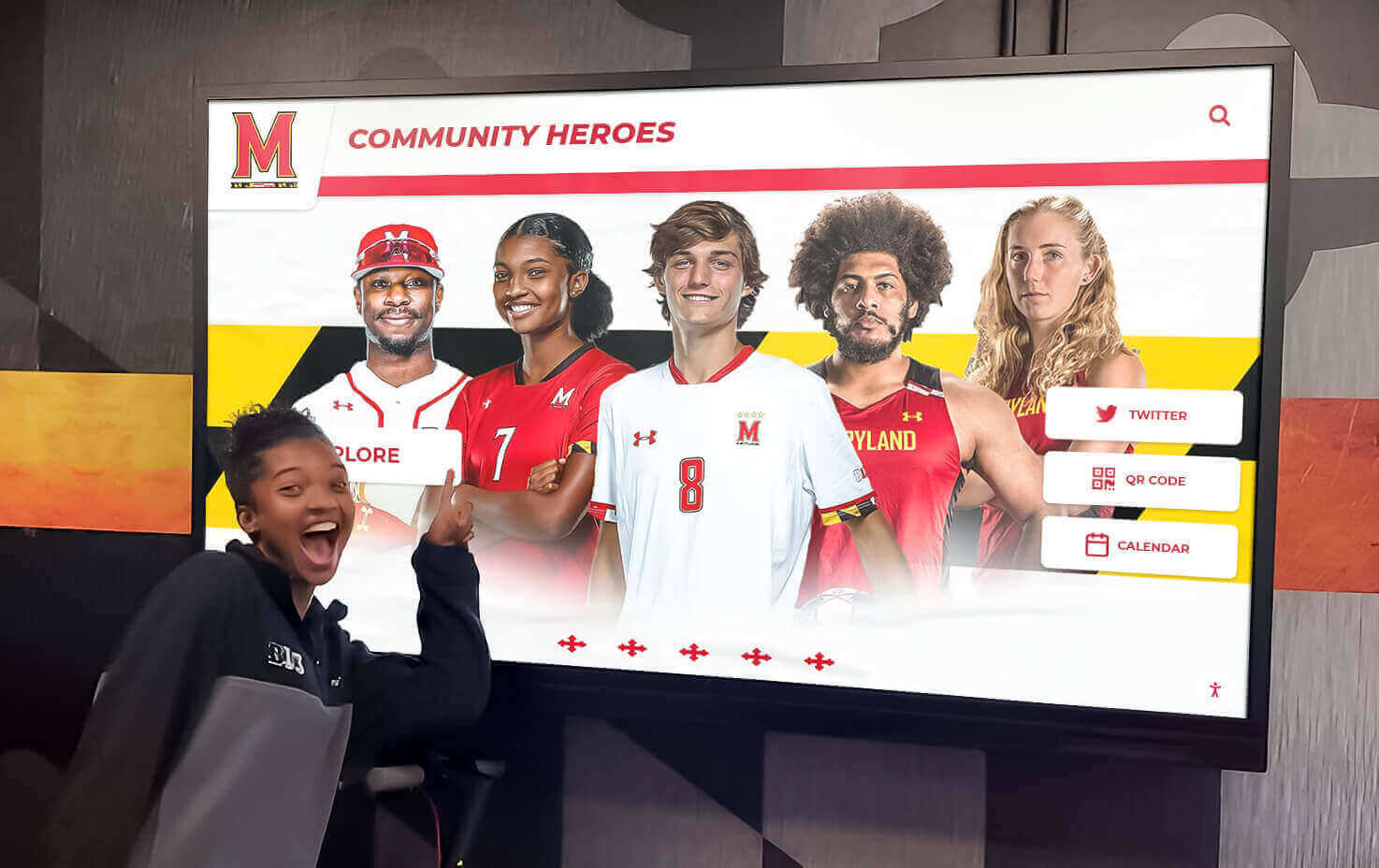
Interactive kiosks at ceremony venues enable attendees exploring detailed graduate profiles and achievement histories
Special Recognition Segments
Targeted videos highlighting specific achievements:
- Academic excellence and scholarship recipients
- Athletic champions and all-conference athletes
- Arts performers and competition winners
- Community service leaders and volunteer recognition
- Special awards and honors (valedictorian, salutatorian, distinguished graduates)
- College signing day highlights for athletic commits
- Military enlistment recognition
- Career and technical program completers
These 2-3 minute segments provide focused recognition without extending overall ceremony length excessively.
Behind-Scenes and Preparation Footage
Humanizing content showing graduate journey:
- Graduation practice and preparation moments
- Students getting ready on ceremony day
- Candid moments before processional
- Faculty and staff preparations
- Time-lapse of venue transformation
- Senior week or final days activities
This content creates connection while providing entertainment during pre-ceremony gathering or intermissions.
Explore multimedia recognition approaches in digital signage content ideas with creative strategies.
Digital Recognition Display Integration
Interactive displays enhance ceremonies while preserving achievements permanently.
Pre-Ceremony Engagement
Solutions like Rocket Alumni Solutions enable showcasing graduates before ceremonies:
- Rotating photo galleries introducing all graduating seniors
- Achievement highlights and college destinations
- Historical context showing previous graduation classes
- School pride content celebrating institutional excellence
- Sponsor or partner acknowledgment when appropriate
- Interactive browsing enabling families exploring graduate profiles
Digital displays transform pre-ceremony waiting time from awkward silence into engaging celebration of achievement.
During-Ceremony Enhancement
Interactive displays supplement live recognition:
- Real-time display updates highlighting current stage recognition
- Detailed profiles accessible during reception or post-ceremony
- Historical achievement comparisons contextualizing current class
- Live social media feed displaying ceremony photos and reactions
- Statistics and accomplishments supplementing verbal recognition
Post-Ceremony Access
Digital platforms extend recognition beyond single events:
- Permanent online profiles documenting all graduates
- Photo galleries from ceremony events accessible to families
- Video recordings of speeches and recognition moments
- Share functionality enabling social distribution
- Historical archives building institutional graduation legacy
Schools implementing comprehensive digital recognition systems report dramatically increased family engagement, stronger alumni connection, and enhanced program promotion compared to traditional approaches providing only single-event recognition.
Creating Meaningful Diploma Conferral Sequences
The formal credential presentation represents ceremony centerpiece requiring thoughtful design.
Diploma Presentation Formats
Different approaches balance personalization with practical time management.
Individual Recognition with Details
Comprehensive acknowledgment of each graduate:
Structure
- Graduate name announced with pronunciation guide
- Academic honors or distinction noted
- College destination or future plans mentioned
- Special awards or recognition if applicable
- Handshake and photo opportunity with presenter
- Diploma or diploma cover presented formally
Advantages
- Maximum personalization and recognition
- Clear family identification of their graduate
- Photo opportunities at presentation moment
- Comprehensive acknowledgment of achievements
- Creates lasting memories of individual moment
Time Consideration: Approximately 20-30 seconds per graduate (250 graduates = 85-125 minutes)
Best For: Smaller graduating classes (under 200) where extended recognition remains manageable
Name Only with Photo
Efficient approach maintaining individual recognition:
Structure
- Graduate name announced clearly
- Photo displayed on screens showing graduate
- Brief pause for applause and photography
- Diploma presented with handshake
- Graduate proceeds across stage
Advantages
- Reasonable pace maintaining engagement
- Individual recognition moment
- Visual identification enabling family photos
- Manageable length with larger classes
- Professional while efficient
Time Consideration: Approximately 15-20 seconds per graduate (250 graduates = 62-83 minutes)
Best For: Medium to large classes (150-400) balancing recognition with practical time constraints
Group Recognition Approach
Alternative for very large graduating classes:
Structure
- Graduates called in small groups (10-15 students)
- Group approaches stage together
- Individual names read as group stands
- Diplomas distributed efficiently to entire group
- Group photo opportunity before exiting
Advantages
- Dramatically reduces overall time
- Maintains individual name recognition
- Enables larger graduation classes
- Still provides diploma presentation moment
- Creates peer group connections
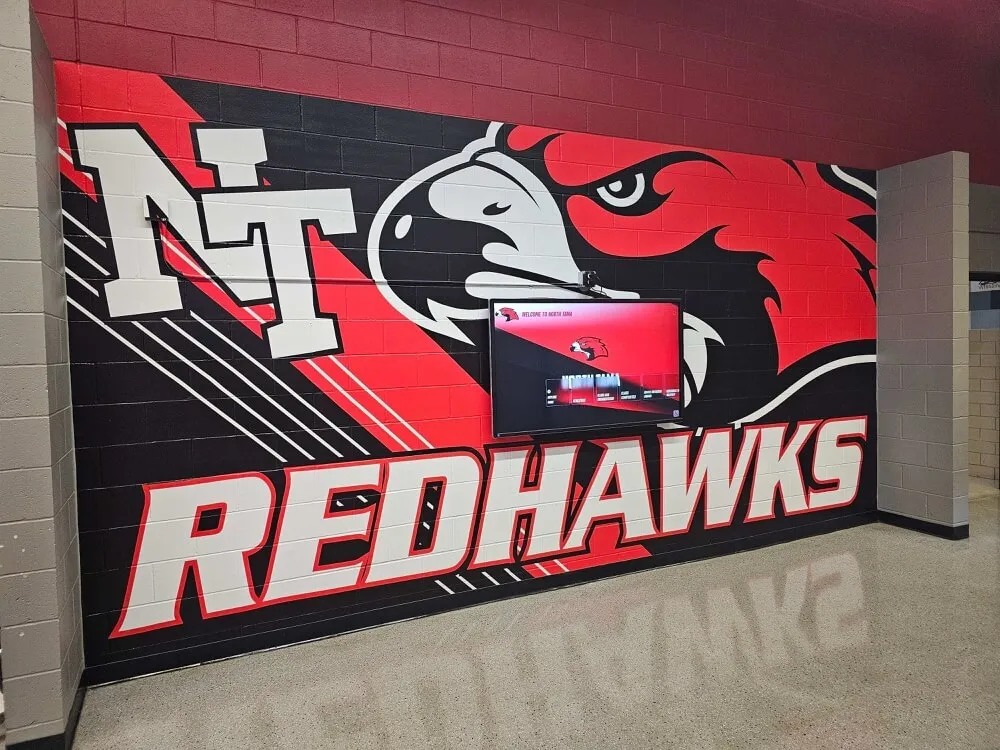
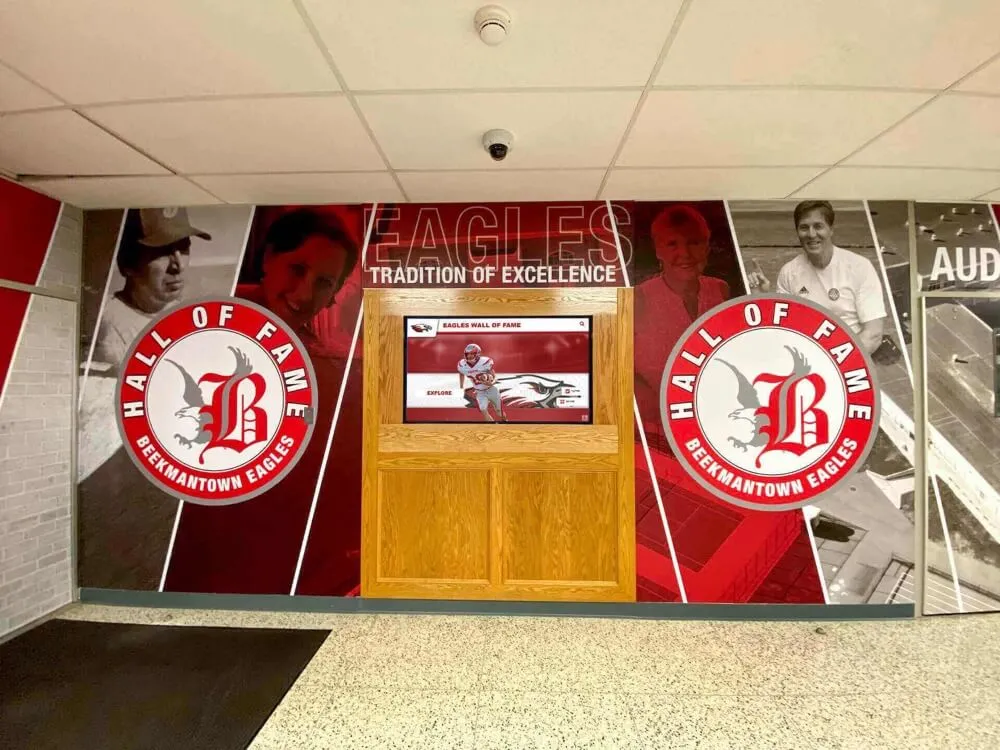
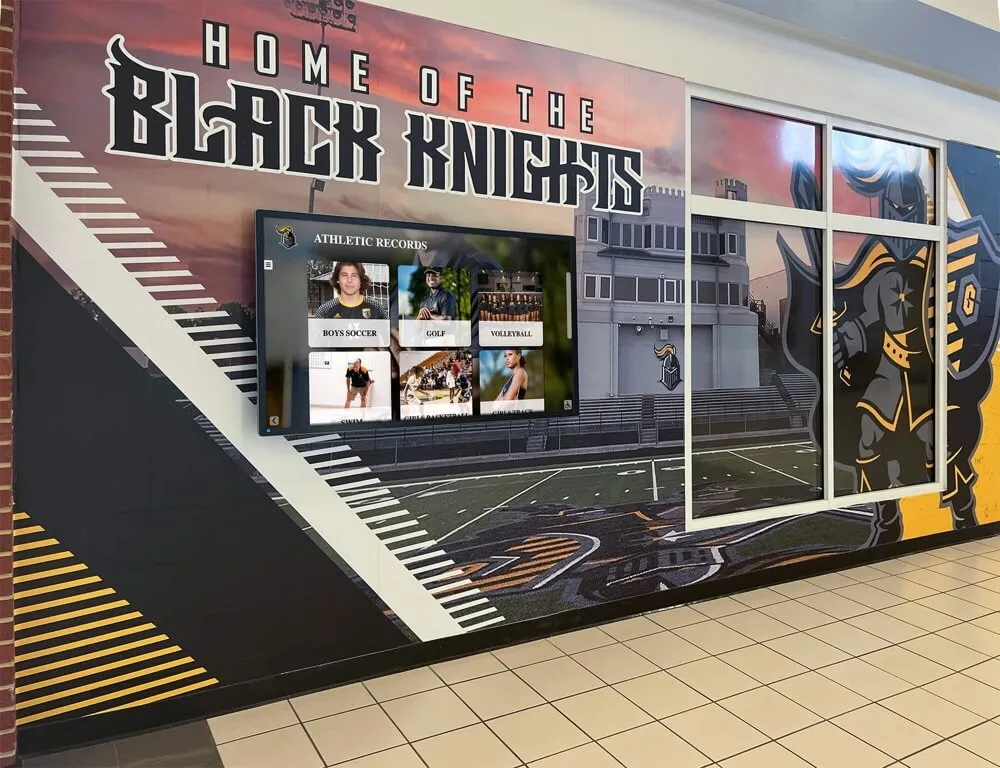
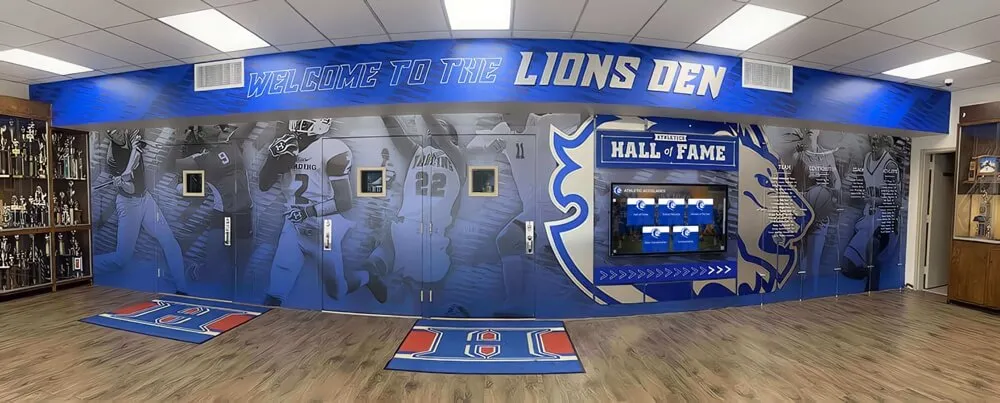
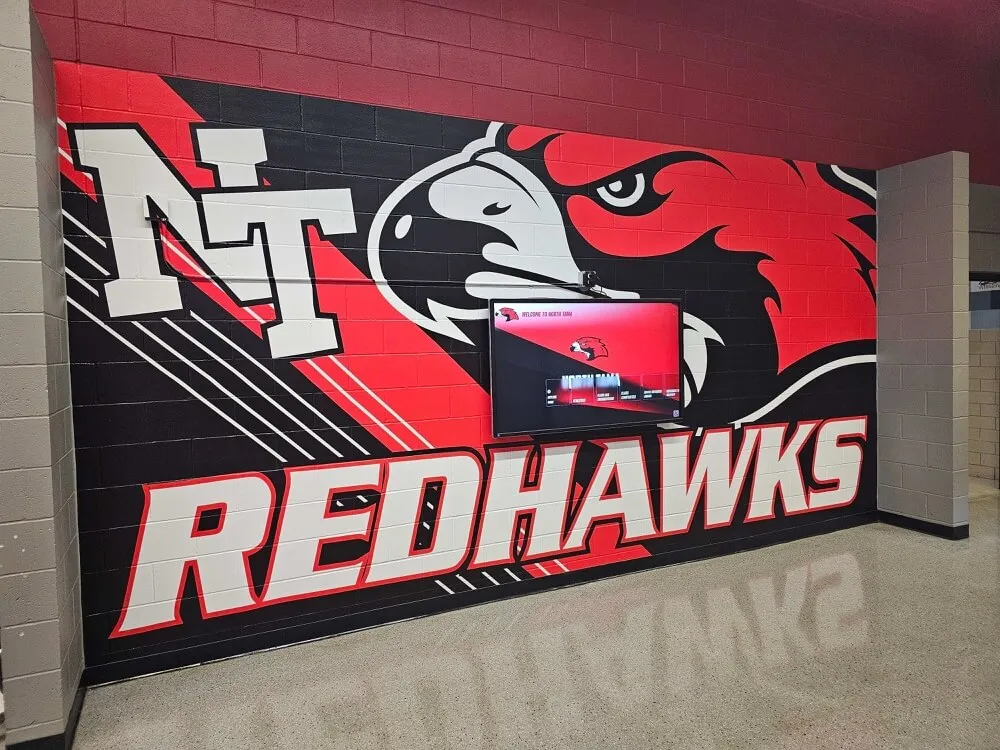
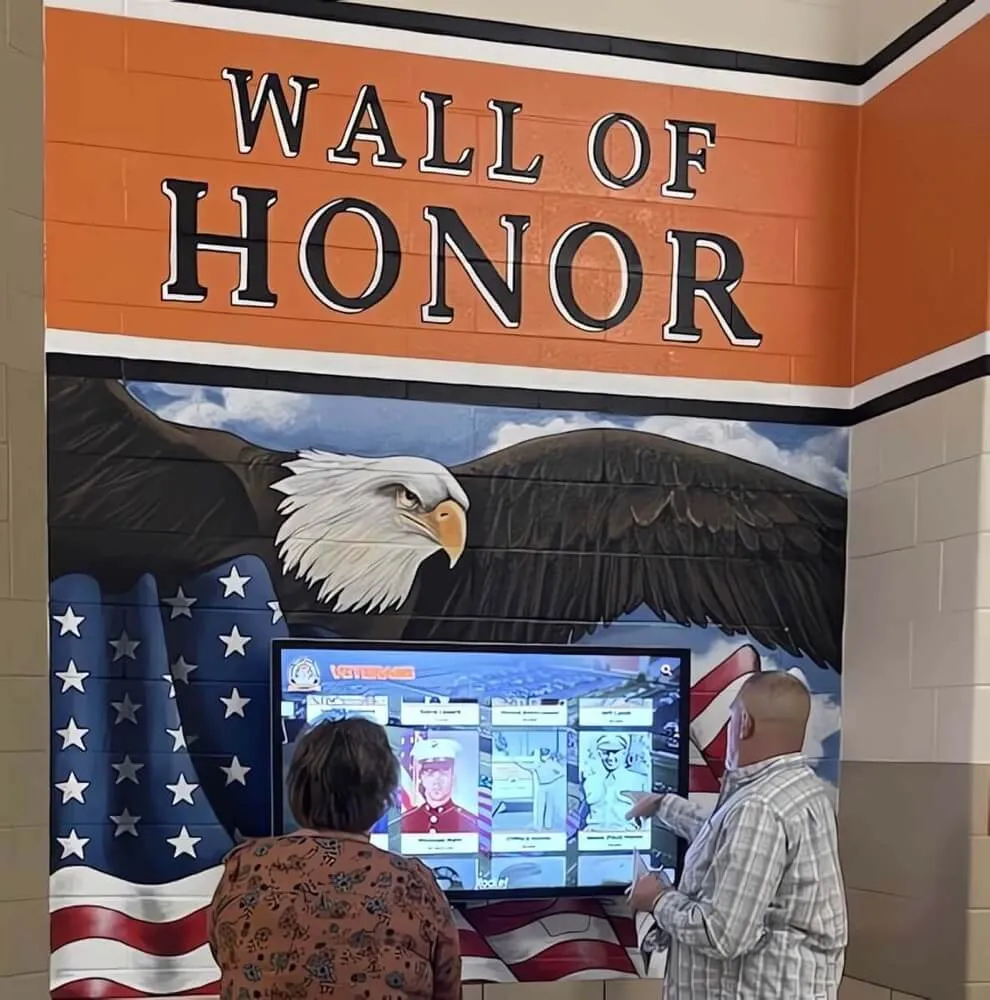
Permanent murals and recognition displays extend graduation celebration throughout facilities year-round
Time Consideration: Approximately 5-8 seconds per graduate (250 graduates = 21-33 minutes)
Best For: Very large classes (400+) where individual processing proves prohibitively lengthy
Special Recognition Presentation
Highlighting exceptional achievement during diploma sequence:
Academic Honors Recognition
- Valedictorian and salutatorian special presentation
- Summa, magna, and cum laude distinction notation
- Perfect attendance or academic awards
- National Merit Scholars or standardized test excellence
- Advanced placement or dual enrollment completion
Scholarship Acknowledgment
- Major scholarship recipients recognized individually
- Named scholarship presentations by donors or representatives
- Total scholarship amounts celebrating class achievement
- College destination and scholarship type mentioned
Special Awards and Distinctions
- Service awards for exceptional community contribution
- Leadership recognition for student government or organization impact
- Athletic or arts excellence requiring special acknowledgment
- Character awards representing institutional values
- Distinguished graduate or outstanding senior recognition
Strategic special recognition creates meaningful moments without excessively extending ceremony length when integrated thoughtfully into diploma conferral sequence.
Learn about comprehensive academic recognition in honor roll digital recognition guide with strategies applicable to graduation.
Planning Post-Diploma Ceremony Elements
Thoughtful closing sequences create satisfying conclusions while maintaining ceremonial dignity.
Formal Closing Components
Traditional elements providing ceremonial completion:
Conferral of Degrees
Formal institutional action conferring credentials:
- Board chair or superintendent declares degrees conferred
- Legal language completing official credential conferral
- Symbolic moment transitioning students to graduates
- Formal rather than informal tone
- Brief but significant institutional action
Class Recognition and Celebration
Acknowledging newly-minted graduates:
- Request for graduates to stand for recognition
- First official recognition as graduating class or alumni
- Class cheer or tradition if established
- Tassel turning from right to left (traditional symbolism)
- Official photograph of entire graduating class standing
Recessional
Formal exit mirroring processional entrance:
- Platform party exits first
- Graduates follow by row or group
- Faculty processes out after graduates
- Recessional music (triumphant, celebratory tone)
- Families remain seated until graduates exit completely
Proper recessional creates satisfying conclusion while enabling organized exit preventing chaos.

Impressive lobby installations create natural post-ceremony gathering spaces for celebration and photography
Post-Ceremony Celebration Activities
Structured events extending ceremony into continued celebration:
Receiving Line
Organized graduate greeting:
- Graduates line up enabling family congratulations
- Faculty and administration available for photos
- Organized flow preventing crowding and confusion
- Brief personal interactions with each graduate
- Natural transition from ceremony to celebration
Designated Photography Areas
Strategic photo opportunities:
- Professional backdrop with school branding
- Diploma cover or credential displays
- Faculty and graduate group photos
- Family photography stations
- Digital display interactions for unique photos
Reception or Gathering
Continued celebration enabling community connection:
- Light refreshments for graduates and families
- Informal socializing and congratulations
- Digital recognition displays accessible for exploration
- Music creating celebratory atmosphere
- Comfortable seating encouraging lingering
- Information tables about alumni association or future engagement
Graduate Recognition Display Interaction
Enable deeper engagement with achievements:
- Interactive kiosks showcasing all graduate profiles
- Search functionality enabling families finding specific graduates
- Achievement browsing showing comprehensive graduate details
- Social sharing features enabling immediate posting
- Staff available explaining features and answering questions
- QR codes connecting to mobile-accessible platforms
Schools implementing digital recognition walls report dramatically enhanced post-ceremony engagement compared to traditional approaches providing limited continued celebration opportunities.
Managing Logistics and Operations
Successful ceremonies require careful attention to operational details often invisible to audiences.
Venue Selection and Setup
Environment significantly impacts ceremony quality and experience.
Venue Capacity Considerations
- Adequate seating for all graduates plus families (typically 4-6 guests per graduate)
- Stage or platform area accommodating diploma presentation
- Processional pathway enabling dignified entrance and exit
- Climate control ensuring comfort during extended programs
- Accessibility accommodations for guests with mobility challenges
- Restroom facilities adequate for large gatherings
- Parking capacity sufficient for expected attendance
Audio-Visual Requirements
- Professional sound system ensuring clear audio throughout venue
- Large screens visible from all seating areas
- Appropriate lighting for presentations and photography
- Backup equipment ready for immediate deployment
- Dedicated technical operator managing systems
- Internet connectivity if streaming or interactive displays required
Seating Arrangements
- Reserved graduate seating enabling organized diploma sequence
- Family seating with good sightlines to stage
- Clear pathways for graduate movement during ceremony
- Accessible seating in appropriate locations
- Reserved sections for distinguished guests or special attendees
- Strategic positioning maximizing comfort and visibility
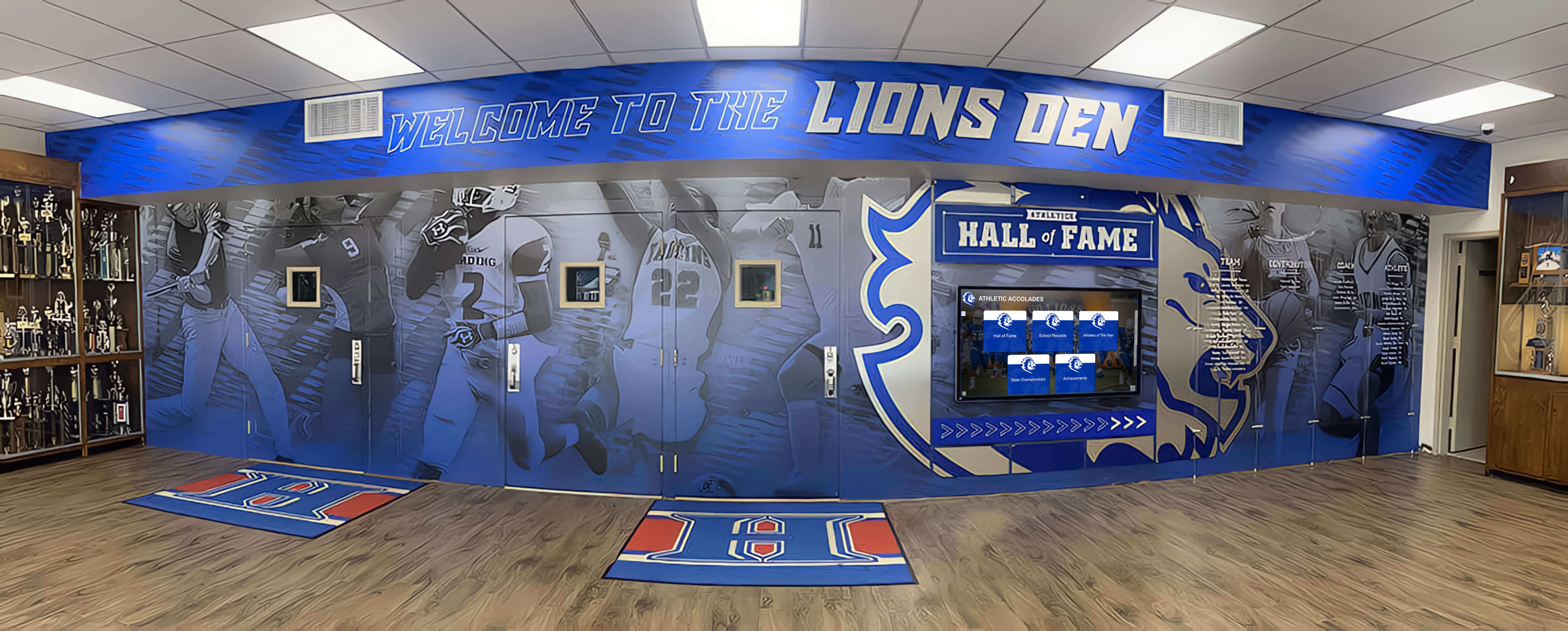
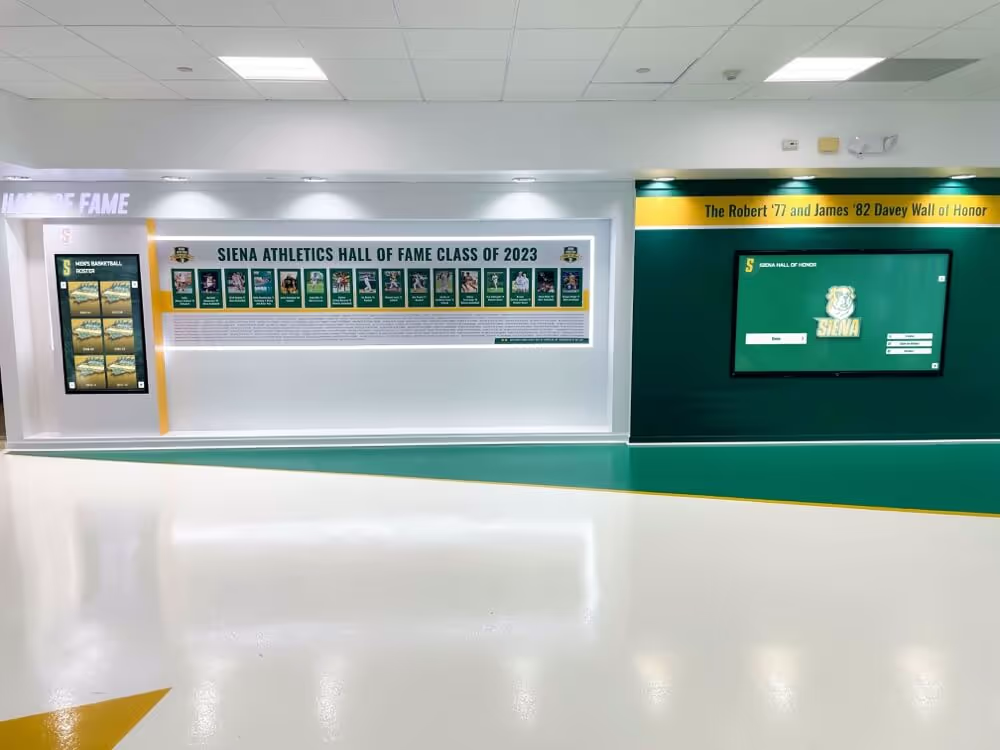
Professional recognition environments demonstrate institutional commitment to celebrating graduate achievement appropriately
Communication and Coordination Strategy
Comprehensive information sharing prevents confusion while building anticipation.
Graduate Communication Timeline
- 8-12 weeks before: Initial ceremony details and expectations
- 6-8 weeks before: Cap and gown ordering information
- 4-6 weeks before: Rehearsal scheduling and attendance requirements
- 2-4 weeks before: Final logistics and special recognition notifications
- 1 week before: Detailed ceremony day timeline and instructions
- Day before: Final reminders and any last-minute updates
Family Communication Approach
Essential information families require:
- Date, time, and specific venue location with directions
- Expected ceremony duration and program overview
- Guest ticket requirements if capacity limited
- Parking information and facility access
- Photography and recording policies
- Post-ceremony reception or celebration details
- Weather contingency plans for outdoor ceremonies
- Accessibility accommodations available
Staff and Volunteer Coordination
Clear role assignments ensuring smooth execution:
- Ceremony coordinator managing overall flow
- Technical staff operating audio-visual systems
- Ushers guiding families and managing seating
- Line organizers positioning graduates properly
- Diploma distributors ensuring correct credential delivery
- Photographers capturing recognition moments
- Reception coordinators managing post-ceremony activities
- Security or parking staff if required
Rehearsal and Preparation
Practice prevents problems while building graduate confidence.
Rehearsal Components
- Complete processional practice establishing pace and positioning
- Stage crossing and diploma presentation rehearsal
- Name pronunciation verification preventing errors
- Special recognition coordination for honorees
- Recessional practice ensuring organized exit
- Technology run-through testing all systems
- Timeline walkthrough establishing expectations
- Question and answer session addressing concerns
Thorough rehearsal dramatically reduces ceremony day stress while ensuring professional execution that honors graduate achievement appropriately.
Discover event planning strategies in spirit week themes with organizational approaches applicable to large celebrations.
Budget Planning and Resource Allocation
Creating impressive graduations requires funding—strategic approaches make memorable ceremonies achievable regardless of available resources.
Cost Categories and Budget Development
Understanding expense components enables realistic planning:
Venue and Facilities ($0-5,000)
- Venue rental if not using school facilities
- Setup and breakdown labor
- Tables, chairs, staging if not included
- Climate control or generator rental if needed
- Security or parking management
Audio-Visual Technology ($500-3,000)
- Sound system rental if facility equipment inadequate
- Projection screens and equipment
- Lighting rental or enhancement
- Live streaming services
- Photography and videography
Printed Materials ($200-1,500)
- Graduation programs for all attendees
- Diploma covers or folders
- Certificates for special recognition
- Name cards for presenters
- Signage and directional materials
Graduate Recognition ($300-2,000)
- Honor cords, stoles, and regalia
- Special award plaques or trophies
- Scholarship certificates or recognition items
- Valedictorian and special honoree gifts
Reception and Hospitality ($200-2,000)
- Light refreshments for attendees
- Decorations and atmosphere elements
- Service ware if not using reusable items
- Background music or entertainment
Digital Recognition Systems ($0-8,000)
- One-time investment in permanent display systems
- Software platform subscriptions
- Content creation and management
- Technical support and training
Total Typical Budget: $1,200-$20,000 depending on class size and choices
Most schools successfully execute quality graduations in the $3,000-$8,000 range through strategic planning and volunteer contributions.
Cost Management Strategies
Strategic approaches controlling expenses:
Leverage Existing Resources
- Use school venues eliminating rental fees
- Engage student media programs for video and photography
- Utilize volunteer coordination reducing labor costs
- Repurpose existing decorations and branded materials
- Coordinate with community organizations sharing resources
Strategic Investment Priorities
Allocate limited budgets to highest-impact elements:
- Professional audio-visual ensuring all attendees hear and see clearly
- Quality recognition items graduates keep permanently
- Photography documentation preserving memories
- Programs and materials providing professional impression
- Digital recognition displays serving long-term value
- Reception hospitality after other priorities funded
Revenue Generation Options
- Graduate fee covering partial ceremony costs ($15-40 typical)
- Program advertising from local businesses
- Sponsorship opportunities for digital displays or reception
- Alumni association support for recognition systems
- Foundation grants funding celebration elements
Learn about recognition investment approaches in academic recognition programs with sustainable funding strategies.
Leveraging Digital Recognition for Lasting Impact
While graduation ceremonies create powerful immediate experiences, digital recognition solutions extend that impact permanently—preserving achievements, inspiring future students, and strengthening institutional pride year-round.
Beyond Single-Event Celebrations
Traditional graduations suffer from temporary impact limitations:
- Recognition lasts only for ceremony duration
- Achievements preserved only through diploma and photos
- Families not attending miss entire celebration
- Graduates cannot easily share recognition with extended networks
- Memories fade without permanent, accessible documentation
- Future students never experience previous graduation excellence
Digital recognition platforms solve these limitations by creating permanent, accessible, engaging celebrations of graduate achievement extending far beyond single commencement evenings.
Permanent Achievement Documentation
Solutions like Rocket Alumni Solutions provide unlimited digital space honoring every graduate:
- Complete profiles for all graduates with achievement details
- Academic honors, scholarships, and distinctions documented permanently
- College destinations and future plans preserved digitally
- Photos and videos from graduation ceremonies
- Speech excerpts and testimonials accessible indefinitely
- Historical context connecting current graduates to institutional legacy
- Search functionality enabling anyone discovering specific graduates
This comprehensive documentation ensures recognition provided at graduation remains accessible and meaningful for decades—not just fleeting moments quickly forgotten.
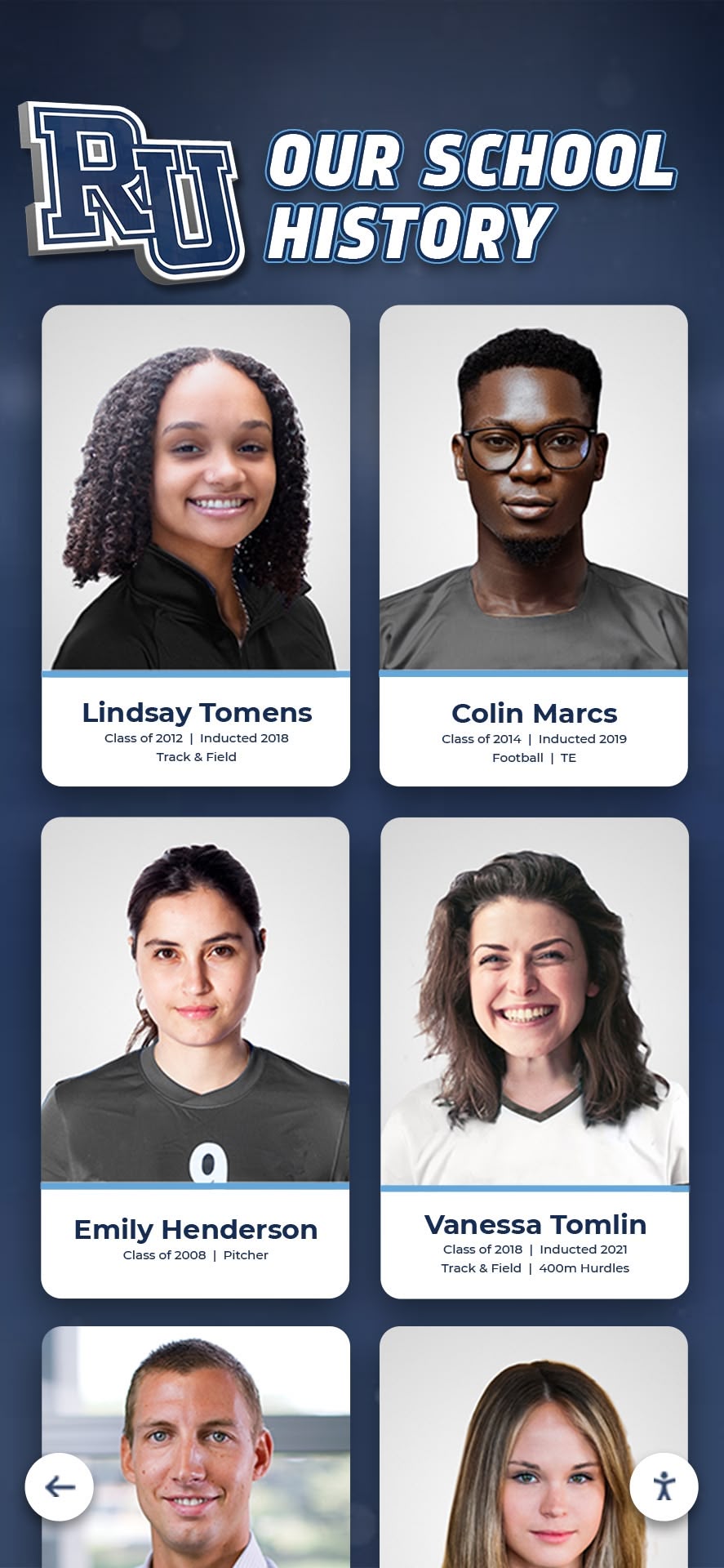
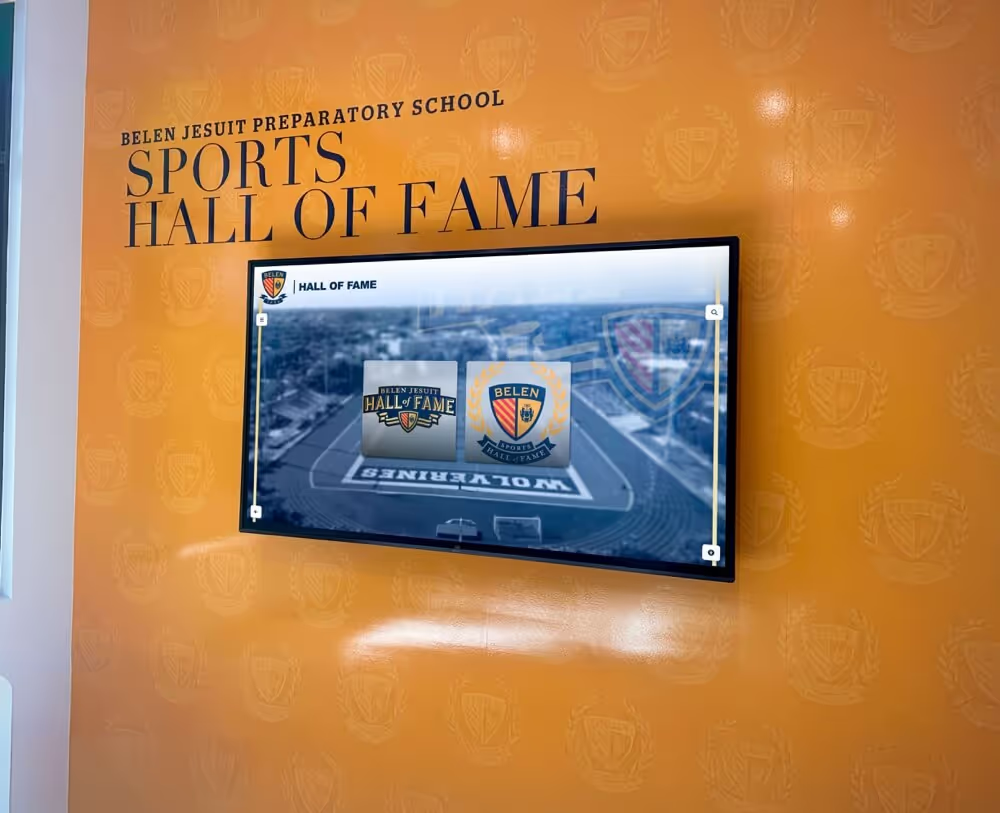
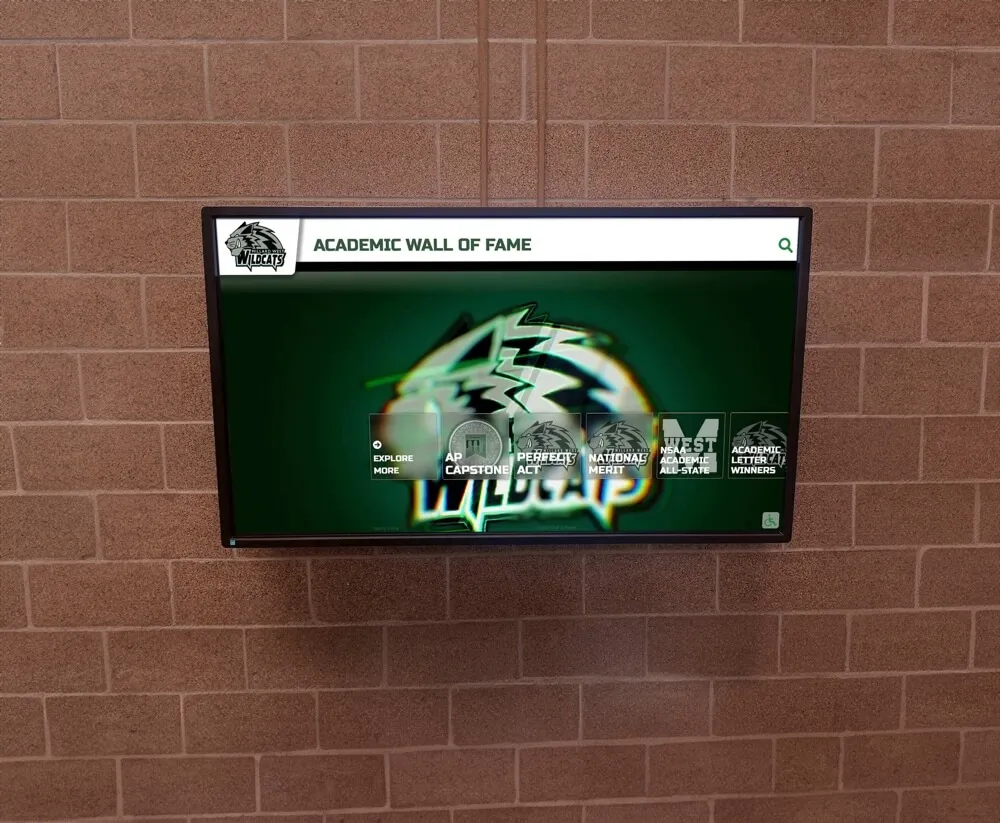
Digital platforms preserve graduation class profiles creating permanent institutional memory
Interactive Engagement Beyond Events
Digital platforms transform passive graduation memories into ongoing engagement:
- Touchscreen kiosks in school lobbies where visitors explore graduate history daily
- Web-accessible platforms enabling anyone celebrating achievements remotely
- Social sharing capabilities allowing graduates promoting recognition broadly
- Mobile-responsive interfaces accessible from any device anywhere
- Updated content adding context and information to historical graduations
- Analytics revealing which graduates and achievements generate greatest interest
Schools implementing comprehensive digital recognition systems report dramatically increased community engagement with institutional history compared to traditional approaches providing only physical plaques or static trophy cases.
Integration with Ceremony Planning
Smart schools integrate digital recognition directly into graduation celebrations:
During Ceremony Activities
- Display digital recognition platforms on screens during pre-ceremony
- Use graduate profiles during diploma presentation adding multimedia context
- Premiere new graduate profiles being added to institutional archives
- Share social media posts being created real-time during celebration
- Enable exploration of previous graduating classes providing historical context
Post-Ceremony Follow-Through
- Add graduation photos and videos to graduate digital profiles
- Publish complete graduate list with achievement details
- Share ceremony highlights through digital platform
- Enable attendees reliving celebration through accessible multimedia
- Promote new recognition additions driving traffic and engagement
Ongoing Institutional Development
- Reference digital recognition during admission tours and program promotion
- Use previous graduation content inspiring current students
- Connect current classes to historical achievements and traditions
- Enable community members exploring institutional history anytime
- Build institutional pride through accessible achievement celebration
This integrated approach ensures graduation investments deliver lasting value rather than fleeting experiences forgotten soon after ceremonies end.
Discover permanent recognition approaches in digital trophy display guides demonstrating comprehensive platform capabilities.
Creating Inclusive and Accessible Celebrations
Thoughtful planning ensures all graduates and families fully participate regardless of individual circumstances.
Physical Accessibility Considerations
Removing barriers enabling full participation:
Venue Accessibility
- Wheelchair-accessible entrances, seating, and stage areas
- Ramps or lifts for diploma presentation if stages elevated
- Reserved accessible seating with companion space
- Accessible restroom facilities clearly marked
- Parking accommodations near venue entrances
- Clear signage directing guests to accessible features
Graduate Accommodations
- Modified processional pathways if standard route inaccessible
- Stage crossing alternatives for graduates with mobility challenges
- Seated diploma presentation options when standing prolonged
- Sign language interpretation for deaf or hard-of-hearing graduates
- Braille programs or alternative format materials
- Service animal accommodations
Family Support
- Assisted listening devices for hearing-impaired attendees
- Large-print programs for visually-impaired guests
- Fragrance-free requests accommodating chemical sensitivities
- Quiet rooms for guests needing sensory breaks
- Nursing areas for families with infants
Cultural and Linguistic Inclusion
Honoring diverse backgrounds within graduating class:
Language Access
- Bilingual programs in languages represented in community
- Translation services for non-English speaking families
- International student recognition acknowledging home countries
- Multilingual signage and directional materials
- Interpretation services during ceremony if needed
Cultural Recognition
- Acknowledgment of diverse cultural graduation traditions
- Opportunity for cultural dress or regalia alongside academic gowns
- International flags representing graduate diversity
- Culturally-appropriate music selections
- Recognition of cultural holidays or observances affecting scheduling
Inclusive Content
- Speeches acknowledging diverse paths to graduation
- Recognition of non-traditional students (adult learners, transfer students)
- Acknowledgment of challenges specific populations faced
- Celebration of multiple definitions of success beyond college acceptance
- Inclusive language respecting all gender identities and family structures
Thoughtful inclusion demonstrates institutional commitment to honoring every graduate’s achievement while creating welcoming environments for all families regardless of background or circumstance.
Learn about inclusive recognition in student mentorship programs with strategies supporting diverse student populations.
Conclusion: Creating Graduation Ceremonies That Honor Achievement
Exceptional graduation ceremonies don’t happen by accident—they result from thoughtful planning, genuine commitment to comprehensive recognition, and understanding that commencements serve purposes far beyond distributing diplomas efficiently. The most successful graduations honor every graduate’s journey while creating shared experiences strengthening community bonds, preserving institutional memory, and inspiring excellence extending well beyond ceremony days.
Every student crossing graduation stages represents years of dedication, growth, and achievement worthy of genuine honor. From straight-A valedictorians to students who overcame significant obstacles simply completing requirements, from athletes and artists to quiet leaders who contributed steadily without spotlight—all deserve recognition through celebrations reflecting the significance of their accomplishments.
Transform Your Graduation Recognition
Discover how digital recognition platforms like Rocket Alumni Solutions enhance graduation ceremonies with interactive displays, multimedia presentations, and permanent achievement documentation that celebrate graduates for decades beyond commencement day.
Explore Graduate Recognition SolutionsThe program ideas explored throughout this guide—from meaningful speeches and multimedia presentations to digital recognition integration and inclusive practices—provide frameworks for creating ceremonies appropriate to your specific institutional character, graduate population, and available resources. From intimate private school graduations to large public school commencements, fundamental principles remain consistent: personalize recognition authentically, maintain audience engagement through varied formats, leverage technology creating modern professional presentations, and demonstrate institutional commitment to honoring achievement appropriately.
Modern graduation recognition extends beyond traditional ceremony formats through digital platforms preserving achievements permanently while enabling family sharing, social distribution, and continuous engagement. Solutions like Rocket Alumni Solutions provide schools with professional recognition systems showcasing unlimited graduates across all achievement categories without physical space constraints while creating permanent archives documenting institutional excellence for generations.
Start improving your graduation ceremonies by identifying your highest-priority enhancement opportunity—whether strengthening program flow and engagement, integrating modern technology and multimedia, improving personalization and meaning, or creating more impressive recognition environments. Each improvement compounds over subsequent years as you systematically build graduation traditions your community anticipates eagerly.
Your graduates’ achievements deserve ceremonies honoring their dedication appropriately while creating memories lasting far beyond school years. Thoughtful ceremony planning transforms routine credential conferral into powerful celebration events strengthening the relationships and connections making educational communities thrive.
Ready to enhance your graduation program? Explore how Rocket Alumni Solutions enables creating comprehensive permanent recognition systems that integrate seamlessly with graduation ceremonies while providing year-round graduate achievement celebration reaching entire communities and inspiring future student excellence.