



Phi Alpha Theta stands as the preeminent honor society for history students, connecting thousands of undergraduate and graduate scholars, professors, and history professionals across more than 970 chapters worldwide. For history students pursuing academic excellence, finding and joining your local Phi Alpha Theta chapter opens doors to exclusive research opportunities, prestigious conferences, competitive scholarships, and a lifelong network of fellow historians who share your passion for understanding the past.
Yet many deserving history students remain unaware that their university hosts an active Phi Alpha Theta chapter, missing opportunities for recognition, funding, and professional development that could significantly enhance their academic journey and career prospects. Other students know about the organization but struggle to locate chapter contact information, understand membership requirements, or navigate the application process at their specific institution.
This comprehensive guide provides everything history students need to find Phi Alpha Theta chapters at their universities, understand what membership offers, meet qualification requirements, and connect with this prestigious academic community that has celebrated historical scholarship excellence since 1921.
For history students committed to academic excellence, Phi Alpha Theta membership represents more than another line on a resume—it’s a credential recognizing serious historical scholarship, a community supporting intellectual growth, and a network connecting you to accomplished historians who can influence your academic and professional trajectory for decades to come.

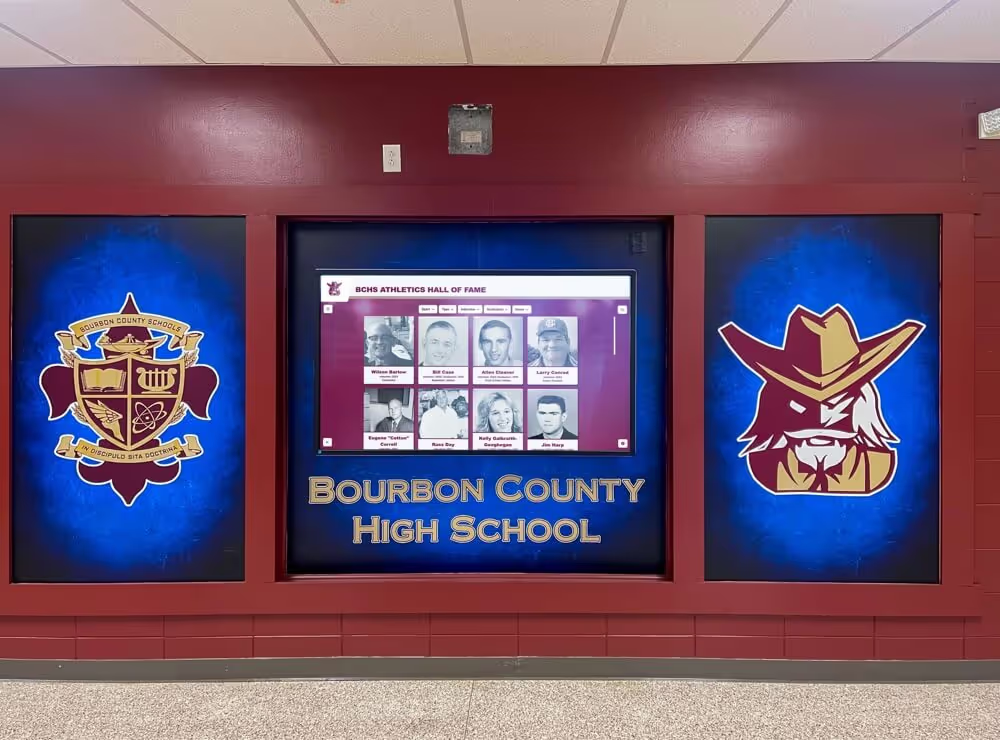
Universities across the nation celebrate academic excellence through honor society recognition and engagement opportunities
Understanding Phi Alpha Theta: The Premier History Honor Society
Before exploring how to find chapters, understanding Phi Alpha Theta’s history, mission, and unique position among academic honor societies helps students appreciate what membership represents.
History and Mission of Phi Alpha Theta
Phi Alpha Theta was founded in 1921 at the University of Arkansas, establishing a tradition of recognizing and encouraging excellence in the study and writing of history that continues more than a century later.
Organizational Growth and Impact
From humble beginnings as a single chapter recognizing outstanding history students at one university, Phi Alpha Theta has grown into an international organization with impressive reach:
- More than 970 active chapters at colleges and universities worldwide
- Over 400,000 lifetime members since founding
- Approximately 9,000 new members inducted annually
- Chapters across all 50 United States plus international locations
- National headquarters and journal editorial offices at the University of South Florida
- Recognized by the American Historical Association and other professional organizations
- Biennial national conventions bringing together students and scholars
- Regional conferences in multiple locations each year providing presentation opportunities
This extensive network means Phi Alpha Theta members join a community extending far beyond their individual campus, connecting with historians at all career stages across diverse specializations and geographic locations.
What Makes Phi Alpha Theta Unique
Among the many academic honor societies operating at universities today, Phi Alpha Theta occupies a distinctive position for history students.
Disciplinary Focus and Specialization
Unlike general honor societies recognizing academic achievement across all disciplines, Phi Alpha Theta exclusively celebrates excellence in historical study and research:
- Deep specialization in historical scholarship rather than broad academic achievement
- Community entirely composed of history students, professors, and professionals
- Programming specifically designed for historians’ professional development needs
- Research and publication opportunities focused on historical inquiry
- Networks connecting students with historians in their specific fields of interest
- Recognition meaningful to graduate programs and employers seeking historical expertise
This focused mission creates a community where everyone shares fundamental interests in historical inquiry, methodology, and interpretation—fostering deeper intellectual connections than multidisciplinary honor societies can provide.
Explore how institutions celebrate diverse forms of achievement through academic recognition programs that honor specialized excellence.

Modern recognition systems celebrate individual academic accomplishments across all disciplines and specializations
Membership Benefits Overview
Phi Alpha Theta membership delivers concrete advantages extending throughout academic careers and beyond.
Immediate Membership Benefits
Upon induction, members immediately gain access to valuable resources and opportunities:
Academic and Professional Resources
- Subscription to The Historian, the society’s peer-reviewed academic journal
- Access to members-only research databases and historical resources
- Eligibility for exclusive scholarships, research grants, and travel funding
- Opportunities to present research at regional conferences and biennial conventions
- Publication opportunities in society journals and proceedings
- Letters of recommendation and academic references from chapter advisors
- Resume enhancement through prestigious national honor society membership
Networking and Community
- Connection to 400,000+ lifetime members across diverse careers
- Relationships with history professors serving as chapter advisors and mentors
- Peer community of serious history students at your institution
- Professional networking at conferences and society events
- Alumni connections in graduate programs, museums, archives, and related fields
- Online communities and regional groups maintaining engagement beyond graduation
Long-Term Career Advantages
- Recognition signal to graduate programs evaluating applications
- Credential valued by employers seeking analytical and research skills
- Network supporting career transitions throughout professional life
- Continued access to academic resources and publications
- Lifelong membership with no annual dues beyond initial induction fee
These combined benefits justify the one-time $50 membership fee, delivering returns throughout academic and professional careers far exceeding this modest initial investment.
Learn about comprehensive approaches to student achievement recognition that celebrate excellence across all programs.
How to Find Phi Alpha Theta Chapters at Your University
Locating your institution’s Phi Alpha Theta chapter requires systematic searching through multiple resources, as contact information and visibility vary significantly across universities.
Using the Official Phi Alpha Theta Chapter Locator
The most authoritative resource for finding chapters is Phi Alpha Theta’s official website, which maintains current chapter information across all regions.
Official Chapter Locator Tool
Phi Alpha Theta provides a dedicated chapter locator at phialphatheta.org/chapter-locator/ organizing chapters by geographic region:
Regional Organization Structure
The chapter locator divides the United States into multiple regions, making it easier to find chapters in your area:
- Northeast regions: New York, New Jersey, Pennsylvania, and New England states
- Southeast regions: Virginia, North Carolina, South Carolina, Georgia, Florida, and surrounding states
- Midwest regions: Illinois, Indiana, Ohio, Michigan, Wisconsin, and surrounding states
- Southwest regions: Texas (multiple regions), Oklahoma, New Mexico, and surrounding states
- West Coast regions: California (multiple regions), Oregon, Washington, and surrounding states
- Mountain regions: Colorado, Utah, Montana, Idaho, and surrounding states
- International chapters: Locations outside the United States
Each regional listing includes:
- University or college name hosting the chapter
- Chapter designation (Greek letters identifying specific chapters)
- Primary contact information for chapter advisors or presidents
- Links to institutional pages when available
- Chapter status (active, inactive, or charter pending)
How to Use the Chapter Locator
- Visit phialphatheta.org/chapter-locator/ on the official website
- Identify your geographic region from the available options
- Scan the regional listing for your college or university name
- Note the chapter contact information, typically a faculty advisor email
- Reach out directly to the listed contact with membership inquiries
If your institution appears in the chapter locator, you’ve confirmed an active Phi Alpha Theta chapter exists at your university.

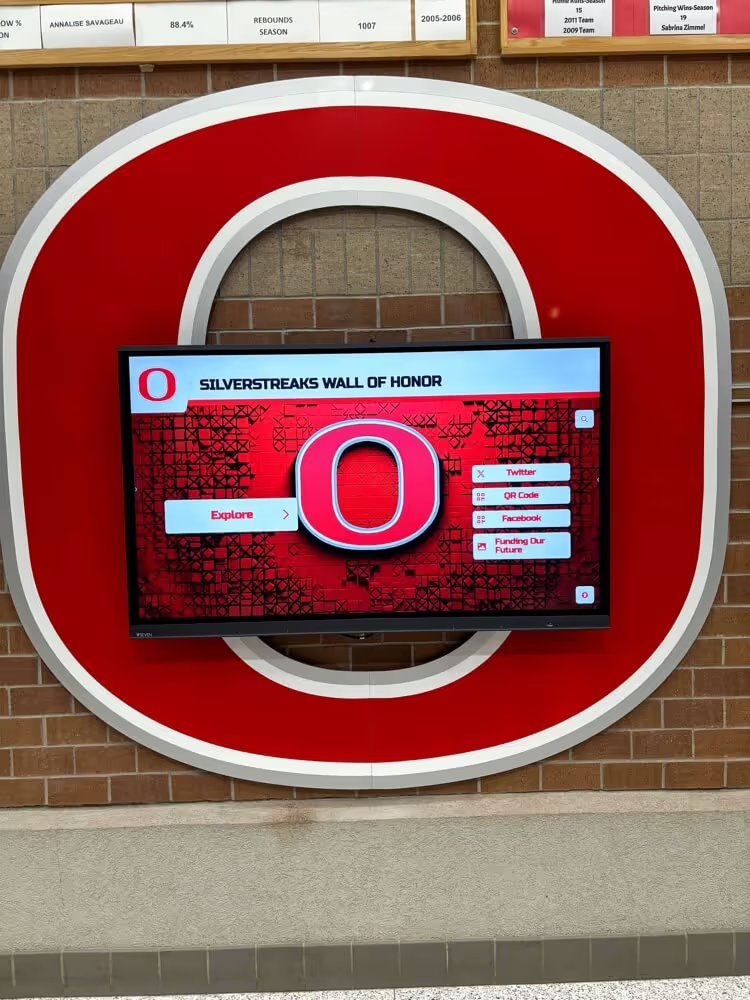
Modern campuses use interactive displays to showcase academic organizations, honor societies, and student achievement opportunities
Searching Your University’s Website
When chapter locator information seems outdated or incomplete, your university’s own website often provides current details about Phi Alpha Theta activities on campus.
Effective University Website Search Strategies
History Department Pages
The most reliable source for Phi Alpha Theta information at your university is typically the history department website:
- Navigate to your university’s history department homepage
- Look for sections titled “Student Organizations,” “Honors and Awards,” or “Undergraduate Programs”
- Check faculty pages, as chapter advisors often list Phi Alpha Theta among their responsibilities
- Review newsletters or news sections announcing recent inductions or chapter activities
- Examine course catalogs or undergraduate handbooks mentioning honor societies
Many history departments maintain dedicated pages describing their Phi Alpha Theta chapter, including membership requirements, application procedures, meeting schedules, and contact information specific to your institution.
Student Organization Directories
Universities typically maintain comprehensive directories of recognized student organizations:
- Search your university’s student affairs or student life website
- Look for organization directories or databases of registered student groups
- Filter by academic organizations or honor societies when possible
- Note contact information, meeting locations, and advisor details
- Check if organizations maintain social media accounts for more current information
These directories often include Phi Alpha Theta chapters along with other academic honor societies active on campus.
Campus Recognition Systems
Some universities feature comprehensive recognition displays celebrating academic excellence and honor society membership:
- Check main academic buildings for digital displays showcasing honor societies
- Look for honor society recognition in library spaces or student centers
- Review campus-wide recognition programs highlighting academic achievement
- Examine donor recognition systems that may include honor society endowments
Solutions like Rocket Alumni Solutions help universities create comprehensive recognition systems that increase visibility for honor societies and academic organizations, making it easier for students to discover opportunities like Phi Alpha Theta membership.
Discover how institutions implement interactive touchscreen displays to showcase academic programs and honor societies.
Contacting Your History Department Directly
When online searches prove unsuccessful, direct communication with your history department often yields the most accurate, current information.
Who to Contact
Primary Contact Points
- Department chair or chairperson (typically oversees all departmental activities)
- Undergraduate program coordinator or advisor (manages student programs and organizations)
- Academic advisors specializing in history majors
- Professors who teach historiography or methods courses (often serve as chapter advisors)
- Department administrative assistants (frequently maintain organizational contacts)
How to Inquire Effectively
Craft inquiries that demonstrate genuine interest while respecting faculty time:
Effective Inquiry Elements
- Introduce yourself as a history student at the institution
- Briefly state your academic standing and GPA (if competitive)
- Express specific interest in Phi Alpha Theta membership
- Ask if the department has an active chapter and how to join
- Inquire about application timing and procedures
- Request contact information for chapter advisors or officers
- Thank them for their assistance

Modern students increasingly access campus organization information through digital platforms and mobile-responsive systems
Sample Inquiry Email
Subject: Inquiry About Phi Alpha Theta Chapter
Dear Professor [Name]/Dr. [Name],
My name is [Your Name], and I’m a [year] history major at [University Name] with a [GPA] GPA. I’m interested in joining Phi Alpha Theta to connect with fellow history students and take advantage of research and conference opportunities.
Could you please let me know if our department has an active Phi Alpha Theta chapter? If so, I would appreciate information about membership requirements, application procedures, and the appropriate contact person for our chapter.
Thank you for your time and assistance.
Sincerely, [Your Name]
This professional, concise approach typically generates helpful responses from busy faculty members.
Phi Alpha Theta Membership Requirements
Understanding membership requirements helps students assess their eligibility and prepare for successful applications when they contact chapters.
Undergraduate Student Requirements
Phi Alpha Theta maintains national minimum standards that all chapters must follow, though individual chapters may implement more stringent requirements.
National Minimum Standards for Undergraduates
Academic Requirements
- Completion of at least 12 semester hours (approximately 4 courses) in history
- Minimum 3.1 grade point average in history courses
- Minimum 3.0 overall grade point average across all courses
- Rank in the top 35% of their class
Course Completion Considerations
The 12-semester-hour requirement can be satisfied through multiple pathways:
- Traditional classroom history courses at your current institution
- History courses completed at previous institutions (transfer credits)
- Advanced Placement (AP) history course credits if accepted by your university
- Online history courses through accredited programs
- Combination of different course delivery methods
Students need not be history majors to qualify—any student meeting the academic requirements becomes eligible regardless of their declared major or minor.
Timing of Application
Most chapters induct new members once or twice annually:
- Fall semester inductions typically occur in October or November
- Spring semester inductions typically occur in March or April
- Application deadlines usually fall 4-6 weeks before induction ceremonies
- Some chapters require full completion of 12 history hours before application
- Other chapters permit applications from students currently completing their 4th history course
Contact your specific chapter to understand their induction schedule and application timing.

Universities increasingly celebrate academic honor society membership through prominent campus recognition displays
Graduate Student Requirements
Graduate students pursuing master’s or doctoral degrees in history face different eligibility standards reflecting advanced study.
National Minimum Standards for Graduate Students
Academic Requirements for Master’s Students
- Completion of at least 12 semester hours toward Master’s degree in history
- Minimum 3.5 grade point average in graduate history courses
- Completion of approximately 30% of residence requirements for Master’s degree
Doctoral Student Considerations
Many chapters welcome doctoral students who meet the master’s-level requirements, though some implement additional criteria:
- Progress toward comprehensive examinations
- Advancement to candidacy status
- Demonstrated research productivity
- Teaching or research assistantship positions
Graduate student membership provides valuable benefits during critical career development phases:
- Conference presentation opportunities building CVs for academic job markets
- Publication pathways establishing research credentials
- Professional networking with established historians in their fields
- Scholarship and travel funding supporting dissertation research
- Faculty relationships extending beyond home institutions
For graduate students, Phi Alpha Theta membership can be particularly valuable in competitive academic job markets where every credential and professional connection matters.
Explore how institutions recognize graduate achievement through comprehensive recognition programs celebrating diverse student populations.
Faculty Membership
Phi Alpha Theta welcomes history faculty as full members, creating communities bridging student and professional historians.
Faculty Eligibility
- Faculty members above the rank of instructor teaching history automatically qualify
- Adjunct and visiting faculty typically qualify based on teaching responsibilities
- Faculty pay the same $50 one-time induction fee as students
- Faculty receive identical membership benefits including journal subscriptions and conference access
- Many faculty members serve as chapter advisors, officers, or mentors
Faculty membership strengthens chapters by:
- Providing mentorship and guidance to student members
- Facilitating connections between students and professional historians
- Supporting conference attendance and research development
- Offering recommendation letters based on honor society involvement
- Contributing institutional knowledge and continuity as student membership turns over
The inclusive faculty membership structure creates intergenerational communities rare among honor societies that focus exclusively on student achievement.
Chapter-Specific Variations in Requirements
While Phi Alpha Theta establishes national minimum standards, individual chapters may implement higher thresholds based on institutional contexts.
Common Chapter Variations
Higher GPA Thresholds
Some chapters at particularly competitive institutions require:
- Higher history GPA requirements (3.3, 3.5, or even 3.7 in some cases)
- Higher overall GPA requirements (3.2 or 3.3 instead of 3.0)
- Demonstrated excellence in upper-division or seminar courses
- Research paper or thesis requirements
Additional Course Requirements
Certain chapters expect:
- Completion of more than 12 hours (15-18 hours common)
- Specific course types such as historiography or methods seminars
- Distribution requirements across different historical periods or regions
- Upper-division course concentration rather than introductory survey courses
Involvement Expectations
Some chapters emphasize active participation:
- Attendance at chapter meetings or events
- Conference presentation expectations
- Service to the chapter or department
- Participation in historical activities beyond coursework
These variations ensure chapter requirements align with institutional standards and academic cultures. Always verify specific requirements with your local chapter rather than assuming national minimums apply universally.

Interactive recognition systems help students discover academic opportunities and celebrate peer achievements across all programs
The Application and Induction Process
Understanding typical application procedures helps students prepare for successful membership applications when they identify their local chapters.
Typical Application Procedures
While specific processes vary by chapter, most follow similar general patterns.
Standard Application Elements
Required Documentation
Most chapters request:
- Completed application form (provided by chapter)
- Official or unofficial transcript demonstrating GPA requirements
- List of completed history courses with grades
- Brief personal statement or essay (often 1-2 pages)
- Resume or curriculum vitae
- Letter of recommendation from history faculty member (sometimes required)
- Application fee or confirmation of ability to pay membership dues
Personal Statement Topics
When personal statements are required, common prompts include:
- Why you’re interested in history and Phi Alpha Theta membership
- Your academic and professional goals in the field of history
- Significant historical research or coursework experiences
- How you plan to contribute to the chapter
- Career aspirations related to historical study
- Most meaningful historical topics or periods of interest
These statements help chapters assess not just academic qualifications but genuine commitment to historical scholarship and community participation.
Application Review Process
Chapter officers and advisors typically:
- Verify applicants meet GPA and course requirements
- Review personal statements and supporting materials
- Make acceptance decisions through faculty-student committees
- Notify accepted applicants several weeks before induction ceremonies
- Provide information about induction fees, ceremonies, and upcoming activities
Most qualified applicants who complete applications carefully receive acceptance, as chapters aim to recognize all eligible students rather than implementing highly selective admission.
Membership Fees and Financial Considerations
Phi Alpha Theta membership requires a one-time fee covering lifetime membership and initial materials.
Standard Membership Costs
National Membership Fee: $50
This one-time payment includes:
- Lifetime membership in Phi Alpha Theta (no recurring annual dues)
- Membership certificate suitable for framing
- Membership card
- One year subscription to The Historian journal
- Eligibility for all member benefits including scholarships, conferences, and awards
- Access to members-only online resources
- Lifetime recognition of academic achievement
Additional Potential Costs
Some chapters implement additional fees:
- Chapter dues (typically $10-25) for local chapter activities and events
- Induction ceremony costs if chapters host receptions or formal events
- Honor cords or stoles for graduation ceremonies (typically $15-30, optional)
- Conference registration fees (discounted for members but not free)
- Travel costs for regional or national conferences
Financial Assistance
For students facing financial constraints:
- Ask your chapter advisor about fee waivers or payment plans
- Some chapters offer scholarships covering membership fees for qualified students
- Certain departments subsidize honor society memberships
- Student government organizations sometimes provide funding for honor society fees
- Consider membership fees as investment in career development with significant returns
The one-time nature of Phi Alpha Theta membership fees makes it considerably more affordable than organizations charging recurring annual dues, and the career benefits typically far exceed the modest initial investment.
Induction Ceremonies and Traditions
Most chapters conduct formal induction ceremonies welcoming new members into the organization.
Typical Induction Ceremony Elements
Ceremony Format
- Formal academic setting, often in university buildings or faculty spaces
- Faculty advisor or chapter president presiding
- Reading of Phi Alpha Theta’s mission and values
- Recognition of each new member by name
- Administration of membership pledge or oath
- Presentation of membership certificates
- Recognition of academic achievements by inductees
- Reception or refreshments following formal ceremony
Who to Invite
Most chapters welcome and encourage:
- Family members celebrating your academic achievement
- Friends and significant others
- Faculty mentors and advisors
- Fellow history students
- University administrators
Induction ceremonies recognize serious academic accomplishment, and chapters design them to honor student achievement appropriately through formal, meaningful traditions.
Post-Induction Engagement
Following induction, active chapters offer:
- Regular meetings featuring guest speakers, faculty presentations, or student research
- Social events building community among history students
- Conference planning and group travel to regional meetings
- Service projects related to historical preservation or education
- Mentorship programs pairing newer members with advanced students
- Research collaboration opportunities
Membership value increases dramatically for students who actively engage with chapters rather than treating induction as the end of their involvement.

Modern universities integrate traditional and digital recognition elements to celebrate academic honor societies and student achievement
Regional Conferences and Presentation Opportunities
One of Phi Alpha Theta’s most valuable benefits is the opportunity to present original research at professional academic conferences—experiences typically reserved for graduate students and faculty.
Understanding Phi Alpha Theta Regional Conferences
Regional conferences occur annually in multiple locations across the country, providing accessible presentation opportunities for undergraduates.
Regional Conference Structure
Conference Organization
- Multiple regions host annual conferences (typically 8-12 conferences nationwide each year)
- One-day or weekend events hosted by member institutions
- Panel sessions organized by historical topics or themes
- Undergraduate and graduate student presentations
- Faculty commentators providing feedback on student papers
- Keynote addresses by distinguished historians
- Awards for outstanding presentations in various categories
- Networking opportunities with students and faculty from across regions
2025 Regional Conference Examples
Based on publicly available information, several regional conferences are scheduled for 2025:
- New York-New Jersey Regional Conference at Iona University (March 29, 2025)
- Northwest Regional Conference at University of Montana (March 27-29, 2025)
- Virginia Regional Conference at Liberty University (March 29, 2025)
- Additional conferences at locations including East Texas Baptist University, Sacramento State University, Kent State University, Oakland University, and others throughout the academic year
Conference schedules and locations change annually as different chapters volunteer to host, so check the official Phi Alpha Theta regional conferences page for current year details.
Benefits of Regional Conferences
For undergraduate students, regional conferences provide invaluable experiences:
- First opportunity to present research in professional academic settings
- Practice for graduate school presentations and future academic careers
- Feedback from faculty experts in your research areas
- Credential-building for graduate school applications and resumes
- Networking with students from other institutions
- Exposure to diverse historical research approaches and topics
- Travel experiences with peers from your home institution
- Understanding of academic conference cultures and expectations
Many students cite regional conference presentations as transformative experiences that confirmed their interest in pursuing graduate study or professional historical careers.
How to Participate in Regional Conferences
Presenting at regional conferences requires advance planning and preparation.
Conference Participation Process
Call for Papers
- Monitor your chapter communications for conference announcements (typically 3-6 months before conferences)
- Review calls for papers describing conference themes, requirements, and deadlines
- Note submission deadlines (typically 2-3 months before conference dates)
- Check paper format requirements (typical expectations: 15-20 minute presentations, 9-12 double-spaced pages)
- Confirm eligibility requirements (usually all Phi Alpha Theta members can present)
Preparing Proposals
Most conferences require preliminary proposals rather than complete papers:
- Proposal abstracts (typically 250-500 words) describing your research
- Brief bibliography of major sources
- Author information and institutional affiliation
- Research question and thesis clearly stated
- Methodology and source base explained
- Significance of research articulated
Selecting Research Topics
Strong conference papers typically:
- Emerge from substantial research papers written for courses
- Use primary sources and original research
- Address specific historical questions
- Fit within appropriate length constraints for presentations
- Demonstrate clear arguments and historical thinking
- Contribute new insights or perspectives to historical topics

Campus recognition systems increasingly help students stay informed about academic opportunities and organizational activities
Working With Faculty Mentors
Chapter advisors and course professors provide essential support:
- Help identify seminar papers suitable for conference presentation
- Provide feedback on proposals before submission
- Guide revision of course papers into conference presentations
- Advise on presentation techniques and academic conference norms
- Write letters supporting conference travel funding requests
- Sometimes attend conferences to support student presenters
Don’t hesitate to ask faculty for assistance—supporting student research presentations is an expected and valued part of their responsibilities.
Funding Conference Travel
Conference attendance involves costs (registration, travel, lodging, meals), but multiple funding sources often exist:
- Phi Alpha Theta travel grants specifically supporting conference presentations
- University undergraduate research travel grants
- History department travel funding
- Student government conference funding
- Chapter fundraising supporting member conference attendance
- Faculty research grants that include undergraduate researcher travel
Apply for available funding well before conference dates, as application processes often require several weeks for review and approval.
Explore how institutions support student achievement through academic excellence recognition programs that celebrate diverse accomplishments.
Biennial National Convention
Beyond regional conferences, Phi Alpha Theta hosts a biennial national convention bringing together members from across the country and internationally.
National Convention Overview
Convention Structure
- Held every two years at major conference hotels or university facilities
- Multiple-day event featuring hundreds of presentations
- Undergraduate and graduate student paper sessions
- Faculty presentations and keynote addresses
- Awards ceremony recognizing outstanding research
- Business meetings of the national organization
- Networking events and social activities
- Book exhibits from major academic publishers
- Career development workshops
Convention Benefits
National conventions offer experiences exceeding regional conferences:
- Presenting to larger, more diverse audiences from across the country
- Networking with students and faculty from hundreds of institutions
- Exposure to cutting-edge historical research across all fields and periods
- Understanding of the broader historical profession
- Publishing opportunities through convention proceedings
- Competition for prestigious national awards and recognition
- Inspiring experiences reinforcing commitment to historical scholarship
While regional conferences provide more accessible entry points, students who have opportunity to attend national conventions consistently describe them as highlight experiences of their undergraduate careers.
Planning for Convention Attendance
National conventions require advance planning:
- Monitor announcements typically issued 12-18 months before conventions
- Submit paper proposals 6-9 months in advance
- Apply for substantial travel funding given higher costs of national travel
- Coordinate attendance with classmates or chapter members
- Book hotel accommodations early to secure conference-rate rooms
- Plan for 3-5 day trips including travel time
For serious history students, attending at least one national convention before graduation provides invaluable perspective on the historical profession and academic community you’re joining.

Prominent lobby recognition displays showcase honor societies and academic achievements that inspire current and prospective students
Maximizing Your Phi Alpha Theta Membership
Membership delivers maximum value when students actively engage with the organization rather than treating it as a passive resume credential.
Active Chapter Participation
Strong chapters create communities supporting members’ academic and professional development.
Ways to Engage With Your Local Chapter
Regular Meeting Attendance
- Attend monthly or semester meetings to stay connected with fellow history students
- Participate in presentations and discussions about historical topics
- Learn about upcoming opportunities including conferences, scholarships, and events
- Build relationships with peers who share your academic interests
- Meet faculty advisors and guest speakers in informal settings
Chapter Leadership Opportunities
Consider running for chapter officer positions:
- President: Overall chapter leadership and coordination
- Vice President: Program planning and event organization
- Secretary: Communication and record-keeping
- Treasurer: Financial management and fundraising
- Historian: Chapter documentation and recognition
- Conference Coordinator: Regional conference planning and member support
Leadership roles provide valuable experience in organization management, event planning, communication, and teamwork—all transferable skills valuable in any career.
Contributing to Chapter Activities
Even without formal leadership positions, active members contribute by:
- Suggesting guest speakers or program topics
- Helping organize social events and study groups
- Mentoring newer members or prospective applicants
- Participating in historical service projects in the community
- Representing the chapter at university events
- Contributing to chapter communications or social media
- Assisting with fundraising activities supporting conference travel
Active participation transforms membership from credential into genuine community, often creating friendships and professional relationships lasting well beyond graduation.
Pursuing Research and Publication Opportunities
Phi Alpha Theta provides multiple avenues for students to develop as historical researchers and published scholars.
Publication Venues
The Historian Journal
Members receive subscriptions to The Historian, Phi Alpha Theta’s peer-reviewed academic journal:
- Exposure to current historical scholarship across all fields and periods
- Understanding of professional historical writing and argumentation
- Models for developing your own research papers
- Awareness of current debates and historiography in various fields
Regional and National Proceedings
Many regional conferences and the national convention publish proceedings featuring outstanding student papers:
- Peer review experience as papers undergo evaluation before publication
- Publication credit valuable for graduate school applications
- Experience with editorial processes and revision
- Contribution to historical scholarship while still an undergraduate
- Recognition among the historical community
Best Paper Awards
Conferences typically offer awards in multiple categories:
- Best undergraduate paper by period (ancient, medieval, early modern, modern)
- Best graduate paper
- Best paper using particular methodologies or sources
- Regional best paper recognition
- National best paper awards at biennial conventions
Award-winning papers receive special recognition and sometimes publication, plus these honors significantly strengthen graduate school applications and academic resumes.
Developing Research Skills
To maximize publication and presentation opportunities:
- Transform strong seminar papers into conference presentations
- Work with faculty mentors to identify publishable research
- Present at regional conferences before attempting national venues
- Incorporate feedback from conference commentators into paper revisions
- Submit revised papers to proceedings for publication consideration
- Build research agendas across multiple papers on related topics
- Develop expertise in specific historical fields or methodologies
These research experiences provide essential preparation for graduate study while demonstrating commitment to historical scholarship that distinguishes applications.
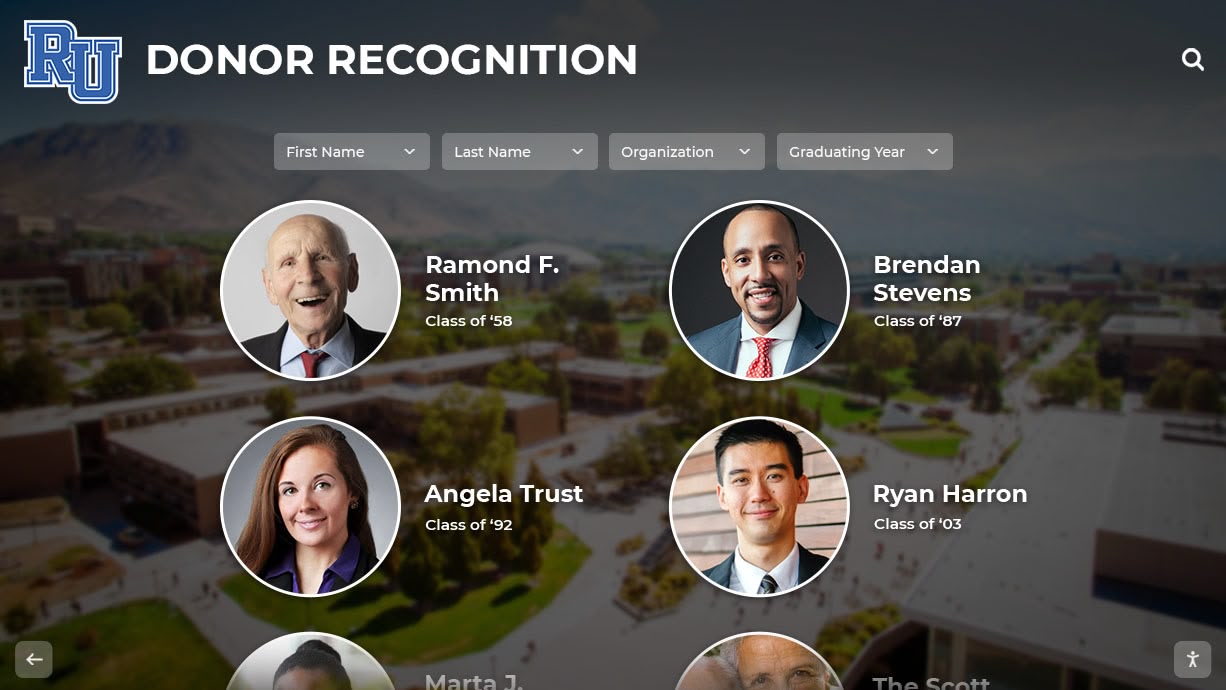
Universities celebrate academic communities through recognition systems honoring student achievement, faculty contributions, and institutional supporters
Networking and Professional Development
Beyond research opportunities, Phi Alpha Theta facilitates professional connections valuable throughout careers.
Building Your Historical Network
Faculty Relationships
Phi Alpha Theta creates structured opportunities to develop mentoring relationships with history faculty:
- Chapter advisors who know you beyond classroom interactions
- Faculty who attend conferences and see your presentations
- Professors who serve as panel commentators on your research
- Historians who share your research interests and can guide reading and project development
- Mentors who write stronger recommendation letters based on extended interaction
These relationships often prove more valuable than those developed solely through coursework, as they’re based on shared professional activities rather than instructor-student hierarchies.
Peer Connections
Fellow Phi Alpha Theta members become valuable parts of professional networks:
- Study partners for comprehensive exams and graduate coursework
- Colleagues at regional and national conferences throughout careers
- Facebook groups and social media communities maintaining connections after graduation
- Friends who share intellectual interests and career paths
- Professional contacts as careers develop in academic, museum, archival, and related fields
Many historians maintain friendships and collaborations with Phi Alpha Theta colleagues they met as undergraduates decades earlier.
Alumni Networks
With more than 400,000 lifetime members, Phi Alpha Theta’s alumni network spans:
- Graduate programs where members can connect you with current students
- Museums, archives, and historical organizations employing members
- Secondary and post-secondary teaching positions across the country
- Government agencies, non-profits, and corporations valuing historical training
- Publishing, journalism, and media careers utilizing historical expertise
While Phi Alpha Theta doesn’t maintain formal alumni networking platforms like some organizations, the shared credential creates immediate connection when you discover fellow members in your graduate program, at your new job, or at professional conferences throughout your career.
Career Exploration
Chapter activities often include career development components:
- Guest speakers from diverse history-related careers
- Panels featuring recent graduates in various fields
- Workshops on graduate school applications
- Resume and CV review sessions
- Job search strategies for history majors
- Information about alternative career paths utilizing historical training
These programs help members understand the diverse career opportunities available to history students beyond the stereotypical professor or high school teacher paths.
Discover how digital recognition displays help institutions celebrate academic communities and inspire future achievement.
What to Do If Your University Doesn’t Have a Chapter
After thorough searching, some students discover their institutions lack active Phi Alpha Theta chapters, but options still exist for accessing honor society benefits.
Starting a New Chapter
Phi Alpha Theta actively encourages qualified institutions to establish new chapters, providing support throughout the chartering process.
Chapter Formation Requirements
To petition for a new chapter, institutions must:
- Employ at least one full-time history faculty member willing to serve as advisor
- Identify at least five students meeting membership requirements willing to serve as charter members
- Demonstrate institutional support from university administration
- Commit to ongoing chapter activities and member engagement
- Pay charter fees (typically several hundred dollars)
Chartering Process
- Contact Phi Alpha Theta national headquarters expressing interest in chartering
- Receive information packet explaining requirements and procedures
- Identify faculty advisor and initial student members
- Complete charter application with required documentation
- Submit application to national council for review
- Upon approval, conduct charter installation ceremony
- Begin regular chapter activities and member recruitment
Time Investment
Chapter formation typically requires:
- 6-12 months from initial inquiry to charter installation
- Significant time commitment from faculty advisor
- Student leadership in organizing initial activities
- Institutional navigation securing necessary approvals
- Fundraising for charter fees if departmental funding unavailable
While substantial effort, students who successfully charter new chapters create lasting legacies at their institutions while demonstrating exceptional leadership valuable for graduate school applications and future careers.
Transferring to Institutions With Chapters
Students at institutions without chapters might consider:
- Transferring to universities with active Phi Alpha Theta chapters if other factors align
- Attending graduate programs at institutions with robust chapters
- Participating in nearby chapters if geographic proximity permits (requires special permission)
- Joining after graduation if you later affiliate with an institution hosting a chapter
Alternative History Honor Societies
While Phi Alpha Theta stands as the premier history-specific honor society, alternative organizations may be available:
Related Academic Honor Societies
- Phi Alpha Theta remains the only major honor society exclusively for history
- Phi Beta Kappa recognizes excellence in liberal arts broadly, including history
- Phi Kappa Phi honors achievement across all academic disciplines
- Sigma Tau Delta (English honor society) sometimes includes history students with literature focus
- Pi Gamma Mu (social science honor society) includes some history students
While these alternatives provide value, none offers the history-specific programming, conferences, and community that Phi Alpha Theta delivers for history students specifically.

Recognition displays create gathering spaces where academic communities connect around shared traditions and celebrate excellence
Recognizing and Celebrating Phi Alpha Theta Membership
Universities increasingly celebrate honor society membership through prominent recognition systems that inspire current and prospective students.
Campus Recognition Displays
Modern campuses use sophisticated recognition systems to showcase honor societies and academic achievement.
Digital Recognition Platforms
Solutions like Rocket Alumni Solutions enable universities to create comprehensive recognition systems celebrating honor society members:
- Interactive touchscreen displays in high-traffic campus locations featuring honor society inductees
- Searchable databases allowing students to explore honor society members across years and organizations
- Individual profiles showcasing member achievements, research interests, and post-graduation careers
- Organization pages describing each honor society’s mission, requirements, and benefits
- Induction ceremony documentation preserving photographs and program information
- Alumni connection showing honor society members’ career trajectories and accomplishments
These digital platforms solve traditional recognition limitations by offering unlimited capacity, easy updates, multimedia content, and engagement features impossible with static plaques or printed materials.
Benefits of Digital Honor Society Recognition
For students and institutions, digital recognition delivers multiple advantages:
- Increased visibility for honor societies and application opportunities
- Inspiration for underclassmen to pursue academic excellence qualifying for membership
- Family engagement as relatives view recognition remotely through web-based platforms
- Alumni connection as graduates revisit their honor society involvement years later
- Recruitment value as prospective students see institutional commitment to recognizing achievement
- Comprehensive documentation preserving complete honor society history across decades
Educational institutions implementing these systems report increased honor society application rates and enhanced pride among members who see their achievements prominently celebrated.
Implementation Across Campus
Strategic placement maximizes recognition impact:
- Main academic building lobbies where all students pass daily
- Library entrances creating inspiration for studying students
- Admissions office areas where prospective students visit
- Department hallways in history and related disciplines
- Student center spaces where diverse audiences gather
- Alumni center displays connecting graduates to current students
Multiple display locations ensure recognition reaches diverse audiences across the campus community.
Learn about interactive recognition displays that celebrate honor societies and academic excellence.
Graduation Recognition
Phi Alpha Theta membership receives special recognition during commencement ceremonies at many institutions.
Graduation Honors
Honor Cords and Stoles
Most chapters offer:
- Gold and blue honor cords (Phi Alpha Theta’s official colors)
- Organizational stoles featuring Phi Alpha Theta insignia
- Ceremonial regalia worn during commencement
- Visual distinction recognizing academic honor society membership
- Photography opportunities in full regalia
These items typically cost $15-30 and become meaningful keepsakes commemorating both graduation and honor society achievement.
Commencement Program Recognition
Universities often list honor society members in graduation programs:
- Special sections recognizing honor society inductees
- Notation beside graduates’ names indicating Phi Alpha Theta membership
- Explanation of honor society significance for ceremony attendees
- Permanent record in university archives and publications
Departmental Recognition
History departments frequently provide additional recognition:
- Special ceremonies or receptions for honor graduates
- Department awards for outstanding honor society members
- Recognition during department celebrations and events
- Letters from department chairs acknowledging achievements
- Continuing connection invitations to department and chapter activities
This multilayered recognition ensures Phi Alpha Theta membership receives appropriate acknowledgment as students complete their undergraduate careers.
Resume and Application Documentation
Properly documenting Phi Alpha Theta membership on professional materials maximizes its value.
Resume Presentation
Include Phi Alpha Theta in the education or honors section:
Example Format:
Honors and Awards
- Member, Phi Alpha Theta History Honor Society (2023-present)
- Presented paper at Northwest Regional Conference (2024)
- Served as chapter vice president (2024-2025)
- Awarded best undergraduate paper at regional conference
This format clearly communicates membership while highlighting active engagement and achievements within the organization.
Graduate School Applications
For graduate school applications, emphasize:
- Honor society membership in education section
- Conference presentations in research experience section
- Publication credits in scholarly activity section
- Leadership positions in extracurricular activities section
- Awards and recognition in honors section
Many graduate programs specifically value Phi Alpha Theta membership as evidence of undergraduate research commitment and professional development initiative.
Professional Applications
For jobs outside academia:
- Include in education or professional development sections
- Emphasize leadership and organizational skills developed
- Highlight research, writing, and analytical skill development
- Note networking and presentation experience
- Connect membership to position-relevant competencies
Even employers outside higher education recognize honor society membership as signaling academic excellence, commitment, and professional skill development.

Modern recognition systems provide mobile-responsive access enabling honor society members and alumni to celebrate achievements from anywhere
Frequently Asked Questions About Finding Phi Alpha Theta Chapters
Students commonly have specific questions as they explore Phi Alpha Theta membership opportunities.
Can I Join Phi Alpha Theta After Graduation?
Phi Alpha Theta membership eligibility continues after undergraduate graduation in certain circumstances:
- Graduate students meeting requirements at institutions with chapters can join during graduate study
- Alumni cannot typically join retrospectively unless they return to graduate programs
- Transfer students who meet requirements at their new institution can join even if they’ve already graduated from a previous school without a chapter
- Faculty members can join when they begin teaching at institutions with chapters
Phi Alpha Theta remains fundamentally a student honor society rather than alumni organization, so joining after completely finishing all higher education becomes challenging.
What If I Transfer Universities?
Transfer students maintain Phi Alpha Theta membership throughout their academic careers:
- Membership remains valid regardless of institution changes
- You can participate in your new institution’s chapter after transferring
- Previous membership counts when considering leadership positions
- Transfer students might need to pay local chapter dues at new institutions
- Membership certificates and records transfer with you
If your previous institution lacked a chapter but your new university has one, you can apply for membership based on your cumulative academic record meeting requirements.
Does Phi Alpha Theta Accept Online or Transfer Credits?
Yes, history courses completed through various modalities count toward the 12-hour requirement:
- Online courses through accredited institutions
- Transfer credits from community colleges or previous universities
- Advanced Placement (AP) history course credits if your university accepts them
- Dual enrollment history courses completed during high school
- Study abroad history courses through approved programs
All credits must appear on your official university transcript and count toward your degree to qualify for Phi Alpha Theta membership requirements.
How Does Phi Alpha Theta Compare to Other Honor Societies?
Phi Alpha Theta occupies a unique position among academic honor societies:
Compared to General Honor Societies (like Phi Beta Kappa or Phi Kappa Phi):
- More specialized community of history students and scholars
- History-specific programming, conferences, and publications
- Smaller but more focused network
- Lower membership fees in most cases
- More accessible for history students at diverse institution types
Compared to Other Disciplinary Societies (like Psi Chi for psychology or Sigma Tau Delta for English):
- Similar structure and benefits within history field
- Comparable prestige within the discipline
- Equivalent value for graduate school applications
- Similar conference and publication opportunities
For history students specifically, Phi Alpha Theta delivers more targeted value than general honor societies while providing the disciplinary focus that makes community and programming most relevant.
Can International Students Join Phi Alpha Theta?
Yes, international students studying at universities with Phi Alpha Theta chapters enjoy full eligibility:
- All membership benefits available to international students
- Same academic requirements regardless of citizenship
- Conference presentations welcome from international members
- International perspectives valued in chapter activities
- Visa status does not affect membership eligibility
Phi Alpha Theta also includes chapters at universities outside the United States, creating a truly international community of historians.
Conclusion: Connecting With Phi Alpha Theta’s Historical Community
For history students pursuing academic excellence, Phi Alpha Theta membership represents far more than another line on a resume—it’s admission into a century-old community of scholars who share your passion for understanding the past, a network of accomplished historians who can influence your academic and professional trajectory, and a credential recognizing serious commitment to historical scholarship that distinguishes you in competitive academic and professional environments.
Finding your local Phi Alpha Theta chapter requires systematic searching through official directories, university websites, and direct department contacts, but the effort invested yields significant returns through conference opportunities, publication venues, scholarship funding, faculty mentorship, peer community, and lifelong professional connections that extend across your entire career.
Celebrate Academic Honor Societies on Your Campus
Discover how digital recognition solutions can help your institution showcase honor societies like Phi Alpha Theta, inspire academic excellence, and create engaging displays that celebrate student achievement across all disciplines.
Explore Campus Recognition SolutionsThe strategies explored in this guide provide comprehensive frameworks for locating Phi Alpha Theta chapters, understanding membership requirements, navigating application processes, and maximizing the value of membership once inducted. From using official chapter locators to participating actively in regional conferences, these approaches help history students access the professional development opportunities that Phi Alpha Theta has provided to hundreds of thousands of members since 1921.
Universities increasingly recognize the importance of celebrating honor society membership through prominent campus displays that inspire academic excellence. Solutions like Rocket Alumni Solutions help institutions create comprehensive recognition systems showcasing Phi Alpha Theta and other honor societies through interactive touchscreen displays, searchable databases, and engaging digital platforms that increase visibility for academic organizations while documenting institutional commitment to recognizing student achievement.
Whether you’re a history major beginning your academic journey, an advanced student preparing for graduate school, or a faculty member seeking to strengthen your department’s chapter, Phi Alpha Theta offers community, recognition, and opportunity that enriches your experience of historical scholarship while connecting you to the broader profession.
Start today by using the chapter locator at phialphatheta.org, contacting your history department, and taking the first steps toward joining this distinguished community of historians. Your academic achievements deserve recognition, and Phi Alpha Theta provides the premier platform for history students to receive that acknowledgment while accessing opportunities that will influence your educational and professional journey for years to come.
Ready to explore how your institution can better celebrate honor societies and academic achievement? Learn more about comprehensive recognition solutions that showcase student excellence while building campus communities around shared commitment to academic excellence across all disciplines and programs.