



Intent: Demonstrate — This comprehensive video tour guide showcases fallen heroes touchscreen display systems that honor the ultimate sacrifice of military personnel, law enforcement officers, firefighters, emergency medical professionals, and community heroes who gave their lives in service.
Fallen heroes touchscreen displays represent one of the most emotionally significant applications of interactive recognition technology—creating living memorials that preserve legacies, educate communities about sacrifice, and ensure that service and valor receive perpetual honor through engaging multimedia experiences combining historical documentation, personal narratives, service records, and visual storytelling impossible with traditional memorial plaques and static monuments.
This guide provides scene-by-scene video tour demonstrations, shot lists, transcript content, production considerations, and implementation strategies for organizations planning fallen heroes memorial display systems. From municipal government buildings and military installations to college veteran centers and public safety headquarters, these interactive platforms transform how communities remember and honor those who made the ultimate sacrifice while educating current and future generations about the price of freedom and the dedication of public servants.
Fallen heroes touchscreen displays don’t replace cherished physical memorials like statues, walls, and monuments—they enhance and extend memorial impact by providing comprehensive biographical information, service documentation, family remembrances, and historical context that strengthen emotional connections while ensuring legacies endure perpetually through accessible digital preservation.

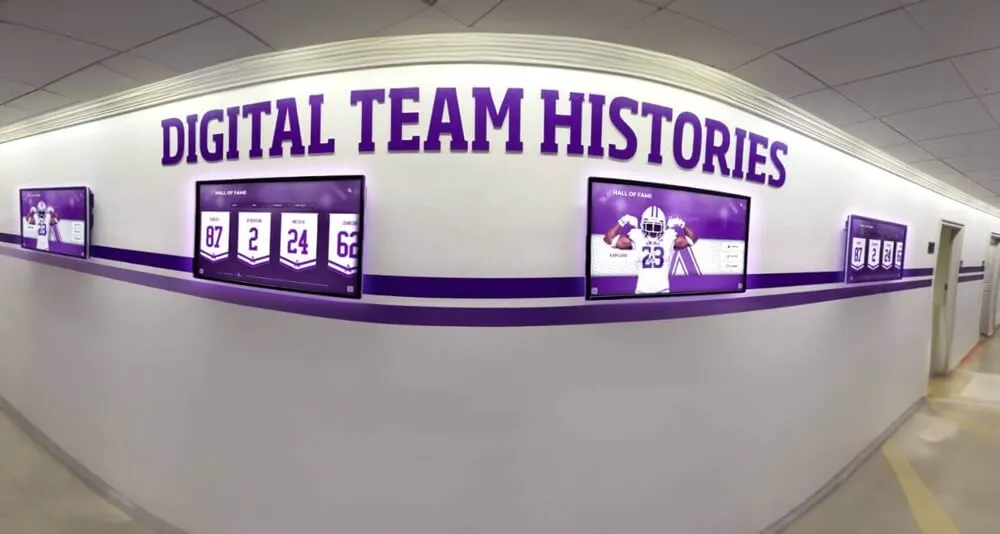
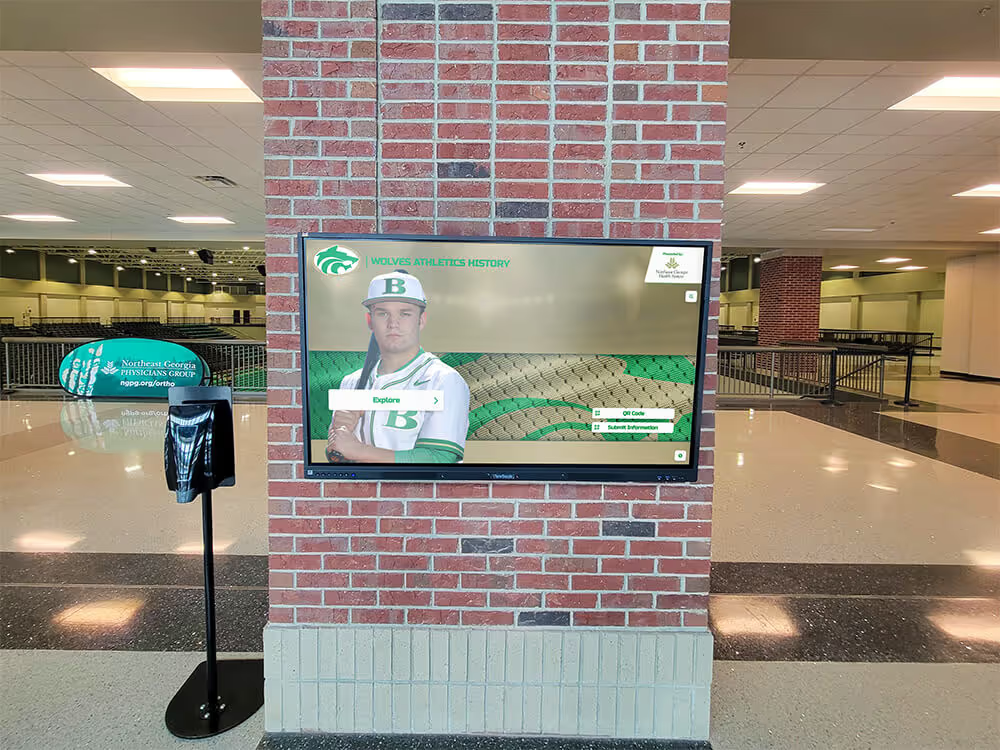
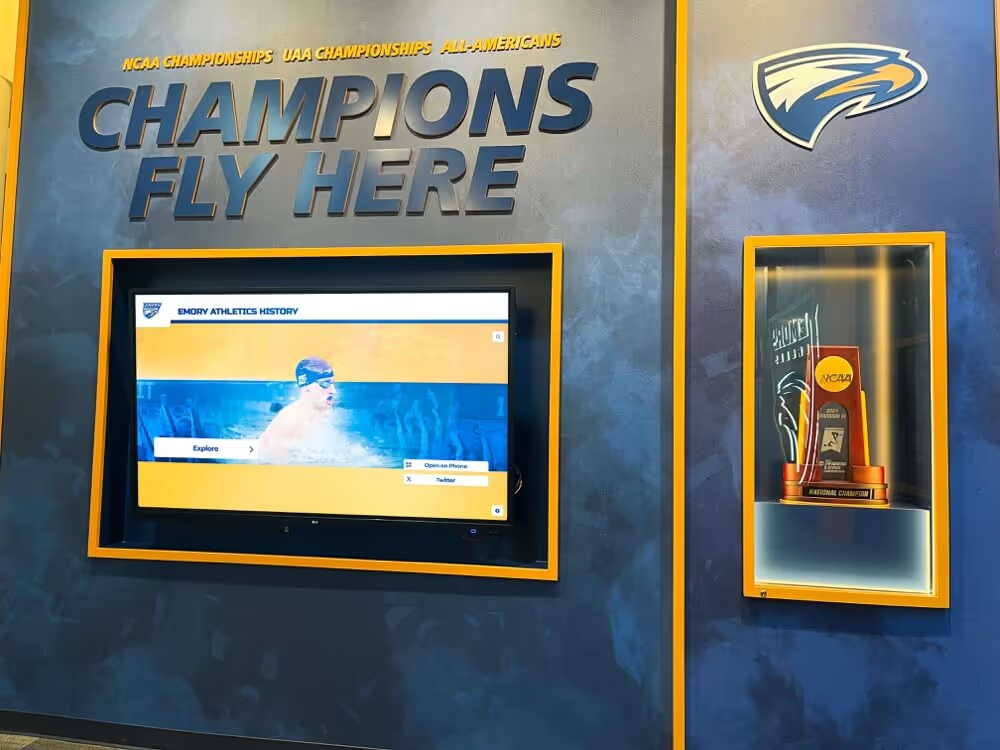
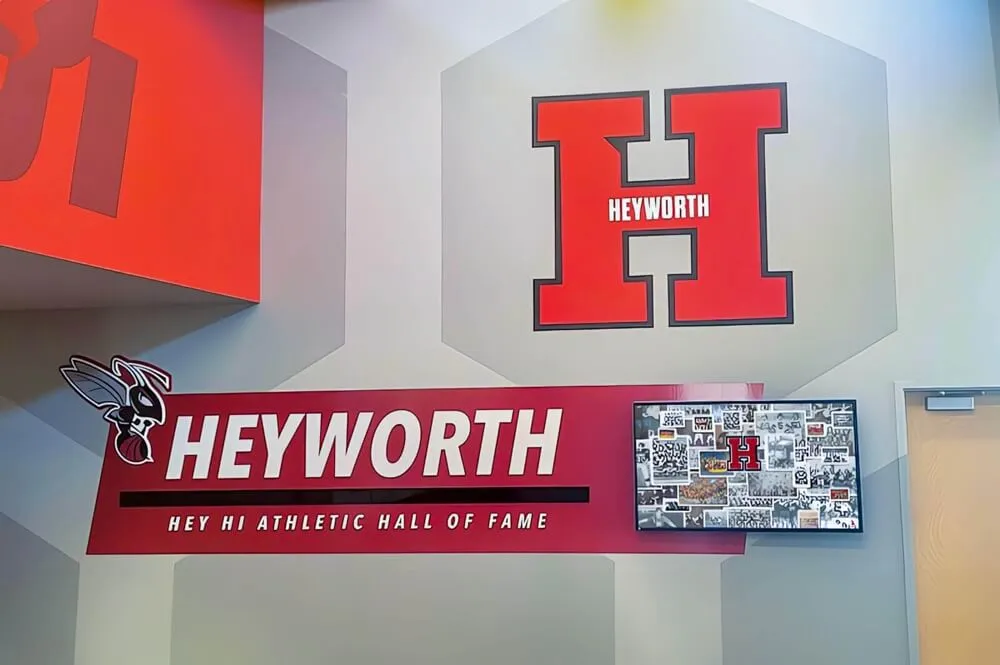
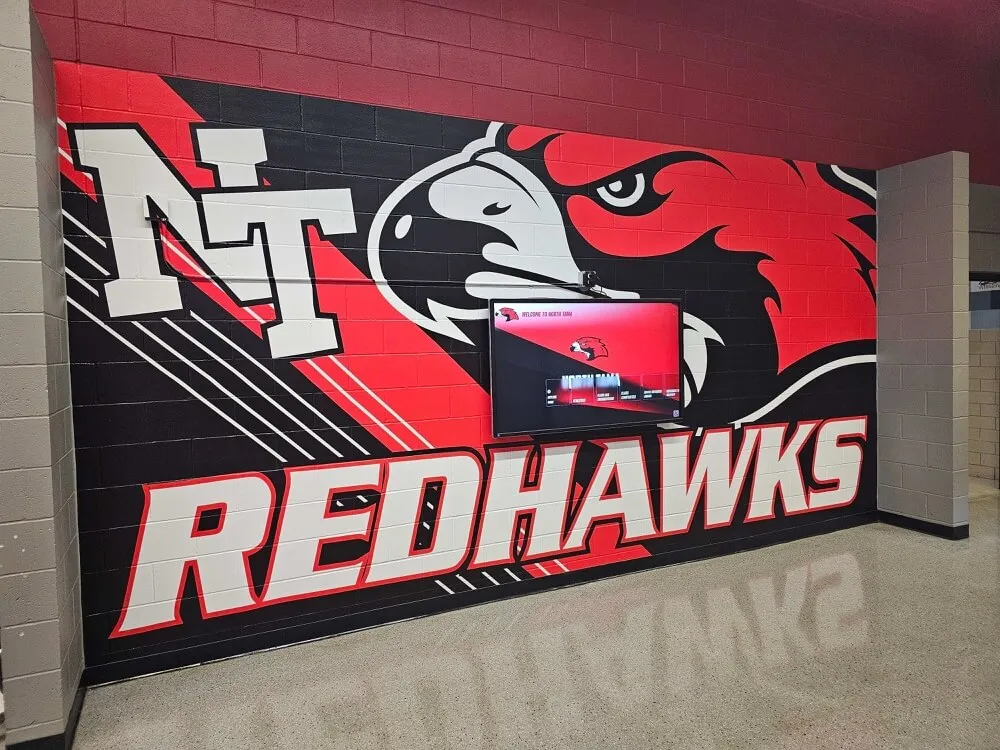
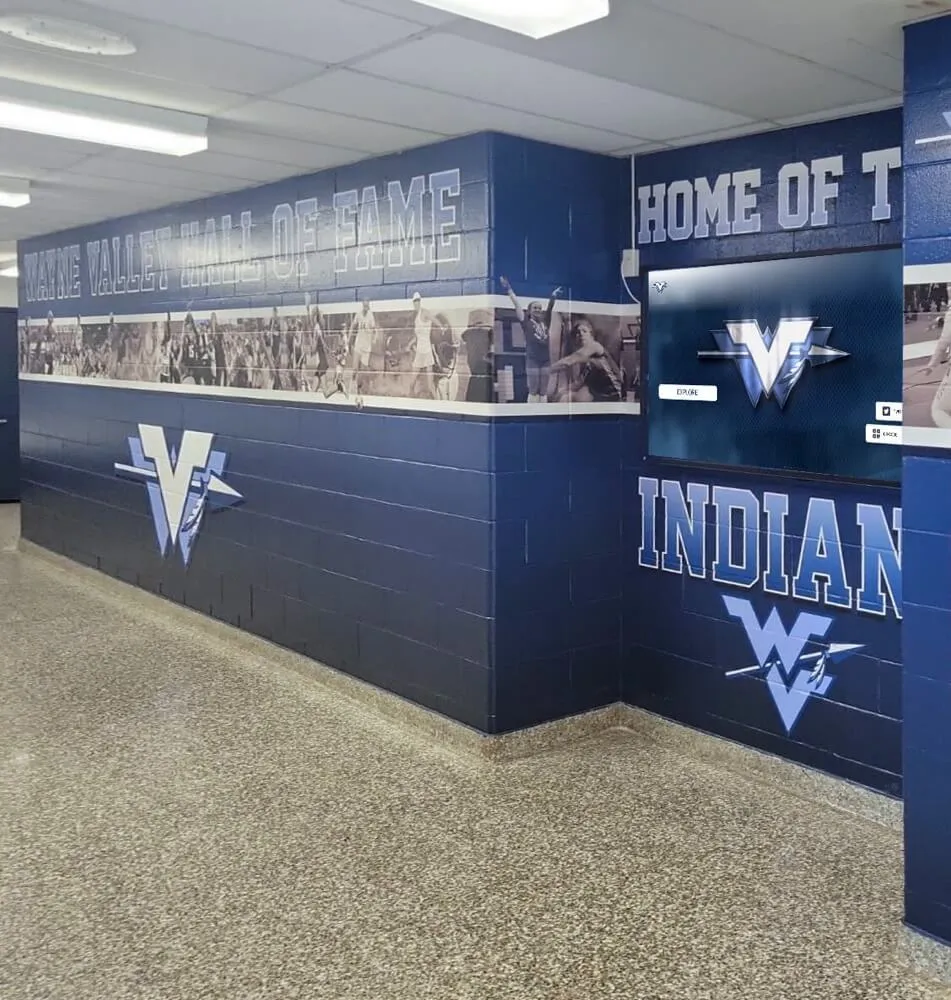
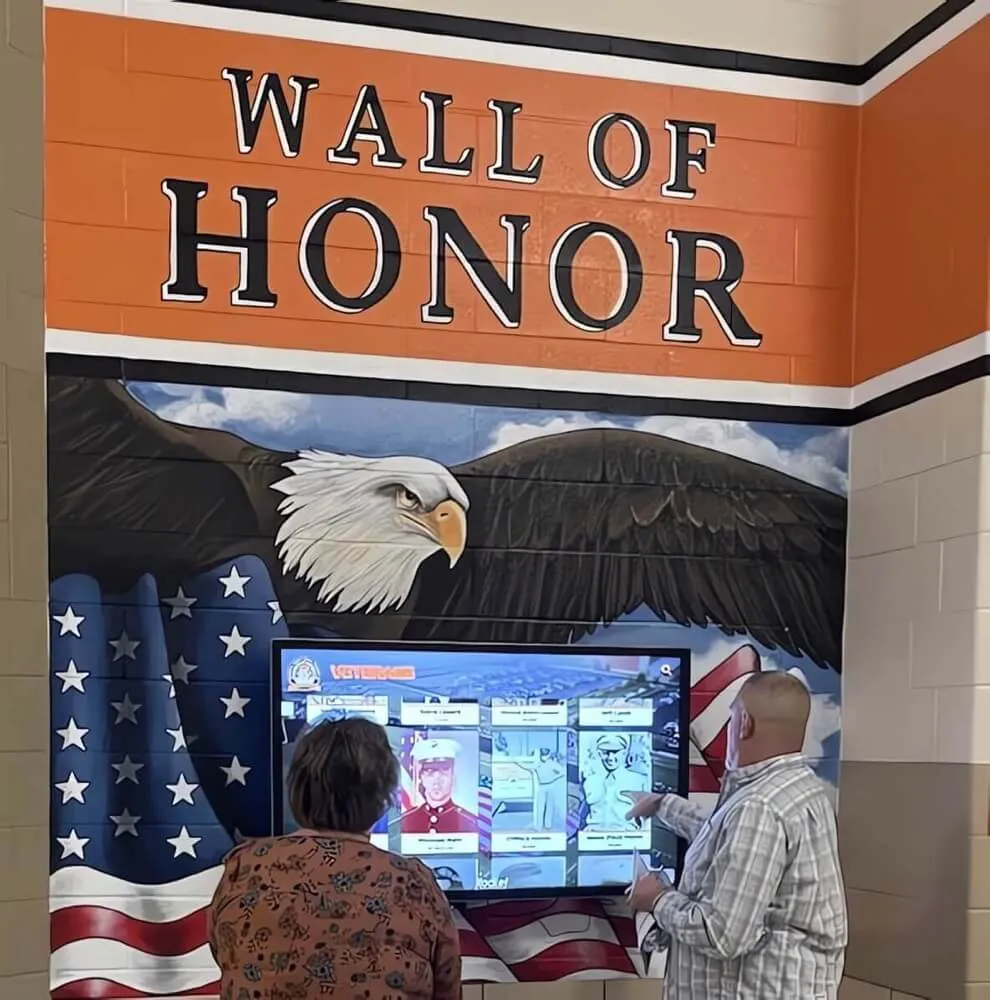
Interactive touchscreen displays create powerful memorial experiences enabling visitors to explore comprehensive tributes honoring fallen heroes
Understanding Fallen Heroes Memorial Recognition Displays
Before exploring video tour demonstrations and implementation strategies, understanding the unique significance, emotional considerations, and community impact of fallen heroes recognition systems clarifies why these platforms require approaches distinctly different from general athletic or academic recognition.
The Sacred Nature of Fallen Heroes Recognition
Memorial recognition for fallen heroes carries profound emotional and cultural weight requiring thoughtful design, respectful content development, and implementation approaches honoring sacrifice appropriately.
Who Qualifies as Fallen Heroes
Fallen heroes memorial displays typically honor individuals who died in service across multiple categories:
- Military personnel: Service members killed in combat operations, training accidents, or line-of-duty incidents across all branches
- Law enforcement officers: Police officers killed by criminal action, vehicular assault, or duty-related circumstances
- Firefighters: Fire service members who died fighting fires, during rescue operations, or from service-related illnesses
- Emergency medical personnel: Paramedics and EMTs killed responding to emergencies or providing patient care
- Correctional officers: Personnel killed during facility operations or inmate incidents
- Search and rescue teams: Volunteers and professionals who died during rescue missions
- Military working dogs and service animals: Animals killed during operations or service
- Community heroes: Civilians who died performing heroic acts saving others
This comprehensive approach ensures all forms of ultimate sacrifice receive appropriate recognition regardless of official service designation.
The Emotional Significance for Families and Communities
Unlike recognition celebrating achievement and success, fallen heroes memorials address grief, loss, and collective community trauma while honoring sacrifice:
Families of fallen heroes often experience complex emotions around public memorial recognition—gratitude that sacrifice receives honor combined with ongoing grief over loss. Digital memorial systems provide families opportunities to contribute remembrances, photos, and personal stories creating more complete tributes than official military or departmental records alone. Many families report that comprehensive digital memorials help preserve legacies for children and grandchildren who never knew fallen service members personally—ensuring sacrifice and values endure across generations.
Communities benefit from accessible memorial education revealing the true human costs behind safety and freedom often taken for granted. Interactive displays that present biographical information, service records, and personal interests humanize fallen heroes beyond statistics—creating understanding about individual lives lost rather than abstract casualty numbers. This personal connection strengthens community bonds, inspires public service commitment, and ensures current and future generations understand sacrifices made on their behalf.
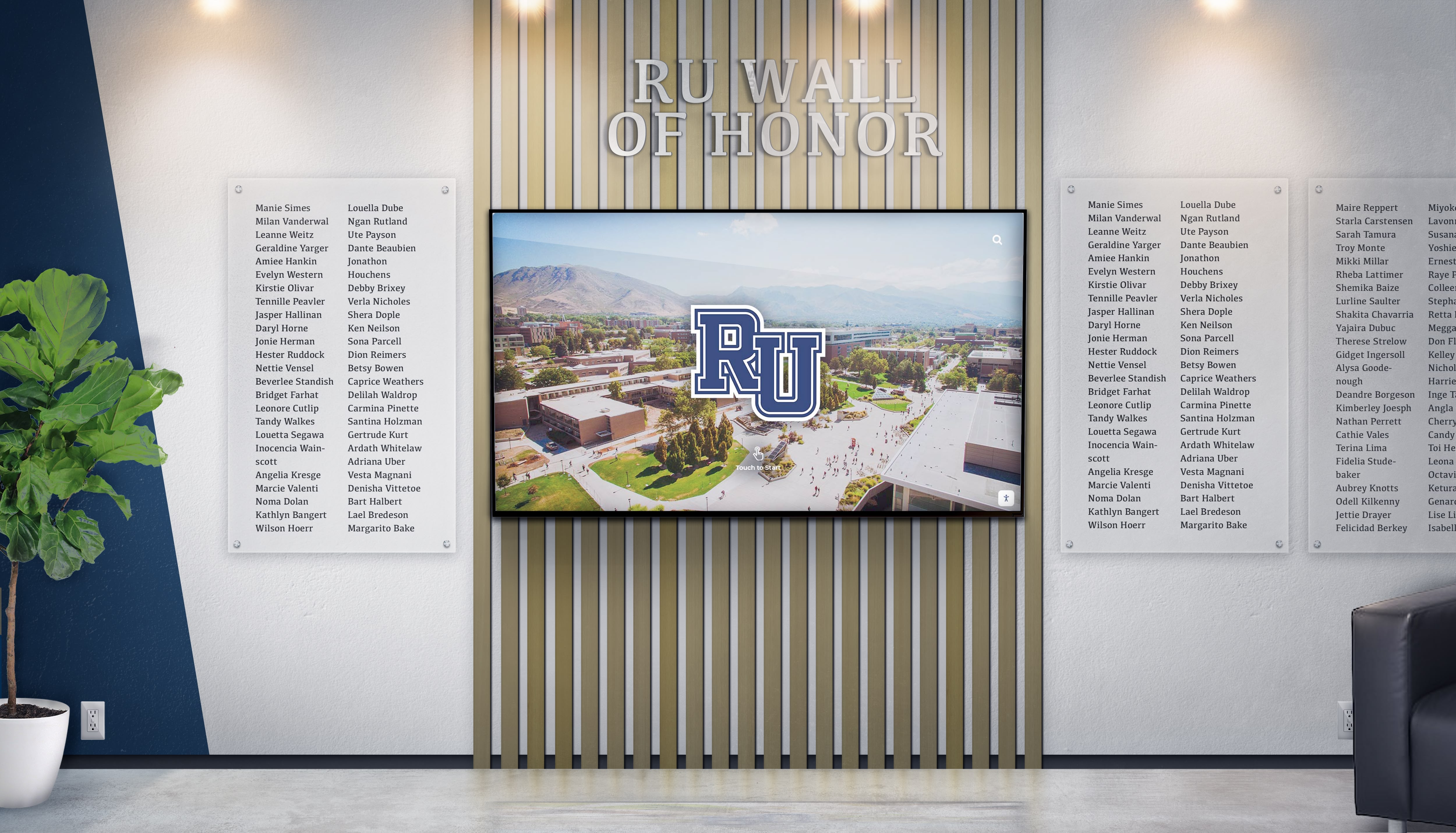
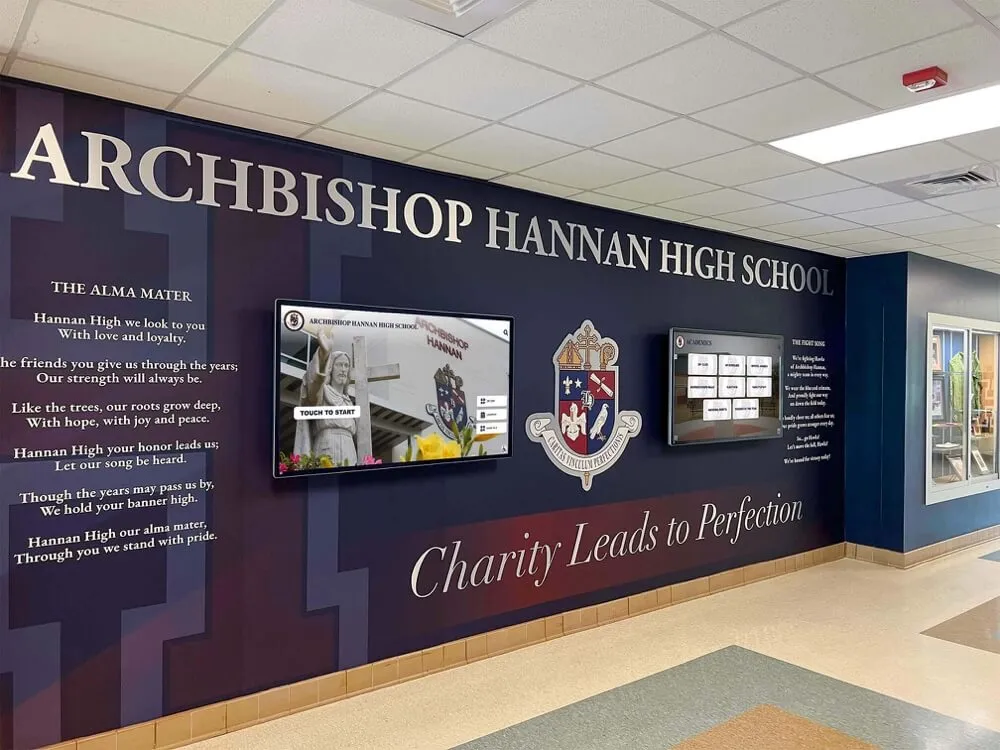
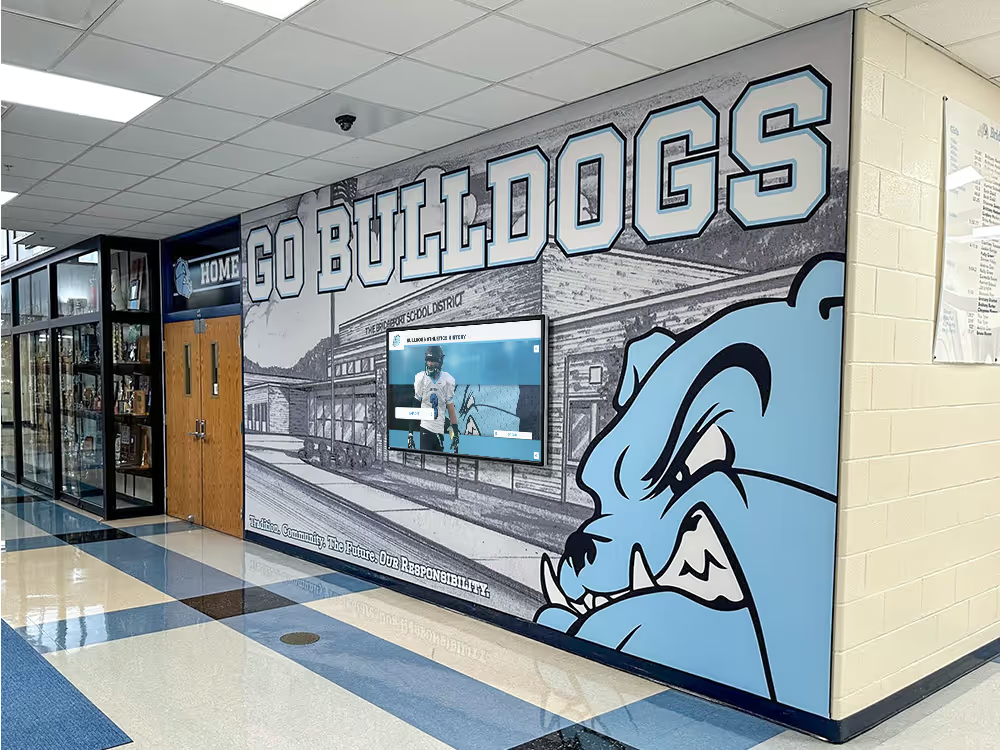
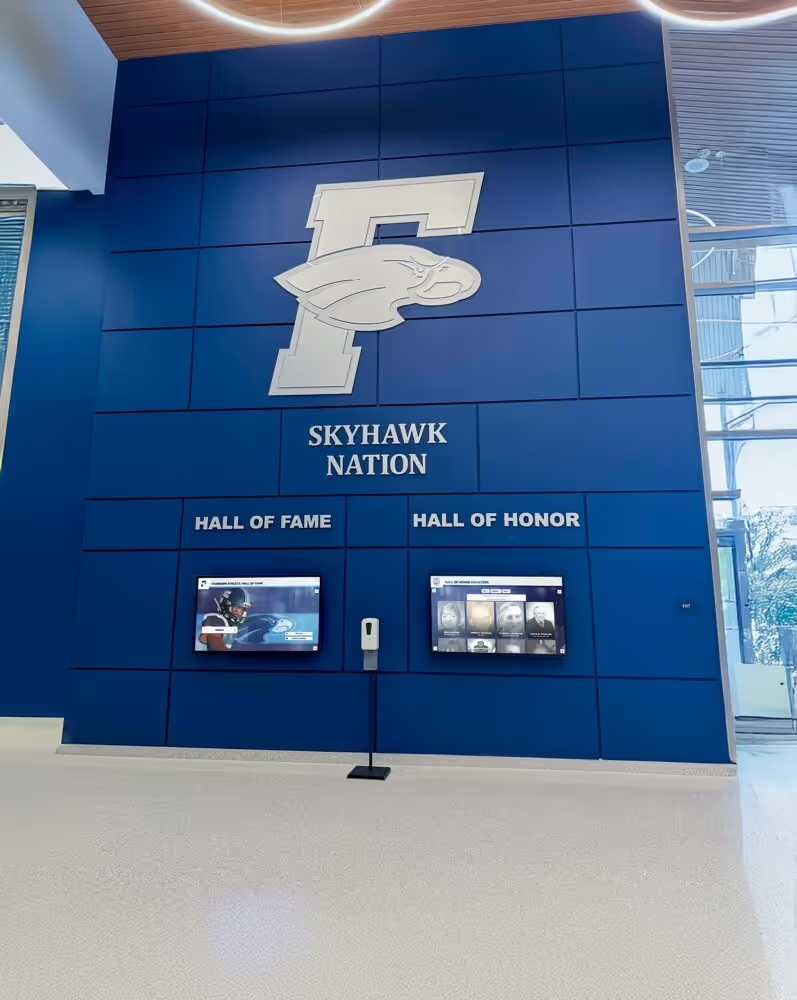
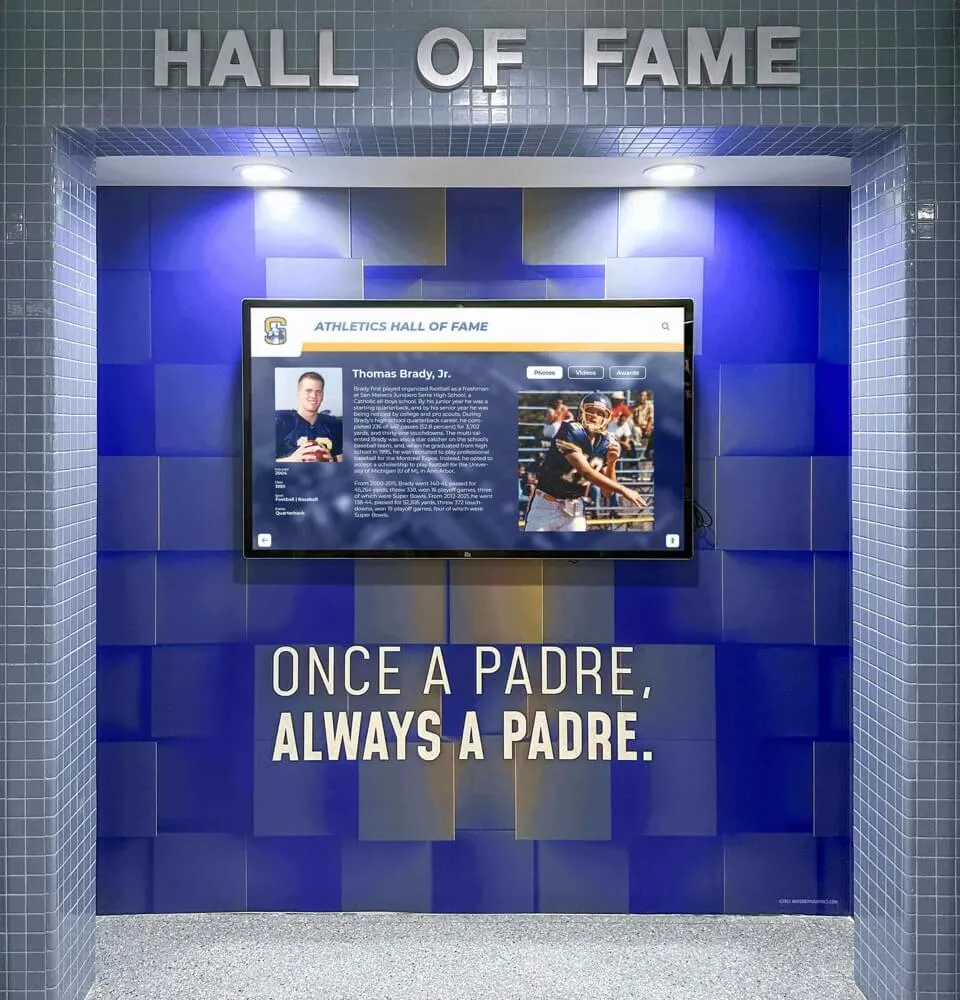
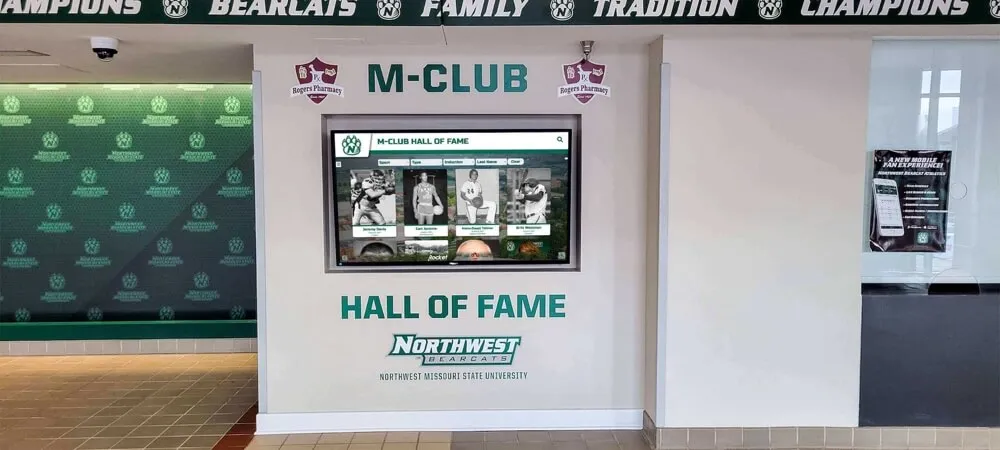
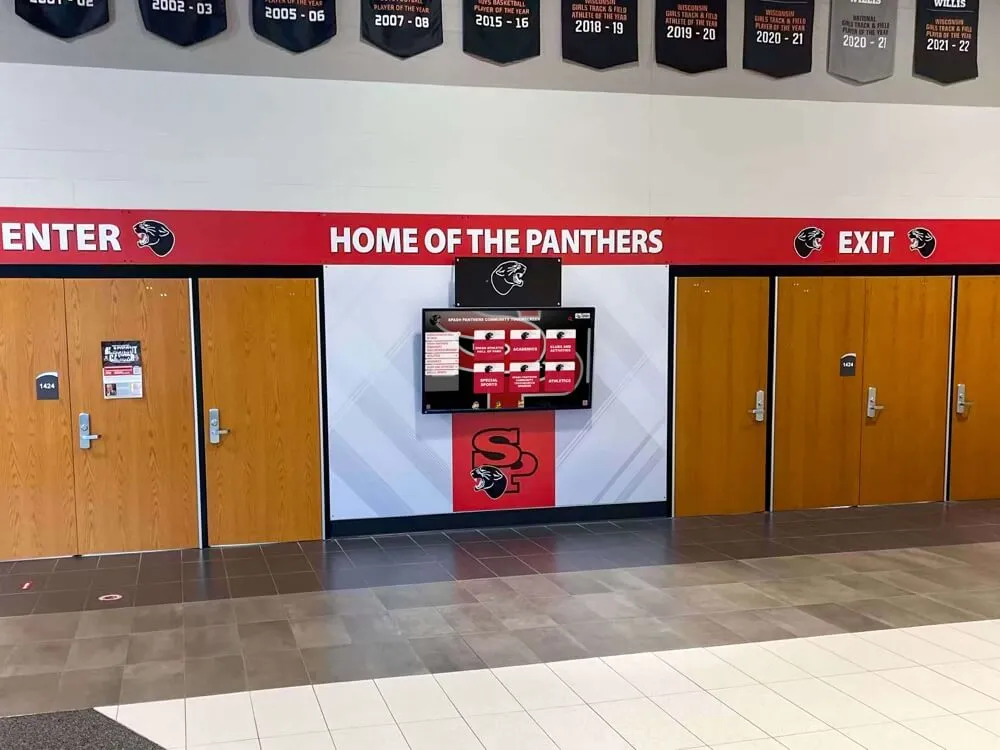
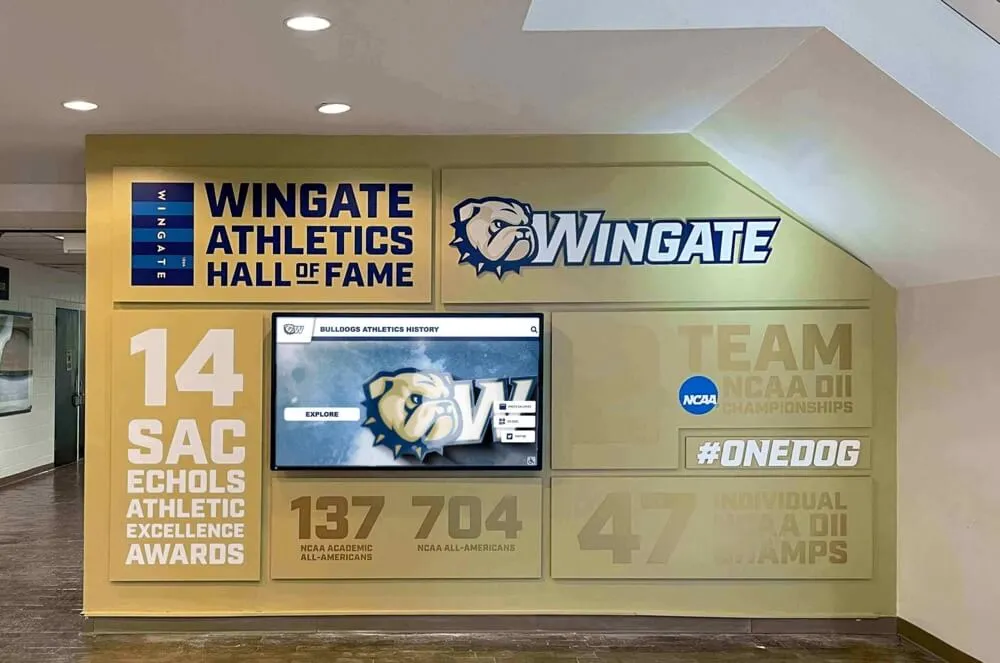
Professional memorial installations integrate touchscreen technology with traditional plaques creating comprehensive recognition environments
Common Locations for Fallen Heroes Memorial Displays
Strategic placement ensures maximum visibility and appropriate context for memorial recognition.
Government and Public Buildings
- City halls and county courthouses: Central civic locations ensuring entire community encounters memorials
- Veterans affairs offices: Spaces specifically serving veteran populations and families
- Military recruiting centers: Locations educating prospective service members about sacrifice and service
- State capitol buildings: Honoring service members from entire states or regions
- Federal government facilities: Recognizing employees and service members connected to agencies
Public Safety Facilities
- Police department headquarters: Honoring fallen law enforcement officers from departments and regions
- Fire stations: Memorializing firefighters killed in line of duty locally and nationally
- Emergency operations centers: Recognizing all categories of first responders and emergency personnel
- Public safety training academies: Educating future officers and firefighters about those who preceded them
- Dispatch and communications centers: Honoring civilians supporting emergency services
Military Installations and Veteran Organizations
- Military base headquarters: Recognizing service members from specific units and installations
- Veteran service organization posts: VFW, American Legion, and similar organizations honoring members
- Military museums and visitor centers: Educating public visitors about military sacrifice
- Defense contractor facilities: Honoring military personnel and civilian employees killed serving missions
- ROTC buildings at colleges: Connecting student cadets to military service traditions
Educational Institutions
- College veteran resource centers: Supporting student veterans while honoring fallen service members
- Military college and academy buildings: Institutions with strong military traditions and alumni service
- High school veteran recognition spaces: Educating young people about community members’ service
- Libraries with military history collections: Connecting memorial recognition to research and education
Learn about comprehensive memorial approaches in veterans day military wall of honor celebrating service member recognition.
Video Tour Demonstration: Fallen Heroes Touchscreen Display Walkthrough
This section provides detailed scene-by-scene breakdowns, narration scripts, and shot descriptions for comprehensive video tours showcasing fallen heroes memorial display systems and capabilities.
Video Tour Specifications and Production Overview
Technical Specifications
- Length: 8-12 minutes (comprehensive walkthrough)
- Aspect Ratio: 16:9 (1920x1080 minimum; 4K preferred)
- Target Platform: Website embed, YouTube, social media, facility displays
- Primary Audience: Municipal officials, military leadership, public safety administrators, veteran organizations, families
- Tone: Respectful, reverent, informative, emotionally authentic
- Music: Subtle patriotic themes, somber instrumental, appropriate emotional underscoring
Production Approach and Ethical Considerations
Video documentation of fallen heroes memorials requires sensitivity approaching sacred subject matter with appropriate reverence:
- Coordinate filming with families of honored individuals seeking input and approval when possible
- Avoid over-dramatization or exploitation of tragedy and grief
- Present information factually and respectfully without sensationalism
- Include diverse representation across military branches, public safety agencies, demographics, and eras
- Obtain proper permissions for photographs, military records, and family-contributed content
- Consult with military public affairs and department leadership ensuring appropriate presentation
- Consider timing relative to recent losses when community grief remains acute
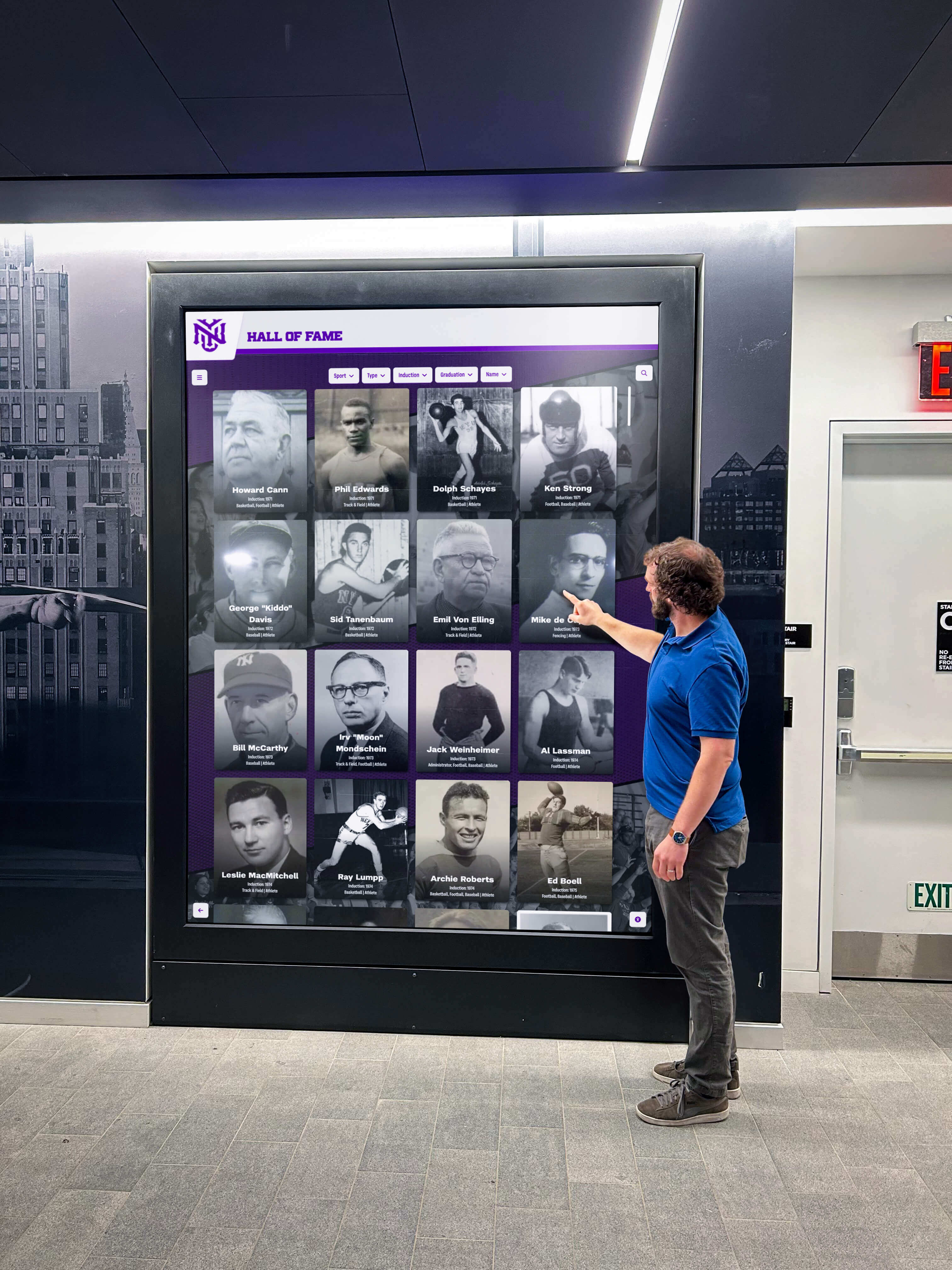
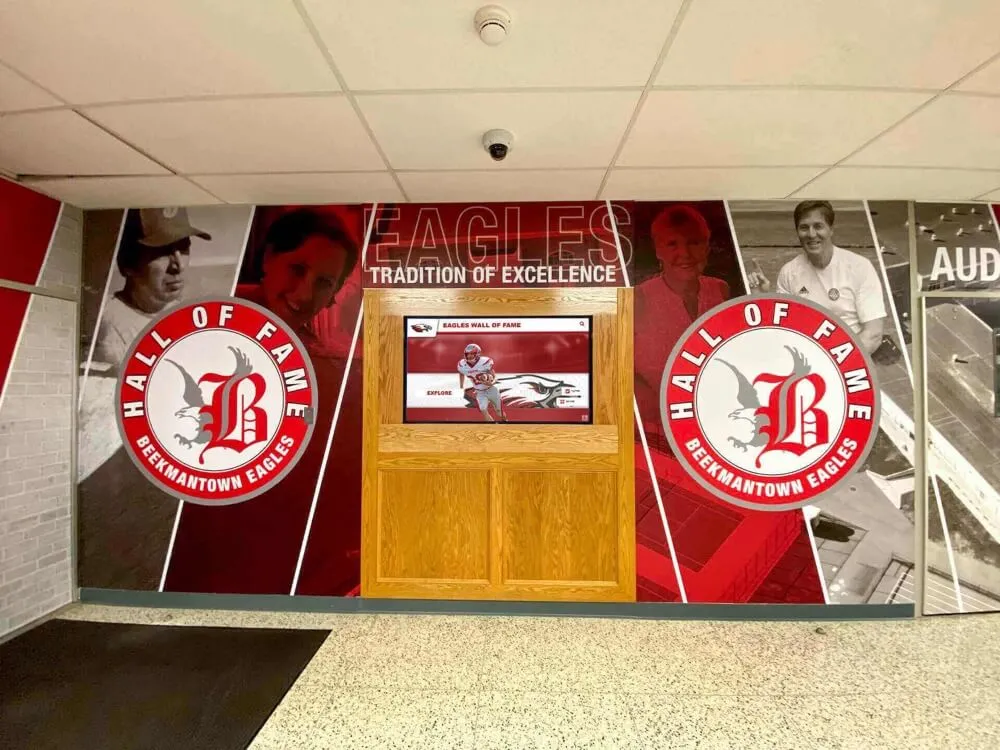
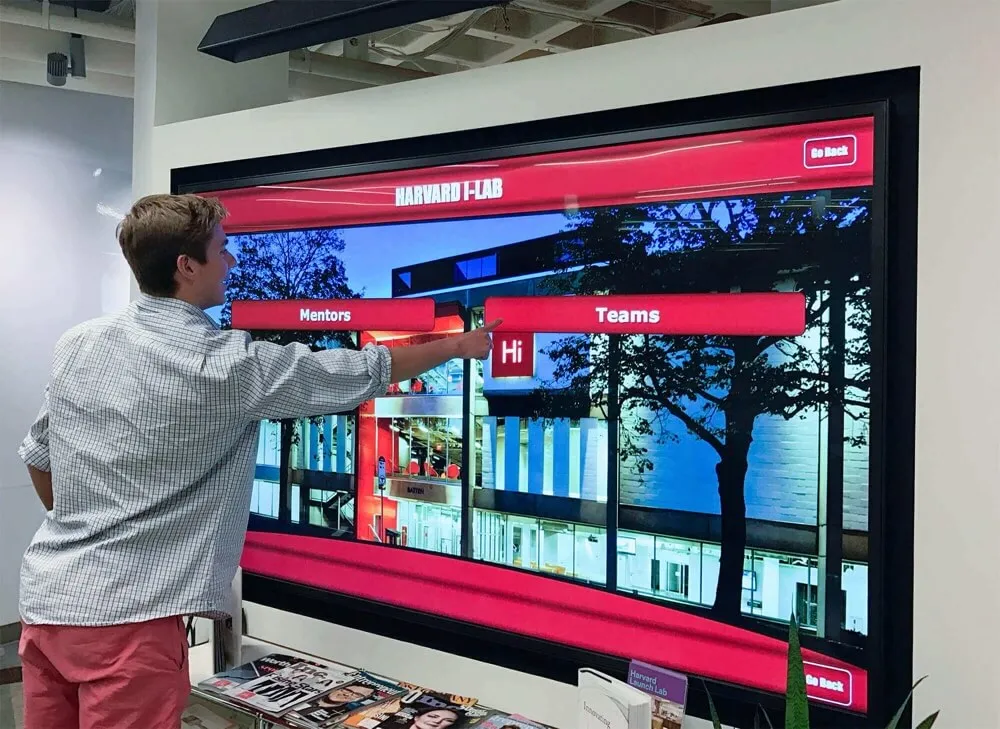
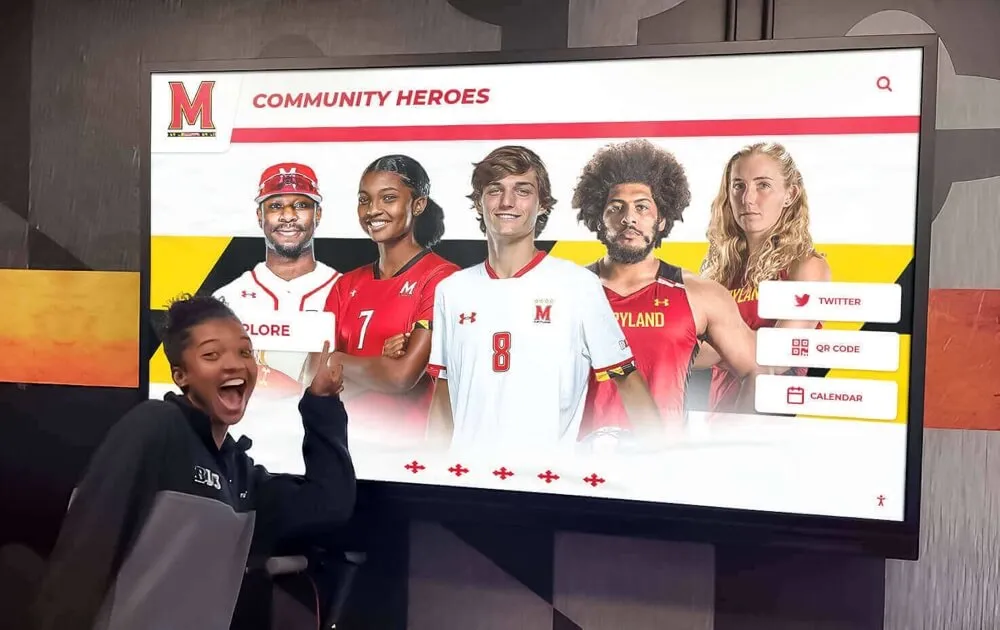
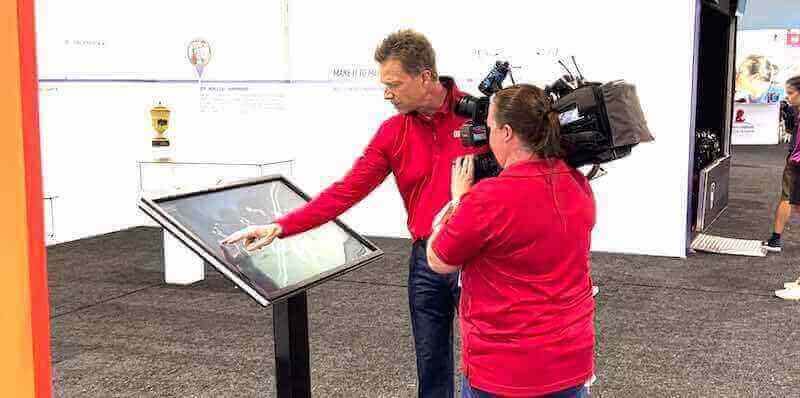
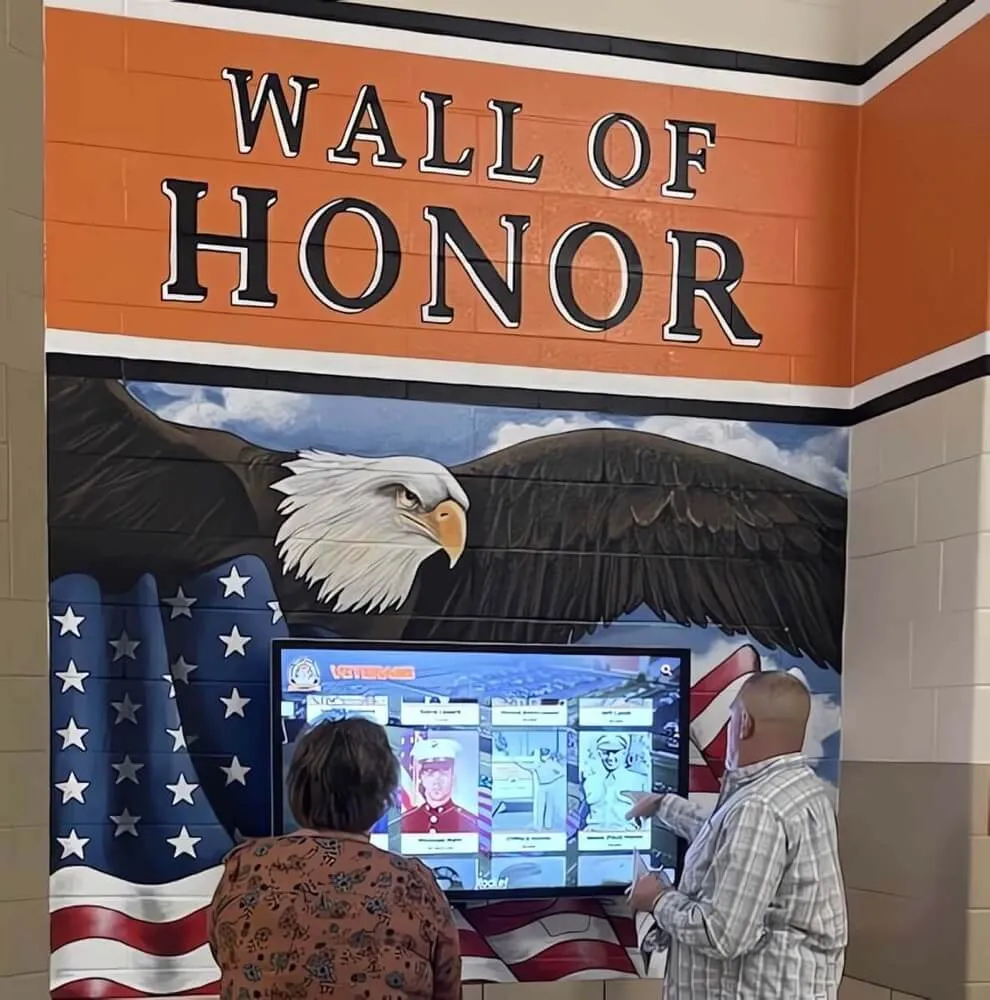
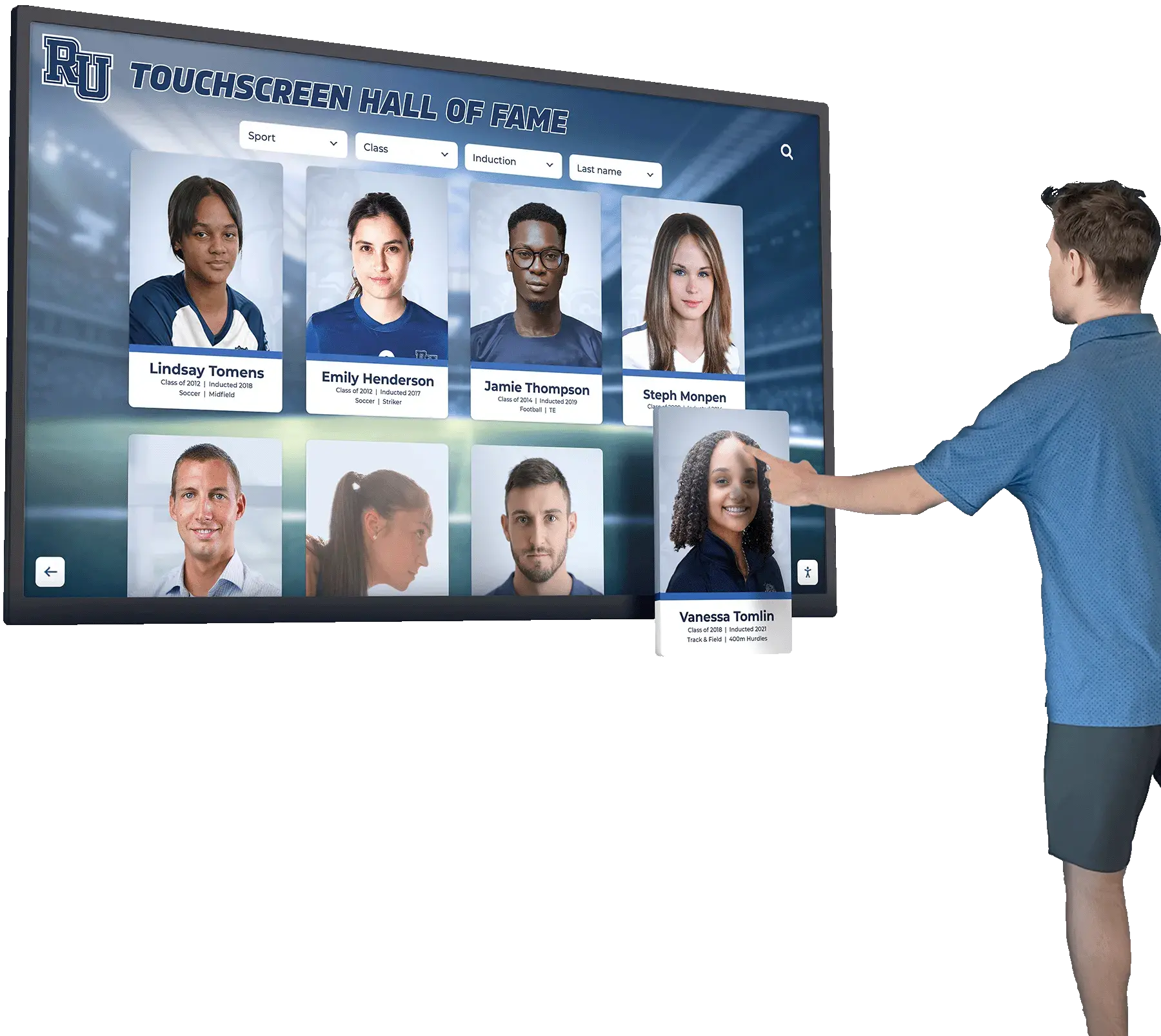
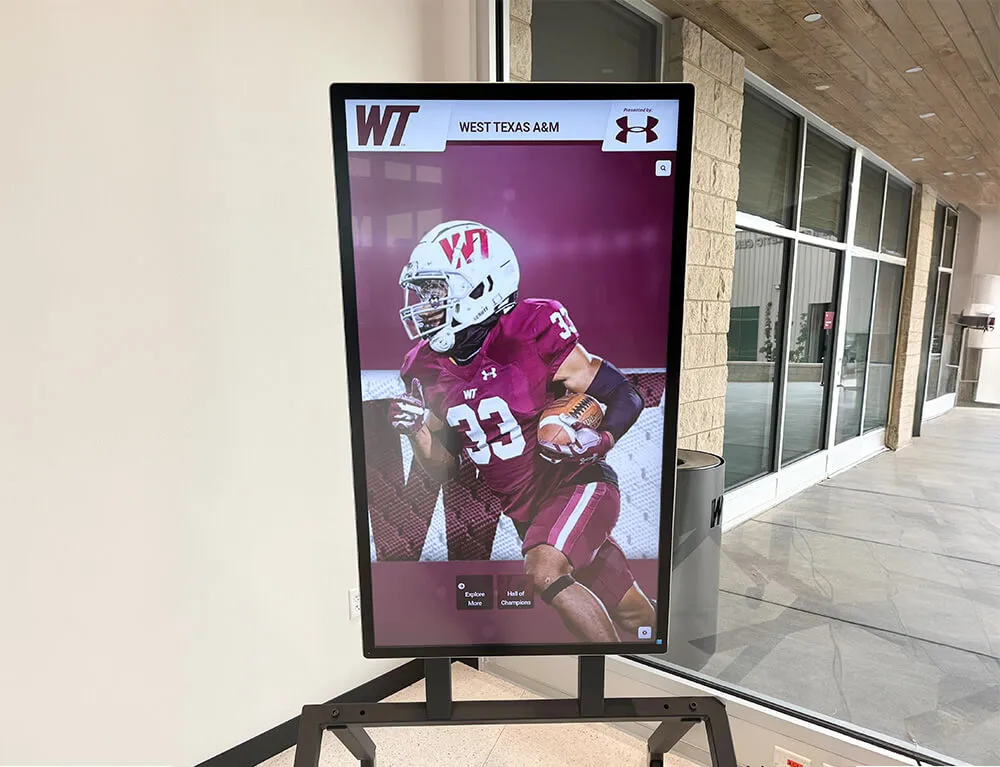
Intuitive touchscreen interfaces enable visitors of all ages to explore memorial content at their own pace
Scene 1: Opening Context and Memorial Purpose (Timestamps 0:00-1:30)
Visual Description
Camera opens on exterior establishing shot of government building, military installation, or public safety facility during golden hour. American flag prominently featured. Slow push toward entrance. Cut to interior lobby revealing memorial display installation with dignified lighting and architectural integration. Camera holds on touchscreen displaying “Fallen Heroes Memorial” welcome screen with subtle patriotic imagery.
Narration Script
“Every community owes its safety, security, and freedom to those willing to serve and sacrifice. In communities across America, digital memorial displays now honor fallen heroes—military personnel, law enforcement officers, firefighters, and first responders who made the ultimate sacrifice protecting others.
These interactive touchscreen systems preserve legacies, educate visitors about service and sacrifice, and ensure that valor and dedication receive perpetual honor through comprehensive digital documentation impossible with traditional memorial plaques alone.
Join us as we explore a fallen heroes touchscreen display—from the family and community members it serves to the technology preserving these sacred stories for generations.”
Camera Notes
- Use stabilized gimbal for smooth exterior approach shots
- Lighting should convey reverence—avoid harsh shadows or excessive brightness
- Ensure flag properly displayed and respectful in composition
- Interior shots should reveal architectural context and display integration
- Close-up of touchscreen welcome interface showing clean, dignified design
Key On-Screen Graphics
- Building/facility name and location
- “Fallen Heroes Memorial Display Tour”
- Rocket Alumni Solutions branding (subtle, unobtrusive)
Scene 2: Interface Overview and Navigation (Timestamps 1:30-3:00)
Visual Description
Camera moves to over-the-shoulder perspective as demonstrator (in appropriate attire for setting) approaches display. Touchscreen shows main navigation menu with clear categories. Hand gestures indicate touch interaction as camera alternates between display content and demonstrator interaction. Split-screen views showing both full display and detailed content close-ups.
Narration Script
“The fallen heroes memorial interface provides intuitive navigation enabling visitors to explore tributes organized by multiple pathways—by branch of service, by year of sacrifice, by conflict or incident, by name search, or through featured profiles highlighting specific heroes and service contexts.
Watch as visitors can immediately access categories most meaningful to them—whether searching for specific individuals, exploring particular military conflicts, honoring local law enforcement officers, or discovering stories from different eras of service.
The system automatically rotates featured profiles ensuring all honored heroes receive regular visibility rather than static displays where only certain names remain perpetually visible. QR codes enable visitors to access memorial content on personal mobile devices—extending recognition beyond physical display locations while enabling easy sharing with family members unable to visit in person.”
Camera Notes
- Demonstrate actual touch interactions with visible finger contact on screen
- Capture menu transitions and navigation smoothness
- Show search functionality with example name entry
- Film QR code generation and mobile device scanning
- Include close-ups of key interface elements with clear text visibility
Key On-Screen Graphics
- Category labels and navigation structure
- Feature callouts: “Search by name,” “Browse by branch,” “Explore by conflict”
- Mobile QR code functionality demonstration
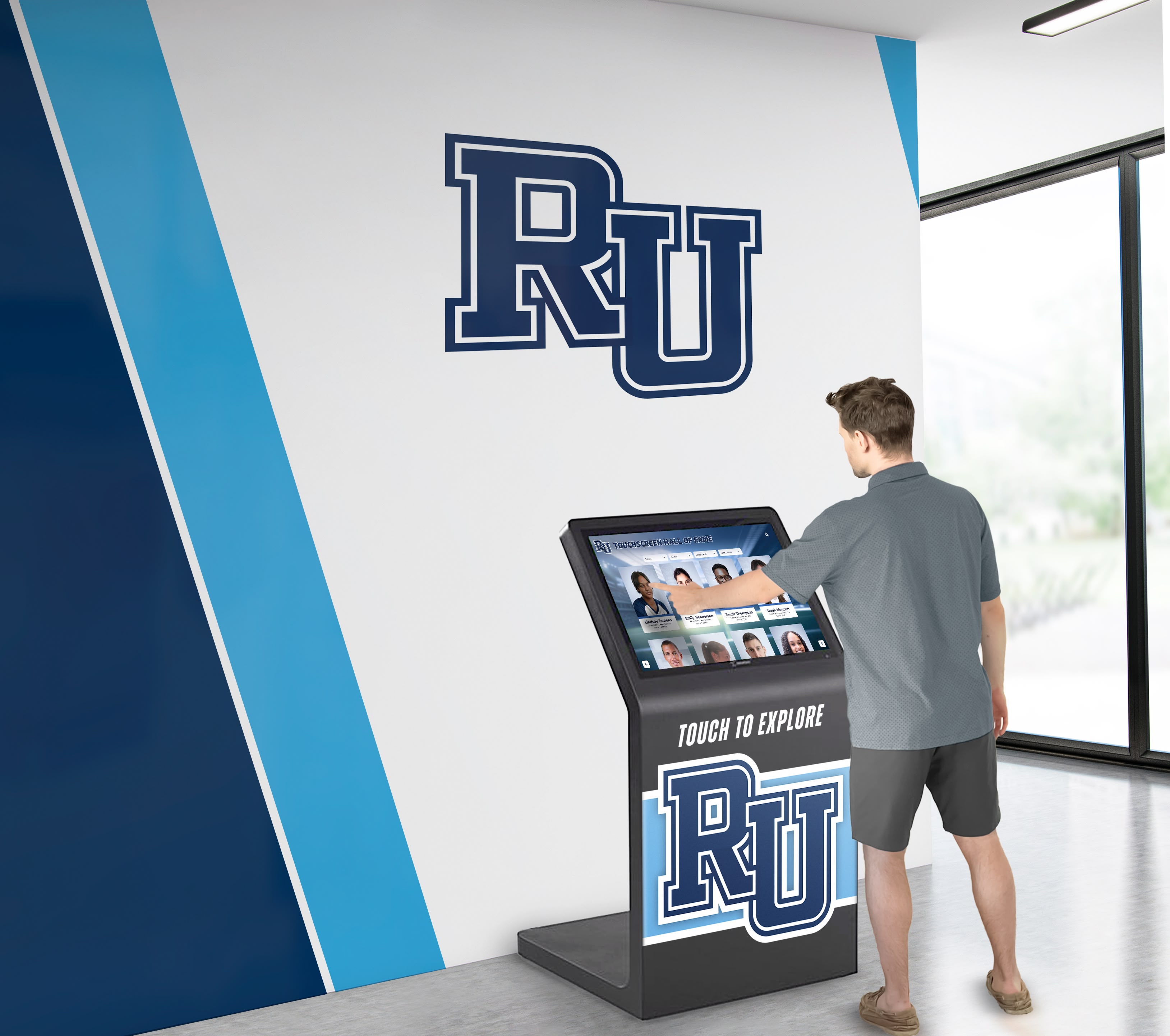
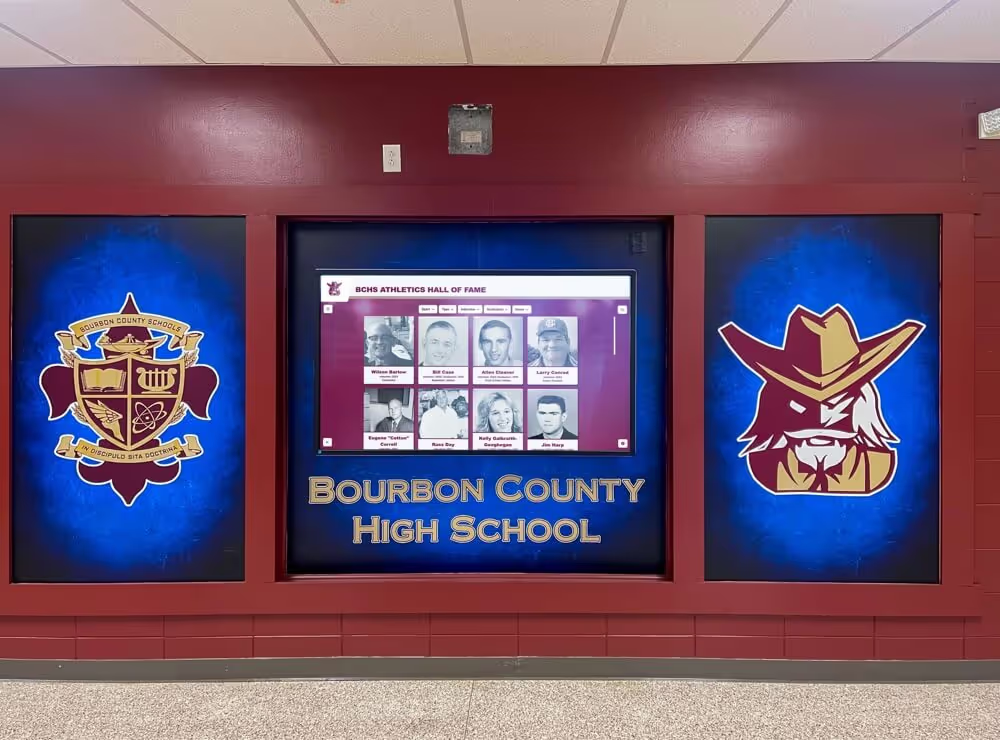
Freestanding memorial kiosks create dedicated recognition spaces in high-traffic lobbies ensuring maximum community visibility
Scene 3: Individual Hero Profile Demonstration (Timestamps 3:00-5:30)
Visual Description
Camera focuses on specific fallen hero profile screen displaying portrait photograph, military rank or department position, service dates, and biographical summary. Demonstrator scrolls through comprehensive profile revealing service history, awards and commendations, family remembrance section, incident details, and photo gallery. Video clips if available. Camera alternates between display content and emotional reactions of visitors viewing memorial.
Narration Script
“Each fallen hero receives comprehensive tribute far beyond what traditional memorial plaques can accommodate. Full biographical profiles include service history documenting career progression from enlistment or academy graduation through the date of ultimate sacrifice, complete awards and commendations recognizing valor and distinguished service, deployment history and assignment details providing context about service experiences, and incident documentation explaining circumstances of sacrifice with appropriate sensitivity and respect.
Beyond official military and departmental records, family remembrance sections enable loved ones to contribute personal memories, favorite quotes, hobbies and interests, family photographs, and messages ensuring heroes are remembered as complete human beings—spouses, parents, children, friends—rather than merely service members and badge numbers.
Photo galleries preserve visual legacies through career progression images, family photographs, candid moments showing personality and humanity, ceremonial honors and memorial services, and community tribute documentation. Video integration enables embedding of memorial service recordings, personal interview footage captured before deployment or during service, news coverage documenting sacrifice and community response, and family tribute messages recorded specifically for memorial displays.
This comprehensive content creates emotional connection between visitors and fallen heroes—transforming abstract concepts of sacrifice into personal human stories that inspire reflection, gratitude, and commitment to honoring legacy through continued service and community support.”
Camera Notes
- Ensure deceased individual’s photograph reproduced respectfully and clearly
- Film profile content with sufficient dwelling time for viewers to read information
- Capture emotional authenticity if filming actual visitors—avoid staged reactions
- Show smooth scrolling through extended biographical content
- Photograph and video galleries should demonstrate quality and variety
Key On-Screen Graphics
- Profile content labels: “Service History,” “Awards & Commendations,” “Family Remembrance”
- Timeline visualization of service career
- Photo gallery counter showing content volume
Ethical Production Note
Obtain explicit permission from families before featuring specific individuals in demonstration videos. Consider using composite demonstrations rather than focusing on single recent casualties when family grief remains acute.
Scene 4: Search and Filter Functionality (Timestamps 5:30-7:00)
Visual Description
Demonstrator returns to main navigation and accesses search interface. Types specific name showing autocomplete suggestions. Selects result displaying profile. Returns to search, demonstrates filtering by branch of service revealing all Navy personnel. Further filters by conflict era showing Vietnam War casualties. Camera shows smooth transitions between different filtering parameters.
Narration Script
“Comprehensive search and filtering capabilities ensure visitors can quickly locate specific individuals or explore fallen heroes matching particular interests and connections.
Full name search with intelligent autocomplete helps visitors find specific heroes even with partial information or common name spellings. Military branch filtering enables exploration of Army, Navy, Air Force, Marine Corps, Coast Guard, and Space Force service members separately—valuable for visitors with personal military connections to specific branches.
Conflict and era filtering organizes fallen heroes by World War II, Korea, Vietnam, Gulf War, Operation Enduring Freedom, Operation Iraqi Freedom, and recent conflicts—providing historical context and enabling comparison of sacrifice across different periods. Date range selection allows precise exploration by specific years or decades.
For law enforcement and public safety displays, similar filtering by department, agency type, or incident category helps visitors explore officers and first responders from specific contexts—line-of-duty deaths, traffic-related fatalities, 9/11 terrorist attacks, or natural disaster response.
This powerful organizational flexibility accommodates diverse visitor objectives—whether students researching specific conflicts, veterans seeking fellow service members, families discovering extended service connections, or general visitors exploring broader patterns of sacrifice and service.”
Camera Notes
- Clearly capture text entry and search results
- Demonstrate filtering sequence showing progressive narrowing of results
- Show result counts updating as filters apply
- Film smooth return to broad browsing after filtered searches
- Include overview shots showing visual organization of filtered results
Key On-Screen Graphics
- Filter options and selected parameters
- Result counts showing number of matching profiles
- Visual indicators showing active filters
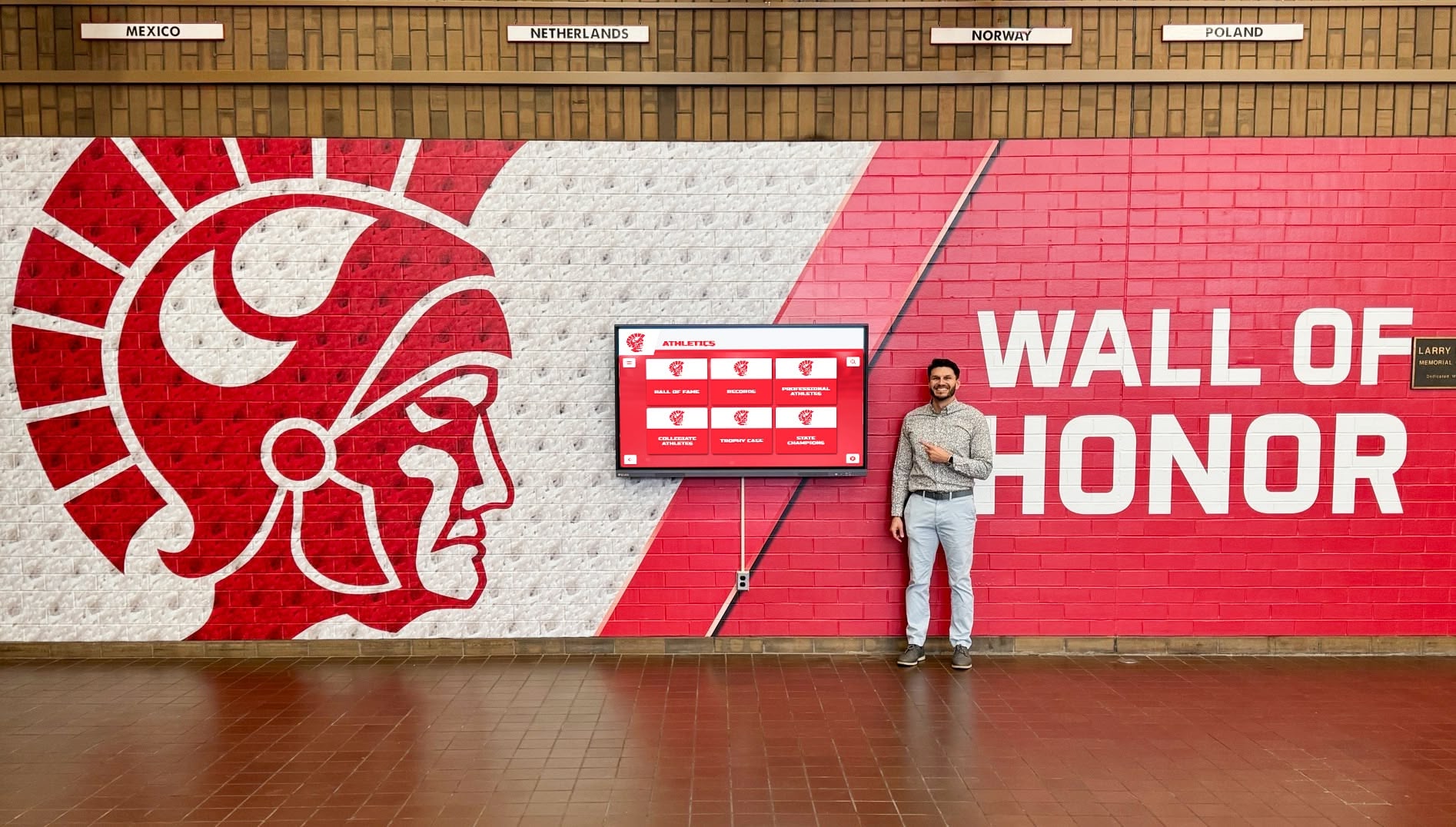
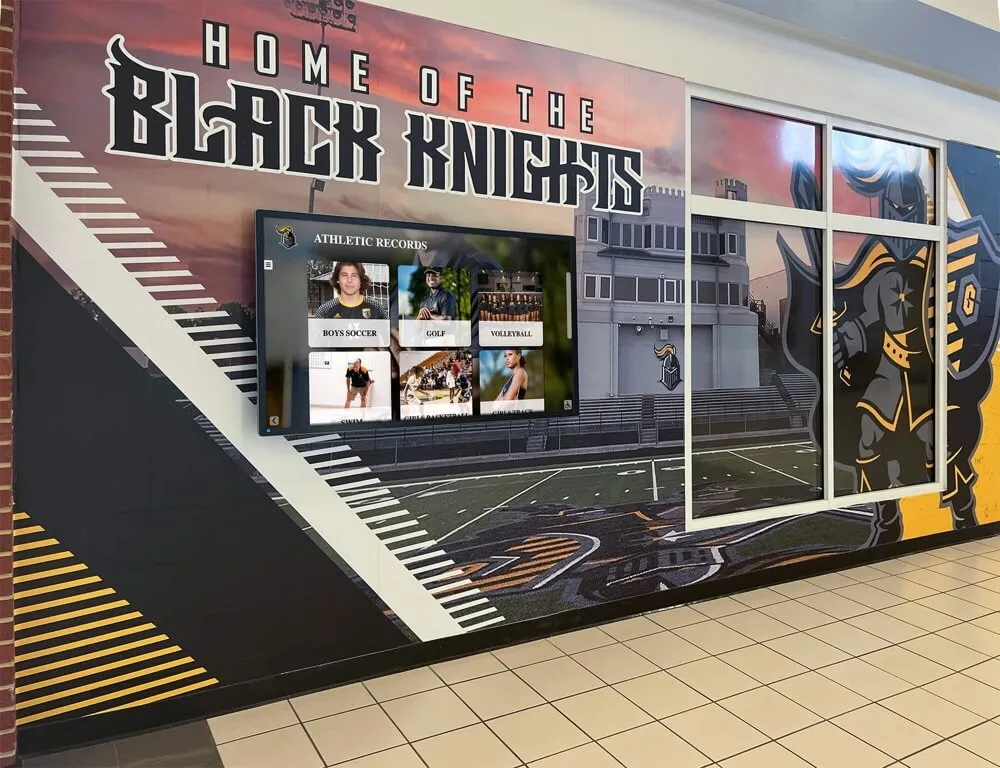
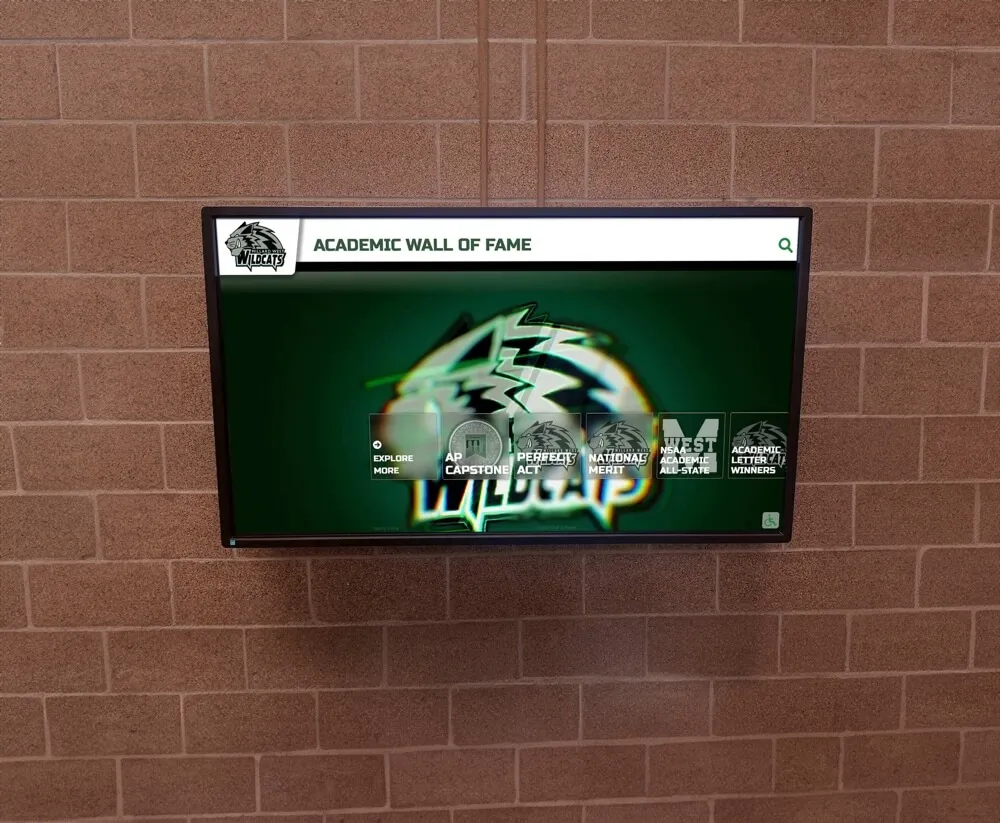
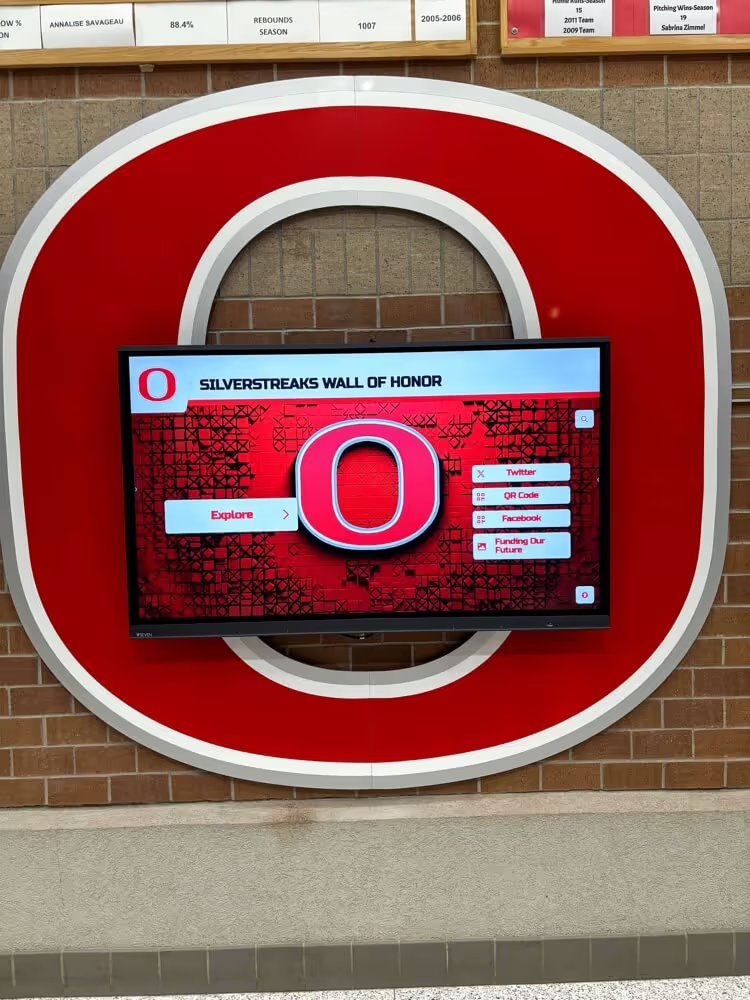
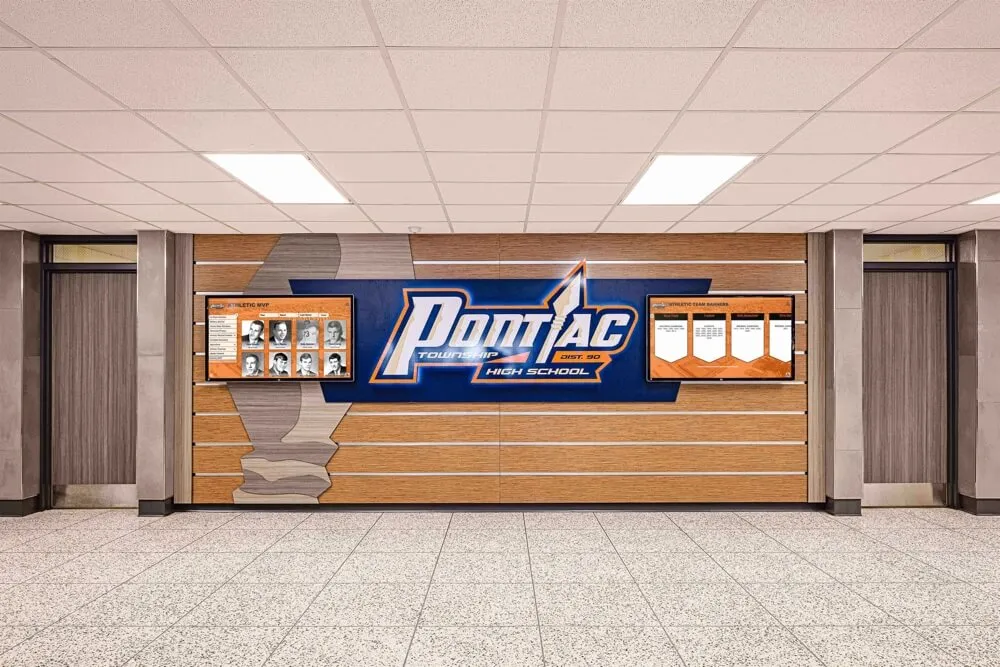
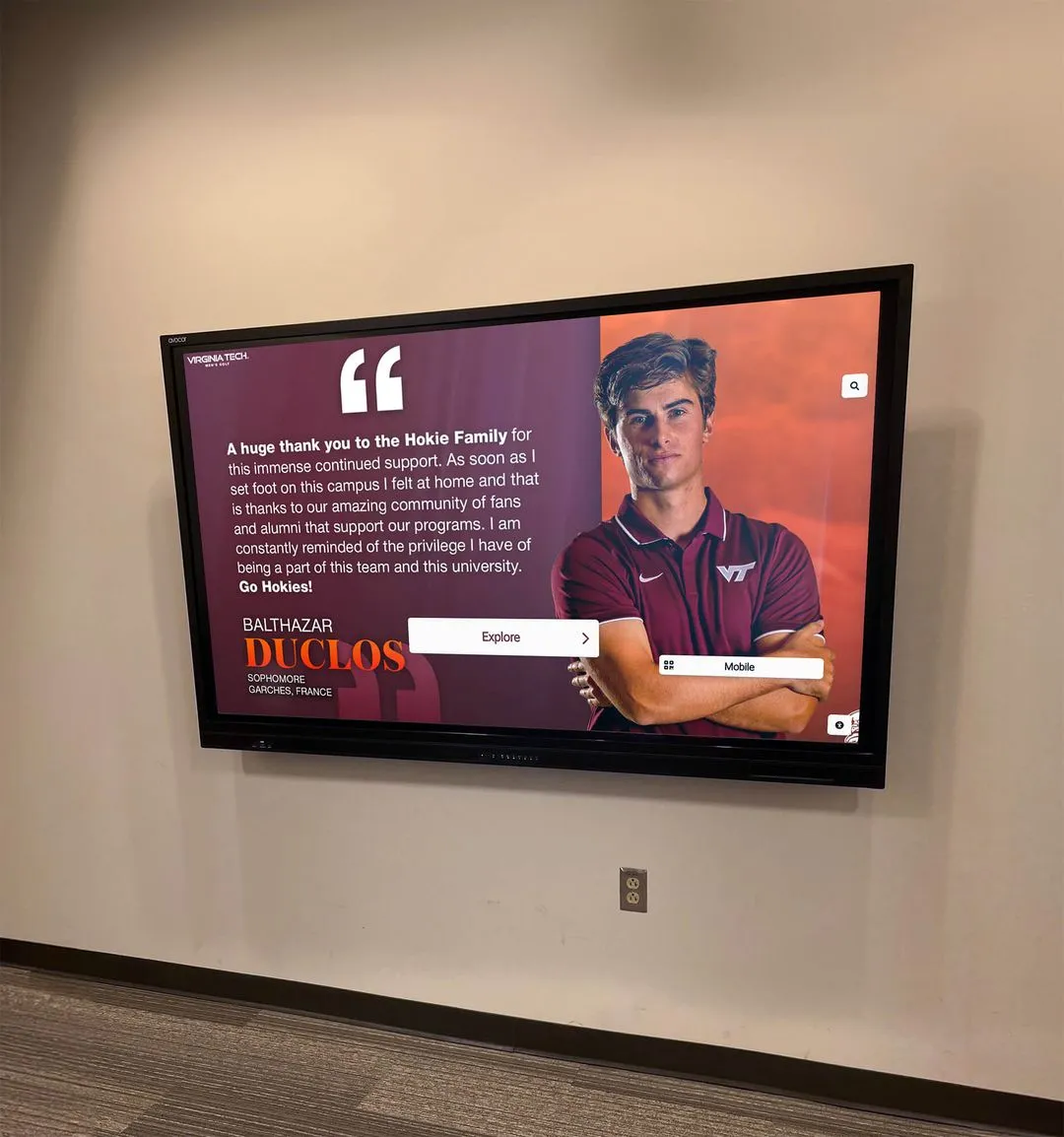
Wall-mounted memorial installations integrate seamlessly into facility architecture while providing unprecedented recognition depth
Scene 5: Historical Context and Educational Content (Timestamps 7:00-9:00)
Visual Description
Demonstrator navigates to educational content section showing broader historical context beyond individual profiles. Camera reveals timeline visualizations showing casualty patterns across conflicts, interactive maps displaying deployment locations and sacrifice geography, statistical dashboards presenting service demographics, and educational articles explaining specific conflicts, military operations, and first responder challenges.
Narration Script
“Beyond individual hero profiles, comprehensive memorial displays provide educational context helping visitors understand broader patterns of service and sacrifice that shaped history and continue protecting communities.
Interactive timelines visualize casualty patterns across different conflicts and eras—revealing the sustained cost of maintaining freedom and security over decades and generations. Geographic maps show deployment locations and incident sites—connecting abstract global conflicts to specific places where heroes served and sacrificed.
Statistical presentations document service demographics including age at time of death, military specialties and law enforcement assignments, awards and recognition received, and representation across different community populations—revealing which citizens disproportionately bear service burdens and combat risks.
Educational articles provide accessible explanations of specific military conflicts, operations, and battles where community members served—helping younger visitors without military knowledge understand historical context surrounding sacrifice. For first responder memorials, content explains departmental structures, typical incidents and hazards faced, training and preparation requirements, and evolving public safety challenges across different eras.
This educational dimension transforms memorial displays from simple honor rolls into comprehensive teaching tools that inspire civic engagement, increase military and first responder appreciation, and motivate continued service among current and future generations who encounter memorial content.”
Camera Notes
- Capture data visualizations clearly with sufficient screen time for comprehension
- Film interactive elements demonstrating user-driven exploration
- Show educational content variety—text, images, maps, timelines, statistics
- Include reactions showing learning and discovery rather than mere viewing
- Pan across longer content demonstrating scroll functionality
Key On-Screen Graphics
- Section labels: “Historical Context,” “Interactive Maps,” “Service Statistics”
- Timeline markers indicating major conflicts and events
- Map legends explaining geographical information presentation
Scene 6: Cloud Management and Content Updates (Timestamps 9:00-10:30)
Visual Description
Camera transitions to behind-the-scenes view showing administrator logged into cloud-based content management system on laptop or desktop computer. Screen recording demonstrates adding new fallen hero profile, uploading photographs, entering service information, and publishing content. Display in background updates in real-time showing newly added tribute.
Narration Script
“Modern fallen heroes memorial displays leverage cloud-based content management enabling remote updates from any internet-connected device without requiring physical display access or technical expertise.
Memorial administrators—whether military public affairs officers, municipal department staff, or veteran organization volunteers—can add new fallen heroes immediately following sacrifice rather than waiting months for traditional memorial plaque manufacturing and installation. This immediacy ensures timely recognition honoring heroes and supporting grieving families and communities who appreciate prompt acknowledgment.
Comprehensive administrative interfaces guide content creation through structured forms capturing service details, biographical information, family remembrance submissions, photograph uploads, and related documentation. Template-based publishing ensures consistent presentation maintaining memorial dignity and professional standards across all tributes.
Version control and revision history preserve all content changes enabling rollback if errors occur or information requires correction. Multi-user access with role-based permissions allows departments and organizations to distribute memorial management responsibilities across appropriate staff members while maintaining content security and oversight.
Scheduled content rotation automates featured profile updates ensuring all fallen heroes receive periodic prominence rather than static displays where only recently added names appear visible. Analytics reveal which profiles receive most engagement, popular search terms, peak visitor usage times, and other insights informing content strategy and memorial display optimization.”
Camera Notes
- Screen recording should clearly show administrative interface
- Demonstrate actual content entry and publishing workflow
- Capture real-time display update showing immediate content appearance
- Film from administrator perspective showing typical user experience
- Include close-ups of specific administrative features and tools
Key On-Screen Graphics
- CMS interface labels and navigation
- Workflow steps: “Enter information” → “Upload media” → “Publish tribute”
- Real-time update indicator showing display synchronization
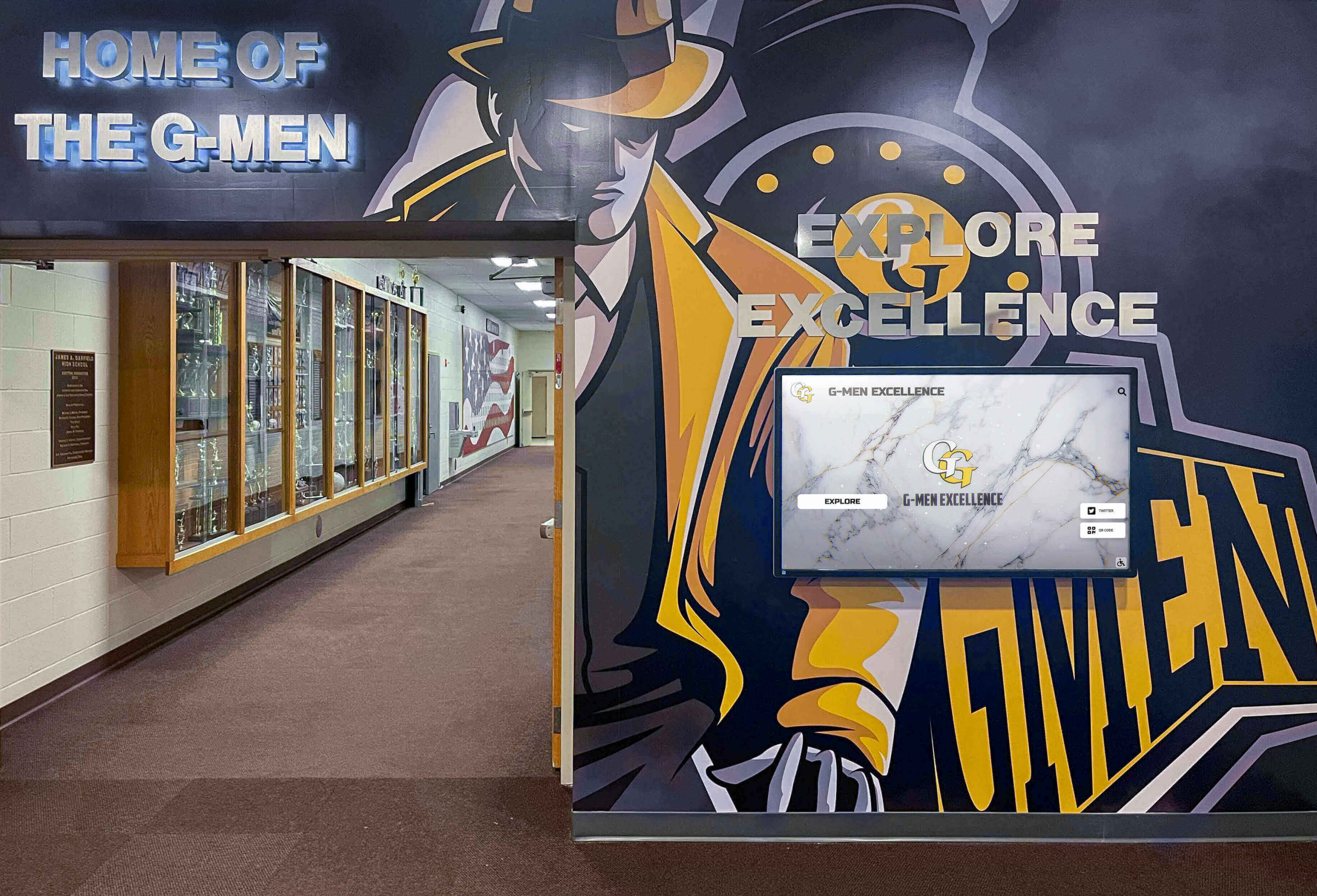
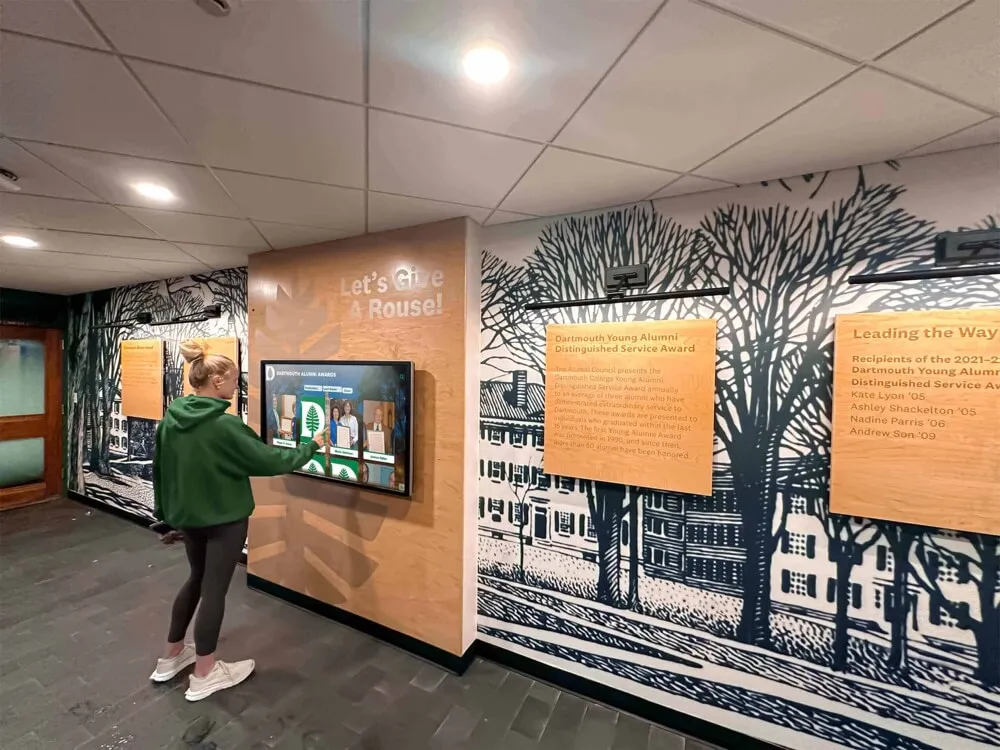
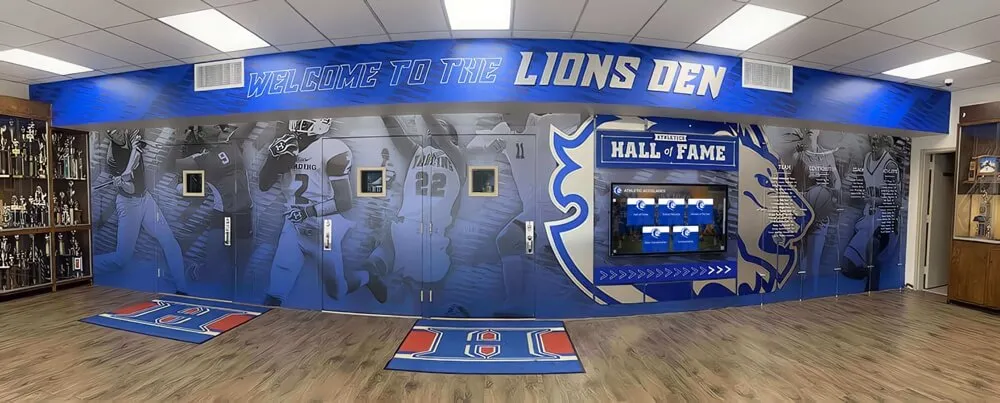
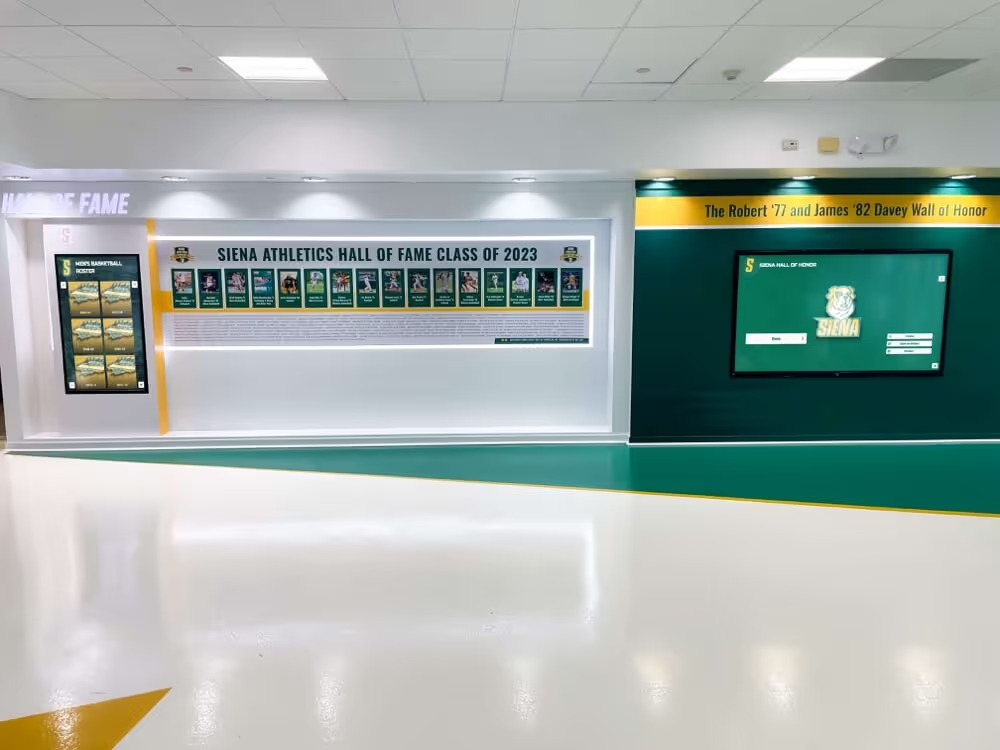
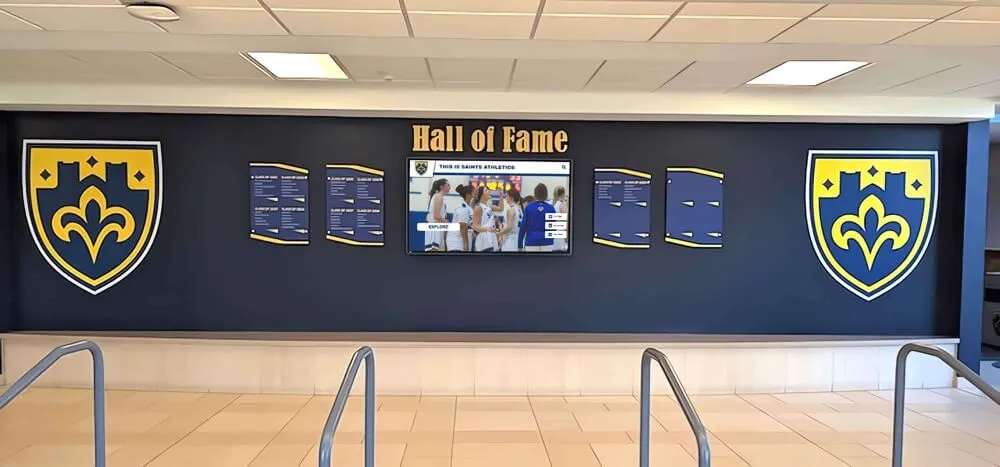
Integrated memorial environments combine traditional recognition elements with interactive technology creating comprehensive tribute spaces
Scene 7: Family and Community Contributions (Timestamps 10:30-12:00)
Visual Description
Camera shows family member or veteran service officer accessing memorial contribution portal on personal device. Screen recording demonstrates submitting photographs, writing remembrance message, and uploading memorial service details. Cut to memorial display showing submitted content integrated into hero profile with proper attribution.
Narration Script
“The most meaningful memorial content often comes directly from families, fellow service members, and community members who knew fallen heroes personally—perspectives official military and departmental records cannot capture.
Solutions like Rocket Alumni Solutions provide secure contribution portals enabling families to submit personal photographs showing heroes beyond uniform—family gatherings, recreational activities, milestone celebrations, and candid moments revealing personality and humanity. Written remembrances from spouses, parents, children, siblings, and close friends share private memories, favorite stories, character traits, values, and dreams creating complete portraits of individuals rather than merely service members.
Fellow service members and colleagues contribute operational stories, deployment memories, professional accomplishments, leadership examples, and unit traditions—providing military and first responder context that families may not fully know. Community members share impact testimonials describing how heroes influenced lives, served locally, volunteered, mentored youth, and contributed beyond official duties.
Memorial administrators review submissions ensuring appropriateness before publishing—maintaining memorial dignity while enabling broader community participation in honoring fallen heroes. Contributor attribution accompanies all submissions—recognizing those who preserve legacies while establishing content provenance and credibility.
This collaborative approach transforms memorials from top-down institutional projects into genuine community efforts where everyone touched by fallen heroes can participate in honoring sacrifice and preserving legacies for future generations.”
Camera Notes
- Film actual family member or contributor if permissions secured
- Screen recording should show secure contribution interface
- Demonstrate submission review and approval workflow
- Show published contribution with proper attribution
- Capture emotional authenticity of family participation when appropriate
Key On-Screen Graphics
- Contribution portal navigation and submission forms
- Content review workflow indicators
- Attribution labels showing contributor information
Scene 8: Closing Call-to-Action and Contact Information (Timestamps 12:00-13:00)
Visual Description
Camera pulls back to wide shot showing complete memorial display installation within facility context. Visitors engaging with display in background. Transition to montage showing different memorial display installations across various facilities—government buildings, military bases, public safety headquarters, colleges. Final shot holds on Rocket Alumni Solutions logo and contact information with American flag imagery.
Narration Script
“Fallen heroes touchscreen displays honor the ultimate sacrifice through comprehensive digital memorials that preserve legacies, educate communities, and ensure perpetual recognition for military personnel, law enforcement officers, firefighters, and first responders who gave everything protecting others.
These powerful memorial platforms combine unlimited recognition capacity, rich multimedia storytelling, family contribution opportunities, educational historical context, and accessible cloud management—creating living tributes that engage current generations while preserving legacies for future visitors who must never forget the price of freedom and security.
Whether planning memorial displays for government facilities, military installations, public safety departments, veteran service organizations, or educational institutions, interactive touchscreen systems provide dignified recognition appropriate to sacred subject matter while leveraging modern technology ensuring comprehensive, accessible, perpetual honor.
To explore how fallen heroes memorial displays can serve your organization and community, schedule a live video demonstration where we’ll walk through complete system capabilities, discuss specific memorial objectives and content approaches, and answer questions about implementation, family involvement, and long-term memorial stewardship.
Book your video demo at RocketAlumniSolutions.com—honoring those who sacrificed everything protecting the communities and freedoms we cherish.”
Camera Notes
- Final shots should convey memorial reverence and community significance
- Montage should show installation diversity and flexibility
- Contact information must remain on screen sufficient time for viewers to record
- Closing imagery should be emotionally appropriate and respectful
- Include fade to black or dignified transition rather than abrupt ending
Key On-Screen Graphics
- “Book a Live Video Demo”
- URL: RocketAlumniSolutions.com
- Contact information and consultation scheduling details
- Rocket Alumni Solutions logo and branding
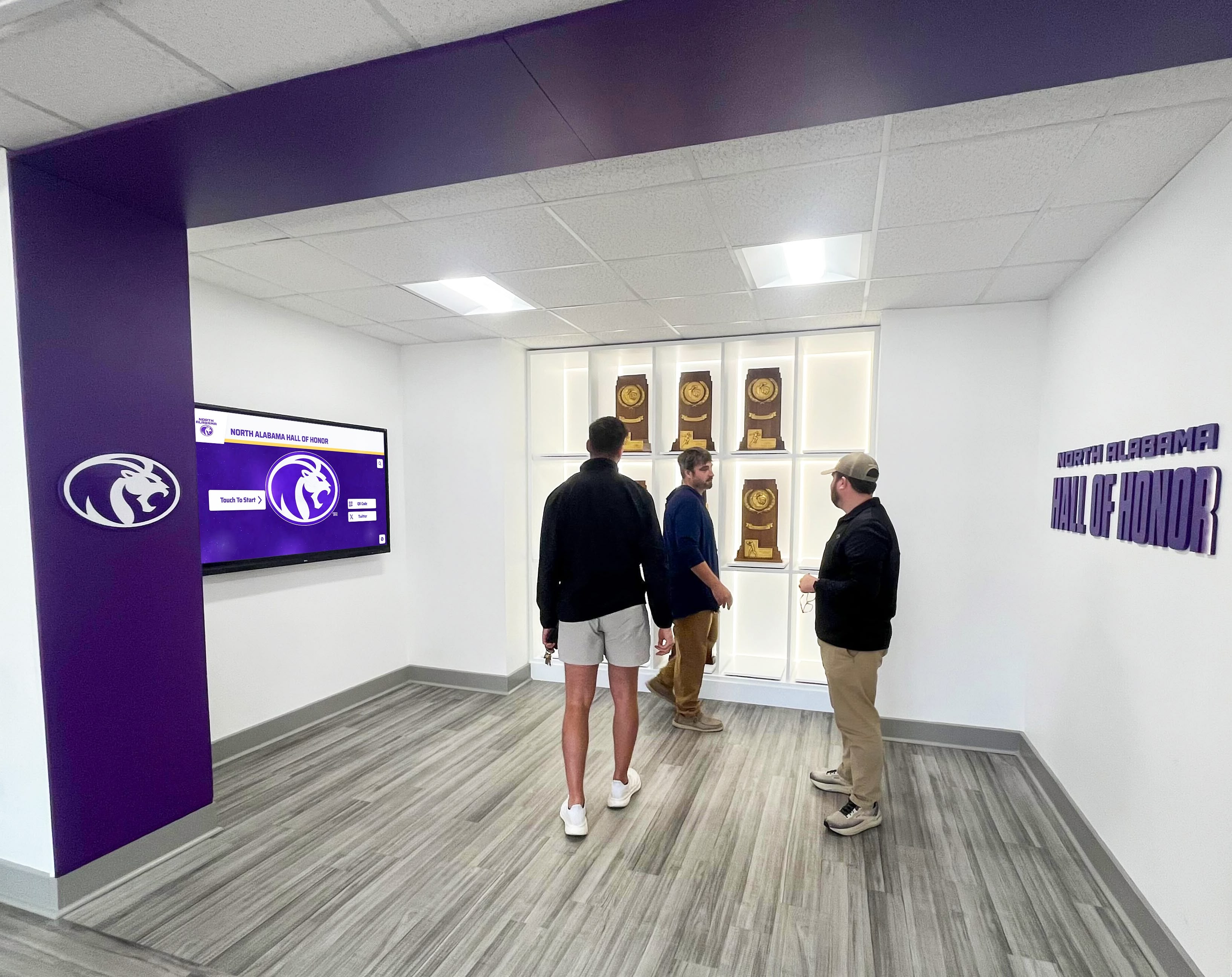
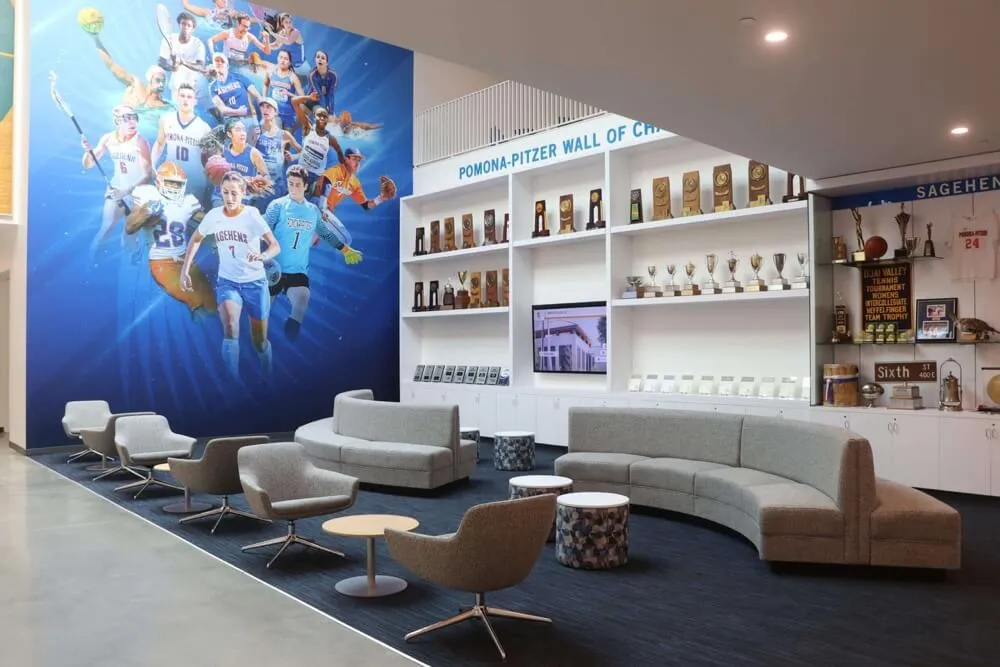
Successful memorials create gathering spaces where communities connect around shared gratitude and remembrance
Production Notes and Technical Considerations
Professional video documentation of fallen heroes memorials requires careful attention to technical, ethical, and emotional considerations ensuring appropriate presentation.
Video Production Equipment Recommendations
Camera and Stabilization
- Primary camera: Full-frame mirrorless or cinema camera capable of 4K recording
- Gimbal stabilization: Three-axis motorized gimbal for smooth movement
- Tripod: Sturdy support for static shots and interviews
- Slider or dolly: Controlled camera movement for professional presentation
- Backup camera: Second camera body for multi-angle coverage
Lighting Equipment
- LED panel lights: Adjustable color temperature and intensity
- Softboxes or diffusion: Gentle lighting avoiding harsh shadows inappropriate for memorial context
- Practical lighting: Utilize existing facility lighting maintaining authentic environment
- Flags and reflectors: Control and shape lighting for professional appearance
- Battery-powered options: Flexibility for locations without convenient power access
Audio Capture
- Lavalier microphones: For narration recording with clear voice capture
- Shotgun microphone: Directional audio for interview segments
- Ambient sound recording: Natural facility environment for authentic context
- Audio recorder: Separate device ensuring high-quality audio independent of camera
- Monitoring headphones: Real-time audio quality verification during recording
Display Interaction Recording
- Screen capture software: Record display interface interactions directly for clarity
- Camera-on-screen recording: Film actual physical touchscreen interactions
- Hybrid approach: Combine direct screen recording with filmed hand interactions
- Wireless control: Remote triggering enabling smoother demonstration filming
- High frame rate: 60fps recording ensuring smooth motion clarity
Lighting Considerations for Memorial Dignity
Lighting significantly impacts emotional tone and memorial appropriateness.
Recommended Lighting Approaches
- Soft, diffused lighting conveying reverence rather than harsh documentary style
- Respect existing memorial lighting design rather than over-lighting for video
- Avoid dramatic shadows or high-contrast lighting inappropriate for subject matter
- Natural light when available creating authentic facility atmosphere
- Subtle supplemental lighting filling shadows without obvious artificial appearance
- Consistent color temperature throughout video maintaining professional continuity
- Lighting hero photographs and displays ensuring clear visibility without glare
Lighting to Avoid
- Harsh direct lighting creating unflattering shadows
- Colored lighting unless integral to existing memorial design
- Excessive brightness inappropriate for somber memorial context
- Lighting creating glare or reflections on touchscreen displays
- Dramatic backlighting silhouetting subjects inappropriately
- Inconsistent color temperature causing distracting shifts
Music and Audio Underscoring Ethics
Audio choices profoundly impact emotional experience and memorial appropriateness.
Appropriate Music Characteristics
- Subtle patriotic themes avoiding bombastic or triumphal tone
- Somber instrumental music conveying reflection without manipulation
- String quartet or orchestral arrangements providing dignity
- Acoustic guitar or piano compositions offering contemplative atmosphere
- Ambient soundscapes supporting without distracting
- Appropriate volume—noticeable but never overwhelming narration
- Consistent style throughout video maintaining emotional continuity
Music to Avoid
- Overtly dramatic or emotional manipulation
- Popular songs with lyrics distracting from memorial content
- Upbeat or celebratory music inappropriate for sacrifice and loss
- Military marches unless carefully applied and contextually appropriate
- Overly mournful music that intensifies grief rather than honoring service
- Music with potential political or controversial associations
- Copyright-protected music without proper licensing
Recommended Music Sources
- Royalty-free patriotic instrumental libraries
- Original score composition specifically for memorial videos
- Public domain classical compositions with appropriate emotional tone
- Licensed music from reputable production music libraries
- Consultation with families and military/department leadership about preferences
Explore approaches to memorial content in honoring deceased faculty memorial tribute with respectful recognition strategies.
Implementation Strategies for Fallen Heroes Memorial Displays
Beyond video documentation, successful memorial display implementation requires systematic planning addressing technical, content, emotional, and community considerations.
Stakeholder Engagement and Family Involvement
Memorial display development must incorporate perspectives from families, service organizations, departments, and communities served.
Essential Stakeholder Groups
- Gold Star families: Families of fallen military personnel who lost loved ones
- Surviving family members: Spouses, parents, children, and extended family of fallen heroes across all categories
- Veteran service organizations: VFW, American Legion, DAV, and similar groups representing service members
- Military leadership: Base commanders, public affairs officers, and unit leadership
- Public safety leadership: Police chiefs, fire chiefs, and emergency services directors
- Government officials: Mayors, county executives, and elected representatives
- Memorial designers: Architects and designers planning physical memorial spaces
- Community organizations: Civic groups, historical societies, and religious institutions
Engagement Approach
Successful engagement requires sensitivity recognizing ongoing grief while seeking input:
- Individual family outreach offering opportunities to contribute content and feedback
- Group listening sessions with multiple families creating supportive environment
- Veteran organization consultation ensuring military perspective and protocol appropriateness
- Department coordination gathering official records and incident documentation
- Community forums presenting memorial plans and gathering public input
- Ongoing communication throughout development maintaining transparency and building trust
- Clear decision-making processes respecting family wishes while balancing broader memorial objectives
Content Development and Family Contributions
Comprehensive memorial content requires systematic collection from multiple sources.
Official Records and Documentation
- Military service records including enlistment, training, assignments, and awards
- Law enforcement and fire department personnel files documenting careers
- Incident reports and investigations explaining circumstances of death
- Official departmental photographs and uniform portraits
- Commendation certificates and award documentation
- Memorial service programs and obituaries
- Government casualty databases and official listings
Family-Contributed Content
- Personal photographs showing heroes throughout life stages
- Written remembrances and favorite memories from loved ones
- Biographical details about personality, interests, and values
- Family statements about legacy and how they wish heroes remembered
- Video interviews with family members sharing stories
- Personal effects photographs when appropriate (medals, equipment, belongings)
- Information about surviving family members when families choose to share
Colleague and Community Content
- Fellow service member testimonials and operational stories
- Department colleague remembrances and professional accomplishments
- Community impact stories from those served and protected
- Local news coverage documenting sacrifice and community response
- Ceremony and memorial event photography and video
- School and childhood community information for local heroes
- Extended biographical research filling gaps in official records
Content Organization Standards
- Consistent profile structures ensuring equitable recognition across all heroes
- Verified factual accuracy through multiple source confirmation
- Appropriate sensitivity regarding graphic incident details
- Clear attribution for all contributed content
- Family review and approval processes before publication
- Privacy protection for sensitive personal information
- Regular content updates as new information becomes available
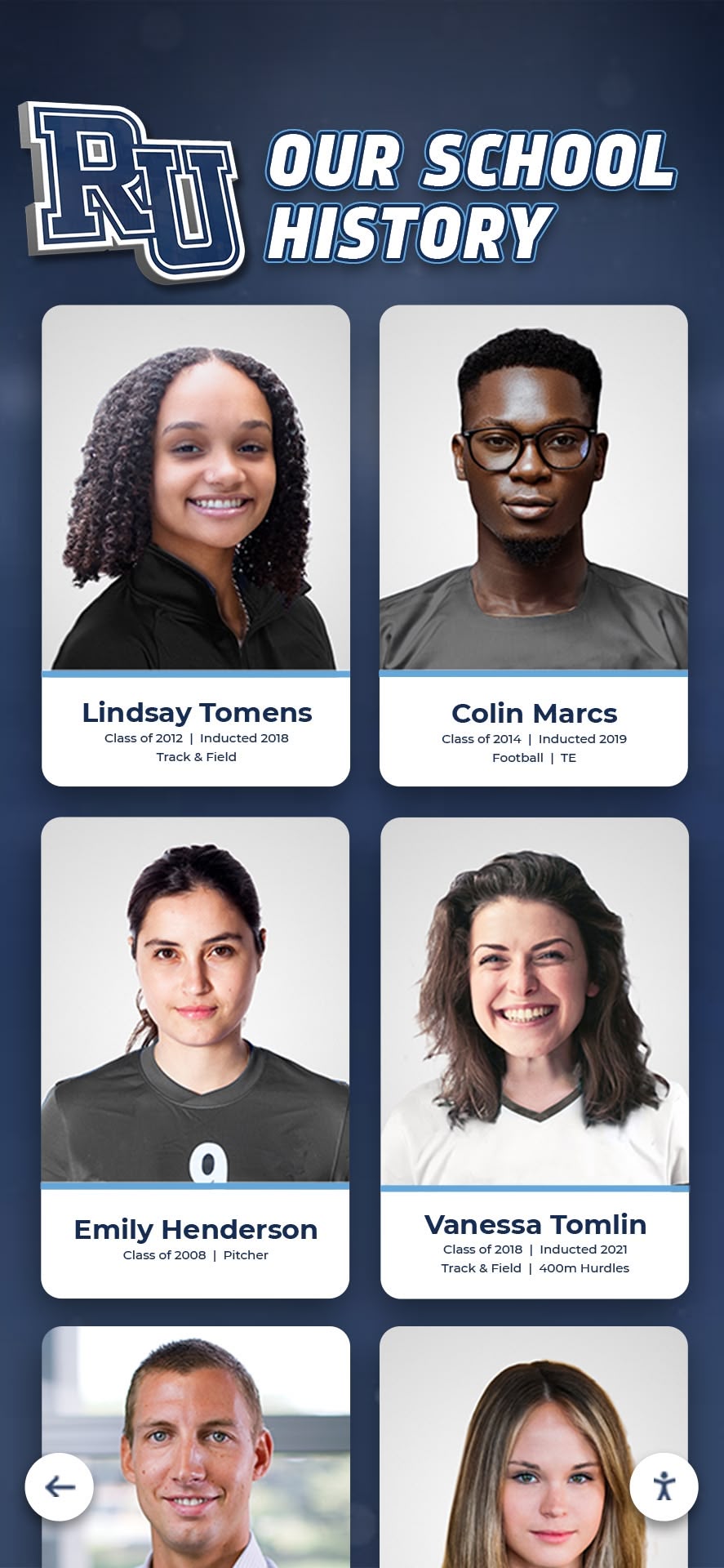
Systematic content development preserves complete memorial legacies across all service eras and recognition categories
Technical Specifications and Hardware Selection
Appropriate technology selection ensures memorial displays function reliably while maintaining dignified presentation.
Display Hardware Requirements
- Size: 55-65 inches for main memorial displays ensuring clear visibility
- Orientation: Vertical or horizontal depending on content design and space
- Touch technology: Projected capacitive touchscreen providing responsive interaction
- Commercial grade: Displays rated for continuous operation in public environments
- Brightness: 400-500 nits for typical indoor installations
- Resolution: 4K (3840x2160) ensuring photograph and text clarity
- Anti-glare coating: Reducing reflection from facility lighting and windows
- Vandal resistance: Tempered glass and robust construction for public spaces
- Mounting: Secure wall mounting or freestanding kiosk with memorial-appropriate design
Network and Infrastructure
- Reliable internet connectivity supporting cloud content delivery and updates
- Wired ethernet preferred for institutional stability over Wi-Fi
- Backup connectivity options ensuring display remains functional
- Content caching enabling display operation during network interruptions
- Secure network configuration protecting sensitive memorial content
- Remote monitoring capabilities alerting administrators to technical issues
- Automatic restart and recovery from power interruptions
Content Management Platform
Solutions like Rocket Alumni Solutions provide memorial-specific capabilities:
- Unlimited content storage accommodating extensive multimedia archives
- Memorial-specific profile templates appropriate for fallen heroes recognition
- Family contribution portals enabling secure content submissions
- Multi-level access control protecting sensitive information
- Scheduled content rotation ensuring all heroes receive featured visibility
- Mobile-responsive web access extending memorial reach beyond physical displays
- Privacy controls appropriate for family preferences and security clearances
- Analytics tracking engagement while respecting memorial dignity
Display Location and Memorial Environment Design
Strategic placement and thoughtful environmental design maximize memorial impact and community engagement.
Optimal Installation Locations
- Building entrance lobbies ensuring all visitors encounter memorial
- Dedicated memorial rooms or spaces creating contemplative environments
- High-traffic corridors maximizing visibility among daily facility users
- Veterans resource centers and service organization facilities
- Memorial plazas and outdoor installations when weatherproofing permits
- Chapels or ceremonial spaces for appropriate solemn context
- Conference rooms and training facilities educating professionals about sacrifice
Creating Dignified Memorial Spaces
Comprehensive memorial environments extend beyond touchscreen displays alone:
- Appropriate architectural integration matching facility aesthetics and memorial solemnity
- Coordinated color schemes reflecting military or public safety traditions
- Patriotic imagery including flags, seals, and appropriate symbols
- Complementary physical memorials including plaques, statues, or traditional monuments
- Comfortable seating enabling extended memorial exploration and reflection
- Appropriate lighting creating reverent atmosphere rather than bright retail environment
- Clear wayfinding directing visitors to memorial displays
- Ceremonial elements for memorial events and remembrance activities
Explore recognition space design in alumni gathering area design with comprehensive environmental planning approaches.
Measuring Memorial Display Impact and Community Engagement
Assessment demonstrates memorial value while identifying opportunities enhancing community connection and educational impact.
Quantitative Engagement Metrics
Display Interaction Analytics
- Total touchscreen interactions showing overall memorial engagement
- Average session duration revealing depth of visitor exploration
- Most-viewed profiles identifying heroes receiving greatest attention
- Search patterns showing how visitors discover specific individuals
- Feature usage indicating which memorial capabilities visitors value most
- Time-based trends revealing memorial usage patterns across days and seasons
- Returning visitor rates demonstrating sustained community engagement
Web Platform Analytics
- Unique visitors accessing online memorial content beyond physical displays
- Geographic distribution showing memorial reach extending to distant family and veterans
- Device types indicating mobile versus desktop access patterns
- Social sharing frequency demonstrating organic memorial promotion
- Referral sources revealing how people discover memorial content
- Memorial day and remembrance event traffic spikes
- Email notification engagement when new heroes added
Qualitative Impact Assessment
Stakeholder Feedback Collection
- Family surveys about memorial satisfaction and legacy preservation
- Veteran organization input about appropriateness and community value
- Visitor observations and informal feedback about memorial experiences
- Department leadership assessment of memorial effectiveness supporting missions
- Community perception surveys measuring awareness and appreciation
- Educational institution feedback when displays serve teaching purposes
- Military and law enforcement recruitment impact when displays inspire service
Observable Cultural Indicators
- Increased community awareness and discussion about sacrifice and service
- Enhanced support for military and first responder organizations
- Greater attendance at memorial events and remembrance ceremonies
- More public recognition and appreciation expressed toward service members
- Increased veteran organization membership and volunteer engagement
- Educational program development leveraging memorial content
- Memorial becoming established community gathering space
Ongoing Memorial Stewardship
Sustained value requires continued commitment:
- Annual memorial ceremonies incorporating display content
- Regular content enrichment adding newly discovered information
- Family outreach maintaining relationships and gathering updates
- Technical maintenance ensuring reliable ongoing operation
- Content accuracy reviews verifying information remains current
- Analytics-informed optimization improving memorial effectiveness
- Budget allocation supporting perpetual memorial management
Conclusion: Honoring Sacrifice Through Comprehensive Digital Memorials
Fallen heroes touchscreen displays represent powerful platforms honoring the ultimate sacrifice through comprehensive digital memorials that preserve legacies, educate communities, and ensure perpetual recognition for military personnel, law enforcement officers, firefighters, and first responders who gave everything protecting others.
These interactive memorial systems solve persistent limitations constraining traditional physical memorials—limited space forcing difficult exclusion decisions, minimal biographical information beyond names and dates, static presentation preventing content updates and enrichment, and accessibility restricted to those physically visiting memorial locations. Digital platforms eliminate these constraints while creating new opportunities for family involvement, educational context, multimedia storytelling, and memorial access extending far beyond physical installations.
Honor Your Community's Fallen Heroes
Discover how comprehensive touchscreen memorial displays can help your organization create living tributes preserving legacies, educating visitors about sacrifice, and ensuring perpetual honor for those who gave everything in service to others. Schedule a live video demonstration exploring complete capabilities, implementation approaches, and family involvement opportunities.
Book a Live TouchWall Video DemoWhen organizations implement fallen heroes memorial displays thoughtfully—with comprehensive stakeholder engagement, family-centered content development, appropriate technology selection, and sustained stewardship commitment—they create sacred spaces where communities remember sacrifice, honor service, and educate future generations about the true costs of freedom and security too often taken for granted.
The video tour demonstrations, production guidelines, and implementation strategies explored in this comprehensive guide provide frameworks for memorial projects honoring fallen heroes with dignity, technological excellence, and enduring community impact. From unlimited recognition capacity and rich multimedia storytelling to family contribution opportunities and accessible cloud management, these platforms transform memorial recognition from static plaques into dynamic living tributes woven throughout community consciousness.
Every fallen hero who made the ultimate sacrifice deserves comprehensive memorial recognition honoring dedication, preserving legacy, and ensuring future generations understand the debt owed to those who served and sacrificed. Your community’s fallen heroes deserve memorial systems celebrating service appropriately while inspiring continued dedication to the values and missions they died protecting.
Ready to begin planning fallen heroes memorial displays for your organization? Explore how Rocket Alumni Solutions provides comprehensive touchscreen platforms specifically designed for memorial recognition—honoring sacrifice through dignified interactive systems that preserve legacies perpetually while educating communities about the true meaning of service, valor, and ultimate dedication.
Learn about memorial and recognition approaches in military recognition programs and explore donor memorial recognition strategies applicable to fallen heroes memorials.