



E-sports conference championships have evolved from basement competitions to major institutional events that rival traditional sports in participation, viewership, and competitive intensity. According to recent data, the ECAC Esports has expanded to over 315 member schools fielding over 5,000 teams across twenty-four different games, while the Collegiate Esports Commissioners Cup welcomes 320 teams from 185 schools representing 1,500 athletes competing for championship titles.
Yet despite this explosive growth and mainstream acceptance, many schools and colleges struggle with a fundamental challenge: How do we properly celebrate and preserve e-sports conference championship achievements with the same visibility and respect traditionally reserved for physical sports championships?
Traditional championship recognition—trophy cases, banner displays, and engraved plaques—was designed decades ago for physical sports and often fails to capture the unique characteristics of competitive gaming championships. E-sports generates massive digital content through tournament broadcasts, highlight reels, and statistical tracking that traditional displays cannot accommodate. Gaming champions deserve recognition systems that showcase their tournament journeys, preserve championship moments, and inspire future competitors through modern technology built specifically for the digital age.
This comprehensive guide explores how high schools, colleges, and gaming organizations can create e-sports conference championship recognition that properly celebrates competitive gaming excellence while addressing the unique needs of this rapidly evolving competitive landscape.
E-sports conference championships represent culminating achievements where teams compete throughout seasons, advance through playoff brackets, and ultimately claim championship titles at regional, conference, and national levels. These accomplishments deserve recognition infrastructure that matches both the significance of their achievements and the digital-native nature of competitive gaming culture—recognition that extends beyond campus boundaries to reach gaming communities worldwide.

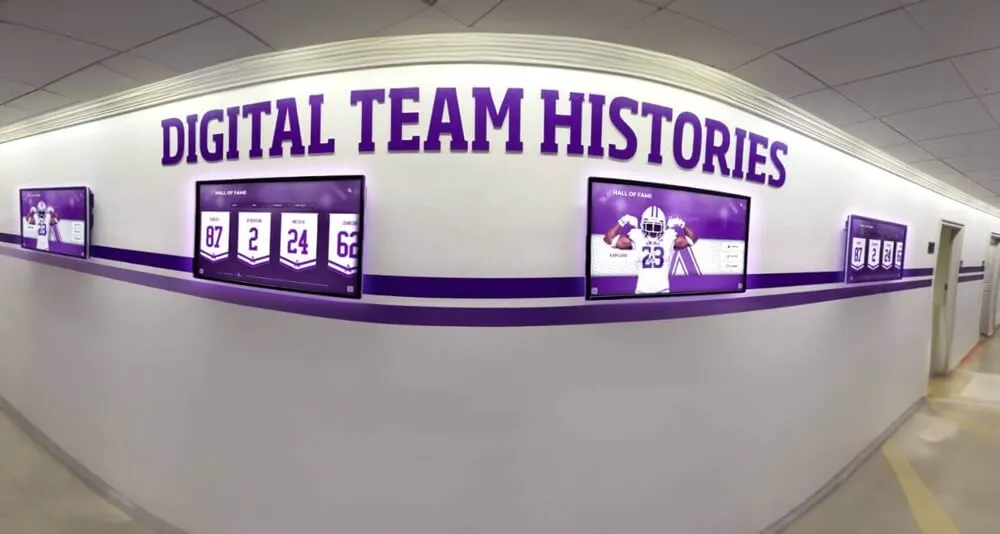
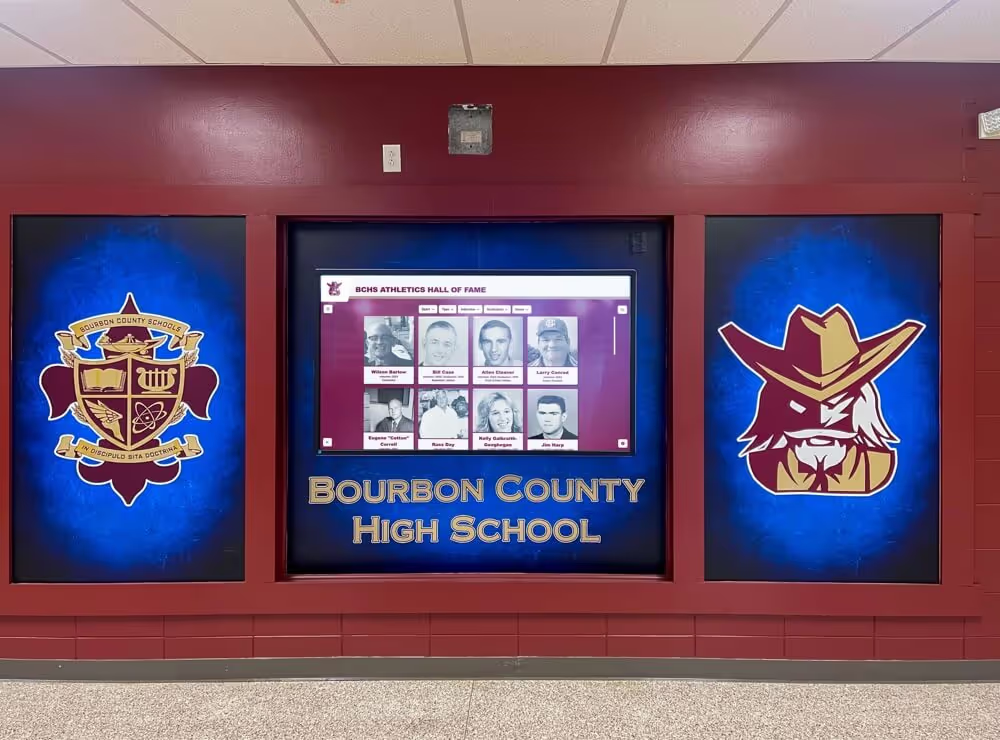
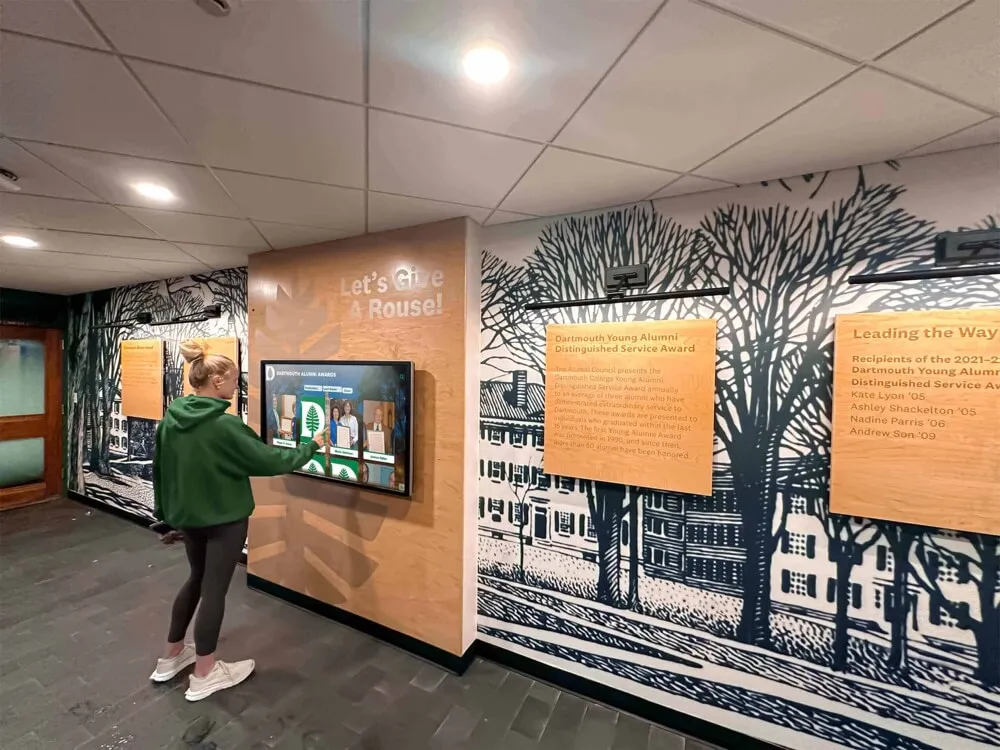
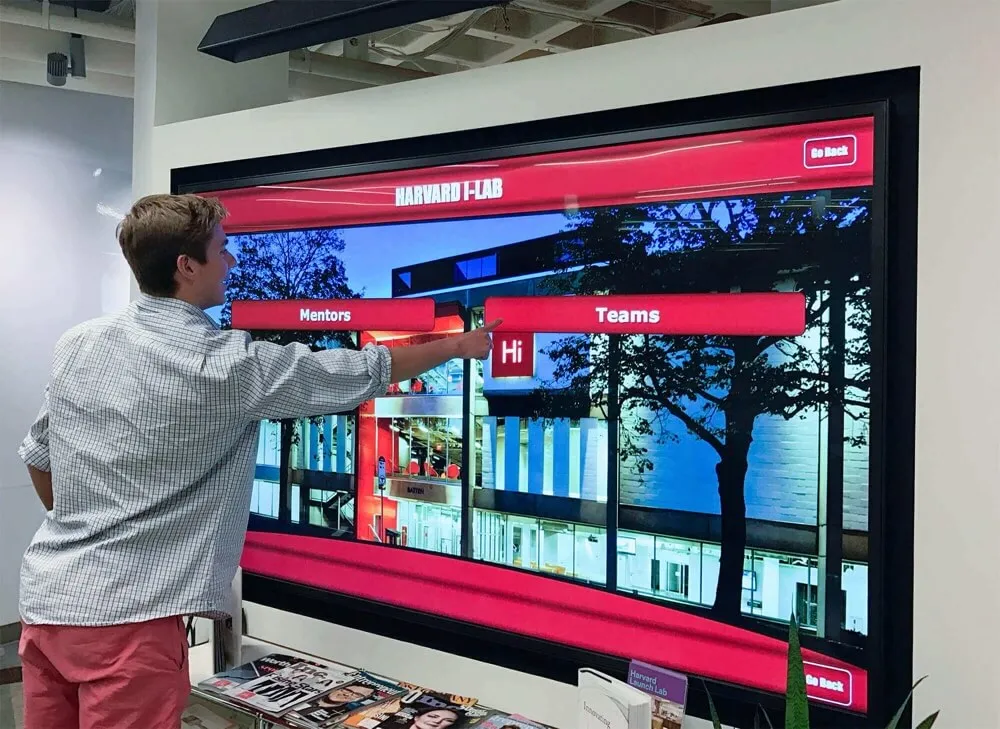
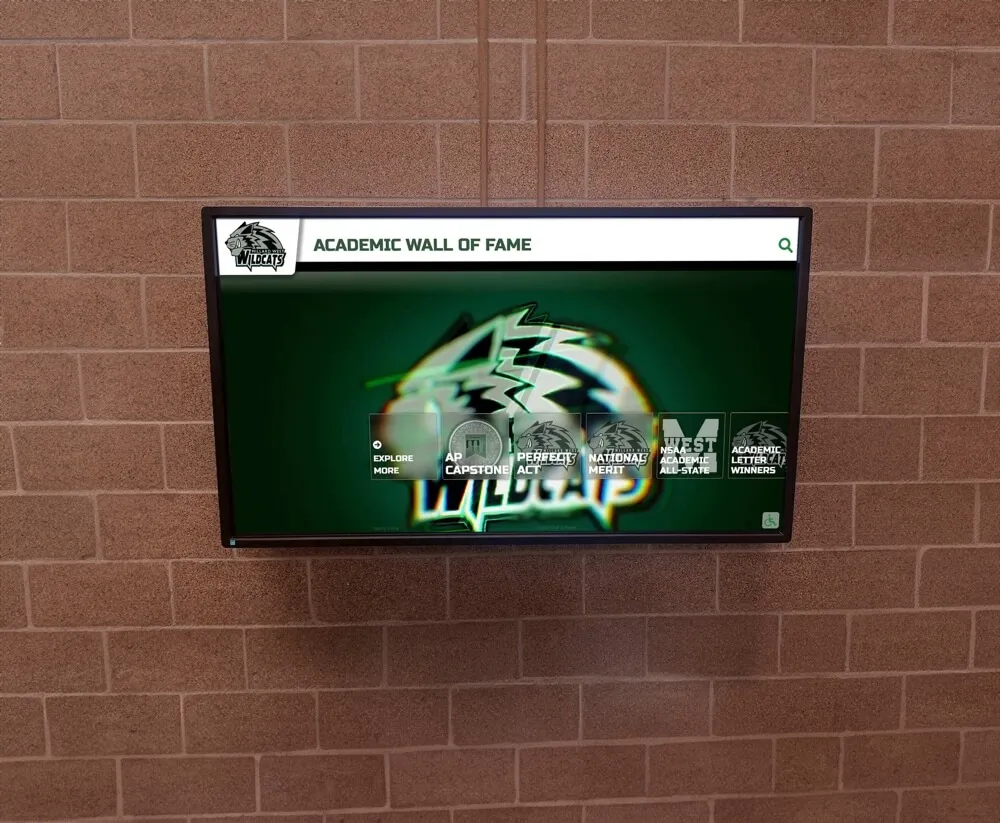
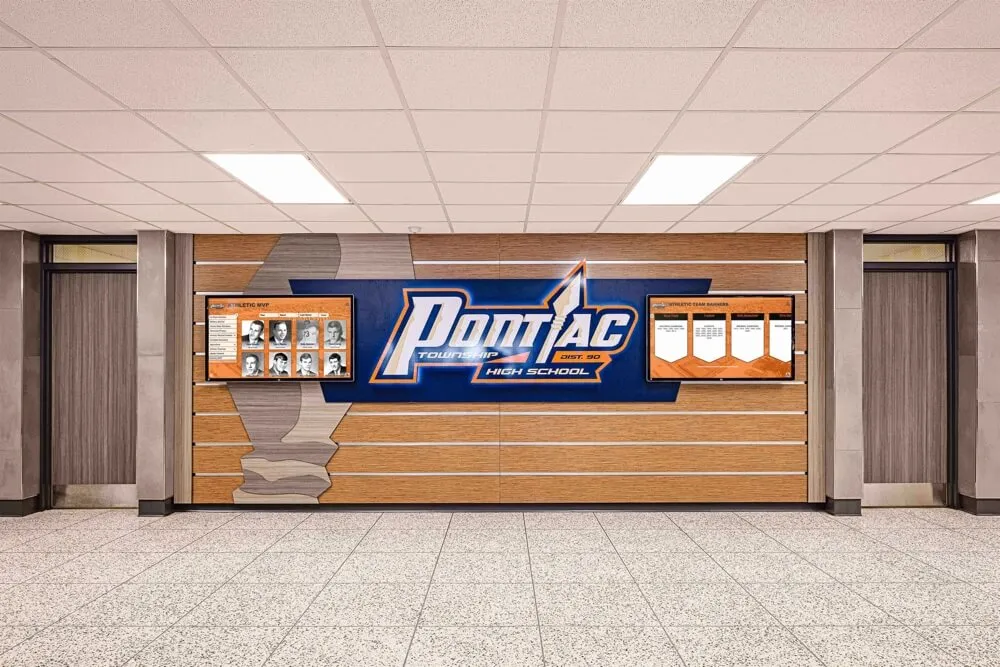
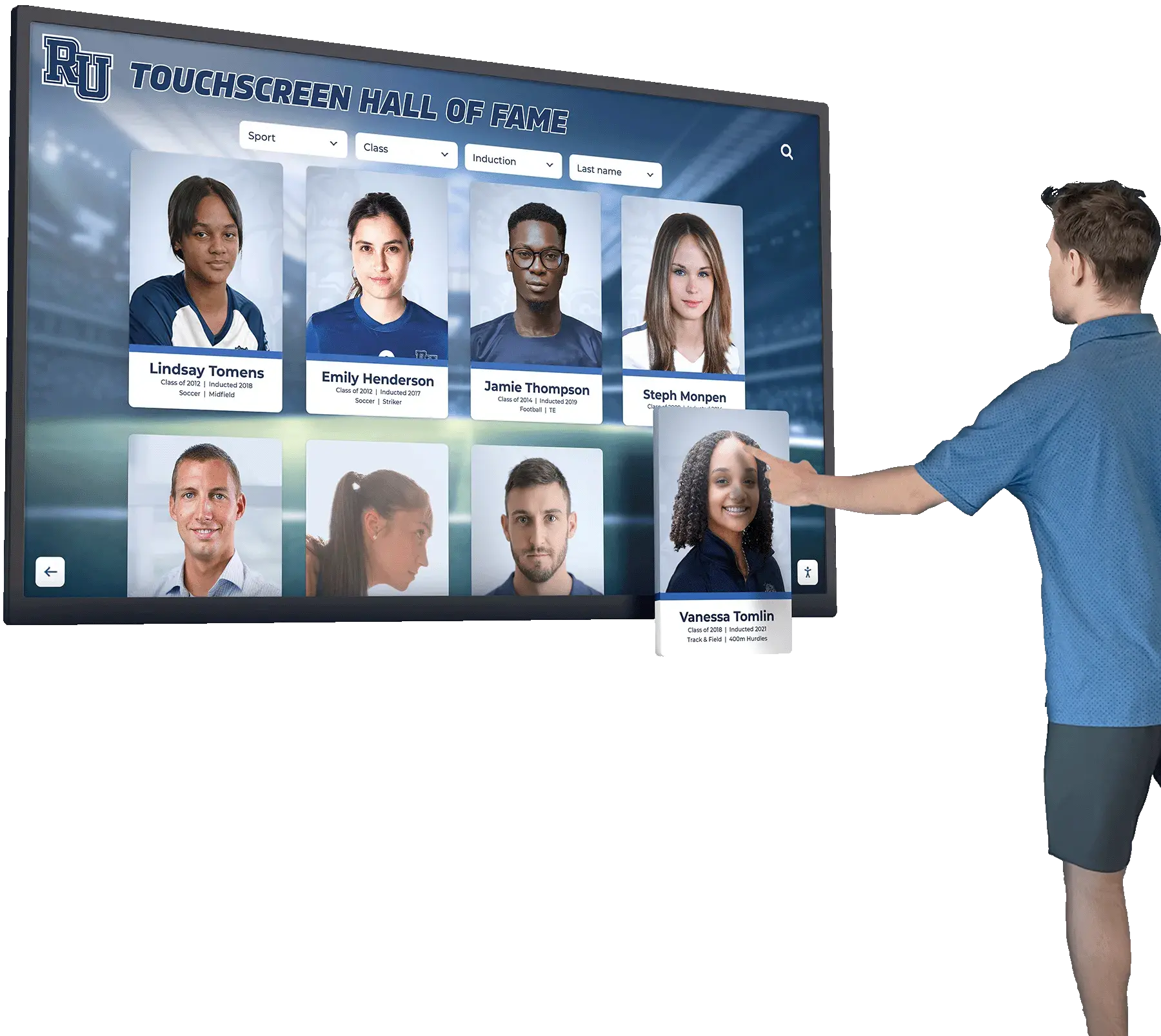
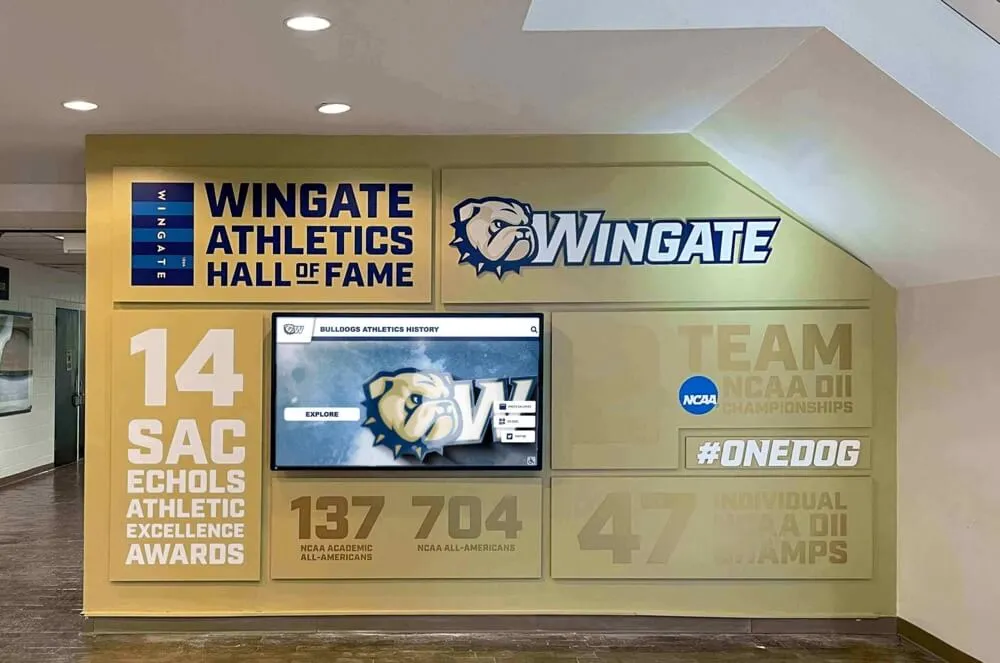
Interactive digital displays provide the perfect platform for showcasing e-sports championship achievements through multimedia content and detailed team profiles
Understanding E-Sports Conference Championships in 2025
Before implementing championship recognition solutions, understanding the current landscape of e-sports conference championships helps schools and organizations design systems that genuinely serve competitive gaming communities effectively.
The Conference Championship Structure
E-sports conference championships follow structured competitive frameworks similar to traditional athletics, with regular seasons culminating in championship events that determine conference champions across multiple game titles.
Major Conference Organizations
Several prominent organizations structure collegiate and high school e-sports competition:
The National Association of Collegiate Esports (NACE), founded in 2016, has grown to become the largest member association hosting the NACE Starleague. NACE organizes both regular-season competition and championship events across multiple game titles, with member institutions competing for conference and national championship recognition.
The Eastern College Athletic Conference (ECAC) Esports has expanded to over 315 member schools fielding over 5,000 teams across twenty-four different games, providing structured competition and championship opportunities across diverse gaming titles and skill levels.
The Collegiate Esports Commissioners Cup (CECC) welcomes 320 teams from 185 schools representing 1,500 athletes competing in games including Overwatch 2, Rocket League, Valorant, Street Fighter 6, and Super Smash Bros. Ultimate. Traditional athletic conferences including the Big Ten, Big Sky, and MEAC have integrated e-sports competition, allowing schools to compete for conference championships in gaming alongside traditional sports.
The Electronic Gaming Federation (EGF) provides structured high school e-sports culminating with in-person national championships, creating clear competitive pathways for secondary school programs.
Championship Event Formats
E-sports conference championships typically occur through multiple formats. The Peach Belt Conference Spring Esports Championships, held April 4-5, 2025, at Kennesaw State University, exemplifies regional conference championship events where teams compete in person for conference titles across multiple games.
The Texas Scholastic Esports Federation will host the 2025 Undisputed State Championships on May 1-3 at Baylor University, featuring nearly 1,400 middle and high school students competing in games including Apex Legends, iRacing, Madden, Overwatch 2, Super Smash Bros. Ultimate, Splatoon 3, Fortnite, Street Fighter 6, Mario Kart 8 Deluxe, Rocket League, and Valorant.
These championships create defining moments for competitive gaming programs—victories worthy of lasting recognition and celebration that elevates e-sports achievement alongside traditional athletic championships.
Why Conference Championships Deserve Special Recognition
Conference championships represent particularly significant achievements in competitive e-sports hierarchies, meriting recognition emphasis beyond individual match victories or regular season accomplishments.
Seasonal Achievement Culmination
Conference championships culminate months of preparation, practice, and competition. Teams compete throughout regular seasons, establish rankings, qualify for postseason tournaments, and ultimately compete in high-pressure championship matches determining conference supremacy. This sustained excellence over complete competitive seasons distinguishes championship victories from individual match wins.
Peer Competition Context
Conference championships validate excellence against direct peer institutions—schools and programs competing at similar competitive levels, with comparable resources, recruiting similar talent pools, and facing parallel challenges. Championship victories demonstrate not just competitive skill but sustained program excellence relative to comparable competitors.
Program Building Blocks
Championship victories create foundation moments that build lasting program culture and tradition. First championship victories establish programs as legitimate competitive forces. Repeat championships demonstrate sustained excellence and build dynasty narratives. Championship traditions inspire current competitors and attract future talent seeking to join winning programs.
These championship moments deserve recognition systems that preserve their significance while inspiring future competitors to pursue similar excellence.
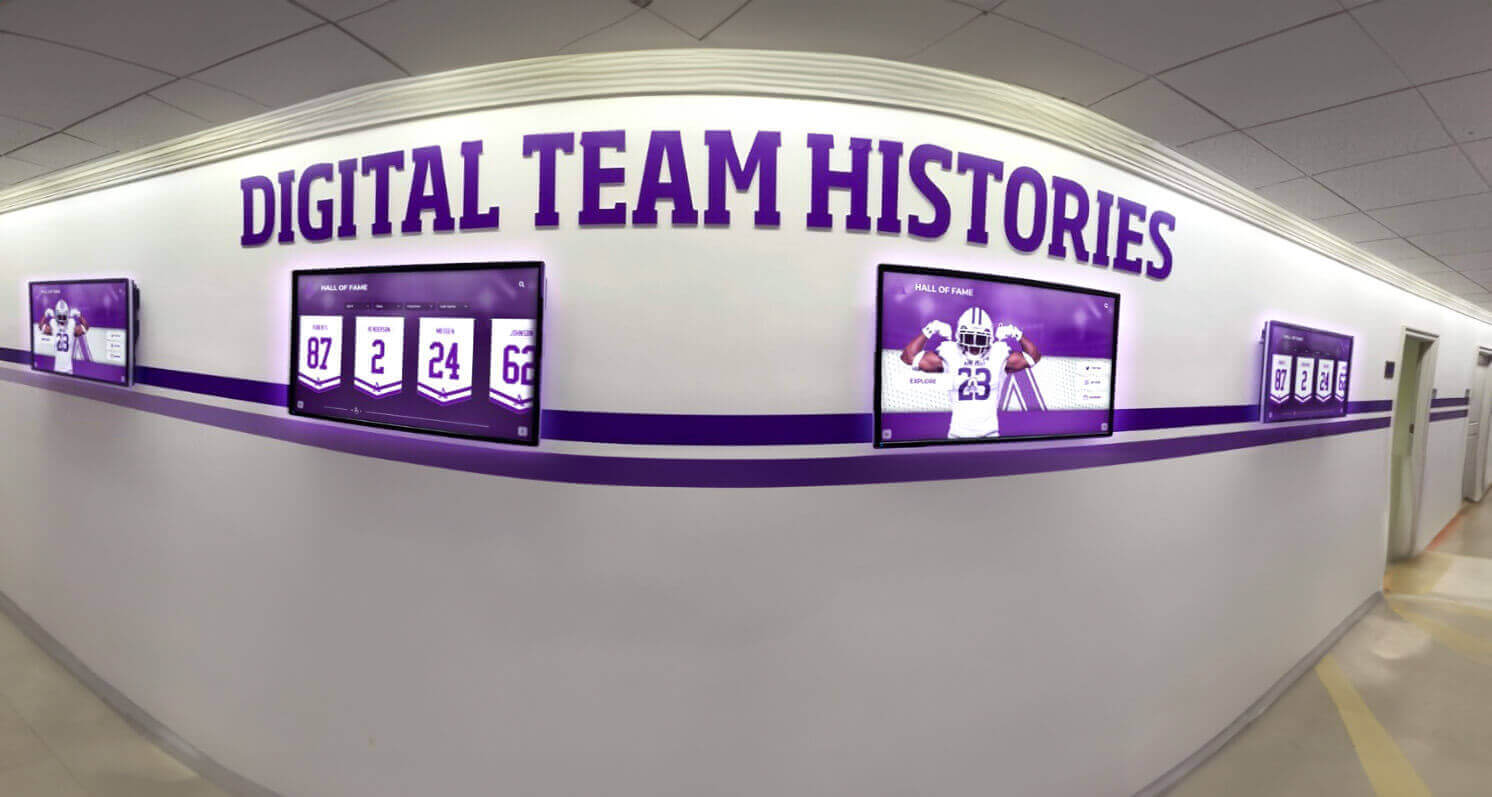
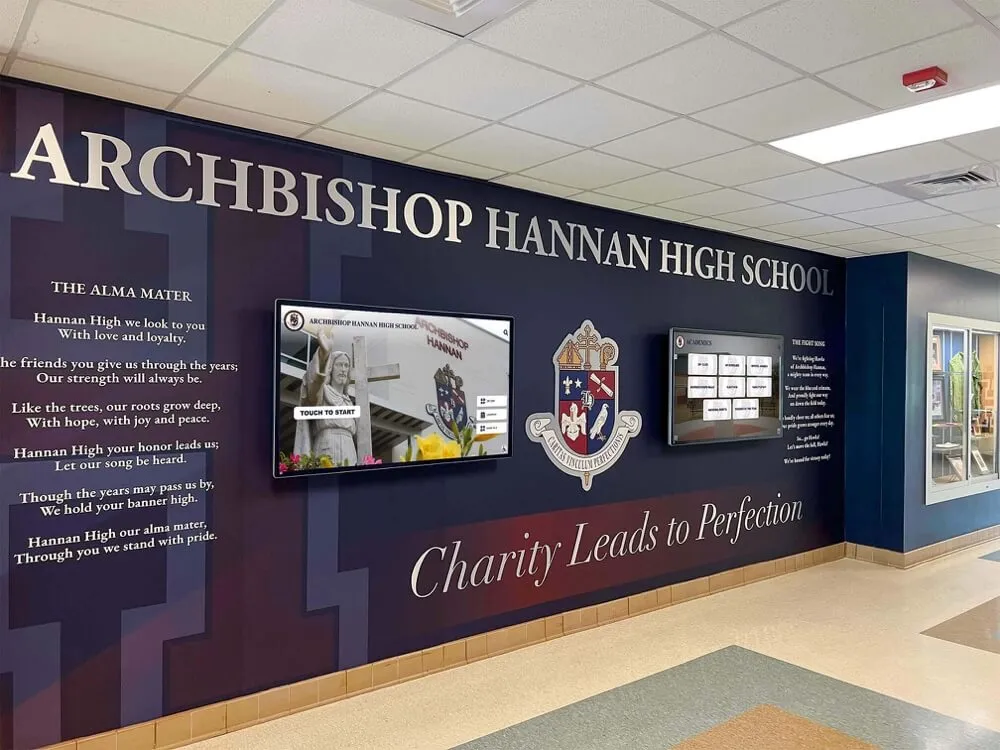
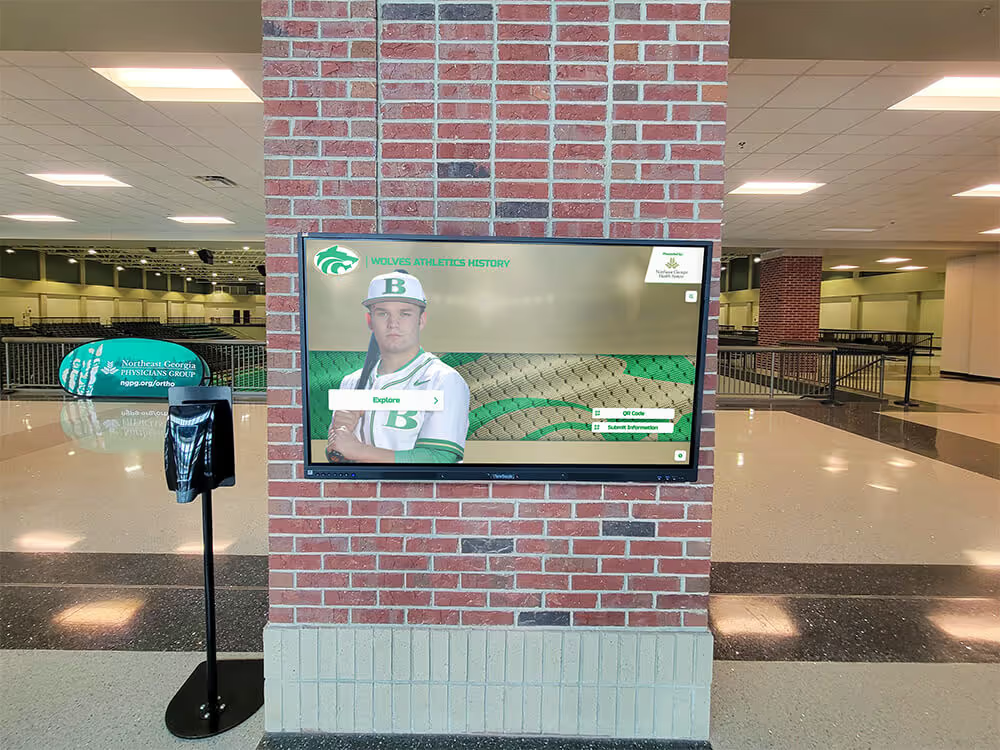
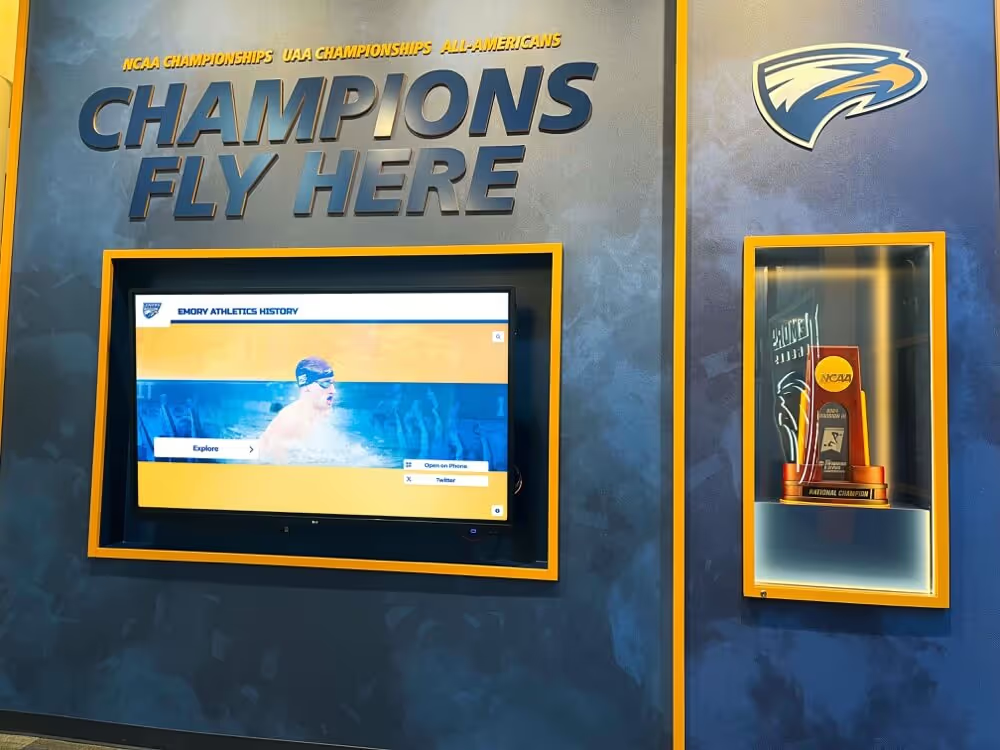
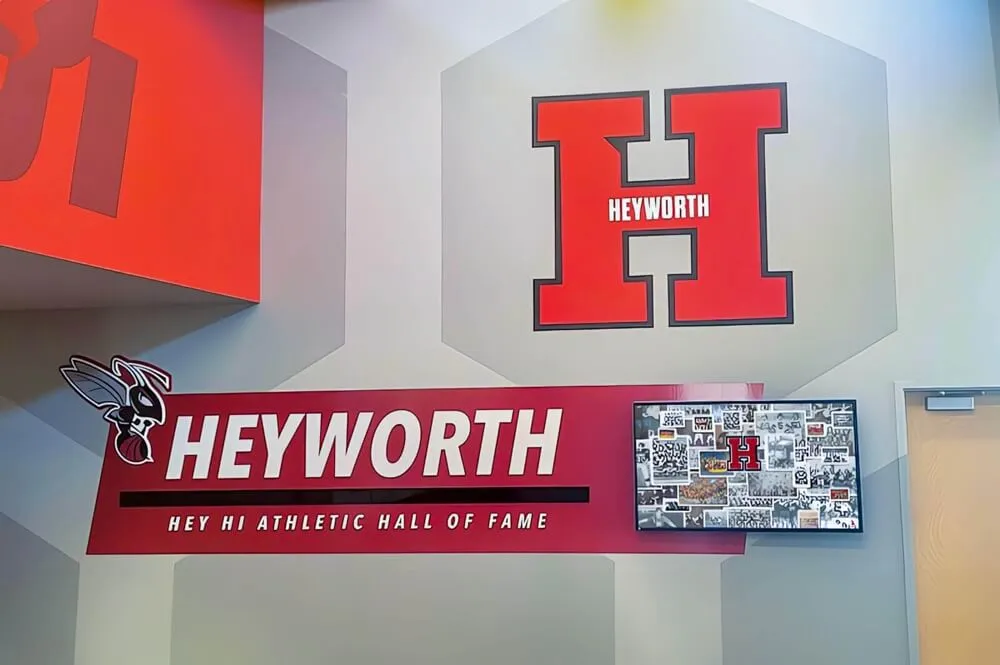
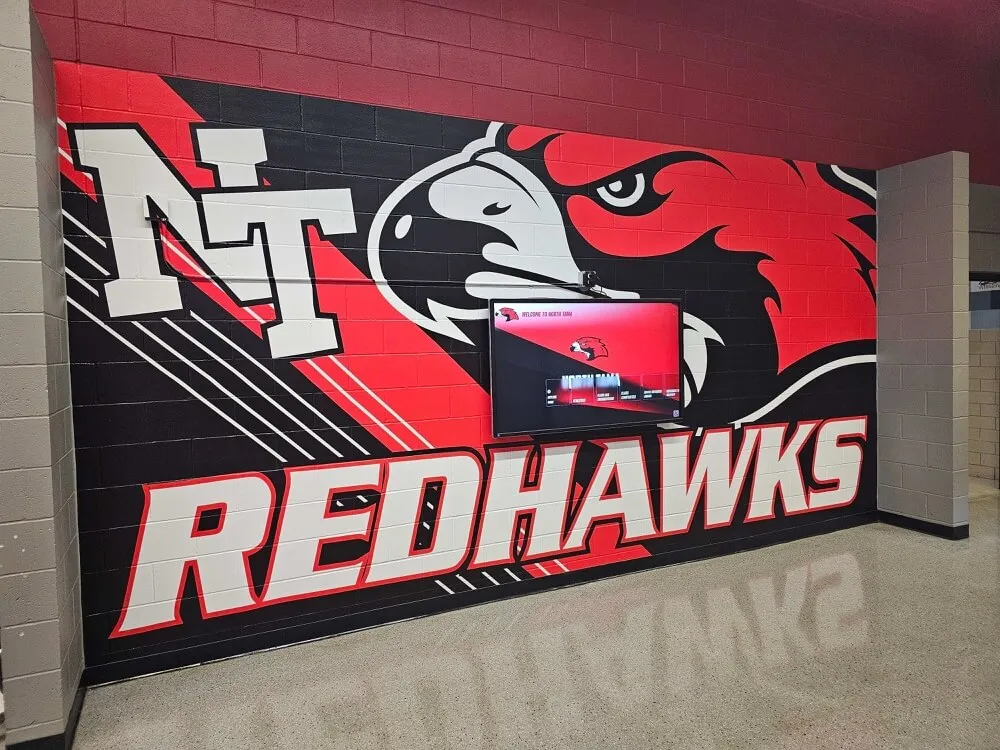
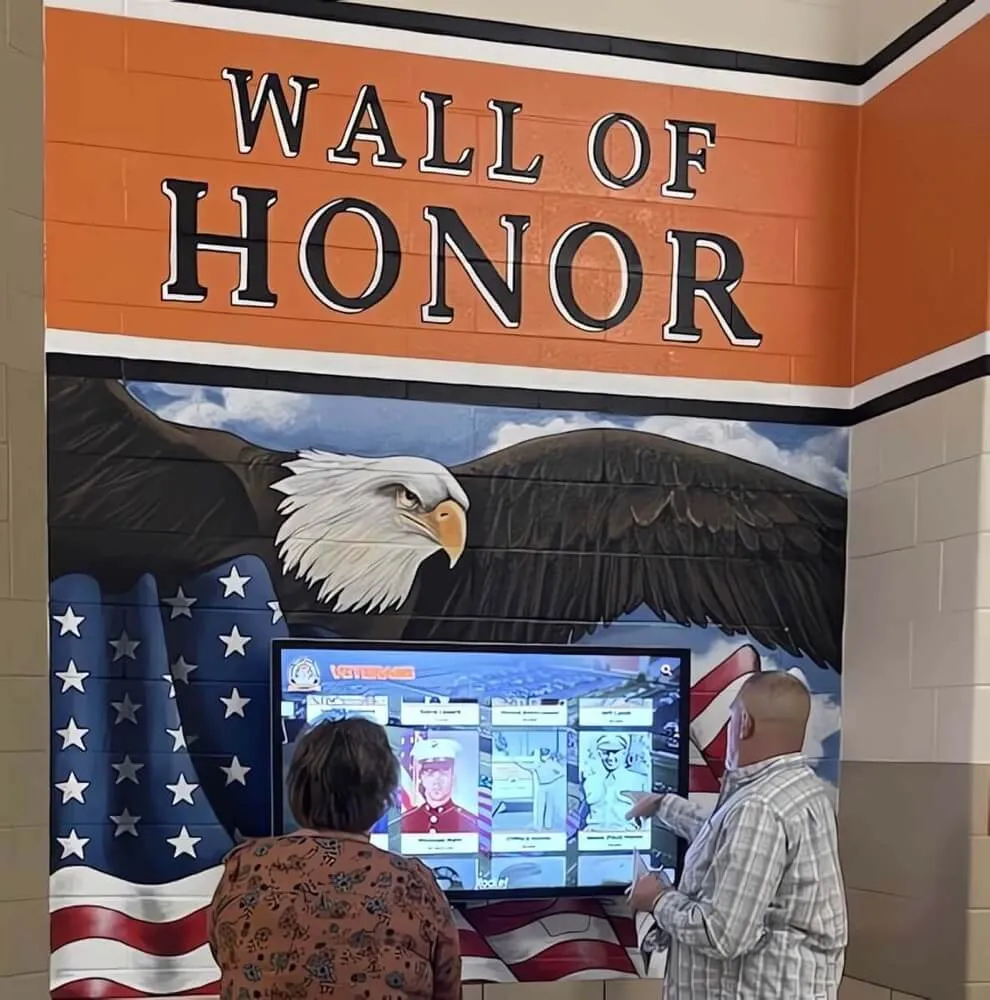
Digital recognition systems accommodate unlimited championship content while maintaining professional presentation throughout facilities
The Recognition Challenge for E-Sports Championships
Traditional championship recognition methods—designed for physical sports decades ago—fundamentally cannot serve e-sports championships effectively, creating significant gaps in how gaming achievements receive celebration and preservation.
Physical Space Limitations
Traditional trophy cases and championship banners face severe capacity constraints that become particularly problematic for e-sports programs competing across multiple game titles.
Multi-Game Championship Recognition Needs
Unlike traditional sports programs that might celebrate football, basketball, and baseball championships, e-sports programs commonly compete for championships across five to ten different game titles simultaneously—League of Legends, Valorant, Rocket League, Overwatch 2, Super Smash Bros., Fortnite, Counter-Strike, Rainbow Six Siege, and numerous other competitive titles.
Each game title generates its own conference championships, tournament bracket documentation, and achievement history. A successful e-sports program might claim three to five conference championships annually across different games—achievement volume that quickly overwhelms physical trophy cases designed for one or two championships per year.
Physical banner space becomes similarly constrained. Schools with limited gym or hallway space for championship banners struggle to accommodate multiple e-sports championships without displacing traditional sports recognition or creating overcrowded displays that diminish individual championship significance.
Missing the Complete Championship Story
Traditional plaques listing championship years and team names provide minimal context about what made championships special—missing the complete narratives that make championship victories compelling and meaningful.
Tournament Journey Documentation
Conference championships represent culminations of complete tournament journeys—teams navigating playoff brackets, overcoming adversity, executing strategies, and ultimately claiming championship victories through specific matches and defining moments.
Traditional physical displays cannot showcase the bracket progression showing each playoff match, document key statistical performances across tournament rounds, present video highlights from championship matches, or capture post-victory celebrations and player reactions that bring championships to life.
This missing context reduces championships to simple year listings rather than preserving the complete stories that inspire current competitors and engage community audiences.
Roster and Individual Recognition
Championship teams comprise multiple individuals each contributing distinct roles—carries and support players, strategists and shot-callers, starters and substitutes. Traditional displays rarely provide space for complete roster documentation with individual player profiles, position designations, and personal statistics from championship seasons.
This oversight means individual contributors often receive minimal recognition beyond being listed among championship team names, failing to honor their specific contributions to team success appropriately.
Digital Content Disconnect
E-sports championships generate extraordinary volumes of digital content through live broadcasts, highlight reels, post-match interviews, statistical dashboards, and social media coverage. Traditional physical recognition cannot integrate this digital ecosystem that documents championships comprehensively.
Championship matches often reach audiences of hundreds or thousands through Twitch streams, YouTube broadcasts, and tournament platforms. Highlight reels capture spectacular plays, clutch moments, and championship-winning performances. Post-match interviews reveal player emotions, strategic insights, and team dynamics.
When recognition systems cannot incorporate this rich multimedia documentation, they miss opportunities to present championships in ways that resonate with gaming communities and preserve defining moments authentically.
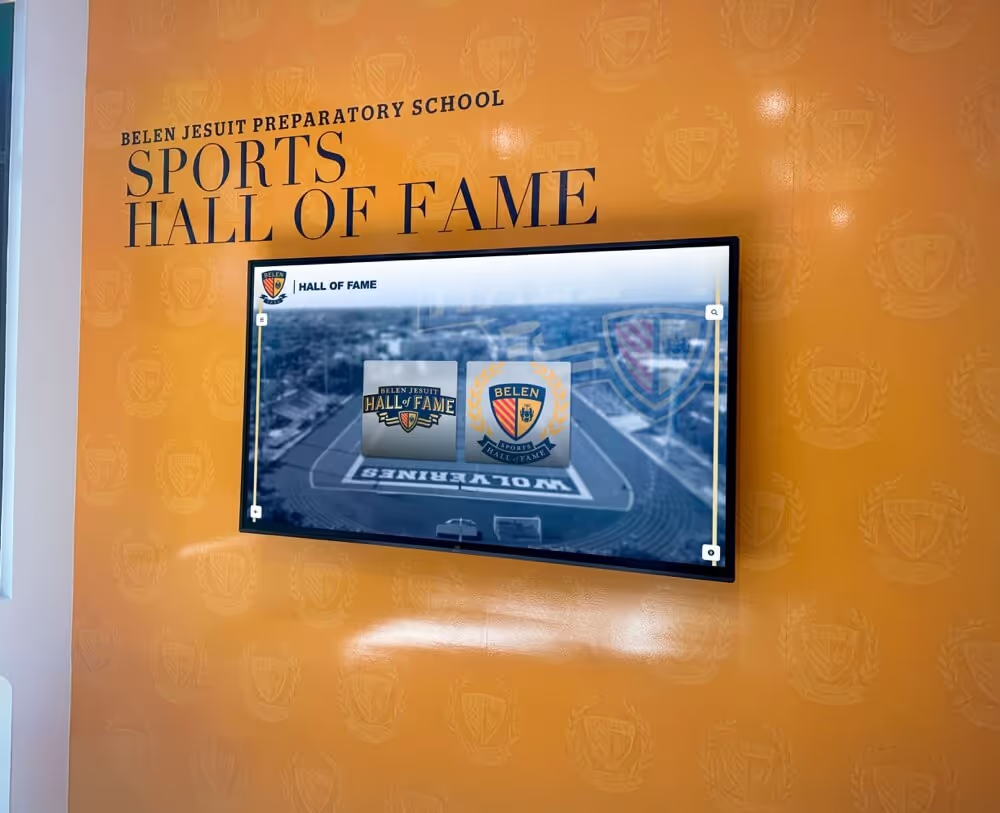
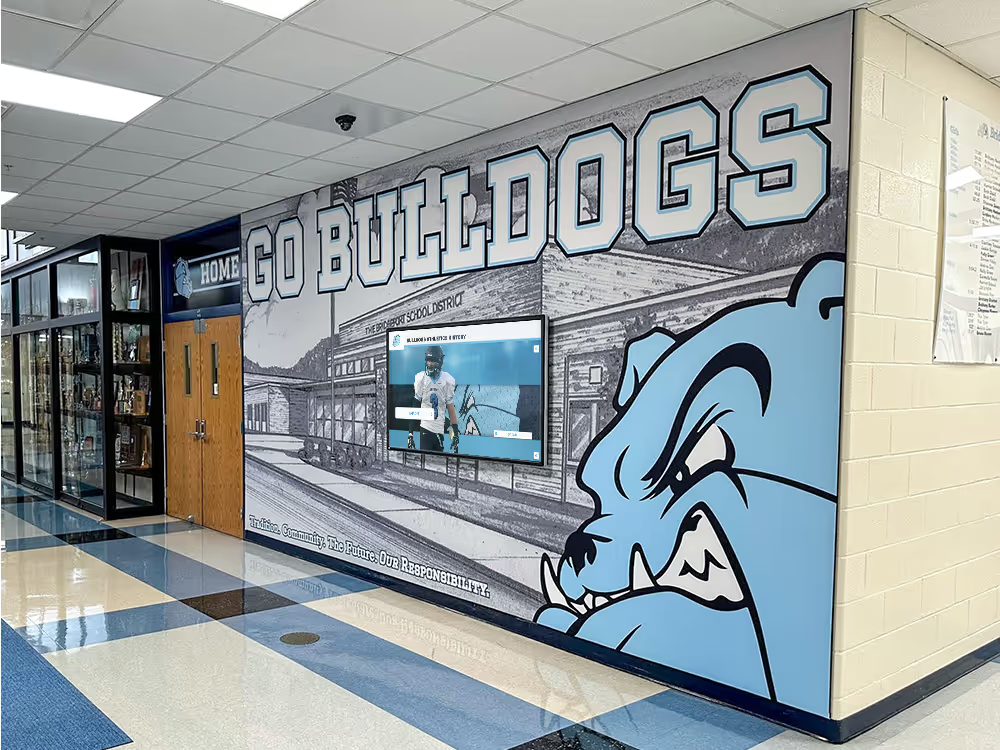
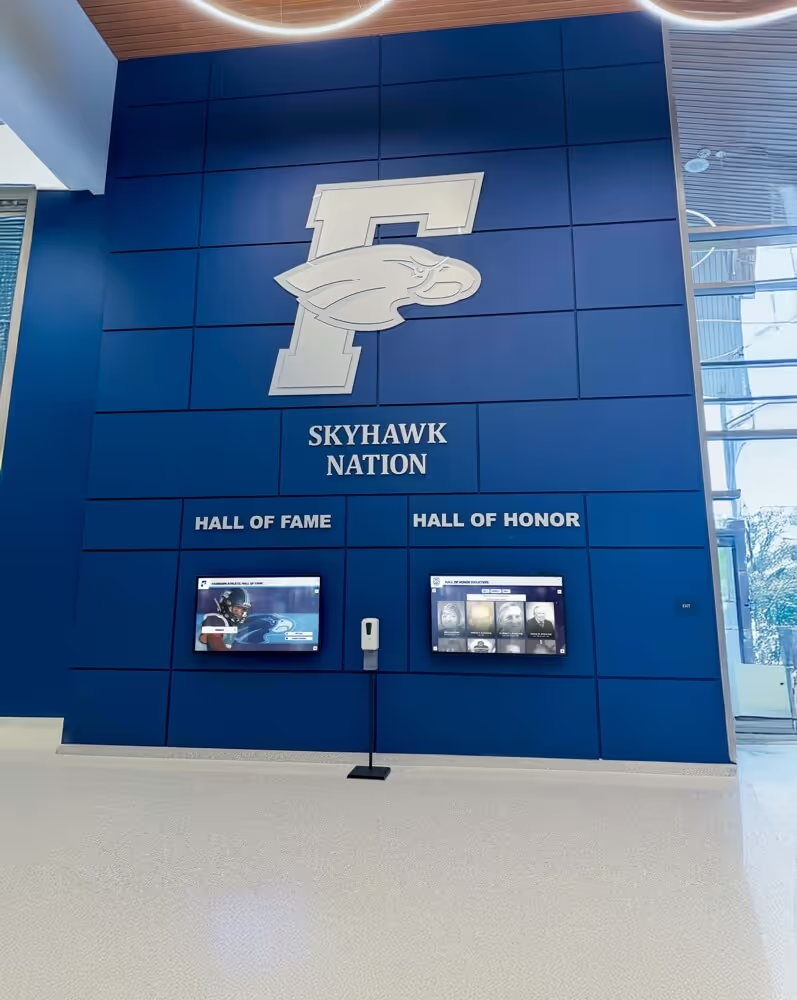
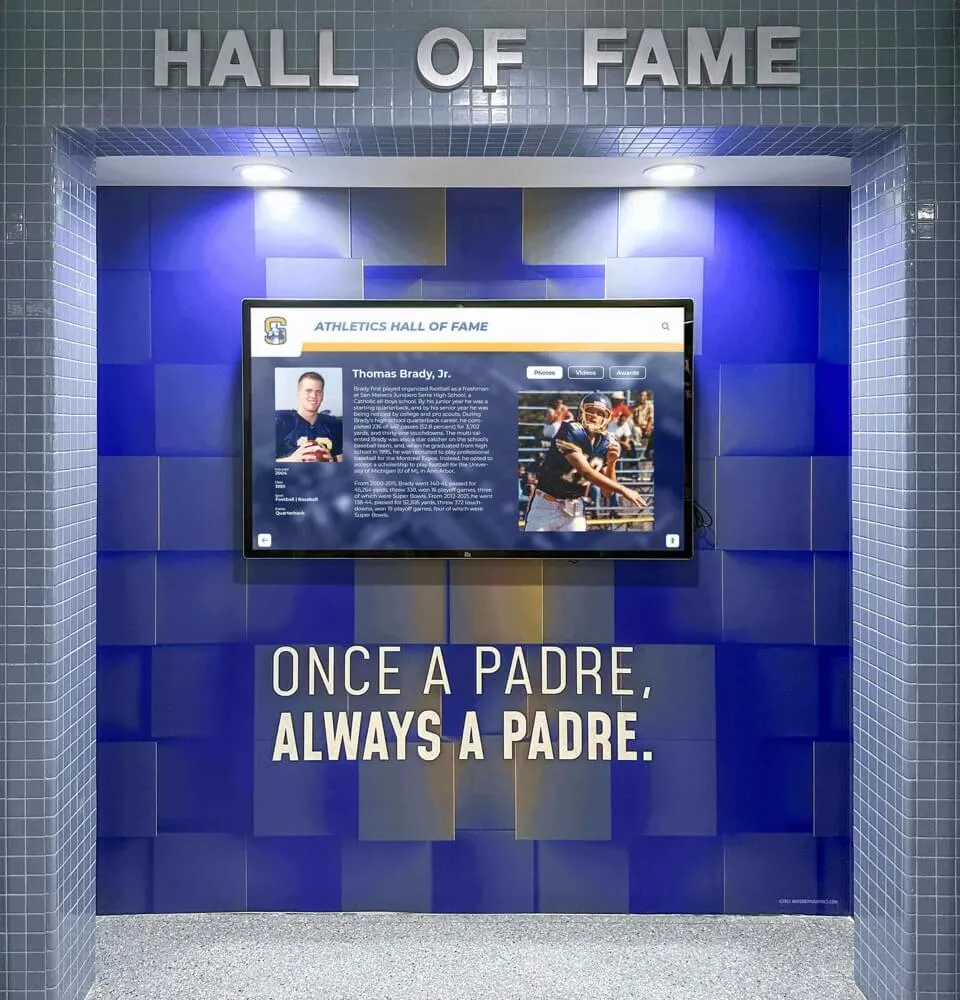
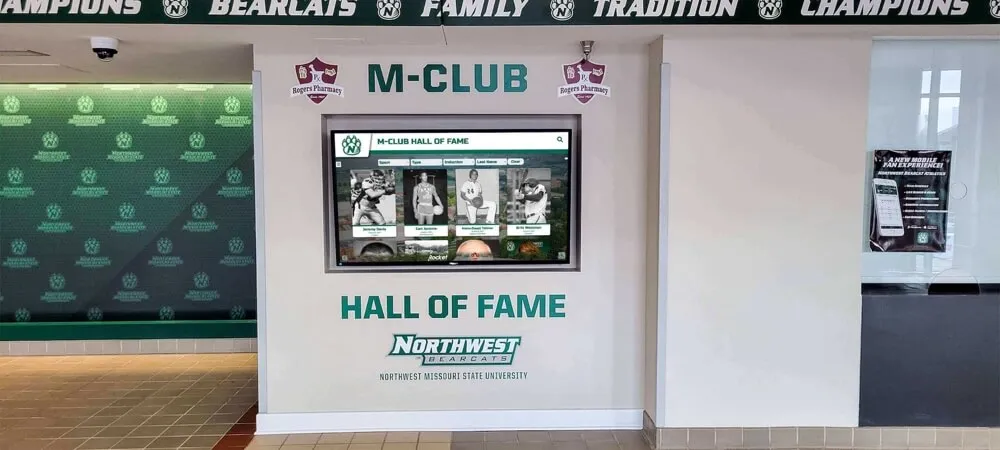
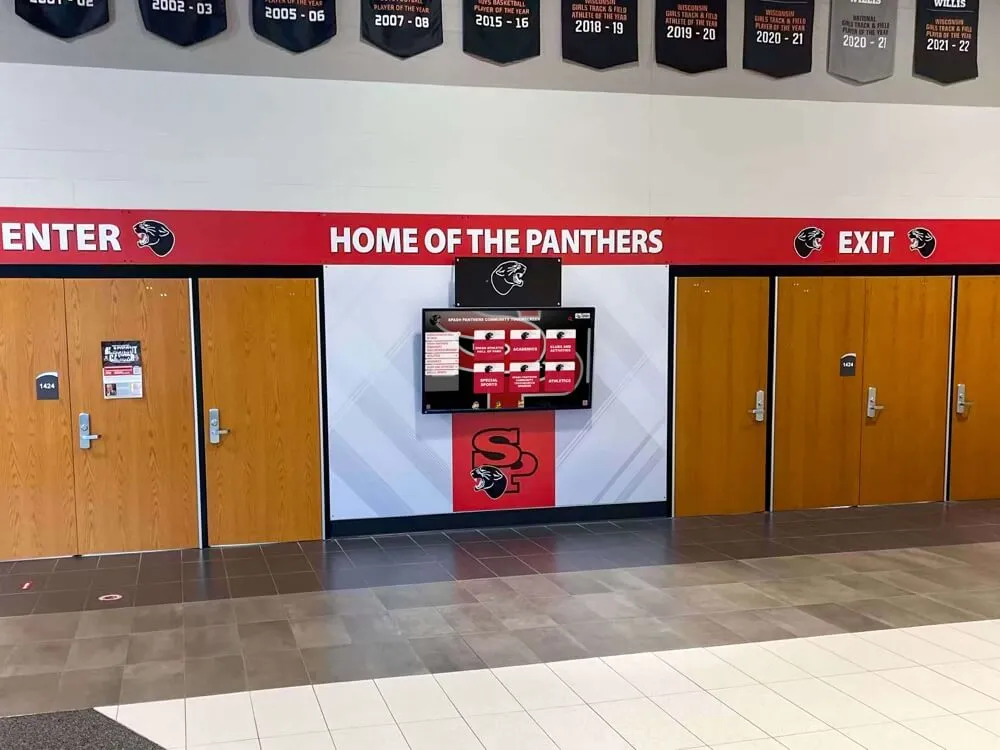
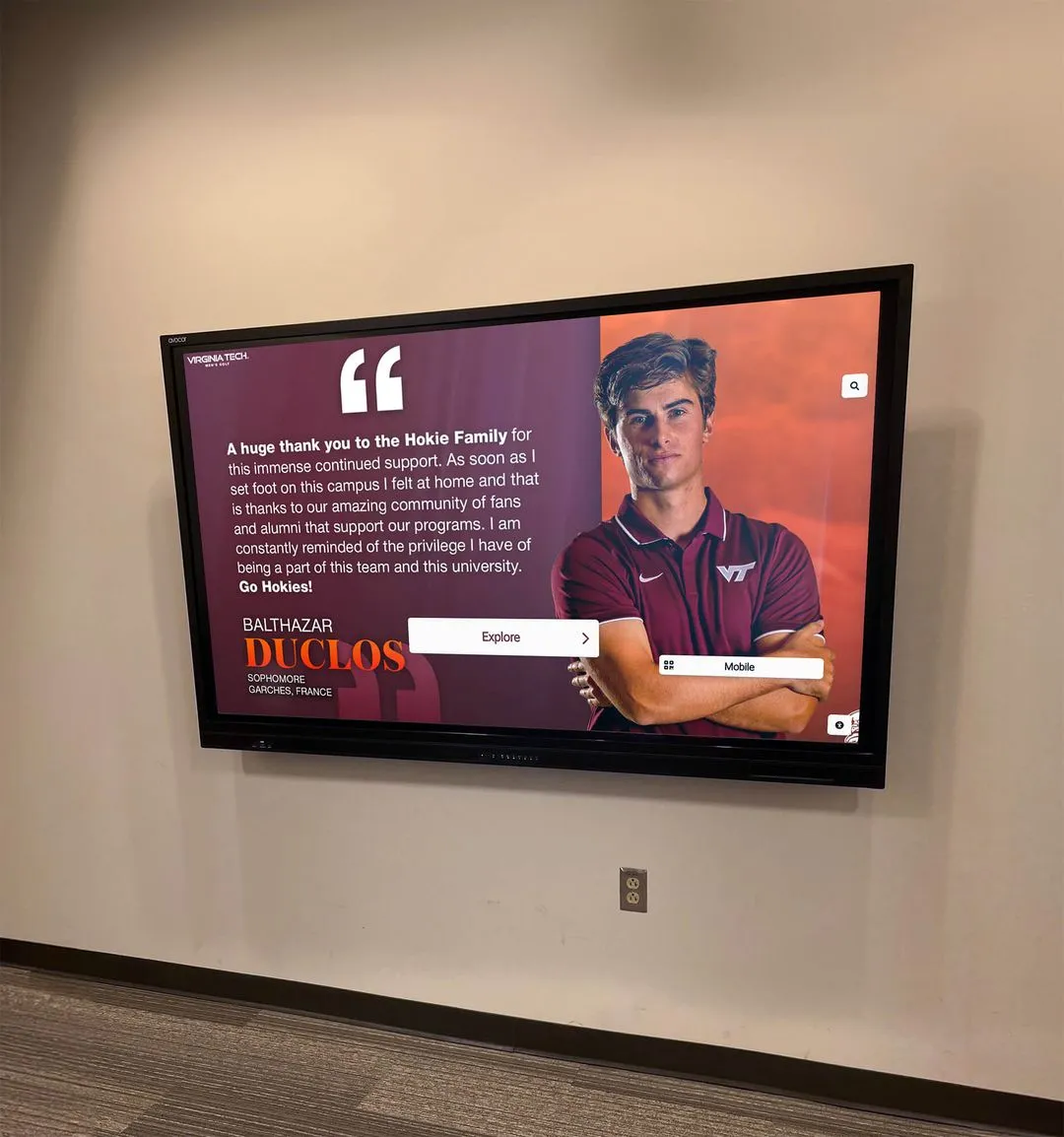

Rich multimedia profiles honor gaming champions with the depth and detail their achievements deserve
Digital Recognition Solutions for E-Sports Championships
Modern digital recognition platforms provide ideal infrastructure for e-sports championship celebration, solving limitations of traditional physical displays while delivering capabilities specifically suited to competitive gaming’s unique characteristics.
Interactive Touchscreen Championship Displays
Large-format interactive touchscreen displays represent the most visible and engaging component of comprehensive e-sports championship recognition systems, transforming passive trophy cases into immersive explorable experiences.
Unlimited Championship Capacity
Digital platforms eliminate physical space constraints that limit traditional recognition. A single touchscreen display can showcase dozens or hundreds of championship victories across all game titles and competitive seasons without requiring additional physical space or displacing existing recognition.
This unlimited capacity ensures every championship receives appropriate celebration—from major national victories to conference championships, from tournament wins to season titles—without forcing difficult decisions about which achievements deserve display prominence.
Schools fielding competitive e-sports teams across League of Legends, Valorant, Rocket League, Overwatch 2, Counter-Strike, and five additional titles can comprehensively document championships across all games through unified digital systems that maintain consistent presentation quality and accessibility.
Tournament Bracket Visualization
Interactive displays enable comprehensive tournament bracket documentation showing complete championship journeys. Users can explore bracket structures revealing each playoff match, view match scores and statistics from each tournament round, access video highlights from defining matches, and understand how teams advanced from initial playoff seeds through championship victories.
This tournament journey documentation transforms championship recognition from simple title claims into comprehensive narratives demonstrating exactly how teams achieved championship success—inspiring current competitors by illustrating the paths to similar achievement.
Game-Specific Organization and Filtering
With e-sports programs spanning multiple competitive titles, organization becomes critical for effective championship recognition. Digital systems enable intuitive navigation through filtering by specific game titles (League of Legends, Valorant, etc.), browsing by competitive season or academic year, searching for specific teams or players, viewing championships across all programs, and exploring content by championship type (conference, regional, national).
This organizational flexibility ensures audiences can quickly find relevant content whether interested in specific games, looking for particular seasons, or exploring complete championship histories across all titles.
Learn about comprehensive recognition approaches through championship celebration programs designed for diverse competitive activities.
Cloud-Based Championship Content Management
Behind impressive touchscreen hardware, cloud-based content management systems enable sustainable championship recognition program administration critical for long-term success.
Immediate Championship Updates
Championship recognition achieves maximum impact when displays update immediately following tournament victories. Cloud-based platforms enable instant content publication from any internet-connected device without requiring physical access to display hardware or technical expertise.
Athletic directors, e-sports coaches, or program administrators can photograph championship trophies, collect team rosters, write brief championship summaries, and publish complete championship recognition within hours of tournament victories—ensuring celebrations occur while excitement remains fresh and community interest peaks.
Template-Based Consistency
Purpose-built recognition platforms provide championship templates ensuring consistent professional presentation across all tournaments and game titles. Templates incorporate school branding, maintain visual consistency, organize information systematically, and streamline content creation reducing time requirements.
This template-driven approach ensures championships receive equivalent recognition quality regardless of which staff member creates content or which game title the championship represents—maintaining professionalism that honors achievement appropriately.
Multi-Location Display Synchronization
Schools and colleges implementing multiple recognition displays across different facility locations benefit from cloud-based synchronization ensuring consistent content across all installations. Championship updates publish simultaneously to displays in e-sports practice facilities, main school entrances, athletic hallways, and student commons areas—maximizing visibility without requiring separate content management for each location.
Solutions like Rocket Alumni Solutions provide specialized platforms designed specifically for championship recognition, incorporating development addressing e-sports program needs that generic digital signage systems cannot effectively support.
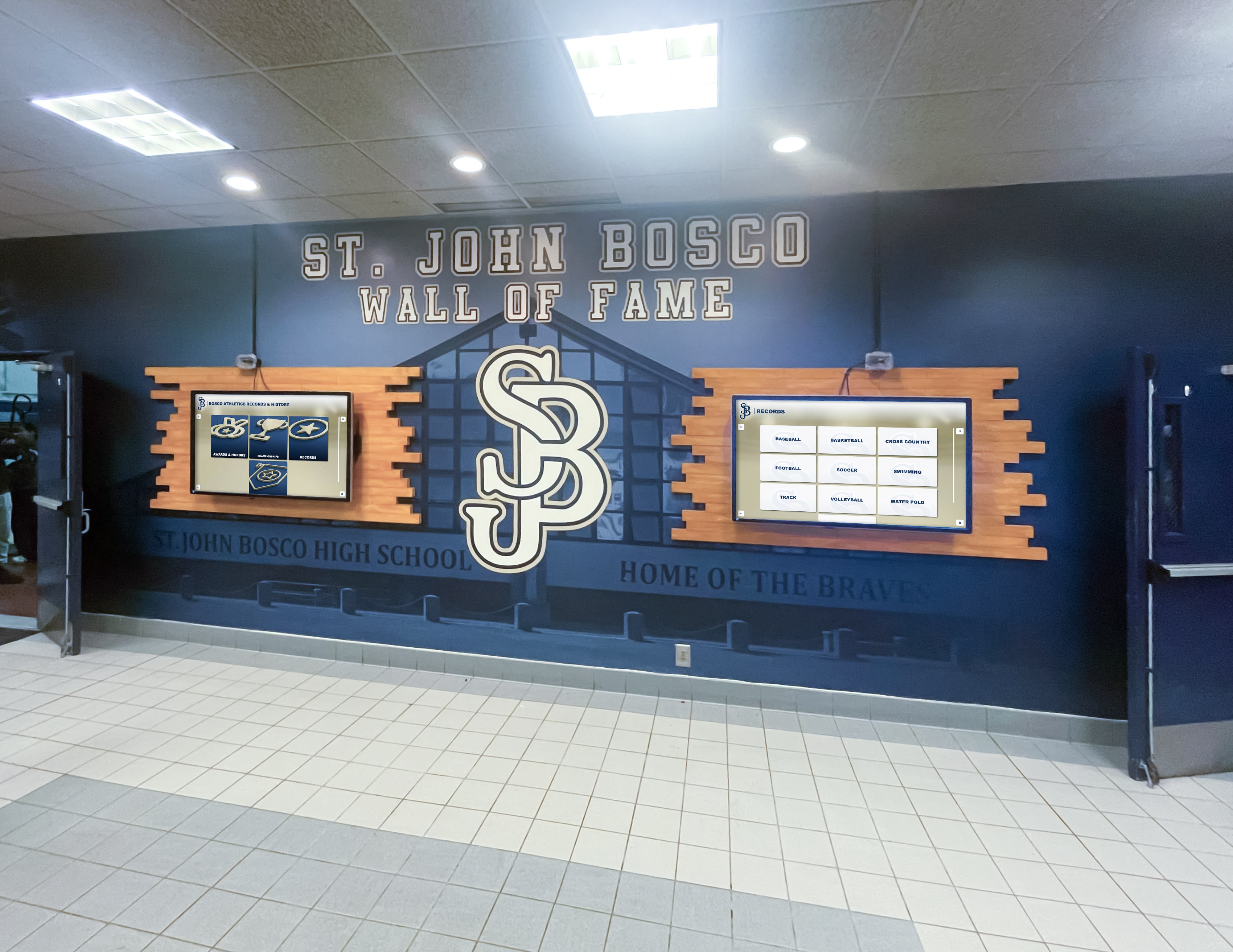
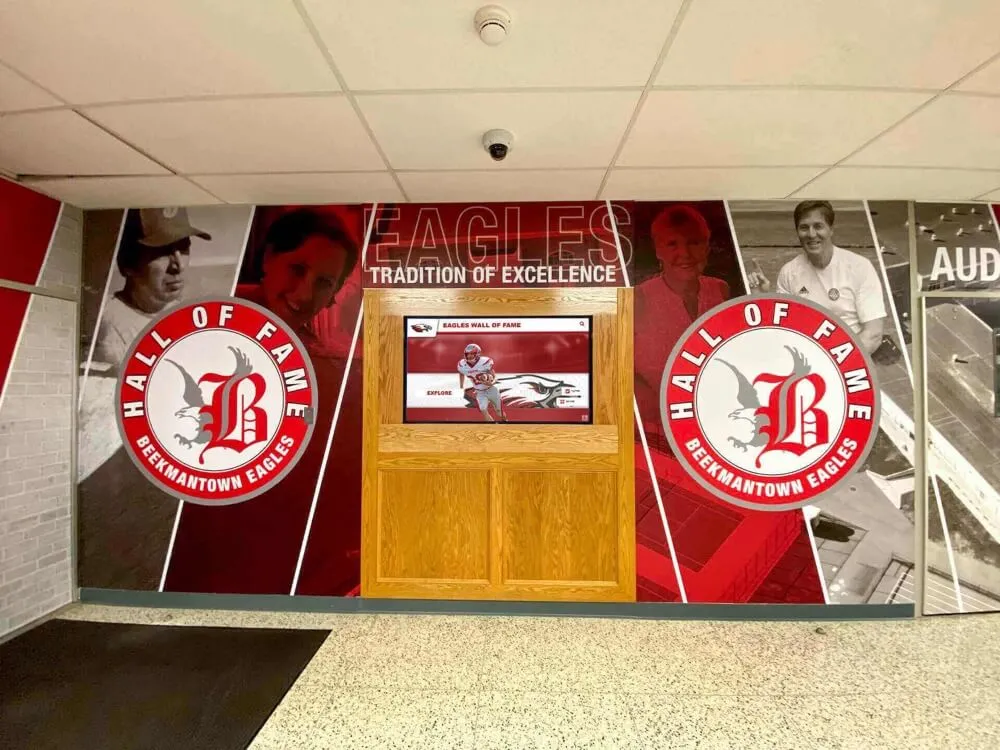
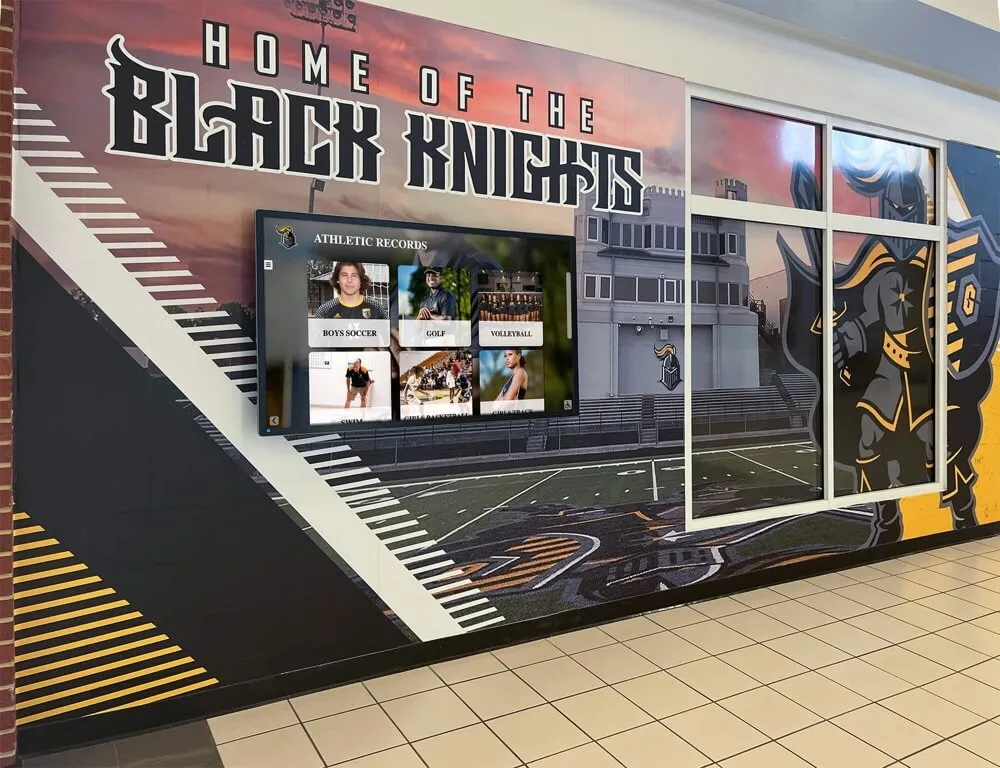
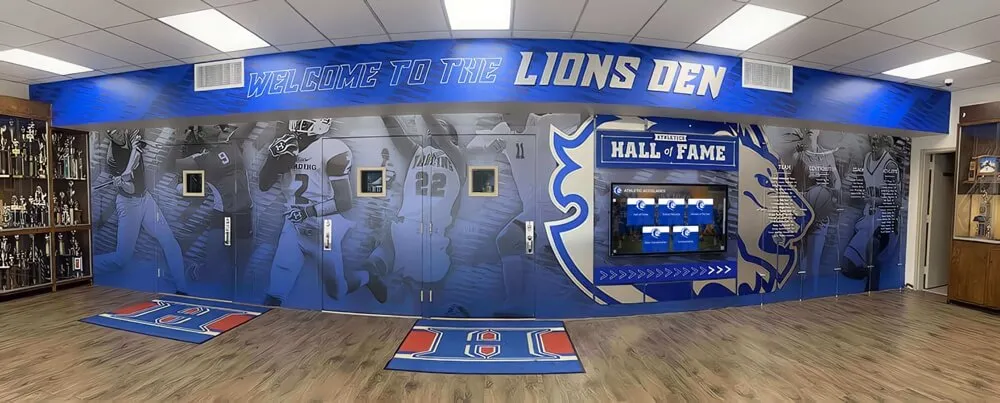
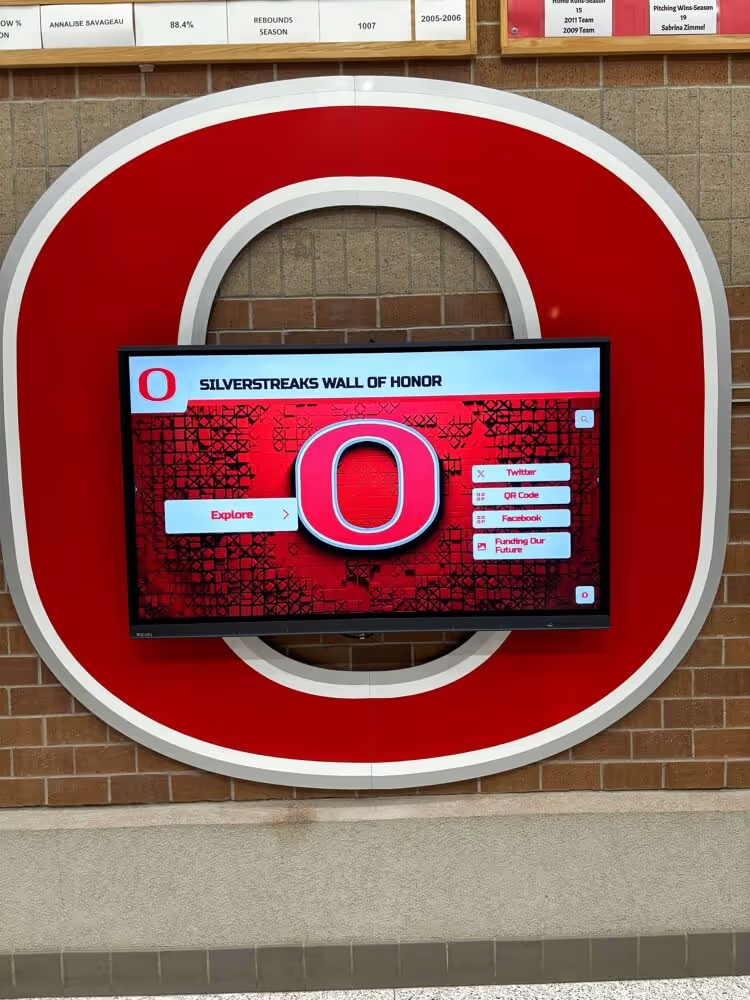
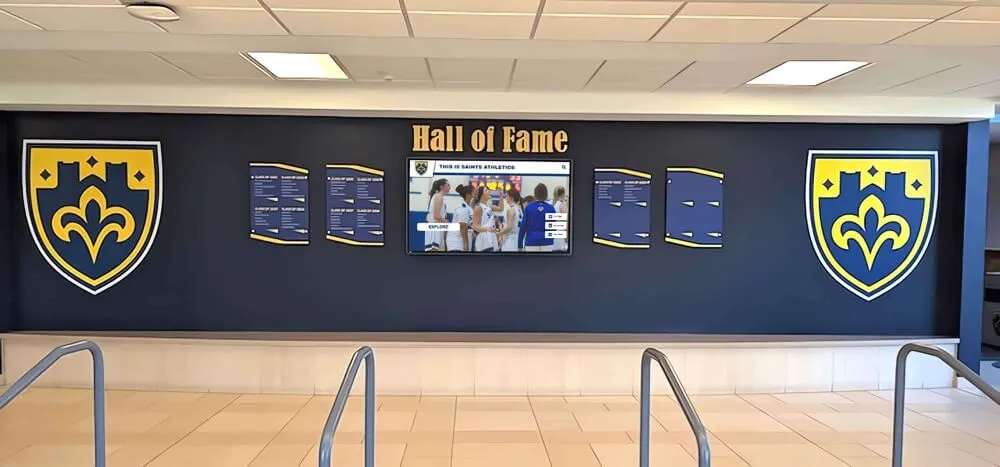
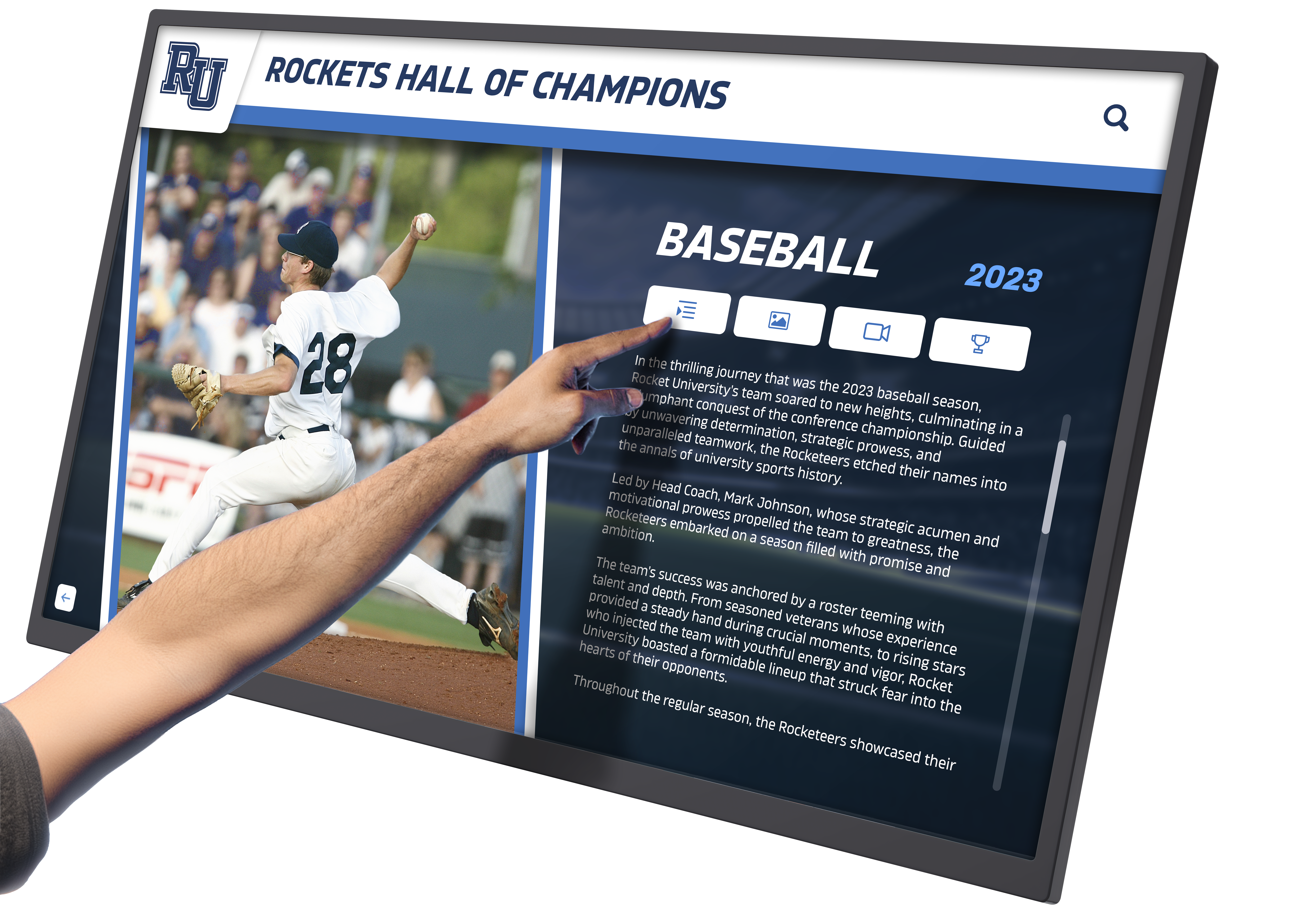
Comprehensive recognition systems integrate multiple displays to showcase diverse championships across all e-sports programs
Web-Accessible Championship Portals
While physical touchscreen displays create impressive on-campus experiences, web-accessible championship portals extend recognition far beyond facility visitors to global audiences including distant alumni, prospective recruits, and gaming communities.
24/7 Global Access
Web-based championship recognition provides accessibility impossible with physical displays limited to specific facility locations and operating hours. Alumni who competed years ago can access championship recognition from anywhere worldwide, prospective recruits evaluate program championship pedigree before campus visits, family members share championship achievements across social networks, gaming community members discover championship victories through search engines, and media outlets reference championship records for coverage and features.
This global accessibility aligns with gaming culture’s inherently digital nature—recognition platforms should meet gamers where they already exist rather than requiring physical presence for acknowledgment.
Mobile Optimization for Gaming Audiences
Modern e-sports audiences predominantly access digital content through smartphones and tablets. Championship recognition platforms must provide truly responsive mobile experiences optimized for smaller screens rather than simply displaying desktop interfaces on mobile devices.
Mobile optimization enables quick championship browsing during commutes, social sharing directly from personal devices, recruiting prospect research from anywhere, and alumni engagement from mobile-first younger generations who rarely access desktop computers outside work or school contexts.
Social Media Integration
Digital championship recognition extends reach through social media sharing capabilities. Players share their championship profiles celebrating personal achievements, families promote student accomplishments across networks, programs amplify championship announcements to boost institutional visibility, and gaming communities spread recognition organically through shared interest.
This social amplification multiplies recognition impact far beyond physical displays or official institutional communications alone, creating viral celebration opportunities that traditional recognition cannot achieve.
Discover comprehensive platform capabilities through digital recognition solutions designed specifically for modern championship celebration.
Creating Comprehensive Championship Recognition Content
Digital recognition technology enables impressive championship celebration, but strategic content development determines whether systems achieve intended engagement and cultural impact objectives.
Essential Championship Information
Comprehensive e-sports conference championship recognition requires specific information documenting achievement context, competitive excellence, and individual contributions.
Core Championship Details
Every championship recognition should include championship title and designation (Conference Champions, Regional Champions, etc.), specific game title (League of Legends, Valorant, Rocket League, etc.), competitive season and championship date, hosting organization or conference name, championship event location, and final tournament placement or victory margin.
This foundational information provides essential context enabling audiences to understand championship significance, competitive level, and achievement scope immediately.
Team Roster Documentation
Complete roster documentation honors every contributor to championship success, not just star players who receive attention during competition. Comprehensive rosters should include all starting players with positions or roles, substitute players who contributed throughout seasons, coaches and assistant coaches who guided strategy, analysts who prepared scouting reports and opponent research, team managers who handled logistics and coordination, and program administrators who built infrastructure enabling competition.
This inclusive recognition demonstrates that championship success requires complete team efforts—validating contributions across all roles rather than focusing narrowly on competitive players alone.
Tournament Journey Narrative
Championship victories become most compelling when recognition documents complete tournament journeys rather than simply announcing final results. Effective narratives include regular season records establishing playoff seeding, playoff bracket progression showing path to championships, key match descriptions from defining victories, statistical leaders and outstanding individual performances, obstacles overcome throughout tournament progression, and post-championship reactions from players and coaches.
These narrative elements create engagement impossible with simple championship title listings—visitors understand not just that teams won championships but how those victories happened and what made them special.
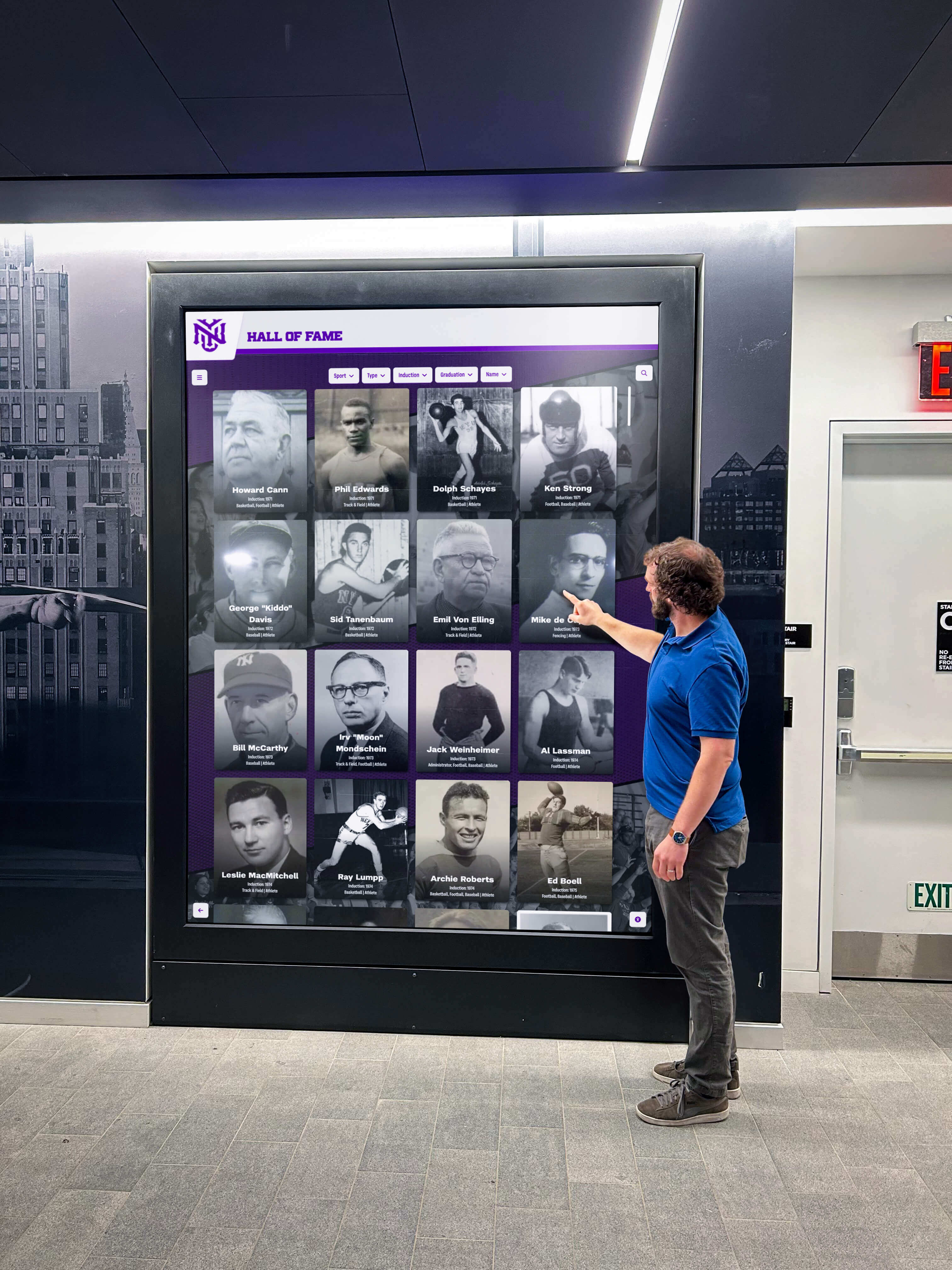
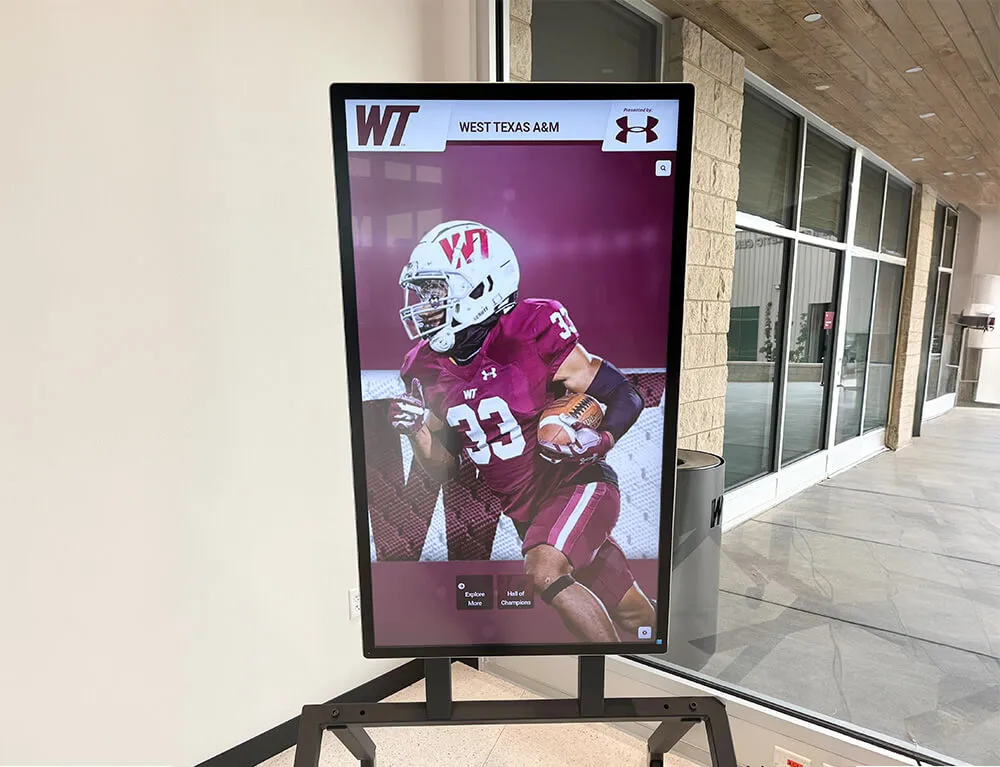
Strategic placement in high-traffic areas ensures championship recognition reaches entire school communities and visiting recruits
Multimedia Content Integration
The most compelling e-sports championship recognition incorporates multimedia content that demonstrates competitive excellence and preserves defining championship moments.
Championship Match Highlights
Video highlights bring championship recognition to life in ways static text and images cannot achieve. Championship-winning plays captured from broadcast feeds, clutch performances in decisive moments, outstanding individual plays showcasing skill excellence, team coordination examples highlighting strategic execution, and post-victory celebrations capturing emotional championship moments all transform recognition from documentation into compelling storytelling.
Short highlight clips typically 15-45 seconds work particularly well for recognition displays, providing quick visual demonstrations of excellence without requiring extended viewing time. Longer full match replays and tournament VODs can be linked for audiences wanting deeper engagement with specific championship matches.
Player and Coach Interviews
First-person perspectives add depth and humanity to championship documentation. Short video or written interviews can explore what winning championships meant to individuals, how teams prepared for championship tournaments, key strategic decisions that influenced outcomes, memorable moments from championship matches, and advice for current competitors pursuing similar achievements.
These personal narratives help audiences connect emotionally with championships beyond simply viewing match results—understanding the dedication, pressure, strategy, and emotion inherent in championship competition.
Statistical Documentation and Leaderboards
E-sports championships generate comprehensive statistical data documenting performance across multiple dimensions. Championship recognition should incorporate individual statistical leaders from championship tournaments, team performance metrics across tournament matches, comparative statistics showing achievement significance, career statistics for players achieving championships, and historical championship records across program history.
This statistical documentation serves multiple purposes—validating achievement through objective measures, enabling comparison across seasons and eras, providing recruiting proof of competitive excellence, and satisfying gaming communities’ strong interest in performance metrics.
Explore systematic approaches to championship documentation through athletic recognition programs that celebrate complete team achievements.
Historical Championship Context
Placing current championships within program history creates powerful tradition narratives that inspire current competitors while building institutional identity around competitive excellence.
Championship Timelines
Interactive timelines documenting complete championship histories enable exploration across program evolution. Users can browse championships chronologically across decades, filter by specific game titles, compare championship frequencies across different eras, and understand how programs developed competitive traditions over time.
This historical context transforms individual championships from isolated achievements into components of larger program excellence narratives—demonstrating sustained competitive success that validates program quality and inspires continued pursuit of championship additions.
First Championship Recognition
First championship victories deserve special recognition acknowledging their foundational significance in program history. These breakthrough moments established programs as legitimate competitive forces, validated institutional investment in e-sports, created belief that championships were achievable, and set standards inspiring future championship pursuits.
Prominent first championship recognition demonstrates institutional respect for program pioneers who proved competitive gaming belonged alongside traditional athletics—building appreciation for how current championship opportunities became possible.
Repeat Championship Dynasty Documentation
Programs achieving repeat championships in specific games warrant special dynasty recognition celebrating sustained excellence. Multiple championship victories demonstrate that success resulted from sustainable program excellence rather than single-season flukes, validate recruiting pipelines and player development systems, establish championship cultures and winning expectations, and create intimidation factors advantaging programs in future competition.
Dynasty documentation celebrating three-peat champions, five-year championship runs, or decade-long competitive dominance creates aspirational standards inspiring current competitors while building program prestige that attracts future talent.

Integrated recognition systems combine traditional aesthetics with modern digital capabilities for comprehensive championship celebration
Strategic Display Placement for Maximum Impact
Effective championship recognition requires thoughtful display placement ensuring visibility among priority audiences including current competitors, prospective recruits, school communities, and visiting families.
E-Sports Practice and Competition Facilities
Primary display placement should occur in spaces where e-sports teams practice and compete daily, ensuring championship recognition remains visible to current competitors throughout their regular program participation.
Practice Room Visibility
Displays positioned prominently in e-sports practice facilities serve critical motivational functions. Current competitors see championship recognition daily during practice sessions, understand the standards previous teams achieved, visualize themselves earning similar recognition, and internalize championship expectations as program culture.
This constant exposure to championship achievement creates psychological effects—normalizing excellence, building belief that championships are achievable, establishing winning mindsets, and creating healthy competitive pressure to add new championships to existing recognition.
Competition Area Integration
For programs hosting home matches and tournaments, recognition displays in competition spaces serve additional purposes. Visiting opponents see championship credentials creating intimidation factors, spectators understand program competitive pedigree, broadcasters reference championship histories during match coverage, and home competitors draw energy from championship traditions during matches.
This competition integration transforms recognition from historical documentation into active competitive advantage supporting current team success.
Main School Entrances and Common Areas
Strategic placement in high-traffic institutional spaces ensures championship recognition reaches broad school communities beyond just e-sports participants.
Entrance Lobby Displays
Positioning championship recognition in main school entrances ensures every student, visitor, and community member encounters e-sports achievements immediately upon arrival. This prominent placement communicates that gaming championships receive institutional respect equivalent to traditional sports, demonstrates e-sports integration into complete athletic programs, builds broader community awareness about competitive gaming excellence, and influences prospective student families evaluating school culture and opportunities.
Main entrance visibility particularly benefits e-sports programs still building institutional acceptance—prominent championship recognition normalizes competitive gaming and validates e-sports as legitimate athletics worthy of celebration alongside traditional sports.
Student Commons and Gathering Spaces
Displays in cafeterias, student centers, and common areas where students naturally congregate ensure championship recognition engages students who might not visit e-sports-specific facilities. This broad visibility builds general student body awareness, attracts prospective participants who discover e-sports through recognition, creates social conversation opportunities around championships, and demonstrates inclusive recognition celebrating diverse achievement types.
Schools implementing recognition in multiple distributed locations rather than single centralized displays often achieve higher overall engagement and broader community impact.
Learn about strategic placement through recognition display planning that maximizes visibility and engagement.
College Counseling and Recruiting Areas
For high schools and colleges emphasizing e-sports’ role in college recruiting and scholarship opportunities, championship recognition in counseling spaces serves specific strategic purposes.
College Planning Context
Championship displays positioned in college counseling areas demonstrate to students and families that competitive gaming creates legitimate pathways to collegiate opportunities including athletic scholarships, team roster positions, and program participation. This visibility helps families understand that e-sports championships represent not just gaming achievements but resume credentials valuable for college applications and recruiting.
College counselors can reference championship recognition during planning conversations, connect current students with alumni who competed at collegiate levels, and legitimize e-sports participation as college planning strategy rather than just recreational activity.
Recruiting Prospect Impressions
Championship recognition in spaces where prospective recruits and families wait or gather creates powerful recruiting impressions. Prospects evaluate program championship pedigree, understand competitive expectations and standards, see evidence of pathway from participation to championship success, and assess whether program culture aligns with their competitive ambitions.
This recruiting influence justifies recognition investment through measurable impacts on prospect decisions—programs with impressive championship recognition report consistent feedback from recruits and families commenting specifically on recognition quality during campus visits.
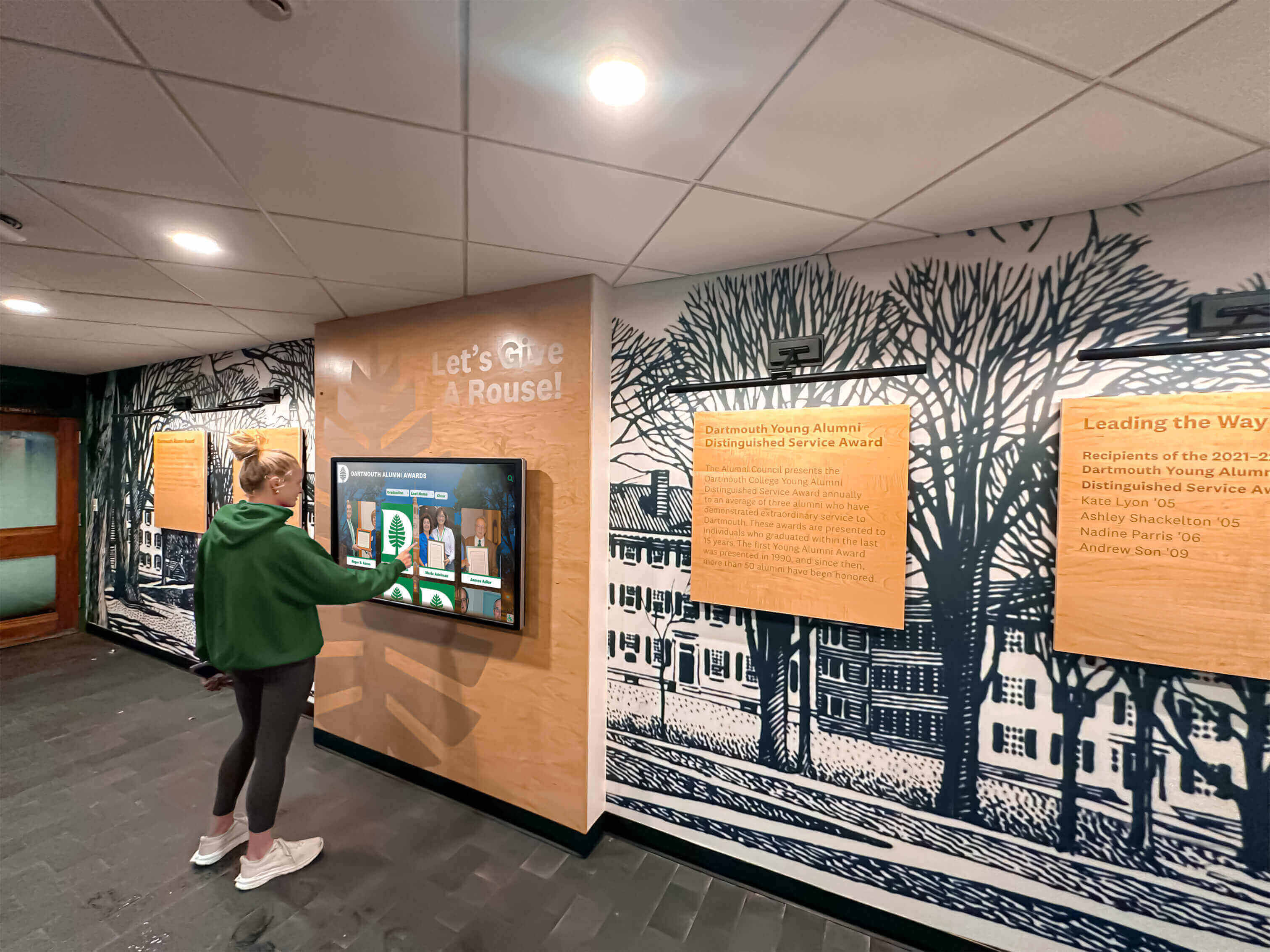
Interactive exploration enables students to discover inspiring championship stories and achievement pathways at their own pace
Celebrating Championships Across All Competitive Levels
Comprehensive e-sports championship recognition should celebrate achievements across complete competitive hierarchies rather than recognizing only the highest-level victories while ignoring other accomplishments.
Conference Championship Recognition
Conference championships represent primary competitive goals for most e-sports programs, warranting prominent recognition celebrating these foundational achievements.
Regular Conference Championships
Teams winning conference championships in leagues like NACE, ECAC Esports, or regional high school conferences achieve significant competitive milestones demonstrating sustained excellence across complete seasons against peer institutions. These championships deserve comprehensive recognition including complete tournament documentation, individual player statistics and honors, coaching acknowledgment, and historical context about championship significance.
Conference championships often prove more meaningful to programs than isolated tournament victories because they validate season-long excellence rather than single-event performance—justifying recognition emphasis on these achievements.
Conference Tournament Championships
Many conferences conduct season-ending tournaments separate from regular season competition. Tournament championships bring unique significance as high-pressure single-elimination competitions determining conference supremacy. Recognition should distinguish between regular season conference champions and tournament champions when both titles exist, honor both achievement types equivalently, and document tournament bracket progressions showing paths to tournament championships.
This distinction ensures complete championship documentation rather than allowing one championship type to overshadow the other inappropriately.
Regional and State Championships
Beyond conference competition, regional and state championship tournaments create additional recognition opportunities celebrating geographic competitive supremacy.
State Championship Events
State championships like the Texas Scholastic Esports Federation Undisputed State Championships, featuring nearly 1,400 middle and high school students competing in eleven game titles, represent pinnacle achievements for high school programs. State championship victories warrant premier recognition celebrating these exceptional accomplishments.
State championship recognition should emphasize competitive scope (number of competing schools), document complete tournament experiences including travel and event participation, celebrate coaching excellence that enabled championship success, and position victories within state competitive history.
Regional Tournament Victories
Regional championships bringing together schools from multiple states or large geographic areas similarly deserve prominent recognition. These victories demonstrate competitive excellence beyond local or conference competition, validate program quality against broader competitive fields, and create championship traditions that build program prestige attracting future talent.
Explore comprehensive championship celebration through recognition programs honoring achievements across all competitive levels.
National Championship Recognition
National championships represent ultimate competitive achievements in e-sports hierarchies, warranting the most prominent recognition celebrating these exceptional accomplishments.
National Association Championships
Championships awarded by national organizations like NACE, NECC, or specialized game-specific governing bodies represent the highest competitive level in collegiate and high school e-sports. National championship victories deserve premier recognition including prominent display placement ensuring maximum visibility, comprehensive multimedia documentation with extensive highlights, individual player career retrospectives for championship contributors, coaching milestone recognition for national championship victories, and historical program significance analysis of national championship impact.
National championships create defining program moments that shape competitive identity for decades—recognition should reflect these achievements’ extraordinary significance.
Major Tournament Championships
Beyond conference-based competition, major independent tournaments and invitationals create additional championship opportunities. Programs winning prestigious invitational tournaments, major LAN events, or national open competitions achieve recognition-worthy victories even if outside formal conference structures.
Inclusive recognition honoring diverse competitive achievements demonstrates that excellence matters regardless of specific competitive format—validating all paths to championship success rather than narrowly recognizing only one competitive structure.
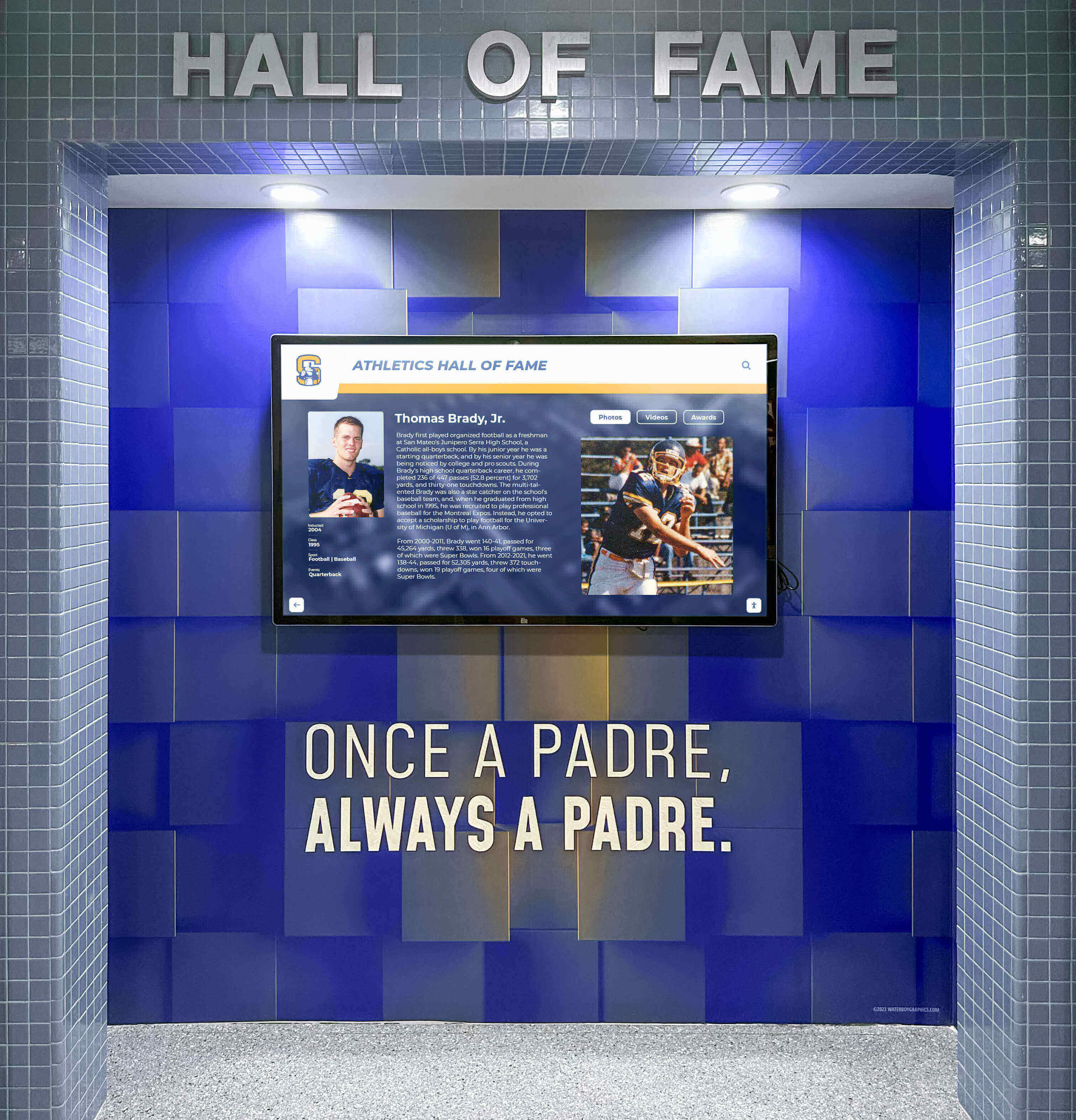
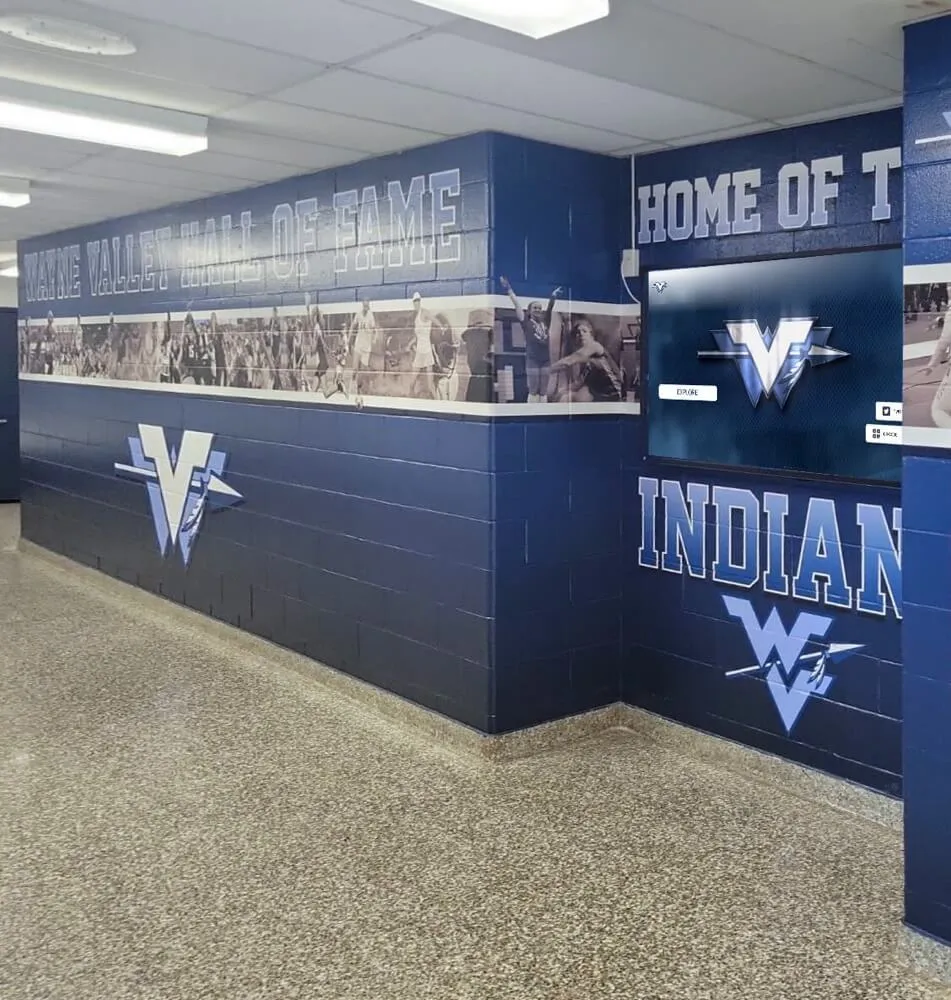
Professional installations integrate seamlessly with facility architecture creating permanent championship celebration landmarks
Building Championship Culture Through Recognition
E-sports championship recognition serves purposes beyond acknowledging past achievements—properly implemented systems actively build championship cultures that inspire current competitors while establishing competitive expectations and standards.
Creating Aspirational Models for Current Teams
When current competitors regularly encounter comprehensive championship recognition, psychological and cultural impacts significantly influence program success.
Championship Visualization
Regular exposure to championship recognition helps current players visualize themselves achieving similar success. They see specific pathways others followed to championships, understand what championship achievement requires at various competitive levels, discover role models who excelled in their specific positions or games, and internalize championship pursuit as achievable goal rather than abstract aspiration.
This visualization effect particularly benefits programs with established championship traditions—newcomers joining programs see immediate evidence that championships represent realistic expectations rather than distant possibilities.
Standard Setting and Expectation Building
Prominent championship recognition communicates clear program standards and competitive expectations. New team members understand that championships define program success, mediocre performance contradicts established program traditions, sustained excellence represents baseline expectation not exceptional achievement, and joining programs means accepting responsibility to maintain championship standards.
This expectation setting creates healthy competitive pressure distinguishing programs with winning cultures from those treating competition casually—recognition actively shapes program culture rather than simply documenting it passively.
Historical Connection and Program Pride
Championship recognition connects current competitors to program legacies and traditions spanning years or decades. Modern players understand they represent continuation of championship traditions, feel responsibility to honor previous champions’ achievements, draw inspiration from program pioneers who established competitive excellence, and develop genuine pride in program affiliation beyond individual participation.
This historical connection strengthens program identity and creates emotional bonds transcending individual competitive careers—building sustainable program cultures that survive roster turnover and generational change.
Discover approaches to building competitive culture through recognition programs that inspire excellence across athletic programs.
Attracting Competitive Talent Through Championship Credentials
In competitive e-sports recruiting environments, championship credentials significantly influence prospect decision-making, making recognition systems strategic recruiting investments rather than simple historical preservation.
Recruiting Proof of Competitive Excellence
Elite gaming prospects evaluating program options carefully assess championship pedigrees determining which programs offer realistic championship opportunities. Comprehensive championship recognition provides tangible evidence of competitive program quality, validates coaching effectiveness through documented championship success, demonstrates institutional commitment to competitive excellence, and differentiates programs from competitors without championship credentials.
Programs with impressive championship recognition consistently report recruiting advantages, with prospects commenting specifically on championship traditions during decision processes and families referencing championship displays as evidence of program quality.
Championship Pathway Demonstration
Beyond simply proving championship success, effective recognition demonstrates clear pathways showing how previous players achieved championships. Prospects see documented progression from program entry to championship contribution, understand development systems that enabled championship success, and visualize themselves following similar trajectories from recruitment through championship achievement.
This pathway clarity particularly benefits programs recruiting players from competitive gaming backgrounds who evaluate programs systematically based on championship track records and player development evidence.
Championship Momentum and Program Trajectory
Current championship success creates recruiting momentum by demonstrating that programs maintain competitive relevance and championship standards. Recent championship recognition signals that programs compete at highest levels currently not just historically, indicates strong coaching and infrastructure supporting continued success, suggests championship opportunities remain available for incoming recruits, and creates psychological attraction to joining winning programs versus rebuilding struggling competitors.
This momentum effect means championship recognition delivers ongoing recruiting value rather than becoming stale historical documentation—recent championships directly influence current recruiting success.
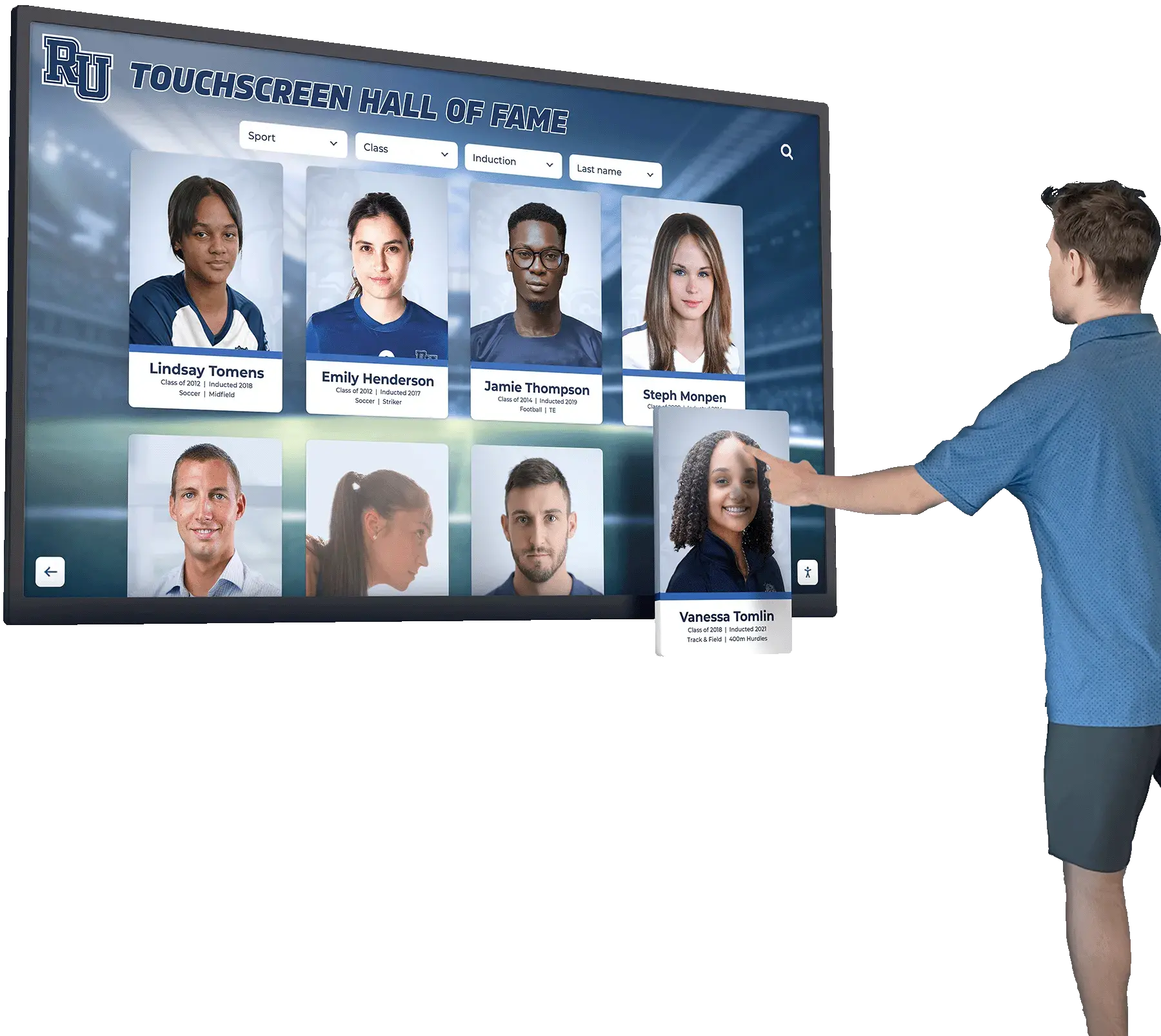
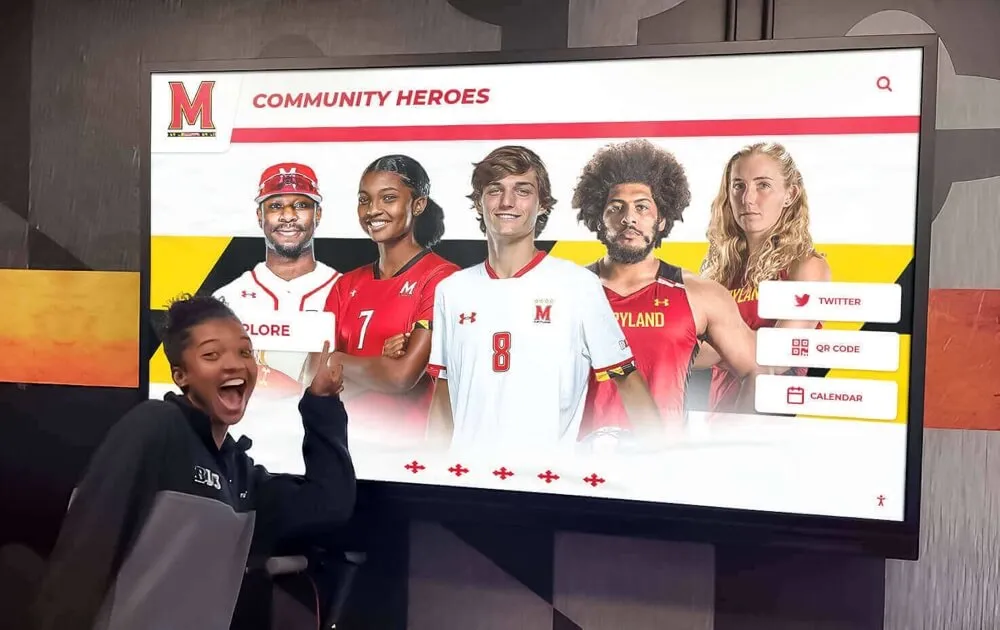
Engaged exploration demonstrates recognition's power to create meaningful connections with championship achievements
Implementation Planning and Best Practices
Successfully implementing e-sports conference championship recognition requires systematic planning addressing technology selection, content development, budget allocation, and sustainable management.
Technology Platform Selection
E-sports programs evaluating championship recognition technology face numerous vendor options with dramatically different capabilities, costs, and suitability for gaming championship celebration.
Purpose-Built vs. Generic Solutions
Generic digital signage systems designed for advertising or general information display lack capabilities essential for effective championship recognition including searchable championship databases, player profile integration, tournament bracket visualization, statistical leaderboard presentation, multimedia highlight integration, and game-specific categorization.
Purpose-built recognition platforms like those from Rocket Alumni Solutions provide these championship-specific features without requiring custom development, incorporate years of refinement specifically addressing e-sports program needs, and offer athletic recognition expertise that generic signage vendors cannot match.
Essential Platform Capabilities
Comprehensive evaluation should assess unlimited championship content capacity without per-entry fees, intuitive content management enabling non-technical staff updates, template systems ensuring consistent professional presentation, mobile-responsive web access extending reach beyond physical displays, robust search and filtering enabling championship discovery, comprehensive analytics revealing engagement patterns, and reliable vendor support ensuring long-term system success.
Platforms meeting these criteria enable sustainable championship recognition programs while those lacking these capabilities create frustration and eventual system abandonment despite initial implementation investment.
Hardware Considerations
Display hardware selection should consider commercial-grade displays rated for continuous operation versus consumer TVs, appropriate screen sizes for viewing distances and space constraints, touchscreen capabilities versus standard displays based on interaction priorities, mounting systems ensuring secure professional installation, and network connectivity supporting content synchronization and updates.
Hardware represents significant upfront investment but typically lasts five to seven years, making quality selection critical for long-term satisfaction and avoiding premature replacement needs.
Learn about platform selection through technology evaluation guides addressing recognition system requirements.
Budget Planning and Funding Strategies
E-sports championship recognition represents significant investment requiring careful financial planning and creative funding approaches.
Implementation Cost Components
Typical comprehensive implementations include hardware costs of commercial displays and mounting ranging from $3,000-$8,000 per display, professional installation services from $800-$2,500 per display, recognition platform software setup from $2,000-$6,000, championship content development from $3,000-$8,000 for comprehensive initial documentation, and training and implementation support included or available as add-on services.
Complete single-display implementations typically range $10,000-$20,000 while comprehensive multi-display systems cost $25,000-$60,000 depending on scope and feature requirements.
Ongoing Operating Costs
Sustainable programs require budgeting for annual platform subscriptions and hosting from $2,000-$5,000 per year, content management staff time of 40-80 hours annually, technical support and maintenance from $1,000-$2,000 per year, and championship content updates and enhancements from $1,000-$3,000 per year.
Total annual operating costs typically range $4,000-$10,000 after initial implementation, requiring dedicated budget allocation for sustainable long-term operation.
Funding Approaches
Creative funding strategies can make championship recognition achievable for programs facing budget constraints. Booster organization support from e-sports or general athletic booster groups interested in program enhancement, donor naming opportunities for displays or comprehensive systems, athletic department budget allocation recognizing championship recognition serves recruiting and cultural objectives, grants and educational technology funding when recognition supports broader educational goals, and phased implementation beginning with single displays then expanding annually as budget permits all provide pathways to implementing championship recognition despite initial budget limitations.
Content Development and Launch Strategy
Technology infrastructure enables championship recognition, but comprehensive content development determines whether implementations achieve intended impact and engagement.
Historical Championship Research
Comprehensive recognition begins with thorough research documenting complete championship histories across all game titles and competitive seasons. Essential research sources include e-sports program records and coaching files, school yearbooks and student publications, tournament result archives from organizing associations, local media coverage and tournament reporting, statistical databases and league platforms, and coach and participant interviews capturing historical memory.
Programs should allocate 40-100 hours for comprehensive historical research depending on program age and documentation accessibility—foundational investment ensuring recognition quality and completeness from launch rather than gradual enhancement over years.
Championship Documentation Standards
Consistent documentation standards ensure professional quality across all championships. Standards should specify required information for each championship, photography and video specifications and formats, narrative writing guidelines and tone, statistical presentation requirements, and content review and approval processes.
These standards prevent quality inconsistencies that undermine recognition credibility and ensure every championship receives equivalent treatment regardless of game title, competitive level, or which staff member creates content.
Strategic Launch Planning
Thoughtful launches maximize impact and establish recognition as program priorities. Effective launches begin by recognizing recent championships first ensuring current teams and families engage immediately, expanding to historical championships gradually building complete documentation, hosting formal unveiling events celebrating recognition and inviting school community, generating media coverage highlighting championship tradition and institutional commitment, and promoting recognition consistently through regular announcements and social integration.
Strategic launches create excitement and engagement rather than quiet implementations that receive minimal attention and fail to achieve intended cultural impact.
Measuring Championship Recognition Impact
Assessment demonstrates recognition program value while identifying improvement opportunities ensuring systems achieve intended objectives and deliver appropriate return on investment.
Engagement Analytics and Usage Metrics
Modern digital recognition platforms provide quantitative data revealing how audiences interact with championship content and which features drive engagement.
Platform Analytics
Comprehensive analytics should track daily and weekly interaction frequency showing usage patterns, average session duration indicating content engagement depth, most-viewed championships identifying audience interests, search queries revealing how users discover content, geographic access locations showing alumni reach, device types informing mobile optimization priorities, social sharing frequency demonstrating organic promotion, and peak usage times enabling targeted content scheduling.
These metrics enable evidence-based decisions about content priorities, interface improvements, and strategic emphasis—moving beyond subjective opinions to data-driven optimization maximizing recognition effectiveness.
Comparative Assessment
Programs implementing new recognition systems benefit from establishing baseline metrics before implementation enabling meaningful impact assessment. Comparing pre-implementation and post-implementation metrics reveals whether recognition increases community awareness of championships, enhances program visibility and prestige, improves recruiting prospect engagement, and strengthens alumni connections to programs.
This comparative analysis helps justify recognition investment to administrators and stakeholders while identifying areas requiring enhancement for optimal results.
Qualitative Impact Indicators
Beyond quantitative metrics, qualitative feedback provides crucial insights about recognition program success and cultural impact.
Stakeholder Feedback Collection
Regular feedback reveals recognition impact from diverse perspectives. Current competitor perspectives about championship awareness and motivational impact, alumni responses regarding pride and connection to programs, prospect and family comments during recruiting processes, coach observations about cultural and recruiting advantages, and administrator assessment of program visibility and institutional benefit all provide valuable qualitative data informing program evaluation and enhancement.
Systematic feedback collection through surveys, interviews, and informal conversation documentation ensures programs capture these qualitative insights rather than relying exclusively on usage analytics that miss important context about recognition meaning and value.
Discover comprehensive assessment approaches through recognition program evaluation frameworks measuring impact across multiple dimensions.
Conclusion: Elevating E-Sports Through Championship Recognition
E-sports conference championships represent significant competitive achievements where teams invest months preparing, competing throughout regular seasons, advancing through playoff brackets, and ultimately claiming championship victories that define program excellence and competitive success. These championship moments deserve recognition infrastructure matching their significance while respecting gaming culture’s digital nature.
Traditional trophy cases and championship banners—designed for physical sports decades ago—fundamentally cannot serve e-sports championships effectively. Competitive gaming championships generate extensive digital content, span multiple simultaneous game titles, reach global gaming communities, and evolve continuously as new competitive formats emerge. Championship recognition must embrace these characteristics rather than forcing gaming into frameworks designed for entirely different competitive contexts.
Digital recognition platforms like Rocket Alumni Solutions provide purpose-built infrastructure specifically suited to e-sports championship needs through unlimited capacity for championships across multiple games and seasons, rich multimedia integration showcasing tournament highlights and championship moments, intuitive navigation enabling championship discovery and exploration, web accessibility extending recognition throughout global gaming communities, sustainable content management supporting frequent updates throughout competitive seasons, and comprehensive analytics demonstrating engagement and program value.
Transform Your E-Sports Championship Recognition
Discover how modern digital recognition solutions can help you celebrate every conference championship, showcase competitive excellence, preserve tournament moments, and inspire future champions through comprehensive displays built specifically for competitive gaming.
Explore Championship Recognition SolutionsSchools, colleges, and gaming organizations implementing comprehensive e-sports championship recognition demonstrate genuine commitment to competitive gaming—validating team dedication while building championship cultures that inspire future competitors. When gaming championships receive recognition equivalent to traditional sports, perceptions shift, support strengthens, and programs thrive through enhanced recruiting, improved retention, and sustained competitive excellence.
The teams competing in League of Legends, Valorant, Rocket League, Overwatch 2, and dozens of other competitive titles invest thousands of hours developing extraordinary skills, executing sophisticated strategies, building team chemistry, and pursuing championship excellence. They deserve recognition systems that honor these achievements appropriately while preserving championship moments for future generations.
Whether establishing first e-sports championship recognition or enhancing existing programs, digital platforms provide proven solutions that celebrate gaming excellence comprehensively. The technology exists, best practices are established, and successful implementations demonstrate effectiveness—now is the time to ensure e-sports conference champions receive the recognition their achievements deserve.
Ready to transform e-sports championship recognition at your institution? Explore how Rocket Alumni Solutions provides comprehensive digital recognition platforms eliminating space constraints while showcasing conference championships through engaging multimedia displays that honor teams, inspire competitors, and build lasting competitive traditions throughout gaming communities.
This comparison is based on publicly available information as of November 2025. All product names and trademarks belong to their respective owners. Comparative statements reflect Rocket Alumni Solutions’ interpretation of available data and may change over time.