



Drumline recognition ideas sit at an awkward intersection that many high school music directors know well: the percussion section drives the energy of every performance, but recognition systems built around individual soloists, vocal range, or scored competitions rarely capture what drummers actually contribute. A snare line that locks in with surgical precision, a bass section that anchors a marching band through a rain-soaked halftime show, a pit percussionist who carries an entire concert band through a difficult passage—these are achievements worth celebrating, and most schools haven’t figured out how to do it well.
The challenge is both structural and cultural. Athletic programs have banquets, letter ceremonies, and trophy cases built into the school calendar. Choral programs have audition honors and All-State recognition systems with decades of tradition. Drumline sits in a hybrid space: it’s a performing arts program, a competitive team, a physical activity, and an ensemble—sometimes all in the same season. That complexity is exactly why drumline recognition, done thoughtfully, can be one of the most meaningful celebrations a school music program offers.
This guide covers the full range of drumline recognition ideas for high schools, from banquet formats and award categories to permanent digital displays that extend the celebration far beyond a single evening.
Percussion recognition done well doesn’t just honor past achievement—it shapes what the next generation of drummers believes is possible. When a freshman watches a senior snare captain’s name added to a digital hall of fame display in the school lobby, the message lands differently than a certificate filed in a folder. This guide builds out every layer of that recognition system, from the ceremony itself to the permanent archive that outlasts any graduating class.

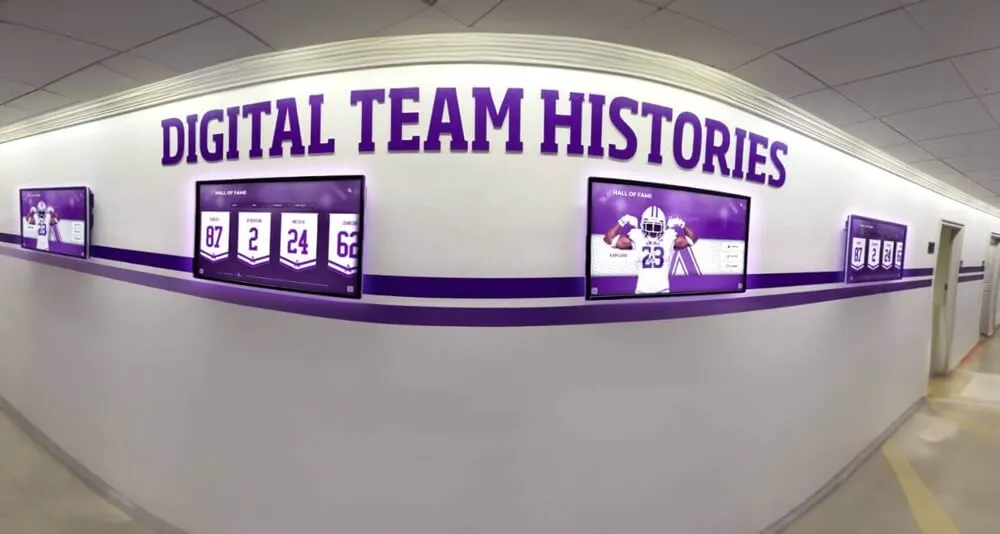
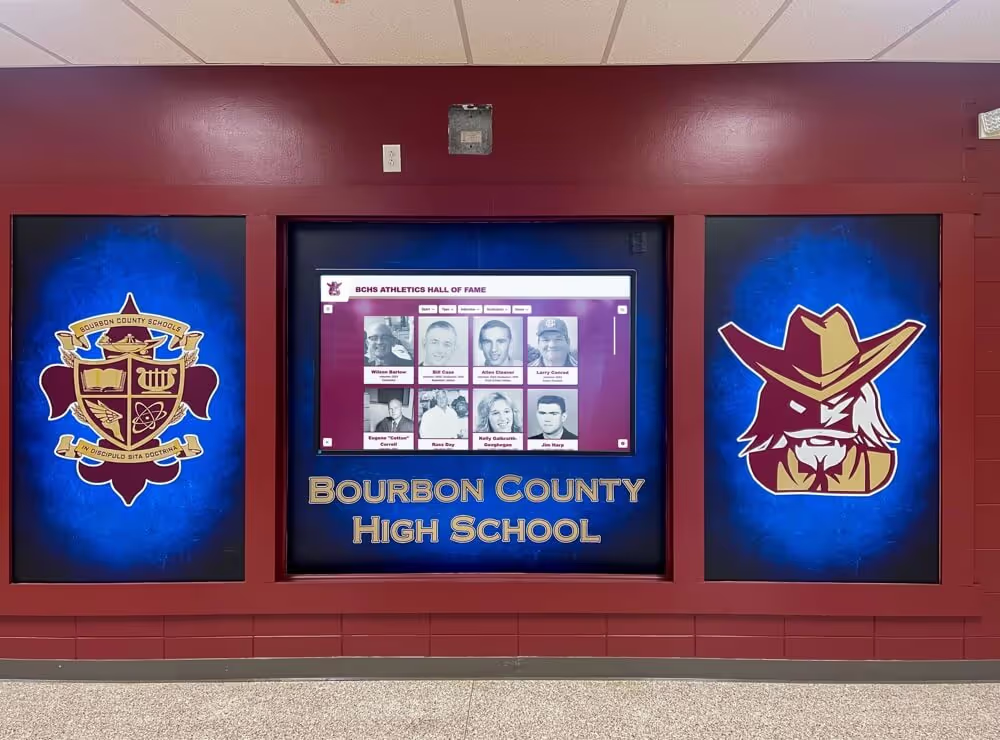
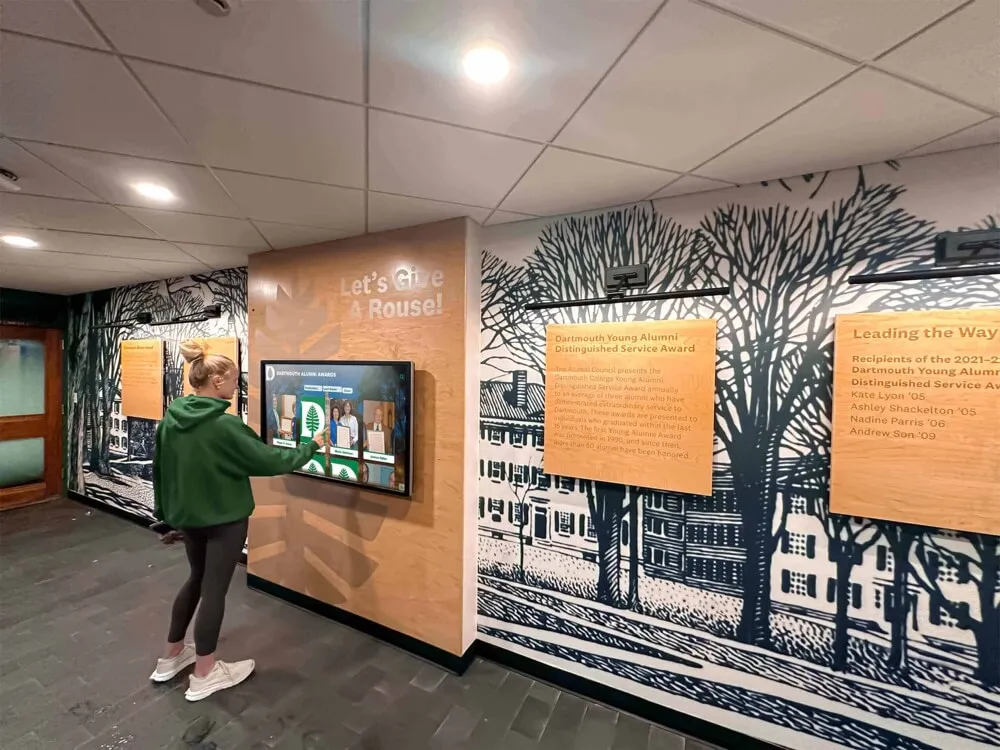
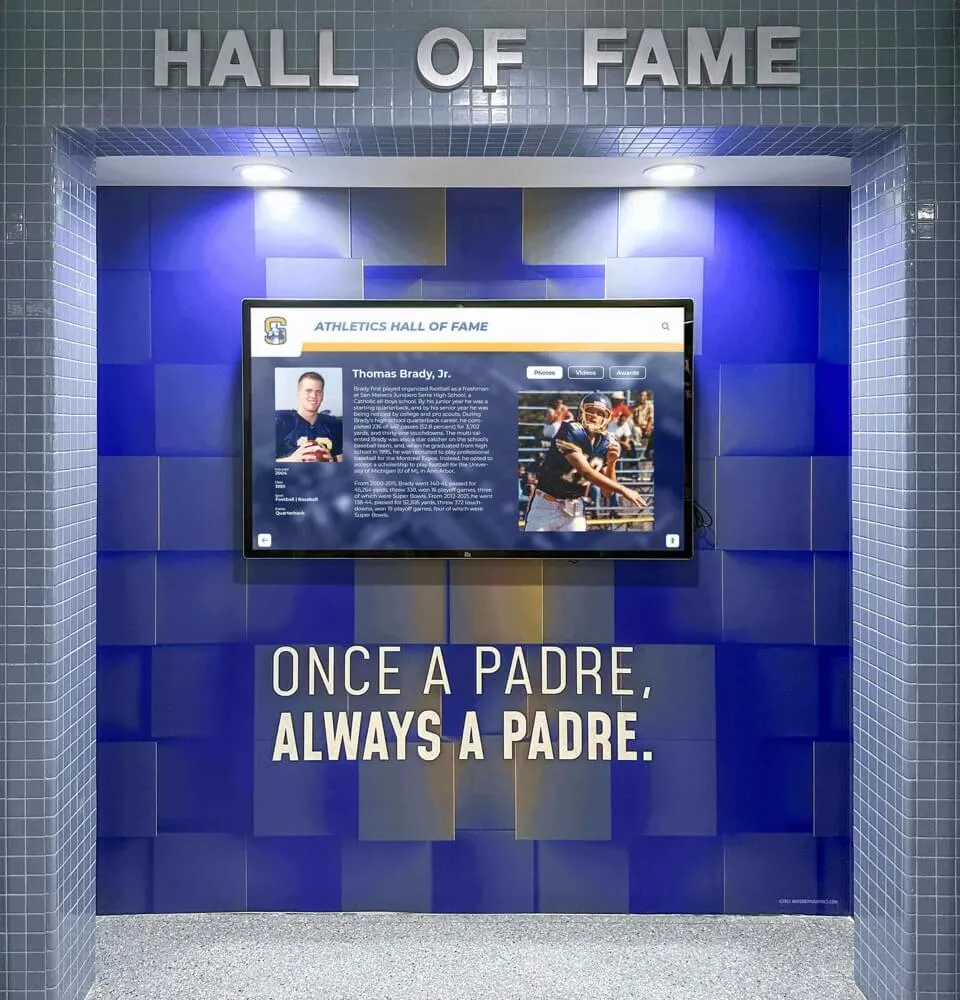
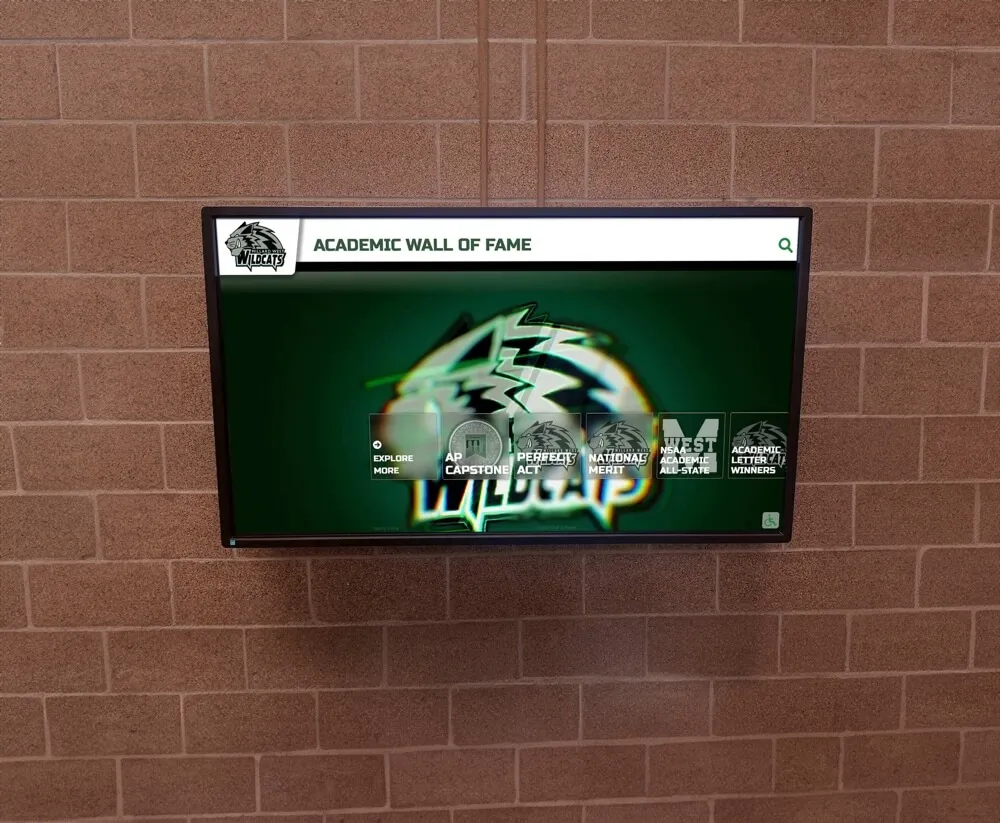
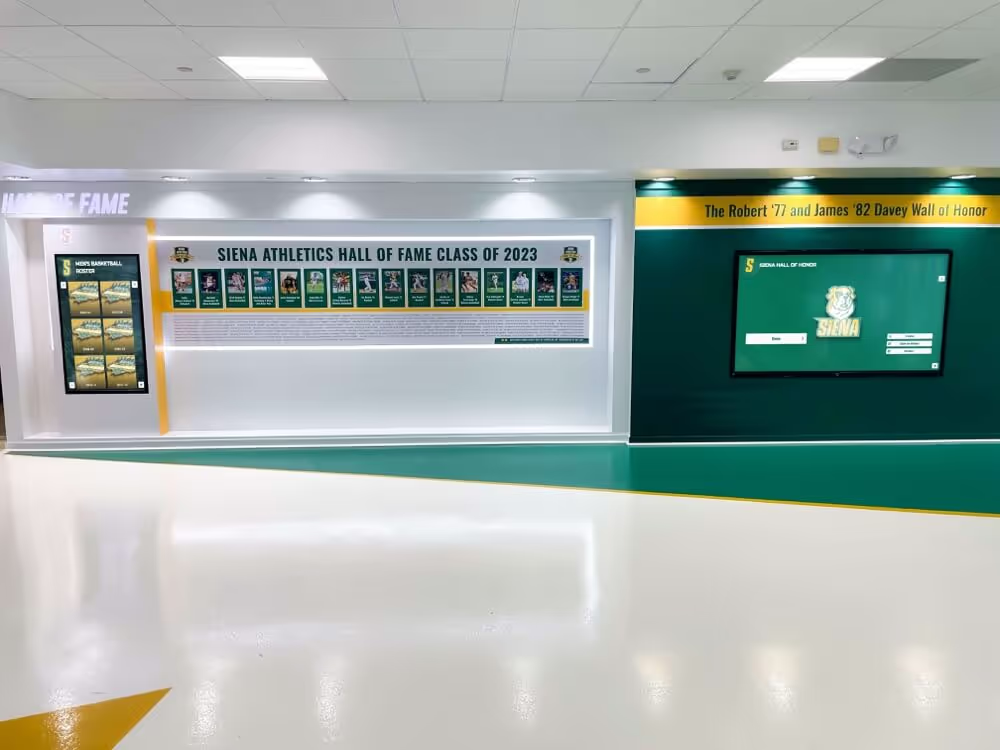
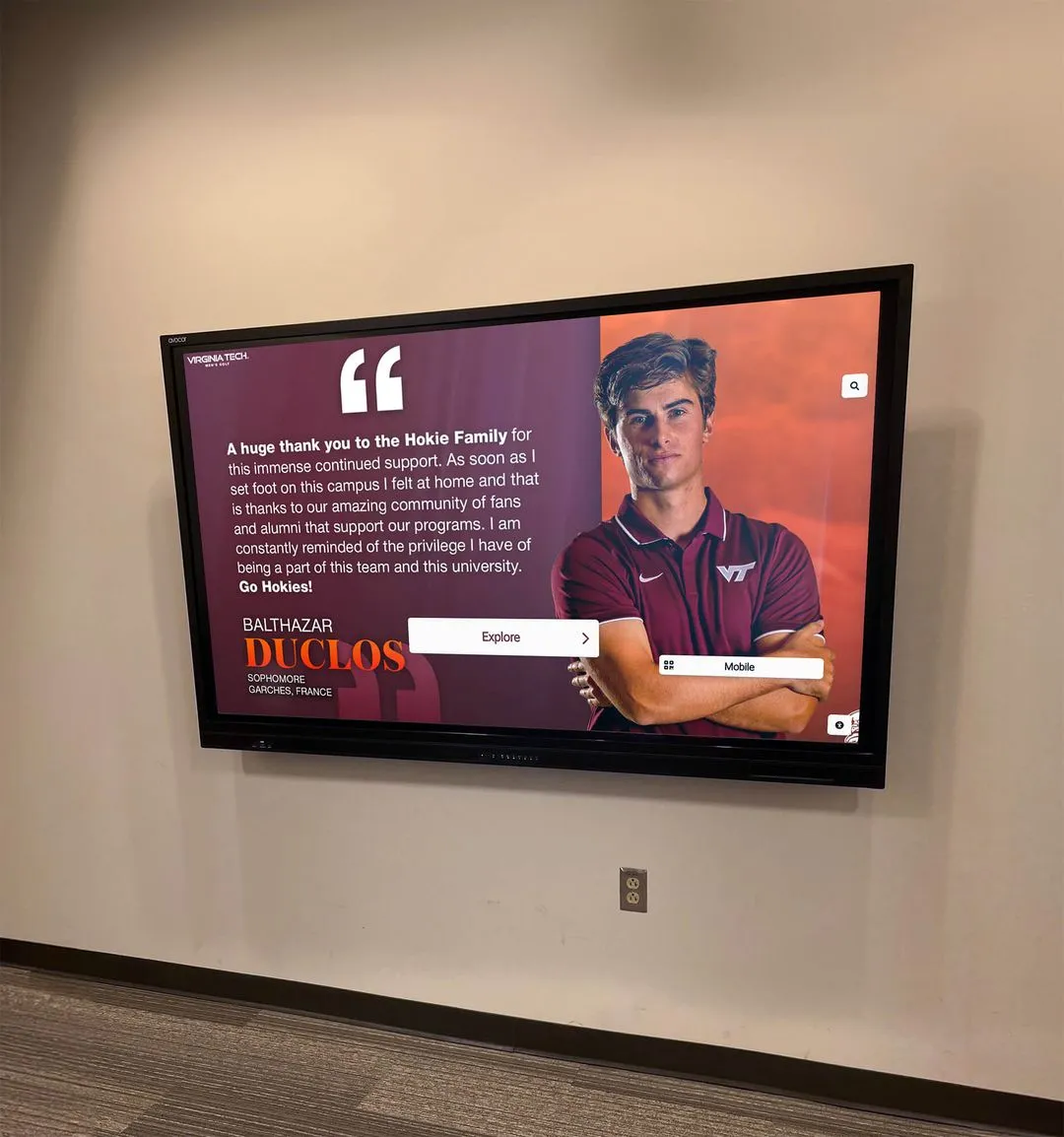
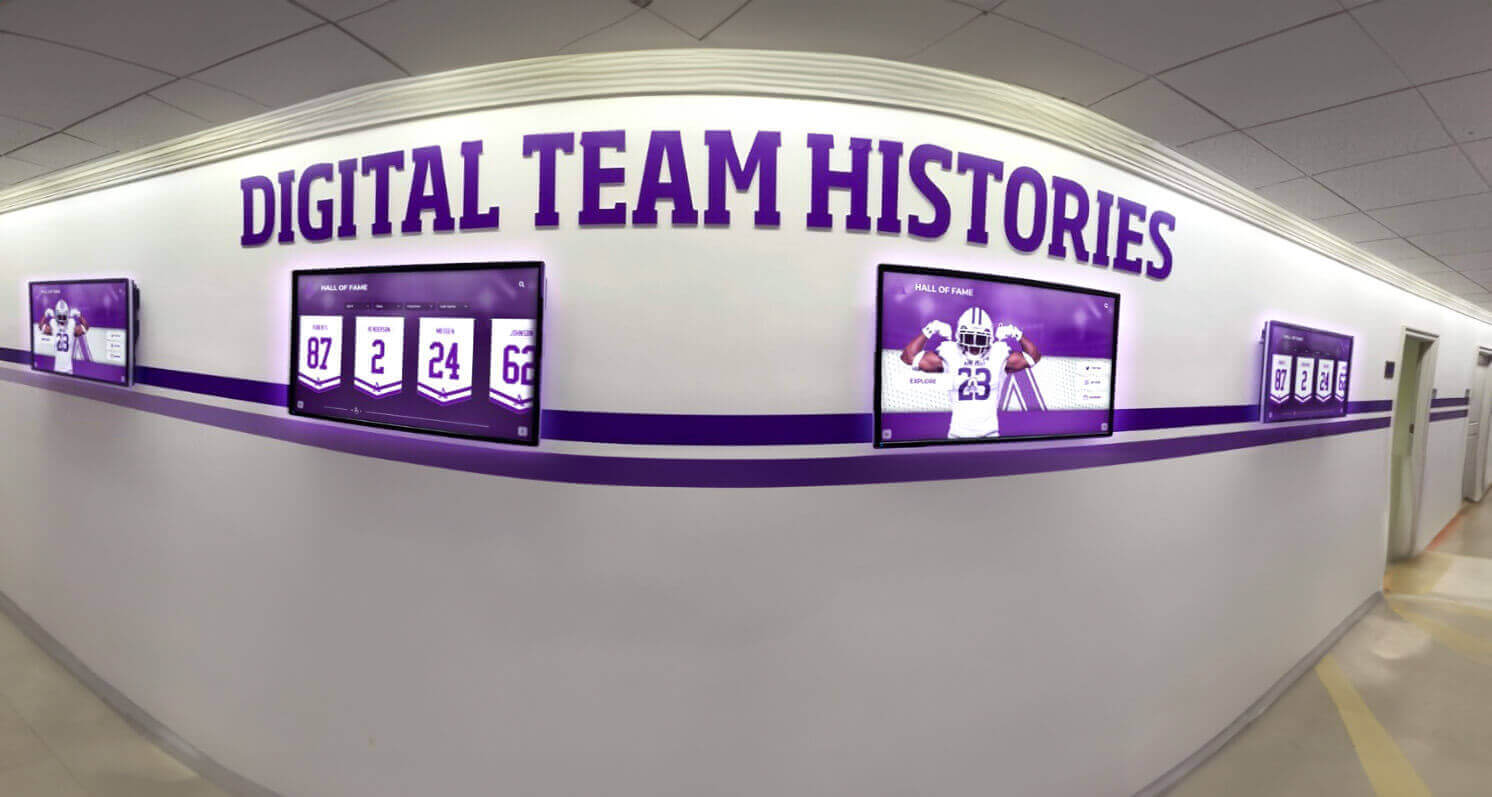
Digital hallway displays give drumline programs a permanent home for achievement history, making percussion section recognition visible to the entire school community year-round
Why Drumline Recognition Deserves Its Own Framework
Most school recognition systems weren’t designed with percussion in mind. Athletic awards go to individuals with statistics—points, yards, saves. Academic honors go to students with GPAs and test scores. Even most music recognition focuses on auditioned honors like All-State Band, where individual placement can be measured and compared.
Drumline excellence doesn’t reduce to a single number. The qualities that make a percussion section exceptional—rhythmic unity, dynamic range, visual execution, leadership under pressure, technical consistency across a full competitive season—require a different set of recognition criteria. Building drumline recognition ideas around those criteria produces ceremonies and displays that actually reflect what your percussionists accomplished.
The Unique Achievement Profile of a Percussion Section
Before designing any recognition program, it helps to articulate what drumline students actually do:
Technical Mastery Under Ensemble Conditions
Individual drumming skill matters, but drumline is fundamentally about collective precision. A drummer who plays perfectly alone but disrupts the section’s lock is a liability. Recognition should celebrate ensemble cohesion as an achievement in its own right—not just individual technique.
Physical Commitment Comparable to Athletics
Marching percussion is physically demanding in ways that often surprise people outside the activity. Battery percussionists carry instruments weighing between 12 and 45 pounds through complex choreography across a full competition season. The conditioning, rehearsal hours, and physical commitment involved deserve recognition approaches similar to what athletic programs use.
Year-Round Program Participation
Many percussion sections rehearse year-round, with indoor drumline competing in winter while marching band occupies fall. A student who participates in both programs for four years accumulates a performance history that rivals any varsity athlete’s career. Recognition systems that treat drumline as a single-season activity miss the scope of that commitment.
For comprehensive approaches to recognizing performing arts students across multiple seasons and years, the All-State musician recognition guide provides useful frameworks that translate well to percussion-specific programs.
End-of-Season Banquet Ideas for Drumline Programs
The most common format for drumline recognition is an end-of-season banquet or awards night. Done well, these events create a genuine occasion. Done poorly, they feel like an administrative chore. The difference usually comes down to specificity—how much the ceremony reflects the actual season your drummers lived through.
Standalone Drumline Banquet vs. Full Band Celebration
The first decision is structural: does drumline recognition happen as part of the full marching band banquet, or does the percussion section get its own event?
Integrated Band Banquet
Most programs hold a single end-of-season banquet for the entire marching band, with drumline recognition as a dedicated segment. This format creates the largest community gathering and reinforces the ensemble identity of the full band. The challenge is time—a banquet covering 200+ students often rushes through each section’s moment.
If your program uses the integrated format, design the drumline segment with enough specificity to feel distinct. A section captain who shares two or three specific memories from the season, a photo slideshow compiled only from drumline rehearsals and performances, and awards that reflect percussion-specific criteria all help the segment land as genuine recognition rather than a program obligation.
Percussion-Only Recognition Night
A dedicated percussion recognition event allows for deeper celebration of drumline culture. These events work especially well for programs with strong indoor drumline traditions, where the percussion community has a distinct identity separate from the full marching band. A smaller gathering—30 to 60 students plus families—creates space for more personalized recognition, longer individual spotlights, and the kind of inside-the-section storytelling that resonates most with the people who lived it.
For guidance on planning end-of-season celebrations that balance scale with personalization, the end-of-season banquet planning guide covers structures that translate directly to performing arts programs.
Banquet Program Flow for Drumline Recognition
Whether you run a standalone percussion night or a segment within a full band banquet, a clear program flow keeps recognition meaningful rather than mechanical:
Opening Remarks (5–10 minutes)
The percussion director or section leader opens with remarks grounded in the specific season. Naming actual competition results, memorable rehearsal moments, and individual growth the director observed sets a different tone than generic remarks about hard work and dedication. Specificity signals that the evening is about these particular musicians, not musicians in general.
Season Recap Presentation (10–15 minutes)
A video or photo compilation of the season—competition performances, rehearsal footage, pre-show preparation, post-show reactions—creates emotional context before any awards are presented. Keep it moving and set it to music the section performed. This is the moment that makes families glad they came and reminds seniors why the season mattered.
For schools interested in creating engaging video content for digital recognition purposes, the guide on creating video content for digital hall of fame displays offers production strategies that work equally well for banquet presentations and permanent archival displays.
Award Presentations (20–40 minutes)
Structure awards to move from collective recognition toward individual spotlights. Open with section-level accomplishments—competition placements, caption awards, consistency achievements—before moving to individual honors. This sequencing reinforces that individual achievement lives within a collective context, which is exactly the value drumline teaches.
Senior Recognition Segment (15–20 minutes)
Seniors deserve their own dedicated moment. A senior spotlight that goes beyond percussion achievement—acknowledging each student’s plans after graduation, contributions to section culture over multiple years, and a specific memory from their time in the program—creates a different emotional register than simply handing out an award. Many directors ask junior or sophomore members to write a tribute for each senior, which produces genuinely moving moments and reinforces mentorship culture within the section.
Family Appreciation Moment
Percussion families absorb significant logistical load—equipment transport, uniform cleaning, early-morning competition travel, fundraising support. A brief, deliberate acknowledgment of family contributions, with parents standing and being recognized by the room, consistently produces more genuine emotion than almost any other element of the evening.
Setting the Right Atmosphere
Physical environment shapes how recognition feels. A few elements that elevate drumline banquets without major budget investment:
- Display actual drumline equipment (a snare on a stand, mallets arranged as centerpieces, sticks crossed as table decoration)
- Use sound design intentionally—play drumline recordings as background during dinner, shift to silence before major award presentations
- Project competition photos on a loop throughout the event rather than leaving screens blank
- Reserve table seating so families are integrated with the section rather than separated into a spectator area
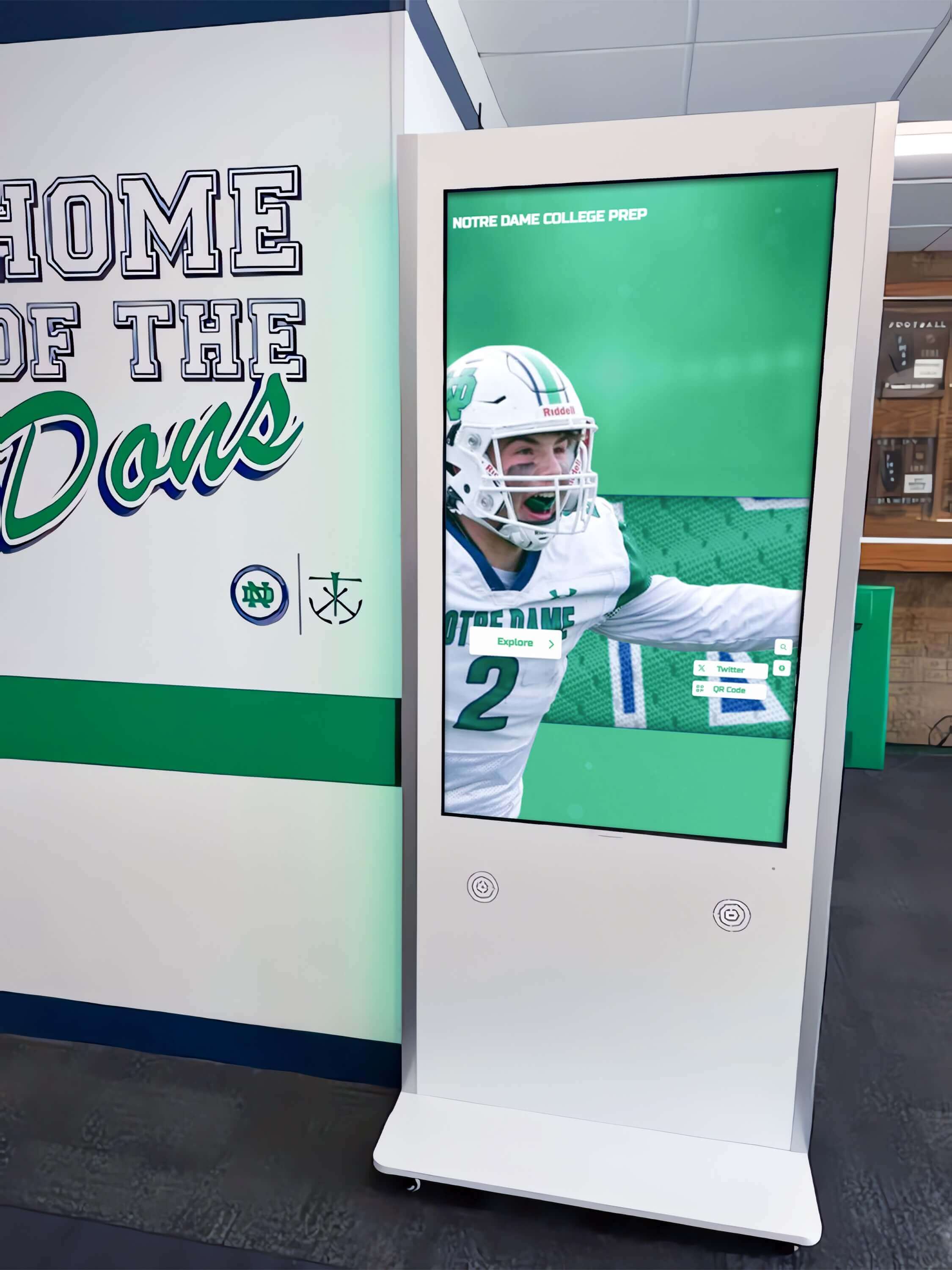
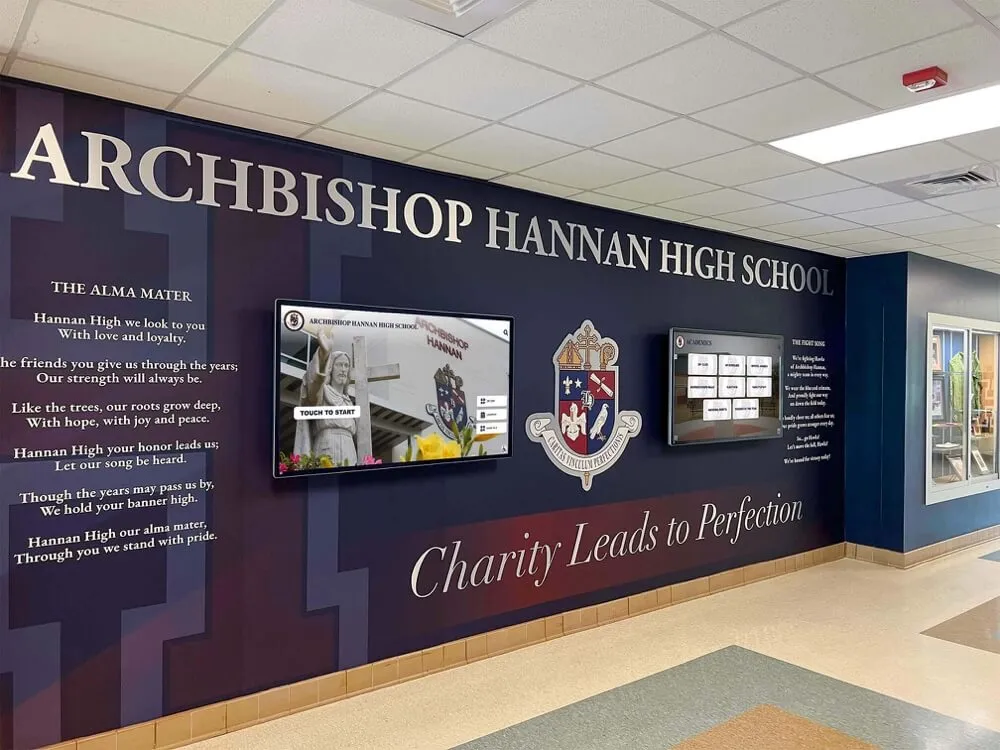
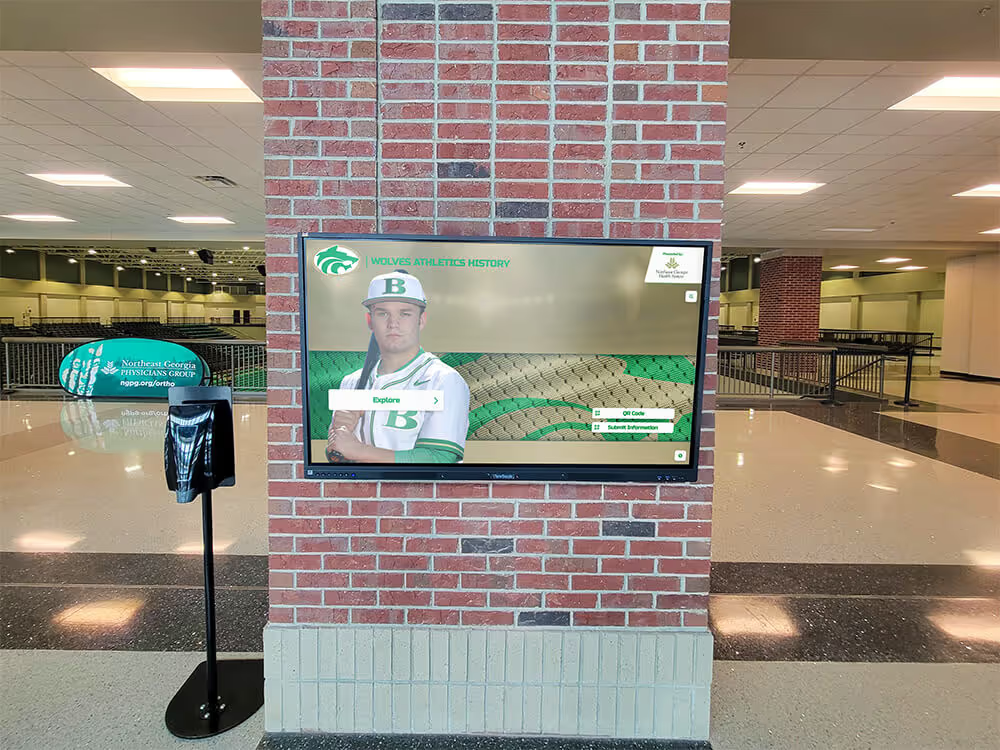
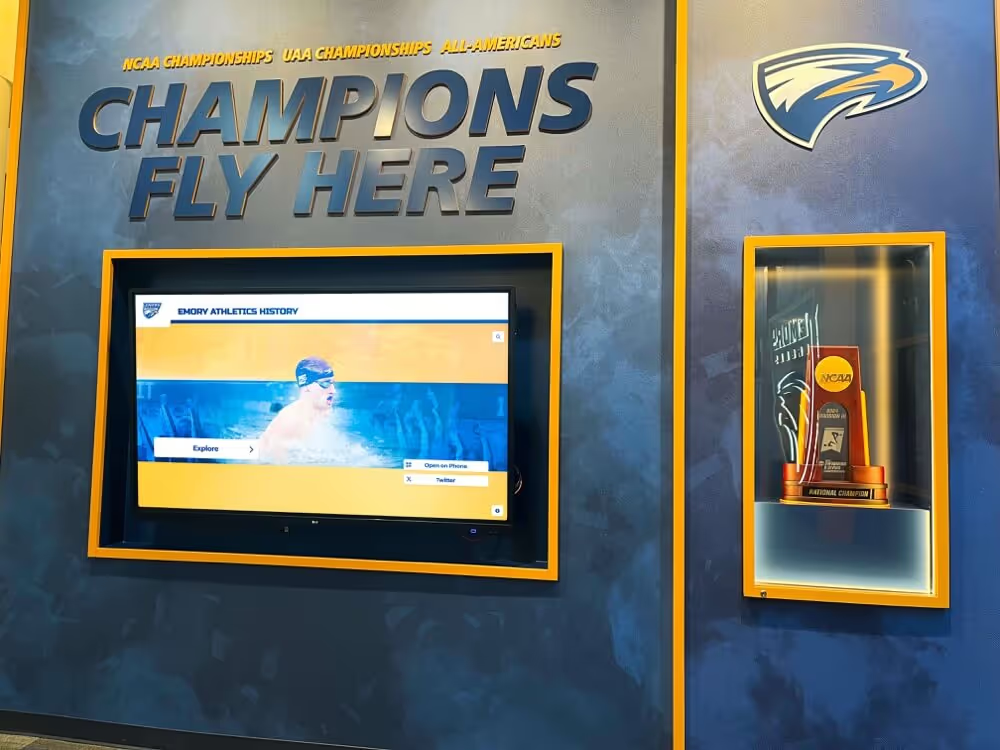
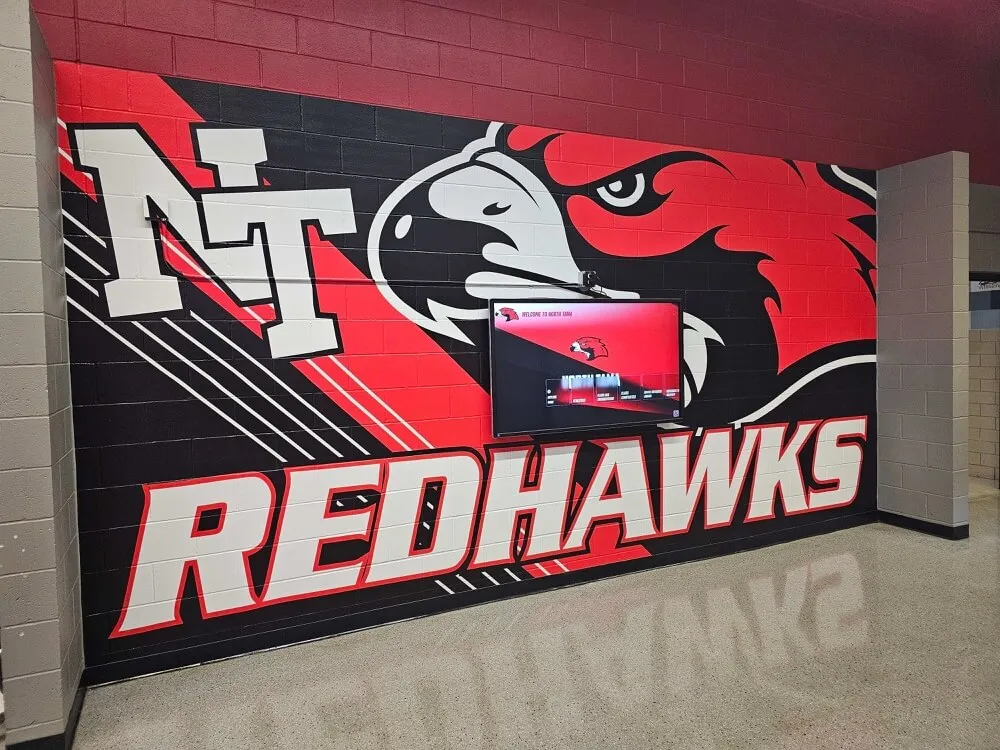
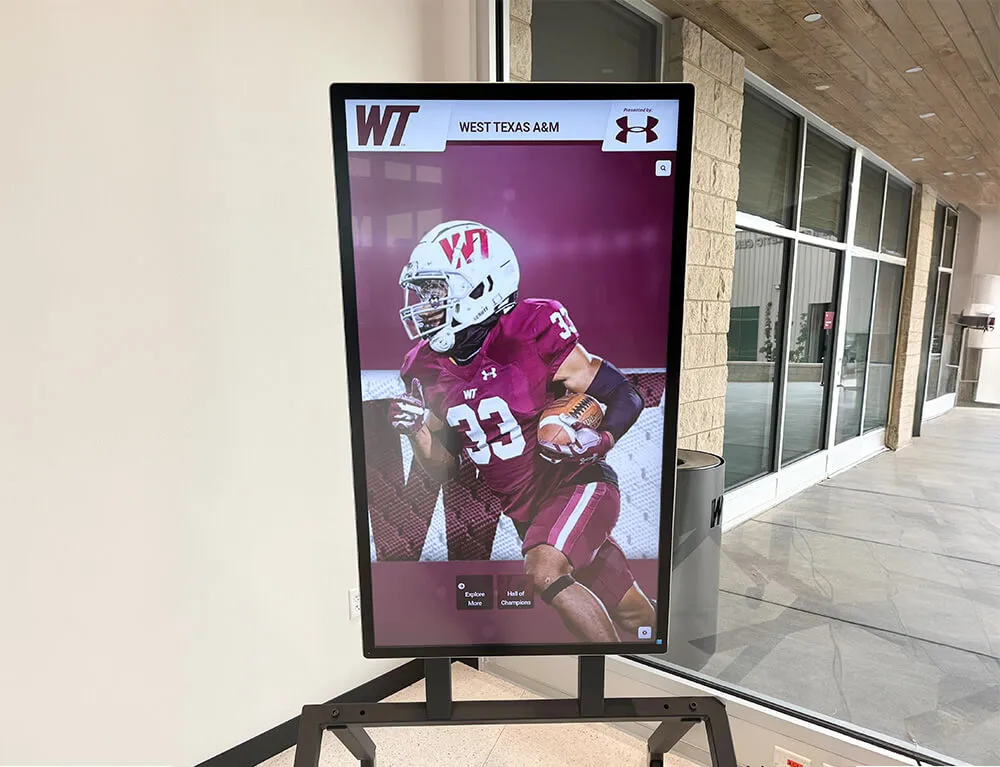
Interactive recognition kiosks in school lobbies allow drummers and families to explore achievement history throughout the year, not just during the annual banquet
Drumline Award Categories That Actually Fit Percussion
Generic award categories—Most Valuable Player, Most Improved, Spirit Award—don’t map cleanly onto what drumline excellence actually looks like. Designing percussion-specific award categories produces recognition that musicians take seriously because it reflects the craft they’ve been developing.
Performance and Technique Awards
Outstanding Battery Performer
Recognizes the individual battery percussionist who demonstrated the highest combination of technical precision, ensemble awareness, and consistency across the full competitive season. Unlike a Most Valuable Player award, this category explicitly values ensemble contribution over individual showmanship.
Front Ensemble Excellence Award
Dedicated recognition for pit percussion distinguishes the often-underrecognized contribution of mallet and auxiliary percussion players. The front ensemble carries harmonic and melodic responsibility that battery players don’t—award categories that acknowledge this specialized role validate pit musicians as integral members, not support players.
Technical Achievement Award
For the percussionist who demonstrated the most significant technical growth during the season—not necessarily the most talented player, but the one who made the largest measurable leap from audition to final competition. This award creates motivation pathways for developing drummers who may not win a Most Improved category against a single baseline comparison.
Ensemble Lock Award
A percussion-specific recognition that celebrates the player or section who best embodied rhythmic unity and ensemble cohesion. This category signals that precision playing—staying locked with your section rather than standing out—is genuinely valued, which reinforces a core drumline principle that younger players sometimes resist before they understand it.
Leadership and Culture Awards
Section Captain Recognition
Section captains carry responsibilities that extend well beyond playing—leading sectionals, maintaining equipment, managing interpersonal dynamics, representing the section to the director and band staff. If your program designates section captains formally, their recognition should reflect the full scope of that role, not just their performance quality.
Rookie of the Year
First-year percussionists who transition successfully from middle school or beginner percussion to high school drumline navigate a significant learning curve. Recognizing exceptional first-year performance sets a cultural precedent that development is honored, not just seniority.
Program Ambassador Award
For the student who most visibly represented the drumline’s values to the broader school community—recruiting younger students, maintaining positive presence in the school, demonstrating the connection between percussion discipline and academic or athletic achievement.
Lifetime Achievement (Senior Legacy Award)
For graduating seniors who have participated across four years of the program. A senior who played through middle school and high school, contributed to both marching and indoor seasons, and leaves the program measurably stronger than they found it deserves recognition calibrated to that scope of commitment. This is distinct from a participation award—it requires genuine longitudinal contribution.
For additional award category ideas that cross between performing arts and athletic recognition contexts, team gift ideas and senior gift ideas offer frameworks applicable to music program recognition.
Competitive Achievement Recognition
Caption Award Recognition
Most marching competitions award percussion captions separately—Best Percussion, Percussion Achievement, or similar designations. When your program wins a caption award, it deserves ceremony-level recognition that distinguishes it from general ensemble placement. A framed caption award plaque, presented with context about what percussion judges evaluate, gives the achievement appropriate weight.
Personal Best Recognition
For programs that track individual scores across the competitive season, recognizing players who hit personal-best scores at specific competitions acknowledges growth alongside absolute achievement. This works particularly well for indoor drumline, where individual evaluation is more common.
Competition Placement Milestones
Programs reaching their best-ever placement at a regional circuit, state championship, or WGI event should mark that achievement explicitly in the banquet program—not just as a program note, but as a moment of specific ceremony. Historical context (“our best placement in 12 years”) makes the achievement legible to parents who may not track competitive circuits closely.

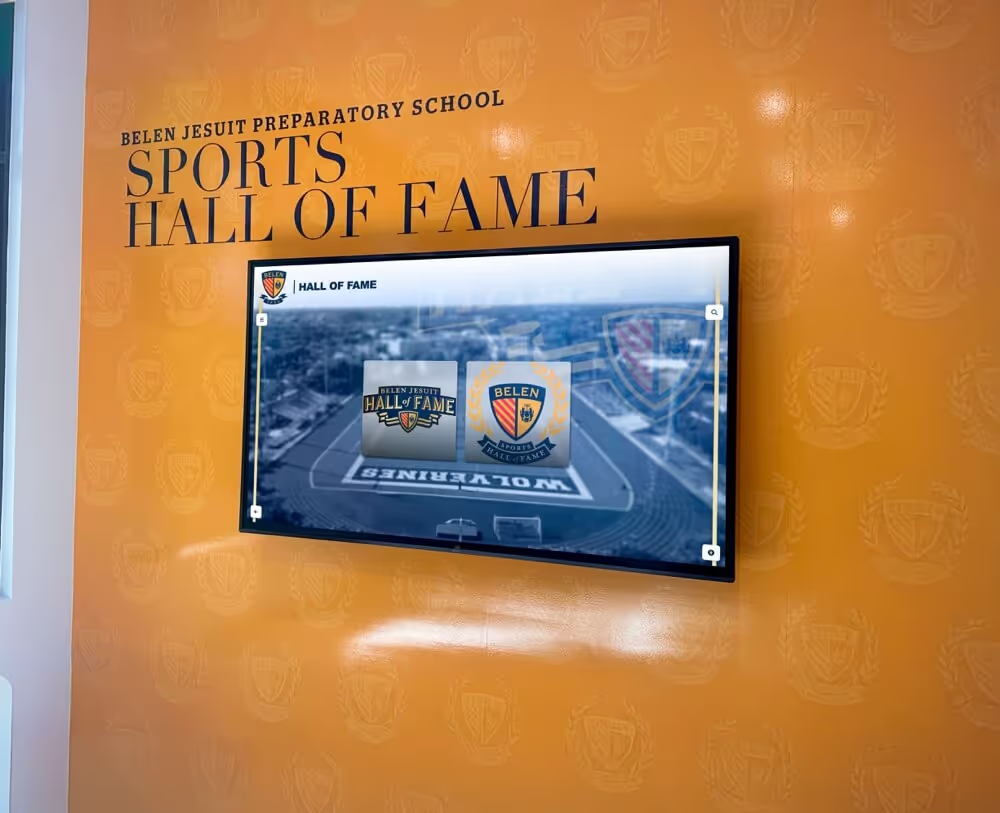
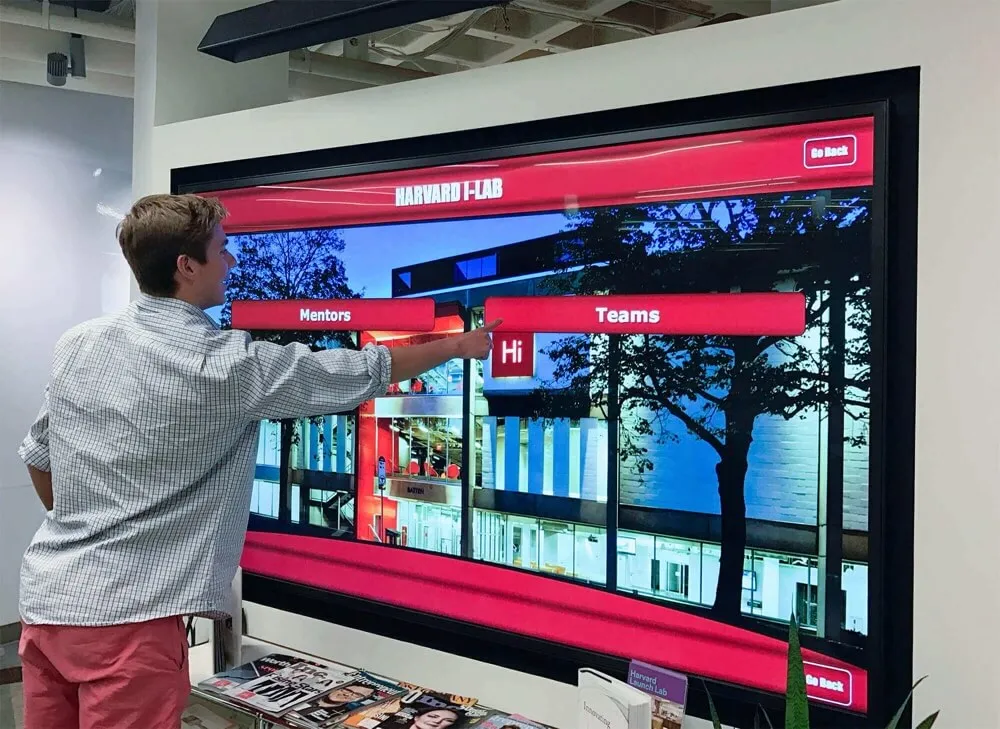
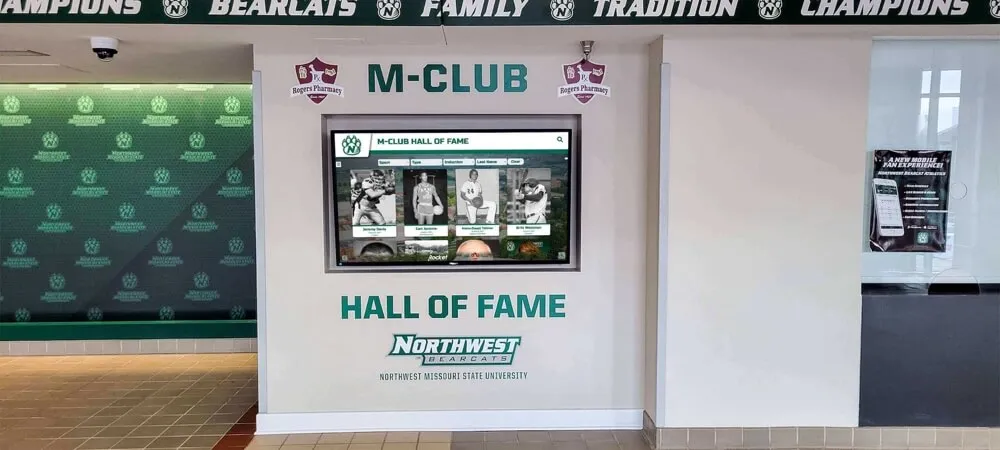
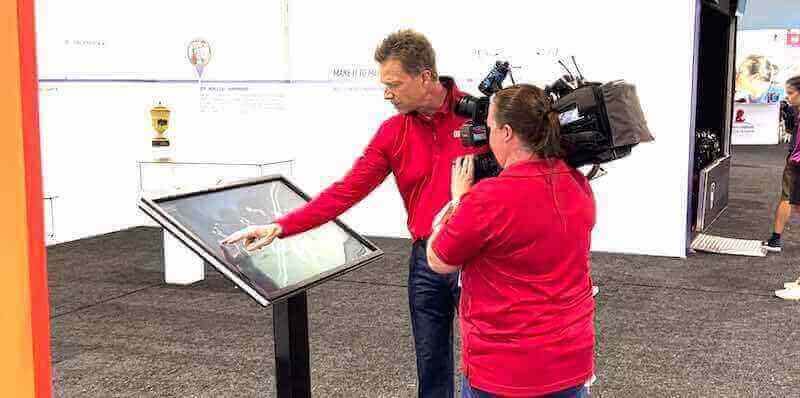
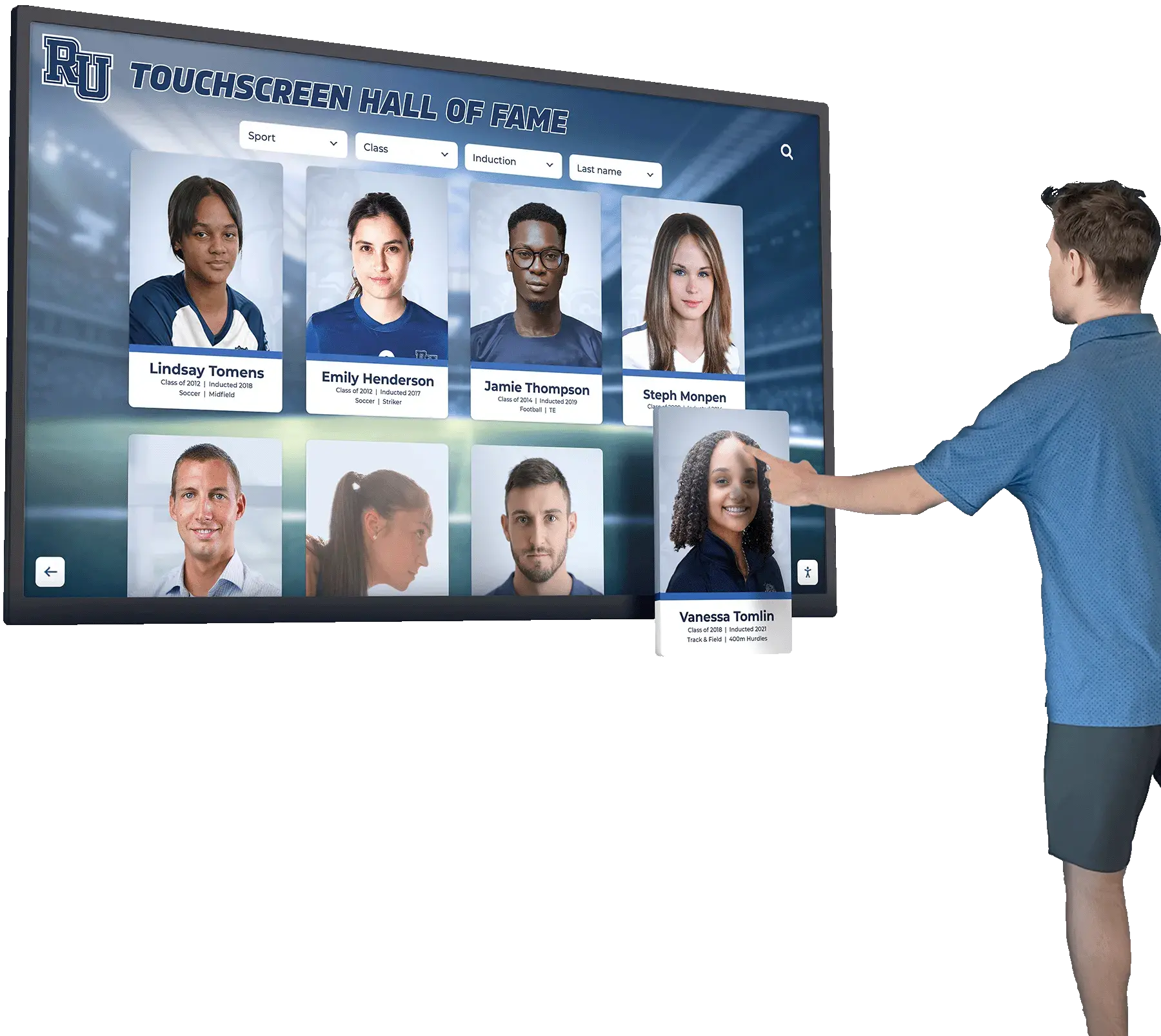
Touchscreen recognition systems allow families and students to explore individual percussion achievement profiles, competition history, and program milestones in an interactive format
Permanent Drumline Recognition: Beyond the Annual Banquet
The banquet is one night. Permanent recognition structures give drumline achievement visibility that lasts through the next recruiting cycle, the next graduation ceremony, the next alumni reunion. The question schools face is what format serves their programs best.
Physical Recognition Displays
Traditional physical displays—plaques, name boards, trophy cases—provide tangible recognition that many students and families find meaningful. For drumline specifically:
Percussion Wall in the Music Suite
A dedicated recognition wall in the band room or percussion area creates daily visibility for section members. Organized by year with photos, competition results, and caption awards, a well-maintained percussion wall builds the kind of section pride and historical continuity that attracts serious musicians to your program.
Trophy Case Integration
If your school’s main trophy case is in a high-visibility public area, percussion caption awards and competition placements belong there alongside athletic trophies. Many schools default to displaying only athletic hardware in central locations—advocating for percussion representation in the main case signals institutional parity between music and athletics.
Senior Photo Archive
An ongoing photo display of senior percussionists by year—in the band room, performing arts hallway, or school lobby—creates a visual lineage. When current students see former section captains on the wall, the section’s history becomes tangible rather than abstract.
Physical displays provide tangible recognition but face inherent constraints. Space fills quickly, updates require physical modifications, and displays confined to the music suite limit visibility to students already participating in the program. For drumline programs trying to build visibility with the broader school community—and particularly with prospective students and families during school tours—digital recognition solutions address these limitations directly.
Digital Hall of Fame Displays for Drumline Programs
Digital recognition displays are increasingly common in school lobbies and athletic hallways. Less common but equally appropriate: applying that same technology to performing arts programs, including percussion sections.
A digital hall of fame or recognition display for drumline enables schools to:
Archive an Unlimited Performance History
Every competition season, every section captain, every caption award, every All-State percussionist—documented in a searchable, browsable format without physical space constraints. A school could display 20 years of drumline history on a single screen, giving alumni and current students access to the complete record.
Integrate Video Documentation
Drumline achievement is fundamentally sonic and visual—a text plaque cannot convey what a percussion section sounds like at peak performance. Digital displays that integrate performance video clips, competition footage, and rehearsal documentation give context that static recognition cannot. Families who attended a championship performance can relive it; families who missed it can experience what their student accomplished.
The value of video integration for recognition programs is explored in detail in the guide on alumni where-are-they-now spotlights, which demonstrates how connecting video documentation to individual profiles creates lasting program stories that resonate with current students and alumni alike.
Create Individual Percussionist Profiles
Rather than a name on a plaque, a digital profile for each recognized drummer can include a photo, their years of participation, instruments played, competitive achievements, section leadership roles, and a brief reflection on their experience in the program. These profiles humanize achievement in a way that resonates with the students being honored and inspires the students who come after them.
Update Remotely Without Physical Modification
At the end of each season, adding new honorees to a digital display takes minutes—no new plaques to order, no display redesigns, no waiting weeks for fabrication. For programs that recognize students annually, this operational advantage is significant.
Solutions like Rocket Alumni Solutions offer digital recognition platforms designed specifically for school programs, combining large-format touchscreen displays with cloud-based content management that directors can update from any device. Explore comprehensive platform options in the hall of fame display ideas guide for creating inspiring recognition spaces.
Placement Strategy for Maximum Visibility
Where recognition lives determines who sees it. Drumline recognition placed only in the percussion room is invisible to the students who need to be inspired by it—the 8th grader visiting campus for the first time, the parent waiting in the main office, the alumnus returning for a school event.
High-Impact Locations:
- Main school lobby or entrance hallway
- Performing arts center lobby
- Music suite entrance (visible from the corridor)
- School commons or gathering spaces
Strategic Considerations:
- Lobby placement alongside athletic recognition signals institutional parity
- Performing arts center placement concentrates visibility among the performing arts community
- Music suite entrance provides daily reinforcement for current section members
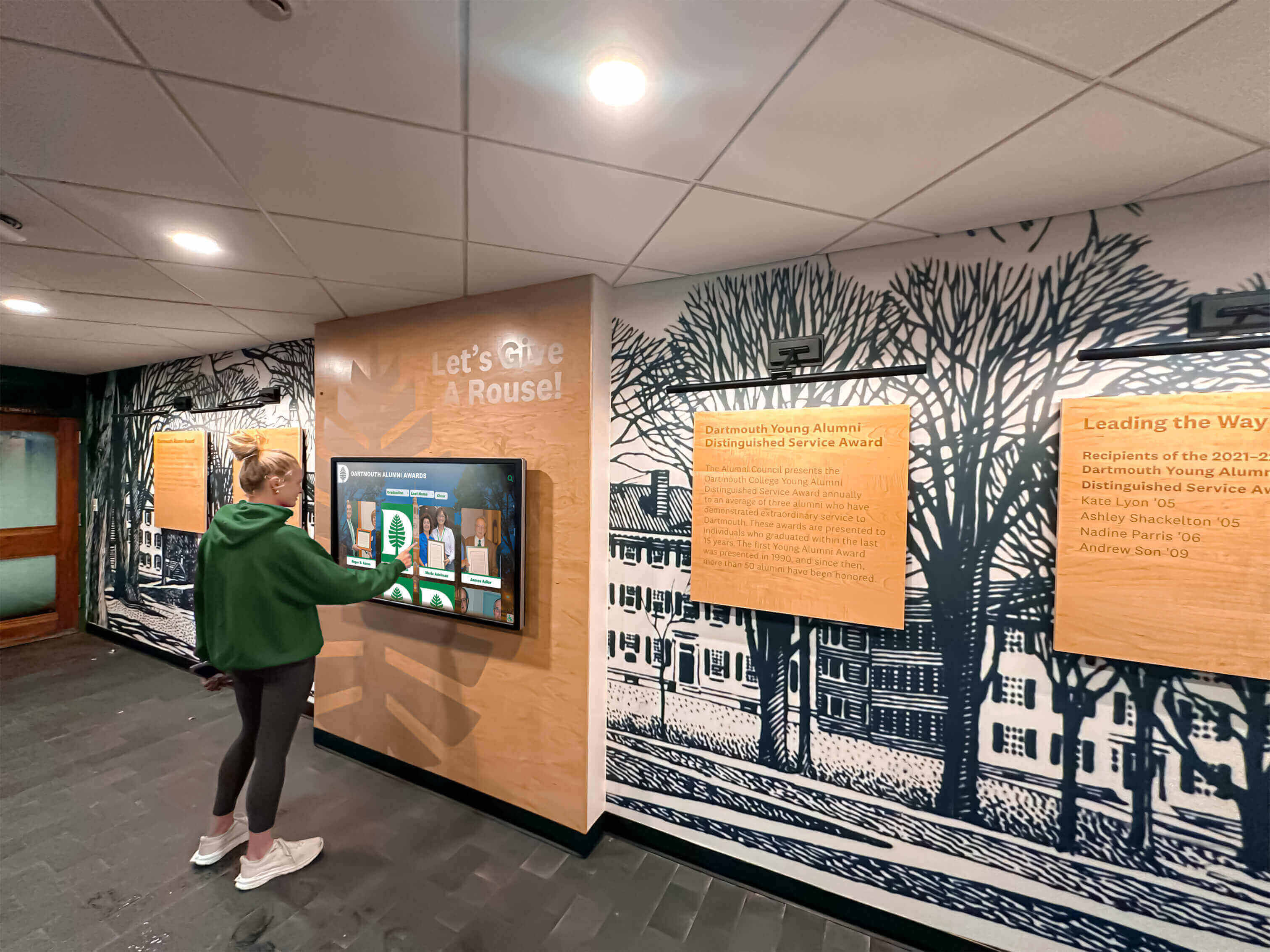
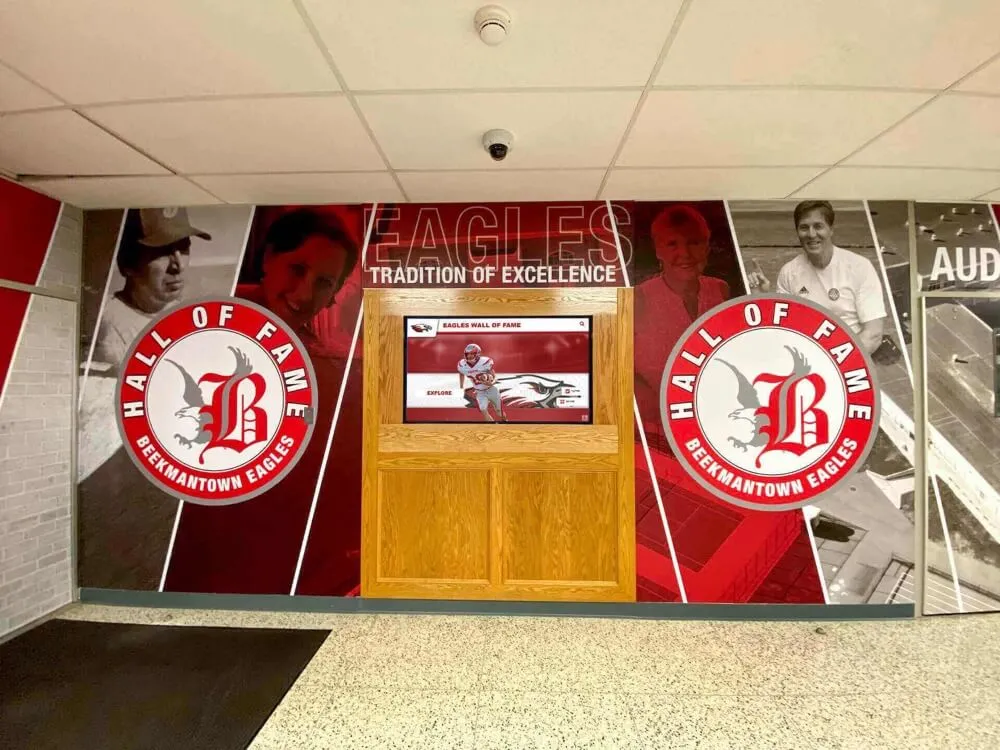
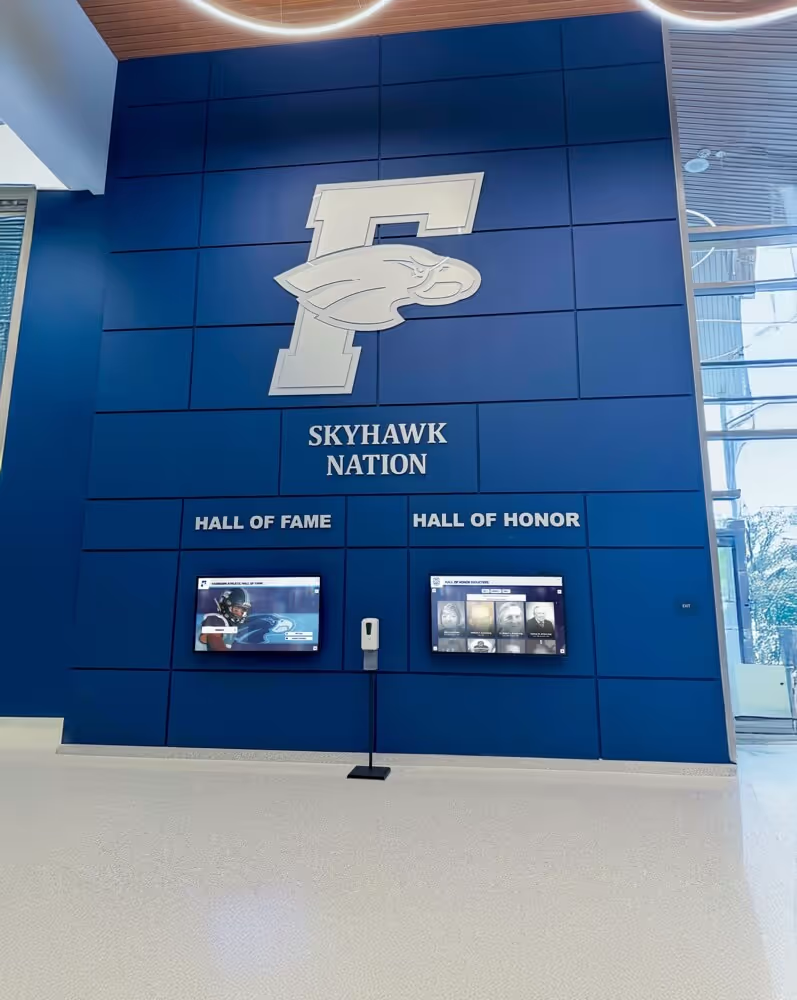
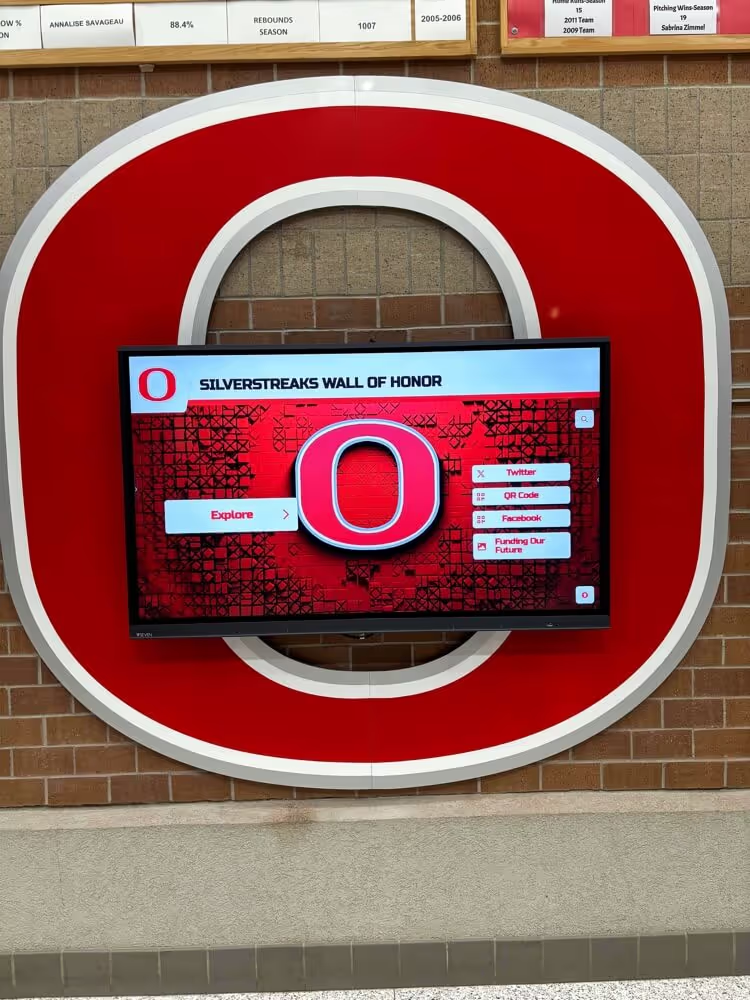
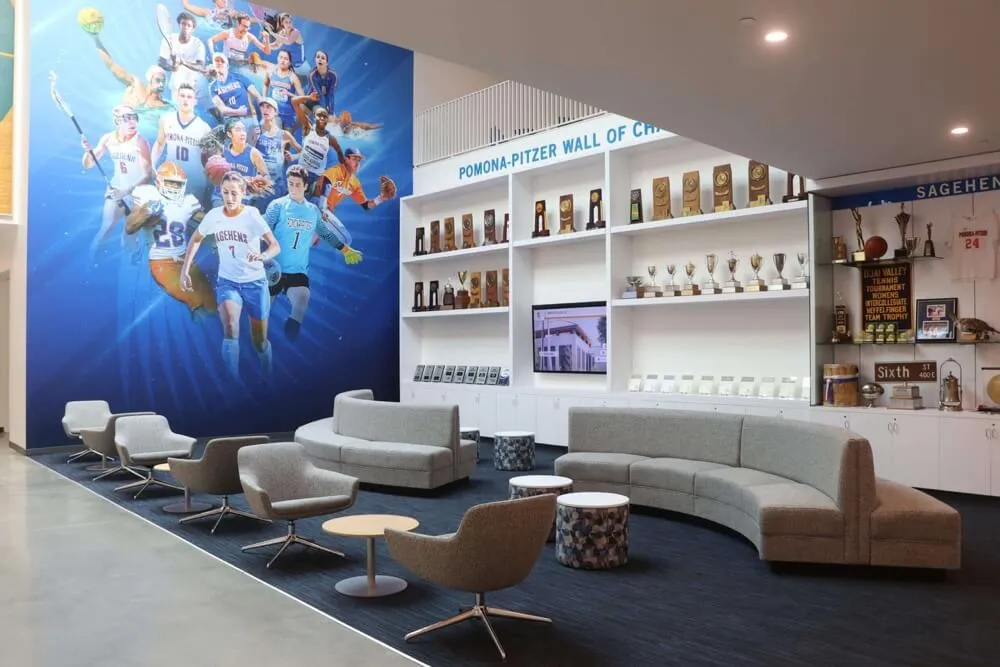
Placing interactive recognition displays in main hallways gives percussion achievements the same institutional visibility as athletic and academic honors
Video Documentation as Drumline Recognition
The most underused drumline recognition idea is also one of the most powerful: systematic video documentation that preserves performance history and makes it accessible to current students, alumni, and future families.
What to Document Throughout the Season
Competition Performances
Every competition performance should be recorded from multiple angles if possible—full ensemble wide shot, percussion-focused angle, front ensemble angle. These recordings become the primary archival record of what the section accomplished and provide footage for recognition displays, recruitment materials, and alumni engagement.
Rehearsal Milestones
Document the first full run-through of competition show music, the rehearsal where a particularly difficult passage clicks, the moment the battery locks a tempo that had been elusive. These process recordings humanize achievement in ways that polished competition footage can’t—they show the work, not just the result.
Caption Award Moments
If your program wins a caption award at a competition, document the announcement. The reaction from students who’ve been working toward that recognition is worth capturing and preserving. These moments become meaningful artifacts for the section’s permanent archive.
Senior Send-Off Documentation
Final performances carry specific emotional weight for senior percussionists. Documenting pre-show warm-up, the final performance, and immediate post-show reactions creates a record that seniors will return to for years.
Building a Drumline Video Archive
A collection of competition footage and rehearsal videos scattered across individual phones or Google Drive folders isn’t an archive—it’s a pile. Effective video archives for drumline programs share several characteristics:
- Consistent naming conventions (year, competition name, ensemble) that make files retrievable years later
- Multiple storage locations (cloud backup plus local copy) that survive staff turnover and hardware failures
- Access for alumni so graduates can find and share their performances
- Integration with recognition displays so current students can watch the performances of predecessors whose names appear on the hall of fame
For schools implementing digital recognition systems, the FBLA and FFA award display guide covers approaches to connecting competitive achievement documentation with permanent recognition infrastructure—directly applicable to percussion caption awards and competitive milestones.
The Yearbook Connection
Percussion sections are consistently underdocumented in school yearbooks relative to their participation in school life. Drumline students appear in marching band photos but rarely receive the individual feature coverage that athletes, theater leads, or student government officers get. Coordinating with yearbook staff early in the season to request dedicated percussion coverage—including indoor drumline, which often happens after the yearbook photography window—ensures the official school record reflects drumline’s actual presence.
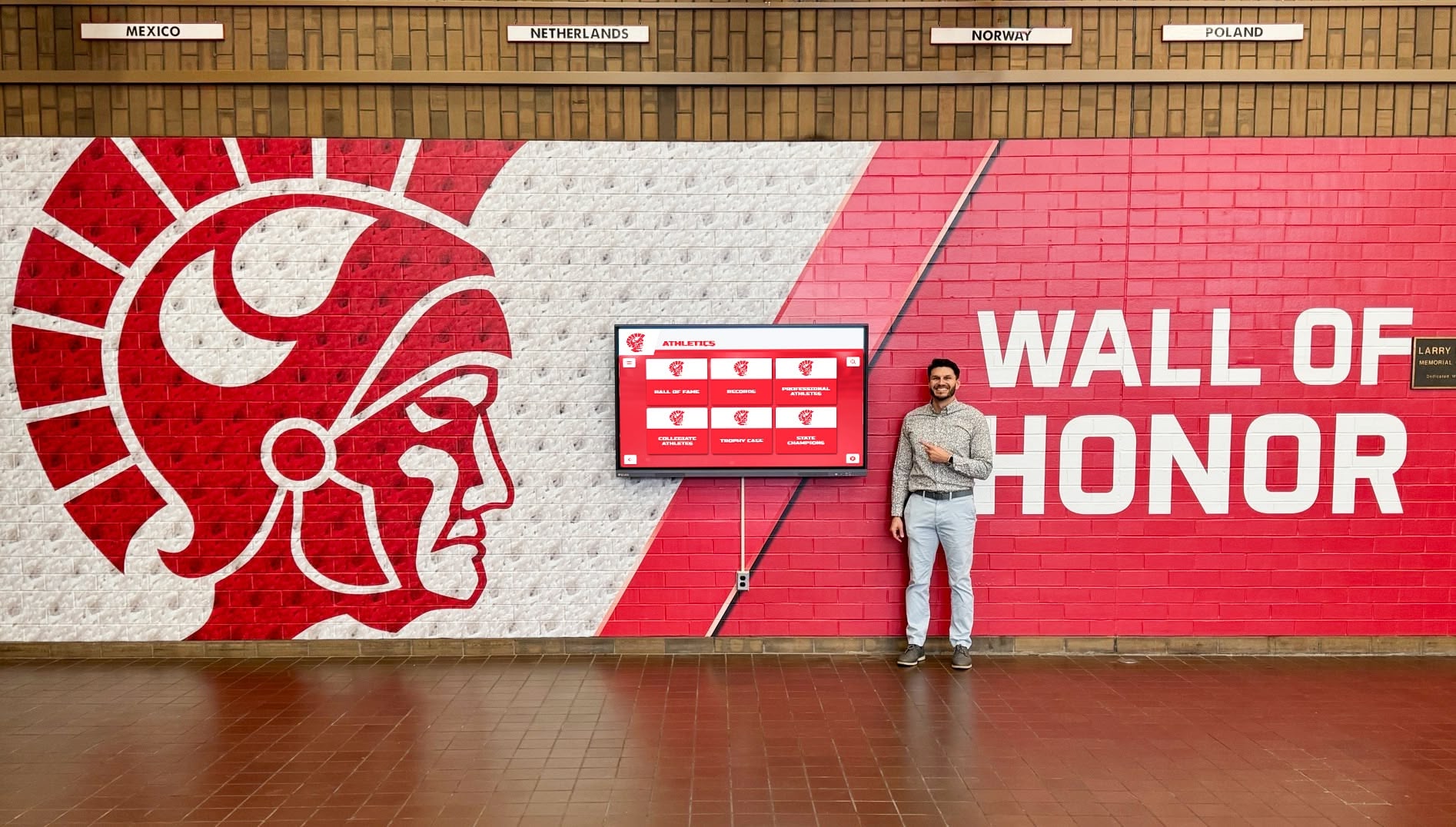
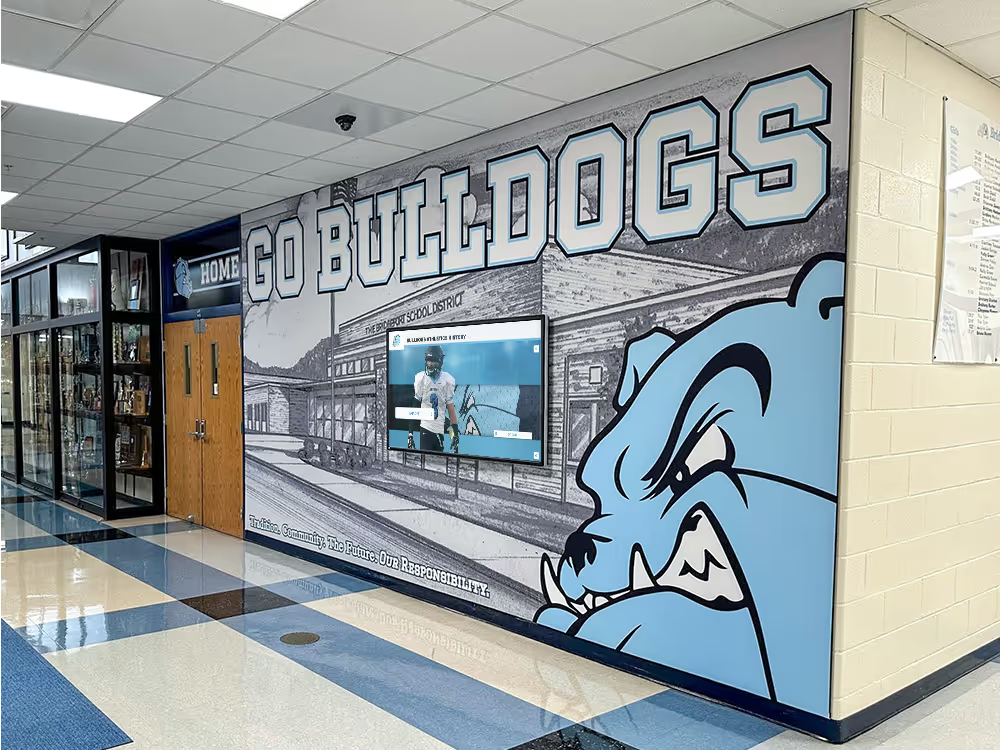
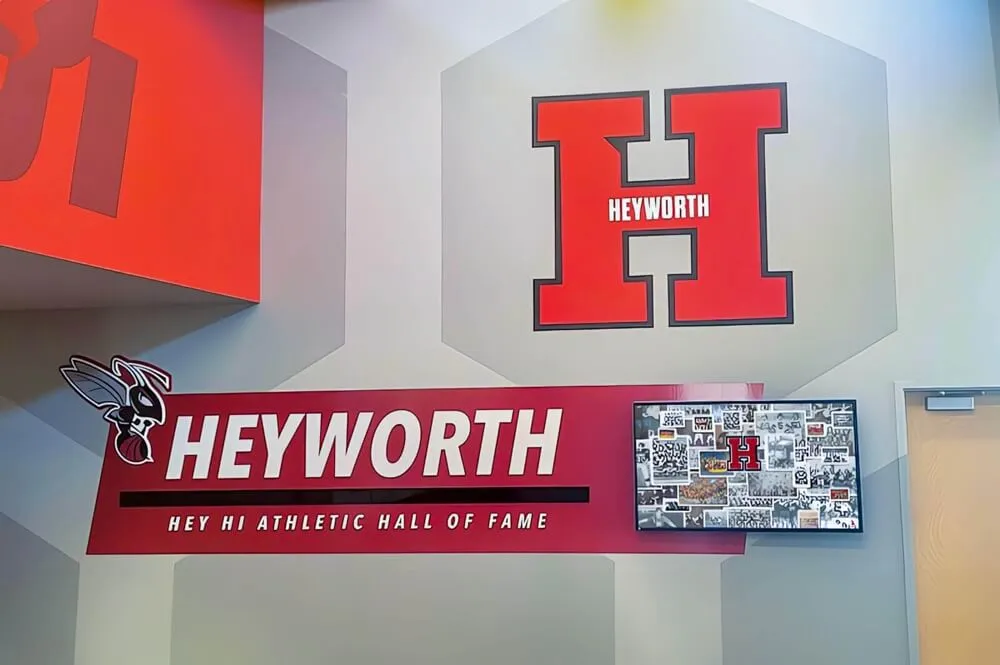
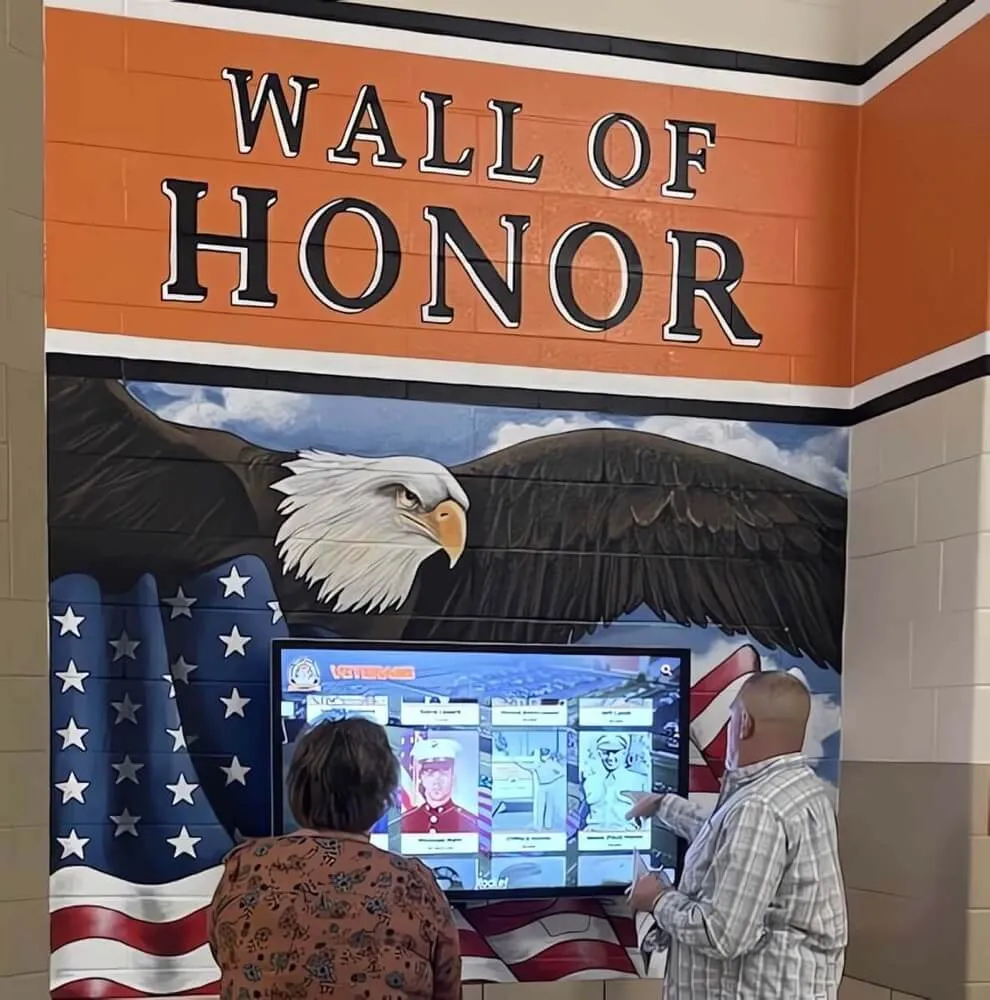
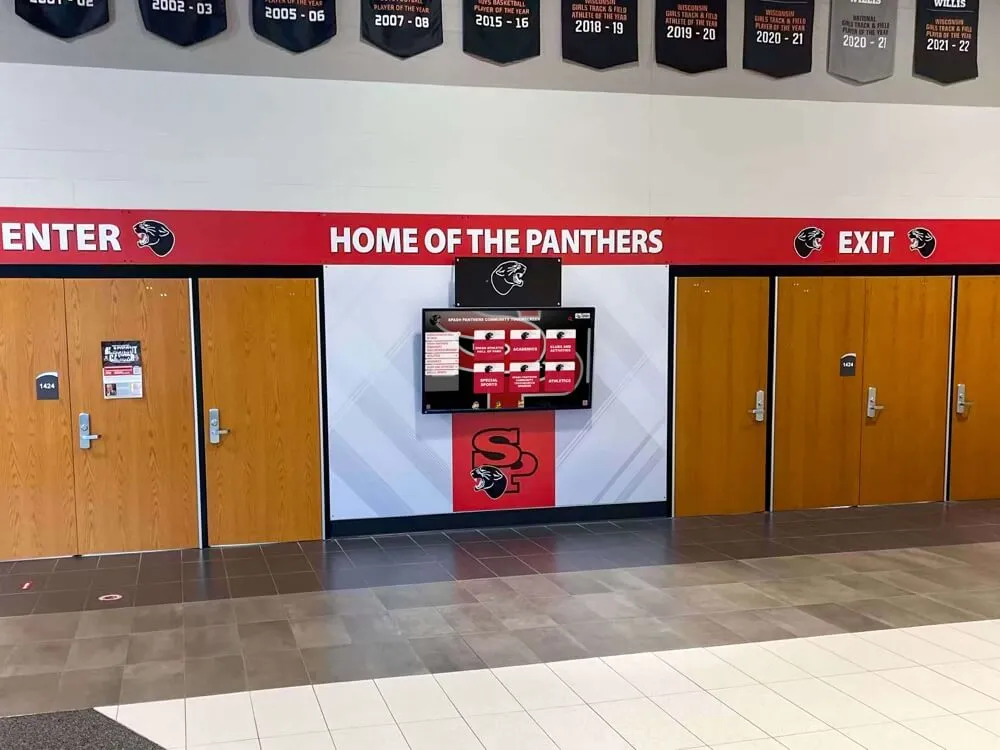
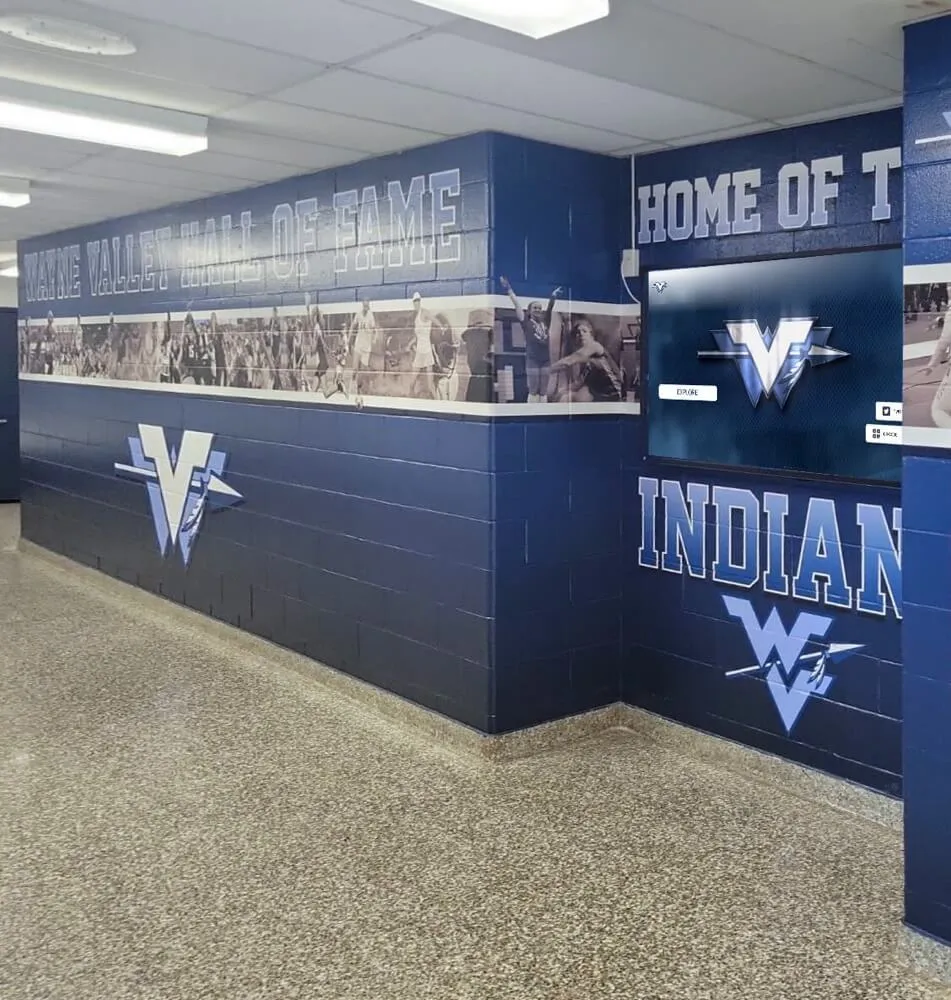
Wall of honor displays in main school hallways give drumline programs the same institutional visibility as athletic recognition, reinforcing that percussion achievement is a celebrated part of school culture
Building a Drumline Hall of Fame
For programs with significant competitive history or strong alumni engagement, a dedicated drumline or percussion hall of fame provides a recognition structure that extends far beyond annual banquets.
Induction Criteria for a Drumline Hall of Fame
The challenge with any hall of fame is defining what justifies induction—criteria specific enough to preserve prestige while broad enough to honor multiple types of contribution. Criteria worth considering for a drumline hall of fame:
Performance Excellence
- Multi-year All-State or honor ensemble participation
- Exceptional individual competitive achievement
- Principal or featured soloist positions in competitive or concert settings
Program Impact
- Section leadership that produced measurable culture improvement
- Mentorship contributions that influenced subsequent generations of percussionists
- Innovation that the program continues to use (show design, technical approach, rehearsal methodology)
Post-Graduation Achievement
- College music performance or music education path
- Professional percussion performance career
- Contributions to the school program as an alumnus (clinics, master classes, financial support)
Alumni recognition programs that connect past percussionists to current students create mentorship opportunities and strengthen the program’s sense of continuity. The alumni recognition programs guide covers frameworks for building these connections systematically.
Induction Ceremony Format
A hall of fame induction ceremony for drumline can be embedded in the annual end-of-season banquet or designed as a separate event. Key elements:
- Nominator presentation: Someone who knew the inductee’s contribution to the program presents the case for induction—not a biography, but a specific account of what made this person’s contribution significant
- Inductee remarks: Giving inducted alumni the opportunity to speak creates genuine connection between generations and provides current students with direct perspective on what the program meant to someone who went through it
- Permanent display addition: The ceremony should culminate in the inductee’s profile being added to a visible display—not just a printed program note, but a physical or digital record that persists after the evening ends
For schools building alumni engagement structures around performing arts programs, the guide on alumni reunion planning and digital recognition covers approaches that translate directly to music program alumni events.
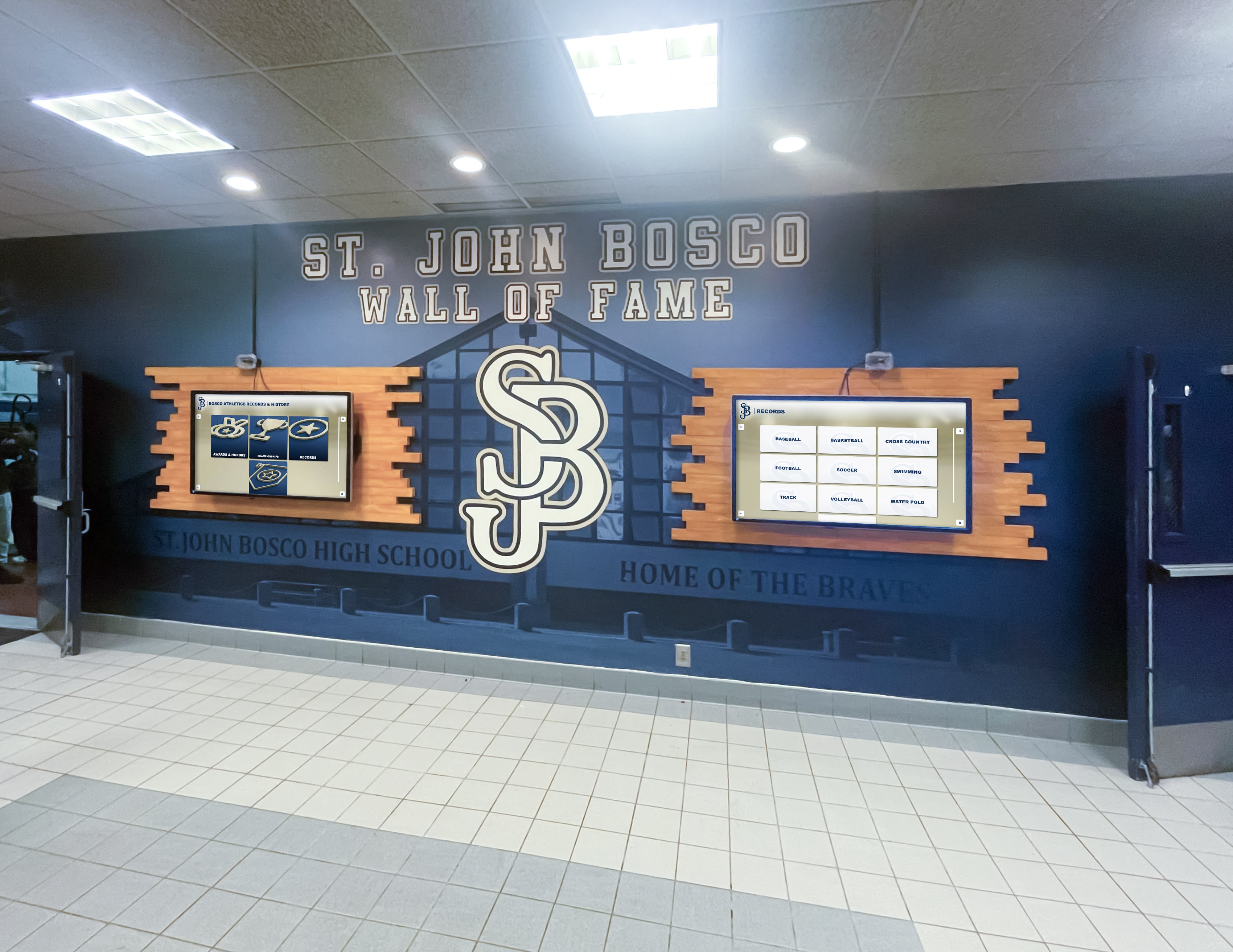
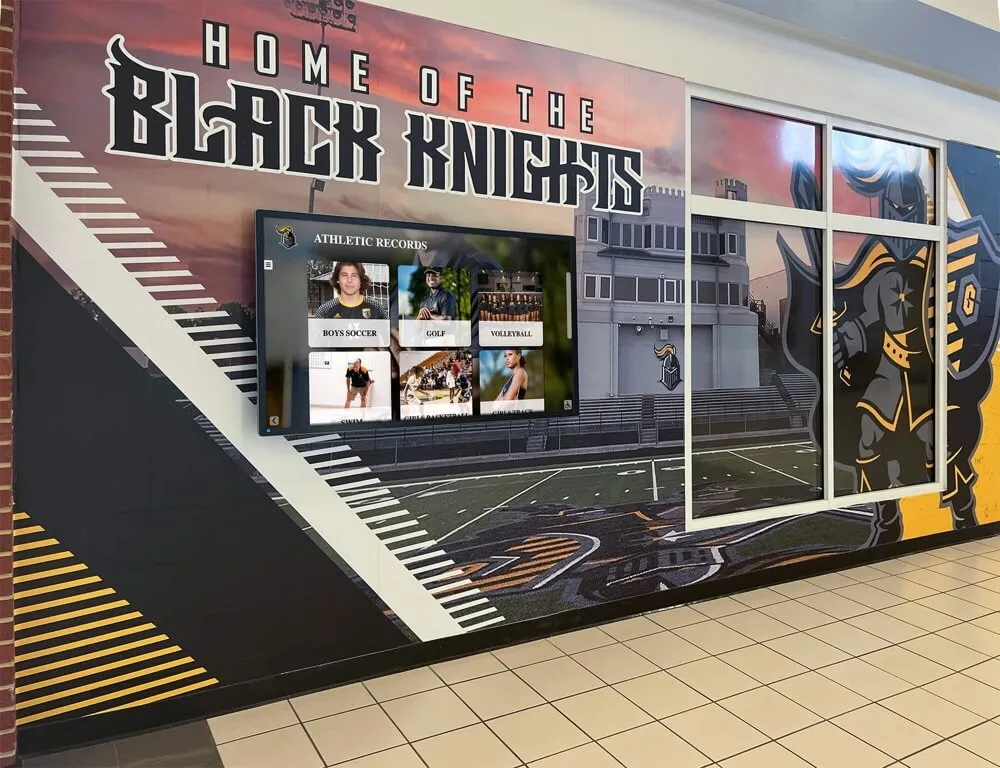
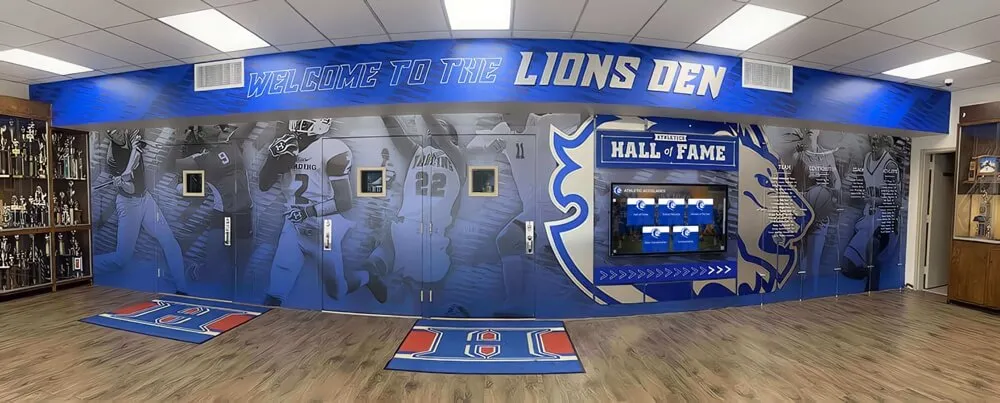
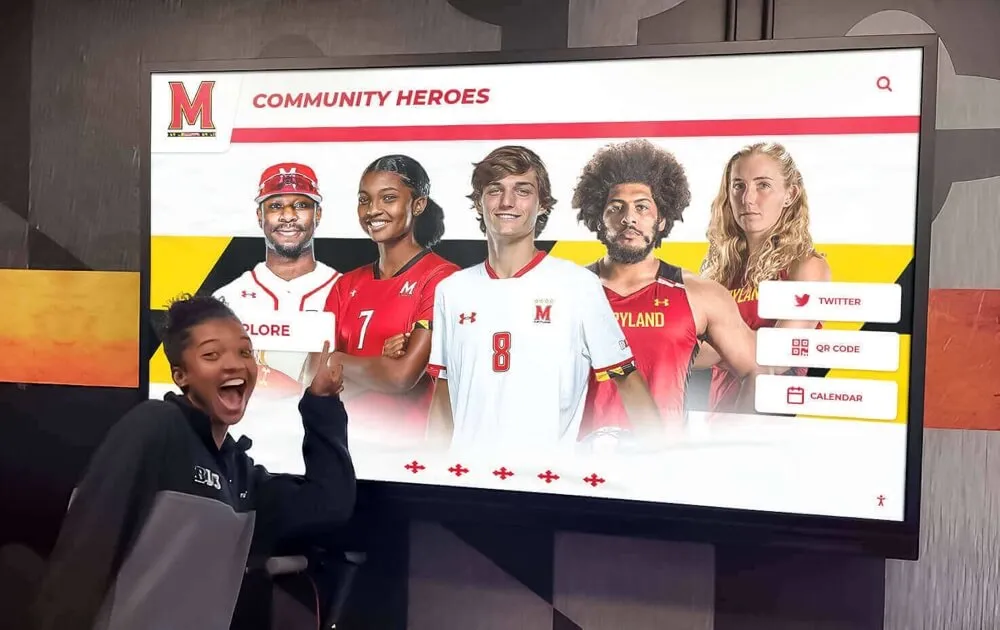
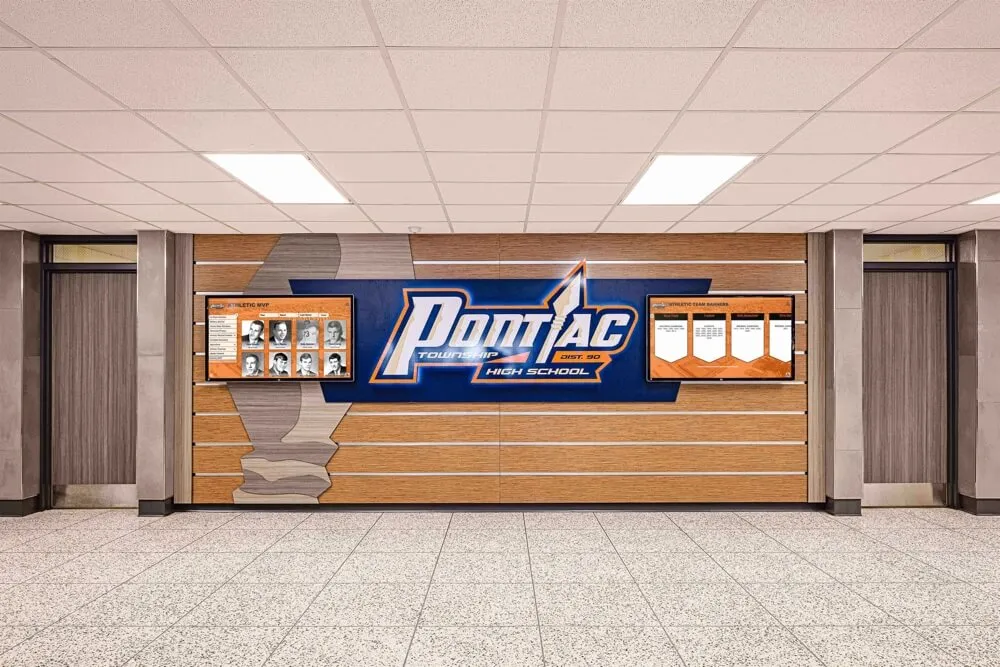
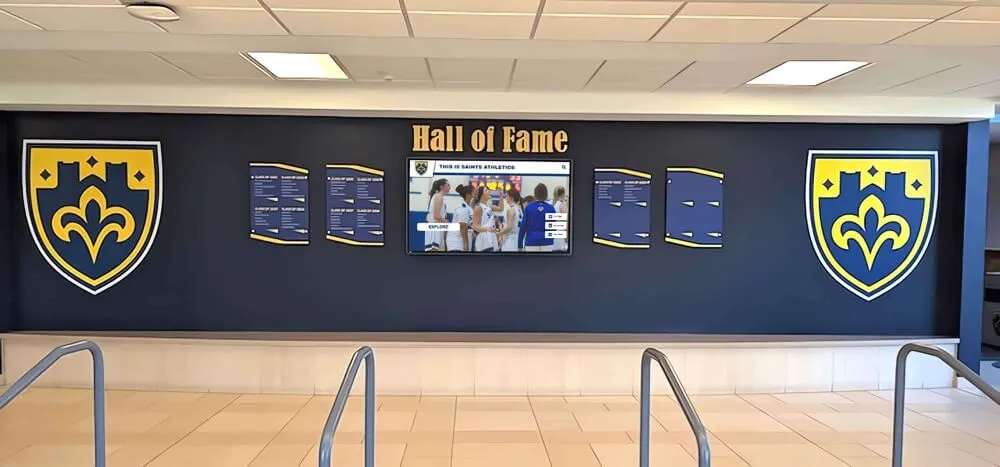
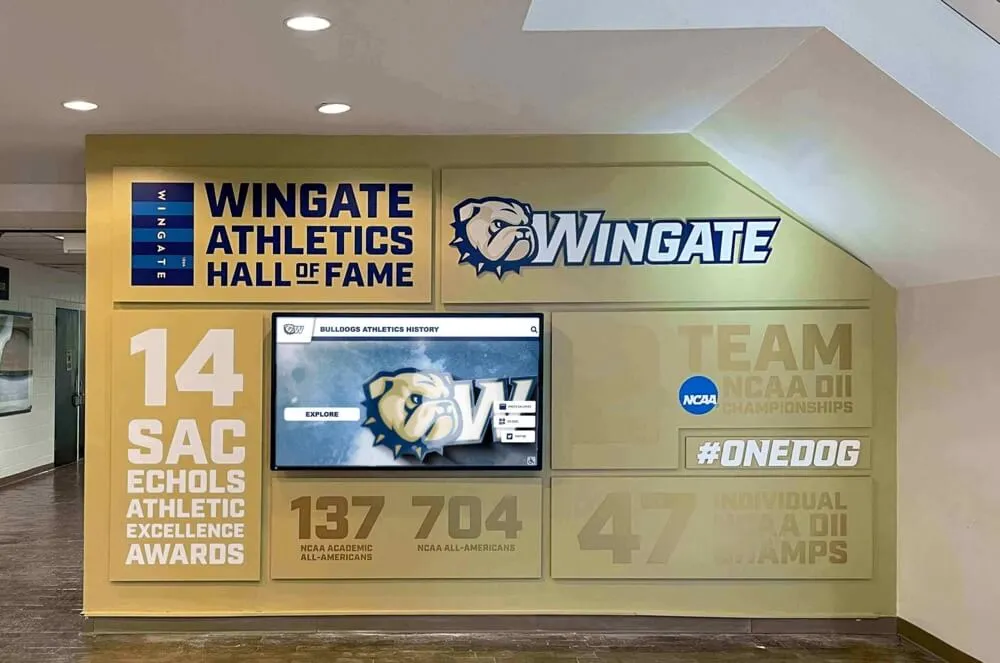
Multiple digital screens in a school hallway can display drumline hall of fame profiles, competition history, and current season achievements simultaneously, creating a comprehensive recognition experience
Connecting Drumline Recognition to Broader School Culture
Drumline recognition doesn’t operate in isolation—it exists within a school’s overall recognition ecosystem. How percussion achievement is framed relative to athletic and academic recognition shapes both how the broader school community perceives the program and how current percussionists understand their own achievement.
Making the Case for Parity
Many schools haven’t explicitly considered whether their recognition structures treat music programs equitably relative to athletics. A percussion section that practices as many hours as a varsity sport, competes at equivalent levels, and produces students with equivalent disciplinary development deserves equivalent recognition infrastructure. That argument is worth making to athletic directors, principals, and school boards—particularly when requesting lobby display space or capital budget for digital recognition systems.
The school banners and recognition display ideas guide covers how schools can design visual recognition environments that balance athletic, academic, and performing arts achievement equitably.
Recruiting Through Recognition
Visible recognition is one of the most effective recruiting tools available to drumline programs. An 8th grader touring the high school who sees a percussion hall of fame display in the lobby—with photos of real students, competition results, and individual achievement profiles—receives a concrete message about what the program offers and what participation could mean.
Schools that invest in visible, public-facing recognition for their drumline programs consistently report that prospective students mention it during auditions or enrollment conversations. Recognition systems aren’t just for students already in the program—they’re the most durable form of recruitment communication a program can build.
For schools designing recognition approaches that serve both current students and prospective families, the senior class awards display guide offers display strategies that communicate program quality to outside audiences effectively.
Integration with the Full Band Program
Drumline recognition works best when it’s clearly embedded within—rather than separated from—the full band program’s recognition culture. Section-specific awards and a percussion-specific hall of fame can coexist with all-band recognition without creating a sense of competition between sections.
The most effective integration strategies:
- Full band banquet with dedicated percussion segment: Section-specific awards presented within the context of the full ensemble celebration reinforces that percussion excellence is part of band excellence, not separate from it
- Shared digital display with section-specific content: A hall of fame display covering the full marching band can include percussion-specific pages, caption award archives, and individual percussionist profiles without requiring a separate display
- Cross-section recognition: Including a “Most Valuable to the Ensemble” award that can go to any musician—and that percussionists win regularly when their contribution justifies it—reinforces that drumline achievement is measured within the ensemble context
Implementation: Starting Where You Are
The range of drumline recognition ideas in this guide spans from simple banquet improvements to comprehensive digital hall of fame systems. Most programs won’t implement all of it at once, and they shouldn’t try to.
A practical implementation sequence:
Year One: Strengthen the Banquet
Focus on improving award categories, adding a senior segment with genuine individual spotlights, and creating a season recap video. These improvements require minimal budget and produce immediate results that percussionists and families will notice.
Year Two: Build a Physical Anchor
Install a percussion recognition display in or near the music suite—even a simple name board with photos creates a physical record that accumulates meaning over time. Document what you have in yearbooks and school archives so the display can grow backward as well as forward.
Year Three and Beyond: Go Digital
Explore digital recognition displays that integrate video documentation, enable interactive exploration, and extend visibility beyond the music suite. Assess placement in high-traffic public areas. Build an alumni engagement structure around the digital archive.
The value of digital recognition extends beyond the percussion section to every performing arts and athletic program in the school. Evaluating comprehensive platform options—including the touchscreen kiosk buying guide for school lobbies—helps schools select solutions that serve multiple programs on a single infrastructure investment.
Give Your Percussion Section the Recognition It Earns
Rocket Alumni Solutions builds digital recognition displays for school music programs, performing arts departments, and athletic programs—combining touchscreen hardware with cloud-based content management that directors update remotely. Explore how a permanent drumline hall of fame display could serve your program.
Explore Drumline Recognition SolutionsBuilding recognition infrastructure for your drumline program is a long-term investment in section culture, recruitment, and alumni engagement. The banquet improvements and digital display strategies in this guide create compounding returns—each year of documentation makes the archive more valuable, each inducted hall of fame member strengthens alumni connection, and each visible recognition moment in a public hallway shapes how the next generation of percussionists understands what the program offers.
Your drummers hold the band together from the inside. Recognition that reflects that contribution—systematically, visibly, permanently—tells them that the school knows it.