



Nonprofits face constant pressure to thank donors meaningfully while managing tight budgets and limited space. Donor walls serve dual purposes—acknowledging supporters who make your mission possible while inspiring prospective donors through visible proof of community commitment. Yet many organizations struggle with traditional recognition approaches: physical plaques fill up quickly, updates require expensive re-engraving, and static displays fail to communicate the transformational impact behind each contribution.
According to the Association of Fundraising Professionals, donor retention rates remain below 20% across most nonprofit sectors. Poor recognition ranks among the top reasons supporters discontinue giving. When donors feel unappreciated or see outdated, crowded recognition displays, they question whether organizations truly value their contributions—directly impacting retention and lifetime giving potential.
This guide explores practical donor wall options for nonprofits at every budget level, from traditional plaques to modern digital recognition systems. We’ll examine 10 proven ideas implemented by organizations nationwide, compare costs and benefits, and provide actionable implementation steps helping you select recognition approaches matching your mission, space constraints, and supporter expectations in 2026.
Effective donor recognition extends far beyond listing names on walls. The best approaches tell stories, showcase impact, respect diverse giving levels, and create emotional connections between supporters and the communities they serve. Organizations investing thoughtfully in donor recognition report measurably higher retention rates, increased major gift success, and stronger community engagement.

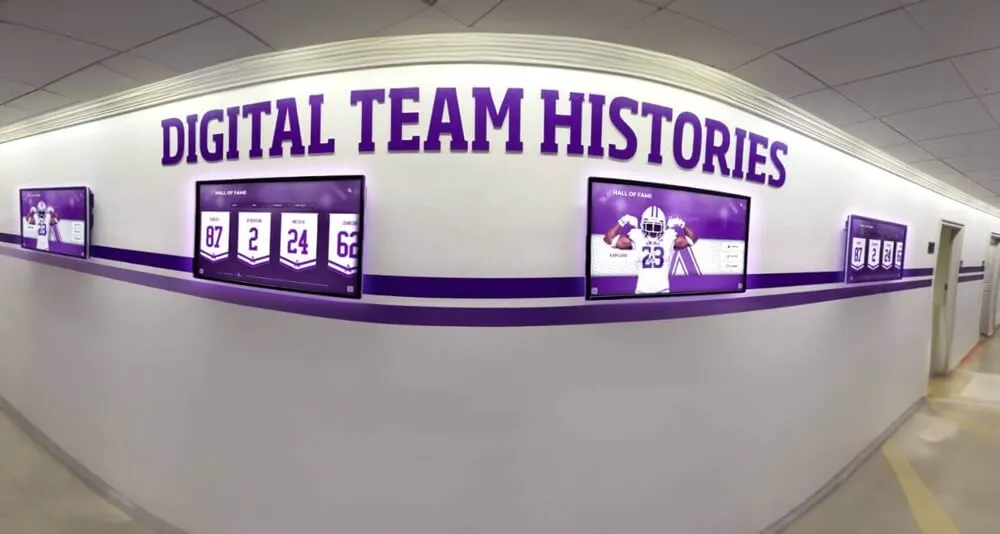
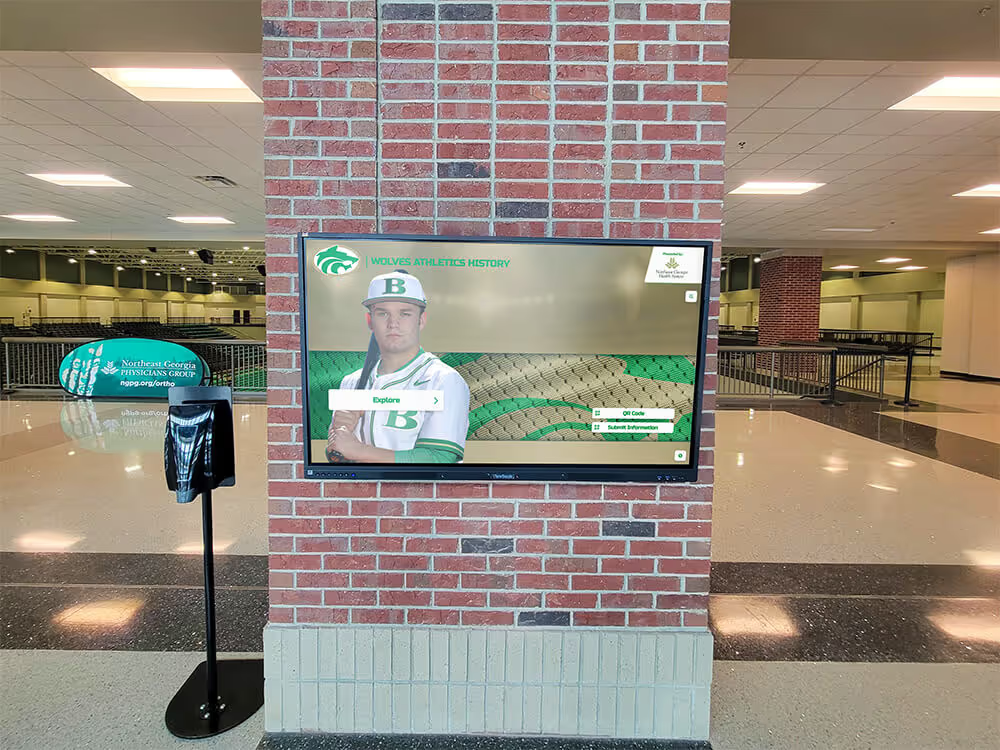
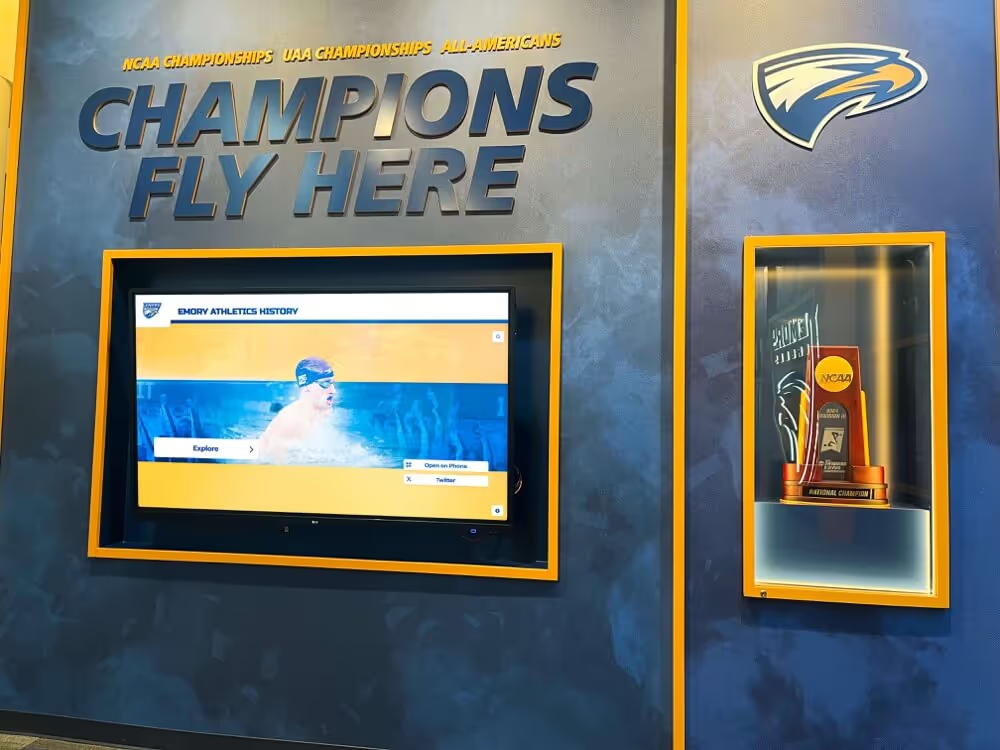
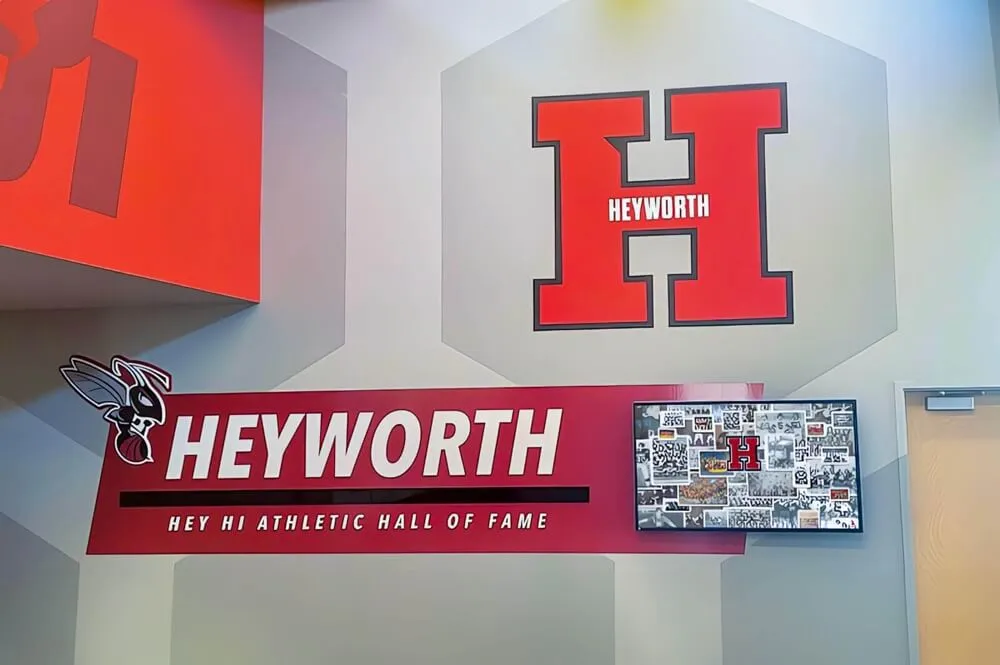
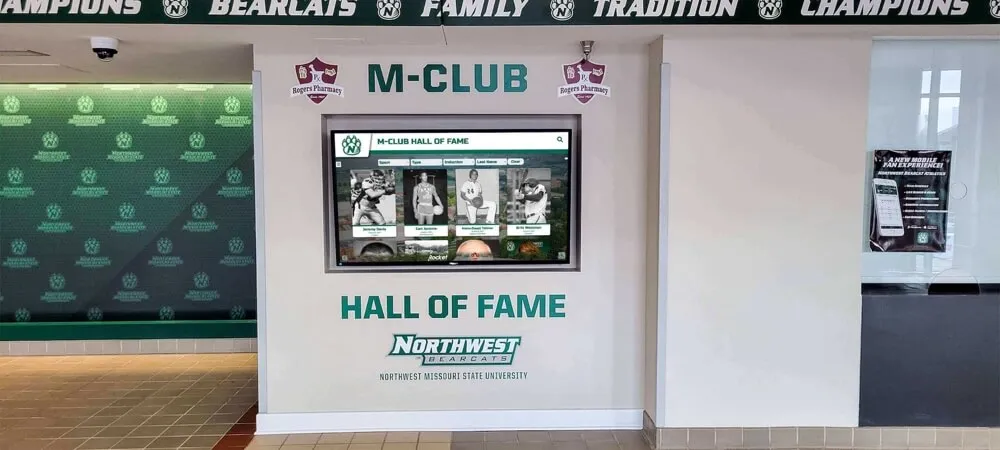
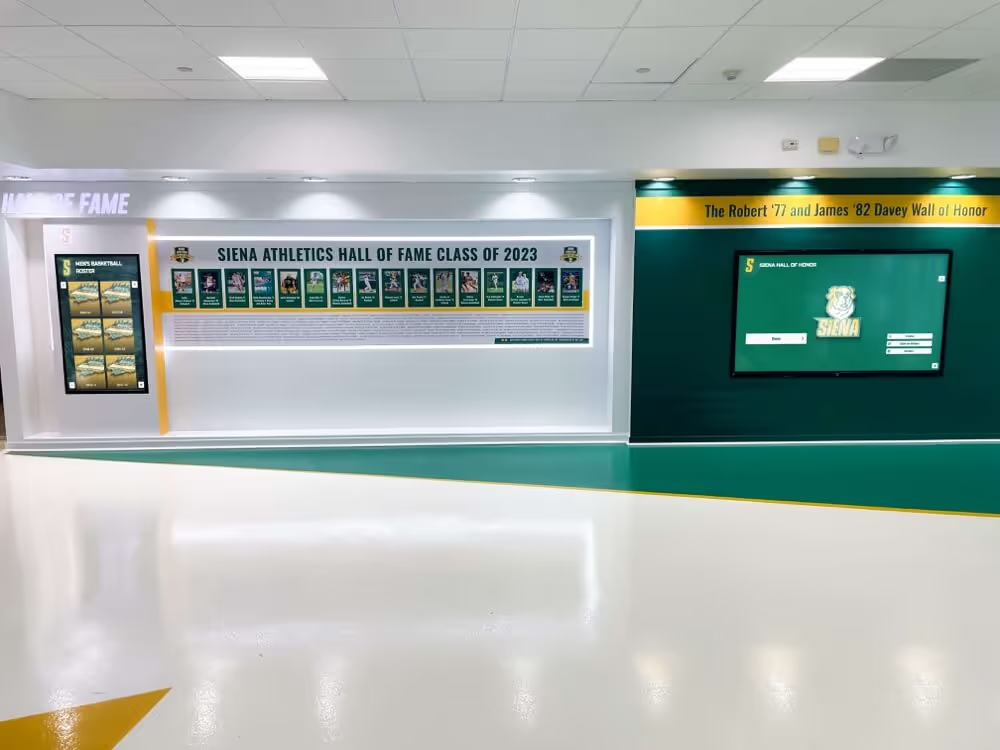
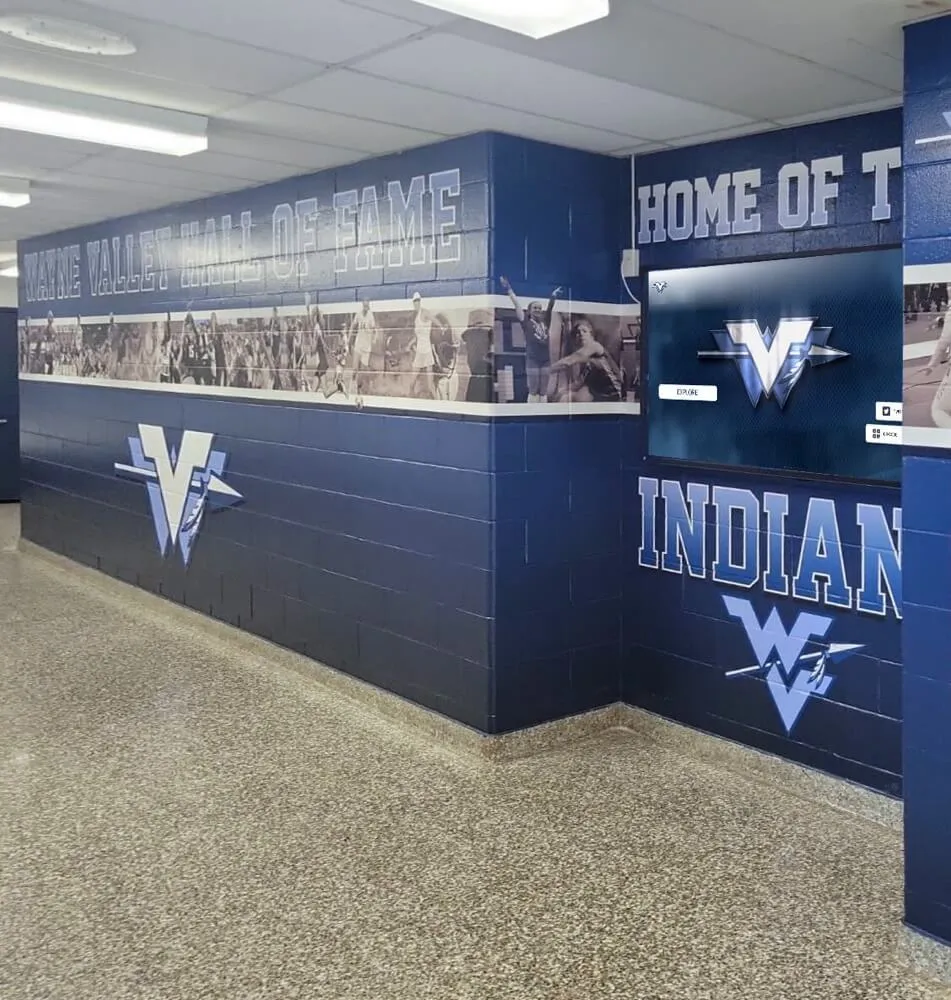
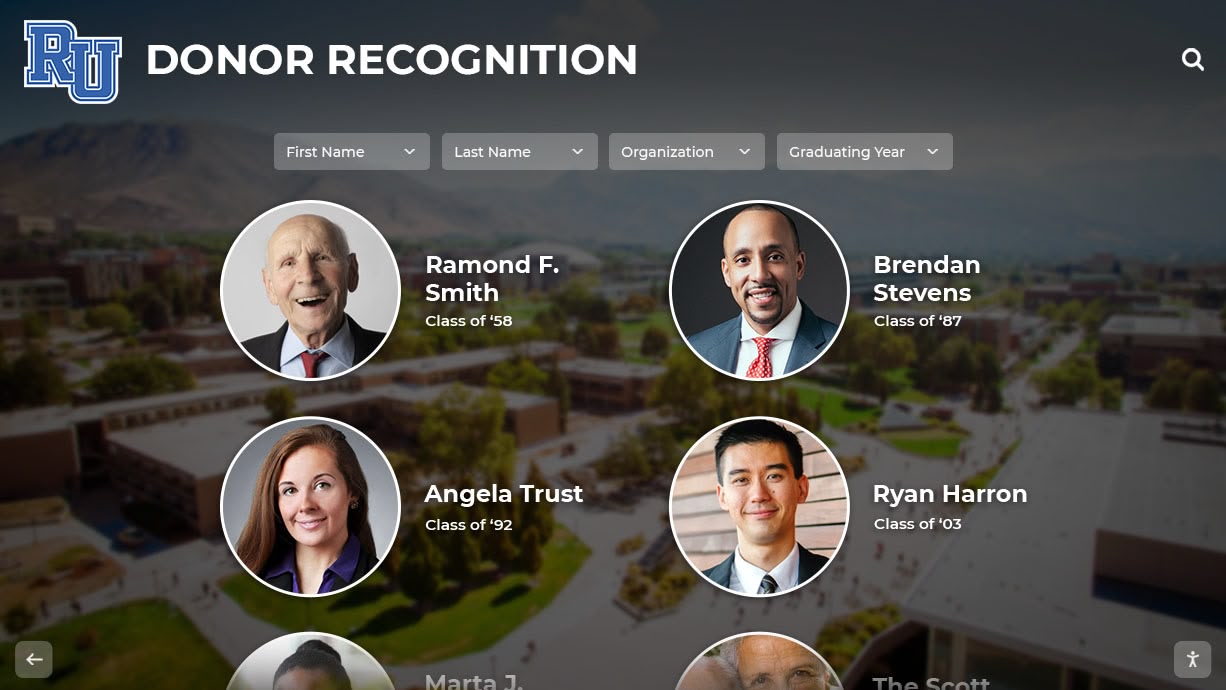
Comprehensive donor recognition displays celebrate supporters at all giving levels while communicating organizational impact
What Is a Donor Wall? Understanding Recognition Fundamentals
Before exploring specific donor wall ideas, understanding what these installations accomplish and how they function strategically helps nonprofits make informed decisions aligned with organizational goals and donor preferences.
Purpose and Strategic Value
Donor walls serve multiple interconnected objectives that extend beyond simple appreciation:
Primary Recognition Functions
Donor recognition displays fulfill several strategic purposes simultaneously. They acknowledge supporters publicly, demonstrating institutional gratitude in permanent, visible ways. They inspire prospective donors by showcasing community investment and philanthropic culture. They provide tangible evidence of campaign progress during capital campaigns and major fundraising initiatives. They communicate organizational stability and community support to all stakeholders, including clients, partners, and board members.
Most importantly, effective donor walls strengthen relationships with existing supporters by demonstrating that contributions are valued, remembered, and celebrated long after gifts arrive—directly influencing retention and continued giving.
The Retention Connection
Research consistently demonstrates links between recognition quality and donor retention. Organizations with comprehensive recognition programs report 15-25% higher retention rates compared to those with minimal or perfunctory acknowledgment approaches. Donors who see themselves recognized appropriately give more frequently, contribute larger amounts over time, and remain engaged longer than supporters receiving only transactional thank-you communications.
This retention impact makes donor wall investments highly cost-effective. Acquiring new donors costs five to seven times more than retaining existing supporters, making recognition infrastructure that strengthens existing relationships among the most financially efficient fundraising strategies available.
Traditional vs. Digital Recognition: Understanding Options
Nonprofits planning donor walls must understand fundamental differences between traditional physical installations and modern digital recognition platforms.
Traditional Physical Donor Walls
Conventional recognition typically features engraved plaques—brass, bronze, acrylic, or wood—mounted on walls or display systems. These installations communicate permanence and formality valued by many major donors while creating visible acknowledgment in organizational facilities.
Traditional benefits include perceived permanence, tangible physical presence, no technology requirements, and alignment with donor expectations from previous philanthropic experiences. Physical plaques feel substantial and formal, particularly important when recognizing major gifts or campaign leadership.
However, physical recognition faces significant constraints: strict space limitations creating capacity ceilings, inability to update without expensive re-engraving, static presentations providing no impact context, material deterioration over time, high per-donor costs ($150-500+ for quality engravings), and spatial hierarchies where contribution amounts determine physical prominence.
Digital Recognition Platforms
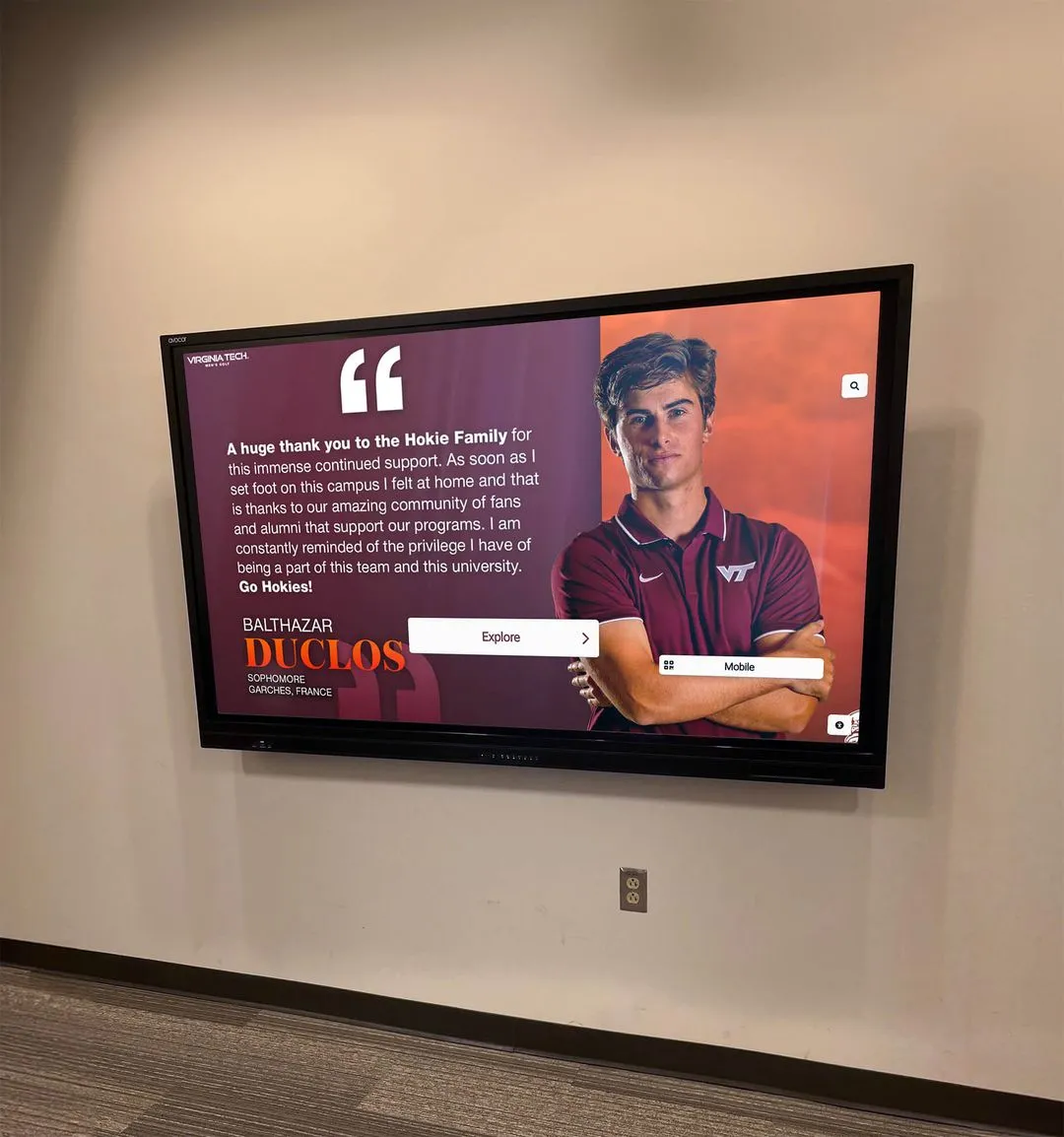
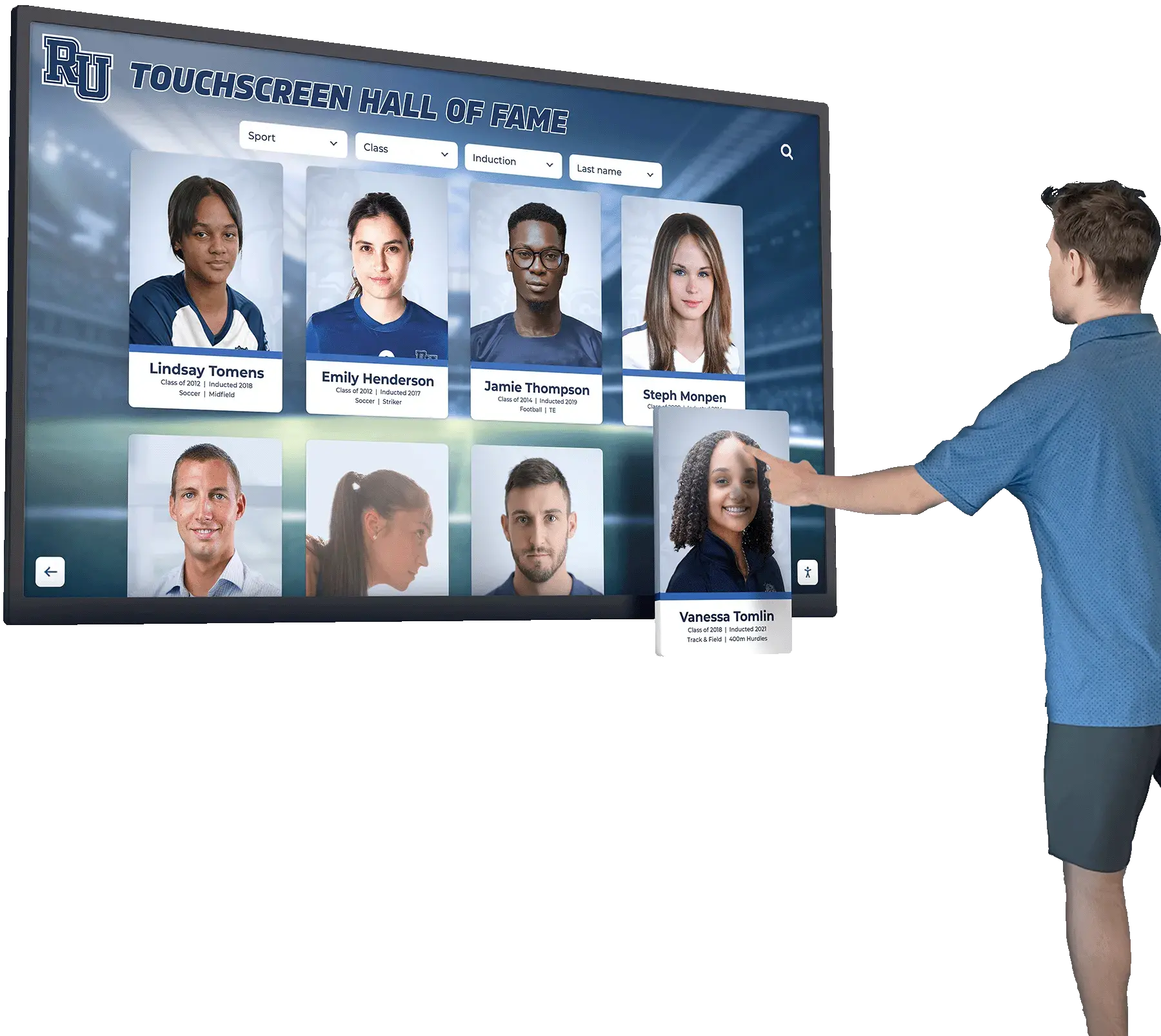
Digital donor walls use touchscreen displays—typically 43-75 inches—to present supporter information through interactive, multimedia experiences. Visitors explore donor profiles, view photos and videos, read impact stories, and search for specific supporters through intuitive interfaces.
Digital recognition solves traditional limitations comprehensively. Key advantages include unlimited capacity accommodating thousands of donors without space constraints, instant updates adding new contributors immediately, rich multimedia storytelling connecting gifts to outcomes, searchable databases enabling easy supporter discovery, flexible privacy controls, dramatically lower per-donor costs, continuous content improvement, and web accessibility extending recognition beyond physical locations.
Organizations implementing digital recognition often maintain selective traditional elements for major campaign donors who prefer physical plaques while using digital platforms for comprehensive recognition across all giving levels.

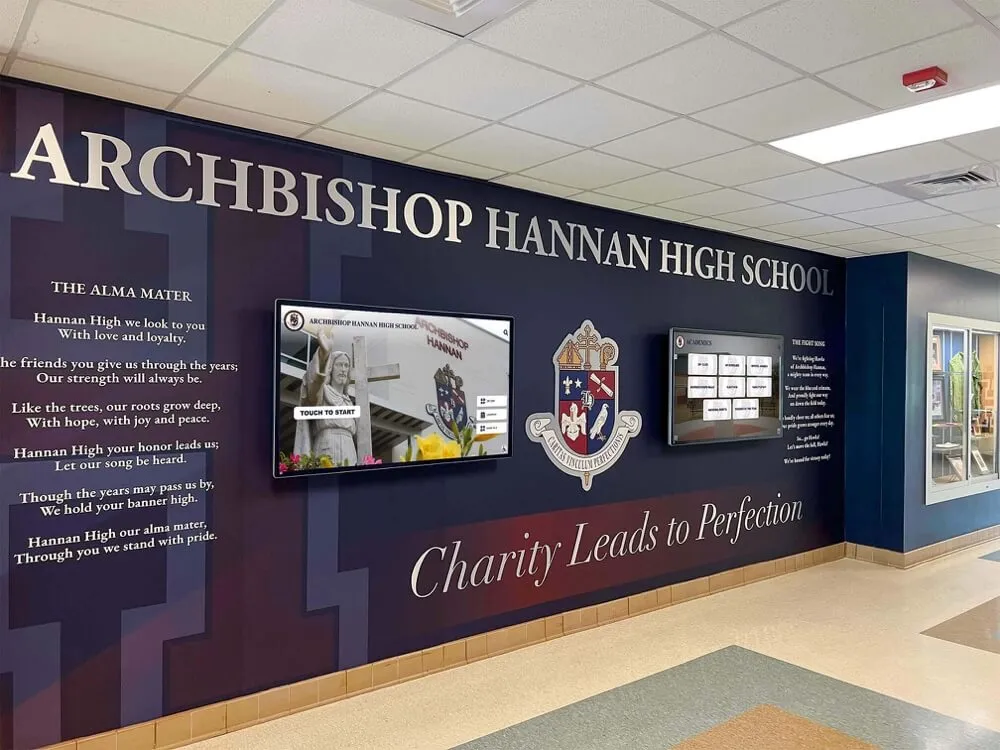
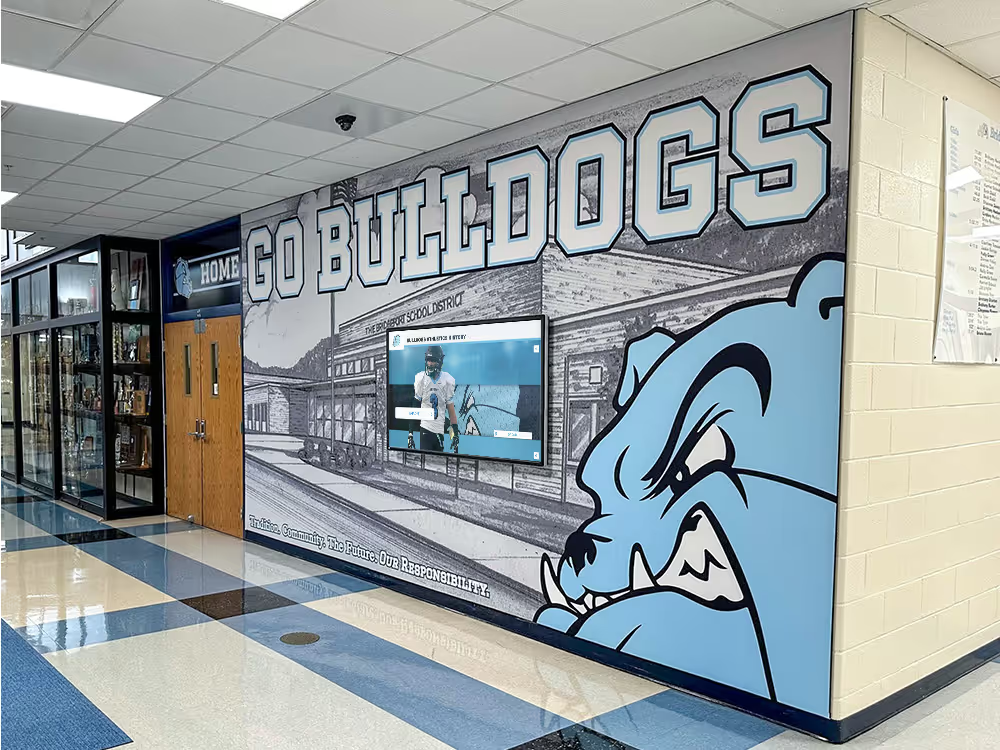
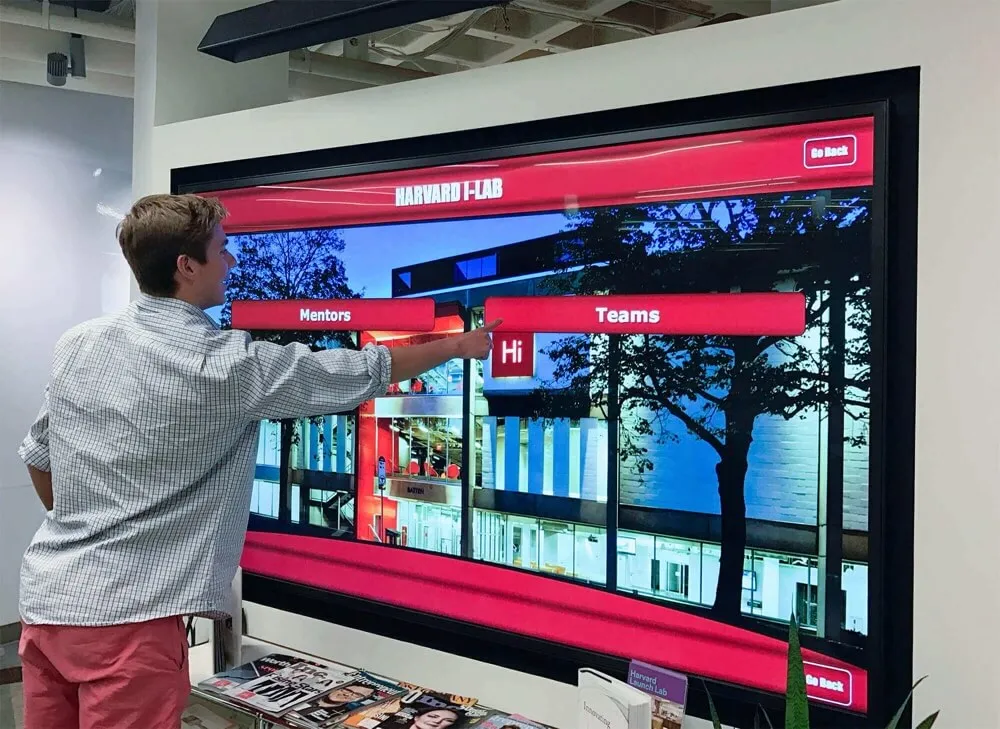
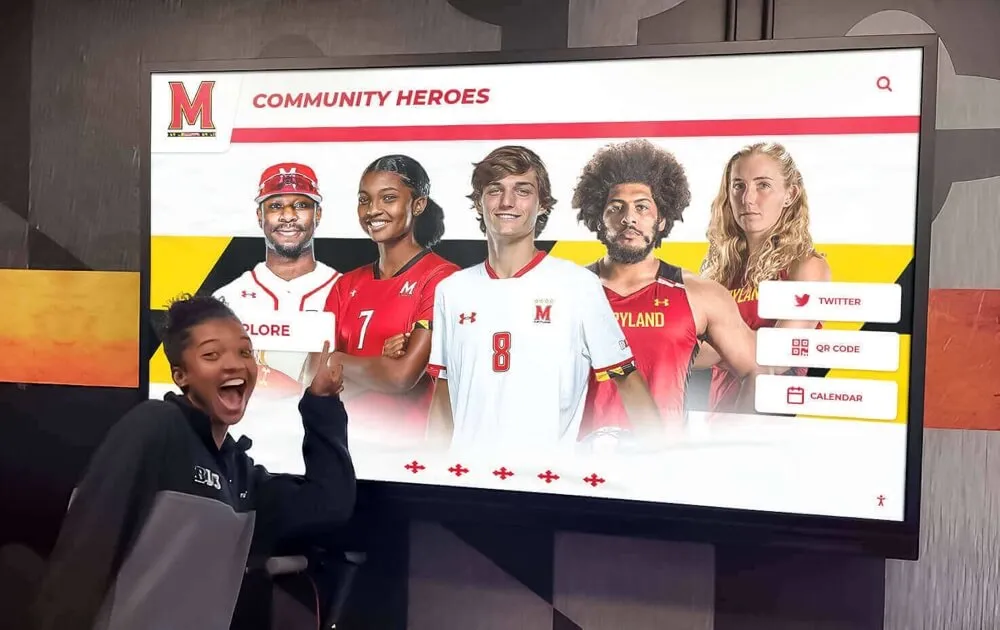
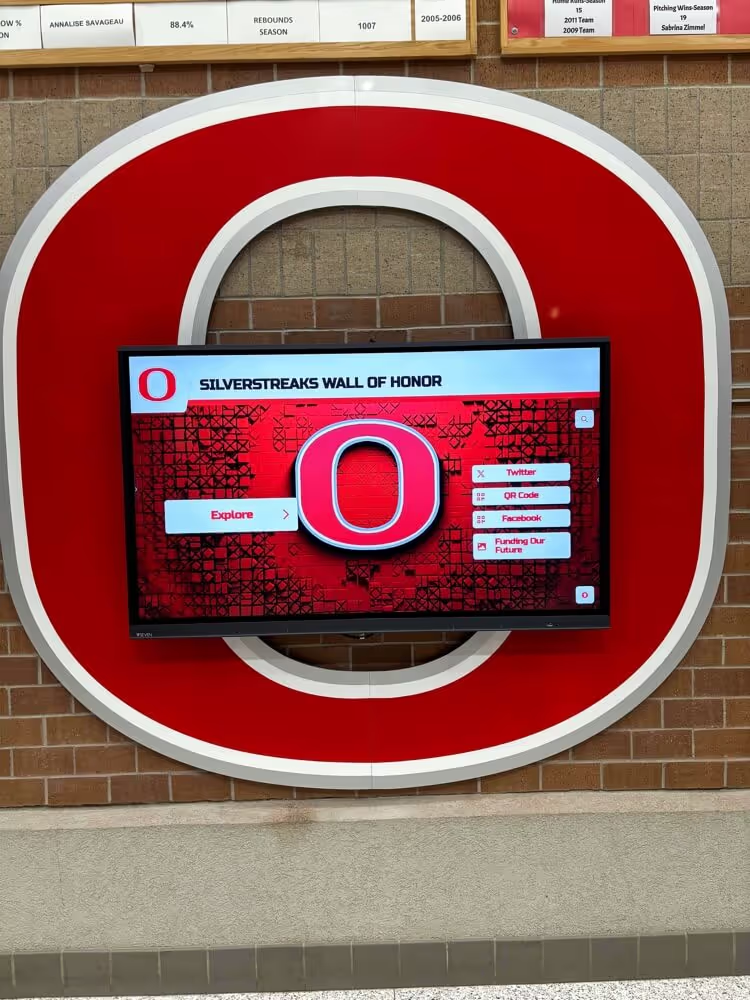
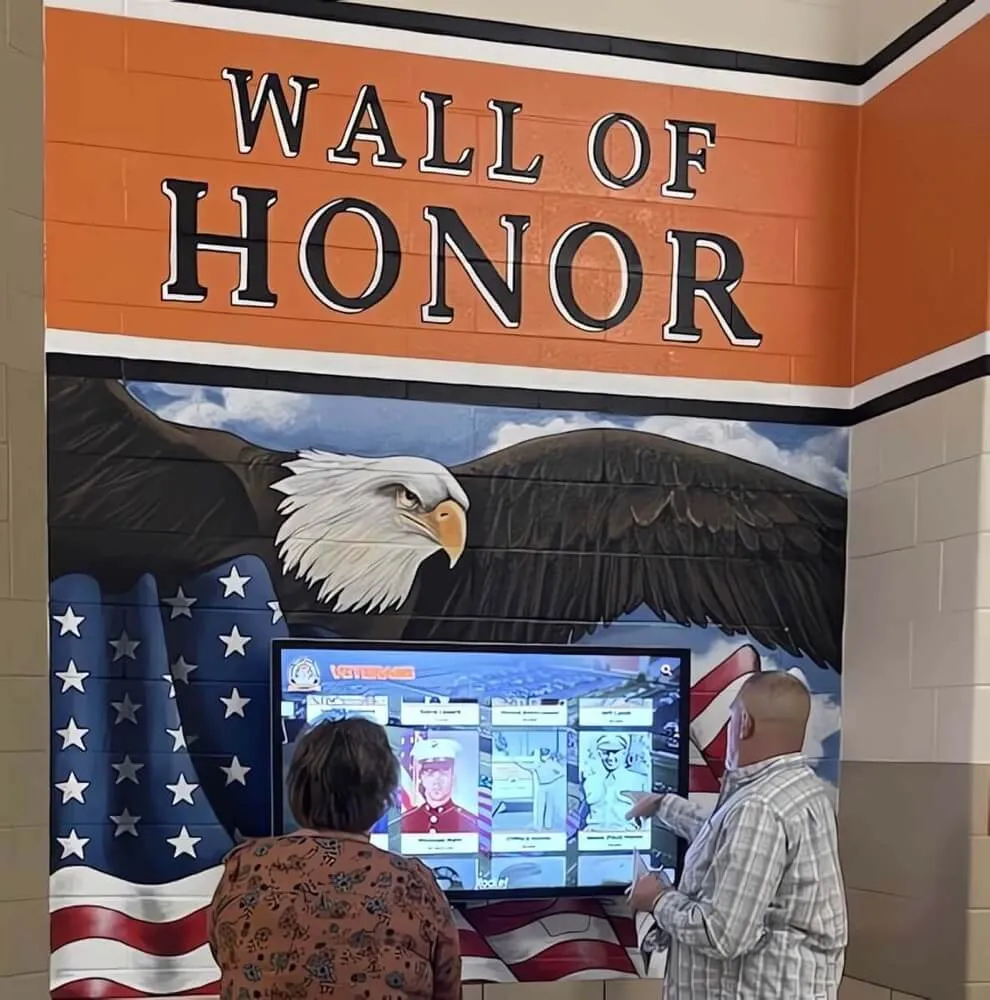
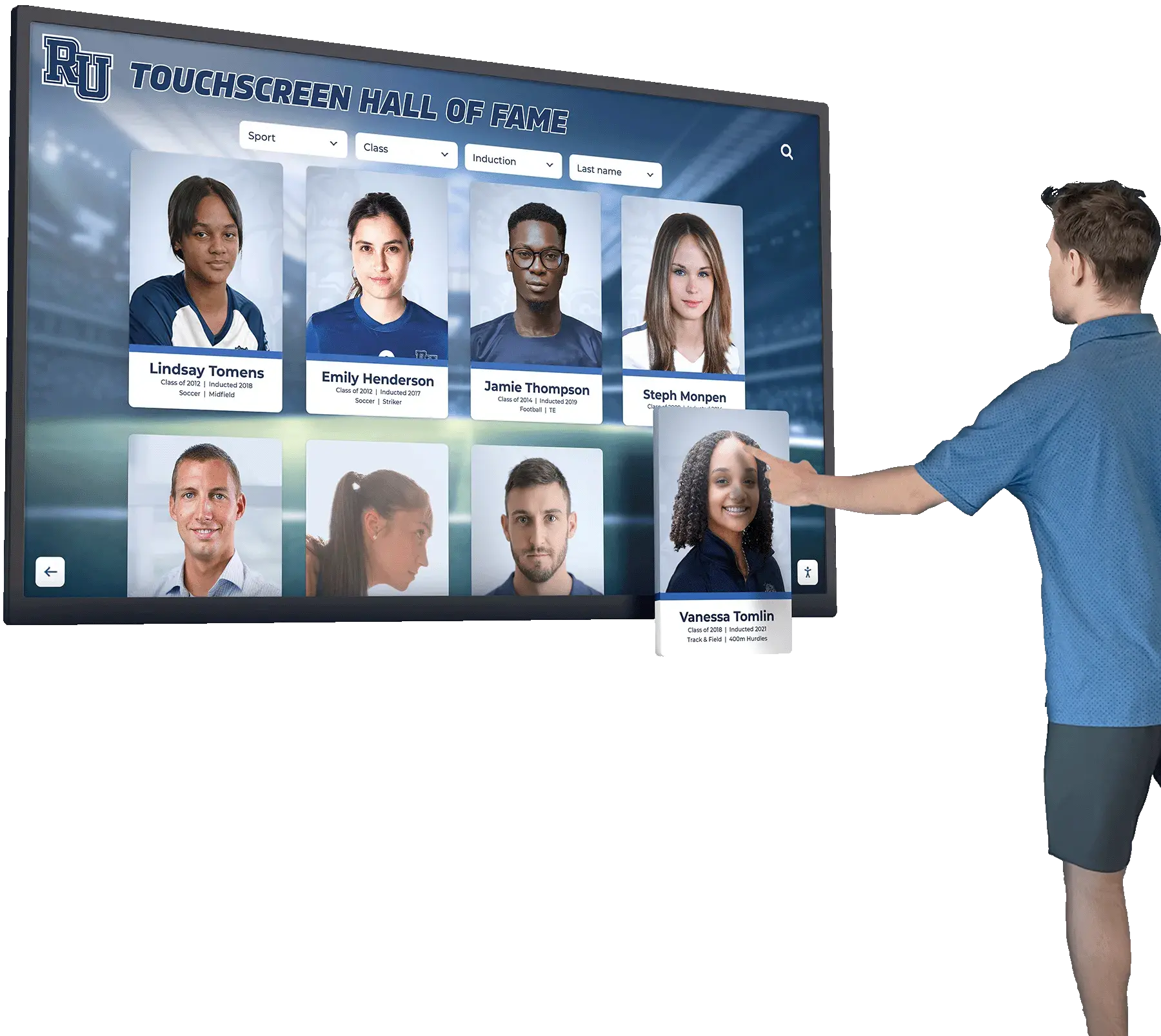
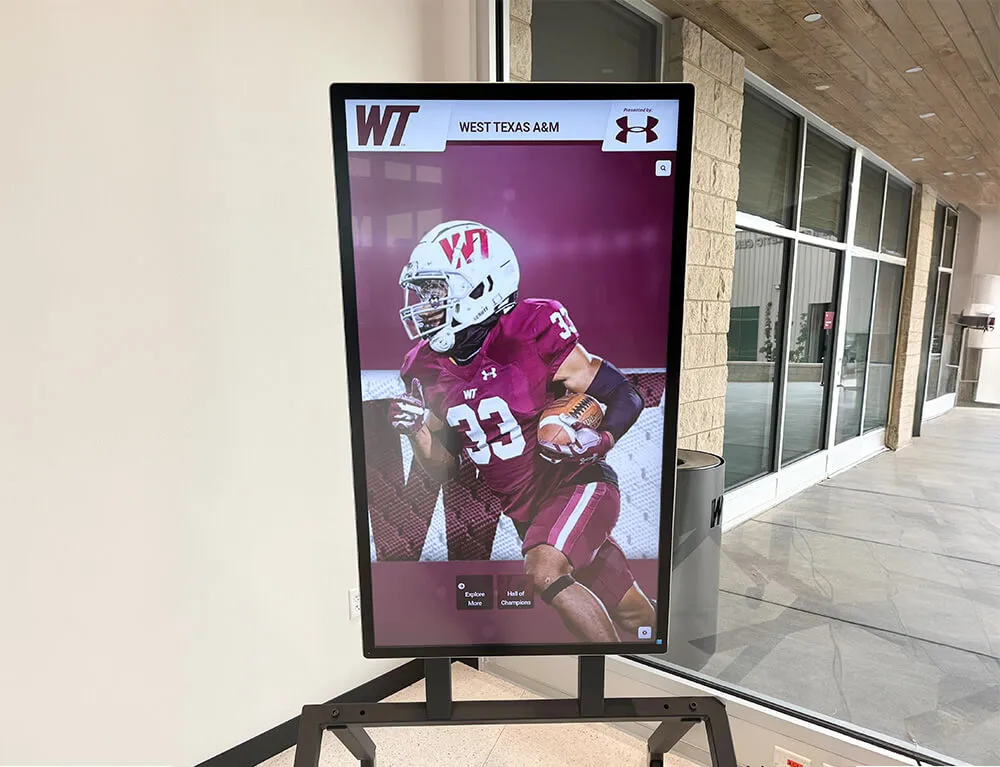
Interactive touchscreen displays transform static recognition into engaging experiences where visitors discover donor stories and organizational impact
10 Top Donor Wall Ideas for Nonprofits in 2026
These proven recognition approaches represent effective solutions implemented by nonprofits across budget levels, organizational sizes, and mission types. Each idea includes cost considerations, implementation requirements, and suitability for different contexts.
1. Digital Touchscreen Recognition Displays
Overview: Large-format touchscreen displays (43-75 inches) mounted in high-traffic areas present comprehensive donor recognition through interactive, multimedia experiences. Visitors explore supporter profiles including photos, biographical information, giving histories, video testimonials, and impact narratives organized through searchable databases.
Best For: Organizations with diverse donor bases, limited physical space, frequent recognition updates, or desires to showcase impact stories alongside supporter names.
Cost Range: Initial installation $3,000-8,000 including commercial-grade display, mounting hardware, and software platform. Monthly software/hosting $50-200 depending on features and customization.
Key Benefits: Unlimited donor capacity, instant updates without installation costs, rich storytelling capabilities, search functionality, privacy controls, web accessibility extending recognition online, and dramatically lower per-donor costs compared to engraving.
Implementation Considerations: Requires reliable power and internet connectivity. Organizations should plan content strategy before installation, determining profile elements, photo requirements, and impact storytelling approaches. Solutions like digital recognition displays provide specialized platforms designed for donor recognition without requiring technical expertise.
Digital recognition works particularly well for nonprofits with capital campaigns needing to update recognition frequently as contributions arrive.
2. Traditional Engraved Plaque Walls
Overview: Classic approach featuring individual metal or acrylic plaques—typically brass, bronze, or aluminum—mounted on walls or display panels. Plaques include donor names and often giving level categories (“Founder’s Circle,” “Champion Circle,” etc.) arranged in organized grids or decorative patterns.
Best For: Organizations with major donor emphasis, campaigns with modest supporter numbers (under 200), or contexts where donors specifically request traditional recognition formats.
Cost Range: High-quality metal plaques $200-500 per donor including engraving and mounting hardware. Acrylic options $75-200 per donor. Installation labor $500-2,000 depending on complexity.
Key Benefits: Perceived permanence and formality, tactile physical presence, no technology requirements, alignment with traditional donor expectations, particularly for older supporters.
Implementation Considerations: Plan for future expansion by installing mounting systems with available space. Order extra blank plaques during initial installation to reduce future per-unit costs. Traditional walls work best when donor numbers remain relatively stable or when organizations commit to expanding physical installations as needed.
3. Giving Trees or Garden Recognition
Overview: Artistic installations featuring tree sculptures—often metal or wood—where individual leaves, blossoms, or branches represent donors. Works particularly well for environmental nonprofits, gardens, schools, and organizations with outdoor spaces suitable for permanent installations.
Best For: Environmental organizations, botanical gardens, schools, parks departments, or nonprofits seeking artistic recognition that aligns thematically with missions.
Cost Range: Professional sculpture installations $5,000-25,000 depending on size, materials, and artist. Individual leaf/branch engravings $50-150 per donor.
Key Benefits: Visually striking and memorable, thematic connection to growth and nurturing, suitable for outdoor and indoor installations, expandable through additional branches or surrounding elements.
Implementation Considerations: Select durable materials appropriate for installation environment (weather-resistant for outdoor placement). Work with artists experienced in donor recognition to ensure proper sizing for anticipated donor numbers. Plan layout allowing future expansion as fundraising continues.
4. Hybrid Digital-Physical Installations
Overview: Combined approach integrating traditional physical elements (carved names, donor category headers, decorative panels) with digital displays showing impact videos, campaign updates, and expanded donor information. Provides “best of both worlds” by honoring traditional recognition expectations while adding dynamic storytelling capabilities.
Best For: Major capital campaigns with significant leadership gifts requiring formal recognition alongside broader donor bases needing comprehensive acknowledgment.
Cost Range: $8,000-20,000 for complete installation including quality physical elements plus digital display and content management system.
Key Benefits: Respects donor preferences for traditional recognition while solving capacity and updating limitations. Creates visually impressive signature installations in lobbies or dedicated spaces. Enables impact storytelling impossible with static plaques alone.
Implementation Considerations: Design cohesive aesthetic integrating physical and digital elements harmoniously. Ensure digital content updates regularly to avoid appearance of neglect. This approach works well for organizations transitioning from traditional to digital recognition by honoring existing physical installations while expanding capacity digitally.
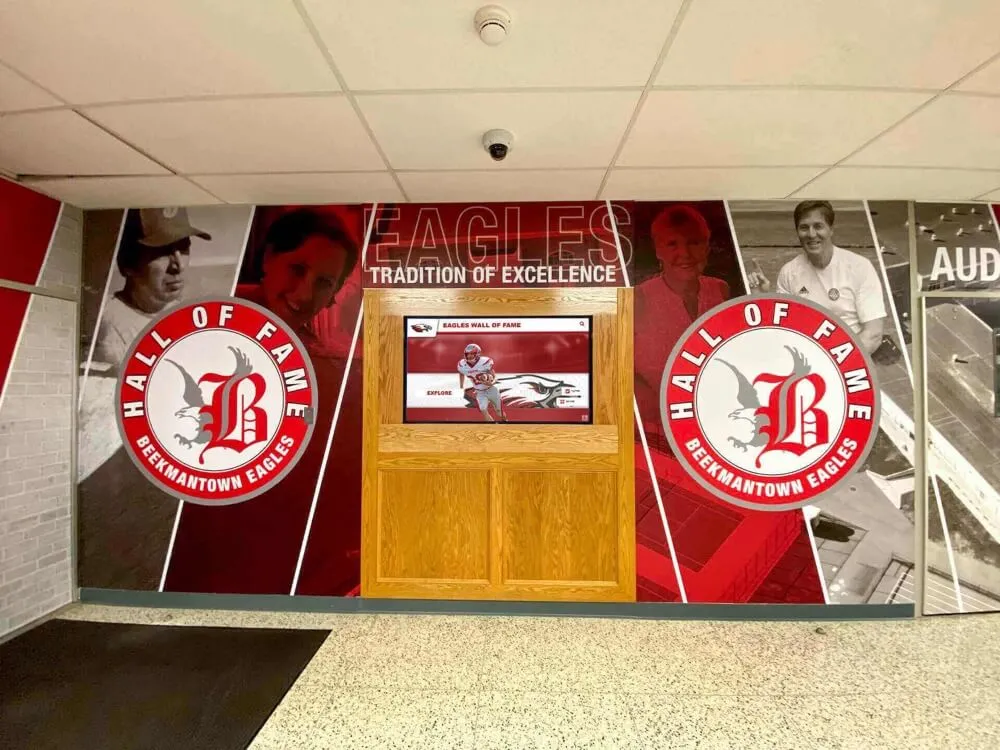
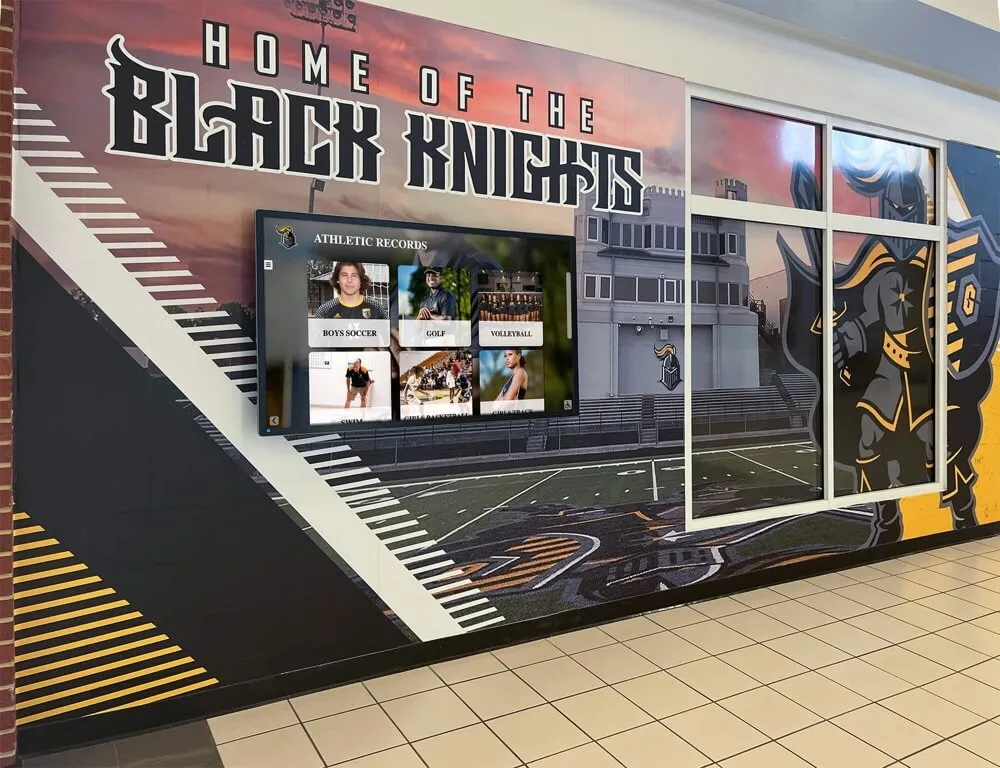
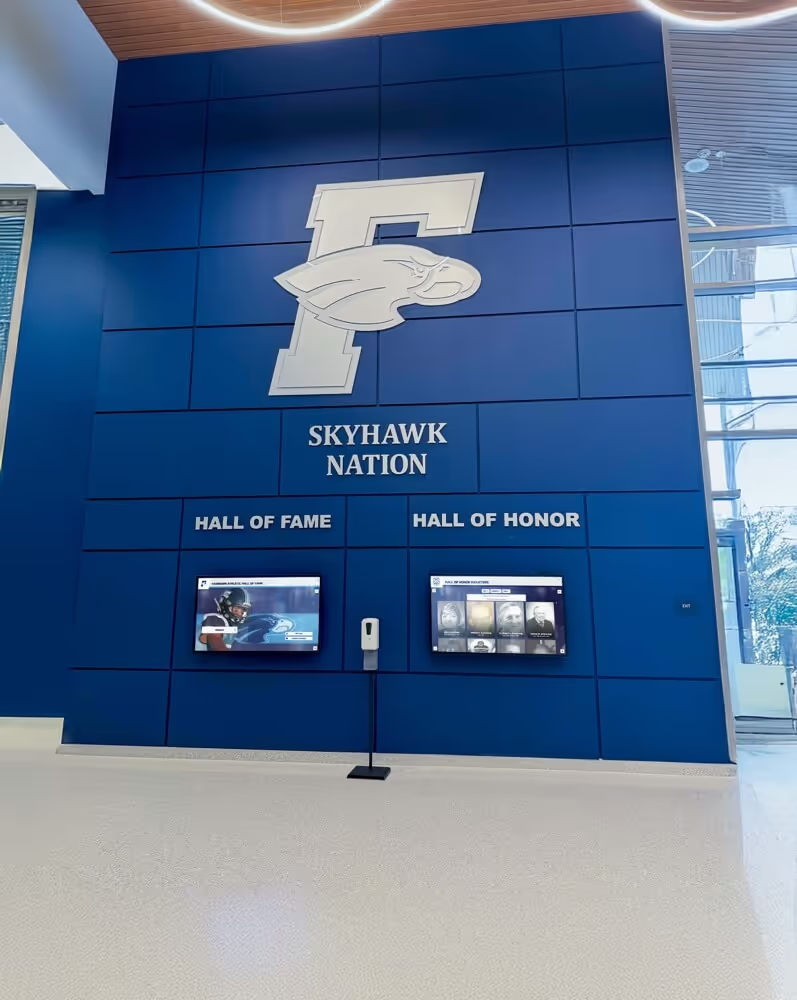
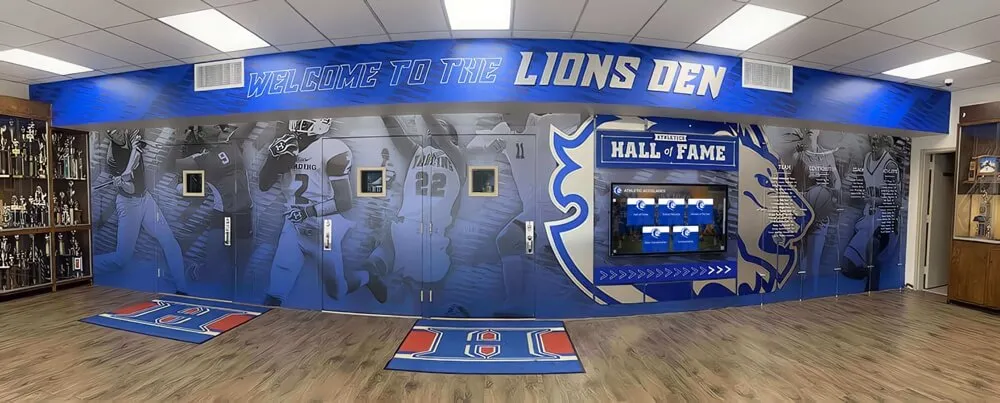
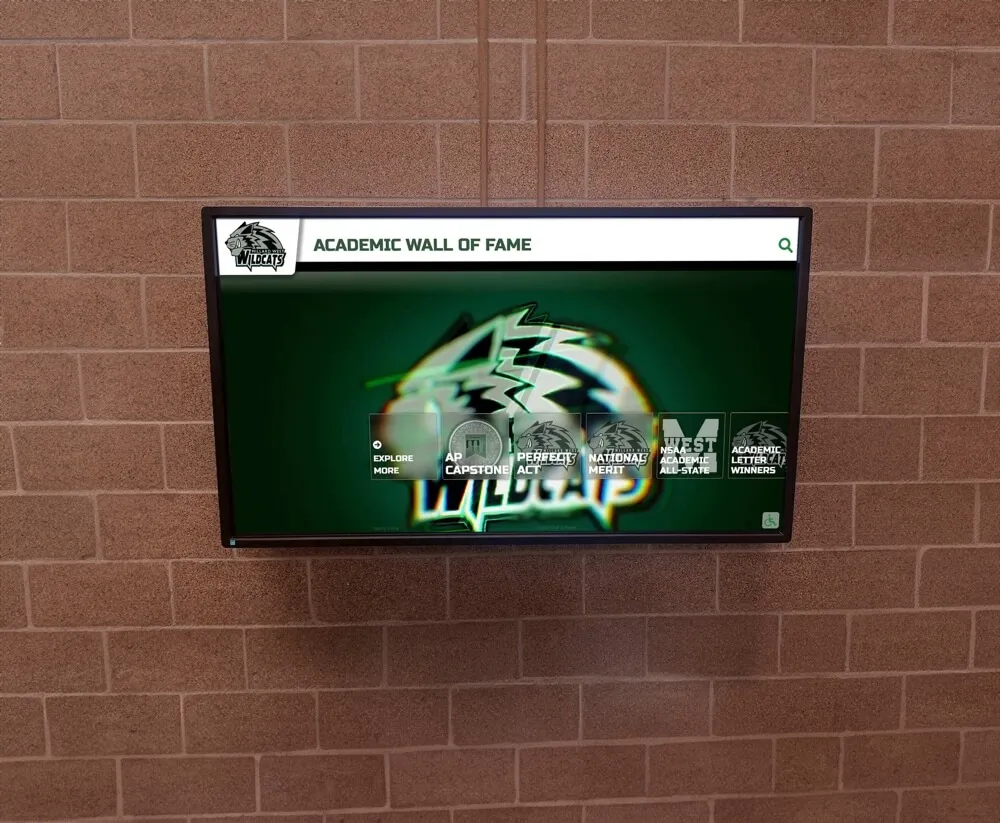
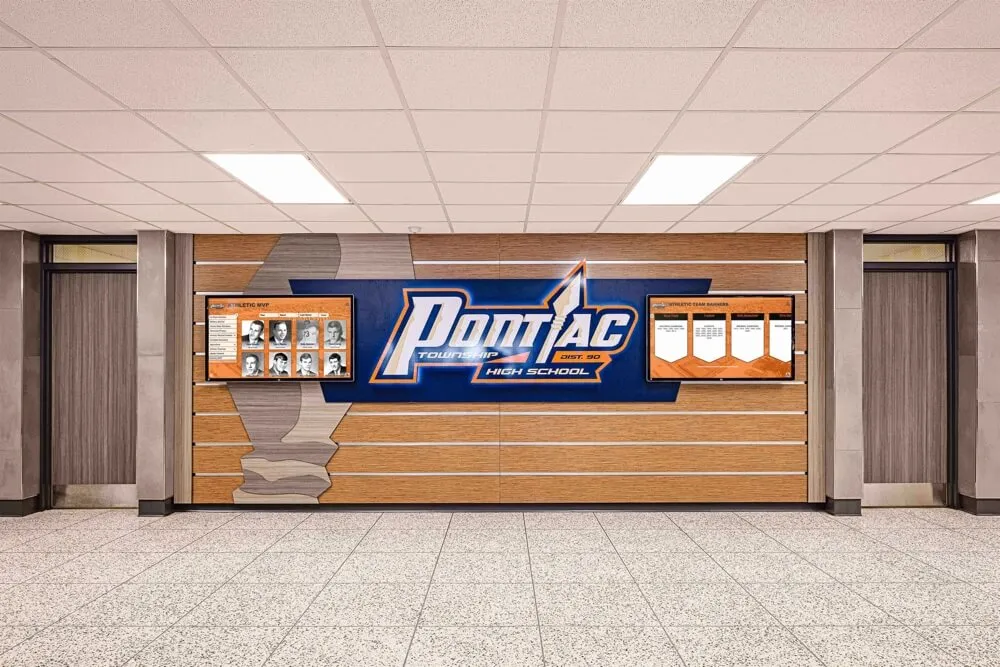
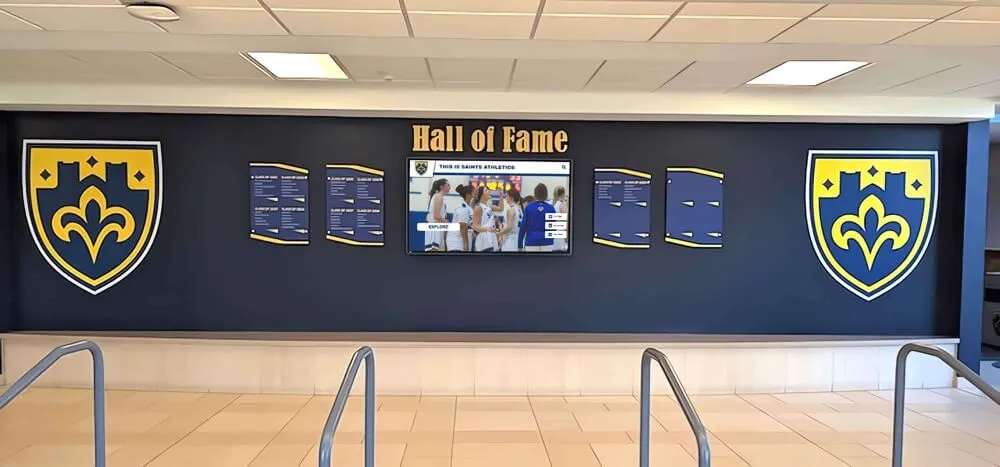
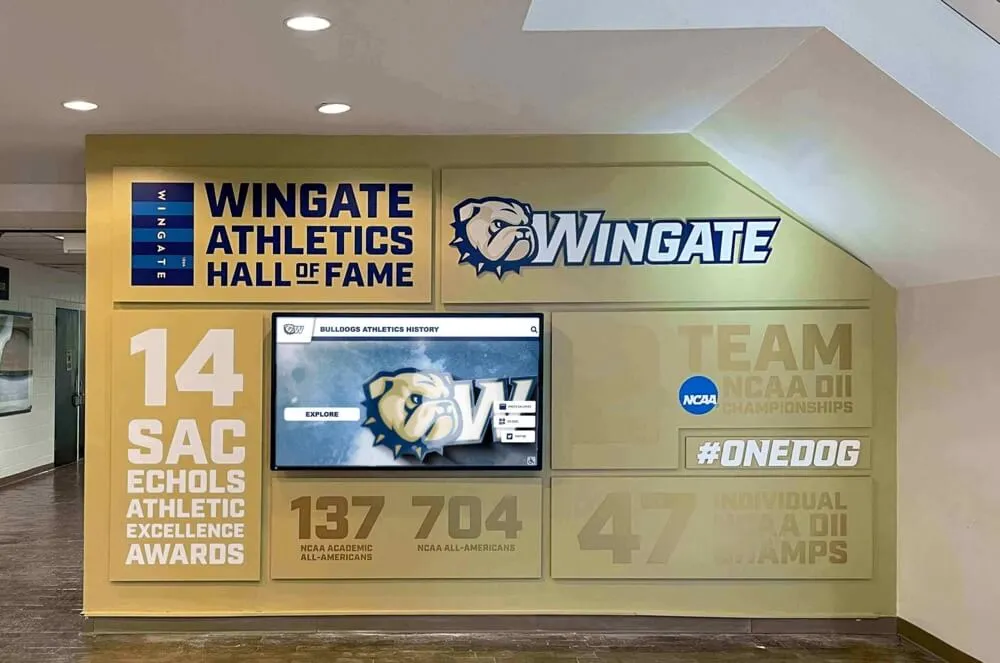
Hybrid installations combine traditional permanence with digital flexibility for comprehensive donor recognition
5. Donor Story Walls with Photos and Narratives
Overview: Recognition displays emphasizing personal stories, photographs, and motivations behind supporter philanthropy rather than simple name lists. Features individual donor profiles explaining why supporters contribute, family giving traditions, personal connections to missions, and specific impacts they’ve enabled.
Best For: Organizations with strong personal connections to beneficiaries (medical research, education, social services), smaller donor bases allowing individual focus, or campaigns where personal stories drive emotional engagement.
Cost Range: Physical installations with printed photos and text panels $3,000-10,000 depending on size and production quality. Digital versions using touchscreen displays $3,500-8,000 for hardware and software.
Key Benefits: Creates emotional connections between visitors and donors through storytelling. Demonstrates diverse motivations for philanthropy, inspiring various donor segments. Humanizes fundraising by showcasing real people behind contributions.
Implementation Considerations: Requires donor cooperation providing photos and participating in interviews or questionnaires. Organizations must respect privacy preferences while gathering compelling narratives. Content development takes significant time but creates recognition that donors deeply appreciate and visitors find engaging.
6. Giving Level Recognition with Clear Tiers
Overview: Recognition organized explicitly by contribution levels with named giving societies (“Founder’s Circle” $50,000+, “Legacy Society” $25,000-49,999, etc.). Works for traditional plaques, digital displays, or hybrid installations. Clear tier structures provide recognition transparency while motivating donors toward higher giving levels.
Best For: Capital campaigns, endowment building, major gift initiatives, or any fundraising approach emphasizing leadership giving categories.
Cost Range: Varies dramatically depending on physical vs. digital format. Digital implementations $3,000-7,000 total. Traditional engraved approaches $200-500 per donor.
Key Benefits: Clearly communicates recognition based on contribution levels. Motivates donors to contribute at higher levels for enhanced acknowledgment. Simplifies recognition decisions by establishing transparent criteria.
Implementation Considerations: Set tier thresholds thoughtfully based on donor capacity and campaign goals. Consider including time-based giving levels (cumulative giving over multiple years) alongside single-gift tiers. Ensure lowest public recognition tier remains accessible to diverse donor segments while providing meaningful acknowledgment.
Organizations implementing tiered recognition should examine academic recognition program structures for effective tier design strategies.
7. Rolling Digital Displays in High-Traffic Areas
Overview: Television or digital signage screens—typically 50-65 inches—displaying rotating donor recognition slideshows in lobbies, reception areas, or community spaces. Shows donor names, photos, testimonials, and impact statistics in professionally designed presentations cycling continuously.
Best For: Organizations with existing lobby displays, limited wall space, or desires to reach maximum visitor exposure in high-traffic locations.
Cost Range: Display hardware $500-1,500. Digital signage software $20-100/month. Content creation $500-2,000 for professional templates and initial setup.
Key Benefits: Extremely cost-effective initial investment. Easy content updates. Reaches everyone passing through space. Can integrate with other organizational communications (event announcements, mission stories, program information).
Implementation Considerations: Avoid appearance of commercial advertising by maintaining elegant, respectful presentation design. Update content regularly to prevent stale appearance. Consider accessibility by including sufficient display time for viewers to read each slide. This approach works best as supplement to comprehensive recognition rather than sole acknowledgment method.
8. Wall of Photos with Small Plaques
Overview: Grid installations featuring donor portrait photographs accompanied by small engraved name plaques. Creates visual community of supporters while providing recognition through photographic presence. Particularly effective for organizations with strong community identity and donor populations who know each other.
Best For: Community foundations, schools, religious organizations, social service agencies, or nonprofits where donors share strong local connections.
Cost Range: Professional photo sessions $50-150 per donor if not provided. Plaque production $25-75 each. Mounting system and installation $1,000-3,000 depending on size.
Key Benefits: Creates warm, personal atmosphere showcasing supporter community. More engaging than name lists alone. Helps donors feel part of broader philanthropic movement. Visitors often spend more time viewing faces than reading names on traditional plaques.
Implementation Considerations: Establish consistent photo specifications (size, background, color vs. black-and-white) for cohesive appearance. Respect donor preferences regarding photo inclusion. Plan for periodic photo updates as donors age or prefer updated images. This approach requires significant coordination but creates highly memorable recognition.
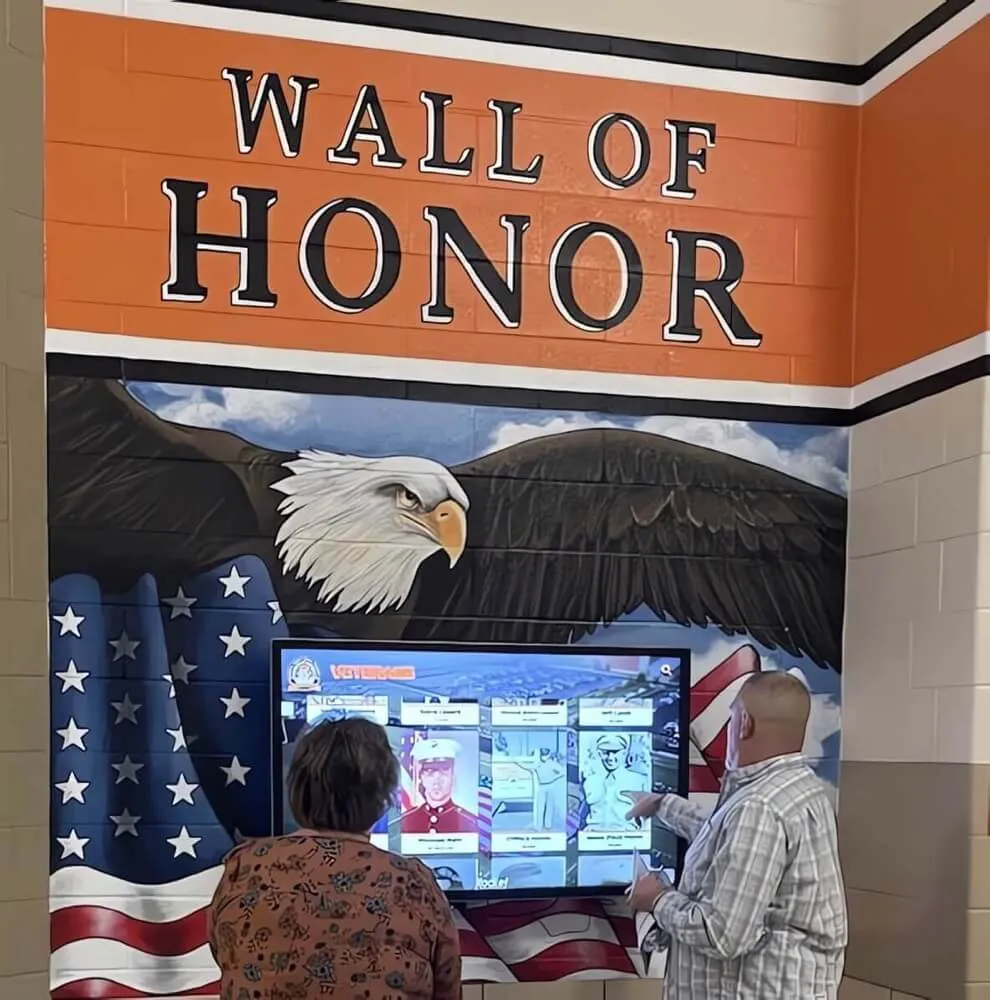
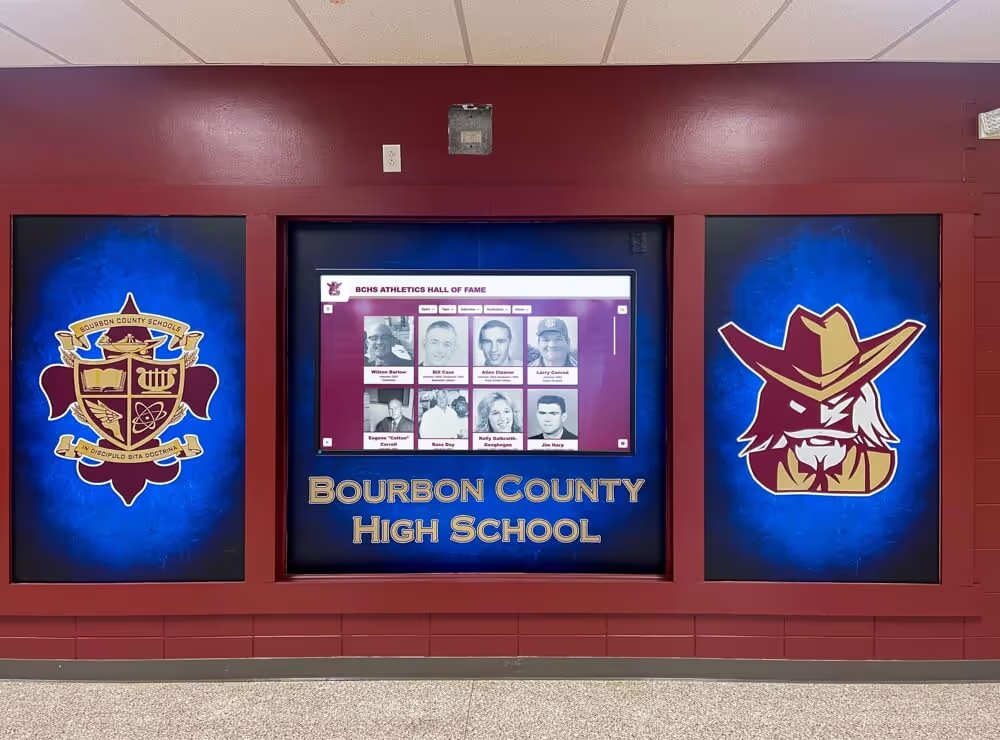
Photo-based recognition creates personal connections between donors and organizational communities
9. Interactive Web-Based Donor Recognition
Overview: Online donor recognition platforms functioning as virtual donor walls accessible from anywhere. Includes searchable donor databases, impact stories, giving histories, and multimedia content viewable on any device. Can supplement or replace physical installations while extending recognition globally.
Best For: Organizations with geographically dispersed donor bases, limited physical space, or desires to maximize recognition accessibility beyond facility visitors.
Cost Range: Custom development $3,000-10,000. Hosted platform subscriptions $50-200/month depending on features and customization.
Key Benefits: Accessible to all donors regardless of location. Dramatically lower cost than physical installations. Easy updating and maintenance. Searchable by multiple criteria. Can integrate with existing websites and donor management systems.
Implementation Considerations: Requires responsive design working across devices (desktop, tablet, mobile). Must maintain security and privacy controls protecting donor information. Promote visibility through email campaigns, website features, and annual reports to ensure donors know recognition exists. Web-based recognition works best combined with at least modest physical presence in organizational facilities.
10. Legacy and Planned Giving Recognition
Overview: Dedicated recognition specifically honoring planned giving commitments, estate gifts, and legacy society members. Often features distinctive design elements emphasizing permanence and multigenerational impact. May include personal statements from donors explaining motivations for including organizations in estate plans.
Best For: Organizations with mature planned giving programs, older donor demographics, or strategic emphasis on endowment building and long-term financial sustainability.
Cost Range: Physical displays $3,000-10,000 depending on design and materials. Digital implementations $2,500-6,000 for dedicated section within broader recognition system.
Key Benefits: Raises visibility of planned giving options among donors who might not otherwise consider estate gifts. Normalizes legacy giving by showcasing community members making commitments. Recognizes donors immediately even though gifts won’t materialize for years. Encourages family conversations about philanthropic values.
Implementation Considerations: Work with legal and fundraising professionals to establish clear recognition policies for planned giving commitments. Determine whether to list anticipated gift sizes or simply recognize membership in legacy society without dollar amounts. Consider including stories explaining why donors chose to include organization in estate plans—these narratives effectively inspire others to consider similar commitments.
Organizations exploring planned giving recognition should review memorial recognition approaches that honor supporters thoughtfully and permanently.
Selecting the Right Donor Wall for Your Nonprofit: Key Considerations
With multiple recognition approaches available, nonprofit leaders must evaluate options against organizational needs, donor preferences, and practical constraints to select solutions matching specific contexts effectively.
Budget and Cost Analysis
Recognition investments should align with fundraising scale and organizational resources while delivering meaningful donor appreciation.
Initial Investment vs. Long-Term Costs
Traditional physical recognition typically requires larger per-donor initial investments ($150-500 per plaque) but minimal ongoing costs beyond occasional cleaning and maintenance. Digital recognition reverses this pattern—higher initial setup costs ($3,000-8,000) but dramatically lower incremental per-donor costs (essentially zero) plus small monthly platform fees ($50-200).
For organizations recognizing fewer than 50-75 donors with minimal expected future additions, traditional approaches may prove more cost-effective. For nonprofits with hundreds of supporters, frequent recognition updates, or growing donor bases, digital platforms deliver far better long-term value despite higher initial investments.
Hidden Costs to Consider
Budget planning should account for complete costs beyond obvious equipment or engraving expenses. Traditional recognition requires periodic replacement as materials deteriorate, updates incur significant re-engraving costs, and physical expansion requires additional wall space preparation and installation labor.
Digital recognition involves monthly software subscriptions, occasional display maintenance or replacement, content creation time and expertise, and potential network infrastructure improvements ensuring reliable connectivity. However, these costs typically remain far lower than cumulative traditional recognition expenses over multi-year timeframes.
Space and Location Factors
Physical environment significantly influences recognition approach effectiveness and implementation feasibility.
Wall Space Availability
Organizations with limited available wall space should prioritize recognition approaches offering maximum donor capacity within constrained areas. Single digital displays accommodate hundreds or thousands of supporters in space where traditional plaques might recognize only 50-100 donors. This capacity advantage makes digital recognition particularly valuable for organizations operating in leased facilities where wall modification options are limited.
Conversely, organizations with dedicated recognition spaces or renovating facilities can design purpose-built areas accommodating substantial traditional installations if that approach aligns with donor preferences and organizational culture.
Visibility and Traffic Patterns
Recognition placement matters enormously. Donor walls installed in low-traffic hallways or spaces rarely visited by donors provide minimal stewardship value regardless of quality. Prioritize high-visibility locations where maximum numbers of donors, prospects, and community members regularly encounter recognition—main lobbies, reception areas, gathering spaces, or primary circulation routes.
Consider sight lines, lighting, and accessibility when selecting locations. Recognition should be immediately visible upon entering facilities, adequately illuminated for comfortable viewing, and positioned at appropriate heights for all visitors including those using wheelchairs.
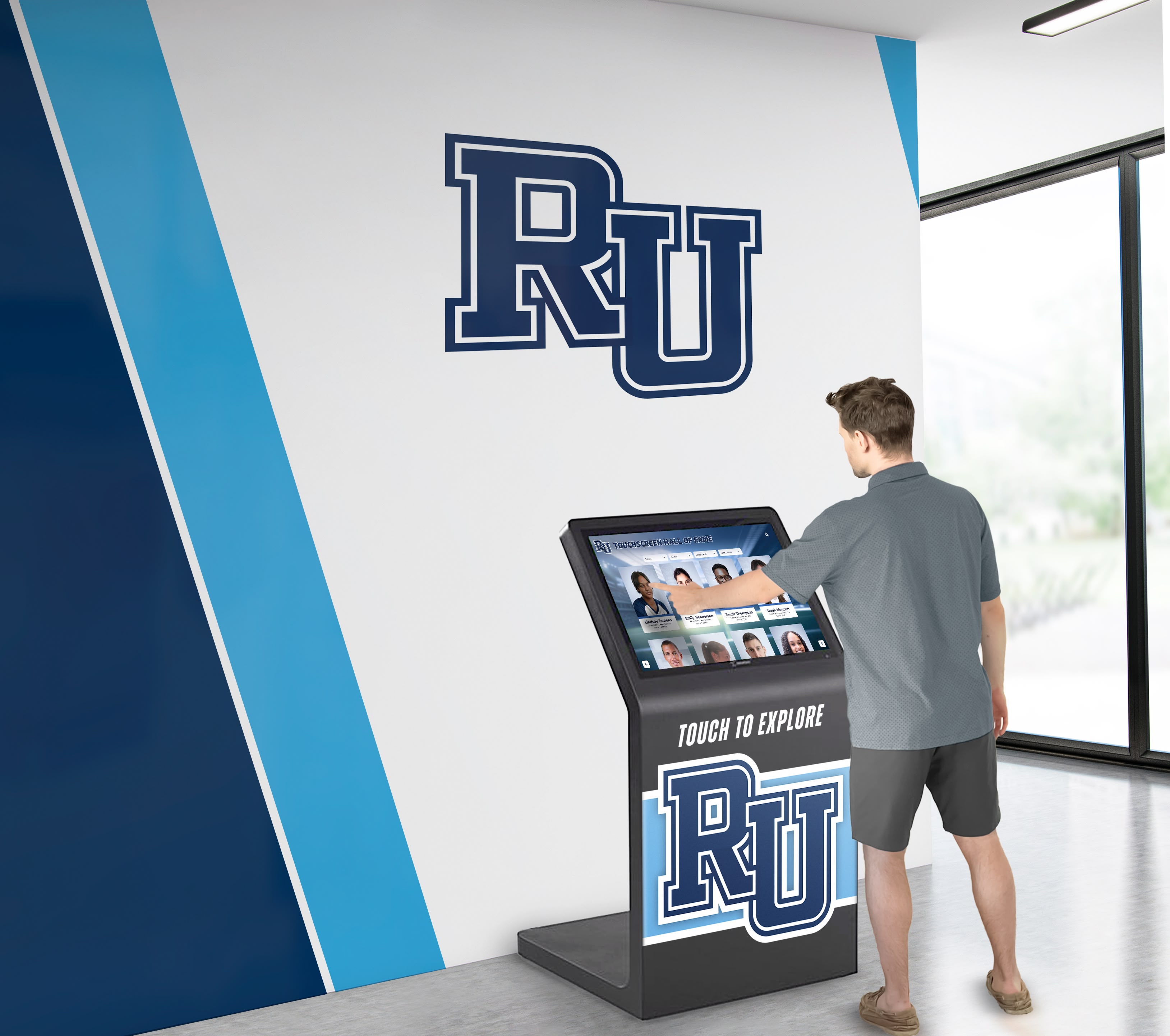
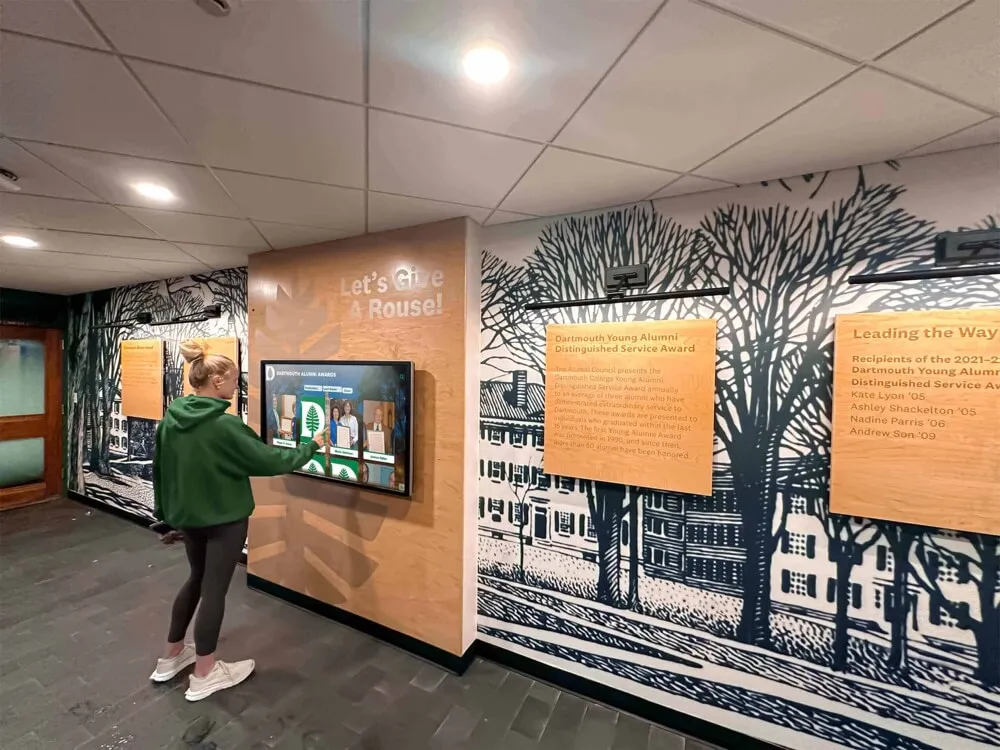
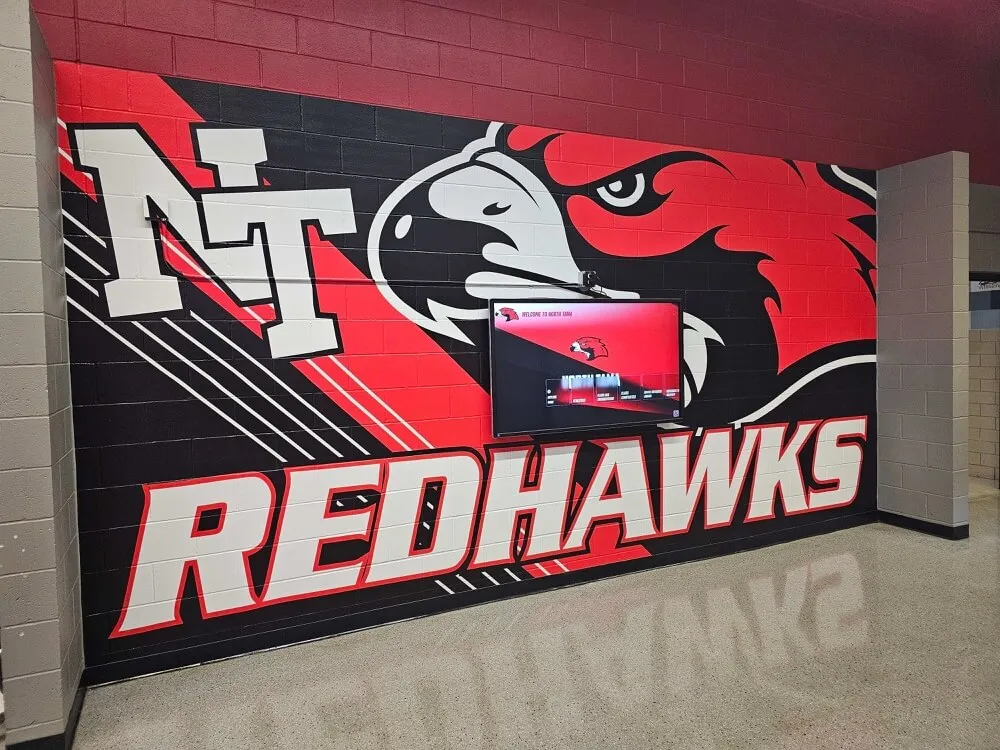
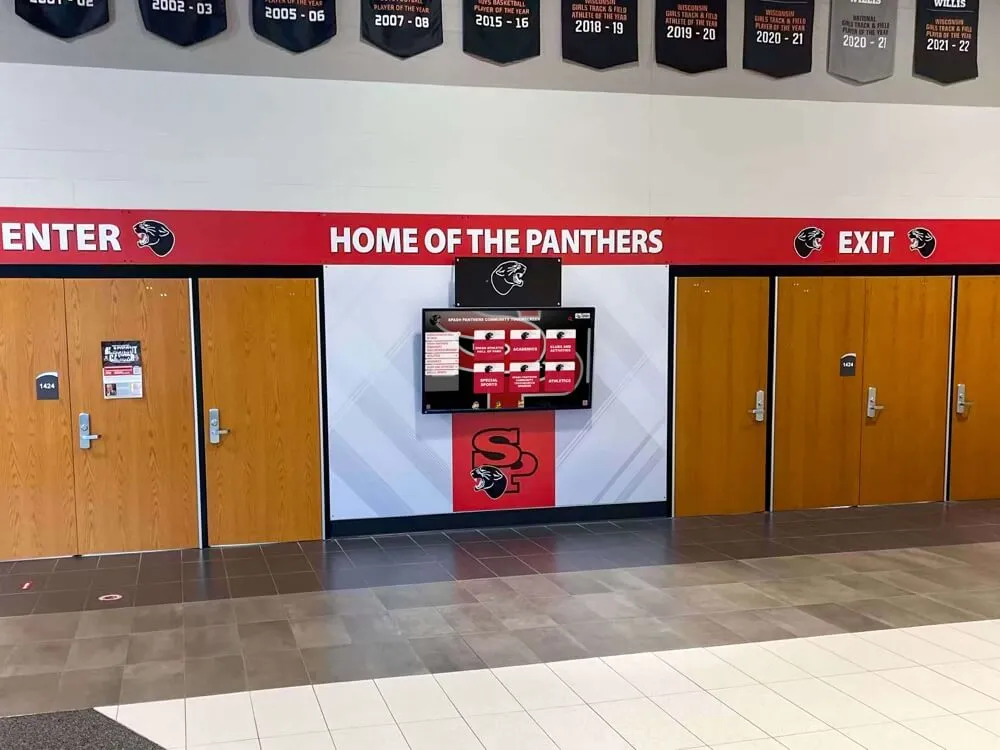
Strategic placement in high-traffic lobbies ensures maximum donor and visitor engagement with recognition displays
Donor Demographics and Preferences
Recognition approaches should match supporter expectations, preferences, and engagement patterns for maximum appreciation impact.
Age and Technology Comfort
Donor demographics influence recognition technology receptiveness. Organizations with predominantly older supporter bases (70+) may find stronger preferences for traditional physical recognition formats familiar from lifetime philanthropic experiences. Conversely, nonprofits with younger or more diverse donor populations often embrace digital recognition offering interactive, multimedia experiences aligned with contemporary engagement preferences.
That said, assumptions about age and technology frequently prove inaccurate. Many older donors appreciate digital recognition offering searchability and rich storytelling impossible with traditional plaques. The key is understanding specific donor populations through conversations, surveys, or advisory group input rather than making blanket assumptions.
Geographic Considerations
Organizations with local donor bases benefit from physical recognition accessible when supporters visit facilities. Nonprofits serving geographically dispersed populations—national or international organizations, causes with scattered supporter communities, or institutions with significant numbers of relocated alumni—should prioritize digital or web-based recognition accessible regardless of location.
Hybrid approaches work particularly well, providing physical installations for local supporters who regularly visit facilities while offering online recognition extending appreciation to distant donors unable to experience physical displays.
Technology and Maintenance Requirements
Practical implementation and long-term sustainability considerations influence recognition approach viability.
Technical Capabilities
Digital recognition requires reliable power supplies, internet connectivity (wired ethernet strongly preferred over wireless), and occasional technical support for software updates or hardware troubleshooting. Organizations without stable IT infrastructure or technical staff may face challenges maintaining digital systems, though cloud-based platforms like touchscreen recognition solutions minimize local technical requirements significantly.
Traditional recognition involves virtually no technology requirements beyond initial installation, making it suitable for organizations without technical infrastructure or staff comfort with digital systems.
Maintenance and Updates
Consider who will manage recognition updates, how frequently updates occur, and organizational capacity for ongoing content management. Digital platforms enable immediate updates but require someone responsible for adding donors, uploading photos, and maintaining content quality. Many nonprofits assign these responsibilities to development staff who already manage donor data.
Traditional recognition requires no routine updates but incurs significant costs and effort when changes become necessary—adding new donors, correcting errors, or replacing deteriorated materials. Organizations should establish clear updating protocols and budget reserves for periodic traditional recognition maintenance.
Implementation Best Practices: Making Your Donor Wall Successful
Selecting recognition approaches represents only the first step. Successful implementation requires thoughtful planning, clear policies, quality content, and ongoing stewardship maximizing recognition impact.
Establishing Recognition Policies
Clear, transparent policies prevent confusion, ensure fairness, and provide frameworks for consistent recognition decisions over time.
Minimum Gift Thresholds
Determine minimum contribution levels qualifying for recognition. Common thresholds range from $100-1,000 depending on organizational scale, campaign scope, and donor capacity. Lower minimums enable broader recognition inclusivity while higher thresholds focus limited space or budget on larger contributions.
Consider different thresholds for different recognition types—perhaps $250 minimum for inclusion in digital recognition databases while requiring $1,000+ for physical plaques in hybrid installations. Whatever thresholds you establish, communicate them clearly to donors before contributions arrive.
Time Periods and Campaign Focus
Define whether recognition covers all-time cumulative giving, specific campaign contributions, annual giving totals, or multiple categories simultaneously. All-time recognition honors long-term supporters but may exclude recent donors. Campaign-specific recognition acknowledges project supporters but omits sustained annual contributors. Comprehensive approaches combining multiple time periods provide most inclusive acknowledgment but require additional planning.
Recognition Naming Rights
Establish policies governing how donors are listed—individual names, family names, business names, or “in honor of” designations. Create guidelines for name length limits, appropriate language, and review processes for proposed recognition text. Clear policies prevent awkward situations where organizations must reject inappropriate recognition language after gifts arrive.
Privacy and Anonymity Options
Always offer donors explicit choices about recognition preferences:
- Full public recognition with name and contribution level
- Name-only recognition without specific amounts
- Anonymous recognition (contribution acknowledged in totals without individual identification)
- No recognition (complete privacy)
Communicate these options clearly during gift solicitation and respect donor preferences consistently.
Content and Design Guidelines
Recognition quality depends heavily on compelling, professional content showcasing donors and organizational impact effectively.
Professional Photography
Donor photos dramatically improve recognition engagement and perceived quality. Establish specifications for submitted photos—resolution requirements, background preferences, color vs. black-and-white treatment—or offer professional photography sessions ensuring consistent appearance.
Avoid using low-quality submitted photos that diminish overall recognition professionalism. Better to use elegant text-only recognition than pixelated, poorly composed images.
Impact Storytelling
The most effective recognition connects contributions to specific outcomes. Instead of listing donor names alone, incorporate narratives explaining what philanthropic support has accomplished:
“The Johnson Family Foundation’s $50,000 contribution provided scholarships for 12 first-generation college students, making higher education possible for young people who otherwise couldn’t afford to attend.”
This storytelling approach demonstrates concrete impact while honoring donors more meaningfully than names on plaques ever could. Organizations implementing comprehensive donor recognition should examine digital storytelling approaches proven effective across sectors.
Consistent Design Standards
Whether traditional or digital, maintain professional design quality through consistent typography, color schemes, layout patterns, and visual hierarchy. Amateur-appearing recognition diminishes perceived organizational credibility and implicitly devalues donor contributions.
Invest in professional design services during initial development—either through graphic designers, recognition vendors, or comprehensive platform solutions providing templates and design support.
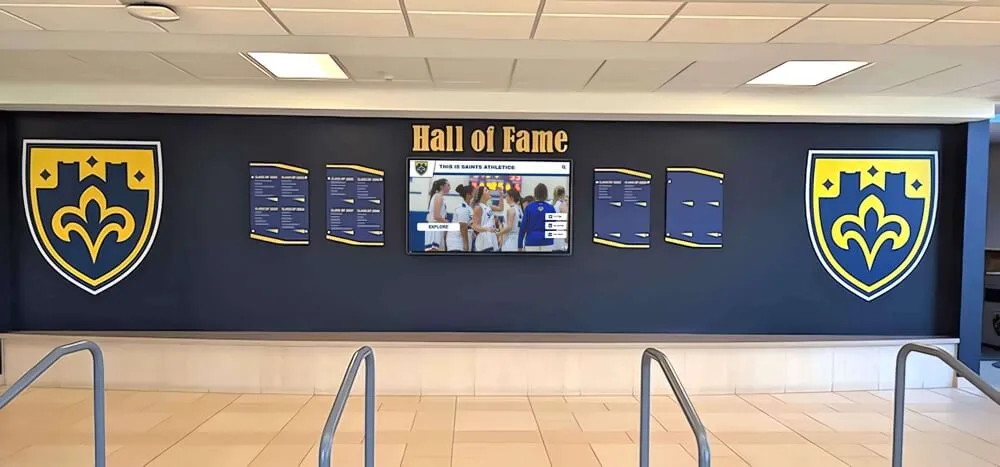
Professional design and consistent standards ensure recognition communicates organizational quality and donor appreciation
Launch and Promotion Strategies
Recognition only benefits stewardship when donors and prospects actually engage with displays. Thoughtful promotion maximizes awareness and utilization.
Unveiling Events
Consider hosting formal unveiling events celebrating new recognition installations. Invite recognized donors, board members, major prospects, and community leaders to experience recognition firsthand while enjoying light refreshments and program updates. These events create natural cultivation opportunities while demonstrating gratitude publicly.
Unveiling celebrations work particularly well for significant recognition installations concluding major campaigns or commemorating campaign milestones.
Ongoing Promotion
Incorporate recognition visibility into routine communications:
- Include photos and descriptions in annual reports
- Feature recognition in donor newsletters
- Share social media posts highlighting individual donors featured in recognition
- Mention recognition during facility tours with prospective donors
- Reference recognition in acknowledgment letters to newly added donors
Consistent promotion ensures recognition investments deliver maximum stewardship value by keeping acknowledgment visible in donor consciousness.
Educating Visitors
Especially for digital or interactive recognition, provide clear instructions helping visitors navigate displays effectively. Simple signage explaining “Touch screen to explore donor stories” or “Search for family members and friends” encourages engagement from those unfamiliar with interactive technology.
Consider brief video tutorials accessible via QR codes for more complex recognition systems, ensuring all visitors can fully experience interactive features.
Measuring Recognition Impact: Ensuring Stewardship Success
Effective nonprofits measure recognition program results to understand stewardship impact and identify improvement opportunities.
Key Metrics to Track
Quantifiable metrics reveal recognition effectiveness and return on investment.
Donor Retention Rates
Compare retention rates for donors receiving recognition against those without acknowledgment. Comprehensive recognition typically correlates with 10-25% higher retention compared to minimal acknowledgment approaches. Track retention by giving level to understand whether recognition impacts differ across donor segments.
Giving Progression
Monitor whether recognized donors increase contributions over time. Effective recognition contributes to giving progression as supporters feel more connected to missions and inspired toward larger philanthropic commitments. Analyze average gift growth rates comparing recognized vs. non-recognized segments.
Donor Feedback
Solicit direct donor input through surveys, focus groups, or individual conversations exploring recognition satisfaction. Ask about preferences regarding recognition types, content, and visibility. Feedback often reveals unexpected preferences or opportunities improving recognition effectiveness.
Physical Engagement Analytics
For digital recognition systems, review engagement analytics showing how visitors interact with displays. Metrics include session lengths (how long visitors engage), popular search terms, most-viewed profiles, and peak usage times. This data guides content improvements, reveals compelling stories, and identifies underutilized features requiring better promotion or interface refinement.
Continuous Improvement Approaches
Treat recognition as evolving system requiring regular enhancement rather than one-time installation.
Annual Recognition Reviews
Conduct annual reviews evaluating recognition program effectiveness, identifying improvement opportunities, and planning necessary updates. Reviews should address content accuracy, policy effectiveness, technical performance (for digital systems), and alignment with evolving fundraising strategies.
Content Refresh Cycles
Plan regular content updates preventing stale appearance and maintaining engagement. Digital recognition enables continuous improvement—adding impact stories, updating photos, incorporating video testimonials, or highlighting recent campaign progress. Even traditional recognition benefits from periodic refreshment through cleaning, lighting improvements, or supplementary materials providing context and updated information.
Donor Journey Integration
Ensure recognition coordinates with broader donor stewardship strategies. Recognition should align with acknowledgment letters, annual reports, cultivation events, and other touchpoints creating cohesive appreciation experiences. Isolated recognition installations disconnected from broader stewardship deliver limited impact compared to integrated approaches where all donor interactions reinforce genuine gratitude and mission connection.
Organizations seeking to improve comprehensive recognition programs should examine donor recognition best practices proven effective across sectors.
Common Donor Wall Mistakes to Avoid
Understanding frequent recognition pitfalls helps nonprofits implement more effective approaches from the outset.
Inadequate Planning for Growth
Many organizations install recognition with insufficient capacity for future donors, creating situations where installations fill completely within 2-3 years. Traditional walls reach capacity and cannot accommodate new supporters without expensive expansions or difficult decisions about which existing donors to remove.
Always plan recognition with substantial growth capacity. Digital solutions solve this problem inherently through unlimited capacity, but even traditional installations should include 50-100% expansion space beyond current donor numbers.
Neglecting Maintenance and Updates
Recognition installations requiring updates but receiving none quickly appear outdated and neglected—implicitly communicating organizational dysfunction or lack of attention to donors. Outdated content undermines stewardship rather than strengthening relationships.
Establish clear updating responsibilities and regular maintenance schedules ensuring recognition remains current, accurate, and professionally maintained. Budget appropriate resources for ongoing management rather than treating recognition as one-time expense.
Ignoring Smaller Donors
Recognition focusing exclusively on major donors while ignoring annual fund supporters and modest contributors creates hierarchies that alienate broad segments of donor bases. Inclusive recognition celebrating supporters across giving levels demonstrates that all contributions matter regardless of size.
Digital recognition particularly enables inclusive approaches by accommodating comprehensive donor databases without space or cost constraints limiting traditional formats to larger gifts only.
Poor Location Choices
Recognition installed in low-visibility locations—basement corridors, back hallways, rarely visited wings—delivers minimal stewardship impact regardless of quality. Donors notice placement, interpreting out-of-the-way recognition as suggesting their support doesn’t warrant prominent acknowledgment.
Prioritize highly visible, high-traffic locations for recognition installations even if this requires navigating facility constraints or modifying other space uses. Prominent placement communicates genuine appreciation while maximizing cultivation impact with prospects who witness community philanthropic commitment.
Lack of Impact Communication
Simple name lists without context about what philanthropy accomplishes miss critical opportunities connecting contributions to meaningful outcomes. Recognition that explains impact—scholarships provided, programs enabled, facilities built, lives changed—inspires current donors while motivating prospects toward their own generosity.
Incorporate impact storytelling throughout recognition content, helping every visitor understand transformational results that supporter generosity has made possible.
Getting Started: Your Donor Wall Implementation Roadmap
Nonprofits ready to implement or improve donor recognition can follow this practical roadmap for successful execution.
Phase 1: Assessment and Planning (Weeks 1-4)
Begin by evaluating current recognition state and defining objectives:
- Audit existing recognition: Document current recognition methods, donor coverage, content quality, condition, and effectiveness
- Define objectives: Clarify recognition goals—improved retention, major campaign acknowledgment, culture change, or specific stewardship outcomes
- Budget determination: Establish available resources for initial investment and ongoing maintenance
- Stakeholder input: Gather perspectives from board members, development staff, and donor advisory groups about recognition priorities and preferences
- Policy development: Draft recognition policies covering minimum thresholds, naming rights, privacy options, and update procedures
Phase 2: Solution Selection (Weeks 5-8)
Evaluate recognition approaches against organizational needs:
- Research options: Review traditional, digital, and hybrid recognition approaches detailed in this guide
- Vendor conversations: Contact potential vendors or platform providers to understand capabilities, costs, and implementation requirements
- Reference checks: Speak with organizations using recognition systems you’re considering to learn about real-world experiences
- Demonstration reviews: Request demos of digital platforms or visit facilities with recognition installations similar to what you’re considering
- Final decision: Select recognition approach aligning with budget, objectives, donor preferences, and organizational capabilities
Phase 3: Content Development (Weeks 9-14)
Create recognition content before installation or launch:
- Donor data preparation: Compile accurate donor information including names, contribution amounts, dates, and biographical details
- Photo collection: Gather donor photos meeting quality standards or schedule photography sessions
- Impact story development: Write narratives connecting contributions to specific outcomes and organizational mission advancement
- Design creation: Develop visual design including layouts, typography, color schemes, and branding integration
- Content review: Verify accuracy of all information and obtain donor approvals for photos and biographical content
Phase 4: Installation and Launch (Weeks 15-18)
Implement physical installations or activate digital platforms:
- Technical installation: Complete physical mounting, electrical connections, network configuration, or platform setup
- Content upload: Load donor profiles, photos, impact stories, and all recognition content
- Testing phase: Thoroughly test recognition functionality, verify content accuracy, and confirm proper operation
- Staff training: Educate relevant staff about recognition features, update procedures, and visitor engagement strategies
- Soft launch: Activate recognition for initial testing period before formal public unveiling
Phase 5: Promotion and Stewardship Integration (Weeks 19-24)
Maximize recognition impact through strategic promotion:
- Unveiling event: Host celebration introducing recognition formally to donors and community
- Communications campaign: Feature recognition in newsletters, annual reports, social media, and donor communications
- Donor notifications: Personally inform recognized donors about acknowledgment and invite facility visits to experience recognition firsthand
- Facility integration: Incorporate recognition into standard facility tours, new donor orientations, and prospect cultivation visits
- Measurement initiation: Begin tracking engagement metrics, donor feedback, and retention impact
This roadmap provides structured approach transforming recognition from concept to impactful donor stewardship reality. Organizations seeking guidance implementing comprehensive donor recognition can book a demo exploring specialized platforms designed specifically for nonprofit recognition needs.
Conclusion: Building Recognition That Strengthens Donor Relationships
Effective donor recognition represents far more than decorative installations listing contributor names—it embodies organizational gratitude, communicates philanthropic impact, and strengthens relationships with supporters who make missions possible. In environment where donor retention rates remain below 20%, recognition quality directly influences fundraising sustainability and long-term organizational success.
The 10 donor wall ideas explored in this guide provide proven approaches suitable for nonprofits across budget levels, organizational sizes, and mission types. Whether you implement traditional engraved plaques, modern digital touchscreen displays, artistic giving trees, or hybrid installations combining multiple approaches, the fundamental principle remains consistent: recognition should honor donors meaningfully while inspiring continued generosity from existing supporters and prospects alike.
As you plan donor wall implementations, prioritize solutions offering adequate growth capacity, enabling regular updates, incorporating impact storytelling, respecting donor preferences, and integrating effectively with broader stewardship strategies. Recognize that initial installation represents beginning rather than conclusion—most effective recognition programs evolve continuously through content updates, policy refinements, and ongoing improvements informed by donor feedback and engagement analytics.
The nonprofit sector’s increasing adoption of digital recognition reflects recognition that modern platforms solve fundamental limitations plaguing traditional approaches for decades—space constraints, update inflexibility, limited storytelling capabilities, and exclusion of modest donors due to physical and financial constraints. Organizations implementing digital recognition report higher donor satisfaction, improved retention, and recognition programs that enhance rather than complicate fundraising effectiveness.
Ultimately, donor recognition investments pay dividends through stronger relationships, increased lifetime giving, improved retention, and organizational cultures where philanthropy is celebrated as shared commitment to transformational missions. By selecting recognition approaches matching your specific context and implementing them thoughtfully using best practices outlined in this guide, your nonprofit can build appreciation systems that truly honor supporters while advancing sustainable fundraising success in 2026 and beyond.