



Athletic booster clubs face a recognition challenge that sets them apart from traditional nonprofits—they operate with all-volunteer leadership, serve multiple sports programs simultaneously, work within tight budgets averaging $50,000-$200,000 annually, and must coordinate recognition in school-controlled facilities where they lack independent authority. Yet these parent-led organizations raise millions collectively to fund equipment, uniforms, facility improvements, scholarships, and opportunities that transform student-athlete experiences across communities nationwide.
Traditional donor recognition guidance assumes institutional permanence, professional development staff, dedicated facilities, and substantial budgets—resources most booster clubs simply don’t possess. A football booster president juggling full-time employment, coordinating six fundraising events annually, and managing recognition for 200+ donors across varying contribution levels from $25 to $5,000 needs fundamentally different solutions than a university advancement office with dedicated staff and million-dollar recognition budgets.
This comprehensive guide addresses donor recognition specifically for athletic booster clubs—exploring practical strategies that honor supporters appropriately, inspire continued giving, maintain equity across multiple sports programs, integrate volunteer service recognition, work within realistic budgets, and create sustainable systems that survive inevitable leadership transitions inherent to volunteer organizations.
Athletic booster clubs represent the backbone of high school and youth sports programs across America—filling critical funding gaps that enable student-athletes to compete, travel, access quality equipment, and build skills extending far beyond playing fields. When these volunteer organizations implement thoughtful donor recognition, they create cultures where community members feel valued, understand their contributions’ tangible impact, and commit to sustained support that transforms programs for generations of student-athletes.

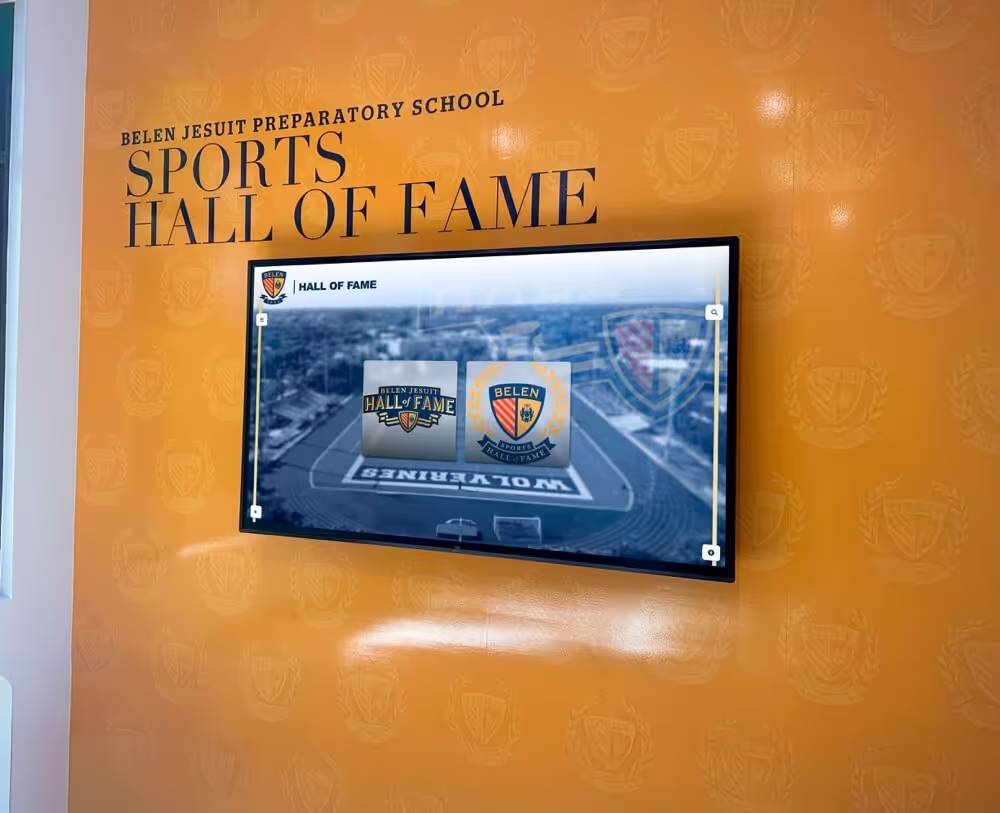
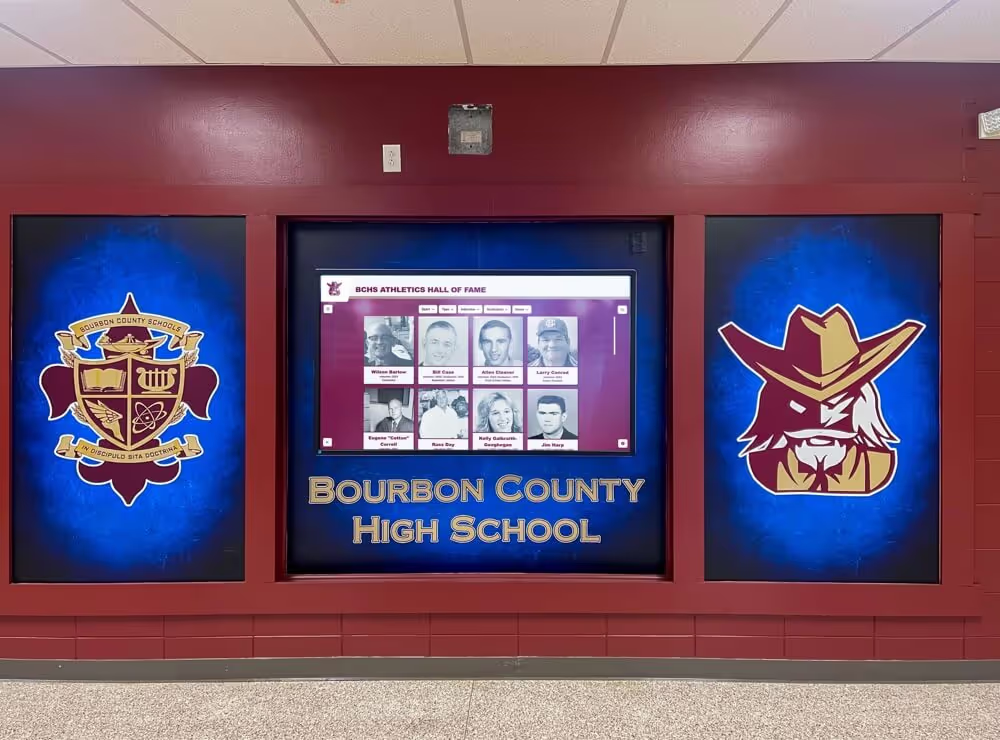
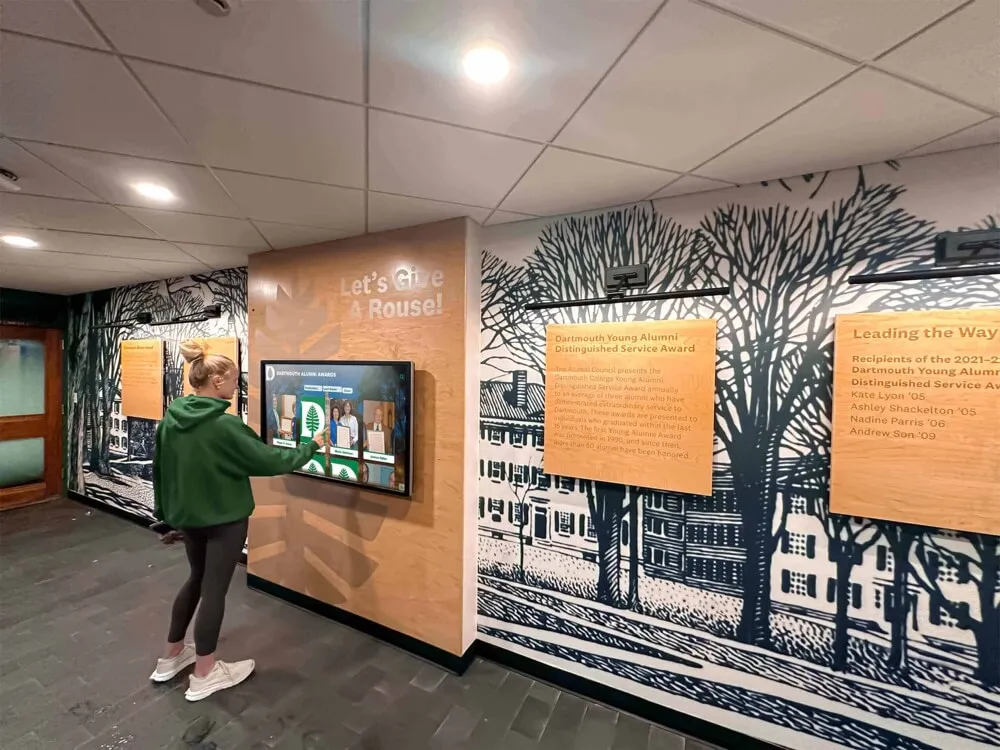
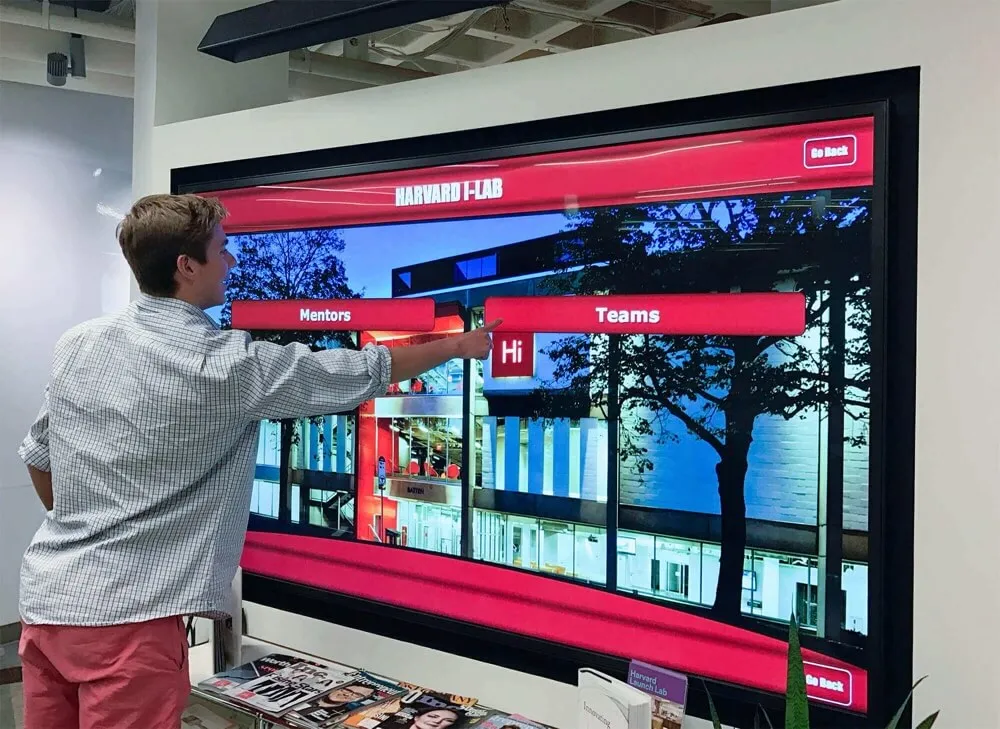
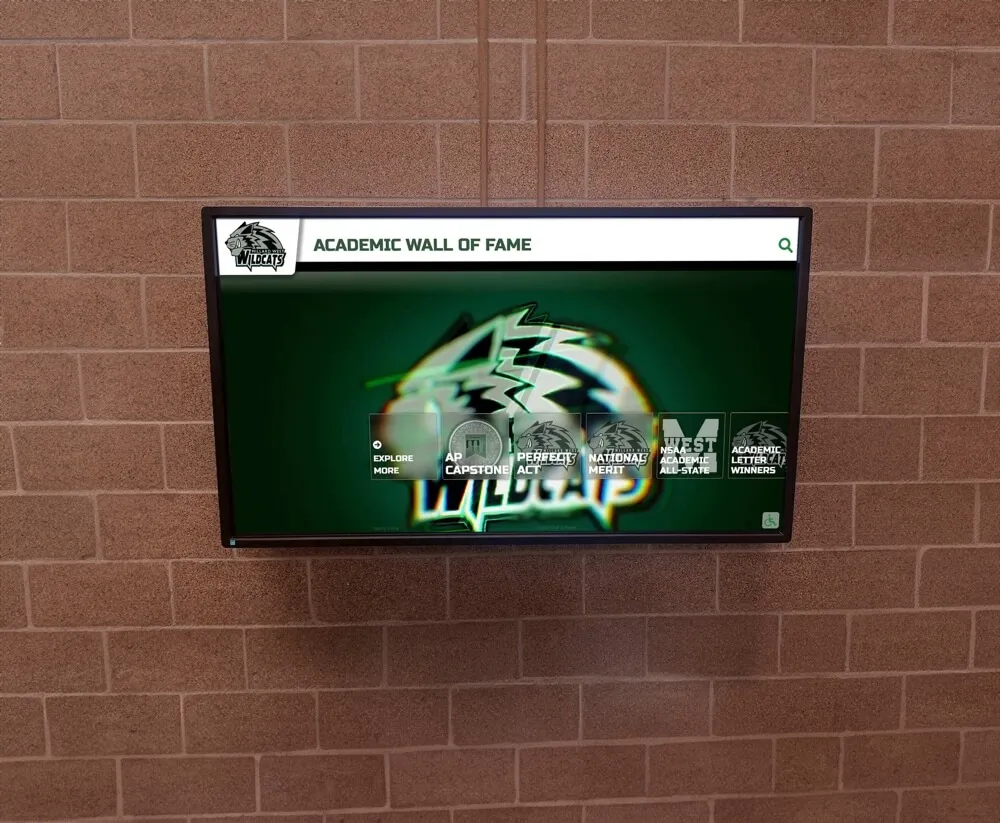
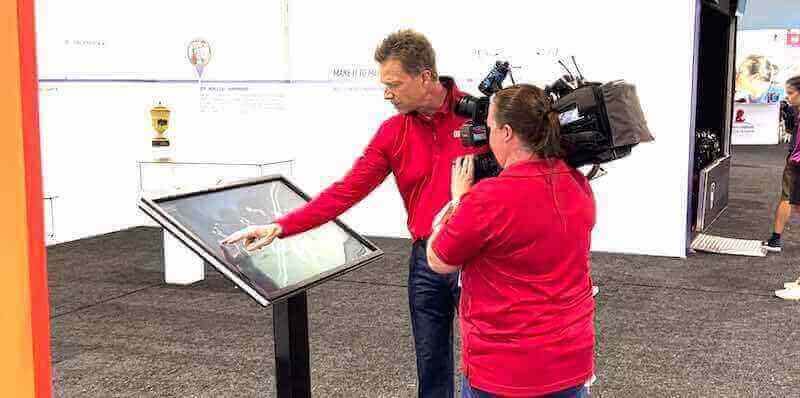
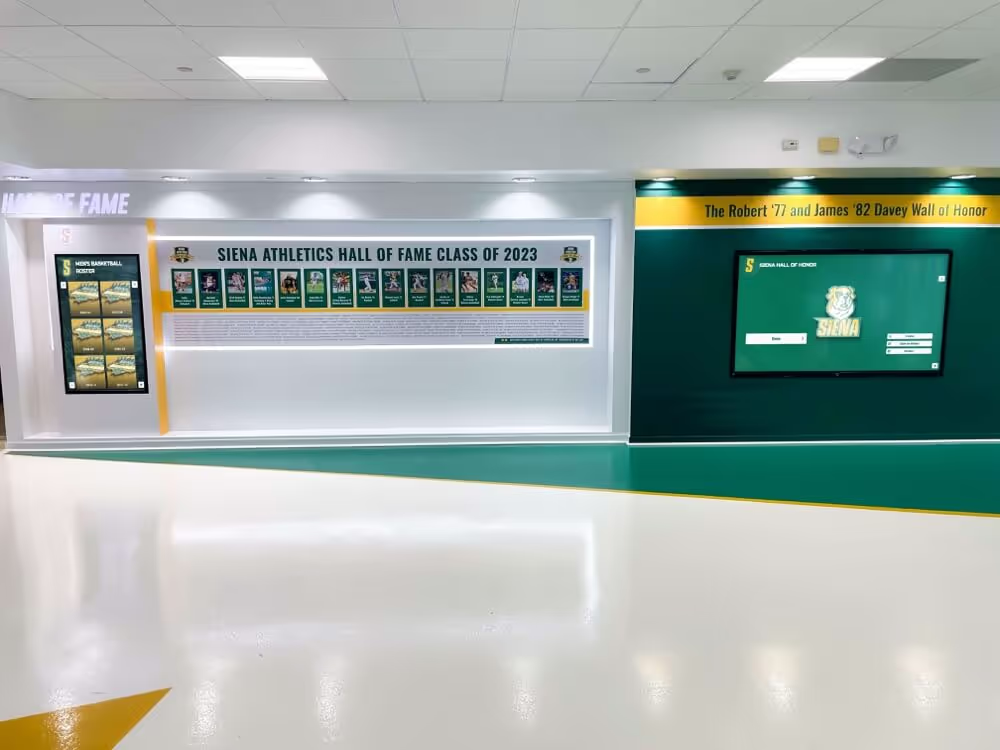
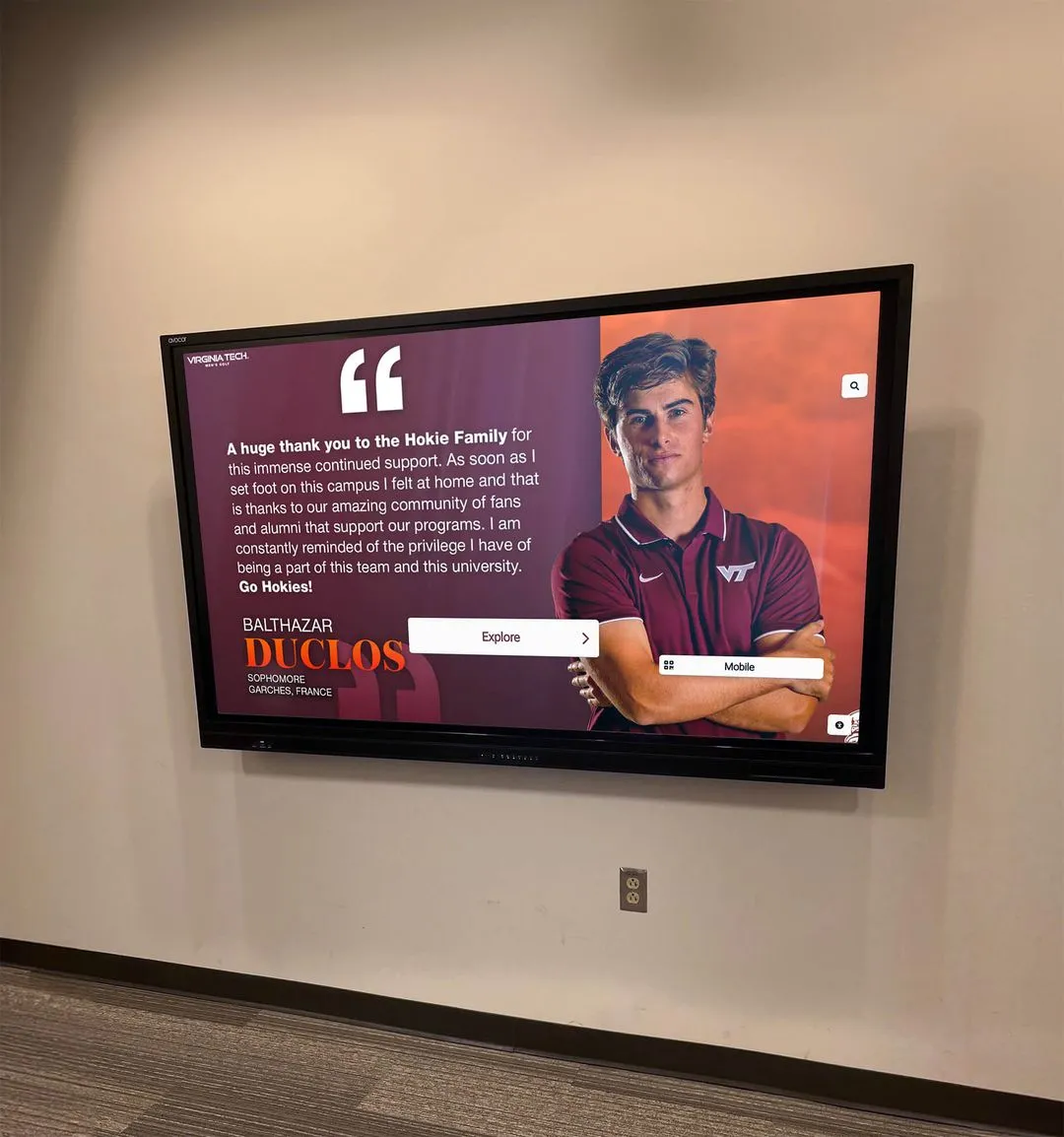
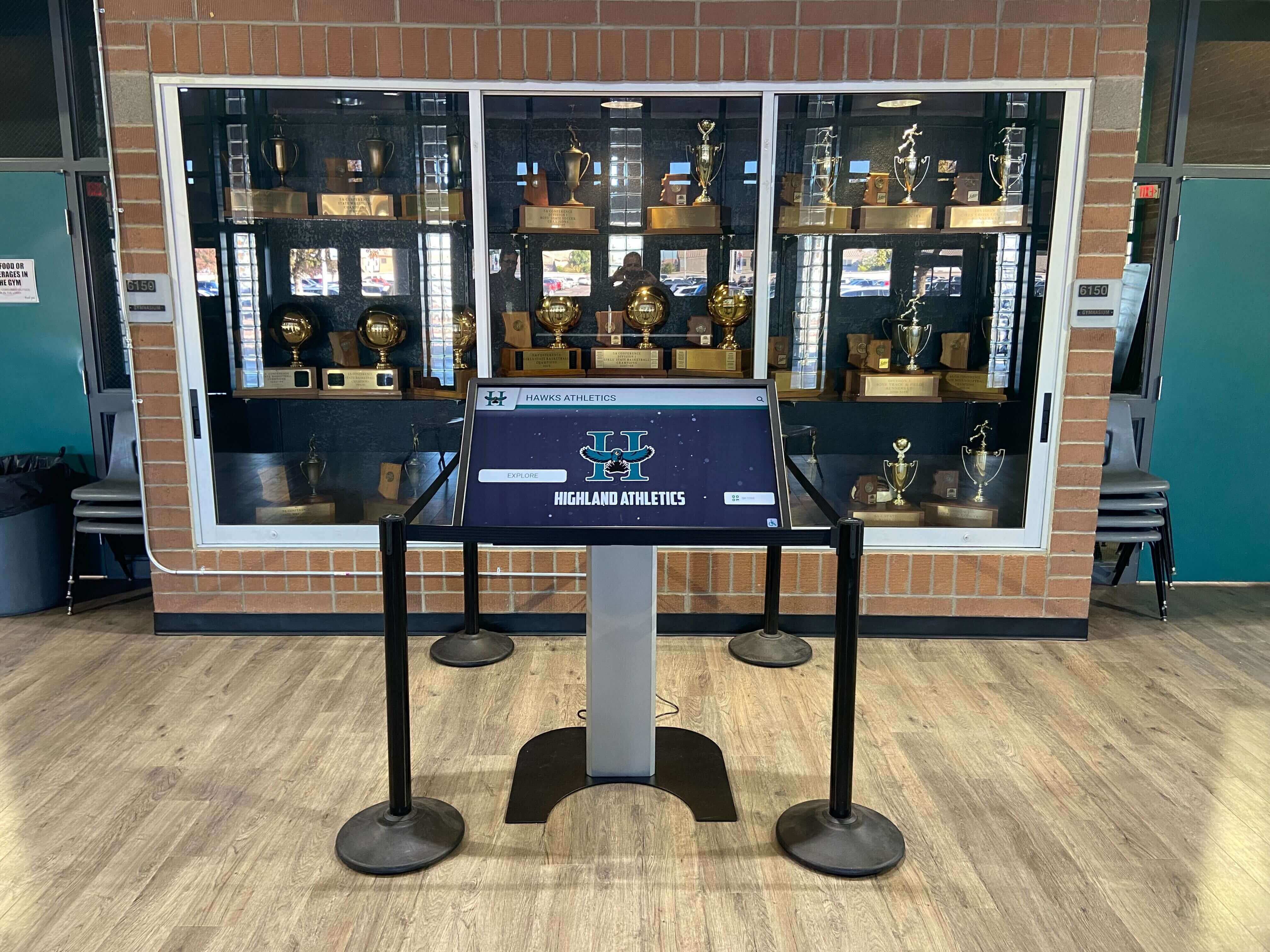
Strategic placement within existing athletic spaces creates recognition visibility while working within facility constraints common to booster organizations
Understanding Athletic Booster Clubs: Unique Organizations Requiring Specialized Recognition
Before exploring specific recognition strategies, understanding what makes booster clubs fundamentally different from traditional nonprofits, schools, and churches provides essential context for approaches that address actual operational realities rather than imposing inappropriate institutional models.
What Are Athletic Booster Clubs?
Athletic booster clubs are volunteer-led nonprofit organizations—typically structured as independent 501(c)(3) entities or operating under school district umbrella—that raise funds supporting athletic programs through membership dues, sponsorships, fundraising events, concessions operations, and individual donations. These parent-driven organizations exist specifically to enhance student-athlete experiences beyond what school budgets alone can provide.
Core Booster Club Characteristics
Most athletic boosters share common operational patterns distinguishing them from traditional nonprofits:
All-volunteer leadership with presidents, treasurers, and board members serving while maintaining full-time careers elsewhere, limited or nonexistent paid staff except possibly part-time bookkeeping assistance, seasonal membership patterns where active participation correlates directly with student-athlete enrollment, modest operating budgets ranging from $50,000 to $200,000 annually for single-sport organizations, shared facility access operating within school-controlled spaces rather than owning dedicated facilities, and high leadership turnover with complete board transitions every 2-4 years as families graduate and new parents assume roles.
These operational realities create recognition challenges fundamentally different from institutions with permanent staff, dedicated facilities, and stable organizational structures spanning decades.
Key Differences from Traditional Nonprofits and Educational Institutions
Understanding distinctions between booster clubs and other organizations typically featured in donor recognition guidance clarifies why specialized approaches matter:
Structural Differences
Traditional nonprofits typically employ professional development directors managing donor relationships as full-time responsibilities, maintain sophisticated donor databases tracking detailed giving histories and preferences, operate from dedicated facilities where they control recognition installations completely, command annual budgets measured in hundreds of thousands or millions enabling substantial recognition investments, and maintain institutional continuity through permanent staff regardless of board changes.
Athletic boosters instead rely on volunteer coordinators balancing recognition with dozens of other responsibilities, often track donors through basic spreadsheets rather than sophisticated CRM systems, must negotiate recognition installations within school facilities they don’t control, operate on budgets where even $5,000-$10,000 recognition investments represent significant percentages of annual revenue, and face knowledge loss when volunteer leaders transition without formal succession planning or institutional memory systems.
Recognition Complexity Unique to Boosters
Multi-sport coordination represents perhaps the most distinctive booster challenge—organizations supporting football, basketball, baseball, volleyball, soccer, track, swimming, and other programs simultaneously must create recognition systems perceived as equitable across sports commanding dramatically different fundraising capacities and community visibility.
A football booster might raise $150,000 annually through season ticket premiums, corporate sponsorships, and broad community engagement while the tennis booster raises $15,000 primarily through parent contributions. Creating recognition that honors both communities appropriately without suggesting that tennis donors matter less than football supporters requires thoughtful approaches addressing inherent disparities.
Many comprehensive donor recognition programs don’t account for this multi-program equity challenge specific to multi-sport booster organizations.

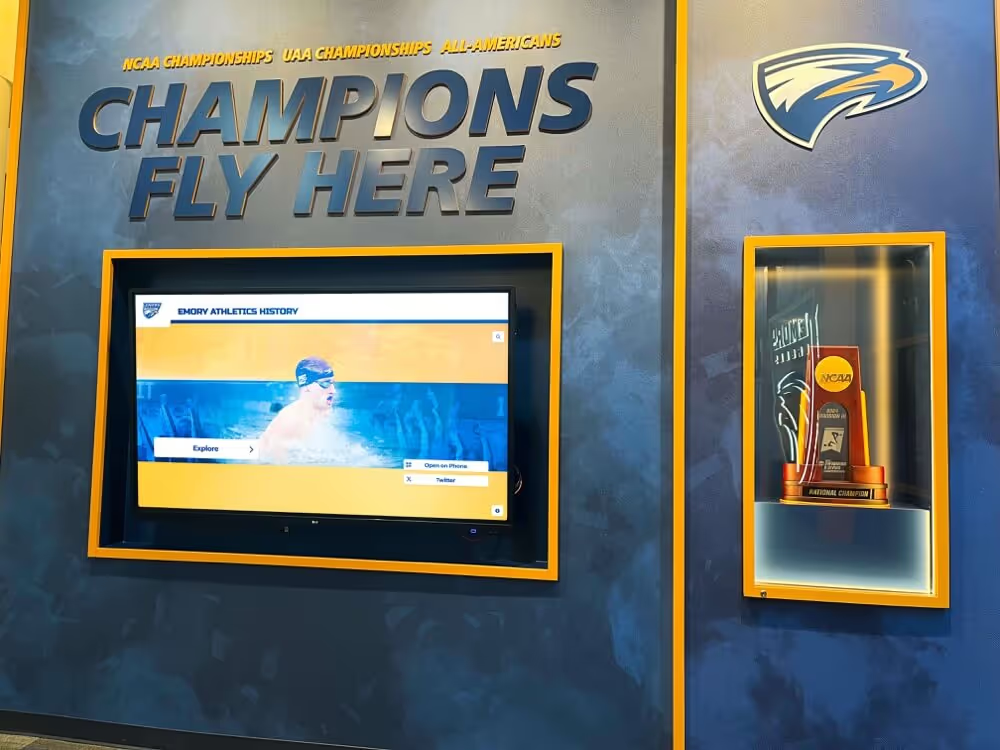
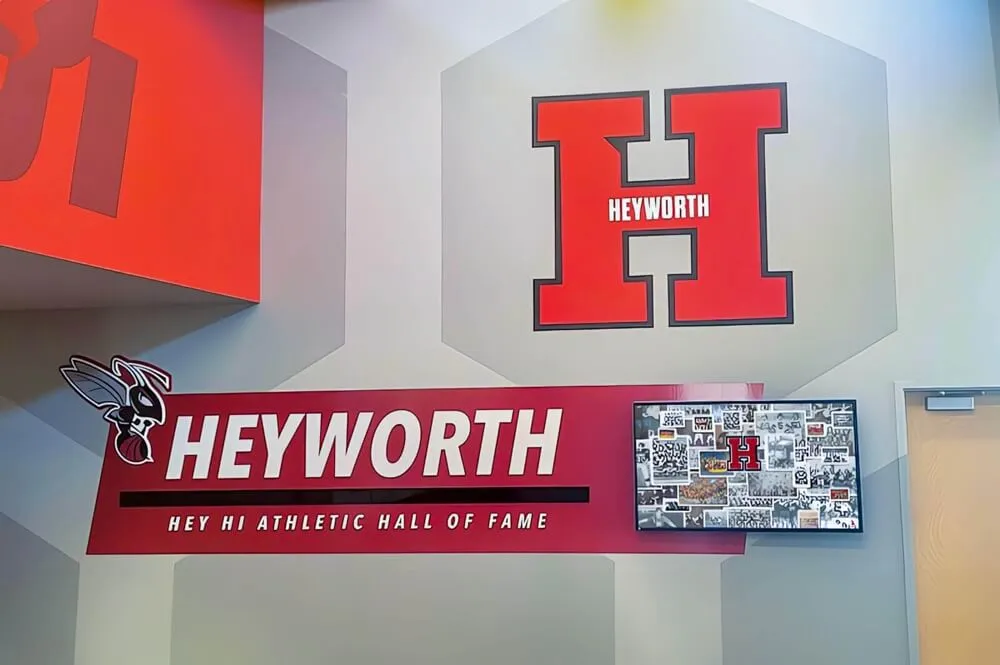
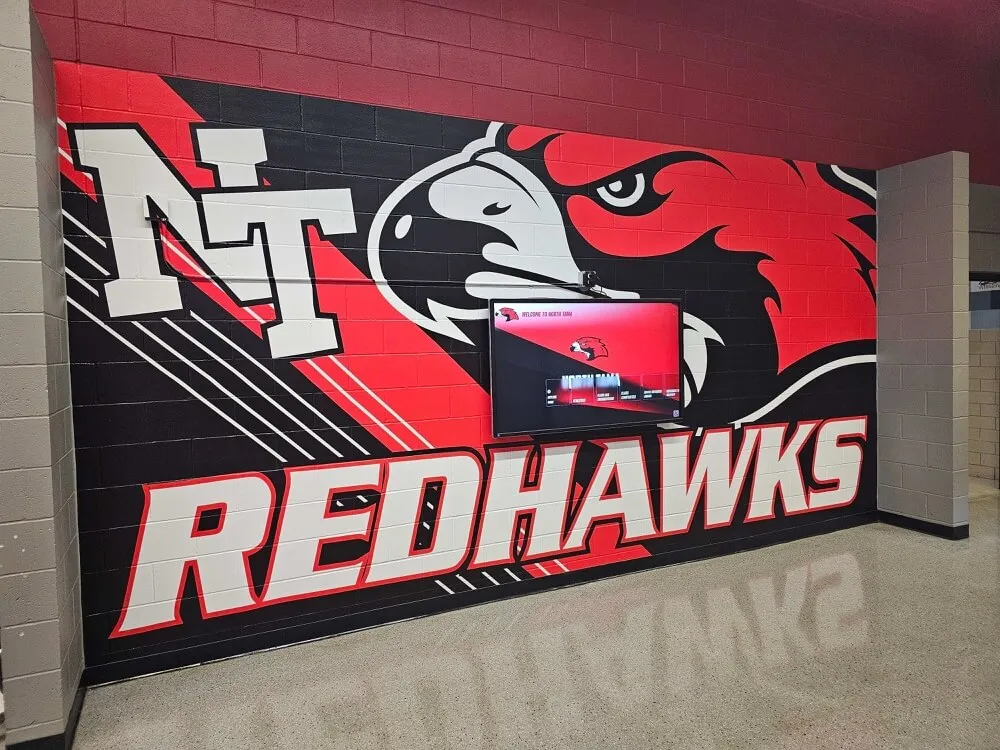
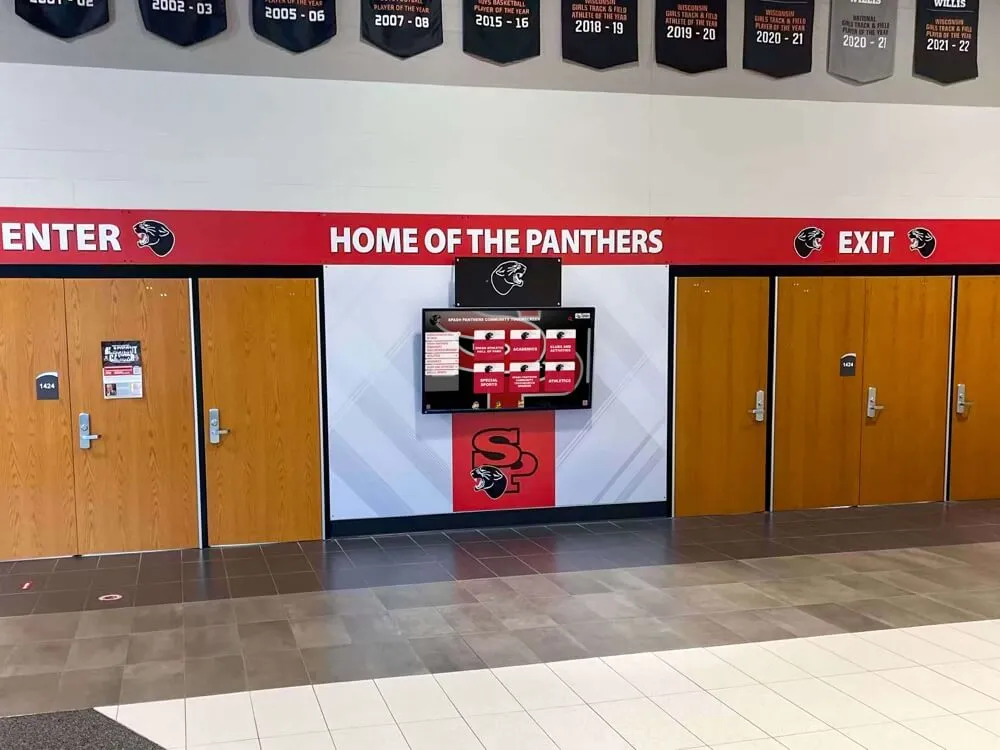
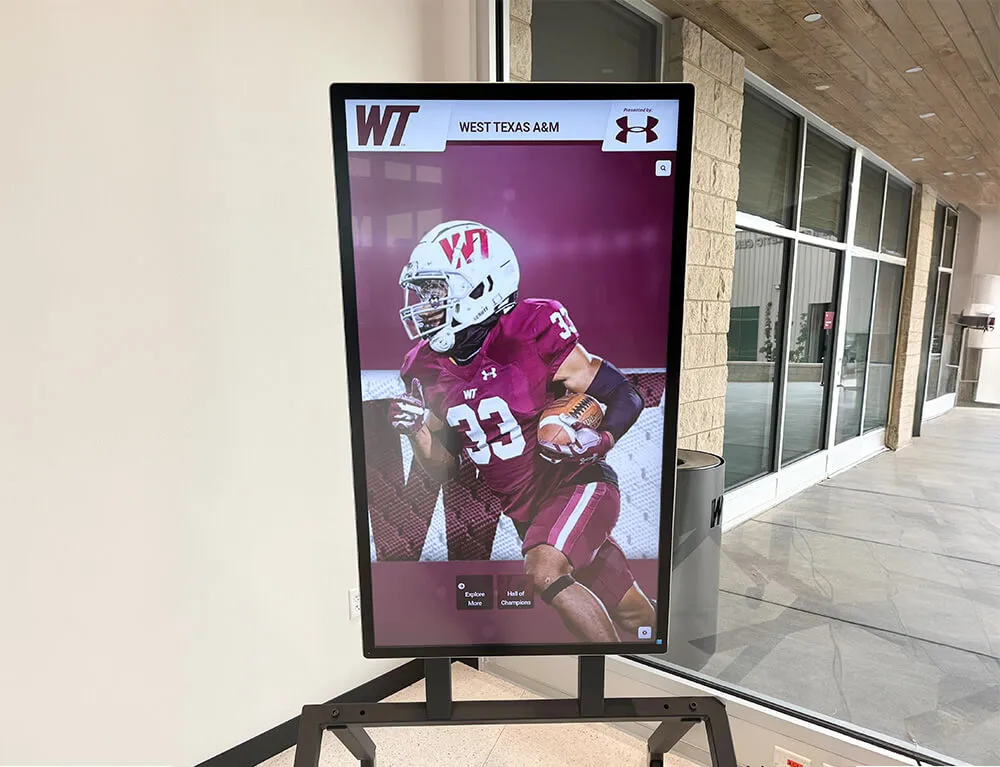
Multi-sport recognition requires coordinated approaches that honor all programs equitably while celebrating each team's unique achievements and supporter communities
The Booster Club Recognition Paradox
Athletic boosters face a particularly frustrating challenge—they need recognition to inspire giving, but struggle to afford recognition systems designed for institutions with substantially larger budgets:
The Funding Catch-22
Research consistently demonstrates that visible donor recognition increases giving by 25-40% through social proof demonstrating community support, public acknowledgment that validates contribution decisions, and tangible evidence that organizations value supporters beyond transactional relationships. Yet most recognition vendors market solutions priced at $20,000-$55,000 for comprehensive digital displays—representing 10-40% of typical booster club annual budgets.
A volunteer treasurer understandably hesitates spending $25,000 on recognition when that same amount could purchase new uniforms, fund team travel, or provide scholarship support directly benefiting student-athletes. This creates impossible dilemmas where boosters recognize that acknowledgment would improve fundraising but cannot justify the opportunity cost of recognition investments versus direct program support.
Effective booster recognition requires strategies addressing this reality—providing meaningful acknowledgment within budgets that don’t compromise core athletic program support.
Core Challenges Athletic Boosters Face with Donor Recognition
Understanding specific obstacles booster clubs encounter provides foundation for solutions addressing actual constraints rather than theoretical ideals disconnected from volunteer organization realities.
Challenge 1: Limited Budget for Recognition Infrastructure
Most recognition guidance assumes organizations can invest $20,000-$55,000 in comprehensive digital systems without significantly impacting program budgets—unrealistic for boosters where every dollar diverted from recognition represents reduced direct student-athlete support:
Budget Constraints Reality
A typical single-sport booster operating on $75,000 annually cannot reasonably allocate $30,000 (40% of budget) toward recognition displays when that funding could provide new equipment, travel to championship competitions, or scholarship support. Even modest $8,000-$12,000 digital displays represent 10-16% of annual revenue—substantial percentages requiring careful justification to membership.
Multi-sport organizations face additional complexity—if the all-sports booster invests in lobby recognition, how do individual sports programs share visibility equitably? Should football, which raises 60% of combined revenue, receive 60% of recognition prominence? Or should all sports receive equal representation regardless of fundraising disparity?
Budget-Appropriate Solutions
Effective booster recognition requires tiered approaches accommodating various investment levels:
Organizations with $500-$2,000 recognition budgets can implement professional poster displays featuring donor names organized by contribution levels, mounted in athletic facilities, updated annually through low-cost reprinting. Boosters allocating $2,000-$5,000 can explore acrylic wall displays with engraved donor plaques, vinyl wall graphics featuring supporter names in attractive designs, or rotating digital slideshows using existing lobby displays school districts already maintain.
Those investing $5,000-$12,000 can consider entry-level digital recognition using consumer-grade large displays with cloud-based content management, enabling unlimited donor capacity and regular updates without per-donor fabrication costs typical of physical plaques. Organizations commanding $15,000-$25,000+ budgets can implement comprehensive touchscreen systems offering interactive exploration, multimedia content, and sophisticated donor management—though these investments remain stretch goals for most single-sport boosters.
The key insight: effective recognition exists at every budget level—success depends on choosing appropriate approaches for available resources rather than attempting to replicate solutions designed for substantially larger institutional budgets.
Challenge 2: All-Volunteer Management and Leadership Turnover
Unlike nonprofits with permanent staff providing institutional continuity, booster clubs face inevitable leadership transitions as families graduate and new volunteers assume roles—often with minimal overlap or formal knowledge transfer:
The Succession Challenge
A dedicated booster president might invest hundreds of hours establishing a recognition system, documenting processes, and building donor relationships—only to graduate alongside their student-athlete, transferring responsibilities to a new volunteer with no prior experience. If recognition systems require specialized technical knowledge, vendor relationships, or institutional history, transitions create risks that recognition deteriorates or fails completely when founding champions depart.
Volunteer-Friendly Solutions
Sustainable booster recognition requires approaches that survive leadership changes:
Cloud-based platforms enabling remote management from any internet-connected device without requiring on-site technical expertise, intuitive content management systems that new volunteers can learn quickly without extensive training, vendor relationships providing ongoing support rather than expecting boosters to manage systems independently, documented procedures that outgoing leaders can transfer to successors, and solutions avoiding dependence on specific individuals’ technical skills or institutional knowledge.
The most successful booster recognition systems operate almost autonomously—enabling even relatively inexperienced new leaders to maintain acknowledgment quality through straightforward processes requiring minimal specialized expertise or institutional history.
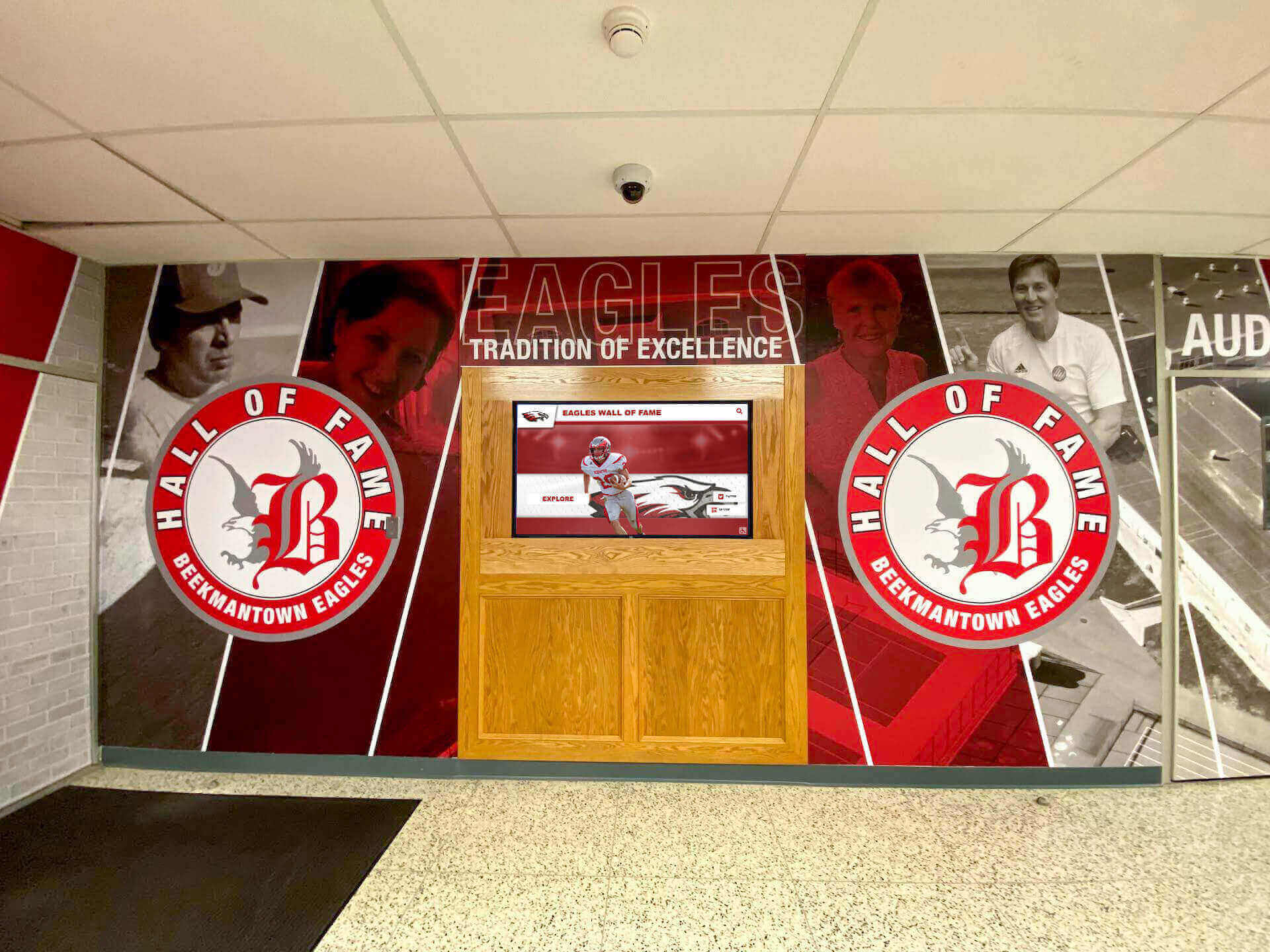
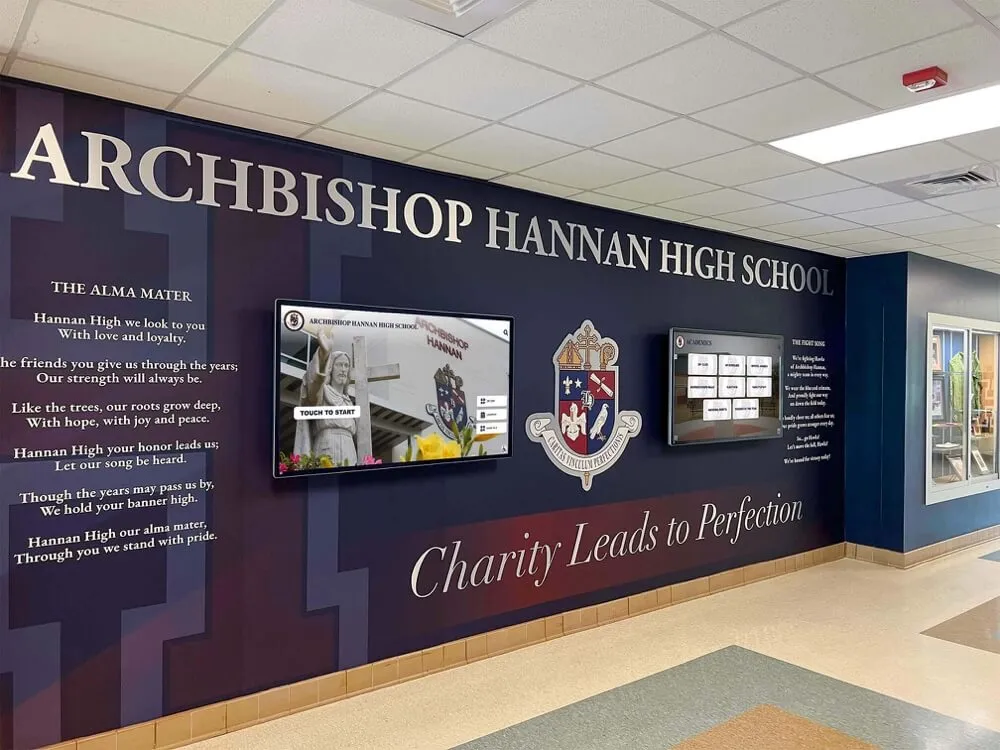
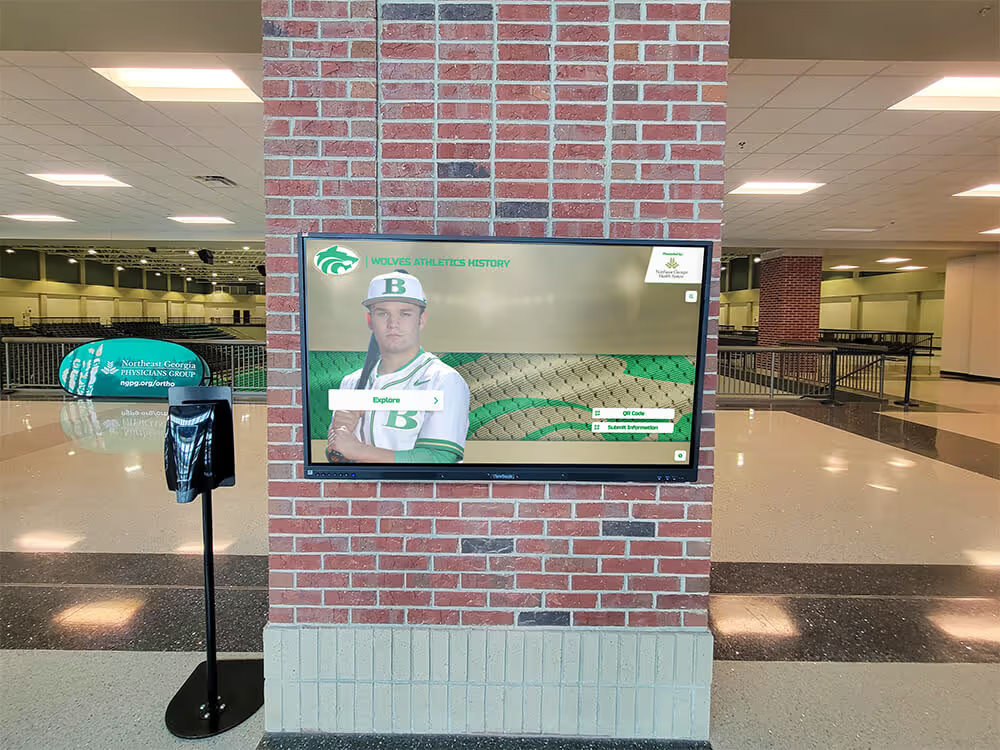
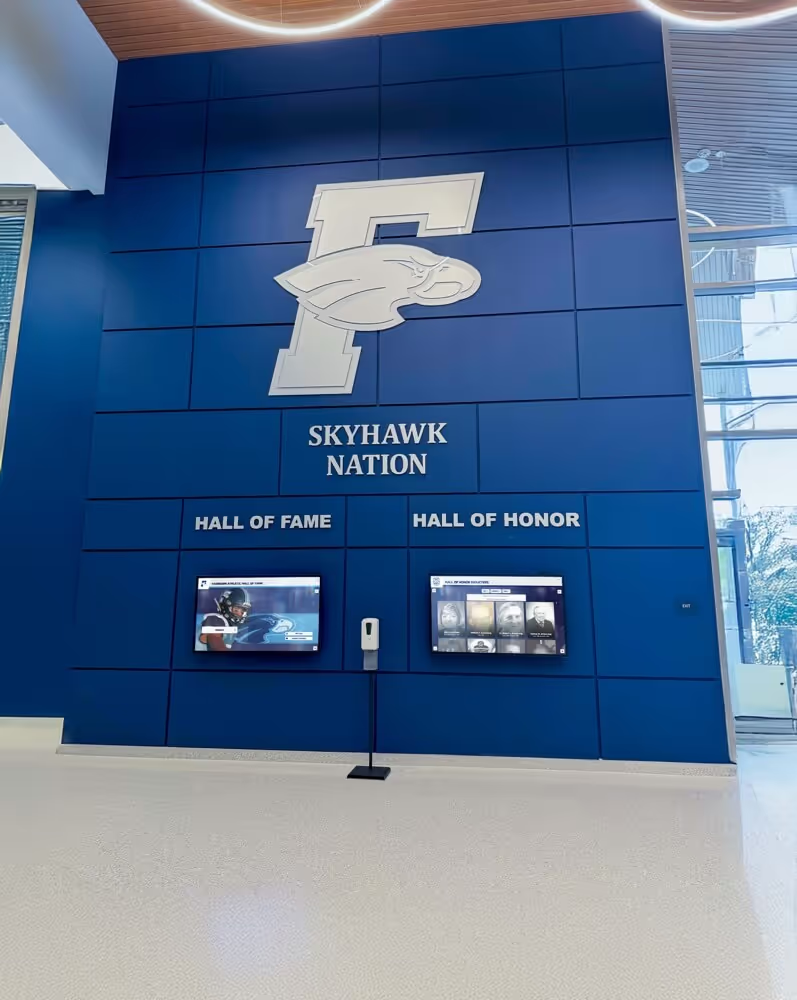
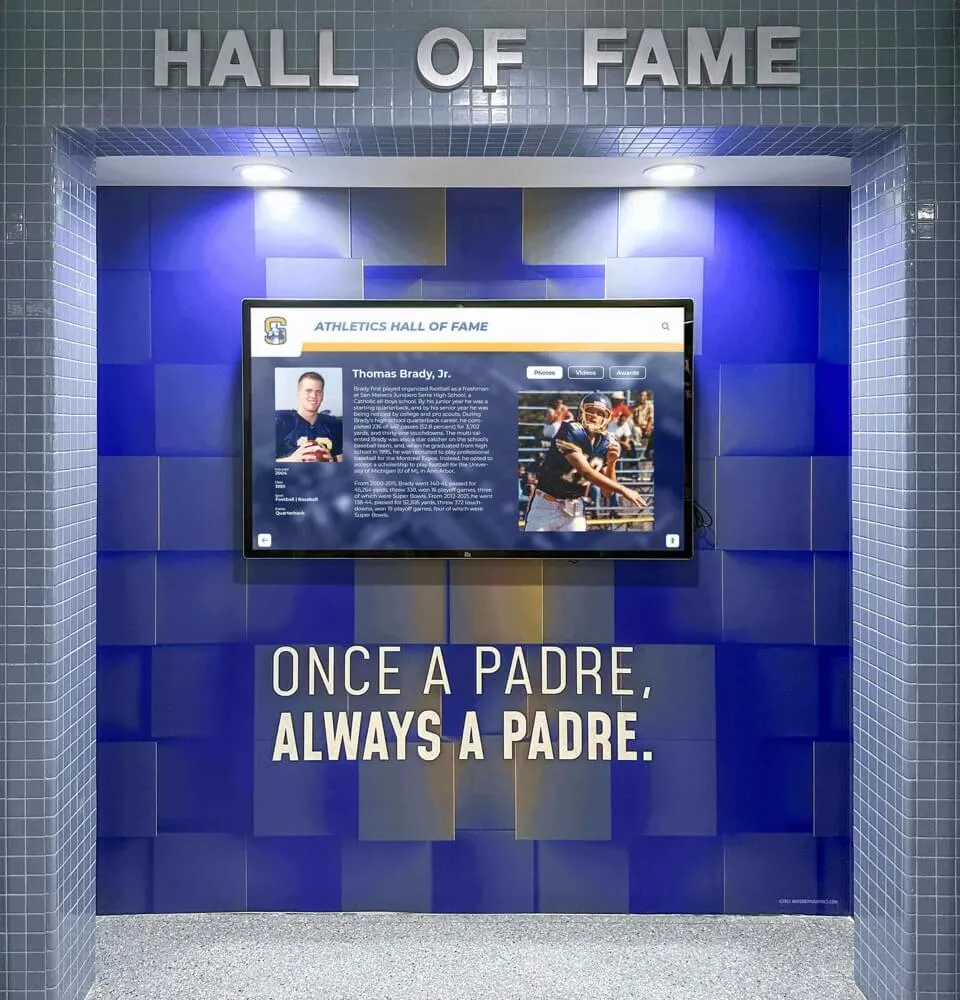
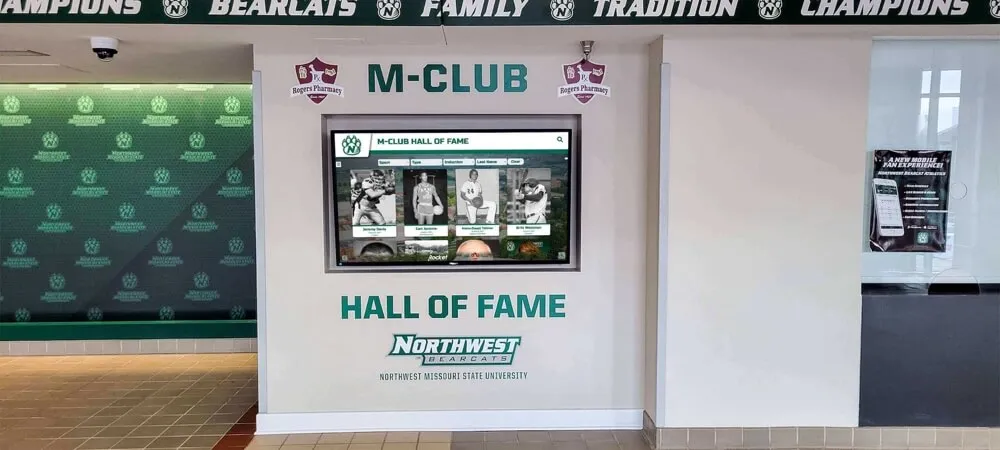
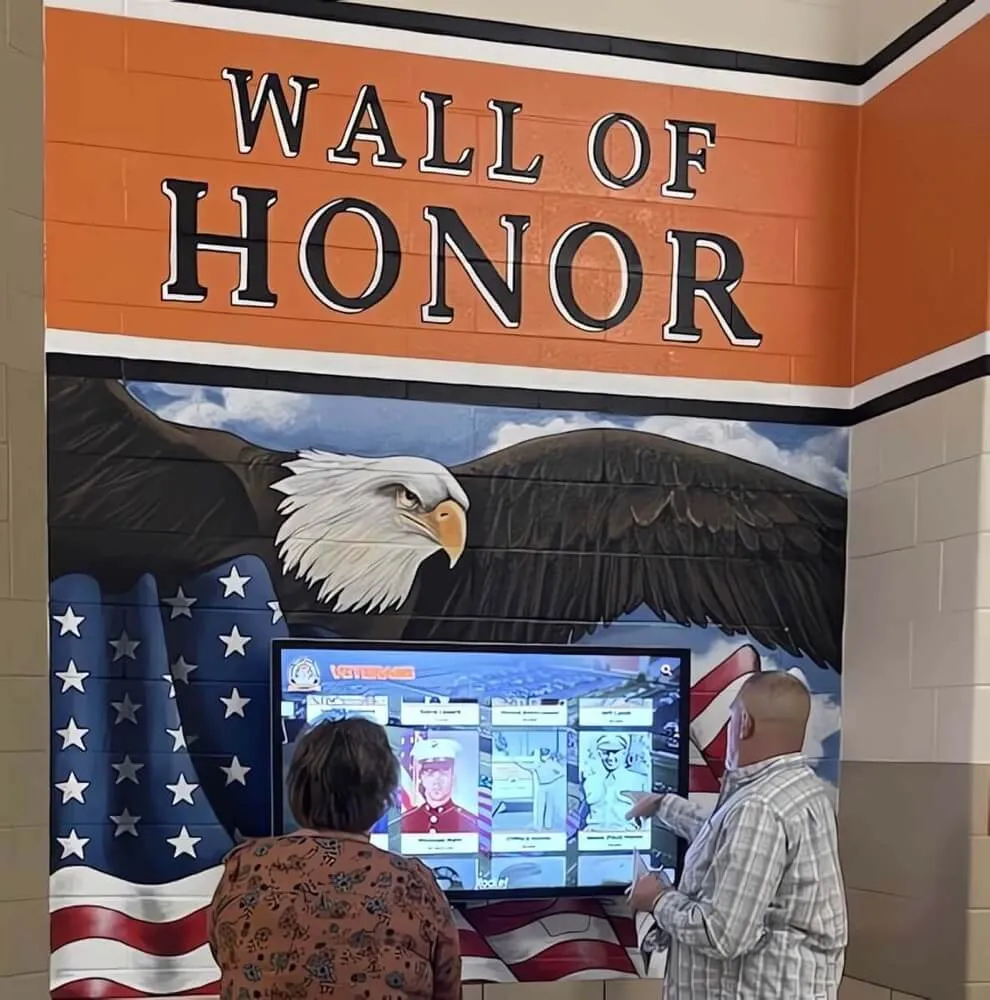
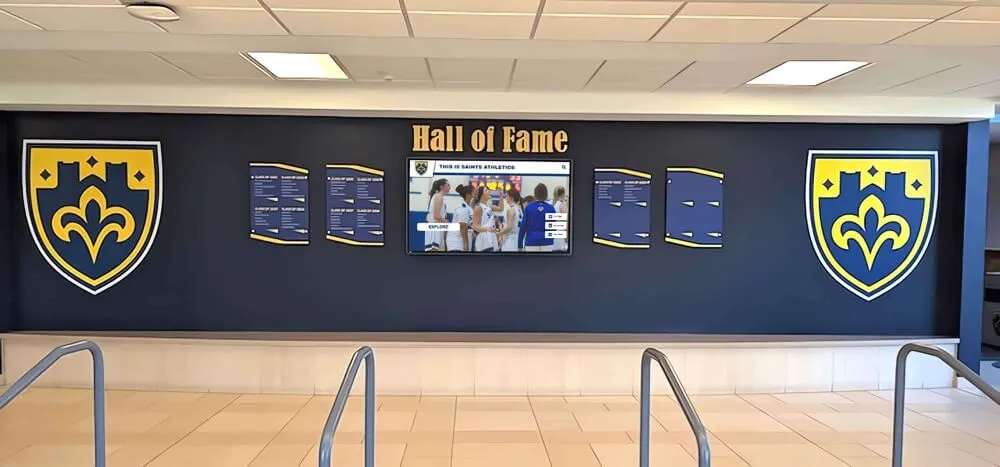
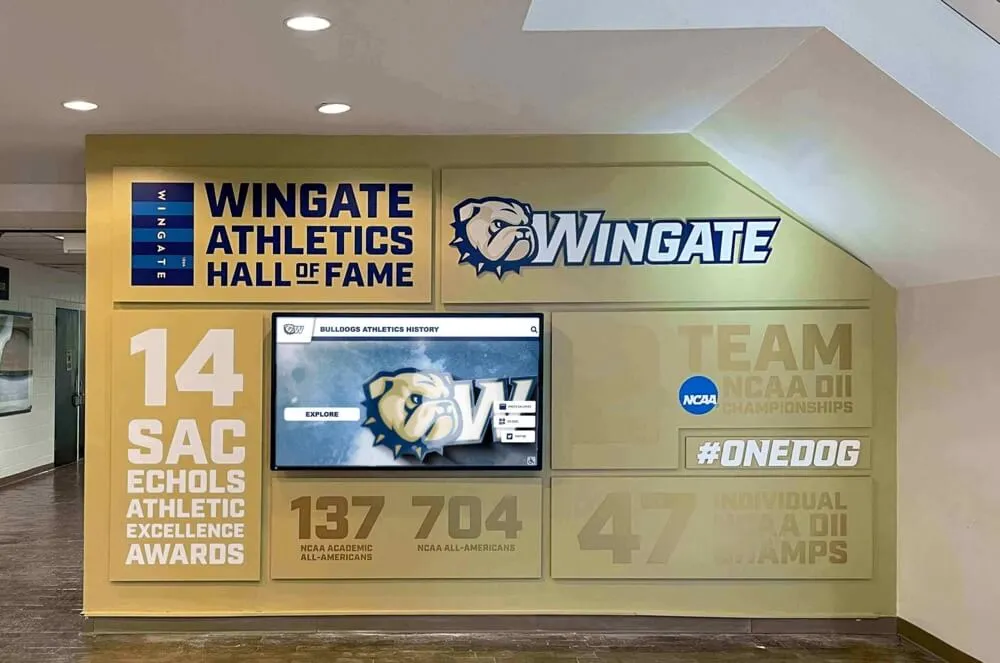
Professional installations that blend traditional design elements with digital flexibility create lasting recognition infrastructure that survives leadership transitions
Challenge 3: Facility Constraints and School District Coordination
Unlike independent nonprofits controlling their facilities completely, booster clubs must navigate complex relationships with school districts that own buildings where recognition appears:
Facility Access Limitations
School districts maintain authority over what can be installed in facilities, where recognition can appear, installation methods permitted (many districts prohibit wall penetrations requiring drilling), and when access is available for installation or maintenance. Athletic directors, building principals, and facilities managers all potentially influence recognition decisions—requiring booster diplomacy and patience that independent organizations avoid.
Some districts maintain strict policies about commercial endorsements, restricting how corporate sponsors can appear in recognition displays. Others require all installations use district-approved contractors at premium rates. Still others mandate that any permanent installations become district property—complicating ownership if booster organizations dissolve or recognition becomes outdated.
Facility-Appropriate Strategies
Successful booster recognition navigates these constraints through collaborative approaches:
Early engagement with athletic directors and administrators during planning stages builds support and identifies concerns before investments occur. Choosing installations that complement existing school aesthetics and align with district values increases approval likelihood. Emphasizing free-standing displays or non-permanent mounting options addresses districts hesitant about wall modifications. Offering recognition solutions that benefit broader school communities beyond only booster donors can generate administrative enthusiasm—digital displays showcasing student-athlete achievements alongside donor recognition serve dual purposes.
Many innovative digital recognition displays enable flexible content management allowing schools to feature academic achievements, athletic records, and donor recognition through the same infrastructure—creating value propositions that overcome administrative hesitation about booster-only installations.
Challenge 4: Multi-Sport Equity and Recognition Balance
Organizations supporting multiple sports programs simultaneously face unique challenges creating recognition perceived as fair across teams commanding dramatically different fundraising capacity and community visibility:
The Equity Dilemma
Football programs in many communities generate substantially more donor engagement, larger contribution amounts, and broader corporate sponsorship than smaller sports like tennis, golf, or swimming. Yet athletes in all sports work equally hard, families contribute according to their capacities, and booster organizations ideally serve all programs equitably regardless of fundraising disparities.
Creating recognition that honors football’s $5,000 corporate sponsors appropriately while ensuring the swimming parent who donates $500 feels equally valued requires thoughtful design preventing smaller sports from feeling marginalized or suggesting their supporters matter less than higher-revenue programs.
Equity-Focused Recognition Approaches
Successful multi-sport recognition emphasizes inclusive strategies:
Organizing recognition by contribution level across all sports rather than by individual programs eliminates visibility disparities—the $1,000 donor society includes basketball, volleyball, and wrestling supporters equally. Creating separate recognition categories for different support types (monetary donations, volunteer service, in-kind contributions, corporate sponsorships) ensures diverse contribution forms receive appropriate acknowledgment. Rotating featured content in digital displays guarantees all sports receive periodic prominence rather than football dominating recognition permanently.
Some all-sports boosters implement dual recognition—individual sport programs maintain team-specific displays in their dedicated spaces (locker room areas, practice facilities) while combined recognition in main lobbies honors all-sports supporters comprehensively. This approach provides both program-specific acknowledgment and unified community celebration.
The guiding principle: recognition should strengthen booster unity rather than reinforcing divisive perceptions that certain sports or supporters matter more than others.
Challenge 5: Integrating Volunteer Recognition with Donor Acknowledgment
Athletic boosters depend on volunteers contributing hundreds or thousands of hours managing concessions, organizing events, coordinating travel, and handling countless operational tasks—yet most donor recognition systems focus exclusively on financial contributions:
The Volunteer Value Question
How should boosters recognize the parent who works 50 concession stand shifts versus the corporate sponsor donating $2,500? Both provide essential support, yet traditional donor walls featuring only financial contributions inadvertently suggest that money matters more than time—potentially alienating volunteers whose service enables fundraising success.
Some organizations attempt mathematical conversions—valuing volunteer hours at $25-$30 based on typical nonprofit volunteer value calculations. Others create separate volunteer recognition distinct from donor acknowledgment. Still others integrate both contribution types within unified recognition celebrating all support forms.
Integrated Recognition Models
The most effective booster recognition honors diverse contribution types through comprehensive approaches:
Digital platforms can feature separate searchable categories for financial donors, volunteer service contributors, in-kind donation providers, and corporate sponsors—ensuring all support forms receive appropriate visibility without suggesting equivalence or creating uncomfortable comparisons. Profile pages can document individual contributions comprehensively—a donor might appear with both their $1,000 financial contribution and 40 volunteer hours, celebrating total support rather than only monetary gifts.
Annual recognition events can celebrate different supporter categories through varied awards—volunteer of the year, corporate partner recognition, lifetime giving achievement, and distinguished service—ensuring diverse contributions receive appropriate spotlight moments. Print programs and social media features can rotate monthly between donor spotlights and volunteer profiles, maintaining recognition balance across support types.
Learn about comprehensive volunteer acknowledgment in academic recognition programs that honor diverse forms of institutional contribution.
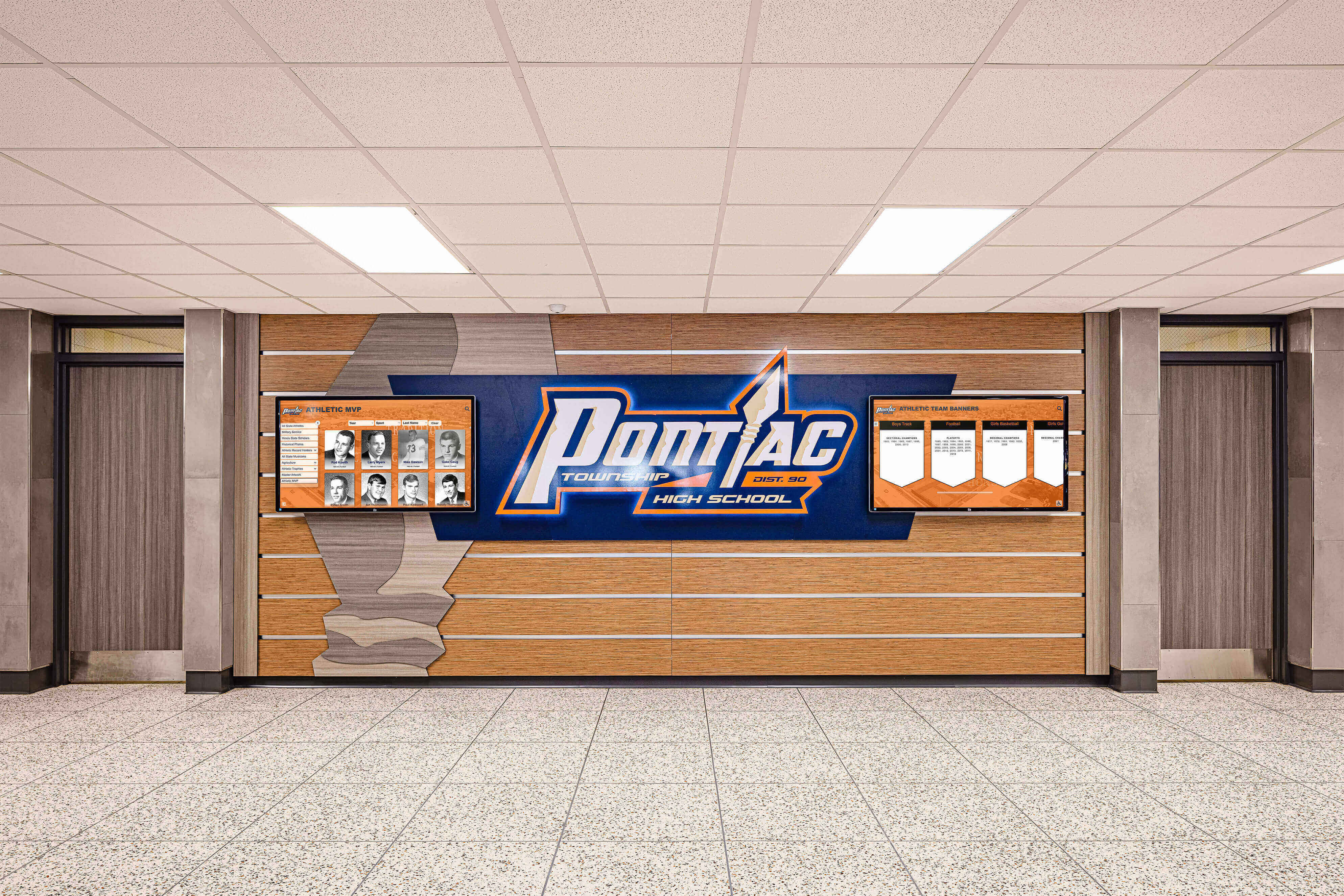
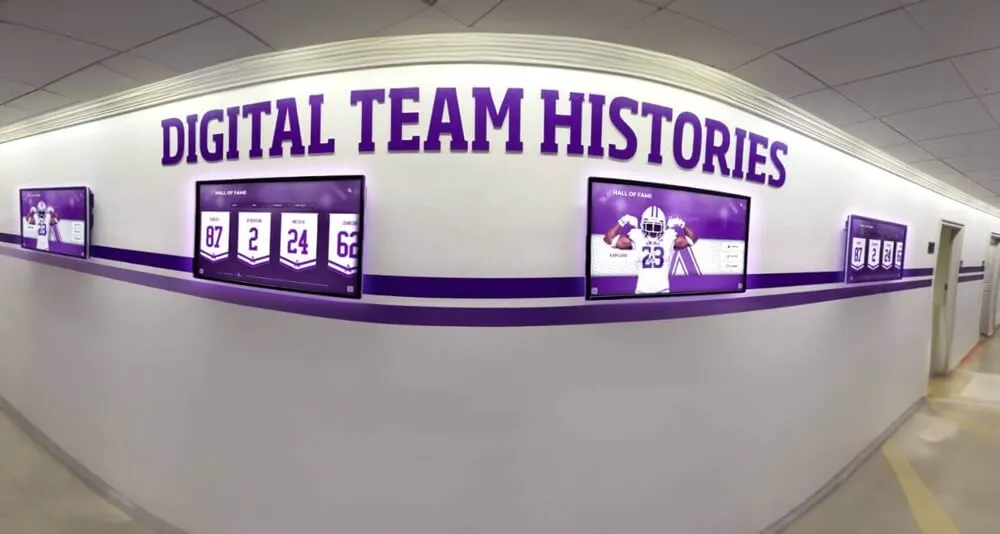
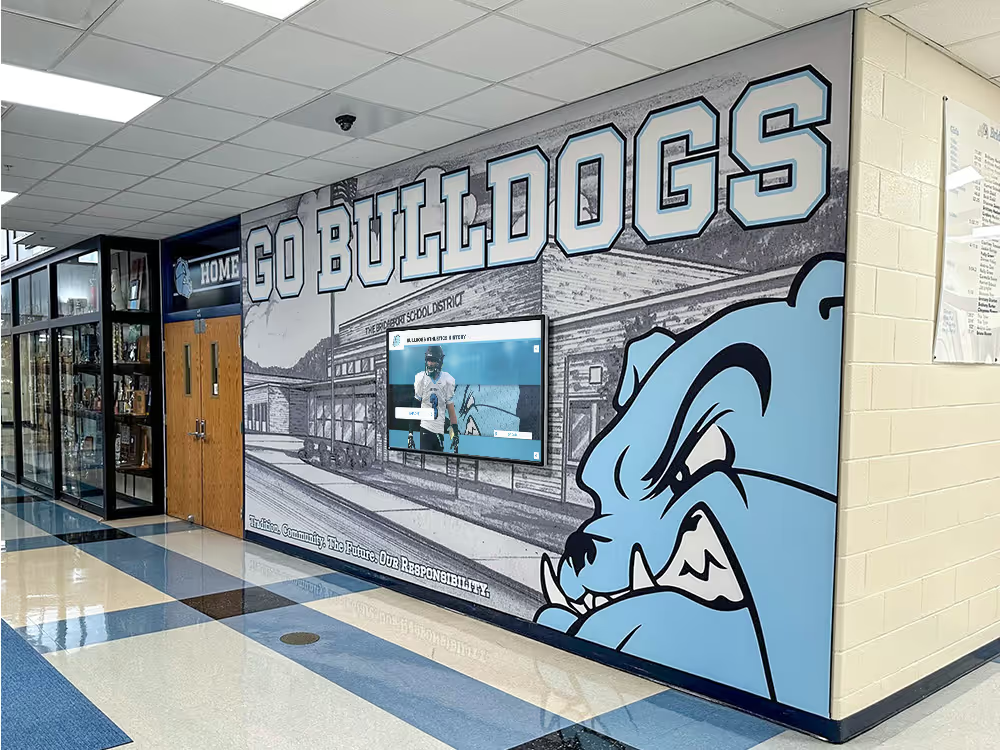
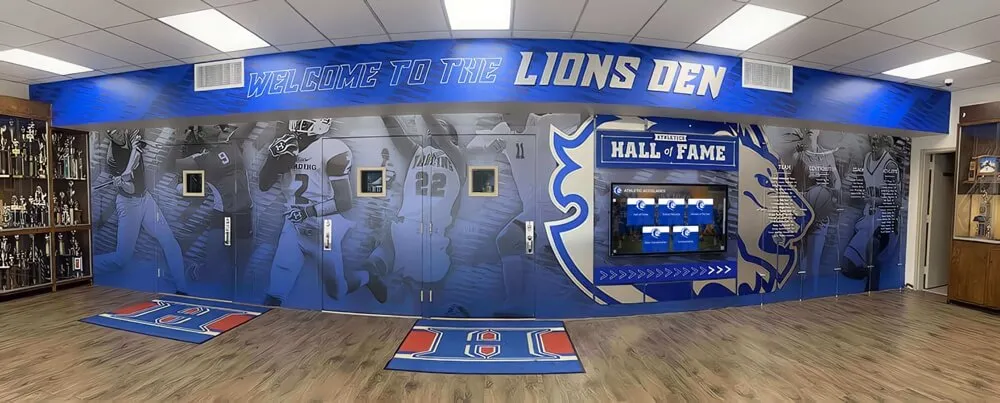
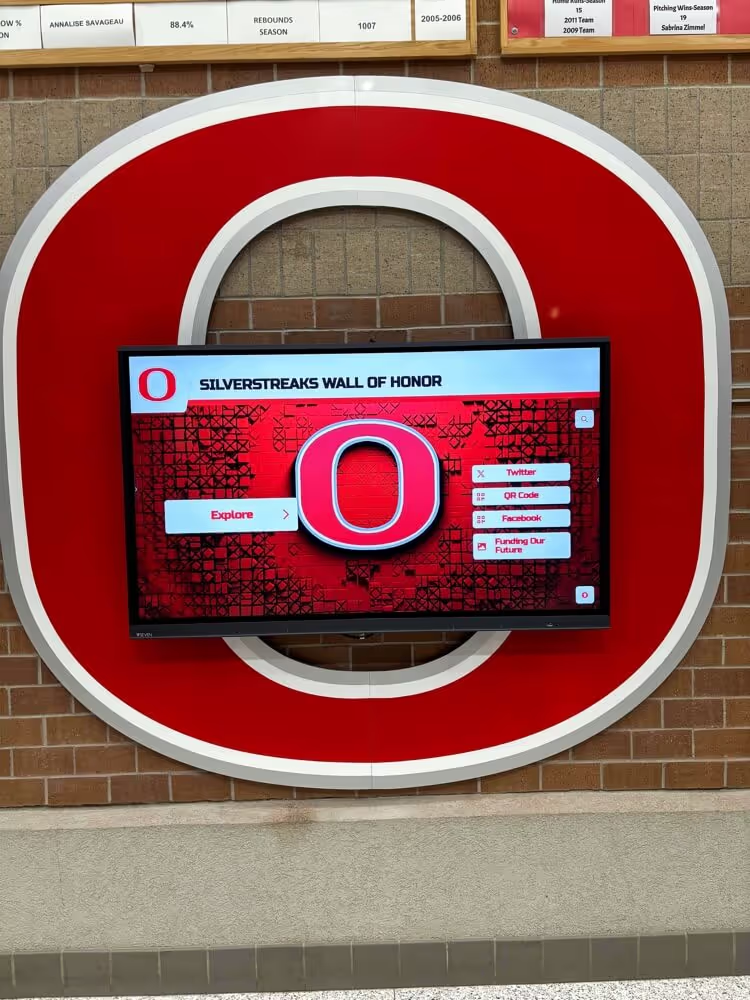
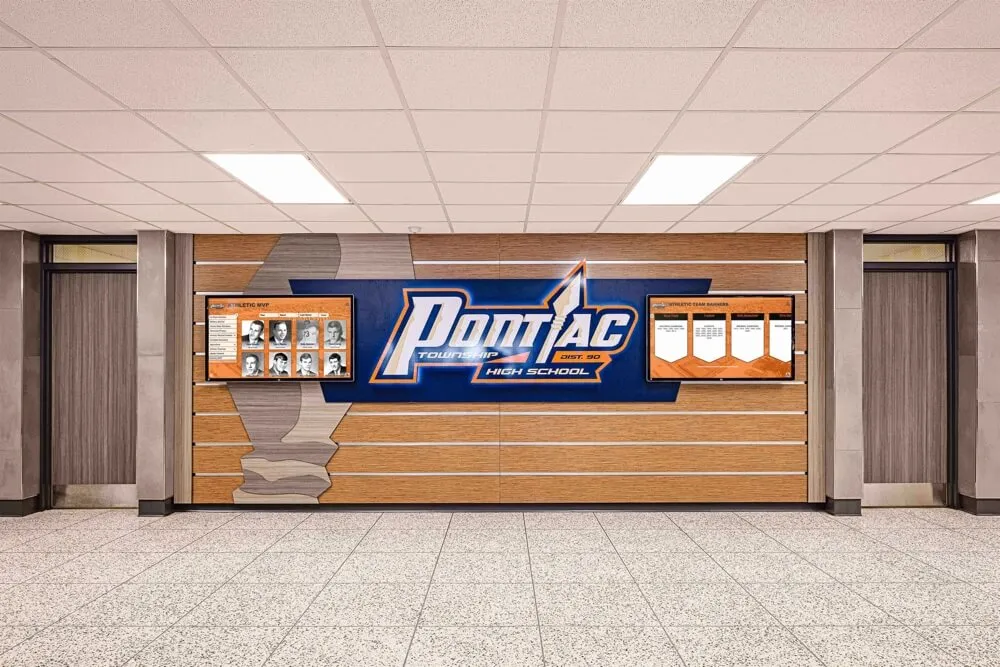
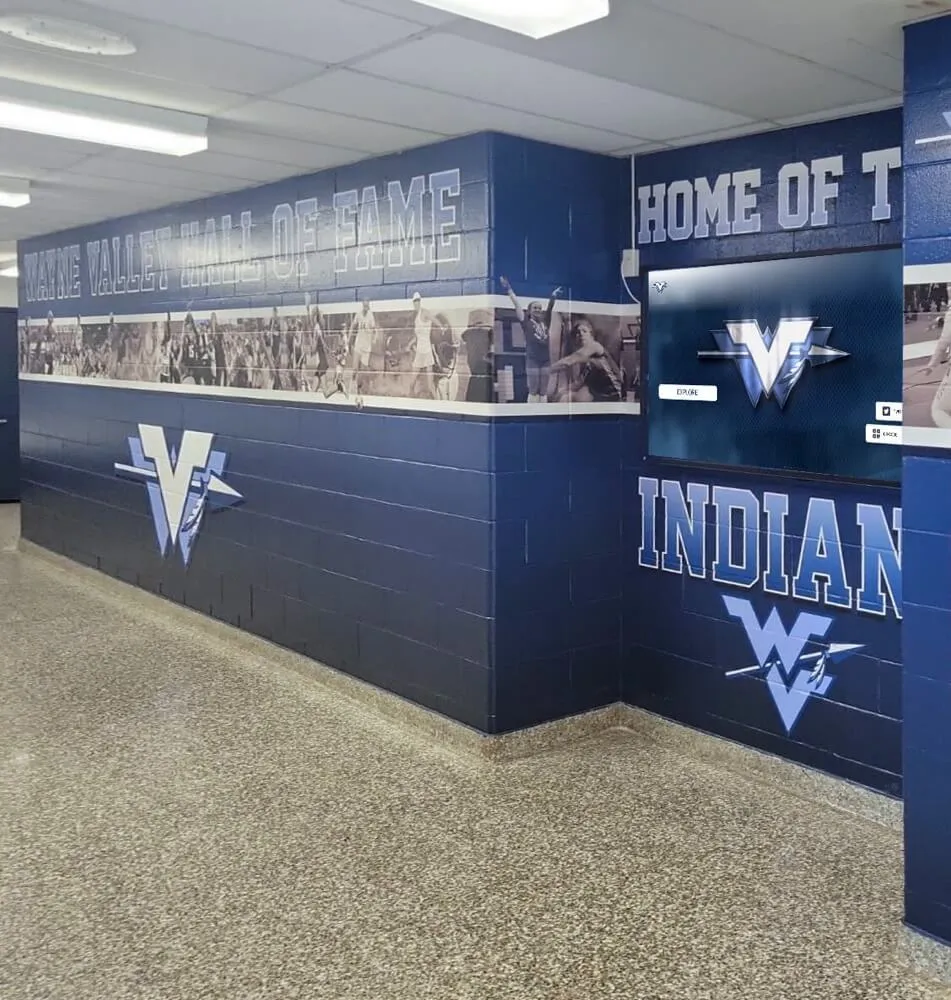
Coordinated hallway recognition creates comprehensive acknowledgment celebrating athletic excellence alongside community support across multiple programs
Practical Donor Recognition Strategies for Athletic Booster Clubs
Understanding challenges provides foundation for exploring specific recognition approaches addressing booster club realities across various budget levels and organizational contexts.
Budget Tier 1: Recognition for $500-$2,000
Organizations with minimal recognition budgets can still implement meaningful acknowledgment through creative low-cost approaches:
Professional Poster Displays
High-quality printed posters featuring donor names organized by contribution levels provide attractive recognition suitable for framing and mounting in athletic facilities. Graphic design services can create professional layouts incorporating school colors, team logos, and attractive typography for $200-$400. Printing costs for 36x48 inch posters on quality materials run $50-$150 each depending on quantity. Professional mounting and framing adds $150-$300 per display.
Organizations typically create multiple posters—one featuring major donors and corporate sponsors prominently, another listing all contributors alphabetically, and potentially sport-specific displays for multi-sport organizations. Annual updates require only new printings, making ongoing costs minimal.
Vinyl Wall Graphics
Custom vinyl graphics applied directly to walls in athletic facilities create semi-permanent recognition at moderate cost. Professional design and installation of large-format vinyl displays recognizing 100-200 donors typically costs $800-$1,500 depending on size and complexity. Schools comfortable with vinyl installations appreciate that they can be removed or updated without permanent wall modifications.
Digital Slideshow Recognition
Many schools maintain displays in lobbies showing announcements, schedules, and general information. Boosters can coordinate with athletic directors to include donor recognition slides rotating through existing systems. Creating professional slide designs costs $300-$600, with digital files easily updated annually. While less prominent than dedicated recognition, this approach leverages existing infrastructure at minimal cost.
Recognition Event Programs
Annual athletic banquets, signing day ceremonies, and award events provide opportunities for donor acknowledgment through printed programs listing supporters. Professional program design and printing for 200-300 copies costs $400-$800. While temporary rather than permanent, event programs reach targeted audiences including donors, families, and athletes—creating recognition visibility among communities most invested in programs.
Budget Tier 2: Recognition for $2,000-$5,000
Moderate budgets enable more sophisticated recognition with greater permanence and visibility:
Acrylic or Metal Plaque Displays
Professional donor walls featuring individual engraved plaques mounted on attractive backboards provide traditional formal recognition. Initial installation including backboard fabrication, design, and first 25-50 plaques typically costs $2,500-$4,000. Additional plaques cost $40-$80 each as new donors contribute. While physical recognition has capacity constraints, moderate-size boosters can accommodate several years of growth before requiring expansion.
These systems work particularly well for organizations with stable donor bases rather than hundreds of annual contributors—making them suitable for many single-sport boosters or major gift recognition even if comprehensive acknowledgment uses other approaches.
Enhanced Digital Displays
Entry-level digital recognition becomes accessible at this budget level. Commercial-grade 55-inch displays with basic content management software and installation cost $3,000-$5,000. While lacking touchscreen interactivity of premium systems, these displays provide unlimited donor capacity, easy updates, and multimedia capabilities impossible with static installations.
Organizations can manage content through simple cloud platforms, adding new donors immediately as contributions arrive. Rotating displays showcase different supporter categories—this month featuring corporate sponsors, next month highlighting volunteer service, subsequently celebrating giving society members—maximizing limited screen space through dynamic content rotation.
Hybrid Recognition Approaches
Some organizations combine methods—using $1,500 for traditional plaques recognizing major donors and corporate sponsors while allocating $2,000 toward digital slideshow content featuring all contributors. This hybrid approach provides formal acknowledgment valued by largest supporters while ensuring comprehensive recognition for broader donor communities.
Budget Tier 3: Recognition for $5,000-$12,000
Substantial investments enable comprehensive digital recognition approaching institutional quality:
Interactive Touchscreen Systems
At this budget level, boosters can implement true interactive recognition with responsive touchscreen displays enabling visitor exploration through donor databases. Complete systems including commercial-grade 55-inch touchscreen hardware, professional installation, cloud-based content management platforms, and initial content development typically cost $8,000-$12,000.
These systems provide unlimited donor capacity, intuitive search functionality, multimedia support for photos and impact stories, remote updates requiring no technical expertise, and professional appearance rivaling university or hospital recognition. For organizations confident in sustained fundraising success and committed to long-term recognition excellence, interactive systems deliver superior donor engagement and stewardship value.
Solutions like Rocket Alumni Solutions specialize in recognition platforms designed specifically for schools and booster organizations—providing user-friendly systems that volunteer leaders can manage effectively without technical expertise or dedicated IT support.
Multiple Display Installations
Organizations with $10,000-$12,000 budgets might consider distributed recognition—installing modest 43-inch displays in multiple locations rather than single large centerpiece. This approach works particularly well for multi-sport boosters wanting sport-specific recognition in team areas while maintaining combined acknowledgment in main lobbies. Individual displays cost $4,000-$5,000 installed, allowing 2-3 coordinated installations within budget.
Premium Physical Recognition
Organizations preferring traditional approaches can implement high-end donor walls with architectural integration, custom metalwork, integrated lighting, and substantial capacity for growth. Premium installations with space for 200+ individual donor plaques, professional design, and quality materials cost $8,000-$15,000. While lacking digital flexibility, these create formal prestigious acknowledgment particularly valued in communities with strong traditional preferences.
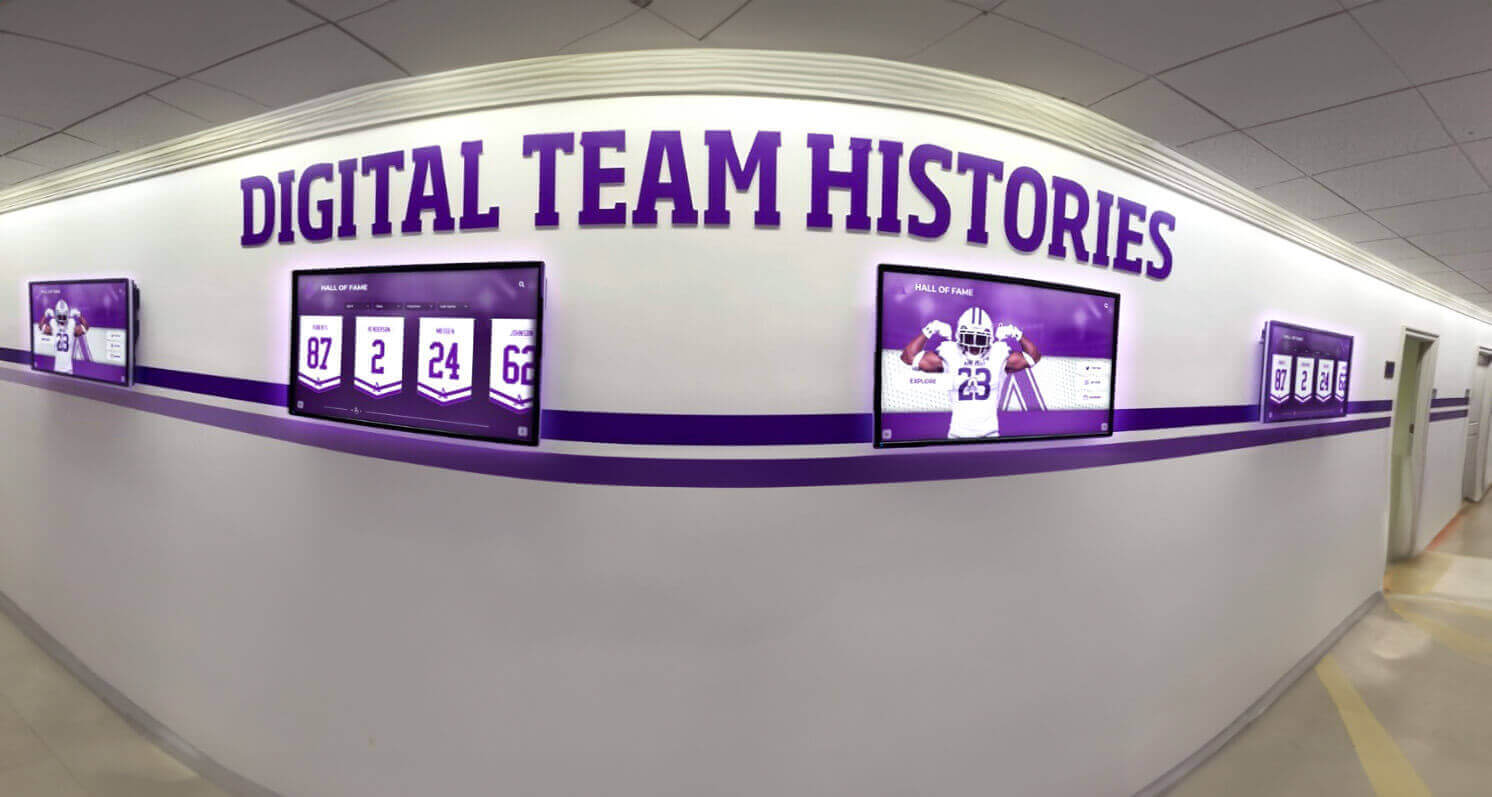
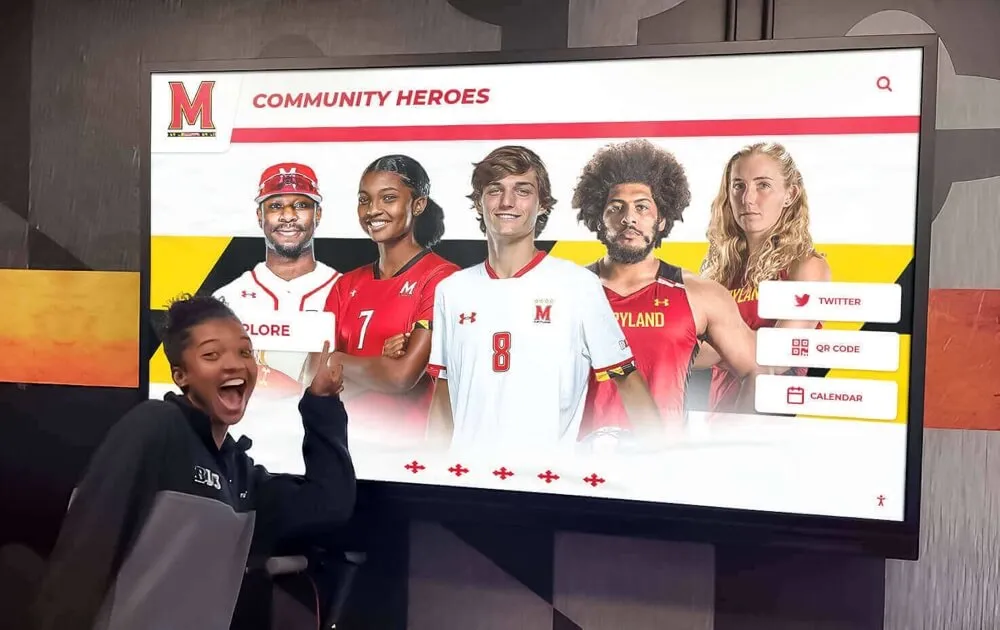
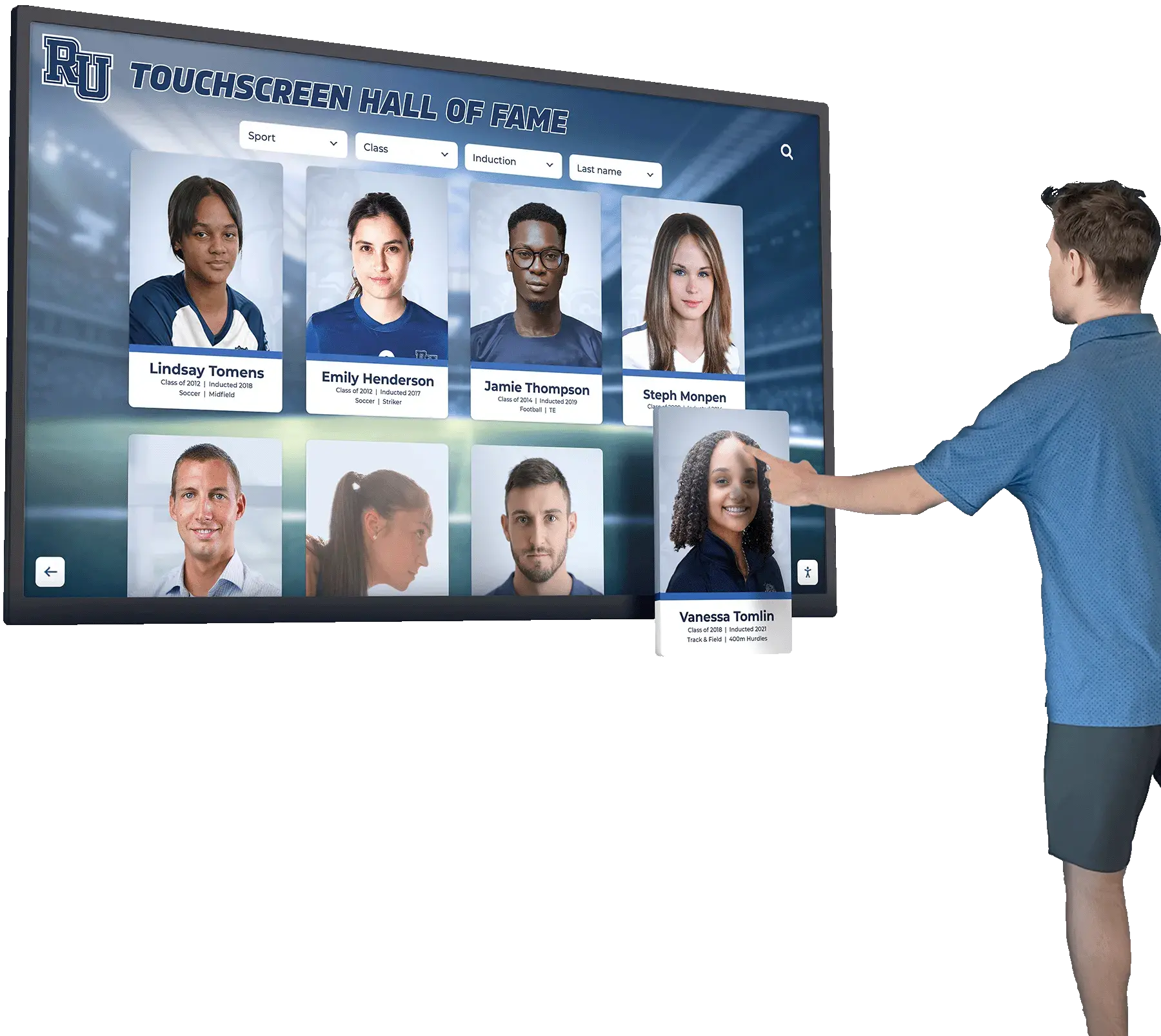
Digital systems enable comprehensive recognition across multiple categories and time periods within single installations, accommodating growth without physical space constraints
Budget Tier 4: Premium Recognition for $15,000-$25,000+
Well-funded boosters or those implementing recognition as specific capital projects can pursue comprehensive installations:
Large-Format Touchscreen Recognition
Premium 65-75 inch interactive displays with advanced features including high-resolution video playback, sophisticated content management, custom branding integration, and professional architectural installation create signature recognition destinations. Complete implementations cost $18,000-$30,000 depending on specifications and installation complexity.
These investments make sense for all-sports boosters serving multiple programs collectively, organizations with particularly strong fundraising track records, or when recognition itself is a funded project rather than operational expense. Some boosters position recognition displays as capital campaign elements—inviting donors to contribute specifically toward recognition infrastructure, making it self-funding rather than competing with program budgets.
Integrated Athletic Facility Recognition
The most sophisticated implementations integrate recognition throughout athletic facilities—lobby displays featuring all-sports donors, individual team areas with program-specific acknowledgment, concourse displays in stadiums or gymnasiums showing game-day recognition, and hallway installations celebrating athletic achievements alongside supporter communities. Comprehensive distributed systems cost $25,000-$50,000+ but create recognition environments rather than isolated displays.
These typically require multi-year planning, dedicated capital campaigns, and strong district partnerships—representing aspirational goals for most boosters rather than immediate operational decisions.
Learn about comprehensive facility recognition in digital hall of fame guides addressing athletic facility installations.
Creating Multi-Sport Recognition That Honors All Programs Equitably
Organizations supporting multiple athletic programs must design recognition preventing perceptions that certain sports or supporters matter more than others:
Equity-Focused Recognition Principles
Proportional Representation Standards
Rather than allocating recognition space based on revenue generation, consider equal representation approaches where each sport receives equivalent visibility regardless of fundraising disparity. A 12-sport booster might feature rotating monthly spotlights ensuring every program receives featured recognition annually. Digital displays can rotate sport-specific content on regular schedules—football featured this week, volleyball next week, then swimming, wrestling, and others sequentially.
Combined Recognition Categories
Organizing donors by contribution level across all sports rather than by individual programs promotes unity. The “Champions Circle” recognizing $1,000+ donors includes football, basketball, soccer, and tennis supporters equally. This approach emphasizes collective booster community rather than reinforcing sport-specific hierarchies.
Separate but Coordinated Systems
Some all-sports organizations implement dual recognition—program-specific acknowledgment in team spaces (locker rooms, practice facilities, team meeting areas) combined with unified recognition in main lobbies celebrating entire booster community. Individual sports maintain team culture and donor connection while broader installations emphasize organizational unity and collective impact.
This works particularly well when high-revenue sports like football want donor walls in their dedicated spaces while smaller programs appreciate proportional representation in shared facilities.
Addressing Sport-Specific Donor Preferences
Designated Giving Coordination
Many donors contribute specifically to programs where their students participate—a soccer family donates to soccer, a volleyball family supports volleyball. Recognition should acknowledge these designated contributions appropriately while also celebrating those who give to all-sports general funds supporting entire athletic departments.
Digital recognition can display dual affiliations—showing that a donor contributed $500 to baseball specifically while also providing $250 to all-sports general support. This honors donor intent while encouraging broader program support beyond only individual sports.
Volunteer Recognition Across Programs
Multi-sport organizations should ensure volunteer acknowledgment represents all programs equitably. If the football booster provides 1,000 annual volunteer hours while swimming contributes 100 hours, recognize both communities’ service proportionally while ensuring smaller sports don’t feel marginalized. Celebrate per-capita or per-family volunteer participation rates rather than only absolute hours, highlighting that swimming families average 10 hours each while football families average 7 hours—different metrics paint different pictures of commitment.
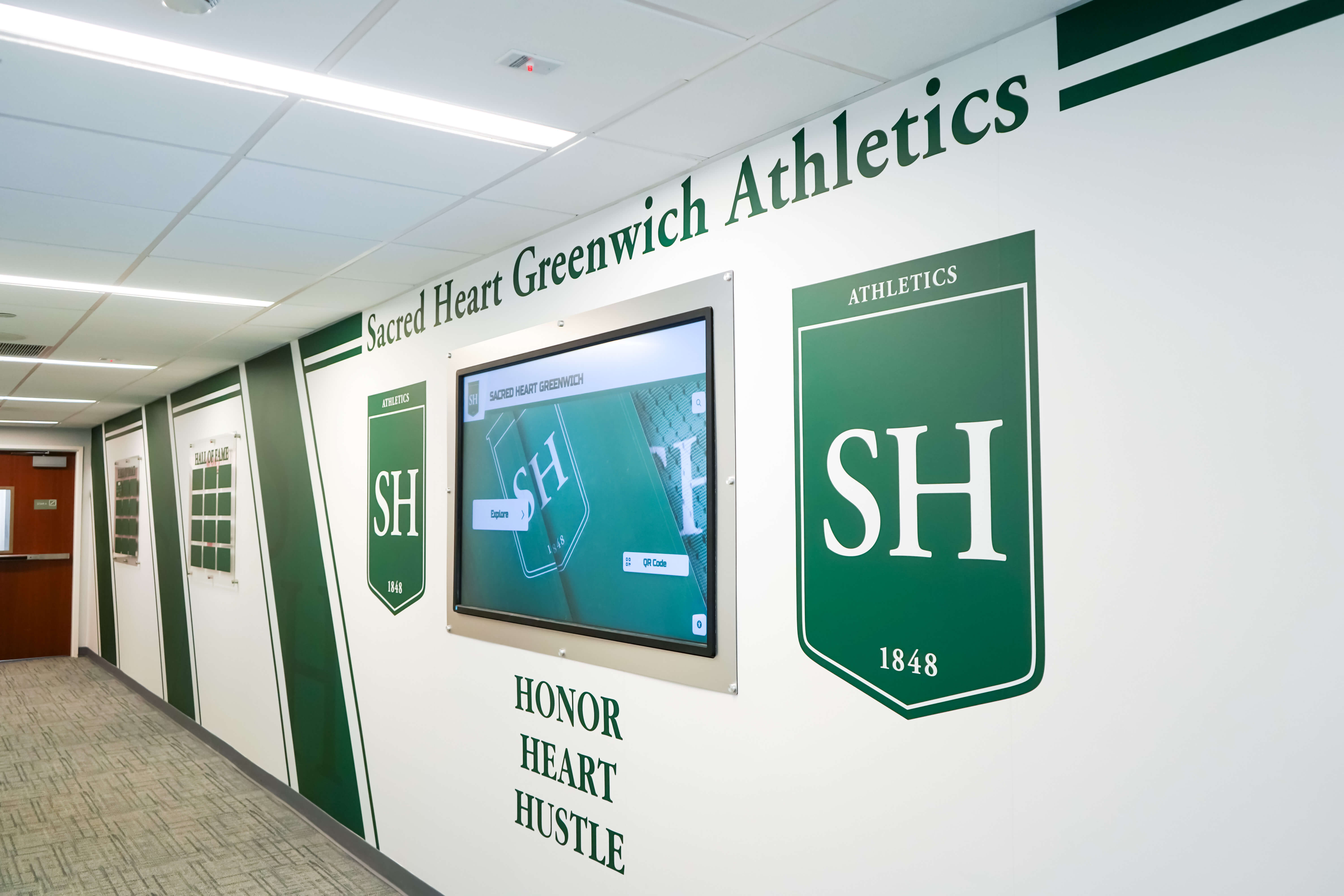
Thoughtful design coordination across multiple recognition elements creates cohesive athletic facility environments celebrating programs comprehensively while honoring supporter communities
Implementing Sustainable Recognition Systems for Volunteer Organizations
Given inevitable leadership transitions in volunteer organizations, booster recognition must be designed for sustainability beyond founding champions:
Planning for Leadership Succession
Documentation and Knowledge Transfer
Create comprehensive procedures documenting recognition management—how to add new donors, update content, coordinate with vendors, handle corrections, and maintain systems. Include vendor contact information, login credentials for content management platforms, annual maintenance schedules, and troubleshooting guides. Store documentation in shared drives accessible to multiple leaders rather than depending on single individuals.
Outgoing presidents should schedule transition meetings with successors specifically addressing recognition—demonstrating content management systems, reviewing vendor relationships, and transferring institutional knowledge before departing. Many boosters maintain recognition committee roles spanning multiple years, providing continuity even as overall leadership changes.
Choosing Volunteer-Friendly Platforms
Recognition systems requiring specialized technical expertise, design skills, or extensive training create risks when volunteers transition. Cloud-based platforms with intuitive interfaces enable new leaders to manage recognition effectively after brief orientation. Vendor support services providing ongoing assistance prevent dependence on volunteers’ technical capabilities.
Some boosters engage district technology coordinators to maintain recognition systems, compensating schools through small annual payments. This ensures continuity and leverages existing expertise while removing burden from parent volunteers who may lack confidence managing digital systems independently.
Building Recognition into Operational Rhythms
Scheduled Update Cycles
Rather than expecting continuous recognition maintenance, establish predictable schedules—quarterly reviews adding donors from recent campaigns, annual comprehensive audits ensuring accuracy, and milestone updates when significant contributions arrive. Scheduled approaches prevent recognition from being overlooked during busy seasons while making management sustainable for volunteer leaders juggling multiple responsibilities.
Integration with Fundraising Calendars
Coordinate recognition updates with natural fundraising cycles. Many boosters conduct major campaigns during specific seasons—fall membership drives, spring banquet sponsorships, summer golf tournaments. Plan recognition updates following each major campaign, making acknowledgment part of established operational patterns rather than separate initiatives requiring special effort.
Automated Systems Where Possible
Modern platforms can integrate with fundraising databases, automatically pulling donor information for recognition without manual entry. While boosters may lack sophisticated CRM systems, even basic automation—importing spreadsheet data directly into recognition platforms—reduces administrative burden substantially compared to individually entering hundreds of donors manually.
Funding Recognition: Making Investment Sustainable
Given budget constraints, boosters need creative approaches making recognition investment financially sustainable:
Self-Funding Recognition Models
Recognition Infrastructure as Fundraising Campaign
Position the recognition display itself as a funded project rather than operational expense. Launch campaigns inviting donors to contribute specifically toward recognition infrastructure with messaging like “Help us honor our booster community—contribute toward our new digital donor recognition display that will celebrate supporters for years to come.”
Many donors appreciate funding tangible infrastructure with lasting visibility. Some boosters offer exclusive “founding donor” designation for those contributing before recognition launches, creating urgency and special acknowledgment for early supporters.
Corporate Sponsorship Packages
Include recognition display sponsorship in corporate packages offered to local businesses. A business providing $5,000 annually might receive prominent logo placement on recognition displays alongside other benefits like stadium signage, program advertisements, and website acknowledgment. This allocates recognition costs to corporate partnerships rather than general operating funds, preserving program budgets.
Multi-Year Planning and Phased Implementation
Organizations unable to afford comprehensive recognition immediately can implement phased approaches—starting with basic poster displays costing $800, then upgrading to digital slideshow content after two years as fundraising grows, eventually transitioning to interactive touchscreen systems once sustained success justifies larger investment.
This gradual enhancement matches recognition sophistication to organizational capacity while ensuring some acknowledgment exists immediately rather than waiting years until comprehensive systems become affordable.
Demonstrating Recognition ROI
Tracking Fundraising Impact
Document giving patterns before and after recognition implementation. Many boosters report 20-40% donor retention increases following recognition launches. While multiple factors influence giving, positive trends correlating with recognition improvements suggest programs deliver returns exceeding costs through increased lifetime donor value.
Survey donors about recognition impact—asking whether acknowledgment influenced their decisions to contribute again, increase giving levels, or recommend booster support to others. Testimonials provide qualitative evidence complementing quantitative fundraising data.
Cost-Benefit Analysis for Members
Present recognition decisions transparently to booster membership using cost-benefit frameworks. For example: “$10,000 recognition investment represents 15% of this year’s budget but research suggests it will increase donor retention by 25% within two years. If we retain just 40 additional $250 donors annually, recognition pays for itself within three years while providing ongoing stewardship benefit indefinitely.”
This data-driven approach helps members understand recognition as strategic investment rather than discretionary expense competing with program support.
Explore fundraising technology in digital recognition systems guides addressing platforms designed for educational fundraising.

Professional installations that integrate with existing school architecture create recognition that feels intentional and permanent rather than temporary afterthoughts
Coordinating Recognition with School Districts and Athletic Administrators
Successful booster recognition requires collaborative relationships with school officials who control facilities where installations appear:
Building Administrator Support
Early Engagement and Transparency
Involve athletic directors and building principals during planning stages rather than presenting completed recognition plans for approval. Seek input about preferred locations, district policies affecting installations, concerns administrators want addressed, and how recognition might serve broader school interests beyond only booster needs.
Frame recognition as partnership benefiting schools—displays can showcase student-athlete achievements, academic excellence, and institutional pride alongside donor acknowledgment. This creates value propositions encouraging administrative support rather than viewing recognition as booster-only projects requiring facility accommodation.
Addressing Administrator Concerns
Common hesitations include concerns about commercial endorsements if corporate sponsors appear prominently, worries that recognition creates uncomfortable status distinctions among families, questions about installation permanence and future removal, and uncertainty about whether recognition aligns with district policies and educational missions.
Address these proactively through recognition designs that emphasize donor impact on student opportunities rather than focusing on contribution amounts, limit commercial messaging to appropriate contexts, propose non-permanent installations that can be relocated or removed, and position recognition within educational values celebrating community support enabling student success.
Navigating Facility Policies
Installation Guidelines and Restrictions
Districts commonly maintain policies about wall penetrations, approved mounting methods, contractor requirements, insurance coverage, and ownership of installations. Research these policies early, incorporating constraints into planning rather than discovering restrictions after purchasing recognition systems requiring installation approaches the district prohibits.
Some boosters choose free-standing displays avoiding wall mounting entirely, eliminating concerns about permanent modifications. Others coordinate installations during facility renovations when contractors already have district approval and insurance, simplifying logistics substantially.
Shared Recognition Infrastructure
Propose recognition systems serving multiple purposes—displays showcasing athletic records and achievements, academic honors, alumni spotlights, and community partnerships alongside donor recognition. Multi-purpose systems deliver broader value justifying district investment in electrical infrastructure, network connectivity, or structural support that pure donor recognition might not warrant.
Some progressive districts recognize that supporting booster recognition infrastructure benefits their athletic programs directly—healthy booster organizations reduce district funding burdens. These schools actively assist recognition implementation rather than treating it as accommodation requested by external organizations.
Content Strategies for Booster Donor Recognition
Beyond infrastructure decisions, content strategy determines whether recognition effectively honors supporters and inspires continued giving:
Essential Donor Information
Core Recognition Elements
Effective booster recognition includes donor names (ensuring accurate spelling and preferred name formats), contribution levels or giving society designations when appropriate, years of support for longtime contributors, recognition of memorial or tribute gifts honoring loved ones, volunteer service acknowledgment for those contributing time alongside or instead of money, and corporate sponsor logo recognition when businesses provide support.
Optional Enhanced Content
Digital platforms enable richer storytelling—photographs of donors with student-athletes, testimonials explaining why families support programs, impact documentation showing what contributions funded (new equipment, facility improvements, scholarships, travel opportunities), and student-athlete messages thanking supporters for enabling their opportunities.
This enhanced content creates emotional connections between donors and program impact—transforming recognition from simple name lists into compelling narratives demonstrating how community generosity creates student-athlete success.
Balancing Recognition Tiers Without Creating Hierarchies
Inclusive Recognition Philosophies
While contribution levels vary substantially—from $50 annual memberships to $5,000 capital campaign gifts—recognition should honor all supporters appropriately without suggesting that larger donors matter more than modest contributors:
Consider alphabetical listing within giving societies rather than listing largest donors first, equal profile sizes regardless of contribution amounts in digital systems, rotation schedules ensuring all donor stories receive featured placement periodically, and language emphasizing collective impact rather than individual gift sizes.
Some boosters implement “participation level” recognition—celebrating families contributing any amount rather than focusing on dollars. A “100% team family participation” goal emphasizing that every family supported the program regardless of amount creates inclusive cultures where $25 and $2,500 donors alike feel valued.
Acknowledging Special Contributions
Some gifts warrant special recognition beyond standard acknowledgment—founding donors supporting new programs, memorial gifts honoring deceased community members, transformational contributions enabling major facility improvements, or sustained multi-decade support from longtime program champions.
Create special designation categories for these contributions—“program founder,” “legacy society,” “facility benefactor,” or “lifetime supporter”—providing appropriate distinction while maintaining inclusive baseline recognition for all contributors.
Learn about comprehensive recognition content in digital trophy wall guides addressing achievement celebration alongside donor acknowledgment.

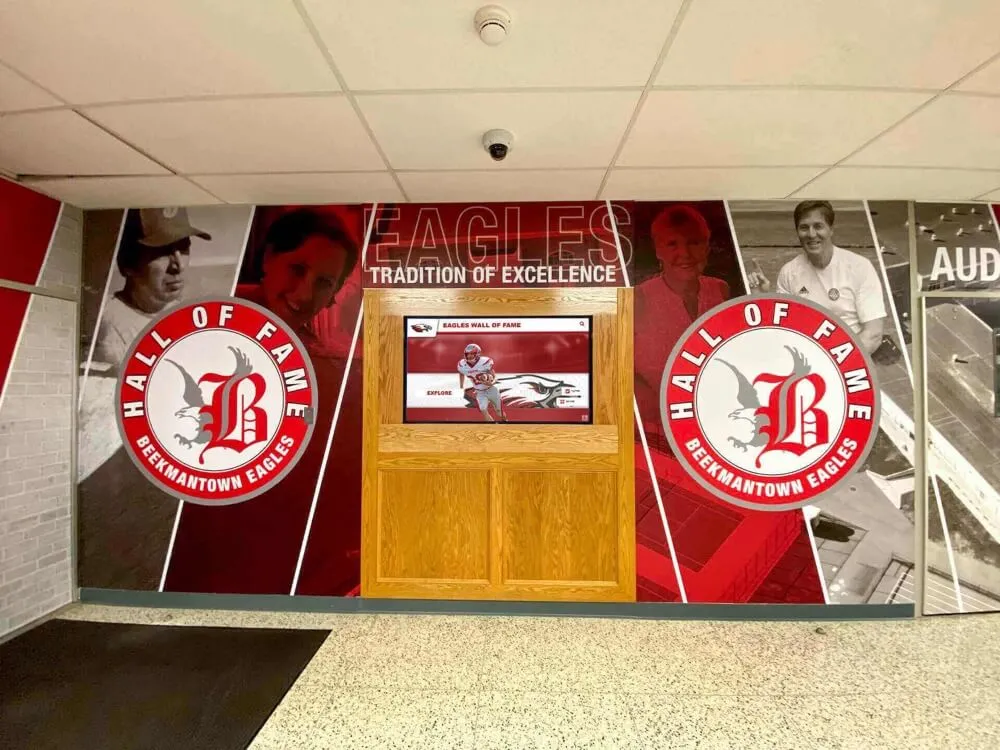
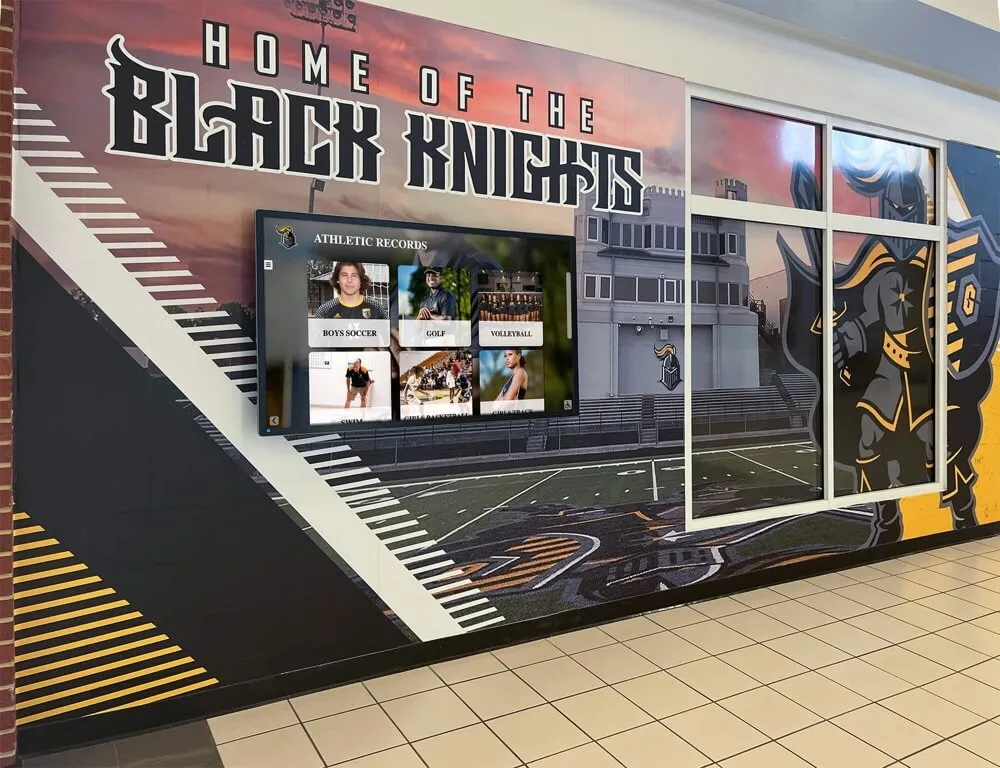
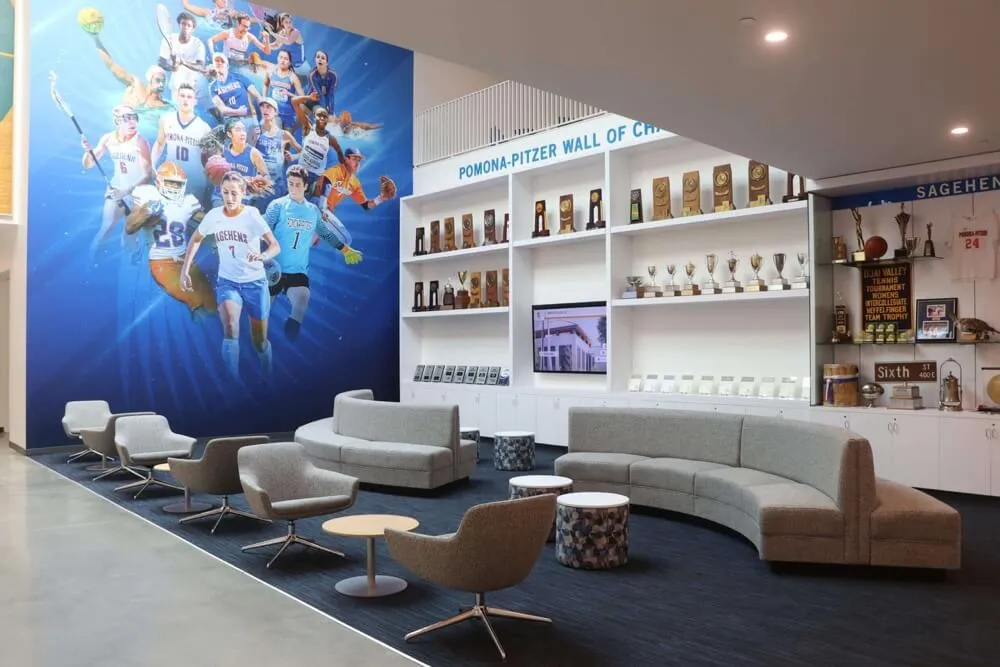
Integrated mural designs create comprehensive recognition environments celebrating athletic identity, program achievements, and community support through coordinated visual storytelling
Measuring Recognition Effectiveness for Athletic Boosters
Assessment helps boosters understand whether recognition investments deliver intended benefits and identify improvement opportunities:
Key Performance Indicators
Fundraising Impact Metrics
Track donor retention rates year-over-year before and after recognition implementation—calculating what percentage of previous year’s donors contribute again currently. Monitor average contribution amounts over time—do recognized donors increase giving compared to those without acknowledgment? Measure new donor acquisition potentially influenced by recognition visibility during facility tours, games, and community events. Document planned giving inquiries and legacy society growth that recognition might inspire.
While multiple factors influence fundraising outcomes, positive trends correlating with recognition improvements suggest programs contribute meaningfully to development objectives.
Engagement and Visibility Metrics
For digital recognition systems, review interaction frequency showing how often visitors explore displays, identify most-viewed donor profiles indicating compelling content, analyze average session duration revealing engagement depth, and monitor geographic access data if web-accessible platforms extend recognition beyond physical installations.
For traditional recognition, observe community awareness through informal surveys asking boosters and supporters whether they’ve seen recognition, what they remember, and how it made them feel about organizational stewardship.
Qualitative Feedback
Donor Perspectives
Survey donors specifically about recognition experiences—asking whether they feel appropriately acknowledged, if recognition influenced decisions to continue supporting programs, what they appreciate about current approaches, and how acknowledgment could improve. This direct feedback provides insights beyond quantitative metrics.
Volunteer and Leadership Assessment
Booster board members managing recognition can assess administrative burden—whether systems are sustainable with available volunteer capacity, if platforms are sufficiently user-friendly, whether vendor support meets needs, and how recognition fits within broader operational priorities.
Community and Administrator Feedback
Seek input from athletic directors, coaches, and school administrators about recognition impact on school culture, whether acknowledgment appropriately represents program values, if installations enhance facilities positively, and how recognition affects broader community perceptions about booster professionalism and stewardship.
This comprehensive feedback informs recognition evolution—ensuring approaches remain aligned with stakeholder needs and organizational objectives as boosters grow and circumstances change.
Common Booster Recognition Questions and Practical Solutions
Athletic boosters frequently encounter specific challenges requiring thoughtful responses:
“Should We Recognize All Donors or Only Major Supporters?”
Inclusive Approach Recommendations
Research consistently demonstrates that comprehensive recognition honoring all donors—regardless of contribution size—strengthens organizational culture and donor retention more effectively than exclusive acknowledgment of only major gifts. The parent contributing $100 annually deserves appreciation equally to the corporate sponsor providing $2,500, even if acknowledgment forms differ.
Digital recognition solves capacity constraints that historically forced difficult decisions about whose generosity merited limited physical space. Organizations can honor everyone contributing above modest thresholds ($25-$50 minimums) while providing enhanced recognition for larger investments through more detailed profiles, featured rotations, or special society designations.
This inclusive philosophy communicates that broad community participation matters—building cultures where giving becomes celebrated norm rather than exclusive activity reserved for only those with substantial financial capacity.
“How Do We Handle Donors Who Request Anonymity?”
Privacy and Preference Respect
Always offer donors explicit choice about recognition preferences—full acknowledgment with name and contribution level, name-only recognition without amounts specified, anonymous contribution counted in aggregate statistics but without individual identification, or private acknowledgment through personal communication only without any public recognition.
Respect these preferences consistently regardless of contribution size. If your largest donor requests anonymity, honor that wish completely—demonstrating that organizational policies apply equally to all supporters builds trust and integrity essential for sustained relationships.
Some boosters implement creative solutions for anonymous major gifts—acknowledging “Anonymous Donor” as specific recognition entry rather than ignoring contribution completely, allowing donors to designate memorial recognition honoring loved ones while keeping their own names private, or creating aggregate recognition for “anonymous supporters” collectively.
“What About Donors Who Stop Giving—Should They Remain in Recognition?”
Recognition Permanence Policies
Establish clear policies about historical recognition—communicating whether acknowledgment remains permanent indefinitely once donors are added or if recognition reflects only current/recent contributors.
Many boosters maintain permanent recognition honoring all contributions above certain thresholds regardless of subsequent giving patterns—a family contributing $1,000 during their student’s four years appears in recognition permanently as “Class of 2020 Supporter” even if they discontinue giving after graduation. This approach respects that past generosity remains valuable regardless of future decisions.
Others implement “active donor” recognition reflecting recent support—appearing in acknowledgment requires contribution within the last 1-3 years. This keeps recognition current and emphasizes ongoing relationships rather than historical gifts alone.
Digital recognition accommodates both approaches—organizations can maintain comprehensive historical donor archives accessible through search while featuring active supporters prominently on home screens and rotations.
“How Do We Coordinate Recognition Across Individual Sport Boosters?”
All-Sports Coordination Strategies
Schools where individual sports operate independent booster organizations (separate football, basketball, volleyball boosters rather than unified all-sports organization) face unique recognition challenges requiring coordination:
Establish shared standards for recognition formats, contribution categories, and acknowledgment approaches so each sport’s recognition feels coordinated rather than competing. Create combined recognition spaces celebrating all-sports supporters in shared facilities while allowing program-specific displays in team areas. Develop unified digital platforms where individual sport boosters maintain separate content sections within coordinated overall systems—creating family resemblance while respecting program autonomy.
Some schools appoint recognition coordinators who work across sport boosters ensuring consistency while respecting individual program cultures and preferences.
Explore multi-program coordination in athletic facility recognition guides addressing comprehensive athletic department installations.
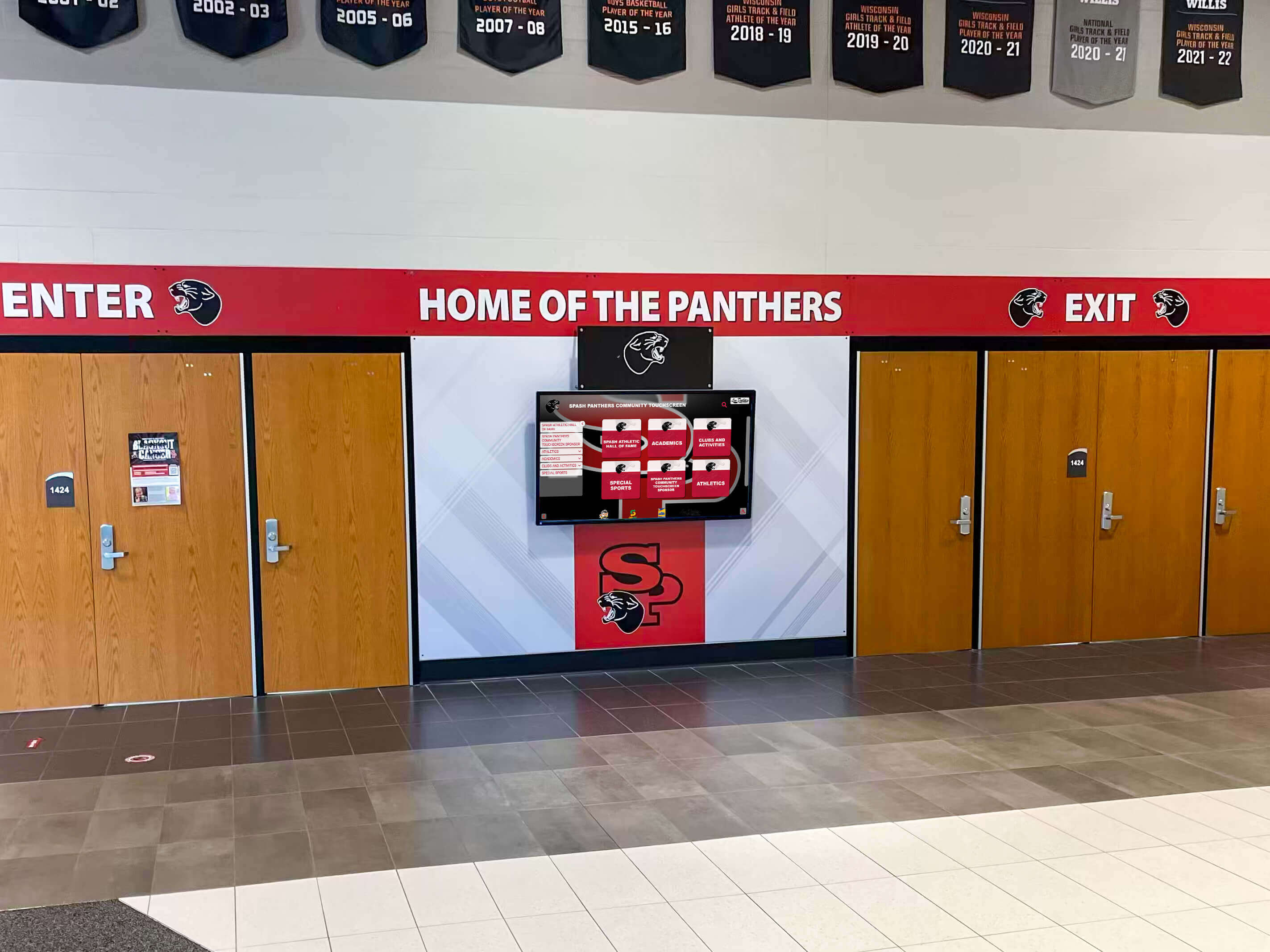
Strategic entrance installations create immediate recognition visibility for all visitors attending games, practices, and school events
Technology Considerations for Booster Club Digital Recognition
Organizations choosing digital recognition should understand technical requirements ensuring successful implementation:
Hardware Selection for Athletic Facilities
Display Specifications
Commercial-grade displays designed for continuous operation in public spaces (not consumer televisions intended for residential use) with appropriate brightness levels for facility lighting conditions (450-700 nits depending on ambient light), responsive touchscreen technology if interactive exploration is desired (capacitive touch preferred over resistive), durable construction suitable for high-traffic athletic facilities, sufficient screen size for viewing distances typical in installation locations (43-55 inches for hallways, 55-75 inches for lobbies and large spaces), and reliable connectivity supporting content updates (hardwired network connections strongly preferred over WiFi for stability).
Installation Considerations
Mounting solutions appropriate for facility construction (wall-mounted, free-standing kiosks, or integrated architectural installations), electrical infrastructure providing adequate dedicated power without overloading existing circuits, network connectivity enabling cloud-based content management, physical security preventing theft or vandalism in accessible locations, and ADA compliance ensuring displays meet accessibility requirements for visitors with disabilities.
Software and Content Management
Essential Platform Capabilities
Cloud-based architecture enabling remote content management from any internet-connected device without requiring on-site access, intuitive interfaces that volunteer administrators can manage without extensive technical expertise, unlimited donor capacity accommodating organizational growth indefinitely, robust search and filtering enabling visitors to discover specific donors easily, privacy controls allowing donor preference management, multimedia support for photos and impact content beyond text-only recognition, mobile-responsive web platforms extending recognition access beyond physical displays, and reliable vendor support ensuring long-term sustainability through technical assistance and platform updates.
Booster-Friendly Features
Platforms designed specifically for educational and athletic contexts understand booster needs better than generic digital signage systems. Look for pre-built templates suitable for athletic programs, integration capabilities with common fundraising databases and spreadsheet formats boosters typically use, documented procedures and training resources supporting volunteer administrators, and pricing models appropriate for modest booster budgets rather than enterprise institutional rates.
Solutions like Rocket Alumni Solutions provide comprehensive platforms specifically designed for athletic recognition—making implementation accessible for volunteer-led organizations without requiring extensive technical infrastructure or specialized expertise.
Creating Recognition That Inspires Future Giving
Beyond honoring existing donors, effective recognition should motivate new contributions from prospective supporters:
Social Proof and Community Modeling
Demonstrating Broad Participation
Recognition showcasing that hundreds of community members support programs creates powerful social proof—validating that giving to athletics represents normal community behavior rather than exceptional activity. Prospective donors touring facilities and seeing comprehensive recognition think “everyone supports this program—I should too” rather than perceiving athletics as marginally supported initiative sustained by few enthusiasts.
Emphasize participation breadth through recognition content—“Over 300 families contributed to support our student-athletes this year” communicates community buy-in more compellingly than listing only dozen major donors regardless of actual total support.
Peer Influence Through Testimonials
When digital recognition includes donor testimonials explaining why families give, what programs mean personally, and impact they’ve witnessed, these peer voices influence prospective supporters more powerfully than organizational messaging. People trust fellow community members’ experiences more than institutional claims.
Feature diverse testimonials representing different sports, contribution levels, and family circumstances—showing that families with varying financial capacities and athletic involvement all find value supporting programs for different reasons.
Impact Documentation That Connects Giving to Outcomes
Showing What Donations Accomplish
Transform abstract fundraising appeals into concrete outcome demonstrations through recognition content documenting exactly what donor support funds—photos of new equipment, video of facility improvements, athlete testimonials about championship travel experiences, scholarship recipient stories, and quantitative data showing program growth enabled by community generosity.
This impact documentation serves dual purposes—honoring existing donors by celebrating their contributions’ tangible results while showing prospective supporters specific transformation their gifts could enable, making giving decisions feel concrete rather than abstract.
Learn about impact communication in athletic digital storytelling guides addressing visual narrative approaches.
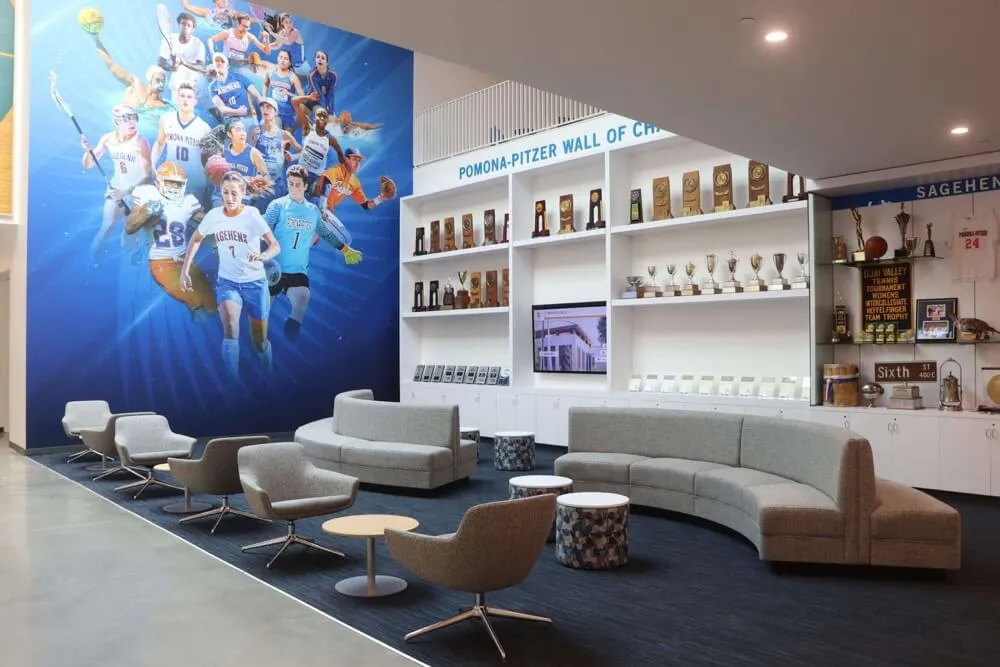
Recognition integrated within athletic spaces creates environments celebrating both competitive achievements and community support enabling program excellence
Conclusion: Building Sustainable Recognition for Athletic Booster Communities
Donor recognition represents strategic investment for athletic boosters—strengthening fundraising cultures where community members feel valued, understand their contributions’ tangible impact on student-athlete opportunities, and commit to sustained support enabling programs to excel. When implemented thoughtfully with genuine commitment to honoring all supporters appropriately, respecting diverse contribution forms from financial gifts to volunteer service, maintaining equity across multiple sports programs, and creating sustainable systems surviving leadership transitions, recognition programs transform one-time donors into lifetime champions whose generosity creates opportunities for generations of student-athletes.
The most successful booster recognition programs share common characteristics regardless of budget level or organizational size: they acknowledge all supporters promptly and respectfully regardless of contribution amount, communicate specific impact showing exactly what community generosity accomplishes for student-athletes, respect diverse recognition preferences from public celebration to complete anonymity, integrate volunteer service acknowledgment alongside financial contributions, maintain equity across multiple sports avoiding perceptions that certain programs matter more than others, choose implementation approaches appropriate for available budgets rather than attempting to replicate solutions designed for substantially larger institutional resources, and plan for sustainability through volunteer-friendly systems and comprehensive succession planning.
Transform Your Booster Club Recognition Program
Discover how digital recognition solutions designed specifically for athletic boosters can help your organization honor supporters comprehensively, inspire continued giving, maintain multi-sport equity, and create sustainable systems that survive leadership transitions—all within budgets appropriate for volunteer-led organizations. Rocket Alumni Solutions provides platforms specifically designed for athletic recognition that volunteer administrators can manage effectively without technical expertise.
Explore Recognition Solutions for Booster ClubsWhether your booster club is implementing first formal recognition program or enhancing established donor acknowledgment systems, remember that authentic gratitude and meaningful community connection matter more than expensive technology or elaborate installations. Start with clear understanding of your donor community’s preferences and motivations, implement recognition approaches demonstrating specific impact rather than perfunctory acknowledgment, create inclusive programs honoring all contribution types and sizes appropriately, choose solutions matching your actual budget capacity rather than aspirational institutional models, plan for volunteer management sustainability through user-friendly systems and succession documentation, and commit to ongoing evolution based on donor feedback, fundraising outcomes, and your growing organizational capacity.
Your donors have chosen to support student-athletes in your community among countless worthy causes competing for charitable resources—they deserve recognition honoring their generosity appropriately while inspiring continued partnership. Strategic investment in thoughtful booster-appropriate donor recognition creates sustainable fundraising where supporters feel genuinely valued, understand exactly what their generosity accomplishes for young athletes, develop emotional connections to programs, and commit to sustained giving that transforms athletic opportunities enabling student success, character development, and lifetime memories for thousands of young people in your community.
Ready to begin your recognition journey? Explore how Rocket Alumni Solutions can help your athletic booster club create meaningful donor recognition programs that honor supporters appropriately, demonstrate measurable appreciation impact, and build sustainable cultures generating reliable community support enabling athletic excellence for generations of student-athletes.