



Schools have documented student life through printed yearbooks for generations, creating treasured keepsakes families preserve for decades. These annual publications capture graduates, teams, clubs, events, and daily moments defining each school year. Traditional yearbooks remain meaningful—but many schools now discover that digital yearbooks extend memory preservation beyond physical books that eventually deteriorate, get lost, or remain accessible only to those who purchased copies years ago.
Digital yearbooks transform how schools preserve, share, and engage with institutional memories. These interactive platforms combine traditional yearbook content with video footage, searchable databases, cloud accessibility, and permanent preservation—creating memory systems that reach every student, alumnus, and family member regardless of whether they bought printed editions years ago. Rather than replacing traditional yearbooks, digital systems complement them by making memories accessible, searchable, and preserved permanently.
This comprehensive guide explores everything schools need to know about digital yearbooks—from understanding core technology and platform options to implementing systems that preserve student memories while engaging communities through interactive touchscreen displays, web access, and multimedia storytelling that traditional printed books cannot match.
Digital yearbooks don’t diminish the value of traditional printed editions families treasure. Instead, they ensure those memories remain accessible decades later, reach students whose families couldn’t afford printed yearbooks, and preserve content in formats that won’t deteriorate with time—strengthening connections between current students, alumni, and institutional history.

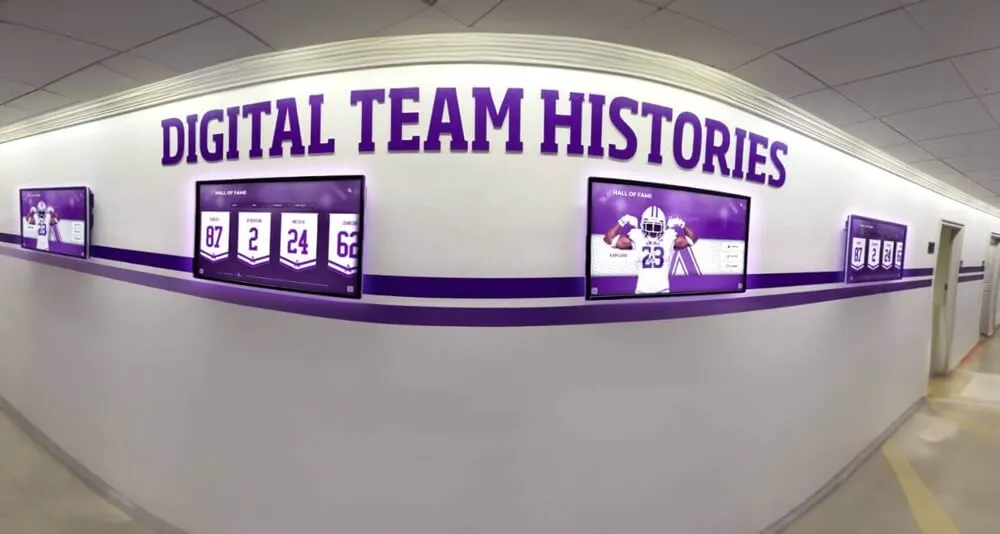
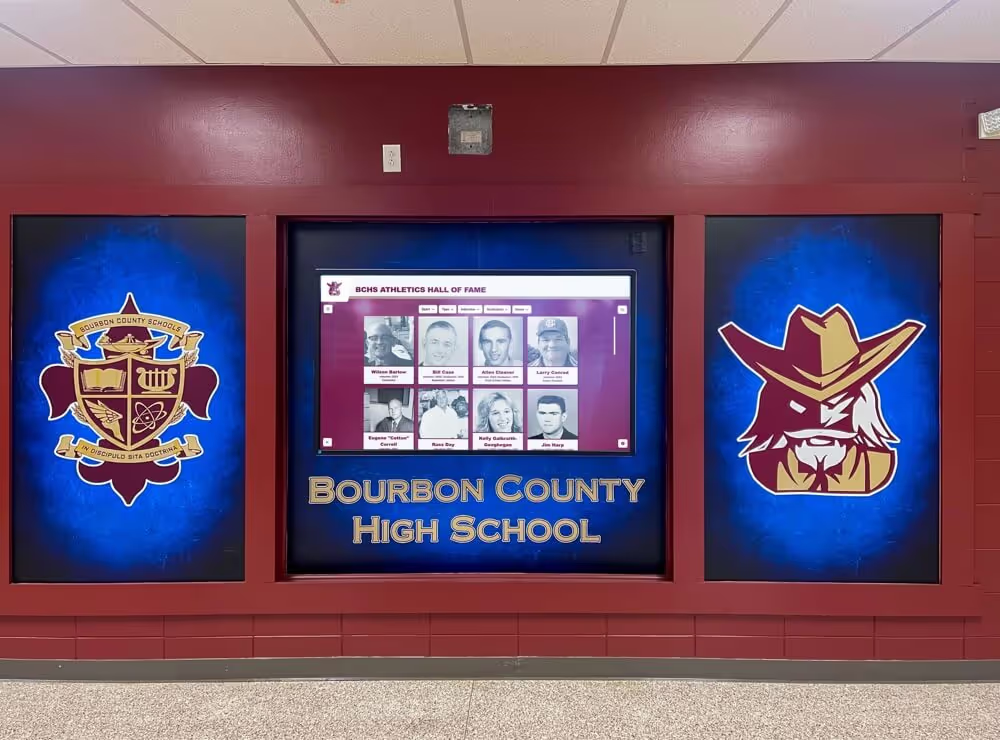
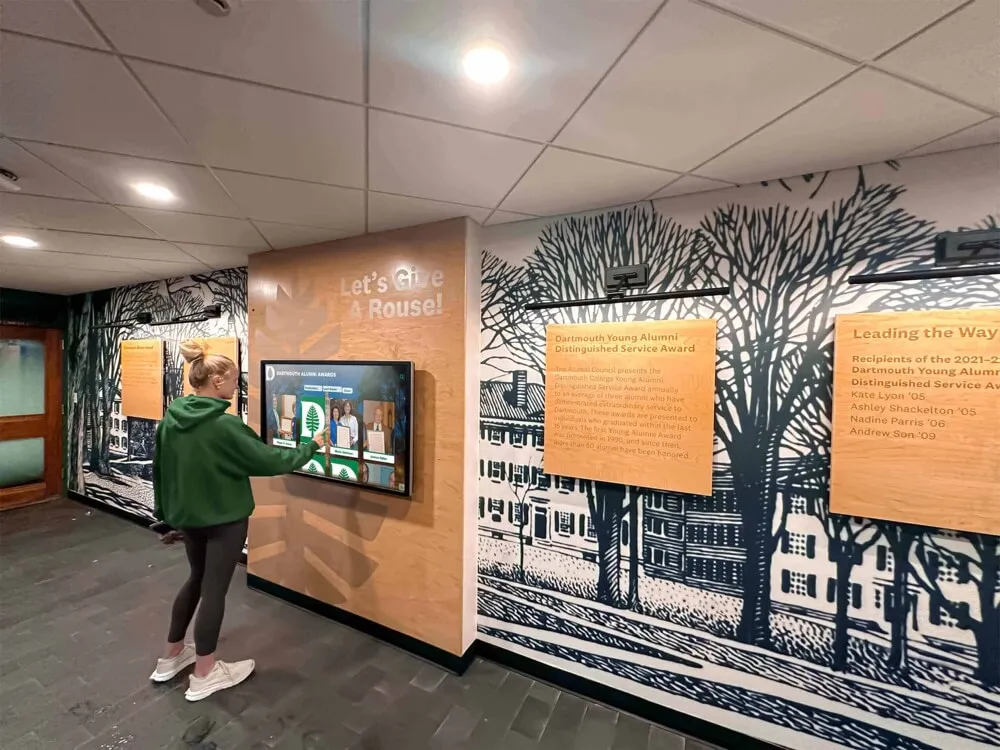
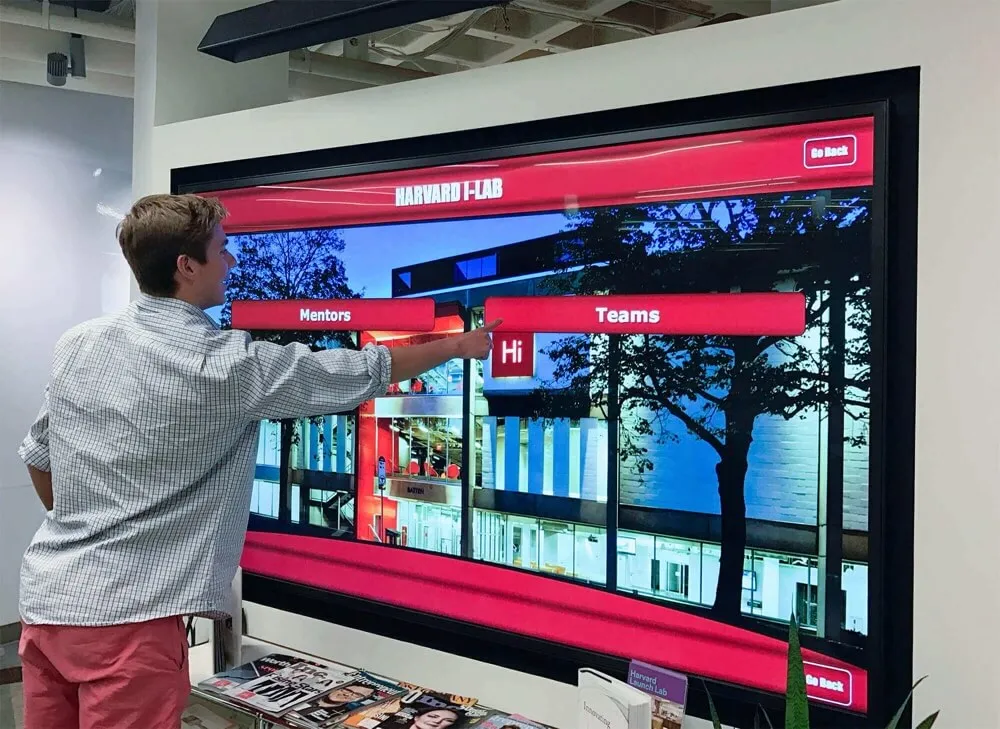
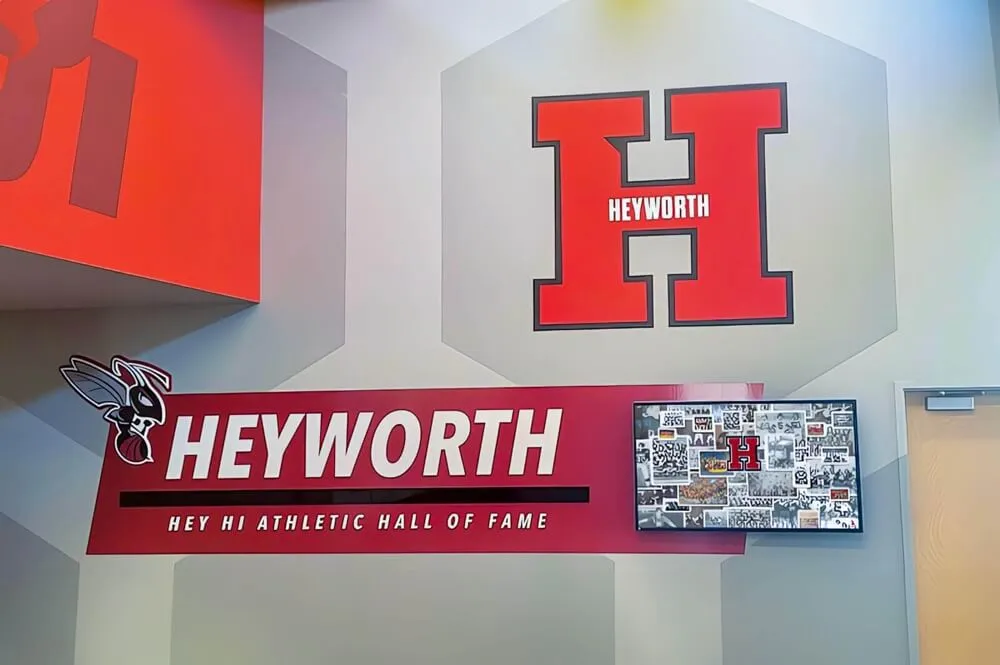
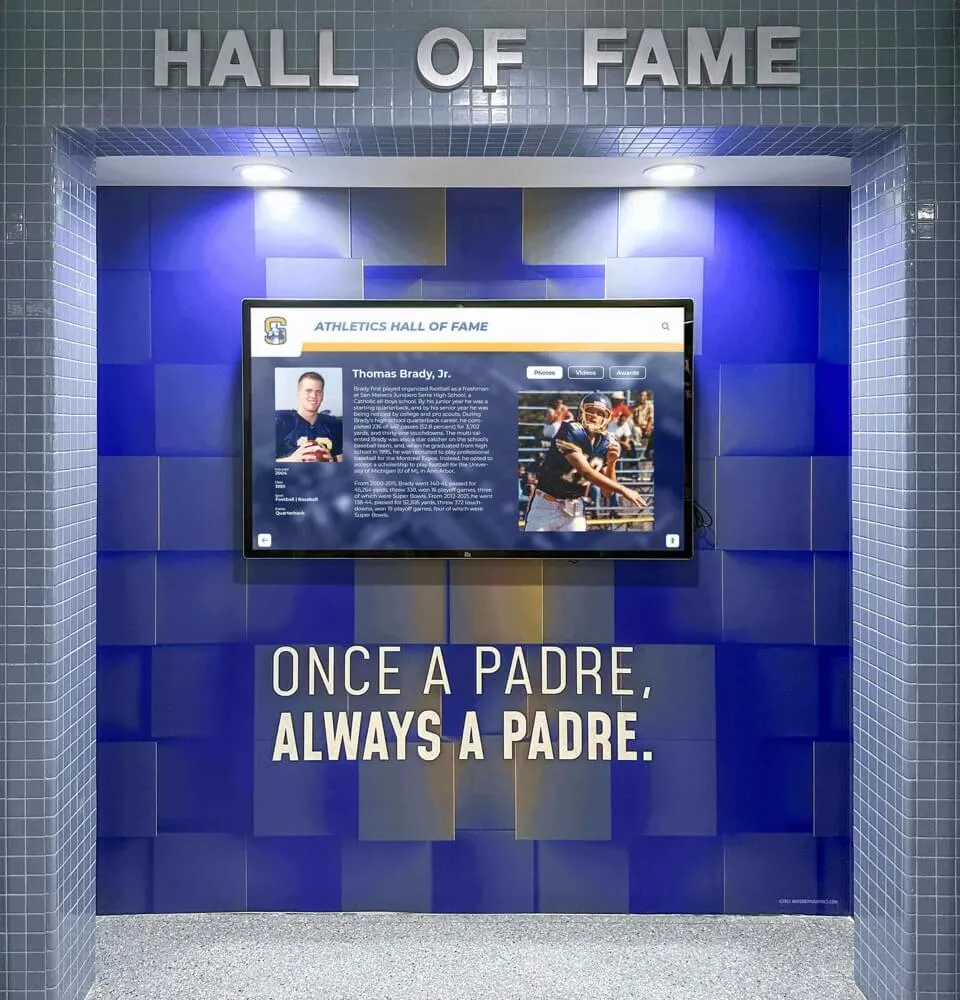
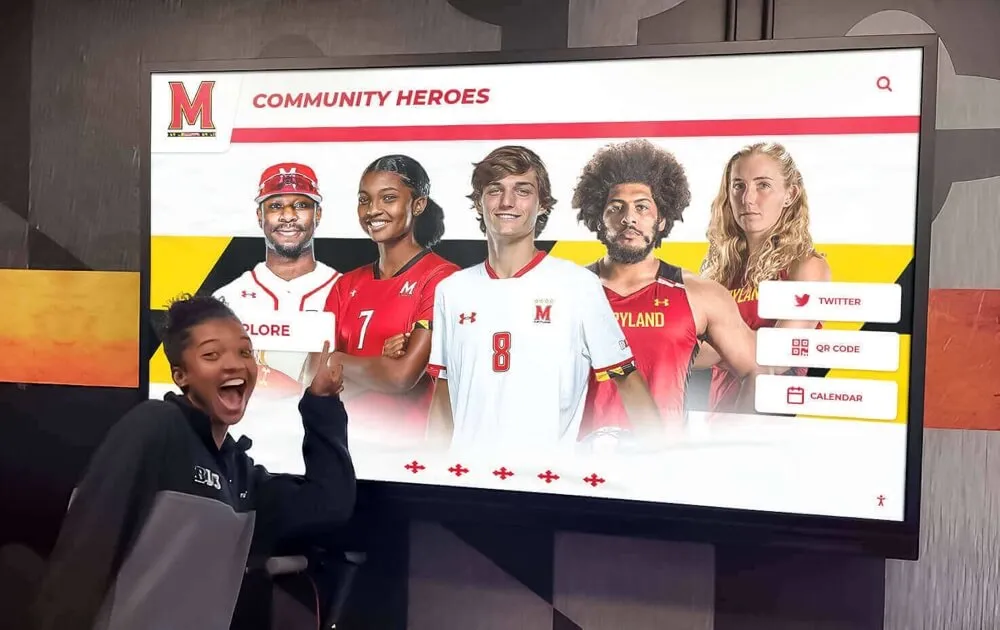
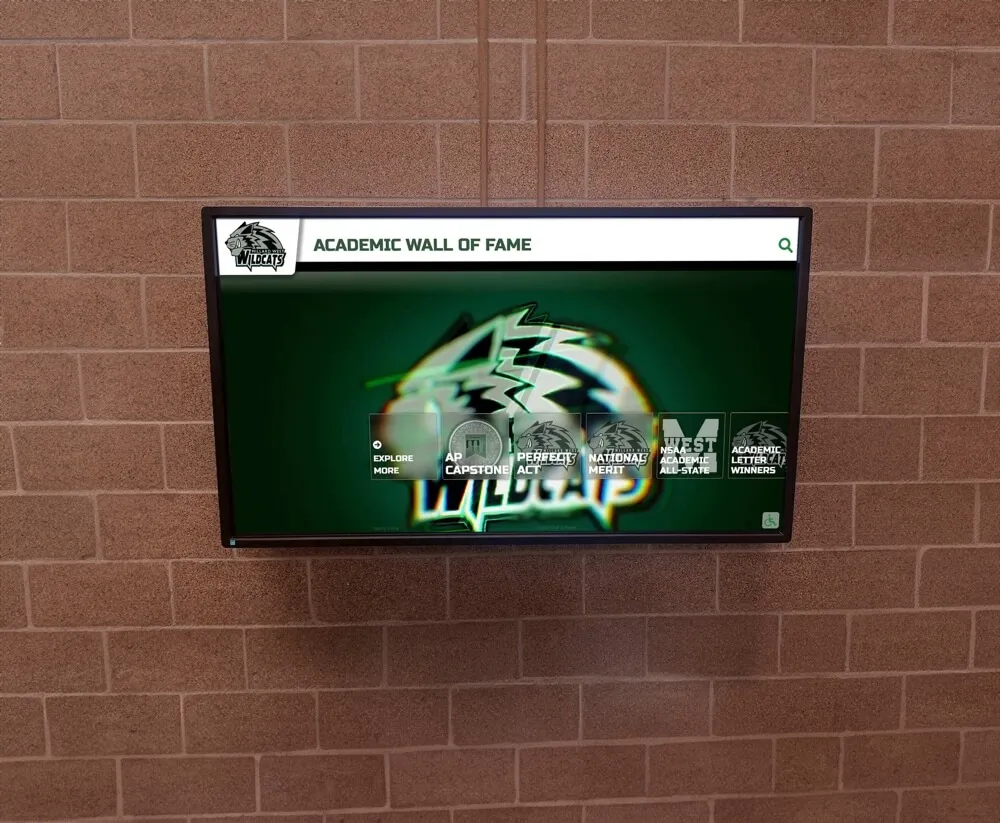
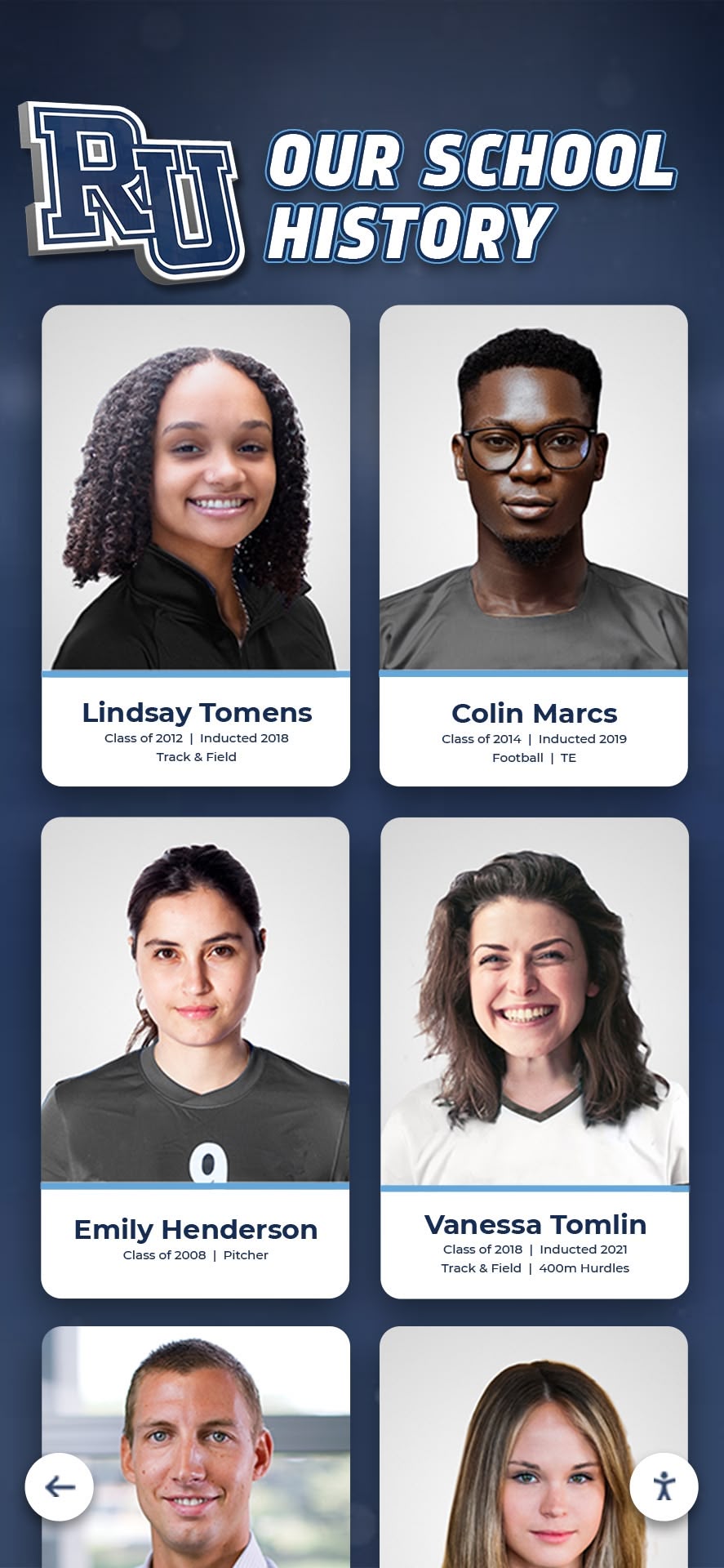
Digital yearbook systems preserve individual student memories while enabling intuitive browsing across decades
Understanding Digital Yearbook Systems
Before exploring implementation strategies, understanding exactly what digital yearbooks are, how they function, and what separates quality systems from basic photo galleries helps schools make informed decisions matching their preservation goals and community needs.
What Are Digital Yearbooks?
A digital yearbook is an interactive platform that preserves school year memories through multimedia content accessible via touchscreen displays, web browsers, and mobile devices. Unlike static PDF versions of printed yearbooks, true digital yearbook systems organize content for easy searching, browsing, sharing, and permanent preservation across generations.
Core Digital Yearbook Components
Complete digital yearbook systems integrate multiple elements:
- Cloud-based content management platform: Secure web-based software storing unlimited photos, videos, and content accessible from any device
- Interactive touchscreen displays: Commercial-grade screens installed in school lobbies enabling community members to explore yearbook content physically on campus
- Web and mobile access portals: Responsive websites allowing students, alumni, and families to browse yearbook memories from anywhere
- Search and discovery tools: Powerful search enabling users to find specific students, events, or years instantly without manual page-flipping
- Multimedia integration: Video footage, audio recordings, and animated content impossible in traditional printed formats
- Social sharing capabilities: Easy distribution across social media platforms extending memory reach beyond school boundaries
- Permanent cloud storage: Professional archiving ensuring memories survive decades without physical deterioration
- Access management systems: Privacy controls and permission settings protecting student information appropriately
This integrated approach transforms simple photo storage into comprehensive memory preservation platforms serving multiple institutional objectives across different audiences and timeframes.
Key Features Distinguishing Quality Digital Yearbook Platforms
Not all digital yearbook systems deliver equal capabilities or preservation quality. Understanding essential features helps schools select solutions that genuinely preserve memories rather than create temporary displays that disappear when technology changes.
1. True Searchability and Discovery
Quality digital yearbooks enable instant discovery:
- Name-based search finding specific students across any year without knowing graduation date
- Event and activity filters locating specific teams, clubs, or ceremonies
- Date range browsing exploring specific eras or decades
- Class year navigation jumping directly to specific graduating classes
- Keyword search finding content mentions across captions and descriptions
- Related content connections suggesting similar photos, events, or time periods
These discovery features transform frustrating manual page-flipping into instant access—particularly valuable when users can’t remember exact years or locations where memories appear.
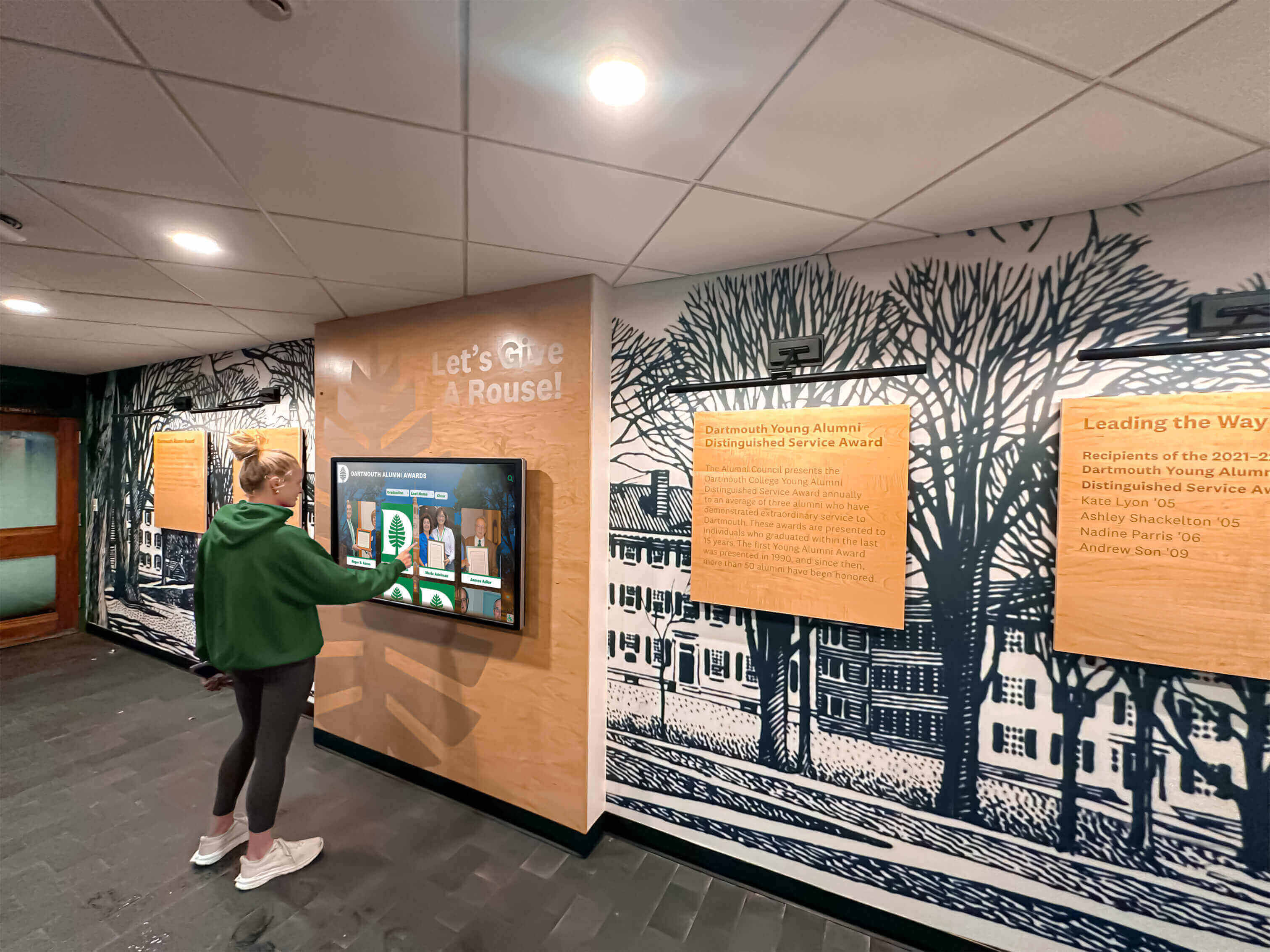
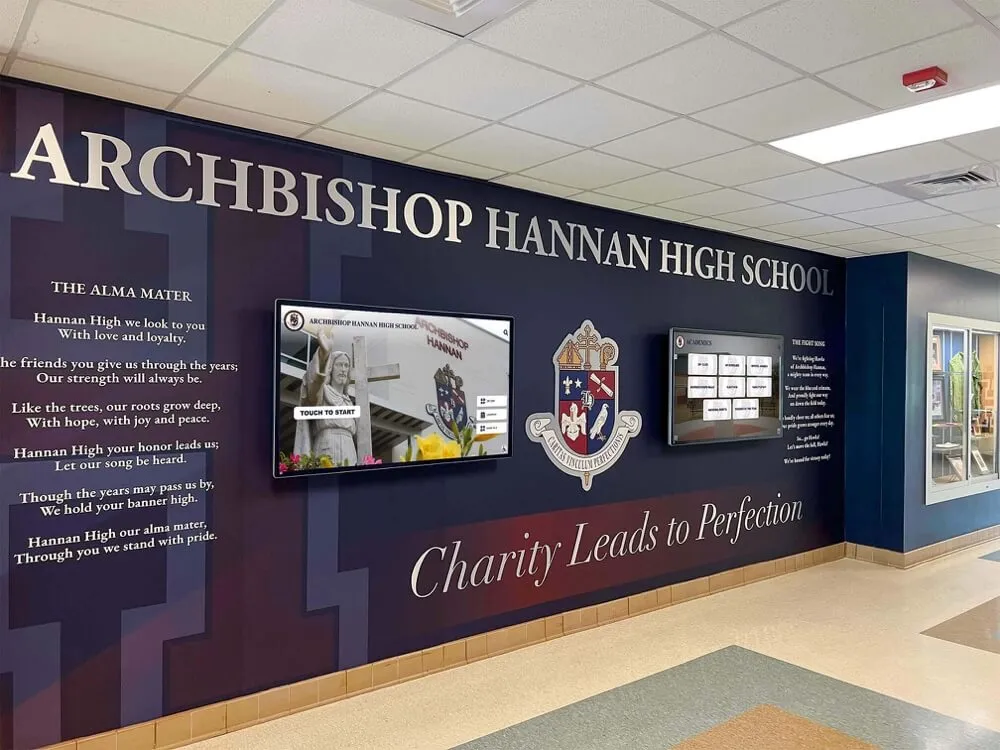
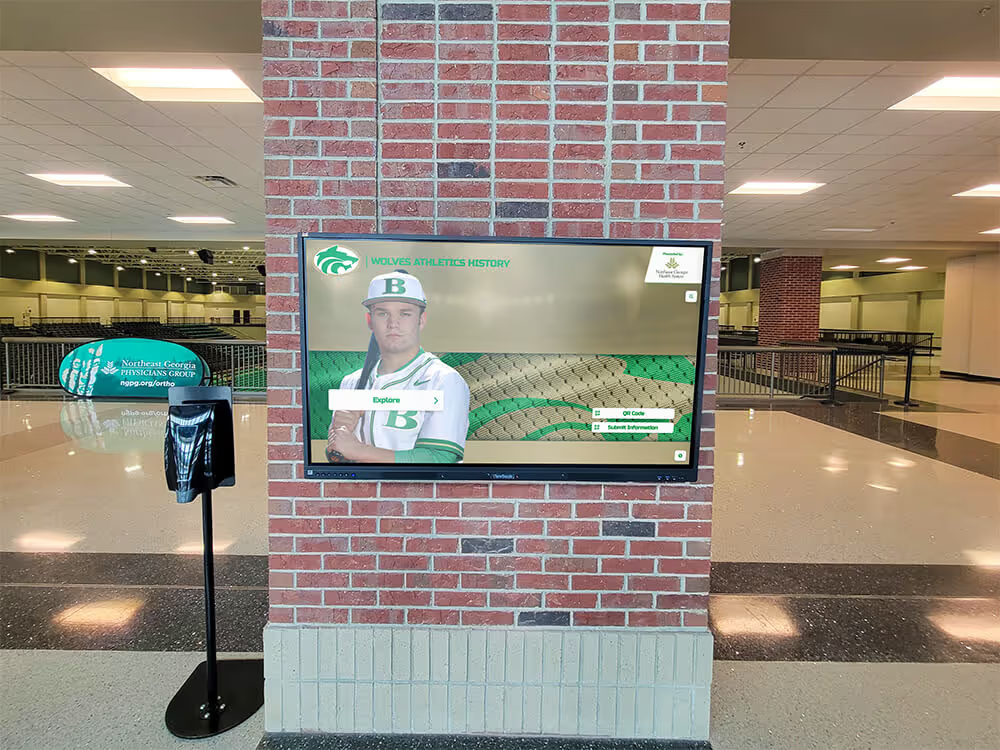
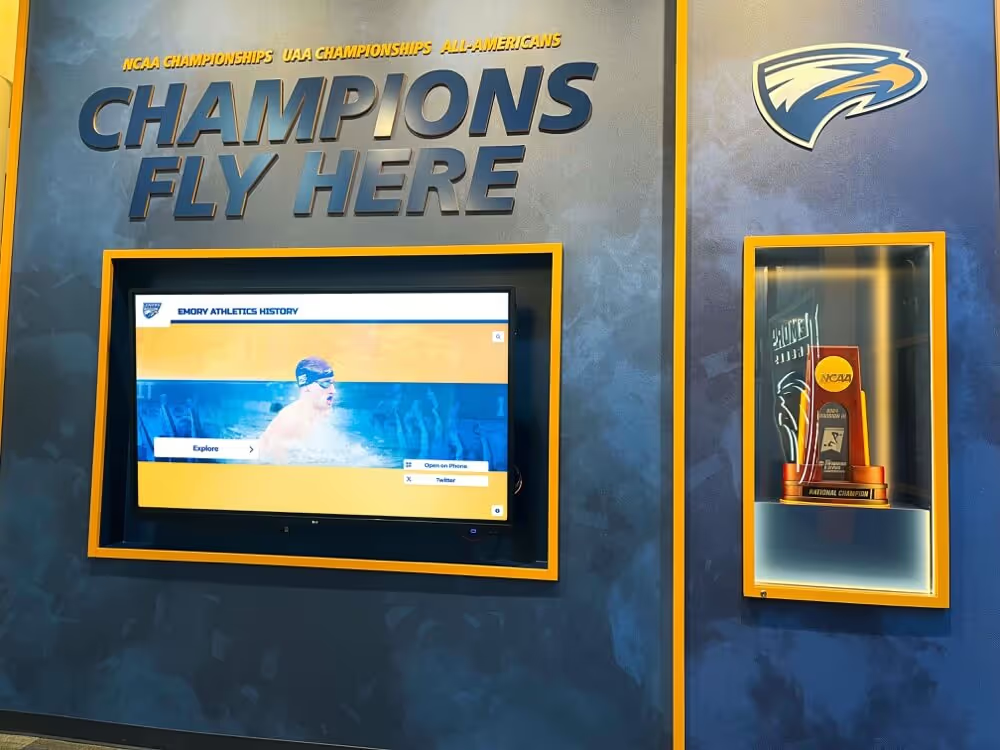
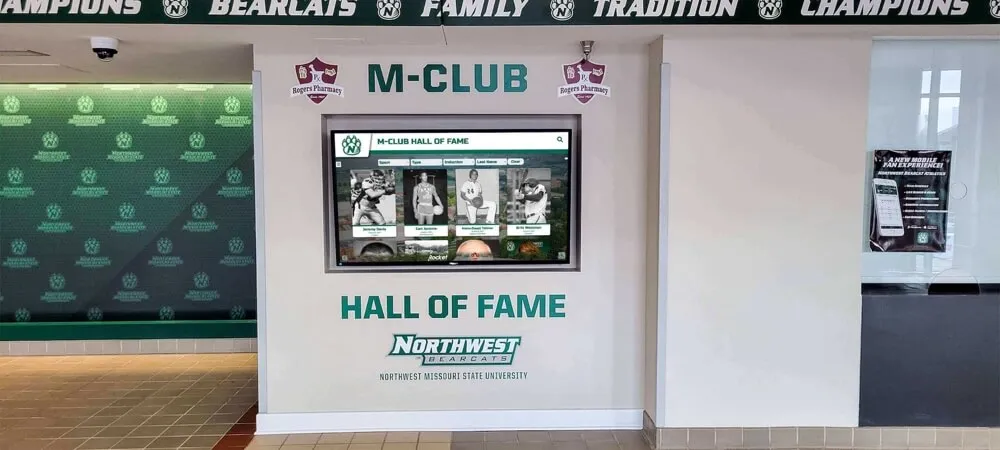
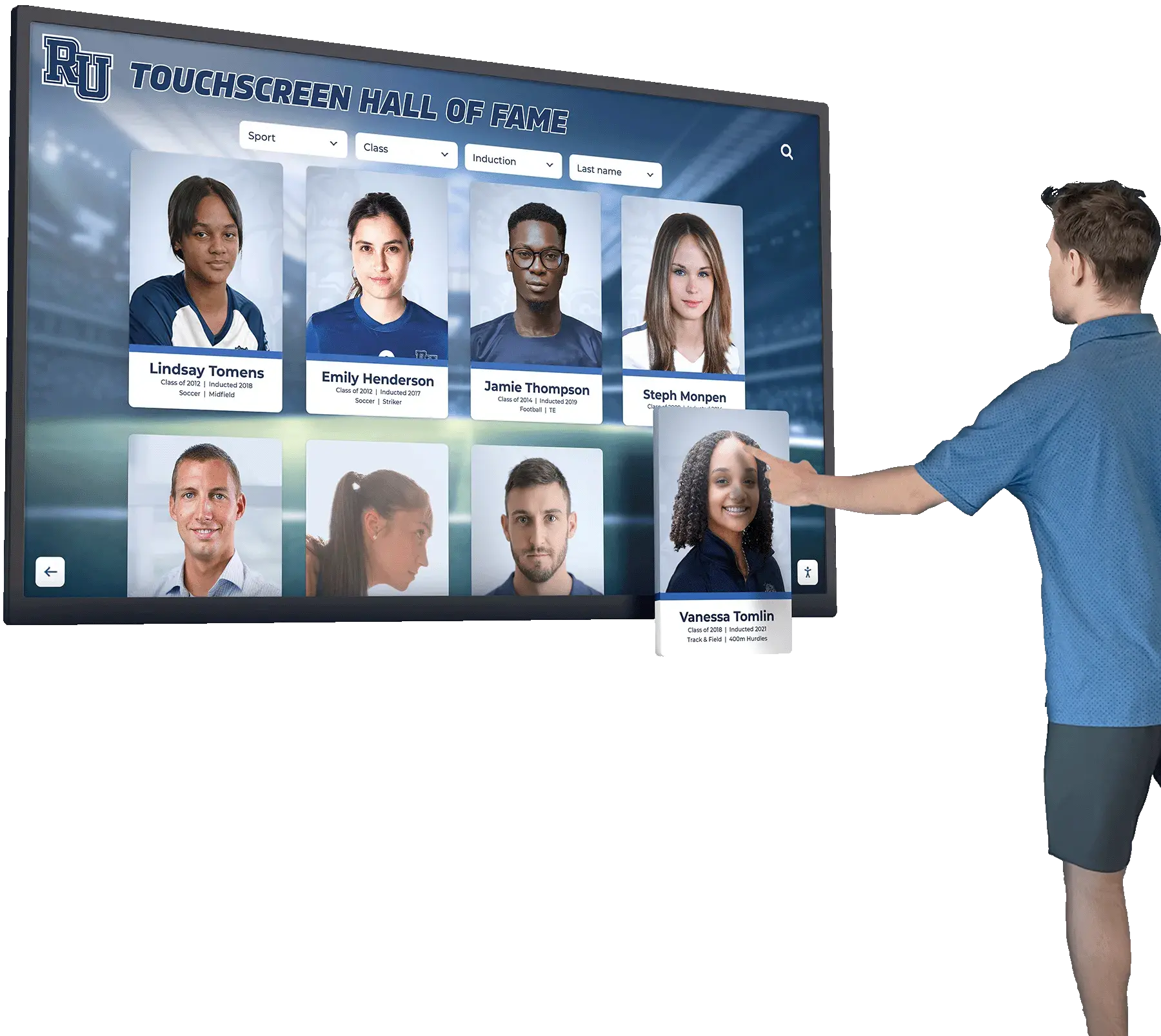
Intuitive touchscreen interfaces enable natural exploration of school history across decades of yearbook content
2. Comprehensive Multimedia Integration
Digital platforms showcase rich content beyond static photos:
- Video highlights from sporting events, performances, and school activities
- Audio recordings of concerts, speeches, and special presentations
- Panoramic photos capturing complete graduation ceremonies or facility views
- Time-lapse sequences showing construction projects or seasonal changes
- 360-degree virtual tours of campuses and facilities
- Digital autographs and messages preserved from graduation events
- Interview recordings with students, teachers, and community members
- Animation and motion graphics enhancing storytelling
This multimedia richness creates engaging experiences that honor memories more comprehensively than printed pages alone while documenting aspects of school life that static photos cannot capture.
Schools exploring comprehensive documentation approaches often discover valuable strategies in digital class composite displays that complement traditional yearbook formats.
3. Permanent Cloud-Based Preservation
Unlike physical yearbooks that deteriorate, digital systems ensure eternal preservation:
- Professional cloud storage with redundant backups preventing loss
- Format migration ensuring accessibility as technology evolves
- Resolution preservation maintaining original photo quality permanently
- Metadata protection preserving captions, names, and context forever
- Disaster recovery systems protecting against fire, flood, or facility damage
- Version control tracking all changes while preserving original content
- Export capabilities enabling migration between platforms if needed
This preservation infrastructure ensures that memories captured today remain accessible to students’ grandchildren decades from now—something physical yearbooks cannot guarantee as pages yellow, bindings break, and books disappear.
4. Universal Web and Mobile Accessibility
Memory access shouldn’t require owning physical books or visiting campus:
- Mobile-responsive websites working perfectly on phones, tablets, and computers
- Social sharing integration enabling easy distribution across platforms
- QR code generation connecting physical displays to web-based content
- Email notification systems announcing new content to community members
- Embeddable widgets placing yearbook content on school websites
- Download capabilities for personal archiving and sharing
- Offline caching ensuring touchscreen displays function during network outages
This extended accessibility ensures every student can access memories regardless of whether their families could afford printed yearbooks—democratizing memory access while reaching alumni worldwide.
Discover accessibility strategies in digital yearbook access systems with comprehensive implementation guidance.
Why Schools Are Adopting Digital Yearbook Systems
Understanding compelling benefits driving digital yearbook adoption helps schools evaluate whether investment aligns with memory preservation priorities, accessibility goals, and community engagement objectives.
Preserving Memories Permanently
Physical yearbooks face inevitable deterioration despite best preservation efforts. Digital systems eliminate degradation while ensuring eternal accessibility.
Overcoming Physical Deterioration
Traditional printed yearbooks suffer predictable damage:
- Paper yellowing and brittleness within 20-30 years
- Photo fading especially with improper storage conditions
- Binding failures causing page separation and loss
- Water damage from floods, leaks, or basement storage
- Fire risk destroying irreplaceable memory documentation
- Physical loss as families move, downsize, or discard belongings
- Limited copies meaning single loss eliminates access forever
Digital platforms eliminate these preservation challenges through professional cloud infrastructure maintaining perfect content quality indefinitely regardless of how many decades pass.
Democratizing Memory Access
Traditional yearbooks create access inequality. Only students whose families purchased yearbooks retain memories. Families facing financial challenges often cannot afford yearbook purchases, leaving students without documentation of their school experiences. Digital systems ensure every student accesses their school memories permanently regardless of family economics—fulfilling schools’ obligation to document all students’ experiences equitably.
Solutions like Rocket Alumni Solutions provide unlimited digital storage enabling schools to preserve complete yearbook content for every student without recurring per-copy costs that make traditional yearbooks financially prohibitive for some families.
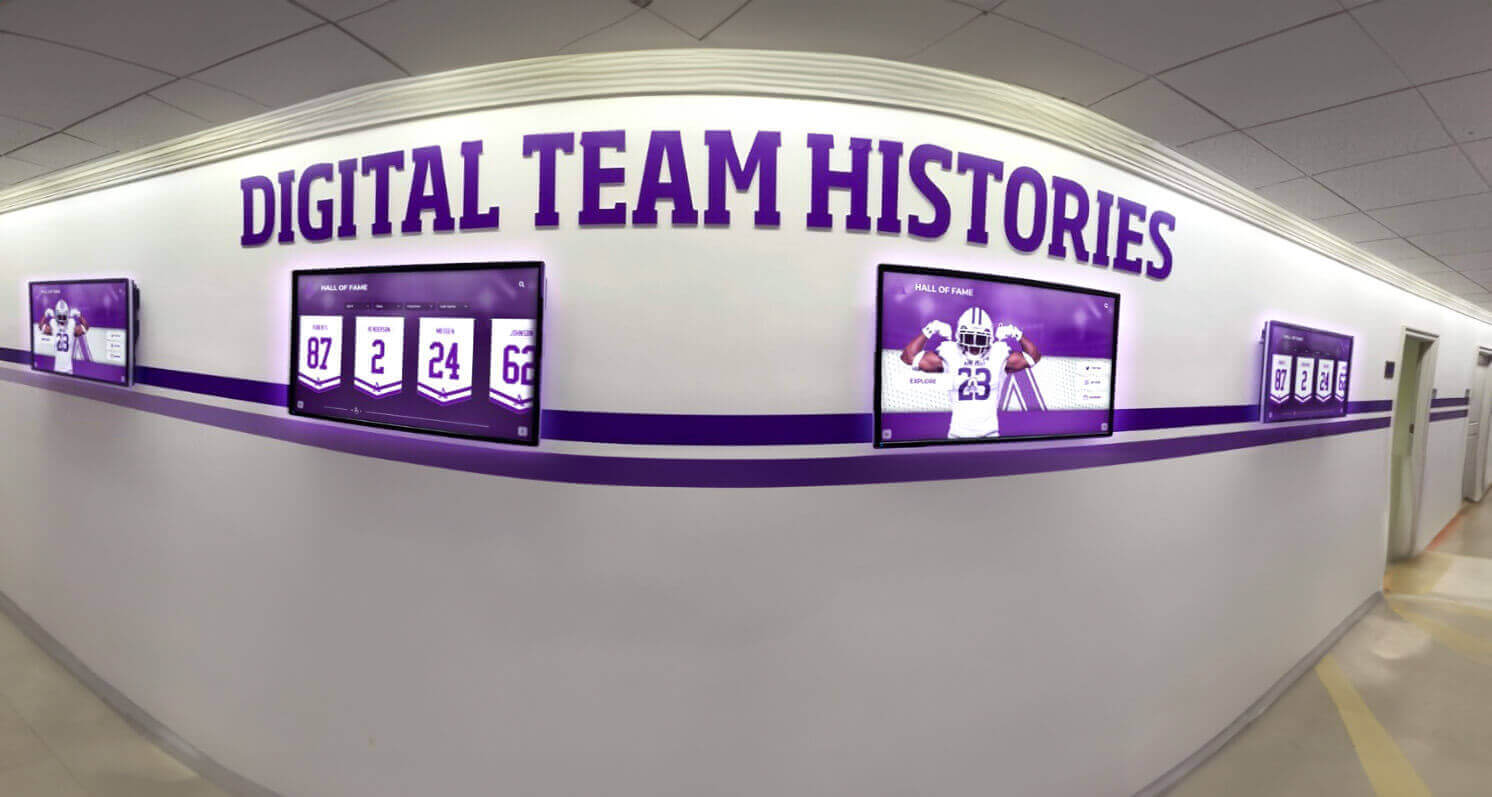
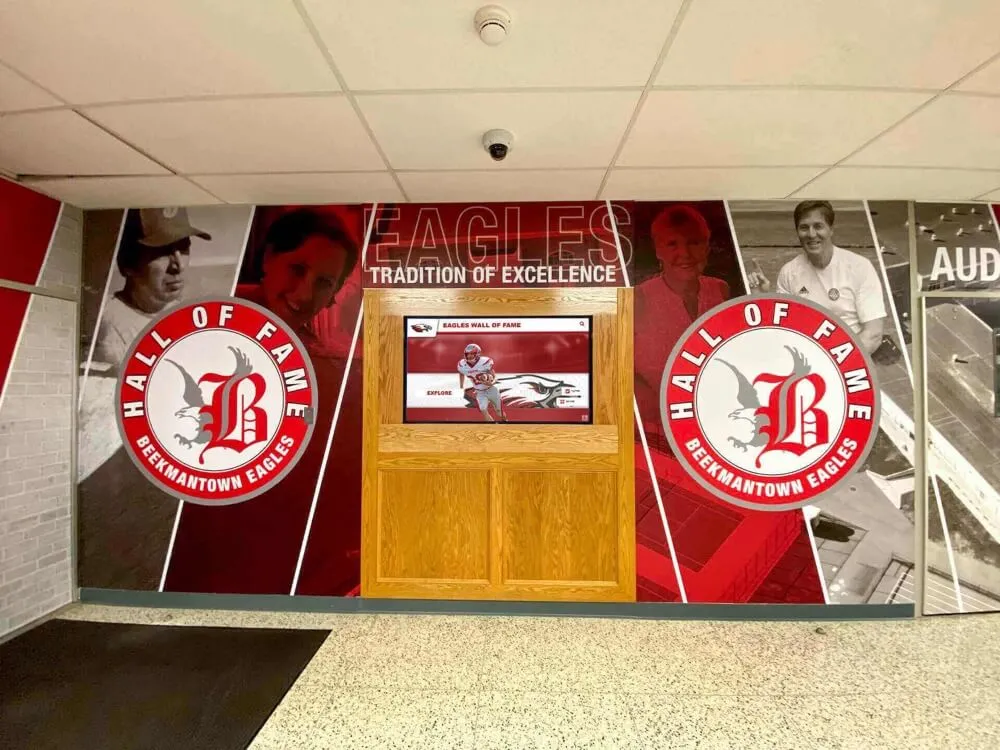
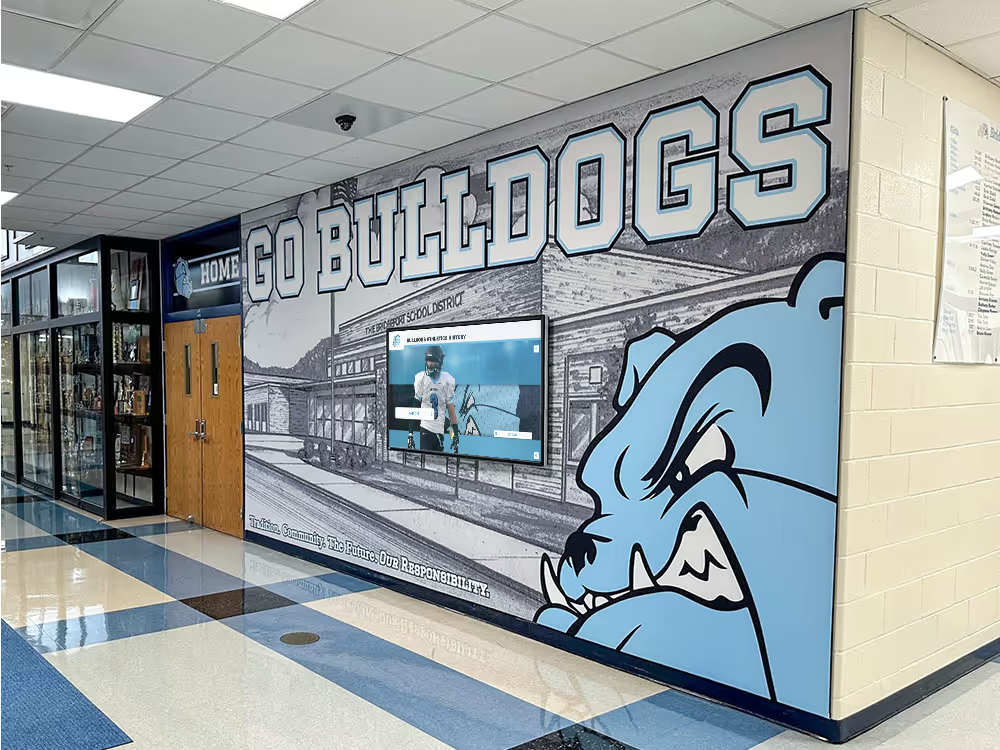
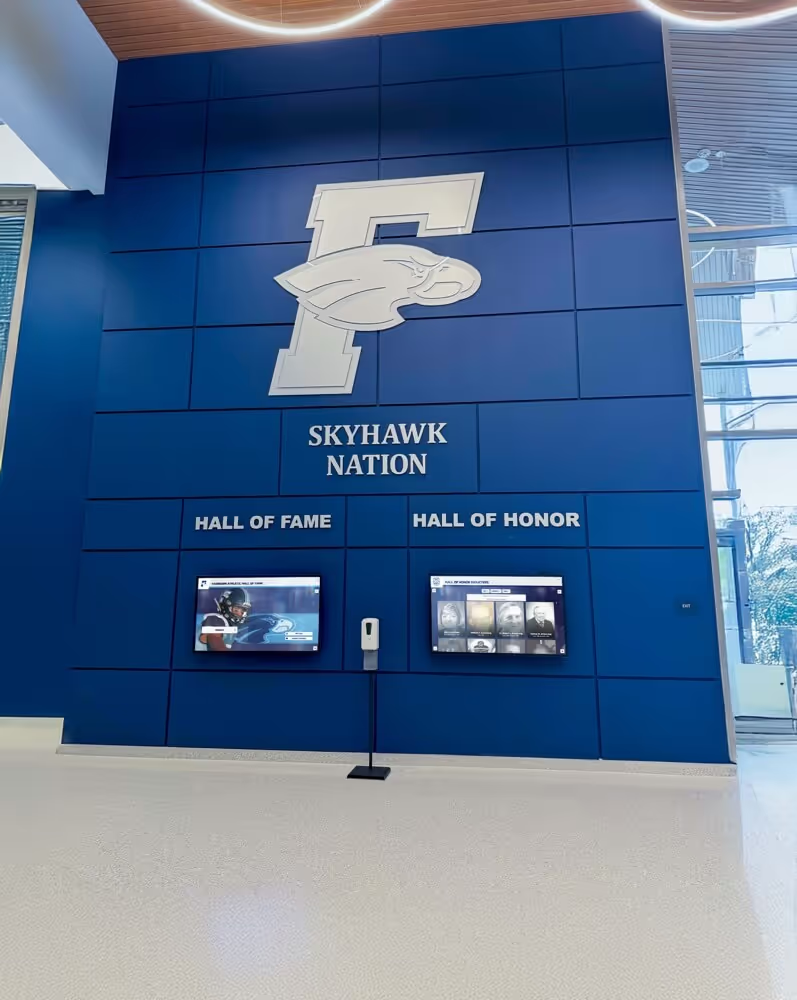
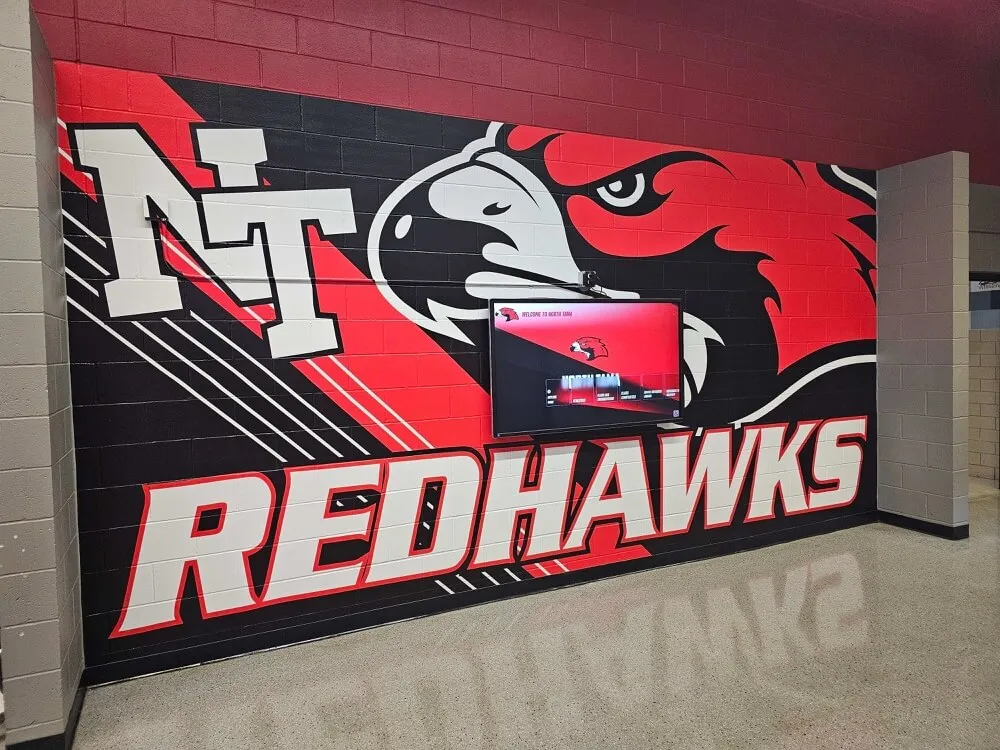
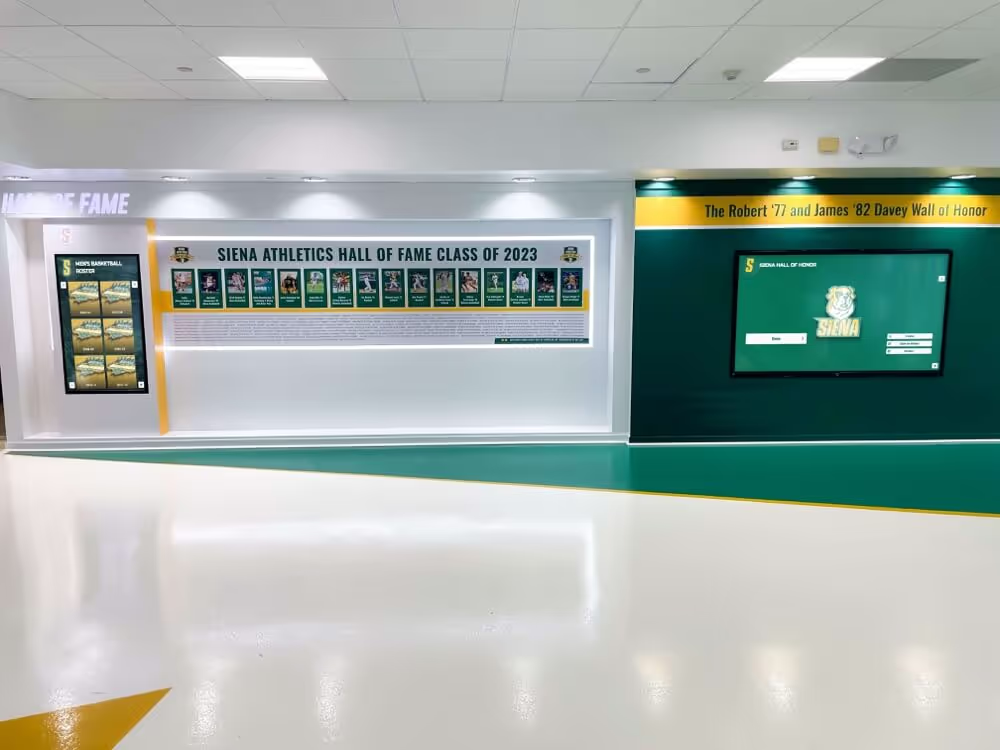
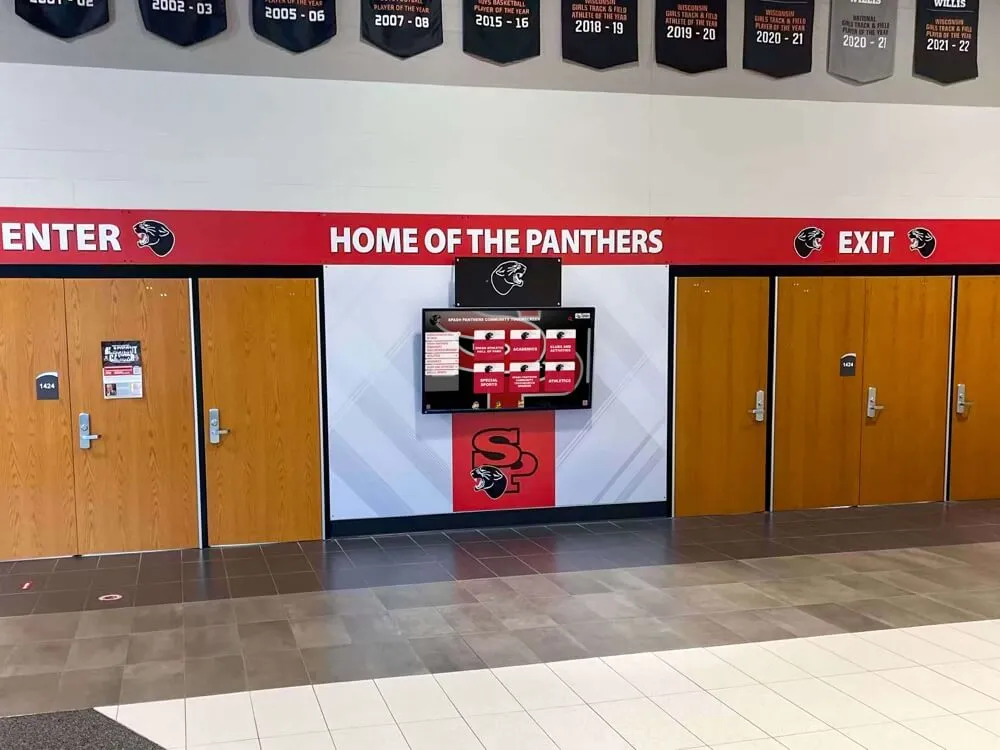
Multiple coordinated displays throughout schools create memory destinations accessible to entire communities
Enhancing Engagement Through Interactivity
Beyond solving preservation problems, digital yearbooks enable memory experiences qualitatively superior to traditional printed books.
Active Exploration vs. Passive Viewing
Printed yearbooks offer linear page-by-page browsing. Digital platforms enable active exploration through:
- Search-driven discovery finding specific memories instantly
- Filter-based browsing by sport, club, event type, or time period
- Random suggestion features encouraging serendipitous discovery
- Comparison tools showing how individuals, teams, or facilities evolved
- Timeline visualizations contextualizing memories within school history
- Related content connections revealing unexpected relationships
This interactivity creates engagement levels impossible with traditional yearbooks where users can only view whatever appears on current pages.
Measurable Engagement Increases
Schools implementing digital yearbook displays consistently report dramatic engagement improvements:
- Visitors spending 10-20 minutes exploring digital content versus 2-3 minutes glancing at printed yearbooks
- Alumni visiting campus specifically to explore digital memory systems
- Social sharing extending memory reach far beyond those who attended school
- Return visits as users explore different sections across multiple sessions
- Analytics revealing peak usage times and most popular content
- Family engagement as relatives unable to attend school explore student experiences
These measurable outcomes demonstrate digital systems deliver genuine value beyond simply digitizing existing content—they transform how communities engage with institutional memory.
Explore engagement approaches in digital photo galleries for school events demonstrating multimedia strategies.
Real-Time Updates and Ongoing Documentation
Traditional yearbooks document only content finalized before spring publication deadlines. Digital systems enable continuous memory creation throughout school years and beyond.
Living Memory Systems
Cloud-based platforms transform static archives into evolving memory systems:
- Add photos from events immediately after they occur
- Document every activity rather than only featured highlights
- Include content that arrived after yearbook printing deadlines
- Expand coverage across entire school years not just fall through spring
- Update alumni information as graduates share post-graduation achievements
- Correct errors or add missing information discovered after publication
This continuous documentation creates more comprehensive memory records than traditional yearbooks constrained by printing deadlines and page limits.
Post-Publication Enhancement
Schools can enhance digital yearbooks indefinitely:
- Add reunion photos reconnecting classmates decades later
- Include career updates from notable alumni
- Supplement historical content with newly discovered photos
- Incorporate oral history interviews with faculty and graduates
- Link related content across multiple years creating narrative threads
- Enhance captions with additional context improving understanding
These ongoing improvements make digital yearbooks living archives growing richer over time rather than static snapshots frozen at publication.
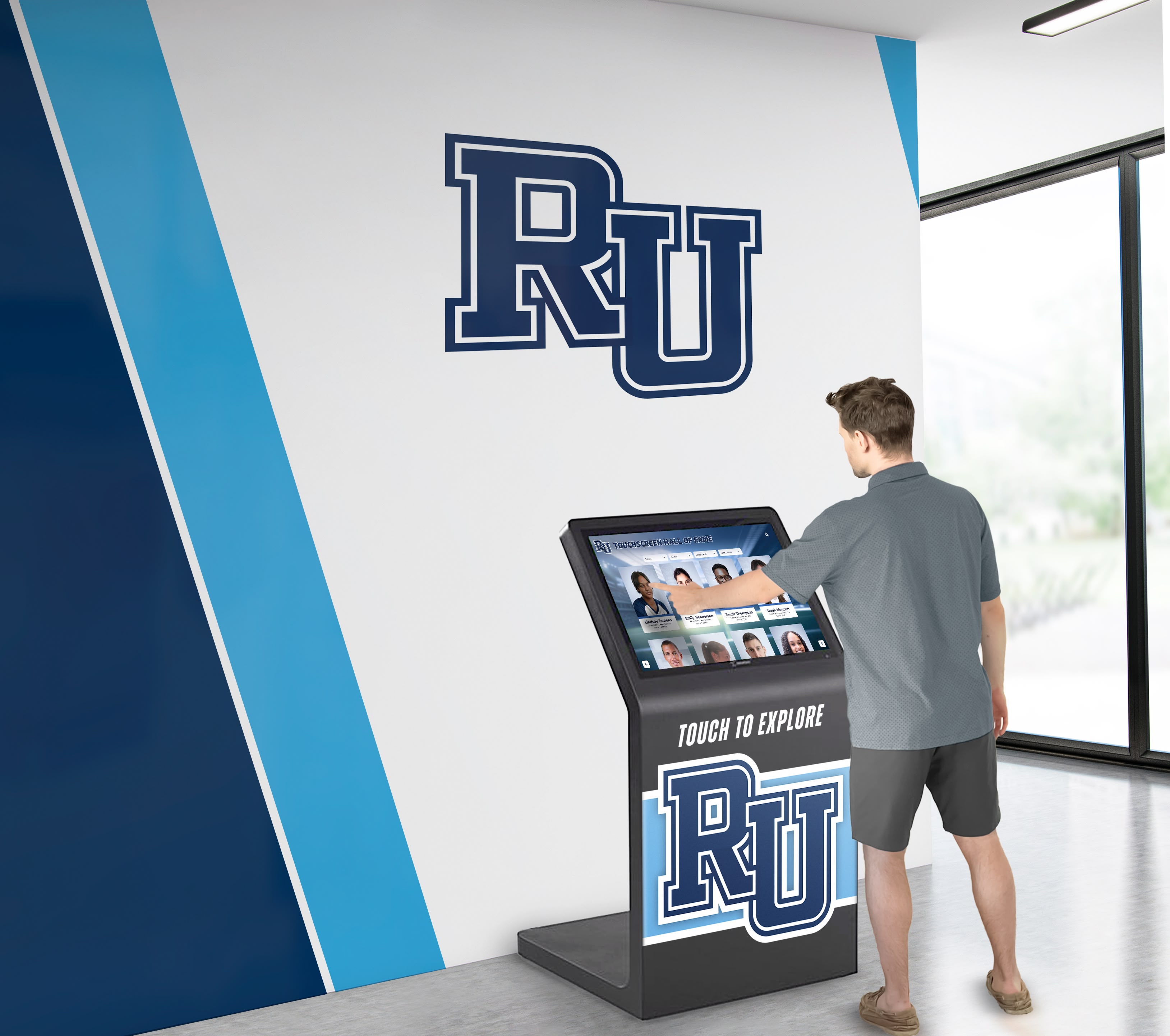
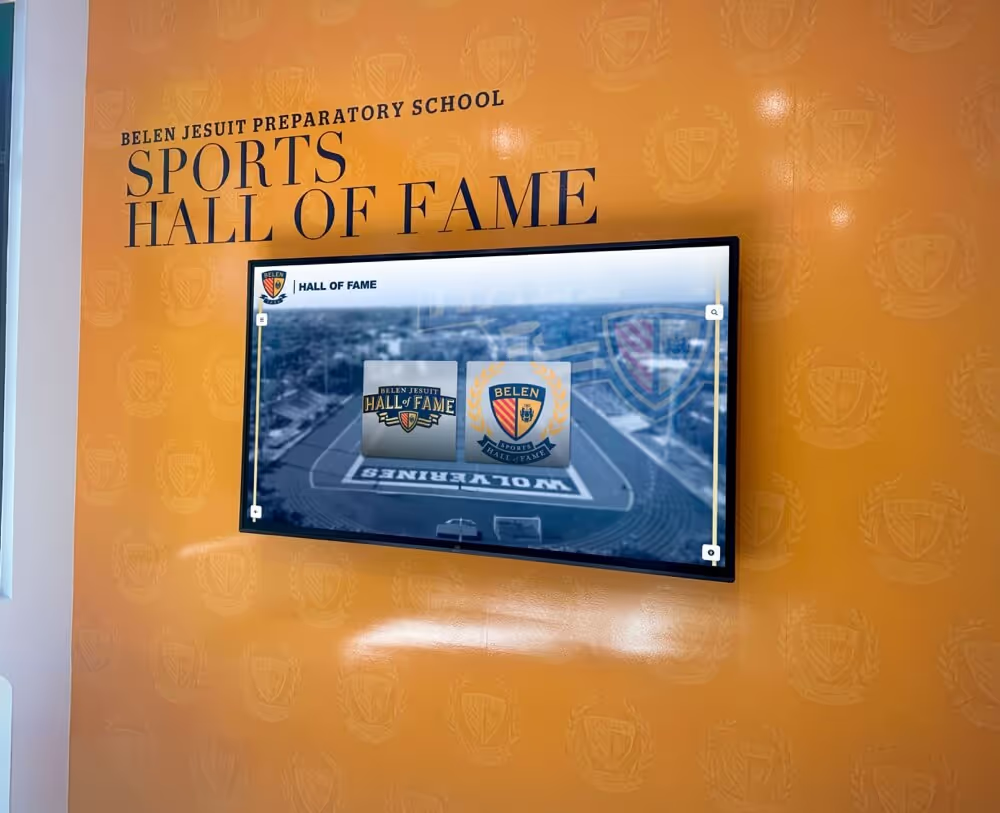
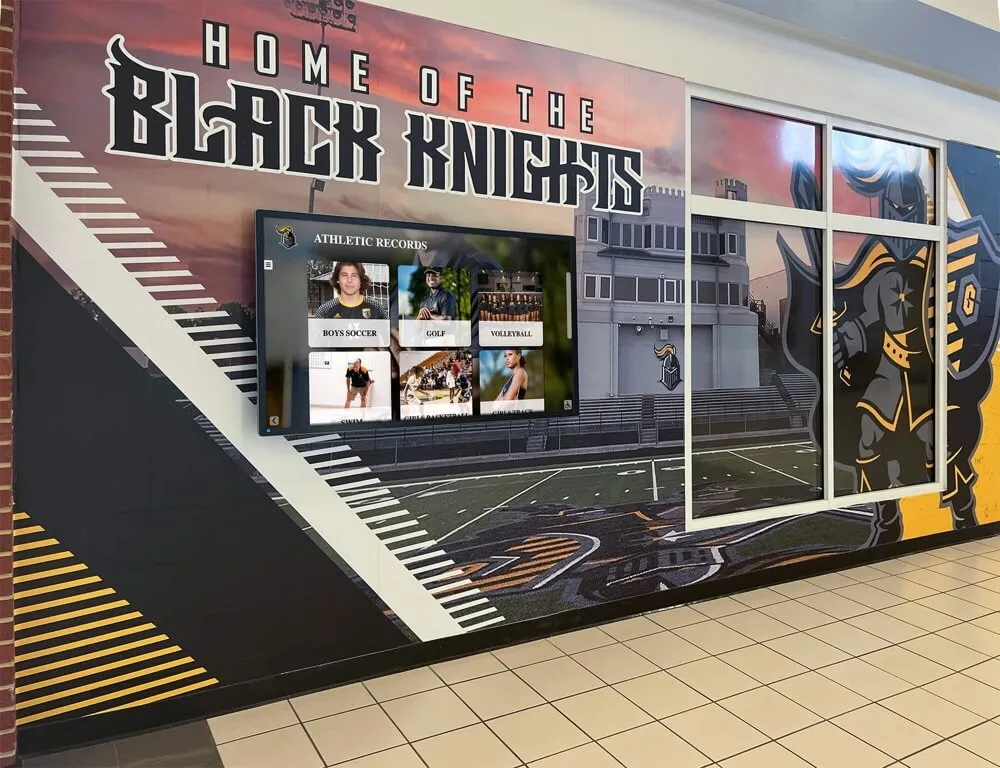
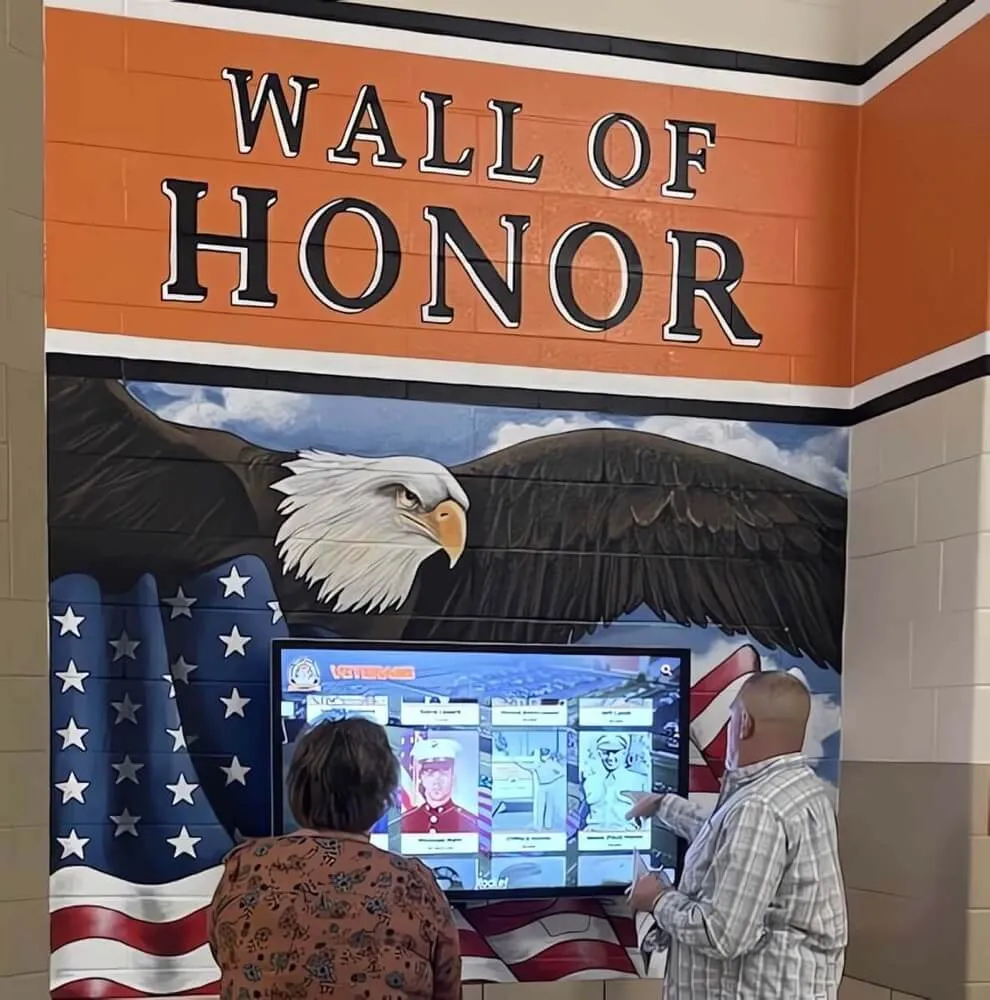
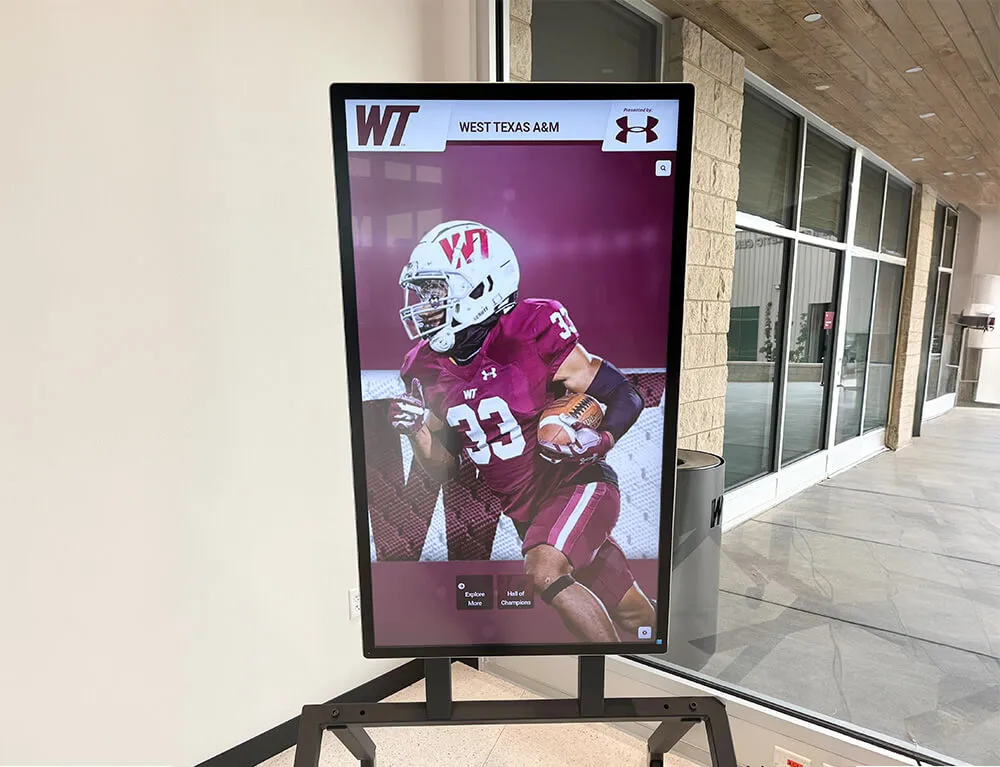
Freestanding kiosks create dedicated memory exploration destinations in high-traffic school lobbies
Cost-Effectiveness and Sustainability
While digital yearbooks require initial investment, total cost of ownership often compares favorably to traditional printed yearbooks when evaluated over realistic timeframes.
Eliminating Recurring Production Costs
Traditional printed yearbooks create perpetual expenses:
- Printing costs of $30-80 per book depending on quality and page count
- Photography expenses for professional photo shoots and event coverage
- Design and layout labor whether outsourced or completed by staff
- Shipping and distribution logistics
- Unsold inventory representing lost investment
- Storage space for archive copies and unsold books
Digital systems replace these recurring annual expenses with predictable subscription fees while dramatically reducing staff time requirements. Schools report cost neutrality or savings within 2-4 years while simultaneously improving memory accessibility and preservation.
Environmental Sustainability
Digital yearbooks eliminate environmental impacts of traditional printing:
- No paper consumption reducing forest resource demands
- No printing chemicals or processes requiring disposal
- No physical shipping reducing carbon emissions
- No eventual disposal when yearbooks deteriorate or are discarded
These sustainability benefits align with institutional environmental commitments while reducing operational costs simultaneously.
Scalability Without Proportional Cost Increases
Adding content to digital yearbooks costs nothing beyond initial storage capacity, enabling comprehensive documentation of every student, event, and activity without financial constraints that force difficult prioritization in traditional printed yearbooks with fixed page counts.
Explore cost considerations in school history preservation systems with total ownership comparisons.
Planning Digital Yearbook Implementation
Successful digital yearbook implementation requires systematic planning addressing multiple interconnected considerations from goal-setting through launch and ongoing management.
Defining Objectives and Success Criteria
Clear objectives guide decisions when tradeoffs become necessary during implementation.
Memory Preservation Goals
Consider what you hope to accomplish:
- Which student experiences currently lack adequate documentation?
- What content gets excluded from traditional yearbooks due to space constraints?
- How might digital systems better serve students whose families cannot afford printed yearbooks?
- What historical content risks loss without systematic digital preservation?
- How can digital yearbooks strengthen connections between current students and alumni?
Accessibility Objectives
Define how memory systems should extend reach:
- Which constituencies currently lack yearbook access requiring intervention?
- How should digital systems serve alumni who lost or never purchased yearbooks?
- What role might accessible memories play in alumni engagement and giving?
- How can digital yearbooks support prospective student recruitment?
- What capabilities enable families experiencing memories students have at school?
Measurable Success Indicators
Establish concrete metrics enabling assessment:
- Touchscreen display interaction frequency and session duration targets
- Web platform traffic goals and unique visitor counts
- Social sharing and organic promotion objectives
- User satisfaction survey benchmarks from students, alumni, and families
- Content coverage improvements documenting more students and activities
- Cost savings compared to traditional yearbook production
These defined objectives enable focused implementations delivering maximum value for specific institutional priorities rather than generic approaches meeting no particular needs well.
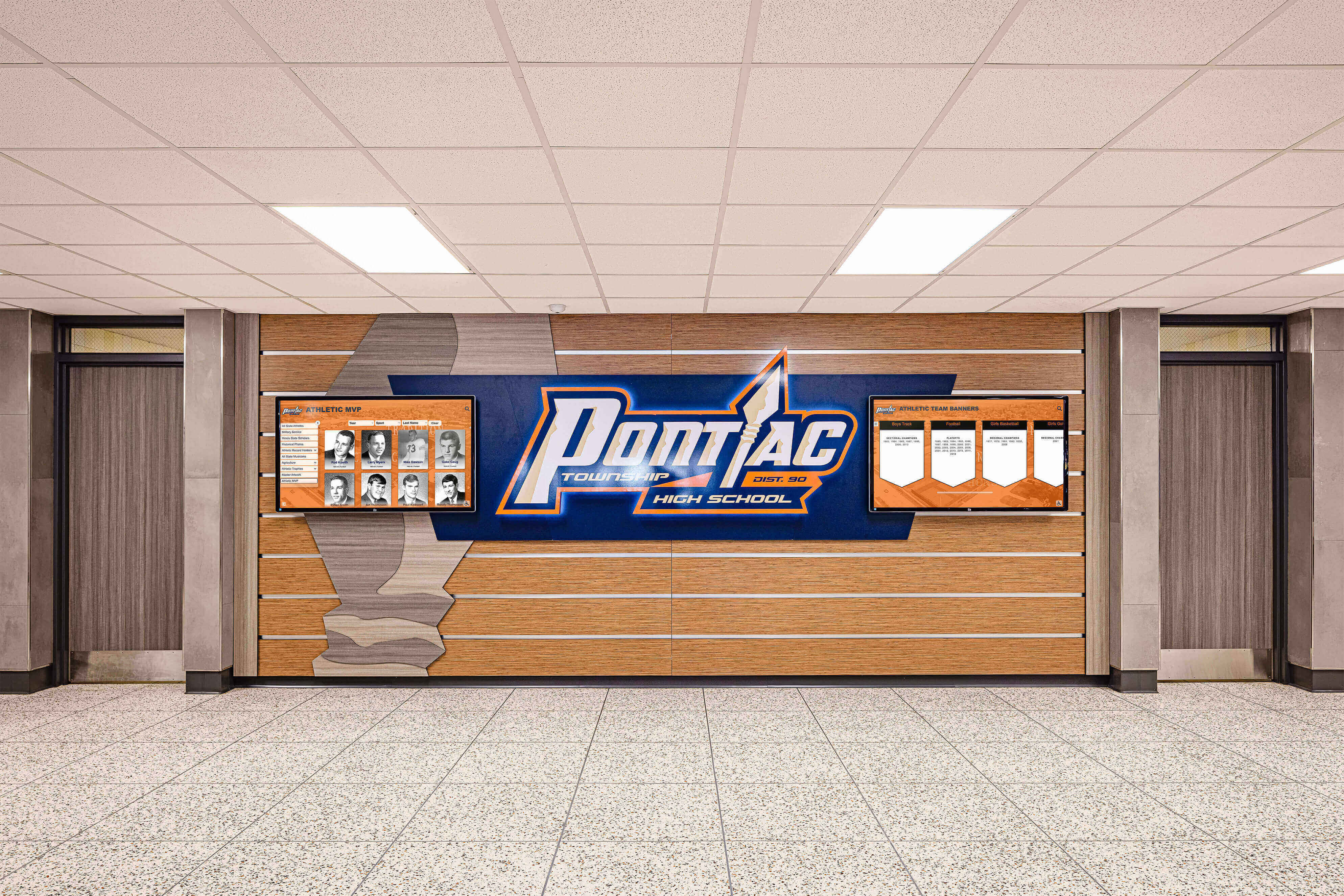
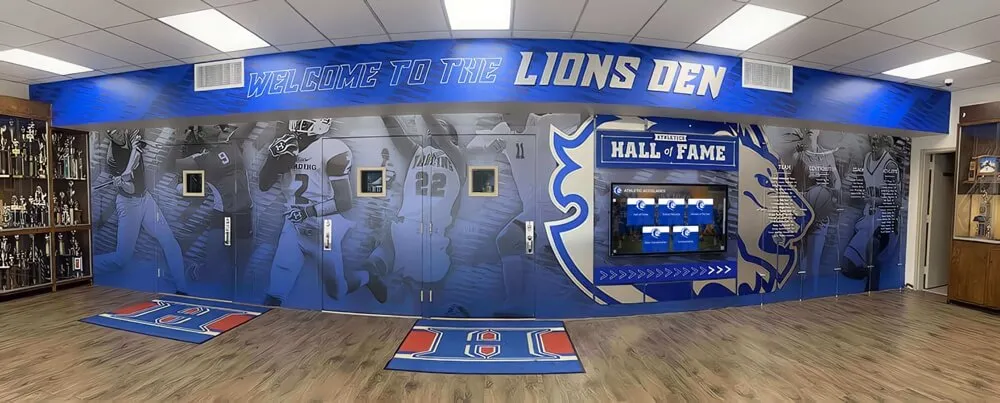
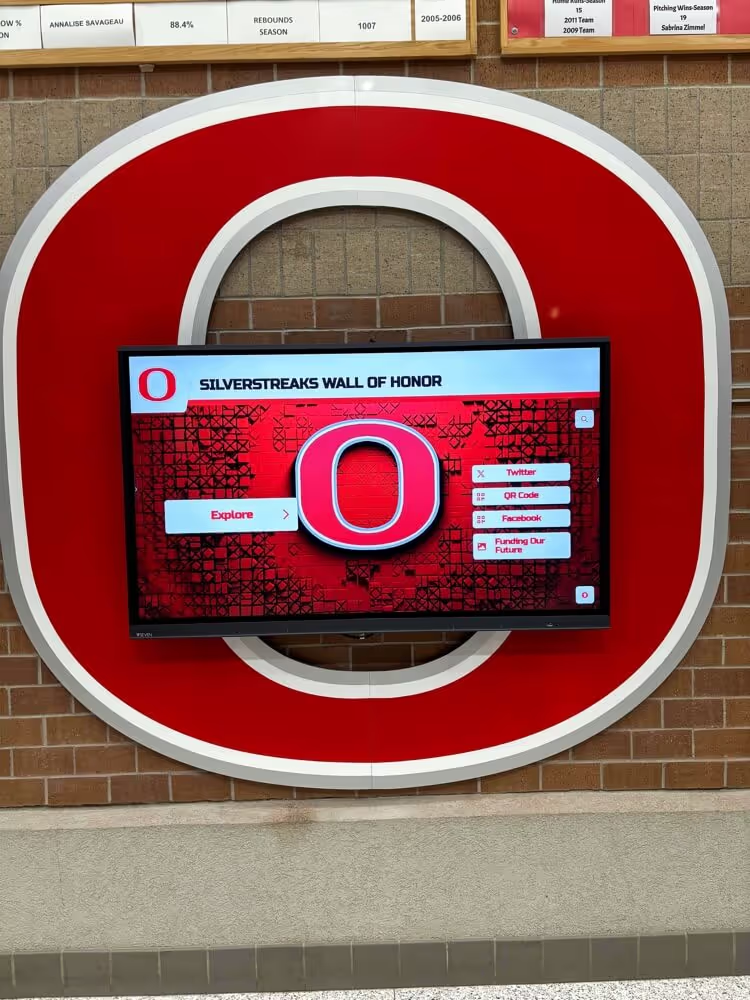
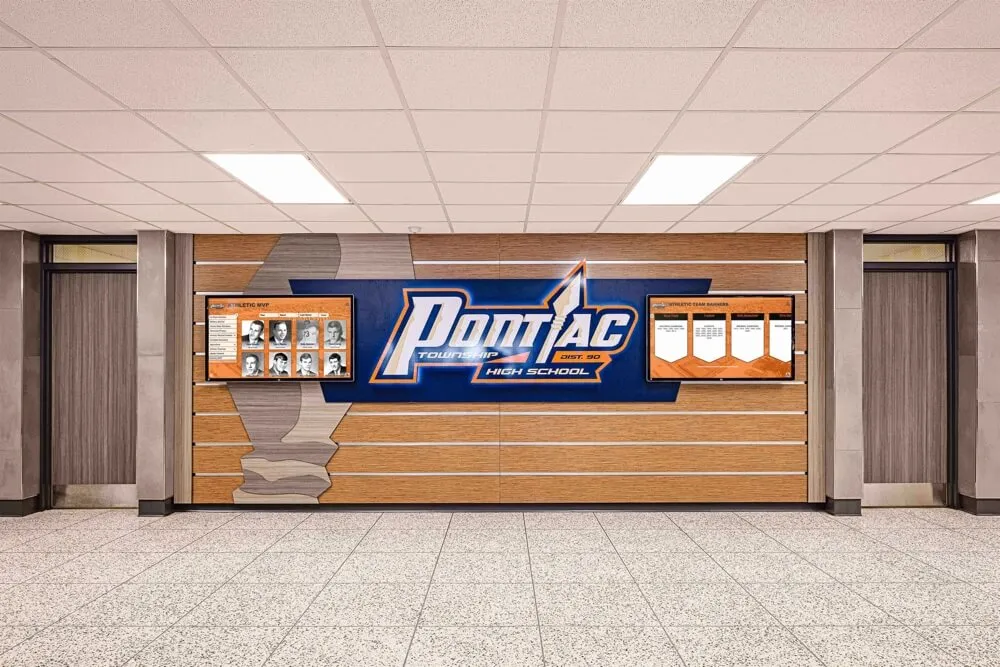
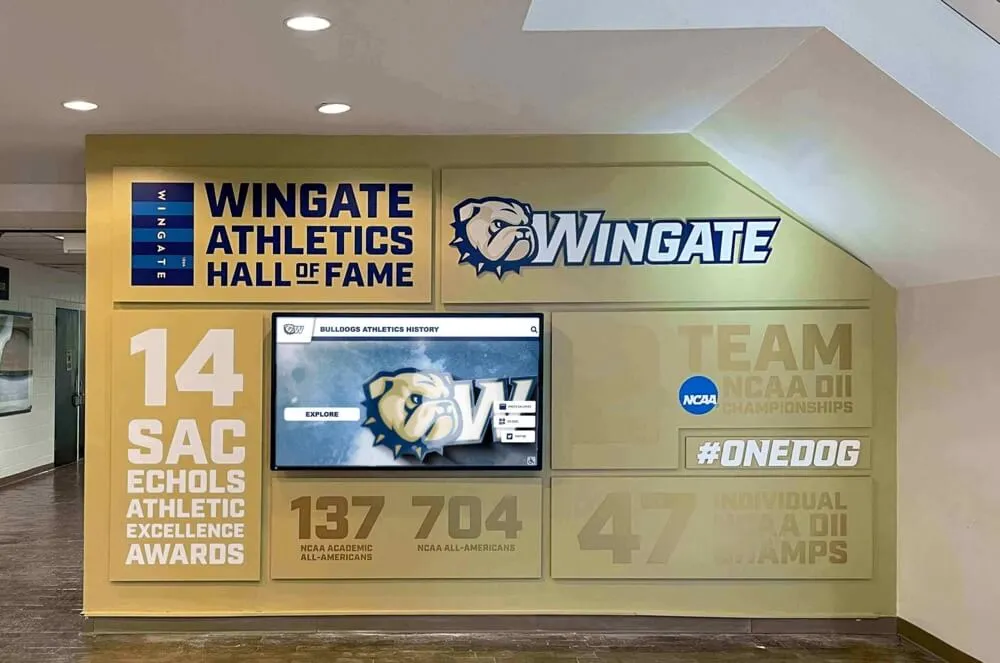
Integrated recognition environments combine traditional displays with digital interactive systems
Technology Platform Selection
Choosing appropriate digital yearbook platforms significantly impacts memory quality, user experience, and long-term satisfaction.
Evaluating Memory-Specific Solutions
Purpose-built yearbook platforms like Rocket Alumni Solutions offer significant advantages over generic photo storage adapted for memory preservation:
Essential Platform Capabilities
- Intuitive content management requiring no technical expertise for yearbook advisors
- Unlimited storage supporting decades of comprehensive photo archives
- Year-specific organization mirroring traditional yearbook structure
- Robust search enabling discovery across all content and years
- Mobile-responsive web access extending memories beyond campus
- Privacy controls appropriate for student information and FERPA compliance
- Analytics revealing engagement patterns informing content strategy
- Integration capabilities with student information systems when desired
- Reliable vendor support understanding unique school needs
- Format migration commitment ensuring accessibility as technology evolves
Avoiding Common Platform Mistakes
Schools sometimes select inappropriate systems creating frustration:
- Generic photo storage lacking yearbook-specific organization structures
- Consumer platforms without longevity commitment for institutional needs
- Systems requiring proprietary hardware preventing future flexibility
- Solutions without proper backups risking catastrophic memory loss
- Platforms lacking mobile web access limiting memory reach
- Systems with inadequate search making content functionally inaccessible
These mistakes undermine memory preservation value while creating administrative headaches eventually forcing system abandonment and potential memory loss. Choosing yearbook-specific platforms from established vendors prevents these problems.
Learn about platform evaluation in school history software comparison guide examining different solution approaches.
Hardware and Display Considerations
Physical touchscreen displays significantly impact user experience and community engagement with digital yearbooks.
Display Specifications
Size Requirements
- 43-55 inches for smaller spaces and focused browsing
- 65-75 inches for large lobbies and high-traffic common areas
- Multiple coordinated displays for comprehensive memory destinations
Touch Technology
- Capacitive or infrared multi-touch providing responsive interaction
- No calibration requirements ensuring consistent performance
- Gesture support including swiping, pinching, and zooming
- Durable surfaces withstanding continuous daily use
Image Quality
- Minimum 1080p resolution; 4K preferred for photo detail
- 350-500 nits brightness for typical indoor environments
- Accurate color reproduction preserving photo quality
- Anti-glare coatings minimizing reflection issues
Commercial Durability
- Displays rated for 16-24 hour daily operation
- Minimum 3-year warranty appropriate for institutional installations
- Tempered glass and vandal-resistant construction
- Reliable connectivity supporting cloud content delivery
Installation and Placement
Strategic location selection maximizes memory engagement:
- Main building entrance lobbies ensuring all visitors encounter displays
- Library or media center spaces encouraging exploration
- Cafeteria and commons areas with extended dwell time
- Alumni center installations dedicated to graduate engagement
- Multiple distributed locations reaching diverse audiences
Professional installation ensures optimal performance through secure mounting, appropriate viewing heights for various users, ADA-compliant accessibility, anti-glare positioning minimizing light interference, and professional cable management maintaining clean appearance.
Schools should budget $3,000-8,000 per display unit for commercial-grade hardware and $800-2,500 for professional installation depending on size, features, and facility conditions.

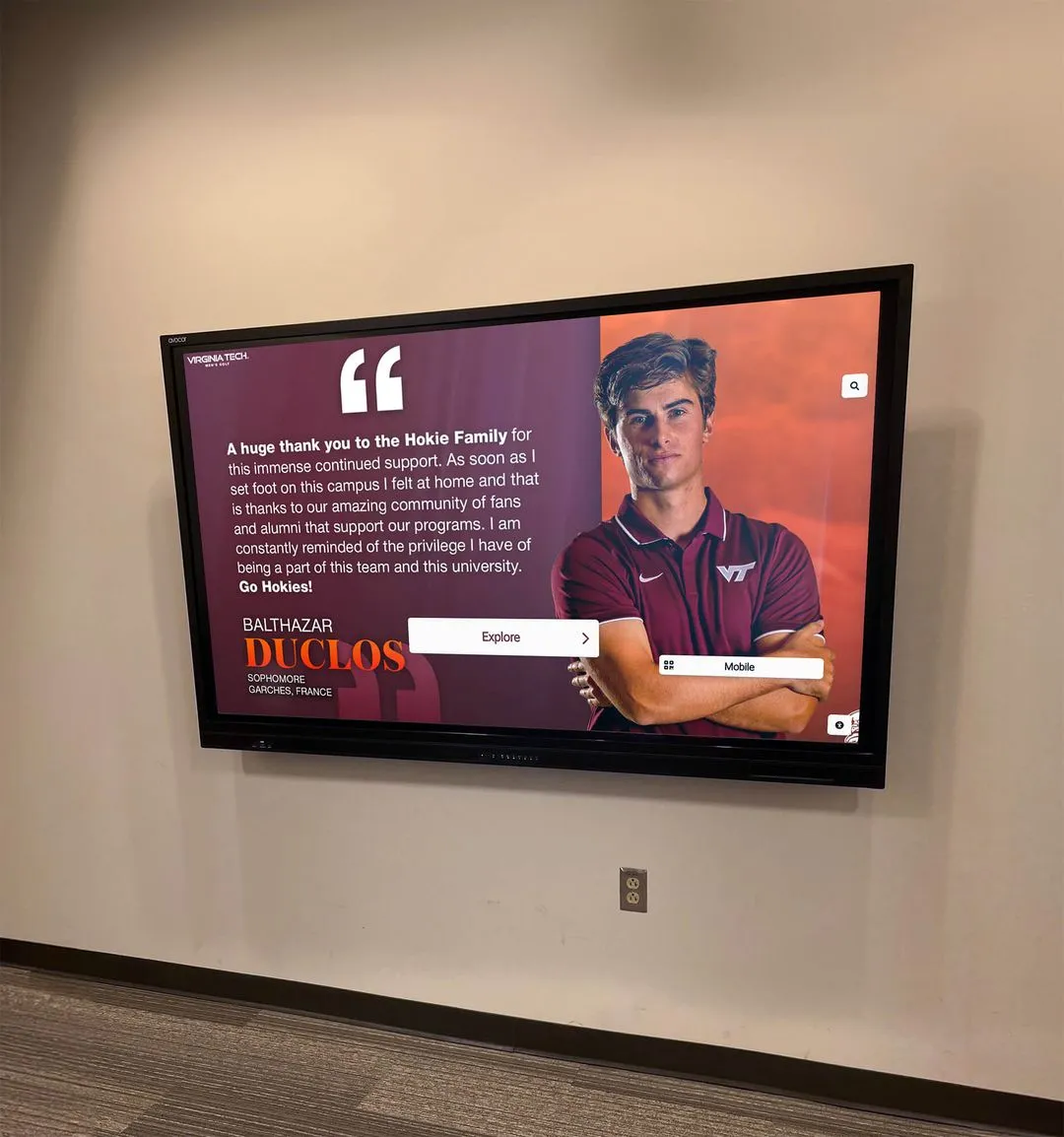
Memory displays integrate seamlessly into existing school environments creating natural exploration spaces
Creating Engaging Digital Yearbook Content
Technology provides infrastructure, but engaging content determines whether digital yearbooks achieve intended memory preservation and community engagement objectives.
Content Organization Strategies
Effective organization enables easy discovery while encouraging exploration.
Chronological Structure
Year-by-year organization mirrors traditional yearbook familiarity:
- Graduating class sections preserving senior recognition traditions
- School year divisions documenting specific academic years
- Decade collections enabling era-specific browsing
- Historical timeline views contextualizing content within broader school history
Thematic Organization
Category-based navigation supports discovery across years:
- Athletic teams and sports across multiple seasons
- Performing arts productions and concerts
- Academic competitions and achievements
- Student organizations and club activities
- School-wide events and traditions
- Facilities and campus evolution
Individual Profiles
Student-centered organization enables personal connection:
- Individual student pages aggregating all appearances
- Class composite views showing graduating class cohorts
- Team rosters connecting teammates across years
- Activity participation tracking students across interests
This multi-faceted organization ensures all users can explore memories matching their interests regardless of what brings them to systems.
Photo and Video Quality Standards
Professional presentation honors memories appropriately while ensuring long-term value.
Photography Standards
- High resolution (minimum 1920x1080 for featured images; 4K when possible)
- Proper lighting, composition, and cropping
- Consistent visual style across school years
- Professional editing enhancing quality without altering authenticity
- Permission and rights documentation for all images
- Format preservation maintaining original quality permanently
Video Standards
- HD quality minimum (1080p); 4K preferred for future-proofing
- Professional editing with smooth transitions
- Appropriate length for content type (30-90 seconds for highlights; 2-5 minutes for feature content)
- Closed captioning ensuring accessibility
- Rights clearance for music and footage
- Format optimization for streaming performance
Written Content Standards
- Accurate captions identifying people, events, and locations
- Contextual descriptions explaining significance
- Proper grammar and spelling maintaining professionalism
- Inclusive language reflecting institutional values
- Complete date and location information enabling future understanding
These quality standards ensure memories honor experiences professionally while maintaining presentation standards reflecting institutional pride.
Discover content creation strategies in digital photo gallery creation for schools with practical workflows.
Digitizing Historical Yearbook Archives
Comprehensive digital systems include historical content extending back through institutional history.
Archive Research and Collection
- Gather physical yearbooks from all available years
- Source missing years from alumni, families, and community libraries
- Locate supplementary photos from school archives and newspapers
- Interview long-time faculty and alumni filling memory gaps
- Research local historical societies for early institutional documentation
Digitization Process
Professional scanning preserves historical content:
- High-resolution scanning at 600 DPI minimum for printed materials
- Photo restoration for damaged or faded historical images
- Optical character recognition enabling text search within historical content
- Metadata creation documenting dates, people, and context
- Quality control verification ensuring accurate digitization
Historical Content Enhancement
- Add captions and identification for historical photos
- Provide context explaining historical events and traditions
- Link related content across multiple years
- Include oral histories from alumni about historical periods
- Document facility and campus changes over decades
This comprehensive historical inclusion creates complete institutional memory archives rather than only recent year documentation.
Learn about historical preservation approaches in digitizing old yearbooks guide with detailed processes.

Historical content preservation ensures complete institutional memory across all eras and generations
Privacy, Security, and Compliance Considerations
Student privacy requires thoughtful policies balancing memory preservation with appropriate protection.
FERPA and Student Privacy Compliance
Educational institutions must respect privacy regulations while preserving memories.
Directory Information and Consent
- Understand what constitutes directory information under FERPA
- Obtain appropriate consent for public memory displays
- Provide opt-out mechanisms for individuals preferring privacy
- Document consent and permissions systematically
- Review policies regularly ensuring continued compliance
Information Display Limitations
Avoid displaying sensitive information:
- Contact information or addresses
- Academic records beyond publicly recognized honors
- Disciplinary information or negative content
- Medical or disability information
- Financial information including aid or payment status
Access Control Systems
Digital platforms enable graduated access levels:
- Public displays showing appropriate directory-level content
- Authenticated alumni access revealing additional content for graduates
- Administrative access for content management and updates
- Family portals showing individual student content with permission
- Export restrictions preventing unauthorized bulk downloads
Consult legal counsel ensuring memory systems comply with relevant privacy laws, regulations, and institutional policies.
Long-Term Content Preservation Security
Memories must survive technology changes, vendor transitions, and institutional evolution.
Data Backup and Redundancy
Professional preservation infrastructure includes:
- Multiple geographic backup locations preventing regional disaster loss
- Regular automated backup schedules
- Version control enabling recovery from accidental deletions
- Export capabilities enabling migration between platforms
- Offline archives protecting against cloud service failures
Format Migration Planning
Technology evolves requiring proactive management:
- Regular format updates maintaining compatibility
- Metadata preservation through all migrations
- Quality verification after format conversions
- Documentation of all content sources and processing
Vendor Longevity Considerations
Select vendors committed to long-term memory preservation:
- Established companies with institutional focus
- Clear data ownership policies ensuring school control
- Export capabilities enabling platform changes
- Regular platform updates maintaining compatibility
- Financial stability indicating continued operations
These considerations protect memories against technology obsolescence and vendor failures that could cause catastrophic loss.
Measuring Digital Yearbook Success
Systematic assessment demonstrates memory system value while identifying improvement opportunities.
Quantitative Engagement Metrics
Modern platforms provide concrete usage data impossible with printed yearbooks.
Display Interaction Analytics
- Touchscreen interaction frequency showing daily usage patterns
- Average session duration revealing engagement depth
- Most-viewed content identifying popular memories
- Search query analysis showing discovery patterns
- Peak usage times informing content scheduling
- Navigation path analysis revealing exploration behaviors
Web Platform Analytics
- Unique visitor counts showing online memory reach
- Geographic distribution revealing how far memories extend
- Device types indicating mobile versus desktop access
- Social sharing frequency demonstrating organic distribution
- Return visitor rates indicating sustained engagement
- Page view depth showing thoroughness of exploration
Content Coverage Metrics
- Percentage of students documented in systems
- Number of events covered per school year
- Photos per student showing documentation comprehensiveness
- Historical coverage measuring archive completeness
- Multimedia integration tracking video and audio content
These metrics reveal whether digital yearbooks generate intended engagement and preservation value or require strategy adjustments.
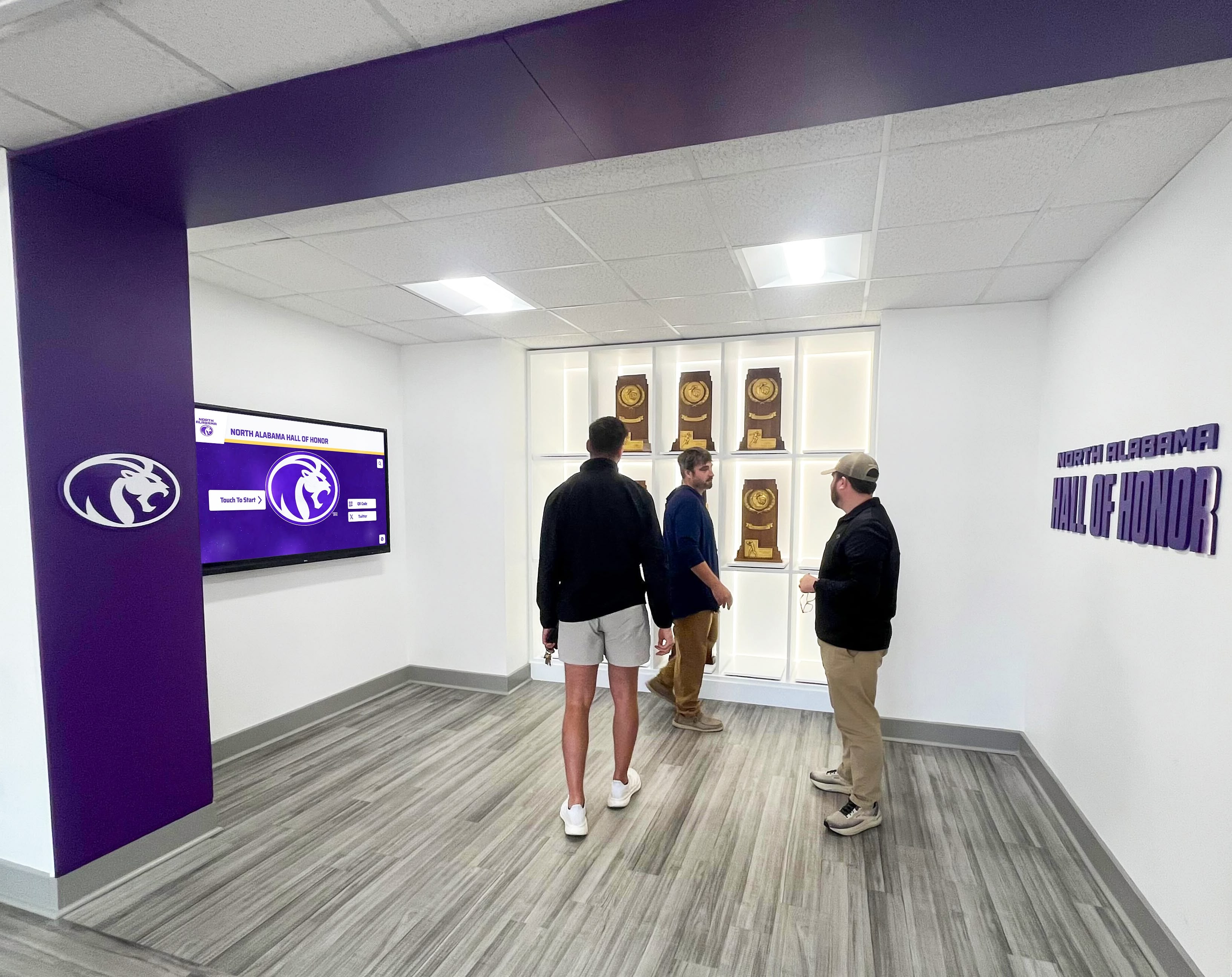
Successful systems create gathering spaces where communities connect around shared memories and traditions
Qualitative Impact Assessment
Regular feedback provides insights beyond quantitative metrics.
Stakeholder Feedback Collection
- Student surveys assessing memory documentation satisfaction
- Alumni feedback on accessibility and engagement improvements
- Family responses to ability to experience student school life
- Faculty observations about student pride and institutional connection
- Community perception surveys measuring tradition preservation
Observable Cultural Indicators
Long-term changes provide evidence of memory system cultural impact:
- Increased student awareness of institutional history and tradition
- Enhanced alumni connections to current programs
- Stronger community appreciation for school legacy
- Improved prospective family responses during recruitment
- Greater institutional pride and positive identity
- More inclusive memory preservation celebrating diverse students
Regular assessment enables continuous refinement ensuring digital yearbooks achieve intended goals.
Explore measurement approaches in digital recognition impact assessment with comprehensive frameworks.
Best Practices for Sustainable Operations
Sustaining digital yearbook value requires ongoing commitment beyond initial implementation.
Establishing Management Structures
Clear responsibilities ensure memory preservation continues reliably.
Administrative Roles
- Primary yearbook coordinator overseeing content creation and management
- Backup administrators preventing single point of failure
- Student yearbook staff assisting with content development
- IT support for technical troubleshooting and maintenance
- Vendor relationship management for platform issues
Content Workflows
Systematic processes maintain current documentation:
- Regular photo upload schedules throughout school years
- Event coverage planning ensuring comprehensive documentation
- Caption and metadata entry procedures
- Quality review processes before publication
- Historical archive expansion plans
- Featured content rotation keeping displays fresh
Budget Allocation
Sustainable funding ensures long-term viability:
- Annual platform subscription fees
- Content development budget for ongoing additions
- Hardware maintenance and eventual replacement reserves
- Professional development for staff managing systems
- Enhancement budget for feature additions
These structural elements prevent system abandonment due to unclear responsibilities or inadequate resources.
Keeping Content Fresh and Engaging
Active management prevents stagnation maintaining community interest.
Regular Content Updates
- Add new content weekly during school years
- Feature different graduating classes monthly
- Expand historical archives systematically
- Enhance existing content with newly discovered information
- Update alumni profiles as graduates share achievements
Seasonal Content Themes
- Reunion support featuring specific classes during reunion years
- Graduation season highlighting current seniors
- Anniversary celebrations of historic teams or events
- School tradition spotlights around annual events
- Alumni spotlights connecting past and present
Community Engagement Features
- Alumni update submissions sharing post-graduation success
- Memory collection campaigns gathering community stories
- Photo contribution opportunities from families and alumni
- Social media integration connecting current and historical content
Active content management keeps memories relevant and engaging rather than static archives visited once and forgotten.
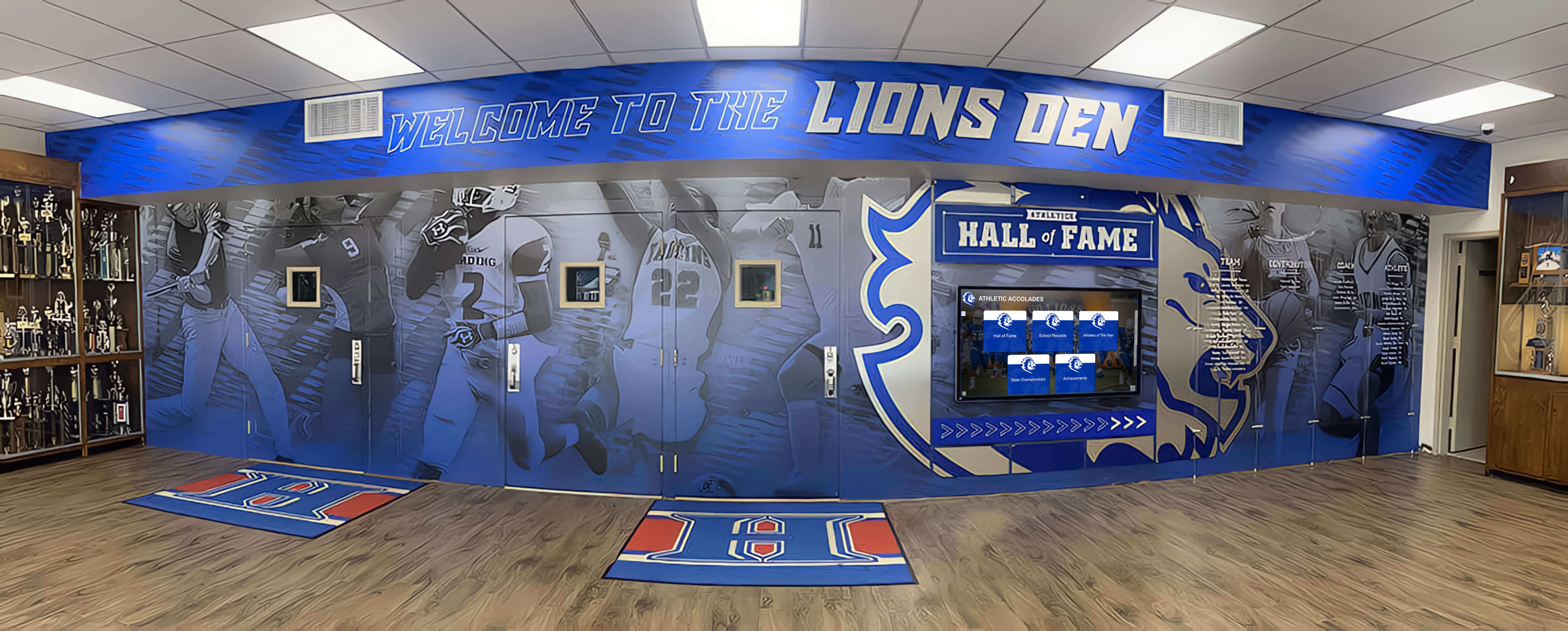
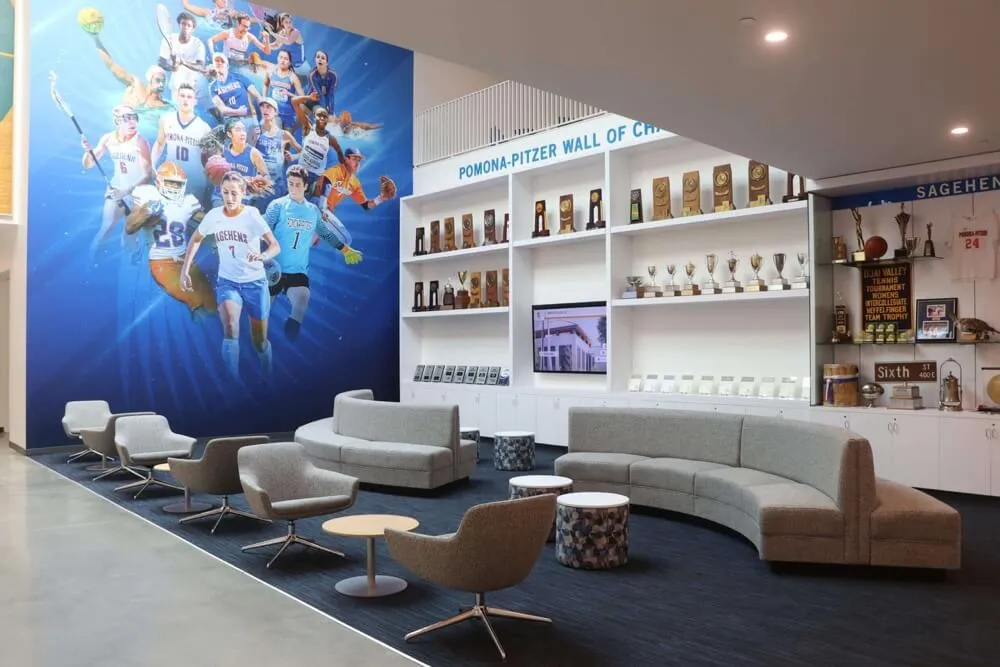
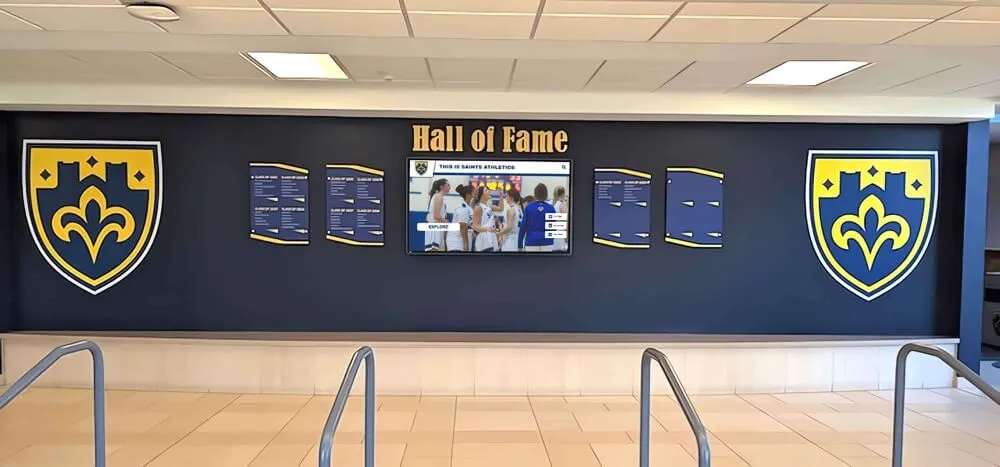
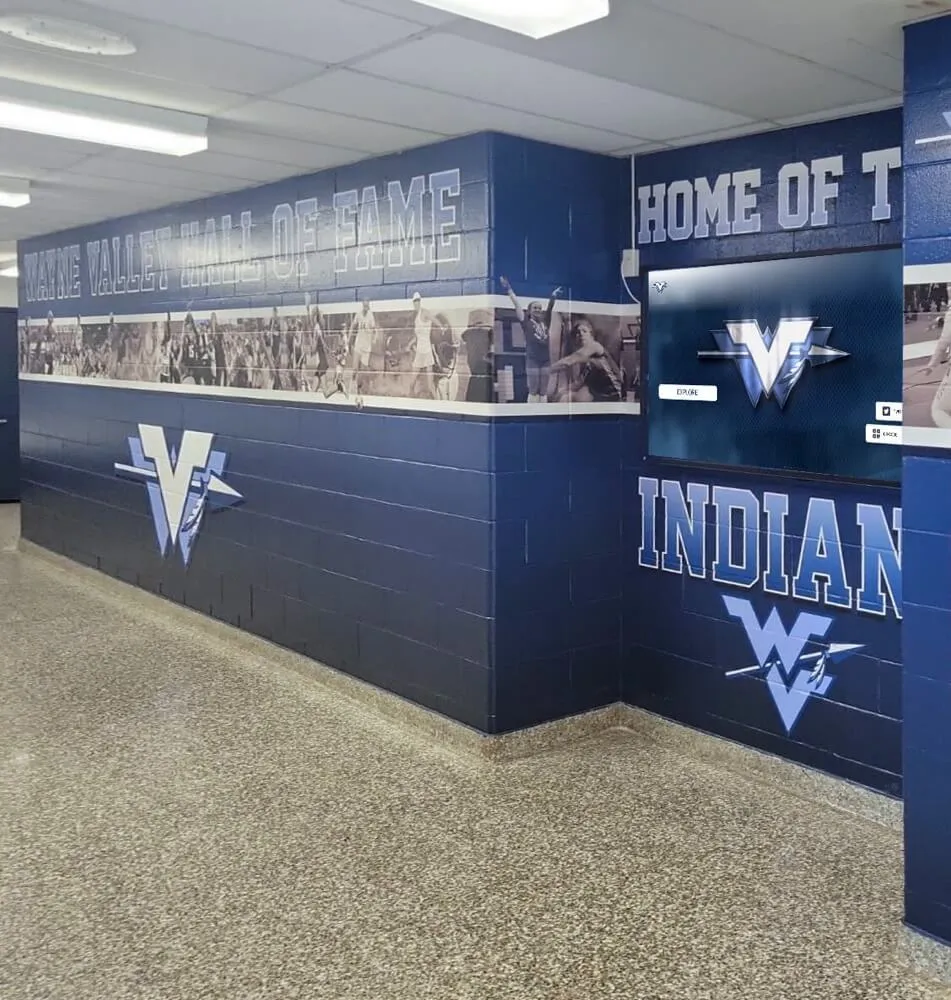
Comprehensive memory environments combine traditional elements with digital systems creating impressive celebration spaces
Advanced Digital Yearbook Capabilities
Enhanced features extend memory system value beyond basic photo documentation.
Integration with School Systems
Connected platforms streamline workflows and enhance capabilities.
Student Information System Integration
Automated data connections reduce manual entry:
- Student roster and demographic information
- Activity and club participation records
- Athletic team membership and statistics
- Academic honors and award recognition
- Graduation and achievement milestones
Photo Management Workflow
Efficient processes handle large photo volumes:
- Bulk upload tools accepting hundreds of photos simultaneously
- Automated face recognition suggesting photo identifications
- Duplicate detection preventing redundant content
- Metadata inheritance applying consistent information
- Mobile upload enabling immediate event documentation
Social Media Integration
Extend memory reach through connected platforms:
- Automatic posting of featured content to school social accounts
- Student tagging enabling sharing to personal networks
- Hashtag campaigns aggregating community content
- Embed widgets placing yearbook content on school websites
Video and Multimedia Storytelling
Rich media creates engaging experiences beyond static photos.
Video Content Types
- Event highlight reels capturing sporting events and performances
- Student video messages and senior reflections
- Behind-the-scenes footage of productions and activities
- Time-lapse sequences documenting construction or seasonal changes
- Interview series with students, faculty, and alumni
- Historical footage from decades past
Interactive Features
- Before-and-after sliders showing facility transformations
- Photo comparison tools revealing campus evolution
- Interactive timelines connecting related events across years
- Virtual tours enabling remote campus exploration
- Annotated photos identifying people and locations
Audio Integration
- Concert and performance recordings
- Oral histories from longtime faculty and alumni
- Podcast series exploring school traditions and history
- Ambient soundscapes from events and gatherings
These multimedia elements create immersive memory experiences impossible with traditional printed yearbooks.
Future Trends in Digital Yearbook Technology
Understanding emerging developments helps schools plan investments remaining relevant long-term.
Artificial Intelligence Applications
AI capabilities will enhance personalization and automation:
- Automated photo organization and categorization
- Face recognition suggesting photo identifications
- Automatic caption generation from image analysis
- Personalized content recommendations based on user interests
- Intelligent search understanding natural language queries
- Automated memory highlights based on individual connections
Extended Reality Experiences
Immersive technologies will expand memory possibilities:
- Augmented reality overlays bringing printed yearbooks to life
- Virtual reality experiences recreating historic campus moments
- 360-degree memories placing viewers within past events
- Spatial computing enabling exploration of memory environments
- Mixed reality enabling interaction with historical content
Enhanced Accessibility Features
Universal design improvements ensuring inclusive memory access:
- Multi-language support reaching diverse communities
- Voice control enabling hands-free interaction
- Advanced screen reader compatibility
- Adjustable interfaces accommodating different abilities
- Sensory-friendly modes for neurodiverse users
These innovations will continue expanding digital yearbook possibilities while maintaining focus on preserving memories and strengthening community connections.
Conclusion: Preserving Memories for Generations
Digital yearbooks represent fundamental evolution in how schools document student experiences, preserve institutional memories, and engage communities across generations. These interactive platforms solve persistent limitations constraining traditional printed yearbooks—physical deterioration, limited accessibility, static presentation, and inequitable access based on family economics—while creating new opportunities for comprehensive documentation, engaging exploration, and permanent preservation impossible with printed books alone.
When schools implement digital yearbook systems thoughtfully—with clear objectives, appropriate technology, quality content, and sustained management—they create powerful platforms preserving every student’s school experience while building connections between current students, alumni, and institutional history that inspire pride and strengthen community for generations.
Ready to Transform Your School Yearbook Program?
Discover how digital yearbook solutions like Rocket Alumni Solutions can help you preserve unlimited school memories with interactive displays that engage your community and ensure every student's experience is documented permanently.
Explore Digital Yearbook SolutionsThe strategies, considerations, and best practices explored in this comprehensive guide provide frameworks for implementing digital yearbooks delivering lasting value for institutions and communities. From unlimited storage capacity and engaging multimedia documentation to permanent cloud preservation and universal web accessibility, these platforms transform simple photo collections into dynamic memory systems woven throughout institutional culture.
Schools implementing digital yearbooks consistently report powerful outcomes: increased community engagement with school history, stronger alumni connections to current students, enhanced institutional pride and tradition preservation, dramatic improvements in memory accessibility for all families regardless of economics, and comprehensive documentation protecting memories from loss and deterioration.
Start where current situations demand—whether replacing deteriorating physical archives, extending memory access to alumni unable to afford printed yearbooks, or creating more engaging memory experiences—then systematically expand to build comprehensive systems your community deserves. Every student whose family dedicated time, effort, and resources to education deserves permanent documentation of their school experience accessible throughout their lives.
Your students’ memories, experiences, and school traditions deserve preservation systems that ensure they remain accessible and engaging for generations. With thoughtful planning, appropriate technology like Rocket Alumni Solutions, and systematic implementation, you can create digital yearbook systems becoming cherished traditions preserving institutional memory while strengthening community connections for decades to come.
Ready to begin your digital yearbook journey? Explore how digital archive systems for schools create comprehensive memory preservation or learn about digitizing old yearbooks to protect historical memories forever.