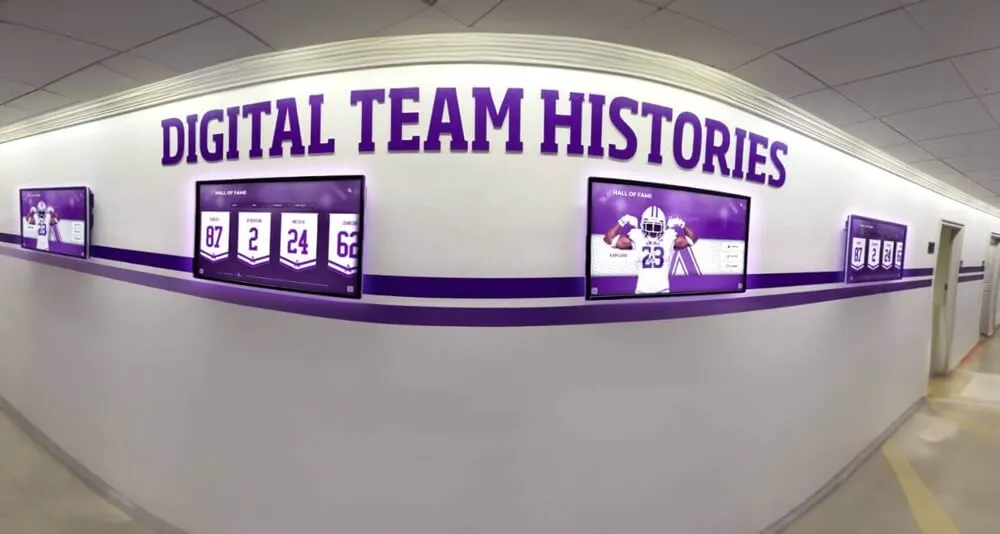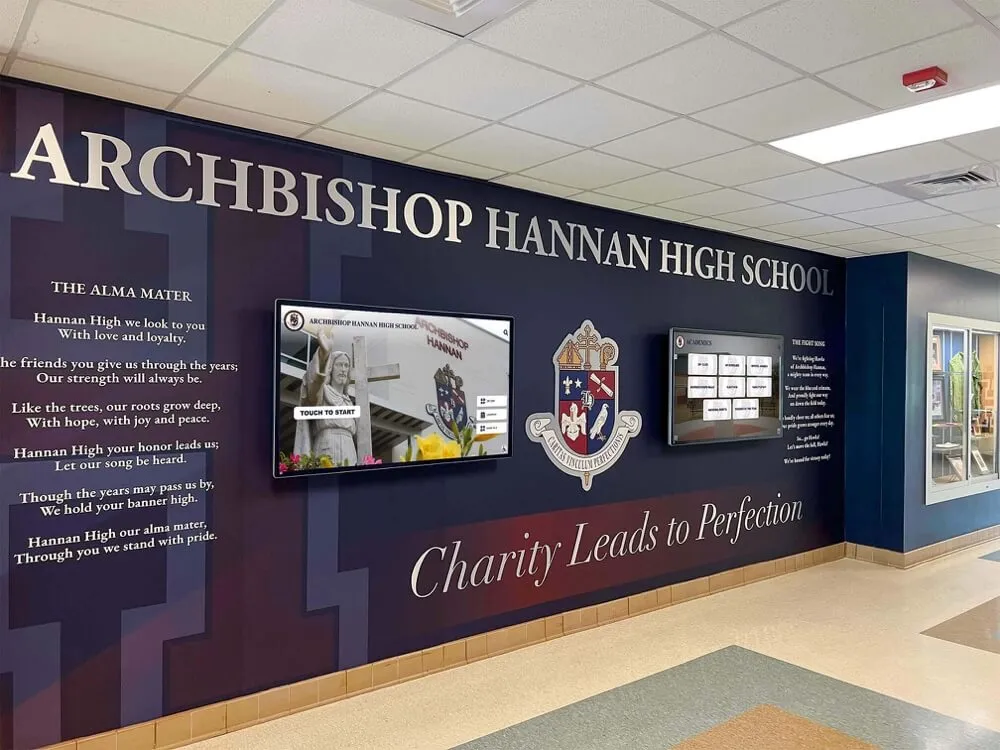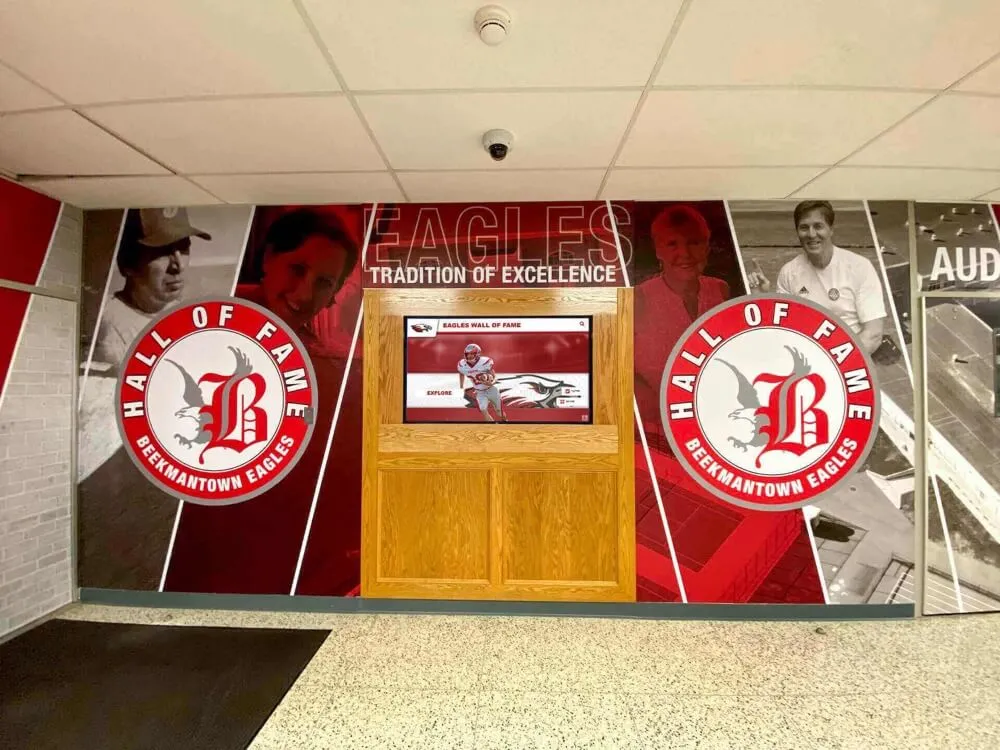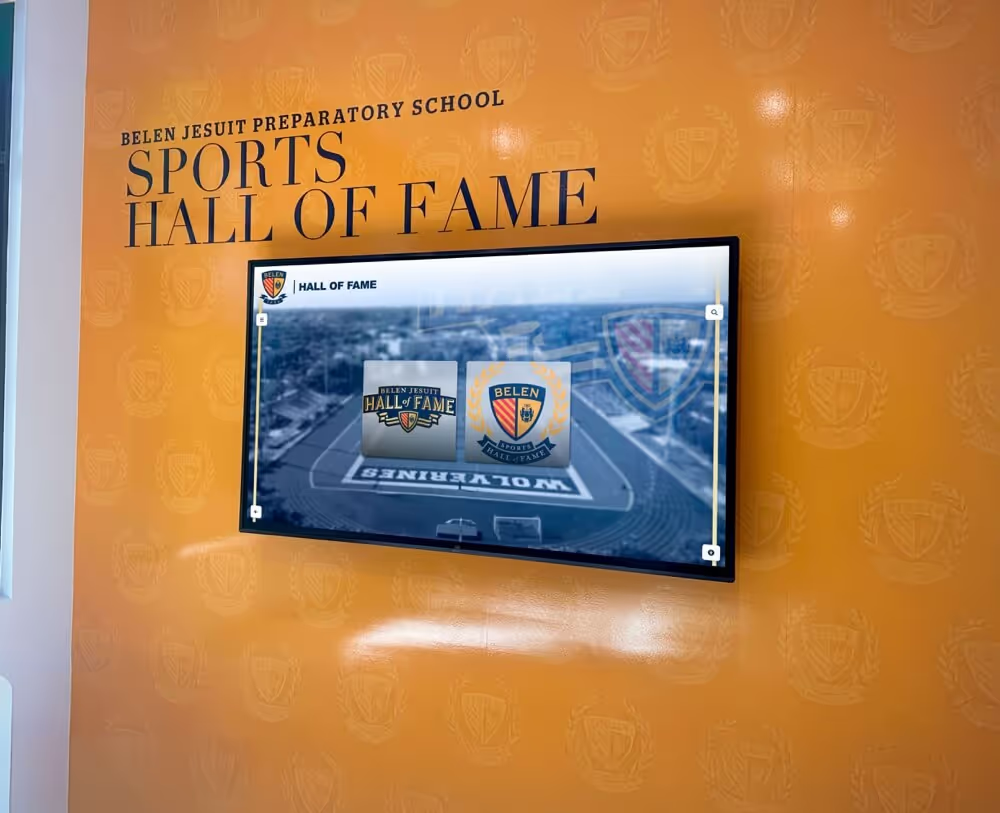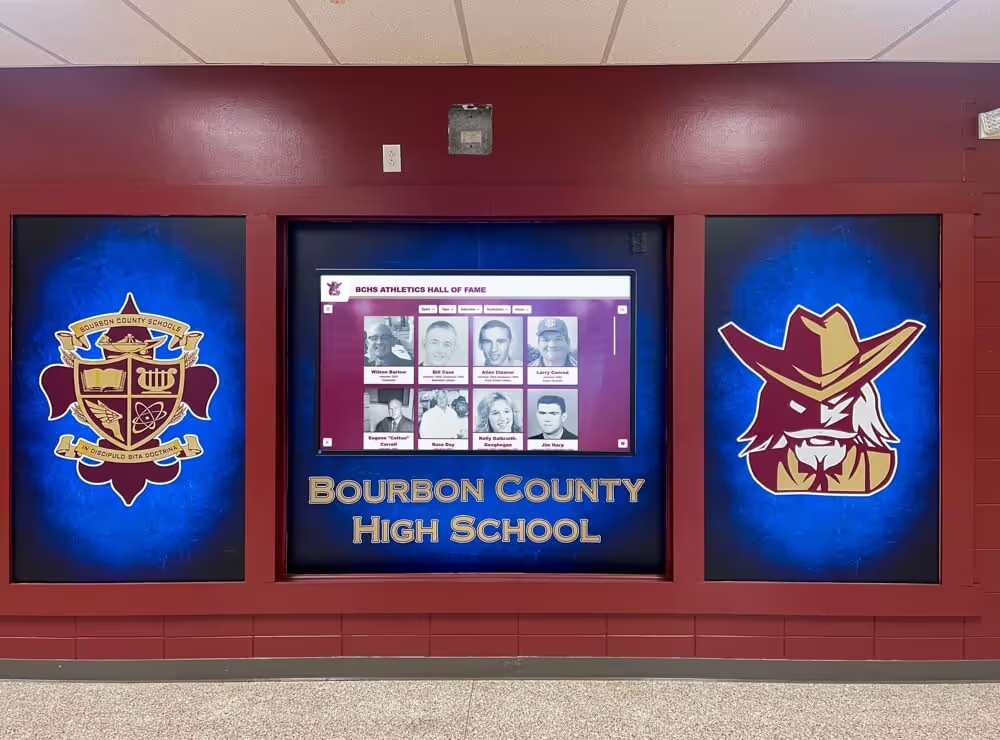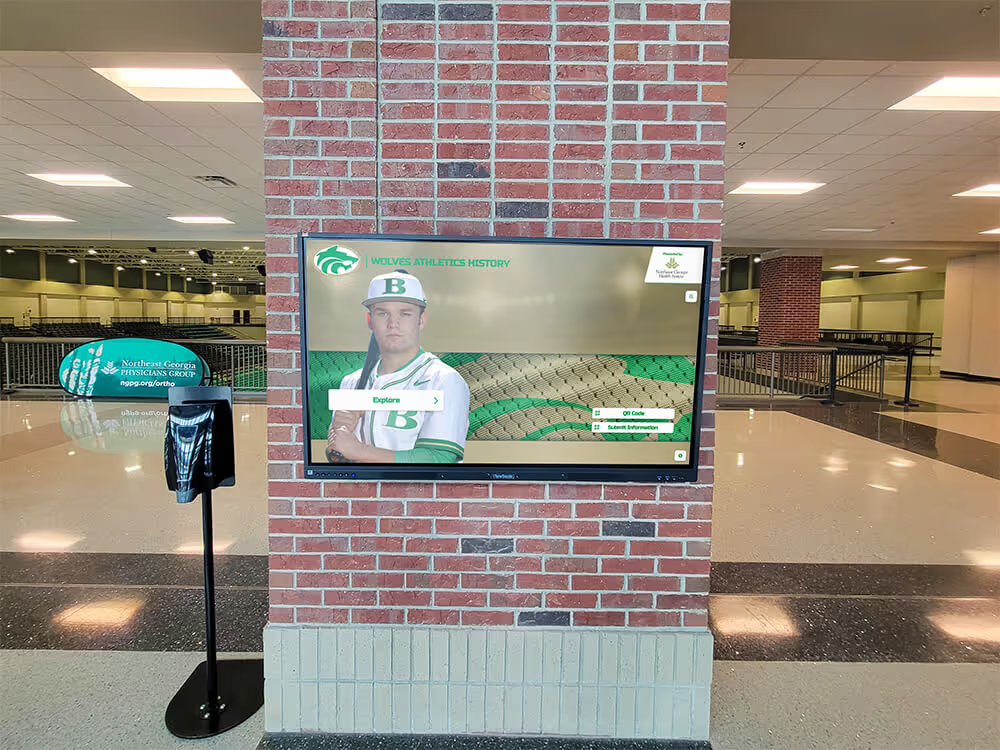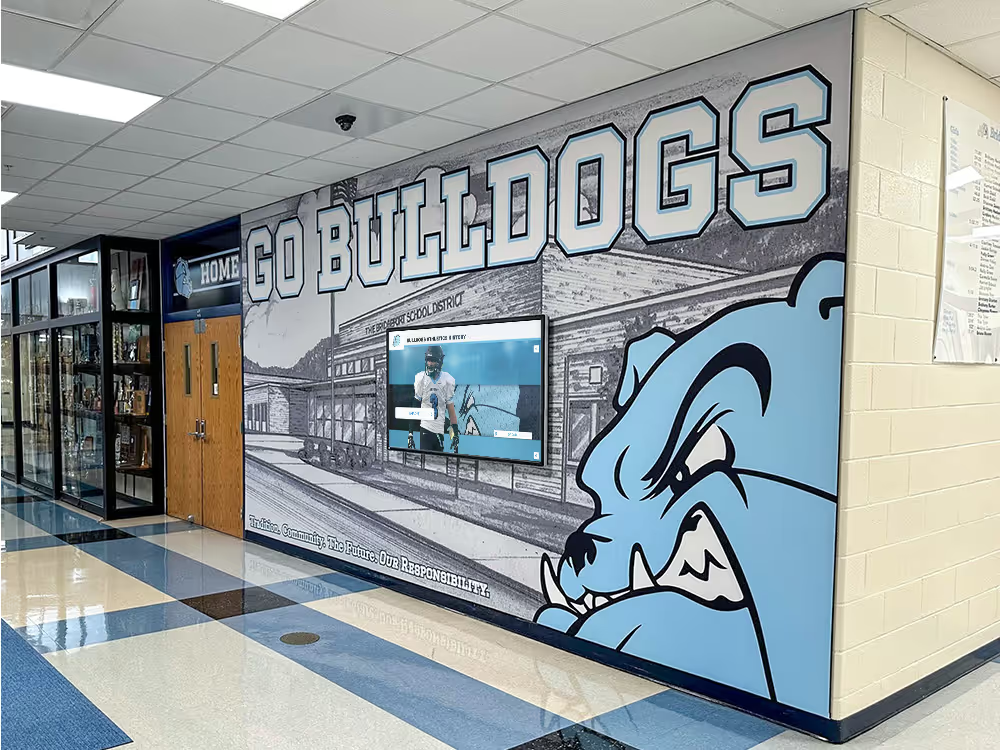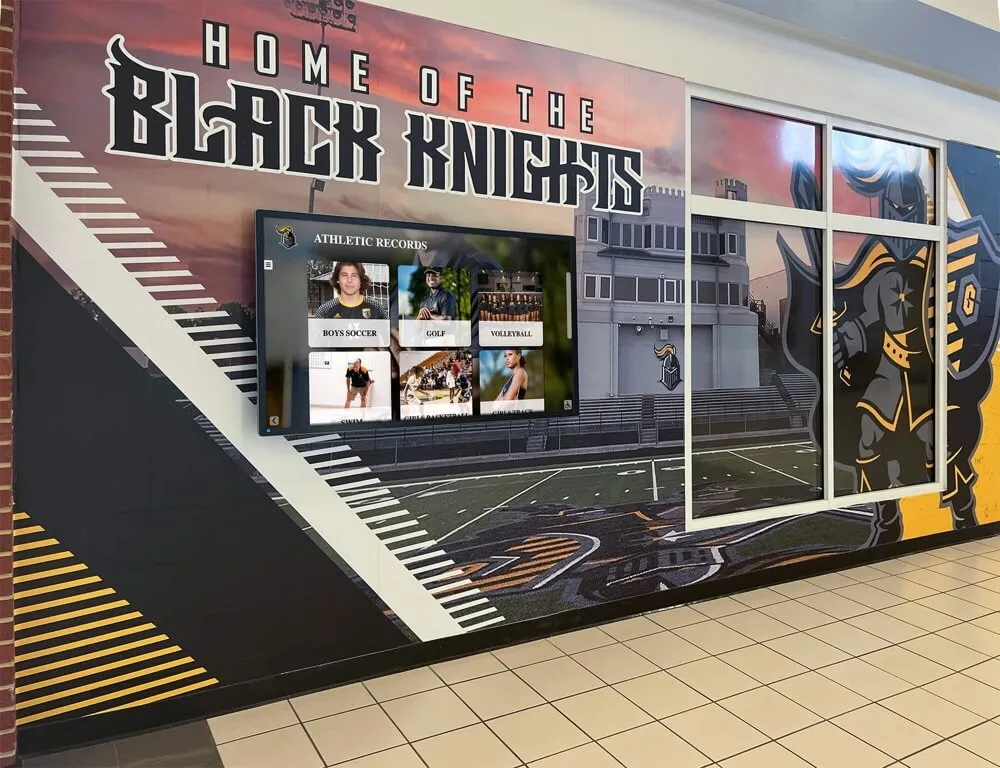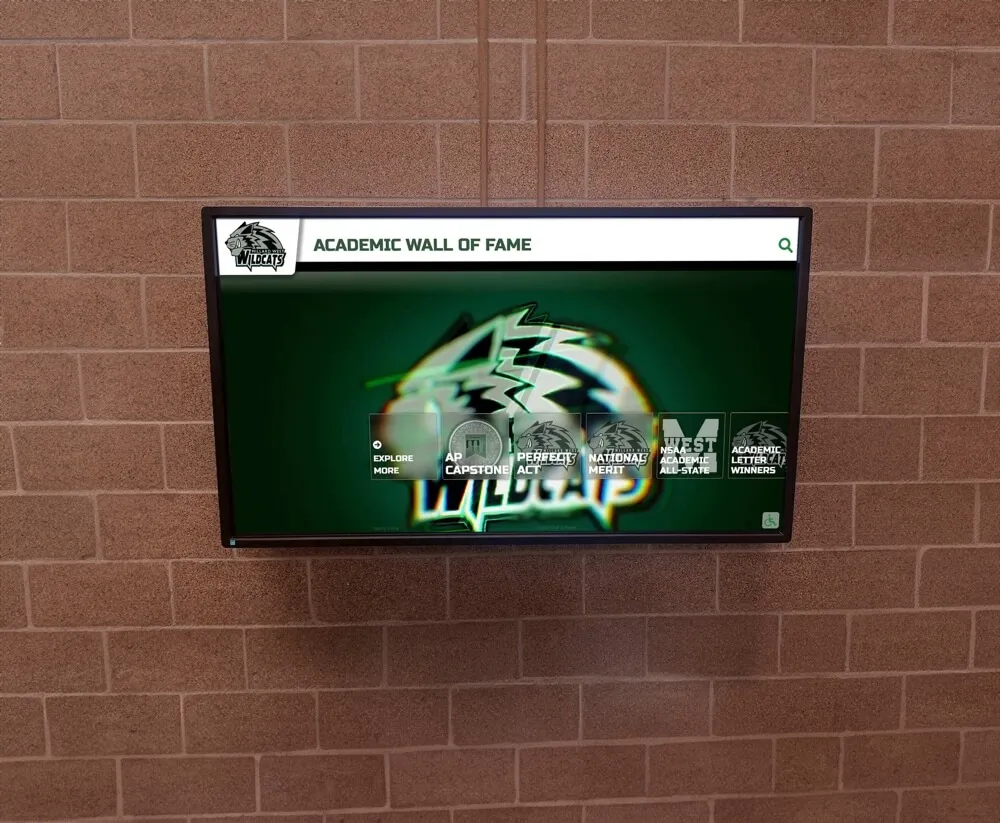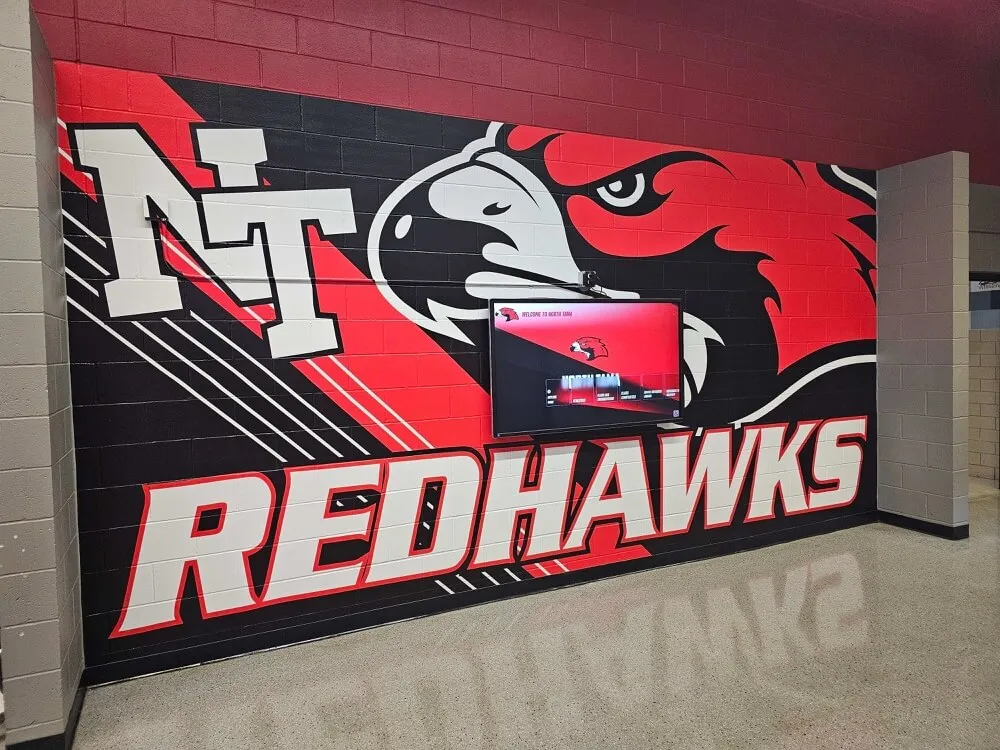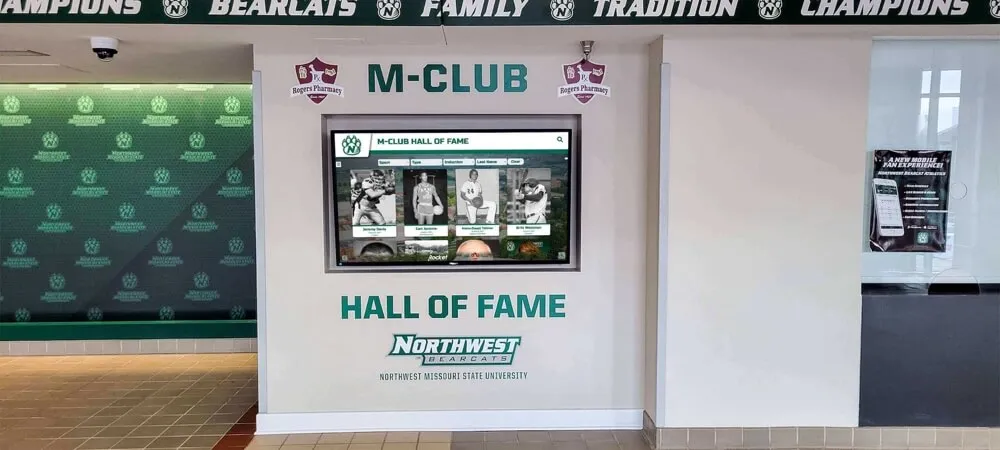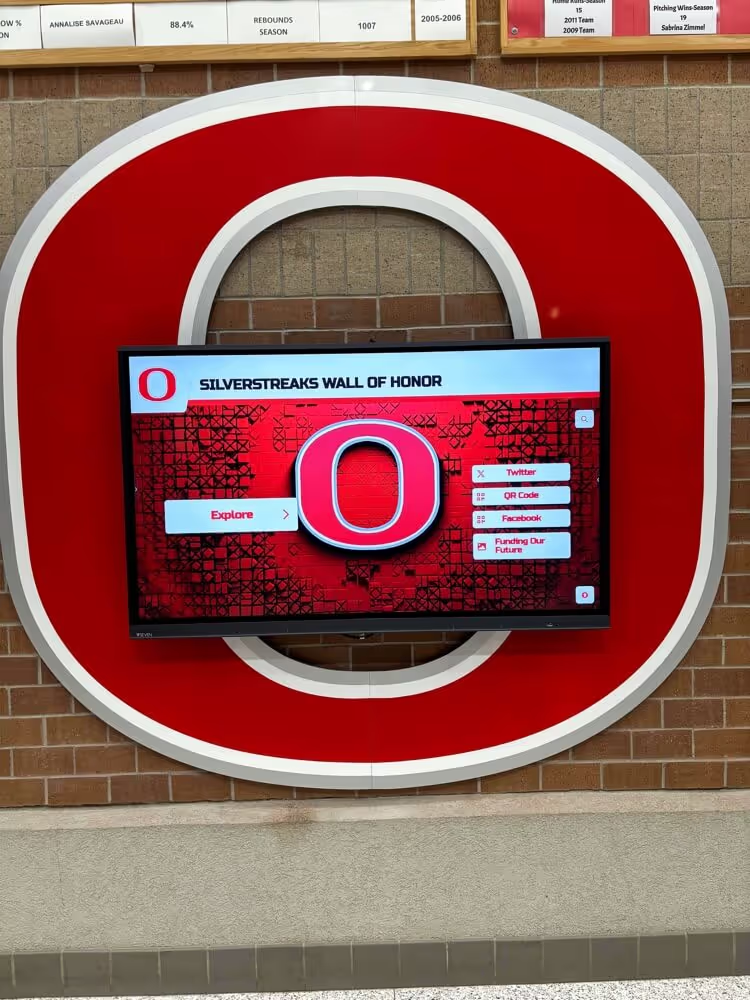




Walk into most schools and athletic facilities, and you’ll encounter the same challenge: traditional trophy cases packed beyond capacity, championship awards from decades past hidden in storage rooms, individual achievement plaques stacked behind team trophies where they remain invisible, and administrators making difficult decisions about removing historical recognition to create space for new victories.
Digital trophy cases solve this persistent problem by combining interactive touchscreen technology with cloud-based content management systems that enable schools, athletic programs, universities, and organizations to showcase unlimited achievements through engaging multimedia experiences. These modern recognition platforms eliminate physical space constraints while delivering superior engagement, immediate updateability, and comprehensive storytelling capabilities impossible with traditional glass trophy cases.
The capacity mathematics tell the story clearly. A typical high school athletic program with 15-20 sports generates 40-80 new trophies annually—accumulating to hundreds or thousands of items over decades of operation. Traditional trophy cases hold approximately 30-50 trophies each when properly spaced, meaning comprehensive display would require dozens of expensive cases that most facilities simply cannot accommodate.
This comprehensive guide explores how digital trophy cases solve these fundamental challenges while creating recognition experiences far superior to what traditional approaches deliver, demonstrating why hundreds of schools nationwide have adopted interactive touchscreen solutions as central components of their recognition strategies.
Modern digital trophy case technology doesn’t discard physical awards or replace important traditions—it enhances them by creating unlimited digital space for comprehensive documentation, interactive multimedia storytelling, and engaging experiences that strengthen organizational culture while honoring every deserving achievement regardless of category, program, or era.

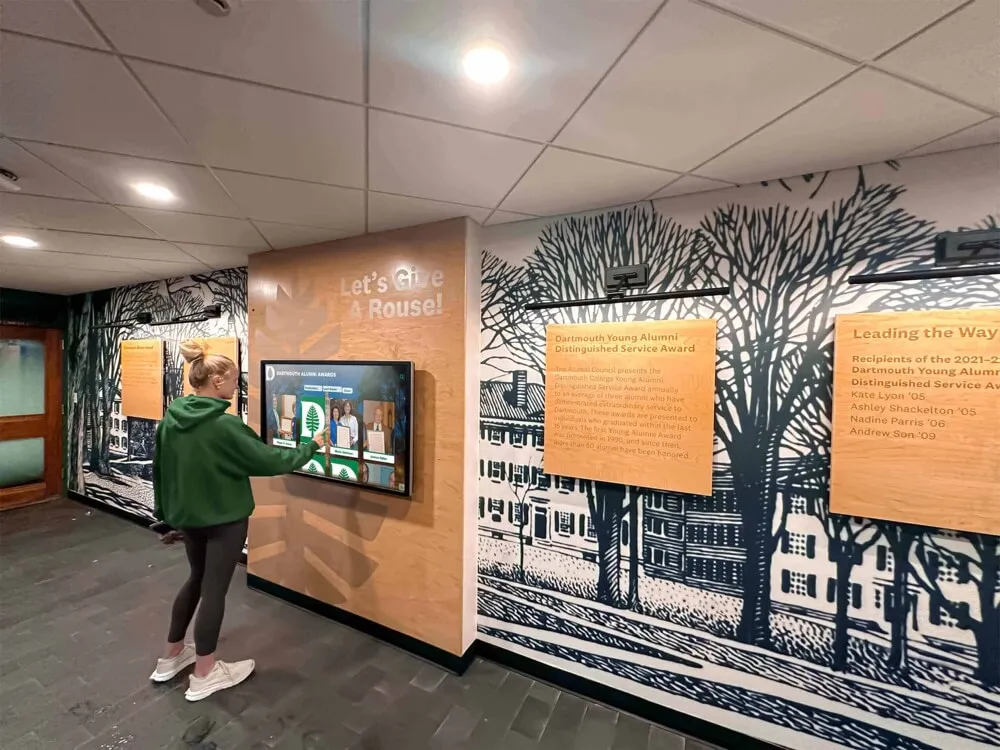
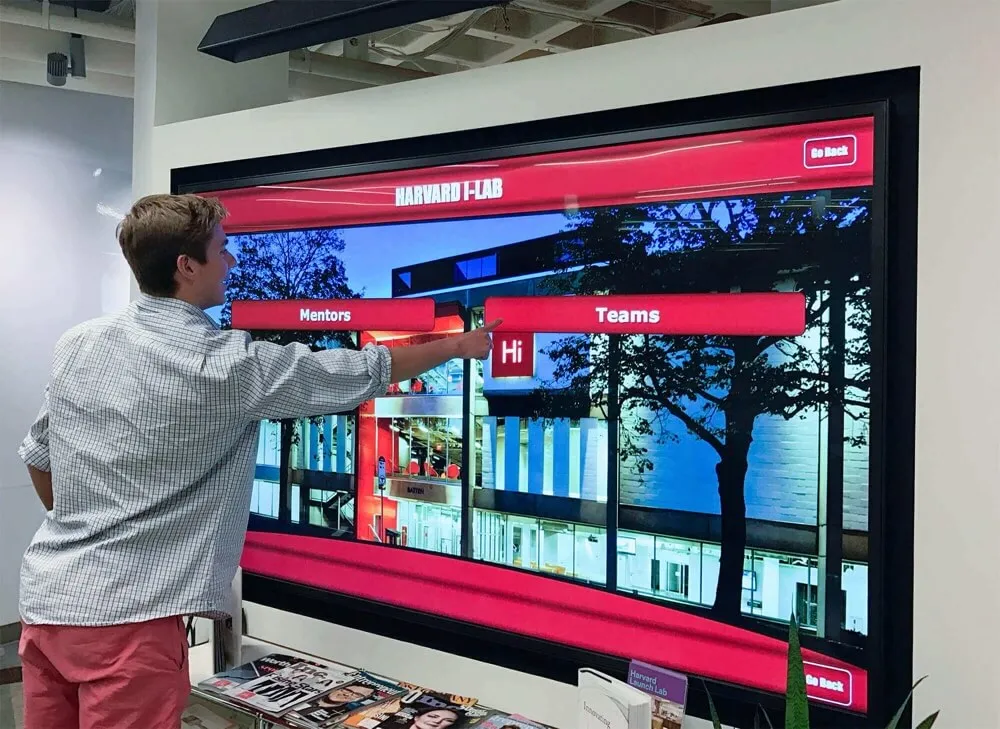
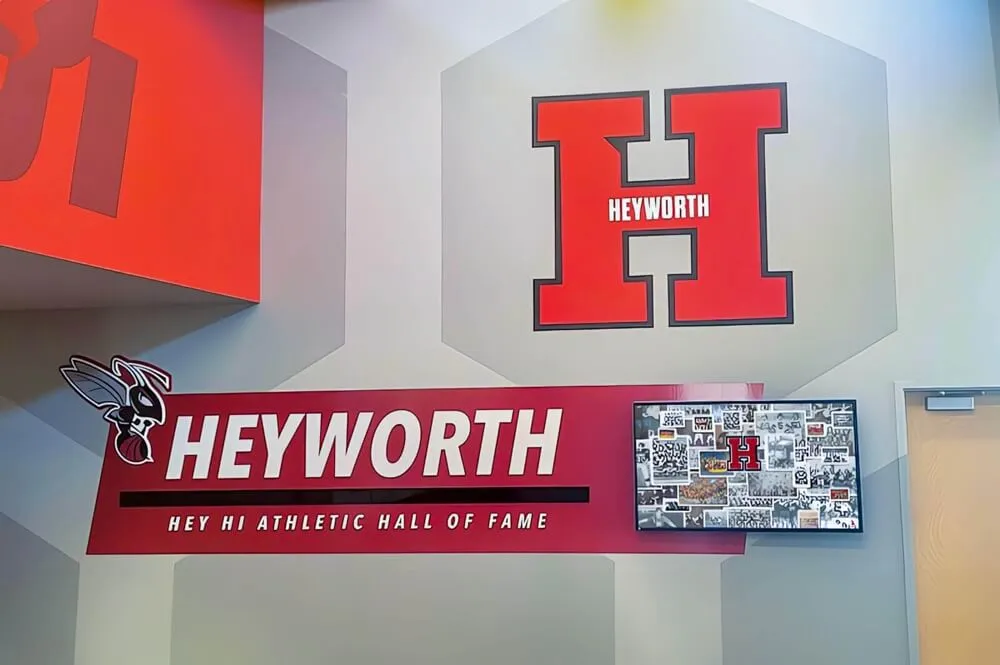
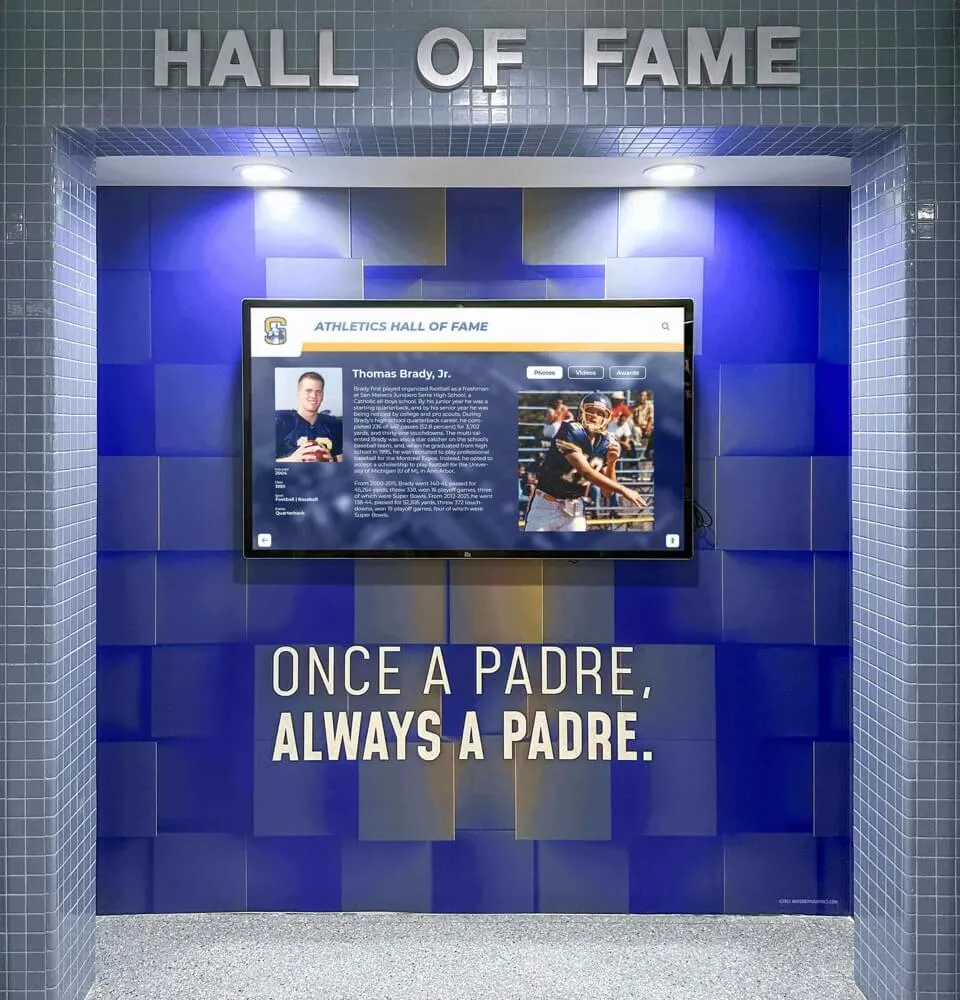
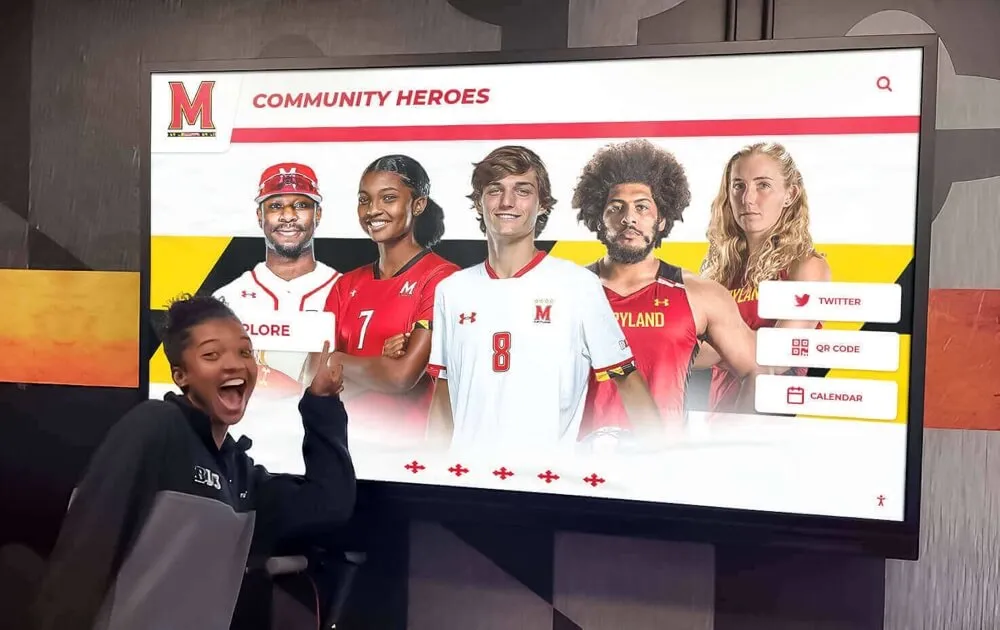
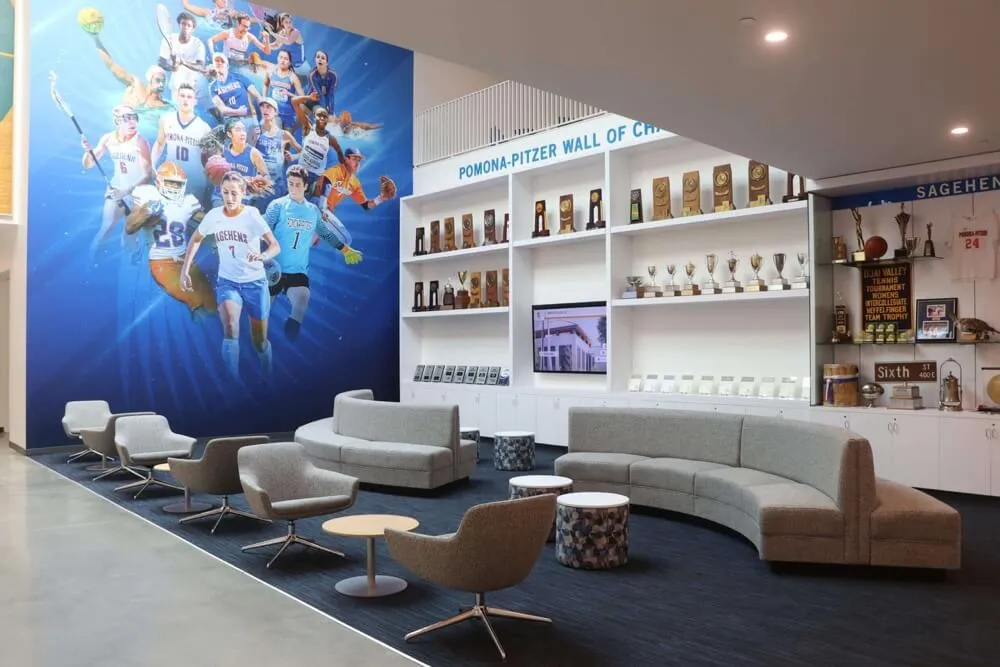
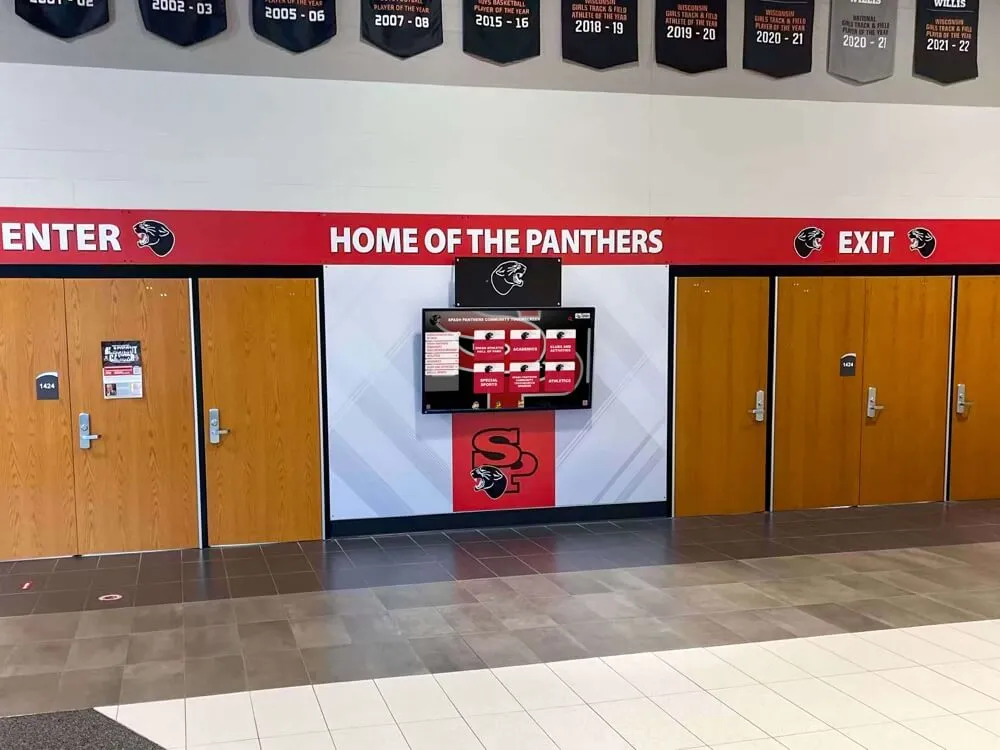
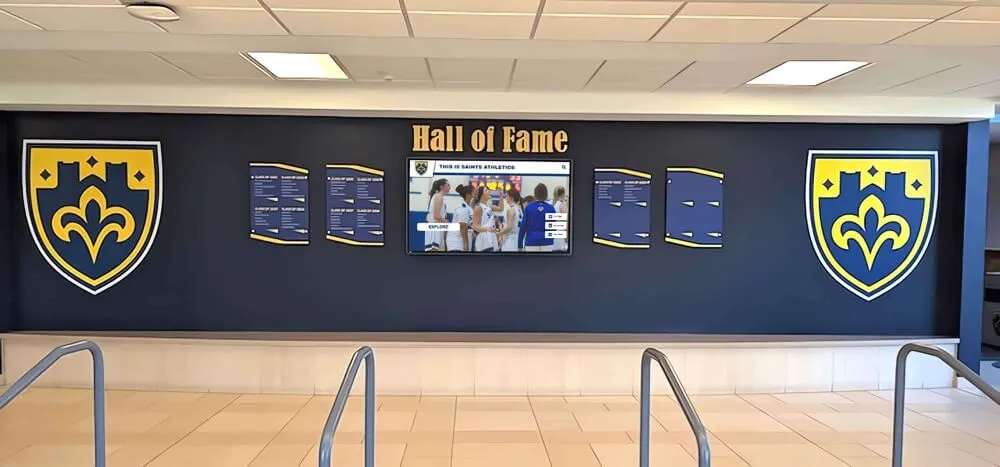
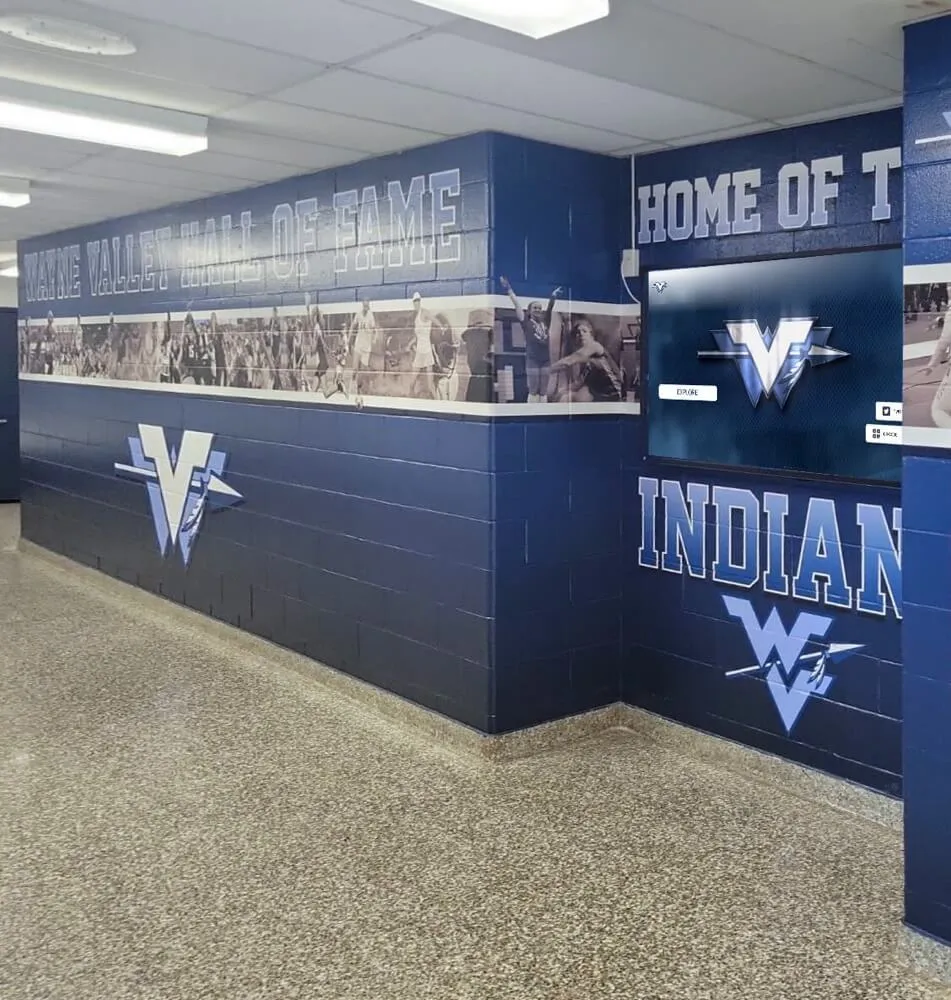
Digital trophy cases complement traditional displays, creating comprehensive recognition environments that celebrate unlimited achievements
Understanding Digital Trophy Case Technology
Digital trophy cases represent a fundamental evolution from physical glass displays to interactive digital platforms that serve multiple recognition purposes simultaneously while eliminating the persistent space limitations that plague traditional approaches.
What Is a Digital Trophy Case?
A digital trophy case is an interactive recognition system combining commercial-grade touchscreen displays with specialized software platforms that enable organizations to showcase unlimited trophies, awards, championships, and individual achievements through intuitive interfaces accessible to students, athletes, families, and community members.
Core System Components
Complete digital trophy case implementations integrate several essential elements working together seamlessly:
- Commercial-grade touchscreen displays: Professional interactive screens engineered for continuous daily operation in high-traffic public environments, typically ranging from 43 to 75 inches
- Cloud-based content management platform: Browser-accessible software enabling remote trophy documentation updates from any internet-connected device without requiring physical display access
- Interactive presentation software: Purpose-built recognition applications organizing and displaying trophy content with searchable databases and intuitive navigation
- Mounting infrastructure: Wall mounts, freestanding kiosks, or architectural integration matching facility aesthetics and space requirements
- Network connectivity: Reliable Wi-Fi or ethernet connections supporting cloud content delivery and real-time updates
- Web accessibility extensions: Mobile-responsive websites extending trophy recognition beyond physical display locations to any device worldwide
- Content storage and media hosting: Secure cloud storage supporting unlimited photographs, videos, and multimedia documentation
- Analytics and engagement tracking: Usage data revealing how visitors interact with trophy recognition content
This integrated approach transforms what appears to be a large touchscreen into a comprehensive recognition platform serving multiple institutional objectives—honoring achievements, engaging communities, preserving history, and inspiring excellence across all programs.
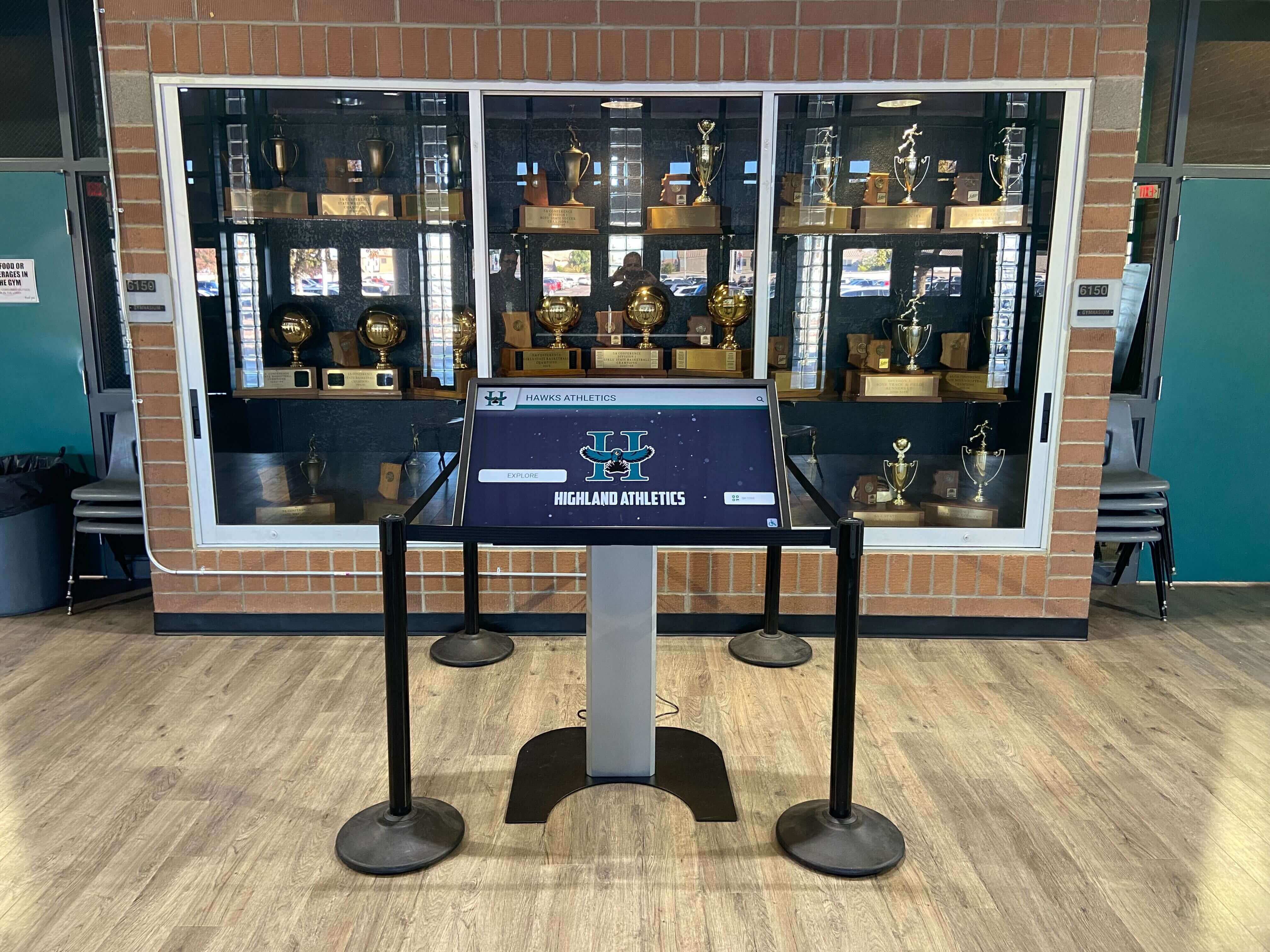
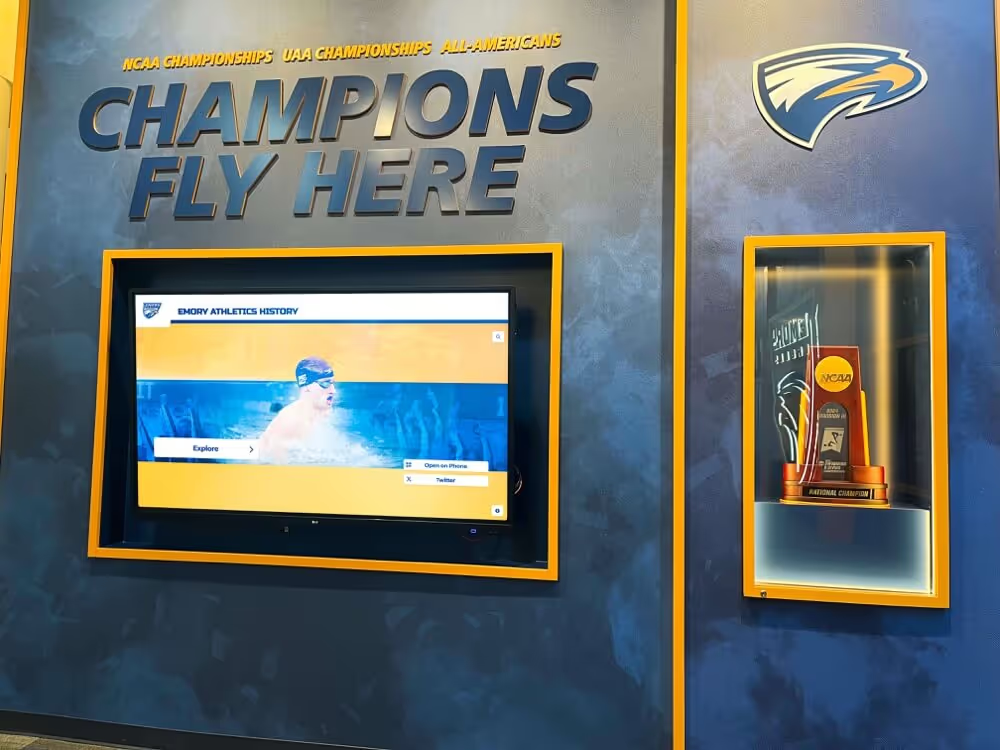
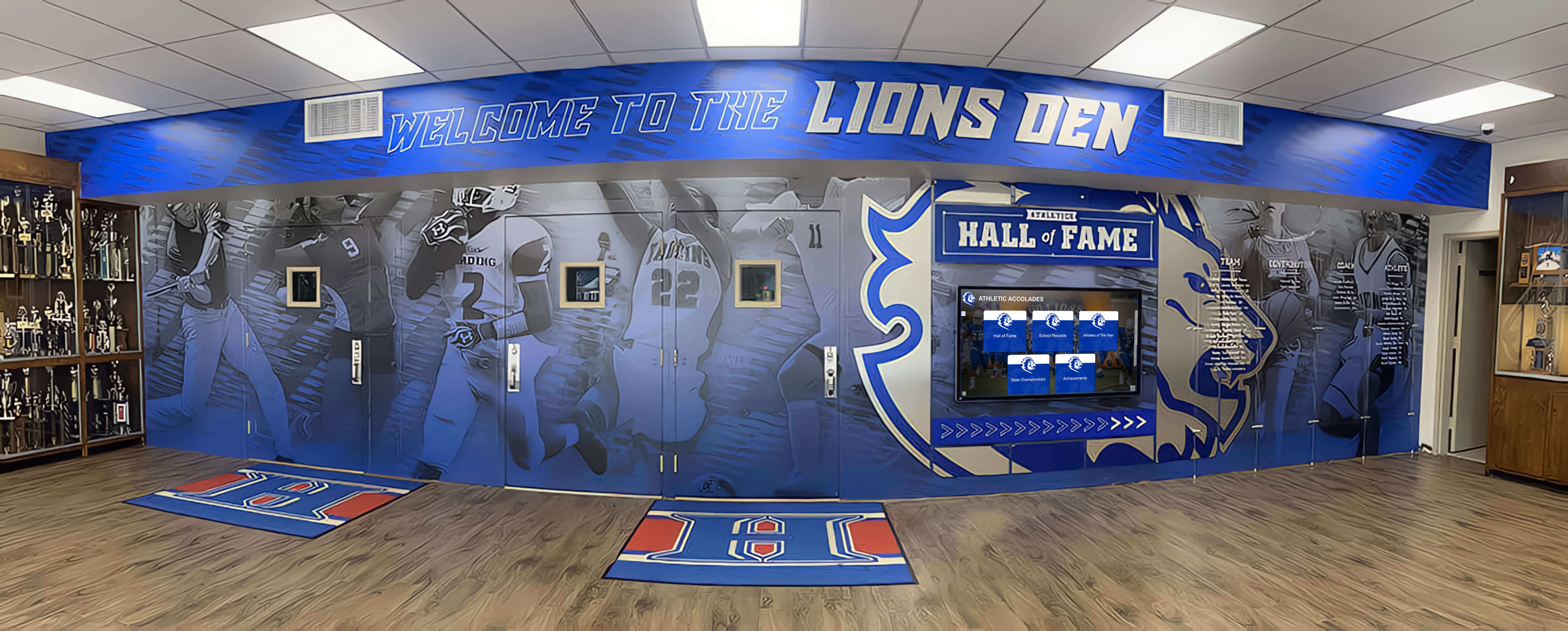
Digital touchscreens integrate seamlessly with existing trophy cases, creating hybrid systems combining physical awards with unlimited digital capacity
How Digital Trophy Cases Differ from Traditional Glass Cases
Physical trophy cases have served organizations for generations, but they suffer from fundamental limitations that digital trophy case systems systematically address through modern technology and interactive design approaches.
Critical Distinctions
Space and Capacity
- Traditional cases: Limited to 30-50 trophies per case based on physical dimensions and visual spacing requirements
- Digital trophy cases: Unlimited capacity showcasing thousands of trophies with comprehensive documentation, photos, videos, and complete achievement stories
Information Depth and Context
- Traditional cases: Basic engraved nameplates providing minimal context about achievements, typically just sport, year, and award type
- Digital trophy cases: Rich multimedia profiles including high-resolution trophy photographs from multiple angles, championship story context with complete team rosters and season records, video highlights preserving defining moments, comprehensive statistical documentation, and searchable interfaces enabling instant discovery
Maintenance and Update Procedures
- Traditional cases: Physical access required for every modification, creating administrative burden and delays between achievement and recognition
- Digital trophy cases: Remote cloud-based updates completed in minutes from any device without physical display access or facilities coordination
Engagement and Interaction
- Traditional cases: Passive viewing where students glance briefly at visible front-row content while rushing past displays
- Digital trophy cases: Active exploration where users spend 5-15 minutes discovering trophy collections through search, filtering, and interactive browsing that reveals connections and stories
Cost Over Extended Time
- Traditional cases: $2,000-$10,000 per case with limited capacity requiring continuous purchases as trophy collections grow
- Digital trophy cases: Single upfront investment with unlimited capacity eliminating need for ongoing case expansion and purchases
These fundamental differences explain why organizations implementing digital trophy cases report dramatically improved recognition outcomes—the technology solves capacity constraints while simultaneously delivering superior engagement and celebration compared to traditional glass case approaches that inherently limit what schools can accomplish.
Explore comprehensive comparisons in trophy display case ideas demonstrating different recognition approaches.
The Trophy Recognition Crisis Facing Schools and Athletic Programs
Understanding why digital trophy cases have become necessary requires examining the persistent recognition challenges that successful programs inevitably encounter as achievements accumulate across multiple decades.
The Accumulation Mathematics Problem
Physical trophy case capacity represents one of the most frustrating limitations facing institutions committed to honoring athletic and academic achievement appropriately across all programs.
Trophy Generation Rates
Active athletic and academic programs generate recognition items at rates far exceeding any reasonable physical display capacity:
- Comprehensive athletic programs with 15-20 sports typically generate 3-5 trophies per sport annually for varsity, junior varsity, conference championships, tournament placements, and individual achievements
- State championship trophies, conference titles, tournament victories, and rivalry awards each create substantial physical trophies
- Individual athlete recognition including all-conference selections, all-state honors, team MVPs, statistical achievement awards, and sportsmanship recognition add dozens more items annually
- Academic achievement programs generate additional recognition through honor societies, academic competitions, debate championships, and scholastic excellence awards
- Arts programs contribute recognition for theatre awards, music competition victories, fine arts achievements, and performance excellence
- Multi-sport athletes and multi-program participants earning recognition across different activities multiply documentation needs substantially
This consistent generation means even modestly successful programs accumulate hundreds of trophies within a decade and thousands within a generation—far exceeding any physical display capacity schools can reasonably dedicate to recognition without converting entire hallways into trophy storage.
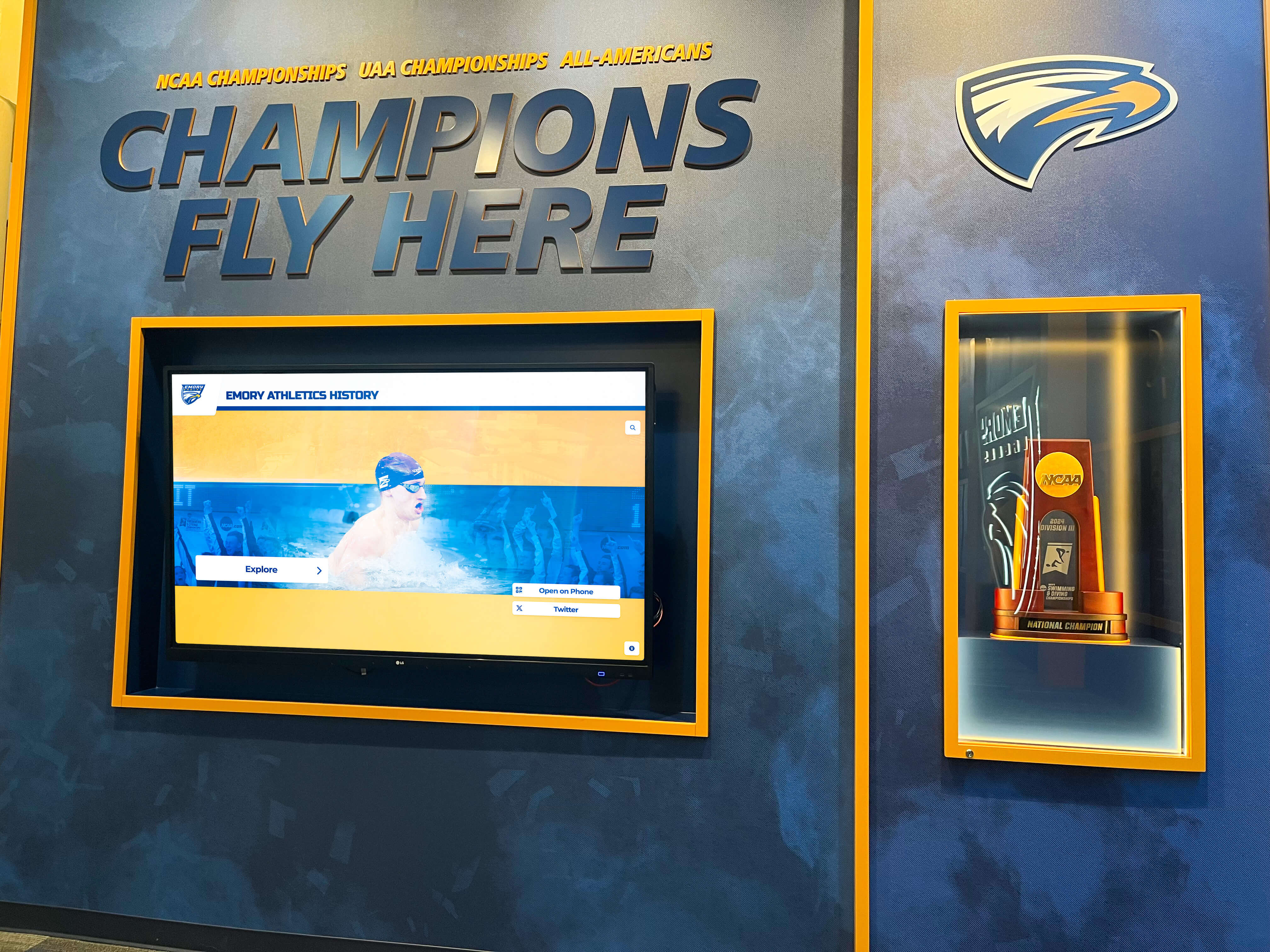
Successful programs accumulate trophies faster than physical spaces can accommodate, forcing difficult curation decisions
The 60-70% Storage Rate
Schools and athletic programs consistently report that 60-70% of earned trophies and awards end up in storage closets, boxes, or forgotten spaces rather than on display due to physical capacity constraints. This troubling reality creates several negative dynamics:
- Athletes compete and achieve excellence but never see their accomplishments displayed prominently where peers, families, and community members can celebrate them
- Historical achievements that built program traditions become invisible to current students who lack awareness of institutional legacy
- Community members visiting facilities see only recent recognition without understanding complete program excellence spanning multiple decades
- Administrators struggle with impossible decisions about which accomplishments deserve display visibility versus storage obscurity
This space-achievement gap fundamentally undermines recognition’s core purpose—celebrating excellence visibly enough to inspire current athletes and students while honoring past achievement appropriately and preserving institutional memory across generations.
Learn comprehensive solutions in what is homecoming court exploring recognition programs that digital systems support effectively.
Financial Implications of Limited Physical Capacity
Trophy capacity constraints create both direct costs and wasted recognition investments that strain athletic and institutional budgets while delivering diminishing returns.
Recognition Investment Waste
Athletic programs typically spend $2,000-$6,000 annually purchasing trophies, plaques, and awards for various achievements across all sports. When 60-80% of these recognition items end up stored rather than prominently displayed, institutions waste substantial money and motivational opportunities that recognition should provide.
Trophy manufacturers, engraving services, presentation ceremonies, and recognition programs all represent costs delivering little lasting benefit when awards quickly disappear from public view into storage closets. This creates uncomfortable questions about whether recognition spending justifies returns when physical constraints prevent meaningful long-term display that inspires future athletes.
Infrastructure Expansion Costs
Programs attempting to solve capacity problems through additional physical trophy cases face substantial recurring expenses:
- Commercial trophy cases suitable for school installations cost $2,000-$10,000 each depending on size, materials, security features, and lighting requirements
- Professional installation including mounting, electrical work, and securing adds $500-$2,000 per case
- Programs requiring 5-10 additional cases to display accumulated awards face $12,500-$120,000 infrastructure investments
- Ongoing maintenance including cleaning, lighting replacement, lock repairs, and security monitoring adds annual costs
- Facility space dedicated to trophy display cannot serve other programmatic functions like classrooms, meeting spaces, or student activity areas
These infrastructure costs compete directly with coaching salaries, equipment purchases, facility improvements, and program operations—making capacity expansion through additional physical trophy cases difficult to justify when budgets face competing priorities that more directly support student athletes and educational programming.
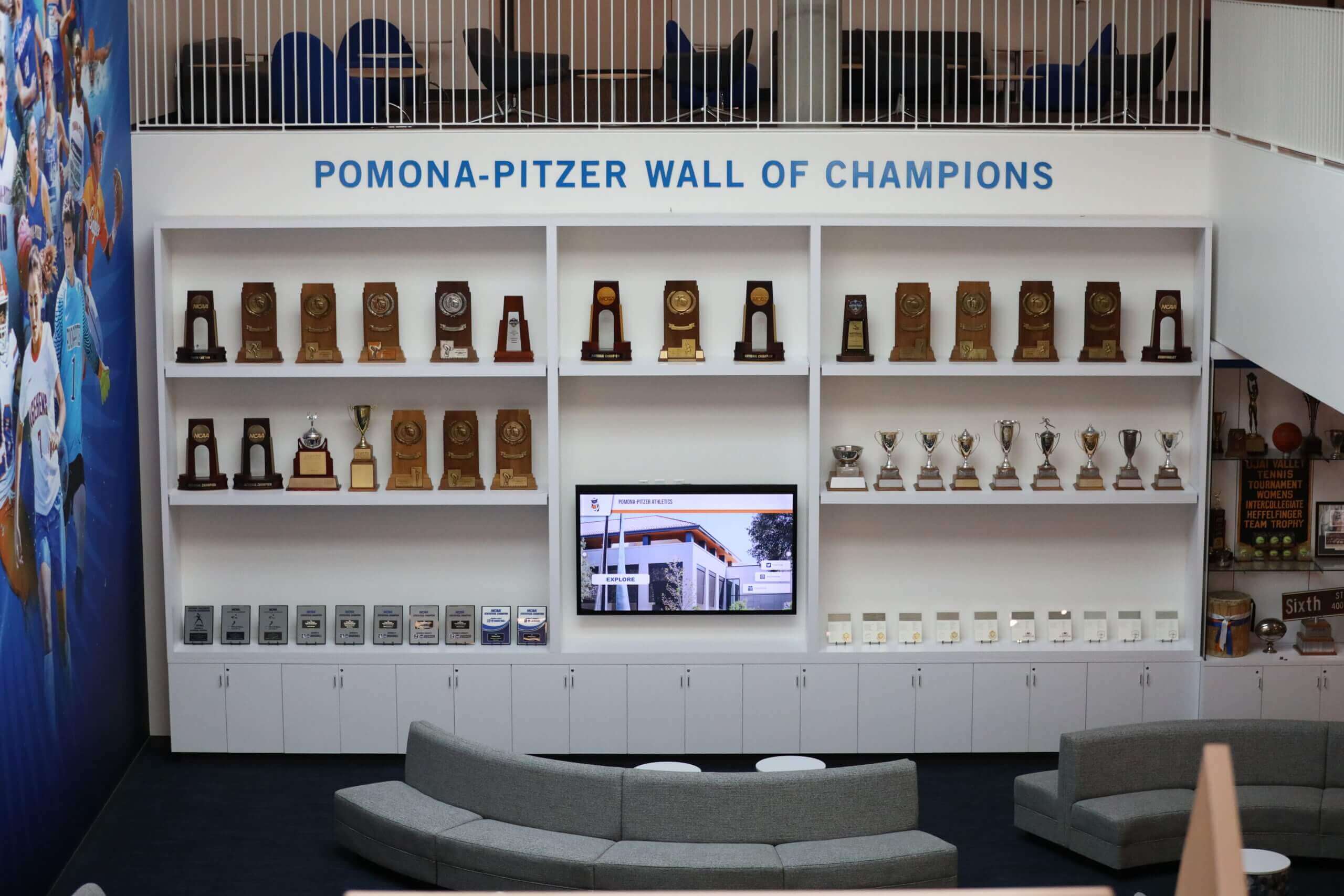
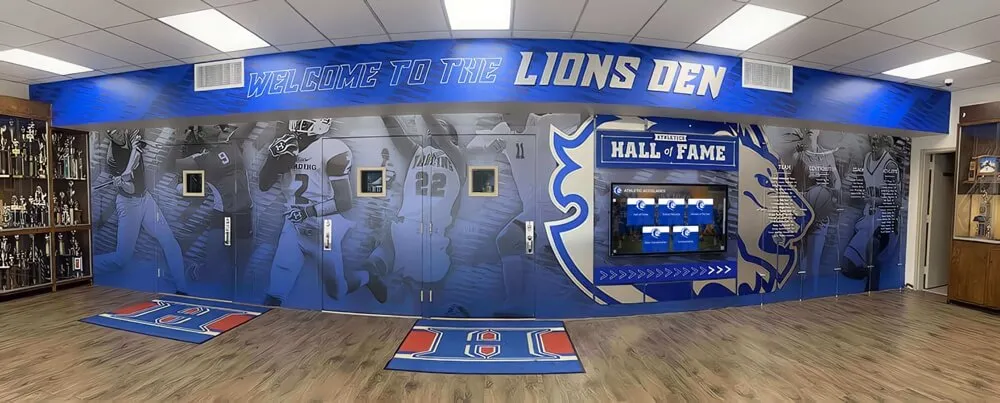
Traditional recognition spaces combine multiple elements but still face inevitable physical capacity limitations
Core Benefits of Digital Trophy Case Systems
Digital trophy case technology solves fundamental recognition limitations while creating new engagement possibilities and celebration opportunities impossible with static glass displays.
Unlimited Trophy Documentation Capacity
The most immediate and transformational benefit digital trophy cases provide is complete elimination of space constraints that plague physical recognition systems and force impossible curation decisions.
Infinite Digital Space
Digital platforms enable organizations to showcase unlimited trophies across all categories, sports, eras, and achievement types. A single 55-inch touchscreen display can present comprehensive profiles for thousands of trophies with detailed information, high-resolution photographs from multiple angles, championship videos, complete statistical documentation, and searchable interfaces—recognition that would require dozens of physical trophy cases to approach and could never provide comparable information depth.
This unlimited capacity fundamentally changes institutional recognition philosophy. Organizations can adopt inclusive “celebrate everyone deserving” approaches rather than exclusive “limited space forces difficult choices” models that inherently create winners and losers in recognition visibility and celebration opportunities.
Recognition Democracy Across All Programs
Unlimited digital capacity enables equitable recognition across all achievement categories and programs:
- Championship trophies receive permanent display regardless of when earned or which sport achieved them
- Individual achievement awards find space alongside major team accomplishments without competition for limited real estate
- Lesser-known sports and academic programs receive visibility comparable to premier athletic programs
- Every season, championship, and achievement across all decades receives appropriate celebration without displacement
- Niche accomplishments and specialized awards find audiences without competing for limited physical space
- Historical recognition remains permanently accessible rather than cyclically removed to accommodate new achievements
- Multi-year athletes contributing to programs across eras receive comprehensive recognition spanning their complete careers
Programs implementing digital trophy cases report displaying achievements for 300-500% more athletes, students, and teams than previous physical displays accommodated—demonstrating the transformative capacity difference these systems provide for comprehensive institutional recognition.
Rich Multimedia Trophy Storytelling
Beyond solving capacity constraints, digital trophy cases enable recognition experiences qualitatively superior to what traditional glass cases can deliver through enhanced content and interactive features.
Comprehensive Trophy Documentation
Modern digital trophy case systems integrate multiple media types creating complete achievement celebration:
- High-resolution trophy photography: Multiple angles with zoom capabilities revealing engraved details, craftsmanship, and complete inscriptions impossible to see in crowded physical cases
- Championship story context: Complete team rosters with graduation years and positions, season records with game-by-game results, tournament brackets showing paths to victory, playoff progression documentation, and historical context placing achievements within program legacy
- Video highlights and moments: Championship-winning plays, game-defining performances, celebration reactions, post-game interviews, and broadcast footage preserving emotional impact of achievement moments
- Individual athlete profiles: Complete statistics, career progressions, multiple-sport participation, academic achievements, college recruitment outcomes, and post-graduation success stories
- Searchable databases: Instant discovery of specific trophies, championships, years, athletes, sports, or achievement types matching visitor interests and personal connections
- Audio recordings: Championship broadcasts, coach interviews, athlete reflections, and memorable moments from defining victories
- Social sharing capabilities: Enable athletes, families, and supporters to celebrate trophies digitally with extended networks amplifying recognition reach organically
- Web-responsive design: Extend trophy exploration beyond physical displays to any smartphone, tablet, or computer worldwide
These multimedia capabilities transform simple trophy display into comprehensive achievement celebration that honors excellence appropriately while creating experiences sustaining visitor attention far longer than glancing at crowded glass cases filled with aging trophies and faded nameplates.
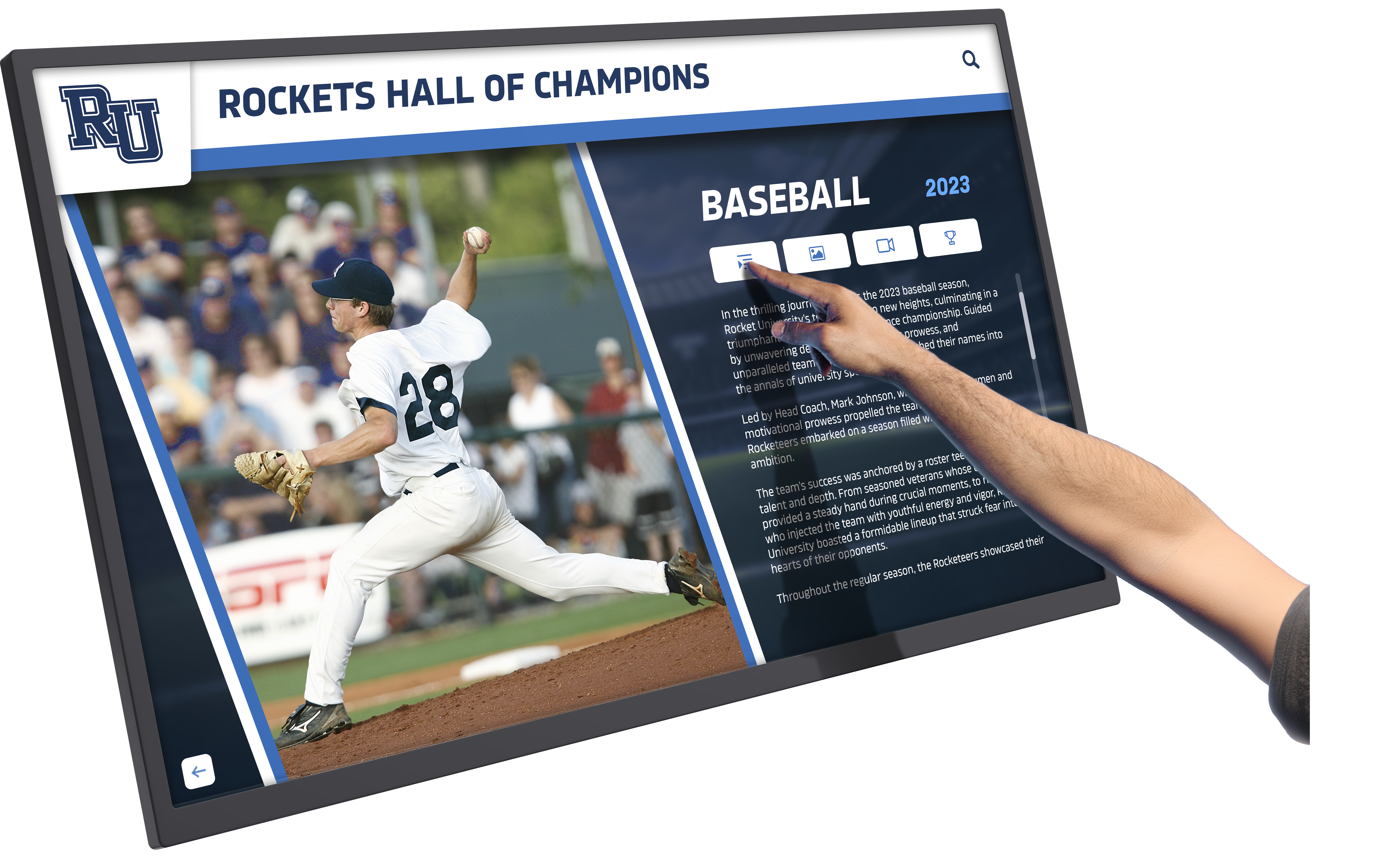
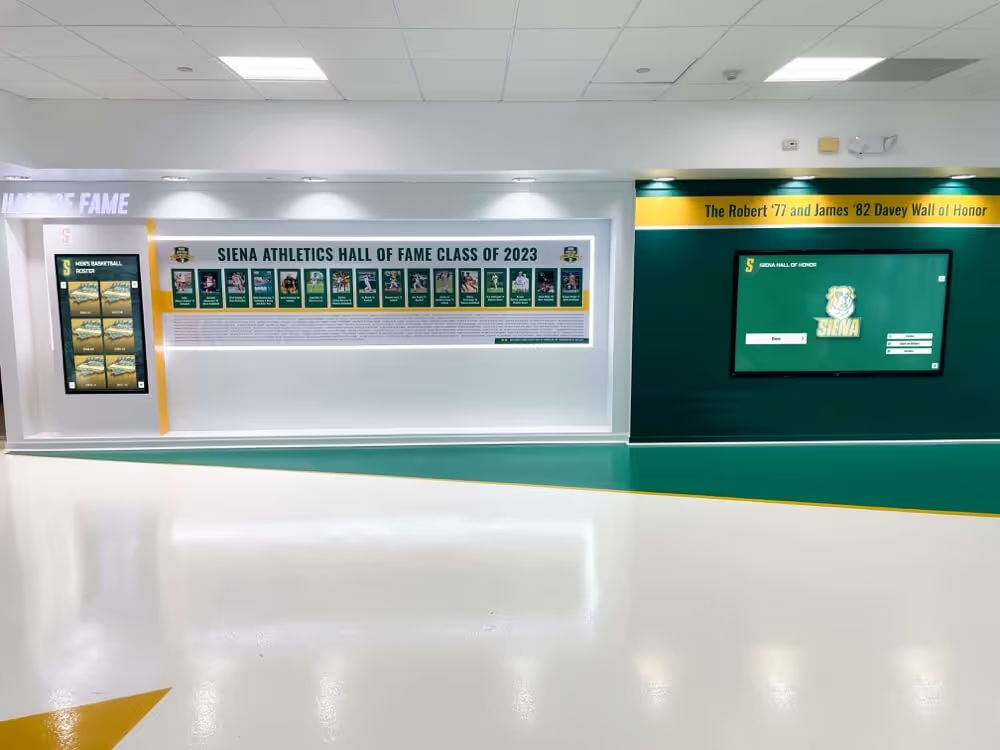
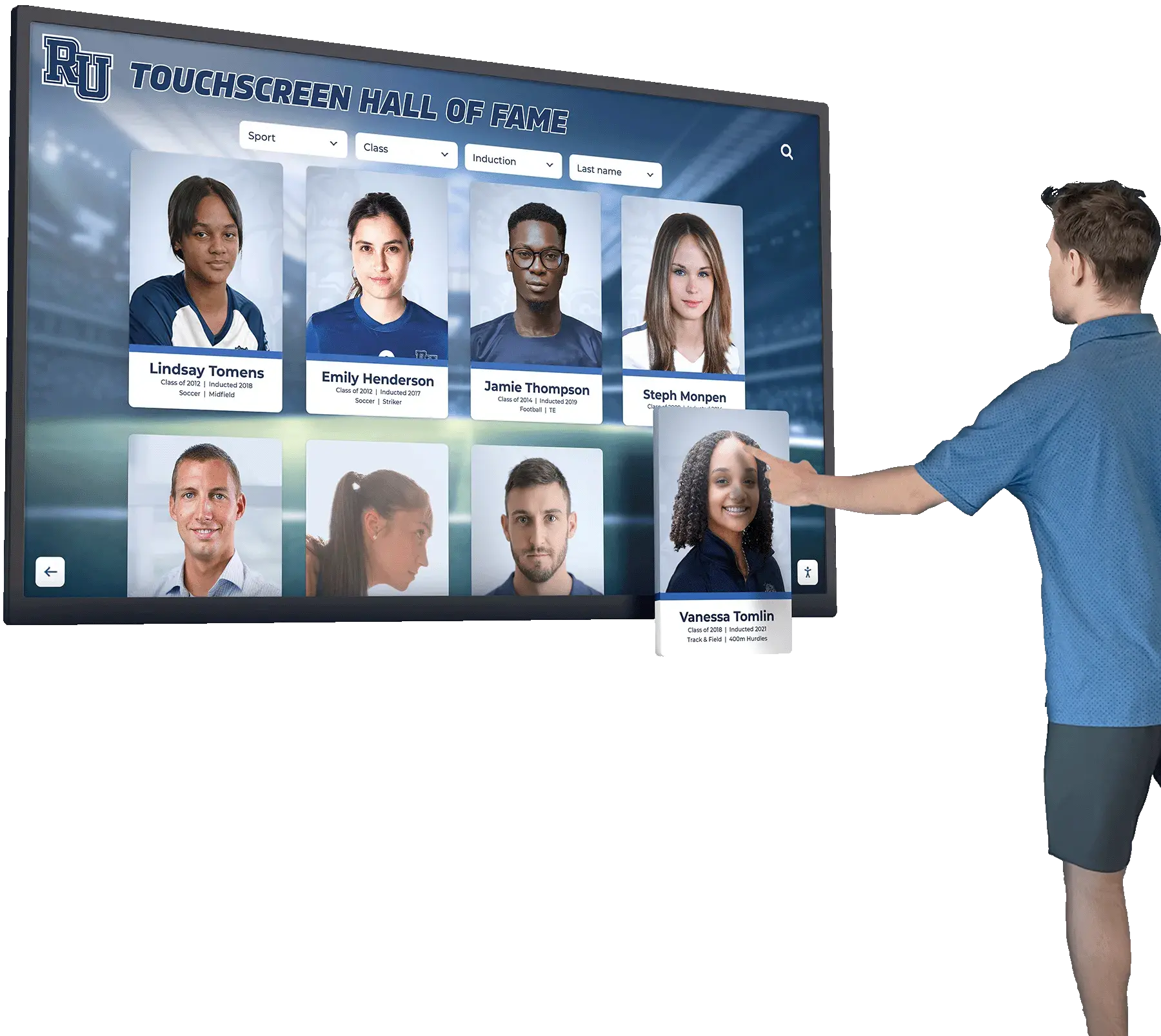
Touch interfaces enable discovering individual athletes, viewing complete statistics, exploring championship contributions, and understanding achievement context
Dynamic Content Evolution
Digital trophy recognition remains perpetually current through instant cloud-based updates:
- Add new championship trophies immediately upon victory with complete documentation, photos, videos, and roster information
- Enhance existing trophy profiles as new information and media become available from alumni, archives, or community contributions
- Correct errors or update engraving details without physical display modification or trophy case access
- Refresh featured content highlighting different championships and achievements seasonally, during reunions, or aligned with current team success
- Incorporate new media formats and storytelling techniques as technology advances and expectations evolve
- Connect individual athlete achievements to team championship trophies automatically through smart linking and relationship mapping
- Update alumni career information as former athletes achieve post-graduation success in college, professional, or career pursuits
This evolution ensures trophy recognition quality improves continuously rather than degrading over time as physical displays age, tarnish, engravings fade, and information becomes outdated or illegible to new generations.
Discover comprehensive approaches in interactive kiosk schools universities guide demonstrating advanced trophy documentation capabilities.
Dramatically Increased Engagement and Interaction
Perhaps the most significant benefit digital trophy cases deliver is the dramatic increase in visitor engagement duration and interaction depth compared to traditional trophy case recognition that people walk past without stopping.
Engagement Duration and Depth
Organizations implementing interactive digital trophy cases consistently report that visitors spend 5-15 minutes actively exploring trophy collections compared to 30-60 seconds glancing at traditional static cases. This 5-15x increase in engagement duration means recognition achieves intended impacts—inspiration, connection, cultural development, tradition building—rather than being overlooked or ignored during rushed hallway transitions.
Active Versus Passive Trophy Exploration
Traditional trophy cases create passive experiences where people walk past displays, occasionally glancing at visible front-row awards but rarely stopping for extended examination or deeper exploration. Digital trophy cases transform passive viewers into active participants who:
- Search for specific athletes, championships, sports, or years matching personal interests, family connections, or curiosity
- Explore complete trophy collections systematically rather than viewing only visible front-row items in crowded glass cases
- Discover unexpected connections between championships, athletes, coaches, and historical achievements spanning multiple decades
- Filter content by achievement type, sport, era, or other categories enabling personalized exploration matching individual interests
- Share trophy accomplishments through social media platforms amplifying recognition reach organically beyond campus
- Return repeatedly to explore new content, seasonal features, and championship additions as programs add achievements
- Engage with related content through automatic suggestions and intelligent linking connecting championships, athletes, and traditions
This fundamental behavioral difference explains why digital trophy cases deliver dramatically superior recognition outcomes despite displaying the same underlying achievements—the interactive format creates engagement that passive glass trophy cases simply cannot generate regardless of trophy quality or display design.
Multi-Channel Trophy Accessibility
Digital trophy recognition serves broader audiences through multiple access points extending reach far beyond physical campus locations:
- Physical touchscreen displays in high-traffic athletic facility locations and school entrances
- Web-accessible platforms enabling trophy exploration from home, work, or anywhere worldwide
- Mobile-optimized interfaces for smartphones and tablets supporting on-the-go discovery during campus visits
- Social sharing capabilities amplifying trophy recognition reach exponentially through organic community promotion
- Search engine visibility connecting external audiences to championship histories and athlete achievements
- QR code integration linking physical spaces, printed programs, and promotional materials to complete digital trophy collections
This multi-channel accessibility ensures trophy recognition reaches alumni living across the country, prospective students researching programs remotely, family members unable to visit campus regularly, and community supporters wanting to celebrate local athletic and academic excellence—far beyond the limited audience that physically encounters traditional glass trophy cases in specific facility locations.
Learn engagement strategies in pep rally ideas games activities build school spirit complementing digital recognition systems.
Strategic Applications of Digital Trophy Cases
While digital trophy cases can document all recognition categories, certain applications deliver particularly high value for schools, athletic programs, and educational institutions committed to comprehensive achievement celebration.
Athletic Championship Trophy Recognition
State championships, conference titles, tournament victories, and competitive excellence represent program-defining achievements deserving premium recognition treatment that honors athletes appropriately while inspiring future teams.
Comprehensive Championship Celebration
Digital trophy cases enable systematic championship recognition across all dimensions and perspectives:
Team Championship Documentation
- Complete season records with game-by-game results, scores, and performance highlights
- Tournament bracket progression showing competitive path to championship victory
- Championship game highlights preserving defining moments, ultimate plays, and celebration reactions permanently
- Complete roster documentation ensuring every championship athlete receives recognition regardless of playing time
- Coaching staff acknowledgment celebrating leadership contributions and strategic excellence
- Championship trophy high-resolution photography from multiple angles revealing details and craftsmanship
- Contemporary media coverage and newspaper articles providing historical context and community celebration documentation
- Anniversary recognition revisiting championships at milestone years reconnecting alumni and celebrating traditions
Individual Championship Contributions
- Statistical leaders from championship seasons with complete documentation and context
- MVP and all-tournament team recognition from championship runs and defining performances
- Individual record performances during championship competitions that made victories possible
- Multi-year athletes contributing to multiple championships across different seasons and eras
- Post-high-school career tracking showing championship athletes’ continuing success
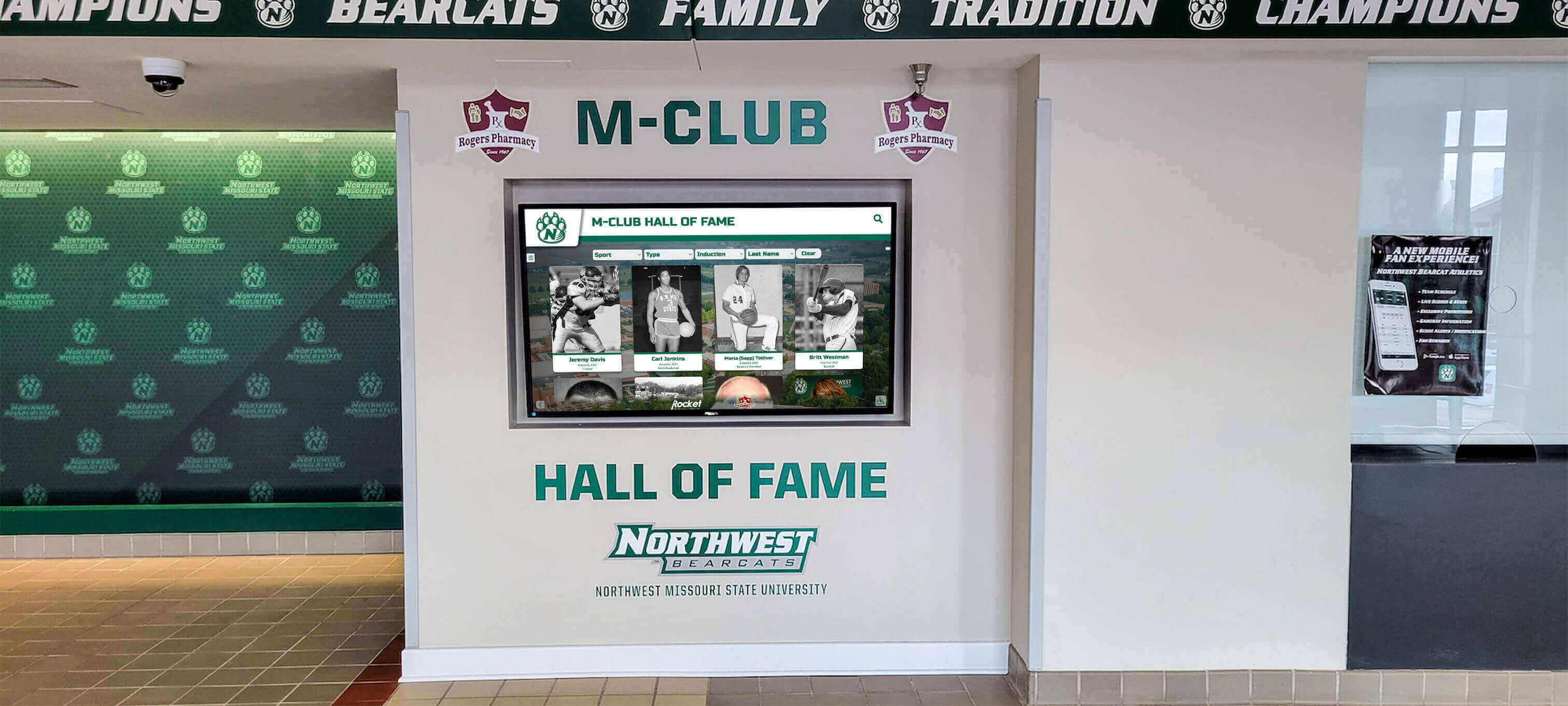
Championship documentation connects team trophies to individual athlete profiles, statistics, and defining competitive moments
This comprehensive approach ensures championship trophies receive recognition worthy of their significance while preserving complete stories for current students, future athletes, and generations exploring institutional legacy decades into the future.
Explore specialized recognition in coach appreciation day creative ways schools honor coaches complementing championship celebration systems.
Academic Achievement and Scholastic Recognition
Digital trophy cases serve academic excellence programs just as effectively as athletic championships—celebrating intellectual achievement, competition success, and scholarly distinction across all disciplines.
Academic Competition Trophy Documentation
Schools document academic competition achievements comprehensively:
- Debate tournament championships and individual speaker awards across multiple formats
- Academic quiz bowl victories and subject-specific competition recognition
- Science olympiad medals, robotics competition achievements, and STEM excellence
- Mathematics competition honors including state and national recognition
- Music competition victories, band championships, and individual performance excellence
- Theatre awards, drama competition success, and fine arts achievement
- Writing competition recognition, journalism honors, and literary achievement
Individual Academic Excellence Recognition
Digital trophy cases celebrate personal scholastic achievement:
- Valedictorian and salutatorian recognition with academic career documentation
- National Merit Scholarship achievement and standardized testing excellence
- Honor society memberships including National Honor Society, subject-specific societies, and chapter leadership roles
- Scholarship awards and college admission achievements
- Perfect attendance recognition and consistent excellence
- Academic improvement awards celebrating growth and dedication
This academic recognition demonstrates that schools value intellectual excellence alongside athletic achievement—encouraging balanced development while honoring diverse forms of student success across all programs and activities that contribute to institutional excellence.
Discover recognition approaches in what is salutatorian second highest academic honor explained for academic achievement systems.
Multi-Program and Historical Trophy Collections
Comprehensive schools with extensive trophy histories across athletic, academic, and arts programs benefit particularly from digital trophy case capacity and organizational capabilities that make discovery intuitive.
Cross-Program Trophy Organization
Digital platforms enable systematic organization impossible with physical glass cases:
- Program-specific trophy collections with dedicated sections for athletics, academics, arts, and community service
- Chronological organization showing institutional evolution across decades and generations
- Championship-focused displays highlighting premier achievements across all categories
- Decade retrospectives exploring complete program history systematically
- Leadership era documentation connecting trophies to principals, athletic directors, coaches, and faculty influence
- Facility milestone recognition connecting trophies to venue developments and infrastructure investments
Advanced Search and Discovery Features
Sophisticated search capabilities enable instant trophy discovery regardless of collection size:
- Name search finding specific individuals across all programs, sports, activities, and years
- Year search exploring complete trophy collections from specific seasons or graduation classes
- Trophy type filtering showing championships, individual awards, or achievement categories
- Program filtering displaying specific sport, academic, or arts achievements comprehensively
- Record holder identification showcasing statistical excellence and performance benchmarks
- Multi-program participant discovery highlighting students contributing across diverse activities
- Family connection revelation showing generational program involvement and legacy relationships
These organizational and search capabilities transform overwhelming trophy collections into explorable databases where every achievement remains accessible and discoverable regardless of how large collections grow—ensuring recognition serves its purpose rather than becoming unusable due to scale.
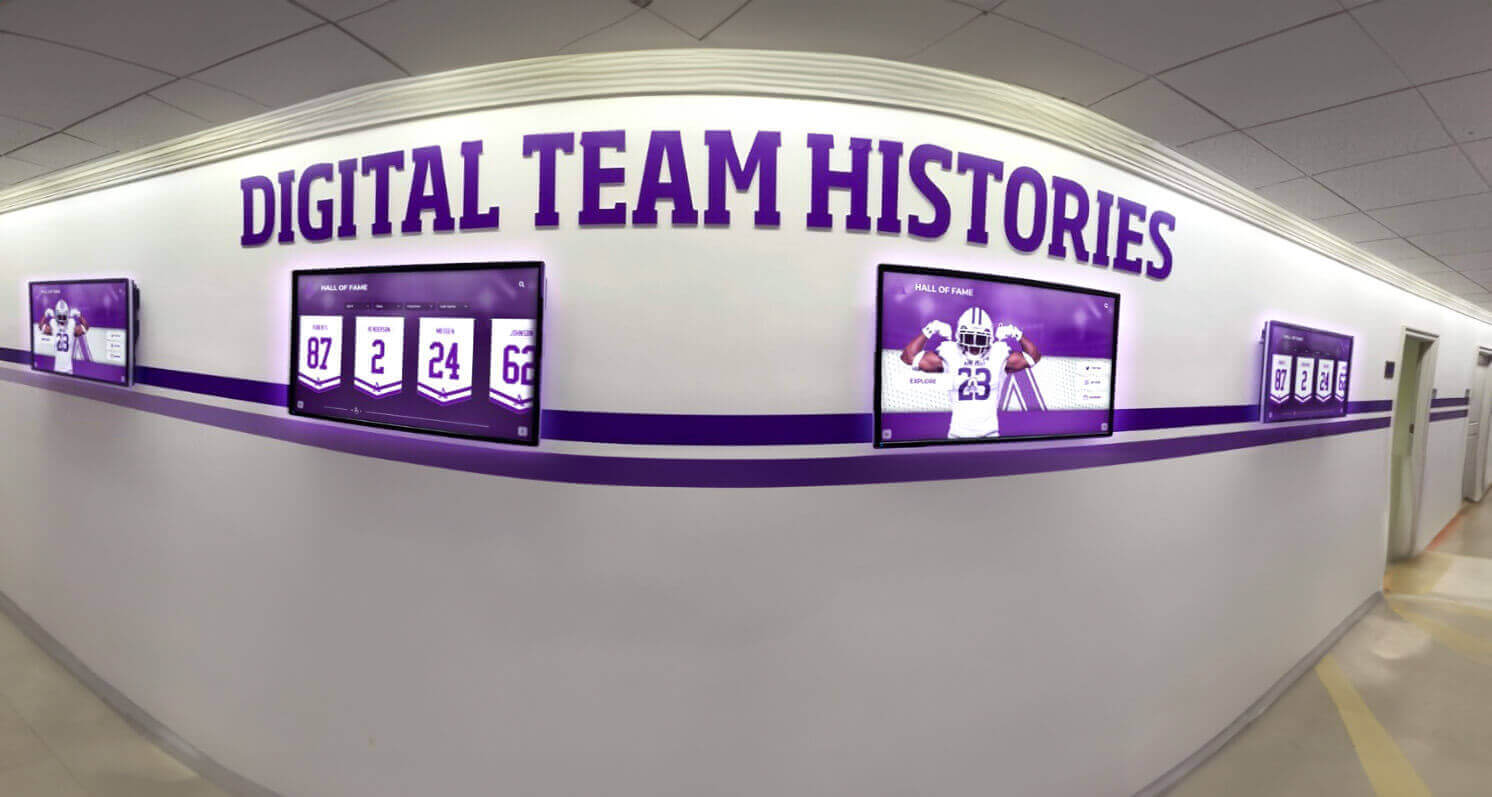
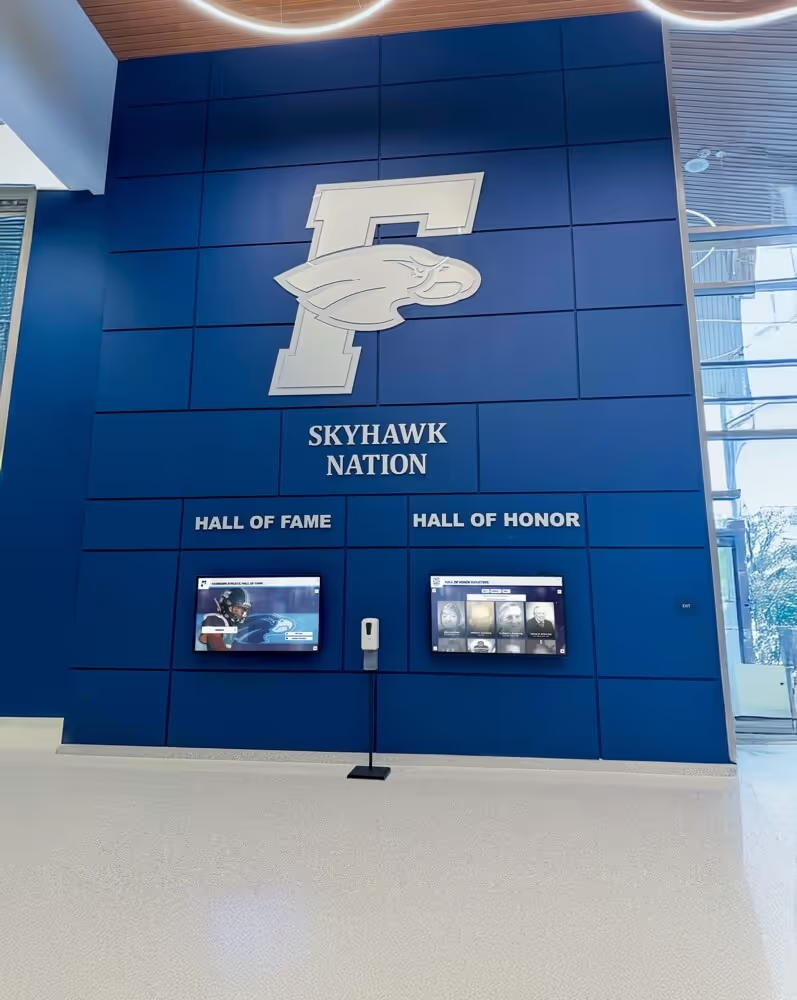
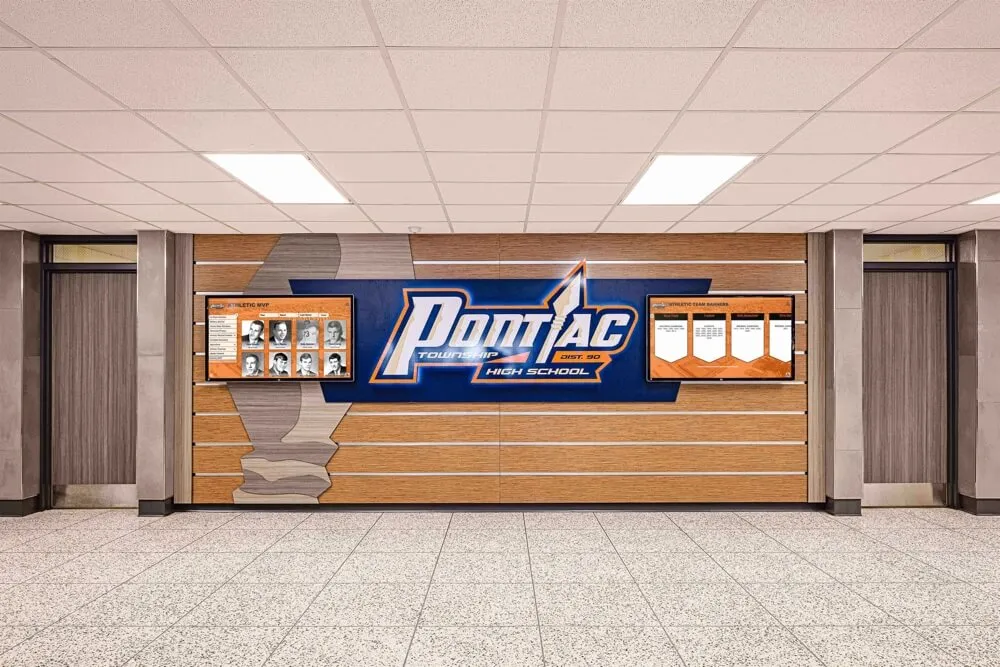
Strategic placement of multiple displays throughout facilities ensures comprehensive trophy visibility reaching diverse audiences
Planning Digital Trophy Case Implementation
Successfully implementing digital trophy case technology requires systematic planning addressing multiple interconnected considerations ensuring long-term success, sustainable management, and achievement of intended recognition objectives.
Technology Platform Selection
Organizations evaluating digital trophy case solutions face numerous vendor options with varying capabilities, costs, support models, and long-term viability requiring careful assessment.
Essential Platform Capabilities
Purpose-built recognition platforms offer significant advantages over generic digital signage solutions adapted for trophy display purposes:
- Cloud-based content management enabling remote trophy documentation updates without physical display access or facilities coordination
- Intuitive interfaces requiring no technical expertise for ongoing trophy additions, edits, and enhancements
- Unlimited content storage supporting extensive trophy photography, video archives, and multimedia documentation collections
- Recognition-specific templates reducing initial setup complexity and ensuring consistent professional presentation
- Robust search and filtering enabling trophy discovery in large collections spanning multiple decades
- Mobile-responsive web design ensuring trophy exploration across smartphones, tablets, and desktop computers
- Privacy controls appropriate for student athlete information and personally identifiable data
- Social sharing integration facilitating organic trophy promotion and community celebration
- Analytics capabilities revealing engagement patterns informing content strategy improvements and optimization
- Integration support with student information systems, athletic management platforms, or donor databases when comprehensive data connection is desired
Rocket Alumni Solutions Specialized Advantages
Solutions designed specifically for educational and athletic trophy recognition deliver critical advantages over generic alternatives:
- Pre-built trophy case templates reducing implementation time from months to weeks
- Student privacy compliance built into platform architecture meeting FERPA and regulatory requirements
- Specialized support teams understanding unique school needs, budget constraints, and implementation challenges
- Proven track record across hundreds of successful installations at comparable institutions nationwide
- White-glove implementation services ensuring successful launches without overwhelming internal technical staff
- Ongoing training and technical assistance preventing platform abandonment after initial enthusiasm fades
- Regular platform enhancements driven by customer feedback improving capabilities continuously
- Favorable educational pricing reflecting school budget realities compared to corporate digital signage costs
These specialized capabilities justify investment in dedicated recognition platforms rather than attempting to adapt generic solutions for complex trophy documentation purposes requiring sustained management commitment across multiple years and staff transitions.
Hardware Specifications and Professional Installation
Display hardware significantly impacts user experience, maintenance requirements, operational reliability, and long-term satisfaction requiring careful specification and professional installation.
Trophy Case Hardware Requirements
Critical hardware decisions impacting recognition effectiveness and longevity:
- Screen size: 43-55 inches for smaller auxiliary spaces and supplementary locations; 65-75 inches for main lobbies, athletic facilities, and high-traffic championship display areas where larger formats create greater impact
- Touch technology: Capacitive or infrared multi-touch providing responsive tablet-like interaction without ongoing calibration maintenance requirements
- Brightness specifications: 350-500 nits for typical indoor school environments; higher brightness ratings for areas with significant natural light exposure
- Resolution standards: Minimum 1080p (1920x1080) for content clarity; 4K (3840x2160) for larger displays ensuring trophy detail visibility and future-proofing
- Commercial rating: Displays engineered specifically for 16-24 hour daily operation unlike consumer televisions that fail rapidly under institutional use
- Durability features: Tempered glass overlays protecting screens in high-activity school environments
- Mounting flexibility: Wall-mounted, freestanding kiosks, or architectural integration options matching facility aesthetics and space constraints
- Connectivity options: Built-in Wi-Fi or ethernet supporting reliable cloud content delivery and real-time updates
- Warranty coverage: Minimum 3-year comprehensive coverage appropriate for institutional installations with heavy daily usage
Schools should budget $4,000-$10,000 per display unit for commercial-grade hardware appropriate for high-traffic school environments depending on size, touch technology, and feature requirements.
Professional Installation Requirements
Proper installation ensures optimal performance, safety compliance, and extended longevity:
- Secure mounting meeting safety standards for high-activity school environments with student populations
- Professional cable management maintaining clean appearance worthy of trophy celebration
- Appropriate viewing heights for standing interaction and comfortable extended exploration
- Electrical work meeting local building code requirements and institutional safety standards
- Network configuration ensuring reliable connectivity without bandwidth issues or interference
- Anti-vandalism protection appropriate for institutional public spaces and unmonitored periods
- ADA accessibility compliance ensuring wheelchair users can interact comfortably at proper heights
Professional installation typically costs $800-$2,500 per display depending on mounting complexity, network infrastructure requirements, electrical work scope, and existing facility conditions—worthwhile investment preventing future problems from inadequate installations compromising recognition quality or creating safety concerns.
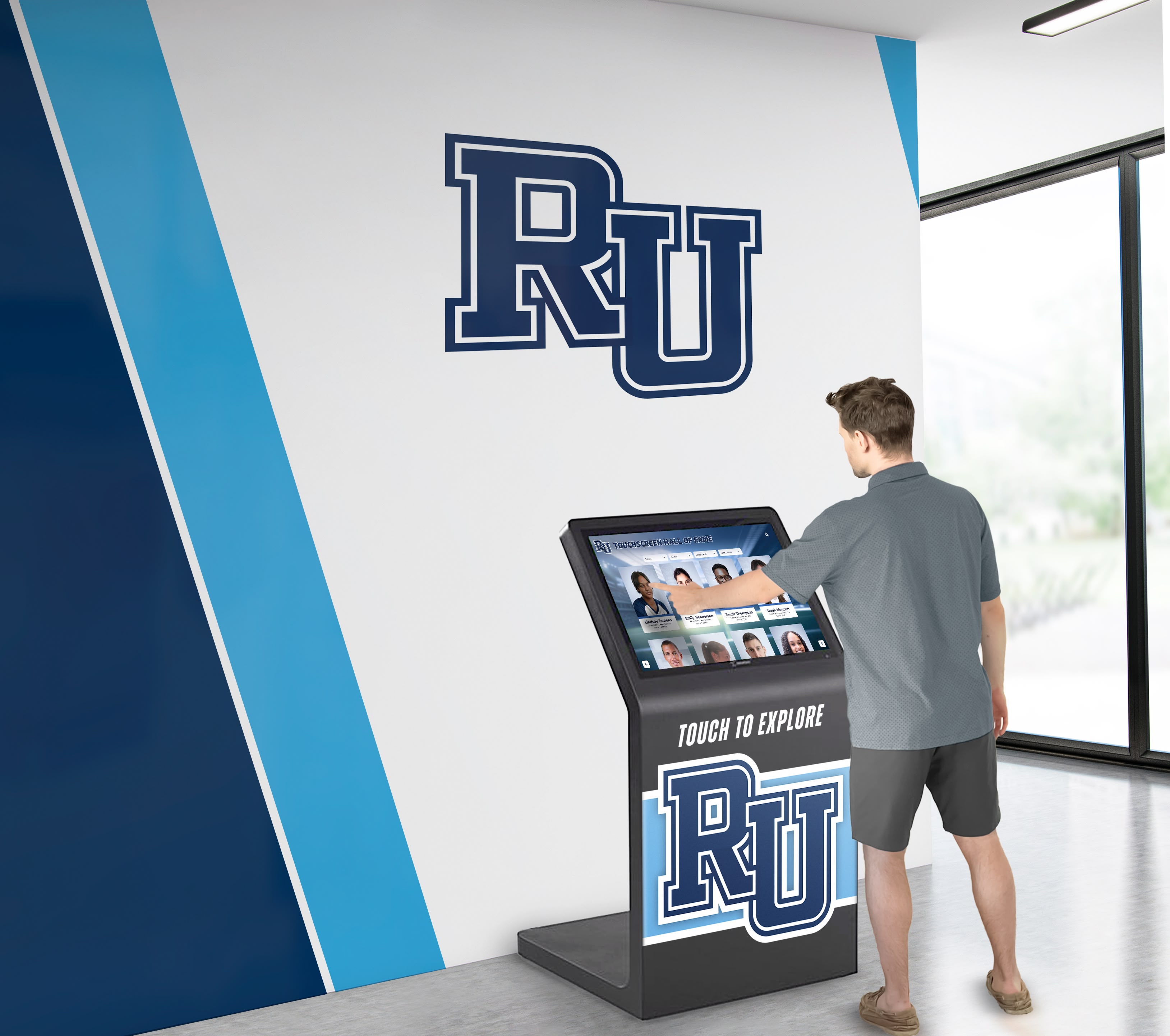
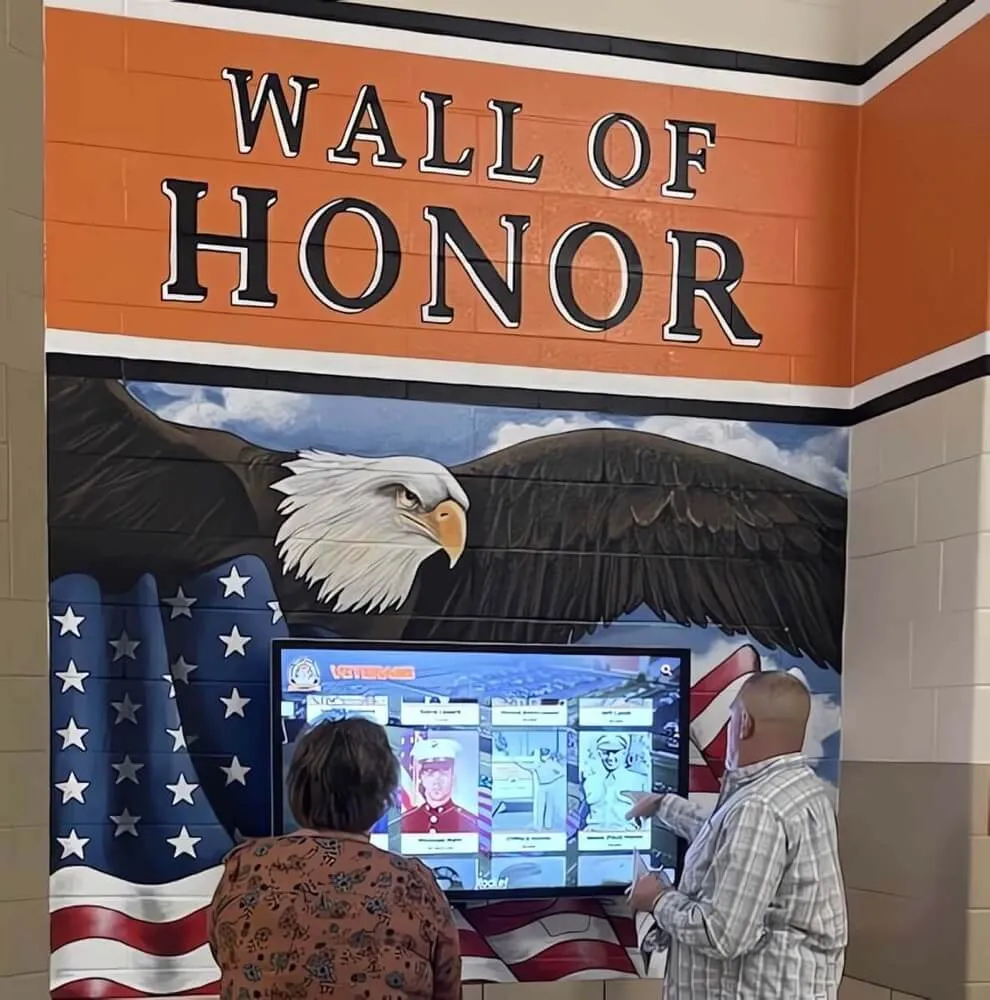
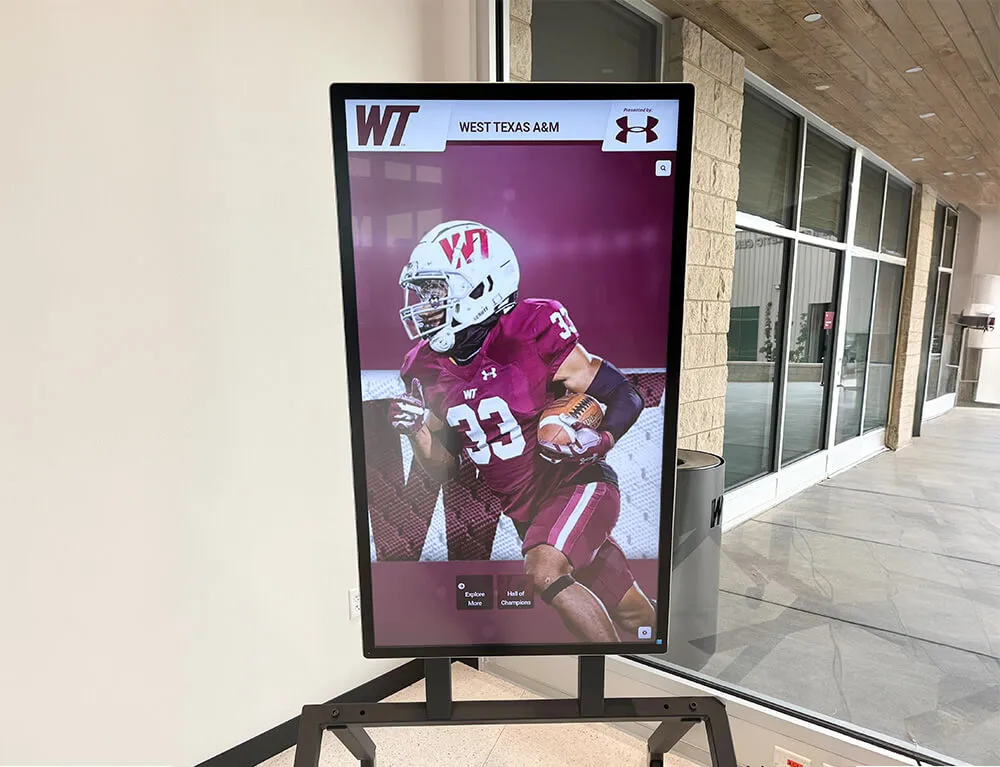
Professional kiosk installations create dedicated recognition destinations with optimal viewing angles and comfortable interaction
Location and Placement Strategy
Digital trophy case effectiveness depends heavily on strategic placement maximizing visibility and encouraging interaction from target audiences including students, athletes, families, alumni, and community visitors.
High-Traffic Location Selection
Optimal placement locations ensuring maximum trophy recognition engagement and visibility:
- Athletic facility main entrance lobbies ensuring all athletes, coaches, families, and visitors encounter trophy displays daily
- School building main entrance creating institutional pride atmosphere for all students, staff, and community visitors
- Gymnasium or arena concourses where game attendees naturally gather before competitions, during halftime, and after victories
- Athletic locker room corridors visible during facility tours showcasing program excellence to prospective student athletes
- Cafeteria and commons areas where students spend extended time enabling repeated casual engagement
- Library or media center spaces encouraging exploration during unstructured time
- Weight room and training facility areas where athletes spend significant time enabling repeated exposure and engagement
- Athletic administrative corridors where community members, donors, and visitors gather during meetings
- Multiple distributed locations throughout facilities reaching diverse audiences in context-appropriate settings
Organizations report highest trophy recognition engagement when digital displays appear in spaces where people naturally gather and have available time to explore rather than transitional corridors where everyone rushes past without stopping or examining content.
Creating Trophy Recognition Destinations
Most effective implementations transform display areas into recognition destinations through integrated environmental design:
- Comfortable seating arrangements encouraging extended trophy exploration and group discussion
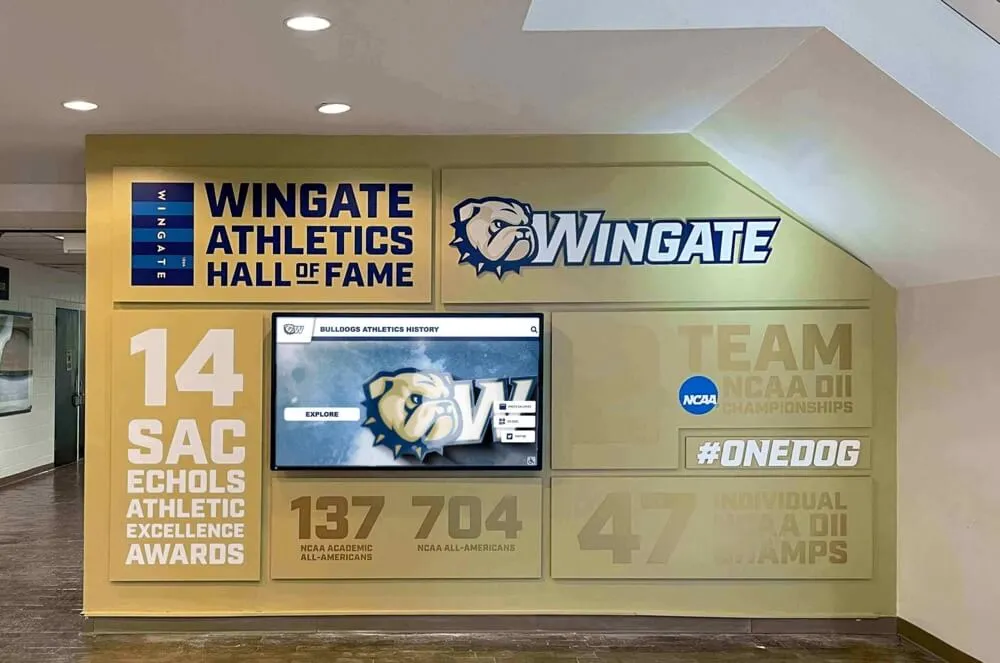
- Coordinated murals or graphics reinforcing institutional identity, championship traditions, and school pride
- Traditional trophy cases displaying select premier physical awards alongside comprehensive digital documentation
- School or team colors and institutional branding creating cohesive aesthetics celebrating identity
- Strategic lighting highlighting displays while creating appropriate atmosphere and ambiance
- Clear wayfinding signage directing visitors to trophy recognition areas from main entrances
- Championship banners and pennants coordinating visually with digital trophy displays
- Display case integration combining physical awards with digital storytelling for comprehensive celebration
These integrated approaches signal that trophy recognition matters institutionally, encouraging community engagement while creating visually impressive spaces that strengthen pride, tradition, competitive culture, and institutional identity.
Creating Compelling Digital Trophy Case Content
Hardware infrastructure and software platforms establish technological foundation, but engaging trophy content determines whether digital trophy cases achieve intended recognition and engagement objectives requiring systematic content development approaches.
Trophy Documentation Workflow
Systematic Trophy Content Creation Process
Successful implementations establish clear processes ensuring consistent quality and comprehensive trophy documentation coverage:
Initial Trophy Collection Documentation Phase
- Physical trophy inventory: Photograph all existing trophies systematically including displayed items and stored awards from all locations, offices, and storage areas
- Trophy research and verification: Document trophy backgrounds including years earned, sports or programs, specific championships or achievements, tournament details, and recipients
- Team roster compilation: Gather complete rosters for championship teams ensuring every athlete receives appropriate recognition
- Statistics and records collection: Compile season records, tournament results, individual statistical achievements, and performance documentation
- Media gathering and organization: Collect game photos, championship videos, newspaper coverage articles, and broadcast recordings from archives
- Content organization and standardization: Implement consistent file naming conventions, metadata tagging systems, and information formatting for long-term sustainability
- Platform import and upload: Populate recognition platform following established guidelines and templates systematically by category or chronological era
- Quality review and verification: Confirm published trophy content accuracy, photo quality, information completeness, and proper formatting before public launch announcement
This foundational trophy documentation typically represents the most time-intensive implementation phase—schools should allocate 80-150 hours for comprehensive historical trophy collection documentation depending on collection size, record availability, and documentation thoroughness desired for initial launch.
Ongoing Trophy Addition Procedures
Establish sustainable workflows ensuring new trophies receive immediate recognition following achievements:
- Designate specific administrative staff members responsible for trophy content management and regular updates
- Create standard documentation forms collecting necessary information immediately following championship victories or award presentations
- Photograph new trophies using consistent lighting, angles, backgrounds, and quality standards maintaining visual consistency
- Gather championship details including complete rosters, tournament brackets, scores, defining moments, and athlete reflections while information remains fresh
- Schedule immediate content additions capitalizing on championship excitement and community interest for maximum engagement impact
- Review published trophy content ensuring complete accuracy before public announcements and community celebrations
- Archive source materials supporting future enhancements, corrections, or additional documentation as information emerges
Quality Standards and Consistency Requirements
Professional trophy presentation deserves consistent quality standards across all content types:
Photography Standards
- High resolution minimum 1920x1080 for featured trophy images ensuring detail visibility
- Consistent lighting eliminating glare and revealing engraved details clearly on all trophies
- Multiple angles showing trophy design, bases, engravings, and unique features comprehensively
- Neutral backgrounds preventing visual distraction from trophy focus and important details
- Color accuracy representing trophies authentically without filters or artificial enhancement
Video Standards
- HD quality 1080p minimum; 4K preferred for future-proofing championship content
- Professional editing with clear titles, scores, contextual information, and athlete identification
- Appropriate length 2-5 minutes for championship game highlights; 30-60 seconds for specific defining moments
- Closed captioning for accessibility compliance ensuring all students and visitors can engage
- Format optimization for web streaming across devices without buffering or quality degradation
Written Content Standards
- Factual accuracy verified through multiple reliable sources and official institutional records
- Engaging storytelling beyond scores and statistics alone, capturing championship journeys and personal dedication
- Appropriate length 200-400 words typical for championship trophy profiles providing complete context
- Consistent tone celebrating achievement while maintaining institutional professionalism
- Proper spelling, grammar, punctuation, and terminology accuracy throughout all content
- Inclusive language reflecting institutional values and honoring all contributions equally
These quality standards ensure trophy content honors achievements appropriately while maintaining professional presentation reflecting positively on institutional commitment to recognition excellence.
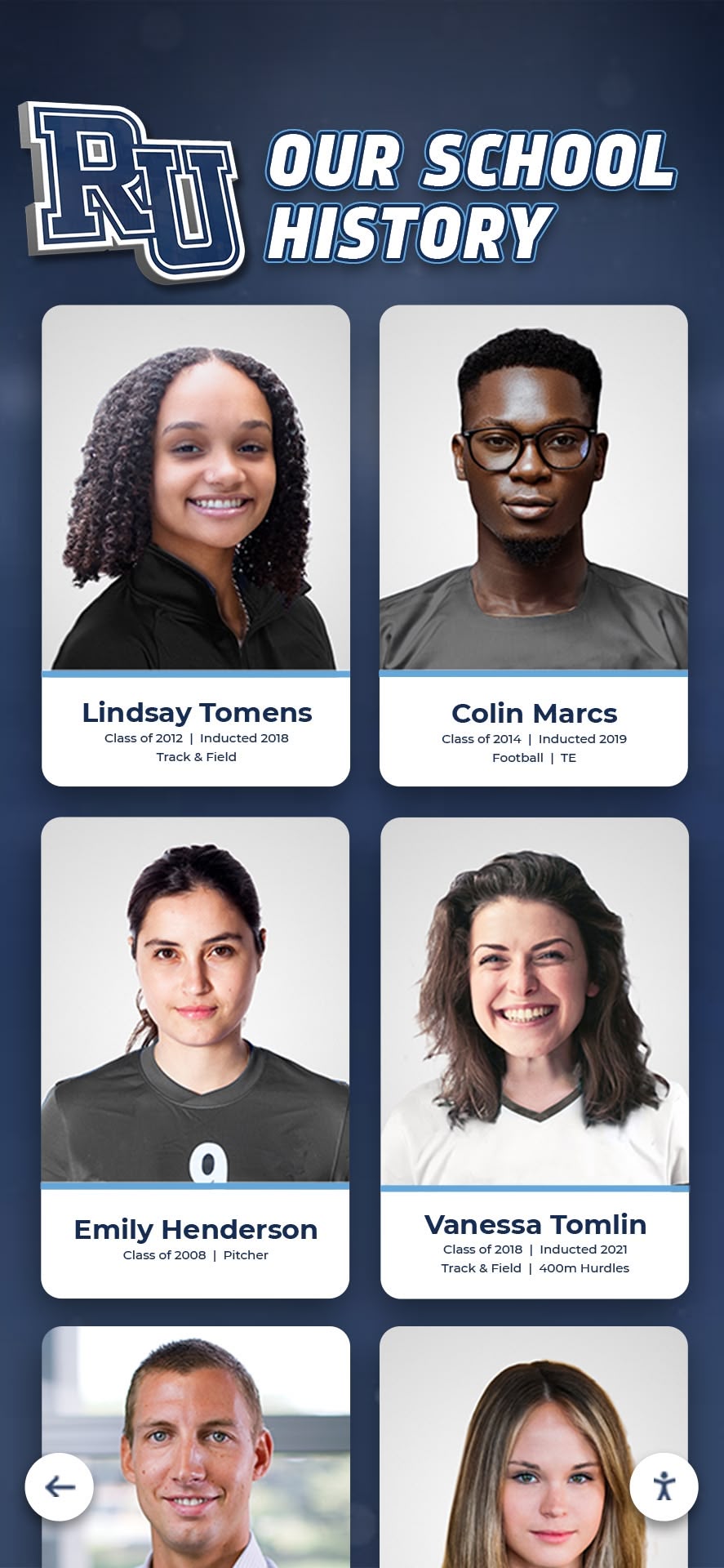
Systematic content development preserves complete institutional legacy across all eras and achievement categories
Measuring Digital Trophy Case Success and Return on Investment
Assessment demonstrates trophy recognition value while identifying improvement opportunities ensuring displays achieve intended institutional objectives, engagement goals, and cultural outcomes.
Quantitative Engagement Metrics
Digital Platform Analytics and Data
Modern trophy recognition systems provide concrete engagement data impossible with traditional glass trophy cases:
- Display interaction frequency showing daily usage patterns, peak engagement times, and traffic volume trends
- Average session duration revealing engagement depth, content exploration thoroughness, and visitor interest levels
- Most-viewed trophies and championships identifying audience interests, popular programs, and content priorities
- Search query patterns showing how users navigate trophy collections, discovery preferences, and information-seeking behavior
- Peak usage times informing content scheduling, featured trophy rotation, and promotional timing optimization
- Geographic access patterns revealing remote alumni engagement, prospect research, and community reach beyond physical campus
- Social sharing frequency demonstrating organic trophy promotion reach and community celebration enthusiasm
- Web platform traffic sources understanding discovery paths, referral sources, and external awareness drivers
These metrics reveal whether digital trophy cases generate intended engagement outcomes or require strategy adjustments improving effectiveness and reaching broader audiences more successfully.
Comparative Analysis and Benchmarking
Benchmark digital trophy case performance against previous recognition approaches and peer institutions:
- Engagement duration comparison documenting time spent with digital displays versus traditional trophy case viewing patterns
- Audience reach expansion measuring total viewers including web access versus physical campus visitors only
- Trophy visibility coverage calculating percentage of collection receiving meaningful exposure versus storage obscurity
- Update frequency improvement documenting recognition timeliness comparing documentation speed against previous approaches
- Stakeholder satisfaction changes tracking survey results comparing current versus previous satisfaction levels across constituencies
This comparative analysis demonstrates return on investment while justifying continued platform investment, content development resources, and potential expansion to additional facility locations.
Qualitative Impact Assessment
Stakeholder Feedback Collection Methods
Regular feedback provides insights beyond quantitative metrics revealing cultural impact and recognition effectiveness:
- Student and athlete surveys assessing whether trophy recognition appropriately honors achievements and inspires excellence
- Coach input evaluating whether trophy displays support recruiting effectiveness, program culture development, and team building
- Alumni reactions particularly from eras now receiving improved recognition visibility and celebration
- Family perspectives on trophy recognition adequacy, accessibility, and celebration appropriateness
- Community member feedback about program awareness, institutional appreciation, and support motivation
- Prospective student and athlete responses during facility tours, campus visits, and recruitment interactions
This qualitative feedback reveals whether digital trophy cases achieve intended cultural goals, relationship objectives, and institutional priorities beyond engagement metrics alone.
Observable Cultural Indicators and Changes
Long-term changes provide evidence of trophy recognition cultural impact on institutional identity:
- Increased student, athlete, and community awareness of complete program history spanning multiple decades
- Enhanced institutional pride and positive competitive identity across all programs and activities
- Strengthened alumni connections to current programs through trophy exploration and shared tradition celebration
- Improved external perception and reputation as championship institution committed to excellence
- Greater organizational commitment to recognition equity across all sports, programs, and activities
- Elevated community expectations for achievement visibility and celebration quality standards
- More inclusive recognition culture celebrating diverse excellence beyond premier programs or recent achievements
Regular observation enables continuous refinement ensuring digital trophy cases achieve intended institutional goals while identifying opportunities for content enhancement, feature additions, or system expansion.
Budget and Funding Considerations for Digital Trophy Cases
Digital trophy case investments deliver significant value across multiple institutional objectives but require careful financial planning and creative funding strategies fitting educational budget realities.
Total Cost of Ownership Analysis
Investment Components Breakdown
Initial Implementation Costs
- Commercial-grade touchscreen hardware and mounting infrastructure: $4,000-$10,000 per display depending on size, specifications, and mounting requirements
- Professional installation including electrical work, network configuration, and mounting: $800-$2,500 per display depending on complexity and facility conditions
- Recognition platform software initial setup and configuration: $2,000-$5,000 for system licensing and institutional customization
- Initial trophy documentation including content development and media preparation: $3,000-$8,000 depending on collection size and available source materials
- Custom design and branding integration if desired beyond standard templates: $2,000-$5,000 for specialized aesthetics
Typical single-display implementation: $12,000-$28,000 Typical multi-display implementation with 3-5 coordinated displays: $35,000-$80,000
Ongoing Annual Operating Costs
- Platform subscription, cloud hosting, and software maintenance: $1,680-$3,600 per year depending on features, storage, and support level
- Content management staff time for regular updates and additions: 20-40 hours per year for ongoing trophy documentation
- Technical support and maintenance contracts: $500-$1,500 per year for troubleshooting and system optimization
- Trophy documentation enhancements and archive expansion: $1,000-$3,000 per year for ongoing content quality improvements
Typical annual operating costs: $3,200-$8,100 per year for sustained operation
These investments deliver value across multiple institutional objectives simultaneously—trophy recognition, student engagement, alumni connection, recruiting effectiveness, donor cultivation, and cultural development—making per-objective costs quite reasonable when benefits are comprehensively assessed beyond trophy display alone.
Creative Funding Strategies
Diverse Funding Source Approaches
Schools successfully fund digital trophy case implementations through varied sources avoiding complete operational budget burden:
Booster Club and Supporter Campaigns
- Athletic booster club capital campaigns dedicated specifically to recognition enhancement
- Alumni athlete fundraising from former program participants wanting improved trophy visibility
- Reunion class gifts from milestone anniversary cohorts seeking lasting legacy contributions
- Memorial recognition opportunities honoring deceased coaches, athletes, administrators, or supporters
- Corporate sponsorships from local businesses benefiting from school partnerships and community visibility
Named Giving Opportunities
- Individual display naming recognizing major donors prominently on physical installations
- Trophy collection sponsorships by sport, program, or historical era
- Technology infrastructure naming for comprehensive system donors supporting complete implementations
- Content development sponsorships funding historical documentation projects and archive digitization
- Annual maintenance sponsorships providing ongoing operational support and sustainability
Budget Integration Strategies
- Capital improvement project integration incorporating trophy recognition infrastructure into larger facility renovations
- Technology budget allocations treating displays as educational technology investments serving multiple purposes
- Marketing and recruitment budget portions funding visibility and engagement tools supporting admissions
- Multi-year capital equipment depreciation spreading costs across budget cycles reducing single-year impact
The tangible, visible nature of digital trophy cases makes them attractive to donors seeking concrete impact from contributions—many schools report fundraising exceeding initial targets when stakeholders understand project scope, capacity solutions, engagement benefits, and cultural impact comprehensively.
Conclusion: Transforming Recognition Through Digital Trophy Case Innovation
Digital trophy cases represent fundamental evolution from physical glass displays to comprehensive interactive platforms that solve persistent space limitations while creating recognition experiences impossible with traditional approaches. These systems eliminate the frustrating capacity constraints forcing impossible curation decisions, enable rich multimedia storytelling that honors achievements appropriately, deliver dramatically increased engagement through interactive exploration, and provide sustained recognition quality through effortless cloud-based updates.
When schools implement digital trophy case systems thoughtfully—with clear capacity objectives, strategic placement maximizing visibility, quality trophy content honoring achievements appropriately, and sustained management ensuring relevance—they create recognition platforms celebrating every deserving accomplishment across all programs, sports, eras, and categories. These comprehensive approaches demonstrate institutional commitment to valuing excellence equitably while solving the persistent capacity constraints that traditional trophy cases impose.
Transform Your Trophy Recognition System Today
Discover how digital trophy case solutions can help you showcase unlimited achievements, honor every deserving athlete and student, and eliminate frustrating space constraints forcing trophies into storage where nobody sees them.
Book a demoThe strategies explored throughout this comprehensive guide provide frameworks for implementing digital trophy cases that honor athletic and academic excellence while remaining sustainable, engaging, and aligned with institutional goals. From unlimited capacity eliminating impossible curation decisions to multimedia storytelling capabilities preserving championship moments permanently, these systems overcome traditional limitations while creating trophy recognition experiences impossible with glass cases alone.
Your students’ and athletes’ achievements deserve recognition systems matching their dedication, sacrifice, and competitive excellence. Championship trophies earned through countless practice hours and ultimate performances should never disappear into storage closets where they serve no recognition purpose. Individual achievement awards celebrating all-conference honors, academic excellence, statistical milestones, and personal distinction deserve visibility inspiring current students while honoring past accomplishment appropriately.
With thoughtful planning, appropriate technology investments through solutions like Rocket Alumni Solutions, and systematic trophy documentation, schools can create digital trophy cases becoming treasured traditions preserving institutional legacy while inspiring next generations toward championship excellence and achievement across all programs.
Ready to solve your trophy capacity challenges while creating superior recognition experiences? Explore how comprehensive digital trophy case platforms eliminate space constraints while transforming trophy recognition from limiting frustration to unlimited celebration opportunity—showcasing every achievement your programs have earned across all sports, academics, arts, decades, and individuals deserving permanent honor and institutional celebration.