Purchasing a digital hall of fame represents one of the most significant recognition investments a high school can make—transforming how your institution celebrates achievement, preserves legacy, and engages students, alumni, and communities for decades to come. Yet navigating vendor options, technology choices, pricing models, and implementation considerations can feel overwhelming when you’re responsible for making decisions that will impact your school’s recognition program for years ahead.
Walk into progressive high schools nationwide and you’ll encounter sophisticated interactive touchscreen displays showcasing unlimited athletic championships, academic excellence, distinguished alumni, and institutional history through engaging multimedia experiences. These modern recognition systems eliminate the space constraints, maintenance burdens, and engagement limitations plaguing traditional trophy cases and wall plaques—but choosing the right solution requires understanding technologies, evaluating vendors, planning budgets, and avoiding expensive mistakes that leave schools frustrated with underperforming systems.
This comprehensive buying guide provides everything decision-makers need to confidently select, purchase, and implement digital hall of fame systems that honor your school’s achievements while remaining sustainable, engaging, and aligned with institutional goals throughout multi-year lifecycles. Whether you’re replacing outdated physical displays, launching new recognition initiatives, or enhancing existing programs, these frameworks ensure your investment delivers maximum long-term value.
Modern digital hall of fame technology serves purposes extending far beyond simple recognition display—these systems function as engagement tools strengthening school culture, recruitment assets showcasing institutional excellence, alumni connection platforms supporting development objectives, and perpetual archives growing more valuable with each graduating class rather than becoming outdated artifacts requiring replacement.

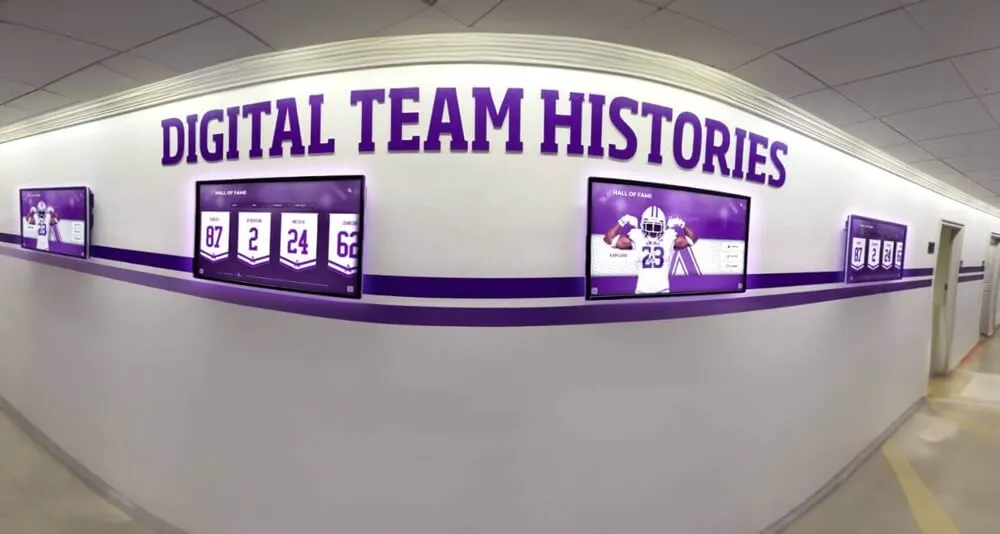
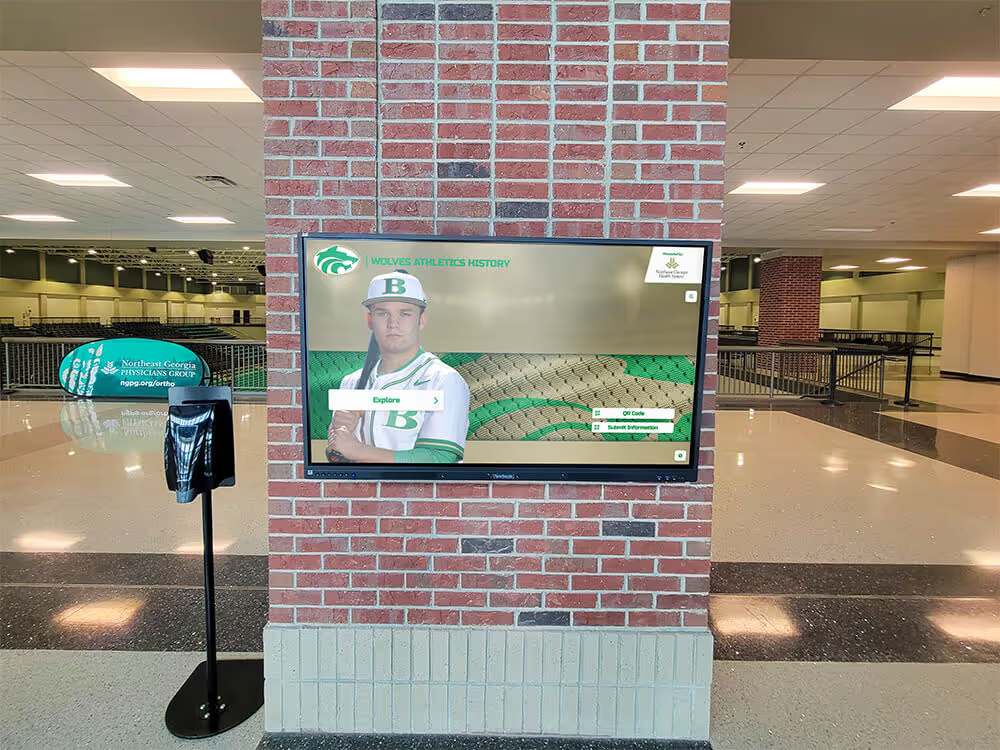
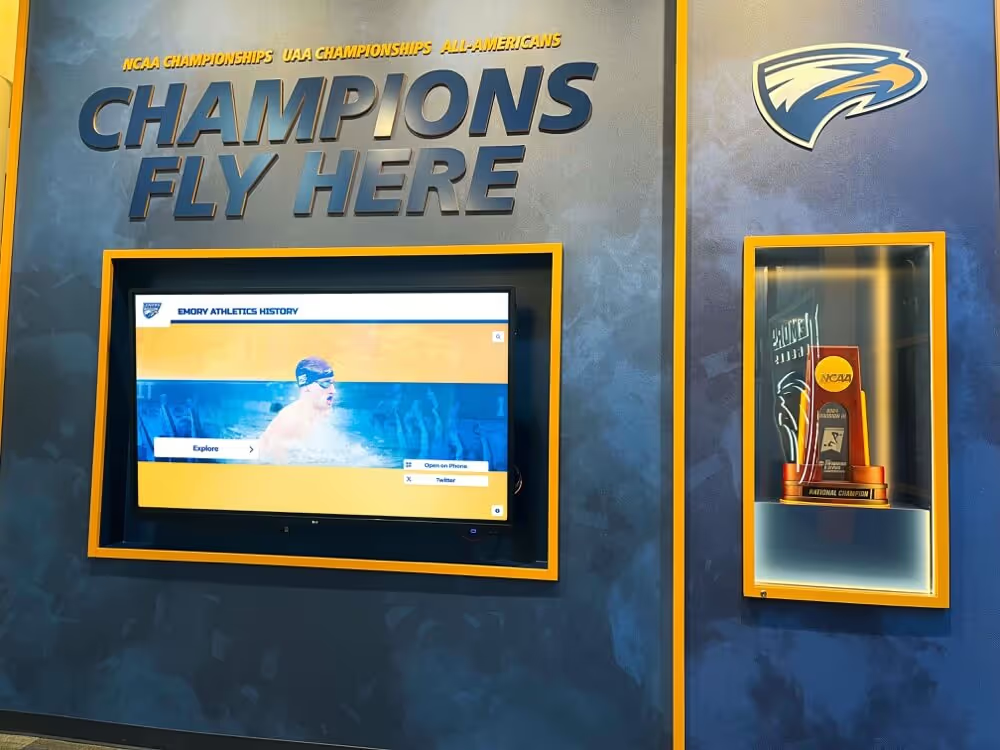
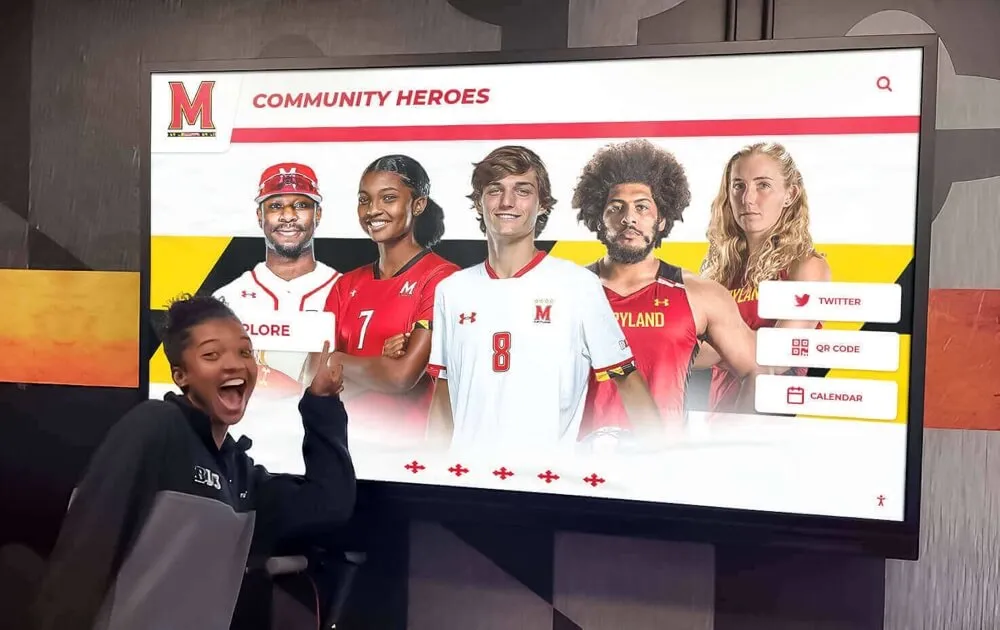
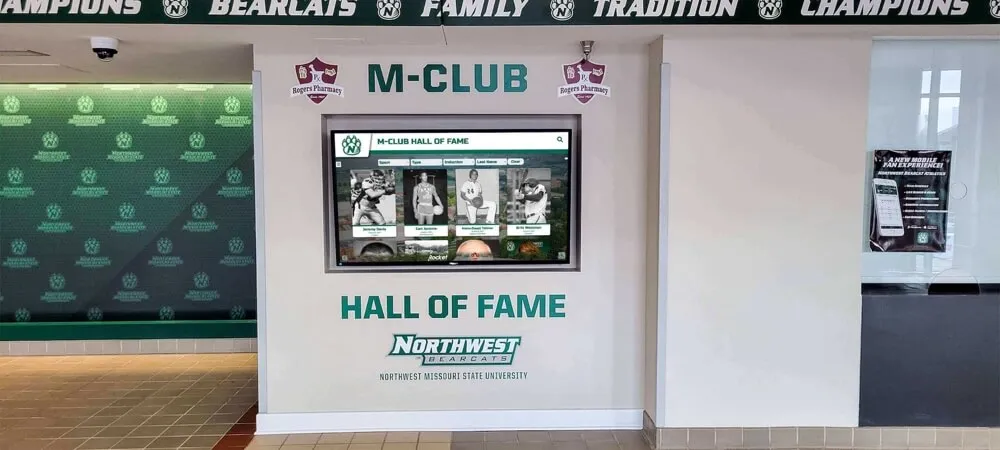
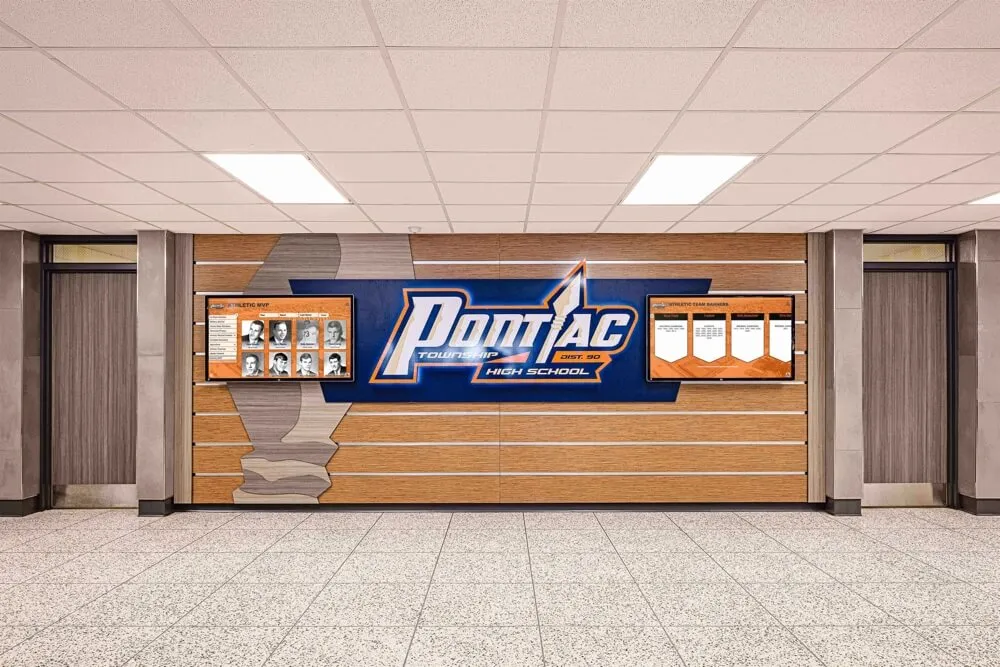
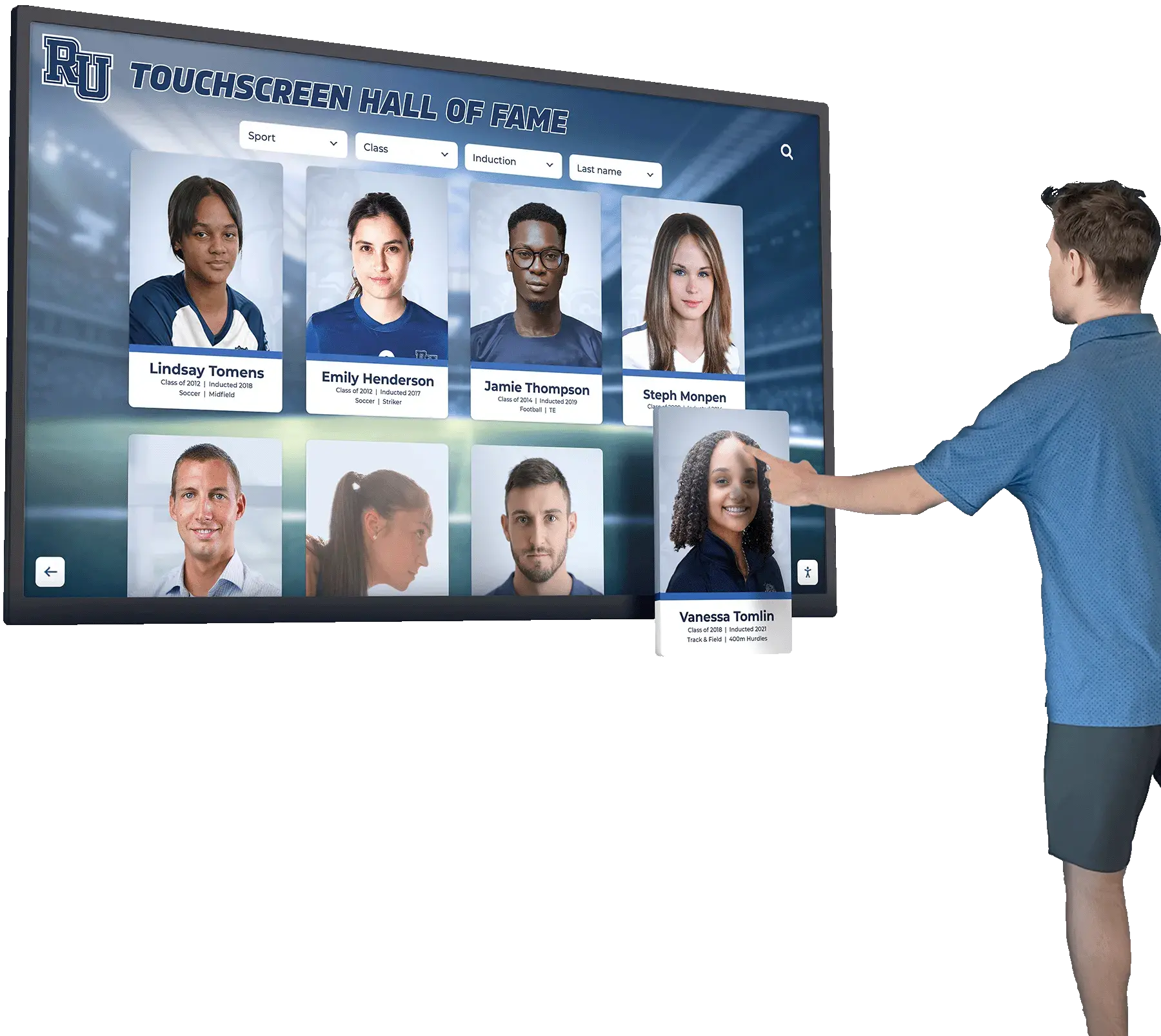
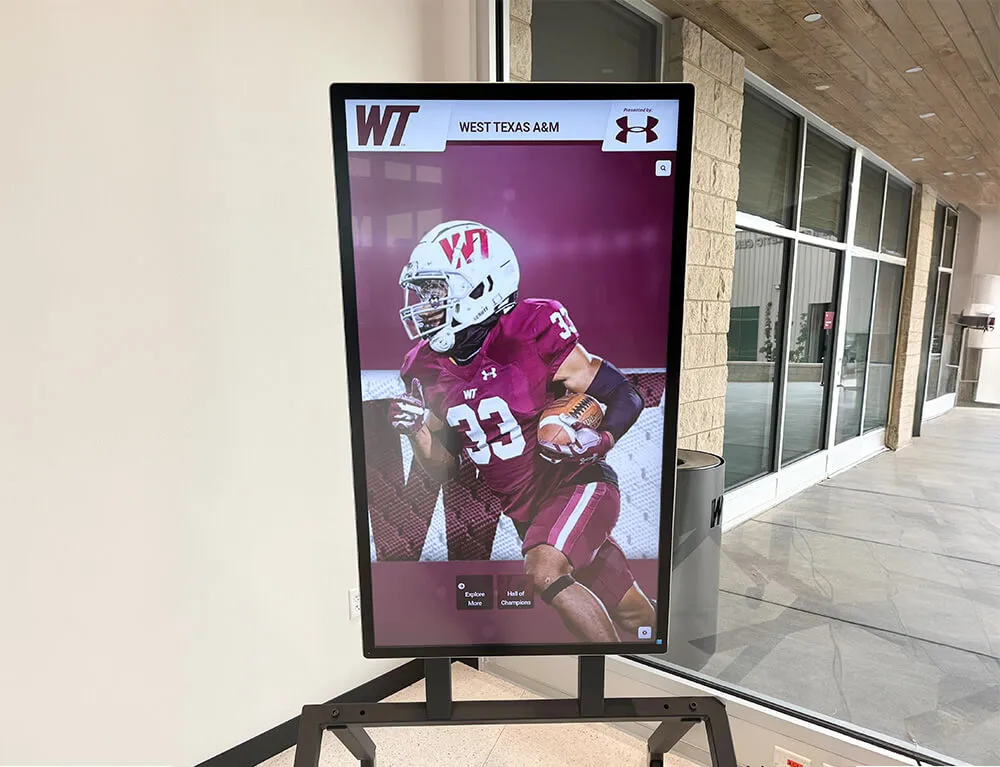
Modern digital hall of fame systems transform traditional recognition into engaging, interactive experiences accessible throughout your school community
Understanding Digital Hall of Fame Technology: What Are You Actually Buying?
Before evaluating specific products and vendors, understanding exactly what constitutes a complete digital hall of fame system helps schools identify essential components versus optional features when making purchasing decisions.
Core System Components
Complete digital hall of fame solutions integrate multiple technologies working together seamlessly to deliver comprehensive recognition capabilities:
Hardware Components
- Commercial-grade touchscreen displays: Professional interactive screens designed for continuous daily operation in high-traffic public environments, typically 43-75 inches depending on location and viewing distance requirements
- Mounting hardware: Wall mounts, freestanding kiosks, or architectural integration systems securing displays safely while matching institutional aesthetics
- Media players or computers: Computing devices running interactive software and delivering content to displays
- Network infrastructure: Wi-Fi access points or ethernet connections supporting reliable content delivery and remote management
- Power and cabling: Electrical installations and cable management creating clean, professional appearances
Software Components
- Cloud-based content management system: Web-based platforms enabling remote content creation, editing, and publishing from any internet-connected device without physical display access
- Interactive touchscreen software: Purpose-built applications optimized for public kiosk deployment with intuitive touch interfaces, engaging navigation, and automatic session management
- Web-responsive recognition database: Searchable online archives extending recognition visibility beyond physical displays to global audiences through standard web browsers
- Multimedia asset management: Organized systems handling photos, videos, documents, and audio files with appropriate compression, formatting, and delivery optimization
Service Components
- Implementation and setup services: Professional installation, system configuration, and initial content migration ensuring successful launches
- Training and documentation: Comprehensive instruction enabling staff to manage platforms independently without ongoing vendor dependence
- Ongoing technical support: Responsive assistance addressing technical issues, answering questions, and troubleshooting problems
- Platform maintenance and updates: Regular software enhancements, security patches, and feature additions keeping systems current
Schools purchasing digital hall of fame systems should verify that vendor proposals include all essential components—incomplete solutions missing critical elements create hidden costs and implementation problems undermining recognition program success.
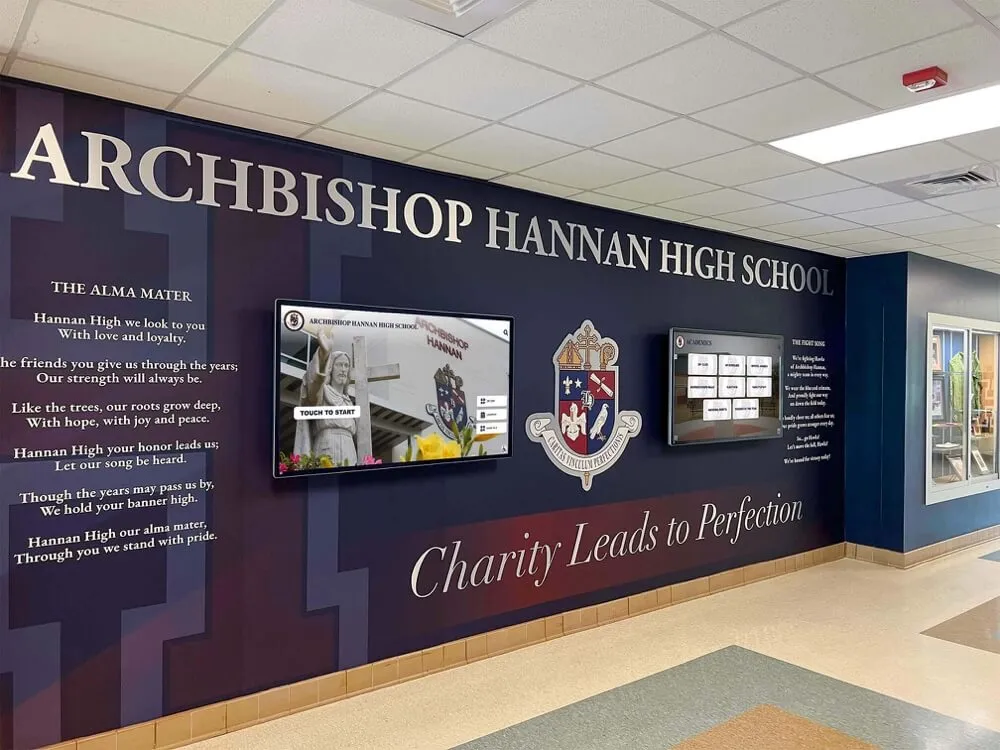
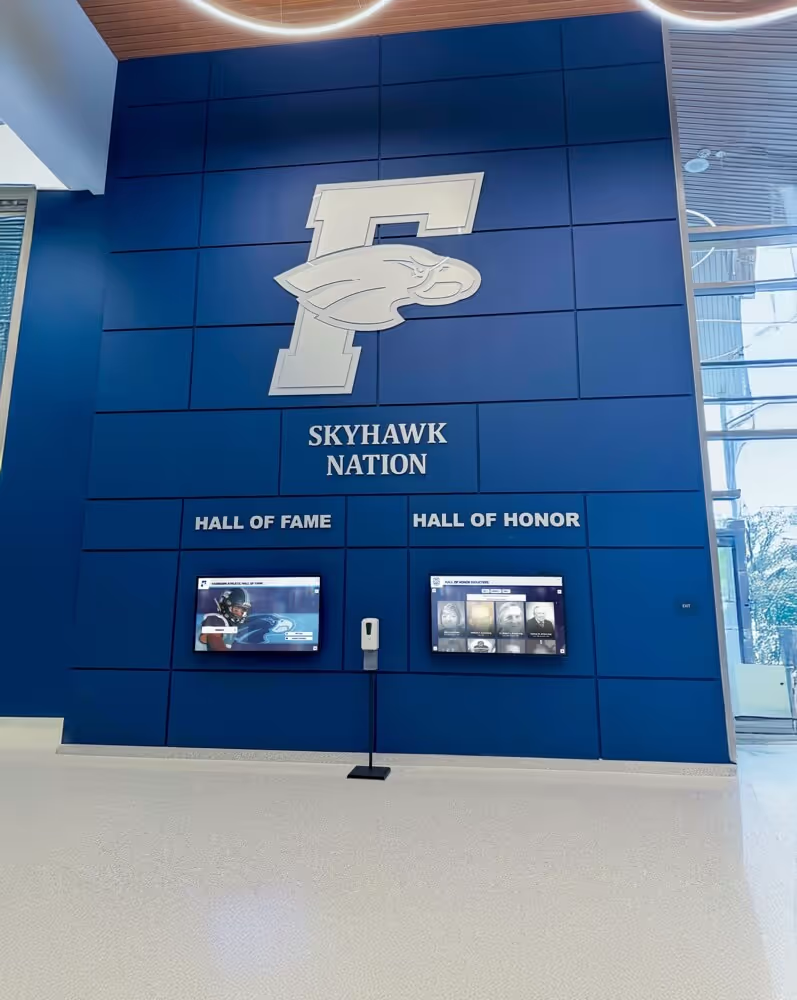
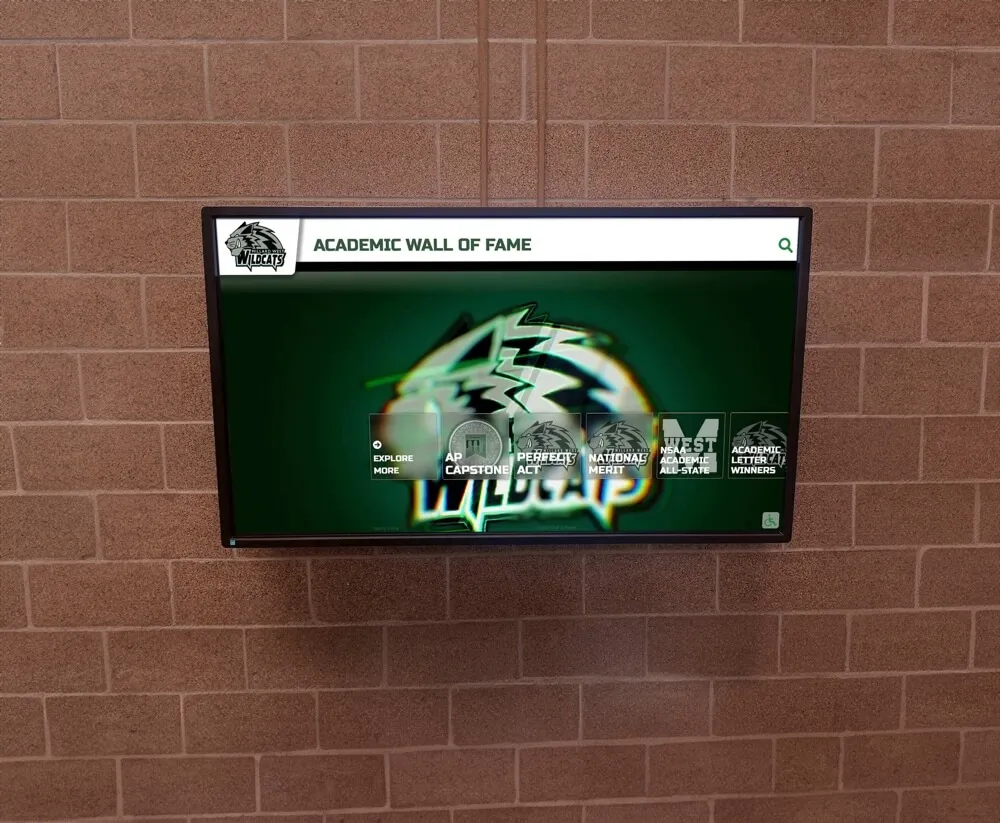
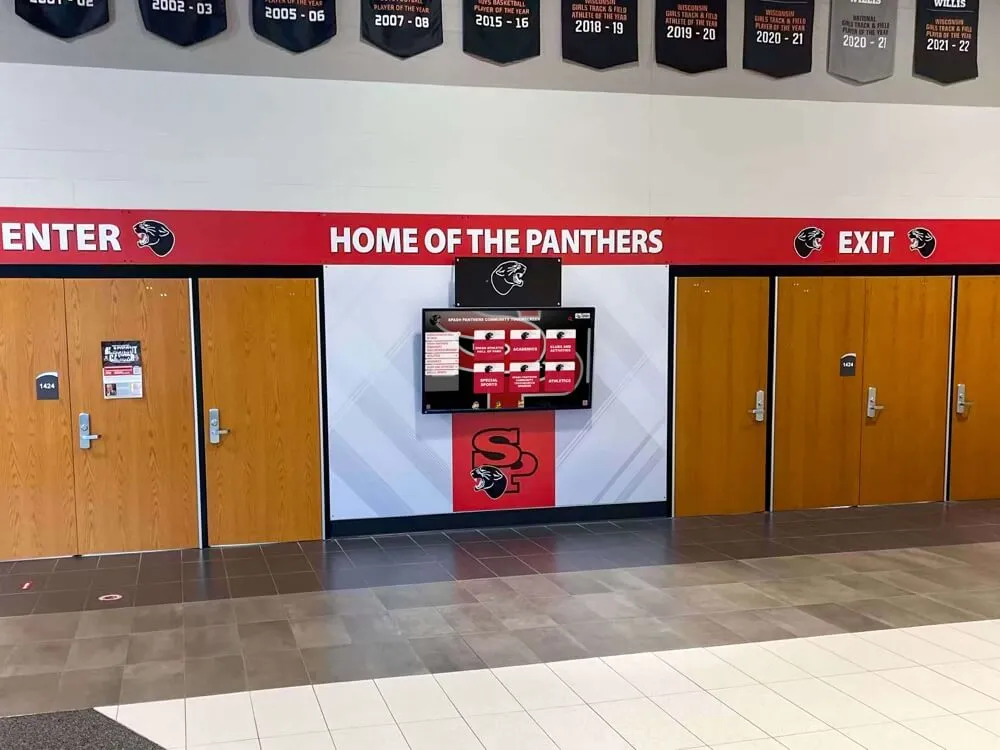
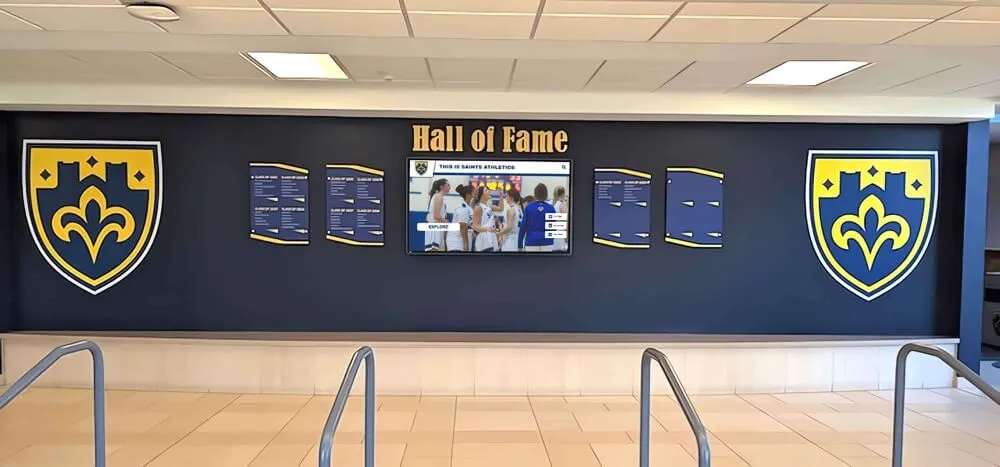
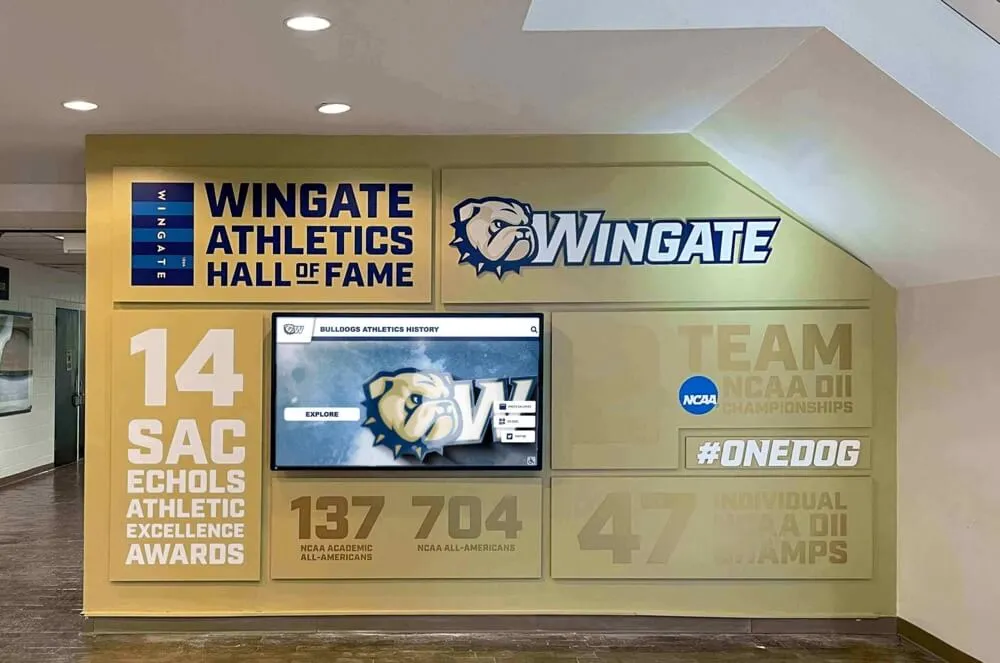
Strategic placement in high-traffic hallways ensures maximum visibility and daily engagement with recognition content
Technology Approaches: Understanding Your Options
Schools evaluating digital hall of fame systems encounter multiple technology approaches serving different needs, budgets, and capabilities. Understanding fundamental differences guides appropriate selection.
Purpose-Built Recognition Platforms
Specialized systems like Rocket Alumni Solutions designed specifically for educational recognition deliver comprehensive capabilities through turnkey solutions requiring minimal technical expertise:
- Pre-built templates for athletic recognition, academic honors, and alumni profiles reducing implementation complexity
- Unlimited content storage accommodating institutions of any size without artificial capacity constraints
- Cloud-based management enabling remote updates from smartphones, tablets, or computers
- Integrated web access extending recognition beyond physical displays to global audiences
- Privacy compliance (FERPA, COPPA) built into platform architecture
- Recognition-specific features like searchable databases, filtering, and automated layouts
- White-glove implementation services including content migration and staff training
- Ongoing platform enhancements driven by educational customer feedback
Purpose-built platforms excel when schools need comprehensive functionality without custom development complexity, technical staff requirements, or ongoing maintenance burdens.
Adapted Digital Signage Systems
Some schools attempt repurposing commercial digital signage platforms for recognition purposes despite fundamental capability limitations:
- Content scheduling and playlist management distributing slideshows to displays
- Cloud-based content creation and remote distribution
- Basic template libraries simplifying slide design
- Multi-location support managing distributed installations centrally
However, digital signage adaptations suffer critical constraints for recognition applications:
- No true interactivity—visitors passively view rotating content rather than actively exploring
- Limited content depth—slideshow formats accommodate minimal information compared to comprehensive profiles
- Poor engagement—passive displays generate seconds of attention versus minutes with interactive touchscreens
- Administrative burden—creating individual slides for hundreds of honorees proves unsustainable
- No web accessibility—recognition remains visible only at physical display locations
Schools frequently deploy digital signage initially, experience disappointing engagement and maintenance challenges, then migrate to purpose-built recognition platforms. Starting with appropriate technology prevents wasted investments.
Custom Development Solutions
Large institutions with sophisticated IT departments sometimes pursue custom-developed platforms built by web development firms or internal technical teams:
- Complete design control matching exact institutional branding requirements
- Custom functionality addressing unique workflows and integration needs
- Proprietary code ownership without vendor dependencies
- Direct integration with existing institutional systems
Custom development demands substantial resources:
- Initial development costs: $40,000-$250,000+ depending on functionality complexity
- Development timelines: 6-18 months from concept to launch
- Ongoing maintenance: $10,000-$50,000+ annually for security updates, enhancements, and technical support
- Technical dependencies: Platforms become dependent on specific developers or firms; staff turnover strands investments
Most high schools lack resources justifying custom development when purpose-built platforms deliver comparable capabilities at substantially lower total costs while eliminating technical maintenance responsibilities.
Learn about platform comparison in best virtual hall of fame platforms examining different solution approaches.
Defining Your Digital Hall of Fame Requirements
Successful purchasing decisions begin with clearly understanding what your school needs from recognition technology before evaluating specific vendors or solutions.
Recognition Program Objectives
Achievement Categories to Celebrate
Which populations and accomplishments deserve comprehensive recognition?
- Athletic excellence: Individual athlete achievements, team championships, coaching milestones, conference and state honors, school records across all sports
- Academic achievement: Valedictorians, National Honor Society inductees, scholarship recipients, academic competition success, perfect scores and standardized test excellence
- Arts and performance: Theater productions, musical achievements, visual arts recognition, creative accomplishments across all artistic disciplines
- Leadership and service: Student government officers, community service honorees, club leadership, mentorship recognition
- Alumni success: Distinguished graduate profiles, career achievements, continued education, community contributions, legacy families
- Institutional history: Facility development, leadership succession, tradition documentation, milestone celebrations, historic preservation
Comprehensive systems like digital recognition displays celebrate achievements across all categories equitably rather than privileging certain programs over others.
Content Depth and Storytelling
How comprehensively should recognition honor individual achievements?
- Basic information only (names, years, achievements)
- Moderate depth (photos, statistics, brief narratives)
- Comprehensive profiles (photo galleries, video highlights, complete documentation, personal stories)
- Multimedia integration (interviews, historic footage, newspaper clippings, interactive timelines)
More comprehensive content creates stronger emotional connections and sustains engagement longer—but requires greater initial development investment and ongoing content management commitment.
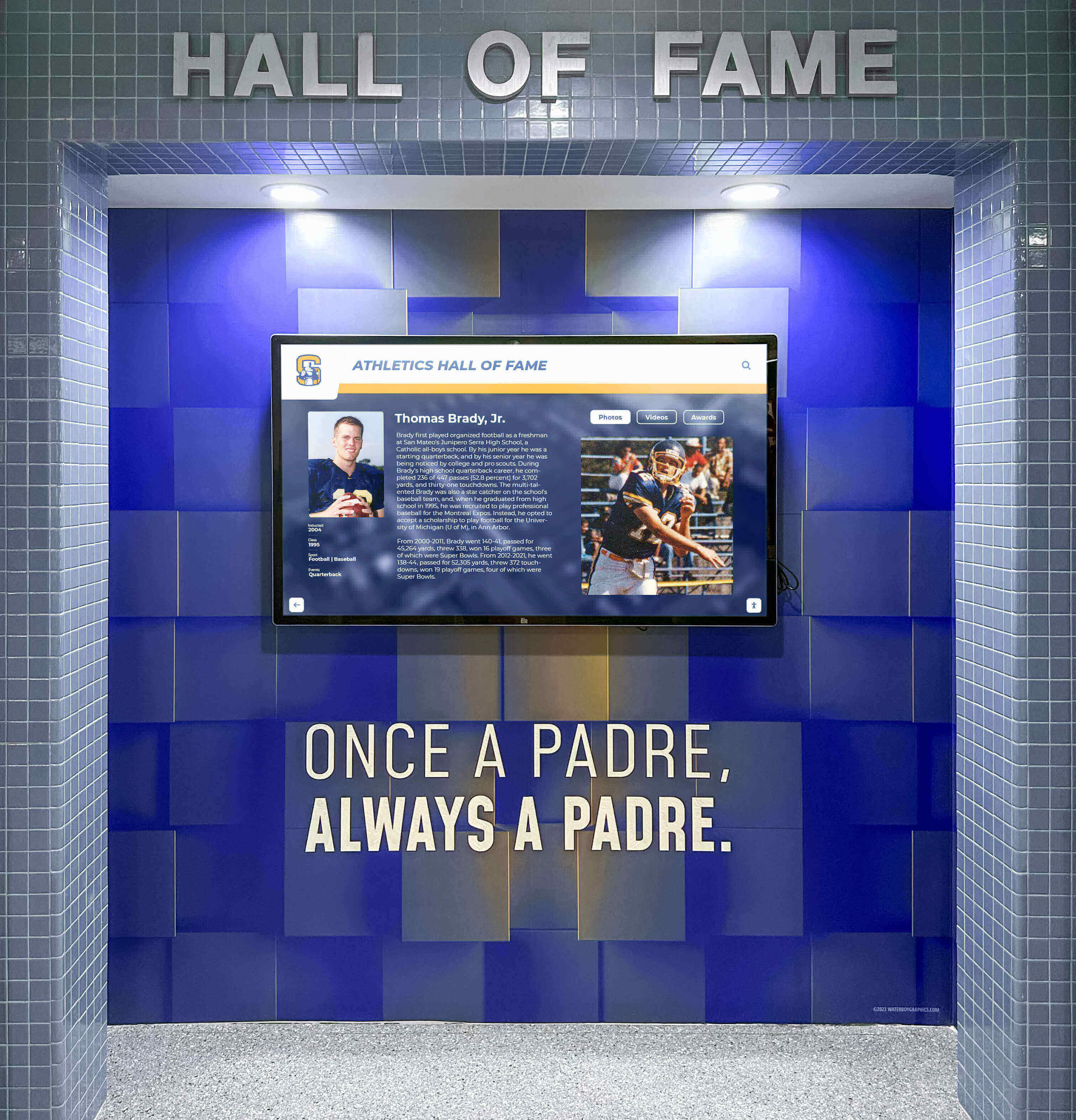
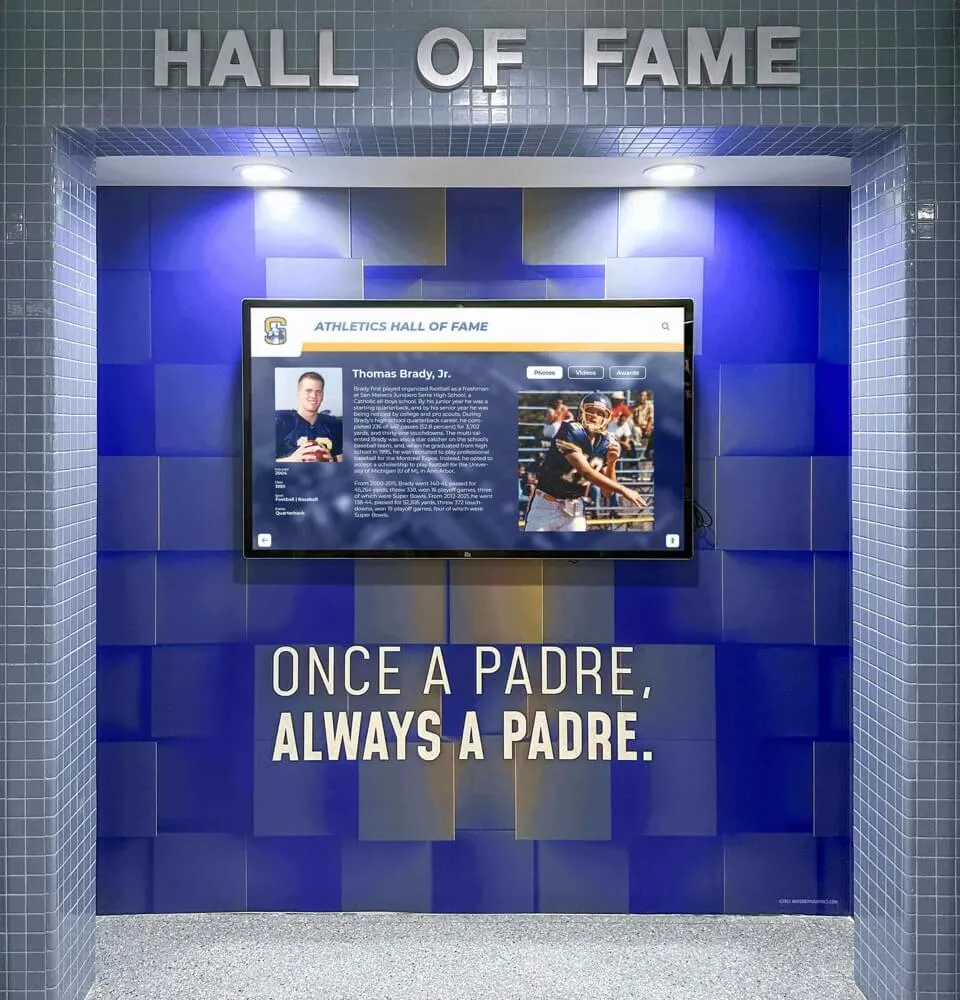
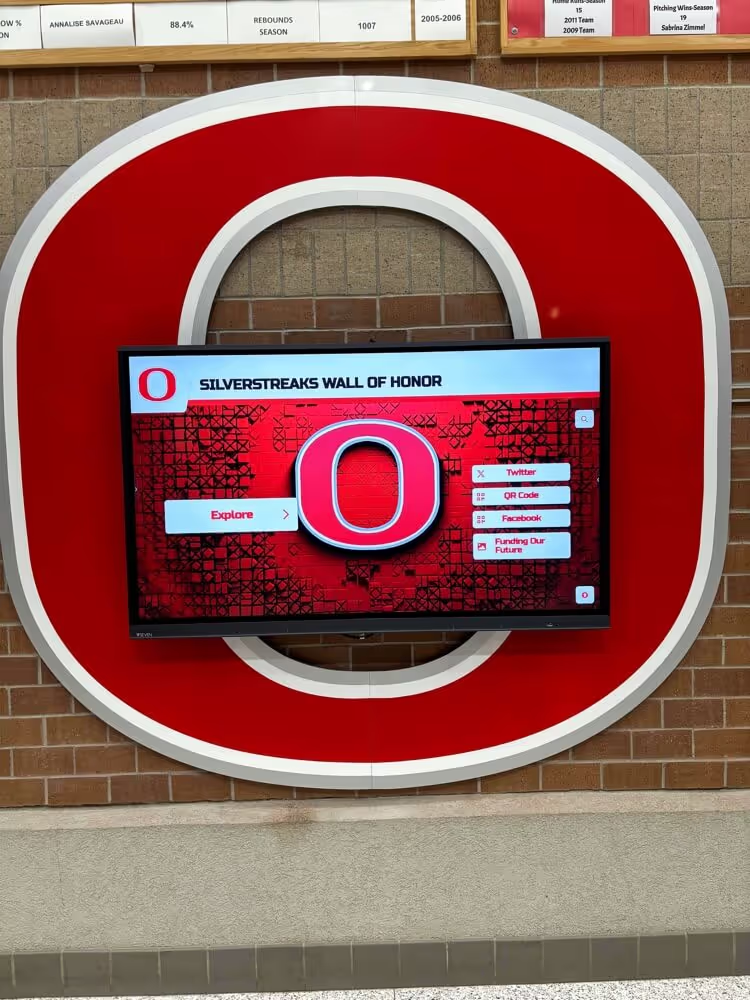
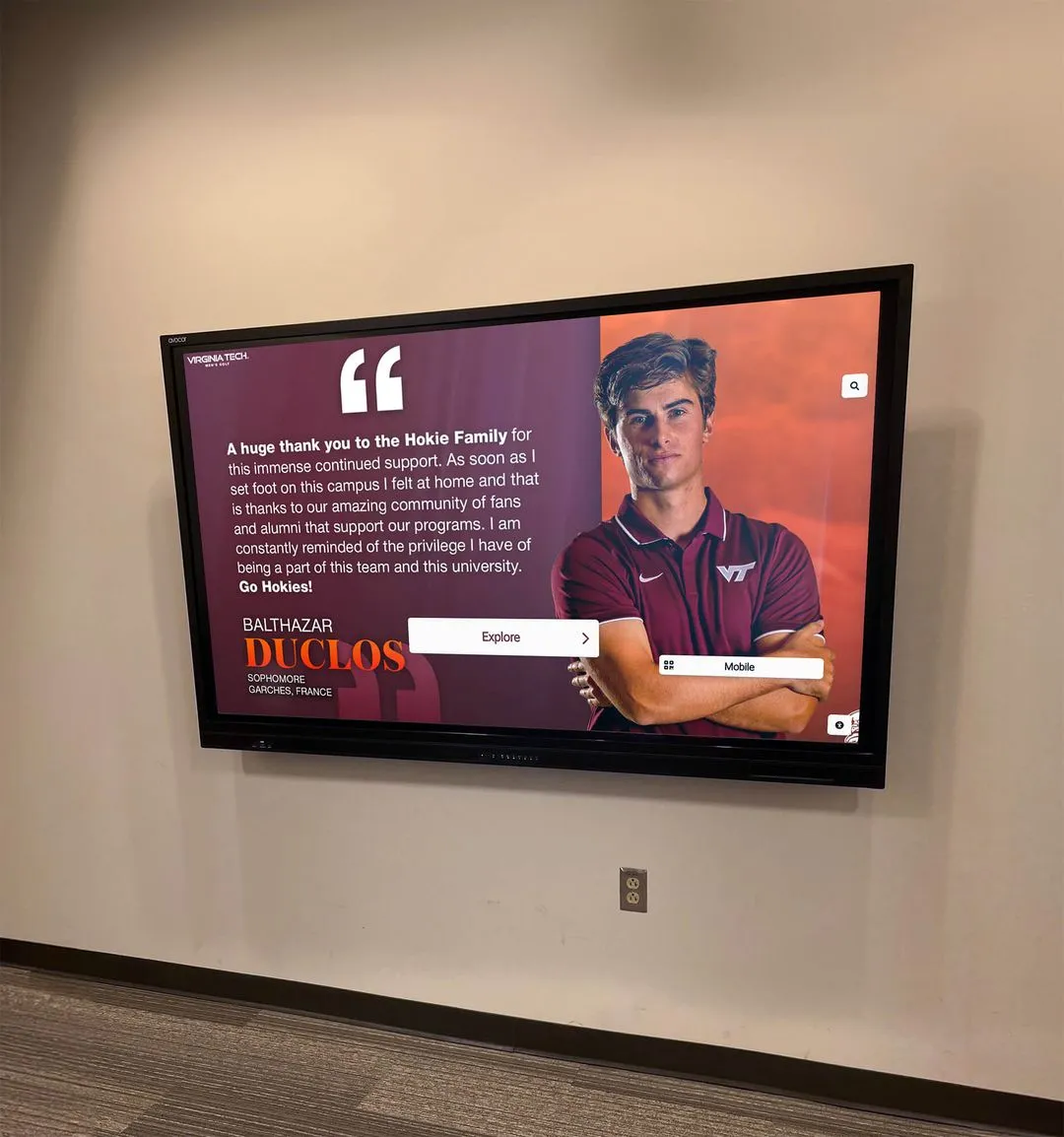
Professional installations integrate seamlessly with school architecture while providing robust recognition functionality
Engagement and Accessibility Goals
How should recognition reach and engage your community?
- Physical accessibility: Display locations, quantity, and visibility throughout school facilities
- Web accessibility: Public online access enabling exploration from anywhere versus restricted to on-campus displays
- Mobile optimization: Smartphone and tablet functionality for personal device exploration
- Social sharing: Integration enabling honorees to share recognition through personal networks
- Alumni engagement: Features supporting connection, reunion coordination, and development objectives
Clear objective definition enables focused evaluation ensuring selected systems deliver capabilities addressing your most important priorities.
Budget Planning and Financial Constraints
Initial Investment Capacity
Understanding available budget for initial implementation guides technology and vendor selection:
Single Display Installation
- Purpose-built recognition platform: $12,000-$28,000 total
- Hardware (55-65" commercial display + mounting): $5,000-$12,000
- Software platform (initial setup): $2,000-$5,000
- Installation and configuration: $1,500-$3,000
- Content development services: $3,000-$8,000
Multi-Display Installation (3-5 locations)
- Purpose-built recognition platform: $35,000-$80,000 total
- Hardware for multiple displays: $18,000-$45,000
- Software platform (multi-display): $3,000-$8,000
- Installation across locations: $5,000-$12,000
- Comprehensive content development: $9,000-$15,000
Ongoing Annual Operating Costs
- Platform subscriptions and hosting: $1,680-$3,600 annually
- Content management (staff time): 20-40 hours annually
- Technical support and maintenance: $500-$1,500 annually
- Content enhancements and updates: $1,000-$3,000 annually
Schools should calculate 5-year total cost of ownership when evaluating solutions—including both initial investments and ongoing operational costs—to understand true financial commitments.
Funding Sources and Strategies
How will you finance digital hall of fame implementation?
- Operating budget allocation from technology, athletics, or development budgets
- Capital campaign integration as named giving opportunity within larger fundraising initiatives
- Booster club or parent organization dedicated fundraising campaigns
- Alumni association investment in connection infrastructure
- Memorial gifts honoring deceased community members through recognition technology
- Corporate sponsorships from local businesses benefiting from partnerships
- Grant funding from educational technology or recognition-focused foundations
The tangible, visible nature of digital hall of fame displays makes them attractive to donors seeking concrete impact from contributions—many schools report fundraising exceeding initial targets when stakeholders understand project scope and benefits.
Explore funding approaches in high school wall of fame creation with comprehensive implementation frameworks.
Technical Environment and Support Capabilities
Existing Technical Infrastructure
What technology foundation exists supporting digital hall of fame deployment?
- Network connectivity: Reliable Wi-Fi or ethernet access in proposed display locations
- Electrical infrastructure: Appropriate power delivery and code-compliant installations
- IT department capacity: Staff availability for troubleshooting, maintenance, and technical support
- Content management capability: Personnel able to create, edit, and publish recognition content
- Integration requirements: Connections needed with student information systems or other institutional platforms
Schools with limited technical resources benefit from fully managed platforms providing comprehensive implementation support and ongoing assistance rather than solutions requiring internal technical expertise.
Long-Term Sustainability Considerations
Who will manage recognition systems ongoing?
- Primary coordinator overseeing recognition program administration
- Department-specific content managers for athletics, academics, and other categories
- IT support personnel handling technical troubleshooting and system maintenance
- Budget allocation for subscriptions, enhancements, and eventual hardware replacement
- Succession planning preventing knowledge loss during staff transitions
Sustainable recognition programs require clear administrative structure with defined responsibilities, adequate resources, and institutional commitment extending beyond initial implementation enthusiasm.
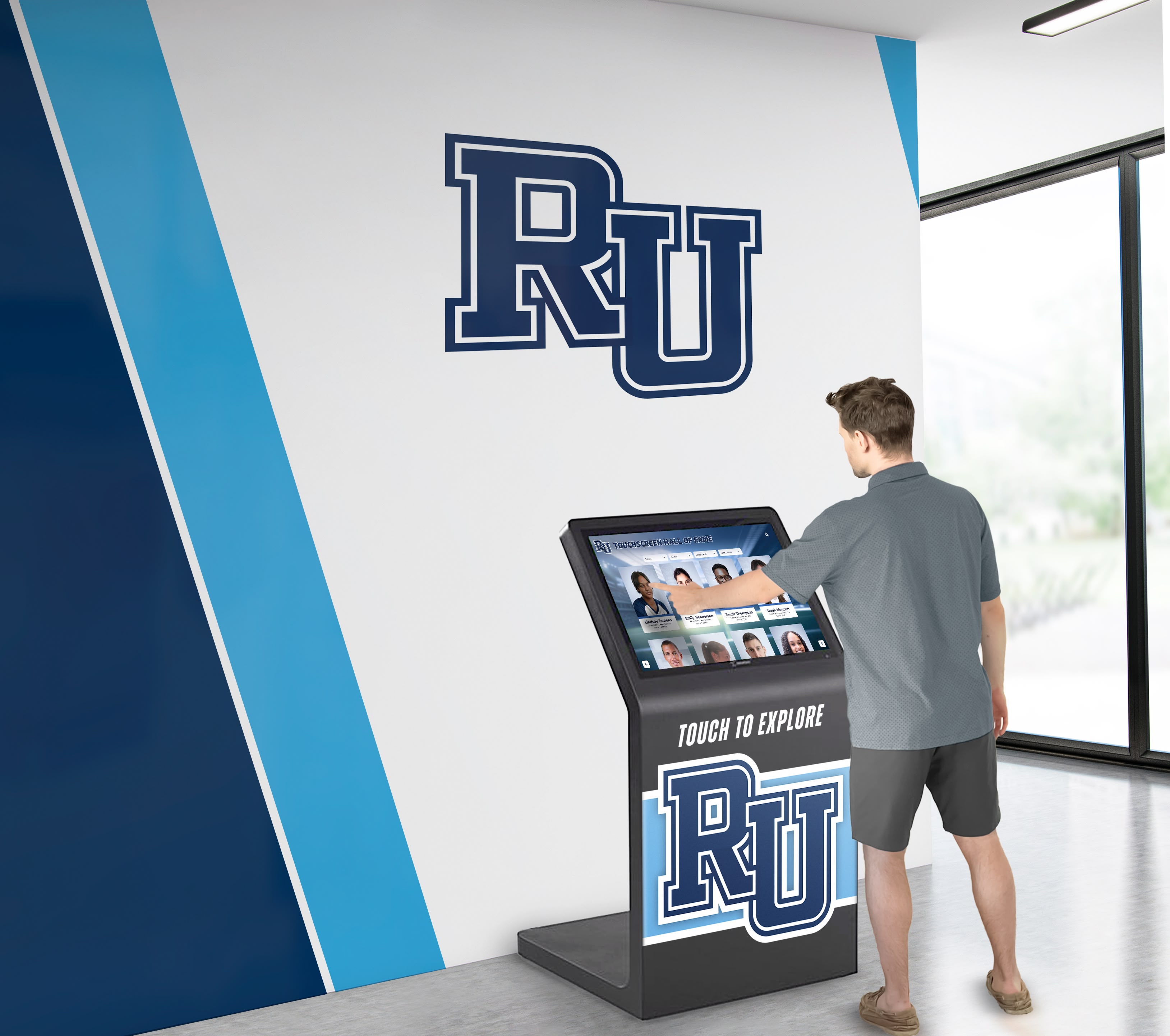
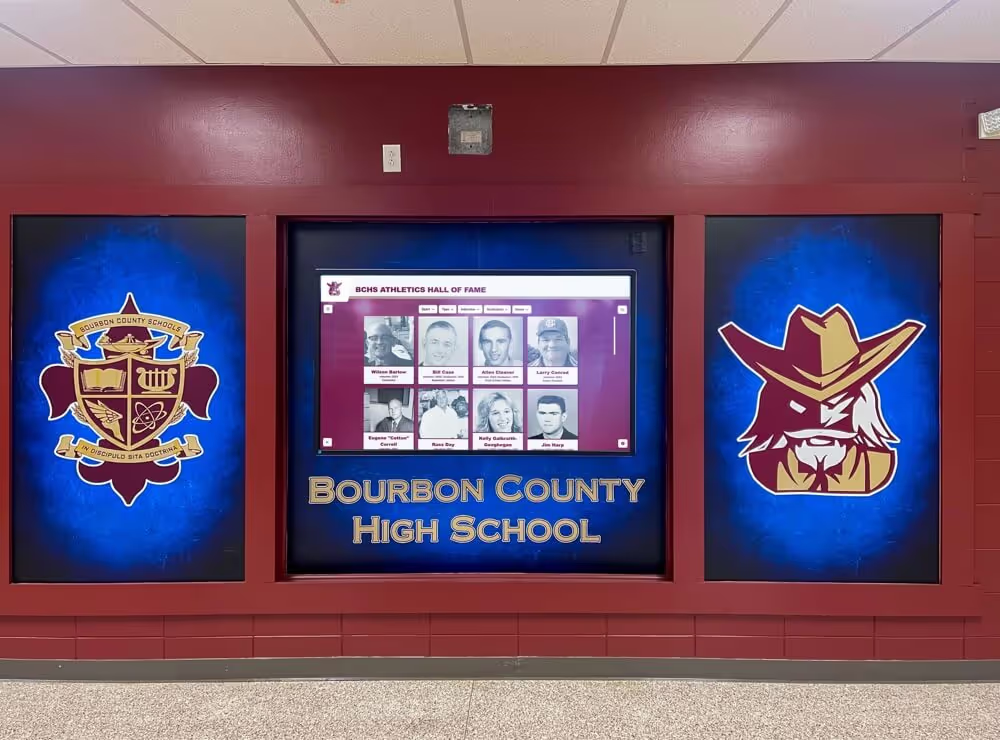
Lobby placements create high-impact recognition destinations ensuring visibility for all visitors and community members
Evaluating Digital Hall of Fame Vendors and Solutions
With requirements clearly defined, schools can systematically evaluate vendor options using consistent criteria ensuring appropriate selection.
Essential Evaluation Criteria
Platform Capabilities Assessment
Does the solution deliver functionality supporting your recognition objectives?
Content Management
- Intuitive interfaces requiring no technical expertise for routine updates
- Remote access enabling content management from any internet-connected device
- Bulk import tools accepting CSV files and data from other systems
- Media library management organizing thousands of photos and videos efficiently
- Scheduling capabilities automating content rotation and seasonal highlights
- Multi-user access with role-based permissions for different staff members
- Real-time preview showing exactly how content appears before publishing
- Version control tracking changes with rollback capabilities
Recognition Features
- Unlimited content capacity without artificial honoree or media file limits
- Flexible templates for athletes, academics, alumni, and other categories
- Search functionality enabling visitors to find specific individuals instantly
- Filtering by year, sport, achievement type, or custom criteria
- Photo galleries showcasing multiple images per honoree
- Video integration displaying highlights and interviews
- Social sharing capabilities amplifying recognition reach
- QR code generation connecting physical displays to web content
Web and Mobile Accessibility
- Mobile-responsive design functioning across smartphones, tablets, and desktops
- Public web access extending recognition beyond physical display locations
- Search engine optimization ensuring discoverability through Google and other platforms
- Embeddable widgets placing recognition on existing school websites
- Offline caching ensuring displays function during network interruptions
Explore comprehensive capabilities in digital hall of fame systems demonstrating advanced recognition features.
Vendor Stability and Track Record
Evaluate whether vendors demonstrate longevity and customer success:
Experience and Specialization
- Years serving educational recognition markets specifically
- Number of successful installations at institutions similar to yours
- Specialized understanding of school recognition needs versus generic digital signage
- Customer references willing to discuss their experiences candidly
- Portfolio examples demonstrating quality and variety of implementations
Financial Stability
- Vendor longevity suggesting financial health and sustainable business models
- Transparent pricing without hidden fees or surprise charges
- Clear contract terms protecting customer interests
- Reasonable subscription costs reflecting educational budget realities
- Funding sources and ownership structure (venture-backed, private equity, bootstrapped)
Schools purchasing recognition systems make 5-10 year commitments—vendor instability risks platform abandonment, service discontinuation, or forced migration creating expensive disruptions and lost recognition content.
Implementation Support and Training
What assistance do vendors provide ensuring successful launches?
Professional Services
- Needs assessment and planning consultations
- Hardware procurement guidance and recommendations
- Professional installation and system configuration
- Initial content development and migration services
- Design customization matching institutional branding
- Staff training enabling independent platform management
- Launch support during initial public deployment
- Documentation and training materials for ongoing reference
Ongoing Support
- Responsive technical assistance via phone, email, or chat
- Regular platform updates and feature enhancements
- Security patches and maintenance ensuring reliability
- Analytics and optimization guidance maximizing engagement
- Customer community forums facilitating peer learning
- Account management providing proactive relationship attention
Quality implementation support proves more valuable than marginally superior features delivered without adequate assistance—many schools discover comprehensive service makes the difference between recognition success and frustrated system abandonment.
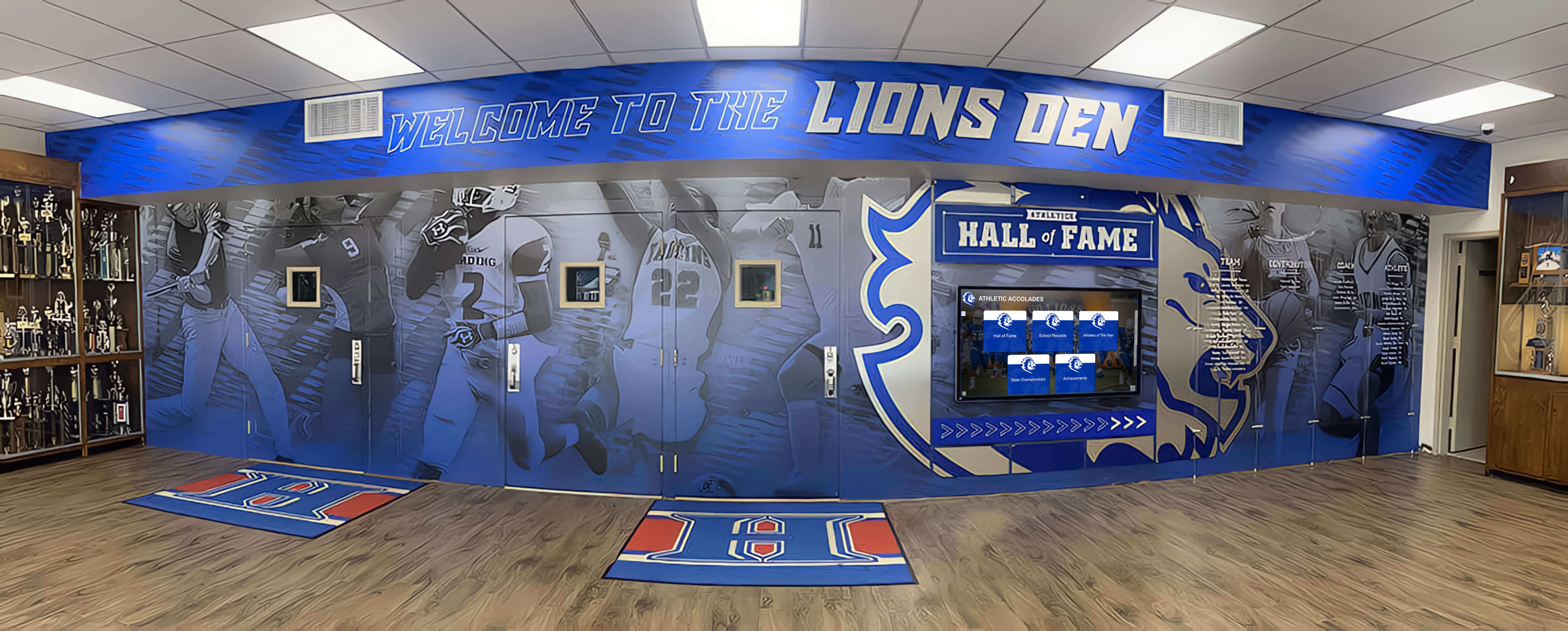
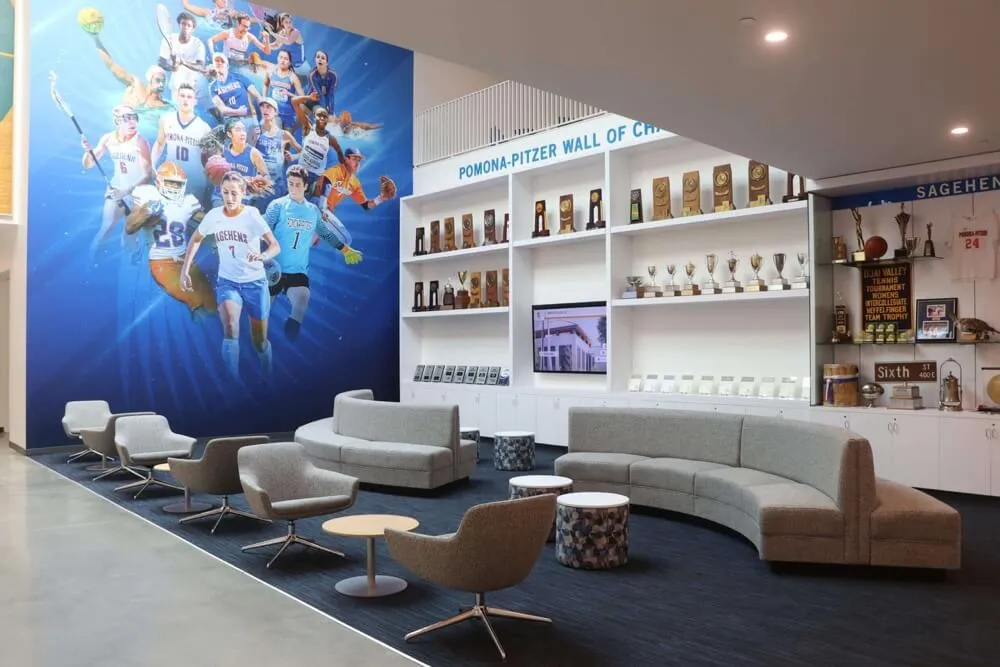
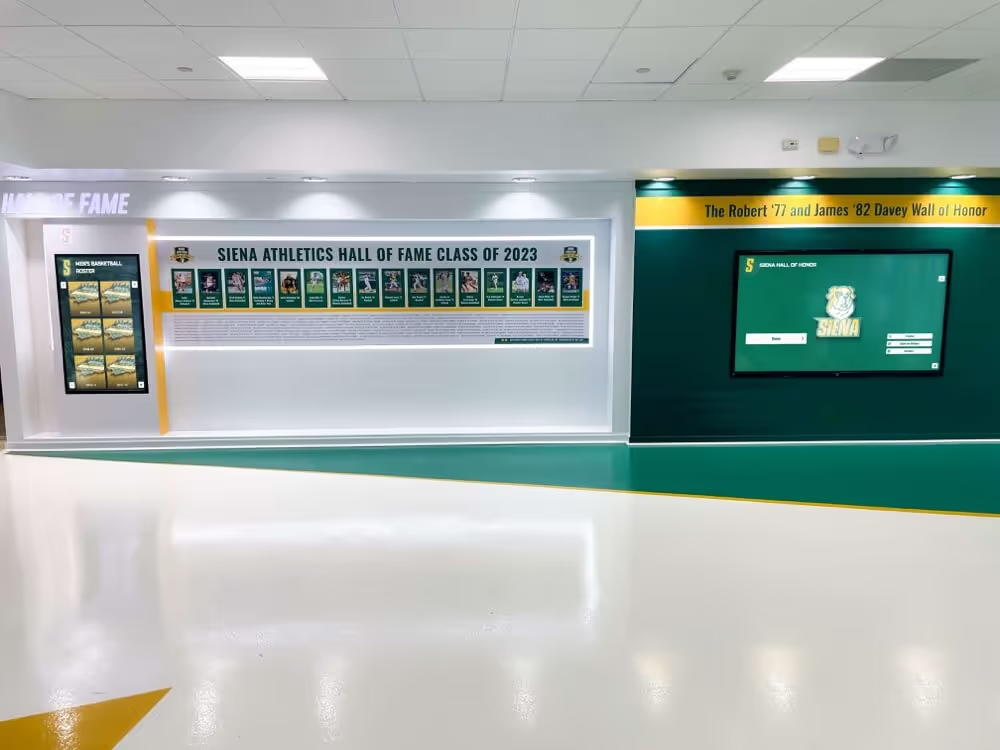
Integrated environments combine traditional trophy displays with digital interactive systems creating comprehensive celebration spaces
Vendor Comparison Framework
Creating Systematic Vendor Evaluation
Schools should evaluate 3-5 vendors using consistent criteria enabling objective comparison:
Capability Matrix
Create spreadsheet comparing:
- Core platform features and recognition functionality
- Content management capabilities and ease of use
- Hardware specifications and quality grades
- Implementation services and training offerings
- Ongoing support and maintenance provisions
- Pricing structure and total cost of ownership
- Contract terms and commitment requirements
- Customer references and satisfaction evidence
- Vendor stability and market experience
Reference Checks
Request customer references from institutions similar to yours and ask:
- What made you select this vendor over alternatives?
- How did implementation proceed—timeline, challenges, support quality?
- What ongoing costs have you encountered beyond initial projections?
- How responsive is vendor support when technical issues occur?
- How satisfied are stakeholders with recognition system effectiveness?
- What unexpected limitations or problems have you encountered?
- Would you select this vendor again knowing what you know now?
- What advice would you give schools evaluating this platform?
Honest reference conversations reveal insights vendor sales presentations cannot provide—prioritize speaking with references beyond vendor-provided lists when possible.
Live Demonstrations
Insist on comprehensive product demonstrations showing:
- Actual touchscreen interaction on commercial hardware rather than desktop computers
- Real content management workflows creating and publishing recognition
- Mobile and web accessibility across different devices and browsers
- Search, filtering, and navigation features with substantial content volumes
- Administrative interfaces and reporting dashboards
- Content import processes and bulk upload capabilities
- Technical specifications and system architecture explanations
Demonstrations reveal whether platforms deliver promised functionality or present limitations only apparent during actual use—schools should involve multiple stakeholders in evaluation demos.
Learn about selection frameworks in choosing digital recognition displays with detailed comparison methodologies.
Common Buying Mistakes and How to Avoid Them
Understanding pitfalls that trap schools purchasing digital hall of fame systems helps you avoid expensive mistakes undermining recognition investments.
Mistake 1: Focusing Only on Initial Price
The Problem
Schools frequently select vendors offering lowest initial pricing without calculating total cost of ownership across realistic timespans—discovering later that “inexpensive” solutions impose substantial hidden costs through limited functionality, poor reliability, inadequate support, or required upgrades.
How to Avoid
Calculate 5-year total cost of ownership including:
- Initial hardware, software, installation, and content development investments
- Annual subscription, maintenance, and support fees
- Content management staff time at fully-loaded hourly rates
- Expected hardware refresh or replacement costs
- Potential migration costs if systems prove inadequate
Higher initial costs for comprehensive platforms often prove more economical than budget alternatives requiring substantial ongoing labor or eventual replacement when initial choices prove inadequate.
Mistake 2: Underestimating Content Development Requirements
The Problem
Schools purchase sophisticated technology without realistic planning for content creation—resulting in empty displays, incomplete recognition, or overwhelming administrative burden preventing sustainable management.
How to Avoid
Initial Content Planning
- Inventory existing recognition information across all achievement categories
- Assess available photos, videos, and historical documentation
- Estimate hours required developing comprehensive initial content
- Budget for professional content development services when internal capacity proves inadequate
- Plan phased launches beginning with priority categories if comprehensive coverage isn’t immediately achievable
Ongoing Management Planning
- Designate specific staff responsible for recognition updates
- Create standard forms collecting necessary information after achievements
- Establish realistic update schedules maintaining current recognition
- Allocate adequate staff time for content management activities
- Document processes enabling sustainability during staff transitions
Quality content determines whether expensive technology delivers engagement and recognition value—inadequate content planning undermines the best platforms.
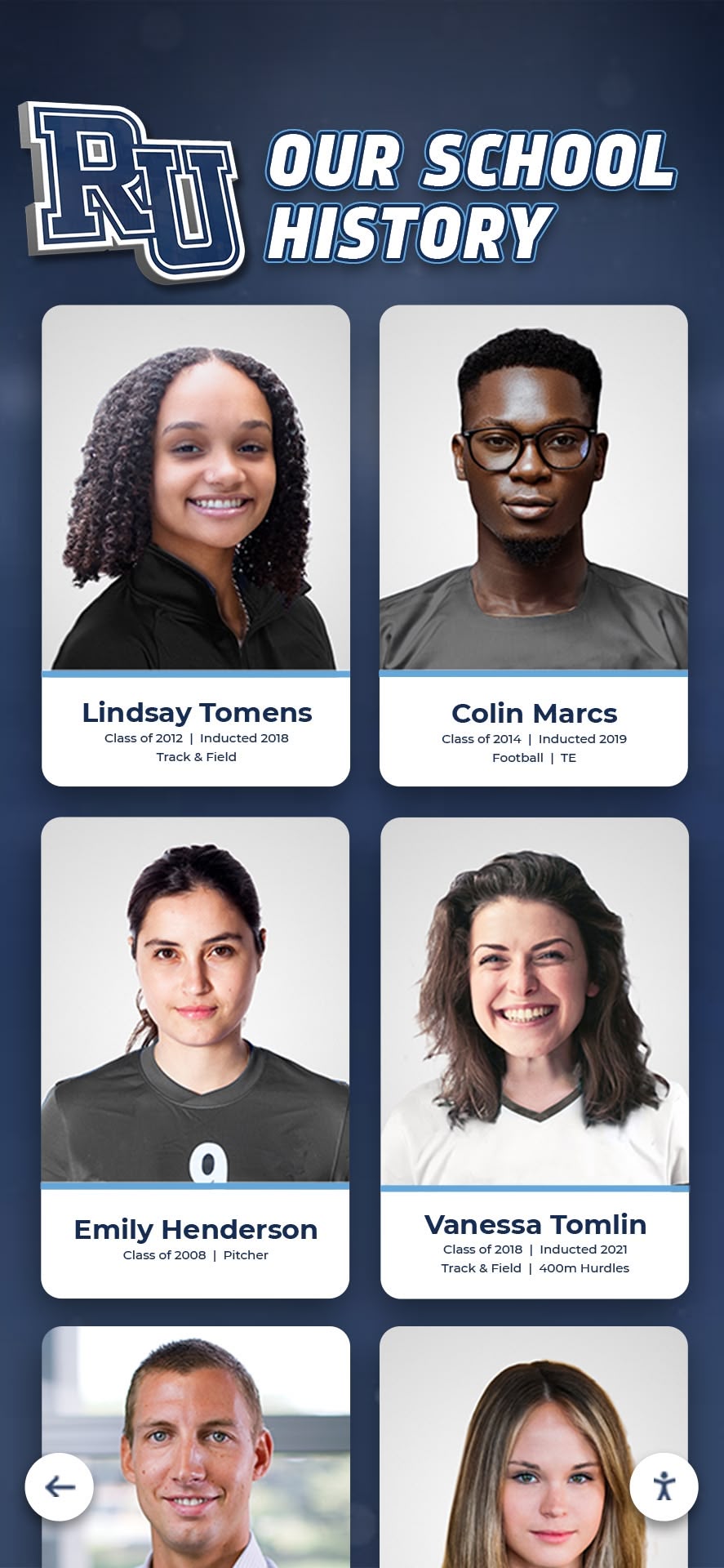
Systematic content development preserves complete institutional legacy across all eras and achievement categories
Mistake 3: Ignoring Technical Infrastructure Requirements
The Problem
Schools purchase recognition systems without verifying that proposed display locations have adequate network connectivity, electrical power, and physical conditions supporting successful deployment—discovering infrastructure deficiencies only during installation when addressing them proves expensive and delays implementation.
How to Avoid
Pre-Purchase Site Assessment
Conduct thorough location evaluations examining:
- Network connectivity quality and bandwidth availability
- Electrical outlet proximity and circuit capacity
- Wall construction and mounting feasibility
- Lighting conditions and glare sources affecting visibility
- Traffic patterns and viewing distances influencing display sizing
- ADA compliance for accessibility requirements
- Physical security considerations in public spaces
Address infrastructure deficiencies before purchase commitments—infrastructure improvements prove less expensive when planned systematically rather than rushed during installation.
Mistake 4: Selecting Digital Signage Instead of Recognition-Specific Platforms
The Problem
Schools attempt adapting generic digital signage systems for recognition purposes, discovering too late that fundamental capability limitations prevent the engagement and functionality recognition requires—forcing eventual migration to appropriate platforms after wasting initial investments.
How to Avoid
Understand Critical Distinctions
Recognition-specific platforms deliver capabilities generic digital signage cannot match:
- True interactivity enabling exploration rather than passive viewing
- Unlimited content depth supporting comprehensive profiles
- Search and filtering capabilities facilitating discovery
- Web accessibility extending recognition beyond physical displays
- Recognition-optimized layouts and templates
- Sustainable content management for large honoree databases
If vendors propose digital signage adaptations, require demonstrations showing:
- How visitors interact with displays finding specific individuals
- How content management scales handling hundreds of honorees
- How recognition extends beyond physical display locations
- What differentiates their “recognition” solution from standard digital signage
Most schools pursuing digital signage alternatives eventually migrate to purpose-built recognition platforms—starting appropriately prevents wasted investments.
Discover recognition-specific requirements in digital hall of fame features examining essential capabilities.
Mistake 5: Inadequate Stakeholder Involvement
The Problem
Administrative decision-makers purchase recognition systems without involving key stakeholders—athletic directors, activities coordinators, development officers, IT staff—discovering after implementation that critical requirements were overlooked or that lack of buy-in undermines sustainable management.
How to Avoid
Inclusive Planning Process
Involve diverse stakeholders throughout evaluation:
- Athletic directors and coaches regarding sports recognition requirements
- Academic administrators addressing academic achievement celebration
- Activities coordinators for arts, clubs, and non-athletic recognition
- Development and alumni relations staff concerning donor and alumni engagement
- IT personnel assessing technical requirements and support capabilities
- Students and parents providing engagement perspectives
- Finance officers reviewing budget implications and funding strategies
Broad involvement ensures selected systems address genuine needs while building commitment necessary for long-term sustainability.
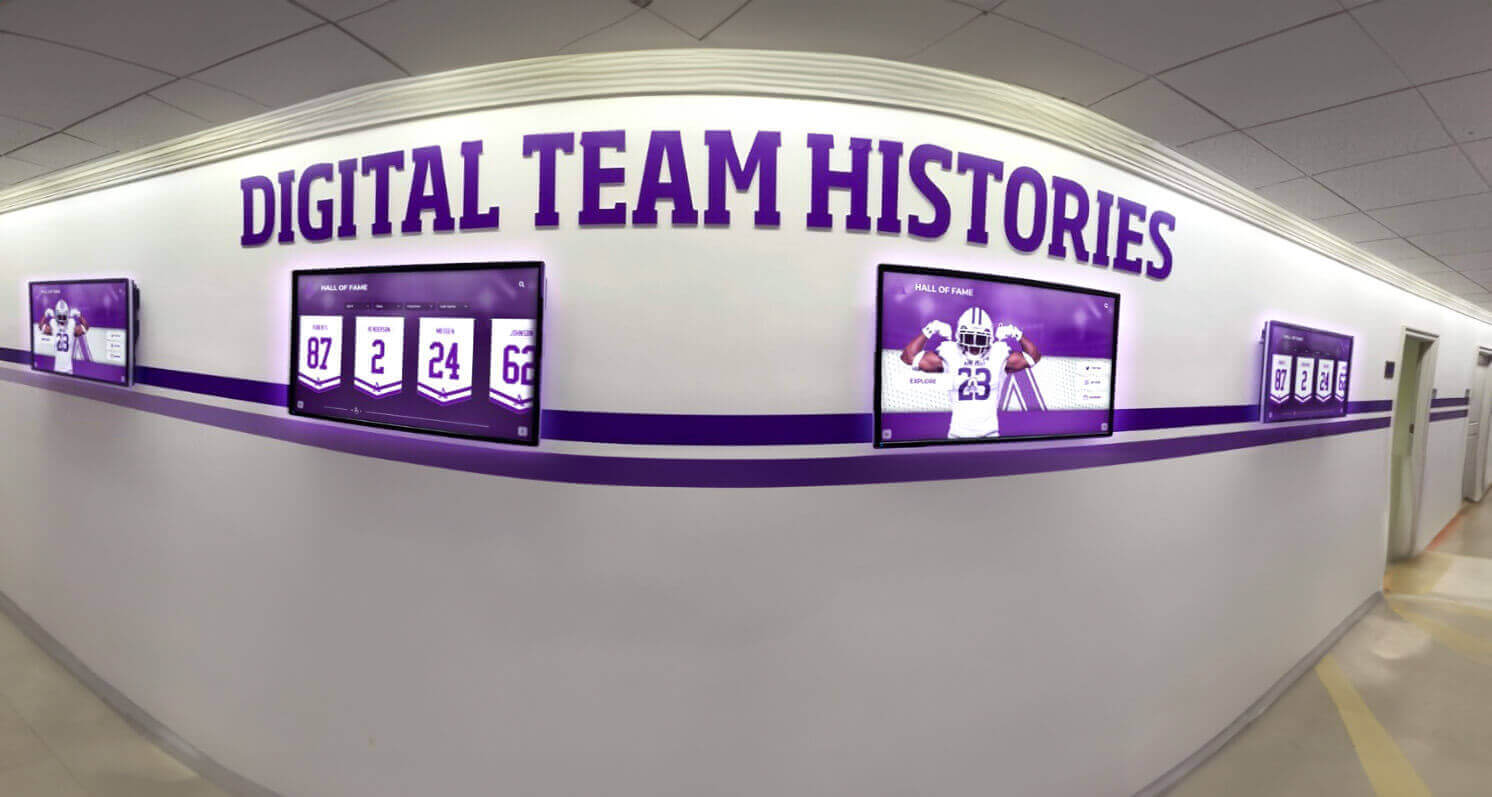
Coordinated multi-display installations provide unlimited recognition space throughout facilities without overwhelming individual locations
Hardware Selection: Choosing Display Technology
Digital hall of fame effectiveness depends heavily on display hardware quality, specifications, and installation approaches—making informed hardware decisions essential for long-term satisfaction.
Display Size and Configuration
Sizing Considerations
Appropriate display size depends on viewing distance and location characteristics:
Small Spaces (Narrow Hallways, Small Offices)
- 43-50 inch displays
- Viewing distances: 4-8 feet
- Typical applications: Office areas, narrow corridors, small meeting spaces
- Considerations: Smaller displays cost less but limit simultaneous viewing
Medium Spaces (Standard Hallways, Classroom Areas)
- 55-65 inch displays
- Viewing distances: 8-12 feet
- Typical applications: Main hallways, cafeteria areas, standard lobbies
- Considerations: Most common size balancing visibility and cost
Large Spaces (Main Lobbies, Athletic Facilities)
- 70-86 inch displays
- Viewing distances: 12-20+ feet
- Typical applications: Entrance lobbies, gymnasium lobbies, auditorium areas
- Considerations: Maximum impact but substantially higher costs
Schools should measure viewing distances in proposed locations ensuring selected display sizes remain legible and visually impactful from typical viewing positions.
Orientation Options
Most digital hall of fame displays use landscape (horizontal) orientation matching widescreen content formats—but portrait (vertical) orientation occasionally proves advantageous for:
- Narrow wall spaces where landscape displays don’t fit
- Floor-standing kiosks in tight quarters
- Trophy case integration requiring vertical displays
- Architectural environments emphasizing vertical design
Verify that selected platforms support both orientations since some systems optimize for landscape only.
Touch Technology and Durability
Touch Technology Options
Capacitive Touch
- Responsive, smartphone-like touch experience
- Multi-touch capability supporting gestures
- Requires direct contact with screens
- More expensive than alternative technologies
- Industry standard for premium installations
Infrared Touch
- Touchpoints detected via infrared sensors around display perimeters
- Works with gloves, styluses, or any pointing object
- No direct screen contact required
- Typically less expensive than capacitive
- Effective for most public kiosk applications
Both technologies work reliably in school environments—capacitive delivers premium experience while infrared provides practical functionality at lower cost.
Durability Requirements
School installations demand commercial-grade hardware specifications:
- Tempered glass screens resisting breakage
- Anti-glare coatings minimizing reflections in bright environments
- Vandal-resistant construction appropriate for public spaces
- Commercial-grade components rated for 16-24 hour daily operation
- Minimum 3-year warranties appropriate for institutional investments
Never purchase consumer televisions for institutional recognition applications—consumer devices fail rapidly under continuous public use unlike purpose-built commercial displays designed for demanding environments.
Mounting and Installation Options
Wall-Mounted Installations
Advantages
- Space-efficient integration with existing architecture
- Professional appearance when properly executed
- Lower hardware costs compared to freestanding options
- Flexible positioning at optimal viewing heights
Considerations
- Requires suitable wall construction (avoid temporary walls or weak surfaces)
- Professional installation ensuring secure mounting meeting safety codes
- Cable management creating clean appearances
- Electrical work potentially requiring contractors
Freestanding Kiosk Installations
Advantages
- No wall mounting requirements enabling flexible positioning
- Self-contained designs including all infrastructure
- Professional presentation with integrated branding
- Easier relocation if needs change
Considerations
- Higher hardware costs ($8,000-$15,000+ complete)
- Larger physical footprints requiring adequate floor space
- ADA accessibility considerations for wheelchair users
- Physical security in unsupervised areas
Architectural Integration
Premium installations integrate displays within custom millwork, trophy cases, or architectural features creating seamless appearances matching institutional aesthetics. While most expensive approach, architectural integration delivers visually impressive results strengthening pride and identity.
Schools should consult professional integrators evaluating mounting options—improper installations create safety hazards, aesthetic problems, and technical issues undermining recognition investments.
Explore installation approaches in high school athletic recognition with comprehensive facility integration strategies.

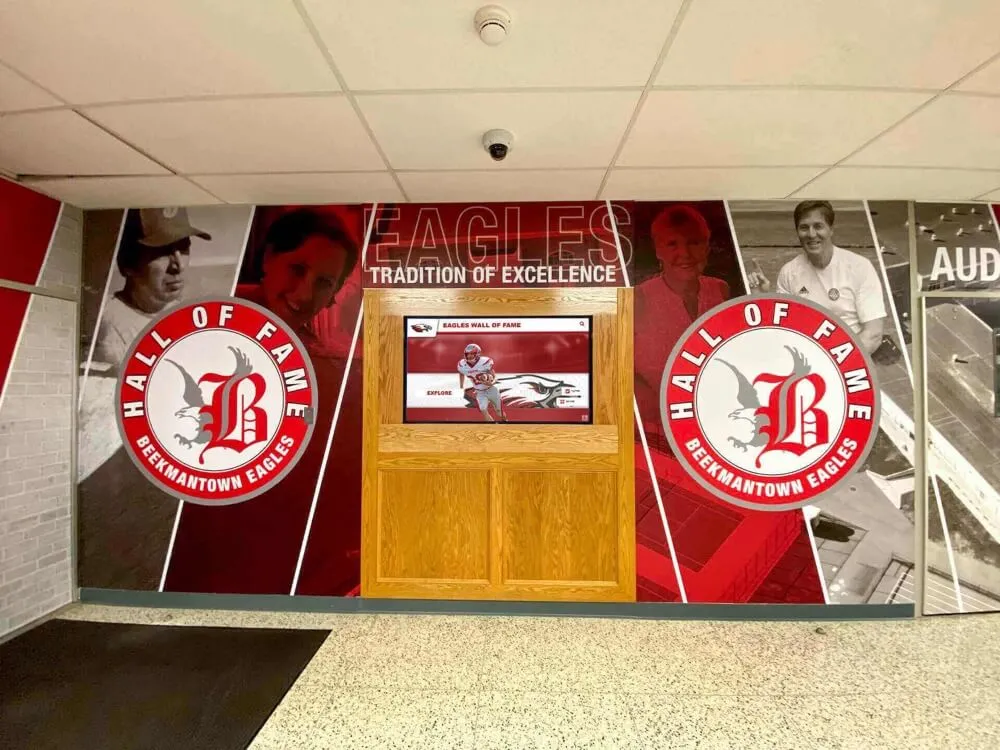
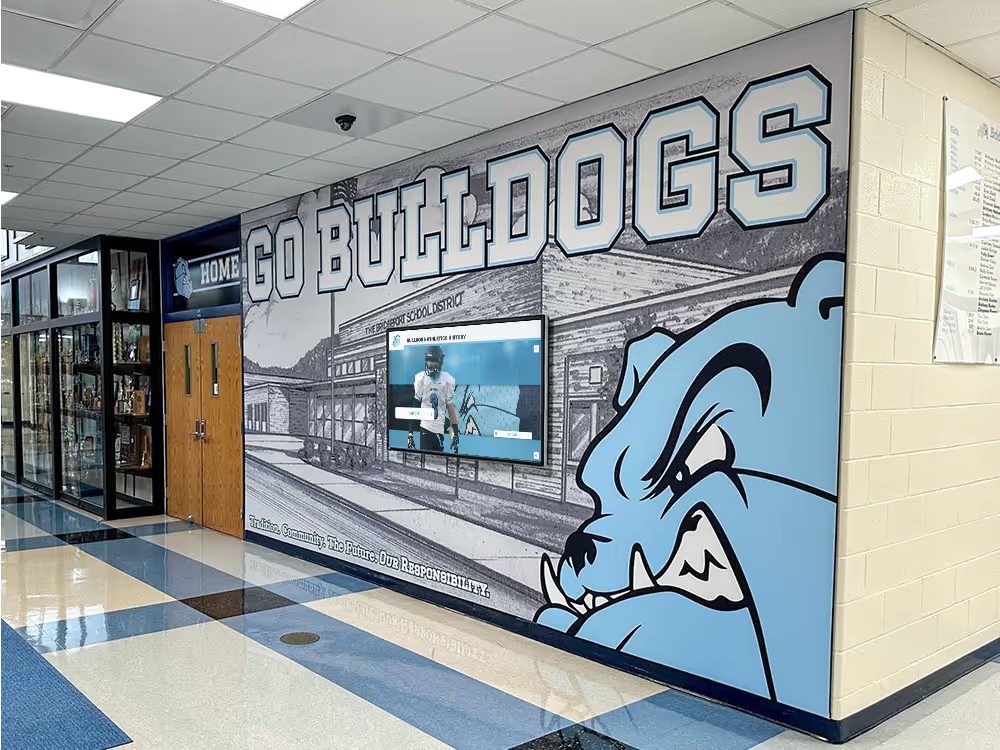
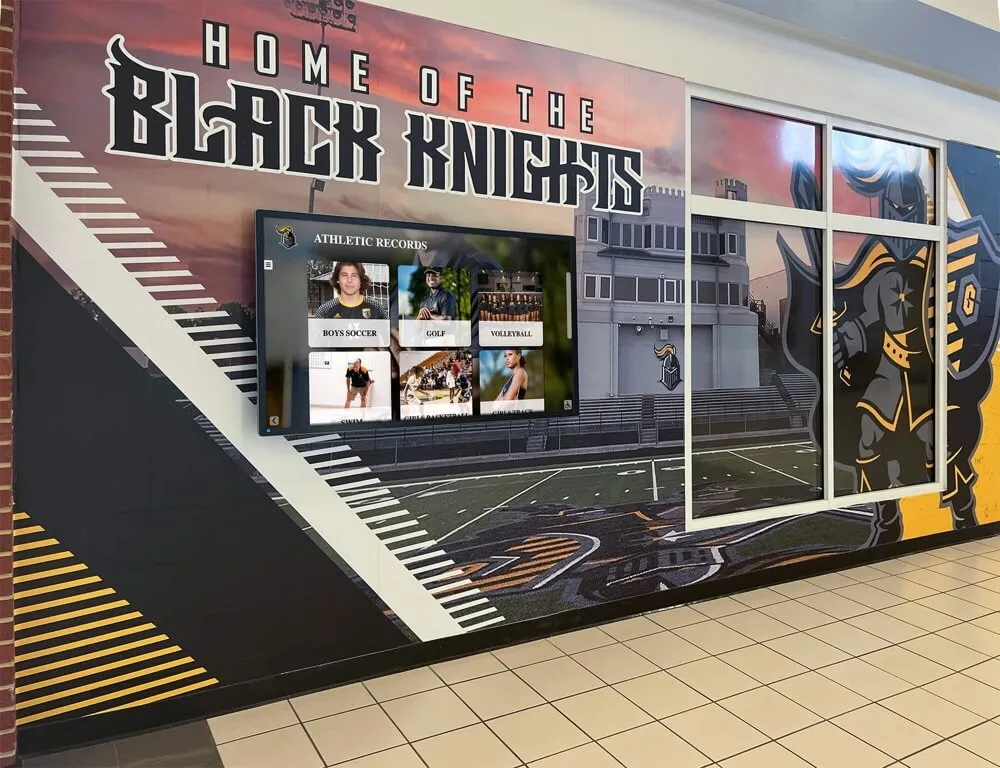
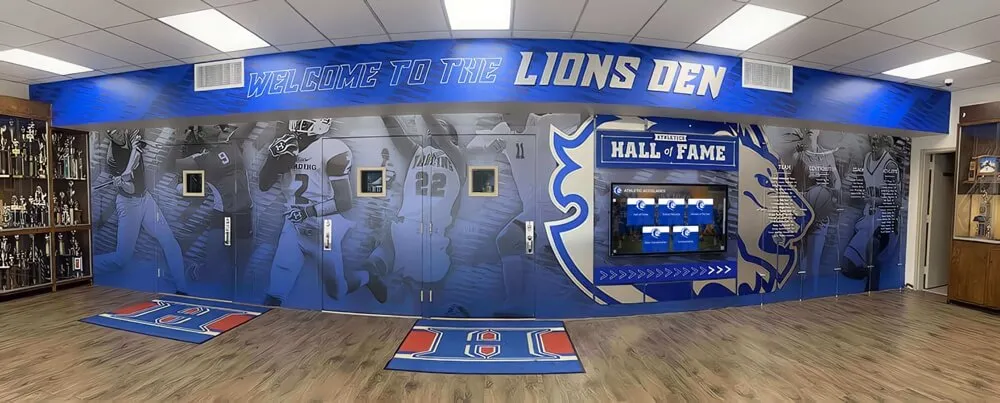
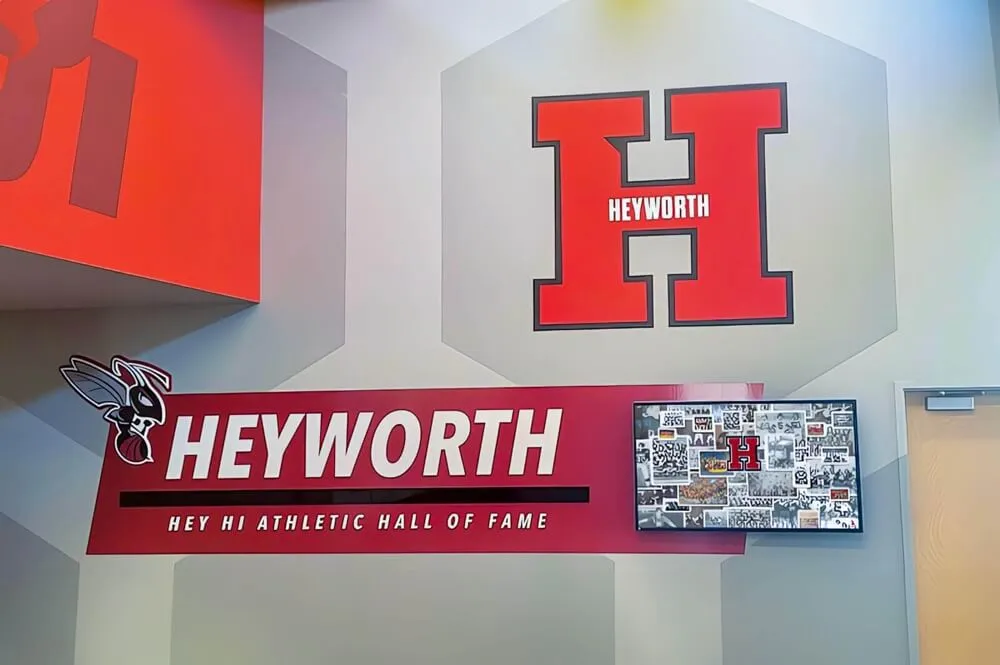
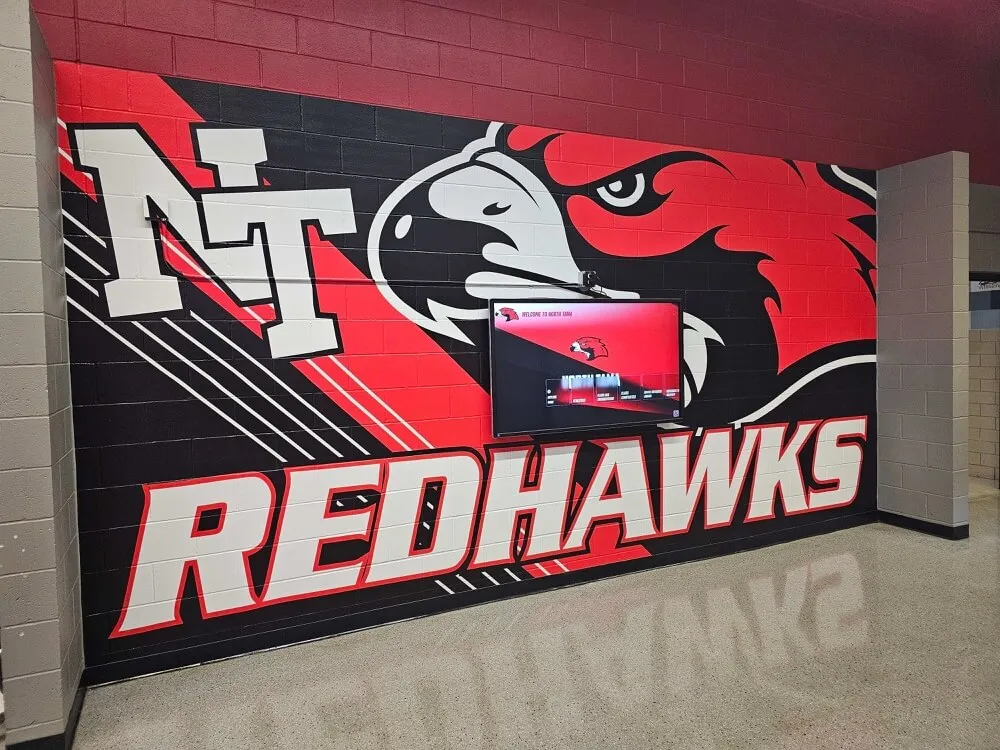
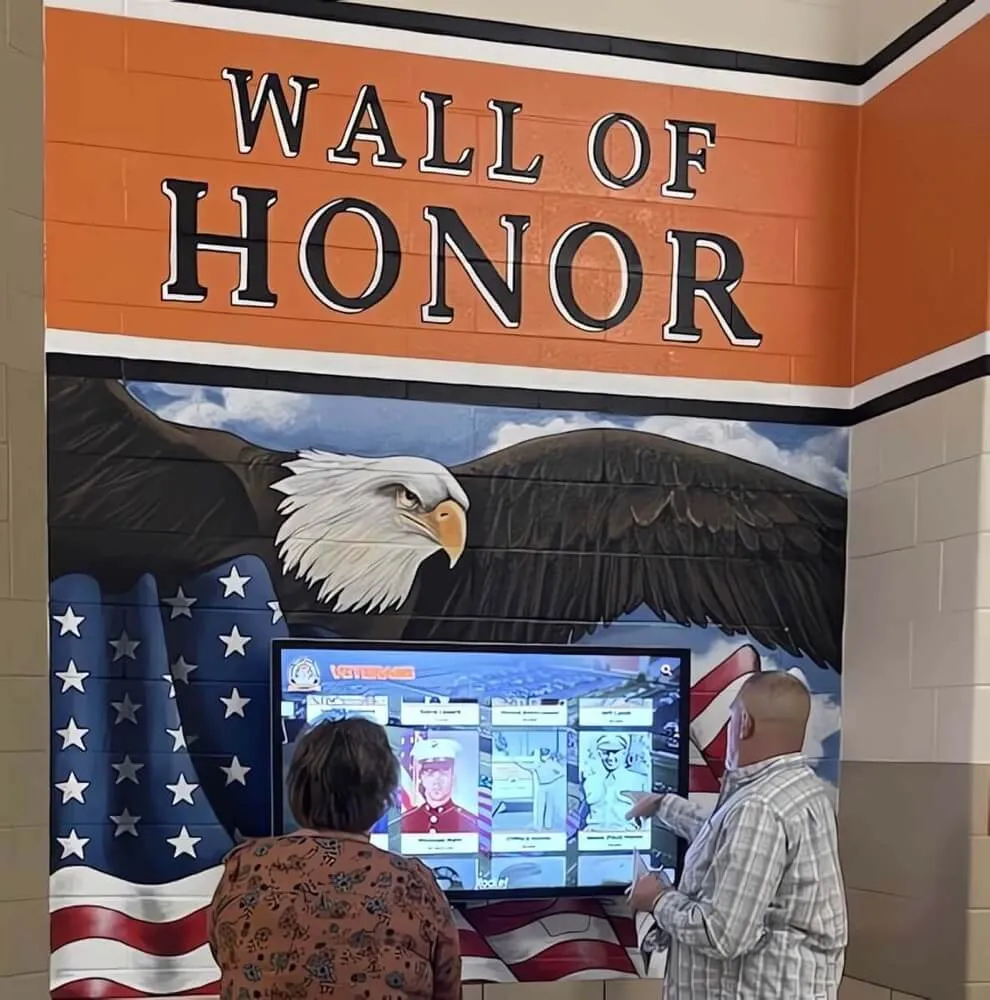
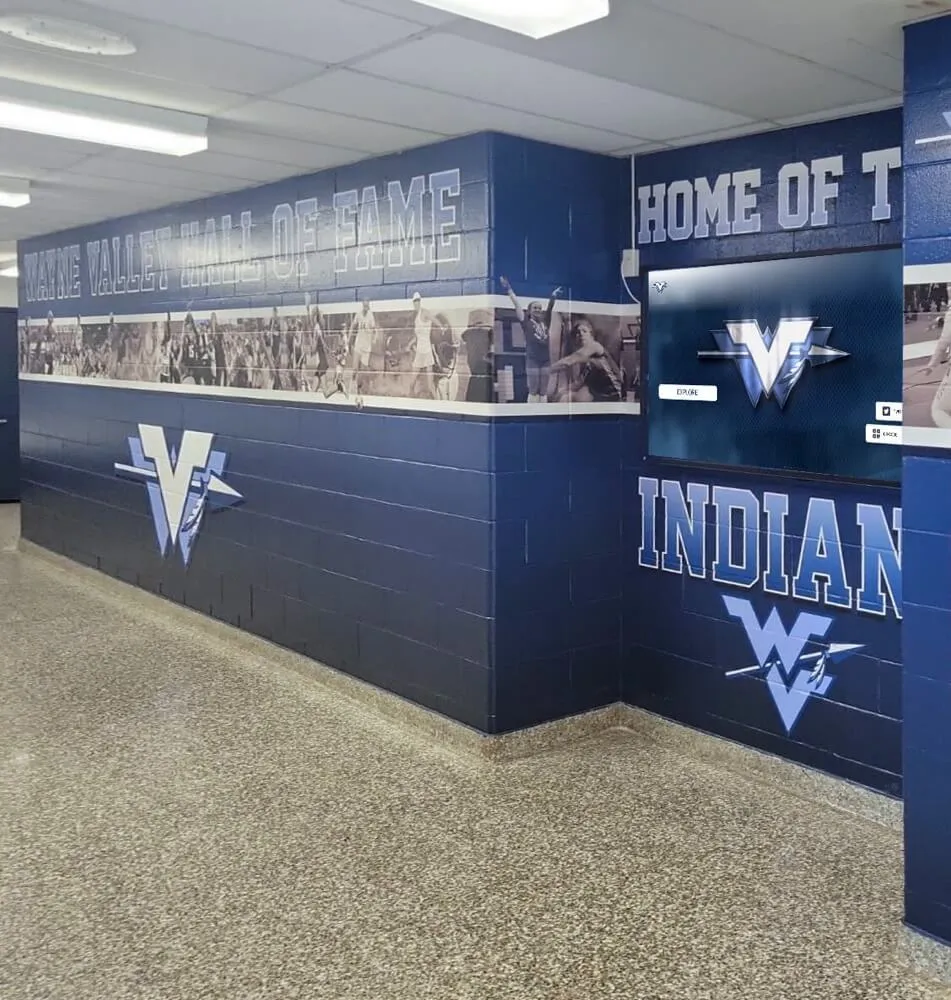
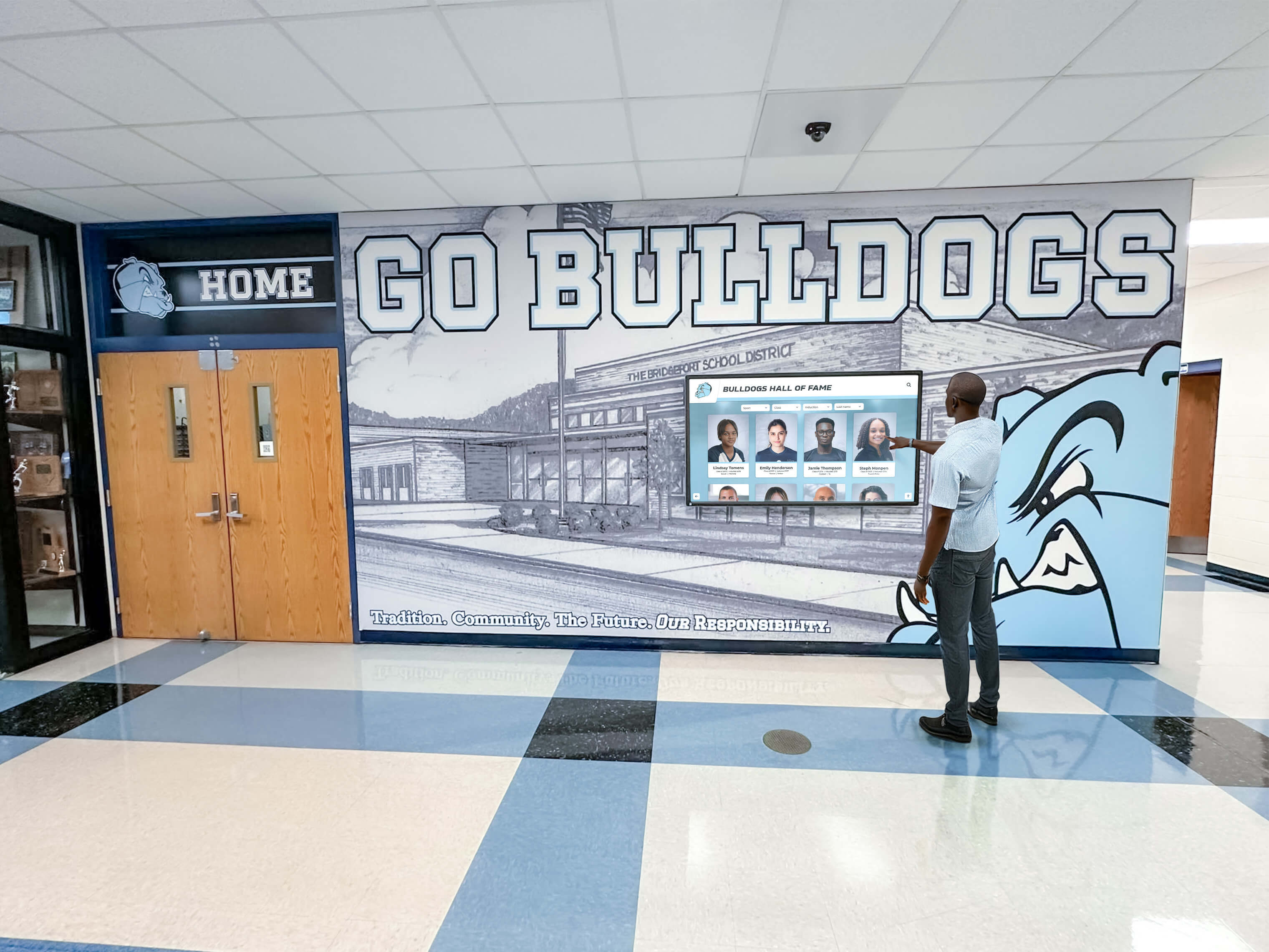
Integrated designs combine digital displays with murals and branding creating cohesive recognition environments
Software and Platform Selection: Choosing Recognition Technology
While hardware provides physical infrastructure, software platforms determine functionality, usability, and long-term satisfaction—making platform selection your most critical purchasing decision.
Purpose-Built Recognition Platforms
Rocket Alumni Solutions: Comprehensive Educational Recognition
Purpose-built platforms designed specifically for schools deliver advantages generic solutions cannot match:
Core Platform Advantages
- Pre-built templates for athletic, academic, and alumni recognition requiring no custom development
- Unlimited content capacity accommodating any institutional size without artificial limits
- Cloud-based management enabling remote updates from any device
- Intuitive interfaces requiring no technical expertise for routine content management
- Web-responsive databases extending recognition beyond physical displays globally
- Privacy compliance (FERPA, COPPA, GDPR) built into platform architecture
- Recognition-specific features like search, filtering, automated layouts, and social sharing
- Proven track record across hundreds of successful school implementations
- Educational pricing reflecting school budget realities rather than corporate pricing
Implementation and Support
- White-glove implementation services including content migration and staff training
- Ongoing technical support understanding unique school needs and constraints
- Regular platform enhancements driven by educational customer feedback
- Professional development ensuring staff can manage platforms independently
- Responsive customer service addressing issues quickly and effectively
Schools implementing purpose-built platforms report dramatically higher satisfaction and engagement compared to institutions attempting to adapt generic digital signage or custom development—specialized platforms deliver recognition-optimized functionality without technical complexity.
Pricing Models
- Platform subscriptions: $140-$300 monthly depending on features and display quantity
- Implementation services: $2,000-$8,000 one-time for setup and training
- Month-to-month subscriptions available avoiding long-term commitments
- Educational discounts for multi-year agreements
Learn about Rocket Alumni Solutions capabilities and request demonstrations showing actual recognition functionality.
Platform Feature Checklist
Essential Capabilities
Regardless of vendor, verify platforms deliver these critical features:
Content Management
- Browser-based interface requiring no software installation
- Intuitive editing resembling familiar word processors
- Bulk import accepting CSV files and institutional data exports
- Media upload supporting photos, videos, PDFs, and audio
- Scheduling and automation for content rotation
- Multi-user access with role-based permissions
- Mobile-friendly management from smartphones
Recognition Features
- Unlimited honoree capacity without artificial restrictions
- Flexible templates accommodating different achievement types
- Robust search functionality (name, year, category, keyword)
- Filtering and navigation supporting large databases
- Photo galleries displaying multiple images per profile
- Video integration with streaming optimization
- Social sharing capabilities
- QR code generation
Technical Architecture
- Cloud-hosted infrastructure eliminating server requirements
- Reliable uptime (99%+ availability)
- Automatic backups preventing data loss
- Security measures protecting student information
- Scalable architecture supporting institutional growth
- API capabilities enabling future integrations
Accessibility and Extensions
- Mobile-responsive web access functioning across all devices
- Public website extending recognition beyond displays
- Offline mode ensuring displays function during network issues
- Analytics dashboards revealing engagement patterns
- Search engine optimization for discoverability
Schools should request detailed feature demonstrations rather than accepting vendor claims—live demonstrations reveal actual capabilities versus marketing promises.
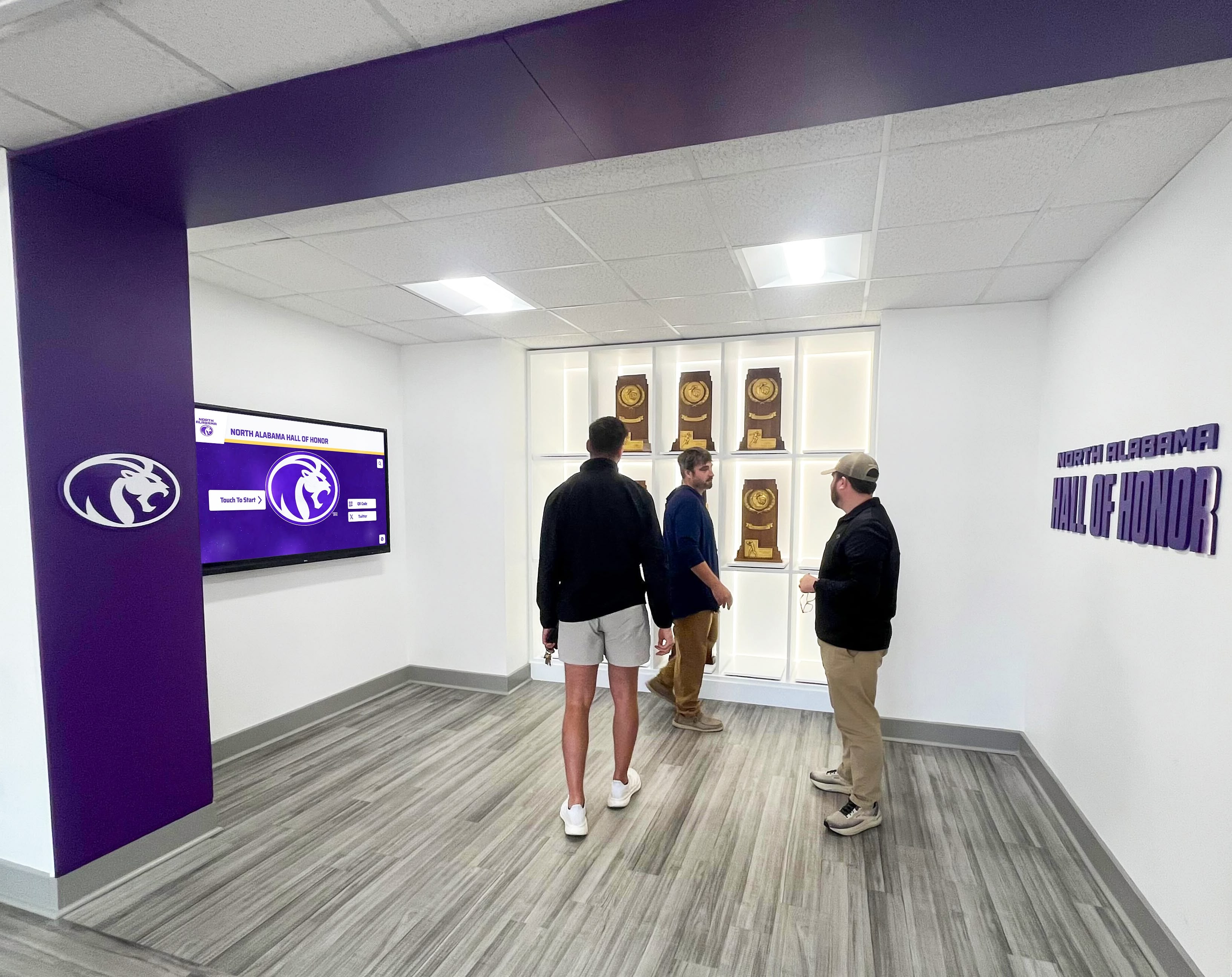
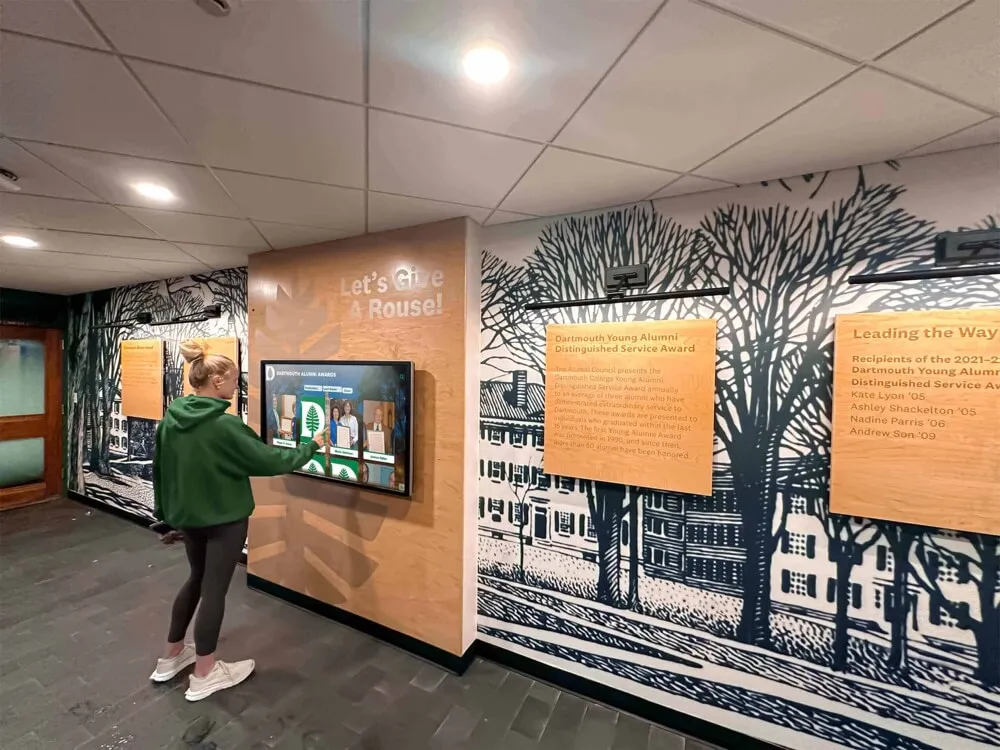
Successful implementations create natural gathering spaces where communities connect around shared institutional pride
Implementation Planning: Ensuring Successful Deployment
Technology excellence means nothing without successful implementation—systematic planning ensures recognition launches deliver intended engagement and cultural impact from day one.
Pre-Implementation Planning Timeline
6-9 Months Before Launch
- Form recognition committee including diverse stakeholders
- Define recognition objectives and success criteria
- Assess budget and identify funding sources
- Inventory existing recognition content and historical materials
- Evaluate potential display locations throughout facilities
- Request proposals from 3-5 qualified vendors
- Conduct vendor demonstrations and reference checks
- Select platform and vendor
- Finalize contract and funding commitments
3-6 Months Before Launch
- Complete infrastructure assessments in display locations
- Order hardware and schedule professional installation
- Begin systematic content development and historical research
- Digitize photos, videos, and historical documentation
- Develop content standards and style guidelines
- Train staff on platform content management
- Design integration with school branding and facilities
- Plan unveiling event and promotional strategy
1-3 Months Before Launch
- Complete hardware installations and system configuration
- Populate initial content across all major categories
- Conduct quality assurance testing all features and content
- Train additional staff on ongoing content management
- Develop documentation for routine procedures
- Create promotional materials announcing launch
- Coordinate unveiling event with stakeholders
- Finalize web accessibility and social promotion
Launch and Beyond
- Host unveiling ceremony celebrating recognition launch
- Promote displays through school communications and tours
- Monitor engagement analytics identifying improvements
- Gather stakeholder feedback assessing satisfaction
- Establish ongoing content management routines
- Plan regular content reviews and enhancements
Learn comprehensive planning in implementing digital recognition displays with detailed timelines and checklists.
Content Development Strategy
Initial Content Priorities
Launch recognition covering essential categories comprehensively rather than scattered incomplete content:
Phase 1: Recent Achievement (0-5 years)
- Current athletic achievements and championships
- Recent academic honors and scholar recognition
- Latest graduating class highlights
- Contemporary distinguished alumni
Rationale: Current community members most actively engage with recent recognition
Phase 2: Historical Excellence (5-25 years)
- Comprehensive athletic championship documentation
- Significant academic milestones and achievements
- Distinguished alumni with notable accomplishments
- Institutional history and tradition preservation
Rationale: Recent alumni and current families connect strongly with recent historical periods
Phase 3: Legacy and Heritage (25+ years)
- Early institutional history and founding
- Historical athletic achievement before comprehensive documentation
- Alumni pioneers and distinguished graduates
- Tradition development and institutional evolution
Rationale: Complete historical preservation honoring entire institutional legacy
Content Quality Standards
Professional recognition deserves professional quality:
Photography
- Minimum 1920x1080 resolution for primary images
- Proper lighting, composition, and editing
- Consistent visual style across all profiles
- Permission documentation for all images
Video
- 1080p HD minimum; 4K preferred when available
- Professional editing with titles and context
- Closed captioning for accessibility
- 2-5 minute optimal length for engagement
- Rights clearance for music and footage
Written Content
- Factual accuracy verified through reliable sources
- Engaging narratives beyond statistics alone
- 150-300 words typical for individual profiles
- Consistent style and tone
- Proper spelling, grammar, and punctuation
- Inclusive language reflecting institutional values
Quality content honors achievements appropriately while reflecting institutional commitment to recognition excellence.
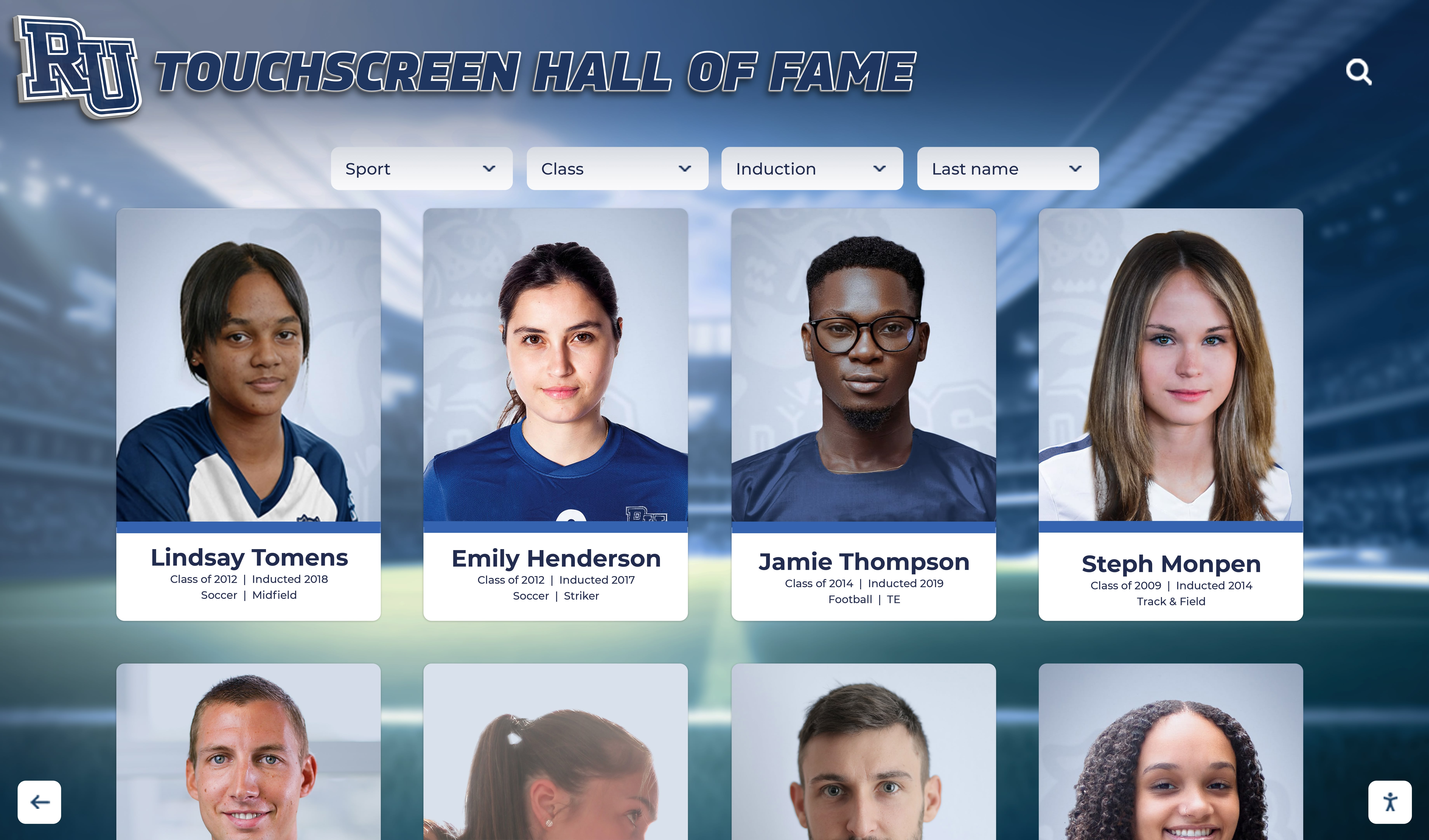
Consistent content presentation across all profiles creates professional recognition experiences
Measuring Success and Optimizing Performance
Systematic assessment demonstrates recognition value while identifying improvement opportunities ensuring displays achieve intended objectives.
Quantitative Engagement Metrics
Platform Analytics
Modern recognition systems provide concrete usage data:
- Interaction frequency showing daily engagement patterns
- Average session duration revealing engagement depth
- Most-viewed content identifying audience interests
- Search query analysis showing discovery behaviors
- Peak usage times informing scheduling decisions
- Geographic access patterns from web platforms
- Social sharing frequency demonstrating organic promotion
- Device types (touchscreen, mobile, desktop) showing access methods
Schools implementing comprehensive analytics report data-driven insights enabling continuous optimization maximizing engagement and recognition effectiveness.
Engagement Benchmarks
Research on interactive recognition provides performance expectations:
- Average touchscreen session: 45-90 seconds versus 2-3 seconds for passive signage
- Engagement increase: 70% higher interaction with touchscreens compared to static displays
- Content capacity: 300-500% more honorees displayed versus previous physical recognition
- Update frequency: 8-12 times more frequent content additions with cloud management
- Web reach: Recognition extending to alumni nationwide versus campus-only visibility
Schools documenting similar improvements demonstrate recognition platform value justifying continued investments and enhancements.
Qualitative Impact Assessment
Stakeholder Feedback
Regular feedback reveals insights beyond quantitative metrics:
- Student surveys assessing recognition awareness and engagement
- Alumni responses measuring connection and satisfaction
- Family feedback on visibility into achievements and traditions
- Staff observations about interaction patterns and community discussions
- Visitor reactions during tours and events
- Leadership reflections on cultural impact and institutional pride
Systematic feedback collection reveals whether digital recognition achieves intended cultural impacts beyond engagement metrics alone.
Observable Cultural Indicators
Long-term changes provide evidence of recognition cultural impact:
- Increased community awareness and celebration of diverse achievements
- Enhanced institutional pride and positive identity
- Strengthened alumni connections to current programs
- Improved external perception and reputation
- Greater organizational commitment to recognition across all programs
- More inclusive recognition culture celebrating diverse excellence
- Elevated expectations for achievement visibility
Regular observation and assessment enable continuous refinement ensuring digital recognition achieves intended goals while identifying enhancement opportunities.
Discover measurement frameworks in assessing recognition impact with comprehensive evaluation methodologies.
Special Considerations for High Schools
High school digital hall of fame implementations face unique considerations distinguishing them from college or professional installations.
Student Privacy and FERPA Compliance
Privacy Requirements
Schools must balance recognition visibility with privacy obligations:
- FERPA compliance for student information display
- Parent and student consent for public recognition
- Opt-out mechanisms for privacy-concerned families
- Age-appropriate content for minor students
- Directory information guidelines limiting displayed details
Purpose-built educational platforms like Rocket Alumni Solutions build FERPA compliance into platform architecture—generic systems require custom privacy controls schools must implement independently.
Safety Considerations
Recognition content should avoid information creating safety concerns:
- No contact information or addresses
- Limited personal information beyond achievements
- No details revealing protected characteristics
- Appropriate security for sensitive athletic information
Consult legal counsel ensuring recognition programs comply with relevant privacy laws and institutional policies.
Integrating Academic and Athletic Recognition
Equitable Visibility
Comprehensive high school recognition celebrates achievements across all programs equitably:
- Athletic excellence receiving equal space as academic achievement
- Arts and performance recognition alongside athletic success
- Leadership and service celebration matching program recognition
- Diverse excellence honored across all categories
Digital platforms enable equitable recognition impossible when limited physical space forces prioritization favoring prominent programs over equally deserving achievements in less visible activities.
Learn about equitable approaches in high school athletics equity with comprehensive recognition strategies.
Supporting School Culture and Identity
Recognition as Cultural Tool
Digital hall of fame systems support broader cultural objectives:
- Demonstrating institutional commitment to seeing and valuing all forms of excellence
- Creating visible celebration strengthening school spirit and pride
- Connecting current students to institutional legacy and tradition
- Inspiring achievement by showcasing dedication required for excellence
- Building community cohesion around shared institutional identity
- Supporting recruitment by showcasing accomplishment to prospective families
Schools implementing comprehensive recognition report tangible cultural improvements—enhanced pride, stronger identity, increased achievement motivation, and improved external perception.
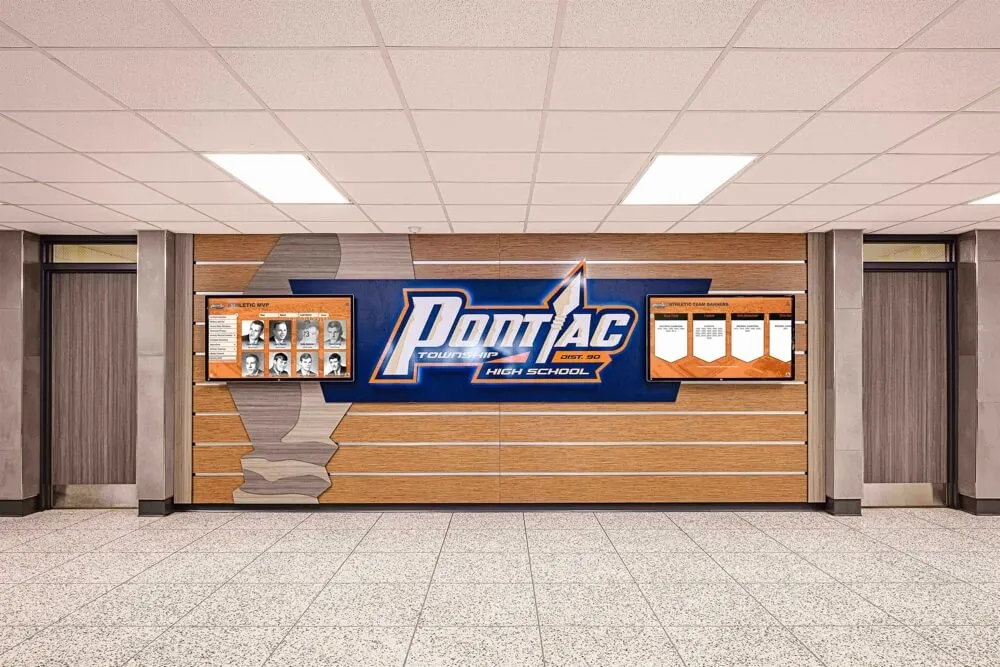
Comprehensive recognition demonstrates institutional commitment to celebrating achievement across all programs and eras
Conclusion: Making Your Digital Hall of Fame Investment
Purchasing a digital hall of fame for your high school represents significant financial investment and long-term commitment—but when implemented thoughtfully with appropriate technology, clear objectives, quality content, and sustained management, these systems transform how your institution celebrates achievement, preserves legacy, and engages communities for decades to come.
The frameworks, considerations, and evaluation criteria explored throughout this comprehensive buying guide provide structured approaches to confidently selecting recognition systems honoring your school’s excellence while remaining sustainable, engaging, and aligned with institutional goals. From understanding core technology components and defining recognition requirements to evaluating vendors systematically and avoiding expensive mistakes, these strategies ensure your digital hall of fame investment delivers maximum long-term value.
Ready to Transform Your School's Recognition Program?
Discover how purpose-built recognition platforms like Rocket Alumni Solutions can help you celebrate unlimited achievements, engage your entire community, and preserve institutional legacy with interactive displays designed specifically for high schools.
Request Your Free ConsultationMost high schools discover that purpose-built recognition platforms deliver optimal balance between comprehensive capabilities, intuitive usability, reasonable cost-effectiveness, and long-term sustainability—avoiding custom development complexity and expense while providing functionality far exceeding adapted digital signage alternatives. Starting with platforms designed specifically for educational recognition prevents expensive mistakes while ensuring implementations succeed from launch through sustained operation.
Your students, athletes, scholars, artists, leaders, and alumni deserve recognition systems celebrating their dedication and excellence appropriately while strengthening the institutional culture inspiring next generations. With systematic planning, appropriate technology investments, quality content development, and sustained management commitment, you can create digital hall of fame systems becoming treasured traditions preserving legacy while inspiring excellence for decades.
Ready to begin your digital hall of fame journey? Explore how Rocket Alumni Solutions can help you create comprehensive interactive recognition celebrating every achievement across athletics, academics, and institutional history—or discover additional implementation resources examining digital trophy case strategies, content development workflows, and engagement measurement frameworks ensuring your recognition investment delivers maximum value for your school community.