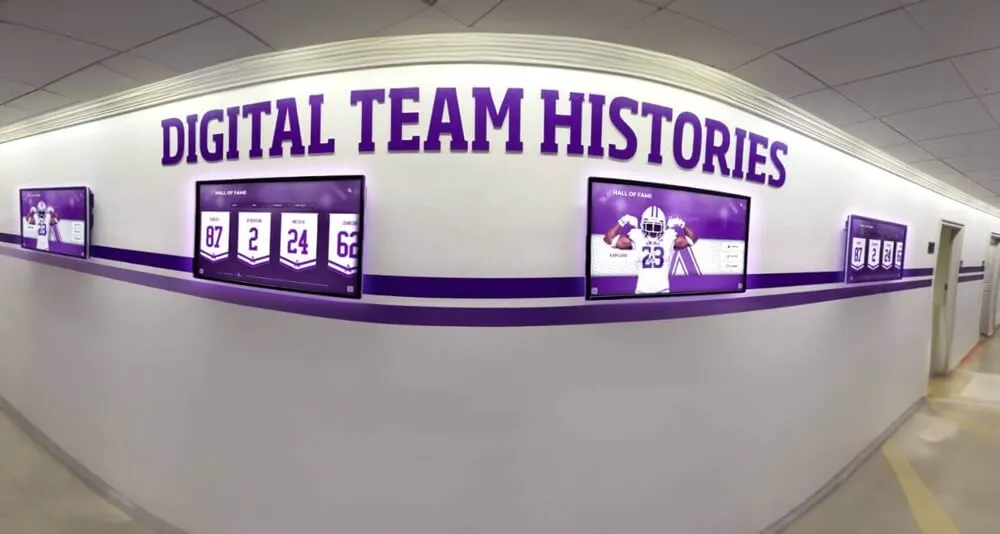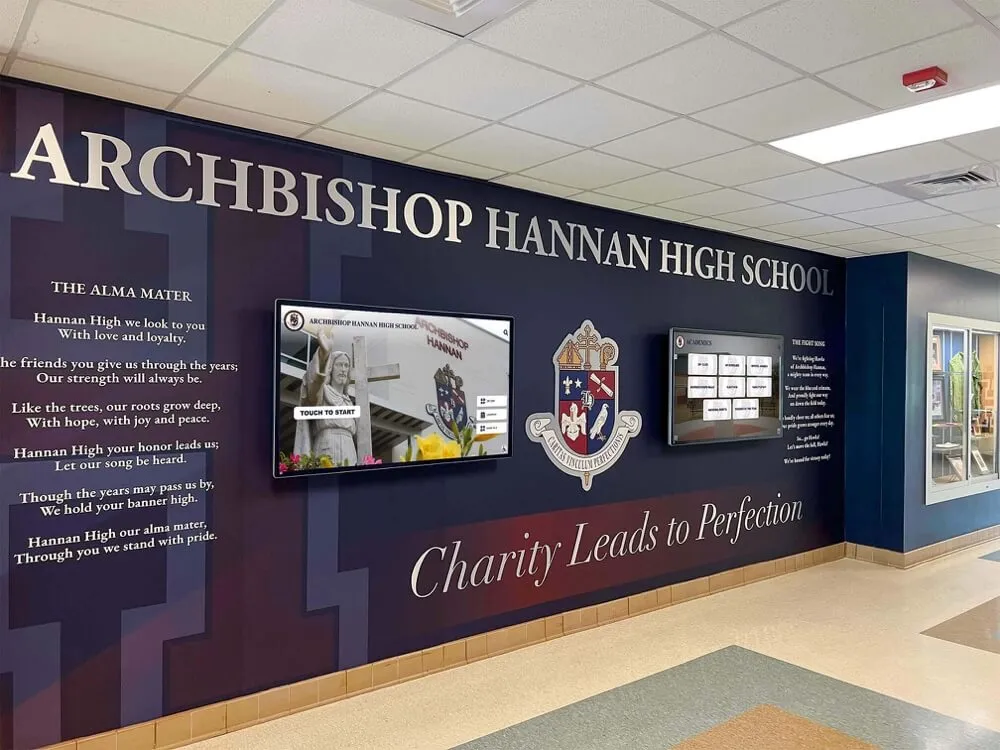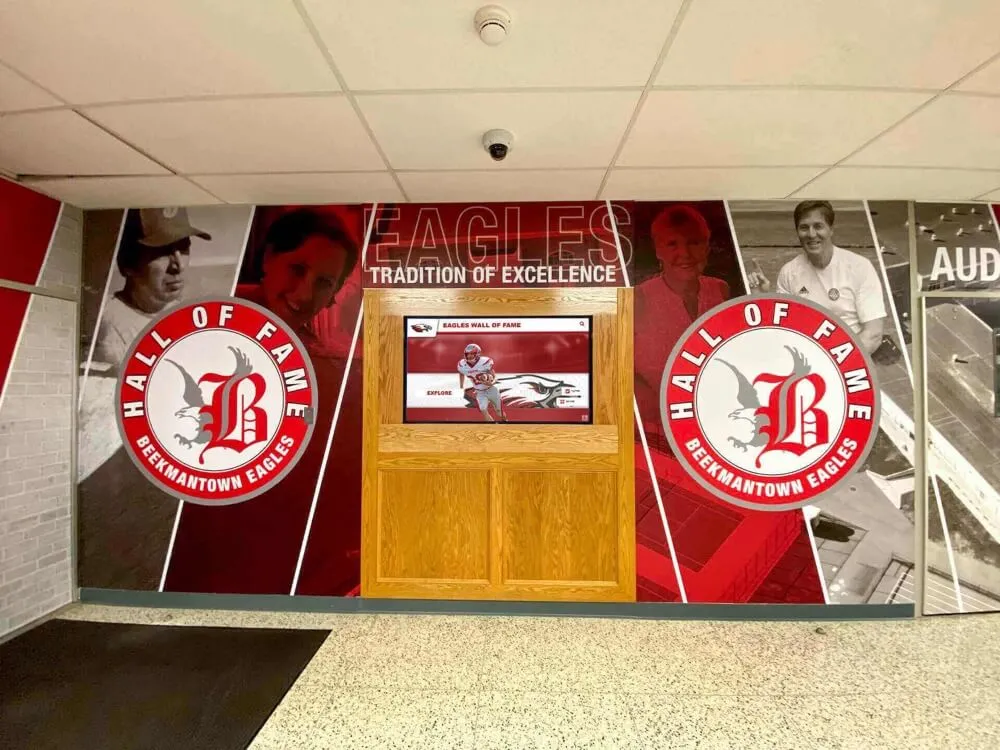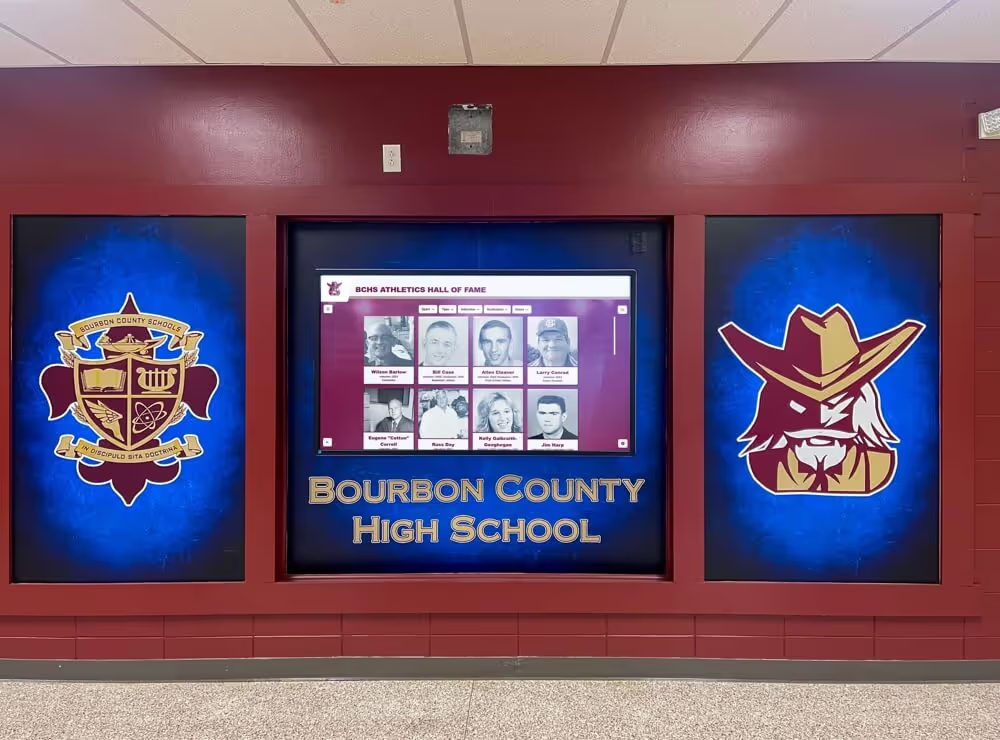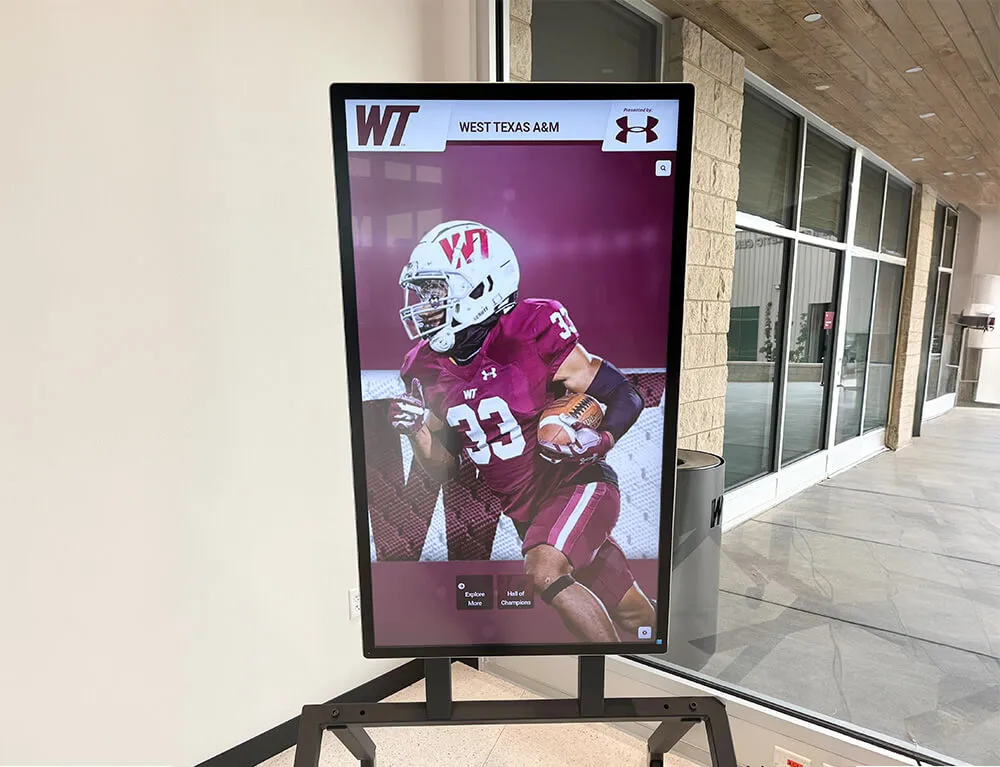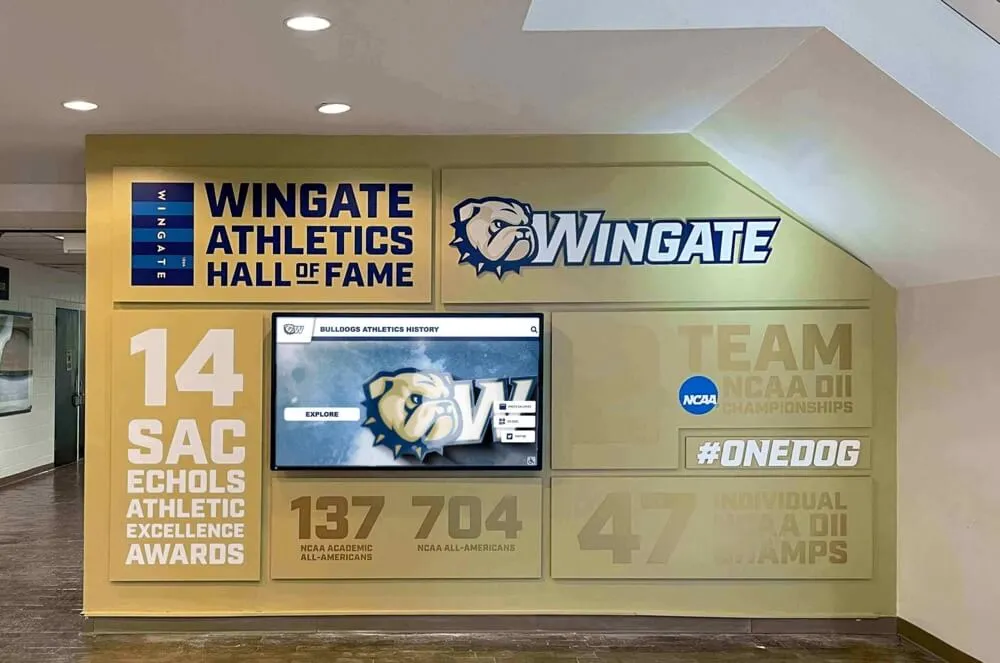




Digital halls of fame are transforming how schools, universities, athletic programs, and organizations celebrate achievement and preserve institutional legacy. These interactive touchscreen systems replace overcrowded trophy cases and limited wall space with dynamic, engaging recognition platforms that showcase unlimited honorees across all eras while creating memorable experiences impossible with traditional static displays.
Walk into most high schools, colleges, or athletic facilities and you’ll encounter familiar recognition challenges: trophy cases bursting at the seams with decades of awards, plaques covering every available wall surface, faded championship banners hanging from gymnasium rafters with illegible details, and countless deserving achievements never recognized due to physical space constraints. Administrators constantly face difficult decisions about which accomplishments deserve visibility and which must remain hidden in storage.
This comprehensive guide explores everything you need to know about digital halls of fame—from understanding core technology and features to planning implementation, creating compelling content, measuring success, and ensuring your recognition system delivers lasting value for your institution and community.
Digital hall of fame systems don’t replace cherished traditions or diminish the importance of physical recognition—they enhance and extend recognition capacity while creating new opportunities for storytelling, engagement, and connection that strengthen institutional culture and community pride far beyond what traditional approaches alone can accomplish.

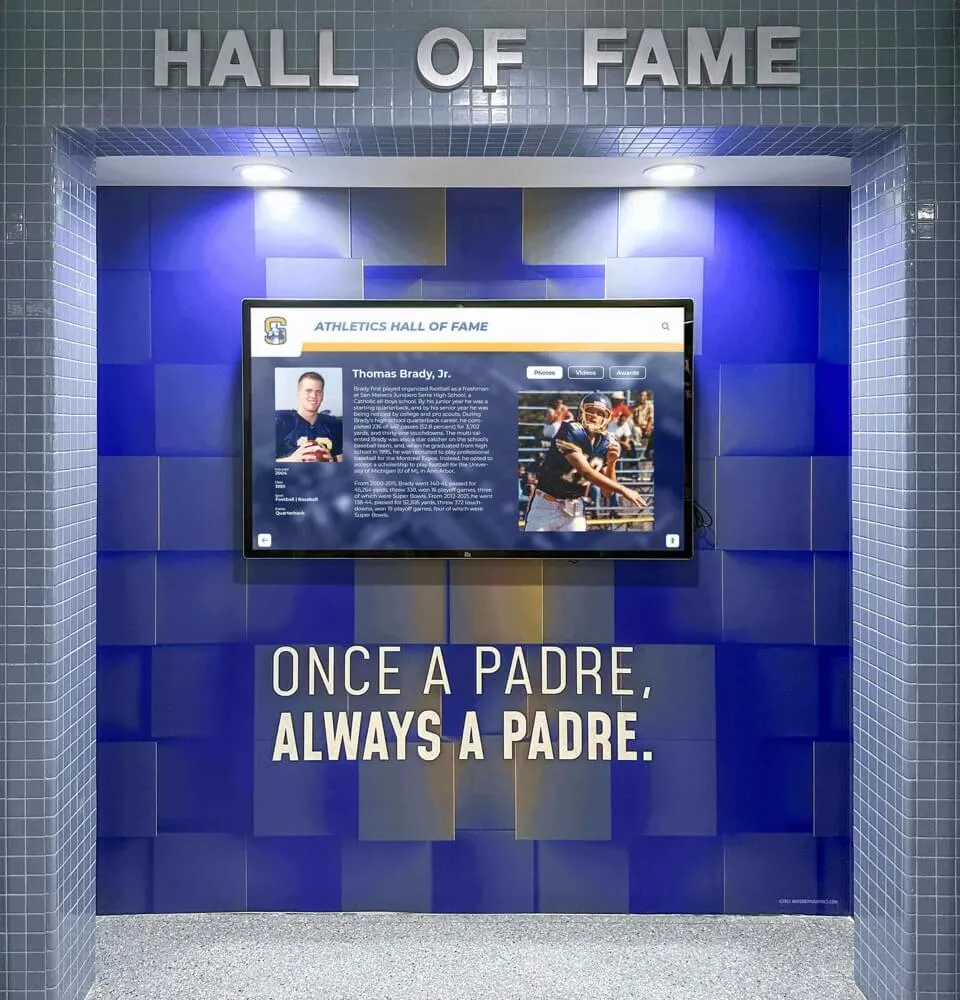
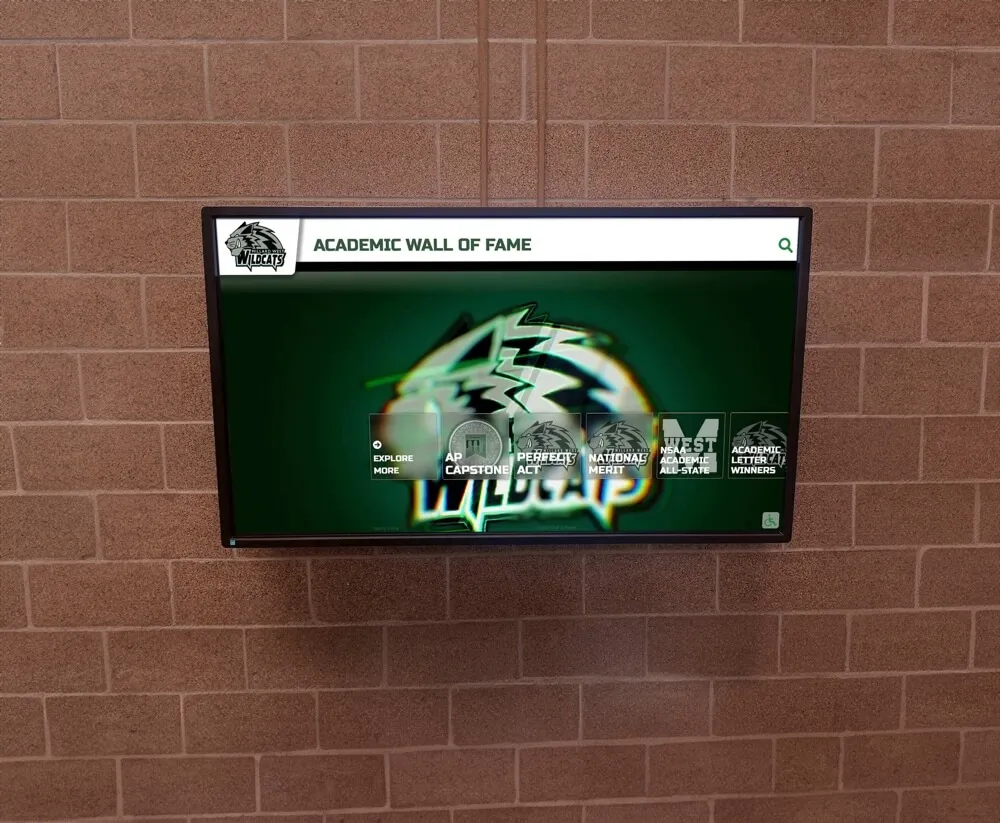
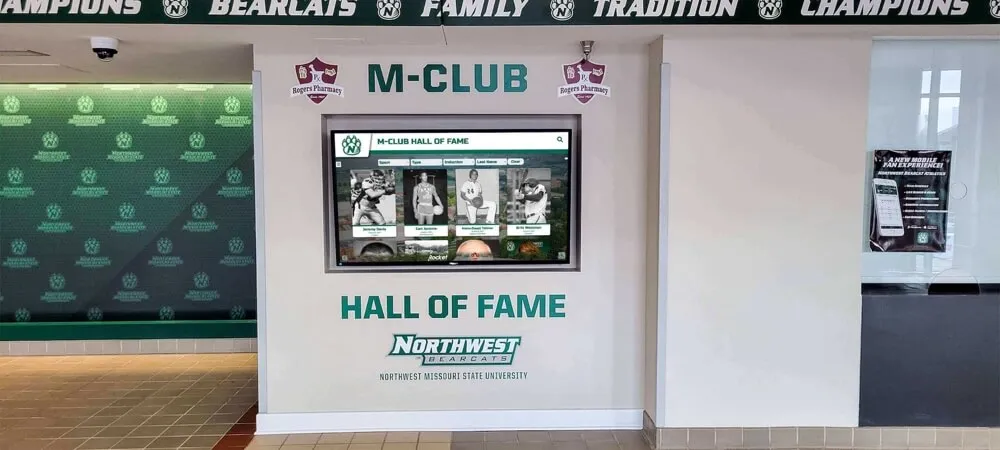
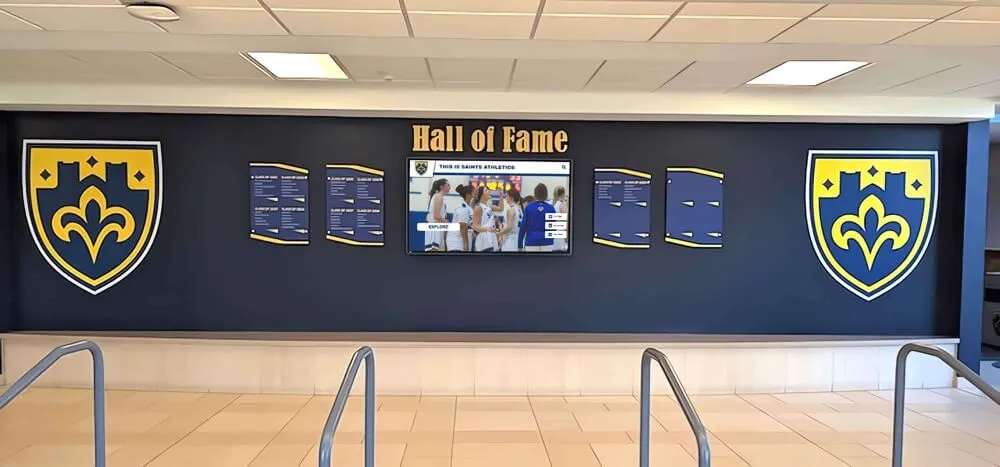
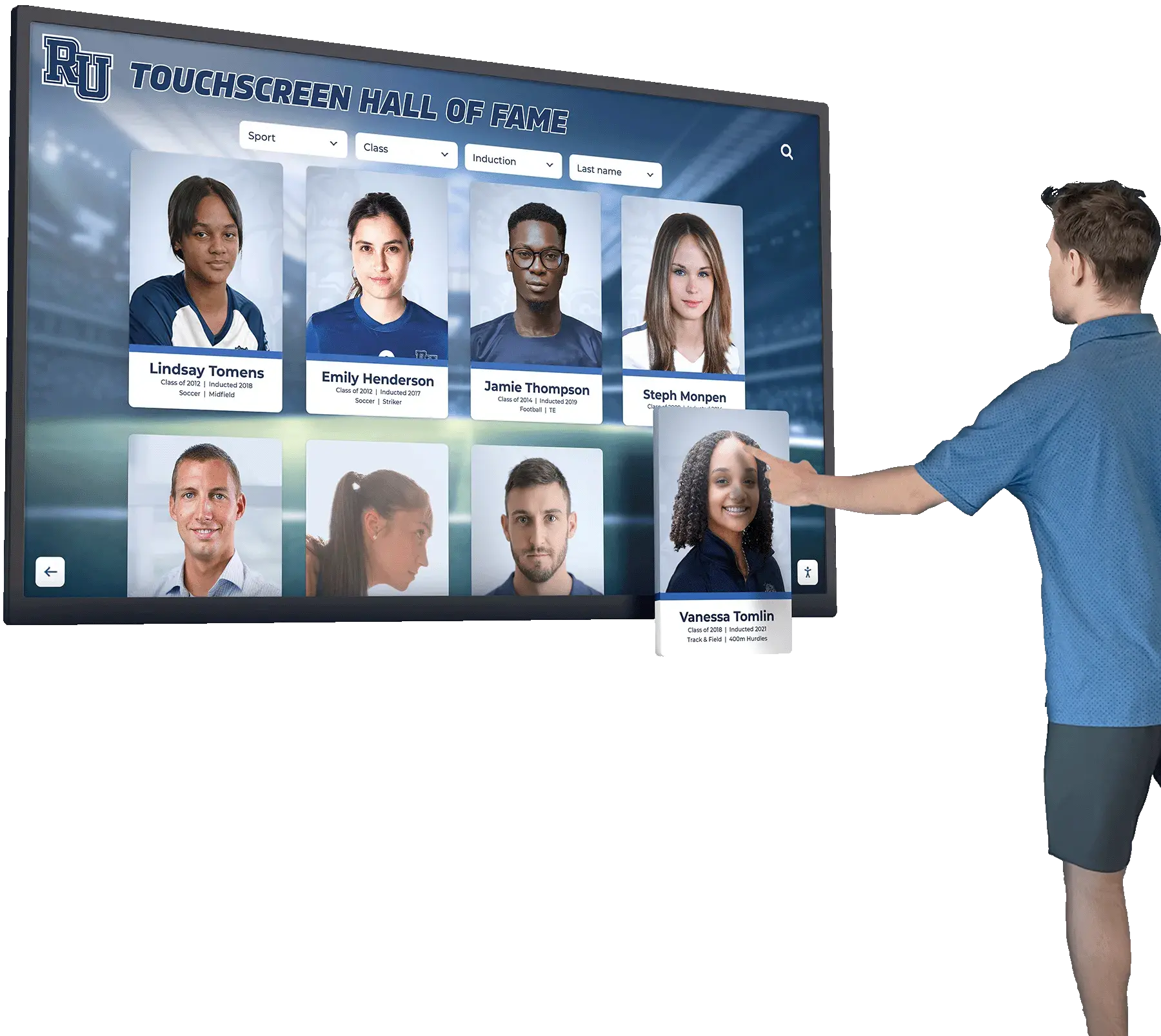

Modern digital halls of fame provide intuitive touchscreen interfaces enabling visitors to explore unlimited honorees, achievements, and institutional history
Understanding Digital Halls of Fame
Before exploring implementation strategies and best practices, understanding exactly what digital halls of fame are, how they function, and what differentiates quality systems from basic digital signage helps institutions make informed decisions aligned with recognition goals and community needs.
What Is a Digital Hall of Fame?
A digital hall of fame is an interactive recognition platform combining hardware displays with cloud-based content management systems to showcase honorees, achievements, and institutional history through engaging multimedia experiences accessible both on physical touchscreen displays and via web-based platforms.
Core System Components
Complete digital hall of fame systems integrate multiple elements working together seamlessly:
- Commercial-grade touchscreen displays: Professional interactive screens designed for continuous daily operation in high-traffic public environments
- Cloud-based content management platform: Secure web-based software enabling remote content updates from any internet-connected device
- Interactive presentation software: Purpose-built applications organizing and displaying recognition content with intuitive navigation
- Mounting and installation hardware: Wall mounts, freestanding kiosks, or architectural integration matching facility aesthetics
- Network connectivity infrastructure: Reliable Wi-Fi or ethernet connections supporting content delivery and updates
- Web-based access portals: Mobile-responsive websites extending recognition visibility beyond physical display locations
- Content storage and media hosting: Secure cloud storage for unlimited photos, videos, and multimedia assets
- Analytics and engagement tracking: Usage data revealing how visitors interact with recognition content
This integrated approach transforms simple screens into comprehensive recognition platforms serving multiple institutional objectives simultaneously across different audiences and locations.
Key Features That Define Quality Digital Halls of Fame
Not all digital hall of fame systems deliver equal capabilities or user experiences. Understanding essential features distinguishing exceptional solutions from basic alternatives guides selection decisions.
1. True Interactivity and Exploration
Quality digital halls of fame enable active exploration rather than passive viewing:
- Intuitive touchscreen interfaces anyone can use immediately without instructions
- Search functionality enabling visitors to find specific honorees instantly
- Filtering by year, sport, achievement type, or other relevant categories
- Drill-down capabilities revealing detailed profiles from overview displays
- Side-by-side comparison features for records and achievements
- Randomized feature rotation ensuring all honorees receive visibility
- Gesture controls including swiping, pinching, and multi-touch interactions
These interactive features create engagement impossible with traditional plaques where visitors can only passively view whatever happens to be visible.
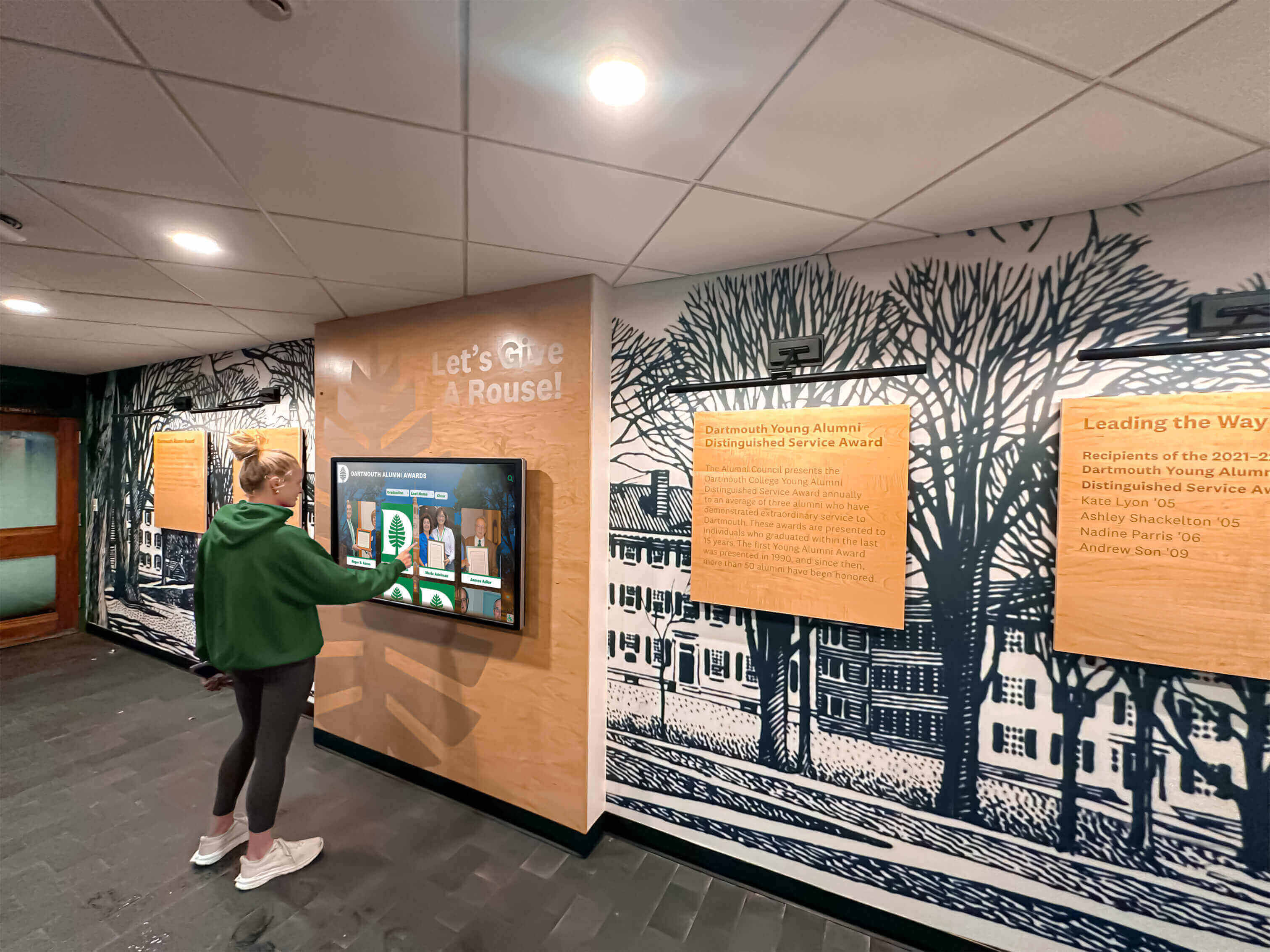
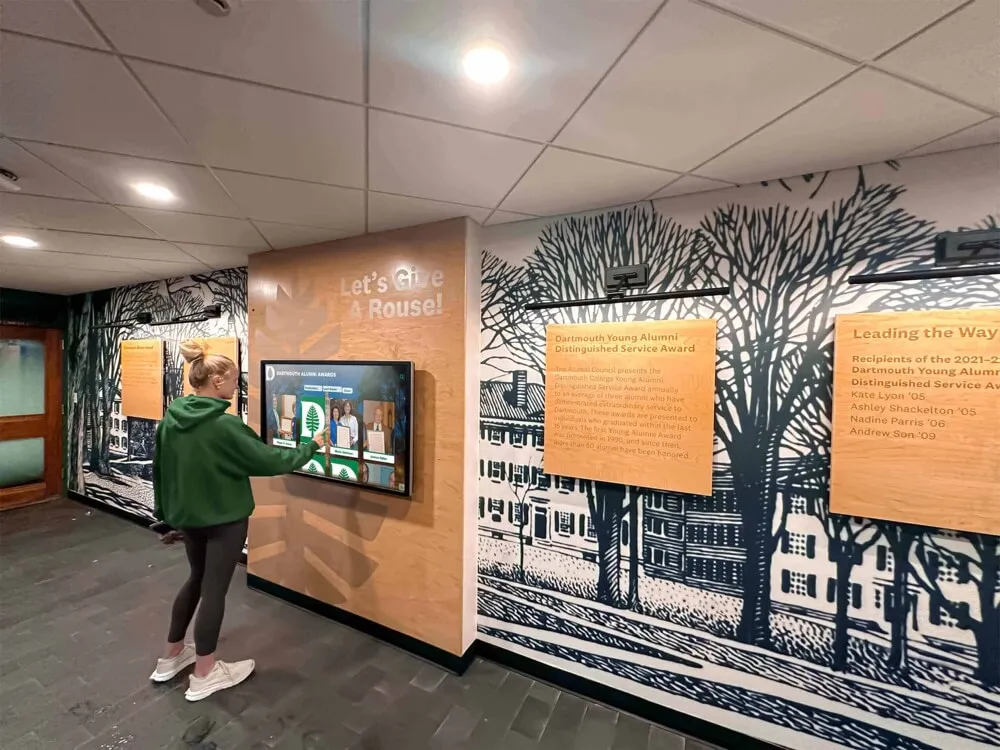
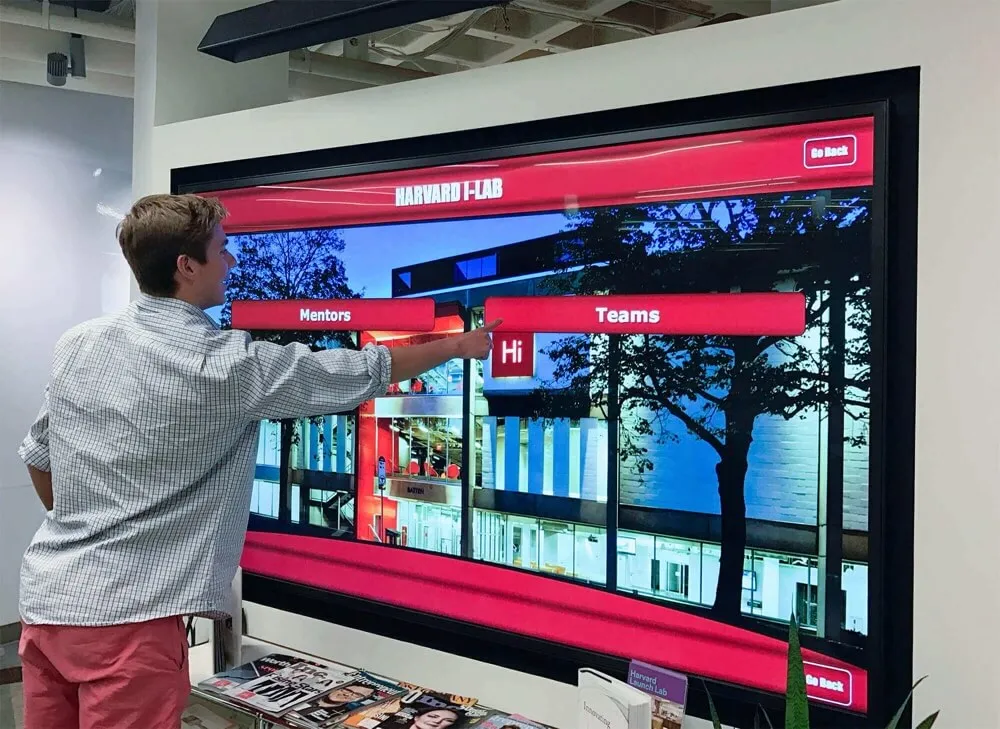
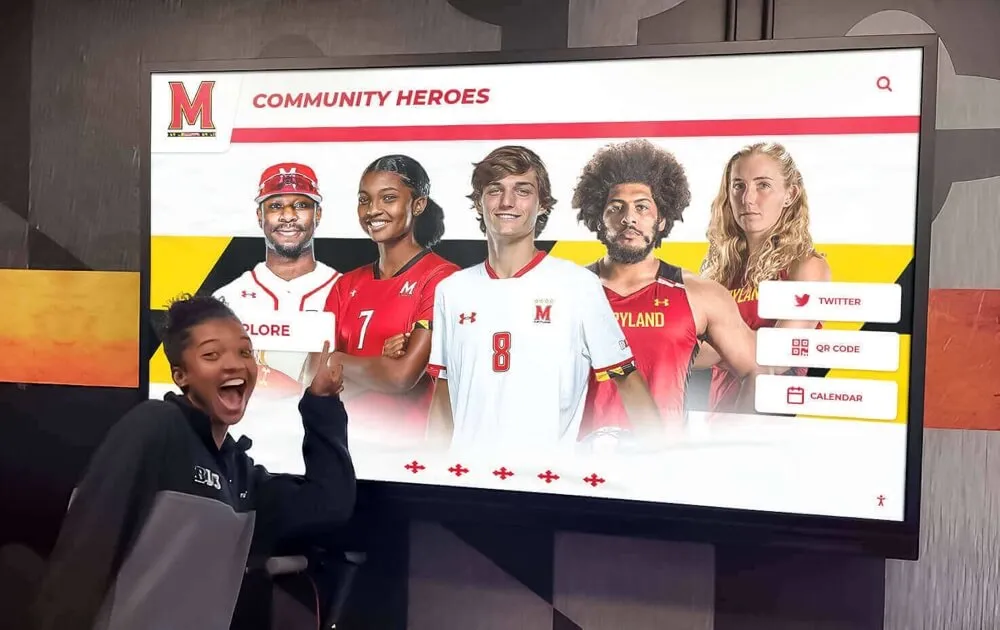
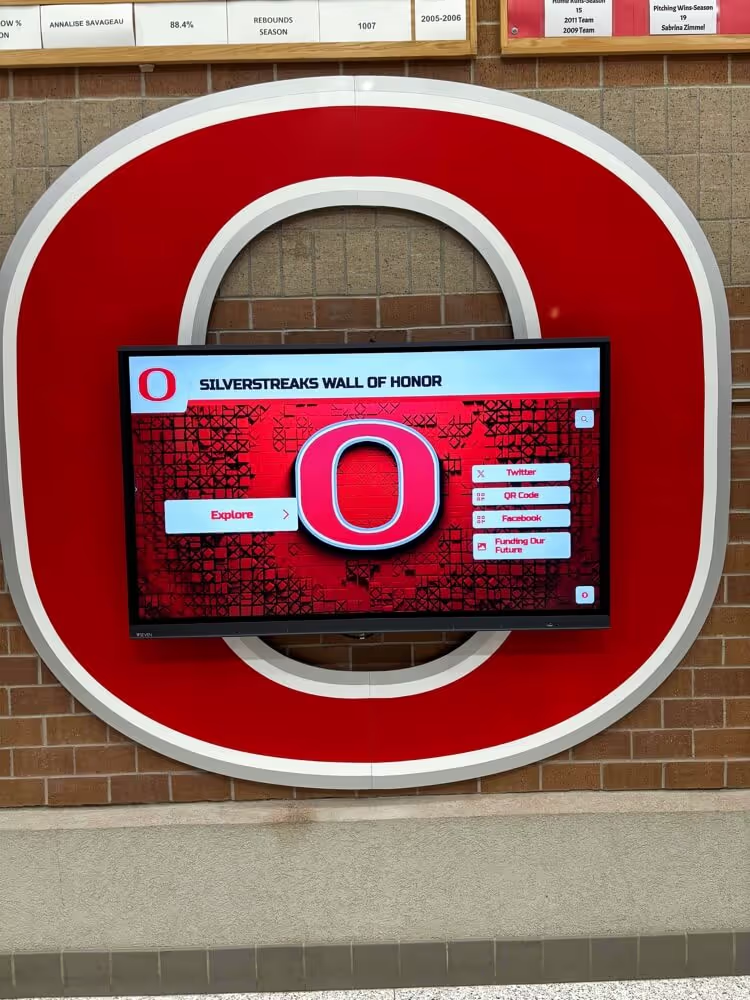
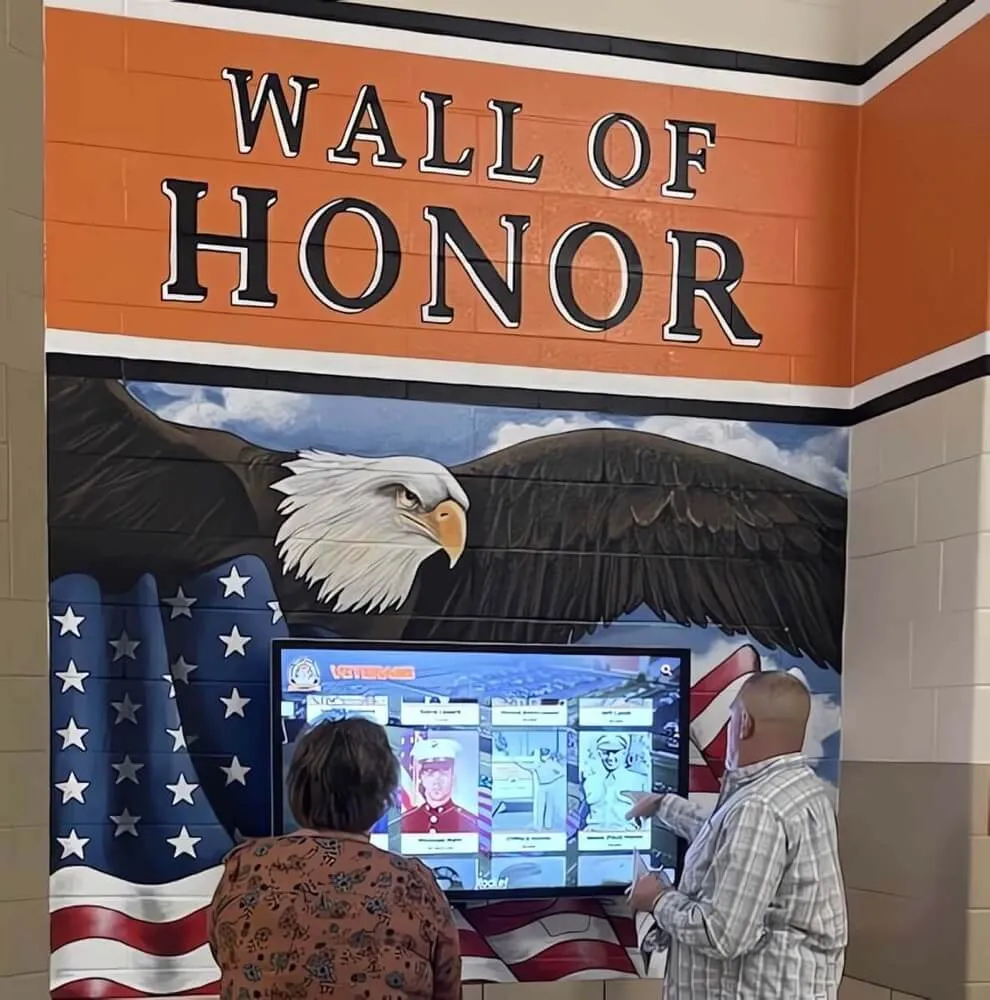
Interactive touchscreens create natural exploration experiences where students actively discover institutional history and peer achievements
2. Comprehensive Multimedia Integration
Digital platforms showcase rich content beyond names and dates:
- High-resolution photo galleries displaying honorees throughout their careers
- Video highlights preserving championship moments and memorable performances
- Audio recordings of historic broadcasts, interviews, and commentary
- Complete statistics and achievement documentation across all categories
- Timeline visualizations showing career progression and historical context
- PDF documents including programs, newspaper articles, and historical records
- Social media feeds connecting current achievements to digital archives
- Interactive maps showing geographic distribution of honorees
This multimedia richness honors achievements appropriately while creating emotionally resonant experiences that strengthen connections between current community members and institutional legacy.
Explore multimedia approaches in basketball hall of fame recognition demonstrating comprehensive content strategies.
3. Cloud-Based Remote Management
Modern content management systems eliminate traditional update challenges:
- Browser-based interfaces requiring no technical expertise or special software
- Remote access enabling updates from anywhere with internet connectivity
- Bulk import tools accepting CSV files and data from other systems
- Media library management organizing thousands of photos and videos
- Scheduling capabilities automating content rotation and seasonal displays
- Multi-user access with role-based permissions for different staff members
- Version control tracking all changes with rollback capabilities
- Real-time preview showing exactly how content appears before publishing
These management capabilities dramatically reduce administrative burden compared to physical displays requiring on-site access for every modification.
4. Web and Mobile Accessibility
Recognition shouldn’t be limited to those physically on campus:
- Shareable web links extending recognition reach beyond physical locations
- Mobile-responsive design ensuring perfect display on all devices
- Social sharing integration enabling organic promotion across platforms
- QR code generation connecting physical displays to web-based content
- Email notification systems announcing new honorees to community members
- Embeddable widgets placing recognition on existing websites
- Mobile app integration for institutions with custom applications
- Offline caching ensuring displays function during network interruptions
This extended accessibility amplifies recognition value by reaching alumni worldwide, engaging distant family members, and connecting prospective students to institutional culture before ever visiting campus.
Learn about accessibility features in athletic hall of fame creation with inclusive design principles.
Why Organizations Are Adopting Digital Hall of Fame Systems
Understanding the compelling benefits driving widespread digital hall of fame adoption helps institutions evaluate whether this investment aligns with their recognition goals, budget priorities, and strategic objectives.
Unlimited Recognition Capacity
Physical space constraints represent the most fundamental limitation of traditional recognition approaches. Digital systems eliminate this barrier completely.
Overcoming Physical Limitations
Traditional trophy cases and wall plaques impose strict capacity limits forcing difficult prioritization decisions. Solutions like Rocket Alumni Solutions provide unlimited digital space enabling institutions to:
- Recognize every deserving honoree across all programs and eras without removal decisions
- Preserve complete institutional history rather than edited highlights
- Add new achievements immediately without waiting for physical space
- Provide equal recognition opportunity for all sports and programs
- Archive historical information that might otherwise be lost
- Showcase both individual and team achievements comprehensively
This unlimited capacity fundamentally changes recognition philosophy from exclusive “limited space forces choices” models to inclusive “celebrate everyone” approaches that strengthen rather than divide community.
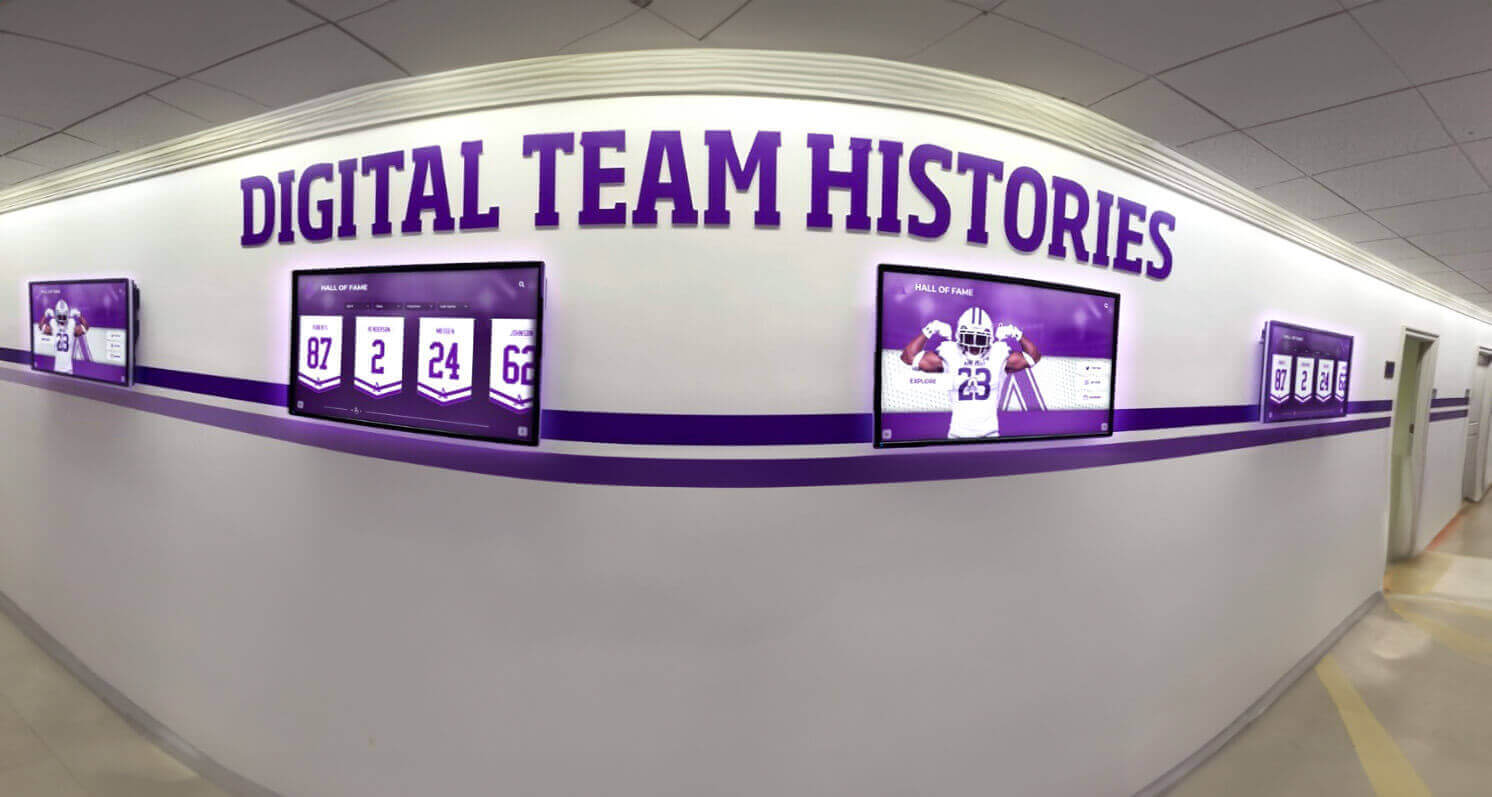
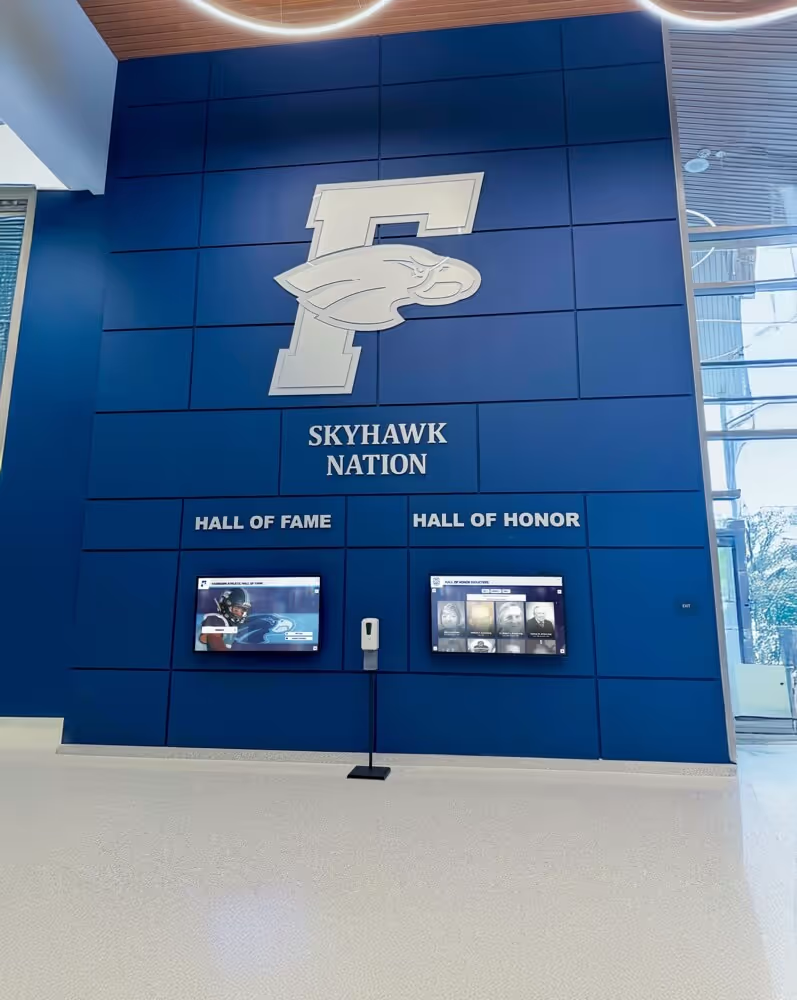
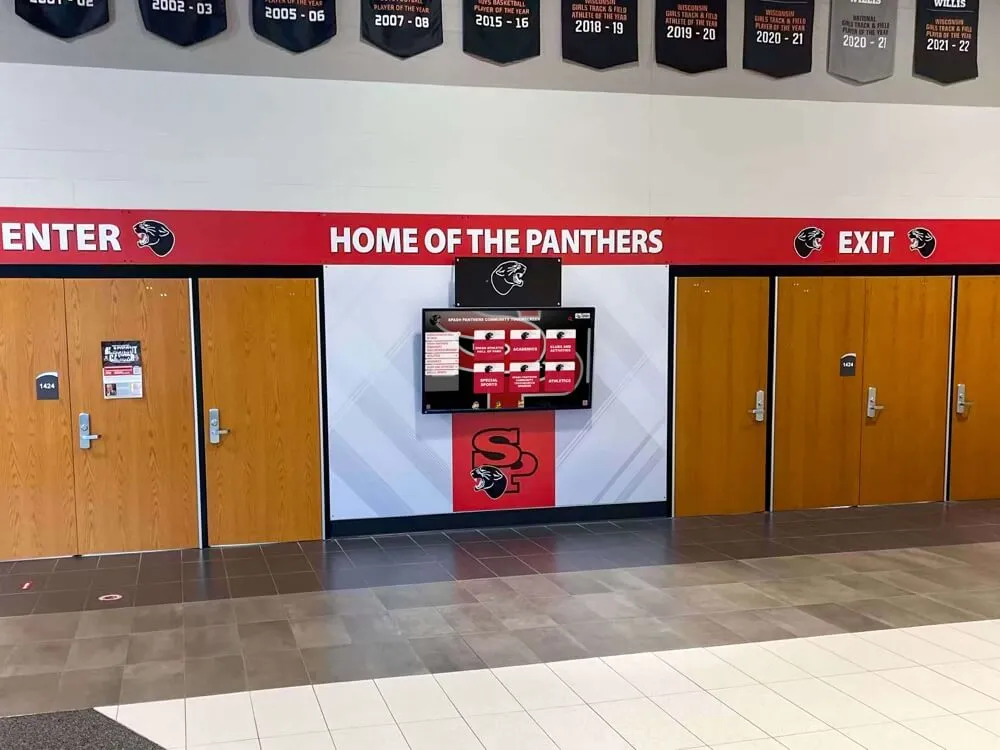
Multiple coordinated displays provide unlimited recognition space throughout facilities without overwhelming physical environments
Enhanced Storytelling and Engagement
Beyond solving capacity problems, digital halls of fame enable recognition experiences qualitatively superior to traditional approaches.
Deeper Connection Through Rich Content
Traditional plaques communicate minimal information—typically just names, years, and basic achievements. Digital platforms enable comprehensive storytelling that honors accomplishments appropriately:
- Detailed career narratives explaining journeys and challenges overcome
- Quote collections sharing honoree perspectives and reflections
- Behind-the-scenes content revealing preparation and dedication
- Career trajectory documentation from early years through achievements
- Connections to other honorees revealing relationships and shared experiences
- Historical context placing individual achievements within broader institutional moments
- Follow-up information tracking post-graduation success and contributions
This narrative depth creates emotional resonance impossible with simple name listings, strengthening connections between current community members and institutional legacy while inspiring future achievement.
Discover storytelling approaches in highlighting famous alumni with comprehensive profile strategies.
Measurable Engagement Increases
Schools implementing digital halls of fame consistently report dramatic engagement increases compared to traditional displays:
- Visitors spending 5-15 minutes exploring digital content versus seconds glancing at plaques
- Search and filter usage demonstrating active content discovery
- Return visits as people explore different sections across multiple sessions
- Social sharing extending recognition reach far beyond campus boundaries
- Analytics revealing peak usage times and most popular content
- Alumni engagement increases as distance no longer limits recognition access
These measurable outcomes demonstrate digital systems deliver genuine engagement improvements rather than simply digitizing existing passive approaches.
Real-Time Updateability and Maintenance Efficiency
Traditional recognition requires physical modification for every update, creating delays, costs, and administrative burden. Digital platforms transform update processes entirely.
Immediate Recognition
Cloud-based management enables instant content updates:
- Championship victories recognized within minutes of occurrence
- Achievement additions completed during same day rather than weeks later
- Error corrections implemented immediately when discovered
- Enhanced content added as better photos or videos become available
- Seasonal featured content rotated without physical display changes
- Emergency updates published instantly when circumstances require
This immediacy keeps recognition current and relevant rather than perpetually outdated, strengthening motivation by connecting achievement to celebration without frustrating delays.
Dramatic Maintenance Time Reduction
Institutions implementing digital halls of fame report 75-90% reductions in time spent maintaining recognition compared to traditional physical approaches that require:
- Ordering custom plaques taking weeks to produce
- Coordinating installation requiring physical facility access
- Rearranging existing displays to accommodate new additions
- Cleaning and maintaining physical materials subject to damage
- Replacing faded photos and deteriorating materials
- Updating multiple physical locations separately
Digital updates completed in minutes from any location eliminate these time-consuming tasks, freeing staff to focus on more valuable activities while ensuring recognition stays consistently current.
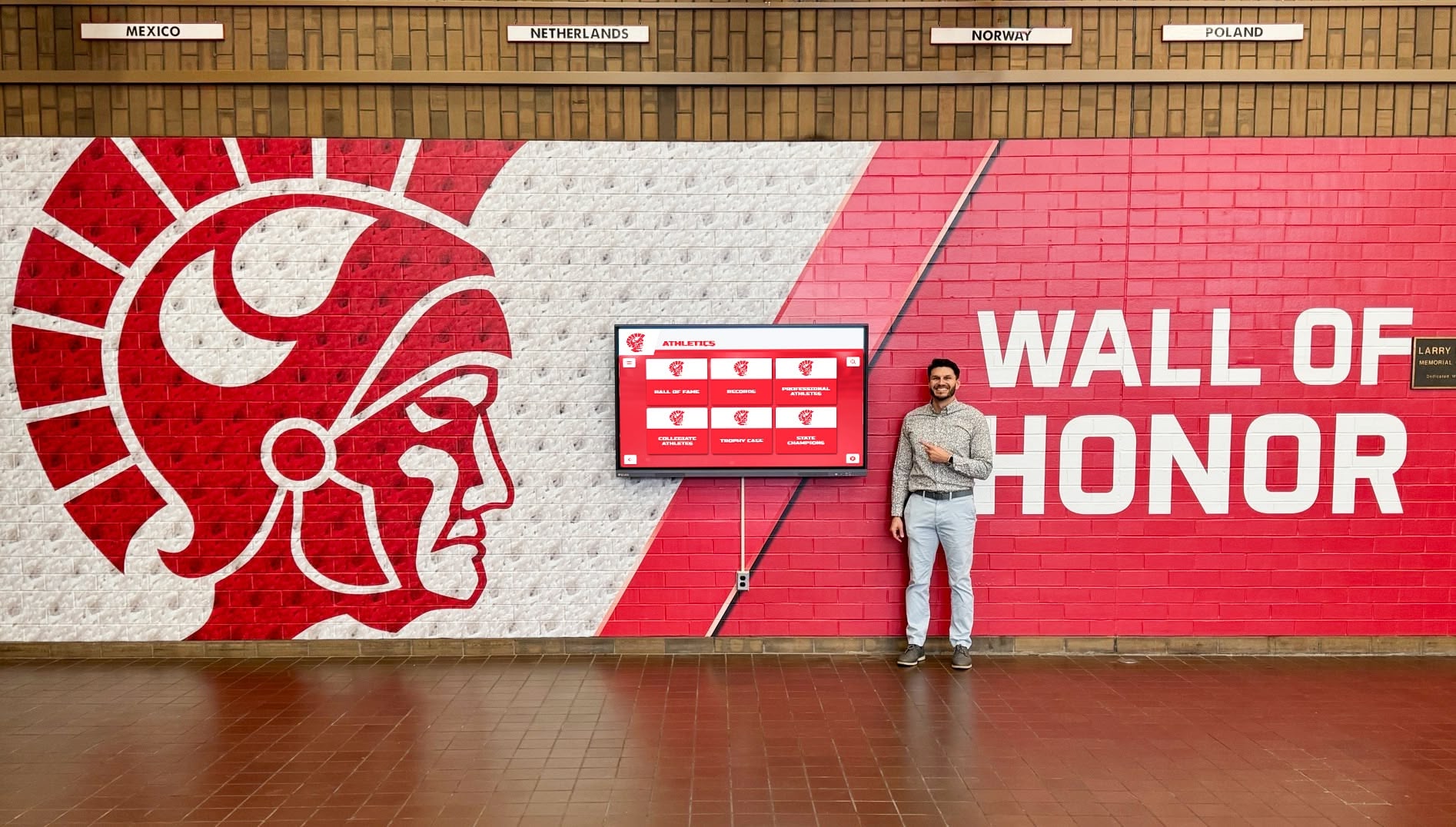
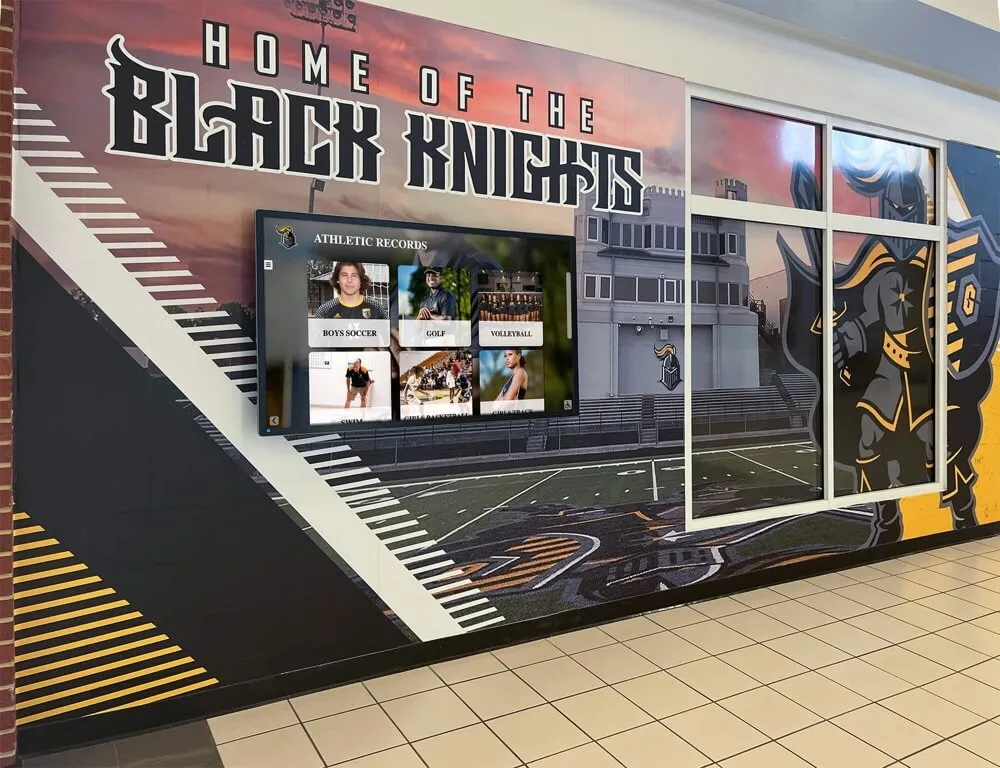
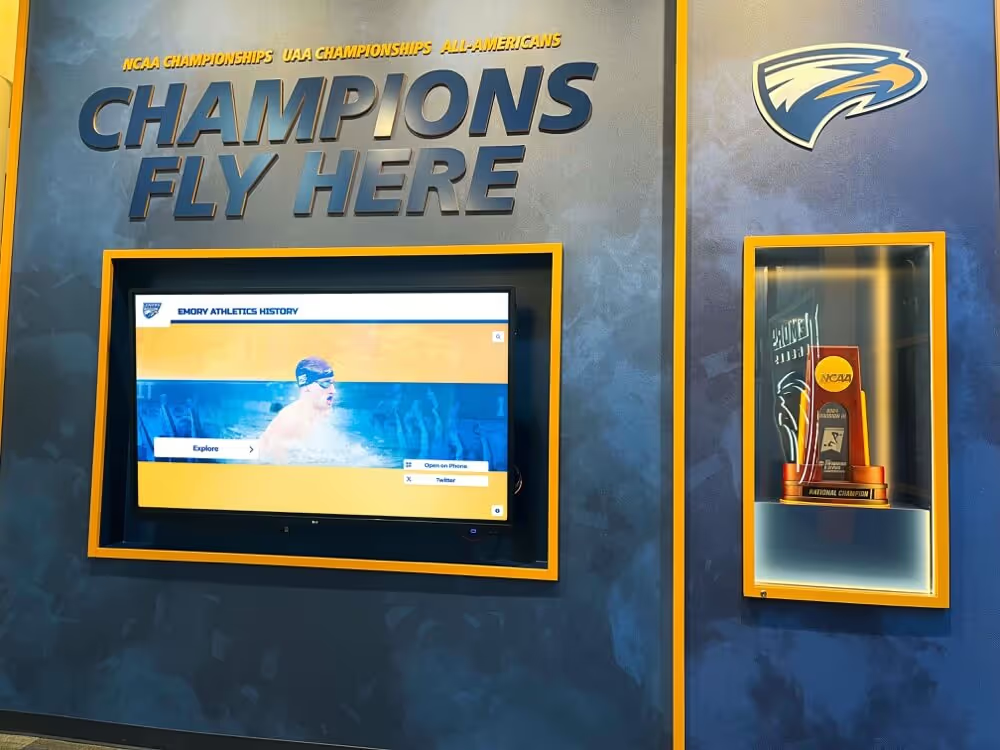
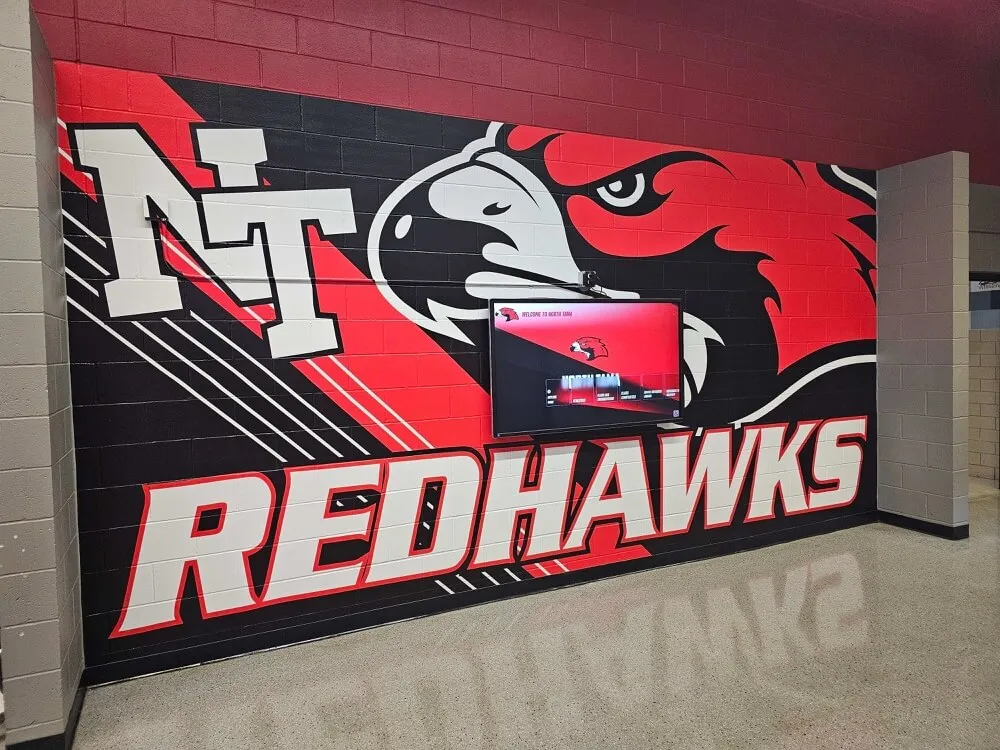
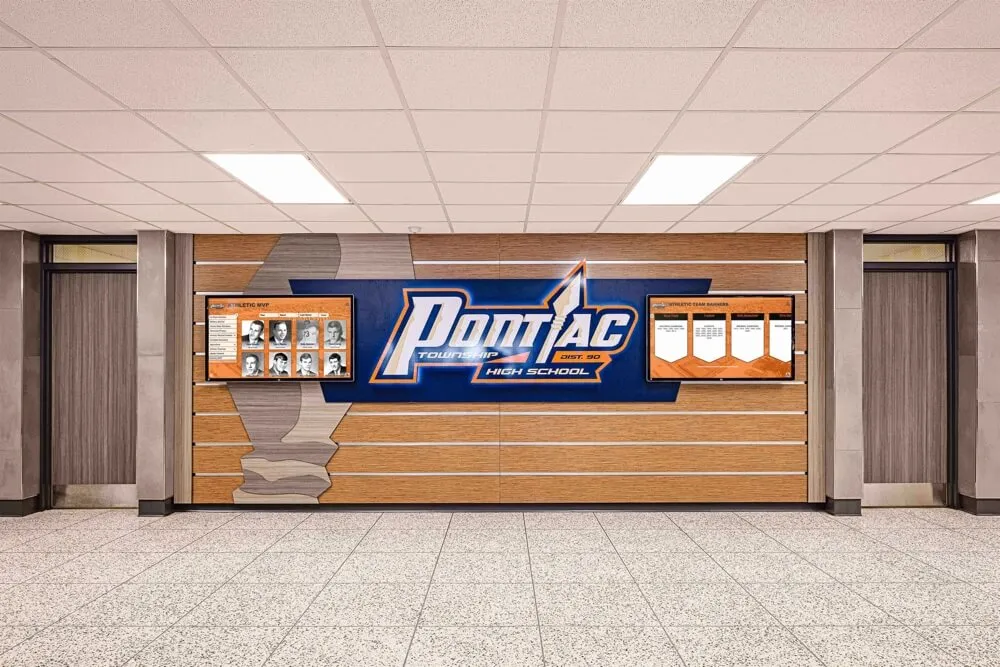
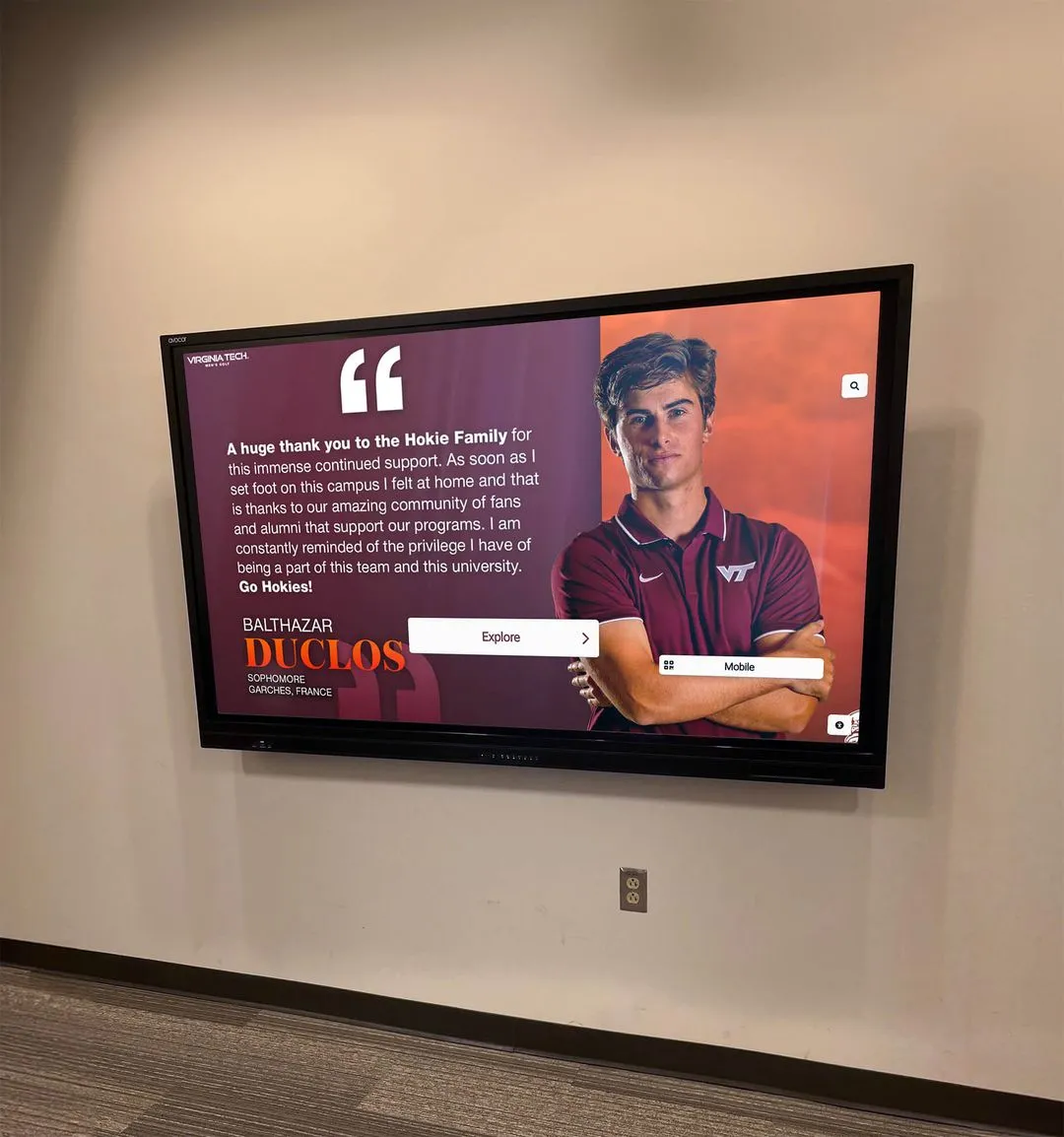
Wall-mounted interactive displays integrate seamlessly into existing facilities while providing unprecedented recognition flexibility and capacity
Cost-Effectiveness Over Time
While digital halls of fame require initial investment, total cost of ownership typically compares favorably to traditional recognition approaches when evaluated over realistic timeframes.
Eliminating Recurring Costs
Traditional recognition creates perpetual expenses:
- New plaques costing $50-300 each for every honoree added
- Trophy case replacements every 8-12 years as space fills ($2,000-10,000+)
- Maintenance and repair for damaged physical displays
- Space renovation as recognition needs expand beyond original planning
- Duplicate materials when displaying recognition in multiple locations
- Labor costs for physical updates and maintenance
Digital systems replace these recurring expenses with predictable annual subscription fees while dramatically reducing staff time requirements, typically delivering positive ROI within 3-5 years even before considering engagement and recognition quality improvements.
Scalability Without Proportional Cost Increases
Adding recognition capacity with traditional approaches requires proportional cost increases for each additional plaque, trophy case, or display area. Digital systems provide unlimited capacity at the same operational cost, making comprehensive recognition financially viable.
Explore cost considerations in digital recognition displays buyer guide with total ownership comparisons.
Planning Your Digital Hall of Fame Implementation
Successful digital hall of fame implementation requires systematic planning addressing multiple interconnected considerations from initial goal-setting through launch and ongoing management.
Defining Objectives and Success Criteria
Clear objectives guide design decisions when tradeoffs become necessary during implementation.
Recognition Goals
Consider what you hope to accomplish:
- Which constituencies currently lack adequate recognition requiring attention?
- What achievement categories deserve greater visibility and celebration?
- How might enhanced recognition support other institutional goals like fundraising or recruitment?
- What stories risk being lost if not preserved systematically?
- How can recognition strengthen specific cultural priorities or values?
Engagement Objectives
Define how recognition should impact community connection:
- Which audience groups show lowest engagement needing intervention?
- What role might recognition play in alumni connection and giving?
- How should recognition support student recruitment and retention?
- What engagement metrics will demonstrate success?
- How might recognition strengthen relationships with broader community?
Measurable Success Indicators
Establish concrete metrics enabling assessment:
- Display interaction frequency and session duration targets
- Web-based recognition platform traffic goals
- Social sharing and organic promotion objectives
- User satisfaction survey benchmarks
- Maintenance time reduction expectations
- Community awareness and perception improvements
These defined objectives enable focused implementations delivering maximum value for specific institutional priorities rather than generic approaches meeting no particular needs well.
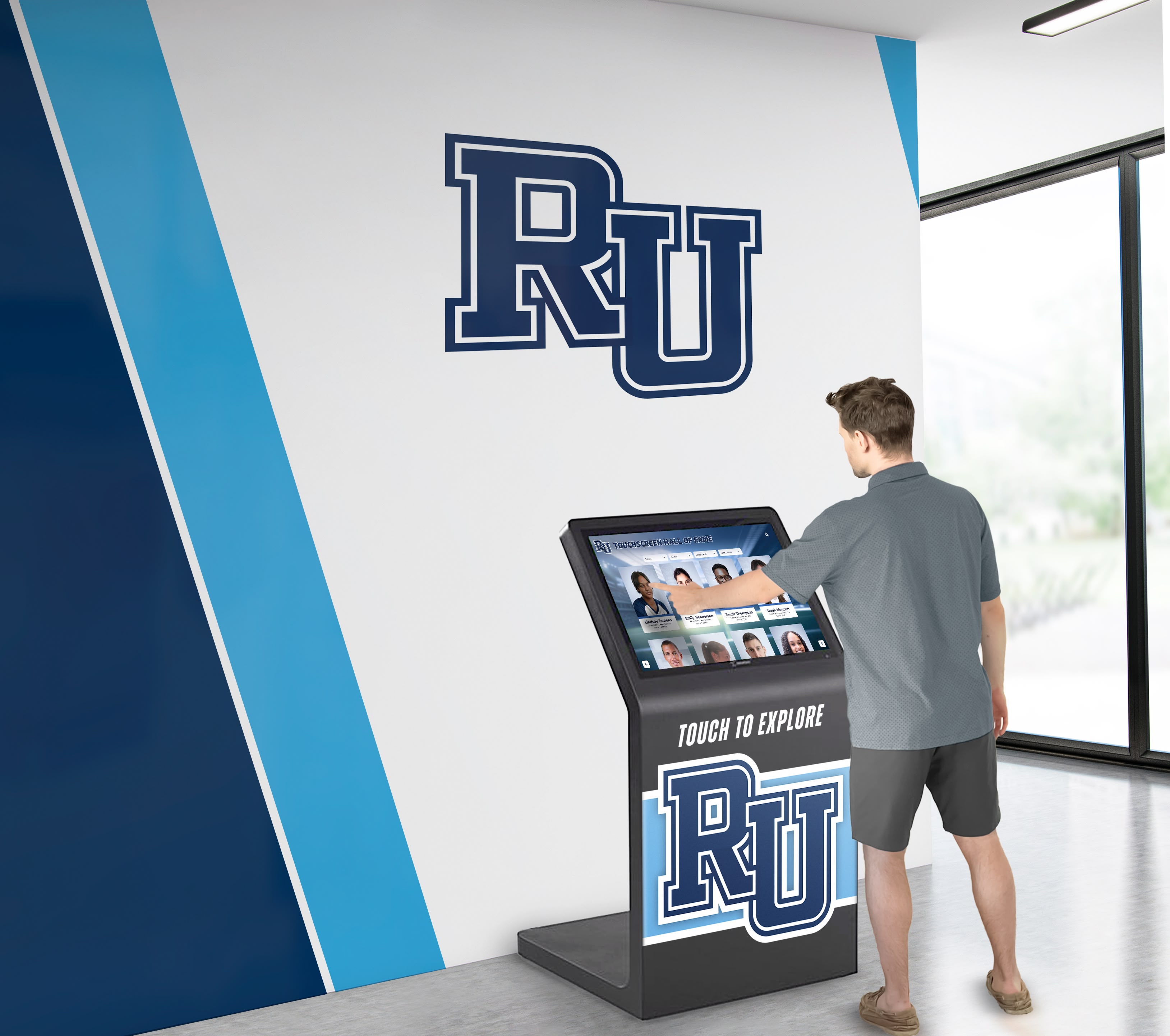
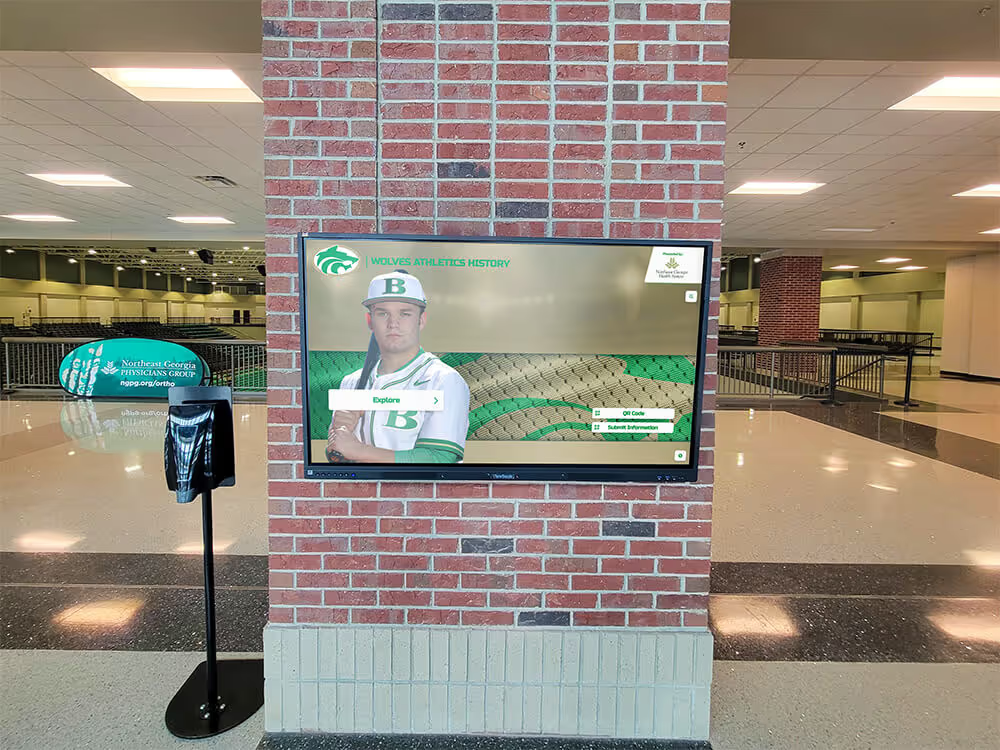
Freestanding kiosks create dedicated recognition destinations in high-traffic lobbies ensuring maximum visibility and engagement
Technology Platform Selection
Choosing appropriate digital hall of fame platforms significantly impacts user experience, administrative efficiency, and long-term satisfaction.
Evaluating Recognition-Specific Solutions
Purpose-built recognition platforms like Rocket Alumni Solutions offer significant advantages over generic digital signage adapted for recognition purposes:
Essential Platform Capabilities
- Intuitive content management requiring no technical expertise
- Unlimited content storage supporting extensive multimedia archives
- Recognition-specific templates for athletes, academics, donors, and other categories
- Flexible layout options matching different display sizes and orientations
- Robust search and filtering enabling discovery in large databases
- Mobile-responsive web access extending recognition beyond physical displays
- Privacy controls appropriate for student and constituent information
- Analytics revealing engagement patterns informing content strategy
- Integration capabilities with student information systems when desired
- Reliable vendor support understanding unique institutional needs
Avoiding Common Platform Mistakes
Institutions sometimes select inappropriate platforms creating frustration:
- Generic digital signage systems lacking interactivity and deep content organization
- Custom development projects requiring ongoing technical resources
- Consumer-grade technology inappropriate for institutional longevity needs
- Platforms locked to specific hardware preventing future flexibility
- Solutions requiring frequent manual content recreation rather than perpetual archives
- Systems without mobile web access limiting recognition reach
These mistakes undermine recognition value while creating ongoing administrative challenges that eventually lead to system abandonment. Choosing recognition-specific platforms from established vendors prevents these problems.
Learn about platform evaluation in touchscreen digital signage software comparing different solution approaches.
Hardware Considerations and Installation
Display hardware significantly impacts user experience, maintenance requirements, and long-term satisfaction.
Critical Hardware Specifications
Display Requirements
- Size: 43-55 inches for smaller spaces; 65-75 inches for large lobbies and high-traffic areas
- Touch technology: Capacitive or infrared multi-touch providing responsive interaction without calibration
- Brightness: 350-500 nits for typical indoor environments; higher for areas with significant natural light
- Resolution: Minimum 1080p (1920x1080); 4K (3840x2160) preferred for larger displays ensuring clarity
- Commercial grade: Displays rated for 16-24 hour daily operation unlike consumer televisions failing in institutional settings
- Durability: Tempered glass and vandal-resistant construction for public environments
- Connectivity: Built-in Wi-Fi or ethernet supporting cloud content delivery
- Warranty: Minimum 3-year coverage appropriate for institutional installations
Mounting and Installation
Professional installation ensures optimal performance:
- Secure mounting meeting safety standards for public environments
- Appropriate viewing heights for standing and seated interaction
- ADA-compliant accessibility meeting universal design requirements
- Anti-glare positioning minimizing reflections from windows and lighting
- Professional cable management maintaining clean appearance
- Electrical work meeting local code requirements
- Network configuration ensuring reliable connectivity
- Anti-theft hardware appropriate for security needs
Schools should budget $3,000-8,000 per display unit for commercial-grade hardware and $800-2,500 for professional installation depending on size, features, and facility conditions.
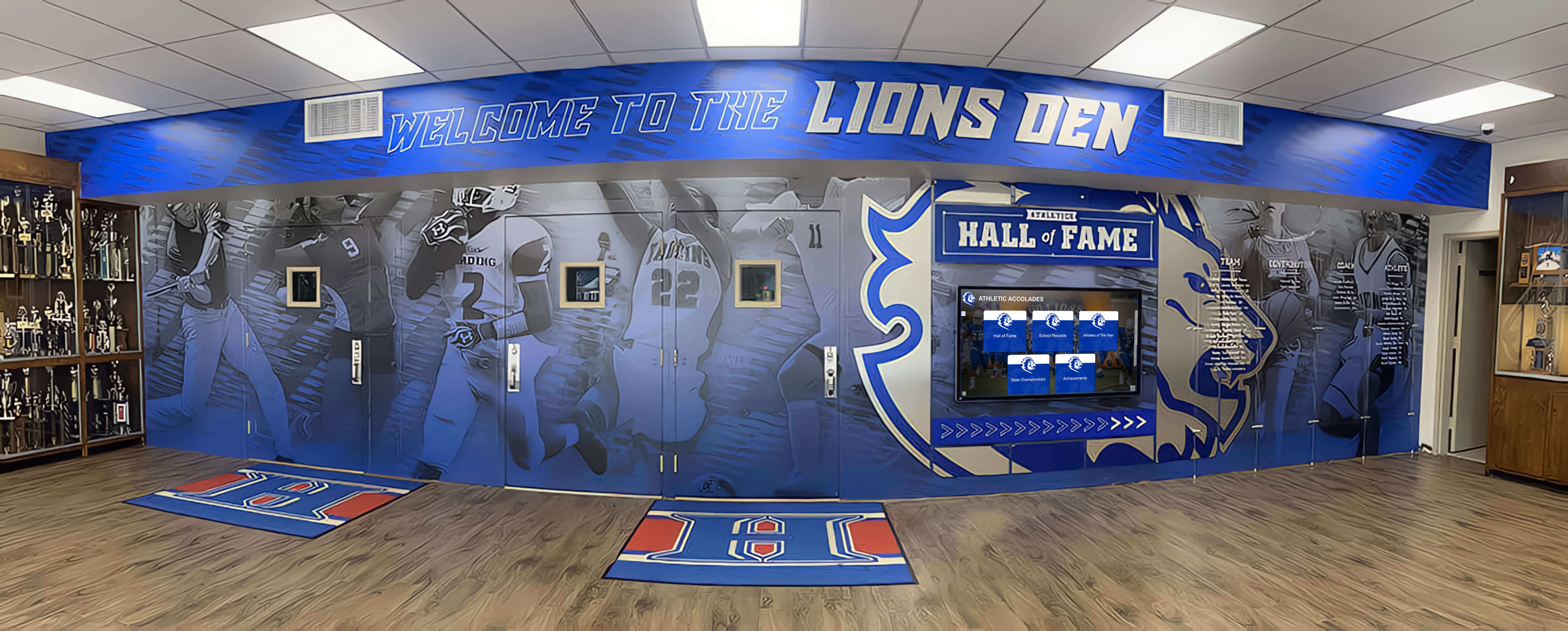
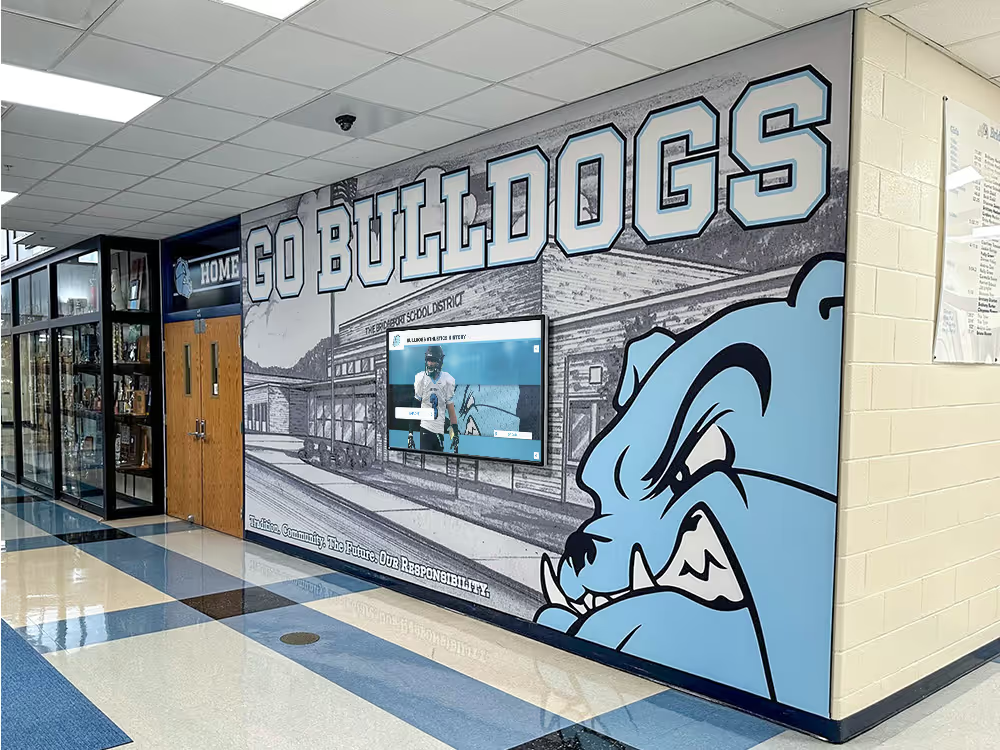
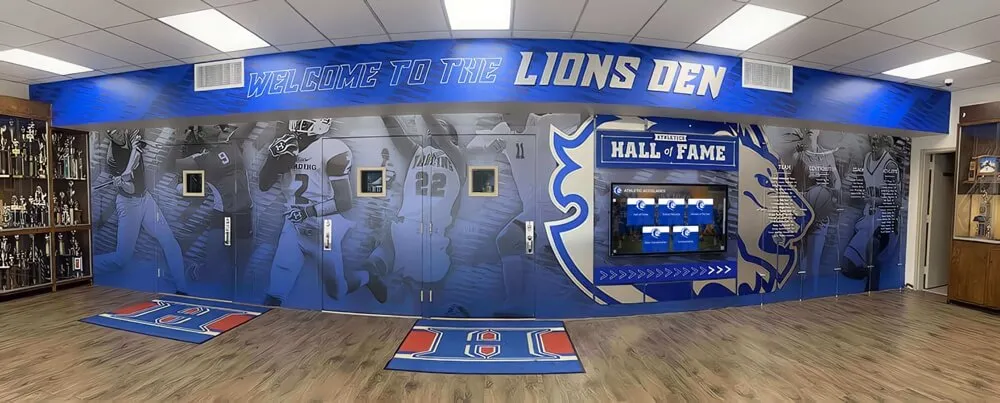
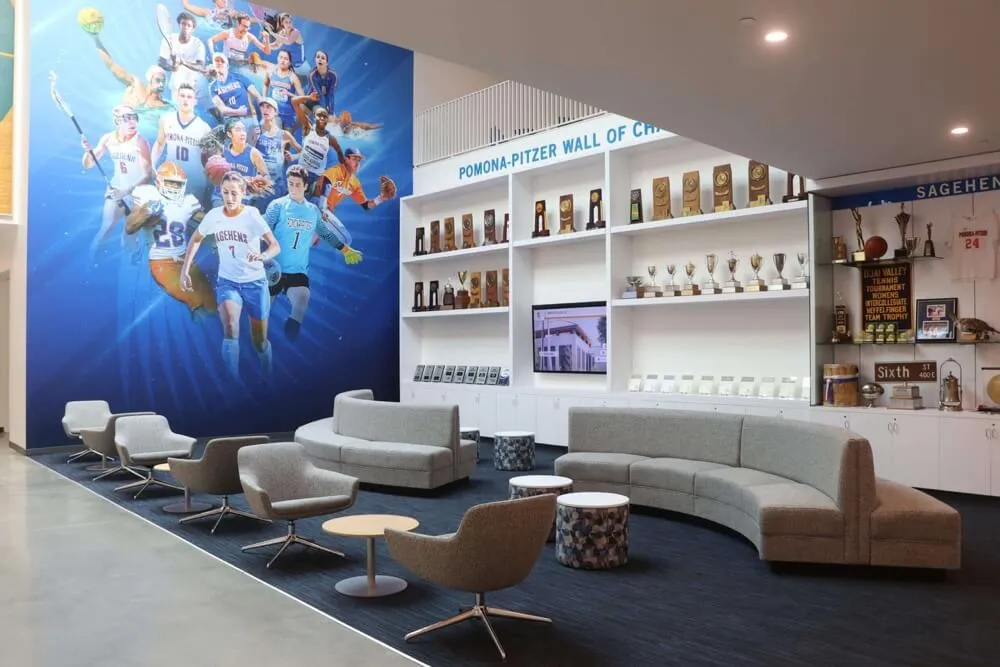
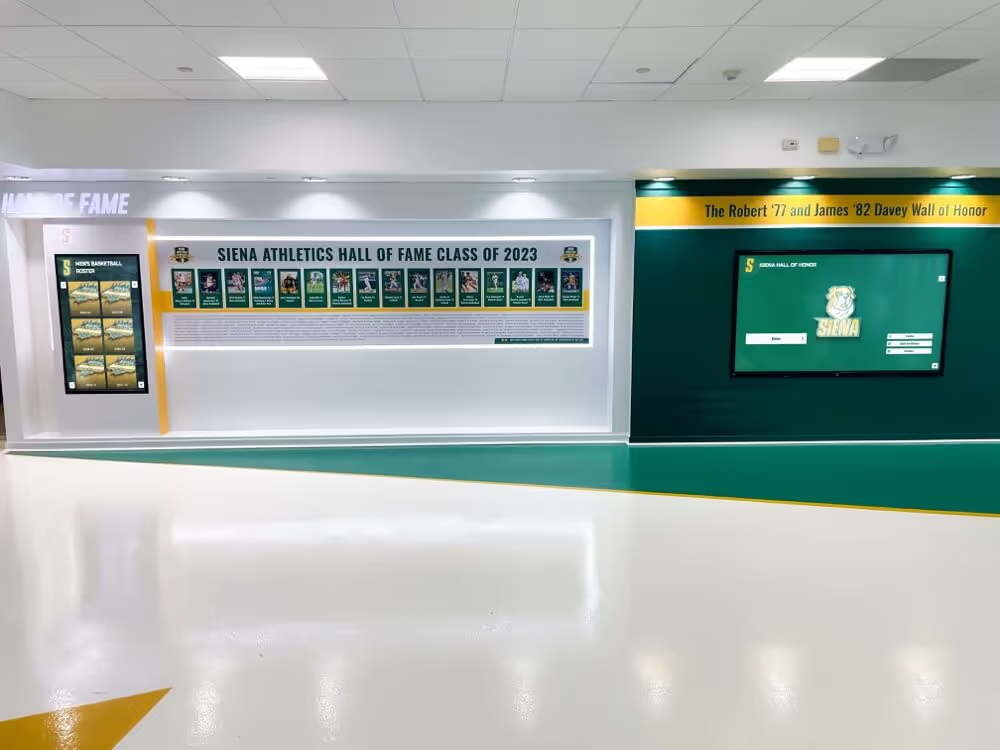
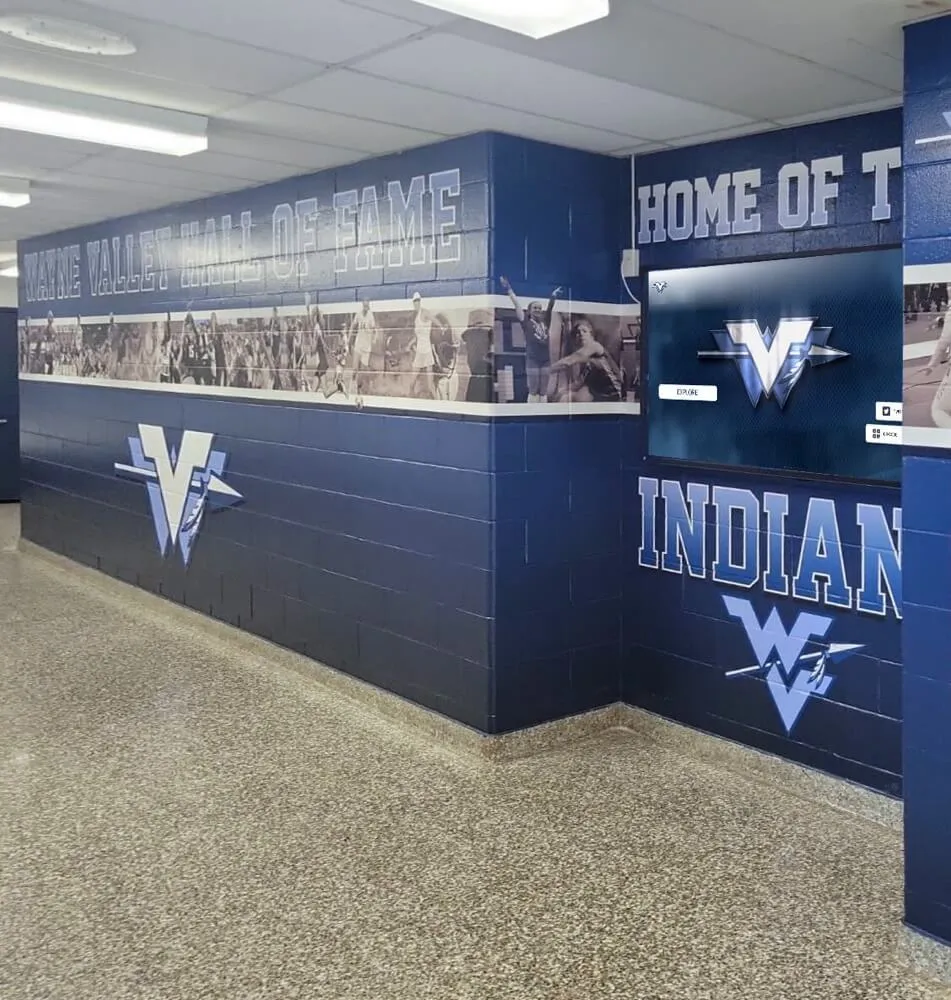
Integrated recognition environments combine traditional trophy displays with digital interactive systems creating comprehensive celebration spaces
Strategic Location Selection
Display placement dramatically affects recognition visibility and engagement outcomes.
Optimal Placement Locations
- Main building entrance lobbies ensuring all visitors encounter recognition
- Athletic facility entrances creating immediate pride atmosphere
- Cafeteria and commons areas with extended dwell time
- Library or media center spaces encouraging exploration
- Performance venue lobbies celebrating arts achievements
- Administrative corridors where community visitors gather
- Multiple distributed locations reaching diverse audiences
Creating Recognition Destinations
Most effective implementations transform areas into recognition destinations:
- Comfortable seating encouraging extended exploration
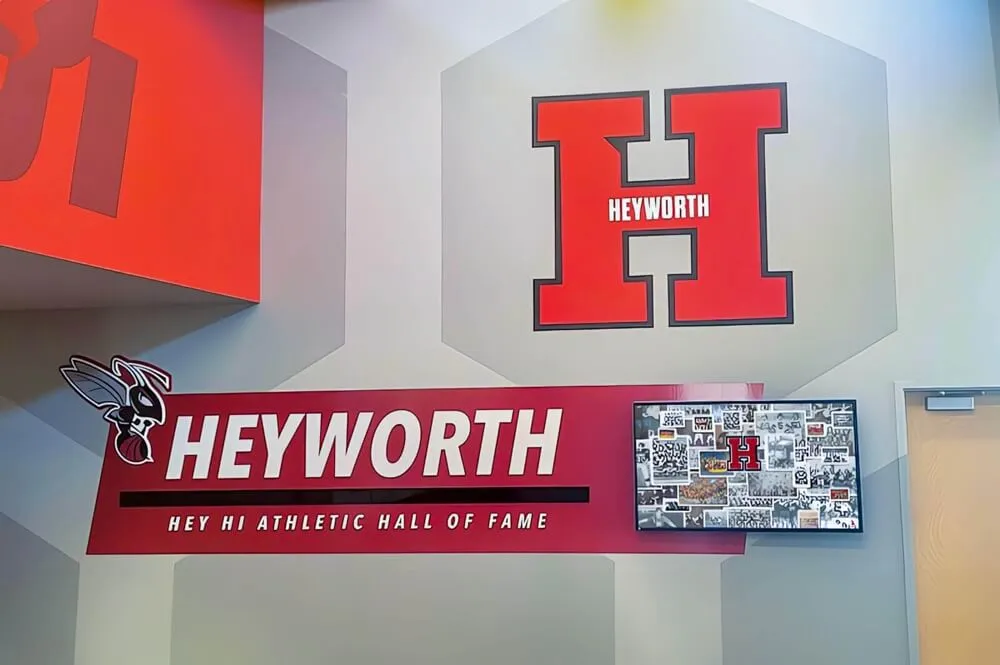
- Coordinated graphics and murals reinforcing institutional identity
- Integration with traditional trophy cases creating comprehensive displays
- Appropriate lighting highlighting recognition areas
- School colors and branding creating cohesive aesthetics
- Clear wayfinding directing visitors to recognition spaces
These integrated approaches signal institutional commitment to recognition, encouraging engagement while creating visually impressive spaces strengthening community pride.
Explore placement strategies in modernizing recognition walls with facility integration approaches.
Creating Compelling Digital Hall of Fame Content
Technology provides infrastructure, but engaging content determines whether digital halls of fame achieve intended recognition and engagement objectives.
Content Development Workflow
Systematic processes ensure consistent quality and comprehensive coverage.
Initial Content Development
Launching with substantial historical content creates immediate impact:
- Historical research: Gather information about past honorees and achievements from archives, yearbooks, and institutional records
- Photo collection: Source images from yearbooks, athletic departments, and community contributions
- Video compilation: Locate game footage, performances, and recorded events from archives
- Data organization: Standardize information structure across different sources and eras
- Content authoring: Write compelling profiles honoring achievements appropriately
- Media preparation: Optimize photos and videos for display performance
- Content upload: Populate recognition platform systematically by category or era
- Quality review: Verify accuracy and consistency before public launch
Institutions should allocate 80-150 hours for comprehensive initial content development depending on history scope and available source materials—foundational investment ensuring recognition quality from launch.
Ongoing Content Management
Systematic approaches keep recognition current:
- Immediate recognition workflow: Add new honorees within days of achievements rather than waiting for annual updates
- Quarterly content reviews: Verify recent additions, correct any errors, and enhance existing profiles with new information
- Annual archive expansion: Systematically add historical content extending recognition backwards through institutional history
- Featured content rotation: Regularly update highlighted profiles ensuring all honorees receive periodic visibility
- User feedback integration: Collect and incorporate correction suggestions from community members
- Analytics-informed optimization: Review usage patterns adjusting navigation and features based on actual user behavior
Cloud-based platforms enable these updates from any internet-connected device, dramatically reducing administrative burden compared to physical displays.
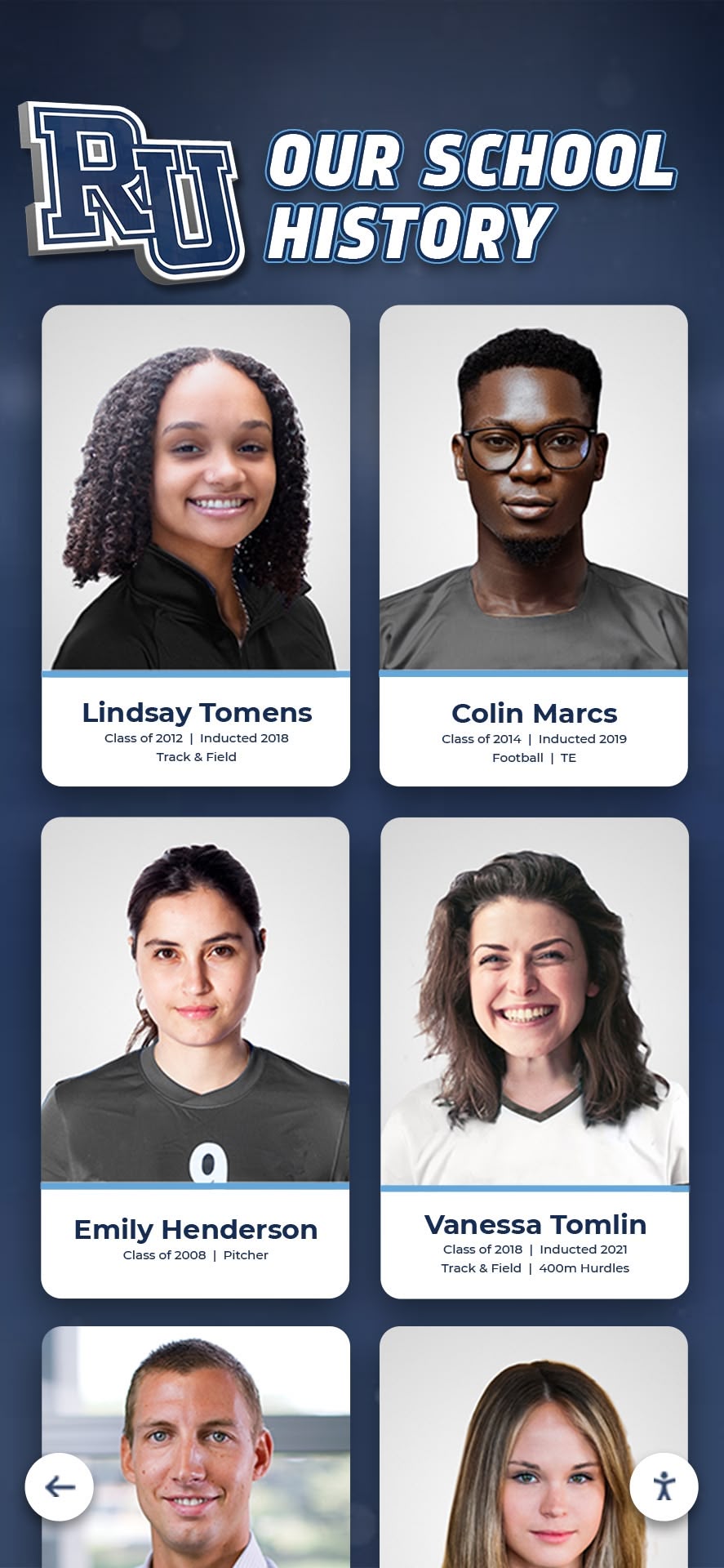
Systematic content development preserves complete institutional legacy across all eras and achievement categories
Content Quality Standards
Professional presentation honors achievements appropriately while reflecting positively on institutional commitment to recognition.
Photography Standards
- High resolution (minimum 1920x1080 for featured images)
- Proper lighting, composition, and cropping
- Consistent visual style across profiles and eras
- Professional editing and enhancement when appropriate
- Permission and rights documentation for all images
- Format optimization for display performance without quality loss
Written Content Standards
- Factual accuracy verified through multiple reliable sources
- Engaging storytelling beyond statistics alone
- Appropriate length (150-300 words typical for individual profiles)
- Consistent tone and style across all content
- Proper grammar, spelling, and punctuation
- Inclusive language reflecting institutional values
- Complete citation of achievement details and dates
Video Standards
- HD quality (1080p minimum; 4K preferred for future-proofing)
- Professional editing with titles and context
- Appropriate length for content type (30-90 seconds for highlights; 2-5 minutes for feature profiles)
- Closed captioning for accessibility
- Rights clearance for music and footage
- Format optimization for streaming performance
These quality standards ensure recognition honors achievements professionally while maintaining presentation standards reflecting institutional pride.
Learn content strategies in writing content for digital hall of fame with detailed guidelines.
Organizing Content for Discovery
Well-organized content enables visitors to find relevant information quickly while supporting serendipitous discovery.
Navigation Structure Design
Intuitive organization accommodates different visitor objectives:
- Chronological browsing: Browse honorees by induction year or achievement era
- Category navigation: Explore by sport, academic discipline, or achievement type
- Alphabetical directory: Find specific individuals quickly by name
- Search functionality: Locate honorees matching specific criteria instantly
- Featured rotation: Discover highlighted profiles changing regularly
- Related content connections: Explore teammates, contemporaries, or similar achievements
- Random discovery: Encounter unexpected profiles through suggestion features
This multi-faceted organization ensures all visitors can explore recognition matching their interests and objectives regardless of what brings them to displays.
Measuring Digital Hall of Fame Success
Systematic assessment demonstrates recognition value while identifying improvement opportunities ensuring displays achieve intended objectives.
Quantitative Engagement Metrics
Modern recognition platforms provide concrete usage data impossible with traditional displays.
Display Interaction Analytics
- Touchscreen interaction frequency showing daily usage patterns
- Average session duration revealing engagement depth
- Most-viewed content identifying visitor interests
- Search query analysis showing how users discover content
- Peak usage times informing content scheduling decisions
- Navigation path analysis revealing how users explore recognition
- Filter usage patterns demonstrating discovery preferences
Web Platform Analytics
- Unique visitor counts showing online recognition reach
- Geographic distribution revealing how far recognition extends
- Device types indicating mobile versus desktop access
- Social sharing frequency demonstrating organic promotion
- Referral sources showing how people discover online recognition
- Return visitor rates indicating sustained engagement
- Email campaign effectiveness when announcements drive traffic
These metrics reveal whether digital halls of fame generate intended engagement or require strategy adjustments improving effectiveness.
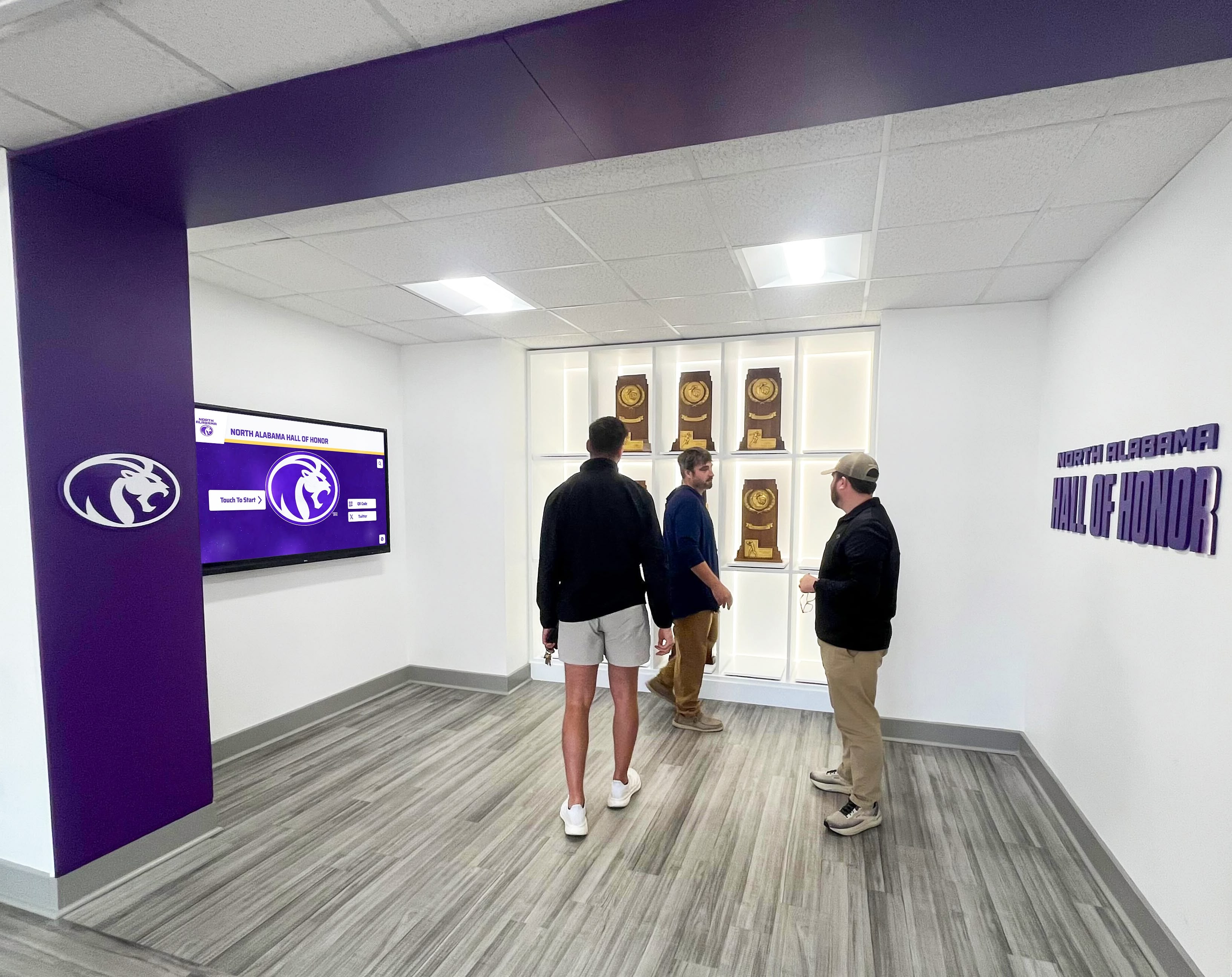
Successful implementations create natural gathering spaces where community members connect around shared institutional pride and tradition
Qualitative Impact Assessment
Regular feedback provides insights beyond quantitative metrics.
Stakeholder Feedback Collection
- Student surveys assessing recognition awareness and engagement
- Alumni feedback on connection and accessibility improvements
- Family responses to enhanced visibility into achievements
- Visitor reactions during campus tours and community events
- Staff observations about interaction patterns and popular features
- Community perception surveys measuring pride and connection
Observable Cultural Indicators
Long-term changes provide evidence of recognition cultural impact:
- Increased community awareness and celebration of achievements
- Enhanced institutional pride and positive identity
- Strengthened alumni connections to current programs
- Improved prospective student and family responses during recruitment
- Greater community support and engagement with programs
- More inclusive recognition culture celebrating diverse excellence
- Elevated expectations for achievement visibility and celebration
Regular assessment enables continuous refinement ensuring digital halls of fame achieve intended goals while identifying opportunities for enhancement.
Explore measurement approaches in measuring digital recognition impact with comprehensive frameworks.
Best Practices for Long-Term Success
Sustaining digital hall of fame value requires ongoing commitment beyond initial implementation.
Establishing Sustainable Management
Clear responsibilities ensure recognition continues reliably.
Administrative Structure
- Primary coordinator overseeing recognition program
- Backup administrators preventing single point of failure
- Department-specific content managers for specialized categories
- Student assistants supporting content development
- Technical support contacts for troubleshooting
- Vendor relationship management for platform issues
Update Procedures
Systematic workflows maintain current recognition:
- Immediate achievement addition processes
- Quarterly content review schedules
- Annual archive expansion plans
- Featured content rotation calendars
- Error correction protocols
- Analytics review and optimization cycles
Budget Planning
Sustainable funding ensures long-term viability:
- Annual platform subscription allocation
- Content development budget for ongoing additions
- Hardware maintenance and eventual replacement reserves
- Professional development for staff managing recognition
- Enhancement budget for feature additions and improvements
These structural elements prevent recognition system abandonment due to unclear responsibilities or inadequate resource allocation.
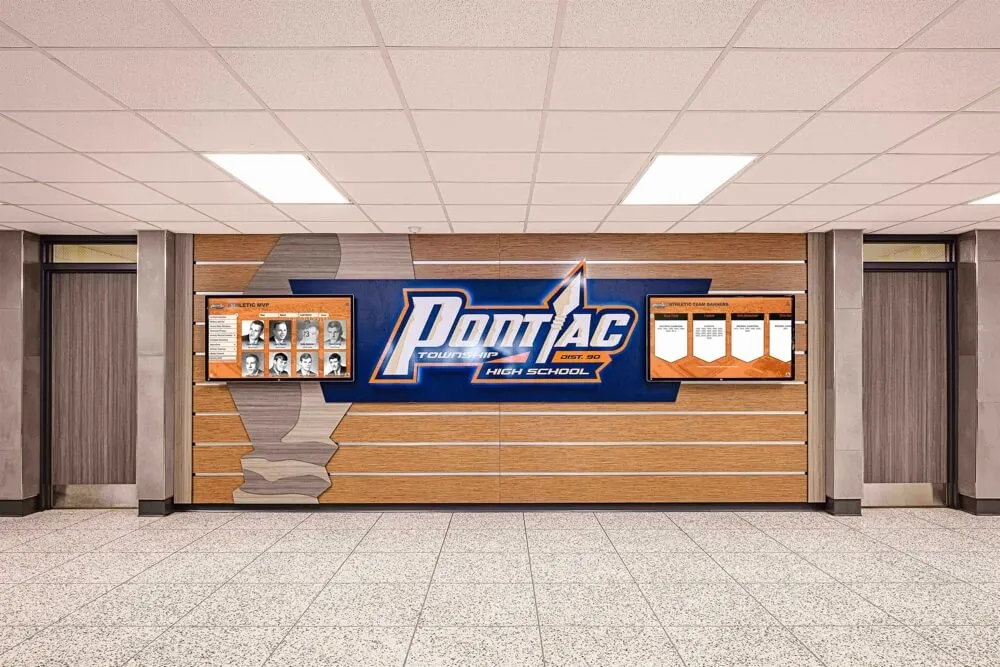
Comprehensive recognition systems celebrate achievements across all programs demonstrating institutional commitment to equitable visibility
Privacy and Compliance Considerations
Student and constituent privacy requires thoughtful policies.
FERPA and Privacy Compliance
Educational institutions must respect privacy regulations:
- Obtain appropriate consent for public recognition displays
- Provide opt-out mechanisms for individuals preferring privacy
- Limit displayed information to directory-appropriate data
- Secure systems preventing unauthorized access or modification
- Regular policy review ensuring continued compliance
- Documentation of consent and permissions
Sensitive Information Protection
Avoid displaying information that could be harmful:
- Contact information or addresses
- Information revealing protected characteristics
- Details about family circumstances or challenges
- Anything individuals might find personally sensitive
- Content creating safety or security concerns
Consult with legal counsel ensuring recognition complies with relevant privacy laws, regulations, and institutional policies.
Keeping Content Fresh and Engaging
Preventing stagnation requires active content management.
Regular Content Updates
- Add new honorees immediately upon achievement
- Rotate featured profiles monthly or quarterly
- Expand historical archives systematically
- Enhance existing profiles with newly discovered information
- Refresh photos and videos as better materials become available
- Update navigation and organization based on usage patterns
Seasonal Content Themes
- Championship anniversary celebrations highlighting historic teams
- Reunion support featuring specific graduation classes
- Milestone recognition for 25th, 50th anniversary events
- Current season connections linking past and present athletes
- National recognition days aligned with broader celebrations
Community Engagement Features
- Alumni update submissions sharing post-graduation success
- Memory collection campaigns gathering community stories
- Photo contribution opportunities expanding historical archives
- Social media integration connecting current and historical content
- Interactive challenges encouraging exploration and discovery
Active content management keeps recognition relevant and engaging rather than static repositories visited once and forgotten.
Explore engagement strategies in keeping digital hall of fame content fresh with year-round planning approaches.
Advanced Digital Hall of Fame Features
Enhanced capabilities extend recognition value beyond basic profile displays.
Integration with Other Institutional Systems
Connected platforms streamline workflows and enhance capabilities.
Student Information System Integration
Automated data connections reduce manual entry:
- Honor roll achievement automatic import
- Academic awards and recognition
- Athletic participation and statistics
- Scholarship and achievement updates
- Graduation and degree completion
Athletic Management System Connections
Real-time statistics and achievement tracking:
- Game results and statistics
- Season records and milestones
- Team standings and rankings
- Individual achievement alerts
- Championship progression tracking
Donor Recognition Integration
For institutions recognizing philanthropic support:
- Giving level recognition
- Naming opportunity displays
- Campaign progress visualization
- Donor impact storytelling
- Perpetual recognition management
These integrations eliminate duplicate data entry while ensuring recognition stays current automatically as information updates in source systems.
Sponsorship and Revenue Opportunities
Digital displays create sponsorship value supporting program funding.
Sponsorship Integration
- Rotating sponsor logos on display interfaces
- Sponsored content sections or categories
- Naming rights for specific displays or features
- Sponsor highlight videos between content
- Recognition for sponsors supporting specific programs
Revenue Potential
Institutions report sponsorship revenue ranging from $500-5,000+ annually per display depending on:
- Location visibility and traffic volume
- Community size and sponsor market
- Package offerings and benefits
- Existing sponsor relationships
- Athletic program prominence
This revenue can offset operational costs or fund program enhancements making digital halls of fame self-sustaining over time.
Future Trends in Digital Hall of Fame Technology
Understanding emerging developments helps institutions plan investments remaining relevant long-term.
Artificial Intelligence Integration
AI capabilities will enhance personalization and automation:
- Automated content generation from statistics and achievements
- Personalized content recommendations based on user interests
- Intelligent search understanding natural language queries
- Automatic photo enhancement and optimization
- Pattern recognition identifying related content connections
- Predictive analytics forecasting engagement trends
Extended Reality Applications
Immersive technologies will expand recognition possibilities:
- Augmented reality overlays on physical trophy cases
- Virtual reality experiences recreating historic moments
- 3D athlete and honoree representations
- Interactive timeline explorations
- Spatial computing recognition environments
Enhanced Accessibility Features
Universal design improvements will ensure inclusive recognition:
- Multi-language support reaching diverse communities
- Voice control enabling hands-free interaction
- Advanced screen reader compatibility
- Adjustable interfaces accommodating different abilities
- Sensory-friendly modes for neurodiverse users
These innovations will continue expanding what’s possible with recognition technology while maintaining focus on honoring achievement and strengthening community connection.
Explore future capabilities in future trends in digital walls of fame examining emerging possibilities.
Conclusion: Transforming Recognition Through Digital Innovation
Digital halls of fame represent fundamental evolution in how institutions recognize achievement, preserve legacy, and engage communities. These interactive platforms solve the persistent limitations constraining traditional recognition—limited space, static presentation, restricted accessibility, and high maintenance burden—while creating new opportunities for storytelling, engagement, and connection impossible with physical plaques and trophy cases alone.
When institutions implement digital recognition systems thoughtfully—with clear objectives, appropriate technology, quality content, and sustained management—they create powerful platforms celebrating every deserving honoree across all programs and eras while building institutional culture that inspires excellence and strengthens community pride for generations.
Ready to Transform Your Recognition Program?
Discover how digital hall of fame solutions like Rocket Alumni Solutions can help you celebrate unlimited achievements with interactive displays that engage your community and preserve your institutional legacy permanently.
Explore Digital Recognition SolutionsThe strategies, considerations, and best practices explored in this comprehensive guide provide frameworks for implementing digital halls of fame delivering lasting value for your institution and community. From unlimited recognition capacity and engaging multimedia storytelling to remote cloud management and extended web accessibility, these platforms transform simple achievement listing into dynamic celebration woven throughout institutional culture.
Schools, universities, athletic programs, and organizations implementing digital halls of fame consistently report powerful outcomes: increased community engagement with recognition, stronger alumni connections to current programs, enhanced institutional pride and positive culture, dramatic administrative efficiency improvements, and comprehensive preservation of legacy that might otherwise be lost.
Start where current situations demand—whether replacing overcrowded trophy cases, extending recognition reach to distant alumni, or creating more engaging recognition experiences—then systematically expand to build comprehensive systems your community deserves. Every honoree who dedicated time, effort, and talent to institutional success deserves recognition honoring that contribution appropriately while inspiring future generations to pursue their own excellence.
Your achievements, honorees, and institutional legacy deserve recognition systems celebrating dedication and excellence while strengthening community connection and pride. With thoughtful planning, appropriate technology like Rocket Alumni Solutions, and systematic implementation, you can create digital halls of fame becoming cherished traditions preserving institutional legacy while inspiring excellence for decades to come.
Ready to begin your digital hall of fame journey? Explore how digital trophy walls create engaging recognition experiences or learn about hall of fame online platforms extending recognition reach throughout your community and beyond.