



Career and Technical Education (CTE) programs face a unique recognition challenge that academic and athletic programs rarely encounter. While traditional academics celebrate honor rolls and athletics display championship banners prominently, CTE achievements—industry certifications, competition placements, internship placements, and career readiness skills—often receive minimal visibility despite representing some of the most directly career-relevant accomplishments students achieve throughout their education.
Walk through most high schools and you’ll see dedicated spaces celebrating academic excellence and athletic achievement, yet CTE programs typically receive limited recognition beyond occasional bulletin boards or brief mentions during awards ceremonies. This visibility gap undermines program value perception among students considering pathway options, families evaluating educational choices, administrators allocating resources and funding, and community partners seeking skilled workforce development opportunities.
This comprehensive guide explores how digital touchscreen display technology transforms CTE program recognition by creating engaging showcases that celebrate student certifications and credentials, document competition achievements and leadership, highlight career placement and college pathways, showcase student project work and portfolios, and build program pride that drives enrollment and community support for career and technical education excellence.
Modern digital touchscreen displays don’t compete with traditional academic or athletic recognition—they elevate CTE programs to equal visibility by providing dedicated spaces where career readiness achievements receive the prominent celebration they deserve, helping schools build comprehensive recognition systems that honor all pathways to student success.

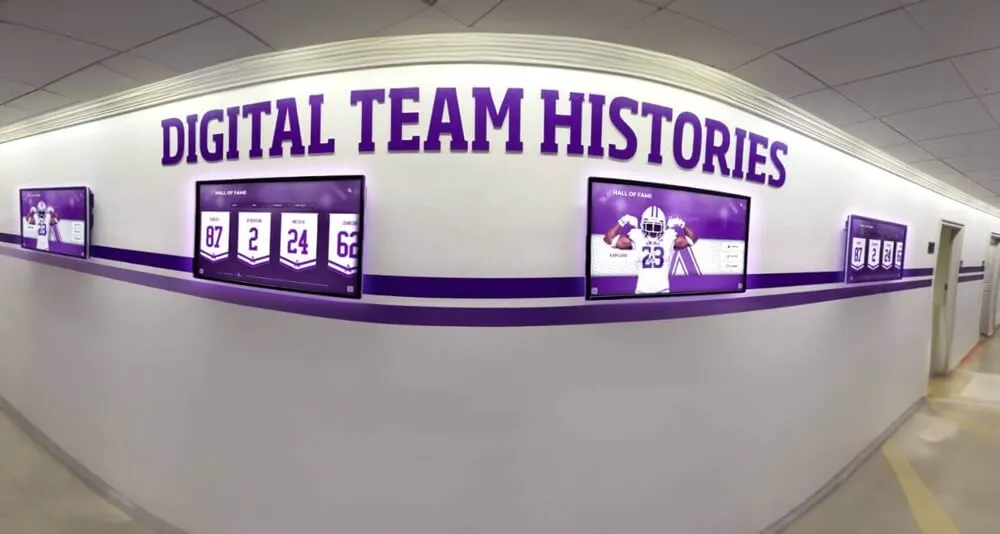
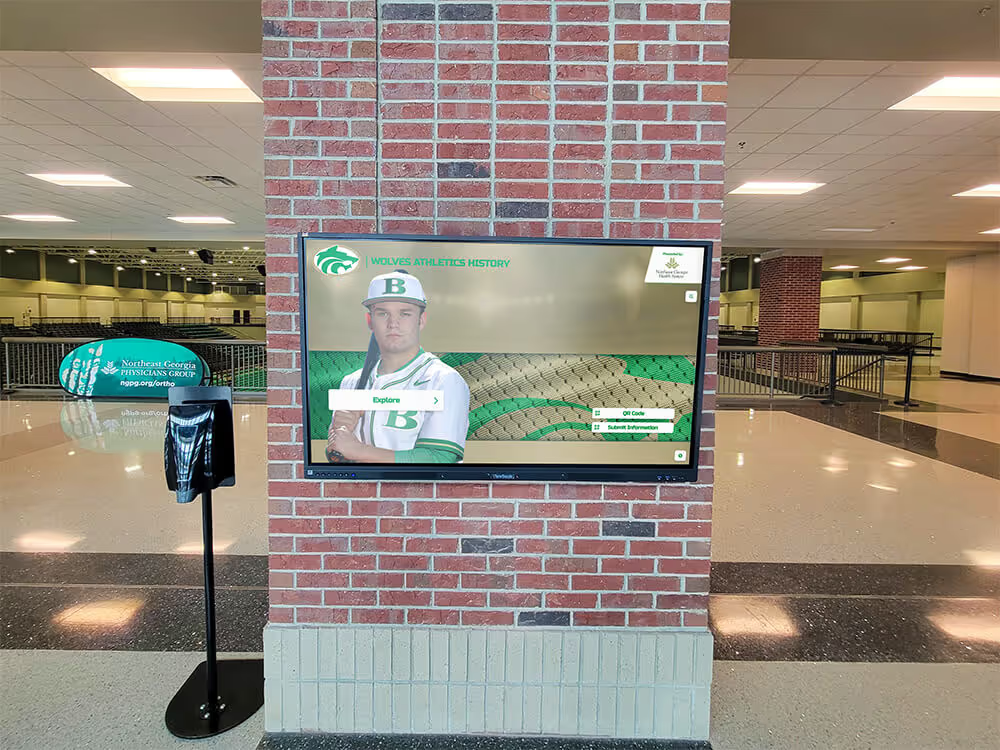
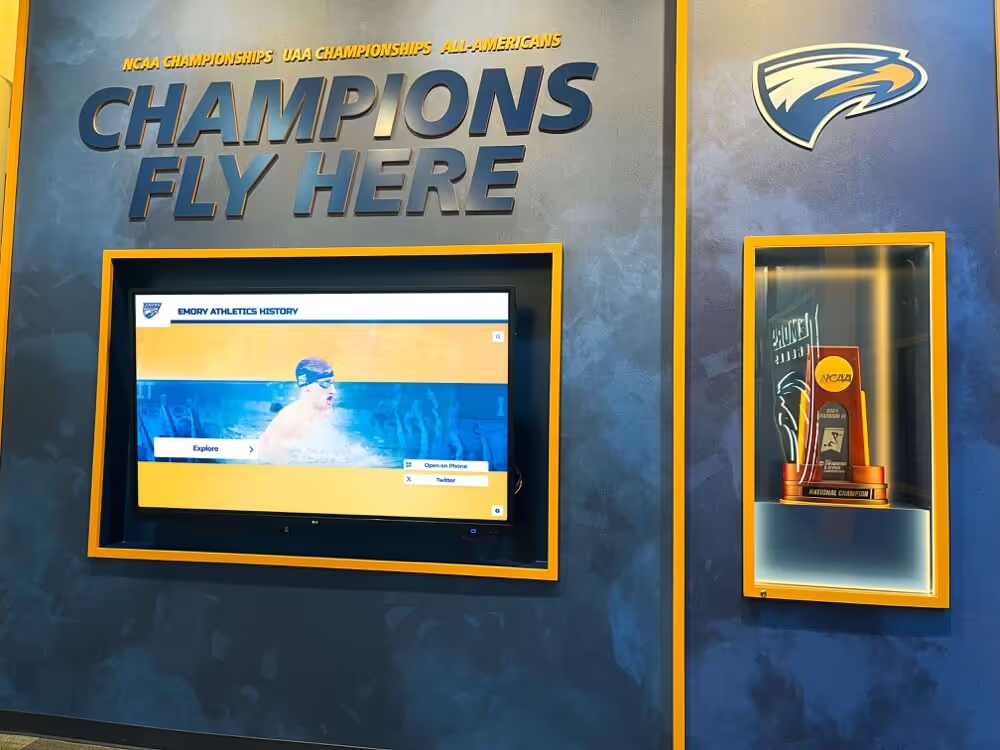
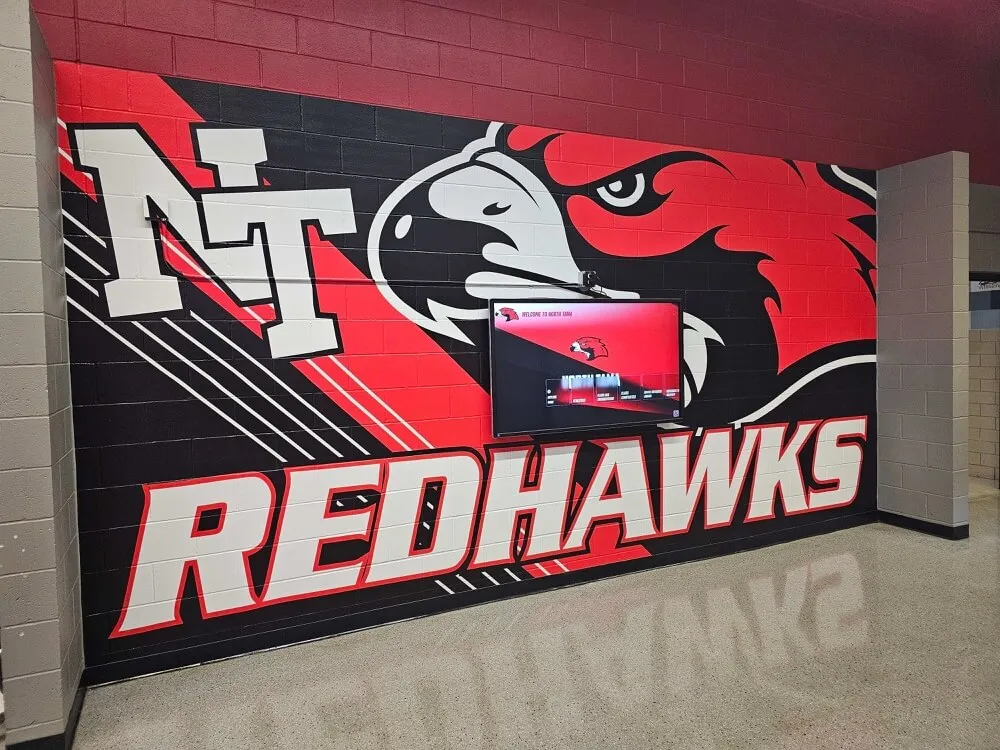
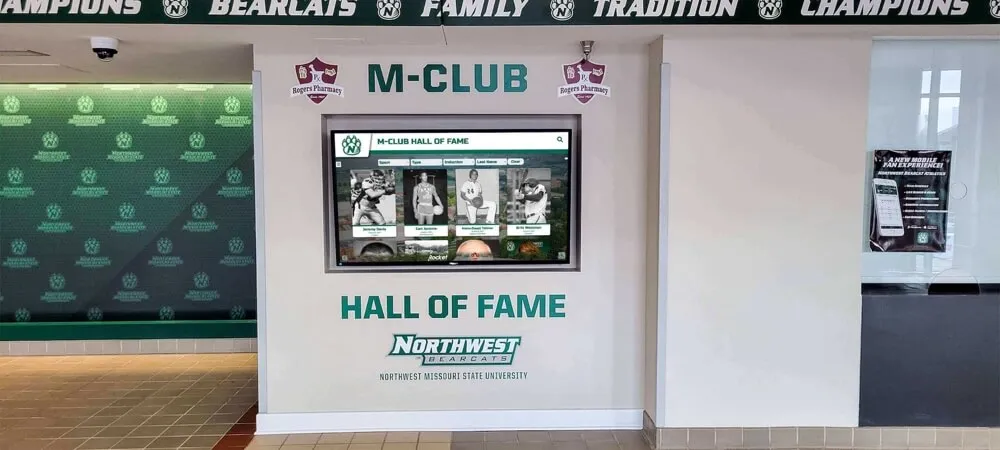
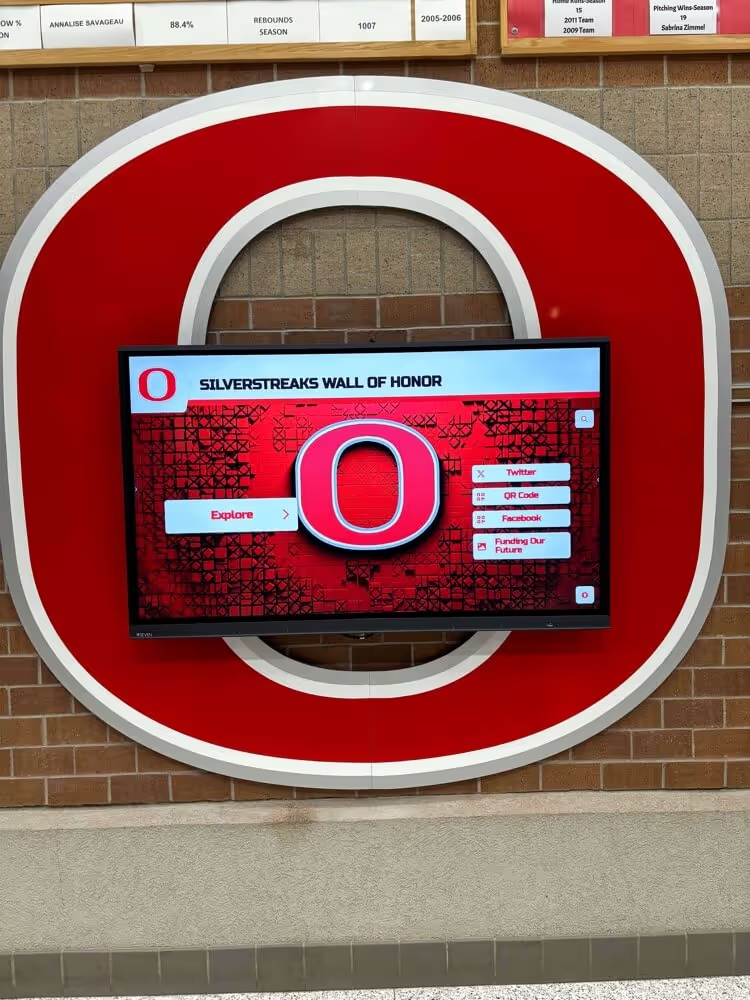
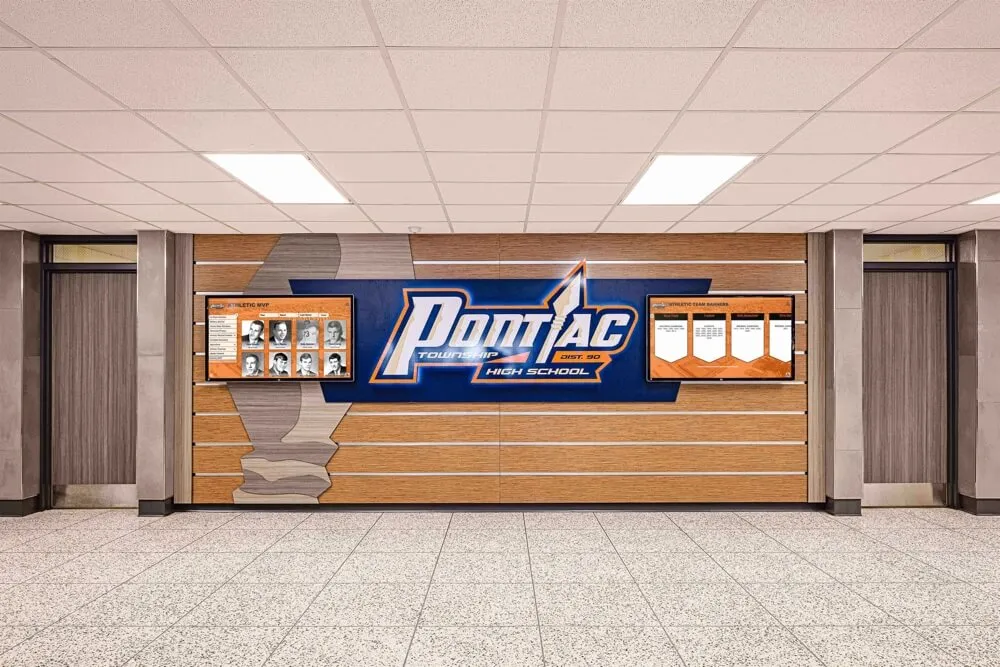
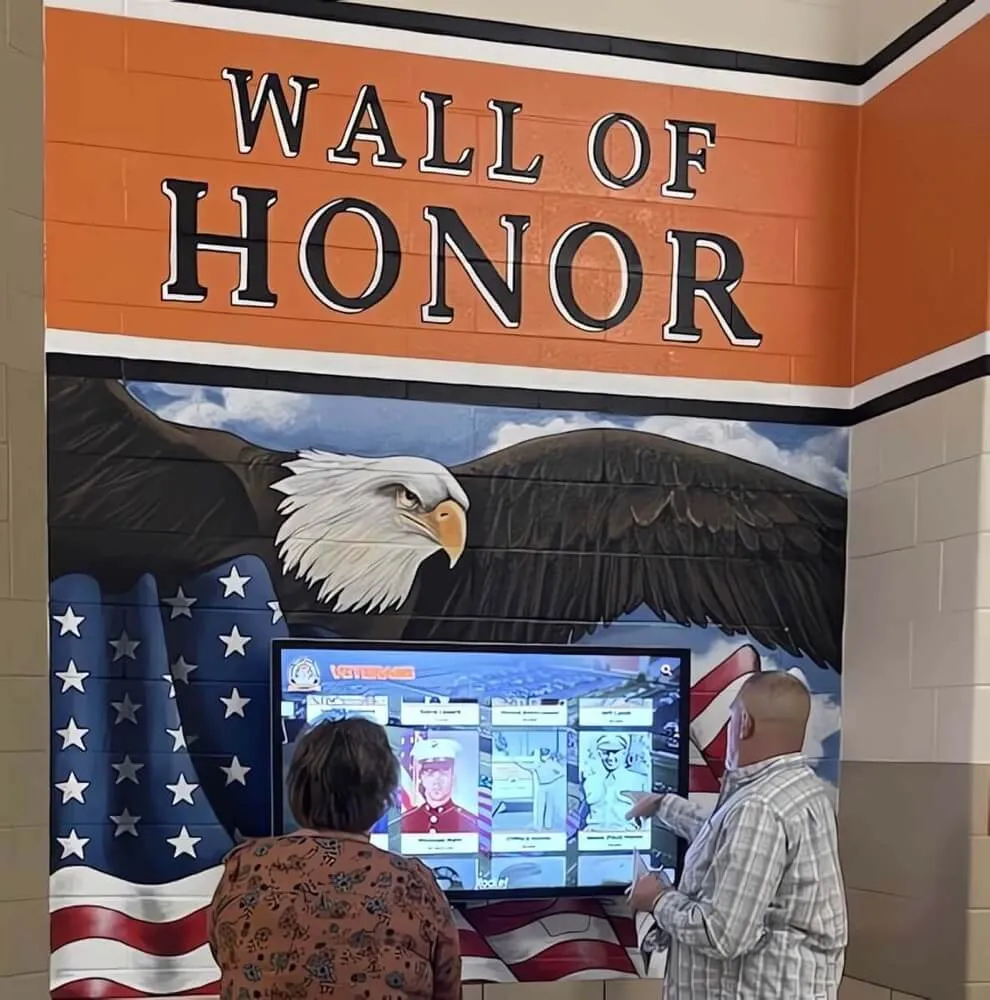
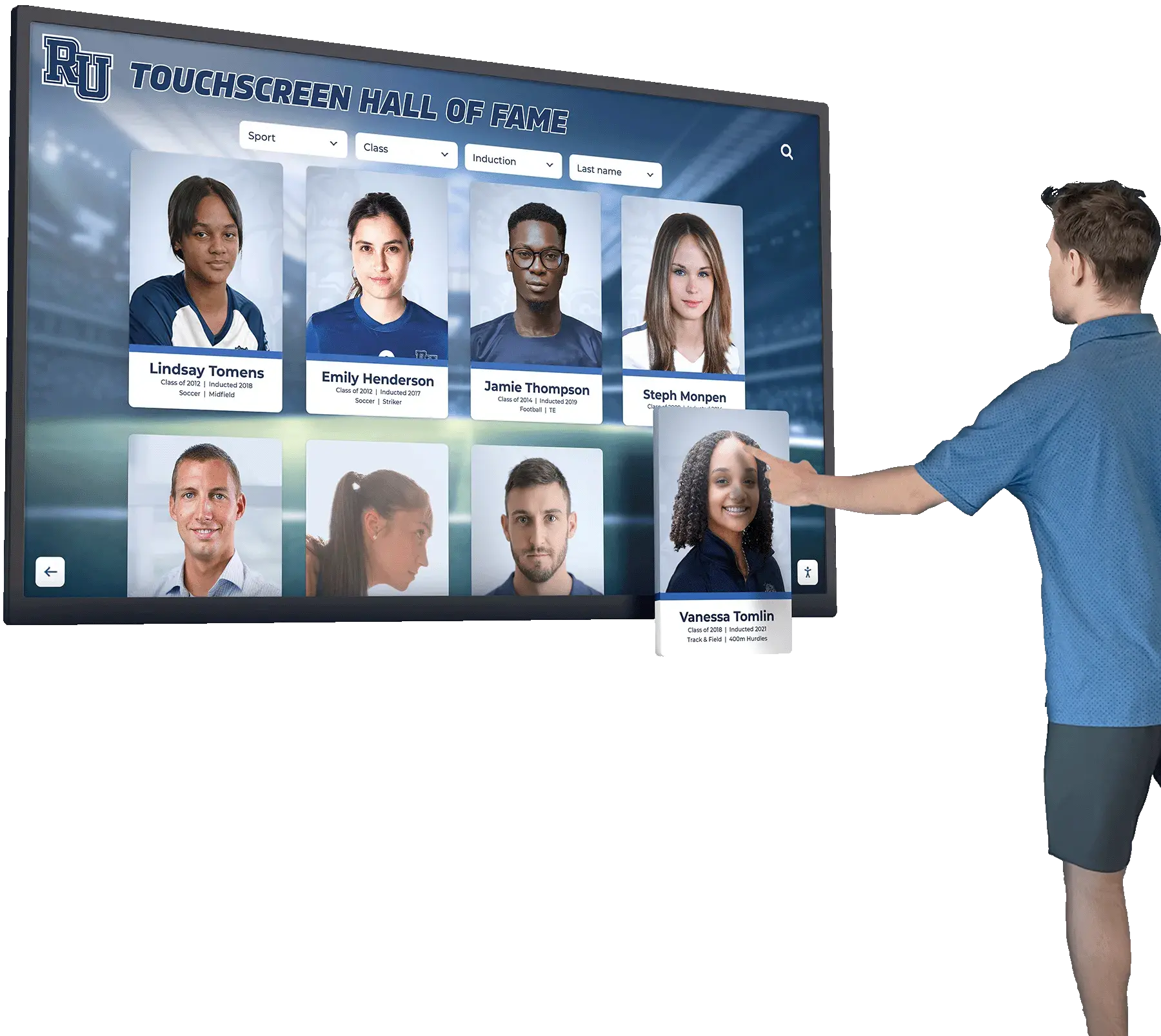
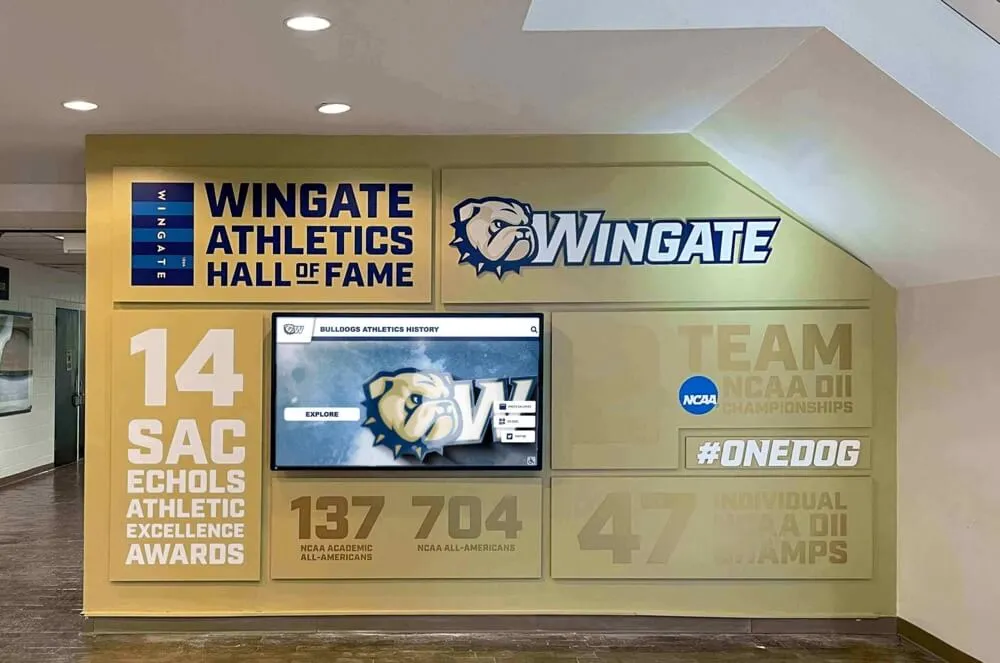
Digital touchscreen displays transform CTE program recognition by creating interactive showcases celebrating career readiness achievements with the visibility they deserve
Understanding the CTE Recognition Challenge
Before exploring digital solutions, understanding why CTE programs struggle with visibility helps educators evaluate whether touchscreen technology addresses their specific recognition needs.
The Career Pathway Visibility Gap
Career and technical education programs deliver measurable workforce outcomes yet frequently lack recognition infrastructure comparable to traditional academic and athletic programs.
Recognition Inequality
Most secondary schools dedicate substantial physical space and resources to academic honor rolls, athletic trophy cases, and college admission celebrations, yet CTE achievements—often more directly linked to career success—receive minimal visibility. This recognition gap creates several problems: students choosing pathways perceive CTE as less valued than traditional academics, families lack clear information about CTE program quality and outcomes, administrators struggle to demonstrate program effectiveness during funding discussions, and community employers remain unaware of available skilled graduates from local programs.
According to education research, visible recognition significantly impacts program enrollment and student persistence. When students see comprehensive celebration of career pathway achievements, they’re more likely to select CTE options and complete rigorous coursework leading to valuable industry credentials.
The Complexity of CTE Achievement Documentation
Unlike academic honor rolls with standardized GPA metrics or athletic records with clear statistics, CTE programs encompass diverse achievement types requiring different recognition approaches.
Diverse Recognition Categories
Comprehensive CTE recognition must accommodate multiple achievement dimensions:
- Industry certifications and credentials from dozens of different certifying bodies across various career sectors
- Career and Technical Student Organization (CTSO) competitions with placements at regional, state, and national levels
- Work-based learning achievements including internships, apprenticeships, and job placements
- Student project portfolios demonstrating applied skills across different technical disciplines
- Career readiness skills including professional communication, problem-solving, and teamwork
- Dual credit and articulation showing advanced coursework and post-secondary pathways
- Industry partnership recognitions acknowledging employer mentorship and opportunities
Traditional static displays struggle to accommodate this complexity within limited physical space, forcing programs to choose which achievements receive visibility while others remain undocumented—undermining comprehensive celebration of student career preparation success.
Explore comprehensive recognition strategies in academic recognition programs guide demonstrating multi-dimensional achievement celebration approaches.

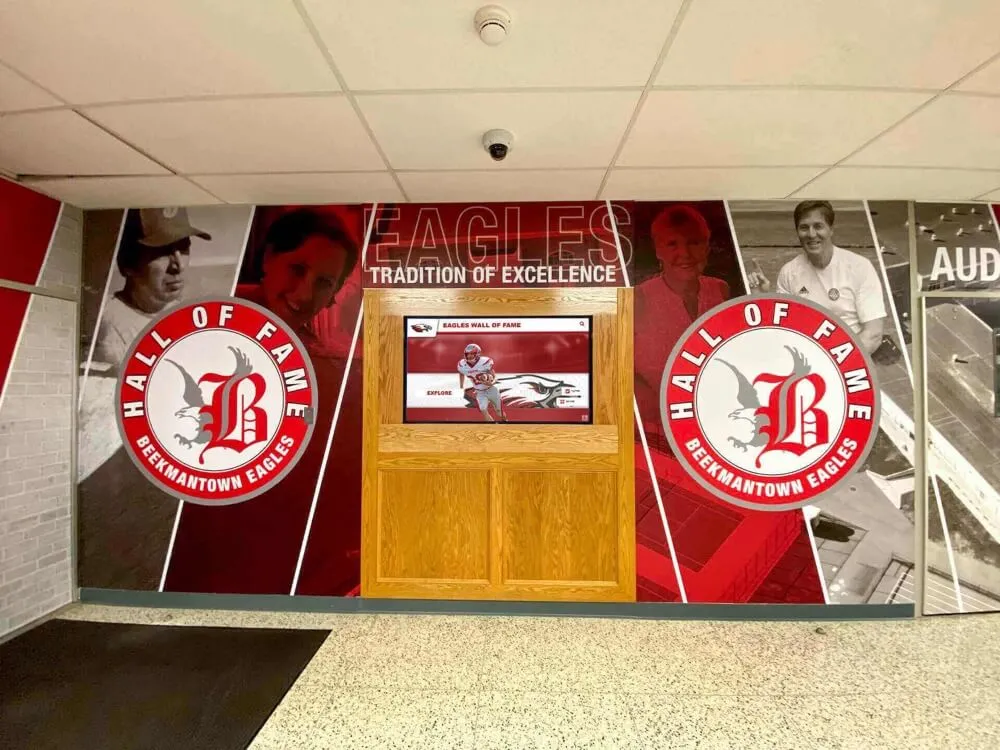
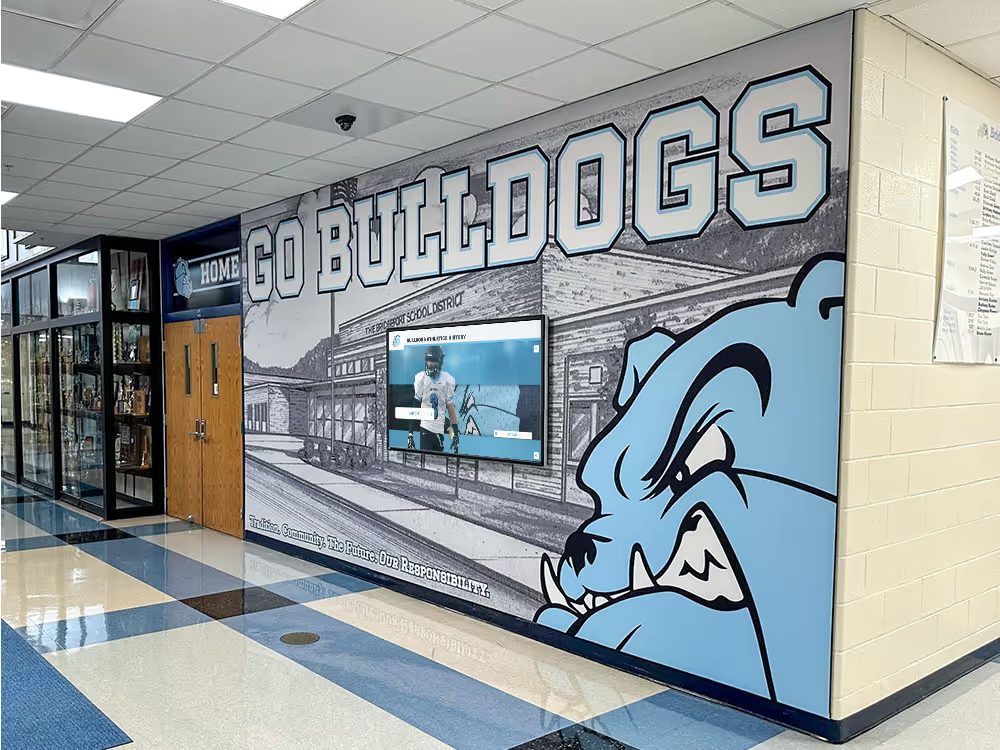
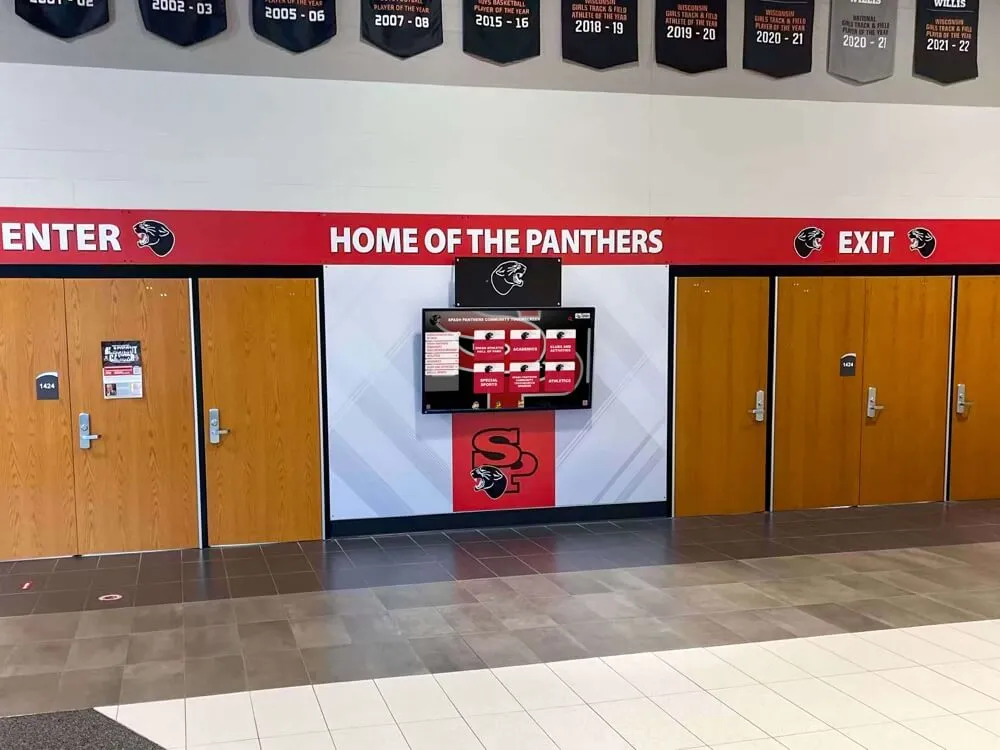
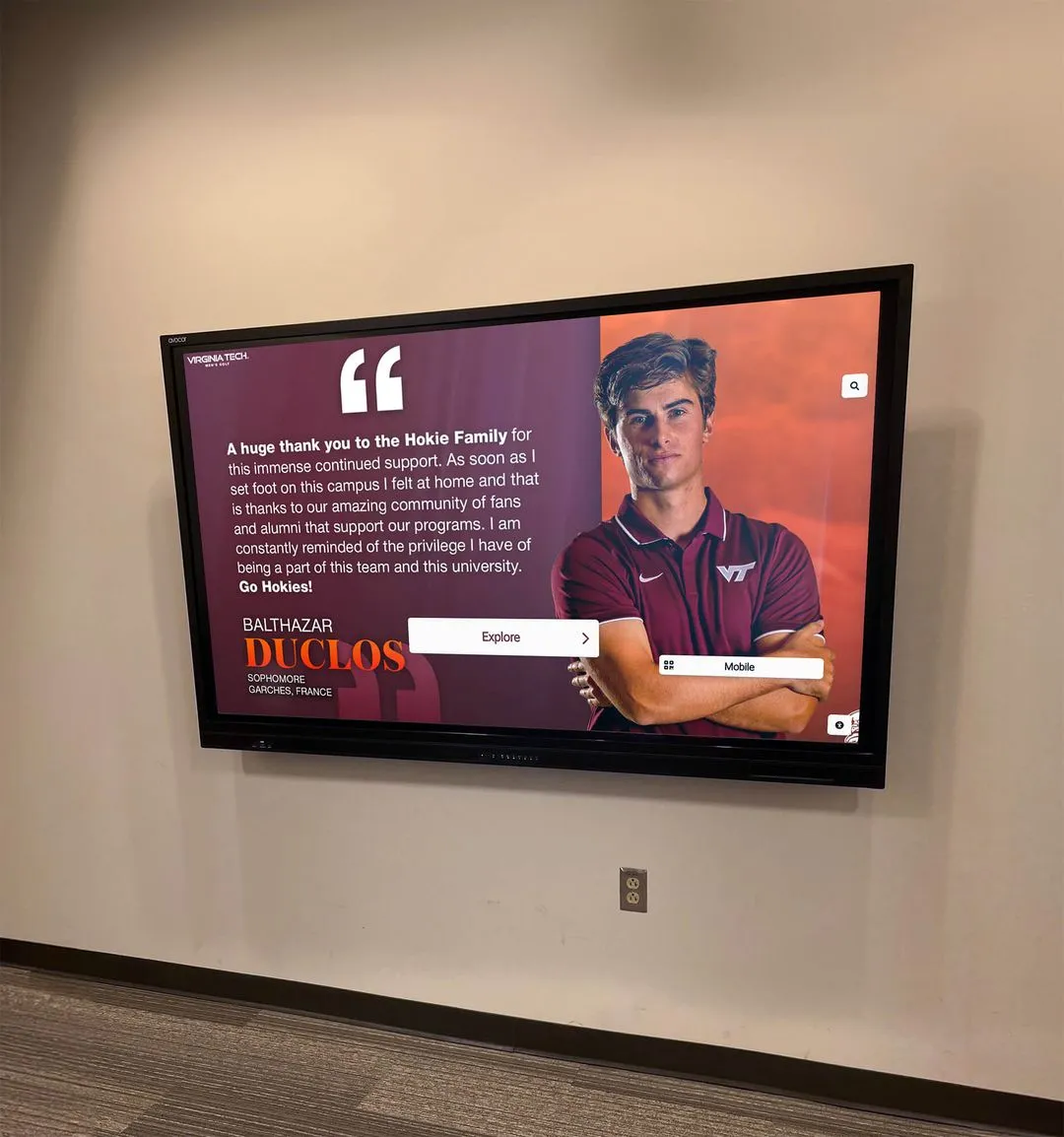
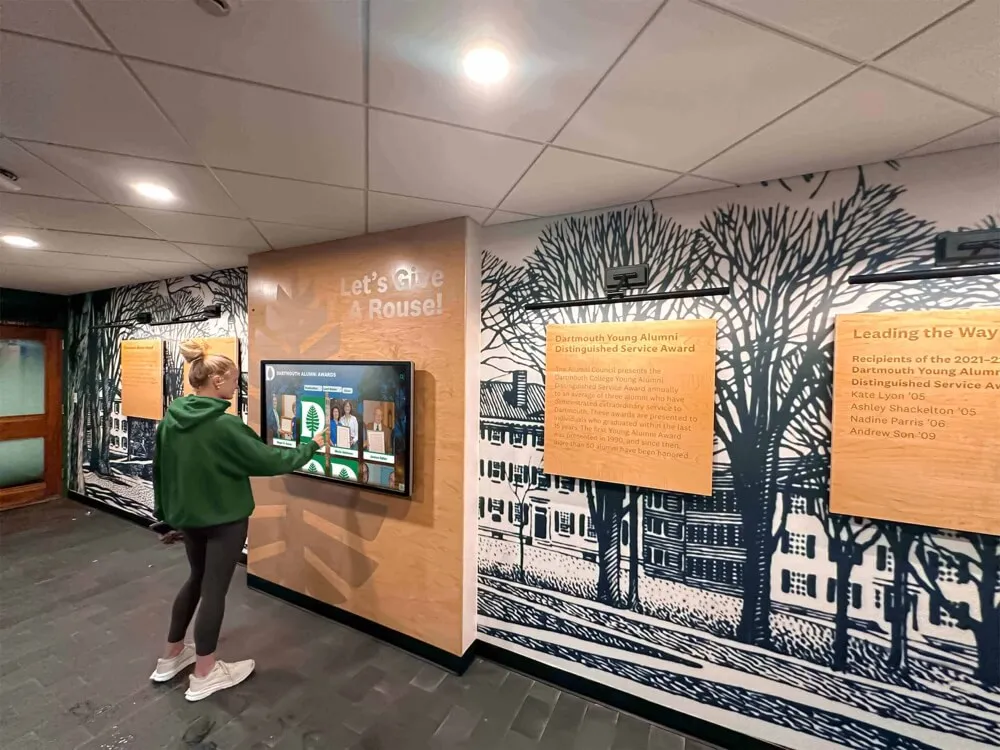
Strategic placement in high-traffic areas ensures CTE achievements receive daily visibility comparable to traditional academic and athletic recognition
Building CTE Program Pride and Community Value
Beyond individual student recognition, CTE programs need systematic visibility building community understanding of program quality and workforce development impact.
Cultural Value Communication
Comprehensive CTE recognition serves multiple stakeholder groups:
For Current and Prospective Students: Visible achievement celebration demonstrates that career pathways lead to valued outcomes, encouraging students to explore CTE options confidently while understanding specific success benchmarks they can pursue.
For Families: Clear documentation of certifications, placements, and career outcomes helps families understand CTE program quality and make informed educational pathway decisions for their students.
For School Administrators: Systematic achievement documentation provides concrete evidence of program effectiveness supporting resource allocation, facility investments, and staff development priorities.
For Industry Partners: Visible celebration of student achievements strengthens employer relationships by demonstrating program quality and available skilled workforce, encouraging continued partnership investment in mentorship, equipment, and placement opportunities.
For Community Members: Public recognition builds community understanding of CTE value and workforce development impact, strengthening support for program funding and resource allocation during budget discussions.
Learn about effective recognition communication in showcasing student achievement with systematic approaches.
How Digital Touchscreen Displays Transform CTE Recognition
Digital touchscreen technology solves fundamental CTE recognition limitations while creating engagement experiences impossible with traditional bulletin boards or static displays.
Unlimited Recognition Capacity Across All Career Pathways
Physical space constraints disappear with digital platforms capable of showcasing unlimited achievements across all CTE programs and career sectors.
Comprehensive Program Coverage
Solutions like Rocket Alumni Solutions enable CTE programs to feature all industry certifications earned across every career pathway, complete CTSO competition results from regional through national levels, comprehensive work-based learning and internship placements, student project portfolios with photos and descriptions, career readiness skill achievements and milestones, dual credit and articulation agreements completed, and alumni career placement and success stories demonstrating long-term program outcomes.
This unlimited capacity fundamentally transforms recognition philosophy—from exclusive “limited space forces difficult choices” models to inclusive “celebrate every deserving achievement” approaches that honor all students across all career pathways equitably. Schools implementing digital CTE recognition report 8-12x increases in documented student achievements compared to traditional bulletin board constraints.
Multimedia Storytelling That Brings Career Preparation to Life
Beyond solving capacity challenges, digital touchscreens create qualitatively superior recognition through rich multimedia content traditional displays cannot provide.
Enhanced Recognition Features
Modern digital platforms integrate multiple media types creating comprehensive student and program celebration:
- High-resolution certification and credential documentation with industry logos and descriptions
- Video portfolios showcasing student project work and technical skill demonstrations
- Competition highlight videos capturing CTSO performance and achievement moments
- Career pathway timelines showing progression from classroom to workplace
- Student testimonials sharing experiences and advice for peers
- Employer partner testimonials describing workplace readiness and student quality
- Photo galleries documenting hands-on learning, industry visits, and career exploration
- Interactive filtering enabling exploration by career sector, certification type, or graduation year
- Social sharing allowing students to celebrate achievements digitally with families and employers
- Direct links to career pathway information and program enrollment details
These multimedia capabilities transform simple achievement lists into engaging career readiness narratives that sustain viewer attention while demonstrating comprehensive program value to all stakeholders.

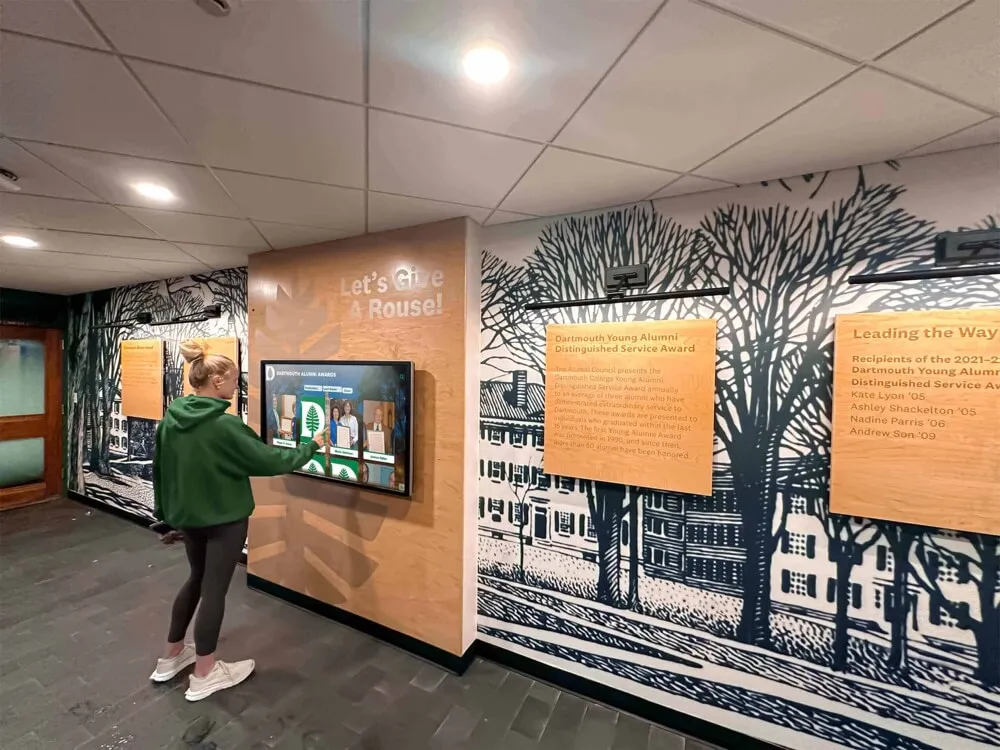
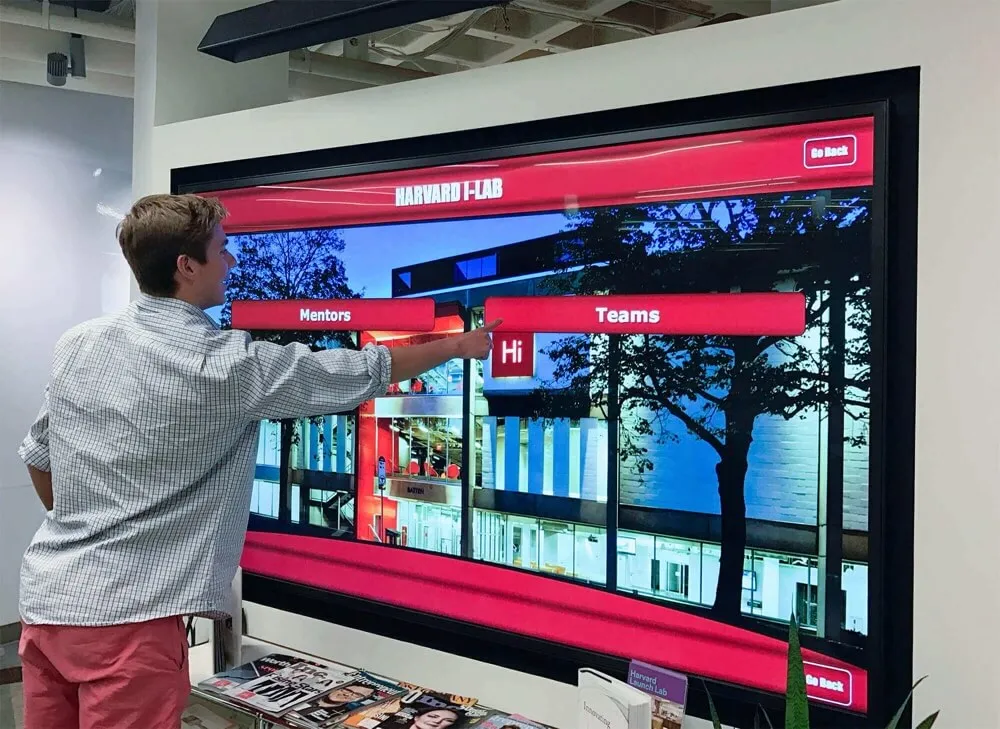
Intuitive touchscreen interfaces enable students, families, and visitors to explore CTE achievements interactively, discovering career pathway opportunities and student success stories
Real-Time Updates Celebrating Achievements Immediately
Cloud-based content management eliminates update barriers, enabling immediate recognition of certifications, competition placements, and career milestones as students achieve them.
Instant Recognition Advantages
CTE coordinators and instructors can update digital displays within minutes from any internet-connected device: new industry certifications celebrated immediately after students pass exams, competition placements documented the day results are announced, internship and job placements highlighted as students secure opportunities, student project work added continuously throughout semesters, and program statistics updated in real-time demonstrating current enrollment and outcome data.
This immediacy makes recognition feel current and relevant—students see their achievements honored promptly, reinforcing the direct connection between effort and celebration that drives motivation. The traditional gap between achievement and recognition—often weeks or months with bulletin boards—disappears completely with cloud-based digital systems.
Building Career Pathway Understanding
Digital displays educate viewers about specific career pathways while celebrating individual achievements:
Career Education Features
- Detailed career pathway descriptions with salary information and job outlook
- Required certification sequences showing progression within sectors
- Employer partner showcases featuring industry logos and opportunities
- Alumni career journey documentation from high school through employment
- Industry trend information keeping pathways current and relevant
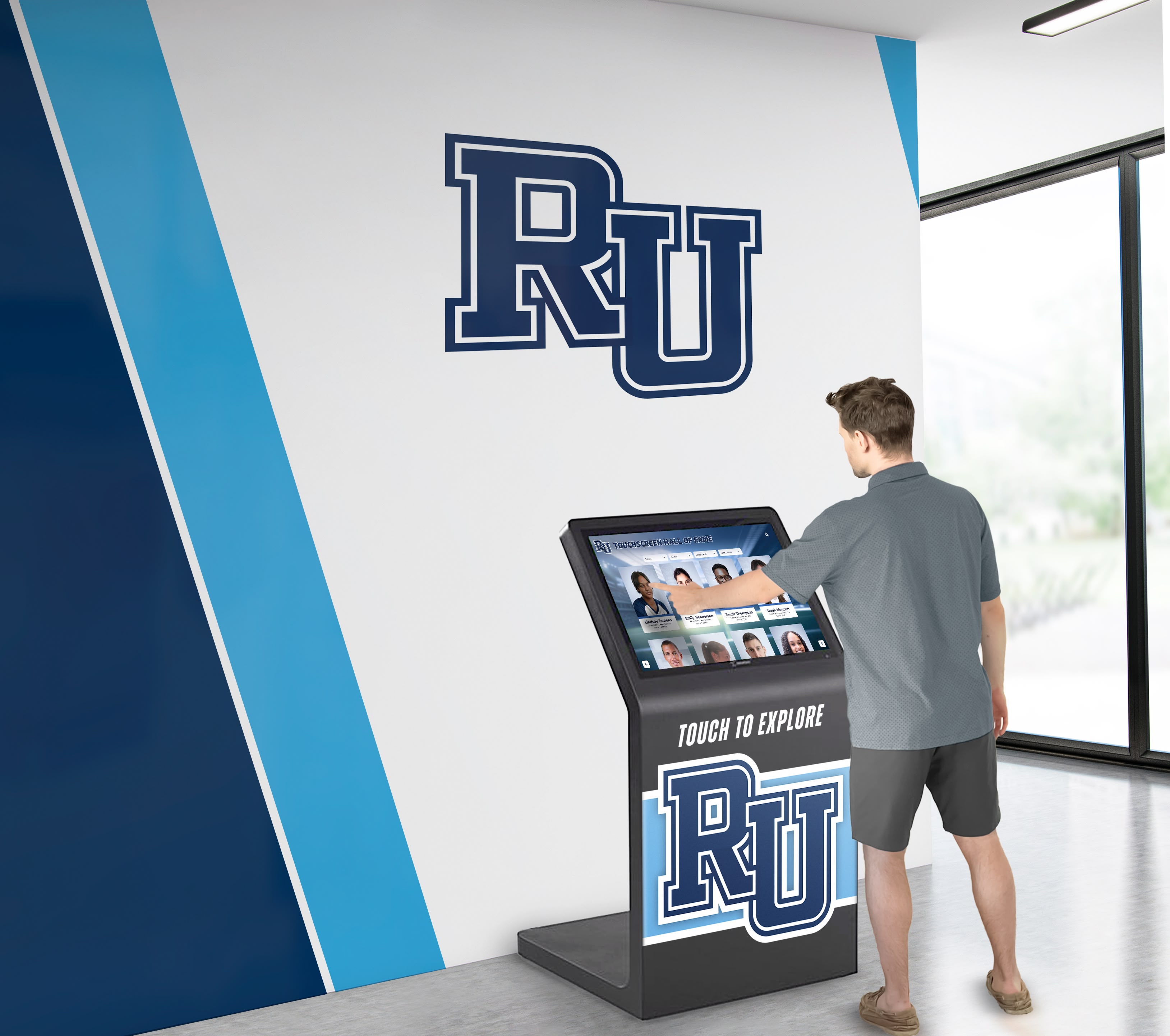
Lobby placement ensures CTE displays reach students during pathway exploration and family members during school visits, supporting informed educational decisions
This educational dimension transforms recognition displays from simple achievement lists to comprehensive career exploration tools supporting student pathway decision-making throughout their educational journey.
Discover comprehensive approaches in career and technical education certification recognition demonstrating systematic documentation frameworks.
Essential Achievement Categories for CTE Digital Displays
Effective CTE touchscreens celebrate diverse accomplishment types creating inclusive recognition honoring multiple dimensions of career readiness excellence.
Industry Certifications and Credentials
The cornerstone of CTE recognition involves documenting valuable industry certifications students earn demonstrating career-ready skills.
Certification Recognition Components
Comprehensive certification displays should include:
Certification Documentation
- Official certification names with industry certifying body logos (OSHA, AWS, ASE, Microsoft, Adobe, etc.)
- Certification descriptions explaining skills validated and industry value
- Student photos and names with certification achievement dates
- Multiple certifications when students earn credential stacks within pathways
- Renewal dates and advanced certification progression when applicable
- Links to certifying body websites providing additional information
- Salary and employment data associated with specific credentials
Recognition by Career Sector
Organize certifications by industry sector enabling clear pathway understanding:
- Advanced Manufacturing: Welding certifications, CNC programming, quality control, manufacturing technology
- Information Technology: Networking certifications, cybersecurity credentials, software development, database administration
- Healthcare Sciences: Certified Nursing Assistant, Emergency Medical Technician, pharmacy technician, medical coding
- Construction Trades: OSHA safety, electrical, plumbing, HVAC, carpentry certifications
- Business and Finance: Accounting credentials, marketing certifications, entrepreneurship recognition
- Agriculture and Natural Resources: Equipment operation, animal science, horticulture certifications
- Hospitality and Culinary: ServSafe certification, culinary arts credentials, hospitality management
This sector-based organization helps students understand certification pathways while demonstrating program breadth across multiple career fields.
Learn about systematic credential recognition in certification wall mount displays showing effective documentation approaches.

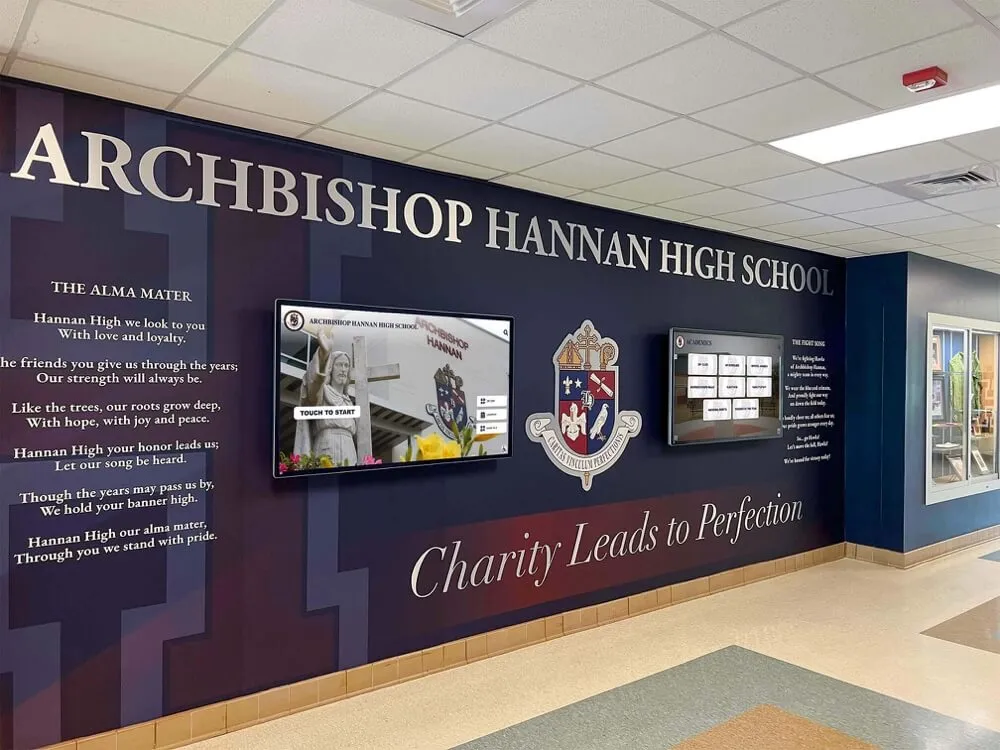
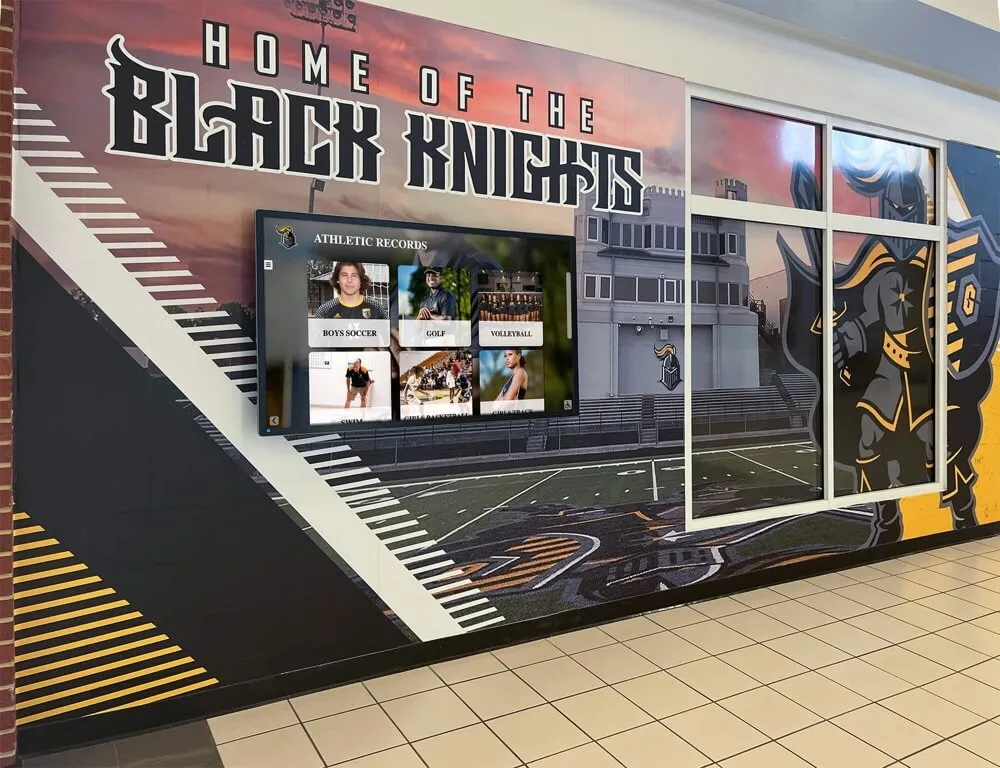
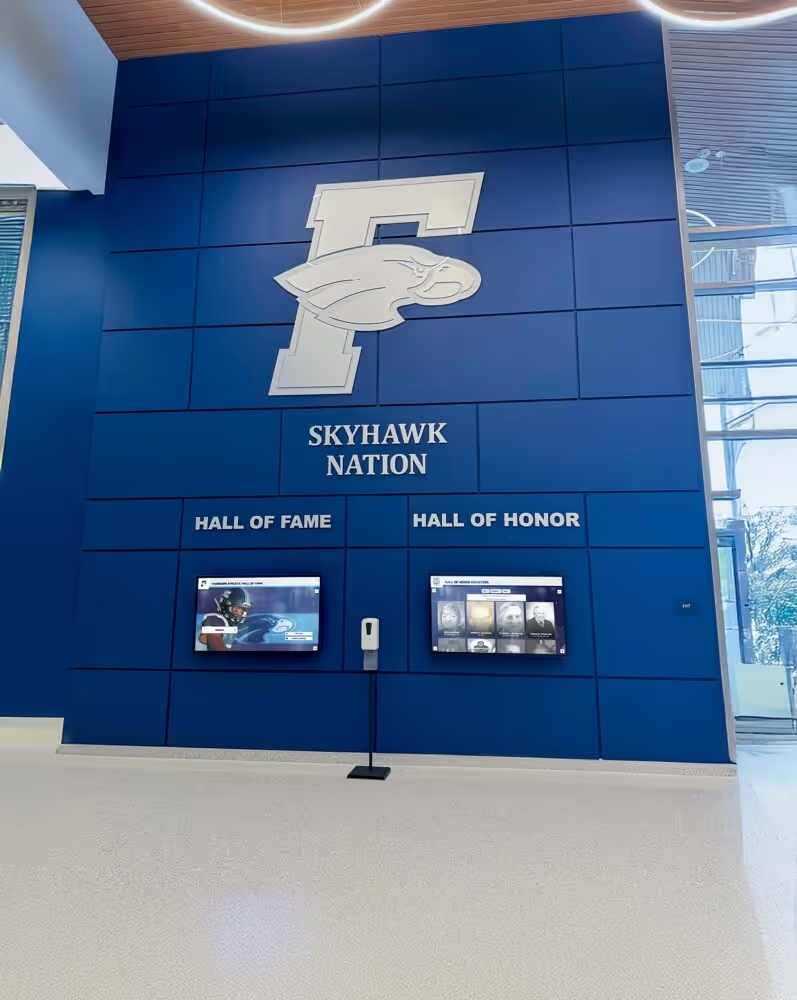
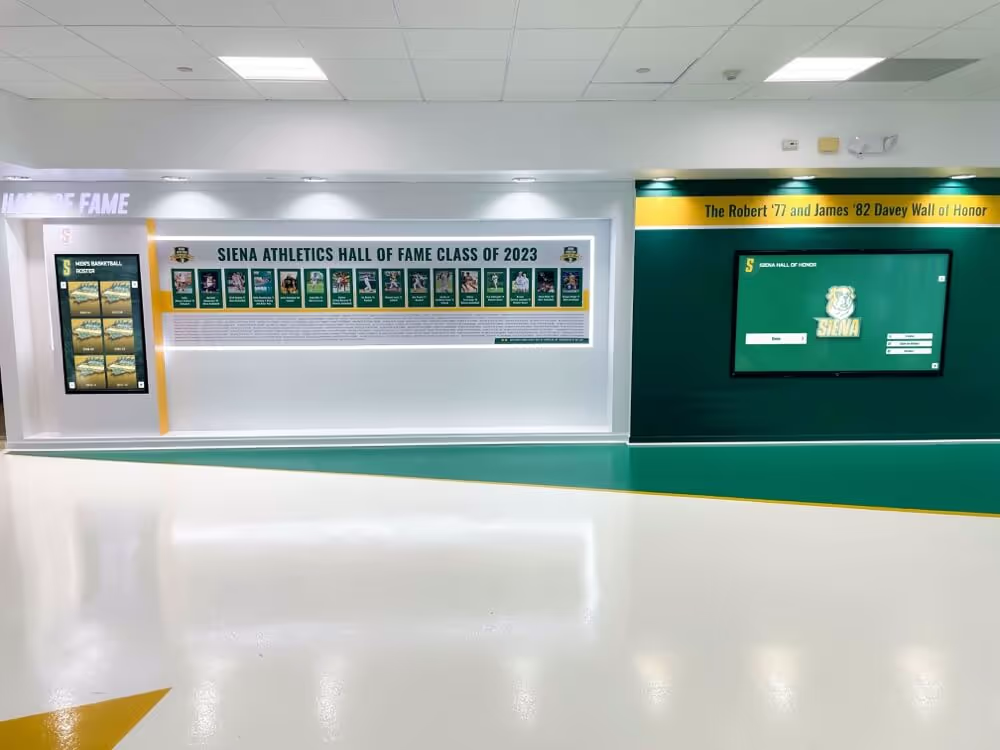
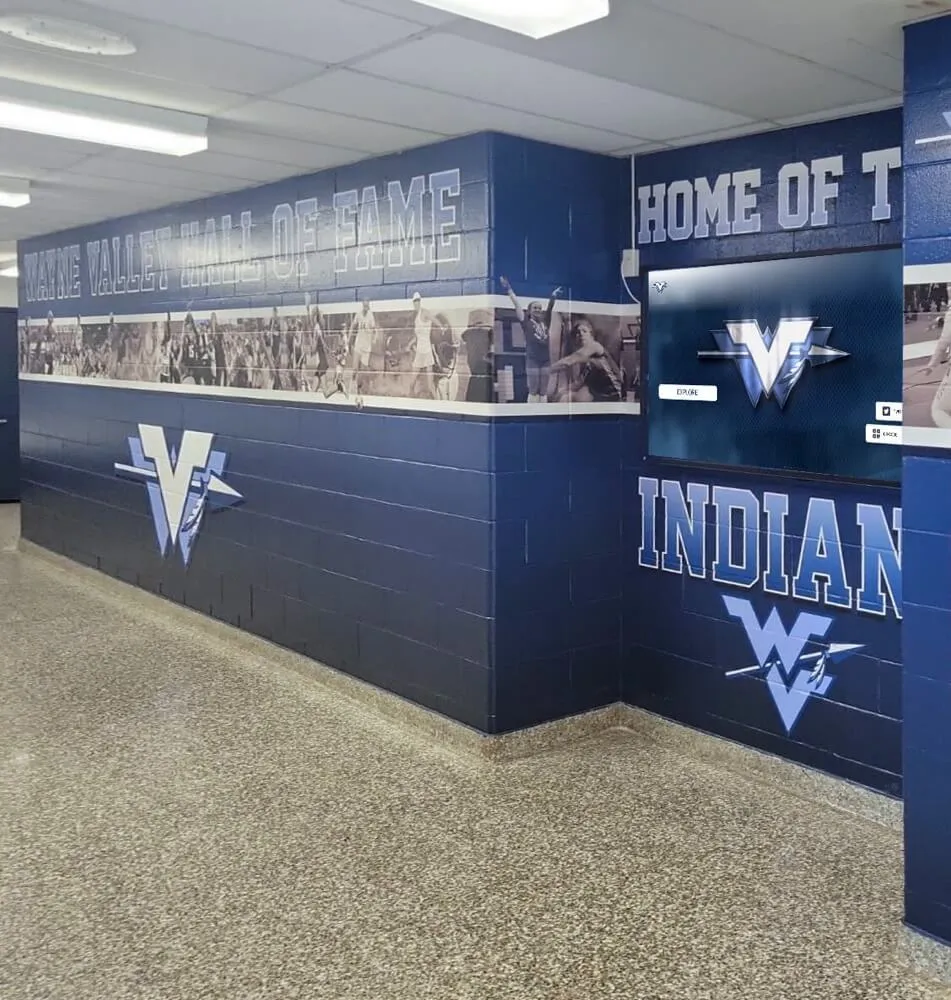
Integrated designs combine school identity with CTE recognition, creating cohesive environments celebrating career pathway excellence as integral to institutional mission
Career and Technical Student Organization (CTSO) Achievements
Student leadership and competition success through CTSOs like SkillsUSA, DECA, FBLA, FFA, and HOSA deserve prominent recognition.
CTSO Recognition Documentation
Competition Achievements
- Regional, state, and national competition placements with event details
- Team competition results documenting collaborative achievement
- Individual competition medals and rankings
- Leadership positions held within local, state, and national organizations
- Service projects and community engagement initiatives
- Professional development events and conferences attended
- Networking opportunities and industry connections facilitated
Chapter Success Metrics
Beyond individual achievements, recognize chapter-level success:
- Chapter awards and recognitions at state and national levels
- Membership growth and participation rates
- Community service hours and project impact
- Fundraising achievements supporting program development
- Professional partnerships and industry mentorships established
- Alumni career success stories from CTSO participation
This comprehensive CTSO recognition demonstrates that career preparation extends beyond technical skills to include leadership, professionalism, and career networking essential for long-term success.
Work-Based Learning and Career Placement
Documenting internships, apprenticeships, and career placements demonstrates program effectiveness preparing students for workforce entry.
Work-Based Learning Recognition
Experiential Learning Documentation
- Internship placements with employer names and career sectors
- Apprenticeship program participation and completion
- Cooperative education experiences and work-study placements
- Job shadowing and career exploration opportunities
- Industry mentorship relationships and professional development
- Hours completed and skills demonstrated through workplace experience
- Employer feedback and performance evaluations when appropriate
Career Outcome Documentation
Tracking post-graduation outcomes demonstrates program return on investment:
- First job placements after graduation with employer names and positions
- Advanced training and post-secondary education pursued
- Military service and specialized career pathways
- Entrepreneurship ventures and business ownership
- Career advancement milestones from alumni
- Salary information and economic mobility outcomes when available
- Alumni testimonials describing how CTE preparation enabled career success
This outcome documentation provides concrete evidence of program effectiveness to all stakeholders while demonstrating to current students the tangible career benefits CTE pathways provide.
Explore workplace connection strategies in highlighting college signings and career commitments demonstrating pathway celebration approaches.
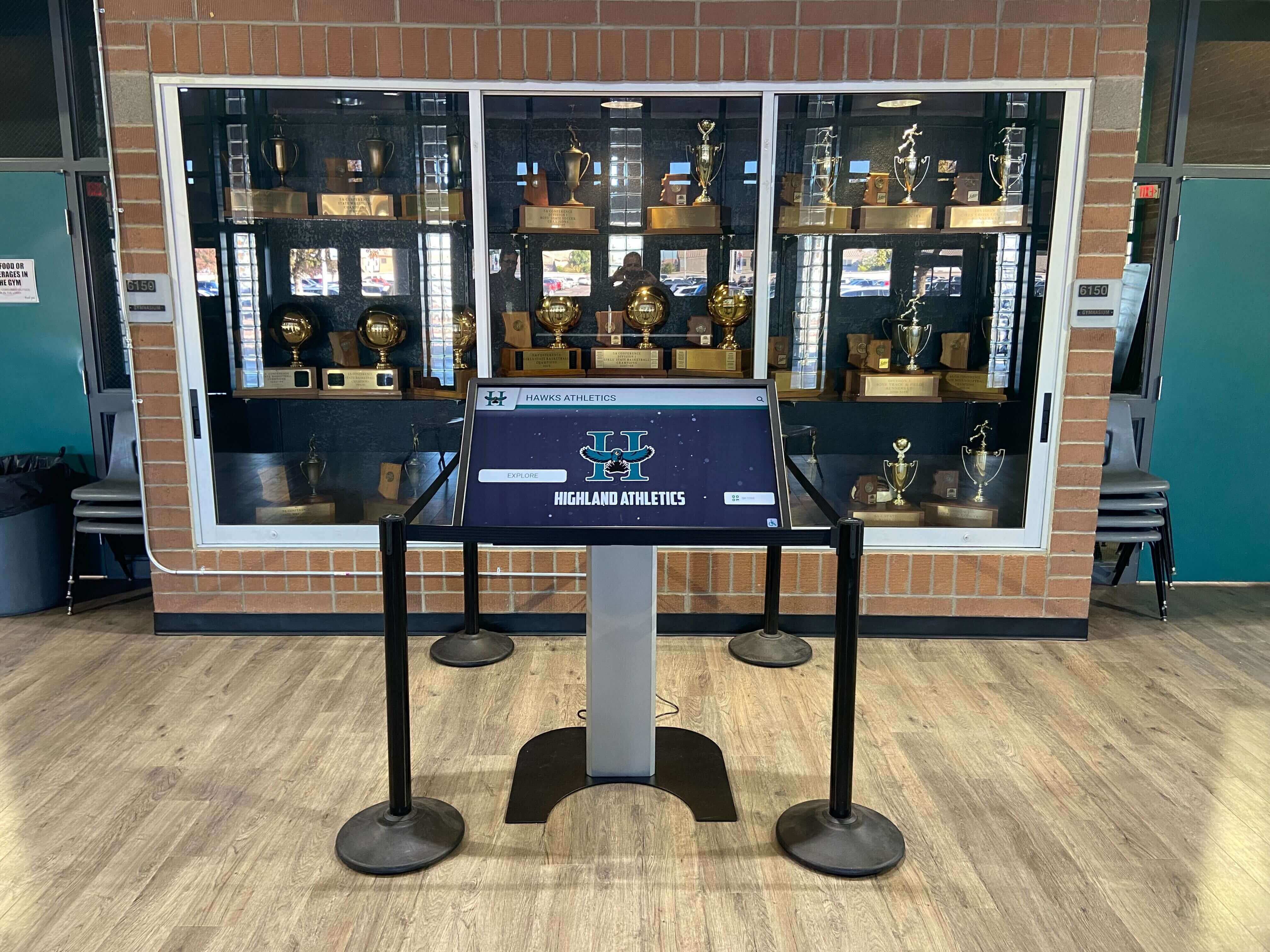
Integration with existing recognition infrastructure creates comprehensive systems celebrating academic, athletic, and career pathway achievements equally
Student Project Portfolios and Applied Learning
CTE programs emphasize hands-on, applied learning that produces tangible student work deserving systematic documentation and celebration.
Project Recognition Components
Portfolio Documentation
- Project photos showing finished work and creation processes
- Video demonstrations of technical skills and problem-solving
- Project descriptions explaining objectives, challenges, and solutions
- Technical specifications and design documentation
- Skills demonstrated and competencies achieved through projects
- Industry standards met and professional quality benchmarks
- Team collaboration documentation when projects involve group work
- Industry partner involvement and mentorship in project development
Showcase Categories
Organize projects by discipline and skill level:
- Capstone projects demonstrating comprehensive skill integration
- Competition projects prepared for SkillsUSA, TSA, or other CTSO events
- Community service projects applying technical skills to real-world needs
- Industry-sponsored projects addressing authentic workplace challenges
- Entrepreneurship ventures and business plan development
- Research projects advancing technical knowledge
- Innovation and creative problem-solving demonstrations
This project documentation showcases applied learning outcomes that differentiate CTE from traditional academic approaches while demonstrating authentic skill development valued by employers and post-secondary institutions.
Strategic Implementation for CTE Programs
Successful digital touchscreen implementations require systematic planning addressing technology selection, content development, and program integration.
Needs Assessment and Goal Definition
Clarifying Recognition Objectives
Before selecting technology or vendors, CTE coordinators should clearly define what they hope to accomplish through enhanced recognition:
Program Goals
- Which CTE pathways currently lack adequate visibility and recognition?
- What specific achievements deserve greater documentation and celebration?
- How might enhanced recognition impact student pathway selection and persistence?
- What evidence do administrators need to support CTE funding and resource requests?
- How can recognition strengthen industry partnerships and work-based learning opportunities?
- What career outcome data would help prospective students and families understand program value?
Cultural Objectives
- How can recognition elevate CTE program status to equal academic and athletic pathways?
- What role might visible career success play in changing perceptions about technical education?
- How can recognition strengthen student pride in career pathway choices?
- What information would help reduce stigma and misconceptions about CTE programs?
Clear objective definition enables design decisions aligning digital touchscreen implementations with most critical program priorities when tradeoffs become necessary during planning and budgeting.
Location and Placement Strategy
Touchscreen effectiveness depends on strategic placement maximizing visibility across different stakeholder audiences.
Optimal CTE Display Locations
High-Traffic School Spaces
- Main building entrances where all students, families, and visitors enter daily
- Guidance and counseling office areas during pathway exploration and scheduling
- Career center spaces where students research post-secondary options
- CTE building or wing entrances creating dedicated career pathway recognition areas
- Cafeterias and student common areas with extended viewing opportunities
- Administrative office corridors visible during family meetings and school tours
- Library and media center spaces supporting career research and exploration
CTE-Specific Locations
- Program-specific lab and classroom entrances celebrating pathway achievements
- Competition preparation spaces inspiring students through previous success
- Advisory classroom areas where students discuss career development
- Community college partnership spaces highlighting articulation agreements
- Industry partner visit areas showcasing program quality to employers
Multiple distributed displays ensure recognition reaches different audiences while preventing single-location implementations from limiting visibility to small percentages of school communities.

Entrance lobby installations ensure CTE recognition reaches all building visitors, positioning career pathways as integral to institutional identity and student success
Content Development and Program Documentation
Hardware and software establish infrastructure, but comprehensive content determines whether touchscreens achieve intended recognition objectives.
Initial Content Development Process
Systematic Content Creation
Successful CTE implementations establish clear processes ensuring comprehensive coverage:
- Historical certification data collection gathering student achievement records from previous years
- Photo and video compilation from classroom activities, competitions, and work-based learning
- Student testimonial recording capturing career pathway experiences and advice
- Employer partnership documentation including logos, descriptions, and opportunities
- Career pathway content development writing descriptions, requirements, and outcome information
- Alumni career tracking researching post-graduation pathways and success stories
- Achievement data organization standardizing certification, competition, and placement information
- Content upload and categorization populating recognition platform systematically by pathway
- Quality review and accuracy verification ensuring all information is current and correct
CTE coordinators should allocate 80-150 hours for comprehensive initial content development depending on program size and available source materials—foundational investment ensuring recognition quality from launch that honors student career preparation appropriately.
Ongoing Content Management
Digital displays remain engaging only when content stays current with new achievements, updated career information, and evolving industry partnerships.
Regular Update Procedures
Establish processes adding new achievements and information promptly:
- Designate specific staff (CTE coordinator, pathway instructors, or student workers) responsible for touchscreen content
- Create standard forms collecting certification, competition, and placement information
- Schedule content additions monthly during school year capturing ongoing achievements
- Review published content quarterly ensuring career pathway information remains current
- Communicate new recognition through school channels driving engagement and visibility
- Archive source materials supporting future updates or verification needs
Cloud-based platforms enable remote updates from any internet-connected device—dramatically reducing administrative burden compared to traditional bulletin boards requiring physical access and manual posting.
Explore content management strategies in digital hall of fame content update guide with systematic approaches.
Integrating CTE Recognition with Career Pathway Development
Digital touchscreens achieve maximum value when integrated into comprehensive career pathway development and student support strategies.
Supporting Informed Pathway Selection
Career Exploration Tools
Effective CTE displays don’t just celebrate past achievements—they guide current students through pathway exploration and decision-making:
Pathway Exploration Features
- Interactive career sector exploration with salary data and job outlook information from reputable sources
- Certification sequence timelines showing progression from introductory through advanced credentials
- Alumni career journey profiles demonstrating various pathways within sectors
- Industry partner spotlights featuring employment opportunities and skill requirements
- Work-based learning descriptions explaining internship and apprenticeship processes
- Dual credit and articulation information showing post-secondary pathway advantages
- Day-in-the-life videos or testimonials from working professionals in featured careers
This career guidance dimension transforms recognition displays from passive celebration to active student support tools helping learners make informed pathway decisions aligned with interests, strengths, and career aspirations.
Building Industry Partnerships and Community Support
Stakeholder Engagement Through Recognition
Digital touchscreens create visibility that strengthens relationships with employers, community organizations, and post-secondary institutions.
Partnership Development Strategies
- Feature employer partner logos and descriptions prominently throughout displays
- Document industry-sponsored equipment, mentorship, and opportunity contributions
- Highlight work-based learning placements demonstrating partnership outcomes
- Showcase employer testimonials describing student quality and workplace readiness
- Feature post-secondary partnership information including articulation agreements
- Document community project collaborations applying CTE skills to local needs
- Share industry-validated student work demonstrating authentic skill development
This systematic partnership recognition demonstrates appreciation while providing concrete evidence of program quality that encourages continued industry investment in equipment, mentorship, and placement opportunities essential for robust CTE programs.
Learn about partnership documentation in community showcase project recognition demonstrating collaborative achievement celebration.
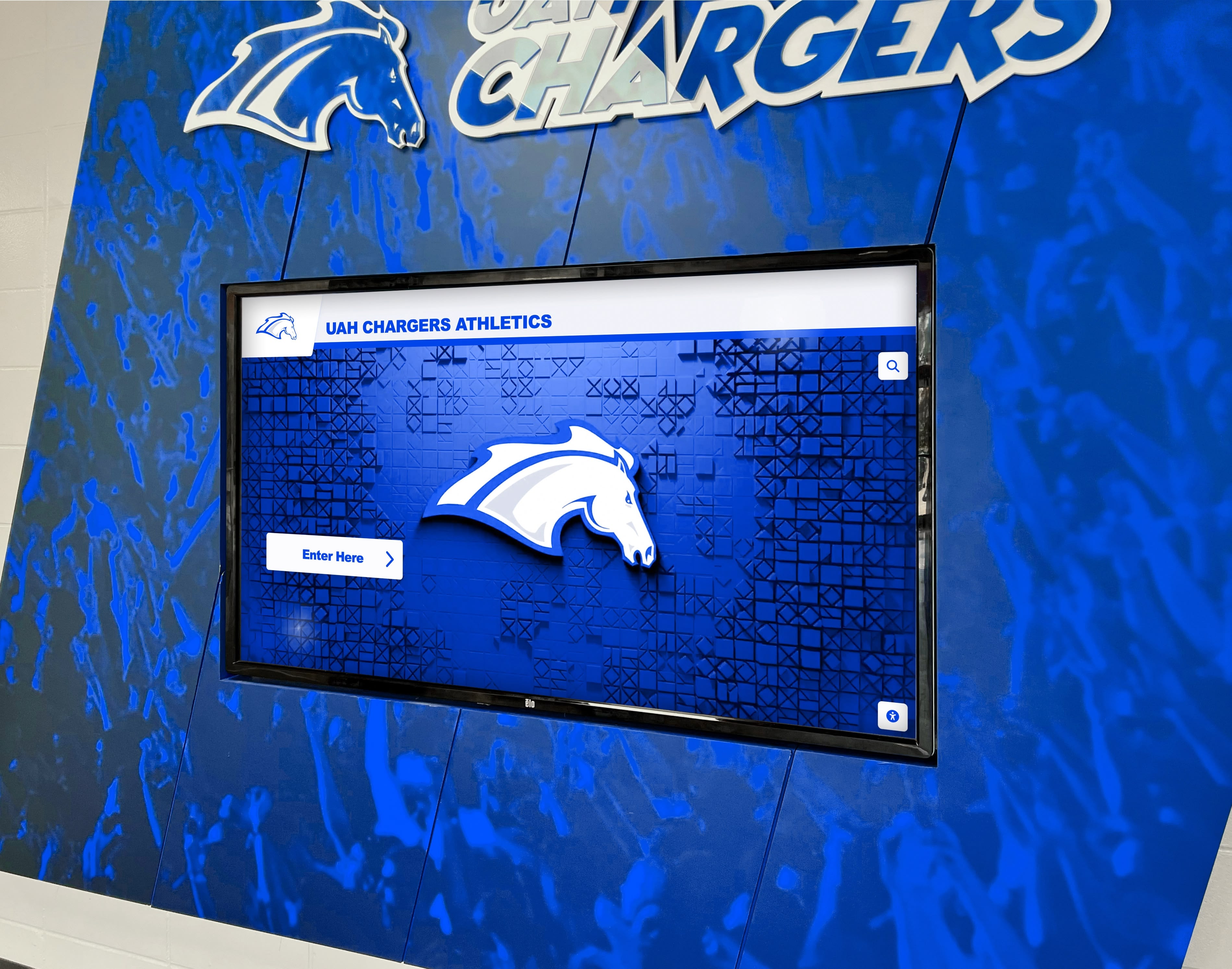
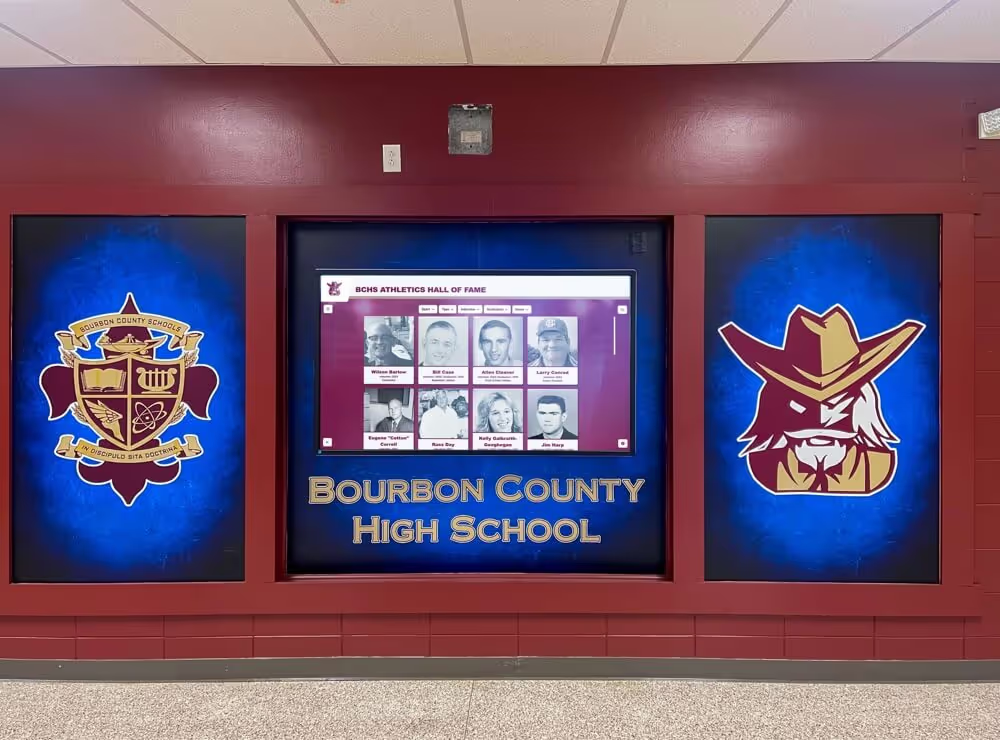
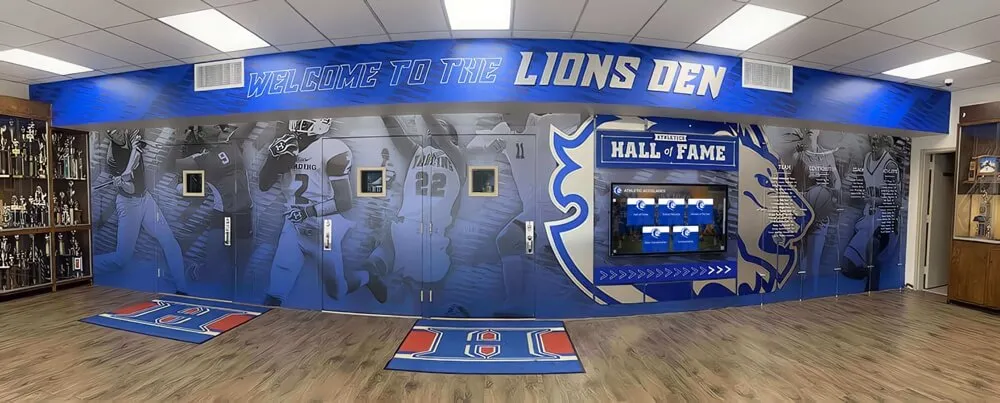
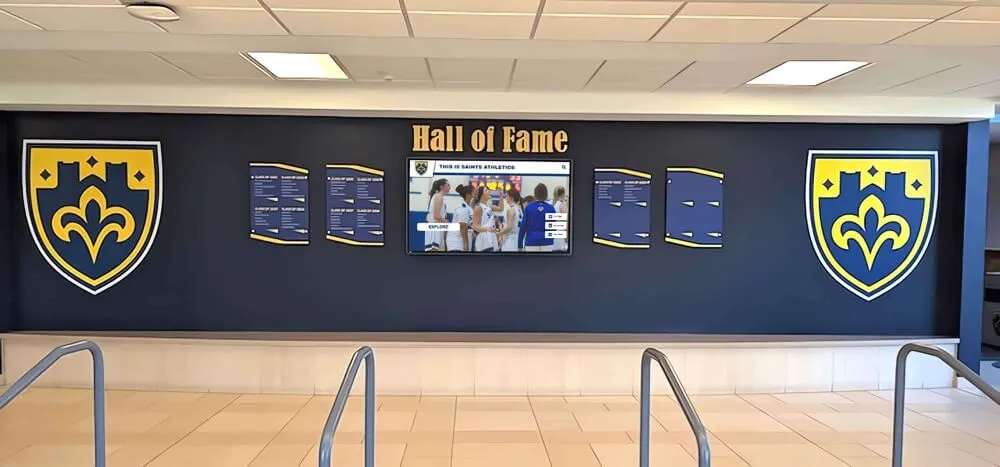
Professional installations demonstrate institutional commitment to CTE excellence while creating visually impressive environments that strengthen program pride and community support
Budget Planning and Funding CTE Recognition Investments
Digital touchscreen implementations require upfront investment delivering substantial returns across multiple program objectives and stakeholder benefits.
Total Cost of Ownership
Investment Components
Initial Implementation Costs
- Commercial-grade touchscreen display and computing: $4,000-$10,000 per display
- Professional installation and mounting: $1,000-$3,000 per display
- Recognition platform software (initial setup): $2,500-$5,000
- Initial content development (staff time or vendor services): $4,000-$10,000
- Custom design integration (if desired): $2,000-$5,000
Typical single-display implementation: $13,500-$33,000 Typical multi-display implementation (3-4 displays across campus): $40,000-$90,000
Ongoing Annual Costs
- Platform subscription and hosting: $1,800-$4,200 per year
- Content management (staff time): 40-60 hours per year
- Technical support and maintenance: $600-$1,800 per year
- Content enhancements and updates: $1,000-$3,000 per year
Typical annual operating costs: $3,400-$9,000 per year
These investments deliver value across multiple CTE objectives simultaneously—student recognition and motivation, pathway enrollment and completion, industry partnership development, program funding justification, family and community engagement, and career outcome documentation—making per-objective costs reasonable when benefits are comprehensively assessed.
Creative Funding Strategies for CTE Programs
Diverse Funding Sources
CTE programs successfully fund touchscreen implementations through various approaches beyond general school budgets:
Federal and State CTE Funding
- Carl D. Perkins Career and Technical Education Act funding for program improvement and modernization
- State CTE grant programs supporting equipment, technology, and facility improvements
- Workforce development grants from state labor departments
- Regional economic development funds supporting career pipeline development
Industry Partnership Funding
- Direct employer contributions supporting workforce development programs
- Industry association grants and equipment donations
- Corporate foundation support for career readiness initiatives
- Naming opportunities for major industry partner contributions
- In-kind technology donations from industry partners
Local Fundraising and Partnerships
- CTSO chapter fundraising dedicated to program recognition investments
- Booster club campaigns supporting CTE program visibility
- Parent-teacher organization grants for student recognition
- Alumni association investments in career pathway infrastructure
- Community foundation grants supporting educational innovation
The tangible, visible nature of touchscreen displays makes them attractive to funders seeking concrete outcomes from contributions—many CTE programs report fundraising success when stakeholders understand recognition’s role in student motivation, pathway enrollment, and program sustainability.
Measuring Return on Investment
Quantifiable CTE Program Benefits
Digital touchscreen recognition delivers measurable returns across multiple program dimensions:
Student Outcomes
Schools implementing comprehensive CTE recognition report improved pathway enrollment as visibility increases program appeal, enhanced certification completion rates as achievement celebration motivates persistence, increased CTSO participation building leadership and professional skills, and stronger career placement rates as employer partnerships deepen.
Program Development
Recognition investments support program growth through enhanced administrator understanding of program effectiveness supporting budget requests, stronger industry partnerships attracted by visible program quality, improved recruitment of qualified CTE instructors, and increased community support during facility and equipment investments.
Institutional Impact
Comprehensive CTE recognition strengthens overall school culture by elevating career pathways to equal status with academic and athletic programs, demonstrating school commitment to multiple pathways to student success, and providing concrete evidence of workforce development impact for communities.
Addressing Common Implementation Questions
CTE coordinators evaluating digital recognition frequently raise specific concerns deserving thoughtful responses.
“Our CTE Programs Are Small—Is This Worth the Investment?”
Value Regardless of Program Size
Digital recognition benefits programs of all sizes, with smaller programs potentially gaining even greater relative value. Small programs struggle most with visibility—limited student numbers mean fewer visible achievements through traditional recognition approaches, making comprehensive digital documentation especially valuable. Smaller implementations cost less while delivering proportionally greater impact on program perception, and unlimited digital capacity enables small programs to showcase complete histories creating presence exceeding current size.
Many small CTE programs report that professional recognition displays significantly enhance pathway credibility with students and families who previously dismissed programs as minor offerings, leading to enrollment growth that strengthens program viability.
“How Do We Handle Ongoing Content Management?”
Sustainable Management Approaches
Content management burden concerns are valid but addressable through systematic processes:
Management Strategies
- Designate clear staff responsibility with adequate time allocation for content work
- Build recognition updates into existing workflows where achievements are already documented
- Train student workers or CTSO members to assist with routine content additions
- Establish standard templates and forms streamlining data collection
- Schedule quarterly focused content sessions rather than requiring continuous attention
- Select platforms with intuitive interfaces requiring minimal technical expertise
Schools implementing these approaches report that ongoing content management requires 3-5 hours monthly—manageable investment for substantial recognition benefits.
“What About Student Privacy and Permissions?”
Privacy Protection in CTE Recognition
Not all students or families want public recognition requiring careful permission systems.
Privacy Best Practices
- Require explicit student and parent permission before displaying personal information
- Provide clear opt-in forms explaining what information will be shown and where
- Allow granular privacy controls where students can approve certification listings while declining photos
- Ensure all recognition practices comply with FERPA requirements protecting student privacy
- Establish clear procedures for updating or removing recognition if students transfer or preferences change
- Avoid displaying sensitive information like full birthdates, addresses, or contact details
These systematic approaches ensure recognition respects family preferences while maximizing participation through transparent permission processes that explain value students receive from celebration.

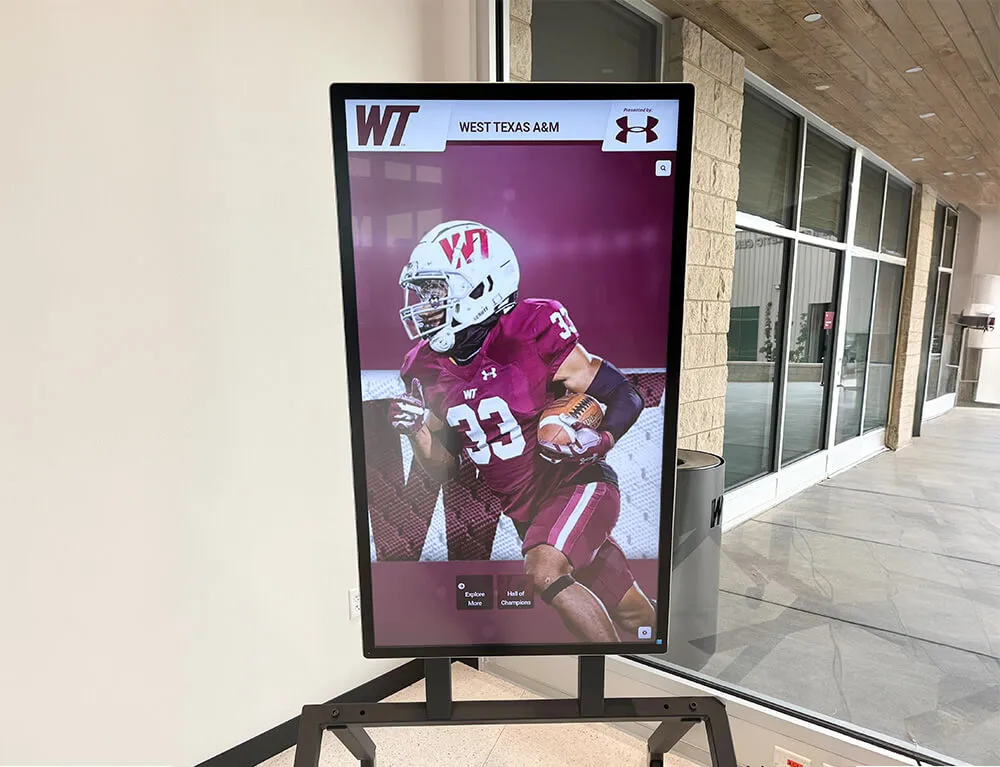
Professional kiosks integrate institutional branding while providing dedicated recognition infrastructure elevating CTE programs to prominence equal to other institutional priorities
Future Trends in CTE Recognition Technology
Understanding emerging developments helps CTE coordinators plan investments remaining relevant long-term as technology and career education evolve.
Enhanced Career Pathway Integration
Next-Generation Capabilities
Evolving recognition platforms incorporate enhanced career development features:
Emerging Technologies
- Artificial intelligence recommending career pathways based on student interests and strengths
- Augmented reality experiences showing career environments and workplace simulations
- Virtual reality job shadowing enabling career exploration without physical travel
- Direct integration with labor market information systems providing real-time salary and outlook data
- Blockchain-based credential verification creating portable digital records
- Mobile app integration extending career exploration beyond physical displays
- Advanced analytics revealing pathway selection patterns informing program development
These innovations will continue expanding what’s possible with recognition technology while creating new opportunities for career guidance and student support.
Comprehensive Career Ecosystem Integration
Connected Student Support Systems
Future CTE recognition increasingly integrates with other educational and career systems:
System Integration Possibilities
- Direct connections to certification testing platforms automatically updating achievements
- Integration with work-based learning management systems documenting experiential learning
- Links to career portfolio platforms where students compile comprehensive work samples
- Connections to post-secondary admissions systems sharing credential and achievement data
- Integration with employer recruitment platforms showcasing students to potential employers
- Links to individual learning plans coordinating career goals with recognition
- Connection to alumni tracking systems maintaining long-term career outcome data
These integrated ecosystems reduce administrative burden while creating comprehensive career development support serving students throughout their educational journey and beyond.
Conclusion: Elevating CTE Through Strategic Recognition
Digital touchscreen displays represent far more than technology additions to CTE programs—they’re comprehensive platforms that transform how schools recognize career preparation achievements, communicate program value, support student pathway decisions, build industry partnerships, and establish career and technical education as an equal and valued pathway to student success alongside traditional academics and athletics.
When CTE coordinators implement touchscreens thoughtfully—with clear objectives, comprehensive content, strategic placement, and sustained management—they create recognition systems that celebrate every certification, competition, and career milestone, tell compelling stories about student career journeys, educate viewers about pathway options and industry opportunities, demonstrate program effectiveness to all stakeholders, and build lasting pride in career preparation that strengthens enrollment, completion, and outcomes.
The most successful CTE programs view recognition not as isolated projects but as integral components of comprehensive career pathway development strategies that prepare students for workforce success while building sustainable programs valued by students, families, administrators, industry partners, and communities.
Transform Your CTE Program Recognition
Discover how digital touchscreen solutions can help you celebrate career achievements, strengthen pathway enrollment, and build industry support for comprehensive career and technical education excellence.
Explore CTE Recognition SolutionsSolutions like Rocket Alumni Solutions provide purpose-built platforms designed specifically for educational recognition across academic, athletic, and career pathway achievements. Whether your CTE program spans multiple career sectors or focuses on specific industries, whether you’re starting with basic certification documentation or expanding comprehensive systems celebrating all achievement dimensions, modern digital touchscreen technology makes professional, engaging recognition accessible and achievable for programs of all sizes.
The strategies explored in this guide provide comprehensive frameworks for implementing touchscreens that honor career preparation excellence while remaining sustainable, engaging, and aligned with program goals. From eliminating physical space constraints to enabling multimedia storytelling to creating career exploration tools, these capabilities overcome traditional limitations while creating recognition experiences that elevate CTE to the prominence career and technical education deserves within comprehensive educational systems preparing all students for success.
Start wherever your current situation demands—whether replacing outdated bulletin boards or creating entirely new recognition infrastructure—then systematically expand to create celebration your CTE students and programs deserve. Every student who sees their career achievements celebrated prominently develops stronger connections to chosen pathways while gaining motivation to complete rigorous preparation leading to career-ready credentials, meaningful work experiences, and successful workforce transitions.
Your CTE programs deliver measurable workforce outcomes and life-changing career preparation that deserve recognition equal to any other educational pathway. With thoughtful planning, appropriate technology investments, and systematic implementation, you can create digital touchscreen systems that become valued traditions celebrating career excellence while supporting the pathway selection, industry partnerships, and program development essential to sustainable career and technical education serving all students and communities.
Ready to begin? Explore how Rocket Alumni Solutions can help you create comprehensive digital recognition systems that honor career achievements, inspire pathway selection, and demonstrate program effectiveness while supporting the visibility, enrollment, and sustainability goals essential to CTE program excellence preparing students for successful careers and meaningful lives.