



Class reunion games are the engine that transforms a catered dinner into a genuine celebration. Without structured, engaging activities, reunions can stall into awkward small talk between people who remember each other’s names but struggle to find conversational ground after years or decades apart. The right games solve that problem instantly—they create shared reference points, spark laughter, revive memories that attendees didn’t know they still carried, and remind everyone in the room why these particular people mattered to each other in the first place. When those games run on big screens and interactive touchscreens, they do something traditional party games cannot: they turn institutional memory into a living, explorable experience that draws the entire room together around a common display.
This guide covers 20 class reunion game ideas specifically designed to take advantage of large-format displays and touchscreen technology—from classic trivia formats adapted for projection screens to interactive alumni memory archives that guests can explore at their own pace. Whether your reunion is a gymnasium affair for 300 graduates or an intimate gathering of two dozen classmates in a hotel ballroom, these formats scale to fit the context and use the school’s own history, photos, and records as the game content itself.
The best class reunion games don’t require outside content. They use what already exists—yearbook photos, sports records, teacher names, mascot history, class superlatives, championship seasons—and transform that material into structured activities that remind attendees of what they shared. When this content appears on a screen large enough for the whole room to see, it stops being nostalgia and becomes a collective experience.

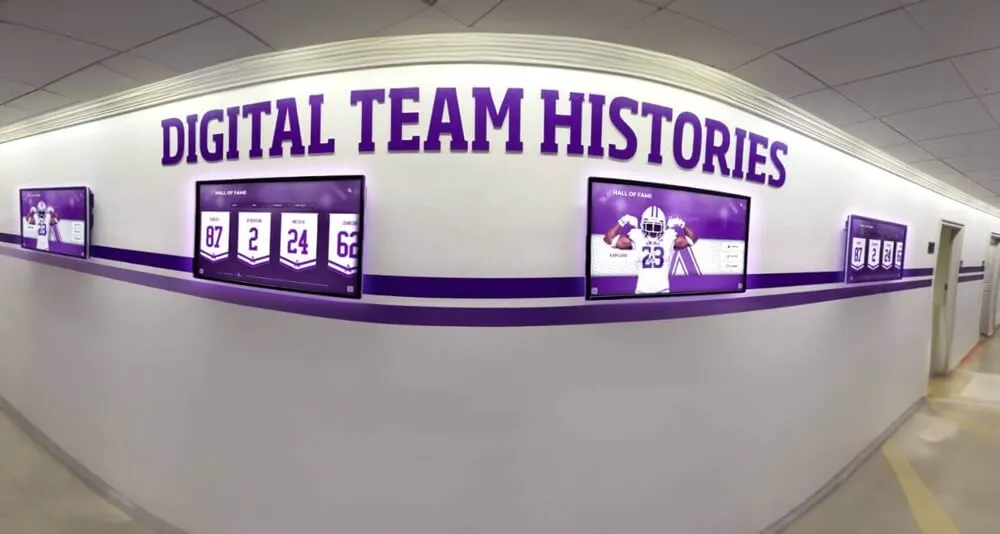
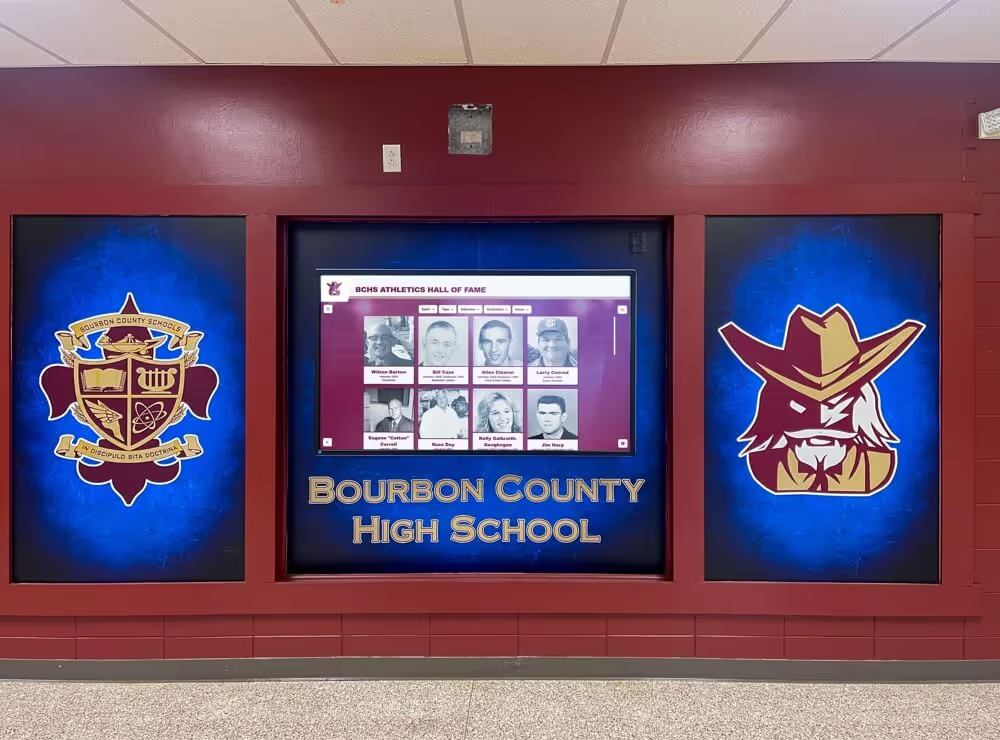
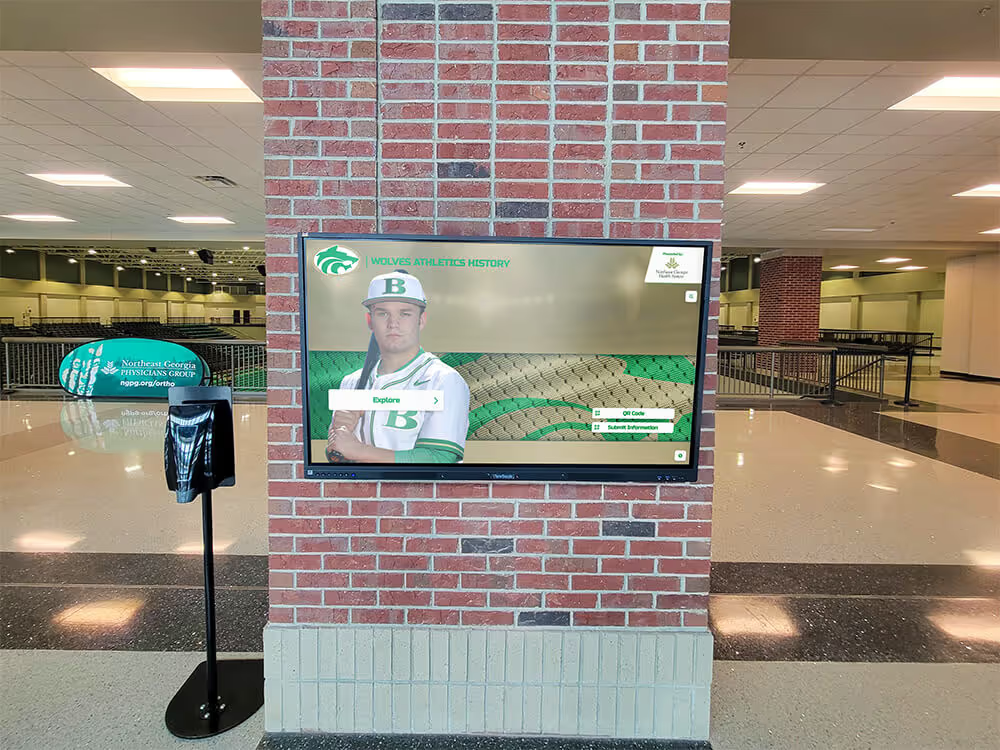
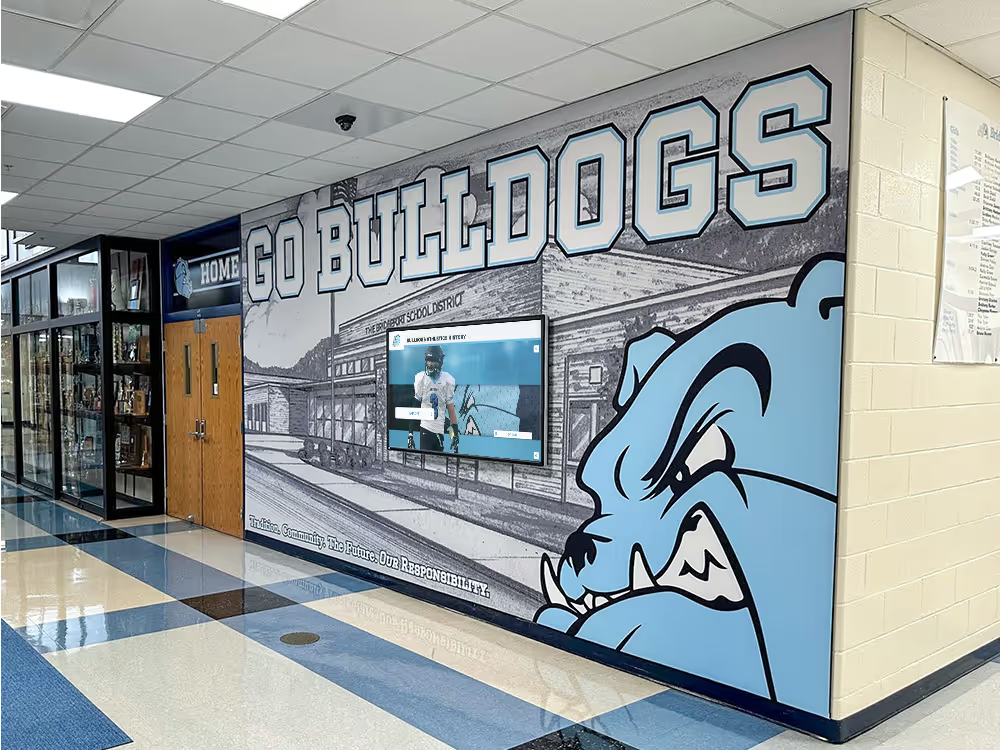
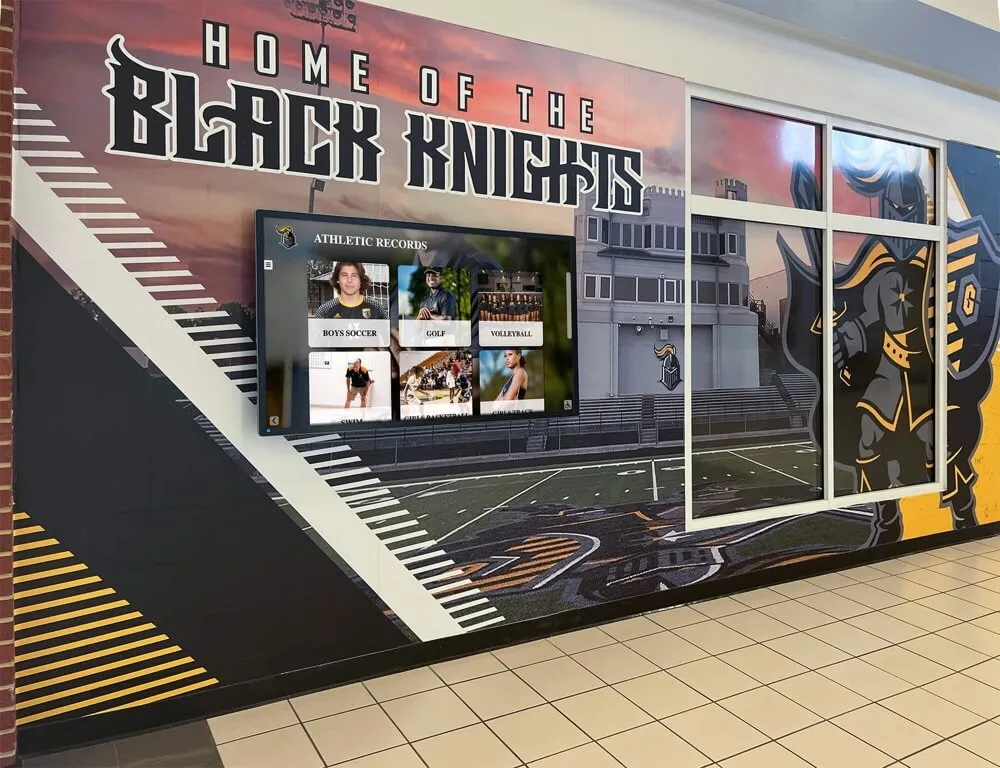
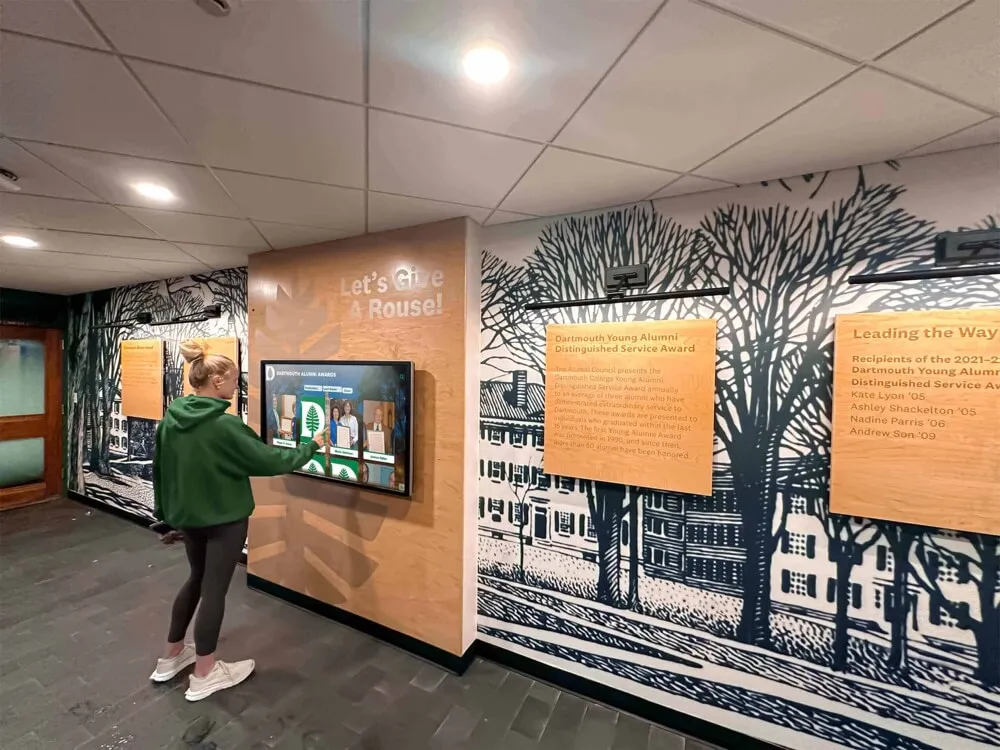
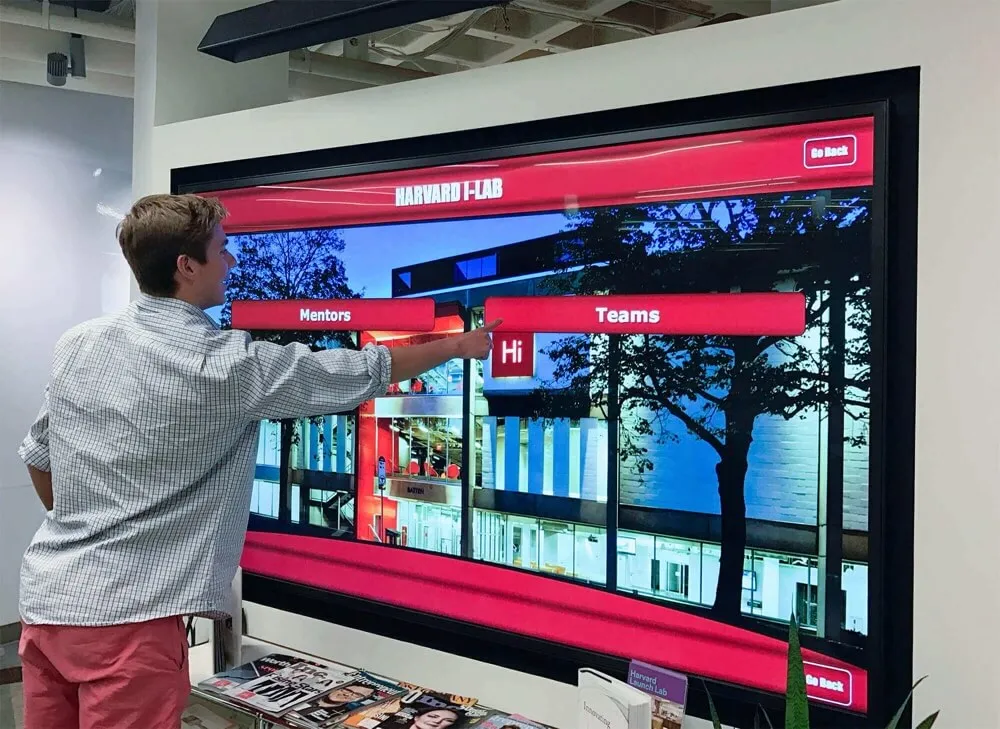
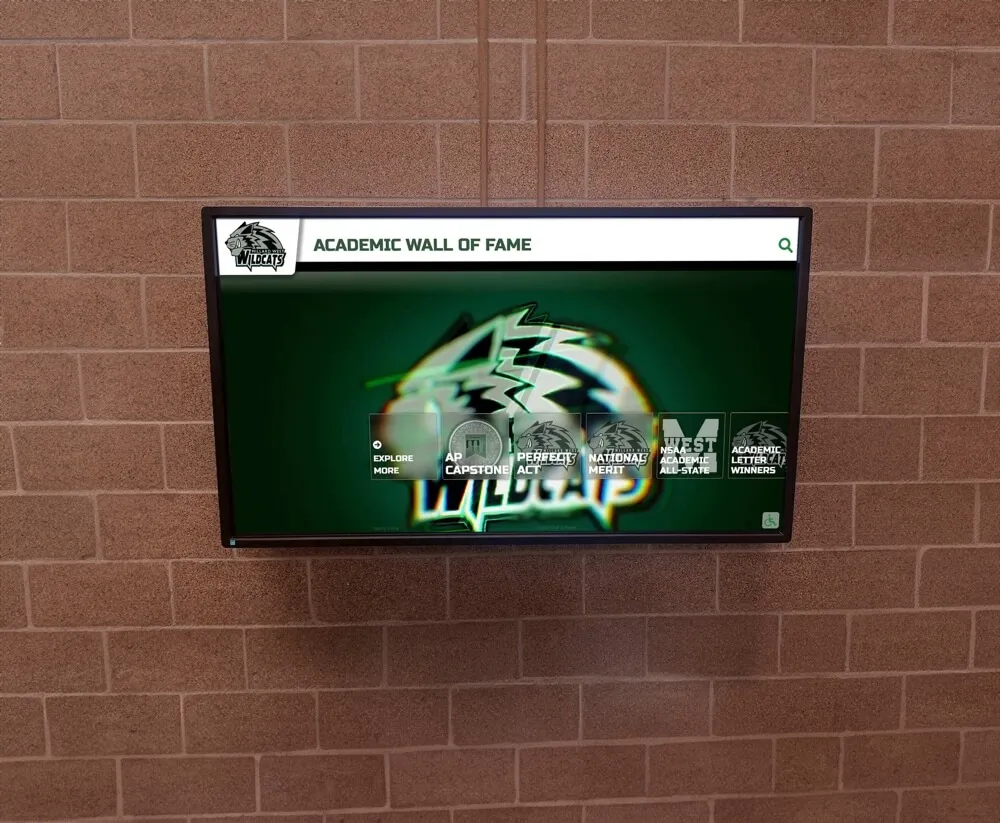
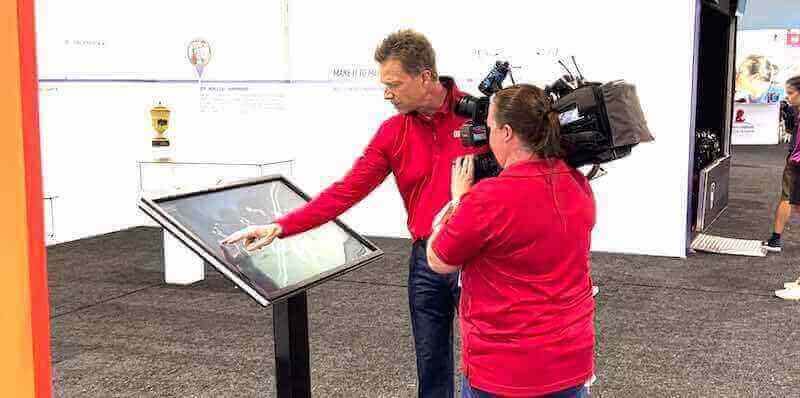
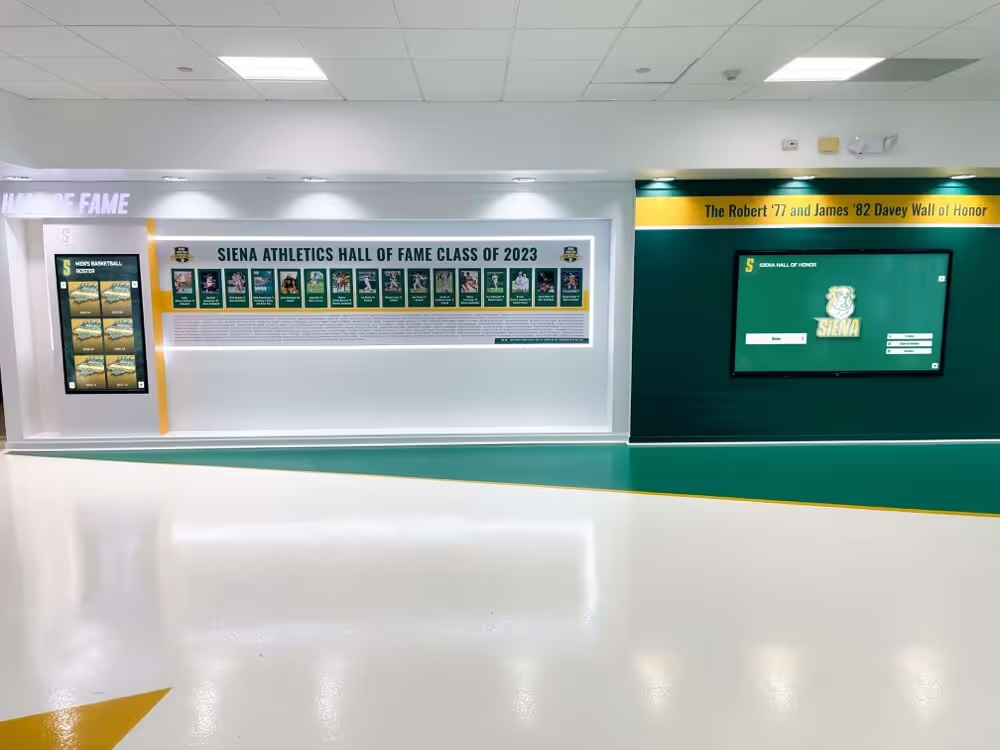
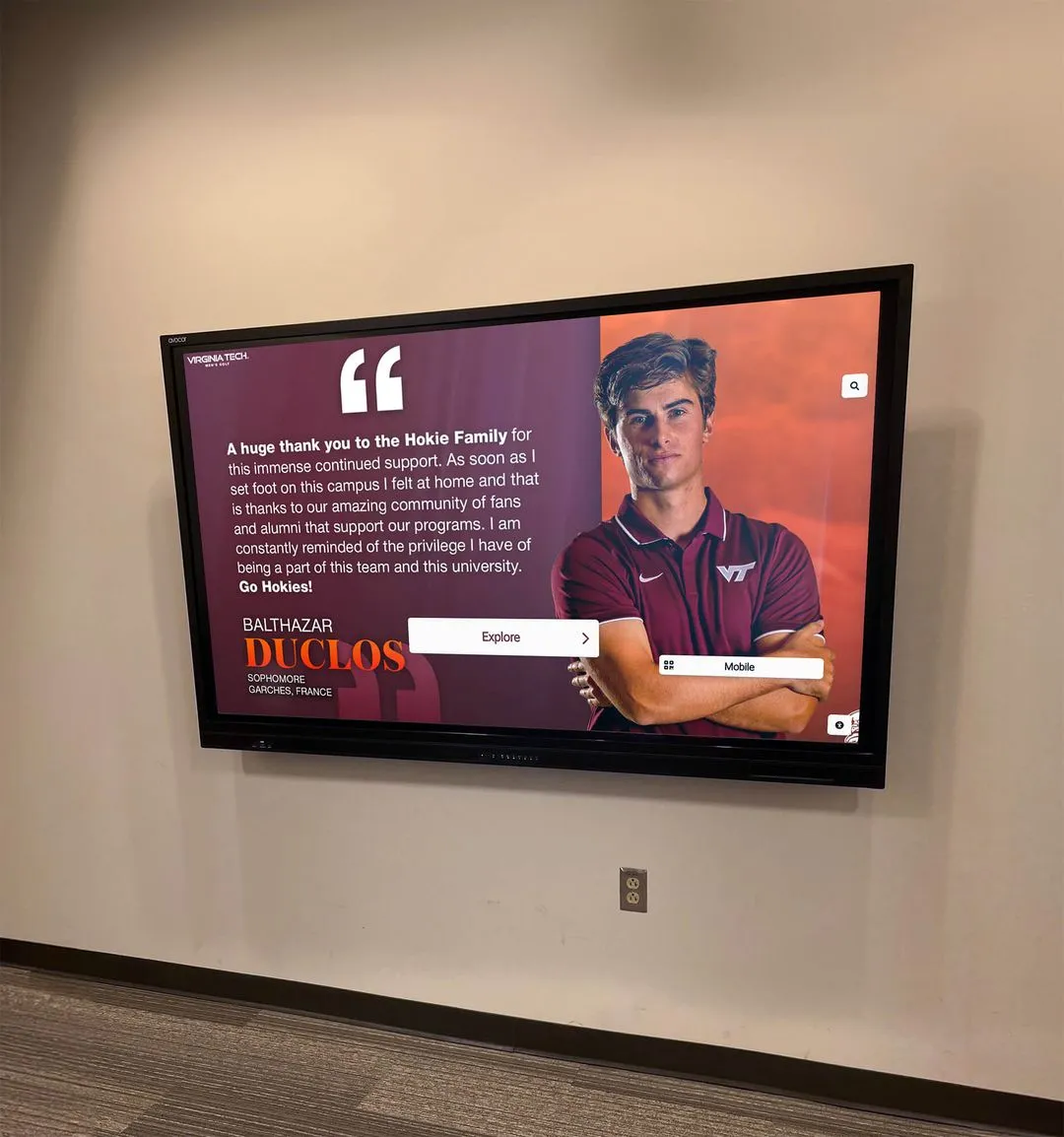
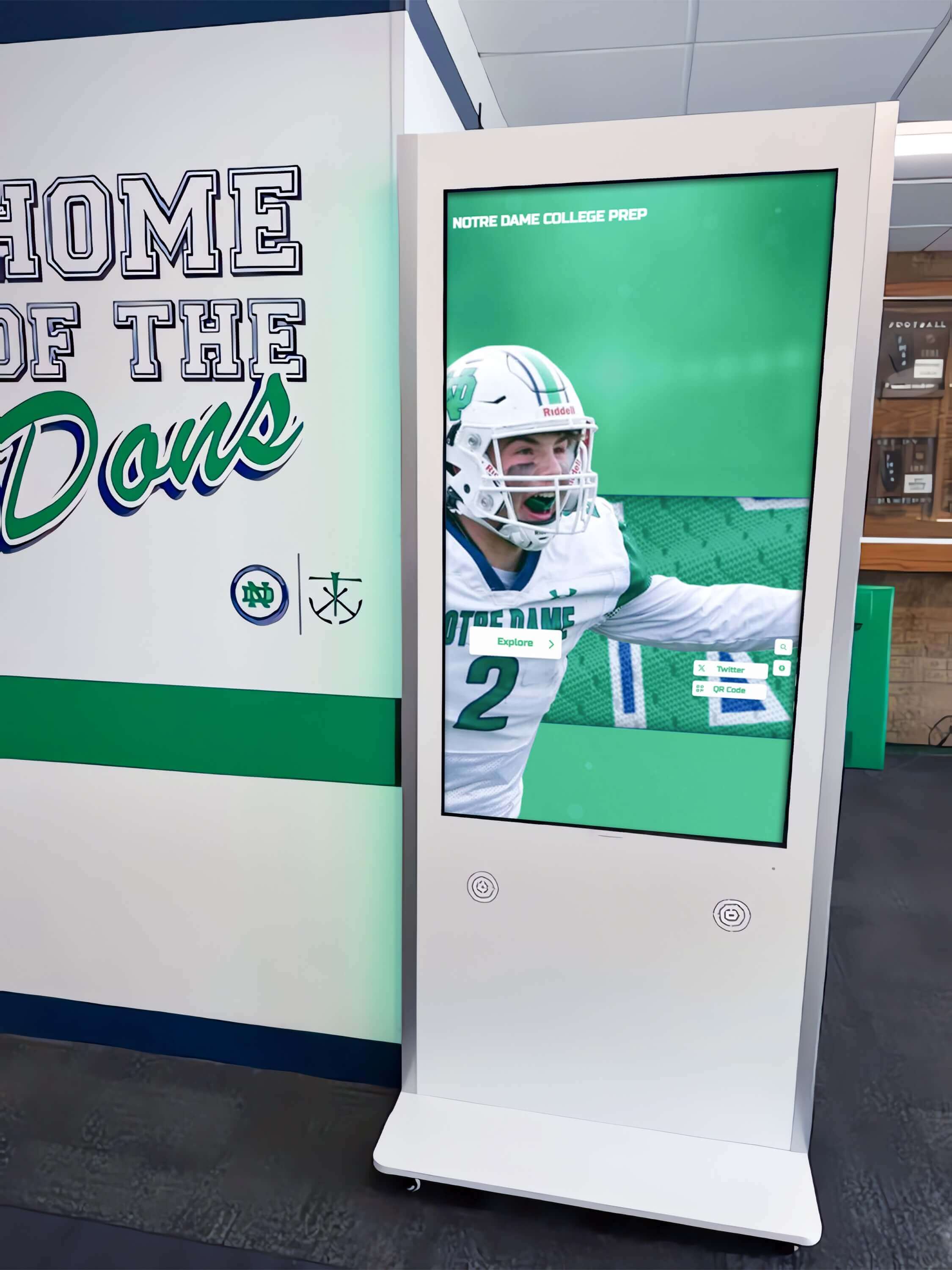
Interactive kiosks and large display screens transform school history into explorable, engaging content that works perfectly as a foundation for reunion game activities
Why Screens and Touchscreens Elevate Class Reunion Games
Before diving into specific ideas, it helps to understand what display technology actually adds to reunion activities that traditional printed-trivia or table-game formats cannot.
Shared Attention and Group Engagement
A printed trivia sheet creates individual competition. A question displayed on a screen creates a shared moment—every person in the room reads the same prompt at the same time, reacts together, argues together, and arrives at an answer together. That shared attention is the social mechanism that makes reunion games actually work. It’s why game show formats have remained popular for decades: the screen focuses collective attention in a way that distributed formats cannot.
Visual Memory Triggers
The most effective class reunion games are the ones that jog memories attendees didn’t know they had. A yearbook photo displayed at 80 inches across a screen does something that a thumbnail in someone’s hands cannot—it triggers recognition responses that feel almost physical. Alumni who couldn’t have described a classmate’s face from memory suddenly recognize them instantly when the photo fills a projection screen. That recognition creates the emotional response that makes reunion games memorable rather than merely entertaining.
Real-Time Scorekeeping and Participation
Modern display systems make it easy to update scores, reveal answers progressively, and build competitive momentum across multiple rounds. Rather than manually tallying paper scorecards, digital scoreboards on a large screen give every round a sense of finality and create natural pauses for socializing between activities.
Access to School Archives
Schools and alumni associations with digital recognition systems have years of institutional history—photos, records, athletic achievements, academic honors—stored in formats that can be displayed on screens. Those archives are exactly the raw material that makes class reunion games feel authentic rather than generic. A reunion game built around your school’s actual history is inherently more engaging than a generic “school days” trivia pack purchased from an event supplier.
For guidance on organizing that institutional history into accessible digital formats before your event, the alumni reunion planning with digital recognition guide provides a thorough framework covering content preparation, display setup, and alumni engagement mechanics.
Category 1: Trivia and Memory Games (Ideas 1–5)
These five class reunion game formats use projected or displayed trivia questions to test attendees’ memory of school events, people, and traditions.
Idea 1: Class Year Trivia Tournament
The classic reunion game gets dramatically better on a large screen. Structure the trivia tournament in four rounds covering different categories: campus life (teachers, locations, events), pop culture from the graduation year (music, movies, TV), school sports and academic records from the class’s era, and “who said it” quotes pulled from yearbook inscriptions or memorable school moments.
Organize attendees into tables of 6–8 and give each table a numbered paddle or buzzer. Display each question on a screen with a 30-second countdown timer. Award points per round and display a running leaderboard between rounds. The competitive structure keeps energy high throughout the evening, and the leaderboard display gives every team reason to stay engaged rather than drift into side conversations.
Screen requirement: Any projector or 65"+ display works. Pre-build questions in a simple slideshow with reveal animations for answers.
Idea 2: Faculty Match Game
Display a list of 10–15 teacher or faculty names from the class’s era alongside a scrambled list of the subjects they taught, the memorable phrases they were known for, or the clubs they advised. Attendees work individually or in pairs to match names to clues, then submit answers before the full reveal. The game works especially well when at least a few names trigger immediate recognition and a few create genuine debate about who taught what.
Screen requirement: A simple two-column display showing names on the left and shuffled clues on the right works well. Reveal the connections one at a time to build suspense.
Idea 3: “What Year Was This?” Photo Challenge
Pull yearbook photos from multiple graduation years—including the class being honored and years on either side—and display them one at a time without dates. Attendees guess which year the photo was taken based on hairstyles, fashions, backgrounds, and recognizable faces. This game works especially well at milestone reunions (25th, 50th) where generational differences are visually obvious and create natural humor.
Screen requirement: High-resolution scans of yearbook photos displayed full-screen. If original yearbooks have been digitized, digitized vintage school yearbook archives can supply years of photo content in a format ready for display.
Idea 4: Senior Superlative Recall Challenge
Every class votes on senior superlatives—most likely to succeed, class clown, best hair, most athletic, and dozens of other categories depending on the school’s traditions. For reunion trivia, display a superlative category and ask attendees to recall who won it from their graduation year. Follow each round with the actual yearbook photo of the winner for the visual payoff. This format generates more genuine laughter and recognition than almost any other reunion game because the superlatives connect to real people in the room.
Idea 5: School Record Breakers
Sports records, academic achievement records, and school history milestones make excellent trivia material. Display a record—“The school’s single-season scoring record in basketball was set by _____ with _____ points”—and ask attendees to fill in the blanks. This game connects naturally with alumni wall display ideas that many schools have developed to honor athletic and academic achievement, and the content for the game can often be drawn directly from those recognition systems.
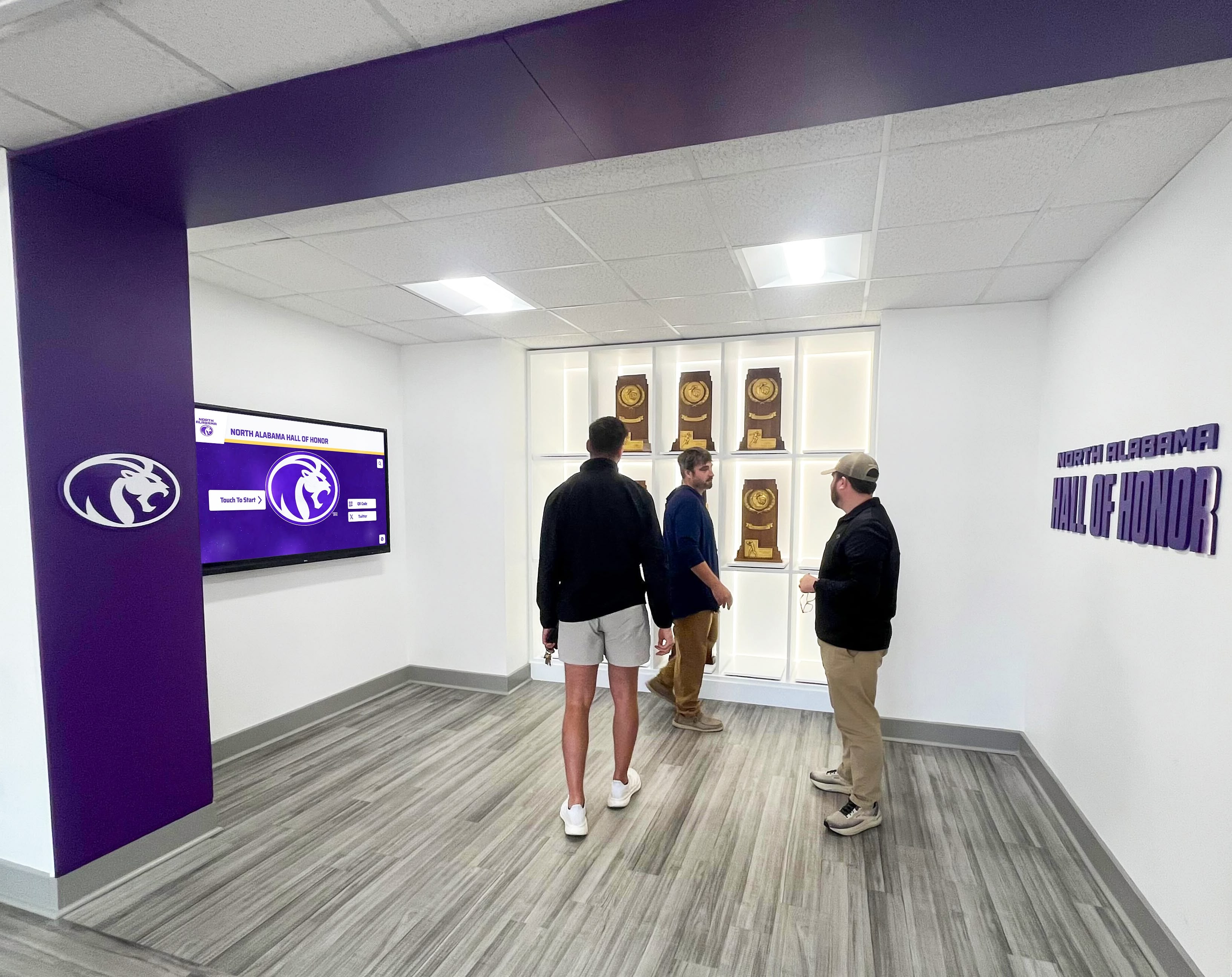
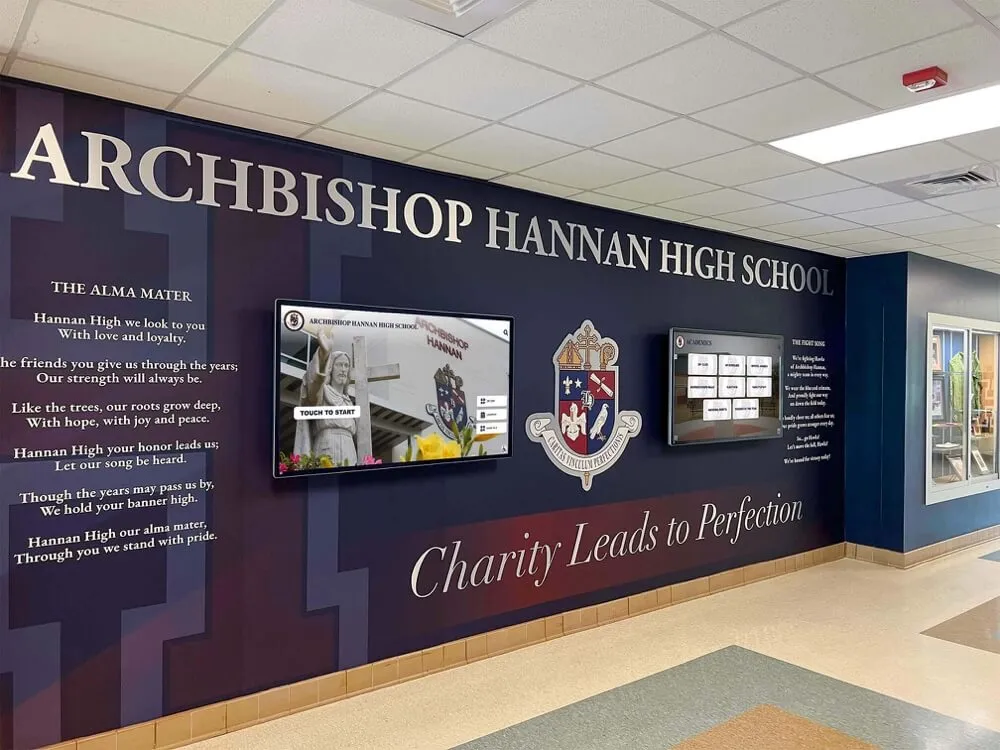
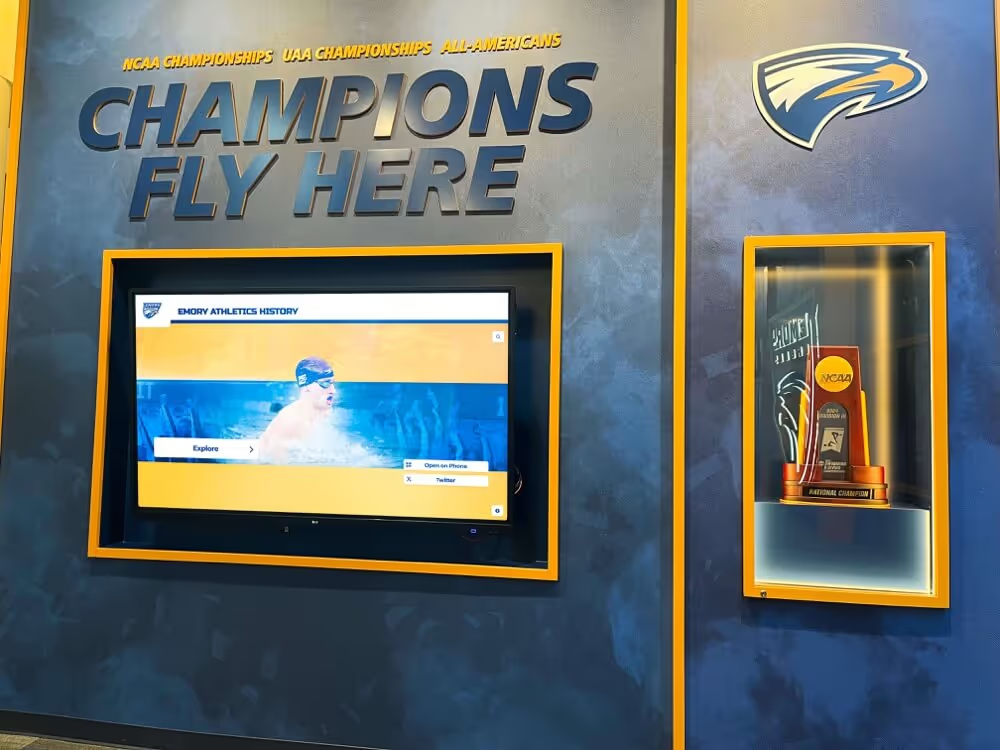
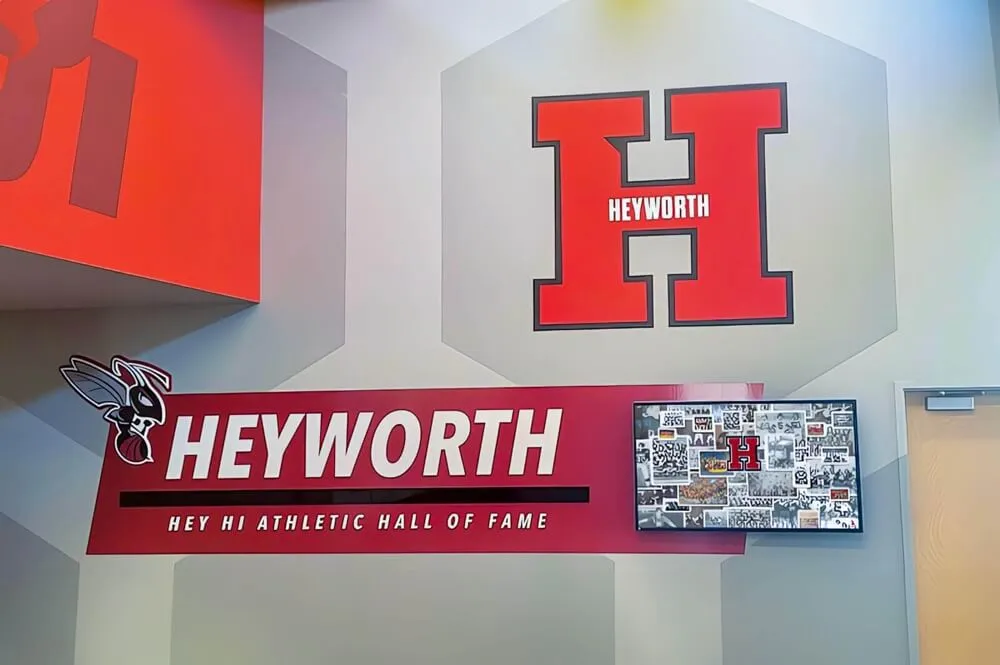
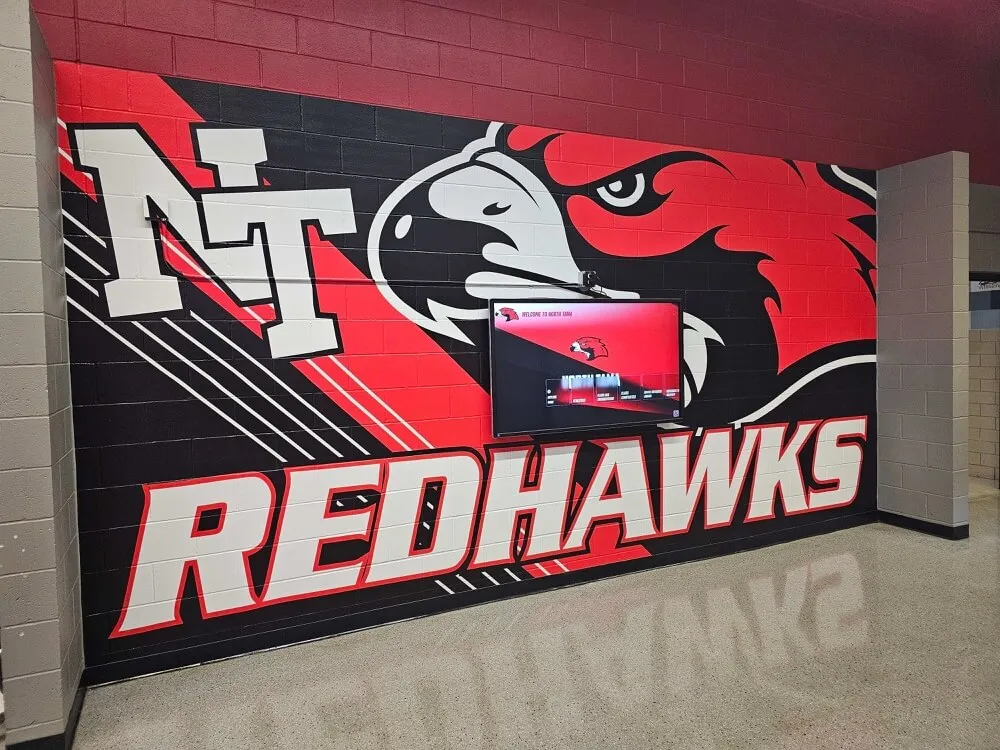
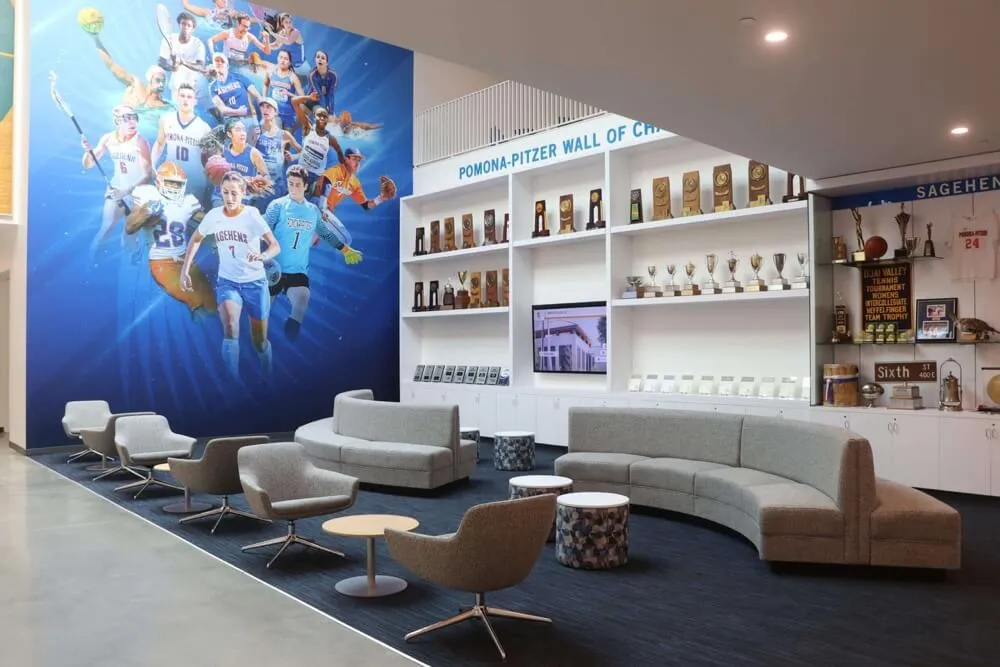
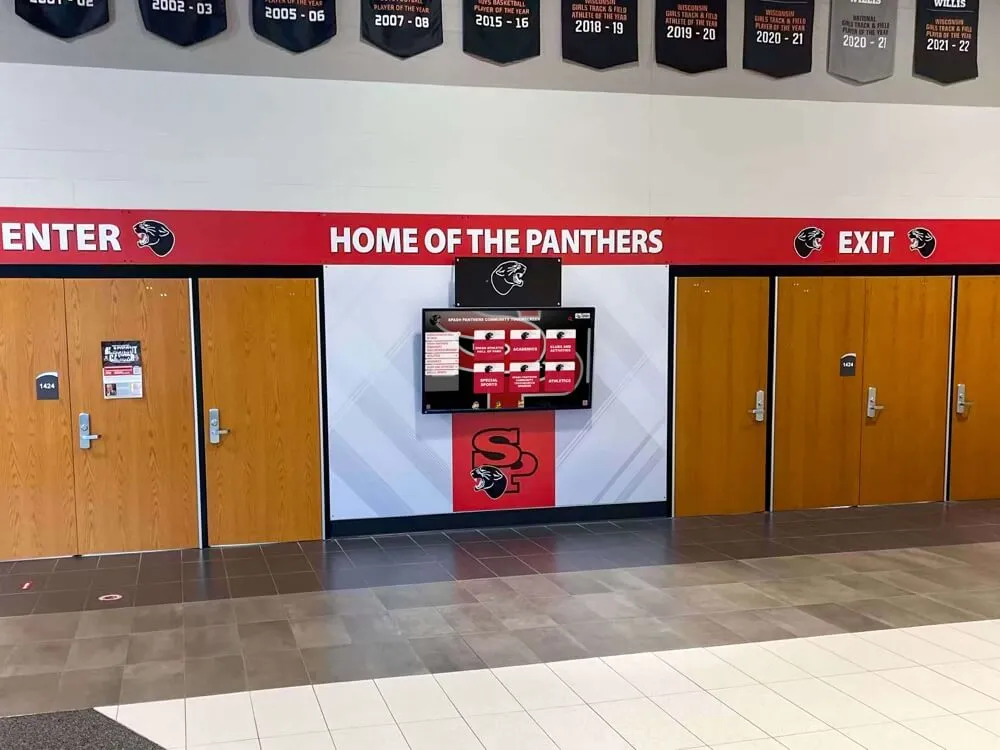
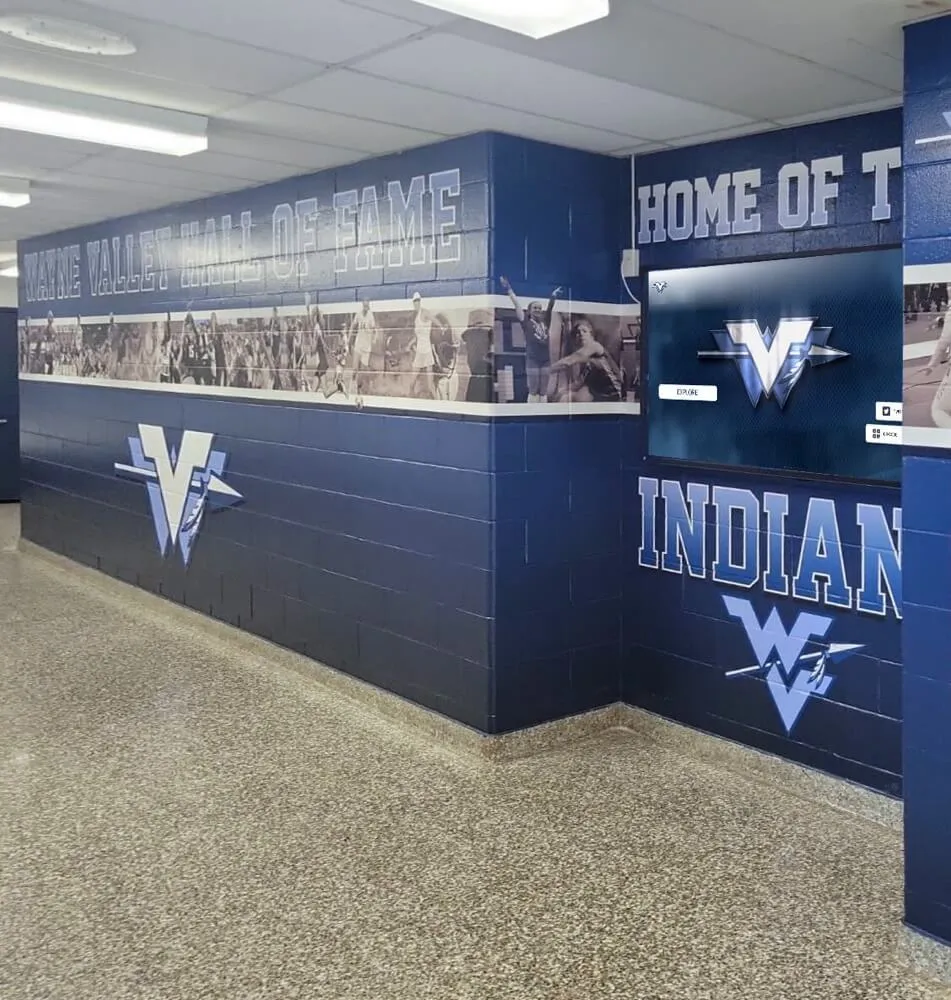
Physical trophy displays and digital archives together provide the institutional history content that makes reunion trivia games feel authentic and personally resonant
Category 2: Photo and Video Memory Games (Ideas 6–10)
These class reunion game formats make visual media the center of the activity, using photos and video to trigger memories and create group recognition moments.
Idea 6: “Guess Who?” Baby or Childhood Photo Wall
Collect childhood photos from attendees in advance and display them in a grid on a large screen without names attached. Each photo gets a number. Attendees write down their guesses for who matches each photo, then the reveals happen one at a time with the full photo alongside a current image of the person. The game rewards preparation—the more photos collected ahead of time, the better the experience—but even a partial collection of 15–20 photos creates a strong 30-minute activity.
Idea 7: Then and Now Photo Pairs
Pair yearbook photos with current photos of attendees (collected in advance from RSVPs or social media with permission) and display them side-by-side on screen. Ask the room to guess who is who before revealing the name. This format is particularly effective because the side-by-side comparison makes the passage of time concrete and human in a way that tends to generate warmth rather than awkwardness—everyone is experiencing the same thing simultaneously.
Idea 8: School History Slideshow Quiz
Create a slideshow of campus photos spanning multiple decades—the school building at various points, sports team photos from championship seasons, construction of new facilities, notable events—and challenge attendees to place each image in the correct decade. The game builds institutional pride while surfacing memories that span class years, making it effective at reunions that bring together multiple graduation cohorts.
This kind of visual institutional history game works especially well when the school has invested in digital storytelling for athletic and academic programs, since those systems maintain photo archives in a format ready for display use.
Idea 9: Video Message Memory Reel
Ask alumni who cannot attend the reunion in person to submit short video messages (30–60 seconds) recalling a specific memory from their school years. Compile these into a memory reel and play it during the event, pausing occasionally to ask the room if they remember the event being described or recognize the person on screen. The inclusion of absent classmates expands the reunion’s reach while giving in-person attendees a game layer through the recognition challenge.
Idea 10: Yearbook Caption Contest
Display a yearbook photo—ideally a group photo from an event, a candid from the hallway, or an iconic institutional moment—and ask tables to submit their best caption for it. Read captions aloud and award prizes for the funniest, most nostalgic, or most accurate. This low-pressure game works well as a warmup activity during cocktail hour because it doesn’t require prior knowledge and generates immediate humor from the visual content.
Category 3: Interactive Touchscreen Experiences (Ideas 11–15)
These class reunion game formats take full advantage of touchscreen technology, allowing attendees to interact directly with the display rather than simply watching it.
Idea 11: Alumni Timeline Explorer
Set up an interactive touchscreen kiosk or large-format touch display loaded with a scrollable timeline of school history. Alumni can navigate by year, search for specific names, and explore photos and achievements from their era. Add a game layer by giving each attendee a card with three “find it” challenges—a specific photo to locate, a specific record to find, a specific event to identify—and award prizes for completing the list. The competitive framing turns an archive exploration into an active, social activity rather than passive browsing.
For events using dedicated touchscreen hardware, touchscreen kiosk setup and equipment considerations for events covers practical logistics including power requirements, display placement, and managing visitor flow around interactive stations.
Idea 12: Digital Hall of Fame Photo Hunt
If the school has a digital hall of fame or recognition display available for the event, structure a guided discovery activity around it. Give attendees a printed or displayed list of achievement categories and challenge them to find an honoree who matches each one—a state champion in a specific sport, a graduate from a specific decade who went on to a particular profession, a teacher who received a specific award. The activity turns the recognition display into an interactive game while familiarizing alumni with the depth of the school’s honor roll.
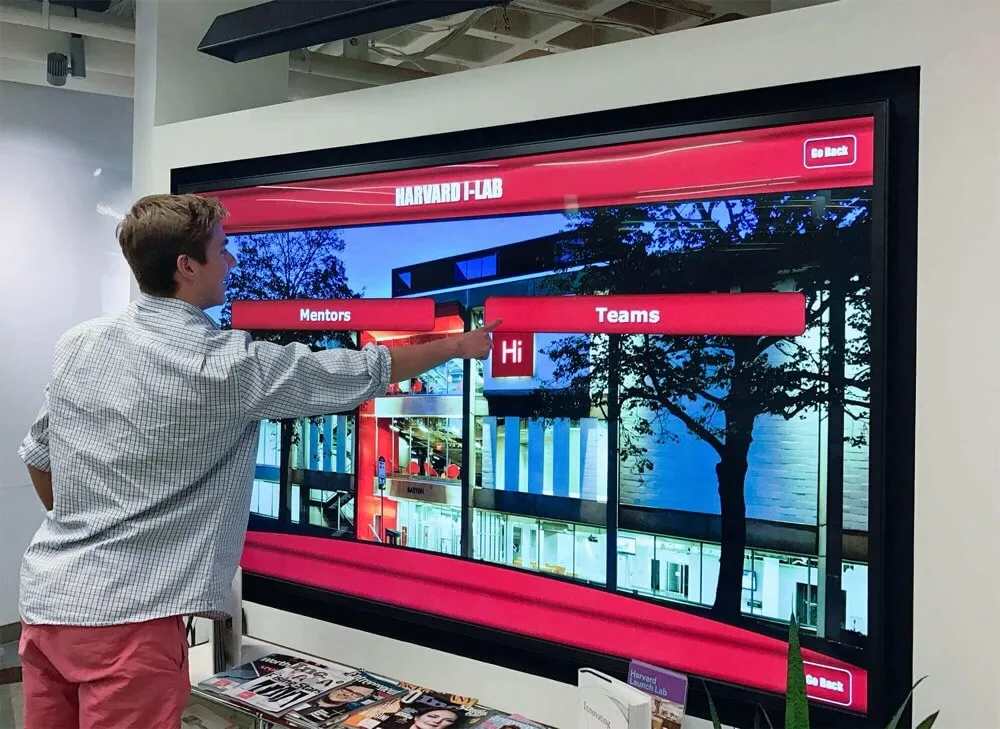
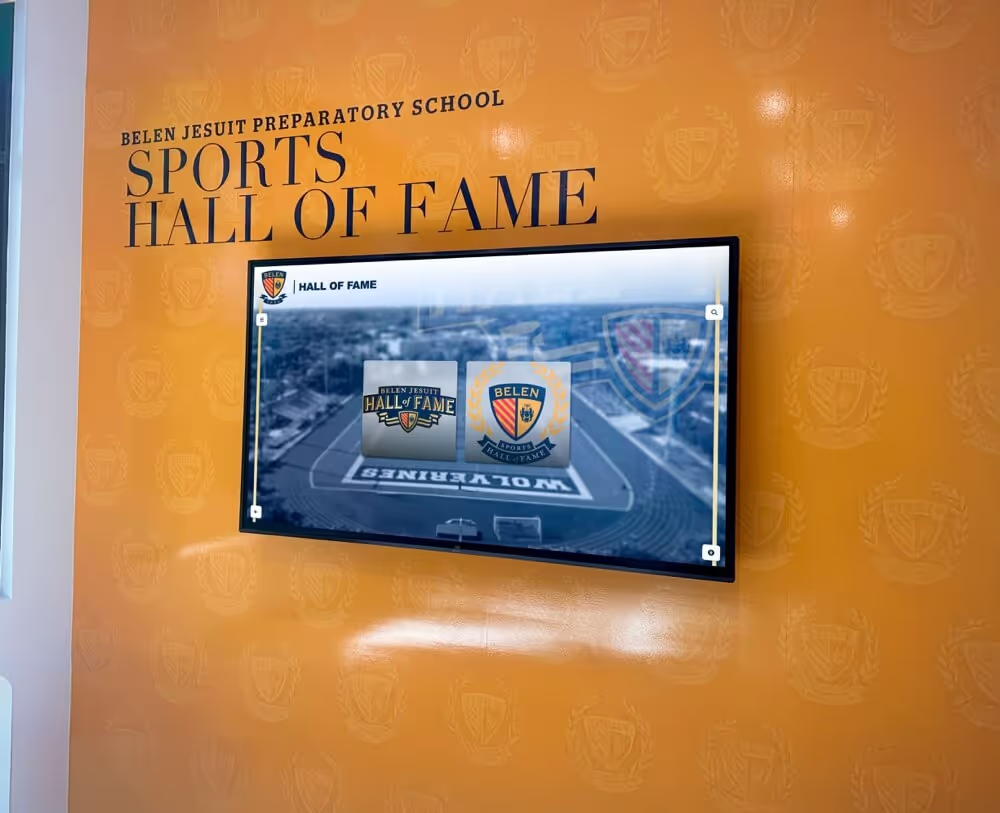
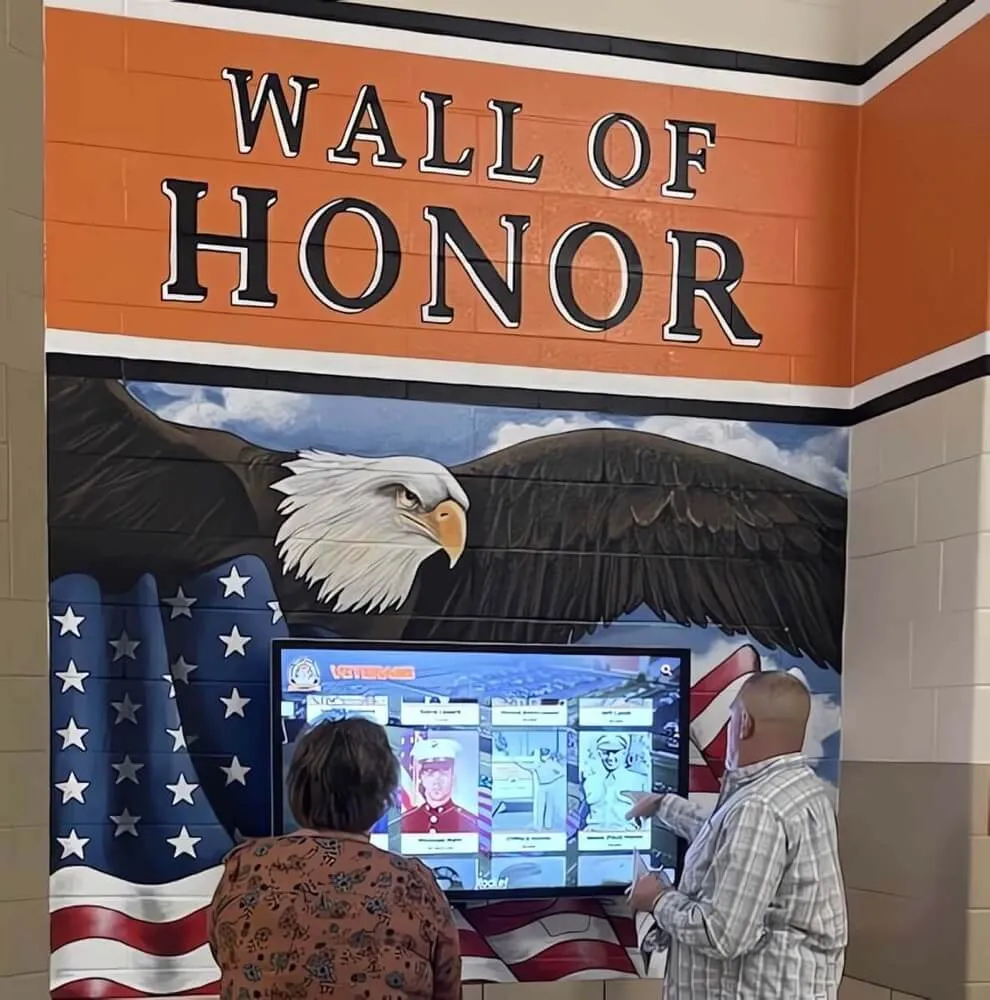
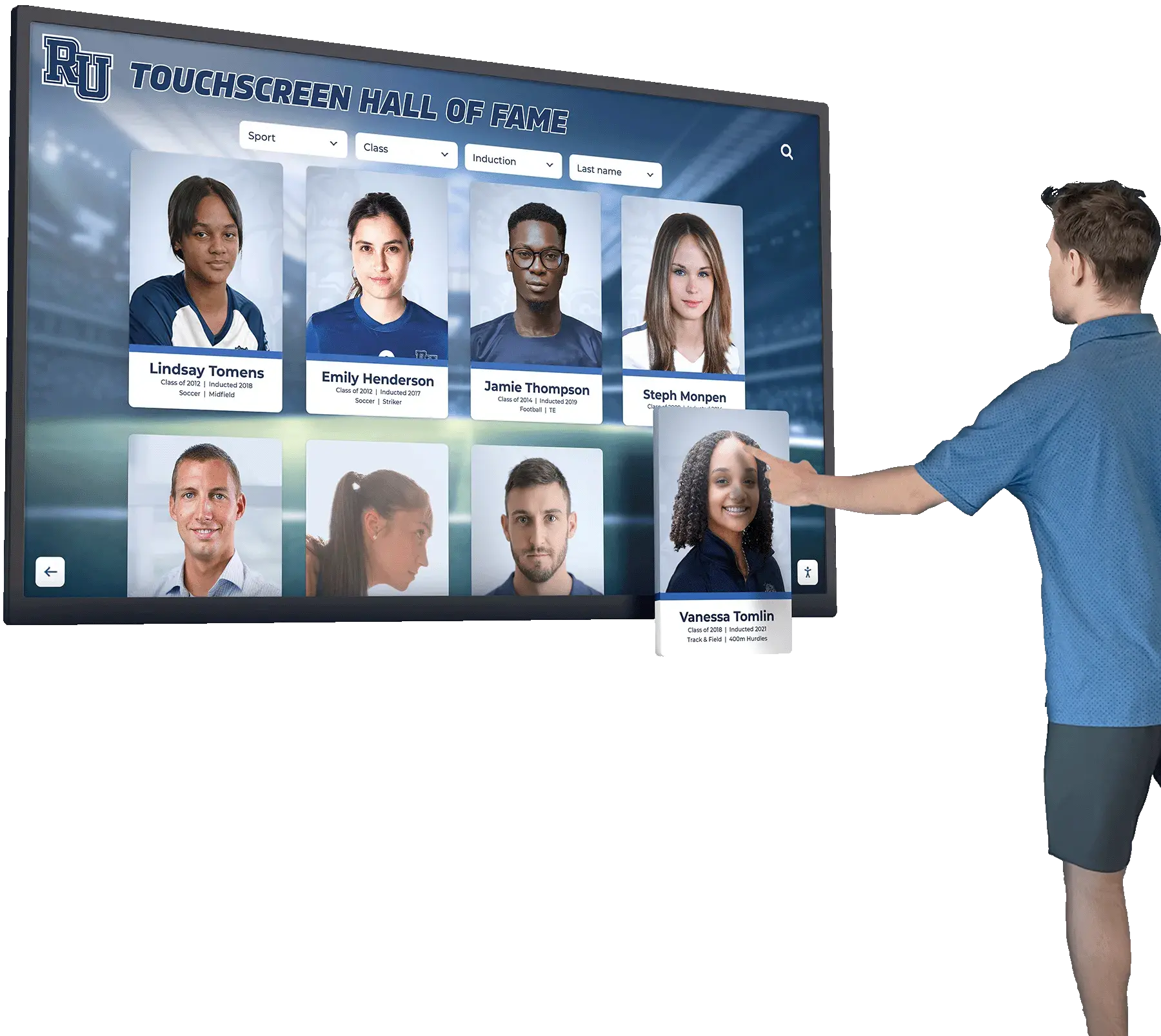
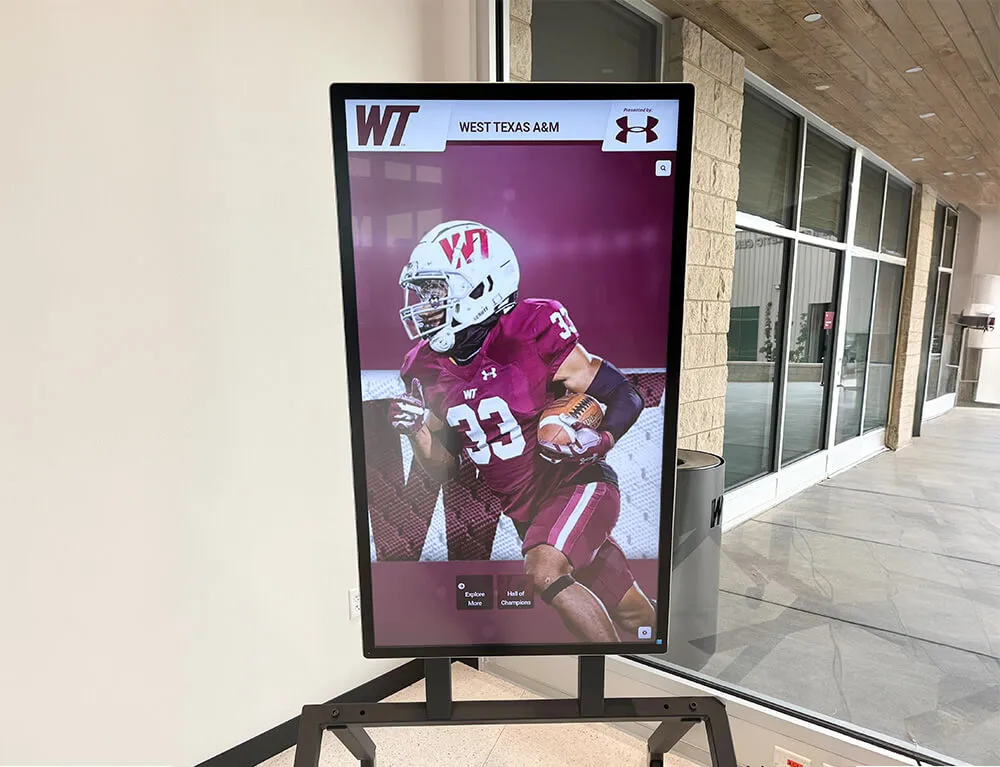
Interactive touchscreen displays allow reunion attendees to explore alumni history at their own pace while providing the raw content for structured game activities
Idea 13: Memory Map Touch Game
Display an overhead map of the school campus on a touchscreen or projected display. Ask attendees to tap or mark locations associated with specific memories—“where were you when you heard about [a specific school event]?”, “which classroom did you spend the most time in?”, “where was the best place to eat lunch?” Aggregate responses visually in real time if the technology supports it, or reveal the most common answers at the end. This spatial memory game surfaces shared experiences that attendees may not realize they have in common.
Idea 14: Class Portrait Recognition Challenge
Display yearbook portraits on a touchscreen in a shuffled grid with names hidden. Attendees tap the photo they think matches a displayed name, with the touchscreen revealing immediately whether the match is correct. Time each round for competitive pressure. This digital version of a matching game works especially well because the touchscreen interaction feels more engaging than paper-based versions and the immediate feedback maintains momentum.
Idea 15: “Where Are They Now?” Interactive Directory
Build a touchscreen browsable directory of attending alumni with brief current biography cards—occupation, location, family, and one memory from school. Attendees explore the directory at their own pace between organized activities, discovering what classmates have done since graduation. Add a game layer by asking attendees to find the person who has traveled farthest, who has the most children, or who has the most unusual career. This format generates natural conversation starters as people move from the screen to seek out the people they discovered.
Comprehensive approaches to building these interactive alumni directories connect directly with creative ways to reconnect graduates through organized alumni events, where the technology serves as infrastructure for human connection rather than replacing it.
Category 4: Group Participation Games (Ideas 16–20)
These class reunion game ideas involve the whole room simultaneously, using displays as the coordination mechanism for large-group activities.
Idea 16: Audience Response Trivia (Live Polling)
Use an audience response platform that allows attendees to submit answers from their phones while a question displays on the main screen. After the response window closes, display a bar chart showing how the room answered before revealing the correct answer. The aggregate response visualization creates a compelling social experience—seeing that 60% of the room got a question wrong about their own school history generates more discussion than any single correct answer.
Idea 17: Class Timeline Countdown
Display a random year from the school’s history—not necessarily the class’s graduation year—and ask attendees to identify three significant things that happened at the school or in the world that year. After 90 seconds, reveal the answer and award points. Running multiple rounds with different years creates a fast-moving game that rewards broad cultural knowledge alongside school-specific memory.
Idea 18: “Who Did It First?” School Firsts Challenge
Every school has a collection of “firsts”—first championship in a particular sport, first graduate to achieve a specific distinction, first year a particular program was offered. Display these firsts as questions and ask the room to identify the person, year, or circumstance behind each one. This game surfaces institutional history that even longtime faculty members may not know in full, creating a genuine learning experience alongside the competitive format.
The content for this game overlaps substantially with what schools maintain in athletic and academic digital signage and recognition kiosk displays—a reminder that recognition infrastructure built for daily campus use serves dual purpose at alumni events.
Idea 19: Memory Bingo
Create bingo cards populated with school-specific experiences rather than numbers—“had Mr. [Teacher]’s class,” “attended a homecoming game,” “was in the school play,” “ate lunch in the gym,” “borrowed something from the lost and found.” Call items randomly and ask attendees to mark their cards when they match. The game surfaces shared and divergent experiences in a format that generates conversation as attendees compare cards. Running it on a large screen lets the whole room see what’s been called while adding a visual countdown to each bingo completion.
Idea 20: Collaborative Memory Wall Build
Set up a large touchscreen display configured as a collaborative canvas where attendees can add short memory posts throughout the evening—tagged by category (teachers, sports, events, places, funny moments). As the evening progresses, the canvas fills with a crowd-sourced map of collective memory visible to everyone in the room. At the end of the night, export and display the completed memory wall as a takeaway image or print. This living document format turns the class reunion itself into a memory artifact worth preserving.
For schools interested in connecting live reunion activities to permanent digital recognition infrastructure, school memory book ideas for capturing class memories and milestones covers approaches to documentation that translate naturally from one-time event to ongoing institutional archive.
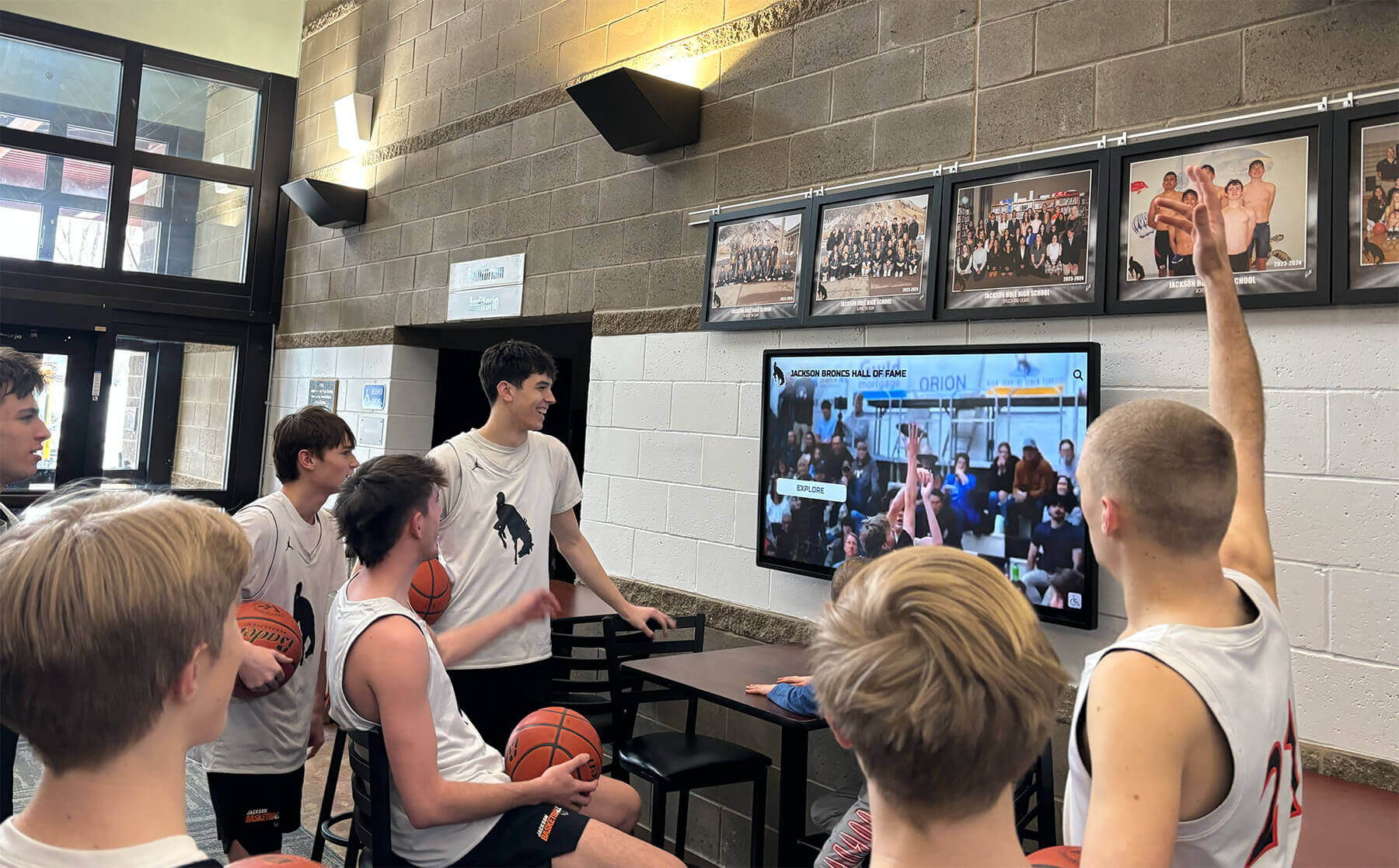
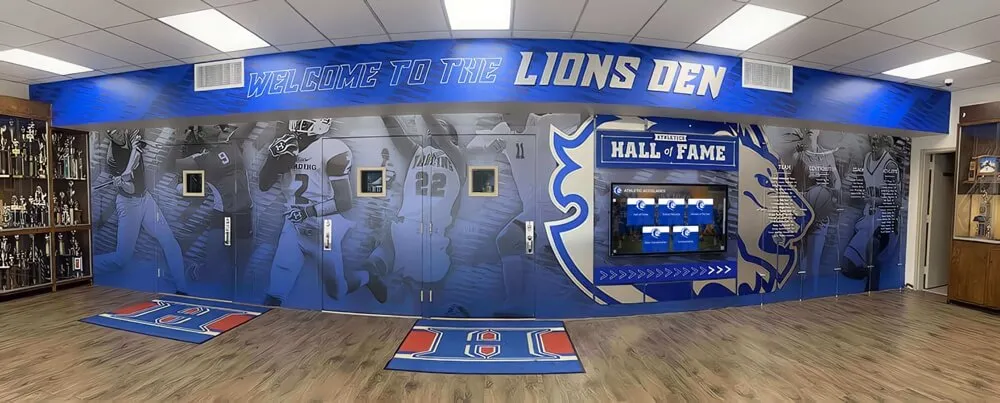
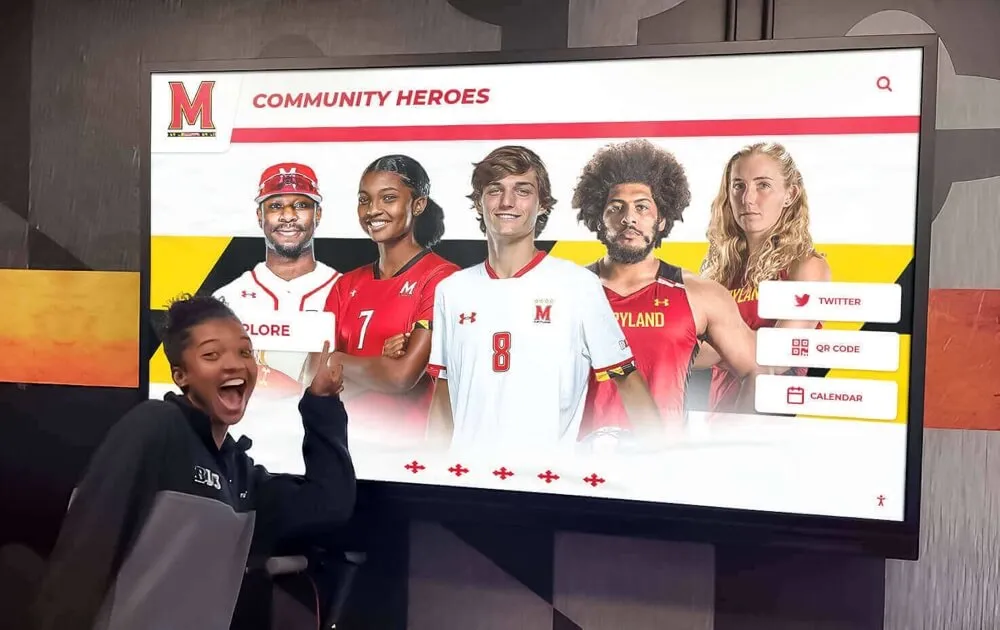
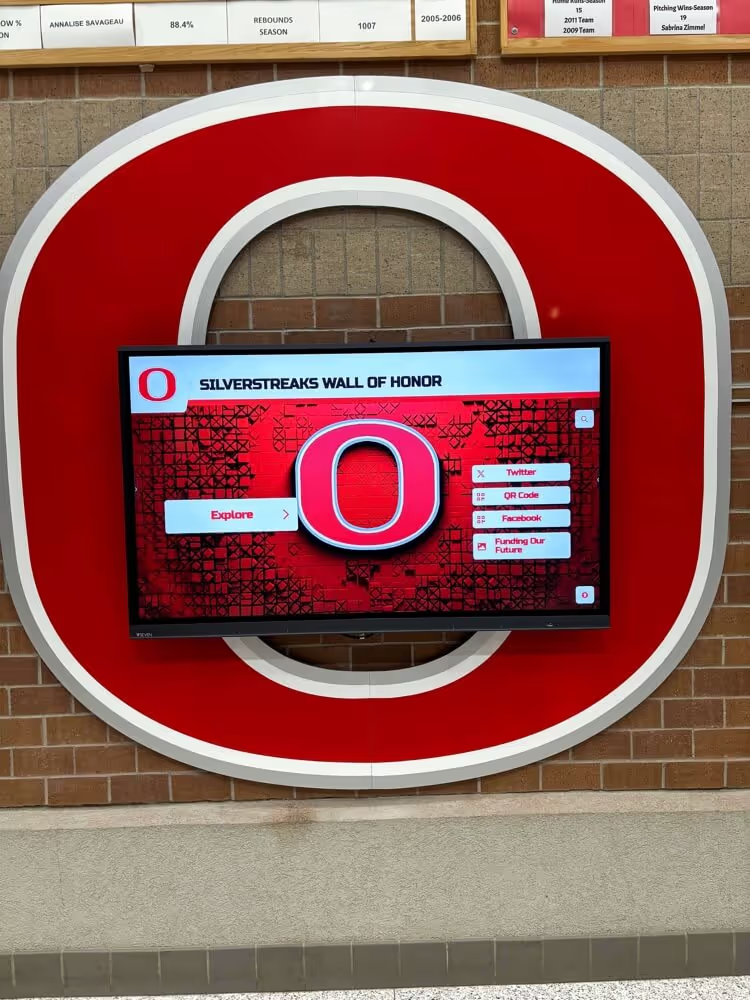
Large lobby and event screens create shared viewing moments that make group participation games feel like collective celebrations rather than individual competitions
Practical Tips for Running Reunion Games on Screens
Having strong game ideas is necessary but not sufficient. Execution details determine whether the games land or drag.
Content Preparation
The single most important factor in reunion game success is content quality. Generic trivia questions that could apply to any high school produce generic reactions. Questions built from your school’s specific history, using real names, real places, and real events, produce the recognition responses that make games memorable. Start collecting content at least four to six weeks before the event: digitized yearbook photos, sports records from local archives, teacher names from alumni memory, and historical school photos from institutional collections.
Screen Size and Room Layout
A 65-inch display works adequately for gatherings of up to 50 people if the room is configured correctly, but large reunions benefit from projection screens, video walls, or multiple display placements around the room. Every attendee should be able to see the game content without straining or repositioning. Poor visibility is the most common reason reunion games fail to generate full-room engagement—when some attendees can’t see, they opt out and the energy fragments.
Pacing and Transitions
Reunion games should fill structured blocks of the evening without consuming it. A typical reunion program might include three organized game activities: one 20-minute trivia tournament during cocktail hour, one 30-minute group game after dinner, and one interactive touchscreen activity running as an ambient station throughout the night. This pacing provides structured programming without making the event feel regimented, and it leaves plenty of time for the unstructured conversation that reunions are ultimately about.
Technology Rehearsal
Test every technology component the day before or morning of the event. Projector connections, sound for video content, touchscreen responsiveness, and internet connectivity for live polling all require advance verification. Game activities that pause for technology troubleshooting lose audience engagement quickly and are difficult to restart.
Connecting Games to Permanent Recognition
The most meaningful class reunion games don’t end when the event does. Schools that use reunion games to surface alumni memories and histories have an opportunity to channel that content into permanent recognition systems. The names, records, achievements, and stories that emerge through reunion trivia and interactive games are exactly the material that populates digital halls of fame, alumni walls, and institutional history displays.
Homecoming traditions and multi-generational alumni celebrations demonstrate how schools can build recognition infrastructure that serves both ongoing campus life and special events like reunions—so the investment in content preparation benefits the institution year-round, not only at the gathering.
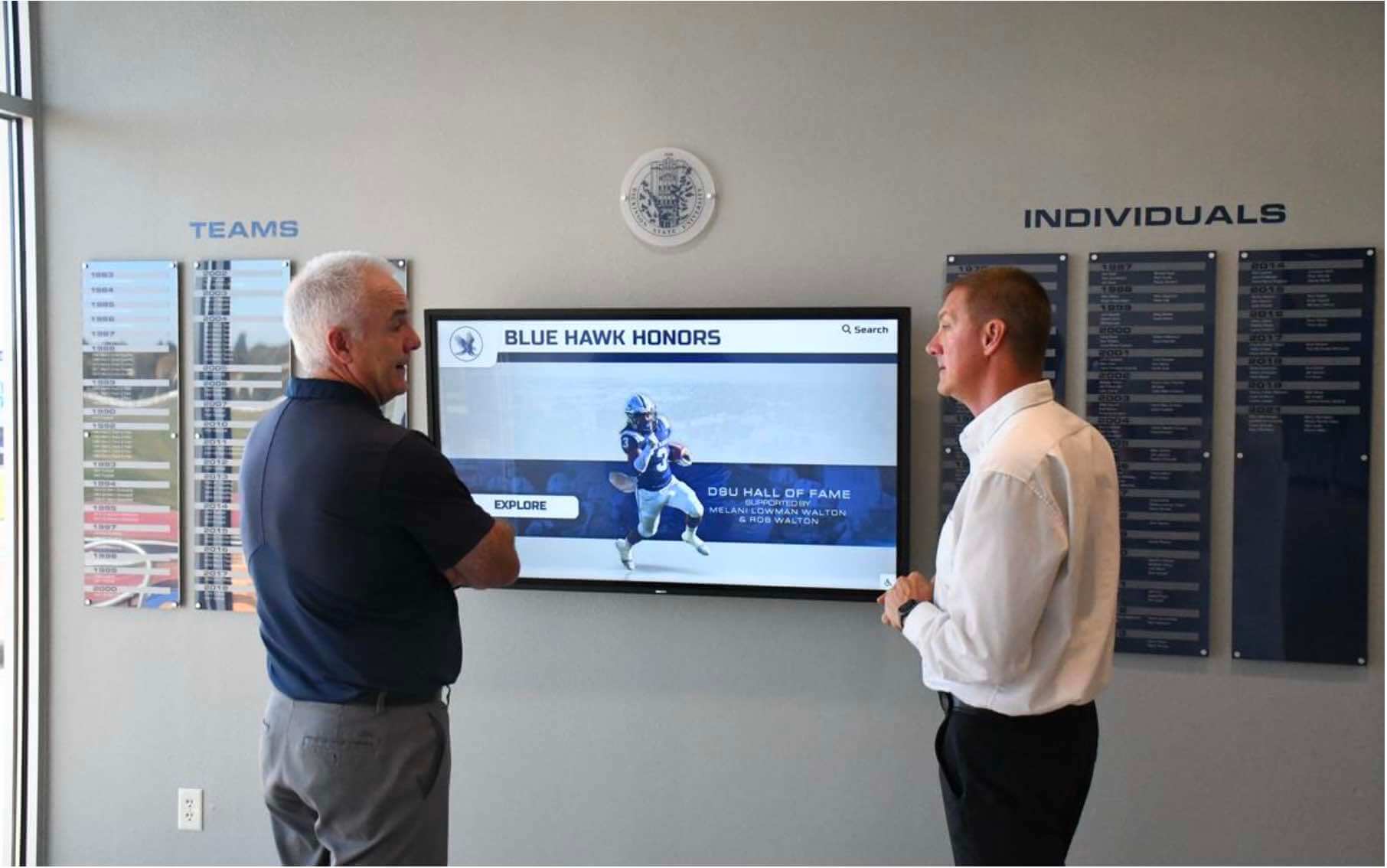
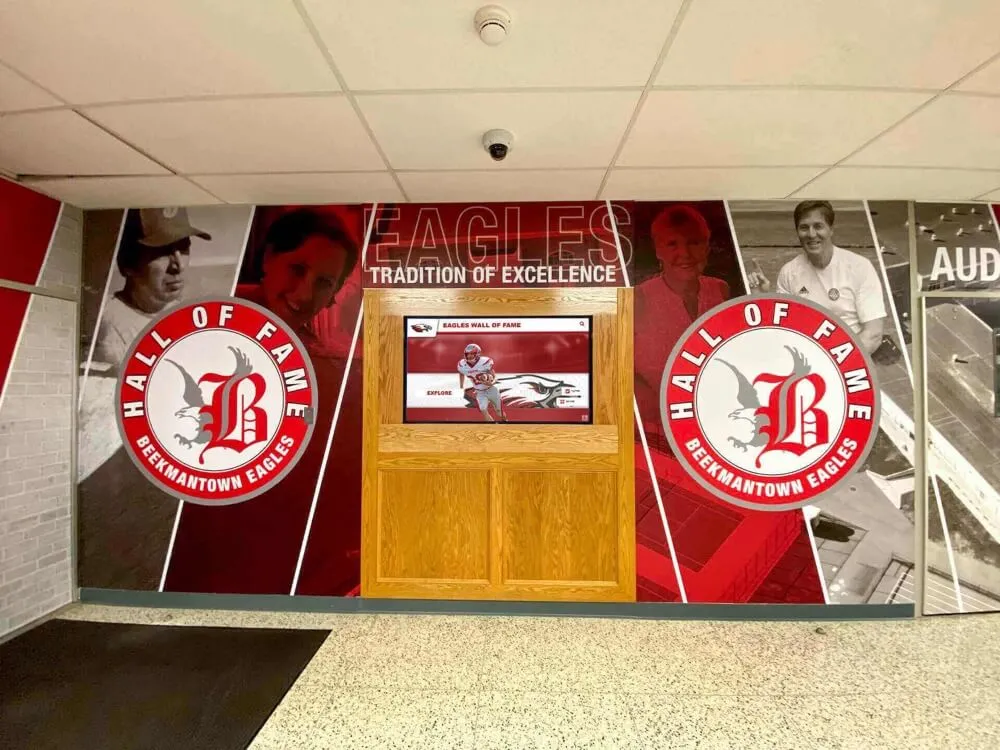
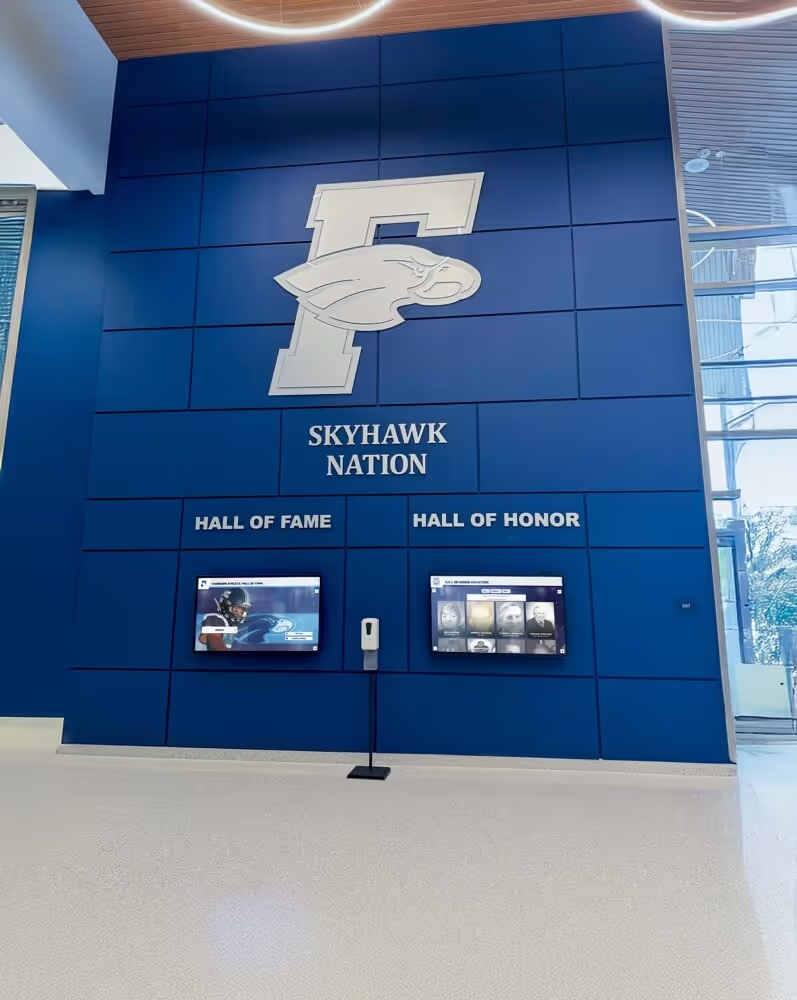
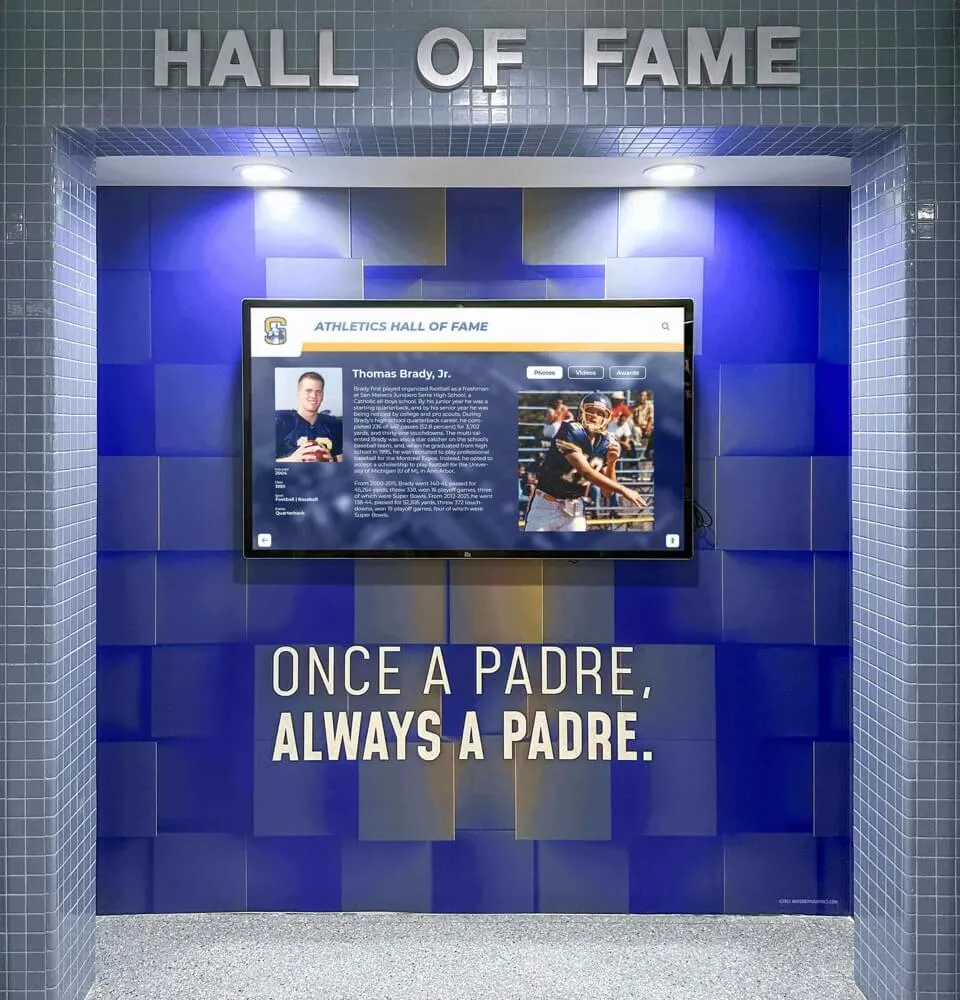
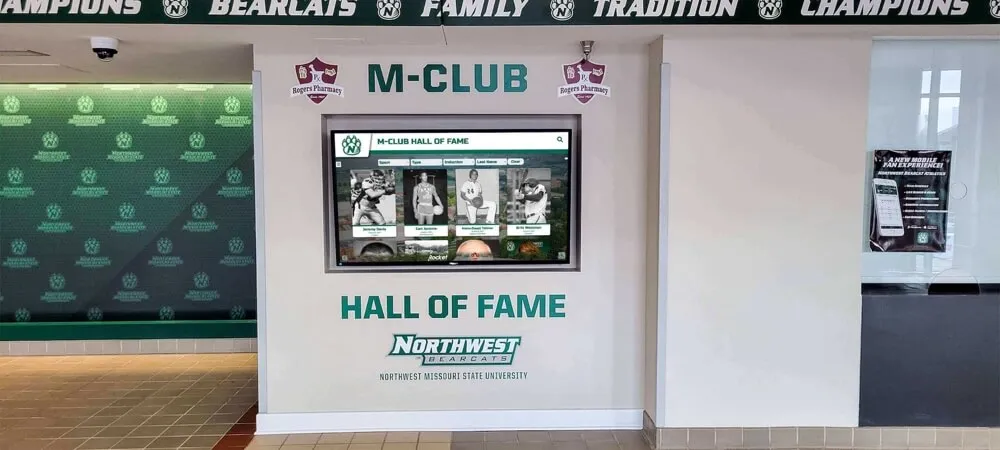
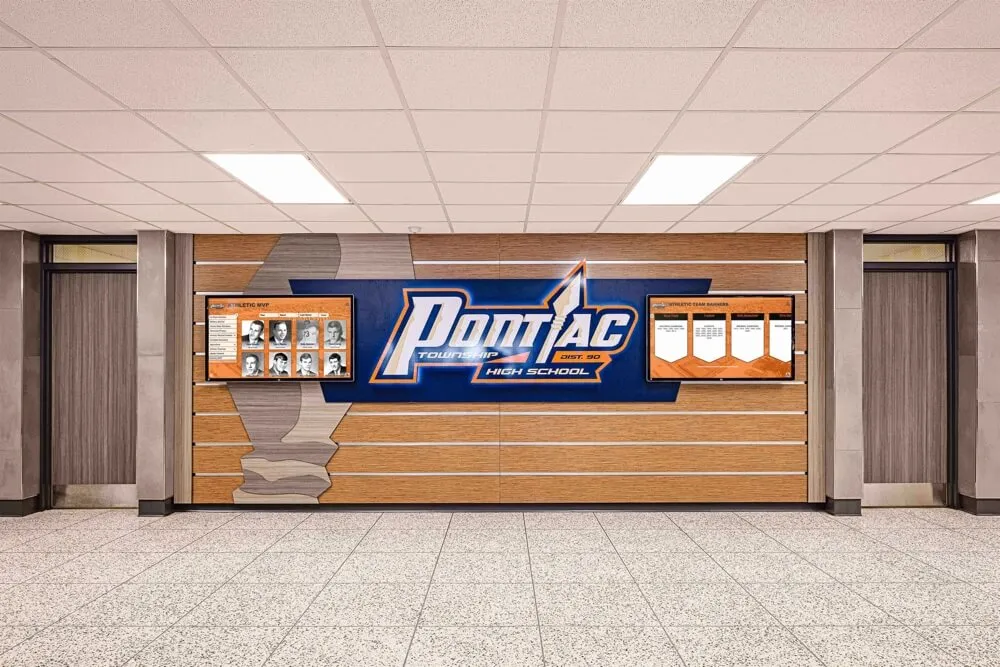
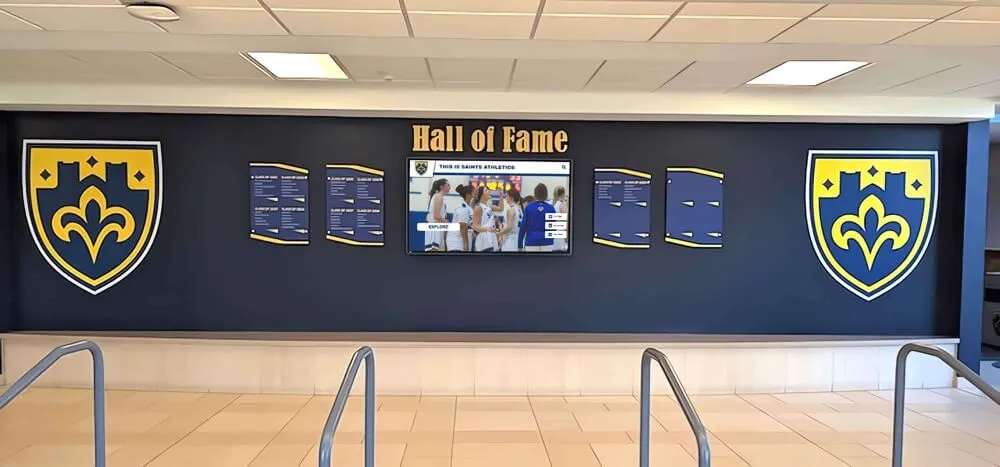
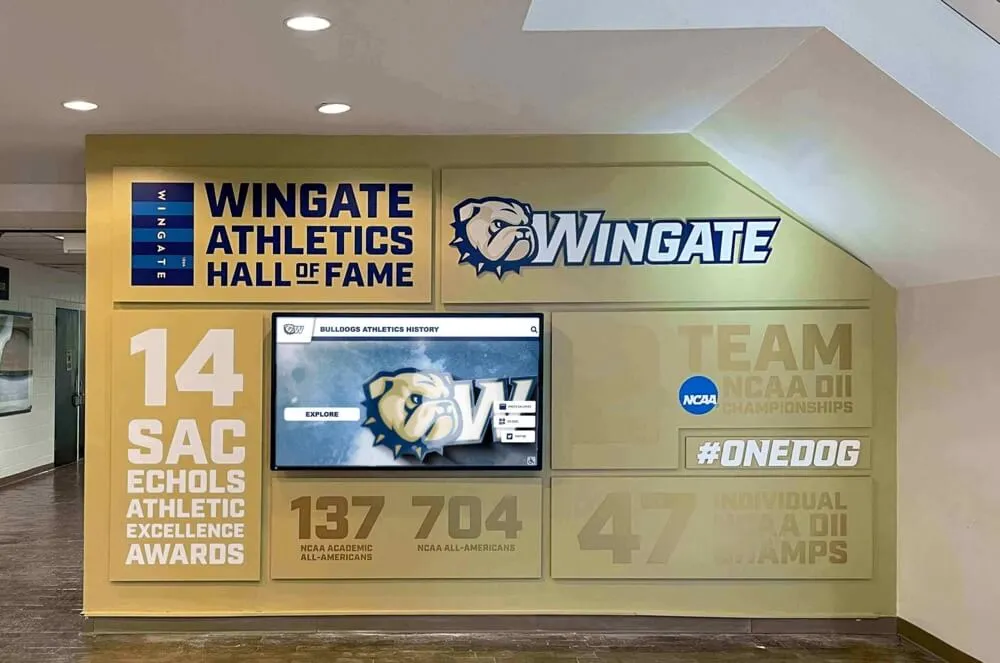
Permanent hall of fame and recognition displays serve double duty at reunions: they're a destination for alumni exploration and a content source for organized game activities
How Touchscreen Recognition Displays Transform Reunion Events
Beyond serving as a game platform, touchscreen recognition displays create something that printed programs and banner walls cannot: an explorable, self-directed experience that alumni return to throughout an event. When a school installs an interactive display in a lobby or gymnasium, it becomes the natural gathering point during cocktail hours, between game rounds, and at the end of the evening when conversations go deepest.
Rocket Alumni Solutions builds touchscreen recognition systems specifically designed for schools and universities—platforms that house athlete profiles, academic honor rosters, historical archives, and class-by-class graduation records in an interactive format. At reunion events, these systems serve as both ambient exploration stations and active game content sources. Attendees can browse independently while organized games draw from the same institutional archive to power trivia rounds and recognition challenges.
The combination of permanent recognition infrastructure and event-specific game programming creates a layered alumni experience: the touchscreen provides depth for individuals who want to explore, while structured games use that same content to create shared moments for the whole room.
Schools planning their next reunion—or building toward a major milestone anniversary—can explore how interactive recognition technology supports interactive touchscreens in educational and community spaces beyond a single evening gathering.
Bringing It All Together
Class reunion games work best when they reflect the specific community they’re celebrating. The 20 ideas in this guide share a common foundation: they use your school’s actual history—its records, its people, its traditions, its photos—as the game content. That specificity is what separates a memorable reunion from a forgettable one. Generic games pass the time. Games built from your school’s real story trigger the recognition, laughter, and connection that people drive hours to experience.
Screens and touchscreens amplify that effect by making the content visible to the whole room simultaneously. A trivia question projected on a 100-inch screen focuses group attention in a way that table cards cannot. An interactive timeline browsable on a touchscreen kiosk invites exploration that a printed program never generates. A collaborative memory wall built over the course of an evening creates a living artifact of the gathering itself.
The technology matters less than the content it carries. Start with the right material—real names, real moments, real institutional history—and the games will find their rhythm.
Ready to build reunion-ready recognition displays for your school?
Rocket Alumni Solutions designs interactive touchscreen walls of fame and digital recognition systems that serve as permanent campus installations and powerful reunion event platforms. Explore how an interactive display transforms both daily school life and special alumni gatherings.