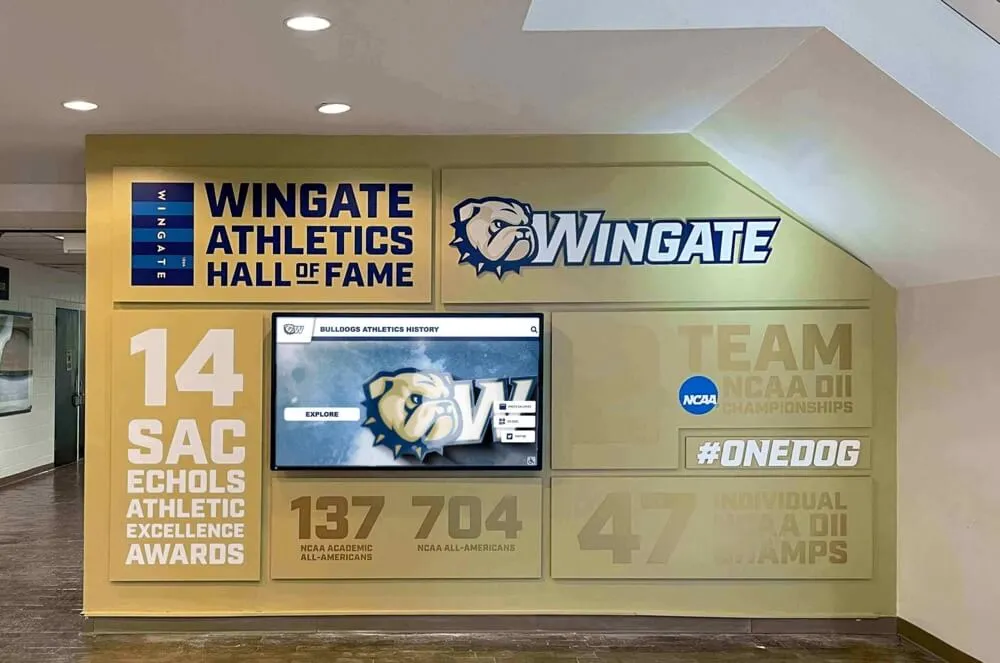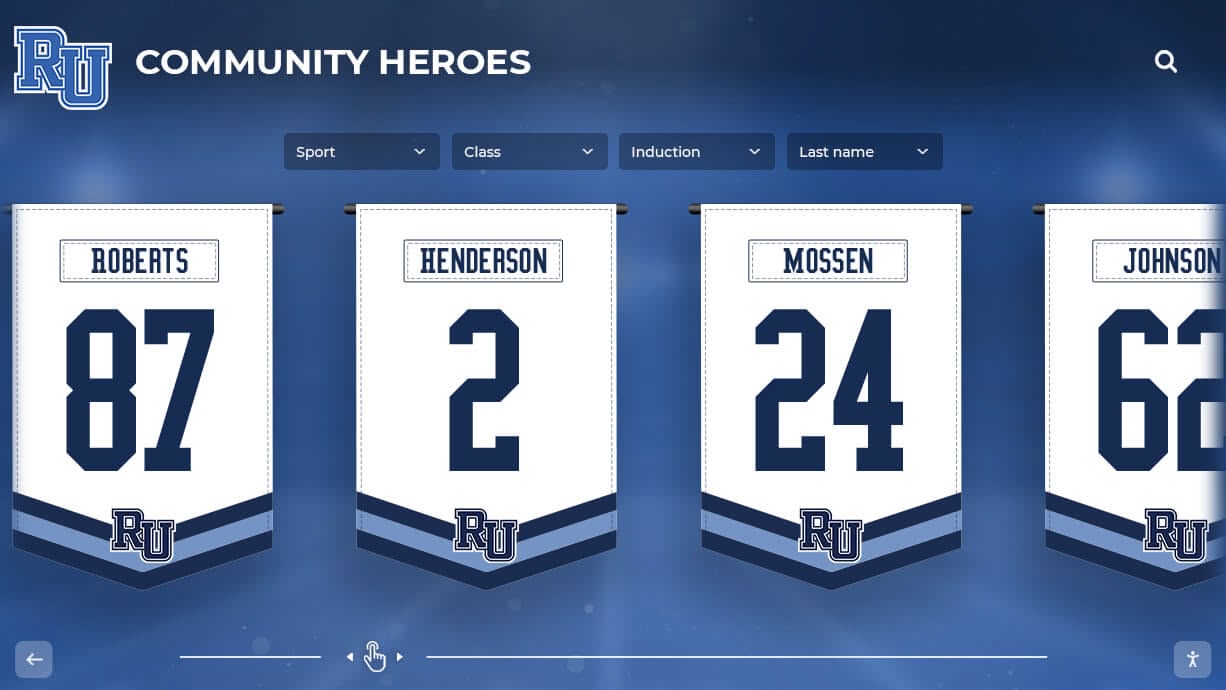




A championship banner replacement policy tells every member of your school’s athletic department—from the athletic director to the facilities crew—exactly what to do when a physical banner needs to be corrected, taken down, or preserved as the program grows. Without a written policy, these decisions happen inconsistently: a misspelled name might linger in the rafters for a decade because no one knows who has authority to approve a fix, or a 40-year-old faded banner might be quietly removed with no record of the championship it represented.
This guide covers the three scenarios every policy must address: error correction (a banner carries incorrect information), planned retirement (a banner has reached the end of its useful life or wall space runs out), and digital preservation (the championship record must outlast the cloth). Each scenario comes with a step-by-step procedure. A printable checklist covers all three, and a short FAQ answers the questions athletic directors and school administrators ask most often.
This guide discusses institutional policy and administrative governance processes. It does not constitute legal advice. Consult your district’s legal counsel before adopting formal policies that affect official school records, vendor contracts, or insurance coverage.

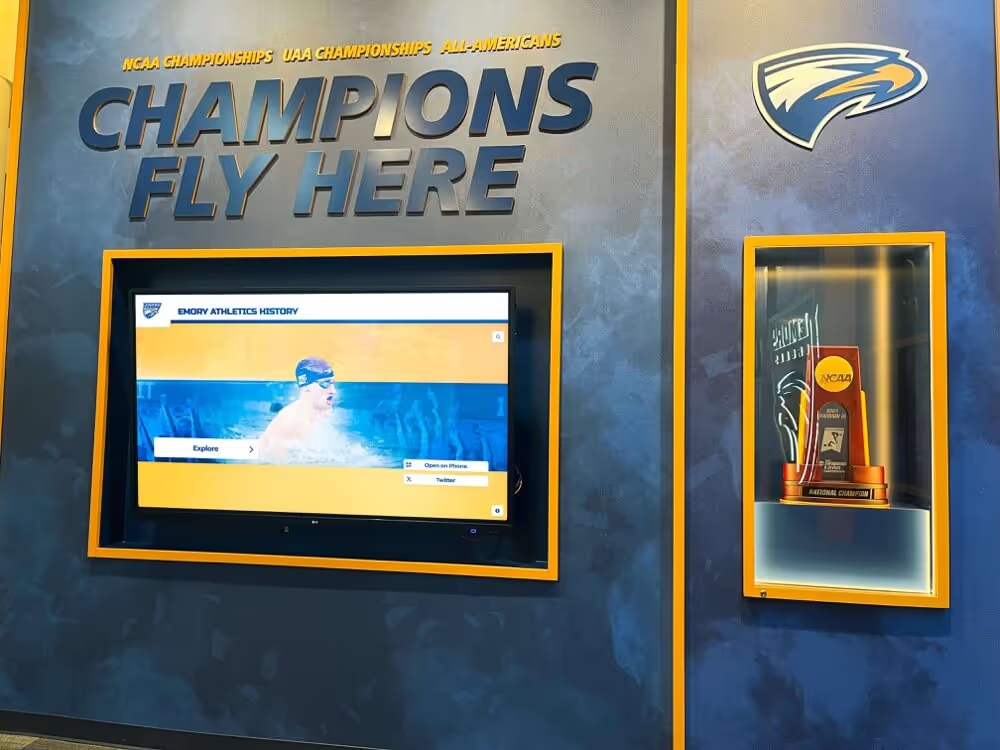
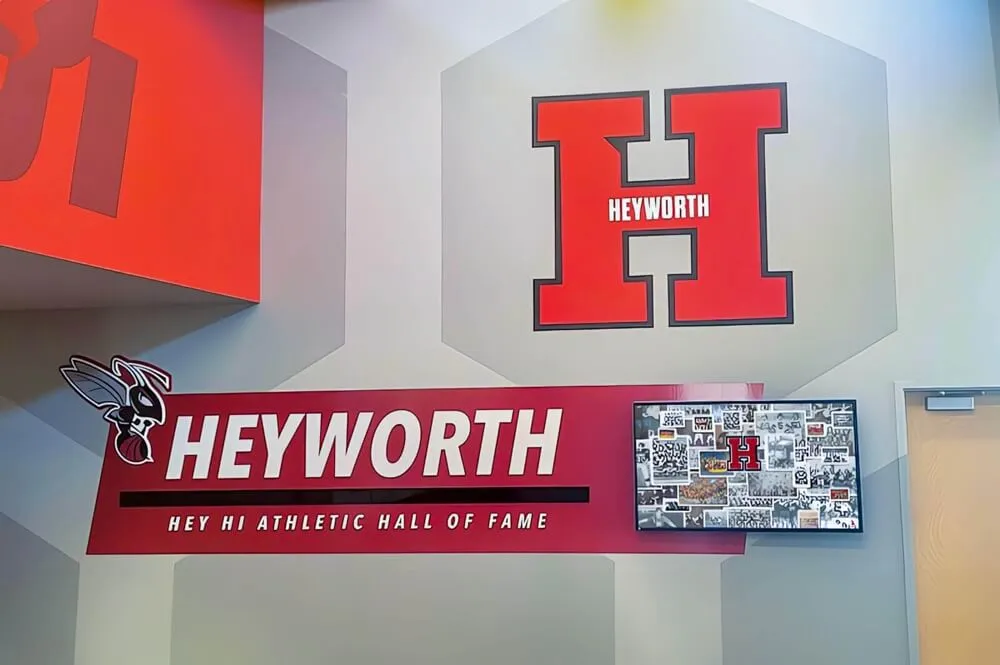
Every banner in a gymnasium carries institutional weight — a written replacement policy ensures that weight is handled carefully when corrections, retirements, or space constraints arise
Why Schools Need a Written Championship Banner Replacement Policy
Physical championship banners are institutional records as much as they are decorations. They declare to every student, parent, visiting team, and prospective athlete that your program won something meaningful in a particular year. That declaration creates an obligation: the information must be accurate, the display must be maintained, and the record must survive even when the physical object does not.
A written policy serves three groups simultaneously. Facilities and operations staff need clear procedures — they should not have to guess whether a deteriorating banner gets repaired, replaced, or retired, or which administrator signs off on that decision. Athletic directors and coaches need a reliable process for correcting errors before they become embarrassments, and a fair protocol for retiring banners that doesn’t favor recent programs over historical ones. Advancement and alumni teams need assurance that the championship record stays intact for donor conversations, reunion events, and hall of fame nominations, even after a banner leaves the wall.
Schools that maintain precise institutional records across programs — athletic and academic alike — treat championship banners with the same rigor applied to academic honors. The way schools carefully document and celebrate graduation honors and academic distinctions reflects an institutional standard for accuracy that applies equally to the athletic record displayed in your gymnasium.
Step 1: Conduct a Complete Banner Inventory
Before writing a single line of policy, document what you already have. A replacement policy can only function if the records it protects are known.
What to capture for each banner:
| Field | Notes |
|---|---|
| Sport | Full name — “Girls Varsity Swimming,” not just “Swimming” |
| Championship type | Conference, regional, sectional, state, national |
| Year | Academic year (2018–19) or calendar year, used consistently |
| Current physical condition | Excellent / Good / Fair / Poor / Illegible |
| Location | Which wall, gym, hallway, or storage |
| Known errors | Any spelling, year, or category discrepancies |
| Historical source | Where the championship is confirmed (yearbook, state association records) |
Photograph every banner in high resolution before touching anything. Even banners in poor condition carry information — roster names, vendor details, original color standards — that will be useful when reordering or archiving. This documentation step is not optional; it is the foundation every subsequent procedure in the policy will reference.
Step 2: Define Replacement Triggers
The policy should state, in writing, exactly which conditions qualify a banner for correction, retirement, or replacement. Vague language like “when necessary” leads to disagreement and delays. Specific language leads to consistent decisions.
Recommended trigger categories:
Error Correction Triggers
- Factual error confirmed: misspelled athlete or coach name, incorrect year, wrong sport category, wrong championship classification
- Conflicting information: the banner contradicts the official record in the school’s permanent files, yearbook, or state athletic association database
Physical Retirement Triggers
- Material condition rated Poor or Illegible during annual inspection
- Text or graphic elements no longer readable from floor level (typically 15–20 feet)
- Structural damage: tears, fray, missing grommets that create a safety concern
- Facility renovation that eliminates the banner’s mounting location
Space-Management Retirement Triggers
- Physical wall and ceiling capacity has been reached per a defined threshold (e.g., maximum number of banners per wall section)
- A new championship must be displayed and the oldest banner in a defined category has been hanging for a minimum number of years (20 or 25 years is a common threshold)
Rebranding Triggers
- School adopts a new mascot or significantly changes school colors, requiring that existing banners be updated or replaced over a defined transition period
Step 3: Establish an Error Correction Protocol
Errors on championship banners are more common than most schools realize — a hurried order from a new vendor, a name submitted with a typo, a year transposed after a late-season championship — and they require a defined procedure rather than a rushed fix.
3a. Source Verification
Before ordering a replacement, verify the correct information from at least two independent sources. Acceptable primary sources include:
- The school’s permanent athletic records maintained by the athletic director’s office
- State athletic association official results databases
- School yearbooks from the championship year
- Official game programs or tournament brackets
Schools with programs that have earned statewide recognition can cross-reference their records against statewide hall of fame documentation, which typically captures championship data verified through official athletic association channels.
3b. Approval Chain
Document who has authority to approve an error correction. A typical chain:
- Person who identifies the error submits a written correction request with source documentation
- Athletic director verifies the correction against primary sources
- Principal or designated administrator provides final sign-off
- Correction request is filed in the athletic department’s permanent records
3c. Handling the Original Banner
Once a replacement is ordered and received, what happens to the incorrect original? The policy should specify one of these dispositions:
- Retired to archival storage with a notation of the known error
- Offered to the coaching staff as a memento, with a notation that it contains a documented error
- Destroyed, with the destruction documented
Retiring the original to archival storage is usually the right call. The original may have historical value — it documents how the championship was recorded at the time — and its photographs become part of the digital archive.
Step 4: Create a Formal Banner Retirement Procedure
Retiring a banner is a more significant institutional act than correcting one. It removes a visible piece of program history from the space where athletes, families, and visitors see it every day. That significance warrants a structured process.
4a. Notify Before Removing
Communicate any planned retirement to stakeholders before the banner comes down — not after. Recommended notifications:
- Written notice to the head coach of the relevant sport and the current coaching staff at least 30 days before removal
- Written notice to the booster organization or athletic department advisory group
- Brief acknowledgment in the athletic department newsletter or school communication, depending on the program’s prominence
4b. Document the Retirement
Create a written retirement record that includes: the sport, championship type, year, reason for retirement, date of removal, and disposition of the physical banner. This record goes into the athletic department’s permanent files. A championship removed from the wall must still exist in the institutional record — the retirement document is what ensures it does.
The way schools track awards and recognition across programs — such as the careful documentation involved in FFA awards and digital display systems — reflects how institutions maintain a complete record of achievement even when the physical display format changes.
4c. Disposition Options for Retired Banners
Physical banners retain value after retirement. Offer them in this priority order before storage or disposal:
- Offer to the head coach of the program that won the championship
- Offer to the captains or team representatives of the winning team, if known
- Transfer to the school’s physical archives (storage facility, trophy room, athletics museum)
- Display in a secondary space: a hallway, weight room, or athletic office with lower visibility requirements
- Document and dispose if none of the above is feasible, retaining photographs and the retirement record
For broader guidance on how schools house retired sports memorabilia — including banners, jerseys, and trophies — the approaches covered in sports memorabilia display and preservation ideas offer practical options for secondary display locations and archival storage.
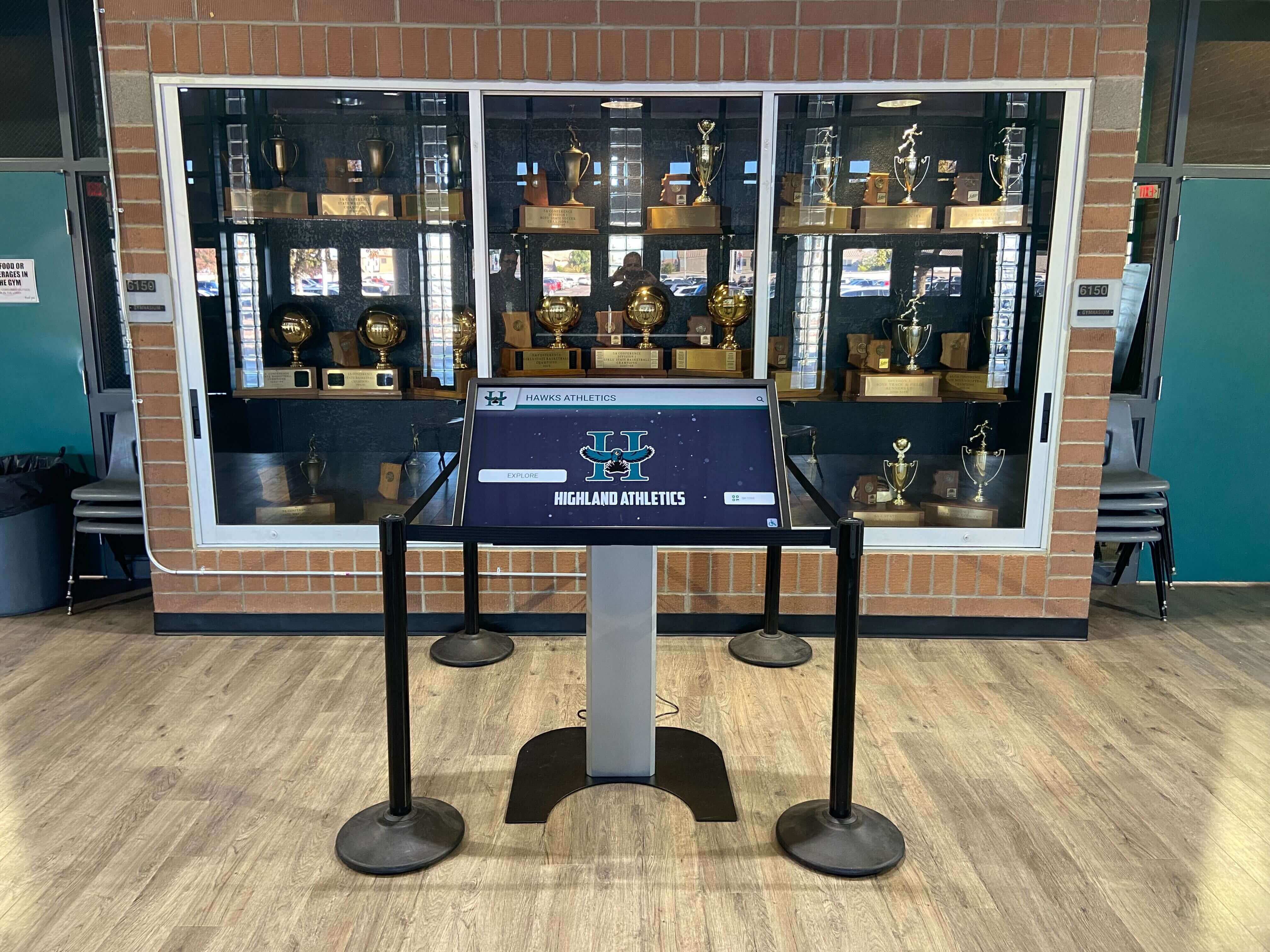
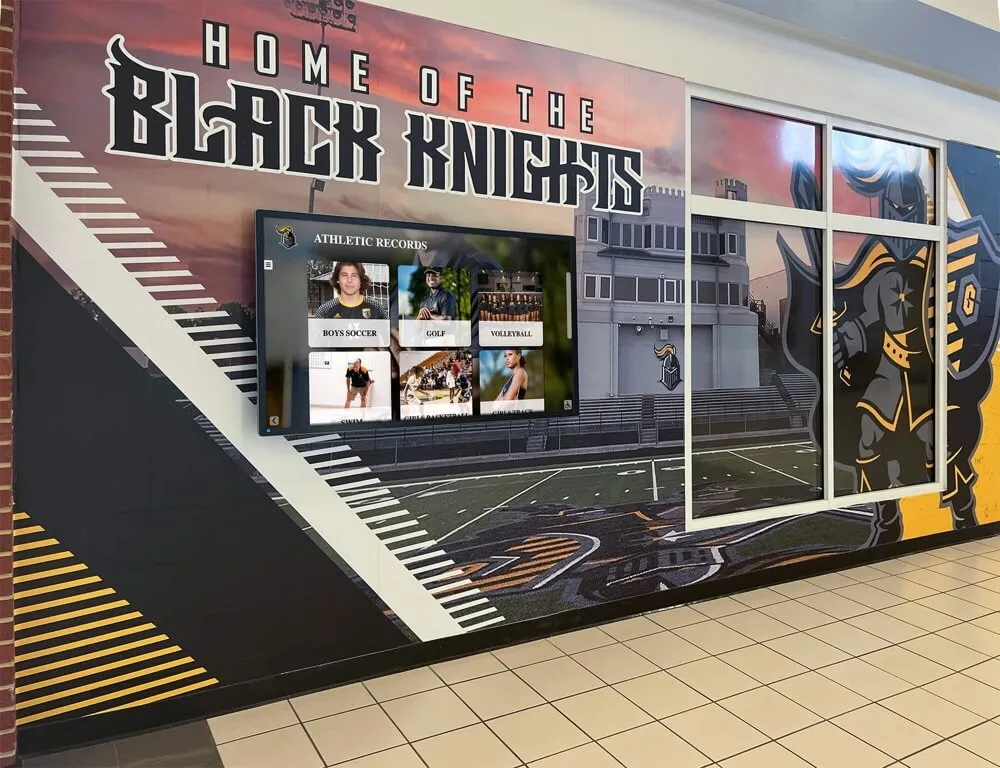
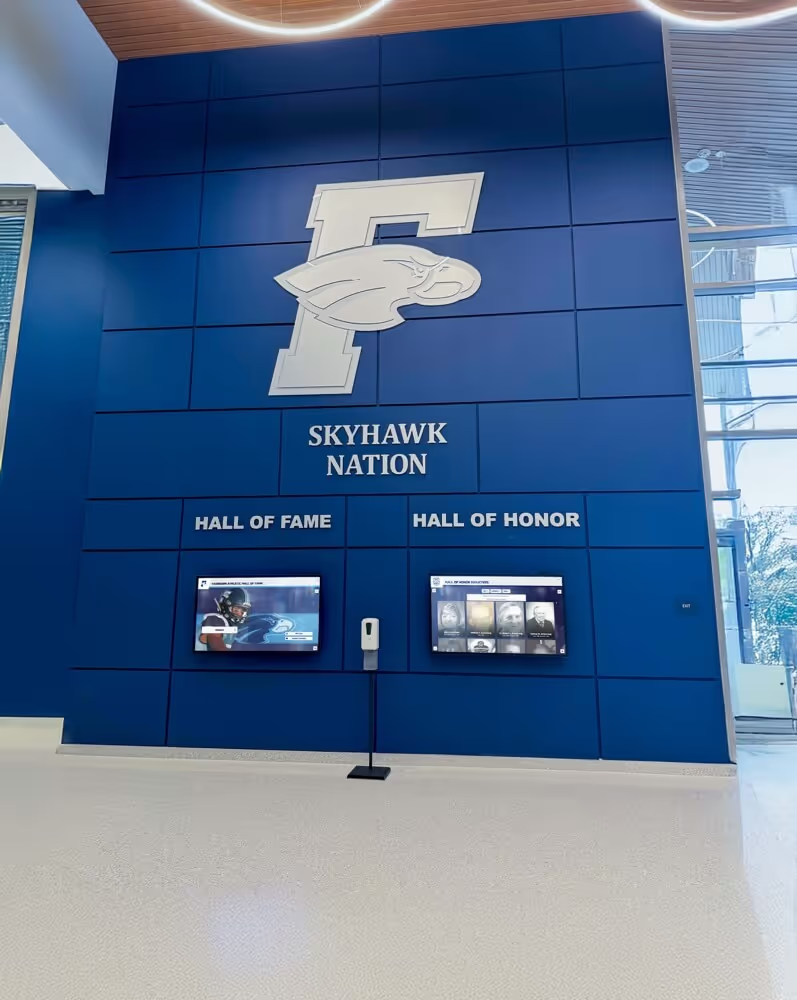
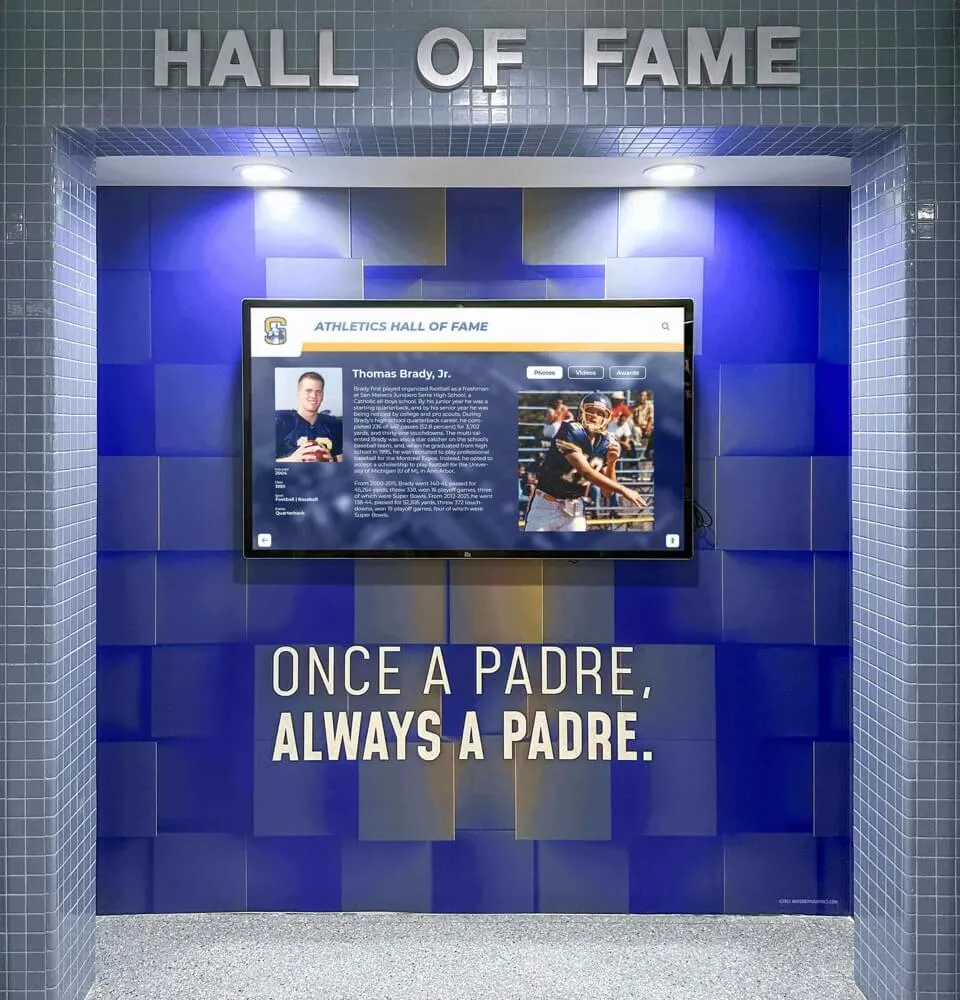
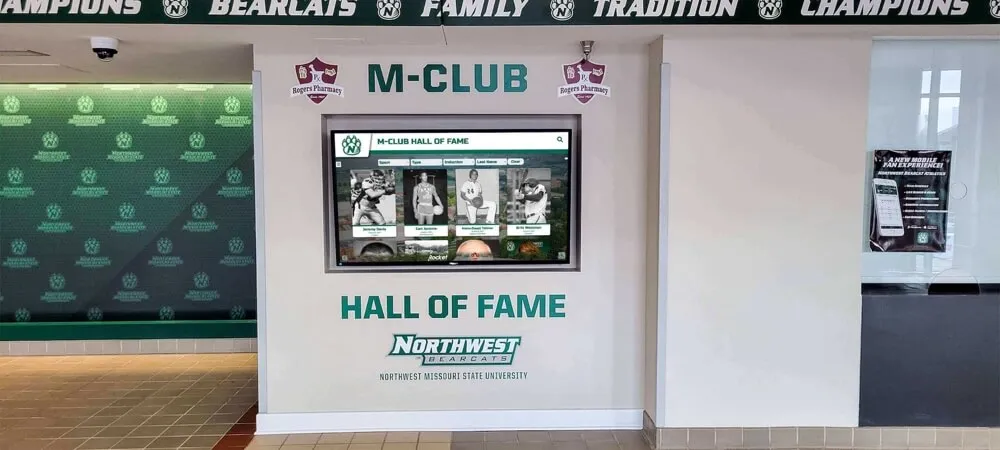
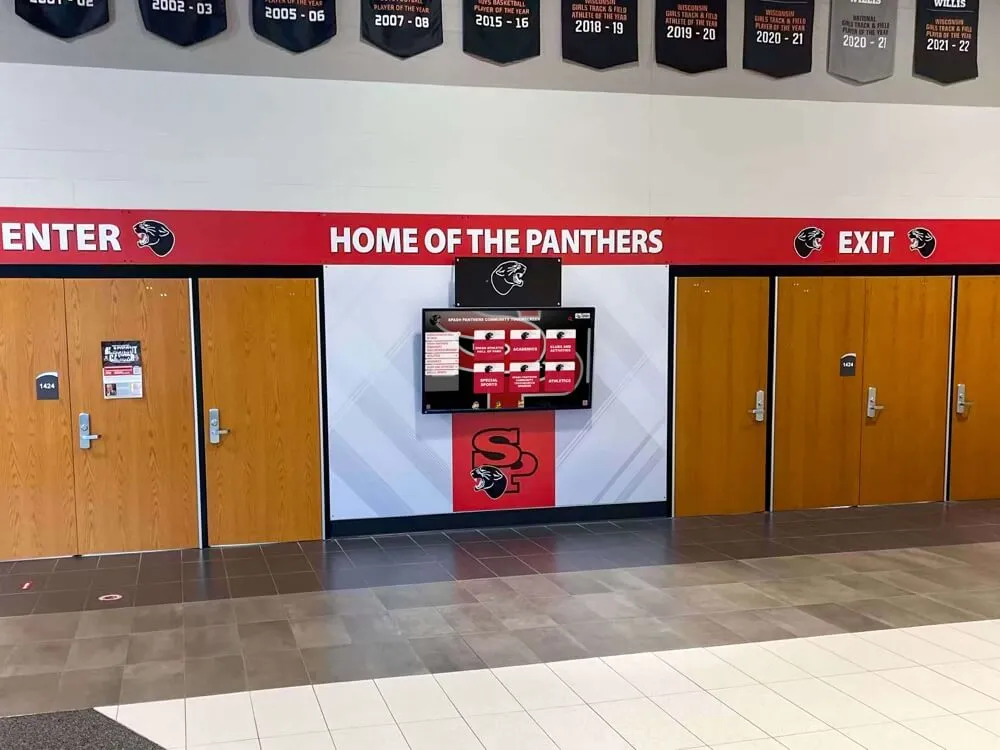
A digital system integrated with the trophy case allows the full championship record to remain accessible even after physical banners are retired, corrected, or moved to storage
Step 5: Preserve Every Championship in a Digital Archive
A championship banner replacement policy is incomplete without a preservation plan. Correcting or retiring a banner addresses the physical object — it does nothing to protect the historical record if the institution doesn’t maintain that record elsewhere.
A digital archive is the permanent home for championship data that physical banners cannot provide. It should contain:
- Every championship the school has won, regardless of whether a banner currently hangs in the gymnasium
- The correct information for each championship (verified against primary sources under Step 3a)
- High-resolution photographs of the original banner before any correction or retirement
- Team rosters and coaching staff from each championship season
- Supporting documentation: yearbook pages, program covers, tournament brackets
Institutions that invest in comprehensive record-keeping across all recognition areas — from athletic achievements to academic honors like those maintained in school honor societies and their permanent records — understand that institutional memory requires deliberate, structured preservation, not just physical display.
The digital archive should be updated within 30 days of any correction, retirement, or new championship. Assign a specific staff member — typically the athletic director or their designee — as the record owner responsible for keeping the archive current.
Championship Banner Replacement Policy Checklist
Use this checklist when any replacement trigger is activated. Complete each item in order and retain documentation at each step.
Phase 1 — Identify and Document
- Identify the banner requiring action and specify the trigger (error / physical condition / space / rebranding)
- Photograph the banner in its current state at high resolution
- Pull the existing entry from the banner inventory log
- Note any discrepancies between the banner and primary source records
Phase 2 — Verify
- Confirm correct information from two independent primary sources
- Document sources (yearbook page, state association record, school permanent file) with dates
- Submit written correction or retirement request to athletic director
Phase 3 — Approve
- Athletic director reviews request and source documentation
- Designated administrator provides sign-off
- Approved request filed in permanent athletic department records
Phase 4 — Execute
- For error correction: Order replacement banner using standardized template; confirm specifications before production
- For retirement: Notify affected coach(es) and stakeholders at least 30 days before removal
- Remove original banner from display and document date of removal
- Dispose of or transfer original per the policy disposition priority order
Phase 5 — Preserve
- Update the digital archive with corrected information or retirement notation
- Upload high-resolution photographs of the original banner
- Add team roster and coaching staff data if not already in the archive
- Confirm the championship record is accurate and complete in the digital system
- File all documentation (correction request, approval, disposition record) permanently
Connecting Banner Records to Institutional Standards
Championship accuracy matters for reasons that extend well beyond the gymnasium walls. Advancement staff reference athletic records when acknowledging major donors who funded championship seasons. Alumni and reunion committees use championship histories to plan milestone celebrations. Hall of fame nomination committees rely on the accuracy of the official record when evaluating candidates.
Schools that apply the same precision to athletic records that they apply to academic records — such as the verified documentation required for academic excellence distinctions and cumulative honors — build institutional credibility across every recognition program they operate.
The connection between verified records and meaningful recognition is also why recognition committees should be included in policy reviews. A banner retirement or correction that affects a hall of fame candidate’s documented achievements, for example, should be communicated to whoever manages the school’s hall of fame nomination process, ensuring that the correction propagates across all institutional records simultaneously.
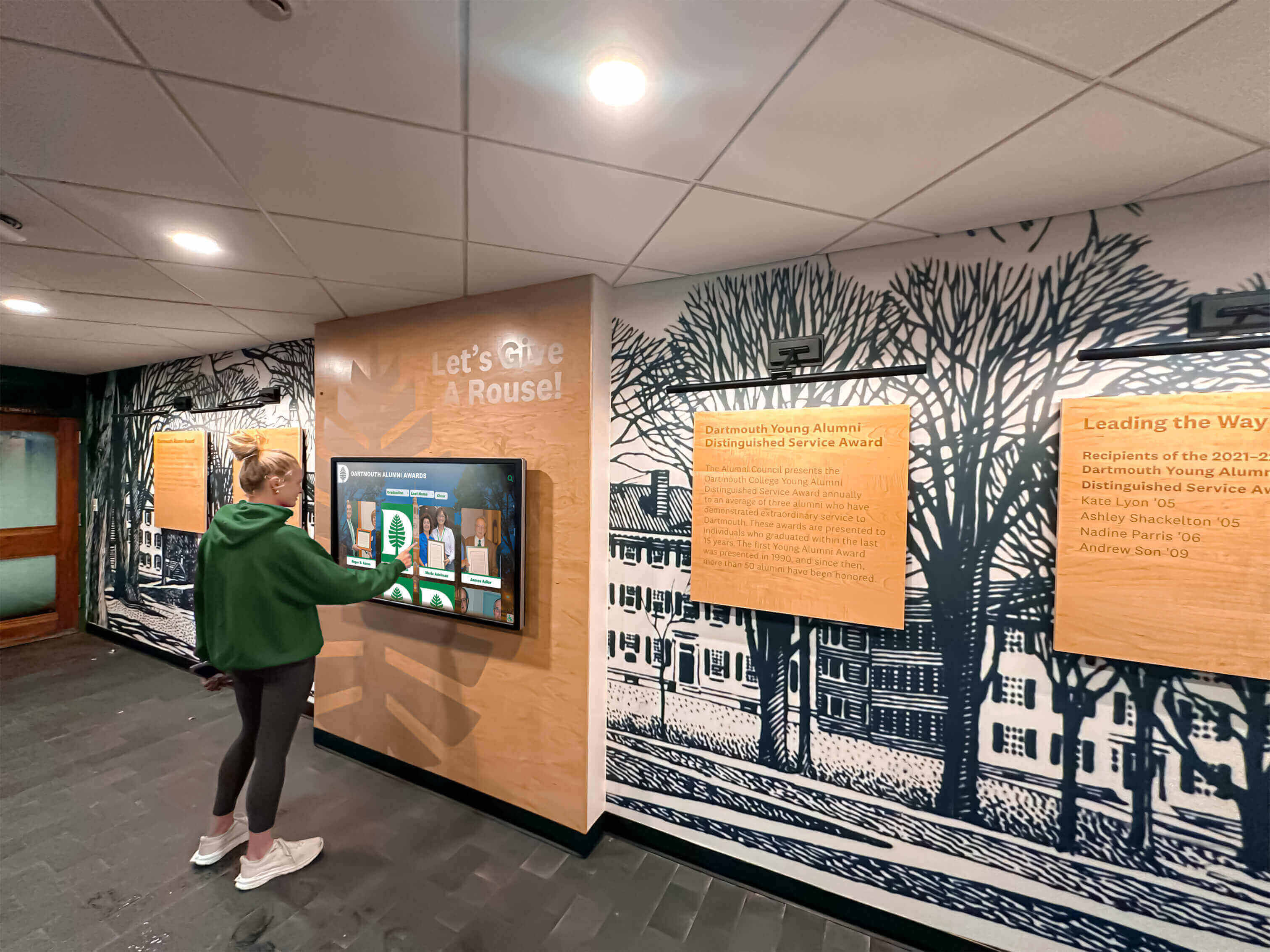
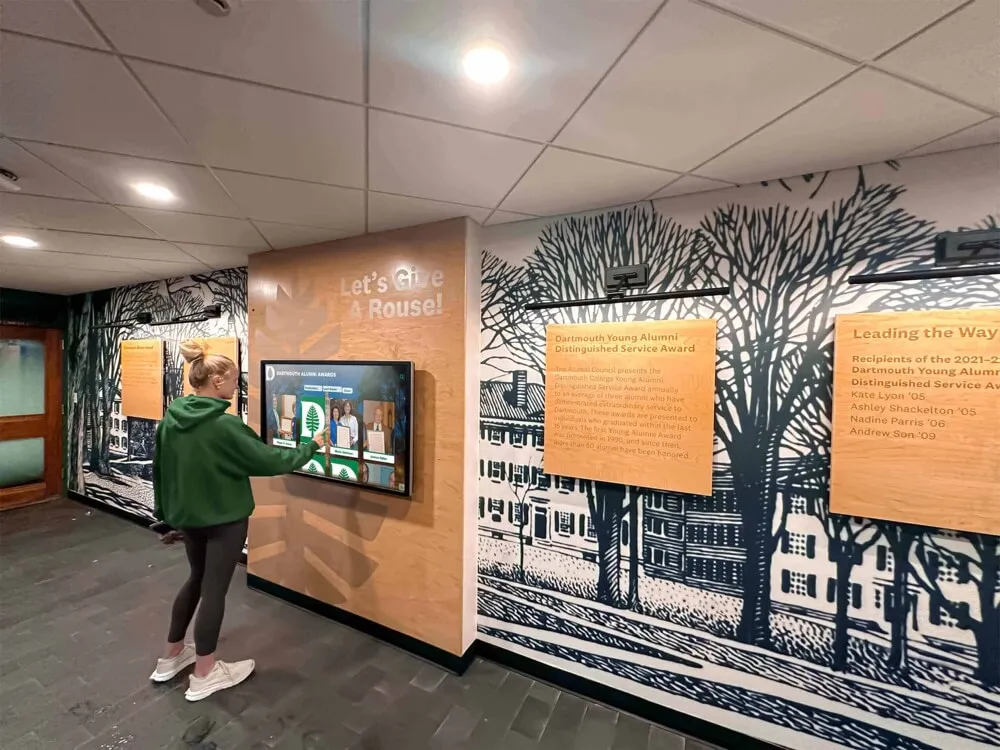
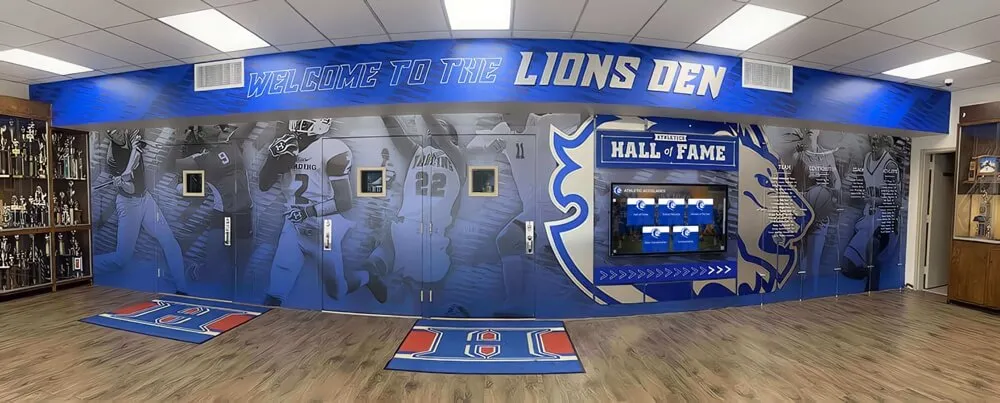
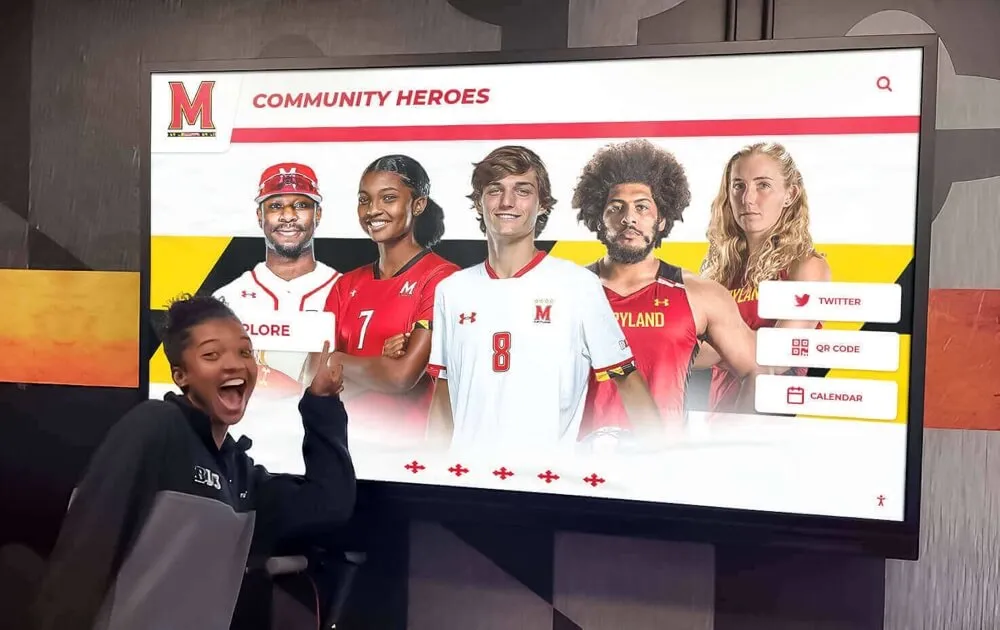
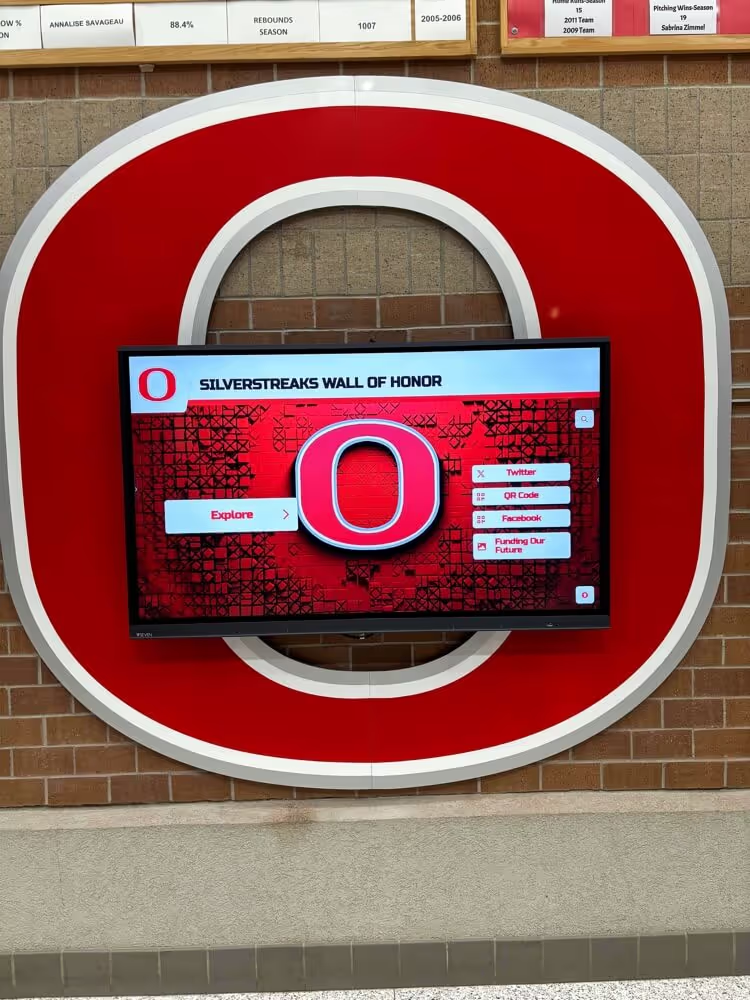
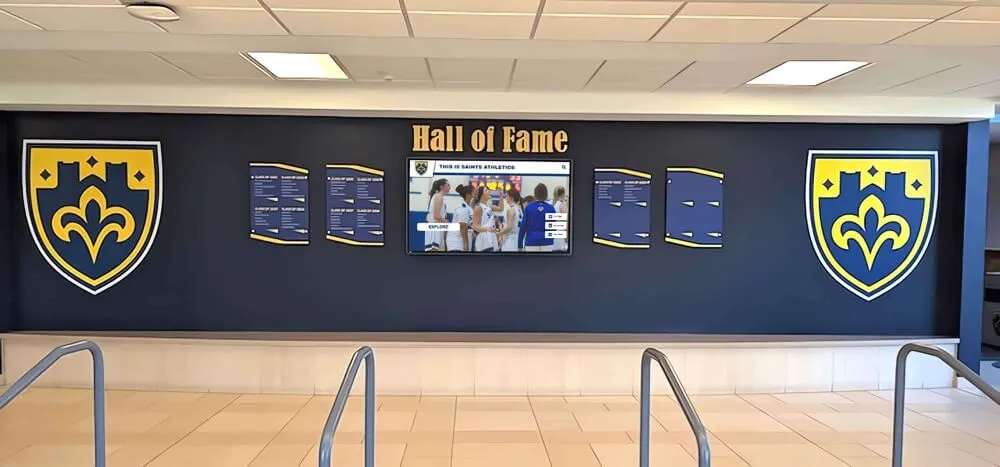
When a digital archive backs the physical display, retired or corrected banners don't disappear from institutional memory — they become part of a searchable, permanent record accessible to anyone
Using Digital Displays to Bridge Physical and Digital Records
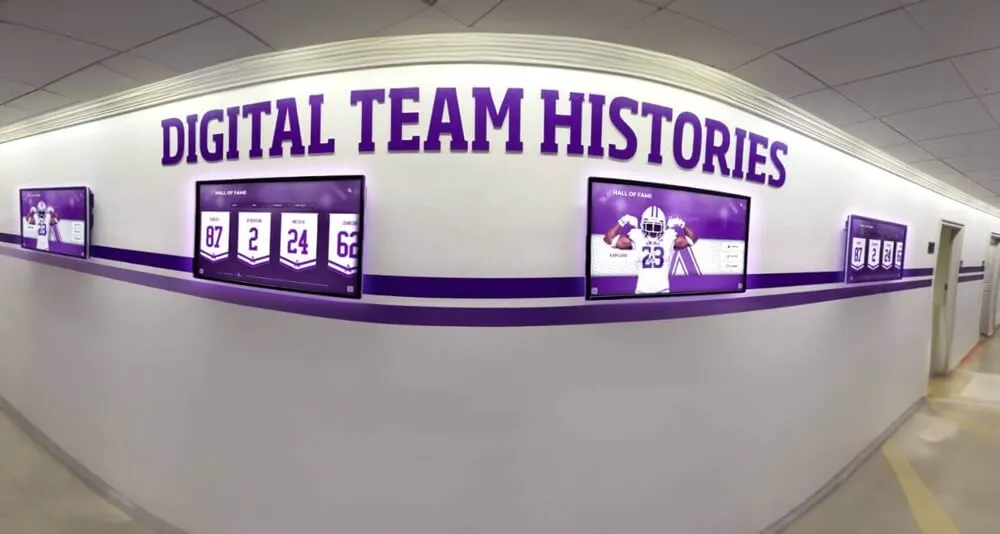
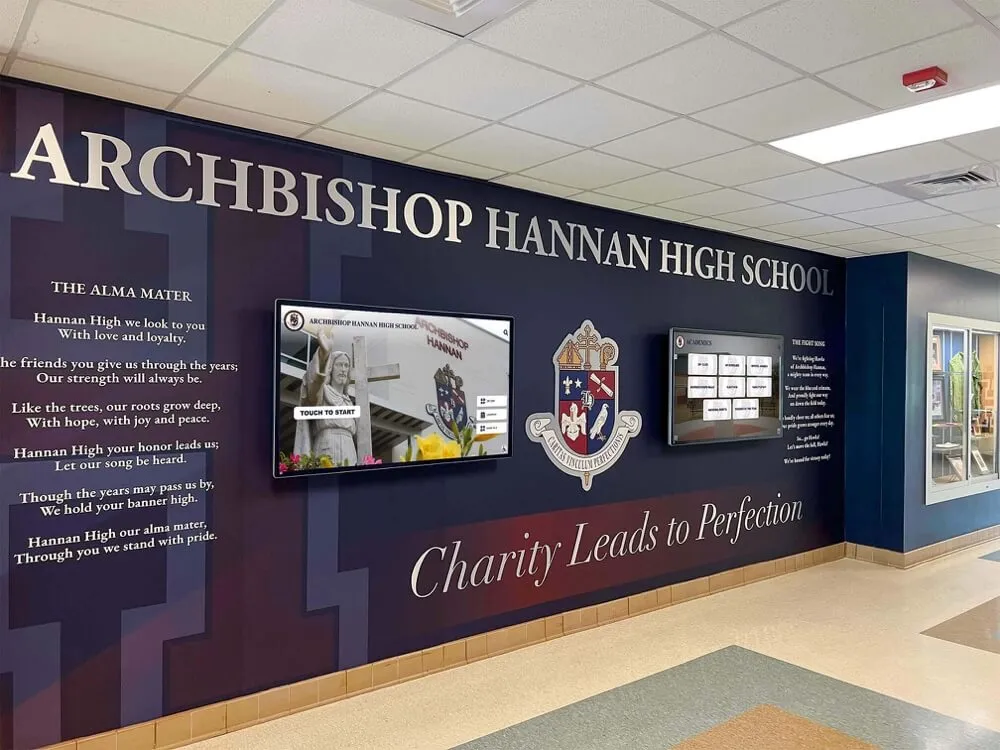
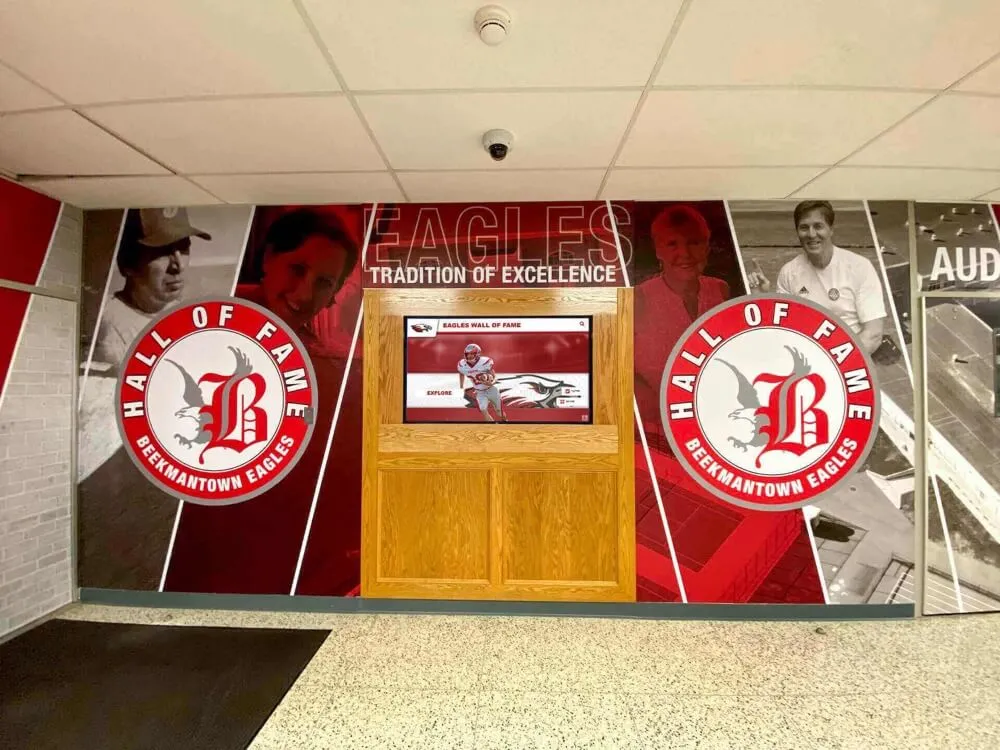
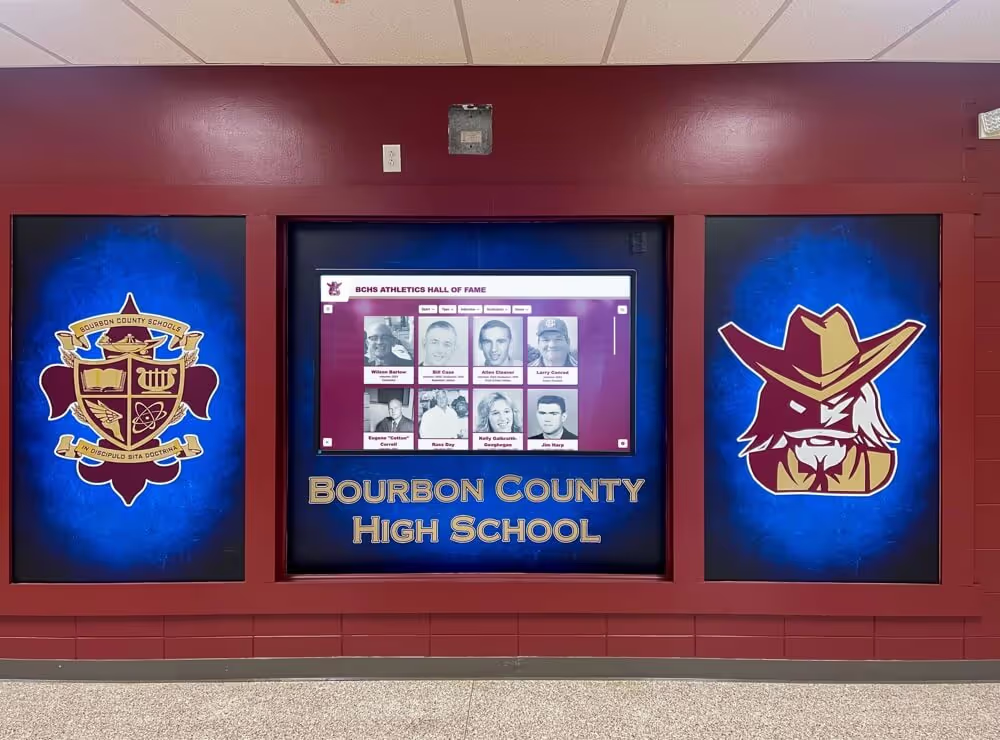
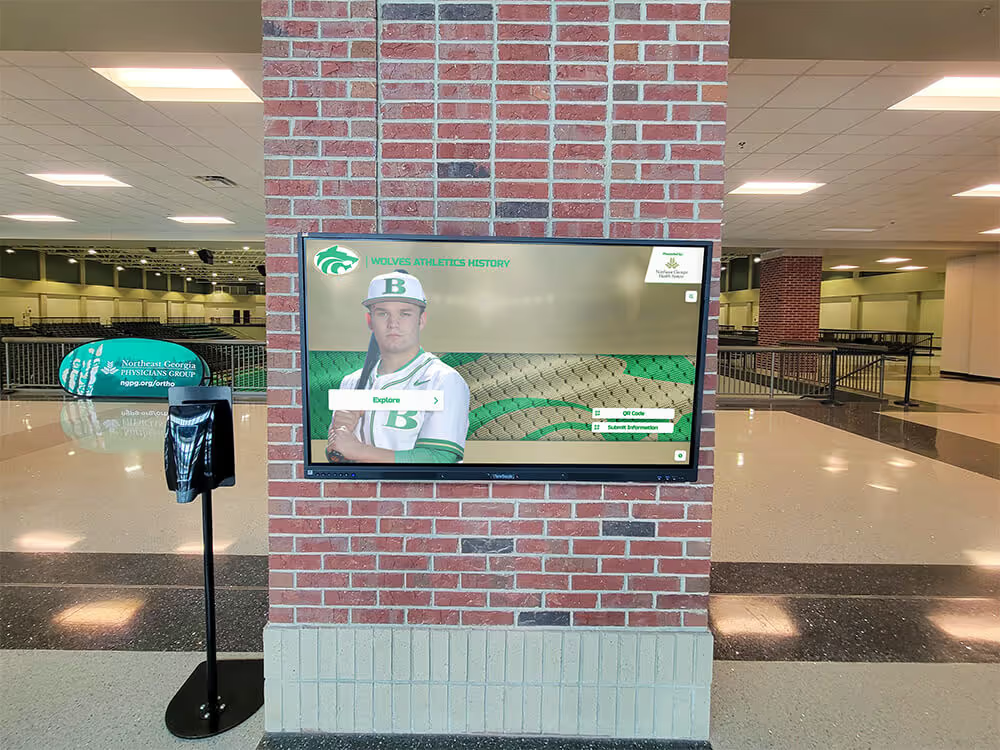
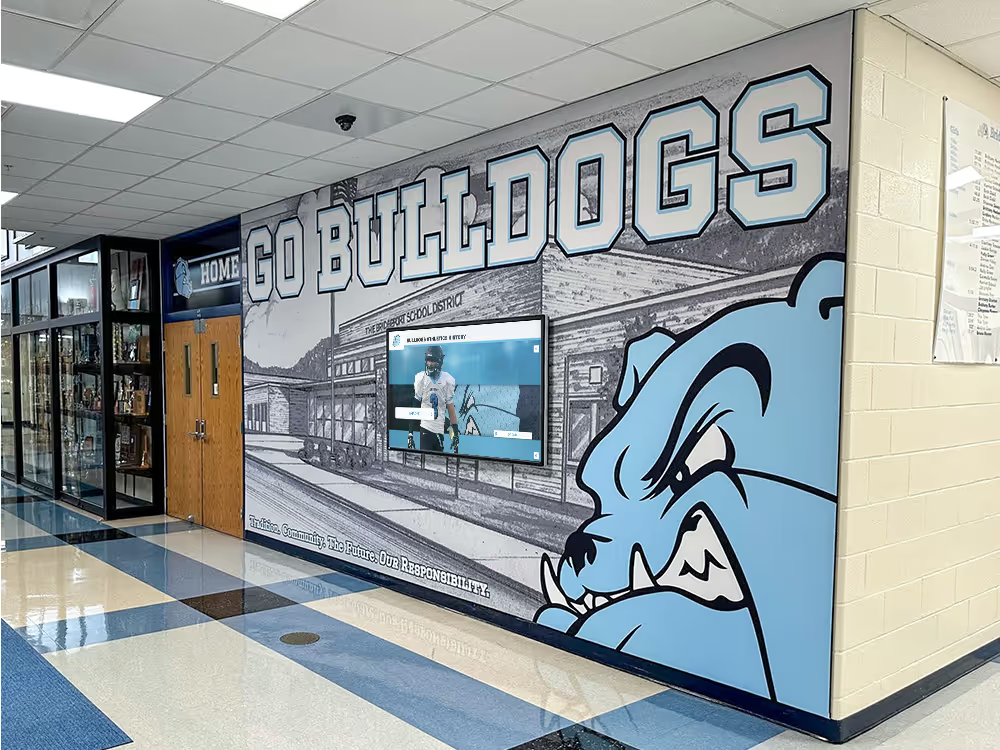
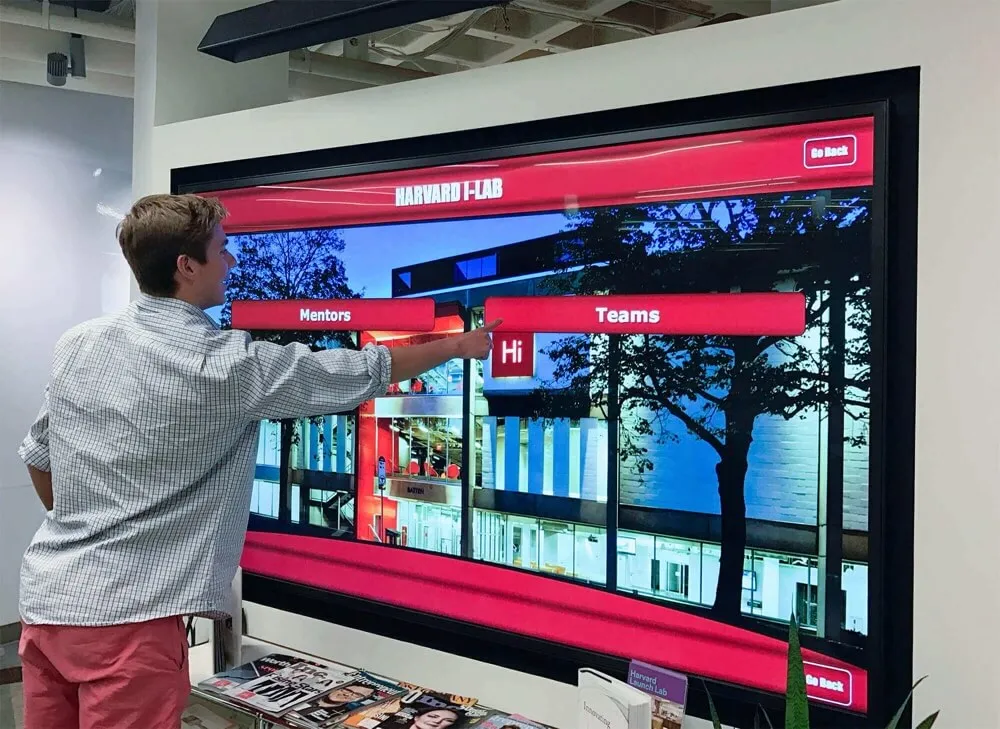
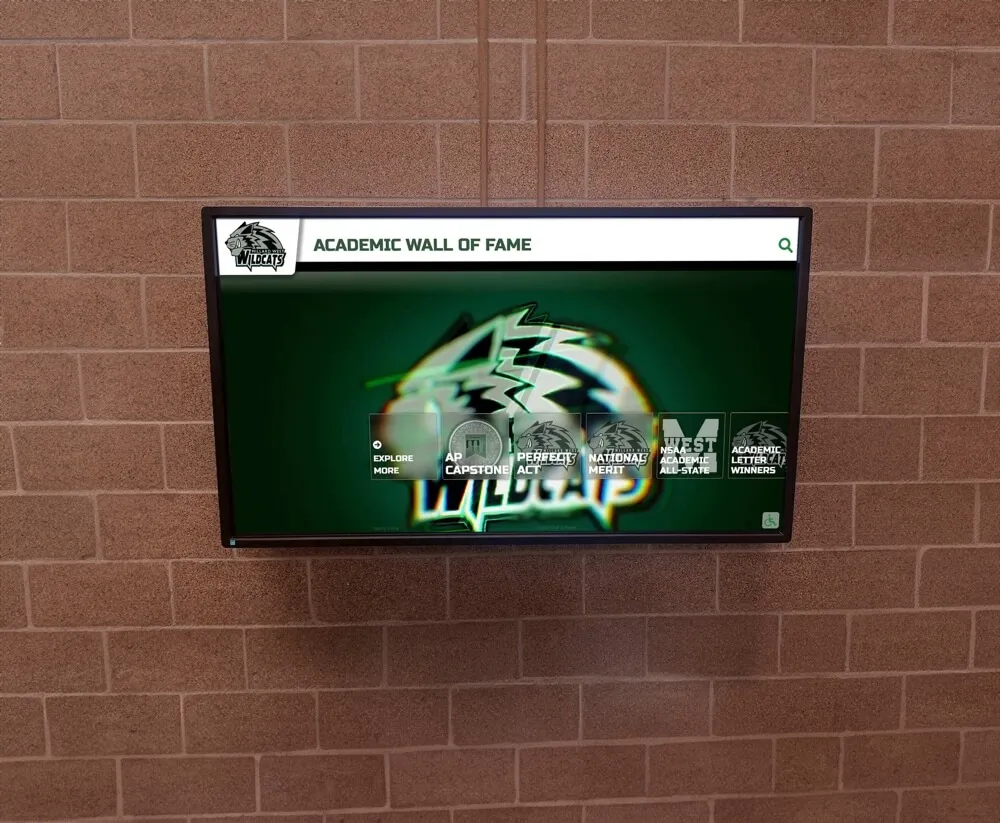
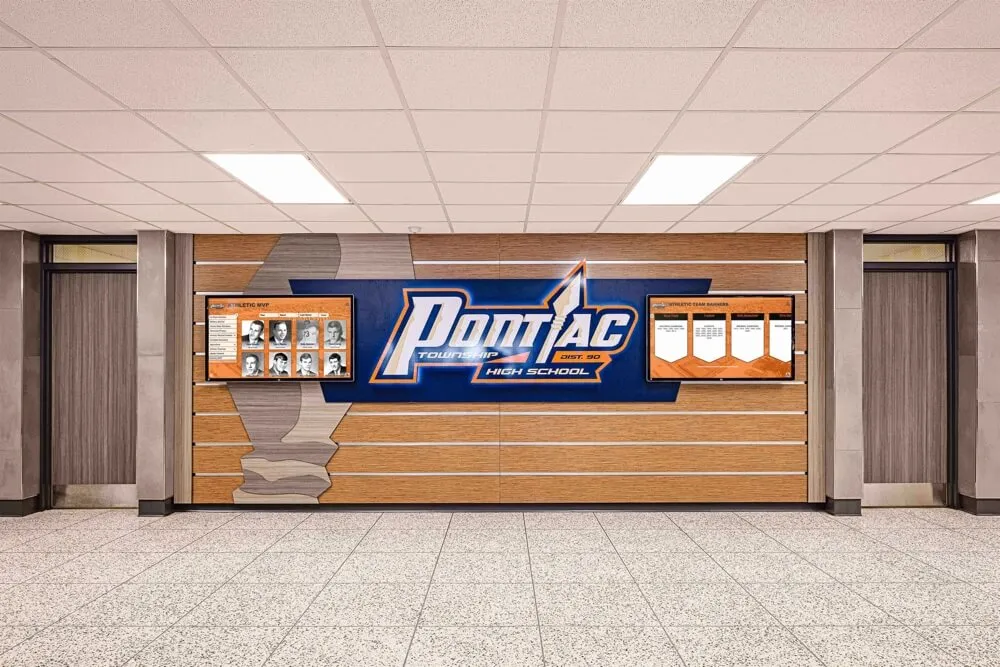
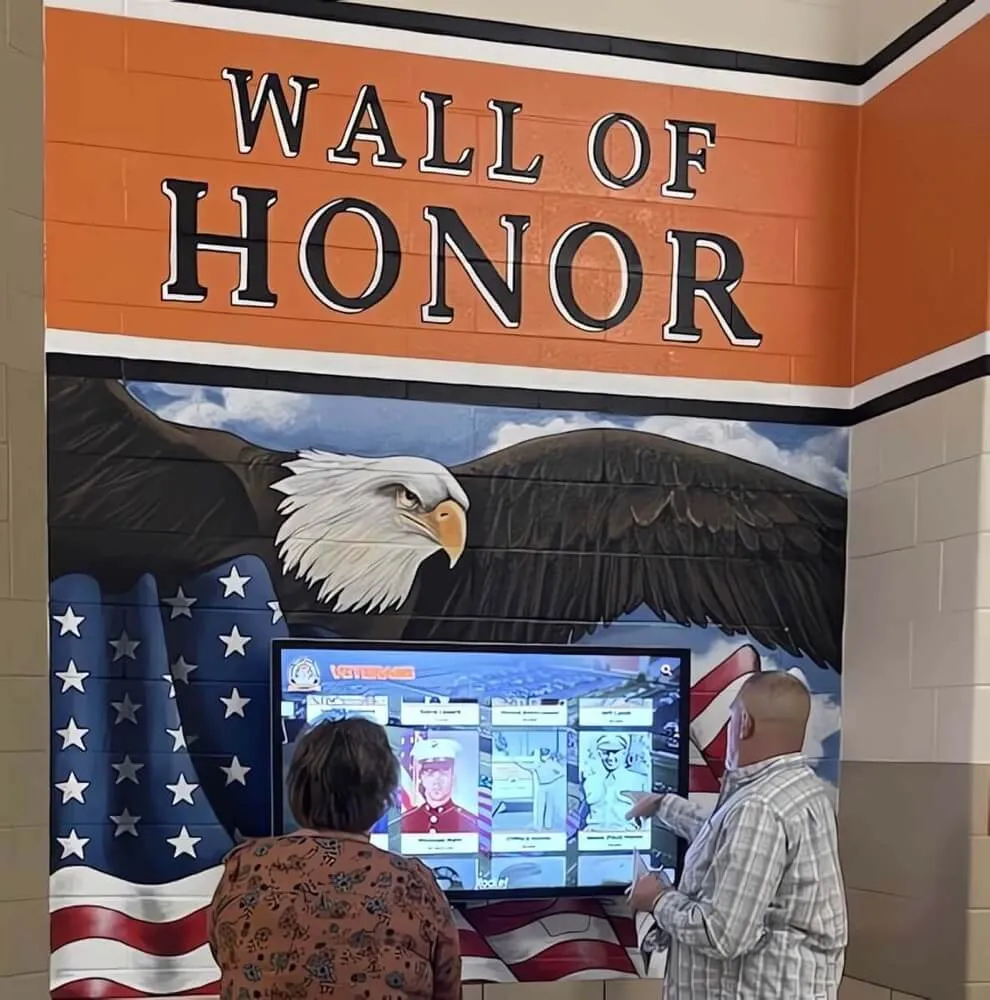
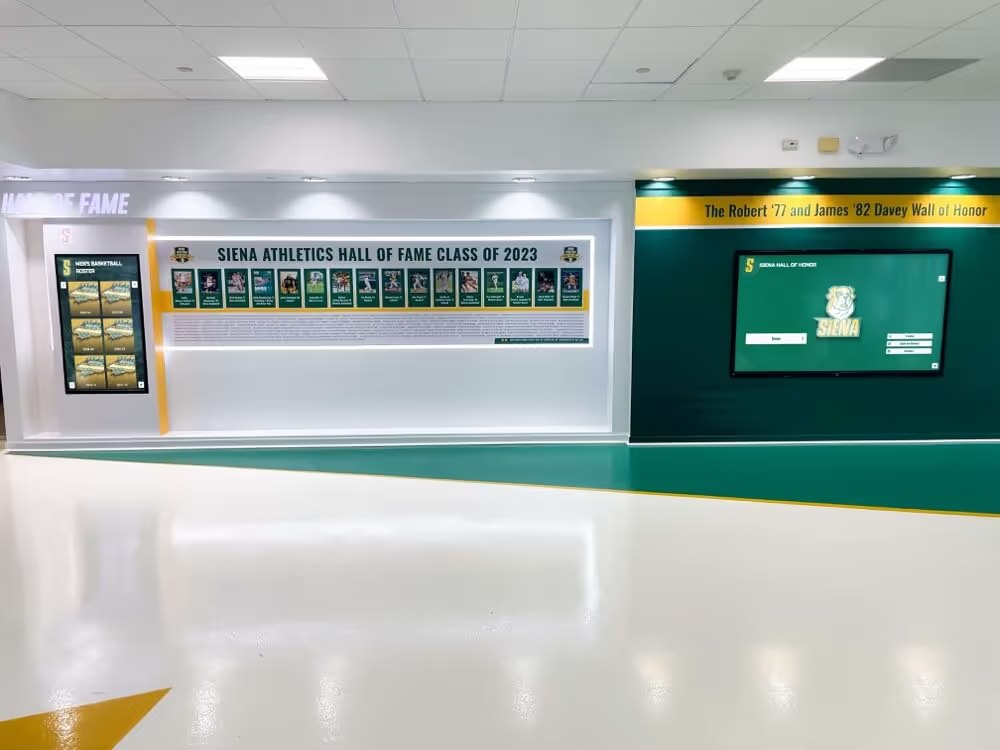
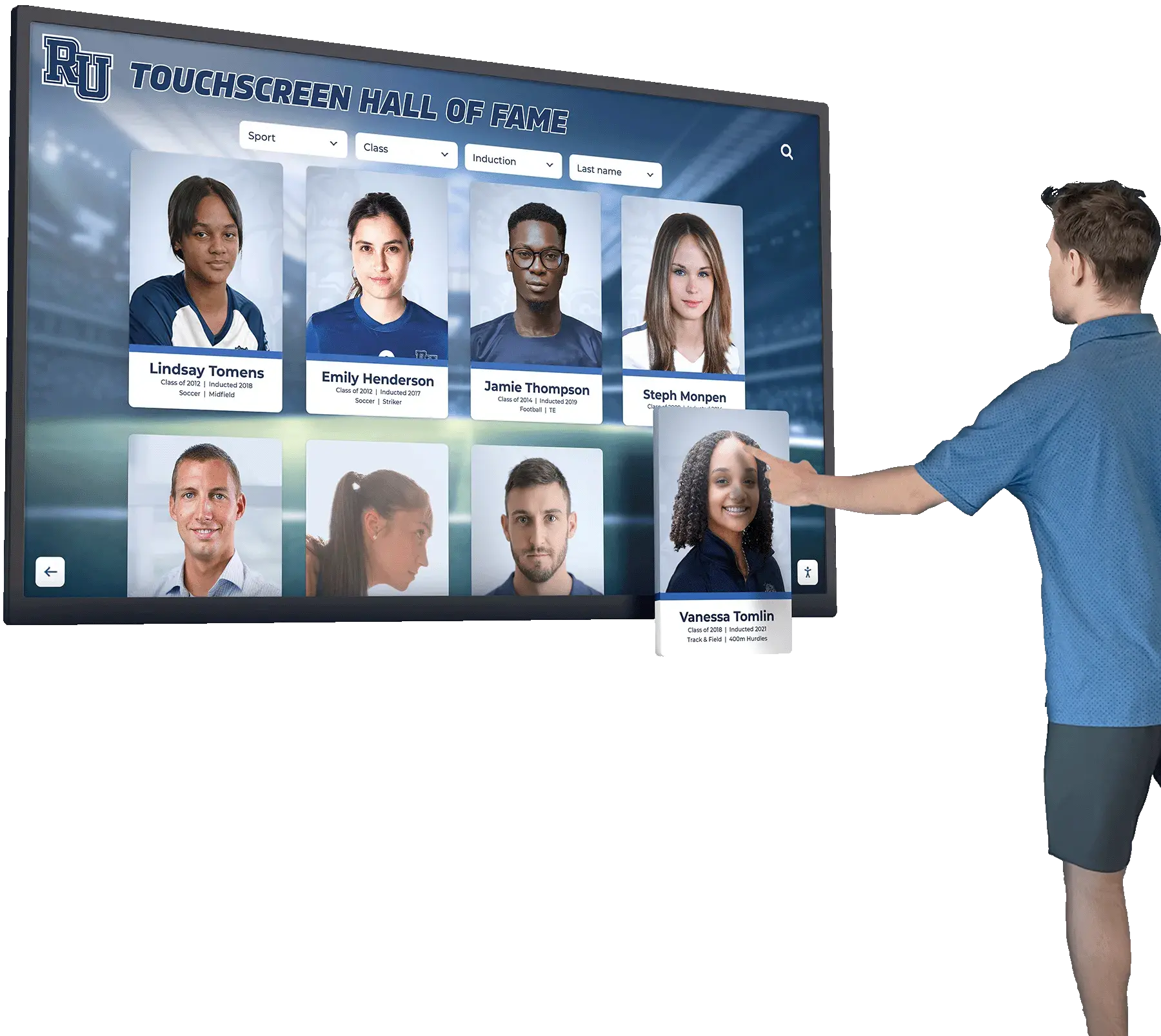
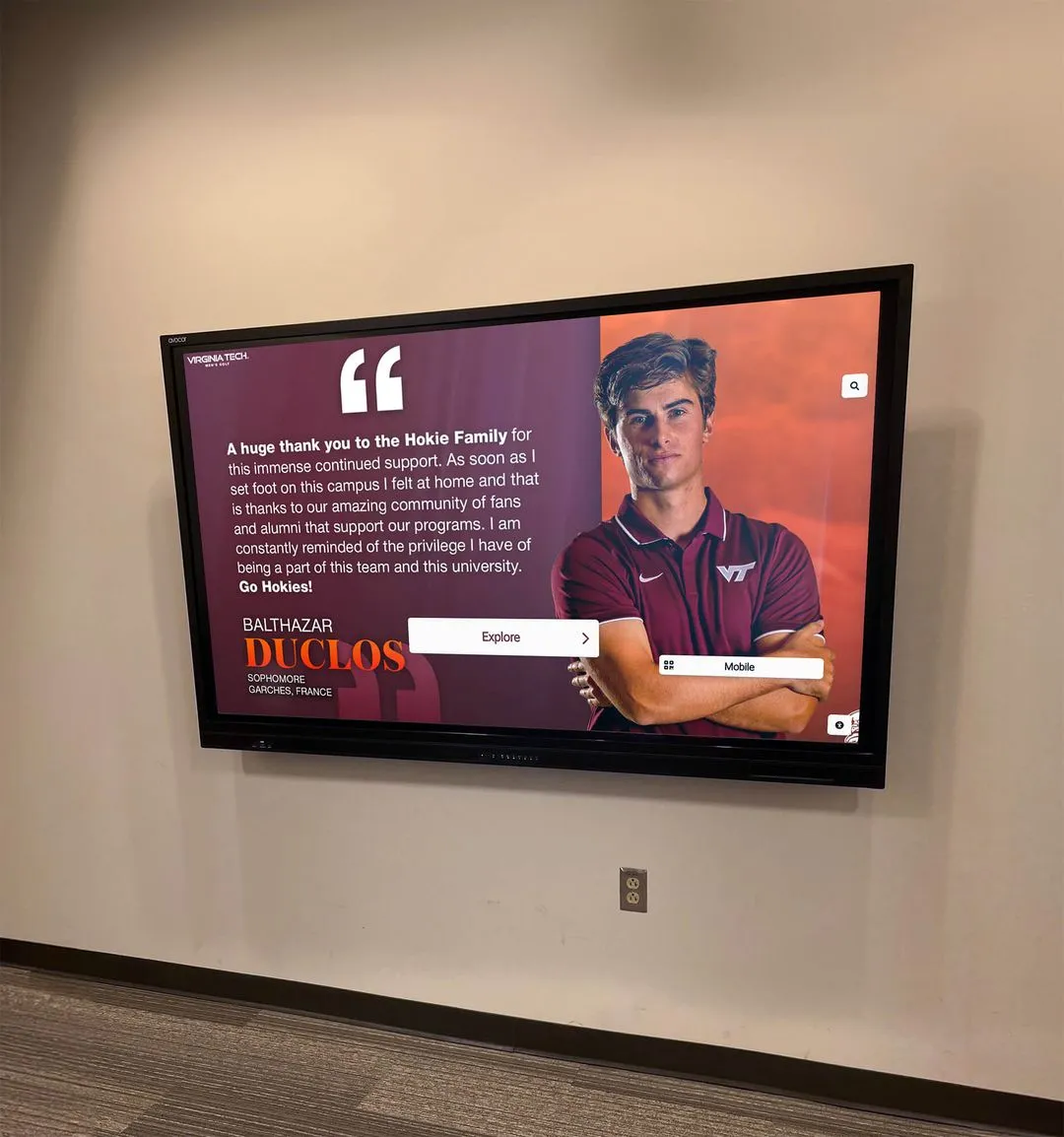
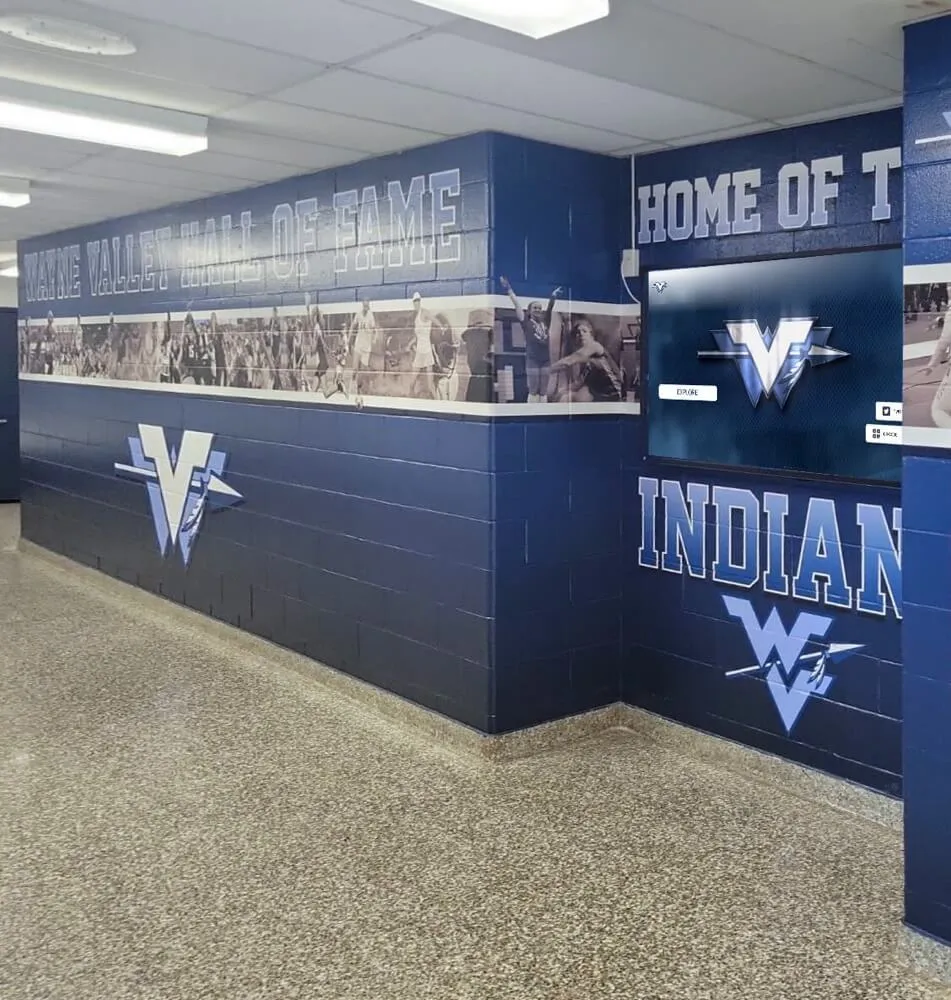
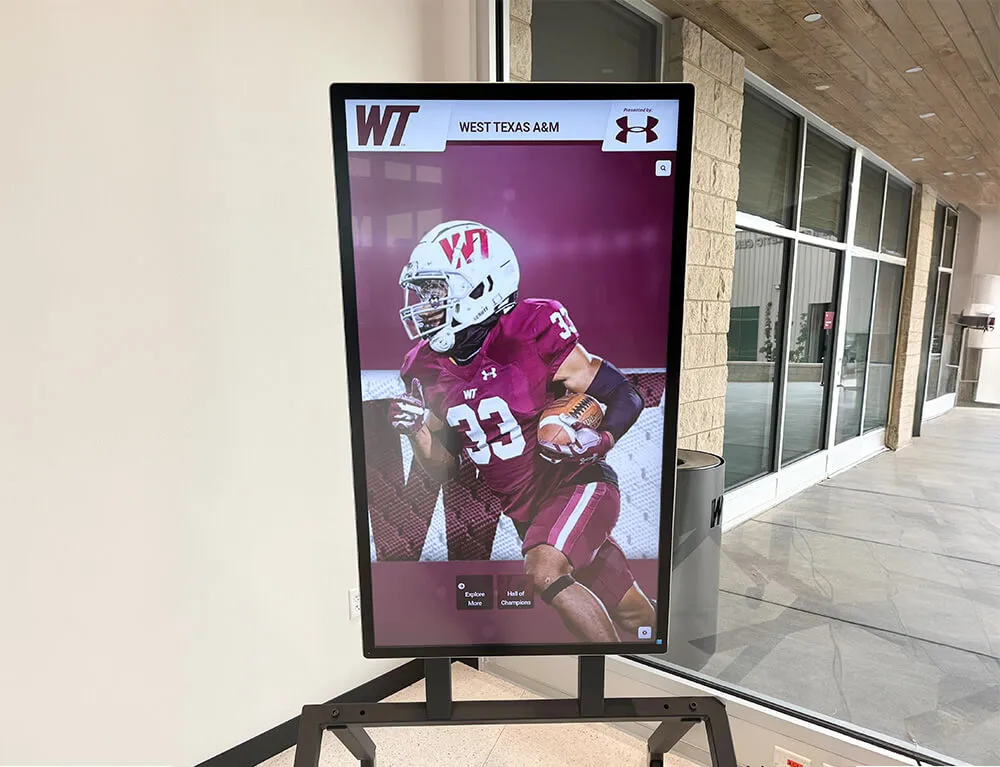
A written policy governs the lifecycle of the physical banner. A digital recognition system ensures the championship record lives on regardless of what happens to the cloth. Interactive touchscreen displays allow schools to present the full championship history — including championships from banners that have been retired or corrected — in a format that’s accessible to every visitor who walks through the door.
This matters most for schools with long-running programs. An institution that has been competing for 50 years may have retired dozens of early banners simply because of space and condition. Without a digital system, those championships exist only in paper files that most visitors will never see. With a digital display, the complete record is as visible and accessible as the banner hanging from the newest rafter.
Schools that have seen how digital platforms extend the life and reach of recognition programs — from organized award displays to comprehensive historical archives — understand the value of pairing physical tradition with digital depth. The investment in digital preservation reflects the same institutional seriousness that schools bring to programs where recognition matters deeply, from sports to academic achievement to school culture initiatives like teacher appreciation and staff recognition programs that rely on accurate, maintained institutional records to be meaningful.
Frequently Asked Questions
Who has authority to approve a championship banner replacement? Your policy should name a specific role, not a person. Most schools assign approval authority to the athletic director for day-to-day corrections and the principal or superintendent for retirements or policy changes. Naming roles rather than individuals keeps the process functional through staff transitions.
What if the error on a banner was never corrected and the original coach or team members are unreachable? Use primary source verification (Step 3a). Official school records, state athletic association databases, and yearbooks provide the evidentiary basis for a correction even without direct confirmation from participants. Document the sources thoroughly and follow the approval chain.
How long should a banner hang before it can be retired for space reasons? There is no universal standard. Many schools use a 20-year or 25-year minimum for space-management retirement, applying the policy to oldest banners first. The key is that the threshold is written, applied consistently across all sports, and paired with a commitment to digital preservation.
Does retiring a banner mean the championship no longer counts? No. The championship exists in the permanent institutional record regardless of whether a physical banner hangs on the wall. The digital archive, the school’s athletic records, and the state association’s results database all maintain that record independently of the physical display. Retiring a banner is a physical facilities decision, not a statement about the significance of the achievement.
What should schools do with championship banners from programs that have since been discontinued? Follow the same retirement procedure. The championship belongs to the athletes and coaches who earned it, not to the program as it exists today. Offer the banner to the head coach of record before storage or disposal, and ensure the championship remains documented in the digital archive. If a hall of fame program exists, review whether the championship warrants any updated recognition for participants.
How often should the banner inventory and policy be reviewed? An annual review aligned with the start of the academic year keeps the inventory current and catches emerging issues — a banner that has slipped from Good to Poor condition, a correction request that’s been waiting for approval, or a space threshold that’s approaching. A formal policy review every three to five years, or after any significant facility renovation, ensures the written policy remains accurate and complete.
Does a replacement policy need to address digital-only championships (e-sports, virtual competitions)? If your school recognizes e-sports championships with physical banners, they fall under the same policy. If recognition is digital-only, the policy should specify that those championships belong in the digital archive and define who is responsible for maintaining that record.
Keep Every Championship in Your Record — Permanently
Rocket Alumni Solutions builds interactive touchscreen systems that preserve your complete championship archive — including every banner you’ve ever retired, corrected, or simply run out of wall space to display. Every title, every roster, every season: accessible to anyone who walks through your doors.