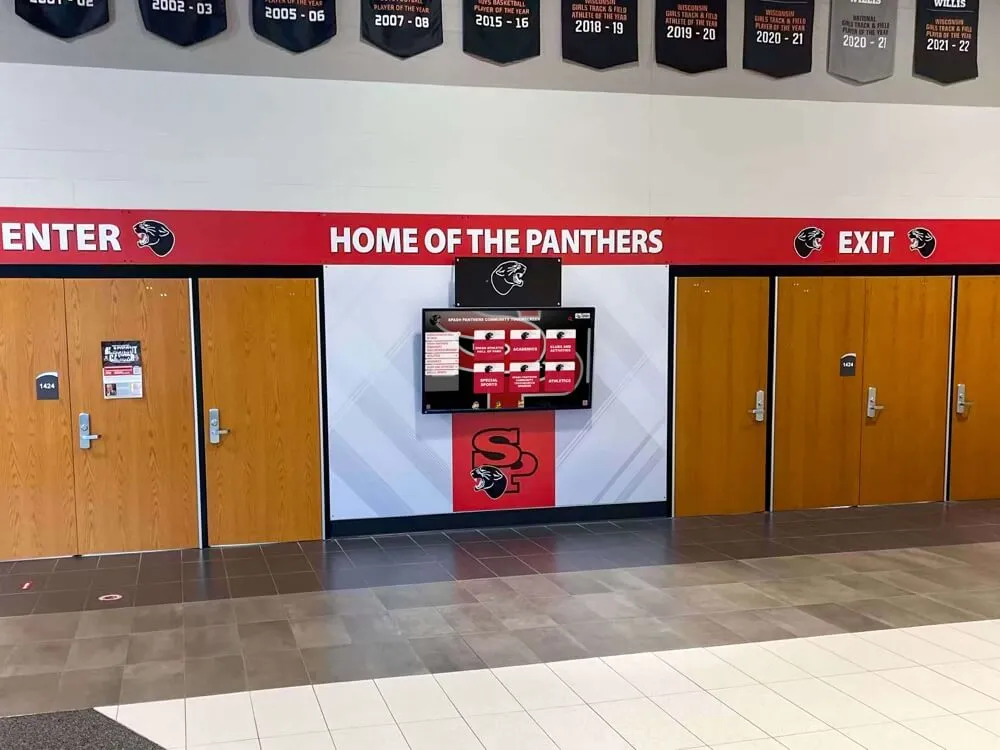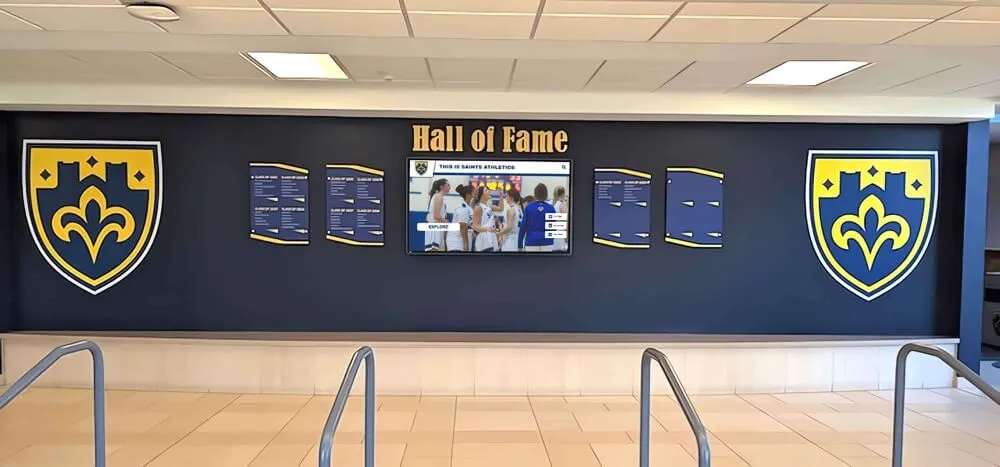




A championship banner inspection checklist is the simplest tool an athletic department can use to ensure that the physical recognition hanging in its gymnasium still honors athletes accurately, hangs safely, and looks worthy of the achievement it represents. Most programs inspect banners only when something goes visibly wrong — a frayed grommet, a year that turns out to be incorrect, a banner listing a roster name spelled incorrectly. A formal annual review catches those problems before they become embarrassments or safety concerns, and creates the institutional record that supports accurate recognition across staff transitions.
This guide covers the complete annual inspection process: mounting and hardware safety, physical condition assessment, recognition accuracy review, visibility and legibility checks, replacement evaluation criteria, and digital backup verification. Each section includes the specific line items that facilities staff, athletic directors, and recognition coordinators need to conduct a thorough review without relying on memory or guesswork.
Championship banners represent some of the most visible permanent recognition any school maintains. A banner hanging off-center, faded beyond legibility, or listing incorrect information is not a minor administrative oversight — it is a statement about how the program regards the athletes whose names and seasons it carries. An annual review treats that record with the seriousness it deserves.

Championship banners are permanent recognition records. An annual inspection keeps them accurate, safe, and worthy of the athletes they honor.
Why Annual Banner Inspection Should Be a Scheduled Event
Athletic programs that conduct banner inspections only in response to problems tend to discover those problems at the worst possible moment: just before a homecoming ceremony, during a facility tour for prospective students, or when an alumni donor is being recognized at a game. Scheduling the inspection as a formal annual event — ideally at the end of the academic year or early in the summer before fall programs resume — removes that risk.
An annual inspection also creates documentation. When a banner is found to be in excellent condition, that finding is recorded. When a banner is found to have a factual error, the correction process begins with a clear paper trail. When a banner is evaluated for replacement, the decision is supported by inspection records rather than staff recollection. This kind of institutional documentation protects both the physical recognition and the staff responsible for maintaining it.
Schools that take a systematic approach to physical athletic recognition often find that the same discipline applies to their digital recognition programs — the best digital hall of fame tools for athletics, donors, and school history share the same principle: accurate, well-maintained records are the foundation of recognition that actually honors the people it represents.
Section 1: Mounting and Hardware Safety
Banner hardware failures are the most immediately consequential inspection item. A banner that falls from its mounting point in a gymnasium during an event creates a safety incident — and a preventable one. This section should be completed by someone with access to a ladder and the ability to physically examine every attachment point.
Hardware components to inspect:
| Component | What to check |
|---|---|
| Wall-mount brackets or eye bolts | Structural integrity; no corrosion, cracking, or looseness in the anchor point |
| Cable or rope suspension | No fraying, kinking, or corrosion at connection points; appropriate tension |
| Grommets (banner side) | Secure, not torn; grommet material not pulling away from the banner fabric |
| S-hooks or carabiner clips | No significant deformation; gates (if carabiner) open and close properly |
| Poles (for free-hanging banners) | Not bent, cracked, or corroded; pole end caps intact |
| Ceiling anchors or rafter mounts | No visible movement or cracking in surrounding structural material |
Mounting safety checklist:
- Every anchor point is structurally sound — no movement when manually tested
- All cables, ropes, or chains are free of fraying or corrosion
- Every grommet is intact and not pulling away from the banner edge
- Banner hangs plumb — not tilted or torqued by uneven suspension
- No component shows signs of fatigue that would warrant replacement before the next inspection cycle
- Any hardware showing early-stage wear is documented for scheduled replacement
Mounting hardware should be replaced proactively rather than reactively. A grommet showing early wear is a banner that has not yet fallen; it should be noted and addressed at the inspection rather than returned to service until failure.
Section 2: Physical Condition Assessment
Physical condition directly affects how well a banner honors the athletes whose recognition it carries. A banner in poor condition communicates that the program does not maintain its own records — a message that undermines the recognition itself.
Condition rating scale:
| Rating | Definition |
|---|---|
| Excellent | Vivid color; no fading, staining, or physical damage; text and graphics fully crisp |
| Good | Minor surface dust or very slight fading; fully legible; all elements intact |
| Fair | Visible fading or light staining; fully legible from normal viewing distance; minor fraying |
| Poor | Significant fading or staining; legibility compromised from normal distance; physical damage present |
| End-of-Life | No longer acceptable as public-facing recognition; requires replacement |
Physical condition checklist:
- Inspect all four edges for fraying, tears, or separation from reinforcement tape
- Examine the full face of the banner under good light — check for fading, UV bleaching, or water staining
- Check the reverse side for moisture staining or mildew, which can cause the face to deteriorate from behind
- Confirm that all text remains legible from the floor (simulating the viewer’s perspective)
- Confirm that all graphic elements — mascots, seals, logos — remain recognizable
- Photograph the full banner and any areas of concern for the inspection record
- Assign a condition rating and document it with the date and inspector name
Any banner rated Fair or below should be flagged for the replacement evaluation process in Section 5. A banner that cannot be read from normal viewing distance is no longer functioning as recognition.

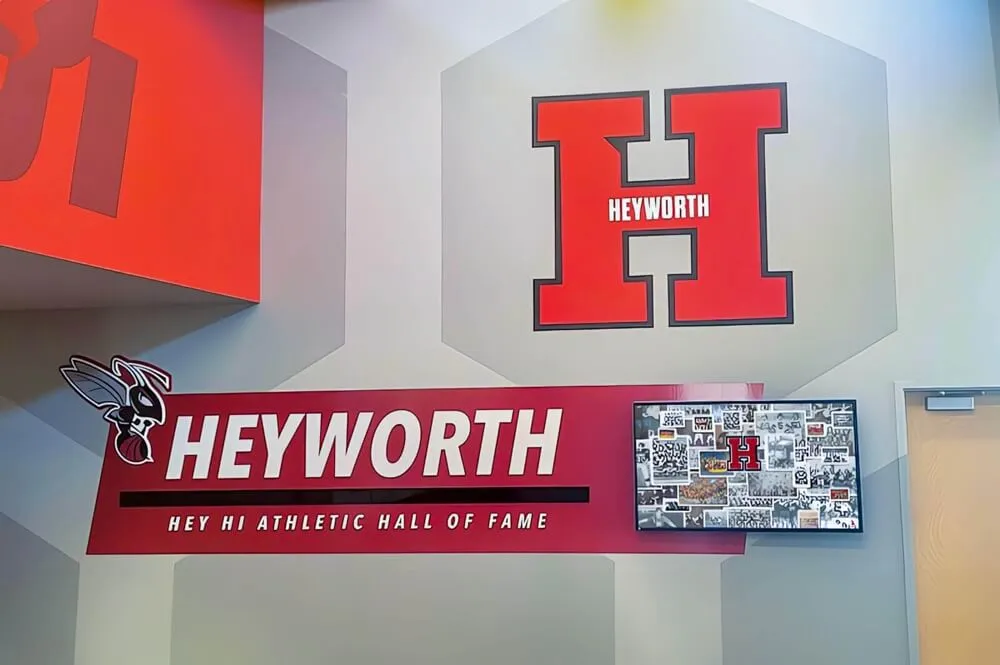
Physical and digital championship records require the same institutional attention. An annual review keeps both accurate and current.
Section 3: Recognition Accuracy Review
This section addresses the most consequential inspection category: whether the information on each banner is factually correct. Errors in championship recognition are more common than most programs realize, and they range from minor (a coaching staff member listed by a former name) to significant (an incorrect year or championship category that misrepresents the historical record).
Sources for accuracy verification:
- State athletic association records and official championship databases
- School year archives and yearbooks from the championship year
- Official game programs or tournament brackets from the season
- Prior athletic department records reviewed at the time of banner creation
- Long-tenured staff or alumni with direct knowledge of the season
Accuracy checklist:
- Championship type is correctly identified — conference, regional, district, sectional, state, national
- Academic year or calendar year is correct and matches official records
- Sport and division or classification are accurate
- Head coach name is spelled correctly and matches records from the championship year (not a current name if the coach has since had a name change)
- Roster names, if included, are individually verified against the season roster on file
- Graduation year listings, if included, are correct
- School name matches what was in use during the championship year — important for programs with name changes
- Record or score displayed, if any, matches official records
- Classification or enrollment division is correct for the year
What to do when an error is found:
Document the error in writing before taking any action. Record the incorrect information, the correct information, and the source used to verify it. Submit the error through whatever approval process the athletic department uses for official records corrections — typically the athletic director and, for championship record corrections, potentially the state association.
The decision to correct an existing banner or replace it depends on the nature of the error and the physical condition of the banner. A banner with a minor typographical error but otherwise in excellent condition may be correctable through a professional banner service. A banner with an accuracy error and Fair or Poor physical condition is a candidate for replacement rather than repair.
Programs that have digitized their championship records as part of a broader digital hall of fame recognition system have a significant advantage during accuracy review: the digital record typically includes the verified data that can be cross-referenced against the physical banner, immediately flagging discrepancies.
Section 4: Visibility and Legibility Assessment
A banner that exists but cannot be seen from normal viewing positions does not function as recognition. Visibility problems range from placement that puts banners out of sightlines to lighting conditions that make text impossible to read during the events when most viewers are present — typically evening games and ceremonies in a gymnasium with specific lighting configurations.
Visibility assessment checklist:
- Stand at the primary spectator position (bleachers, midcourt, lobby entrance) and confirm that each banner is visible without obstruction
- Assess legibility at normal viewing distance with lighting conditions matching an evening event — if overhead lights create glare on banners, note that
- Confirm that banners are not obscured by scoreboards, catwalks, speaker systems, or other equipment added since the banner was hung
- Check for banners where the hanging height or angle places key text (year, sport, championship type) at an awkward reading angle
- Assess color contrast — banners where the text color has faded toward the background color may be technically present but functionally illegible
- For banners in auxiliary spaces (hallways, trophy corridors), confirm that lighting conditions in those areas provide adequate illumination
Spacing and organization review:
- Championship banners are organized in a way that allows visitors to find specific seasons without searching — typically chronological within sport, or grouped by sport and then chronological
- If banners have been added over time without a consistent placement plan, assess whether the current arrangement still communicates legible institutional history or has become visually disorganized
- If banners are approaching the limit of available hanging space, note this as a planning item for the athletic director
Academic achievement displays and athletic recognition face the same visibility challenge: recognition that is technically present but visually inaccessible does not fulfill its purpose. The annual inspection is the right moment to assess whether existing banners are actually seen by the students, athletes, and visitors who walk through the space every day.
Section 5: Replacement Evaluation Criteria
Not every banner that warrants attention needs to be replaced immediately. This section provides a structured framework for evaluating which banners should be prioritized for replacement, which can continue in service with monitoring, and which require immediate action.
Immediate replacement criteria (act before next season):
- Banner rated End-of-Life on the physical condition scale
- Confirmed factual error that cannot be corrected through a banner service
- Mounting hardware failure that cannot be safely repaired
- Banner no longer legible from normal viewing distance
- Significant mildew or pest damage that has compromised the material
Scheduled replacement criteria (plan for next budget cycle):
- Banner rated Poor on the physical condition scale
- Minor factual error that warrants replacement rather than on-banner correction
- Banner whose design standards are significantly inconsistent with current program standards (different font system, school colors from a prior era, or logo from a rebranded period)
- Banner approaching end of expected service life — typically 15–25 years for nylon or polyester banners in gymnasium environments with appropriate care
Monitor and re-inspect criteria (flag for next annual review):
- Banner rated Fair on the physical condition scale with no factual errors
- Hardware showing early-stage wear that does not require immediate action
- Visibility or placement issue that requires a facilities project rather than banner replacement
Replacement process note:
When a banner is replaced, the original should be stored rather than discarded until the replacement has been confirmed accurate and installed. Photograph the original in full before it is removed. The original becomes part of the institutional archive — a physical record of how the recognition appeared at a specific period in the program’s history.
Section 6: Digital Backup Verification
Every championship banner should have a corresponding digital record that preserves the recognition permanently regardless of what happens to the physical object. This section verifies that the digital archive is current, accurate, and accessible.
Digital backup checklist:
- Every currently hanging banner has a corresponding entry in the institutional digital archive
- The digital record includes: sport, championship type, year, classification, and any roster or coaching information displayed on the physical banner
- At least one high-quality photograph of each banner exists in the digital archive, taken from full viewing distance
- Close-range photographs of text-heavy sections (roster names, coaching staff) exist for every banner where those details are included
- Photographs are stored in at least two locations — the primary institutional system and a backup
- Digital records include any known errors or discrepancies that are documented but not yet corrected on the physical banner
- The digital record is linked to or consistent with the school’s broader athletics recognition system
Why the digital record matters:
The banner is a physical object with a finite lifespan. The digital record outlives the banner indefinitely. When a renovation requires banners to be taken down temporarily, the digital record maintains the championship history’s visibility. When a banner is lost or damaged, the digital record provides the verified data needed to reorder accurately. When advancement staff are preparing a donor recognition event that touches on championship history, the searchable digital record is the asset they actually use.
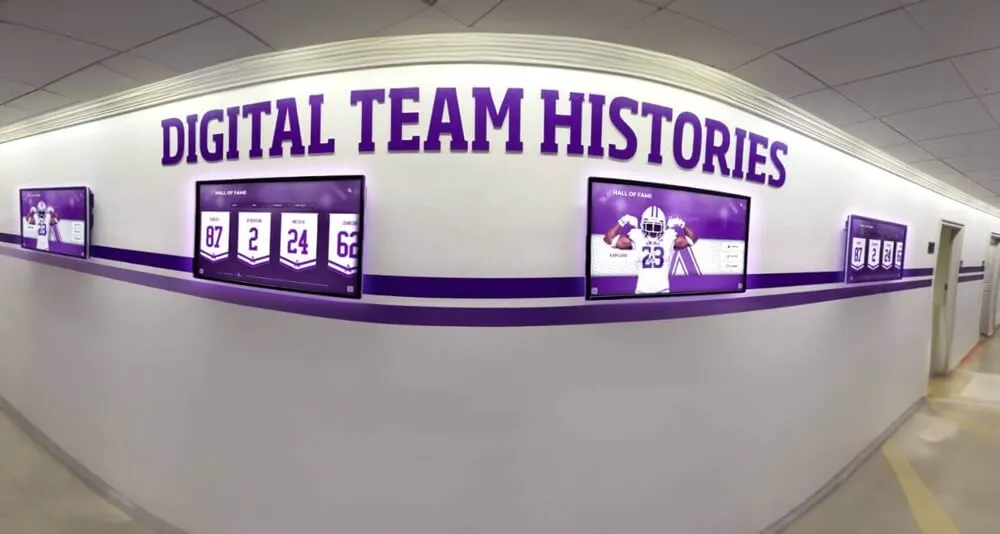
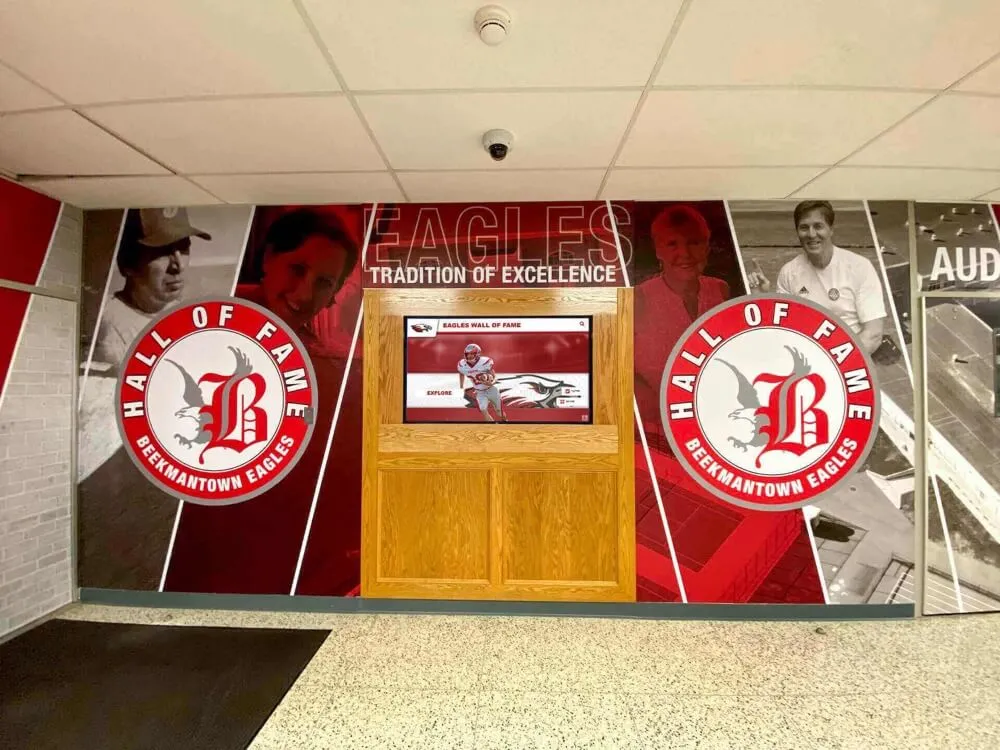
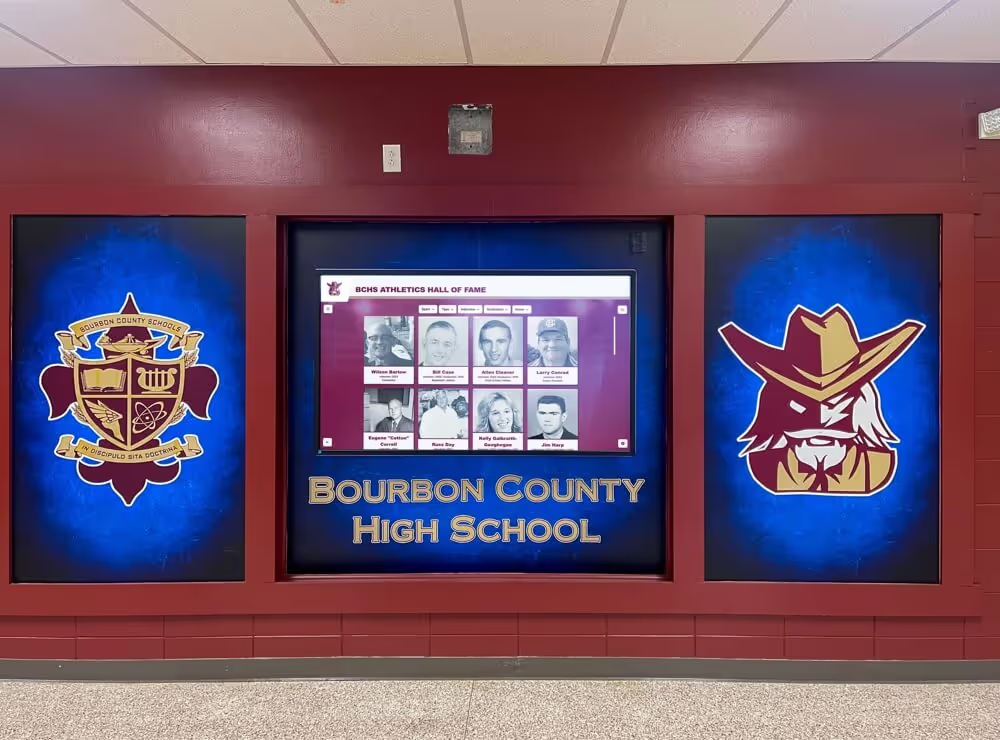
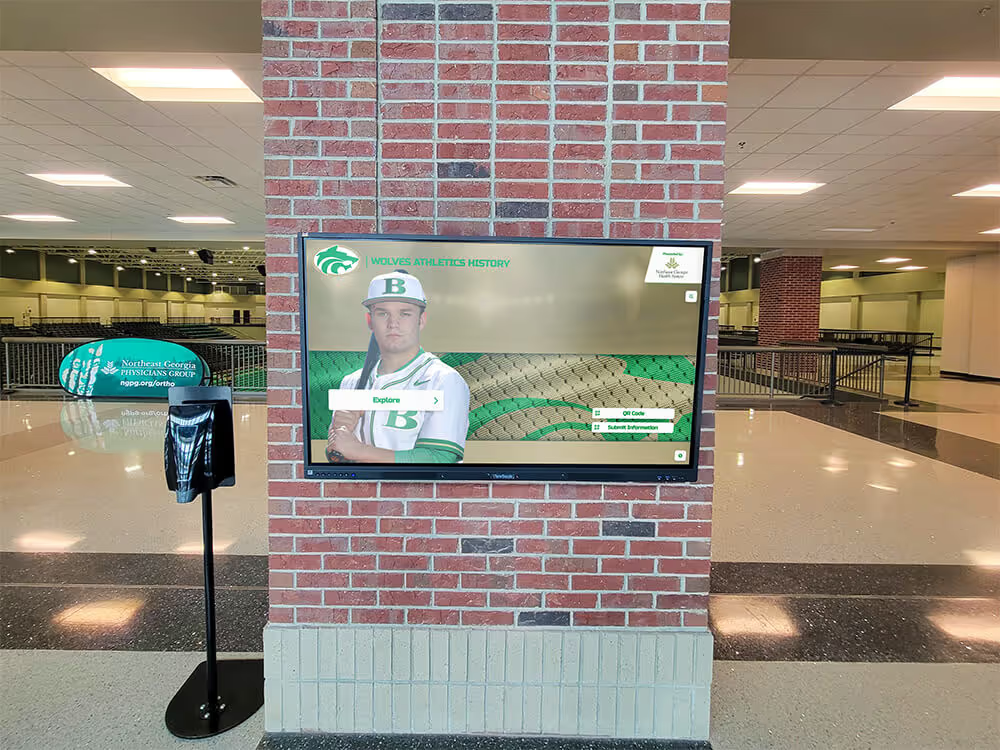
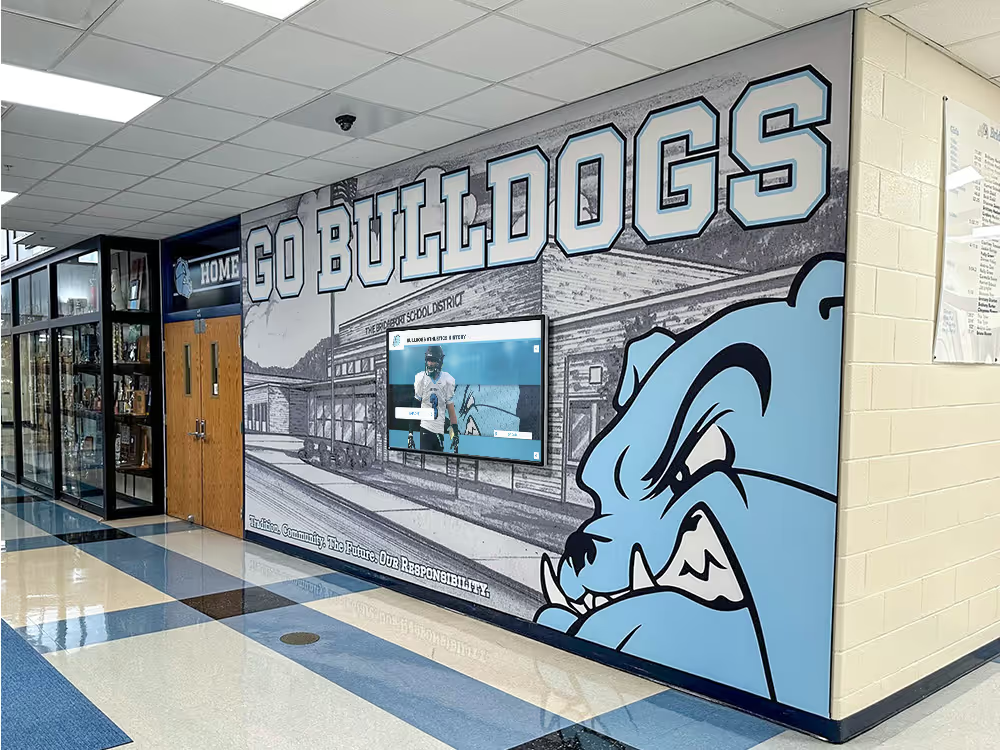
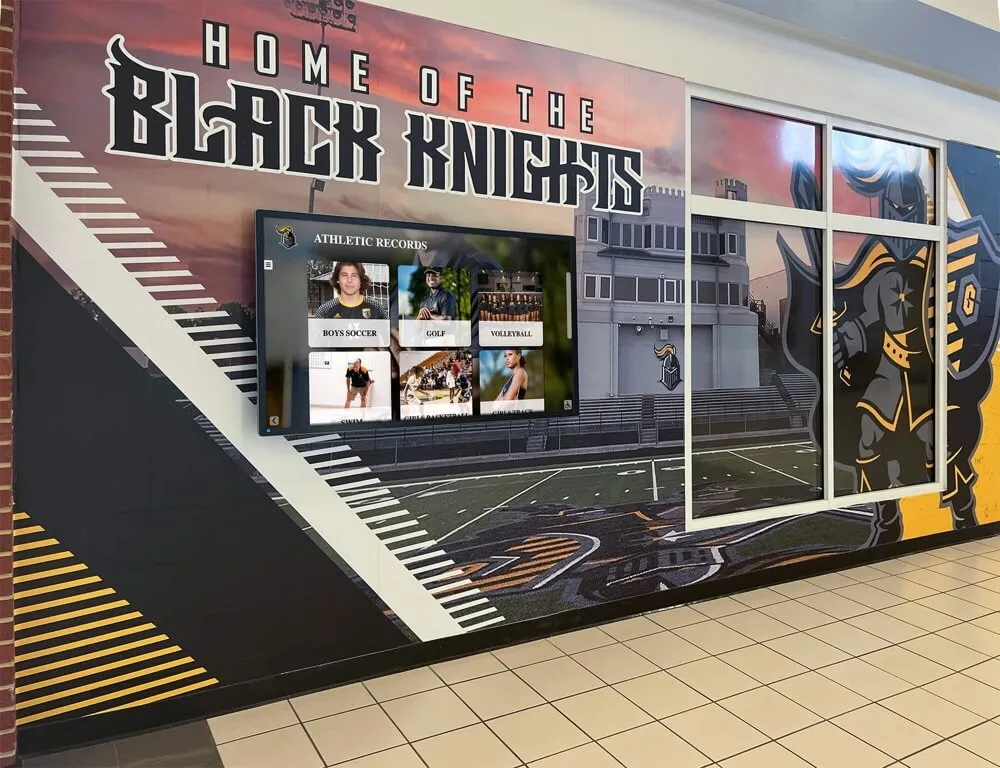
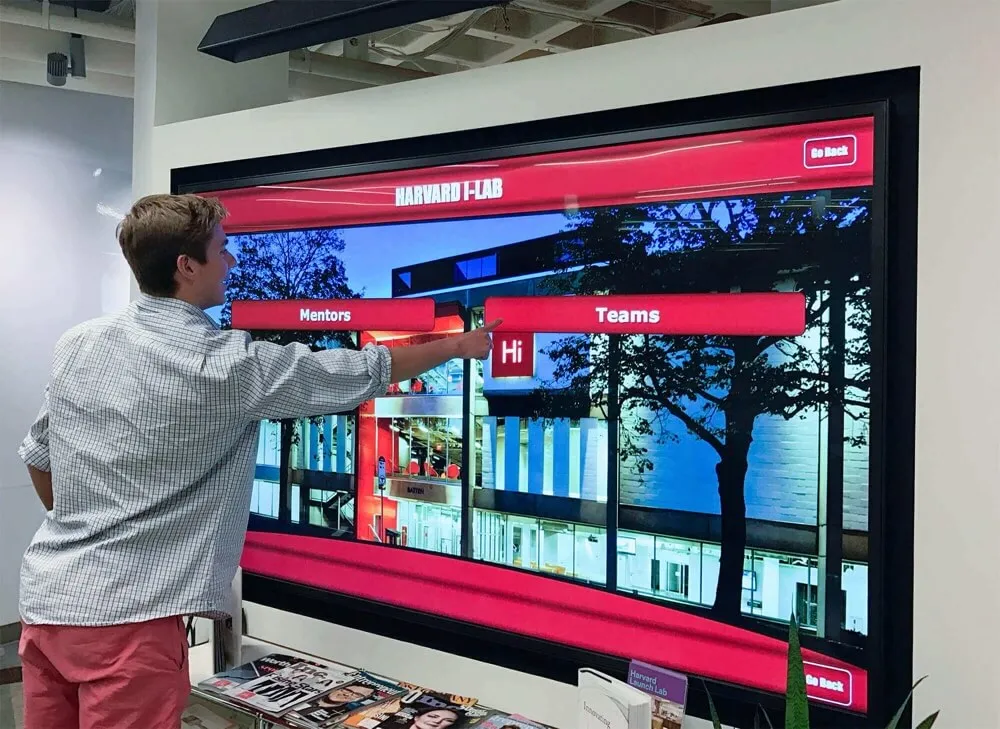
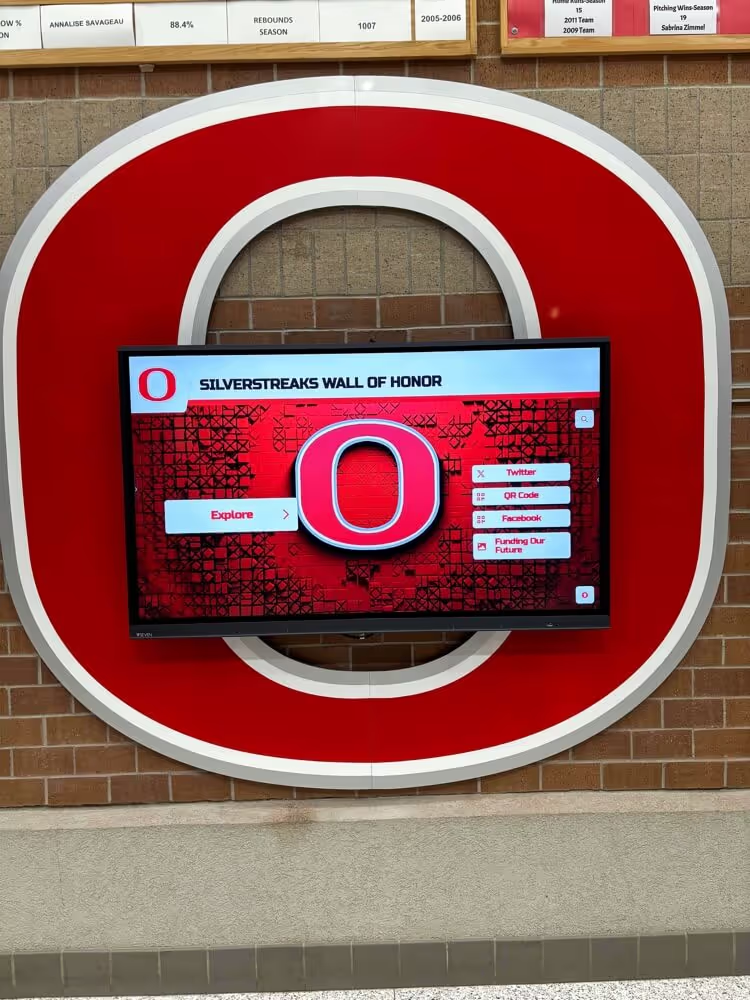
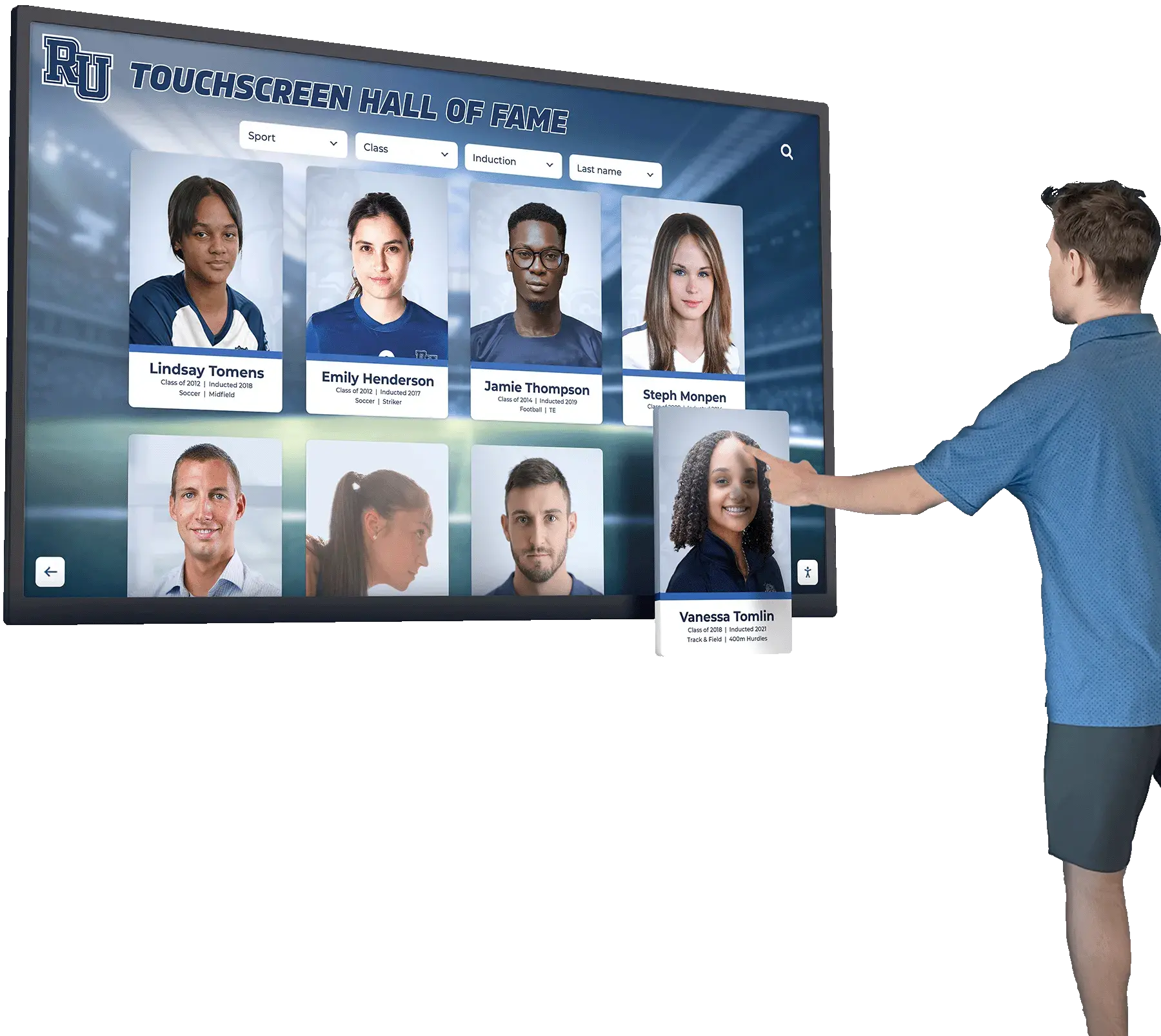
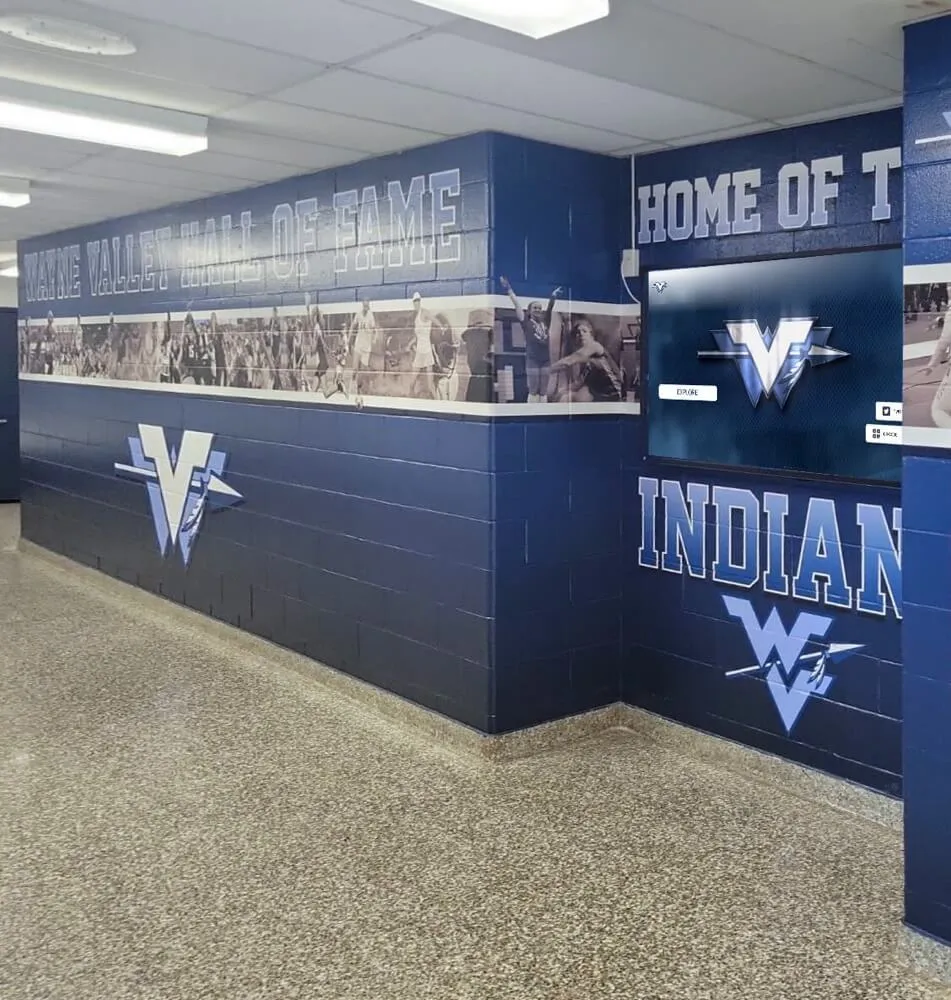
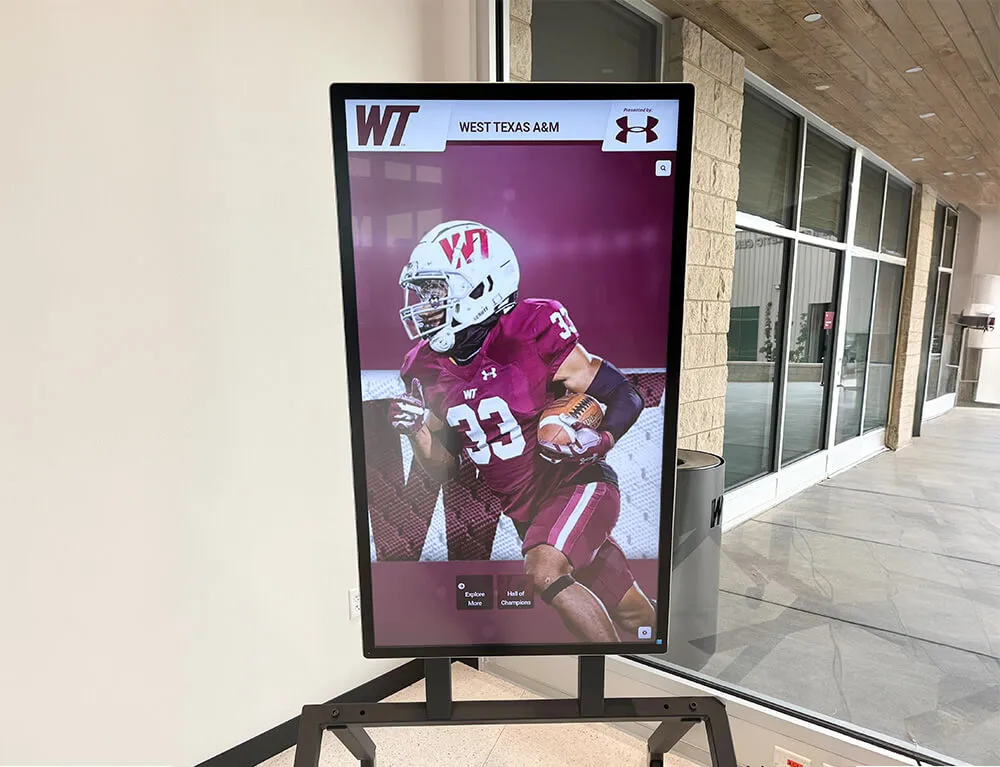
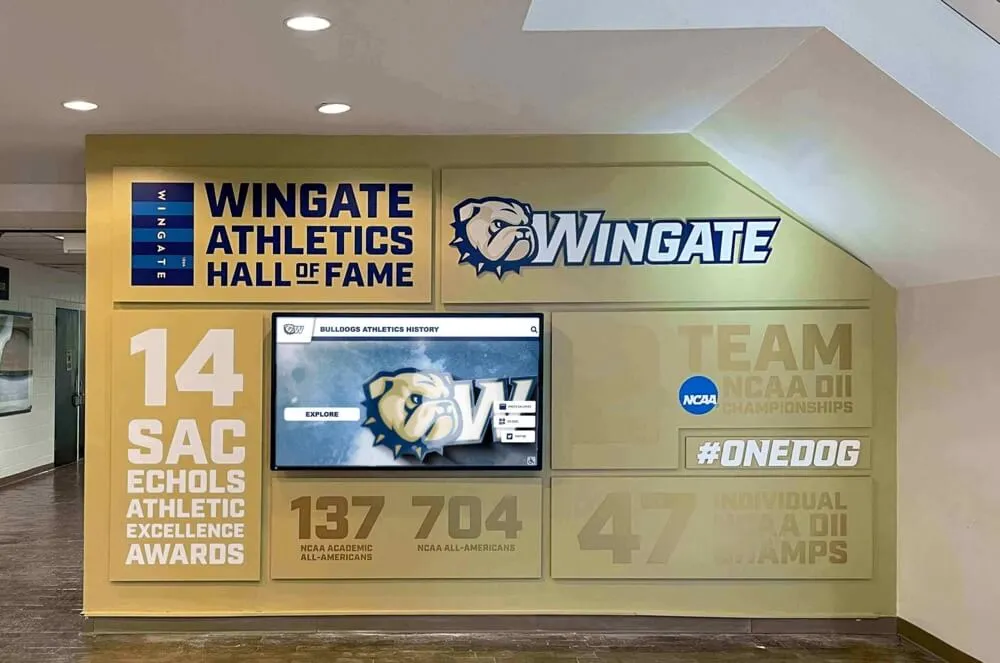
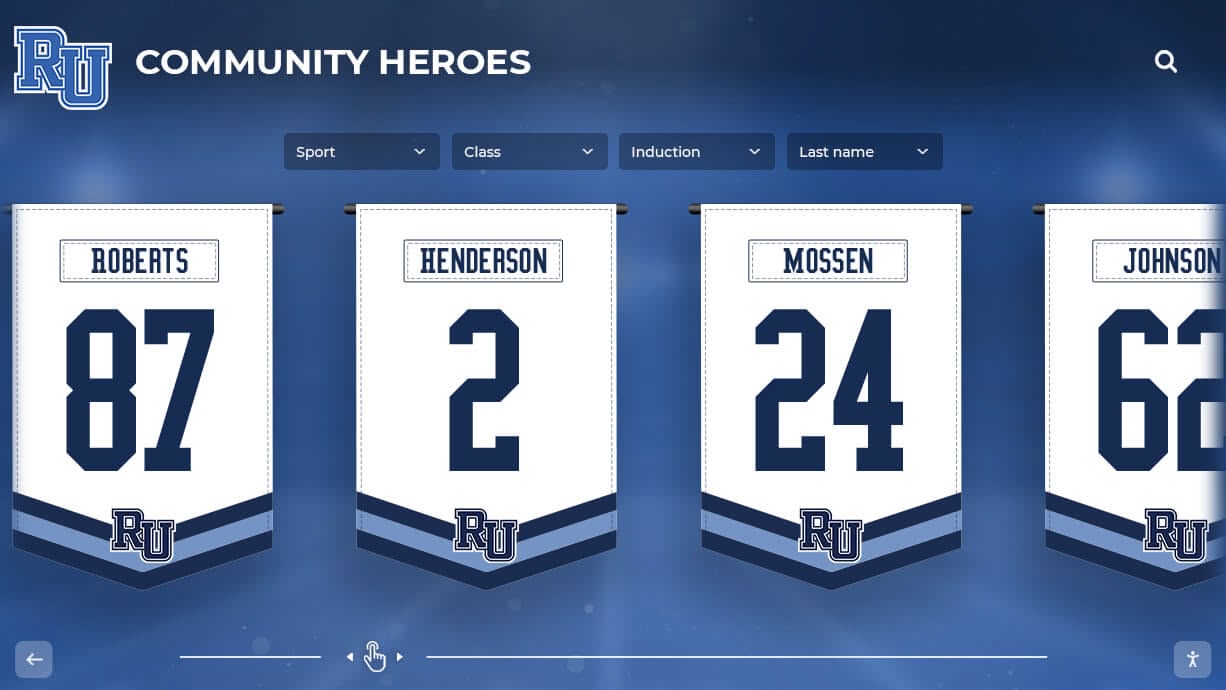
The relationship between physical and digital recognition becomes especially important as schools invest in interactive touchscreen hall of fame systems that make championship records searchable and browsable without physical handling of any original materials. Schools exploring these systems should ensure that the data accuracy standards applied to the digital record are at least as rigorous as the accuracy review conducted for the physical banner. Resources on data integrity in digital hall of fame systems address how to evaluate whether a recognition platform maintains accurate records over time.
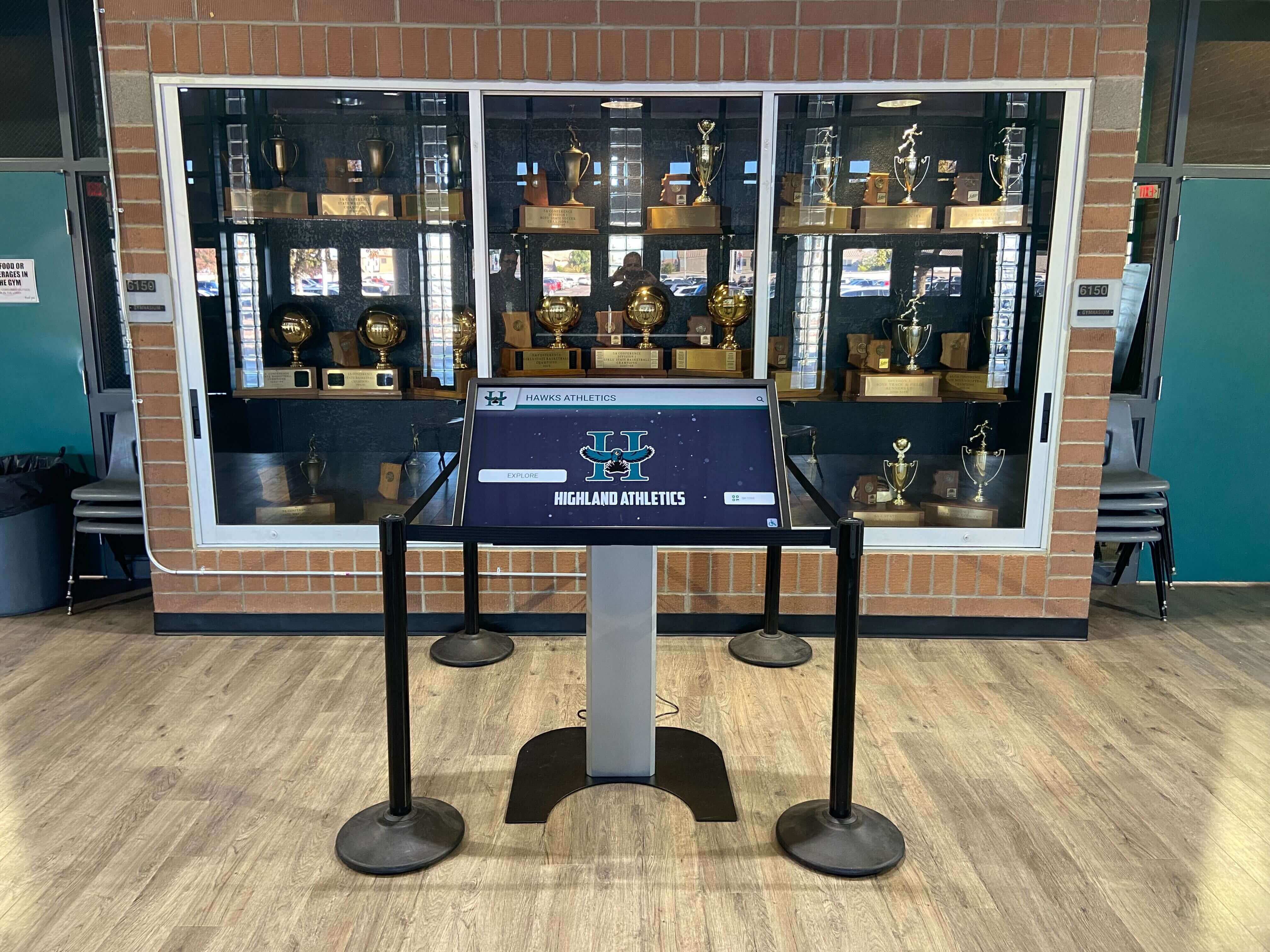
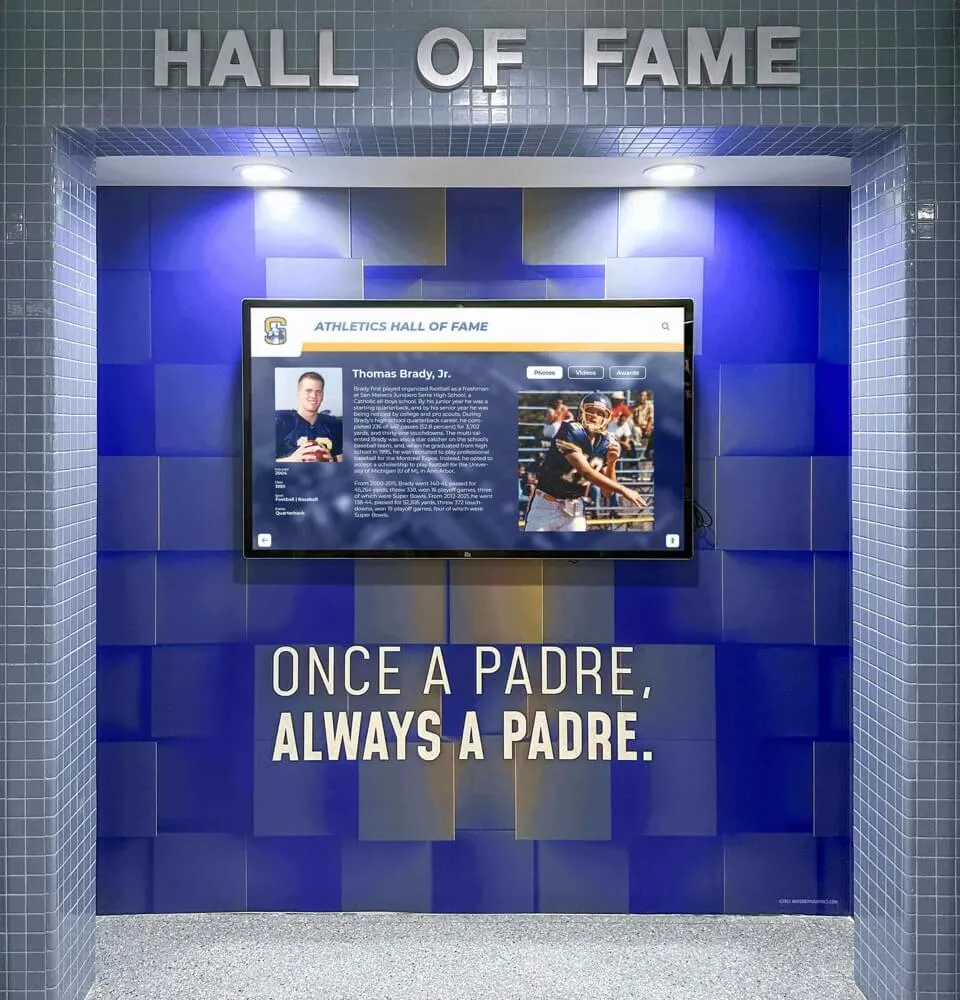
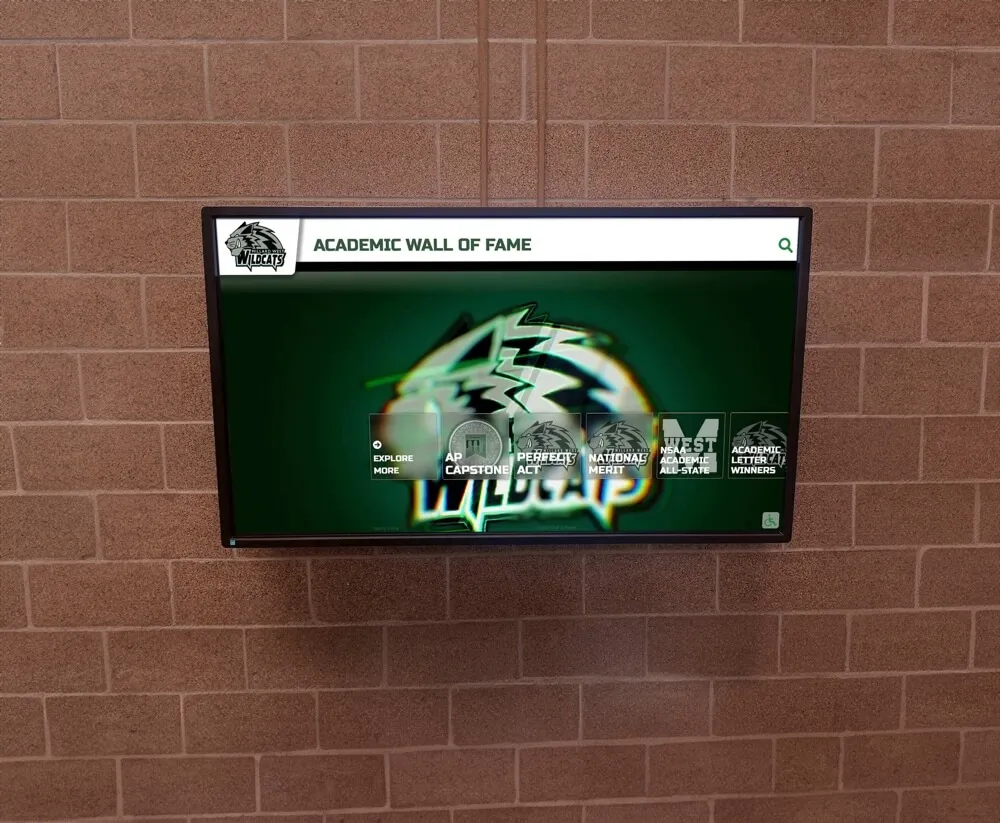
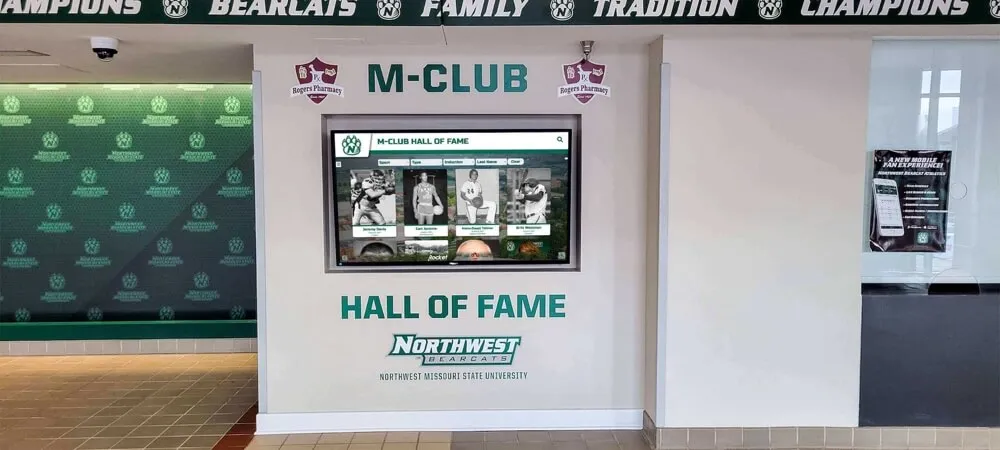
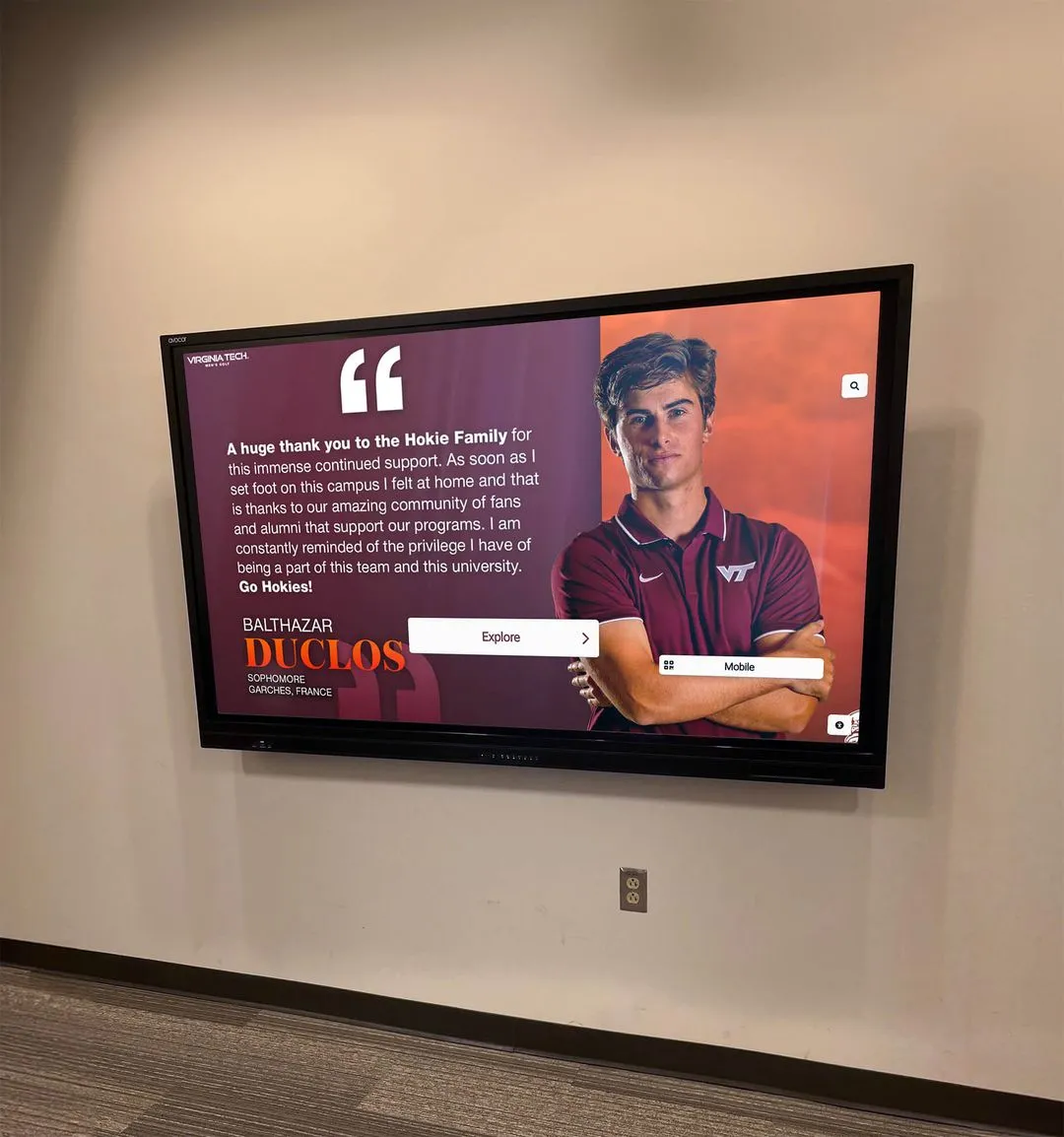
A digital recognition system ensures championship history remains visible and searchable even during periods when physical banners are stored, replaced, or under review
Complete Annual Inspection Checklist
The following consolidated checklist is designed to be printed or saved as the working document for the annual review. Complete one entry per banner and retain the completed forms as institutional records.
Banner Identification
- Sport and championship type recorded
- Year recorded (academic year format, e.g., 2019–20)
- Classification or division recorded if applicable
- Banner location in facility recorded (gymnasium north wall, trophy corridor, etc.)
Mounting and Hardware Safety
- All anchor points structurally sound; no movement when tested
- All cables, ropes, or chains free of fraying or corrosion
- All grommets intact and not pulling away from banner edge
- Banner hangs plumb — not tilted or torqued
- No hardware component requires immediate replacement
- Early-wear items documented for scheduled replacement
Physical Condition
- All four edges inspected for fraying, tears, or reinforcement tape separation
- Full face inspected for fading, UV bleaching, or water staining
- Reverse side inspected for moisture staining or mildew
- All text legible from floor viewing position
- All graphic elements recognizable from floor viewing position
- Full banner photographed; areas of concern photographed at close range
- Condition rating assigned: Excellent / Good / Fair / Poor / End-of-Life
Recognition Accuracy
- Championship type verified against official records
- Year verified against official records
- Sport, division, and classification verified
- Head coach name verified against records from the championship year
- Roster names (if present) verified against season roster on file
- School name verified as correct for the year displayed
- Any errors documented in writing with source of correction
Visibility and Legibility
- Banner visible from primary spectator positions without obstruction
- Text legible at normal viewing distance under game lighting conditions
- Banner not obscured by equipment added since original installation
- Color contrast adequate — text distinguishable from background
- Lighting in banner’s location adequate for recognition display purposes
Replacement Evaluation
- No immediate replacement criteria apply OR immediate replacement initiated
- No scheduled replacement criteria apply OR added to budget cycle planning
- Monitor items documented for next annual review
Digital Record
- Digital archive entry exists and matches the physical banner
- High-quality photograph of full banner on file
- Close-range photographs of text-heavy sections on file
- Photographs stored in primary system and backup
- Any documented errors reflected in digital record notes
Inspector Information
- Inspector name recorded
- Inspection date recorded
- Completed checklist filed in institutional records
Scheduling the Annual Review
The most effective annual banner inspections happen during a predictable window when gymnasium access is available and the review can be completed systematically without disruption to programs. Common scheduling approaches:
End of academic year (May–June): Facilities access is generally good, spring sports have concluded, and findings can be incorporated into summer budget planning. Replacement or repair orders placed in June are typically ready before fall season.
Summer pre-season (July–August): Completed before fall programs begin, this timing ensures the gymnasium is in full inspection condition before the year’s first events. Works well for programs where spring sports scheduling creates access conflicts.
Rolling inspection by zone: Programs with very large banner inventories sometimes divide the gymnasium into zones and inspect each zone in a different month, completing the full inventory over the course of a semester. This reduces the single-event time commitment but requires careful tracking to ensure no banner is skipped.
Whatever schedule is chosen, building the inspection into a recurring calendar event — with a named responsible person and a documented completion record — is what distinguishes a maintained recognition program from one that inspects reactively. Schools that want to understand how digital recognition tools can reduce the administrative burden of physical recognition maintenance often start by reviewing comprehensive guides to hall of fame tools for athletic programs that address both the digital and physical dimensions of athletic recognition.
Connecting Physical Inspection to Long-Term Recognition Planning
An annual inspection is not just a maintenance task — it is a planning tool. The findings from each inspection accumulate into a multi-year record of how the program’s physical recognition is evolving: which banners are aging out, which hardware systems are nearing end of service, where accuracy errors have clustered, and where the physical display is approaching capacity.
Programs that use those findings to inform long-term recognition planning tend to avoid the crisis scenarios that reactive maintenance creates: the banner that falls from a failing mount during a ceremony, the replacement order placed at the start of fall season with no lead time, the error discovered during a nationally visible event. The inspection is also the right moment to assess whether the program’s physical recognition tells its championship history completely — whether every significant title is represented, whether the display is organized in a way that communicates the depth of the program’s record, and whether digital recognition tools could make the full history visible in ways the physical display cannot.
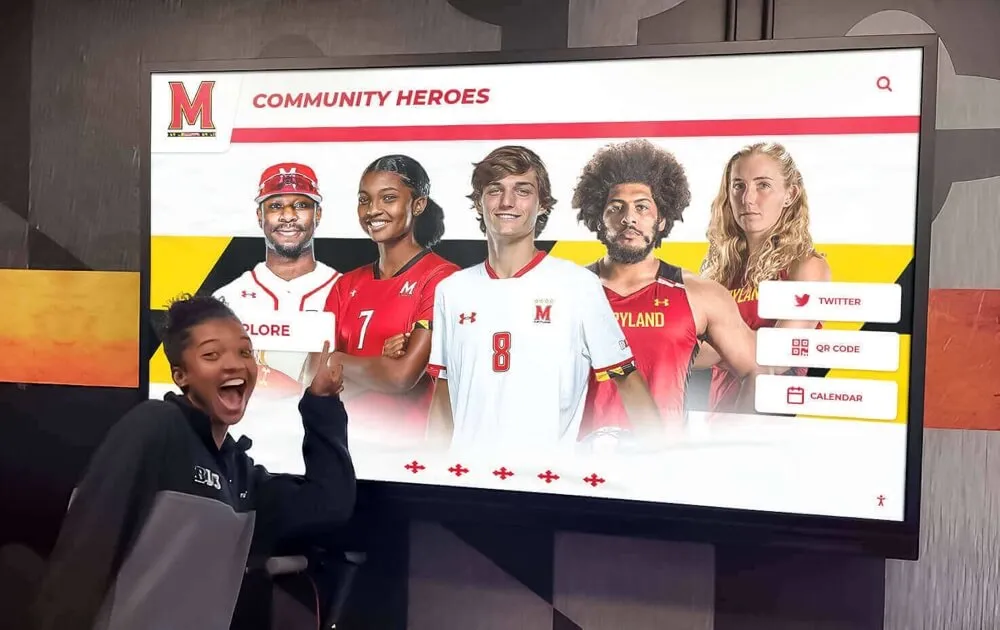
Digital hall of fame tools for school athletics programs have made it practical to maintain a comprehensive, searchable championship record that operates independently of the physical display — capturing championships from before current staff arrived, making roster information searchable by athlete name, and keeping the full record visible to anyone who walks through the building regardless of how many physical banners can hang.
Frequently Asked Questions
How often should championship banners be formally inspected? Once per year at minimum, completed during a scheduled facility access window — typically May through August. Banners in facilities with variable climate control (gymnasiums near exterior walls, auxiliary spaces with less consistent HVAC) should be checked informally at the start of each season in addition to the formal annual review.
Who should conduct the annual banner inspection? A team of at least two people: one person comfortable working at height to inspect mounting hardware, and one person responsible for accuracy verification who can cross-reference official records. The athletic director or their designee should sign off on the completed inspection document. Facilities staff familiar with the building’s structural systems should be involved for any hardware evaluation.
What is the typical lifespan of a gymnasium championship banner? Nylon and polyester banners in properly maintained indoor environments typically remain in good condition for 15–25 years with appropriate care. UV exposure from gymnasium lighting and windows is the most common cause of premature fading. Banners in gymnasiums with significant natural light or older fluorescent lighting near UV emission levels may show visible fading within 10–12 years.
Should banners be taken down annually for inspection or inspected in place? In most cases, inspect in place. Removing and re-hanging banners creates additional stress on hardware and the banner material itself, and the risk of damage during handling generally outweighs the benefit of a closer-range inspection unless a specific concern warrants it. Use binoculars or a camera with a zoom lens to inspect text and graphics from floor level when necessary.
What should be done when an error is found on a banner that was created decades ago? Document the error and verify the correct information through primary sources before taking any action. Once verified, present the finding to the athletic director with the documentation. For factual errors in championship records, the state athletic association may have a corrections process worth engaging. The decision to correct in place, replace, or add a supplementary notation near the banner depends on the nature and significance of the error, the physical condition of the banner, and institutional policy.
Does every school need a digital backup of its championship banners? Yes. The digital record preserves the championship history regardless of what happens to the physical banner — fire, water damage, theft, or simple deterioration over time. It also makes the history accessible in ways the physical banner cannot: searchable, shareable, and visible during any period when banners are stored or under replacement. Schools without a current digital archive should treat the photography portion of the annual inspection as the starting point for building one.
How should a school prioritize replacement when budget is limited? Prioritize safety first: any banner with hardware or structural concerns should be addressed before cosmetic or accuracy issues. After safety, prioritize accuracy: a banner with a factual error in a prominent location affects the integrity of the recognition. Condition issues that affect legibility follow. Cosmetic condition issues on otherwise structurally sound, accurate banners can be scheduled for replacement over a longer horizon.
Build a Championship Record That Outlasts Any Physical Banner
Rocket Alumni Solutions creates interactive touchscreen systems that preserve your school’s complete championship history — every title, every roster, every season — in a searchable digital record that remains accurate and accessible regardless of what happens to the physical display.