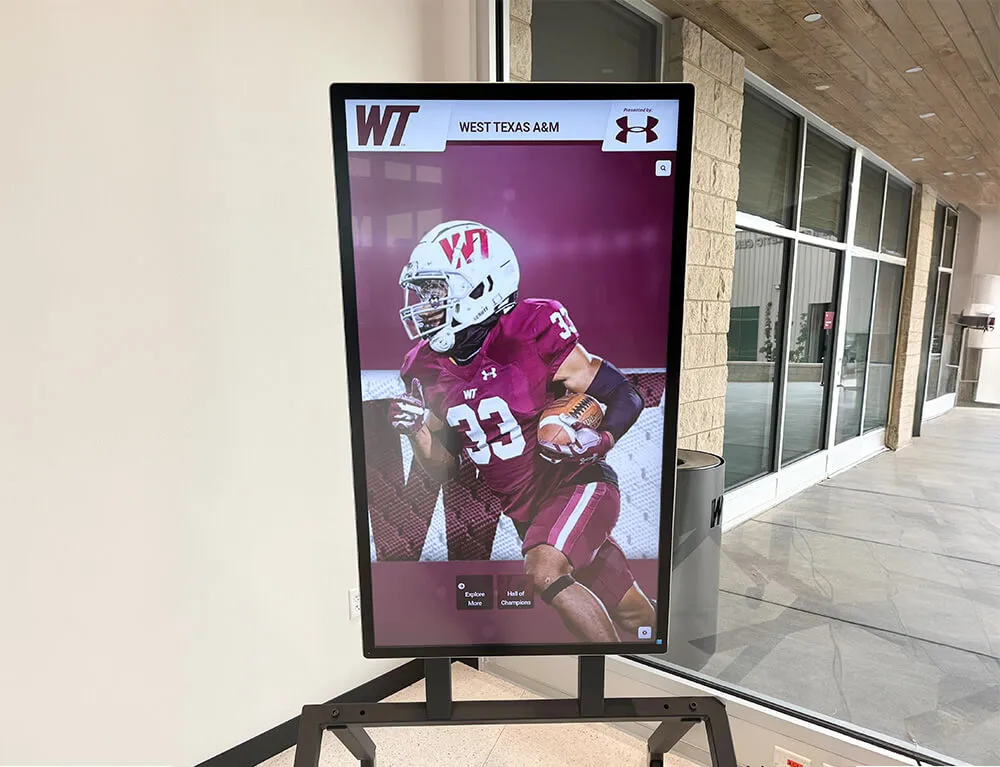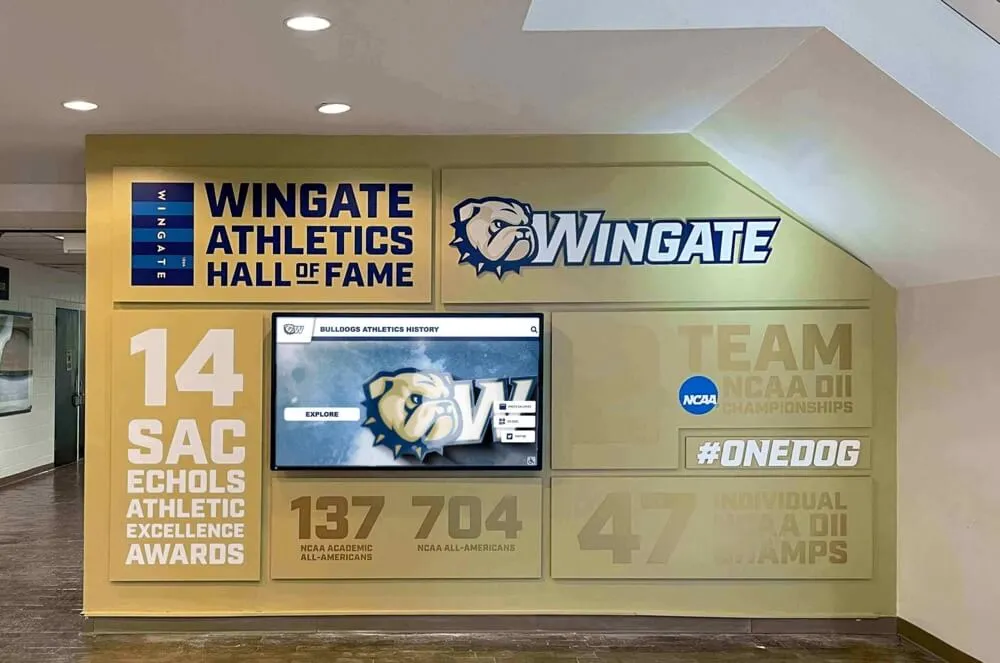




Modern touchscreen halls of fame represent the next generation of institutional recognition, transforming static trophy cases and crowded wall plaques into interactive, engaging experiences that honor unlimited achievements across all eras. Schools, universities, athletic programs, and organizations face increasing pressure to celebrate diverse accomplishments while managing limited physical space, aging displays, and the expectations of digitally native audiences who expect interactive, multimedia experiences rather than passive observation.
Traditional recognition approaches struggle with fundamental constraints: physical trophy cases fill completely after just a few years, wall-mounted plaques consume valuable space without allowing updates or expansion, and printed materials become outdated immediately upon installation. These limitations force administrators into difficult decisions about which achievements deserve visibility and which honorees must remain hidden in storage, creating inequitable recognition that fails to celebrate institutional legacy comprehensively.
Touchscreen hall of fame systems address these challenges through purpose-built interactive platforms that combine unlimited digital capacity with easy-to-use exploration interfaces, enabling institutions to honor every deserving achievement while creating memorable experiences impossible with traditional static displays. This comprehensive guide examines what makes touchscreen halls of fame effective in 2026, key features distinguishing superior solutions, and how to select and implement systems that strengthen community connection while preserving institutional culture permanently.
The rapid advancement of touchscreen technology, declining hardware costs, and widespread acceptance of interactive displays across all demographics have created ideal conditions for institutions to transition from traditional recognition to comprehensive digital systems. Understanding what separates exceptional touchscreen halls of fame from basic digital signage enables informed decisions that serve institutional needs for decades.

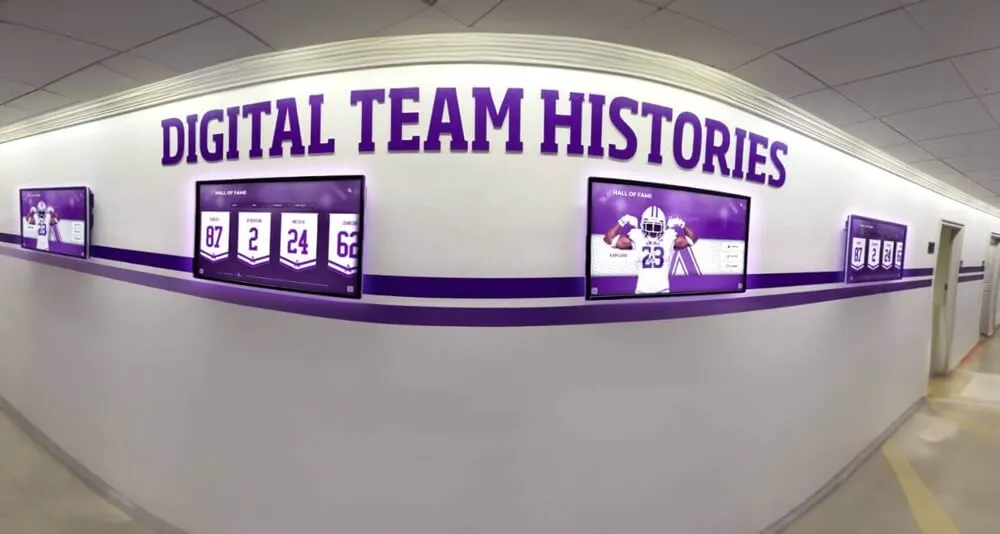
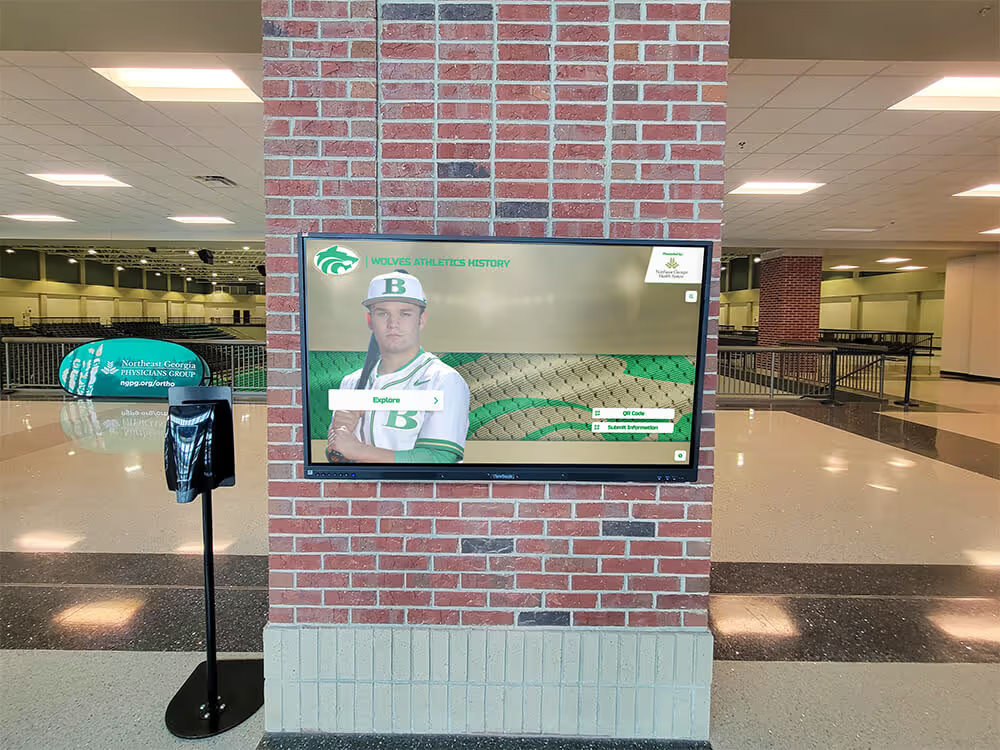
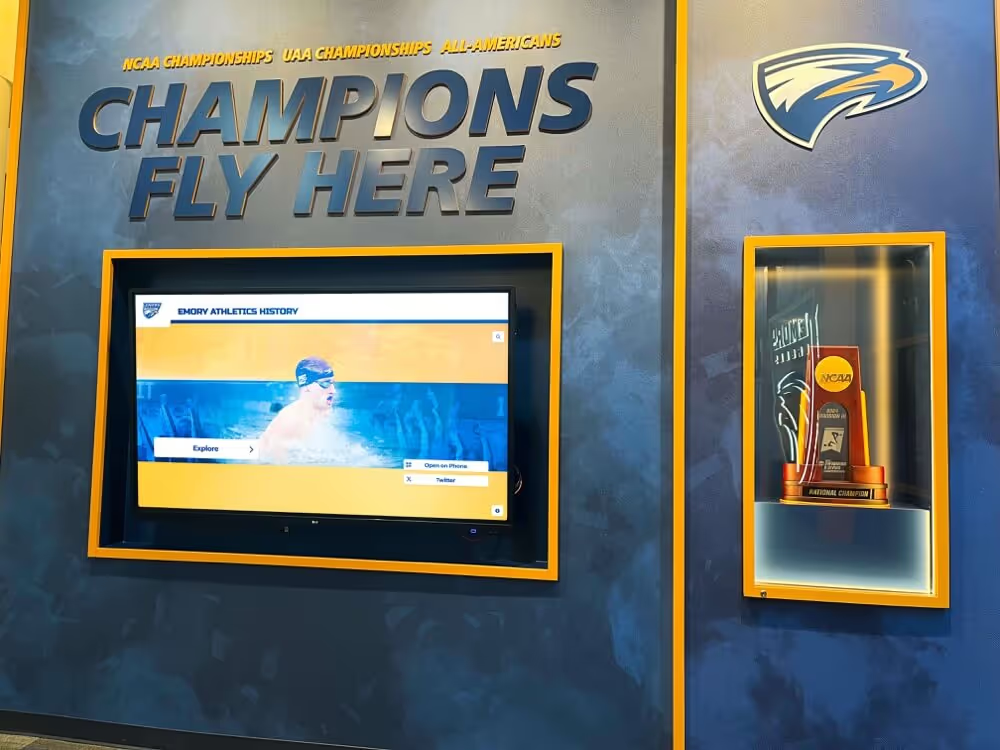
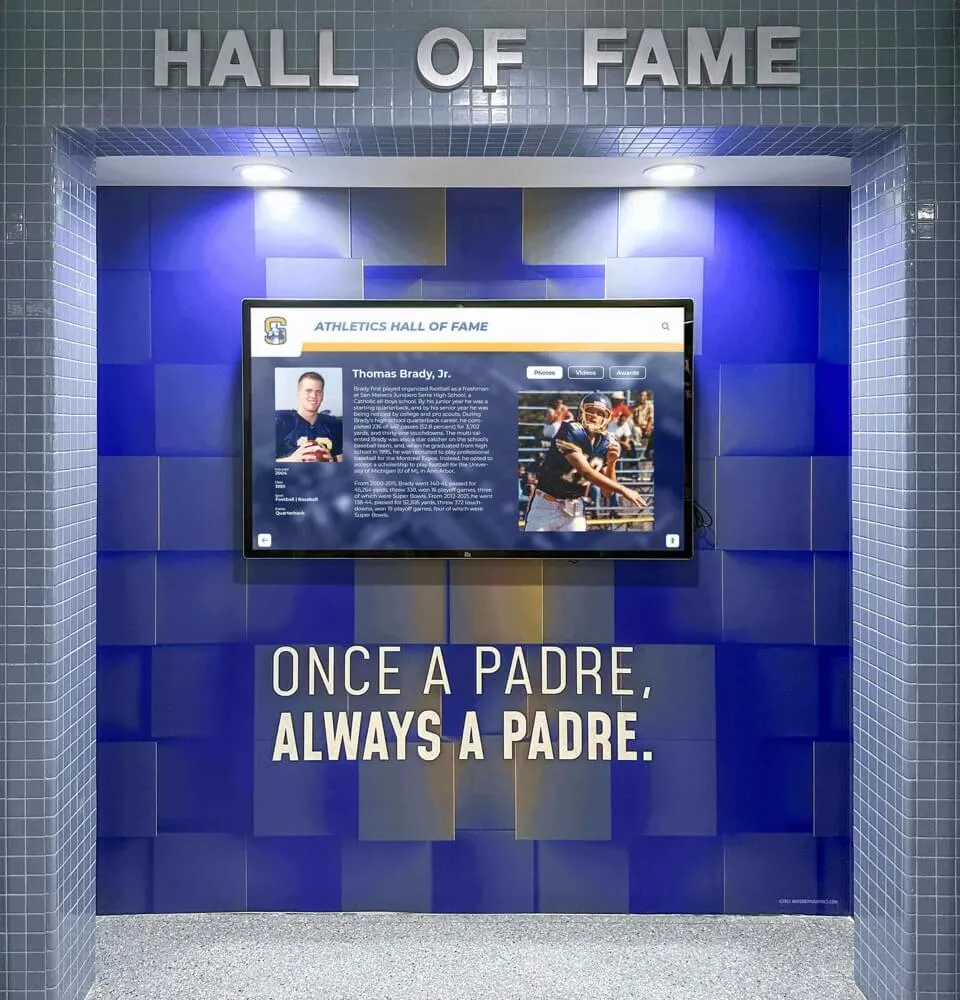
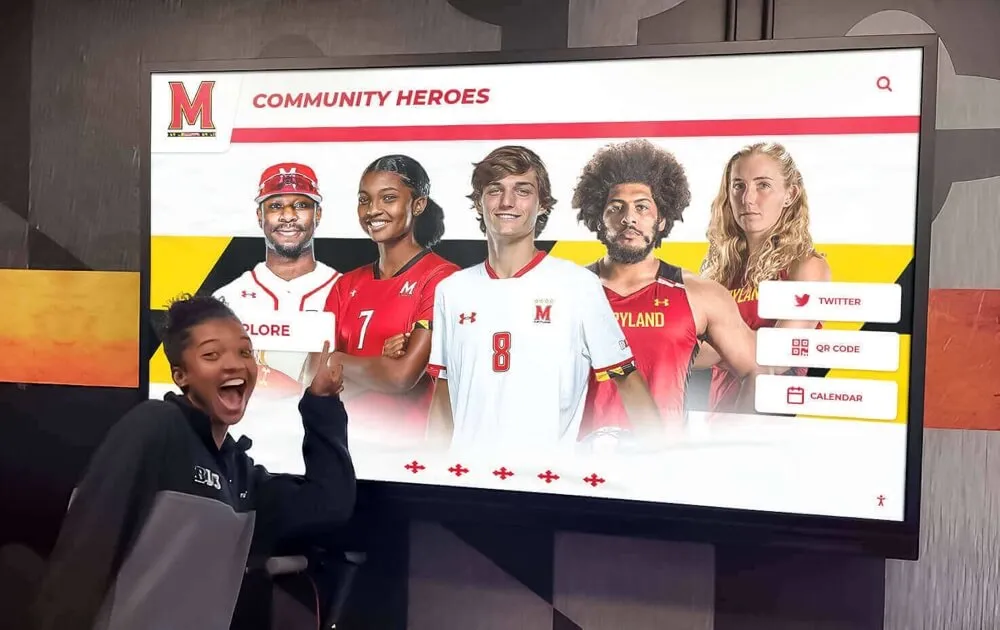
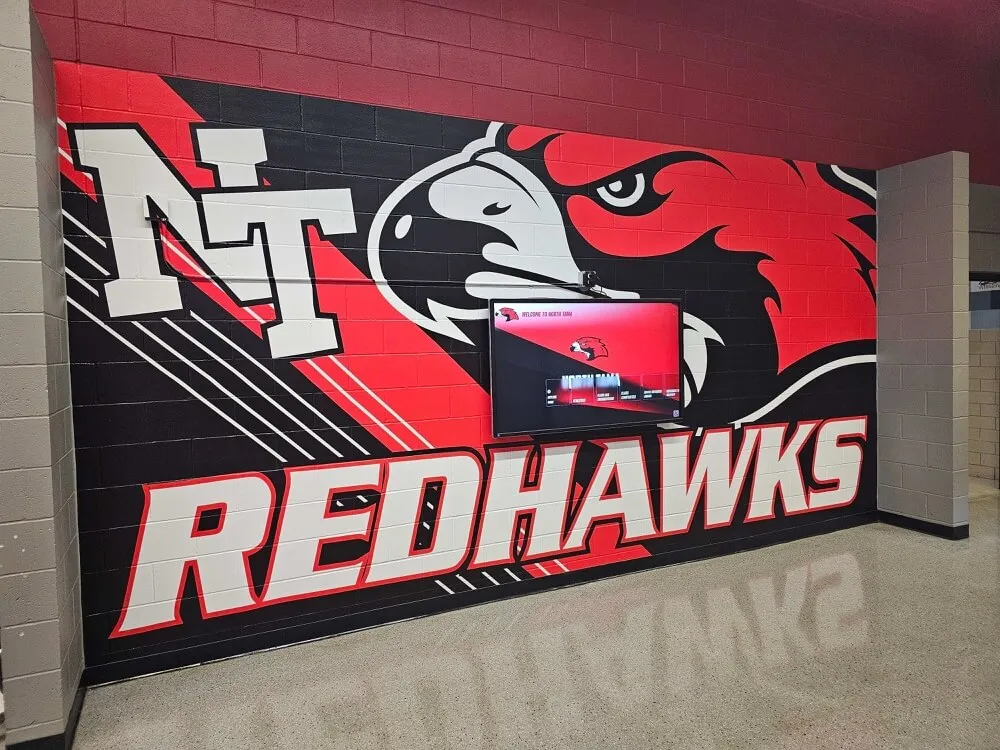
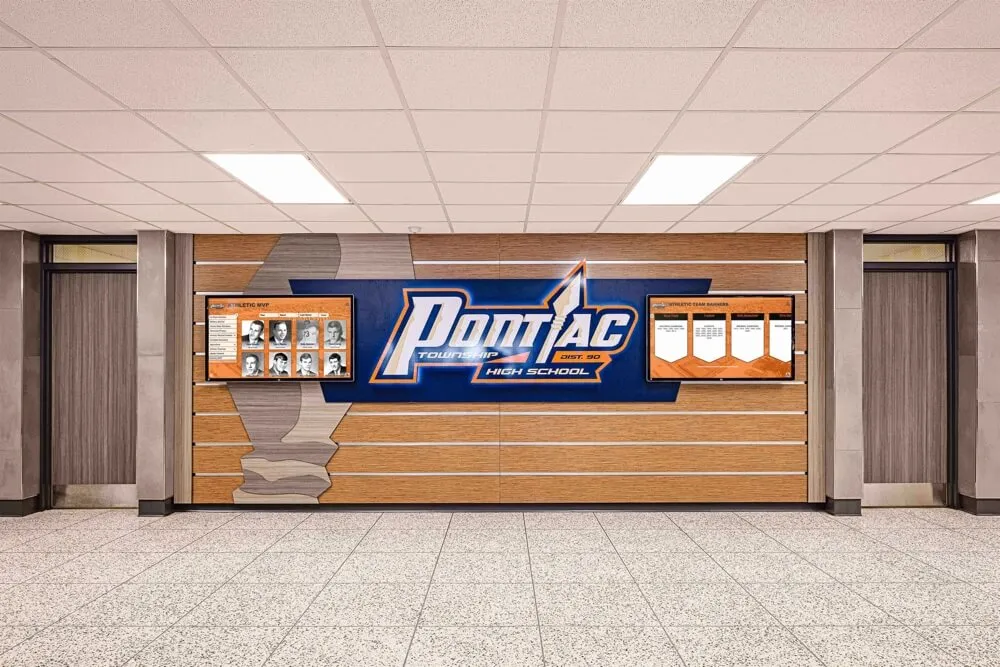
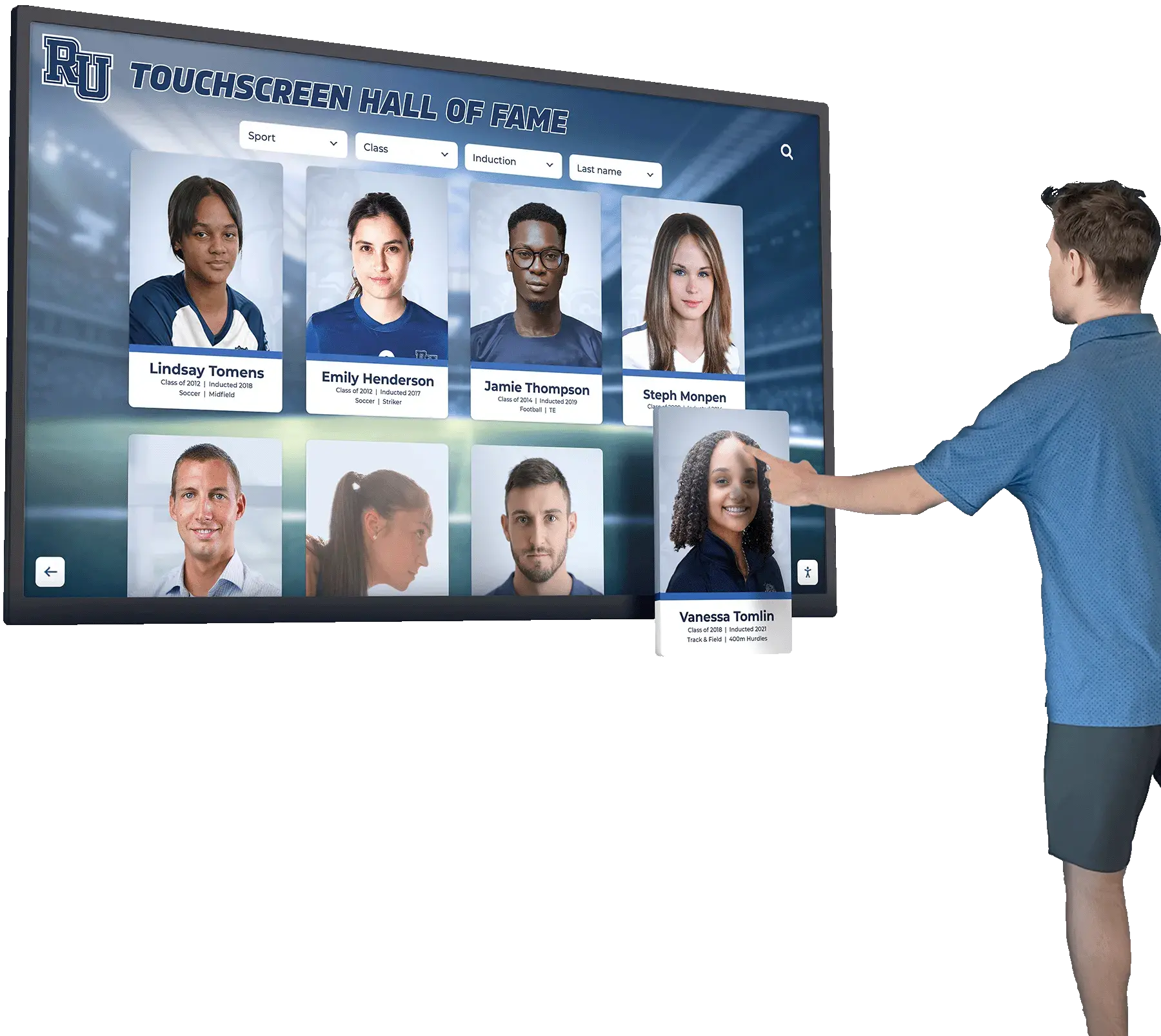

Modern touchscreen halls of fame enable easy exploration of unlimited honorees through engaging interactive interfaces
Why 2026 Represents the Ideal Time for Touchscreen Hall of Fame Implementation
Several converging factors make 2026 particularly advantageous for institutions considering touchscreen hall of fame investments.
Technology Maturity Reaching Optimal Point
Touchscreen display technology has matured significantly over the past five years, with 2026 representing a sweet spot where reliability, affordability, and capability intersect:
Display Quality and Durability
Commercial-grade touchscreen displays now offer:
- 4K resolution providing exceptional image clarity for detailed recognition content
- Multi-touch capability supporting multiple simultaneous users
- Commercial ratings ensuring 50,000+ operating hours (15+ years of continuous use)
- Anti-glare coatings maintaining visibility in high-light environments
- Vandal-resistant construction appropriate for public spaces
- Operating temperature ranges accommodating varied installation environments
These specifications ensure touchscreen halls of fame maintain professional appearance and consistent operation throughout extended lifespans without requiring frequent replacement or maintenance.
Content Management Systems Reaching Full Maturity
Cloud-based content management platforms have evolved from basic digital signage controllers into sophisticated recognition-specific systems providing:
- Browser-based interfaces requiring no technical expertise or software installation
- Straightforward content organization accommodating unlimited honorees across multiple categories
- Responsive design enabling updates from desktop computers, tablets, or smartphones
- Real-time publishing instantly updating all connected displays
- Comprehensive multimedia support including photos, videos, documents, and interactive elements
- Built-in templates specifically designed for athletic, academic, donor, and historical recognition
- Mobile-responsive web portals extending recognition beyond physical displays
Explore comprehensive digital recognition platforms in digital hall of fame systems examining implementation approaches.
Affordability Through Competition and Scale
Market maturation has driven pricing to accessible levels for institutions of all sizes:
- Display hardware costs declining 40-60% over past five years
- Mounting and installation standardization reducing complexity and expense
- Software subscription models eliminating large upfront licensing costs
- Increased vendor competition creating favorable pricing environments
- Educational pricing programs making premium solutions accessible to schools
Total implementation costs for comprehensive touchscreen hall of fame systems now typically range $8,000-20,000 for single-display installations, with ongoing software subscriptions of $2,400-6,000 annually providing unlimited content management, updates, and support.
User Expectation Alignment
Demographic shifts have created audiences expecting interactive digital experiences across all contexts:
Generational Digital Literacy
Current students, recent alumni, and younger community members grew up with touchscreens as primary interaction method:
- Smartphones and tablets creating universal touchscreen familiarity
- Interactive kiosks in retail, hospitality, and transportation normalizing public touchscreen use
- Gaming and entertainment establishing expectations for responsive, engaging interfaces
- Social media platforms training users to explore content through touch gestures
Touchscreen halls of fame work perfectly with these familiar interaction patterns, requiring no instructions or learning curve for the majority of visitors.
Multimedia Content Expectations
Modern audiences expect rich multimedia experiences rather than text-only presentations:
- Video content providing emotional connection impossible with static images alone
- Photo galleries displaying multiple moments rather than single frozen frames
- Audio clips preserving voices and performances
- Interactive statistics enabling personal exploration and comparison
- Social sharing capabilities extending recognition reach organically
Traditional plaques and trophy cases cannot accommodate these multimedia expectations, while touchscreen systems make rich content presentation standard rather than exceptional.
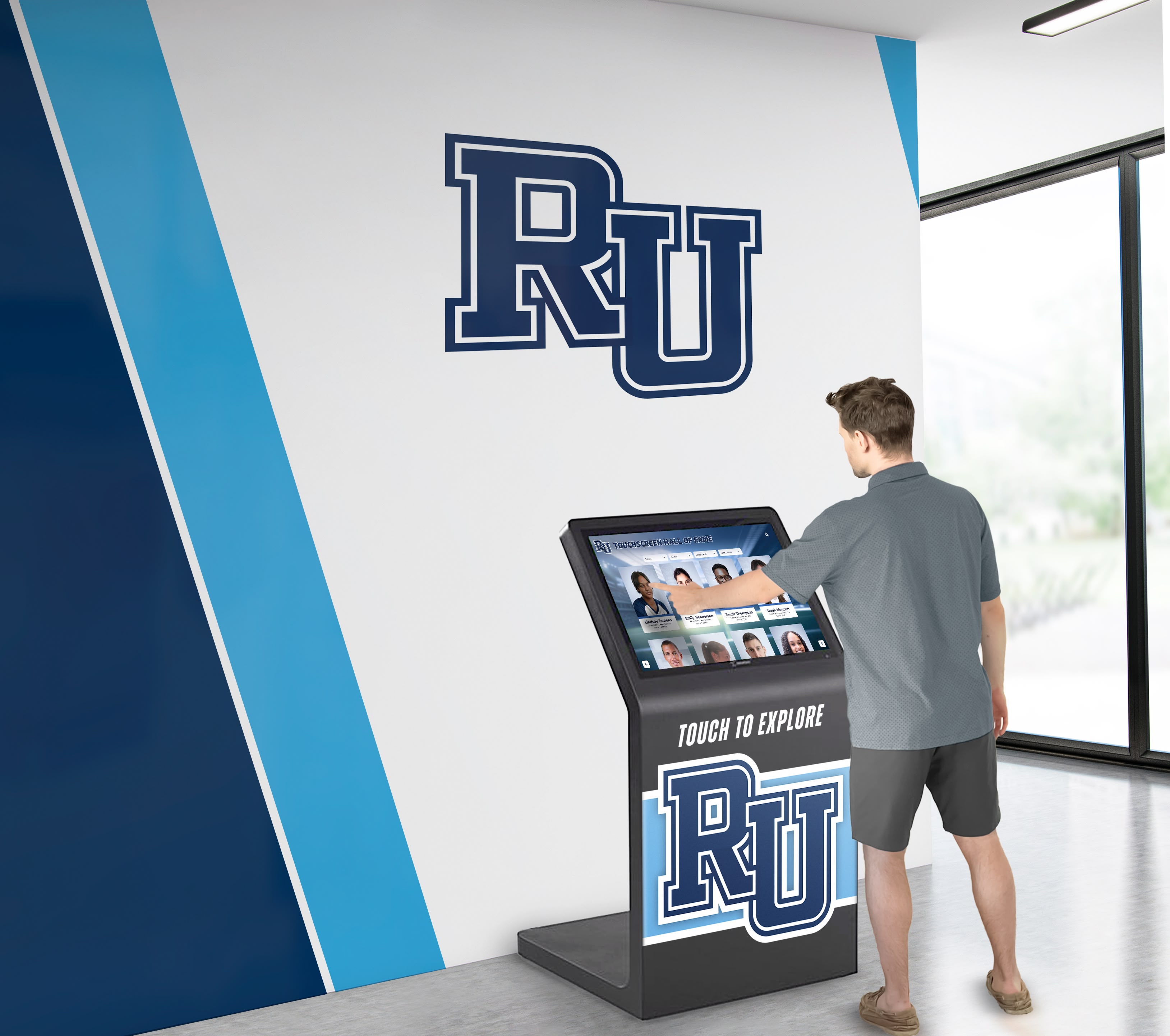
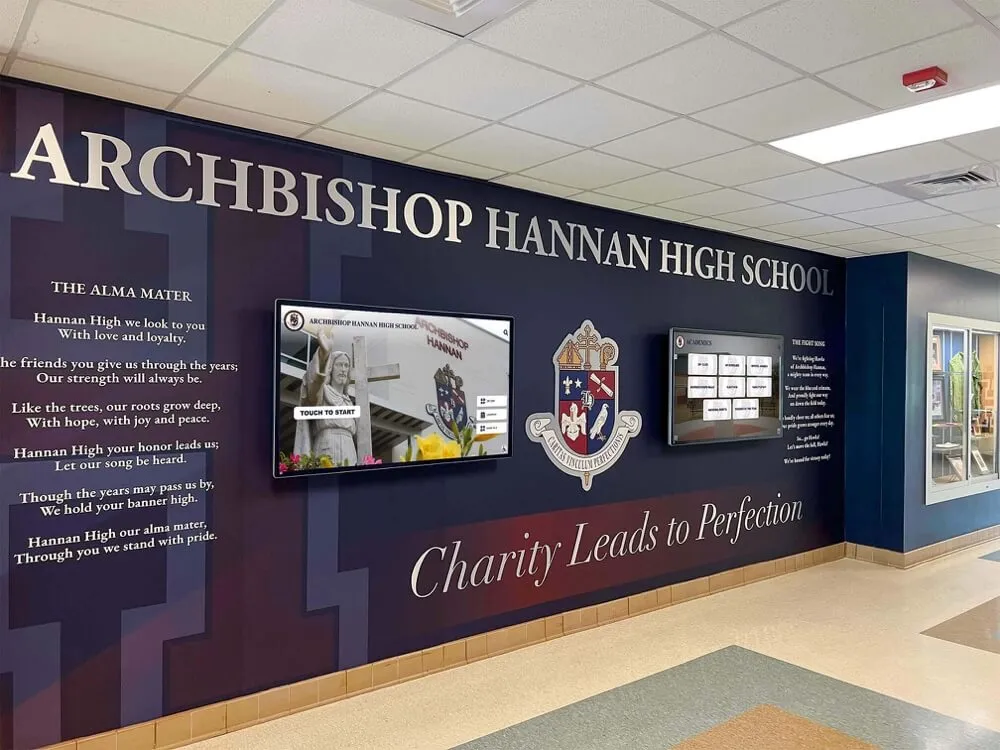
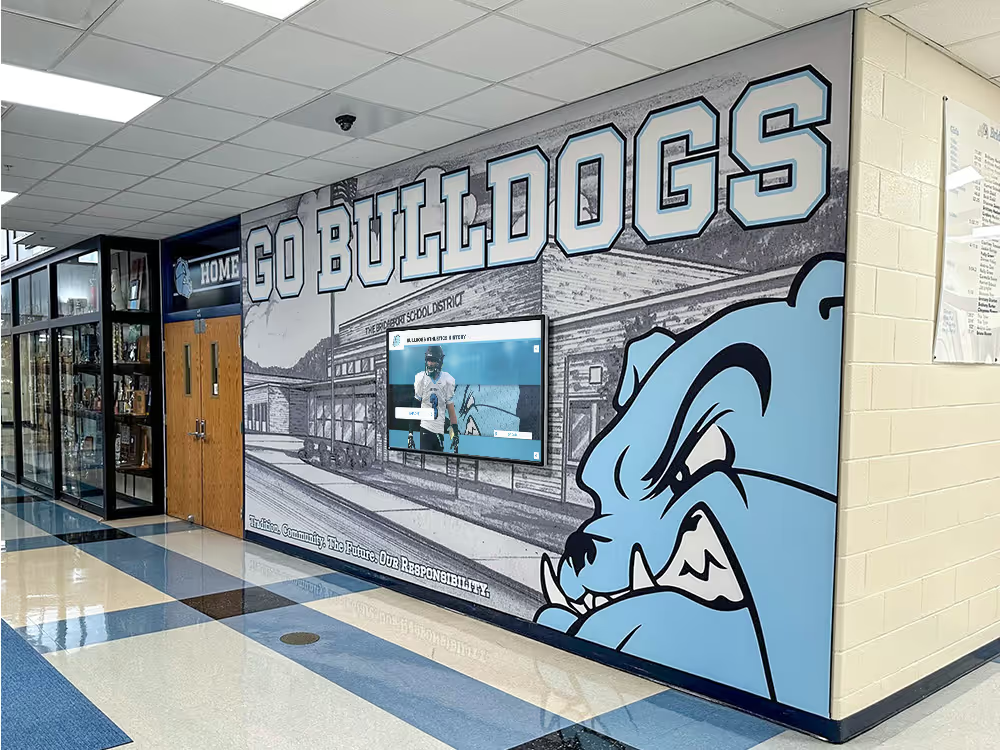
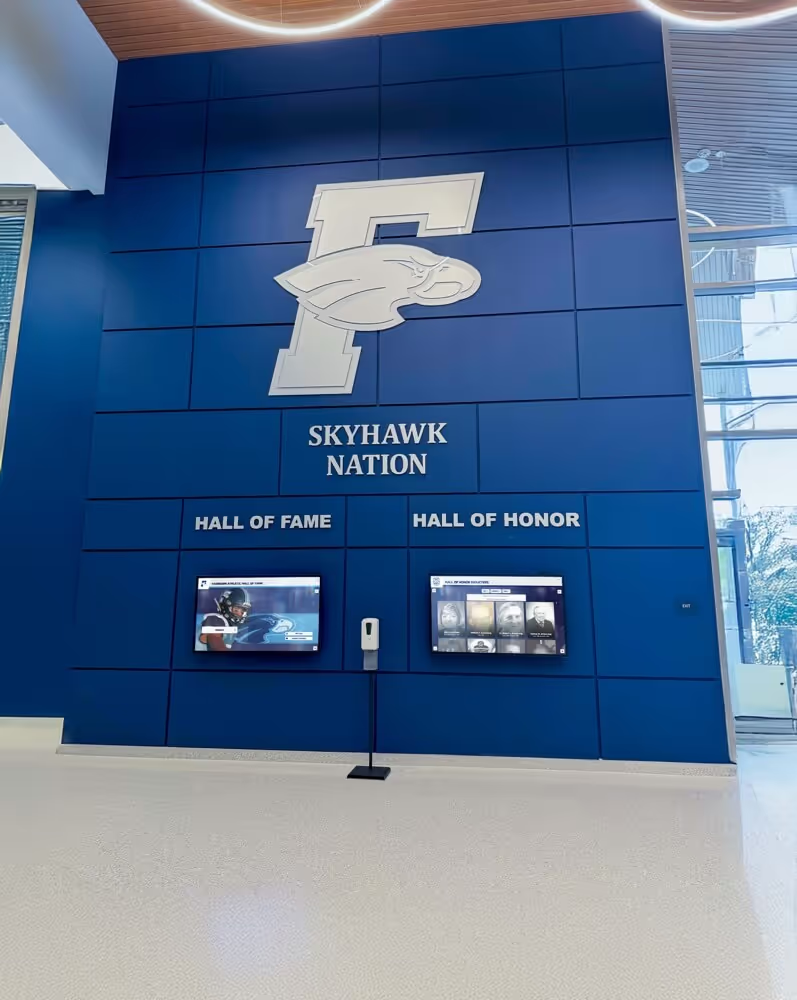
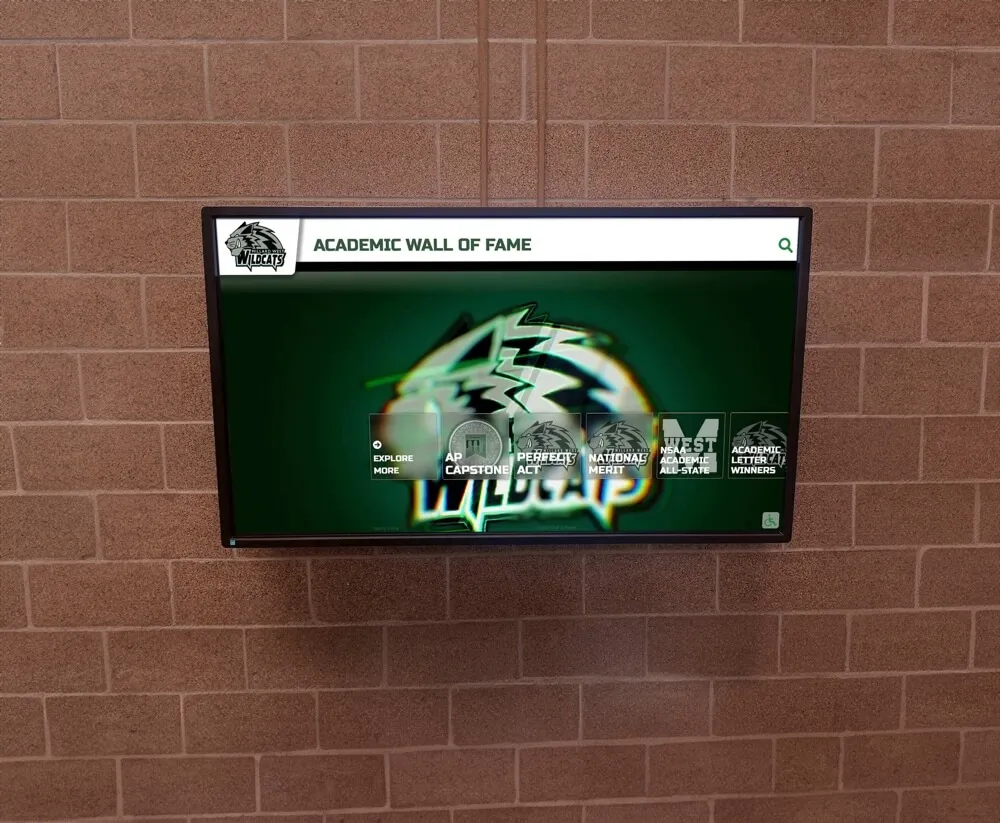
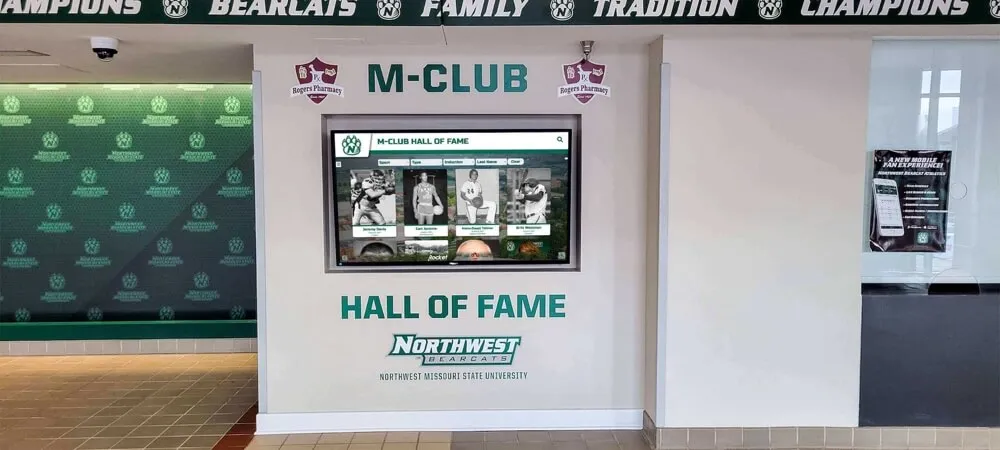
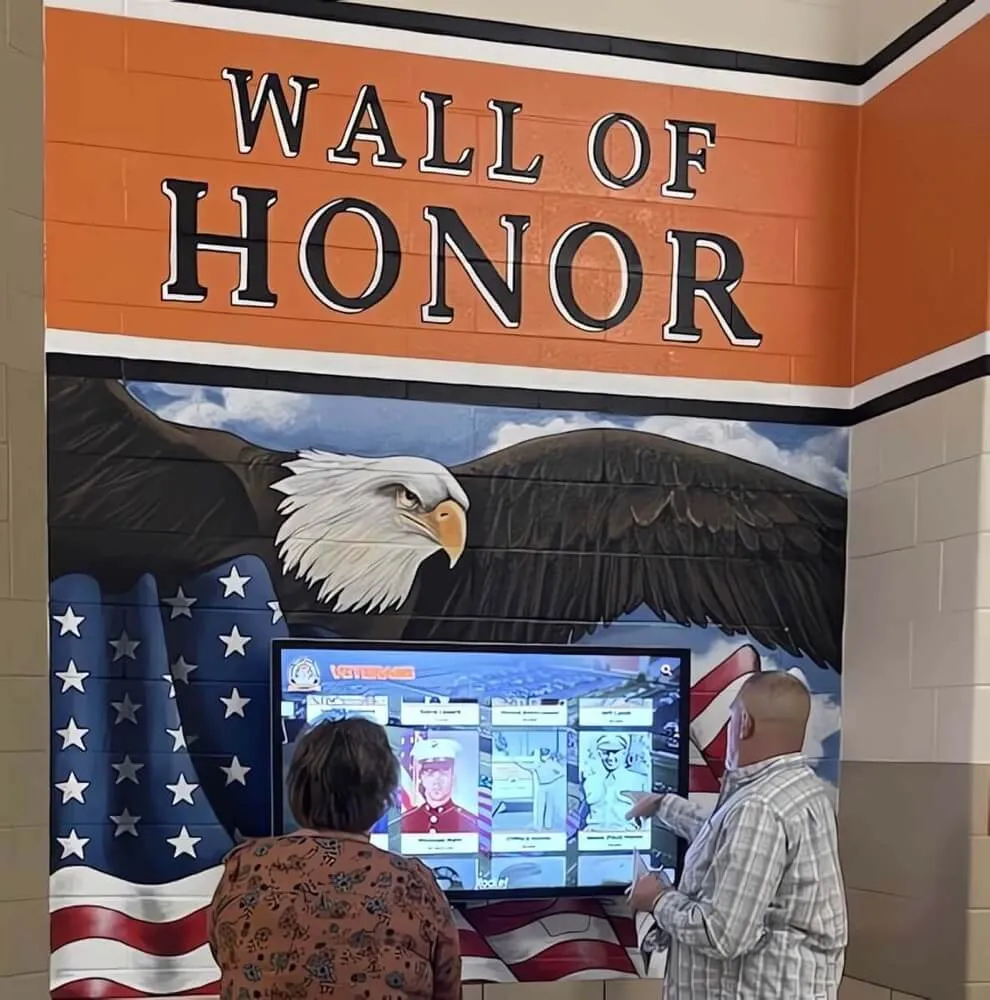
Strategically placed touchscreen kiosks create natural exploration opportunities in high-traffic institutional locations
Physical Space Optimization
Contemporary facilities face increasing pressure to maximize limited space:
Competing Space Demands
Modern institutional buildings must accommodate:
- Technology infrastructure requiring significant physical footprint
- Flexible multipurpose spaces supporting diverse programming
- Accessibility requirements mandating wider corridors and additional clearances
- Security and safety equipment consuming wall and floor space
- Modern furniture and equipment larger than historical equivalents
Traditional recognition displays occupying extensive wall space become increasingly difficult to justify when competing demands intensify.
Renovation and Construction Timing
Many institutions are currently in renovation cycles providing ideal touchscreen integration opportunities:
- Facility upgrades typically occurring on 15-25 year cycles creating natural replacement moments
- New construction projects incorporating digital infrastructure from planning stages
- Technology refresh initiatives providing budget allocation for recognition upgrades
- Pandemic-era capital projects addressing deferred maintenance and modernization
Integrating touchscreen halls of fame during scheduled renovations dramatically reduces installation costs by leveraging existing construction activities, electrical work, and network infrastructure projects already underway.
Discover renovation integration strategies in new school building touchscreen installation timing with comprehensive planning guidance.
Essential Features Distinguishing Superior Touchscreen Hall of Fame Systems
Not all touchscreen recognition systems deliver equal value or user experience. Understanding critical features enables identification of solutions providing lasting benefit rather than short-term novelty.
Purpose-Built Recognition Architecture
The most effective touchscreen halls of fame utilize platforms designed specifically for recognition rather than adapted from generic digital signage:
Honoree-Centric Content Organization
Recognition-specific systems organize content around people and achievements rather than slides or pages:
- Individual honoree profiles accommodating comprehensive biographical information
- Achievement categorization supporting multiple recognition types simultaneously
- Flexible attribution allowing individuals to appear across multiple categories
- Statistical integration maintaining accurate records and enabling comparisons
- Timeline organization presenting achievements chronologically
- Search functionality enabling visitors to discover specific honorees instantly
This fundamental architectural approach ensures the system naturally accommodates recognition needs rather than forcing content into inappropriate formats designed for announcements or advertising.
Perpetual Archival Approach
Superior touchscreen halls of fame treat all recognition as permanent rather than temporary:
- No content expiration or automatic deletion after specified timeframes
- Unlimited honoree capacity avoiding arbitrary limits
- Historical preservation maintaining recognition from all institutional eras equally
- Progressive enhancement enabling ongoing enrichment of existing profiles
- Digital permanence ensuring recognition survives physical display failures or replacements
This perpetual approach ensures institutions never face difficult decisions about removing historical recognition to accommodate contemporary achievements, maintaining equitable visibility across all eras.
Multi-Category Flexibility
Comprehensive recognition systems accommodate diverse achievement types through single unified platforms:
- Athletic halls of fame with sport-specific templates and statistics
- Academic recognition celebrating scholarly achievements across disciplines
- Donor recognition organizing by giving levels and naming opportunities
- Arts showcases featuring performances, exhibitions, and creative works
- Historical archives preserving institutional timeline and legacy
- Alumni spotlights tracking post-graduation accomplishments
- Staff and faculty recognition honoring service contributions
This multi-category capability enables institutions to consolidate previously disparate recognition programs, simplifying management while creating comprehensive celebration of all community contributions.
Learn about athletic recognition implementation in athletic hall of fame guide with detailed strategies.
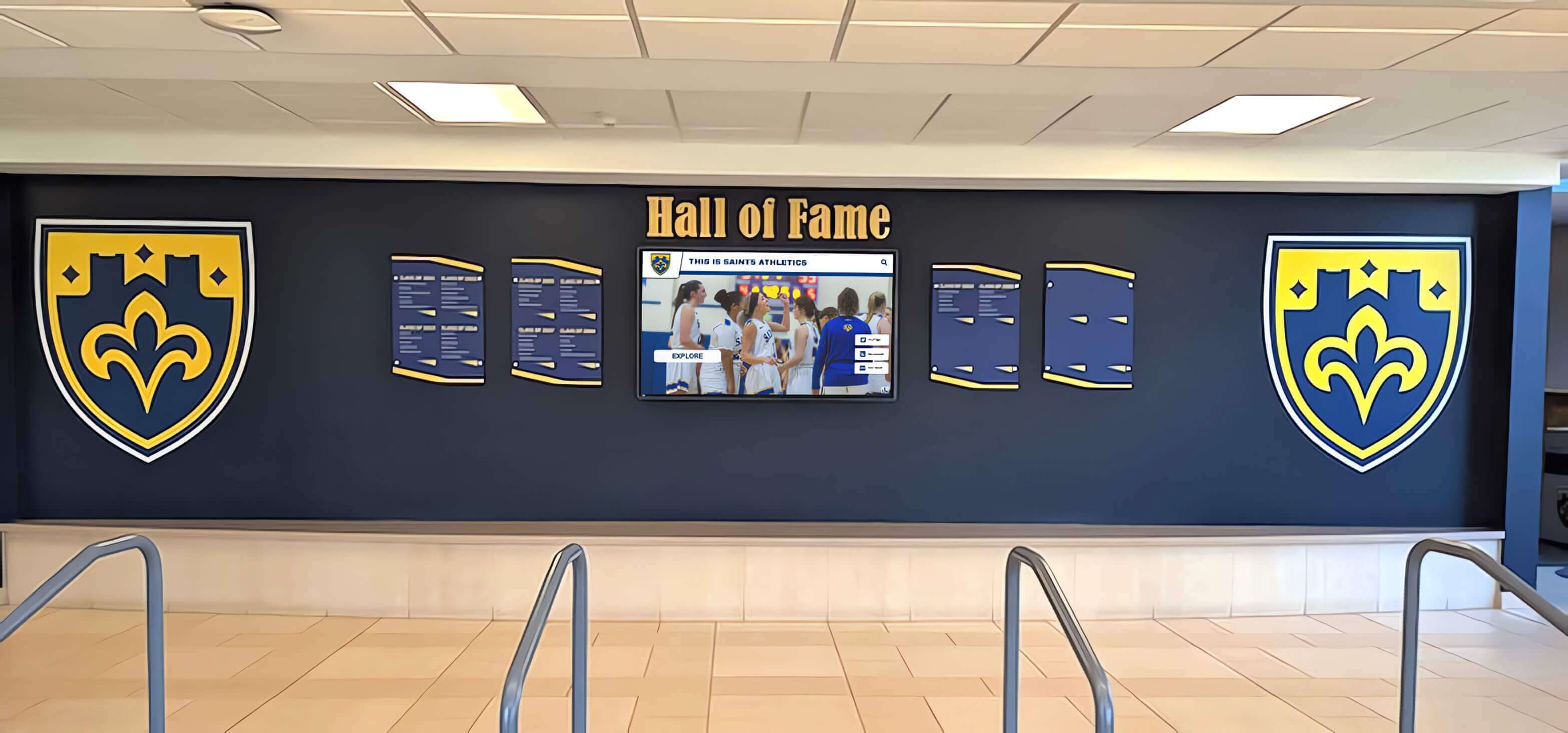
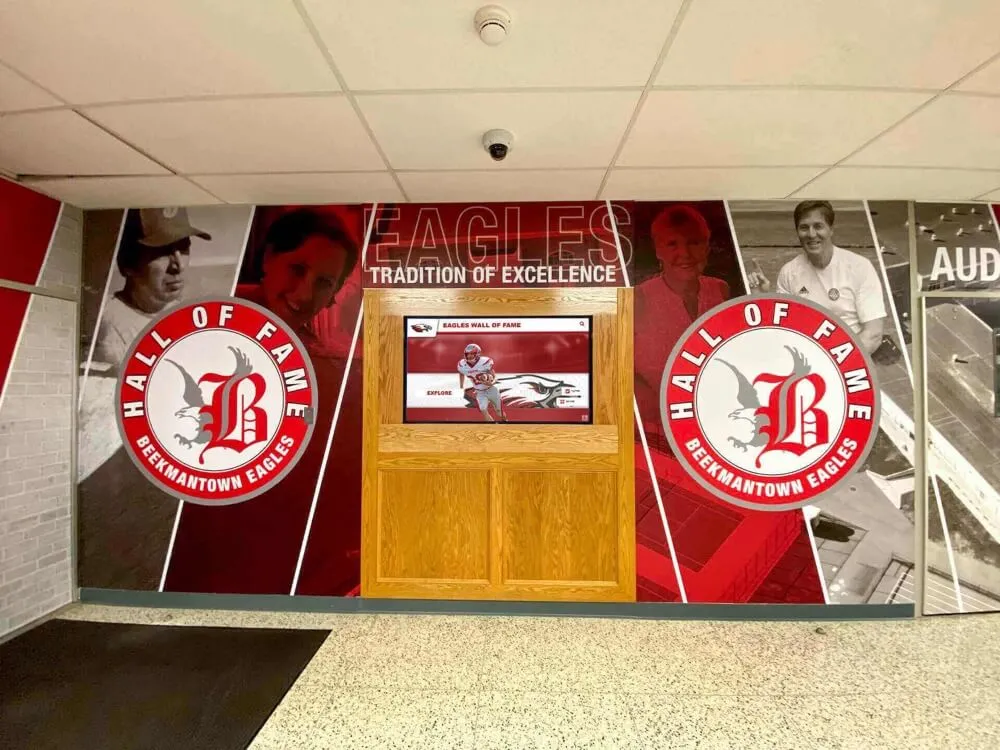
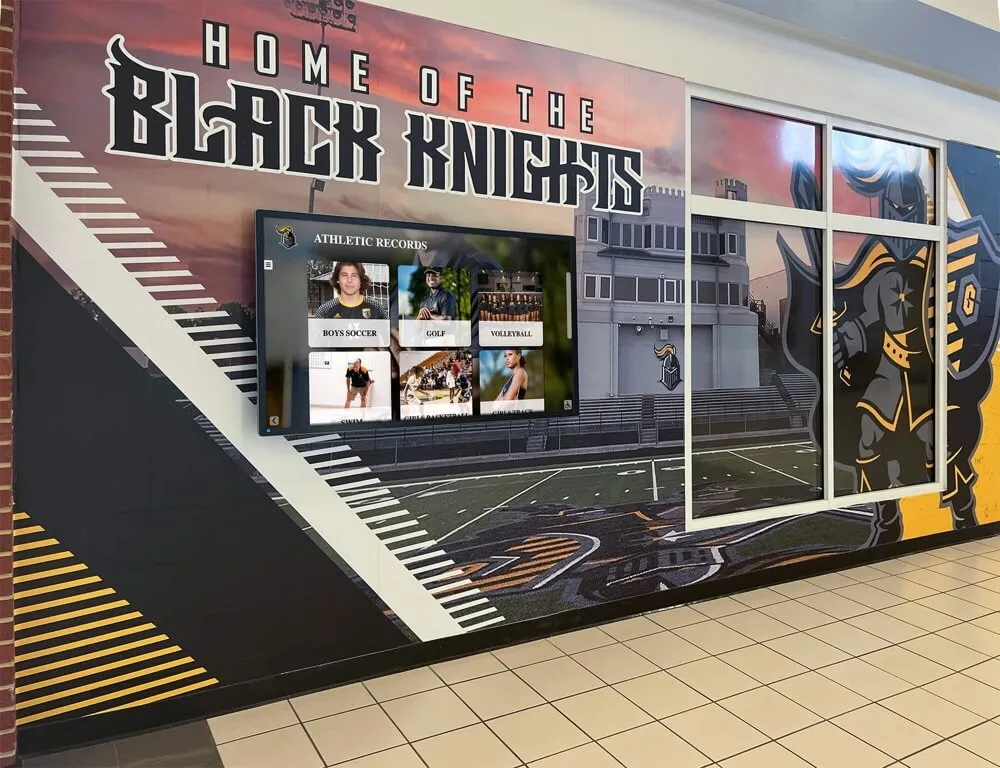
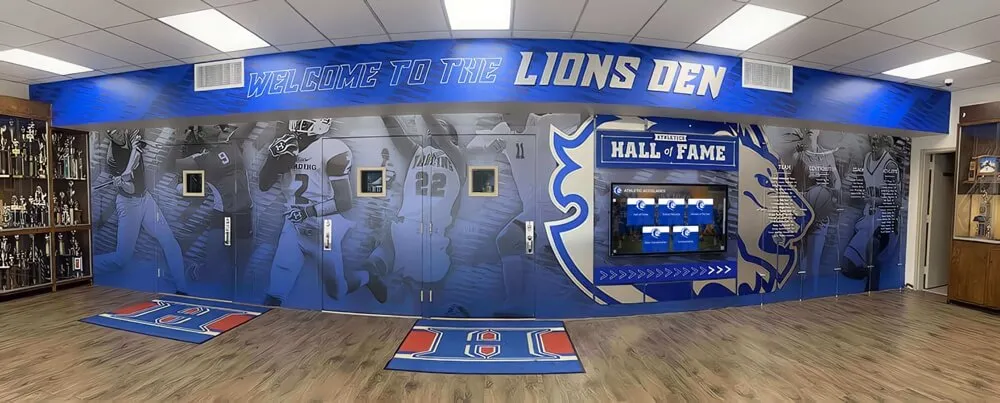
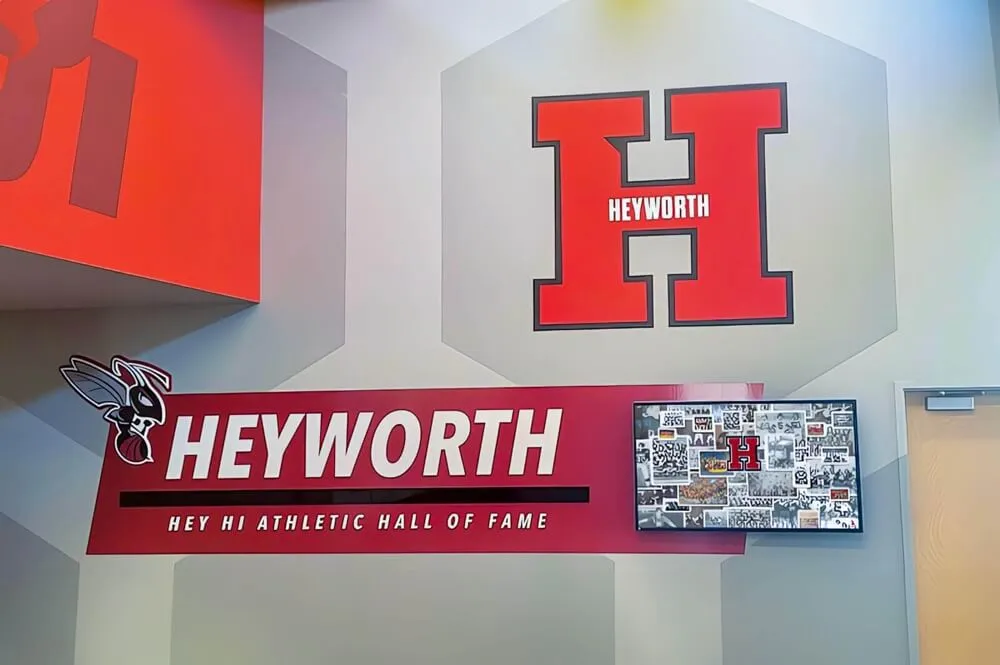
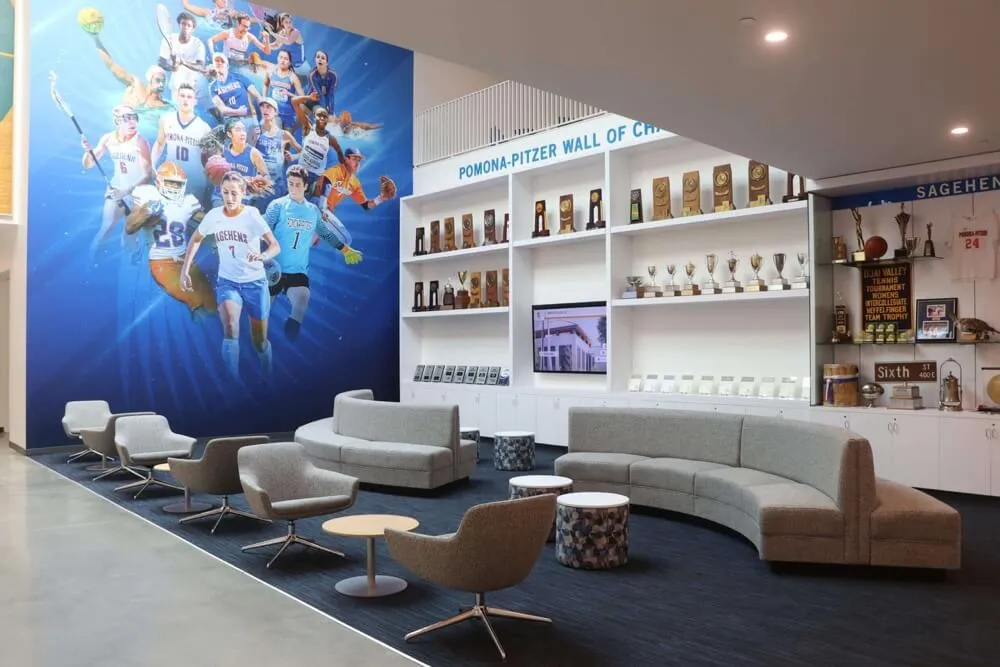
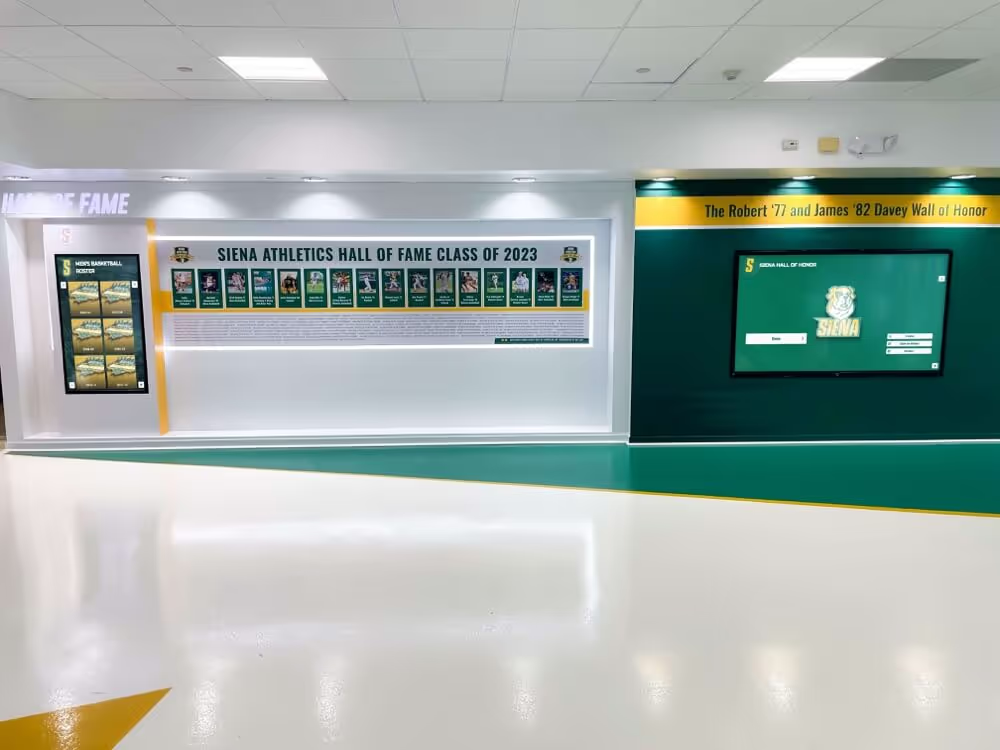
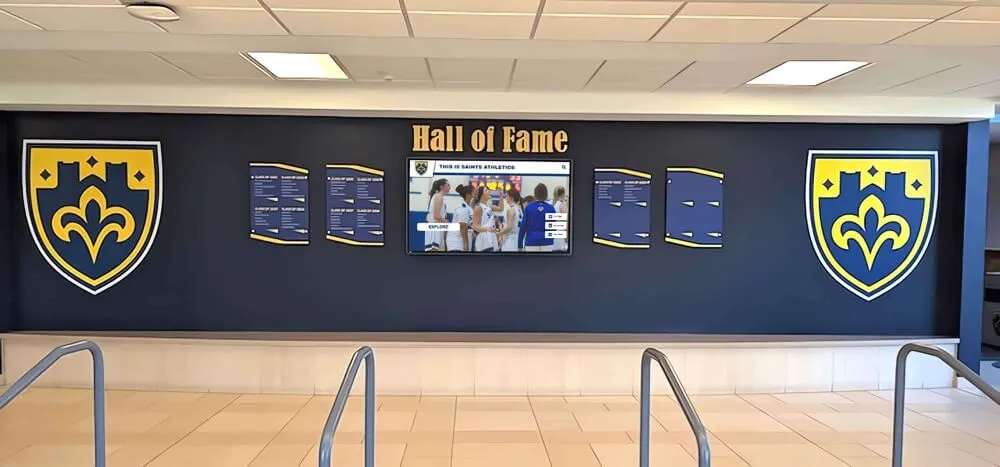
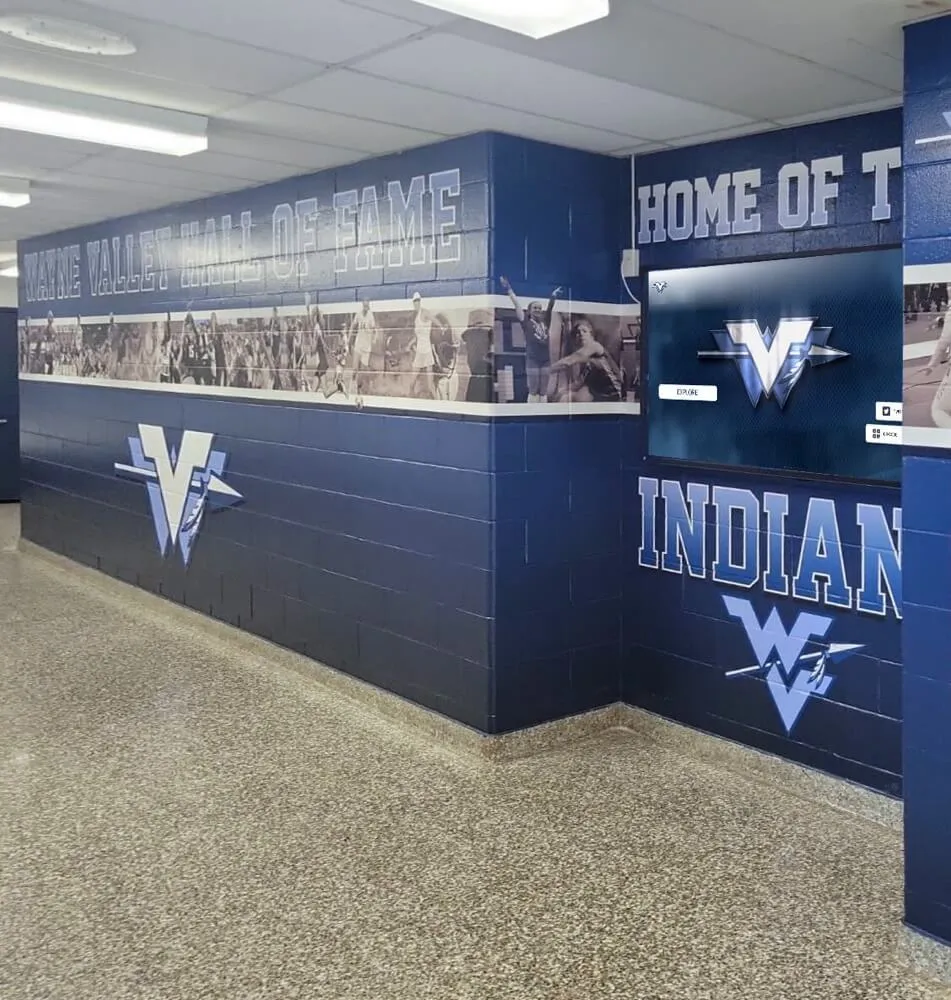
Effective installations blend traditional recognition elements with modern touchscreen technology creating cohesive visual environments
User-Friendly Experience Design
Technical capability matters little if visitors cannot easily explore content. Superior touchscreen halls of fame prioritize accessible, engaging interaction:
Zero-Learning-Curve Navigation
The most effective systems require no instructions or prior experience:
- Large, clearly labeled navigation buttons appropriate for all ages
- Consistent placement of controls across all screens
- Visual feedback confirming touch inputs immediately
- Forgiving touch targets accommodating imprecise selections
- Automatic timeout returning to home screen after inactivity
- Gestural support for swipe, pinch, and tap interactions familiar from mobile devices
Visitors should be able to begin exploring recognition content within seconds of approaching the display without reading instructions or seeking assistance.
Multiple Discovery Paths
Different visitors seek information through different approaches. Comprehensive systems accommodate varied exploration preferences:
Browse by Category: Organized lists enabling systematic exploration of all athletic teams, academic programs, or donor levels
Search by Name: Direct access to specific individuals when visitors know whom they seek
Timeline Navigation: Chronological browsing discovering recognition by era or decade
Featured Content: Curated highlights rotating automatically to surface diverse content
Filter and Sort: Flexible filtering by achievement type, year, sport, or other attributes
Related Content: Connections between related honorees, teammates, or contemporary achievements
This variety ensures all visitors can effectively discover personally relevant content regardless of prior knowledge or exploration style.
Accessibility Compliance
Leading touchscreen halls of fame meet WCAG 2.2 AA accessibility standards ensuring usability for visitors with disabilities:
- Text scaling accommodating visual impairments
- High-contrast display modes improving readability
- Screen reader compatibility for vision-impaired users
- Alternative navigation methods beyond touch interaction
- Caption support for all video content
- Appropriate font sizes and color contrast throughout
Learn about accessibility implementation in WCAG 2.2 AA touchscreen compliance with technical requirements.
Comprehensive Content Management Capabilities
The ongoing value of touchscreen halls of fame depends entirely on content quality and maintenance ease. Superior systems provide powerful yet easy-to-use management tools:
Cloud-Based Administration
Modern content management occurs entirely through web browsers without requiring physical access to displays:
- Remote updates from any internet-connected device
- Multiple administrator accounts with role-based permissions
- Concurrent editing supporting collaborative content development
- Automatic backup preventing content loss
- Version history enabling rollback of unwanted changes
- Preview capabilities showing content before publishing
- Scheduled publishing automating time-sensitive content releases
This cloud-based approach enables busy administrators to maintain recognition content during moments of available time rather than requiring dedicated trips to physical display locations.
Multimedia Asset Management
Comprehensive systems handle diverse content types through unified interfaces:
- Photo galleries with unlimited image capacity
- Video hosting and playback without external services required
- Document uploads for certificates, programs, or historical materials
- Audio file support for interviews, performances, or oral histories
- External content linking to news articles, social media, or other web resources
Built-in media libraries organize uploaded assets for reuse across multiple honoree profiles, reducing duplication and simplifying ongoing management.
Template Customization
While pre-built templates accelerate initial implementation, flexible customization ensures long-term fit:
- Institutional branding application including colors, logos, and fonts
- Layout modifications accommodating specific content emphases
- Field customization adding institution-specific data points
- Display variation creating diverse presentation styles across categories
- Mobile responsiveness maintaining usability across all device sizes
This customization capability ensures touchscreen halls of fame reflect unique institutional character rather than appearing generic across all implementations.
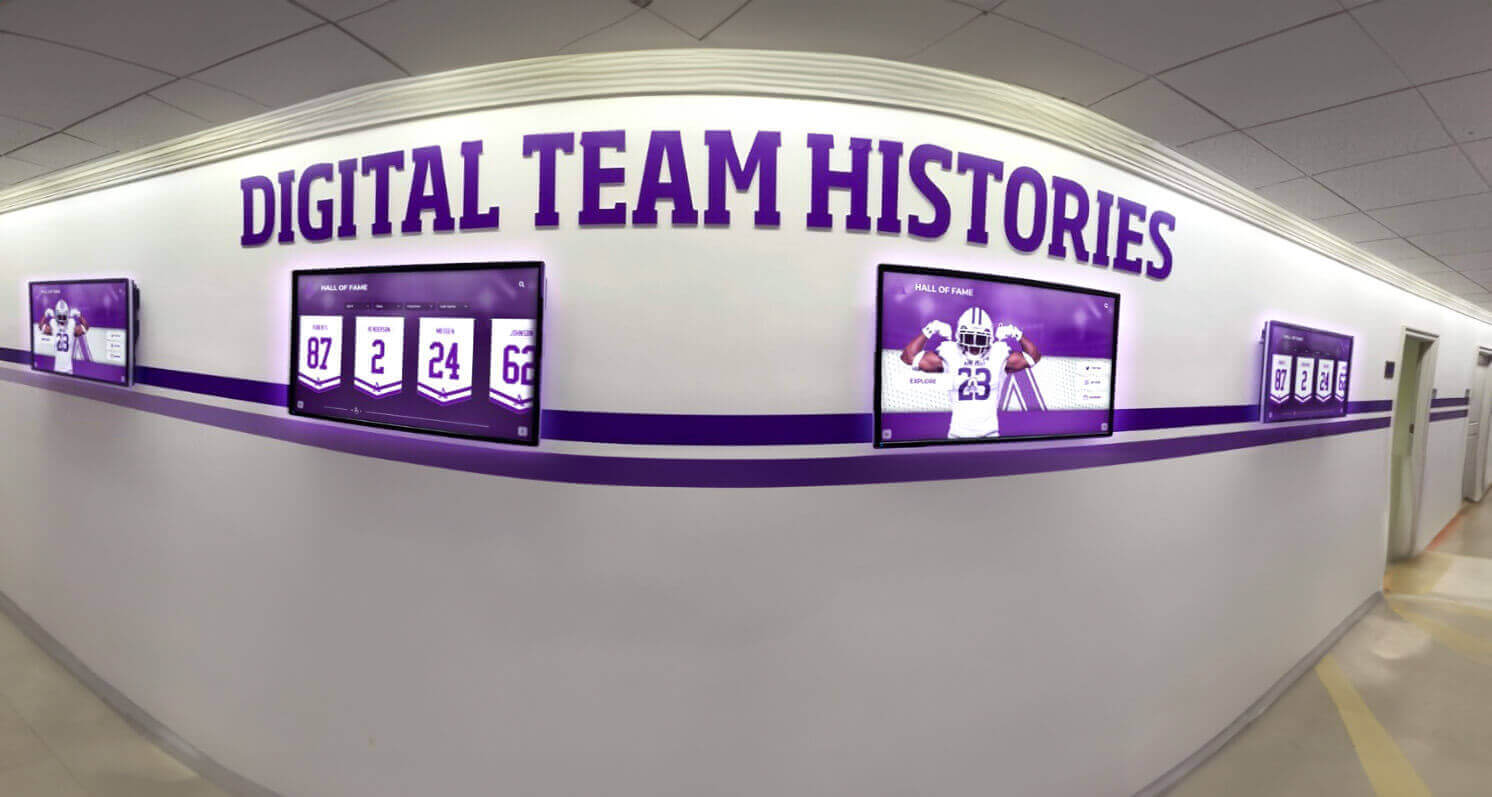
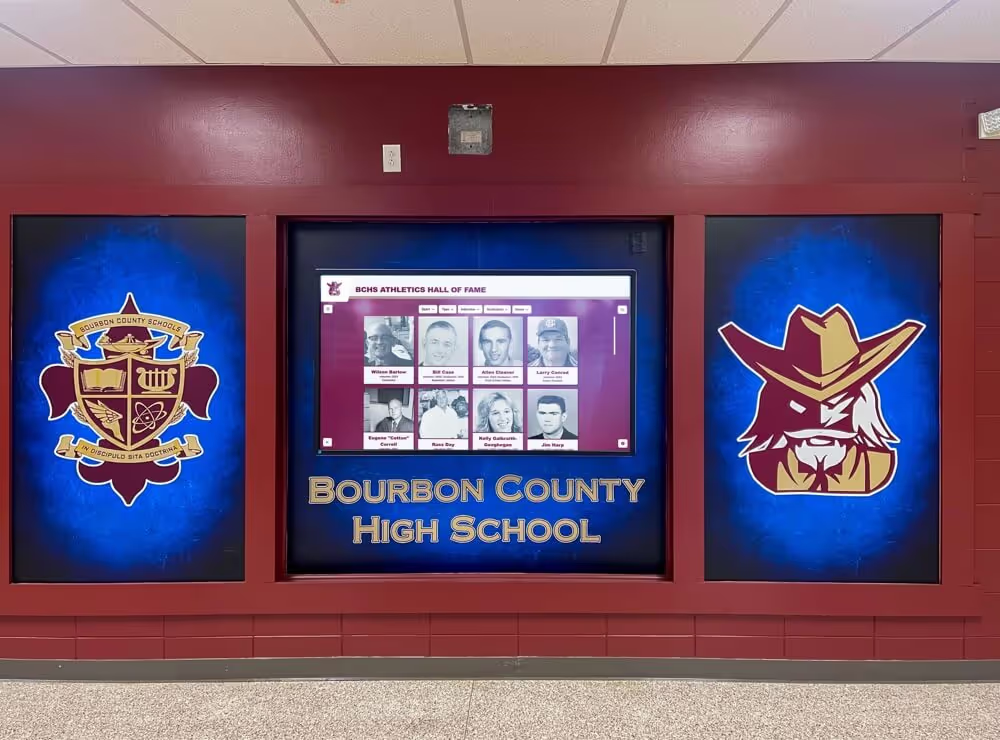
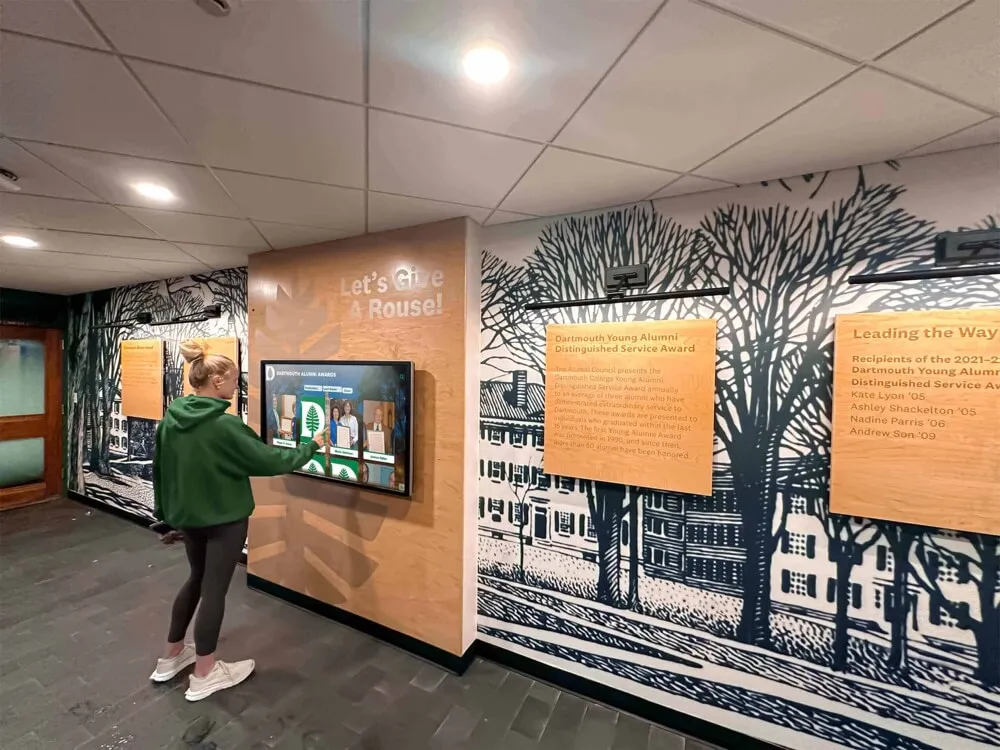
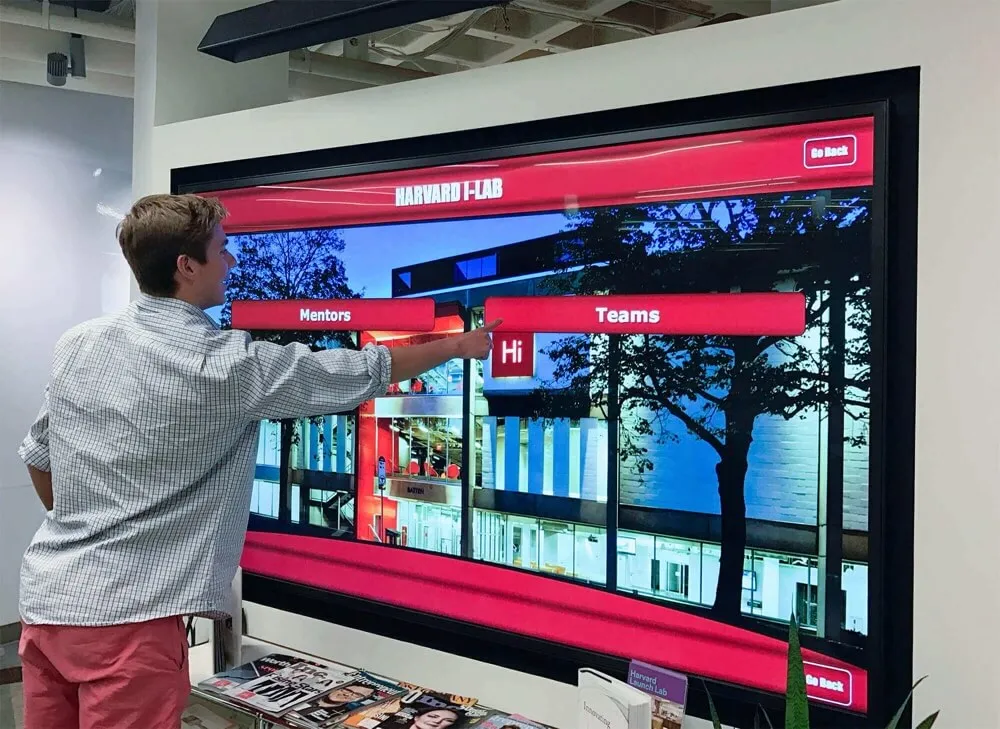
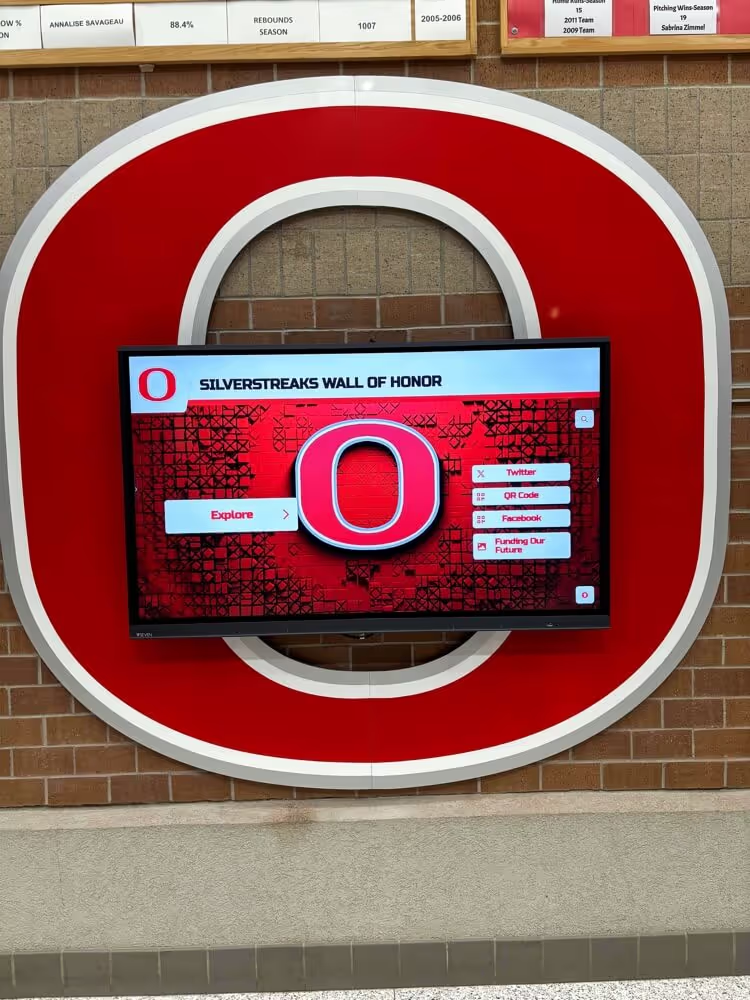
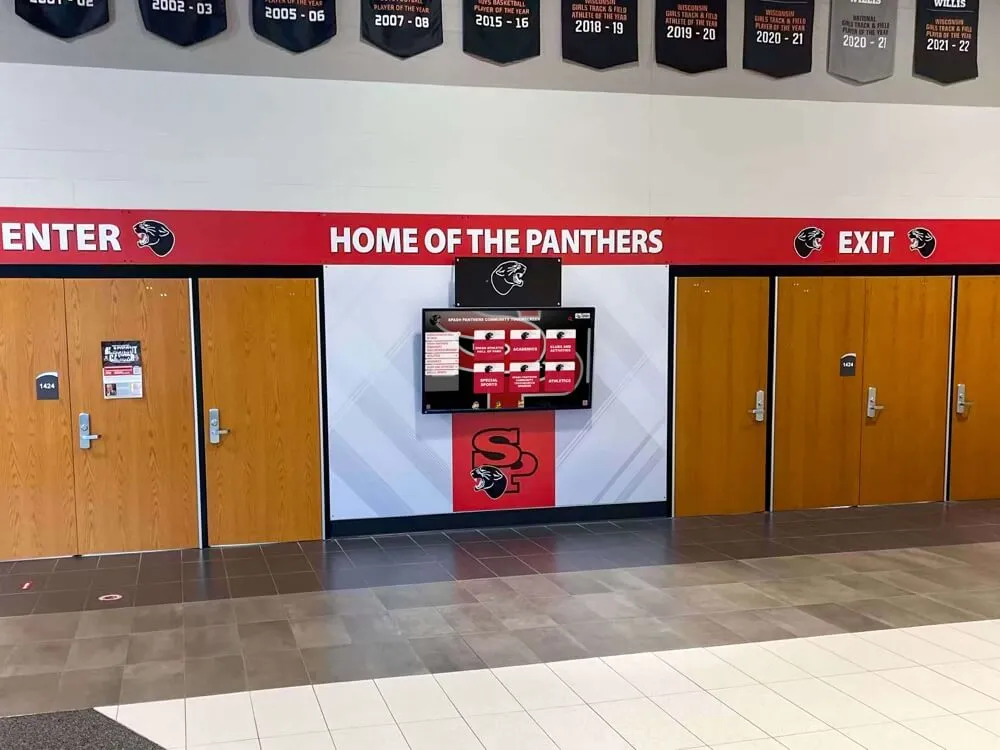
Multi-display installations provide recognition capacity throughout facilities while maintaining coordinated visual presentation
How Rocket Alumni Solutions Leads Touchscreen Hall of Fame Innovation
Among available touchscreen hall of fame solutions, platforms like Rocket Alumni Solutions demonstrate what comprehensive recognition-specific systems deliver when designed specifically for institutional needs rather than adapted from generic digital signage.
Unlimited Recognition Capacity Across All Categories
Unlike traditional displays constrained by physical space or generic systems limiting content volume, comprehensive platforms enable institutions to honor every deserving achievement:
- No arbitrary limits on total honorees, photos, or content volume
- Simultaneous management of athletics, academics, donors, arts, and history
- Perpetual archival maintaining recognition from founding through present
- Progressive expansion supporting ongoing addition of historical content
- Equal visibility for recent and historical achievements through search and featured rotation
This unlimited capacity fundamentally changes institutional recognition philosophy from “who can we fit” to “how can we honor everyone” creating equitable celebration across all eras and programs.
Native Mobile Web Access Extending Recognition Reach
The most valuable touchscreen halls of fame extend beyond physical displays through connected web portals:
Always-Available Access
Recognition becomes accessible anytime, anywhere rather than requiring campus visits:
- Responsive web design functioning perfectly on smartphones, tablets, and computers
- Fast load times maintaining usability on varied network connections
- Search engine optimization enabling discovery through Google and other search
- Social sharing capabilities spreading recognition through personal networks organically
- Direct linking allowing honorees to share specific profiles immediately
This web accessibility increases recognition visibility exponentially while supporting recruitment, fundraising, and alumni engagement objectives simultaneously.
Remote Audience Engagement
Web portals enable geographically distributed communities to participate in recognition:
- Alumni exploring achievement from anywhere globally
- Prospective students investigating institutional culture during research
- Donors confirming recognition visibility from personal devices
- Extended families celebrating honoree achievements remotely
- Media accessing information for feature stories and coverage
Physical displays create powerful on-campus experiences, while web portals ensure recognition reaches audiences unable to visit facilities regularly.
Explore web-based recognition approaches in online hall of fame platforms examining implementation strategies.
Comprehensive Implementation Support Reducing Administrative Burden
Superior touchscreen hall of fame providers deliver complete implementations rather than simply selling software licenses:
Professional Content Migration
Transitioning historical recognition to digital formats represents significant undertaking. Leading vendors provide:
- Content strategy consultation planning categorization and organization
- Historical research assistance identifying honorees across all eras
- Data entry services converting existing records to digital profiles
- Photo scanning and optimization preparing images for display
- Quality assurance review ensuring accuracy before launch
This professional assistance dramatically accelerates implementation while ensuring high-quality results matching institutional standards.
Training and Ongoing Support
Sustained recognition success requires administrators comfortable managing content independently. Comprehensive providers deliver:
- Initial training covering all system capabilities and best practices
- Reference documentation and video tutorials supporting ongoing learning
- Responsive technical support addressing questions and issues promptly
- Regular check-ins ensuring institutional satisfaction and system optimization
- Community forums connecting administrators across institutions
- Annual training refreshers maintaining skills and introducing new features
This support infrastructure ensures institutions maximize touchscreen hall of fame value throughout extended ownership rather than struggling with abandoned systems.
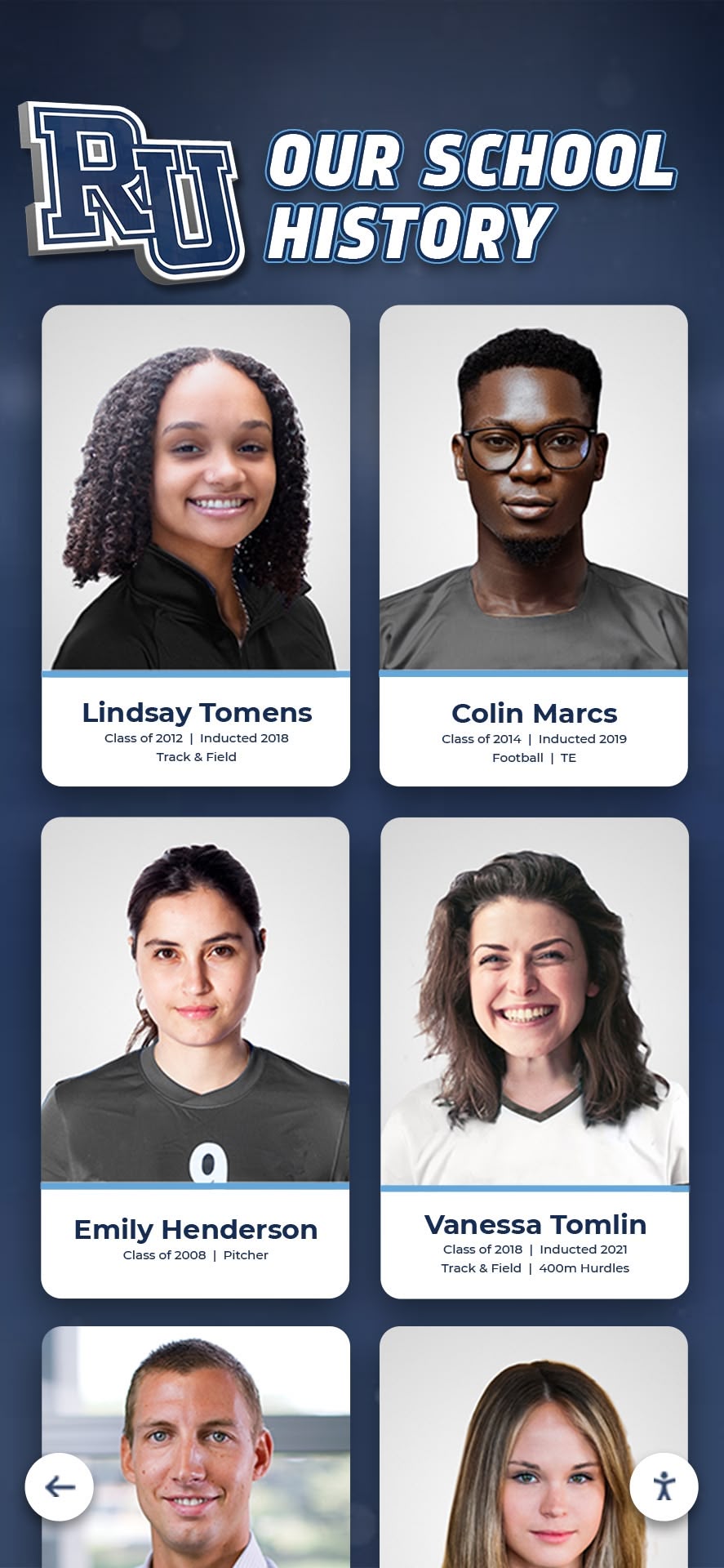
Comprehensive systems preserve complete institutional history across all eras with consistent professional presentation quality
Strategic Implementation Considerations for Touchscreen Halls of Fame
Selecting appropriate touchscreen hall of fame systems represents just the beginning. Thoughtful implementation planning ensures maximum impact and sustained value.
Optimal Display Location Selection
Physical placement dramatically affects touchscreen hall of fame visibility and usage:
High-Traffic Common Areas
Primary displays achieve maximum impact in locations all community members pass regularly:
- Main building entrances and lobbies capturing arrivals
- Cafeteria and dining areas where people gather during meals
- Athletic facility lobbies serving athletes, families, and spectators
- Library common areas frequented by students and faculty
- Performance venue lobbies visited during events and programs
These high-visibility placements ensure recognition becomes central to institutional experience rather than hidden destination requiring intentional seeking.
Program-Specific Locations
Secondary displays provide focused recognition in contextually relevant spaces:
- Athletic team locker rooms honoring sport-specific achievements
- Academic department corridors celebrating disciplinary accomplishments
- Performing arts wings displaying theater and music excellence
- Alumni centers connecting visitors to graduate legacy
- Administrative reception areas greeting official visitors
This distributed approach creates comprehensive recognition presence throughout facilities while maintaining content relevance to immediate context.
Accessibility and Physical Considerations
Effective placement requires attention to practical usage factors:
- Mounting height positioning touchscreen at comfortable standing reach (40-50 inches from floor to center)
- Sufficient clearance allowing wheelchair users and multiple simultaneous visitors
- Lighting control preventing glare from windows or overhead fixtures
- Power and network infrastructure supporting dependable operation
- Physical protection appropriate for location traffic and user demographics
Careful site assessment during planning prevents installation challenges and ensures long-term usability.
Discover placement strategies in touchscreen display installation with comprehensive location guidance.
Content Strategy Development for Launch and Sustainability
Systematic content planning ensures strong launches and manageable ongoing maintenance:
Phased Content Development
Attempting comprehensive historical content before launch delays implementation unnecessarily. Strategic phasing accelerates visibility:
Phase 1 - Current Recognition (Launch Content):
- Current academic year honorees providing immediate relevance
- Recent 5 years establishing substantial contemporary content base
- Key historical highlights capturing most significant institutional moments
- Sufficient volume demonstrating system capability (target 100-200 initial profiles)
Phase 2 - Recent History (Months 2-6):
- Systematic expansion backwards decade by decade
- Priority programs receiving comprehensive historical treatment first
- Community contribution projects engaging alumni in content development
- Milestone achievements ensuring coverage of major institutional moments
Phase 3 - Comprehensive Archive (Year 1+):
- Progressive historical completion across all programs and eras
- Ongoing quality enhancement adding photos, videos, and biographical detail
- Continuous community engagement maintaining momentum
- Perpetual growth as new achievements and historical discoveries emerge
This phased approach delivers immediate value while building comprehensive recognition sustainably over time.
Content Quality Standards
Establishing clear quality expectations ensures consistent professional presentation:
- Minimum photo resolution requirements (typically 1920x1080 for featured images)
- Biographical length guidelines balancing depth with accessibility
- Factual verification processes ensuring accuracy
- Inclusive language reflecting institutional values
- Copyright compliance for all photos, videos, and quoted material
Documented standards enable multiple contributors to create content meeting institutional expectations consistently.
Integration with Existing Recognition Programs
Touchscreen halls of fame complement rather than replace traditional recognition elements:
Physical Display Coordination
Effective installations create cohesive recognition environments blending traditional and digital elements:
- Trophy cases positioned near touchscreen displays allowing coordinated viewing
- Wall plaques providing static recognition while touchscreen enables deep exploration
- Banners and murals creating visual impact complementing digital content detail
- Physical artifacts displayed with touchscreen providing historical context and stories
This coordinated approach respects historical recognition investments while extending capability through digital systems.
Ceremony and Event Integration
Touchscreen halls of fame support recognition ceremonies through:
- Live induction displays presenting new honorees during ceremonies
- Video presentations played on recognition displays before and after events
- Photo capture during ceremonies immediately uploaded to profiles
- Ceremony programs preserved digitally maintaining complete event record
- Family viewing stations enabling extended exploration following ceremonies
This connection ensures recognition ceremonies strengthen digital content while touchscreen systems amplify ceremony impact beyond single events.
Learn about ceremony integration in award ceremony planning with comprehensive event strategies.
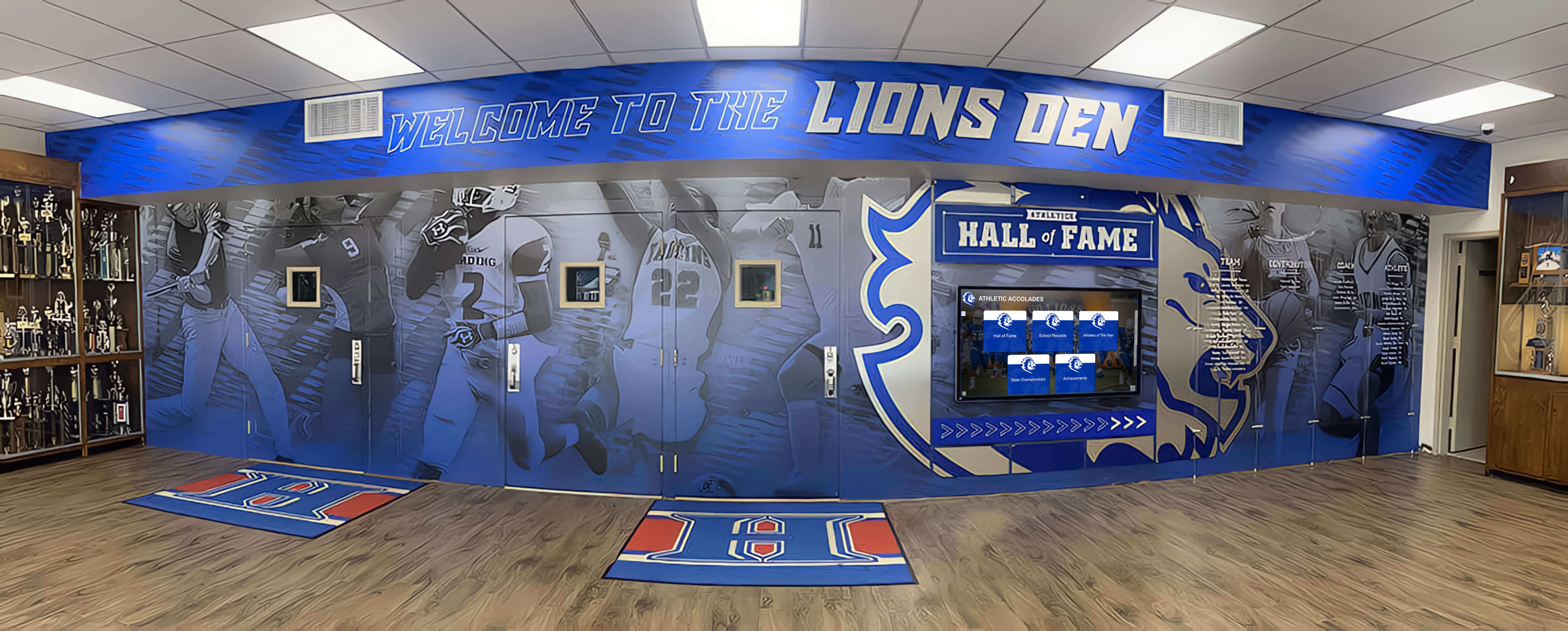
Combined recognition spaces blend traditional physical displays with interactive touchscreen systems creating full celebration environments
Measuring Touchscreen Hall of Fame Success and ROI
Quantifying touchscreen hall of fame impact helps justify investment and guide continuous improvement:
Engagement Metrics
Modern touchscreen systems provide detailed usage analytics:
Interaction Data
- Total touch interactions tracking overall engagement levels
- Session duration revealing depth of content exploration
- Most-viewed content identifying popular honorees and categories
- Search queries showing how visitors discover information
- Peak usage times informing optimal content scheduling
- Geographic distribution of web traffic measuring remote audience reach
These metrics demonstrate tangible usage validating investment and revealing content resonating most strongly with audiences.
Institutional Impact Indicators
Touchscreen halls of fame influence extends beyond direct usage statistics:
Community Engagement Effects
- Alumni participation rates in contribution projects
- Social media mentions and organic promotion
- Donor recognition satisfaction and retention
- Prospective student interest during campus tours
- Media coverage featuring recognition content
- Honoree family engagement and appreciation
Program Support Outcomes
- Fundraising effectiveness referencing recognition visibility
- Athletic recruitment highlighting program history and tradition
- Student satisfaction with institutional pride and culture
- Employee retention through faculty and staff recognition
- Volunteer engagement building on recognition connections
While some impacts resist precise quantification, systematic observation reveals touchscreen halls of fame strengthening institutional culture comprehensively beyond simple display function.
Comparative Cost Analysis
Evaluating touchscreen hall of fame value requires fair comparison to traditional recognition alternatives:
Traditional Recognition Approach (10-Year Cost)
- Trophy case installation: $5,000-15,000
- Wall plaque program: $3,000-8,000 (ongoing annually)
- Banner and mural creation: $8,000-20,000
- Recognition ceremony materials: $1,000-3,000 (annually)
- Storage for displaced recognition: $500-2,000 (annually)
- Administrative time managing physical displays: Substantial ongoing
- Total 10-Year Cost: $58,000-135,000+
Touchscreen Hall of Fame (10-Year Cost)
- Hardware and installation: $8,000-20,000
- Software subscription (10 years): $24,000-60,000
- Initial content development: $3,000-10,000
- Ongoing content management: Minimal (effective cloud tools)
- Display maintenance: $1,000-3,000 (entire period)
- Physical space requirements: Minimal (single kiosk vs. extensive walls)
- Total 10-Year Cost: $36,000-93,000
This analysis demonstrates touchscreen halls of fame often cost less than comprehensive traditional recognition while delivering substantially greater capacity, flexibility, and engagement.
Future Directions in Touchscreen Hall of Fame Technology
Understanding emerging capabilities helps institutions plan forward-looking implementations:
Artificial Intelligence Integration
AI technologies will improve touchscreen halls of fame through:
- Automated content suggestions based on existing patterns
- Photo enhancement improving historical image quality
- Voice interaction enabling spoken queries and exploration
- Tailored recommendations based on visitor interests
- Automated captioning for video content improving accessibility
- Content gap identification revealing underrepresented achievements
These capabilities will reduce administrative burden while improving content quality and visitor experience substantially.
Augmented Reality Extensions
AR integration will blend physical and digital recognition:
- Mobile apps revealing additional content when scanning physical trophies
- Virtual trophy case extensions displaying unlimited achievements in limited physical space
- Historical visualization showing facility evolution and previous recognition displays
- Interactive timelines revealing contextual information about eras and events
- Virtual tours enabling remote exploration of recognition spaces
Early AR implementations are already appearing in leading institutions with broader adoption expected throughout 2026-2028.
Enhanced Social Integration
Recognition systems will increasingly connect to social platforms:
- Automated posting of new inductees to institutional social accounts
- Honoree-controlled profile updates maintaining current information
- Achievement verification through external credential services
- Community storytelling enabling visitors to contribute memories and tributes
- Alumni network integration connecting honorees with current programs
These social connections will extend recognition impact while building stronger community relationships across generations.

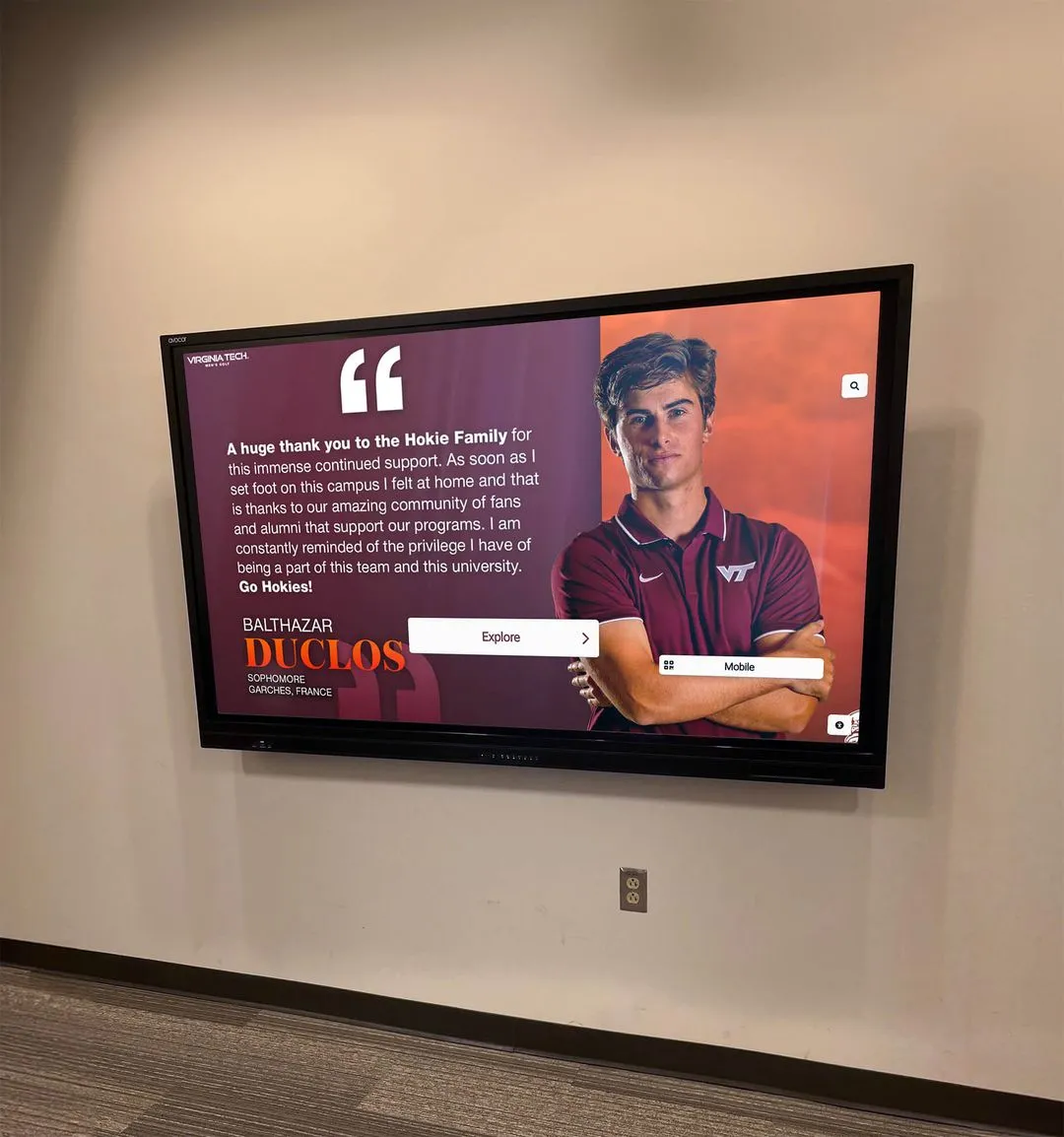
Modern touchscreen kiosks provide full recognition management through user-friendly interfaces accessible to all community members
Conclusion: Selecting the Best Touchscreen Hall of Fame for Your Institution
Touchscreen halls of fame represent fundamental evolution in how institutions celebrate achievement and preserve legacy, moving from space-constrained static displays to active, engaging systems honoring unlimited accomplishments while creating memorable experiences strengthening community connection. The convergence of mature technology, accessible pricing, and widespread user familiarity makes 2026 an ideal moment for institutions to implement comprehensive recognition systems serving needs for decades.
Superior touchscreen hall of fame solutions distinguish themselves through purpose-built recognition architecture rather than adapted digital signage, user-friendly experiences requiring no instructions, full content management enabling effective ongoing maintenance, and coordination with institutional programs across athletics, academics, advancement, and historical preservation. Platforms like Rocket Alumni Solutions demonstrate what recognition-specific systems deliver when designed explicitly for institutional needs: unlimited honoree capacity, native mobile web access extending reach beyond campus, perpetual archival maintaining recognition permanently, and professional implementation support ensuring successful launches and sustained value.
Transform Your Recognition Program with Interactive Touchscreens
Discover how modern touchscreen hall of fame systems enable your institution to honor unlimited achievements across all programs while creating engaging experiences that strengthen community pride and preserve legacy permanently.
Book a demoSuccessful implementation requires strategic planning addressing display location selection, phased content development enabling quick launches while building comprehensive archives sustainably, and integration with existing recognition programs creating cohesive celebration environments. Institutions should evaluate touchscreen hall of fame solutions based on total cost of ownership over realistic 10-15 year timeframes rather than comparing only initial expenses, accounting for ongoing content management efficiency, technical support quality, and administrative time requirements different platforms demand.
The most successful touchscreen hall of fame implementations share common characteristics: strong administrative champions ensuring sustained content development, clear quality standards maintaining professional presentation, systematic community engagement expanding historical content while building alumni connection, and integration with broader institutional programs reinforcing recognition across recruitment, fundraising, and culture-building initiatives. These factors matter more than specific technical features, as even the most capable systems deliver limited value without sustained institutional commitment and strategic utilization.
Your institutional achievements, honorees, and legacy deserve recognition systems celebrating excellence while building pride and preserving culture permanently. With thoughtful platform selection matching your specific needs, strategic implementation following proven best practices, and sustained commitment to quality content and visitor experience, you can create touchscreen halls of fame becoming cherished traditions that honor the past, celebrate the present, and inspire future achievement for generations to come.
Ready to explore touchscreen hall of fame solutions for your institution? Talk to our team to discover how comprehensive recognition platforms address your specific needs across athletics, academics, donors, arts, and historical preservation.