Intent: Demonstrate & Decide — This video tour guide showcases the leading platforms for building virtual halls of fame in 2025, helping schools, universities, athletic programs, and organizations choose the right solution for their recognition needs.
Virtual hall of fame platforms have evolved from simple digital slideshows into sophisticated interactive recognition ecosystems that celebrate achievements through touchscreen displays, cloud-based content management, multimedia storytelling, and web-accessible databases. As organizations move beyond space-limited physical trophy cases and static wall plaques, they face a critical decision: which platform will best serve their unique recognition goals while remaining manageable, affordable, and engaging for years to come?
Picture walking into a modern school lobby and encountering a large touchscreen display where students tap to explore decades of athletic championships, academic excellence, and alumni success stories. Imagine an athletics facility where visitors interact with high-definition video highlights, searchable athlete databases, and dynamic leaderboards updating automatically as new records fall. Envision a university advancement office managing recognition content for dozens of distributed displays from a single cloud-based dashboard, adding new honorees within minutes rather than months.
This comprehensive video tour guide examines the top platforms creating these transformative recognition experiences in 2025—exploring their unique capabilities, ideal use cases, technical requirements, content management workflows, pricing models, and real-world implementation considerations that separate truly effective solutions from disappointing investments.
Modern virtual hall of fame platforms serve purposes far beyond simple recognition display. They function as engagement tools strengthening community connections, storytelling platforms preserving institutional legacy, recruitment assets showcasing organizational excellence, and dynamic archives growing more valuable over time rather than becoming outdated artifacts.

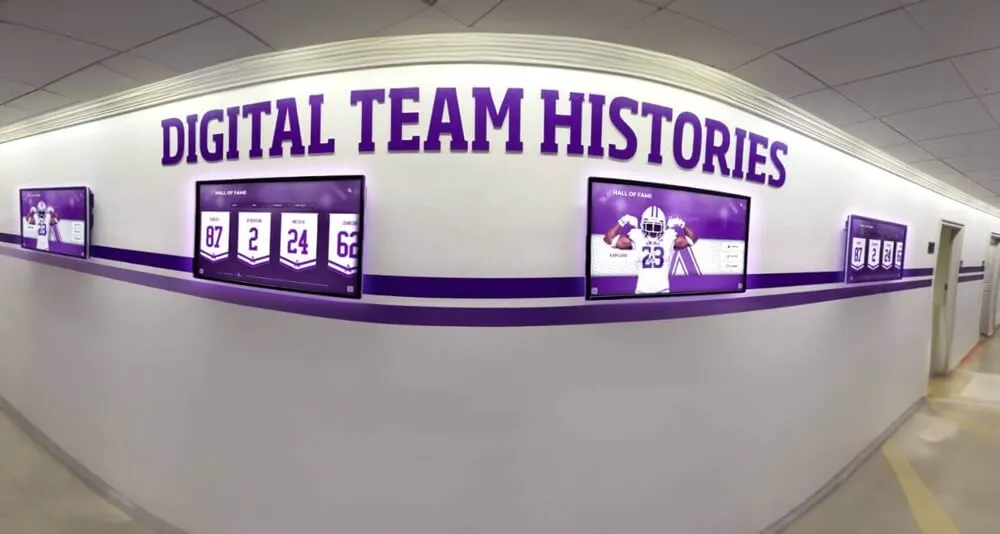
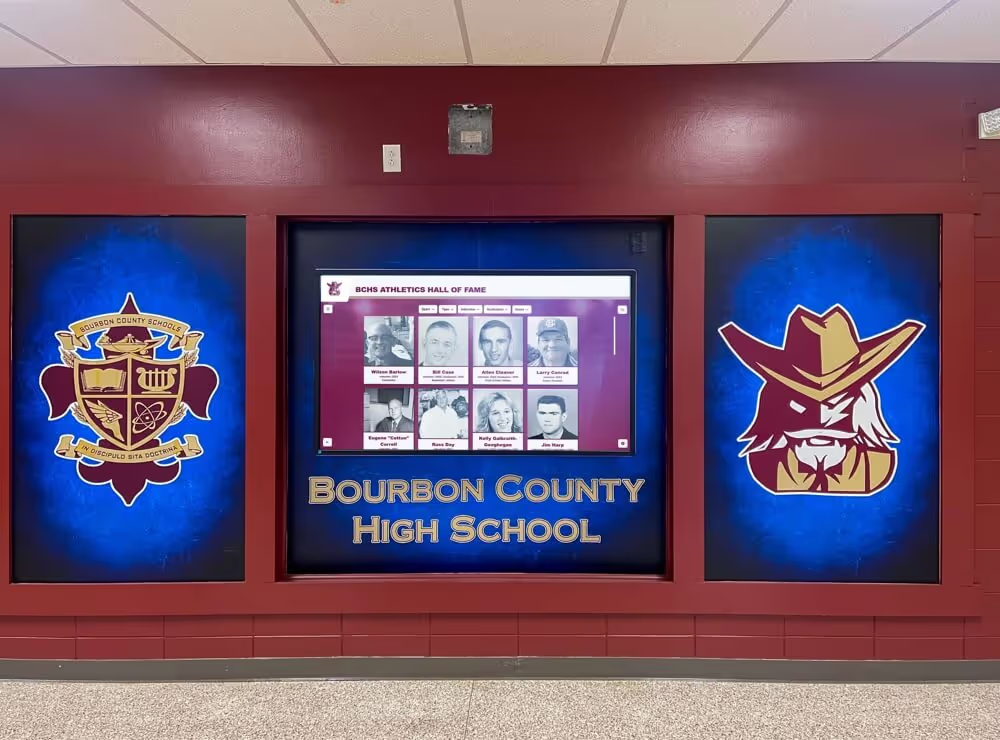
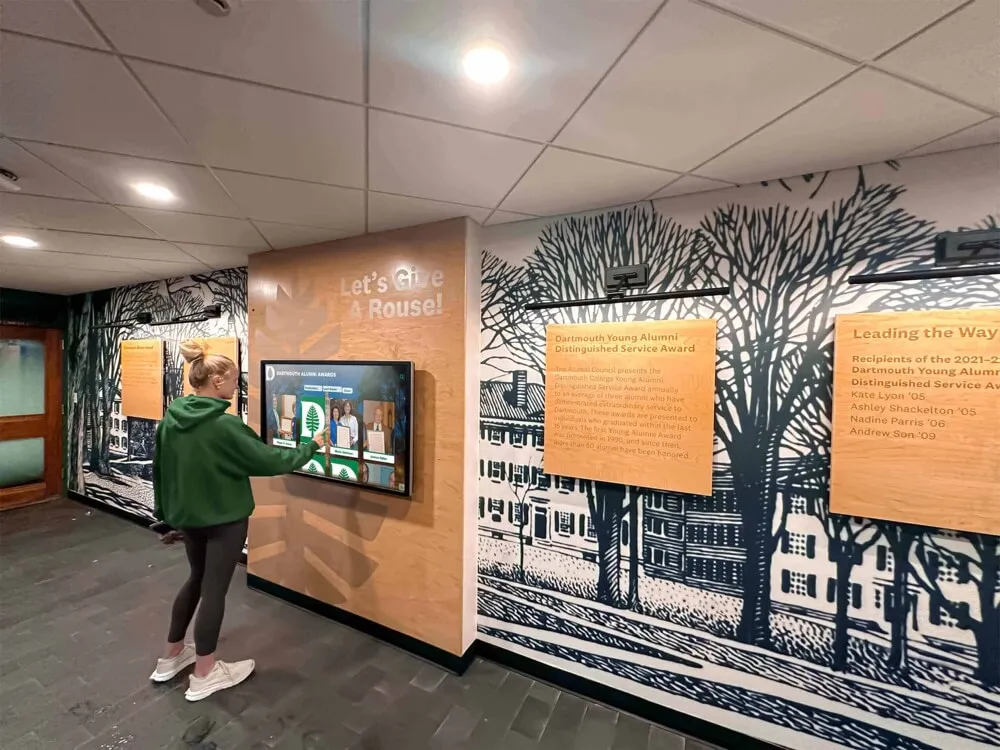
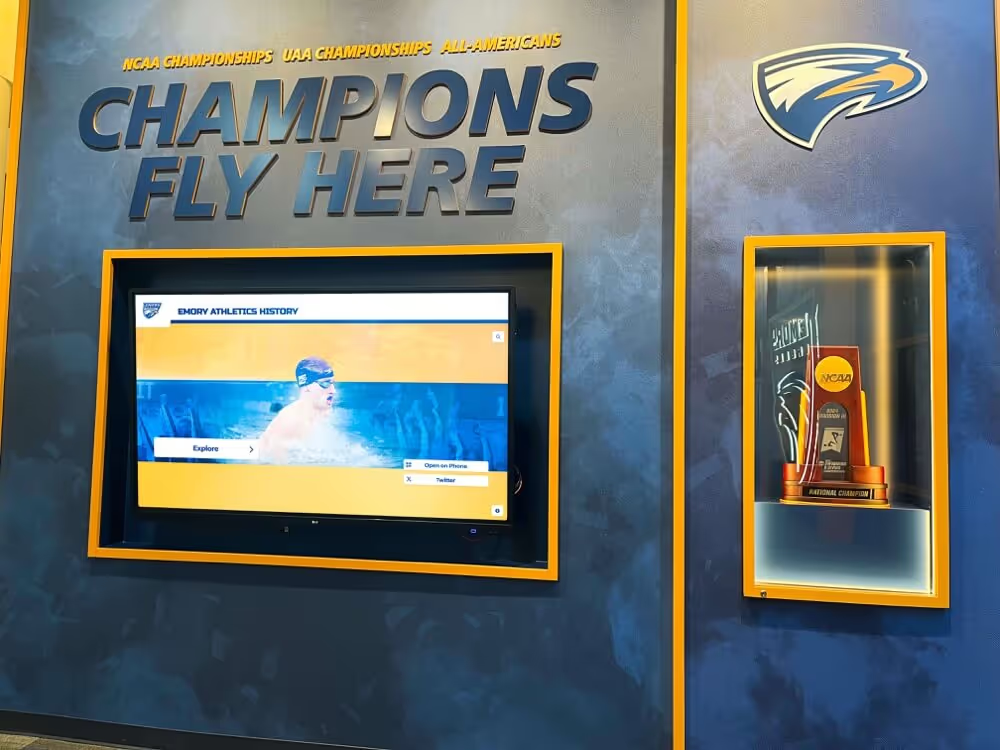
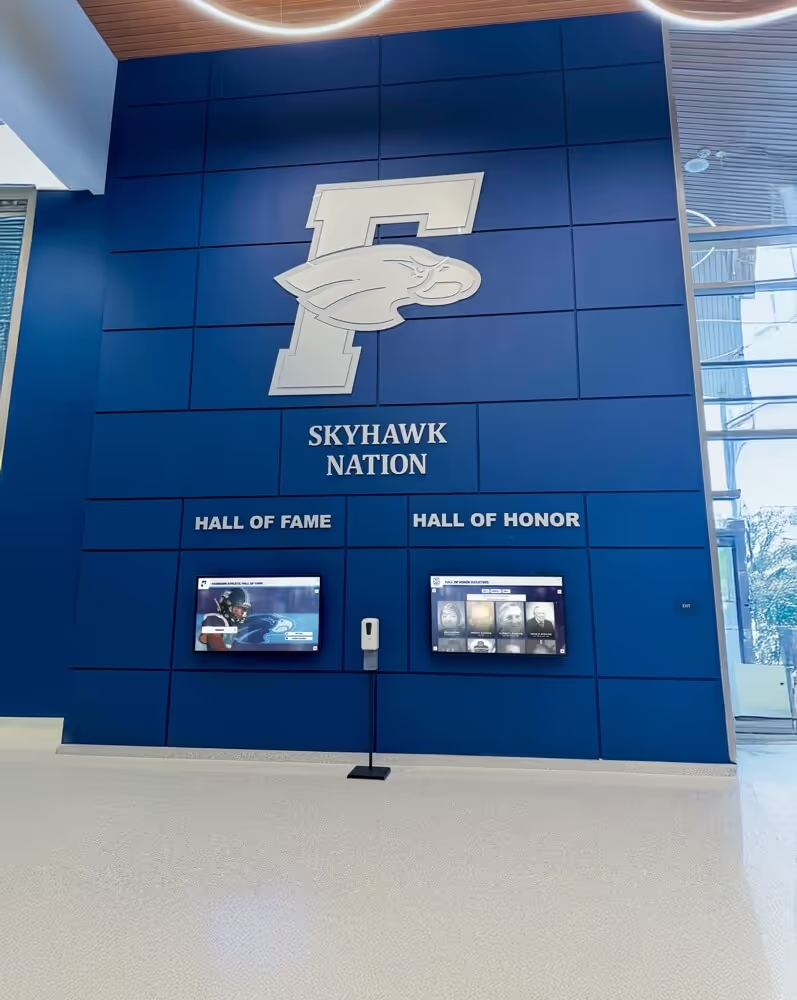
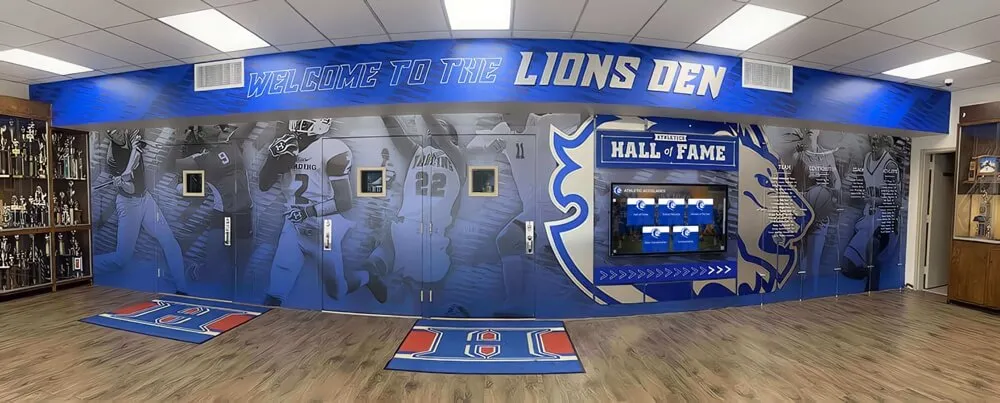
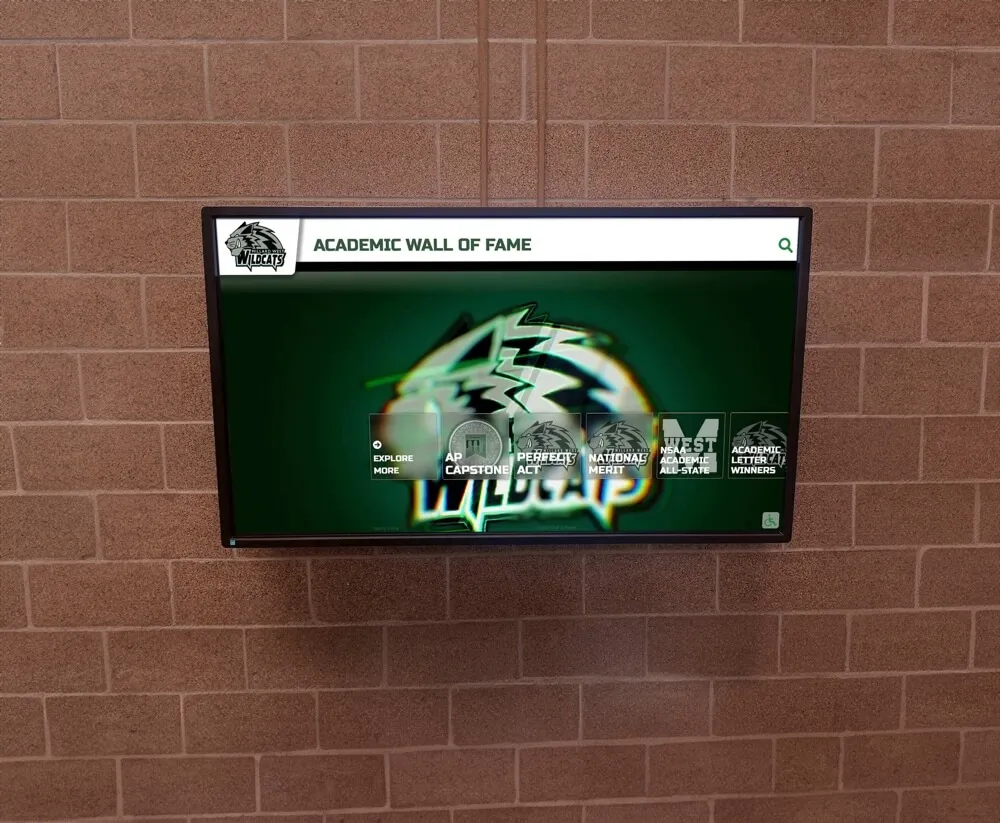
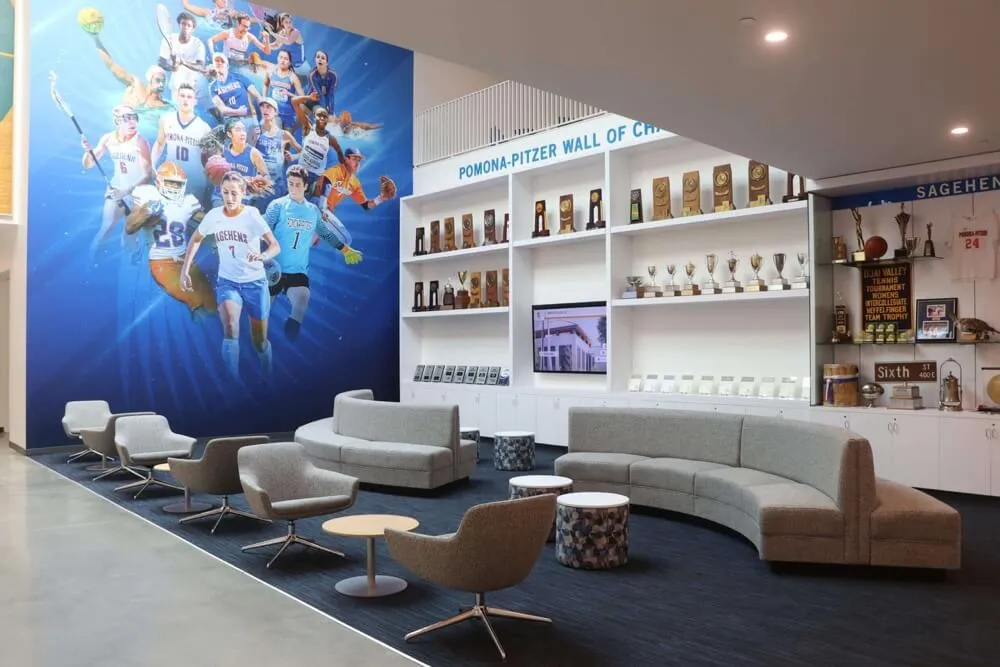
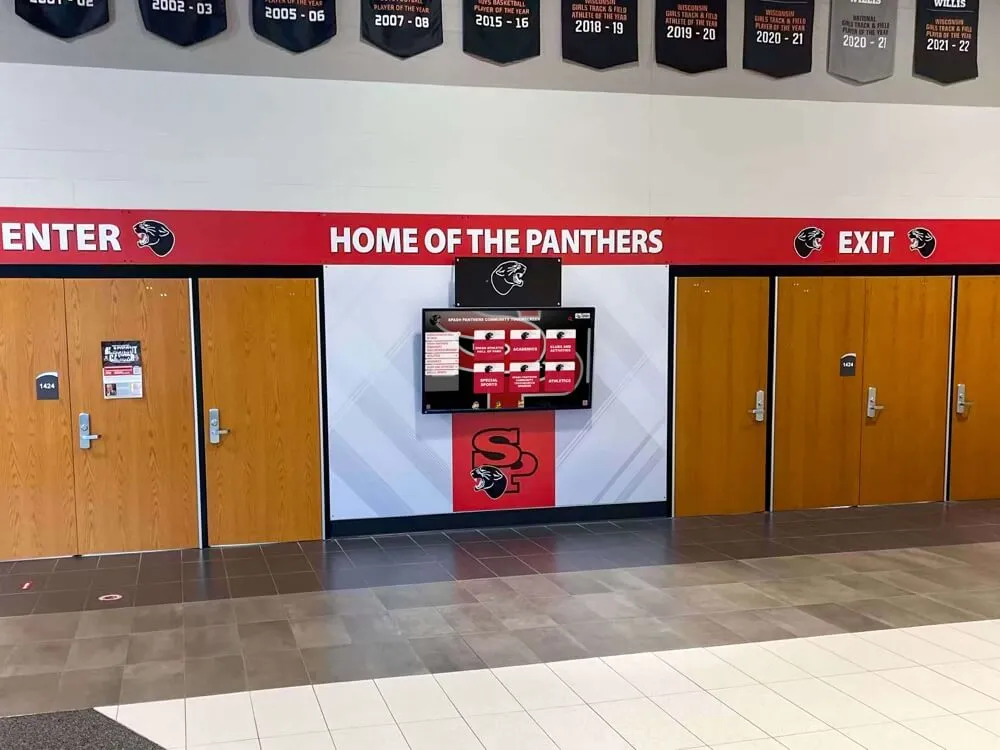
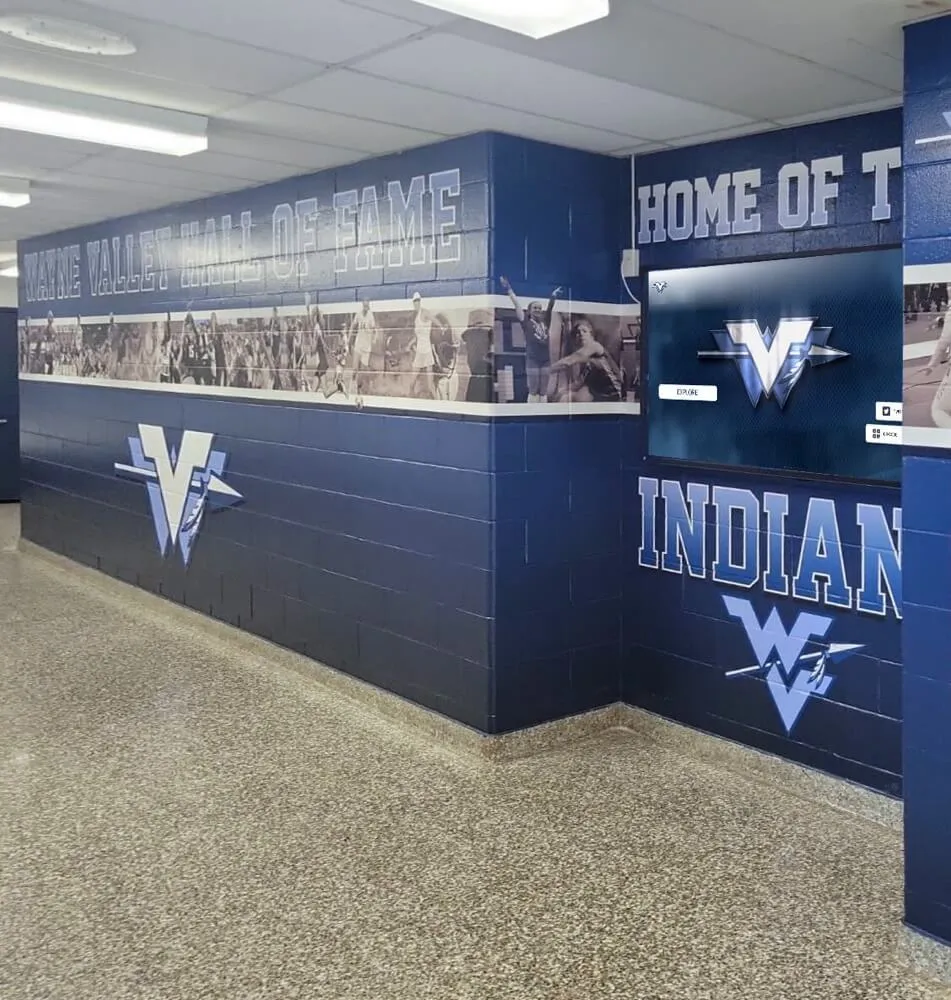
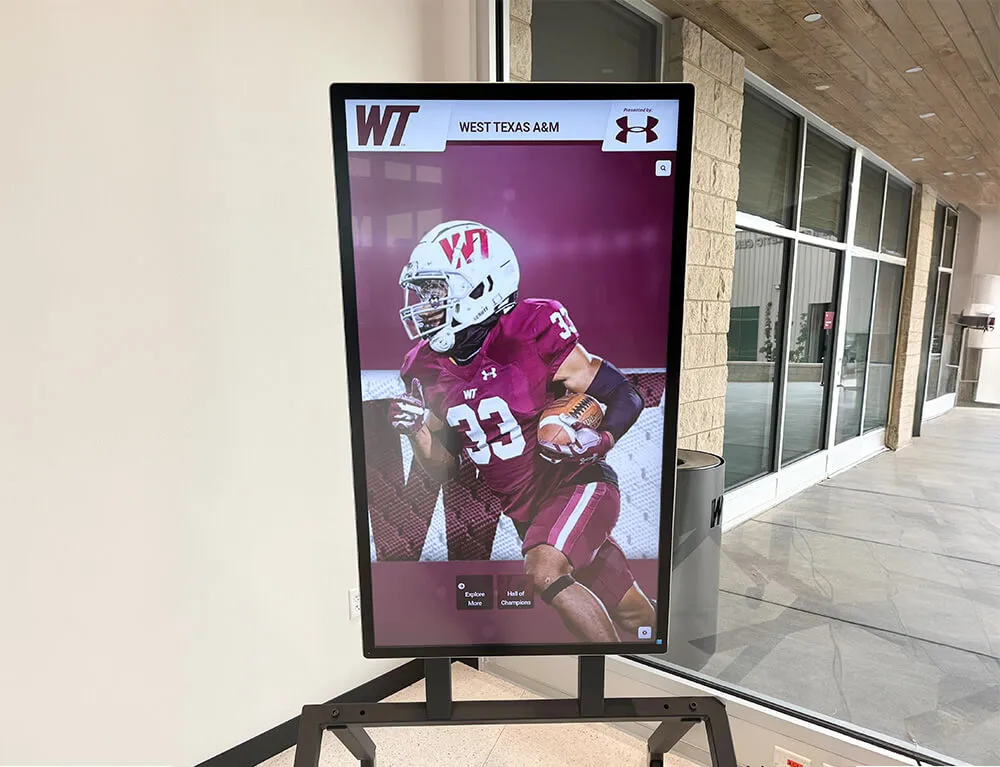
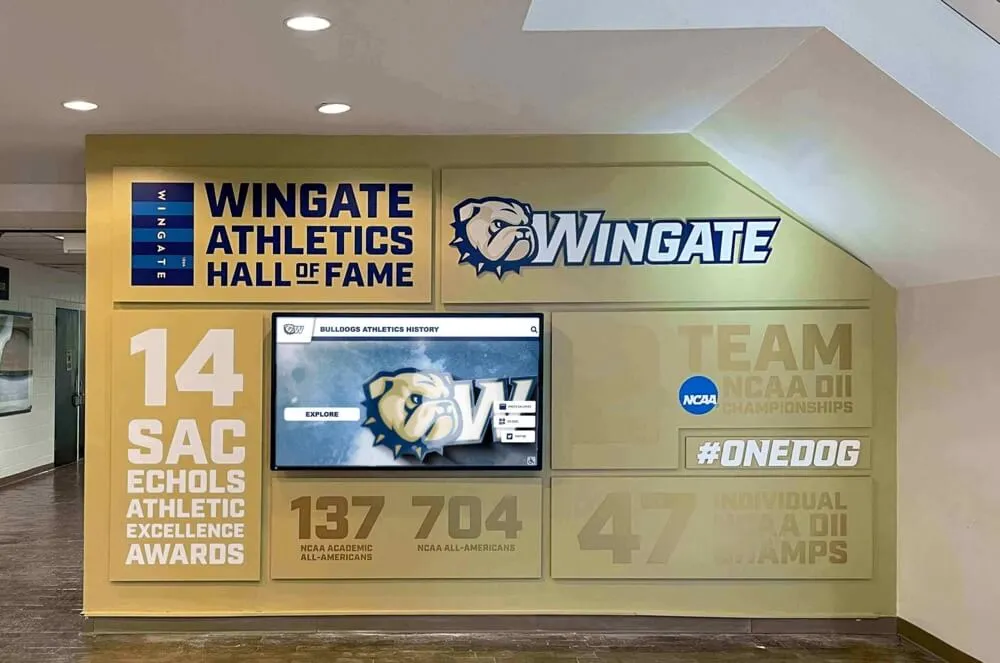
Modern virtual hall of fame platforms transform recognition into interactive experiences accessible through touchscreens, mobile devices, and web browsers
Understanding Virtual Hall of Fame Platforms: What Makes Them Different in 2025
Before evaluating specific platform options, understanding what distinguishes modern virtual hall of fame solutions from earlier digital recognition attempts helps organizations identify capabilities essential for long-term success.
Defining Virtual Hall of Fame Platforms
Virtual hall of fame platforms are comprehensive software ecosystems—not merely digital displays—that enable organizations to create, manage, and present unlimited recognition content across multiple channels including physical touchscreen installations, web-responsive websites, mobile applications, and integrated institutional systems.
Core Platform Components
Complete virtual hall of fame systems include integrated elements working together:
- Cloud-based content management system: Centralized platform enabling remote content creation, editing, and publishing from any internet-connected device without physical display access
- Interactive touchscreen software: Purpose-built applications optimized for public kiosk deployment with intuitive touch interfaces, engaging navigation, and automatic session management
- Web-responsive recognition database: Searchable online archives extending recognition visibility beyond physical displays to global audiences through standard web browsers
- Multimedia asset management: Organized systems handling photos, videos, documents, and audio files with appropriate compression, formatting, and delivery optimization
- Template-based design tools: Pre-built layouts and visual frameworks enabling professional presentation without custom graphic design expertise
- Analytics and engagement tracking: Dashboard reporting showing content views, popular profiles, search patterns, and usage metrics informing content strategy
- Multi-location management: Centralized control enabling consistent content distribution across dozens or hundreds of distributed installations
- API and integration capabilities: Technical interfaces connecting recognition platforms with student information systems, donor databases, and other institutional technology
These integrated capabilities distinguish complete platform solutions from simple digital signage systems displaying rotating slideshows that organizations frequently deploy initially but abandon when administrative burden and limited engagement prove unsustainable.
Organizations implementing digital hall of fame touchscreens should evaluate complete platform ecosystems rather than isolated display hardware to ensure long-term recognition success.
Why Traditional Digital Signage Falls Short for Recognition
Many organizations begin virtual hall of fame journeys by repurposing existing digital signage systems—display screens throughout facilities showing announcements, schedules, and rotating content. While these systems share visual similarity with purpose-built recognition platforms, fundamental capability differences consistently lead to disappointing outcomes.
Critical Limitations of Digital Signage for Recognition
Generic digital signage fails recognition applications through multiple constraints:
- Passive viewing only: No interactivity enabling visitors to explore content matching their interests, search for specific individuals, or discover connections beyond what passively rotates on screen
- Limited content depth: Slideshow formats accommodate minimal information—perhaps name, photo, and single achievement—rather than comprehensive profiles with statistics, video highlights, and complete career documentation
- Minimal engagement duration: Research consistently shows visitors glance at passive digital signage for 2-3 seconds on average versus 45-90 seconds actively exploring interactive touchscreen content—engagement duration directly impacting recognition effectiveness
- Content management complexity: Adding new recognition requires graphic design skills creating visual slides, manual file management distributing content to individual displays, and ongoing coordination ensuring consistent presentation
- No searchability or discovery: Visitors cannot find specific individuals or achievements; they see only whatever currently displays when they happen to walk past
- Scalability challenges: Managing recognition across multiple display locations requires individually updating each screen or complex content distribution infrastructure
- No web extension: Recognition remains visible only at physical display locations rather than accessible remotely through web browsers extending reach to global audiences
These limitations explain why organizations frequently invest in digital signage for recognition purposes, experience disappointing engagement and administrative burden, and ultimately abandon recognition display programs—or discover purpose-built virtual hall of fame platforms delivering dramatically different outcomes.
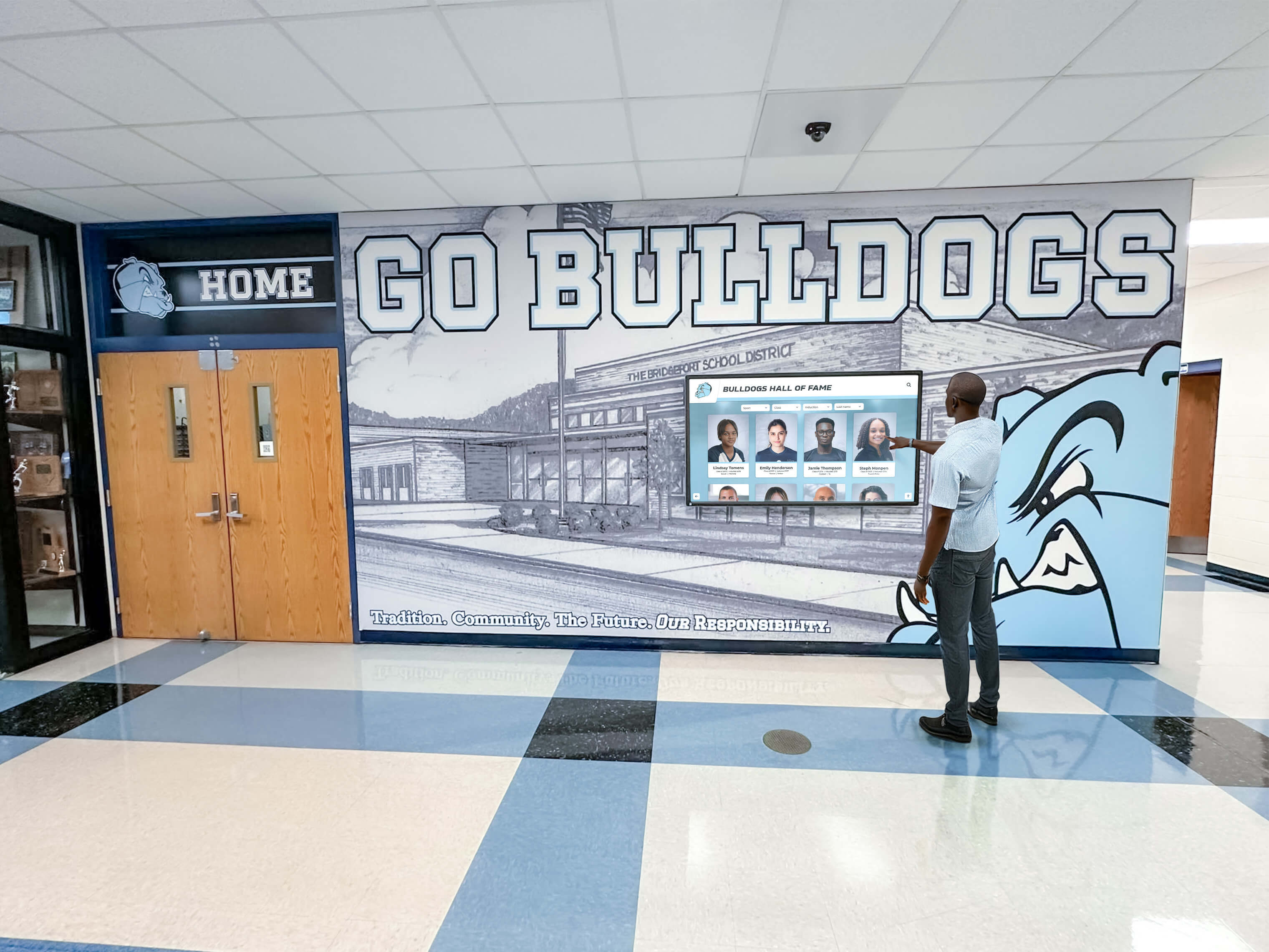
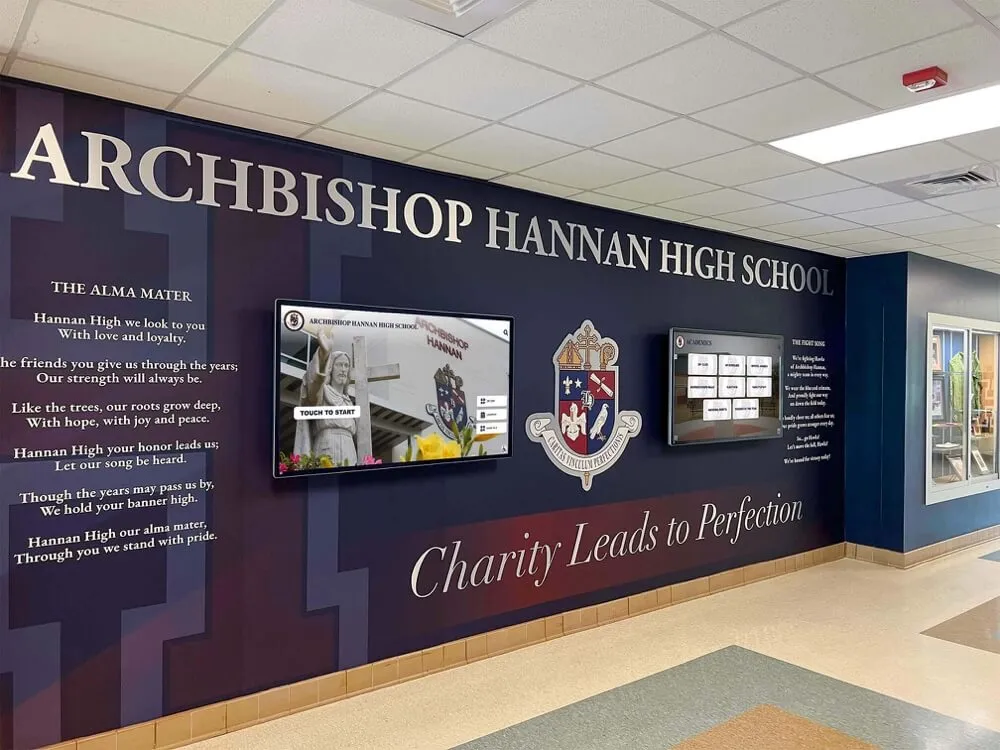
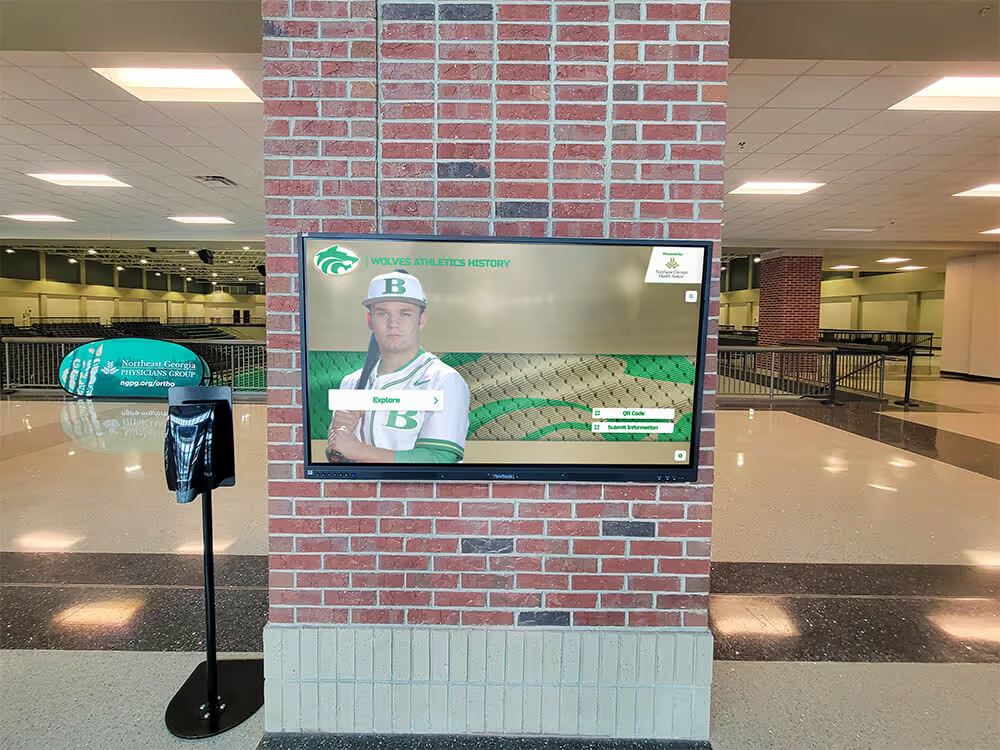
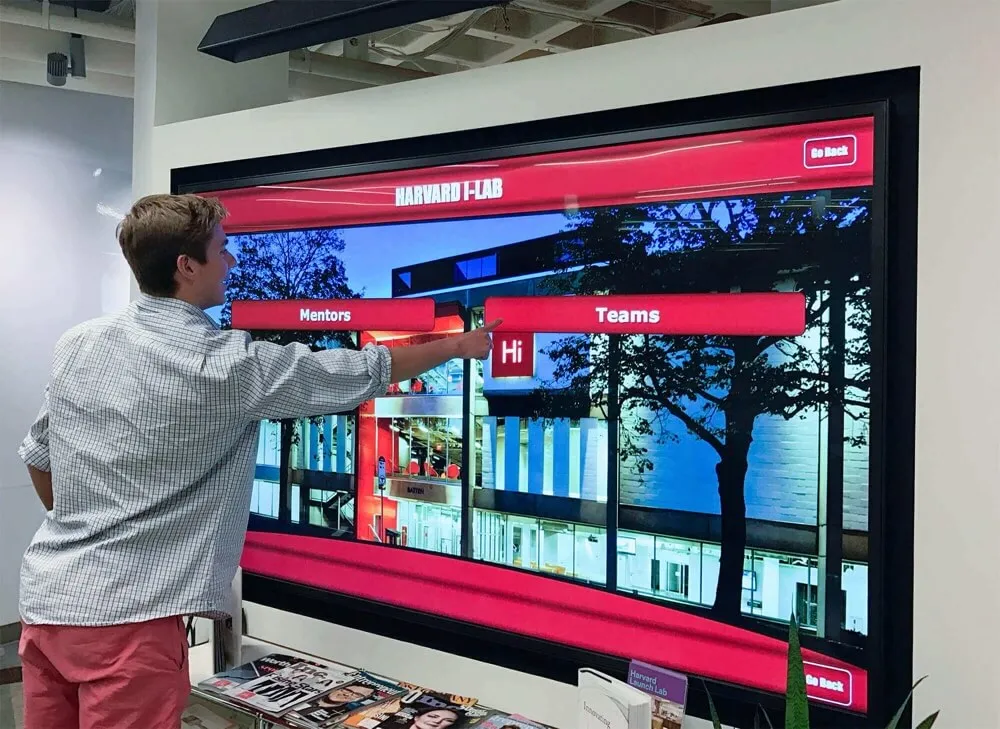
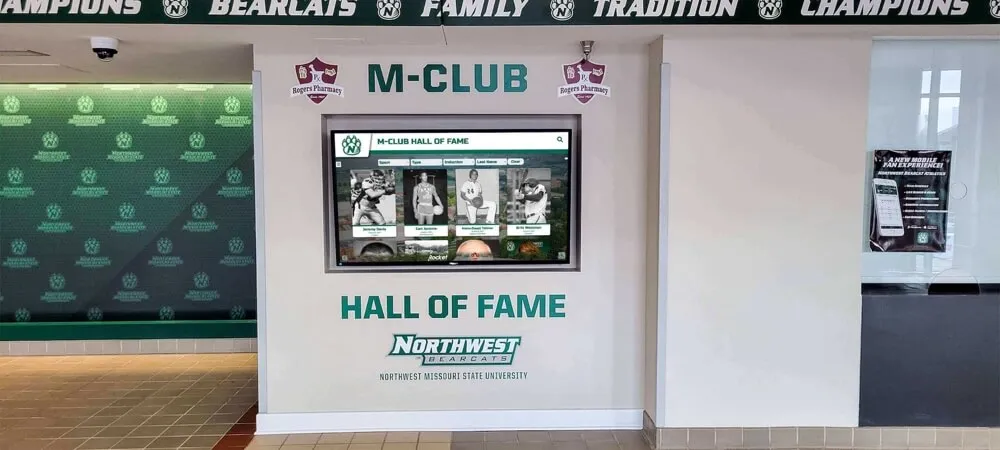
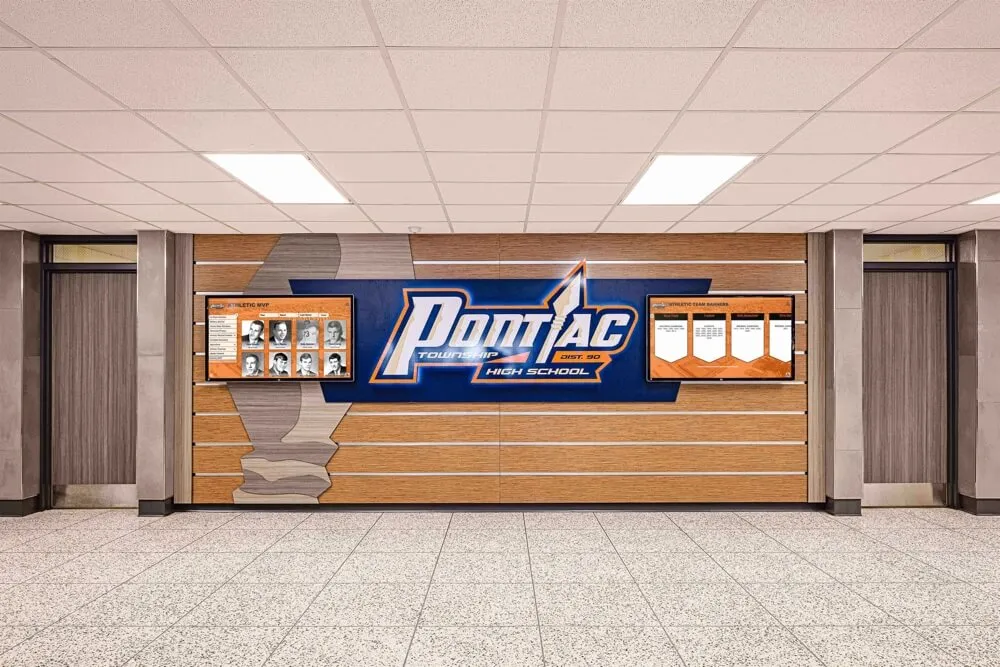
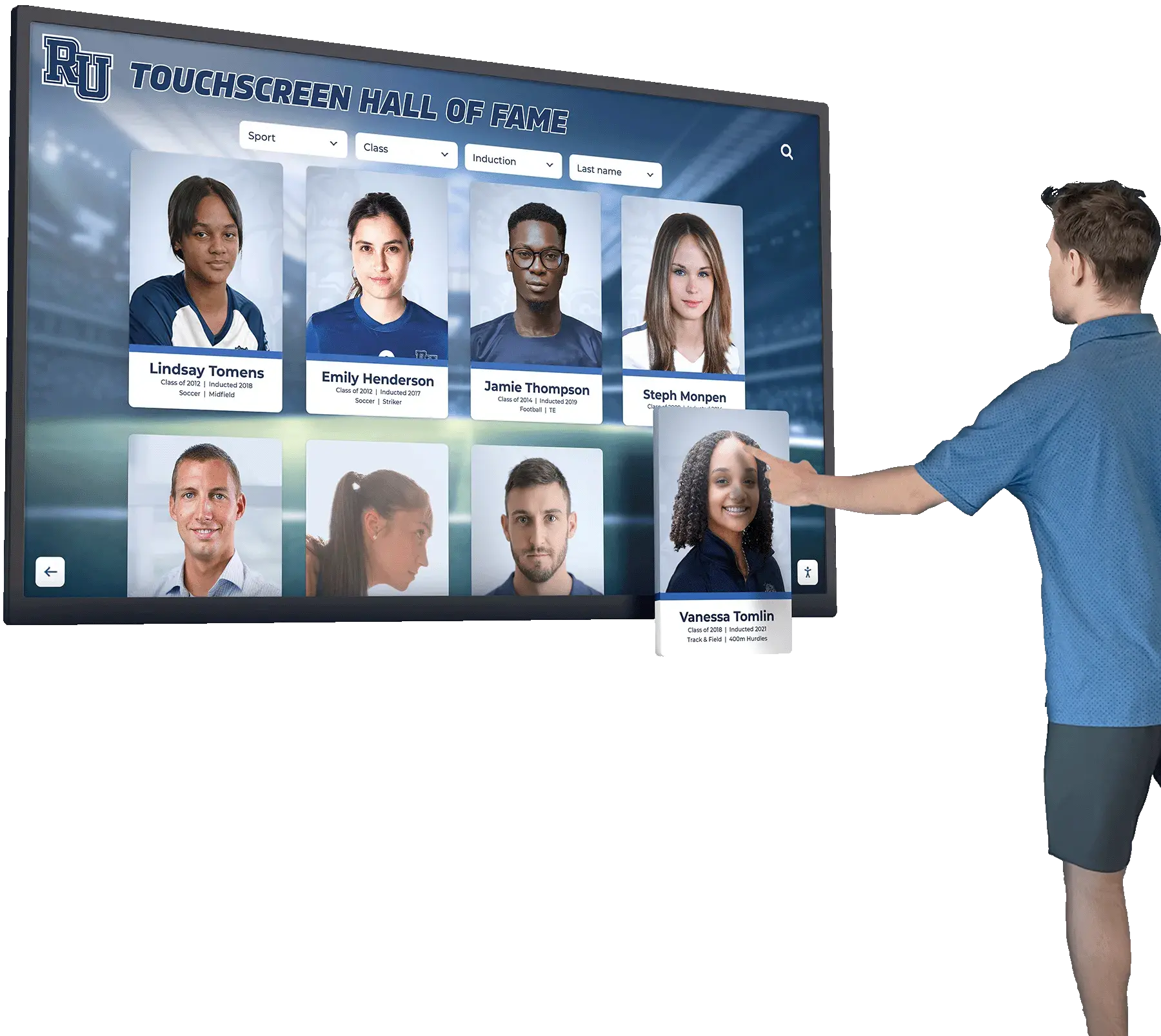
Interactive platforms transform passive viewers into active participants exploring institutional history and achievement
Essential Platform Capabilities for 2025 and Beyond
Modern virtual hall of fame platforms must deliver specific capabilities ensuring they remain effective, manageable, and engaging throughout multi-year deployment lifecycles.
Non-Negotiable Platform Requirements
Organizations should insist on these fundamental capabilities:
Cloud-Based Content Management
- Remote content updates without physical display access
- Multi-user content creation and approval workflows
- Instant publishing propagating changes to all installations simultaneously
- Mobile-friendly content management interfaces enabling updates from smartphones
- Scheduled content changes activating automatically at specified dates
Unlimited Recognition Capacity
- No artificial limits on number of honorees, profiles, or media files
- Database architecture supporting thousands of individuals across multiple decades
- Scalable storage growing as recognition archives expand over time
- No degraded performance as content libraries increase in size
Multimedia Integration
- High-resolution photo galleries showcasing honorees throughout their journeys
- Video integration displaying highlights, interviews, and achievement footage
- Audio content including speeches, memorable moments, and historical recordings
- Document archives preserving programs, newspaper clippings, and original materials
- Interactive timelines visualizing career progression and historical context
Search and Discovery Tools
- Full-text search enabling visitors to find specific individuals instantly
- Filtering by achievement category, decade, sport, or custom criteria
- Alphabetical browsing supporting systematic exploration
- Featured content highlighting seasonal achievements or anniversaries
- Related content suggestions connecting visitors to relevant profiles
Mobile and Web Accessibility
- Responsive web design functioning across desktop, tablet, and smartphone
- Public web access extending recognition visibility globally beyond physical displays
- QR code integration enabling mobile device synchronization with touchscreen content
- Social sharing capabilities amplifying recognition through personal networks
- Search engine optimization ensuring discoverability through Google and other search platforms
Organizations implementing digital recognition displays should verify these capabilities exist and function reliably before committing to specific platforms.
Top Virtual Hall of Fame Platform Options for 2025
Multiple platform approaches serve different organizational needs, technical environments, and budget realities. Understanding each option’s strengths and limitations guides appropriate selection.
Purpose-Built Recognition Platforms: Rocket Alumni Solutions
Purpose-built recognition platforms deliver turnkey solutions designed specifically for educational institutions, athletic programs, and nonprofit organizations celebrating achievement and preserving legacy.
Platform Overview and Capabilities
Rocket Alumni Solutions represents the most comprehensive purpose-built platform serving schools, universities, athletic conferences, and community organizations through:
Core Platform Features
- Cloud-based content management system requiring no technical expertise
- Pre-built templates for athletic recognition, academic honors, and alumni profiles
- Unlimited content storage accommodating institutions of any size
- Interactive touchscreen software optimized for public kiosk deployment
- Web-responsive recognition database accessible from any device
- Mobile synchronization via QR codes connecting physical and digital experiences
- Automated data feeds integrating with student information systems when desired
- White-glove implementation services including content migration and staff training
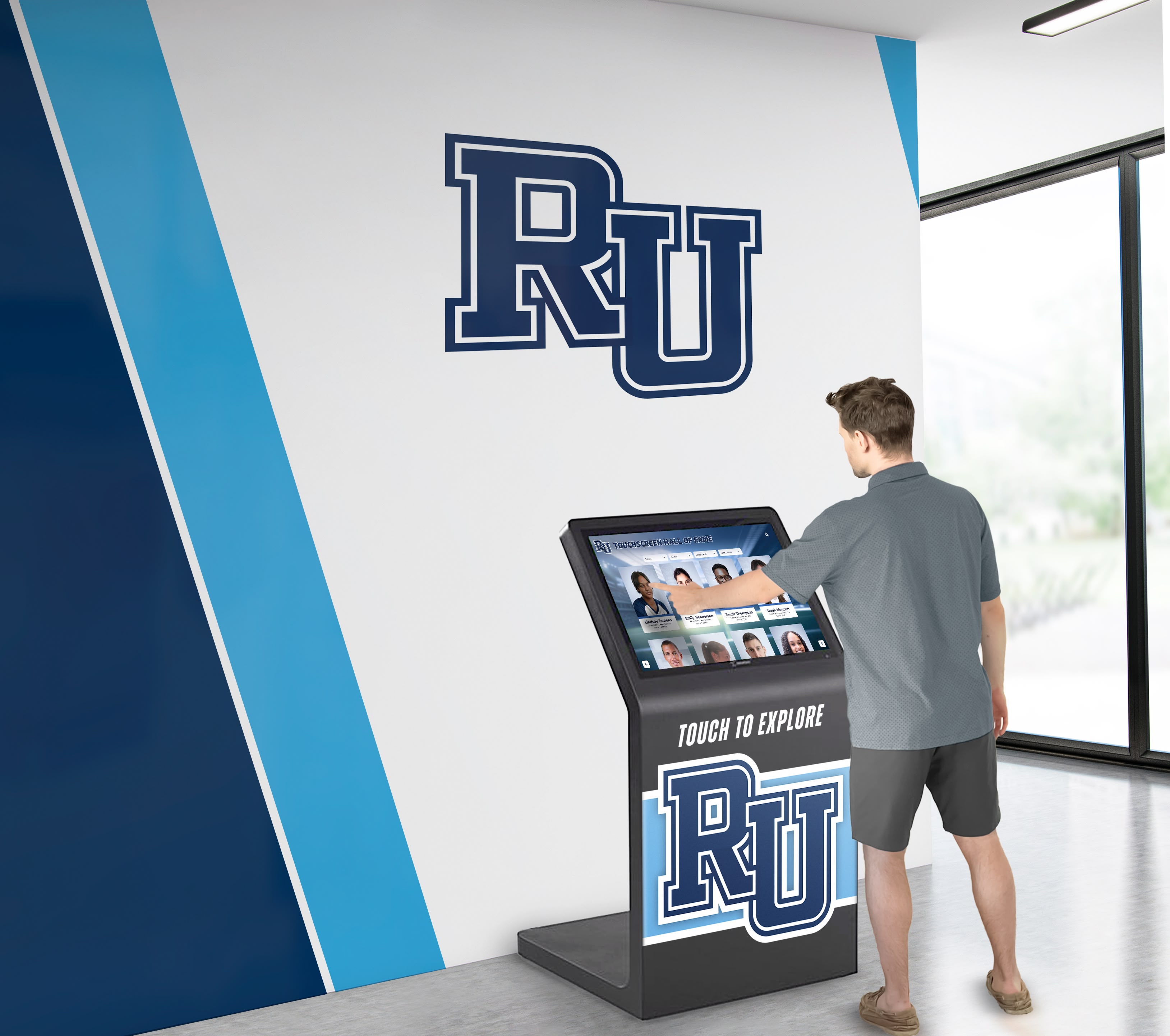
Purpose-built platforms provide professional interfaces requiring no custom development while supporting unlimited recognition capacity
Ideal Use Cases
Rocket Alumni Solutions excels for:
- Schools and universities creating comprehensive hall of fame programs across athletics, academics, and institutional history
- Athletic programs documenting team championships, individual records, and coaching excellence
- Alumni associations strengthening connections through interactive recognition accessible globally via web platforms
- Development offices integrating donor recognition with broader institutional celebration
- Organizations needing turnkey solutions launching quickly without custom development timelines and costs
Technical Requirements
Minimal technical complexity enables rapid deployment:
- Any commercial-grade touchscreen display (Windows, Mac, or Android compatible)
- Standard internet connectivity (Wi-Fi or ethernet)
- Web browser access for content management
- No specialized IT infrastructure or custom integration required
Pricing Model
Transparent subscription pricing eliminates large upfront costs:
- Platform subscription: $140-$300 monthly depending on features and display quantity
- Hardware costs separate: $4,000-$10,000 per touchscreen display for commercial-grade equipment
- Optional implementation services: $2,000-$8,000 for content migration, design, and training
- No long-term contracts; month-to-month subscriptions available
Schools implementing high school digital hall of fame displays consistently find purpose-built platforms deliver professional results without custom development investments or ongoing technical maintenance burden.
Unique Differentiators
Rocket Alumni Solutions provides capabilities competitors typically cannot match:
- Educational focus: Platform designed specifically for school and nonprofit recognition rather than generic digital signage
- Unlimited capacity: No artificial limits on honorees, photos, videos, or content—organizations celebrate everyone deserving
- Remote management: Cloud-based system enabling content updates from anywhere without physical display access
- Web accessibility: Every touchscreen display includes corresponding public website extending recognition globally
- Implementation support: White-glove services ensuring successful launches rather than abandoning customers post-purchase
- Privacy compliance: FERPA, COPPA, and GDPR considerations built into platform architecture
- Proven track record: Hundreds of successful installations across K-12 schools, universities, and athletic programs nationwide
Discover comprehensive implementation strategies in digital trophy case guides examining the complete platform selection and deployment process.
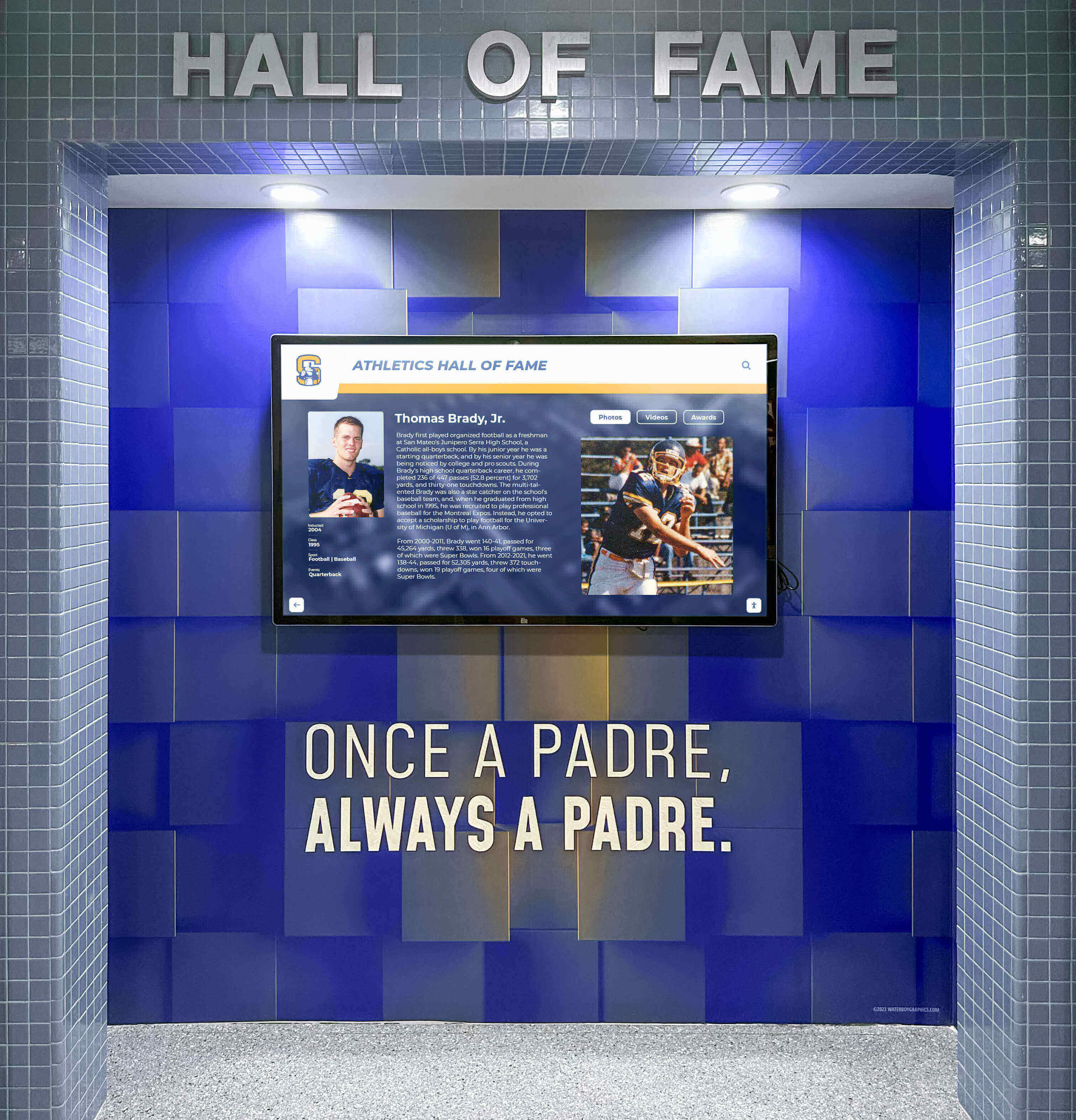
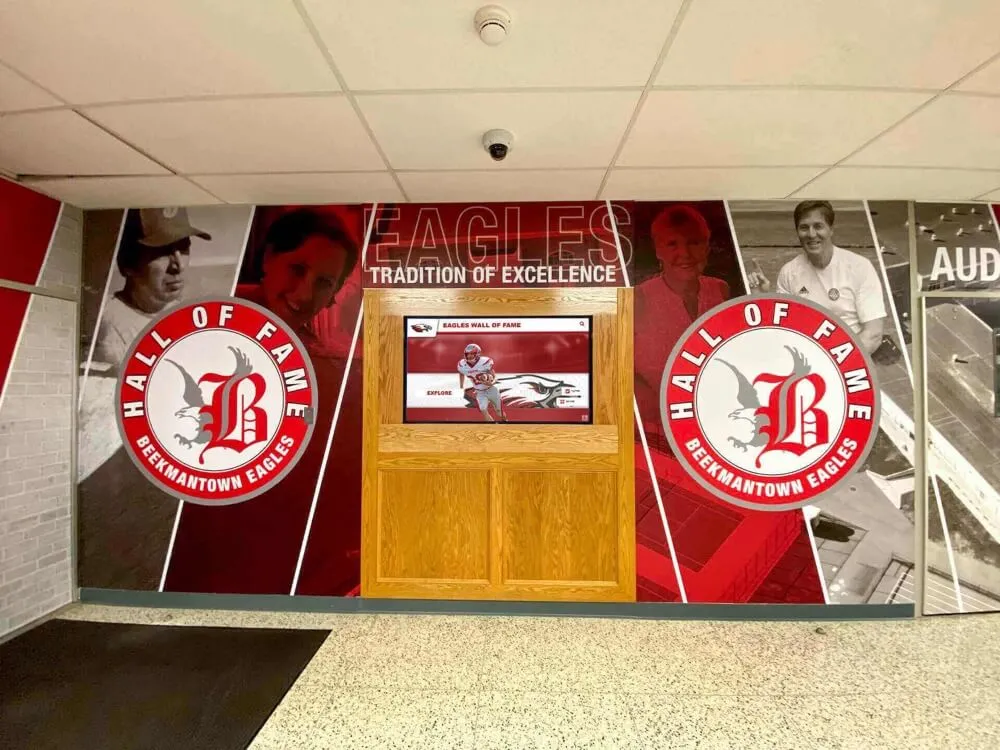
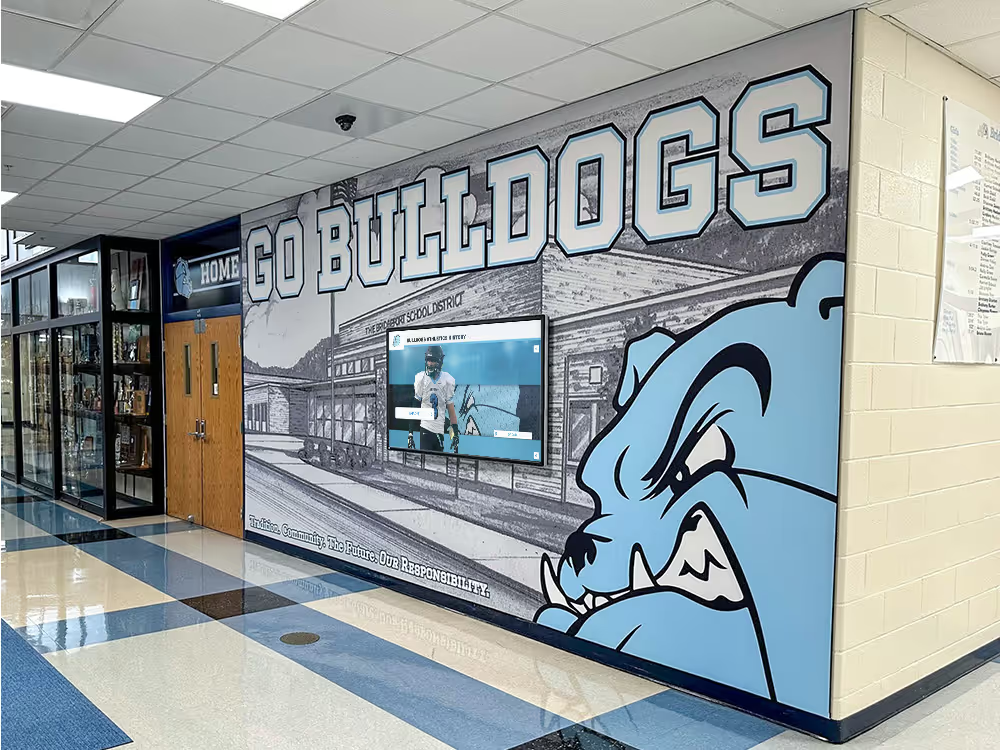
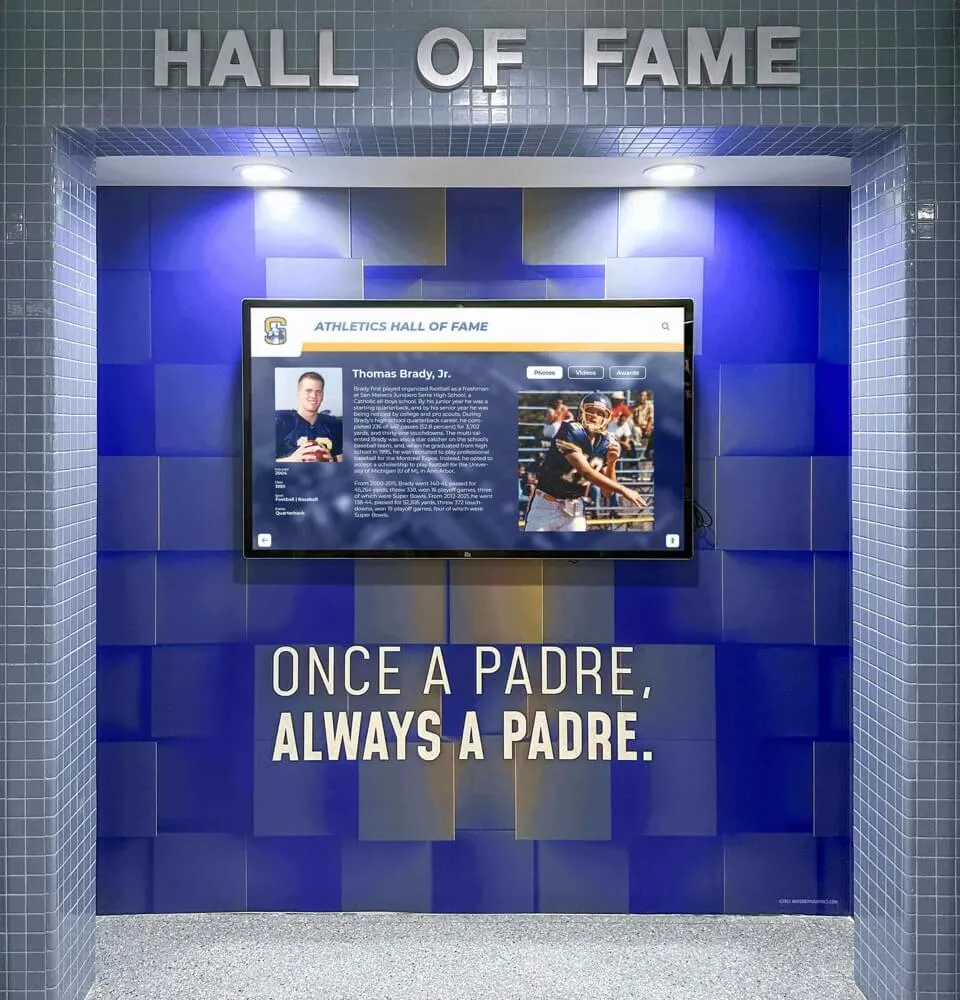
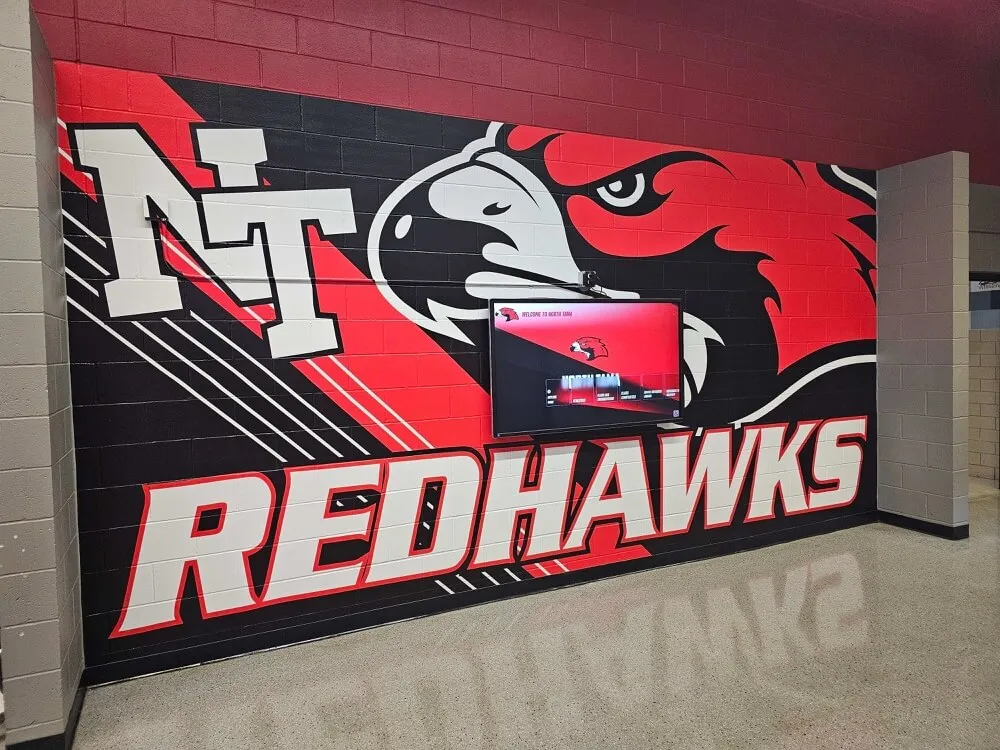
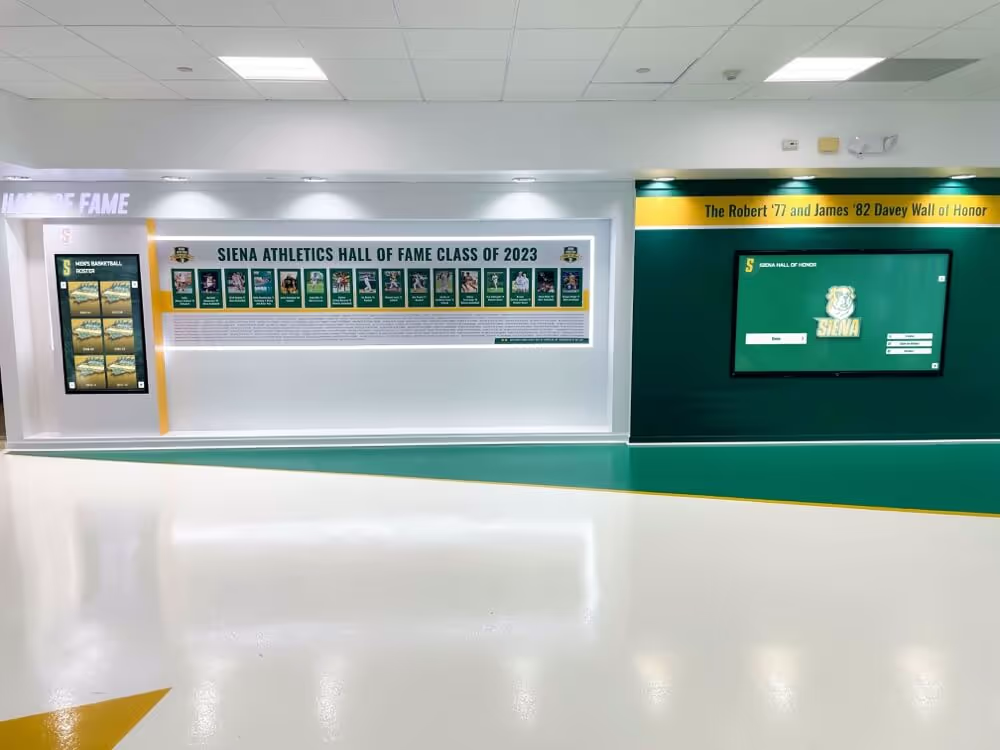
Purpose-built platforms integrate seamlessly with institutional branding while providing robust recognition functionality
Custom Web Development Platforms
Organizations with unique requirements, existing technical infrastructure, or specific design visions may pursue custom-developed virtual hall of fame platforms built by web development firms or internal IT teams.
Platform Overview and Capabilities
Custom development creates bespoke solutions tailored to precise specifications:
- Complete design control matching exact institutional branding and visual requirements
- Custom functionality addressing unique workflows, integrations, or display requirements
- Proprietary ownership of code and intellectual property
- Direct integration with existing institutional systems and databases
- Potential cost savings when leveraging existing technical staff rather than external vendors
Ideal Use Cases
Custom development makes sense for:
- Large institutions with sophisticated IT departments capable of ongoing platform maintenance
- Organizations with unique recognition requirements standard platforms cannot accommodate
- Environments requiring deep integration with proprietary institutional systems
- Situations where design control and brand uniqueness justify significant investment
- Long-term technology strategies prioritizing platform ownership over subscription dependencies
Technical Requirements
Custom platforms demand substantial technical infrastructure:
- Web hosting environment with appropriate security, backup, and performance characteristics
- Database systems managing recognition content, media assets, and user interactions
- Content delivery networks for efficient video and image distribution
- Development environments for testing updates before production deployment
- Ongoing technical staff maintaining platform functionality, security patches, and feature enhancements
Pricing Model
Custom development requires significant upfront and ongoing investment:
- Initial development: $40,000-$250,000+ depending on functionality complexity and design sophistication
- Annual maintenance: $10,000-$50,000+ for ongoing development, security updates, and technical support
- Infrastructure costs: $2,000-$10,000+ annually for hosting, bandwidth, and backup services
- Content management: Staff time creating, formatting, and publishing recognition content
Organizations pursuing custom development should carefully assess total cost of ownership across 5-10 year timelines, recognizing that initial development costs represent only partial investment when including ongoing maintenance, enhancement, and content management expenses.
Considerations and Limitations
Custom platforms introduce risks organizations must evaluate:
- Development timelines: Custom projects typically require 6-18 months from concept to launch versus weeks for commercial platforms
- Technical dependencies: Organizations become dependent on specific developers or firms creating platforms; staff turnover or vendor changes strand institutional investments
- Feature limitations: Custom platforms typically include only initially specified capabilities; adding features requires new development projects and additional costs
- Maintenance burden: Security vulnerabilities, operating system updates, and evolving web standards require ongoing technical attention preventing platform obsolescence
- Opportunity costs: Resources invested in custom recognition platform development cannot simultaneously address other institutional technology priorities
Many organizations pursuing custom development discover that specialized commercial platforms like Rocket Alumni Solutions deliver comparable capabilities at substantially lower total costs while eliminating technical maintenance responsibilities.
Open-Source Hall of Fame Solutions
Budget-conscious organizations with technical expertise sometimes leverage open-source content management systems (WordPress, Drupal) or develop custom solutions using freely available frameworks.
Platform Overview and Capabilities
Open-source approaches provide:
- No software licensing costs reducing initial financial barriers
- Complete code access enabling customization and modification
- Large development communities providing plugins, extensions, and technical support
- Standards-based architecture supporting long-term sustainability
- Platform ownership without vendor lock-in dependencies
Ideal Use Cases
Open-source solutions work best for:
- Organizations with technical staff capable of platform configuration, customization, and maintenance
- Budget-constrained environments prioritizing free software over turnkey commercial solutions
- Communities with volunteer technical talent willing to contribute development expertise
- Situations where software freedom and platform ownership outweigh convenience considerations
Technical Requirements
Open-source platforms demand technical capabilities:
- Web hosting environment with appropriate technical specifications for chosen platform
- Staff expertise installing, configuring, securing, and maintaining open-source software
- Plugin or module development skills customizing platforms for recognition-specific requirements
- Design capabilities creating professional user interfaces and touchscreen experiences
- Ongoing security monitoring applying patches and updates preventing vulnerabilities
Pricing Model
Open-source approaches trade licensing costs for labor investment:
- Software costs: $0 for open-source platforms
- Development labor: 200-800 hours configuring, customizing, and launching platforms depending on complexity
- Hosting infrastructure: $500-$5,000 annually depending on traffic and media storage requirements
- Ongoing maintenance: 10-30 hours monthly maintaining platform security, functionality, and content
Organizations should realistically assess whether internal technical capabilities exist to successfully implement and sustain open-source solutions. Many institutions beginning with open-source approaches later migrate to commercial platforms after discovering that “free” software imposes substantial hidden costs through labor requirements exceeding subscription alternatives.
Considerations and Limitations
Open-source recognition platforms face unique challenges:
- Technical expertise requirements: Successful implementation demands substantial technical knowledge beyond typical institutional staff capabilities
- Touchscreen optimization: Most open-source platforms target traditional web browsing; adapting them for touch-optimized kiosk experiences requires custom development
- Recognition-specific features: Generic content management platforms lack purpose-built tools for athlete profiles, achievement documentation, and hall of fame navigation patterns
- Support limitations: Community support helps with general platform questions but cannot address recognition-specific customization needs
- Sustainability risks: Platforms depend on volunteer communities continuing development; abandoned projects leave organizations with outdated, vulnerable software
Organizations exploring open-source options should compare total implementation and maintenance hours against commercial platform subscription costs to determine which approach proves more economical when accounting for all resources rather than only direct software expenses.

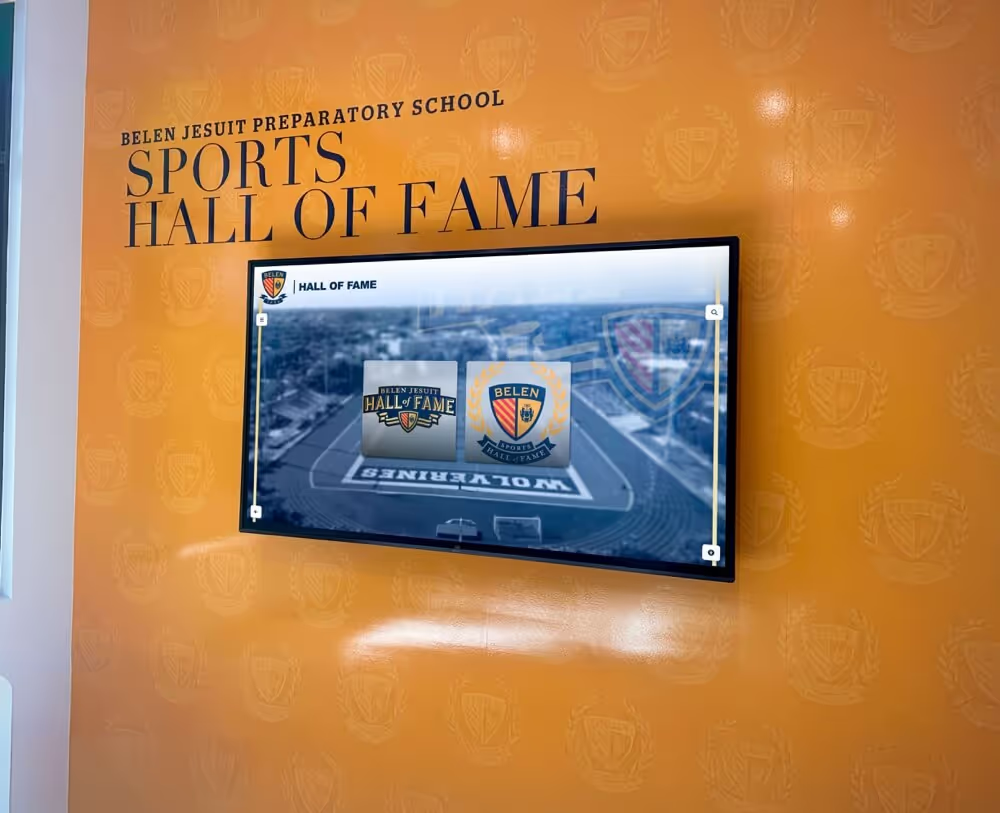
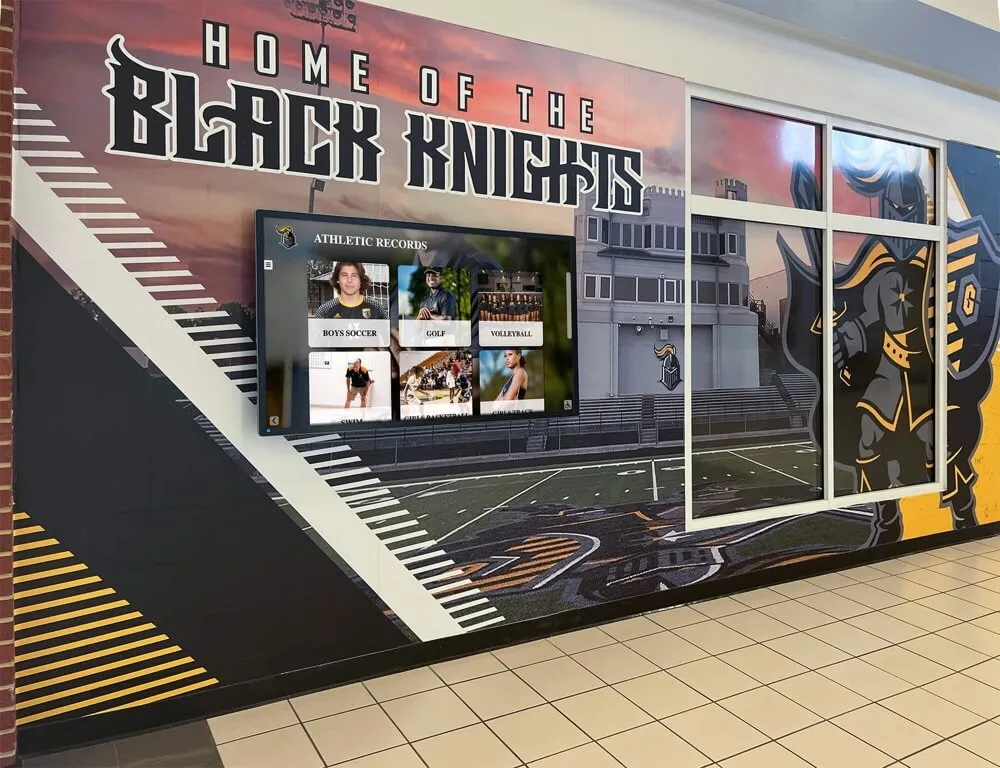
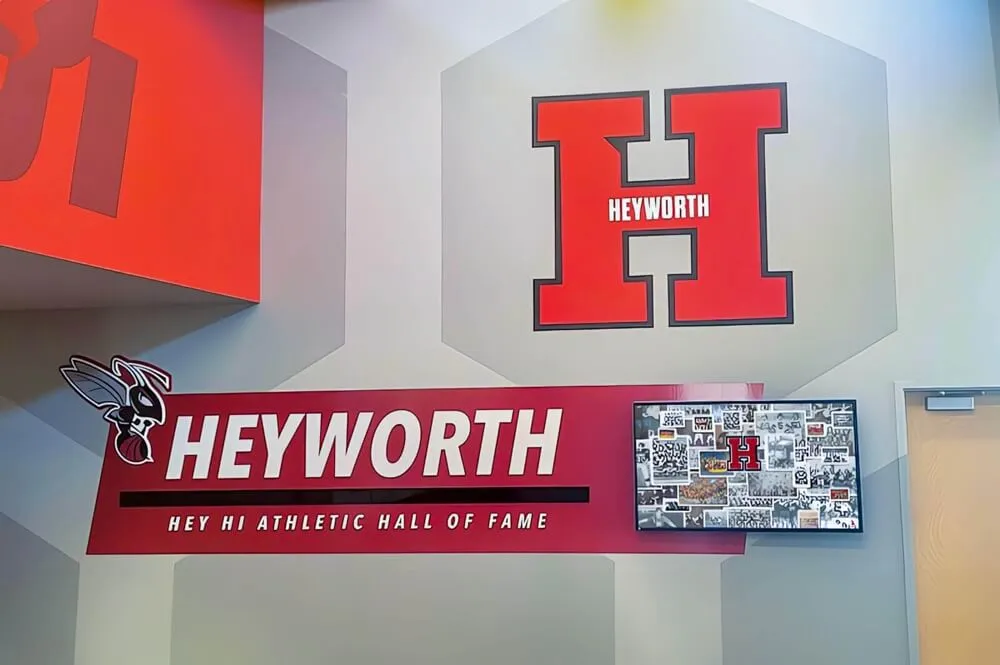
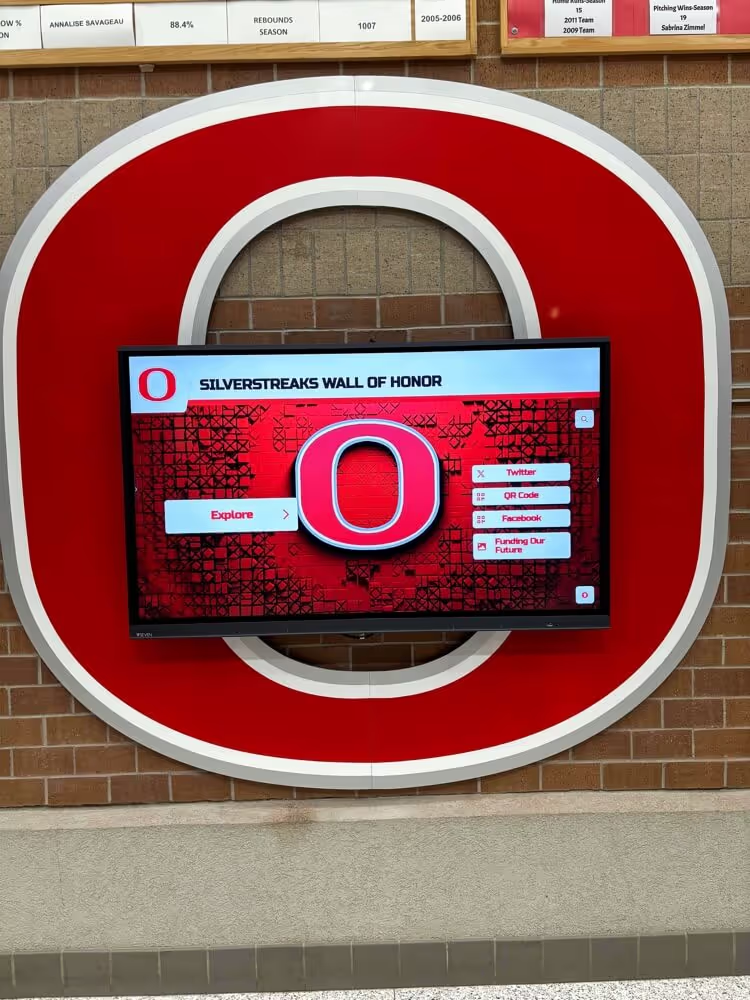
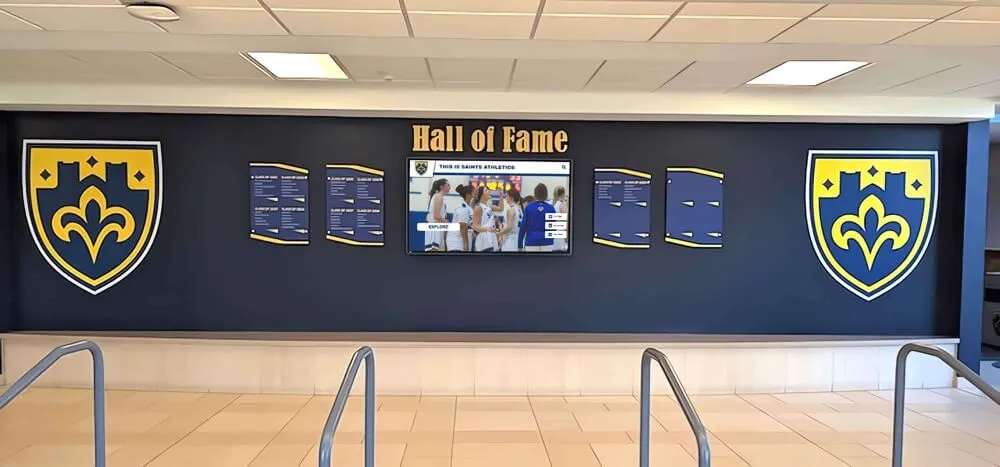
Professional platform implementations create visually impressive recognition environments strengthening institutional pride and identity
Digital Signage Platforms Adapted for Recognition
Some organizations attempt repurposing commercial digital signage platforms (ScreenCloud, Rise Vision, Xibo) for virtual hall of fame applications despite limitations discussed earlier.
Platform Overview and Capabilities
Digital signage platforms provide:
- Content scheduling and playlist management distributing slideshows to multiple displays
- Cloud-based management enabling remote content updates
- Template libraries simplifying slide creation
- Multi-location support managing distributed installations centrally
- Screen monitoring confirming displays remain operational
Ideal Use Cases
Adapted digital signage works adequately for:
- Simple rotating recognition displays requiring no interactivity
- Temporary recognition programs with limited content depth requirements
- Organizations with existing digital signage infrastructure seeking recognition additions
- Budget-constrained environments accepting limited functionality
Pricing Model
Digital signage platforms offer subscription pricing:
- Platform subscription: $10-$50 monthly per display
- Content creation tools: Included or additional monthly fees
- Hardware costs: $4,000-$10,000 per display for commercial equipment
Considerations and Limitations
Digital signage adapted for recognition suffers fundamental constraints:
- No interactivity: Passive slideshow presentations prevent visitors from exploring content matching their interests or searching for specific individuals
- Limited content depth: Slideshow formats accommodate minimal information compared to comprehensive interactive profiles
- Poor engagement: Passive displays generate seconds of attention versus minutes with interactive touchscreen platforms
- Content management burden: Creating individual slides for hundreds or thousands of honorees proves administratively unsustainable
- No web accessibility: Recognition remains visible only at physical display locations rather than accessible globally via web platforms
Organizations frequently deploy digital signage for initial recognition experiments, experience disappointing engagement and administrative challenges, then migrate to purpose-built recognition platforms delivering dramatically superior outcomes. Starting with appropriate platforms initially avoids wasted investments in approaches fundamentally unsuited for comprehensive recognition programs.
Platform Selection Framework: Choosing the Right Solution
Selecting appropriate virtual hall of fame platforms requires systematically evaluating organizational capabilities, recognition goals, technical resources, and budget constraints.
Critical Selection Criteria
Recognition Program Scope and Complexity
Platform requirements scale with recognition ambitions:
- Simple programs (single achievement category, 50-100 honorees, basic information): Digital signage or open-source solutions may suffice if interactive engagement isn’t essential
- Moderate programs (multiple categories, 200-500 honorees, multimedia content): Purpose-built platforms deliver necessary functionality without custom development complexity
- Comprehensive programs (unlimited categories, 1,000+ honorees, extensive multimedia): Purpose-built platforms or custom development depending on unique requirements and technical resources
Organizations implementing comprehensive athletic recognition systems typically require purpose-built platforms supporting unlimited content, sophisticated search and filtering, and multimedia integration beyond simple digital signage capabilities.
Content Management Capabilities and Workflows
Realistic assessment of content management capacity influences platform success:
- Who will create recognition content? Platforms requiring technical or design skills fail when non-technical staff must manage recognition
- How frequently will content update? High-frequency updates benefit from streamlined cloud-based management; infrequent updates tolerate more complex processes
- How many people need content management access? Multi-user platforms enable distributed content creation; single-administrator systems create bottlenecks
- What approval workflows exist? Some organizations require content review before publishing; platforms should support appropriate workflows
Purpose-built platforms like Rocket Alumni Solutions provide intuitive interfaces designed for non-technical users, enabling athletic directors, advancement staff, or administrative assistants to manage recognition independently without IT department involvement for routine content updates.
Technical Resources and Ongoing Support
Available technical capabilities constrain platform options:
- Do you have technical staff available for platform maintenance? Custom and open-source solutions require ongoing technical attention; commercial platforms minimize technical burden
- Can IT support touchscreen kiosk management? Hardware troubleshooting, software updates, and technical issues require appropriate support
- What technical expertise exists for initial implementation? Complex platforms may overwhelm organizations lacking technical capabilities
- Who handles long-term platform evolution? Consider what happens when requirements change or new capabilities become necessary
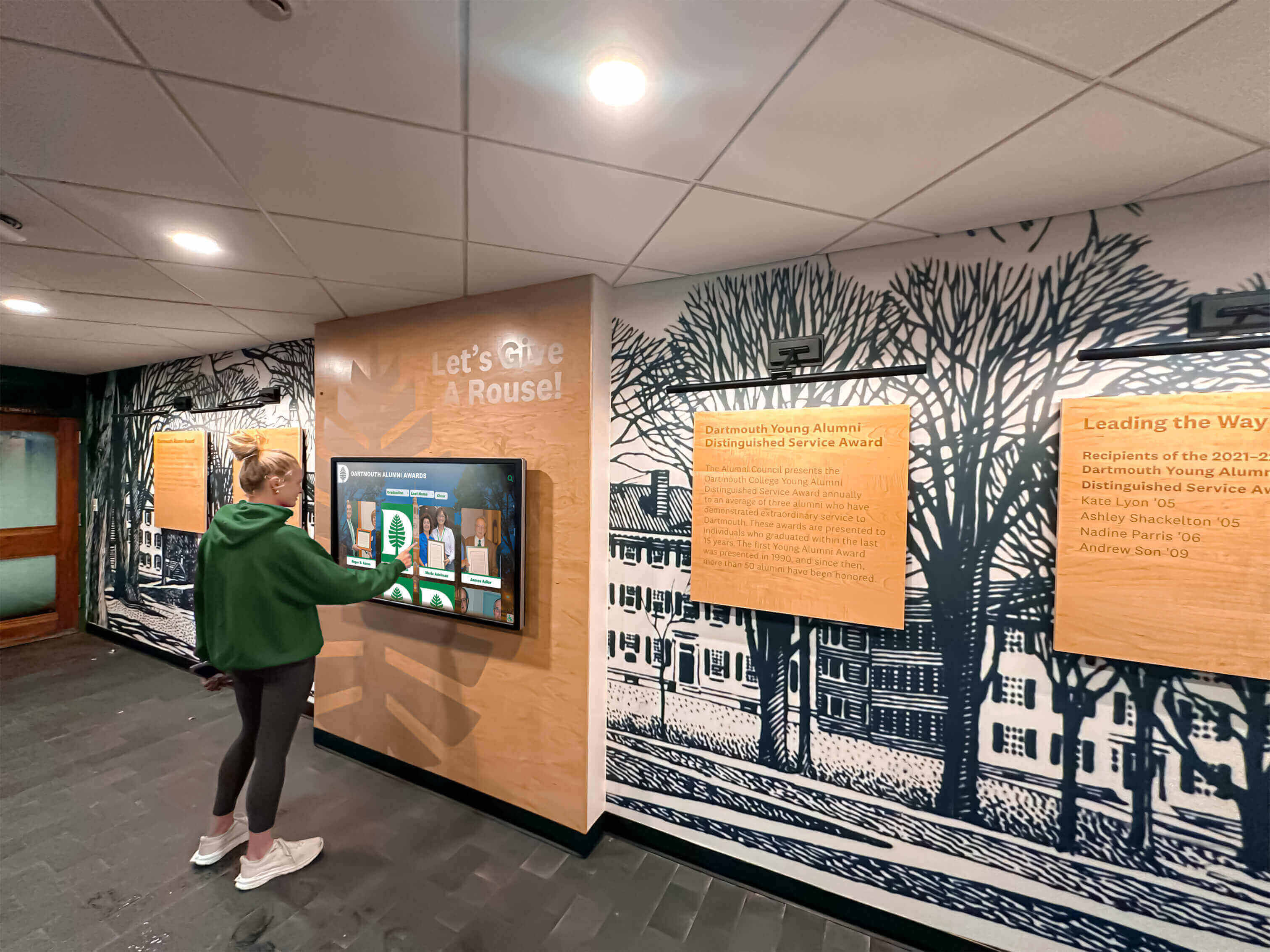
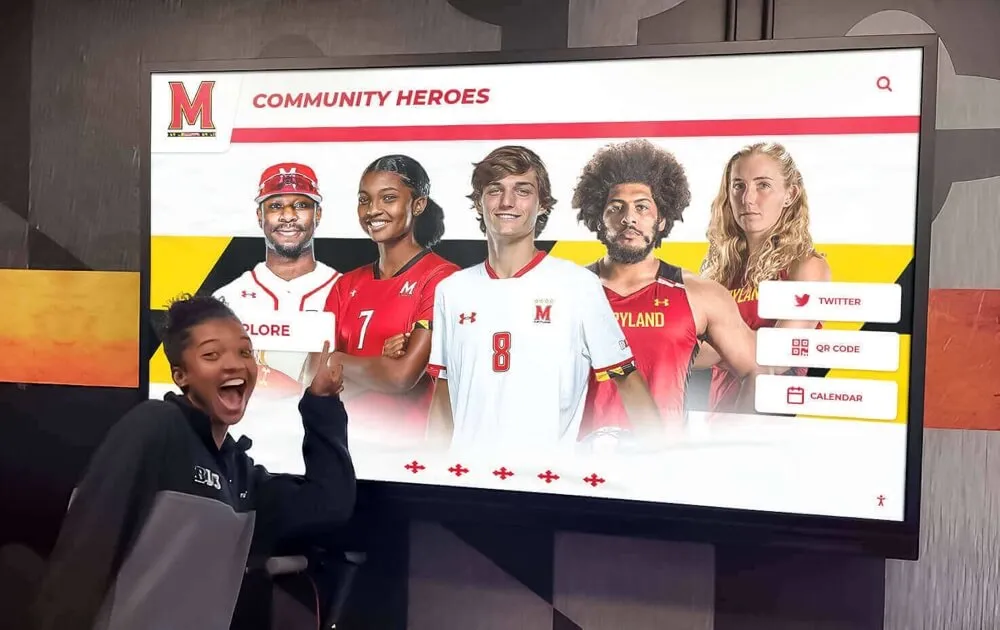
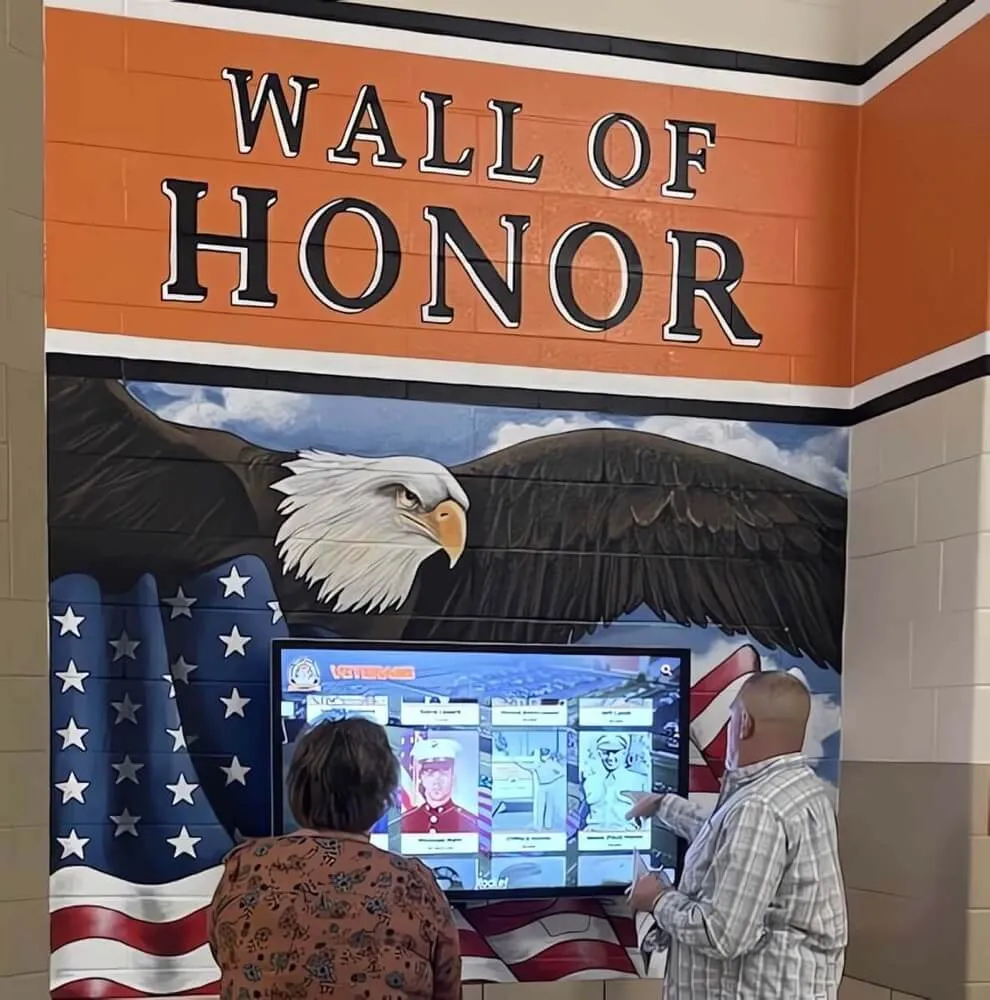
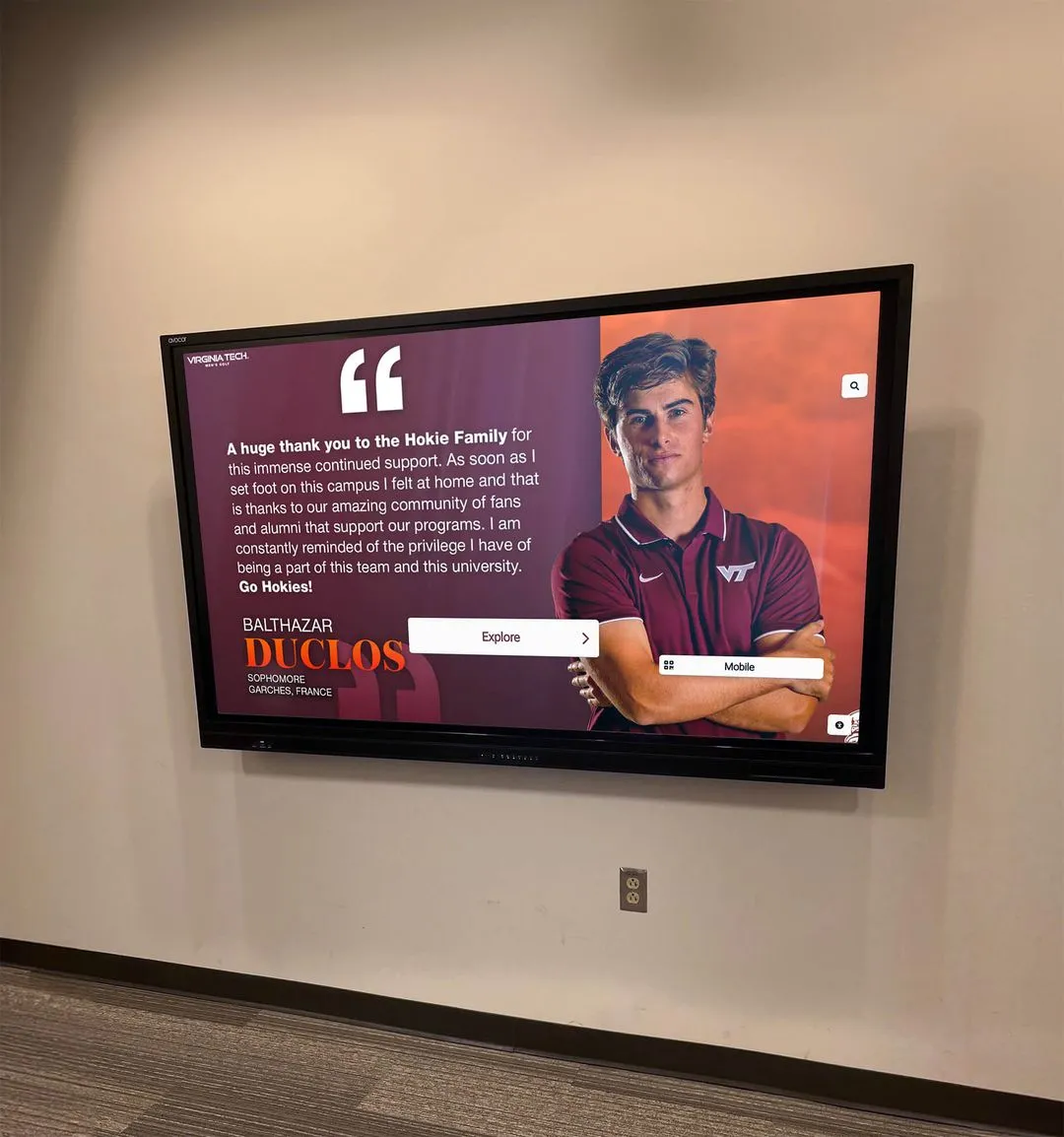
Effective platforms enable intuitive exploration requiring no instructions or technical assistance
Organizations with limited technical resources benefit from fully managed platforms providing implementation support, ongoing maintenance, and responsive customer service rather than solutions requiring internal technical expertise.
Budget Considerations and Total Cost of Ownership
Comprehensive cost assessment spans multiple years:
- Initial investment: Development costs, hardware purchases, implementation services, and content creation
- Annual operating costs: Subscriptions, hosting, maintenance, technical support, and infrastructure
- Ongoing content management: Staff time creating, updating, and managing recognition content
- Enhancement and evolution: Costs for adding features, redesigning interfaces, or expanding capabilities
- Hidden costs: Technical support burden, training requirements, and opportunity costs of staff time
Organizations should calculate 5-year total cost of ownership for different platform approaches, often discovering that higher initial costs for purpose-built platforms prove more economical over time than “inexpensive” alternatives requiring substantial ongoing labor investment or eventual platform replacement when initial choices prove inadequate.
Explore comprehensive cost analysis in digital recognition display buying guides examining total ownership economics across different platform approaches.
Decision Matrix: Platform Selection Guide
This framework helps organizations match platform options with specific circumstances:
Choose Purpose-Built Recognition Platforms When:
- Recognition program scope includes multiple achievement categories and unlimited honorees
- Non-technical staff will manage content creation and updates
- Remote content management from multiple locations provides value
- Web accessibility extending recognition beyond physical displays matters
- Budget supports subscription pricing ($1,680-$3,600 annually) but not large upfront custom development
- Quick implementation timelines (2-8 weeks) are important
- Ongoing technical maintenance burden should remain minimal
- Professional templates and proven interfaces reduce implementation complexity
Choose Custom Development When:
- Unique requirements exist that commercial platforms genuinely cannot address
- Deep integration with proprietary institutional systems provides critical value
- Design control and brand differentiation justify significant investment
- Technical staff available for long-term maintenance and enhancement
- Budget supports $50,000-$300,000 initial development plus ongoing maintenance
- Implementation timelines of 6-18 months are acceptable
- Platform ownership and independence from vendor relationships outweigh convenience
Choose Open-Source Solutions When:
- Budget constraints prohibit commercial subscriptions or custom development
- Technical expertise exists for implementation and ongoing maintenance
- Volunteer technical talent available to contribute development effort
- Recognition requirements remain simple enough for adapted general-purpose platforms
- Platform ownership and freedom from commercial dependencies matter significantly
- Timeline flexibility accommodates longer implementation periods
- Organization accepts responsibility for security, updates, and technical maintenance
Avoid Digital Signage Adaptations When:
- Interactive engagement and content exploration matter to recognition effectiveness
- Comprehensive honoree profiles with extensive information and multimedia are planned
- Searchability enabling visitors to find specific individuals proves important
- Web accessibility extending recognition beyond physical displays provides value
- Administrative burden creating hundreds of individual slides seems unsustainable
- High engagement and meaningful interaction represent program goals
Most schools, universities, athletic programs, and community organizations implementing virtual halls of fame find purpose-built recognition platforms like Rocket Alumni Solutions deliver optimal balance between capabilities, usability, cost-effectiveness, and long-term sustainability—avoiding custom development complexity while providing functionality far exceeding adapted digital signage or open-source alternatives.
Implementation Planning and Best Practices
Regardless of chosen platform, systematic implementation planning ensures successful virtual hall of fame launches delivering intended engagement and recognition outcomes.
Pre-Implementation Planning Essentials
Recognition Program Definition
Clear program definition guides platform selection and implementation:
- Achievement categories: Which accomplishments deserve recognition (athletics, academics, alumni, service, etc.)?
- Selection criteria: What specific thresholds or standards determine induction?
- Content standards: How comprehensive should profiles be? What media types should be included?
- Update frequency: How often will new honorees be added? Who manages ongoing content?
- Web visibility: Should recognition be public or restricted to authenticated users?
Organizations developing comprehensive hall of fame programs benefit from clearly documented recognition philosophies guiding consistent decision-making across years and staff transitions.
Content Inventory and Migration
Assessing existing recognition content shapes implementation scope:
- Historical honorees: How many individuals should initial launch include?
- Available information: What data exists about past achievements? Where is it documented?
- Media assets: What photos, videos, or documents are available? What condition and format are they in?
- Research requirements: How much historical investigation is needed to document past achievements?
- Data organization: How will disparate information sources be standardized and structured?
Realistic content inventory prevents implementation surprises and enables accurate timeline and budget planning. Organizations often underestimate content development effort, leading to delayed launches or incomplete initial deployments that undermine program credibility.
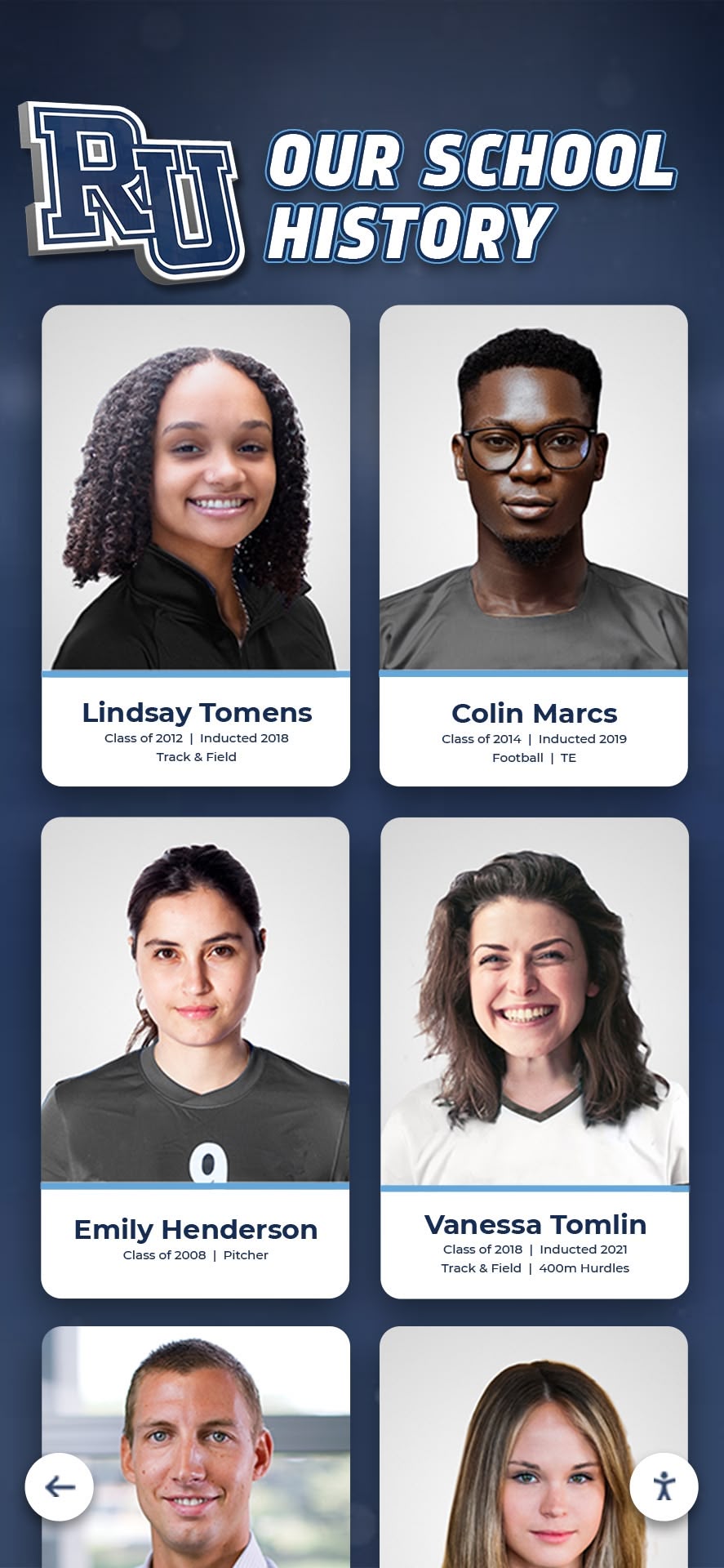
Systematic content development preserves complete institutional legacies across all eras and achievement categories
Technical Infrastructure Assessment
Verifying technical readiness prevents implementation obstacles:
- Display locations: Where will touchscreen installations be placed? Are appropriate electrical and network connections available?
- Network connectivity: Do locations have reliable Wi-Fi or ethernet access? What bandwidth is available?
- Hardware selection: What touchscreen display specifications are appropriate? Who will procure equipment?
- Mounting requirements: Are wall mounts, freestanding kiosks, or architectural integration needed?
- IT coordination: What IT department involvement is necessary? Are there security or network policies affecting implementation?
Early technical assessment identifies infrastructure improvements needed before platform deployment, preventing delays when installations reveal unexpected facility limitations.
Content Development Workflow
Historical Content Creation
Systematic processes ensure comprehensive coverage and consistent quality:
- Research phase: Gather achievement information from yearbooks, archives, record books, and institutional memory
- Content standardization: Develop templates ensuring consistent information across all profiles regardless of era
- Media collection: Locate photos, video footage, newspaper clippings, and other assets from diverse sources
- Digital preparation: Scan historical photos, digitize video recordings, and optimize files for display
- Profile authoring: Write compelling narratives beyond statistics alone, highlighting personal stories and achievement context
- Quality review: Verify accuracy before publishing; errors in public recognition displays damage credibility
- Systematic publication: Add content methodically ensuring complete coverage rather than scattered incomplete profiles
Organizations should allocate 80-150 hours for comprehensive historical content development depending on institutional size and available source materials—foundational investment ensuring recognition quality from launch rather than progressively adding content over extended periods creating incomplete impressions.
Ongoing Content Management
Sustainable processes keep recognition current:
- Designated content managers: Specific staff responsible for recognition updates prevent drift and neglect
- Standard collection forms: Templates gathering necessary information immediately after achievements rather than reconstructing details months later
- Regular update schedules: Weekly or monthly content reviews during active seasons ensure timely recognition
- Approval workflows: Appropriate review processes maintaining content standards before publication
- Community engagement: Soliciting photos and information from honorees, families, and community members enriches content beyond institutional records
Cloud-based platforms enable content management from any location—athletic directors can add championship documentation from tournament sites, advancement staff can update donor recognition from development events, and alumni office staff can publish profiles during work-from-home periods without physical display access requirements.
Launch Strategy and Community Engagement
Unveiling Events and Promotion
Strategic launches maximize awareness and engagement:
- Formal unveiling ceremonies: Recognition events celebrating launch and honoring featured individuals
- Media coverage: Press releases and news coverage showcasing institutional investment in recognition
- Community announcements: Email campaigns, social media promotion, and website features directing attention to new platforms
- Tour incorporation: Including recognition displays in prospective student tours, alumni reunions, and community events
- QR code promotion: Signage directing mobile device users to web-accessible recognition extending reach beyond physical displays
Schools implementing back-to-school recognition initiatives leverage September timing for maximum visibility when students, families, and communities focus on institutional activities.
Training and Documentation
Ensuring staff can effectively manage platforms:
- Content manager training: Comprehensive instruction for staff responsible for ongoing recognition updates
- Process documentation: Written procedures for common tasks enabling staff transitions without knowledge loss
- Technical support resources: Contact information and troubleshooting guides addressing routine issues
- Periodic training refreshers: Ongoing education as platforms evolve and new features become available
Purpose-built platforms should provide accessible training resources and responsive support—many organizations discover that comprehensive documentation and responsive customer service prove more valuable than marginally superior features delivered without adequate support.
Video Tour Production Notes: Creating Compelling Virtual Hall of Fame Demonstrations
For organizations producing video tours showcasing virtual hall of fame platforms—whether for promotional purposes, stakeholder presentations, or decision-making documentation—these production guidelines ensure professional, compelling results.
Video Tour Specifications and Planning
Technical Specifications
| Specification | Recommendation | Rationale |
|---|---|---|
| Resolution | Minimum 1080p; 4K preferred | Ensures clarity for detailed interface elements and touchscreen interaction |
| Length | 3-8 minutes for overview; 10-15 minutes for comprehensive walkthrough | Maintains engagement while covering essential capabilities |
| Aspect Ratio | 16:9 standard; 9:16 for social media versions | Matches typical viewing contexts and distribution channels |
| Frame Rate | 30fps minimum; 60fps for smooth touch interactions | Captures responsive touch feedback and gesture fluidity |
| Audio | Clear narration; ambient sound minimal | Ensures information clarity without distraction |
Scene Breakdown and Shot List
Comprehensive virtual hall of fame video tours should include these sequential scenes:
Opening Sequence (0:00-0:30)
- Wide establishing shot showing physical touchscreen installation in institutional context
- Camera slowly pushes in toward display as auto-attract mode plays
- Overlay title card: “Virtual Hall of Fame Video Tour: [Platform Name]”
- Brief narration introducing platform purpose and institutional context
Platform Overview (0:30-2:00)
- Close-up of touchscreen as hand enters frame and taps to wake display
- Camera captures initial home screen with clear interface elements visible
- Narration describes platform capabilities: unlimited honorees, multimedia content, search functionality
- Finger swipes through featured content carousel demonstrating smooth interaction
- Quick cuts showing: category navigation, search interface, filtering options
Content Exploration (2:00-4:30)
- User taps to open individual honoree profile
- Camera captures profile layout: photo gallery, statistics, achievements, video content
- Finger swipes through photo gallery; camera holds on high-quality images
- Video highlight plays within profile; camera captures playback quality
- Narration explains multimedia storytelling capabilities exceeding traditional recognition
- User returns to main navigation and explores different achievement categories
Search and Discovery Features (4:30-6:00)
- Camera focuses on search interface as user types query
- Results appear dynamically as letters are entered
- User selects result; profile opens immediately
- Demonstration of filtering: by decade, by sport, by achievement type
- Alphabetical browsing showing extensive database organization
- Narration emphasizes how visitors find specific individuals or discover connections
Content Management Demonstration (6:00-8:00)
- Screen transition to cloud-based content management interface
- Camera captures dashboard showing content library and management tools
- Mouse cursor navigates through adding new honoree workflow
- Quick demonstration of uploading photo, entering information, and publishing
- Narration explains remote management capabilities and multi-user access
- Brief mention of analytics dashboard showing engagement metrics
Web and Mobile Access (8:00-9:30)
- Shot of smartphone displaying QR code from touchscreen display
- Camera captures mobile device screen accessing corresponding web platform
- Swipe through mobile-optimized interface demonstrating responsive design
- Quick desktop browser view showing full web accessibility
- Narration emphasizes how recognition extends beyond physical display locations
Closing Sequence (9:30-10:00)
- Return to wide shot showing touchscreen in institutional environment
- Multiple users engaging with display demonstrating community attraction
- Final narration summarizing platform benefits and implementation ease
- Call-to-action: schedule demo, contact information, or website URL
- End card with logo, contact details, and booking URL
Production Considerations and ADA Compliance
Lighting and Display Capture
Touchscreen recordings require specific lighting attention:
- Minimize glare: Position lights to avoid reflection on touchscreen surface
- Adequate brightness: Ensure display content remains clearly visible without washing out
- Consistent color: White balance camera matching display color temperature
- Polarizing filters: Consider using polarizing filters reducing screen reflections if environmental lighting proves challenging
Accessibility Requirements
Professional recognition platform videos must include accessibility features:
- Closed captioning: Transcripts of all narration and on-screen text synchronized with video
- Audio descriptions: Narration describing visual elements for visually impaired viewers
- Contrast and readability: Ensure on-screen text meets WCAG standards for visibility
- Clear narration: Professional voice talent with clear diction and appropriate pacing
- Alternative text metadata: Video descriptions enabling screen reader access
Videos published on organizational websites or YouTube should include complete transcripts in accompanying text, enabling search engines to index content while supporting visitors preferring text-based information consumption.

Professional video tours showcase platform capabilities while demonstrating real-world implementation context and user experience
Distribution Strategy for Video Tours
Primary Distribution Channels
- Institutional website: Dedicated recognition platform pages featuring embedded video tours
- YouTube: Public hosting enabling search discovery and easy sharing
- Social media: Edited shorter versions (1-2 minutes) optimized for Facebook, LinkedIn, Instagram
- Stakeholder presentations: Board meetings, staff presentations, and community forums
- Fundraising materials: Development campaigns featuring recognition investments
- Vendor product pages: Platform providers showcasing customer implementations (with permission)
Video Optimization and SEO
Maximize video tour discoverability:
- Descriptive titles: “Virtual Hall of Fame Video Tour: [Institution Name] Athletic Recognition Display”
- Detailed descriptions: 200+ word summaries explaining platform capabilities, implementation context, and institutional benefits
- Keyword optimization: Include relevant terms: virtual hall of fame, digital recognition, touchscreen display, interactive exhibit
- Thumbnail selection: Compelling still frame showing engaged user or impressive display installation
- Playlist organization: Group related videos (multiple platform views, implementation stages, stakeholder testimonials)
Organizations implementing video tours as sales tools or decision-support resources should track engagement metrics—view duration, drop-off points, and conversion actions—refining future videos based on performance data.
Measuring Virtual Hall of Fame Success and Impact
Systematic assessment demonstrates recognition platform value while identifying improvement opportunities ensuring displays achieve intended engagement and cultural objectives.
Quantitative Engagement Metrics
Platform Analytics
Modern recognition systems provide concrete usage data:
- Interaction frequency: Daily/weekly touchscreen sessions indicating community engagement levels
- Average session duration: Time visitors spend exploring content revealing engagement depth
- Popular content: Most-viewed profiles and categories showing community interests
- Search patterns: Query analysis revealing how visitors navigate archives
- Peak usage times: Temporal patterns informing content scheduling and featured highlights
- Web platform traffic: Remote access patterns demonstrating reach beyond physical installations
- Social sharing frequency: Organic promotion through personal networks amplifying recognition visibility
Purpose-built platforms typically provide dashboard analytics showing these metrics, enabling data-driven content strategy refinements maximizing engagement and recognition effectiveness.
Comparative Performance Benchmarks
Research on interactive recognition displays provides performance expectations:
- Average session duration: 45-90 seconds for touchscreen interaction versus 2-3 seconds for passive digital signage
- Engagement increase: 70% higher interaction with touchscreen platforms compared to static displays
- Content capacity: Purpose-built platforms accommodate 300-500% more honorees than physical displays allowed
- Update frequency: Cloud-managed systems receive content updates 8-12 times more frequently than physical displays
Organizations documenting similar improvements demonstrate recognition platform value to stakeholders while justifying continued investments.
Qualitative Impact Assessment
Stakeholder Feedback Collection
Regular feedback reveals insights beyond quantitative metrics:
- Student surveys: Assessing recognition awareness, engagement, and inspirational impact
- Alumni responses: Measuring connection to institution and recognition satisfaction
- Staff observations: Documenting interaction patterns and community conversations
- Family feedback: Understanding prospective family perceptions during tours
- Leadership reflections: Evaluating cultural impact and institutional pride development
Schools implementing comprehensive assessment discover that qualitative feedback often reveals recognition impacts difficult to capture through analytics alone—stories about students discovering inspiring alumni connections, families appreciating institutional achievement celebration, or donors experiencing meaningful acknowledgment.
Observable Cultural Indicators
Long-term changes provide evidence of recognition cultural impact:
- Increased community awareness and celebration of diverse achievements
- Enhanced institutional pride and positive identity
- Strengthened alumni connections and engagement
- Improved external reputation and community perception
- Greater organizational commitment to recognition across all programs
- More inclusive recognition culture celebrating diverse excellence
These cultural shifts—though difficult to quantify—represent ultimate recognition platform objectives transcending engagement metrics.
Organizations exploring impact measurement frameworks should examine student achievement showcase strategies demonstrating systematic assessment approaches.
Future Trends: The Evolution of Virtual Hall of Fame Platforms
Understanding emerging developments helps organizations plan investments remaining relevant and valuable throughout multi-year deployment lifecycles.
Artificial Intelligence and Personalization
Emerging AI Capabilities
Next-generation recognition platforms incorporate intelligent features:
- Personalized content recommendations: AI analyzing user interactions suggesting relevant profiles and achievements
- Automatic content generation: AI-assisted profile creation from structured data sources
- Image enhancement: Automatic restoration and enhancement of historical photos
- Voice interaction: Conversational interfaces enabling hands-free navigation
- Predictive analytics: AI identifying engagement patterns informing content strategy
These innovations will continue expanding recognition capabilities—widening advantages interactive platforms provide over static traditional displays.
Augmented and Virtual Reality Integration
Immersive Recognition Experiences
Advanced technologies create new storytelling possibilities:
- AR profile enhancements: Smartphone cameras overlay 3D content onto physical spaces
- VR historical recreation: Virtual reality experiences recreating championship moments immersively
- Spatial computing: Apple Vision Pro and similar devices enabling new interaction paradigms
- Holographic displays: Volumetric projections creating dimensional recognition presentations
While these technologies remain expensive currently, costs will decline making them accessible to mainstream educational and nonprofit applications within coming years.
Enhanced Integration and Data Connectivity
Connected Recognition Ecosystems
Virtual hall of fame platforms increasingly connect with comprehensive institutional systems:
- Student information system integration: Automatic recognition when achievements recorded in institutional databases
- Donor management connectivity: Seamless gift acknowledgment linking recognition with giving histories
- Social media amplification: Automated sharing creating organic promotion through personal networks
- Mobile application synchronization: Dedicated apps extending platform capabilities beyond web browsers
- Analytics dashboards: Comprehensive engagement insights spanning recognition and broader institutional systems
Solutions like Rocket Alumni Solutions already provide some integration capabilities; future platforms will deliver increasingly seamless connections across institutional technology ecosystems.
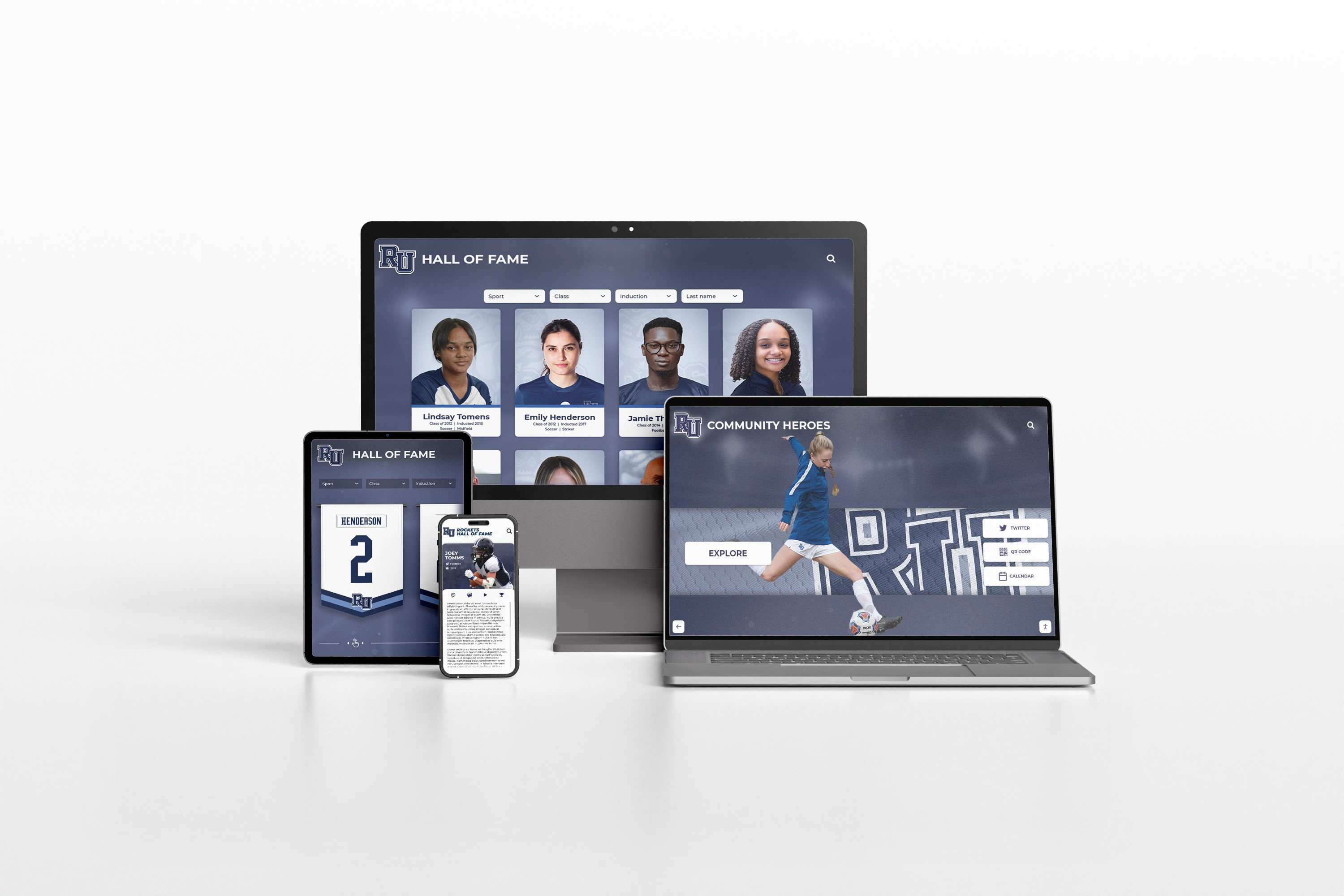
Future platforms will deliver seamless experiences across growing device ecosystems from large touchscreens to mobile devices and emerging wearable technologies
Conclusion: Selecting Your Virtual Hall of Fame Platform
Virtual hall of fame platforms have evolved from simple digital slideshow experiments into sophisticated recognition ecosystems celebrating achievement, engaging communities, preserving institutional legacy, and building lasting culture inspiring excellence across all programs and activities. When organizations select appropriate platforms aligned with their unique recognition goals, technical capabilities, and resource constraints, they create recognition systems honoring every deserving individual while remaining sustainable and engaging throughout multi-year lifecycles.
The platform landscape offers diverse options serving different organizational contexts—from purpose-built recognition solutions like Rocket Alumni Solutions delivering turnkey functionality optimized specifically for educational and nonprofit recognition, to custom development creating bespoke platforms addressing unique requirements, to adapted digital signage and open-source alternatives serving organizations with specific constraints or priorities.
Book a Live TouchWall Video Demo
Watch how Rocket Alumni Solutions transforms recognition through interactive touchscreen displays, unlimited digital content, and cloud-based management enabling celebration of every achievement across athletics, academics, and institutional history. Schedule a personalized video walkthrough demonstrating exactly how our platform serves your unique recognition needs.
Schedule Your Video Demo TodayMost schools, universities, athletic programs, and community organizations discover that purpose-built recognition platforms deliver optimal balance between comprehensive capabilities, intuitive usability, reasonable cost-effectiveness, and long-term sustainability—avoiding custom development complexity and expense while providing functionality far exceeding adapted digital signage or open-source alternatives requiring substantial technical expertise and ongoing maintenance.
The video tour format showcased throughout this guide enables organizations to experience platforms authentically before committing to implementations—understanding user interfaces, content management workflows, and engagement characteristics through demonstrations rather than static screenshots or technical specifications alone. Organizations should insist on comprehensive platform demonstrations, preferably with opportunities to interact directly with touchscreen interfaces, explore content management systems, and verify claimed capabilities before making selection decisions.
Whether you choose purpose-built platforms, pursue custom development, adapt existing systems, or explore open-source alternatives, success depends on aligning platform capabilities with genuine organizational needs, realistic technical resources, and sustainable content management processes. The best virtual hall of fame platform is that which reliably serves your specific recognition purposes while remaining manageable within your administrative and technical constraints—not necessarily the most feature-rich or technologically sophisticated alternative.
Ready to explore how Rocket Alumni Solutions can help you create comprehensive virtual hall of fame experiences celebrating your community’s excellence? Schedule a live video demo showcasing our touchscreen interfaces, cloud-based management capabilities, and unlimited recognition capacity—or explore additional implementation resources examining digital recognition display strategies, content development workflows, and engagement measurement frameworks ensuring your recognition investments deliver maximum long-term value for your institution and community.