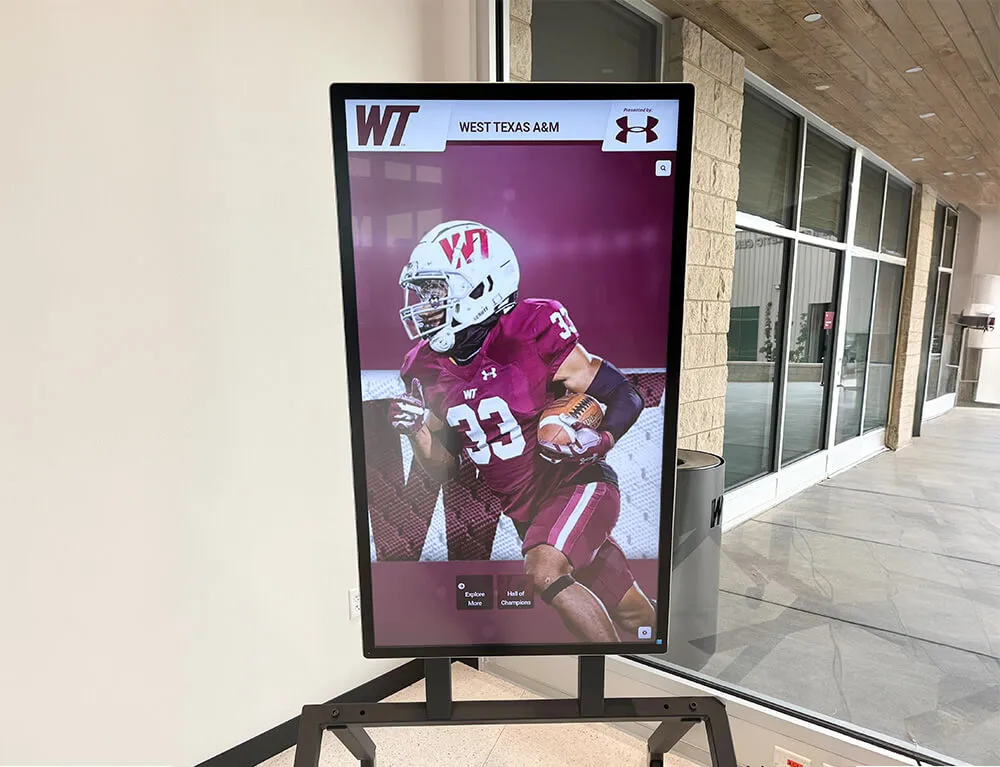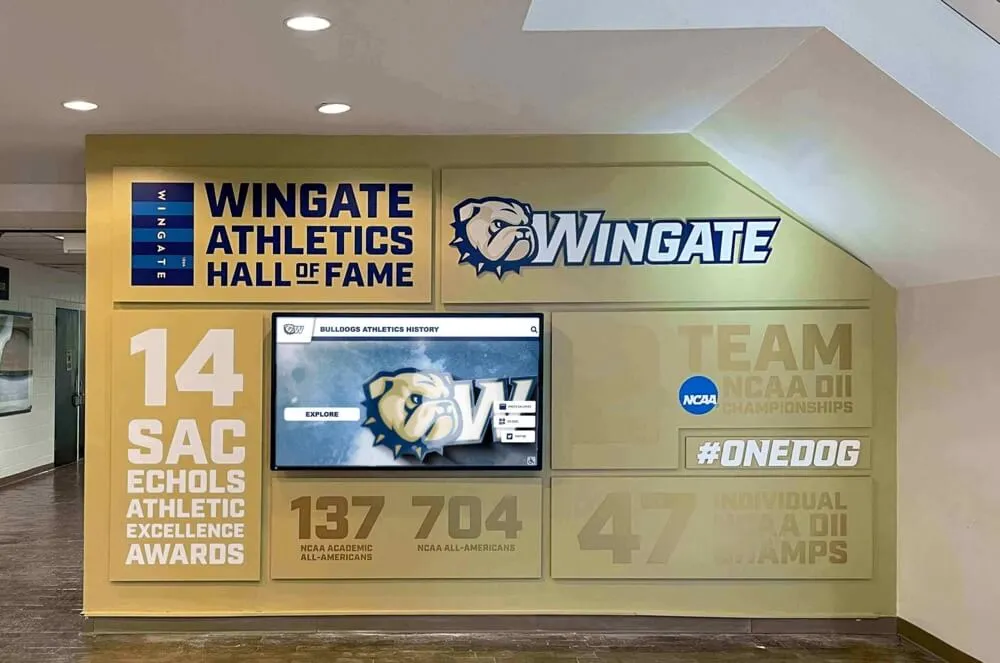




An athletic timeline wall tells the entire arc of a sports program in a single walk down a hallway. Championships stack on top of milestones, coaching eras blend into record-breaking seasons, and student-athletes who graduated decades apart suddenly share the same wall. When done right, a well-designed athletic timeline wall does something that individual trophies, plaques, and banners can’t accomplish on their own: it builds the narrative of what your program has always been and what it is still becoming. That continuity is what separates a school that has a collection of athletic memorabilia from a school that has a true sports legacy.
This guide covers everything involved in planning and executing an athletic timeline wall—from deciding which eras and milestones to include, to choosing between static displays and interactive touchscreen formats, to maintaining the wall so it continues growing with the program rather than becoming a snapshot frozen in the past.
An athletic timeline wall isn’t just a retrospective display. For current student-athletes, it provides a direct visual connection to the players and coaches who built the program they inherited. For alumni, it reactivates memories tied to specific seasons and teammates. For prospective students and their families touring the school, it communicates a culture of achievement that recruiting visits and viewbooks rarely capture as effectively. The wall is a working piece of institutional infrastructure, not a decoration.

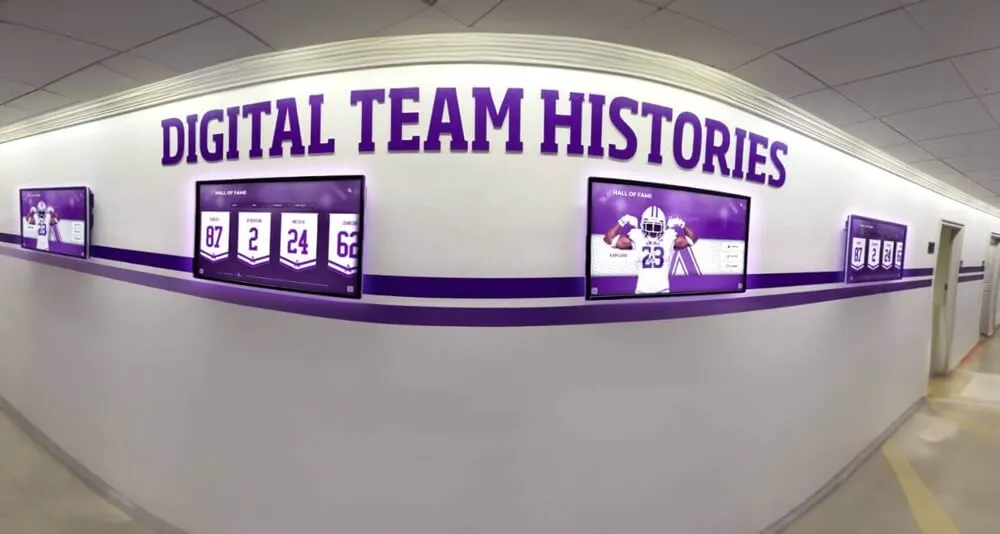
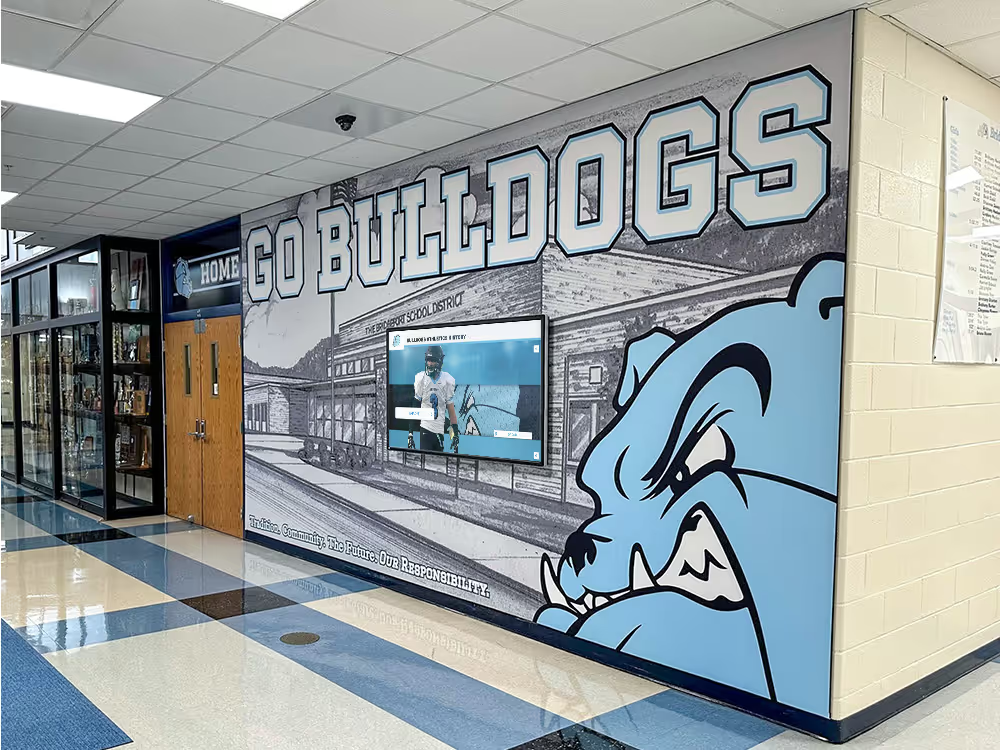
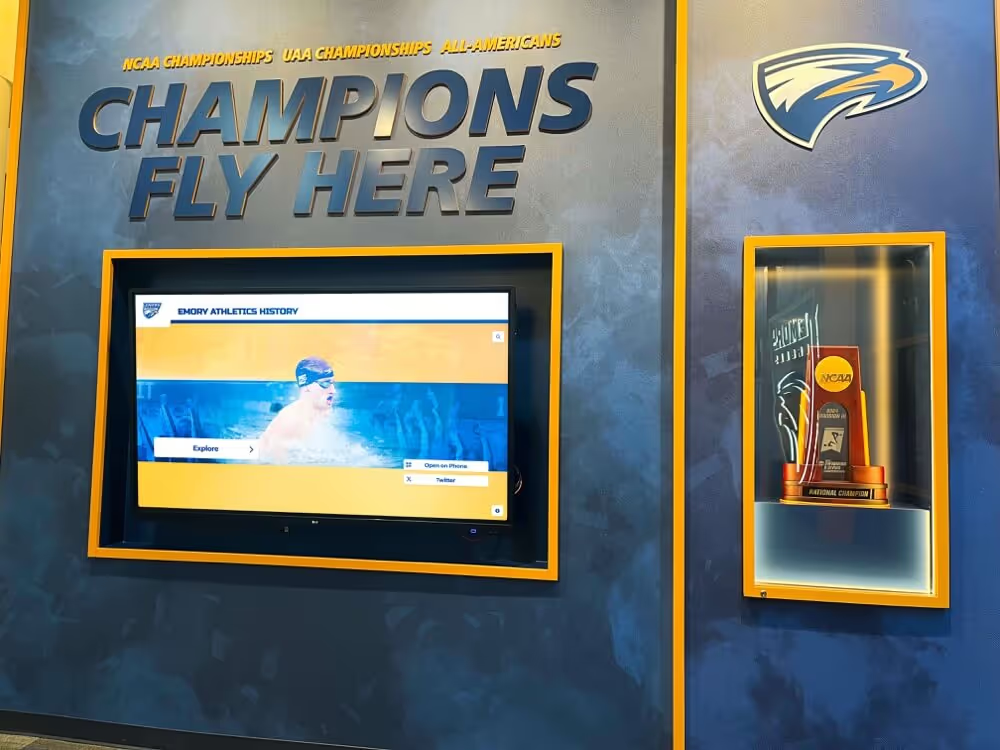
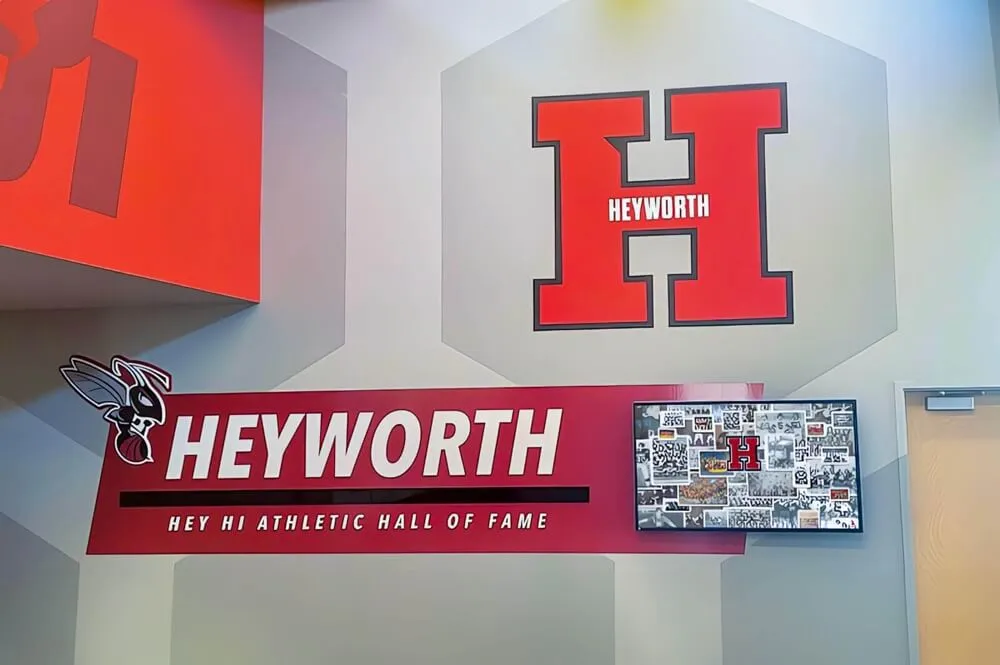
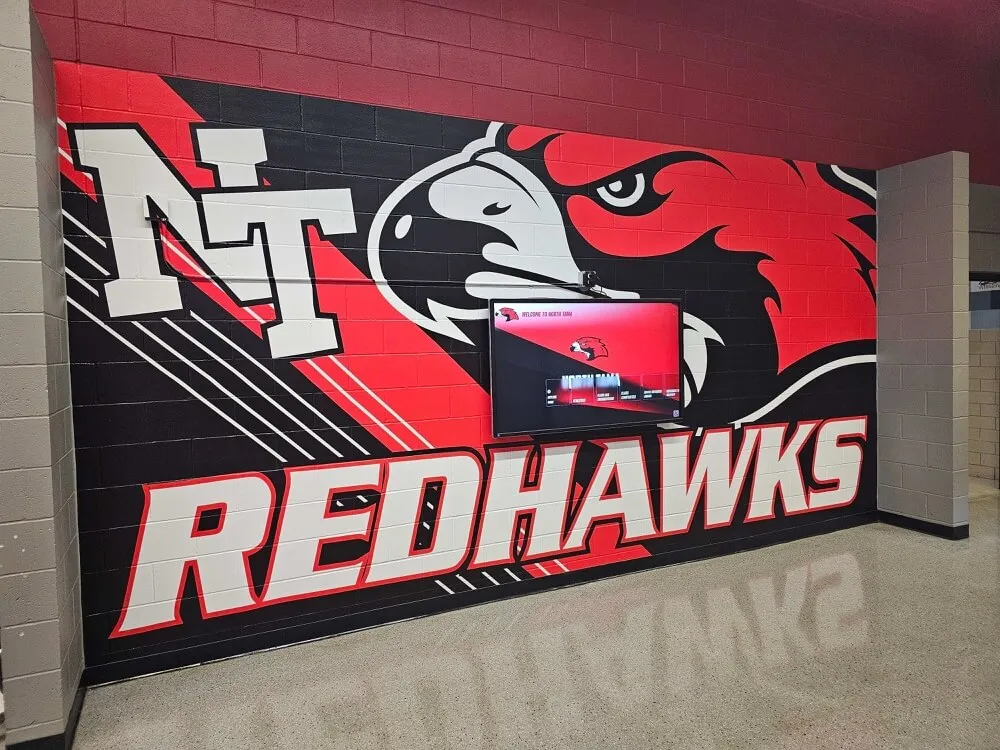
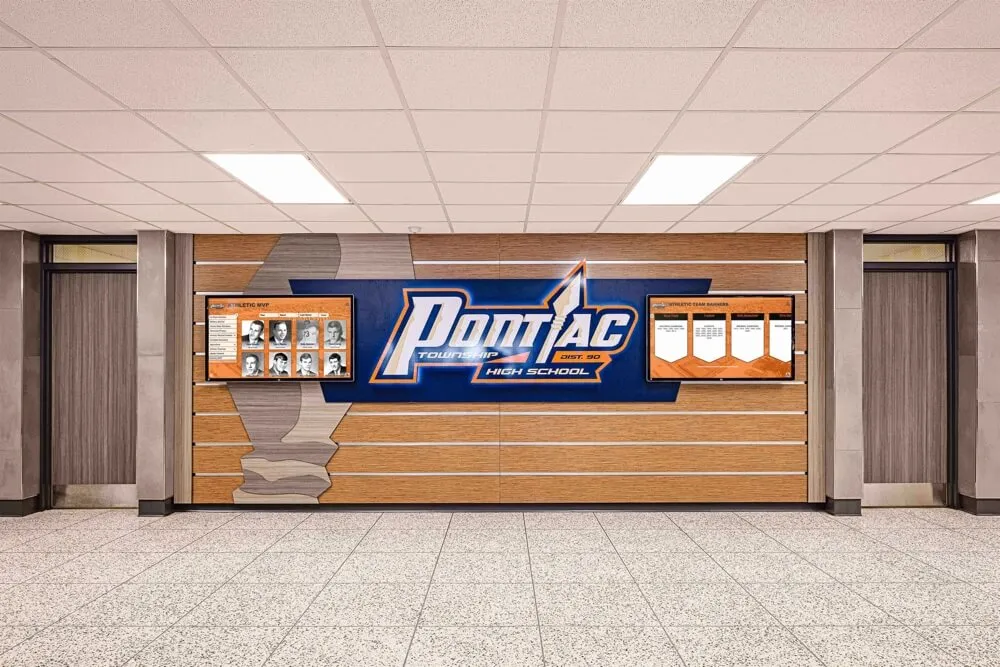
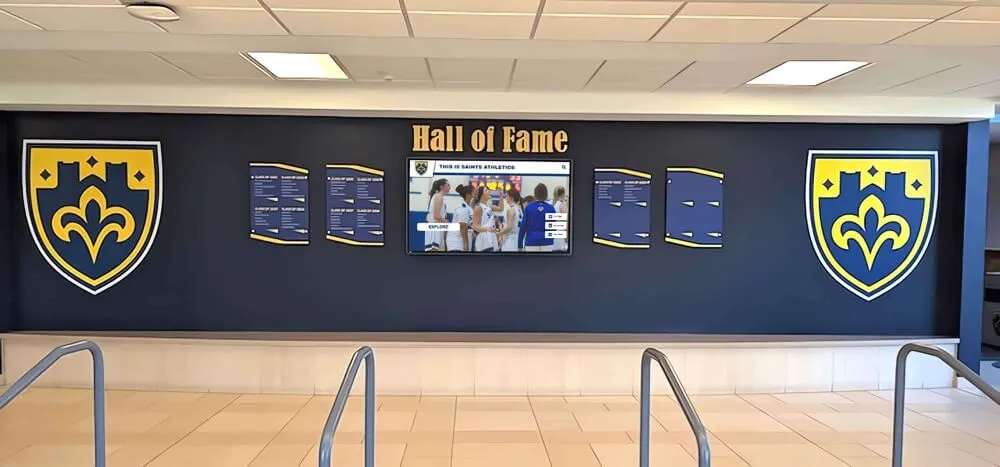
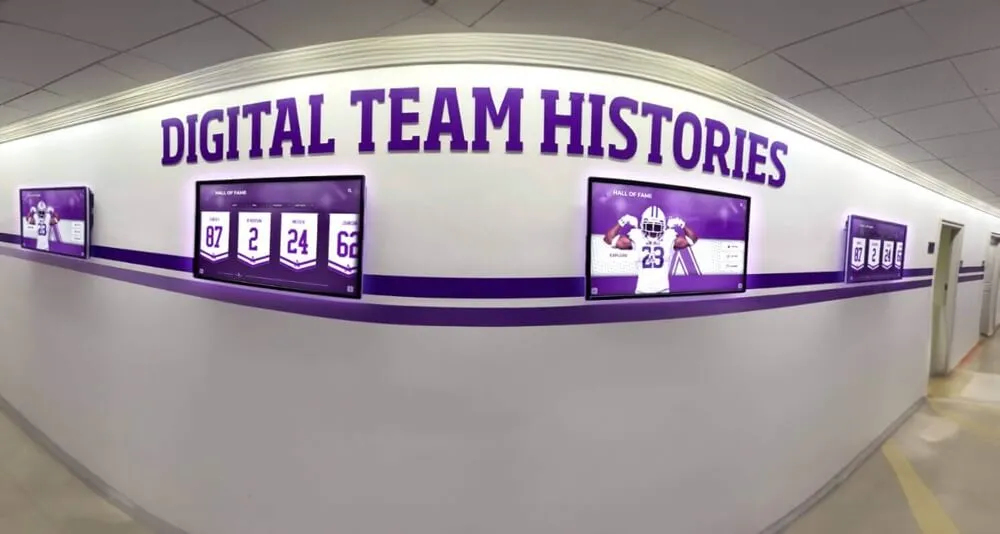
A hallway dedicated to team history across multiple sports creates an immersive athletic timeline that current athletes and visiting alumni experience on every pass through the building
What Makes an Athletic Timeline Wall Different from a Standard Hall of Fame
Schools often already have athletic recognition displays—a trophy case here, championship banners in the gymnasium, individual plaques for all-state honorees in a hallway. An athletic timeline wall is a fundamentally different structure. Rather than organizing recognition around individual achievements or isolated championship moments, a timeline organizes everything chronologically, creating a continuous narrative thread that shows the program’s evolution as a single connected story.
A standard hall of fame answers the question: “Who were our best athletes?” An athletic timeline wall answers a different and arguably richer question: “How did this program get to where it is today?”
That distinction shapes every decision in the design process. A hall of fame curates individual greatness. A timeline documents collective growth—including the lean years that make the championship seasons meaningful, the coaching transitions that shifted the program’s direction, the facility upgrades that expanded what athletes could accomplish, and the decades of ordinary seasons that form the connective tissue between the highlights.
For schools considering where to start, the school historical timeline comprehensive guide provides a structured framework for thinking about institutional chronology across departments—the same principles apply directly to athletics, where continuity matters as much as achievement.
Planning Your Athletic Timeline Wall: Five Foundational Decisions
1. Define the Scope: All Sports or Flagship Programs?
The first architectural decision for an athletic timeline wall is whether to create a comprehensive multi-sport timeline covering every athletic program the school offers, or to focus on flagship sports with the deepest historical record and broadest institutional identity.
Comprehensive timelines are ambitious—a school with 20 varsity sports spanning 70 years of history generates thousands of potential entries. Without careful curation, a comprehensive timeline becomes a data wall rather than a narrative wall, overwhelming rather than engaging. But a multi-sport approach does justice to the full breadth of the school’s athletic culture, including programs—swimming, wrestling, cross country, tennis—that rarely receive the same recognition as football and basketball.
Flagship sport timelines are more manageable and tend to produce the strongest visual narratives, but they risk marginalizing programs with their own histories and their own alumni who care deeply about recognition. A practical middle path: design the timeline’s structure around the full range of sports, but vary the depth of coverage based on available historical documentation. Football and basketball may warrant decade-by-decade detail; a newer lacrosse program may have only three or four milestone entries. Let the historical record determine the depth rather than imposing uniform treatment on uneven documentation.
For programs thinking about how to present football records and achievements as part of a larger athletic story, the football records recognition complete guide covers approaches to capturing statistical and milestone data in display formats that work across different contexts.
2. Gather and Organize the Source Material
An athletic timeline wall is only as good as its source material. Before any design work begins, the documentation phase determines what the timeline can say. This research phase typically takes longer than schools anticipate, especially for programs with 50 or more years of history and no centralized archive.
Common sources for athletic history documentation:
- Yearbooks: Usually the most consistent year-by-year record. Each edition covers the sport seasons from that academic year with photos, rosters, individual recognition, and season records.
- Local newspapers: Sports sections from local papers often contain game-by-game coverage, coaching interviews, and championship reporting that yearbooks don’t capture in depth. Many local papers have digitized archives going back several decades.
- School athletic department records: Programs that have maintained formal records often have championship trophies catalogued, letter winner lists, and conference affiliation histories.
- Alumni networks: Reaching out to alumni through social media or reunion networks surfaces photos, personal records, and memories that official archives miss entirely. The decades that are hardest to document through institutional records are often the ones that alumni remember most vividly.
- Coaching staff histories: Long-tenured coaches often carry institutional memory that exists nowhere in writing—season records from the 1970s, the story of a conference championship won in adverse conditions, the backstory on a particular team’s culture.
The digitizing old yearbooks complete guide walks through the process of converting physical yearbook collections into searchable digital archives—an essential early step for any school building a timeline that requires consistent visual coverage across multiple decades.
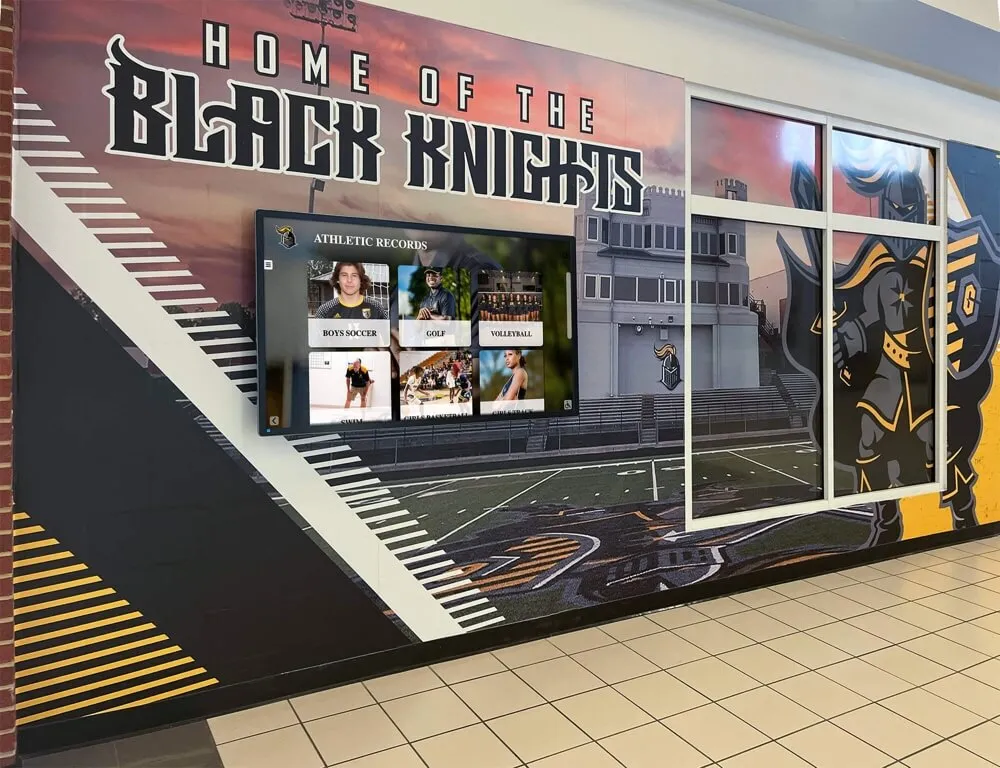
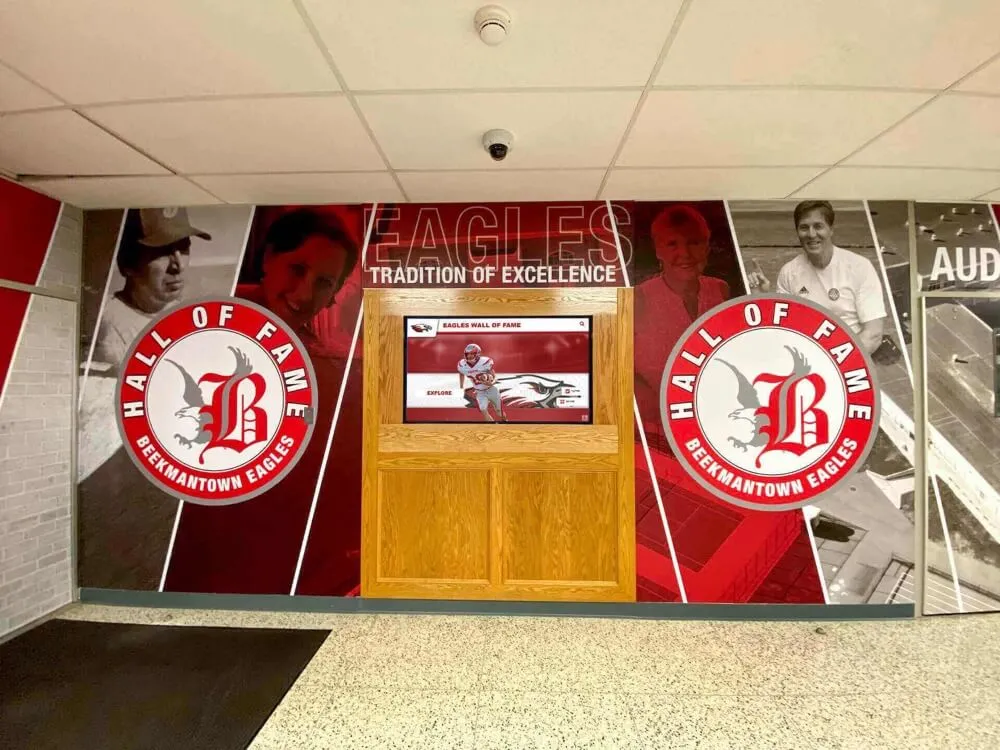
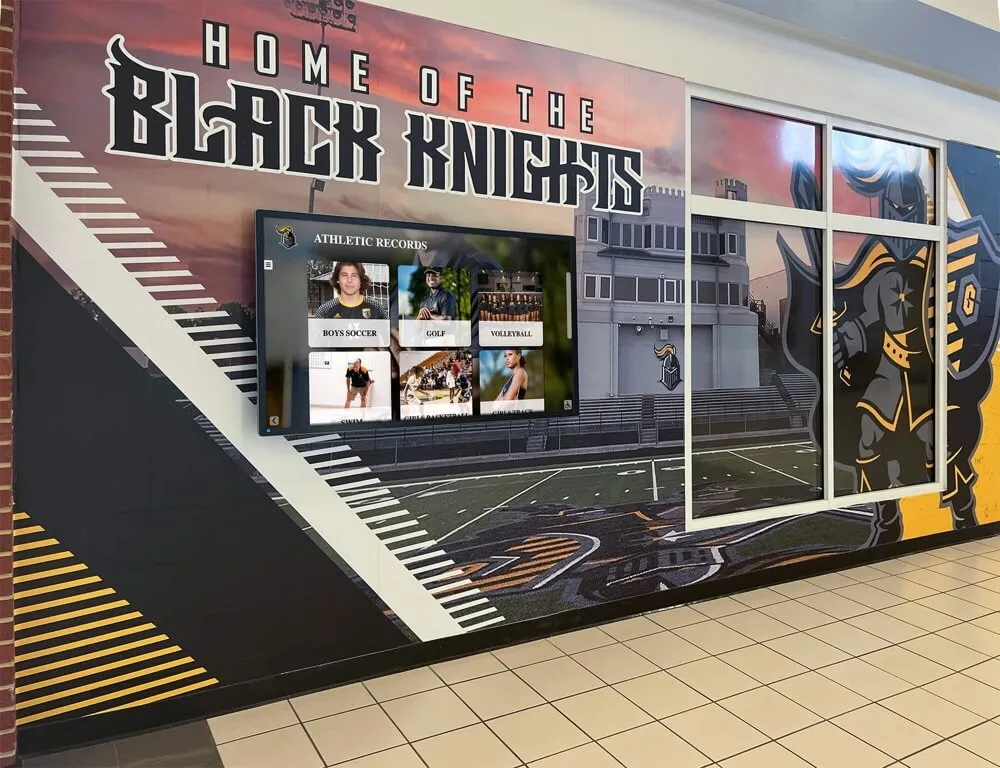
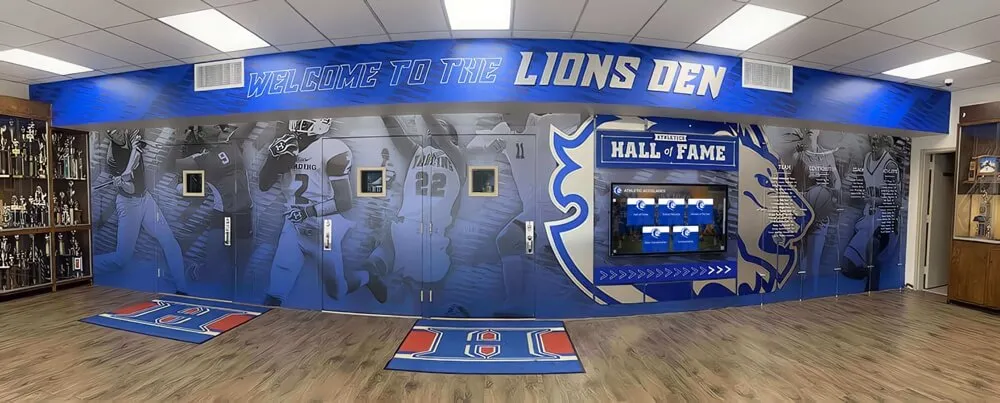
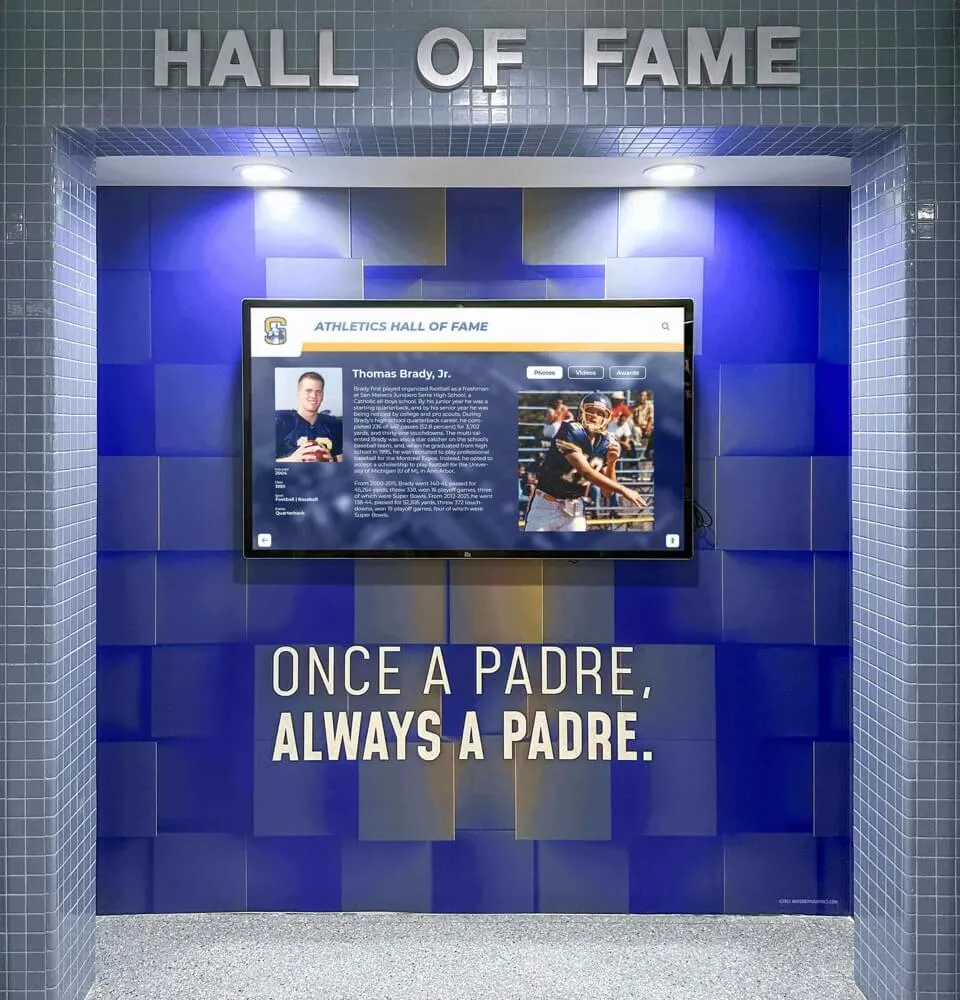
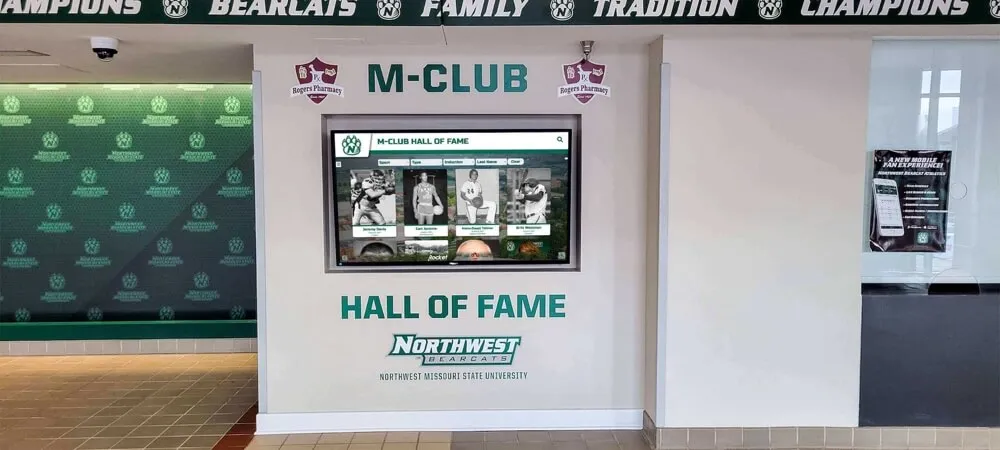
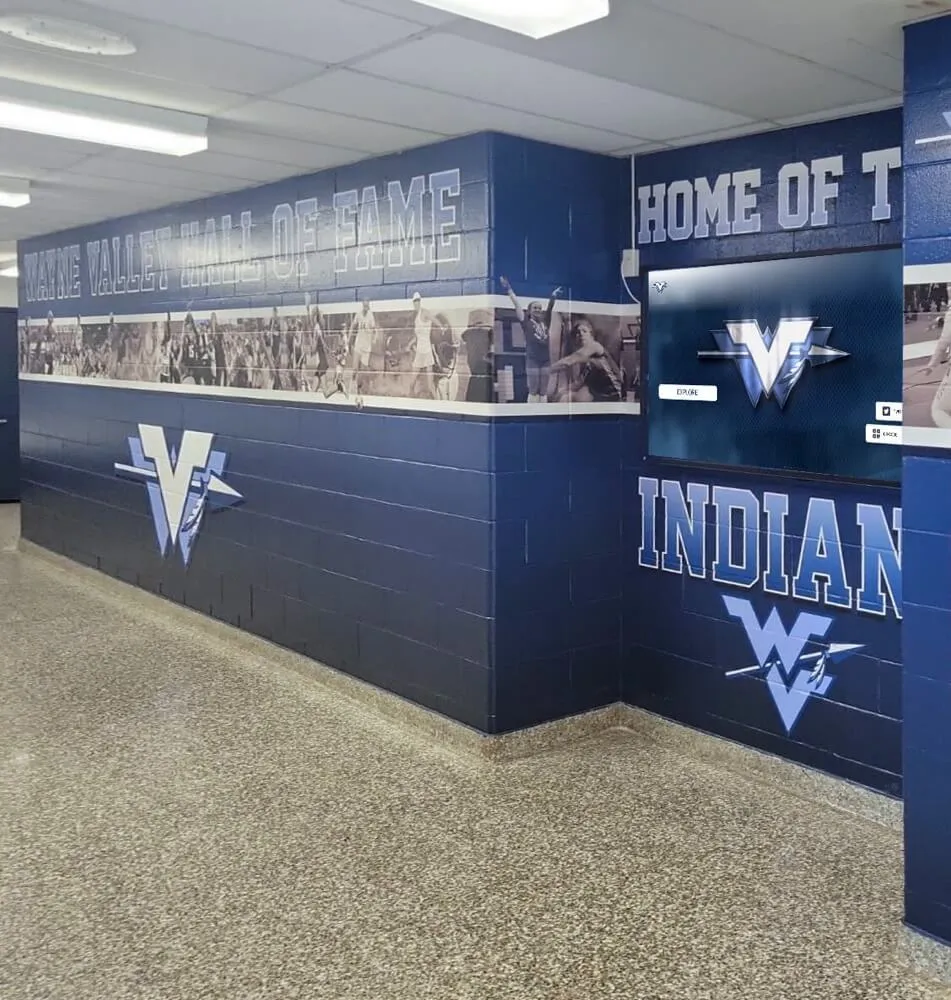
Athletic records displays integrated into hallway murals create an immersive sports history environment where visual identity and documented achievement reinforce each other
3. Decide on Entry Criteria
Not every season, not every award, and not every individual achievement earns a place on the main timeline. Establishing clear entry criteria before design begins prevents the display from becoming cluttered and ensures the narrative remains coherent across decades.
A workable framework distinguishes three tiers of entries:
Primary timeline markers — Events that represent genuine program-level turning points: first-ever conference championships, state or national titles, program-record-setting seasons, major facility dedications, founding of programs, coaching transitions that demonstrably shifted the program’s trajectory.
Secondary milestone entries — Significant achievements that merit recognition without defining the program’s direction: individual state championships, all-state first-team selections, notable win streaks, season records, postseason appearances that didn’t result in championships.
Supporting context entries — Background information that helps the narrative make sense: conference realignments, schedule changes, facility upgrades, academic program additions that affected athletic eligibility culture.
Primary markers should appear prominently on the main timeline at full visual weight. Secondary milestones may appear as supporting entries tied to their relevant years. Context entries may appear as brief annotations rather than dedicated display positions.
4. Choose the Format: Static, Digital, or Hybrid
The format of the athletic timeline wall shapes both the visitor experience and the ongoing maintenance requirements more than any other decision.
Static formats — Printed vinyl, engraved metal panels, painted murals, and framed photographs arranged chronologically along a wall. Static displays have the advantage of permanence and visual richness. A well-designed printed timeline can cover a century of athletic history with considerable graphic impact. The disadvantage is inflexibility: adding new entries requires reprinting or supplementing the display, and the visual style that looks contemporary in year one may feel dated in year ten.
Digital signage formats — Large-format screens displaying a scrolling or auto-advancing timeline presentation. Digital formats solve the update problem but introduce dependence on hardware maintenance and content management. A screen that fails during a major alumni event or a recruiting visit creates a worse impression than a static display would.
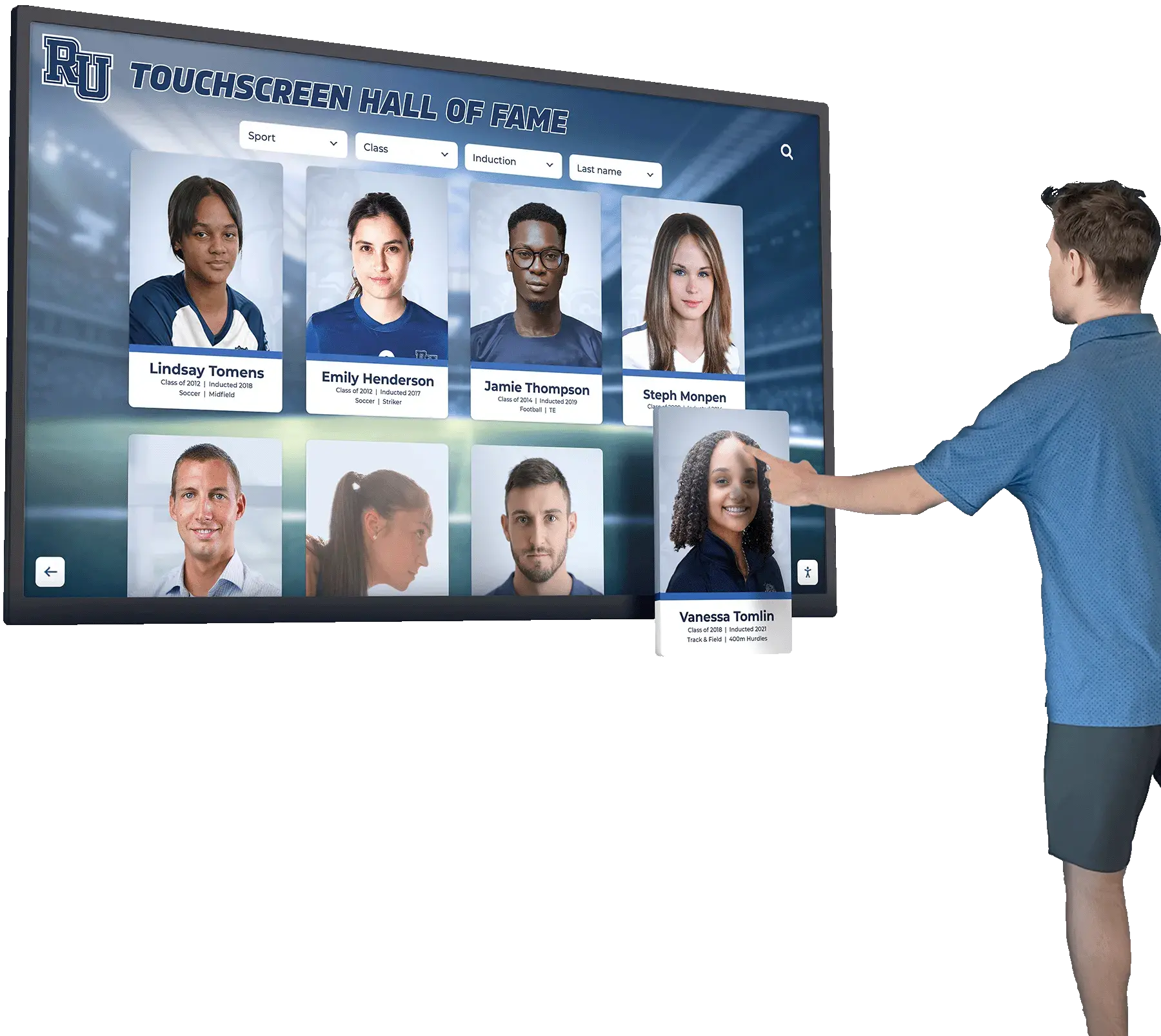
Interactive touchscreen formats — Touchscreen displays that allow visitors to navigate the timeline directly, zoom into specific eras, open individual athlete profiles, view video highlights, and explore the program’s history at their own pace. Interactive formats offer the deepest engagement, the most flexible content architecture, and the best long-term scalability. They also represent a higher initial investment and require ongoing content management.
Hybrid formats — A physical mural or printed timeline providing the permanent visual foundation, with one or more touchscreen displays embedded in or adjacent to the wall that offer deeper content access. This approach combines the visual impact and permanence of static design with the depth and updateability of digital systems. Many schools that have built the most effective athletic timeline walls use hybrid configurations precisely because neither format alone achieves everything the other does well.
For schools evaluating the cost and maintenance trade-offs between physical banner displays and digital alternatives, the replacing expensive gym banners with digital alternatives guide addresses the practical considerations that determine which format makes sense for a given facility and budget context.
5. Plan for Ongoing Updates
An athletic timeline wall that ends with last decade’s championships quickly feels incomplete to current student-athletes and coaches who don’t see their contributions reflected. Building the update process into the initial design is as important as the design itself.
For static displays, this means planning physical expansion space into the initial layout—don’t fill the wall to the edges if the program will need to add entries in five years. For digital and interactive formats, it means establishing an annual review and update cycle tied to the end of each school year or sports season, so the content manager knows when additions are expected and what the documentation process requires.
The best athletic timeline walls have a designated content steward: typically an athletic director, a communications staff member, or in smaller schools, a dedicated booster club committee member who owns the documentation and update process year to year.
Visual Design Principles for Athletic Timeline Walls
Chronological Anchoring and Visual Flow
Visitors approaching an athletic timeline wall should be able to orient themselves immediately. The chronological structure needs to be legible at a distance—year markers or decade dividers that read clearly from 10 feet away before visitors approach for detail. Left-to-right chronological flow is the most intuitive Western reading convention and should be the default unless the physical space requires otherwise.
Color coding by sport, by era, or by achievement tier helps visitors navigate without reading every entry. A consistent visual system—football entries always in one color family, basketball in another, individual recognition in a third—allows a viewer to scan for relevance before committing to detail reading.
Photography as the Primary Visual Element
Text-heavy athletic timeline walls read as bureaucratic records rather than stories. Photography should dominate the visual hierarchy: action shots, team portraits from championship seasons, coaches whose tenures defined eras, facility photos that document how the physical environment of the program changed over time. Text serves as caption and context; photography carries the emotional weight that makes the wall worth stopping to look at.
For programs with strong photographic archives, this means curating from abundance—selecting the images that best represent each era’s visual character rather than simply including every available photograph. For programs with documentation gaps in older eras, yearbook photography and local newspaper archives often provide workable source material even when the resolution is lower than current standards.
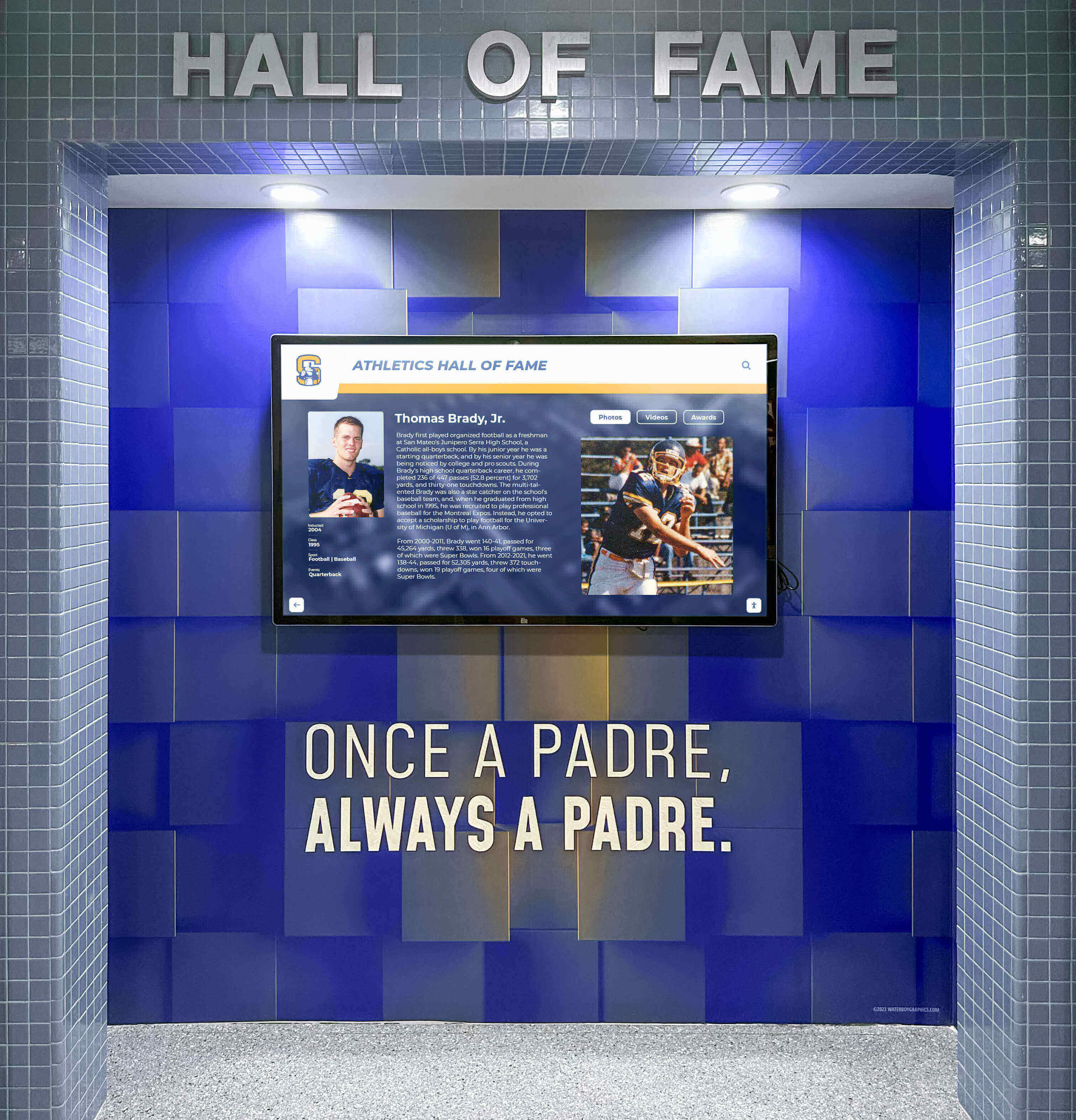
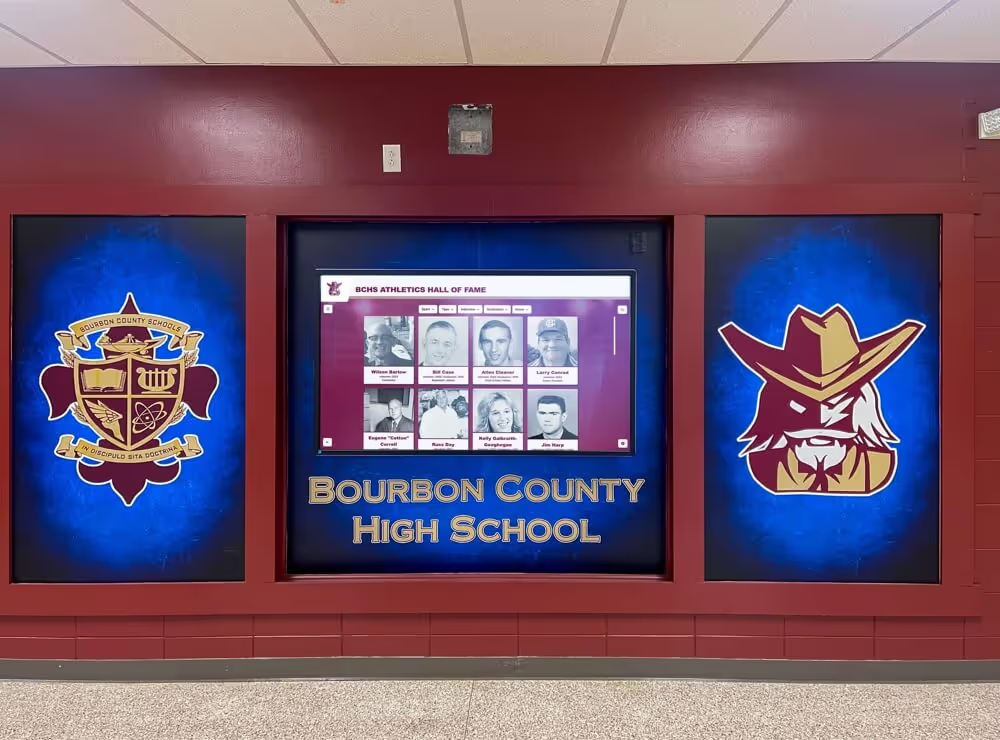
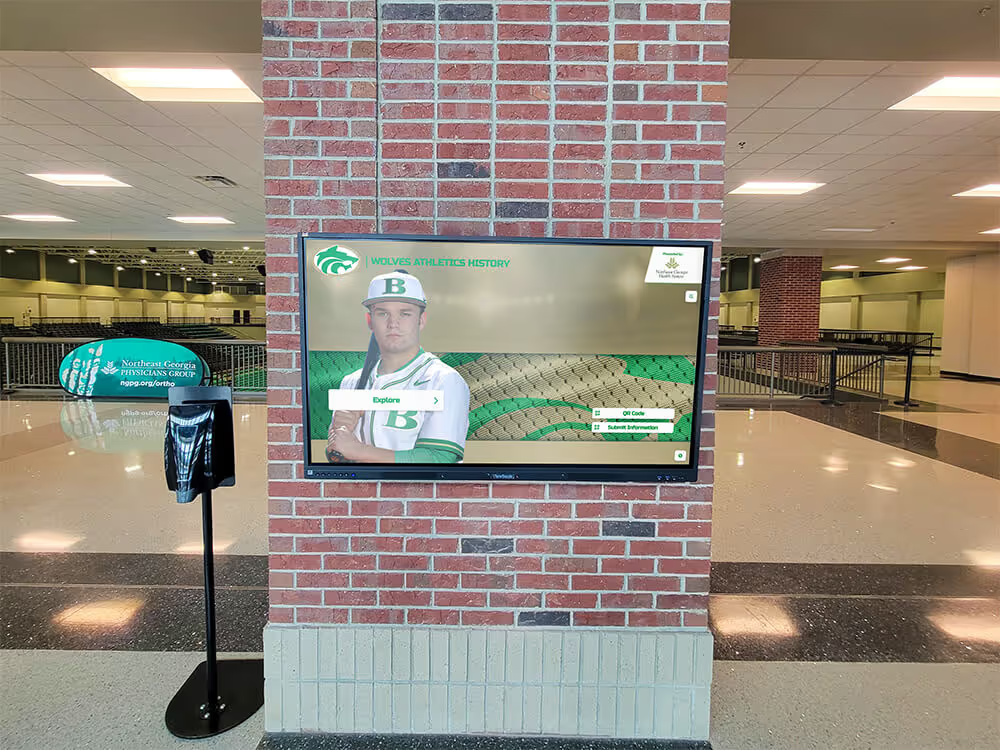
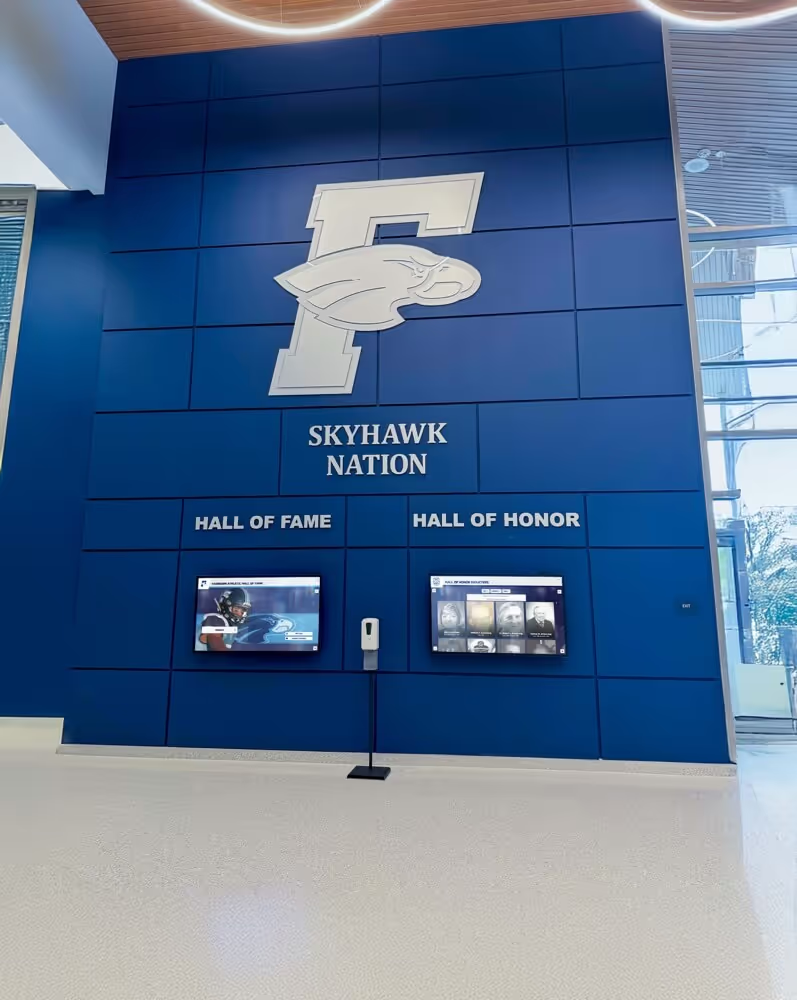
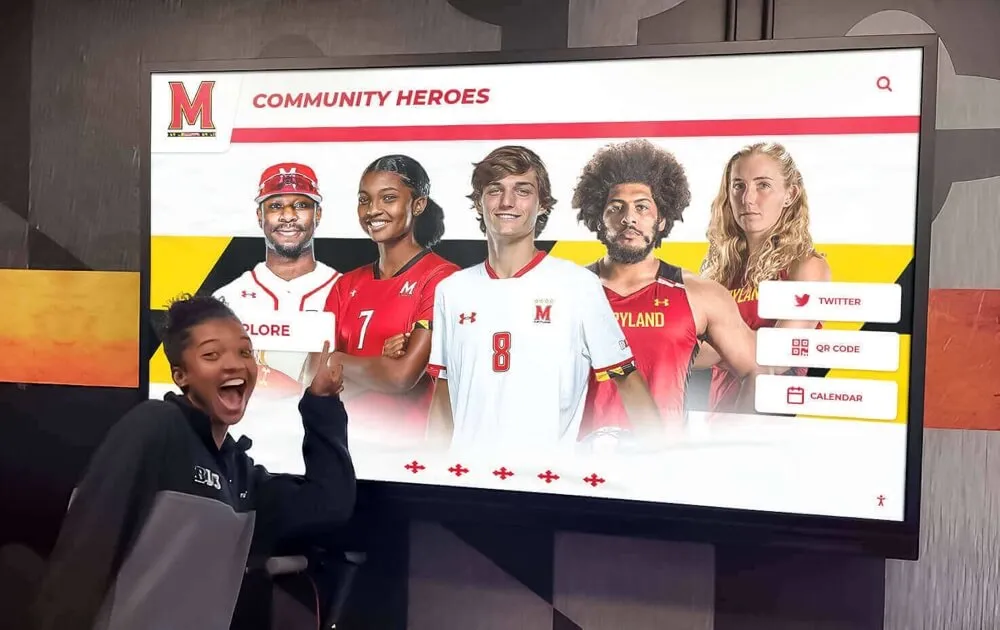
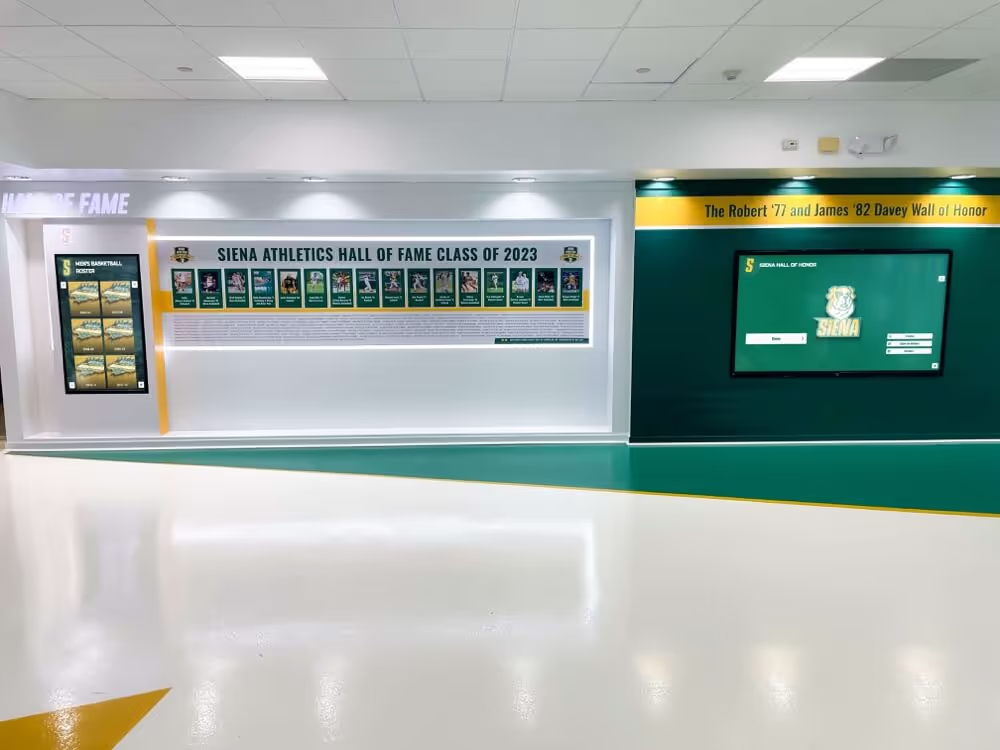
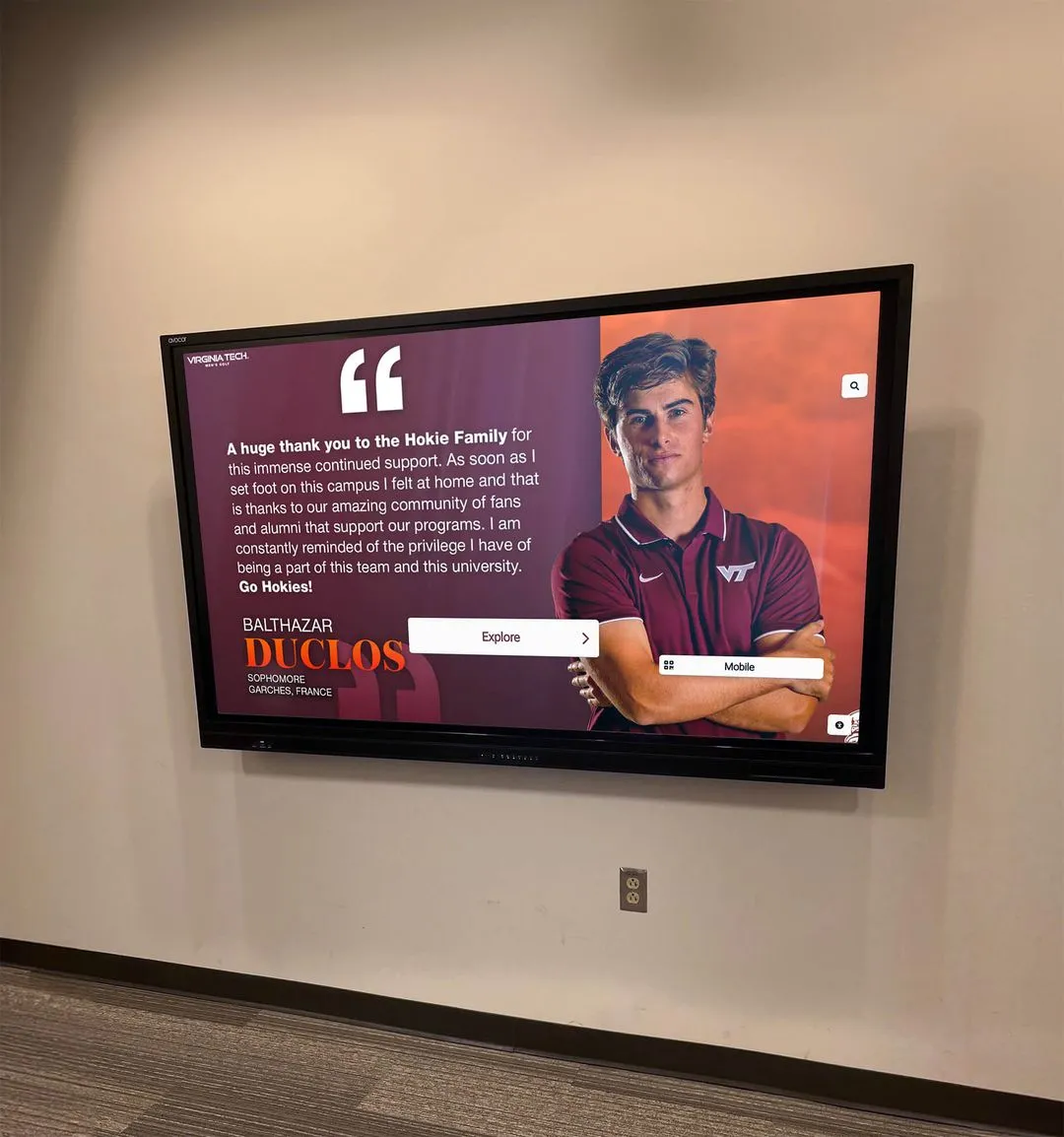
Digital screens integrated into the athletic facility architecture create immersive recognition environments that connect current athletes to the program's full history
Typography and Hierarchy
Athletic timeline walls typically include three levels of text: primary labels (year markers, championship headlines, era names), secondary descriptions (season records, coaching tenure summaries, conference affiliations), and detail text (individual award recipients, record statistics, context notes). Each level requires distinct type sizing and weight to function clearly in a display environment where visitors may be reading from varying distances.
For physical displays viewed from conversational distance (3–6 feet), detail text can function at 12–14 points. For displays in open hallways where visitors may read while walking past, primary labels need to be legible at 8–10 feet, requiring considerably larger type treatments.
The Interactive Touchscreen Athletic Timeline Wall
The static athletic timeline wall tells a program’s story to visitors who happen to walk past. An interactive touchscreen version invites visitors into the story, letting them set their own pace and depth of exploration. These are different experiences, and for schools with significant athletic histories, they’re complementary rather than competing.
A touchscreen athletic timeline wall typically offers navigation that static displays cannot:
Era-based browsing — A visitor who graduated in 1994 can navigate directly to the 1990s and explore the seasons they remember without scrolling through decades they didn’t experience.
Individual athlete profiles — Tapping a year or championship entry opens depth content: the full roster, individual statistics, photos from the season, coaching staff notes, and connections to athletes whose careers spanned multiple seasons.
Cross-sport filtering — A swimming program alumni can filter the timeline to show only swimming-related entries, seeing the sport’s history without the noise of football and basketball milestones filling the display.
Video integration — Highlight reels, championship game footage, and coach interview archives embedded directly in the timeline create an experience that no printed or engraved display can approach.
Search functionality — Alumni who want to find a specific athlete or season can search by name, year, or sport rather than navigating manually through decades of content.
For current student-athletes, this depth of access to the program’s history serves a culture-building function. Knowing that the school’s cross-country program won five consecutive state championships in the late 1980s—and being able to see the team photos and read about those athletes—creates a connection to legacy that a single banner in a gymnasium cannot.
The best touchscreen hall of fame guide for 2026 evaluates current interactive display platforms in terms of content flexibility, hardware options, and the specific needs of athletic programs—useful context for schools comparing their interactive options.
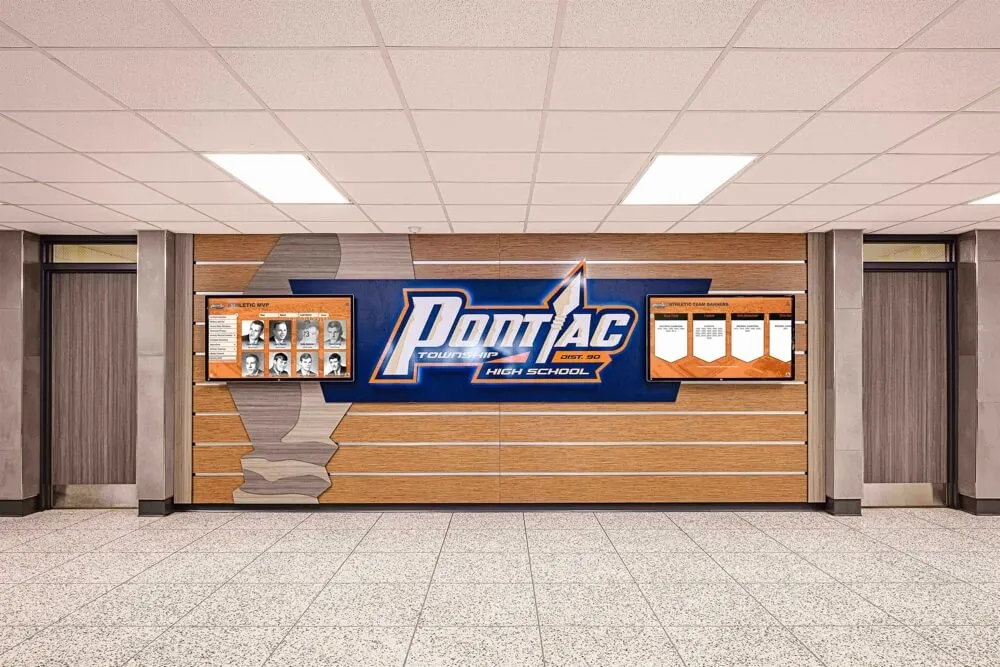
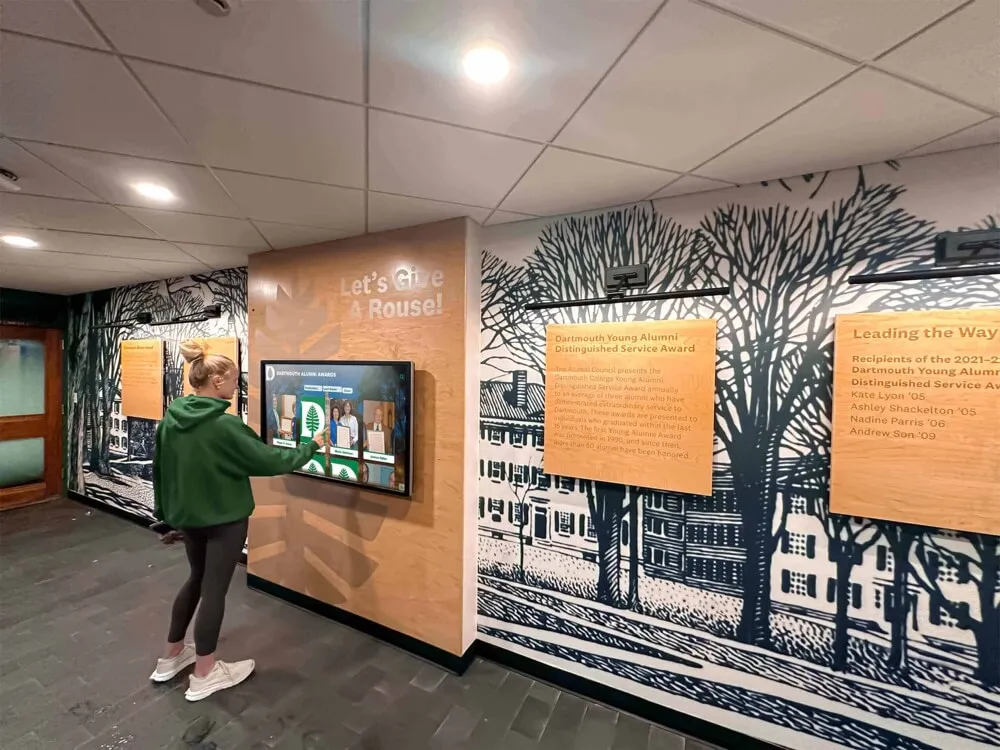
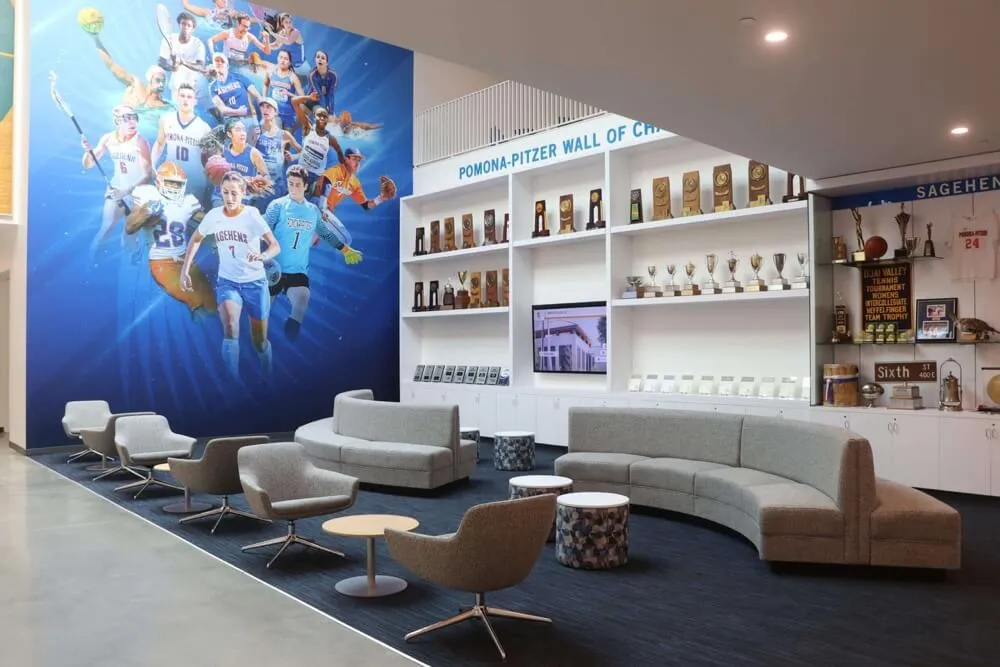
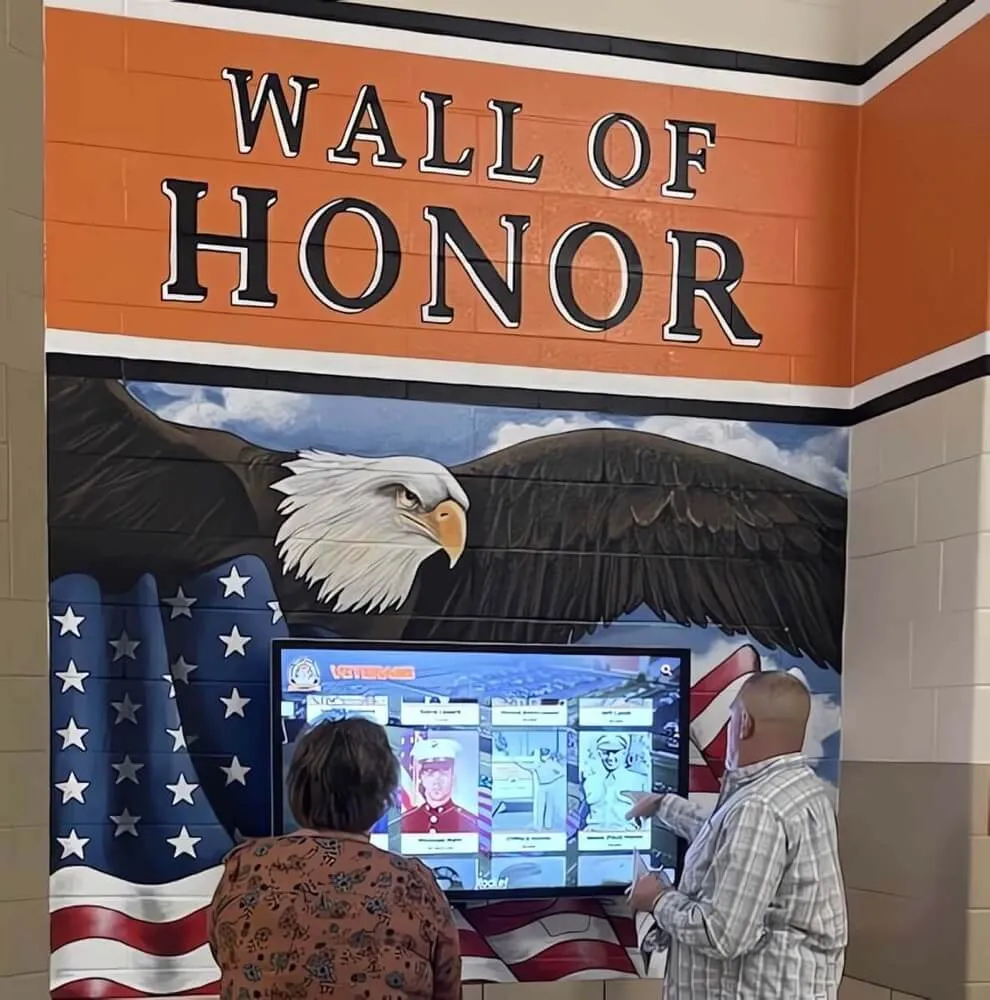
A dedicated athletic honor hallway creates an environment where the entire sports program's history is visible, giving current athletes a direct visual connection to the legacy they're building on
How Athletic Timeline Walls Support Recruiting and Alumni Engagement
Recruiting
Every athletic program recruits. The athletic timeline wall is one of the most powerful facility assets for recruiting visits, because it communicates culture in a way that statistics sheets and verbal descriptions never fully convey. A prospective student-athlete walking down a hallway lined with documented championship history, coached tenures, and individual achievement receives a clear message: this program values what its athletes accomplish, documents it, and preserves it permanently.
For fall sports programs, where recruiting often overlaps with alumni engagement events during the school year, the fall sports high school season overview provides useful context for thinking about how athletic programs structure their seasons and how that seasonal rhythm shapes recruiting timelines.
The athletic timeline wall also answers a question that prospective athletes and their families ask on virtually every recruiting visit without always articulating it directly: “Do athletes here get remembered?” A wall that documents achievement through decades is a concrete answer to that question.
Alumni Engagement
Alumni who played for a program have a direct personal stake in how the school presents its athletic history. When a former athlete visits the school and sees their championship season documented on the athletic timeline wall—their team photo, the record they helped set, the conference title their class won—the emotional response generates exactly the kind of institutional loyalty that drives alumni giving, volunteer mentorship, and ongoing engagement.
For swimming programs, which often build particularly strong alumni networks around the shared experience of individual-sport training, alumni recognition tied to state championship documentation can anchor reunion and fundraising events. The swimming state championships high school guide covers how championship recognition maps to alumni identity in ways that general sports displays often miss.
Donor and Booster Relations
Athletic timeline walls regularly serve as the backdrop for donor and booster cultivation conversations. A donor who contributed to a facility upgrade that appears on the timeline, or whose family member is recognized on the wall, has a tangible connection to the display that makes giving conversations more personal. Schools that have integrated recognition of major donors into their athletic history displays—naming the eras associated with facility gifts, for example—create a direct visual link between philanthropy and legacy.
For comprehensive thinking about how recognition walls can serve donor engagement goals alongside athletic history, the digital wall of fame design ideas guide covers content planning approaches that balance athletic achievement with broader institutional recognition goals.
Common Mistakes Schools Make with Athletic Timeline Walls
Treating It as a One-Time Project
The most persistent mistake is treating the athletic timeline wall as a project rather than a program. A project has a completion date; once installed, it’s done. A program has an ongoing update cycle, content stewardship, and an evolving relationship with the audience it serves. Schools that treat the timeline wall as a project end up with a beautiful installation that becomes progressively more dated with each passing year, eventually communicating a message the school didn’t intend: that the program stopped caring about its history at the point when the wall stopped being updated.
Prioritizing Design Over Content
A visually stunning display with thin historical content impresses visitors for about 30 seconds before they move on. A visually modest display with deep, accurate, and emotionally resonant content holds visitors for 10 minutes and brings them back. Content—the quality and completeness of the documentation, the selection of photographs, the accuracy of the records—matters more than the design language. Invest in content research first.
Ignoring Inclusive Program Representation
Athletic timeline walls at schools with both men’s and women’s programs, or programs spanning very different eras of institutional history, have an obligation to represent the full athletic program rather than defaulting to the sports with the longest trophy cabinets. Girls’ basketball, women’s soccer, and non-traditional sports programs often have their own championship histories and their own alumni networks who notice when their programs are visibly marginalized in the display.
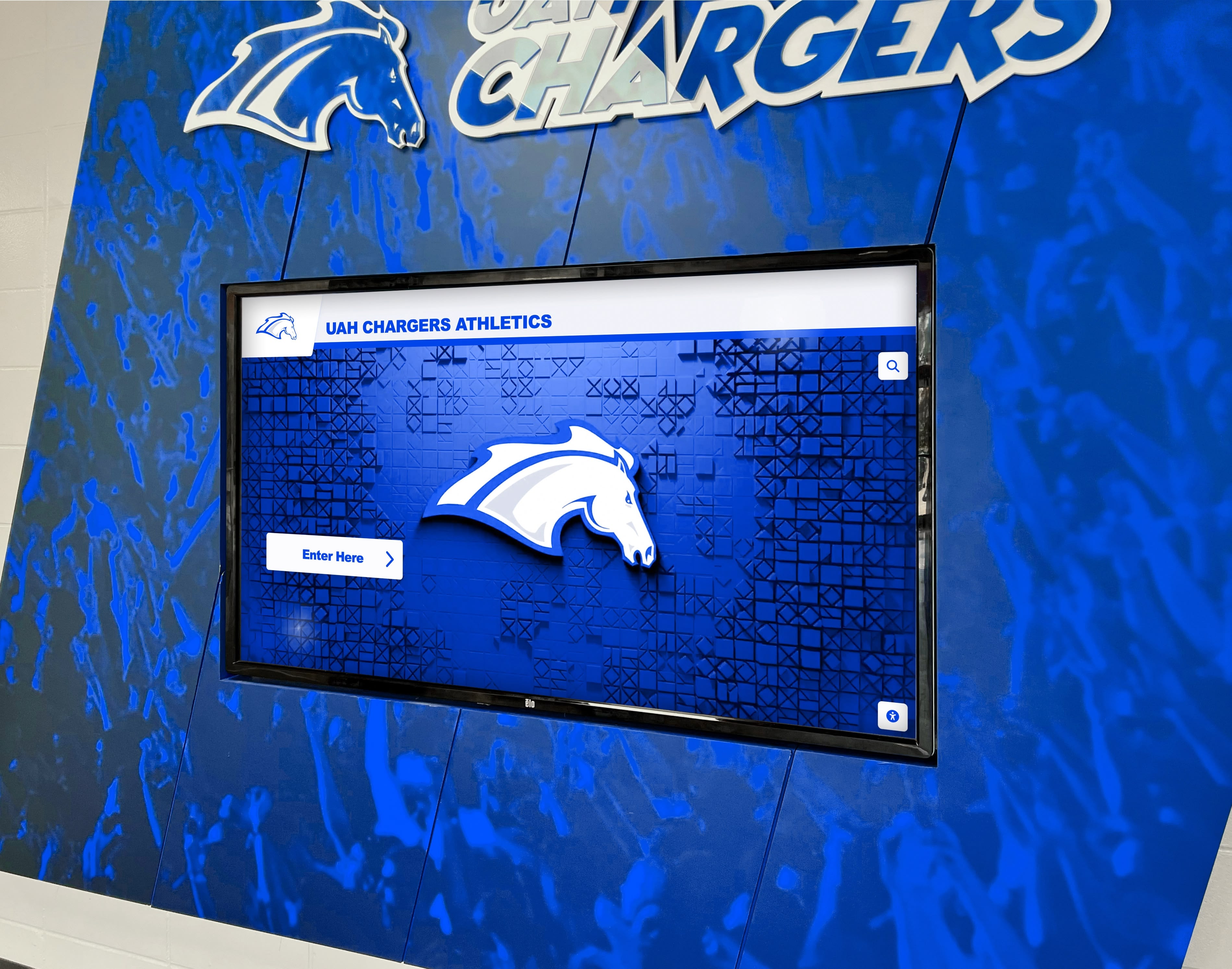
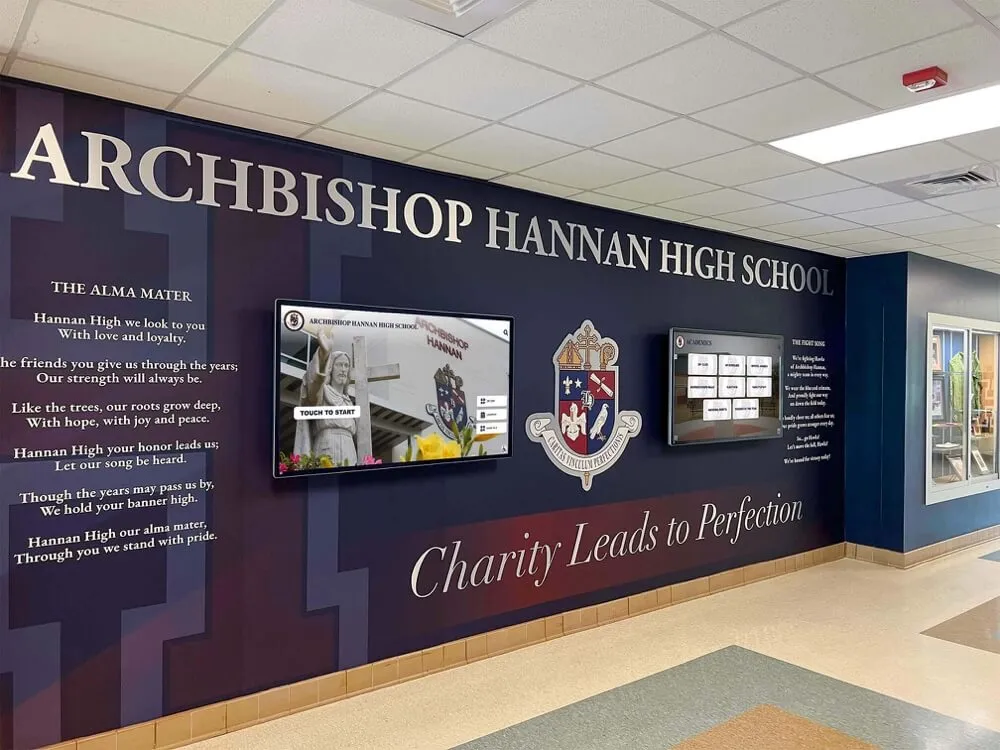
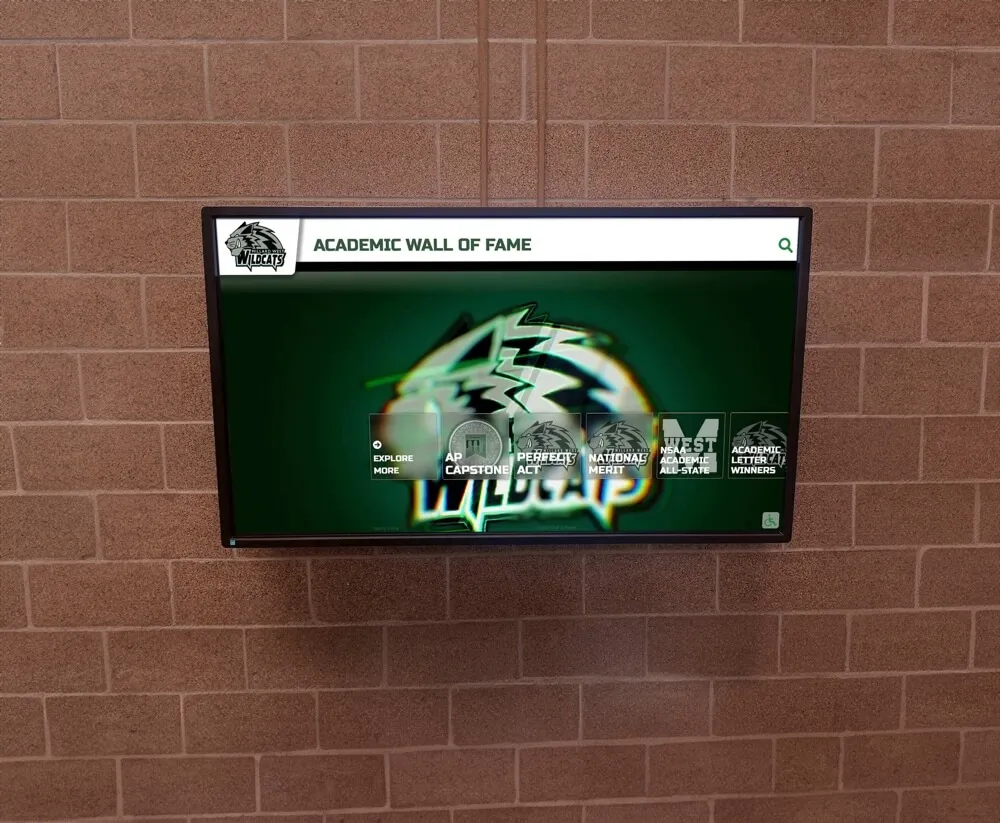
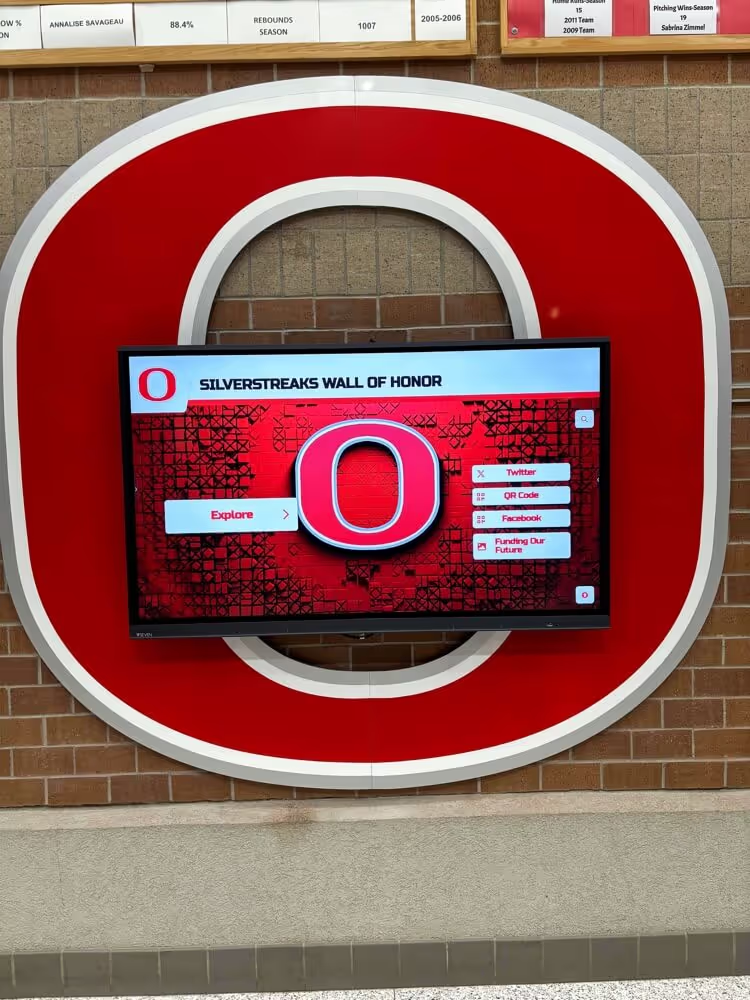
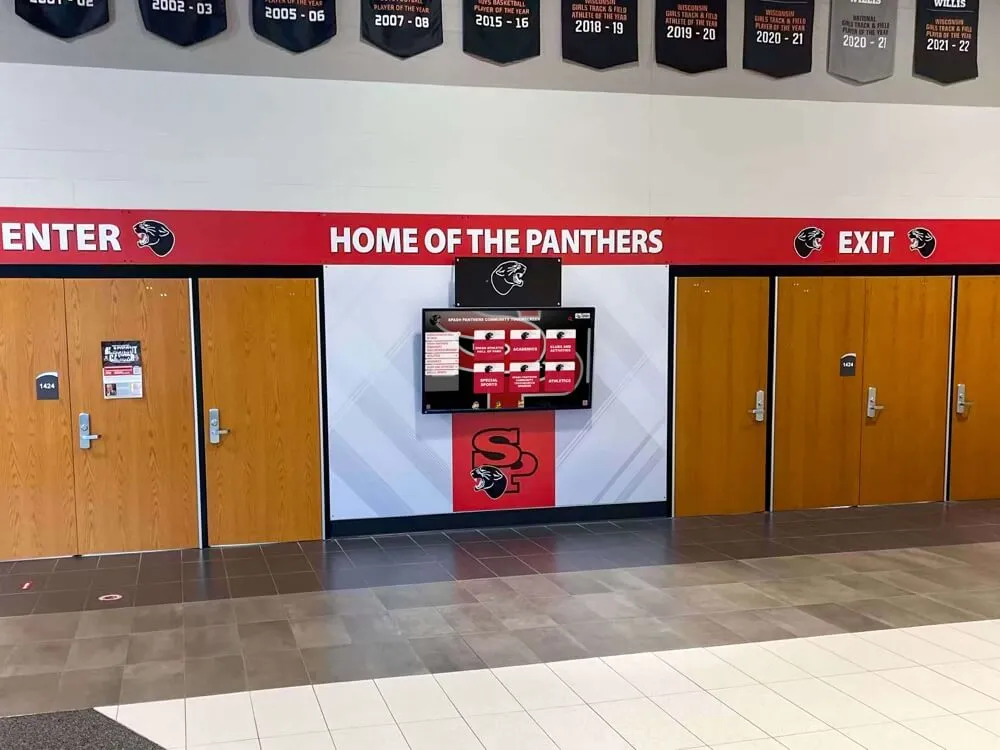
Digital athletic displays with consistent school branding create a professional recognition environment that communicates program pride to visiting athletes, recruits, and alumni
Underestimating the Documentation Phase
Schools consistently underestimate how long it takes to gather source material for a comprehensive athletic timeline. A 70-year program spanning 20 sports, with documentation spread across physical yearbooks, microfilm newspaper archives, coaching staff memory, and alumni recollections, requires months of research before design can meaningfully begin. Starting the documentation phase late compresses the timeline, produces gaps in coverage, and often results in a display that’s comprehensive for recent decades and thin for the program’s foundational era—the opposite of what a timeline wall should achieve.
Building the Digital Foundation: Rocket Alumni Solutions
Schools that want their athletic timeline wall to grow and evolve with the program—rather than requiring full redesigns every few years—increasingly choose interactive touchscreen platforms that separate the content from the display hardware. When the content lives in a managed digital system, updating the timeline requires editing database entries and uploading photos rather than reprinting vinyl panels or engraving new plaques.
Rocket Alumni Solutions builds interactive touchscreen recognition systems specifically designed for school athletic programs, alumni offices, and institutional history displays. The platform supports chronological timeline navigation, individual athlete and team profiles, video content integration, and the kind of cross-sport, cross-era browsing that makes an athletic history archive genuinely explorable rather than merely displayable.
For schools that already have physical mural or banner components they want to keep, the Rocket platform can integrate as the digital depth layer behind the physical display—visitors engage with the mural for visual impact and turn to the touchscreen for the full story behind each era.
The touchscreen software overview for Rocket Alumni Solutions covers how the platform’s content management system handles the ongoing update workflow that keeps athletic timeline walls current year over year.
Thinking about building an interactive athletic timeline for your school? Rocket Alumni Solutions designs touchscreen systems that make a program’s complete history navigable, searchable, and always current. Explore what an interactive athletic timeline wall looks like in practice.
From Physical Display to Living Archive
The most ambitious athletic timeline walls aren’t static installations or even interactive kiosks—they’re living archives that grow in real time with the program. When a team wins a conference championship in November, the timeline wall documents that achievement before winter break. When a senior earns all-state recognition in the spring, her entry is added before graduation. The wall is never more than a season behind the program it represents.
This level of currency requires content management workflows that most schools don’t have when they first install a timeline wall, but they develop organically once the infrastructure is in place. Athletic directors who build the documentation habit—collecting photos, recording results, capturing coaching notes at the end of each season—find that maintaining the timeline wall becomes a natural extension of the year-end review process rather than a separate project.
The interactive kiosk solutions guide for schools and organizations covers practical approaches to presenting sequential historical records in a digital display format—particularly the browsable, layered content architecture that allows visitors to move through eras at their own pace rather than following a fixed sequence.
Conclusion: The Athletic Timeline Wall as Program Identity
An athletic timeline wall is ultimately an identity document. It answers the questions that matter most to every group who visits the athletic facility: What has this program accomplished? Who came before? What does this school value in its athletes? How does this season’s work connect to everything that came before it?
When the wall is well built—comprehensive in its documentation, honest in its representation of lean years alongside championships, updated to reflect the current program, and designed to be read by someone walking through the hallway for the first time—it does something that no other recognition format achieves. It makes the program’s history visible, continuous, and alive in the present.
The format that achieves that most effectively depends on the specific program, the facility, and the institution’s capacity for ongoing content management. But the goal is the same regardless of format: a visitor who walks down that hallway should understand what this program has meant to this school, and should leave with the feeling that what’s happening on the field this season is part of something larger than any single year.
Ready to build an athletic timeline wall that grows with your program?
Rocket Alumni Solutions designs interactive touchscreen recognition systems for schools and universities—platforms that make your complete athletic history navigable, searchable, and always current. Explore how a touchscreen athletic timeline transforms both daily campus life and major alumni events.