



Every spring, athletic directors and coaches across the country face the same challenge: how do you take a moment that athletes have worked an entire season—sometimes an entire high school career—to earn, and make it feel genuinely significant? The athletic letter ceremony is one of the oldest traditions in scholastic sports, yet most schools still run it the same way they did thirty years ago: names called alphabetically, handshakes exchanged, letters distributed, done. That approach gets the job done. It rarely creates the kind of memory that stays with a student athlete for the rest of their life.
The schools producing the most meaningful athletic letter ceremonies have rethought the event from the ground up. They’ve kept what makes the tradition powerful—the public acknowledgment, the physical artifact, the gathering of athletes and families—and layered in creative programming, technology, and permanent recognition elements that make the evening feel proportionate to what athletes actually sacrificed to earn that letter.
This guide covers the full range of athletic letter ceremony ideas for schools at every budget and scale, from ceremony format decisions to presentation moments, award categories, digital enhancement strategies, and the permanent recognition options that extend the impact long after the event ends.

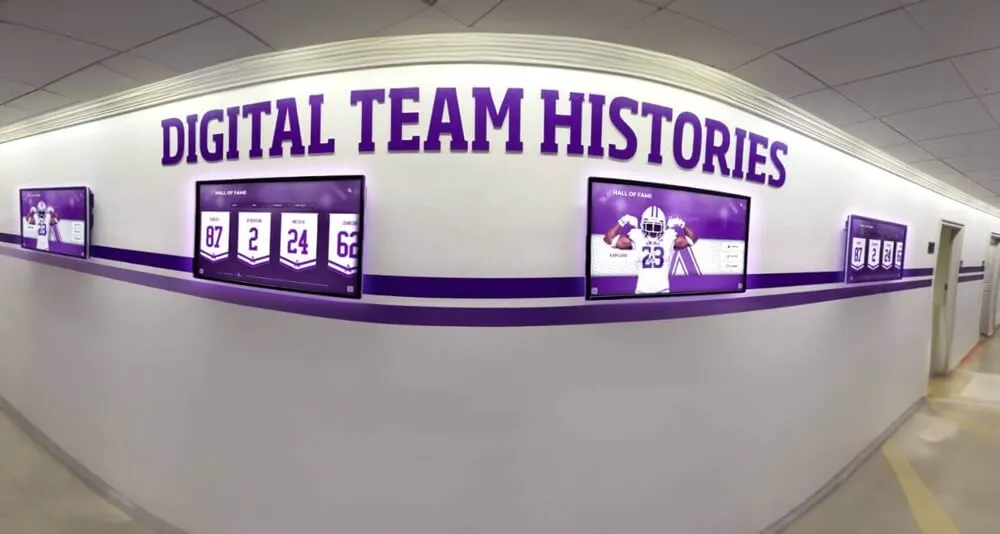
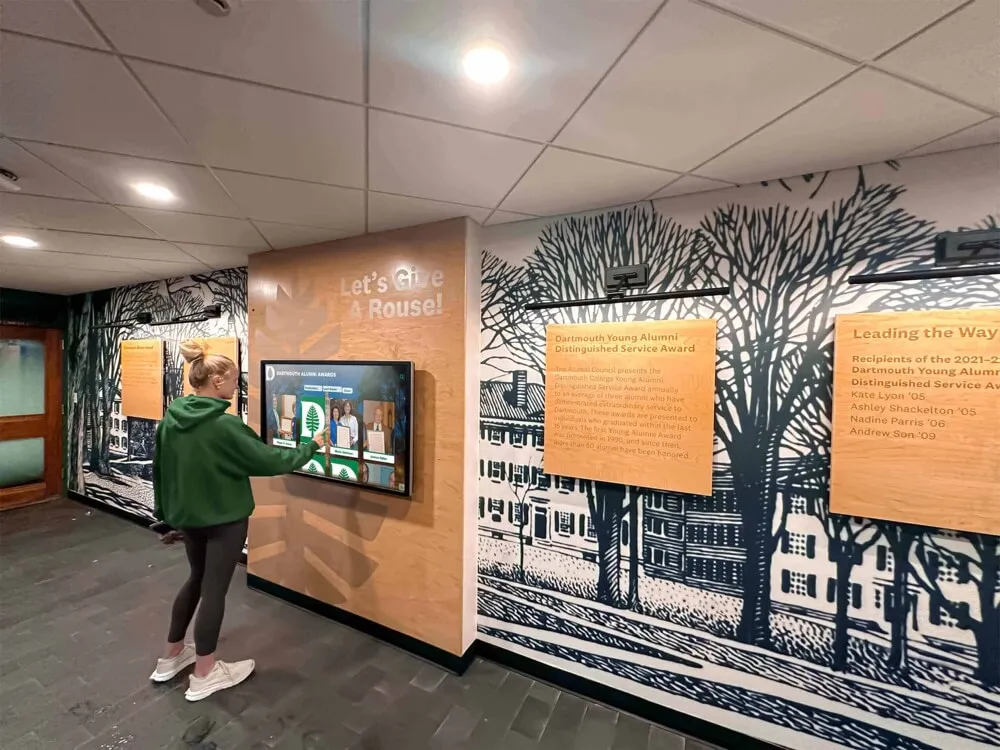
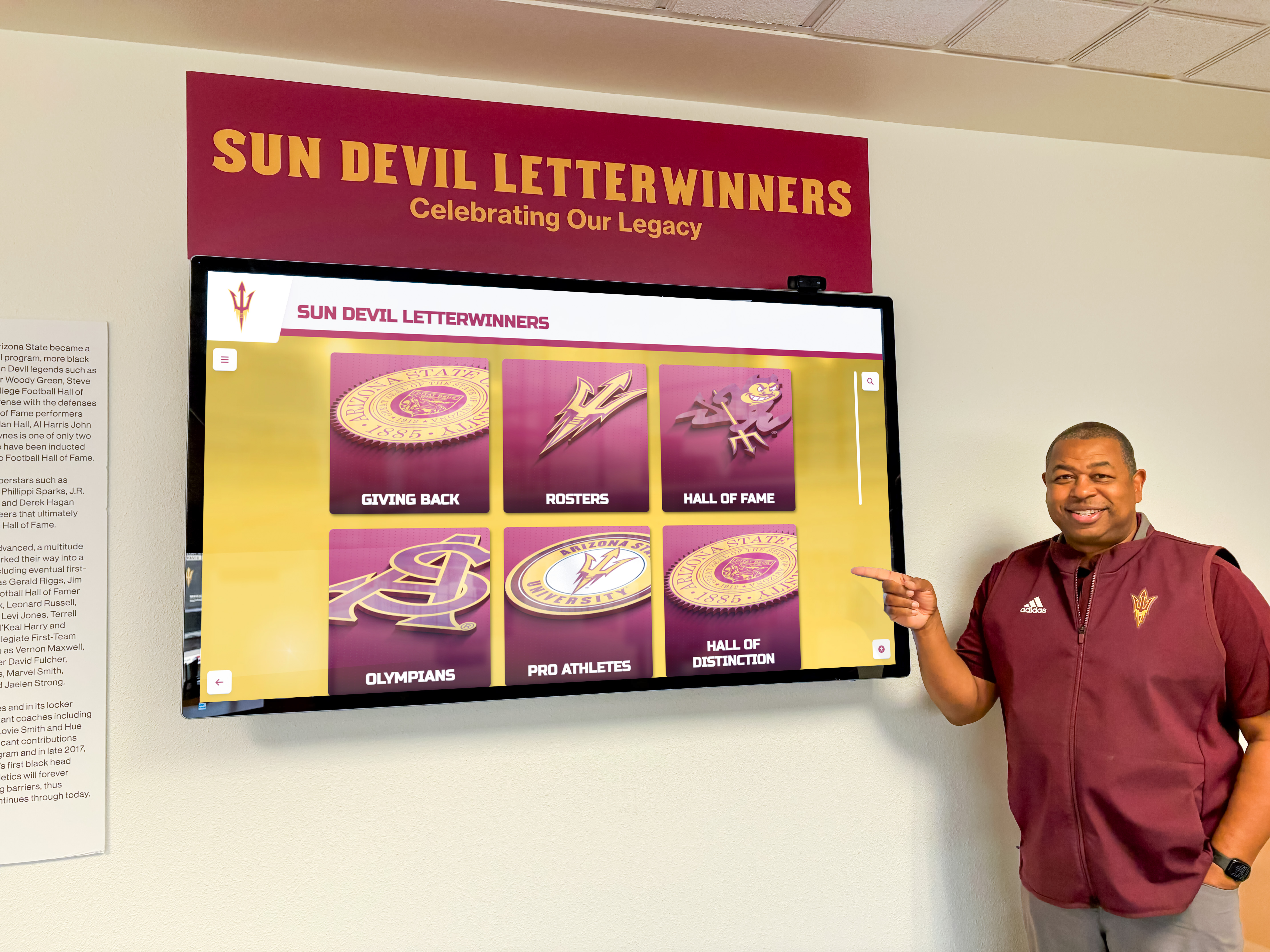
Letterwinners displays bring the athletic letter ceremony tradition to life year-round, giving athletes a permanent record of their achievement beyond the night it was awarded
What the Varsity Letter Actually Represents
Before rethinking your athletic letter ceremony, it helps to understand why the moment carries the weight it does for student athletes. The varsity letter is one of the few tangible credentials in high school athletics—a physical symbol that a student competed at the highest level their school offers in a given sport, met the performance and participation standards their program has established, and earned the recognition of their coaches and institution.
For a complete look at the history and criteria behind this tradition, the varsity letter meaning and what it represents for recipients covers how schools have used this recognition across different eras and athletic contexts. The short version: the ceremony matters because the letter matters, and the letter matters because it represents something that cannot be purchased or assigned—it has to be earned.
That earned quality is exactly why athletic letter ceremonies fail when they feel perfunctory. An athlete who trained through a summer, competed through injury, and committed to a program for months deserves a moment that reflects that investment. The ceremony’s job is to make that investment visible in front of the people who matter most to the athlete.
Choosing a Ceremony Format That Fits Your School
The first decision in planning a meaningful athletic letter ceremony is structural: what format gives you the best combination of scale, personalization, and community energy?
All-Sports Banquet
The most common format combines all varsity letter recipients from every sport into a single event. An all-sports banquet creates the largest possible community gathering, allows fall, winter, and spring athletes to celebrate together, and gives families a single event to attend. The challenge is scale—larger schools with dozens of sports can end up with hundreds of lettermen and -women in a single room, making individual recognition genuinely difficult.
Schools that succeed with the all-sports format solve the scale problem by batching presentations by sport, using video highlights to give each team a distinct moment, and keeping individual name-calling brisk while reserving deeper spotlights for special award recipients and seniors.
Sport-Specific Ceremonies
Some schools run letter ceremonies within each sport’s individual end-of-season banquet or awards night. This format allows coaches to personalize the presentation deeply—sharing specific memories, reading individual tributes, and giving each athlete more time in the spotlight. The trade-off is that athletes miss the cross-sport community experience of celebrating with the entire athletic program.
Sport-specific ceremonies work particularly well for sports with strong individual team cultures—wrestling, swimming, track and field—where the relationships within the team are tight enough that a shared celebration with the football program might actually dilute rather than enhance the experience.
Dedicated Letter Ceremony
A third option is a standalone athletic letter ceremony that isn’t embedded in a banquet but exists as its own event—a shorter, focused gathering specifically designed around the letter presentation moment. These ceremonies can be more formal and ceremonial in tone, closer to an induction or investiture than a dinner event. They work especially well for schools that want to elevate the letter’s status or for programs transitioning away from an awards dinner model.
What the Research on End-of-Year Recognition Suggests
Regardless of format, the sport end-of-year awards guide consistently points toward two factors that determine whether any athletic recognition event feels meaningful: personalization and pacing. Events that name-drop hundreds of athletes in rapid succession feel like roll calls. Events that slow down for specific detail—a season moment recalled, an improvement documented, a character trait observed—create the emotional register that attendees remember.
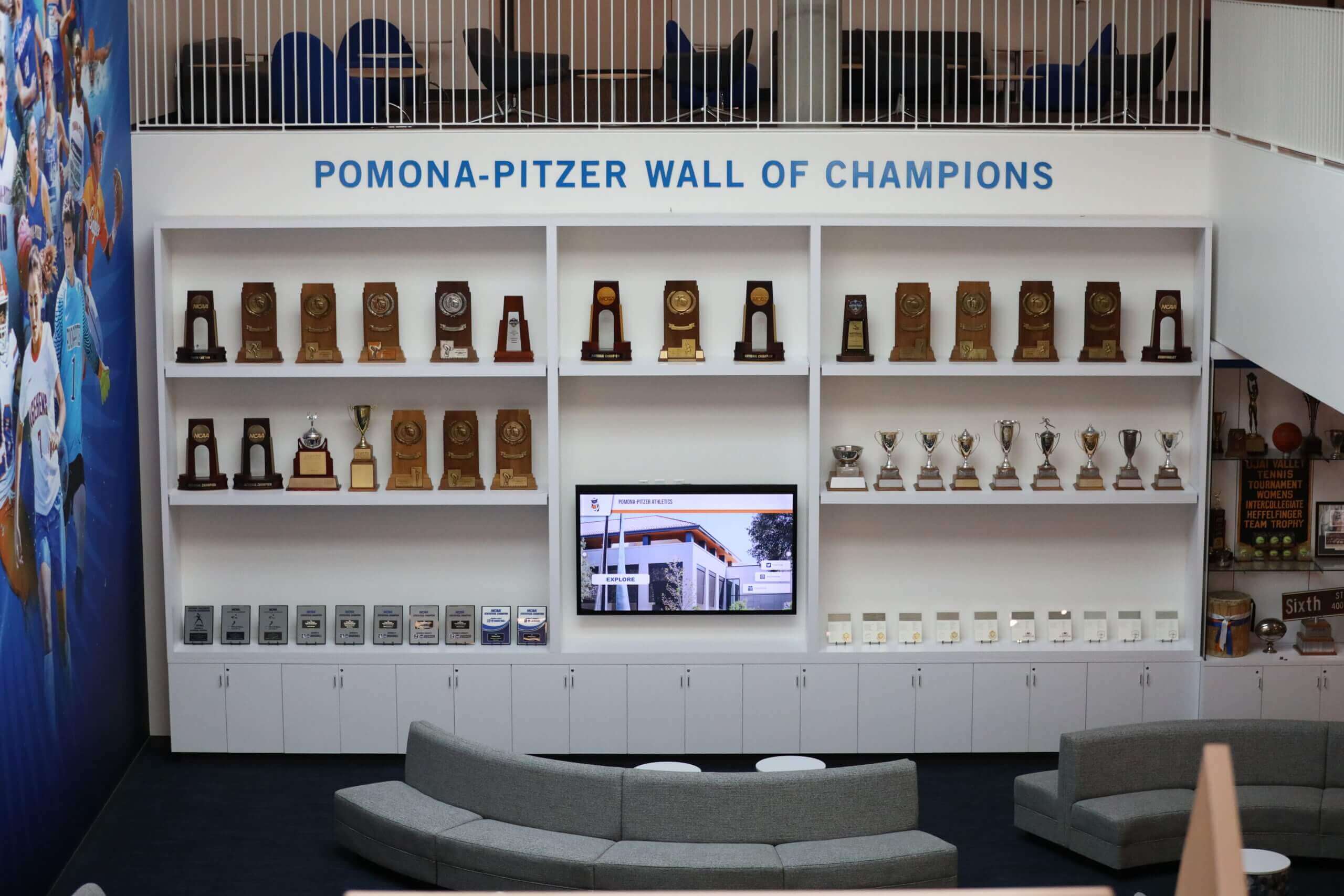
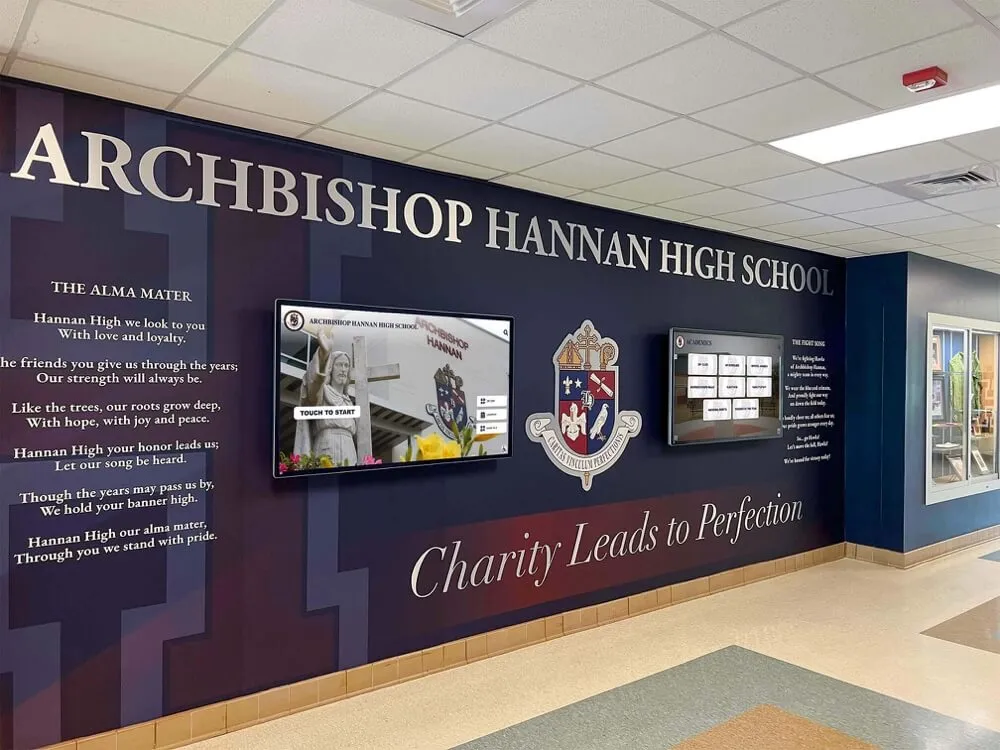
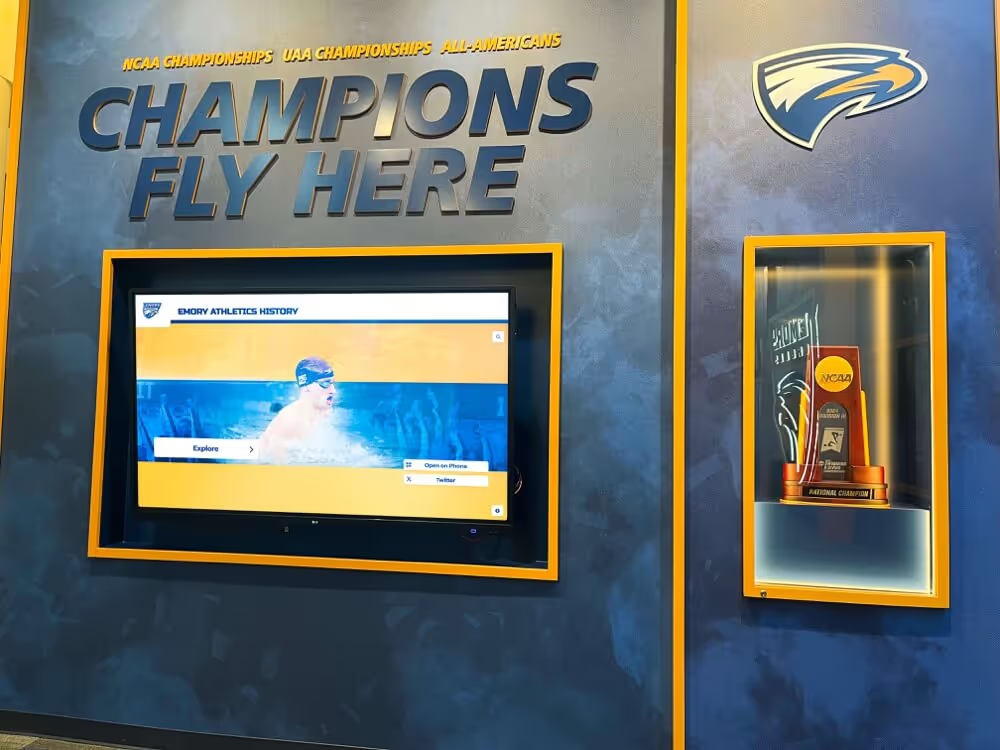
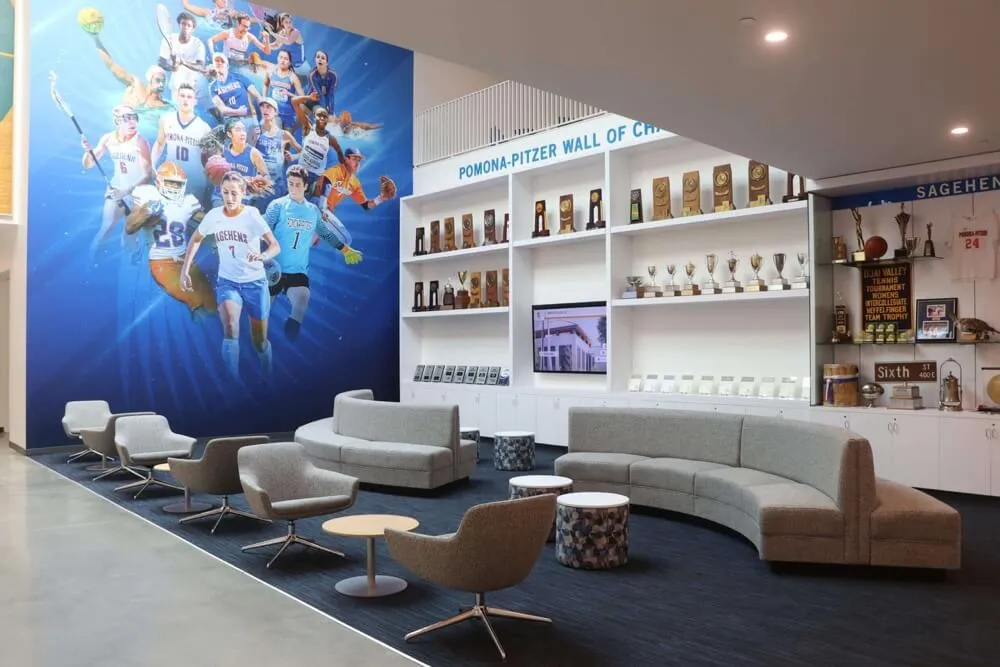
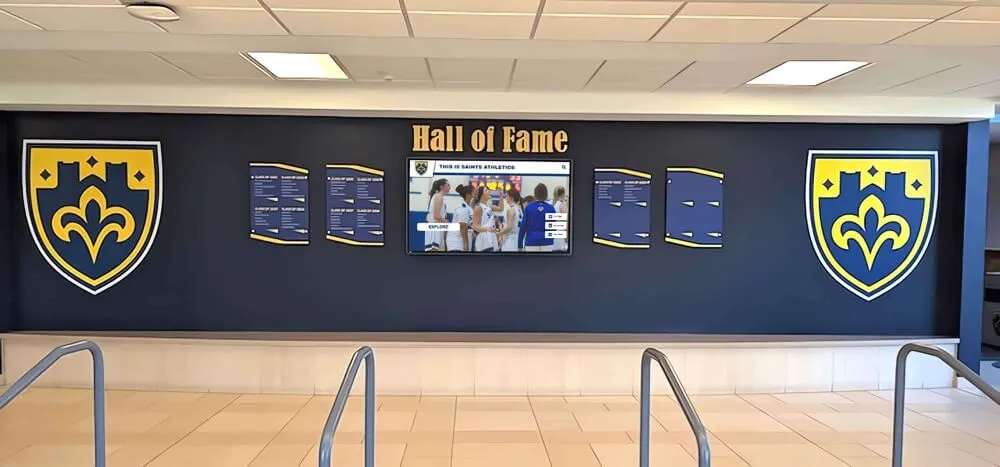
Dedicated trophy and recognition spaces set the right atmosphere for letter ceremonies—athletes connect their award to a legacy of achievement that predates them and extends beyond the current season
Planning the Ceremony Program Flow
A well-structured athletic letter ceremony follows a rhythm that balances official business with authentic recognition moments. The following sequence works across most formats and scales:
Opening and Welcome (10–15 minutes)
Open with remarks that establish the evening’s tone and the weight of what’s being recognized. An athletic director or principal who speaks specifically about the athletic program’s season—naming actual accomplishments, acknowledging real challenges—sets a different register than generic remarks about hard work and character. If your school has a school fight song, opening remarks or an honor ceremony connected to music and tradition reinforces that the evening is about something larger than any individual athlete.
Team Introductions and Sport-by-Sport Recognition (30–60 minutes, depending on scale)
The letter presentation sequence is the heart of the ceremony. The most effective approaches:
Coach introduction of each sport: Have each head coach spend 60–90 seconds on a genuine description of the season before individual names are called. This contextualizes the letter—athletes in the room understand what their teammates went through to earn it.
Individual athlete recognition: Call each letterwinner by name and have them come forward. For maximum impact, include one specific detail per athlete—a statistic, a moment, a character observation—rather than reading names from a list. This requires preparation time but produces a fundamentally different experience.
Video or photo integration: Project a team photo or brief highlight as each sport is introduced. Even a 30-second clip gives the presentation texture and slows the evening down in a way that feels intentional rather than slow.
Special Awards Presentation (15–25 minutes)
Reserve time for recognition beyond the standard letter. This section covers categories like Most Valuable Player, Most Improved, Scholar-Athlete, Team Captain honors, Coaches Award, and senior recognition. For ideas on structuring these categories and making each feel distinct, the athletic award presentation ideas resource covers how schools customize these moments at different program levels.
Senior Recognition
Senior athletes deserve their own distinct moment within the ceremony. A senior spotlight that goes beyond the sport—acknowledging each senior’s plans after graduation, their contributions to the program over multiple years, and a specific memory from their tenure—creates a different emotional response than simply presenting a letter to someone who’s leaving. Many schools incorporate a brief video tribute for each senior sport or a slideshow of senior athletes across their full four-year career.
Parent or Guardian Appreciation Moment
One of the most consistently effective additions to the athletic letter ceremony is a deliberate recognition of the parents and families who made the season possible. Approaches include:
- Having athletes present a flower or small token to their parent as part of the letter ceremony
- Inviting parents to join their athlete on stage for the letter presentation
- A brief address from the athletic director specifically thanking families for transportation, meals, fundraising support, and attendance
- Having senior athletes read a prepared tribute to their parents rather than having coaches speak
These moments tend to generate more genuine emotion than almost any other element of the evening—because they make explicit something that usually goes unacknowledged.
Closing and Community Moment
Close with something that leaves the room feeling unified rather than simply wrapped up. A team photo with all letter recipients from a single sport, a group photo with all letterwinners from the full program, or a brief opportunity for informal socializing after the formal program ends gives athletes a chance to celebrate together rather than simply filing out.
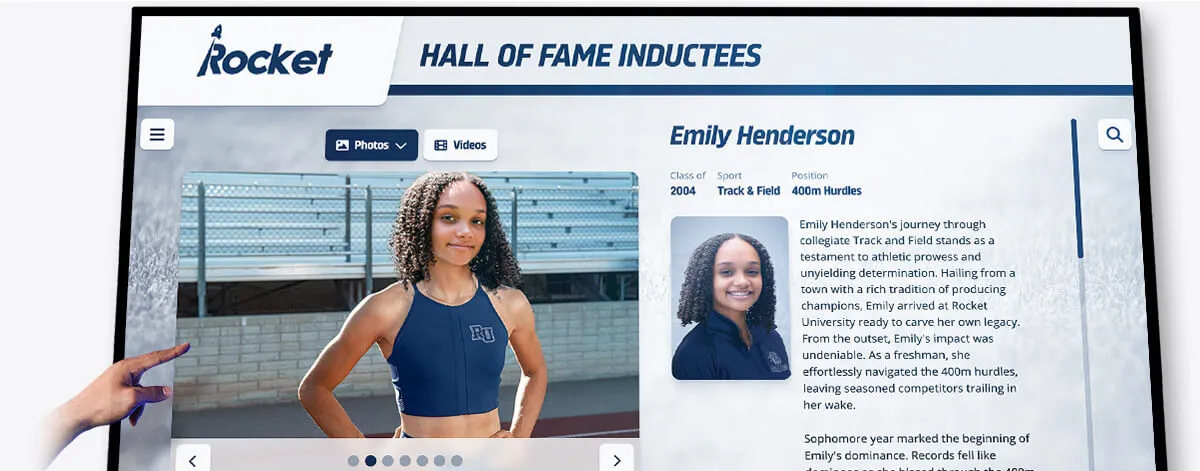
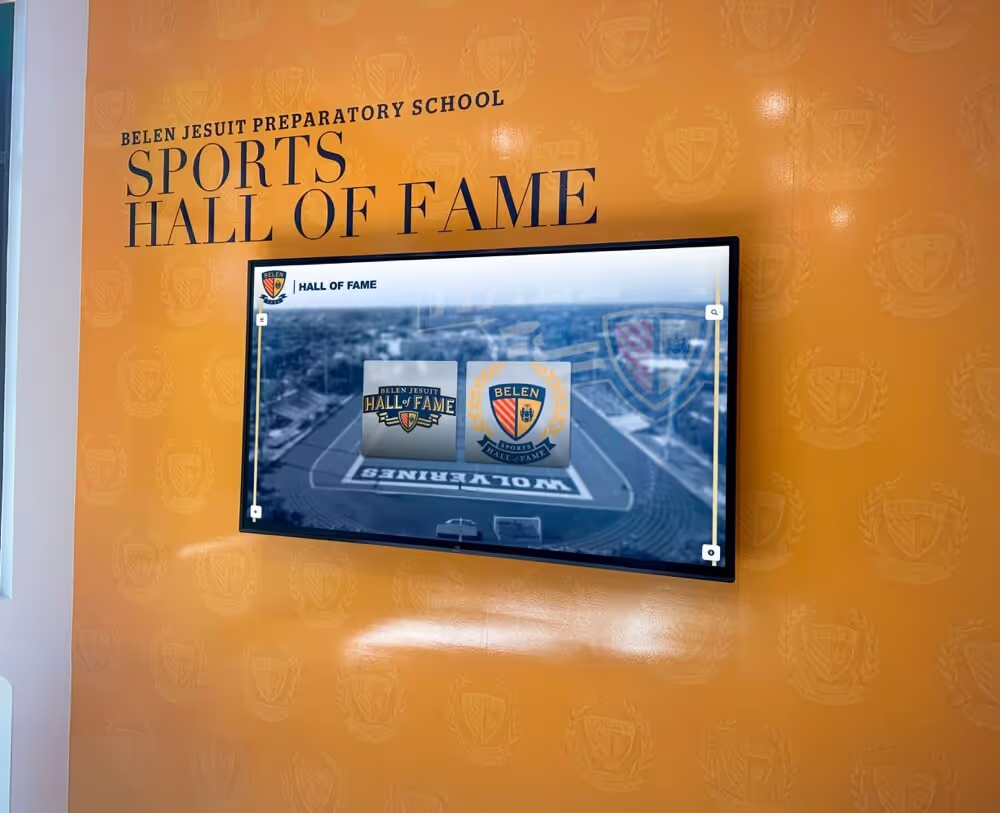
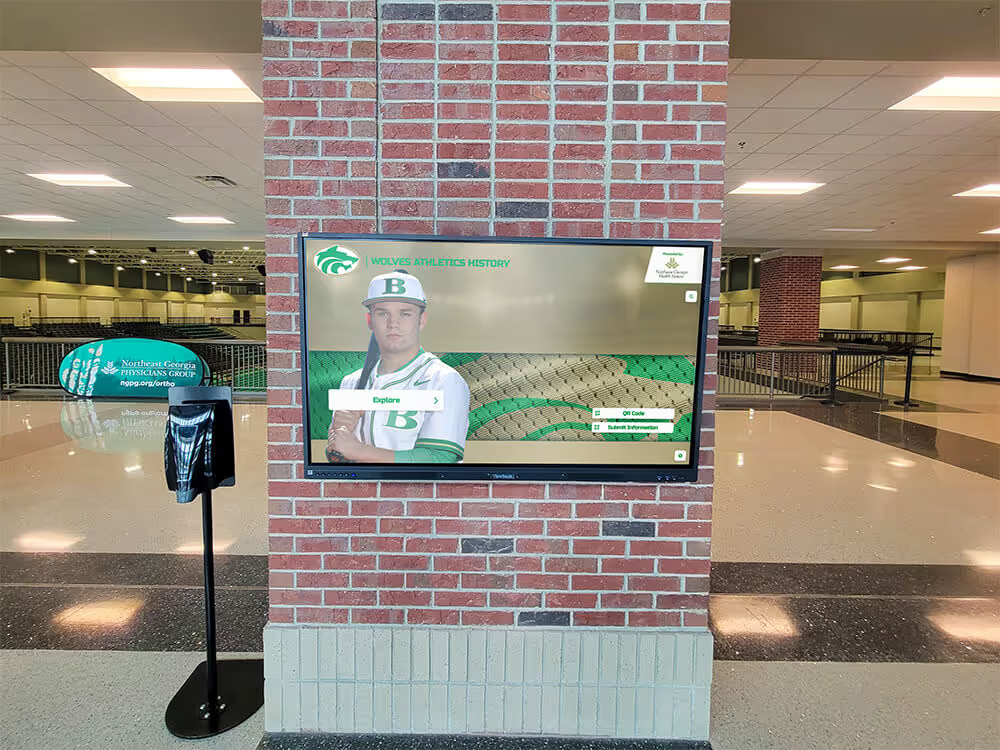
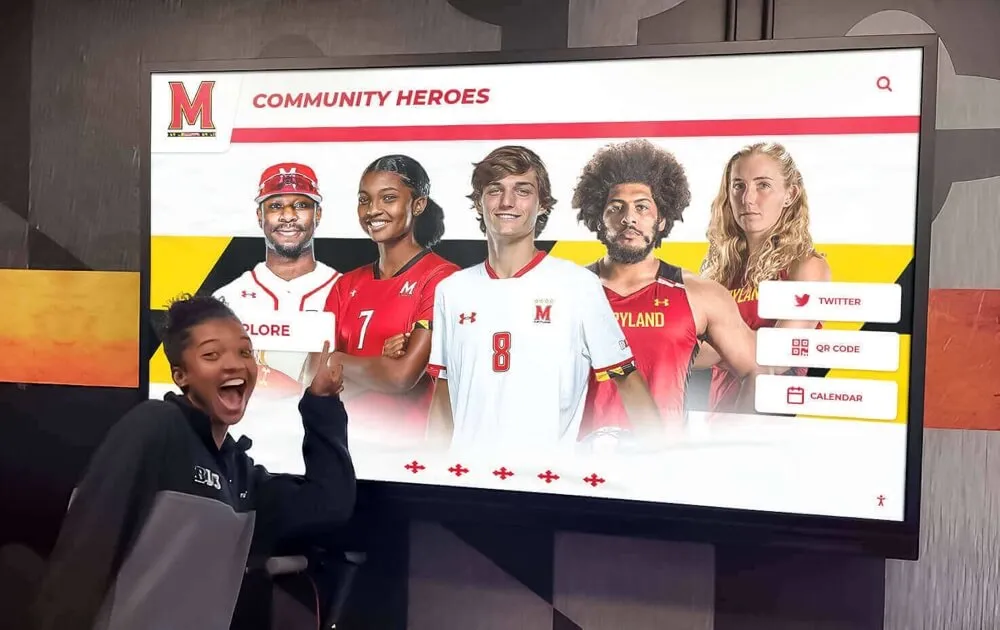
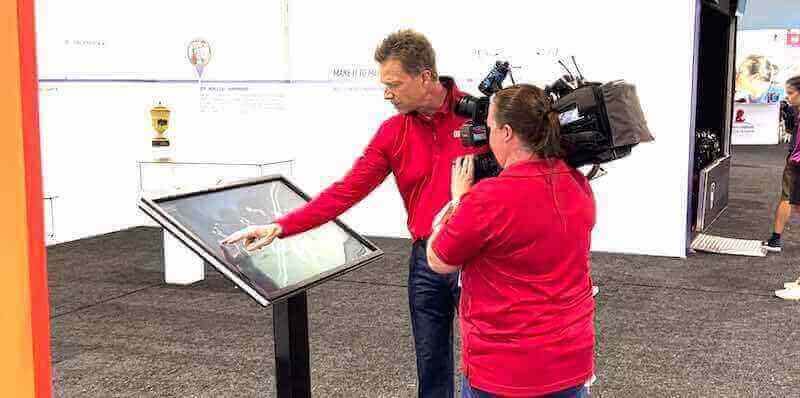
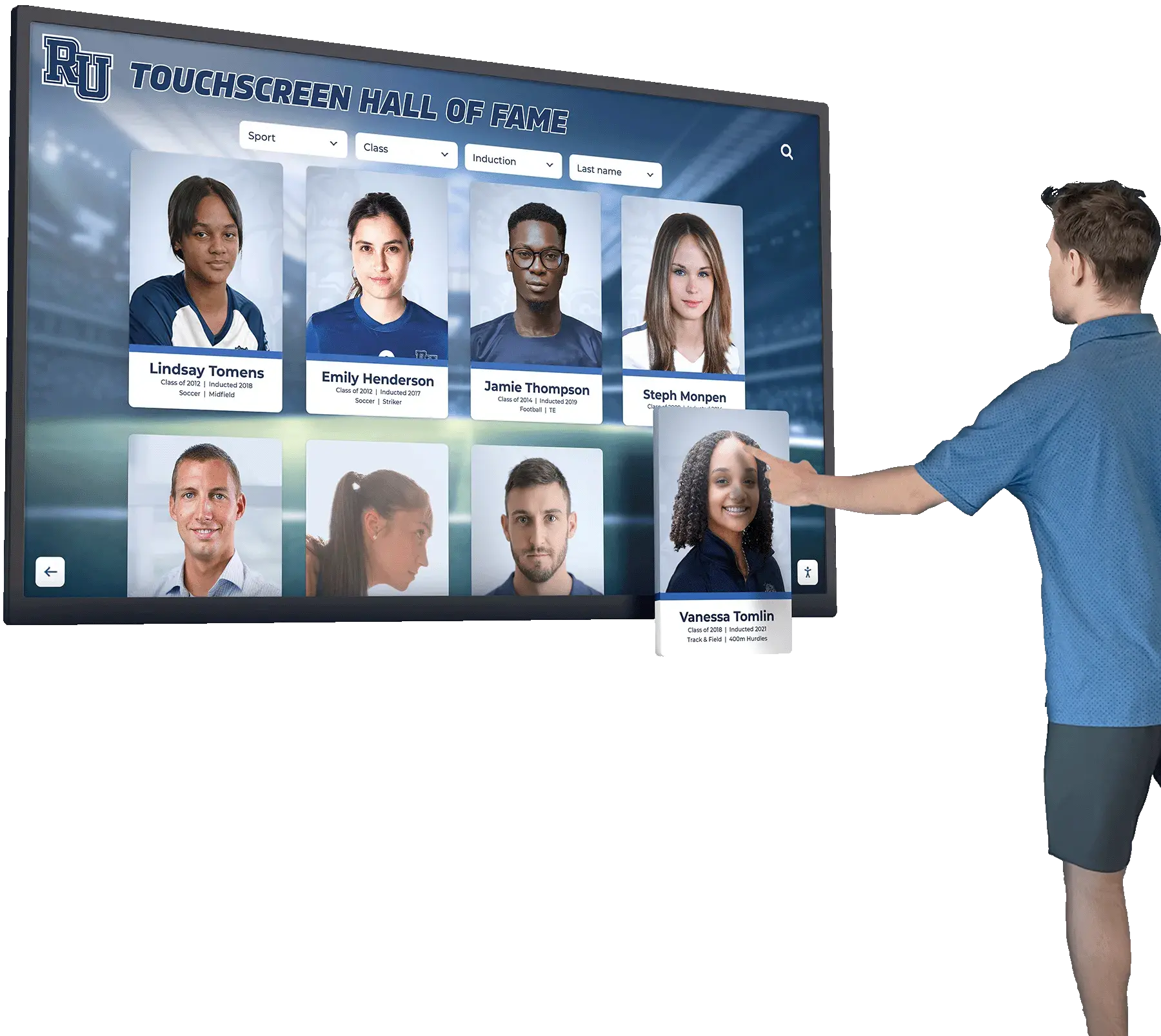
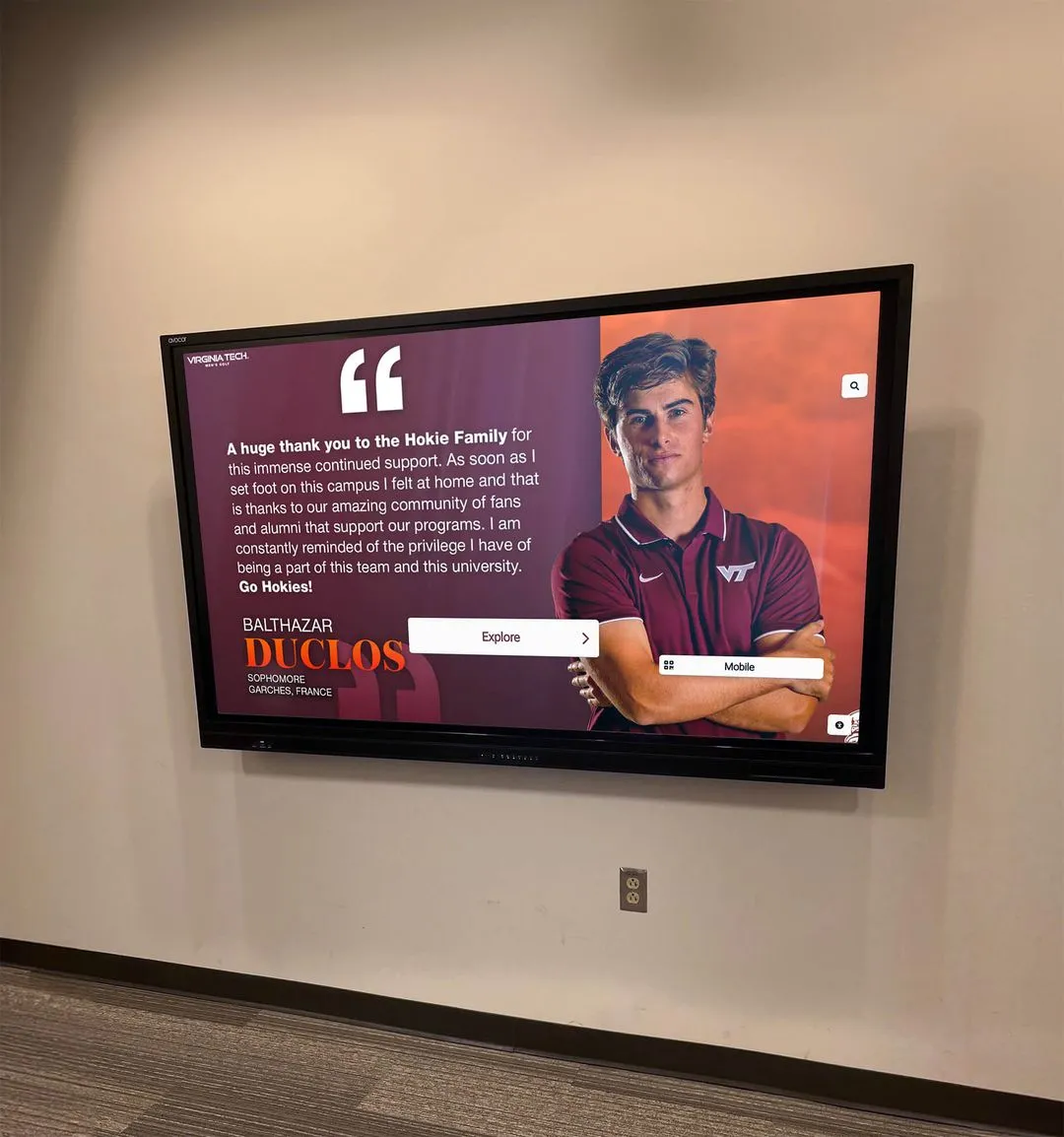
Touchscreen athlete profiles give letter recipients a permanent digital record of their achievement—a format that families can share, revisit, and reference long after the ceremony ends
Creative Athletic Letter Ceremony Ideas for the Presentation Moment
The actual letter presentation—the moment an athlete receives their varsity letter—is where ceremony creativity has the most impact. These are the moments athletes photograph and share.
The Traditional Handshake, Elevated
The handshake-and-letter exchange remains the standard, and for good reason: it’s simple, dignified, and scalable. Elevate it by having the coach or athletic director speak the athlete’s name clearly with a pause before presenting, making consistent eye contact, and using both hands for the letter exchange. Small adjustments to body language and presence change the emotional register of an otherwise mechanical moment.
The Coach’s Personal Note
Include a handwritten or personally signed note from the head coach inside each letter envelope. A few sentences about the athlete’s specific contribution to the program—not generic praise but a genuine observation—gives the moment documentary weight. Athletes keep those notes long after the letter jacket has been worn through.
A Framed Athlete Photo
Pair the letter with a printed, framed photo of the athlete in competition from the current season. A professional-quality action photo framed simply and presented alongside the letter gives athletes something immediately displayable. This works particularly well for senior athletes for whom the letter may be their final competitive recognition.
Sport-by-Sport Video Highlight Reels
Produce a short highlight reel (90 seconds to 3 minutes) for each sport shown on screen as that sport’s team is recognized. This requires a designated video coordinator or student team to capture footage throughout the season, but the payoff is a ceremony that feels cinematic rather than administrative. For sports with less video coverage, even a slideshow of still photos set to music achieves a similar effect.
The Athlete Spotlight Card
For each letter recipient, create a digital or printed “spotlight card” with their photo, sport, years lettered, a selected statistic or accomplishment, and a quote from their coach. These cards can be displayed on tables during the event, incorporated into a digital recognition display, or distributed to athletes as a keepsake. The investment in creating them is modest; the impact on how the ceremony feels is substantial.
Parent Co-Presentation
For athletes receiving their first varsity letter, invite their parent or guardian to the front of the room to participate in the presentation. The coach hands the letter to the parent, who then presents it to the athlete. This reversal of the usual ceremony sequence creates an emotional moment that involves the family in the recognition rather than positioning them as spectators.
Award Categories Beyond the Varsity Letter
The athletic letter ceremony provides a natural platform for recognizing achievement categories that deserve their own distinct spotlight. The following categories cover most of what high school programs recognize at year-end events:
Most Valuable Player: Recognizes the athlete judged by coaches to have made the most significant contribution to the team’s performance. Present this with a trophy or plaque rather than just verbal recognition, and give the coach time to explain the rationale—the reasoning behind the selection often communicates more about program values than the selection itself.
Most Improved Player: Honors growth rather than absolute performance. This award resonates with athletes who don’t appear at the top of any statistical category but whose trajectory over the season represents genuine development.
Coaches Award: A coach-discretionary recognition for the athlete who best embodied program values—work ethic, leadership, coachability, and character qualities that don’t always translate to visible performance metrics.
Scholar-Athlete: Programs that track GPA alongside athletic performance can recognize athletes who maintained academic excellence during the season. This award bridges the athletic and academic communities and matters enormously to college-bound athletes.
Team Captain Recognition: Separately honoring team captains—not just as athletes but as leaders—gives the leadership role the weight it deserves. Some programs present captains with a distinct item (a different letter style, a captain’s plaque) that visibly marks their role.
Newcomer or Underclassman Award: Recognizes a freshman or sophomore whose first year in the program showed exceptional promise. This award invests in younger athletes’ sense of belonging to the program’s future.
For schools running high school awards ceremonies that combine athletic and academic recognition, these categories can be integrated into a broader program or presented separately depending on the school’s preference.
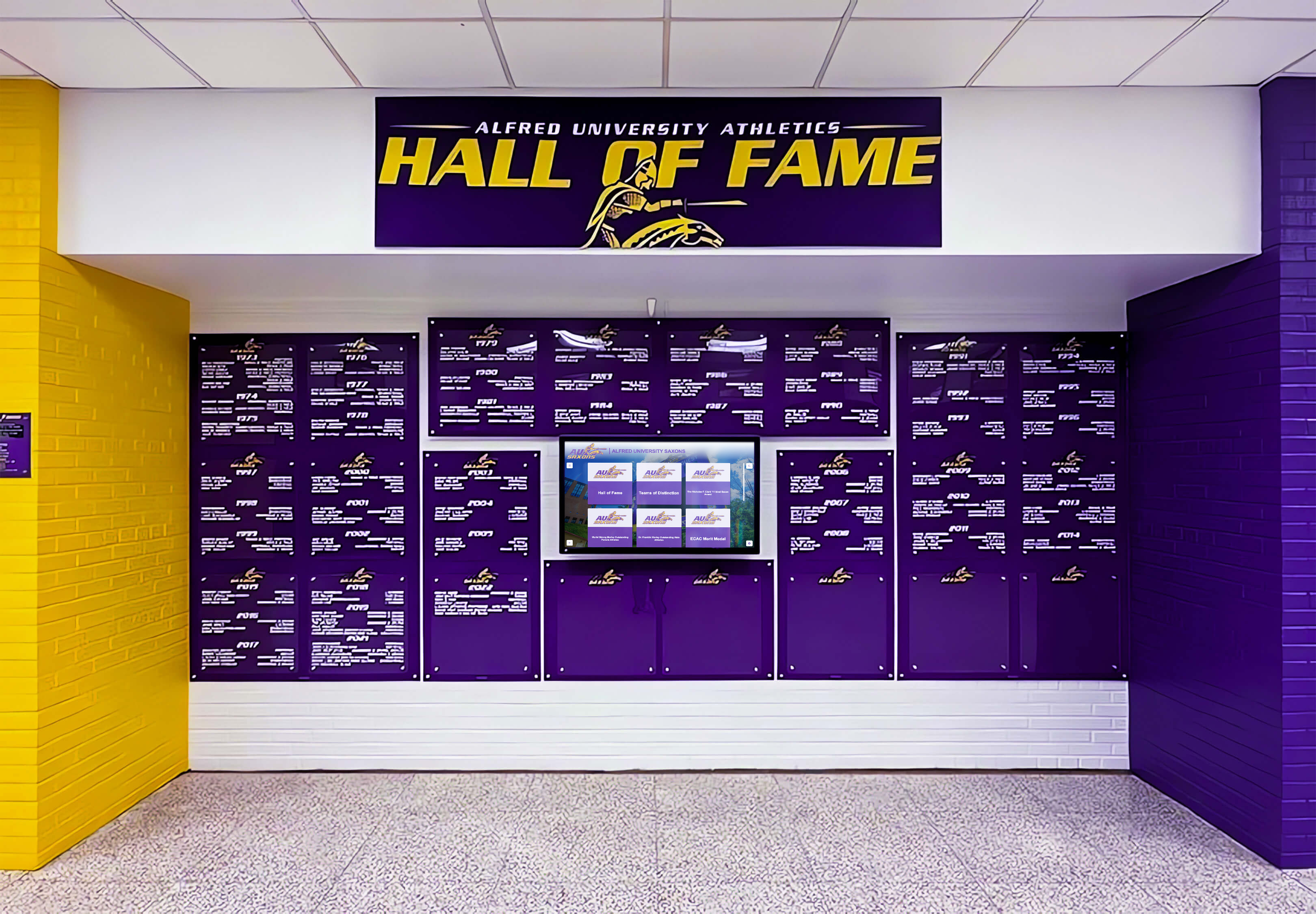
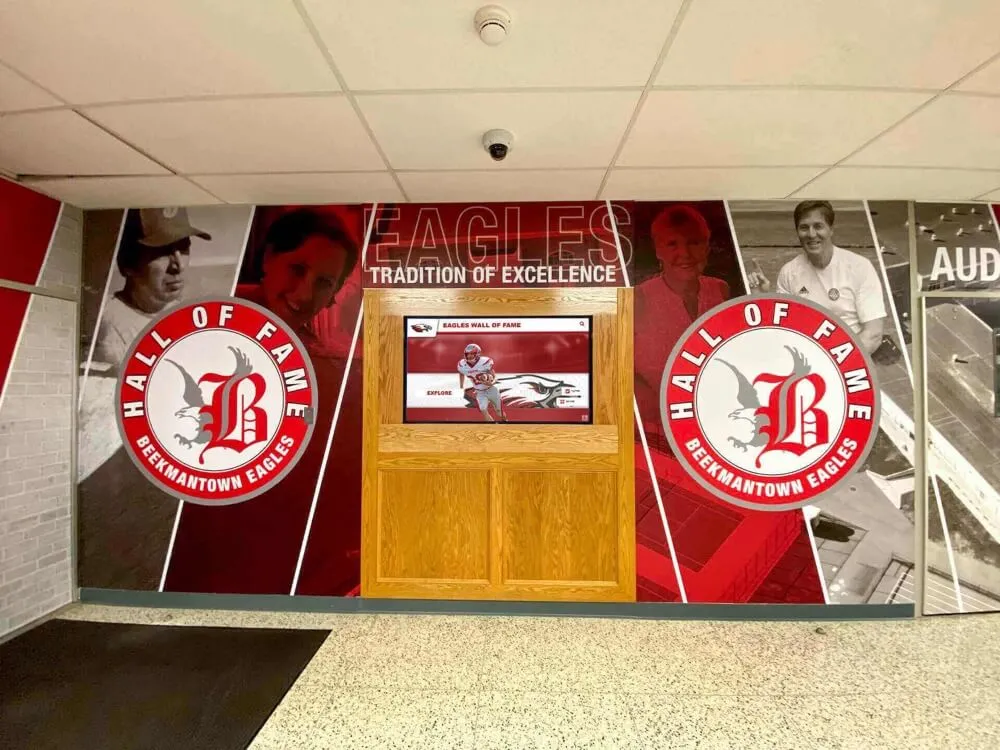
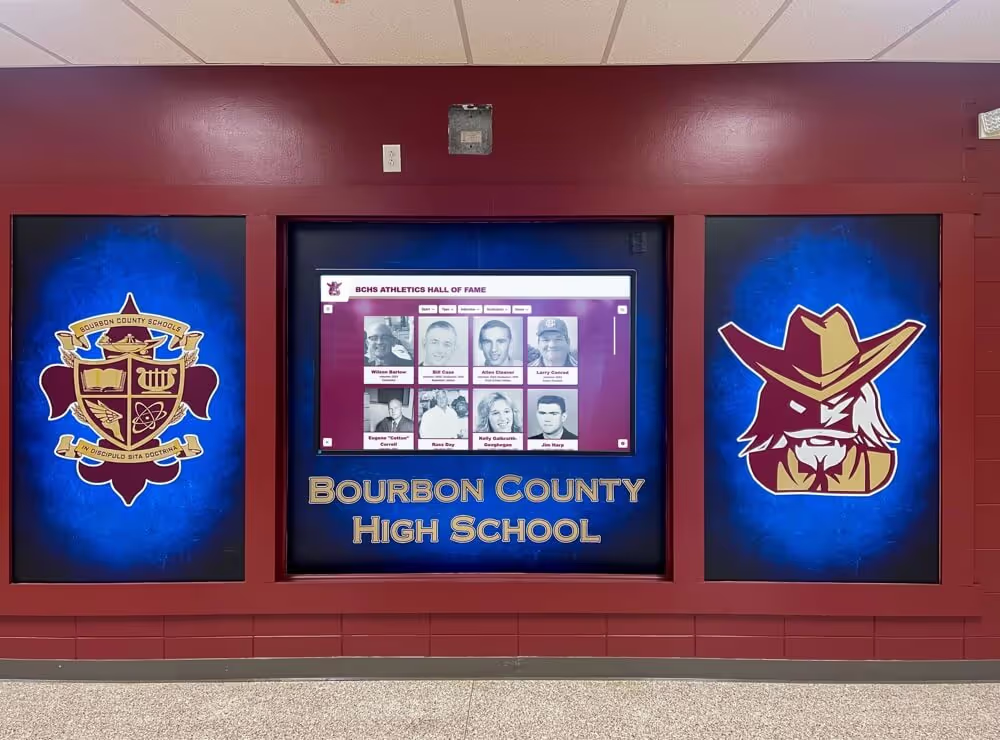
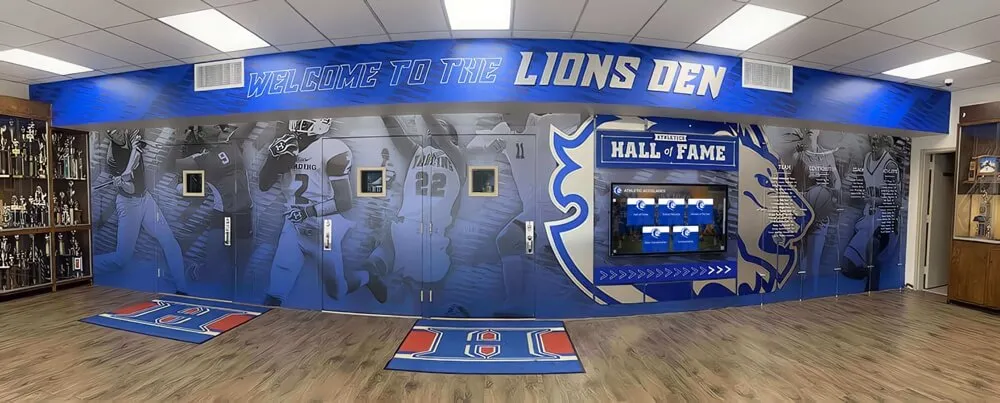
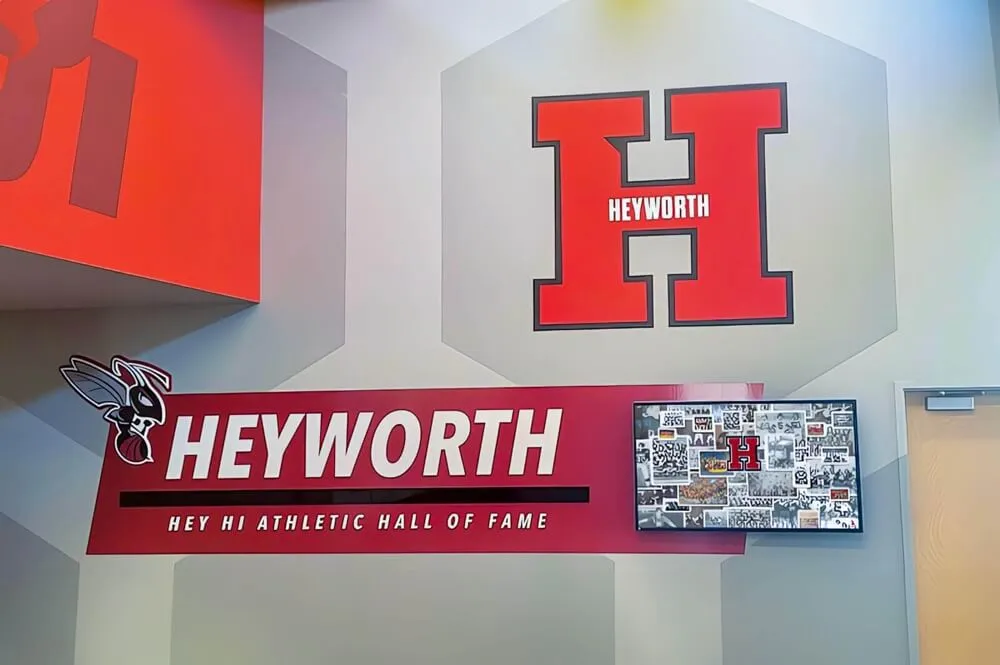
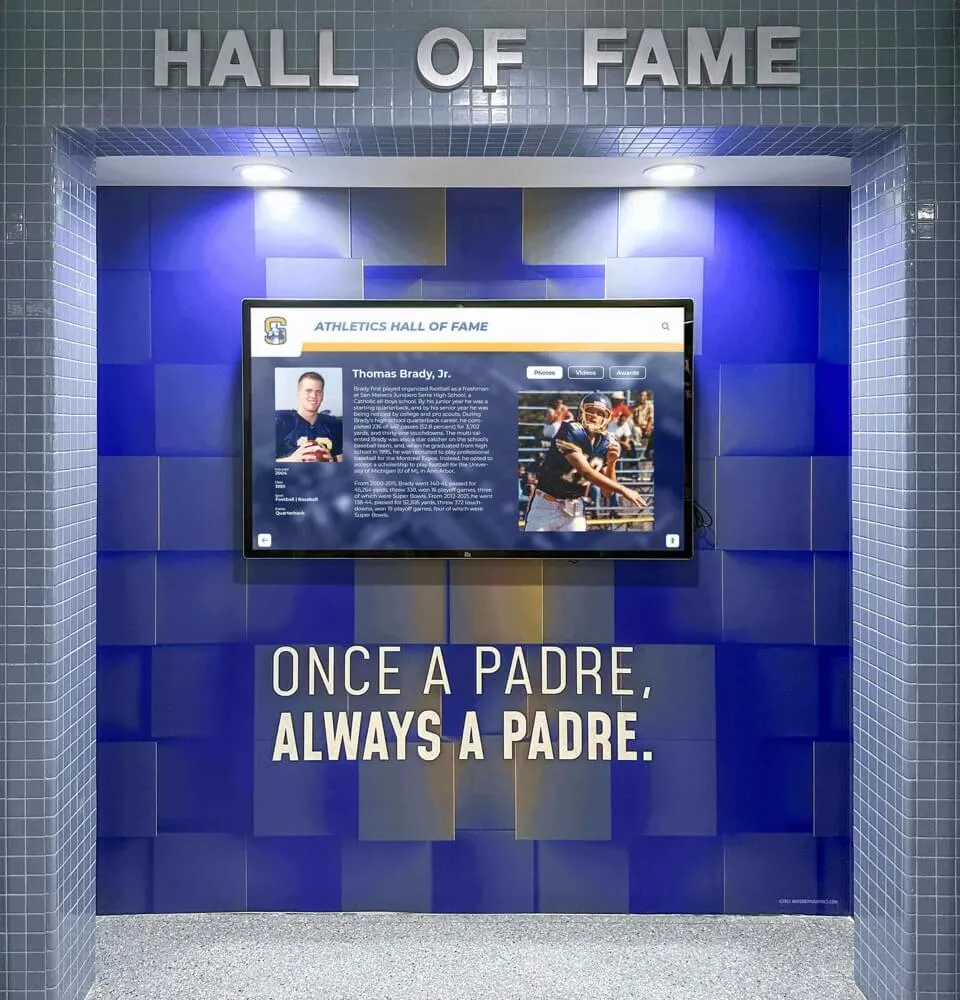
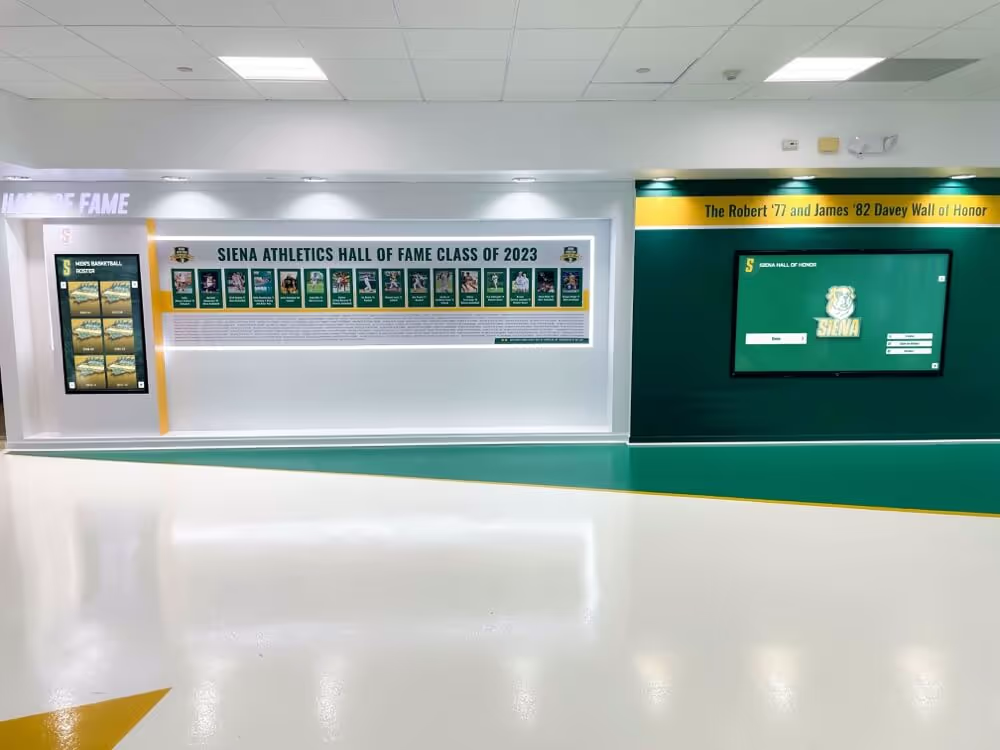
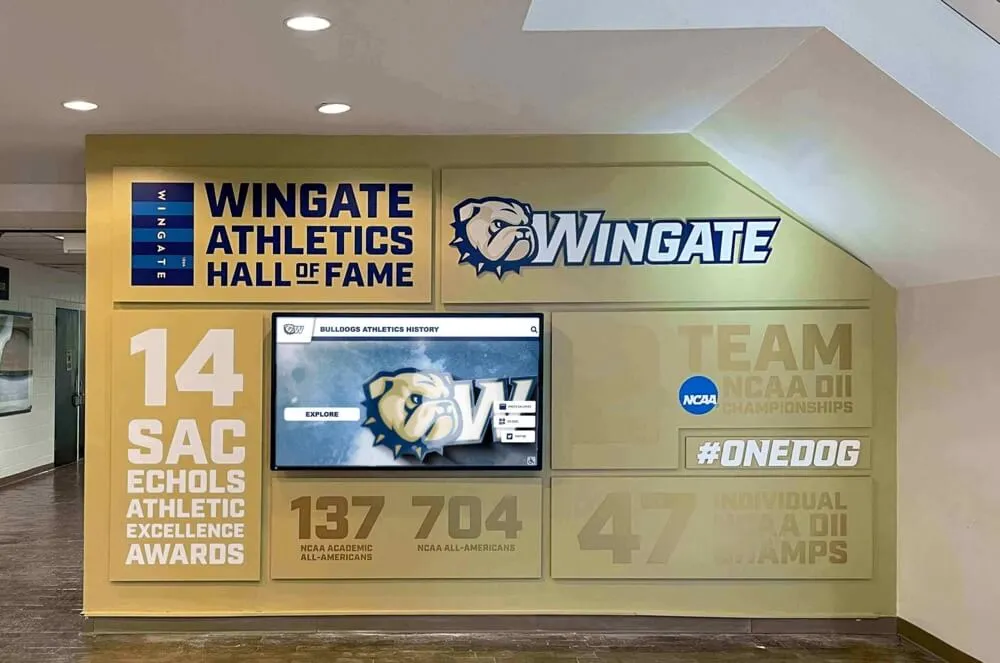
Athletics Hall of Fame displays in school colors create powerful visual backdrops for letter ceremonies—athletes see their recognition in the context of program history stretching back decades
Making the Venue and Atmosphere Work
The physical environment of an athletic letter ceremony communicates how seriously the school takes the recognition. A ceremony held in an under-decorated cafeteria with folding chairs and fluorescent lighting sends a different message than one held in a space that’s been thoughtfully prepared.
Venue selection: The best venues for athletic letter ceremonies combine capacity with atmosphere. School gymnasiums and performing arts centers both work well. Community venues—hotel ballrooms, country club dining rooms, banquet halls—create a sense of occasion that school facilities sometimes struggle to match. The right choice depends on your program’s scale, budget, and culture.
Decorating the space: Use school colors consistently—table linens, balloon arrangements, centerpieces, and backdrop displays should be coherent. A display of current trophy cases, historic team photos, and current letterwinners creates a visual connection between the evening’s recognition and the program’s history. Replacing generic banner backdrops is addressed in the digital alternative to expensive gym banners guide—an option worth exploring for schools with digital display infrastructure already in place.
Program booklets: A printed or digital program booklet listing all letterwinners, special award recipients, and a message from the athletic director gives the evening a permanent document. Athletes and families reference these booklets for years. The investment in professional design pays dividends in how the ceremony is perceived.
Music and atmosphere: Select music carefully. Pre-show music as guests arrive, brief musical interludes between sport recognitions, and a closing number all contribute to the evening’s energy. Many schools recruit student musicians or a school ensemble to perform, which integrates the event into the broader school community.
Digital Recognition Elements That Elevate the Ceremony
Technology, used well, adds dimensions to an athletic letter ceremony that traditional formats can’t achieve. The key is integration: digital elements should enhance the ceremony’s emotional texture, not replace its human moments.
Pre-ceremony digital displays: Set up touchscreen displays in the lobby or reception area showing each letterwinner’s name, sport, and photo as guests arrive. Athletes and families gravitate toward these displays naturally—they create positive buzz before the formal program begins and give athletes their first visible recognition of the evening.
Video tributes: Produced video tributes for each sport—compilations of game footage, practice moments, and team photos set to music—create the most emotionally resonant moments in a well-run athletic letter ceremony. The production doesn’t need to be professional-grade. A student-produced video using smartphone footage and free editing software can still move a room full of parents and athletes.
Athlete profile slides: For each athlete called forward, display a profile slide on screen showing their photo, sport, years lettered, and a single-sentence accomplishment. This keeps the audience engaged during the presentation sequence and provides a visual anchor for each name called.
Live social wall: Display social media posts from athletes and families using a designated event hashtag on a screen during the pre-ceremony reception. This creates immediate community energy and involves digital-native students in a format that feels natural to them.
QR code recognition: Include a QR code in the program that links to an online recognition page where athlete profiles, full season statistics, and highlight content are available after the event. This bridges the ceremony to a permanent digital record and gives athletes something shareable immediately.
For a complete look at how schools are using technology to enhance recognition events, the online awards display comprehensive guide covers the range of digital options from simple websites to full touchscreen installations.
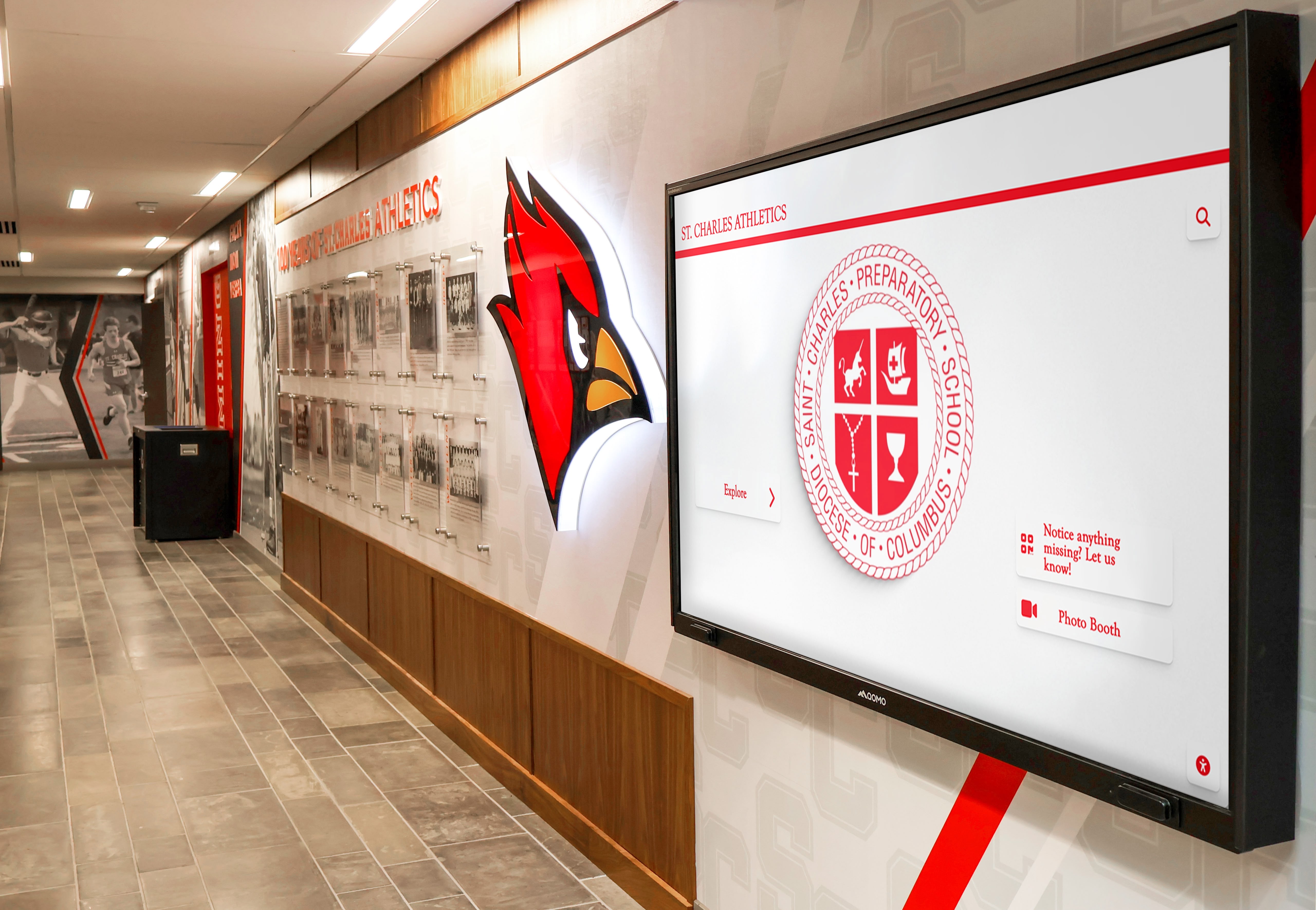
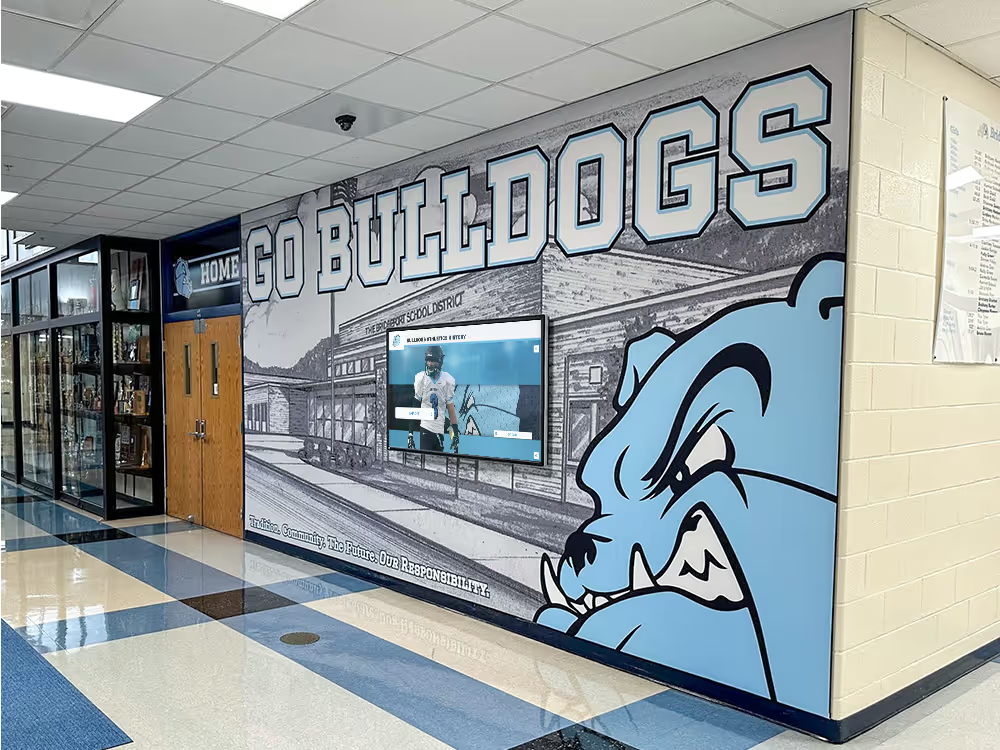
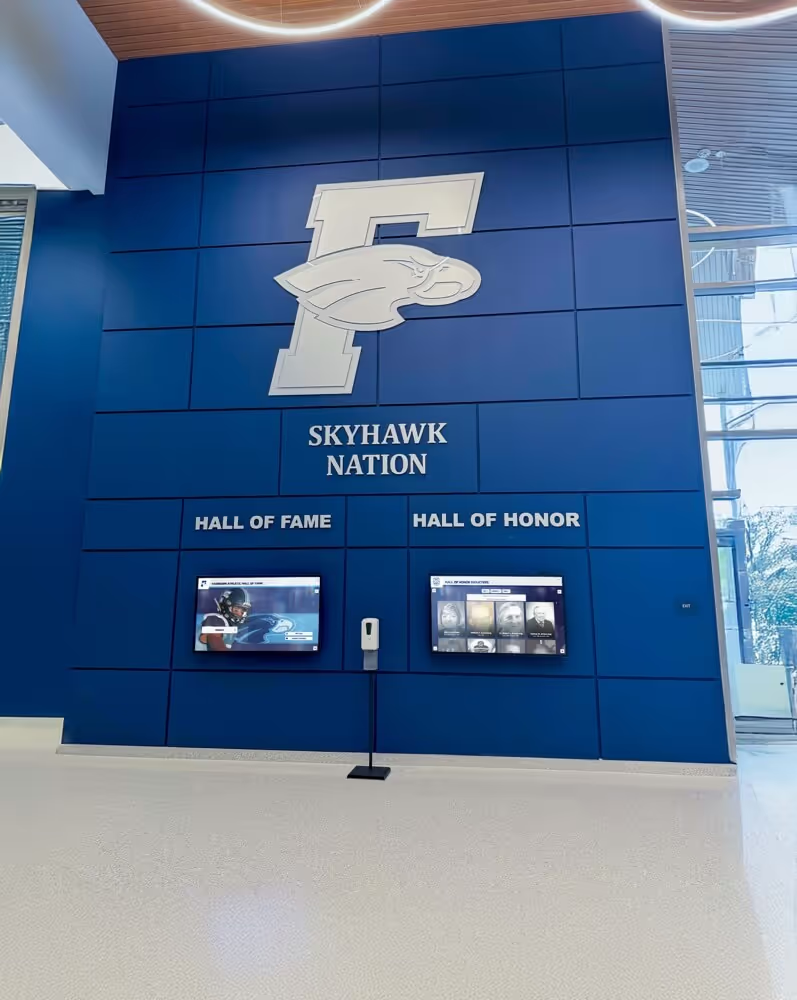
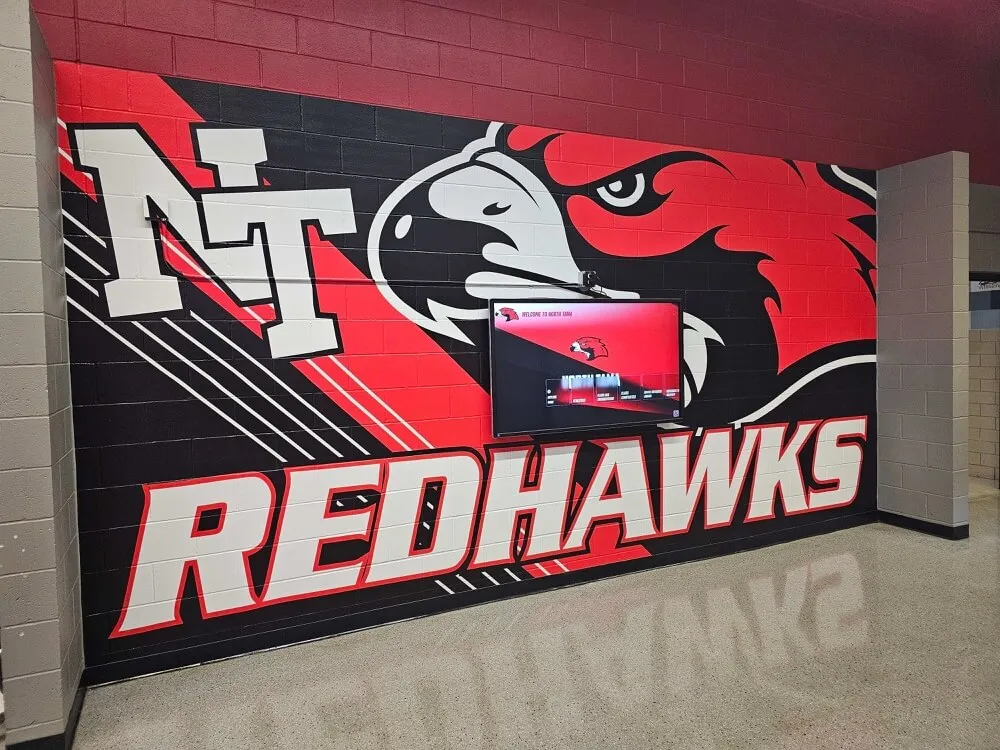
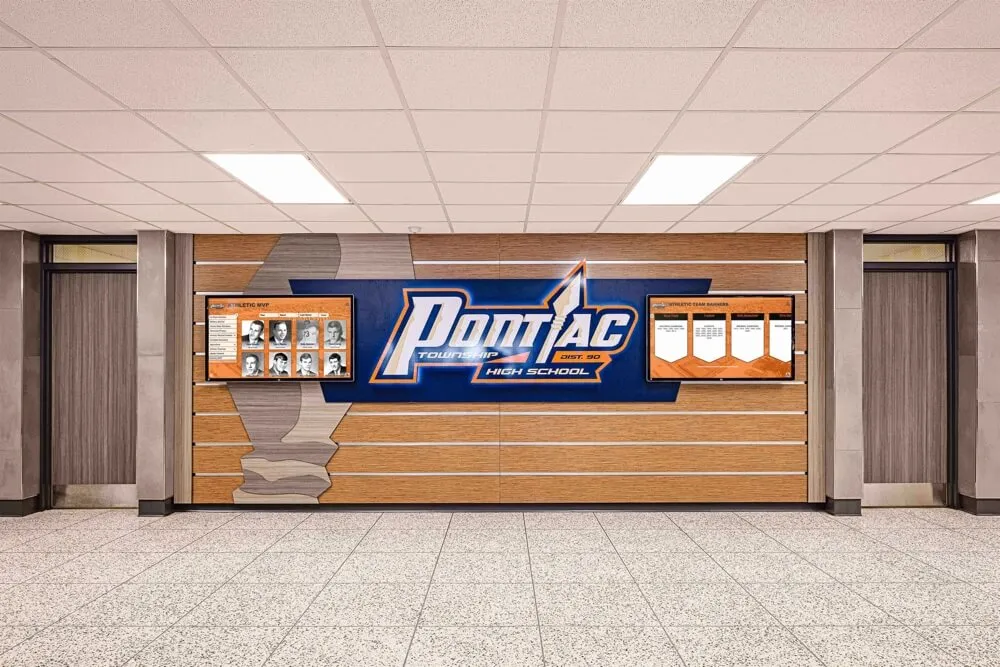
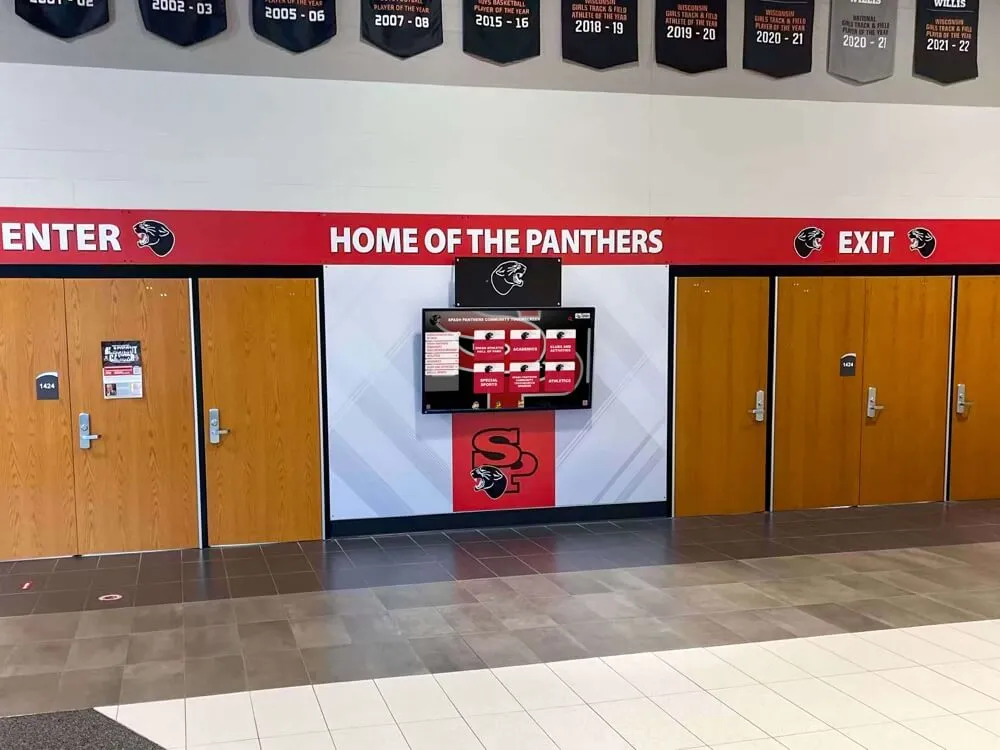
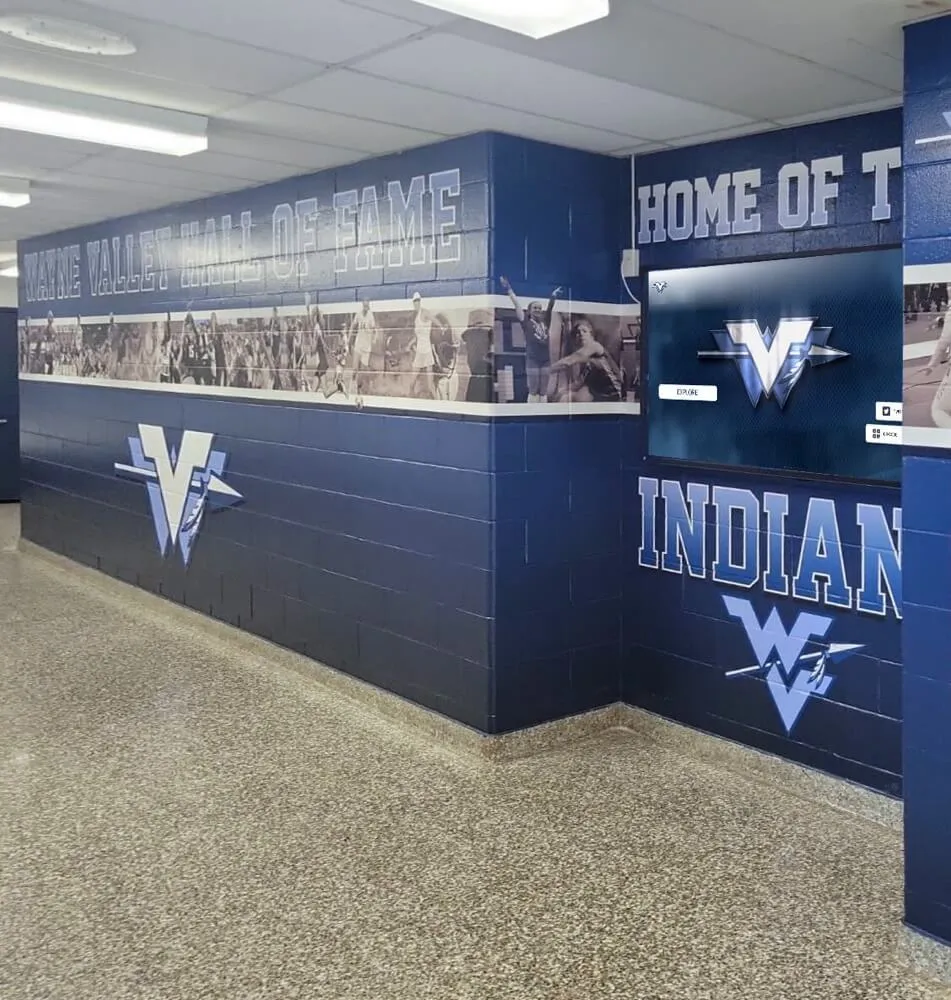
Athletic hallways with integrated digital displays create permanent recognition environments—letterwinner names and achievements become part of the school's physical identity, visible to students and visitors every day
Connecting the Letter Ceremony to Hall of Fame Recognition
The athletic letter ceremony and the school’s athletic hall of fame represent two ends of the recognition spectrum. The letter ceremony recognizes current achievement; the hall of fame honors legacy achievement. Schools with strong recognition cultures connect these two moments explicitly.
One approach: at each year’s letter ceremony, announce the most recent hall of fame inductees and display their profiles alongside current letterwinners. This makes visible to current athletes what the long arc of program participation looks like—that the recognition they’re receiving tonight connects to a tradition that predates them and will outlast their time at the school. For schools establishing or refining their hall of fame criteria, the hall of fame induction criteria and digital displays guide provides a framework.
Another connection point: at the letter ceremony, present current senior athletes with information about how they can eventually be considered for hall of fame recognition—the eligibility criteria, the nomination process, and the permanent recognition they would receive. Many senior athletes don’t know that their high school achievement could eventually be commemorated beyond a single evening.
Planning the Letter Ceremony for College-Committed Athletes
Senior athletes who have committed to playing at the collegiate level deserve a distinct recognition moment within the athletic letter ceremony—a bridge between their high school achievement and their next chapter. The signing day and letter of intent ceremony covers the full formal commitment ceremony format. But even within a letter ceremony, college-committed athletes can be called forward in a brief spotlight that names their destination school—a natural moment of community pride that honors both the athlete and the college or university they’ll represent.
Permanent Recognition That Extends Beyond the Ceremony Night
The most forward-thinking approach to the athletic letter ceremony treats the event not as an endpoint but as the launch of permanent recognition. Athletes who earn a varsity letter deserve to have that achievement documented somewhere beyond their own jacket—somewhere visible to future students, recruiting coaches, and community members who weren’t in the room the night the letter was presented.
Permanent recognition options include:
Physical letterwinners displays: Boards or plaques in the athletic facility that list letterwinners by sport and year, updated annually as new classes earn their letters. These create a physical record that current athletes interact with daily.
Digital letterwinners databases: Online platforms that allow schools to maintain searchable records of all lettermen and -women, searchable by sport, graduation year, or name. These databases become particularly valuable for alumni engagement as classes age and athletes want to reconnect with their program history.
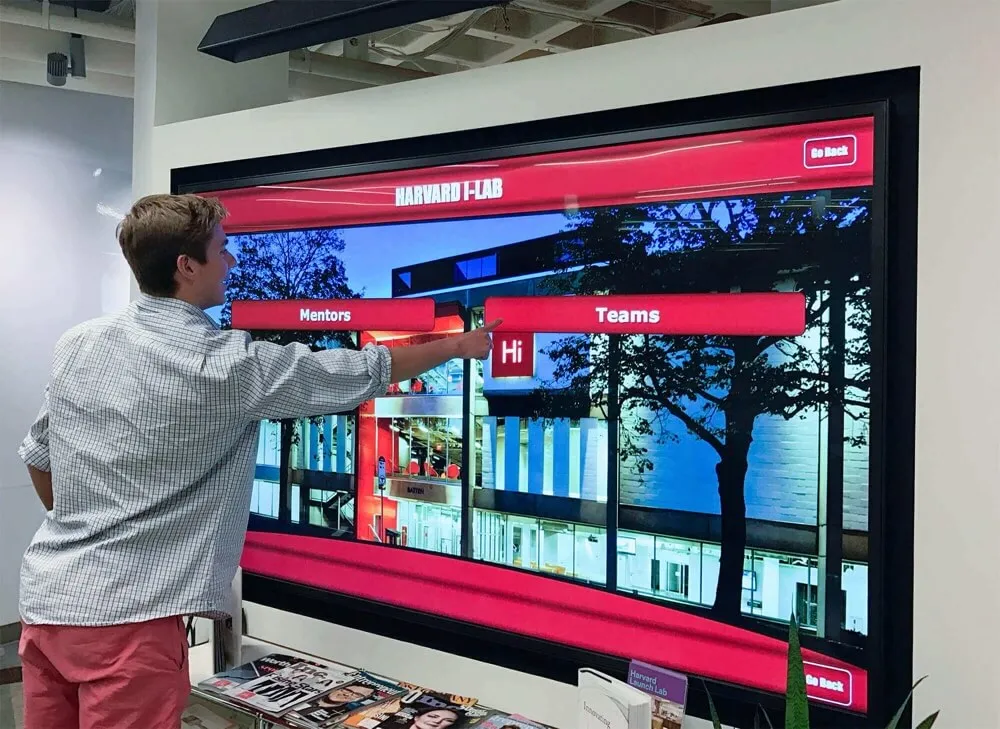
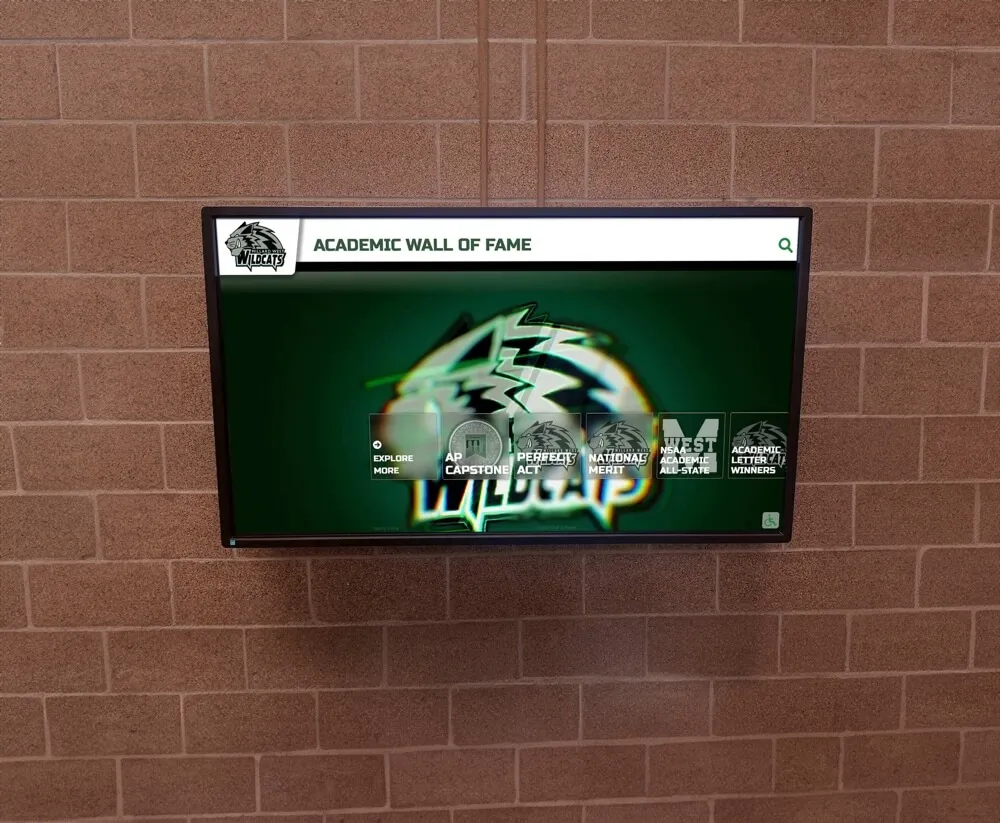
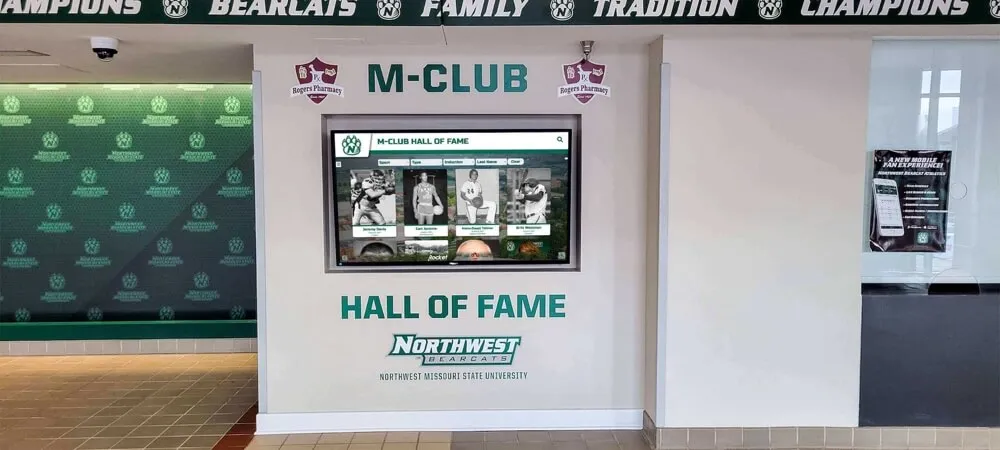
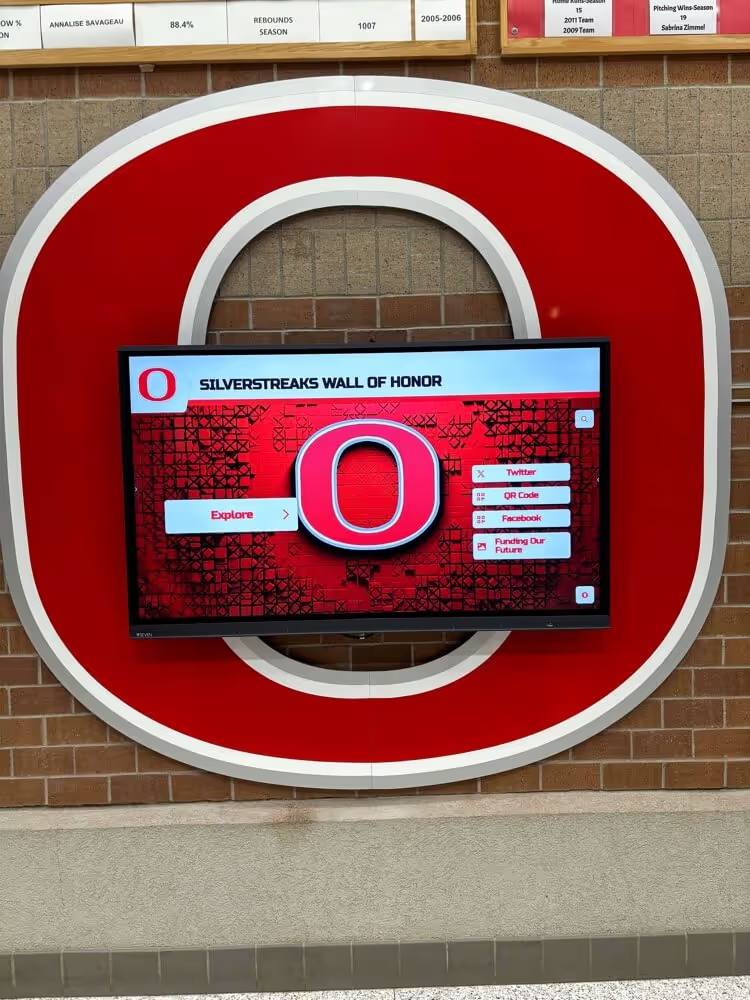
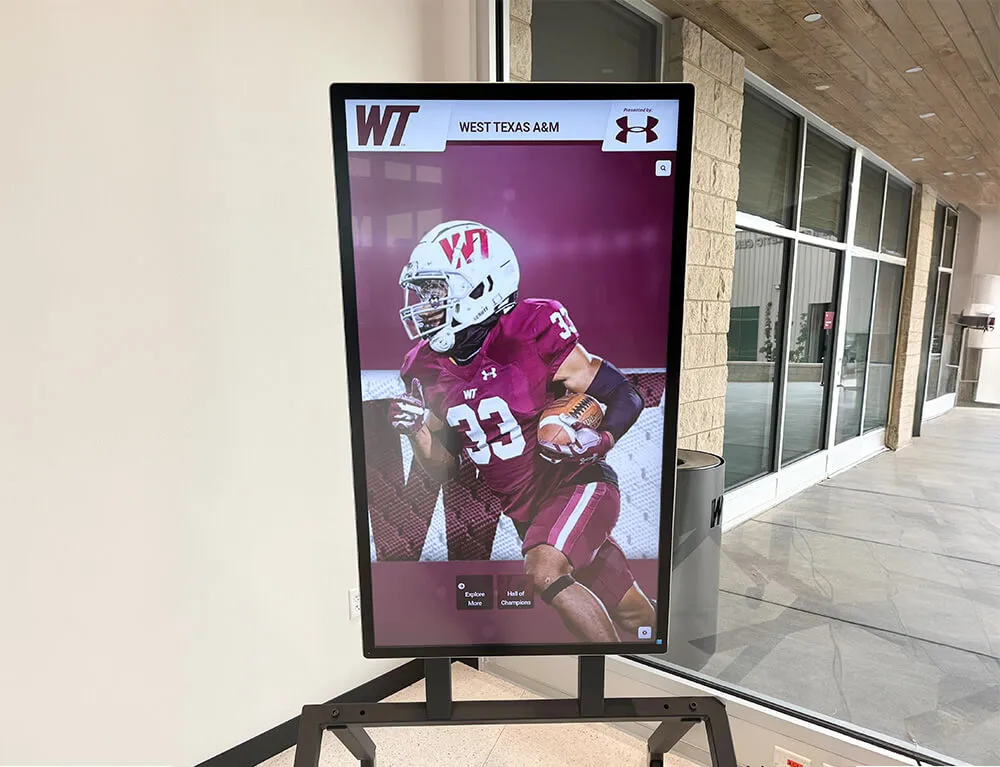
Touchscreen recognition displays: Interactive touchscreen walls that allow visitors to browse athlete profiles, view career statistics, watch highlight footage, and explore the history of the athletic program. These represent the highest-engagement form of permanent recognition because they invite interaction rather than passive viewing. The interactive touchscreen displays for school recognition storytelling resource covers how schools are implementing these platforms across athletic facilities, lobbies, and alumni spaces.
Digital signage integration: Schools with existing digital signage infrastructure can use those screens to rotate letterwinner recognition content throughout the year—keeping the achievement visible in hallways, gyms, and common areas rather than limiting it to a single ceremony night.
The case for permanent recognition is straightforward: an athletic letter ceremony that lasts three hours does real work. A permanent recognition display that’s visible 200 days a year does exponentially more.
Rocket Alumni Solutions builds the touchscreen platforms and digital recognition infrastructure that connect ceremony recognition to permanent display—giving schools a system where athlete profiles created for the letter ceremony become part of a lasting database that coaches, athletes, and families can access year-round.
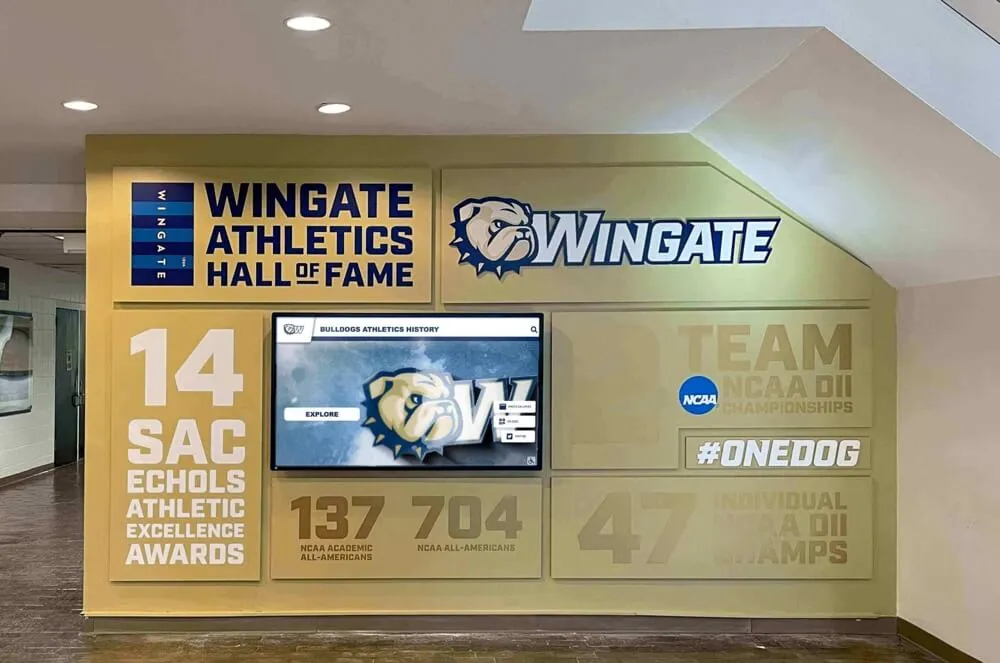
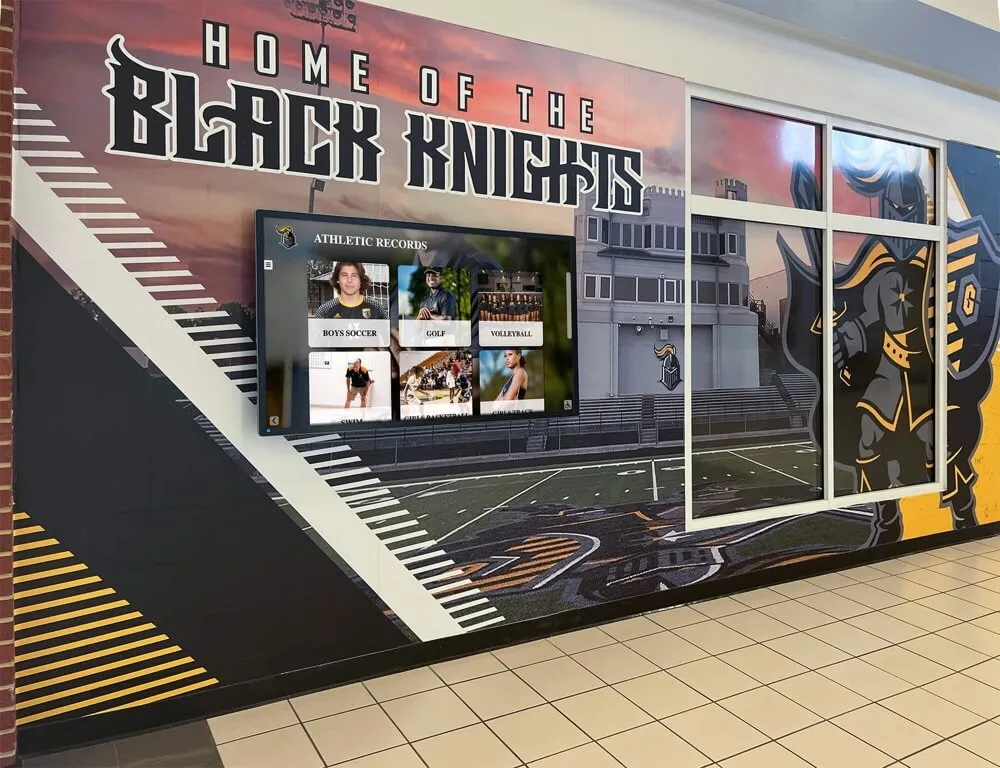
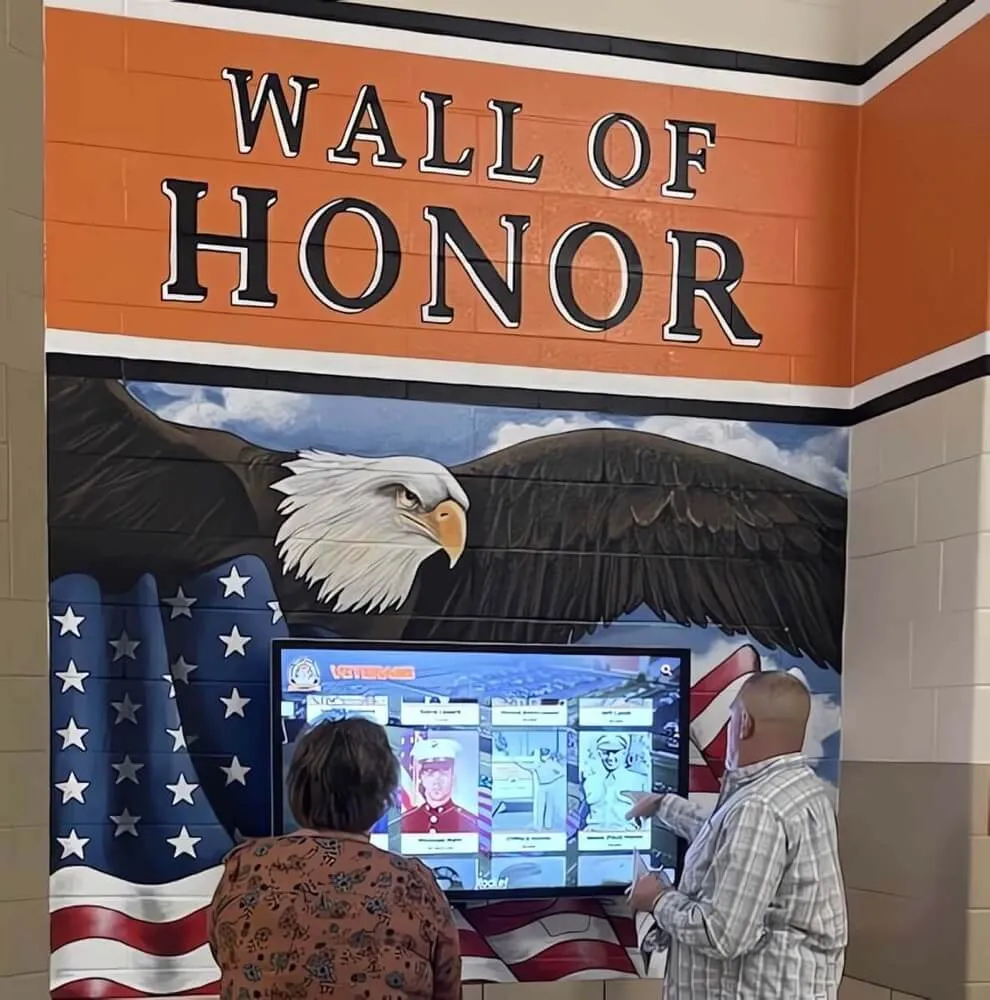
Permanent athletic recognition displays bridge the gap between the letter ceremony moment and lasting program legacy—athletes become part of an institutional record that outlives any single season
Timeline and Logistics for Planning Your Athletic Letter Ceremony
Producing a meaningful ceremony requires more lead time than most programs allocate. This timeline works for an all-sports banquet or standalone letter ceremony:
8–10 weeks before: Confirm venue, set budget, determine ceremony format and program structure. Begin coordinating with individual coaches on letterwinner lists, award selections, and sport-specific recognition content.
6–8 weeks before: Collect athlete photos for digital displays and program booklet. Begin video content production if using highlight reels. Order awards, trophies, and plaques (lead time for engraved items is often 3–4 weeks).
4–6 weeks before: Send formal invitations or announcements to athletes and families. Finalize catering if applicable. Begin rehearsing ceremony flow with coaches.
2–4 weeks before: Complete program booklet design and send to print. Finalize all award selections and recipient lists. Confirm technology setup—screens, projectors, microphones, and any touchscreen displays.
1–2 weeks before: Conduct full run-through of ceremony flow. Load all digital content onto display systems and test. Distribute final participant information to coaches.
Day of: Set up venue 2–3 hours before start time. Test all technology. Brief presenting coaches and officials on timing and script. Stage awards for efficient distribution during the ceremony.
The consistent failure point in athletic letter ceremony planning is the award preparation timeline. Engraved trophies, custom plaques, and personalized items that need to be physically present the night of the event require more lead time than organizers typically expect. Build the order buffer into your planning calendar.
After the Ceremony: Sustaining Recognition Through the Off-Season
The work of recognition doesn’t end when the ceremony closes. The schools that build the strongest athletic cultures treat the letter ceremony as the beginning of a recognition cycle, not its conclusion:
Photo documentation and distribution: Assign someone—a professional photographer, a parent volunteer with a good camera, or a student media team—to photograph the ceremony, especially the letter presentation moments. Distribute high-resolution images to athletes and families within two weeks of the event.
Update digital displays and databases: Any permanent recognition platforms should be updated with new letterwinner profiles within the weeks following the ceremony, while the season’s content is fresh and athletes are still engaged with the program.
Social media recognition: Post athlete spotlights on school social media channels in the days following the ceremony, extending recognition to the broader community and giving athletes content worth sharing.
Outreach to letterwinner alumni: Use the ceremony as an opportunity to update contact information for recent graduates and reach out to multi-year letterwinners who may be candidates for alumni engagement programs or eventual hall of fame consideration.
The most successful programs treat the athletic letter ceremony as the capstone of the year’s recognition programming—connected forward to permanent displays and backward to the ongoing work of documenting achievement throughout the season. That integration is what separates a ceremony from a celebration, and a celebration from a genuine institutional tradition.
Conclusion: Building an Athletic Letter Ceremony Worth Remembering
The athletic letter ceremony earns its place in a school’s calendar when it does what recognition is supposed to do: make an athlete feel that what they accomplished is seen, valued, and documented. That means choosing a format appropriate to your scale, building a program structure that allows for genuine personalization, incorporating digital elements that extend the experience beyond the room, and connecting the evening to permanent recognition that outlasts any single season.
The specific ideas—the coach’s personal note, the sport-by-sport highlight reel, the parent co-presentation, the touchscreen athlete profile display—are tools. The goal is an athlete who walks out of that gymnasium, banquet hall, or performing arts center understanding that what they did this year actually mattered to the institution they competed for.
Give Your Letterwinners Permanent Recognition Beyond the Ceremony Night
Explore how interactive touchscreen displays and digital athlete recognition platforms can transform your athletic letter ceremony into the start of lasting institutional documentation—searchable letterwinner databases, athlete profiles, highlight archives, and display systems that keep recognition visible 365 days a year.
Explore Digital Letterwinner Recognition Platforms