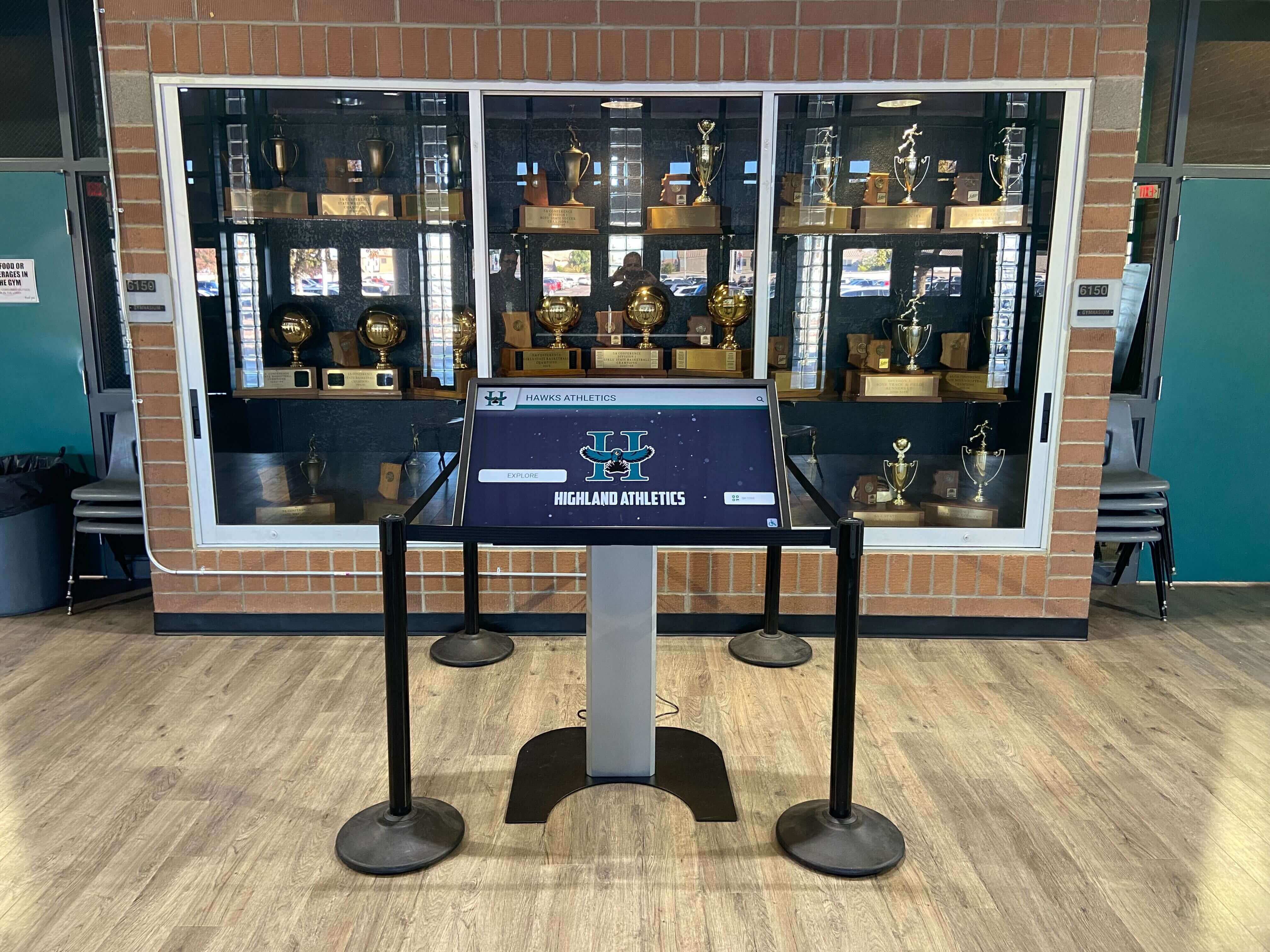




An athletic alumni day done right transforms a date on the calendar into a moment that former athletes plan their schedules around for months. It is the day a former point guard walks the same hallway she ran through before every playoff game, the day a retired lineman stands next to the jersey number he wore for four years, now framed on the wall above the trophy cases. These are not sentimental extras—they are the most powerful alumni engagement events an athletic program can run, and the institutions that treat them seriously build loyalty that translates directly into mentorship, donations, and program culture for decades.
This guide covers the full range of athletic alumni day programming: hall of fame inductions, jersey retirement ceremonies, alumni scrimmages, digital display reveals, mentorship panels, facility tours, and fundraising integration. Whether you are planning your first formal return event or overhauling a stale format, you will find specific, actionable ideas organized around what actually works.
Bringing former athletes back requires more than sending a mass email. It requires a day designed around their experience—one that honors their legacy, connects them to the current program, and gives them a reason to make the trip every single year.

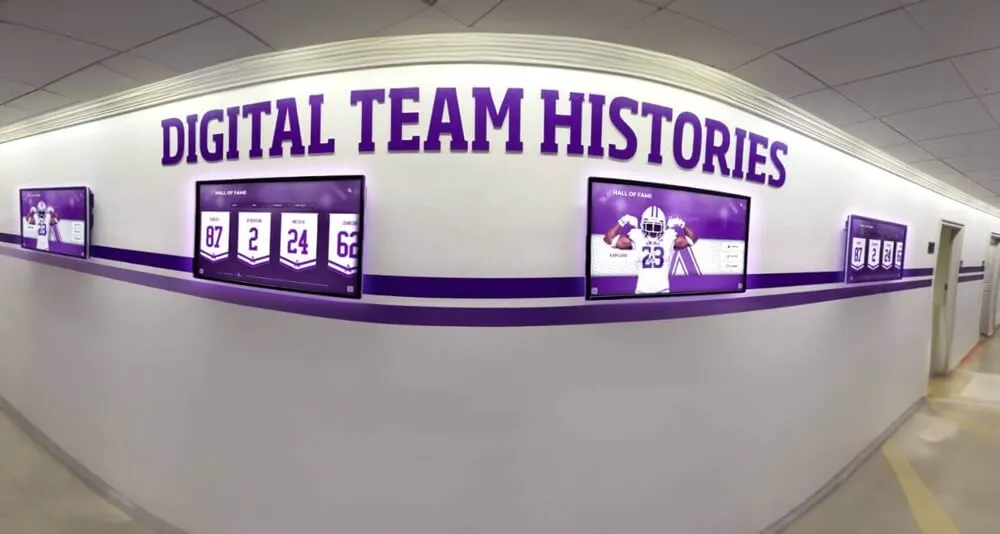
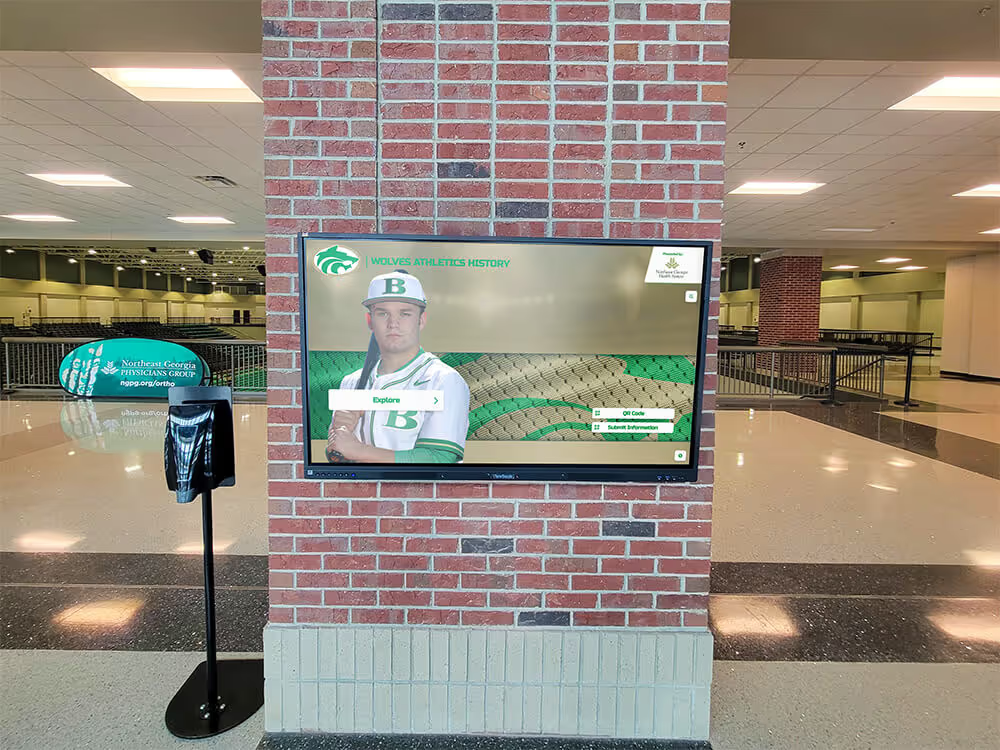
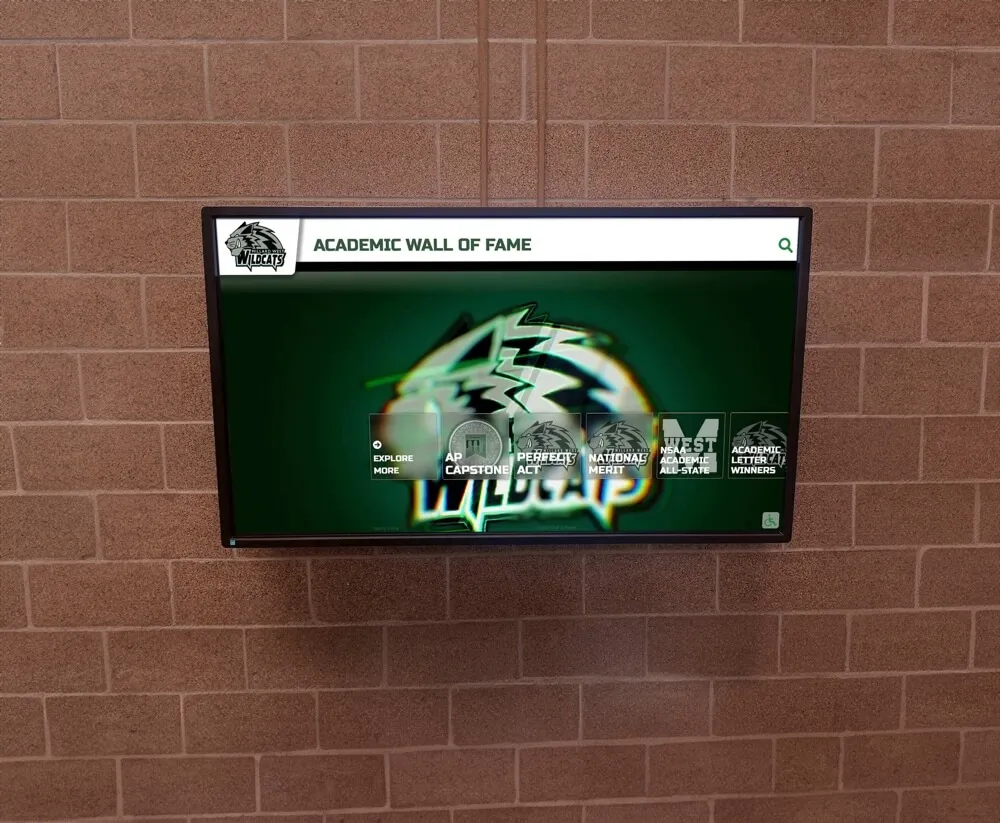
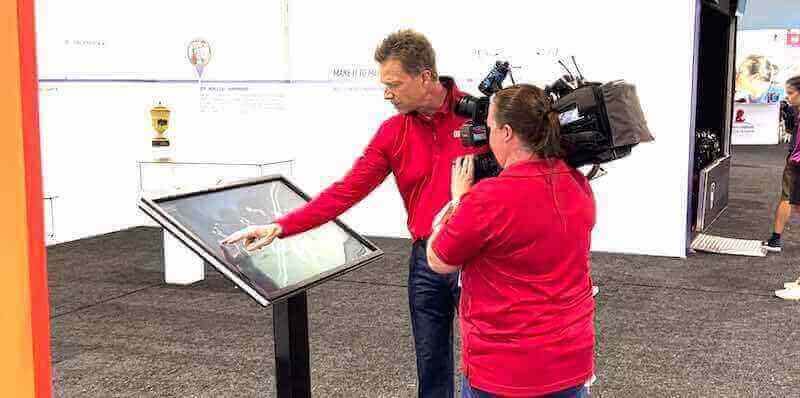
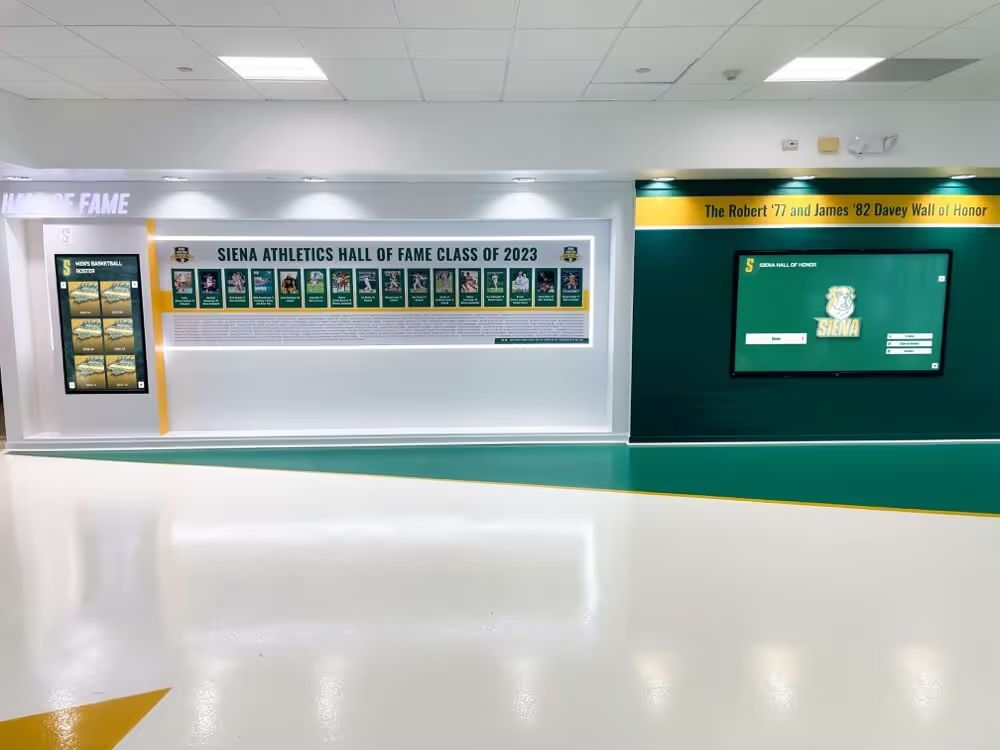
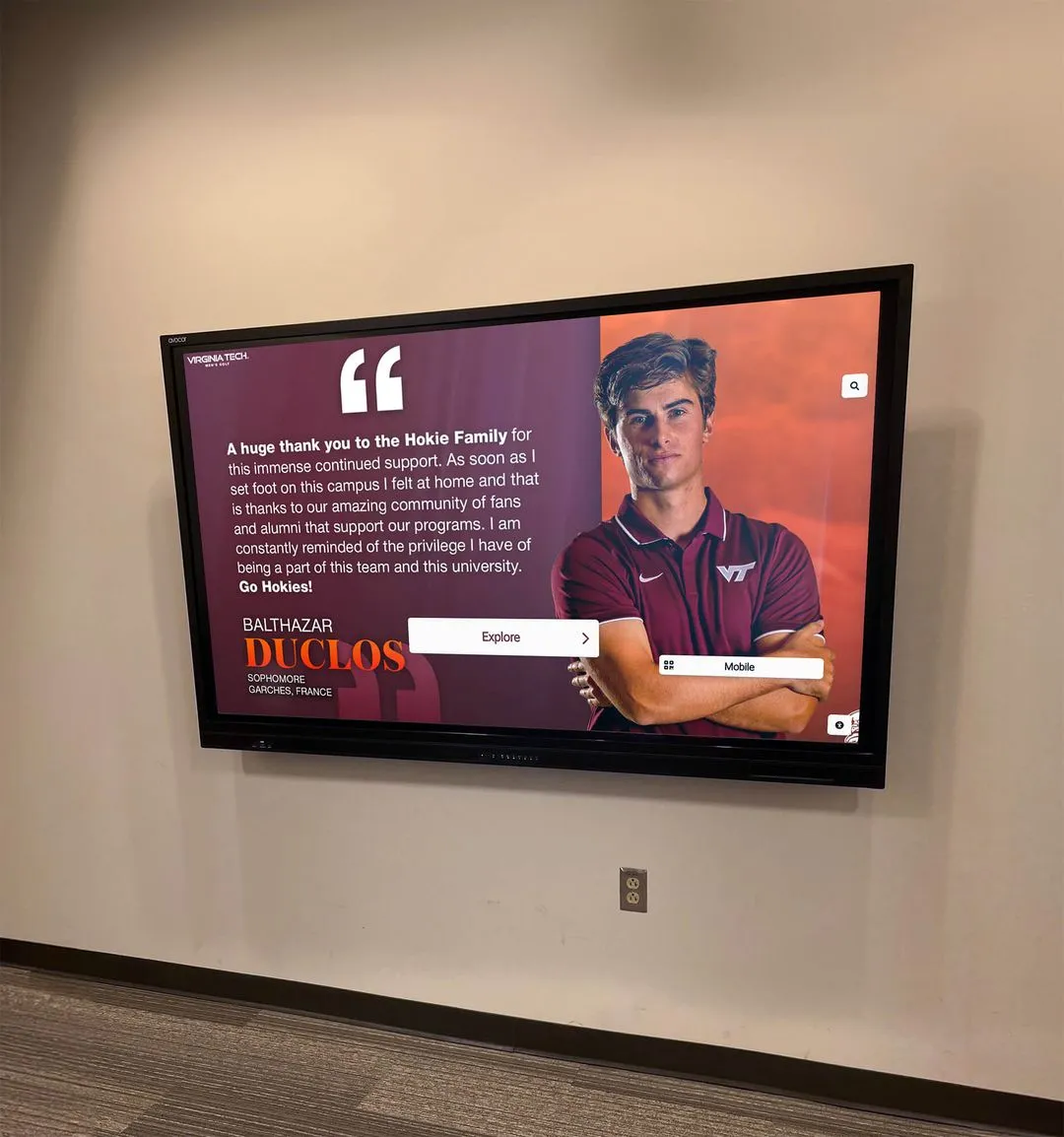
Recognition spaces that blend physical trophies with interactive digital content give returning alumni a destination that rewards exploration—every visit reveals more about the program they helped build
Why Athletic Alumni Day Deserves Serious Investment
Athletic alumni are among the most emotionally attached graduates any institution has. They competed, sacrificed, and identified with a team and a school in ways that most alumni never experience. That attachment is a renewable resource—but only when it is actively tended. When programs fail to create meaningful opportunities for former athletes to reconnect, that attachment quietly fades.
A well-executed athletic alumni day delivers several simultaneous returns:
- Reactivates former athletes who have drifted since graduation
- Generates genuine excitement and energy around the current program
- Creates visible connections between program history and present-day rosters
- Provides a natural environment for major donor conversations
- Produces compelling photo and video content for social and recruitment channels
- Surfaces mentors, volunteers, and booster board candidates
For comprehensive frameworks on structuring the full spectrum of alumni return events, the guide on alumni event ideas and 100 creative gathering formats offers planning structures that translate directly into athletic contexts.
Building the Event Framework
Before selecting specific programming elements, get the structural decisions right. The best athletic alumni days share a few foundational characteristics: a clear narrative arc, well-paced transitions between activities, and programming that serves alumni across different decades and available time windows.
Date and Timing
Anchor athletic alumni day to an existing home game—ideally a rivalry contest or a marquee matchup that would draw good attendance on its own. This strategy reduces the activation burden substantially: former athletes already inclined to attend the game become natural alumni day participants. You are enhancing something they were already likely to do rather than asking for a separate trip.
Programs without a single dominant sport can build athletic alumni day around a multi-sport Saturday with multiple home contests scheduled across the afternoon. A former swimmer and a former basketball player rarely share team identity; giving each group a relevant game on the same day dramatically expands reach across graduation eras.
Invitation Strategy
Athletic alumni respond to personal outreach with a specificity that mass email cannot replicate:
Outreach from coaches: A short video from the current head coach, or a personal email from the coach who recruited a given alumnus, will consistently outperform institutional communications. Former athletes remember their coaches viscerally—hearing from them directly cuts through inbox noise.
Peer activation via former captains: Identify well-connected former captains and team leaders and ask them personally to invite their teammates. Word-of-mouth from a former teammate carries far more credibility than any official invitation.
Preview the recognition: If you are inducting alumni into the hall of fame or retiring a jersey, let honorees know well in advance and encourage them to invite family and former teammates. A returning inductee often brings twelve people; those twelve people all leave having experienced a meaningful event.
Tiered cadence: Send a save-the-date 10–12 weeks out, a formal invitation with programming details 6–8 weeks out, and a logistics reminder with schedules and parking information 2 weeks before the event.
Event Schedule Architecture
A full athletic alumni day typically runs six to eight hours. A useful template:
| Time Block | Programming | Purpose |
|---|---|---|
| 10:00–11:30 a.m. | Arrival, registration, informal networking | Reconnection with teammates and staff |
| 11:30 a.m.–12:30 p.m. | Formal ceremony: HOF inductions, jersey retirements | Recognition and honor |
| 12:30–2:00 p.m. | Lunch and structured alumni-coach conversations | Relationship building |
| 2:00–3:00 p.m. | Alumni scrimmage or skills showcase | Physical reconnection with sport |
| 3:00–4:00 p.m. | Facility tours and digital display reveals | Legacy visibility |
| 4:00–7:00 p.m. | Varsity game with reserved alumni seating | Shared experience with current program |
| 7:00–9:00 p.m. | Post-game reception | Social continuation, donor conversations |
Smaller programs can compress this into a four-hour afternoon block. The principle that matters is sequencing: honor first, connect second, share an experience third. Programs that front-load the fundraising ask and back-load the recognition almost always underperform on both.
Hall of Fame Inductions
For most programs, the hall of fame induction ceremony is the centerpiece of athletic alumni day—the formal moment that elevates a gathering into a meaningful institutional occasion.
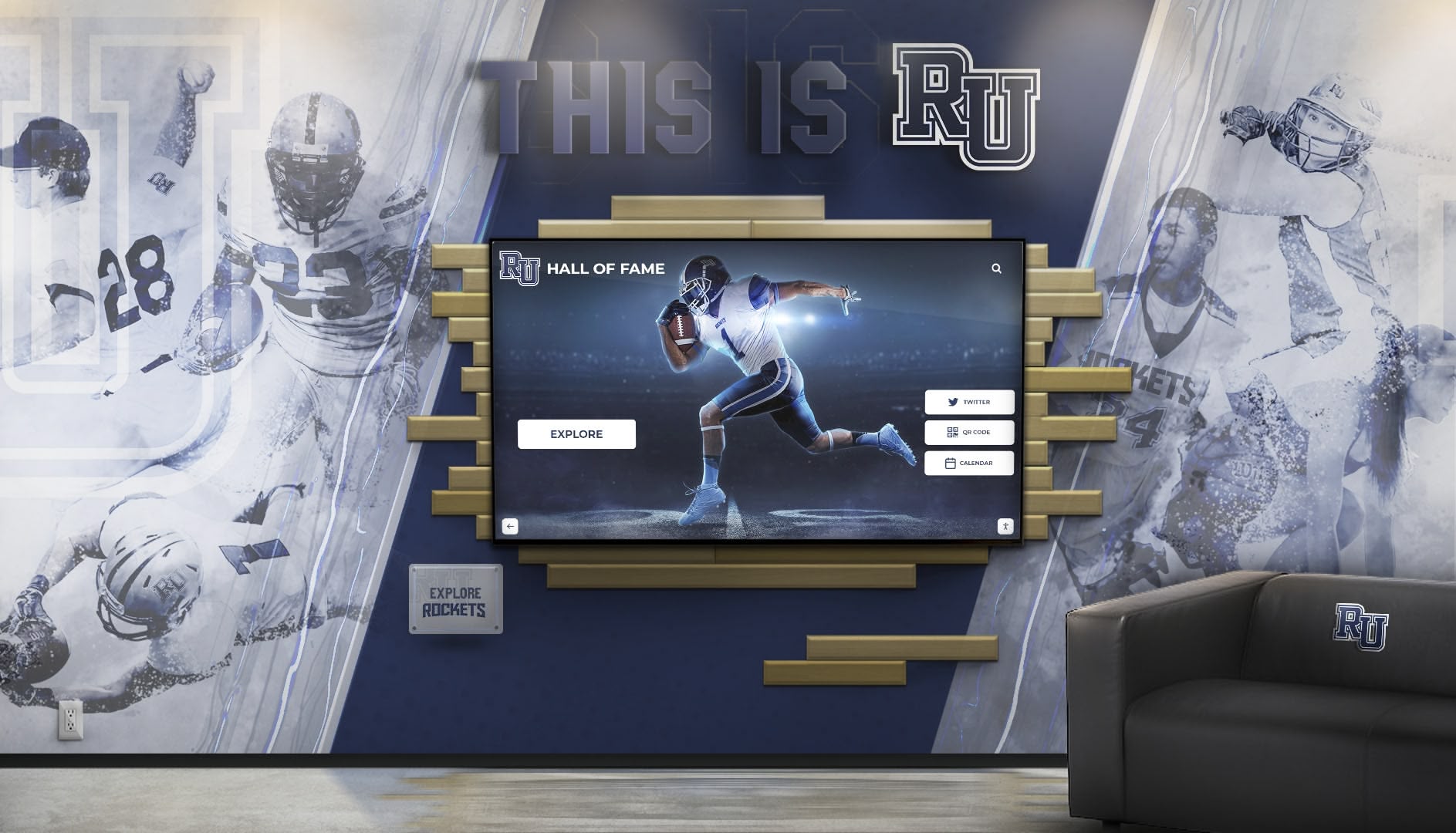
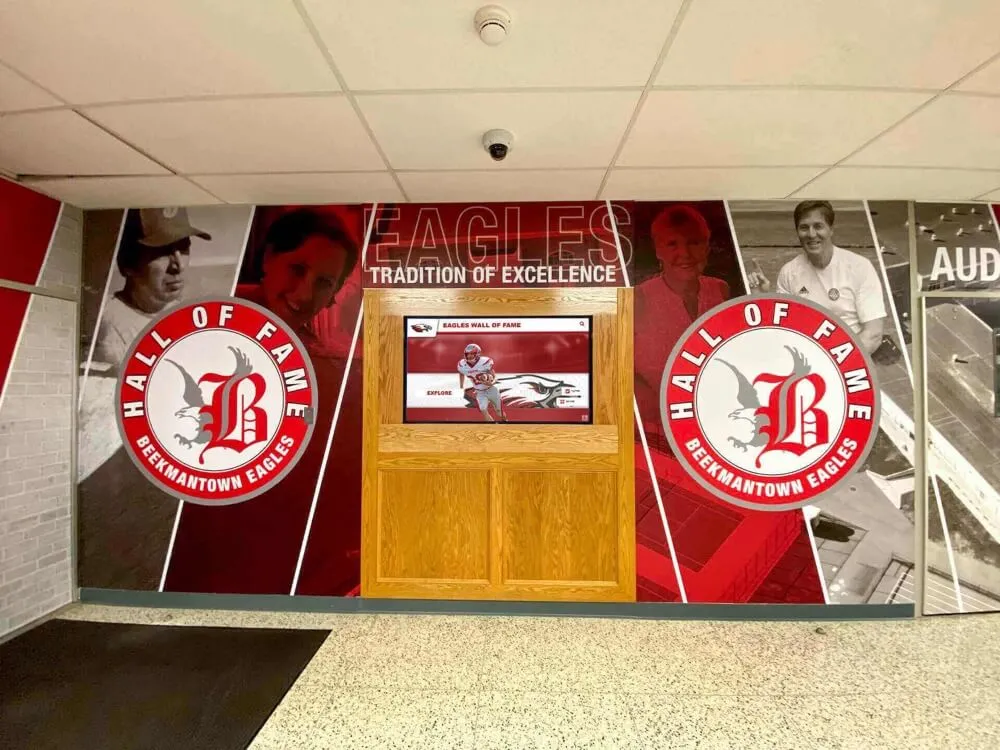
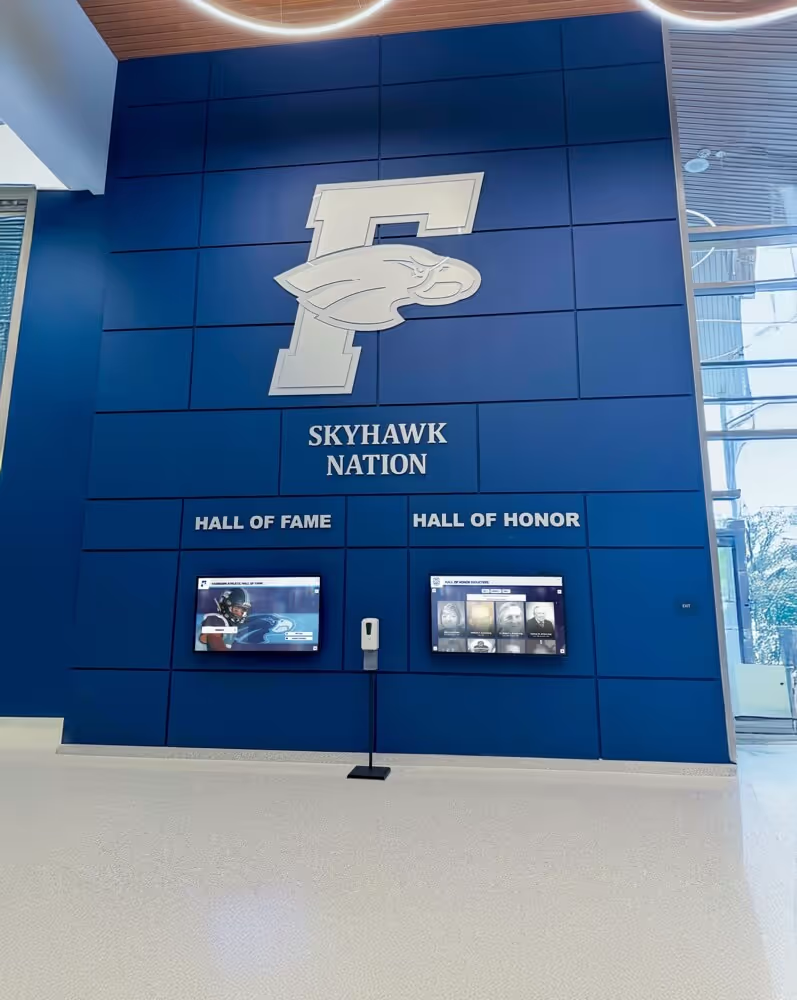
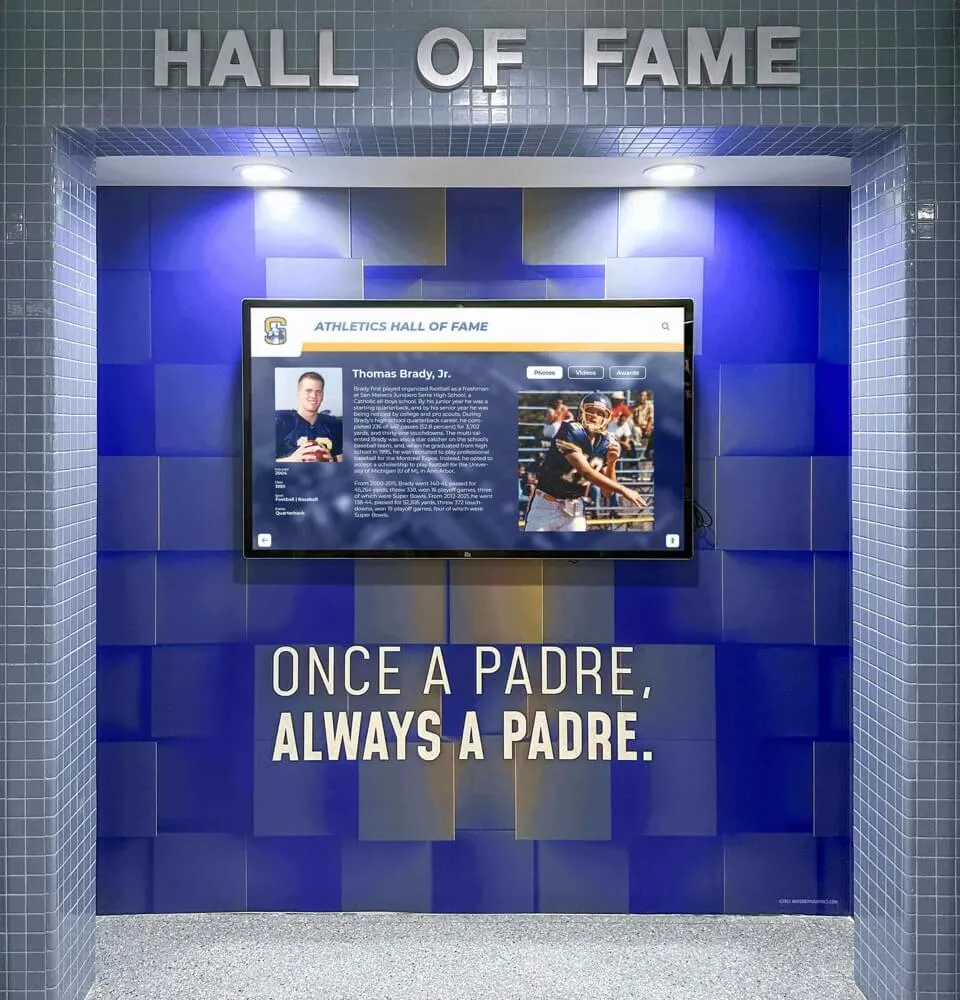
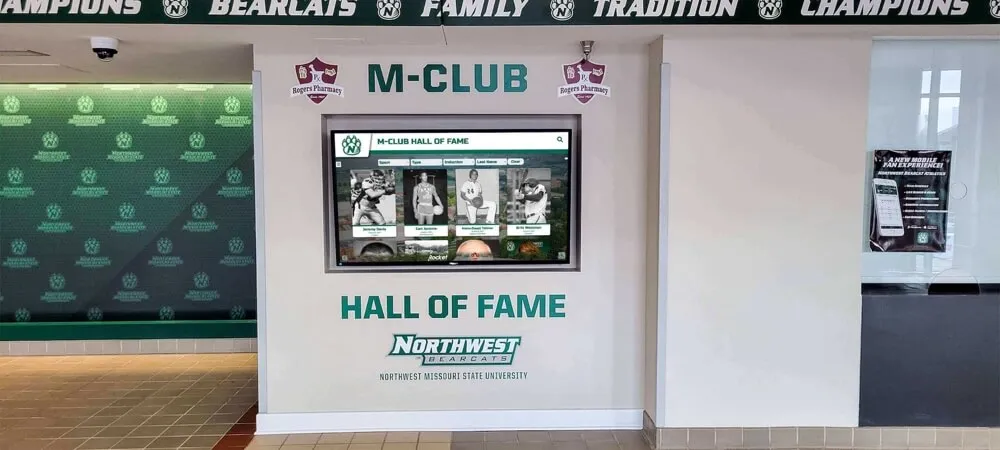
A hall of fame anchored by interactive displays transforms the induction ceremony from a plaque unveiling into a living archive that inductees and their families can explore on every return visit
Designing the Ceremony
What separates a memorable induction ceremony from a forgettable one is specificity. Inductees who feel that someone read their file, reviewed their game film, and understood what they actually contributed leave with a sense of genuine institutional respect. Inductees who receive generic stat-sheet introductions leave feeling processed.
Best practices:
Transparent selection process: Publish your criteria, seat a volunteer selection committee, and announce timelines publicly. Alumni who trust the process are more likely to nominate deserving candidates and to feel proud of their own inductions.
Career narratives, not stat sheets: Assign a writer to prepare a one-to-two-page career narrative for each inductee, drawing on game programs, newspaper archives, yearbooks, and interviews with coaches and teammates. Read a meaningful excerpt at the ceremony rather than a bullet list of statistics.
Family seating and acknowledgment: Reserve front-row seating for inductees’ families and acknowledge them formally during the ceremony. The honor extends to the people who supported the athlete through the program—recognizing them publicly deepens the loyalty of everyone present.
Video tributes: If resources allow, produce a 90-second tribute video for each inductee featuring archival photographs, brief testimonials from coaches and teammates, and a few words from the inductee. These videos anchor the ceremony emotionally and repurpose naturally into social content and digital recognition archives.
For the full institutional mechanics of establishing and maintaining an induction program, the community hall of fame complete guide covers selection frameworks, display options, and governance structures in detail.
Physical and Digital Recognition
The ceremony should end with something permanent. Physical plaque walls carry historical weight and visual presence, but they have real limitations: they cannot be updated without fabrication costs, cannot host full career stories, and cannot respond to a visiting grandchild who wants to learn more about what their grandfather accomplished in 1988.
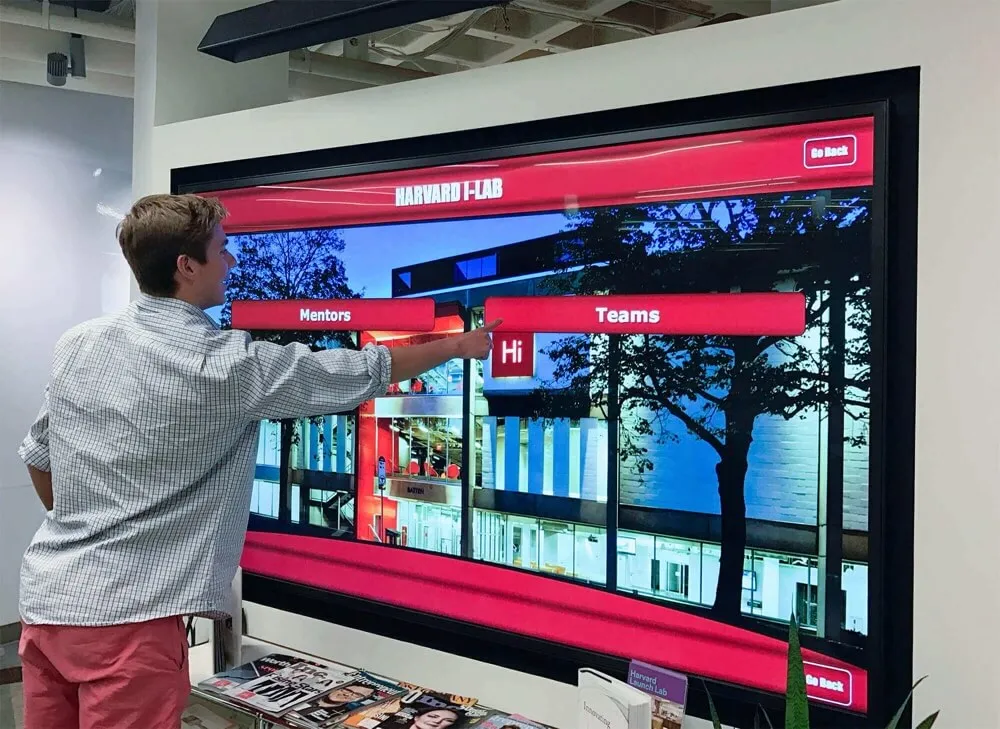
Leading programs are pairing physical recognition elements with interactive digital displays that bring each inductee’s full career to life. Visitors can tap an inductee’s portrait and access complete biographical information, career statistics, archived newspaper coverage, team photographs, and video highlights—all managed by the program’s own staff without any physical modification to the wall.
Understanding what a digital hall of fame is and how it works in practice—hardware configurations, content depth, typical visitor experience—is essential before committing to any recognition infrastructure investment.
Rocket Alumni Solutions builds interactive touchscreen hall of fame systems specifically for educational and athletic programs. Their platform supports everything from 50-inductee high school installations to major university athletic departments with hundreds of profiles, all managed through an in-house content system that requires no vendor involvement for routine updates. Explore Rocket Alumni Solutions to see configurations that fit your program’s scale and vision.
Jersey Retirement Ceremonies
Jersey retirement is among the highest individual honors a program can confer. Done well, it draws the honoree and their entire extended network back to campus and generates media attention that amplifies program prestige far beyond the event itself.
Elements of a Memorable Retirement
Game-time timing: Retire jerseys at halftime of a varsity contest with the student body present and the home crowd energized. Retiring a jersey in an empty facility misses the point—the honor needs witnesses, atmosphere, and scale.
Visual permanence: The ceremony must produce a visible, permanent result. A framed jersey in the facility lobby, a digital portrait added to the recognition system, or a dedicated panel in the hall of fame all create lasting evidence of the honor that inductees and their families can point to on every subsequent campus visit.
Career highlight reel: Screen a three-to-five-minute edited video covering the athlete’s key moments. This content serves multiple purposes: it anchors the ceremony emotionally, it feeds social media during and after the event, and it populates the digital recognition archive for future visitors to discover.
Current team bridge: Have the current captain or starting lineup present for the ceremony. This visible link between the retired number and the living program reinforces to current athletes that exceptional service earns permanent recognition—a motivational message more powerful than any speech.
Surprise element: Some programs keep the retirement secret from the honoree until game night. The logistics require careful coordination, but an authentic emotional reaction from an unsuspecting honoree creates compelling video content and deeply personal memories for everyone present.
Alumni Scrimmages and Competitions
One of the most consistently well-received athletic alumni day activities is organized competition between former and current athletes. These events generate natural energy, create shared physical experiences that transcend generational gaps, and give current athletes a tangible encounter with the program’s history.
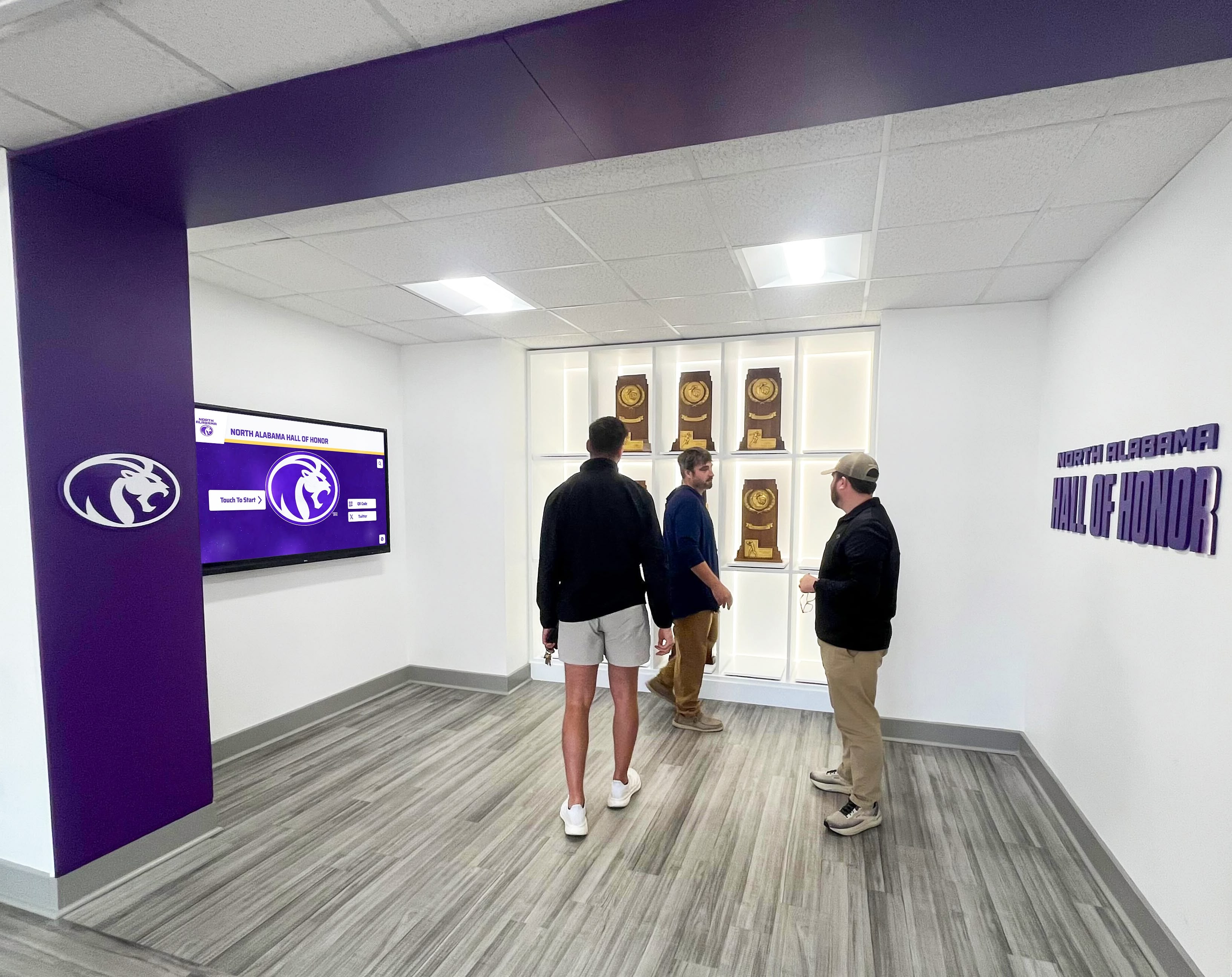
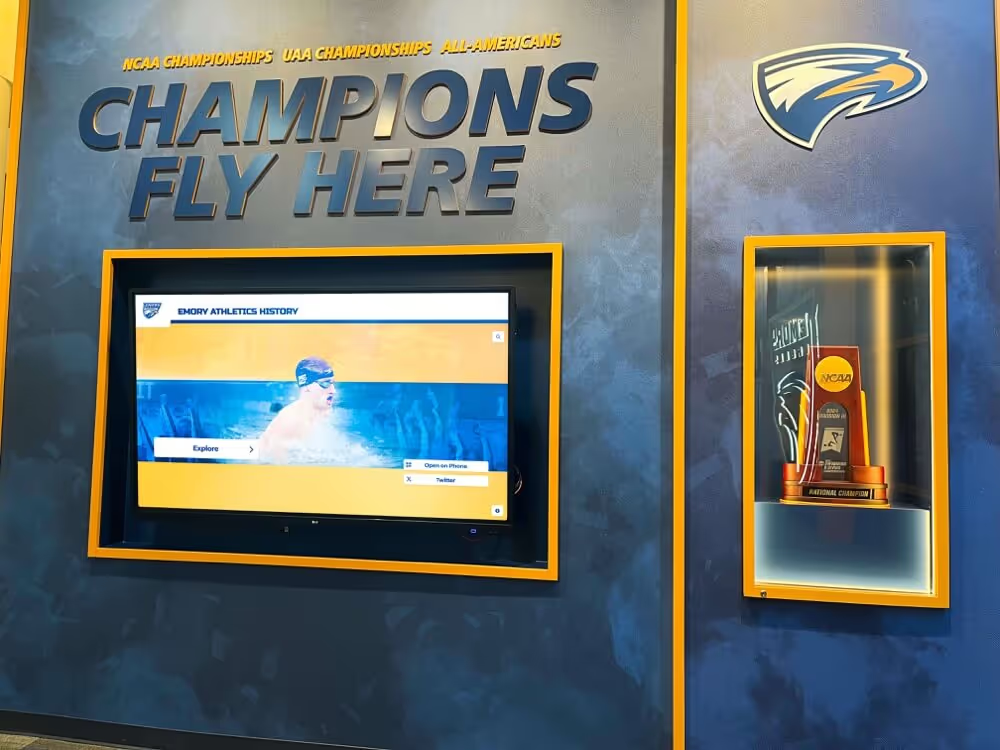
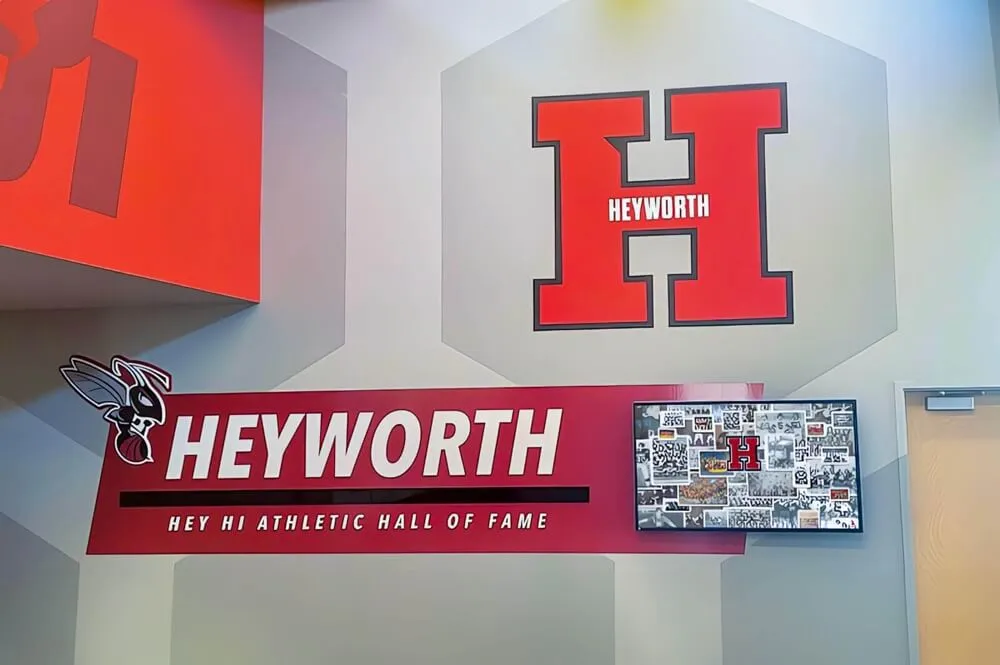
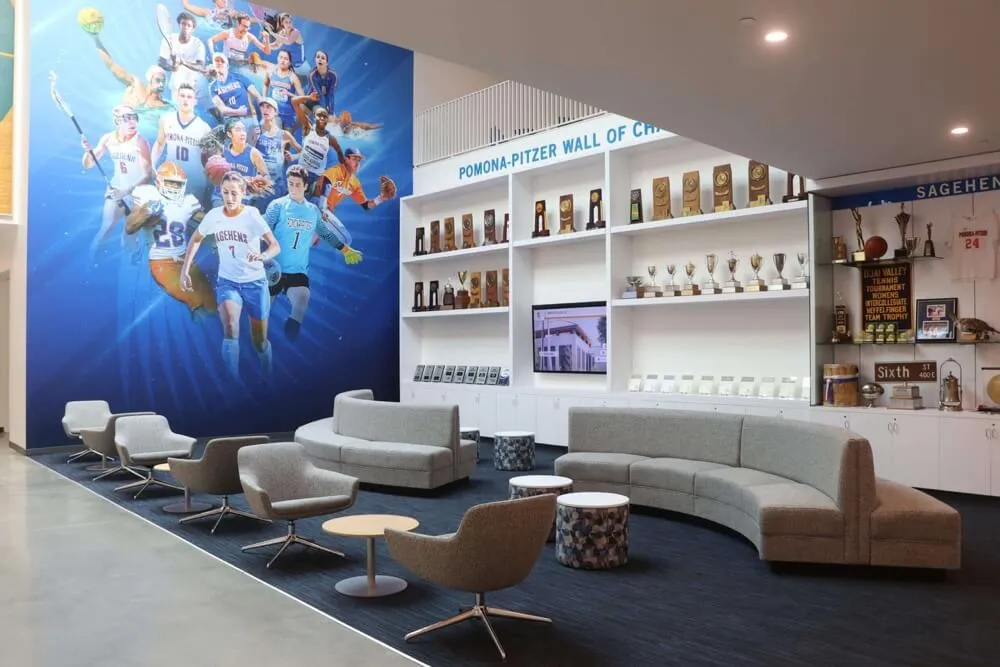
Athletic alumni days create natural moments for former athletes to stand alongside the trophies they helped win, reconnecting with the facilities and program culture that shaped their careers
Format Options
Modified rules: Adjust competition rules for safety—no full-contact in football alumni games, shorter sets in volleyball, a moved-in three-point line for basketball. The goal is joyful participation and meaningful connection, not injury risk.
Mixed-generation teams: Instead of strict alumni-versus-current format, consider mixed teams pairing former athletes with current players by position or class range. This structure forces cross-generational conversation during play that a pure competition format often misses.
Skills showcases: For sports where full scrimmages create meaningful injury risk, design skills showcases instead—a passing competition, a serve-receive relay, a swimming exhibition featuring alumni champions alongside current record holders. These events highlight athletic excellence without full-contact exposure.
Official and serious tone: Use certified officials or experienced staff to run the competition professionally. Sloppy officiating undermines the event’s atmosphere; taking the competition seriously signals to alumni that their participation is valued.
Documentation priority: Designate a photographer and videographer for the scrimmage. This content serves triple duty: social media during the event, digital recognition archive content, and promotional material for next year’s athletic alumni day campaign.
Mentorship Panels and Alumni Conversations
The relational dimension of athletic alumni day—former athletes speaking with current student-athletes about what the program taught them and where it led—often produces the most lasting impact for the current roster.
Running Effective Panels
A panel of four to six former athletes spanning different graduation decades can accomplish more in ninety minutes than an entire semester of career programming:
Diverse panelists: Select alumni representing varied career paths—healthcare, business, education, coaching, entrepreneurship. A panel of professional athletes in similar industries is inspiring but narrow; demonstrating the full range of outcomes a program’s graduates achieve is more useful and more realistic for most current athletes.
Structured questions, open format: Prepare six to eight questions that progress from athletic experience toward career application and advice. Let the conversation breathe beyond the questions.
Student-athlete facilitation: Have a current team captain or student-athlete advisory council member co-facilitate. Current athletes asking questions of alumni they admire creates more authentic dialogue than staff-moderated formats.
Unstructured breakout time: Follow the formal panel with fifteen to twenty minutes of informal table conversations where current athletes choose which alumni to sit with. The most valuable mentorship connections—the ones that lead to internships, references, and long-term relationships—typically happen in these unscripted moments.
The alumni mentorship program complete guide covers structured program design, matching frameworks, and follow-up systems that help convert one-day panel connections into ongoing mentorship relationships.
Varsity Letter and Legacy Recognition
Athletic alumni days are also ideal occasions to acknowledge former athletes who never received formal individual recognition during their careers—contributors who graduated before formal recognition systems existed, or whose team roles were essential but unheralded.
The varsity letter jacket traditions, history, and meaning provides context for framing legacy recognitions within the broader tradition they represent—a useful frame when introducing a new legacy award category that honors service without requiring hall of fame credentials.
Digital Display Reveals and Recognition Wall Upgrades
One of the highest-impact activities on athletic alumni day is a formal reveal of new or updated digital recognition infrastructure. These moments transform a capital project completion into a celebration where alumni feel direct emotional ownership over campus spaces that will carry their names and stories forward.
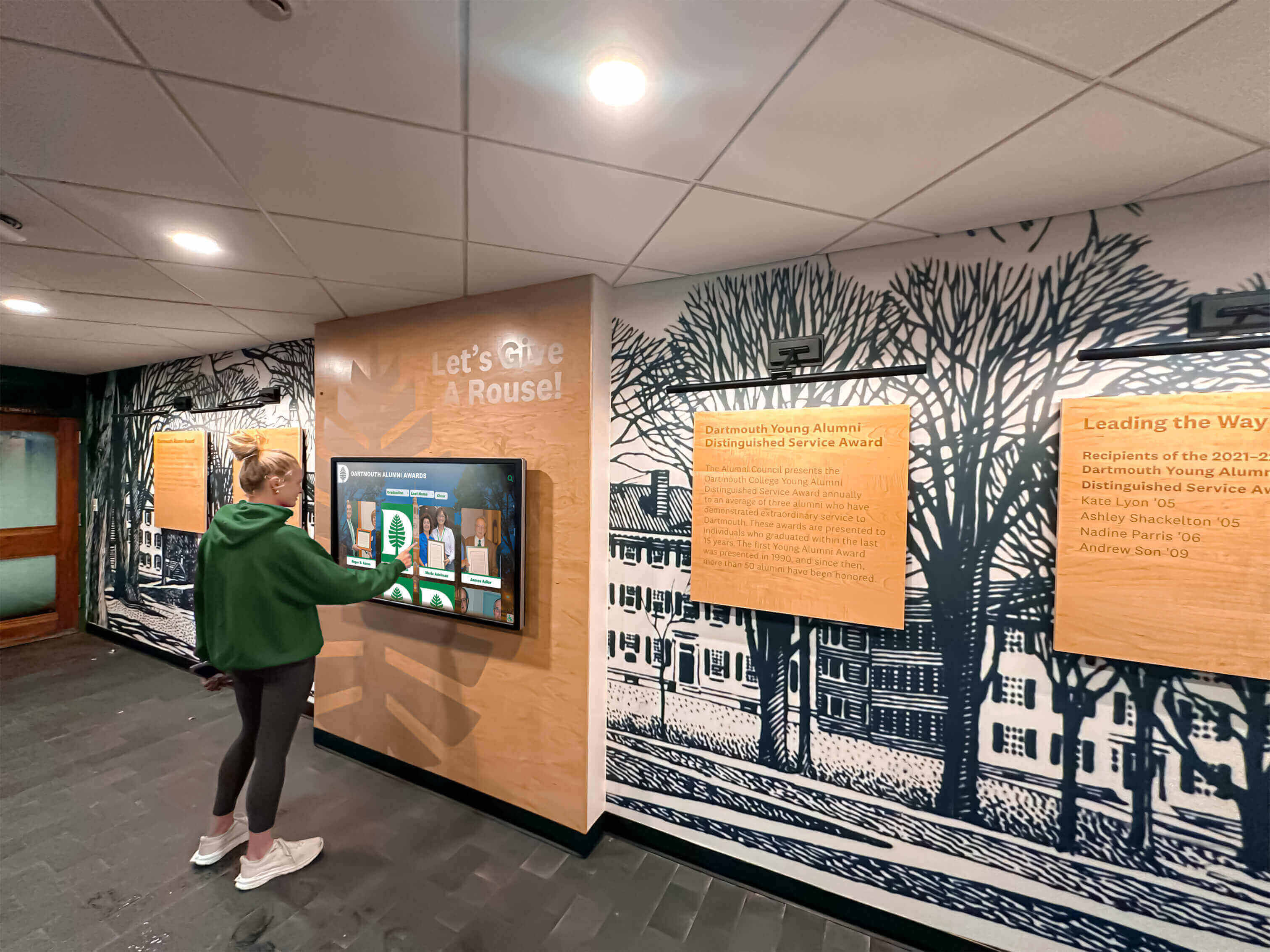
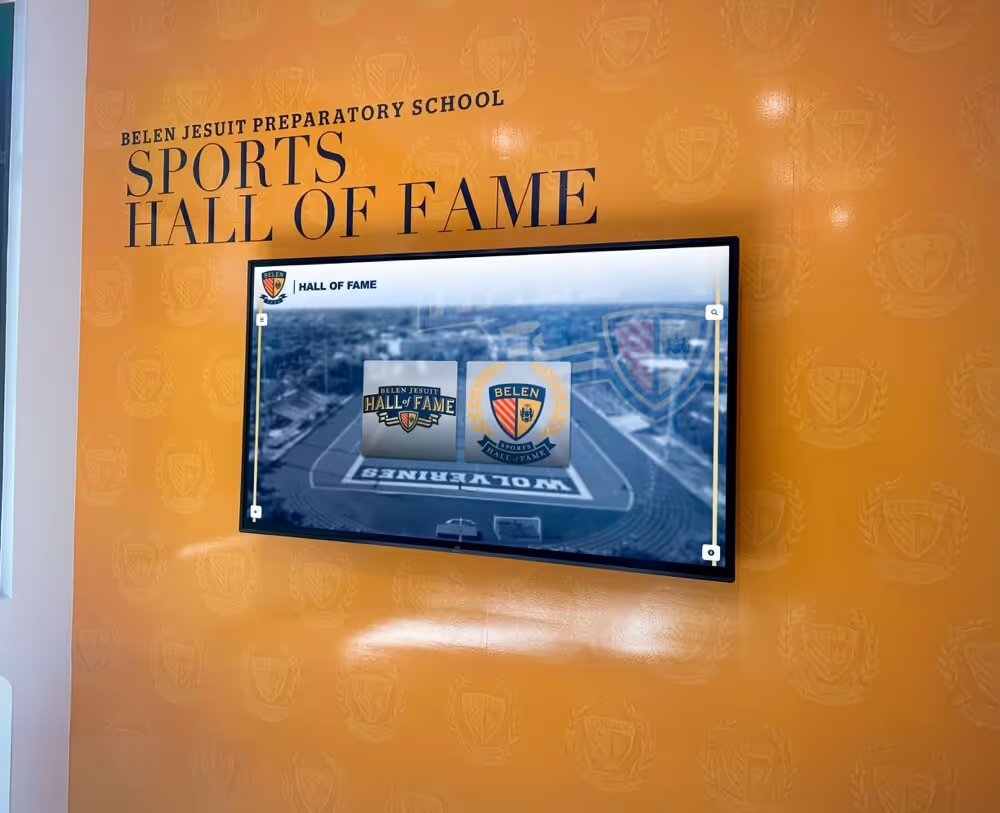
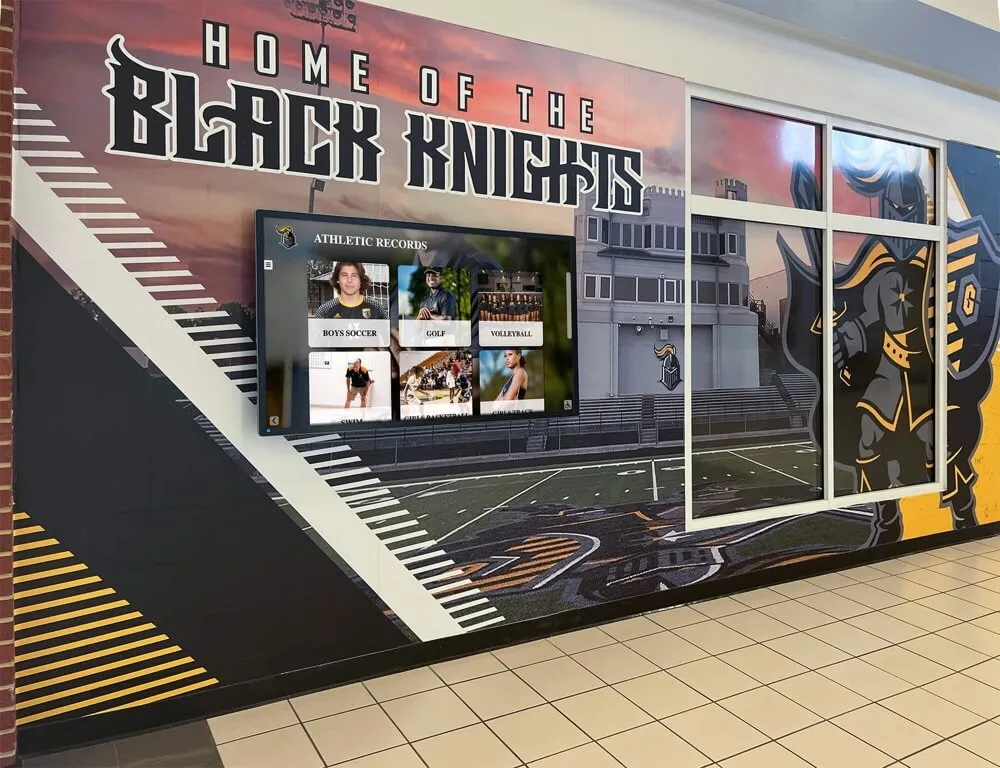
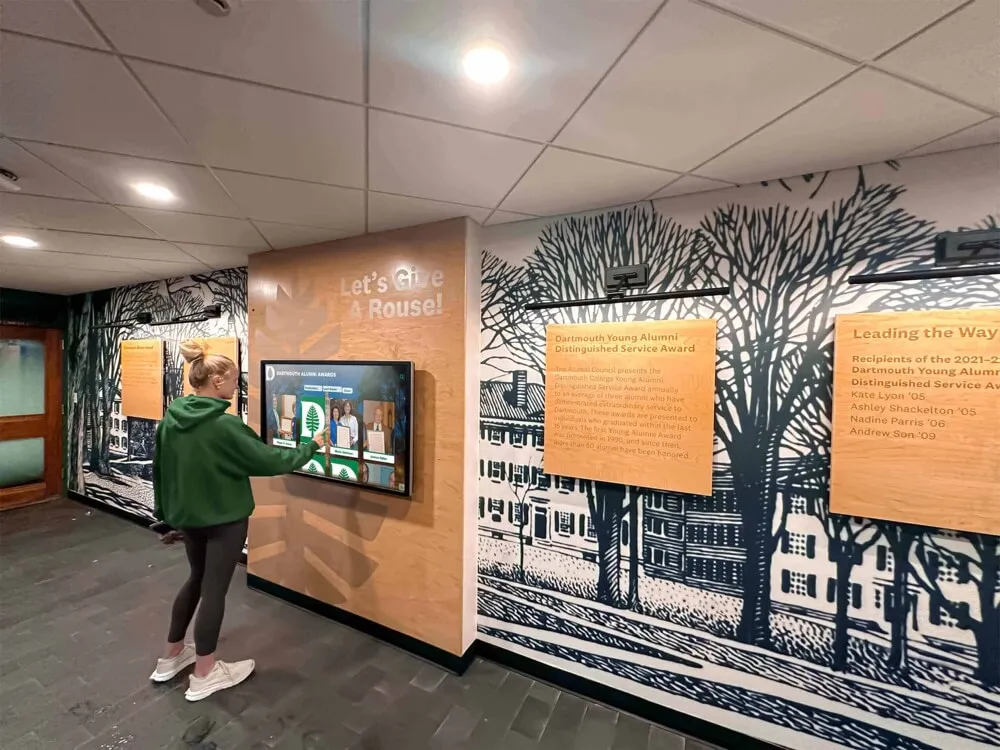
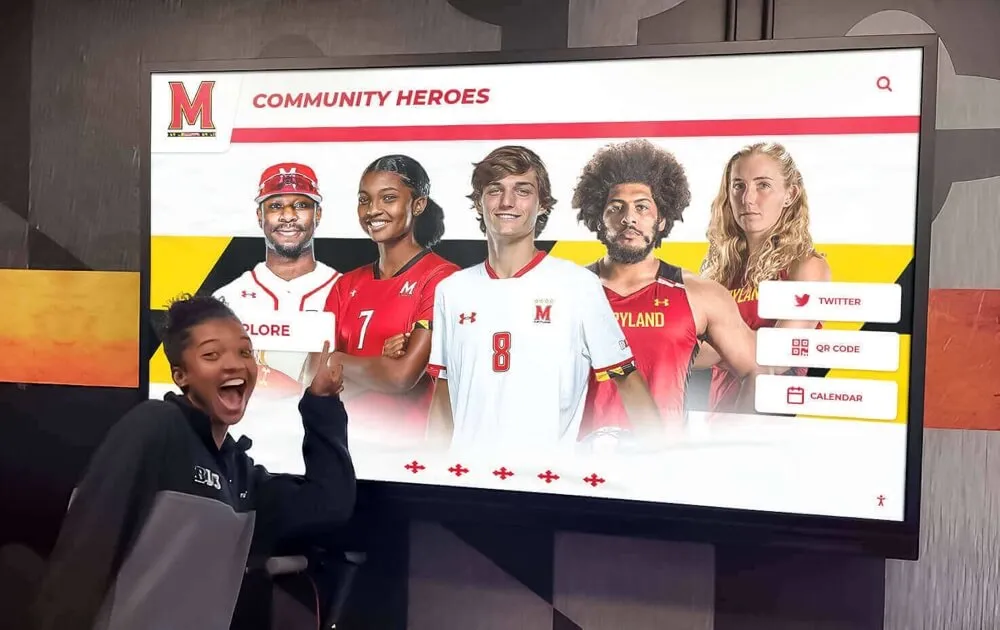
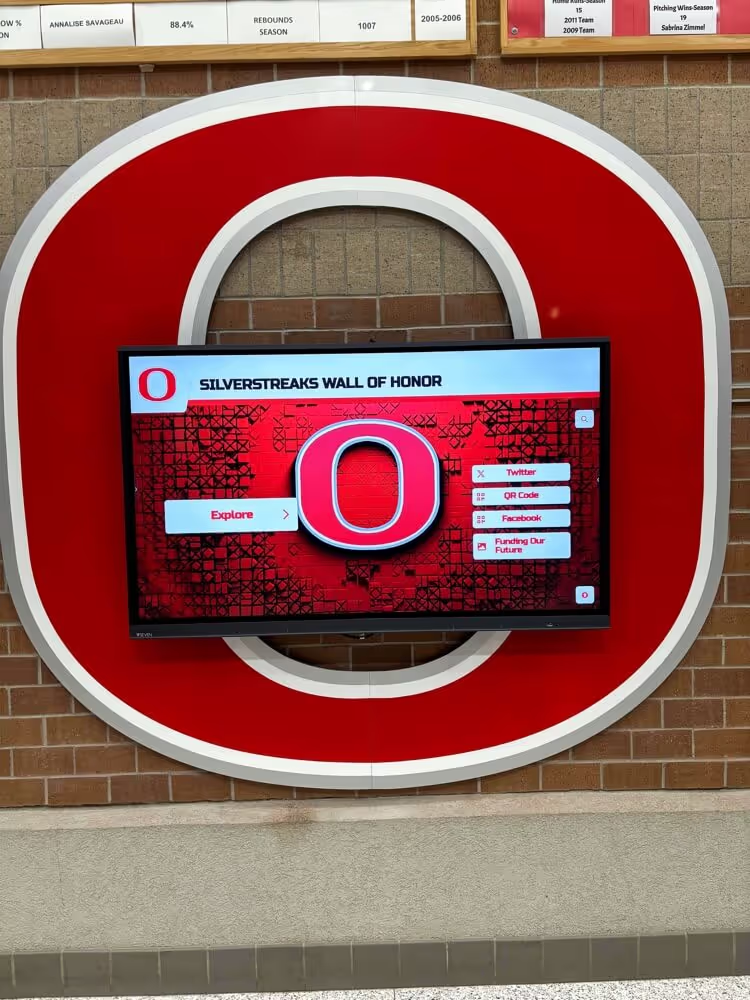
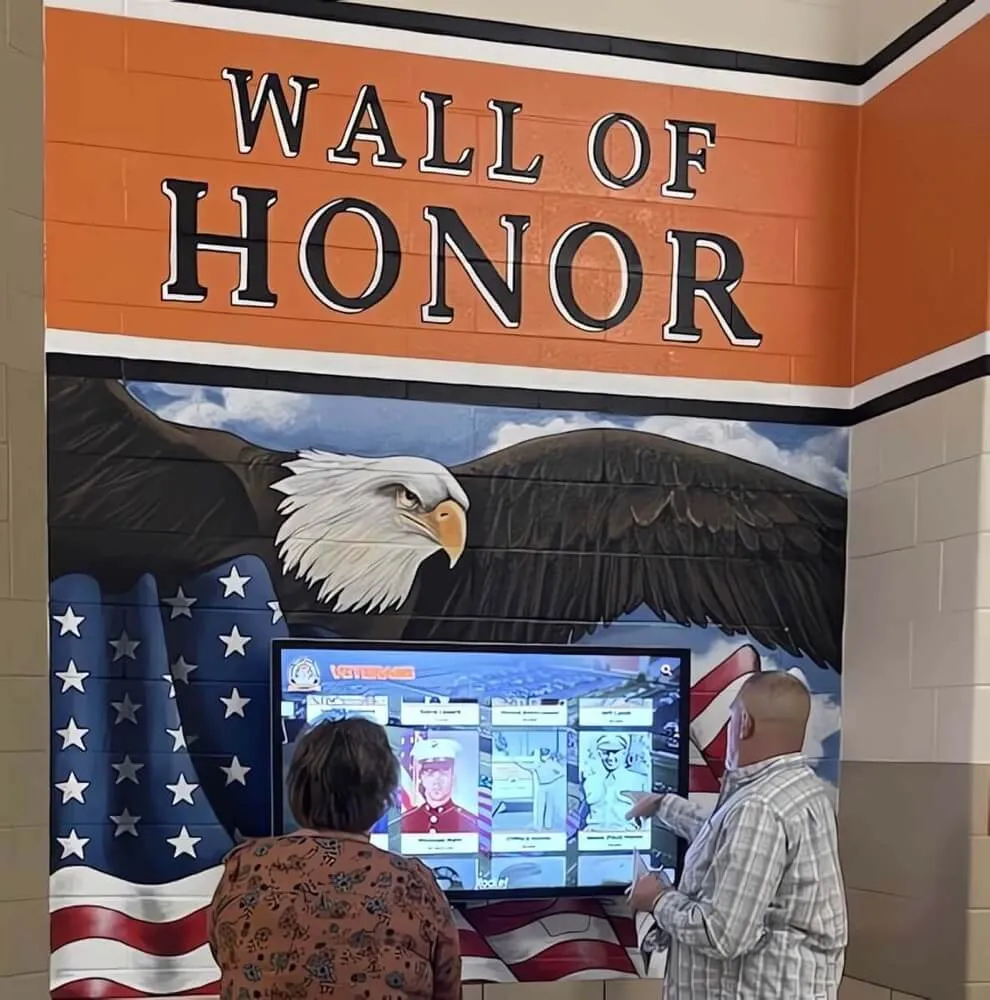
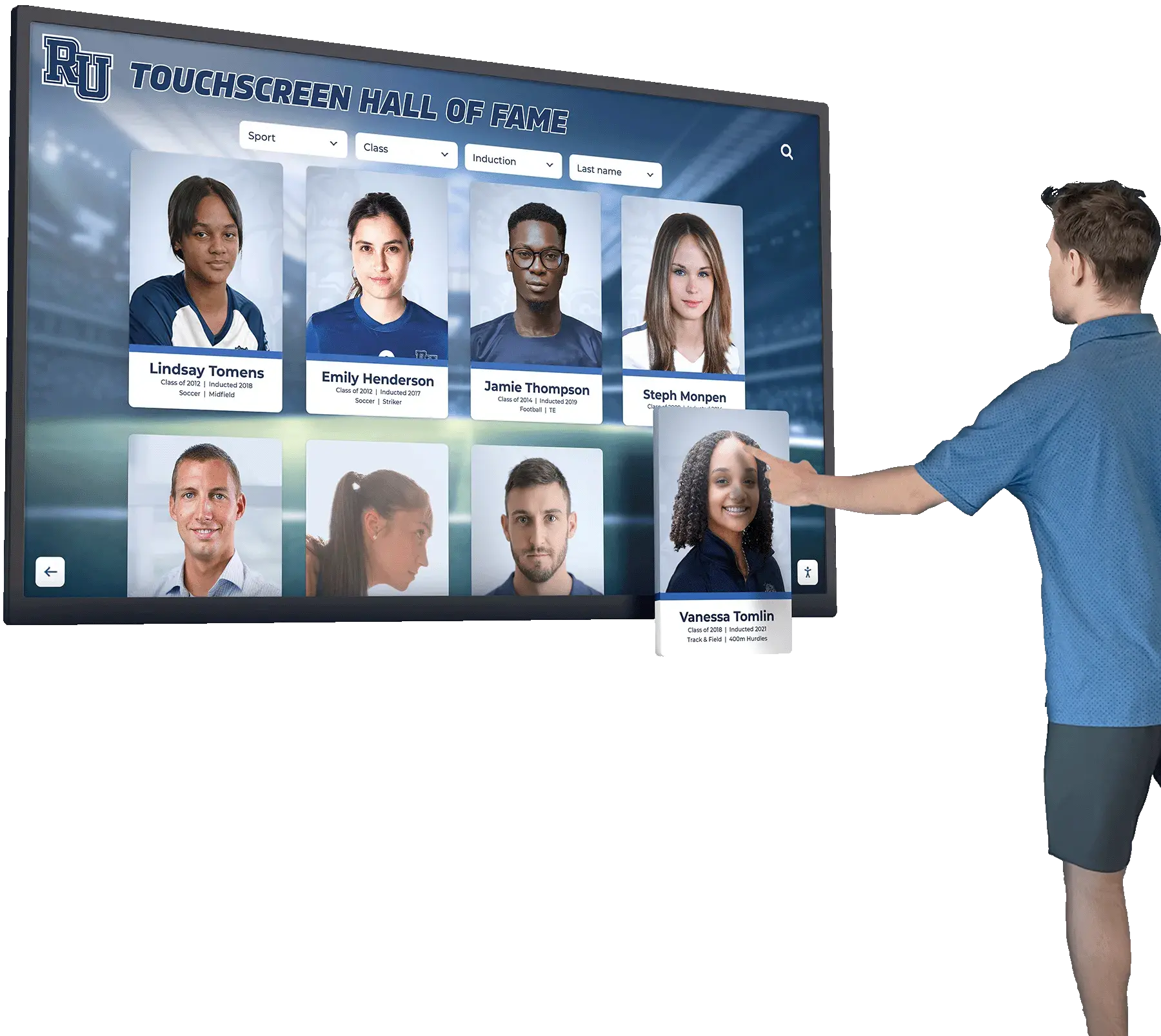
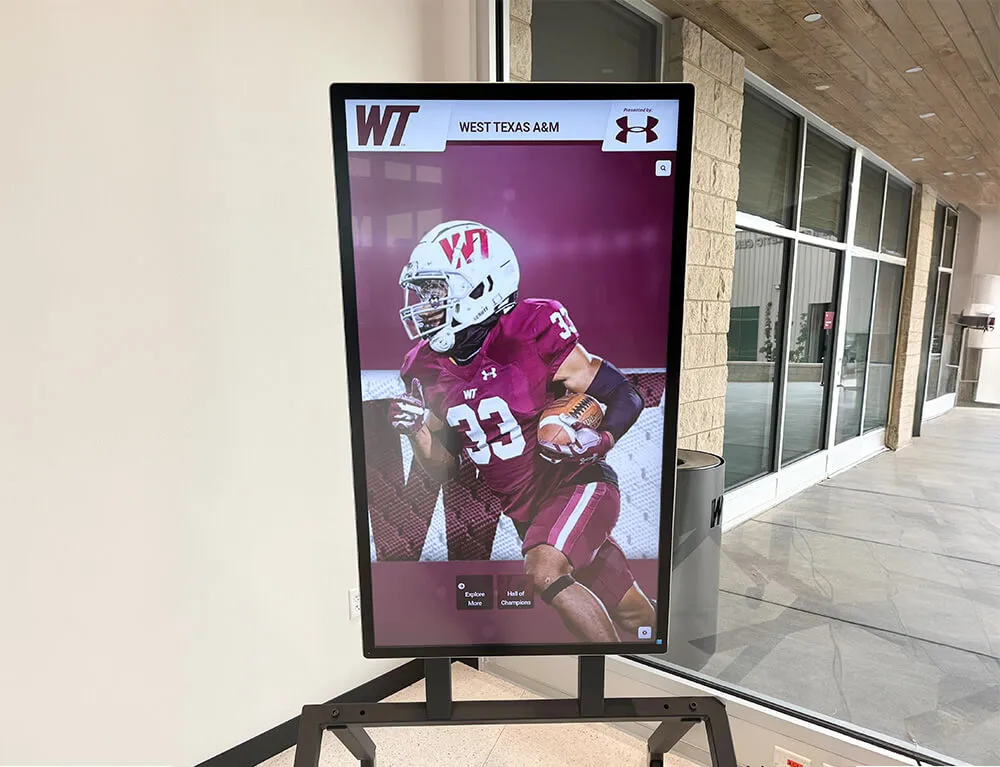
When current students engage naturally with recognition displays built for alumni, the systems fulfill their dual purpose—honoring the past while making the program's history part of everyday school life
Designing the Reveal Moment
Do not simply have the display running when alumni arrive. Design a formal unveiling:
- Cover the installation with a branded banner until the reveal moment, building anticipation through the morning’s programming
- Involve a living honoree in the physical unveiling—a hall of fame inductee or distinguished alumnus pulls the banner to reveal the completed display
- Demonstrate immediately: Walk assembled alumni through the display’s features right after the reveal—tapping profiles, surfacing career archives, showing how future classes will be added
- Allow open exploration time: Reserve thirty minutes for self-guided navigation where alumni find their own profiles, teammates’ bios, and historical records they may have never seen documented before
For an in-depth look at what the digital alumni hall of fame experience can deliver—from visitor interaction patterns to content management practices—that resource covers the implementation realities that determine whether a system gets used every day or ignored after installation week.
Content to Prioritize Before Alumni Day
If you are deploying or updating a digital recognition system in advance of the event, load content that returning alumni will recognize and respond to immediately:
- Historical team photographs from the program’s earliest documented seasons
- Complete career profiles for all current and newly inducted hall of fame members
- All-time record boards with athlete names and graduation years attached to every record
- Newspaper archive highlights from memorable games across past decades
- Current roster profiles connecting the present program explicitly to the legacy returning alumni helped establish
Digitizing older materials—photographs, newspaper clippings, game programs—requires care to preserve originals while capturing usable digital assets. The athletic photo archive guide for digitizing team photos walks through the digitization process and best practices for organizing historical image libraries before loading them into a recognition system.
For physical recognition ideas that complement digital systems, the trophy display ideas and creative ways to showcase athletic achievements guide covers layouts, lighting, and display integration approaches that work alongside interactive screens.
Facility Tours and Campus Walkthroughs
Alumni who attended your program ten, twenty, or thirty years ago are often genuinely surprised by how facilities have evolved. A structured walking tour—with planned stops at recognition spaces, updated training areas, and new construction—creates a powerful sense of institutional momentum while triggering personal memories at every station.

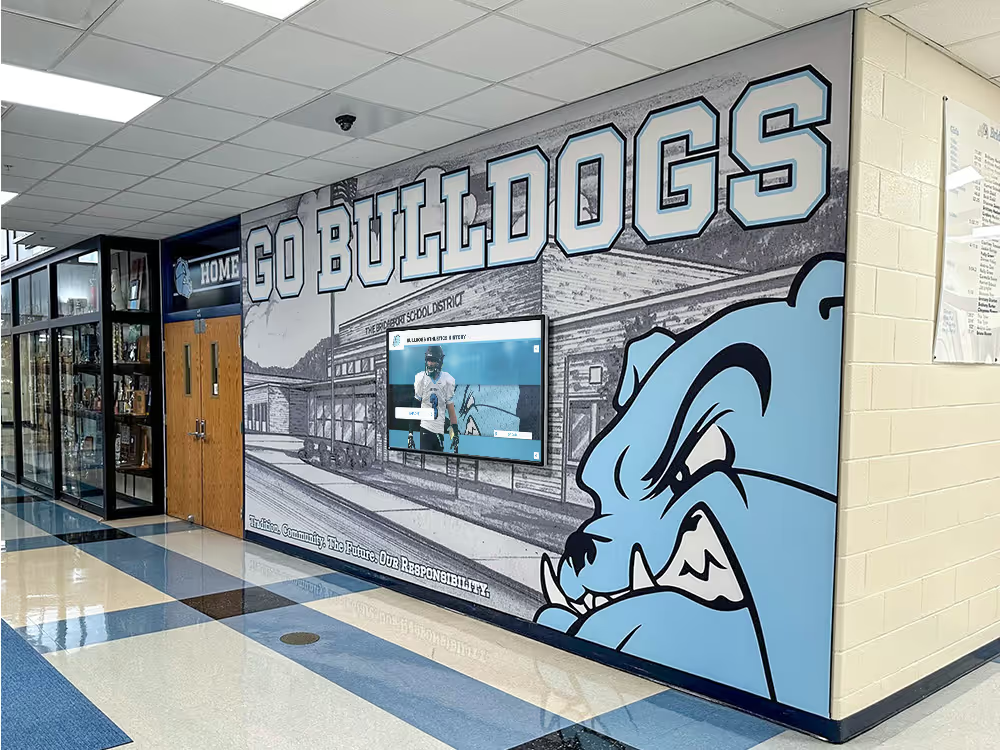
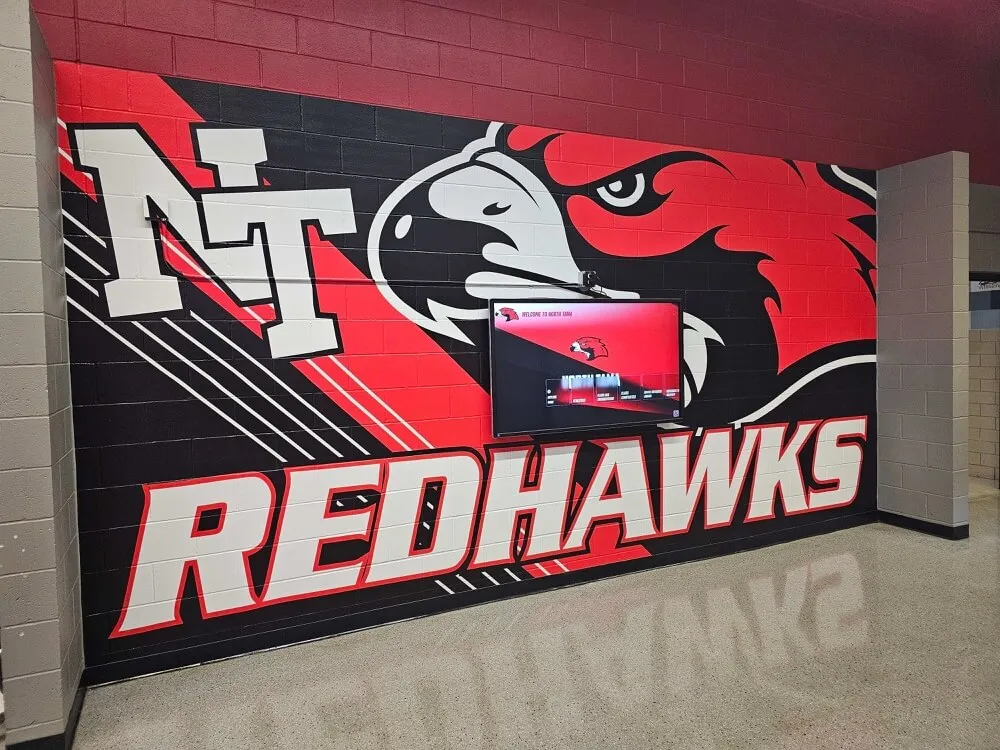
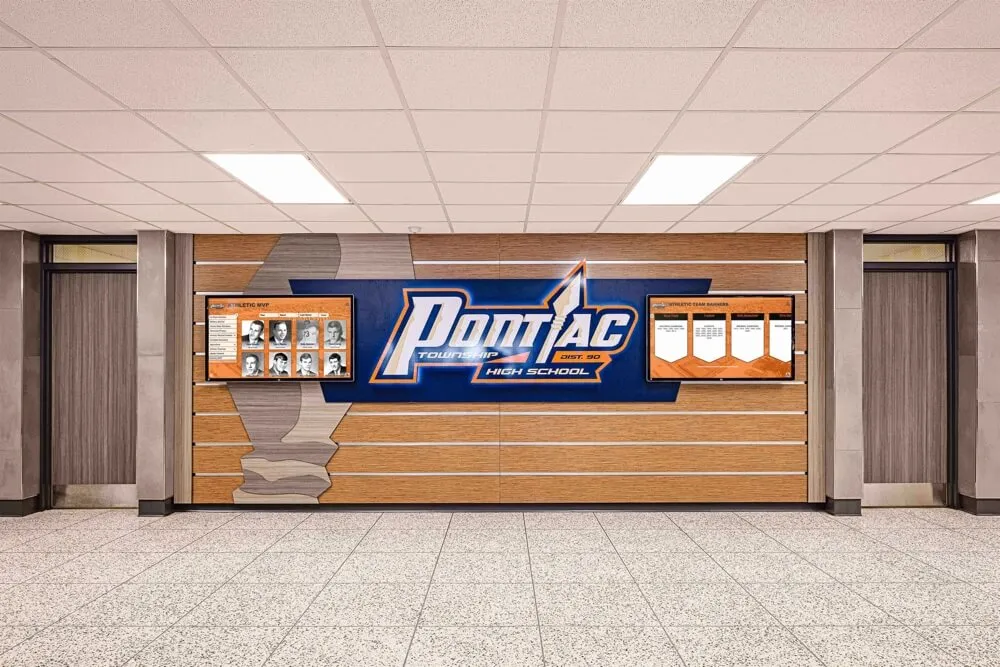
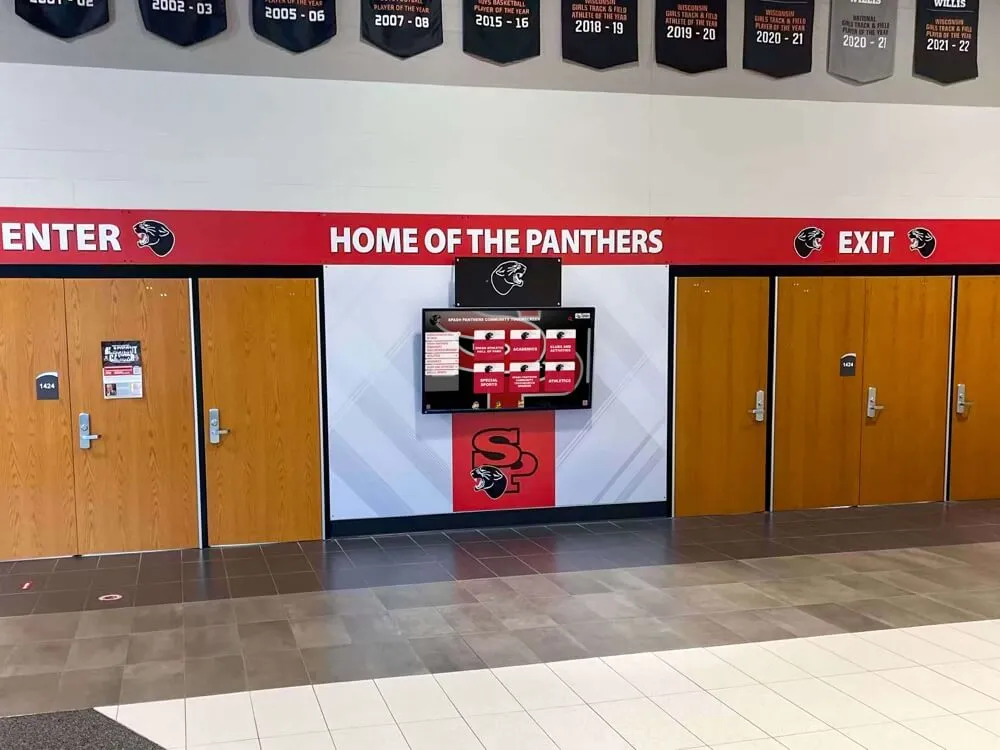
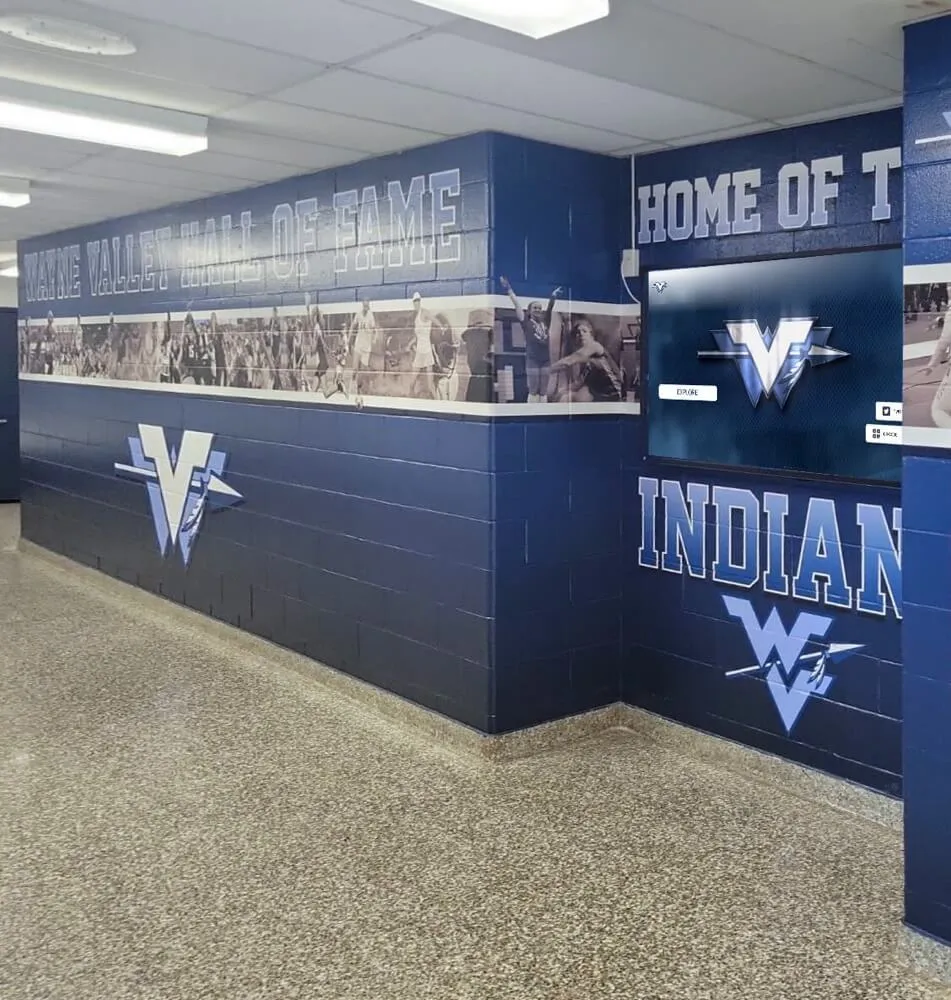
Athletic hallways that combine school spirit murals with digital records displays create recognition corridors where every returning alumnus can find their era's contributions to the program's history
Tour Stop Planning
Design the tour as a narrative arc from past to present:
Historical photograph stations: At key facilities—the original gym, the field that hosted the program’s first championship, the locker room corridor—install large-format historical photographs showing the space in earlier decades. These stations spark storytelling conversations between alumni and help current staff understand the institutional history they steward.
Interactive display demonstrations: At each recognition display, plan a brief three-to-five-minute facilitated demo. Alumni who might not spontaneously explore a touchscreen will engage deeply once someone shows them how to navigate it and what it contains. Designate one current student-athlete or staff member at each station to provide context.
New facility highlights: If recent construction or renovations are part of the tour, briefly explain how alumni giving contributed to their realization. Connecting specific capital investments to physical spaces on a walking tour is more persuasive than any development newsletter.
Coaching staff access: Route the tour through spaces where current coaches can briefly engage returning alumni. A two-minute conversation between a former athlete and the current head coach creates disproportionately strong goodwill that sustains engagement long after the event.
Fundraising Integration
Athletic alumni days are among the highest-converting environments for program fundraising—but only when the ask comes at the right moment and feels organic to the experience.
The Correct Sequence
The most common mistake is front-loading the fundraising ask. Alumni who feel the event is primarily a solicitation vehicle disengage quickly and remember the experience negatively. The correct sequence:
- Celebrate unconditionally: The morning and afternoon belong entirely to honoring alumni and building genuine connection. No fundraising language.
- Create the pride moment: The hall of fame induction, the jersey retirement, the display reveal—these are emotional peaks when former athletes feel most connected to what the program represents.
- Make the contextual ask: Following a peak moment, a brief, honest presentation about a specific program need—a new facility wing, a scholarship fund, a digital recognition system expansion—lands in genuinely fertile soil.
- Remove friction from giving: Pledge cards, a QR code linked to a mobile giving page, and development staff available for in-person conversations should all be immediately accessible.
- 48-hour follow-up: Send a personal thank-you to every attendee within 48 hours and include a simple giving link for those who expressed interest. The window immediately following a strong emotional experience is the highest-converting giving environment available to any development team.
Connecting donors to visible, named recognition opportunities—a scholarship endowment, a named display panel, a hall of fame wing—creates giving propositions with lasting personal meaning. For guidance on how to design these giving-recognition connections, the homecoming theme ideas and creative celebration guide covers the event design principles that make athletic return events natural donor conversations rather than awkward asks.
Promotion: Building Attendance Before the Day
Strong programming produces nothing without strong attendance. Promotion for athletic alumni day requires a multi-channel approach across a longer timeline than most institutions plan for.
Outreach Timeline
| Timeline | Action | Channel |
|---|---|---|
| 12–16 weeks out | Save-the-date to all registered athletic alumni | Email, program social media |
| 10–12 weeks out | Personal outreach to ceremony honorees | Direct call or email from AD or coach |
| 8 weeks out | Formal invitation with programming preview | Email, physical mailer for major donors |
| 6 weeks out | Peer activation through former captains | Personal messages, team group chats |
| 4 weeks out | Social content campaign featuring past highlights | Instagram, Facebook, X/Twitter |
| 2 weeks out | Final logistics reminder with registration link | Email, text |
| Day before | Ceremony honoree preview content | Social stories |
Content That Converts
Effective promotional content makes alumni feel seen rather than summoned:
- Short video testimonials from prior attendees describing why they returned and what it meant
- Archive photo reveals from specific graduation years shared to class group chats
- Teaser content from recognition systems—a cropped historical photo, a stat no one remembers—creating curiosity about the full reveal
- Personalized coach messages delivered as short video clips to alumni email segments
For context on which platforms and tools work best for sustained athletic alumni engagement, the best alumni engagement platforms for schools and universities in 2026 reviews the current landscape of engagement tools and their practical fit for different program sizes.
Building an Annual Tradition
The athletic alumni days that consistently fill facilities are the ones that have been running long enough to generate their own mythology. Former athletes tell incoming freshmen about the day. Alumni plan schedules a year out. Families build travel around the event. That level of institutional gravity does not appear in year one—it compounds through consistent execution, visible recognition, and word of mouth from alumni who felt genuinely honored by their experience.
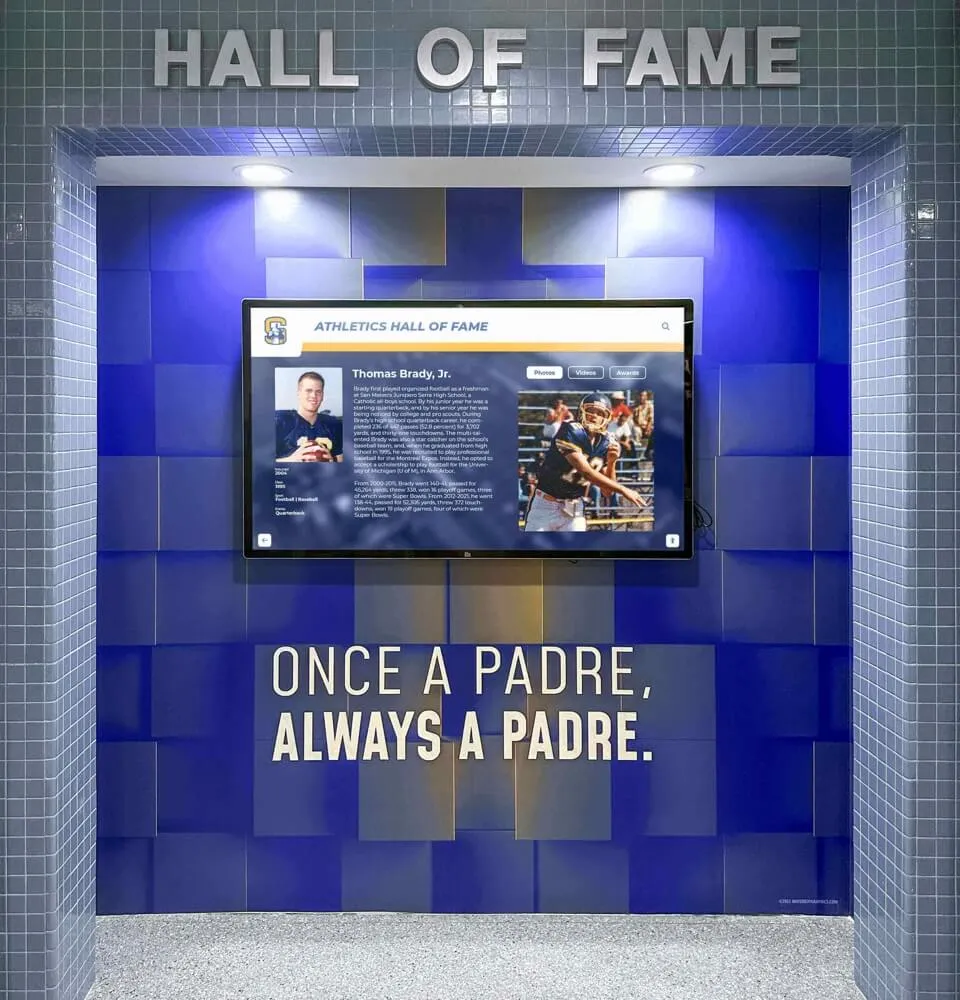
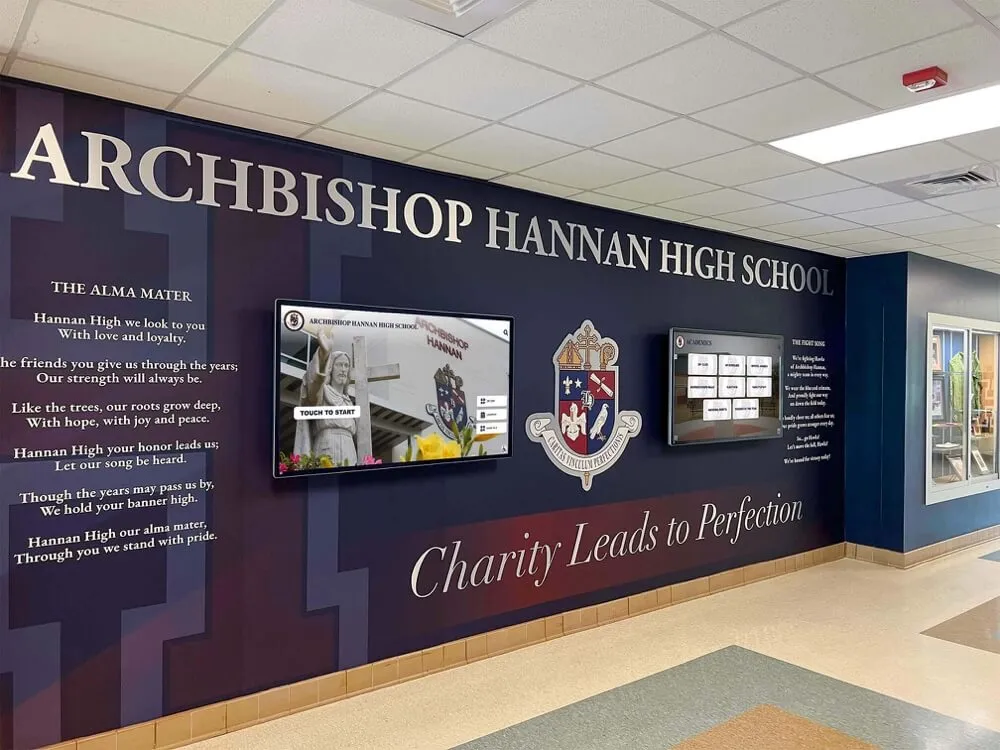
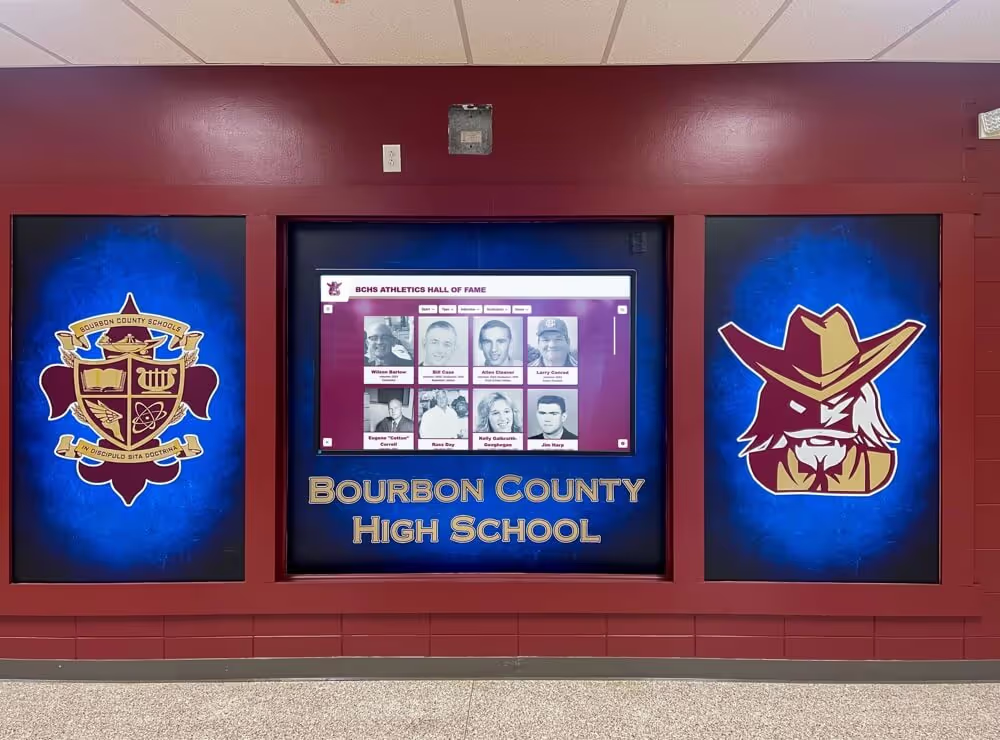
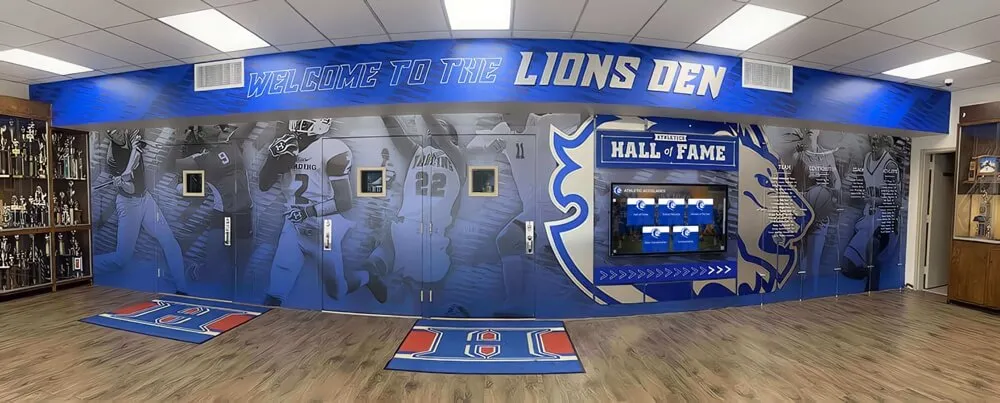
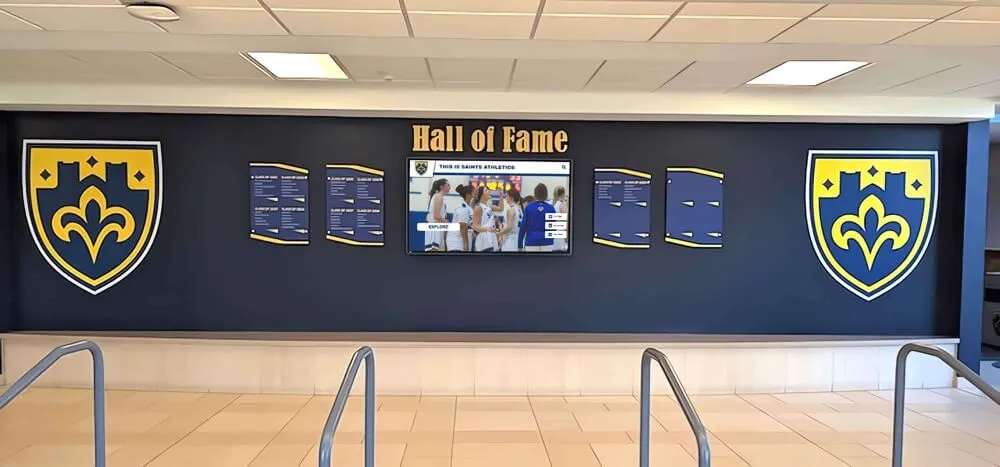
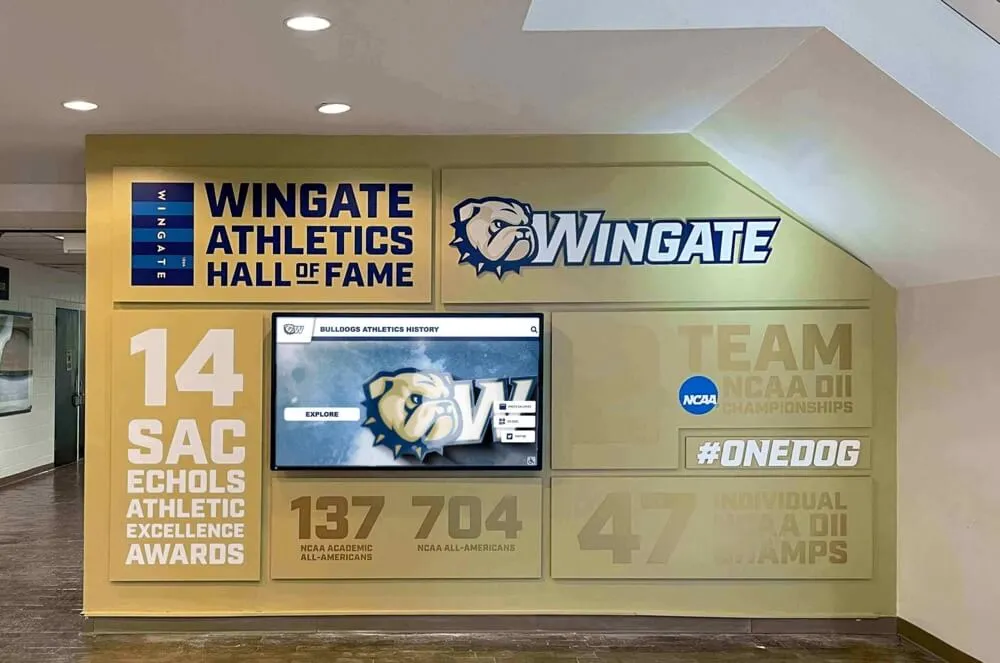
Recognition installations that carry a program's identity—motto, colors, and alumni legacy—create spaces where returning athletes immediately feel the permanence of what they contributed
What Consistent Execution Delivers Over Time
- Self-sustaining attendance growth: Alumni who attended once and felt honored become the most effective recruiters for future years, expanding the pool organically without increasing outreach costs
- Deeper donor relationships: Annual contact points let development staff build genuine long-term relationships with potential major donors rather than making cold asks at one-off events
- Expanding digital archives: Each induction cycle adds to recognition systems, increasing depth and giving alumni more reason to explore on every campus visit
- Stronger current athlete culture: Student-athletes who experience multiple athletic alumni days during their eligibility develop a strong sense of program tradition and are significantly more likely to become engaged alumni themselves
Choosing Recognition Technology That Serves the Long Term
As athletic alumni day ambitions grow, the question of permanent recognition infrastructure becomes central. Former athletes who return year after year want to see the program investing in their legacy—not just in game-day facilities.
The right system depends on facility size, content depth, budget, and visitor experience goals. Essential evaluation questions:
- Scale: Will the system handle 500 profiles as gracefully as it handles 50 today?
- Content management: Can your staff update profiles, add inductees, and correct biographical information without vendor involvement?
- Physical integration: How does the digital display work alongside murals, plaques, and other architectural recognition elements already in place?
- Data portability: If you ever change platforms, can you export the full historical archive without losing content?
Rocket Alumni Solutions is purpose-built to answer all four questions for educational and athletic programs. The platform scales from small high school installations to major university athletic departments, supports full in-house content management, integrates with custom architectural recognition environments, and maintains complete data portability throughout the program’s life. Visit Rocket Alumni Solutions to explore configurations that fit your program and schedule a live walkthrough to see what your athletic alumni day recognition experience could become.
An athletic alumni day built with genuine intention—designed around recognition first, connection second, shared experience third—creates something that compounds in value with every passing season. The former athletes who return are not just reliving the past. They are becoming part of the ongoing story of a program that clearly values them. When that message lands, the room fills itself.