



Assisted living facilities face unique challenges when it comes to creating welcoming environments that serve multiple audiences simultaneously—residents seeking engaging community experiences, families wanting seamless connection with loved ones, staff managing complex operations, and prospective residents evaluating quality of care and community vitality. The visitor experience in particular sets the tone for family relationships, influences facility selection decisions, and directly impacts resident satisfaction and wellbeing.
Yet many assisted living communities struggle with outdated communication approaches that haven’t evolved with technology or family expectations. Static bulletin boards display information that’s outdated within days. Paper directories confuse visitors trying to navigate unfamiliar facilities. Activity calendars posted in single locations reach only those who happen to pass by. Meanwhile, families living hours or states away receive minimal visibility into the vibrant community life their loved ones experience daily.
This comprehensive guide explores how interactive digital displays transform visitor experiences in assisted living facilities, creating engaging touchpoints that strengthen family connections, simplify wayfinding, celebrate resident achievements, and demonstrate community vitality to everyone who enters your doors.
Modern assisted living visitor digital displays serve purposes extending far beyond simple announcements—they create immersive environments that welcome families, honor residents, inform visitors, and showcase the exceptional care and community that define quality senior living in 2025.

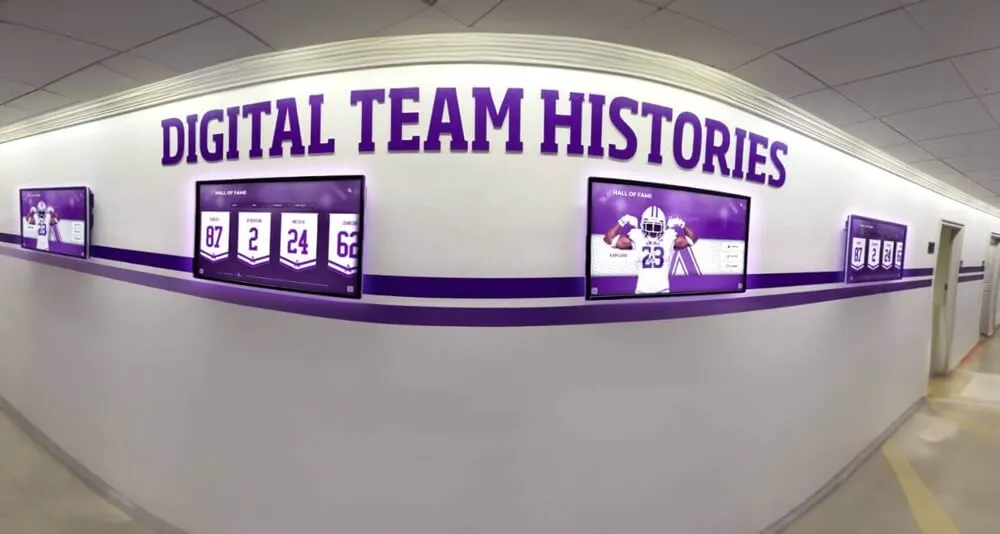
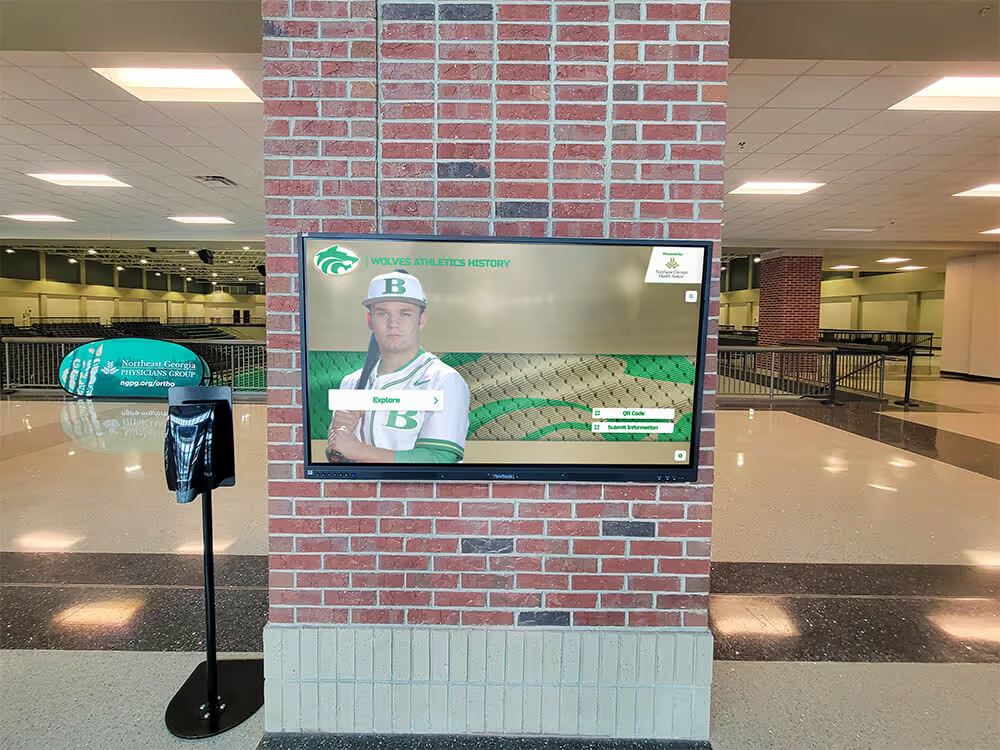
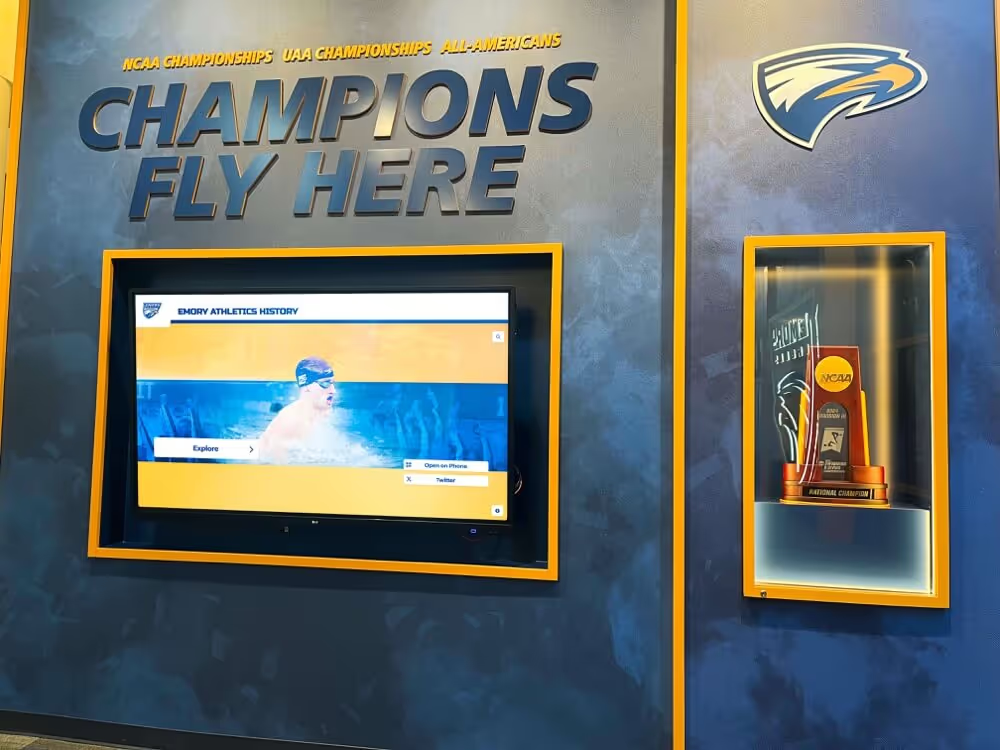
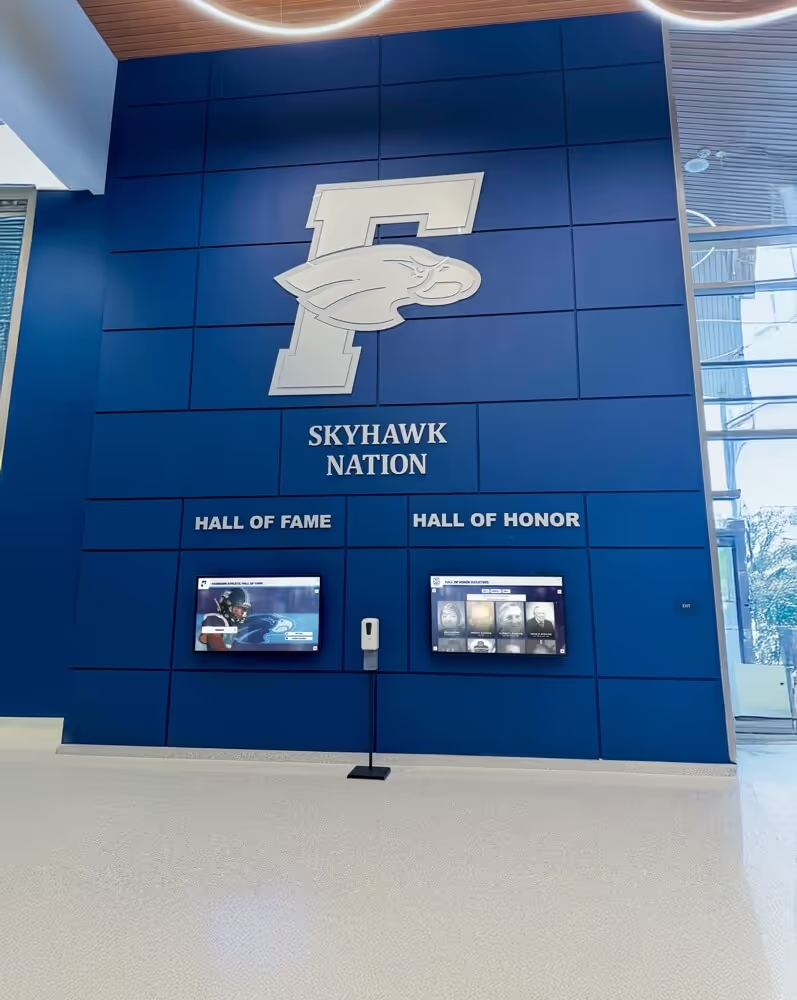
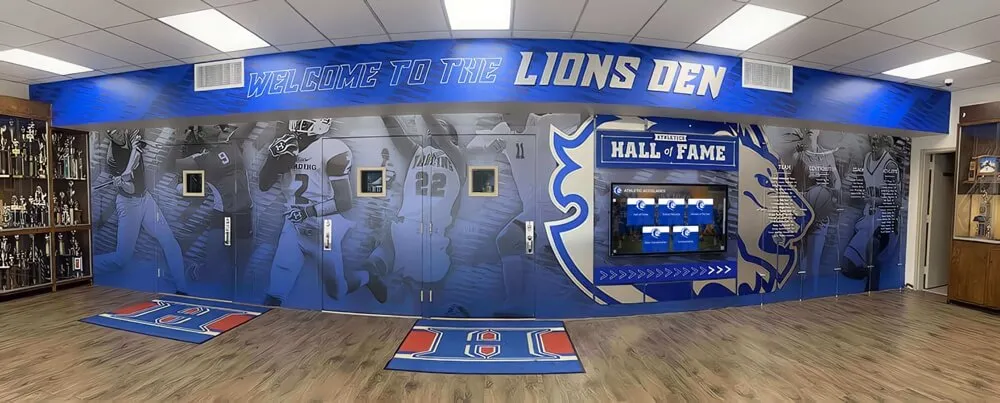
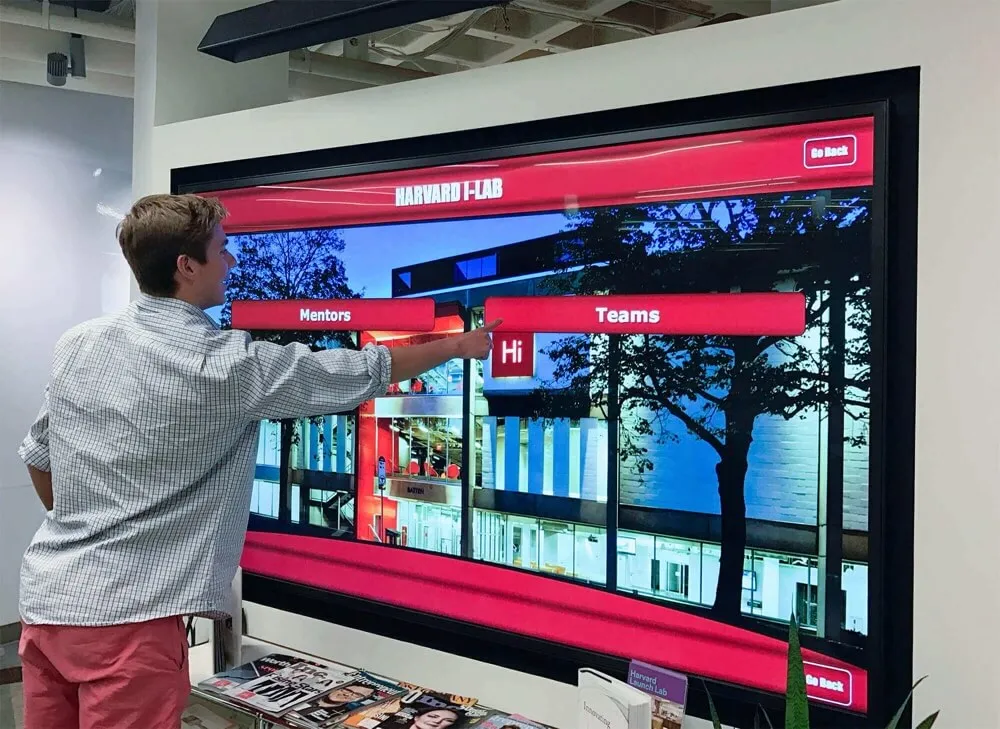
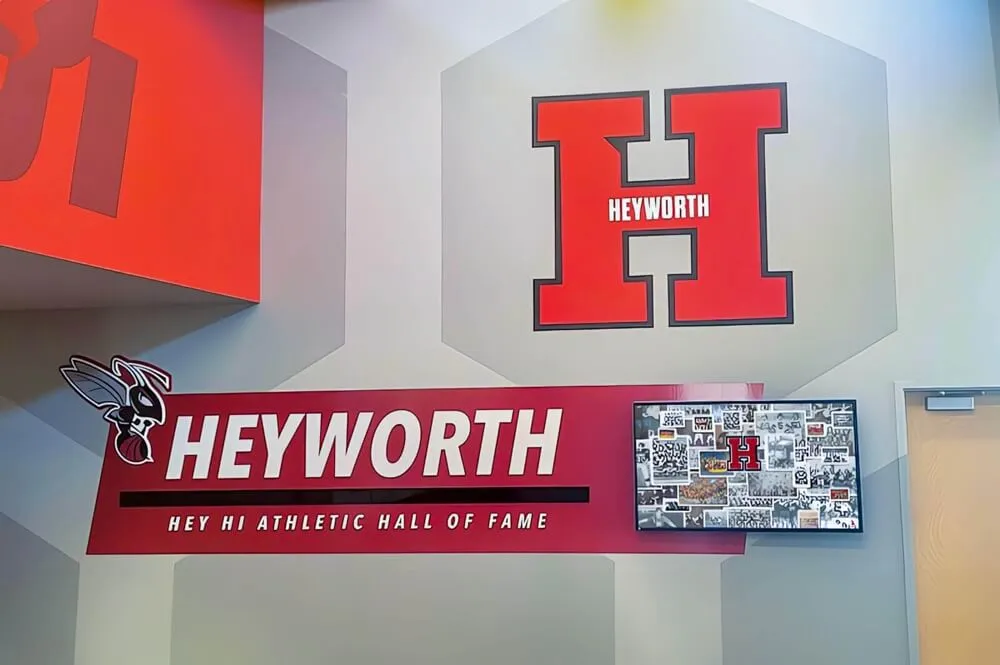
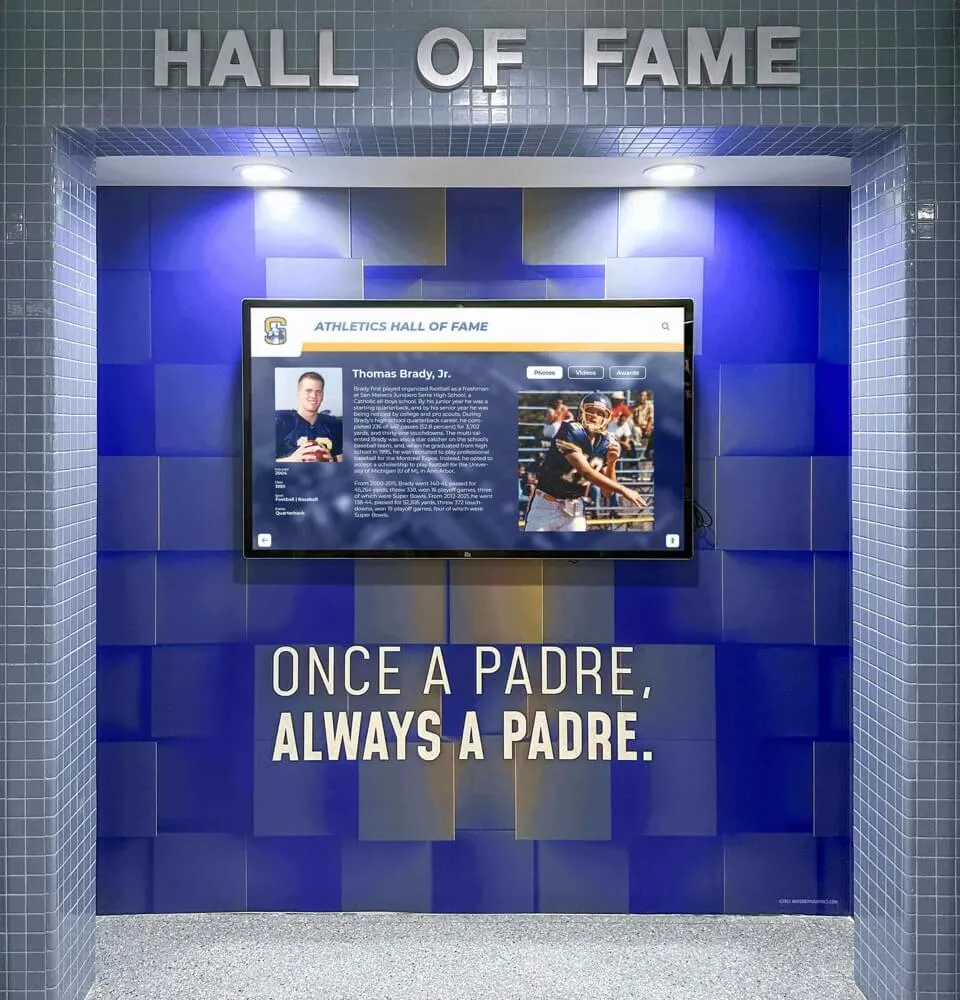
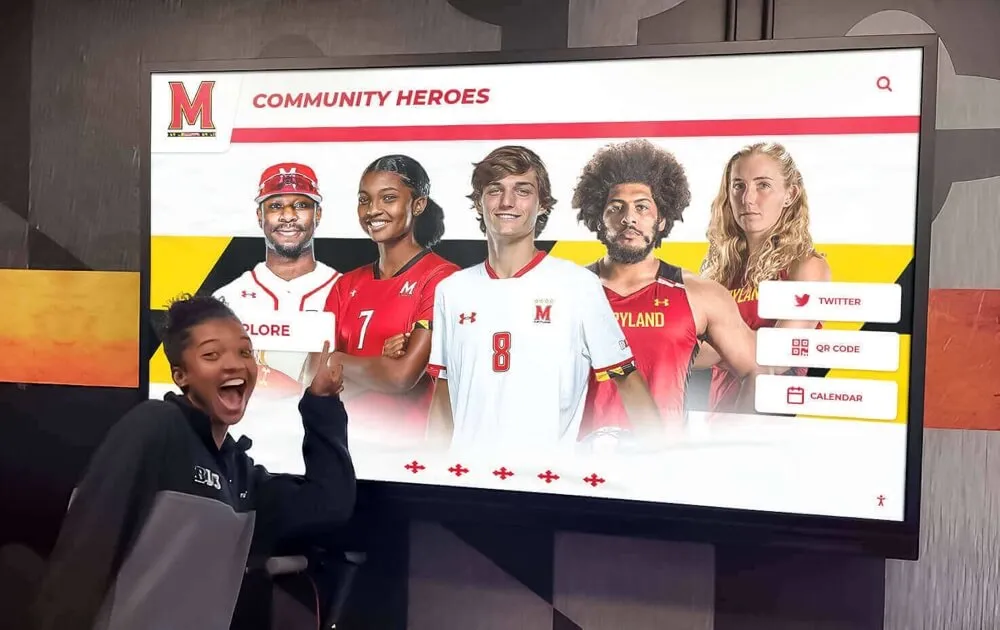
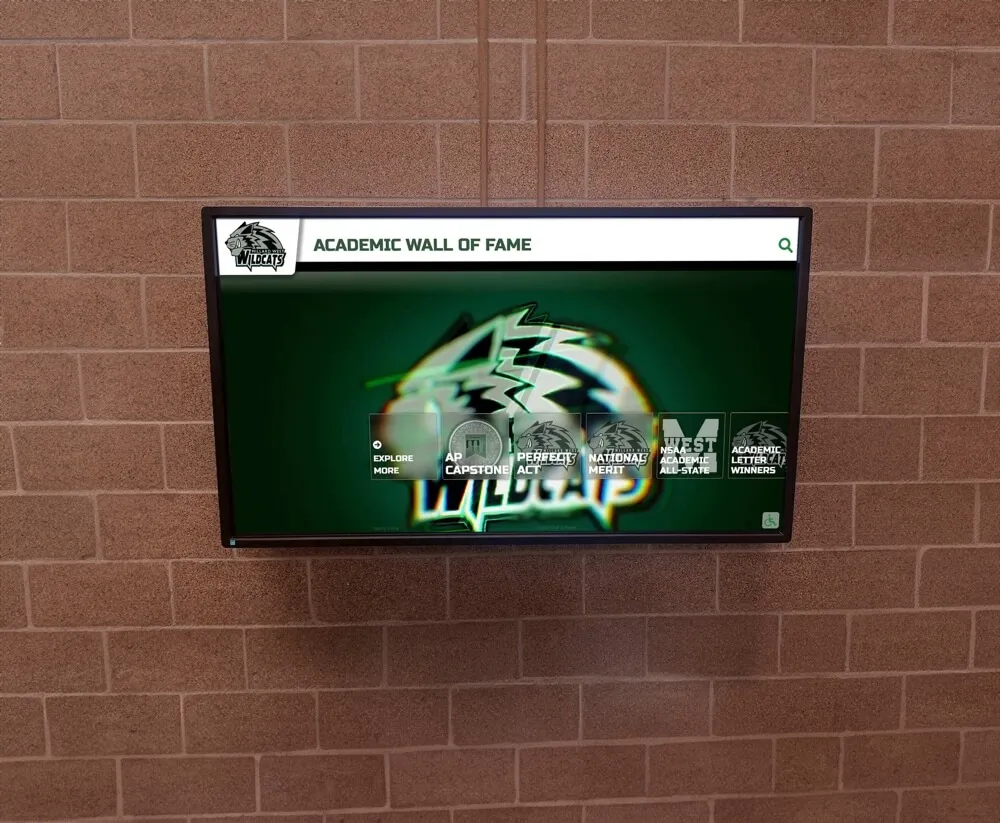
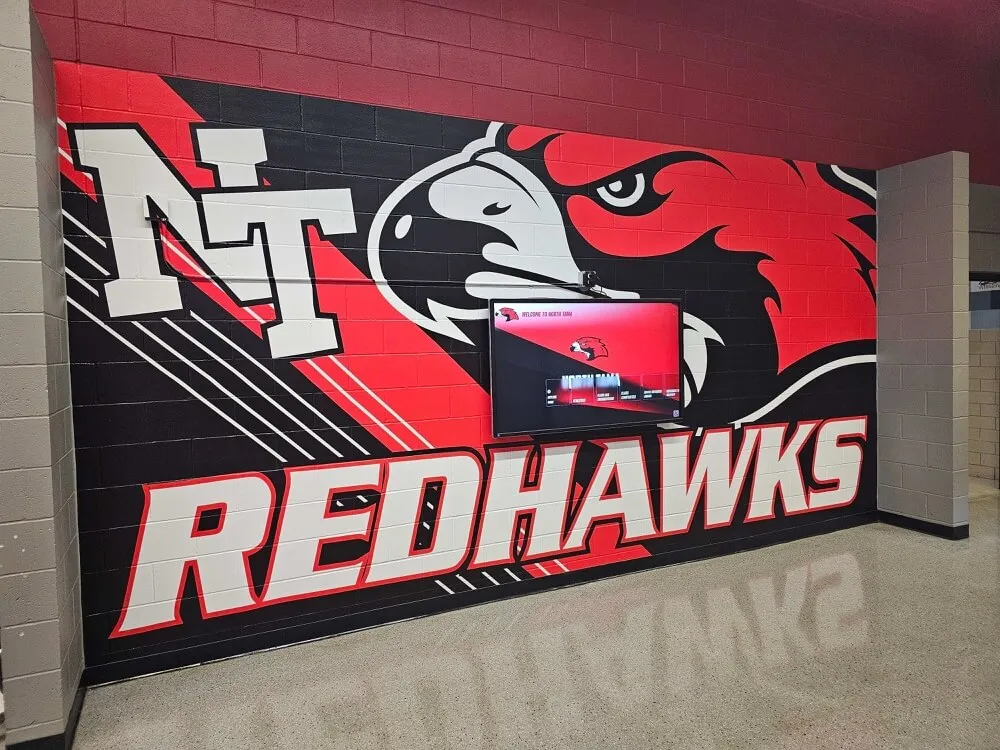
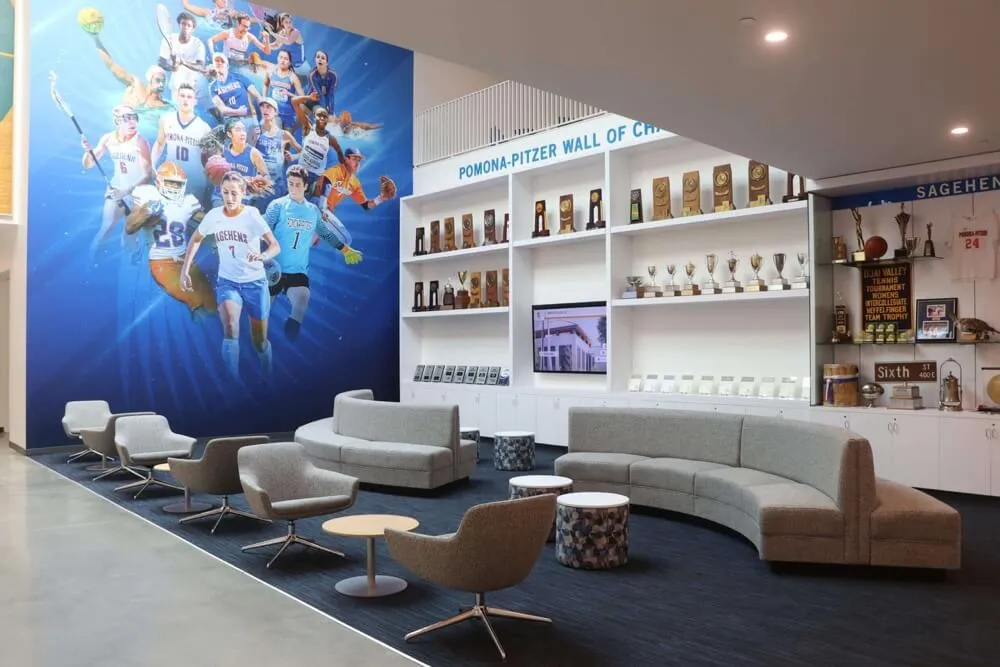
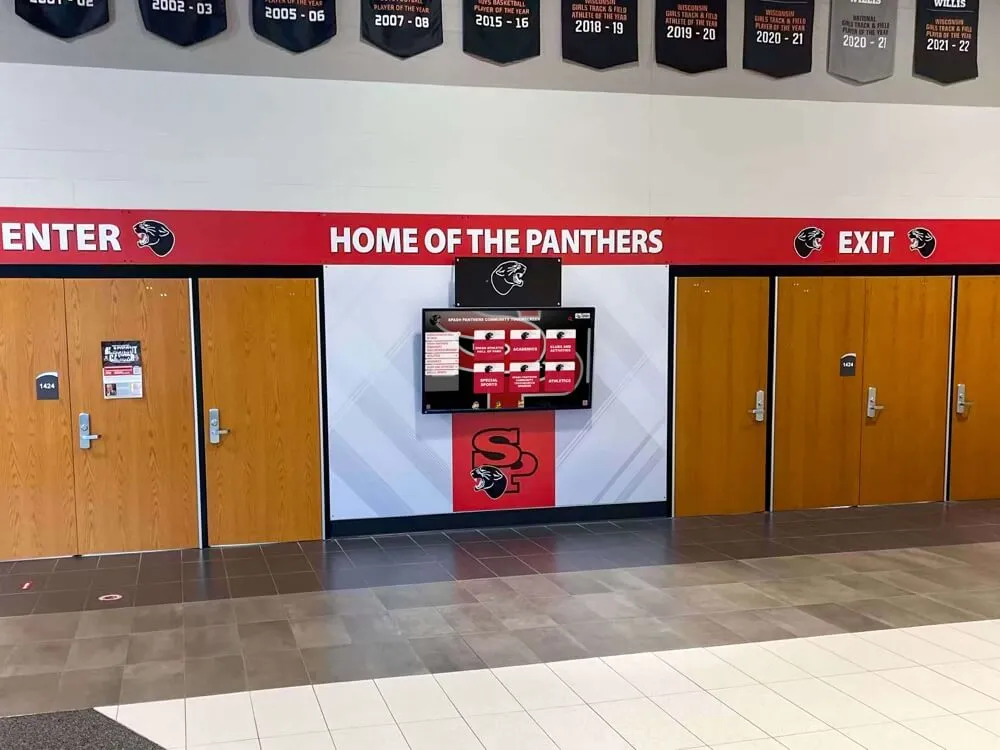
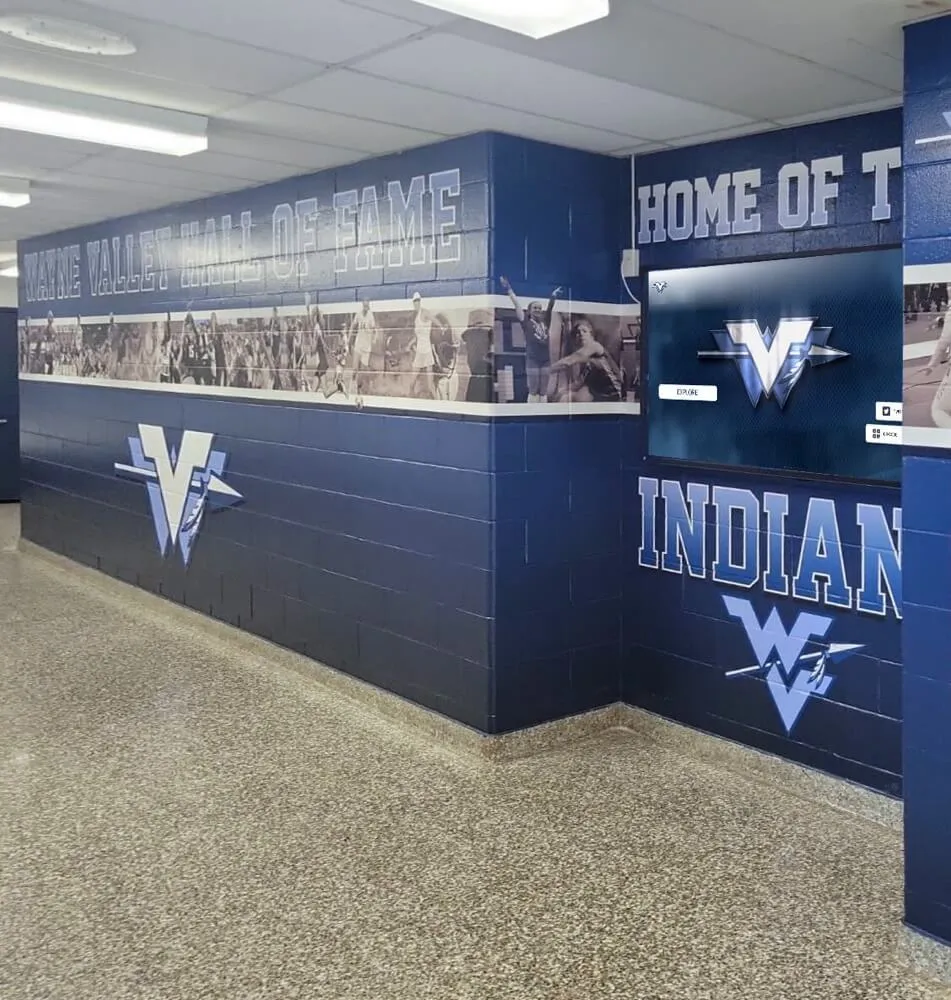
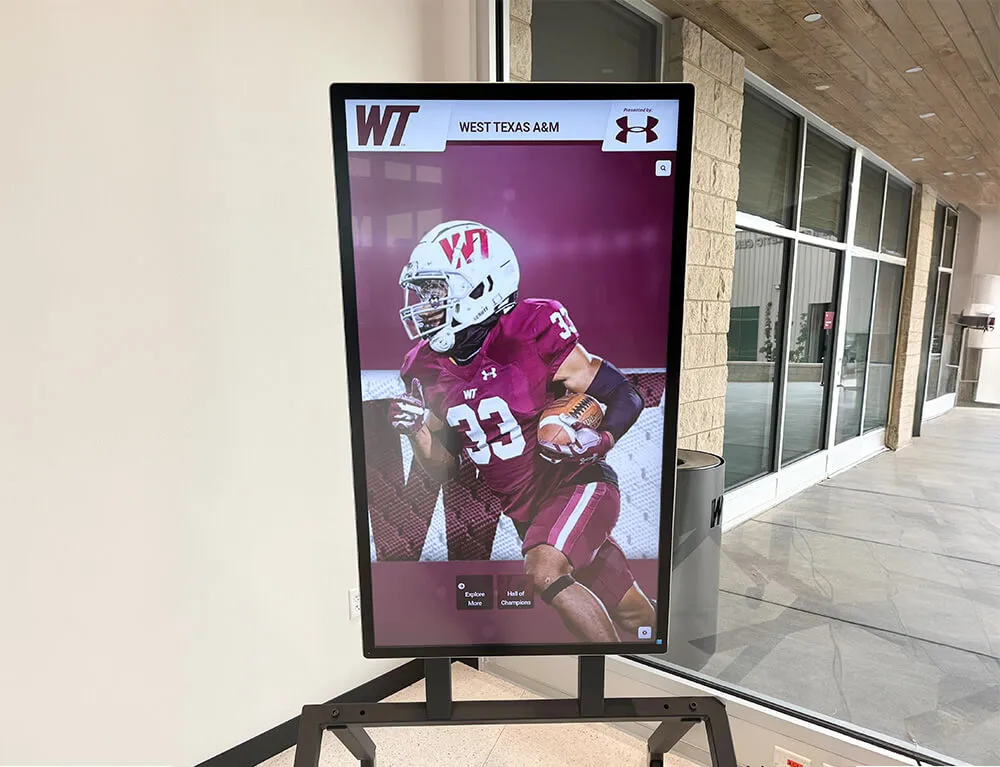
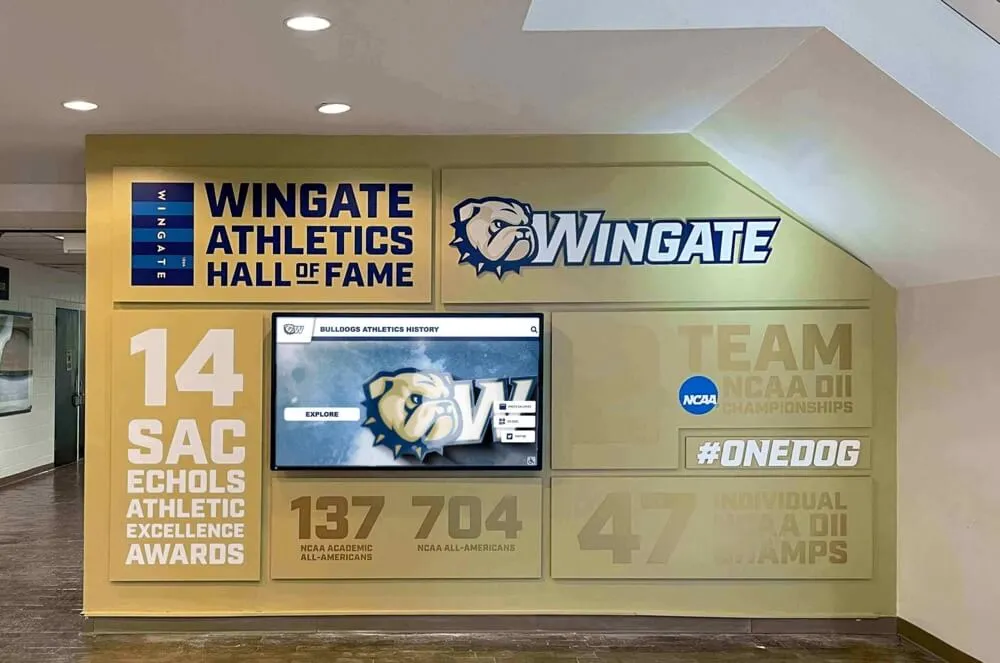
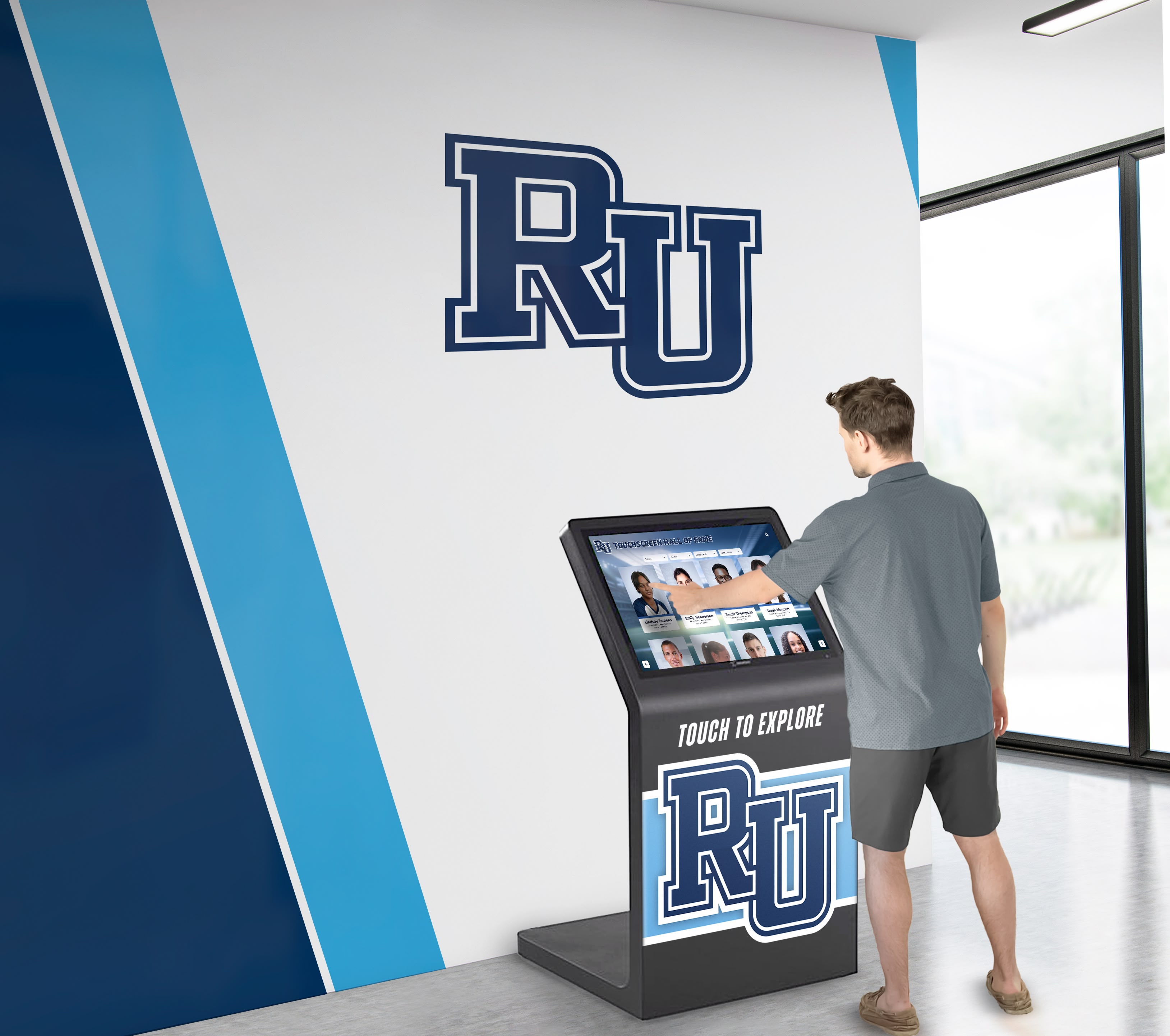
Interactive touchscreen displays create welcoming visitor experiences while providing essential information and community connection
Understanding the Assisted Living Visitor Experience
Before implementing digital solutions, it’s essential to understand the diverse visitor needs and touchpoints that define the assisted living family experience.
The Unique Dynamics of Senior Living Visits
Assisted living facilities welcome visitor types with dramatically different needs, expectations, and emotional contexts that digital displays must address thoughtfully.
Family Member Regular Visitors
Weekly or frequent visitors represent the most common facility guests:
- Daughters, sons, and spouses visiting multiple times per week
- Grandchildren connecting with grandparents across generations
- Extended family members maintaining important relationships
- Close friends from church, clubs, or lifelong friendships
- Former neighbors and community connections
These regular visitors need quick, efficient navigation to resident rooms, current activity schedules to coordinate participation, updates on community events and their loved one’s involvement, and ways to feel connected to the broader community beyond individual visits.
Solutions like Rocket Alumni Solutions help facilities create engaging recognition displays that celebrate residents while providing families meaningful visibility into community life and their loved one’s participation in activities and social connections.
Prospective Residents and Families
Tour visitors evaluate facilities through highly critical lenses:
Families assessing care quality and community culture, prospective residents evaluating whether they could envision themselves living in the community, adult children researching options for parents often under stressful circumstances, and healthcare professionals recommending appropriate placement options all need immediate visual indicators of community vitality and quality, evidence of resident engagement and activity participation, transparent communication about services and amenities, and welcoming environments that reduce anxiety about senior living transitions.
First impressions formed during facility tours significantly influence selection decisions, making lobby and common area digital displays critical marketing and engagement tools.
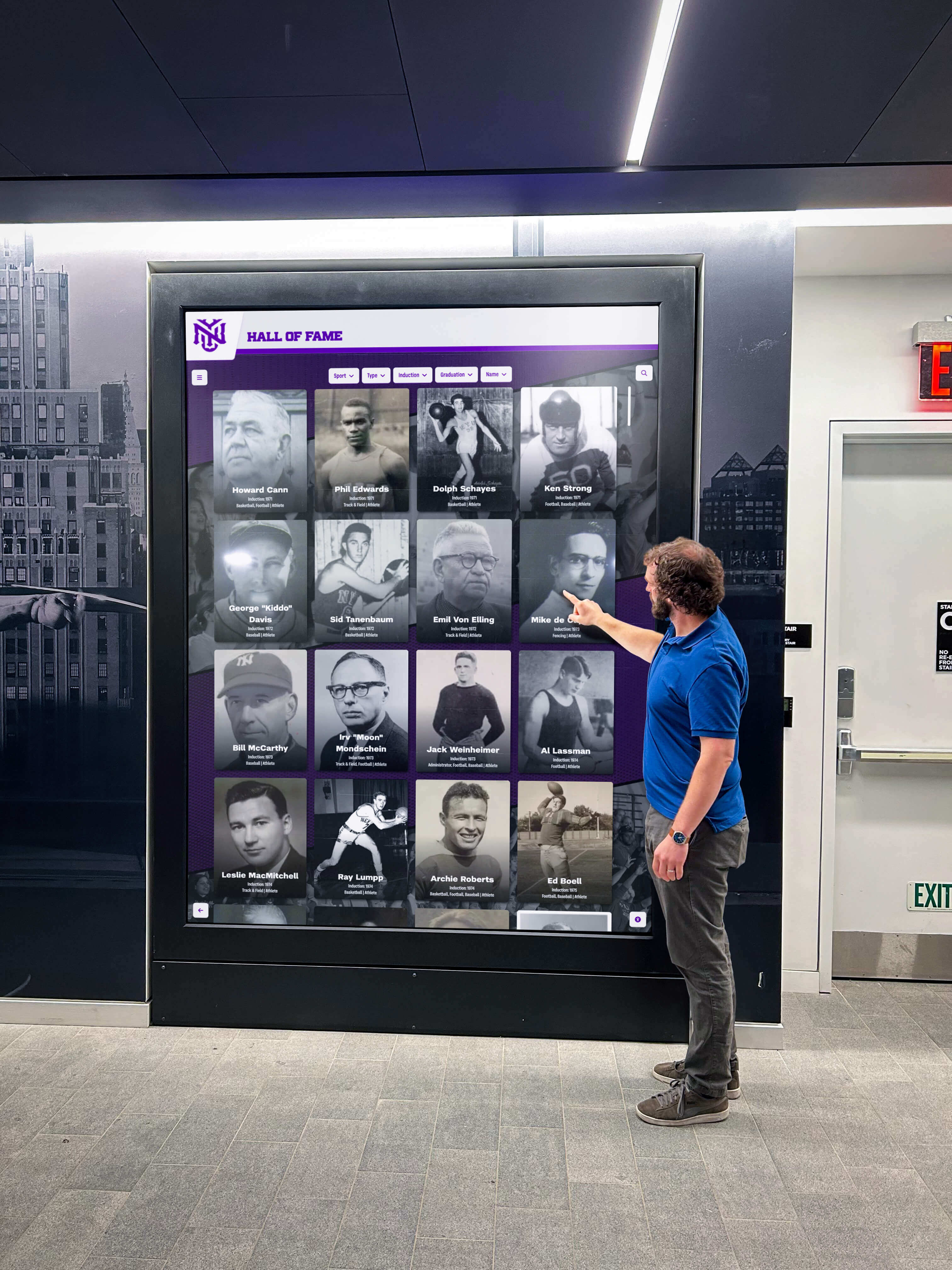
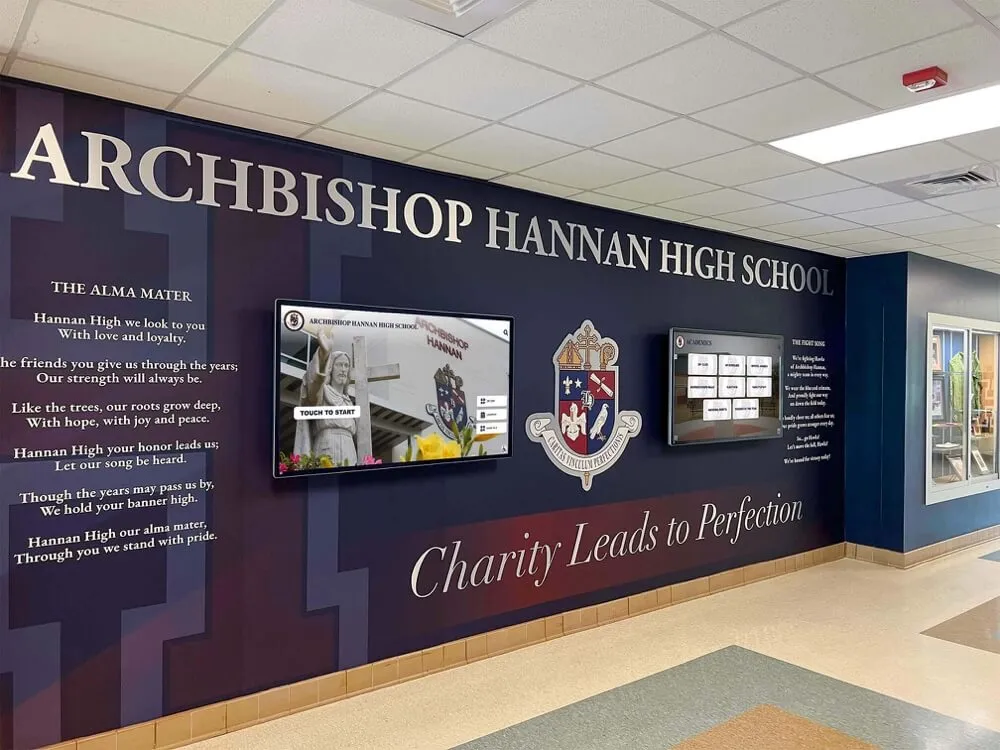
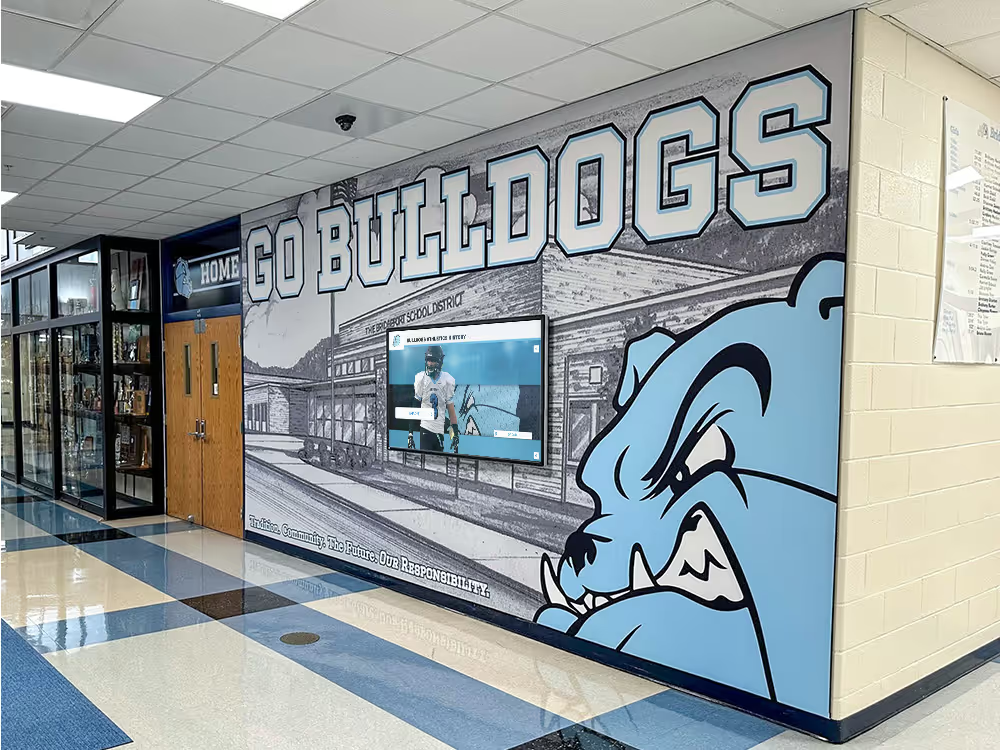
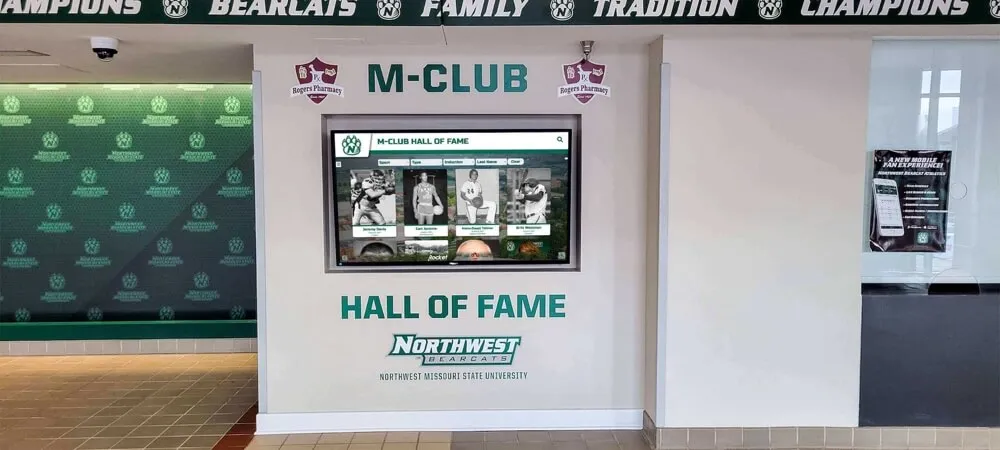
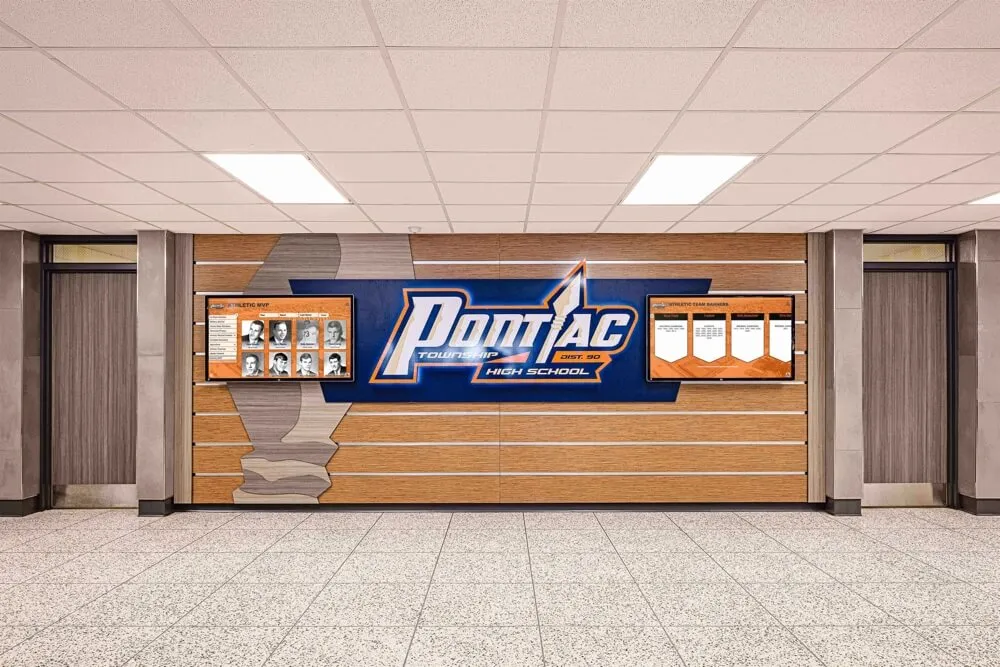
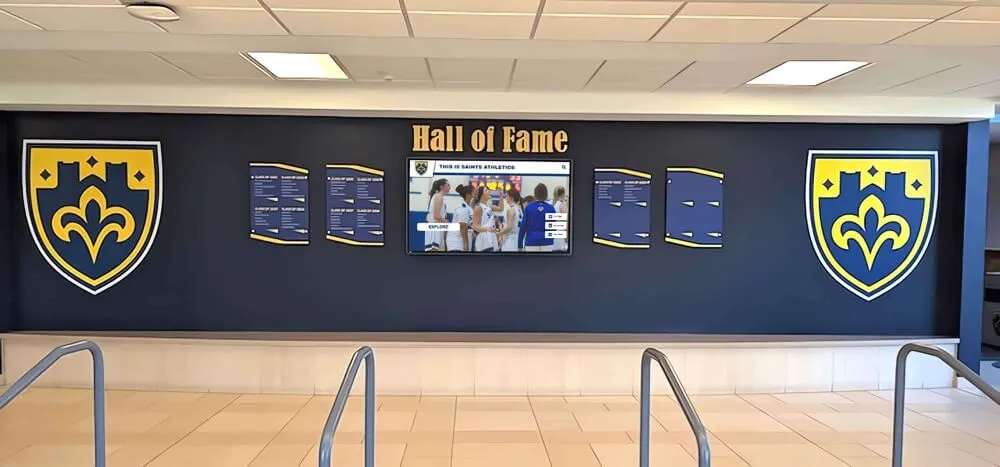
Interactive displays engage visitors while showcasing community vibrancy and resident achievement
Healthcare Providers and Professional Visitors
Medical and service providers require efficient facility navigation:
- Physicians making regular rounds need quick room location
- Physical therapists, occupational therapists visiting multiple residents
- Mobile dental and podiatry services navigating facilities
- Laboratory and diagnostic service providers
- Hospice and specialized care consultants
- Social workers and case managers
Professional visitors benefit from streamlined wayfinding, clear facility maps and directories, updated schedules avoiding conflicts, and professional presentation that reflects organizational competence.
Digital wayfinding and directory systems significantly reduce staff interruptions from visitors asking for directions while ensuring professional visitors reach appropriate locations efficiently.
Learn about comprehensive visitor engagement strategies in community engagement display ideas that create welcoming environments.
Common Visitor Experience Pain Points
Understanding current limitations helps facilities identify how digital solutions address real problems affecting satisfaction and operations.
Navigation and Wayfinding Challenges
Facility layout confusion creates stress and inefficiency:
- Complex buildings with multiple wings, floors, or interconnected structures
- Confusing room numbering systems that don’t follow intuitive patterns
- Limited or outdated signage missing at critical decision points
- Accessibility challenges for visitors with mobility limitations
- Parking confusion and unclear entrance identification
Visitors report that getting lost creates anxiety and embarrassment, interrupts staff repeatedly asking for directions, delays time with residents due to navigation struggles, and creates negative first impressions for prospective resident families.
Interactive touchscreen wayfinding eliminates these problems through visual floor maps, turn-by-turn directions, searchable resident directories, and location-specific information available throughout facilities.
Information Access and Communication Gaps
Static information delivery fails to meet modern visitor expectations:
- Activity calendars posted in single locations accessible only to those nearby
- Event announcements that reach residents but not visiting families
- Outdated bulletin boards with papers falling down or information from weeks prior
- No visibility for families living remotely into daily community life
- Missed opportunities for families to coordinate visits with special events
These communication gaps reduce family participation in community life, limit visibility into resident engagement and wellbeing, create missed opportunities for multi-generational event attendance, and contribute to family anxiety about social isolation or limited activity participation.
Digital displays with dynamic content ensure current information reaches all visitors while extending communication beyond physical facility walls.
Emotional and Psychological Visitor Needs
Beyond practical navigation and information, visitors have emotional needs that facility environments should address.
Creating Welcoming First Impressions
Lobby and entrance areas set emotional tone:
- Prospective families assess whether environments feel homelike and welcoming
- Regular visitors want to feel the facility values and respects their loved ones
- Residents bringing guests want to feel proud of their community
- Staff want environments that reflect the quality care they provide daily
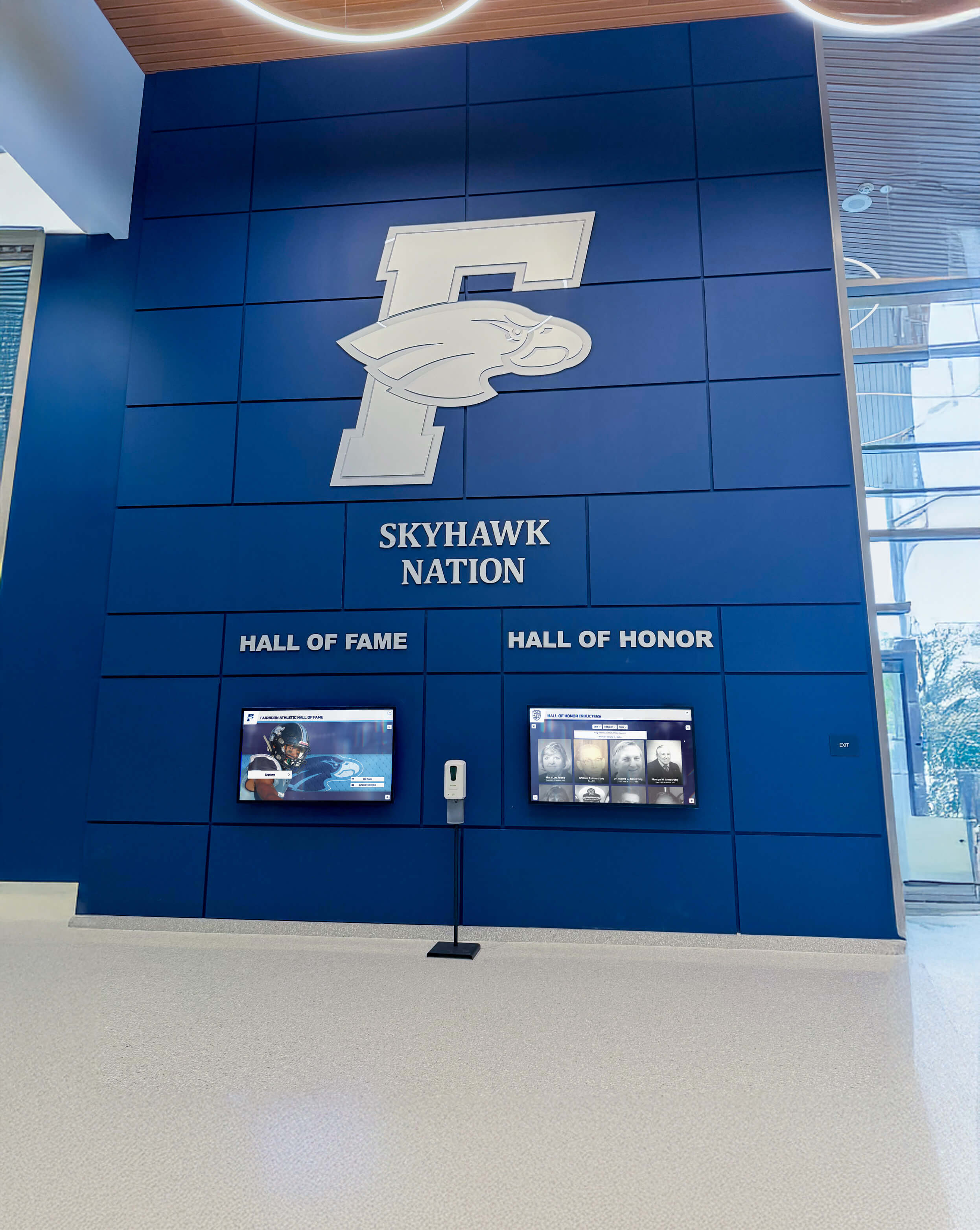
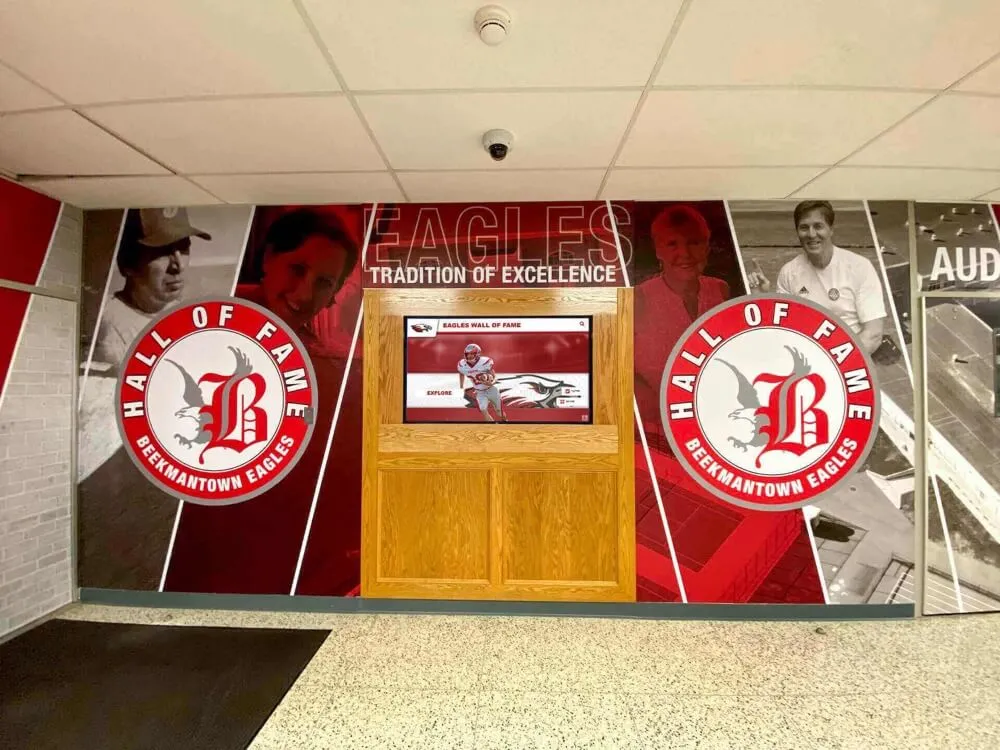
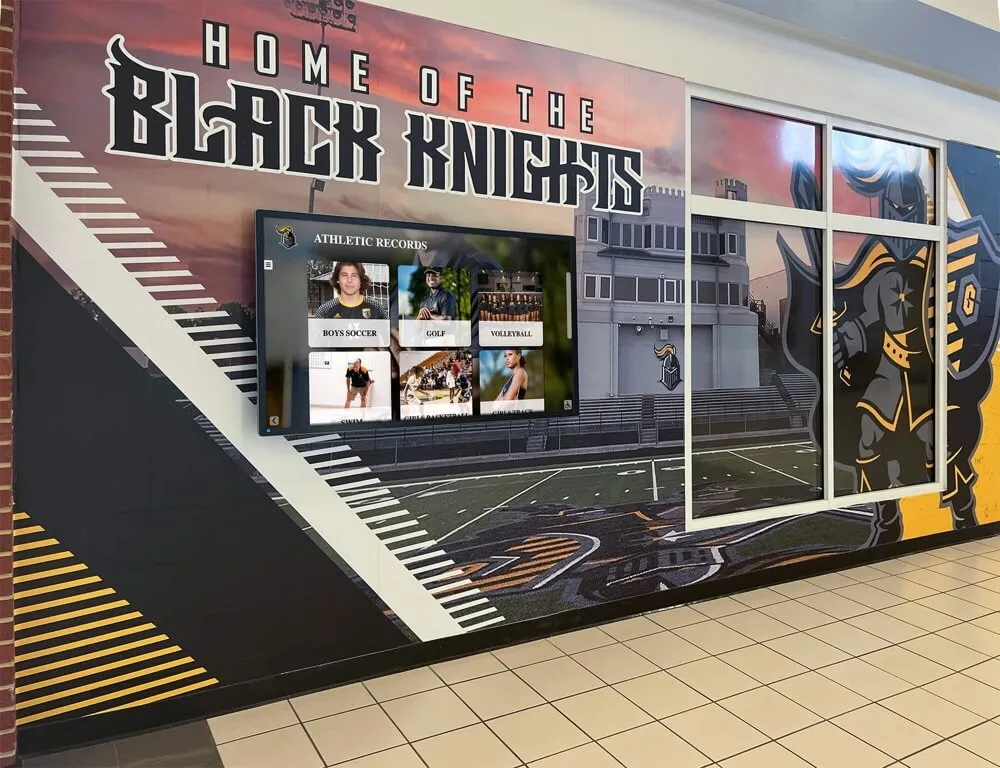
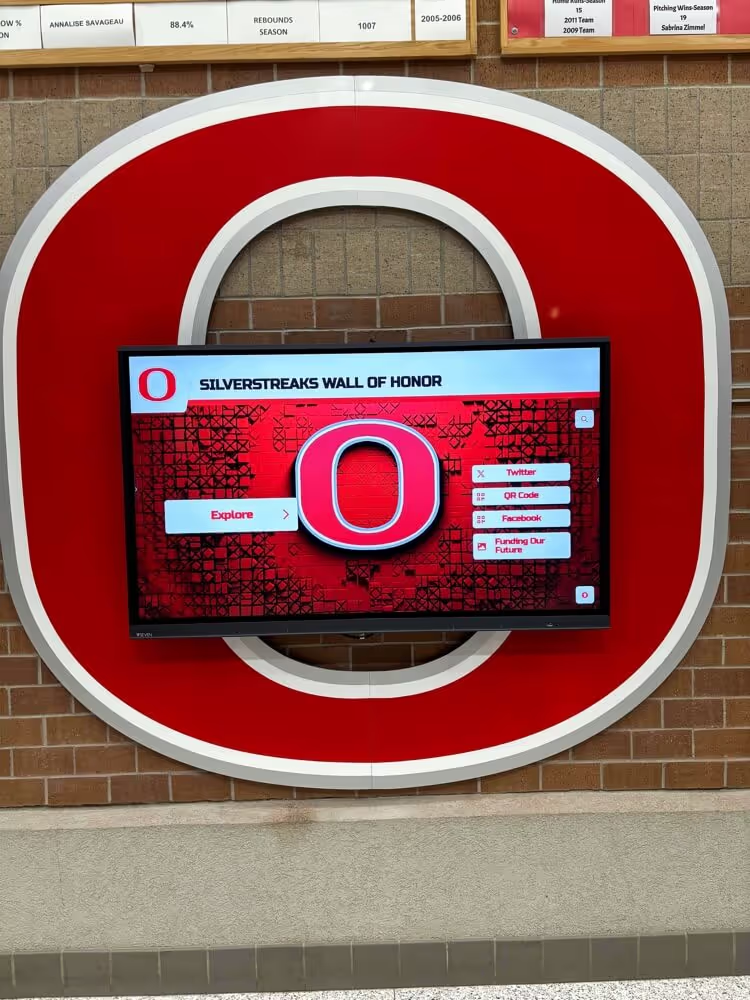
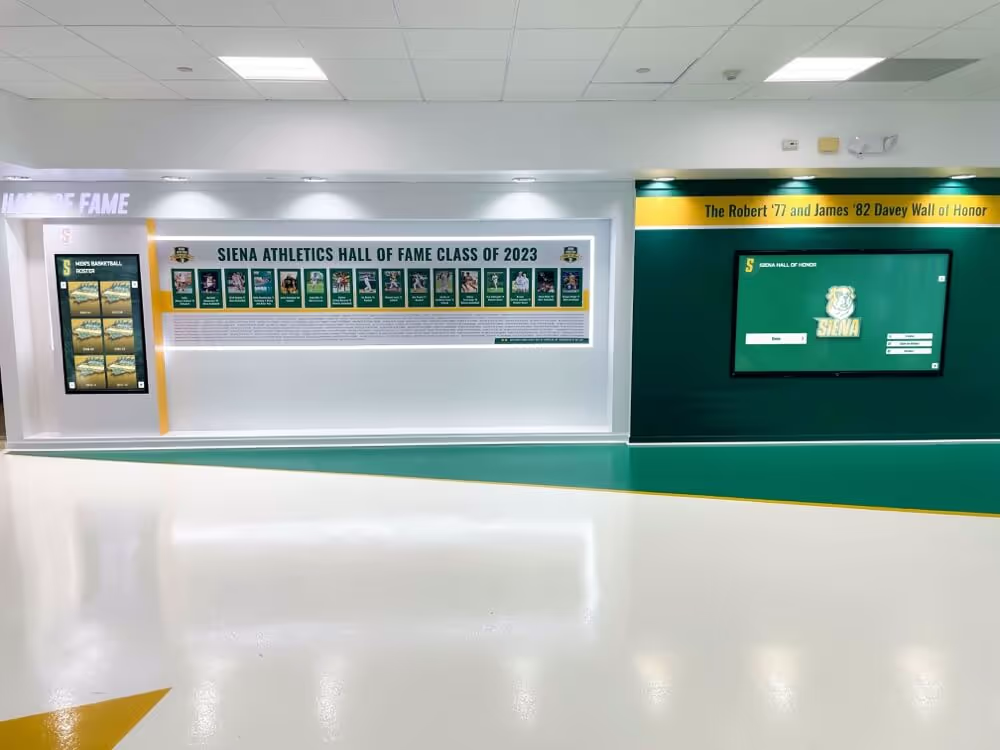
Lobby displays create welcoming first impressions that communicate community quality and resident celebration
Reducing Transition Anxiety
Moving to assisted living represents major life transition:
Families often experience guilt, worry, or grief about placement decisions, prospective residents fear loss of independence and identity, visitors want reassurance that loved ones thrive socially and emotionally, and everyone needs evidence that the community truly cares about individuals beyond basic care provision.
Digital displays celebrating resident achievements, community participation, life histories, and ongoing engagement provide concrete evidence that facilities honor individual dignity while fostering vibrant community life.
Core Features of Effective Assisted Living Digital Displays
Modern digital display systems incorporate multiple functionalities addressing diverse visitor and operational needs.
Interactive Wayfinding and Directories
Navigation assistance represents one of the most immediately valuable digital display applications for assisted living facilities.
Touchscreen Building Maps
Interactive floor plans eliminate navigation confusion:
Essential Wayfinding Features
- Visual facility maps showing all wings, floors, and major spaces
- “You are here” indicators establishing current location
- Searchable resident directories respecting appropriate privacy
- Points of interest including dining rooms, activity spaces, and common areas
- Accessible route options for mobility-challenged visitors
- Parking and entrance guidance for first-time visitors
These systems enable visitors to quickly locate resident rooms without staff assistance, understand facility layout reducing anxiety about getting lost, discover amenities and common spaces they might want to visit, and navigate efficiently even during first visits to unfamiliar facilities.
Facilities implementing interactive wayfinding report dramatic reductions in staff interruptions for directions, improved visitor satisfaction scores, more efficient professional service provider visits, and enhanced first impressions during prospective resident tours.

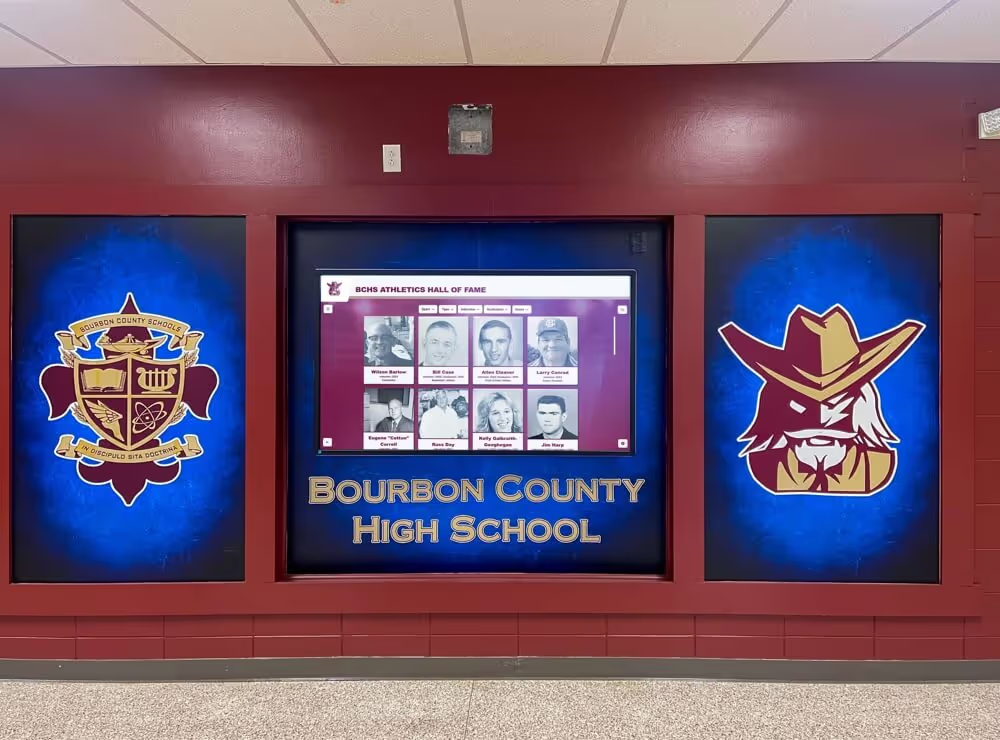
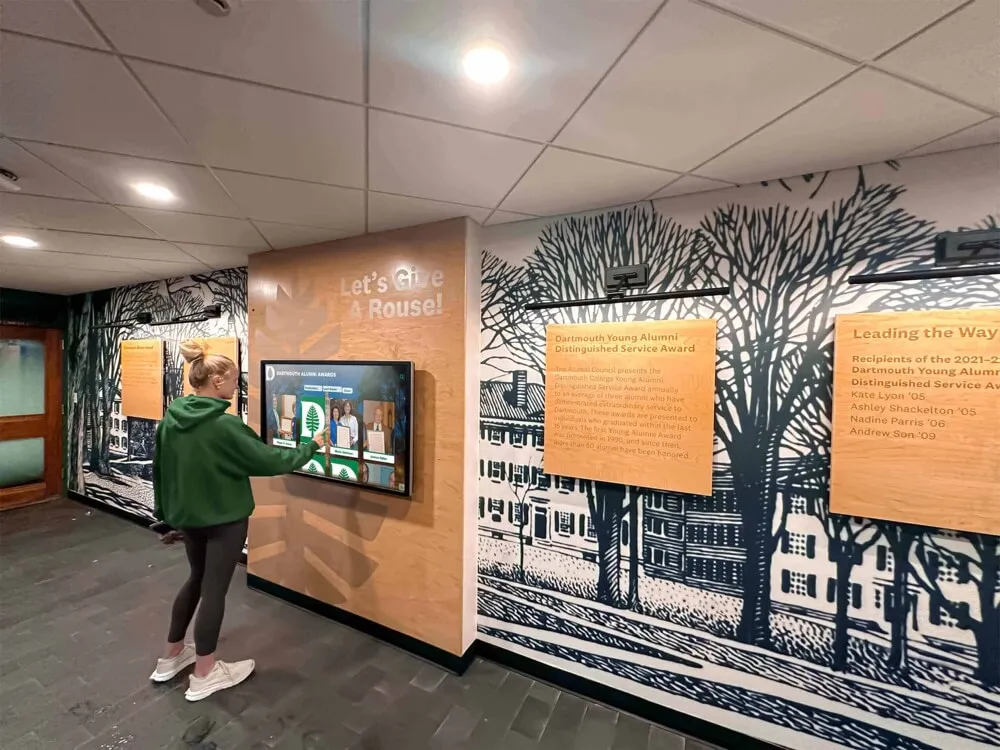
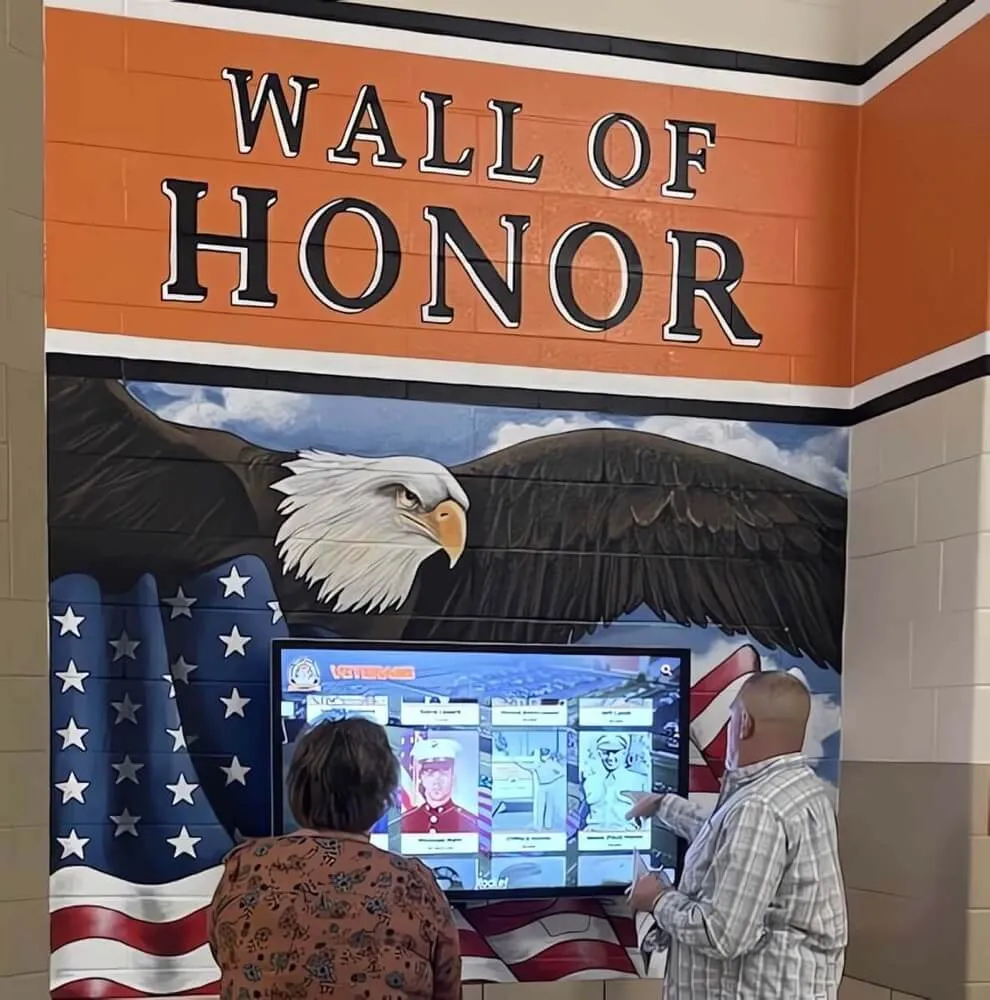
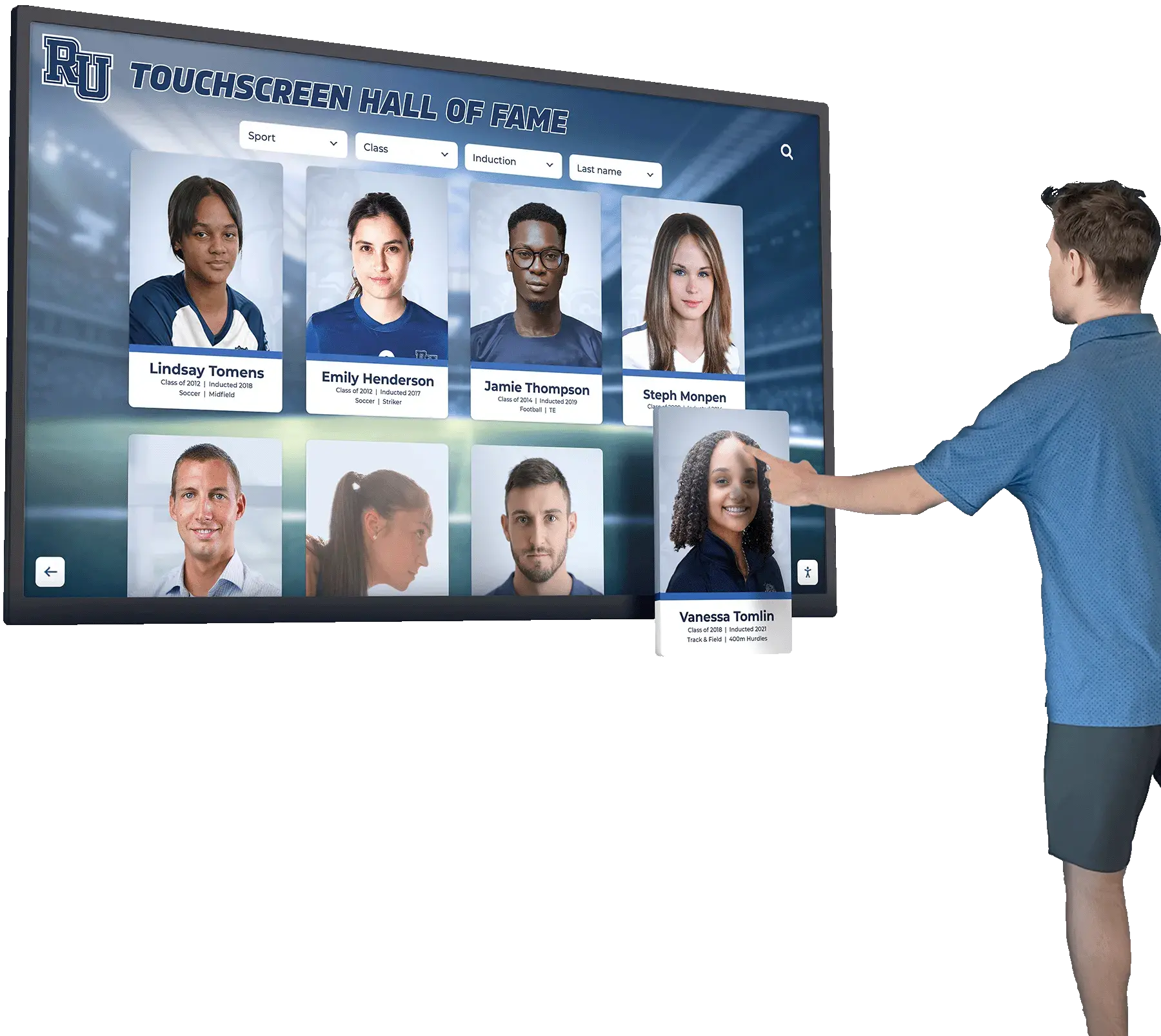
Intuitive touchscreen interfaces enable visitors to quickly find destinations and explore facility amenities
Privacy-Appropriate Resident Information
Directory systems must balance accessibility with privacy protection:
Facilities should implement searchable name directories with appropriate consent, room number visibility respecting resident preferences for privacy, activity participation listings for residents who opt to share, and secure access controls preventing unauthorized information access.
Consult with legal counsel and review HIPAA and state privacy regulations ensuring directory implementations comply with all applicable privacy protections while serving legitimate visitor needs.
Dynamic Activity Calendars and Event Information
Real-time schedule displays keep visitors informed about community life and coordinate family participation opportunities.
Comprehensive Activity Scheduling
Digital calendars showcase community vitality:
Schedule Display Elements
- Daily activity calendars showing complete programming
- Weekly overview displays for planning future visits
- Special event highlights promoting upcoming celebrations
- Real-time updates when activities change or are rescheduled
- Category filtering by activity type, location, or audience
- Photo and video previews of previous similar events
These comprehensive calendars help families coordinate visits with special events or activities their loved ones enjoy, provide visibility into the breadth of programming offered, demonstrate activity participation and social engagement, and create opportunities for multi-generational event attendance.
Visitors consistently report that seeing robust activity calendars provides reassurance about resident engagement and quality of life beyond basic care provision.
Explore comprehensive activity recognition approaches in community showcase project ideas that celebrate engagement.
Family Participation Coordination
Schedule visibility enables family involvement:
Families can plan visits to attend concerts, birthday celebrations, or special performances with residents, coordinate with specific activity times when loved ones are most alert and engaged, participate in multi-generational events designed for resident-family interaction, and understand daily routines to avoid interrupting therapy or rest times.
This coordination significantly enhances visit quality while increasing family participation in community life beyond brief individual room visits.
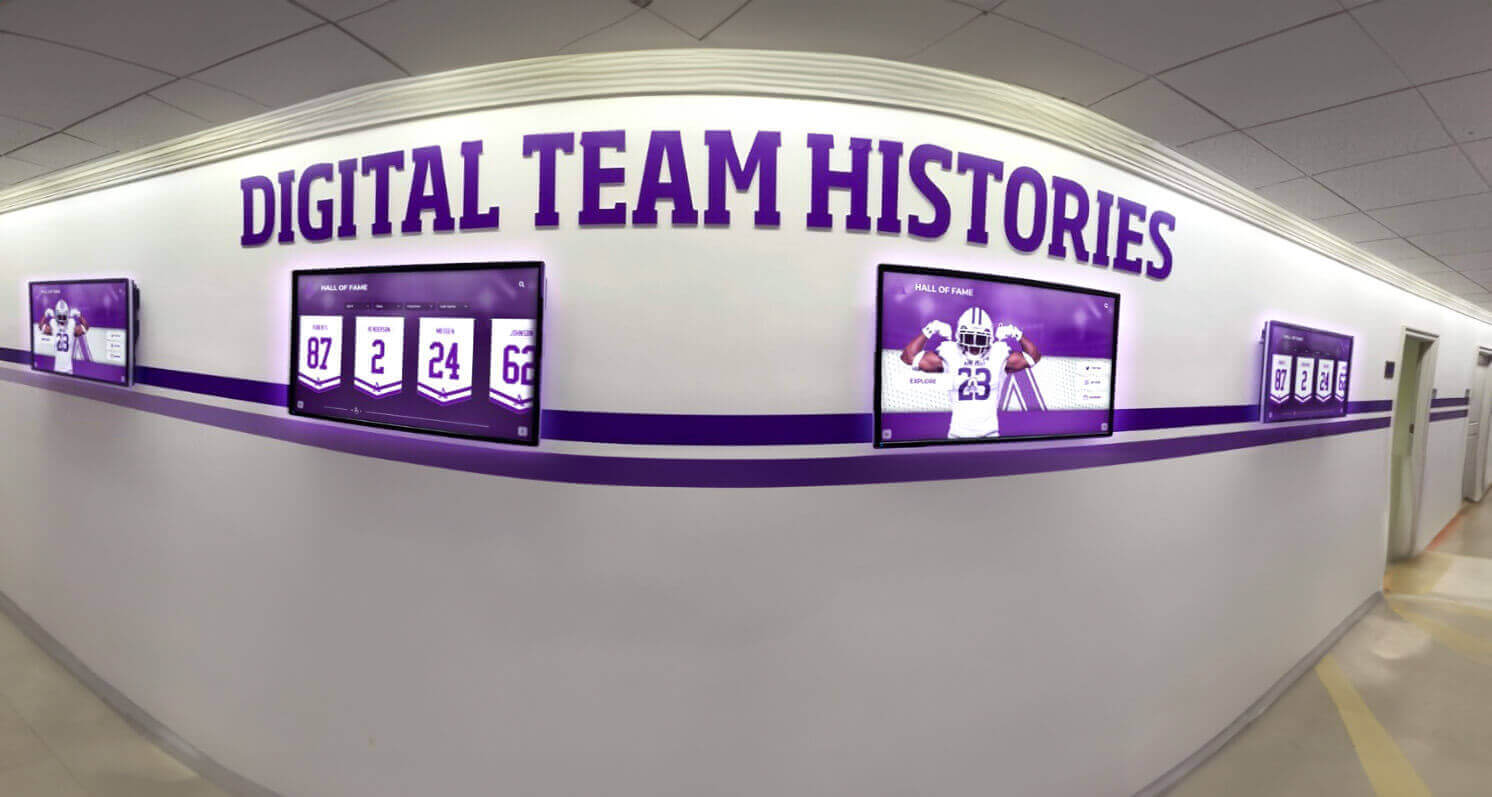
Dynamic activity displays keep families informed while showcasing vibrant community programming
Resident Recognition and Life Story Celebration
Honoring resident achievements, histories, and ongoing contributions creates meaningful engagement while demonstrating individualized care approaches.
Resident of the Month and Achievement Recognition
Celebrating residents reinforces dignity and individual value:
Recognition Display Categories
- Resident spotlights featuring life histories and accomplishments
- Birthday celebrations and milestone recognitions
- Community contribution acknowledgments for volunteers and leaders
- Activity participation highlights and achievement recognition
- “Then and Now” photo features connecting past and present
- Family legacy stories celebrating multi-generational histories
These recognition displays demonstrate that facilities truly know and value residents as individuals, provide family talking points and conversation starters during visits, create sources of pride for residents showing guests their community, and communicate facility culture prioritizing dignity and individual celebration.
Solutions like Rocket Alumni Solutions specialize in creating engaging recognition displays that honor individuals while building community pride and connection.
Life History and Memory Preservation
Digital displays can showcase resident backgrounds creating connection:
Facilities might feature career achievement retrospectives honoring professional accomplishments, military service recognition for veterans with photos and service details, community leadership acknowledgment for civic contributions, family heritage stories celebrating cultural backgrounds, and hobby and passion showcases connecting with current interests.
This personalized recognition proves particularly valuable for memory care residents whose life stories provide important identity anchors and create meaningful family engagement opportunities.
Community Announcements and Family Communication
Real-time messaging capabilities ensure important information reaches visitors reliably.
Welcome Messages and Personalization
Customized greetings create welcoming experiences:
AI-enabled systems can recognize regular visitors and display personalized welcome messages, birthday and anniversary acknowledgments for visiting family members, new resident welcome announcements introducing community members, and staff introduction displays helping families know care team members.

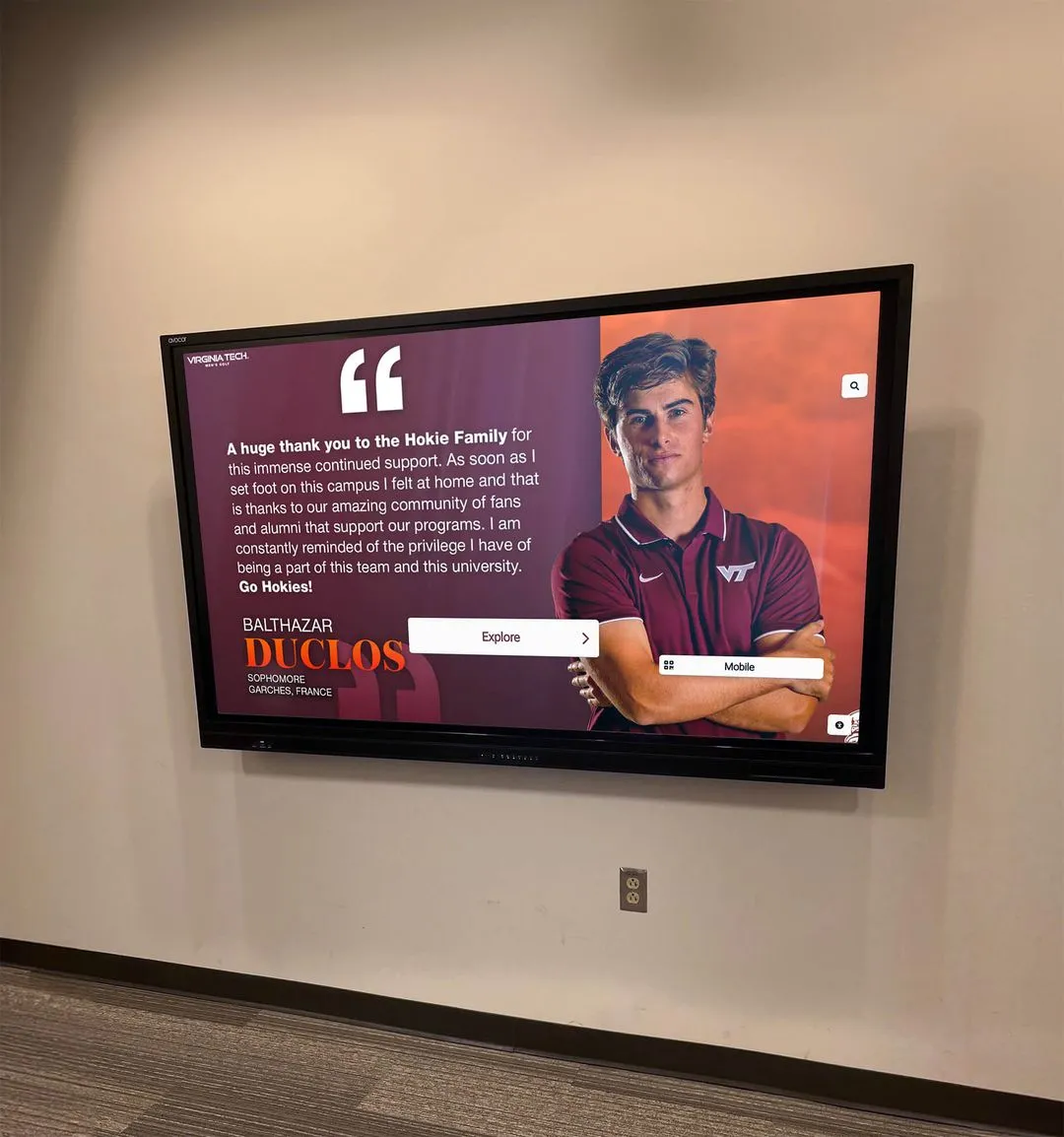
Personalized displays create welcoming experiences while providing essential community information
Time-Sensitive Communications
Digital systems enable immediate information sharing:
Weather alerts and severe weather protocols ensure visitor safety, facility policy updates communicate important procedural changes, health and wellness announcements share relevant community health information, visiting hour modifications during holidays or special circumstances, and emergency messaging capabilities for critical situations.
This real-time communication capability proves invaluable for ensuring visitors receive current information rather than outdated bulletin board content posted weeks earlier.
Strategic Implementation for Assisted Living Facilities
Successful digital display deployment requires thoughtful planning addressing facility-specific needs, resident populations, and operational considerations.
Needs Assessment and Planning
Effective implementation begins with understanding specific facility requirements and visitor patterns.
Stakeholder Input and Requirements Gathering
Include diverse perspectives in planning:
Essential Stakeholder Groups
- Administration identifying operational priorities and budget parameters
- Activities directors understanding programming promotion needs
- Nursing leadership addressing care coordination and communication
- Admissions and marketing staff focusing on prospect tour experiences
- Family council representatives sharing visitor perspective
- Residents providing input on content preferences and comfort with technology
This comprehensive input ensures digital systems serve actual needs rather than implementing technology without clear purpose or user benefit.
Visitor Flow and Placement Analysis
Strategic location decisions maximize display value:
Analyze facility traffic patterns identifying high-visibility locations, entrance and lobby areas reaching all visitors immediately, common spaces where families gather before or after visits, dining room approaches where residents and families congregate, activity spaces promoting programming participation, and corridors connecting major facility sections.
Multiple distributed displays typically prove more effective than single lobby installations, ensuring information reaches visitors throughout facilities at relevant decision points and creating redundancy so missed information in one location appears elsewhere.
Learn about strategic placement in digital recognition display buyer guide with facility planning frameworks.
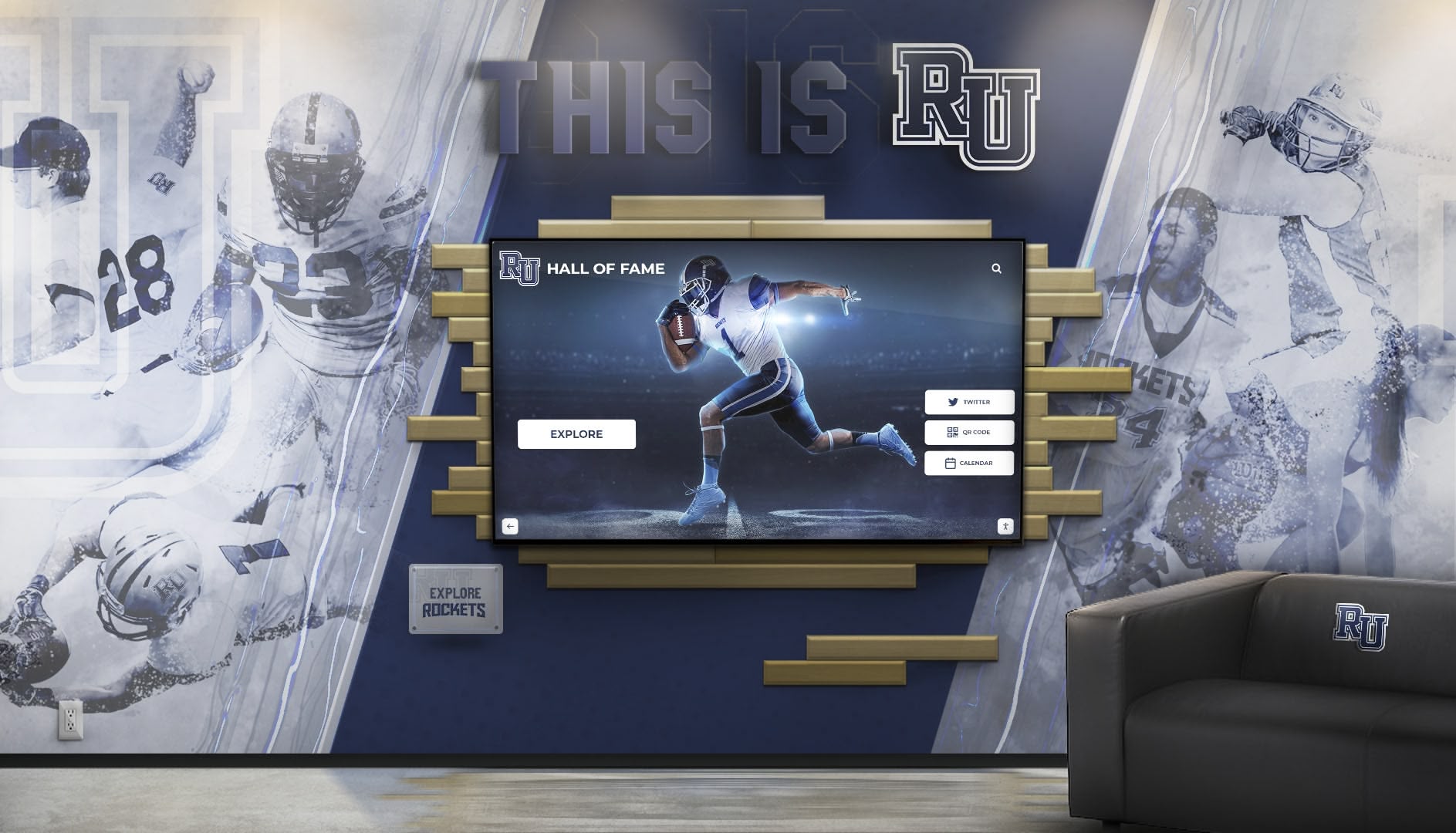
Strategic placement ensures displays reach visitors at relevant touchpoints throughout facility experiences
Technology Selection and Installation
Appropriate hardware and software choices ensure systems serve facility needs reliably while remaining maintainable long-term.
Hardware Considerations for Senior Living Environments
Assisted living facilities present specific technical requirements:
Critical Hardware Specifications
- Screen size appropriate for viewing distances and common space dimensions
- Anti-glare coatings ensuring readability in bright lobby lighting
- Durable commercial-grade displays rated for continuous operation
- Accessible mounting heights accommodating wheelchair users and mobility devices
- Touchscreen responsiveness appropriate for users with reduced dexterity
- Hearing loop integration for visitors with hearing impairments
Senior-appropriate design ensures displays serve all visitors regardless of age or ability while providing reliability essential for always-on facility operations.
Software Platform Requirements
Content management systems should match staff capabilities:
Essential Platform Features
- Intuitive interfaces requiring minimal technical expertise
- Cloud-based access enabling updates from any device
- Template systems simplifying consistent content creation
- Multi-display management from centralized interface
- Role-based permissions ensuring appropriate access levels
- Mobile-responsive web access extending content beyond physical displays
Solutions like Rocket Alumni Solutions provide purpose-built platforms specifically designed for community recognition and engagement rather than generic digital signage requiring extensive customization.
Installation and Infrastructure
Professional installation ensures long-term reliability:
Facilities need adequate electrical access at desired display locations, reliable network connectivity supporting cloud-based content management, professional mounting ensuring stability and accessibility compliance, cable management maintaining clean professional appearance, and ongoing technical support for troubleshooting and maintenance.
Budget for professional installation rather than attempting DIY approaches that may create accessibility, safety, or reliability problems requiring expensive corrections later.
Content Strategy and Management
Effective displays require systematic content planning and consistent management approaches.
Initial Content Development
Launch with comprehensive content establishing immediate value:
Launch Content Priorities
- Facility maps and wayfinding information for immediate utility
- Current month activity calendars showing programming breadth
- Resident recognition features honoring diverse community members
- Welcome messages and facility information for new visitors
- Staff introductions helping families know care team members
- Community photo galleries showcasing engagement and activities
This substantial initial content demonstrates system value immediately rather than launching with minimal placeholder content requiring months to develop fully.
Ongoing Content Management Structure
Sustainable operations require clear responsibilities:
Assign primary and backup content managers ensuring consistency, establish update schedules for different content types (daily calendars, weekly features, monthly recognitions), create review processes preventing errors before publication, develop photo and content collection workflows from activities and events, and implement quality standards maintaining professional presentation.
Many facilities designate activities coordinators as primary content managers given their natural connection to programming, events, and resident engagement while training administrative backup managers ensuring coverage during vacations or staff transitions.
Seasonal and Special Event Content
Plan enhanced content for meaningful occasions:
Facilities should create holiday-themed displays and seasonal decorations, birthday and anniversary celebration features, special event promotion and recap presentations, community milestone recognitions (facility anniversaries, achievement celebrations), and memorial tributes for deceased residents honoring their memory appropriately.
This special content demonstrates attention to detail while creating emotional connections that generic informational displays cannot achieve.
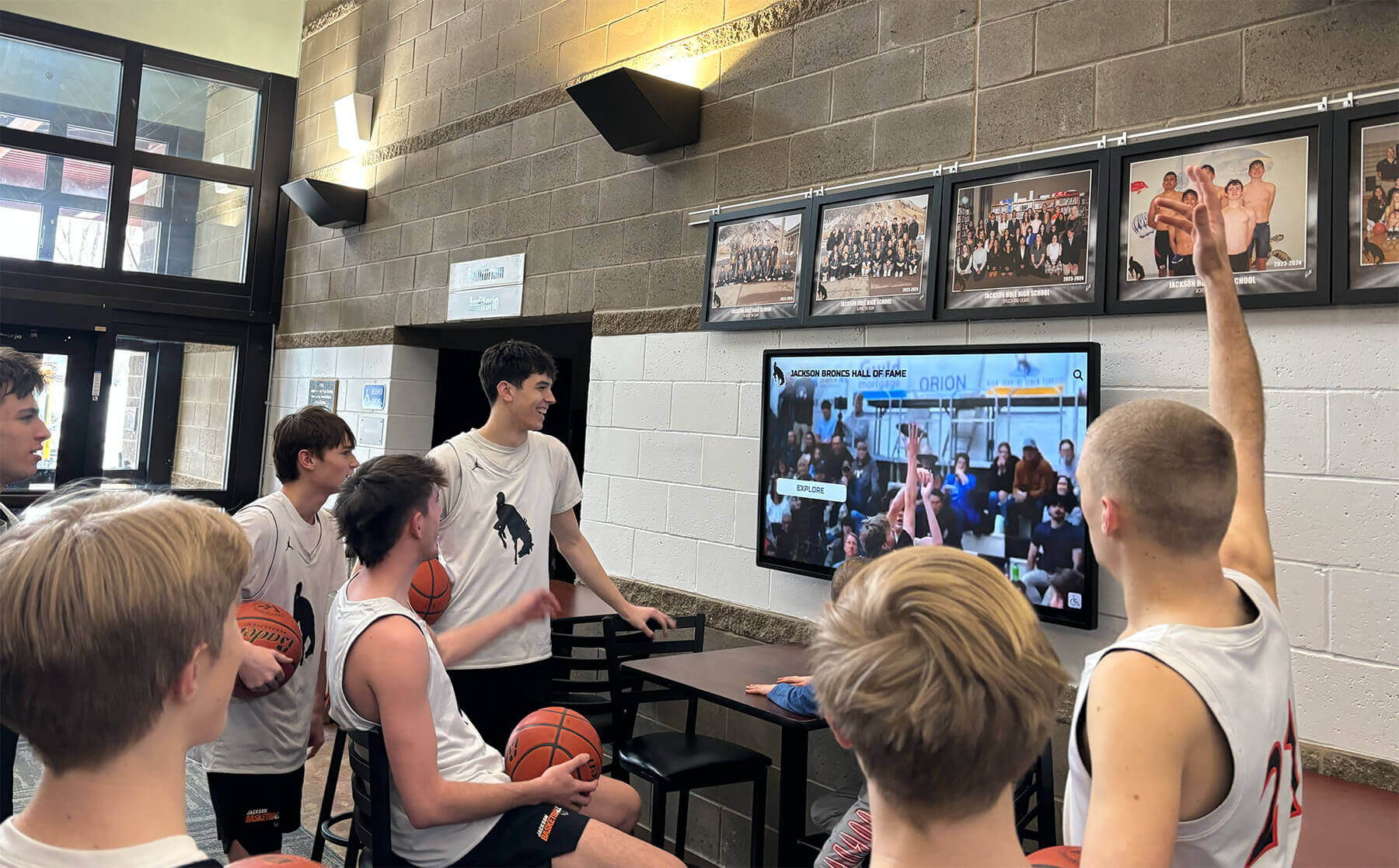
Event highlights and celebration content create emotional connections while showcasing community vitality
Enhancing Family Engagement Through Digital Displays
Beyond basic wayfinding and information, digital systems can significantly strengthen family connections and participation in community life.
Remote Family Access and Virtual Participation
Extending display content beyond facility walls increases family engagement for those who cannot visit frequently.
Web-Based Content Access
Cloud-based platforms enable remote viewing:
Families living across the country can view current activity calendars to know what their loved ones are experiencing, see resident recognition and achievement celebrations they might otherwise miss, watch event highlights and activity photos showing community participation, access facility announcements and important communications, and share content with extended family members unable to visit regularly.
This remote access proves particularly valuable for adult children managing careers and families while coordinating parent care from distant locations, out-of-state relatives wanting to stay connected with family members, and homebound individuals who previously participated actively in community life.
Social Sharing and Family Communication
Digital content facilitates family sharing:
Families can share resident recognition on social media celebrating achievements, email activity photos to extended family creating broader connection, coordinate visit timing through shared calendar access, and maintain family group communications around events and milestones.
This social integration extends community impact beyond physical facility walls while providing residents visibility that family members actively follow and celebrate their continued engagement and achievements.
Multi-Generational Engagement Opportunities
Digital displays can bridge generation gaps creating meaningful connections between residents and visiting children or grandchildren.
Interactive Content for Visiting Grandchildren
Age-appropriate features engage young visitors:
Facilities might include historical photo archives letting grandchildren explore grandparents’ life stories, interactive quizzes about facility history or resident achievements, digital memory games appropriate for residents and children to play together, community trivia creating friendly competition, and celebration displays where children see grandparents recognized and honored.
These interactive elements transform visits from sitting quietly in rooms to engaging activities that create lasting memories while honoring residents’ continued contributions and achievements.
Educational Content Connecting Generations
Displays can facilitate learning and connection:
Historical timeline features showing events from residents’ lifetimes, career retrospectives teaching grandchildren about grandparents’ professional contributions, military service recognition helping younger generations understand sacrifice, cultural heritage celebrations educating about family backgrounds, and community history preservation connecting past and present.
This intergenerational content creates natural conversation starters while demonstrating that facilities honor residents’ complete life stories rather than viewing them solely through current care needs.
Explore intergenerational recognition approaches in alumni welcome area ideas applicable to senior living contexts.
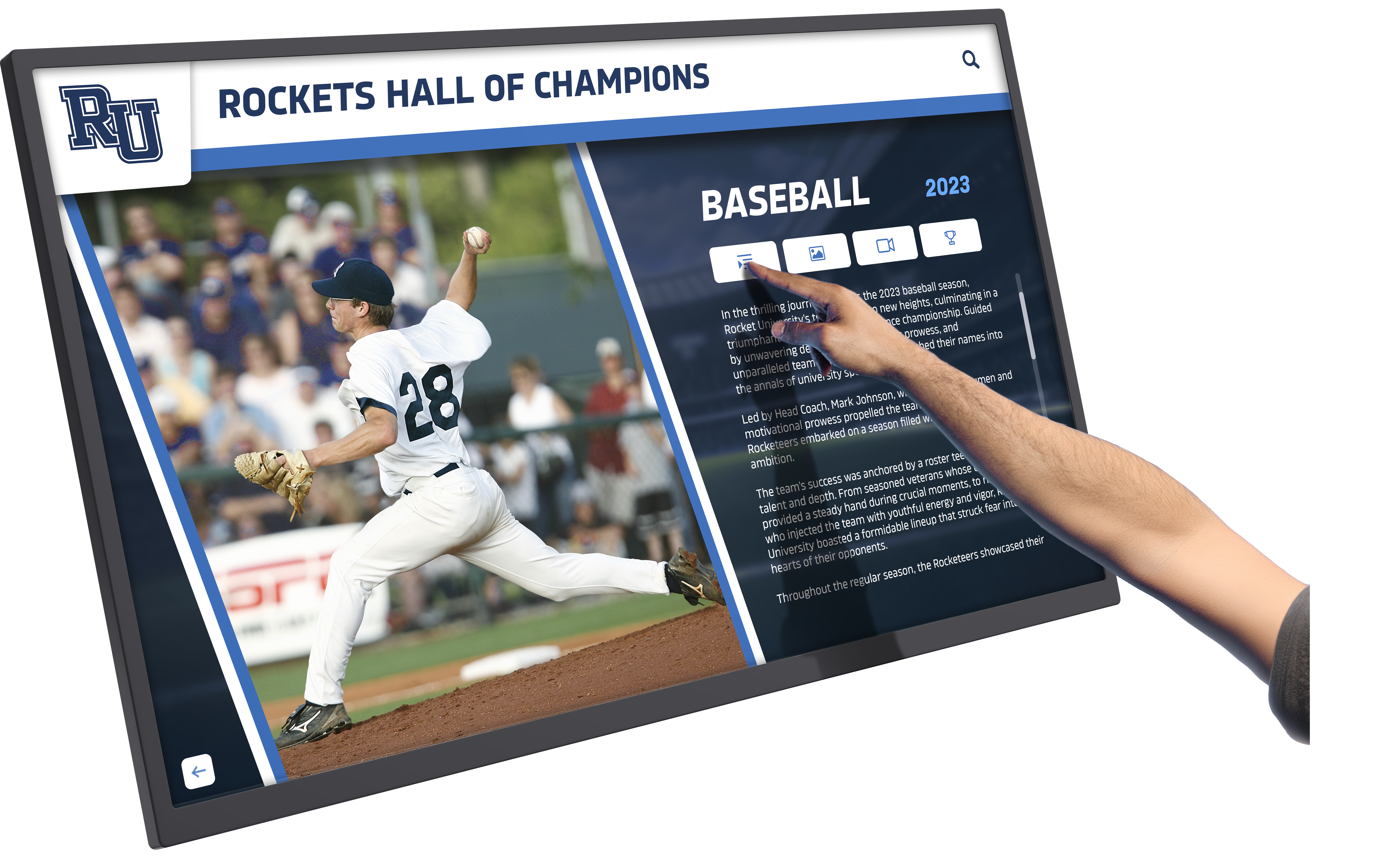
Interactive displays create meaningful multi-generational experiences during family visits
Strengthening Resident-Family Communication
Digital displays can supplement direct communication providing additional context and connection opportunities.
Activity Participation Documentation
Visual evidence of engagement reassures families:
Photo galleries showing residents participating in activities provide concrete evidence of social engagement, activity attendance tracking that families can review shows consistent participation patterns, achievement recognition when residents try new activities or develop skills celebrates ongoing growth, and social connection documentation showing friendships and community relationships demonstrates thriving social life.
This documentation proves particularly valuable for families unable to visit frequently who worry about social isolation or limited activity participation but lack direct observation opportunities.
Care Team Visibility and Connection
Displays can increase family-staff connection:
Staff introduction displays help families know care team members by name and role, caregiver recognition celebrates exceptional staff building family confidence, shift schedules help families know who provides care at different times, and staff achievement recognition shows professional development and facility investment in quality.
This transparency builds trust and familiarity helping families feel confident in care quality even when they cannot be present constantly.
Measuring Impact and Demonstrating Value
Systematic assessment ensures digital display investments achieve intended outcomes while identifying improvement opportunities.
Visitor Satisfaction and Experience Metrics
Digital systems enable concrete measurement of visitor experiences:
Quantifiable Satisfaction Indicators
- Reduced staff interruptions for directions and information
- Shorter navigation times from entrance to resident locations
- Increased family participation in scheduled activities and events
- Higher tour-to-move-in conversion rates for prospective residents
- Improved satisfaction scores on family surveys
- Increased social media sharing of community content
These metrics demonstrate return on investment while identifying specific areas where digital displays contribute most significantly to improved experiences.
Family Engagement and Communication Outcomes
Assess whether displays strengthen family connection:
Engagement Measures
- Activity co-attendance rates when families visit during scheduled programs
- Remote content access by families living at distance
- Social sharing frequency of resident recognition and achievements
- Family council participation and engagement
- Positive family testimonials and referrals
- Reduced family anxiety about resident wellbeing and engagement
Positive trends suggest digital displays effectively extend communication and strengthen family-facility relationships beyond basic visitation.
Operational Efficiency Improvements
Digital systems should reduce staff burden:
Facilities can measure time savings from reduced direction-giving interruptions, efficiency improvements for visiting healthcare providers, faster prospective resident tour completion, reduced staff time updating bulletin boards and printed materials, and improved communication consistency across shifts and staff members.
These operational benefits often justify implementation costs independent of experience improvements, particularly in facilities with limited administrative staffing.
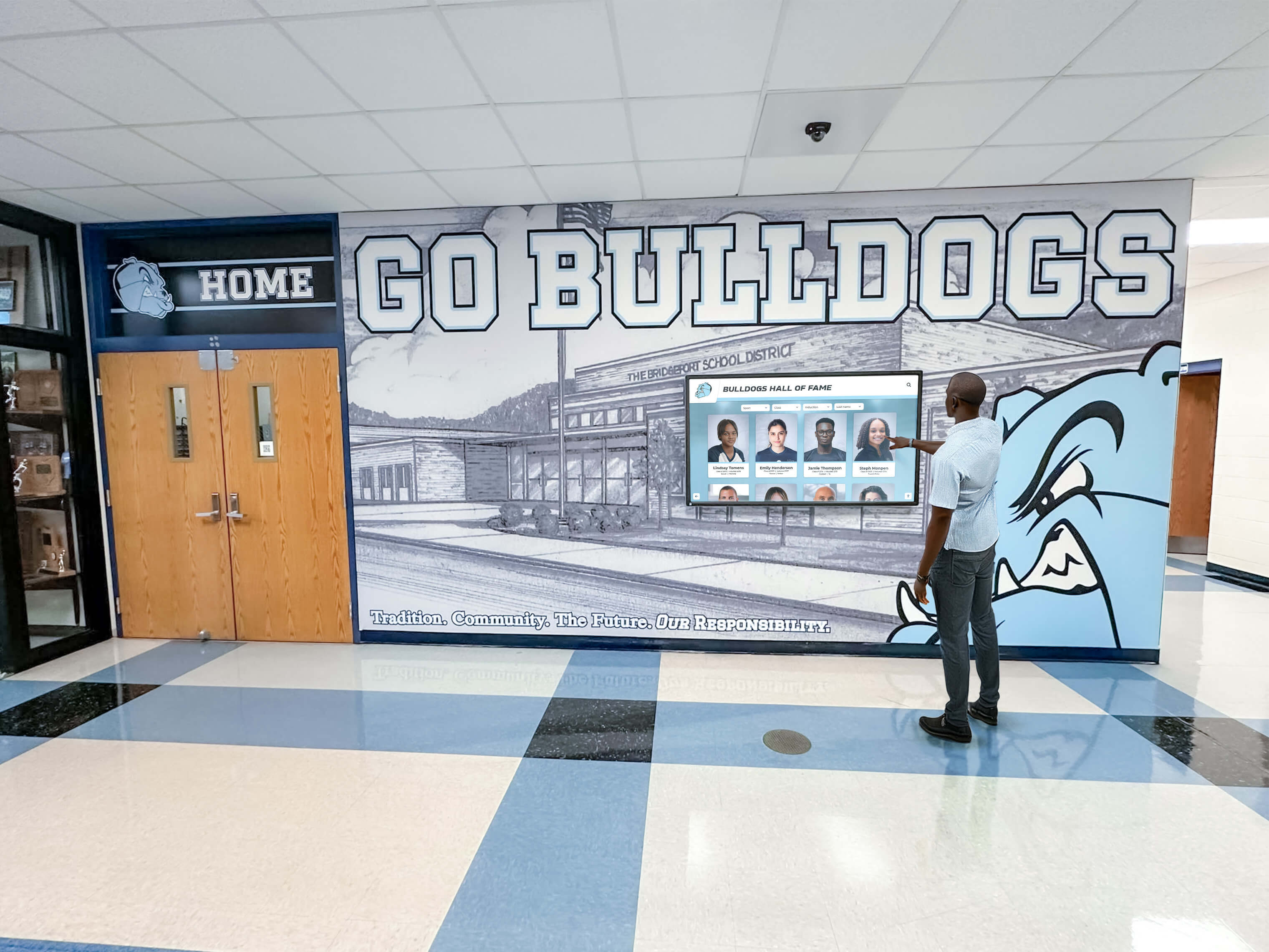
Intuitive management systems enable staff to maintain current content without technical expertise
Best Practices for Senior Living Digital Displays
Successful implementations require sensitivity to senior living environments and resident populations beyond generic digital signage approaches.
Accessibility and Universal Design
Ensure displays serve all visitors regardless of age or ability:
Essential Accessibility Features
- Mounting heights accommodating wheelchair users and seated viewing
- High-contrast color schemes ensuring readability for reduced vision
- Larger text sizes appropriate for aging eyes
- Touchscreen responsiveness appropriate for reduced dexterity
- Audio options for visitors with vision impairments
- Hearing loop integration for hearing aid users
Consult ADA guidelines and accessibility specialists ensuring implementations genuinely serve all visitors rather than creating beautiful displays that exclude significant portions of visitor populations.
Privacy and Dignity Protections
Resident privacy must remain paramount:
Critical Privacy Considerations
- Explicit consent before featuring residents in public displays
- Opt-out mechanisms for residents preferring privacy
- Appropriate information sharing that doesn’t reveal protected health data
- Dignity-focused content avoiding infantilization or condescension
- Cognitive status sensitivity for memory care residents
- Family approval processes for resident recognition content
Consult with legal counsel and review HIPAA requirements ensuring all implementations comply with privacy regulations while respecting resident autonomy and dignity.
Content Sensitivity and Appropriateness
Senior living contexts require thoughtful content curation:
Content Guidelines
- Avoid infantilizing language or imagery treating adults as children
- Celebrate continuing contributions rather than only past achievements
- Include diverse residents representing facility demographics
- Balance celebration with sensitivity to losses and challenges
- Respect religious and cultural diversity in content and holidays
- Maintain appropriate boundaries for personal information sharing
Content should consistently communicate respect for residents as adults with rich life experiences, ongoing capabilities, and continuing value to their communities.
Staff Training and Change Management
Technology implementation requires human preparation:
Training Priorities
- Content management system navigation and updates
- Photo collection and resident consent processes
- Troubleshooting common technical issues
- Accessibility features and assistance for visitors
- Privacy protection and appropriate content
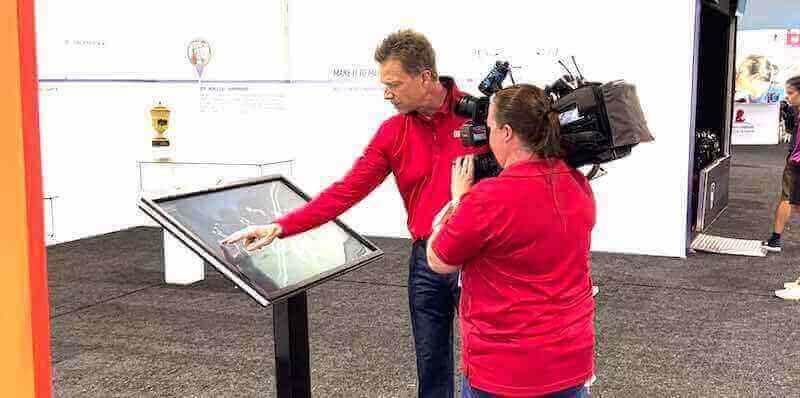
Comprehensive staff training ensures displays remain current and serve visitor needs effectively
Change Management Approaches
- Gradual rollout allowing staff adjustment
- Champion identification among early adopters
- Feedback mechanisms for continuous improvement
- Ongoing support preventing abandoned systems
- Celebration of successes building momentum
Successful technology implementation requires equal attention to human and technical factors, ensuring staff feel supported rather than overwhelmed by new systems.
Investment Considerations and Funding Strategies
Understanding cost structures helps facilities plan appropriately while identifying creative funding approaches.
Typical Investment Ranges
Assisted living digital display costs vary significantly based on scope:
Implementation Cost Factors
- Hardware: $3,000-$8,000 per display depending on size and features
- Software/Platform: $1,200-$4,000 annually per facility depending on display count
- Installation: $800-$2,000 per display for professional mounting and setup
- Initial Content Development: $2,000-$5,000 for comprehensive launch content
- Training and Support: varies by vendor and package
Total investment for comprehensive system with 3-4 displays typically ranges $20,000-$40,000 for initial implementation plus $3,000-$8,000 annually for platform licensing and support.
Return on Investment Analysis
Digital displays deliver value across multiple dimensions:
Quantifiable Benefits
- Increased occupancy rates from improved tour experiences
- Reduced staff time on visitor directions and information
- Enhanced family satisfaction improving retention
- Operational efficiency from centralized communication
- Marketing value from shareable content and family testimonials
Qualitative Benefits
- Improved visitor experiences and reduced anxiety
- Enhanced resident dignity through recognition and celebration
- Strengthened family engagement and communication
- Competitive differentiation in crowded senior living markets
- Employee pride and morale from professional environments
Many facilities discover that even modest occupancy improvements quickly justify implementation investments given typical per-resident monthly revenue.
Funding Sources and Strategies
Creative approaches make digital displays accessible:
Common Funding Methods
- Operational budget allocation as marketing and engagement investment
- Family council fundraising for specific display purposes
- Memorial funds honoring deceased residents with lasting contributions
- Corporate or foundation grants for technology implementation
- Phased implementation starting with lobby then expanding
- Equipment leasing spreading costs over time
The tangible, visible nature of digital displays makes them attractive to donors and funders seeking concrete evidence of contribution impact.
Conclusion: Transforming Assisted Living Visitor Experiences
Visitor experiences in assisted living facilities profoundly affect resident wellbeing, family satisfaction, facility selection decisions, and community culture. When families feel welcomed, informed, and connected to vibrant community life, they visit more frequently, participate more actively in care planning and community events, and develop confidence in care quality that reduces anxiety and strengthens relationships. Conversely, confusing navigation, outdated communication, and limited visibility into resident engagement undermine trust while creating missed opportunities for meaningful family involvement.
Digital display systems eliminate these traditional limitations while creating engagement opportunities impossible with bulletin boards and paper calendars. Interactive wayfinding removes navigation stress enabling efficient visits focused on relationship rather than facility logistics. Dynamic activity calendars provide transparency into programming encouraging family participation in special events and community life. Resident recognition celebrates ongoing contributions and achievements reinforcing dignity while providing families concrete evidence of social engagement and community connection.
Transform Your Assisted Living Visitor Experience
Discover how interactive digital display solutions can help you create welcoming environments, strengthen family engagement, and showcase the vibrant community life that defines exceptional senior care.
Explore Digital Display SolutionsThe strategies explored in this guide provide comprehensive frameworks for implementing digital visitor displays that serve multiple facility objectives simultaneously—improving operational efficiency through reduced staff interruptions, enhancing marketing effectiveness during prospective resident tours, strengthening family engagement through extended communication reach, and most importantly, honoring residents through recognition and celebration that reinforces dignity and individual value.
Solutions like Rocket Alumni Solutions specialize in creating purpose-built recognition and engagement platforms specifically designed for community organizations including senior living facilities, educational institutions, and membership communities. These specialized platforms provide intuitive content management, comprehensive recognition features, and engagement capabilities that generic digital signage cannot match while requiring minimal technical expertise from facility staff.
Start wherever current circumstances allow—whether implementing comprehensive wayfinding and recognition systems or beginning with priority lobby displays before expanding throughout facilities—then systematically build the welcoming, informative, and engaging visitor experiences your community deserves. Every family who visits deserves clear navigation, current information, and visible evidence that their loved one lives in a community that truly values, celebrates, and engages each resident as a unique individual with continuing contributions to make.
Ready to transform your visitor experience? Explore how digital recognition displays create engaging community environments, discover interactive display solutions for community recognition, or learn about building comprehensive digital engagement systems that strengthen connections between families, residents, and your exceptional care community.