



Arizona high school football playoffs represent the pinnacle of prep football competition in the Grand Canyon State, where teams across multiple classifications battle through intense postseason tournaments for state championship glory. Each fall, the Arizona Interscholastic Association (AIA) organizes comprehensive playoff brackets that showcase the state’s top football programs competing on some of the most prominent stages in high school athletics.
For schools, coaches, players, and communities throughout Arizona, the football playoffs create defining moments that shape athletic legacies and forge lasting memories. Yet many schools struggle to preserve and celebrate playoff achievements appropriately—from breakthrough tournament appearances to championship victories—with recognition systems that truly capture the drama, excitement, and historic significance these postseason runs represent.
This comprehensive guide explores Arizona’s high school football playoff system, championship tournament structure, notable playoff moments, and effective strategies for preserving and celebrating playoff achievements that inspire future generations while strengthening school pride and athletic tradition.
Arizona high school football playoffs combine passionate rivalries, elite competition, and championship pressure into postseason tournaments that define seasons and create lifelong memories for student-athletes, coaches, and communities. Understanding how these tournaments work and how to celebrate playoff success effectively helps schools honor achievement while building lasting athletic traditions.

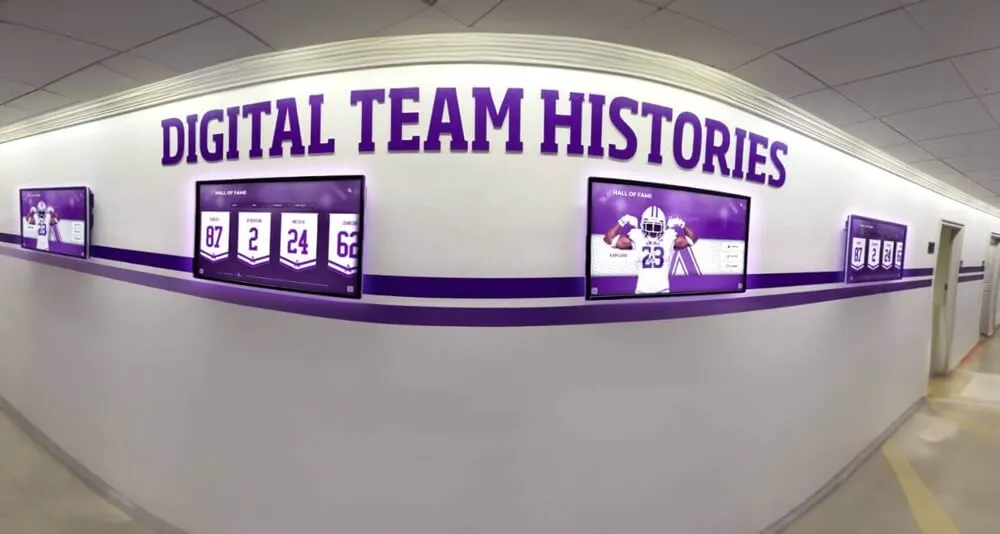
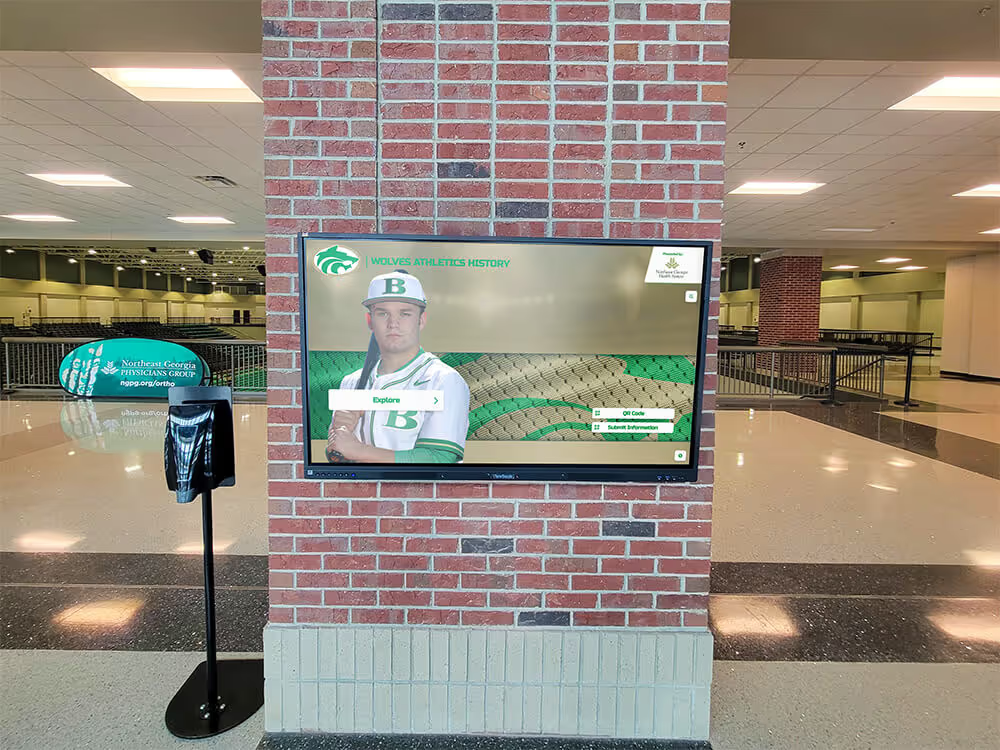
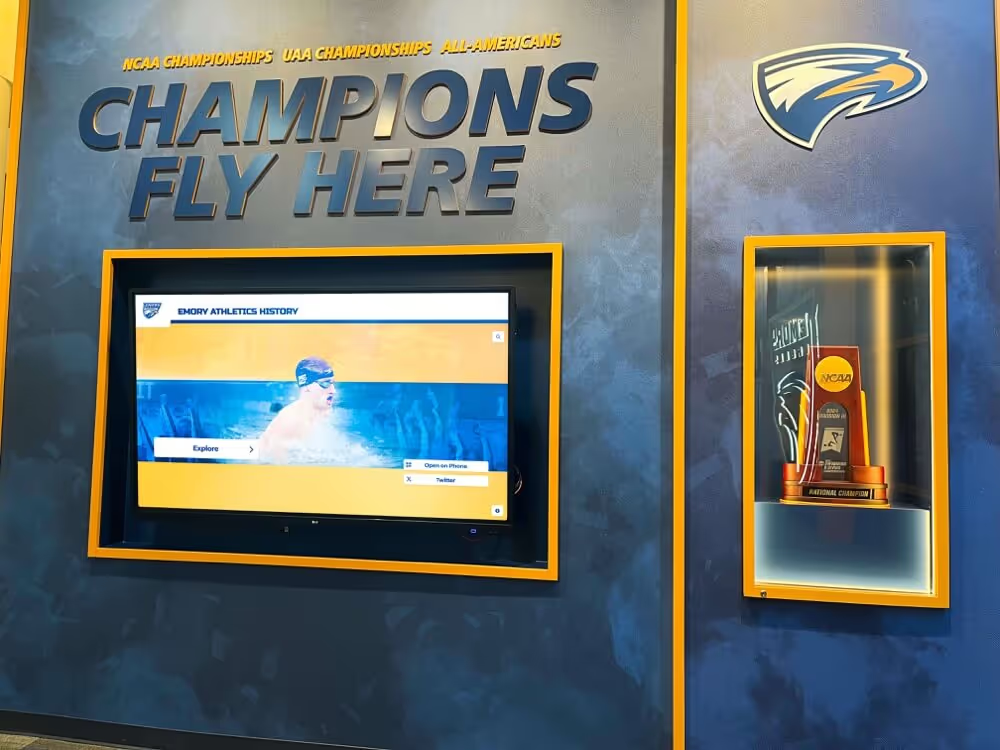
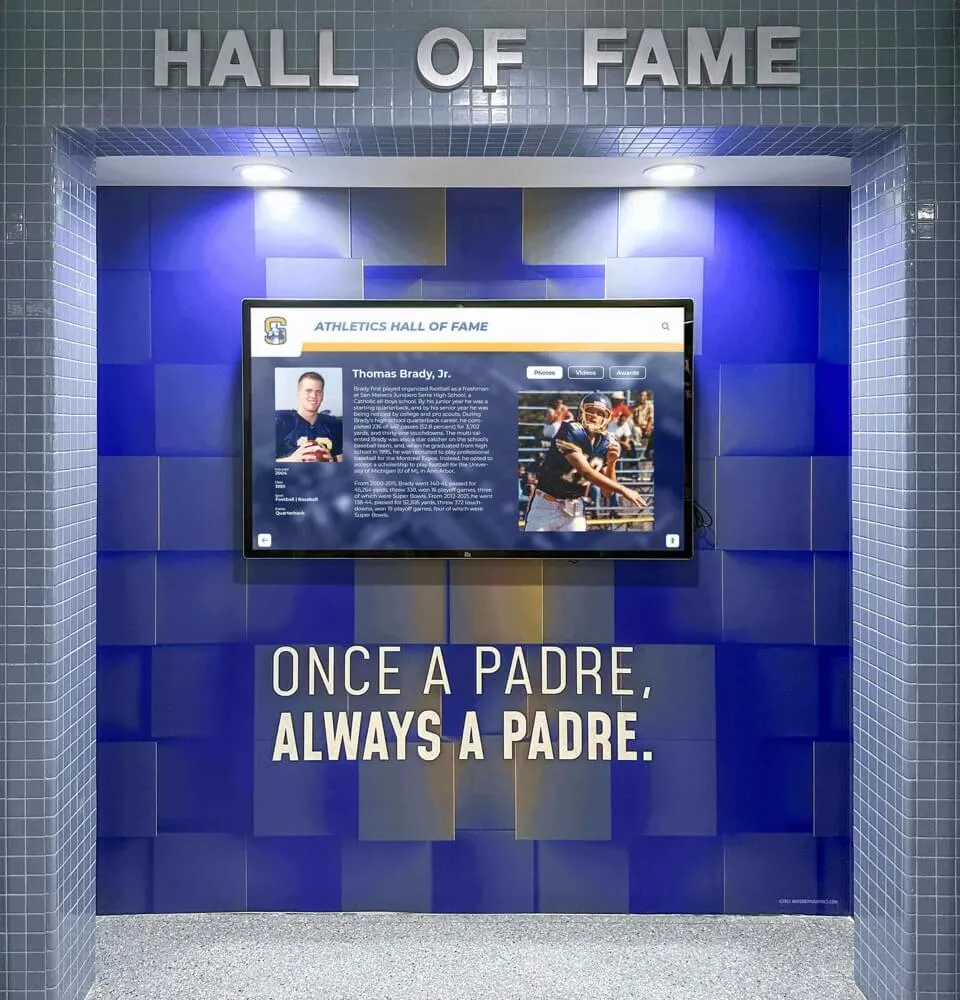
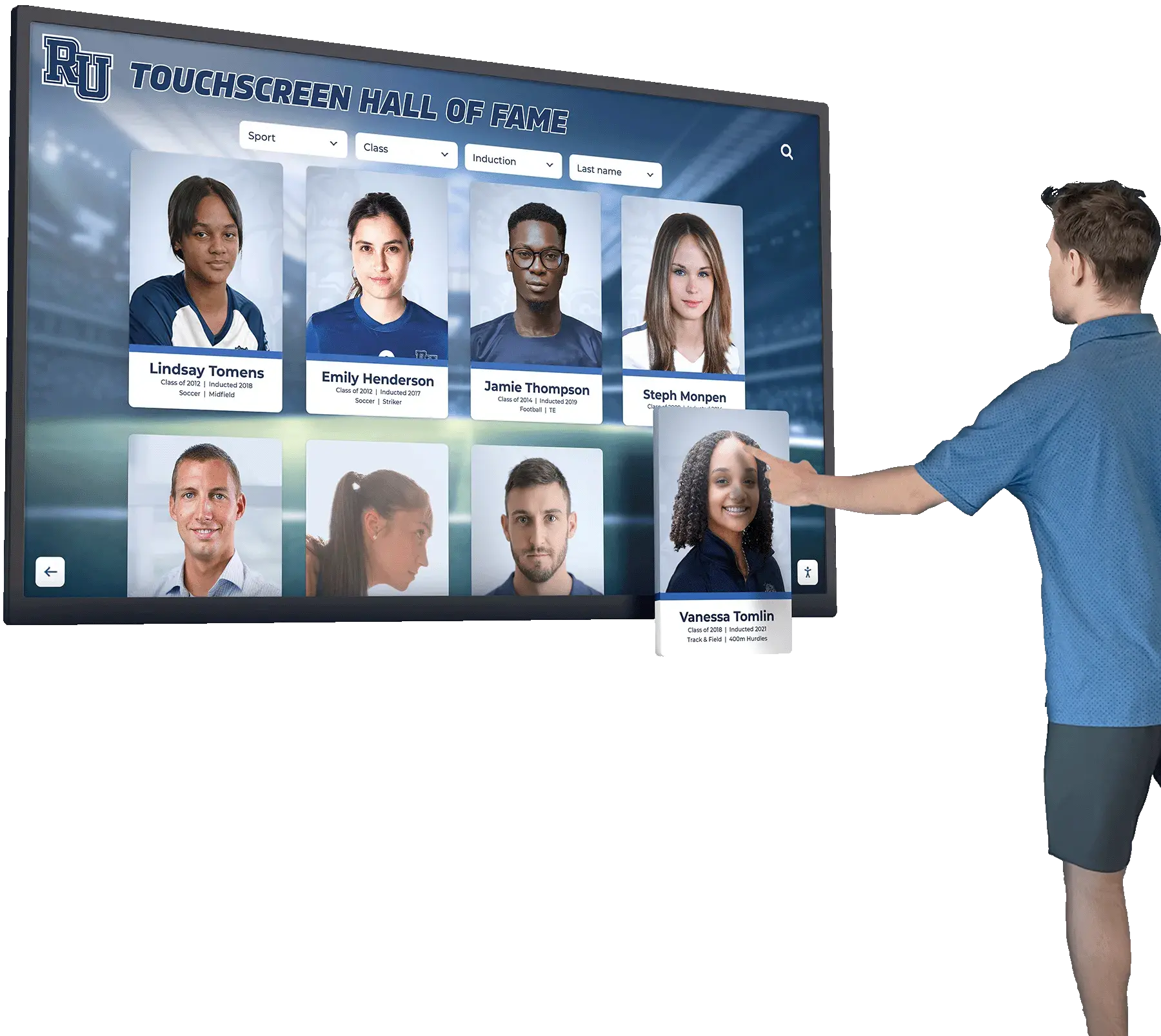
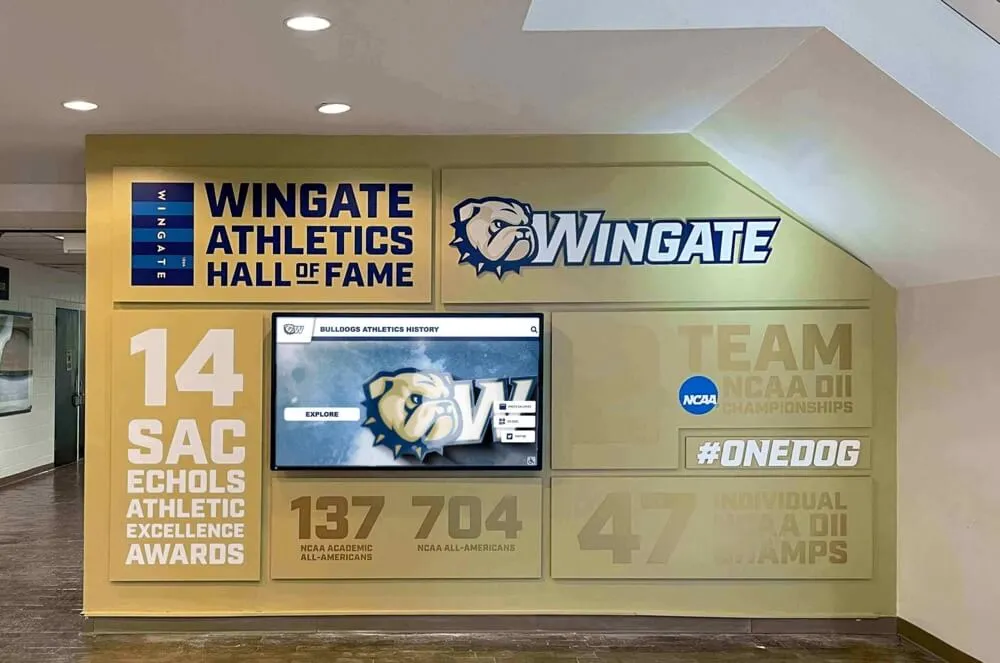
Modern recognition displays preserve playoff moments and championship achievements, creating engaging experiences that connect current students to athletic legacy
Understanding Arizona’s High School Football Playoff Structure
The Arizona Interscholastic Association (AIA) governs high school athletics across the state, organizing comprehensive playoff systems that provide championship opportunities for schools of all enrollment sizes and competitive levels.
AIA Conference Classifications
Arizona high school football operates within a classification system based primarily on school enrollment, ensuring competitive balance while providing championship pathways appropriate for different school sizes.
Conference Structure
Arizona typically organizes football into six competitive classifications:
- 6A Conference: Largest schools (1,850+ students) featuring major metropolitan programs
- 5A Conference: Large schools (1,250-1,849 students) with competitive balance
- 4A Conference: Mid-size schools (760-1,249 students) representing diverse regions
- 3A Conference: Smaller schools (350-759 students) across Arizona communities
- 2A Conference: Small schools (105-349 students) often in rural areas
- 1A Conference: Smallest schools (under 105 students) providing 8-man football opportunities
Each classification conducts independent playoff tournaments, ensuring schools compete against programs of comparable enrollment and resources while maintaining championship opportunities at all levels.
Playoff Qualification Process
Unlike some states that limit playoff access, Arizona’s system provides broad postseason opportunities while maintaining competitive standards.
Qualification Criteria
Playoff qualification typically includes:
- Top 16 teams per classification advance to playoffs
- Selection based on power ranking system combining wins, opponent strength, and performance metrics
- Regular season typically consists of 10 games before playoffs
- Conference champions receive automatic consideration
- At-large selections fill remaining bracket positions based on rankings
This structure rewards regular season excellence while providing opportunities for teams that develop momentum as seasons progress.
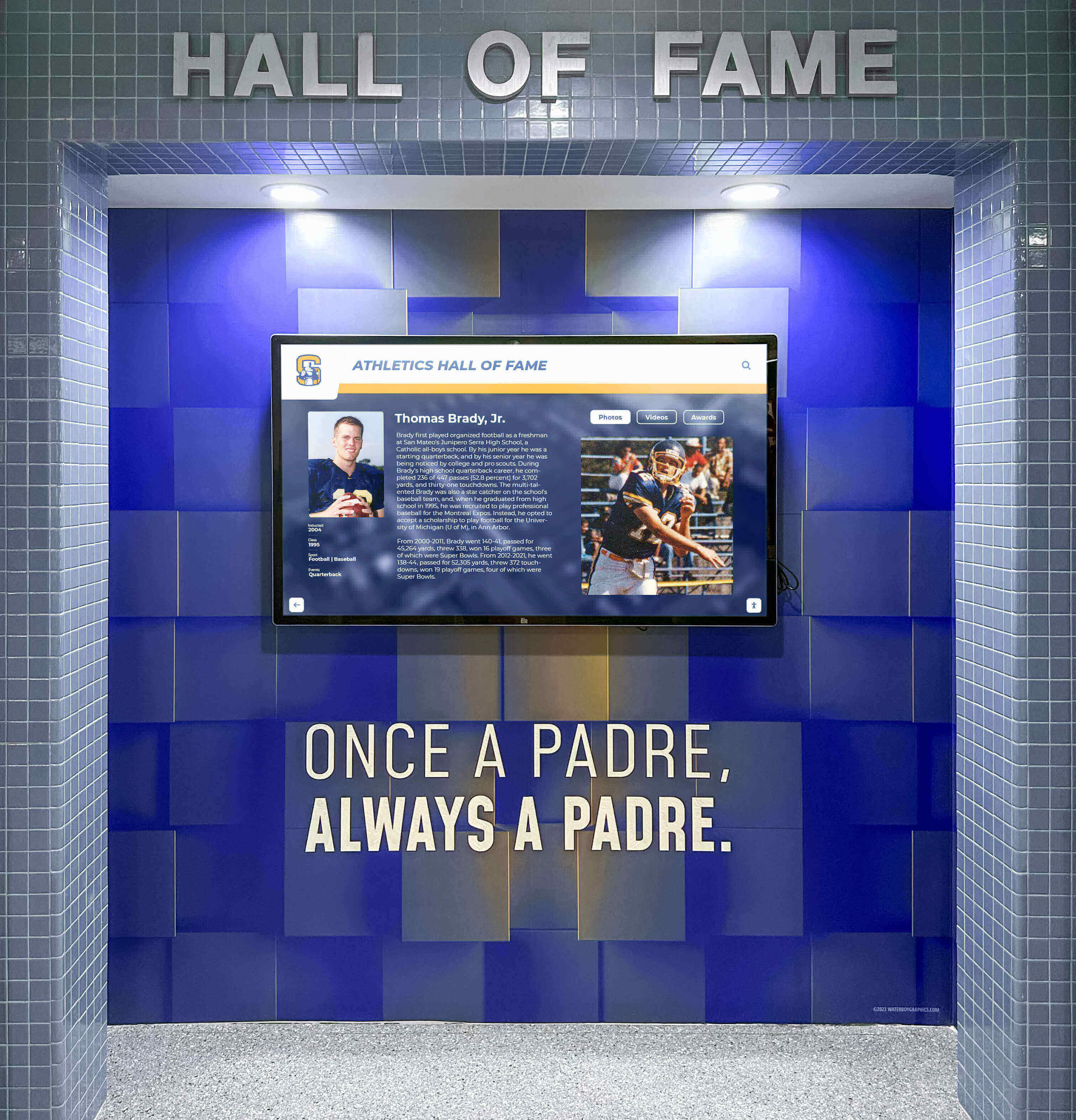
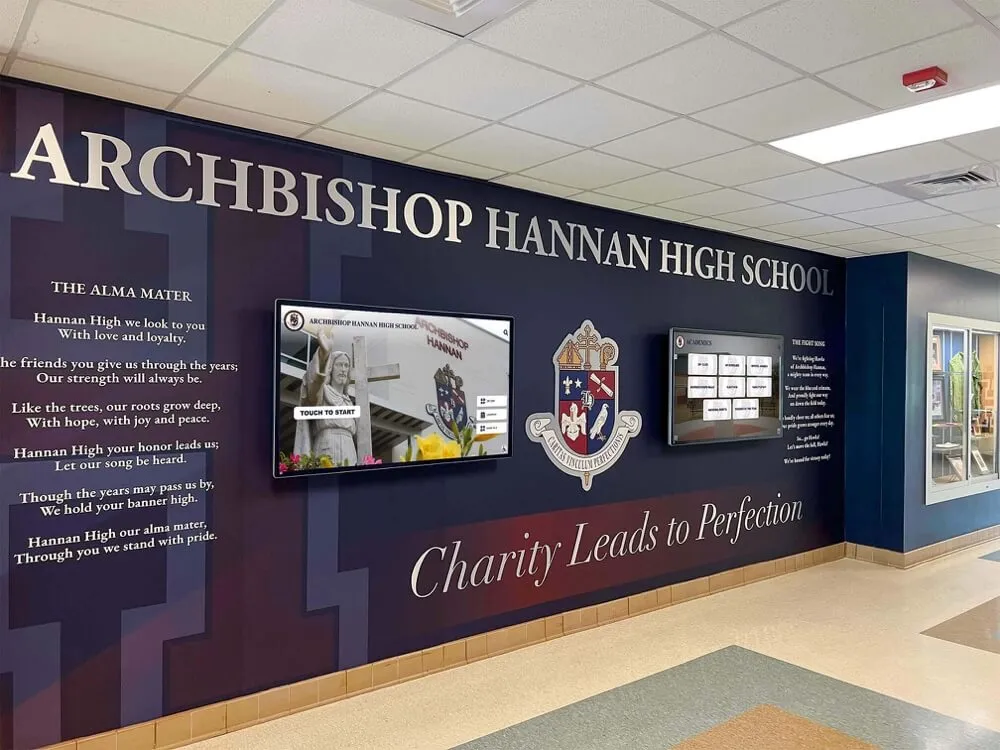
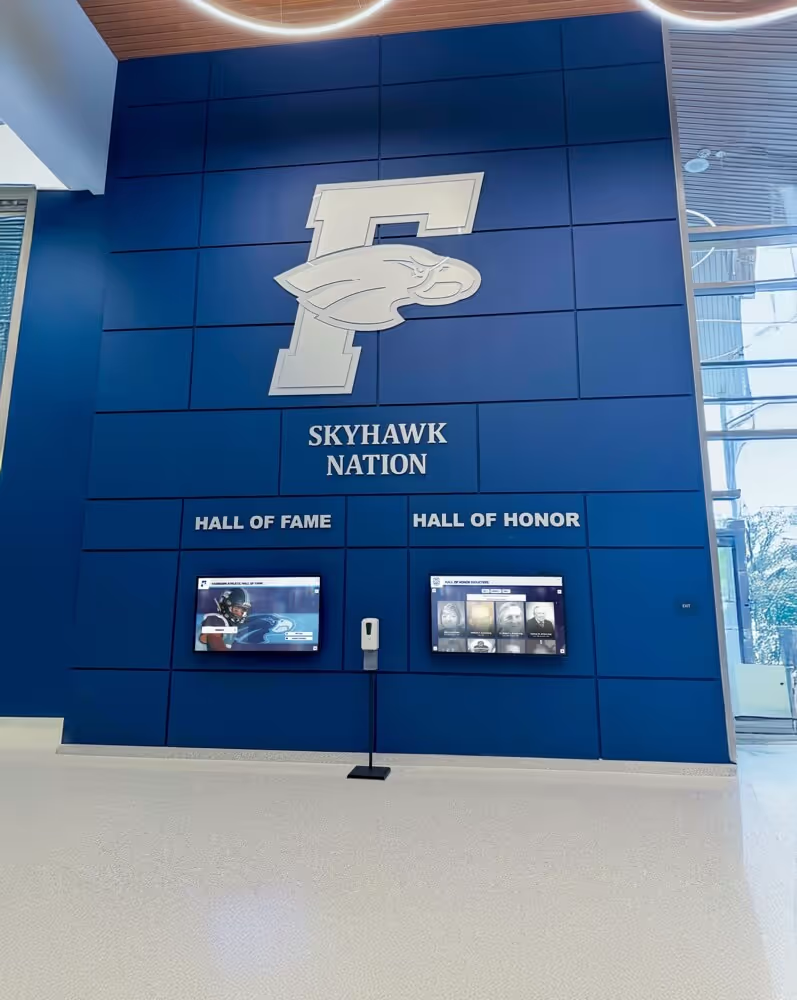
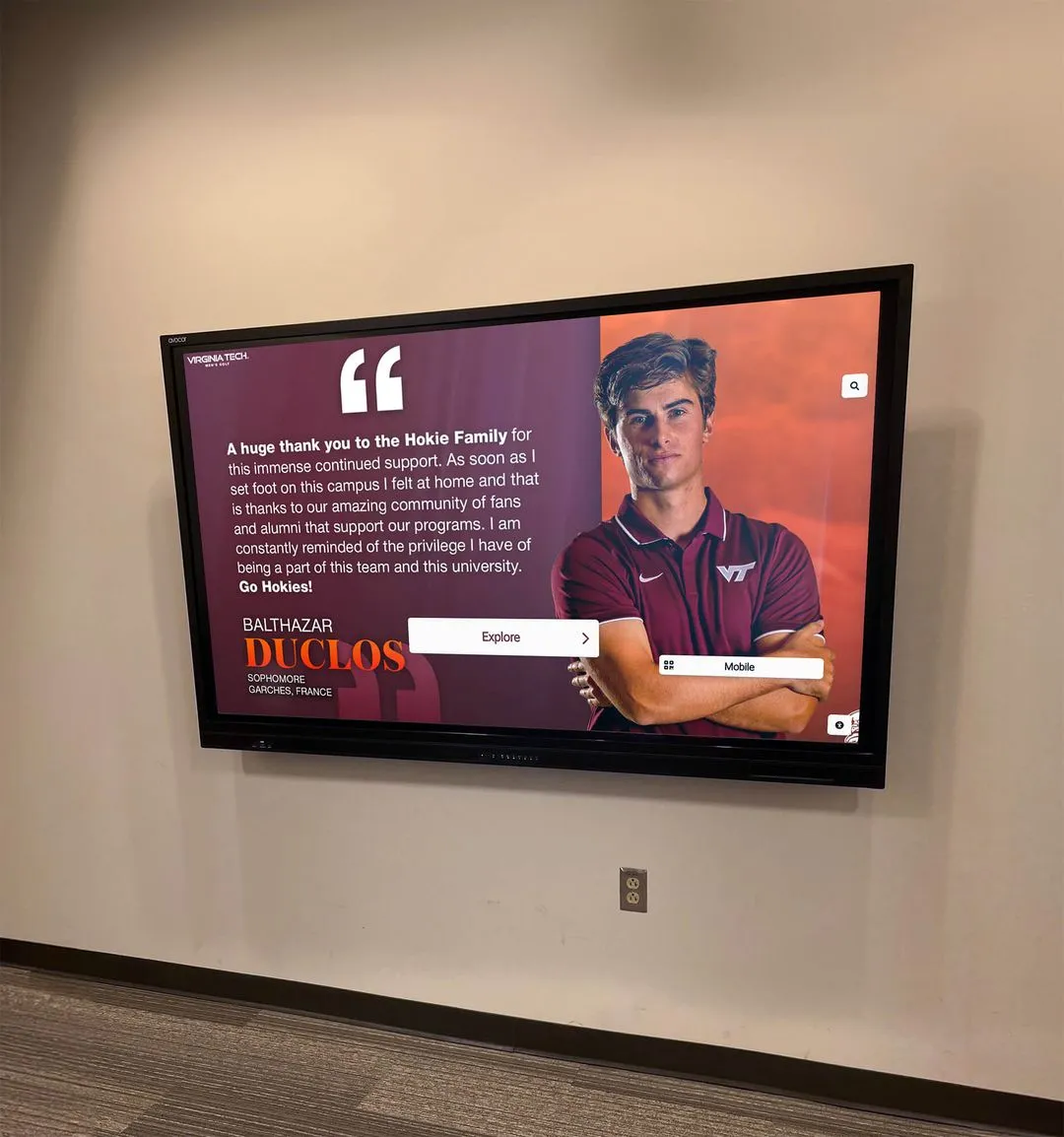
Digital recognition displays effectively showcase playoff brackets, championship progress, and tournament achievements
Seeding and Bracket Formation
The AIA uses power rankings to seed playoff brackets:
- Teams ranked 1-16 receive playoff positions based on rankings
- Higher seeds typically receive home field advantage in early rounds
- Bracket structures follow single-elimination tournament format
- Championship games held at neutral sites providing showcase settings
This seeding system creates compelling first-round matchups while rewarding regular season excellence with advantageous playoff positioning.
Arizona Football Playoff Tournament Rounds
Arizona’s playoff tournaments progress through multiple elimination rounds, each creating heightened intensity as teams advance toward state championship games.
Playoff Round Structure
Round-by-Round Progression
The tournament follows traditional elimination bracket structure:
First Round: 16 teams reduced to 8 winners
- Typically features #1 vs #16, #2 vs #15 matchups
- Higher seeds host games at home stadiums
- Upsets create excitement while favorites often advance
- First playoff experience for developing programs
Second Round (Quarterfinals): 8 teams advance to 4
- Elite eight competition in each classification
- Intensity increases as championship dreams become tangible
- Regional rivalries often emerge in these matchups
- Home field advantage continues for higher seeds
Semifinals: 4 teams compete for championship berths
- State championship game appearances on the line
- Often features states’ best programs and elite talent
- May move to neutral sites or larger venues
- Typically held at prominent high school or college stadiums
Championship Games: 2 teams compete for state titles
- Held at neutral championship venues
- Often scheduled at college stadiums or major facilities
- Championship weekend features multiple classification finals
- Creates pinnacle moments in high school football careers

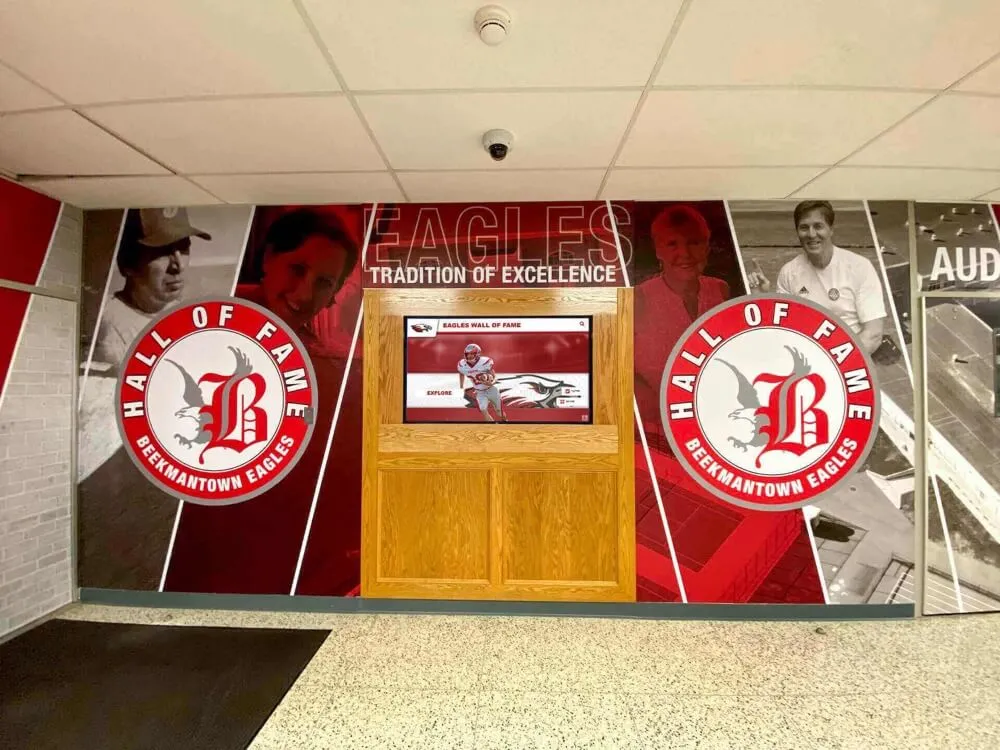
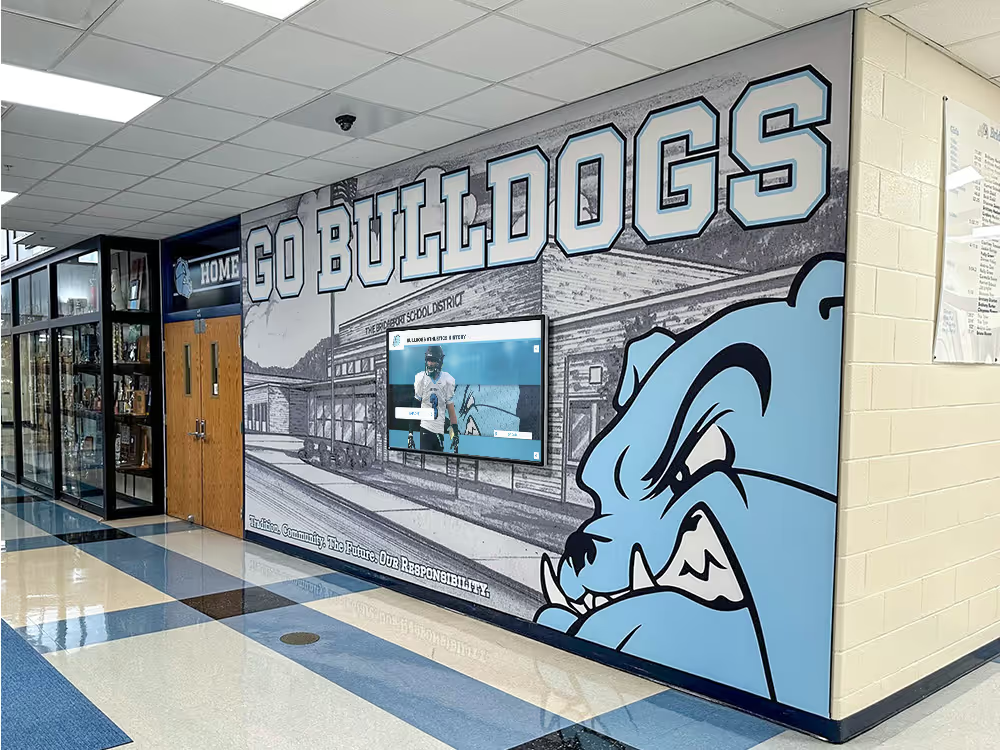
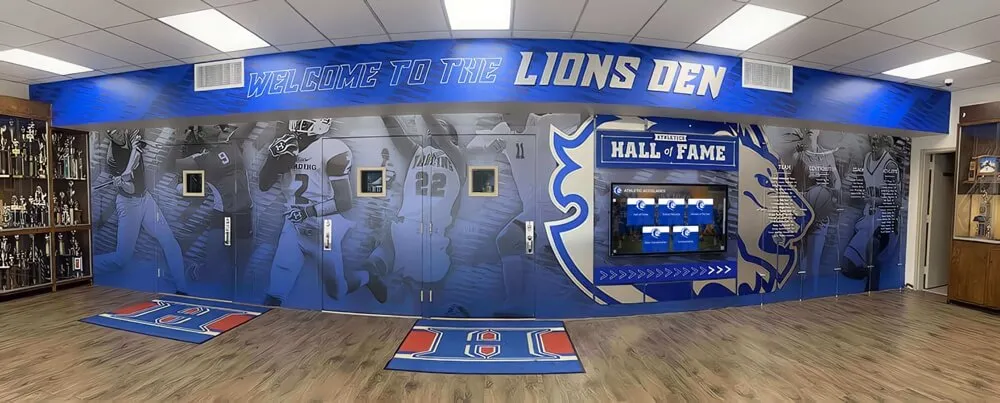
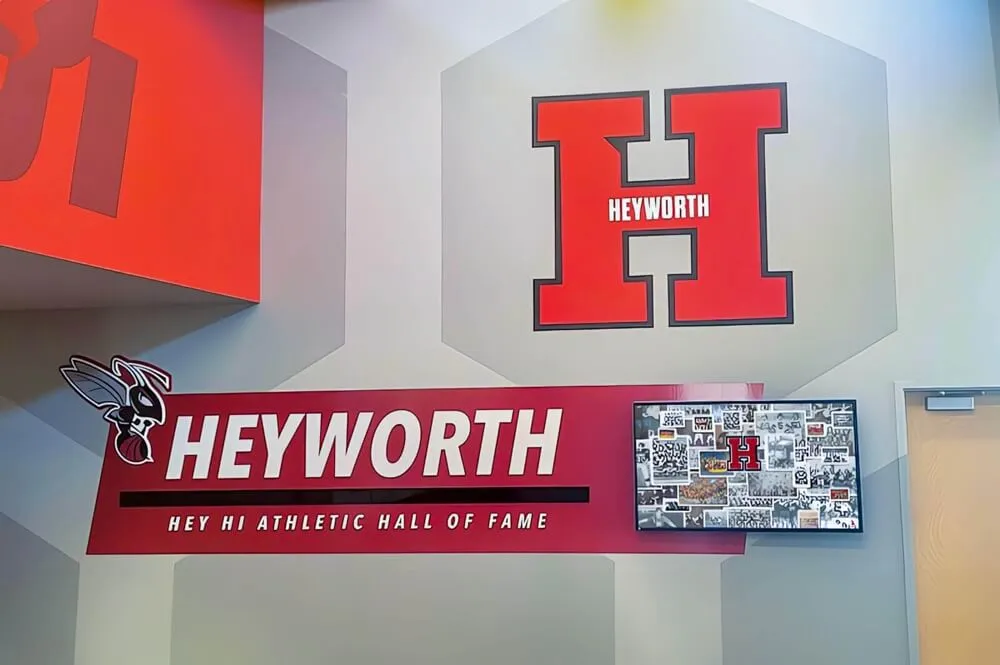
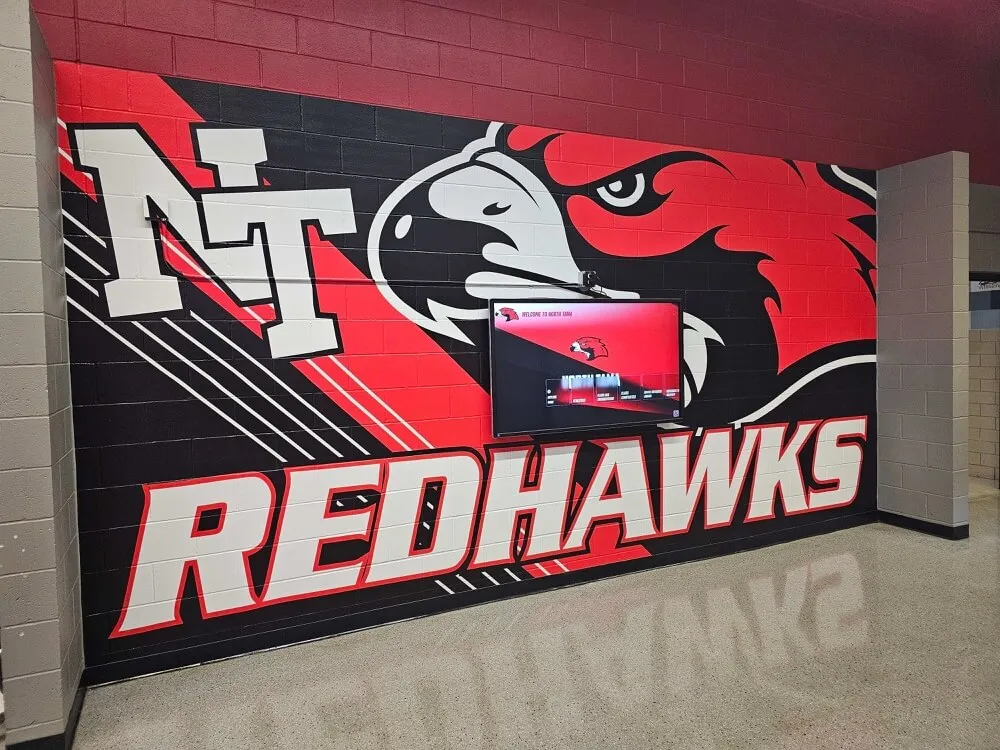
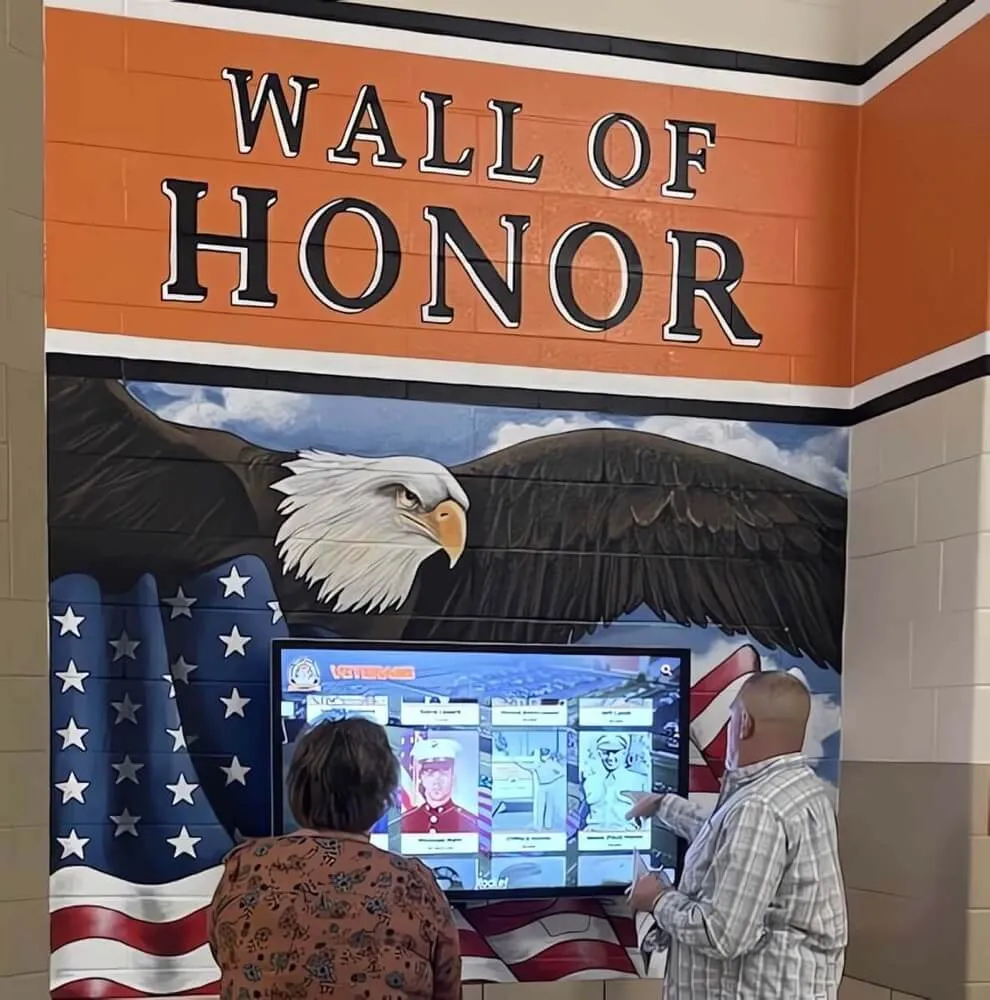
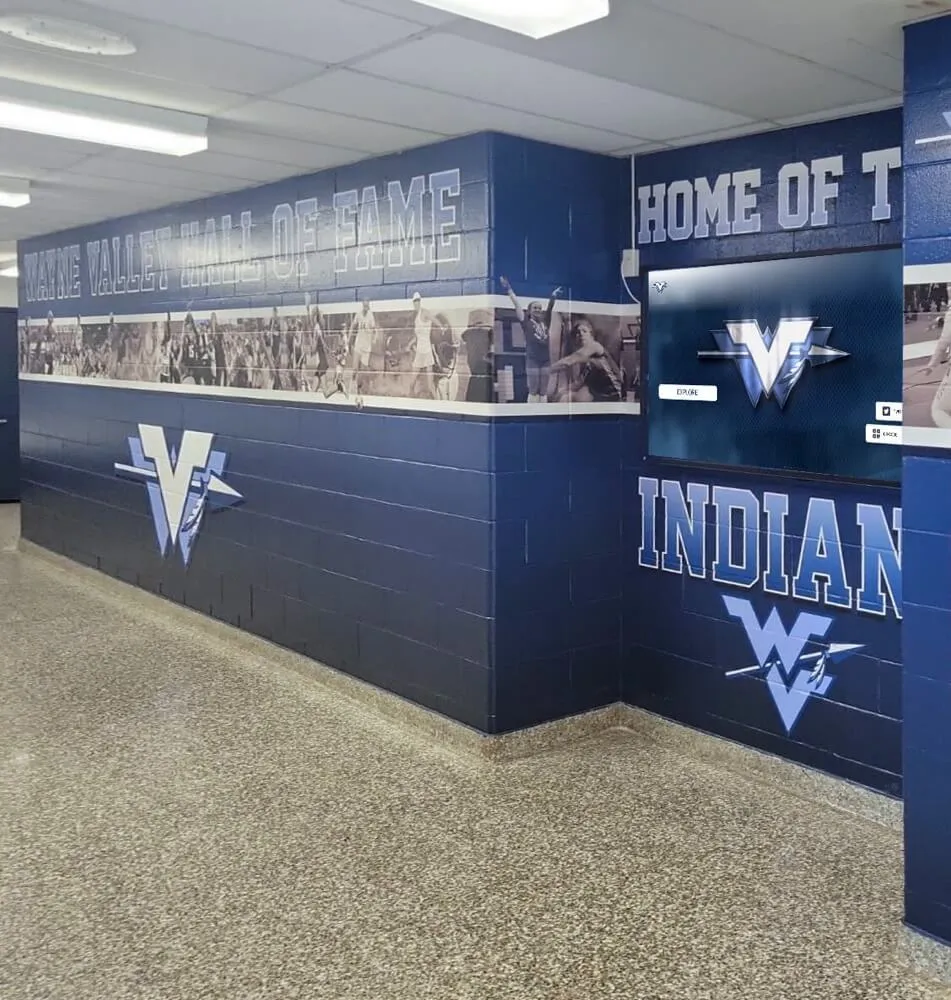
Comprehensive athletic recognition spaces combine traditional murals with digital displays celebrating playoff achievements and championship moments
Championship Game Venues
Arizona hosts championship games at premier facilities that provide appropriate stages for concluding playoff tournaments.
Historic Championship Venues
Championship games have been hosted at prominent locations including:
- Sun Devil Stadium (Arizona State University, Tempe): Major championship venue hosting multiple classification finals
- University of Phoenix Stadium (Glendale): Professional NFL venue occasionally hosting championship events
- Various High School Stadiums: Larger school facilities with excellent infrastructure
These championship venues create memorable experiences for players, coaches, families, and communities while providing appropriate recognition for teams reaching championship games.
Playoff Scheduling and Format
Tournament Timeline
Arizona football playoffs typically follow this schedule:
- First Round: Mid-November following regular season completion
- Quarterfinals: Late November as Thanksgiving approaches
- Semifinals: Early December
- Championship Games: Mid-December weekend featuring all classification finals
This compressed playoff schedule creates intensity while completing seasons before winter holidays, allowing student-athletes to celebrate achievements or process disappointments before transitioning to other activities.
Notable Arizona High School Football Playoff Moments
Arizona’s high school football playoffs have produced countless memorable moments, legendary performances, and championship dynasties that define the state’s prep football tradition.
Championship Dynasty Programs
Several Arizona programs have established sustained playoff excellence and multiple championship victories.
Dominant Programs
Historic Championship Programs
Programs recognized for playoff excellence include:
- Chandler High School: Multiple state championships and consistent playoff contender with national recognition
- Centennial High School (Peoria): Strong playoff tradition with championship success
- Saguaro High School (Scottsdale): Perennial playoff participant with championship victories
- Hamilton High School: Competitive program with sustained postseason success
- Brophy College Preparatory: Private school excellence with championship tradition
These programs demonstrate that sustained playoff success requires comprehensive athletic cultures combining talent development, quality coaching, community support, and recognition of achievement that motivates continued excellence.
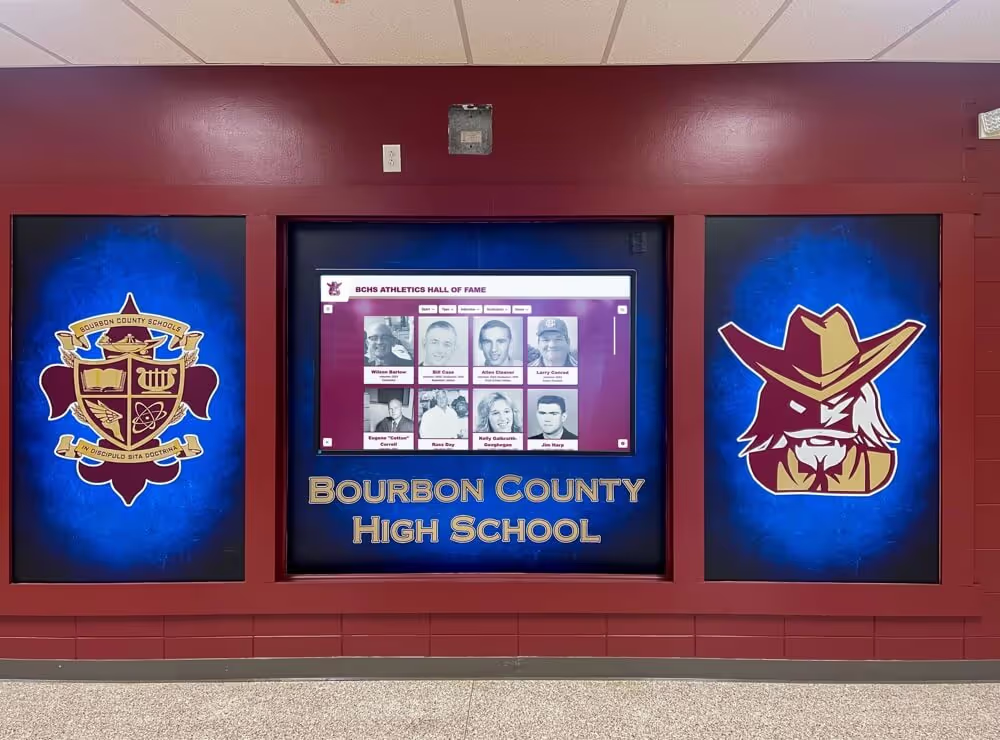
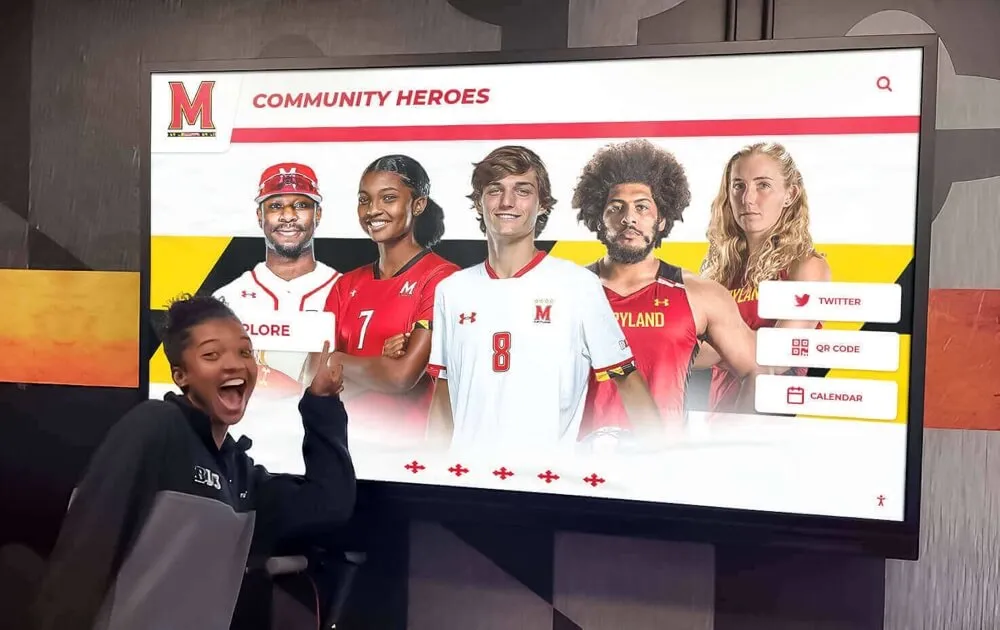
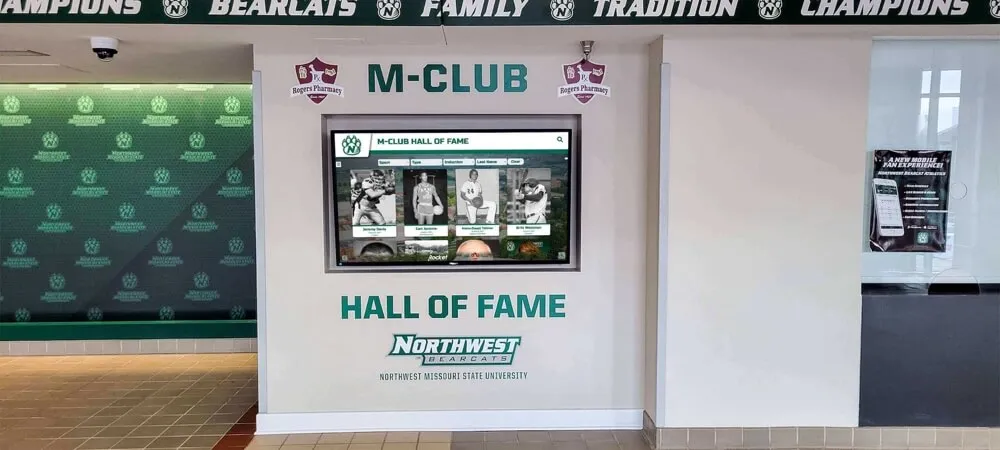
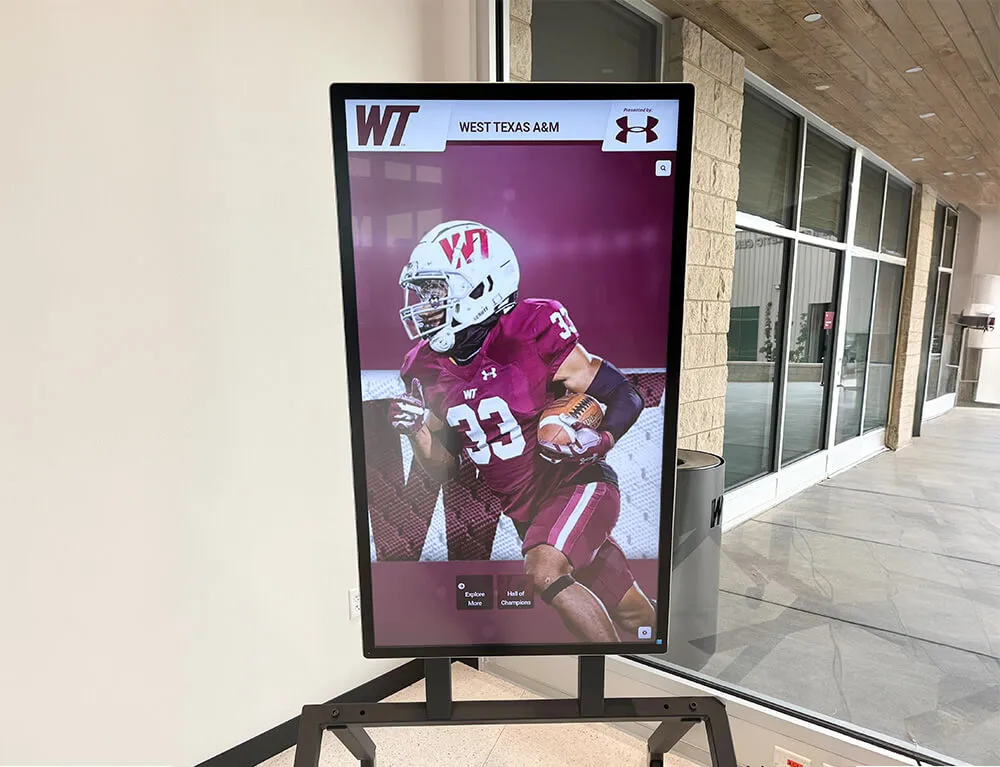
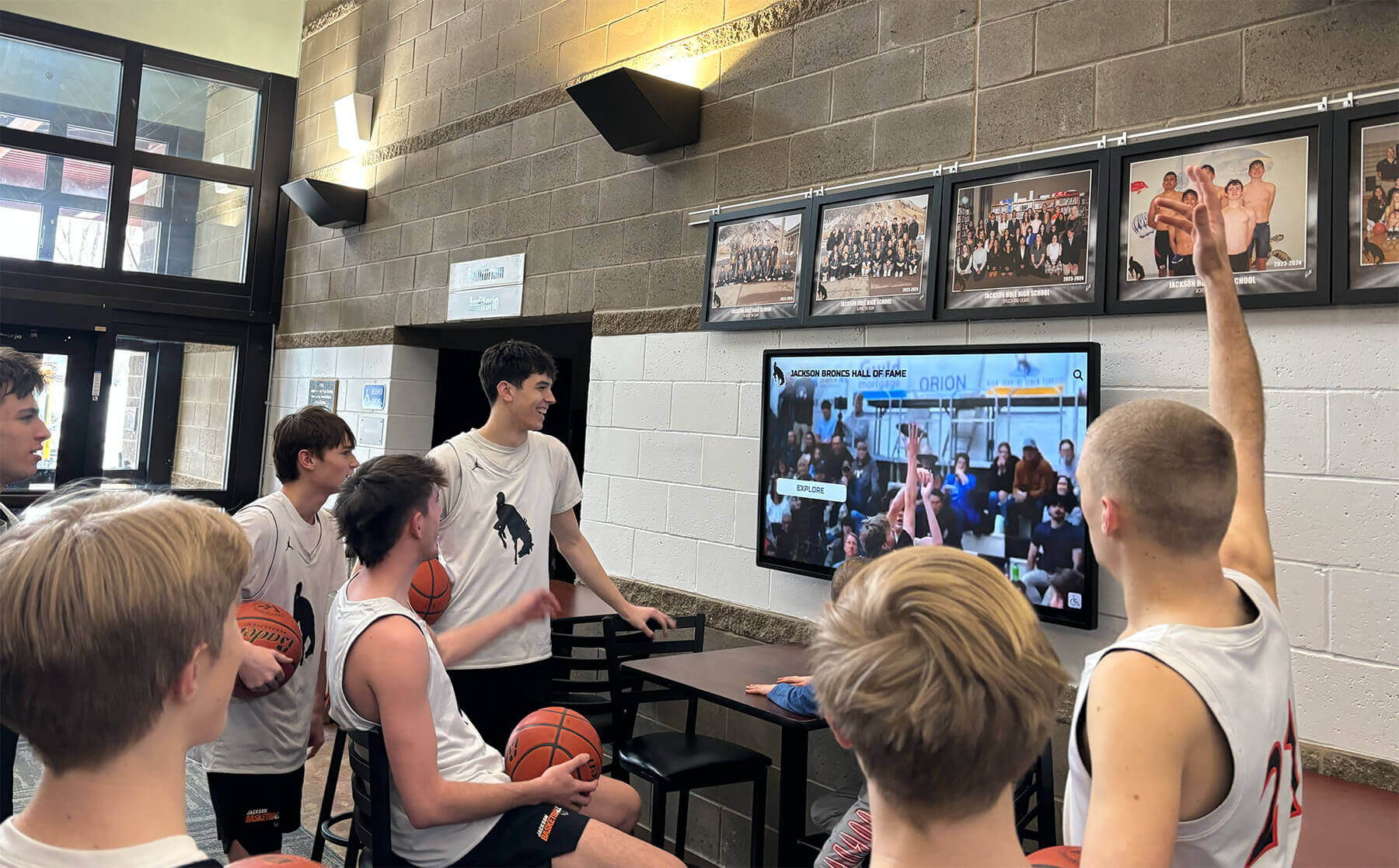
Interactive recognition displays enable exploration of championship teams, playoff performances, and athletic legacy
Memorable Playoff Games
Arizona playoffs have featured dramatic contests that become permanent parts of school lore and state football history.
Playoff Game Elements Creating Lasting Memories
- Last-second victories: Championship-deciding plays in final moments
- Upset wins: Lower seeds defeating favorites in bracket-breaking results
- Offensive explosions: High-scoring affairs showcasing elite talent
- Defensive battles: Low-scoring contests decided by single plays
- Rivalry matchups: Traditional opponents meeting in playoff pressure
- Weather challenges: Arizona’s mild climate occasionally produces challenging conditions
- Individual performances: Single-game excellence defining player legacies
Schools should document and preserve these defining moments through comprehensive recognition systems that enable current and future students to explore historic playoff achievements and understand their program’s competitive legacy.
Discover strategies for recognizing championship achievements through digital athletic recognition displays that celebrate playoff success effectively.
Recognizing and Celebrating Playoff Achievement
Playoff participation and championship success deserve recognition that appropriately honors accomplishment while inspiring future teams to pursue postseason excellence.
Creating Comprehensive Playoff Recognition
Schools that excel at celebrating playoff achievement implement systematic approaches ensuring teams and individual contributors receive appropriate visibility.
Recognition Elements for Playoff Teams
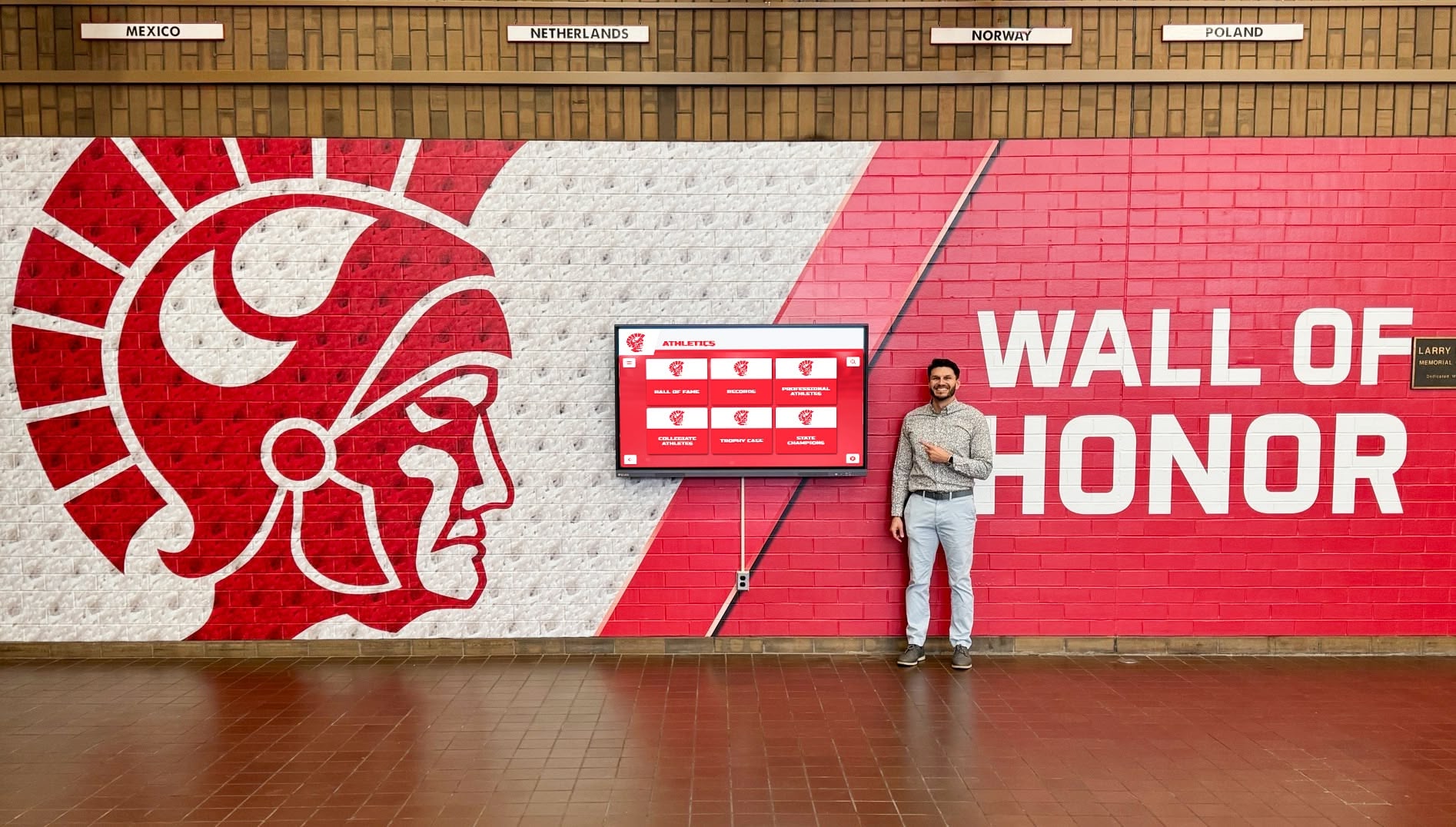
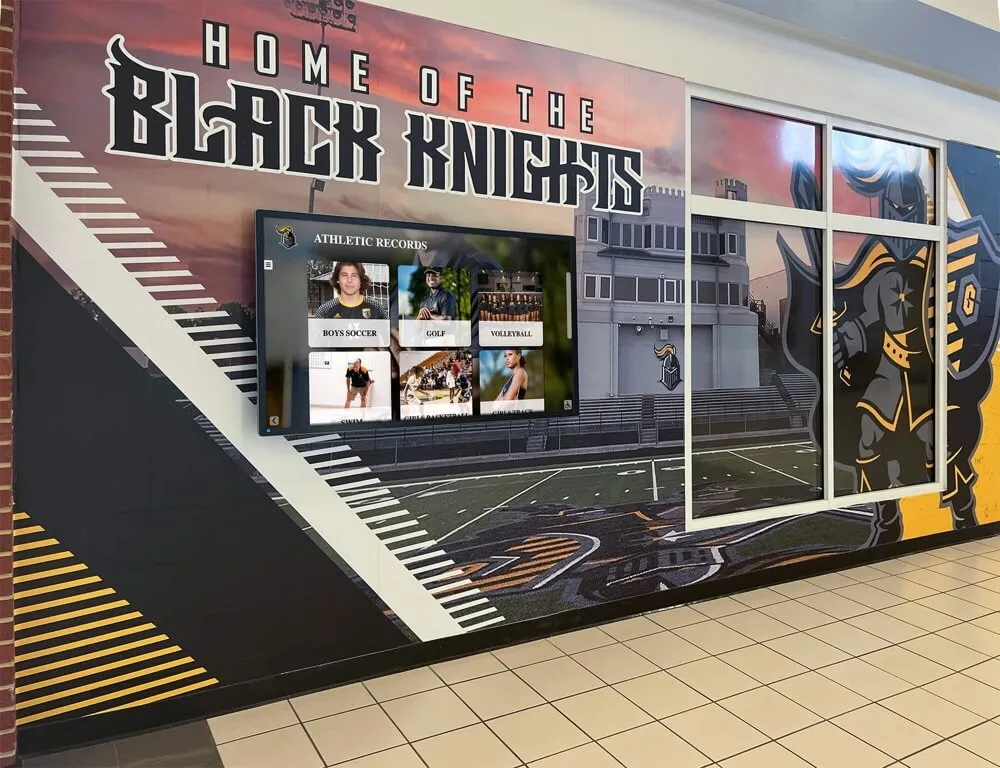
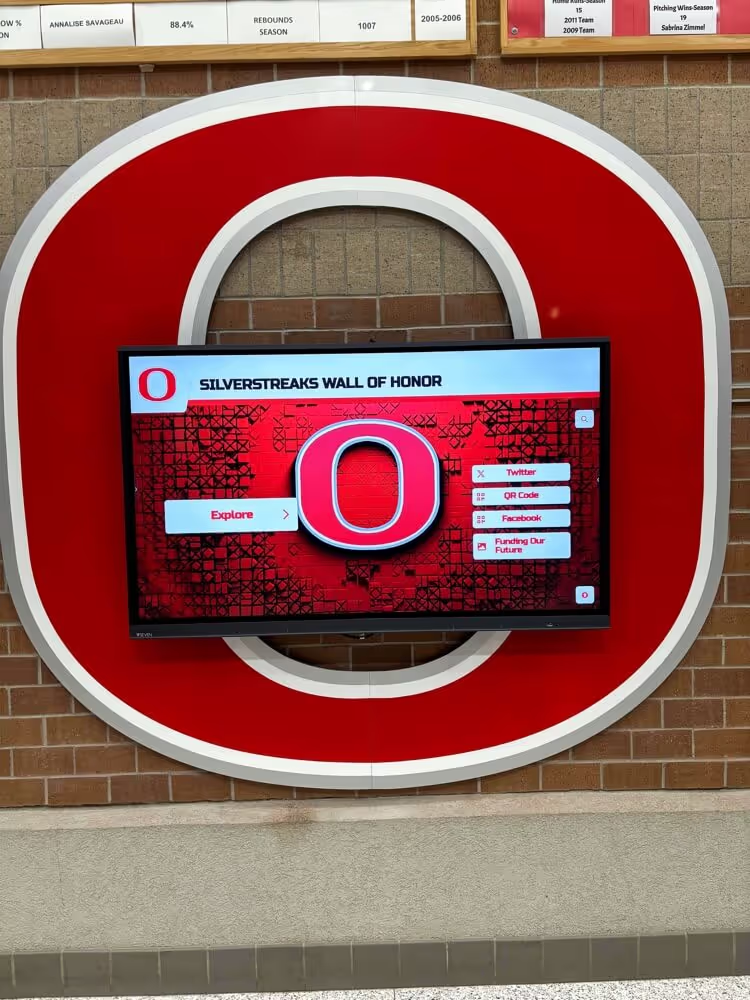
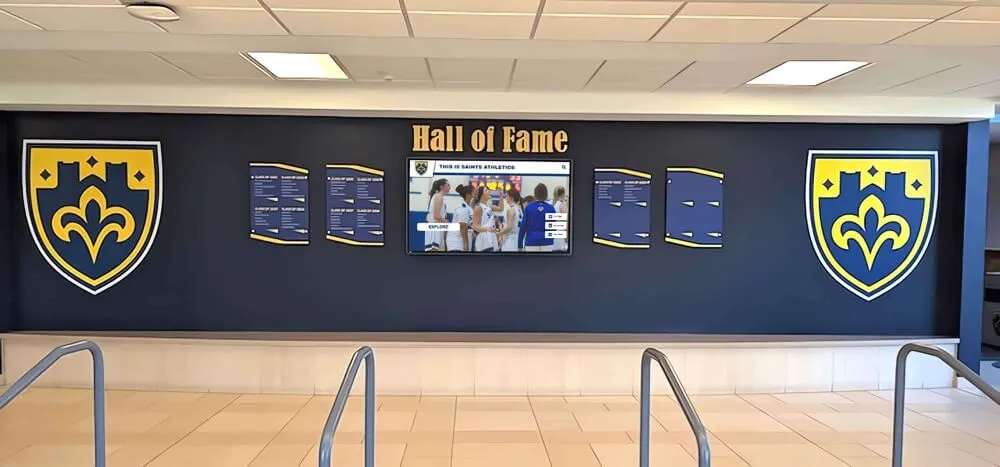
Wall-mounted recognition displays provide flexible platforms for celebrating playoff teams, championship rosters, and tournament achievements
Team Recognition Components
Comprehensive playoff recognition includes:
- Team photos and rosters: Preserve complete team compositions including players, coaches, and staff
- Season statistics and results: Document regular season records and playoff progression
- Championship bracket visualization: Show tournament paths with opponent information
- Game highlights and scores: Capture pivotal playoff moments and results
- Key player contributions: Recognize individual excellence within team success
- Coaching achievement: Honor leadership guiding playoff runs
- Season narratives: Tell complete stories beyond statistics alone
Solutions like Rocket Alumni Solutions provide platforms for organizing this comprehensive recognition, enabling schools to preserve playoff achievements while making them accessible to current students, alumni, and community members.
Individual Player Recognition
All-tournament teams and individual playoff excellence deserve specific acknowledgment:
- All-playoff team selections honoring top performers
- Statistical leaders in playoff competition
- Championship game MVP recognition
- Single-game exceptional performances
- Career playoff achievement milestones
- College recruitment successes following playoff exposure
This individual recognition within team context appropriately balances collective achievement with personal excellence, motivating players while reinforcing team-first values.
Digital Recognition for Playoff Achievement
Modern recognition technology transforms how schools preserve and celebrate playoff success compared to traditional static displays with limited capacity.
Advantages of Digital Playoff Recognition
Unlimited Recognition Capacity
Digital platforms eliminate physical space constraints:
- Recognize every playoff team across all years without removal decisions
- Showcase complete playoff brackets and tournament progressions
- Include extensive multimedia documenting playoff moments
- Preserve detailed statistics and game information
- Feature video highlights of championship performances
- Display comprehensive player and coach profiles
This unlimited capacity ensures no playoff achievement is forgotten or removed when space limitations require prioritization.

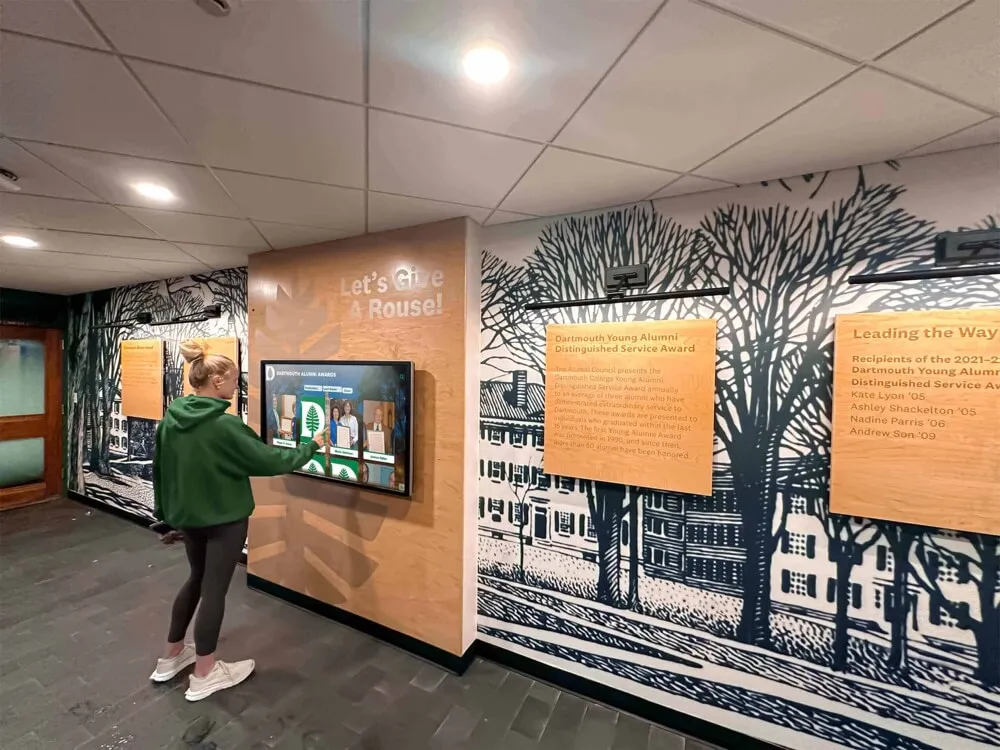
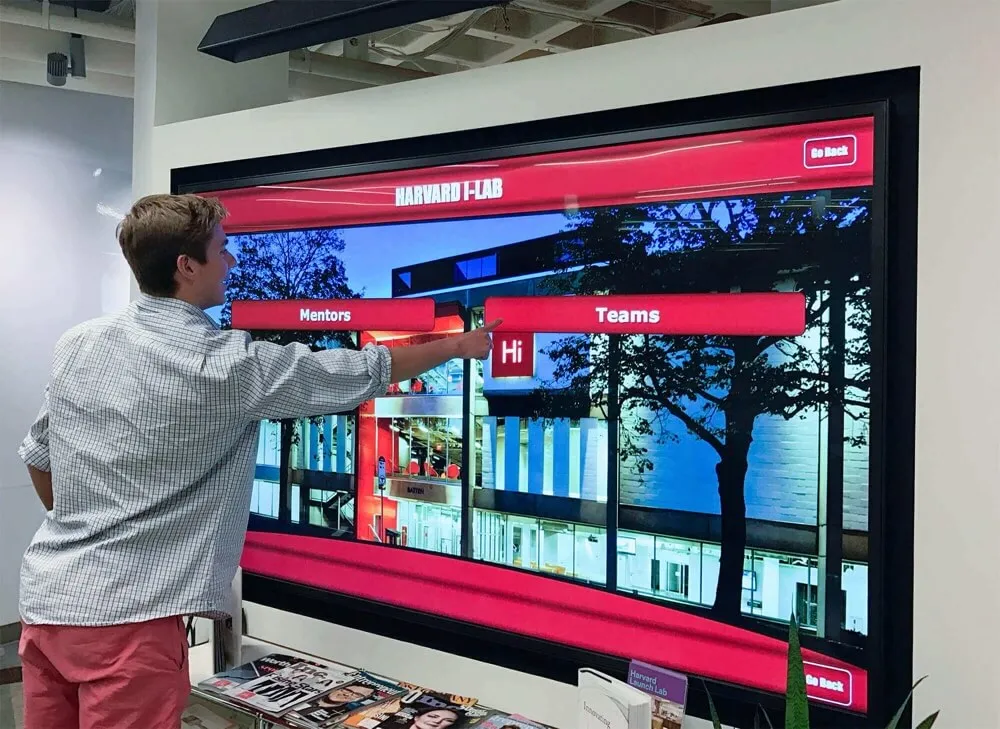
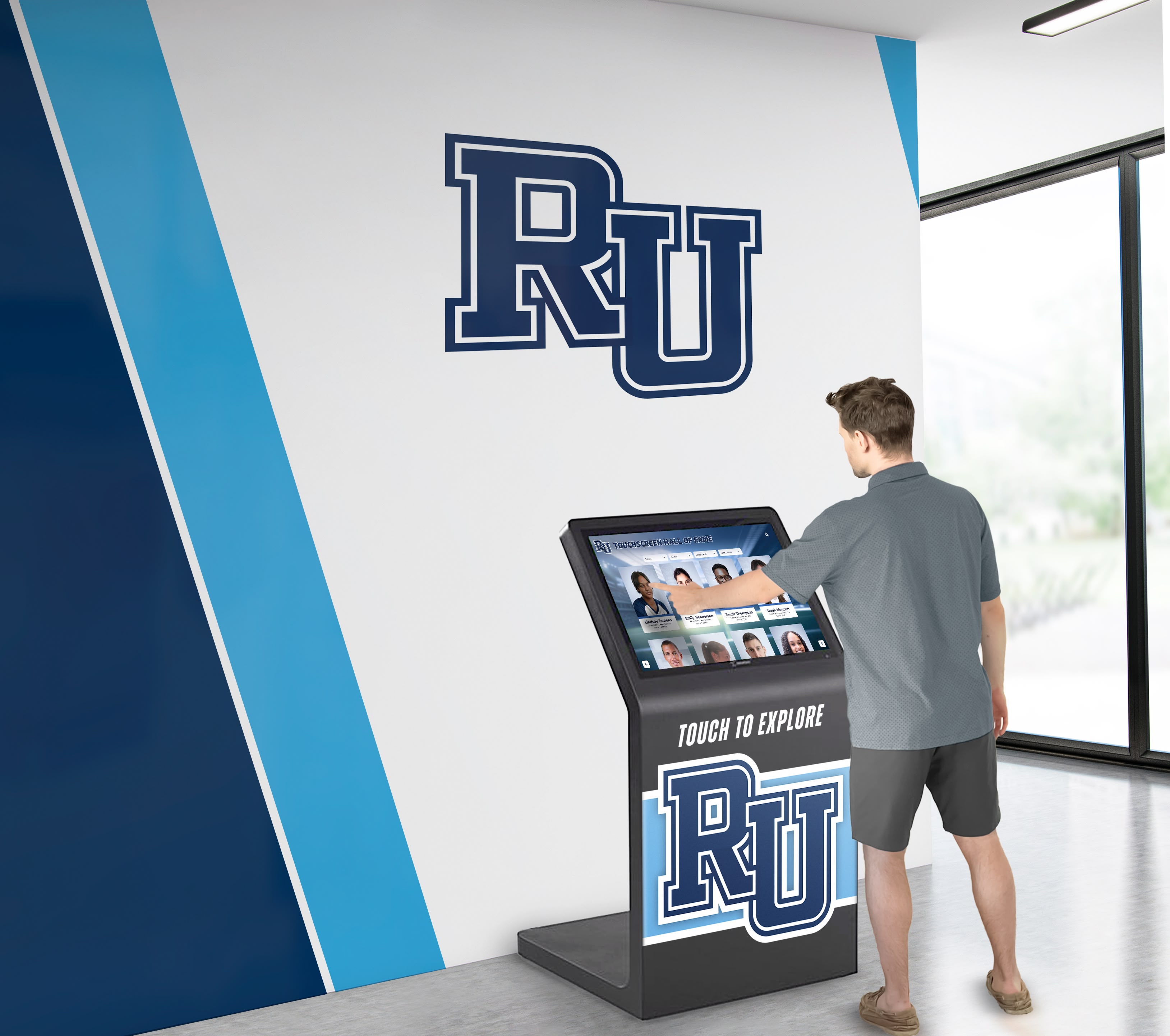
Interactive touchscreens enable exploration of individual player profiles, playoff statistics, and championship contributions
Engaging Multimedia Storytelling
Digital recognition enables rich content impossible with traditional plaques:
- Video highlights from playoff games and championship moments
- Photo galleries capturing season progressions and key plays
- Audio clips from broadcasts or post-game celebrations
- Interactive playoff brackets showing tournament paths
- Statistical visualizations comparing teams across eras
- Timeline presentations placing achievements in historical context
This multimedia approach creates engaging experiences that honor achievements appropriately while encouraging exploration and connection to athletic tradition.
Explore digital recognition capabilities through interactive recognition displays designed for athletic achievement.
Remote Management and Updates
Cloud-based recognition platforms provide operational advantages:
- Add playoff teams immediately following championship games
- Update brackets and results in real-time as tournaments progress
- Correct errors or enhance content from any internet-connected device
- Manage recognition across multiple display locations simultaneously
- Schedule featured content highlighting specific playoff moments
- Analyze engagement revealing which content resonates most
These management capabilities dramatically reduce administrative burden while ensuring recognition stays consistently current and relevant.
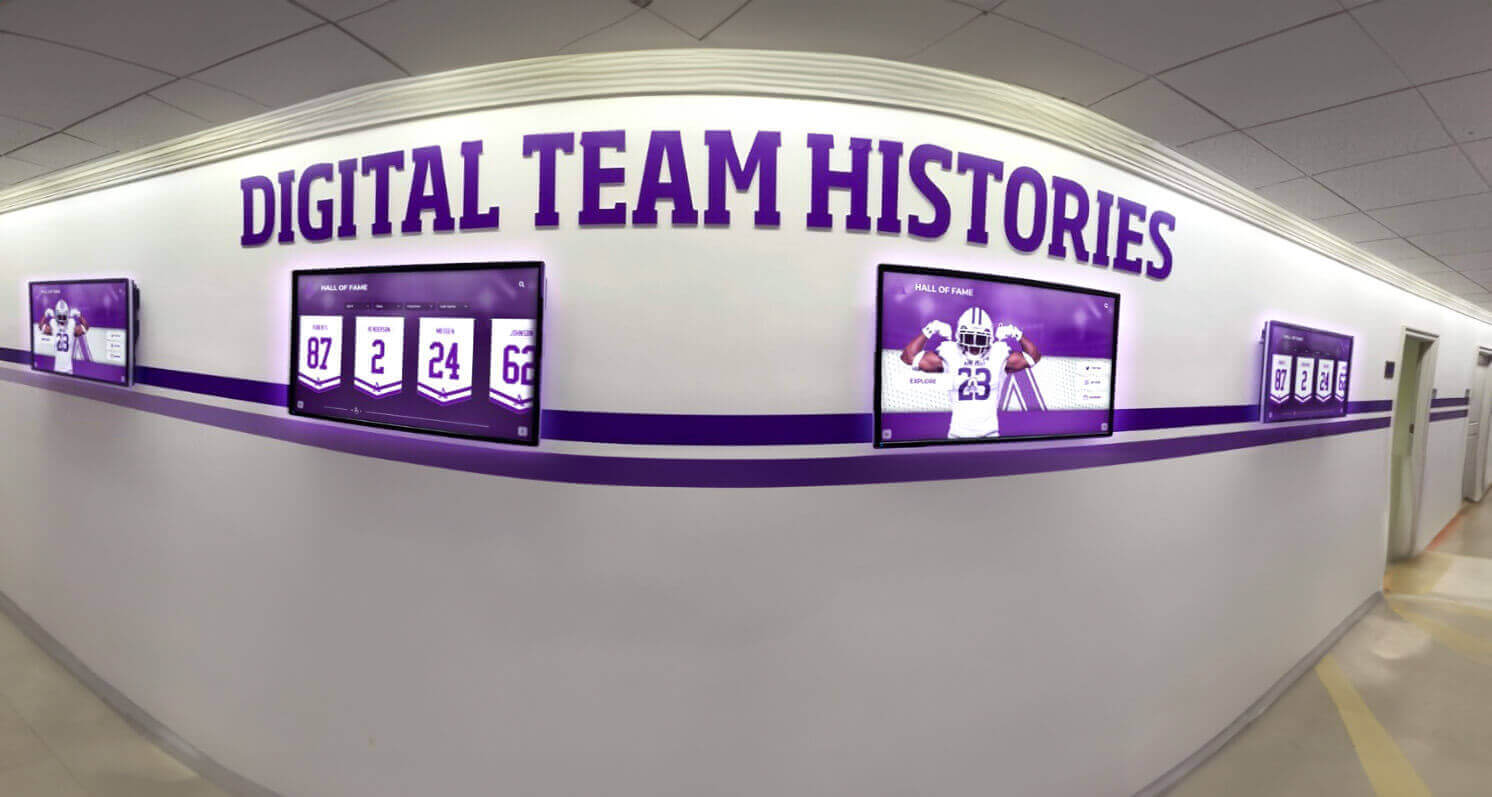
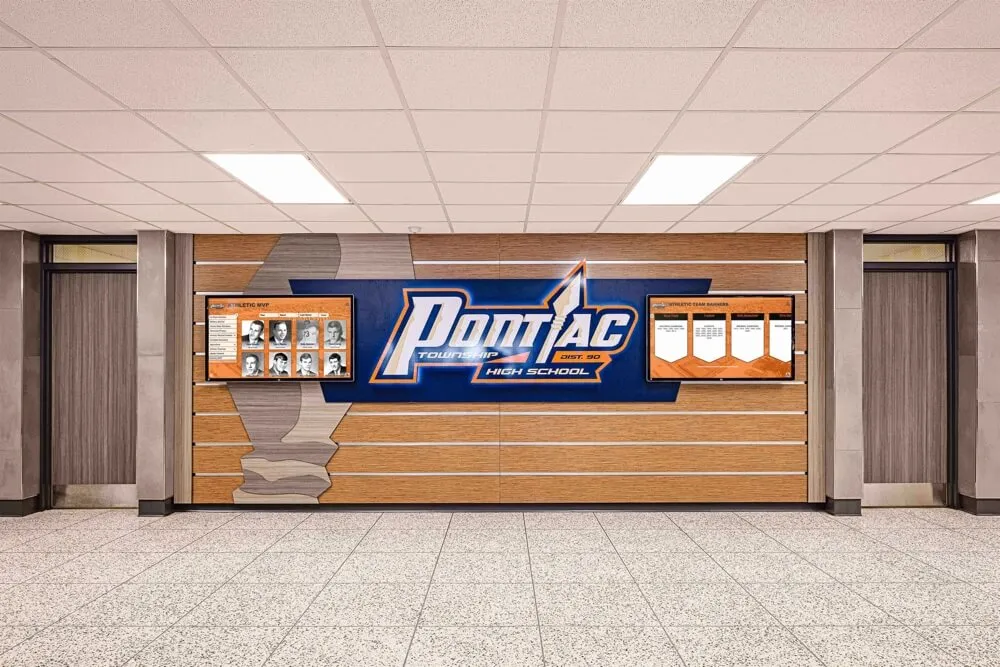
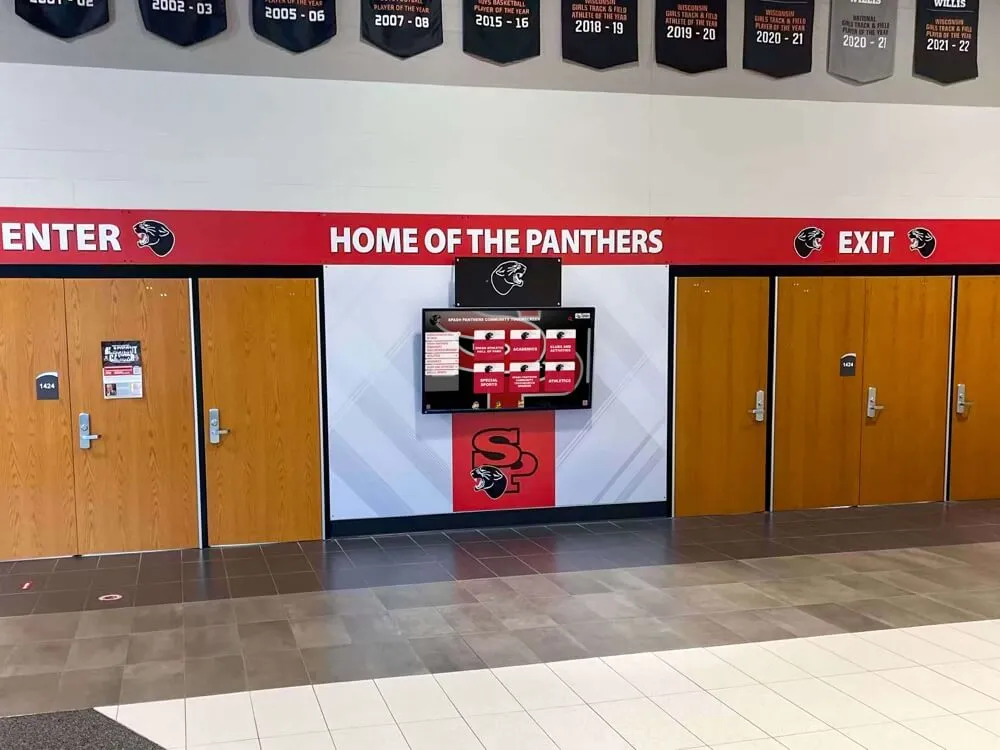
Multiple coordinated displays throughout facilities ensure playoff achievements receive visibility reaching all students and visitors
Building Football Program Culture Through Playoff Recognition
Effective recognition does more than acknowledge past achievement—it shapes program culture, motivates current athletes, and establishes expectations that excellence deserves celebration.
Creating Championship Expectations
Prominent playoff recognition communicates that postseason success represents realistic goals rather than distant aspirations.
Cultural Benefits of Playoff Recognition
Well-implemented recognition delivers multiple cultural advantages:
- Establishes achievement standards: Visible playoff success defines program expectations
- Provides motivation: Current players aspire to join recognized predecessors
- Creates accountability: Public recognition makes excellence non-negotiable
- Builds program continuity: Recognition connects current teams to athletic legacy
- Strengthens community pride: Visible success generates community support and engagement
- Attracts talent: Prospective athletes recognize programs that celebrate achievement
Schools demonstrating commitment to recognition signal that achievement matters and deserves permanent celebration, creating cultural environments where excellence becomes expected rather than exceptional.
Connecting Past and Present Success
Recognition systems should create bridges between historic achievement and current teams, fostering understanding that today’s athletes continue traditions established by predecessors.
Integration Strategies
- Feature historic playoff teams during current season campaigns
- Invite championship alumni to address current teams before playoffs
- Compare current playoff brackets to historic tournament progressions
- Celebrate playoff anniversaries of historic championship teams
- Display progression from past championships to current aspirations
- Create mentor relationships between championship alumni and current players
These connections reinforce that playoff success results from sustained commitment to excellence across generations rather than isolated individual or team achievement.
Learn about connecting generations through athletic program recognition that celebrates tradition while inspiring future achievement.
Supporting Current Teams During Playoff Runs
Recognition strategies can support current playoff teams while competitions progress, creating momentum and community engagement that enhances postseason experiences.
Real-Time Playoff Recognition
Schools can celebrate playoff qualification and tournament progression immediately rather than waiting for seasons to conclude.
In-Season Recognition Strategies

Recognition displays can feature current playoff teams during tournament runs, building excitement and community support
Immediate Recognition Elements
- Announce playoff qualification through multiple communication channels
- Display current playoff brackets showing team positioning
- Feature player profiles and team information during tournament weeks
- Share playoff game information including dates, times, and locations
- Celebrate victories and recognize performances after each playoff game
- Create countdown graphics for upcoming playoff matchups
- Highlight statistical leaders and key contributors throughout playoffs
This real-time recognition builds excitement, increases attendance at playoff games, and demonstrates institutional support for competing teams.
Community Engagement During Playoffs
Playoff runs create opportunities for enhanced community connection and support.
Community Engagement Approaches
Schools can leverage playoffs for broader engagement:
- Pep rallies and send-offs: Celebrate teams before playoff games
- Watch parties: Organize community viewing for away playoff games
- Social media campaigns: Share playoff content across digital platforms
- Local media coverage: Coordinate with newspapers and broadcasters
- Alumni engagement: Invite championship alumni to playoff games
- Business partnerships: Local businesses display playoff support
- Fundraising opportunities: Leverage playoff excitement for booster support
These engagement strategies strengthen community connection to athletic programs while providing tangible support that enhances playoff experiences for student-athletes.
Discover community engagement strategies through school spirit programs that celebrate athletic achievement.
Comparing Arizona Playoffs to Other State Systems
Understanding how Arizona’s playoff system compares to other states provides perspective on the unique characteristics of Grand Canyon State football playoffs.
State Playoff System Variations
Different states organize high school football playoffs through various structures reflecting their unique athletic landscapes.
Common Playoff Structures
States employ different playoff models:
- Open/Large Enrollment: Arizona’s system balancing access with competitiveness
- Restricted/Limited: Some states limit playoffs to conference champions only
- Division/Classification: Most states use enrollment-based classifications
- Regional Tournaments: Some states organize geographically before state finals
- Private/Public Divisions: Certain states separate school types
Arizona’s 16-team per classification model represents relatively inclusive approach compared to states limiting playoffs to top 8 or conference champions only, providing more schools with postseason opportunities while maintaining competitive standards through ranking systems.
Arizona’s Unique Playoff Characteristics
Several elements distinguish Arizona’s high school football playoff experience.
Distinctive Arizona Elements
- Climate advantages: Mild November-December weather enables consistent playing conditions
- Geographic diversity: Playoffs feature teams from Phoenix metro, Tucson, rural communities
- Growth trajectory: Rapid population growth creates evolving competitive landscape
- College venue championships: Access to excellent college facilities for finals
- Classification balance: Competitive parity across multiple classification levels
These characteristics create playoff experiences reflecting Arizona’s unique athletic culture and geographic identity.
Explore playoff traditions across states through high school football championship coverage examining different state approaches.
Planning Playoff Recognition Implementation
Schools considering enhanced playoff recognition benefit from systematic planning ensuring implementations deliver maximum value while remaining manageable within available resources.
Defining Recognition Objectives
Clear objectives guide recognition program design and resource allocation.
Recognition Goal Questions
Consider what recognition should accomplish:
- Which playoff achievements currently lack adequate recognition?
- How might enhanced recognition support football program goals?
- What role should recognition play in building school pride?
- How can recognition motivate current and future athletes?
- What engagement outcomes would demonstrate recognition success?
- How should recognition integrate with existing athletic displays?
These fundamental questions ensure recognition programs address actual needs rather than implementing technology without clear purpose.
Technology Platform Selection
Choosing appropriate recognition platforms significantly impacts user experience, administrative efficiency, and long-term satisfaction.
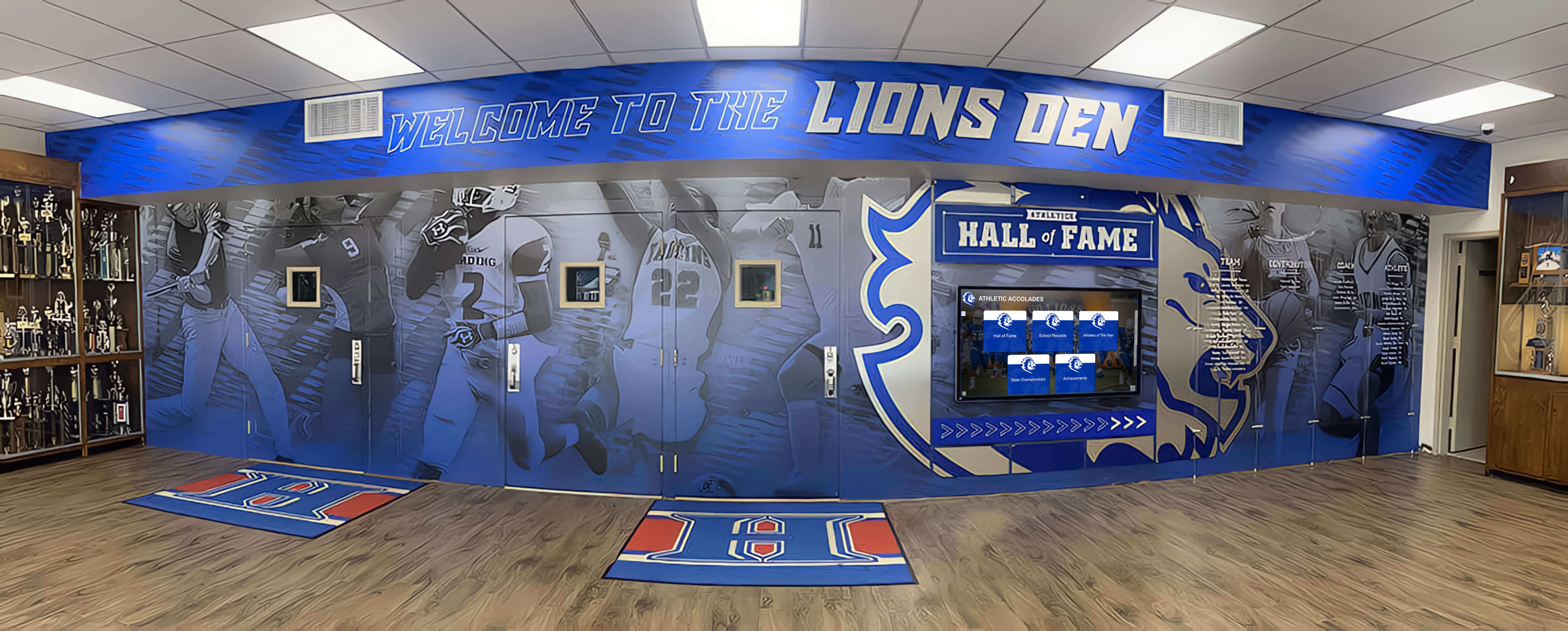
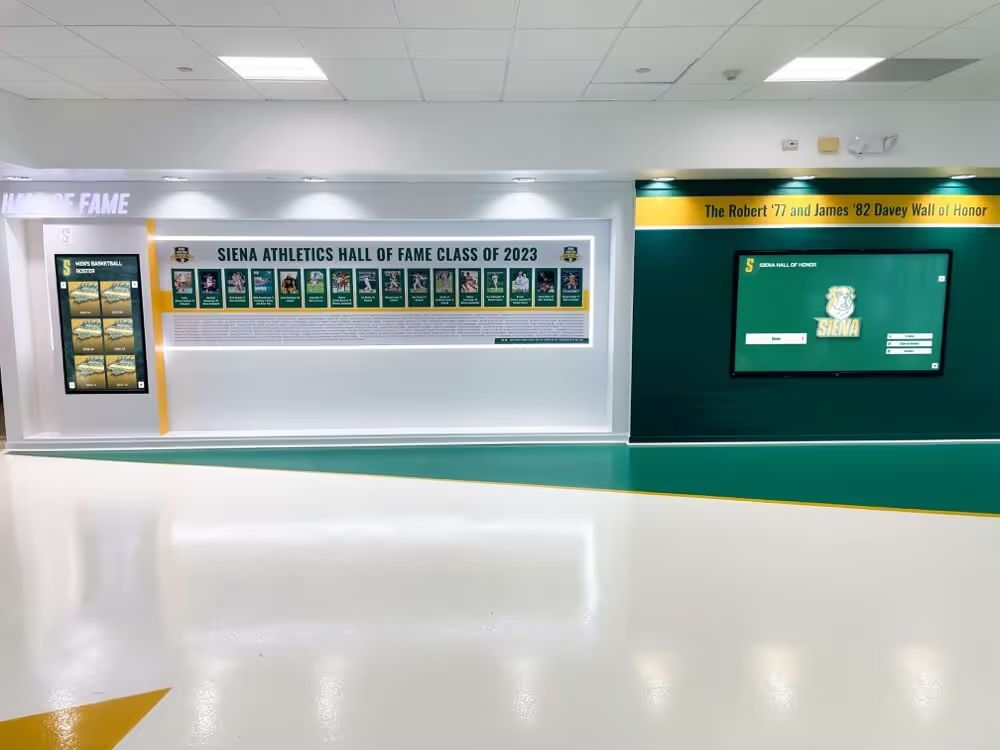
Integrated recognition environments combine traditional trophy displays with digital interactive systems celebrating playoff achievements comprehensively
Platform Evaluation Criteria
Essential capabilities for athletic recognition platforms:
- Intuitive content management requiring no technical expertise
- Unlimited content storage supporting extensive historical archives
- Sport-specific templates for football recognition
- Flexible display options matching different screen sizes
- Robust search and filtering enabling content discovery
- Mobile-responsive web access extending recognition beyond physical displays
- Analytics revealing engagement patterns
- Reliable vendor support understanding school athletic needs
Solutions like Rocket Alumni Solutions provide purpose-built recognition platforms designed specifically for athletic achievement, delivering functionality schools need without requiring custom development or ongoing technical resources.
Learn about technology selection through digital recognition platform comparisons examining different solution approaches.
Content Development Planning
Systematic content development ensures recognition launches with sufficient historical depth while establishing sustainable ongoing management.
Initial Content Development
Launching with comprehensive historical content creates immediate impact:
- Historical research: Gather playoff team information from archives and records
- Photo collection: Source images from yearbooks, athletic departments, community contributions
- Video compilation: Locate game footage and championship moments from archives
- Data organization: Compile playoff results, brackets, and statistics
- Content authoring: Write compelling team profiles and season narratives
- Media preparation: Optimize photos and videos for display performance
- Content upload: Populate recognition platform systematically by year or classification
- Quality review: Verify accuracy before public launch
Schools should allocate 60-100 hours for comprehensive initial playoff recognition content depending on history scope—foundational investment ensuring quality from launch.
Ongoing Content Management
Systematic approaches keep recognition current:
- Immediate addition of playoff teams following seasons
- Quarterly content reviews verifying accuracy
- Annual archive expansion adding historical content systematically
- Featured content rotation ensuring visibility for all playoff teams
- Analytics review informing content strategy optimization
Cloud-based platforms enable updates from any internet-connected device, dramatically reducing administrative burden compared to physical displays requiring on-site access for modifications.
Measuring Playoff Recognition Impact
Assessment demonstrates recognition value while identifying improvement opportunities ensuring displays achieve intended objectives.
Quantitative Engagement Metrics
Modern recognition platforms provide concrete usage data revealing how communities interact with playoff content.
Display Interaction Analytics
- Touchscreen interaction frequency showing daily usage patterns
- Average session duration revealing engagement depth
- Most-viewed playoff teams and content
- Search query analysis showing discovery patterns
- Peak usage times informing content scheduling
- Navigation paths revealing how users explore recognition
Web Platform Analytics
- Unique visitor counts showing online recognition reach
- Geographic distribution revealing how far recognition extends
- Social sharing frequency demonstrating organic promotion
- Return visitor rates indicating sustained engagement
- Device types showing mobile versus desktop access
These metrics reveal whether recognition generates intended engagement or requires strategy adjustments.
Qualitative Impact Assessment
Feedback provides insights beyond quantitative metrics.
Stakeholder Feedback Collection
- Student surveys assessing recognition awareness and engagement
- Alumni feedback on connection improvements
- Parent responses during playoff seasons
- Community reactions at games and events
- Coach observations about impact on program culture
- Prospective family responses during recruitment visits
Regular assessment enables continuous refinement ensuring recognition achieves goals while identifying enhancement opportunities.
Explore measurement approaches through recognition impact assessment with comprehensive evaluation frameworks.
Beyond Football: Expanding Playoff Recognition
Schools implementing football playoff recognition often discover opportunities to extend approaches across all athletic programs competing in postseason tournaments.
Multi-Sport Recognition Systems
Comprehensive recognition celebrates playoff achievement across entire athletic programs.
All-Sport Playoff Recognition
Systematic recognition should include:
- Basketball playoff teams and tournament brackets
- Baseball and softball postseason achievements
- Soccer playoff runs and championship appearances
- Volleyball tournament success
- Wrestling championship qualifiers and medalists
- Track and field state meet participants
- Other sports with playoff or championship structures
This comprehensive approach demonstrates that all playoff achievement deserves recognition regardless of sport, creating equitable visibility that strengthens entire athletic cultures rather than privileging specific programs.
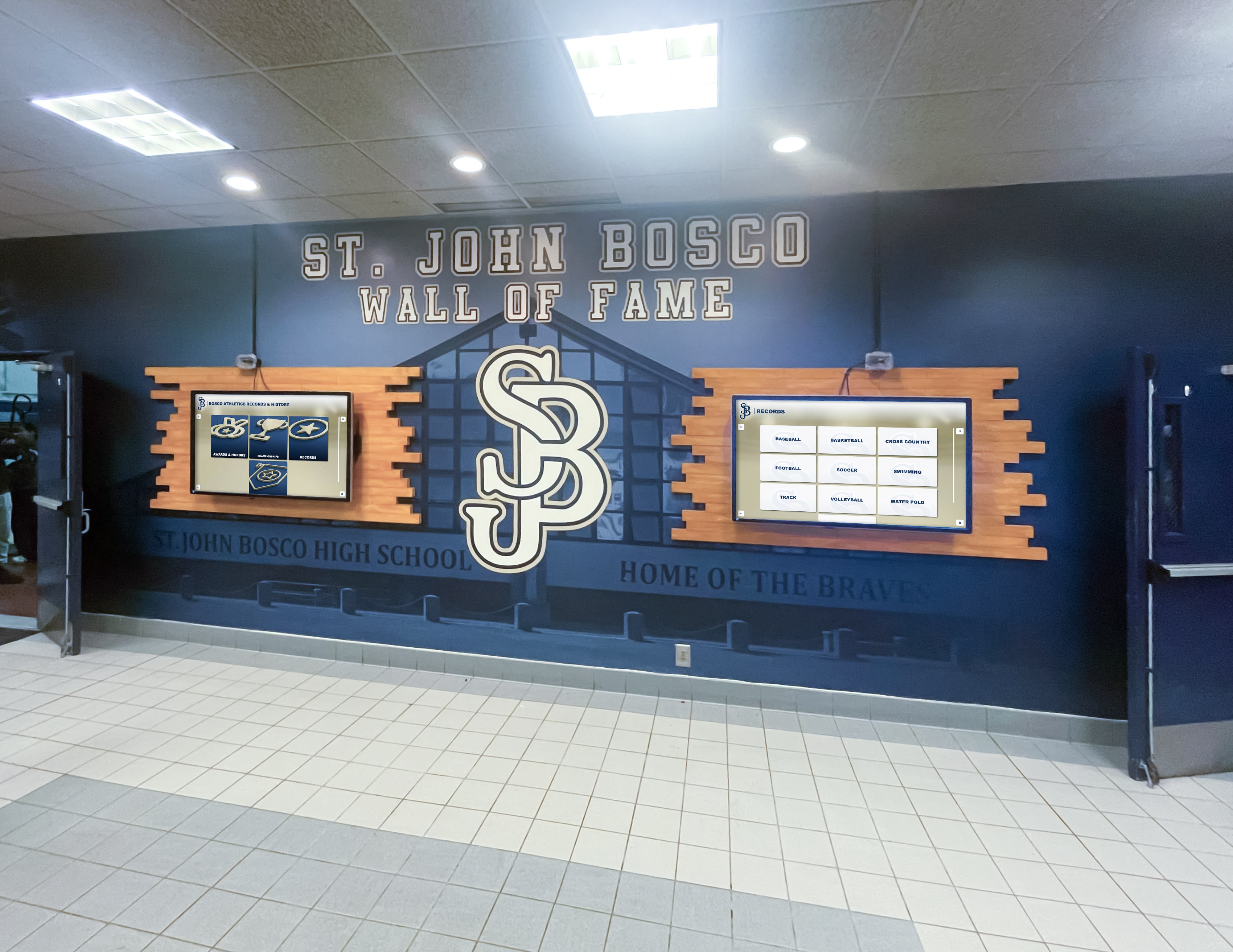
Multiple coordinated displays enable comprehensive recognition across all athletic programs and playoff achievements
Academic and Activity Recognition
Recognition principles extend beyond athletics to celebrate all forms of competitive excellence.
Comprehensive Achievement Recognition
Schools can apply playoff recognition approaches to:
- Academic competition teams and tournament success
- Performing arts competition achievements
- STEM competition participation and victories
- Debate and forensics tournament results
- Robotics competition successes
- All competitive activities with postseason structures
This comprehensive perspective ensures schools celebrate all forms of excellence rather than limiting recognition to athletic achievement alone.
Conclusion: Preserving Arizona Football Playoff Legacy
Arizona high school football playoffs create defining moments in student-athlete experiences, forge lasting community memories, and establish competitive traditions that shape institutional athletic identities. These postseason tournaments showcase the dedication, sacrifice, and excellence characterizing the best of high school athletics while providing platforms for personal growth, leadership development, and life lessons extending far beyond football fields.
Schools that excel at recognizing playoff achievement understand that effective recognition does more than acknowledge past success—it shapes program culture, motivates current athletes, inspires future generations, and strengthens community connections to athletic traditions. When implemented thoughtfully, recognition systems transform simple acknowledgment into dynamic celebration woven throughout institutional culture.
Celebrate Your Football Playoff Achievements
Discover how digital recognition solutions like Rocket Alumni Solutions help schools preserve playoff memories, celebrate championship moments, and build athletic traditions that inspire excellence for generations. Transform how your community experiences and connects with football playoff legacy.
Explore Recognition SolutionsModern recognition technology eliminates the physical constraints that historically limited playoff celebration to brief announcements, generic plaques, or overcrowded trophy cases. Digital platforms provide unlimited capacity for preserving complete playoff histories, engaging multimedia showcasing championship moments, and interactive experiences that make athletic legacy accessible and compelling for current students, alumni, and community members.
For Arizona schools committed to celebrating football playoff achievement appropriately, the strategies, considerations, and best practices explored in this guide provide frameworks for implementation delivering lasting value. From understanding playoff structures and qualification criteria to implementing comprehensive digital recognition and measuring community engagement, these approaches transform how schools honor the playoff achievements that define football program excellence.
Your playoff teams, championship moments, and competitive traditions deserve recognition systems that celebrate dedication and achievement while inspiring future generations to pursue their own postseason excellence. With systematic planning, appropriate technology, and sustained commitment, you can create recognition programs that become cherished traditions preserving Arizona football playoff legacy permanently while building athletic cultures where championship aspirations become realistic expectations.
Ready to enhance your football program recognition? Explore how schools celebrate athletic achievement through youth sports recognition programs or learn about digital athletic displays that preserve playoff memories and championship moments throughout your community.