



Apartment complex lobbies across the country are undergoing a dramatic transformation—from outdated bulletin boards cluttered with yellowing notices and handwritten memos to sleek, interactive digital displays delivering real-time information, community updates, and engaging content that modernizes resident experiences. In an era where residents expect instant digital communication in every aspect of their lives, property managers are discovering that traditional paper notices and static signage no longer meet the communication standards expected by today’s tenants.
Walk through most apartment buildings and you’ll encounter familiar communication challenges: bulletin boards overflowing with outdated flyers that nobody reads, important maintenance notices lost among dozens of other papers, emergency information difficult to update quickly, community announcements that reach only residents who happen to see the lobby board, and sterile entrance areas that fail to convey the vibrant community experience properties work hard to create.
This comprehensive guide explores how modern apartment complex digital displays solve these persistent communication challenges while creating engaging resident experiences, enhancing property appeal, streamlining operations, and building stronger community connections—demonstrating why forward-thinking property management companies are investing in digital display technology as essential infrastructure for competitive multifamily properties in 2025 and beyond.
The shift from traditional paper-based communication to digital display systems represents far more than simple technology adoption—it reflects fundamental changes in how residents expect to receive information, how properties differentiate themselves in competitive markets, and how building management creates efficient communication workflows that serve diverse resident populations across multiple properties simultaneously.

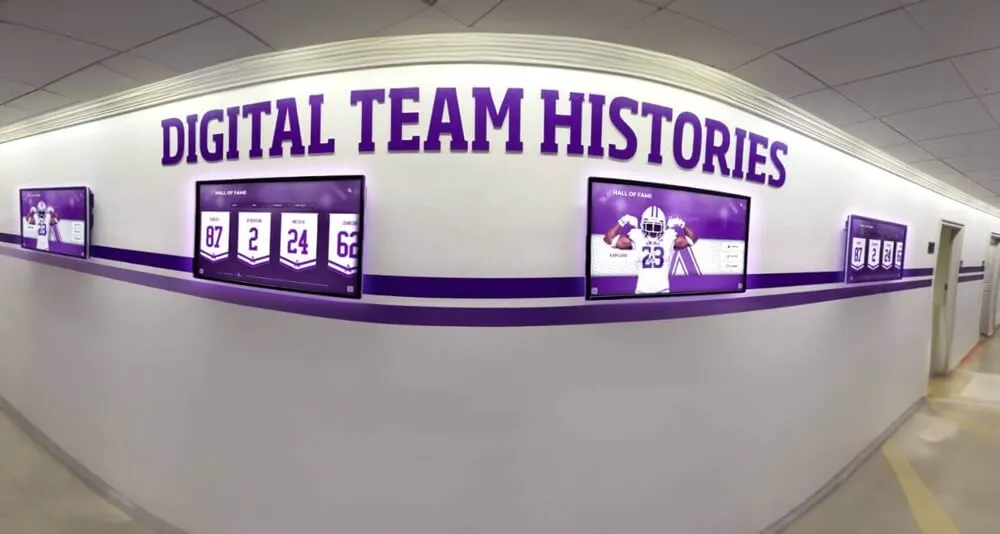
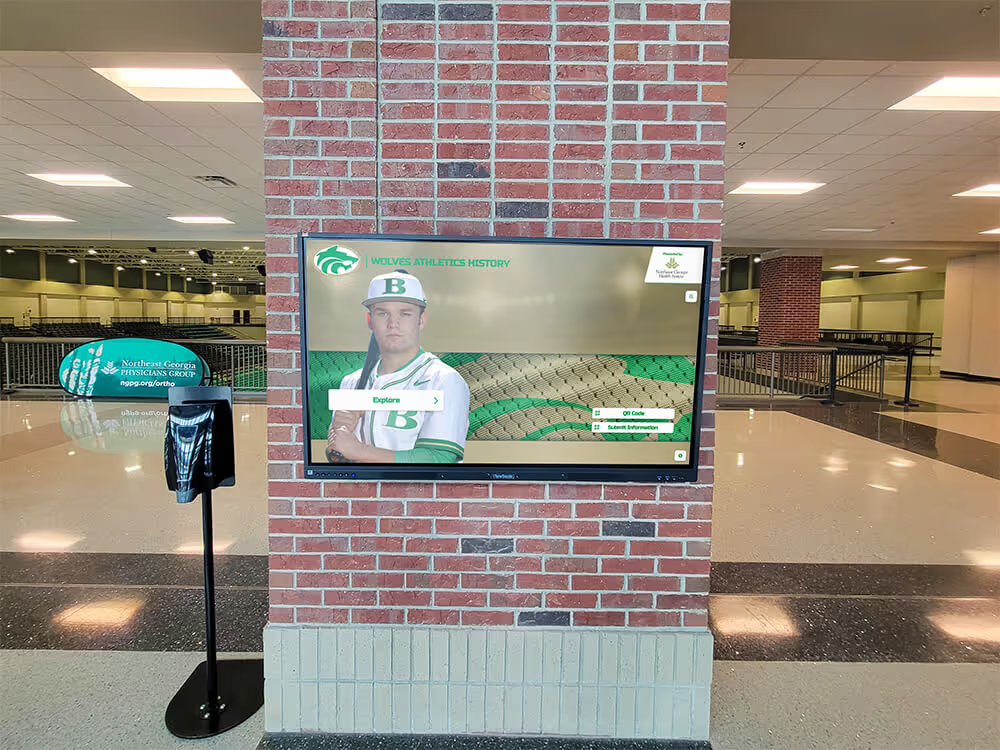
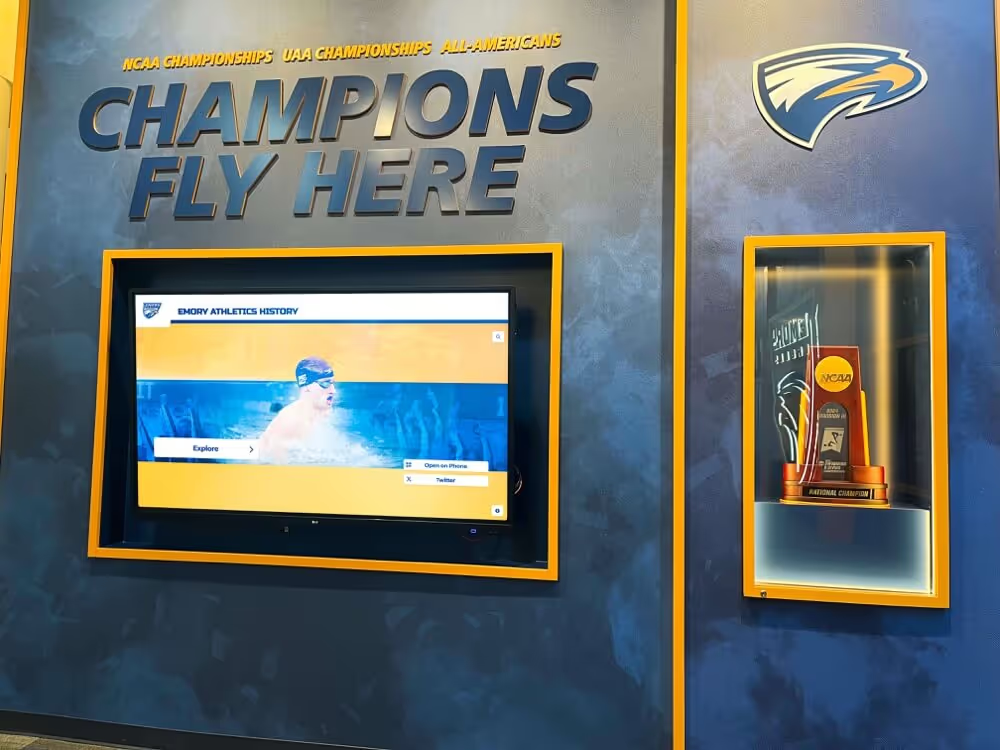
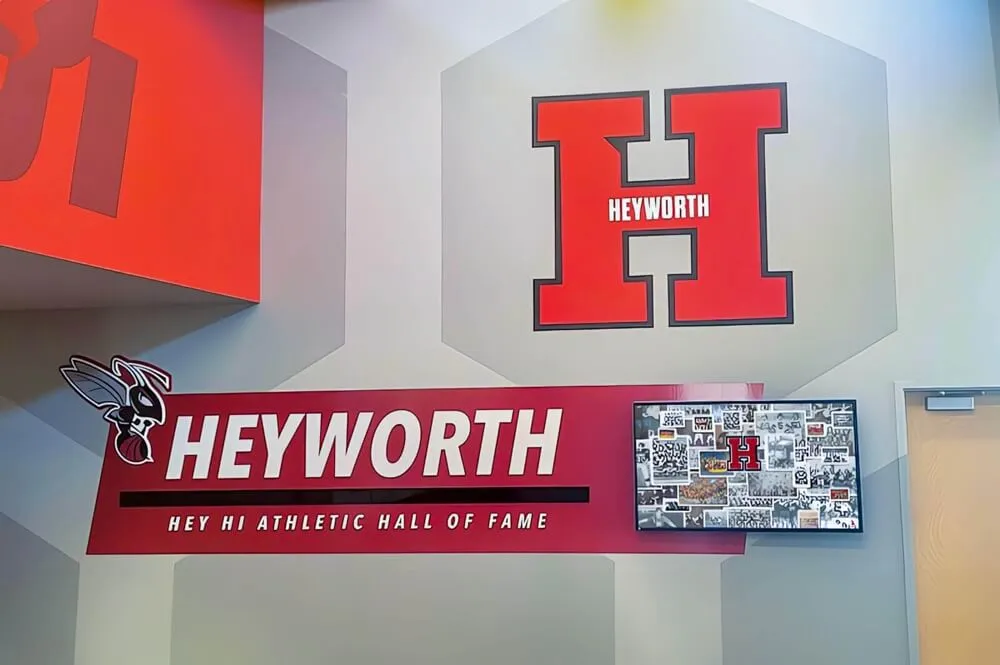
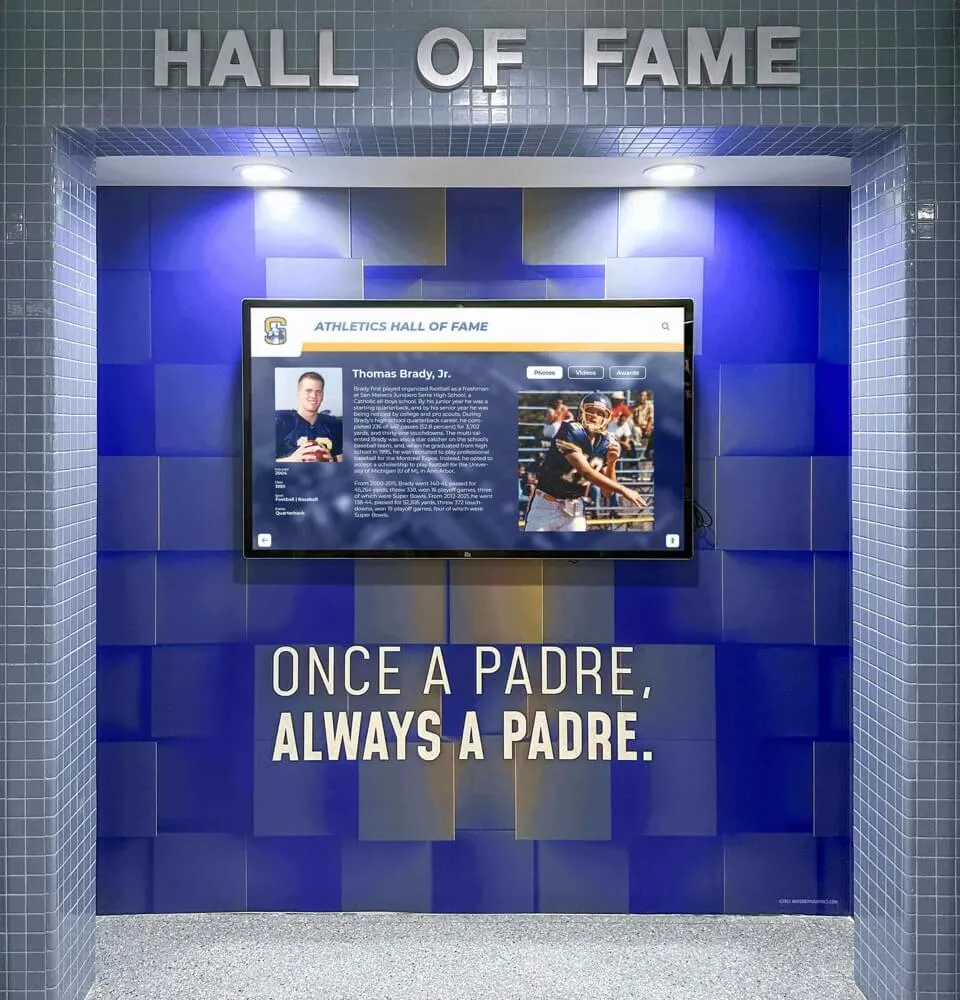
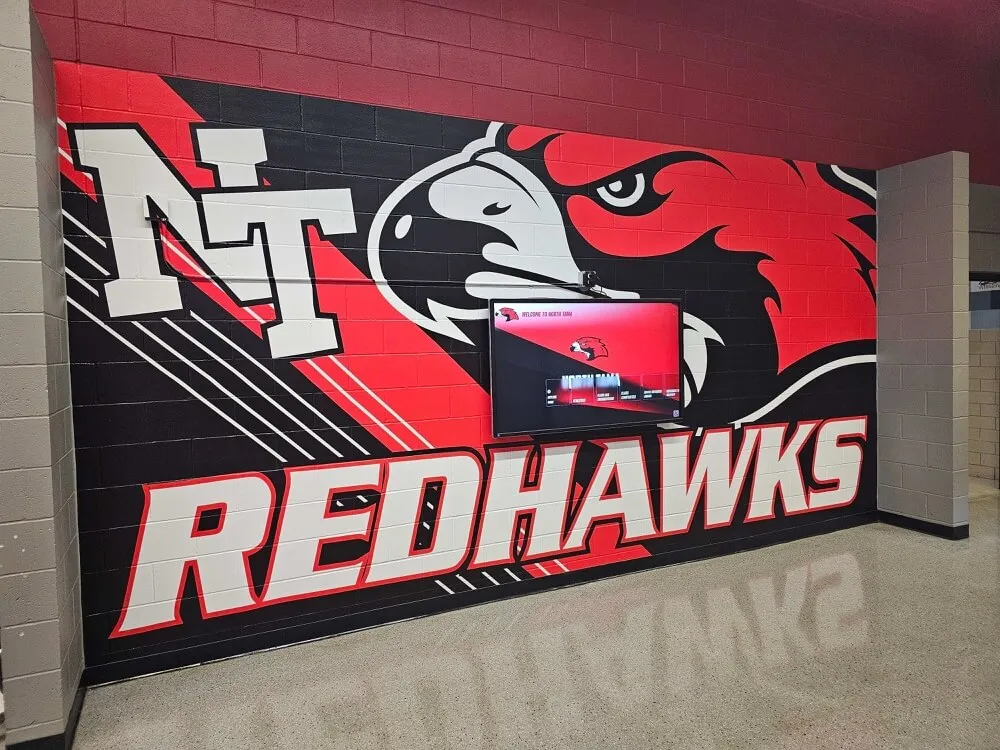
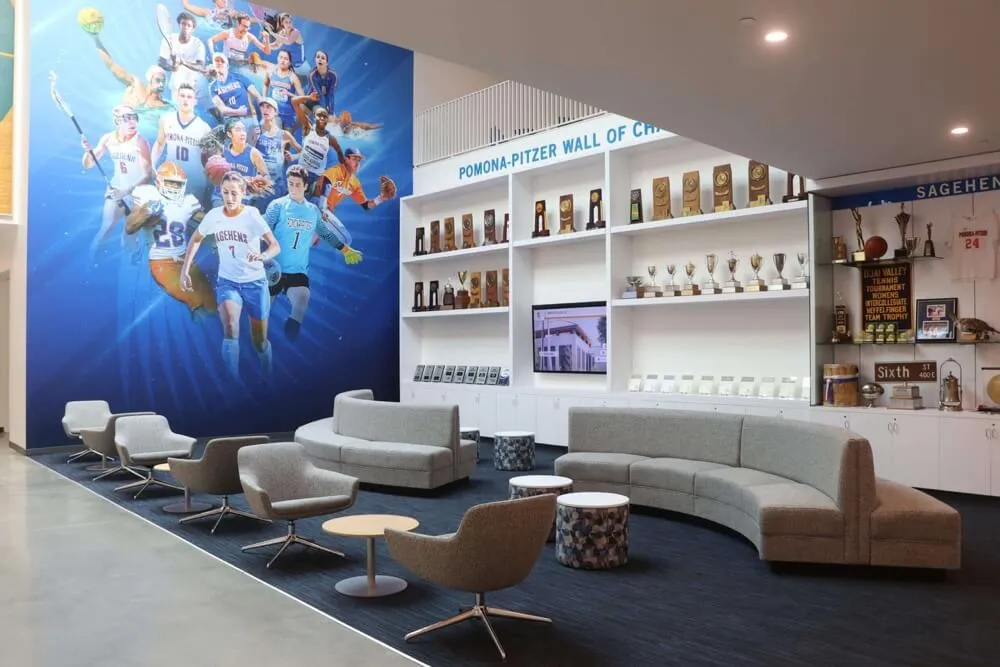
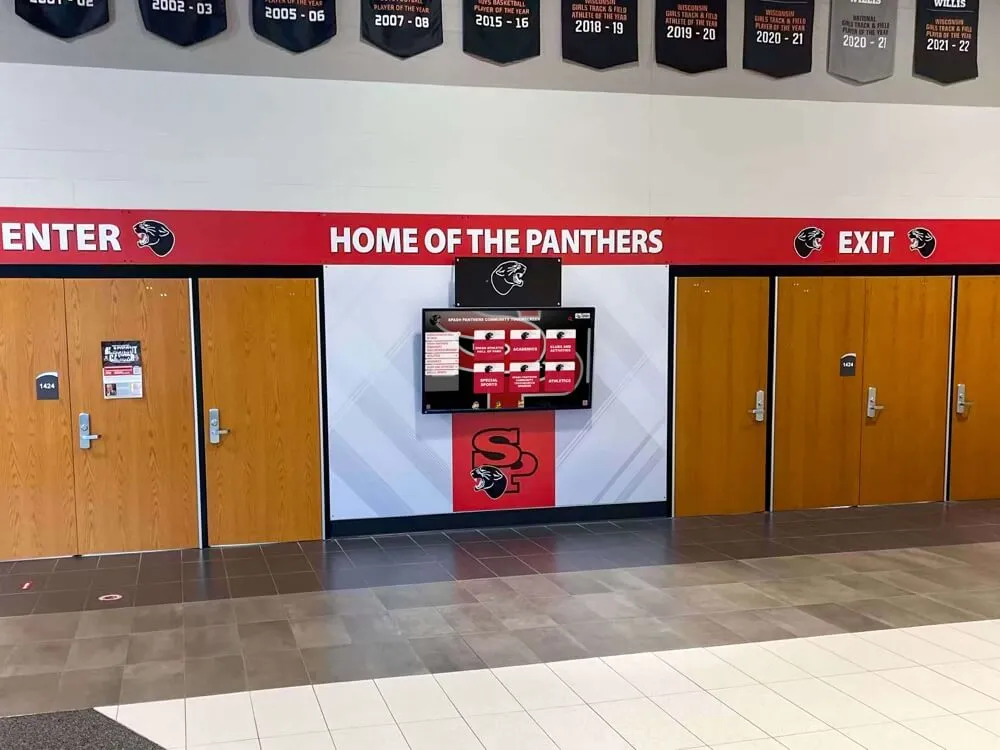
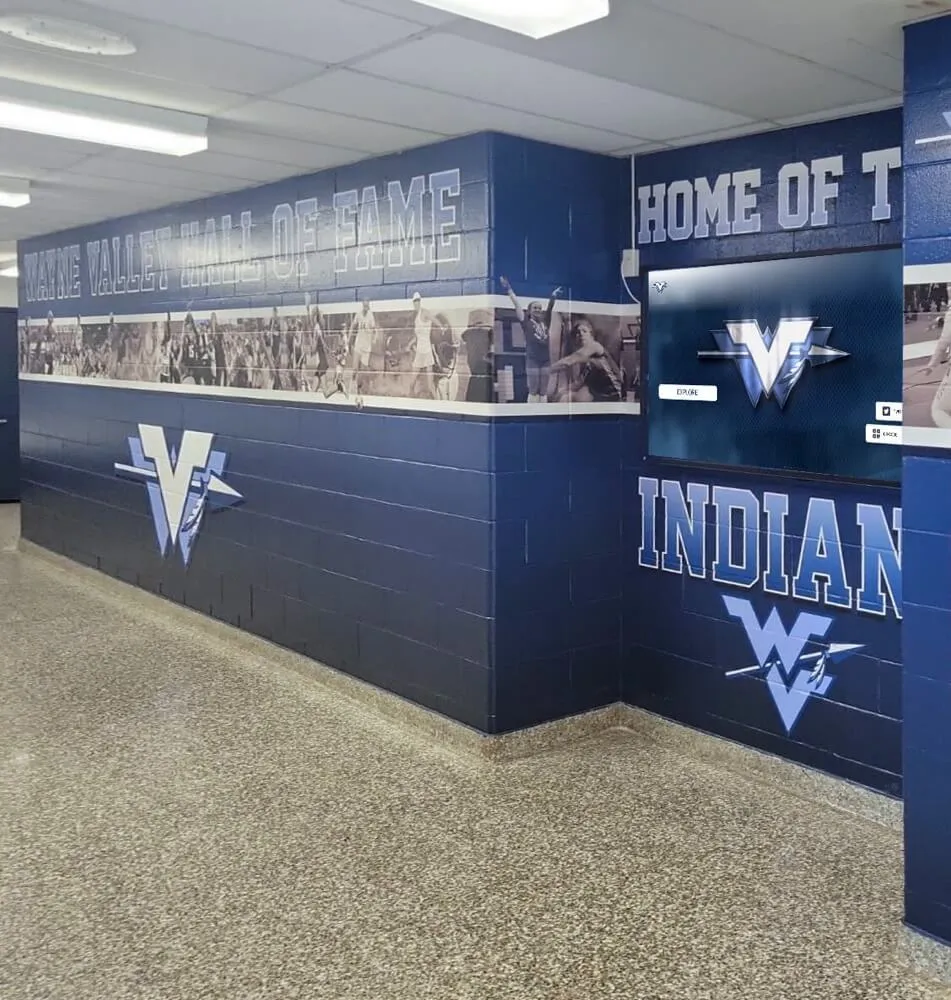
Modern digital displays in apartment lobbies create welcoming, informative environments while providing residents instant access to important information
Understanding the Communication Challenge in Modern Apartment Complexes
Before exploring specific digital display solutions, property managers should understand the fundamental communication challenges facing multifamily properties and why traditional approaches increasingly fail to meet resident expectations.
The Limitations of Traditional Communication Methods
Paper-Based Communication Problems
Traditional bulletin boards and printed notices create multiple operational challenges:
Printed notices become outdated within days or weeks but remain posted for months, creating cluttered, unprofessional appearances. Important emergency information cannot be updated quickly when situations change. Multilingual residents may not understand English-only notices, creating accessibility gaps. Paper waste from constant printing and posting contradicts sustainability commitments. And most critically, residents simply don’t read bulletin boards—research shows that over 70% of residents never check lobby notice boards, meaning critical information fails to reach intended audiences.
Email and Digital-Only Limitations
While email communication reaches residents electronically, this approach faces its own challenges:
Average email open rates for property management communications hover around 15-25%, meaning three-quarters of residents never see messages. Emails get lost in overflowing inboxes competing with hundreds of other messages. Time-sensitive emergency information may not reach residents who check email infrequently. And visual impact is limited—text-based emails cannot create the engaging, multimedia experiences that drive attention and retention.
According to research from the National Apartment Association, 83% of condo residents living without digital screens believe they would be an effective way to receive building information, while 97% of residents with digital screens find the content informative, relevant, and trustworthy.
Resident Expectations in the Digital Age
The Instant Information Expectation
Today’s residents—particularly younger renters who represent the largest demographic in multifamily housing—expect instant access to information in formats they encounter everywhere else in their daily lives:
Real-time updates accessible when convenient for them, visual and multimedia content that captures attention quickly, mobile-friendly information they can access from phones or tablets, interactive interfaces enabling them to explore content matching their interests, and seamless digital experiences consistent with modern technology standards they experience in retail, hospitality, and workplace environments.
Properties failing to meet these digital communication expectations risk being perceived as outdated or poorly managed, regardless of actual service quality.
Competitive Differentiation Through Technology
In competitive rental markets, residents choose between multiple comparable properties:
Modern digital displays signal that properties invest in resident experience, adopt contemporary technology, and prioritize effective communication. First impressions during property tours significantly influence rental decisions—digital displays in lobbies convey professionalism and modernity that traditional bulletin boards cannot match. And tech-forward amenities increasingly appear on apartment search criteria lists, particularly for younger demographics prioritizing digital integration.
Properties implementing comprehensive digital display strategies report competitive advantages during leasing presentations and improved resident satisfaction scores.

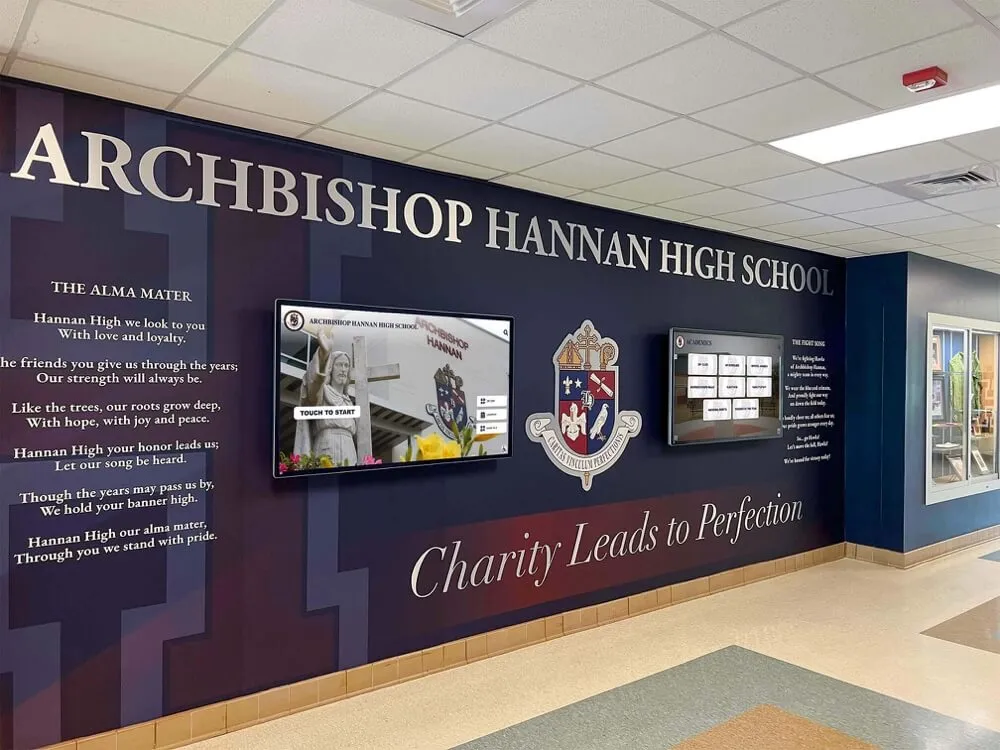
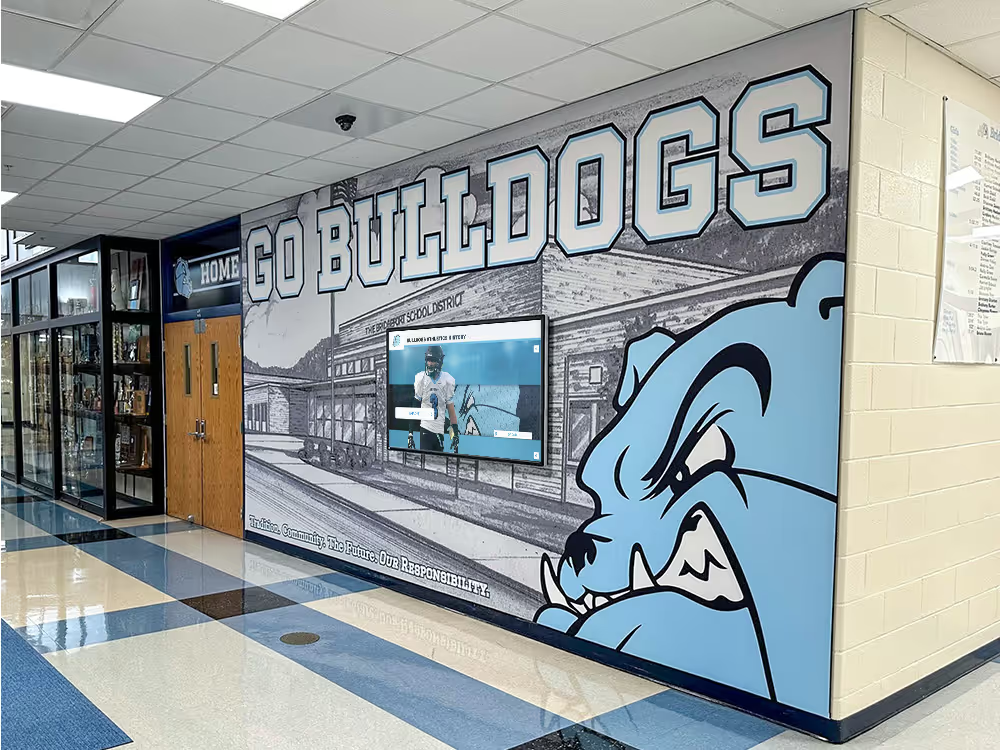
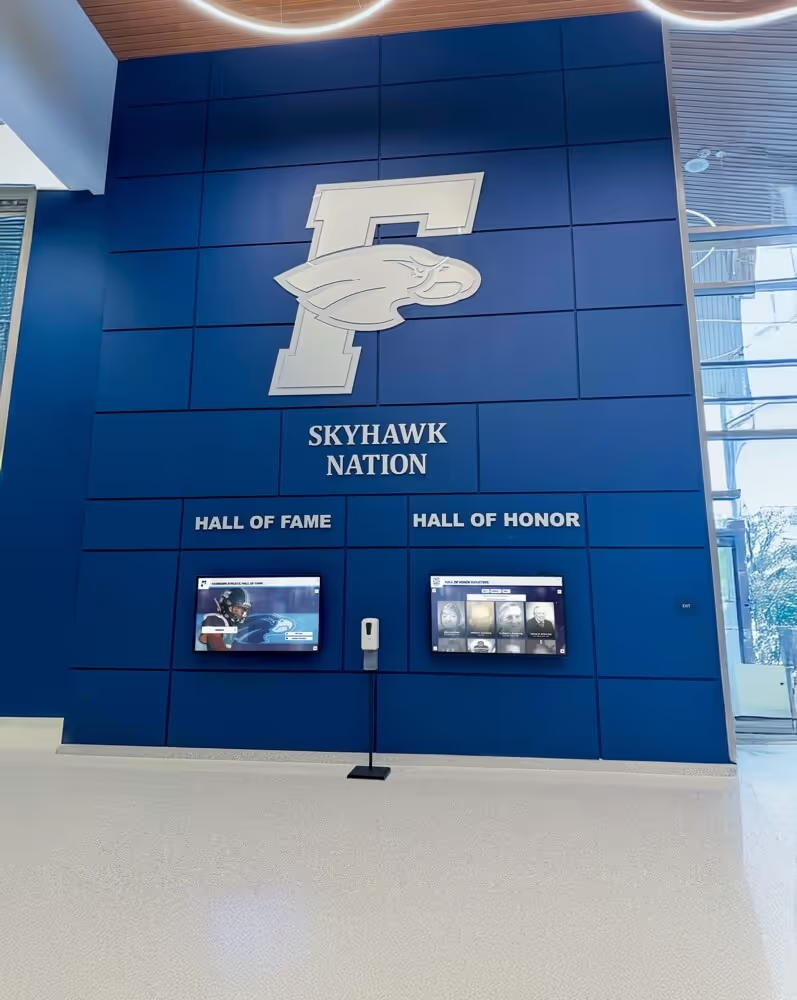
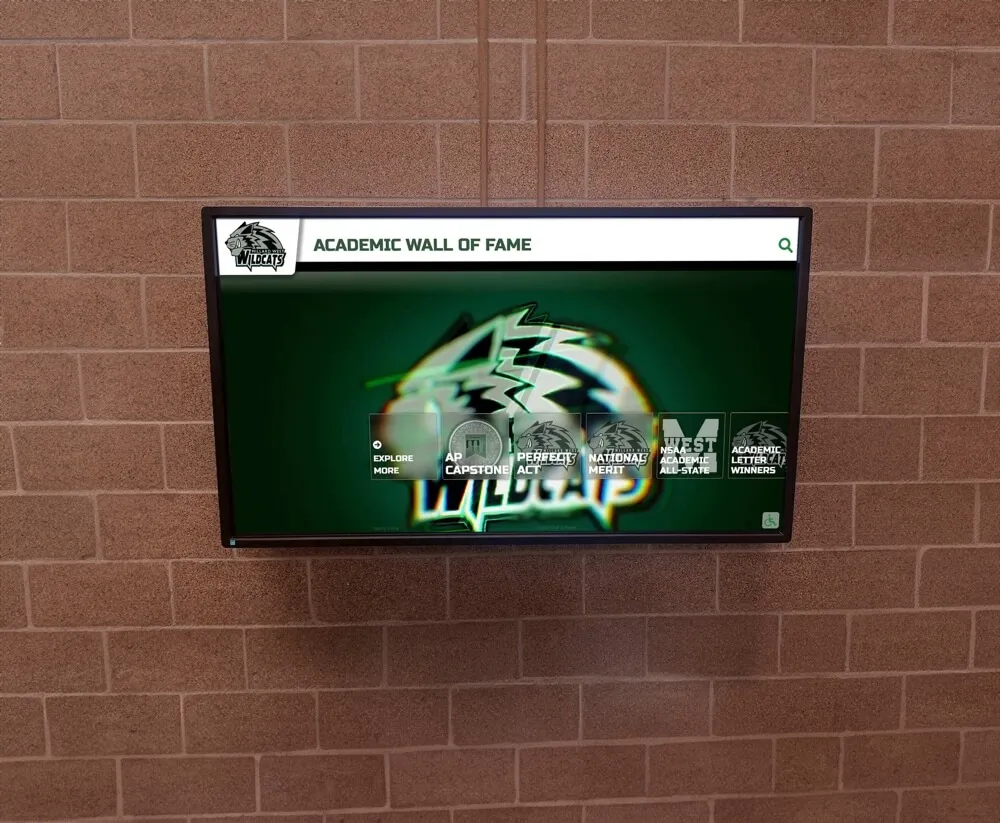
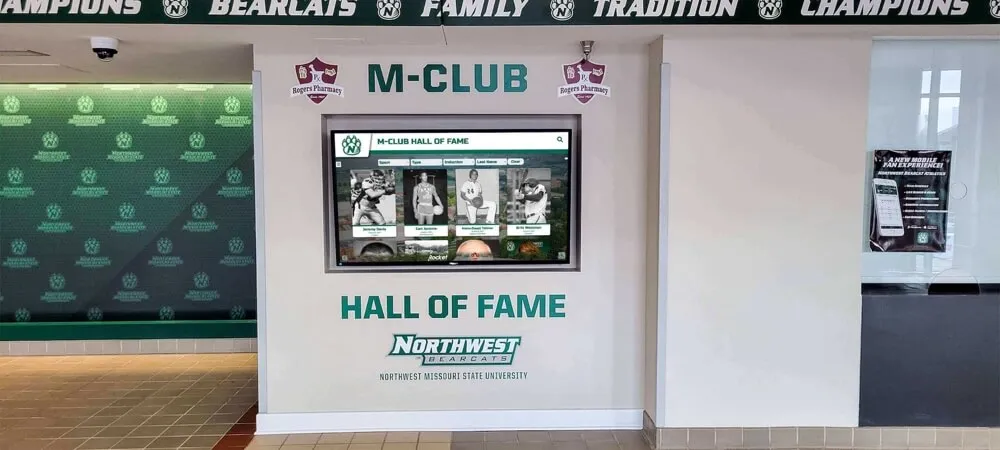
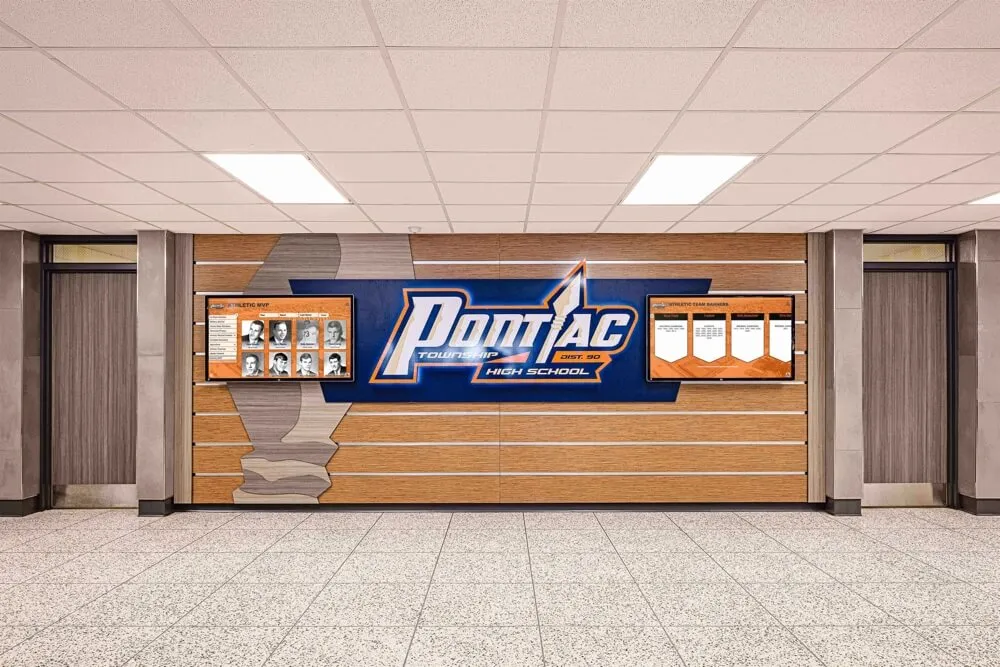
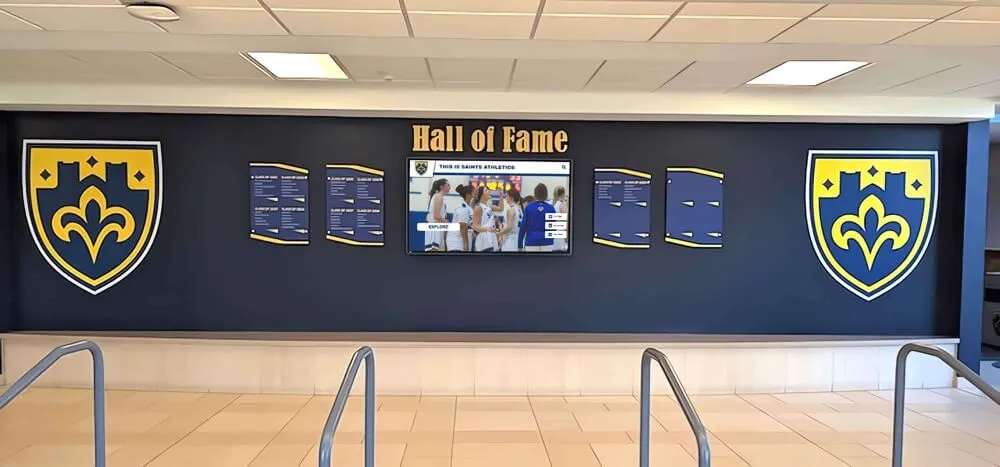
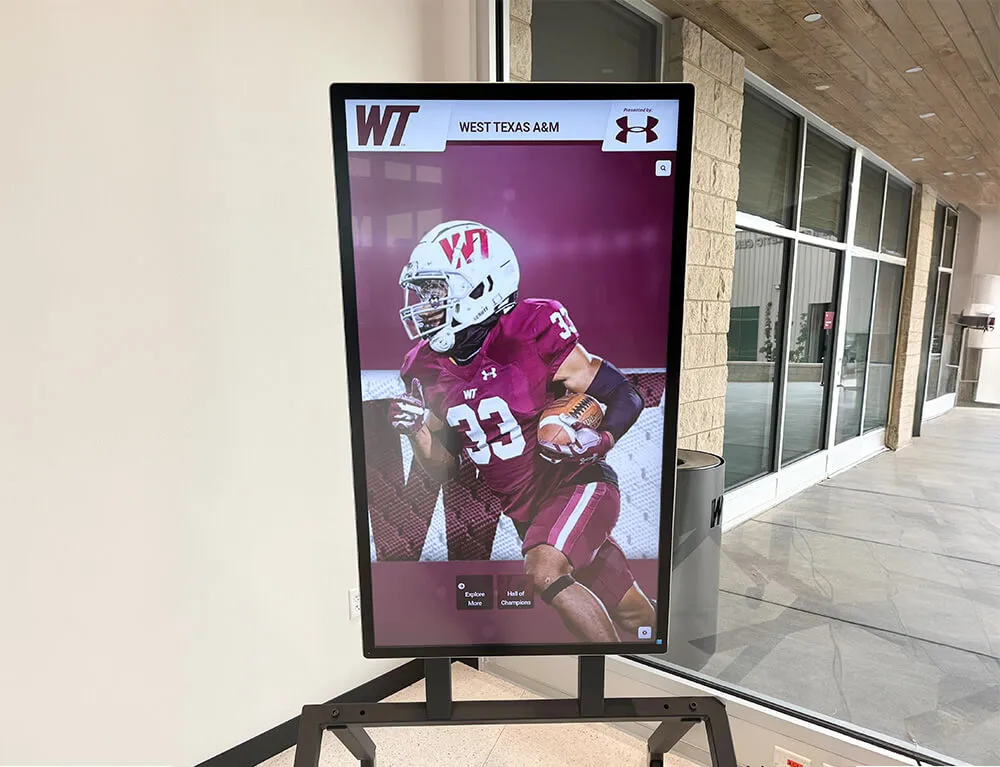
Digital displays transform lobby spaces into engaging environments that communicate property quality and attention to resident experience
Property Management Operational Challenges
Multi-Property Communication Complexity
Property management companies overseeing multiple buildings face compounded communication challenges:
Ensuring consistent messaging across all properties requires coordinating with multiple on-site teams. Important updates must be communicated simultaneously to residents at numerous locations. Maintaining visual consistency and professional standards across properties becomes administratively burdensome with manual processes. And tracking which information has been communicated to which properties requires complex systems.
Centralized digital display management platforms solve these operational challenges by enabling corporate teams to update content across entire property portfolios from single interfaces.
Staff Time and Resource Constraints
Traditional communication methods consume substantial staff time:
Creating, printing, and posting notices for every update takes hours of administrative work. Removing outdated information and maintaining bulletin boards requires ongoing attention. Responding to resident questions about information they missed creates additional workload. And coordinating communications during emergencies when time is critical adds stress to already demanding situations.
Digital systems dramatically reduce these time demands while improving communication effectiveness—a compelling return on investment calculation for properties evaluating technology adoption.
Learn about comprehensive communication approaches in interactive church information display guides demonstrating digital communication strategies applicable to residential contexts.
Core Benefits of Digital Displays in Apartment Complexes
Digital display systems deliver multiple interconnected benefits addressing communication, operational, and business objectives simultaneously.
Enhanced Resident Communication and Engagement
Real-Time Information Delivery
The most immediate benefit digital displays provide is instant communication capability:
Time-Sensitive Updates
Emergency notifications about building systems, severe weather, or safety issues reach residents immediately. Maintenance schedules and service interruptions can be communicated with minimal notice. Building hours for amenities, package room access, or office availability stay perpetually current. Community events can be promoted and updated right up until start times. And important deadline reminders about rent payments, lease renewals, or policy updates ensure residents receive timely information.
This real-time capability prevents the common scenario where paper notices announce events already past or fail to communicate time-sensitive information when residents need it most.
Multi-Channel Content Variety
Digital displays support diverse content types creating engaging experiences:
Video content showcasing property amenities, local attractions, or community highlights captures attention more effectively than text. Animated graphics and motion design draw eyes to important announcements. Photo galleries featuring resident events build community connection. Weather forecasts and local news keep residents informed about conditions affecting their daily lives. And interactive content enables residents to explore information matching their individual interests.
Research consistently shows that multimedia digital content generates 3-5 times longer engagement duration compared to static printed notices—meaning residents actually absorb information rather than walking past without noticing.
Improved Information Accessibility
Digital displays enhance accessibility for diverse resident populations:
Multilingual content can rotate automatically, ensuring information reaches non-English speaking residents. Text size and contrast can be optimized for visibility from distances. Audio options support residents with visual impairments. And repeated display rotation ensures residents encounter information multiple times throughout days or weeks, accommodating different schedules and routine patterns.
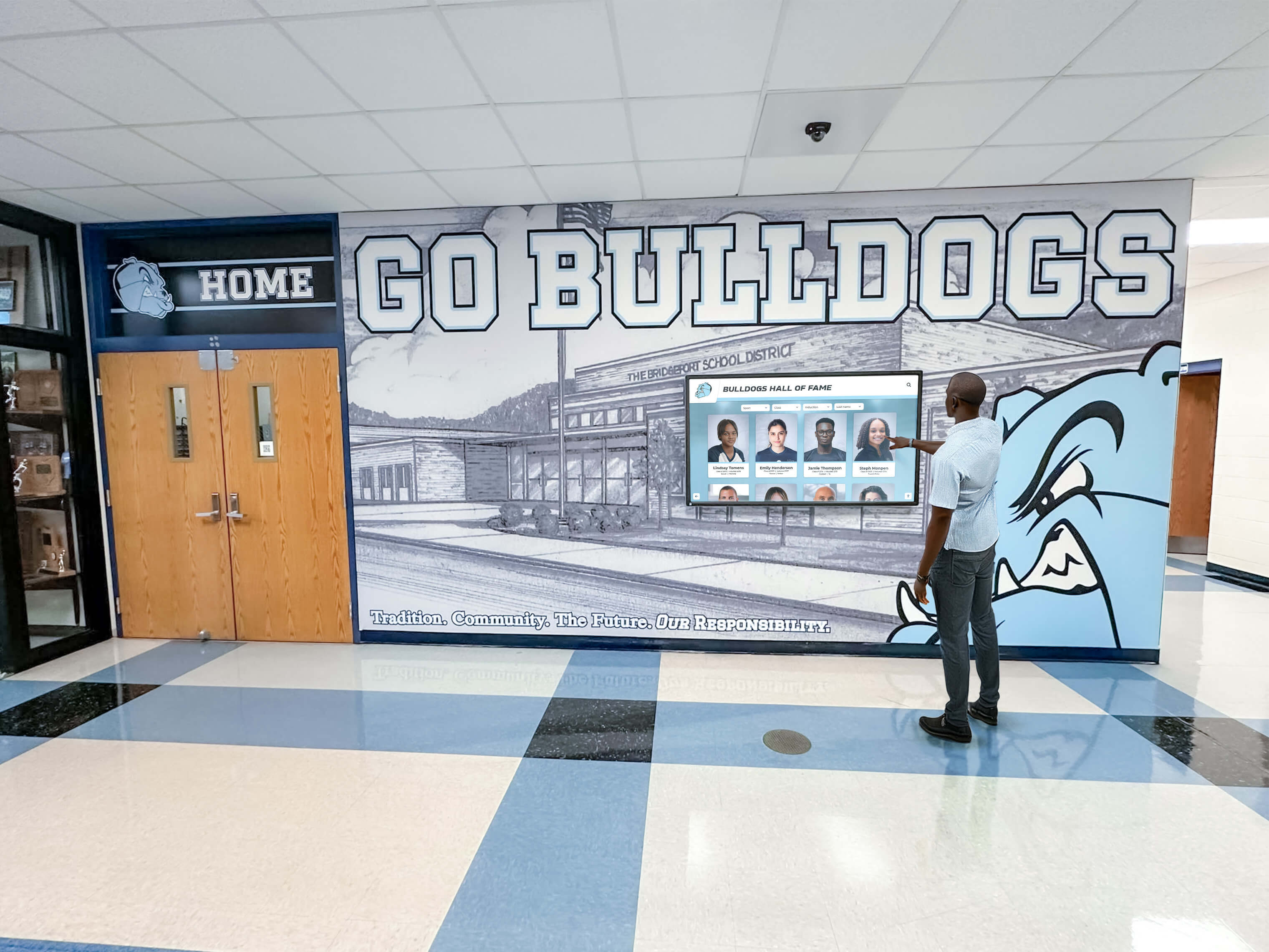
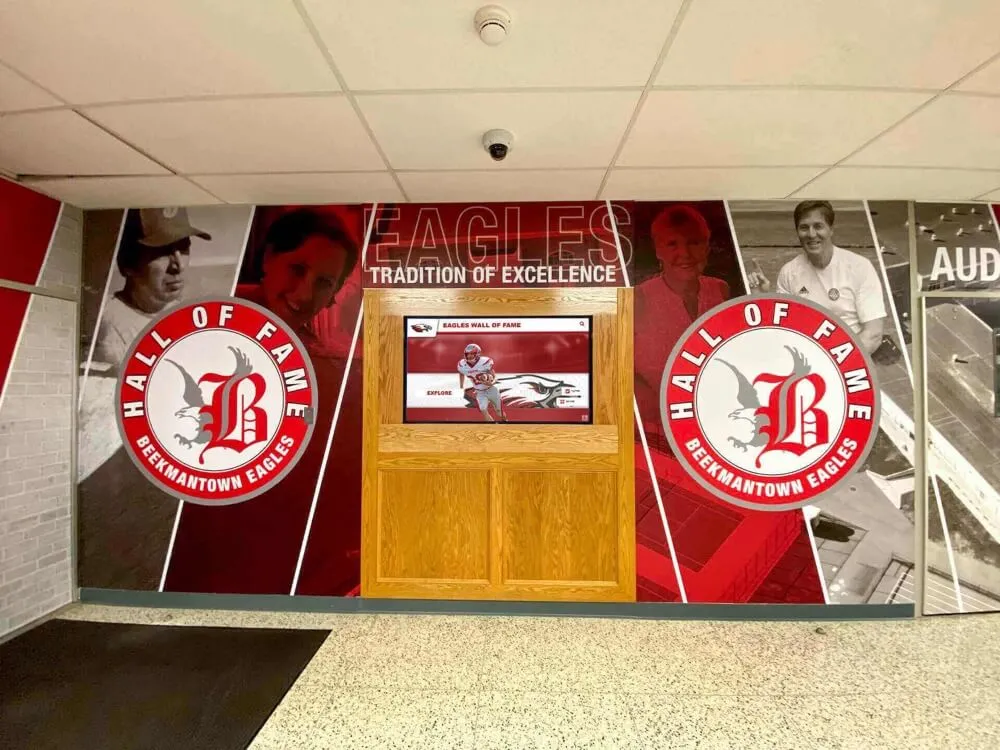
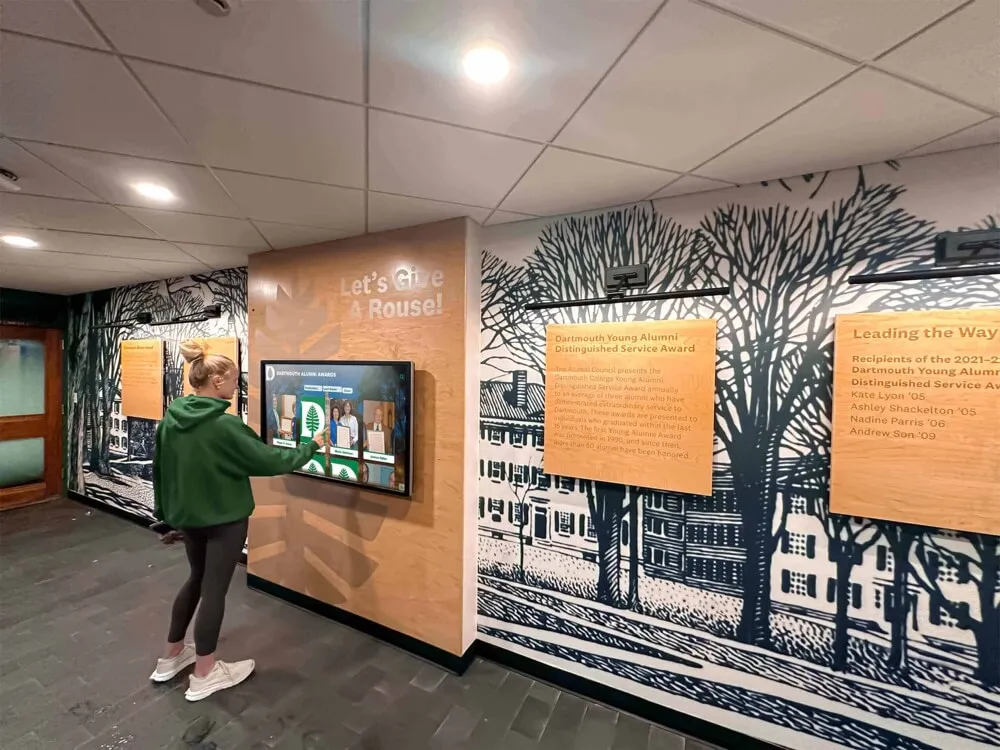
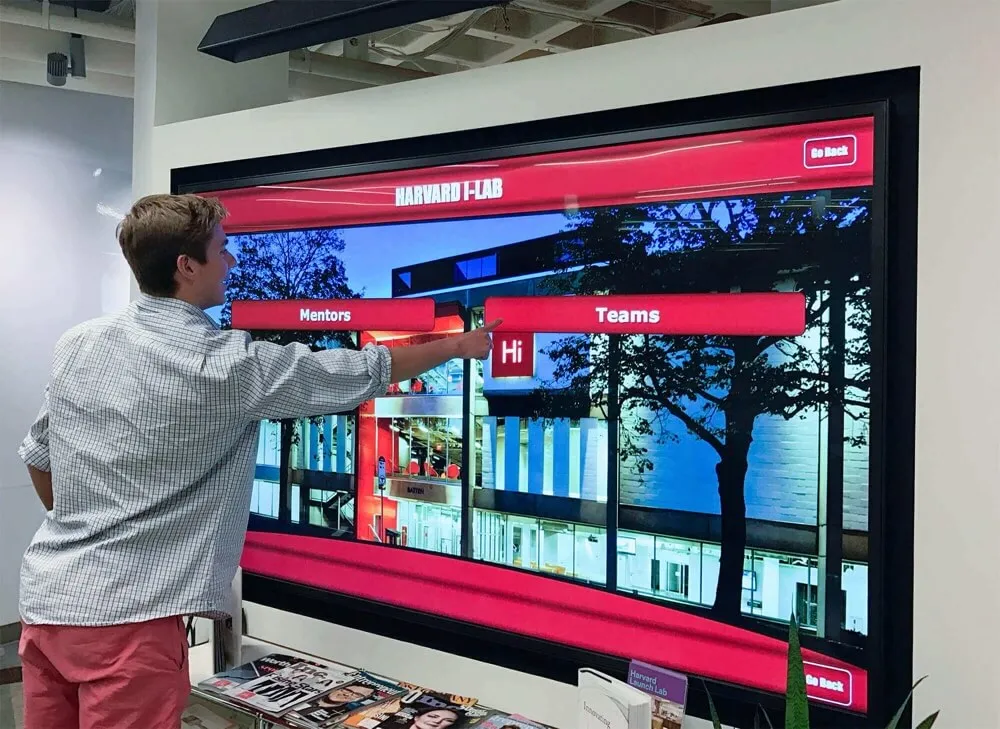
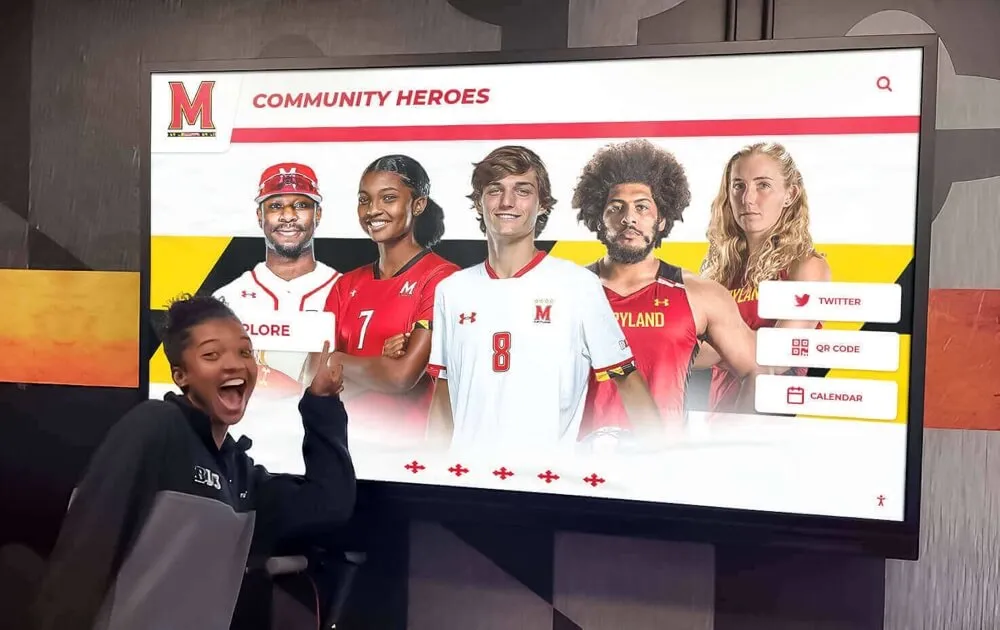
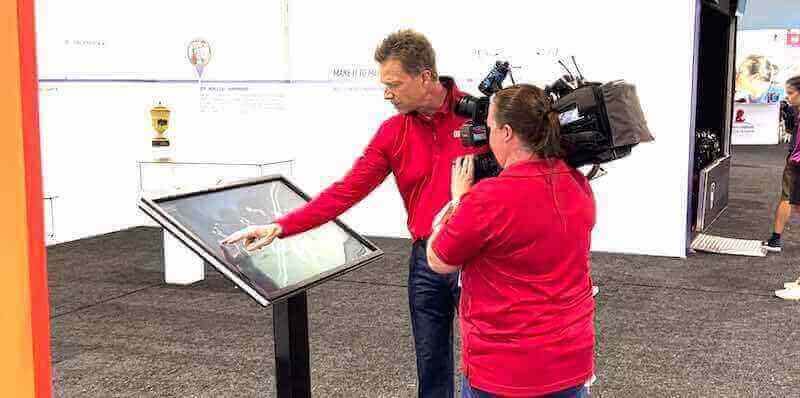
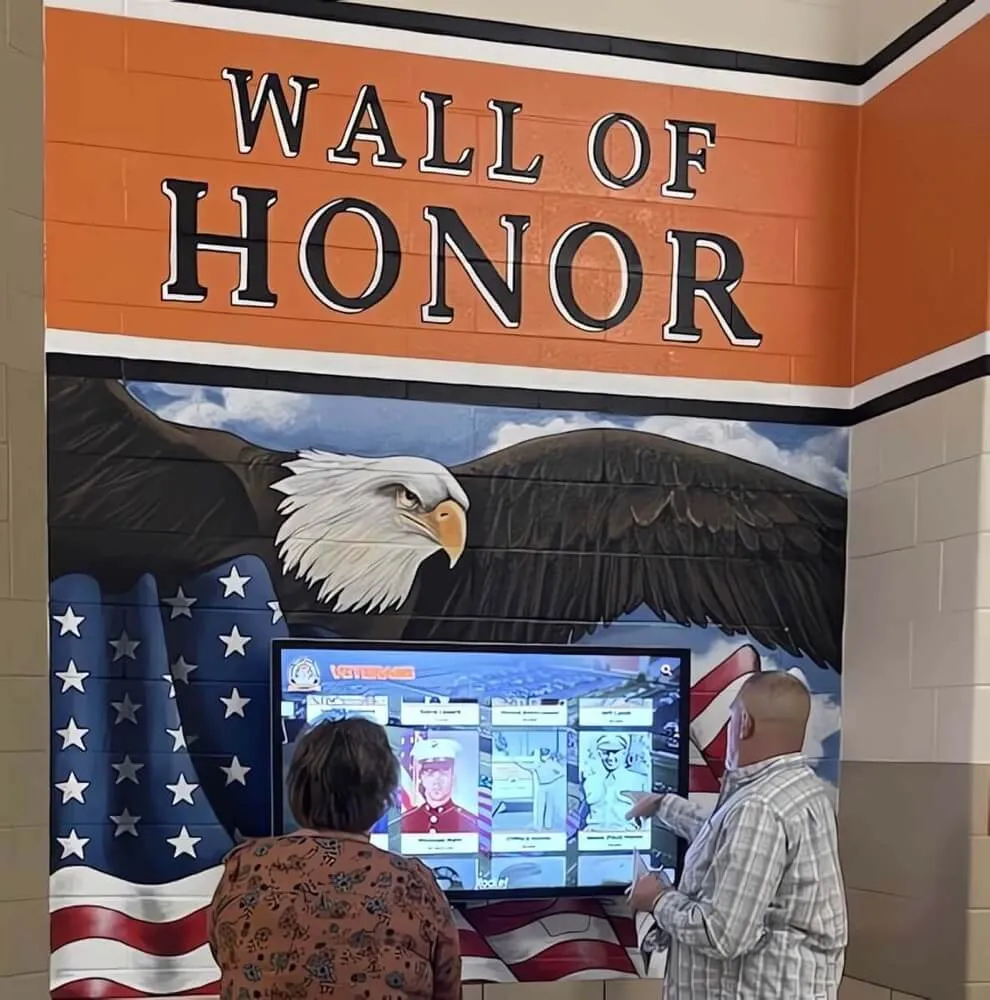
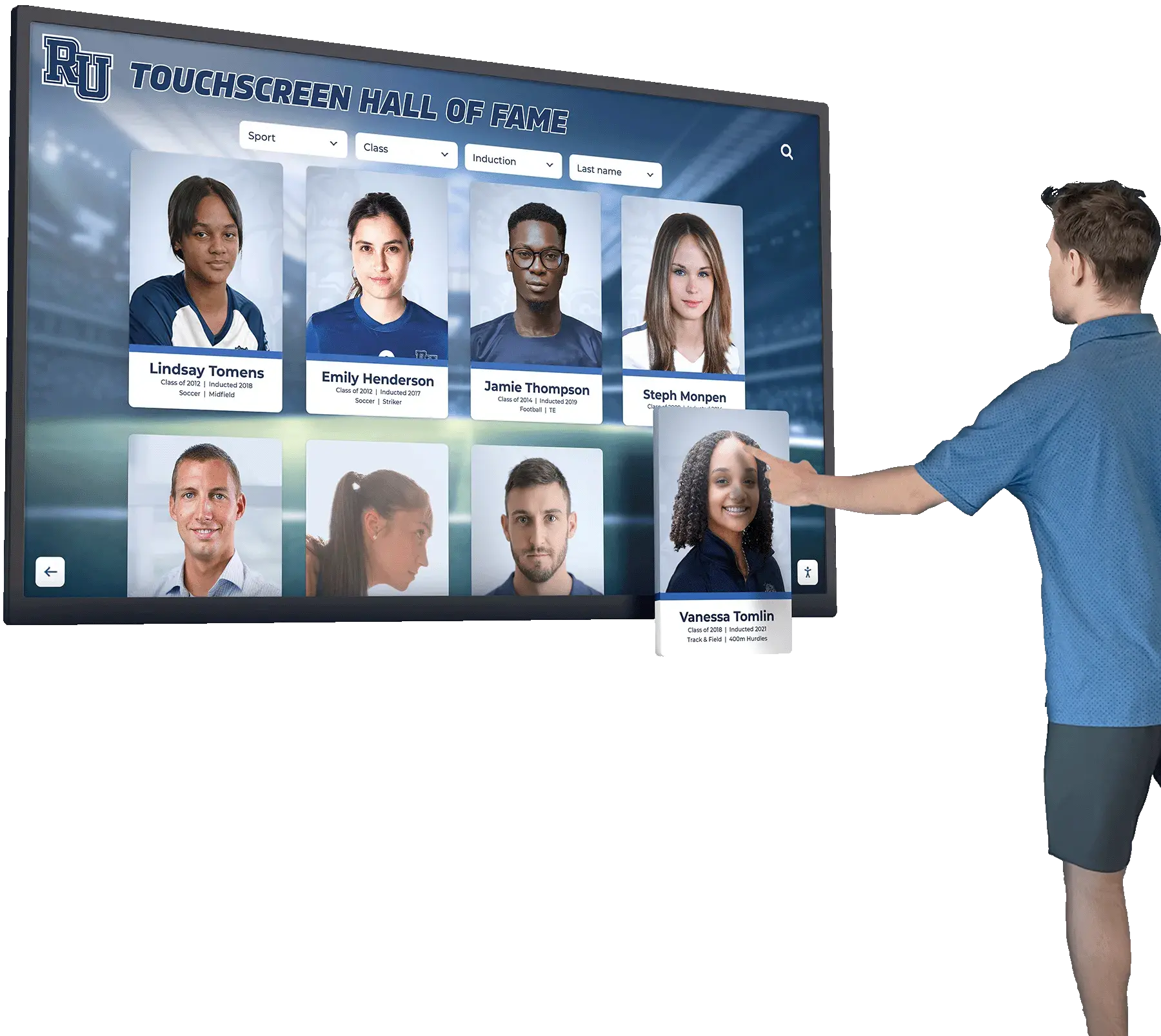
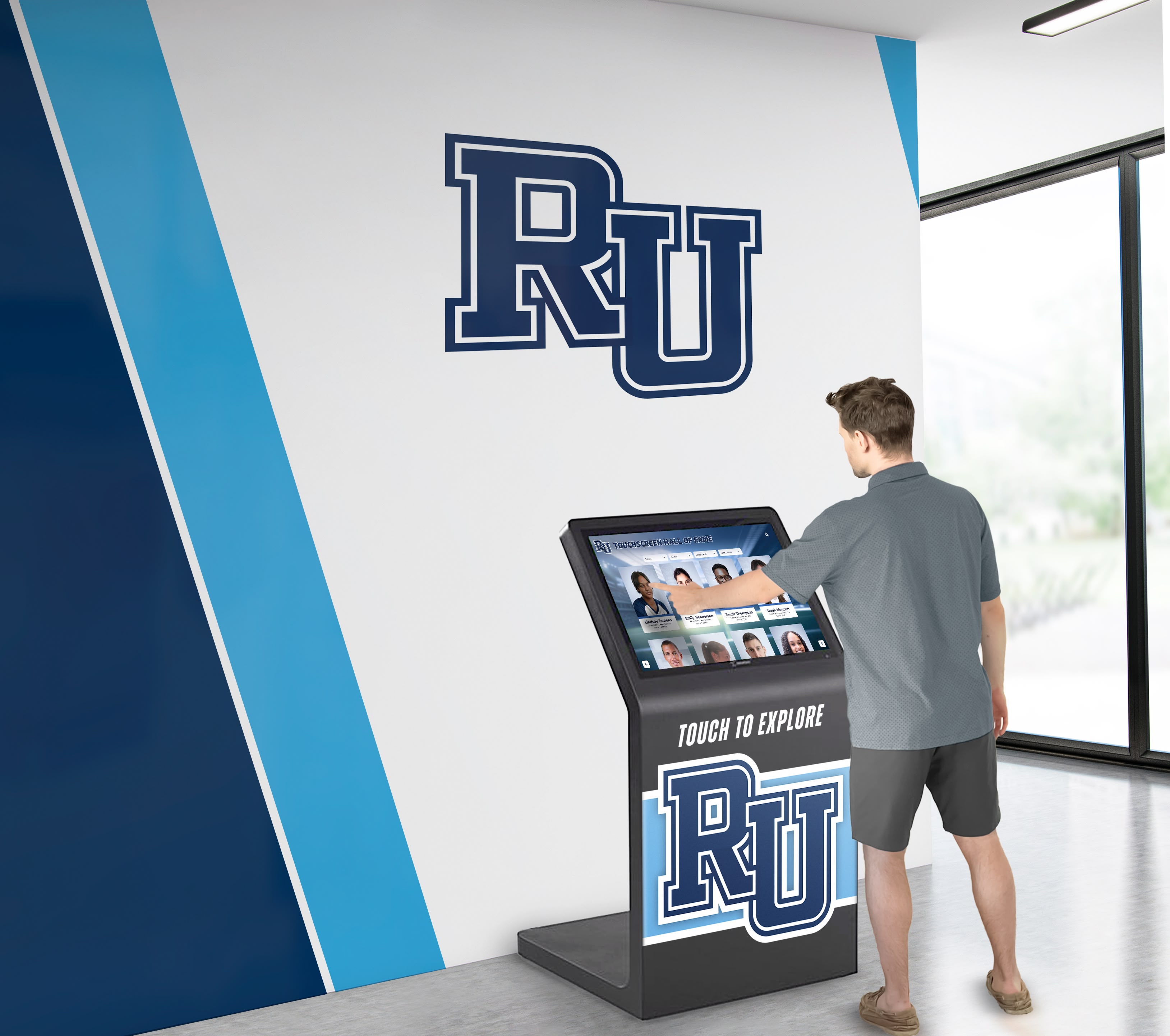
Interactive touchscreen capabilities enable residents to explore content actively rather than passively viewing static information
Streamlined Property Management Operations
Centralized Content Management
Cloud-based digital display platforms dramatically simplify multi-property communication:
Remote Update Capabilities
Property managers update content from office computers, tablets, or smartphones without physically visiting each building. Corporate communications teams push updates to all properties simultaneously, ensuring consistent messaging. Emergency information can be updated instantly from anywhere internet access is available. And content scheduling enables preparing messages in advance that publish automatically at designated times.
This centralized management eliminates the labor-intensive process of printing, distributing, and physically posting notices at each property location while ensuring more reliable, consistent communication.
Content Template Systems
Modern platforms provide professional templates reducing content creation time:
Pre-designed layouts for common communication types—maintenance notices, event promotions, policy updates—enable rapid content creation without design expertise. Brand consistency across all properties maintains professional appearance automatically. And template libraries enable reusing successful content approaches across multiple properties or time periods.
These template systems make sophisticated digital communication accessible even for properties without dedicated marketing or design resources.
Operational Efficiency Metrics
Properties implementing digital displays report quantifiable operational benefits:
Staff time spent on communication tasks decreases by 40-60% after digital display implementation. Resident service requests decrease as improved communication reduces confusion and missed information. And administrative costs associated with printing, paper, and physical posting materials are eliminated almost entirely.
These efficiency improvements typically deliver return on investment within 18-30 months even before accounting for improved resident satisfaction and retention benefits.
Explore comprehensive operational benefits in digital recognition display buyer guides covering technology platforms and management capabilities.
Enhanced Property Appeal and Competitive Positioning
Modern First Impressions
Lobbies with professional digital displays create dramatically different impressions than traditional bulletin boards:
Visual Impact During Property Tours
Prospective residents touring properties form immediate judgments about management quality, property standards, and resident experience based on lobby environments. Sleek digital displays convey modernity, professionalism, and attention to resident needs. Interactive capabilities demonstrate technology-forward thinking that appeals to younger demographics. And dynamic, current content signals active management and vibrant community life.
Leasing agents report that digital displays frequently become talking points during tours, with prospective residents commenting positively on modern communication approaches.
Perceived Value and Resident Retention
Digital amenities contribute to overall resident satisfaction influencing renewal decisions:
Properties with contemporary communication technology are perceived as higher value, potentially supporting premium pricing. Residents appreciate convenient access to information reducing frustration and improving daily experience. And visible property investments signal long-term commitment to maintaining and improving facilities—building confidence in property management quality.
Research indicates that resident retention rates improve 5-10% following digital display implementation, demonstrating tangible business impact beyond communication effectiveness alone.
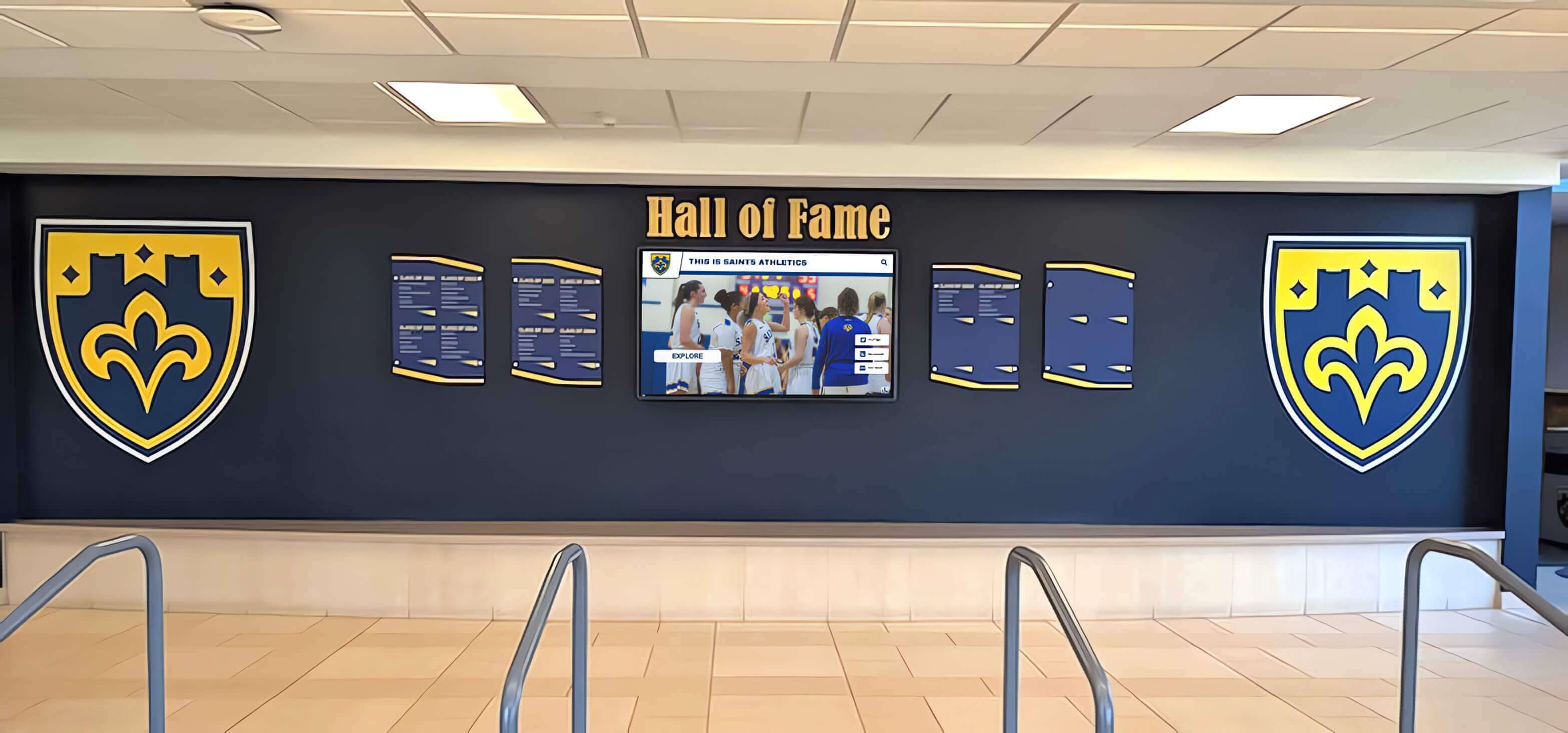
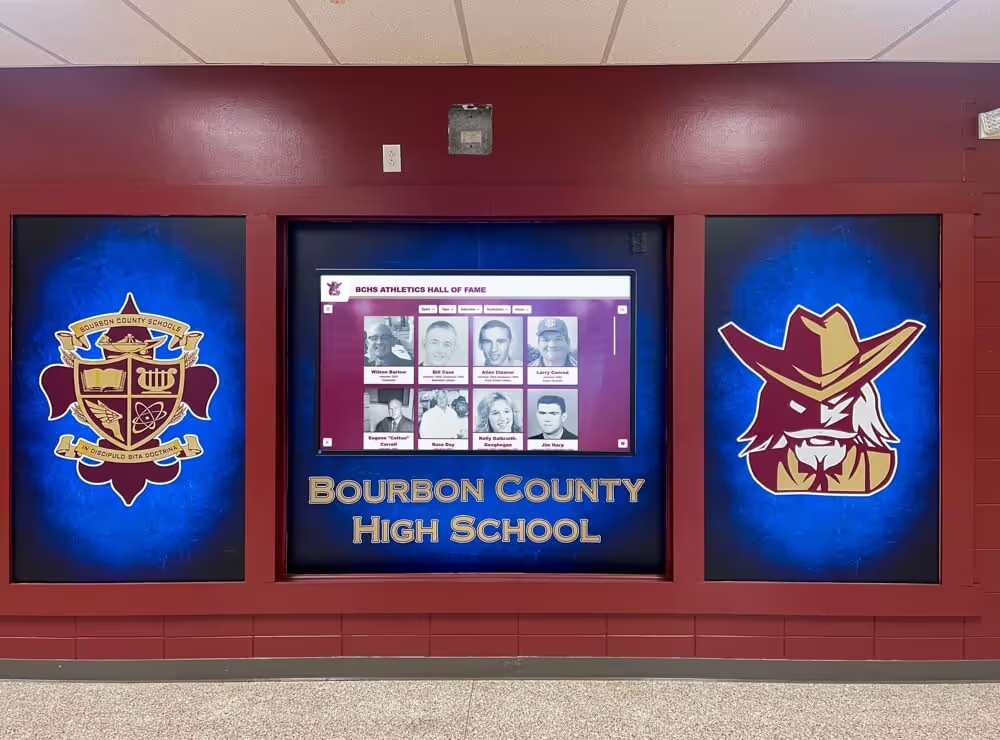
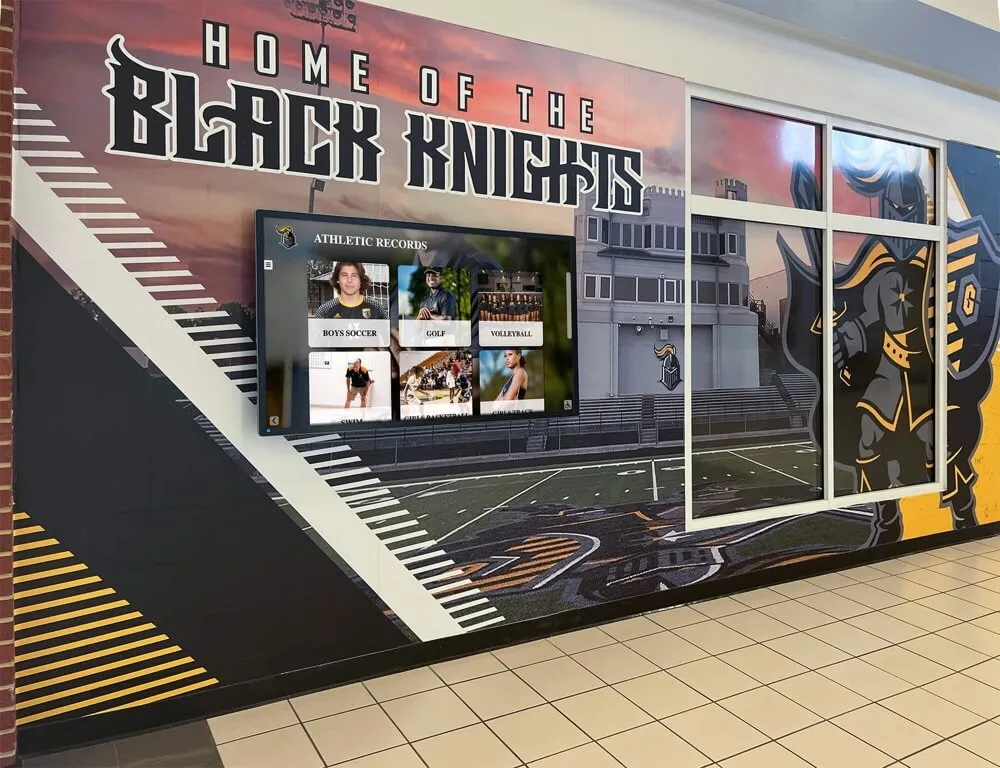
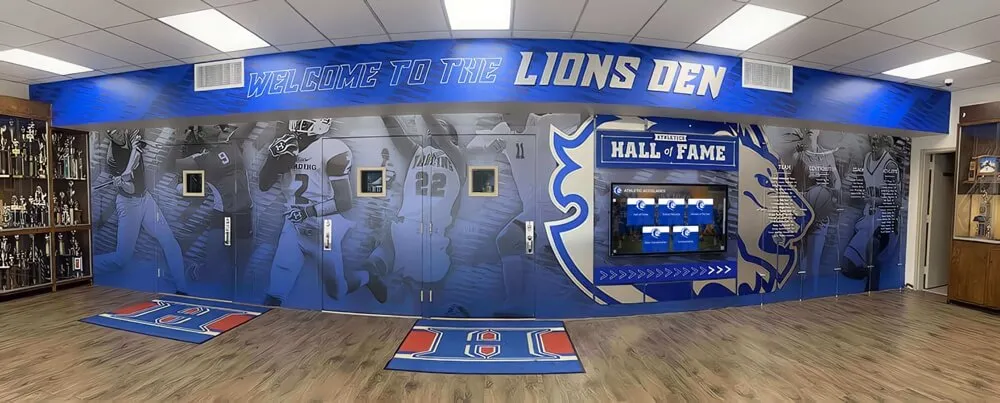
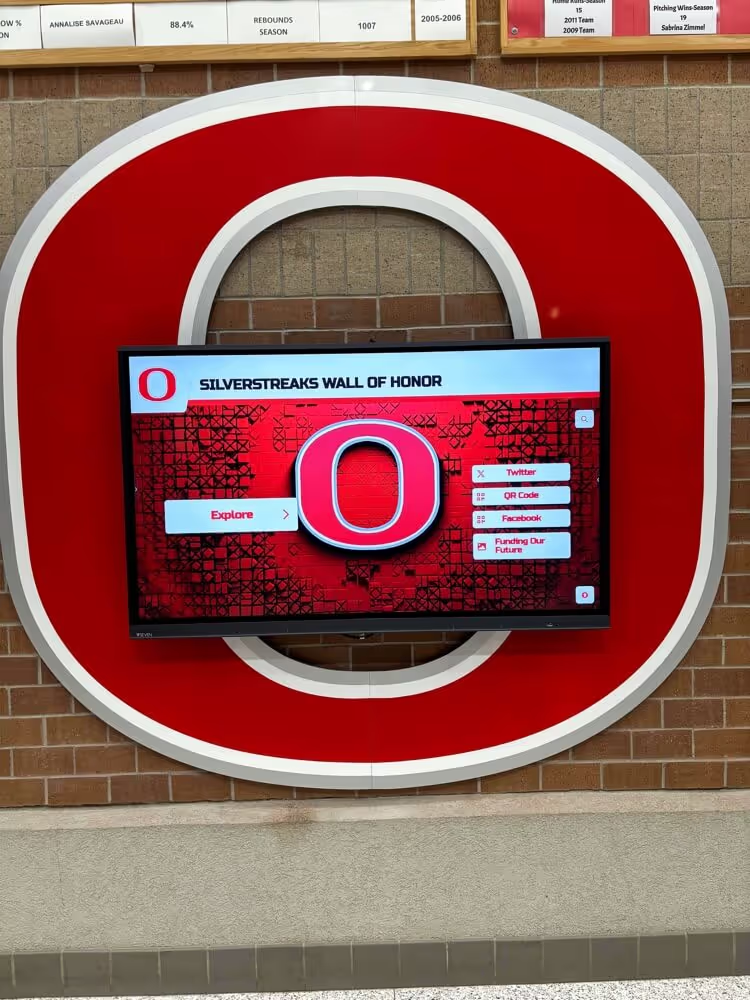
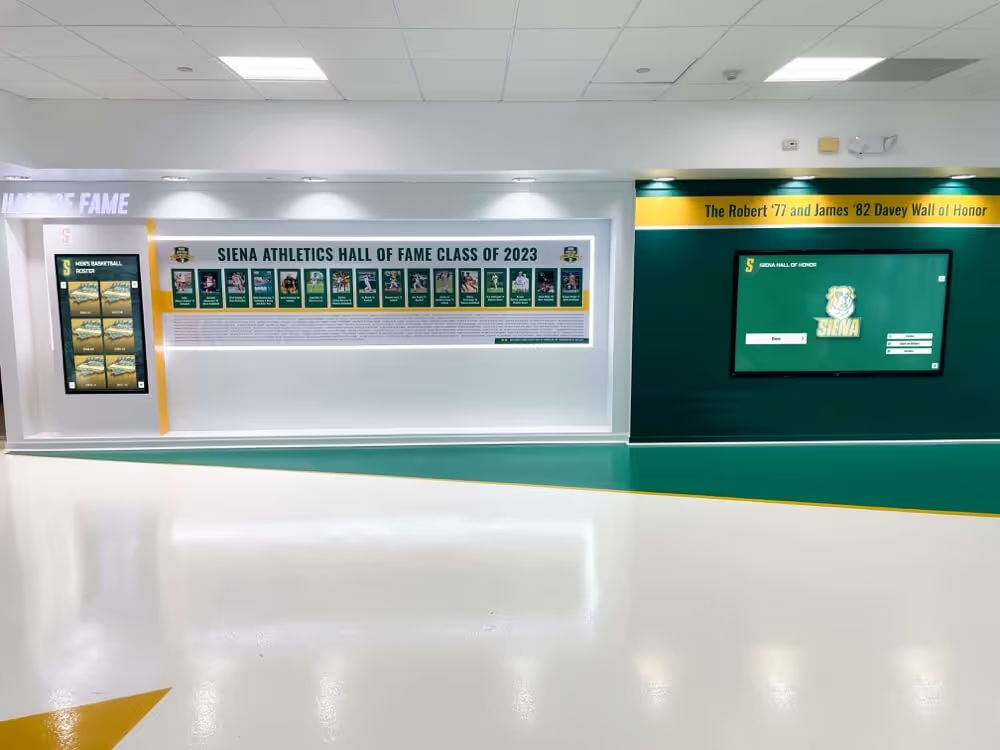
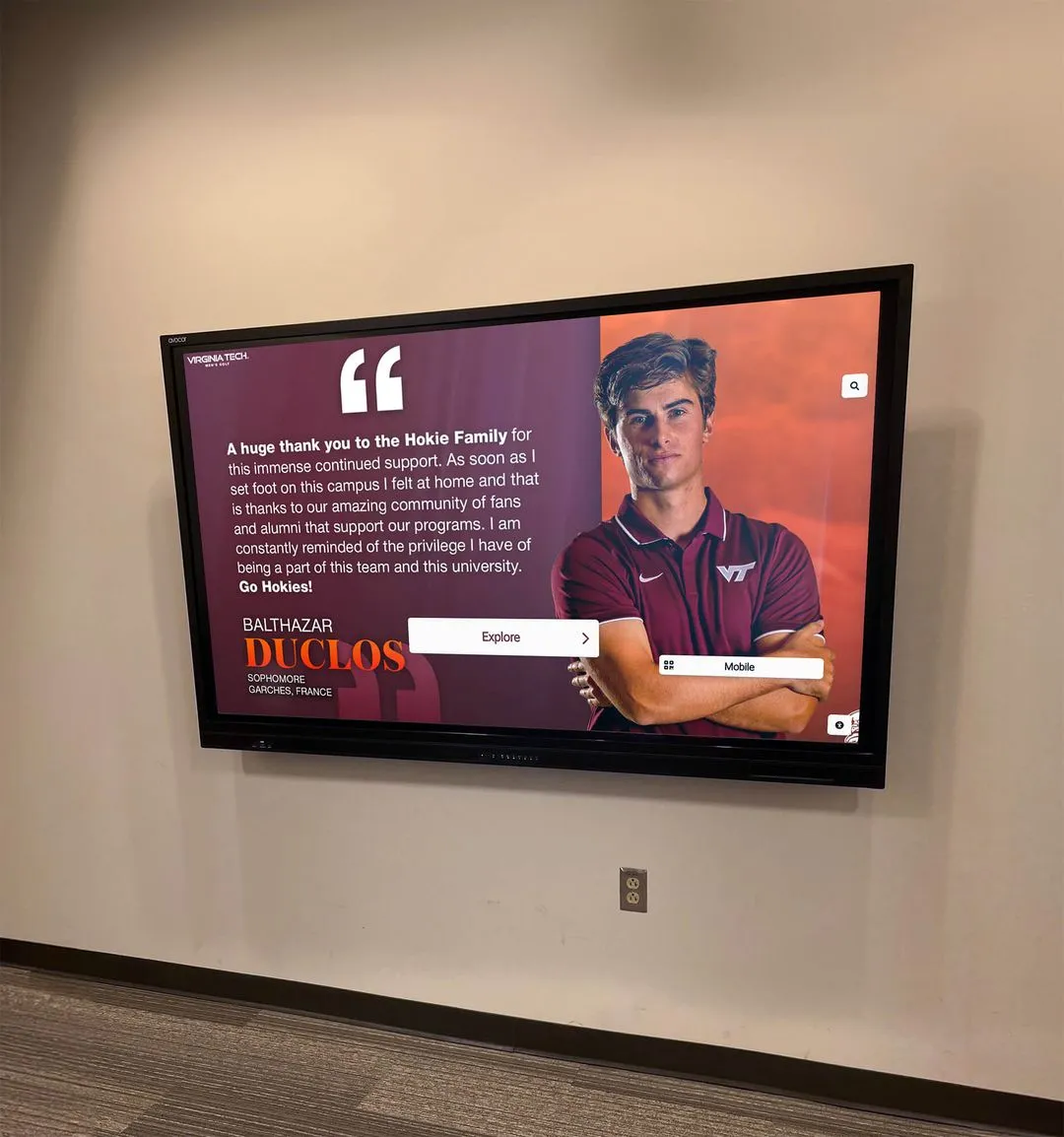
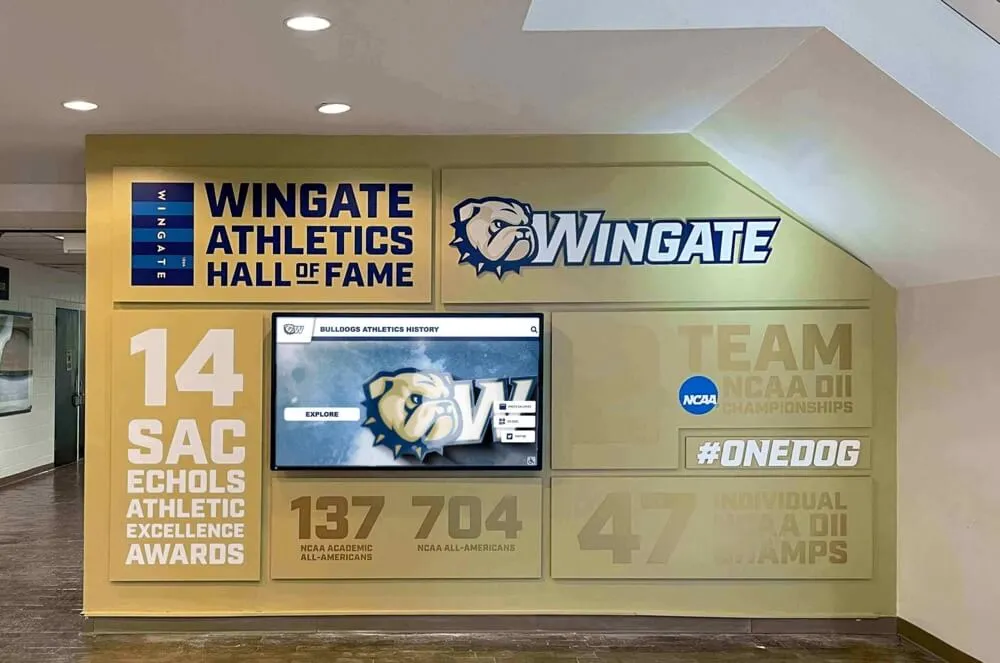
Professional display installations enhance lobby aesthetics while providing functional communication platforms serving diverse property needs
Community Building and Resident Connection
Showcasing Community Life
Digital displays transform properties from anonymous residential buildings into vibrant communities:
Resident Recognition and Engagement
Highlighting resident birthdays, anniversaries, or achievements creates personal connection. Showcasing photos from community events demonstrates active social programming. Featuring resident businesses or professional services supports community members while providing valuable information. And recognizing volunteer residents who contribute to community governance or activities strengthens civic engagement.
This community-focused content builds resident identification with properties beyond transactional landlord-tenant relationships, creating emotional connections that influence retention decisions.
Local Information and Resources
Valuable local content enhances resident experience:
Transit schedules for nearby buses, trains, or shuttles help residents plan commutes. Weather forecasts and air quality information support daily planning. Local event calendars showcase neighborhood activities, restaurants, and attractions. And neighborhood business directories featuring nearby services add practical value while potentially generating advertising revenue.
This locally-relevant content positions properties as community hubs rather than merely places to sleep, differentiating properties in competitive markets.
Learn about community engagement strategies in alumni welcome area ideas guides applicable to residential community-building contexts.
Key Digital Display Applications in Apartment Complexes
While digital displays serve multiple purposes, certain applications deliver particularly high value in multifamily residential contexts.
Lobby Information Hubs
Central Communication Stations
Main lobby displays serve as primary information sources for residents:
Essential Lobby Display Content
Building announcements about maintenance, construction, or service changes that affect residents directly. Office hours for leasing offices, management, and maintenance teams. Package delivery notifications alerting residents to deliveries awaiting pickup. Amenity schedules for fitness centers, pools, lounges, and other shared facilities. Visitor parking information and guest policies. And emergency contact information ensuring residents know how to reach management during urgent situations.
This consolidated information addresses the most common resident questions, reducing interruptions to management staff while ensuring information accessibility.
Interactive Directory Systems
Touchscreen capabilities enable enhanced functionality:
Searchable resident directories help visitors locate specific apartments or residents (with appropriate privacy controls). Interactive property maps assist residents and guests with wayfinding in large complexes. Service provider directories feature preferred vendors for movers, handymen, or other services. And feedback systems enable residents to submit maintenance requests, ask questions, or provide input directly through displays.
These interactive features transform displays from passive information sources into functional tools enhancing daily operations.
Elevator and Hallway Displays
High-Traffic Communication Points
Displays in elevators and hallway intersections reach residents at convenient moments:
Elevator Display Strategies
Brief, attention-grabbing content works best in elevators where viewing time is limited to 30-60 seconds. Emergency alerts and critical time-sensitive information reach residents reliably. Quick tips about property features, amenities, or policies educate residents gradually. Community highlights showcase recent events or upcoming activities. And local business advertising can generate revenue offsetting system costs.
The captive audience nature of elevator environments ensures high visibility and engagement with displayed content.
Hallway and Common Area Displays
Displays near mailrooms, amenity spaces, or high-traffic corridors provide additional communication touchpoints:
Amenity-specific information near fitness centers, pools, or lounges provides relevant details when residents need them. Wayfinding displays at corridor intersections assist residents and guests with navigation. Community event promotions near entrances remind residents about upcoming activities. And safety information near exits reinforces emergency procedures.
Strategic placement throughout properties ensures comprehensive communication reach regardless of individual resident patterns or routines.

Distributed display networks throughout properties ensure comprehensive communication reach across all resident touchpoints
Amenity Space Digital Signage
Fitness Center Displays
Dedicated displays in fitness facilities serve specialized purposes:
Fitness Center Content
Equipment usage instructions and safety guidelines assist residents unfamiliar with equipment. Class schedules for group fitness activities promote participation. Motivational content and fitness tips encourage wellness. Local gym and fitness business advertising (potentially revenue-generating). And emergency contact information ensures safety in spaces where accidents occasionally occur.
These dedicated amenity displays demonstrate attention to resident experience in specific functional areas beyond general communication.
Pool and Recreation Area Displays
Outdoor and recreation spaces benefit from weather-resistant displays:
Pool hours and capacity limits manage usage during peak periods. Safety rules and regulations ensure compliance with policies. Weather alerts warn of approaching storms or unsafe conditions. Activity schedules for resident events or programming promote participation. And maintenance schedules inform residents about closures or service interruptions.
These context-specific displays provide information exactly where residents need it rather than requiring them to remember lobby announcements.
Community Room and Event Space Displays
Displays in party rooms, business centers, or event spaces serve unique needs:
Room reservation systems and availability calendars enable residents to book spaces. Event schedules show what activities are planned in shared spaces. Setup instructions help residents prepare spaces for events. And community announcements engage residents already gathering in shared areas.
This localized information enhances resident experience while streamlining amenity management operations.
Emergency Communication Systems
Critical Safety Information
Digital displays serve vital safety functions during emergencies:
Emergency Communication Capabilities
Severe weather alerts notify residents about tornado warnings, flash flood risks, or extreme temperature conditions. Building system emergencies communicate power outages, water service interruptions, or HVAC issues. Evacuation instructions provide clear guidance during fire alarms or other emergency situations. Safety reminders reinforce security protocols and awareness. And emergency contact information ensures residents can reach appropriate personnel or services.
The ability to push emergency information instantly to all displays throughout properties significantly enhances resident safety compared to relying on residents to check emails or voice messages during crisis situations.
According to research on digital signage in residential buildings, digital displays allow properties to quickly and clearly communicate emergency information while helping teams meet critical safety and ADA standards.
ADA Compliance and Accessibility
Digital systems can enhance compliance with accessibility requirements:
Visual emergency alerts supplement audio alarm systems supporting residents with hearing impairments. Large, high-contrast text ensures visibility from distances and for residents with vision challenges. Multilingual emergency information serves diverse resident populations. And repeated display rotation ensures residents encounter critical information multiple times.
These accessibility features demonstrate commitment to serving all residents while supporting regulatory compliance.
Explore emergency communication strategies in interactive display guides for courtrooms demonstrating critical information delivery applicable to residential safety contexts.
Planning and Implementing Digital Display Systems
Successfully implementing digital displays requires systematic planning addressing technical, operational, and content considerations.
Needs Assessment and Goal Definition
Clarifying Communication Objectives
Before selecting technology, property managers should define specific goals:
Primary Objectives
What communication challenges currently cause the most operational friction or resident dissatisfaction? Which resident demographics or segments need better information delivery? What types of content will deliver the most value to residents and property operations? How will digital displays integrate with existing communication channels? And what measurable outcomes will demonstrate successful implementation?
Clear objective definition enables selecting appropriate systems and evaluating vendors based on capabilities matching specific property needs.
Stakeholder Input
Gather perspectives from diverse groups:
Property management teams provide operational requirements and workflow considerations. Leasing staff share insights about prospective resident expectations and competitive dynamics. Maintenance teams identify common communication needs and resident question patterns. Current residents through surveys or focus groups reveal information needs and preferences. And corporate leadership defines brand standards and multi-property consistency requirements.
This comprehensive input ensures implementations serve diverse needs rather than optimizing for single stakeholder priorities.
Location and Placement Strategy
High-Impact Display Locations
Strategic placement maximizes visibility and engagement:
Optimal Placement Points
Main lobby entrance areas ensure all residents and visitors encounter displays daily. Elevator lobbies on each floor reach residents at natural waiting moments. Mailroom areas capture residents during package pickup or mail collection. Amenity facility entrances inform residents about specific services. And parking garage entrances or exits reach residents during arrival and departure routines.
Properties report highest engagement when displays appear in multiple locations throughout buildings rather than single centralized installations—distributed networks ensure comprehensive reach regardless of individual resident patterns.
Installation Considerations
Professional installation ensures optimal performance:
Mounting heights should enable comfortable viewing for standing and seated individuals. Viewing angles must accommodate typical traffic flow and sightlines. Ambient lighting requires displays with appropriate brightness ratings. Network connectivity ensures reliable content delivery and updates. And physical protection prevents damage in high-traffic areas or where children might interact roughly with equipment.
These technical considerations significantly impact long-term satisfaction and system reliability.

Professional kiosk installations provide durable, attractive display solutions designed specifically for high-traffic public environments
Technology Platform Selection
Essential System Capabilities
Property managers evaluating digital display solutions should assess platforms based on critical features:
Core Platform Requirements
Cloud-based content management enabling remote updates from any device without physical display access. Intuitive interfaces requiring minimal training for staff who update content regularly. Multi-display management controlling numerous screens across single properties or entire portfolios. Content scheduling automating publication and removal of time-sensitive information. Template libraries accelerating content creation while maintaining professional appearance. Mobile-responsive design enabling updates from smartphones and tablets. User permissions controlling who can create, edit, or publish content across organizations. And reliable vendor support ensuring long-term sustainability and technical assistance.
Purpose-built property management digital signage platforms deliver significant advantages over generic consumer-grade systems lacking specialized features required for multifamily residential contexts.
Hardware Specifications
Display hardware significantly impacts user experience and long-term costs:
Hardware Considerations
Commercial-grade displays rated for continuous operation in public environments rather than consumer televisions. Screen sizes appropriate for viewing distances—typically 43-55 inches for lobby areas, 24-32 inches for elevators. 4K resolution (3840 x 2160) standard for displays 43 inches and larger ensuring clarity. Brightness ratings of 400-500+ nits for areas with natural light or bright ambient lighting. Touchscreen capabilities for interactive installations enabling resident engagement. And warranty coverage of minimum 3-5 years appropriate for commercial installations.
Professional equipment designed for commercial deployment typically costs 2-3 times consumer alternatives but delivers dramatically longer service life and lower total cost of ownership over 8-12 year operational lifecycles.
Integration Capabilities
Modern systems should integrate with other property management technology:
Integration Possibilities
Property management software connections enabling automated data display. Access control system integration for package notifications or visitor management. Weather service APIs providing real-time local conditions and forecasts. Transit system integrations delivering real-time arrival information. Emergency alert system connections ensuring instant notification delivery. And social media feeds showcasing property social content or community engagement.
These integrations enhance display functionality while reducing manual content management requirements.
Learn about comprehensive platform evaluation in touchscreen software complete guides covering selection criteria and implementation considerations.
Content Strategy and Management
Developing Content Calendars
Systematic content planning ensures consistent, relevant display experiences:
Content Planning Elements
Regular content categories appearing consistently (building announcements, amenity hours, weather, events). Seasonal themes rotating throughout year maintaining visual freshness. Event promotion timelines ensuring adequate advance notice and reminders. Emergency content protocols enabling rapid updates during critical situations. And review schedules ensuring outdated information is removed promptly.
Properties report that structured content calendars dramatically improve display effectiveness compared to ad-hoc content approaches where displays often show stale or irrelevant information.
Content Creation Workflows
Establish clear processes for ongoing content development:
Workflow Components
Designate specific staff responsible for display content management. Create standardized templates for common content types accelerating creation. Establish approval processes ensuring quality control before publication. Build content libraries organizing reusable assets for efficiency. Schedule regular reviews ensuring currency and relevance. And document procedures enabling continuity when staff changes occur.
Clear workflows prevent displays from becoming abandoned technology investments where initial enthusiasm fades without sustainable operational processes.
Measuring Content Effectiveness
Digital platforms provide engagement metrics informing content strategy:
Available Analytics
Display interaction frequency and duration for touchscreen systems. Most-viewed content identifying what residents find valuable. Time-of-day usage patterns revealing when displays receive most attention. Content completion rates showing whether residents view entire messages. And user navigation paths demonstrating how residents explore interactive content.
These metrics enable data-driven content decisions optimizing display effectiveness based on actual resident engagement rather than assumptions.
Cost Considerations and Return on Investment
Digital display investments require financial justification through clear ROI analysis.
Implementation and Ongoing Costs
Initial Investment Components
Typical Cost Ranges
Commercial-grade display hardware: $1,500-$4,000 per screen depending on size and features. Professional installation and mounting: $500-$1,500 per location depending on complexity. Content management platform setup: $1,000-$3,000 for initial configuration. Content development and design: $500-$2,000 for launch content library. And staff training: $500-$1,000 for comprehensive onboarding.
Typical single-location implementation: $4,000-$11,000 Typical multi-display property: $12,000-$35,000 for 3-5 screen installation
Ongoing Annual Expenses
Platform subscription and hosting: $600-$2,400 per property annually. Content management time: 4-8 hours monthly for typical properties. Technical support and maintenance: $300-$800 annually. Hardware warranty and replacement planning: $200-$500 annually. And periodic content updates or design refreshes: $500-$1,500 annually.
Total annual operating costs: $2,100-$7,200 per property
Calculating Return on Investment
Cost Savings
Digital displays generate quantifiable savings offsetting implementation costs:
Operational Efficiency Savings
Eliminated printing costs for notices, flyers, and announcements ($1,200-$3,000 annually). Reduced staff time for communication tasks (10-15 hours monthly valued at $300-$600 monthly or $3,600-$7,200 annually). Decreased resident service requests from improved communication (estimated $1,000-$2,500 annually). And reduced emergency response costs through faster, more effective critical communication.
Typical annual cost savings: $6,000-$13,000 per property
Revenue Generation Opportunities
Digital displays can generate income offsetting costs:
Local business advertising fees from restaurants, services, or retail near properties ($500-$2,000 monthly depending on market and traffic). Sponsor recognition for community event supporters or property partners. Affiliate arrangements with service providers offering resident discounts. And premium amenity sponsorships from fitness, wellness, or lifestyle brands.
Properties implementing advertising programs report revenue of $6,000-$24,000 annually—often exceeding total system costs and creating positive cash flow from display networks.
Resident Retention Value
Improved resident satisfaction translates to significant financial impact:
Each percentage point improvement in resident retention reduces turnover costs by $1,500-$3,000 per unit annually considering marketing, make-ready, and vacancy costs. Properties implementing digital displays report 5-10% retention improvements. For 100-unit properties, this translates to $15,000-$60,000 in reduced turnover costs annually.
This retention value alone typically justifies digital display investments within 12-24 months even without accounting for operational savings or advertising revenue.
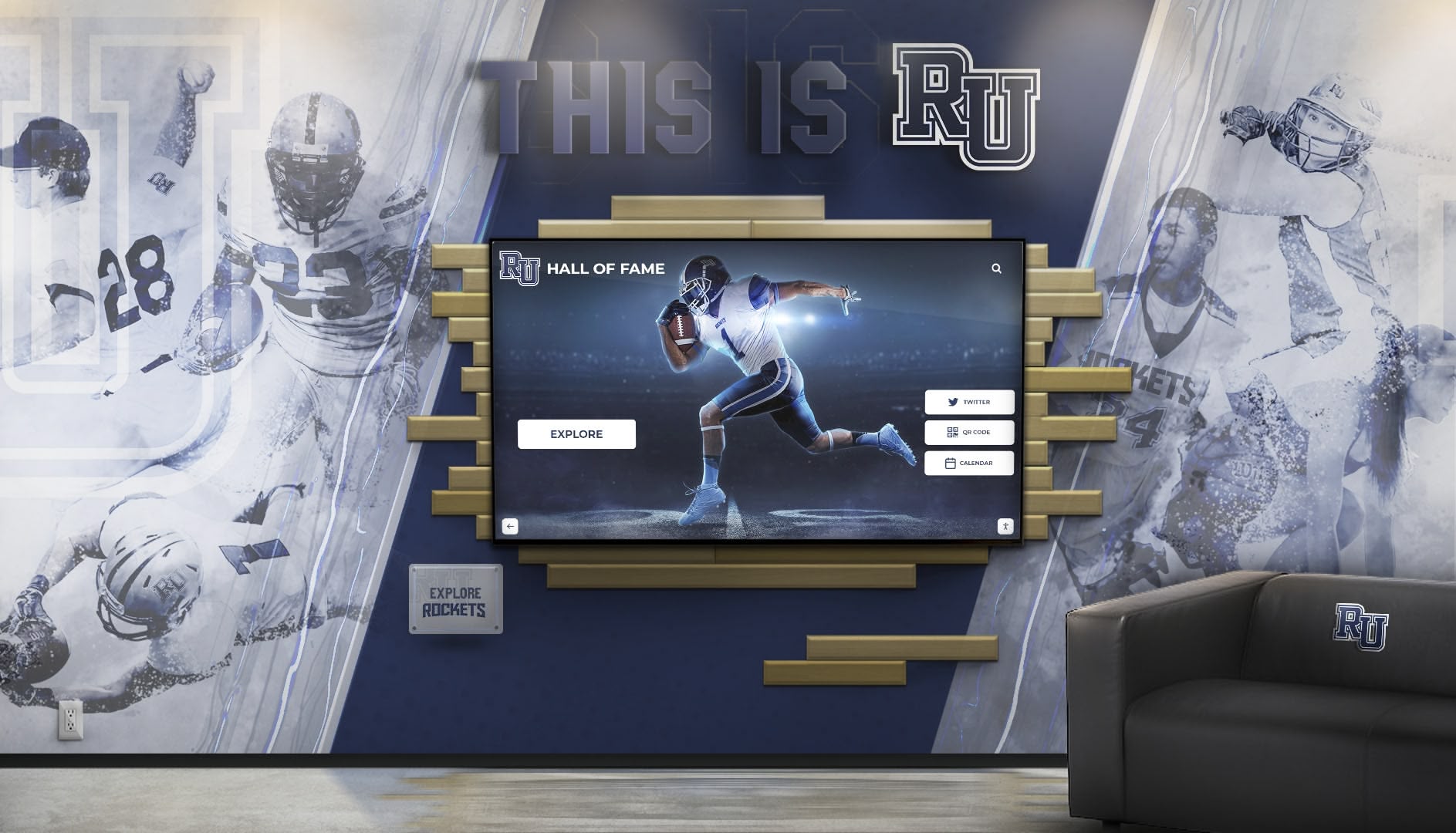
Strategic lobby installations create memorable first impressions while delivering practical communication functionality supporting operations
Best Practices for Successful Digital Display Programs
Effective implementations share common characteristics distinguishing successful programs from underutilized technology investments.
Content Quality and Relevance
Creating Engaging Content
Professional, relevant content determines whether residents pay attention:
Content Best Practices
Concise messaging respecting that display viewing time is limited. Visual hierarchy guiding attention to most important information first. High-quality images and graphics maintaining professional appearance. Brand consistency across all content reinforcing property identity. Variety in content types and formats maintaining resident interest. Regular updates ensuring content remains fresh and current. And local relevance connecting content to resident lives and interests.
These quality standards ensure displays become valued information sources rather than ignored background noise.
Avoiding Common Content Mistakes
Properties report several frequent errors undermining effectiveness:
Content Pitfalls to Avoid
Overwhelming displays with excessive information causing cognitive overload. Allowing content to become outdated making displays appear neglected. Using generic stock content lacking local relevance or personalization. Inconsistent visual design creating unprofessional appearance. Neglecting mobile and web integration limiting access to digital channels. And failing to measure engagement leading to uninformed content decisions.
Awareness of these common mistakes enables proactive avoidance through thoughtful planning and ongoing management.
Balancing Information Types
Mixing Utility and Engagement
Effective displays balance necessary information with engaging content:
Content Mix Recommendations
Essential building information (30-40%): Maintenance notices, office hours, emergency contacts, and operational announcements residents need. Community content (25-35%): Events, resident recognition, photos from activities building social connection. Local information (15-25%): Weather, transit, neighborhood events, and area resources adding practical value. Entertainment and engagement (10-20%): Interesting facts, trivia, motivational content, or curated news creating visual interest.
This balanced approach ensures displays serve practical communication needs while creating engaging experiences that attract and retain resident attention.
Learn about content balance strategies in year-round content calendar guides for digital displays providing systematic planning frameworks.
Maintaining Long-Term Engagement
Preventing Content Fatigue
Displays require ongoing attention maintaining resident interest:
Sustainability Strategies
Regular content rotation preventing repetitive displays residents ignore. Seasonal themes and variations creating visual freshness. Interactive elements enabling resident exploration and discovery. User-generated content featuring resident submissions or photos. Timely local connections to current events, seasons, or community happenings. And continuous improvement based on engagement metrics and feedback.
Properties successfully sustaining digital programs treat content management as ongoing responsibility requiring dedicated attention rather than one-time project completed after launch.
Building Organizational Capacity
Successful long-term programs require institutional support:
Clear staff accountability with designated personnel responsible for display management. Adequate time allocation in job descriptions recognizing content work requirements. Training and skill development ensuring staff can create quality content efficiently. Documentation of processes and procedures supporting continuity through staff changes. Budget allocation for content creation, design resources, or professional services when needed. And leadership support reinforcing program importance and providing resources.
These organizational factors separate properties where displays become valued communication assets from those where displays eventually show stale content or generic screensavers because systems were implemented without sustainable operational models.
Future Trends in Apartment Complex Digital Displays
Understanding emerging developments helps properties plan investments remaining relevant long-term.
Artificial Intelligence and Personalization
Smart Content Delivery
AI-powered systems will increasingly personalize content based on context:
Emerging AI Capabilities
Time-of-day optimization automatically displaying relevant content based on when residents are most likely passing displays. Audience recognition adjusting content for adults versus children or groups versus individuals. Language detection displaying content in preferred languages based on user interaction patterns. Weather-responsive content automatically featuring relevant information during extreme conditions. And predictive maintenance alerting property management to potential system issues before failures occur.
These intelligent capabilities will enhance display effectiveness while reducing manual management requirements.
Mobile Integration and Continued Access
Seamless Multi-Channel Experiences
Future systems will better integrate physical displays with mobile access:
Mobile Integration Possibilities
QR codes on displays enabling instant mobile access to additional information. Mobile apps mirroring display content for on-demand access from apartments. Push notifications alerting residents to new important display content. User accounts allowing residents to save favorite content or set preferences. And social sharing enabling residents to forward display content to household members or guests.
This mobile integration extends display value beyond physical viewing moments while enabling residents to access information on personal devices when convenient.
Sustainability and Energy Efficiency
Environmentally Conscious Systems
Green building priorities drive display technology evolution:
Sustainability Features
Energy-efficient LED displays consuming minimal power compared to older technologies. Automatic brightness adjustment reducing energy use based on ambient lighting conditions. Motion sensors activating displays only when viewers are present. Recycled and sustainable materials in hardware manufacturing. And long equipment lifecycles reducing electronic waste from frequent replacements.
These environmental considerations align with property sustainability commitments while reducing long-term operating costs.
Explore future technologies in touchscreen kiosk software buying guides for 2025 covering emerging capabilities and trends.
Conclusion: Modernizing Apartment Communication Through Digital Displays
Apartment complex digital displays represent far more than simple technology upgrades to traditional bulletin boards—they’re comprehensive communication platforms transforming how properties engage residents, streamline operations, enhance competitive positioning, and build vibrant communities. In an era where instant digital information access is standard expectation across all aspects of daily life, properties without effective digital communication infrastructure increasingly appear outdated regardless of physical condition or service quality.
The transformation from paper-based communication to sophisticated digital systems feels daunting when properties face budget constraints and competing investment priorities. However, the compelling return on investment—typically achieved within 18-30 months through operational savings, revenue generation, and improved retention—makes digital displays among the highest-value technology investments available to multifamily properties. Even modest initial implementations in main lobbies begin demonstrating benefits while building organizational capacity and resident acceptance that support future expansion.
Transform Your Property Communication
Discover how modern digital display solutions can help your apartment complex improve resident communication, enhance property appeal, and create engaging community experiences that differentiate your properties in competitive markets.
Explore Display SolutionsModern technologies make sophisticated display systems accessible for properties of all sizes and management structures. Solutions like Rocket Alumni Solutions provide integrated platforms combining hardware, content management software, professional templates, and ongoing support—making comprehensive display programs achievable without requiring specialized technical expertise or major infrastructure investments that previously limited these approaches to only luxury high-rise properties.
Your residents deserve communication systems matching the digital standards they experience throughout their daily lives—instant information access, engaging visual experiences, and convenient mobile integration. Every important announcement delivered effectively, every community event promoted successfully, and every resident who feels informed and connected contributes to property environments where satisfaction remains high, retention improves, and word-of-mouth recommendations support leasing success.
Start wherever your current situation and resources allow—whether implementing single lobby display as pilot program or deploying comprehensive multi-screen networks across entire portfolios. The strategies explored in this guide provide roadmaps for properties at any stage, from initial planning through sustained operations, enabling you to create digital communication systems that genuinely serve resident needs while supporting operational efficiency and business objectives.
Ready to modernize your property communication? The comprehensive approaches outlined in this guide demonstrate that digital displays deliver measurable value through improved operations, enhanced resident satisfaction, and competitive differentiation—making them strategic investments rather than discretionary technology amenities. Properties implementing thoughtful, well-managed digital display programs position themselves for sustained success in increasingly competitive multifamily markets where resident expectations for digital experiences continue rising year after year.